20 Scarf-Woven Braid Hairstyle Ideas
Colorful fabric threaded through defined braids turns a familiar woven hairstyle into a playful statement with texture, movement, and easy-to-customize detail.
Scarf-woven braids incorporate a narrow scarf or fabric strip directly into the braid instead of simply tying it around the finished style. The fabric can act like one braid strand, travel alongside a section, loop between crossings, or wrap around selected areas depending on the construction.
The scarf itself changes the final mood. Solid silk can look polished, printed fabric feels playful, and longer flowing ends create a softer bohemian effect. Before styling, compare scarf width, hair density, braid type, and the amount of fabric you want visible. The most wearable versions keep the scarf secure without pulling the braid out of shape.
Quick List
- Classic Scarf Woven Three Strand Braid Hairstyle
- Center Part Scarf Woven Braid Hairstyle
- Side Swept Scarf Woven Braid Hairstyle
- Dutch Scarf Woven Braid Hairstyle
- French Scarf Woven Braid Hairstyle
- Fishtail Scarf Woven Braid Hairstyle
- Double Scarf Woven Braid Hairstyle
- Scarf Woven Crown Braid Hairstyle
- Half Up Scarf Woven Braid Hairstyle
- Scarf Woven Braid Ponytail Hairstyle
- Low Scarf Woven Braid Bun Hairstyle
- Scarf Woven Bubble Braid Hairstyle
- Scarf Woven Side Braid Hairstyle
- Scarf Woven Braid With Loose Waves Hairstyle
- Scarf Woven Braid With Face Framing Pieces Hairstyle
- Boho Scarf Woven Braid Hairstyle
- Silk Scarf Woven Braid Hairstyle
- Printed Scarf Woven Braid Hairstyle
- Festival Scarf Woven Braid Hairstyle
- Romantic Scarf Woven Braid Hairstyle
1. Classic Scarf Woven Three Strand Braid Hairstyle
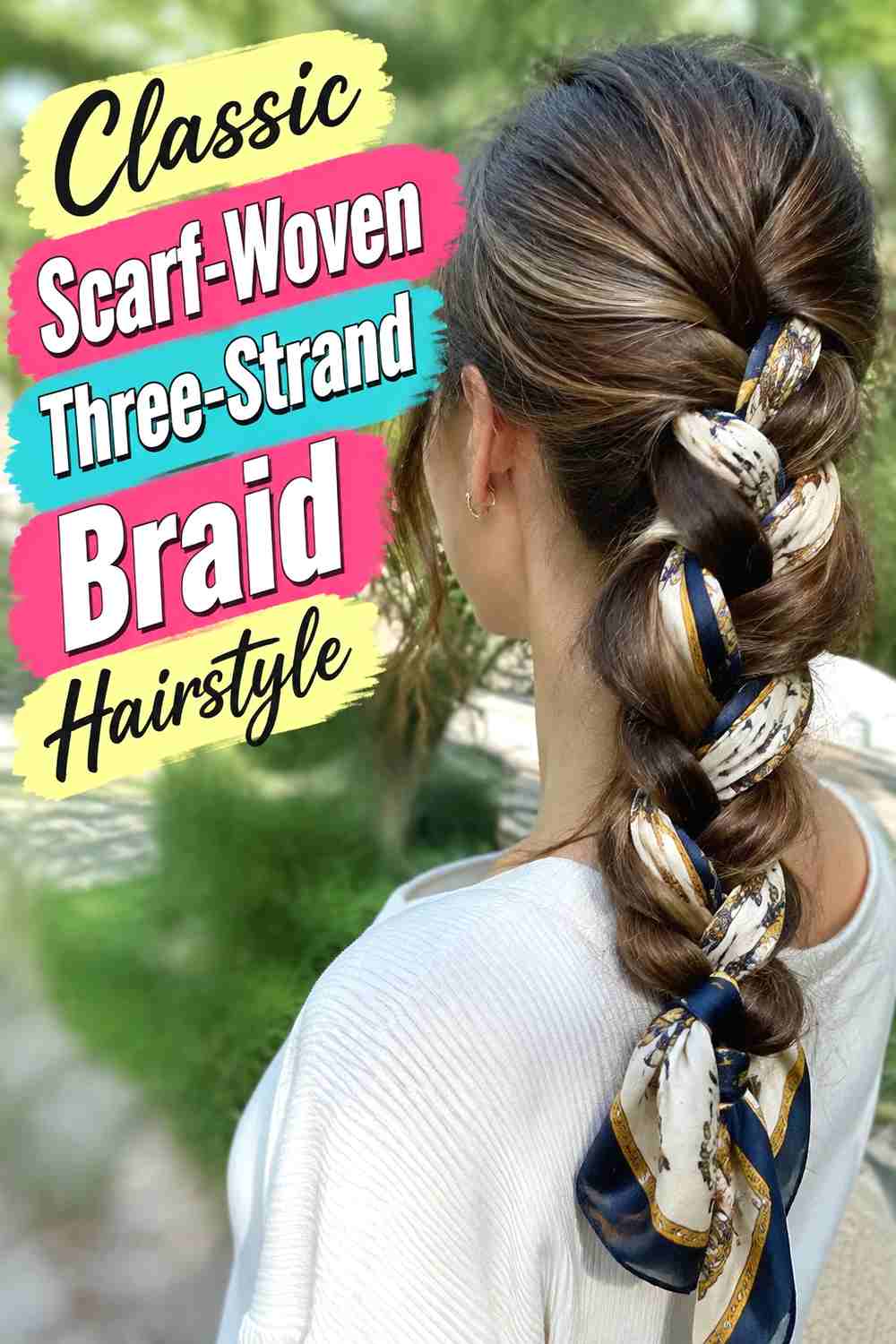
The Classic Scarf-Woven Three-Strand Braid Hairstyle is an approachable way to make fabric part of the braid rather than an accessory added afterward. A narrow scarf is anchored near the braid base and incorporated with the hair so its color appears repeatedly through the crossings. Keeping the scarf close in width to the hair sections helps the finished braid stay balanced instead of becoming fabric-heavy. Long hair shows the repeating pattern most clearly, although medium-long hair can create a shorter version. Let a little scarf length remain at the end for a neat knot or soft tails. Choose lightweight fabric that bends easily and does not overpower the natural movement of the hair.
Styling Notes
Anchor the scarf securely before dividing the hair, then maintain even tension between fabric and hair as you braid.
Why It Works
A basic three-strand structure makes the scarf pattern easy to see and relatively simple to control from top to bottom.
2. Center Part Scarf Woven Braid Hairstyle
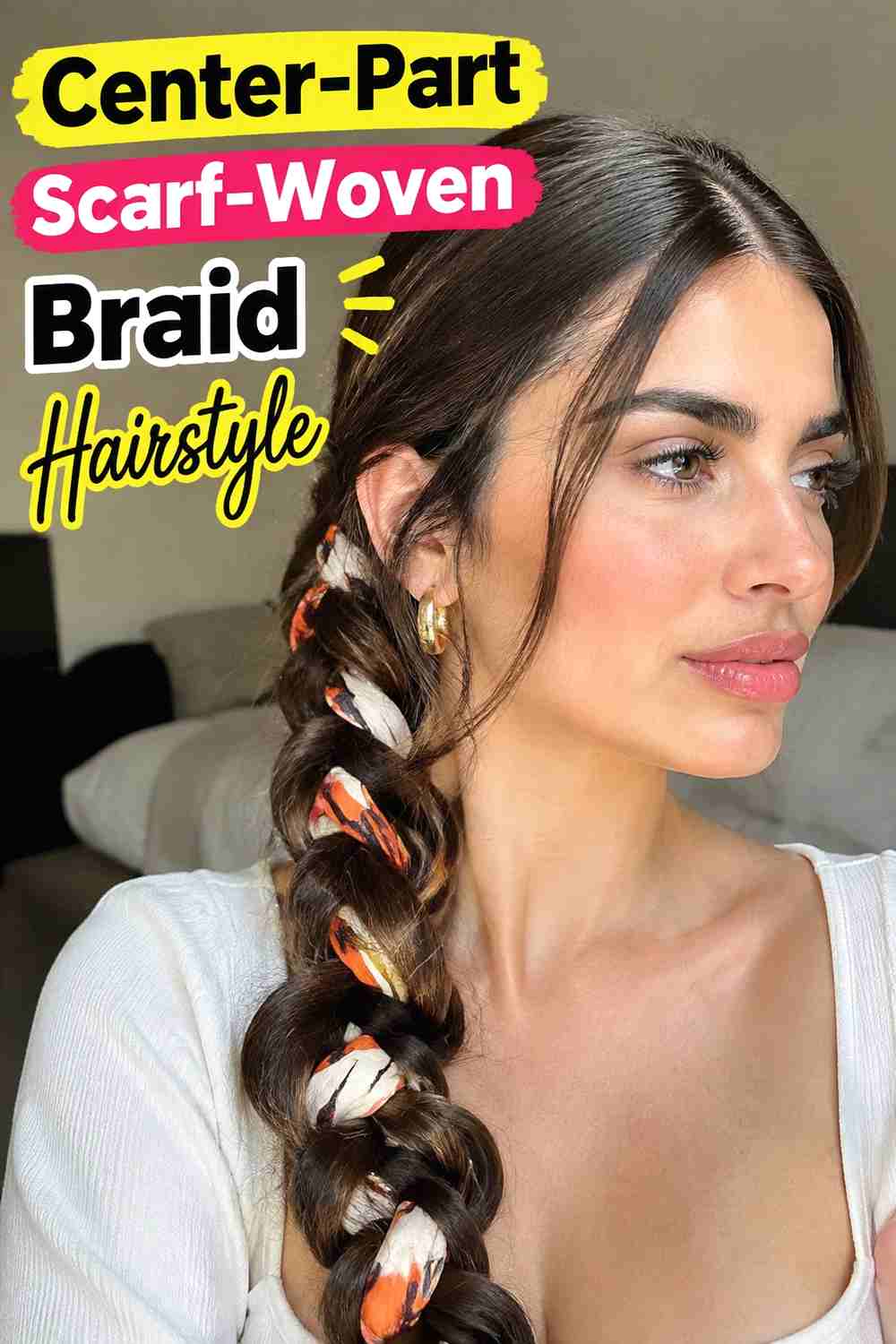
The Center-Part Scarf-Woven Braid Hairstyle starts with clean symmetry at the front before introducing color through the woven section. A middle part can lead into one braid at the back or two narrow side sections that join before the scarf becomes part of the main braid. The precise front gives the style a polished foundation, while the visible fabric keeps it from feeling overly formal. Medium-long and long hair provide enough length for the scarf to repeat several times through the braid. Keep the root area relatively smooth and choose fabric that is narrow enough to follow the braid without creating bulky crossings near the crown or base.
Best For
This balanced version works well for daytime events, vacations, casual dinners, and polished warm-weather styling.
Pro Tip
Start with equal front sections so the centered shape remains visible even after the scarf introduces extra texture farther down.
3. Side Swept Scarf Woven Braid Hairstyle
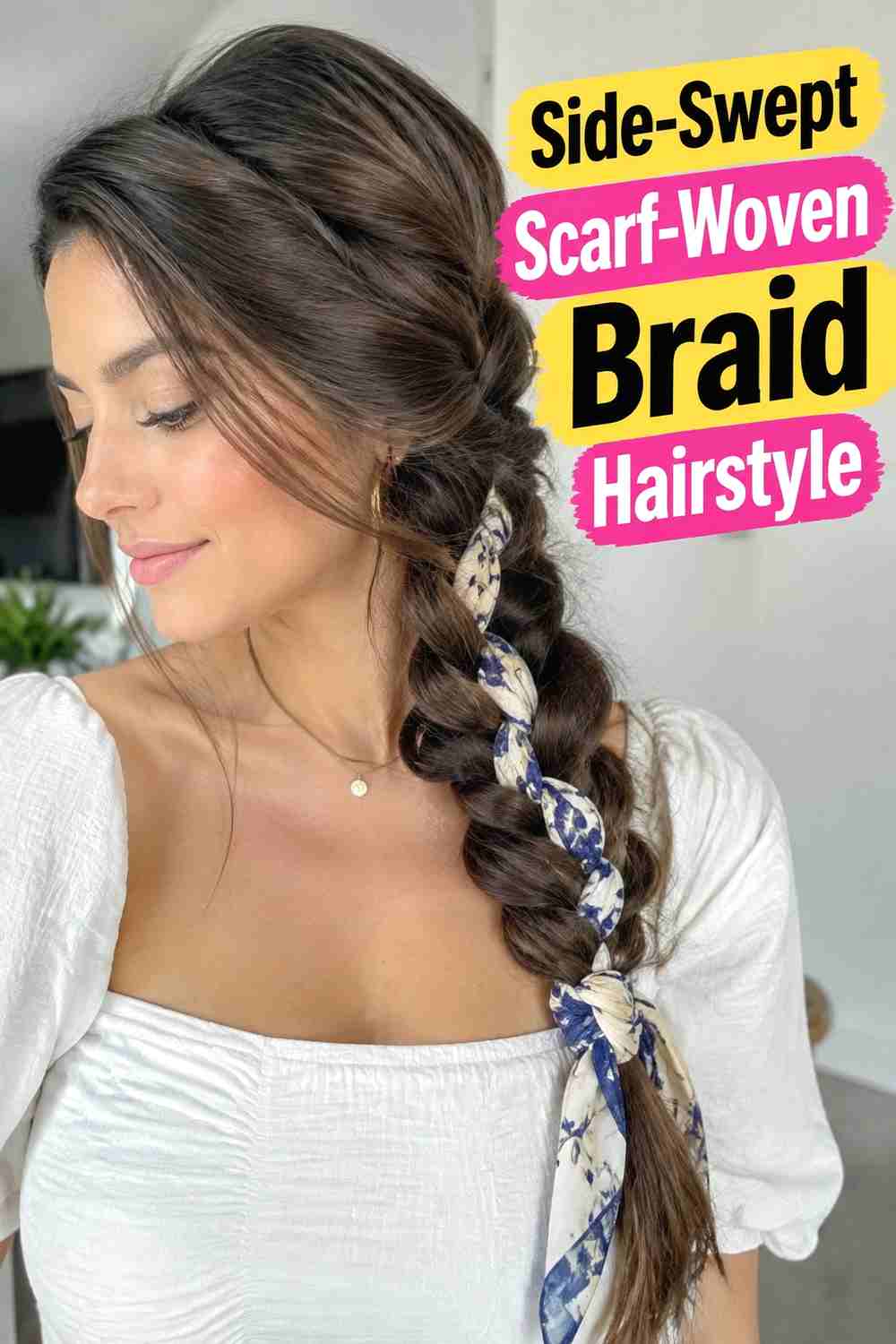
The Side-Swept Scarf-Woven Braid Hairstyle moves the braid toward one shoulder, giving the fabric more visibility from the front. Hair can be directed diagonally from a side part or gathered loosely toward the opposite shoulder before the scarf is woven through the braid. This asymmetry works especially well with patterned scarves because the color becomes part of the overall front silhouette. Keep the crown softly controlled so the braid remains the visual focus. Long hair offers more room for repeating scarf crossings, while medium-long hair can create a shorter statement. A few subtle strands around the face can soften the look without interfering with the braid’s directional shape.
Styling Notes
Secure the braid base near one side before adding the scarf so the style does not gradually shift back toward the center.
Why It Works
The side placement keeps both braid texture and scarf color visible from the front instead of hiding the woven detail behind the head.
4. Dutch Scarf Woven Braid Hairstyle
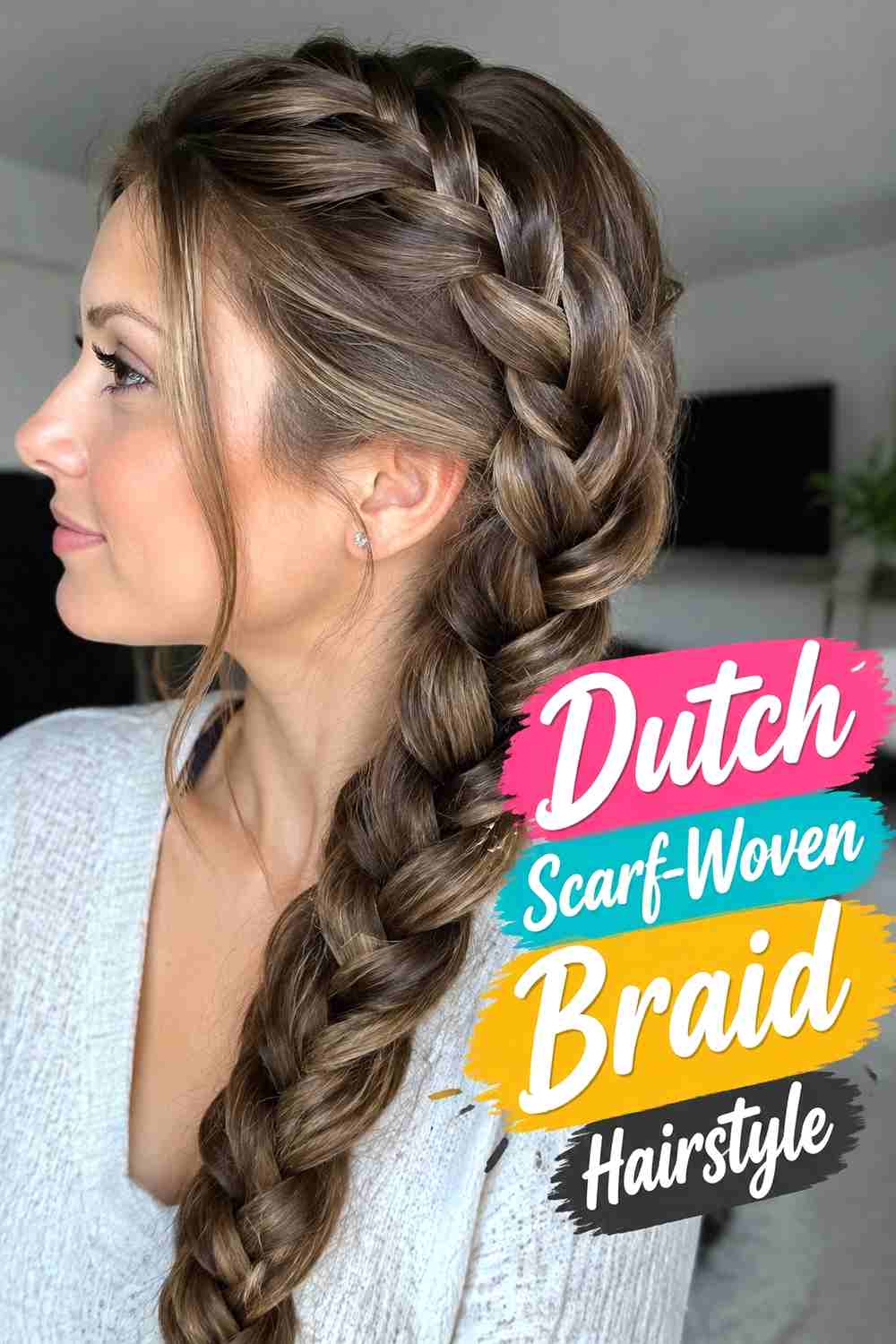
The Dutch Scarf-Woven Braid Hairstyle combines a raised inside-out braid with a fabric strand that becomes clearly visible along the surface. Because Dutch braids sit above the surrounding hair, the scarf can create a bold repeated accent without disappearing inside the weave. Start with a narrow strip of lightweight fabric and incorporate it evenly as hair is added through the braid. The strongest results keep the braid physically secure while allowing enough width for the scarf color to show. Medium-long and long hair are easiest to manage. If you loosen the braid afterward, do it gently so the fabric stays aligned instead of sliding toward one side.
Styling Notes
Maintain even tension between the scarf and hair as new sections are added, then adjust only the outer braid loops after securing the end.
5. French Scarf Woven Braid Hairstyle
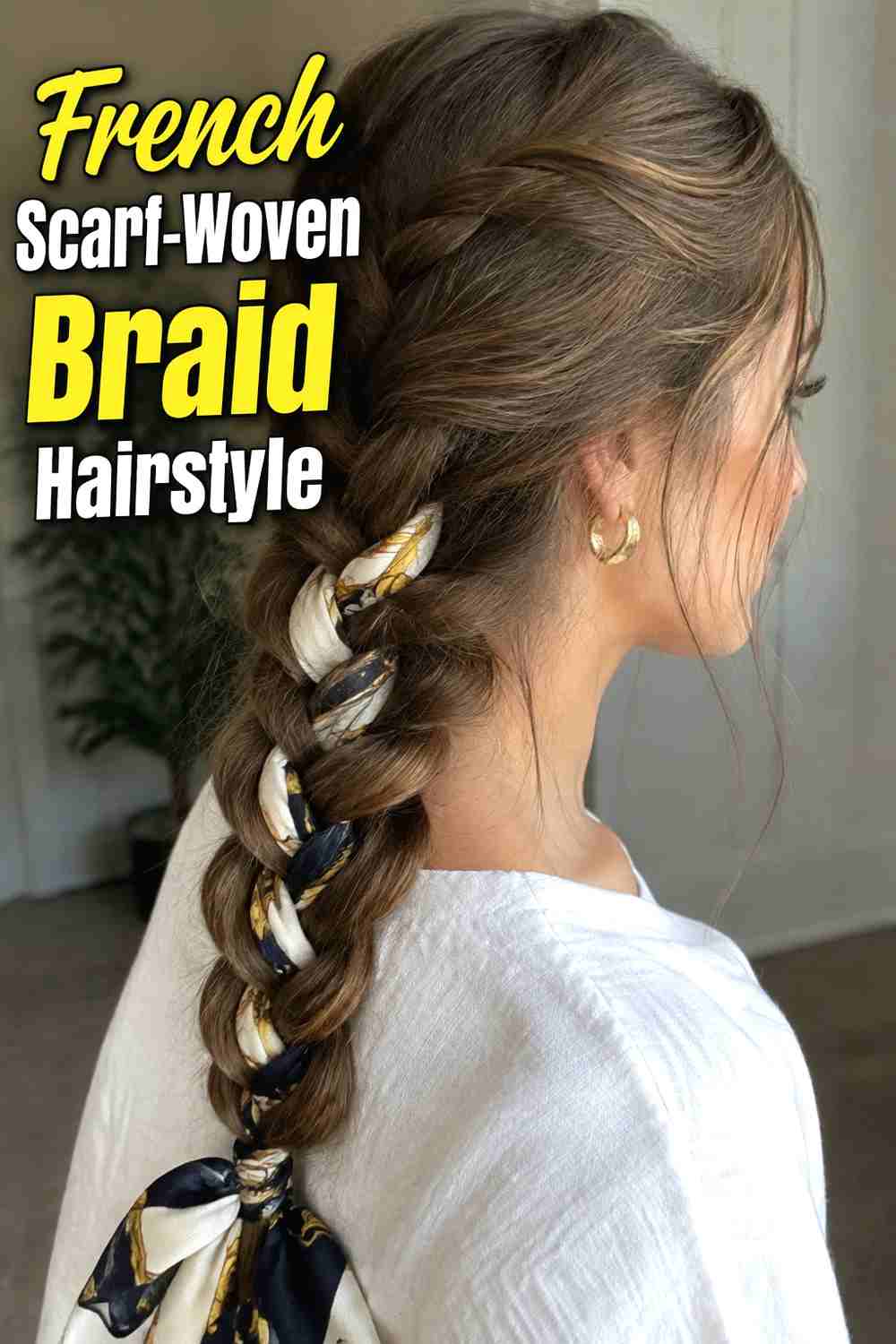
The French Scarf-Woven Braid Hairstyle creates a flatter, more integrated fabric pattern because the braid sits closer to the head. The scarf can begin near the crown and travel through the braid as new hair is incorporated from each side. This construction works beautifully when you want color woven into the hairstyle without the raised profile of a Dutch braid. A narrow scarf with a smooth edge is easiest to control, especially around the upper sections where the braid is smaller. Keep the scarf centered within its assigned strand so it appears consistently through the finished weave. The result can be clean and polished or softened slightly by loosening the braid near the lower lengths.
Why It Works
The close-to-the-head French structure lets the scarf appear as a continuous decorative thread rather than a separate tied accessory.
6. Fishtail Scarf Woven Braid Hairstyle
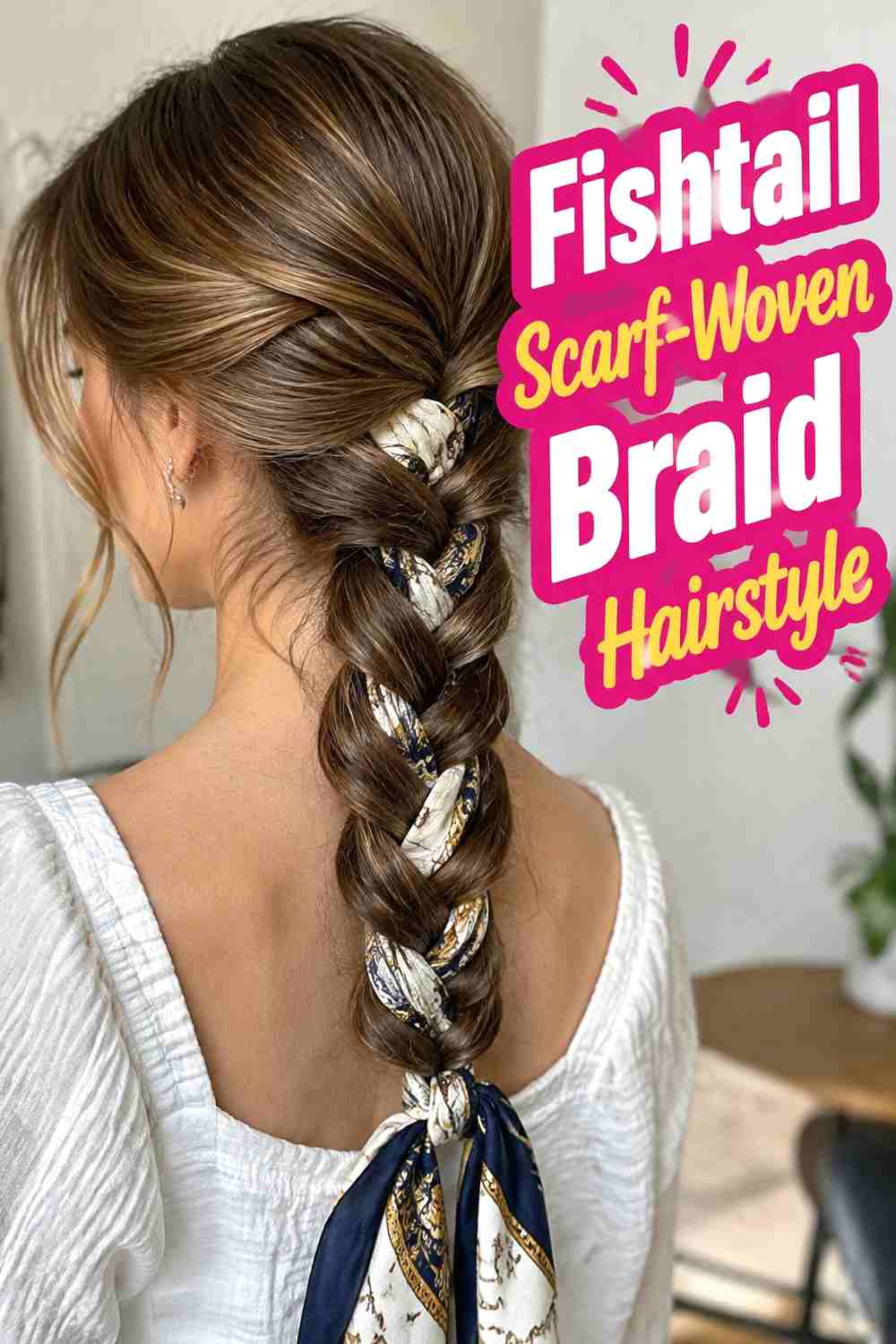
The Fishtail Scarf-Woven Braid Hairstyle combines fine overlapping sections with flashes of scarf fabric for a more intricate effect. Instead of making the scarf one large strand, a narrow fabric strip can travel alongside selected pieces as they cross from side to side. Because fishtail braids already contain many small movements, choose a scarf that is slim enough to preserve the woven detail. Long hair is especially helpful because it provides enough length for the fabric pattern to develop clearly. The finished braid can stay tight for definition or be loosened gently for softness. Avoid pulling the scarf harder than the hair, which can distort the fishtail shape.
Hair Type & Length
Medium-long to long hair provides the easiest length for maintaining both the fishtail pattern and repeated scarf detail.
Pro Tip
Use a narrow scarf and keep each transfer similar in size so fabric does not overwhelm the finer fishtail sections.
7. Double Scarf Woven Braid Hairstyle
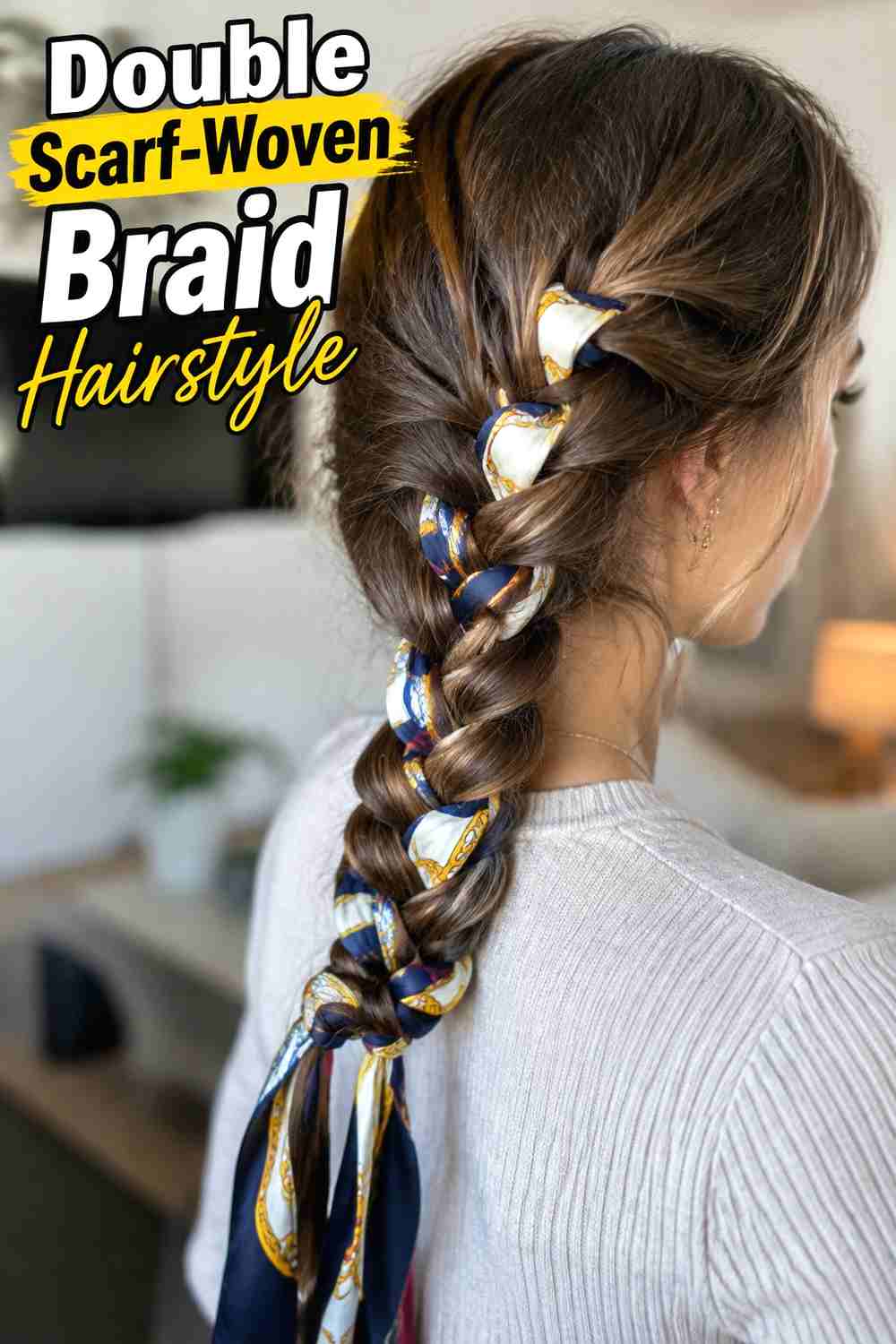
The Double Scarf-Woven Braid Hairstyle splits the hair into two braids and adds fabric through both, creating a balanced, playful finish. One scarf can be divided or positioned so a section feeds into each braid, or two coordinating narrow scarves can be used for stronger color contrast. Keeping both braids similar in width makes the style look intentional, especially if they begin from a clean center part. Medium to long hair works well because each braid needs enough length for the scarf pattern to repeat. Solid fabric gives a cleaner look, while small prints create more visual movement. Secure both scarf ends carefully so one side does not loosen faster than the other.
Styling Notes
Measure the visible scarf length on both sides before braiding so the finished tails remain reasonably balanced.
Wear & Maintenance
Check both braid ends after movement or outdoor wear, since fabric can shift more easily than hair inside a loosely woven braid.
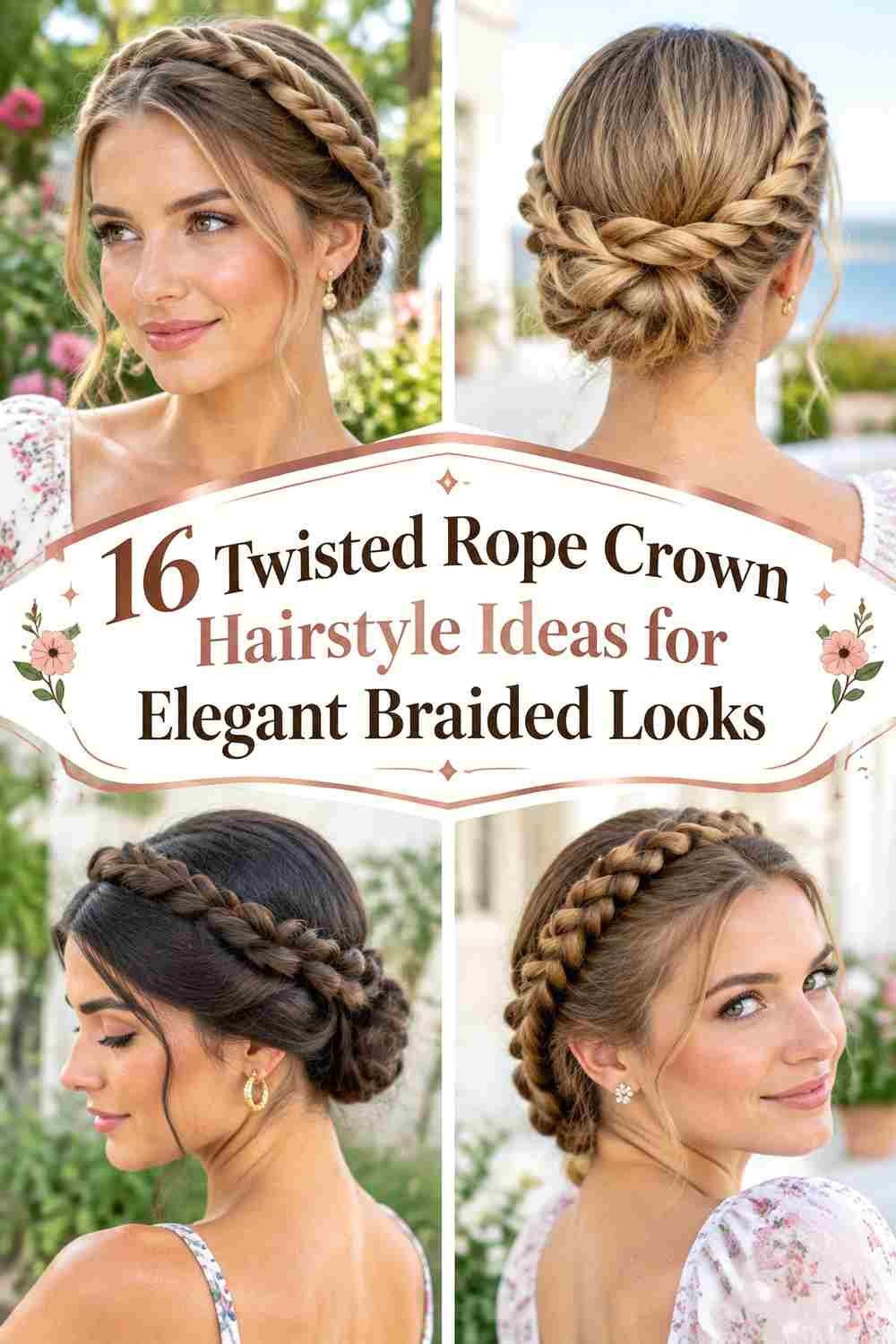
8. Scarf Woven Crown Braid Hairstyle
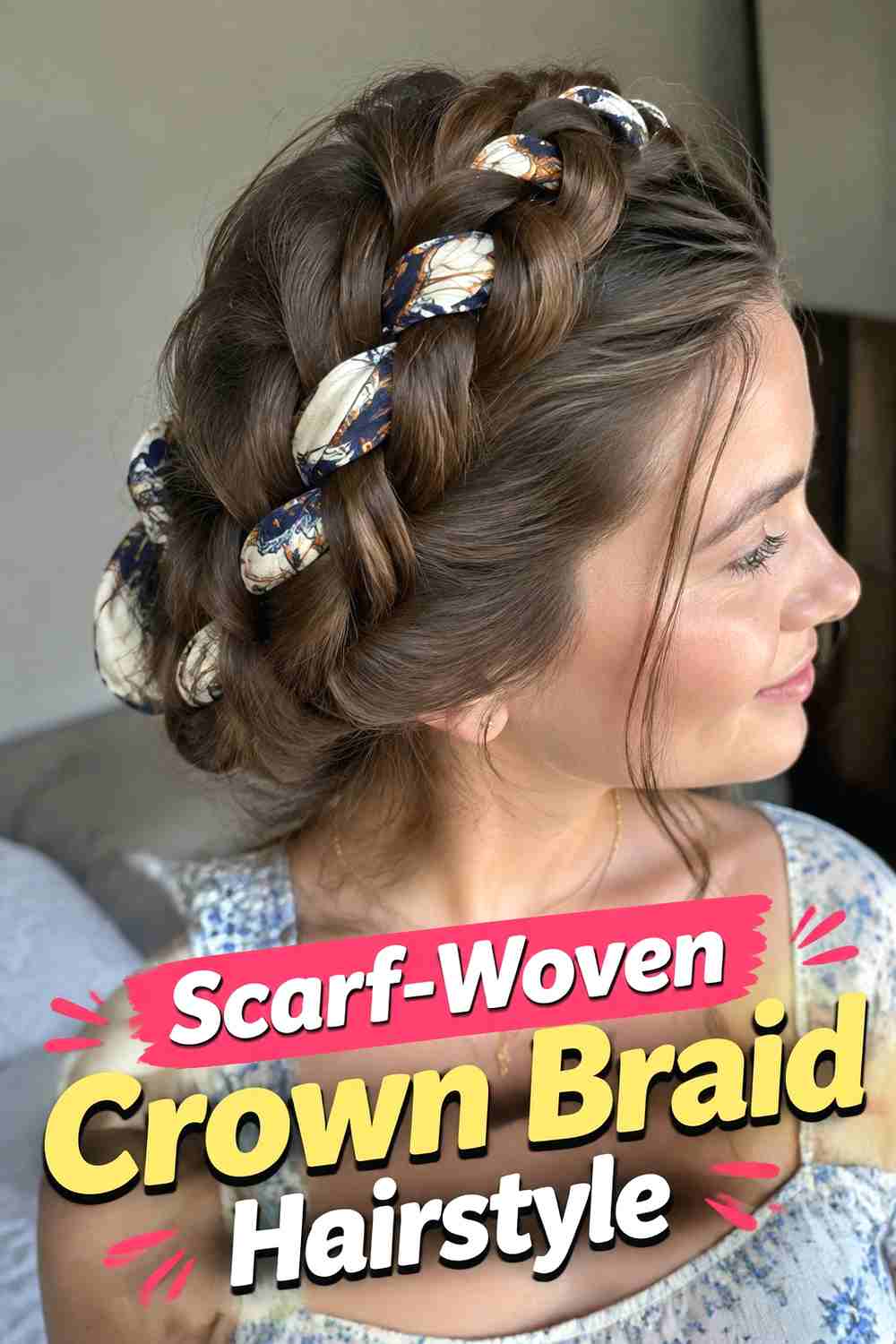
The Scarf-Woven Crown Braid Hairstyle wraps braided hair around the head while a narrow fabric strip travels through the halo. This creates a visible ribbon of color that follows the curve of the crown without needing separate clips or a headband. The braid should be secure before it is pinned into place, especially because the added scarf can introduce extra weight. Long hair provides the easiest length for a full crown, while joined side braids can help create the effect on medium lengths. Keep the scarf smooth through each crossing so it does not twist into bulky sections. A small knot or hidden fabric end near the back can finish the style neatly.
Best For
This version suits festivals, garden events, vacations, outdoor parties, and colorful romantic styling.
Styling Notes
Complete the scarf-woven braid first, then shape it around the head and secure it with hidden pins beneath the woven sections.
9. Half Up Scarf Woven Braid Hairstyle
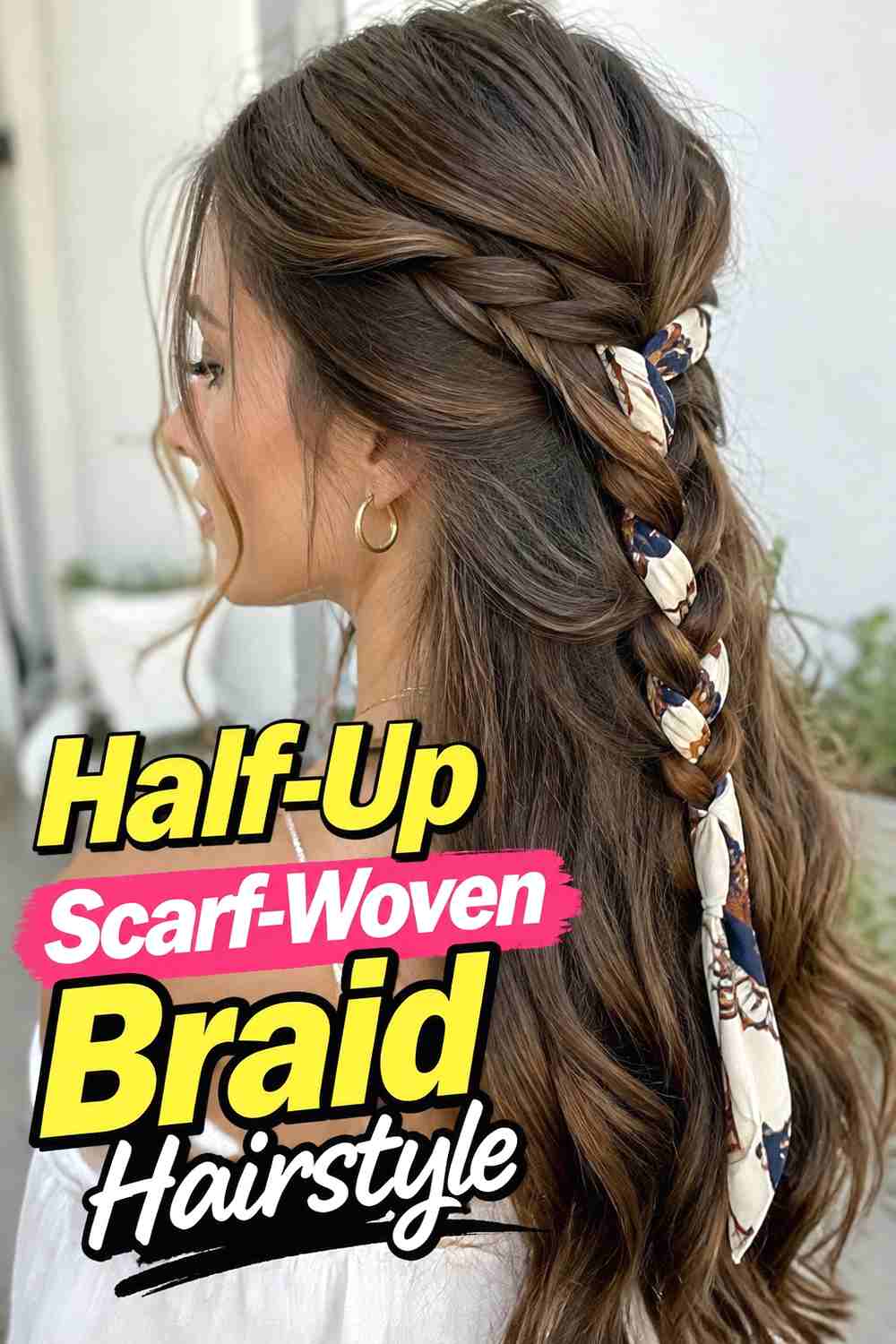
The Half-Up Scarf-Woven Braid Hairstyle brings fabric detail across the upper back of the head while leaving the lower lengths loose. Two small side braids can meet at the center with a scarf woven through them, or one central half-up braid can carry the fabric down a short section before the remaining hair falls freely. This construction is ideal when you want scarf color without committing all of the hair to a full braid. Loose waves create a soft contrast with the tighter woven area, while straight hair makes the fabric pattern look crisper. Keep the scarf narrow so the half-up section does not become heavy or pull uncomfortably around the temples.
Why It Works
The smaller braided section introduces color and texture while preserving most of the natural length and movement underneath.
10. Scarf Woven Braid Ponytail Hairstyle
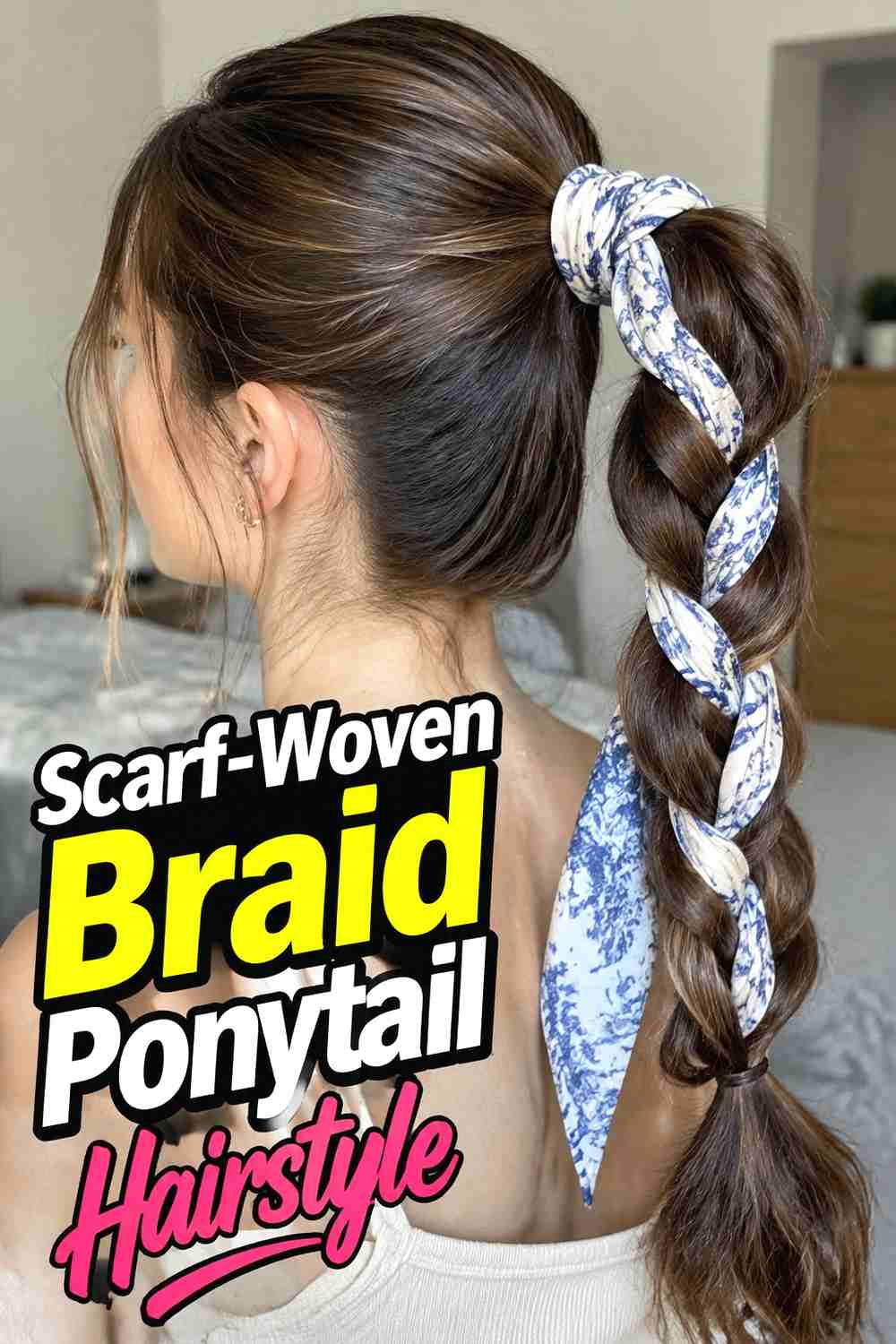
The Scarf-Woven Braid Ponytail Hairstyle combines a structured braided section with the movement of a loose ponytail. A Dutch or French braid can travel from the crown toward the ponytail base with a scarf woven through it, then the remaining hair falls freely. Another option is to braid only part of the ponytail while leaving the lower lengths loose. The scarf should remain securely anchored so it does not slip as the ponytail moves. Straight tails make the braid detail feel modern, while waves soften the overall effect. Medium-long and long hair give the cleanest balance between visible braided texture and a substantial loose ponytail below.
Styling Notes
Secure the ponytail base independently from the scarf so the fabric remains decorative and does not carry the weight of the style.
Best For
This version works well for casual events, travel, daytime parties, and active styling where you still want a decorative detail.
11. Low Scarf Woven Braid Bun Hairstyle
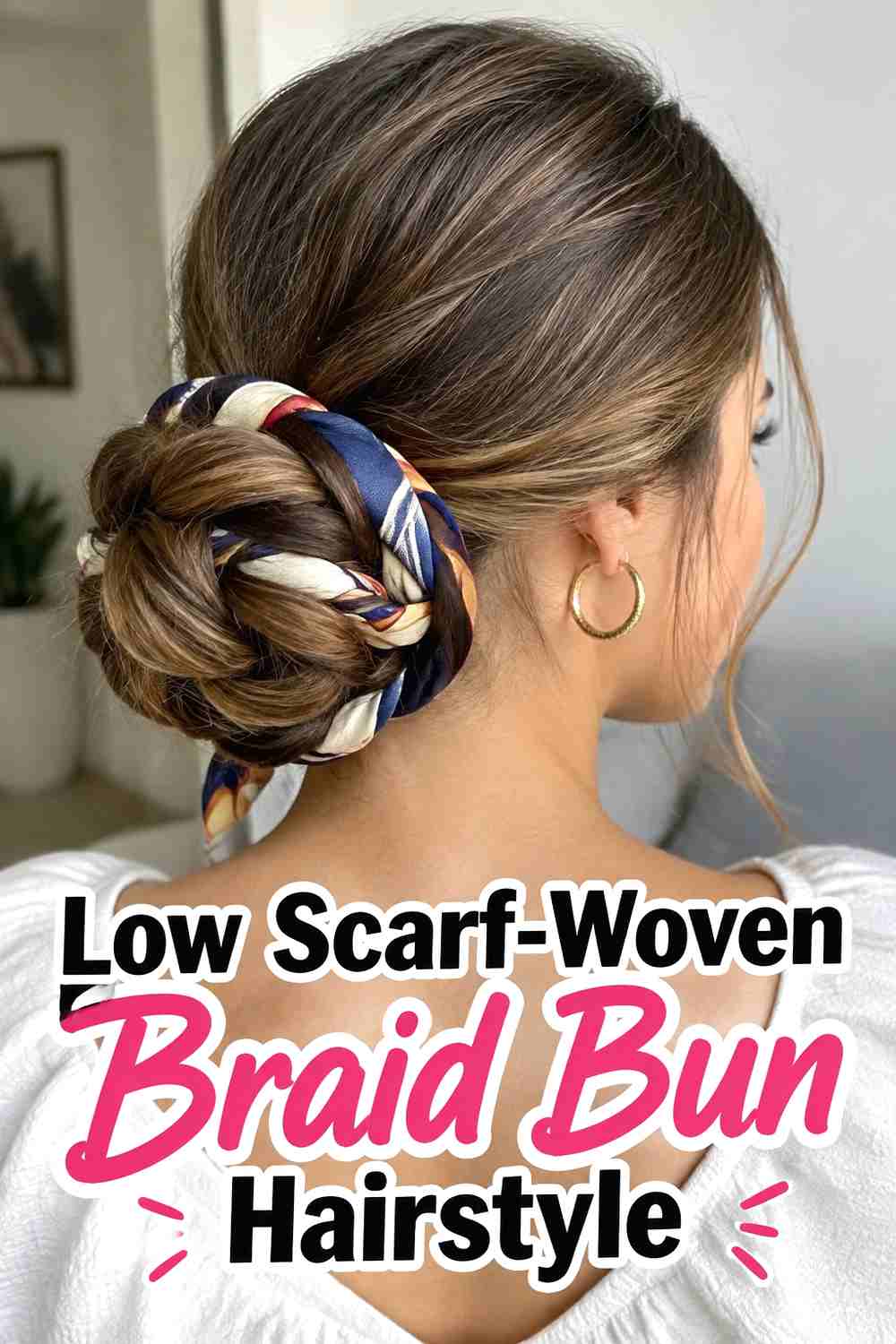
The Low Scarf-Woven Braid Bun Hairstyle takes a braid threaded with fabric and coils it near the nape so both hair and scarf remain visible through the bun. The scarf can continue through the entire braid or appear only in selected sections before the braid is wrapped. Keeping the bun moderately compact helps preserve the woven pattern instead of compressing everything into an indistinct knot. Long hair is easiest to work with because there is enough length for both braiding and coiling. Pin the hair structure securely before adjusting any visible fabric loops. This creates a colorful low updo that feels more detailed than a basic bun without relying on separate decorative clips.
Styling Notes
Braid and secure the scarf first, then coil the section into a low bun while keeping the most attractive fabric crossings visible on the outside.
12. Scarf Woven Bubble Braid Hairstyle
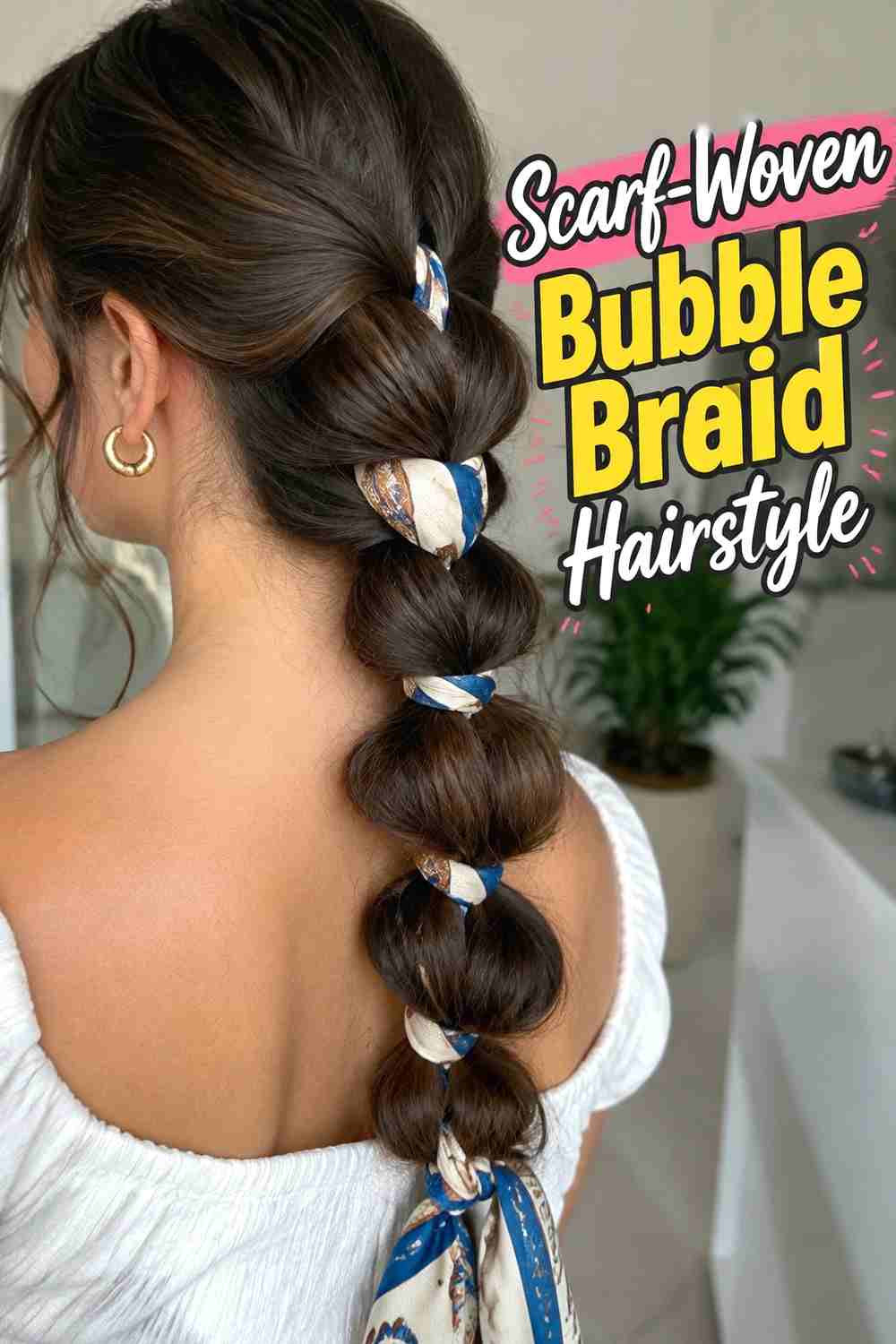
The Scarf-Woven Bubble Braid Hairstyle uses a scarf to connect or spiral through the rounded sections of a bubble ponytail. Rather than functioning as a traditional braid strand, the fabric can pass through each elastic point and wrap lightly around the spaces between bubbles. This creates a woven effect while preserving the distinctive segmented silhouette. Long hair works best because several bubbles allow the scarf pattern to repeat. Keep the fabric relatively narrow and avoid tying each section too tightly, which can flatten the hair or create uncomfortable pressure. The bubbles should remain softly expanded, while the scarf acts as a colorful line that visually connects them from base to end.
Wear & Maintenance
Use secure elastics for the actual structure and treat the scarf as decoration so it can shift slightly without collapsing the hairstyle.
Why It Works
The repeated bubble sections give the scarf clear anchor points, creating a bold pattern without requiring a complex traditional braid.
13. Scarf Woven Side Braid Hairstyle
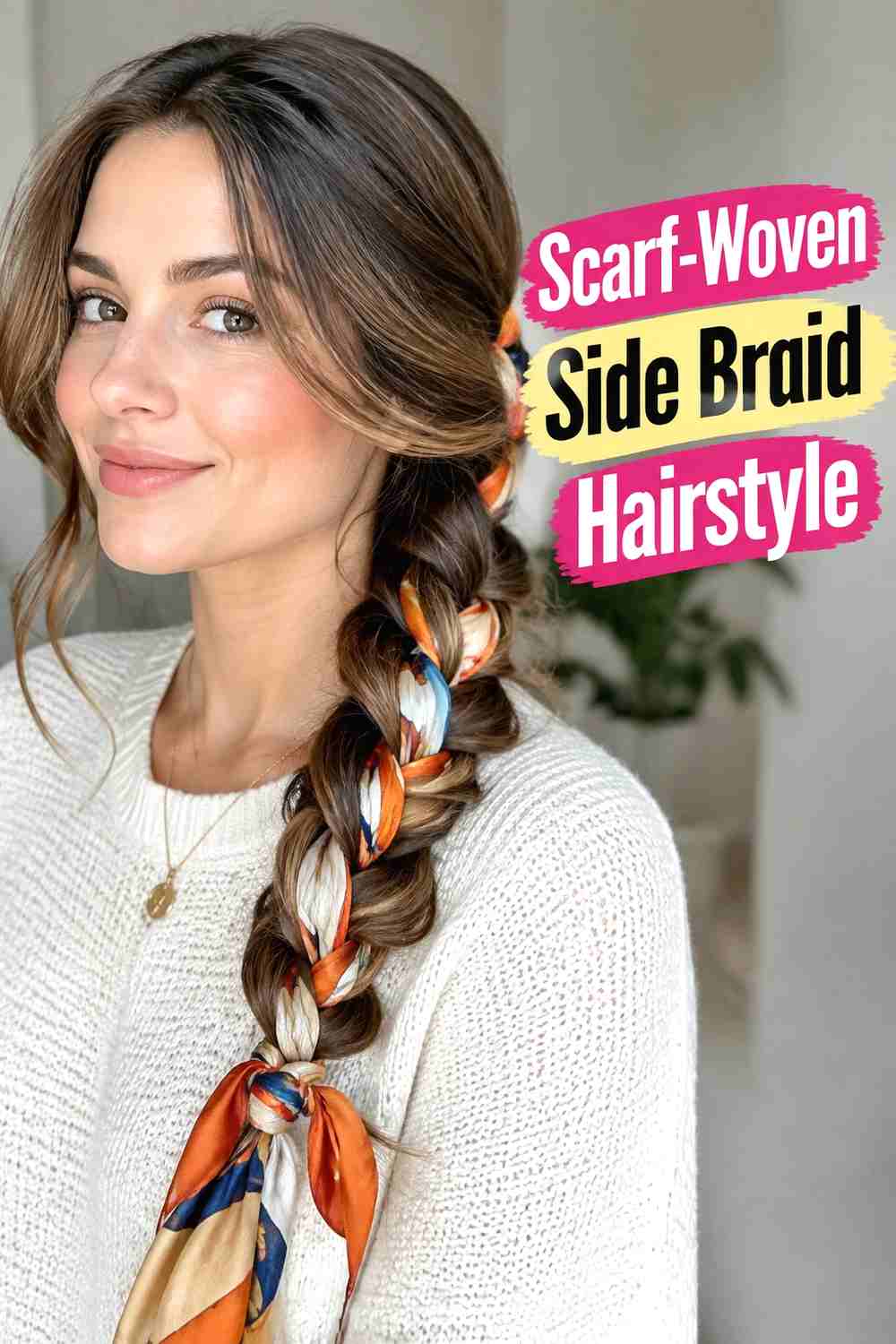
The Scarf-Woven Side Braid Hairstyle gathers the lengths over one shoulder before weaving a scarf directly through the braid. Unlike a side-swept crown braid, the emphasis here is on the full braid hanging visibly beside the neck and shoulder. This makes the fabric easy to see and works particularly well with a solid or patterned scarf that contrasts with the hair. The braid can stay compact for a cleaner finish or be loosened slightly for softness. Long hair provides the most dramatic result, though medium-long hair can still create a shorter side braid. Leave a little scarf at the end for a knot or narrow bow if you want a finished decorative detail.
Styling Notes
Choose the shoulder first and secure the hair’s direction before beginning the braid so it does not migrate toward the center as you work.
14. Scarf Woven Braid With Loose Waves Hairstyle
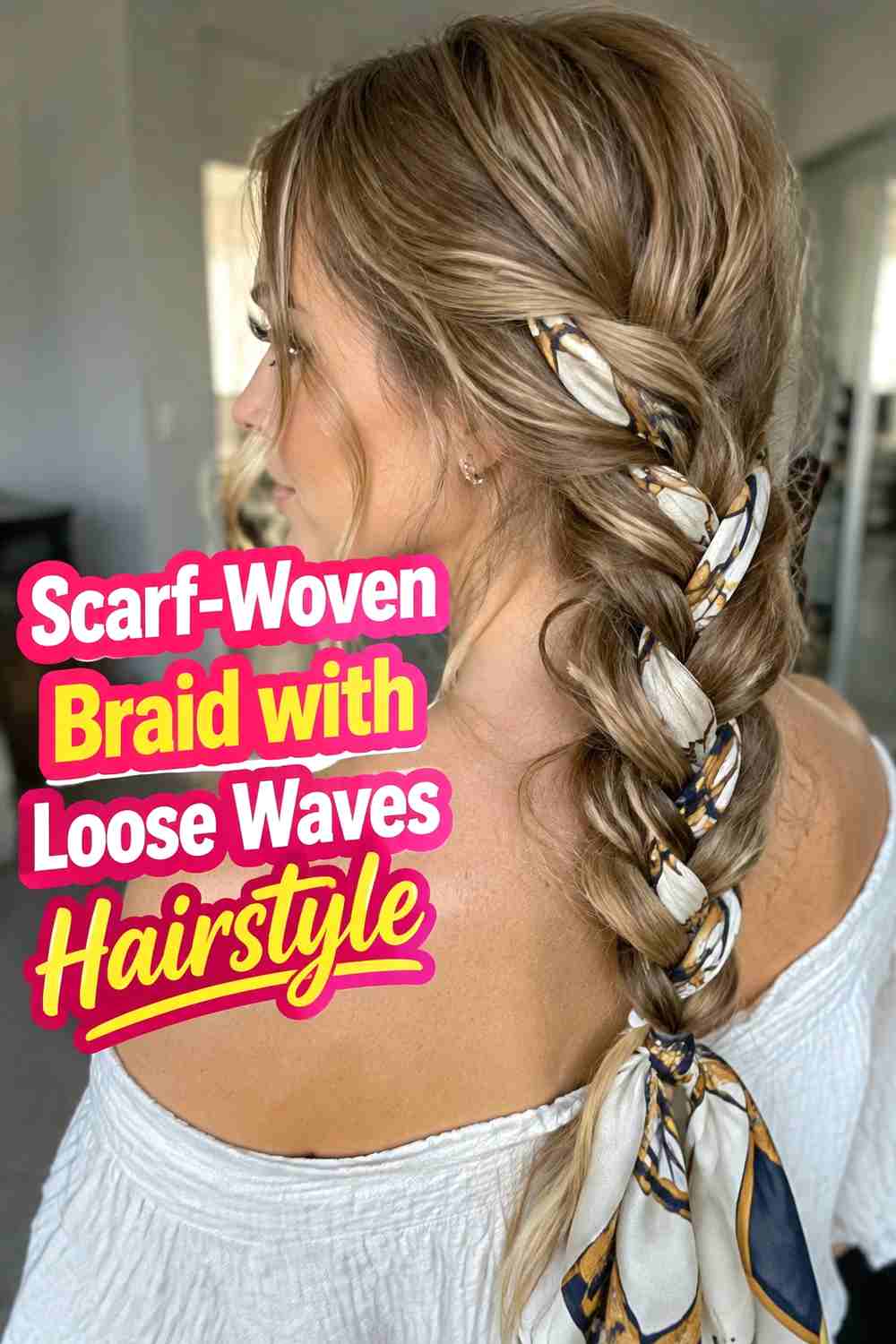
The Scarf-Woven Braid with Loose Waves Hairstyle pairs a smaller decorative braid with flowing lengths. A scarf-threaded braid can run along one side of the crown, cross the back in a half-up arrangement, or frame one temple while the remaining hair falls into broad waves. The contrast between fabric, woven hair, and loose movement gives this style plenty of visual texture without requiring a full braid. Medium-long and long layered hair work especially well because the waves can move independently below the braided section. Style the waves first when possible, then add the scarf braid afterward so heat tools do not catch or disturb the finished fabric placement.
Best For
This softer version suits vacations, parties, outdoor events, brunch, and romantic warm-weather styling.
Pro Tip
Keep the braid narrow enough that the loose waves remain the dominant texture rather than competing with an oversized scarf section.
15. Scarf Woven Braid With Face Framing Pieces Hairstyle
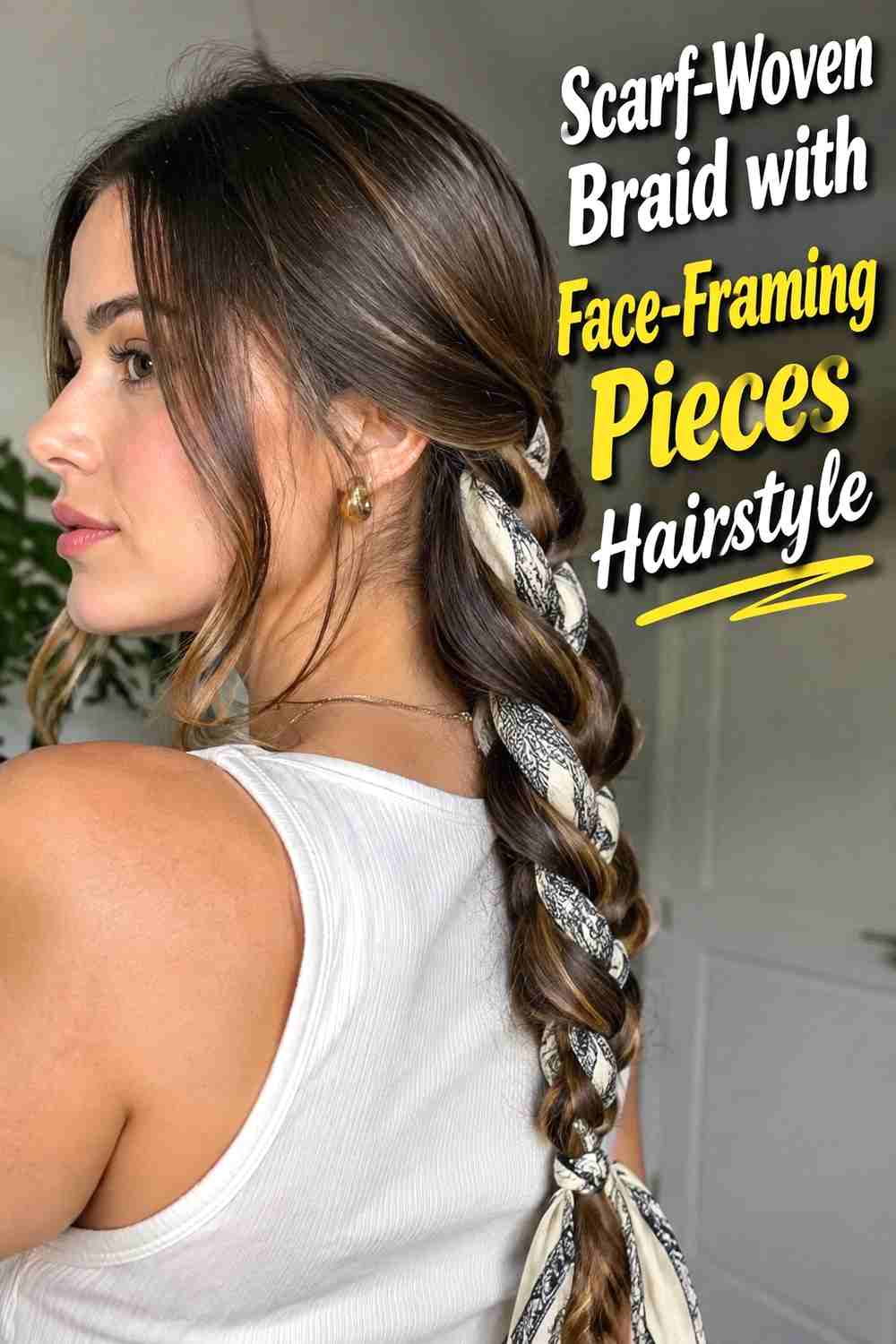
The Scarf-Woven Braid with Face-Framing Pieces Hairstyle balances colorful woven detail with softness around the front. Before braiding, two slim sections near the temples or cheekbones are left loose. The remaining hair is arranged into a scarf-woven side, crown, or back braid, while the free strands can stay straight or receive a gentle bend. Keeping the face-framing pieces narrow prevents them from hiding the braid and helps the fabric remain visible from multiple angles. This version works especially well on layered medium-long or long hair. Choose a scarf that complements the overall color palette rather than using a bulky print that distracts from both the braid and front movement.
Styling Notes
Separate the face-framing pieces before anchoring the scarf so they do not accidentally become trapped inside the braid.
Why It Works
The loose front strands soften the woven design and make a colorful braid feel more relaxed and wearable.
16. Boho Scarf Woven Braid Hairstyle
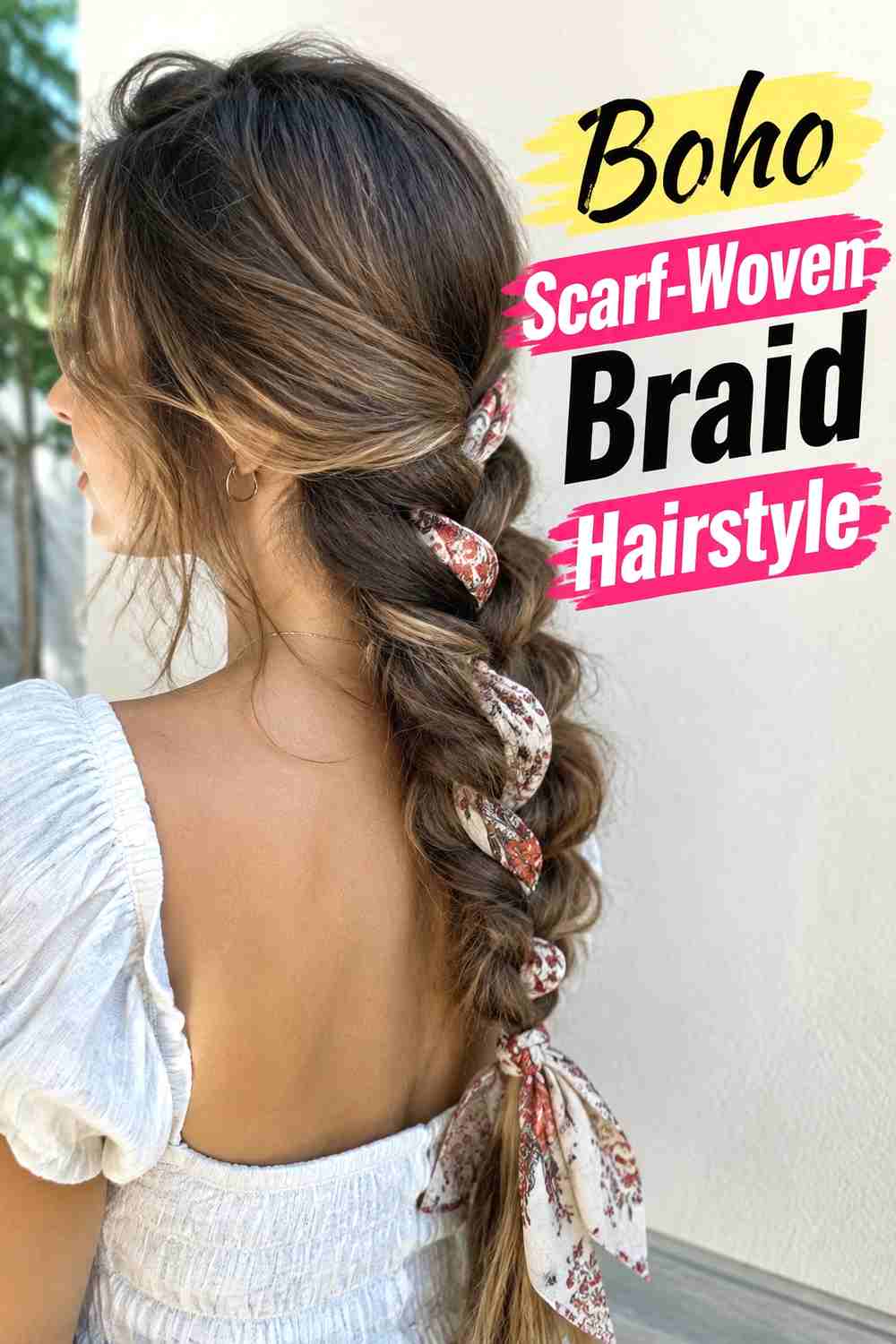
The Boho Scarf-Woven Braid Hairstyle embraces softer tension, visible texture, and slightly irregular scarf placement. Hair can be loosely braided over one shoulder or down the back, with a narrow printed scarf woven through selected crossings rather than forming a perfectly uniform pattern. Lightly widened sections and natural flyaways can enhance the relaxed finish, but the braid should still remain physically secure. Long layered hair works particularly well because the different lengths create organic movement around the woven fabric. Letting the scarf tails extend slightly beyond the braid can reinforce the bohemian mood. Avoid excessive accessories; the combination of texture and patterned fabric already creates plenty of visual interest.
Styling Notes
Keep the central braid secure while loosening only the outside edges, and allow the scarf to show unevenly rather than forcing identical fabric spacing.
17. Silk Scarf Woven Braid Hairstyle
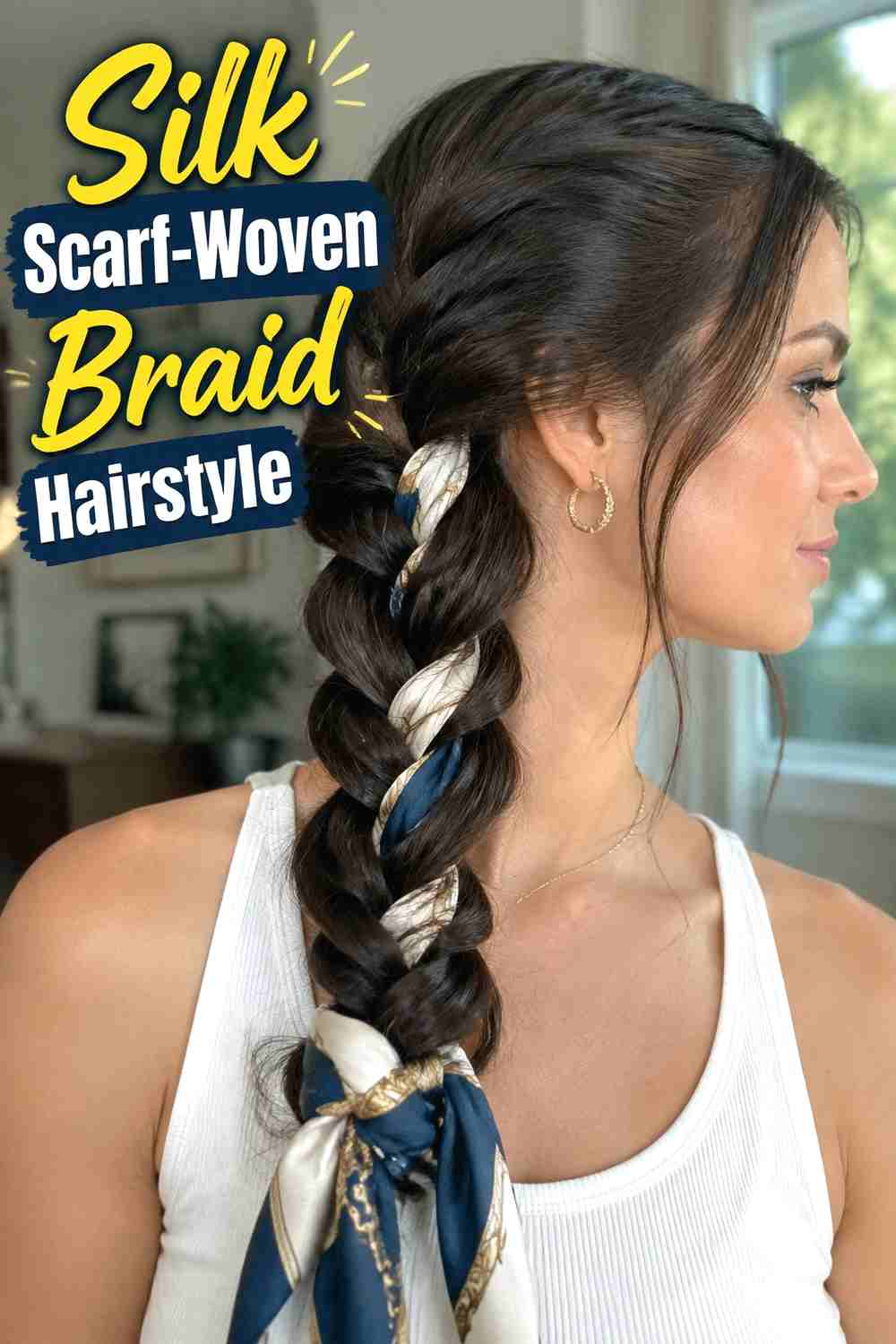
The Silk Scarf-Woven Braid Hairstyle uses smooth, lightweight fabric for a more polished interpretation of the trend. A narrow silk scarf can become one strand of a three-strand braid or be threaded through a Dutch or French braid for a glossy accent. Because silk is slippery, the anchor point needs to be secure before braiding begins. The finished style looks especially refined when the hair itself has controlled shine and the fabric lies flat rather than twisting into bulky ropes. Long hair provides enough space for the silk to appear repeatedly through the braid. Solid shades or subtle prints usually preserve a sophisticated finish and make the texture of the hair easier to see.
Pro Tip
Anchor slippery silk with a discreet elastic or hidden pin before braiding so it does not gradually slide out of the upper sections.
Wear & Maintenance
Avoid excessive loosening after styling because smooth silk can move more easily than textured cotton or chiffon fabric.
18. Printed Scarf Woven Braid Hairstyle
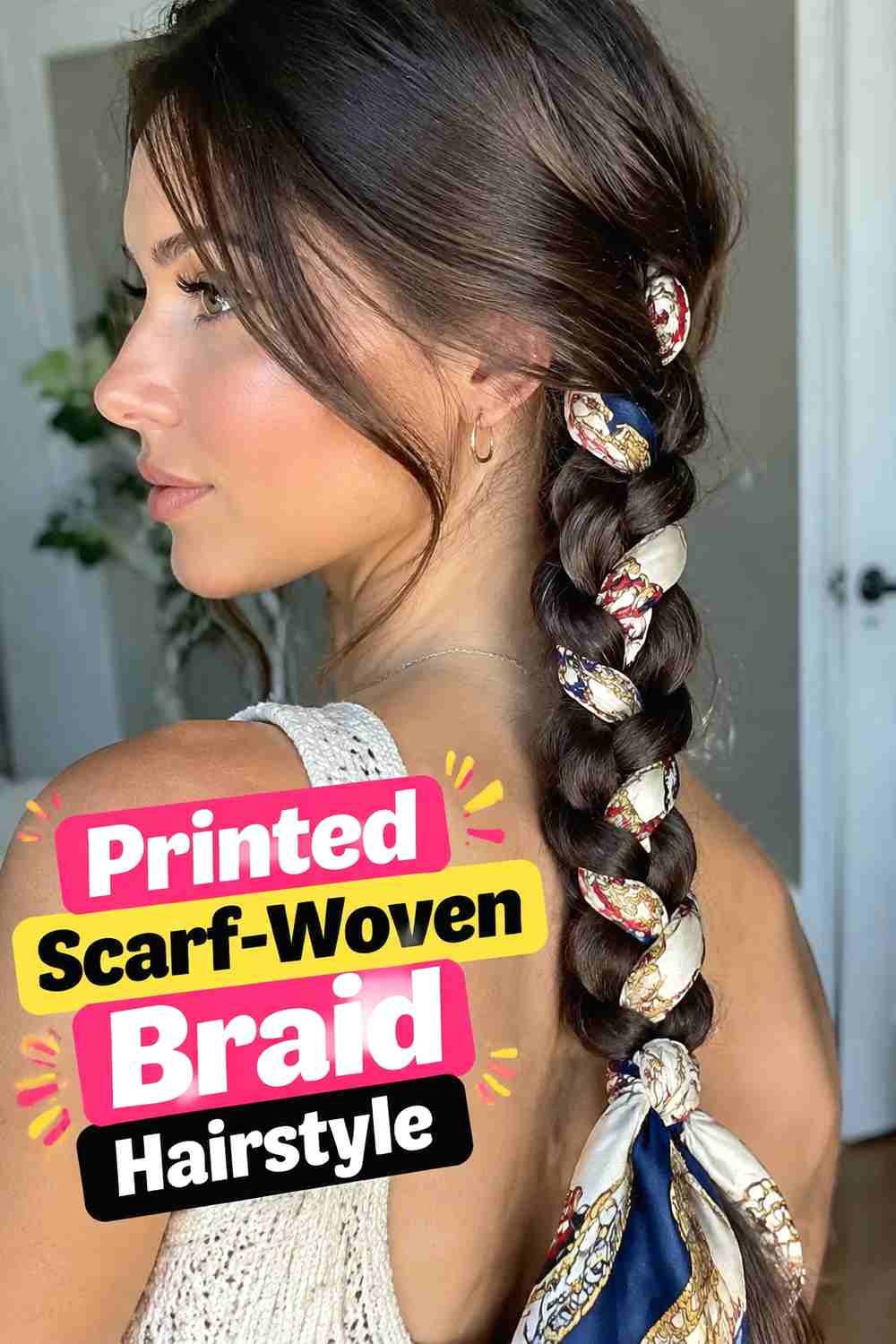
The Printed Scarf-Woven Braid Hairstyle makes the fabric itself a stronger visual feature by using a small floral, geometric, paisley, or abstract print. A simple braid structure often works best because it gives the patterned scarf enough open space to remain recognizable. Keep the fabric strip relatively narrow so the print adds color without obscuring the natural braid. Long hair allows the pattern to repeat down the length, while medium-long hair can create a compact statement. Coordinate the scarf with simple clothing or accessories so the overall look stays balanced. The braid should remain neat enough that the print reads as intentionally woven rather than randomly tangled through the hair.
Styling Notes
Pair detailed fabric with a straightforward three-strand or side braid so both the print and hair texture remain easy to see.
Best For
This version works especially well for vacations, summer outings, casual parties, and colorful everyday styling.
19. Festival Scarf Woven Braid Hairstyle
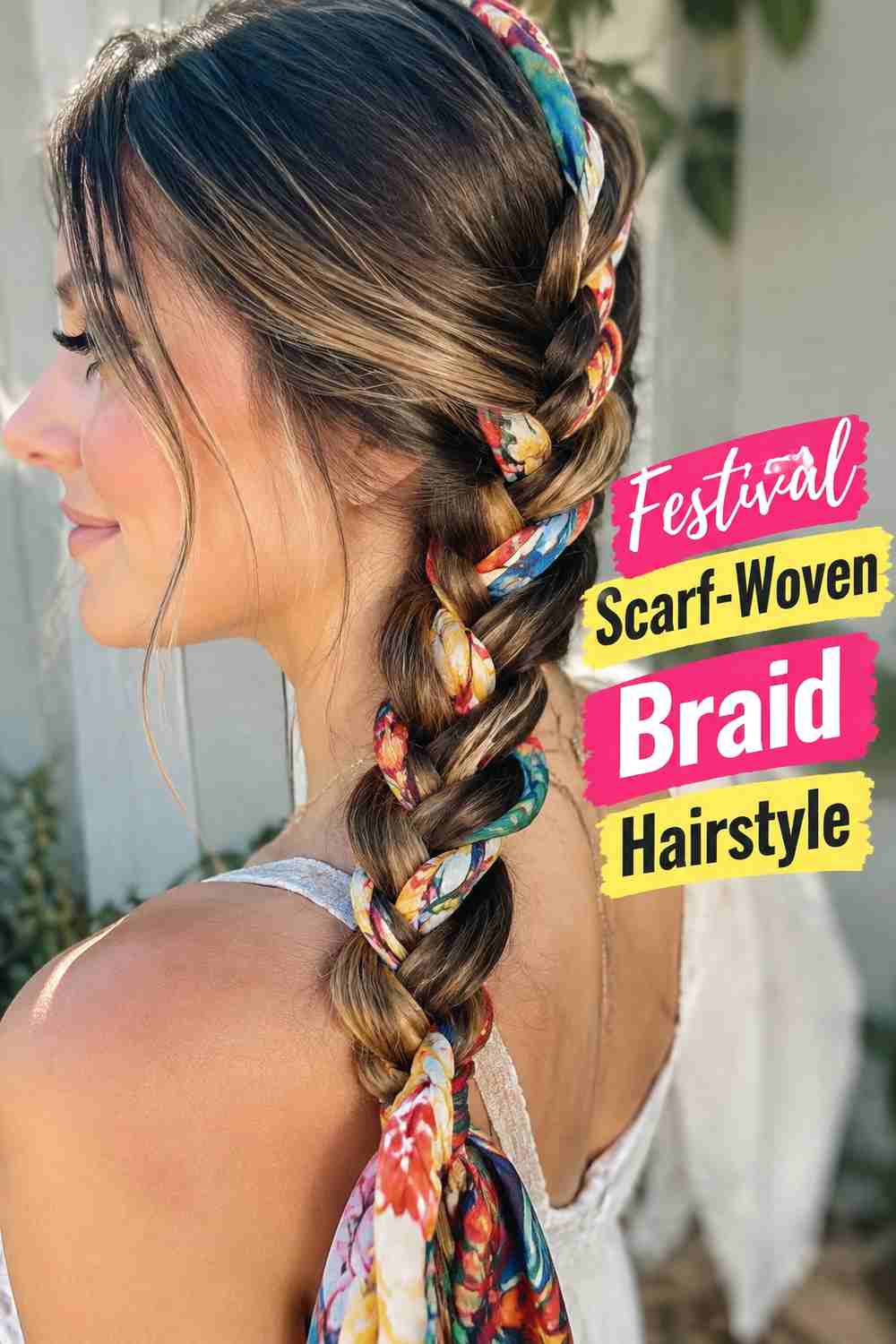
The Festival Scarf-Woven Braid Hairstyle combines secure braiding with stronger color and a more relaxed finish suited to long wear. A bright scarf can be woven into a Dutch braid, double braids, or a side braid, with enough fabric left at the ends to create movement. Slightly loosened sections give the style dimension, while the underlying weave should remain firm enough to handle walking, dancing, and outdoor conditions. Long hair offers plenty of options, but medium lengths can work with smaller braids or a half-up construction. Avoid adding too many clips, beads, or extra accessories if the scarf already has a bold print. Keeping one main decorative element makes the style easier to maintain.
Wear & Maintenance
Use secure elastics beneath any scarf knots and keep the braid base firm so movement does not gradually pull the fabric loose.
Why It Works
The scarf provides color and movement while the braid keeps most of the hair controlled for active outdoor wear.
20. Romantic Scarf Woven Braid Hairstyle
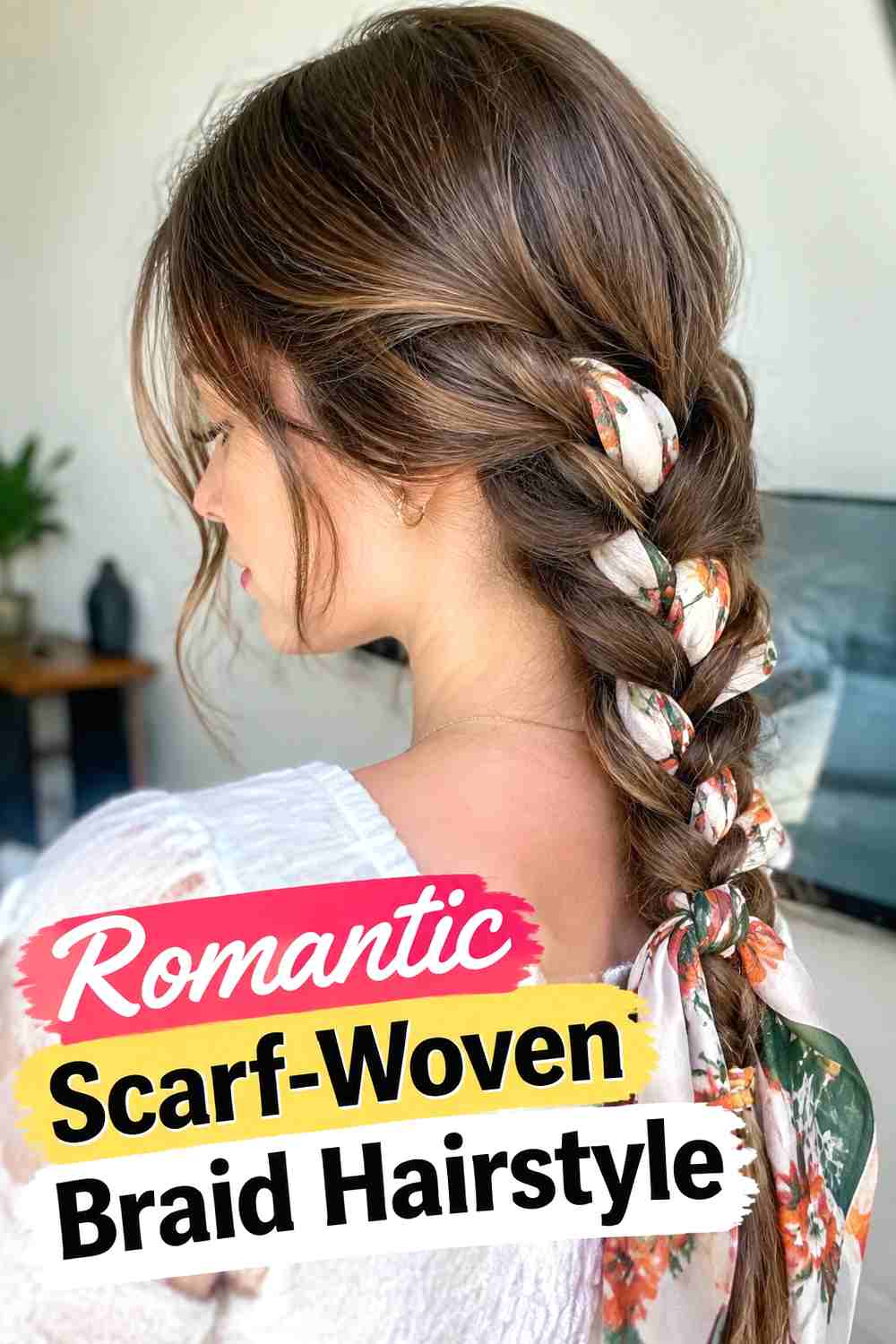
The Romantic Scarf-Woven Braid Hairstyle softens the fabric-and-braid combination with gentle volume, loose edges, and a delicate scarf choice. A narrow satin, chiffon, or soft-print scarf can travel through a side braid, crown braid, or half-up woven section, while a few fine strands remain loose around the face. The braid should feel relaxed but still connected, with enough structure to keep the scarf from slipping out. Soft waves through any unbraided lengths complement the flowing fabric especially well. Choose muted or coordinated colors when you want the effect to feel elegant rather than playful. The finished style works beautifully when the scarf looks integrated into the hair instead of tied on afterward.
Styling Notes
Build the secure braid first, then soften selected outer sections and adjust the scarf so the fabric remains visible without dominating the hair.
Best For
This variation suits date nights, garden events, engagement photos, romantic dinners, and softly styled celebrations.
How to Choose the Right Look
Start with your braid type. A classic three-strand braid makes scarf weaving easiest to see, while Dutch and French braids integrate the fabric closer to the head. Fishtails create finer detail, and crown braids turn the scarf into a halo-like accent.
Next, consider how much hair you want secured. Full side braids and double braids keep more hair controlled, while half-up styles and small scarf braids preserve loose movement. Ponytails and low buns sit between those two options.
Your scarf fabric and width also matter. Narrow, lightweight strips are usually easier to weave. Silk gives a polished finish but may slip more easily, while slightly textured fabrics can provide better grip.
Think about color and print. Solid scarves emphasize the braid shape, while patterned scarves make the fabric more noticeable. Keep the rest of the styling simpler when using a bold print.
Finally, secure the hairstyle independently of the scarf whenever possible. Elastics and pins should provide structural hold so the fabric can remain decorative, comfortable, and easy to adjust.
Final Thoughts
Scarf-woven braids make it easy to add color and personality without relying on complicated accessories. The scarf can become part of a simple three-strand braid, travel through a crown, accent a ponytail, or turn a low bun into a more detailed statement.
Choose silk for a polished look, prints for more color, or a softer woven style with waves and face-framing pieces for a romantic finish. Whatever version you try, keep the fabric narrow, secure its anchor point, and maintain even tension so the braid stays balanced.
FAQs
1. What is a scarf-woven braid?
A scarf-woven braid incorporates a narrow scarf or fabric strip directly into the braid so the material appears repeatedly through the woven hair.
2. What type of scarf works best for braiding?
A narrow, lightweight scarf is usually easiest to control. Silk looks polished but can slip, while cotton or slightly textured fabric may provide more grip.
3. Can medium-length hair wear a scarf-woven braid?
Yes. Medium-long hair can work well with side braids, half-up braids, short Dutch or French braids, ponytail details, and compact low-bun variations.
4. How do I keep a scarf from slipping out of the braid?
Anchor it near the braid base with a discreet elastic or hidden pin, maintain even tension while weaving, and secure the finished braid separately.
5. Can I use a patterned scarf in a braid?
Yes. Small prints can look especially striking, but pairing a bold scarf with a simpler braid usually keeps the finished hairstyle clear and balanced.
Save your favorite scarf-woven braid ideas for your next styling day, and share this collection with anyone who loves colorful braided hairstyle inspiration.