19 Thin Satin Headband Hairstyle Ideas for Chic Everyday Hair
A slim satin headband adds just enough polish to everyday hair, bringing soft shine and structure without covering the texture or shape you want to show.
Thin satin headbands are easy to adapt because they take up very little visual space. They can sit neatly behind a part, push short layers away from the face, accent curls, or finish a ponytail or bun without making the hairstyle feel accessory-heavy.
The best look depends on your hair length, texture, volume, parting, and how securely the band sits. Satin has a smooth finish, so fit matters: the headband should stay comfortable without sliding or pressing tightly at the temples. These 19 ideas range from loose styles to polished updos.
Quick List
- Classic Thin Satin Headband Hairstyle
- Center Part Thin Satin Headband Hairstyle
- Side Part Thin Satin Headband Hairstyle
- Sleek Straight Thin Satin Headband Hairstyle
- Soft Waves Thin Satin Headband Hairstyle
- Curly Thin Satin Headband Hairstyle
- Afro Thin Satin Headband Hairstyle
- Bob Thin Satin Headband Hairstyle
- Pixie Thin Satin Headband Hairstyle
- Low Ponytail Thin Satin Headband Hairstyle
- High Ponytail Thin Satin Headband Hairstyle
- Low Bun Thin Satin Headband Hairstyle
- Messy Bun Thin Satin Headband Hairstyle
- Half Up Thin Satin Headband Hairstyle
- Face Framing Thin Satin Headband Hairstyle
- Curtain Bangs Thin Satin Headband Hairstyle
- Braided Crown Thin Satin Headband Hairstyle
- Twist Out Thin Satin Headband Hairstyle
- Voluminous Blowout Thin Satin Headband Hairstyle
1. Classic Thin Satin Headband Hairstyle
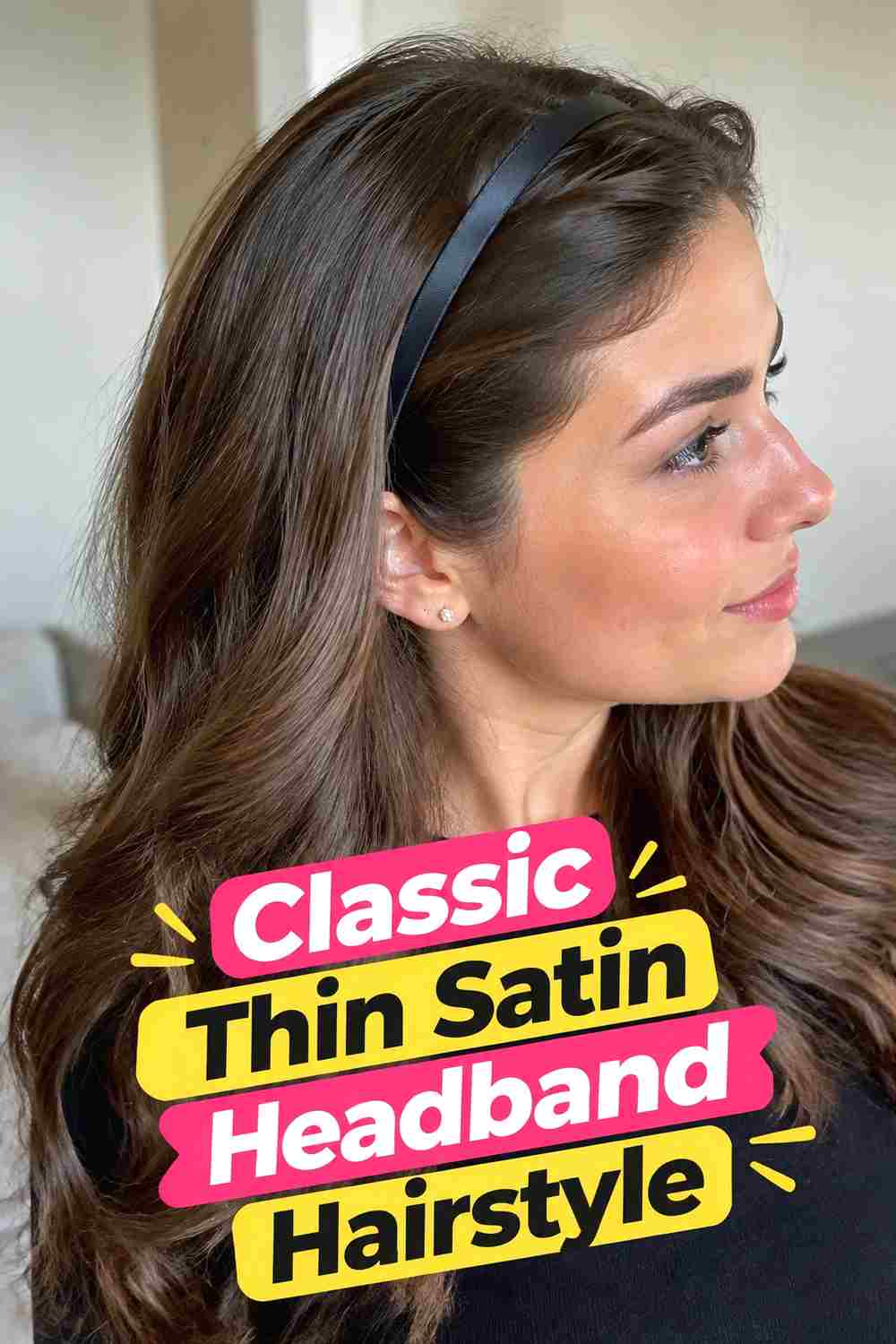
The classic version keeps the hair loose and places a slim satin band just behind the hairline, allowing most of the length and texture to remain untouched. The band adds a neat line across the crown without creating the stronger visual break of a wide accessory. Straight, wavy, curly, and softly textured hair can all work with this approach as long as the headband sits securely. A little natural root lift keeps the top from looking flattened, while the ends can remain polished or relaxed depending on the overall mood. This simple style is especially useful when you want an easy finishing detail without changing your usual hair shape.
Styling Notes
Position the band after the hair is mostly arranged, then adjust small sections around it instead of pushing a fully styled shape backward.
Best For
This is an easy option for medium to long hair and works across many textures.
2. Center Part Thin Satin Headband Hairstyle
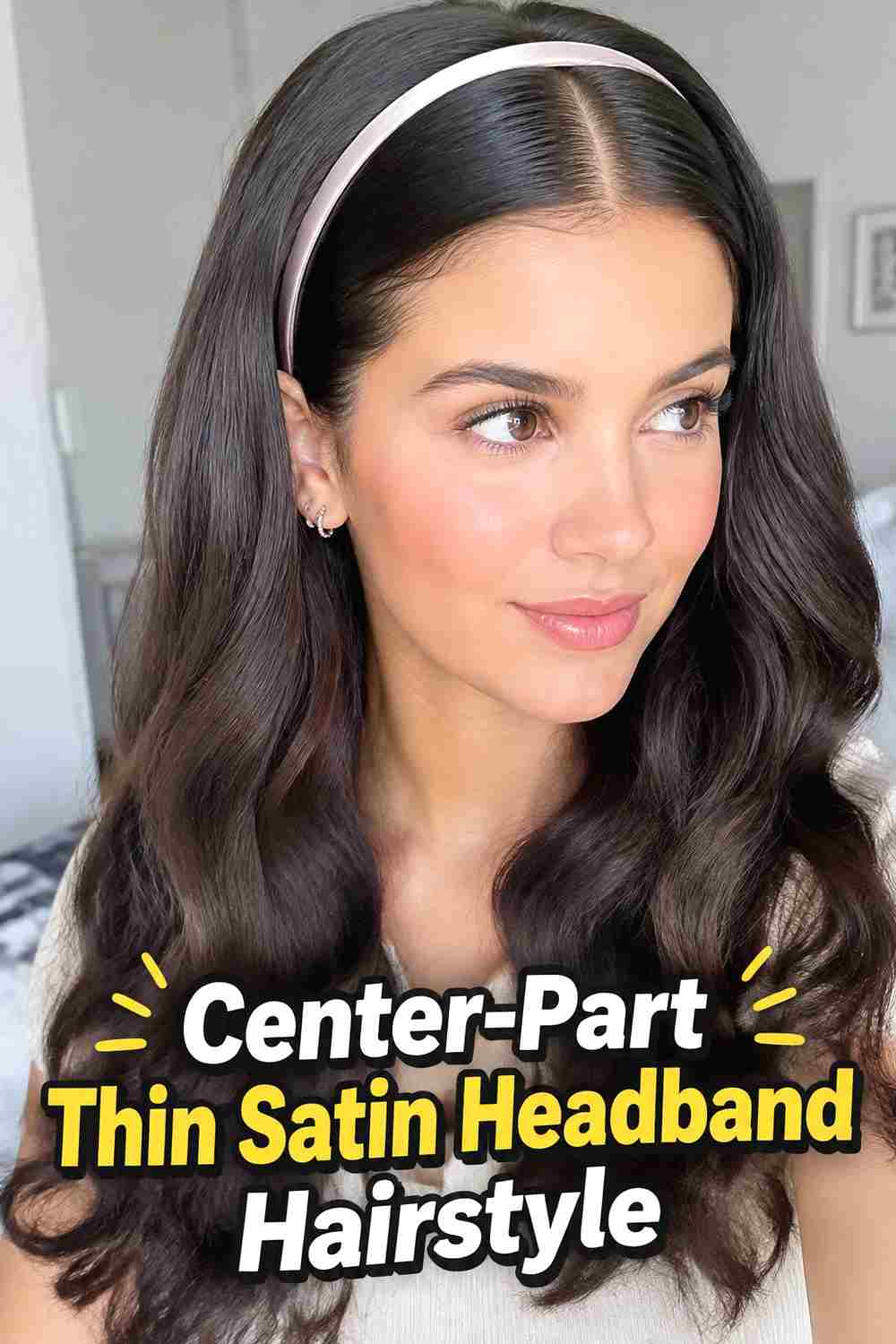
A center part gives a slim satin headband a clean, symmetrical framework. Create the part first, keep a little natural lift on both sides, and place the band just behind the front sections so the separation remains visible. The hairstyle can be worn straight, softly waved, or textured, but similar volume on both sides helps maintain the balanced effect. Because the accessory is narrow, it supports the look without hiding the part or dominating the crown. This variation feels polished while staying easy enough for everyday wear, especially when the satin color contrasts gently with the hair rather than blending into it completely.
Why It Works
The centered part and narrow headband create structure while leaving most of the hair visible and free-moving.
Pro Tip
Lift the roots lightly after placing the band if the front starts to look compressed.
3. Side Part Thin Satin Headband Hairstyle
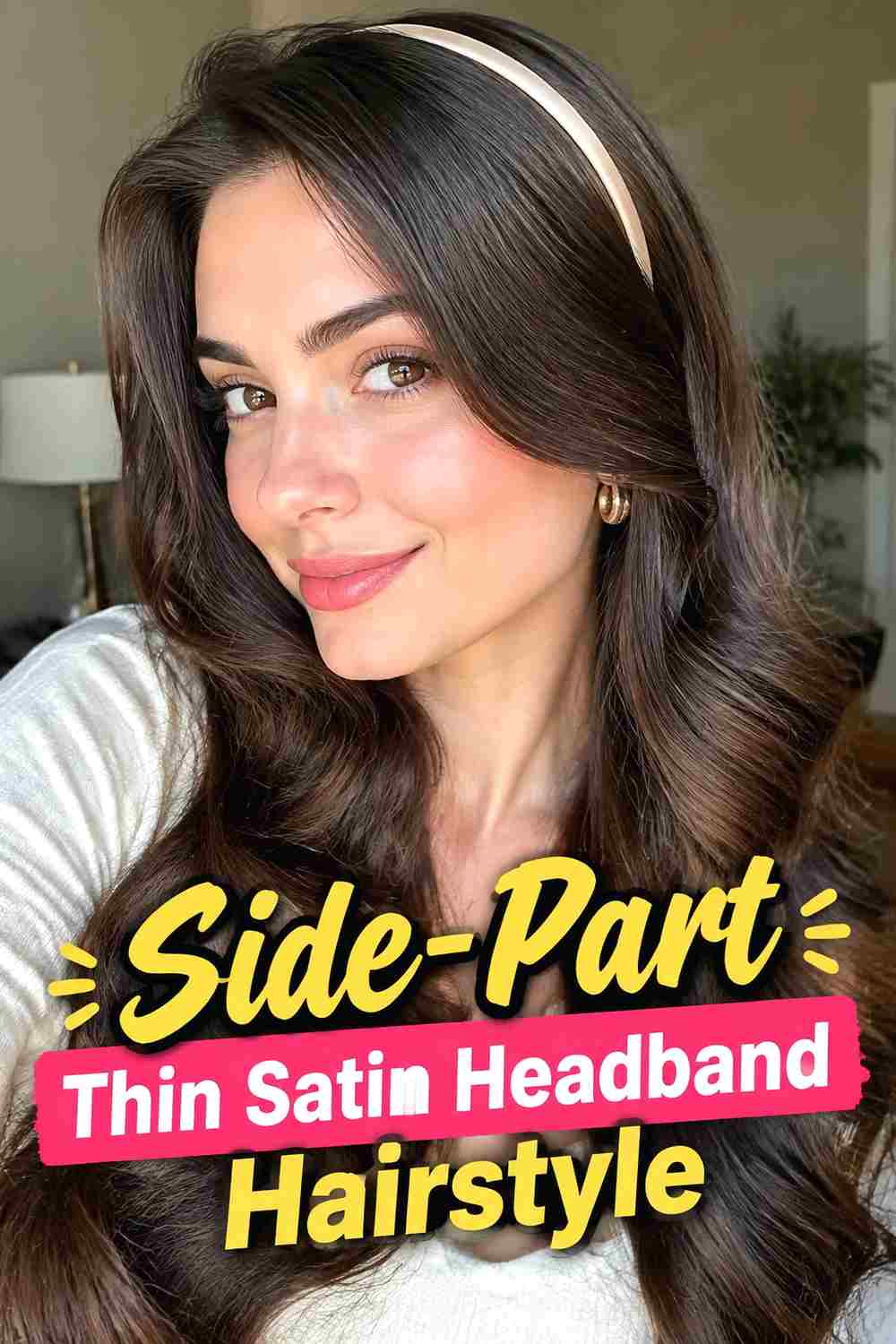
A side part makes a thin satin headband feel more directional and gives one side extra movement. Part the hair before placing the band, then allow the fuller section to sweep naturally away from the separation instead of pressing it flat. The smaller side can sit closer to the head or tuck behind the ear if the length allows. This style works well with straight, wavy, or curly hair because the asymmetry comes mainly from the parting rather than the texture. A slim band keeps the look refined and makes it easy to pair with casual outfits, office styling, or simple evening looks.
Styling Notes
Place the headband so it follows the crown rather than cutting directly through the fullest section of the side sweep.
Best For
Choose this variation if you prefer an off-center front shape with minimal accessory bulk.
4. Sleek Straight Thin Satin Headband Hairstyle
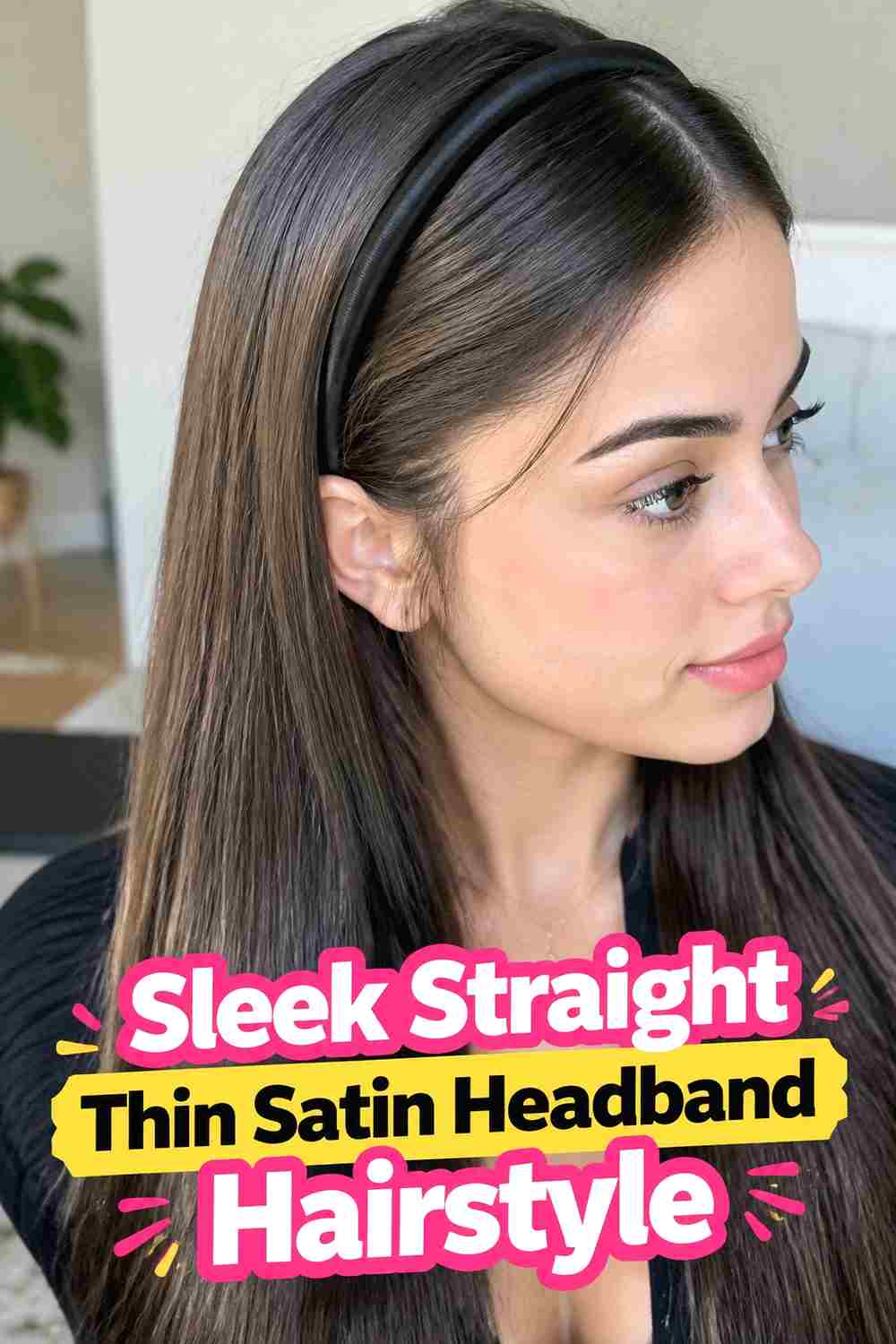
Smooth straight hair creates a clean backdrop for the soft sheen of a thin satin headband. The hair can fall naturally behind the shoulders or remain tucked behind the ears, while the band sits close to the crown and keeps shorter front pieces controlled. A center or soft side part both work, depending on the finish you prefer. The key is maintaining movement through the lengths so the hairstyle looks polished rather than rigid. A band with subtle contrast can add enough detail to break up the sleek surface without distracting from the hair’s shine, weight, and smooth texture.
Why It Works
The smooth hair and satin surface complement each other, creating a simple polished finish without extra accessories.
Wear & Maintenance
Check that the band has enough grip to stay put on very smooth hair without needing excessive pressure.
5. Soft Waves Thin Satin Headband Hairstyle
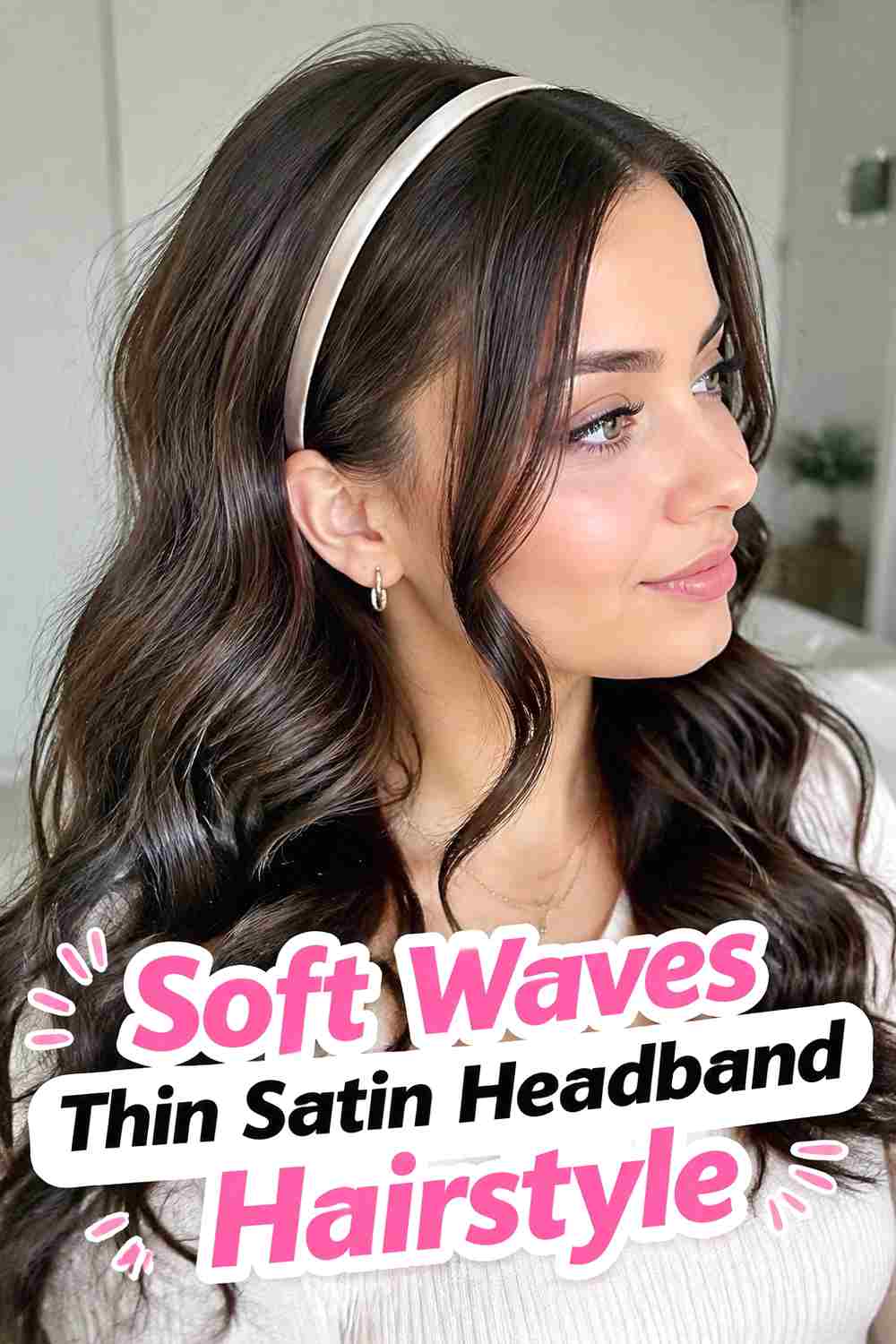
Soft waves make a slim satin headband feel romantic and relaxed without becoming overly formal. Place the band slightly behind the hairline and allow loose bends to fall naturally through the mid-lengths and ends. Keeping the roots lightly lifted helps the waves transition smoothly from the crown rather than appearing flat at the top. A center part creates a balanced look, while a side part introduces more sweep and movement. The thin accessory works especially well here because it does not compete with the flowing texture. The finished style suits everyday outings, casual events, or any look that benefits from a polished but easy finish.
Styling Notes
Shape the waves first, then add the headband so you can preserve the intended movement around the crown.
Why It Works
The satin gives a crisp finishing line while the waves keep the overall hairstyle soft and fluid.
6. Curly Thin Satin Headband Hairstyle
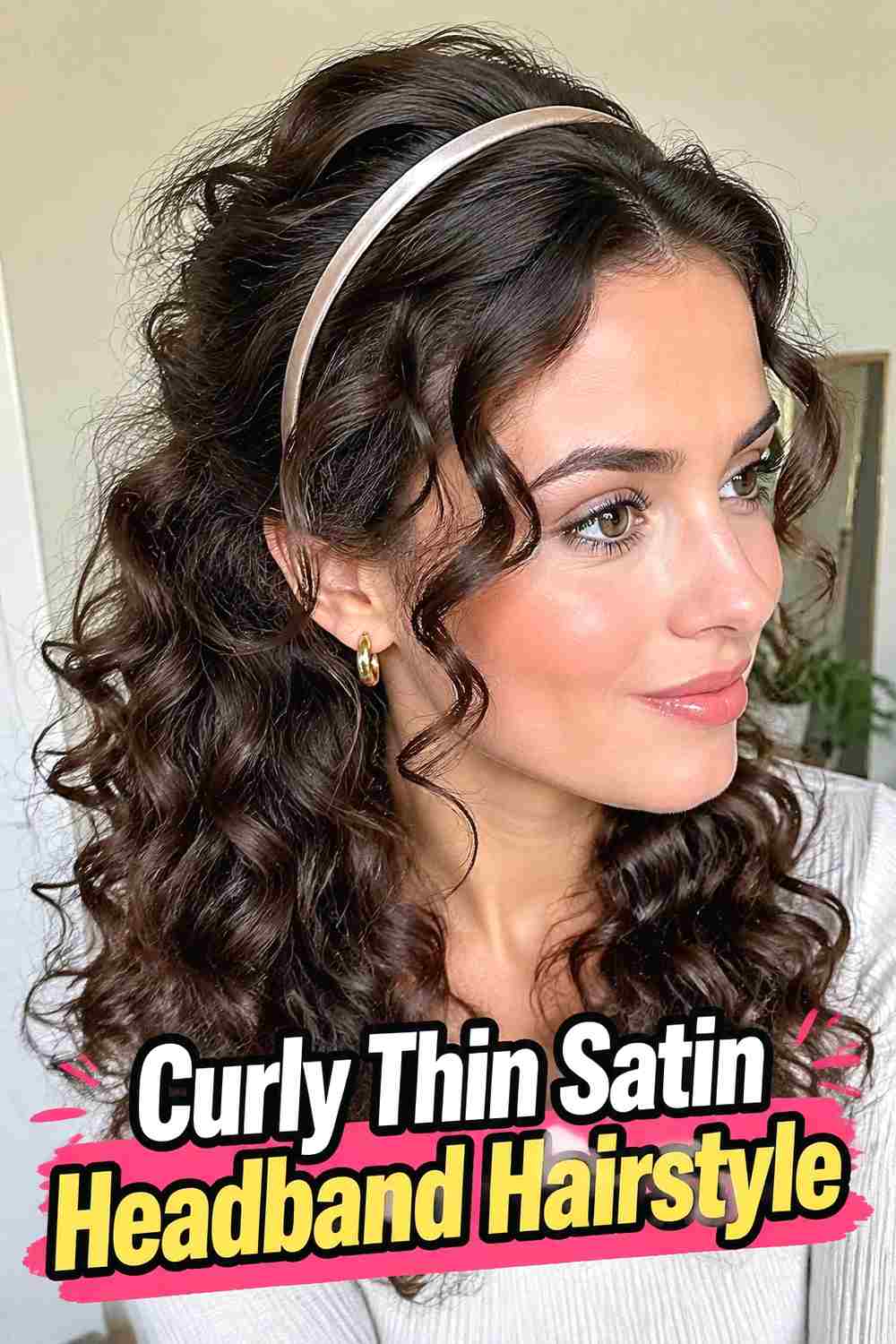
A thin satin headband can control the front of curly hair without hiding the curl pattern. Position it behind the hairline and allow curls to expand freely through the sides and back, preserving natural variation in size and direction. Depending on length, a few curls can remain near the temples for extra softness or all front sections can be pushed back for a more open face. The narrow width keeps the accessory visible without interrupting too much texture. This works particularly well when you want a quick way to manage front curls while keeping the rest of the hairstyle loose, full, and naturally dimensional.
Best For
Curly and coily textures with enough volume to remain visible behind a narrow accessory.
Pro Tip
Avoid dragging the band through finished curls; place it gently to reduce unnecessary separation and frizz.
7. Afro Thin Satin Headband Hairstyle
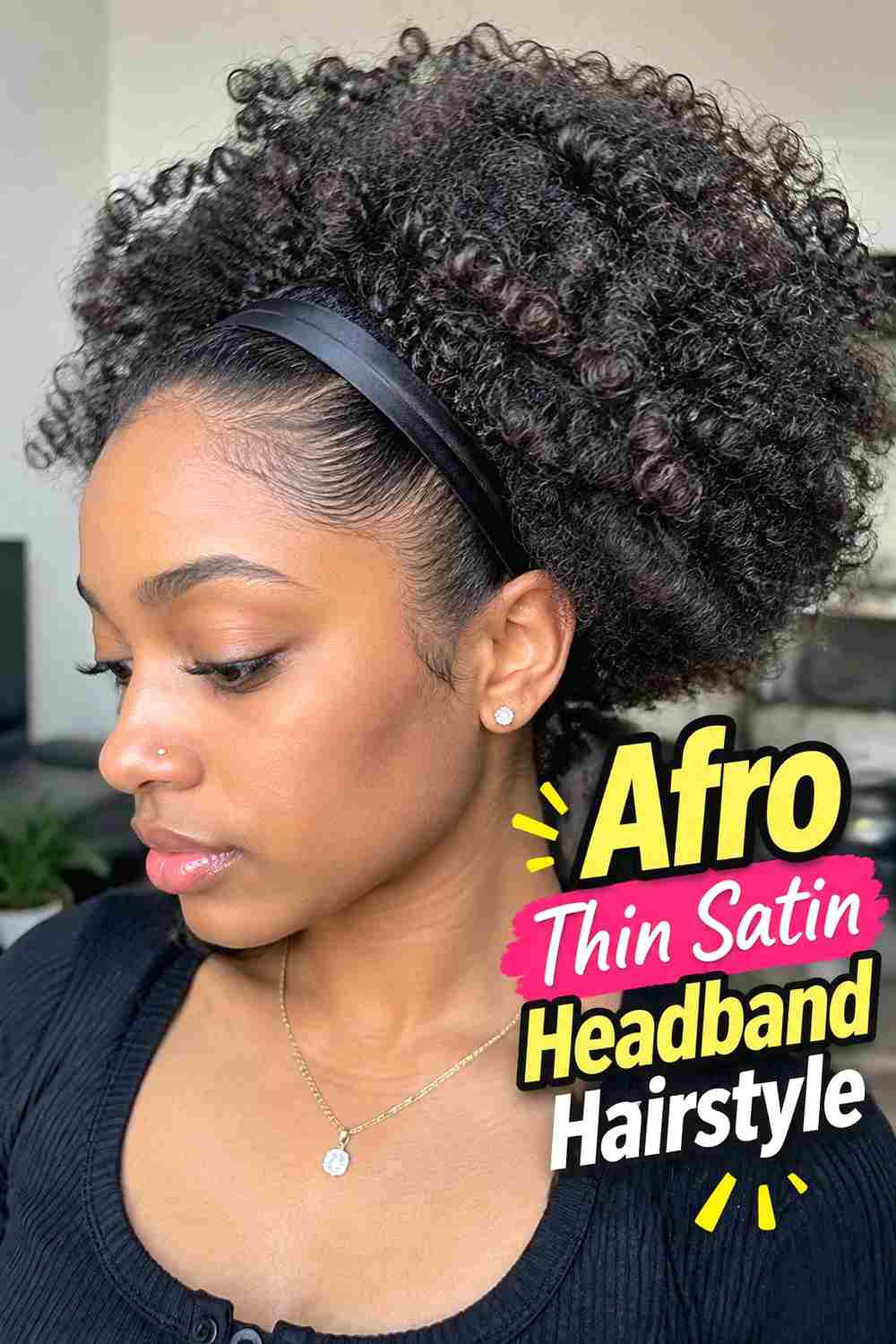
A slim satin headband gives an Afro a subtle front detail while leaving the rounded volume almost completely visible. The band can sit close to the hairline or slightly farther back to expose more of the front texture. Because it is narrow, it does not divide the silhouette as strongly as a wide fabric band. After positioning it, shape the Afro around the crown and sides so the volume stays balanced rather than compressed directly behind the accessory. Defined coils, fluffy texture, or a softly stretched Afro can all work. The result feels simple, polished, and especially useful when you want the accessory to remain secondary.
Styling Notes
Place the headband first, then reshape the crown and sides to restore any volume displaced during placement.
Why It Works
The thin line adds definition at the front without interrupting the larger Afro silhouette.
8. Bob Thin Satin Headband Hairstyle
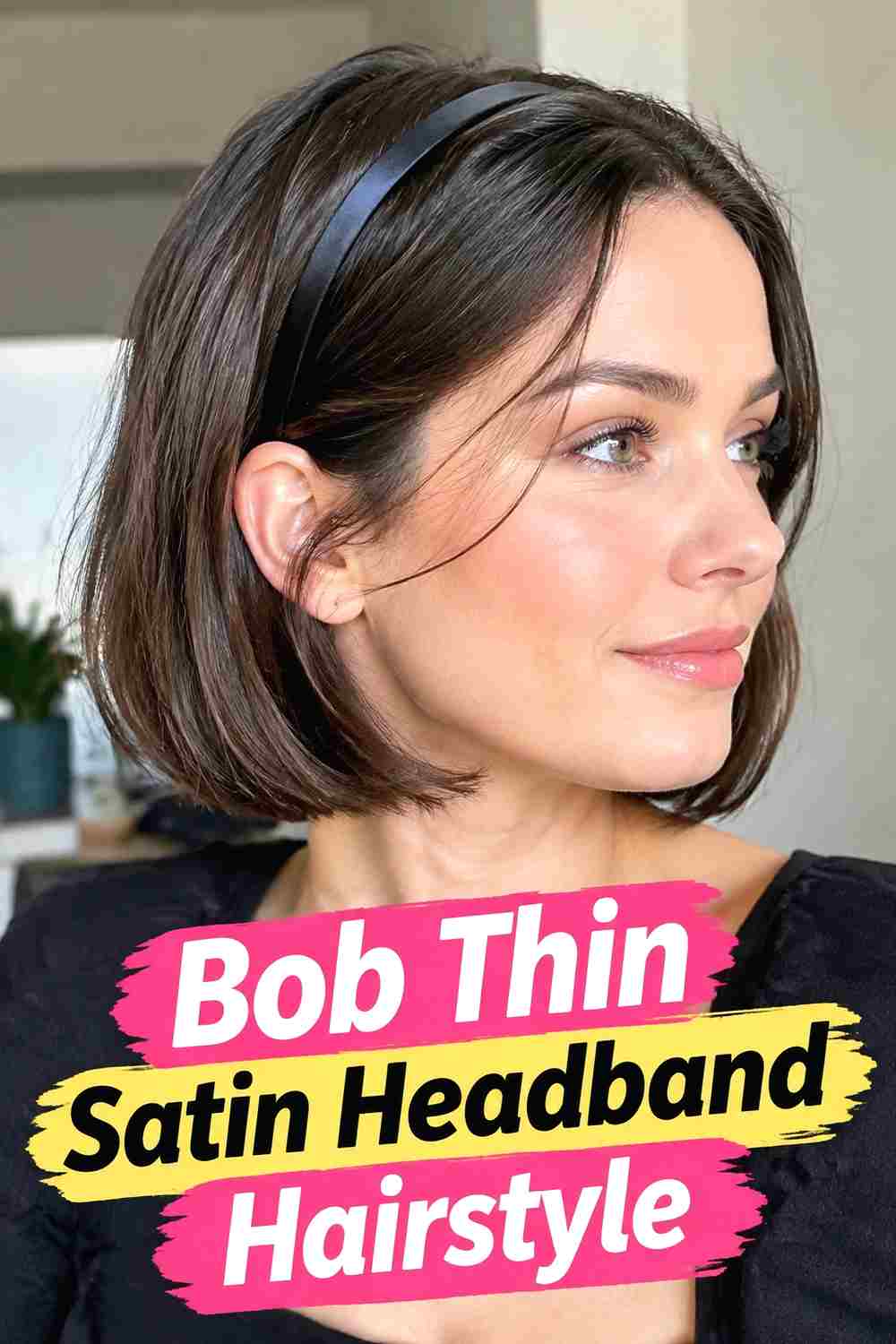
A bob paired with a thin satin headband creates a compact, polished look that works with straight, wavy, or curly texture. The band keeps shorter front sections away from the face while leaving the bob’s perimeter fully visible. On a chin-length cut, it can emphasize the clean outline; on a softer layered bob, it helps separate the crown from the movement around the jaw. A center part gives the look symmetry, while a side part makes the short shape feel more directional. Because the haircut already provides structure, the headband should remain slim and simple enough to complement rather than compete with the silhouette.
Best For
Jaw-length to shoulder-skimming bobs where the perimeter is an important part of the finished shape.
Wear & Maintenance
Choose a comfortable fit so the headband does not push a short bob outward awkwardly behind the ears.
9. Pixie Thin Satin Headband Hairstyle
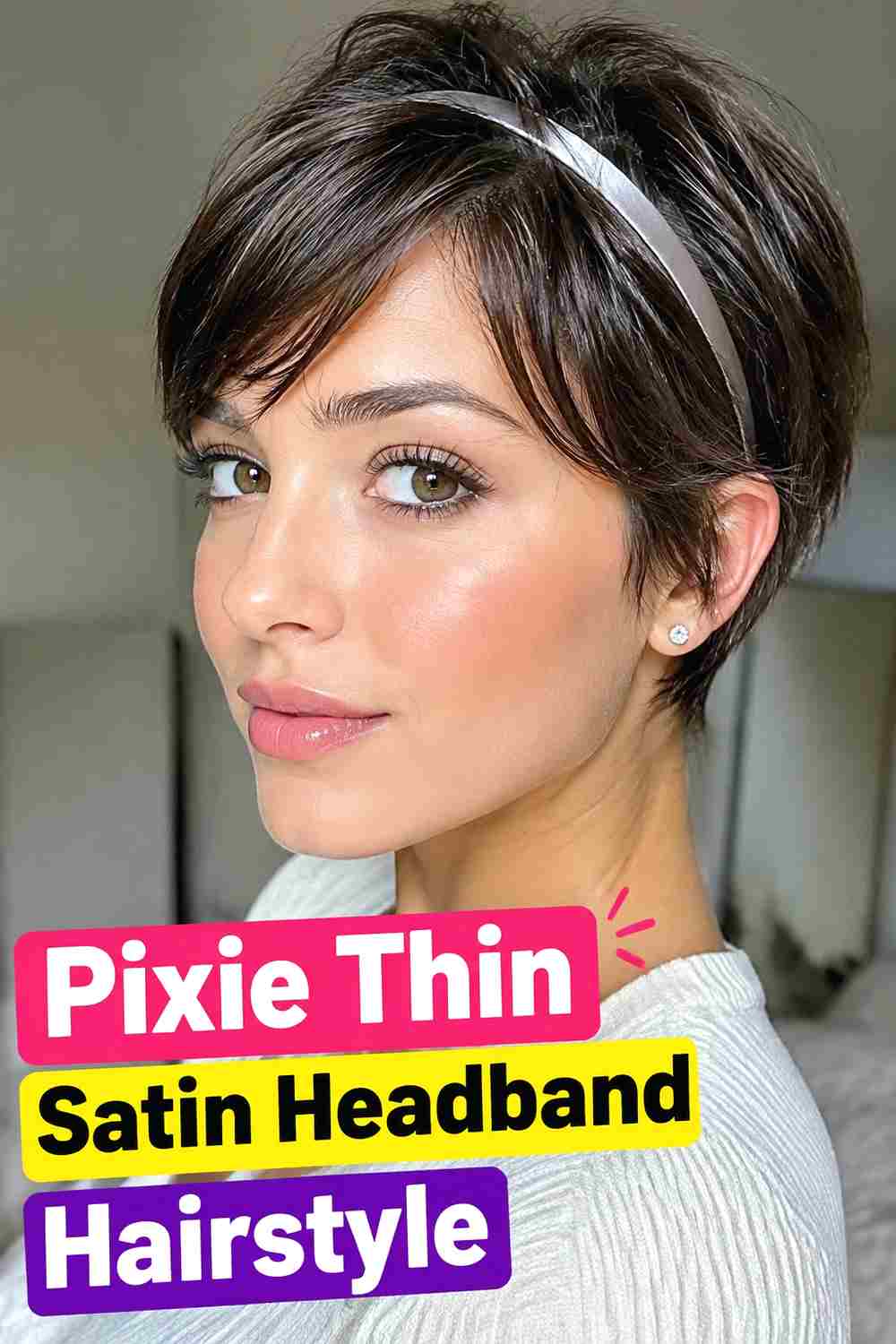
A thin satin headband can add a feminine detail to a pixie while preserving the haircut’s short silhouette. Position it just behind the front hairline and style the top with light texture, a small side sweep, or soft lift depending on the cut. Because there is less hair surrounding the accessory, headband scale matters more; a narrow band generally feels balanced and keeps the pixie from looking overwhelmed. The sides can remain close to the head while the crown carries slightly more movement. This works particularly well for growing-out pixies or short cuts with longer top layers that benefit from a little controlled direction.
Styling Notes
Keep enough texture at the crown so the headband frames the cut without making the top look flat.
Best For
Short cuts with sufficient top length to show movement behind the band.
10. Low Ponytail Thin Satin Headband Hairstyle
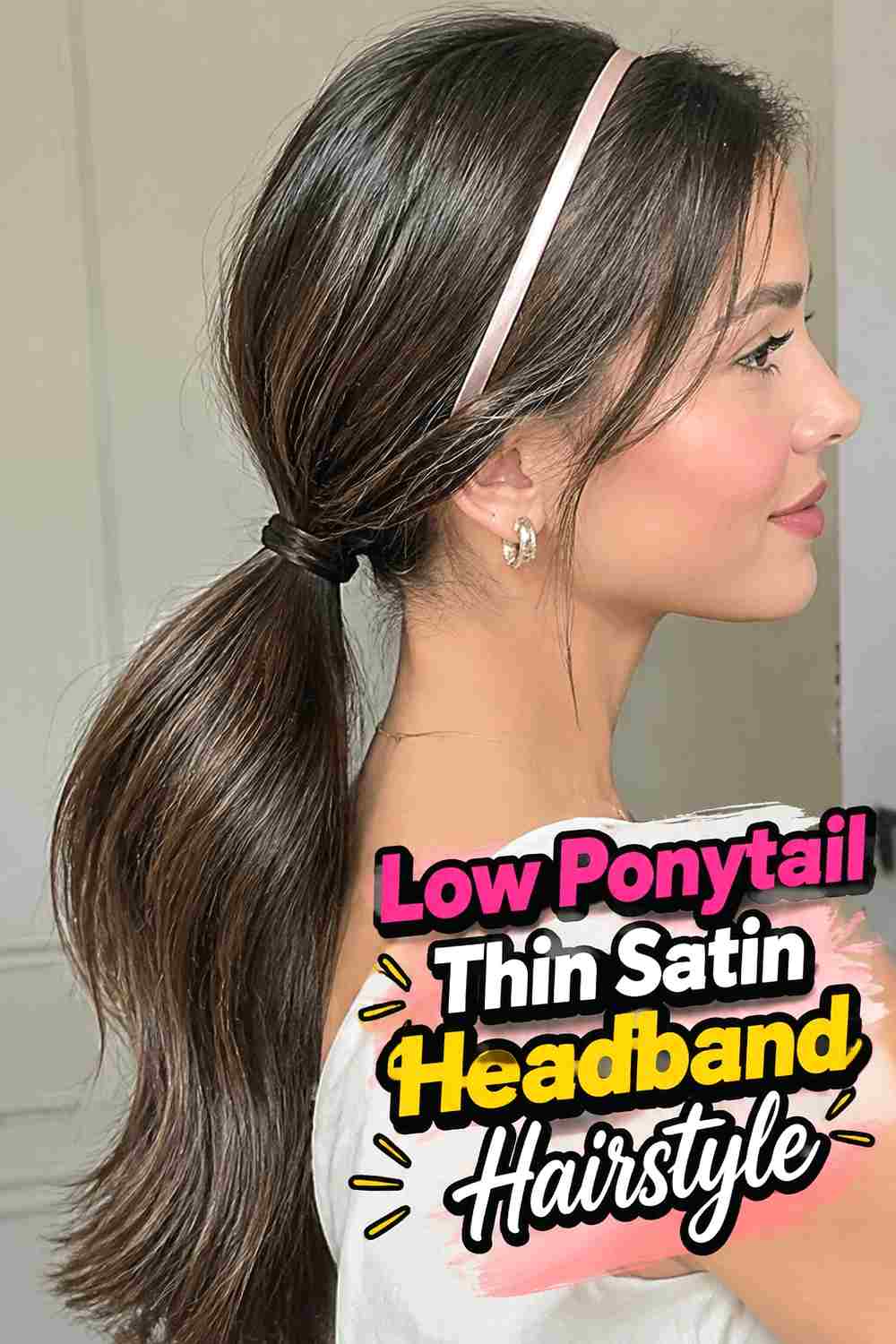
A low ponytail and thin satin headband create a neat, understated combination that keeps both the front and back controlled. Place the headband behind the hairline, then gather the lengths near the nape without pulling the crown excessively tight. The ponytail can remain sleek, wavy, or softly textured depending on the finish you want. A small amount of root lift between the band and ponytail base prevents the hairstyle from looking overly flattened. This version is especially practical for workdays, travel, and simple event styling because it controls shorter front pieces while leaving the ponytail itself easy to manage.
Why It Works
The headband tidies the front while the low ponytail keeps the silhouette compact and polished.
Pro Tip
Secure the ponytail independently instead of relying on the headband to hold any tension.
11. High Ponytail Thin Satin Headband Hairstyle
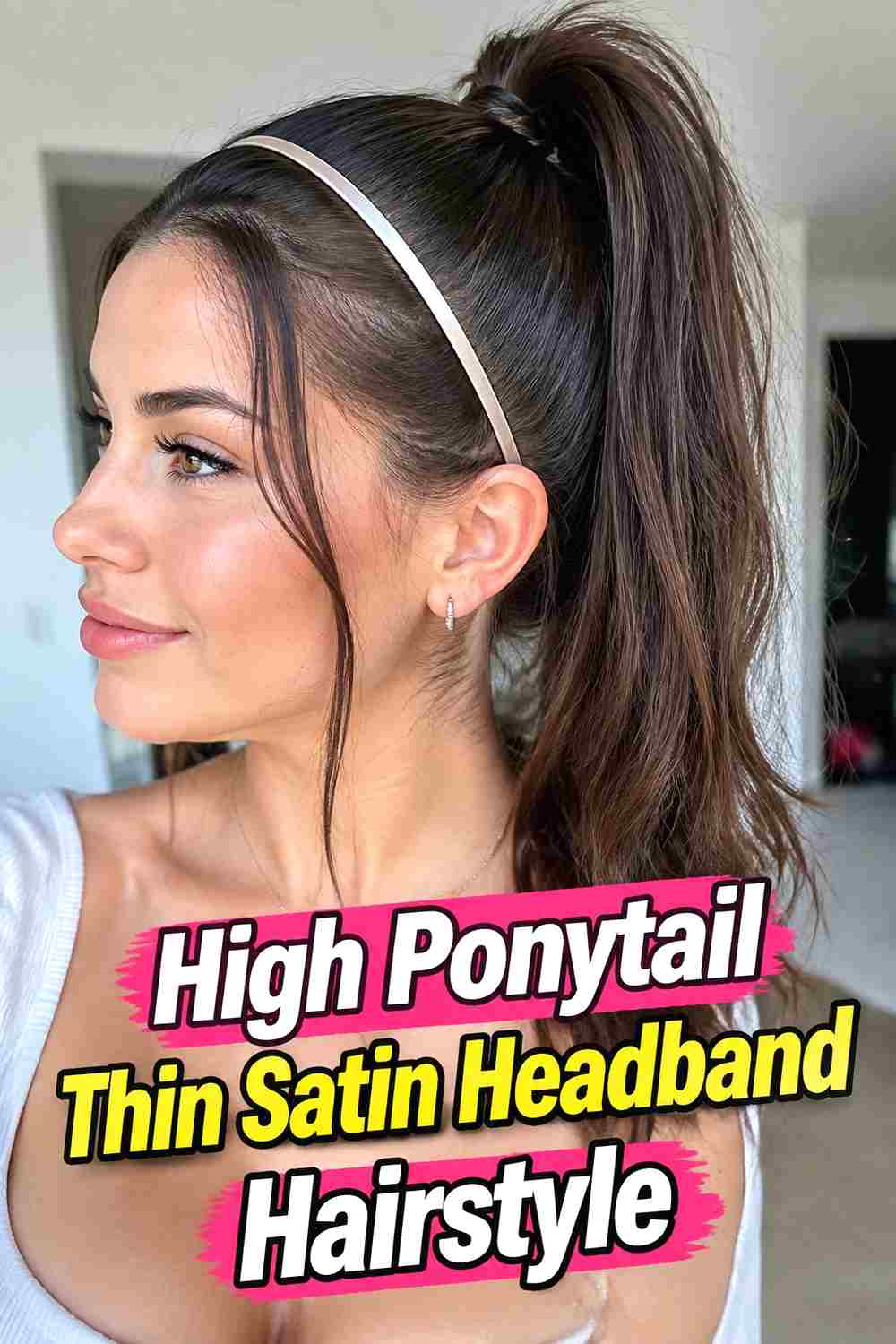
A high ponytail gives a thin satin headband a more energetic, sporty-polished feel. The band sits near the front while the ponytail lifts the lengths toward the crown, creating two clear structural points without making the style complicated. Straight, curly, or wavy ponytail textures can all work, although the root area should remain smooth enough for the narrow headband to stay visible. A little volume between the band and ponytail base helps maintain shape. This variation is particularly useful when you want hair fully off the neck but still want a decorative detail around the front that feels softer than a tightly slicked hairline.
Styling Notes
Set the ponytail height first, then position the band so it does not interfere with the base or create unwanted pulling.
Wear & Maintenance
Keep both the ponytail and headband comfortable, especially if you plan to wear the style for several hours.
12. Low Bun Thin Satin Headband Hairstyle
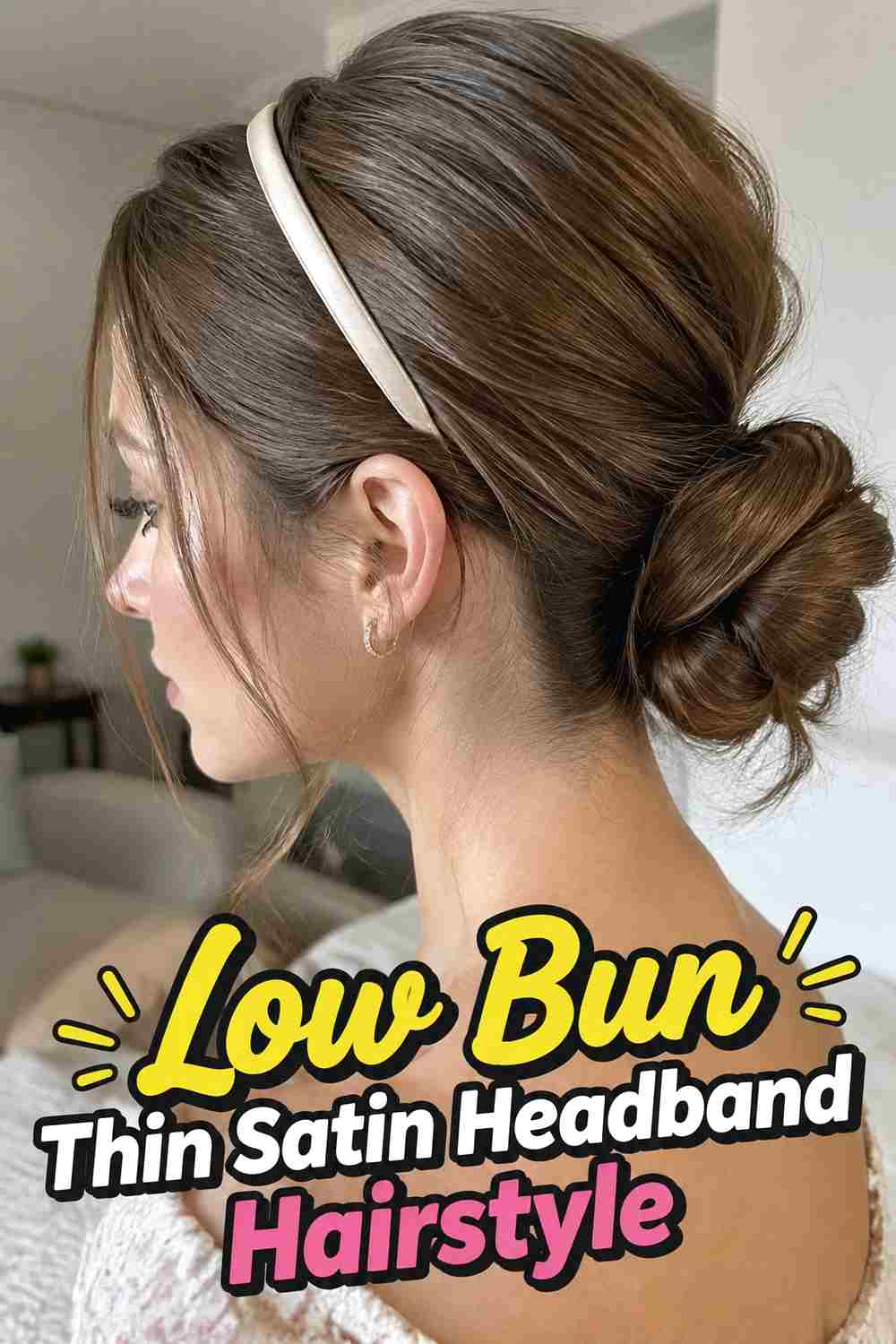
A low bun paired with a slim satin headband feels polished without needing an elaborate updo. Gather the hair near the nape and form a compact bun, leaving the crown either smooth or gently lifted. The headband then creates a clean line near the front and helps control shorter layers. A center part can make the style feel neat and symmetrical, while a side part adds a softer vintage-inspired touch. Because both the bun and accessory are restrained, this combination works well for professional settings, dinners, or simple formal outfits. The band should remain narrow enough that the hairstyle still feels light and uncluttered.
Why It Works
The low bun provides a clean back silhouette while the satin headband adds a subtle decorative finish at the front.
Best For
Medium to long hair that can be gathered comfortably into a secure low bun.
13. Messy Bun Thin Satin Headband Hairstyle
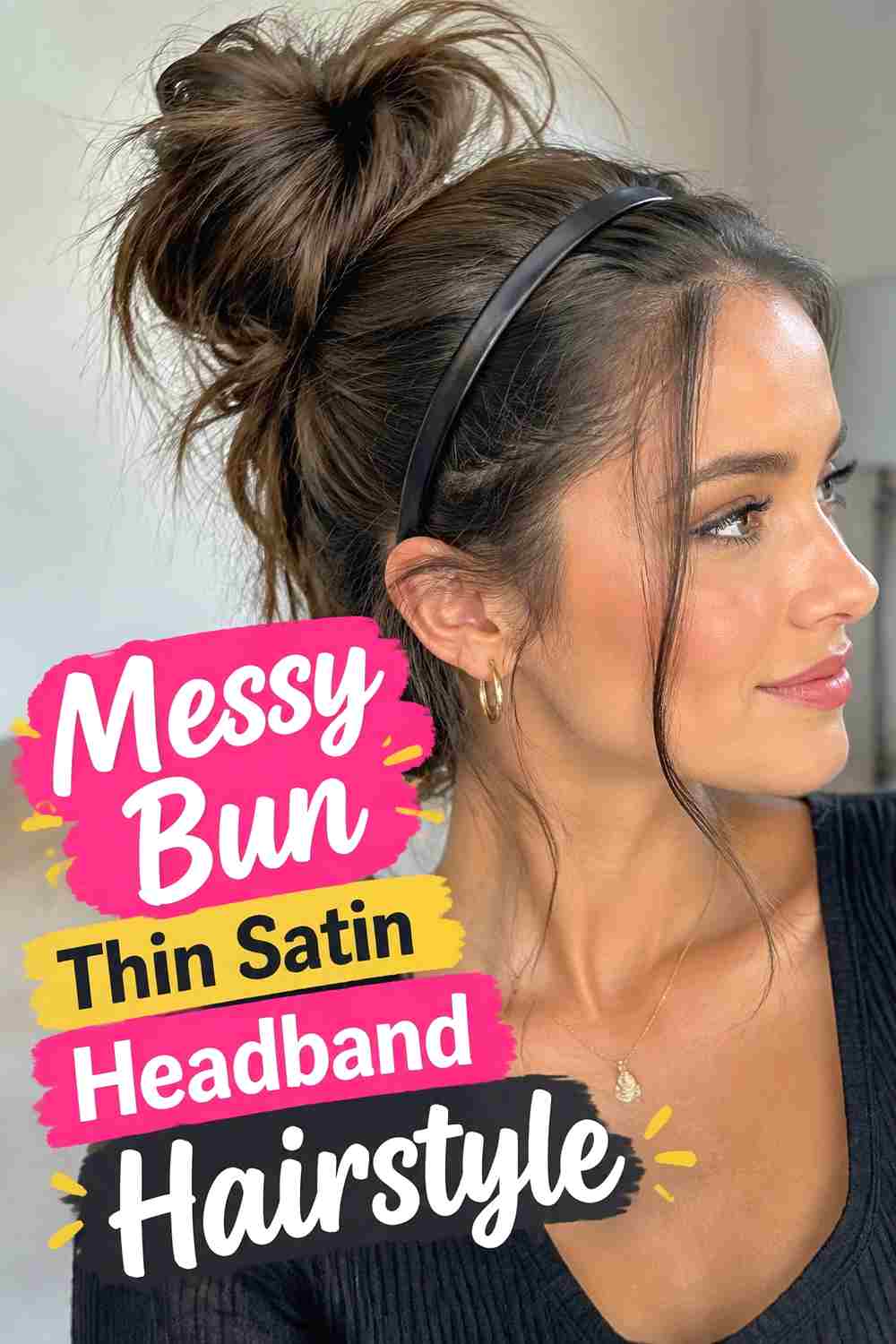
A messy bun creates a relaxed contrast with the smooth surface of a thin satin headband. Gather the hair loosely at the crown or upper back of the head, leaving enough softness that the bun shows natural movement rather than a perfect round shape. The headband controls front flyaways and gives the intentionally undone style a more finished appearance. A few loose face-framing strands can remain in front if desired, especially with wavy or curly texture. This look works well for casual days when you want hair up quickly but still prefer one polished detail. The key is controlled looseness, not a bun that is actually unstable.
Styling Notes
Secure the bun first, then add the headband so you can adjust loose sections without shifting the updo.
Why It Works
The satin provides polish while the softer bun keeps the hairstyle relaxed and wearable.
14. Half Up Thin Satin Headband Hairstyle
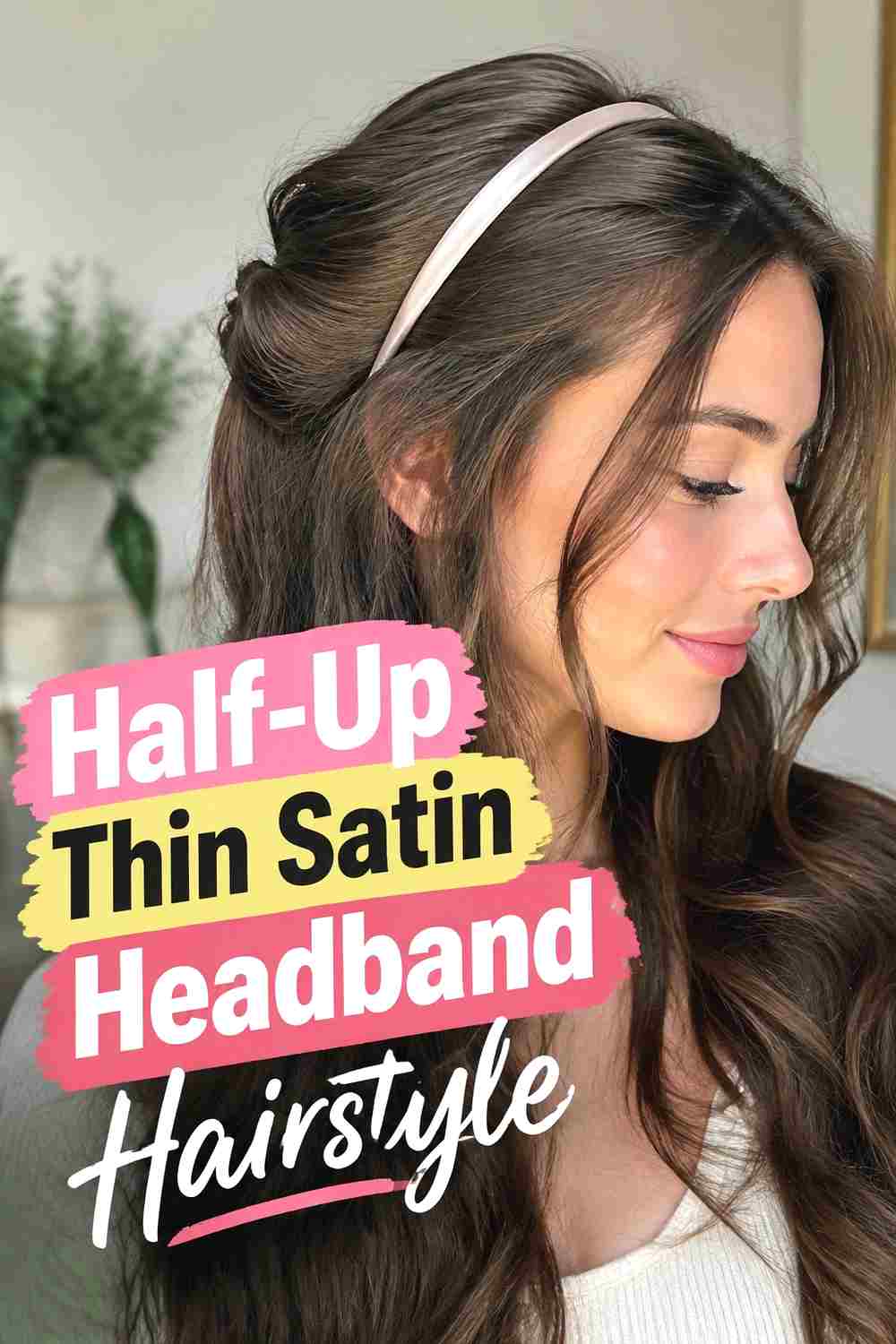
A half-up style lets the satin band frame the front while the upper section adds lift at the back. Place the headband just behind the hairline, then gather the crown into a small ponytail, twist, or clip while leaving the lower lengths loose. This creates several layers of shape without making the hairstyle feel heavy. Straight hair looks clean and graphic, waves add softness, and curls provide extra volume around the shoulders. A thin band is ideal because it does not compete with the half-up detail. This is a useful option when you want hair away from the face but still want most of the length visible.
Best For
Medium and long hair with enough lower length to create movement beneath the half-up section.
Pro Tip
Keep the gathered upper section modest so the headband and half-up shape remain visually balanced.
15. Face Framing Thin Satin Headband Hairstyle
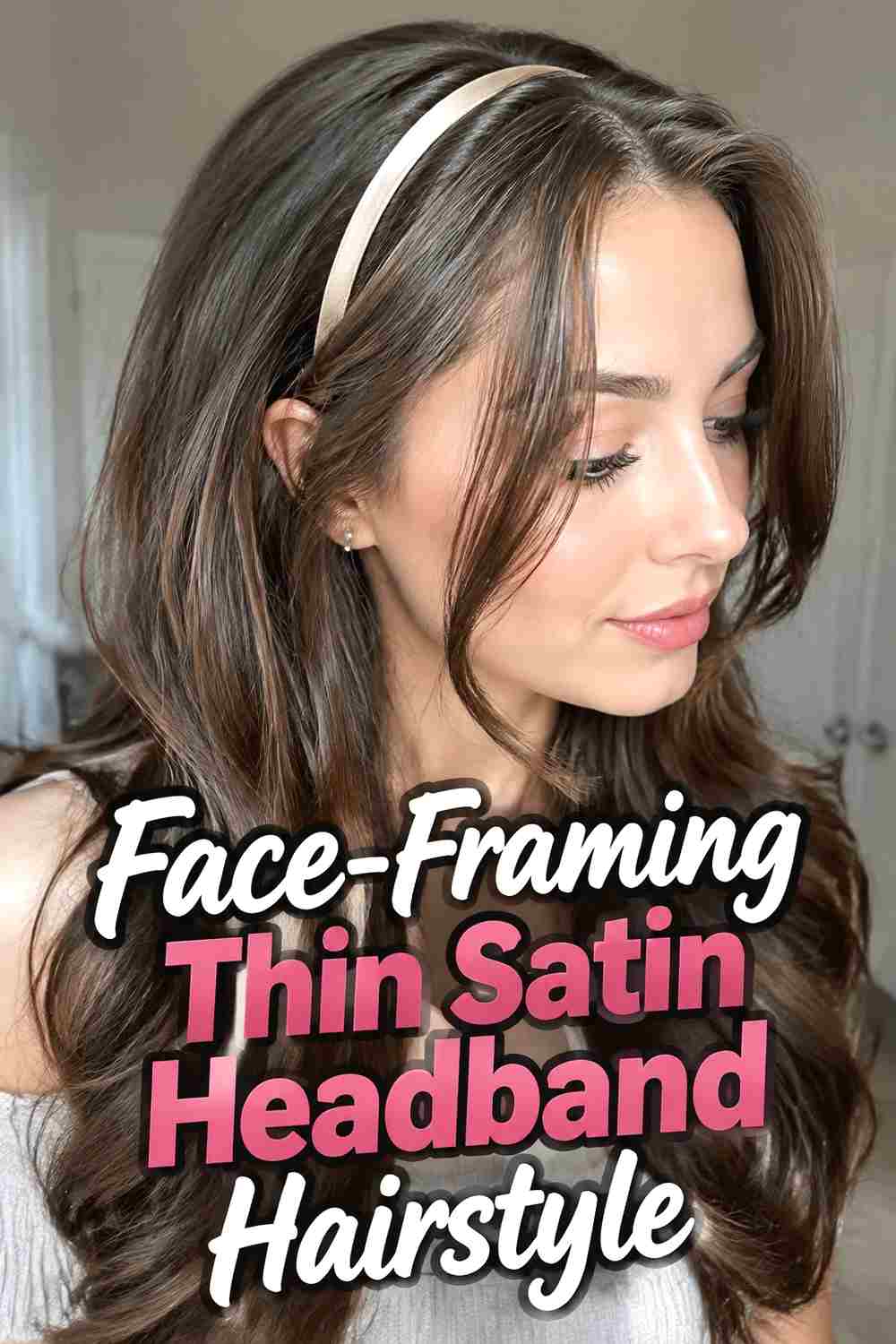
Instead of pushing every front section behind the accessory, this style leaves a few intentional pieces loose around the face. The headband sits slightly farther back, controlling the crown while shorter layers or soft tendrils remain in front. Those pieces can be straight, waved, or naturally curly, but they should connect visually with the texture through the rest of the hair. The result feels softer than a fully pushed-back headband style and can work with loose hair, ponytails, or half-up arrangements. Keeping the front sections limited prevents the accessory from disappearing and makes the face-framing detail look deliberate.
Styling Notes
Select the pieces you want left forward before placing the headband instead of pulling random strands out afterward.
Why It Works
The loose front sections soften the clean line of the satin and create extra movement around the face.
16. Curtain Bangs Thin Satin Headband Hairstyle
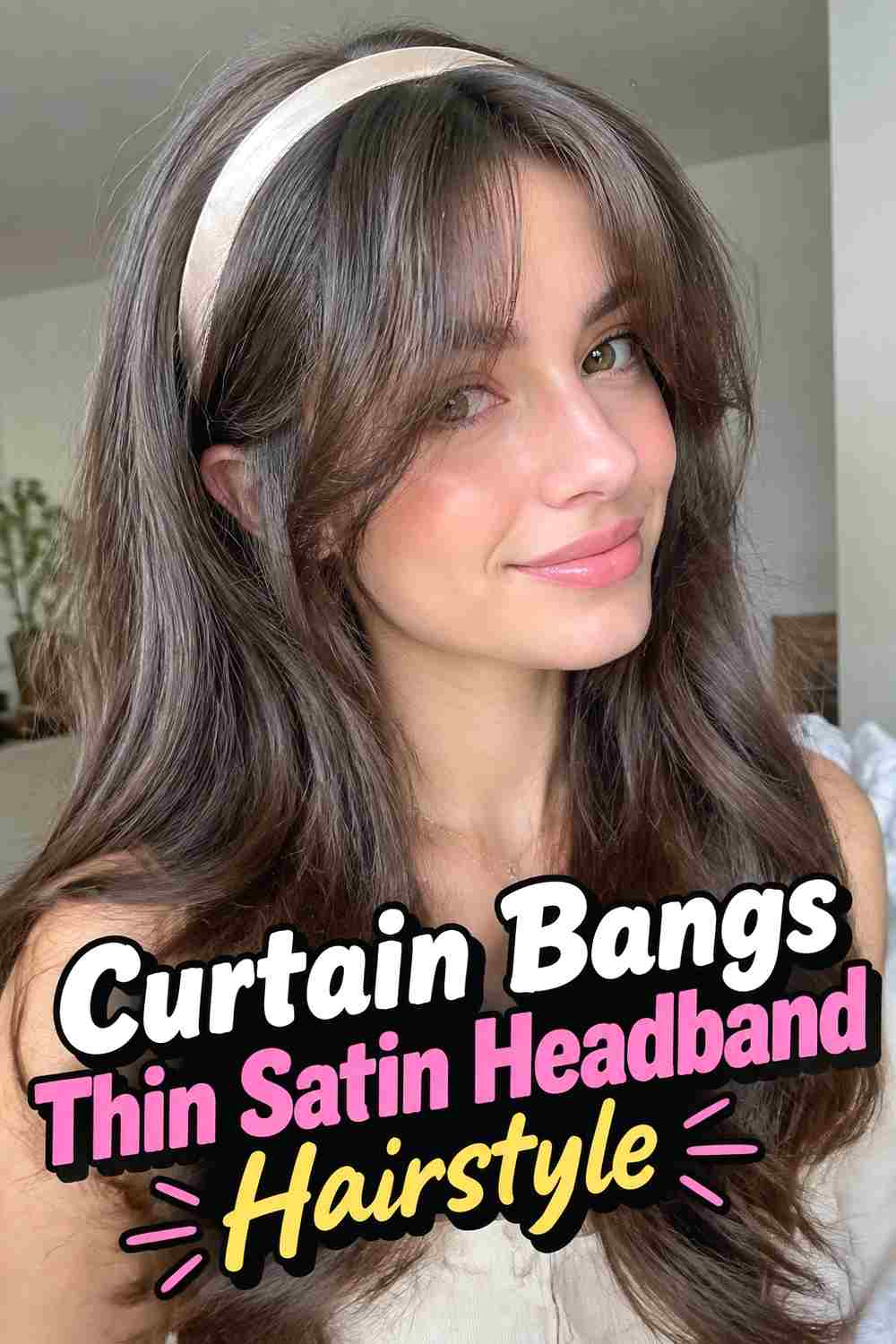
Curtain bangs pair naturally with a thin satin headband because the accessory can sit just behind the fringe while leaving the center-splitting shape fully visible. Style the bangs first so they curve away from the center, then position the band without pushing them backward. The remaining hair may be straight, wavy, or pulled into a low ponytail, but the front should remain the focus. A subtle root lift where the bangs meet the longer sections keeps the transition soft. This combination feels polished yet relaxed and works especially well when you want to wear a headband without covering or flattening carefully styled fringe.
Best For
Medium to long curtain bangs that already part naturally near the center.
Wear & Maintenance
Avoid placing the band too far forward, which can disrupt the fringe shape and cause the bangs to separate awkwardly.
17. Braided Crown Thin Satin Headband Hairstyle
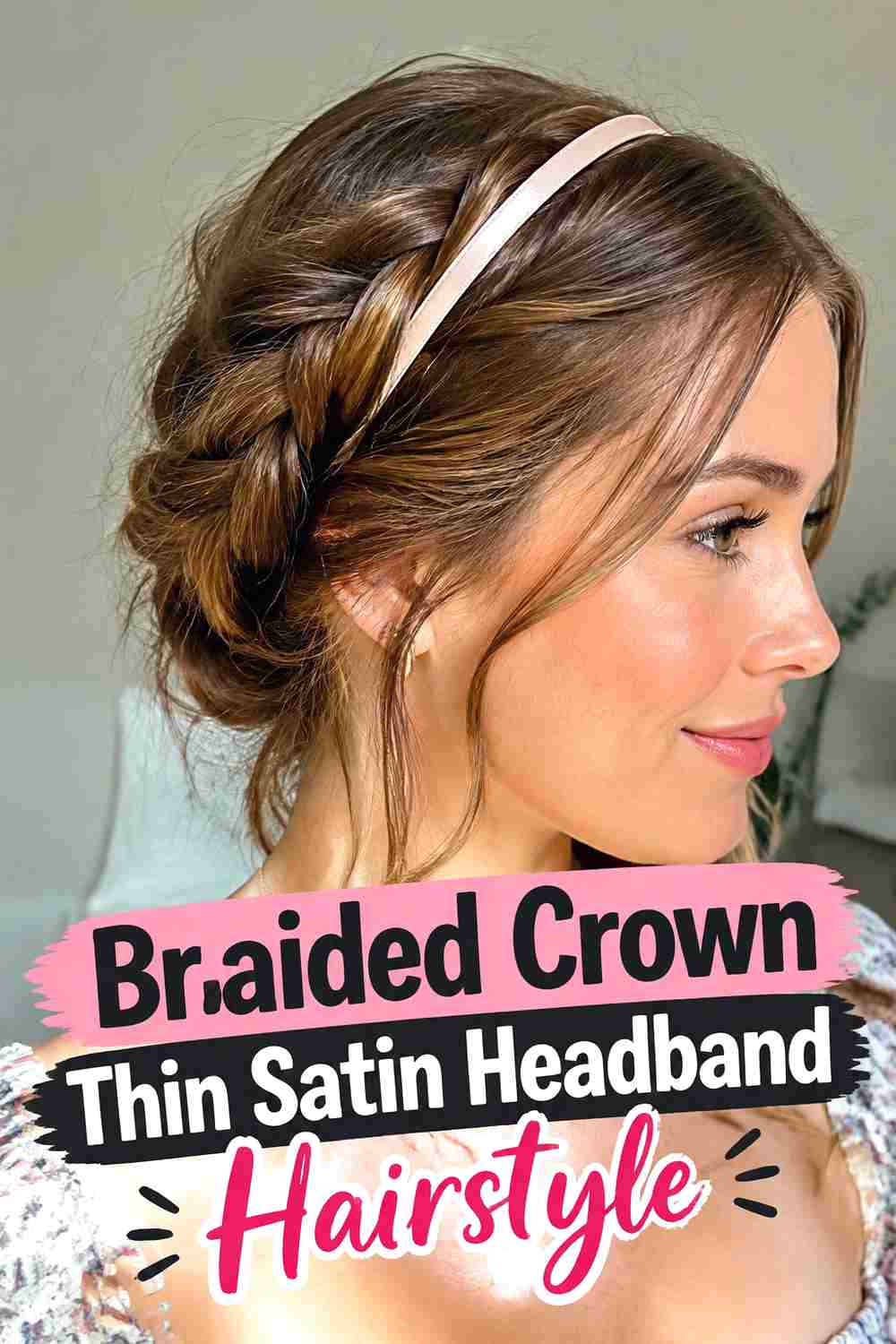
A narrow braid across the crown can sit just behind or alongside a thin satin headband, creating a layered detail without overwhelming the hairstyle. Keep the braid relatively slim and guide it from one side toward the other, then place the headband so both elements remain visible. Loose lengths can stay softly waved, curly, or straight depending on the overall mood. The key is separating the textures: the braid provides woven structure, while the satin gives a smooth reflective line. This style can look dressier than a basic loose-hair headband look while still feeling wearable for daytime events or relaxed celebrations.
Styling Notes
Keep the braid and headband slightly offset so one does not hide the other completely.
Pro Tip
Secure the braid independently before positioning the satin band for a more stable finished style.
18. Twist Out Thin Satin Headband Hairstyle
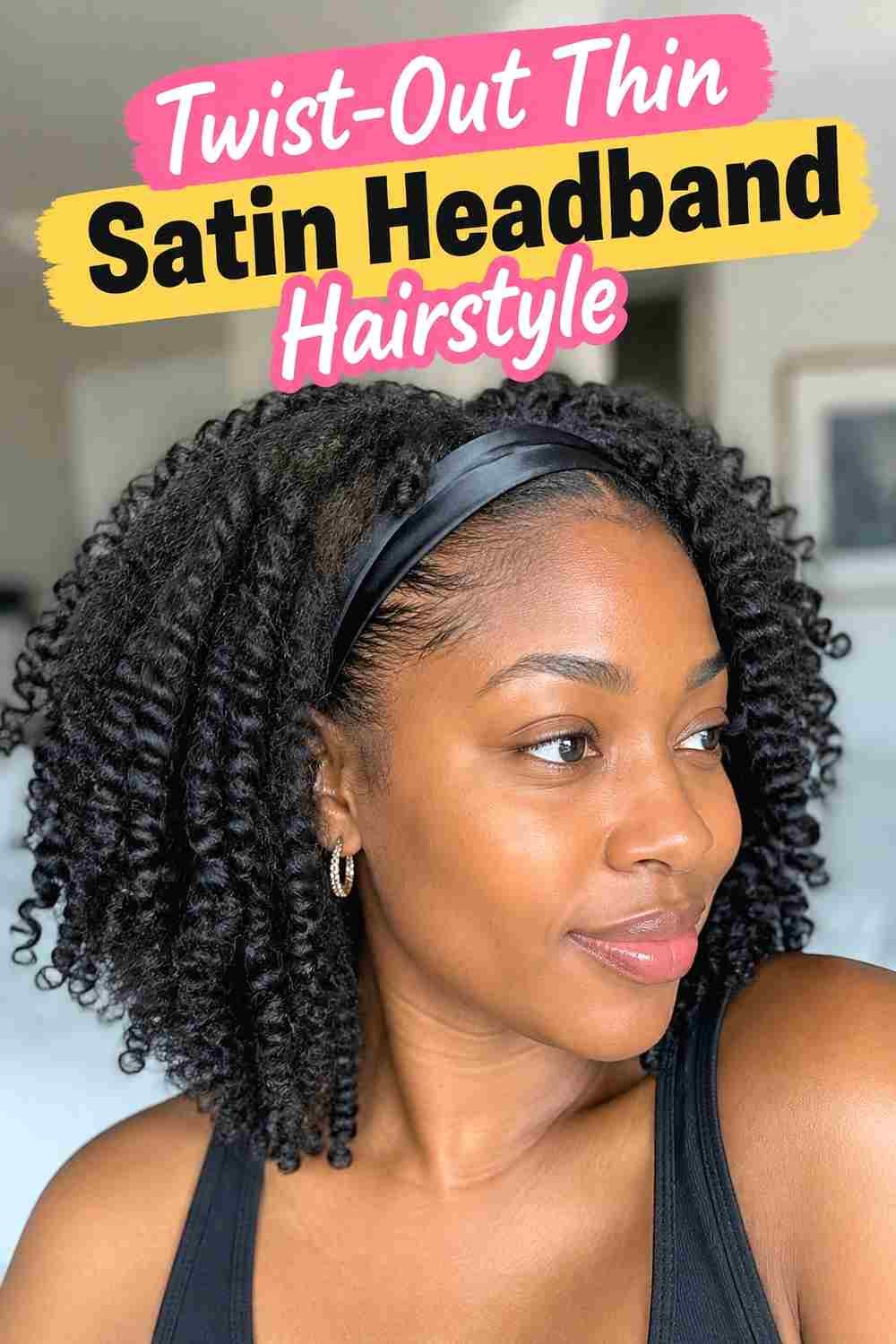
A twist-out paired with a slim satin headband balances broad natural texture with a polished accessory line. After fully drying and unraveling the twists, preserve the larger bends and spirals instead of over-separating them. Place the headband carefully behind the hairline and lift the roots around the crown to restore any volume lost during placement. The satin contrasts nicely with the textured surface without covering much of it. This variation can be worn with a rounded shape, a side part, or a slightly stretched finish depending on your preferred silhouette. The goal is visible twist-out definition with easy control at the front.
Wear & Maintenance
Handle the twist-out gently around the band so repeated adjustment does not create excess frizz near the hairline.
Why It Works
The smooth satin edge gives structure to the front while the twist-out supplies natural volume and movement.
19. Voluminous Blowout Thin Satin Headband Hairstyle
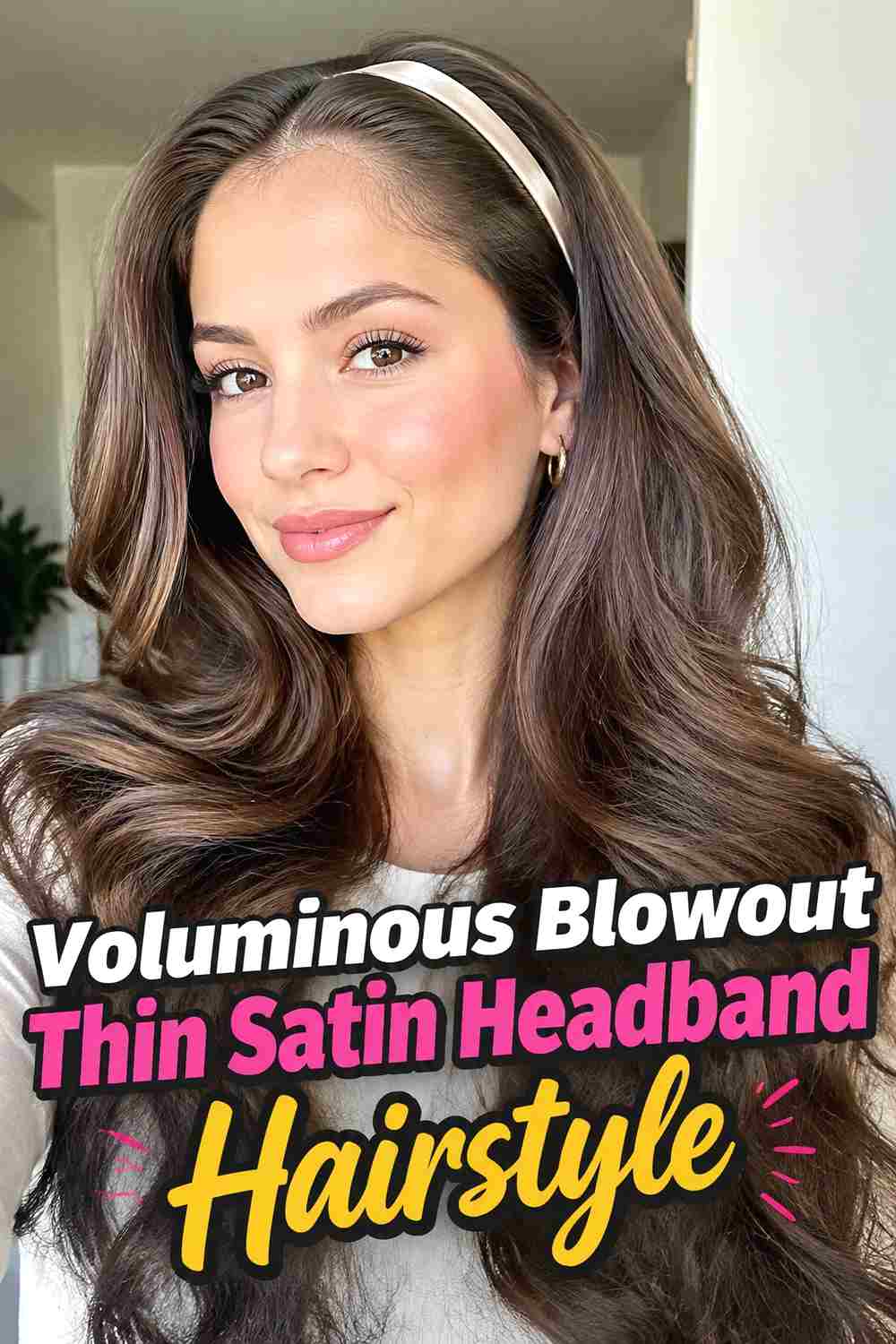
A voluminous blowout gives the thin satin headband a glamorous backdrop with plenty of movement and root lift. The hair should feel soft and full rather than stiff, with rounded volume through the crown and sweeping movement through the lengths. Position the band behind the hairline without pressing down the top too much, then lift the surrounding roots if necessary to restore height. Large bends or softly flipped ends can add extra shape while keeping the style modern. Because the blowout already has significant body, a narrow headband works best—it adds a polished line without interrupting the fullness or making the overall look feel overly accessorized.
Styling Notes
Add the headband only after building the blowout volume so you can position it around the finished shape.
Why It Works
The narrow satin line contrasts with the large, airy silhouette and gives a high-volume style a clean focal point.
How to Choose the Right Look
Start with your natural texture and the amount of hair you want left loose. Straight, wavy, curly, Afro, twist-out, and blowout styles all show the headband differently. Smooth textures make the satin more noticeable, while full natural texture can make the accessory feel like a subtle accent.
Hair length also matters. Pixies and bobs benefit from the headband’s ability to control short front sections, while longer hair gives you more options for ponytails, buns, half-up looks, and braids.
Think about parting next. Center parts create symmetry, side parts add movement, and pushed-back styles make the headband itself more prominent. If you have curtain bangs or face-framing layers, position the band behind them rather than forcing those sections underneath.
Finally, prioritize fit. Satin is smooth and may slip more easily than textured fabric, so choose a headband with suitable grip and comfortable pressure. The right band should stay secure without flattening the crown or pressing tightly at the temples.
Final Thoughts
Thin satin headbands can work with almost any hair length or texture because they add polish without taking over the hairstyle. Choose a look based on your natural volume, parting, and preferred level of control, then use the headband as a finishing detail rather than the entire focus.
FAQs
1. Do thin satin headbands work on curly hair?
Yes. They can hold front curls away from the face while leaving the rest of the texture full and visible. Place the band gently to avoid disrupting curl definition.
2. How do I keep a satin headband from slipping?
Choose a well-fitting band with enough internal grip, place it behind the hairline, and avoid positioning it over an excessively slick surface if slipping is a problem.
3. Can I wear a thin satin headband with bangs?
Yes. Curtain bangs, soft fringe, and face-framing layers can stay in front of the band while the accessory controls the crown behind them.
4. Are thin satin headbands suitable for short hair?
Yes. Pixies and bobs can pair especially well with slim headbands because the narrow width complements a compact haircut without overwhelming it.
5. Can I wear a satin headband with a ponytail or bun?
Absolutely. Low and high ponytails, low buns, messy buns, and half-up styles can all work well as long as the headband and hairstyle are secured independently.
Save your favorite thin satin headband hairstyle ideas and explore more inspiration for easy ways to add polish, texture, and soft shine to everyday hair.