13 Tucked-Under Lengths With Oversized Tailored Coats
Tucking your hair into an oversized tailored coat creates an effortlessly polished silhouette where soft texture meets strong lapels and structured proportions.
The tucked-under look turns the coat collar into part of the hairstyle. Instead of allowing every inch of hair to fall over the shoulders, selected lengths sit neatly inside the neckline, creating the visual effect of shorter, controlled hair while keeping the real length intact. It can feel especially chic with oversized tailoring because the coat provides enough structure to frame the hair rather than simply crushing it.
The key is deciding how much texture and volume you want visible above the collar. Straight lengths create a clean editorial line, while waves, curls, and layered blowouts give the tucked silhouette softness. Collar height and fabric matter too: smooth, roomy necklines are usually easier on styled hair than tight or heavily textured collars.
Quick List
- Soft Tucked Under Long Layers Hairstyle
- Polished Tucked Under Lob Hairstyle
- Sleek Tucked Under Straight Hairstyle
- Loose Wave Tucked Under Hairstyle
- Tucked Under Blunt Bob Hairstyle
- Tucked Under Curtain Bangs Hairstyle
- Airy Tucked Under Blowout Hairstyle
- Tucked Under Loose Curls Hairstyle
- Textured Tucked Under Midi Hairstyle
- Deep Side Part Tucked Under Hairstyle
- Center Part Tucked Under Layers Hairstyle
- Soft Shag Tucked Under Hairstyle
- Flipped End Tucked Under Hairstyle
1. Soft Tucked Under Long Layers Hairstyle
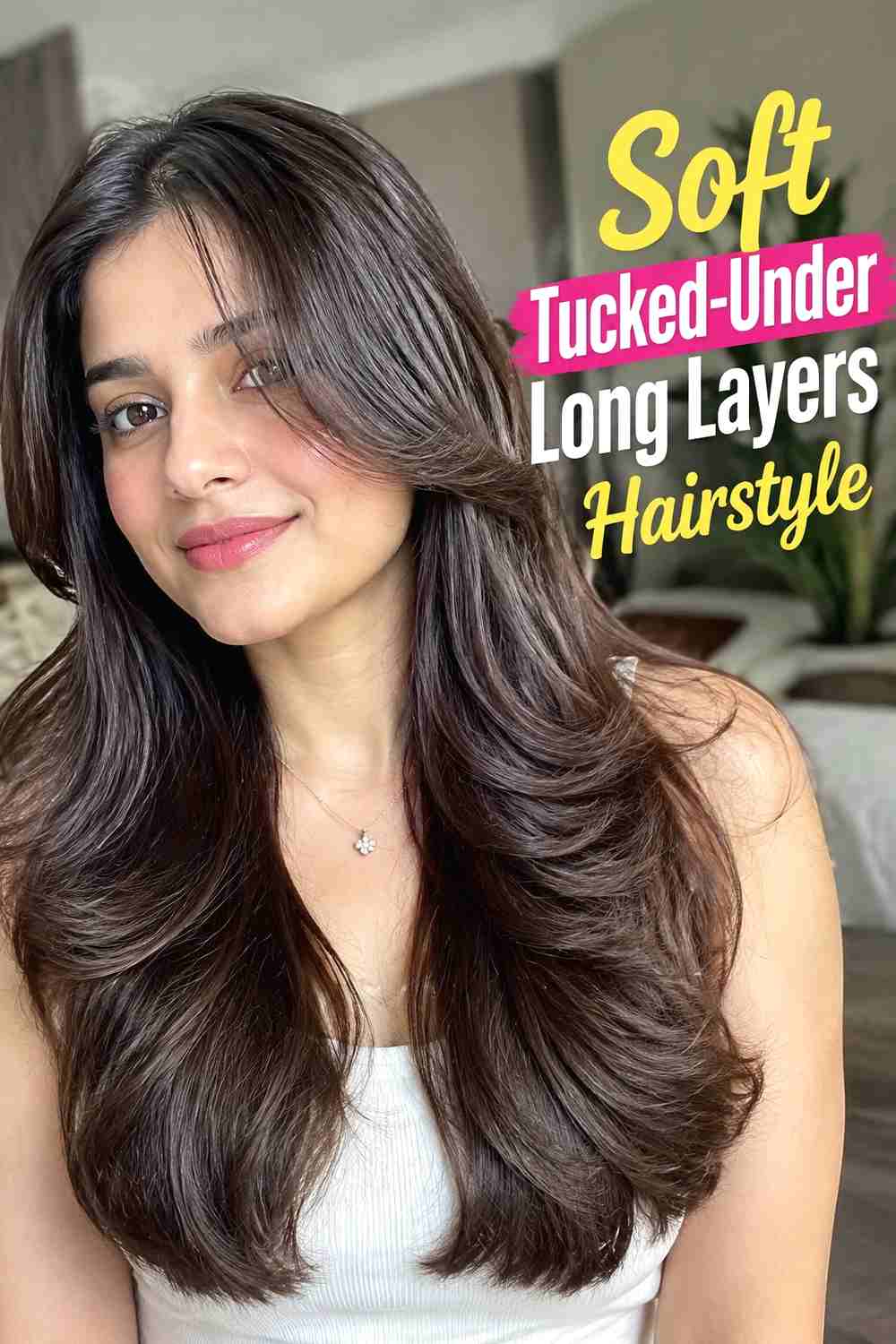
Long layers take on an entirely different silhouette when the lower lengths disappear beneath an oversized coat collar. Instead of showing the full length, leave the face-framing pieces and upper layers visible while gently guiding the longer sections inside the coat. The result resembles a soft, airy midi cut from the front, with natural movement around the cheekbones and shoulders. A smooth blow-dry with subtle bends keeps the exposed layers polished without making them stiff. This approach works particularly well when the coat has broad lapels and a roomy neckline, since there is enough space for the hair to sit comfortably. Avoid packing too much hair tightly against the neck, which can create unwanted bends.
Styling Notes
Blow-dry the visible layers with a round brush before putting on the coat. Once dressed, guide the longest sections underneath and gently loosen the crown so the roots retain natural lift.
Best For
This look is especially useful for medium to long layered hair when you want the visual effect of a shorter style without pinning or cutting the lengths.
2. Polished Tucked Under Lob Hairstyle
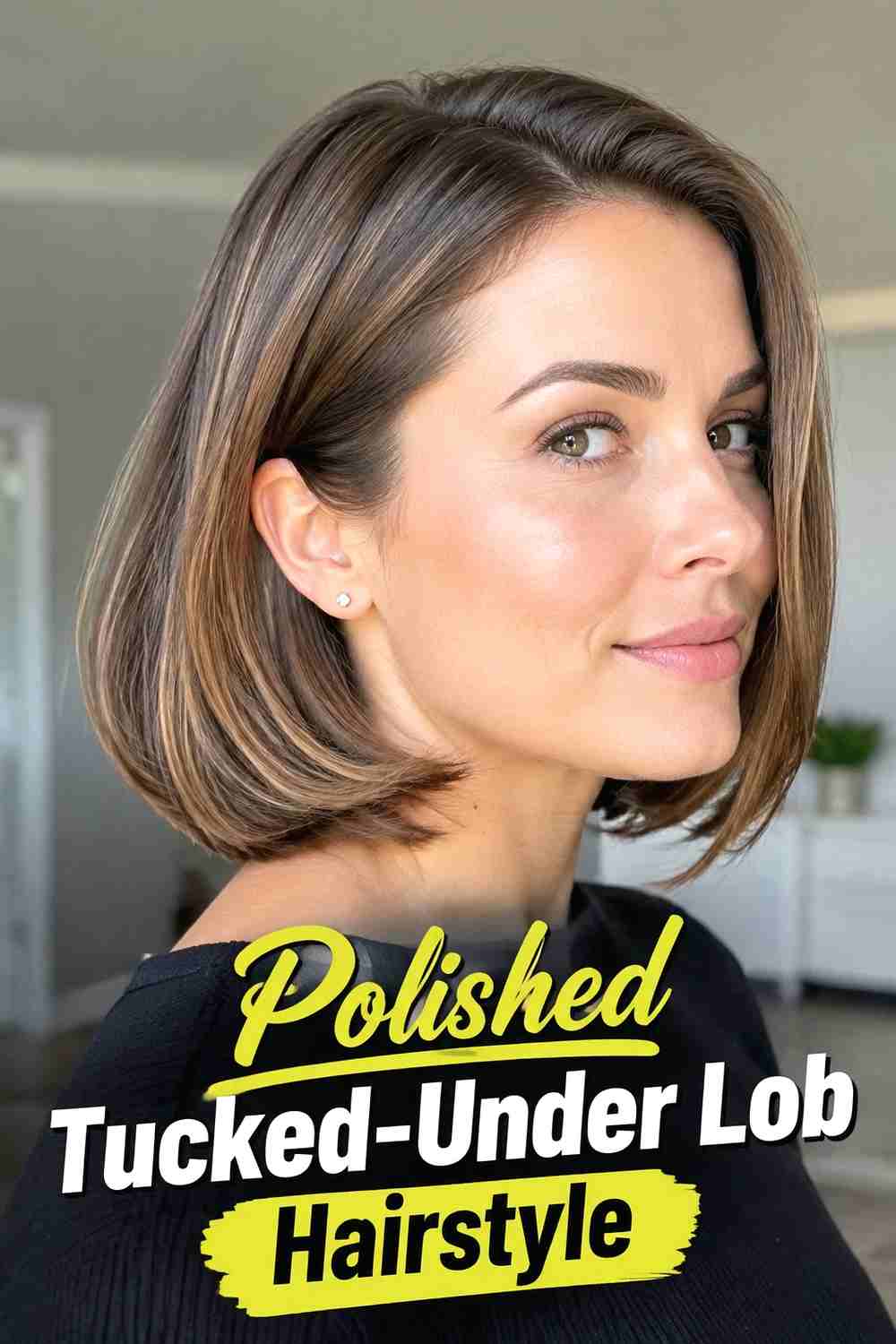
A lob already pairs beautifully with oversized tailoring, and tucking the ends just inside the coat makes the shape even cleaner. Keep the top smooth, allow a little natural lift near the part, and place the collar around the lower lengths so only the upper portion of the cut remains visible. The tucked placement can create a rounded, softly shortened silhouette that draws attention to the face and the coat’s lapels. Collarbone-length hair is particularly easy to manage because there is not much excess length to hide. A slight inward bend through the ends helps the hair settle naturally instead of pushing against the collar. Finish with light shine rather than heavy product so the movement remains believable.
Hair Type & Length
Straight, softly wavy, and medium-density collarbone hair works especially well. Very thick lobs may need a looser coat neckline to prevent the hair from feeling compressed.
Why It Works
The shortened visual line echoes the coat’s tailored structure while keeping enough softness around the face to balance its oversized proportions.
3. Sleek Tucked Under Straight Hairstyle
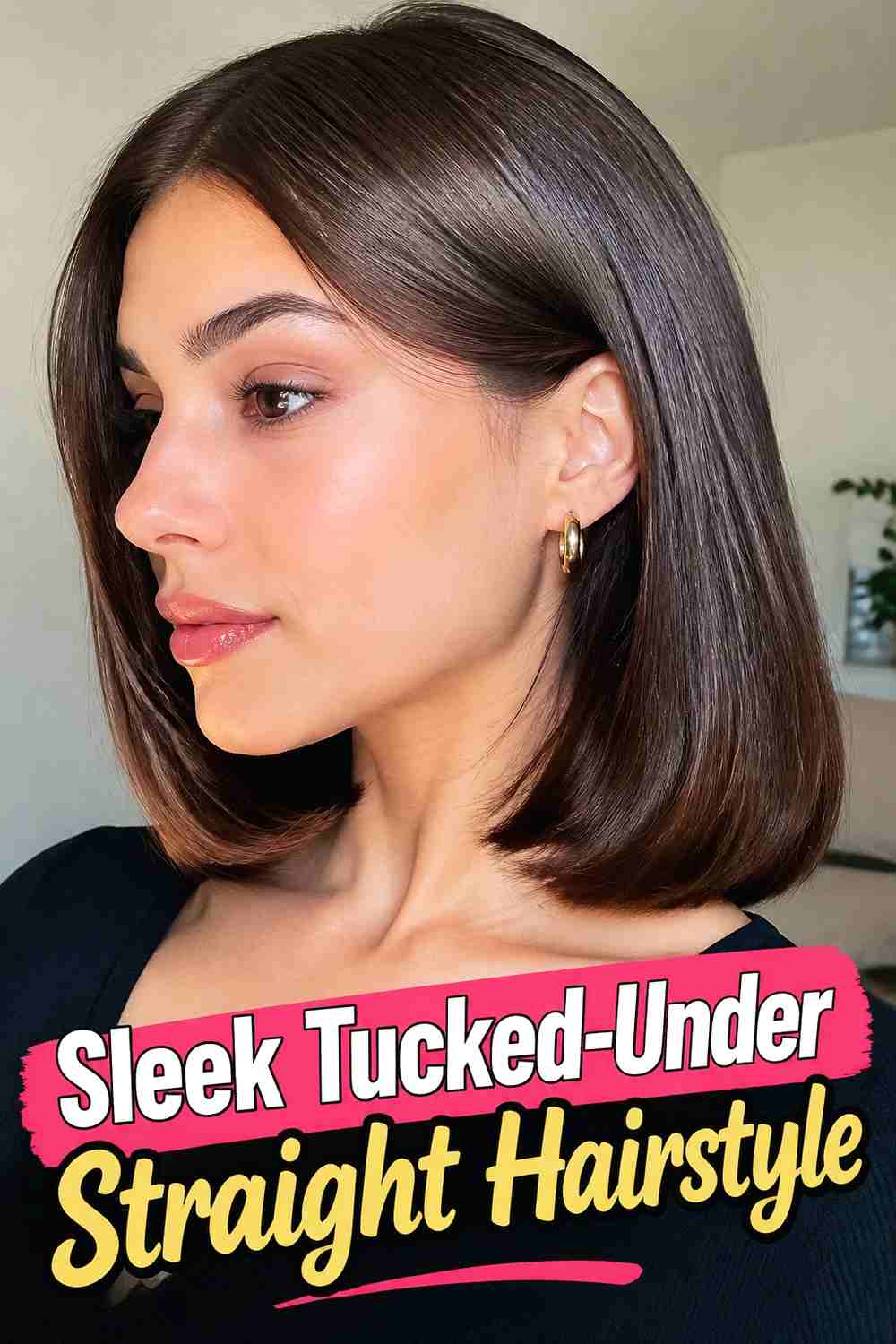
Straight hair creates one of the most streamlined versions of the tucked-under trend. Smooth the lengths so they fall naturally from the roots, then guide the lower section inside the coat while leaving the hair around the temples, jaw, and upper shoulders visible. The hidden ends create a sharp, almost faux-bob effect without requiring clips or a complicated updo. This version looks especially refined with clean wool tailoring, strong shoulders, and minimalist lapels. The important detail is movement: the surface should look smooth and glossy, but not rigid. If the coat collar is high, leave a small amount of space between the fabric and neck so the hair can settle rather than being pressed into obvious creases.
Styling Notes
Use heat protection before smoothing, then apply a very light finishing serum only through the visible surface. Avoid heavy oils near the roots, where sleek hair can quickly lose dimension.
Wear & Maintenance
When you remove the coat, gently shake out the lengths and brush through any temporary bends created by the collar before restyling.
4. Loose Wave Tucked Under Hairstyle
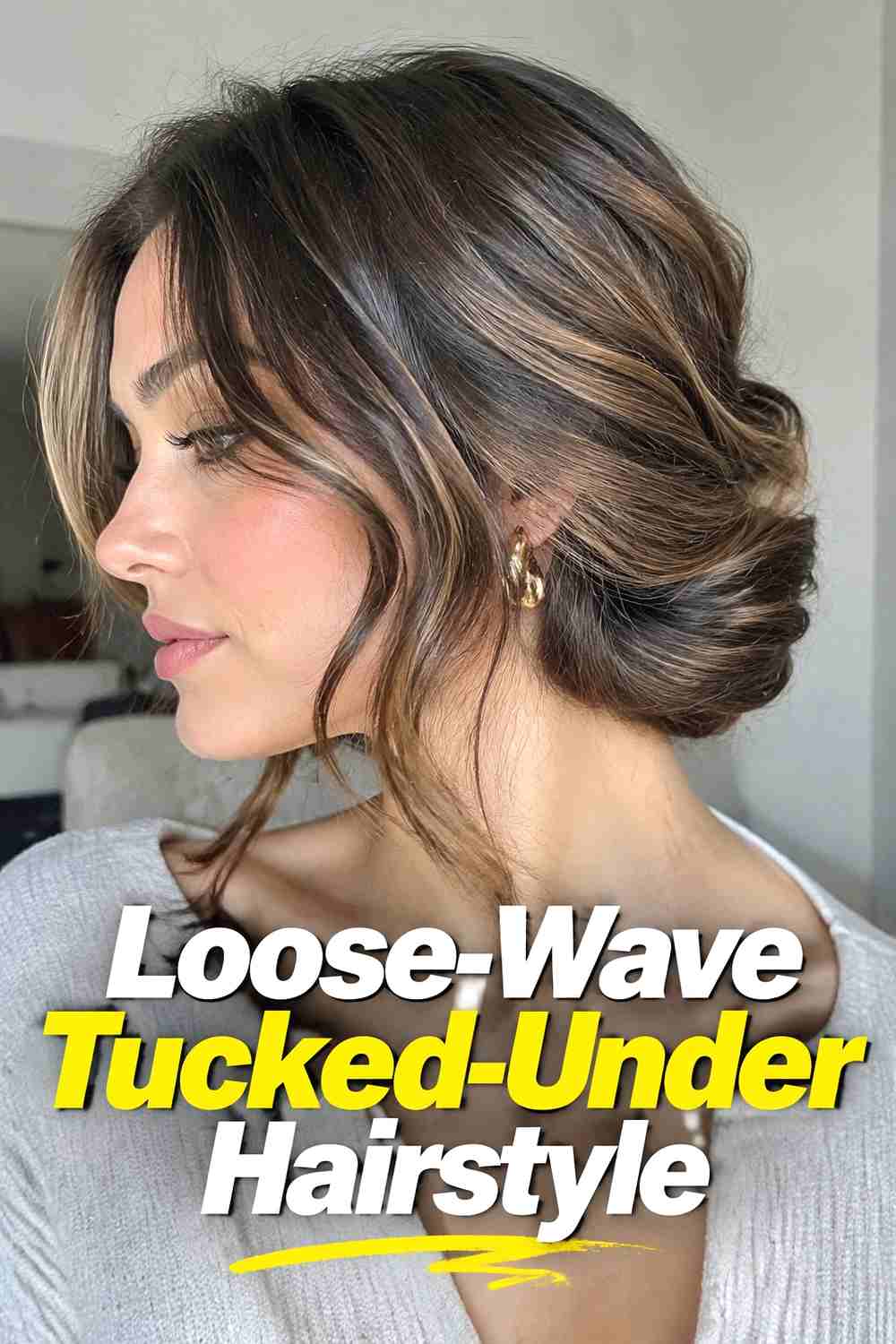
Loose waves make tucked-under lengths feel relaxed and soft rather than sharply styled. Build broad bends through the hair, focusing most of the texture above shoulder level, then allow the longest sections to sit beneath the coat collar. The visible waves create fullness around the face while the hidden lower lengths keep the oversized coat from becoming overwhelmed by hair. This works particularly well with soft tailoring, brushed wool, and coats that have a slightly open neckline. Keep the wave pattern irregular so the silhouette looks natural after it is tucked. A few strands can escape around the collar for an effortless finish, but too many loose pieces may make the look appear accidental rather than intentionally styled.
Why It Works
The coat controls the lower volume while the waves keep softness and dimension around the upper half of the hairstyle.
Pro Tip
Concentrate your strongest bends from cheekbone to shoulder level. Those are the sections that remain visible once the longer hair disappears beneath the coat.
5. Tucked Under Blunt Bob Hairstyle
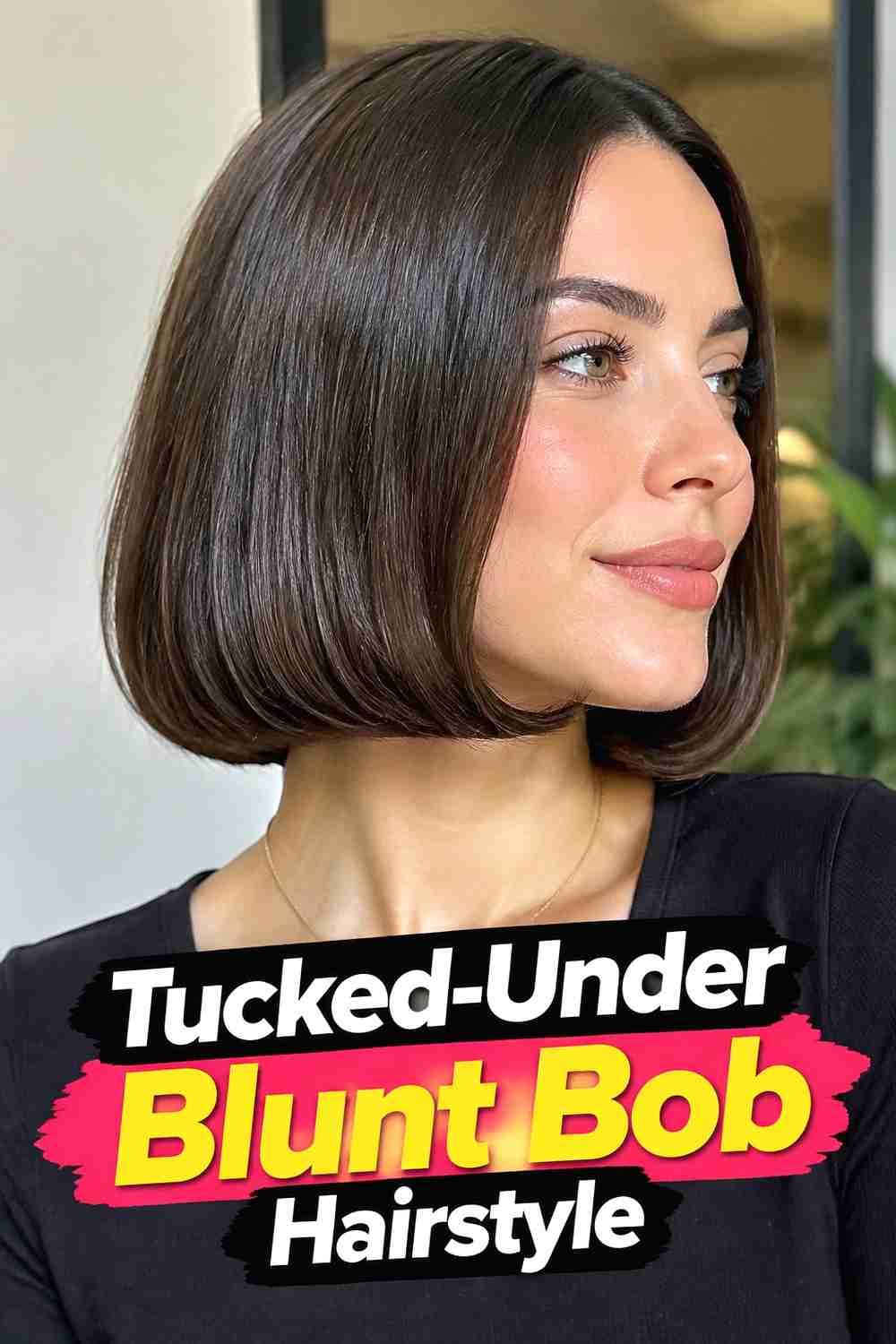
A blunt bob can still use the tucked-under idea, even though there is less length to hide. Instead of placing the entire cut under the collar, allow just the back and lower side sections to slip inside while the front edge stays visible around the jaw. This subtly changes the silhouette from a precise blunt line to something softer and more sculpted. It works particularly well with oversized coats because the strong haircut and structured outerwear share a clean visual language. Keep the bob smooth or add one gentle bend for movement. Since shorter hair can spring outward when pressed by a thick collar, a roomy neckline is more comfortable and helps the ends settle naturally rather than flipping unpredictably.
Best For
This version suits jaw- to neck-length bobs, especially when the coat collar sits loosely rather than tightly against the back of the head.
Wear & Maintenance
After removing the coat, smooth the back section with your hands or a small brush if the collar has shifted the blunt edge.
6. Tucked Under Curtain Bangs Hairstyle
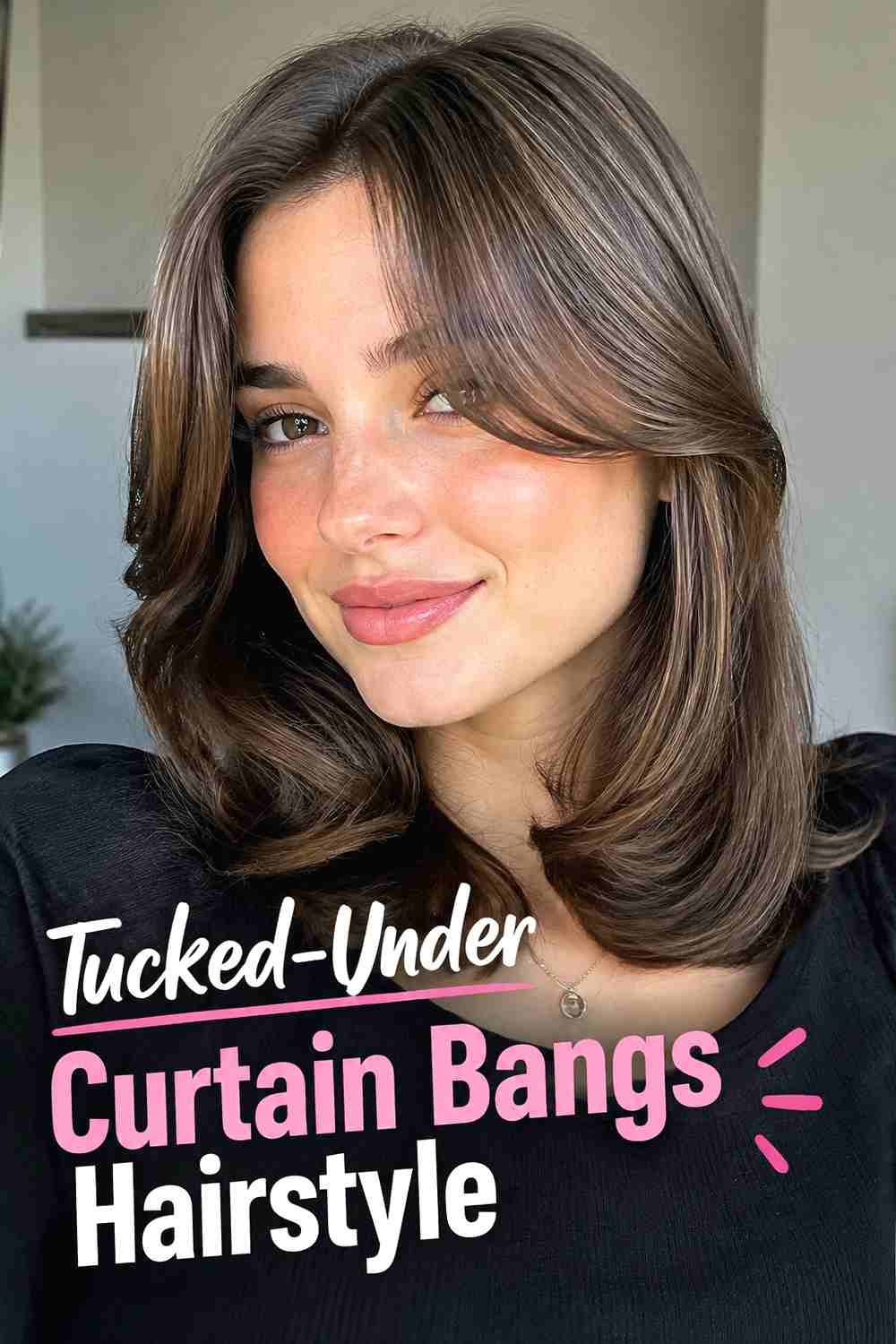
Curtain bangs keep the face framed even when the rest of the hair is tucked beneath an oversized coat. Style the fringe outward from the center so it opens around the eyes and cheekbones, then guide the longer side sections and back lengths inside the coat. The contrast is flattering: the visible bangs provide softness and movement while the hidden lengths create a compact silhouette around the neckline. This option is especially useful for long hair because the fringe prevents the tucked style from looking too severe from the front. Keep the curtain pieces light and airy rather than heavily sprayed. A broad lapel or open collar gives the bangs space to blend naturally into the upper layers.
Styling Notes
Shape the bangs completely before putting on your coat. A round brush or large roller can create the soft outward curve while the roots are still warm.
Pro Tip
Leave the longest edges of the fringe just outside the collar so they connect visually with the rest of the visible hair instead of disappearing abruptly.
7. Airy Tucked Under Blowout Hairstyle
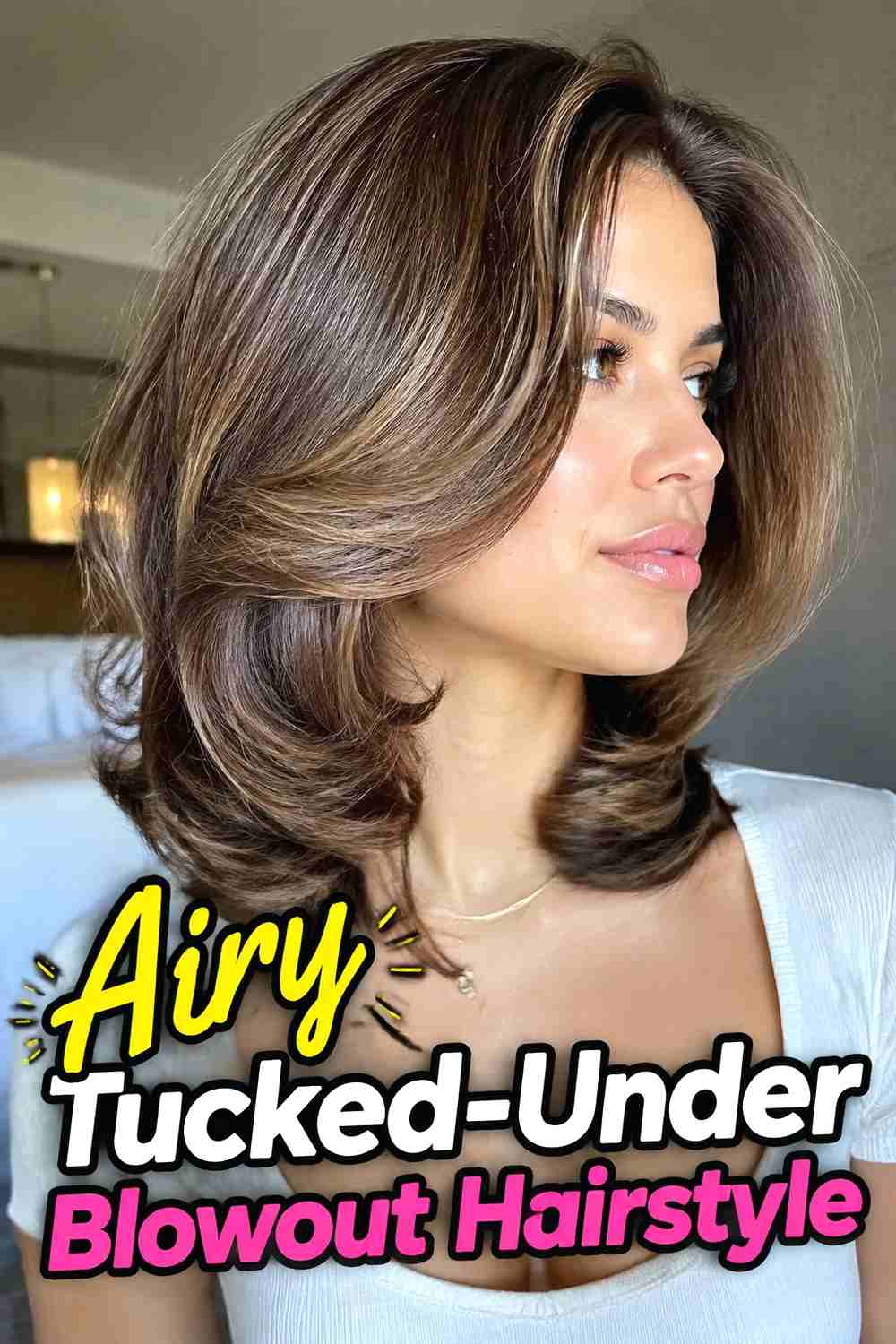
A full blowout can look surprisingly modern when much of its length is tucked into an oversized coat. Build volume through the crown and front sections, then create sweeping curves through the mid-lengths rather than concentrating all the bounce at the ends. Once the coat is on, slide the longest hair inside the neckline and loosen the upper layers so they sit softly over the collar. The result has the polish of a salon blowout but a shorter, fashion-forward silhouette. This style works particularly well with coats that have broad shoulders because the airy hair adds movement without increasing width at the bottom. Flexible hold is preferable to stiff spray, since the exposed layers should still shift naturally.
Why It Works
The hidden ends keep a voluminous blowout from competing with the coat’s oversized proportions, while the lifted crown balances broad tailoring.
Wear & Maintenance
Avoid repeatedly pulling the hair in and out of the collar. Position it once, then lightly loosen the visible sections with your fingertips to preserve the blowout.
8. Tucked Under Loose Curls Hairstyle
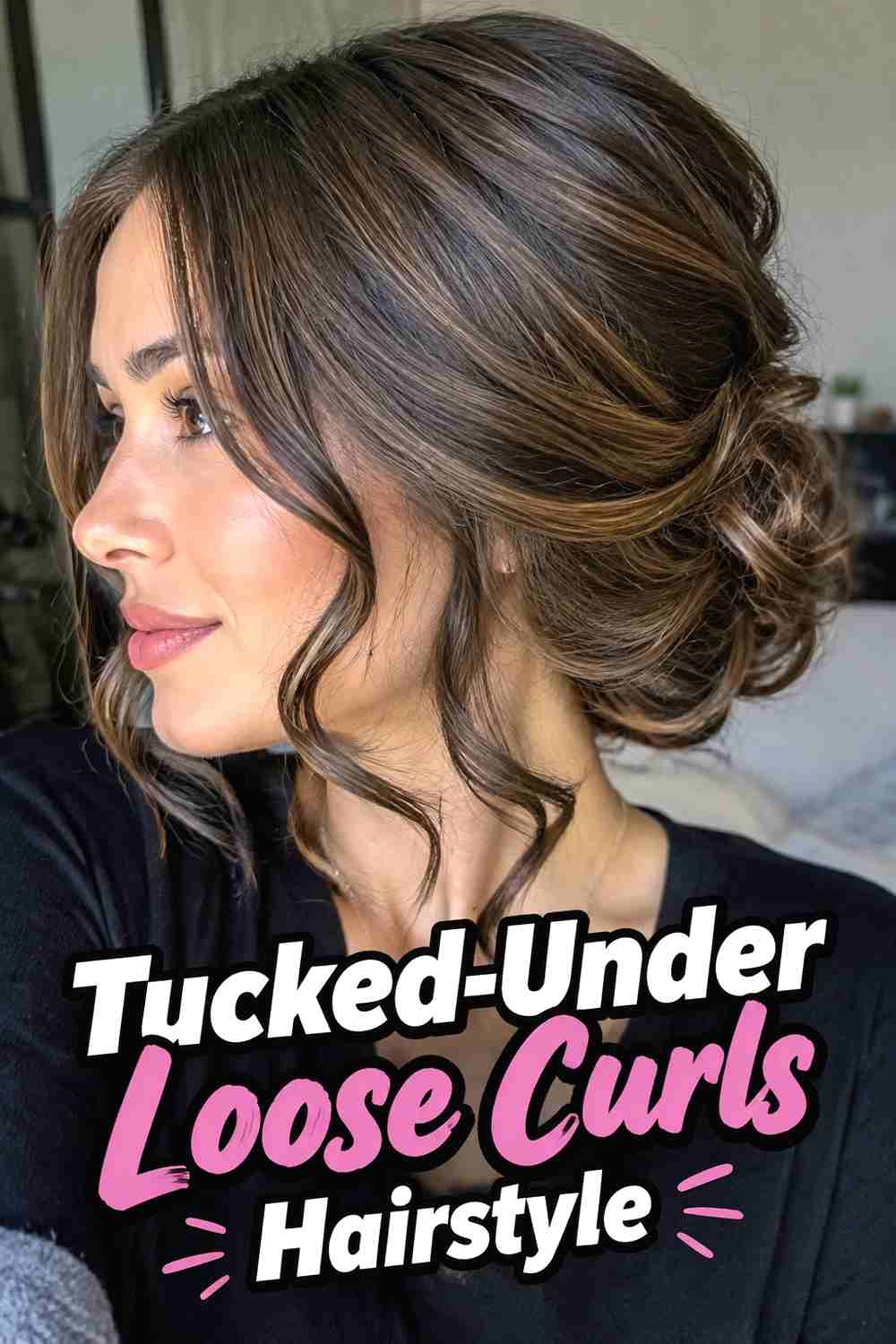
Loose curls create a soft, romantic version of tucked-under lengths. Let the curls remain full around the temples, cheekbones, and upper shoulders, while the longer sections disappear beneath the coat. Because curls naturally take up more space than straight hair, use a coat with a generous neckline rather than forcing a large amount of hair into a narrow collar. The visible texture should still show individual curl shapes, movement, and variation rather than being flattened into one mass. This combination works especially well with clean, oversized tailoring because the structured coat provides contrast to the soft curl pattern. Keep a few shorter curls free around the face and resist pulling the tucked sections too tightly.
Hair Type & Length
Medium to long naturally curly or styled curly hair can work well, provided the coat collar leaves enough room to avoid excessive compression.
Pro Tip
Tuck only the longest sections and leave upper curls outside. This preserves visible definition while still creating the shortened silhouette.
9. Textured Tucked Under Midi Hairstyle
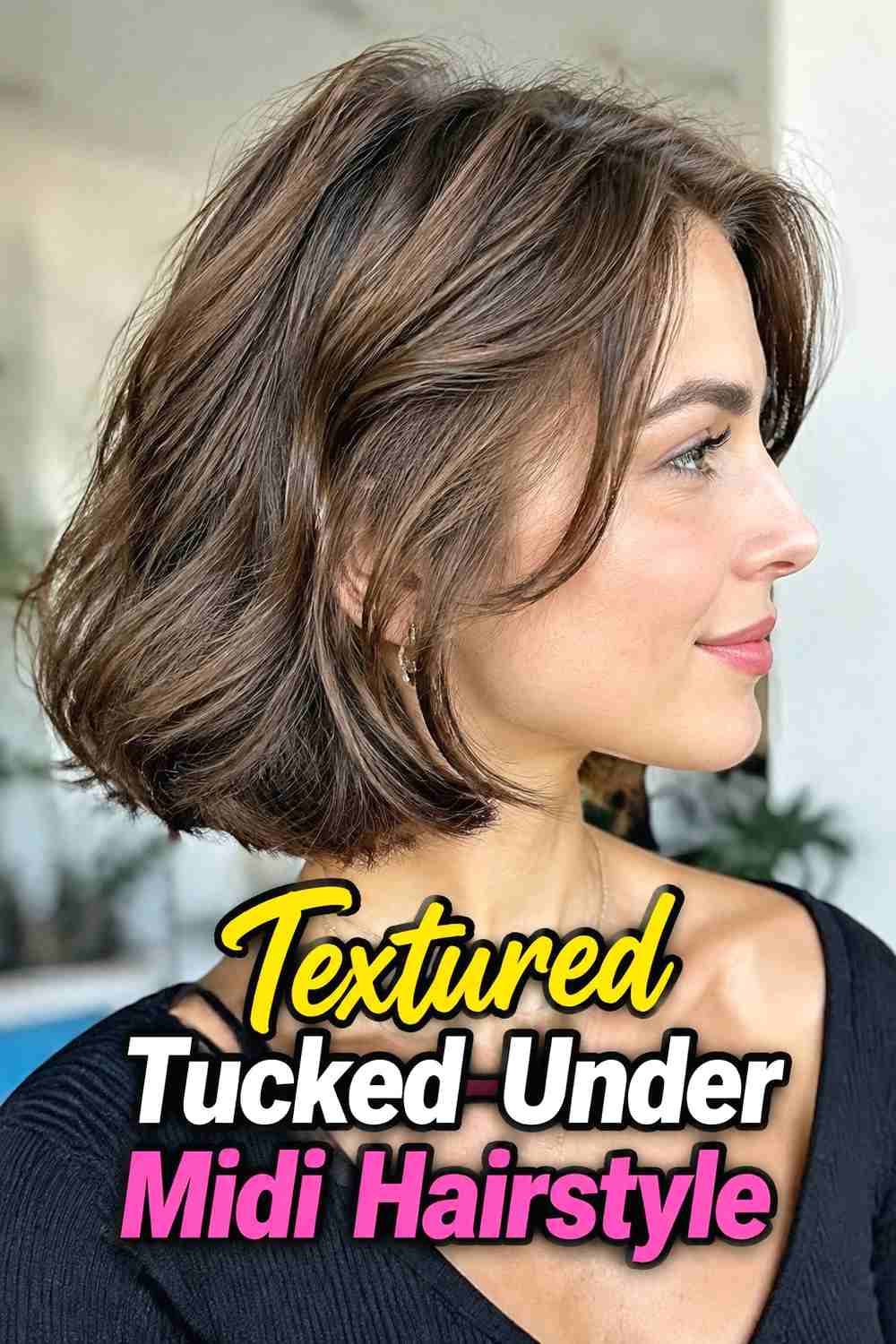
A midi-length cut gives the tucked-under look an effortless balance between polished and casual. Add light texture through the mid-lengths, leaving the ends soft and separated, then slip the bottom section beneath the coat collar. The visible hair will sit somewhere between a long bob and shoulder-length cut, creating an intentional faux-shorter effect. A slightly undone finish works particularly well here because every strand does not need to align perfectly. This hairstyle suits oversized tailored coats in softer fabrics, where the relaxed hair texture keeps the outfit from feeling overly formal. Use minimal product so the strands remain flexible, and avoid packing the hair densely at the nape where friction may quickly flatten the texture.
Styling Notes
Create a few irregular bends instead of curling every section. The varied texture looks more natural once the lower hair is hidden.
Best For
Choose this style if your hair sits between the shoulders and upper chest and you want a low-effort way to change its apparent length.
10. Deep Side Part Tucked Under Hairstyle
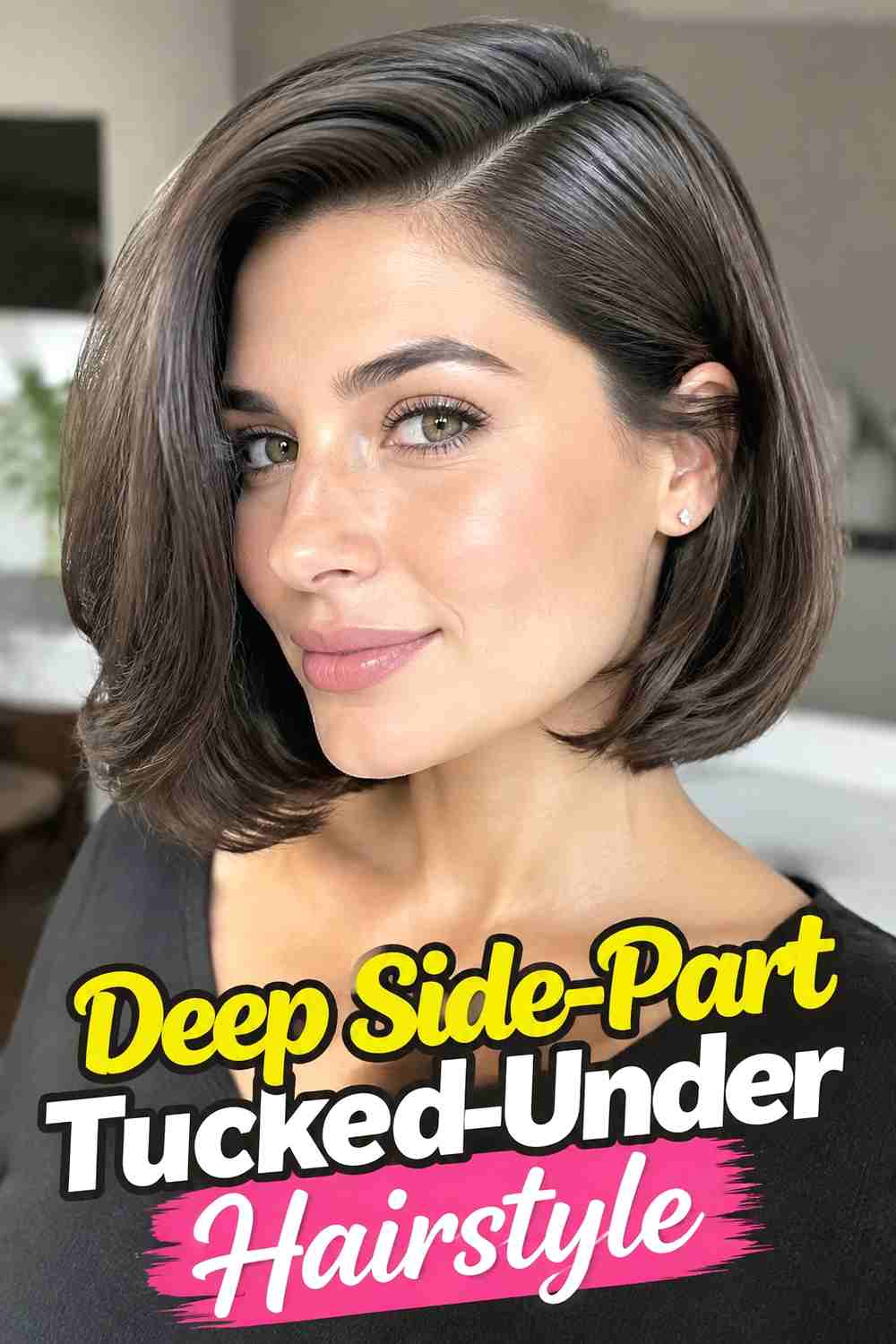
A deep side part brings asymmetry to the tucked-under silhouette and works beautifully against the strong symmetry of an oversized tailored coat. Sweep the heavier side across the forehead with a little root lift, then allow the top lengths to fall toward one cheek while the lower hair sits inside the collar. The result feels more dramatic than a center part without requiring extra accessories or complicated styling. Straight hair gives the look a sleek fashion-editorial finish, while a gentle bend makes it softer. Keep the lighter side close to the head or tucked behind the ear for contrast. The collar should hold the lengths loosely rather than pinning them tightly against the neck.
Why It Works
The diagonal part breaks up the broad, structured lines of the coat and directs attention toward the face while the hidden ends keep the neckline controlled.
Pro Tip
Set the part while drying the roots. Hair holds a deep side direction more naturally when styled into place before it is tucked beneath the coat.
11. Center Part Tucked Under Layers Hairstyle
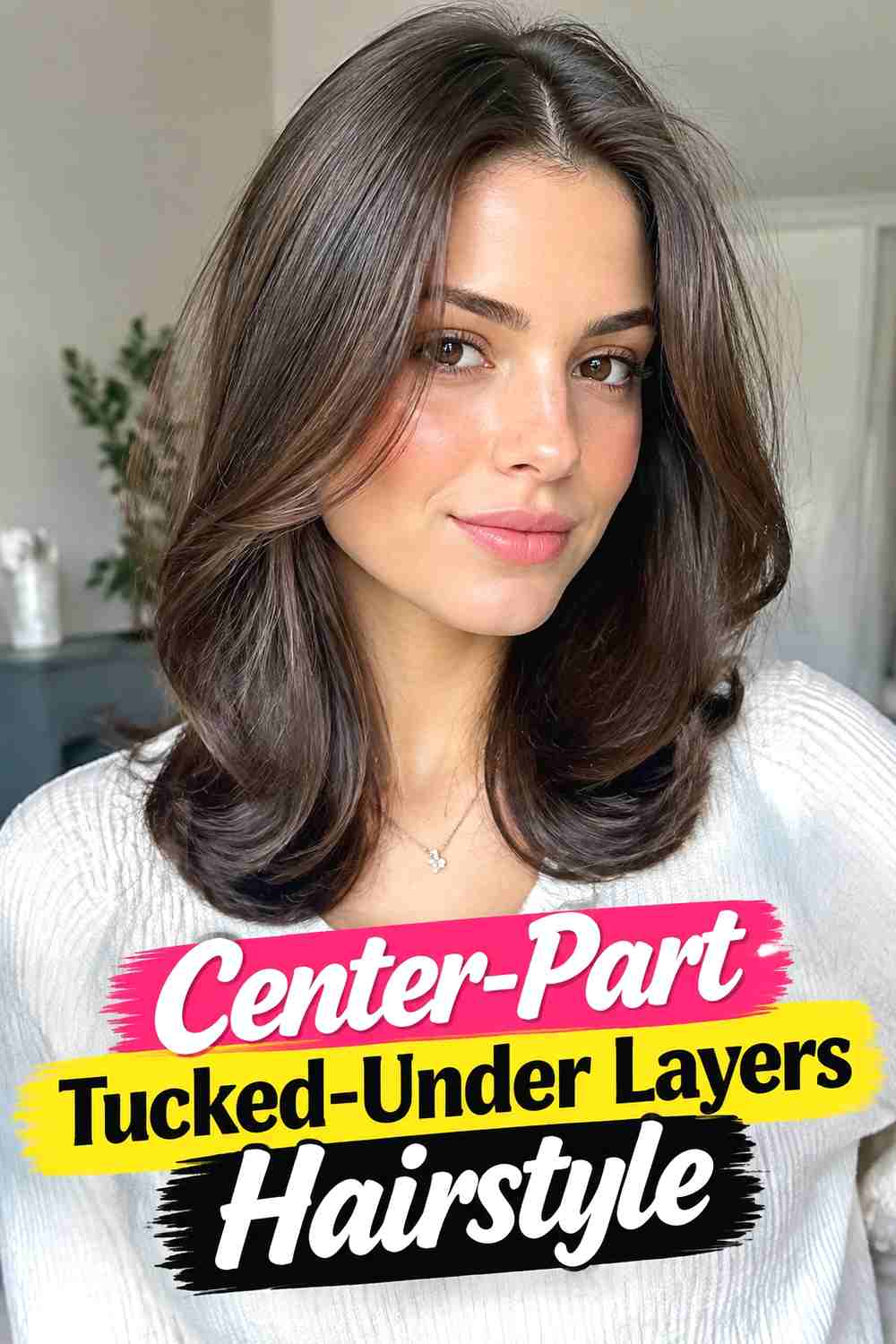
A center part gives tucked-under layers a balanced, minimalist feel that suits oversized tailoring particularly well. Keep the roots smooth but not flat, allowing the shorter face-framing pieces to fall evenly on both sides. The longest layers can then be placed inside the coat, leaving the front sections visible enough to define the hairstyle. This creates the impression of a shoulder-skimming layered cut even when the true length extends much farther. The look is clean enough for workwear yet relaxed enough for everyday street style. Slight bends around the cheekbones help prevent the symmetry from feeling too severe. Choose a collar with enough space to hold the lower hair without pushing the visible layers outward.
Styling Notes
Direct the front layers slightly away from the face while blow-drying. Once the lengths are tucked, those pieces will provide most of the visible movement.
Best For
This approach works especially well for long hair with face-framing layers, curtain pieces, or subtle graduation around the front.
12. Soft Shag Tucked Under Hairstyle
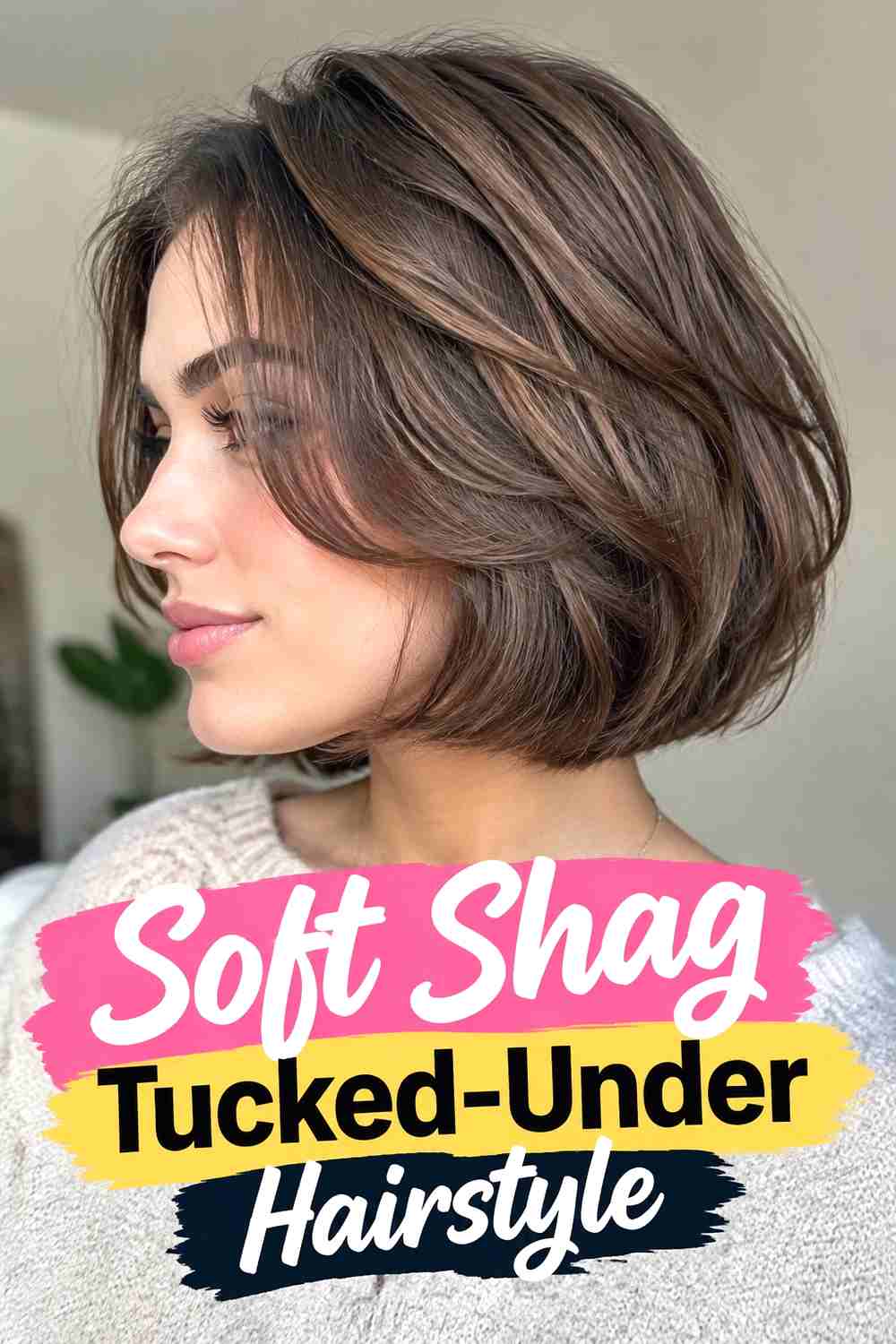
A soft shag becomes especially interesting when its longest pieces are hidden beneath an oversized coat. The shorter crown layers, cheekbone pieces, and airy fringe remain visible, while the lower lengths disappear into the collar, making the cut appear shorter and more heavily layered than it really is. That contrast suits relaxed tailoring and coats with exaggerated shoulders because both the hair and outerwear have strong shape without looking overly polished. Encourage natural texture through the upper layers rather than smoothing everything flat. A small amount of lightweight texture product can help separate the visible pieces. Keep the tuck loose so the shag’s movement is preserved instead of compressed into a rigid shape at the neckline.
Why It Works
Shorter shag layers already create volume higher on the head, so hiding the longest pieces strengthens the cut’s textured silhouette without adding bulk around the coat.
Hair Type & Length
Wavy, straight, or lightly curly layered hair can all work, especially when there is enough graduation to leave visible movement above the collar.
13. Flipped End Tucked Under Hairstyle
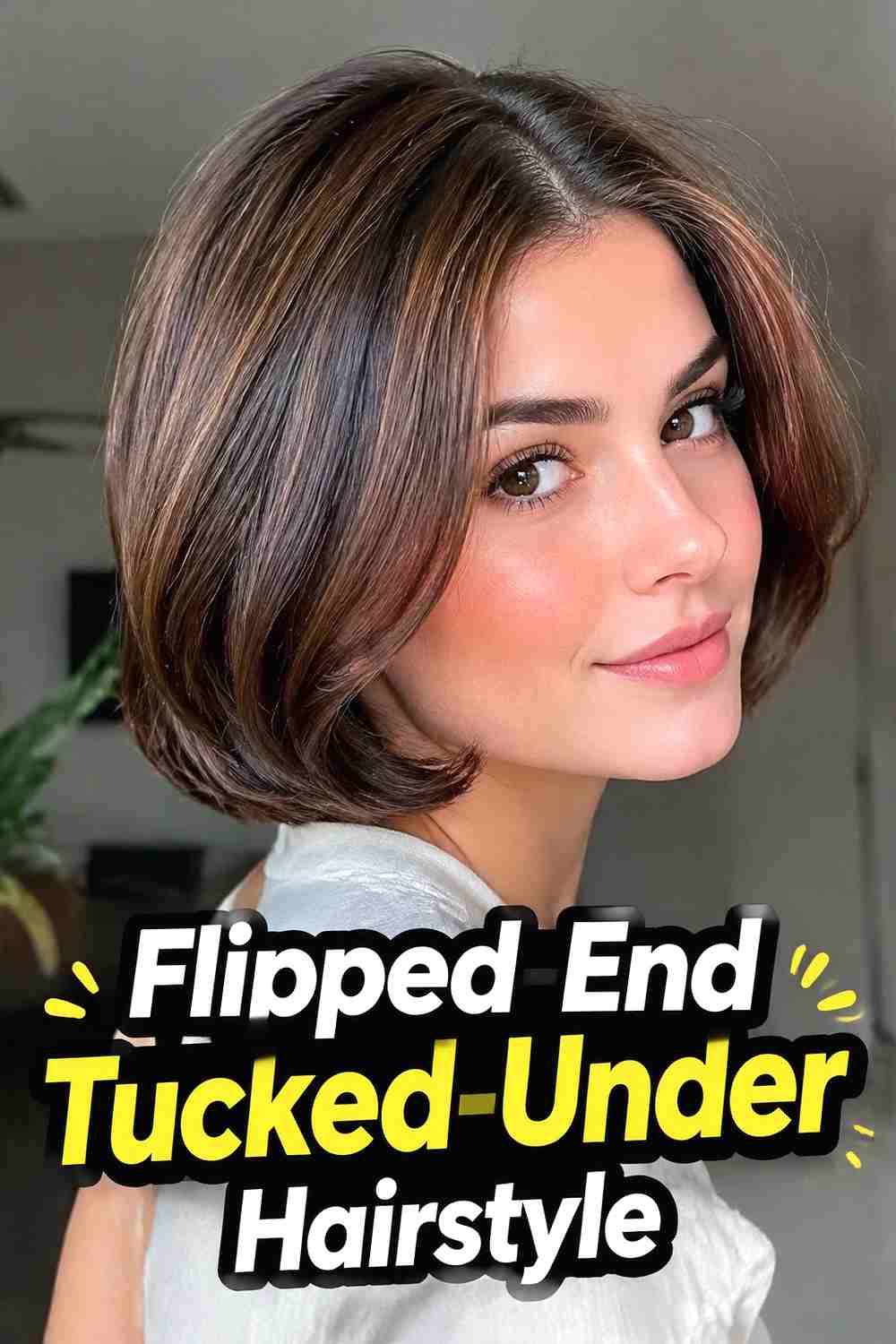
Flipped ends add a subtle retro note to a tucked-under look without turning it into a full vintage style. Shape the visible shoulder-level sections so they curve softly outward, then place the longest hair beneath the coat. The controlled flip remains visible just above the collar, creating a crisp little detail against broad lapels and structured shoulders. This works especially well on medium to long straight or lightly wavy hair because the ends can be directed predictably with a round brush or styling tool. Keep the flip broad and understated rather than sharply bent. If the coat collar is especially high, position the visible curve slightly higher so it does not get crushed each time you move your head.
Styling Notes
Create the outward bend before putting on the coat, then tuck only the hair beneath that shaped section. This keeps the flip visible and prevents the collar from reversing it.
Best For
Try this option when you want something more distinctive than completely straight hair but still cleaner and more tailored than loose waves or curls.
How to Choose the Right Look
Start with your coat collar. A roomy, open neckline gives you the most flexibility for tucked-under hair because the lengths can sit inside without being tightly compressed. High or narrow collars work better with lower-volume styles such as sleek straight hair, a lob, or lightly textured midi lengths.
Next, consider how much hair you have. Long, thick hair can become bulky when all of it is tucked inside a coat, so hiding only the longest underlayers is often more comfortable. Fine or medium-density hair generally creates a flatter faux-bob effect with less effort. Curly hair needs additional room so the texture is not crushed.
Think about how long you will be wearing the coat as well. If it is only part of an outdoor outfit, temporary bends may not matter. For a long commute or event, choose a flexible style that can be brushed or shaken back into shape after the coat comes off. Blowouts, waves, and face-framing layers are particularly forgiving.
Finally, decide whether you want the finish to look sleek or relaxed. Straight center-part styles complement minimal tailoring, while loose curls and shags soften sharper coats. Deep side parts add drama, and curtain bangs keep long tucked hair visually interesting around the face.
Final Thoughts
Tucked-under lengths can make an oversized tailored coat feel even more intentional by turning its collar into part of the hairstyle. Sleek hair creates a sharp fashion-forward effect, while waves, curls, bangs, and layered blowouts offer softer variations. The most convincing version is one that leaves enough volume visible around the face while allowing the hidden lengths to sit comfortably inside the coat.
FAQs
1. Can I tuck long hair inside an oversized coat without ruining the style?
Yes, especially if you tuck the hair loosely rather than tightly packing it against the neck. Flexible styles such as layers, waves, and blowouts are usually easier to refresh afterward.
2. Which hair length is easiest for the tucked-under coat look?
Collarbone to medium-long hair is especially manageable because there is enough length to create the effect without excessive bulk inside the collar. Longer hair can still work by tucking only the lower sections.
3. Does tucked-under hair work with curly textures?
Yes. Leave the upper curls and face-framing pieces outside the coat and tuck only the longest sections. A roomy collar helps preserve curl shape.
4. How do I stop my coat collar from flattening my hair?
Keep some root lift above the collar, avoid overfilling the neckline with hair, and gently loosen the visible sections after putting the coat on. Lightweight styling products also help maintain movement.
5. What type of coat works best with tucked-under lengths?
Oversized tailored coats with broad lapels and a relatively roomy neckline are especially practical because they frame the hair without compressing it as much as a tight, high collar.
CTA
Save your favorite tucked-under hairstyle for your next oversized-coat outfit, and share these ideas when you need fresh inspiration for polished cold-weather styling.