13 Wet-Look French Twist Hairstyles
Glossy roots, sculpted curves, and elegant tucked shapes give the classic French twist a sleek modern finish with striking editorial appeal.
The wet-look French twist combines two strong styling ideas: the structured vertical roll of a traditional French twist and the reflective, defined finish associated with wet-look hair. The result can range from sharply polished and formal to softly textured with visible waves around the hairline.
When choosing a version, consider where you want the shine, how much volume you prefer at the crown, and whether the front should feel sleek, sculpted, or softly waved. Some styles rely on strong symmetry and clean parts, while others use asymmetry, natural curls, or loose top sections to make the twist feel more relaxed.
Quick List
- Classic Sleek Wet Look French Twist Hairstyle
- Deep Side Part Wet French Twist Hairstyle
- Sculpted Finger Wave French Twist Hairstyle
- Low Wet Look French Twist Hairstyle
- High Shine Crown French Twist Hairstyle
- Center Part Wet French Twist Hairstyle
- Side Swept Wet French Twist Hairstyle
- Textured Wet Look French Twist Hairstyle
- Curly Wet Look French Twist Hairstyle
- Polished Tucked End French Twist Hairstyle
- Wet Look French Twist With Face Framing Waves Hairstyle
- Sculpted S Wave French Twist Hairstyle
- Glossy Loose Top French Twist Hairstyle
1. Classic Sleek Wet Look French Twist Hairstyle
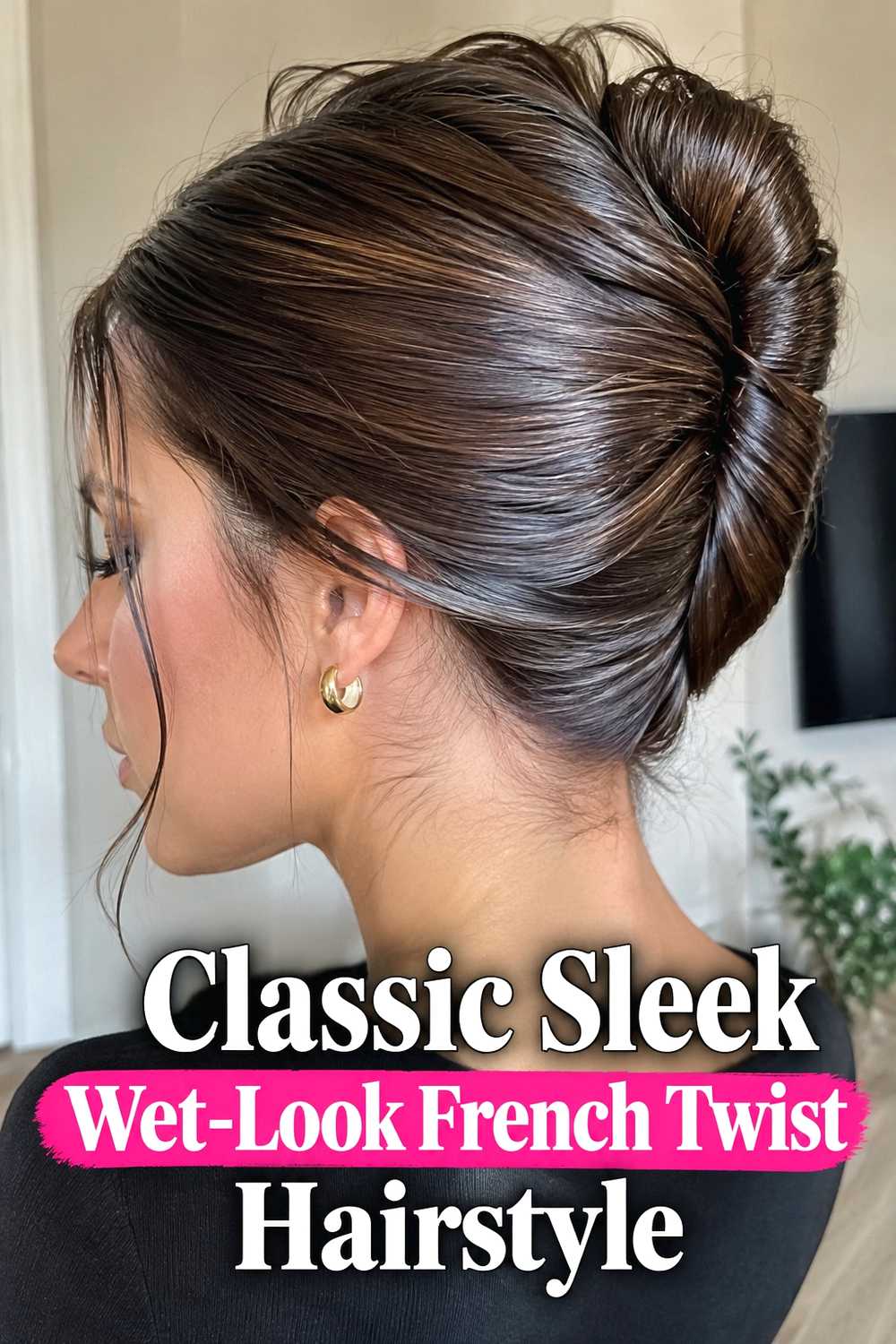
The Classic Sleek Wet-Look French Twist Hairstyle keeps the silhouette clean and recognizable while giving the surface a glossy, modern finish. Hair is smoothed backward from the hairline, gathered through the center, and rolled vertically into a compact twist with the ends tucked neatly inside. The wet-look effect should emphasize shine and control without making the hair appear dripping or overly stiff. Keeping the crown close to the head creates a sharper profile, while a slight lift can soften the overall shape. This version works especially well when you want the French twist itself to be the main feature rather than adding decorative pieces or loose tendrils around it.
Styling Notes
Distribute styling product evenly through the outer surface before forming the roll. Smooth the sides toward the center while preserving enough flexibility to shape the twist cleanly.
Best For
Choose this version for formal events, minimalist evening looks, or whenever you want a highly polished updo with a modern finish.
2. Deep Side Part Wet French Twist Hairstyle
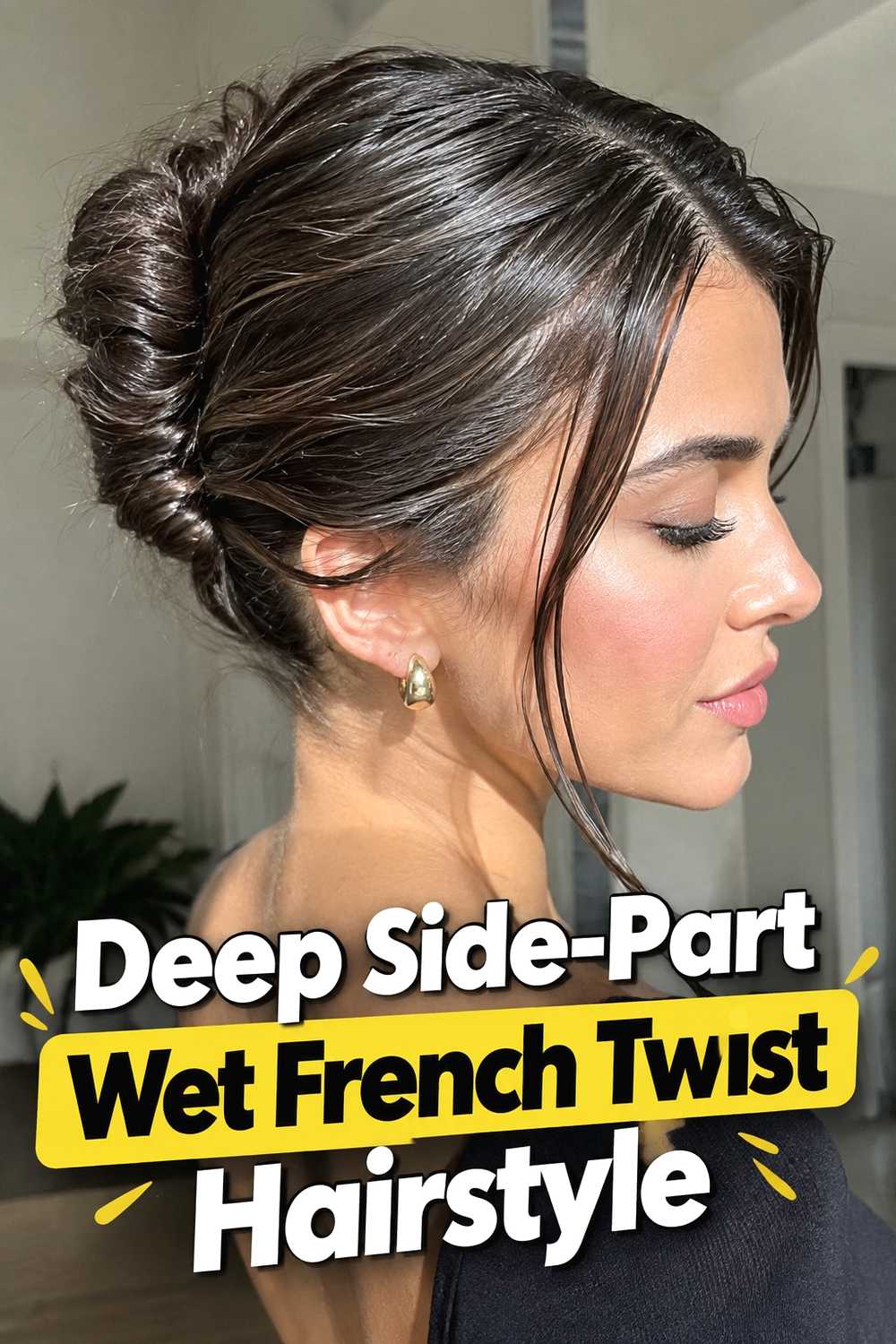
A Deep Side-Part Wet French Twist Hairstyle introduces asymmetry before the hair reaches the classic rolled back section. The deeper part creates one fuller front panel that can sweep diagonally across the forehead or curve around the temple before joining the twist. On the smaller side, the hair stays sleek and close to the head, creating a strong contrast in shape. Keep the roll itself compact so the front styling remains visible rather than competing with excessive volume at the back. A glossy finish helps connect the two sides visually, even though they are styled differently. This variation feels dramatic without requiring extra accessories or complicated braided details.
Why It Works
The exaggerated part gives the front more movement while the vertical twist keeps the hairstyle structured and recognizable from the back.
Pro Tip
Set the direction of the front sweep before securing the twist so you do not have to disturb the polished surface after the back has been pinned.
3. Sculpted Finger Wave French Twist Hairstyle
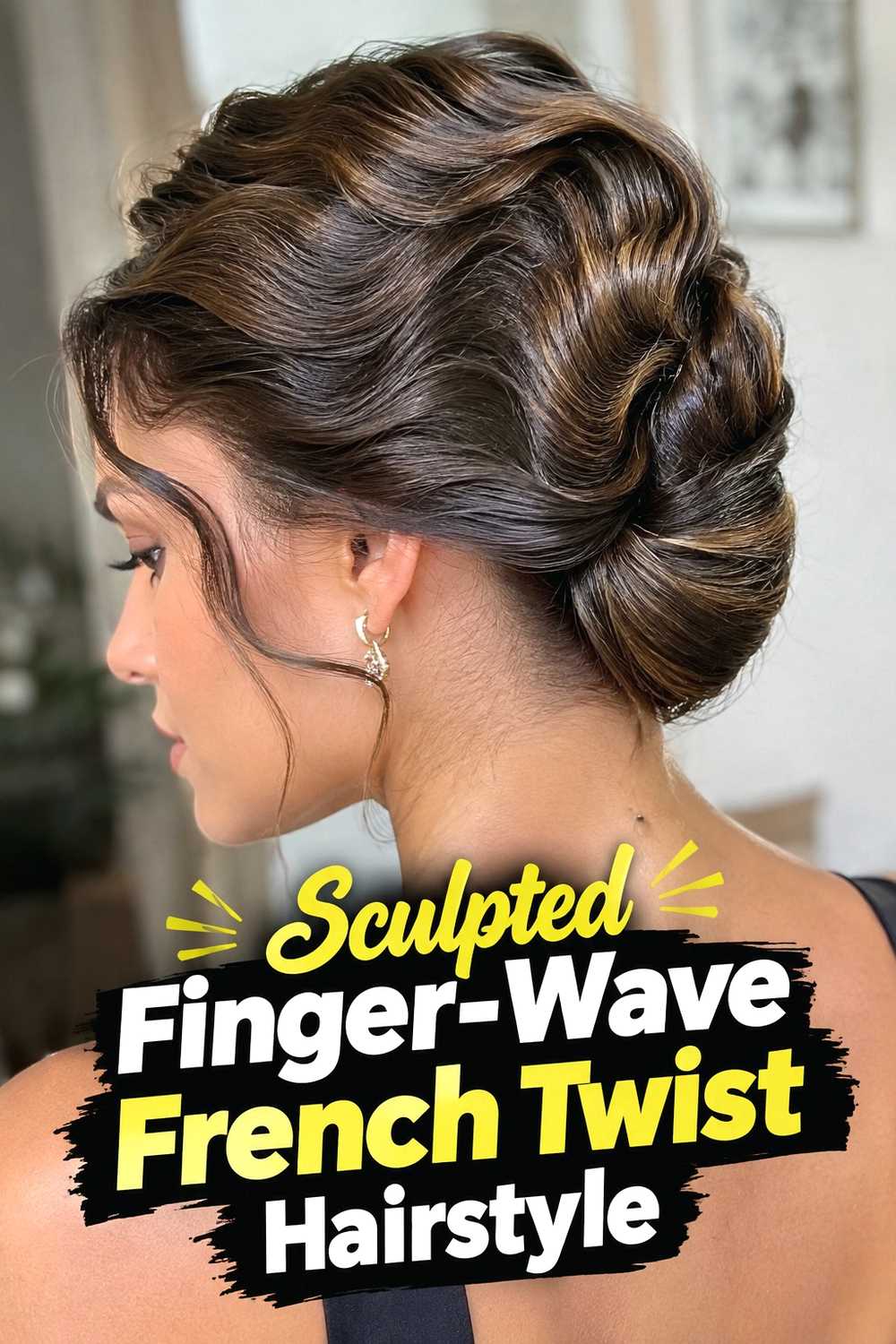
The Sculpted Finger-Wave French Twist Hairstyle blends vintage-inspired curves around the hairline with the elegance of a rolled updo. Instead of brushing the front straight back, shape it into one or more defined finger waves that follow the forehead and temple before disappearing into the twist. The glossy finish makes each ridge more visible and gives the surface a smooth, reflective quality. At the back, keep the French twist relatively simple so the detailed front remains the focal point. This look can feel especially refined when the wave direction flows naturally toward the roll rather than ending abruptly. Carefully placed pins help maintain the transition between the sculpted front and secured back.
Styling Notes
Form the finger waves while the front sections are still workable, then allow the curves to settle before integrating them into the twist.
Wear & Maintenance
Avoid repeatedly touching the wave ridges once they are set, since small disruptions can make the front lose its sculpted definition.
4. Low Wet Look French Twist Hairstyle
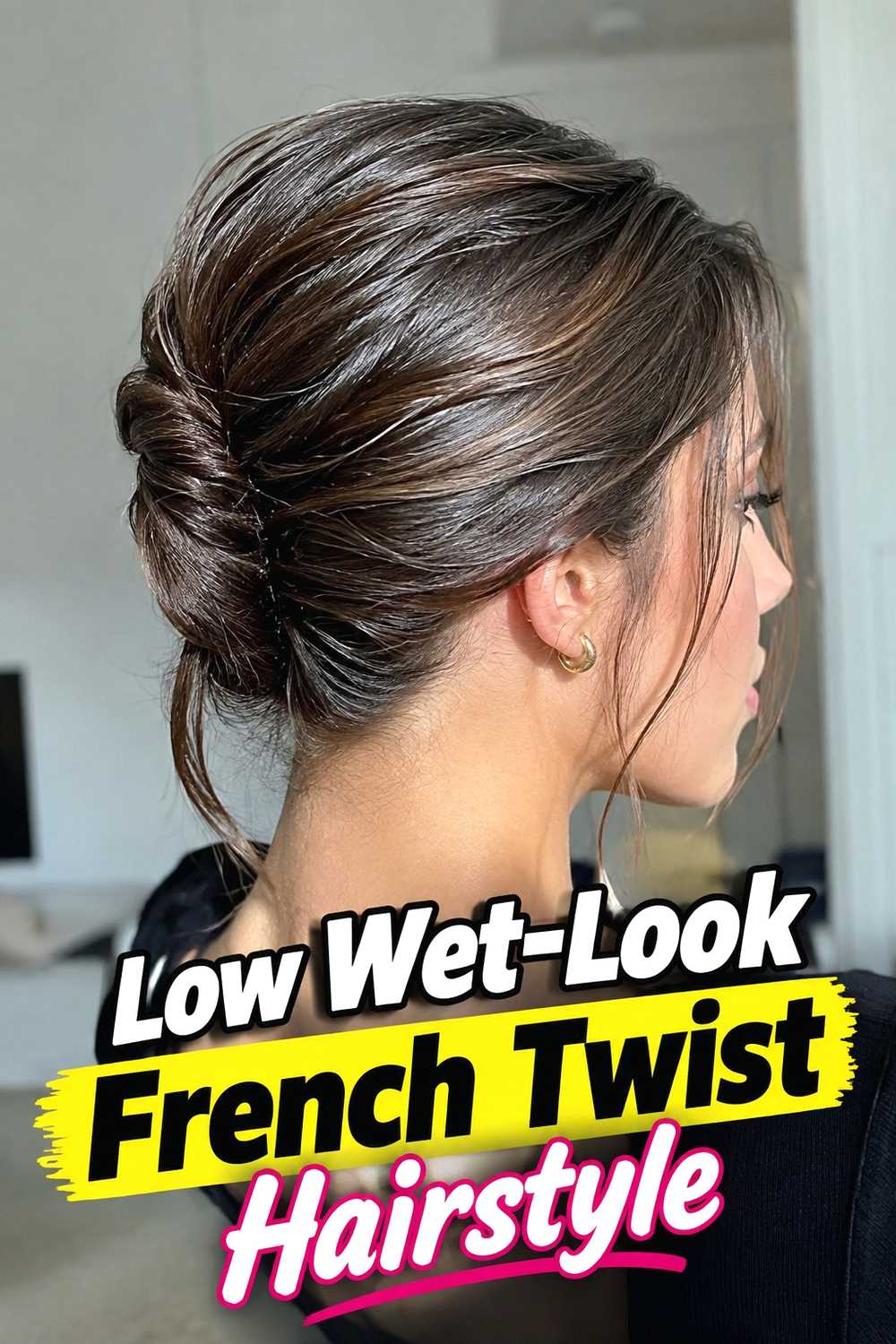
The Low Wet-Look French Twist Hairstyle shifts the traditional roll closer to the nape, creating a softer and more understated silhouette. The hair is directed backward with a glossy finish, then gathered low and rolled inward rather than building significant height through the center of the head. This lower placement can make the updo feel less formal while still keeping the characteristic tucked shape of a French twist. A few subtle ridges in the surface can add dimension, but the finish should remain controlled. The lower roll also works well when you want the crown to stay sleek instead of creating the lifted structure associated with more traditional versions.
Best For
This option works well for dinners, understated formal styling, and outfits where a high or voluminous updo might feel too elaborate.
Pro Tip
Anchor the base securely with pins before rolling the remaining length inward. A stable foundation helps the lower twist maintain its shape.
5. High Shine Crown French Twist Hairstyle
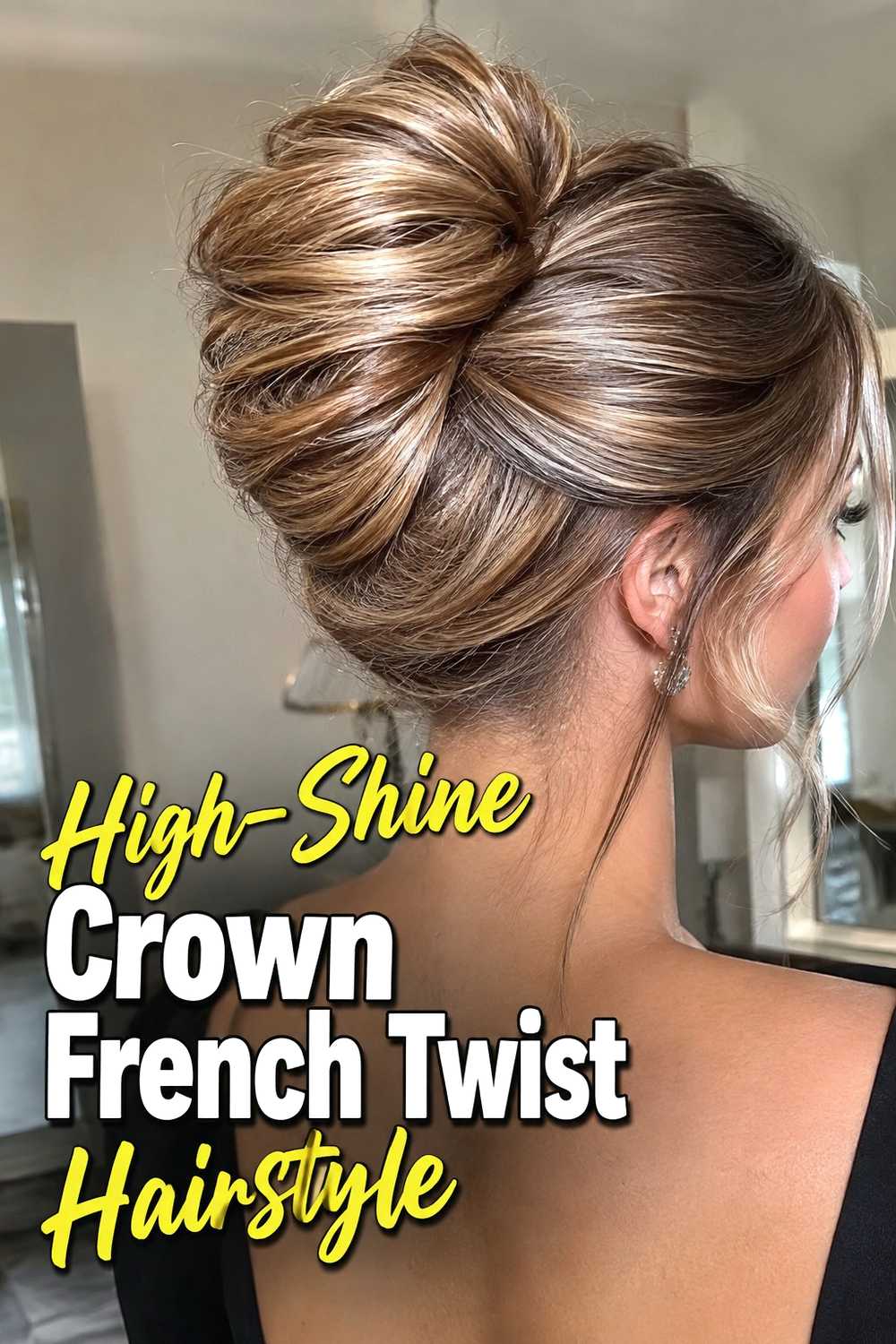
The High-Shine Crown French Twist Hairstyle puts extra emphasis on the smooth upper surface before the hair disappears into the roll. The crown is brushed back with controlled lift rather than flattened completely, creating a long, elegant line from the forehead toward the twist. A reflective styling finish highlights the direction of the hair and makes the crown look deliberately polished. The back can remain compact and vertically structured, allowing the glossy top to provide most of the drama. This version is especially effective on medium to long hair because there is enough length to create a secure roll without sacrificing the smooth, continuous surface through the upper section.
Styling Notes
Work the shine product through the outer layers evenly and brush the crown backward in one consistent direction to avoid visible gaps or uneven texture.
Why It Works
The combination of subtle crown height and reflective shine elongates the profile while keeping the updo clean and sophisticated.
6. Center Part Wet French Twist Hairstyle
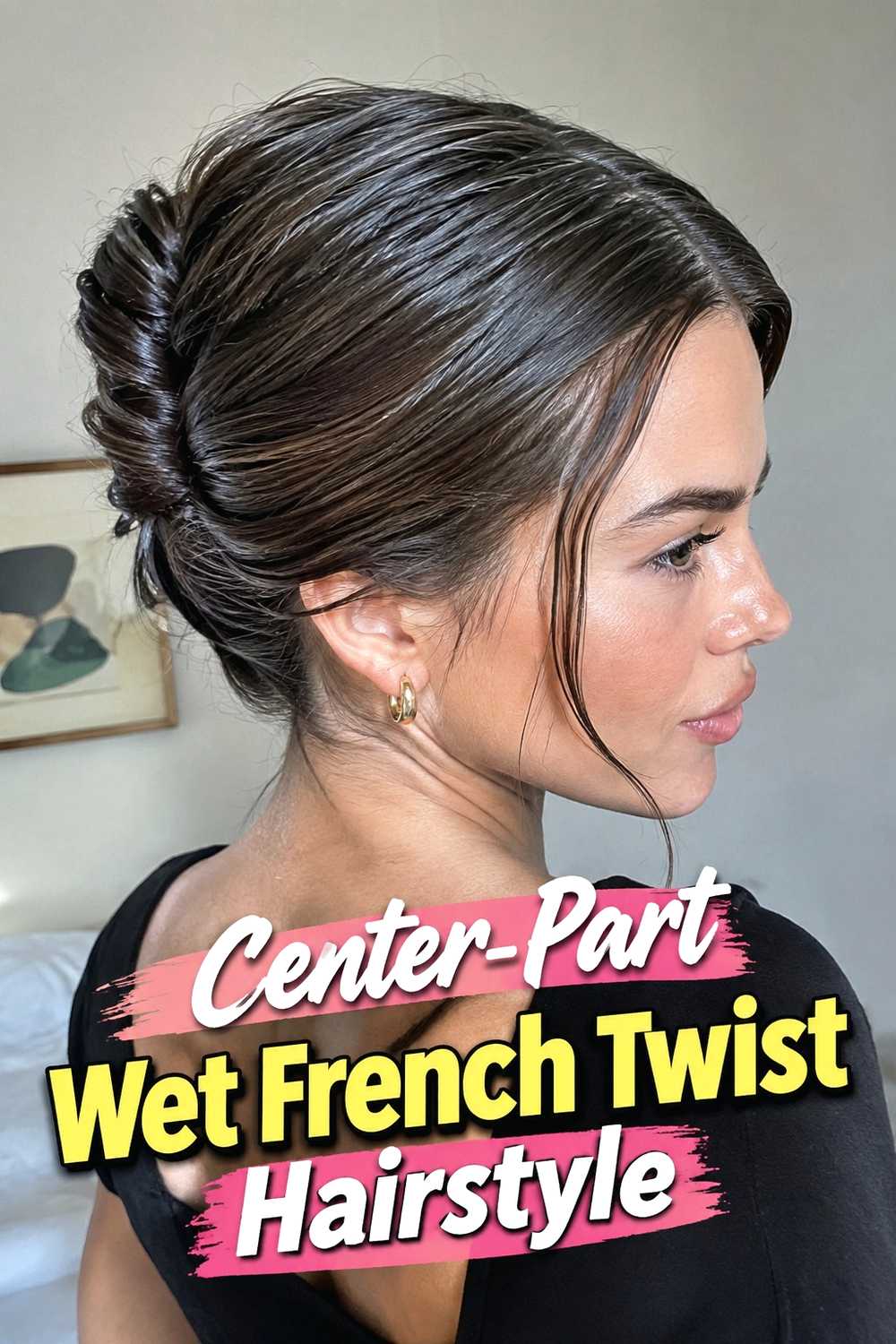
The Center-Part Wet French Twist Hairstyle brings symmetry to a style that is often swept entirely backward. Create a clean middle part and smooth both sides away from the face before gathering them into the twist. The part can extend only a few inches for a softer effect or continue farther toward the crown for a more graphic, deliberate finish. Keeping both sides equally glossy makes the front feel balanced, while the French twist provides structure at the back. This look works particularly well when the front sections remain flat and neat rather than overly voluminous. Small natural variations in strand direction keep the finish realistic even when the overall styling is highly polished.
Best For
Choose this version if you prefer symmetrical styling, exposed facial framing, and a sleek front that feels modern rather than vintage.
Pro Tip
Use the center part as your visual guide while smoothing each side so the tension and placement remain as even as possible.
7. Side Swept Wet French Twist Hairstyle
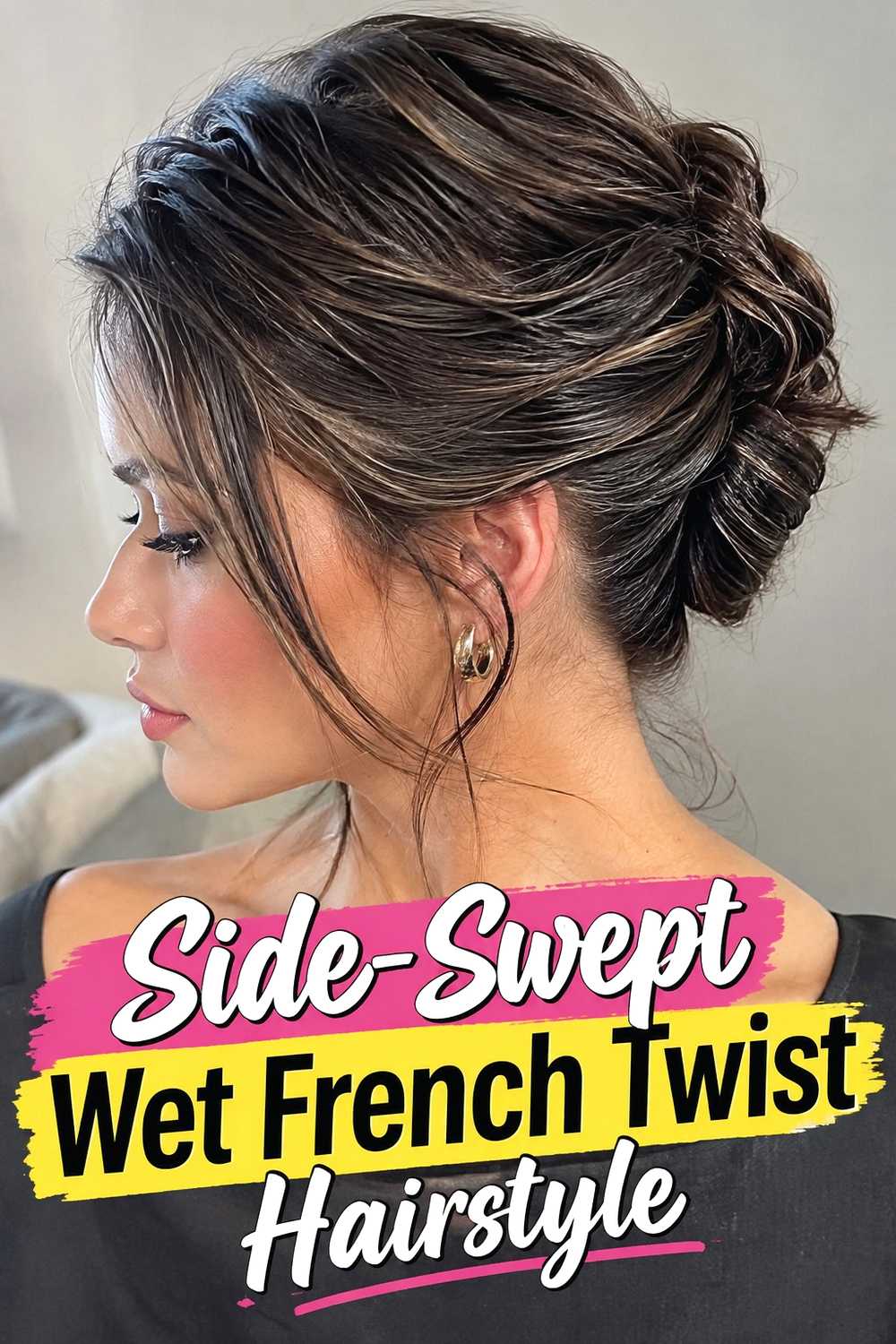
A Side-Swept Wet French Twist Hairstyle lets the front flow diagonally across the head before joining the rolled back section. The sweep can begin near a side part and curve across the forehead, or start farther back for a cleaner, more open hairline. Unlike a sharply molded finger wave, the front remains broad and smooth, giving the hairstyle a softer kind of movement. The twist itself should stay secure and vertically defined so the diagonal front does not make the overall silhouette feel unbalanced. A glossy surface helps the eye follow the direction of the sweep and makes the transition into the back look intentional.
Styling Notes
Use a broad comb or brush to maintain a continuous front panel rather than dividing the sweep into too many narrow sections.
Best For
This style suits formal looks where you want some movement around the front without leaving loose pieces or creating a highly sculpted wave pattern.
8. Textured Wet Look French Twist Hairstyle
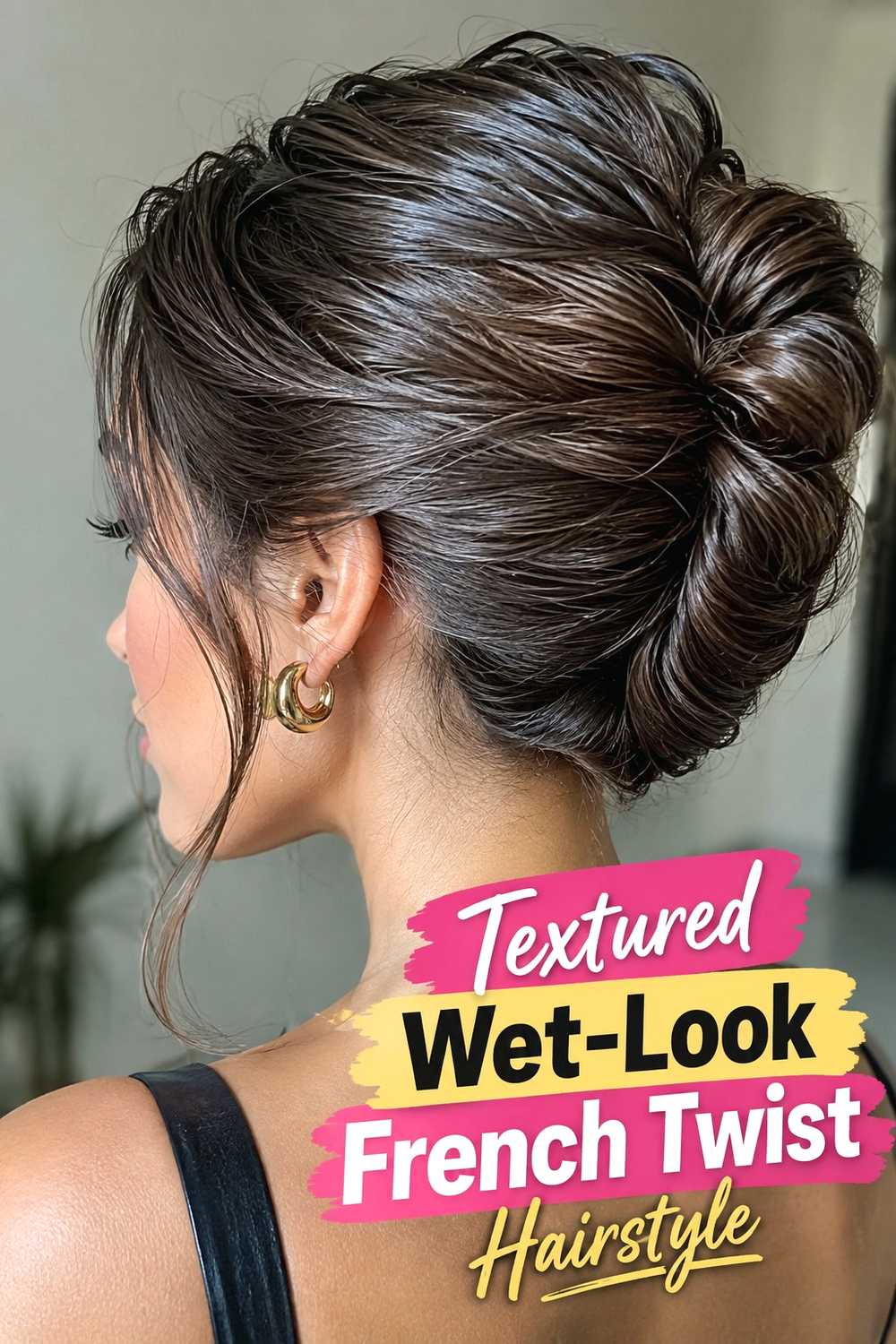
The Textured Wet-Look French Twist Hairstyle keeps the glossy finish but avoids making every strand completely smooth. Instead, slight separation through the crown and sides gives the surface more dimension before the hair is rolled at the back. The texture can come from natural waves, gentle finger shaping, or carefully defined sections that remain visible beneath the shine. Keep the French twist itself secure, but allow the upper portion to look slightly less rigid than a traditional polished version. This balance makes the style feel modern and wearable while preserving the elegant vertical silhouette. A few subtle flyaways can remain if they look intentional rather than frizzy or uncontrolled.
Hair Type & Length
Naturally wavy and slightly coarse hair can work especially well because the texture remains visible even under a glossy styling finish.
Pro Tip
Apply product in layers rather than coating the entire head heavily at once. Too much can collapse the texture you are trying to preserve.
9. Curly Wet Look French Twist Hairstyle
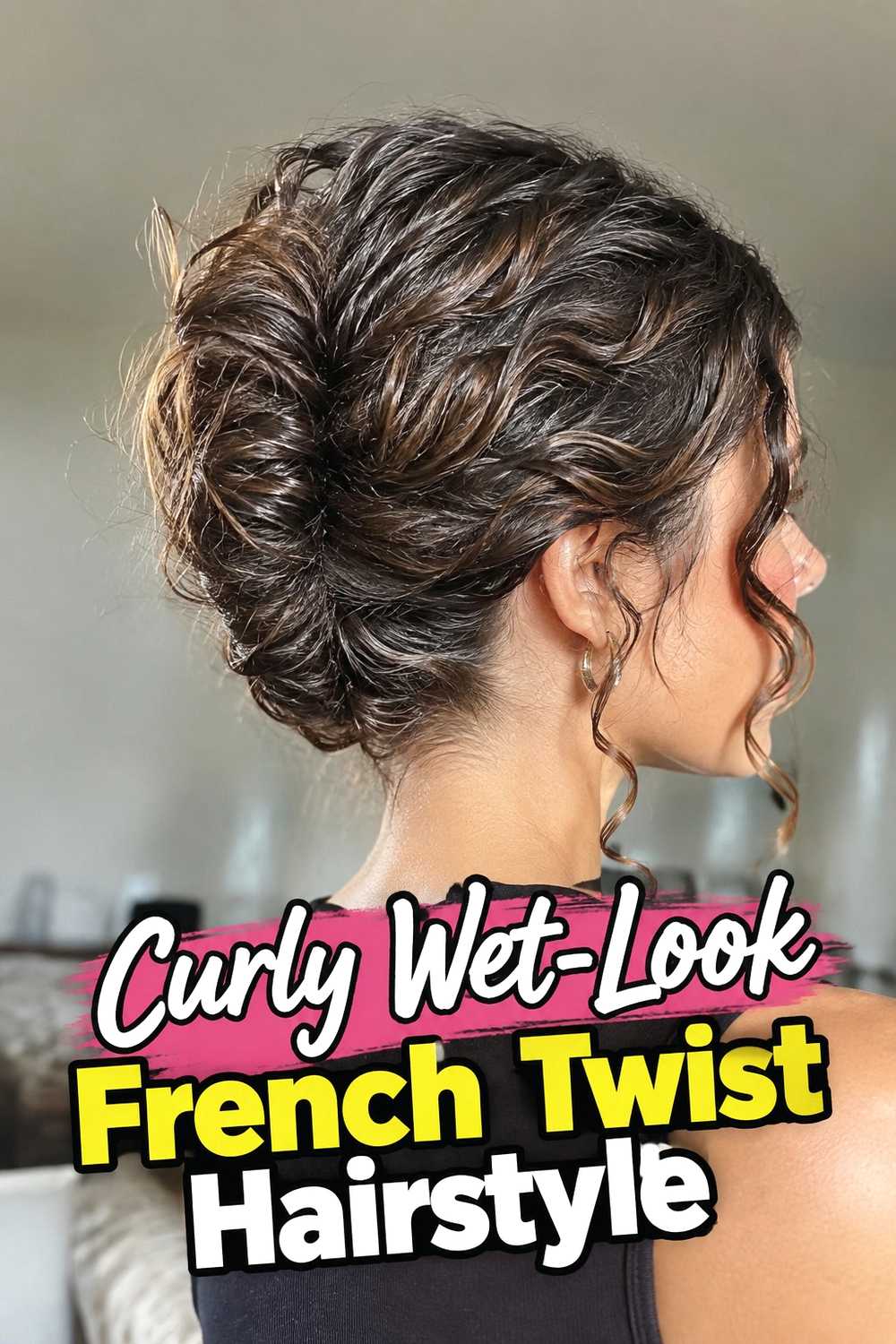
The Curly Wet-Look French Twist Hairstyle uses natural curl definition as part of the finished design rather than brushing the hair completely smooth. The sides can be gently directed toward the back while still showing curved texture, and the curls are gathered into a vertical roll or tucked shape. Around the crown, defined curl groupings create dimension beneath the glossy finish, making the twist look fuller and more organic. Small curls near the hairline can remain sculpted instead of being forced flat. The key is maintaining enough control for the French twist to hold securely while allowing the natural texture to remain recognizable from both the front and back.
Hair Type & Length
This version is particularly suited to naturally curly and coily textures with enough length to gather and tuck securely into the back.
Wear & Maintenance
Use pins strategically inside the roll rather than overcompressing the curl pattern. This helps the twist stay secure without removing all visible texture.
10. Polished Tucked End French Twist Hairstyle
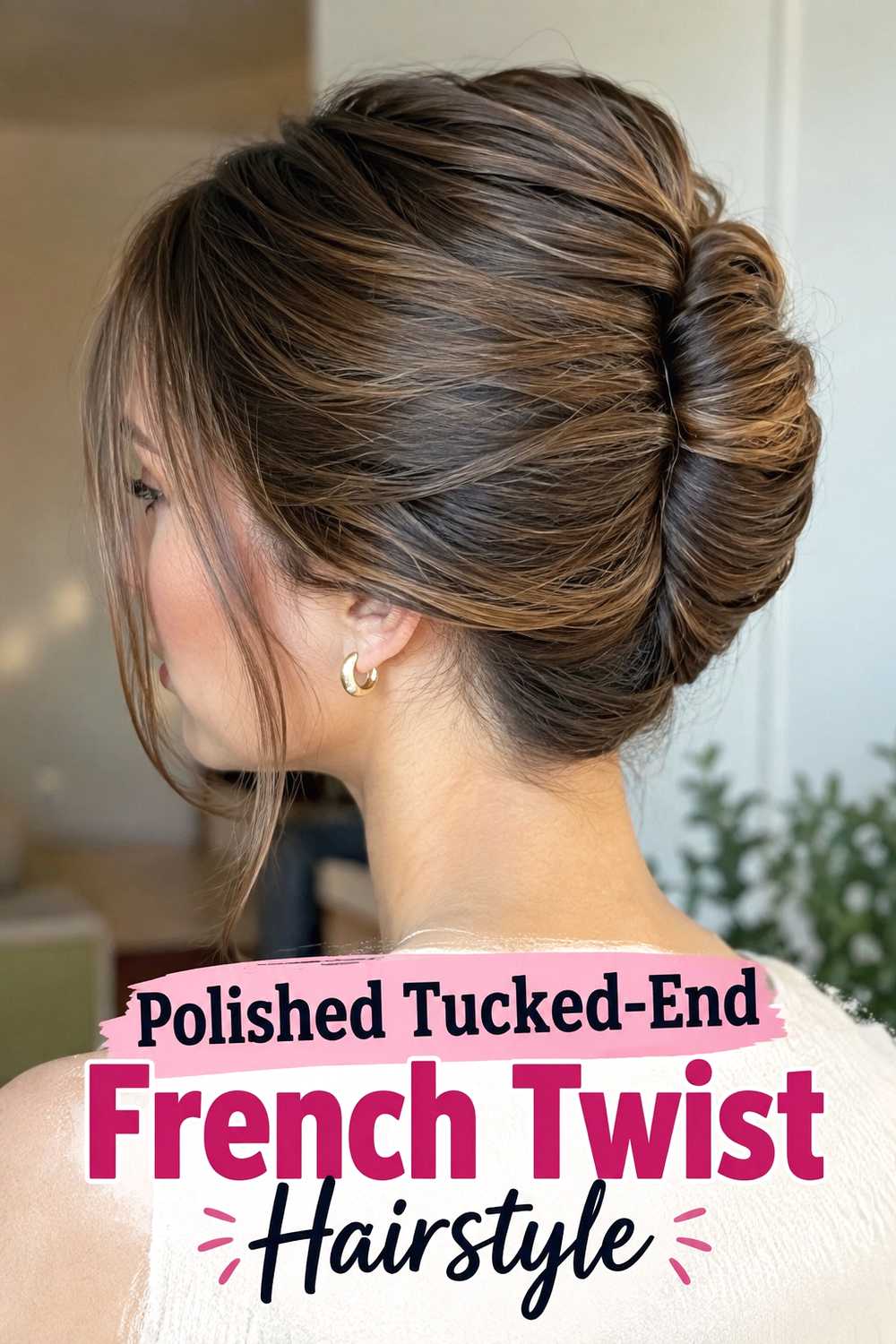
The Polished Tucked-End French Twist Hairstyle emphasizes a seamless finish at the top of the roll. After forming the vertical twist, the loose ends are carefully folded inward so no tips or stray lengths interrupt the silhouette. The sides stay smooth and glossy, leading naturally into the center without obvious bumps or exposed pins. This version feels particularly refined because every section appears intentionally contained. A slightly rounded crown can prevent the overall style from becoming too severe, while the wet-look surface adds contemporary shine. The result works best when the twist is proportioned to the wearer’s hair length rather than made unnecessarily oversized.
Styling Notes
Leave enough flexibility in the upper end of the twist to tuck the remaining lengths inward before adding the final securing pins.
Why It Works
Hiding the ends creates a continuous vertical shape, allowing the shine and structure of the twist to stand out without visual interruption.
11. Wet Look French Twist With Face Framing Waves Hairstyle
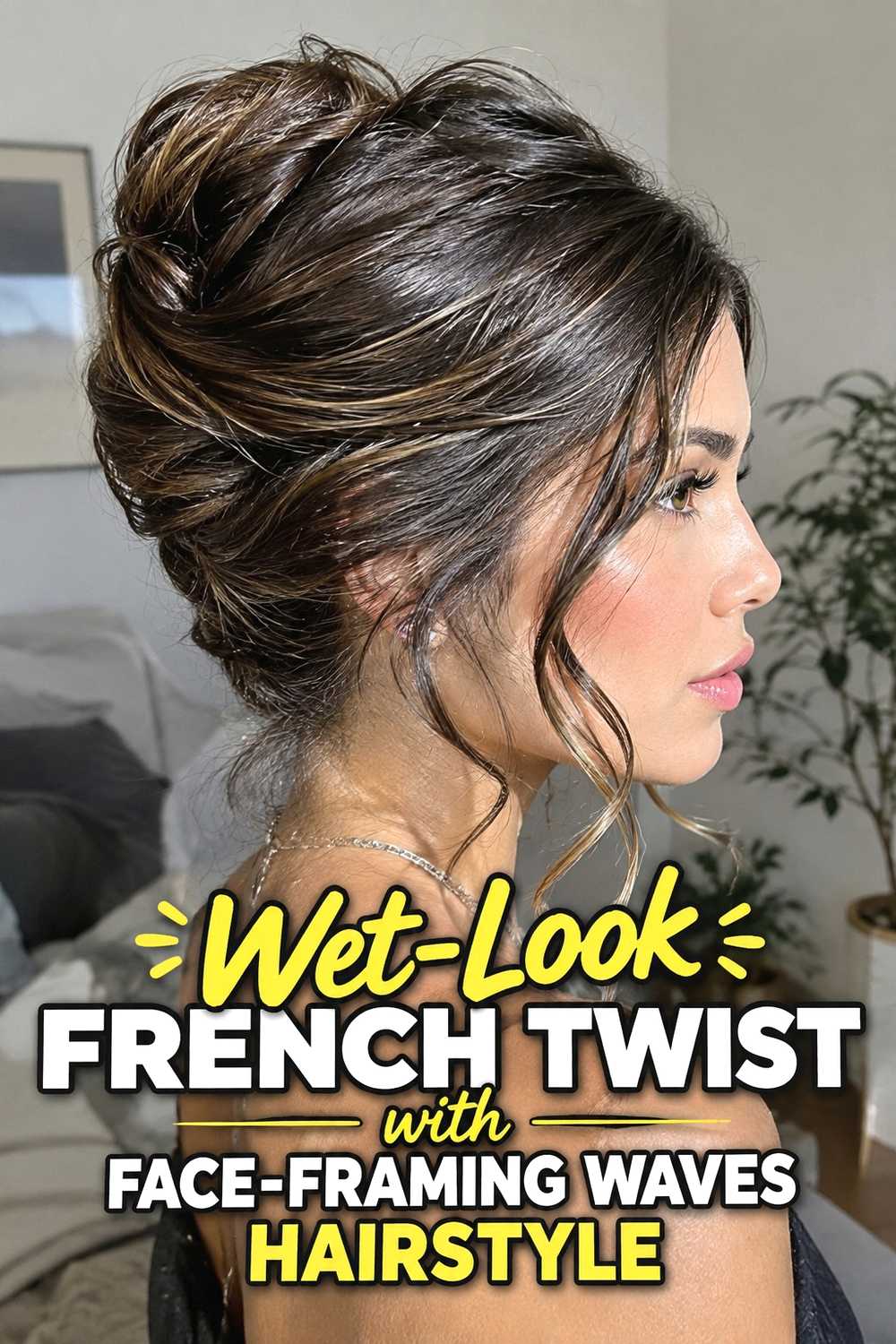
The Wet-Look French Twist with Face-Framing Waves Hairstyle softens the polished updo by leaving a few deliberate sections around the front. Rather than allowing random loose strands, shape the face-framing pieces into smooth bends that echo the glossy finish of the twist. The rest of the hair is directed backward and rolled securely, keeping the crown controlled while the front adds movement. These waves can curve along the temples or sit closer to the cheekbones depending on their length. Keeping them defined rather than fluffy preserves the wet-look mood. This variation offers a useful balance between a completely slicked-back updo and a softer hairstyle with visible framing.
Styling Notes
Separate the face-framing sections before forming the twist so they remain clean and do not accidentally become trapped inside the roll.
Best For
Choose this style when you want the elegance of a French twist but prefer a little softness around the face.
12. Sculpted S Wave French Twist Hairstyle
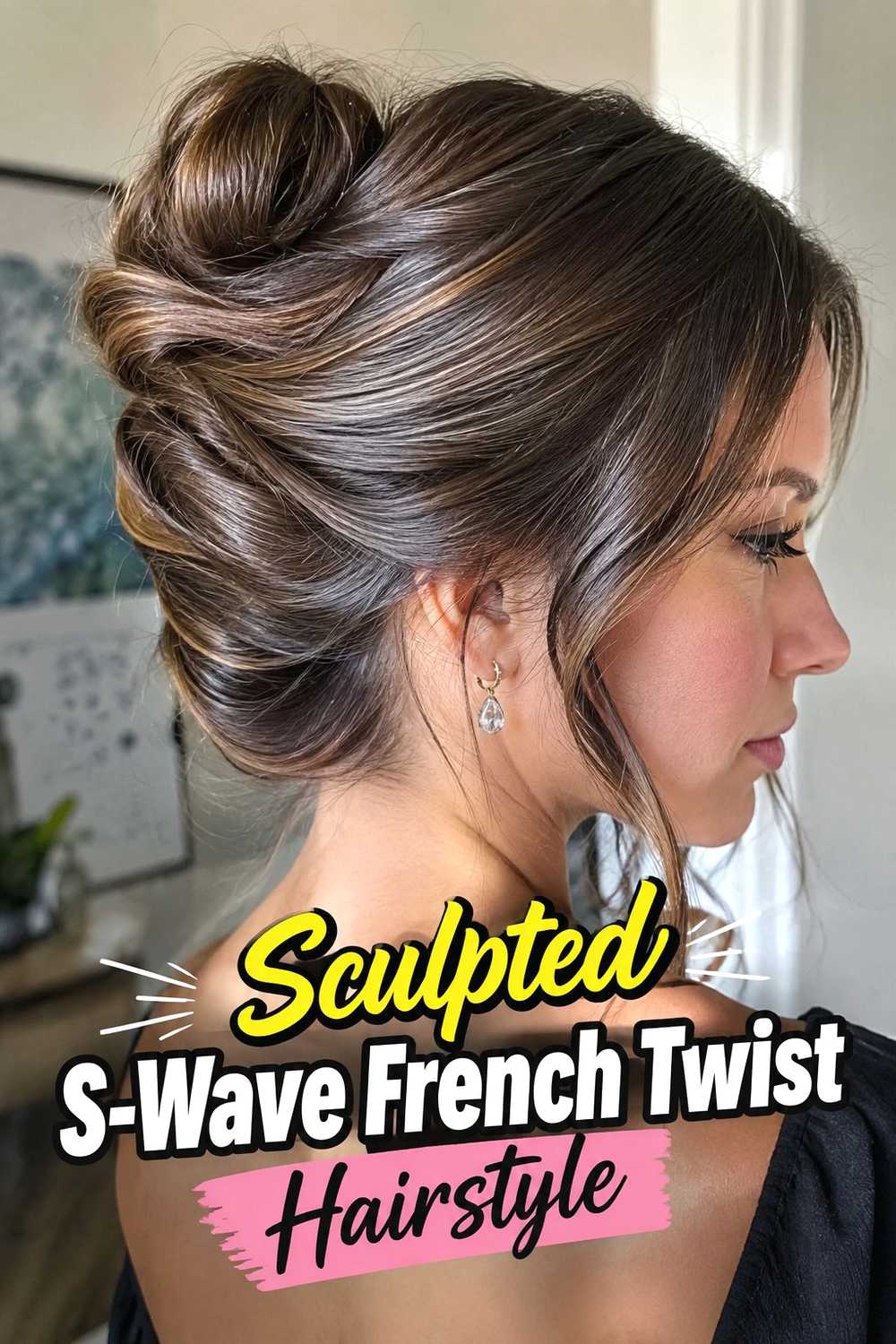
The Sculpted S-Wave French Twist Hairstyle adds a broad, deliberate curve across the front or side before the hair enters the twist. The S shape is larger than a traditional finger wave, giving the style a more contemporary and graphic appearance. One ridge can sweep across the temple while the next bends backward toward the crown, creating a continuous visual line into the rolled section. High shine makes the curves easier to see and gives the hairstyle its liquid, sculpted finish. The back should remain relatively simple and secure so the wave pattern does not compete with an overly elaborate roll. Medium and longer lengths make the transition easiest to control.
Styling Notes
Build the S-wave gradually with fingers and a comb, making sure each bend connects naturally rather than appearing like separate curls.
Pro Tip
Secure the final curve discreetly near the crown before forming the French twist so the sculpted front remains stable throughout the styling process.
13. Glossy Loose Top French Twist Hairstyle
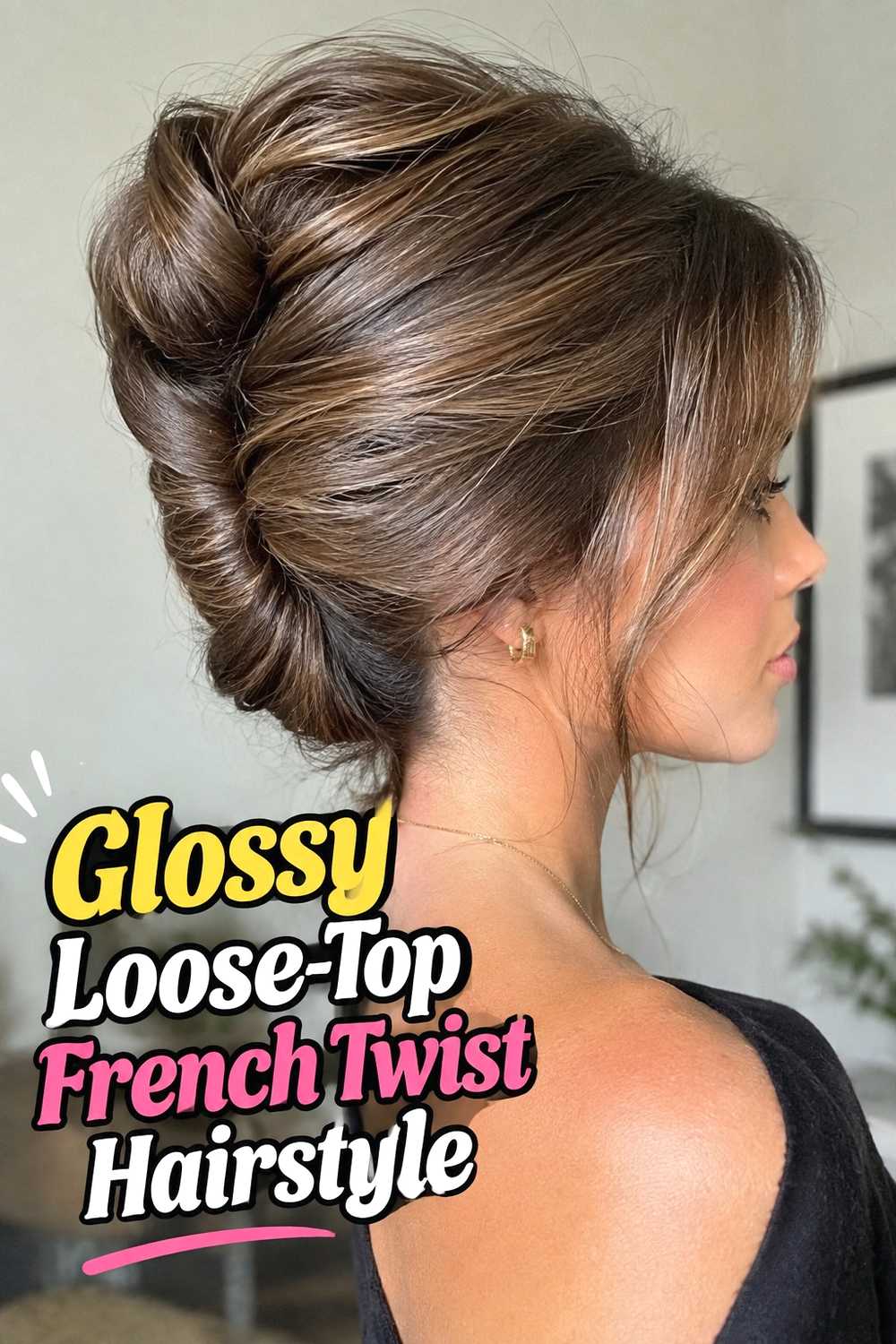
The Glossy Loose-Top French Twist Hairstyle offers a softer alternative to fully slicked-back wet styling. The sides remain controlled and reflective, but the crown is allowed to retain a little lift and separation before the hair rolls into the twist. This gives the hairstyle more dimension and keeps it from feeling too tightly molded against the head. The French twist can remain polished through the back, creating a clear contrast between the looser upper surface and the neatly tucked roll. A few visible strand lines at the crown add realism and movement. This is a useful choice when you want the shine of wet-look styling without sacrificing all natural volume.
Why It Works
The lifted crown balances the sleek sides and structured twist, making the hairstyle feel softer while still maintaining a polished overall finish.
Wear & Maintenance
Avoid repeatedly smoothing the top after the style is finished. Lightly pat any flyaways into place so the intended volume is not flattened.
How to Choose the Right Look
Start by deciding how sleek you want the front to be. If you prefer a sharp, minimalist finish, the classic slicked-back, center-part, or polished tucked-end versions keep the surface controlled and clean. For more visual movement, choose a deep side part, broad S-wave, or finger-wave front.
Hair texture also matters. Straight and softly wavy hair can create very smooth surfaces, while naturally curly hair may look more distinctive when the curl pattern remains visible through the crown and sides instead of being completely flattened.
Consider the placement of the twist as well. A low roll creates a softer silhouette, while a higher or more vertical twist gives the hairstyle a stronger formal profile. Crown volume can also change the mood: flat and glossy feels sharper, while a looser top introduces softness.
Finally, think about comfort and hold. Secure the structural roll with pins first and rely on styling products mainly for surface control and shine. This allows the twist to stay stable without depending on excessive stiffness through the entire hairstyle.
Final Thoughts
Wet-look French twists can be sleek, sculpted, curly, softly textured, or dramatically waved while keeping the recognizable elegance of the classic rolled updo. The most effective version is one that works with your natural texture, preferred crown volume, and desired level of polish. Use shine to define the surface, but keep enough realistic strand detail and movement for the hairstyle to feel refined rather than rigid.
FAQs
1. What makes a French twist look wet without the hair actually being wet?
A wet-look effect comes from styling products that create visible shine, definition, and surface control after the hair has been shaped. The finished style does not need to remain soaking wet.
2. Is a wet-look French twist suitable for naturally curly hair?
Yes. Natural curls can be gathered into the twist while selected curl groupings remain visible around the crown, sides, or hairline.
3. How long does hair need to be for a French twist?
Hair generally needs enough length to gather toward the back and roll inward securely. Medium and longer lengths are easiest, although shorter hair can sometimes create a compact version with additional pins.
4. How can I stop a wet-look French twist from appearing too flat?
Keep a small amount of lift through the crown before smoothing the outer surface. You can also choose a textured or loose-top variation instead of slicking every section tightly against the head.
5. Can wet-look French twists work for formal events?
Yes. Sleek, tucked-end, finger-wave, and sculpted S-wave versions can all create a polished finish suitable for weddings, dinners, evening events, and other formal occasions.
Save your favorite wet-look French twist hairstyle, share the ideas you love, and explore more polished updo inspiration for your next event.