15 Wispy Side Bang Hairstyles for Soft Face-Framing Style
Wispy side bangs add gentle movement around the face, combining a soft diagonal sweep with airy strands that blend naturally into many different haircuts.
Unlike heavier side-swept fringe, wispy side bangs rely on lower density and visible separation. The fringe can skim the brows, sweep toward the temple, or extend into cheekbone-length pieces depending on how subtle you want the look to feel. This makes the style especially adaptable to long layers, medium cuts, bobs, waves, curls, and sleek hair.
The best version depends on your texture, density, part placement, and preferred styling time. Longer side bangs usually offer easier grow-out, while shorter versions create more noticeable movement across the forehead. Keeping the ends light without over-thinning is key to maintaining a natural, intentional finish.
Quick List
- Classic Wispy Side Bangs Hairstyle
- Wispy Side Bangs With Long Layers Hairstyle
- Wispy Side Bangs With Face Framing Layers Hairstyle
- Wispy Side Bangs With Soft Waves Hairstyle
- Wispy Side Bangs With Sleek Straight Hair Hairstyle
- Wispy Side Bangs With Shoulder Length Hair Hairstyle
- Wispy Side Bangs With Textured Lob Hairstyle
- Wispy Side Bangs With Rounded Bob Hairstyle
- Wispy Side Bangs With Butterfly Layers Hairstyle
- Wispy Side Bangs With Curly Hair Hairstyle
- Wispy Side Bangs With Thick Hair Hairstyle
- Wispy Side Bangs With Fine Hair Hairstyle
- Wispy Side Bangs With Shaggy Layers Hairstyle
- Wispy Side Bangs With Voluminous Blowout Hairstyle
- Romantic Wispy Side Bangs Hairstyle
1. Classic Wispy Side Bangs Hairstyle
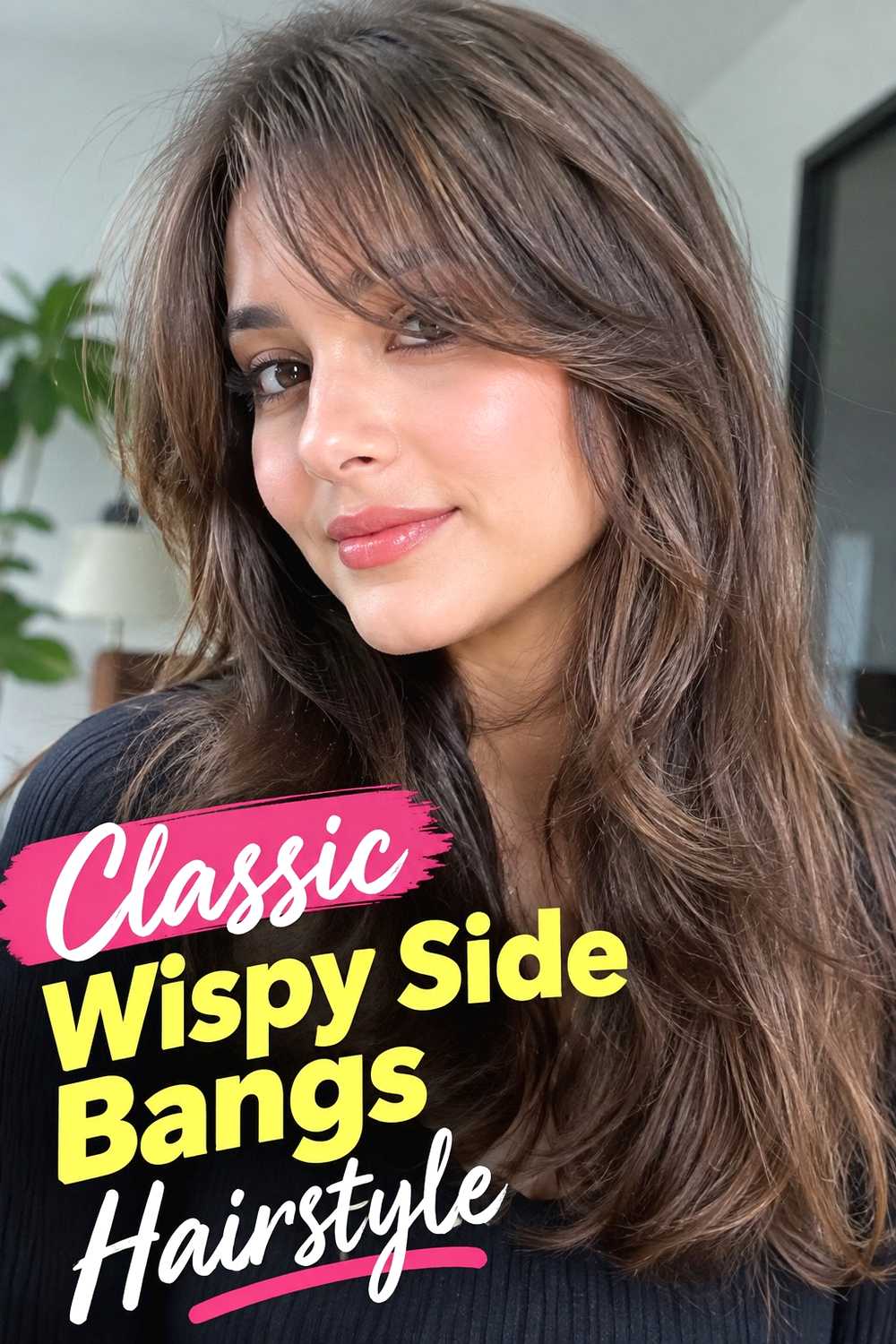
Classic wispy side bangs sweep diagonally across the forehead with a light, separated finish rather than forming a dense curtain of hair. The shortest strands can begin around the brow area, while longer pieces gradually move toward the temple for a natural blend. This style works with several haircut lengths because the fringe adds movement without demanding dramatic layering elsewhere. A subtle side part helps establish the direction, and a light blow-dry can encourage the bangs to curve softly instead of lying flat. The most wearable version keeps the ends delicate but still substantial enough to look intentional, with natural strand variation rather than perfectly uniform spacing.
Styling Notes
Dry the fringe in the direction you want it to fall, then separate only a few pieces with your fingers to maintain softness.
Best For
Choose this version if you want an easy side fringe that adds movement without creating the density of traditional side-swept bangs.
2. Wispy Side Bangs With Long Layers Hairstyle
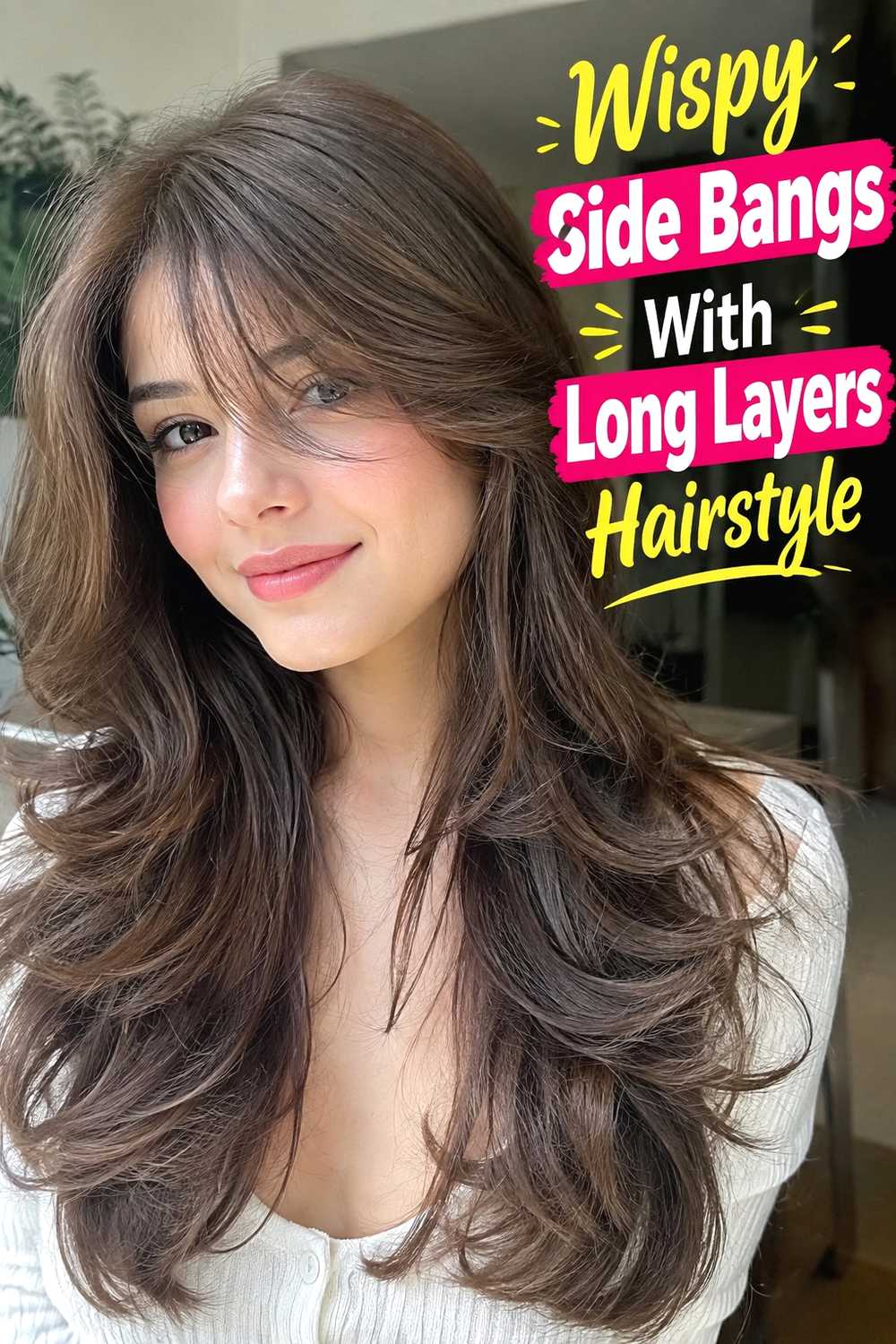
Long layers make wispy side bangs feel especially fluid because the diagonal fringe can transition naturally into movement through the lengths. The bangs sweep from a shorter point near the forehead toward longer temple sections, while layers through the shoulders and back keep the hair from looking heavy. This combination works beautifully on straight and softly wavy textures because the front remains light while the rest of the haircut retains plenty of length. A gentle blowout can direct the layers away from the face without making the fringe too voluminous. Keeping the lower perimeter full helps the haircut maintain density and balances the lighter movement created around the front.
Why It Works
The long layers continue the direction established by the side fringe, creating a smooth flow from the forehead through the longer sections.
Pro Tip
Keep the shortest face-framing layers below the fringe so the side-swept shape stays distinct rather than disappearing into too many short pieces.
3. Wispy Side Bangs With Face Framing Layers Hairstyle
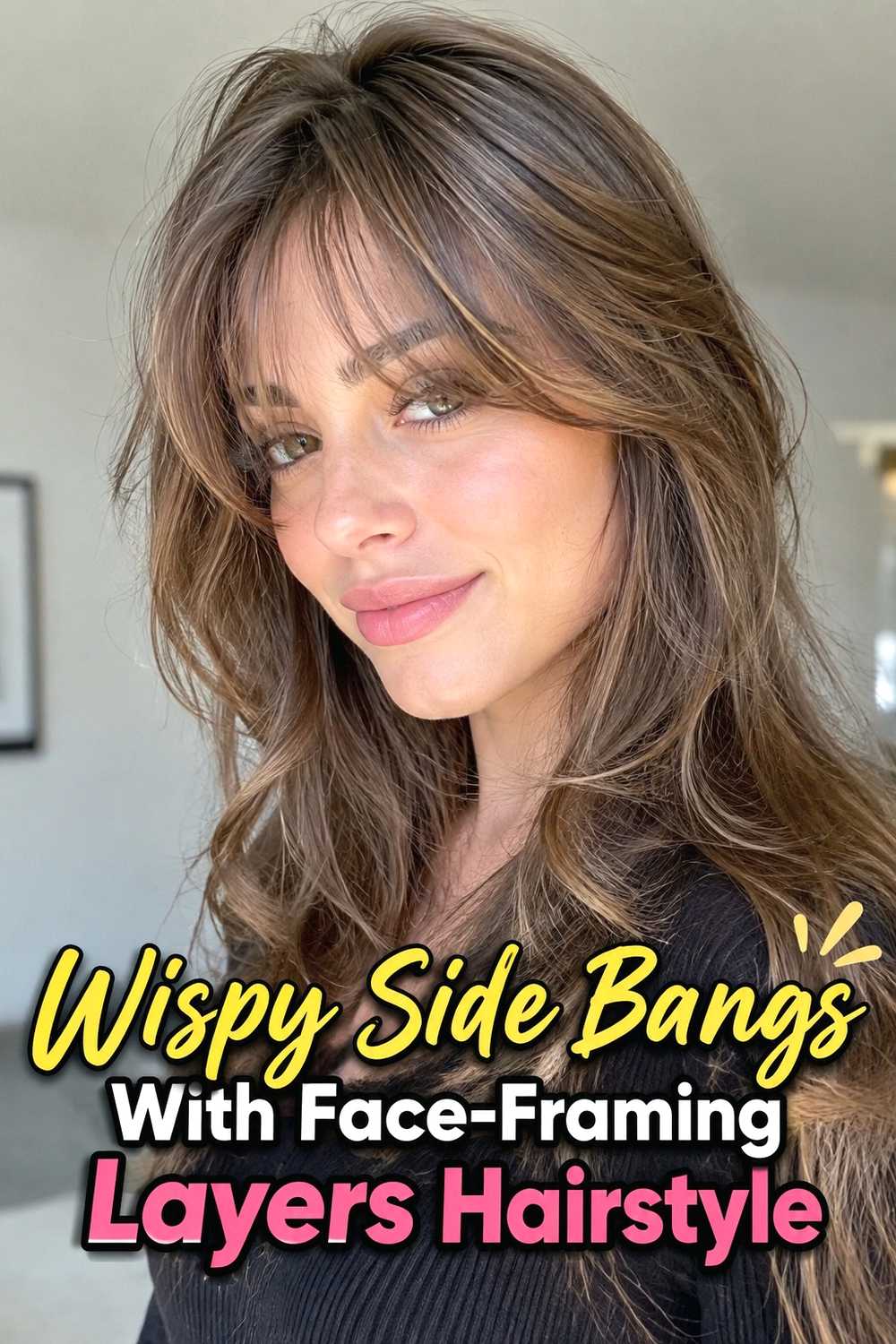
Face-framing layers create a seamless transition from wispy side bangs into the rest of the haircut. The fringe can begin near the brow, sweep toward one temple, and then merge into cheekbone, jaw, or collarbone-length pieces. This graduated structure keeps the bangs from looking disconnected and adds visible movement around the front without requiring heavy layering throughout the back. A round brush can curve the longer sections gently away from the face while the fringe stays softer and closer to the forehead. The result feels polished but still relaxed, especially when the ends retain slight separation and natural movement rather than being styled into one perfectly smooth shape.
Styling Notes
Style the side fringe first, then direct the longer face-framing pieces outward so they complement the sweep instead of flattening it.
Why It Works
Graduated front sections connect the lighter fringe to the haircut and make the overall silhouette feel balanced rather than front-heavy.
4. Wispy Side Bangs With Soft Waves Hairstyle
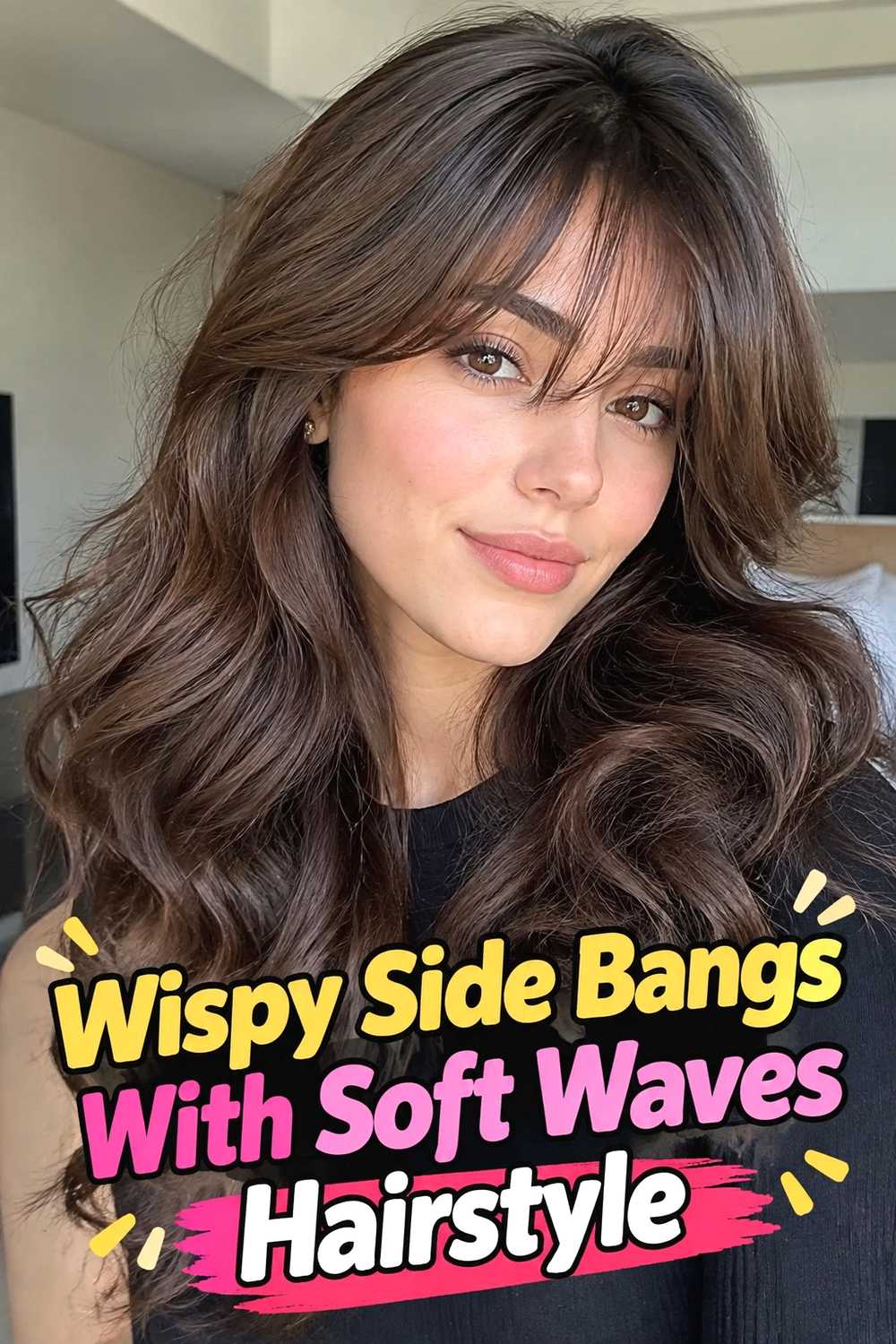
Soft waves give wispy side bangs an easy, romantic finish by pairing a delicate front sweep with relaxed movement through the lengths. The fringe can remain mostly smooth with a slight curve toward the temple, while loose waves begin lower around the cheekbones or shoulders. This keeps the face area uncluttered and lets the side bang remain visible. Slightly irregular waves work better than identical curls because they create a more natural flow and help the hair look touchable. On naturally wavy hair, subtle layers can encourage separation; on straighter hair, broad bends can recreate the effect while preserving softness through the ends.
Hair Type & Length
This look works especially well on medium to long hair with natural wave or enough length to create broad, loose movement.
Pro Tip
Avoid starting the strongest waves directly beside the fringe, since too much texture around the temple can hide the side-swept shape.
5. Wispy Side Bangs With Sleek Straight Hair Hairstyle
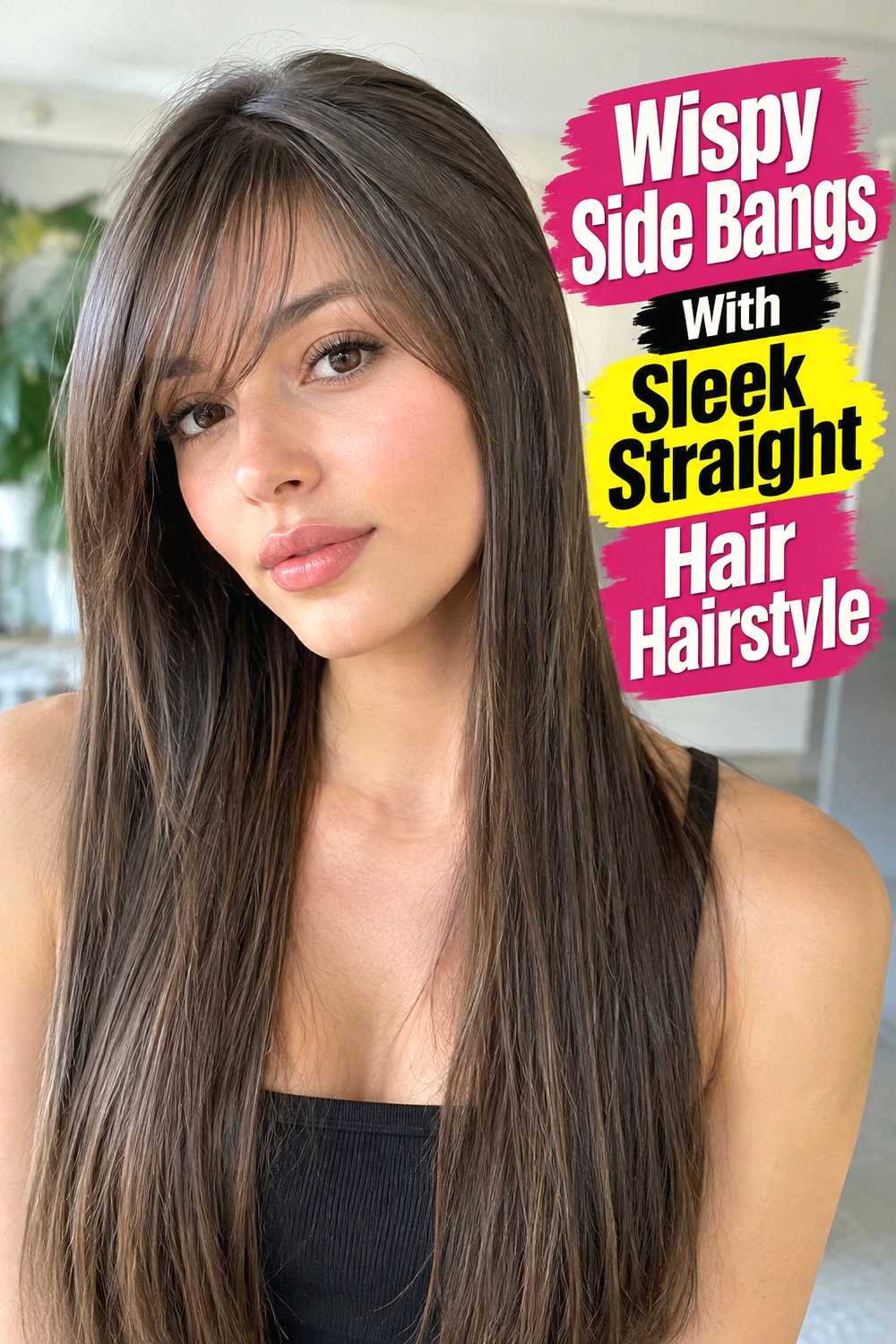
Sleek straight hair creates a clean backdrop that makes wispy side bangs stand out through contrast. The lengths remain smooth and polished, while the fringe sweeps lightly across the forehead with individual strands still visible. This version looks best when the bangs have enough movement to avoid appearing pasted against the skin. A subtle side part provides direction, and light texturing through the ends keeps the fringe from forming a heavy diagonal line. Minimal layering through the rest of the hair can maintain a streamlined silhouette, although longer front pieces may help the bangs blend naturally into the sides. Soft shine adds polish without making the hair look rigid.
Why It Works
The smooth lengths keep the silhouette simple, allowing the diagonal movement and airy texture of the fringe to become the main detail.
Wear & Maintenance
Use smoothing products mainly through the lengths and ends so the wispy fringe does not become weighed down or oily-looking.
6. Wispy Side Bangs With Shoulder Length Hair Hairstyle
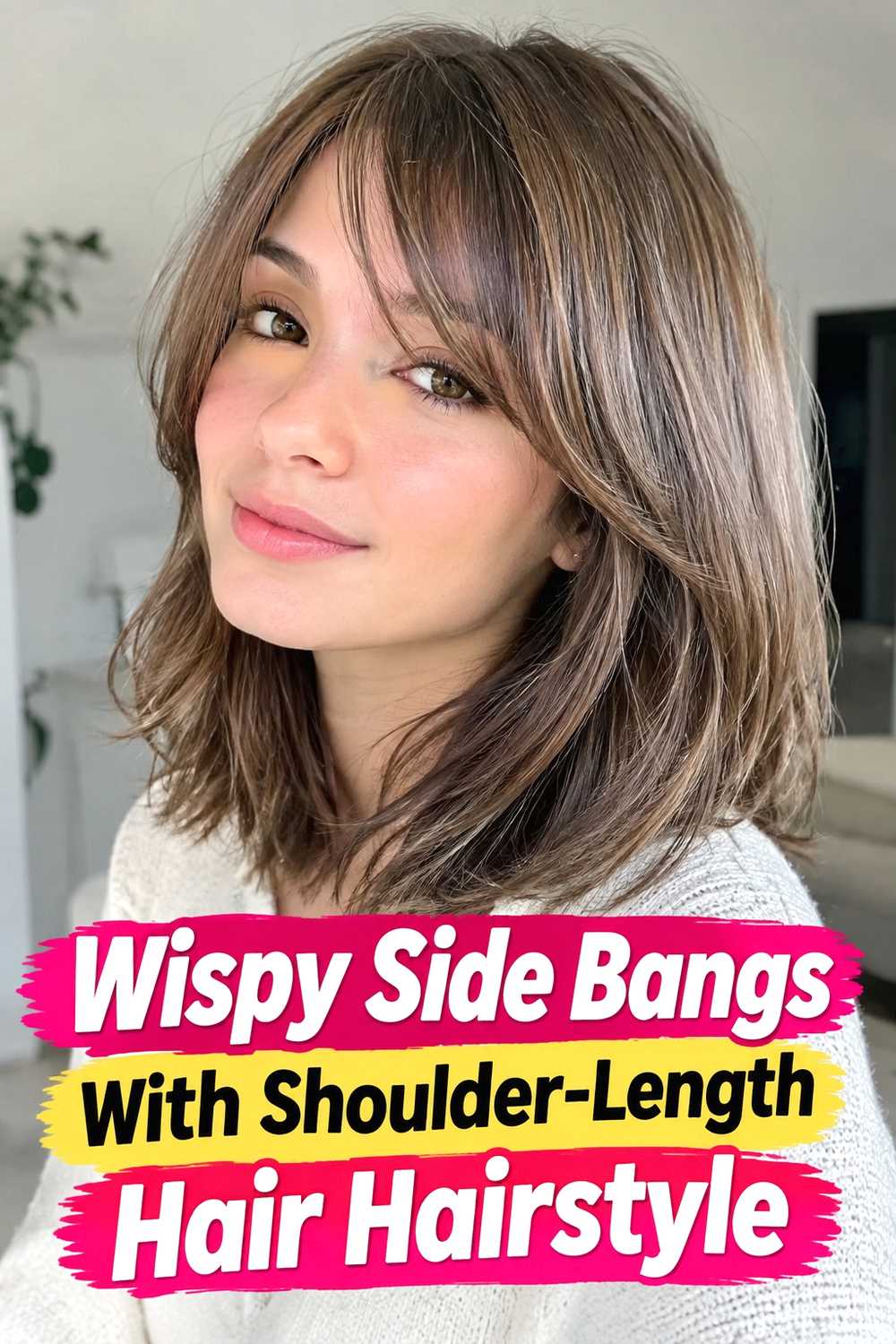
Shoulder-length hair gives wispy side bangs a balanced, practical shape that can move easily without feeling overly layered. The fringe sweeps toward one side while the medium-length perimeter falls around the shoulders, creating enough contrast for the bangs to remain noticeable. Subtle layers near the front can improve the transition from fringe to length, while keeping the back relatively full maintains a clean silhouette. This style works straight, softly flipped, or gently waved depending on the finish you prefer. Because shoulder-length ends can naturally bend where they meet clothing, allowing a little movement often looks more effortless than trying to keep every section perfectly straight.
Best For
This style suits anyone who wants side bangs paired with a manageable medium length rather than a very short or very long haircut.
Styling Notes
Keep the fringe light and directional while allowing the shoulder-level ends to retain a little natural movement for balance.
7. Wispy Side Bangs With Textured Lob Hairstyle
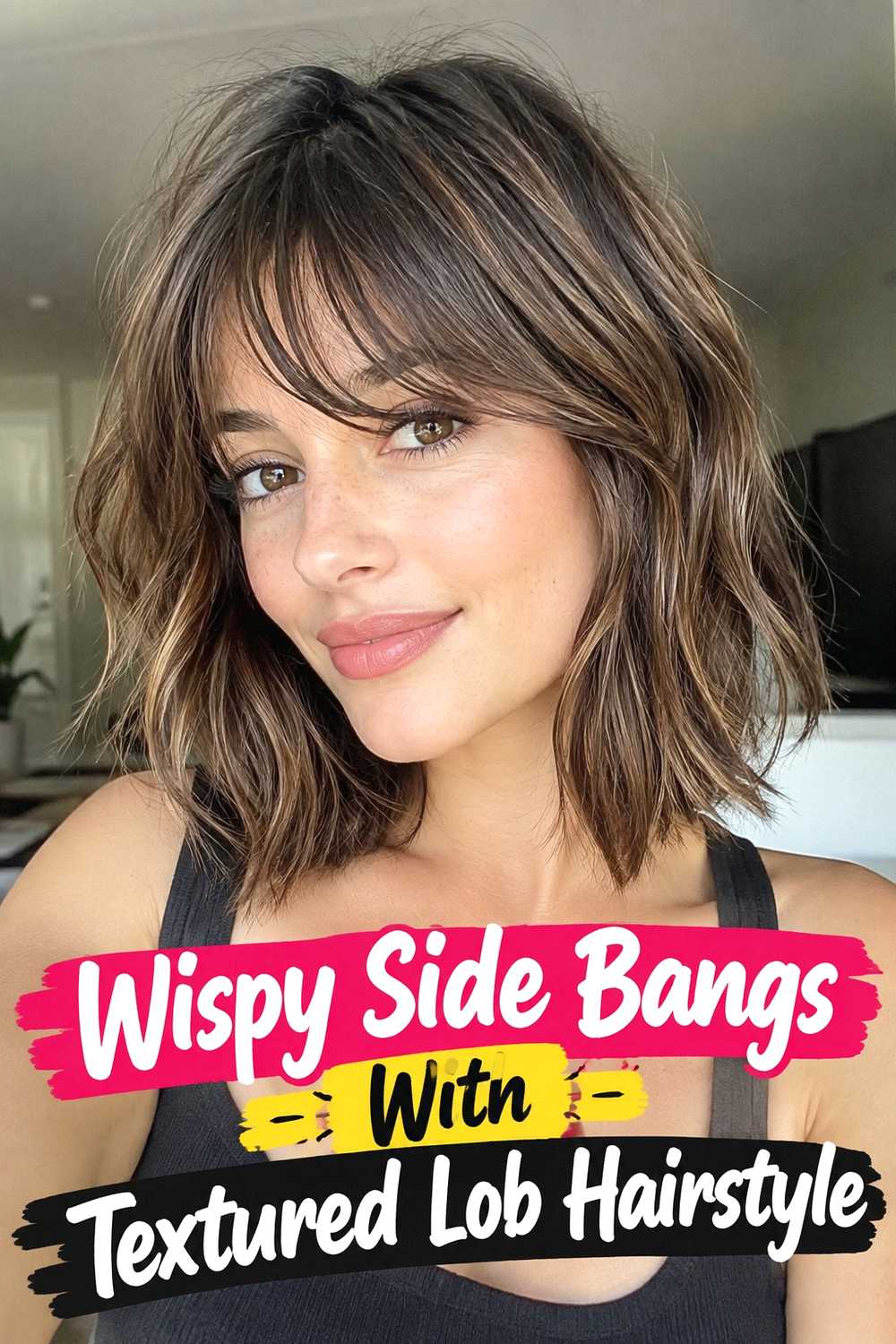
A textured lob gives wispy side bangs enough structure to look intentional while preserving an easy, relaxed finish. The lob usually falls between the jaw and collarbone, with soft bends and subtle layering through the ends. At the front, the fringe sweeps gently across the forehead and blends into slightly longer temple pieces. Instead of curling every section uniformly, a few irregular bends create movement while maintaining the shape of the haircut. This pairing works especially well when the lower perimeter stays reasonably full, since the wispy fringe already provides lightness around the face. A natural side part helps anchor the style without making it look overly precise.
Why It Works
The medium length balances the airy fringe with enough body through the perimeter, creating a versatile shape that can be polished or tousled.
Pro Tip
Use lightweight texture and avoid heavy waxes, which can make both the lob and fringe look separated into stiff pieces.
8. Wispy Side Bangs With Rounded Bob Hairstyle
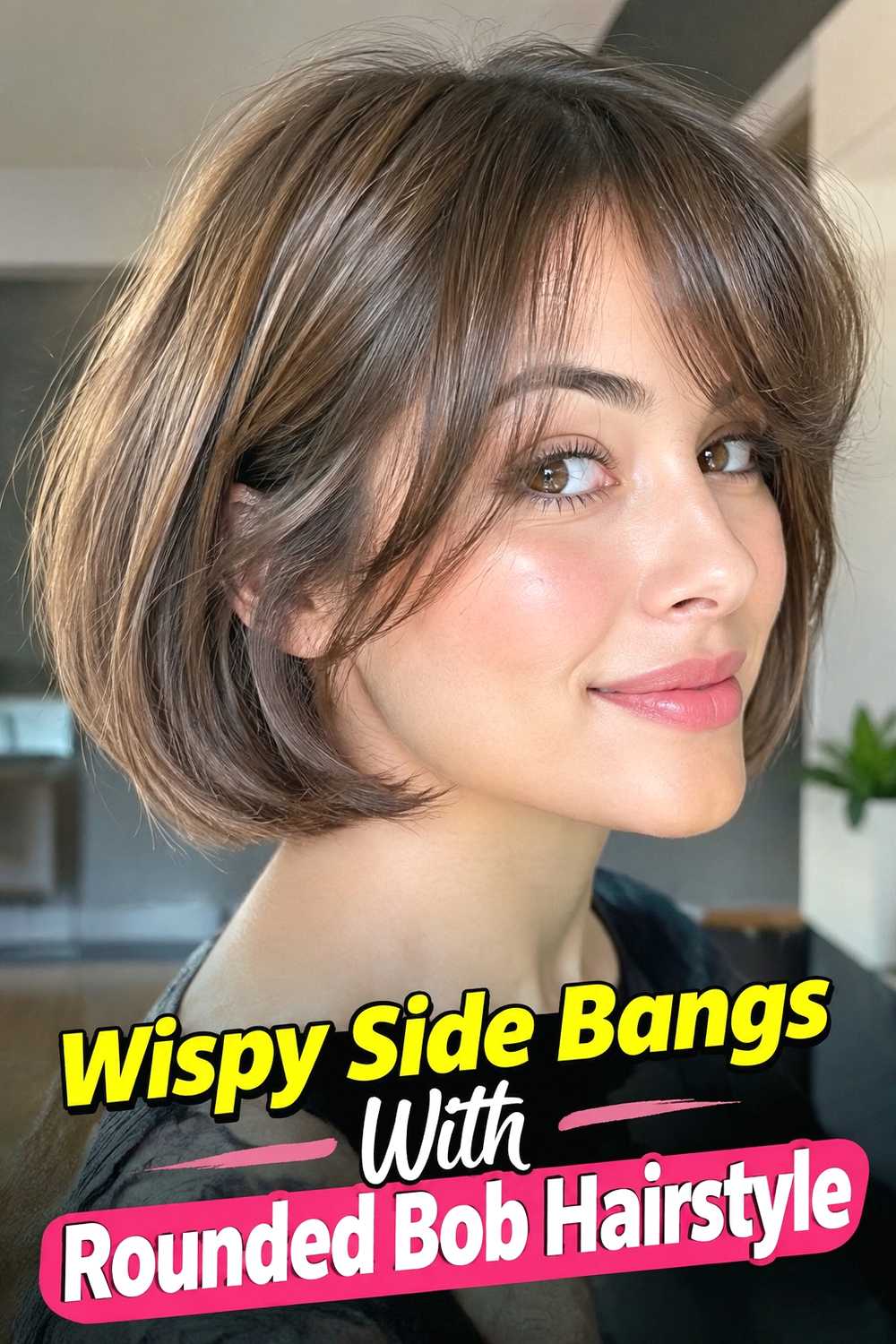
A rounded bob pairs soft structure through the ends with an airy side fringe at the front. The bob can sit around the jaw or slightly below, with a subtle inward curve that keeps the silhouette cohesive. Wispy bangs sweep diagonally toward one temple, preventing the rounded shape from feeling too symmetrical or overly formal. Keeping the fringe light is especially important here because a dense side bang combined with a curved bob can create too much weight around the face. A smooth blowout shows the rounded perimeter clearly, while the bangs should retain visible strand separation and a little natural movement.
Styling Notes
Use more curve through the bob ends than through the fringe so the hairstyle feels balanced rather than overly rounded from top to bottom.
Best For
Choose this look if you prefer a polished short haircut but want the front to remain soft, light, and slightly asymmetrical.
9. Wispy Side Bangs With Butterfly Layers Hairstyle
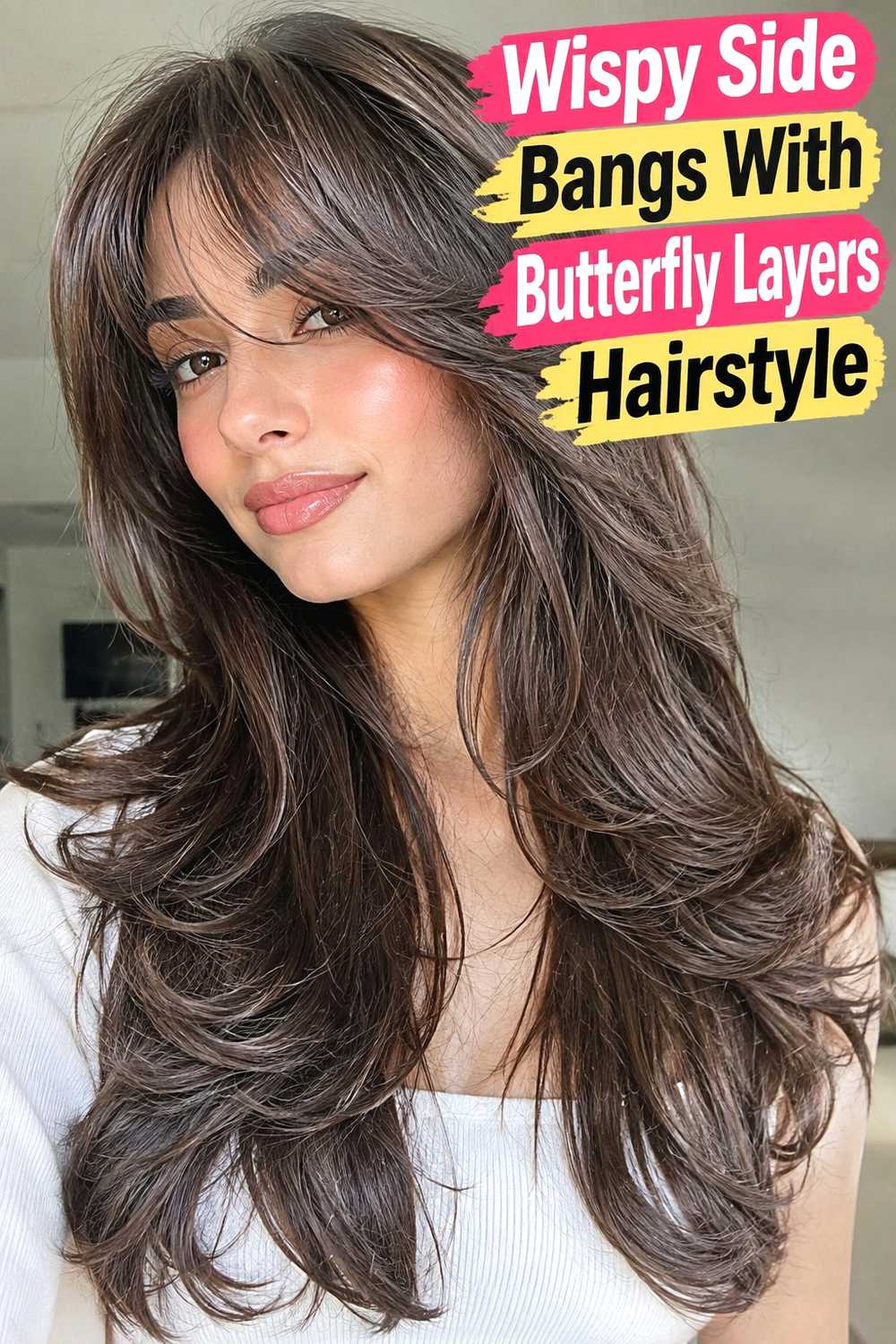
Butterfly layers add sweeping volume to wispy side bangs without sacrificing softness around the forehead. The fringe moves diagonally toward one temple, then connects with cheekbone and jaw-length layers that curve outward and flow into longer sections. This creates a cascading effect through the front while preserving generous length through the back. A rounded blowout emphasizes the layered movement, but keeping the bangs relatively light prevents the front from becoming too full. Medium to long hair with enough density usually carries this style best because the shorter layers can move freely while the ends remain substantial. The side sweep also adds asymmetry to the otherwise balanced butterfly shape.
Best For
This version suits anyone who wants airy side bangs paired with noticeable volume, bounce, and layered movement through longer hair.
Styling Notes
Build most of the lift through the longer layers while styling the fringe with less tension for a softer, lighter sweep.
10. Wispy Side Bangs With Curly Hair Hairstyle
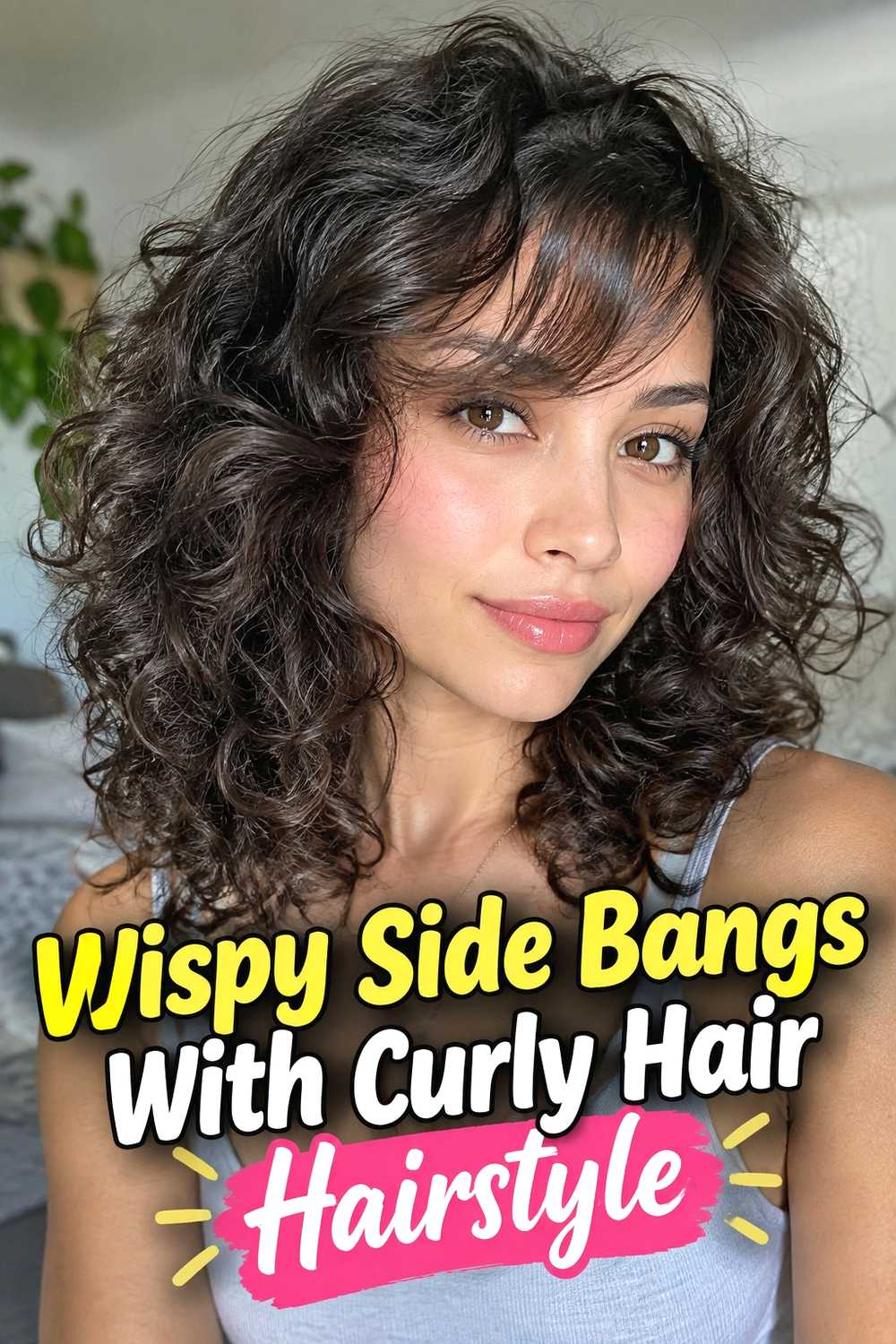
Curly hair gives wispy side bangs a naturally varied shape because individual curls can fall diagonally across the forehead rather than forming one continuous fringe line. The shorter curls can begin closer to one side of the forehead, while longer pieces taper toward the temple and merge into the surrounding curl pattern. Because curls shrink as they dry, the fringe should be shaped according to its natural finished position. Layers through the rest of the haircut can help distribute volume and prevent the side bang from getting lost in dense texture. The most natural result allows each curl to keep its individual movement while still maintaining a clear sideward direction.
Styling Notes
Evaluate the fringe when fully dry and let the curls settle naturally before making additional length adjustments.
Best For
This style works well for naturally curly and strongly wavy textures when you want a side fringe without straightening the front.
11. Wispy Side Bangs With Thick Hair Hairstyle
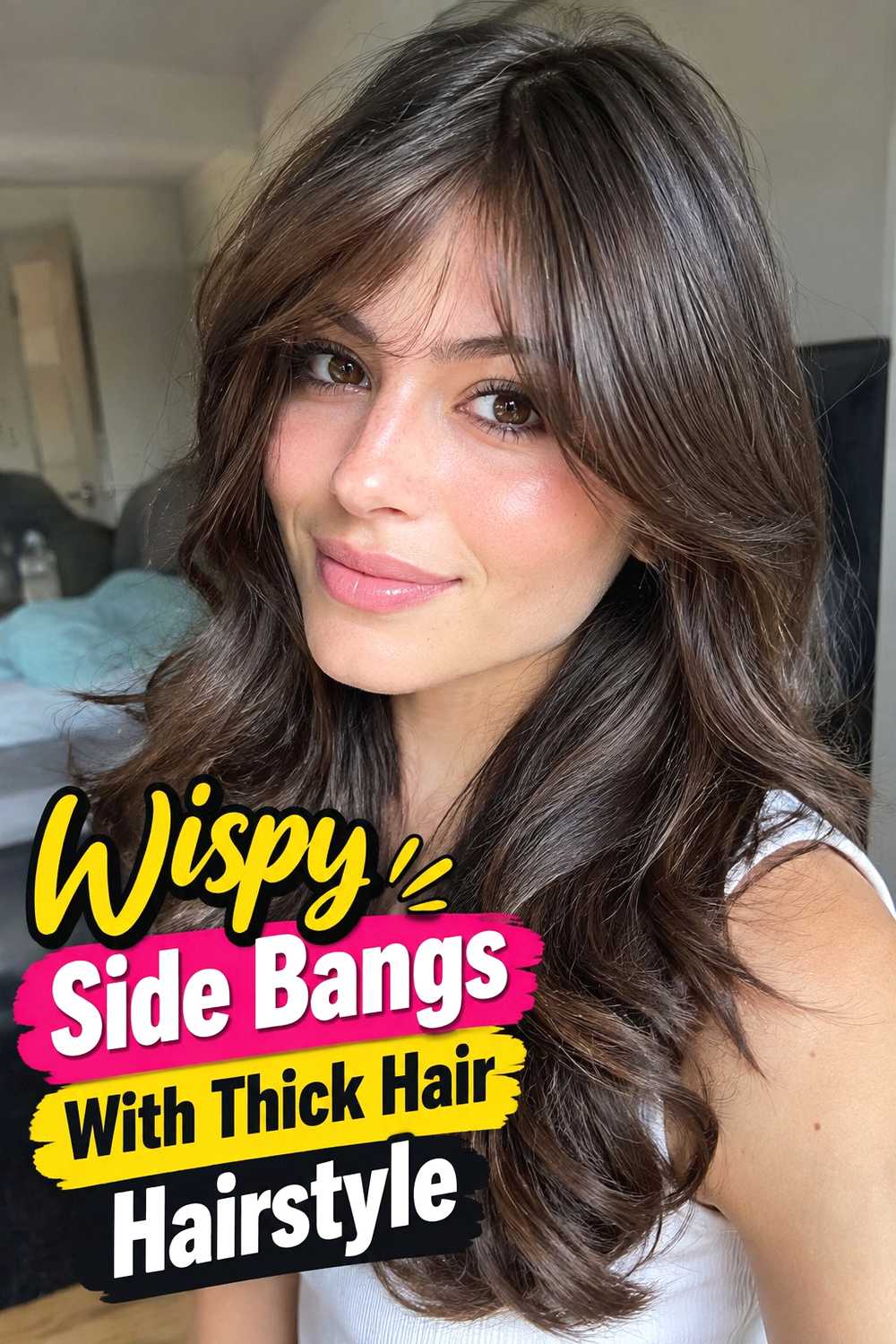
Thick hair can support wispy side bangs beautifully when the fringe section is kept controlled rather than excessively deep. A lighter section can sweep naturally toward one temple while the rest of the hair maintains its fullness. Slight texturing through the fringe ends helps reduce visual weight, but aggressive thinning near the roots can make the bangs harder to manage. Face-framing or internal layers may also help distribute bulk around the sides without sacrificing the overall density of the haircut. A gentle blow-dry encourages the fringe to move diagonally rather than pushing straight forward. The finished result should feel soft and flexible while still matching the substantial body of thick hair.
Hair Type & Length
This approach works across medium and long thick hair, particularly when the bangs are blended into subtle front layers.
Pro Tip
Use a smaller bang section than you might expect; thick hair can create a visible side fringe without taking much density from the rest of the cut.
12. Wispy Side Bangs With Fine Hair Hairstyle
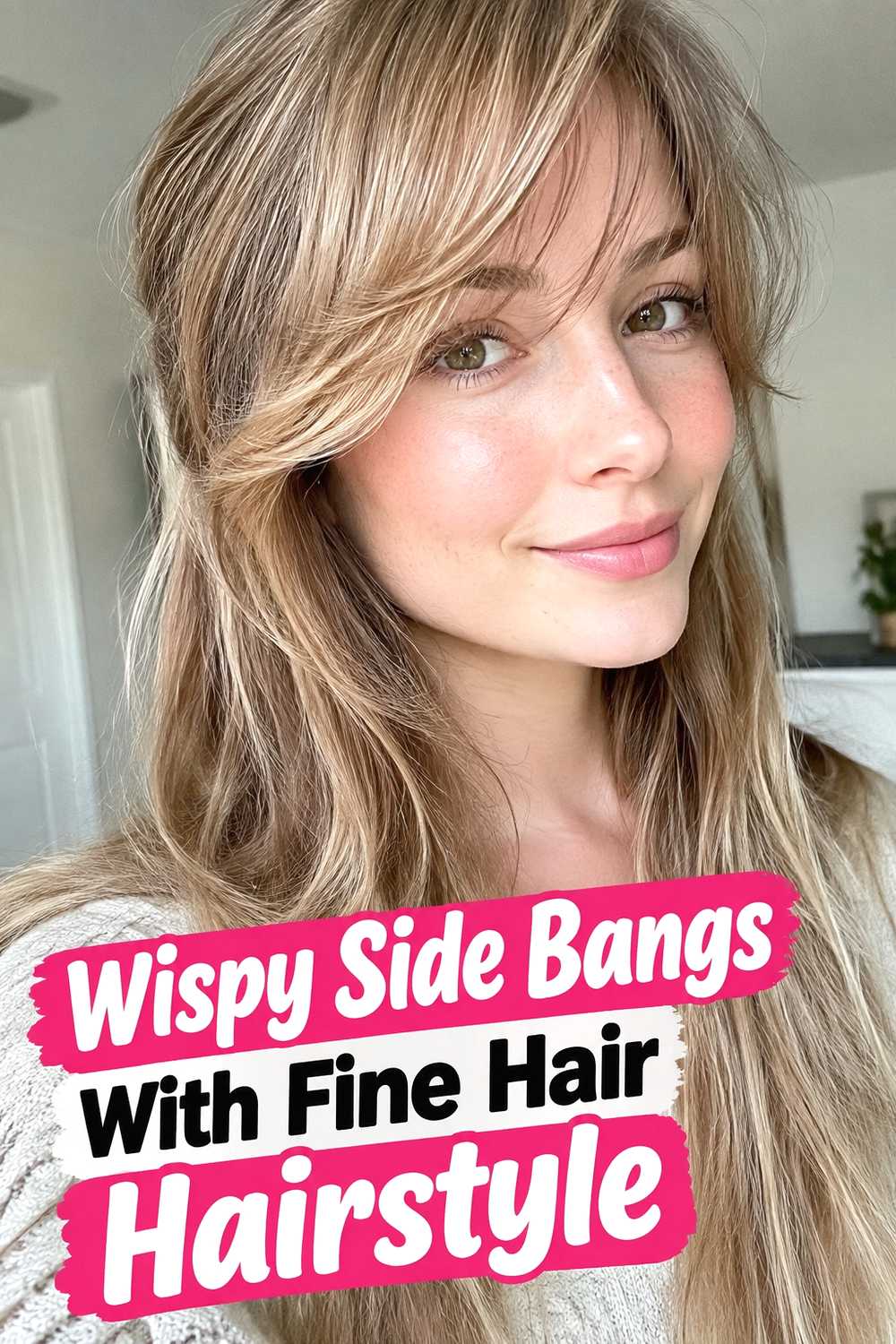
Fine hair can wear wispy side bangs effectively when the fringe is kept light but not excessively thinned. A modest section swept toward one side creates movement around the forehead without removing too much density from the rest of the haircut. The ends can be softened slightly for separation, while the surrounding hair stays relatively full through the perimeter. A small amount of root lift helps prevent the side bang from lying completely flat, but heavy products can quickly reduce its airy effect. Straight or gently wavy styling both work well, provided the fringe remains flexible and the overall haircut retains enough body to balance the delicate front.
Why It Works
A carefully sized side fringe adds directional movement while protecting the visual fullness of finer hair through the sides and ends.
Styling Notes
Choose lightweight products near the fringe and avoid excessive oil or cream that can make fine strands clump together.
13. Wispy Side Bangs With Shaggy Layers Hairstyle
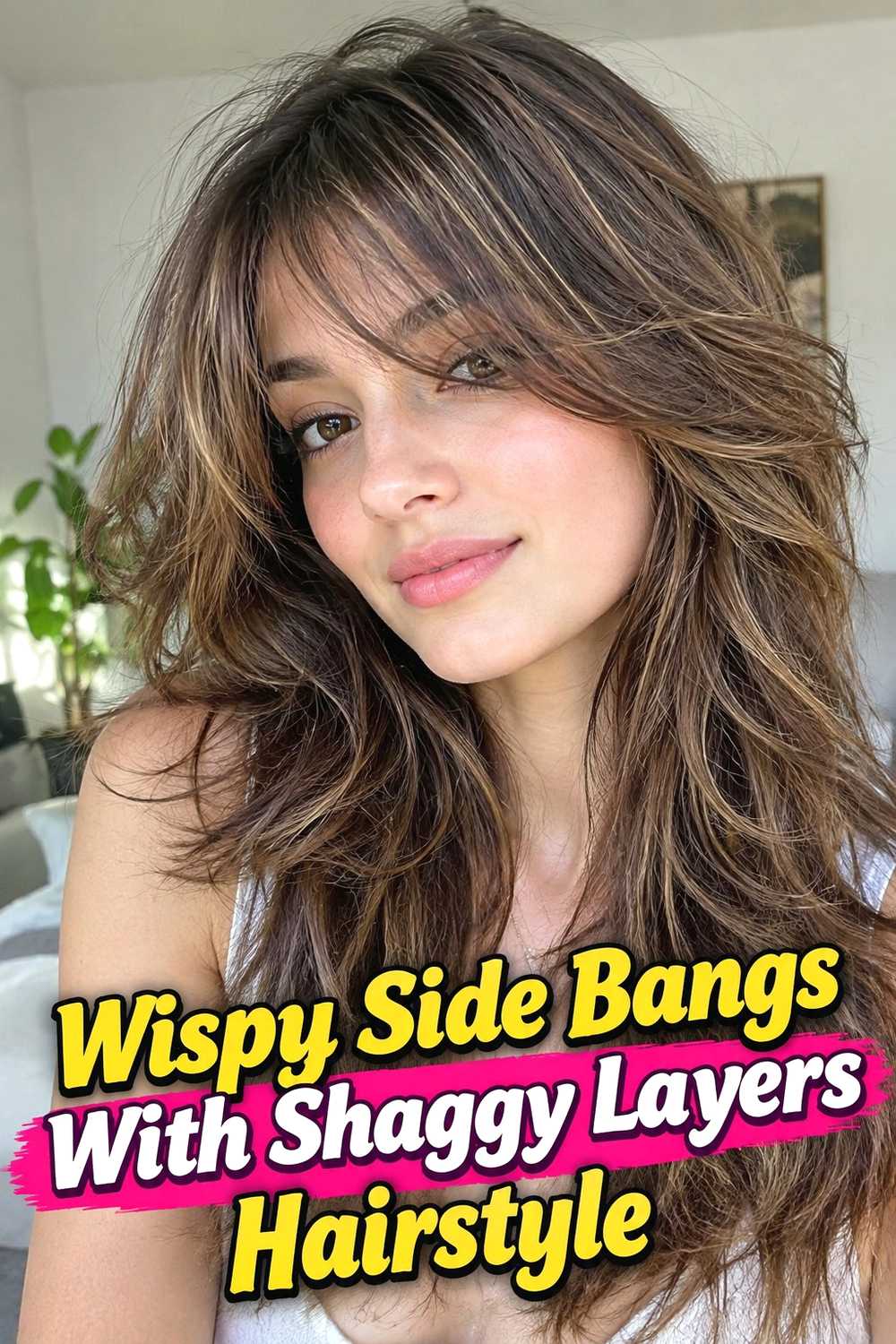
Shaggy layers make wispy side bangs feel naturally undone and full of movement. The fringe sweeps diagonally across the forehead with a lightly piecey edge, while shorter crown and face-framing layers create separation through the rest of the haircut. Waves or natural bends enhance the layered shape, though straighter hair can achieve similar texture with minimal styling. Keeping enough density through the lower lengths prevents the shag from looking excessively thin. The side fringe does not need perfect symmetry or a sharply defined part; a slightly irregular sweep often complements the relaxed silhouette better. Natural flyaways can also work with the style rather than needing to be completely controlled.
Why It Works
Both the shag and wispy fringe rely on light separation and movement, so the details blend naturally into one relaxed shape.
Wear & Maintenance
The shaggy layers can grow out softly, while the fringe may need occasional reshaping if you want to preserve its shorter side-swept line.
14. Wispy Side Bangs With Voluminous Blowout Hairstyle
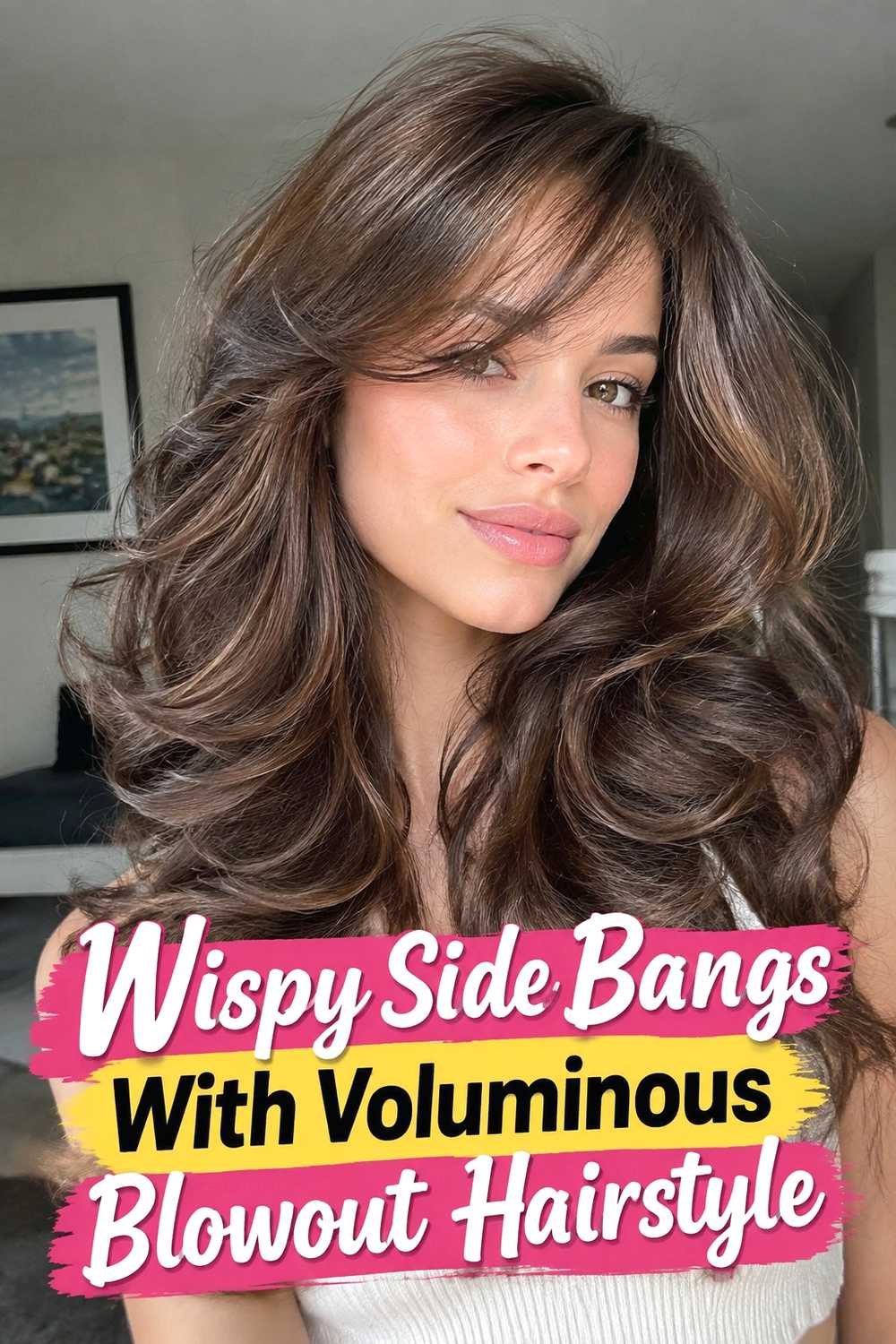
A voluminous blowout gives wispy side bangs a polished finish while keeping the fringe itself light. The bangs sweep softly toward one side, while broader layers through the crown and lengths carry most of the fullness. This keeps the face area from becoming overloaded and allows the diagonal fringe to remain distinct. Face-framing sections can curve away from the cheeks, creating a flowing transition into the fuller blowout. Medium and long hair with enough density can support the movement particularly well. The finished style should feel touchable, with broad bends and natural shine rather than stiff curls or heavy teasing at the roots.
Styling Notes
Build volume through the crown and longer sections first, then shape the fringe with gentler tension so it stays soft and flexible.
Best For
This look works well for events, photos, dinners, or polished everyday styling when you want side bangs with extra body through the lengths.
15. Romantic Wispy Side Bangs Hairstyle
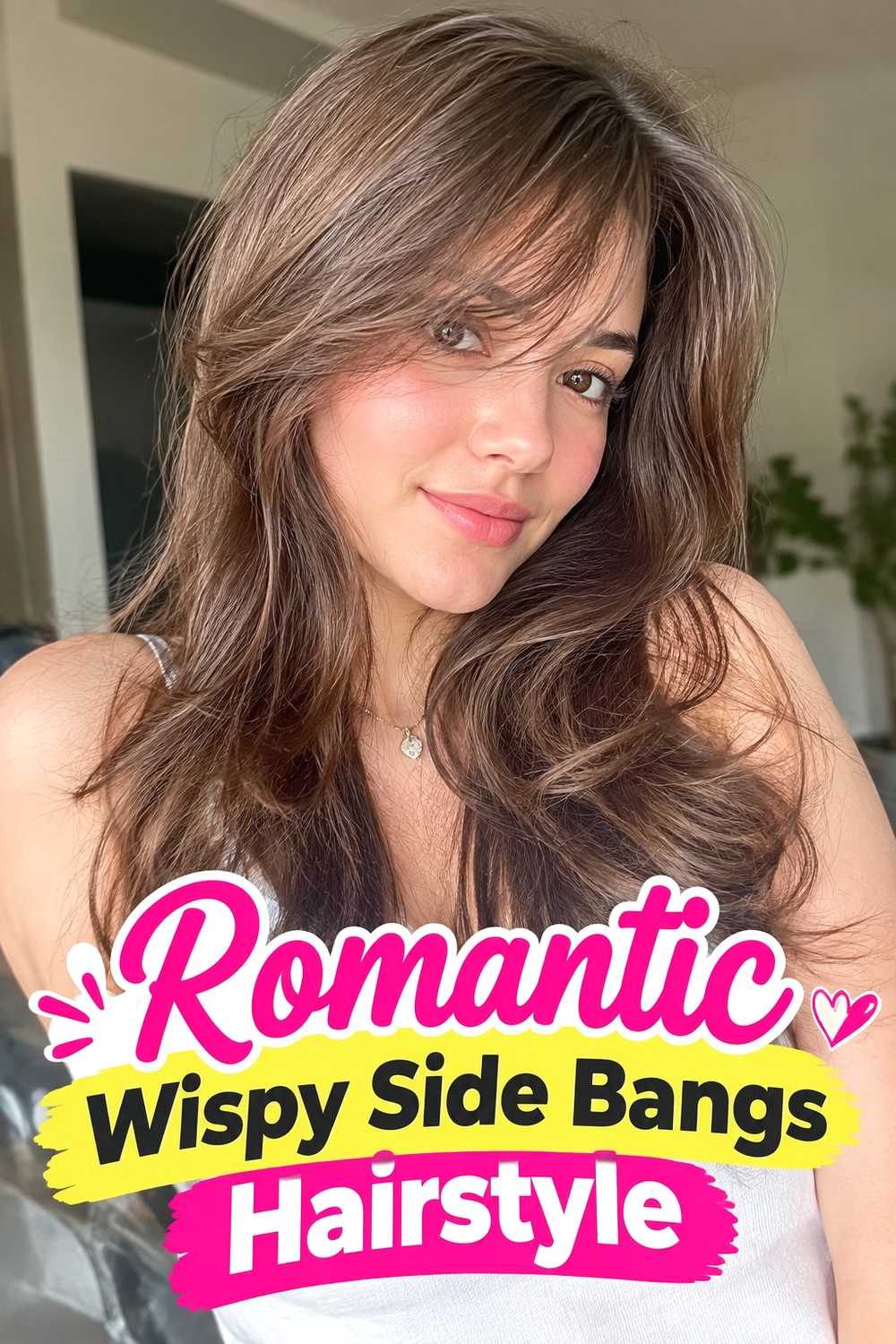
Romantic wispy side bangs combine a soft diagonal fringe with flowing movement through the rest of the hairstyle. The bangs lightly cross the forehead and taper toward the temple, while longer layers or broad waves create gentle motion around the shoulders. Keeping the fringe airy prevents the style from becoming too formal and allows natural strand separation to remain visible. A slight bend through the front can help the bangs follow the cheek area, but the strongest waves should sit lower in the hair. A little crown lift adds balance without overwhelming the face. The finished effect feels feminine and polished while still relaxed enough for everyday wear.
Styling Notes
Use broad waves through the lengths and keep the side fringe only lightly curved so the front stays soft rather than overly styled.
Best For
Choose this version when you want side bangs to feel elegant and flowing instead of sharp, graphic, or heavily textured.
How to Choose the Right Look
Start with the fringe length and direction. Shorter wispy side bangs create a more noticeable diagonal sweep across the forehead, while longer versions blend more easily into cheekbone or jaw-length layers and can be simpler to grow out.
Then consider your hair density. Fine hair usually benefits from a modest bang section and minimal thinning, while thick hair can support a fuller side fringe but often needs careful control at the ends. Natural texture matters too: straight hair shows the sweep clearly, waves soften it, and curls create a more organic interpretation.
Match the fringe to your haircut as well. Rounded bobs and sleek hair create cleaner silhouettes, textured lobs and shags feel more relaxed, and butterfly layers or voluminous blowouts add stronger movement. Choose a version that fits your normal styling time and the amount of fringe maintenance you are comfortable with.
Final Thoughts
Wispy side bang hairstyles are an adaptable way to add softness and direction around the face without the weight of a dense fringe. They can complement long layers, waves, curls, bobs, lobs, or polished blowouts while remaining easy to personalize. The best result keeps the fringe light enough to move naturally and blends it into the surrounding haircut in a way that suits your texture and daily routine.
FAQs
1. What are wispy side bangs?
Wispy side bangs are a lightweight fringe that sweeps diagonally across the forehead toward one side, with soft ends and visible separation between strands.
2. Are wispy side bangs easier to grow out than full bangs?
They often can be because longer side pieces blend naturally into face-framing layers as they grow, especially when the fringe already reaches toward the temple.
3. Can curly hair have wispy side bangs?
Yes. Curly side bangs can work well when they are shaped according to the natural curl pattern and dry length rather than being forced into a straight fringe.
4. Do wispy side bangs work with fine hair?
Yes. Fine hair can suit a wispy side fringe when the bang section is kept modest and not excessively thinned, preserving density through the rest of the haircut.
5. How do you style wispy side bangs?
Dry the fringe in the direction you want it to sweep, use light tension, and separate only a few strands for softness. Avoid heavy styling products that can reduce movement.
Save your favorite wispy side bang hairstyles and explore more soft fringe inspiration for your next haircut.