5 Curtain Bangs Hairstyles for a Soft, Face-Framing Look
Curtain bangs add soft movement around the face, making everything from long waves to textured shags feel polished, modern, and beautifully balanced.
Curtain bangs are especially versatile because the center opening can be adjusted to create anything from a subtle face frame to a fuller, more noticeable fringe. The five ideas below combine curtain bangs with different lengths and textures so you can compare polished, tousled, sleek, and naturally curly finishes.
Before choosing a look, consider how much time you want to spend styling the front pieces, where you naturally part your hair, and whether your texture holds a curved shape easily. Bang length also matters: longer curtain bangs usually offer easier grow-out and more styling flexibility, while shorter versions create a stronger face-framing effect.
Quick List
- 1. Soft Layered Curtain Bangs Hairstyle
- 2. Long Wavy Curtain Bangs Hairstyle
- 3. Shoulder Length Shag Curtain Bangs Hairstyle
- 4. Sleek Straight Curtain Bangs Hairstyle
- 5. Curly Curtain Bangs Hairstyle
1. Soft Layered Curtain Bangs Hairstyle
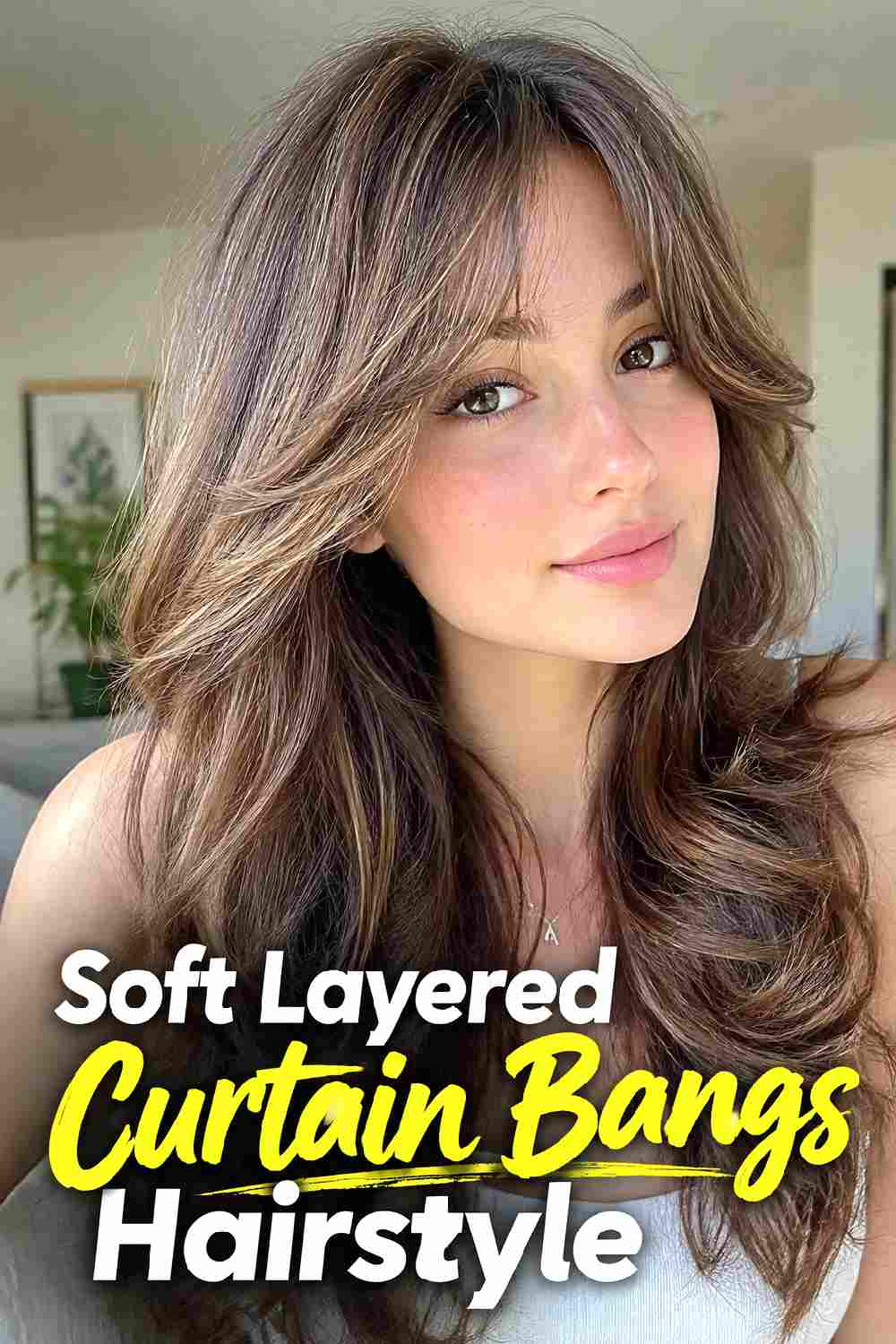
Soft layers and curtain bangs create an airy, blended shape that works especially well when you want noticeable movement without a dramatic haircut. The bangs open gently through the center and sweep toward the cheekbones, while longer layers continue that curved line through the sides. This keeps the fringe from looking disconnected from the rest of the hair. A smooth blowout emphasizes the shape, but the style can also look relaxed with natural texture and slightly undone ends. It is a versatile option for medium to long hair and can be adjusted with longer bangs if you prefer a softer transition or easier grow-out between trims.
Styling Notes
Use a round brush or large heated brush to direct each side of the bangs away from the face. Avoid over-curling them; a gentle bend usually creates the most natural curtain effect.
Best For
This look is especially flattering for anyone who enjoys soft volume and blended layers rather than a blunt, heavily defined fringe.
2. Long Wavy Curtain Bangs Hairstyle
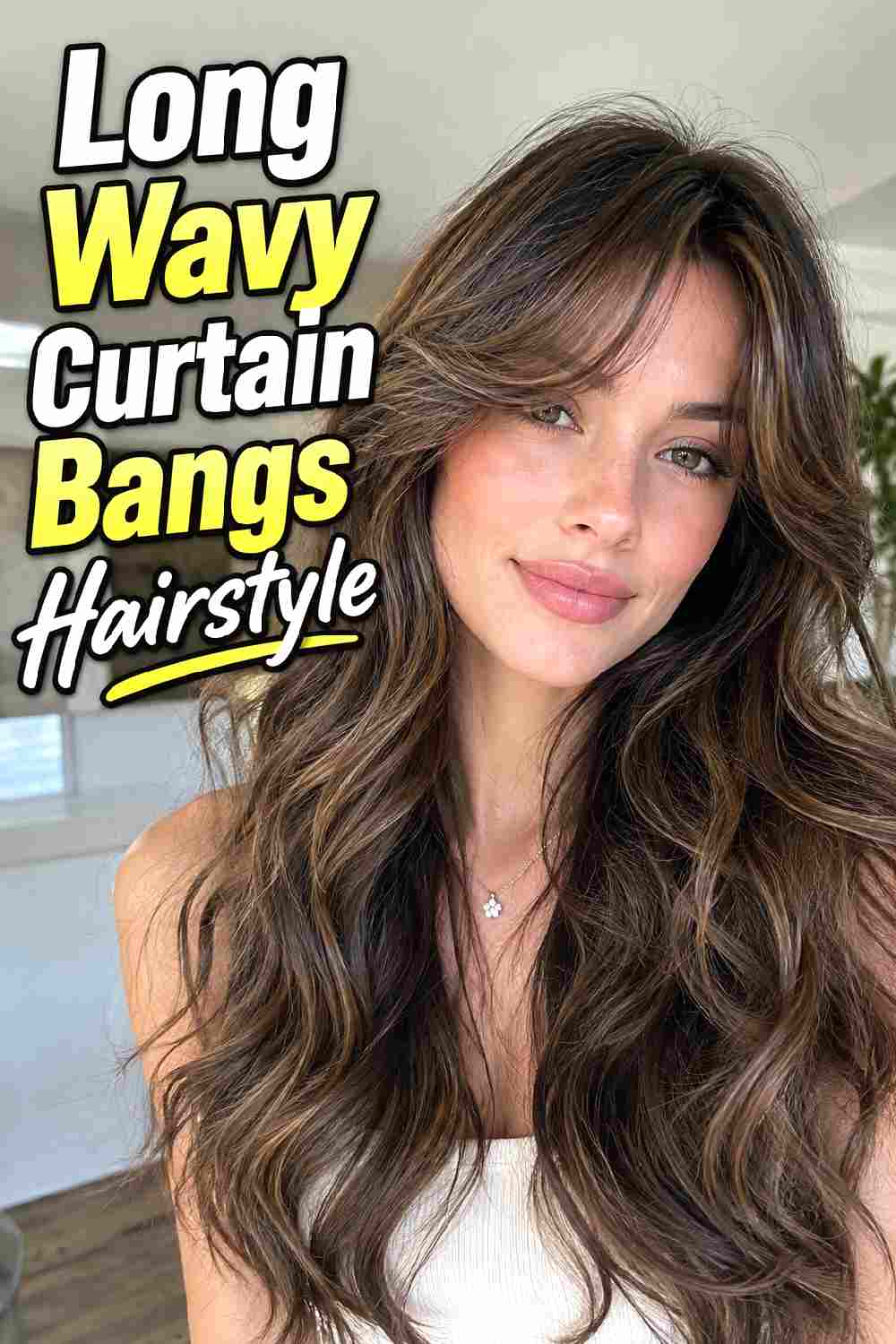
Long waves give curtain bangs a romantic, flowing finish because the fringe can merge naturally into the bends around the face. The bangs usually sit around the cheekbone area, opening through the center before curving outward into longer lengths. Loose waves add dimension without hiding the shape of the fringe, especially when the first wave begins below the bangs rather than directly at the roots. This hairstyle works beautifully when you want to keep your overall length while making the front feel refreshed. The longer bang length also makes the style practical for days when you want to tuck the pieces behind your ears or blend them into an updo.
Why It Works
The repeated curves through the bangs and longer waves create a continuous silhouette, so the fringe feels intentionally integrated rather than added separately.
Pro Tip
Style the curtain bangs first, then create loose waves through the rest of the hair. This makes it easier to control the face frame before working on the longer sections.
3. Shoulder Length Shag Curtain Bangs Hairstyle
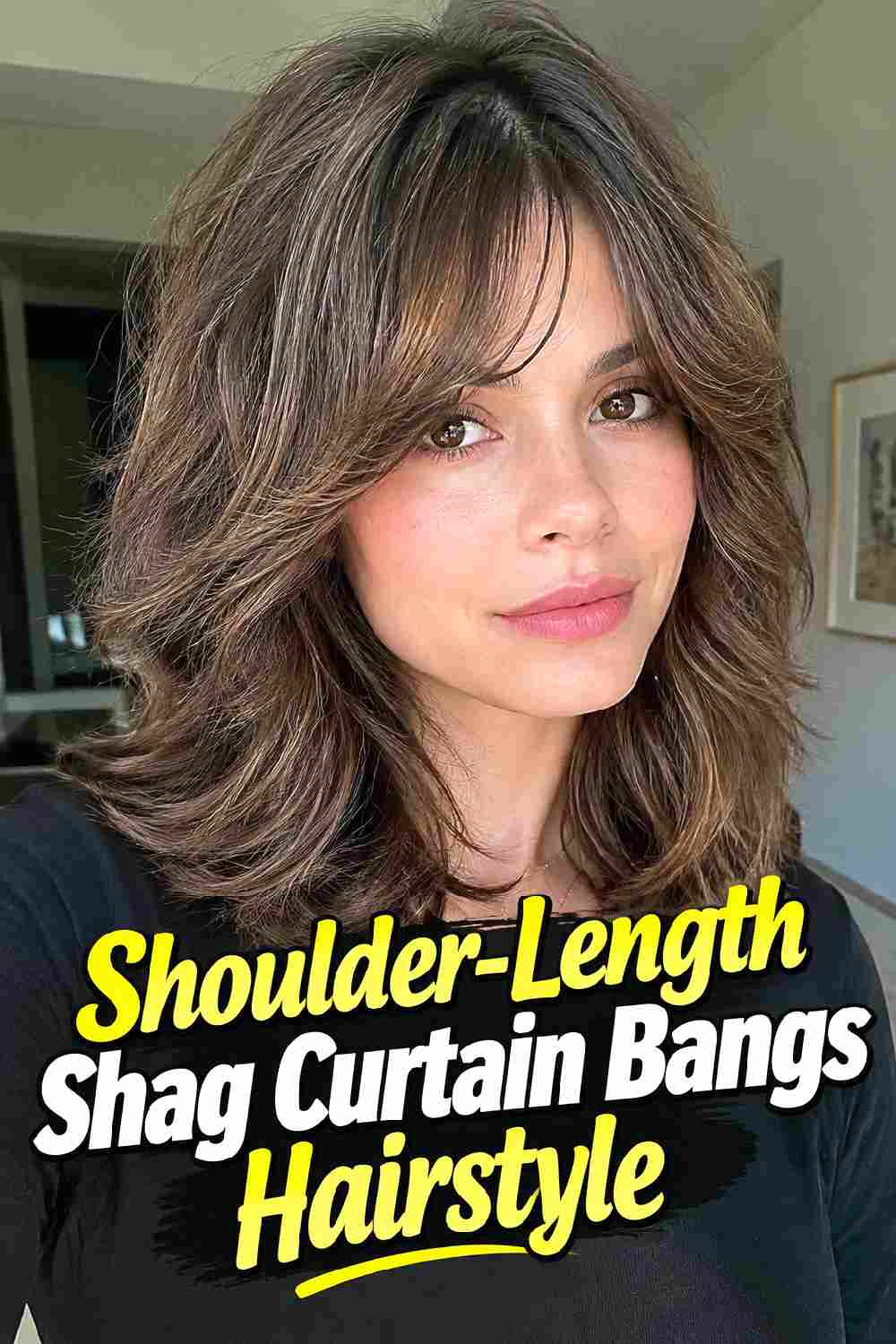
A shoulder-length shag gives curtain bangs a more textured, effortless personality. Instead of a smooth, polished outline, this cut uses shorter interior layers and piecey ends to create lift, separation, and movement. The curtain fringe can sit slightly fuller around the forehead before blending into cheekbone-length sections, which complements the shag’s broken-up silhouette. This look is especially appealing if you like hair that feels lived-in rather than perfectly arranged. Natural waves can enhance the shape, while straighter textures can create definition with lightweight styling products. Because the layers remove some weight, the style can also make medium-density hair feel more animated without relying on heavy curling.
Hair Type & Length
This cut suits shoulder-length hair particularly well and can work with straight, wavy, or softly curly textures. The exact layer placement should reflect how much natural volume the hair already has.
Wear & Maintenance
A shag benefits from some intentional texture. A light mousse, texture spray, or small amount of styling cream can help separate the layers without making the bangs stiff.
4. Sleek Straight Curtain Bangs Hairstyle
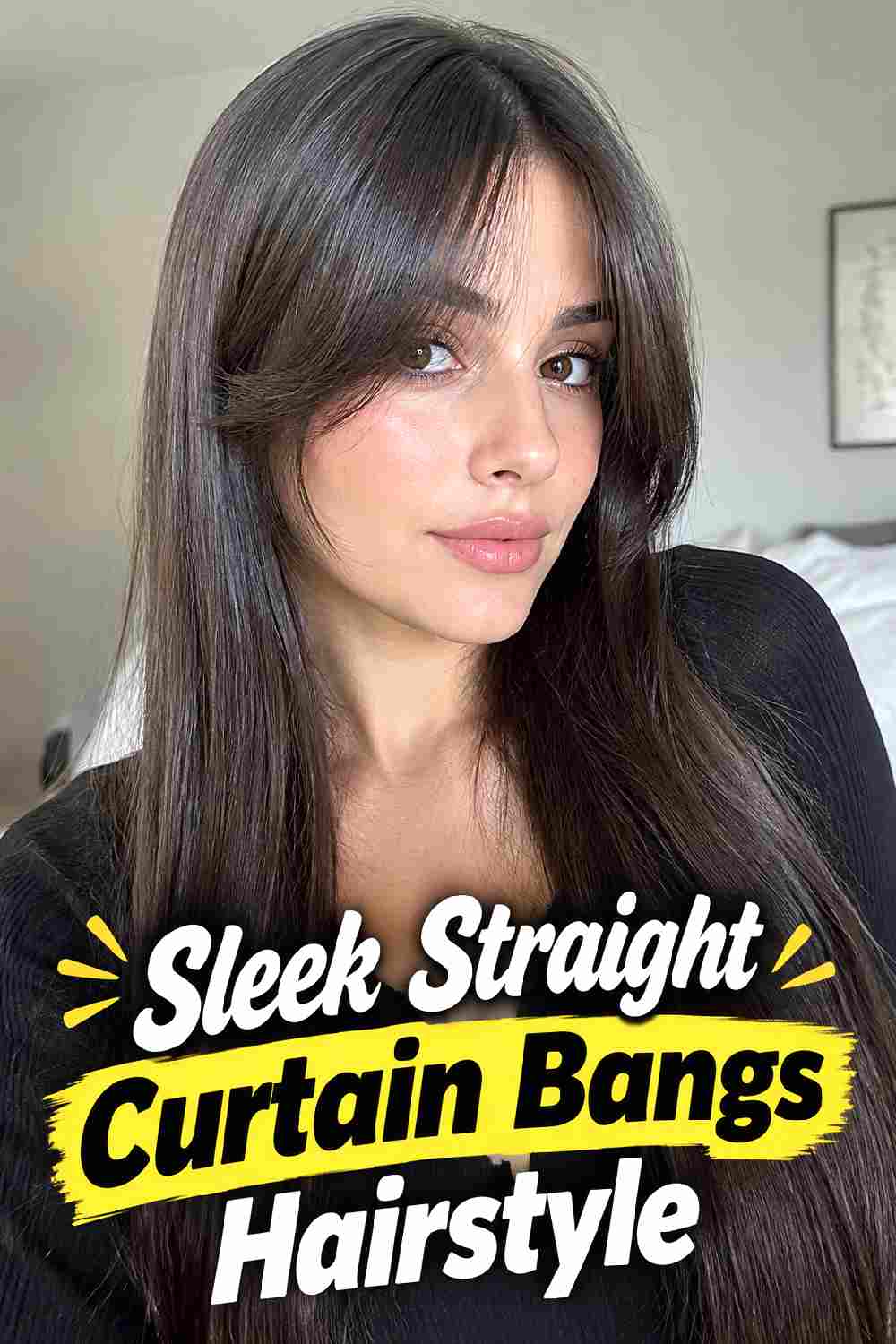
Sleek straight hair creates a clean backdrop that makes the shape of curtain bangs especially visible. The fringe parts softly in the middle and curves outward near the eyes or cheekbones, while the rest of the hair stays smooth with minimal layering. The contrast between the curved bangs and straighter lengths gives the hairstyle a polished but approachable finish. This is a strong option if you prefer neat lines, glossy texture, and styling that feels refined rather than tousled. The key is maintaining movement around the front instead of flattening every section. A little root lift and a subtle bend through the bangs keep the style from looking overly rigid or pressed against the face.
Styling Notes
Direct the bangs forward first, then sweep them to each side as they cool. This helps create a rounded shape while preserving the clean finish of the straighter lengths.
Wear & Maintenance
Because sleek styles reveal the outline clearly, regular bang trims can help prevent the center pieces from becoming too long or losing their intended curve.
5. Curly Curtain Bangs Hairstyle
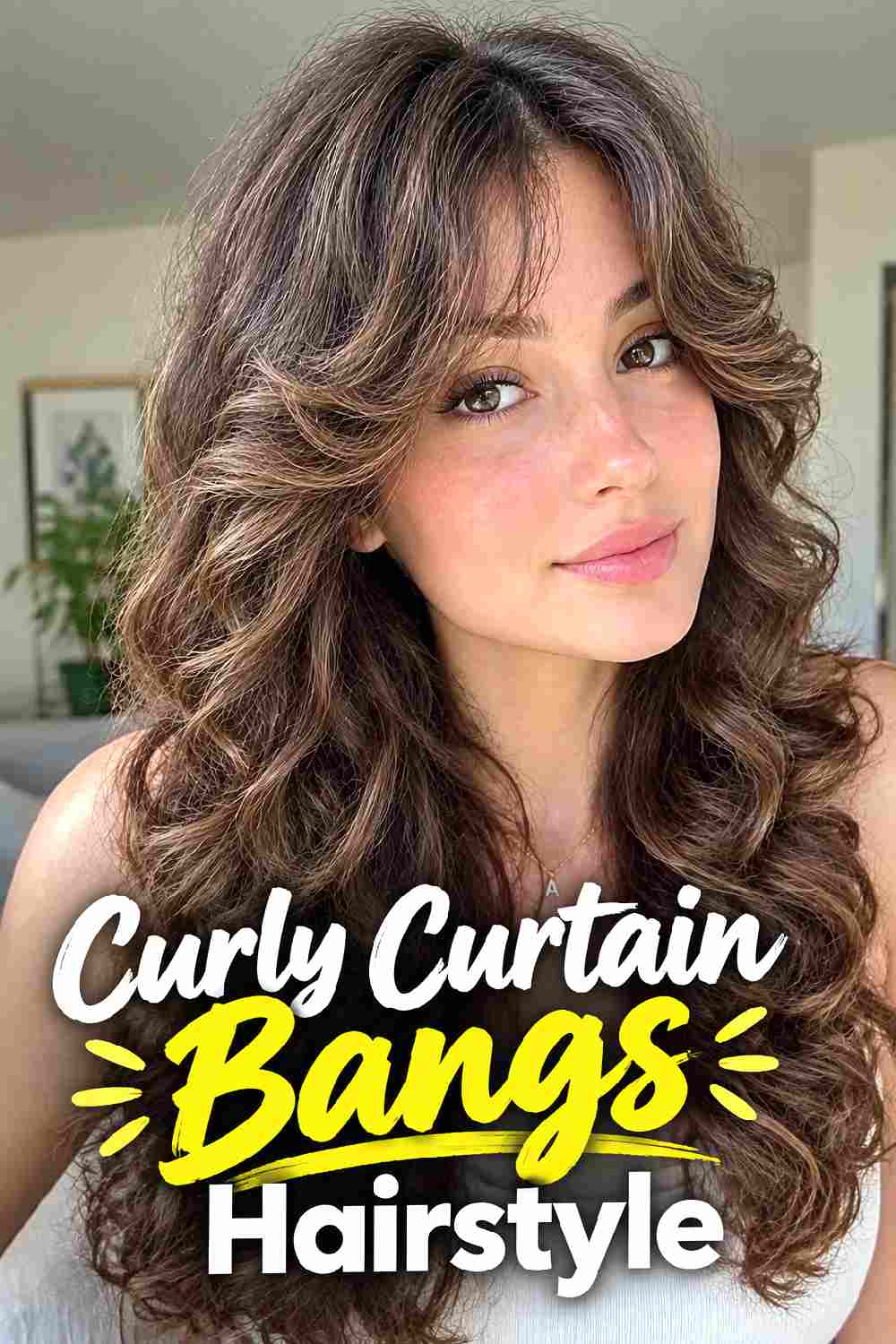
Curtain bangs can work beautifully with curly hair when the fringe is shaped to follow the natural curl pattern rather than being forced into a straight, symmetrical curtain. The center can remain softly open while individual curls fall around the forehead, temples, and cheekbones at slightly different lengths. This variation gives the face frame movement and keeps the bangs connected to the rest of the curls. The finished look feels full and dimensional while still preserving the recognizable curtain-bang silhouette. Since curls can shrink considerably when dry, the bangs are often most successful when their final length is planned around the hair’s natural spring and the way each curl settles.
Hair Type & Length
This style works best when the curtain shape is customized to the curl pattern. Looser curls may create a wider sweep, while tighter curls can form a more compact, textured frame.
Pro Tip
Style the bangs while damp and allow the curls to form naturally. Avoid repeatedly brushing them once dry, since that can separate the curl pattern and change the intended shape.
How to Choose the Right Look
Start with your natural length and texture. Long hair pairs easily with soft layered or wavy curtain bangs because the fringe has plenty of length to blend into. Shoulder-length hair can carry a shag beautifully when you want extra texture and volume, while straighter hair makes a sleek curtain shape especially noticeable. Curly hair benefits from a customized fringe that respects shrinkage and curl placement.
Next, think about styling time. A sleek finish or polished blowout may require more heat styling, while a shag or curly version can work more naturally with existing texture. Longer curtain bangs generally offer greater flexibility because they can be tucked away, pinned back, or blended into ponytails.
Comfort and maintenance matter too. If you dislike hair touching your forehead, choose longer curtain pieces that open farther from the center. For stronger volume, select layered or shaggy versions. If you prefer a smooth, refined finish, the sleek option may feel more natural. For events, polished waves or straight styles can look especially finished, while textured and curly versions offer a softer everyday feel.
Final Thoughts
The best curtain bangs hairstyle is the one that works with your natural texture, preferred styling routine, and ideal amount of face framing. Choose longer, blended bangs for flexibility, a shag for extra movement, sleek lengths for polish, or curls for a naturally dimensional finish. Small adjustments to bang length and layer placement can make any of these five ideas feel more personal and wearable.
FAQs
1. Are curtain bangs suitable for different hair textures?
Yes. Straight, wavy, and curly hair can all work with curtain bangs, but the length and layering should be adapted to the natural texture and movement of the hair.
2. How long should curtain bangs be?
Many curtain bangs fall somewhere between the brows and cheekbones, but longer versions can extend toward the jaw. The best length depends on your desired face frame and how easily you want to blend the bangs back.
3. Do curtain bangs require daily styling?
Not always. Some textures fall naturally into a curtain shape, while others benefit from a quick blow-dry, round-brush pass, or light reshaping in the morning.
4. Can curtain bangs work with curly hair?
Yes. Curly curtain bangs should usually be cut and styled with the natural curl pattern in mind so the fringe maintains its shape after shrinkage.
5. Are curtain bangs easy to grow out?
They are generally adaptable during grow-out because longer front pieces can gradually blend into face-framing layers. Tucking, pinning, or sweeping them to the sides can also make transitional lengths easier to manage.
CTA
Save your favorite curtain bangs hairstyle for your next hair appointment, and explore more hairstyle inspiration to find a look that fits your texture and routine.