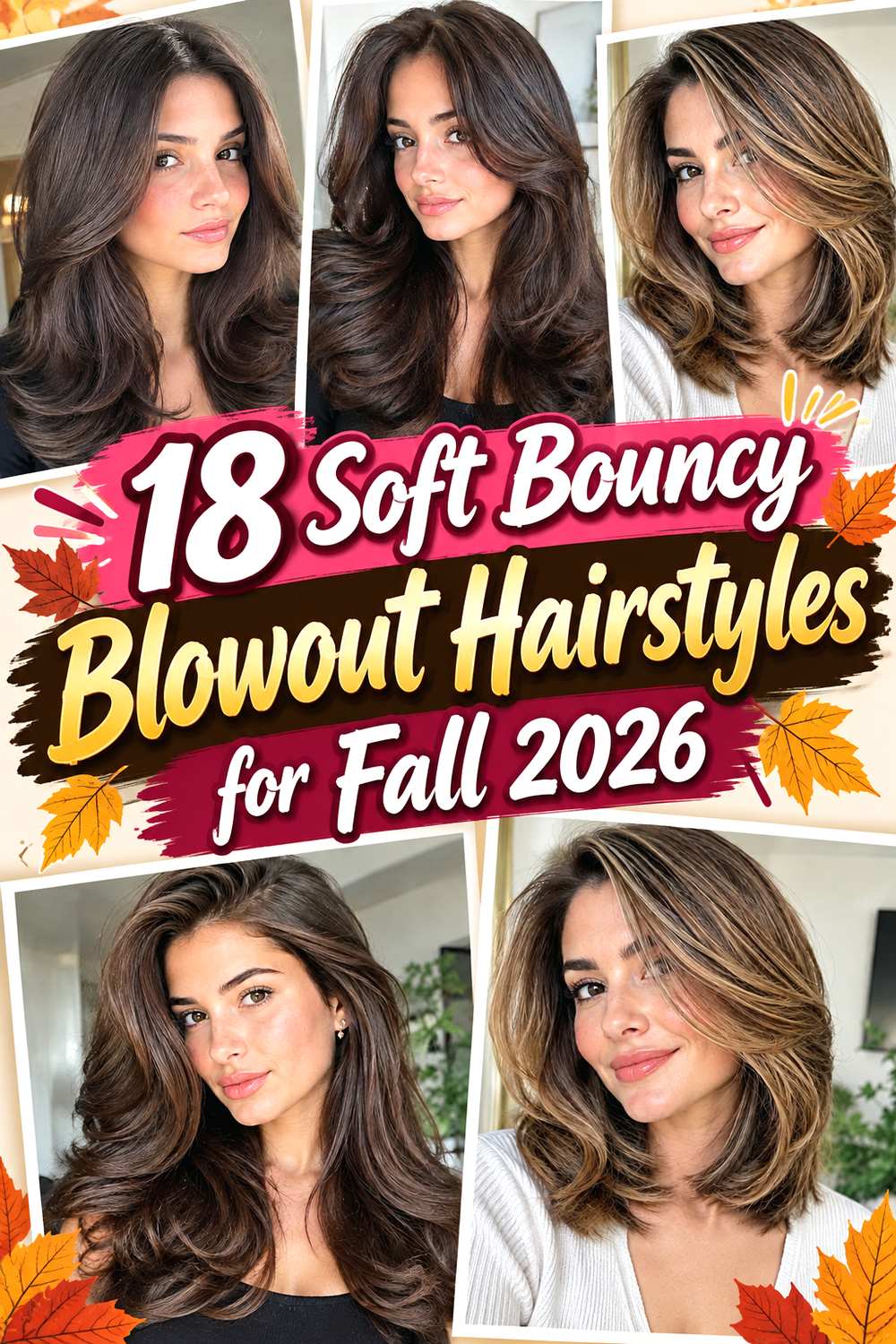
18 Oval Layer Blowout Hairstyles for Soft, Bouncy Volume
Soft, face-framing oval layers meet glossy bounce in these blowout ideas, from polished center parts to airy, high-volume finishes.
Oval layer blowouts combine curved, graduated layering with smooth volume and controlled movement. The layers create a flowing outline through the front and lengths, while the blowout brings out separation, shine, and bounce instead of allowing the haircut to sit flat.
The best version depends on your length, density, natural texture, and preferred styling effort. Some looks emphasize rounded ends and polish, while others use stronger root lift, flipped layers, bangs, or soft waves. Comparing the shape as well as the finish makes it easier to find a version that fits your routine.
Quick List
- Classic Center Part Oval Layer Blowout Hairstyle
- Long Bouncy Oval Layer Blowout Hairstyle
- Curtain Bang Oval Layer Blowout Hairstyle
- Deep Side Part Oval Layer Blowout Hairstyle
- Face Framing Oval Layer Blowout Hairstyle
- Soft C Curl Oval Layer Blowout Hairstyle
- Flipped End Oval Layer Blowout Hairstyle
- Voluminous Root Lift Oval Layer Blowout Hairstyle
- Sleek Polished Oval Layer Blowout Hairstyle
- Feathered Oval Layer Blowout Hairstyle
- Shoulder Length Oval Layer Blowout Hairstyle
- Extra Long Oval Layer Blowout Hairstyle
- Soft Waves Oval Layer Blowout Hairstyle
- Wispy Bang Oval Layer Blowout Hairstyle
- Rounded Ends Oval Layer Blowout Hairstyle
- 90s Inspired Oval Layer Blowout Hairstyle
- Airy Textured Oval Layer Blowout Hairstyle
- Glamorous Full Volume Oval Layer Blowout Hairstyle
1. Classic Center Part Oval Layer Blowout Hairstyle
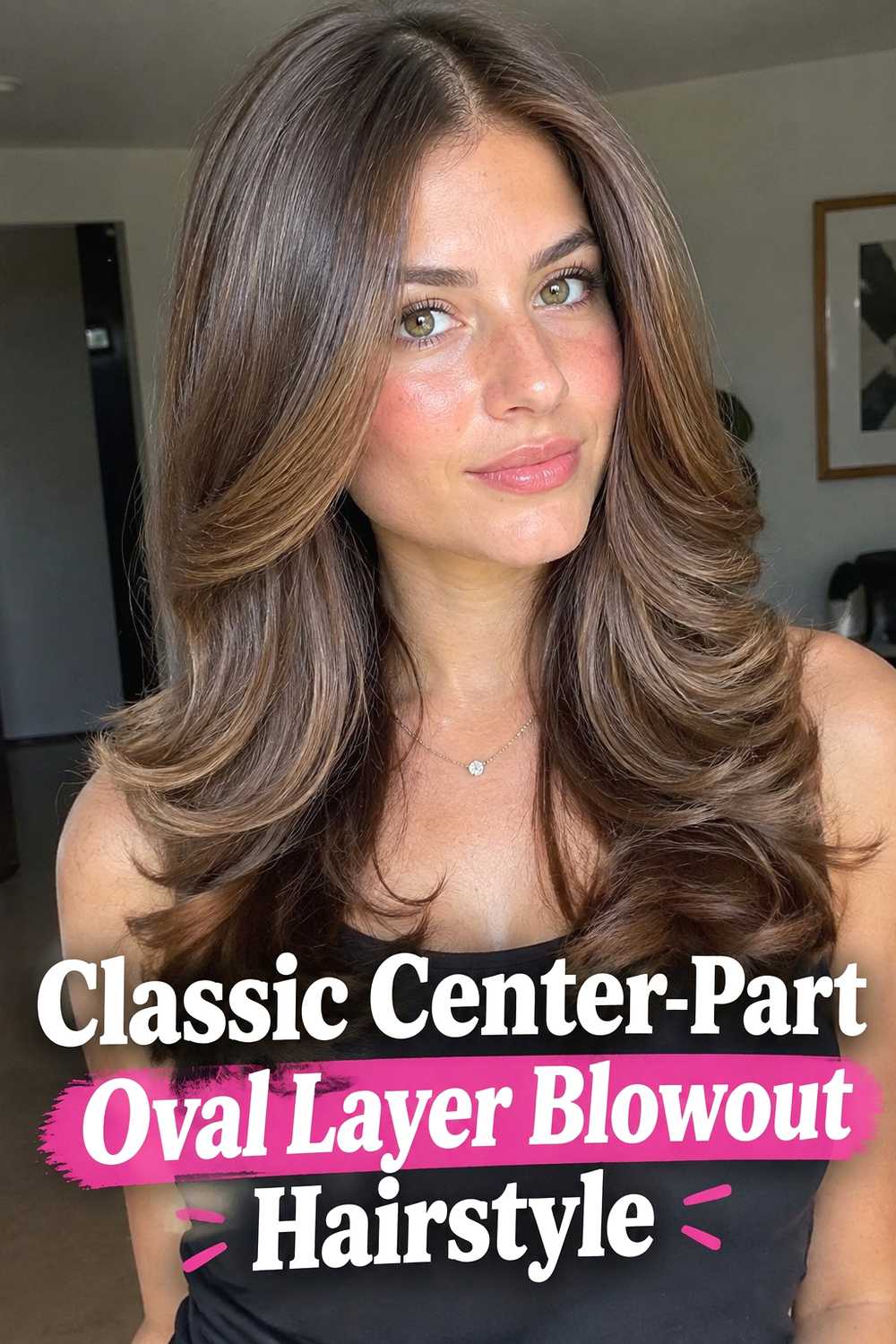
A classic center part gives oval layers a balanced, flowing appearance that keeps the haircut looking polished without making it overly formal. The shortest front pieces can curve gently away from the cheeks, while longer layers continue that rounded movement through the mid-lengths. A smooth blowout with moderate root lift helps every layer remain visible instead of blending into one solid shape. This version works especially well when you want movement while keeping the overall finish controlled and wearable. The center part also makes the two sides of the cut easy to compare, so even layering and clean curved ends become important details.
Styling Notes
Dry the roots first for lift, then use a medium or large round brush to guide the front layers backward. Finish the ends with a gentle bend rather than a tight curl.
Best For
This variation suits medium to long hair with enough layering around the front to create a noticeable curved silhouette.
2. Long Bouncy Oval Layer Blowout Hairstyle
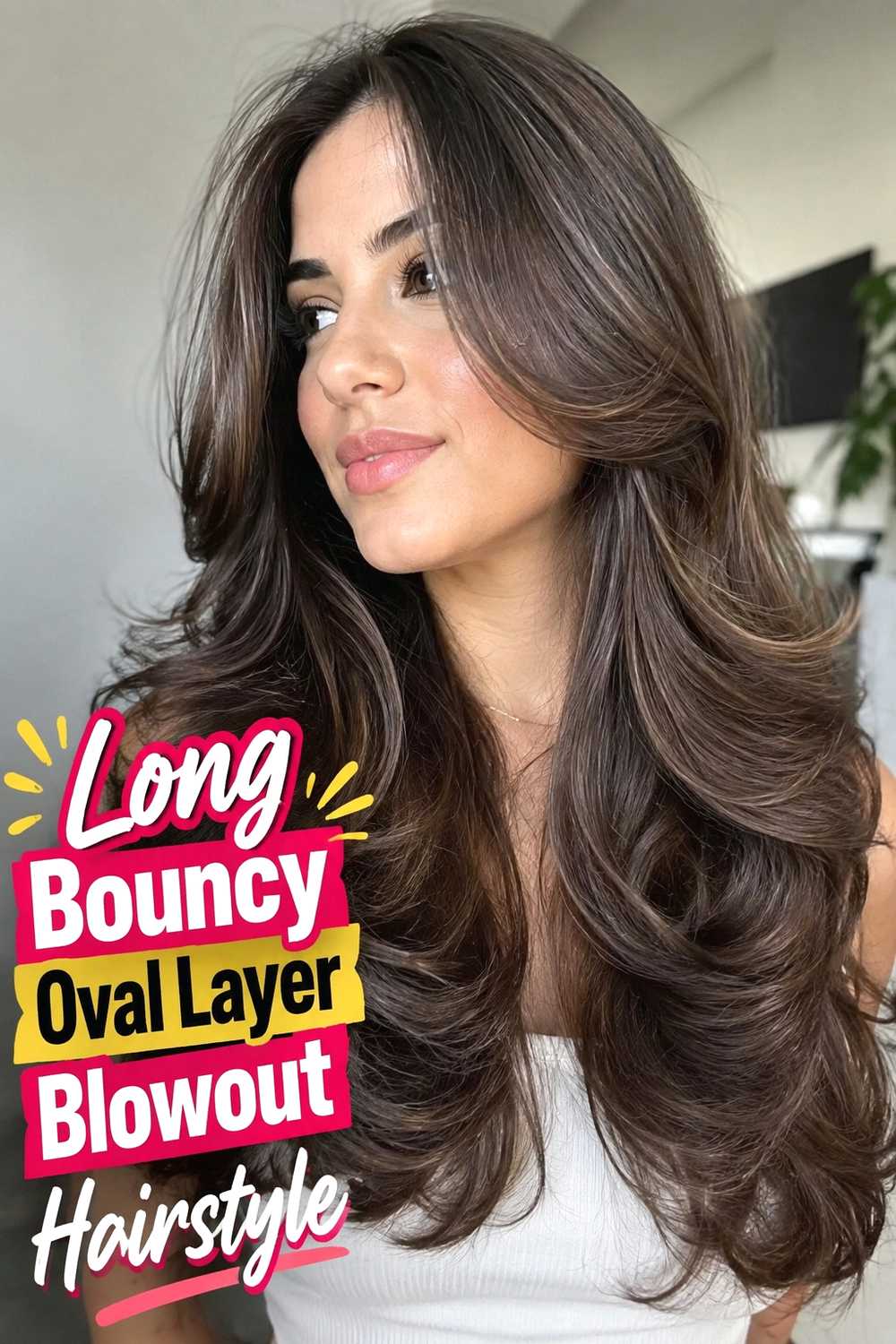
Long hair gives an oval-layer blowout plenty of room for sweeping curves and visible movement. Instead of concentrating all the volume near the ends, this look uses graduated layers to distribute bounce from the face-framing sections through the lower lengths. The finished shape should feel full but still fluid, with individual layers separating naturally when the hair moves. Larger bends usually suit this version better than tight curls because they preserve the length and keep the finish modern. It is a useful option for anyone who enjoys long hair but wants more shape than a single-length cut provides, especially when the ends tend to feel heavy.
Hair Type & Length
Medium-density to thick long hair can show the layered shape particularly clearly. Fine hair can also wear it, but lighter layering may help preserve fullness through the perimeter.
Pro Tip
Allow each round-brushed section to cool in its curved position before releasing it fully so the bounce has more time to settle.
3. Curtain Bang Oval Layer Blowout Hairstyle
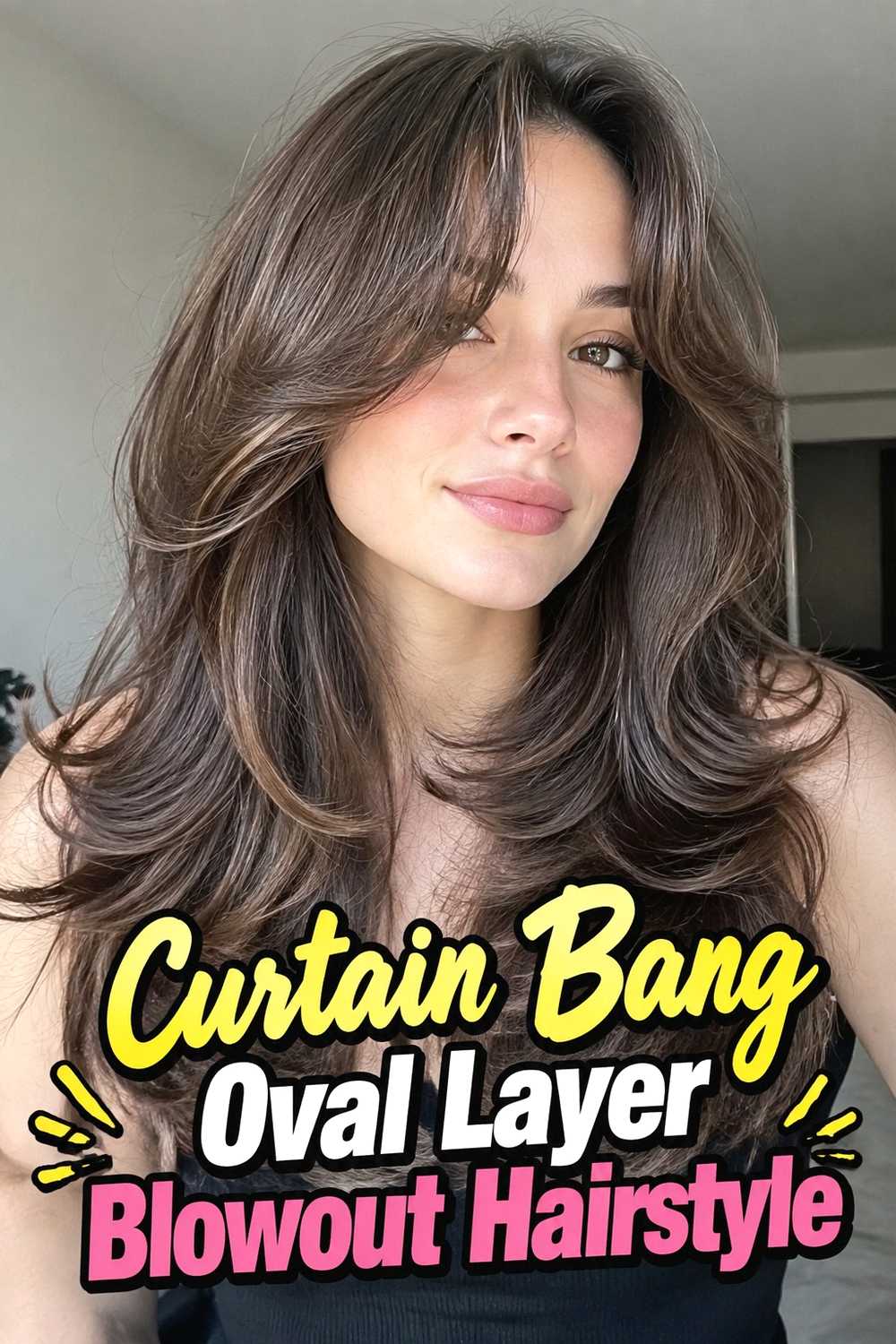
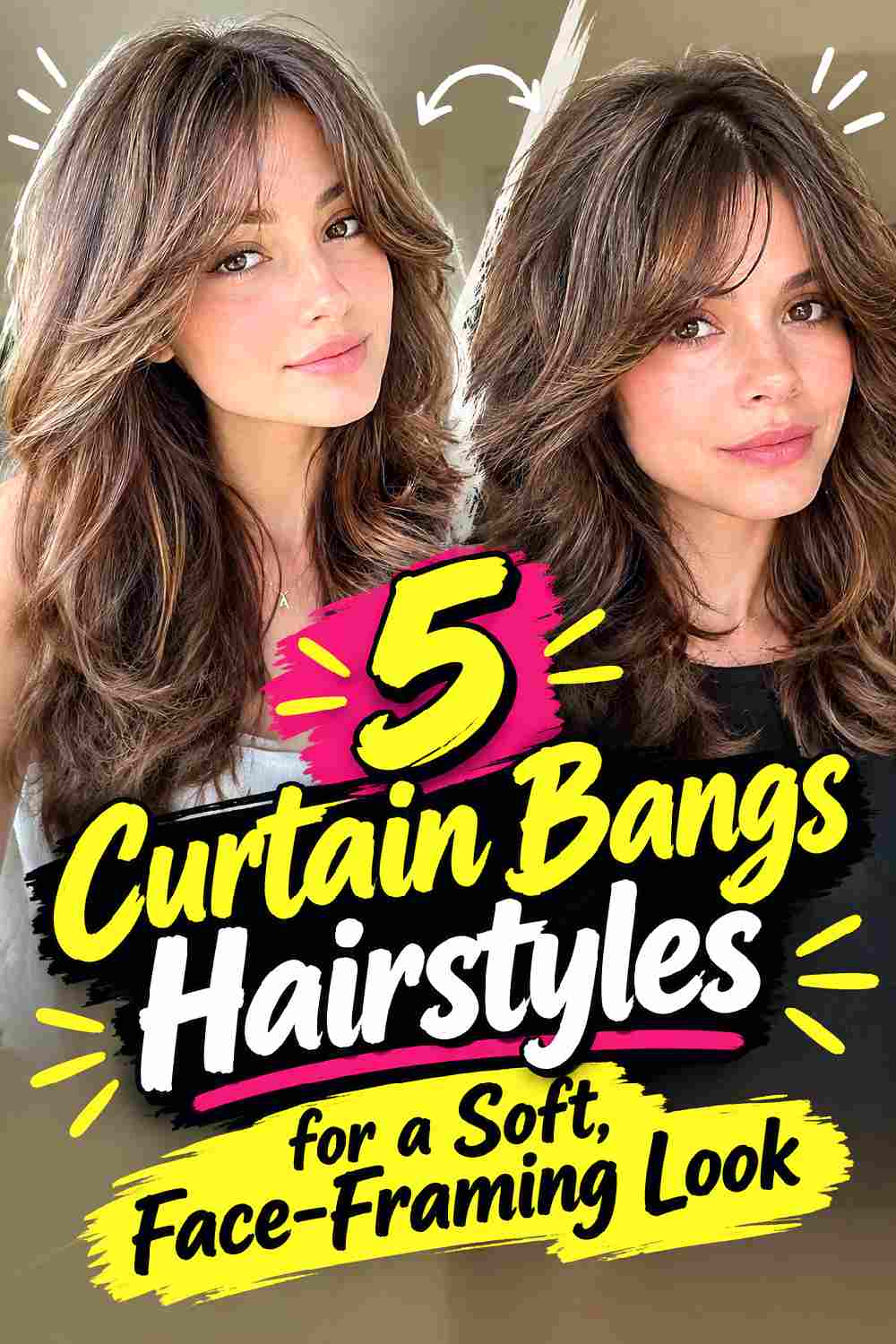
Curtain bangs blend naturally into an oval-layer haircut because both rely on soft curves around the face. The fringe opens through the center and sweeps outward, connecting to longer cheekbone and jaw-length pieces instead of ending abruptly. When blow-dried with a round brush, the bangs create a lifted front section while the rest of the layers continue the same curved direction through the lengths. The result feels airy and coordinated rather than like bangs added to an unrelated haircut. This look does require a little attention at the front each morning, because the fringe shape is most noticeable when the roots and ends are directed properly.
Styling Notes
Blow-dry the curtain bangs forward first, then divide them and roll each side away from the face. This helps create lift without producing an overly curled fringe.
Wear & Maintenance
Expect more frequent fringe trims than you would need for the longer layers if you want the curtain shape to remain clearly defined.
4. Deep Side Part Oval Layer Blowout Hairstyle
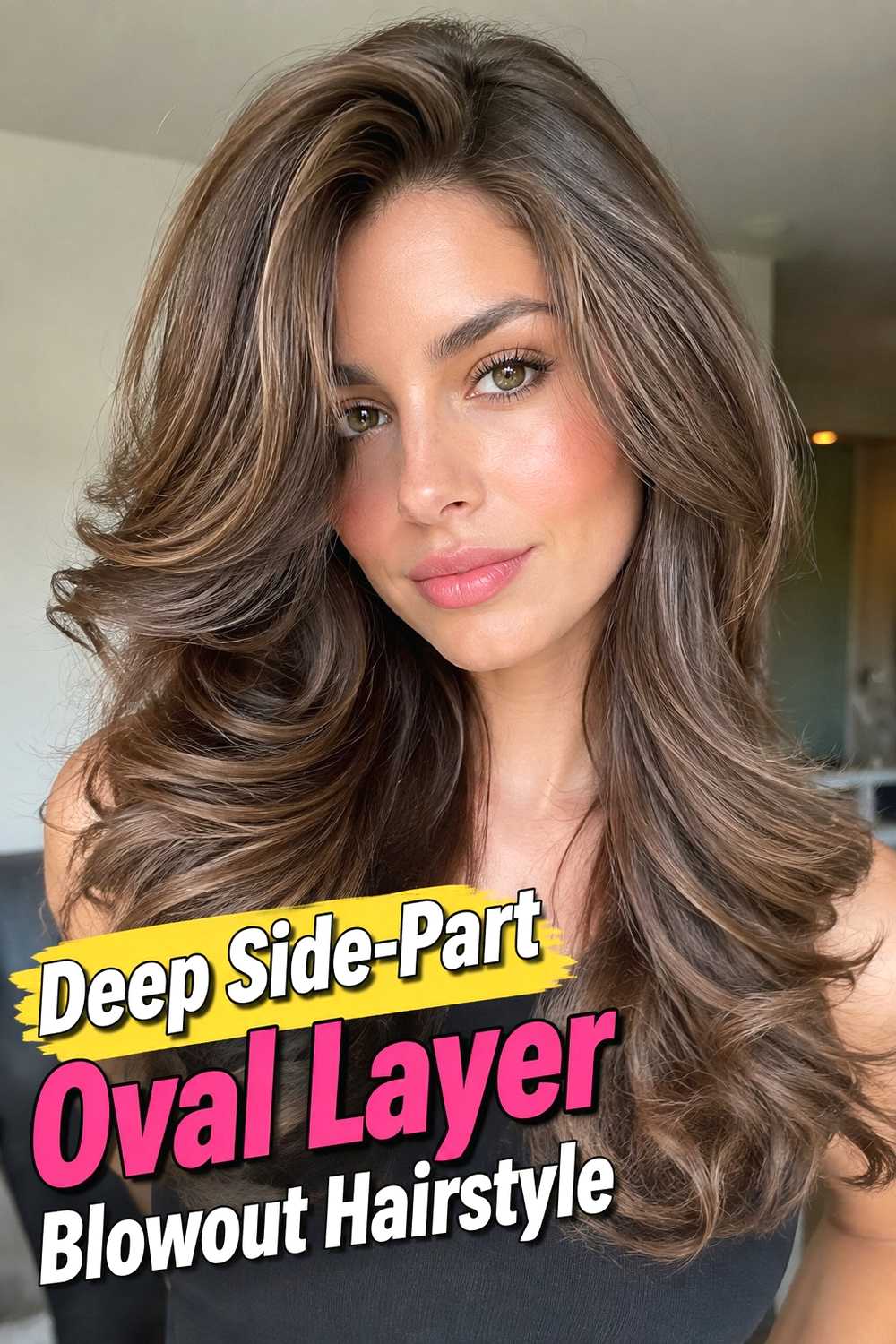
A deep side part changes the balance of an oval-layer blowout by creating noticeably more height and sweep on one side. The heavier section can lift away from the roots and fall into broad, curved layers, while the lighter side stays smoother and closer to the head. That asymmetry gives the same layered haircut a slightly more dramatic finish without requiring additional length or curls. It works particularly well when the front layers are long enough to sweep across rather than dropping straight down. Keep the ends polished and flexible so the style maintains movement; too much stiffness can make the side-swept shape feel fixed instead of naturally voluminous.
Why It Works
Changing the part immediately alters how the layers overlap, which can make an existing oval-layer haircut feel different without changing the cut itself.
Pro Tip
Set the heavier side in the opposite direction briefly while drying the roots, then flip it back to create extra lift around the part.
5. Face Framing Oval Layer Blowout Hairstyle
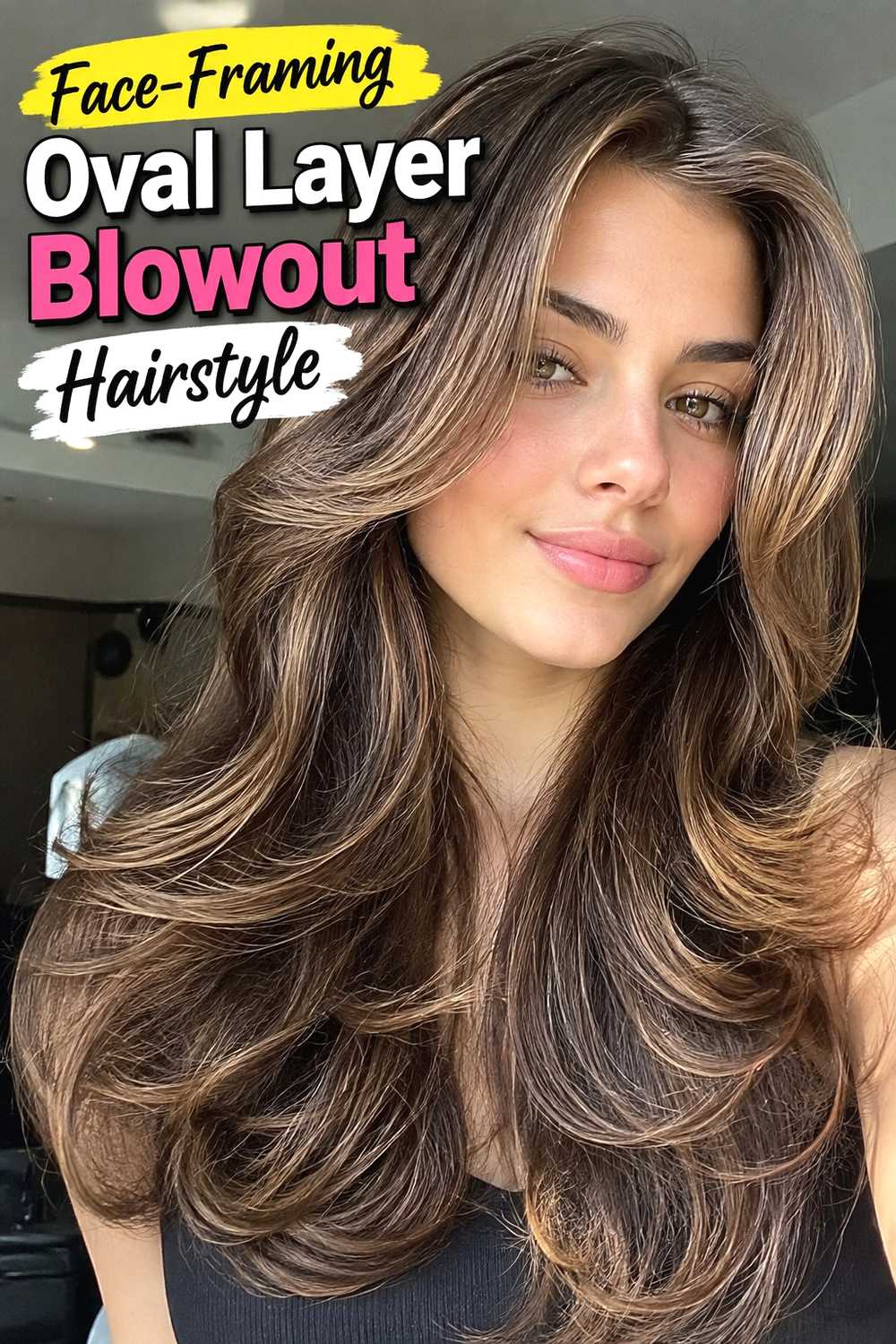
This version puts the strongest emphasis on the shorter layers surrounding the face. Rather than creating dramatic volume everywhere, the blowout shapes those front pieces into smooth outward curves that gradually connect with the longer lengths. The effect is especially pretty when several layer lengths are visible, because each section appears to flow into the next instead of forming one heavy front piece. The back can remain relatively simple and softly rounded, allowing the face-framing work to stay prominent. It is a practical choice for someone who wants obvious movement from the front while keeping the rest of the hairstyle easy to manage and less dependent on maximum volume.
Styling Notes
Use smaller sections around the front than you use through the back. More controlled sections make it easier to define the different layer lengths without over-curling them.
Best For
This look is particularly useful when the haircut already contains cheekbone-, chin-, or collarbone-level pieces that can be shaped separately.
6. Soft C Curl Oval Layer Blowout Hairstyle
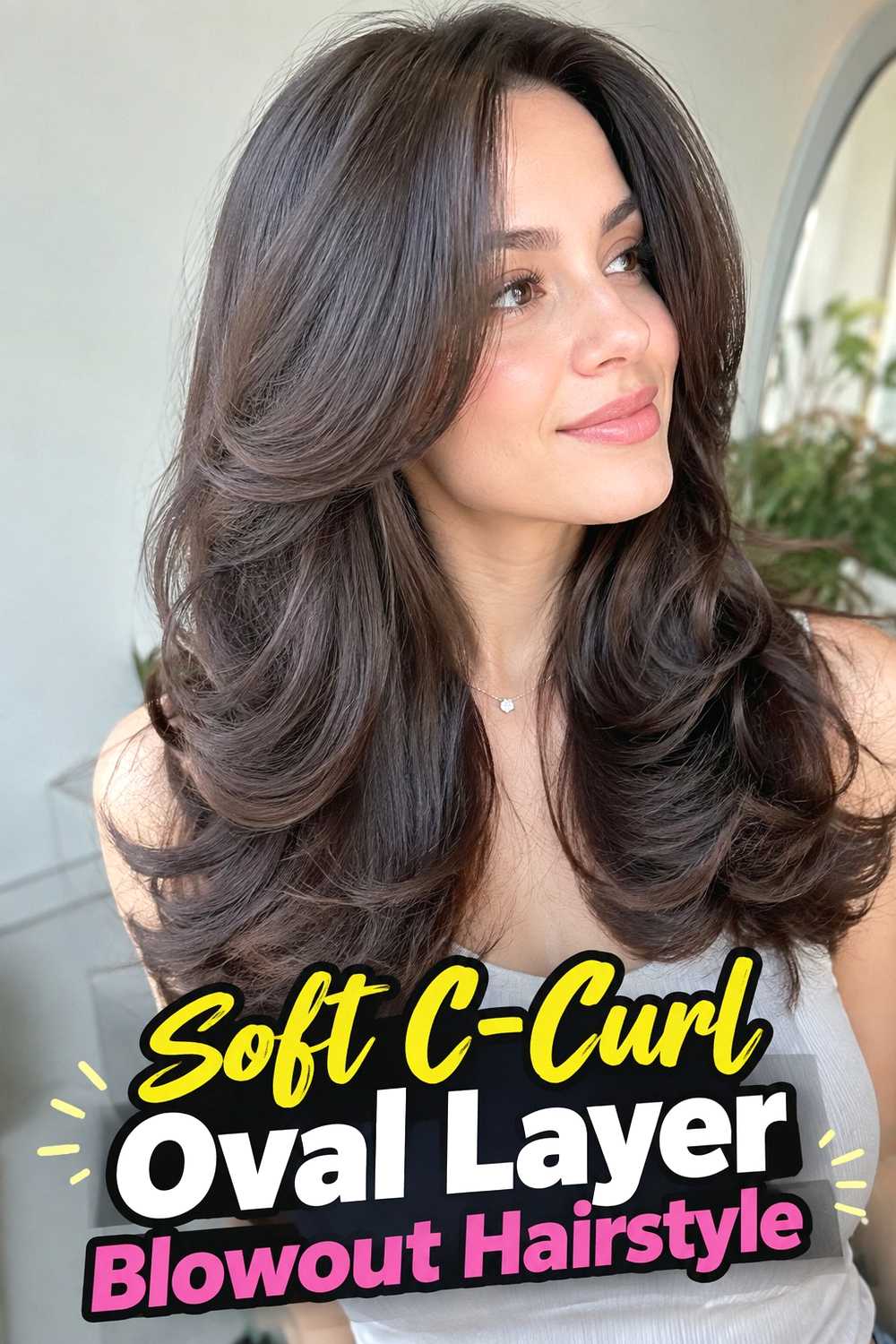
A soft C-curl finish gives oval layers a smooth, refined shape by bending the hair into broad curves instead of full spirals. Each layer turns gently through the mid-lengths and ends, creating a continuous rounded outline that looks polished while preserving natural movement. The front sections can curve away from the face, while the lower layers tuck softly inward or follow the same sweeping direction. This approach is ideal when you prefer a blowout that feels neat and glossy rather than extremely fluffy. Because the bends are subtle, clean ends and a controlled surface matter more than dramatic root volume. The result can transition easily from everyday wear to a more dressed-up setting.
Styling Notes
Choose a larger round brush and avoid wrapping the hair multiple times around the barrel. One broad bend is enough to create the characteristic C-shaped movement.
Why It Works
The gentle curve highlights the structure of the layers while keeping the overall silhouette smooth and cohesive.
7. Flipped End Oval Layer Blowout Hairstyle
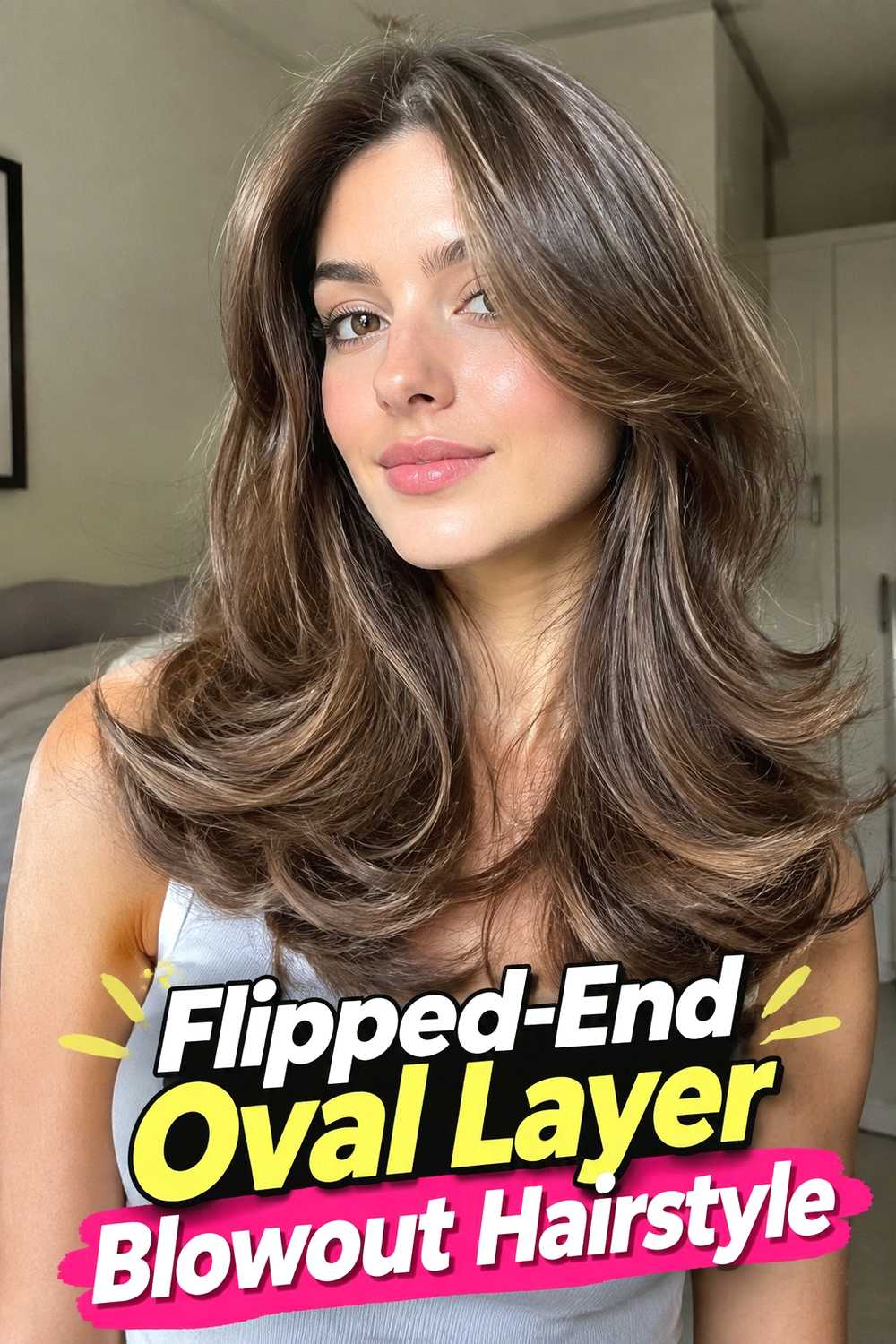
Flipped ends bring a playful direction to oval layers by turning selected sections outward rather than letting every piece curve under. The movement can begin around the jaw or shoulders and become more noticeable toward the lower layers, giving the hairstyle a light, lifted edge. The key is keeping the flip broad and soft so it still looks like part of a blowout rather than a sharply curled finish. Face-framing pieces can sweep backward to connect with the outward ends, creating one continuous motion through the haircut. This variation is especially effective when the layers are clearly graduated, because the flipped shape makes each level more visible as the hair moves.
Hair Type & Length
Medium to long hair offers enough length for the outward bend to develop naturally. Shoulder-length cuts can create a stronger, more noticeable flip because the ends sit higher.
Pro Tip
Turn the round brush outward only near the last few inches of each section so the roots and mid-lengths stay smooth.
8. Voluminous Root Lift Oval Layer Blowout Hairstyle
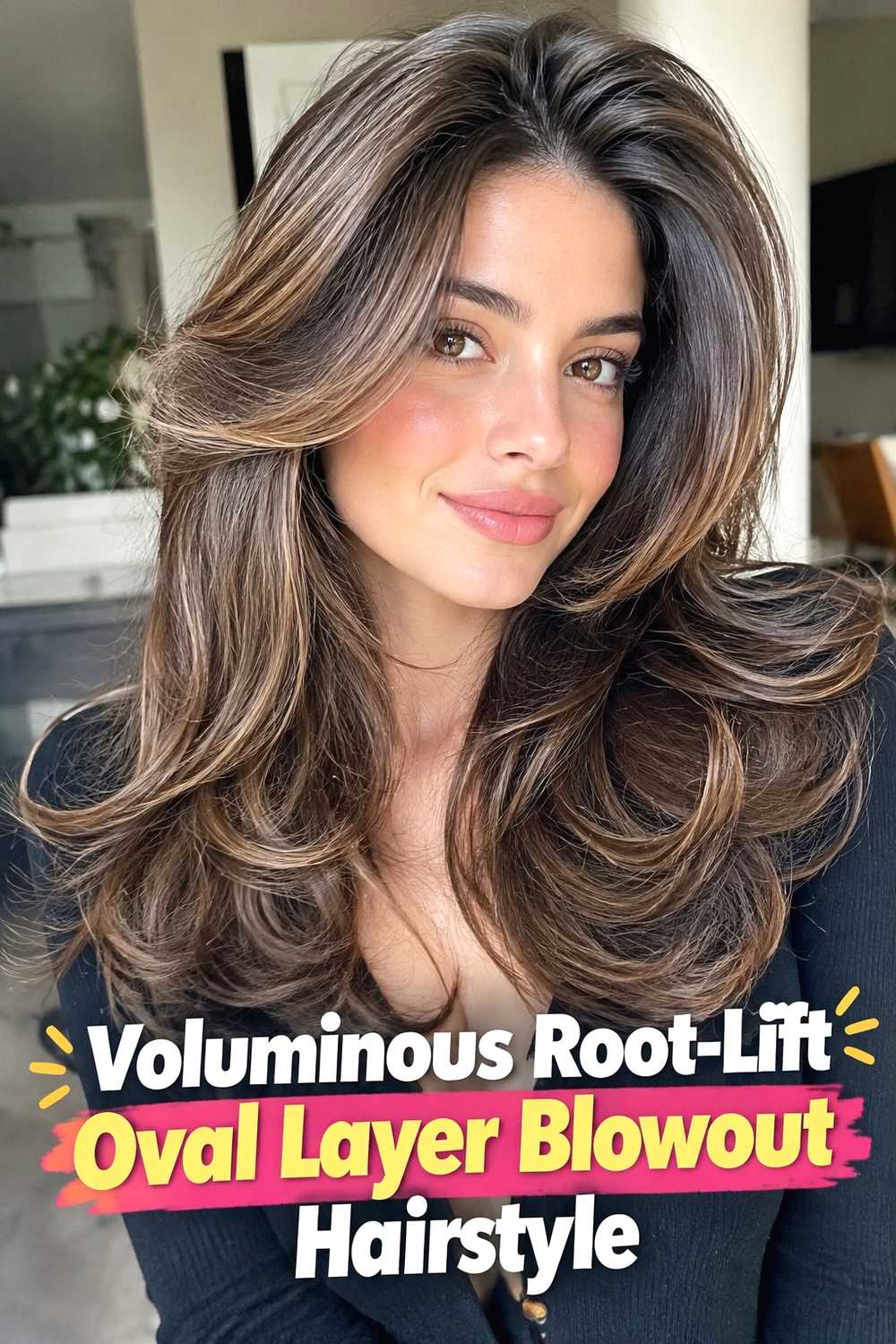
For a fuller finish, this oval-layer blowout concentrates extra lift through the crown and roots before shaping the lengths. Elevating the hair at the base prevents longer layers from pulling the style downward and gives the curved sections more space to fall naturally. The front pieces can sweep back with visible height, while the mid-lengths stay smooth and bouncy rather than excessively curled. This approach creates a more dramatic silhouette than a standard blowout, so controlling the surface is important. The goal is airy volume with recognizable layers, not stiffness or exaggerated height. It can be especially effective for special occasions or days when you want the haircut to look more styled.
Styling Notes
Work upward at the root with the brush and dryer before concentrating on the ends. Root direction has a major effect on how much volume remains once the hair cools.
Wear & Maintenance
Humidity, natural texture, and hair density can affect how long stronger root lift lasts, so the finish may need light refreshing between washes.
9. Sleek Polished Oval Layer Blowout Hairstyle
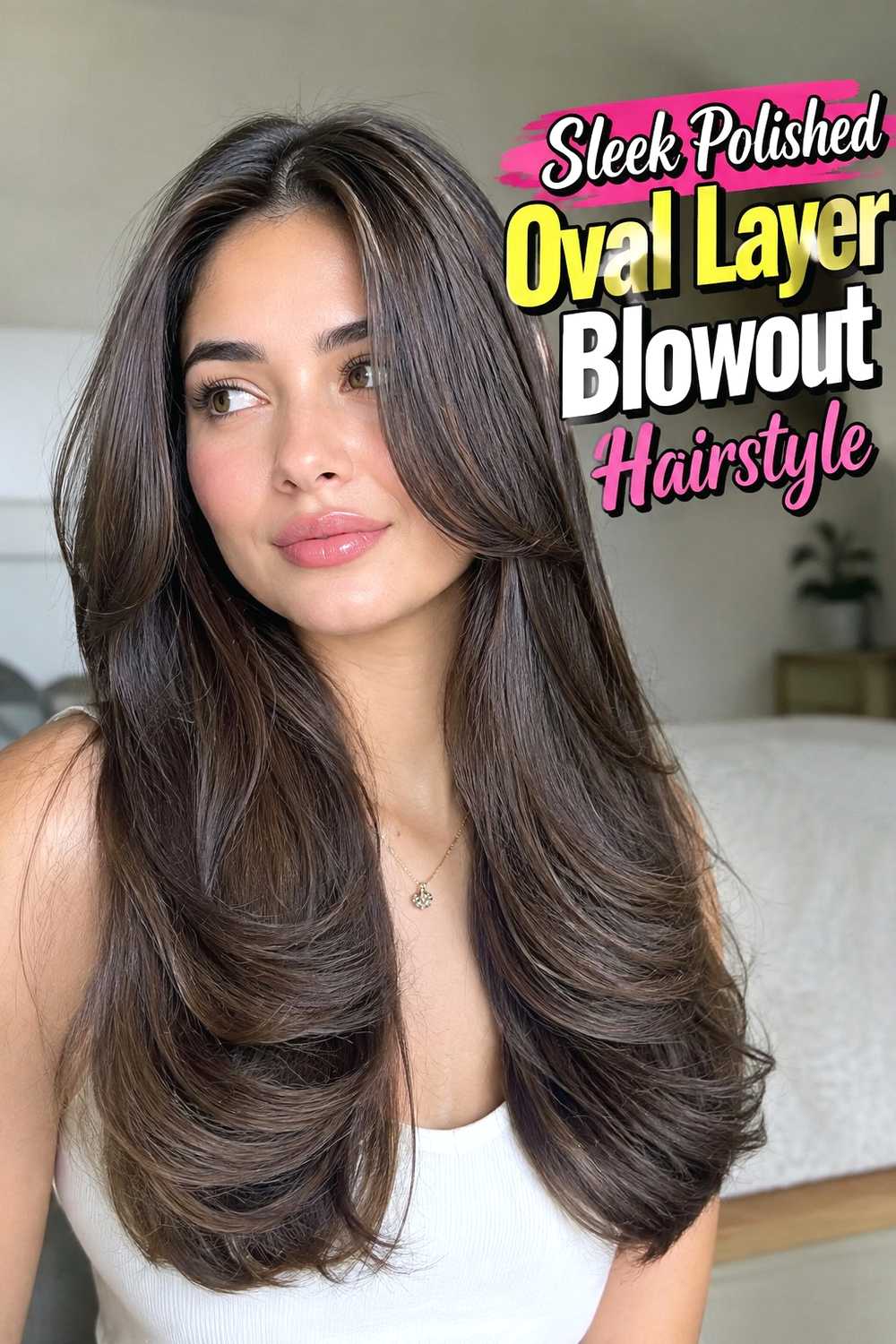
Not every oval-layer blowout needs maximum bounce. A sleek version keeps the roots smoother and uses controlled bends through the layers to create movement without a large silhouette. The hair should look glossy and fluid, with the front pieces curving neatly away from the face and the lower lengths following in soft, polished sections. This finish makes the haircut itself the focus because the layer placement is visible without being surrounded by extra fluff. It is also a useful choice for professional settings or anyone who prefers a more understated blowout. Careful tension while drying helps smooth the surface, but leaving some natural movement keeps the style from looking flat or overly pressed.
Why It Works
The restrained volume lets clean layering, healthy-looking shine, and well-shaped ends become the main visual details.
Styling Notes
Use steady brush tension through the mid-lengths and release slightly at the ends to preserve a soft bend rather than creating a pin-straight finish.
10. Feathered Oval Layer Blowout Hairstyle
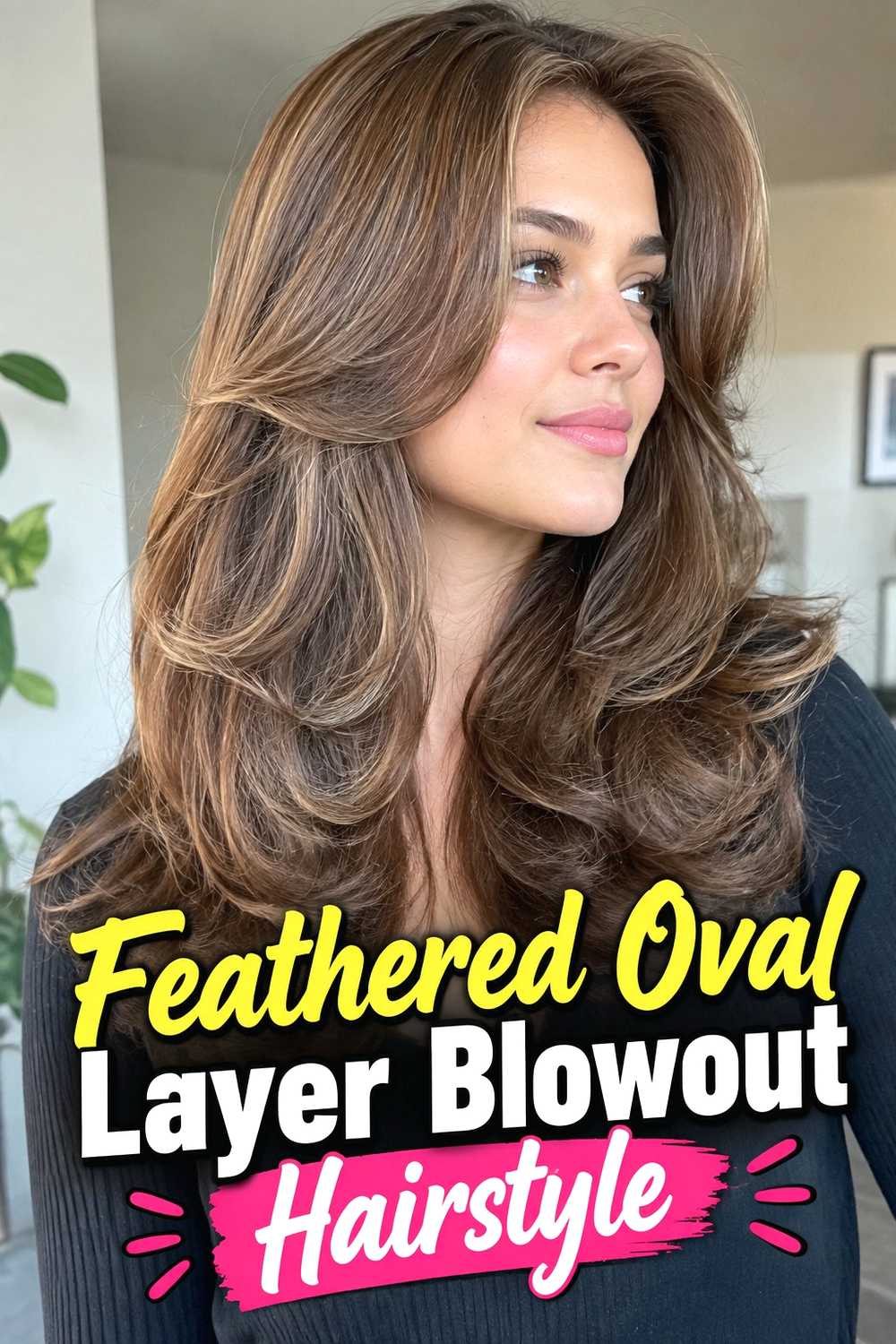
Feathered oval layers create a lighter, more separated effect, especially around the face and upper lengths. Instead of forming one continuous rounded surface, the layers sweep backward in distinct pieces that overlap softly. A blowout brings out that separation by lifting each section and directing it away from the face, producing movement without relying on tight curls. This look can feel especially dynamic on hair with multiple graduated layers, because the edges remain visible as they fan outward. The lower lengths should still have enough weight to keep the hairstyle balanced. Too much teasing or heavy curling can hide the feathered structure, so a controlled, brush-shaped finish usually works best.
Best For
Haircuts with several clearly defined front and side layers are especially suited to this finish because each layer has room to sweep independently.
Pro Tip
Direct the upper sections backward at slightly different angles instead of styling every piece identically. Small variations keep the feathering natural.
11. Shoulder Length Oval Layer Blowout Hairstyle
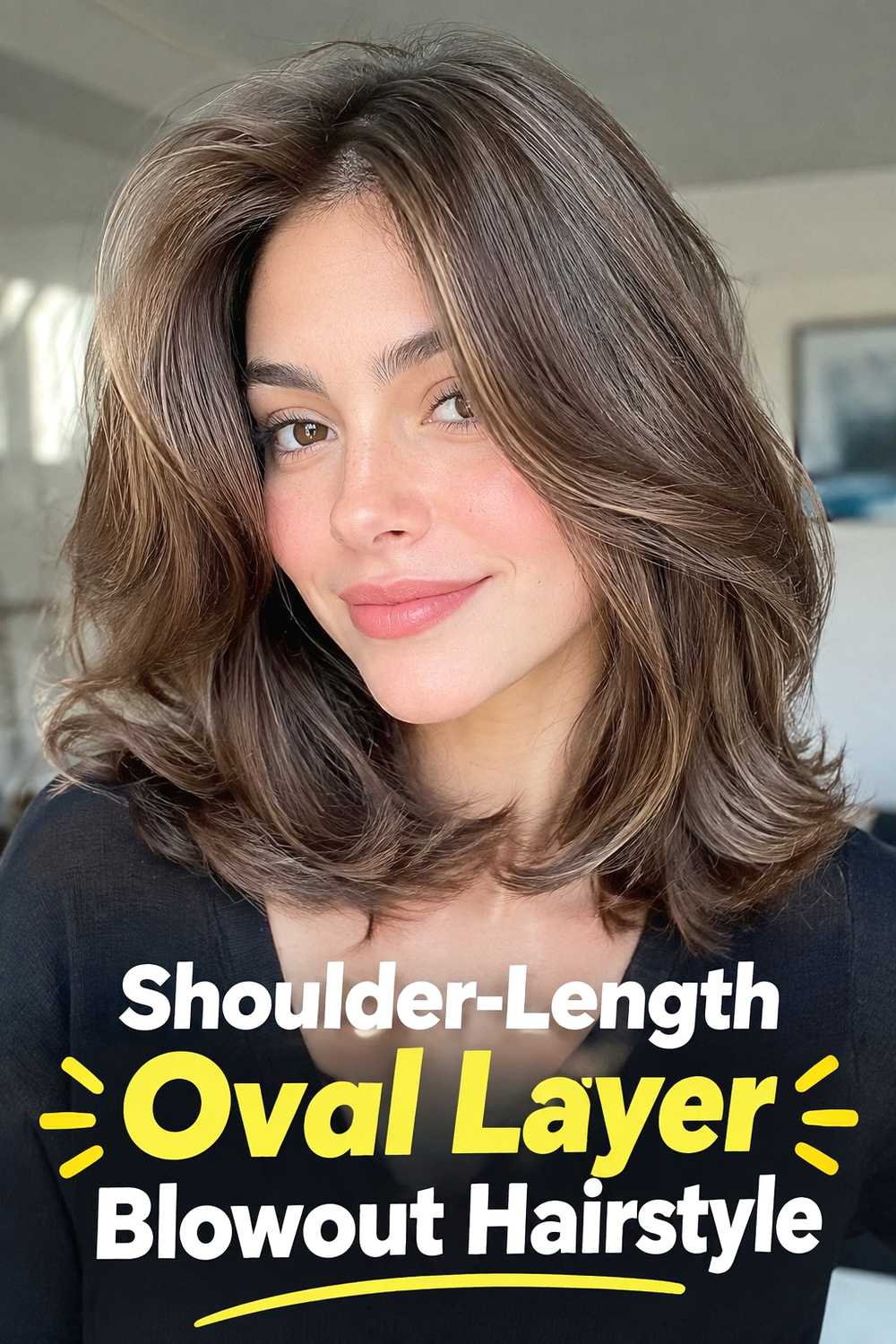
At shoulder length, oval layers create a compact, bouncy shape with enough movement to feel styled without requiring very long hair. The front sections can curve outward around the cheeks and jaw, while the lower layers bend softly near the shoulders. Because the perimeter sits higher, the ends naturally become a more visible part of the finished silhouette. A medium round brush can create lift without producing oversized curls, and moderate root volume helps the cut feel airy. This length is also practical for anyone who likes the look of a blowout but does not want to manage a large amount of hair. Keep the layering balanced so the ends retain enough density.
Hair Type & Length
This style works especially well from collarbone to shoulder length, where the layers can curve without needing extensive wrapping around the brush.
Wear & Maintenance
The ends may change direction when they meet the shoulders, so a quick touch-up can help restore the intended bend after sleeping or wearing a jacket.
12. Extra Long Oval Layer Blowout Hairstyle
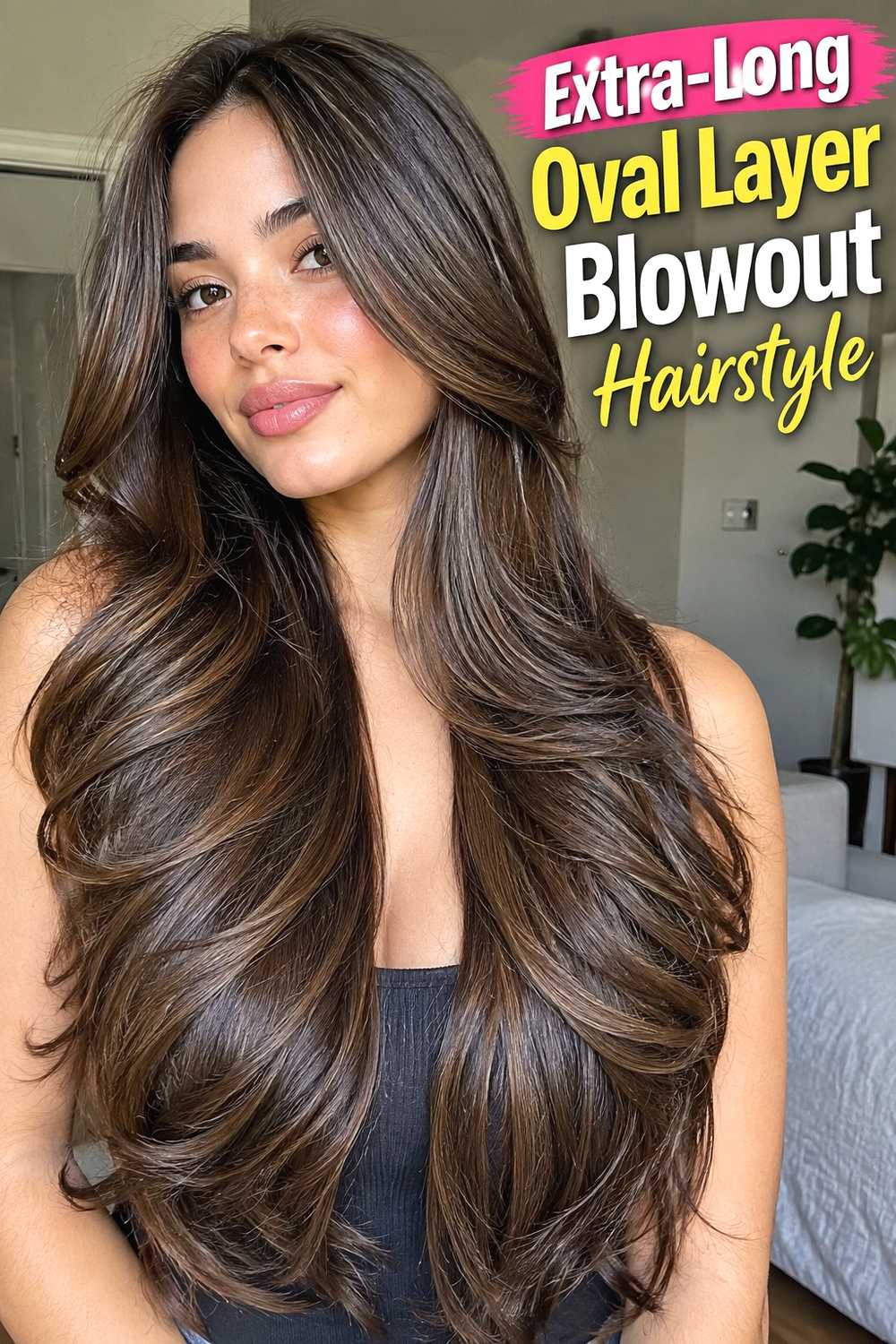
Extra-long hair can still carry an oval-layer shape when the layers are distributed carefully instead of being concentrated only at the bottom. Long face-framing pieces, mid-length layers, and softened ends create multiple points of movement while preserving the overall length. During a blowout, larger brush sections help produce broad curves that remain proportional to the hair rather than turning into tight curls. Root lift should be noticeable but realistic, since very long hair naturally has more weight. The finished look feels luxurious when the strands remain separated and mobile, with the curved layers visible from front to back. This version benefits from patience because longer sections usually require more drying and cooling time.
Styling Notes
Remove excess moisture before round-brushing so each long section can be shaped efficiently rather than repeatedly exposed to hot air.
Best For
This option suits people who want to retain substantial length while adding visible shape, sweep, and movement through the front and lower sections.
13. Soft Waves Oval Layer Blowout Hairstyle
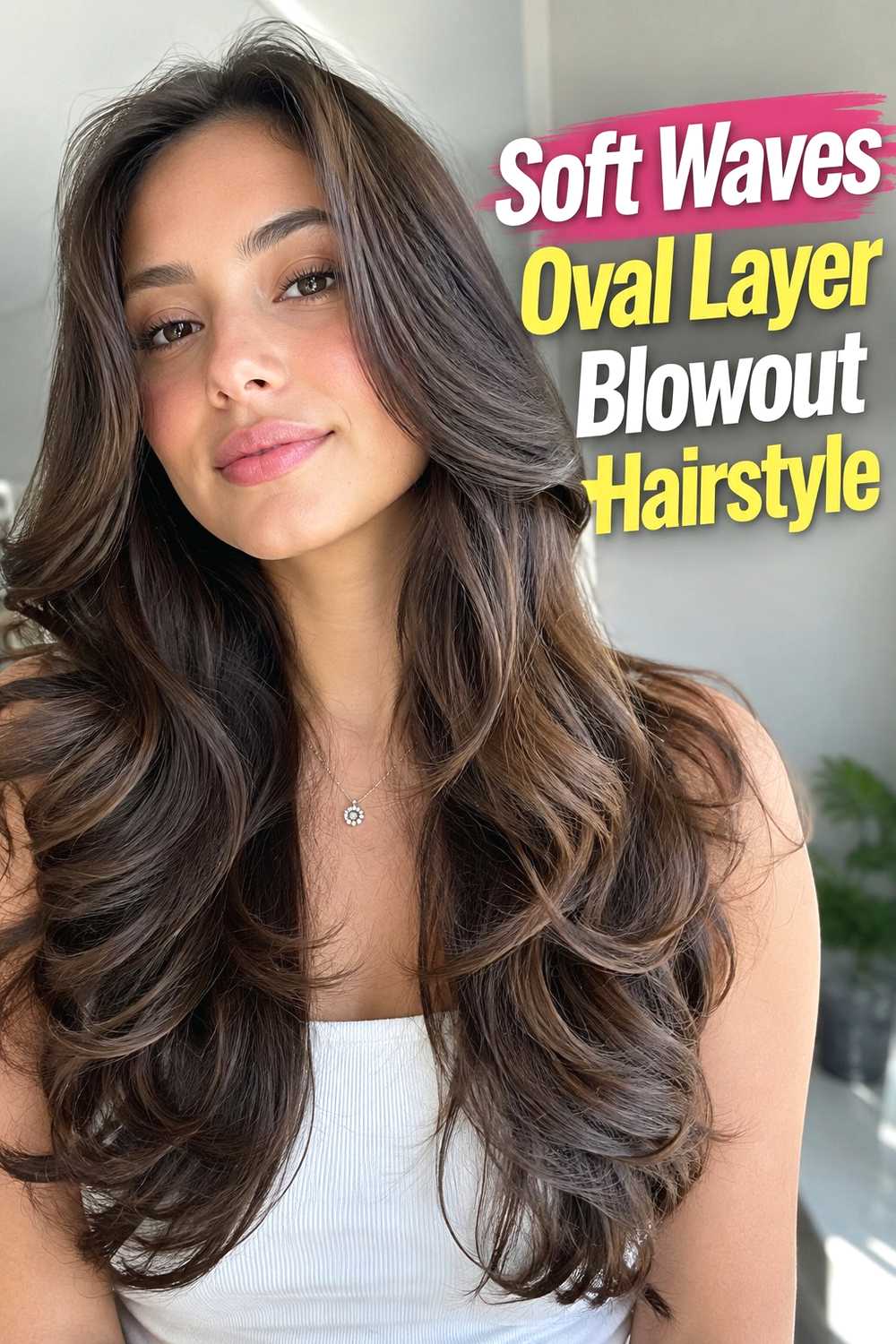
Soft waves give an oval-layer blowout a relaxed finish by loosening the usual rounded bends into wider, flowing movement. The roots can stay smooth and lightly lifted, while the mid-lengths form gentle waves that allow the layers to overlap naturally. Around the face, directing the first bend outward helps maintain the recognizable face-framing shape before the hair transitions into softer movement below. This variation feels less structured than a classic salon-style blowout, making it easy to wear with casual outfits while still looking intentional. Avoid making every wave identical. Slight differences in direction and depth help the hair look more natural and keep the layers from merging into a single repetitive pattern.
Styling Notes
After the blowout has cooled, gently separate the sections with your fingers rather than brushing heavily through them. This preserves soft definition without creating stiff curls.
Why It Works
The loose wave pattern adds texture while still allowing the curved structure of the haircut to remain visible underneath.
14. Wispy Bang Oval Layer Blowout Hairstyle
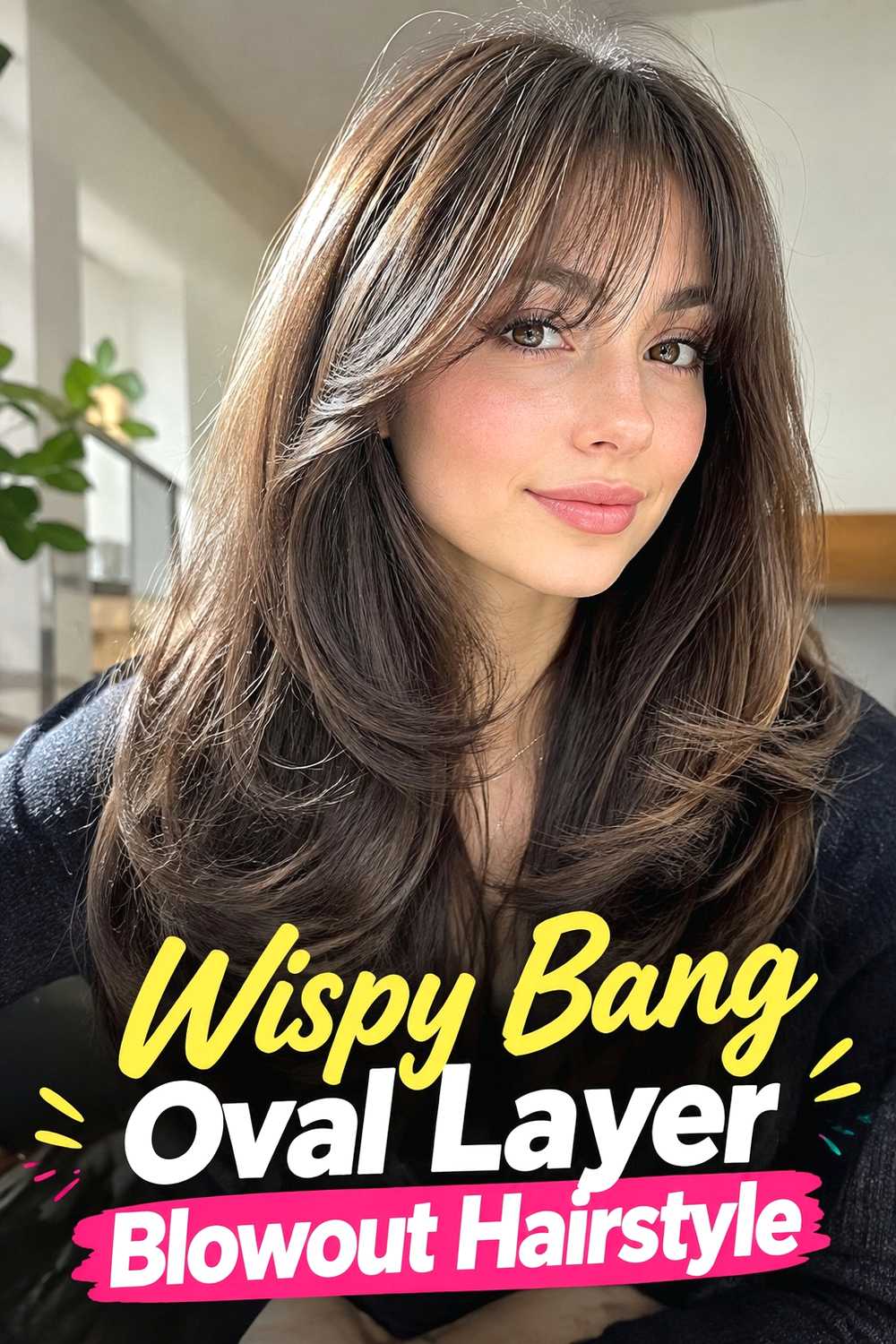
Wispy bangs add a delicate front detail to the fuller curves of an oval-layer blowout. Unlike thicker curtain bangs, these lighter pieces sit across the forehead with small gaps and soft movement, then blend into longer layers near the temples. The rest of the haircut can remain bouncy and rounded, creating an attractive contrast between the airy fringe and more substantial lengths. Because wispy bangs contain less hair, they usually need a lighter styling approach; too much product or excessive curling can make them separate awkwardly. The overall blowout looks most cohesive when the fringe and side layers share a similar soft finish rather than appearing like two completely different textures.
Styling Notes
Dry the bangs early while they are still damp, moving them gently from side to side before shaping the ends. This helps reduce unwanted separation at the roots.
Wear & Maintenance
Light bangs can lose their shape faster than the longer blowout, so they may need a brief morning refresh even when the rest of the hair still looks polished.
15. Rounded Ends Oval Layer Blowout Hairstyle
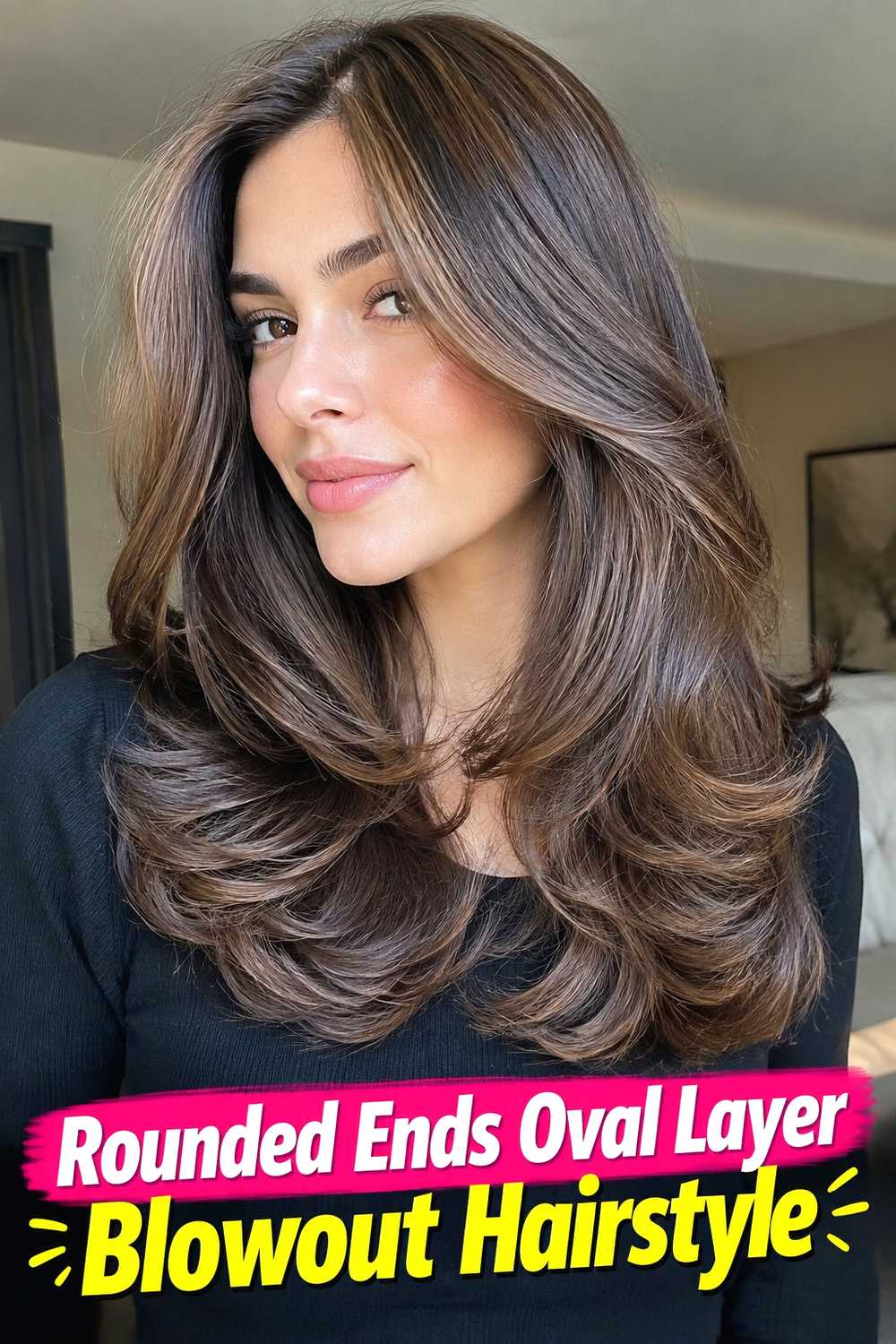
Rounded ends create one of the smoothest interpretations of an oval-layer blowout. Instead of flipping outward or forming obvious waves, the ends curve softly under or inward, giving the haircut a clean, continuous outline. The layers above still add movement, particularly around the face, but the lower perimeter remains controlled and polished. This finish works well when you want the hair to look full without relying on dramatic height. A broad brush and gentle tension can create the rounded shape while keeping individual strands visible and flexible. The style is especially attractive when the ends are neat, because the final bend draws attention directly to the perimeter and overall quality of the haircut.
Why It Works
The rounded finish echoes the curved shape of the layers, making the entire hairstyle feel intentional and visually connected.
Pro Tip
Concentrate the bend on the final few inches instead of rolling the whole section tightly, which can create more curl than the style needs.
16. 90s Inspired Oval Layer Blowout Hairstyle
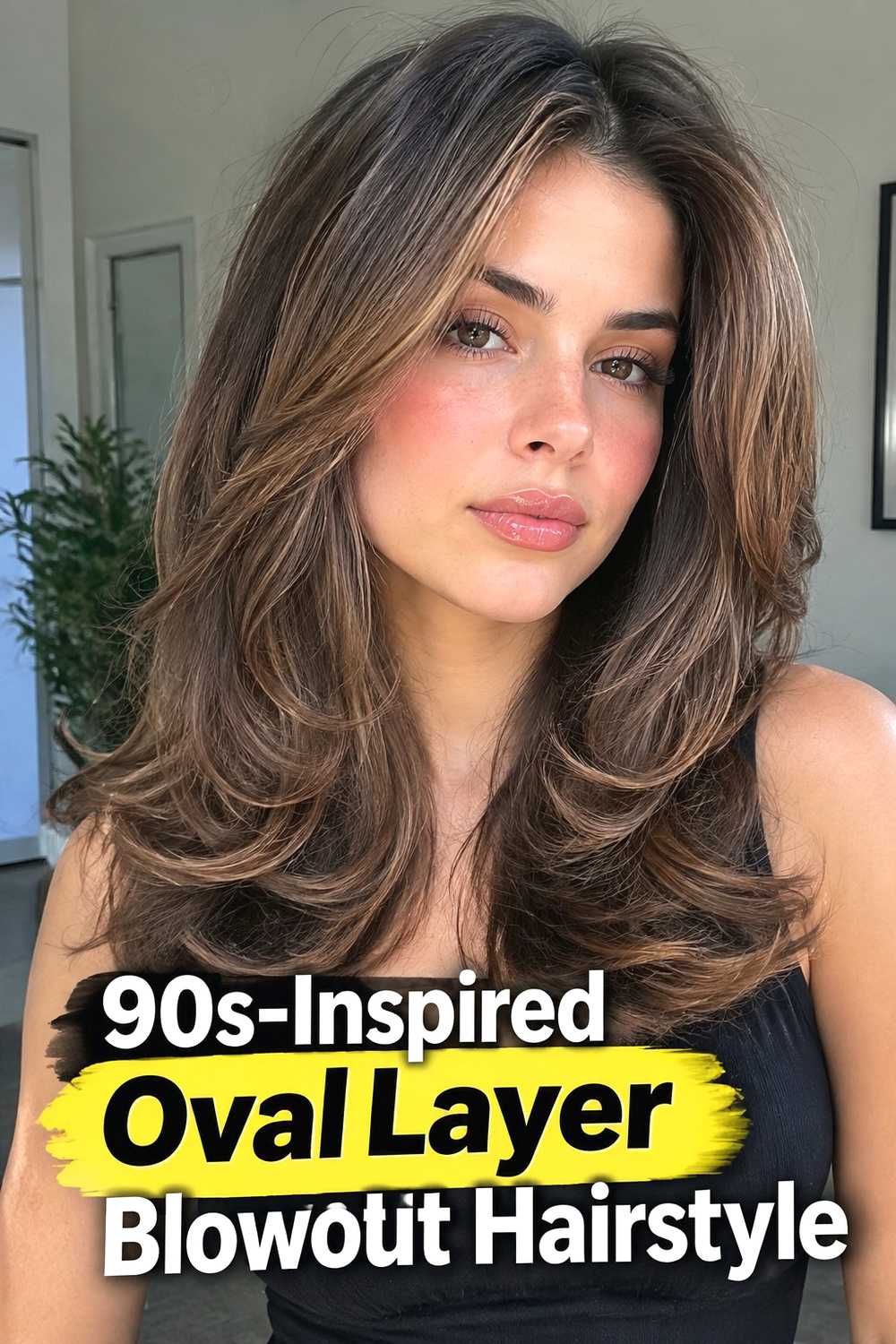
A 90s-inspired finish takes oval layers into a bigger, more expressive direction with lifted roots, sweeping front pieces, and broad outward movement. The style should feel full through the crown and sides while maintaining enough softness for the layers to move freely. Large, face-framing sections can be blown backward to create the recognizable open shape, while the lower lengths stay smooth with generous bends rather than tight curls. This variation makes the layered structure especially visible and works well when you want a stronger statement than a subtle everyday blowout. The most convincing version balances volume with polish, avoiding excessive teasing that can make the hair look rigid or disconnected.
Styling Notes
Use large sections and direct them upward and away from the face. Cooling the upper layers in a lifted position can help maintain the broad, airy shape.
Best For
Medium to long layered hair provides enough length for the sweeping front and side sections that define this more dramatic finish.
17. Airy Textured Oval Layer Blowout Hairstyle
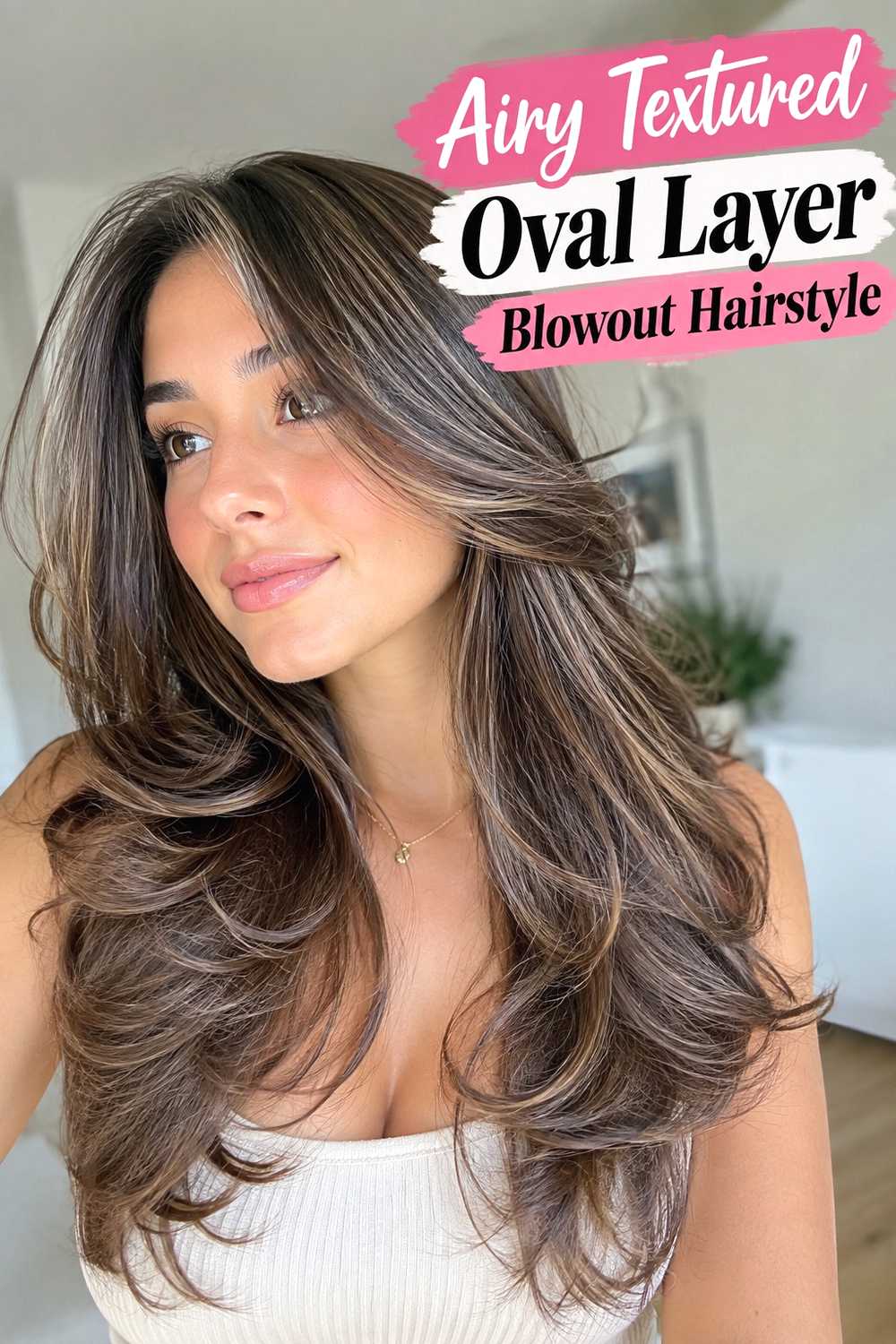
An airy textured blowout keeps some natural variation instead of smoothing every strand into a perfectly uniform surface. The oval layers remain visible through the curved front pieces and graduated lengths, but the finish has a slightly undone quality with soft separation and gentle volume. This makes the hairstyle useful for people who like a polished shape without wanting it to look overly set. Rather than forcing every section into the same bend, alternate the amount of tension and direction slightly so the movement feels organic. A few natural flyaways can suit the finish as long as the overall shape remains clear. The result should feel light, touchable, and intentionally relaxed.
Best For
This variation works well for hair that already has some natural body or slight wave, since the texture can become part of the finished style rather than being completely removed.
Pro Tip
Break up the cooled blowout gently with your fingertips to create separation while preserving the curved structure of the layers.
18. Glamorous Full Volume Oval Layer Blowout Hairstyle
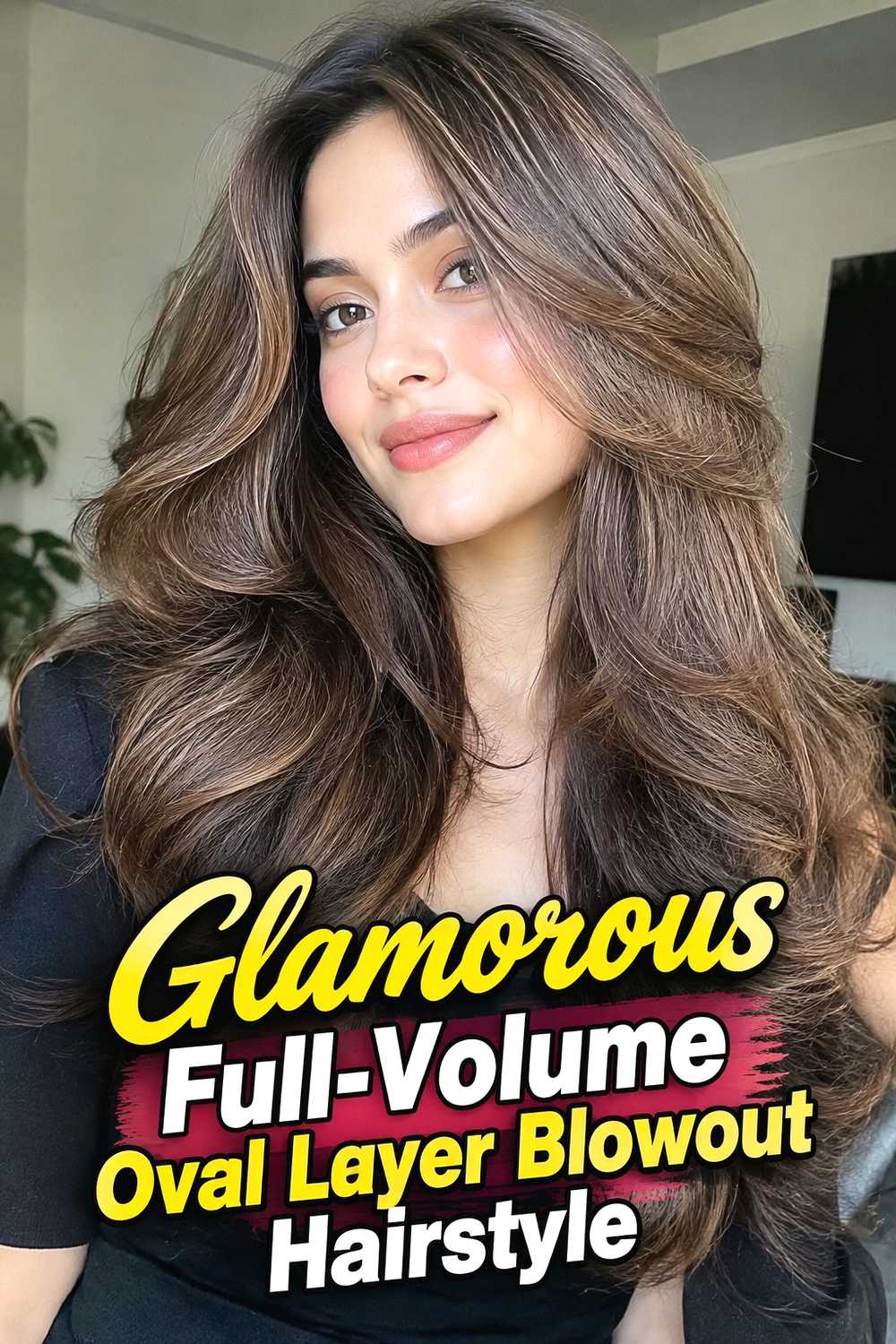
The glamorous full-volume version turns oval layers into a bold, event-ready blowout with height through the crown, broad curves around the face, and generous bounce throughout the lengths. Each layer should remain visible despite the added fullness, so larger sweeping bends work better than numerous tight curls. The front sections can lift dramatically away from the face before flowing into the longer layers, while the ends stay polished and mobile. This look generally requires more sectioning and setting than an everyday blowout, but the result delivers a noticeably fuller silhouette. Balance is important: volume should appear distributed from roots to ends rather than concentrated in one oversized area.
Styling Notes
Build the shape section by section, starting with root lift and then creating broad curves through the lengths. Letting the hair cool before loosening it helps protect the overall structure.
Wear & Maintenance
For longer wear, avoid repeatedly touching or brushing the finished layers. Gentle separation is usually enough to restore movement without collapsing the volume.
How to Choose the Right Look
Start with your haircut rather than the finished photo. If you have strong face-framing layers, options such as the Face-Framing, Feathered, or Curtain Bang Oval Layer Blowout Hairstyle can highlight that existing structure. Hair with fewer layers may look more natural with the Sleek Polished, Rounded Ends, or Soft C-Curl versions.
Length also changes the effect. Shoulder-length hair can create stronger bounce and more noticeable end movement, while extra-long hair usually produces broader, heavier curves. Fine hair may benefit from lighter layering and strategic root lift so the perimeter does not become too thin. Denser hair can often support more visible graduation and fuller volume.
Consider styling time as well. A sleek blowout with soft bends is usually simpler than a full 90s-inspired or glamorous finish that requires careful sectioning, root elevation, and cooling. Bangs add another styling step because they may need refreshing more often than the longer layers.
For everyday wear, choose a finish that works with your natural texture instead of requiring complete reshaping every morning. For events, stronger root lift, outward sweeps, and fuller curves can make the same oval-layer haircut feel noticeably more dramatic.
Final Thoughts
Oval layer blowout hairstyles can range from smooth and understated to full, sweeping, and glamorous. The most wearable choice is usually the one that works with your existing layer placement, hair density, length, and realistic styling routine.
Whether you prefer rounded ends, airy texture, curtain bangs, or a high-volume 90s finish, keep the movement soft enough for the individual layers to remain visible. That flowing separation is what gives an oval-layer blowout its distinctive shape.
FAQs
1. What is an oval layer blowout hairstyle?
An oval layer blowout uses curved, graduated layers styled with smooth lift and rounded movement. The front pieces often frame the face before blending into longer layers through the sides and back.
2. Do oval layers work on long hair?
Yes. Long hair can show oval layers beautifully when the graduation is spread through the lengths instead of being limited to the ends. Larger blowout bends usually suit longer hair well.
3. Can I wear an oval layer blowout with bangs?
Yes. Curtain bangs and wispy bangs can both blend naturally with oval layers. The key is connecting the fringe to the longer face-framing pieces so the transition looks intentional.
4. How do I make oval layers look more voluminous?
Focus on lifting the roots before shaping the lengths, especially around the crown and front. Using larger round-brush sections can create broad, airy movement without turning the style into tight curls.
5. What blowout finish is easiest for everyday wear?
A sleek polished, soft C-curl, or rounded-end finish is often easier to maintain than a maximum-volume style. Choose the option that works most naturally with your length and existing texture.
CTA
Save your favorite oval layer blowout hairstyles for your next styling day, and share the ideas that best match the soft, bouncy finish you love.