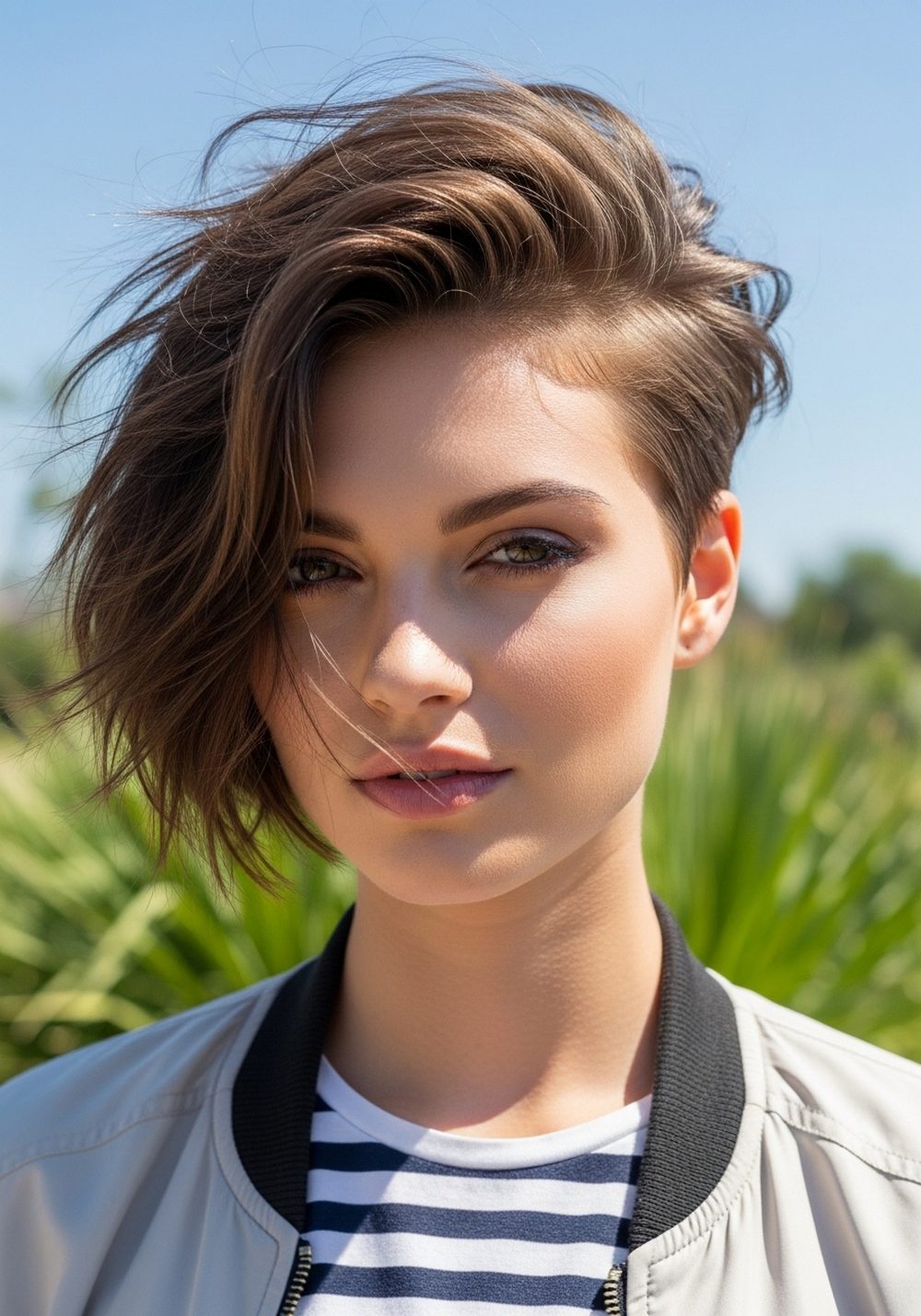
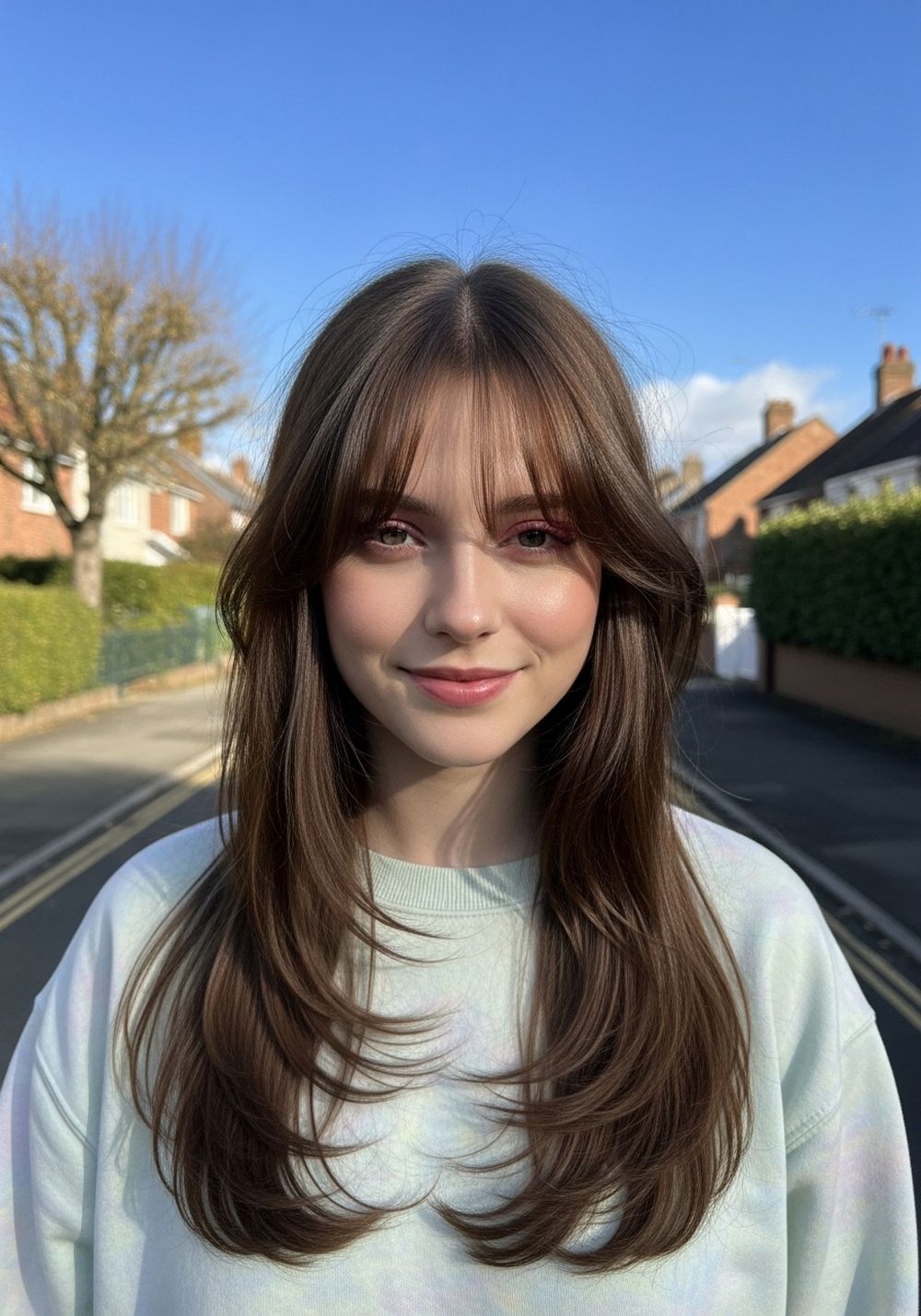
12 Stacked Angled Bob Haircuts for a Chic, Sculpted Look
A stacked angled bob combines sculpted volume at the back with longer front pieces for a polished shape that can look sleek, soft, or textured.
Stacked angled bob haircuts are recognizable for their graduated back layers and forward-moving silhouette. The contrast between a fuller crown and longer front sections creates shape without requiring very long hair, while small changes in layering can make the cut appear smooth, airy, tousled, or dramatically angled.
The best version depends on your natural texture, preferred styling routine, and how much graduation you want at the back. Fine hair may benefit from a cleaner stacked shape, while thick, wavy, or curly hair often needs carefully placed layers to keep the outline balanced.
Quick List
- Classic Stacked Angled Bob Hairstyle
- Short Graduated Stacked Bob Hairstyle
- Long Front Stacked Angled Bob Hairstyle
- Textured Stacked Angled Bob Hairstyle
- Soft Wavy Stacked Bob Hairstyle
- Sleek Straight Stacked Bob Hairstyle
- Layered Stacked Bob With Side Bangs Hairstyle
- Feathered Stacked Angled Bob Hairstyle
- Curly Stacked Angled Bob Hairstyle
- Choppy Stacked Bob Hairstyle
- Rounded Stacked Bob Hairstyle
- Shaggy Stacked Angled Bob Hairstyle
1. Classic Stacked Angled Bob Hairstyle
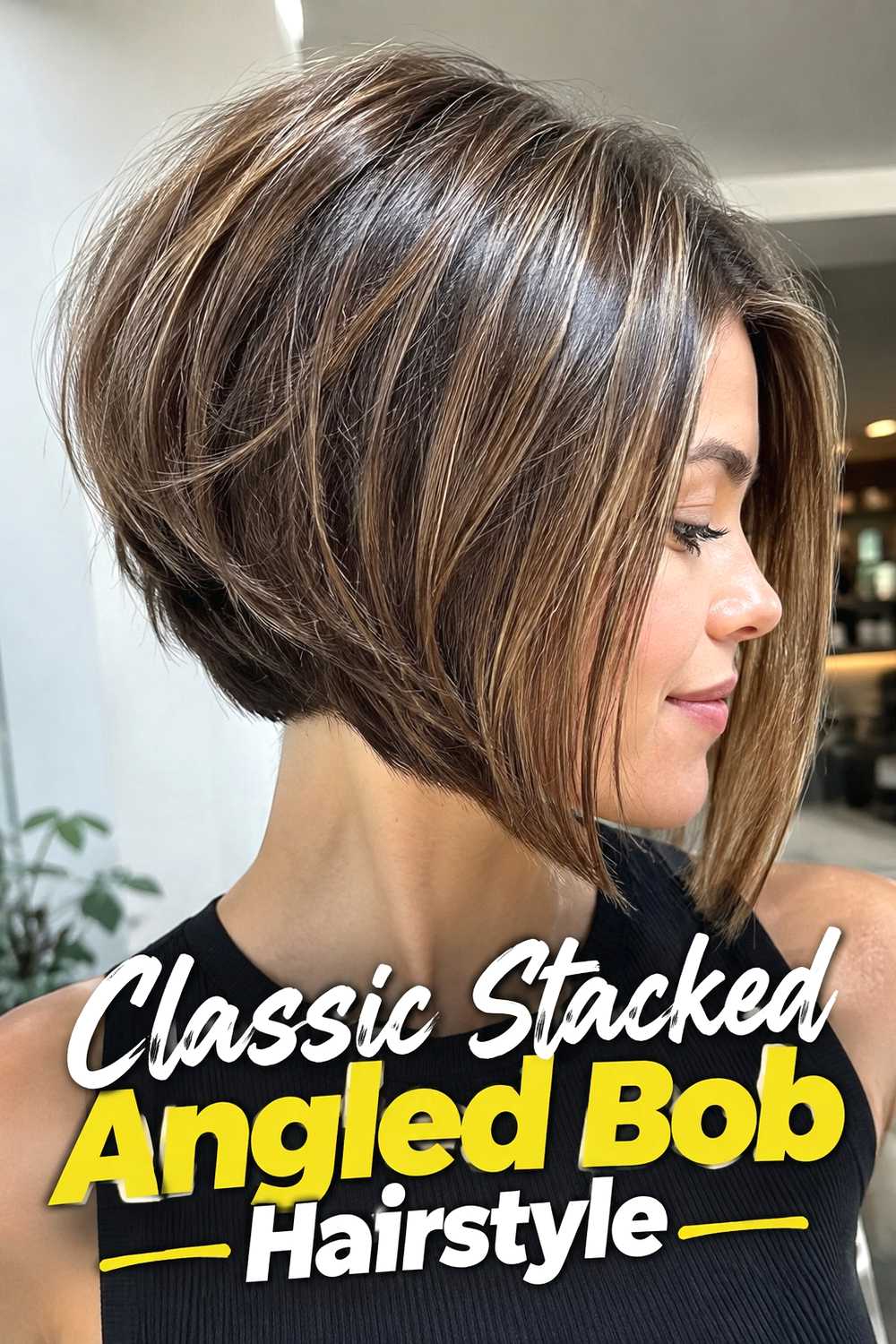
The classic stacked angled bob combines a neatly graduated nape with longer sections that travel toward the jaw or chin. Its defining feature is the smooth progression from a compact back to a clearly angled front, creating a crisp silhouette without looking overly severe. Subtle crown layering can provide lift while allowing the surface to stay polished. This version works especially well for anyone who likes a structured haircut that still has natural movement. Blow-drying with a round brush helps emphasize the curved back, while directing the front sections downward keeps the angle visible. Regular reshaping is useful because the clean graduation becomes less noticeable as the hair grows.
Styling Notes
Use controlled root lift at the crown rather than excessive volume. Keeping the ends smooth makes the graduation and forward angle easier to see.
Best For
A good choice for straight to gently wavy hair and anyone who prefers a polished, recognizable bob shape.
2. Short Graduated Stacked Bob Hairstyle
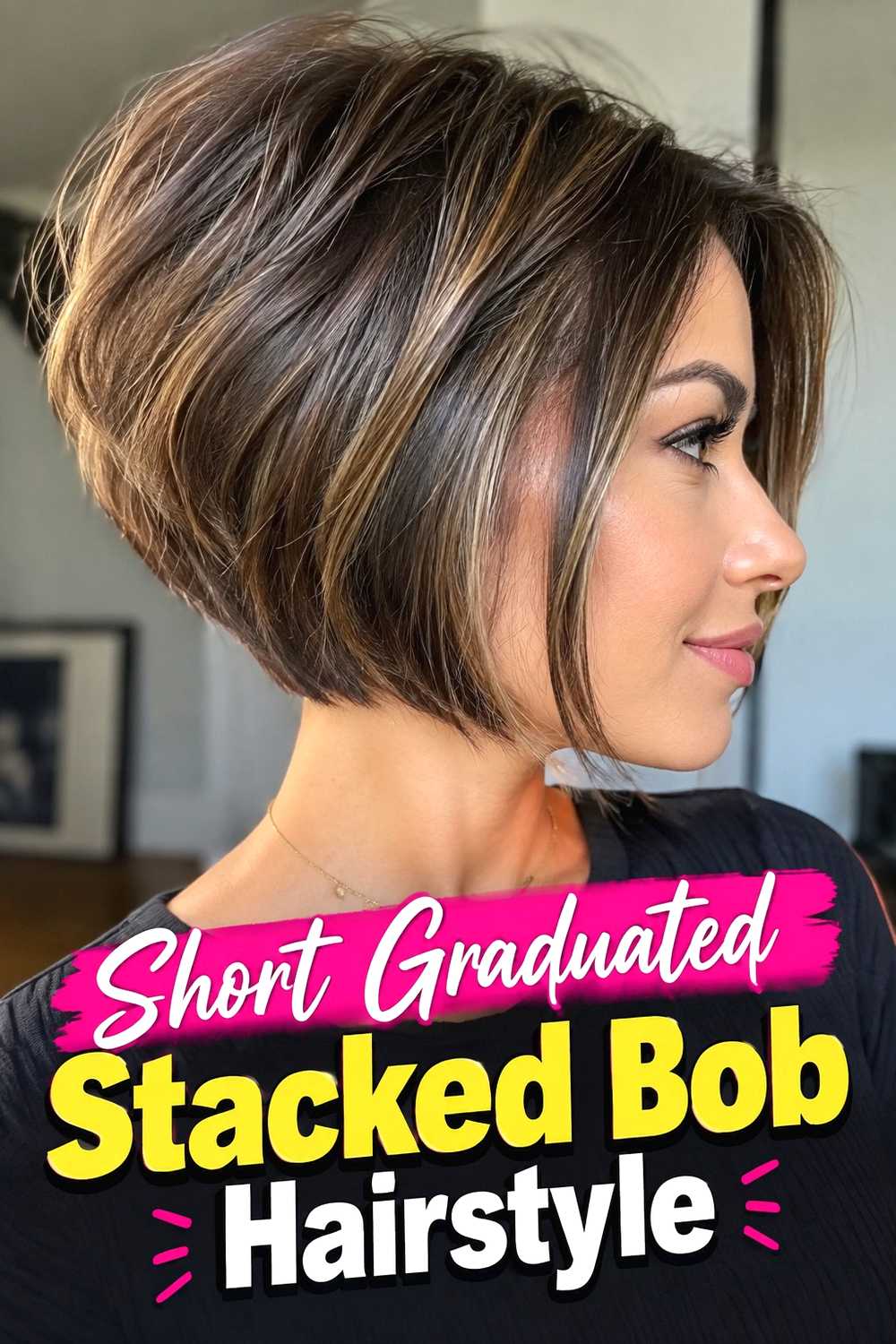
This shorter interpretation puts the emphasis on a compact, highly graduated back with enough length around the sides to maintain the angled bob identity. Closely layered sections at the nape create a lifted silhouette, while slightly longer crown pieces prevent the cut from appearing too flat. The front can sit near the cheek or jaw, giving the style a sharper, more exposed finish than longer stacked bobs. Because the outline is short and precise, the haircut can feel especially lightweight around the neck. Styling usually requires only focused root lift and light smoothing, but the stacked shape benefits from consistent trims so the back does not become heavy or lose its carefully graduated curve.
Wear & Maintenance
Shorter stacked cuts reveal growth quickly, particularly around the neckline. Keeping the nape tidy helps preserve the intended profile.
Pro Tip
Blow-dry the crown forward first and then redirect it into place for natural-looking lift without creating a stiff, overly rounded finish.
3. Long Front Stacked Angled Bob Hairstyle
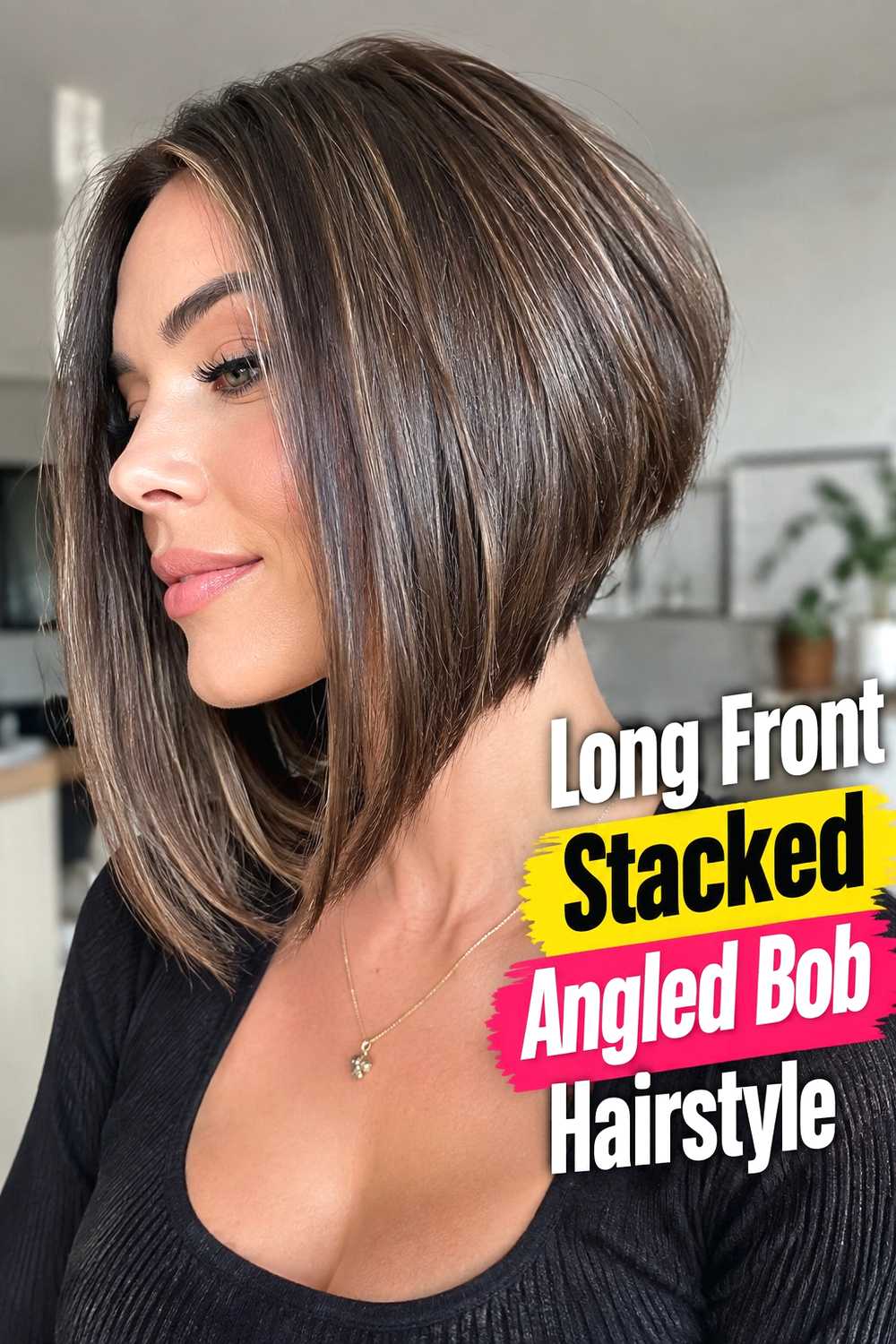
A long-front stacked bob creates stronger contrast by pairing a shorter graduated back with noticeably extended pieces around the face. The front sections may approach the collarbone while the back remains closer to the nape, producing a dramatic diagonal line from side view. Keeping the internal layering controlled allows those longer pieces to fall smoothly instead of becoming thin or disconnected. This shape can be worn straight for maximum definition or with a subtle bend for a softer effect. It is particularly useful for people who want the clean structure of a shorter bob while retaining extra length around the face. The greater the length difference, the more carefully the weight distribution needs to be planned.
Why It Works
The extended front gives the cut visual movement while the stacked back supplies lift and structure, creating a clearly defined profile from multiple angles.
Hair Type & Length
Straight, slightly wavy, and medium-density hair can display the long diagonal particularly clearly, though the shape can be customized for thicker textures.
4. Textured Stacked Angled Bob Hairstyle
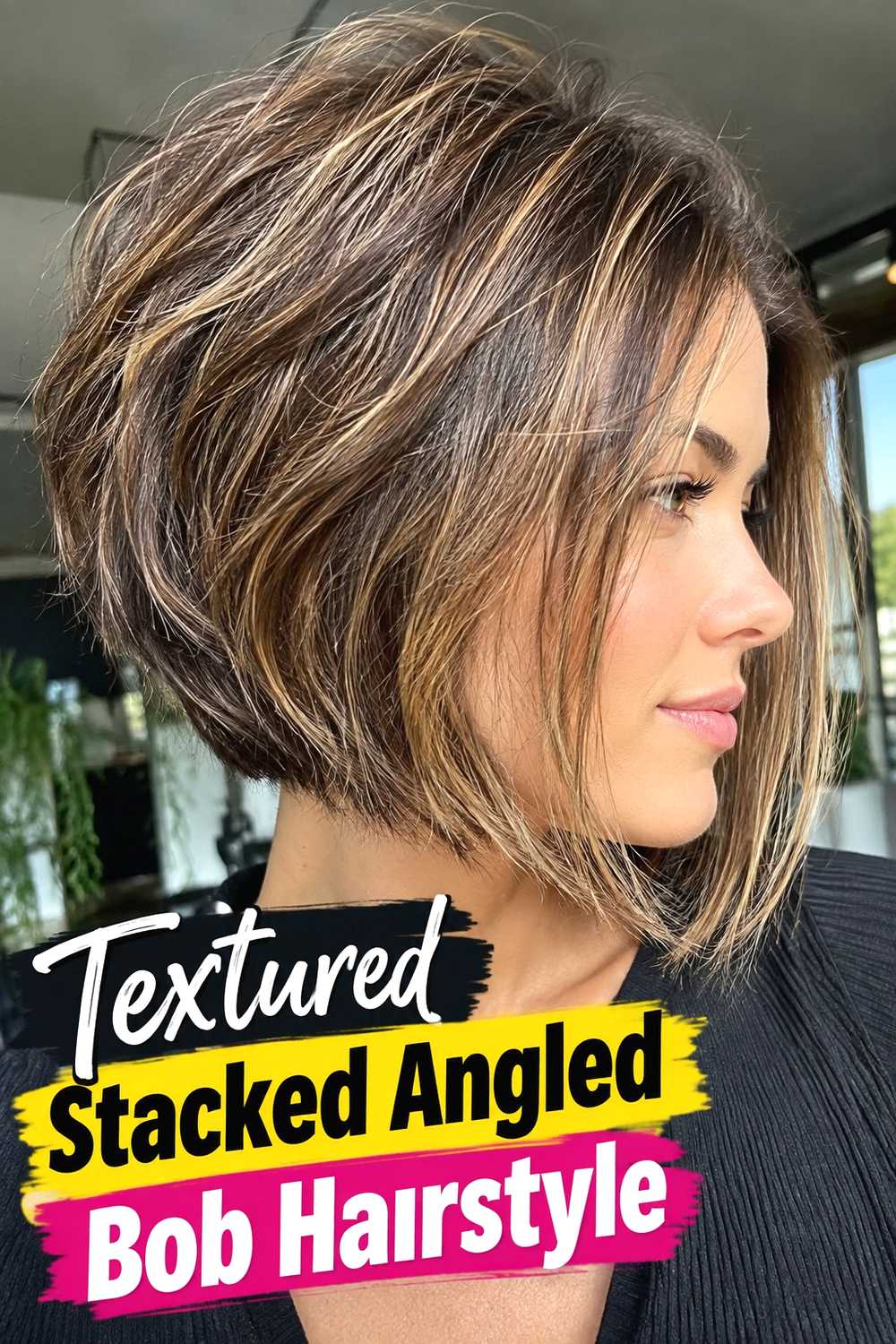
This textured variation loosens the traditional polished finish with piecey layers and softly separated ends. The stacked back still provides the foundation, but the surface has more movement, making the haircut feel relaxed rather than sharply sculpted. Shorter layers through the crown can encourage lift, while irregular end texture keeps the sides from appearing too solid. It is an appealing option for naturally wavy hair or straight hair that holds a bend well. Styling can be as simple as rough-drying for volume and adding a small amount of lightweight texture product through the mid-lengths and ends. Avoid overloading the roots, since the goal is airy movement rather than heavy, product-defined separation.
Styling Notes
Alternate the direction of a few loose bends instead of curling every section identically. This keeps the textured finish natural and dimensional.
Best For
Especially suitable for those who want visible movement and a less formal alternative to a sleek stacked bob.
5. Soft Wavy Stacked Bob Hairstyle
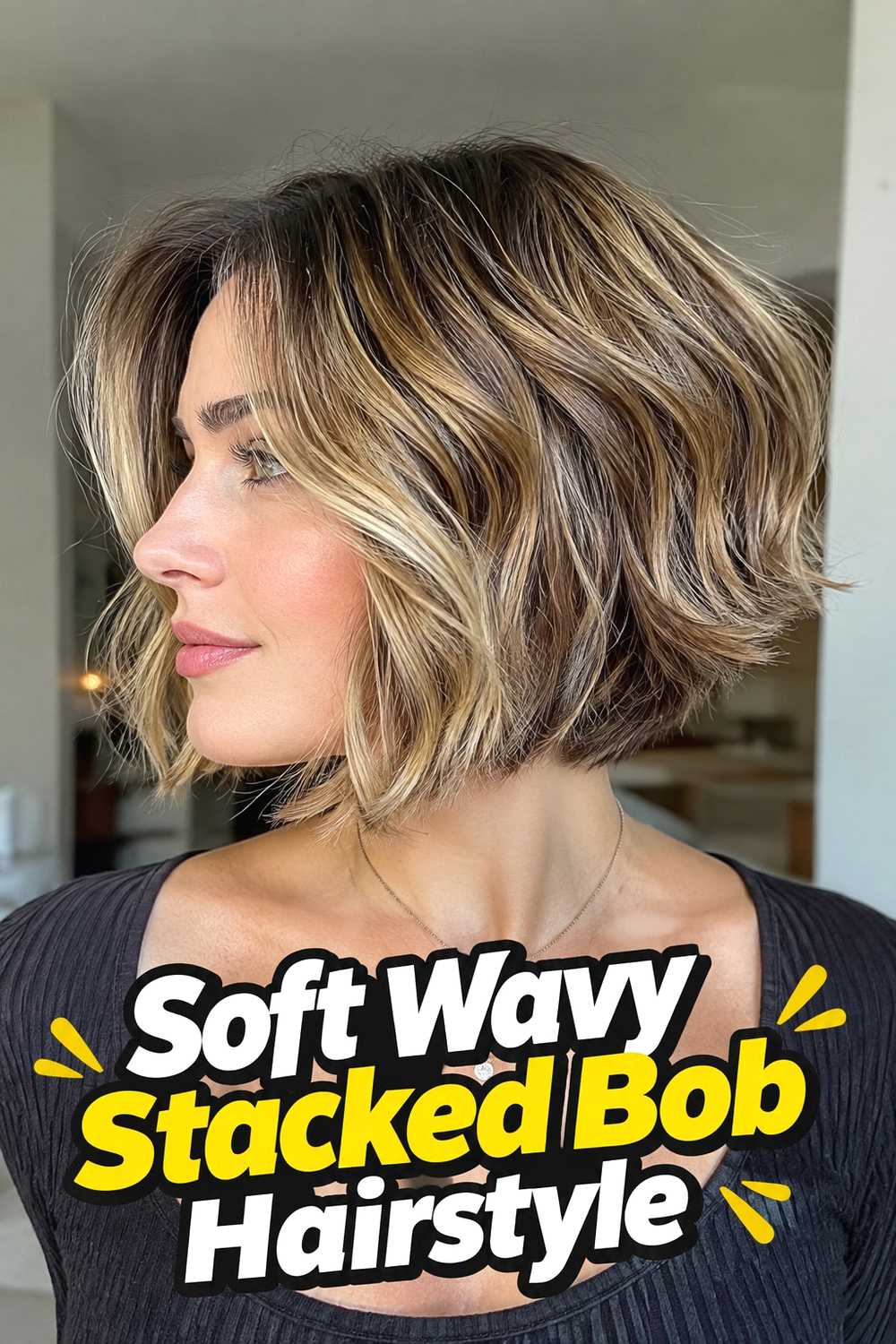
Soft waves give the stacked bob a more relaxed silhouette while preserving its characteristic lift through the back. Rather than emphasizing a perfectly straight diagonal, this version lets gentle bends soften the transition from shorter rear layers to longer face-framing pieces. The waves should remain loose enough for the underlying haircut to stay visible, particularly around the nape and sides. Natural wavy hair may need only light definition, while straighter textures can achieve the look with a large curling iron or flat-iron bends. Leaving the ends slightly straighter often creates a more modern result. Because waves can visually shorten the front, keeping a little additional length there helps maintain the angled effect.
Hair Type & Length
Naturally wavy and medium-textured hair works particularly well, but straight hair can also wear the style with occasional heat styling.
Pro Tip
Concentrate the strongest wave through the mid-lengths and keep the roots softer so the stacked back remains balanced rather than overly full.
6. Sleek Straight Stacked Bob Hairstyle
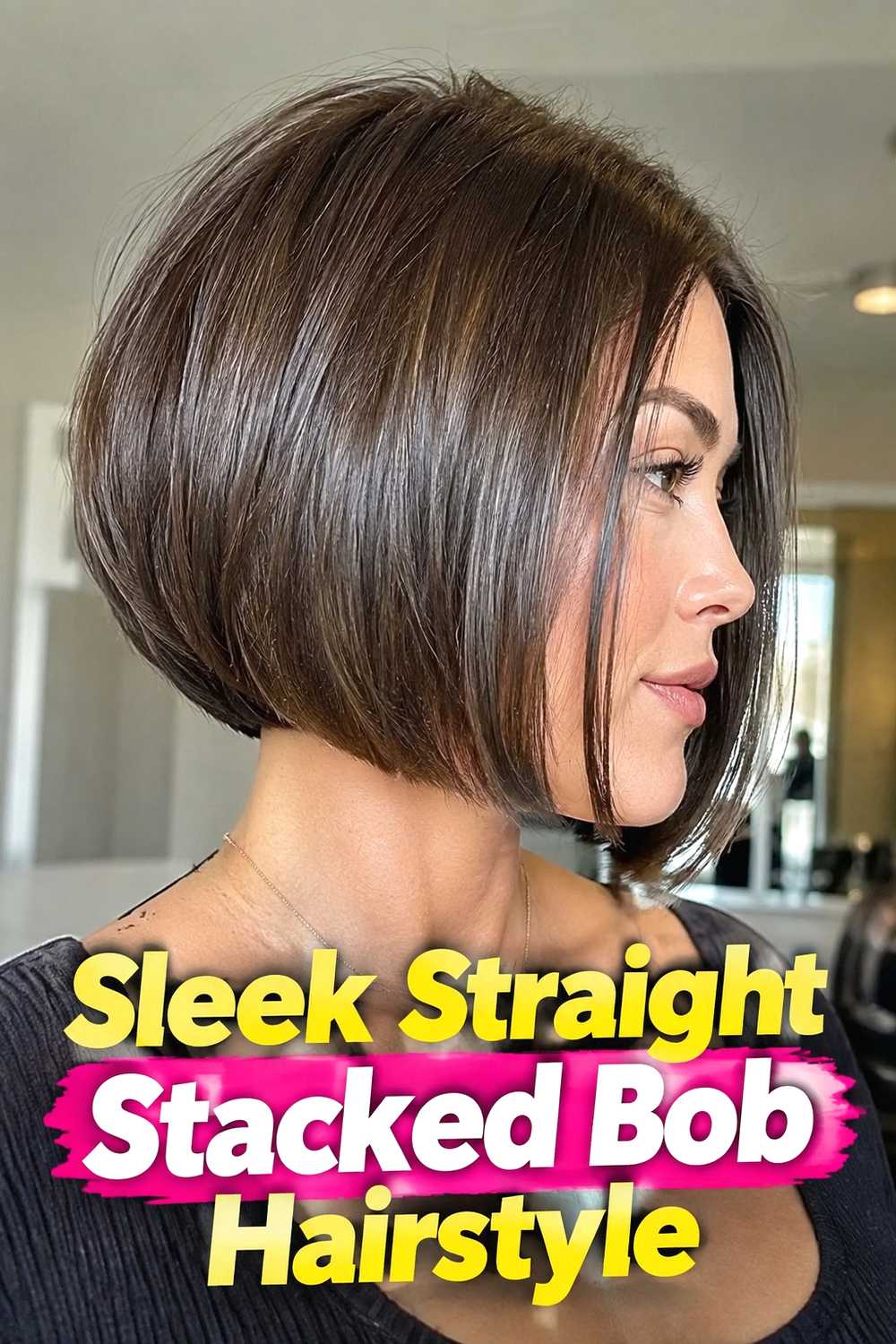
The sleek straight stacked bob highlights precision more than almost any other version. Smooth strands make the graduated nape, curved crown, and angled front immediately visible, creating a clean architectural outline. Layers are usually blended carefully so the surface remains uninterrupted instead of looking choppy. The front can skim the jaw or extend farther for a more dramatic diagonal. A blow-dryer with a concentrator nozzle and a paddle or round brush can help create a smooth finish, followed by minimal flat-iron refinement when needed. Since glossy straight styling reveals uneven ends easily, both the haircut and daily finish matter. Lightweight products are preferable to heavy oils that can collapse the crown.
Why It Works
A straight finish shows every line of the haircut clearly, making it ideal when the stacked graduation and sharp angle are the main features you want to emphasize.
Wear & Maintenance
Expect to smooth the shape after washing and schedule trims as the front angle and graduated nape begin to grow out.
7. Layered Stacked Bob With Side Bangs Hairstyle
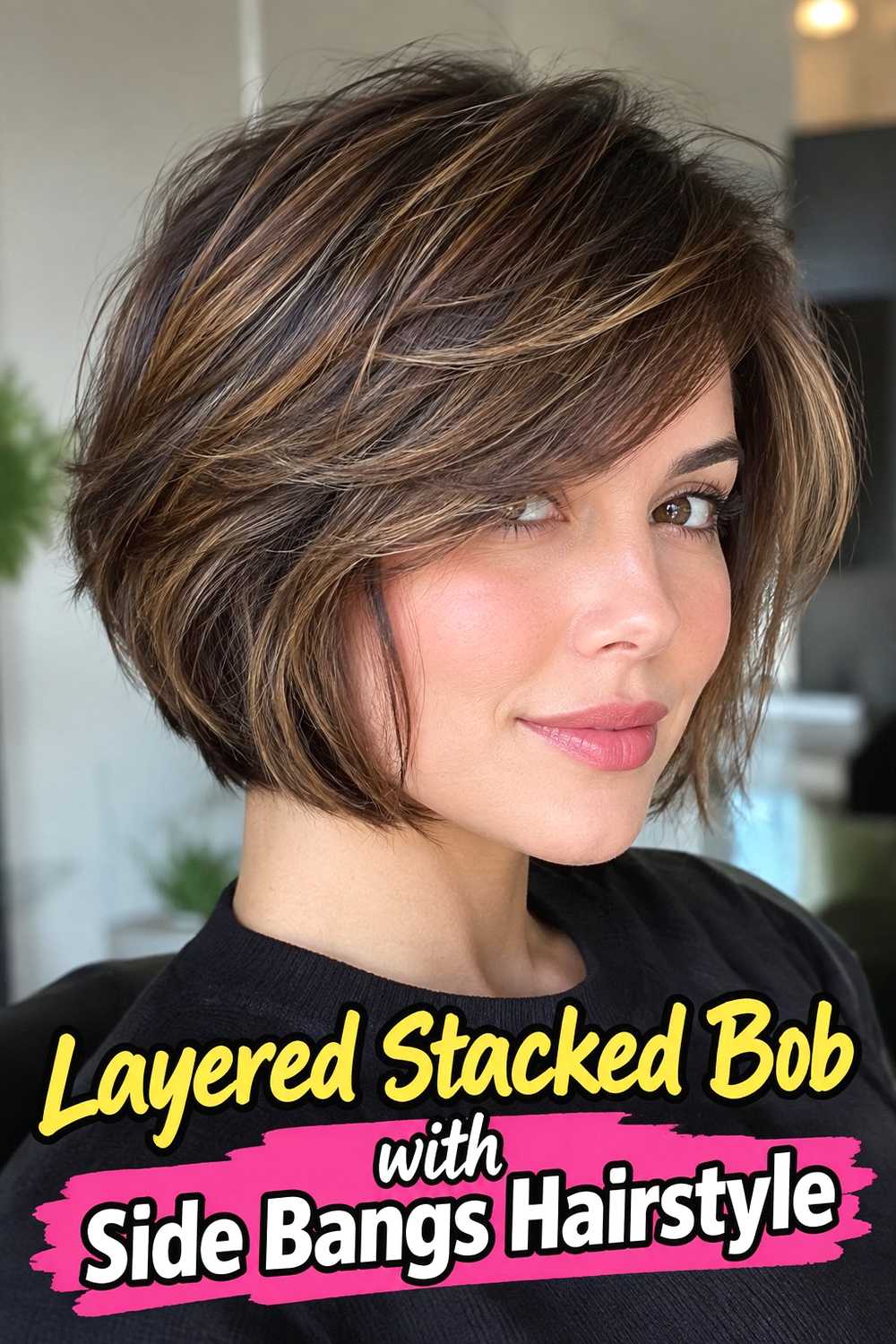
Side bangs bring an extra face-framing element to a stacked bob without competing with its graduated shape. The back remains lifted and layered, while the fringe sweeps diagonally into the longer front sections for a connected finish. Instead of cutting the bangs as a separate block, blending them into the side layers creates softer movement and makes styling more flexible. The overall result can look polished when blown smooth or more relaxed with a slight bend through the ends. This version is especially practical for anyone who enjoys fringe but does not want the stronger commitment of short, blunt bangs. Keeping the side bang lightweight helps the haircut retain its forward movement rather than becoming overly heavy around the face.
Styling Notes
Direct the fringe across the forehead while blow-drying, then let it fall naturally into the longer side section rather than forcing a rigid curve.
Best For
Useful for straight or wavy textures and for anyone wanting additional movement around the front without changing the stacked back dramatically.
8. Feathered Stacked Angled Bob Hairstyle
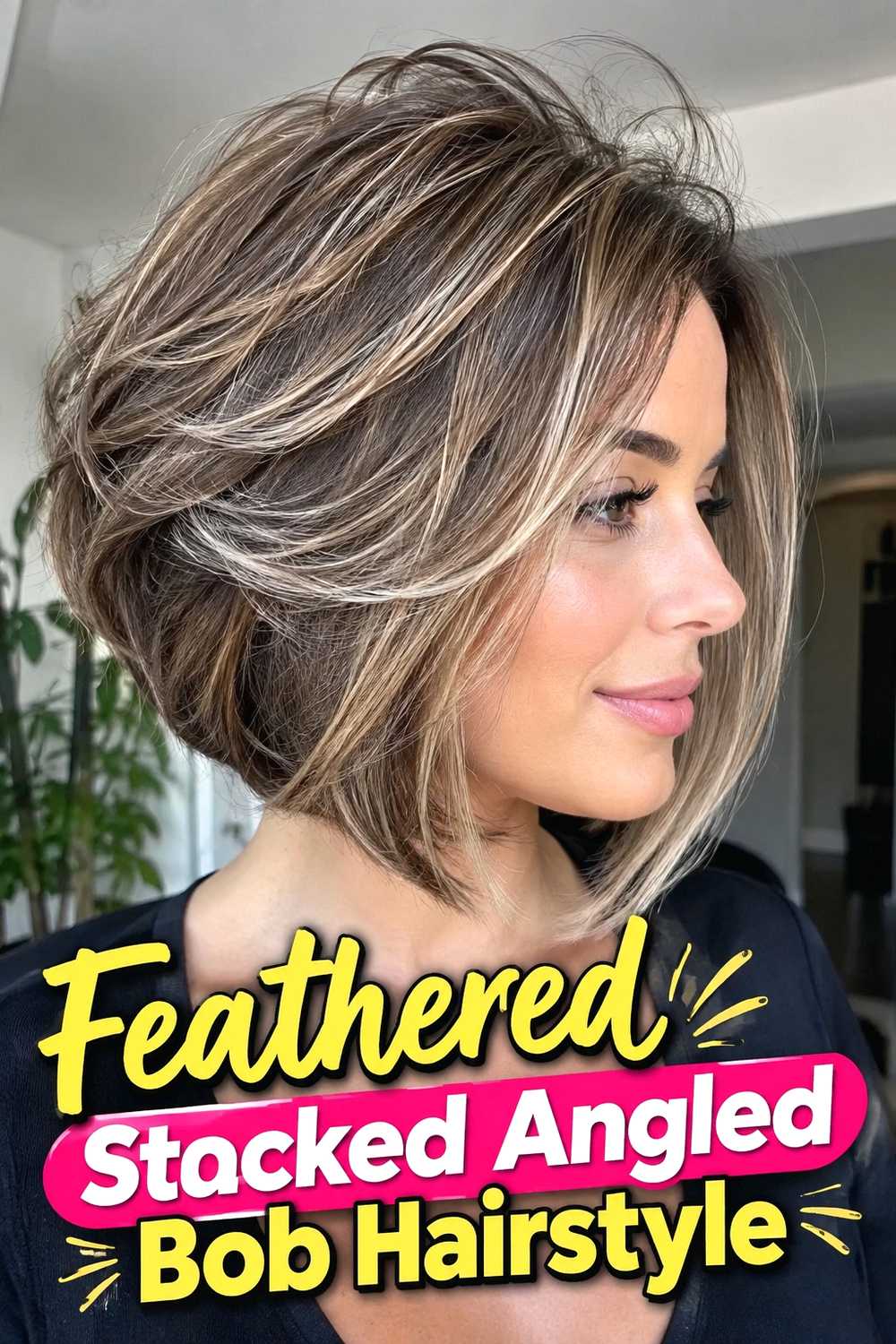
A feathered stacked bob replaces a solid surface with lighter, sweeping layers that move away from the face and crown. The stacked foundation still creates fullness at the back, but the ends are softened so the finished haircut feels airy rather than dense. Feathering is especially noticeable around the sides, where shorter pieces can blend into the longer angled front. This approach can help thick hair feel more mobile when weight is removed strategically, while finer hair usually needs gentler feathering to avoid reducing density. Blow-drying the layers with a medium round brush encourages their separated, flowing shape. A small amount of lightweight styling cream can define the ends while preserving touchable movement.
Hair Type & Length
Medium to thick hair often supports visible feathering particularly well, though the amount of layering should be adjusted according to density.
Pro Tip
Keep the shortest feathered layers long enough to blend smoothly with the stacked crown so the profile remains connected rather than overly wispy.
9. Curly Stacked Angled Bob Hairstyle
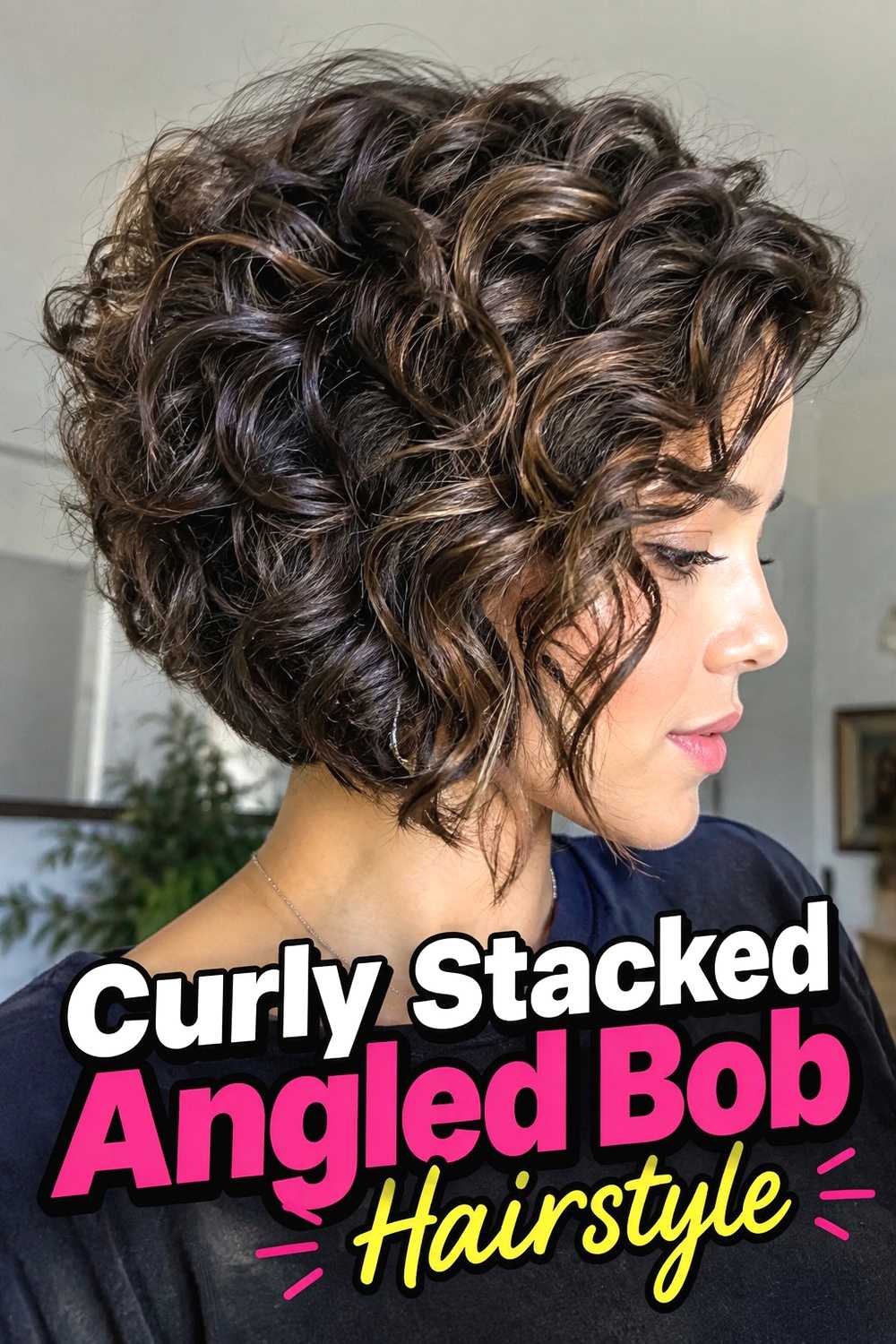
Natural curls give a stacked angled bob a rounded, dimensional interpretation with plenty of visible movement. The back can be graduated to remove excess bulk while preserving enough length for the curls to form naturally. Longer pieces toward the front maintain the angled silhouette, although curl shrinkage means those sections may need to be left longer than they appear when dry. Rather than forcing every curl into the same shape, a successful curly stacked bob allows variation while keeping the overall outline intentional. Styling with a curl-friendly leave-in or light hold product can help define individual sections. Drying with minimal disturbance, whether air-dried or diffused, usually preserves the shape better than repeatedly brushing through the curls.
Why It Works
Graduation can distribute curly volume through the back while longer front curls give the haircut direction and maintain its angled character.
Wear & Maintenance
Dry shaping is especially important because curl pattern and shrinkage affect where each layer ultimately sits in the finished style.
10. Choppy Stacked Bob Hairstyle
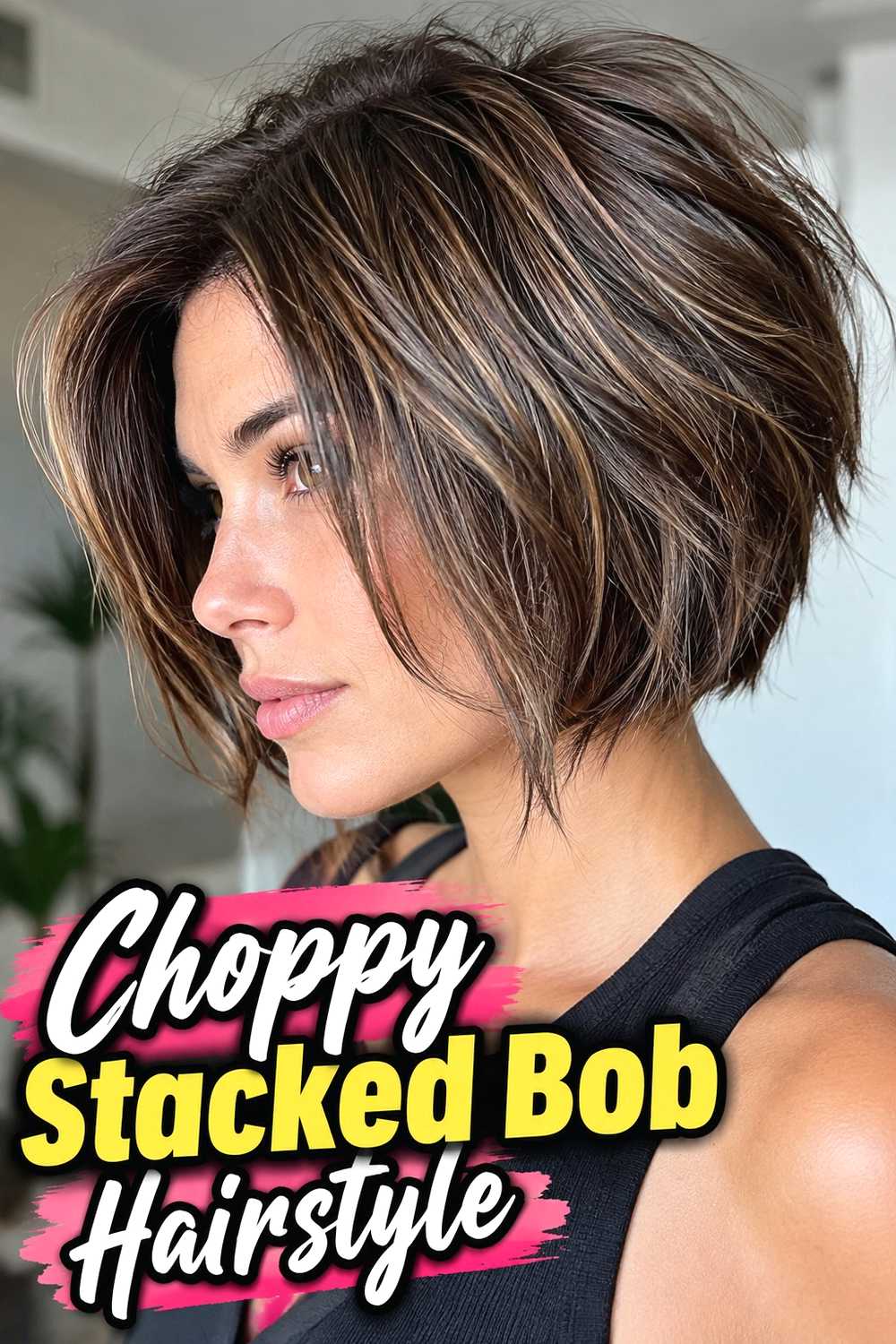
The choppy stacked bob introduces stronger separation through the layers for a deliberately piecey, modern finish. Unlike a smoothly blended graduated bob, this version lets selected ends remain visible, giving the haircut extra texture and movement. The nape stays shorter to establish the stacked structure, while irregular layers through the crown and sides prevent the shape from looking too round. It can work particularly well on straight or slightly wavy hair that benefits from added visual texture. Styling does not require a perfectly smooth blowout; a little root lift and selective definition through the ends can be enough. The key is controlled choppiness, since removing too much weight can make the longer front pieces look thin.
Styling Notes
Work a small amount of texture product into individual ends rather than coating the entire haircut. This preserves movement and avoids a sticky finish.
Best For
Ideal for those who prefer a casual, piecey bob over a highly polished or uniformly blended silhouette.
11. Rounded Stacked Bob Hairstyle
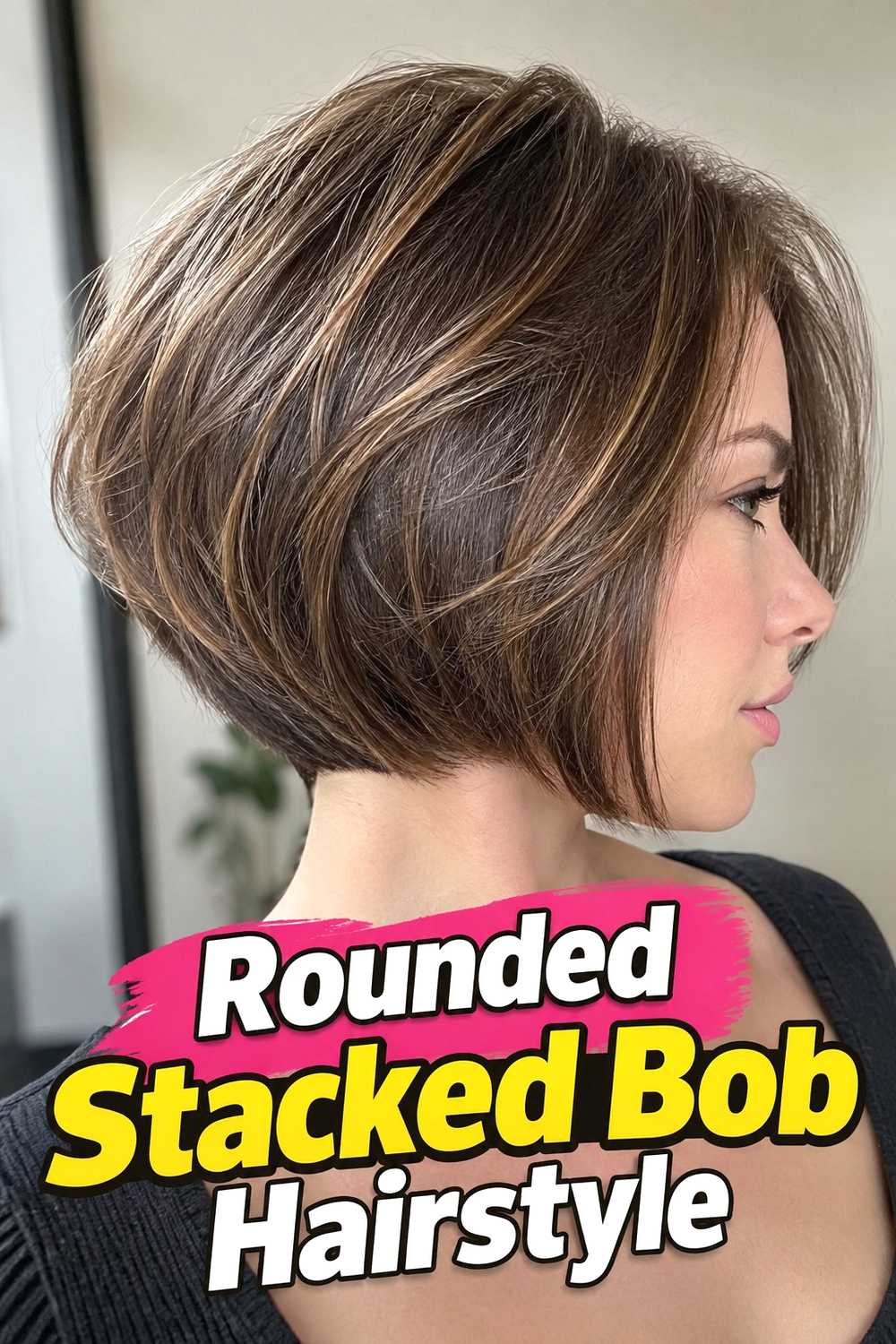
A rounded stacked bob emphasizes smooth curvature through the crown and back while keeping enough front length to preserve a gentle angle. The graduation is blended closely, producing a fuller, more continuous silhouette than choppier versions. This shape can make straight hair appear especially polished because the layers sit neatly over one another, while slight natural wave adds softness without disrupting the curve. Blow-drying with a round brush can encourage the ends to follow the head shape, but excessive inward curling can make the result look overly set. Keeping the front sections a little straighter provides a modern contrast to the rounded back. The haircut works best when the stack is balanced rather than excessively bulky.
Why It Works
The smooth back creates controlled volume without relying on dramatic teasing, while the slightly longer sides prevent the haircut from becoming completely circular.
Pro Tip
Ask for blended graduation instead of very short, disconnected crown layers if you want a softer and more fluid rounded profile.
12. Shaggy Stacked Angled Bob Hairstyle
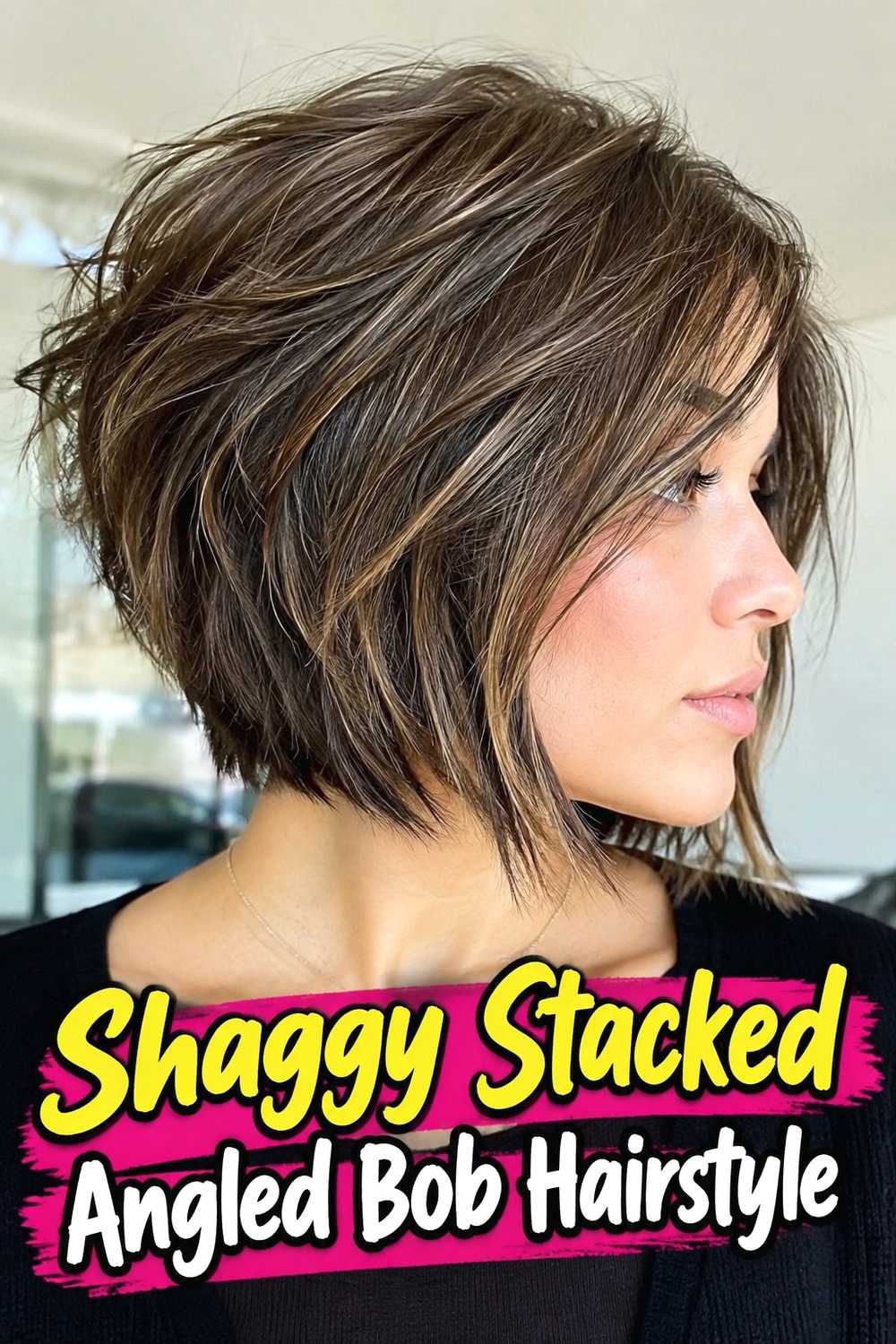
The shaggy stacked angled bob blends the lift of a graduated cut with the loose movement of a modern shag. Shorter crown layers create separation and texture, while longer, less-perfectly-polished sections around the face maintain the bob’s forward angle. The ends may be lightly razored or point-cut depending on hair type, creating a softer outline than a conventional stacked bob. Naturally wavy texture suits this approach particularly well because irregular bends enhance the layered effect without requiring precise styling. Straight hair can achieve a similar finish with quick bends and a light texturizing product. The shaggy look should still retain enough density at the perimeter so the bob reads as intentional rather than overly thinned.
Hair Type & Length
Wavy, medium-density hair naturally complements the relaxed layering, while thicker hair may benefit from carefully controlled internal weight removal.
Wear & Maintenance
This style tolerates some growth better than a highly precise bob, although the crown layers still need occasional reshaping to preserve their movement.
How to Choose the Right Look
Start by deciding how much contrast you want between the back and front. A classic or sleek stacked angled bob offers a clean, obvious diagonal, while a long-front version makes that difference even more dramatic. If you prefer softer lines, rounded, feathered, wavy, or shaggy variations reduce the severity of the angle without losing the stacked foundation.
Texture matters just as much as length. Straight hair shows precise graduation clearly, while waves and curls create more volume and can visually shorten the haircut. Fine hair generally benefits from keeping enough weight around the perimeter, whereas very thick hair may need internal layering to prevent the stacked area from becoming bulky.
Also consider daily styling. Sleek shapes may require more regular blow-drying and smoothing, while textured, choppy, curly, and shaggy versions can work with a more relaxed finish. Short, highly graduated backs usually require more frequent reshaping because new growth changes the silhouette quickly.
Final Thoughts
Stacked angled bob haircuts can range from crisp and architectural to soft, wavy, and deliberately tousled. Choose the amount of graduation, front length, texture, and layering according to your natural hair and preferred styling routine. Bringing a reference image that shows both the front and back can also make it easier to communicate the exact silhouette you want.
FAQs
1. What makes a stacked angled bob different from a regular bob?
A stacked angled bob uses graduated layers at the back to create lift and usually becomes longer toward the front. A regular bob may have a straighter perimeter with much less graduation.
2. Can a stacked angled bob work on thick hair?
Yes. Thick hair can wear the shape well, but careful internal layering or weight removal may be needed so the stacked back does not become overly bulky.
3. Is a stacked angled bob suitable for curly hair?
It can be. The cut should account for curl pattern and shrinkage, with enough length left in each section for curls to form naturally.
4. How often does a stacked bob need trimming?
A highly structured stacked bob generally benefits from regular reshaping because growth can soften the graduation and change the neckline. More textured versions may tolerate additional growth before the shape feels noticeably different.
5. Can I wear a stacked angled bob without styling it straight?
Absolutely. Stacked angled bobs can be worn with natural waves, defined curls, soft bends, feathered texture, or a tousled finish as long as the underlying haircut preserves the desired silhouette.
CTA
Save your favorite stacked angled bob hairstyle and share these ideas when you are ready to plan your next fresh, dimensional haircut.