18 Floating Layer Haircuts
Floating layers create airy movement without sacrificing length, making them a beautiful choice when you want dimension, softness, and a naturally flowing silhouette.
The idea behind floating layers is to introduce carefully placed shorter sections that seem to sit or “float” over longer lengths rather than creating an obviously stepped haircut. The effect can be subtle or dramatic depending on hair density, texture, and how much separation is added through the crown, face frame, and ends.
These cuts can work across long hair, lobs, waves, curls, and straighter textures, but the placement matters. Fine hair often benefits from fewer floating layers to preserve fullness, while thick hair can usually handle more internal movement. The most wearable versions balance visual lift with believable density, natural movement, and a shape that suits the hair’s normal styling routine.
Quick List
- Soft Floating Layer Hairstyle
- Long Floating Layer Hairstyle
- Face Framing Floating Layer Hairstyle
- Butterfly Inspired Floating Layer Hairstyle
- Floating Layer Lob Hairstyle
- Fine Hair Floating Layer Hairstyle
- Thick Hair Floating Layer Hairstyle
- Wavy Floating Layer Hairstyle
- Curly Floating Layer Hairstyle
- Sleek Straight Floating Layer Hairstyle
- Floating Layer Hairstyle With Curtain Bangs
- Floating Layer Hairstyle With Wispy Bangs
- Center Parted Floating Layer Hairstyle
- Side Parted Floating Layer Hairstyle
- Rounded Blowout Floating Layer Hairstyle
- Air Dried Floating Layer Hairstyle
- Soft U Shaped Floating Layer Hairstyle
- Voluminous Floating Layer Hairstyle
1. Soft Floating Layer Hairstyle
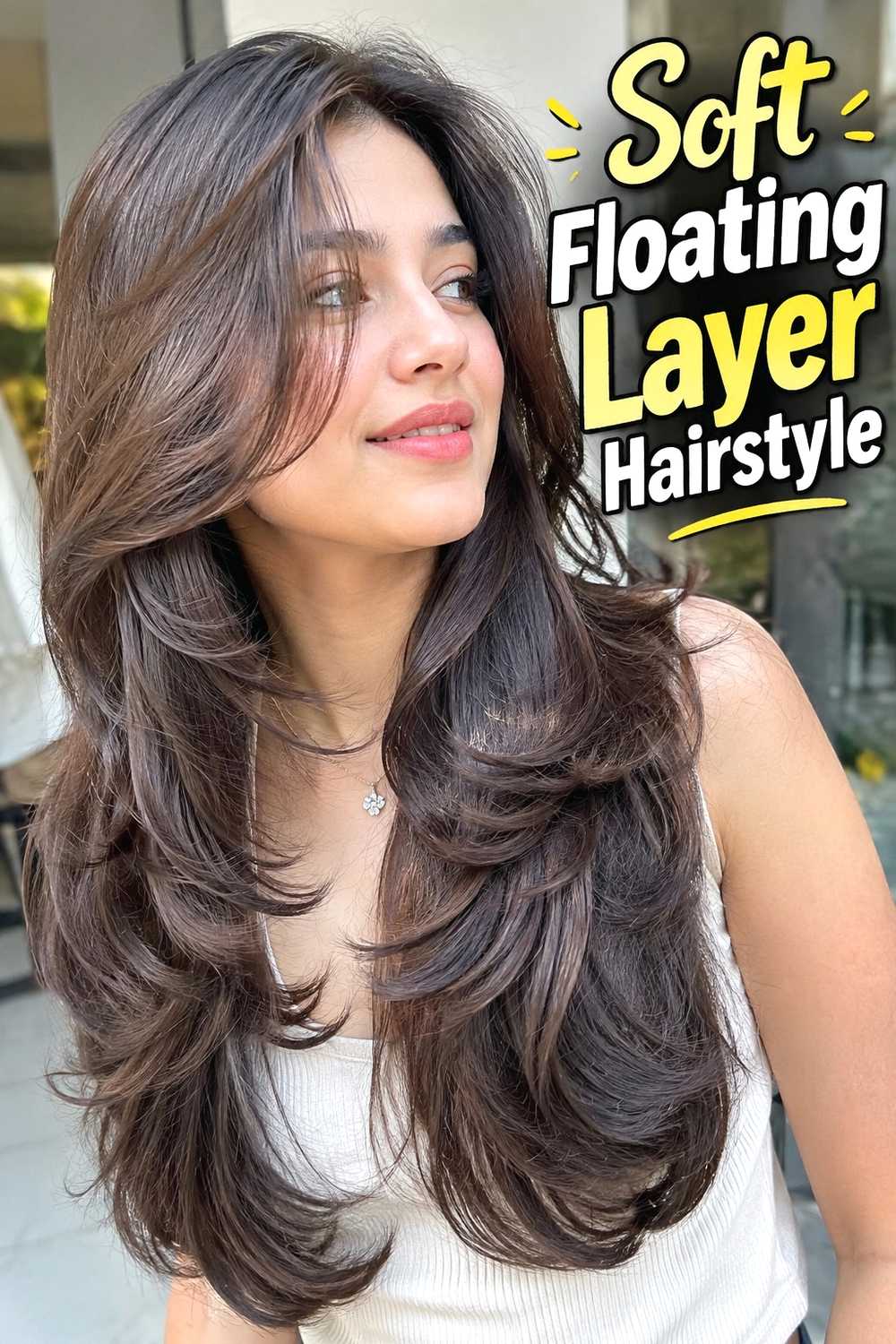
The soft floating layer haircut is a restrained version of the trend, using long, gently separated layers that add motion without dramatically changing the overall length. The shortest pieces can begin around the cheekbones or jaw, then blend gradually into longer sections through the shoulders and back. Because the transitions are subtle, the hair still looks full at the ends while gaining enough movement to avoid a heavy, solid shape. This approach is especially useful if you like layered hair but prefer a polished result rather than obvious choppiness. Styled with a smooth blowout or broad bends, the layers lift away from one another just enough to create the signature floating effect.
Best For
This variation suits medium-density straight or softly wavy hair particularly well, especially when you want visible movement without losing a substantial perimeter.
Styling Notes
Use a large round brush and direct the layers in slightly different directions so they separate softly instead of stacking into one uniform curve.
2. Long Floating Layer Hairstyle
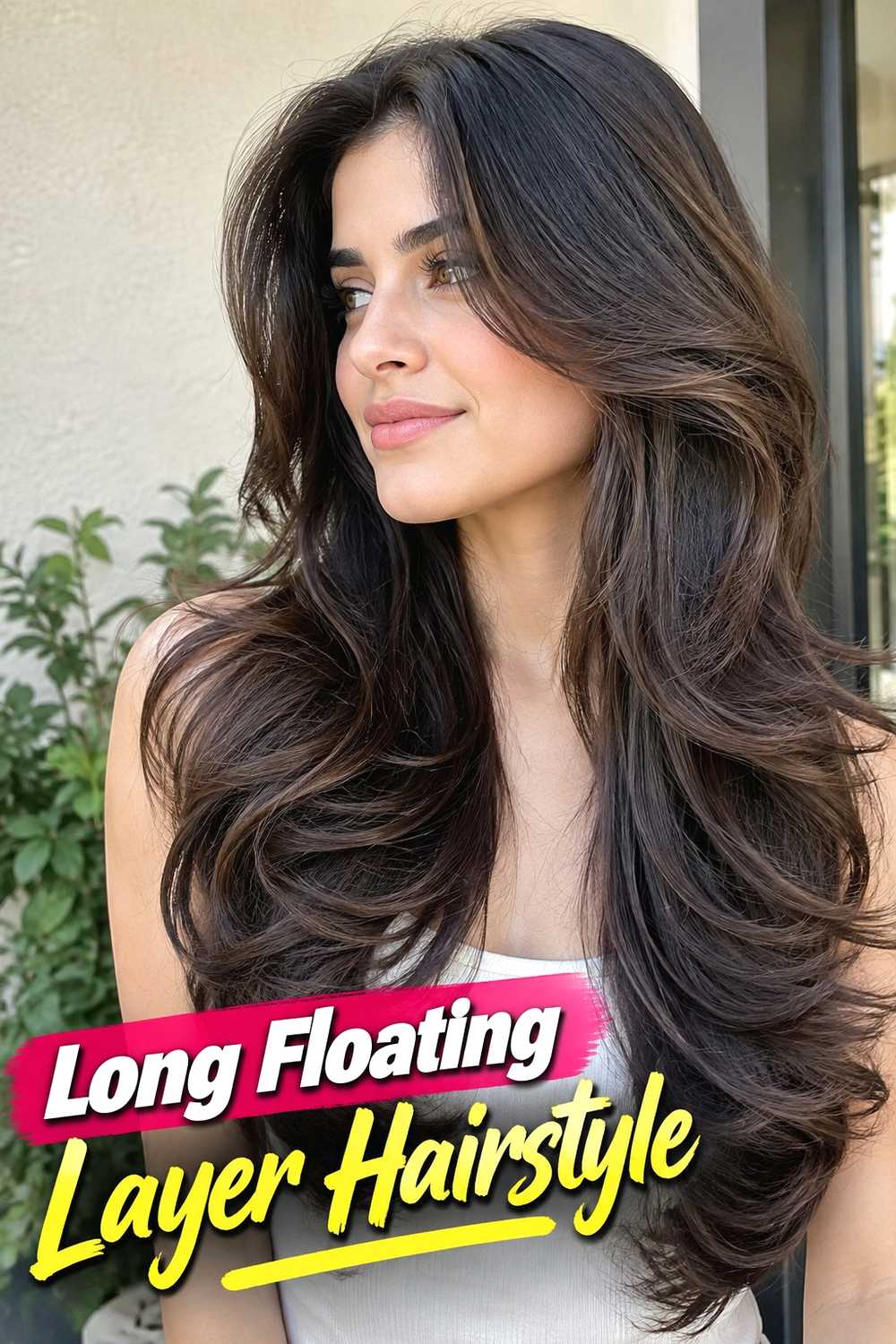
Long hair can carry floating layers beautifully because there is plenty of length available for creating separation without sacrificing versatility. The shortest layers may start around the shoulders or upper chest, leaving the majority of the hair long and flowing. Rather than cutting many evenly spaced tiers, the floating technique focuses on a few strategically placed sections that create lift over the heavier base. This gives long hair a lighter silhouette while preserving the dramatic length through the back. The style works especially well with a loose blowout or soft waves because movement reveals the different layer lengths. When worn straight, the transitions remain subtle enough to keep the finish sleek and cohesive.
Hair Type & Length
Medium to long hair with moderate or high density can support this shape especially well because there is enough weight to balance the floating upper layers.
Wear & Maintenance
Longer layers generally grow out gracefully, making this a practical option if you prefer fewer major reshaping appointments.
3. Face Framing Floating Layer Hairstyle
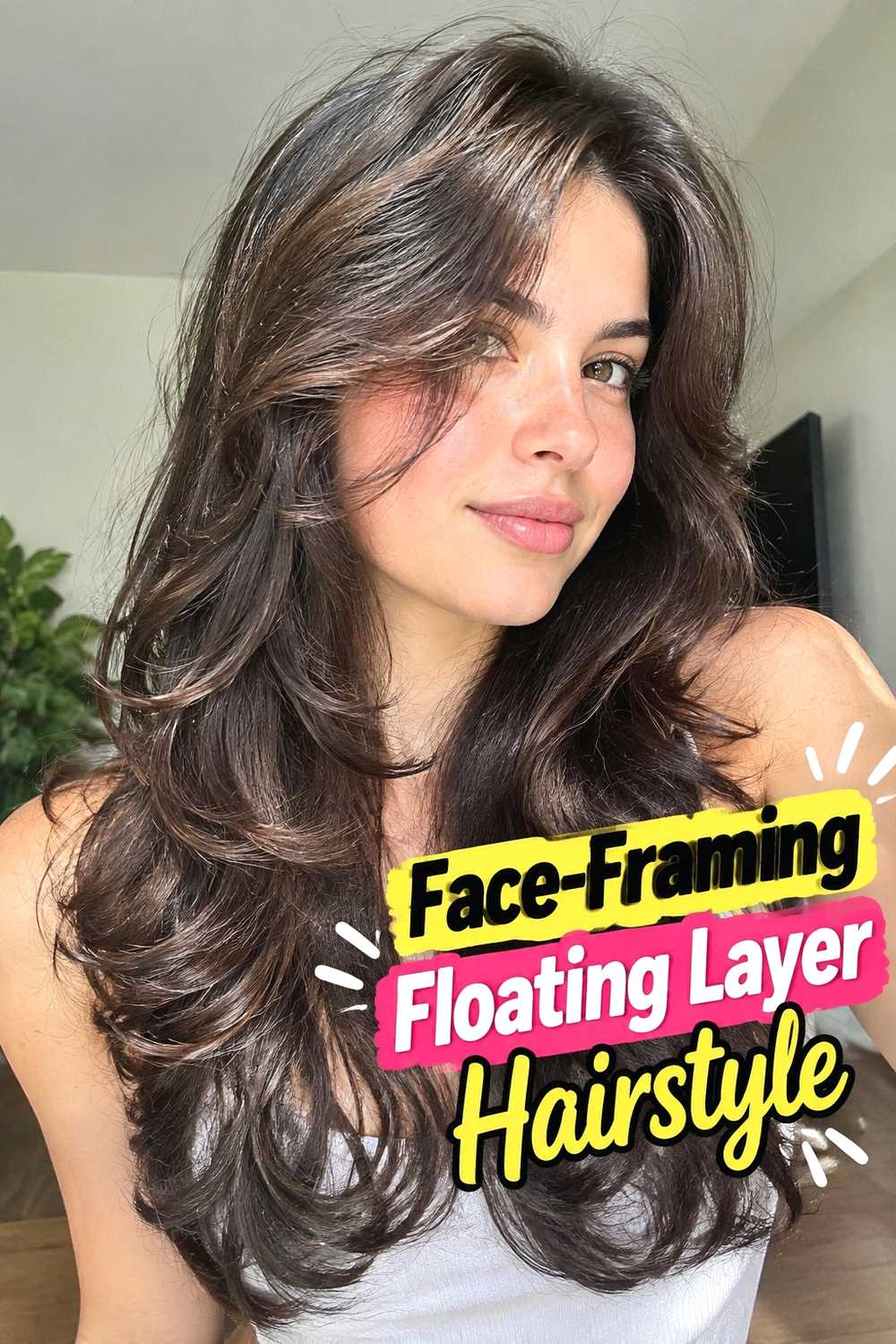
Face-framing floating layers concentrate most of the visible movement around the front while allowing the back to remain relatively long and full. Shorter pieces can begin near the cheekbones before flowing into jaw-, shoulder-, and chest-level sections. Each layer sits lightly over the next, creating an airy cascade rather than a blunt staircase effect. This haircut can bring attention to natural movement around the face without requiring bangs or removing excessive weight from the perimeter. It works with smooth blowouts, natural waves, and soft curls, depending on texture. Keeping the transitions long and connected is important because overly short pieces can shift the look away from floating layers and toward a more traditional heavily layered cut.
Styling Notes
Direct the front sections away from the face with a round brush, then loosen the shape with your fingers once the hair cools.
Why It Works
The shorter front pieces add movement where it is most noticeable while the longer back sections preserve overall length and fullness.
4. Butterfly Inspired Floating Layer Hairstyle
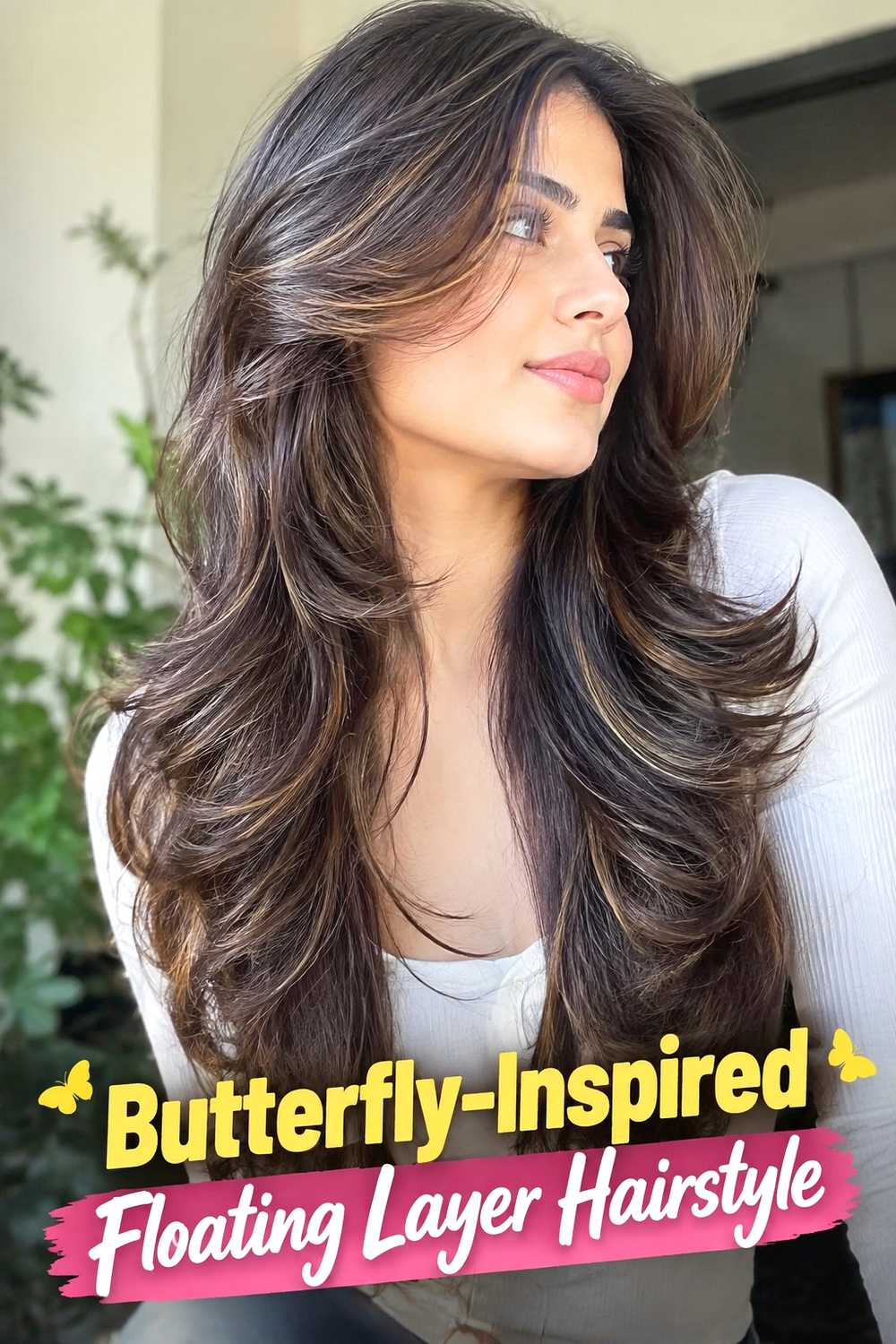
Butterfly-inspired floating layers use more pronounced face framing and upper-level movement while still maintaining long hair underneath. The shorter sections create a winged effect around the cheekbones and shoulders, while longer lengths remain visible beneath them. Compared with a traditional butterfly cut, this version can be slightly more restrained, using fewer layers so the shape still feels airy rather than heavily feathered. A voluminous blowout makes the separation particularly clear because the upper sections lift outward before settling over the longer base. The haircut is ideal for someone who wants visible movement and bounce without committing to a short overall length. The effect should remain soft, connected, and fluid from front to back.
Best For
Medium to thick hair can support the extra layering especially well because the remaining length keeps the haircut from appearing sparse through the ends.
Pro Tip
Ask for longer transitional pieces between the shortest and longest layers to avoid an overly disconnected appearance.
5. Floating Layer Lob Hairstyle
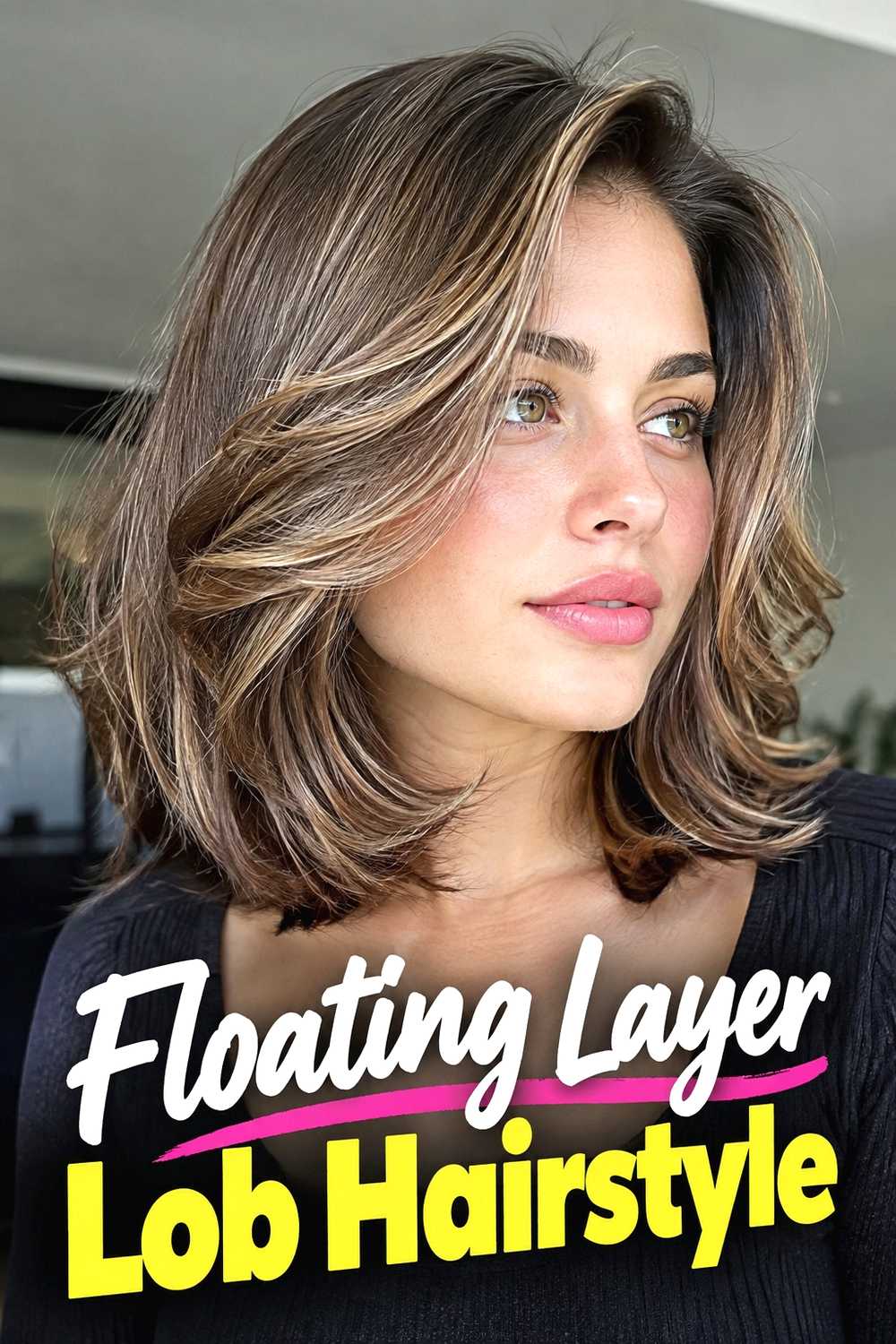
A lob can take on a lighter, more dynamic shape when floating layers are added through the upper lengths and around the face. The main perimeter can sit near the collarbone or shoulders, while shorter pieces hover above it to create movement without turning the cut into a shag. This approach keeps the compact versatility of a lob but reduces the visual heaviness that sometimes develops when everything is cut to one length. Soft bends through the layers make the separation more obvious, although a smooth finish can also highlight the clean structure. The result is particularly wearable when the shortest sections remain long enough to tuck back or blend easily into the main length.
Hair Type & Length
Straight, wavy, and moderately textured hair can all suit this shape, especially at shoulder to collarbone length.
Styling Notes
Use broad bends rather than tight curls so the floating layers remain visible while the lob keeps its modern, relaxed outline.
6. Fine Hair Floating Layer Hairstyle
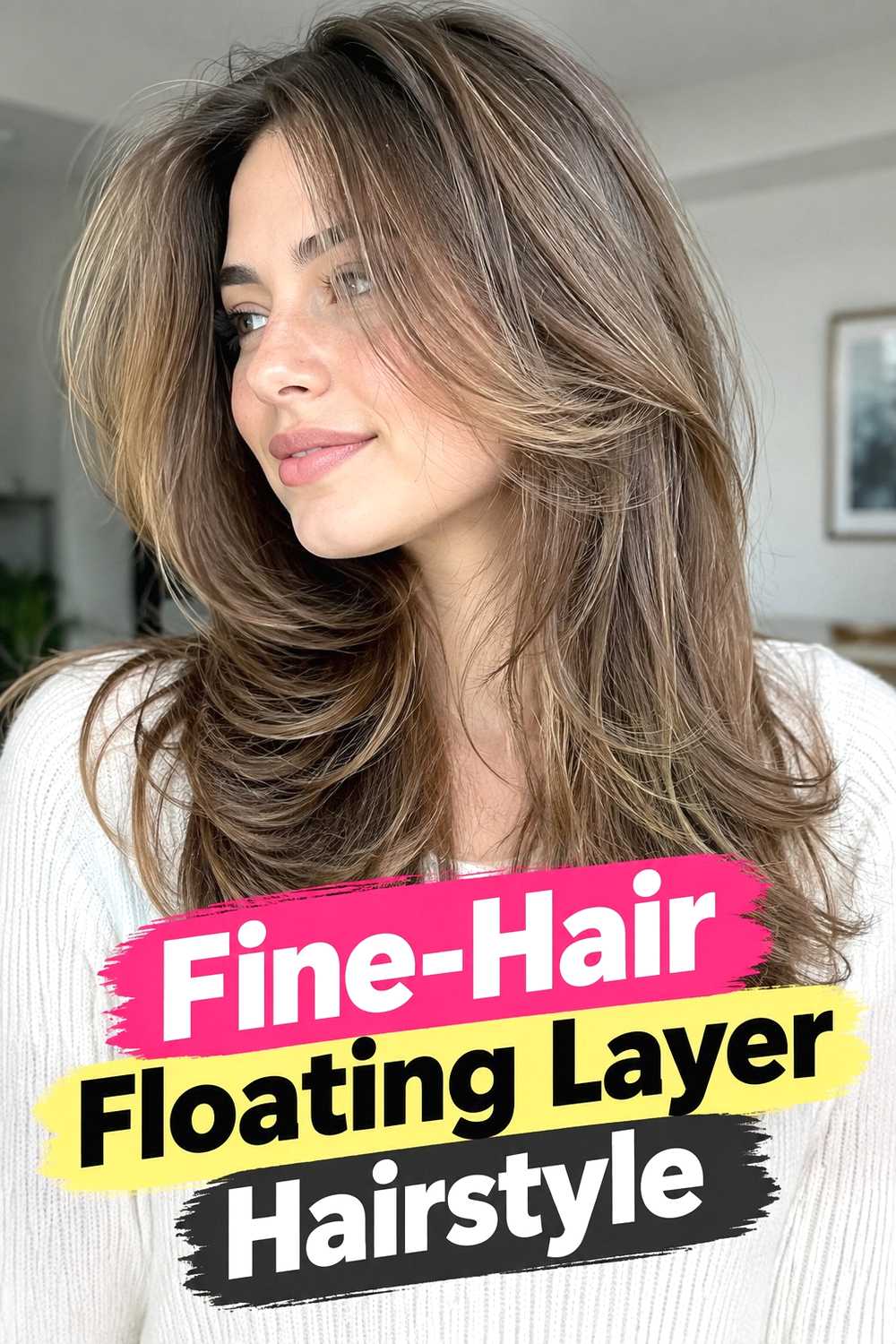
Floating layers can work on fine hair when the layering is deliberately minimal. Instead of cutting numerous short pieces, this version keeps a strong perimeter and uses only a few lighter sections around the front or upper lengths. That gives the hair some motion without removing the density that helps the ends look full. A subtle face frame can create the illusion of more shape, while gentle root lift keeps the top from lying too flat. The finished result should feel airy but not wispy. Smooth blowouts and soft bends both work well, provided the styling remains light. Heavy products or excessive texturizing can make fine hair collapse, so restraint is central to this version.
Why It Works
A controlled number of layers creates movement while allowing most of the hair to remain concentrated through the perimeter.
Pro Tip
Choose lightweight mousse or volumizing spray instead of rich creams that may weigh down finer strands.
7. Thick Hair Floating Layer Hairstyle
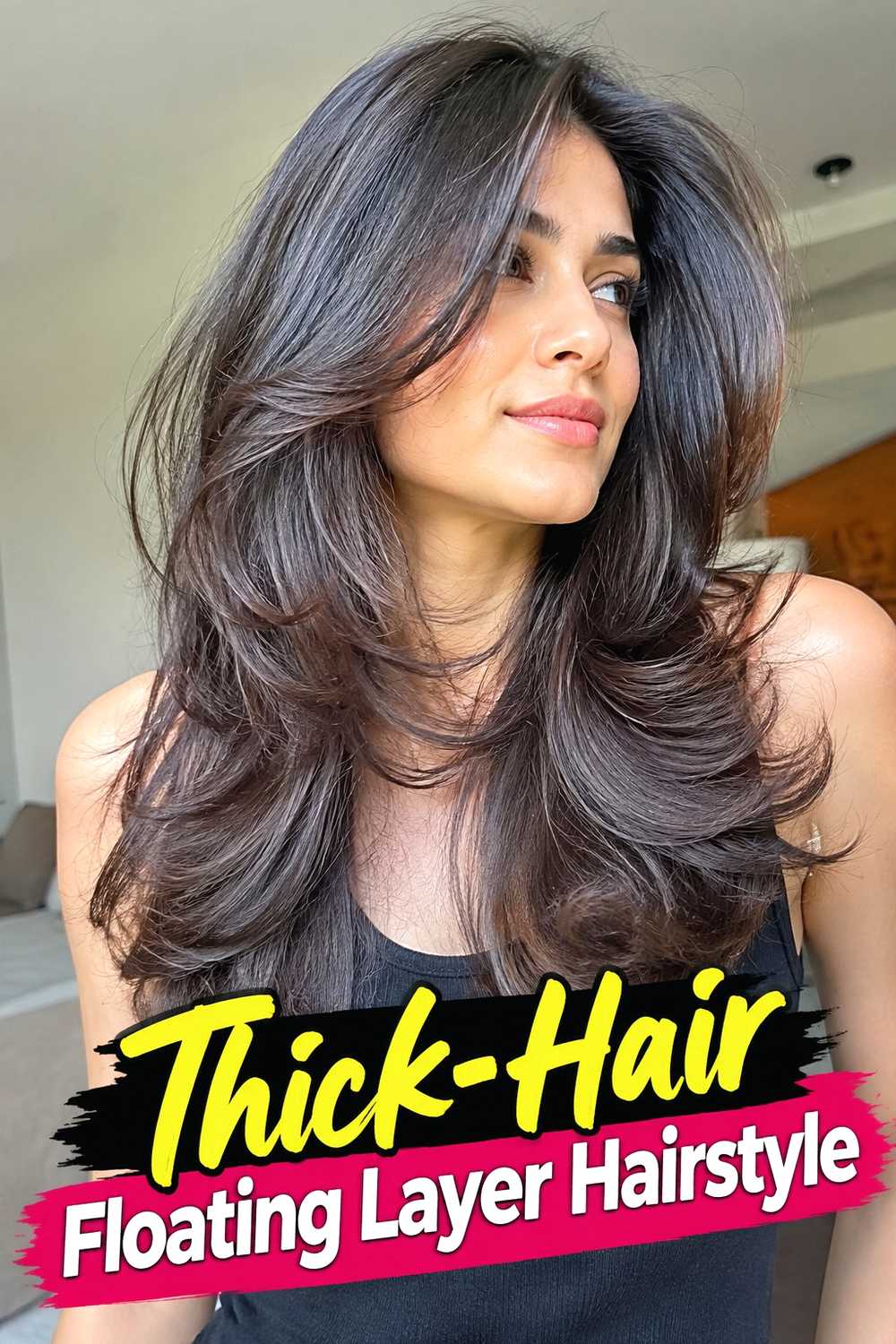
Thick hair can benefit from floating layers because the technique creates movement inside a dense shape without making the surface look excessively choppy. Longer internal layers can release weight beneath the top sections, allowing the outer hair to sit more freely while still appearing full. Around the face, graduated pieces can reduce bulk and create a softer transition into the longer lengths. This version works especially well when the haircut feels heavy through the mid-lengths or ends but you do not want aggressive thinning. The goal is controlled separation rather than simply removing as much hair as possible. With a polished blowout or natural texture, the layers should move independently while preserving the richness associated with thicker hair.
Hair Type & Length
Dense straight, wavy, or loosely curly hair can suit this approach, particularly when weight tends to collect through the sides and lower lengths.
Wear & Maintenance
Internal layering should be deliberate. Over-thinning can create short pieces and unwanted expansion as the haircut grows.
8. Wavy Floating Layer Hairstyle
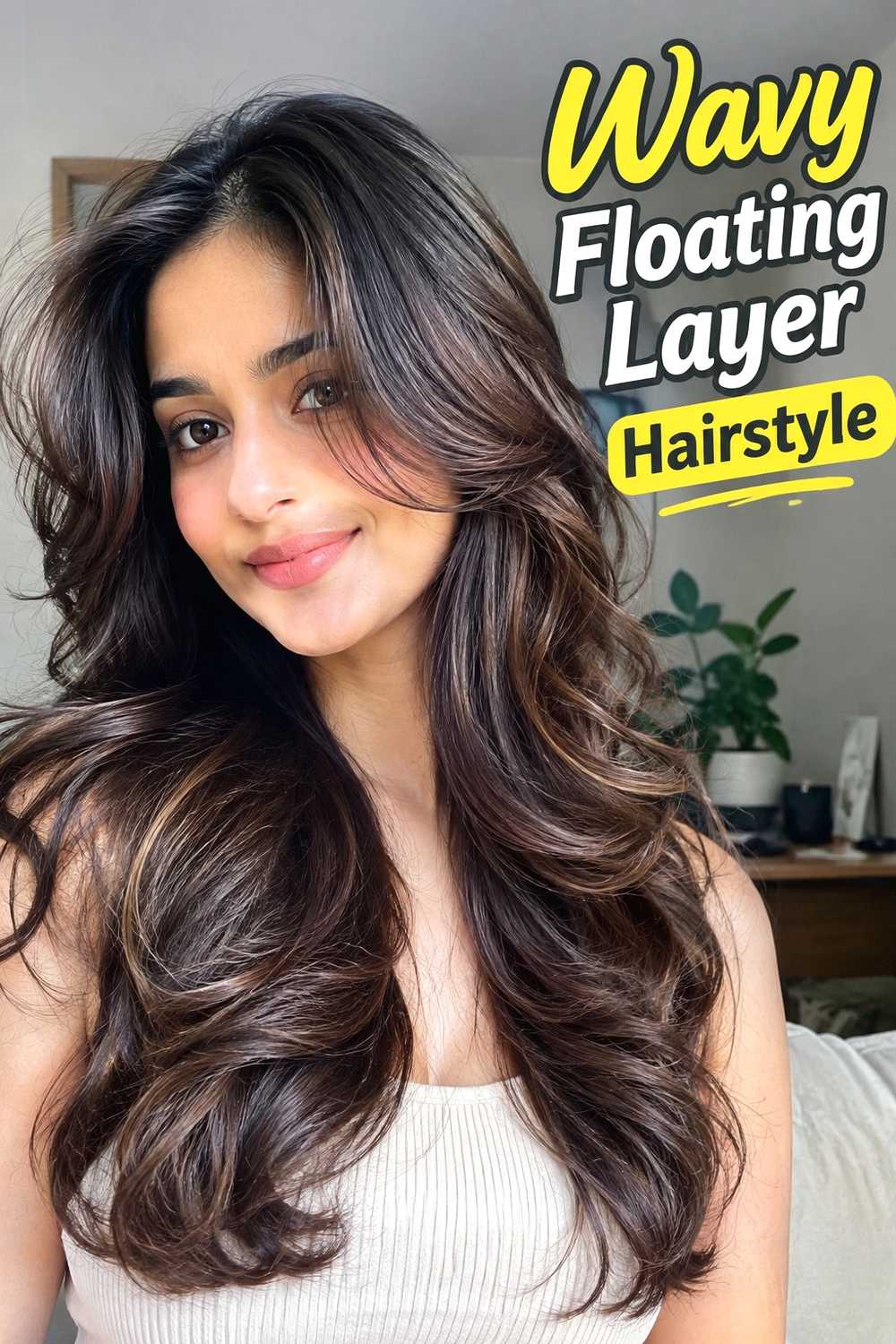
Natural waves make floating layers especially visible because the bends help individual sections separate from one another. Long layers can be placed through the sides and front so the hair forms an airy, dimensional silhouette rather than one heavy wave pattern. The cut works best when it respects the direction and strength of the natural texture, allowing some sections to form stronger bends while others remain softer. A few face-framing pieces can introduce extra movement near the cheekbones and jaw without requiring a full fringe. This variation can often be air-dried or lightly diffused, making it appealing for anyone who prefers a relaxed finish that does not need every strand to be perfectly controlled.
Styling Notes
Use a lightweight wave product and scrunch gently. Avoid creating identical curls, since natural variation helps the floating effect look believable.
Best For
Medium-density wavy hair is particularly suited to this shape because the layers can separate without making the ends feel overly thin.
9. Curly Floating Layer Hairstyle
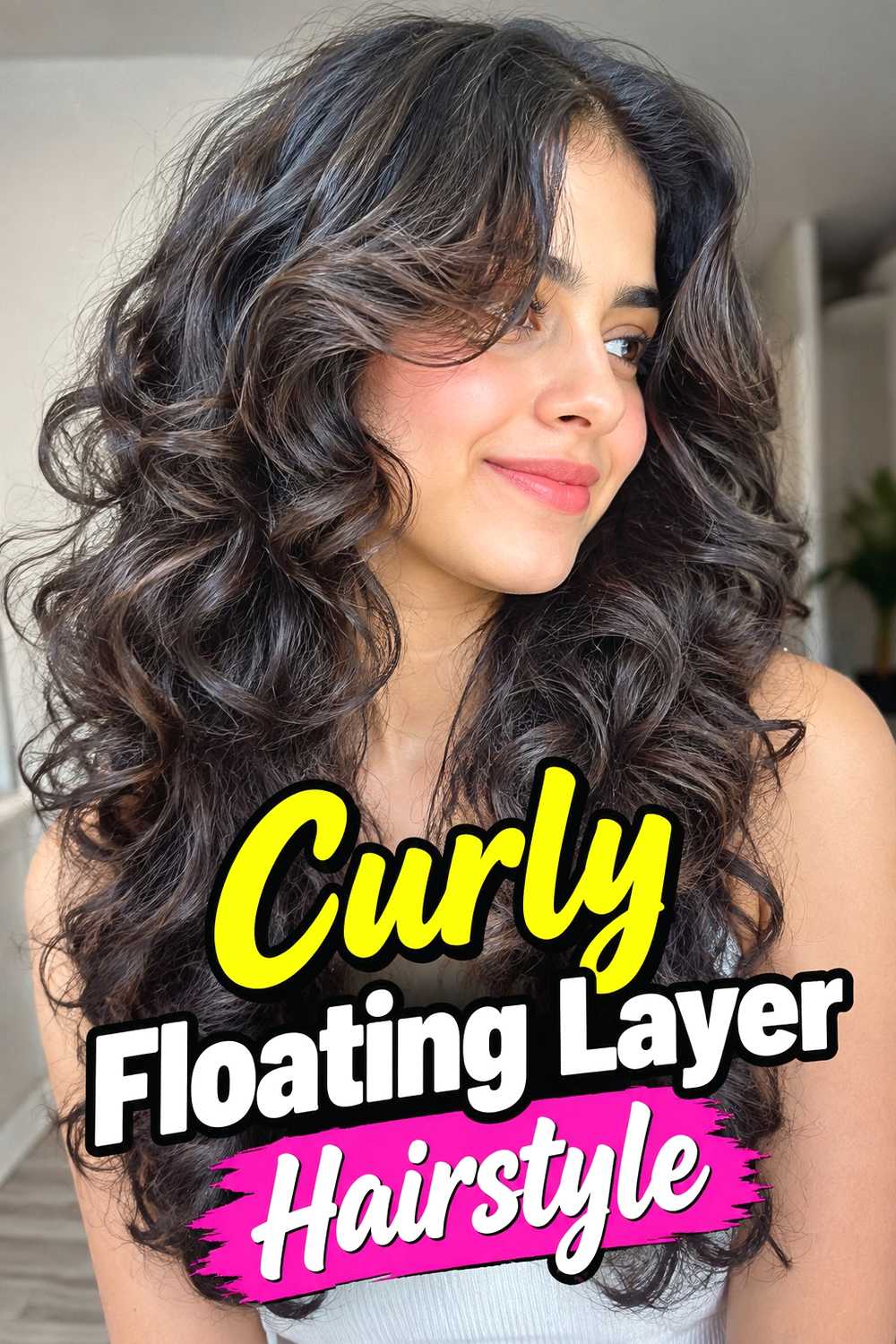
Curly floating layers create shape by allowing shorter curls to sit above longer ones while maintaining enough connection for a cohesive silhouette. The exact placement depends on curl pattern and shrinkage, because a layer that appears long when wet may spring much higher once dry. Done carefully, the haircut can create lift around the crown, face, or upper sides while preserving longer curls underneath. This helps distribute volume instead of letting all the weight settle at the bottom. The finished style should show natural differences in curl size and direction rather than perfectly repeated ringlets. Planning the cut around dry behavior is particularly important so the layers float naturally without creating unexpected gaps.
Hair Type & Length
Wavy-curly, spiral, and mixed curl patterns can all wear floating layers when shrinkage and density are considered during cutting.
Pro Tip
Evaluate the shortest layers in their dry state before removing additional length, especially around the crown and face.
10. Sleek Straight Floating Layer Hairstyle
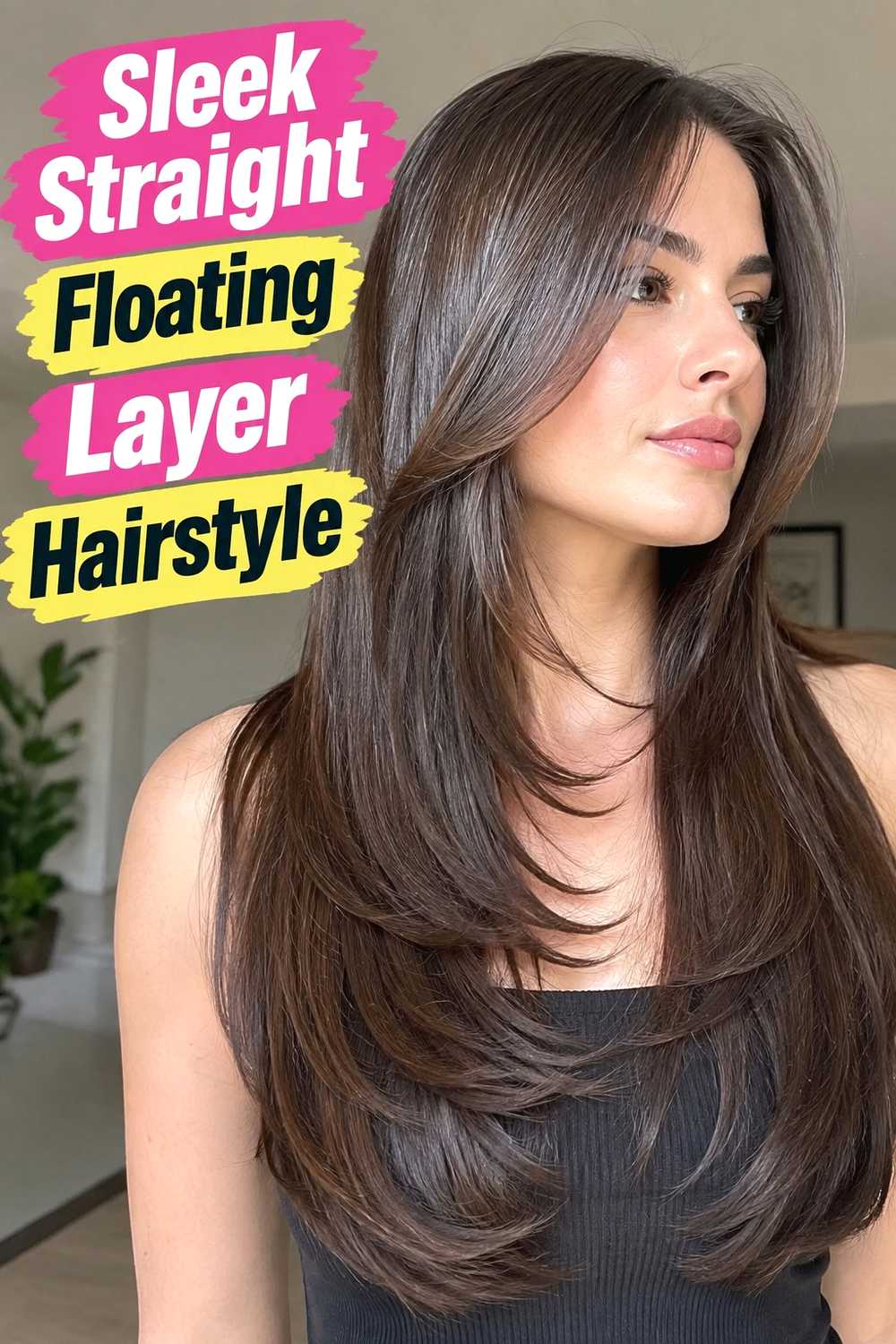
Floating layers can still look striking on sleek straight hair, where clean movement replaces visible waves or curls. The layers should be long and precisely blended so they create subtle separation rather than obvious steps. Face-framing sections may begin near the jaw or shoulders, while longer layers through the back preserve a smooth, flowing perimeter. Because straight hair shows cutting lines clearly, the transitions need to remain refined and connected. A polished blow-dry or flat-ironed finish makes the layered structure easy to see when the hair moves, especially around the ends. This variation suits anyone who likes sleek hair but wants more dimension and swing than a completely one-length cut can provide.
Styling Notes
Keep the roots smooth and create only a slight curve through the ends. Too much curl can hide the clean, floating structure of the layers.
Wear & Maintenance
Straight finishes reveal uneven ends more clearly, so periodic perimeter trims help maintain the polished effect.
11. Floating Layer Hairstyle With Curtain Bangs
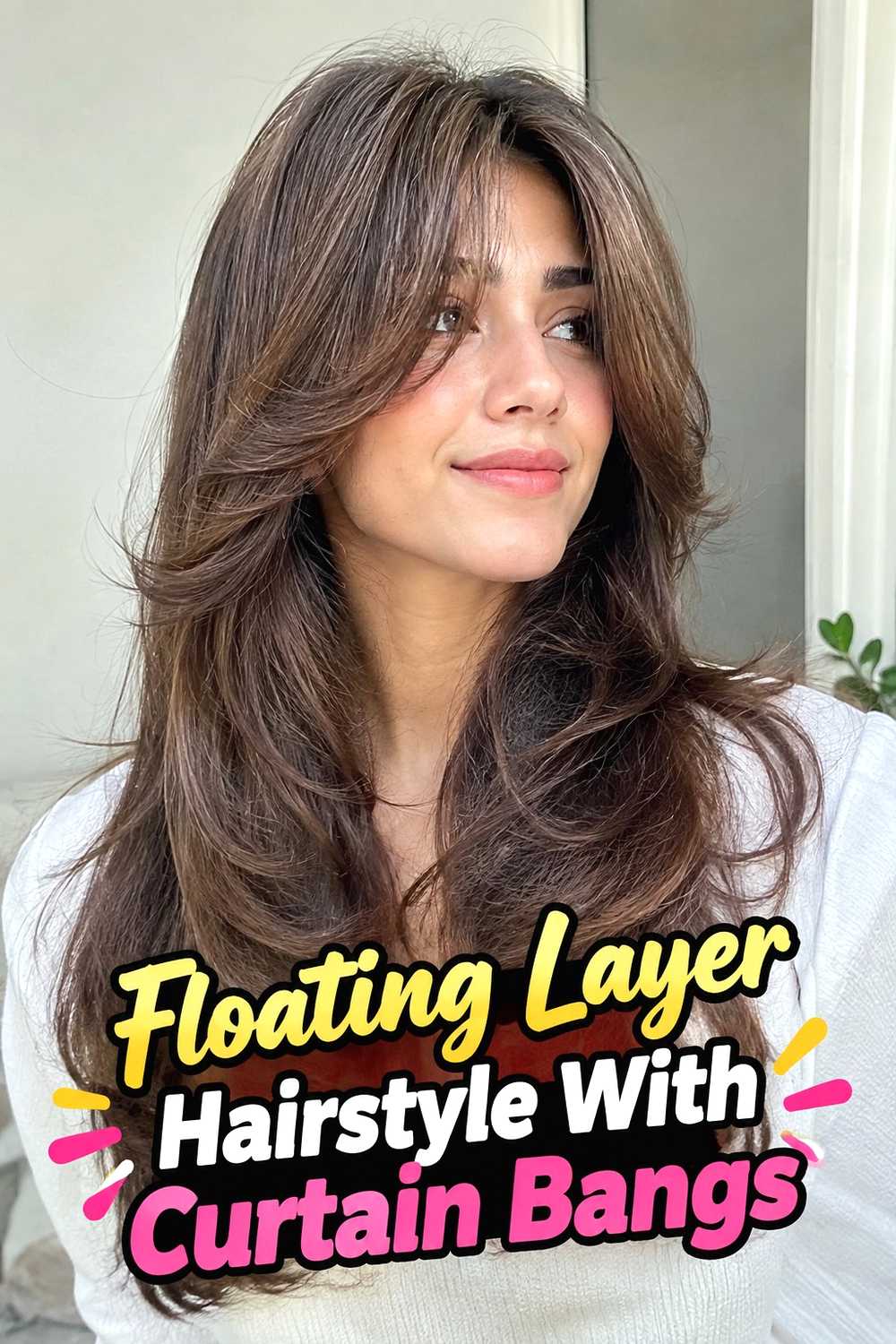
Curtain bangs give floating layers a natural starting point at the front of the haircut. The shortest pieces can open around the center of the forehead before gradually extending toward the cheekbones, jaw, and shoulders. From there, longer floating layers continue through the rest of the hair, creating a cascading effect that feels cohesive instead of disconnected. A blowout emphasizes the movement beautifully, but the haircut can also work with softer natural texture. The key is maintaining enough length through the outer bang sections that they blend smoothly into the first floating layer. This version provides plenty of visible face framing while keeping the rest of the haircut long and versatile.
Styling Notes
Dry the curtain bangs away from the center and use a larger brush on the longer layers so the transition remains broad and fluid.
Best For
This style suits anyone who enjoys prominent face framing and does not mind giving the front sections a little extra styling attention.
12. Floating Layer Hairstyle With Wispy Bangs
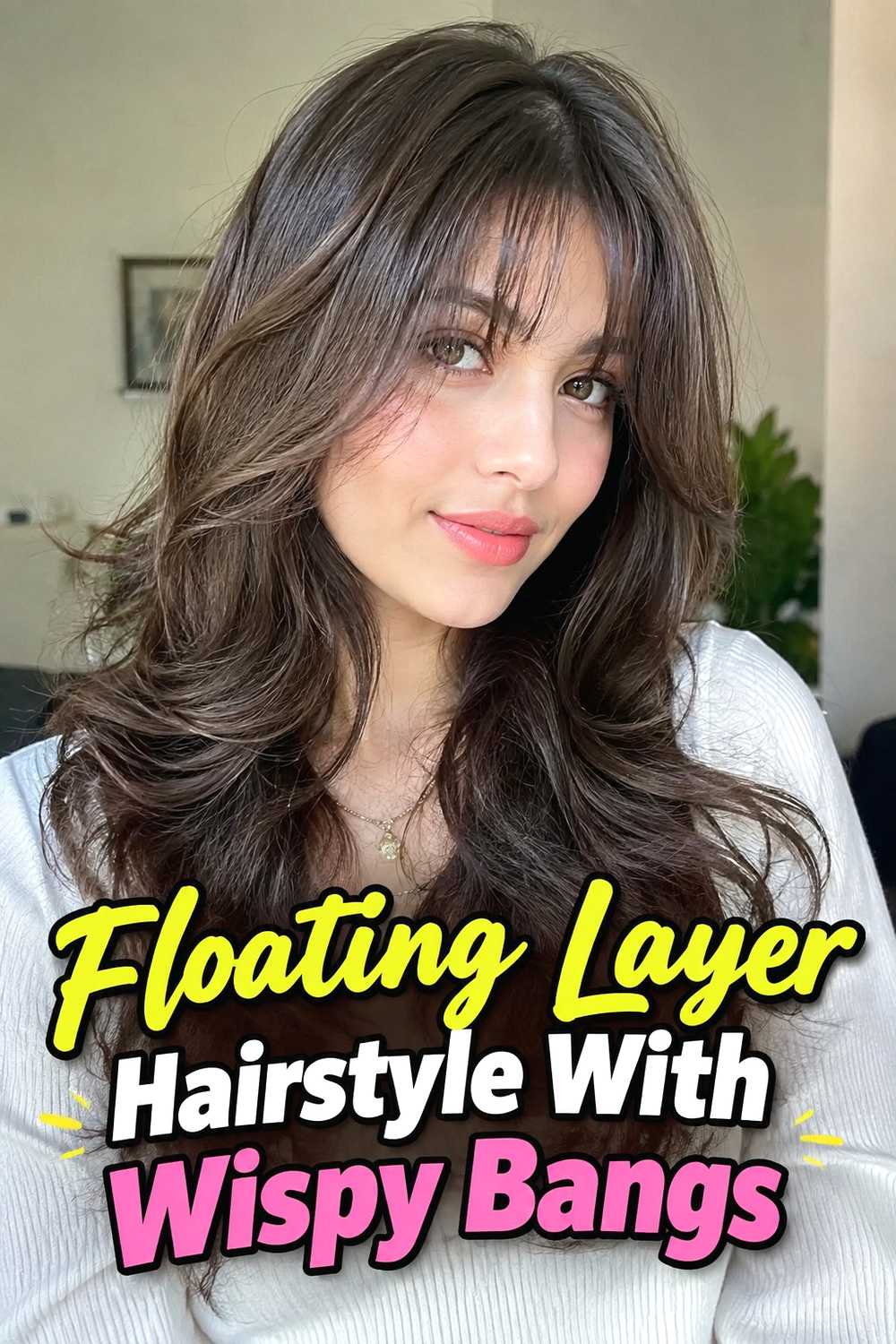
Wispy bangs create a lighter contrast with floating layers by adding delicate texture across the forehead while the rest of the haircut remains longer and more fluid. The fringe can be narrow and airy, with longer temple pieces connecting it to face-framing layers below. Through the main hair, floating sections add lift and movement without competing with the softness of the bangs. This combination can work particularly well on straight or softly wavy hair because the fringe remains visibly light while the longer lengths retain body. The overall effect is detailed but not heavy. Keeping the bangs separate and mobile is important, since too much styling product can turn the wispy texture into a denser-looking fringe.
Pro Tip
Start with a smaller bang section and preserve longer pieces near the temples so the fringe blends naturally into the surrounding layers.
Wear & Maintenance
Wispy bangs may need occasional root refreshing, but their lighter density can make grow-out softer than a very blunt fringe.
13. Center Parted Floating Layer Hairstyle
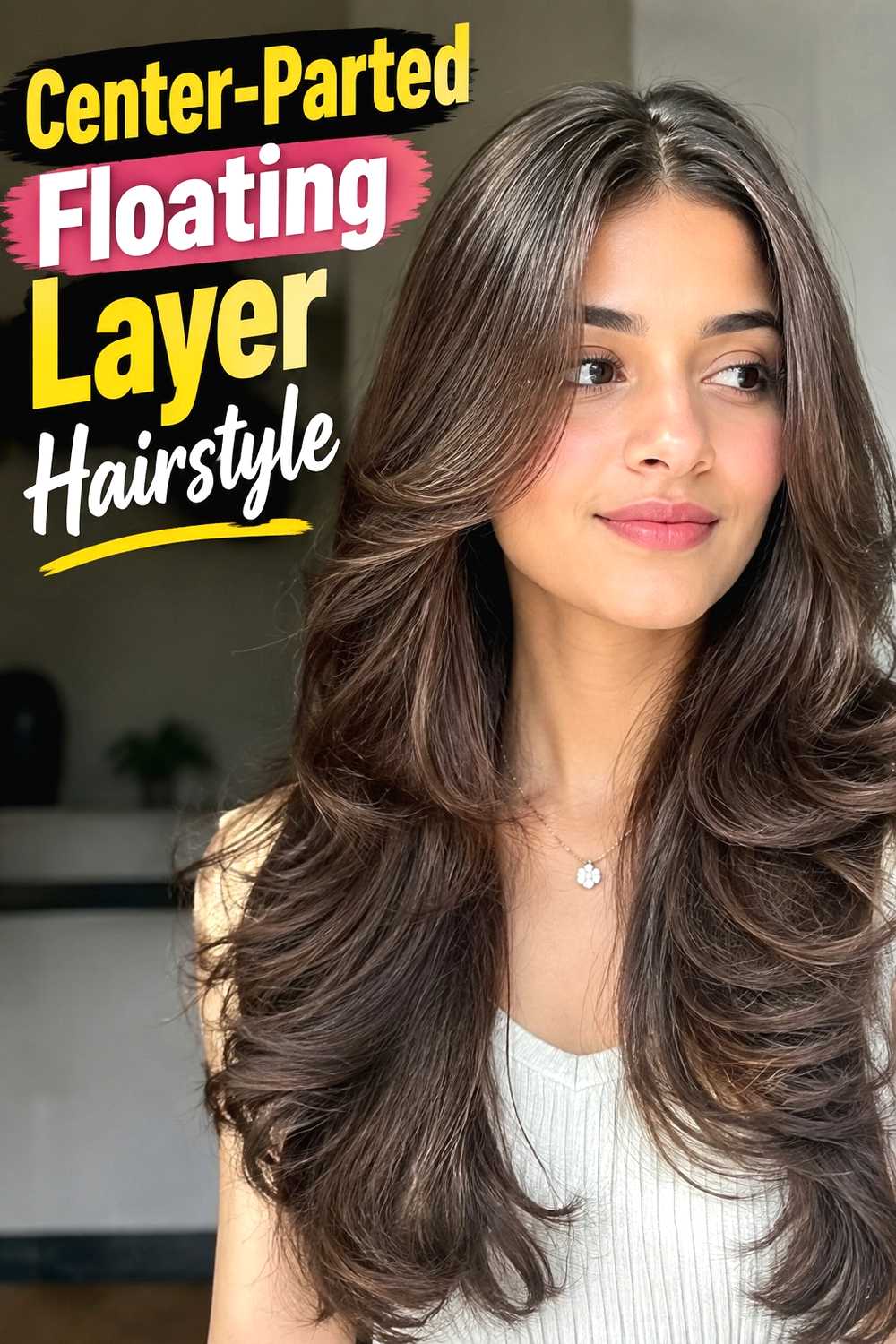
A center part gives floating layers a balanced structure, allowing the face-framing pieces to fall evenly on both sides. The shortest front layers can begin around the cheekbones or jaw, then blend into longer shoulder- and chest-level sections. Because the distribution is symmetrical, the haircut looks particularly polished with a smooth blowout or broad waves. The center part also makes it easy to see how the layers float over one another through the front and sides. This style can feel modern and refined without becoming overly dramatic, especially when the back retains substantial length. Keeping the crown relatively controlled prevents the shape from becoming too wide and lets the layered movement remain the main focus.
Styling Notes
Dry both front sections away from the center in matching directions, but loosen the finished shape so the result does not look overly rigid.
Best For
This version works especially well when you prefer symmetrical styling and want the face-framing layers to remain equally visible on both sides.
14. Side Parted Floating Layer Hairstyle
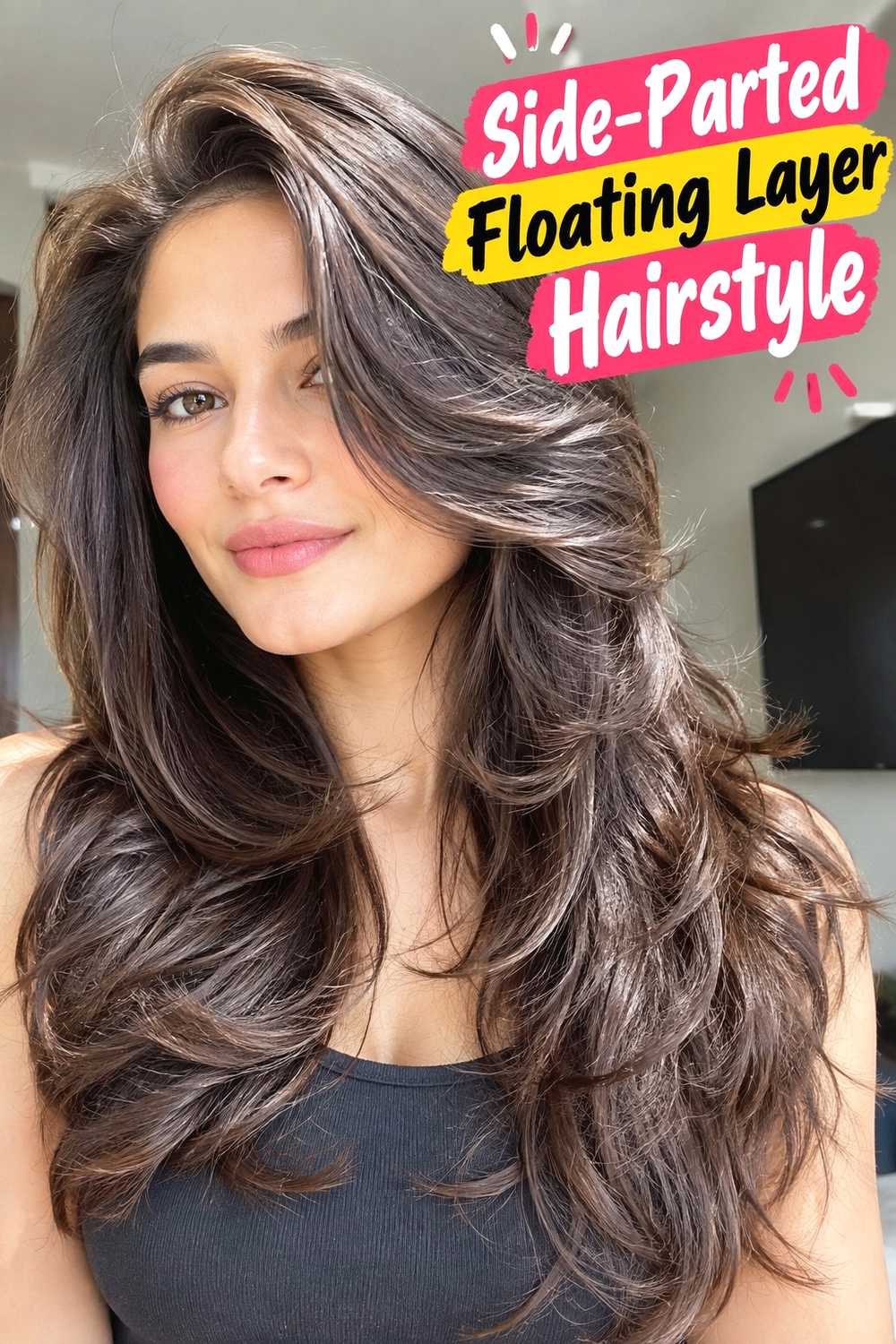
A side part creates an asymmetrical take on floating layers, adding extra lift to one side while letting the opposite side sit closer to the face. The layers can remain relatively long, with a sweeping front section that blends into cheekbone-, jaw-, and shoulder-level pieces. This directional movement makes the haircut feel dynamic even when styled fairly smooth. The fuller side can be enhanced with root lift, while the shorter side may be tucked behind the ear to make the layered shape more obvious. Because most of the length remains intact, the cut still offers plenty of styling flexibility. It is a useful variation if you want noticeable movement without adding bangs or shorter crown layers.
Why It Works
The shifted part changes how the layers fall, creating instant volume and movement without requiring a dramatically different haircut.
Styling Notes
Set the side part while the roots are damp and direct the front section across the forehead or away from the face depending on the desired finish.
15. Rounded Blowout Floating Layer Hairstyle
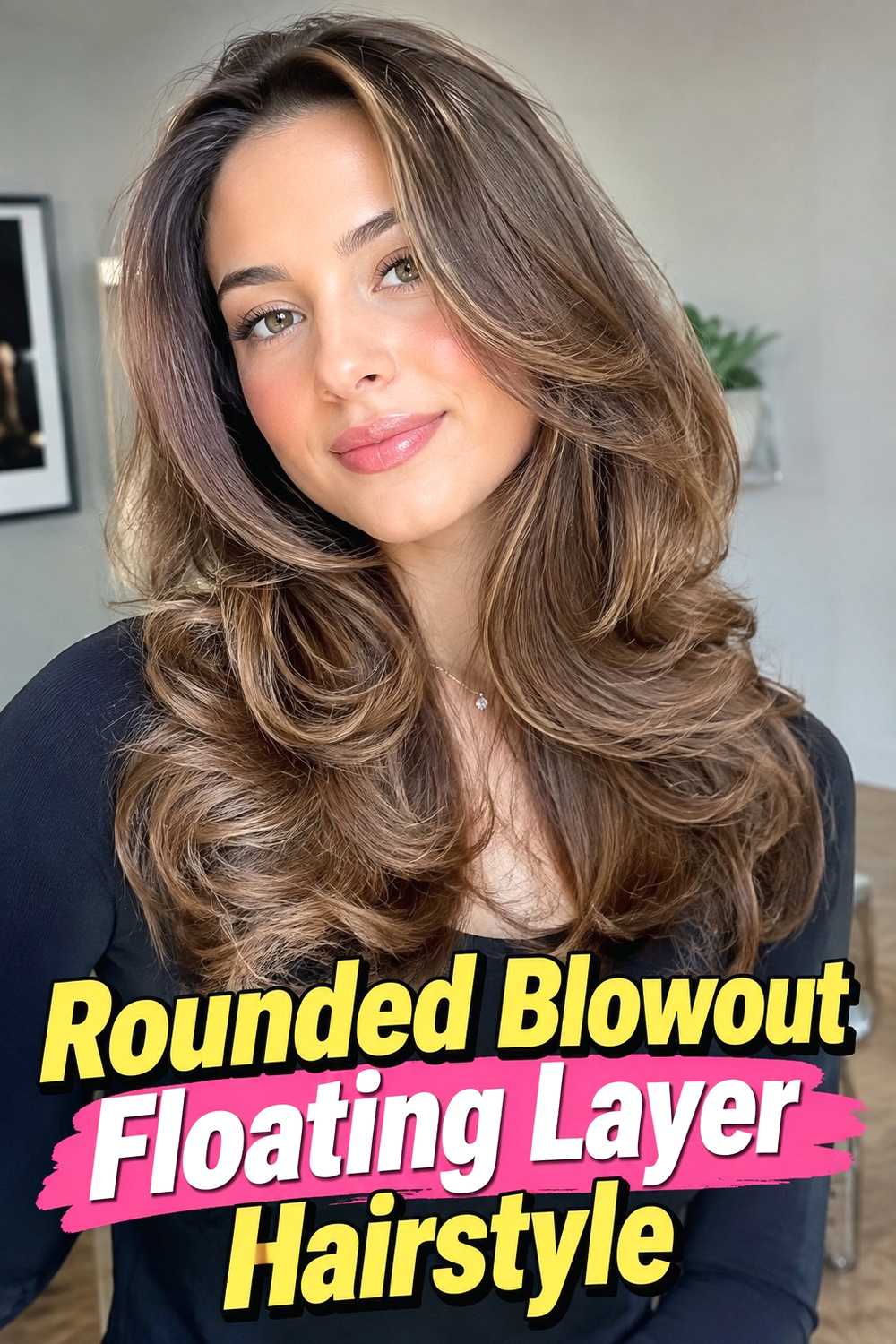
A rounded blowout is one of the clearest ways to showcase floating layers because each section can lift, curve, and settle over the next. The shortest layers may frame the face or begin near the shoulders, while the longer lengths create a soft backdrop underneath. Using a large round brush gives the hair broad movement rather than tight curls, allowing the layered structure to stay visible. The crown can have moderate lift, but the emphasis remains on flowing movement through the mid-lengths and ends. This version feels polished and salon-inspired without needing extreme volume. Once loosened, the layers should retain enough separation to look airy and touchable rather than stiff or heavily set.
Styling Notes
Let each section cool after round-brushing, then gently separate the layers with your fingers instead of brushing them into one uniform shape.
Pro Tip
Use larger sections through the back and smaller sections near the face to emphasize the floating front layers.
16. Air Dried Floating Layer Hairstyle
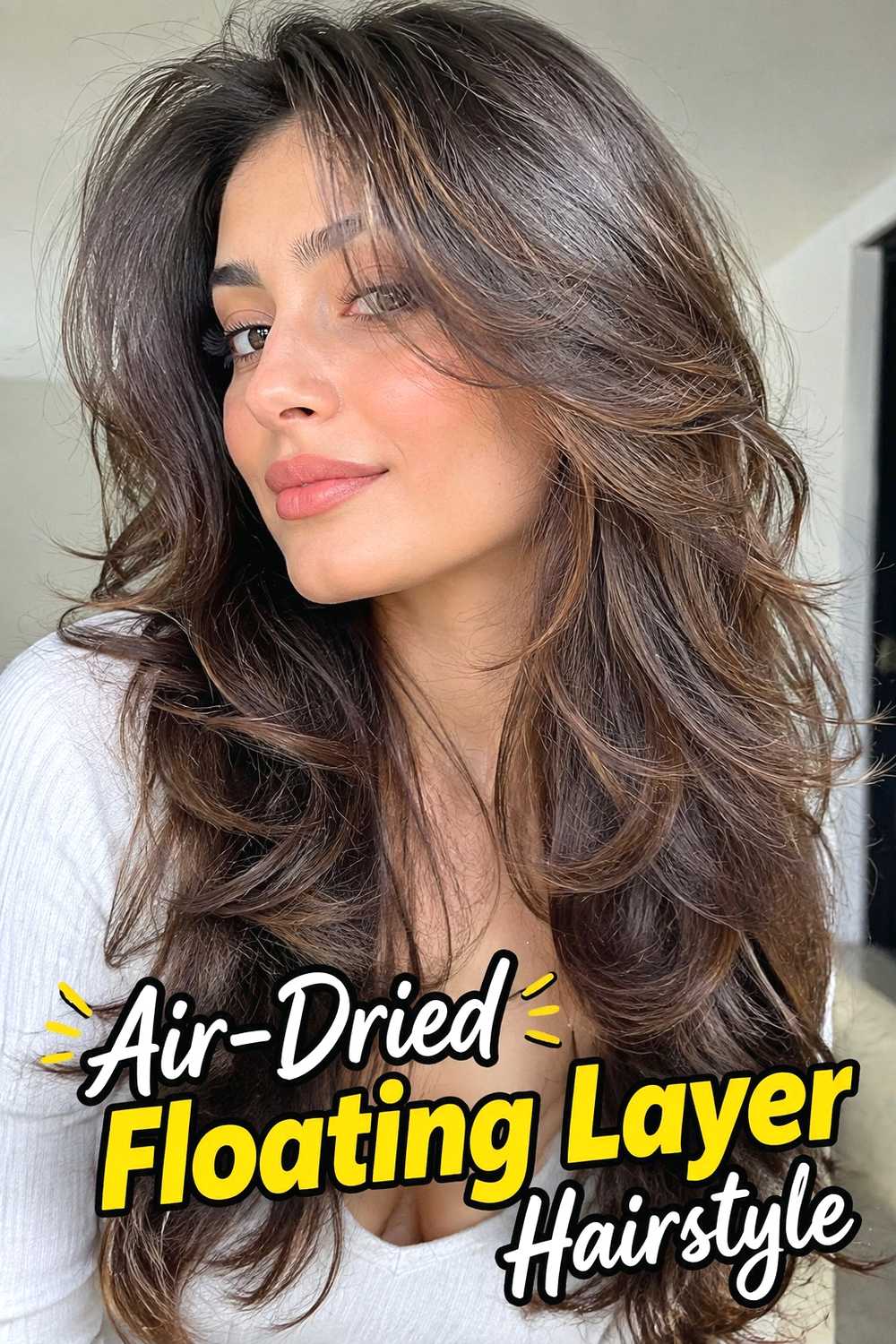
An air-dried floating layer cut relies on natural texture to reveal the separation between lengths. Instead of requiring a smooth blowout, the haircut is designed so the shorter sections settle naturally above the longer base with minimal manipulation. This approach can work well with waves, loose curls, or hair that develops gentle bends as it dries. Layer placement should follow the natural movement of the hair, since too many short pieces can create puffiness or uneven expansion. The finished look is relaxed, with some strands appearing more defined than others. Slight frizz and irregular movement can actually enhance the lived-in feel, provided the overall silhouette still looks balanced and intentional.
Wear & Maintenance
Apply lightweight styling product while damp, arrange the part, and avoid excessive touching until the hair is fully dry.
Best For
Naturally wavy or softly textured hair often adapts especially well to this lower-effort version of floating layers.
17. Soft U Shaped Floating Layer Hairstyle
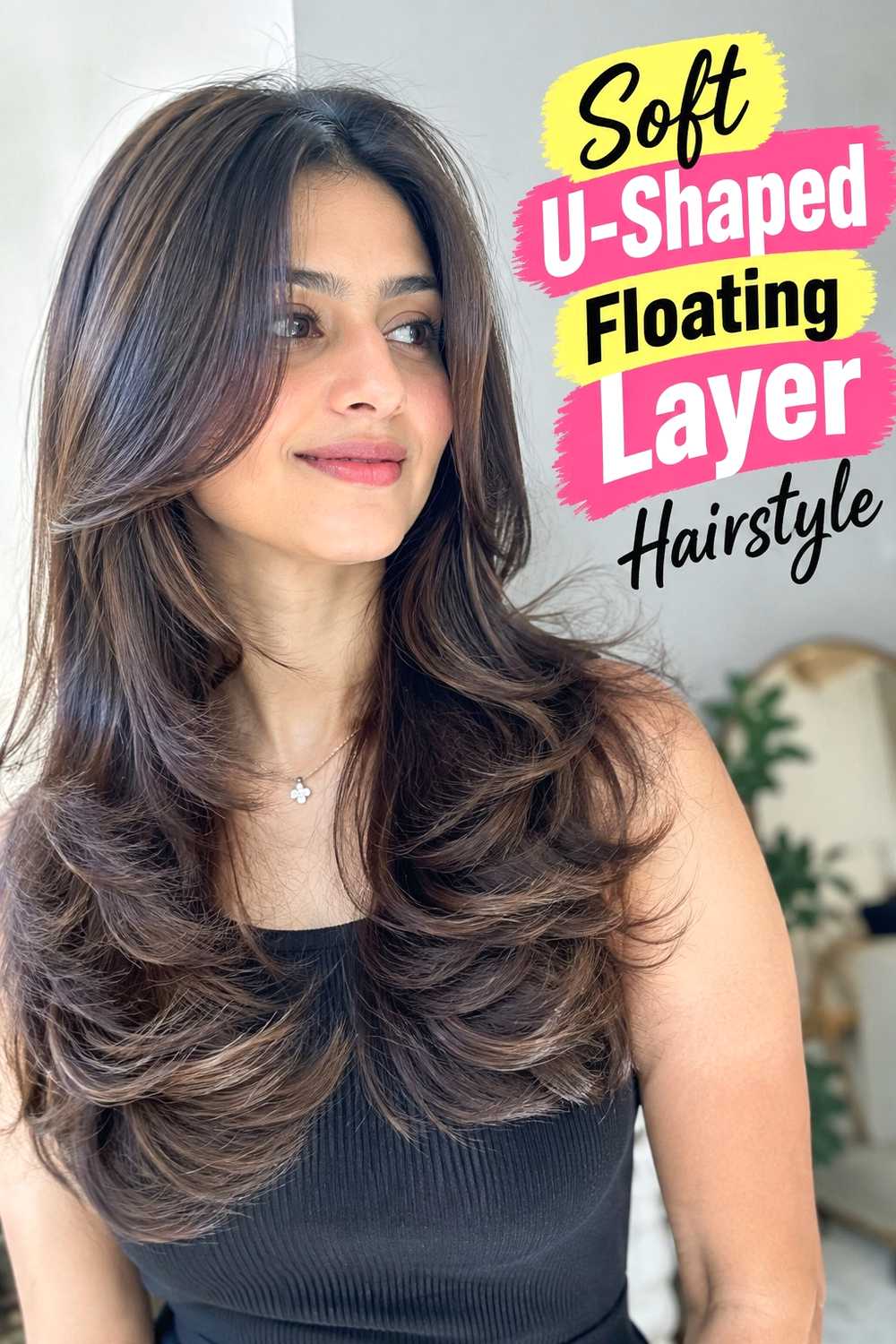
A soft U-shaped perimeter gives floating layers a graceful foundation by keeping the back slightly longer than the sides. Long layers can sit above this curved baseline, creating movement without sacrificing the flowing shape through the center back. Around the face, shorter sections may begin near the jaw or shoulders and gradually connect with the longer U-shaped lengths. This combination is particularly attractive on medium to long hair because the perimeter remains substantial while the surface gains enough separation to feel lighter. Worn straight, the curved outline is easy to see; styled with waves or a blowout, the floating layers become more prominent while the U shape keeps the overall haircut cohesive.
Why It Works
The curved perimeter preserves length through the back while supporting lighter movement through the upper sections and sides.
Styling Notes
Keep the ends softly curved rather than tightly curled so the U-shaped baseline remains visible beneath the floating layers.
18. Voluminous Floating Layer Hairstyle
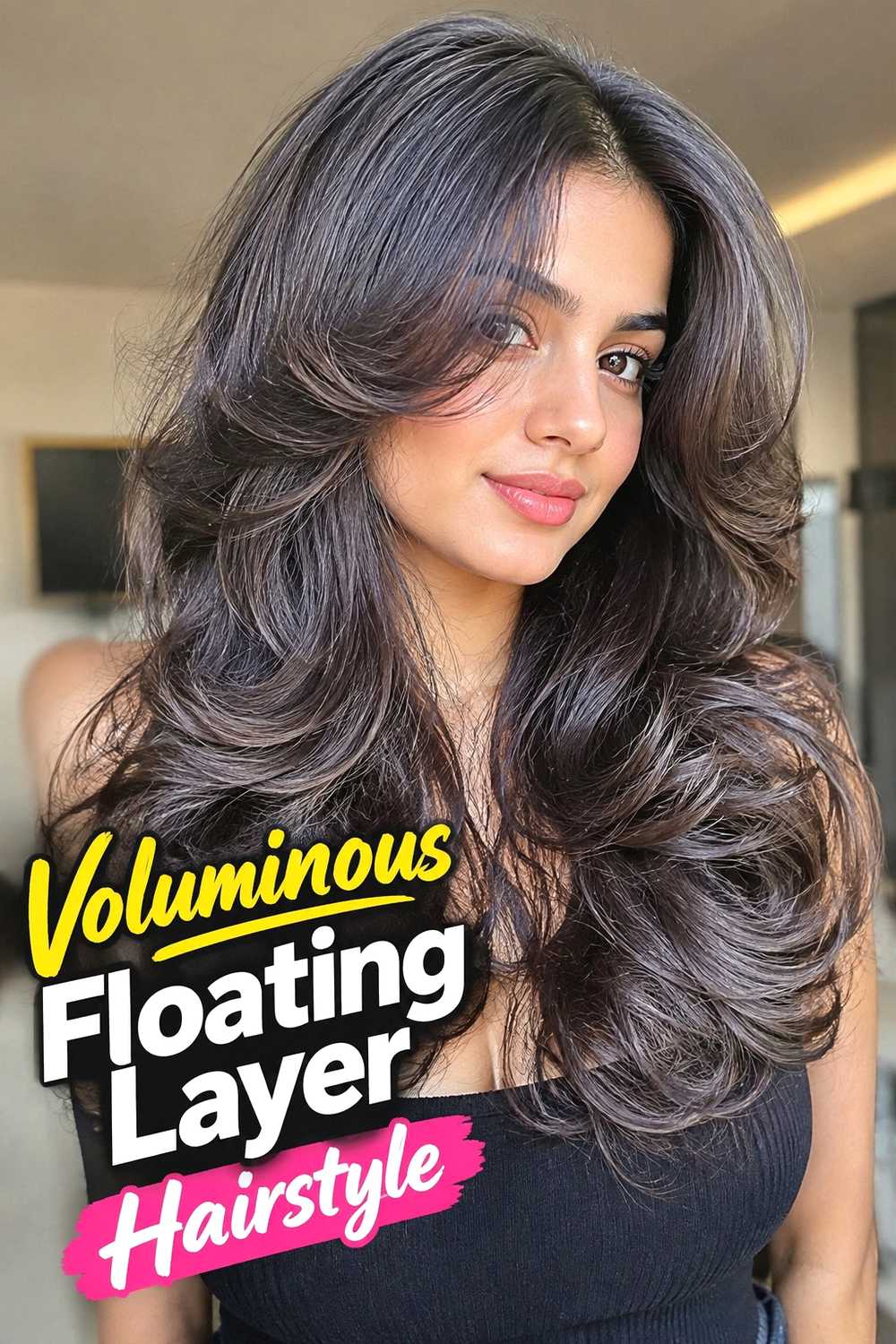
The voluminous floating layer haircut emphasizes lift through the crown, face frame, and upper lengths while keeping longer hair underneath for balance. Shorter layers are placed strategically so they can rise away from the head during styling without creating a disconnected or overly shaggy shape. A full blowout enhances the effect, with broad movement through the front and sides and softer length through the back. This look works especially well on hair with enough density to support several visible layers, although the amount of graduation should still be controlled. The finished silhouette should feel airy and expansive rather than bulky, with each section moving independently while remaining connected to the longer base.
Best For
Medium to thick hair can support this higher-volume approach particularly well, especially when the natural texture already has some body.
Pro Tip
Focus root lift near the crown and front while keeping the lower lengths smoother. This creates volume without making the entire haircut look excessively wide.
How to Choose the Right Look
Start with density. Fine hair generally benefits from fewer floating layers, a stronger perimeter, and subtle face framing so the ends continue to look full. Thick hair can handle more internal shaping and separation, particularly when the mid-lengths feel heavy.
Texture also affects how clearly the layers appear. Straight hair shows the cutting structure and transitions, while waves and curls reveal the layers through natural movement. Curly hair needs extra attention to shrinkage, especially when shorter floating sections are added near the crown or face.
Consider styling time as well. Blowout-focused versions create the most obvious floating effect but usually require more heat styling. Wavy and air-dried options can be easier if your natural texture already produces movement.
Finally, think about how dramatic you want the haircut to feel. Long floating layers and U-shaped versions are subtle, while butterfly-inspired, voluminous, and bang-focused cuts create a more noticeable transformation. Choosing layer placement that complements your normal texture and routine will make the haircut easier to recreate consistently.
Final Thoughts
Floating layer haircuts can add movement without forcing you to give up length or fullness. Subtle versions keep the effect polished, while butterfly-inspired and voluminous cuts create more obvious lift. Fine hair usually benefits from restraint, while thicker textures can often support additional internal movement. The best choice is one that matches your density, natural texture, and preferred styling effort.
FAQs
1. What are floating layers?
Floating layers are strategically placed shorter sections that sit above longer hair, creating movement and dimension without making the haircut look heavily stepped.
2. Are floating layers good for fine hair?
They can be when used sparingly. Fine hair generally looks fuller when the perimeter stays strong and only a few lighter layers are added.
3. Can floating layers work on curly hair?
Yes. Curl shrinkage and density need to be considered carefully so shorter layers settle at the intended height once the hair is dry.
4. Do floating layers require a blowout?
No. Blowouts make the layered separation especially visible, but well-placed floating layers can also work with natural waves, curls, or air-dried texture.
5. What is the difference between floating layers and traditional layers?
Floating layers usually focus on strategic separation and lighter movement over longer lengths, while traditional layering may use more evenly graduated sections throughout the haircut.
Save your favorite floating layer haircut ideas, share the looks you love, and explore more layered hairstyle inspiration for your next cut.