17 Medium Shag Haircuts With Feathered Fringe
A feathered fringe brings airy movement to a medium shag, creating a relaxed layered shape that can look polished, tousled, wavy, or softly undone.
Medium shag haircuts balance visible layering with enough length to keep the style versatile. The feathered fringe adds lightness around the forehead, while cheekbone, jaw, and shoulder-level layers can create separation through the rest of the cut without making every version feel heavily choppy.
The best variation depends on natural texture, density, fringe length, and how much crown volume you enjoy. Fine hair usually benefits from strategic layering, while thicker hair can support greater separation and internal weight removal. These ideas vary those details while keeping each haircut believable, wearable, and visually distinct.
Quick List
- Soft Layered Medium Shag With Feathered Fringe Hairstyle
- Shoulder Skimming Medium Shag With Feathered Fringe Hairstyle
- Airy Medium Shag With Feathered Fringe Hairstyle
- Fine Hair Medium Shag With Feathered Fringe Hairstyle
- Thick Hair Medium Shag With Feathered Fringe Hairstyle
- Straight Hair Medium Shag With Feathered Fringe Hairstyle
- Wavy Medium Shag With Feathered Fringe Hairstyle
- Curly Medium Shag With Feathered Fringe Hairstyle
- Center Parted Medium Shag With Feathered Fringe Hairstyle
- Side Parted Medium Shag With Feathered Fringe Hairstyle
- Face Framing Medium Shag With Feathered Fringe Hairstyle
- Choppy Medium Shag With Feathered Fringe Hairstyle
- Rounded Blowout Medium Shag With Feathered Fringe Hairstyle
- Tousled Medium Shag With Feathered Fringe Hairstyle
- Soft Mullet Inspired Medium Shag Hairstyle
- Low Maintenance Medium Shag With Feathered Fringe Hairstyle
- Voluminous Crown Medium Shag With Feathered Fringe Hairstyle
1. Soft Layered Medium Shag With Feathered Fringe Hairstyle
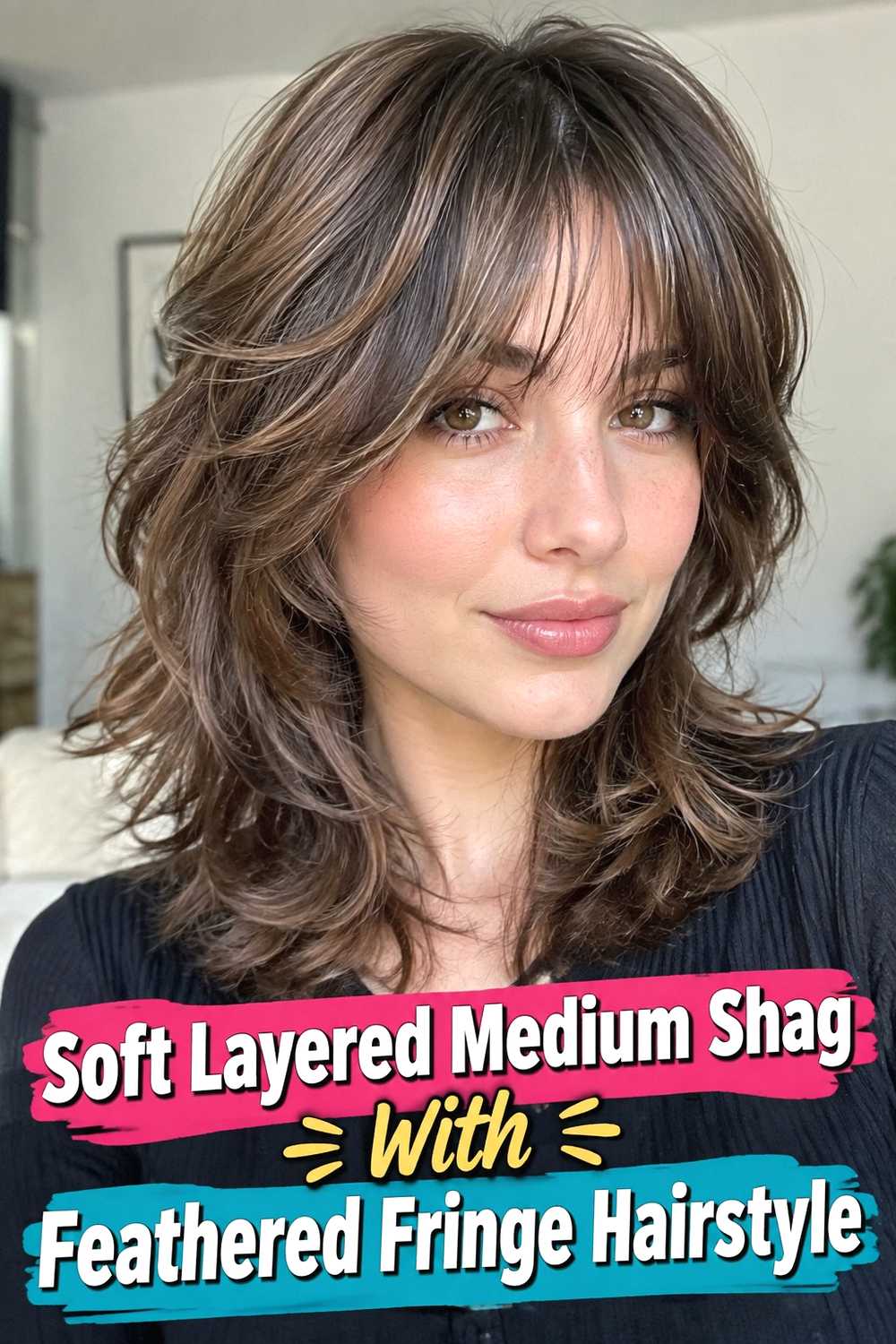
This softer interpretation keeps the defining movement of a shag while avoiding extremely short or disconnected layers. The feathered fringe rests lightly across the forehead and becomes longer toward the temples, where it blends into cheekbone- and jaw-level pieces. Through the main haircut, gradual layers create movement without stripping too much fullness from the ends. A shoulder-to-collarbone perimeter gives the shape enough length to swing naturally and still allows simple ponytails or half-up styles. The finish works equally well with a smooth blow-dry or gentle bends through selected pieces. It is a useful choice when you like shag-inspired texture but want the overall haircut to remain polished and easy to adapt.
Styling Notes
Use a small round brush on the fringe and a larger brush through the main layers, keeping the curves loose instead of creating sharp flips.
Best For
Medium-density hair is particularly well suited to this balanced level of layering.
2. Shoulder Skimming Medium Shag With Feathered Fringe Hairstyle
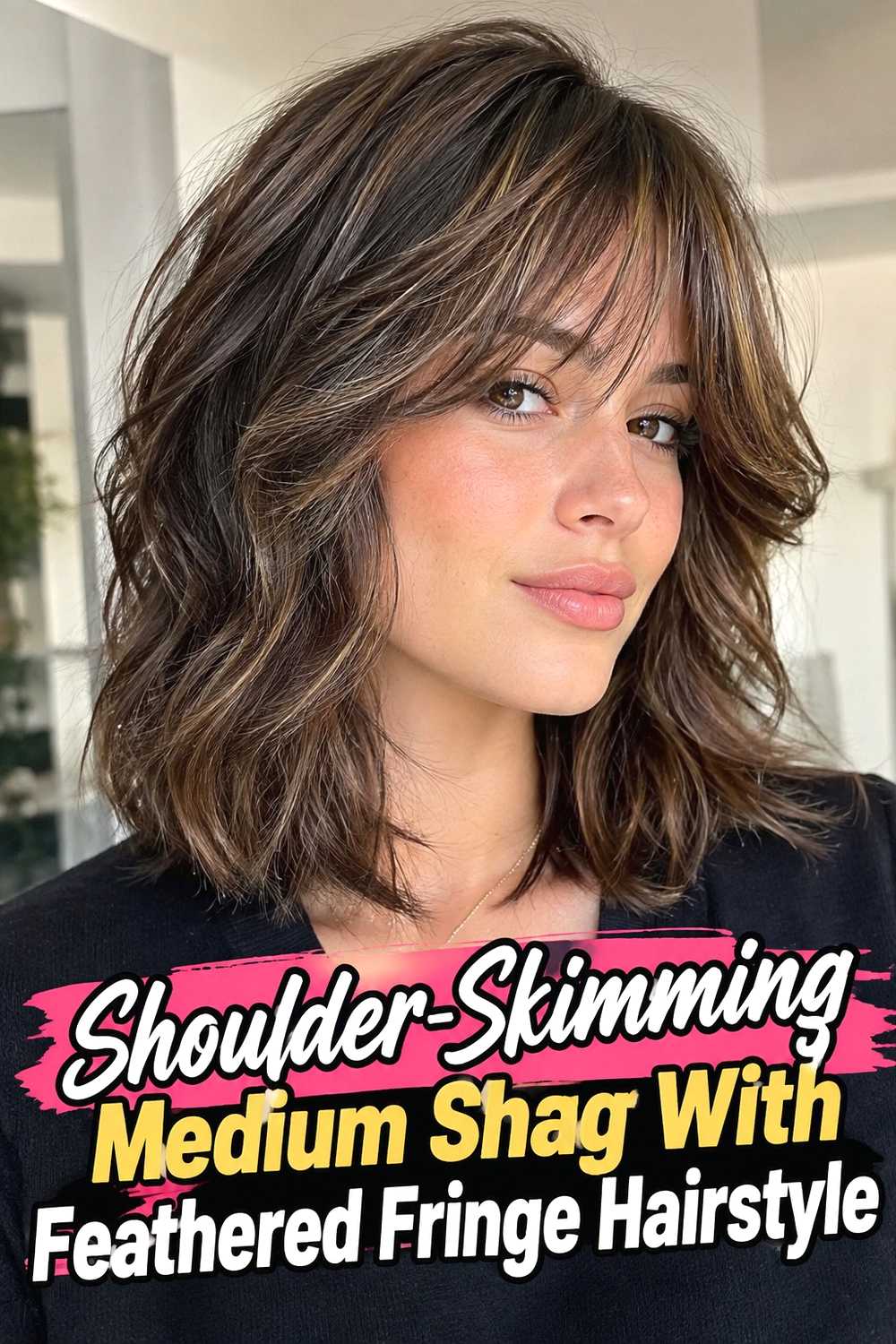
A shoulder-skimming shag makes the feathered structure easy to see because the ends move freely instead of being weighed down by extra length. The fringe can skim the brows before tapering toward the temples, while shorter side layers begin near the cheekbones and flow into the shoulders. The back remains a little longer and fuller, preventing the cut from becoming too wispy through the perimeter. This version can look neat when blow-dried smooth or more relaxed when the ends are encouraged to flick naturally. The medium length also keeps styling options open, which makes the haircut practical for anyone who wants visible texture without moving into a significantly shorter shag.
Hair Type & Length
Straight to wavy hair around true shoulder length can display the different layers especially clearly.
Pro Tip
Keep enough weight through the back perimeter so the haircut retains a defined shape when worn without styling.
3. Airy Medium Shag With Feathered Fringe Hairstyle
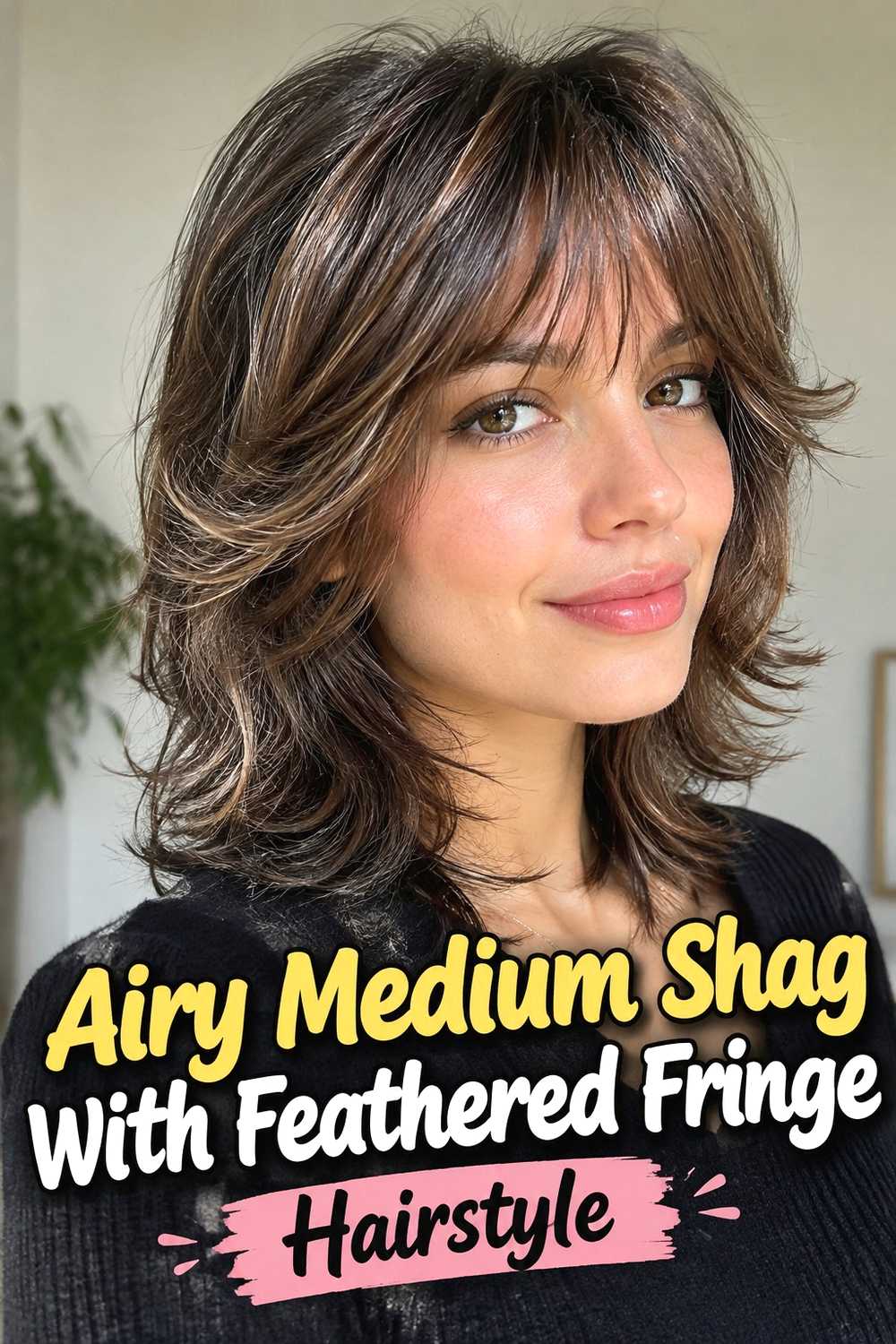
An airy medium shag relies on light separation rather than heavy volume. The fringe is softly feathered with narrow pieces that let some forehead remain visible, while long crown and side layers prevent the haircut from looking bulky. Through the mid-lengths, the layers separate naturally and create small pockets of movement around the neck and shoulders. This finish looks especially attractive when the hair has a little natural bend, although straight textures can achieve the same feeling with a quick blow-dry or a few flat-iron bends. Keeping styling products light is important because the haircut should move easily rather than forming stiff, highly defined sections. The overall effect is relaxed, delicate, and modern.
Styling Notes
Use mousse or lightweight texture spray sparingly and loosen the layers with your fingertips once the hair is dry.
Why It Works
Light product and longer layers preserve movement while preventing the shag from becoming overly full or rigid.
4. Fine Hair Medium Shag With Feathered Fringe Hairstyle
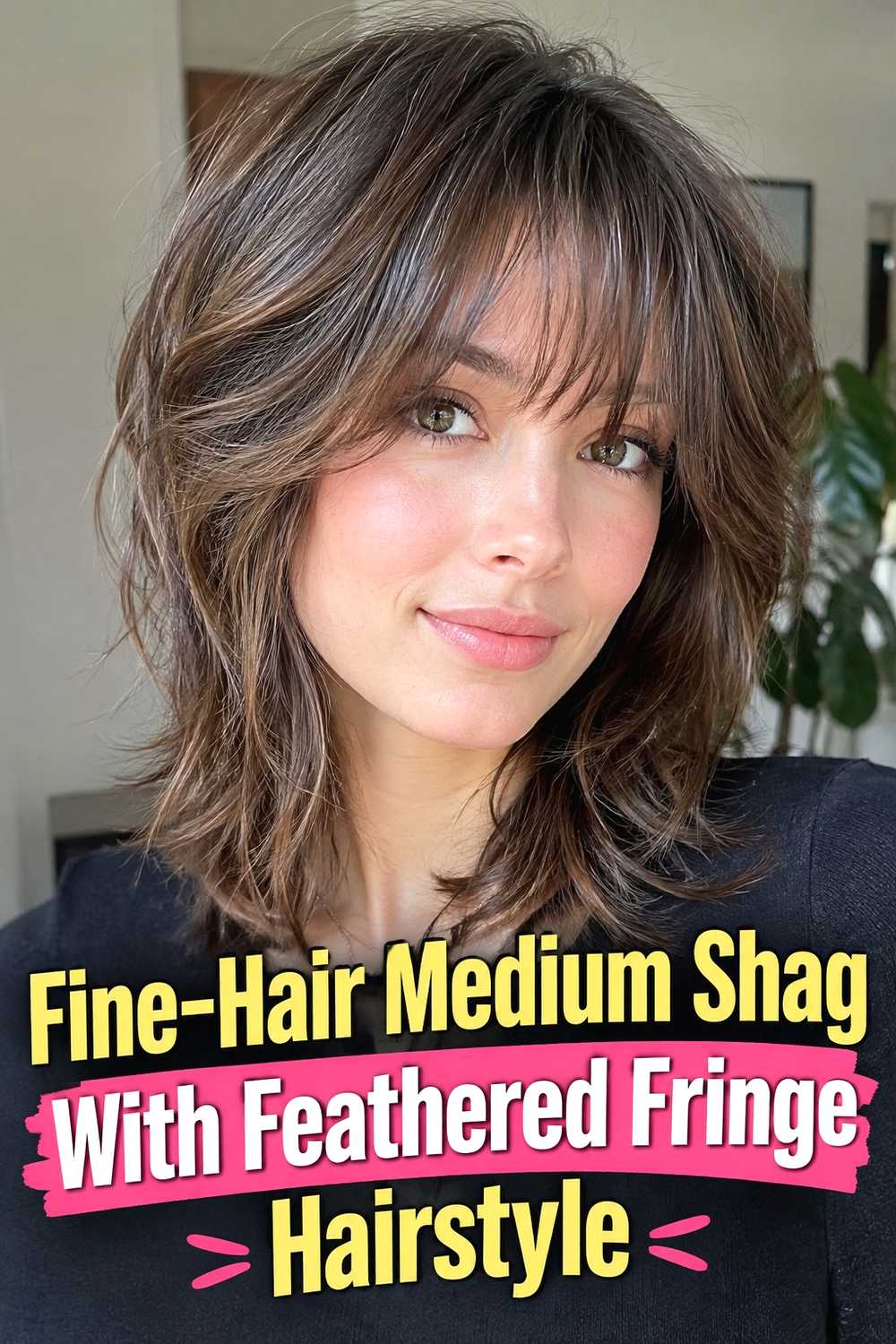
Fine hair can wear a medium shag when the layer placement is restrained enough to protect visible fullness. The perimeter should remain relatively strong, while a few shorter pieces around the face and upper lengths provide the shag-inspired movement. A narrow feathered fringe adds detail without removing a large amount of hair from the front. Rather than heavily texturizing the ends, keeping them slightly denser helps the overall haircut appear more substantial. Gentle root lift can enhance the shape without requiring dramatic teasing or short crown layers. This version offers the personality of a shag while respecting the lighter density of fine hair, making it easier to style without exposing overly sparse sections.
Best For
Fine to lower-density hair benefits from this conservative approach to layering and fringe width.
Pro Tip
Choose lightweight volumizing products rather than rich creams that may flatten the roots and stretch out the layered shape.
5. Thick Hair Medium Shag With Feathered Fringe Hairstyle
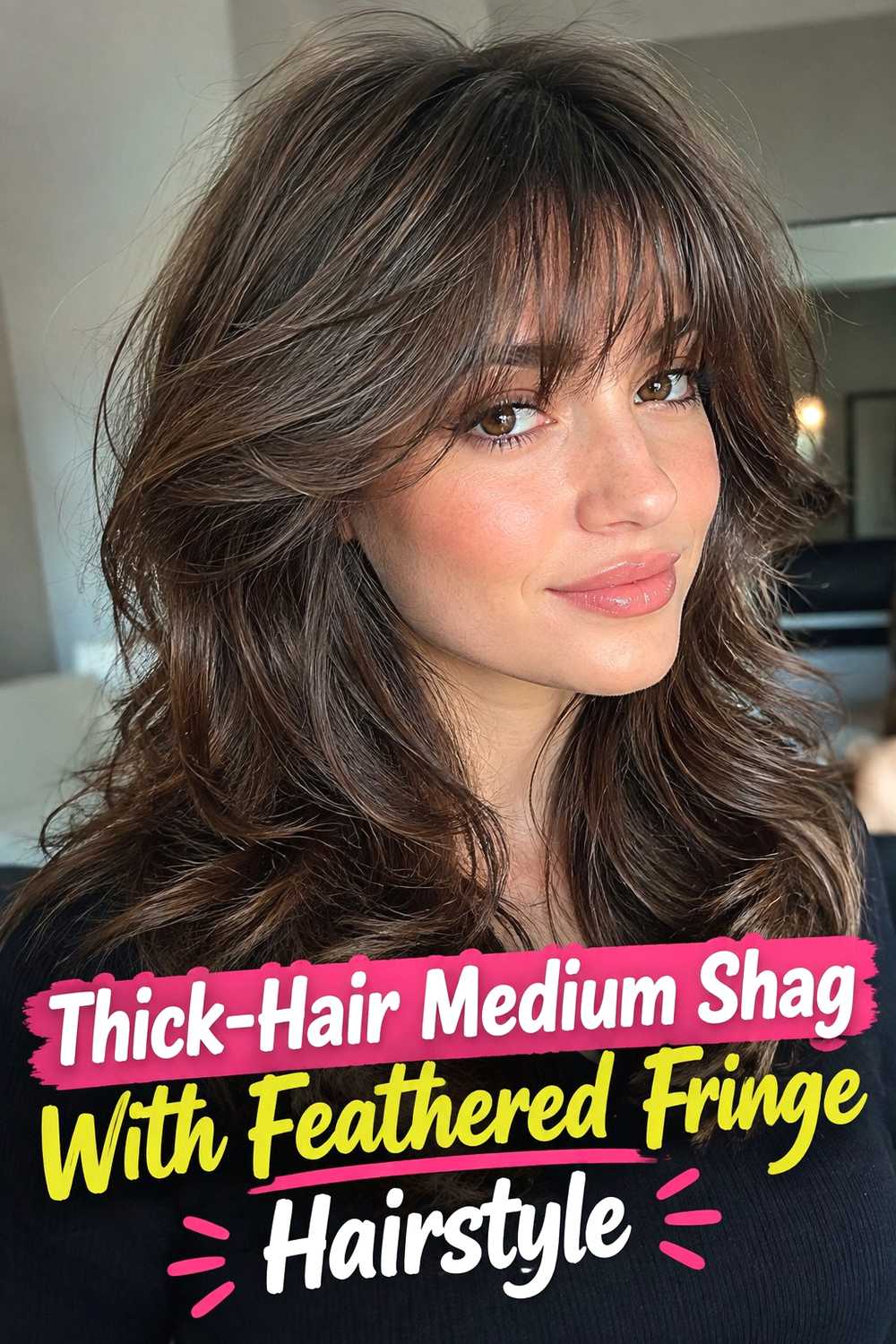
Thick hair can support stronger shag layering, but thoughtful weight distribution keeps the shape from becoming excessively wide. The feathered fringe can be slightly fuller while still showing separation, and longer temple pieces help connect it to the surrounding layers. Internal shaping through the sides and back releases some bulk, allowing the surface to move without looking overly thinned. Shorter crown sections can add lift, but keeping them controlled helps preserve a wearable medium-length silhouette. This haircut can be styled smooth, wavy, or deliberately tousled because the density provides enough structure for several finishes. The goal is to use thickness as an advantage while preventing too much weight from collecting at the shoulders.
Hair Type & Length
Dense straight, wavy, or loosely curly hair can support this more layered version particularly well.
Wear & Maintenance
Strategic internal shaping usually grows more predictably than aggressive thinning throughout the entire haircut.
6. Straight Hair Medium Shag With Feathered Fringe Hairstyle
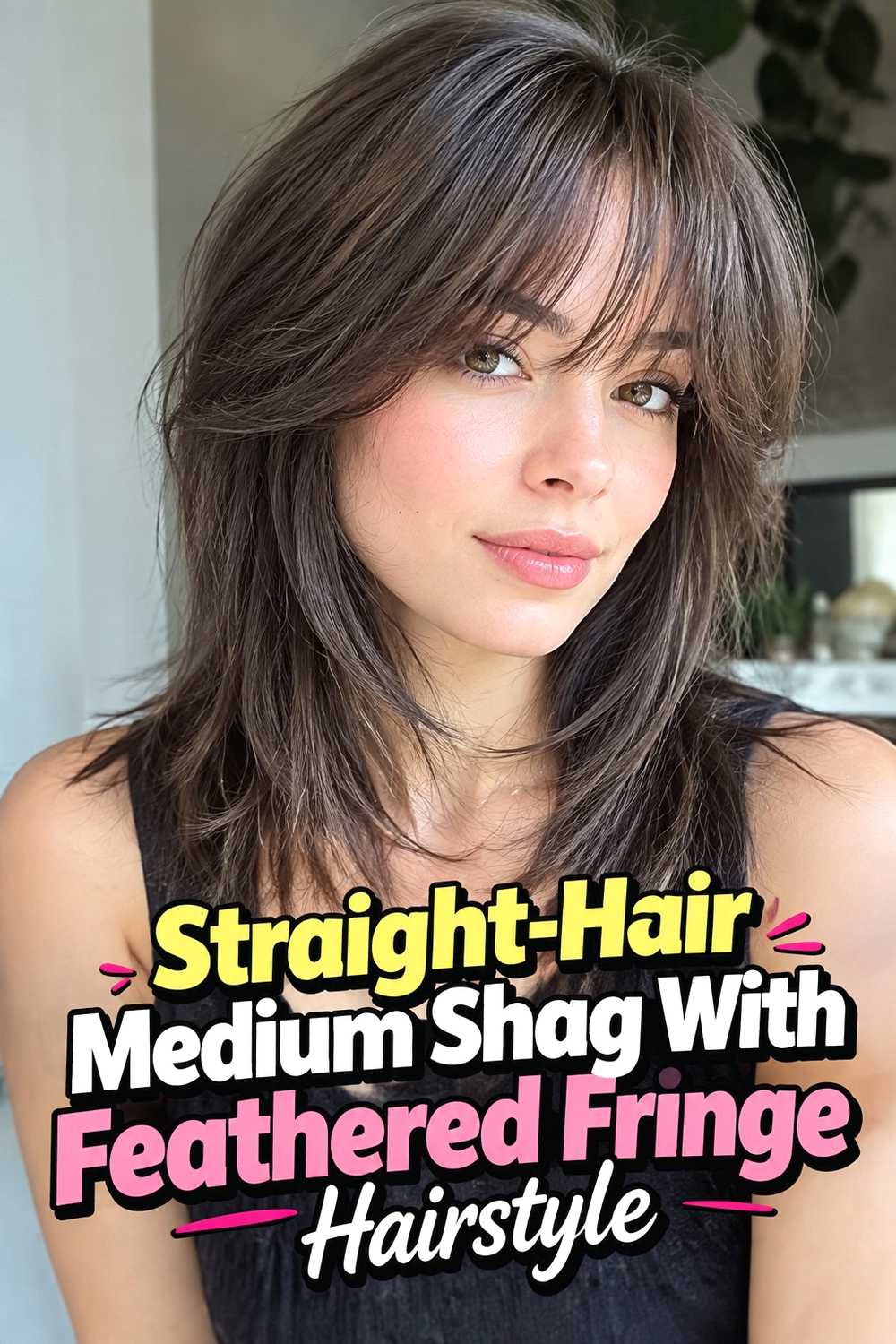
Straight hair gives a medium shag a cleaner, more graphic interpretation because every layer remains visible without curls or waves disguising the structure. The feathered fringe should stay light and textured rather than forming one solid line across the forehead. Around the face, graduated sections can move from the cheekbones toward the jaw and shoulders, while longer layers through the back maintain a smooth outline. A subtle bend at the ends adds enough separation to keep the haircut from looking flat without changing its naturally straight character. This version is ideal when you want the softness of a shag while keeping a relatively sleek finish that works with straight hair’s natural movement.
Styling Notes
Smooth most of the hair during drying, then add a slight outward or inward curve to selected layers for definition.
Best For
Naturally straight hair that tends to lie flat can gain visible structure without requiring a full wavy styling routine.
7. Wavy Medium Shag With Feathered Fringe Hairstyle
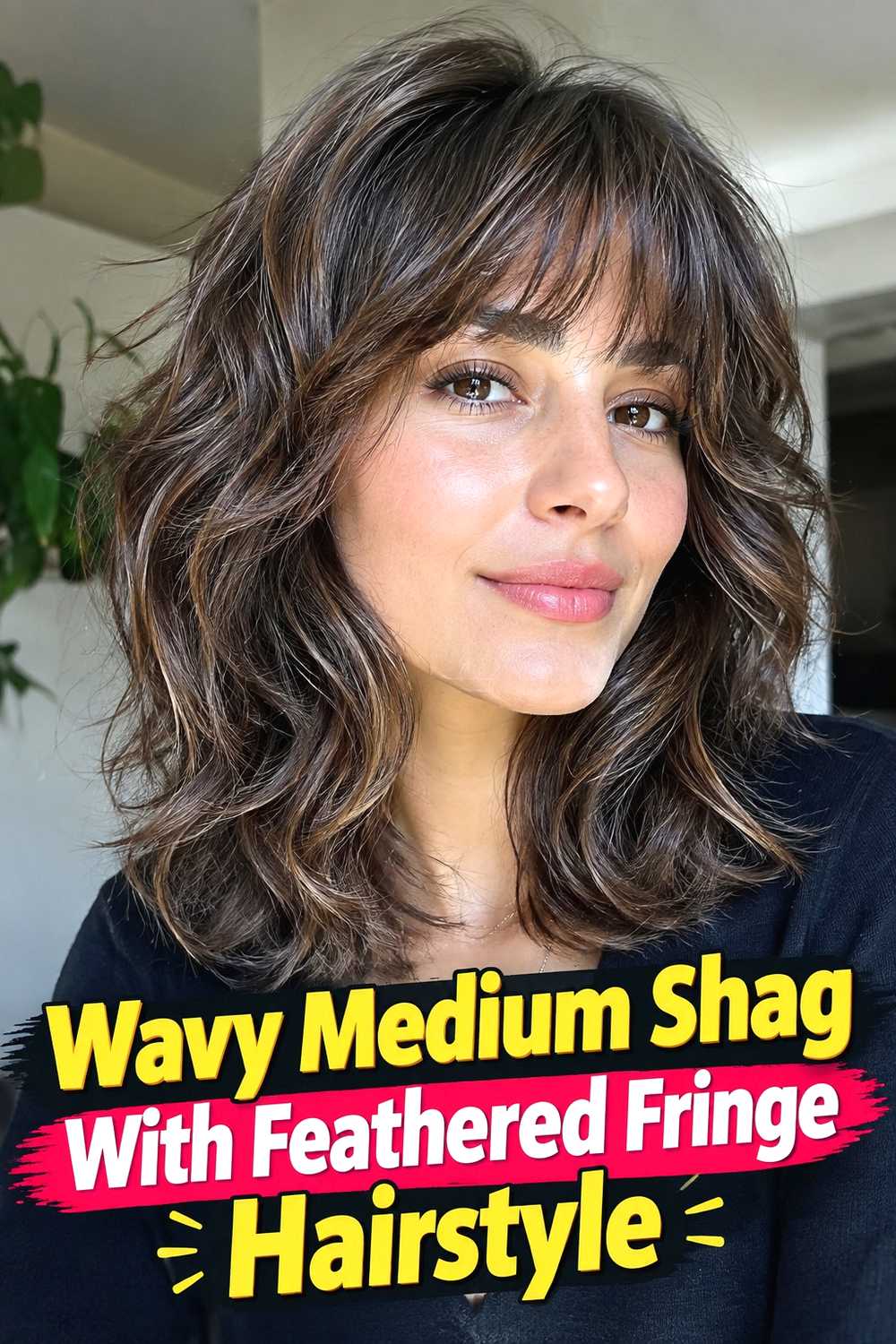
Natural waves complement a shag because they automatically reveal differences between layer lengths. A feathered fringe can fall in soft, irregular pieces across the forehead, while the surrounding layers encourage movement around the cheekbones, neck, and shoulders. The haircut does not need every wave to behave identically; varied bends make the shag feel more relaxed and believable. Medium-length waves also create enough volume to show the layered silhouette without overwhelming it. A light styling cream or mousse can support definition, but the finish should remain touchable. This version works especially well when you want to embrace natural texture instead of smoothing the hair before recreating movement with hot tools.
Styling Notes
Scrunch damp hair gently and diffuse on low airflow, or air-dry if your natural wave pattern already forms reliably.
Why It Works
The natural bends separate the layers automatically, making the shag structure visible with less deliberate styling.
8. Curly Medium Shag With Feathered Fringe Hairstyle
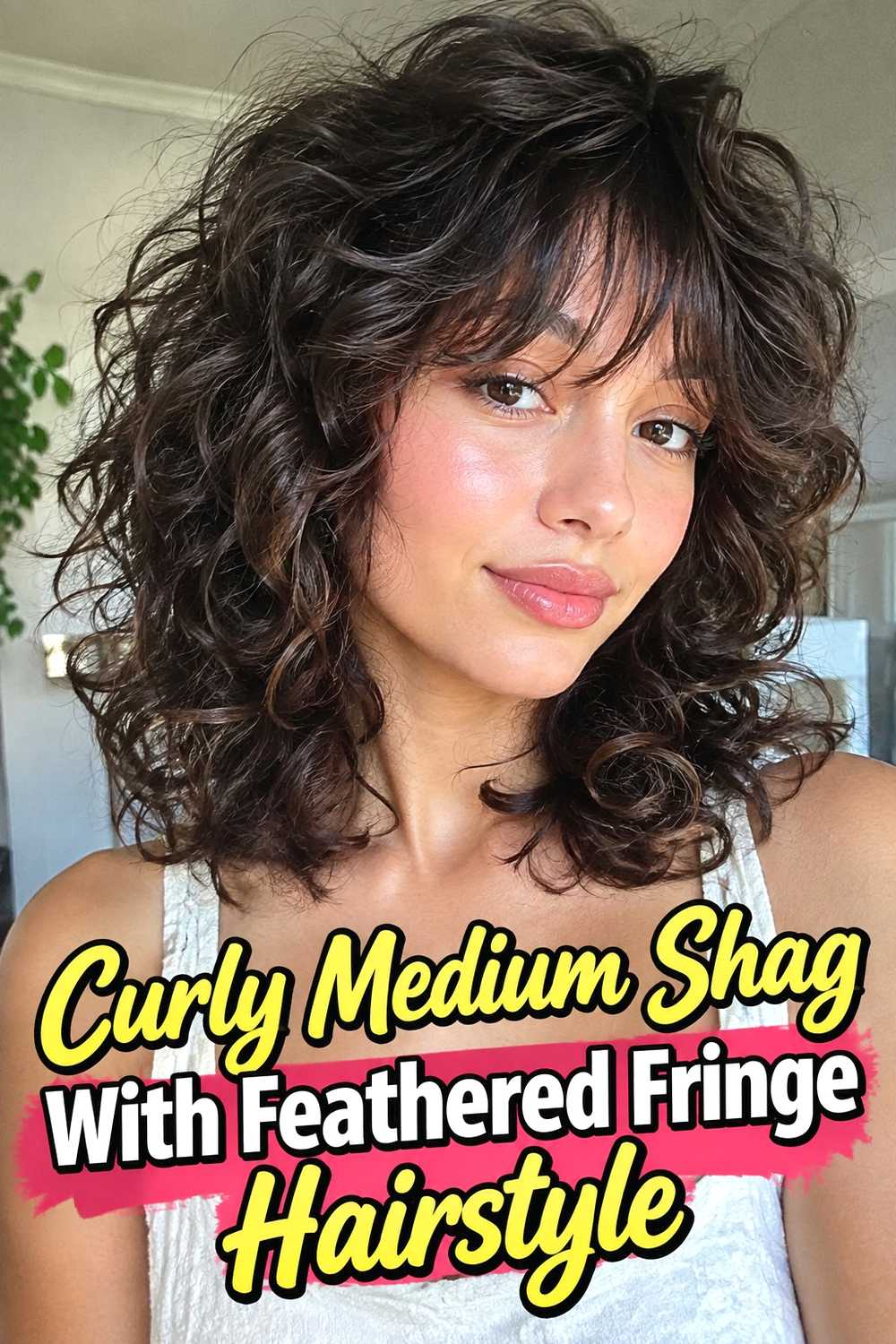
A curly medium shag adapts the feathered fringe to the natural spring of the hair rather than forcing it into a straight shape. The front curls can be lighter and shorter, with longer pieces toward the temples so the fringe connects smoothly with the cheekbone-level layers. Through the crown and sides, strategic layering distributes volume and prevents all the fullness from settling at the bottom. The exact length should be judged with shrinkage in mind, since curls can sit considerably higher once dry. Rather than aiming for perfectly matching ringlets, the finished haircut should allow variation in curl size and direction. This creates a lively medium shag that still feels cohesive.
Hair Type & Length
Wavy-curly and spiral textures can suit this shape when dry length and natural shrinkage guide the cutting decisions.
Pro Tip
Keep the fringe slightly longer initially if the front curls have a strong spring factor.
9. Center Parted Medium Shag With Feathered Fringe Hairstyle
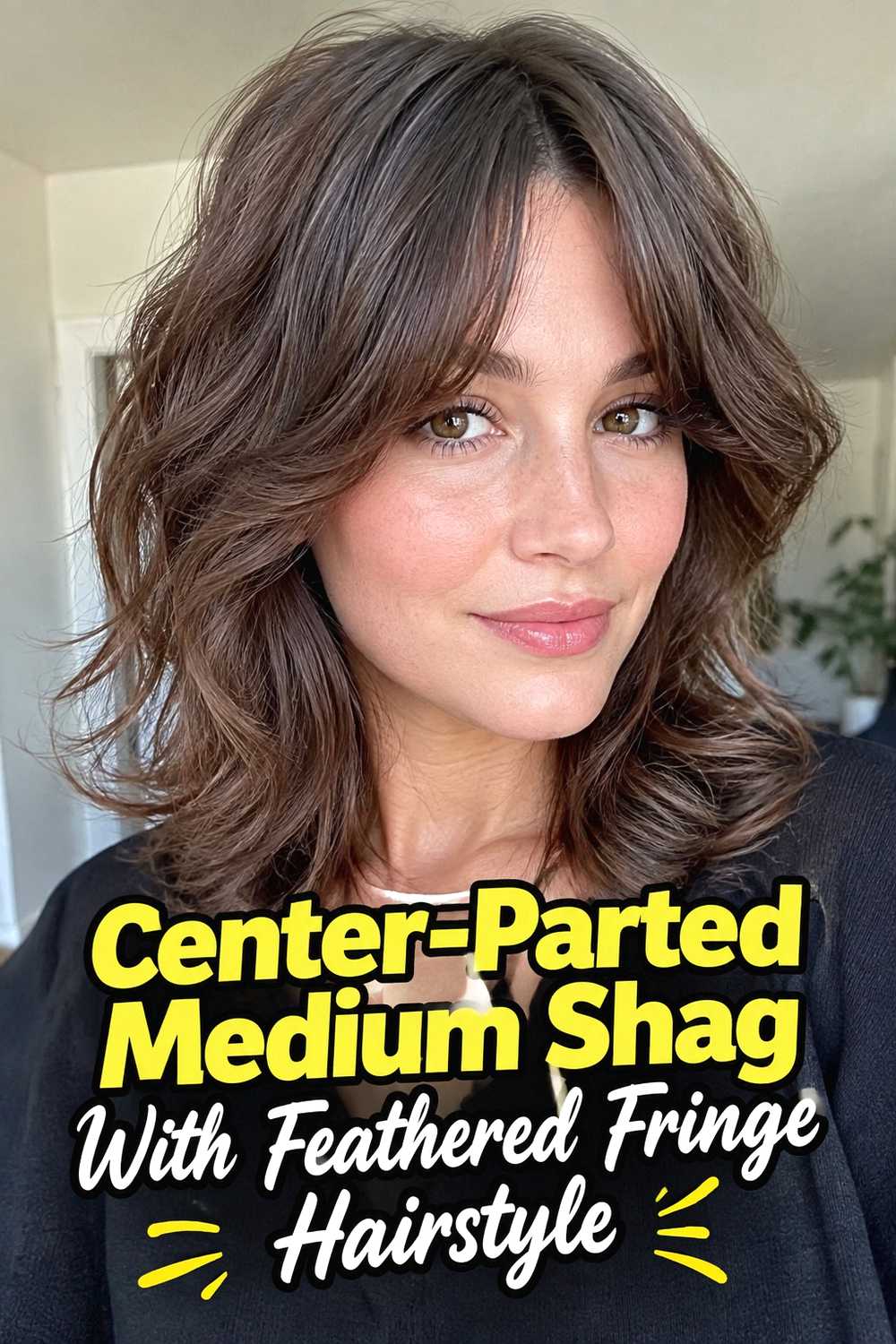
A center part gives feathered fringe a curtain-like quality while preserving the softer texture of a shag. The fringe can separate lightly through the middle, with shorter pieces near the center and longer sections tapering toward the temples. From there, cheekbone and jaw layers continue the framing before connecting with shoulder-length pieces. This balanced arrangement works particularly well with a blowout or relaxed wave because both sides display the layering evenly. The crown does not need extreme height; moderate lift keeps the silhouette contemporary and allows the feathered front to remain the main focus. It is a versatile option if you like symmetry but still want the haircut to feel relaxed and textured.
Styling Notes
Direct both sides of the fringe away from the center while drying, then gently separate the ends for a lighter finish.
Best For
This shape is particularly useful when your hair naturally falls into a center or nearly centered part.
10. Side Parted Medium Shag With Feathered Fringe Hairstyle
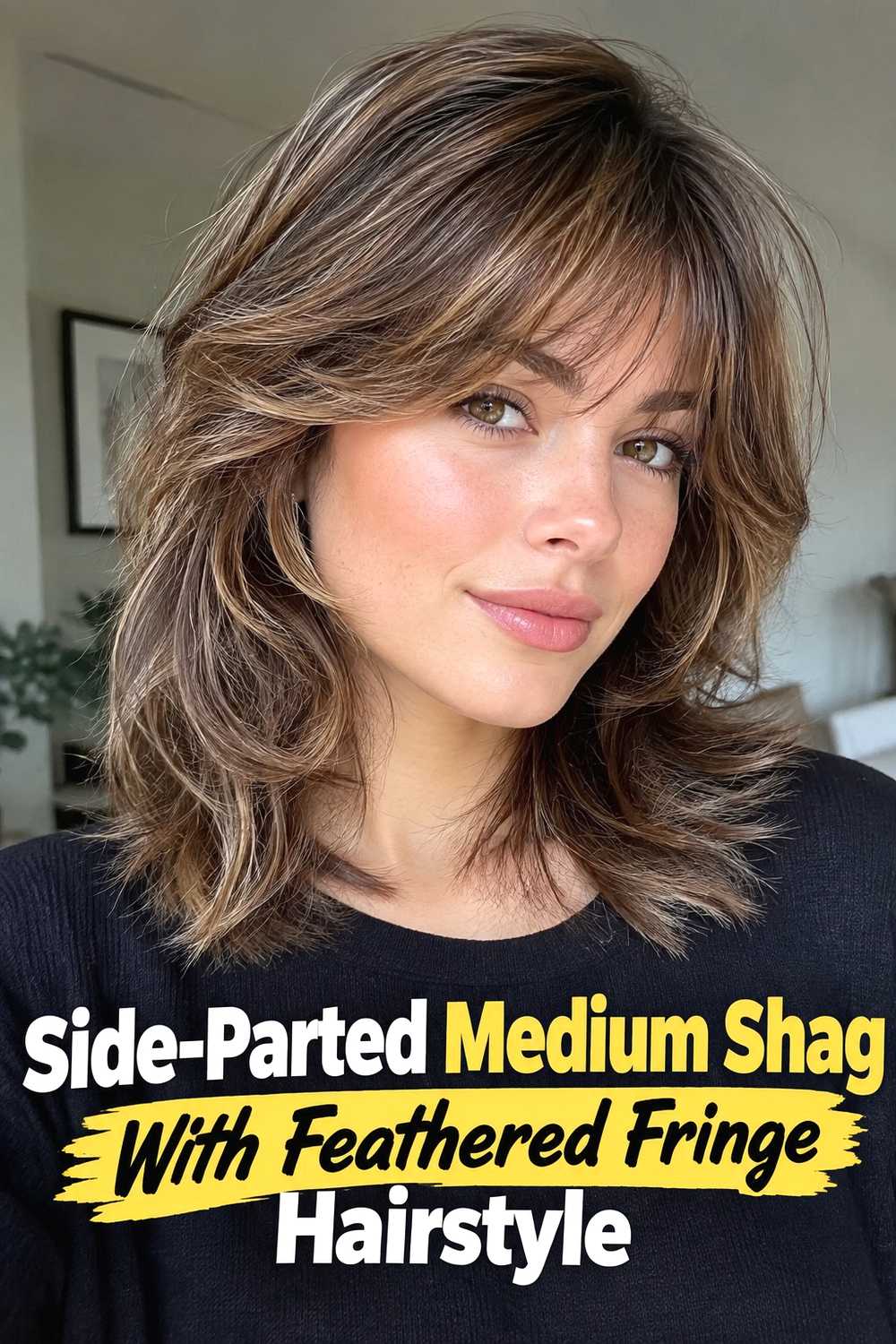
A side part creates an asymmetrical shag shape with extra lift on the fuller side and a softer sweep across the forehead. The feathered fringe can blend into this direction rather than falling straight forward, making the front look flexible and slightly undone. Longer side layers taper from the cheek toward the jaw and shoulders, while the opposite side can be tucked behind the ear for contrast. The main haircut stays medium length so there is enough weight to balance the root volume. This version works with straight, wavy, and lightly textured hair, and it can be especially useful when you prefer movement around the front without committing to a perfectly centered fringe.
Why It Works
The shifted part creates natural root lift and directional movement without requiring a large number of short crown layers.
Styling Notes
Establish the side part while damp and use minimal product through the fringe so it remains flexible.
11. Face Framing Medium Shag With Feathered Fringe Hairstyle
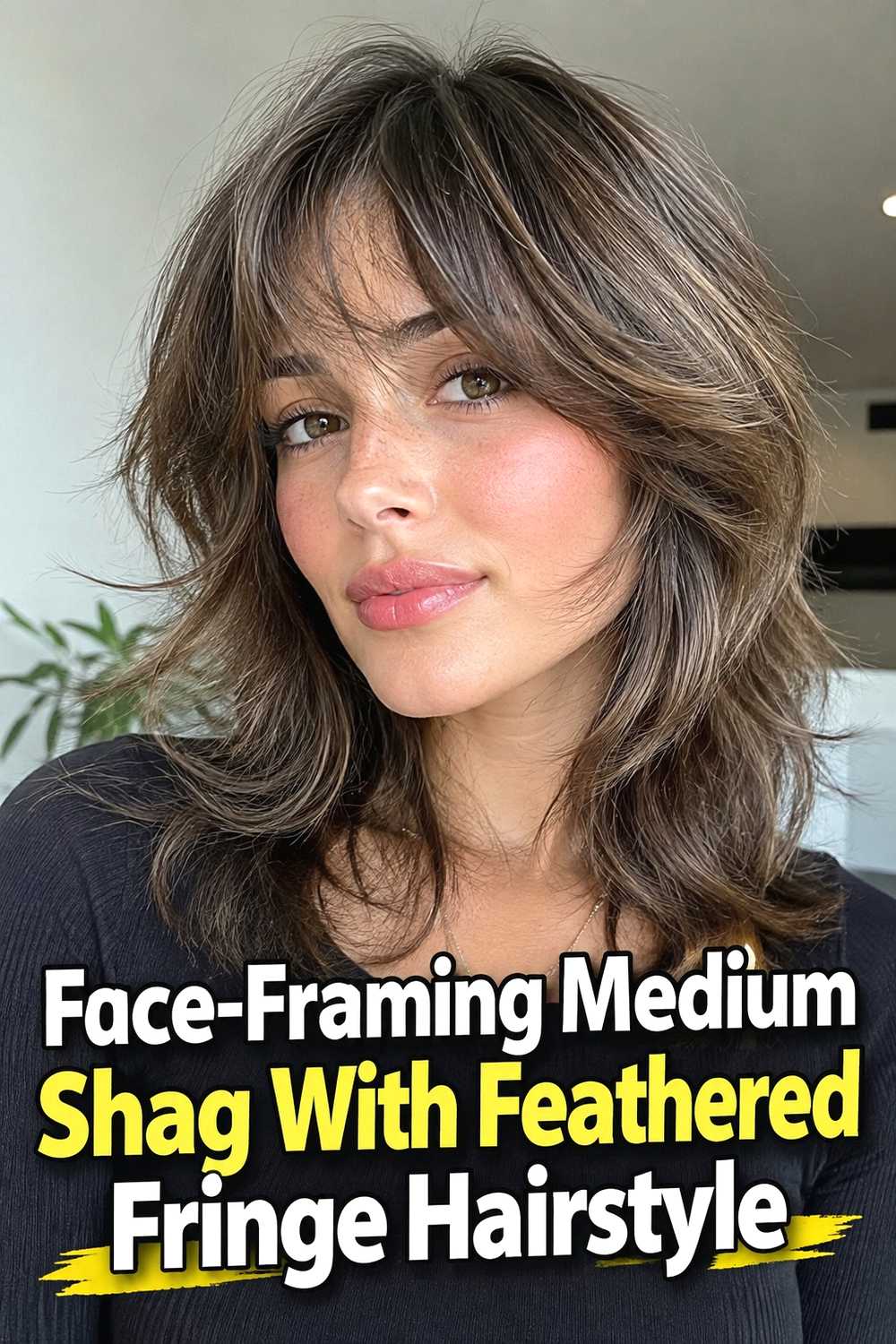
This version places extra emphasis on the transition from fringe to cheekbone, jaw, and shoulder layers. The feathered front begins softly across the forehead, then extends through increasingly longer sections that frame both sides of the face. The back layers can remain more restrained, allowing the front to provide most of the visible shag character. This creates a flattering sense of motion without making the entire haircut equally choppy. A smooth blowout emphasizes the cascading sections, while gentle waves create a looser result. The shape is particularly useful when you want a noticeable haircut change from the front but prefer to maintain more density and simplicity through the back.
Styling Notes
Use a round brush to direct the face-framing sections away from the cheeks, working from the shortest fringe into progressively longer pieces.
Best For
This approach suits anyone who wants prominent front movement while keeping the back relatively full.
12. Choppy Medium Shag With Feathered Fringe Hairstyle
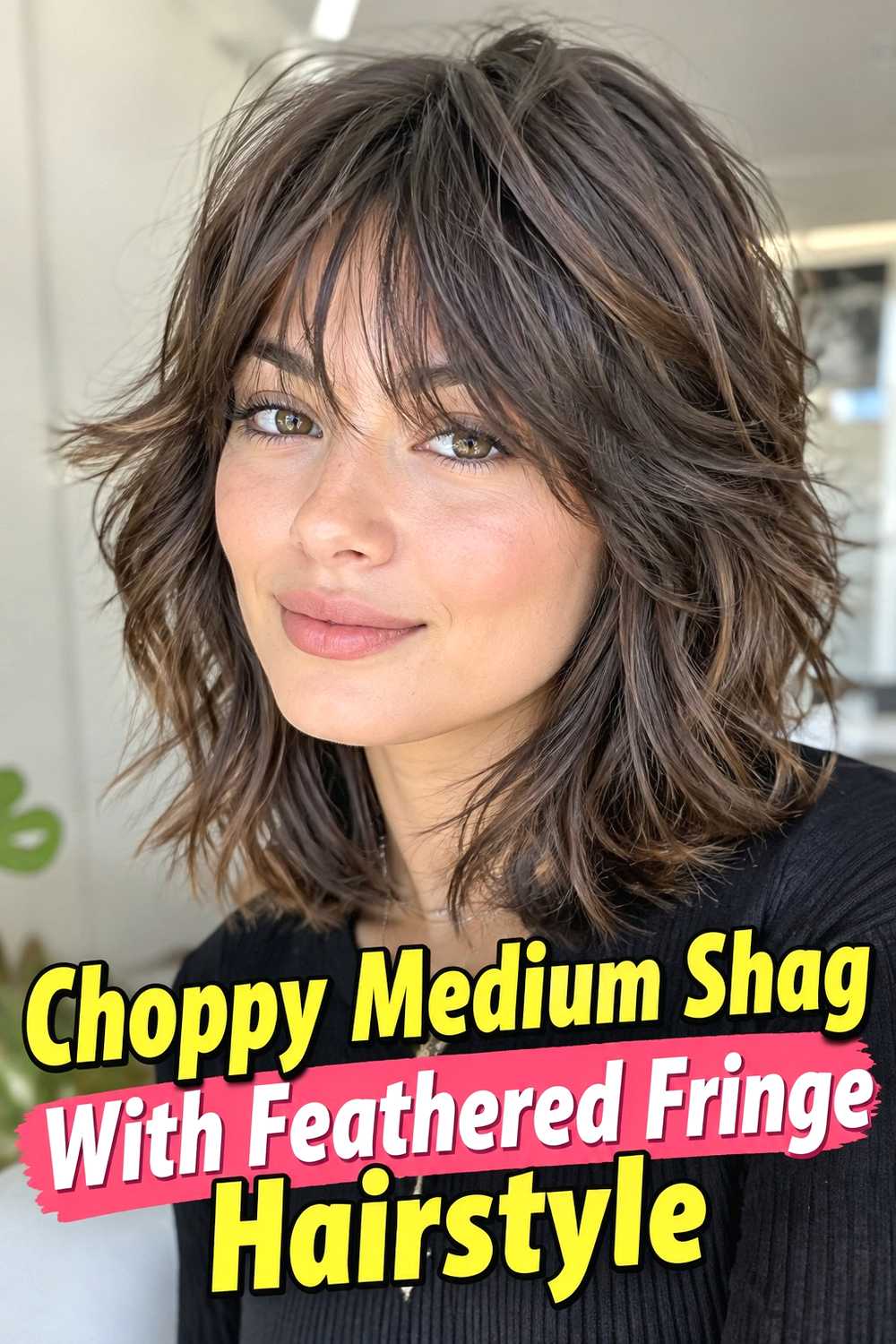
A choppier medium shag introduces stronger separation through the sides and crown while using feathered fringe to soften the overall effect. The layers can vary more noticeably in length, creating pieces that move independently around the temples, jaw, and shoulders. The fringe prevents the haircut from appearing too harsh by adding a lighter, tapered detail across the forehead. Even with increased texture, the perimeter should retain enough substance to keep the haircut from looking excessively thin. This version works especially well with naturally straight or wavy hair that can display the irregular layers clearly. Styling does not need to be perfect; a slightly tousled finish supports the intentionally broken-up structure.
Hair Type & Length
Medium to thick hair generally provides enough density to support more obvious choppy layering without losing too much fullness.
Pro Tip
Keep some longer connecting pieces between the shorter layers so the haircut remains cohesive rather than disconnected.
13. Rounded Blowout Medium Shag With Feathered Fringe Hairstyle
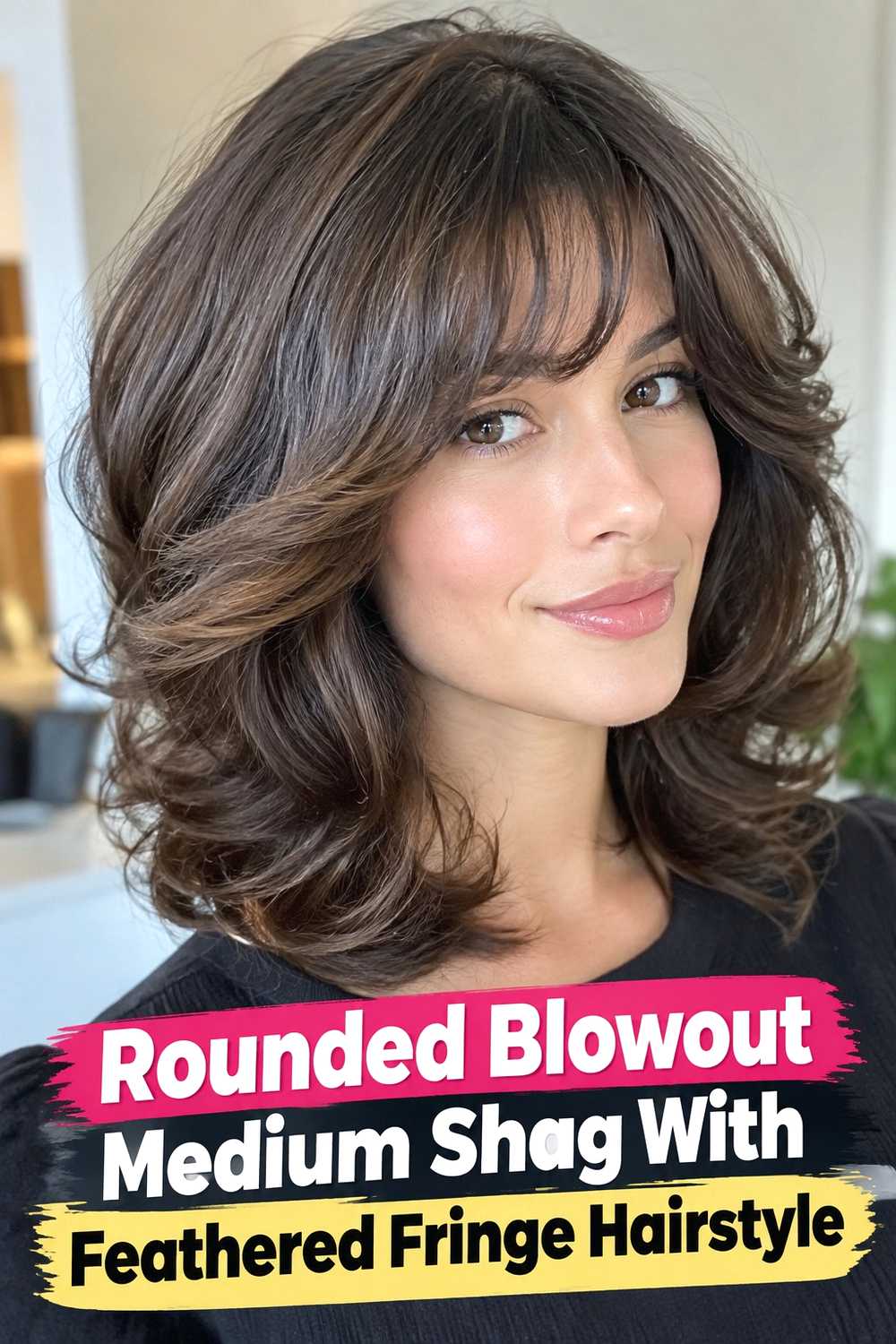
A rounded blowout transforms a medium shag into a softer, more polished shape with visible movement at every level. The feathered fringe can curve lightly around the forehead, while cheekbone and jaw layers sweep away from the face. Longer sections through the shoulders receive broader bends, creating volume without turning every layer into a dramatic flip. Moderate crown lift helps the shag silhouette appear fuller while keeping the ends relaxed. This styling direction is especially effective on straight or slightly wavy hair because the round brush creates separation that may be less visible when the hair is left completely flat. The finished look should remain touchable, with movement rather than a stiff salon-set appearance.
Styling Notes
Use smaller sections around the fringe and face, then switch to a larger round brush through the main lengths.
Why It Works
Broad curves emphasize the layering while keeping the medium shag soft, polished, and connected.
14. Tousled Medium Shag With Feathered Fringe Hairstyle
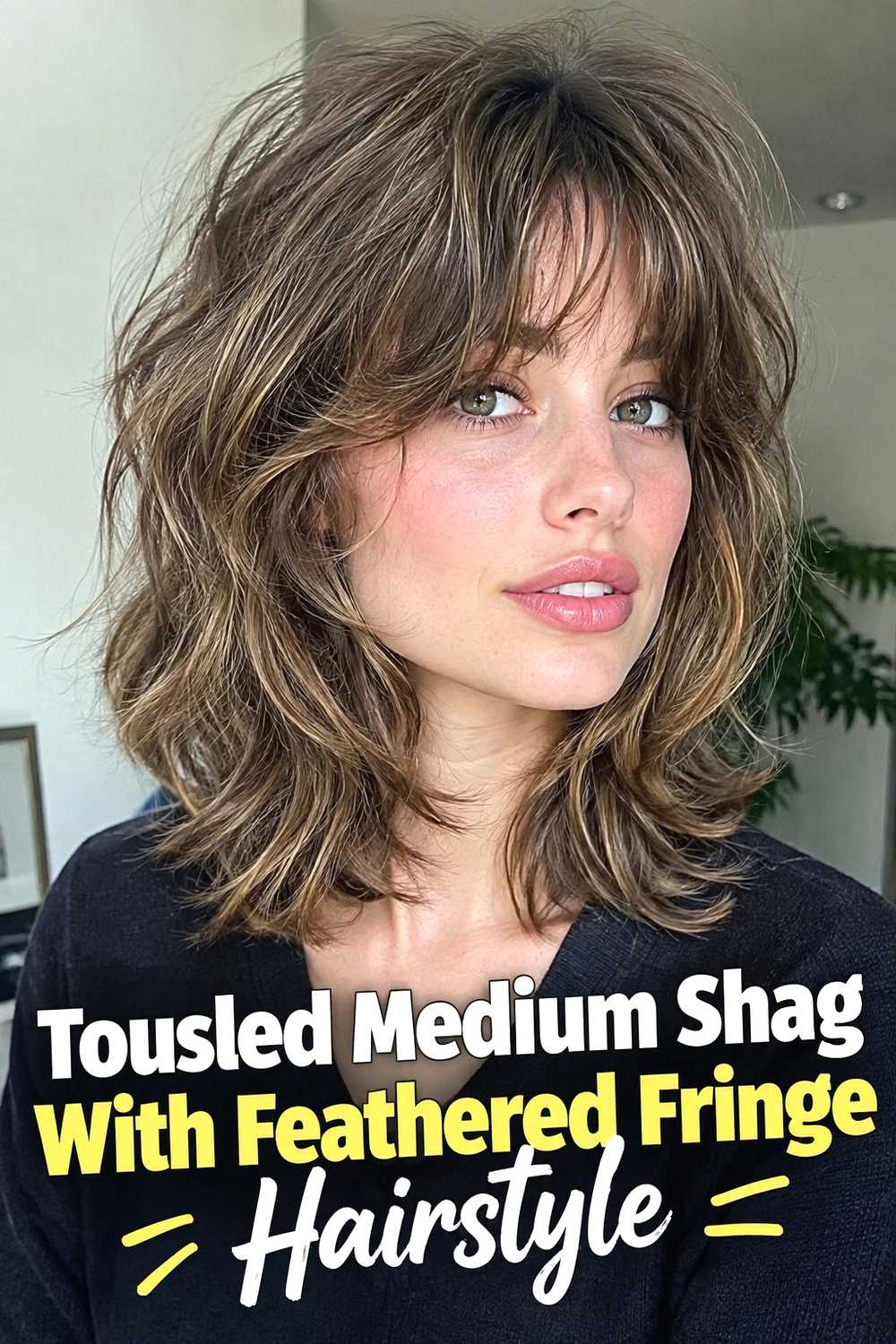
The tousled medium shag embraces deliberate irregularity, making it ideal for anyone who prefers a less polished finish. Feathered fringe falls lightly across the forehead with a few separated strands, while the rest of the haircut features soft bends moving in different directions. The layers around the cheekbones, jaw, and shoulders create texture without needing every section to be carefully curled. A matte or lightweight styling product can add separation, but the hair should still retain natural softness and shine. This version works particularly well with wavy hair or straight hair that holds a bend. The medium length keeps the overall silhouette grounded even when the surface looks intentionally loose.
Styling Notes
Create only a few alternating bends and use your fingers to loosen them rather than curling the entire head uniformly.
Best For
Natural waves or straight hair that takes light heat styling easily can recreate this relaxed finish with relatively little effort.
15. Soft Mullet Inspired Medium Shag Hairstyle
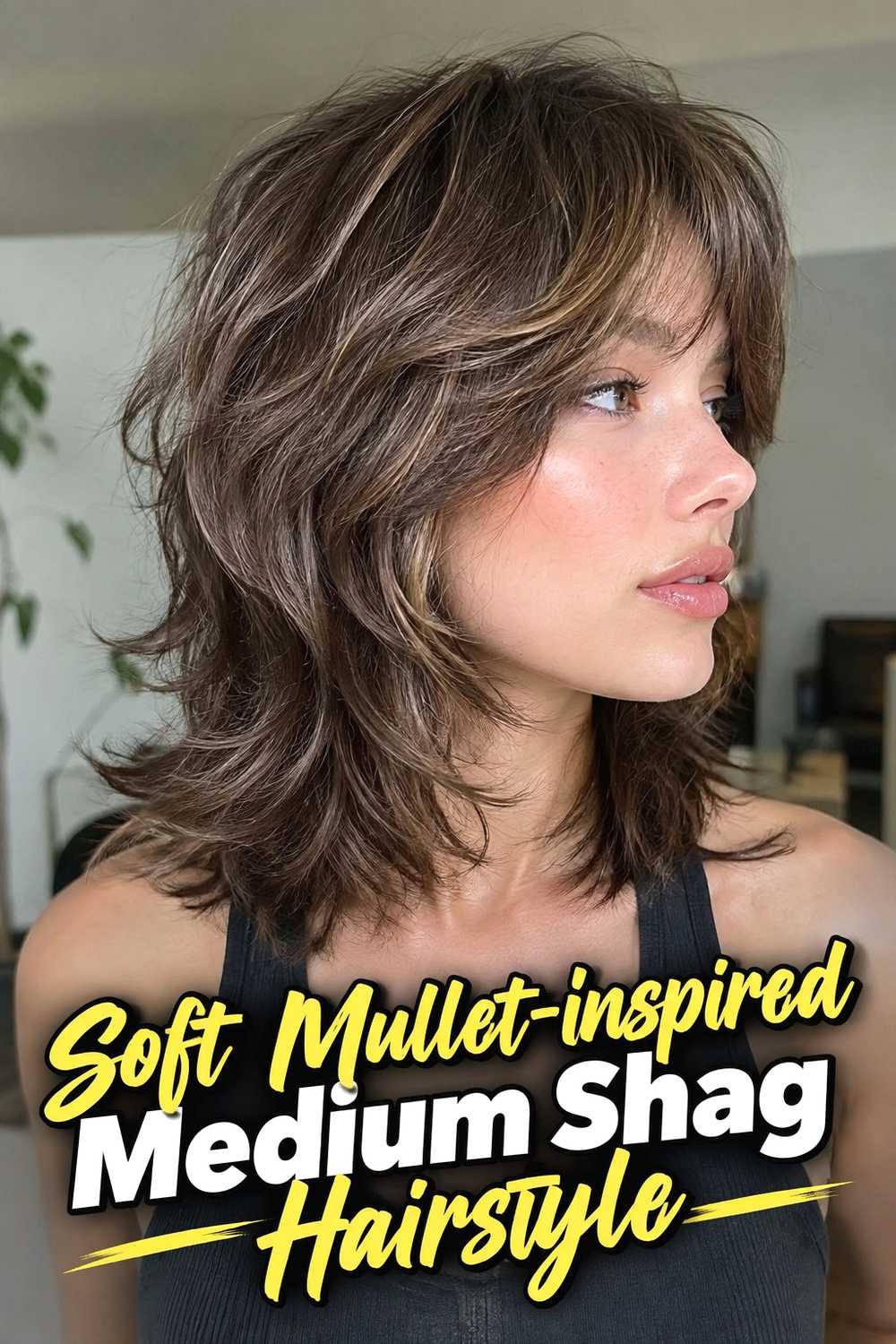
A soft mullet-inspired shag creates slightly more contrast between shorter front and crown layers and the longer back, but keeps the differences blended enough for everyday wear. Feathered fringe connects naturally to temple and cheekbone pieces, while the back extends toward the shoulders or collarbone for a more elongated outline. Unlike a dramatic mullet, the sides retain enough length to avoid a sharply disconnected silhouette. The haircut can be worn smooth for a subtle interpretation or tousled to emphasize the layered structure. This version is a good option when you want a shag with extra personality and visible shape, but still prefer softness over an intentionally extreme or highly sculpted finish.
Why It Works
The slightly shorter upper structure creates lift and character while the longer back preserves medium-length versatility.
Wear & Maintenance
As the front and crown grow, the shape gradually becomes a more traditional layered shag, making the transition relatively flexible.
16. Low Maintenance Medium Shag With Feathered Fringe Hairstyle
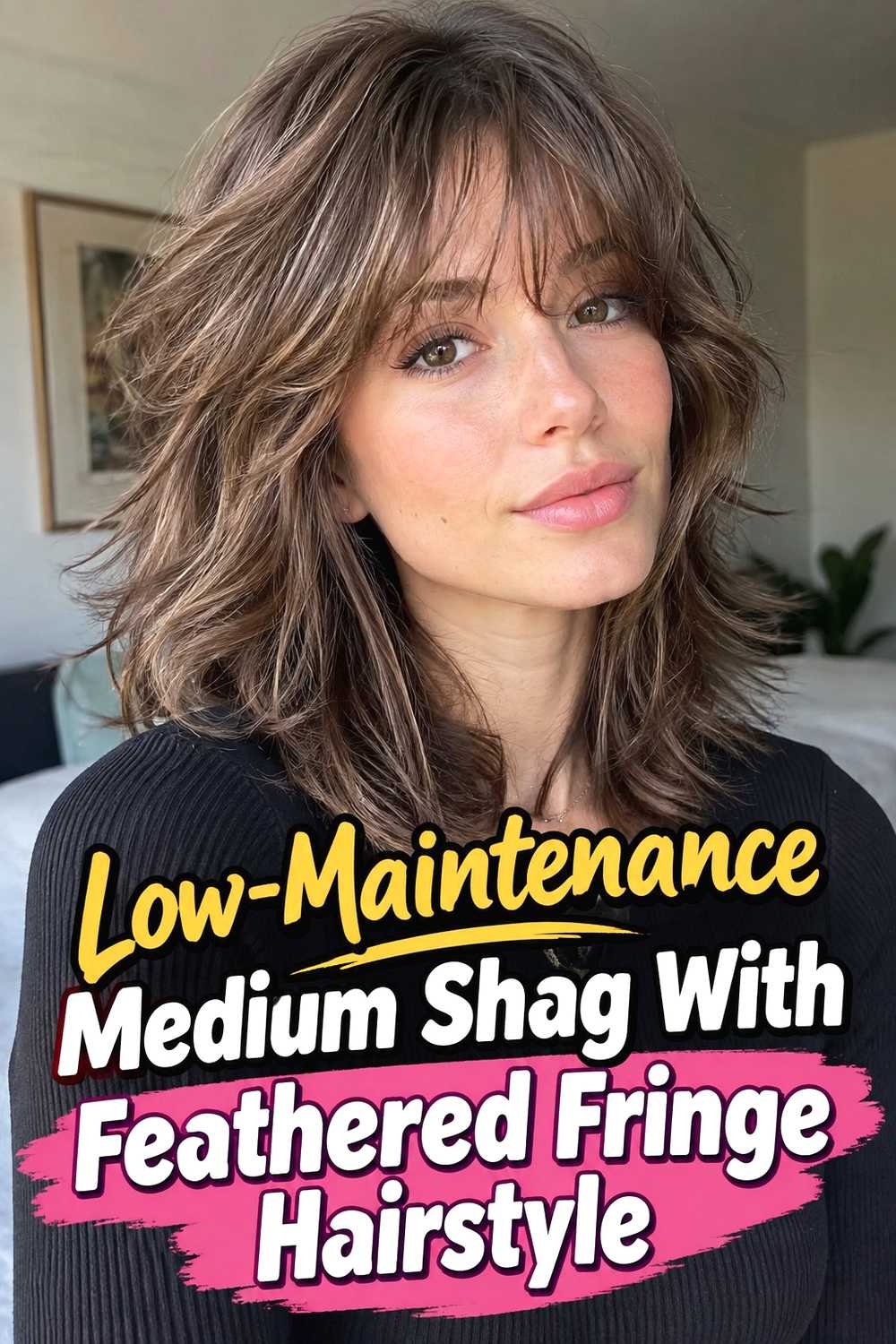
A lower-maintenance shag uses longer layers and a fringe that can be worn forward, lightly parted, or swept aside as it grows. Instead of creating very short crown pieces that need frequent styling, the upper sections remain long enough to settle naturally. Face-framing layers provide visible movement, while the shoulder-level perimeter keeps the haircut balanced. This version works best when the cut follows the hair’s natural texture and preferred part rather than relying on a specific blowout every day. Straight and softly wavy hair can often air-dry into a relaxed shape with minimal product. The feathered fringe may still need a quick root reset, but the rest of the haircut is intentionally forgiving.
Wear & Maintenance
Longer shag layers generally require less daily reshaping and blend more gradually as they grow.
Pro Tip
Choose fringe long enough to split or sweep aside when you want an easier styling day.
17. Voluminous Crown Medium Shag With Feathered Fringe Hairstyle
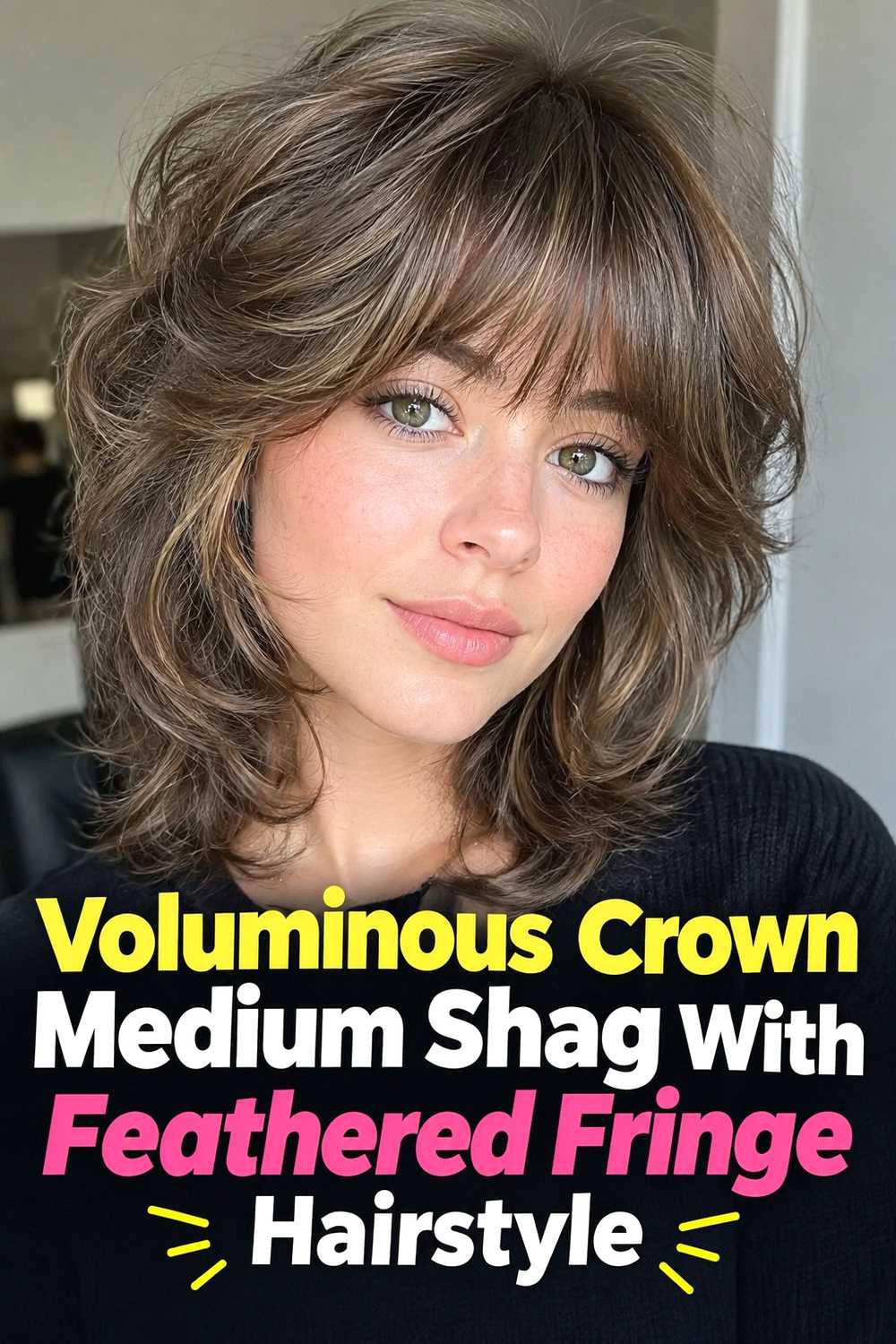
This version emphasizes lift at the crown while balancing the added volume with feathered fringe and medium-length ends. Shorter upper layers can create height without becoming extremely cropped, while the sides transition through cheekbone, jaw, and shoulder-level pieces. The fringe stays soft and tapered so it does not compete with the fuller top. A round-brush blowout or careful diffusing can enhance the crown, but the lower lengths should remain relatively relaxed to avoid making the entire haircut overly wide. Medium to thick hair can support this shape especially well because there is enough density to maintain a substantial perimeter beneath the elevated layers. The result feels lively, dimensional, and deliberately shaped.
Best For
Hair with natural body or medium-to-thick density can hold this higher-volume silhouette especially well.
Styling Notes
Concentrate root lift near the crown and upper sides while keeping the lower lengths softer and more controlled.
How to Choose the Right Look
Start with density. Fine hair usually benefits from a narrower feathered fringe, longer crown layers, and a stronger perimeter so the haircut keeps enough fullness. Thick hair can support more internal weight removal, choppier sections, and stronger crown layering without becoming sparse.
Natural texture matters just as much. Straight hair shows every change in length clearly, making soft blending important. Wavy hair naturally separates shag layers, while curly hair needs careful planning around shrinkage so the fringe and shortest pieces do not finish much higher than expected.
Consider fringe maintenance before choosing the shortest version. Longer feathered fringe offers more flexibility because it can be worn forward, parted, or swept aside. Shorter fringe creates a stronger shag identity but usually needs more regular reshaping.
Finally, decide how much styling you want. Rounded blowouts and high crown volume require more deliberate work, while tousled, wavy, and low-maintenance versions can rely more heavily on natural movement.
Final Thoughts
A medium shag with feathered fringe can range from polished and softly layered to choppy, voluminous, or intentionally tousled. Keep the layers longer for an easier grow-out, add stronger crown shaping when you want more lift, or concentrate the texture around the face for a softer change. The most practical version will complement your natural density, texture, and everyday styling routine.
FAQs
1. What is a feathered fringe on a medium shag?
A feathered fringe uses light, tapered pieces across the forehead rather than a dense blunt line. Longer sections near the temples typically blend into the shag’s face-framing layers.
2. Can fine hair wear a medium shag with feathered fringe?
Yes. Fine hair generally benefits from fewer layers, a narrower fringe section, and a stronger perimeter to preserve visible fullness.
3. Does a medium shag work with naturally wavy hair?
Yes. Natural waves can help separate the different layer lengths, often making the shag texture visible without extensive heat styling.
4. Can curly hair have feathered fringe?
Yes. On curly hair, the feathered effect comes from lighter, graduated curls around the forehead rather than straight tapered strands. Shrinkage should be considered when choosing the fringe length.
5. Is a medium shag difficult to maintain?
Maintenance depends on the layer and fringe lengths. Longer, softer layers usually grow out more gradually, while shorter fringe and strong crown layers may need more frequent reshaping.
Save your favorite medium shag with feathered fringe ideas, share the looks you love, and explore more layered haircut inspiration for your next style.