18 Air-Dried Long Layer Hairstyles
Air-dried long layers bring out natural bends, curls, movement, and texture without requiring every strand to look perfectly polished or heat-styled.
The right layered haircut can make air-drying feel more intentional by giving natural texture room to form instead of leaving long hair hanging in one heavy shape. Face-framing pieces, tapered ends, and strategically placed internal layers can reveal waves or curls while preserving enough density for the hair to still look full.
These ideas range from soft and subtle to tousled, curly, beachy, and shag-inspired. When choosing your version, consider how your hair behaves while drying naturally, where it tends to gain or lose volume, and how much separation or definition you prefer. The goal is not perfectly uniform texture, but a believable layered shape that works with your natural movement.
Quick List
- Soft Air Dried Long Layers Hairstyle
- Wavy Air Dried Long Layers Hairstyle
- Curly Air Dried Long Layers Hairstyle
- Tousled Air Dried Long Layers Hairstyle
- Face Framing Air Dried Long Layers Hairstyle
- Air Dried Long Layers With Curtain Bangs Hairstyle
- Air Dried Long Layers With Wispy Bangs Hairstyle
- Air Dried Long Layers With Side Bangs Hairstyle
- Piecey Air Dried Long Layers Hairstyle
- Beachy Air Dried Long Layers Hairstyle
- Air Dried Long Layers With Natural Volume Hairstyle
- Defined Air Dried Long Layers Hairstyle
- Airy Air Dried Long Layers Hairstyle
- Shaggy Air Dried Long Layers Hairstyle
- U Shaped Air Dried Long Layers Hairstyle
- Softly Tapered Air Dried Long Layers Hairstyle
- Glossy Air Dried Long Layers Hairstyle
- Romantic Air Dried Long Layers Hairstyle
1. Soft Air Dried Long Layers Hairstyle
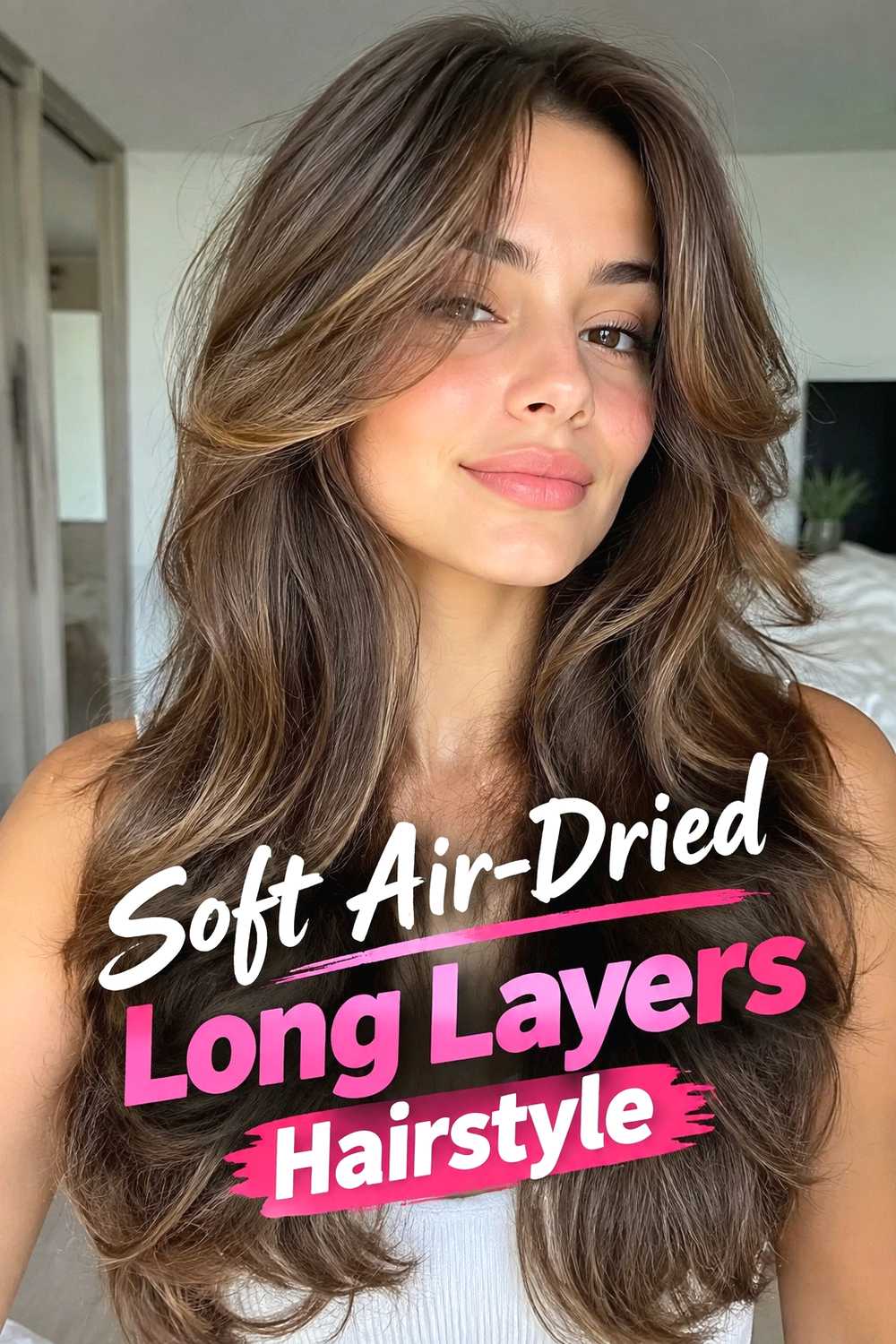
Soft air-dried long layers keep the overall shape gentle, blended, and easy to wear. Instead of dramatic steps, the layers transition gradually from shorter face-framing pieces into longer lengths, allowing natural bends to appear without making the haircut look overly textured. This version is especially useful if your hair dries mostly straight with a slight wave or irregular movement through the ends. A lightweight leave-in product can help keep the surface smooth while preserving natural texture. The finished look should still have a little softness and variation rather than appearing rigid. Keeping the lower perimeter relatively full also helps the hair look substantial even without a styled blowout.
Hair Type & Length
This approach works particularly well on long straight-to-wavy hair with enough natural movement to show subtle layering.
Wear & Maintenance
Minimal reshaping is usually needed between washes, although the front pieces may benefit from a quick refresh with damp hands.
2. Wavy Air Dried Long Layers Hairstyle
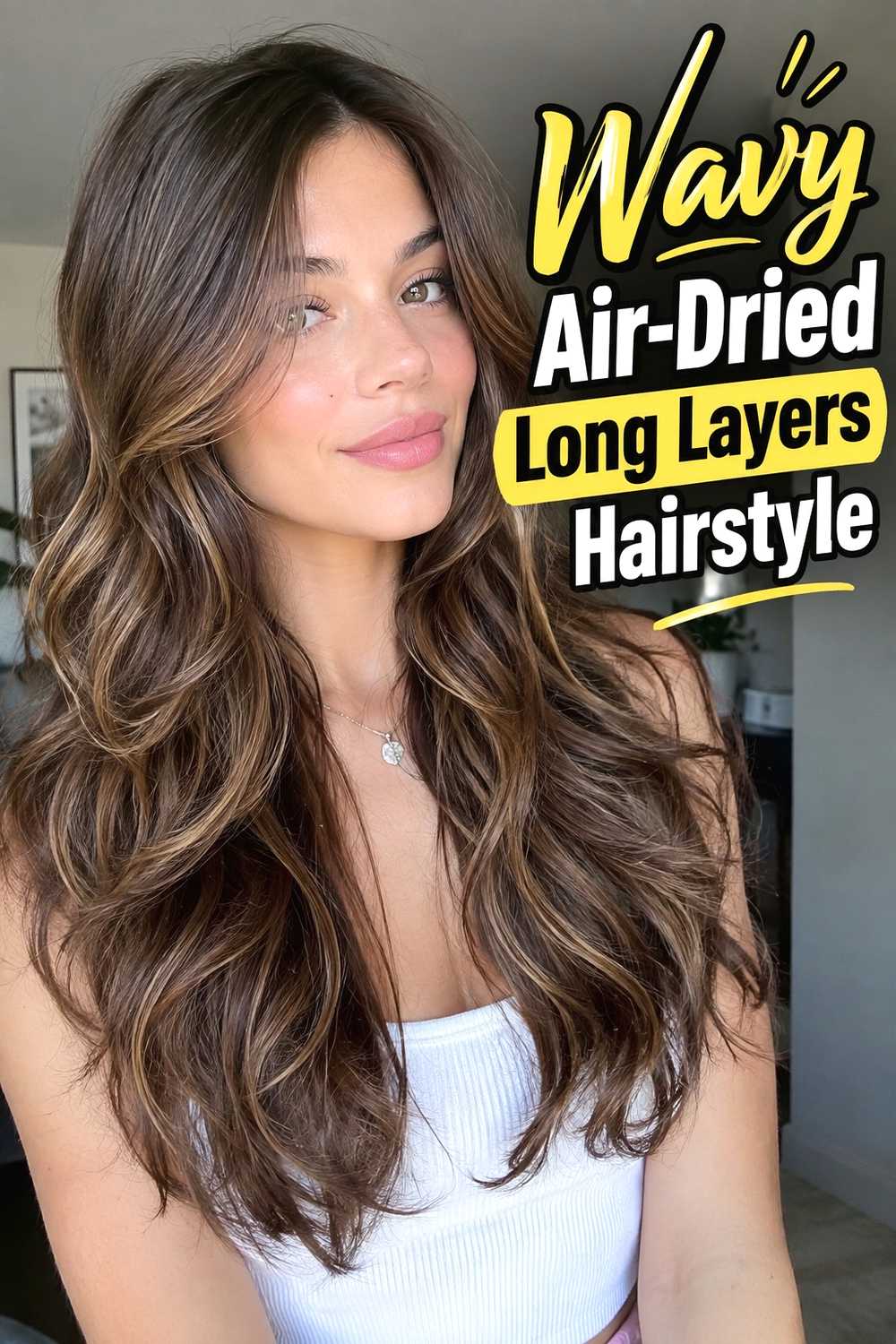
Wavy air-dried layers allow natural S-shaped movement to become the main feature of the haircut. Carefully placed layers prevent long waves from stacking heavily at the bottom, while shorter sections around the face encourage more visible movement near the cheeks and collarbones. The result should feel loose and irregular rather than perfectly curled. Applying a small amount of lightweight styling product to damp hair can help support wave formation without creating stiffness. Scrunching gently and then leaving the hair alone while it dries often preserves cleaner wave patterns. Once dry, minimal handling helps reduce unwanted frizz and keeps the natural separation between each layered section visible.
Styling Notes
Distribute product while the hair is damp, then encourage the natural wave pattern with gentle scrunching rather than repeatedly touching the hair as it dries.
Why It Works
Different layer lengths let the waves sit at varied heights, creating movement that would be less visible in a heavy one-length cut.
3. Curly Air Dried Long Layers Hairstyle
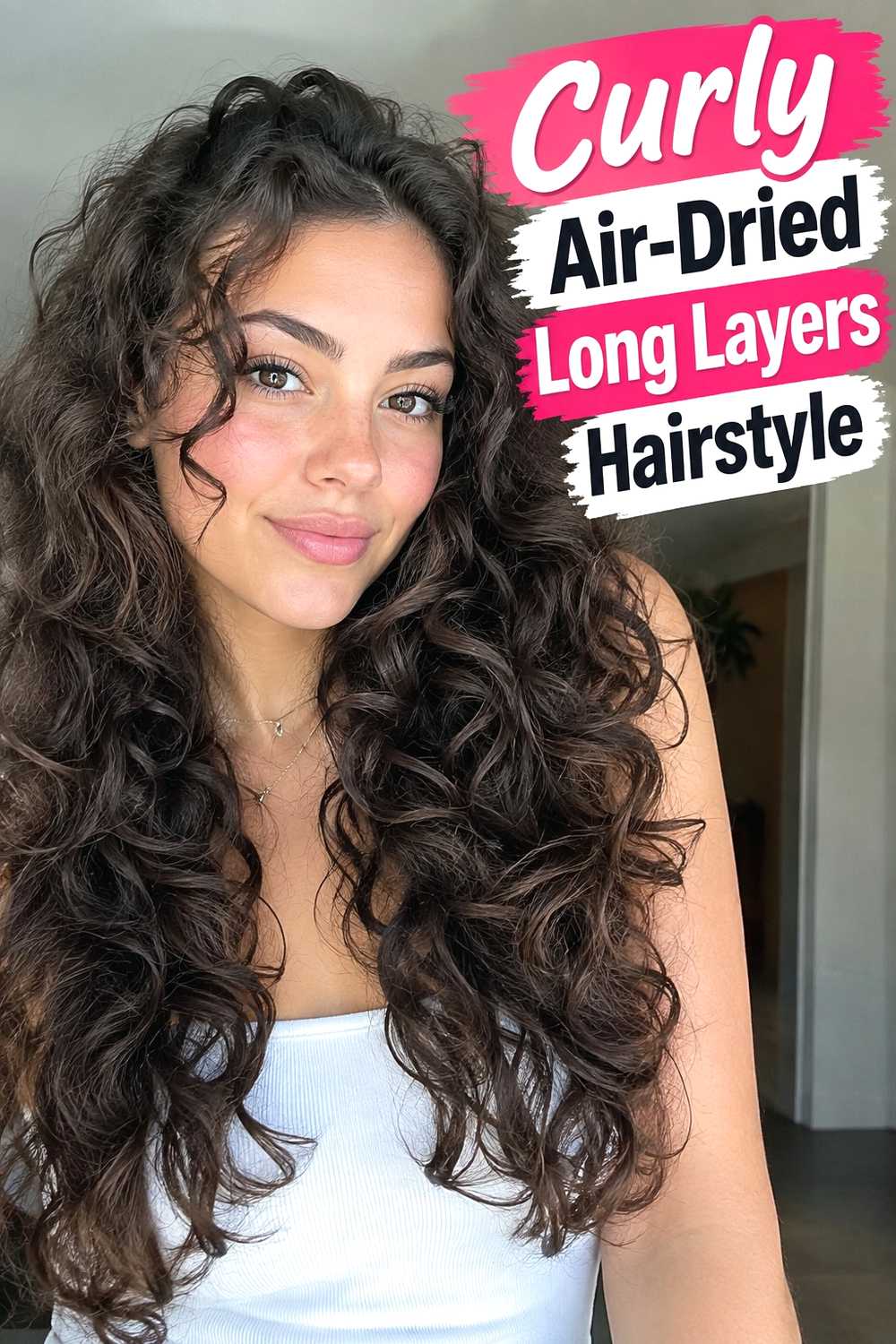
Curly air-dried long layers use natural curl formation to create a dimensional, rounded shape without needing a heat-styled finish. Shorter sections can lift around the face and crown, while longer curls maintain length and weight through the bottom. Because different curl patterns shrink by different amounts, the placement of each layer matters more than making every section perfectly symmetrical. The most believable result includes varied curl sizes, natural separation, and a few soft flyaways rather than identical ringlets. Applying curl-friendly styling products to wet or damp hair can help with definition, but the haircut itself should provide the basic shape. Avoid brushing once the curls have begun drying.
Hair Type & Length
Long naturally curly hair benefits most when the cut accounts for shrinkage, density, and the way curls sit when fully dry.
Pro Tip
Judge the shortest layer by its dry position, not only by how long it appears when wet or stretched.
4. Tousled Air Dried Long Layers Hairstyle
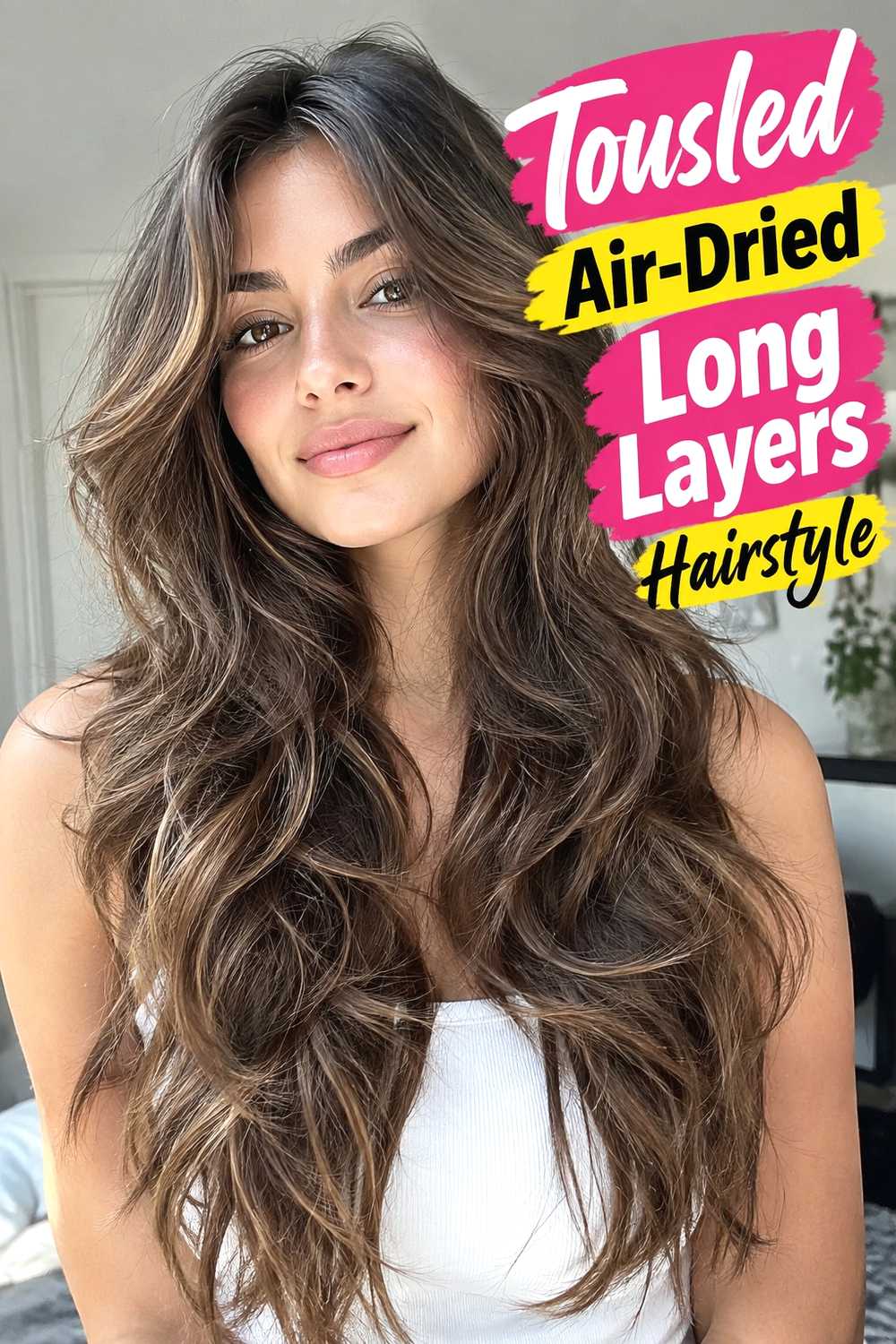
Tousled air-dried layers are designed to look relaxed, textured, and slightly undone rather than carefully arranged. The cut includes enough variation through the lengths to create movement, but the perimeter stays substantial so the style does not appear overly thin. Natural bends, slight flips, and irregular separation become part of the finished look. This variation can be especially flattering on hair that rarely dries the same way twice, because it embraces inconsistency instead of fighting it. A light texture cream or spray can help individual pieces separate naturally. Avoid overworking the hair once it is dry, since too much manipulation can turn soft tousling into unwanted puffiness.
Why It Works
The deliberately relaxed finish makes natural changes in direction look intentional instead of requiring every section to match.
Wear & Maintenance
This style is forgiving between washes and can often be revived by lightly dampening a few sections and allowing them to reset naturally.
5. Face Framing Air Dried Long Layers Hairstyle
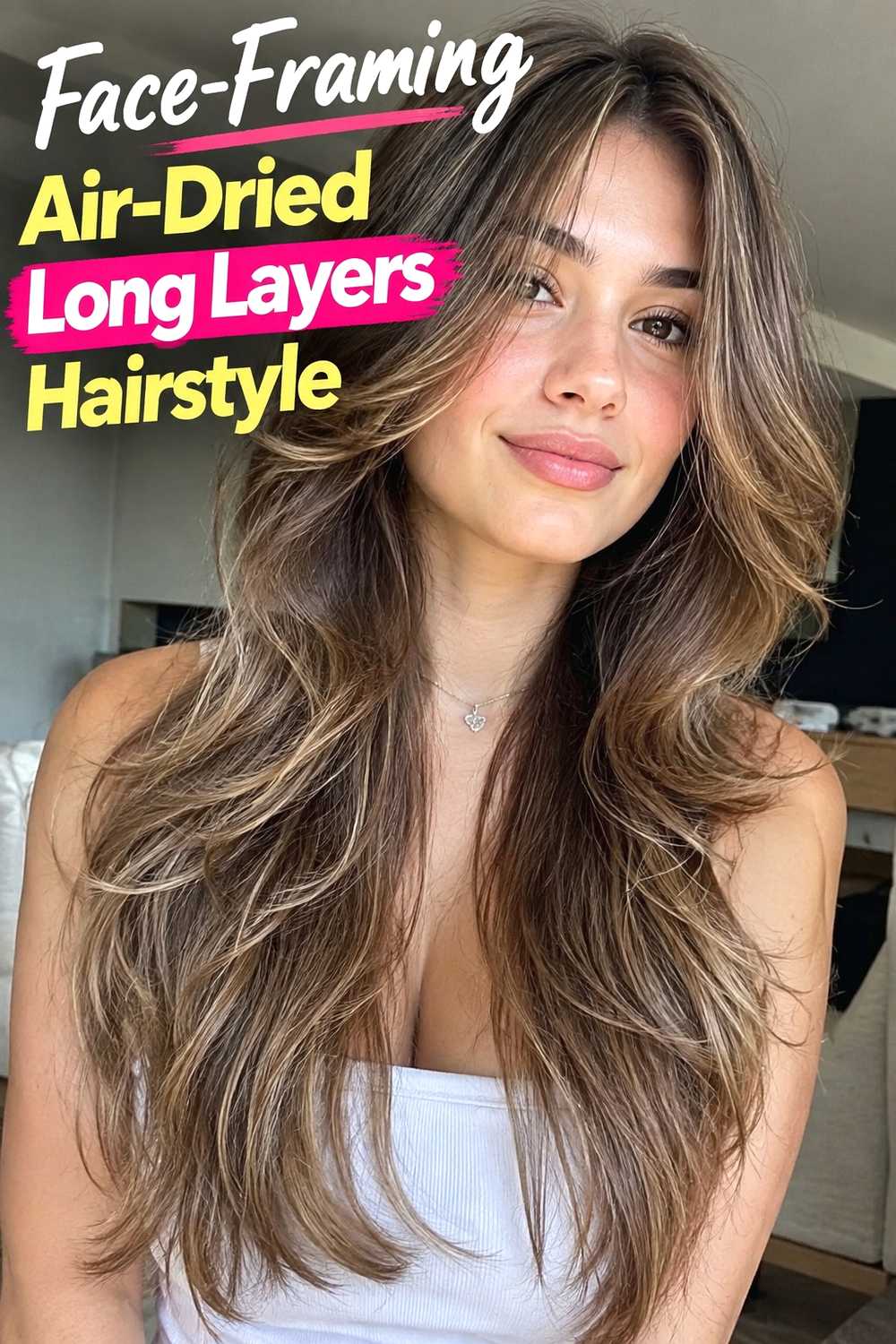
Face-framing air-dried layers concentrate the most noticeable movement around the cheeks, jaw, and collarbone while leaving the back comparatively full. This is a smart option if you want your natural texture to feel more shaped without adding heavy layering throughout the entire haircut. The shorter front sections can bend, wave, or curl independently as they dry, creating a softer outline around the face. Keeping these pieces long enough to tuck behind the ears makes the cut more versatile on days when the texture dries unpredictably. The back can remain smooth and substantial, which helps maintain length while still giving the overall hairstyle a lighter and more intentional appearance.
Best For
This version suits anyone who wants visible movement near the face while preserving fullness through the back and ends.
Pro Tip
Avoid cutting the front layers too short unless you already know how strongly your natural texture shrinks or springs upward.
6. Air Dried Long Layers With Curtain Bangs Hairstyle
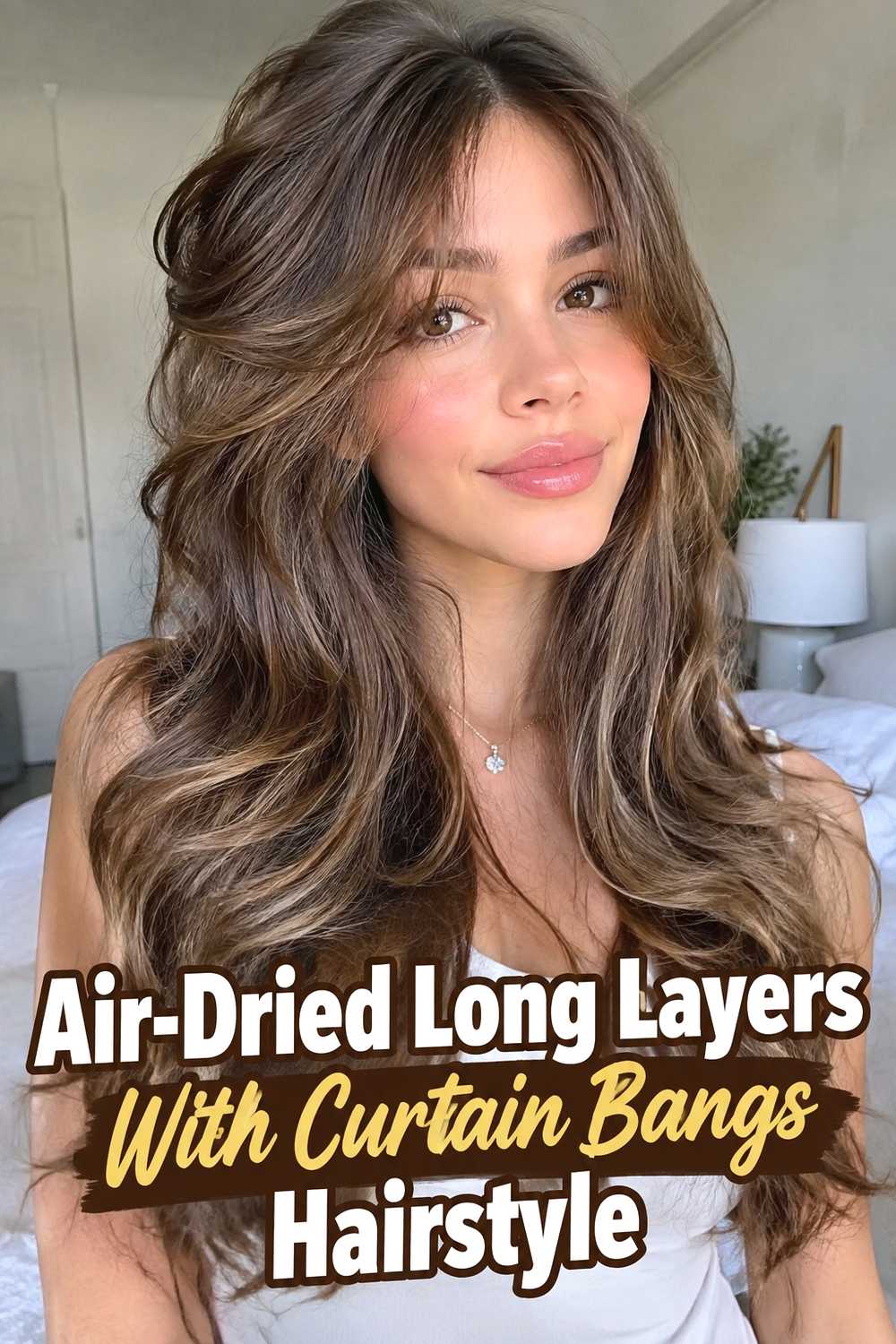
Curtain bangs pair naturally with long air-dried layers because their divided shape can blend into face-framing pieces without needing a perfectly smooth finish. The fringe opens around the center and falls toward the cheekbones, where it transitions into longer layers. On naturally wavy hair, slight bends in the bangs can make the look feel especially soft and effortless. The key is keeping the fringe long enough to move with the rest of the haircut instead of requiring constant heat styling. If your bangs dry in an uneven direction, shaping them while still damp and allowing them to settle around your preferred part can improve the final result without creating a rigid appearance.
Styling Notes
Position the curtain fringe while damp, then let it dry with as little handling as possible so the natural bend remains soft.
Wear & Maintenance
Longer curtain bangs are relatively flexible because they can be tucked, parted wider, or blended into the front layers as they grow.
7. Air Dried Long Layers With Wispy Bangs Hairstyle
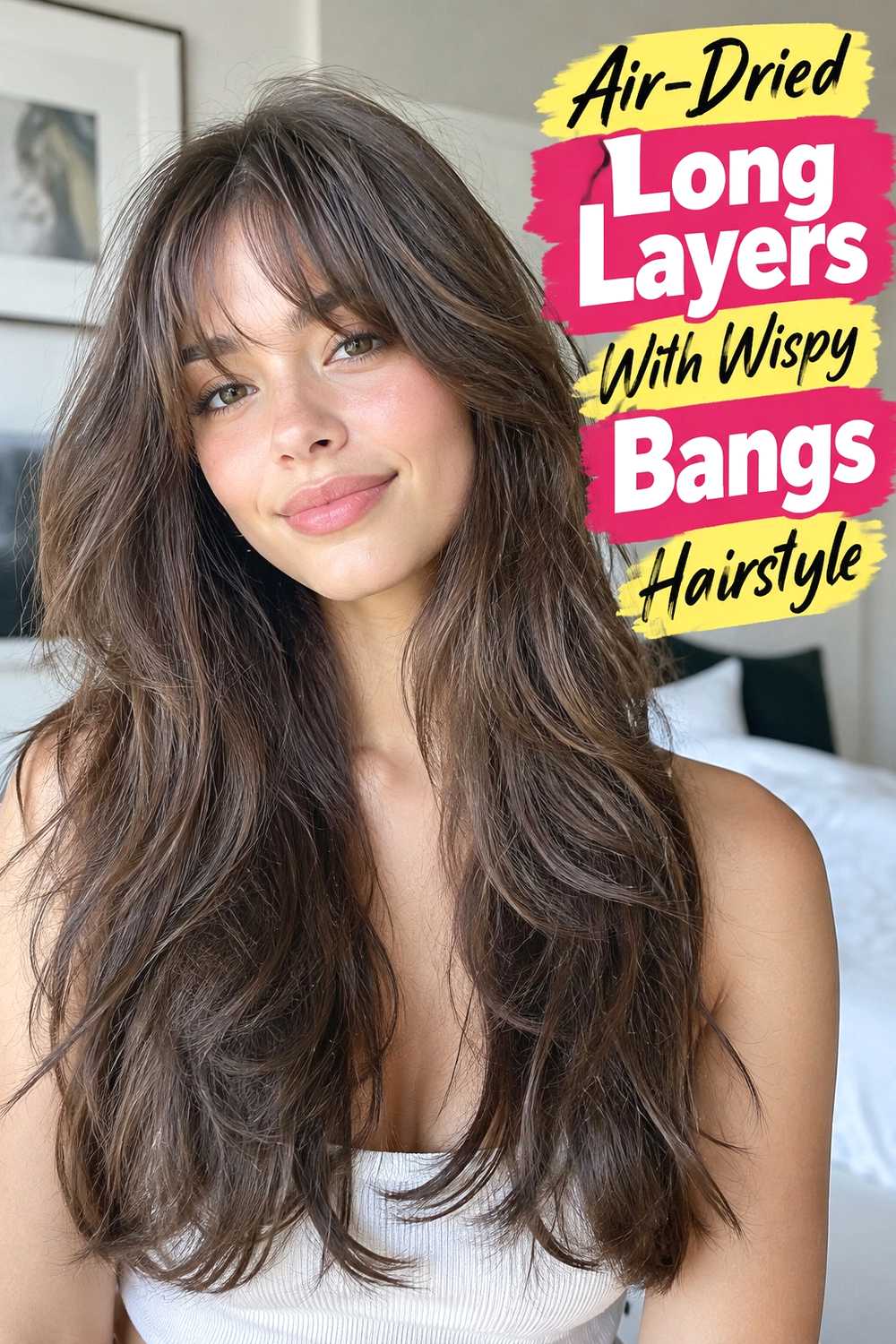
Wispy bangs give air-dried long layers a delicate front without adding the density of a full fringe. Fine pieces fall across the forehead with slight separation, while longer temple sections connect the bangs to the layered sides. This combination works best when the fringe is light enough to move naturally but not so thin that it looks accidental. Because bangs can dry faster than the rest of the hair, shaping them shortly after washing can make a noticeable difference. The long layers can remain more relaxed, allowing waves or subtle bends to form on their own. Lightweight products are especially important because heavy creams can quickly make fine fringe appear oily or clumped.
Wear & Maintenance
Wispy fringe may need more frequent washing or damp refreshing than the rest of the hair because it sits directly against the forehead.
Pro Tip
Use only a trace of styling product on the bangs and keep richer products concentrated through the longer mid-lengths and ends.
8. Air Dried Long Layers With Side Bangs Hairstyle
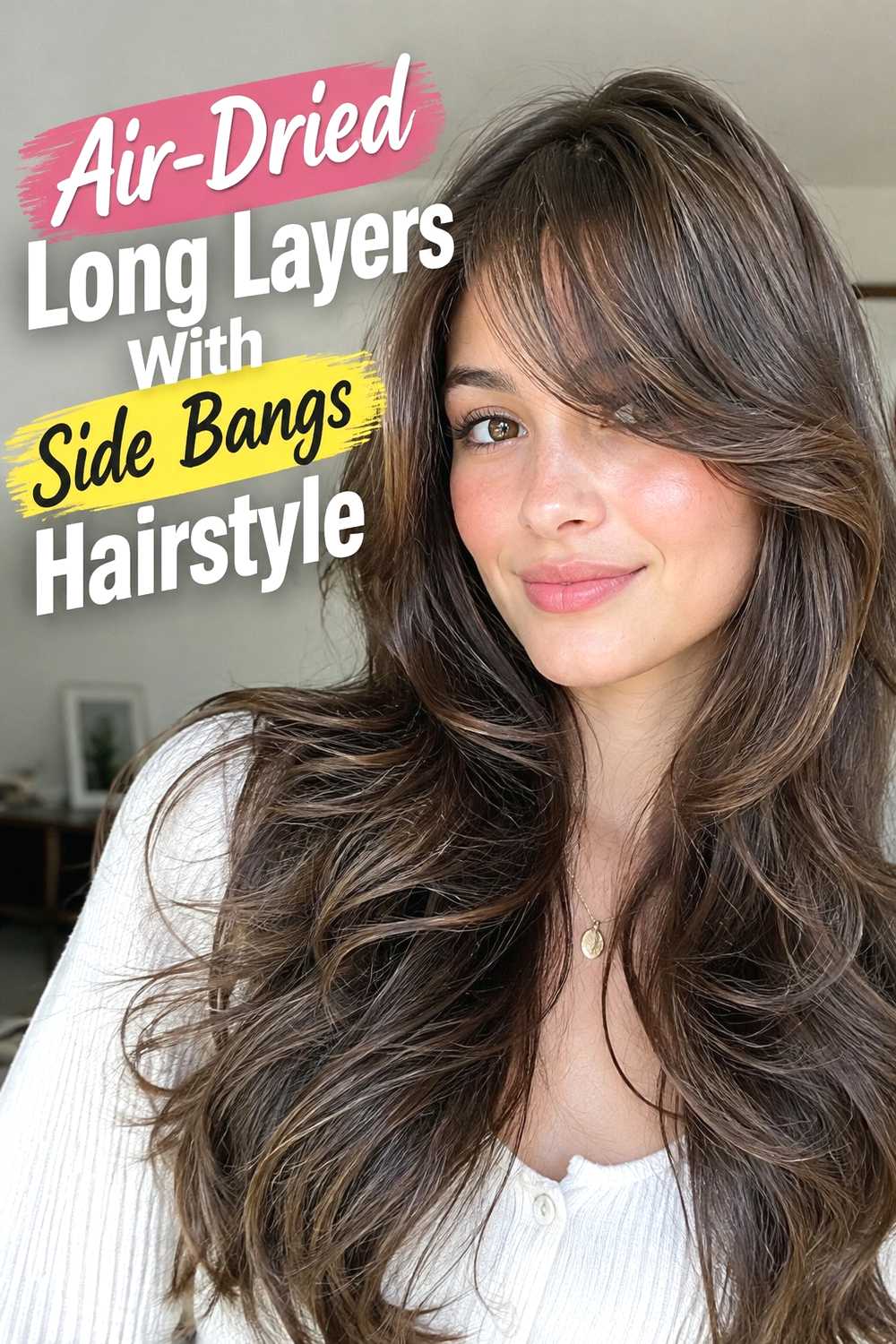
Long side bangs add a directional element to air-dried layers by sweeping across the forehead and blending into the shorter front sections. This works particularly well if your hair naturally falls into a side part, because the fringe can follow that pattern instead of being forced into an unfamiliar direction. The remaining layers can dry into loose waves, bends, or straighter sections while still maintaining a cohesive shape. A longer fringe is usually easier to manage without heat because it has enough weight to settle naturally. If the bangs tend to separate awkwardly, arranging them with damp fingers early in the drying process can help guide the finished sweep without making it look overly styled.
Best For
This variation is useful for naturally side-parted hair and anyone who prefers a sweeping fringe instead of center-parted bangs.
Styling Notes
Guide the bangs across the forehead while damp, then avoid repeatedly pushing them back as they dry so the direction can set naturally.
9. Piecey Air Dried Long Layers Hairstyle
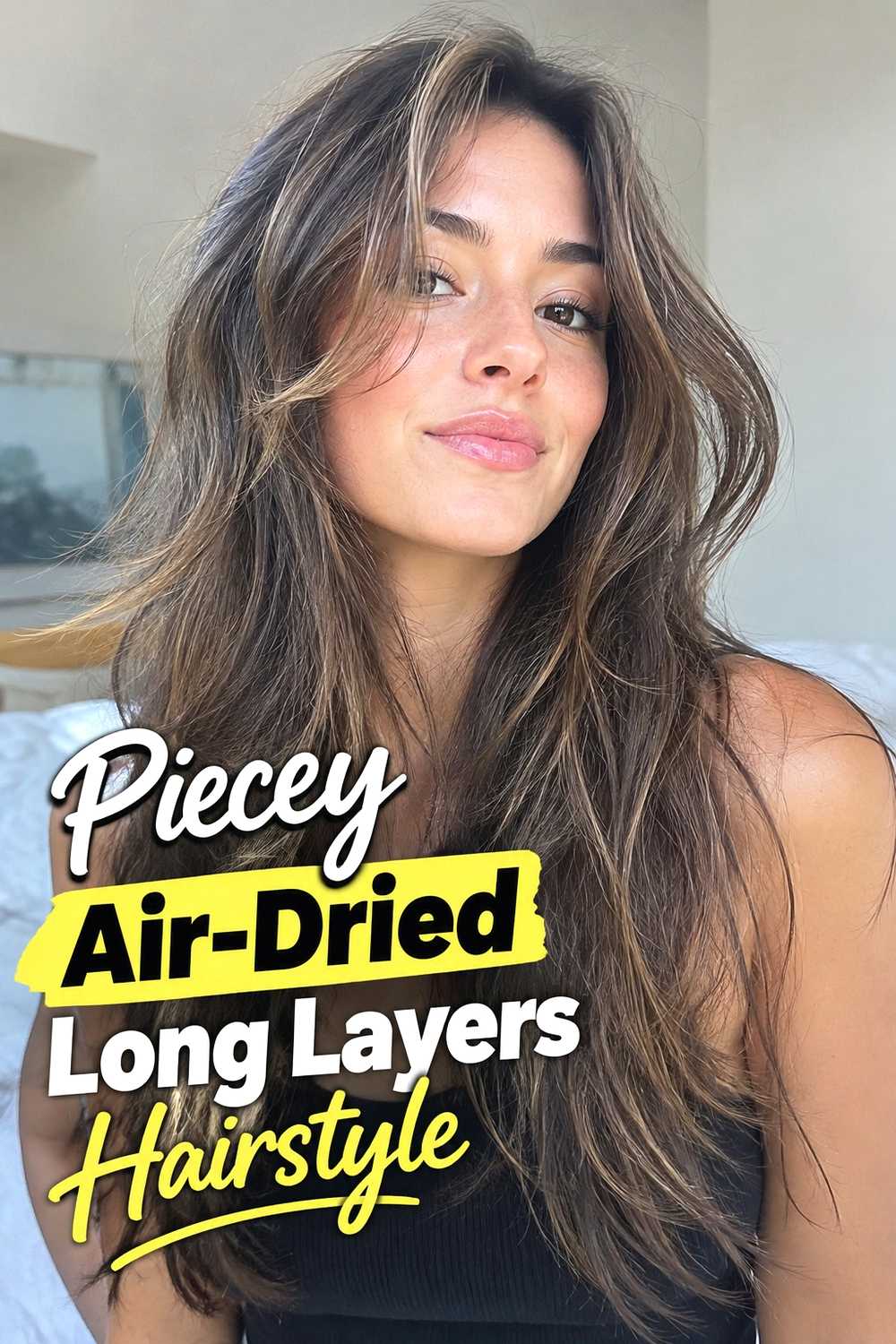
Piecey air-dried layers highlight individual sections through the mid-lengths and ends, giving long hair more visible separation. Rather than aiming for a perfectly smooth surface, this look allows strands to group naturally into soft pieces as the hair dries. The result can work particularly well on straight-to-wavy hair that already develops slight bends or irregular texture. A small amount of flexible styling cream can help emphasize the ends without making them stiff or sticky. The haircut should maintain enough density at the perimeter so the piecey effect feels intentional rather than sparse. Face-framing sections can also be lightly separated to connect the texture from front to back.
Why It Works
Visible separation reveals the different layer lengths without requiring curls, rollers, or a structured blowout.
Pro Tip
Apply product to damp ends in small amounts, since too much can make natural separation look heavy instead of soft.
10. Beachy Air Dried Long Layers Hairstyle
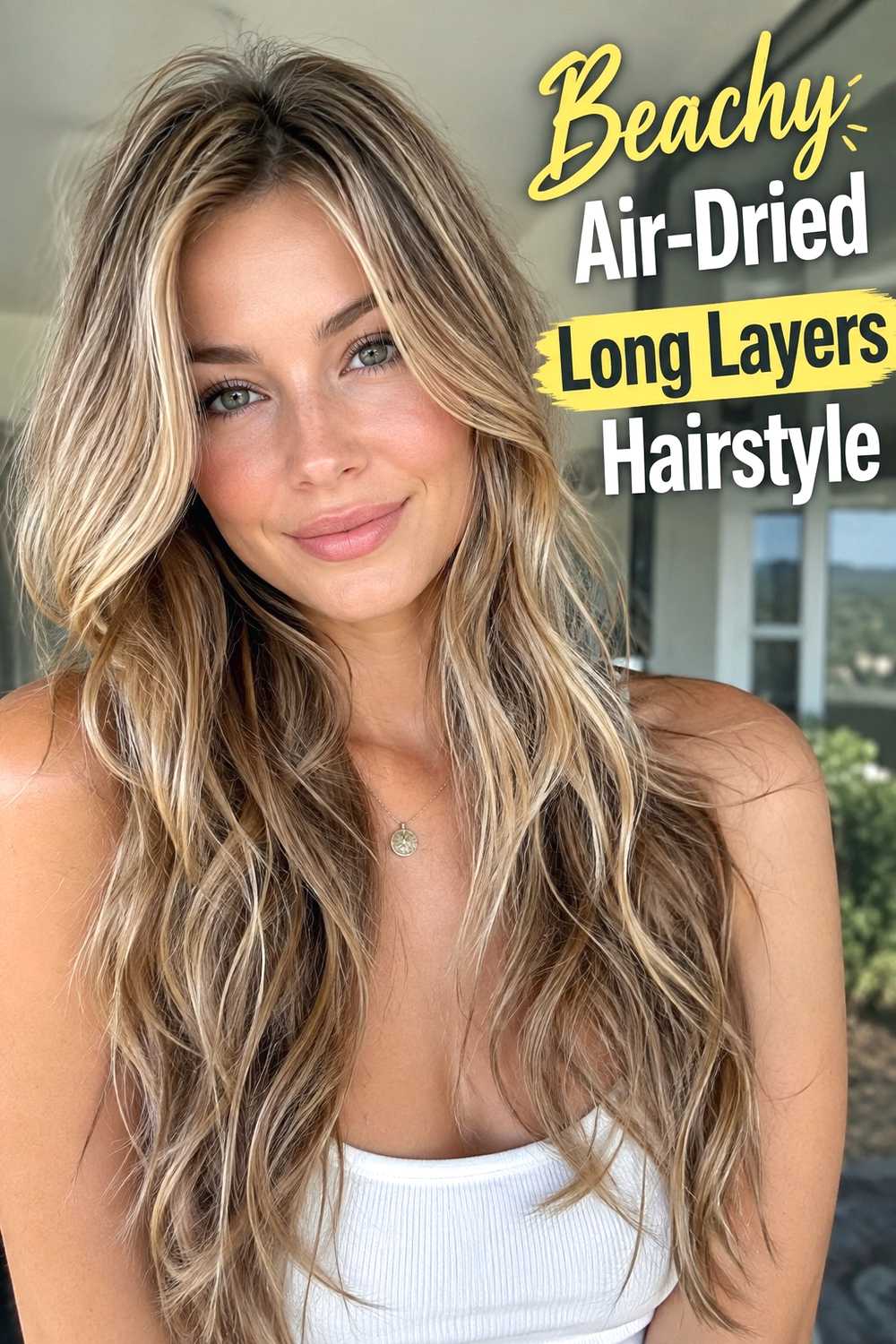
Beachy air-dried layers combine loose waves, irregular bends, and textured ends for a relaxed finish that does not rely on perfectly formed curls. The layers should be long enough to preserve fullness while allowing natural movement to appear at several levels. A few shorter pieces around the face can create extra shape near the cheekbones and shoulders. This look is especially effective when the hair already has some wave, since the styling process can focus on encouraging rather than manufacturing texture. Scrunching damp hair lightly and leaving the ends less defined keeps the finish casual. The goal is movement and separation, not dry, overly rough texture or artificially stiff waves.
Styling Notes
Encourage bends through the mid-lengths while leaving some ends straighter so the texture looks naturally varied.
Best For
This style works well on naturally wavy hair or straight hair that develops noticeable bends when allowed to dry without brushing.
11. Air Dried Long Layers With Natural Volume Hairstyle
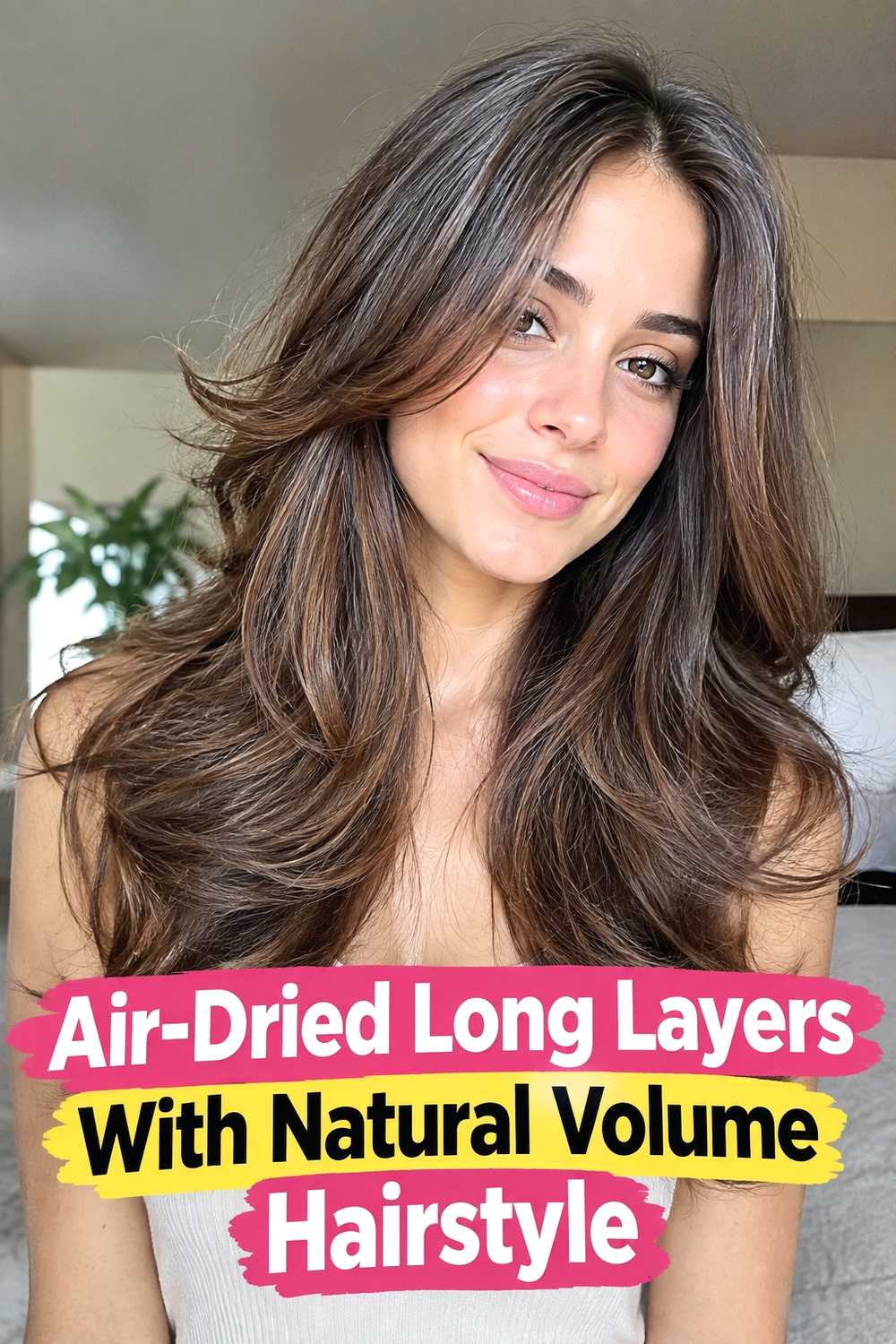
Natural-volume air-dried layers are cut to make the most of body that already exists in the hair. Shorter upper sections can help lift the silhouette, while longer layers through the sides and back maintain enough weight to prevent excessive expansion. This variation is especially useful for hair that tends to become full as it dries, whether from wave, curl, density, or a combination of factors. Rather than flattening that volume, the haircut distributes it more evenly so the shape feels balanced. Lightweight styling products can provide control without collapsing the roots. The most flattering result usually includes movement at the crown and sides with a defined perimeter through the lower lengths.
Hair Type & Length
Medium-density to thick long hair with natural wave or curl often has enough body to create this shape without deliberate root styling.
Why It Works
Strategic layering redistributes existing volume, helping the hair feel shaped instead of simply large or bottom-heavy.
12. Defined Air Dried Long Layers Hairstyle
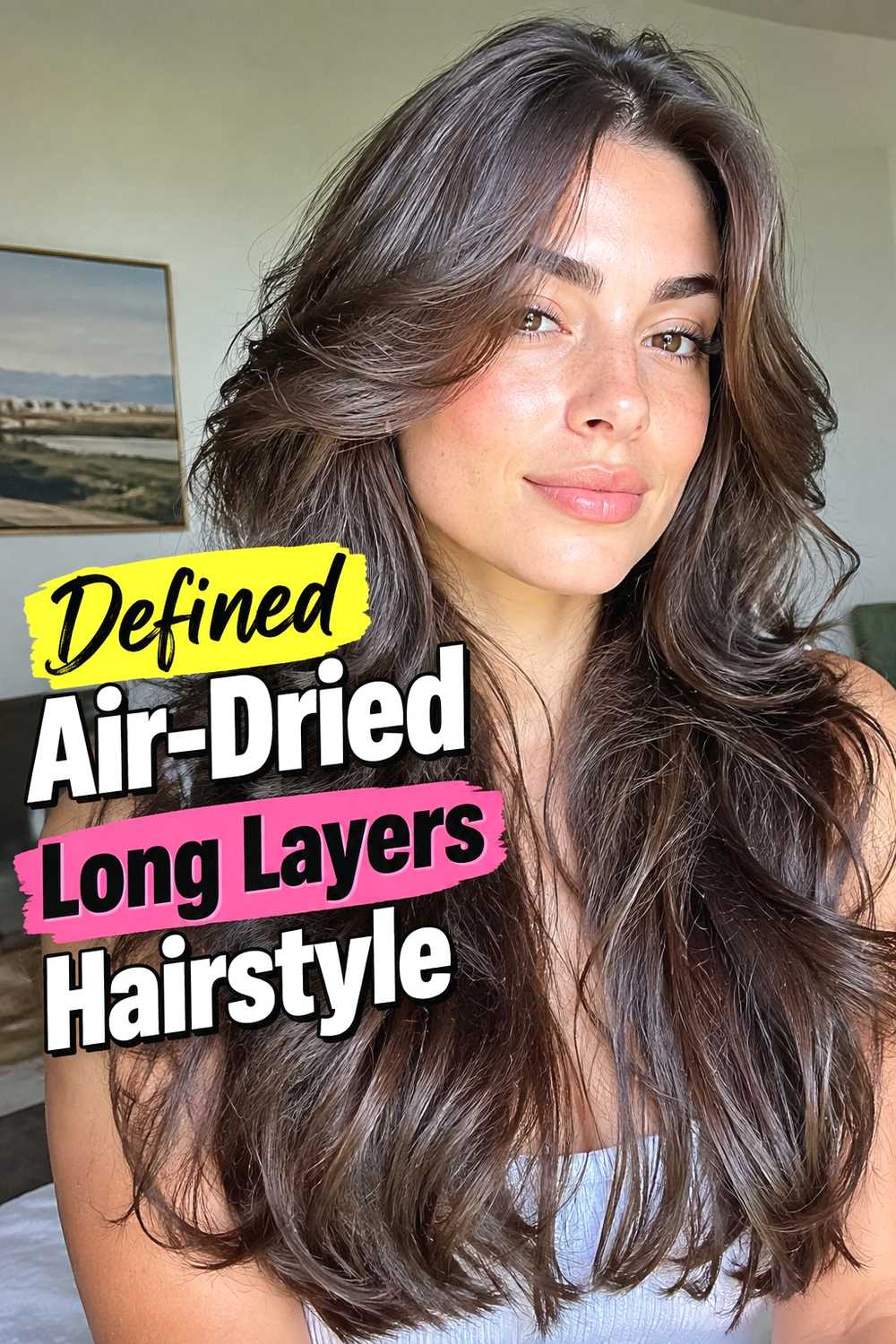
Defined air-dried layers focus on cleaner wave or curl grouping while still preserving a natural finish. Instead of fluffy separation, the hair forms recognizable sections that follow the haircut’s different lengths. This approach can make face-framing pieces, side layers, and longer back sections easier to see even without heat styling. Product choice matters because the hair needs enough hold to maintain definition while staying flexible. Applying styling products evenly to wet or damp hair and then allowing the shape to dry undisturbed often gives the most consistent result. Once fully dry, gently separating only a few areas can add movement without breaking apart every wave or curl into unnecessary frizz.
Styling Notes
Apply product before the hair begins drying, then minimize touching until the strands are completely dry and the natural pattern has formed.
Wear & Maintenance
Definition can often be refreshed by dampening selected sections rather than rewetting and restyling all of the hair.
13. Airy Air Dried Long Layers Hairstyle
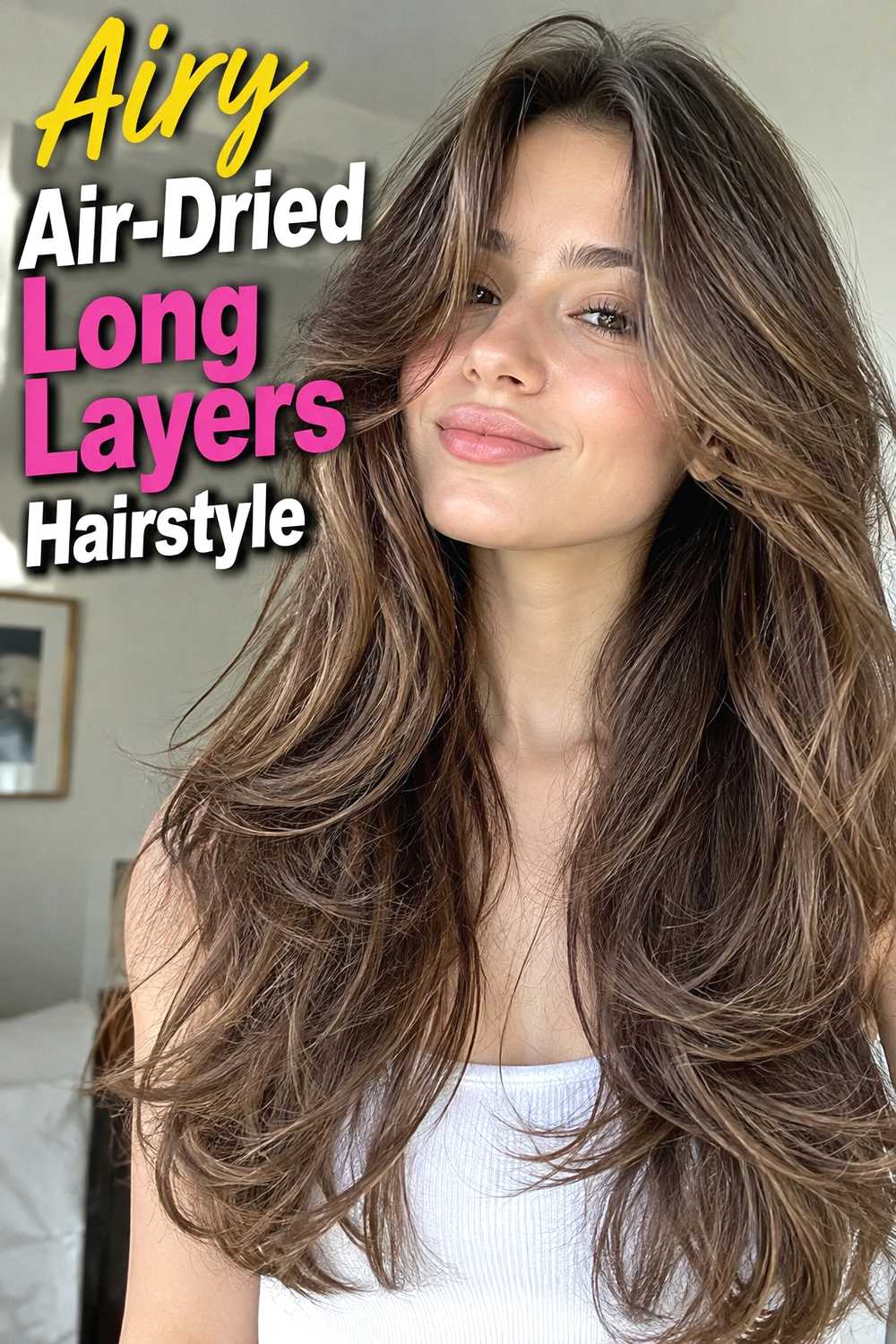
Airy air-dried layers emphasize light movement and soft separation without removing so much density that long hair loses its shape. The upper layers are blended carefully so they can lift and move independently, while the longest sections remain substantial enough to anchor the silhouette. This version works especially well when the natural texture is subtle rather than strongly curly. Gentle waves, small bends, and natural root lift create most of the interest. Lightweight products are important because anything too rich can collapse the floating quality that makes this style appealing. The finished result should feel effortless and touchable, with visible strands and soft movement rather than an overly polished or artificially voluminous surface.
Best For
This approach suits long hair with light natural movement and enough density to support layering without making the ends look thin.
Pro Tip
Keep heavier conditioners and oils mainly on the lower lengths if your roots lose volume easily during air-drying.
14. Shaggy Air Dried Long Layers Hairstyle
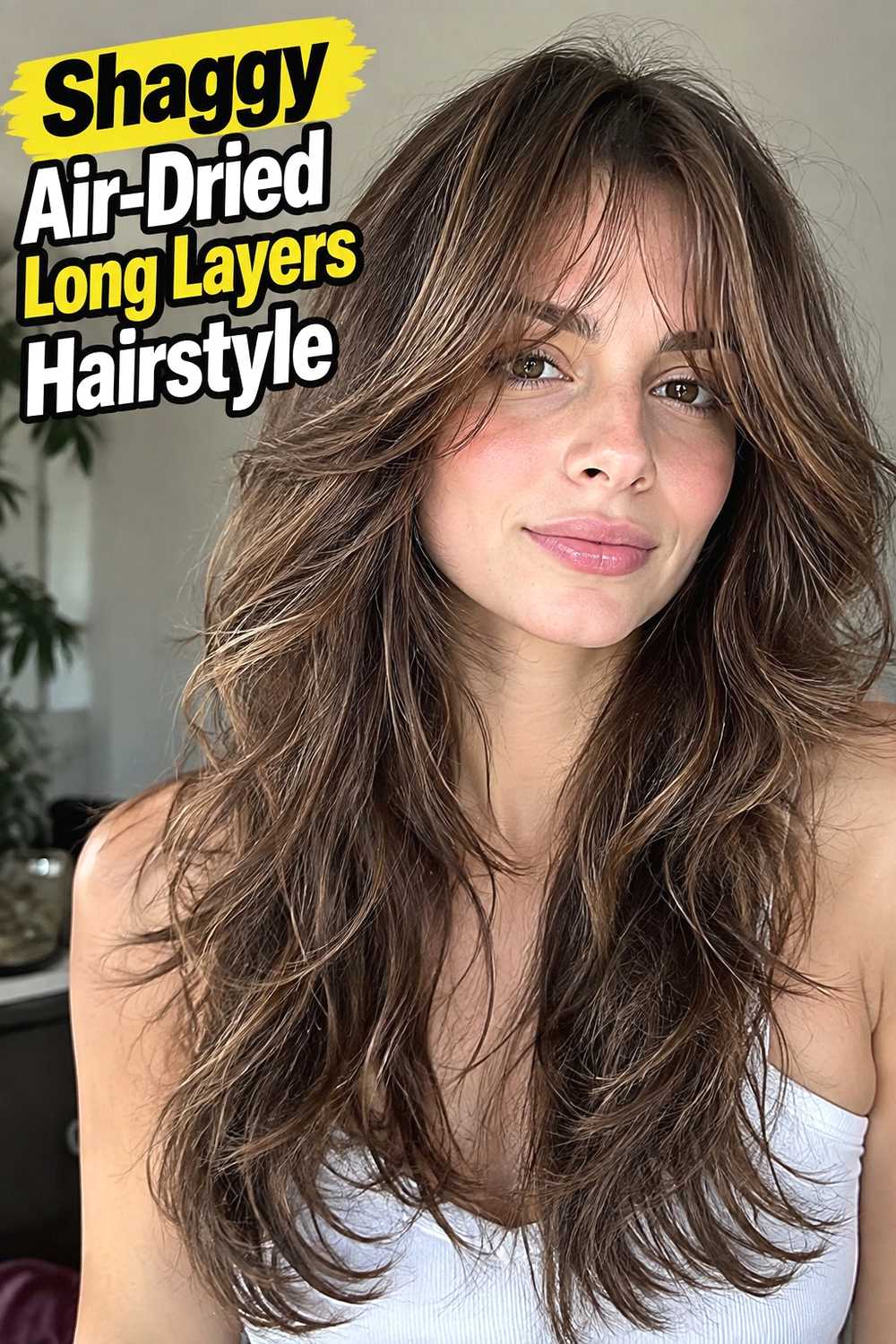
Shaggy air-dried layers create more obvious texture by combining shorter upper sections with longer, looser lengths through the bottom. The shape is intentionally less polished than classic long layering, making natural waves, flips, and uneven bends part of the finished style. Face-framing pieces can start higher to create extra movement around the cheekbones, while the back remains long enough to preserve the overall silhouette. This haircut is best for someone comfortable with visible texture and a less controlled finish. Air-drying allows the cut’s movement to show naturally, although very fine hair may need fewer layers to avoid looking sparse. The key is texture without excessive thinning.
Why It Works
The shorter upper layers release natural movement and make irregular bends look purposeful rather than unfinished.
Hair Type & Length
Naturally wavy or textured long hair can carry this relaxed shape especially well, provided the lower perimeter retains enough density.
15. U Shaped Air Dried Long Layers Hairstyle
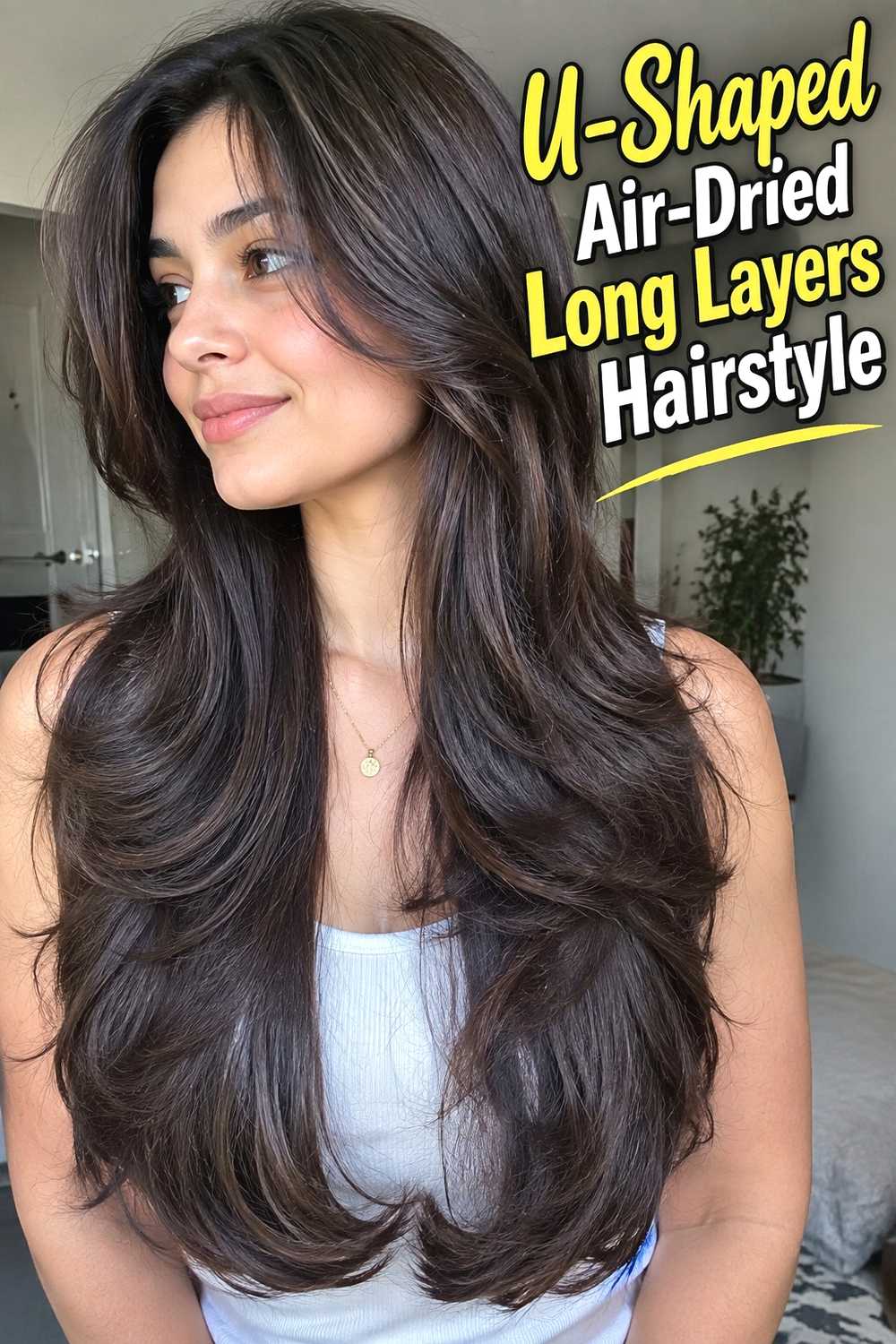
A U-shaped perimeter gives air-dried long layers a clear structure even when the texture itself is relaxed. The back falls longest through the center and rises gradually toward the sides, creating a soft curve that remains visible whether the hair dries straight, wavy, or lightly curly. Internal layering can stay subtle so the perimeter remains full, while face-framing sections add movement from the front. This is a useful choice if you want an easy natural finish without giving up a polished outline. Since the shape depends on the ends, regular trims help maintain the curve and prevent the longest center section from becoming thin or uneven as the hair grows.
Best For
Choose this version if preserving length and fullness is a priority but you still want enough layering for natural movement.
Wear & Maintenance
The structured perimeter helps the haircut retain a finished appearance even on days when the air-dried texture is inconsistent.
16. Softly Tapered Air Dried Long Layers Hairstyle
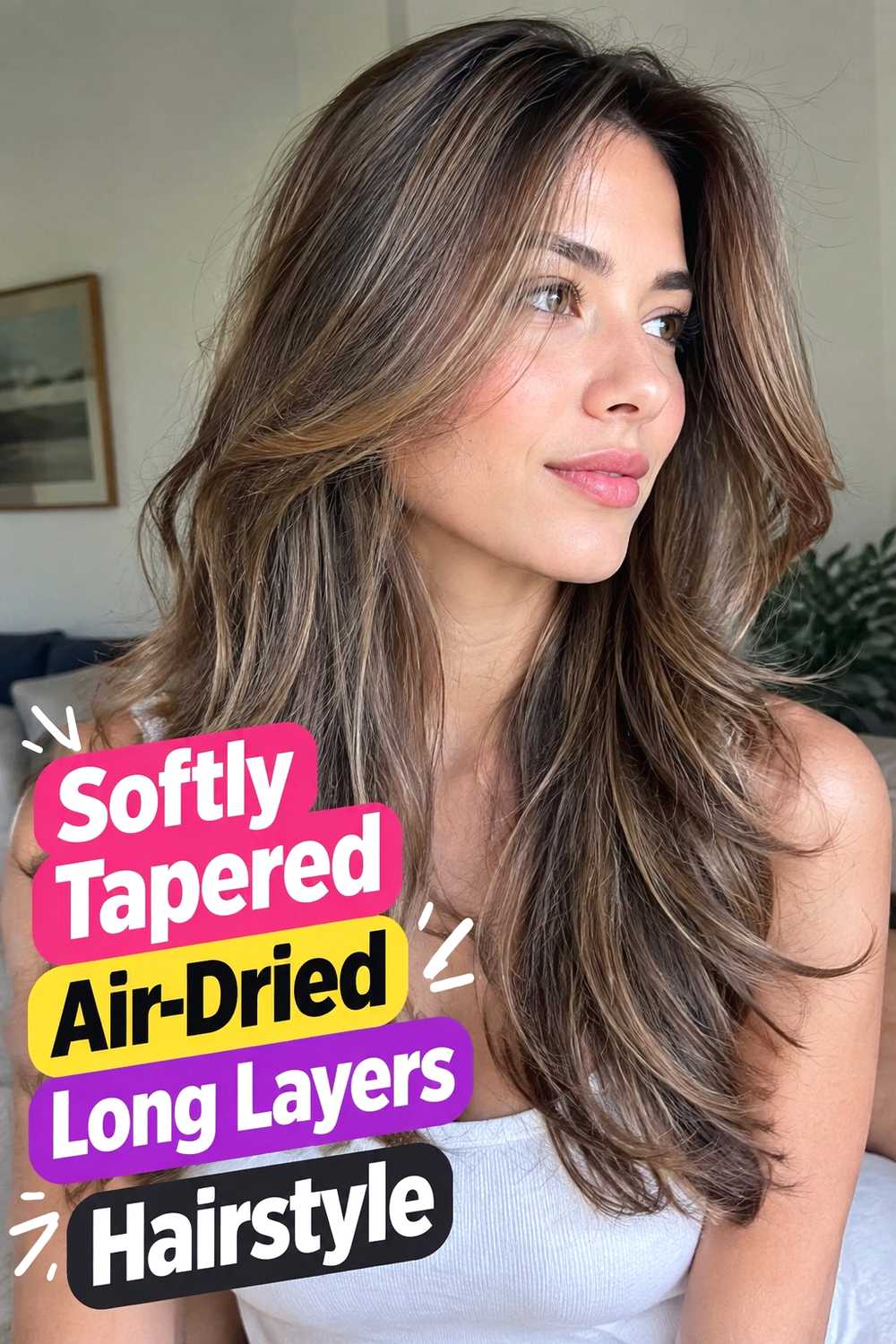
Softly tapered air-dried layers gradually reduce weight through the ends without creating a heavily feathered or razor-thin finish. The transition from fuller upper lengths to lighter lower sections gives natural movement more room to appear, particularly on hair that tends to feel bulky when cut at one length. The effect can be subtle, with small bends and separated ends becoming more noticeable as the hair dries. Face-framing pieces can follow the same tapered logic for a cohesive look. Maintaining enough density is essential, especially on fine hair, because the goal is controlled lightness rather than sparse ends. This cut works best when the taper complements the hair’s natural thickness.
Hair Type & Length
Medium-density or thick long hair can often handle more tapering than fine hair while still keeping the lower perimeter visually substantial.
Pro Tip
Ask for gradual weight removal instead of aggressive thinning if you want the ends to remain soft and believable.
17. Glossy Air Dried Long Layers Hairstyle
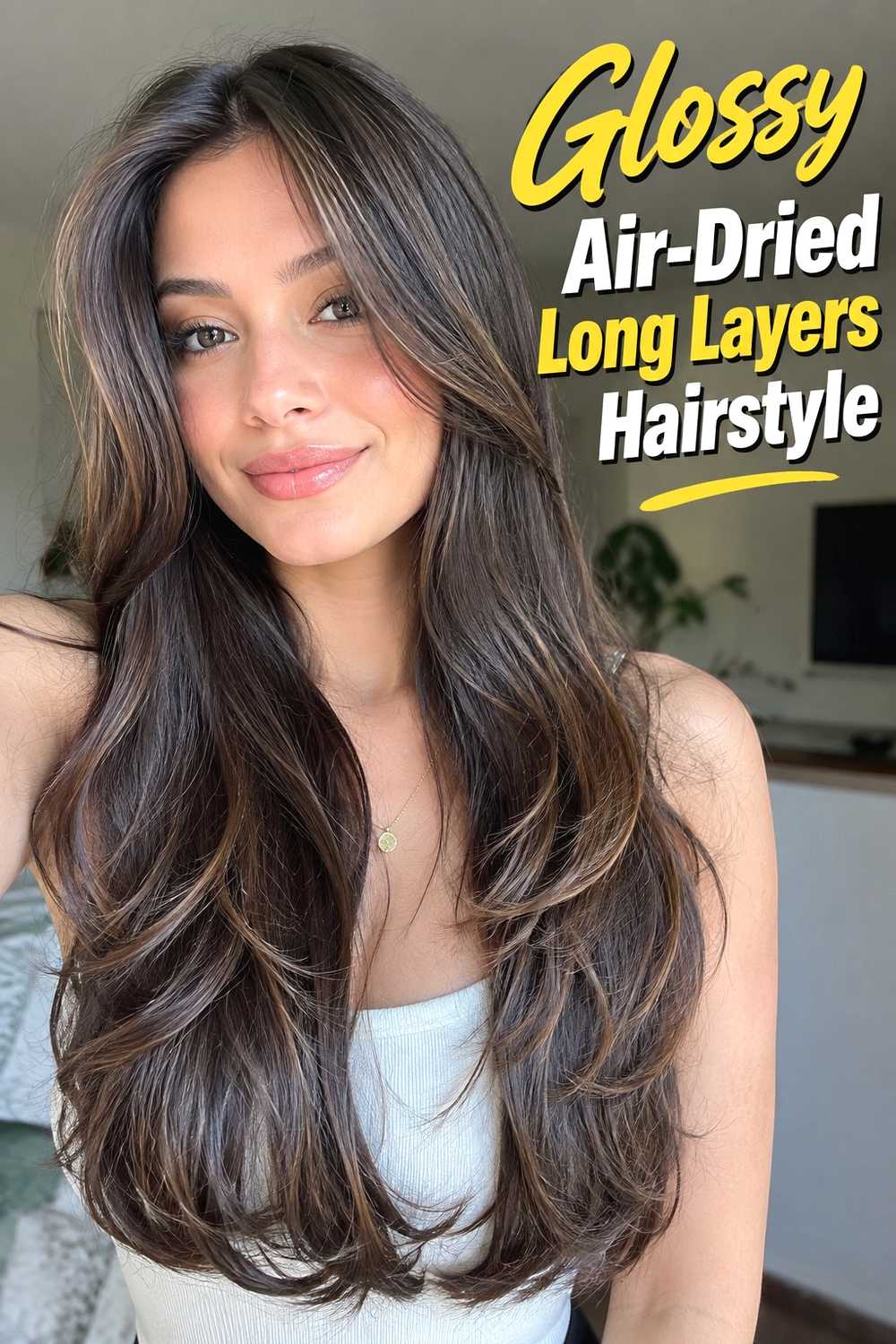
Glossy air-dried layers combine natural movement with a smoother surface, creating a finish that looks relaxed but still polished. The layers remain long and blended so the hair can form gentle bends without appearing overly piecey. This version is particularly effective on straight-to-wavy textures that naturally dry with some shine and control. A lightweight leave-in or smoothing product can help reduce surface roughness while allowing the strands to move freely. Concentrating product through the mid-lengths and ends prevents the roots from becoming flat. The finished look should still show individual strands, slight flyaways, and natural variation rather than the perfectly uniform surface of a heat-styled blowout.
Styling Notes
Distribute smoothing product sparingly through damp lengths, then avoid brushing repeatedly as the hair dries so the natural shape stays intact.
Why It Works
A smooth surface makes subtle layer movement easier to see while preserving the effortless quality of air-dried hair.
18. Romantic Air Dried Long Layers Hairstyle
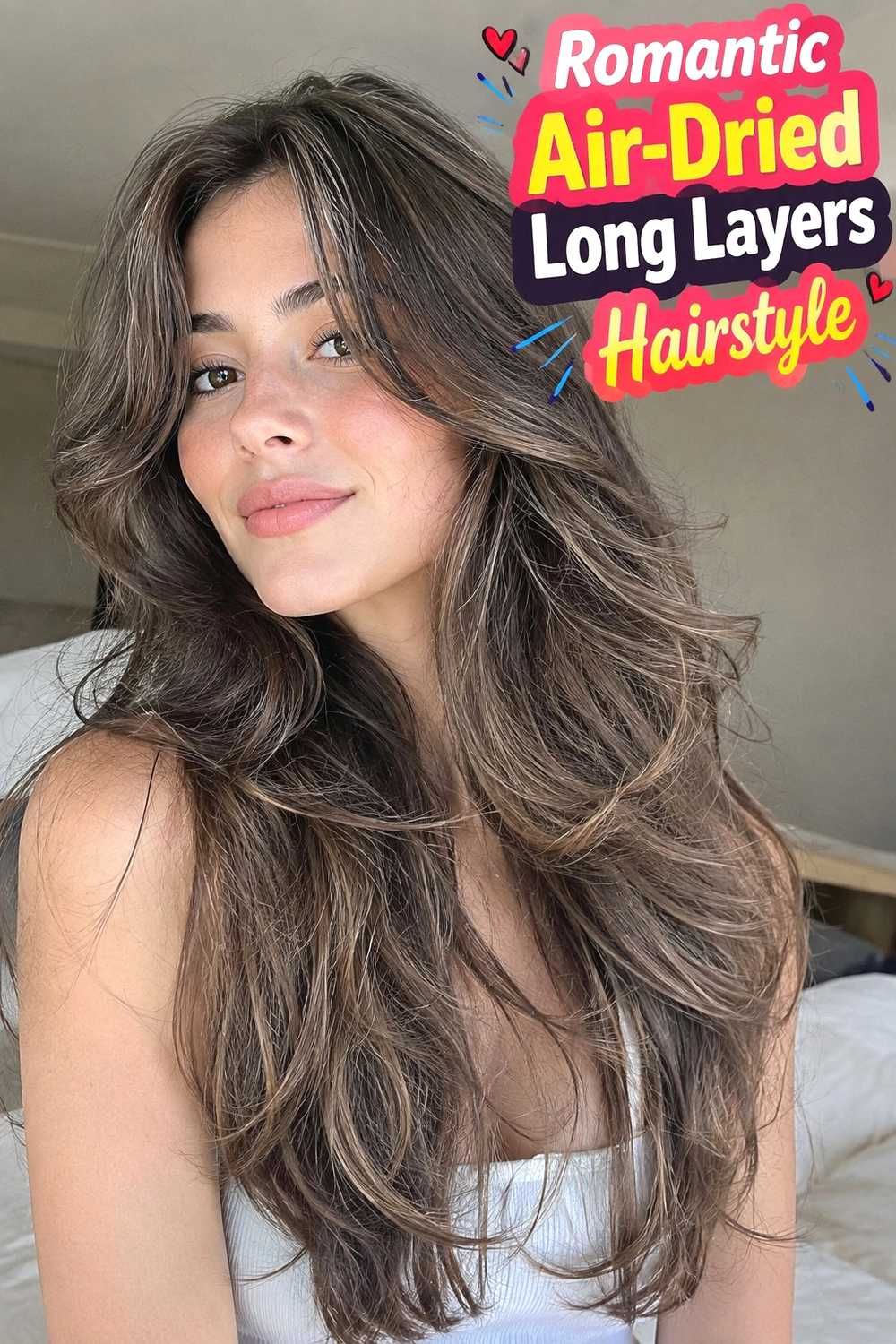
Romantic air-dried long layers combine soft waves, flowing face-framing pieces, and gentle fullness through the ends for an effortless feminine finish. The layers are long enough to maintain density but varied enough to encourage natural bends around the shoulders and chest. Instead of sharp texture, the movement should appear soft and blended, with a few irregular strands preventing the style from looking overly arranged. This variation works especially well on hair that dries with loose waves or soft curls. Lightweight definition through the mid-lengths can help the pattern hold, while the front pieces may be guided away from the face when damp. The overall effect is relaxed, touchable, and naturally dimensional.
Best For
This look suits long hair with soft natural waves or curls that create flowing movement without needing precise heat styling.
Pro Tip
Arrange the front layers while damp and then leave them alone so they can dry into a softer, more natural frame.
How to Choose the Right Look
Begin with your natural drying pattern. If your hair forms obvious waves or curls, choose layers that release that texture without removing too much weight. Wavy, curly, defined, and romantic versions can highlight natural movement particularly well. If your hair dries mostly straight with occasional bends, softer, airy, face-framing, piecey, or glossy layers may create a more believable result.
Density also matters. Fine hair generally benefits from fewer, longer layers and a stronger perimeter, while thick hair can often handle more internal movement or tapering. If your hair expands significantly while drying, balanced layers can help distribute volume rather than concentrating it at the bottom.
Consider bangs realistically. Curtain bangs are flexible and blend naturally into long layers, side bangs work well with an established side part, and wispy bangs create a lighter effect but may need more frequent refreshing.
Finally, think about product and drying habits. Air-dried hair usually looks best when products support its natural pattern rather than trying to completely change it. Lightweight formulas help preserve movement, while minimal handling during drying can reduce unnecessary frizz and disruption.
Final Thoughts
Air-dried long layers work best when the haircut supports what your hair naturally wants to do. Soft layering can reveal bends, waves, curls, and volume without requiring a perfectly styled finish, while a strong perimeter keeps long hair looking substantial. Choose the version that matches your natural texture, density, drying pattern, and preferred level of definition so the result feels practical as well as visually appealing.
FAQs
1. Are long layers good for air-drying?
Yes. Well-placed layers can help natural movement show more clearly by reducing excess weight and giving waves, curls, or bends room to form.
2. Which long layers are easiest to air-dry?
Soft face-framing, wavy, U-shaped, and lightly textured layers are often practical because they do not rely on precise blowout styling to look intentional.
3. Can straight hair wear air-dried long layers?
Yes. Straight hair can show subtle movement through face-framing pieces, tapered ends, and natural bends even without obvious waves or curls.
4. How do I reduce frizz when air-drying layered hair?
Apply suitable styling products while the hair is damp, distribute them evenly, and avoid repeatedly touching or brushing the hair while it dries.
5. Do bangs work with air-dried long layers?
They can. Curtain, side, and wispy bangs are all workable, but their ease depends on your natural growth pattern, part, texture, and how the fringe behaves when drying.
Save your favorite air-dried layered look, share it for inspiration, and explore more low-effort hairstyles that work with your natural texture.