18 Long Shag With Low-Maintenance Layers
Long shag layers can add shape, movement, and texture without turning every morning into a complicated styling session.
The easiest long shags use thoughtful layer placement rather than extreme chopping. Longer transitions around the crown, gradual face framing, and enough weight through the perimeter allow the haircut to keep its shape even when it is air-dried, loosely brushed, or simply left to follow its natural texture.
Before choosing a version, consider your density, natural wave pattern, preferred fringe, and how much volume you actually want near the crown. A good low-maintenance shag should look intentional on ordinary days, not only after a detailed blowout or curling routine.
Quick List
- Classic Long Shag With Soft Layers Hairstyle
- Air Dried Long Shag Hairstyle
- Curtain Bangs Long Shag Hairstyle
- Face Framing Long Shag Hairstyle
- Wispy Fringe Long Shag Hairstyle
- Long Shag With Invisible Layers Hairstyle
- Soft Wavy Long Shag Hairstyle
- Center Part Long Shag Hairstyle
- Side Part Long Shag Hairstyle
- Long Shag With Tapered Ends Hairstyle
- Long Shag With Rounded Layers Hairstyle
- Long Shag With Gentle Crown Layers Hairstyle
- Tousled Long Shag Hairstyle
- Straight Long Shag Hairstyle
- Thick Hair Long Shag Hairstyle
- Long Shag With Soft Side Pieces Hairstyle
- Natural Texture Long Shag Hairstyle
- Minimal Layer Long Shag Hairstyle
1. Classic Long Shag With Soft Layers Hairstyle
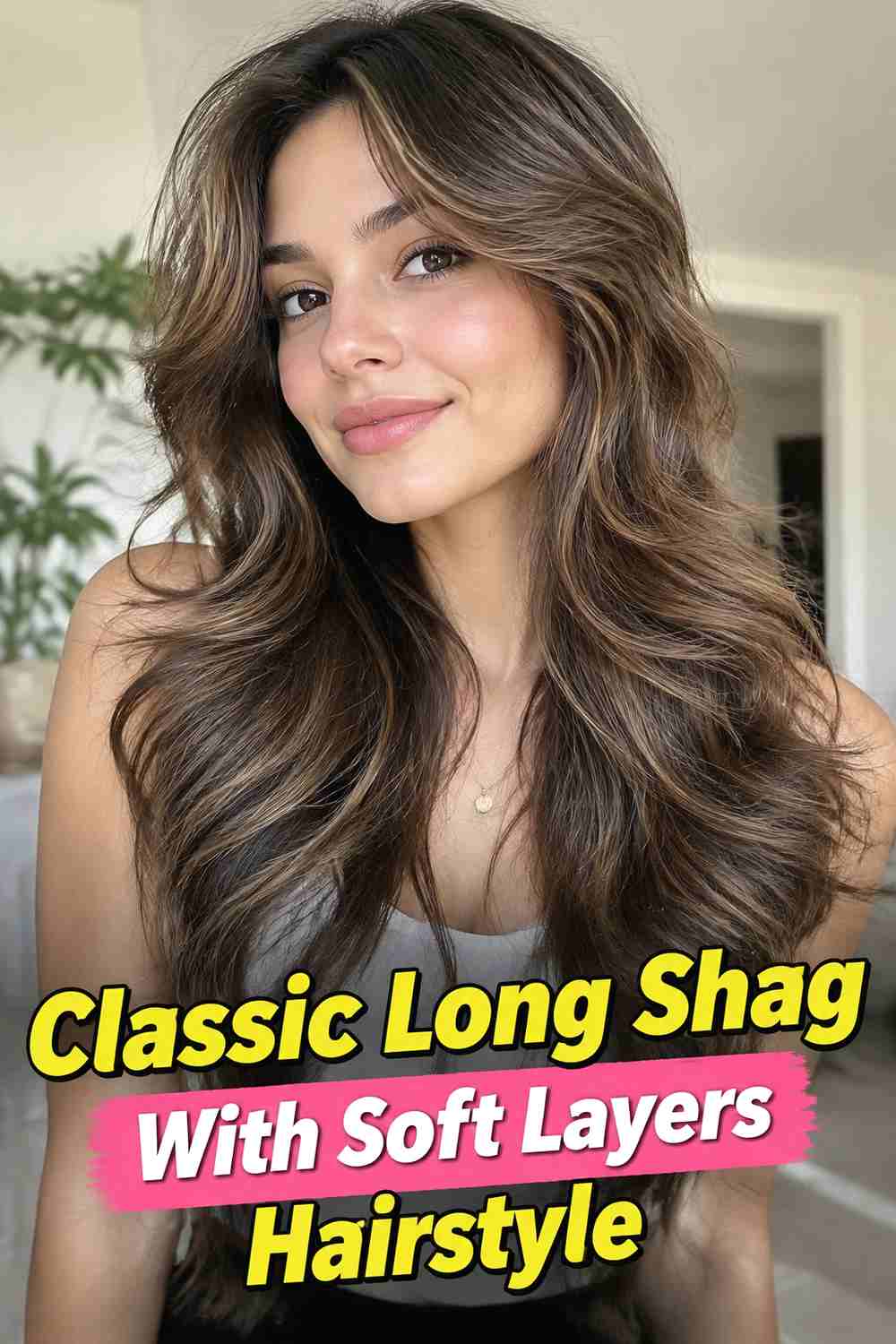
The classic long shag keeps the recognizable movement of a shag while softening the transitions between layers. Shorter pieces around the face and upper sections create shape, but the crown is not chopped so aggressively that it demands constant styling. Longer layers through the chest and back preserve enough weight for the hair to settle naturally after washing. This balance makes the haircut especially practical when you like texture but still want ponytails, braids, and simple everyday styles to feel easy. Straight hair shows the graduation clearly, while wavy texture gives the cut a softer, more effortless finish. The goal is movement without turning the perimeter thin or overly feathered.
Best For
This version suits anyone wanting a recognizable shag shape with more fullness and easier grow-out than a heavily layered cut.
Styling Notes
Air-dry, diffuse lightly, or use a quick rough blow-dry and let the layers fall naturally rather than shaping every section individually.
2. Air Dried Long Shag Hairstyle
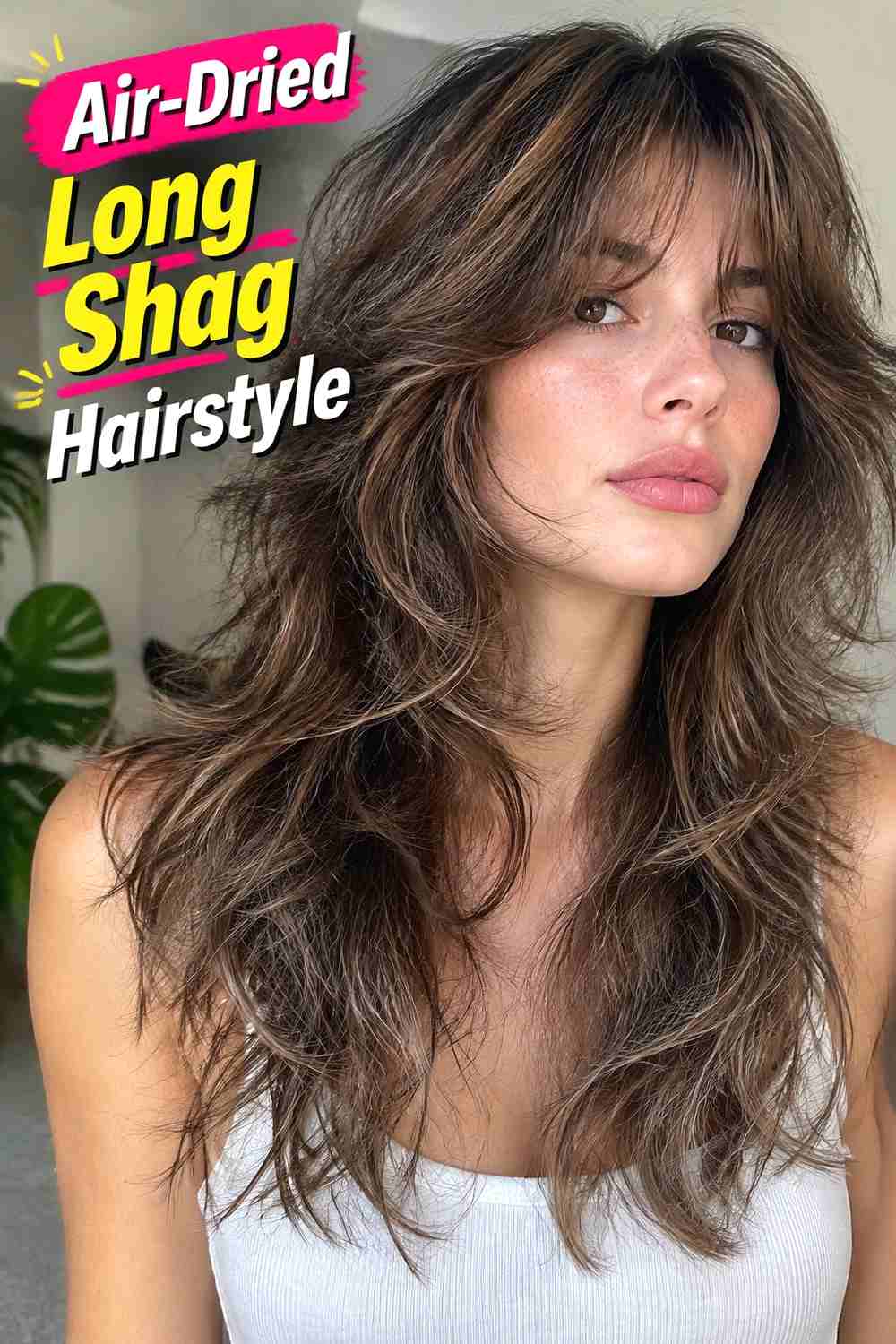
An air-dried long shag is designed around the way the hair naturally falls rather than a finished salon blowout. The crown layers stay long enough to settle without excessive puffiness, while face-framing pieces encourage movement near the cheeks and jaw. Through the lower lengths, gradual layering gives waves and bends room to form without making the ends look sparse. This approach is particularly useful if your texture changes slightly from wash to wash, since the haircut does not rely on every section sitting in one exact position. A small amount of leave-in or lightweight texture product may be enough to encourage definition while keeping natural flyaways and irregular movement part of the finished look.
Why It Works
Longer layer transitions give the haircut structure while still allowing your natural drying pattern to create most of the styling.
Pro Tip
Bring photos of your hair air-dried naturally when discussing layer placement so the cut can reflect your real everyday texture.
3. Curtain Bangs Long Shag Hairstyle
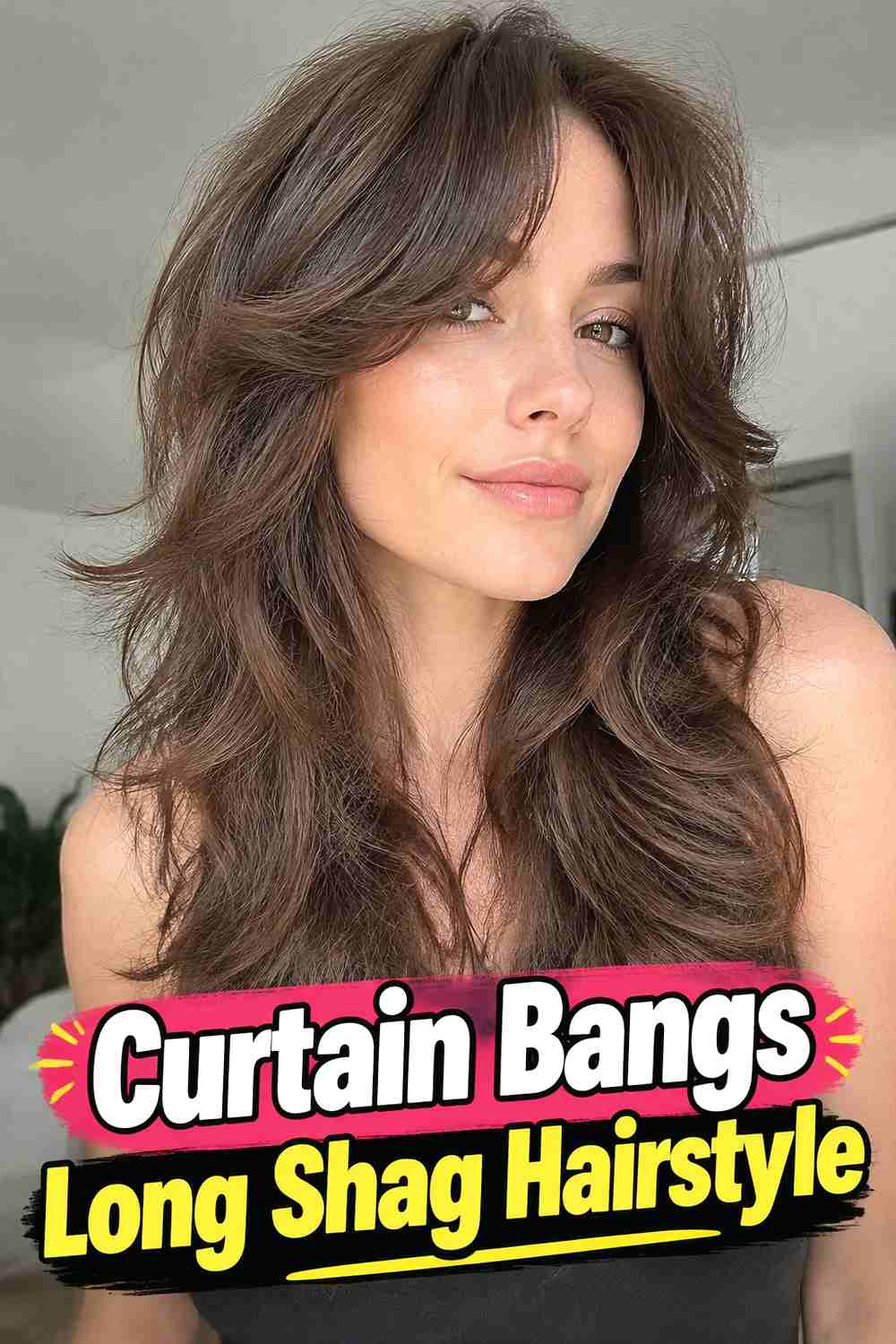
Curtain bangs blend naturally into a long shag because their longer outer edges can flow directly into face-framing layers. The fringe opens around the center or slightly off center, then gradually lengthens toward the cheekbones and jaw. Keeping the rest of the crown layers relatively soft makes this version easier to manage than a heavily feathered shag. The longer lengths retain enough weight to balance the shorter front pieces, so the haircut still looks substantial when worn straight or naturally textured. Curtain bangs do require some maintenance, but they usually grow into longer face framing more smoothly than a short blunt fringe, making them practical for a lower-effort layered style.
Wear & Maintenance
Occasional fringe shaping keeps the opening balanced, while the longer shag layers can usually grow out more gradually.
Styling Notes
A quick directional blow-dry around the bangs can be enough; the rest of the hair can air-dry or follow its natural movement.
4. Face Framing Long Shag Hairstyle
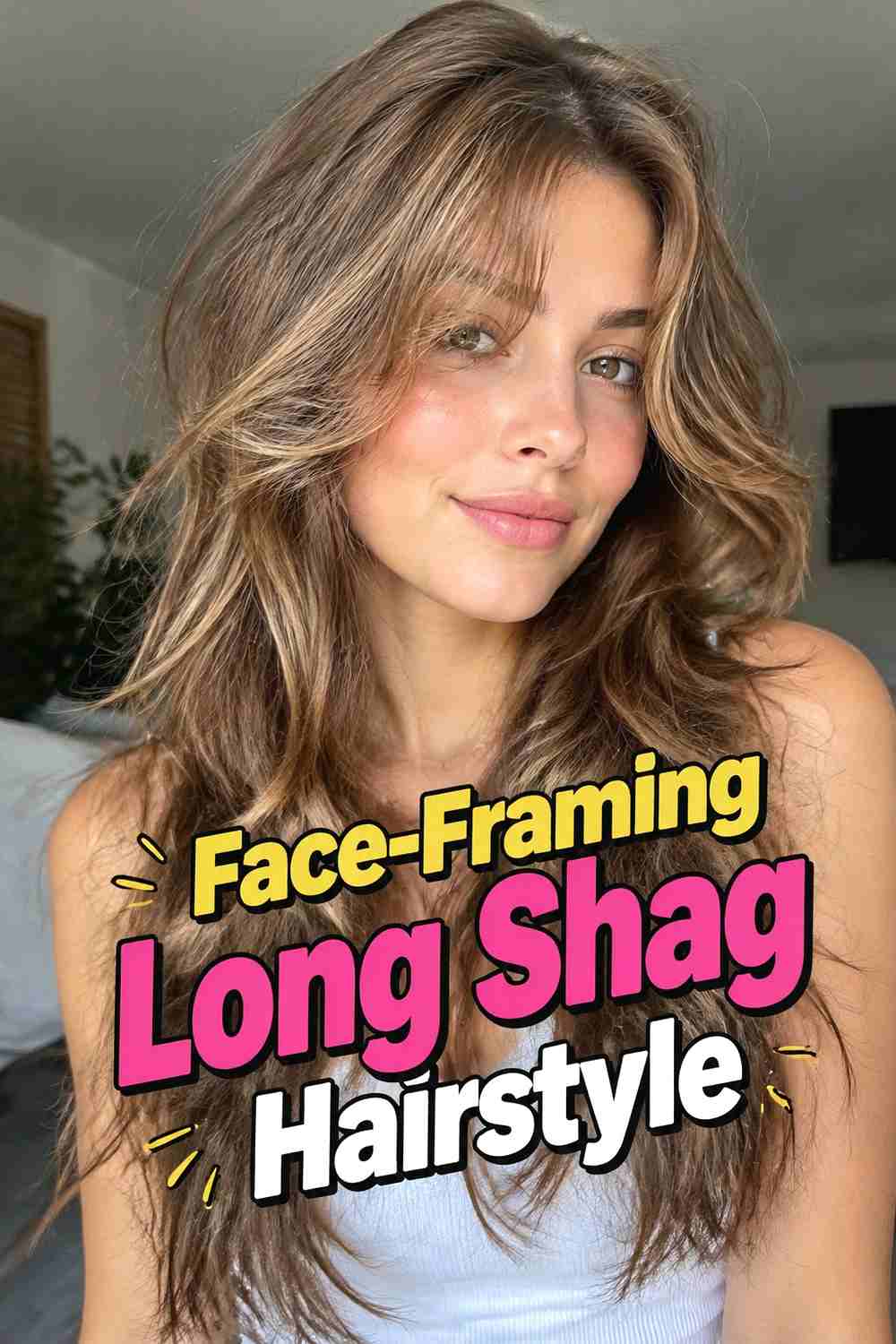
This version places most of the obvious layering around the front, making it a useful choice when you want shag-inspired movement without removing too much weight from the back. Shorter pieces can begin near the cheekbones or jaw and gradually connect to collarbone, chest, and longer sections. The back remains comparatively full, which helps preserve density and makes ponytails easier. On low-styling days, the face-framing pieces still give the haircut shape even if the rest of the hair is left straight or naturally wavy. This is also a practical way to introduce a shag if you are unsure about extensive crown layering or a heavily tapered perimeter.
Best For
Choose this look if you want the layered effect to be most visible from the front while keeping more fullness through the back.
Pro Tip
Keep the transitions gradual so the shorter pieces blend naturally into the longer lengths as they grow.
5. Wispy Fringe Long Shag Hairstyle
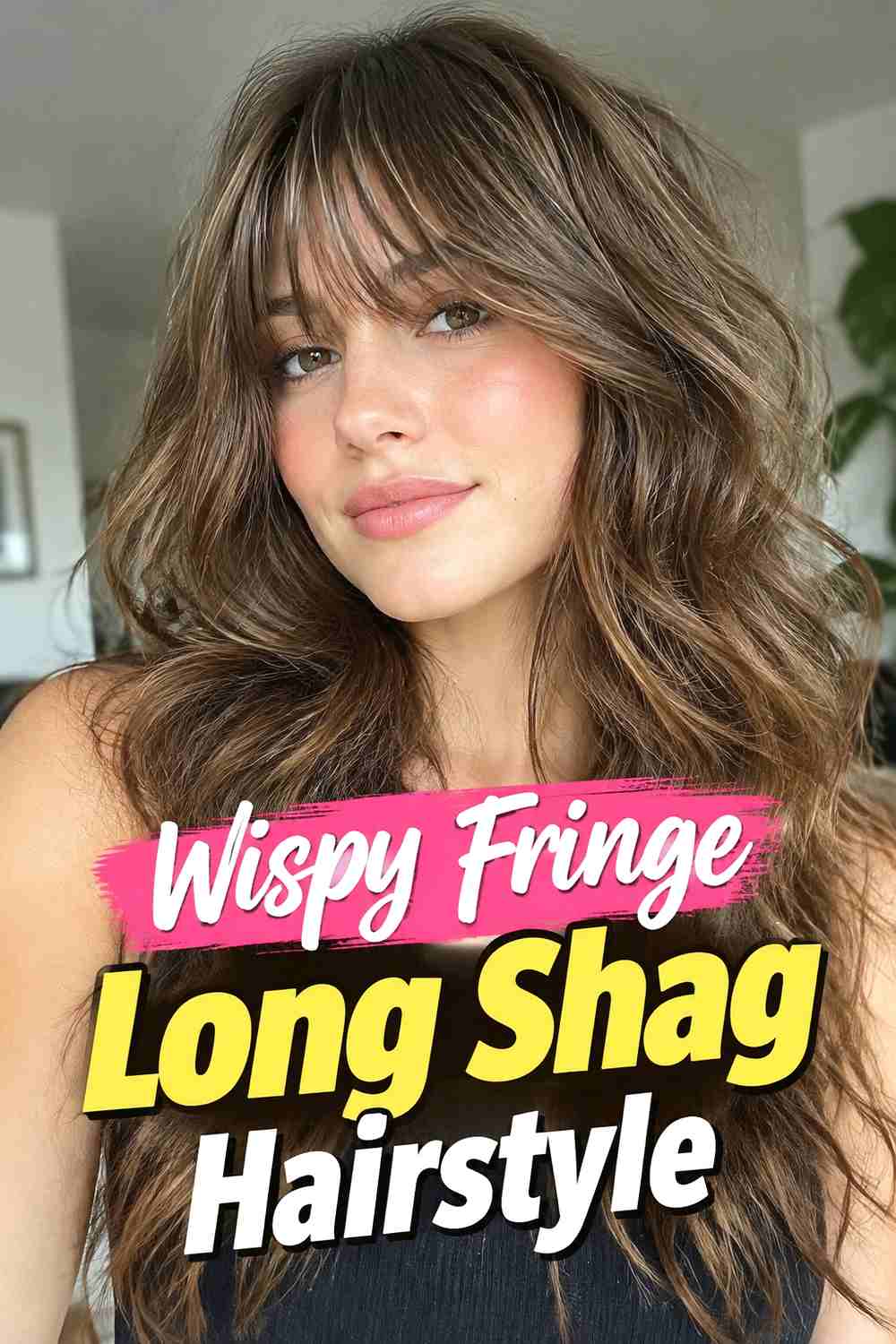
A wispy fringe gives a long shag light movement across the forehead without adding the maintenance of a dense, highly precise bang. The fringe uses a smaller section with soft spacing between strands, then blends into longer pieces around the temples and cheeks. Through the rest of the haircut, restrained crown layers and longer lower sections keep the silhouette easy to manage. This version works well with straight-to-wavy hair because slight natural movement complements the softness of the fringe. The overall effect feels textured but not overly dramatic, and the longer perimeter remains substantial enough that the haircut does not require constant curling or blow-drying to look complete.
Styling Notes
Use minimal product around the fringe and let it retain some natural separation instead of trying to create one solid line.
Wear & Maintenance
The fringe may need periodic trimming, but its soft edge can grow more forgivingly than a blunt short bang.
6. Long Shag With Invisible Layers Hairstyle
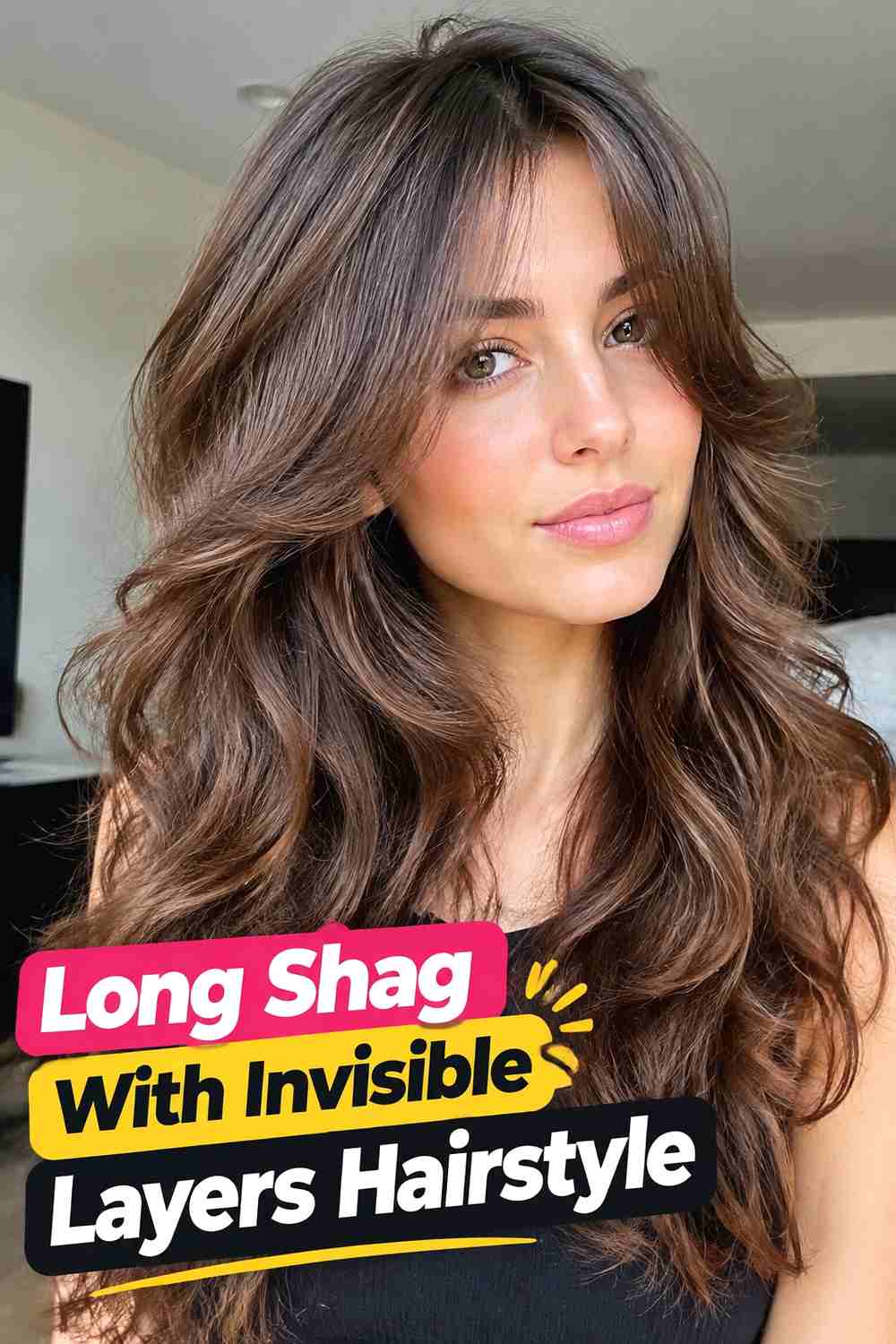
Invisible layers bring subtle movement to a long shag while keeping the surface smoother than a traditional heavily feathered cut. Much of the weight removal happens internally, allowing the hair to swing and separate without displaying obvious short layers everywhere. A few visible face-framing pieces can preserve the shag identity while the back remains sleek and full. This works particularly well if you like the idea of layered movement but regularly wear your hair straight or want an easy transition between polished and natural styling. The hidden structure can also help dense lengths feel lighter without relying on aggressive thinning at the ends.
Why It Works
Internal layering creates movement where the hair needs it while allowing the outer shape to stay long, cohesive, and relatively low maintenance.
Best For
Medium to thick hair often benefits most when subtle weight control is needed without sacrificing a full perimeter.
7. Soft Wavy Long Shag Hairstyle
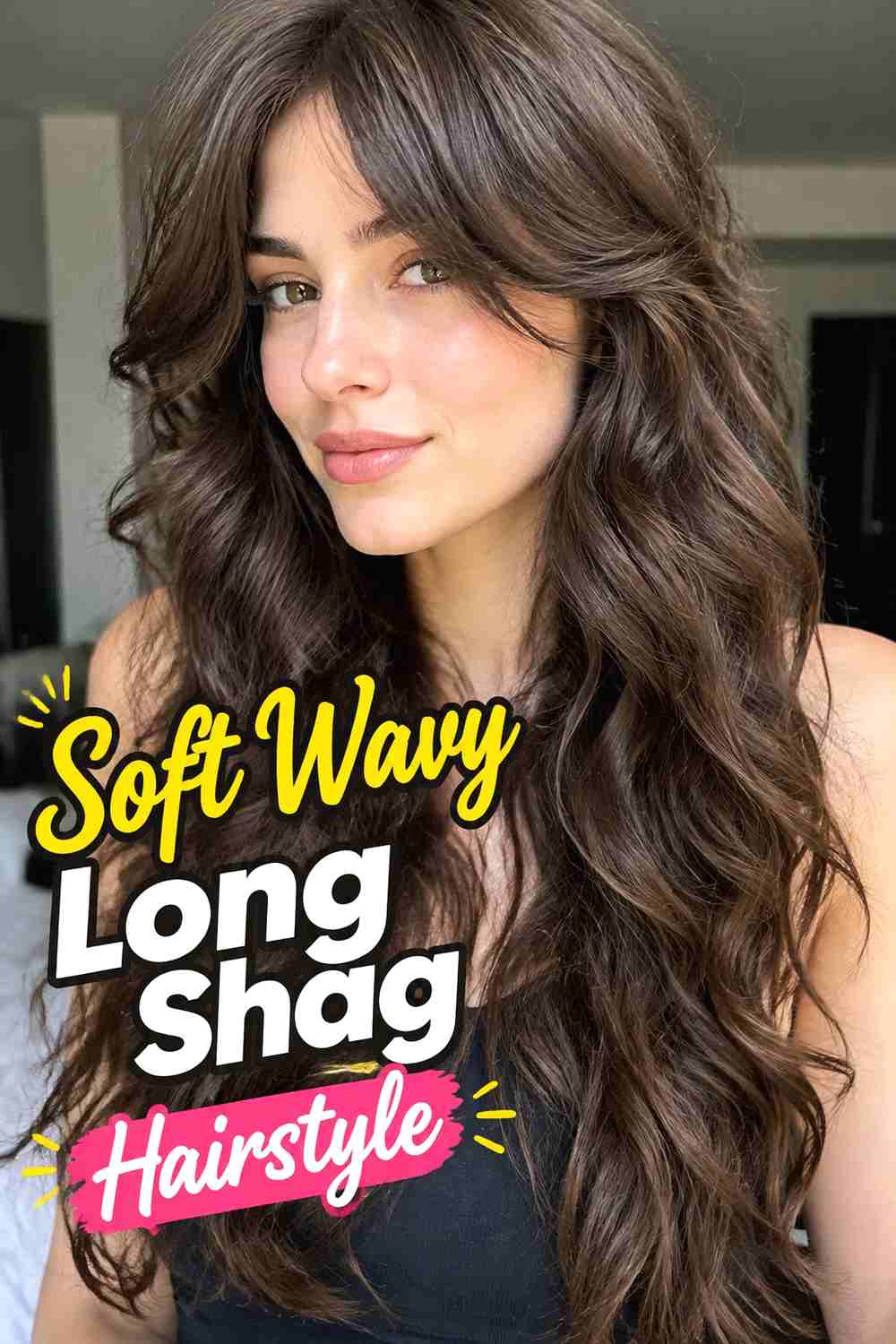
A soft wavy shag uses natural bends to bring the layering to life, so the haircut does not need a carefully constructed wave pattern every day. Shorter pieces around the face and upper sides can lift slightly as they dry, while longer layers through the bottom create a relaxed cascading shape. Keeping the crown moderately layered instead of very short prevents excess expansion and allows the style to settle naturally. Slight differences in wave size and direction actually enhance the look, making imperfect texture part of the design. This version is especially practical if your hair already has some movement and you want a cut that encourages it rather than requiring heat tools.
Hair Type & Length
Loose to medium natural waves can show the shag structure beautifully when enough weight remains through the lower lengths.
Styling Notes
Scrunch lightly when damp, then avoid repeatedly touching the hair as it dries if you want the wave pattern to remain defined.
8. Center Part Long Shag Hairstyle
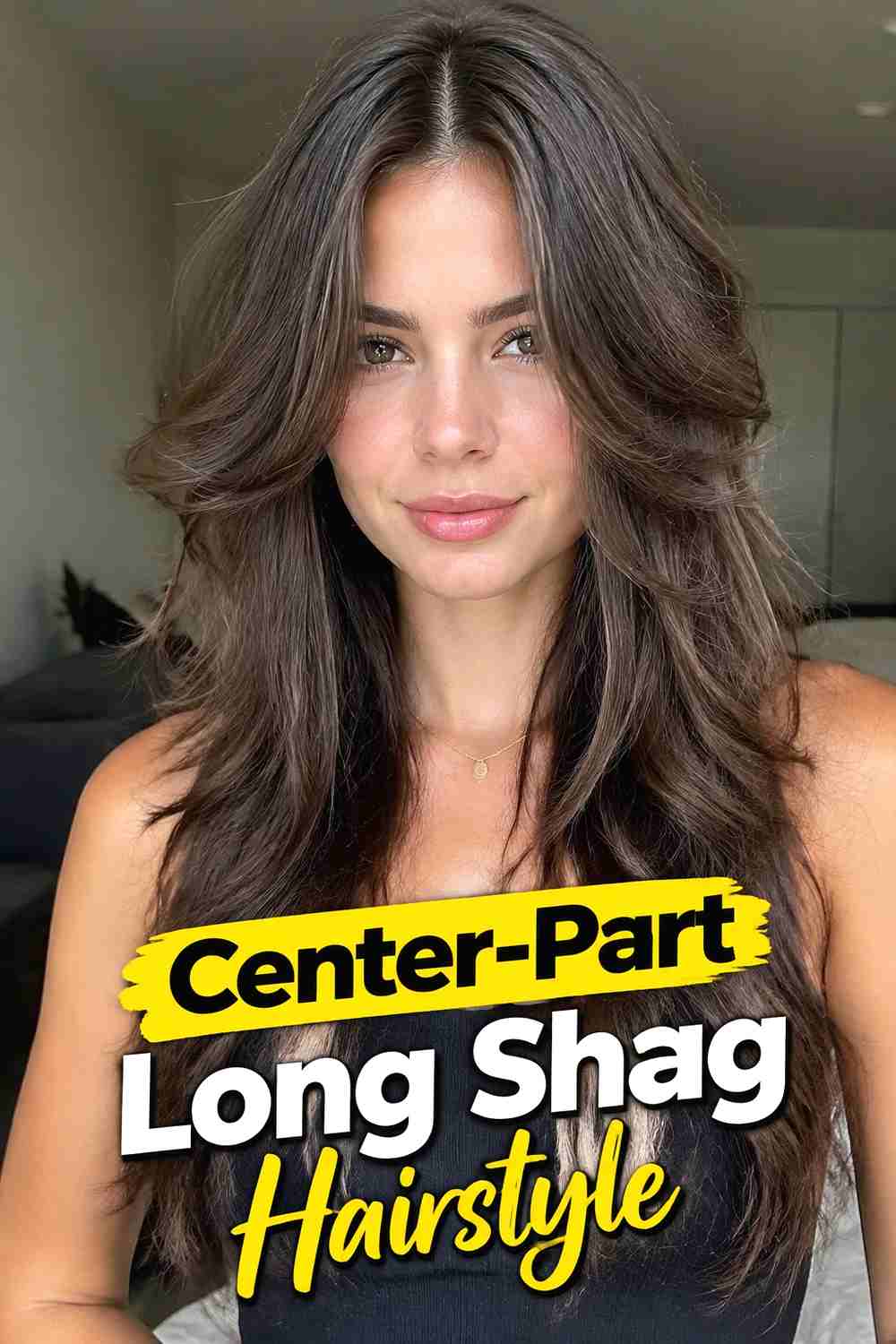
A center-part long shag creates a balanced frame while allowing soft layers to fall evenly on both sides. The shortest front pieces can begin near the cheekbones or jaw, then blend into longer sections that continue through the chest and back. Crown layering stays gentle so the center part does not create excessive width around the top. This version works especially well when you prefer symmetry and want a haircut that still looks intentional when worn straight. On naturally wavy hair, the two sides do not need to match perfectly; slight differences in movement keep the style relaxed. The long perimeter maintains enough density for easy everyday styling and grow-out.
Why It Works
The balanced front shape makes the layers visible without depending on dramatic volume or an exaggerated fringe.
Styling Notes
Set the center part while damp and let the face-framing sections fall naturally before deciding whether they need additional shaping.
9. Side Part Long Shag Hairstyle
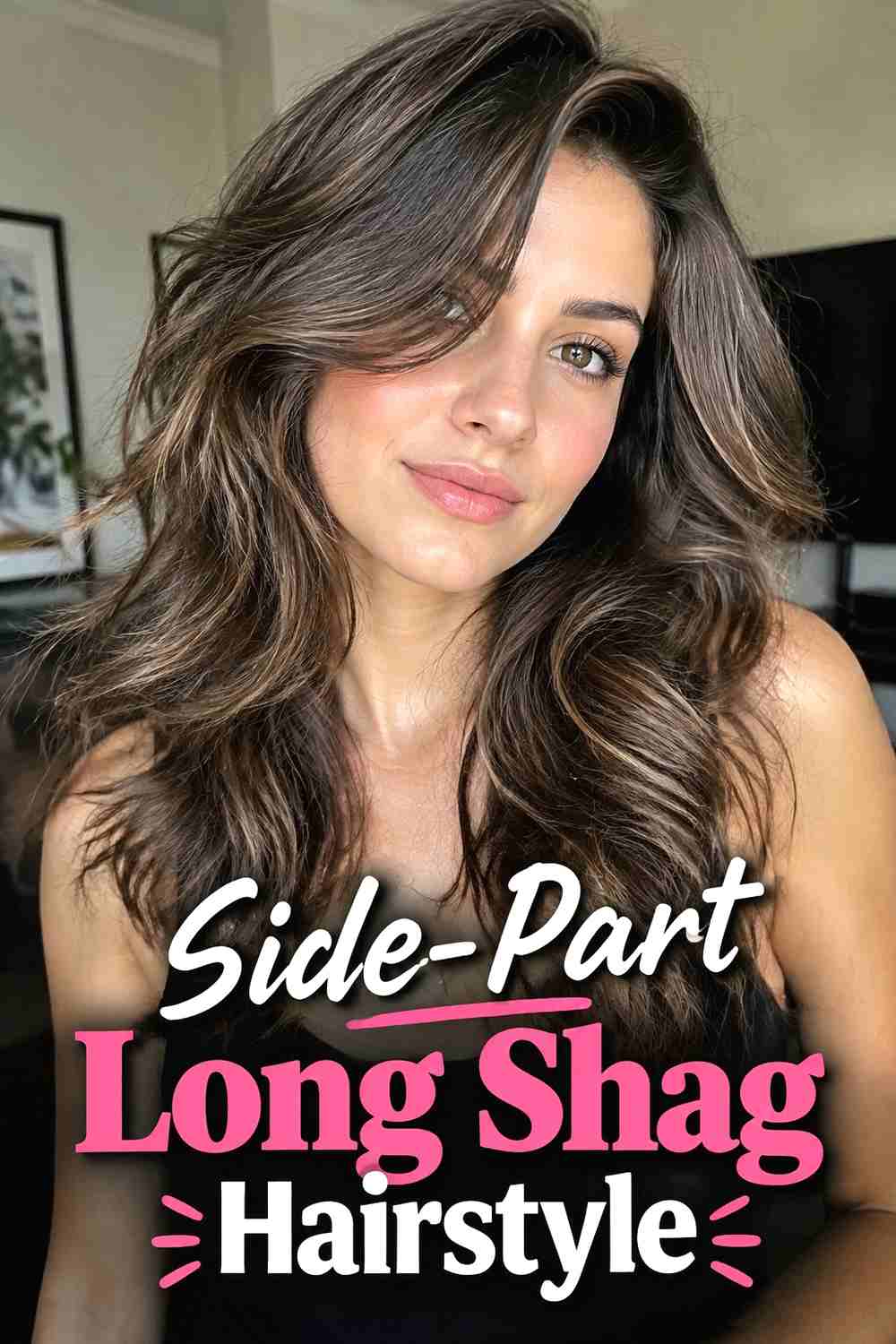
A side part adds natural lift and asymmetry to a long shag without requiring extra-short crown layers. The fuller side gains more movement around the front, while the lighter side can tuck easily or sit closer to the head. Face-framing layers should account for this uneven distribution so one side does not become excessively bulky. Through the back, long gradual layers preserve the weight needed for simple air-drying and easy updos. This variation is especially useful if your hair naturally prefers one side, since working with that pattern can reduce daily styling effort. A soft wave or natural bend enhances the shape, but the cut can also look polished when worn straight.
Best For
This works well if you naturally wear a side part or want easy volume around the front without adding significant crown layering.
Wear & Maintenance
The part can shift slightly between wash days without disrupting the overall shag silhouette.
10. Long Shag With Tapered Ends Hairstyle
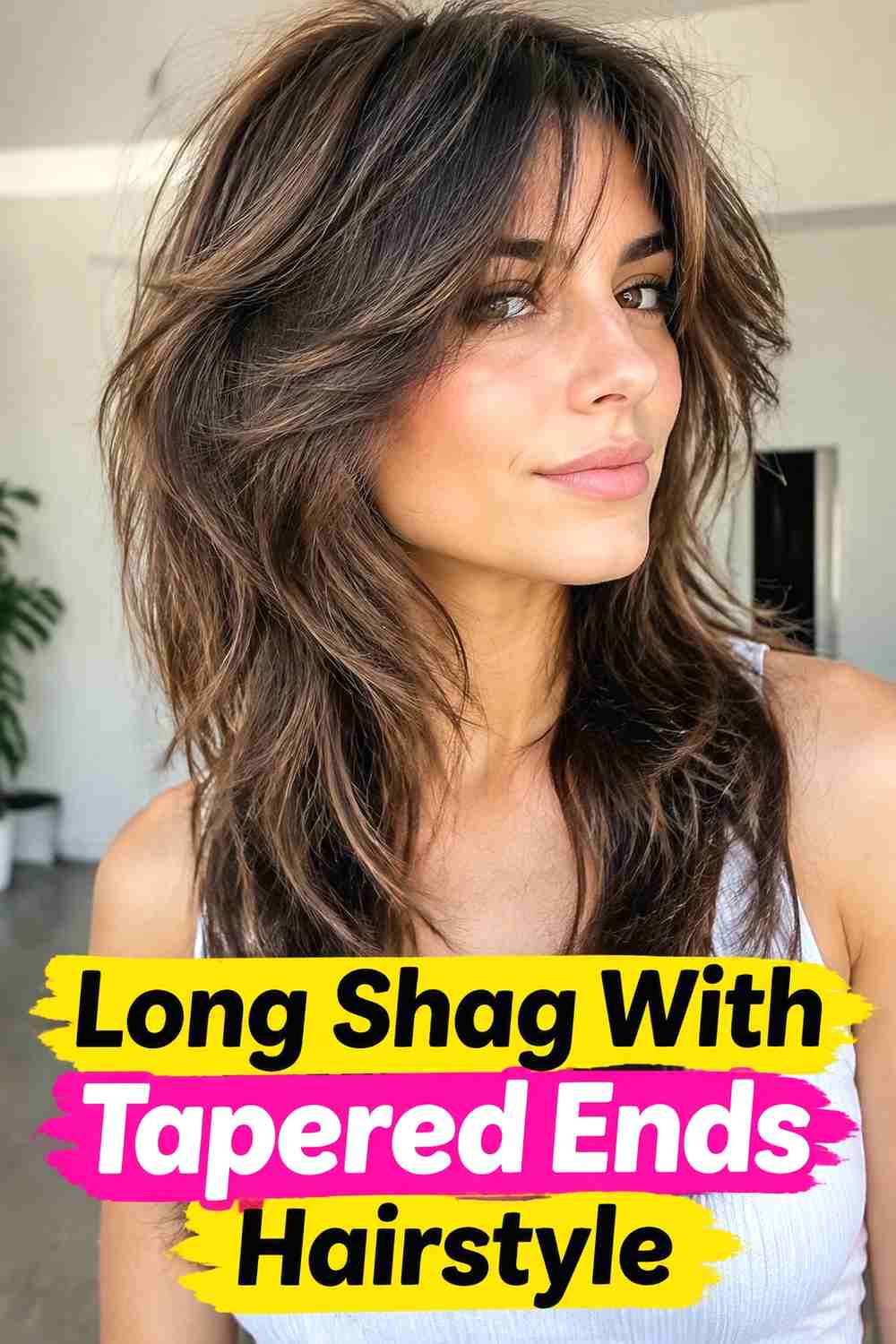
Tapered ends give a long shag a lighter finish by gradually reducing weight toward the bottom instead of maintaining one heavy perimeter. The key to keeping this version low maintenance is moderation: enough density should remain so the ends still look full when the hair is air-dried or worn straight. Upper layers can stay relatively long, while face-framing pieces add movement near the front. This combination makes the cut feel lighter without forcing a dramatic shag silhouette. On wavy hair, the tapered ends separate naturally; on straighter hair, they create soft movement through the lower sections without requiring curls.
Hair Type & Length
Medium to thick long hair can often handle a subtle taper while keeping enough density through the ends.
Pro Tip
Avoid excessive thinning if you want the haircut to remain easy to wear without heat styling.
11. Long Shag With Rounded Layers Hairstyle
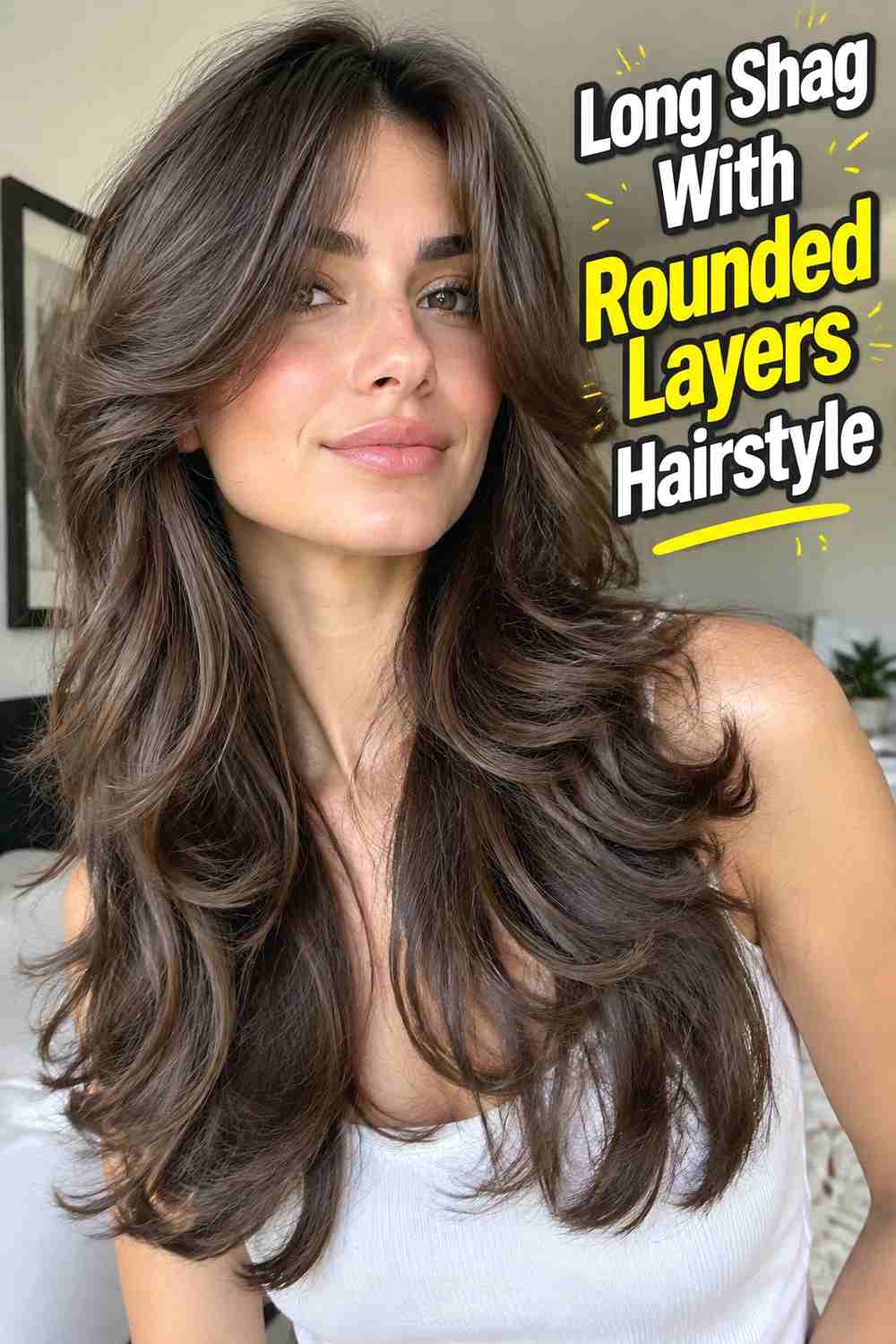
Rounded layers make a long shag feel softer and more polished by replacing sharply separated sections with broad, connected curves. The shorter front and upper layers sweep gradually into the longer lengths, giving the haircut shape without an aggressively choppy finish. This makes it particularly useful if you like layered movement but want the hair to look cohesive on low-effort days. Medium to long lengths provide enough space for the layers to overlap naturally, while keeping the perimeter full adds visual weight at the bottom. A blowout can emphasize the rounded effect, but the cut should still look balanced when worn straight, wavy, or simply air-dried.
Why It Works
Smooth layer transitions create movement without making the haircut dependent on piece-by-piece styling.
Styling Notes
For extra polish, use a large brush on only the front sections and let the longer back layers fall naturally.
12. Long Shag With Gentle Crown Layers Hairstyle
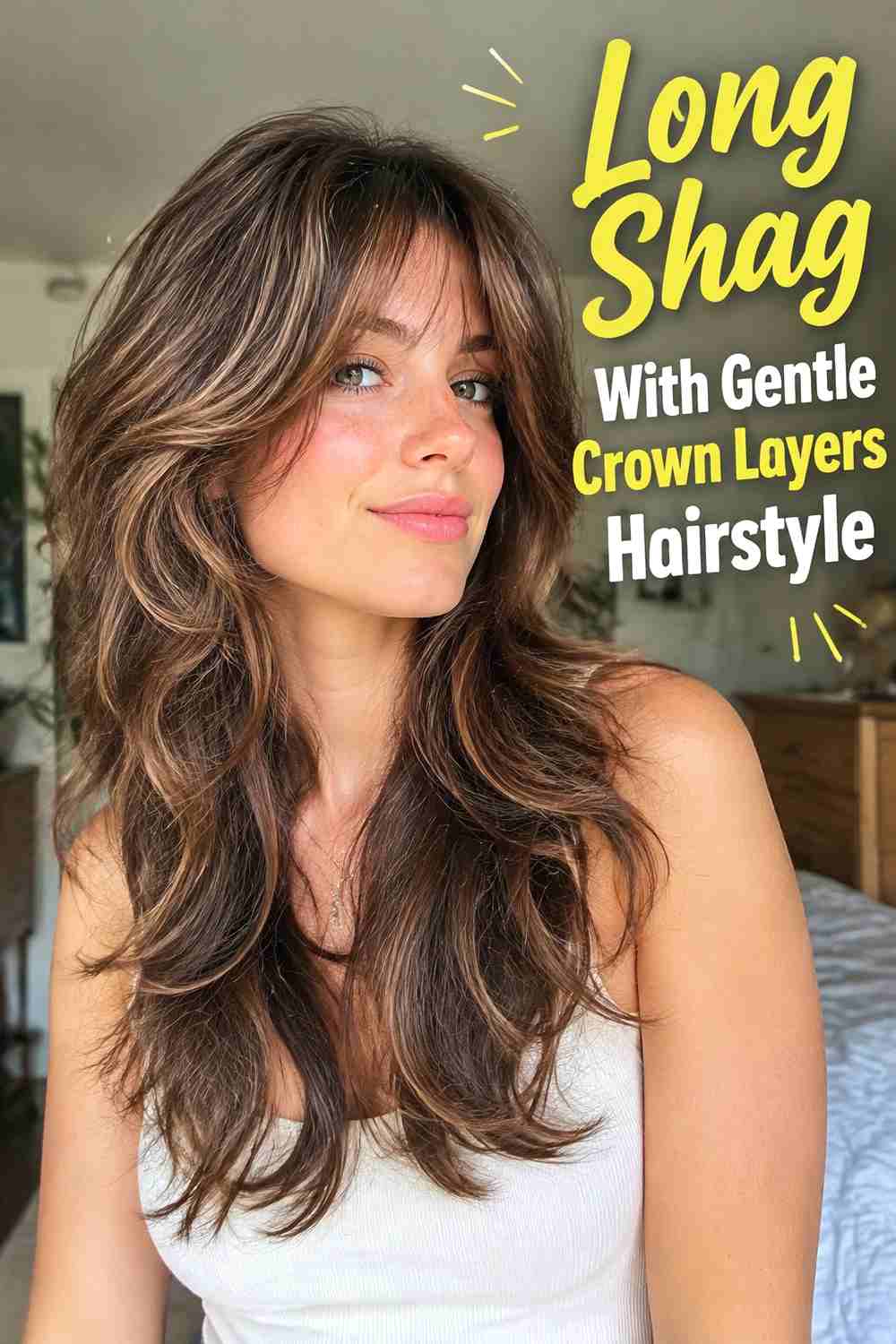
Gentle crown layers give a long shag enough lift at the top without creating the short, high-maintenance pieces found in more dramatic shag cuts. The upper sections remain long enough to blend smoothly with the sides, while shorter face-framing layers provide visible shape around the front. Keeping the crown restrained also helps reduce unwanted puffiness for hair that expands when air-dried. The lower lengths stay long and relatively full, which makes the haircut practical for ponytails, buns, and braids. This version is ideal when you want a little extra height and movement but do not want to spend time restyling short crown pieces each morning.
Best For
This option suits anyone who wants moderate top volume while preserving a soft, grown-in appearance.
Pro Tip
Keep crown layers long enough to follow your natural texture rather than standing away from the rest of the haircut.
13. Tousled Long Shag Hairstyle
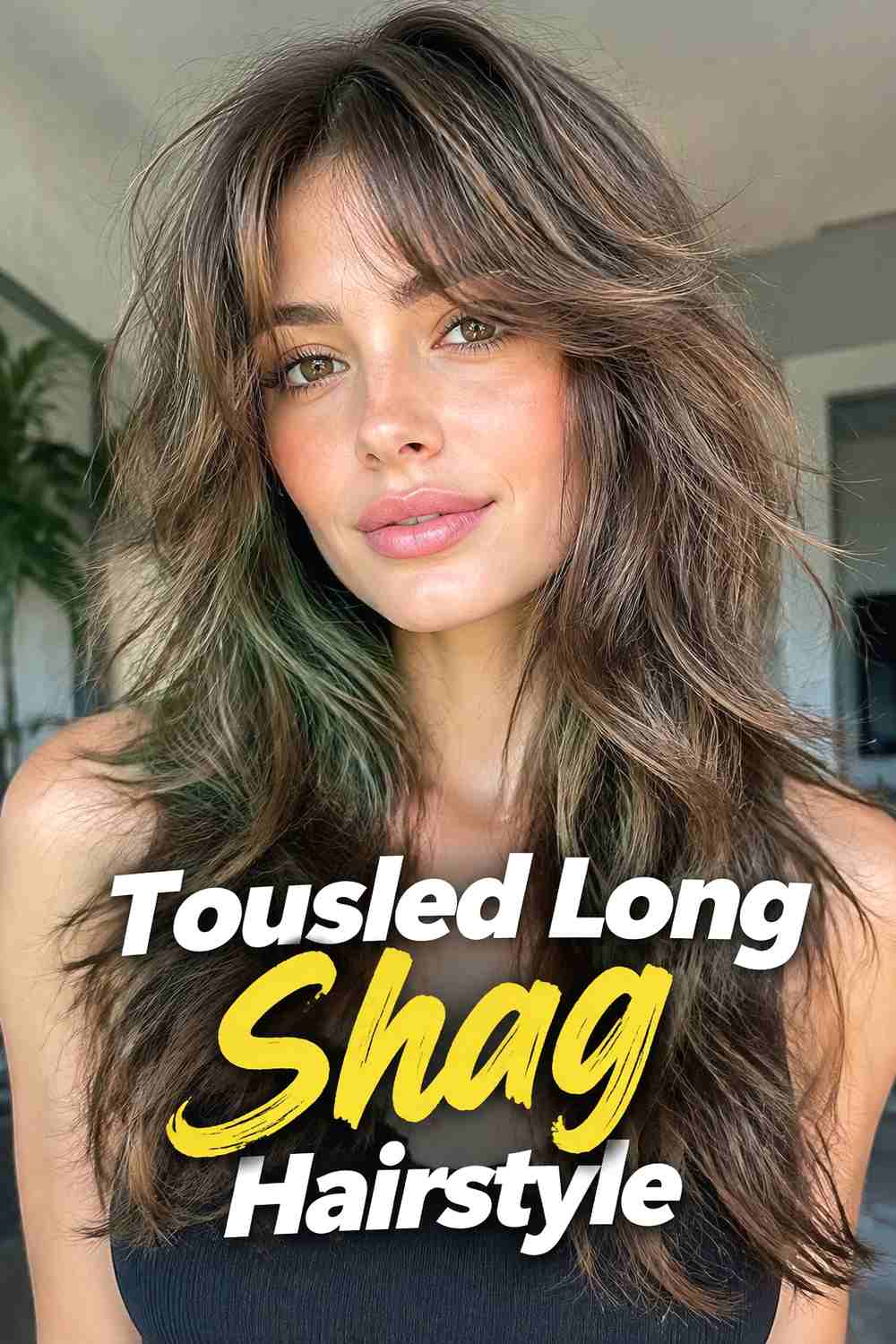
A tousled long shag is built for imperfect movement, making it one of the easiest versions to wear without precise styling. Layers through the face, sides, and lower lengths create separation, while the crown stays soft enough that natural bends and flyaways feel intentional. Straight hair can gain texture from loose braids or simple scrunching, while naturally wavy hair may need little more than lightweight product. The perimeter should remain substantial so the haircut looks full even when the layers separate. Instead of aiming for identical curls or flips, this style works best with a mix of straighter pieces, gentle waves, and irregular bends that give the shag its relaxed character.
Styling Notes
Use fingers rather than a brush after drying if you want to preserve the casual separation between layers.
Why It Works
The haircut treats natural irregularity as part of the finished look, reducing the need for exact daily styling.
14. Straight Long Shag Hairstyle
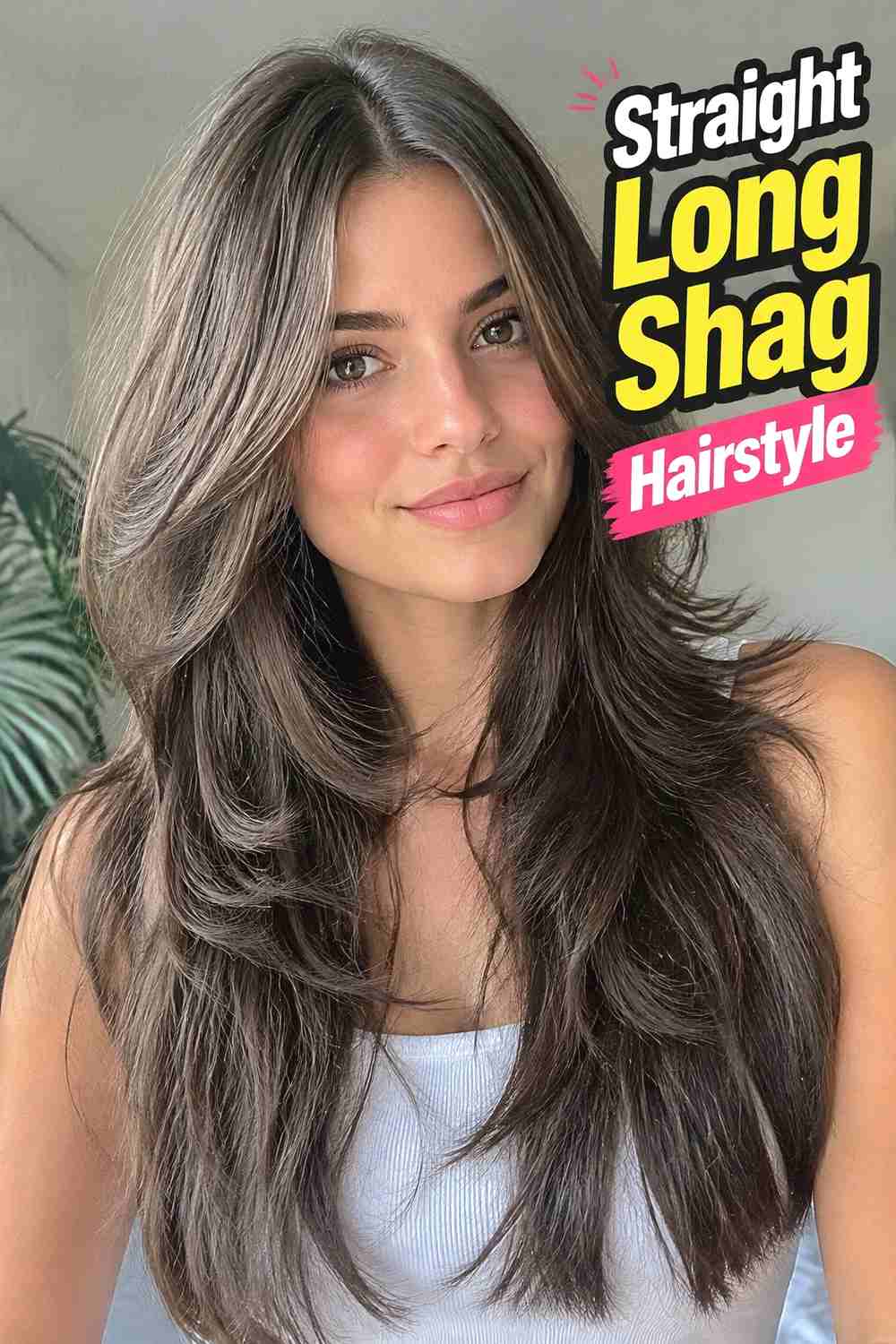
A straight long shag uses layering strategically so the shape remains visible even without waves or a blowout. Face-framing pieces provide the clearest movement, while longer layers through the back keep the perimeter substantial and prevent the cut from appearing thin. The crown should remain relatively soft, since very short layers can be harder to blend on naturally straight hair without styling. This version works especially well if you prefer a polished everyday finish but still want more movement than a one-length cut provides. Light internal layering can also reduce heaviness without creating excessive feathering, allowing the hair to fall naturally after simple blow-drying or air-drying.
Hair Type & Length
Straight medium-to-long hair can show the graduated structure clearly, particularly when the layer transitions remain smooth.
Best For
Choose this version if you rarely curl your hair but still want a visible shag-inspired silhouette.
15. Thick Hair Long Shag Hairstyle
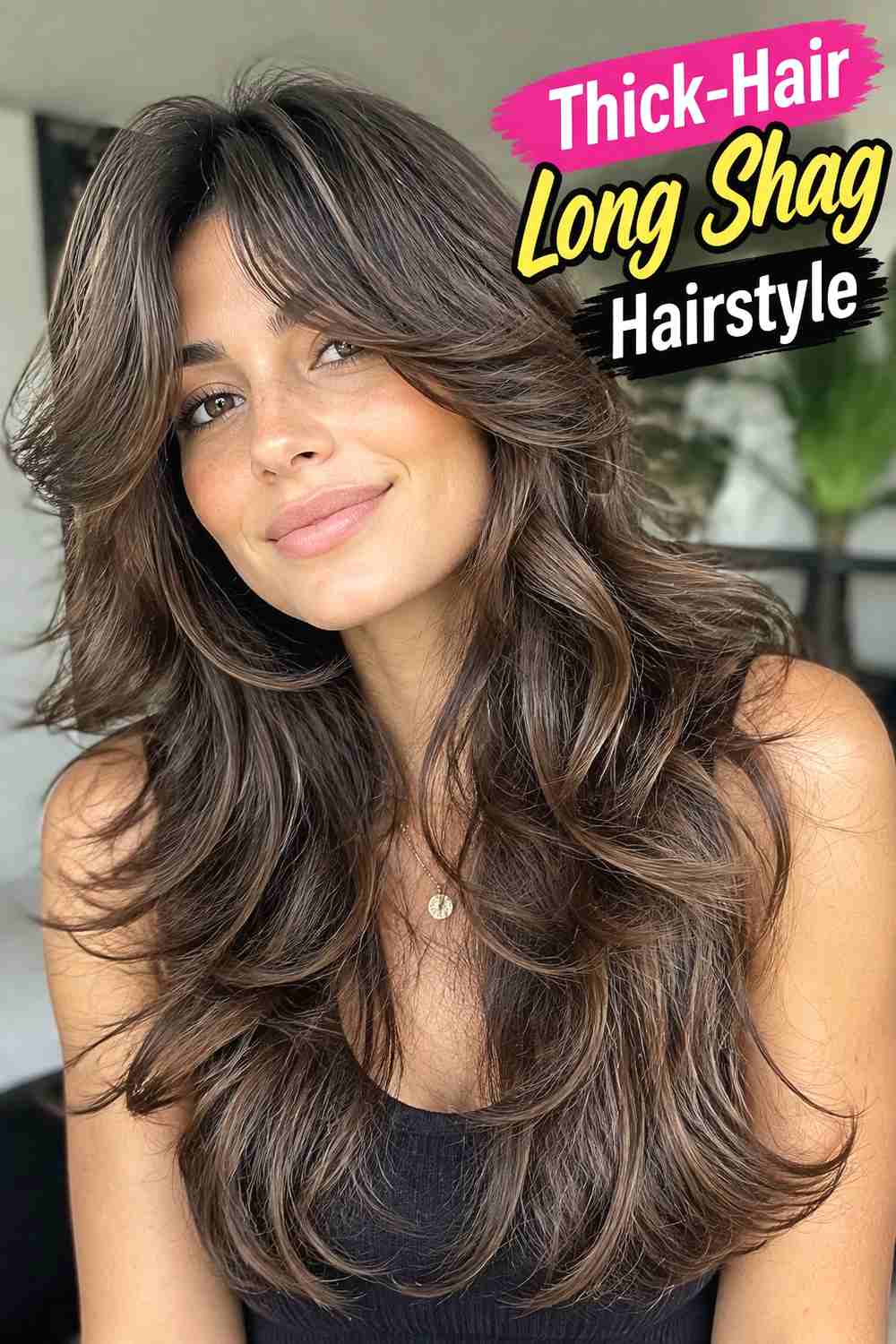
A long shag can make thick hair easier to manage by redistributing weight through carefully placed layers rather than thinning the entire perimeter. Longer crown layers reduce bulk while staying heavy enough to settle naturally, and face-framing sections can remove visual density around the front. Internal layering through the sides and mids gives the hair more movement without leaving the ends sparse. This is especially useful when one-length thick hair feels heavy or triangular. The best result preserves enough lower weight to prevent excessive expansion after air-drying. Natural waves can emphasize the layering, but the cut should still sit comfortably when worn straight or tied back.
Why It Works
Strategic weight removal creates movement and reduces bulk while preserving the fullness that makes thick long hair look substantial.
Pro Tip
Avoid removing too much density from the perimeter if your hair tends to expand or frizz when left to dry naturally.
16. Long Shag With Soft Side Pieces Hairstyle
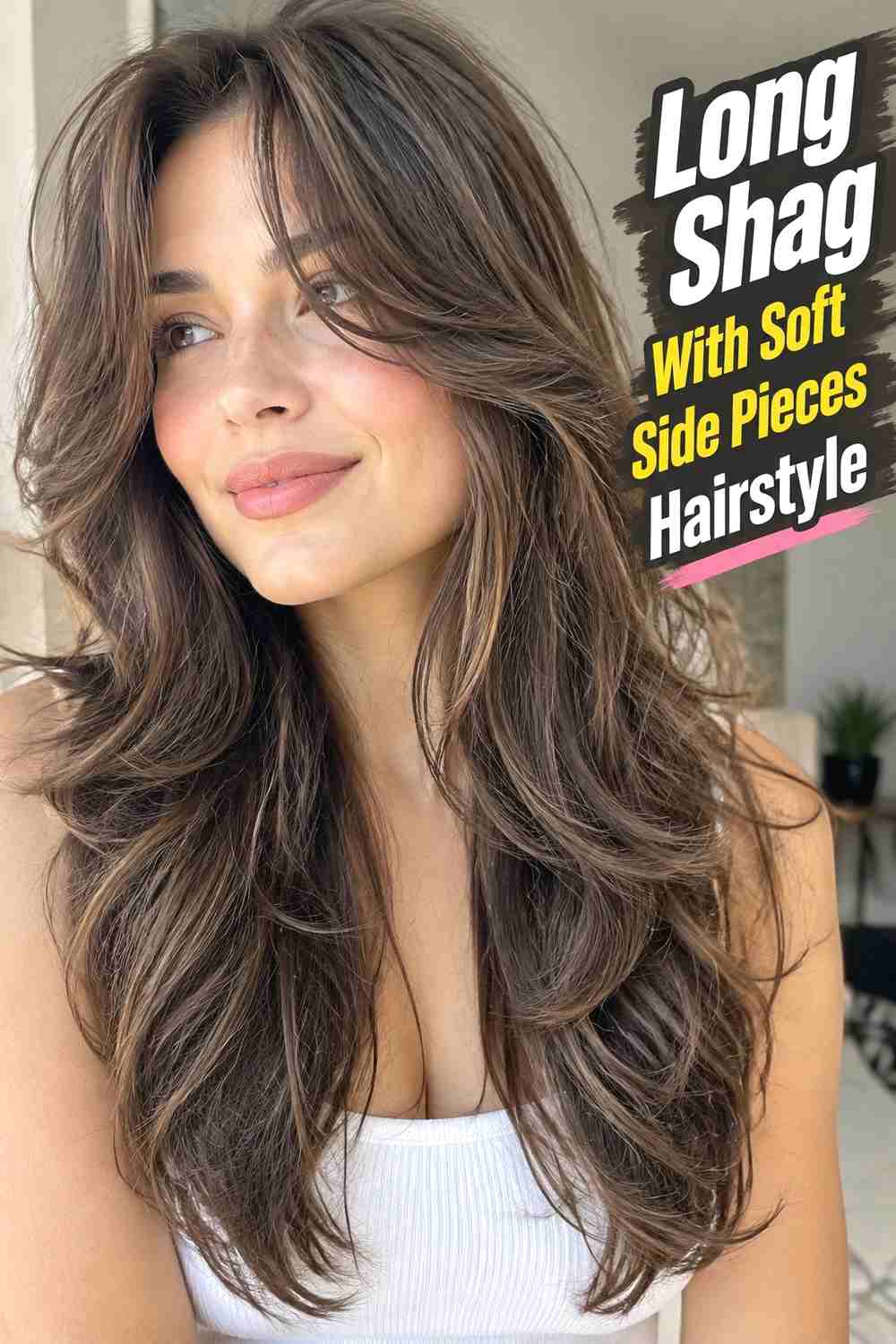
Soft side pieces create a subtle connection between the front hairline and the longer shag layers without committing to a full fringe. A few shorter strands around the temples and cheekbones can add movement when the hair is worn loose, while the rest of the front gradually blends toward the jaw and shoulders. This is a practical option if you want facial framing but prefer to keep the forehead open and avoid regular bang trims. The crown can remain softly layered, and the back stays long enough for easy everyday styles. Because the side pieces are longer, they can usually tuck away or blend into a ponytail as they grow.
Wear & Maintenance
These longer front pieces generally require less frequent trimming than a full fringe and can grow naturally into the surrounding layers.
Styling Notes
A simple tuck, air-dried bend, or quick outward curve is usually enough to make the side pieces visible.
17. Natural Texture Long Shag Hairstyle
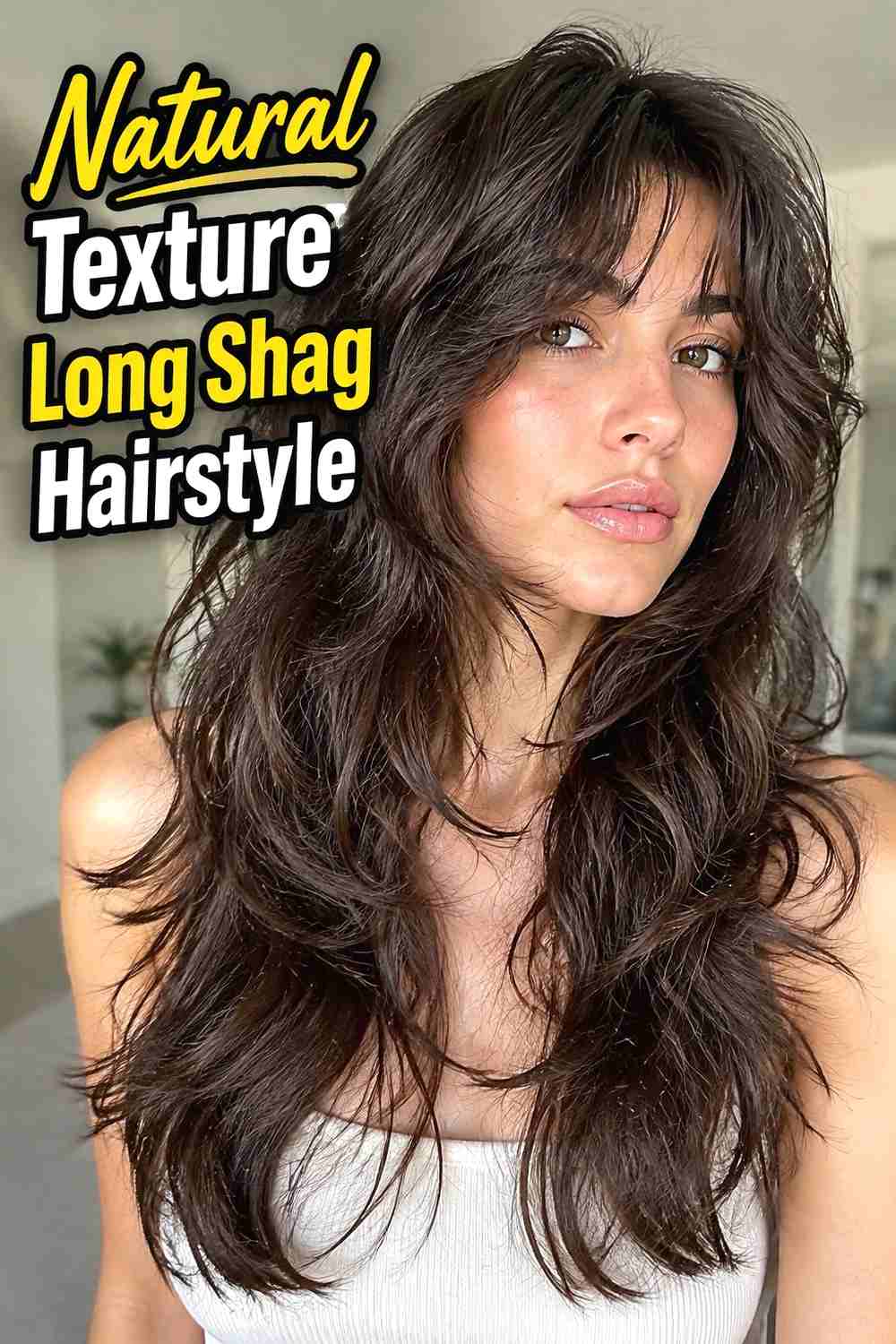
A natural-texture long shag is cut to accommodate variation instead of requiring every section to behave the same way. Waves, bends, straighter pieces, and slight differences in volume can all become part of the finished silhouette. Longer crown layers keep the upper shape relaxed, while face-framing pieces and gradual lower layers help distribute movement from top to bottom. This style is especially practical if your texture changes with humidity or from one wash day to another. The underlying haircut should remain balanced even when the pattern is inconsistent, with enough weight through the ends to maintain shape. Minimal manipulation often lets the layered structure appear most naturally.
Best For
This approach works well for hair with mixed wave patterns or anyone who prefers to work with natural variation instead of correcting it daily.
Pro Tip
Choose layer lengths based on how the hair behaves dry rather than relying only on its stretched or wet appearance.
18. Minimal Layer Long Shag Hairstyle
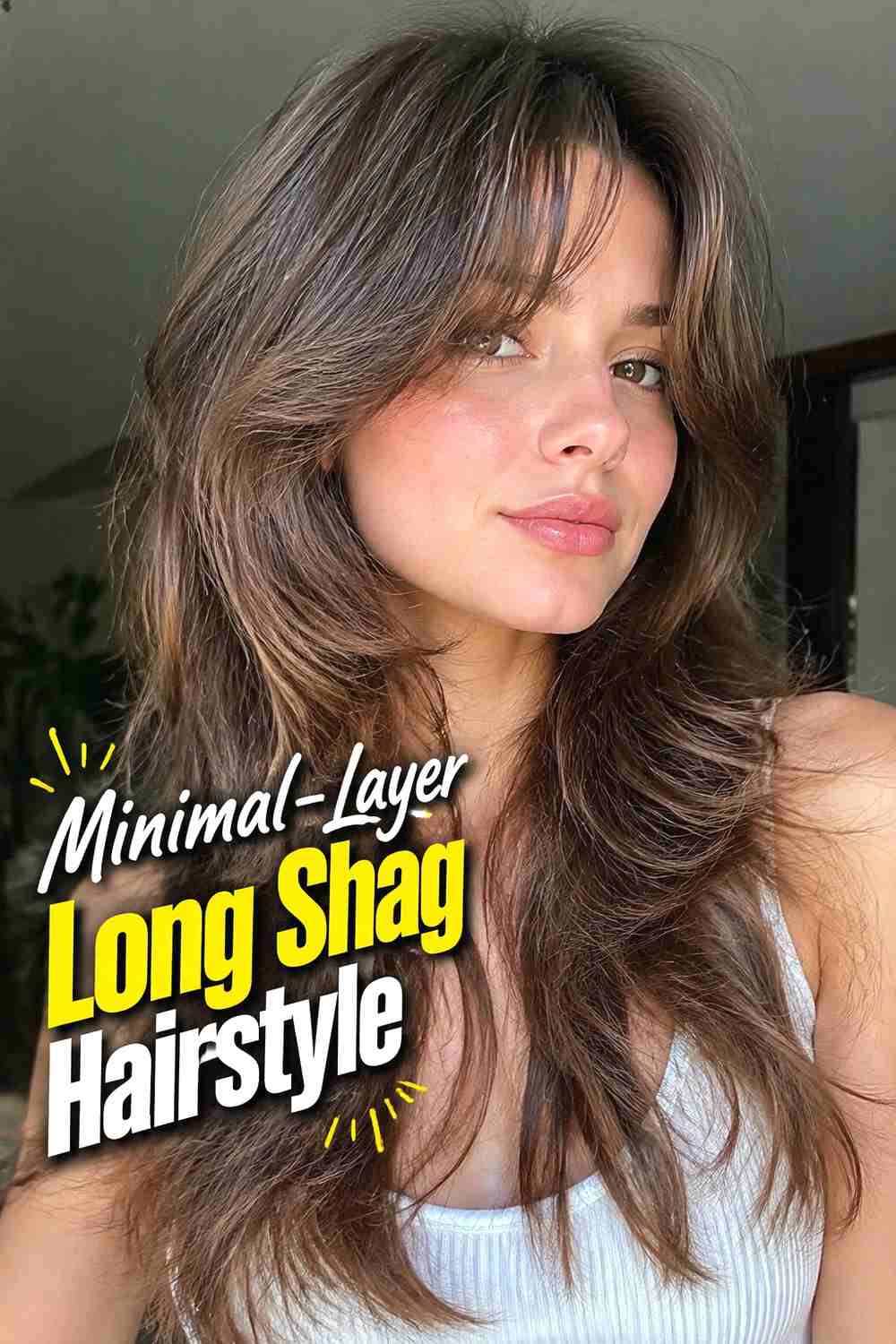
A minimal-layer long shag keeps the essence of the style while limiting the number of shorter sections. Most of the length remains intact, with selective face framing, a little movement through the sides, and just enough crown shaping to prevent the hair from feeling flat. This approach is particularly useful for finer or medium-density hair that could lose fullness with too many layers. The haircut can be worn straight, softly waved, or air-dried without needing the layers to be individually styled. Because the transitions are long and gradual, the grow-out also tends to feel softer than a heavily chopped shag. It is a restrained option for anyone prioritizing simplicity and density.
Why It Works
Fewer layers preserve fullness while strategically placed shorter sections still create enough movement for a shag-inspired finish.
Best For
Choose this variation if low maintenance and a substantial perimeter matter more than dramatic crown volume.
How to Choose the Right Look
Start with how your hair behaves without styling. If it naturally waves or bends, soft shag layers can encourage that movement with very little effort. Straighter hair often works better with longer, smoother transitions that remain visible even without curls.
Density matters too. Thick hair may benefit from invisible layers or controlled internal weight removal, while finer and medium-density hair usually needs more fullness preserved through the lower perimeter. If your ends already feel thin, avoid an aggressive taper.
Think about fringe maintenance before adding bangs. Curtain or wispy fringe adds personality but requires more attention than long side pieces or simple face framing. For the lowest-maintenance result, choose longer crown layers and a shape that still looks balanced when air-dried, tied back, or worn naturally.
Final Thoughts
A low-maintenance long shag should make your natural texture easier to wear, not create extra work. Soft crown layers, gradual face framing, and fuller ends keep the haircut relaxed while still giving long hair movement and shape. Choose the amount of layering that fits your density, texture, and realistic daily routine.
FAQs
1. Is a long shag low maintenance?
It can be. Versions with longer crown layers, gradual face framing, and fuller ends generally require less daily styling than heavily chopped shags.
2. Can a long shag be air-dried?
Yes. A well-planned shag can work with natural waves, bends, or straight texture as long as the layer placement suits how the hair dries naturally.
3. What type of layers are easiest to maintain?
Long, blended layers and restrained crown shaping tend to grow out smoothly and usually require less precise daily styling.
4. Can thick hair wear a low-maintenance shag?
Yes. Internal weight removal and longer layers can reduce bulk while preserving a full perimeter and manageable shape.
5. Do I need bangs for a long shag?
No. Curtain bangs and wispy fringe are popular options, but face-framing layers or longer side pieces can create a shag effect without a full fringe.
Save your favorite long shag, share these low-maintenance layered ideas, and explore more effortless haircut inspiration before your next trim.