19 Sculpted S-Wave Ponytail Hairstyle Ideas
Sculpted S-waves turn a simple ponytail into a polished statement, combining controlled curves, glossy movement, and clean structure from the crown to the ends.
The defining feature of a sculpted S-wave ponytail is its deliberate wave pattern. Instead of loose curls or irregular bends, the ponytail moves through smooth alternating curves that create a clear S-shaped rhythm. Depending on the finish, those waves can look soft and touchable, sharply defined, glossy, retro-inspired, or more voluminous.
Ponytail height and front styling make an equally big difference. High placement gives the waves more movement, while low placement feels elegant and controlled. Deep side parts, finger-wave details, braided bases, wrapped elastics, accessories, and dimensional color can all change the mood without losing the sculpted wave pattern.
Quick List
- High Sculpted S Wave Ponytail Hairstyle
- Low Sculpted S Wave Ponytail Hairstyle
- Deep Side Part Sculpted S Wave Ponytail Hairstyle
- Center Part Sculpted S Wave Ponytail Hairstyle
- Extra Long Sculpted S Wave Ponytail Hairstyle
- Glossy Sculpted S Wave Ponytail Hairstyle
- Voluminous Sculpted S Wave Ponytail Hairstyle
- Soft Sculpted S Wave Ponytail Hairstyle
- Finger Wave Front Sculpted S Wave Ponytail Hairstyle
- Wrapped Base Sculpted S Wave Ponytail Hairstyle
- Braided Base Sculpted S Wave Ponytail Hairstyle
- Side Swept Sculpted S Wave Ponytail Hairstyle
- Retro Glam Sculpted S Wave Ponytail Hairstyle
- Soft Face Framing Sculpted S Wave Ponytail Hairstyle
- Pearl Accent Sculpted S Wave Ponytail Hairstyle
- Ribbon Tied Sculpted S Wave Ponytail Hairstyle
- Caramel Highlight Sculpted S Wave Ponytail Hairstyle
- Copper Sculpted S Wave Ponytail Hairstyle
- Hollywood Inspired Sculpted S Wave Ponytail Hairstyle
1. High Sculpted S Wave Ponytail Hairstyle
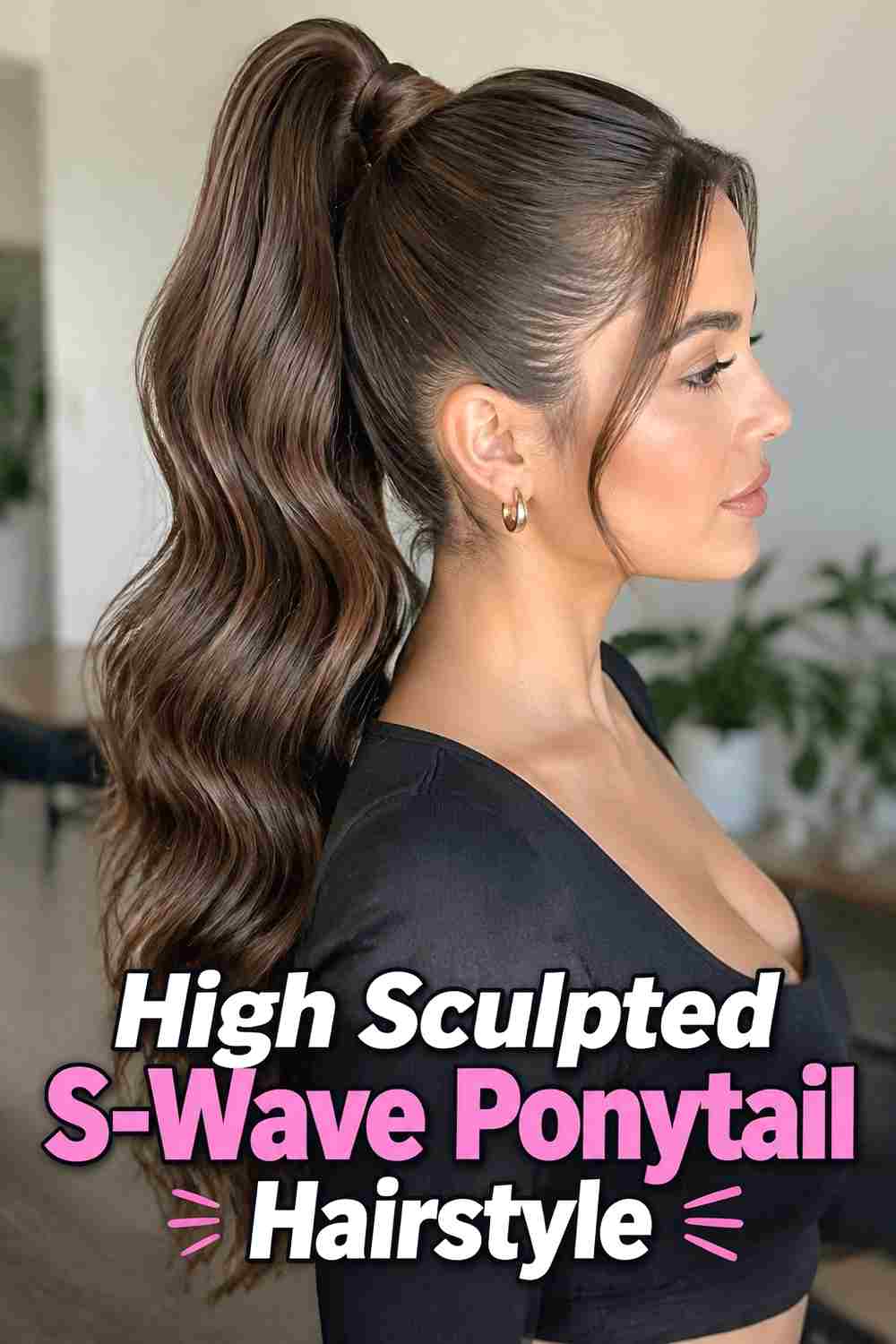
A high sculpted S-wave ponytail creates maximum movement by lifting the base near the crown and letting the wave pattern cascade behind the head. The front can stay sleek and controlled so the ponytail becomes the main feature, while the tail moves through broad, deliberate curves rather than loose curls. Medium to long hair works best because the S-shape needs enough length to repeat clearly. A wrapped base can make the tie point look cleaner, and a lightly polished surface helps the ridges catch natural light. Keep the wave pattern flexible enough to move rather than setting it into a stiff, lacquered shape.
Styling Notes
Shape the wave pattern after securing the ponytail so each bend follows the direction of the actual tie point.
Best For
This look suits events, photos, and polished styling where you want noticeable height and strong movement.
2. Low Sculpted S Wave Ponytail Hairstyle
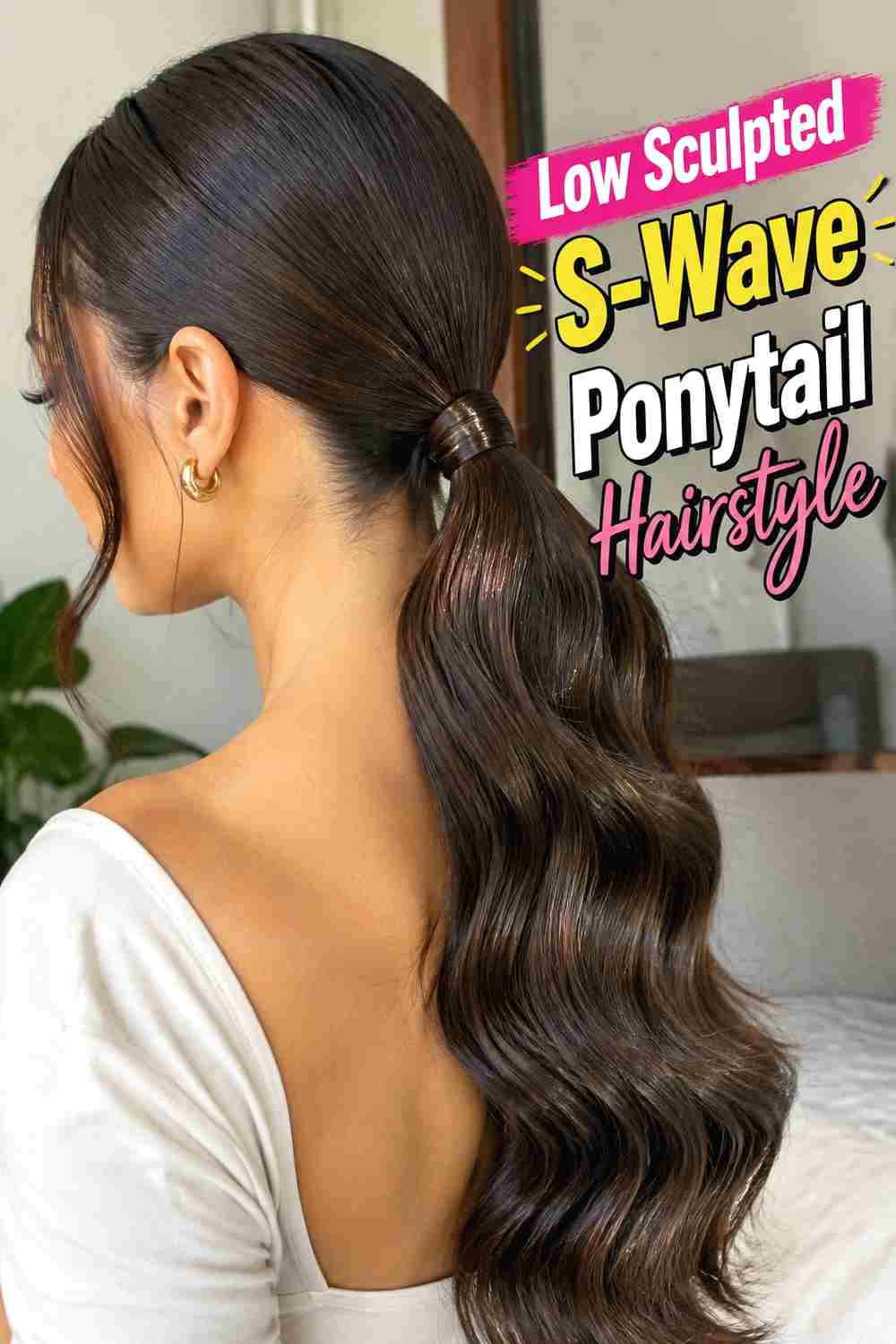
A low S-wave ponytail feels more refined, with the base sitting close to the nape and the sculpted waves flowing downward in a smoother line. Because the ponytail begins lower, the shape looks longer and more controlled, making it a strong option for elegant outfits and evening styling. A center or side part can both work, but keeping the crown relatively sleek helps the wave pattern remain the main focus. The tail can carry broad, glossy bends that repeat naturally through the length. Avoid compressing the ponytail too tightly at the nape; a little softness keeps the finish from feeling rigid or uncomfortable.
Why It Works
The low placement gives the sculpted waves a graceful vertical fall and keeps the overall silhouette understated.
Pro Tip
Use a hidden pin or wrapped base to keep the elastic concealed without adding unnecessary bulk.
3. Deep Side Part Sculpted S Wave Ponytail Hairstyle
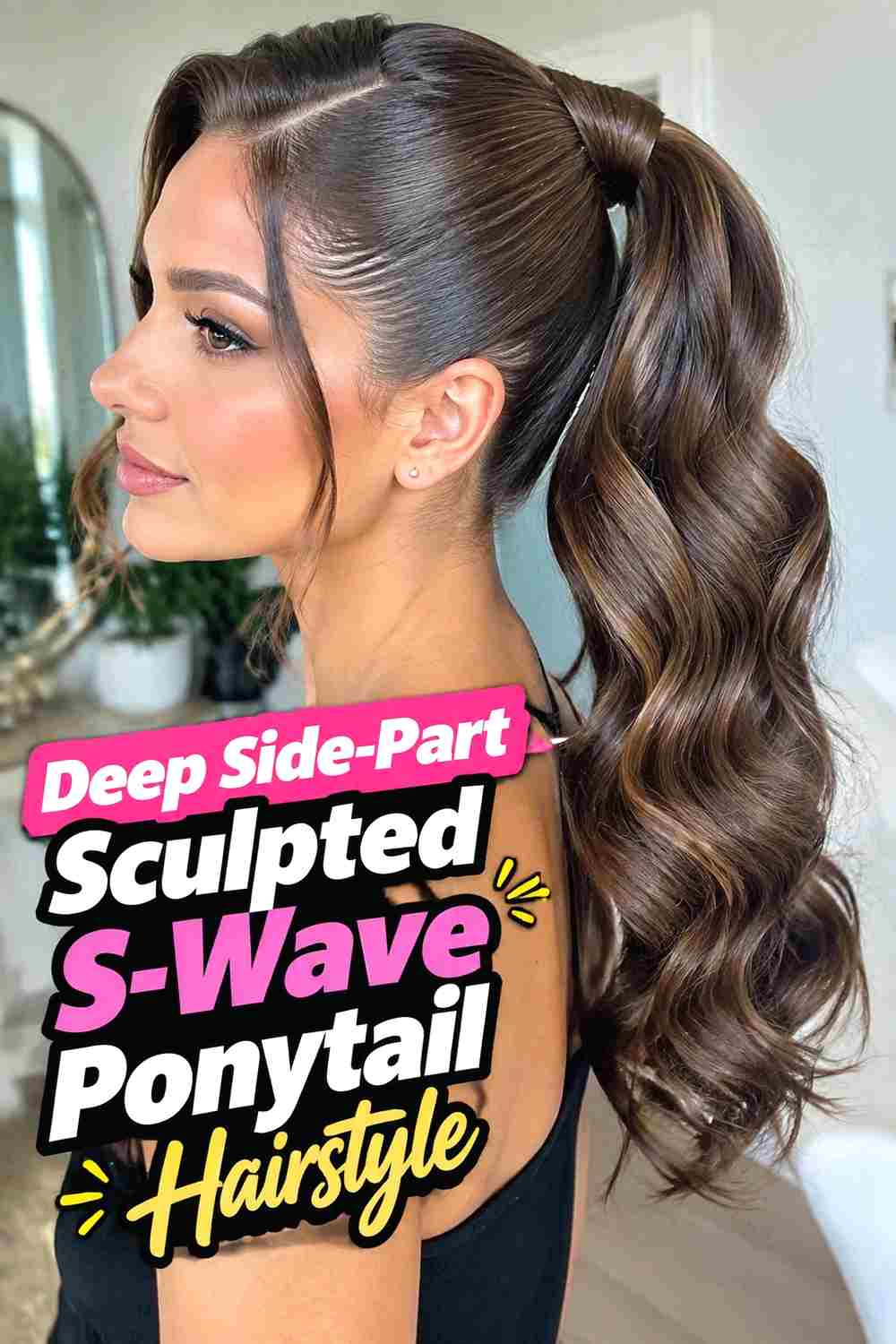
A deep side part creates dramatic asymmetry before the S-wave ponytail even begins. The heavier front section sweeps across the forehead and blends into the base, while the ponytail continues the movement with broad sculpted curves. This connection between the front sweep and the tail makes the whole hairstyle feel cohesive rather than divided into separate elements. Low and medium placements work especially well because they keep the side part visible from the front and profile. A glossy finish enhances the wave ridges, but natural strands should remain visible so the style looks polished rather than overly molded.
Styling Notes
Set the side part before gathering the hair so the front sweep stays smooth and directional.
Best For
This variation works well when you want a glamorous, asymmetrical finish with strong visual structure.
4. Center Part Sculpted S Wave Ponytail Hairstyle
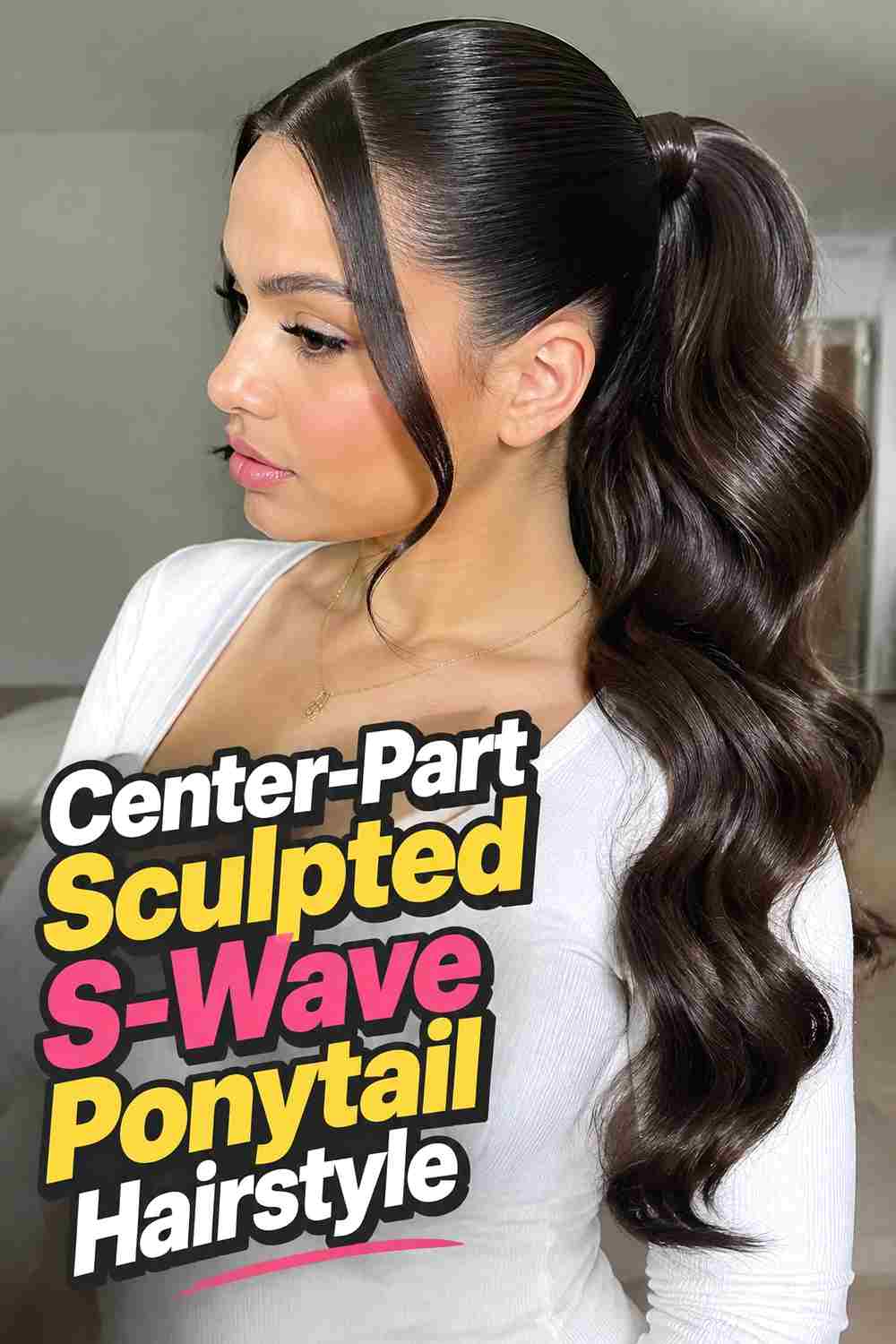
The center-part version gives sculpted S-waves a cleaner, more symmetrical foundation. Both sides of the front section can be smoothed evenly toward the ponytail while the tail carries the main texture. A medium or low ponytail helps maintain the balanced effect, especially when the S-curves are broad and consistent through the length. The style looks particularly polished on medium to long hair because the repeated wave pattern can remain visible without appearing crowded. A touch of crown lift prevents the middle part from looking completely flat. The finished result feels modern, controlled, and elegant without relying on dramatic accessories or complicated detailing.
Why It Works
The symmetry at the roots makes the sculpted wave pattern look especially deliberate and balanced.
Pro Tip
Keep the ponytail centered precisely at the back so the wave pattern falls evenly from the middle part.
5. Extra Long Sculpted S Wave Ponytail Hairstyle
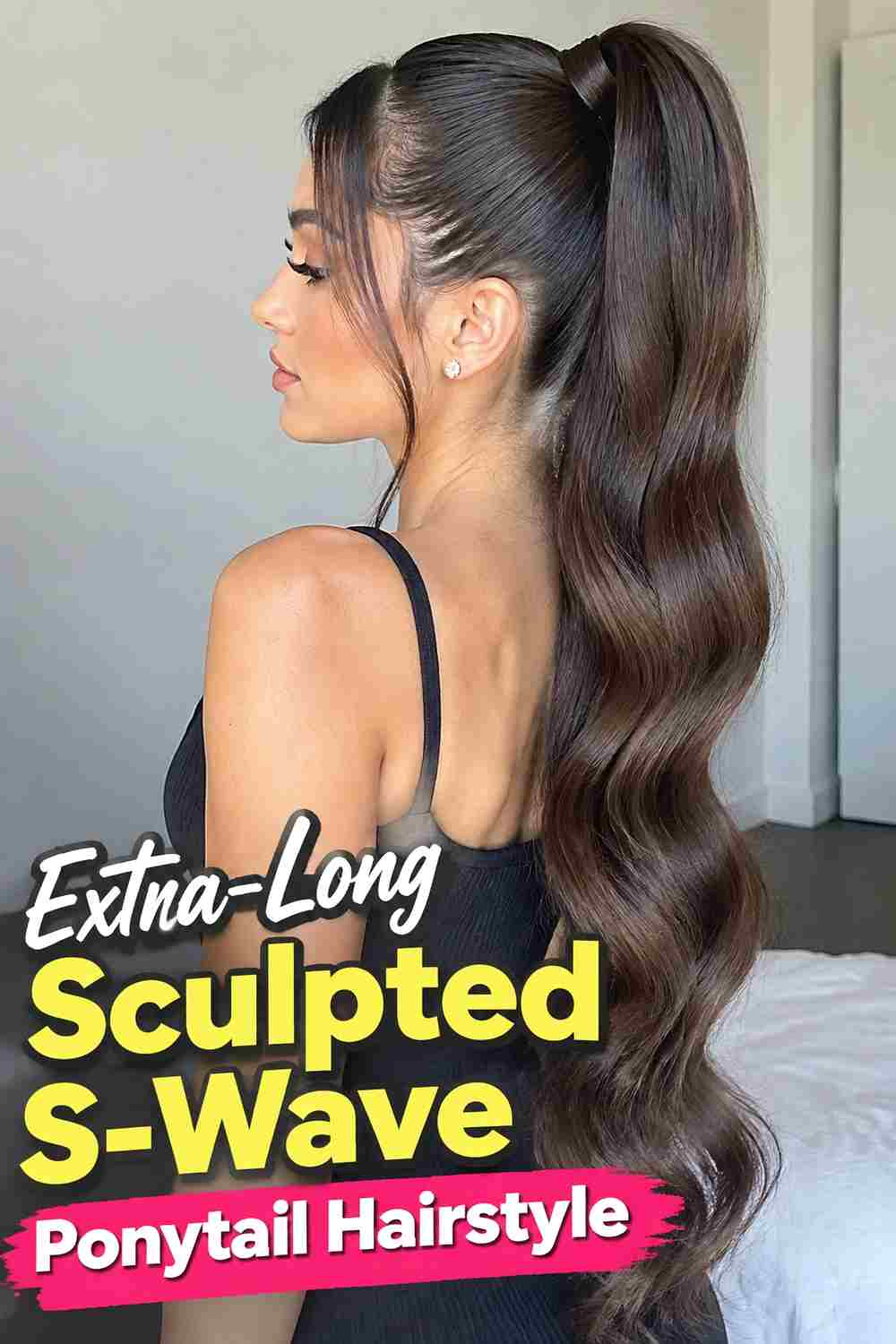
Extra-long length gives the S-wave pattern more room to repeat, creating a dramatic cascade that can extend to the waist or below. The ponytail may be positioned high for movement or lower for a smoother, more formal silhouette. Broad waves usually work better than very tight bends because they remain visible across the longer length without becoming visually busy. If added hair is used, the weight should be balanced carefully so the base remains comfortable. A wrapped tie point helps the extended length feel polished, while subtle variation near the ends keeps the ponytail from looking artificially uniform.
Hair Type & Length
Medium to long natural hair can support the style, while added hair may be used for extra length or density when appropriate.
Wear & Maintenance
Long sculpted waves need gentle handling to avoid tangling, especially where the ponytail brushes against clothing.
6. Glossy Sculpted S Wave Ponytail Hairstyle
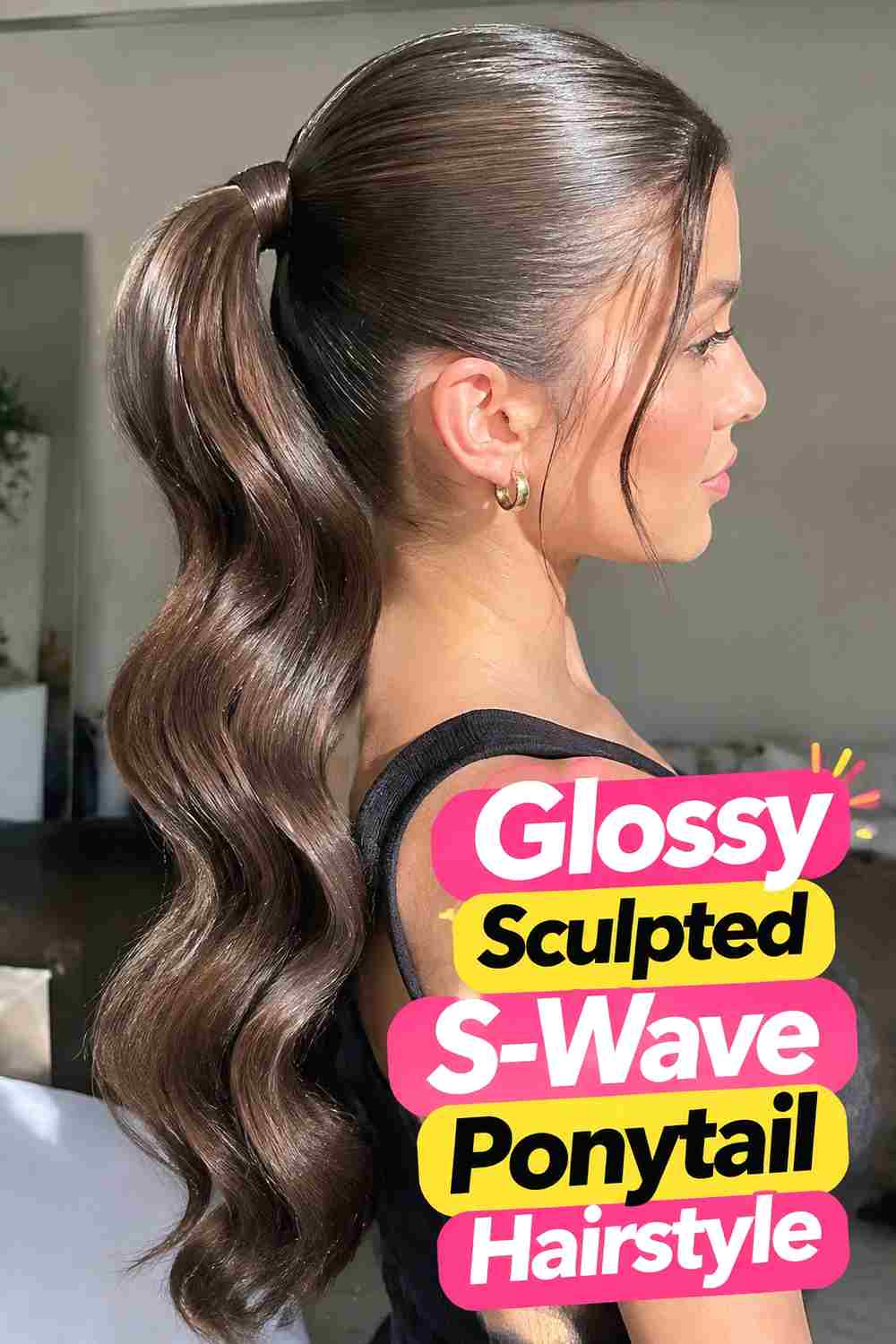
Gloss takes the sculpted S-wave ponytail in a sleek, high-polish direction by emphasizing every ridge and curve of the wave pattern. The base can remain smooth and close to the head, while the ponytail carries broad, reflective bends through the length. Dark brunette and black shades show this contrast especially well, though glossy definition works across many colors. The shine should appear natural and concentrated along the curved surfaces rather than making the hair look oily. A medium or low ponytail suits the polished finish and allows the S-shape to remain clearly visible from several angles.
Styling Notes
Use lightweight finishing products so the surface reflects light without weighing down the wave structure.
Best For
This option works well for sleek evening looks, formal events, and polished photo styling.
7. Voluminous Sculpted S Wave Ponytail Hairstyle
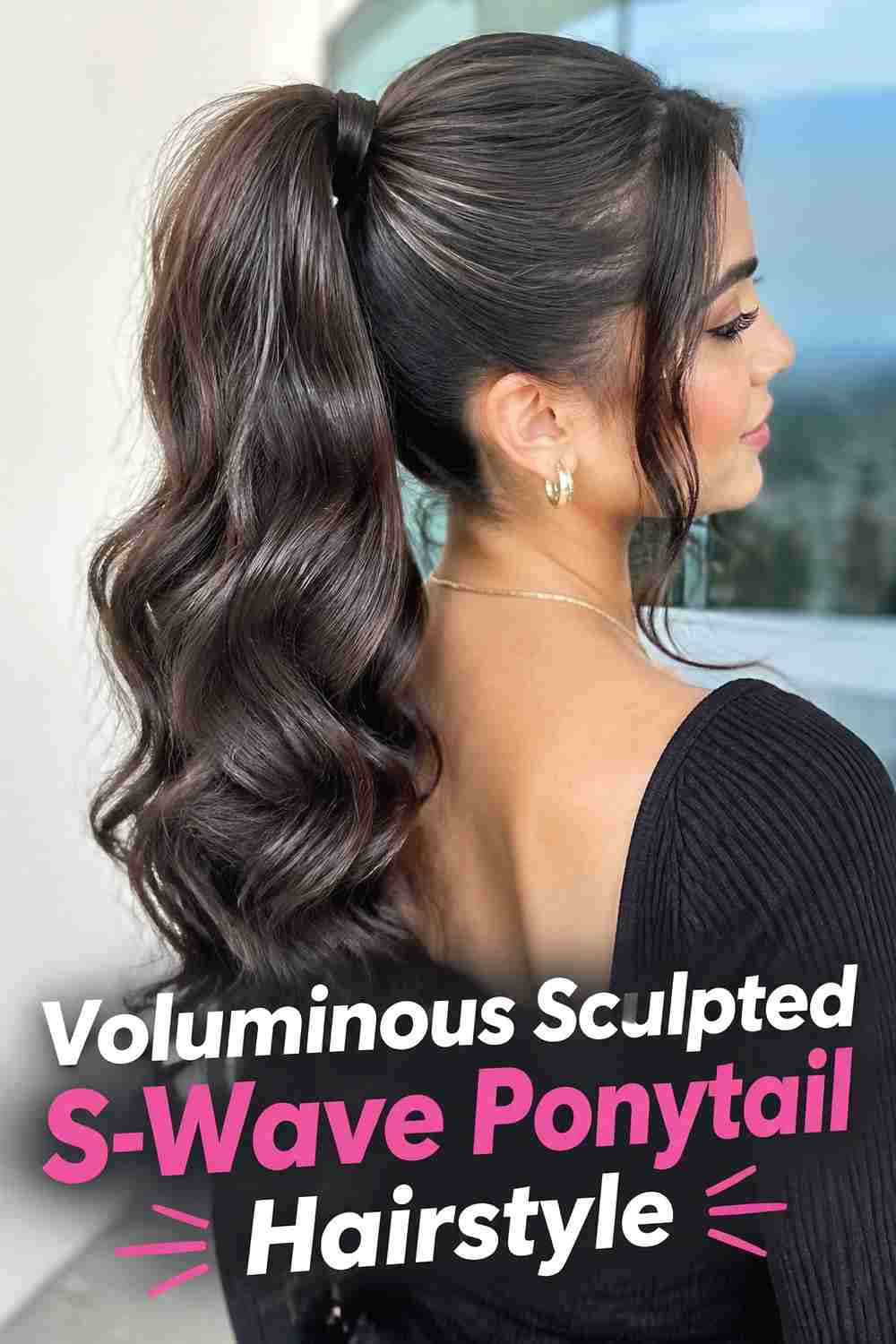
A voluminous S-wave ponytail creates a fuller silhouette by widening the wave pattern and lifting the ponytail at the base. Instead of lying close together, the curves have enough space to show dimension and body through the length. Medium-to-high placement helps the ponytail expand naturally, while subtle root lift prevents the front from feeling disconnected from the fuller tail. The key is preserving clear S-shaped movement rather than brushing the hair into a generic fluffy wave. Layers or added density can help build volume, but the finish should remain balanced so the ponytail still moves naturally.
Why It Works
The larger wave pattern creates fullness while keeping the hairstyle structured and recognizable.
Pro Tip
Build volume between the wave ridges rather than roughing up the outer surface, which can reduce definition.
8. Soft Sculpted S Wave Ponytail Hairstyle
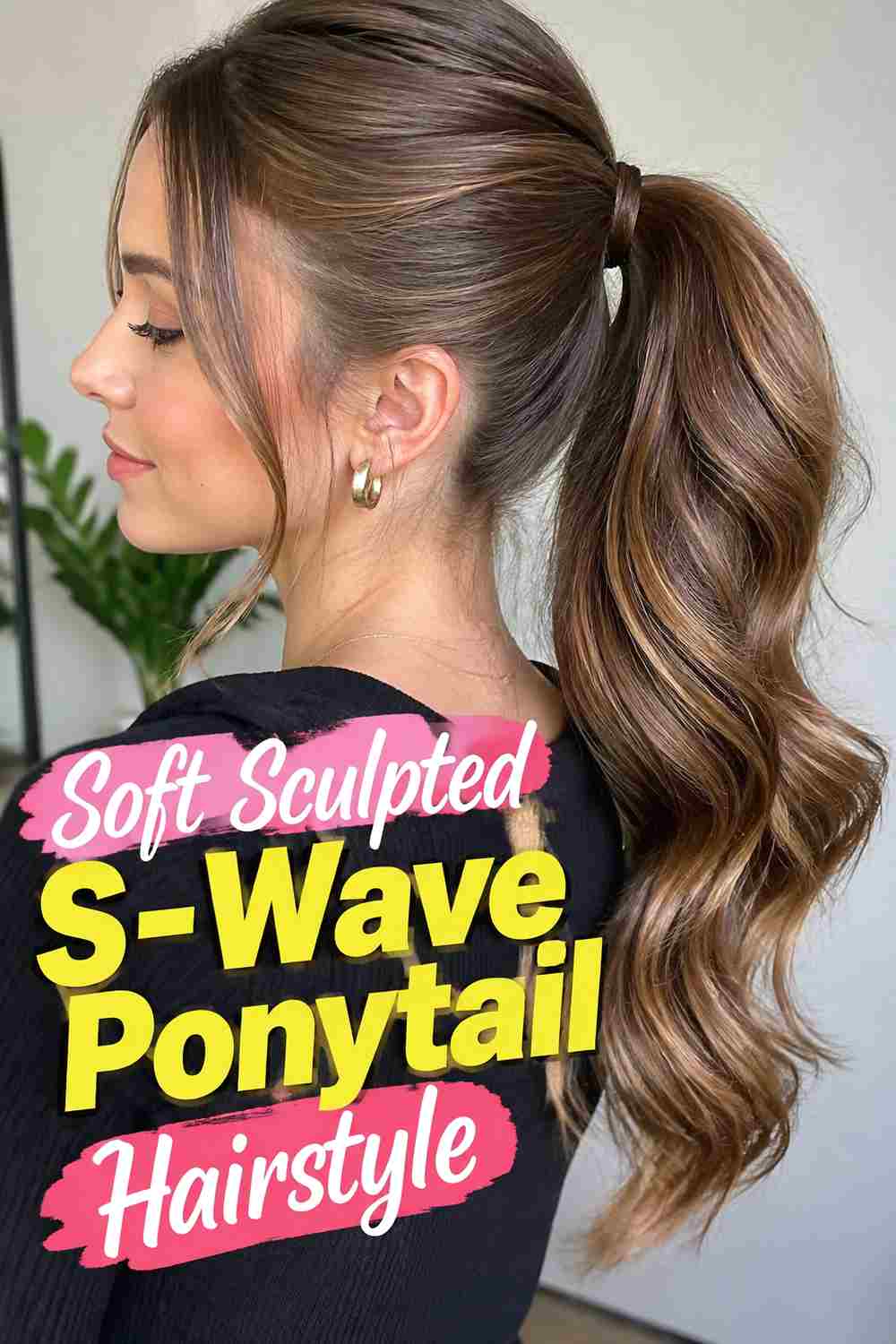
The soft version relaxes the wave ridges slightly, creating a more wearable interpretation of the sculpted S-wave ponytail. The bends remain visible, but the transitions between them are smoother and less sharply defined. A low or medium ponytail works particularly well because the softer fall complements the understated movement. The front can stay sleek or retain a little natural texture, depending on how polished you want the overall finish. This option is useful for anyone who likes the elegance of deliberate waves but does not want the hairstyle to look overly formal or heavily set.
Styling Notes
Use broad sections and gentle shaping so the S-curves stay visible without becoming hard-edged.
Best For
This look suits dinners, everyday polished styling, and occasions where you want softness with a little structure.
9. Finger Wave Front Sculpted S Wave Ponytail Hairstyle
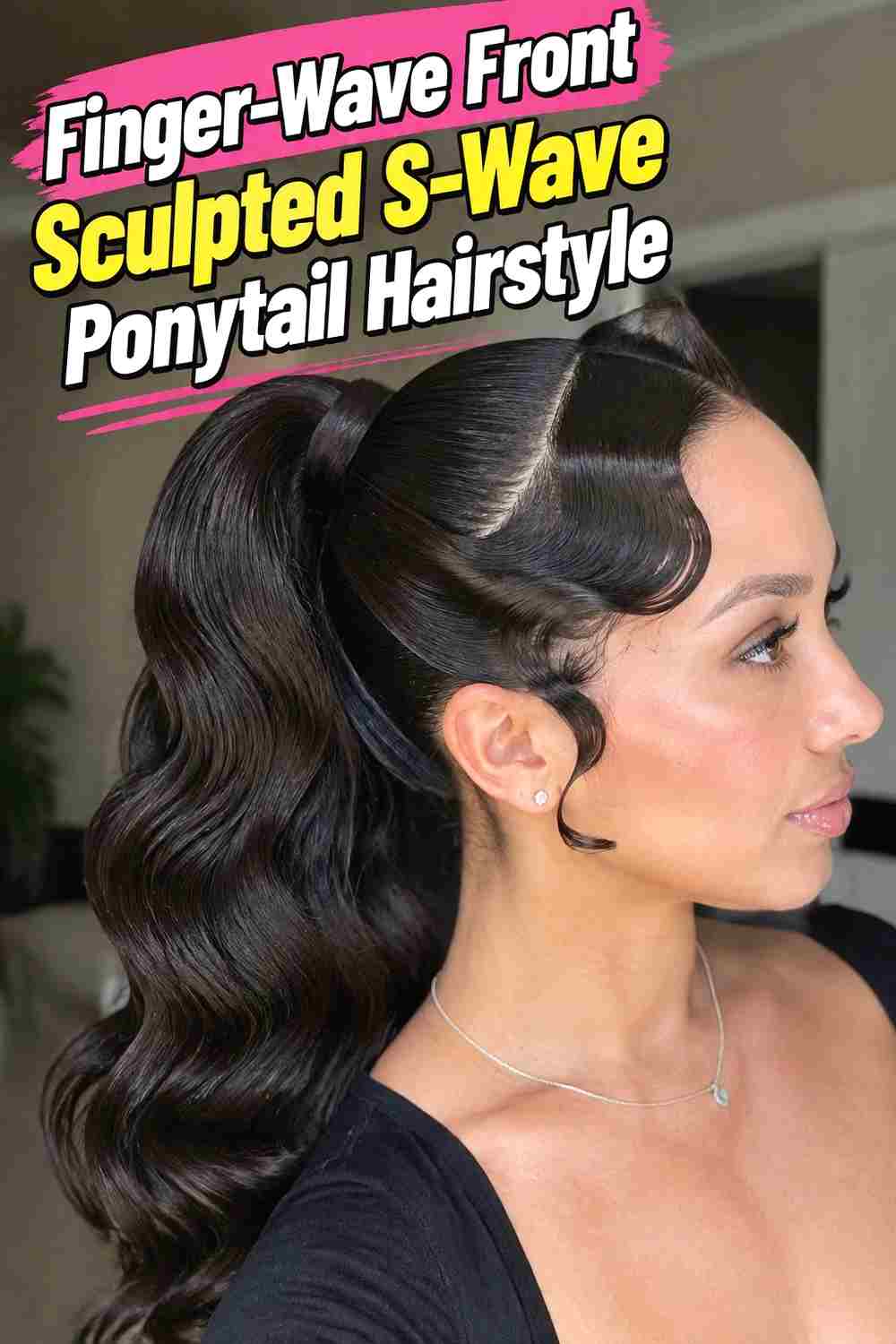
Finger-wave detailing at the front creates a strong connection between vintage wave styling and a modern ponytail. The front section forms one or two glossy curves close to the hairline before the hair is gathered into a sleek ponytail. The tail then continues the theme with larger S-shaped waves, creating a layered wave effect from front to back. A low ponytail keeps the design elegant and prevents the front detail from competing with too much height. The finger-wave section should stay controlled and smooth, while the ponytail can remain slightly softer so the style has movement.
Why It Works
The repeating wave motif makes the entire hairstyle feel cohesive rather than decorative only at the front.
Wear & Maintenance
Avoid touching the finger-wave section repeatedly, since excessive handling can soften the ridges faster than the ponytail.
10. Wrapped Base Sculpted S Wave Ponytail Hairstyle
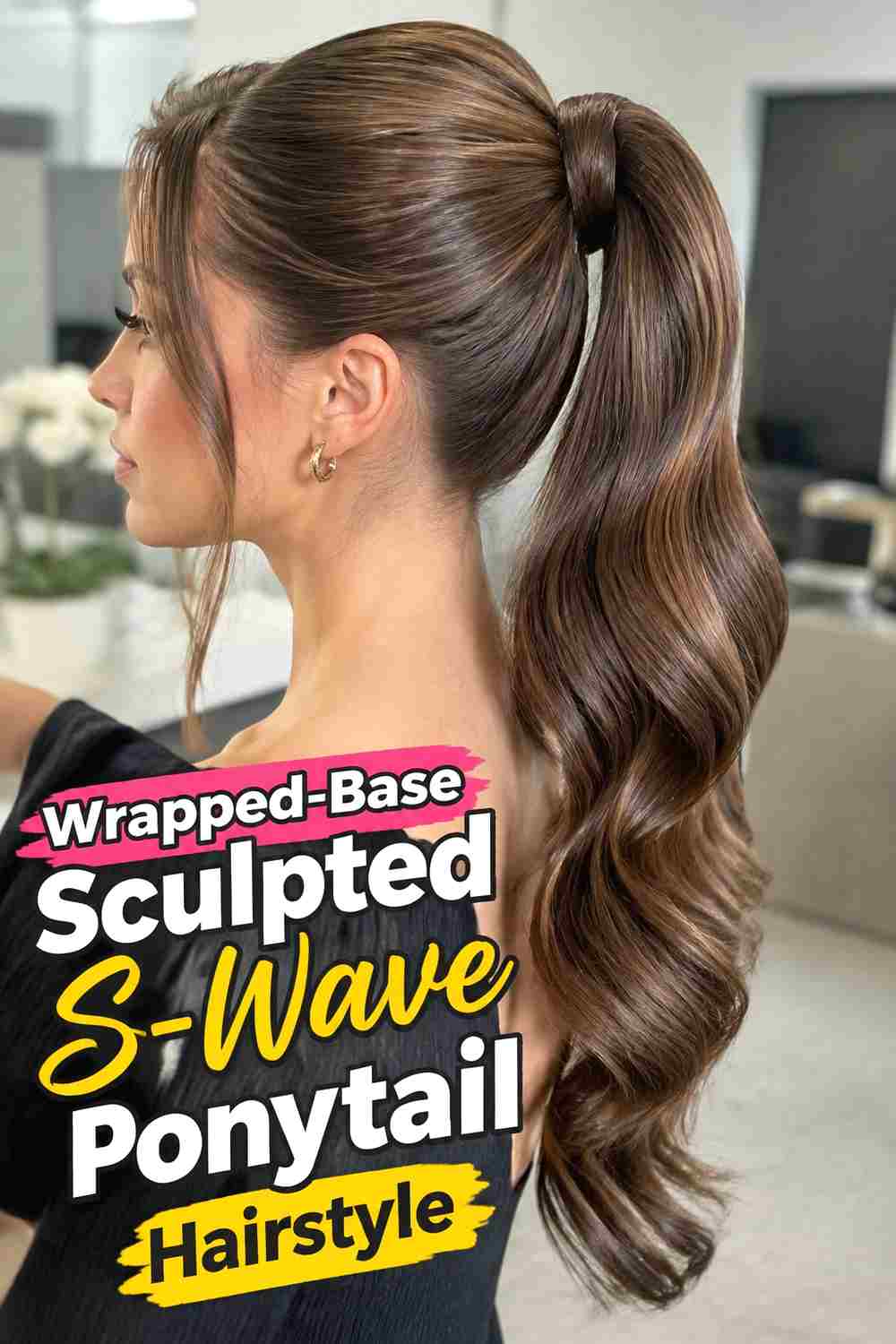
A wrapped base gives the sculpted ponytail a clean, finished transition between the smooth crown and the waved tail. A narrow section of hair circles the elastic, hiding the tie point and creating a seamless look from every angle. The ponytail itself can sit high, medium, or low, though medium placement often balances polish with movement. Broad S-curves should begin just below the wrapped section so the wave pattern stays clear. This subtle detail works well when you want the hairstyle to look complete without using visible accessories or additional braids.
Styling Notes
Keep the wrapped section smooth and narrow enough that it does not overpower the ponytail base.
Pro Tip
Pin the end underneath the ponytail so the fastening stays hidden from the front and sides.
11. Braided Base Sculpted S Wave Ponytail Hairstyle
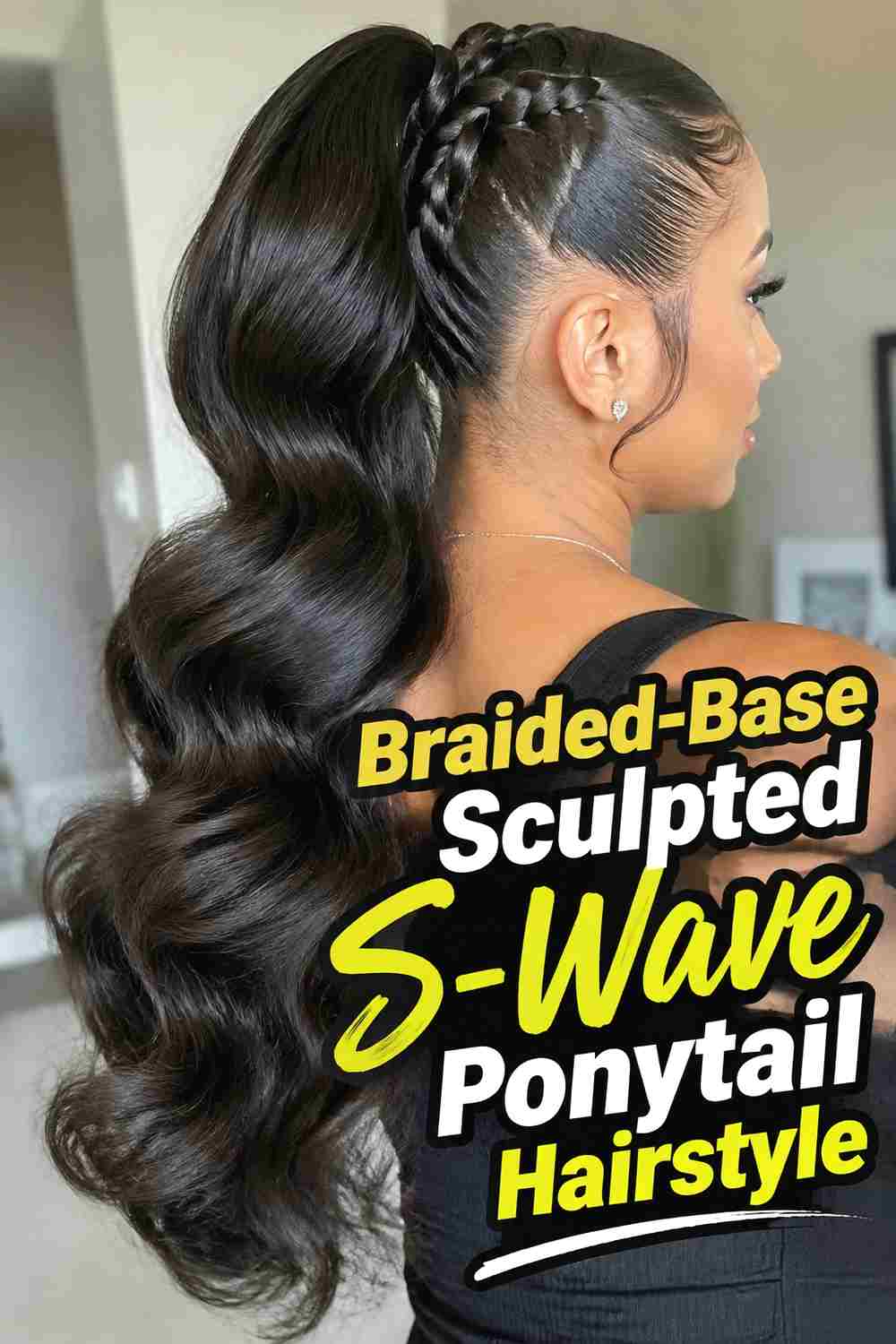
A braided base adds texture exactly where the ponytail begins, creating contrast with the smooth S-waves through the length. One small braid can wrap around the elastic, or a short braided section can lead into the ponytail from the side. The rest of the style should remain simple so the braid does not compete with the sculpted curves. A medium or high ponytail shows the detail clearly, especially when the tail is long enough for several wave repetitions. This variation works well when you want a more intricate finish without turning the entire ponytail into a braided style.
Why It Works
The braid adds structure at the base while the waves provide softness and movement through the length.
Best For
This option suits creative events, polished everyday styling, and anyone who likes braid details without a fully braided look.
12. Side Swept Sculpted S Wave Ponytail Hairstyle
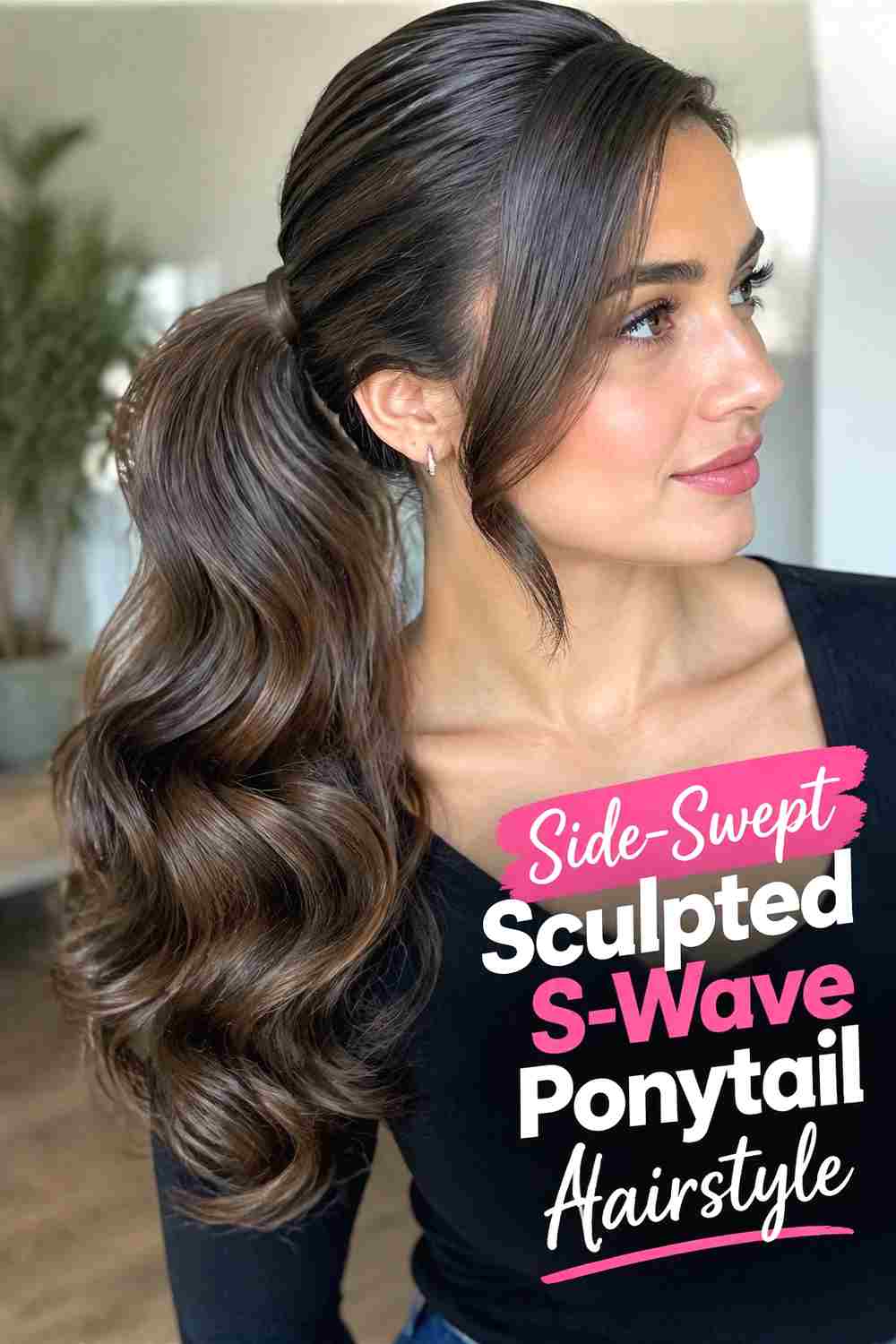
A side-swept S-wave ponytail shifts most of the length over one shoulder, making the sculpted pattern highly visible from the front. The ponytail can start low or at mid-level, then be guided across the back so the broad waves fall along one side of the chest. A deep side part strengthens the asymmetry, while a smooth opposite side keeps the silhouette clean. This arrangement works especially well with long hair because the waves have enough length to remain defined after being moved forward. The finished style feels glamorous without needing an elaborate updo.
Styling Notes
Secure the sweep discreetly near the back if needed so the ponytail stays in place without flattening the wave pattern.
Best For
This look works beautifully for portraits, formal occasions, and outfits where you want the hair visible from the front.
13. Retro Glam Sculpted S Wave Ponytail Hairstyle
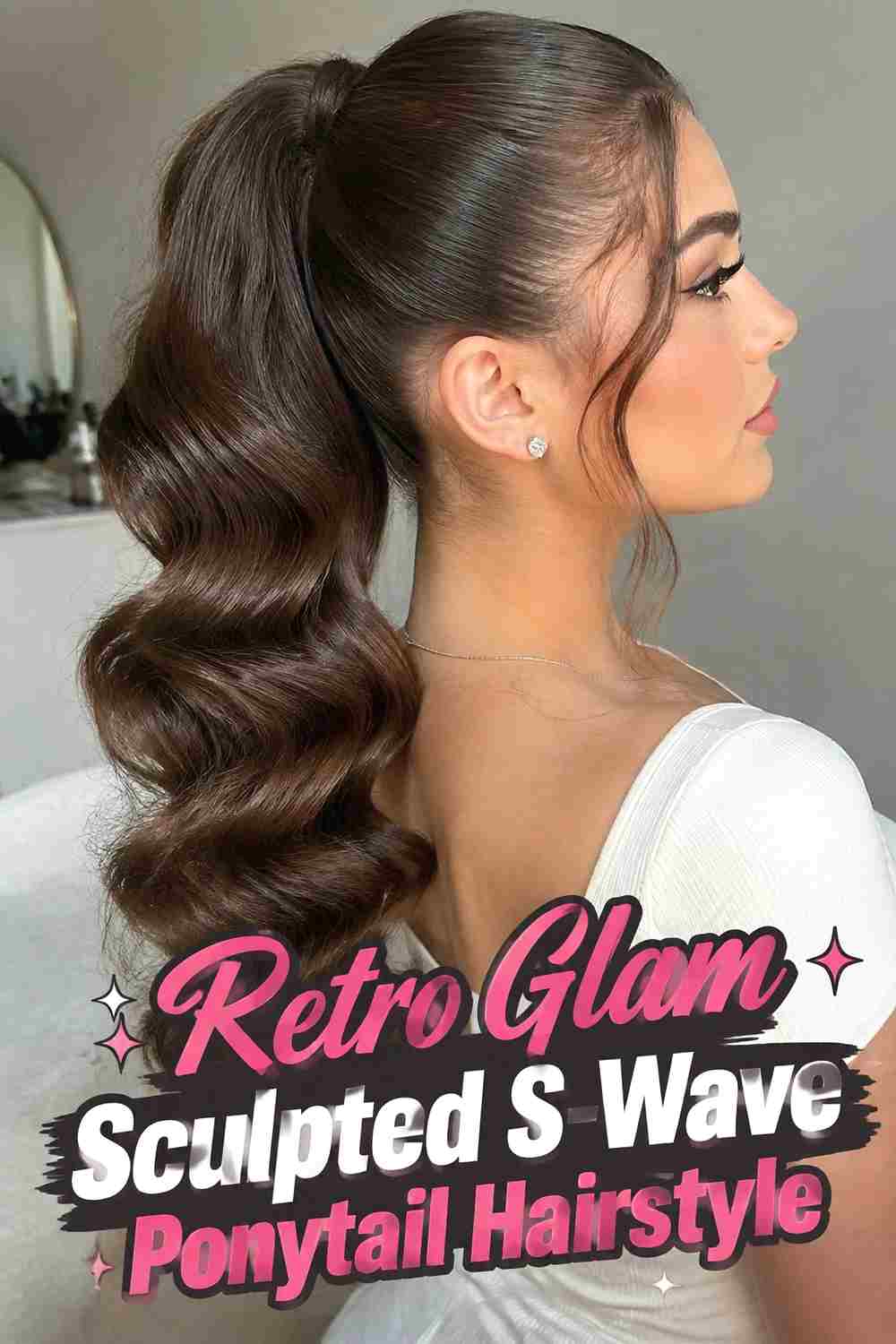
Retro glam styling emphasizes smooth, deliberate curves and a polished surface for a more vintage-inspired ponytail. The front may include a side sweep or soft wave near the hairline, while the tail carries broad, glossy S-shapes through the length. A low or medium base keeps the look elegant, especially when paired with rich brunette, black, or deep auburn color. The wave pattern should be clearly sculpted but still flexible enough to move. Avoid overloading the style with extra accessories; the combination of polished roots and repeating waves already creates plenty of visual impact.
Why It Works
The controlled curve pattern references classic glamour while the ponytail keeps the overall shape modern and wearable.
Pro Tip
Keep the waves broad and smooth rather than turning them into separate curls, which changes the character of the style.
14. Soft Face Framing Sculpted S Wave Ponytail Hairstyle
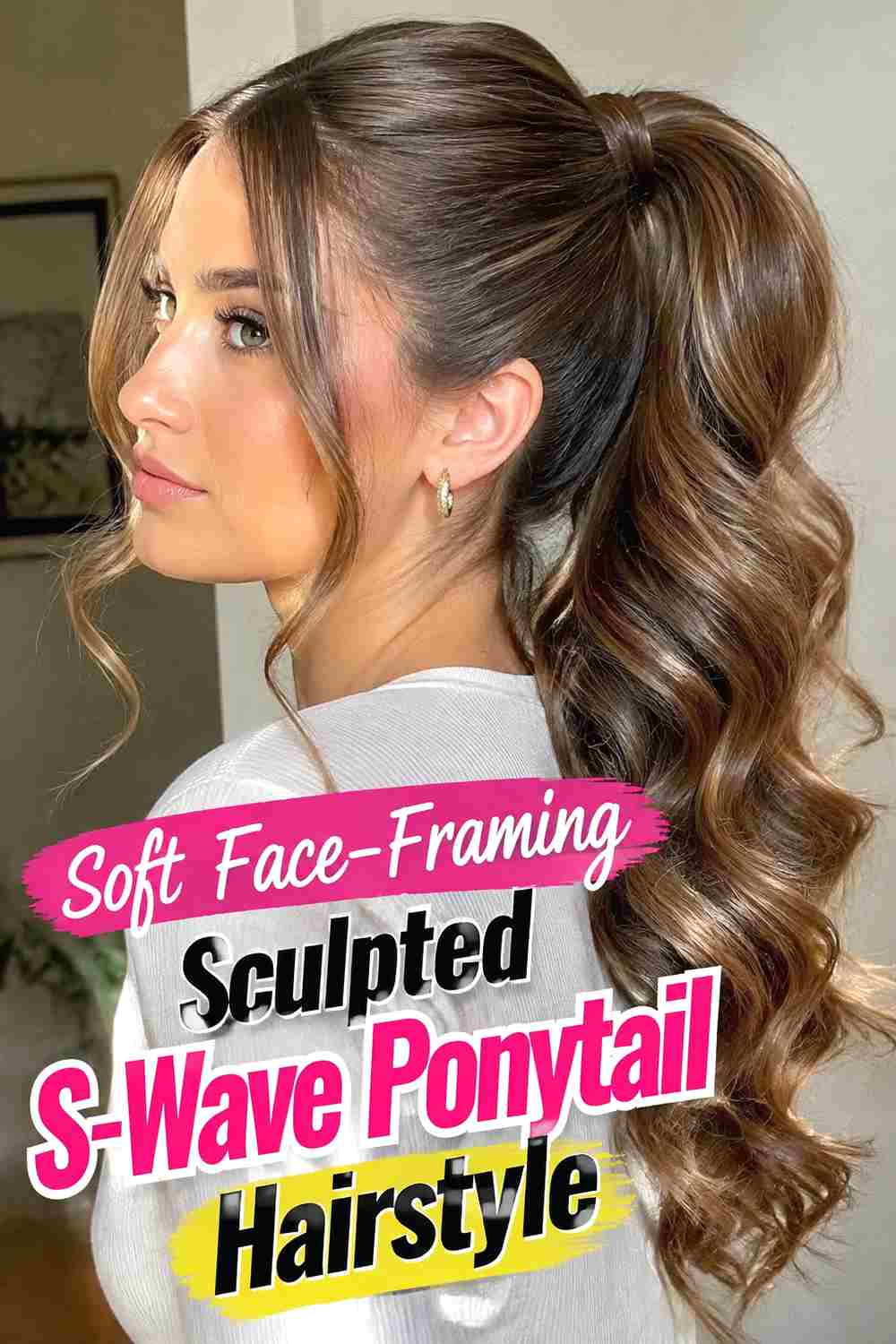
Face-framing pieces soften the structure of an S-wave ponytail by leaving a few shorter sections loose around the cheeks or jaw. These pieces can be shaped into gentle bends that echo the ponytail without competing with it. The main hair remains gathered into a medium or low ponytail, where the larger sculpted waves create the strongest movement. This look is especially useful if you prefer a softer front profile instead of pulling every strand tightly away from the face. Keeping the loose pieces limited helps the style remain polished while still feeling relaxed and wearable.
Styling Notes
Choose the face-framing sections before securing the ponytail so you do not disturb the base afterward.
Best For
This variation works well for dinners, celebrations, and softer event styling where a fully slick front would feel too severe.
15. Pearl Accent Sculpted S Wave Ponytail Hairstyle
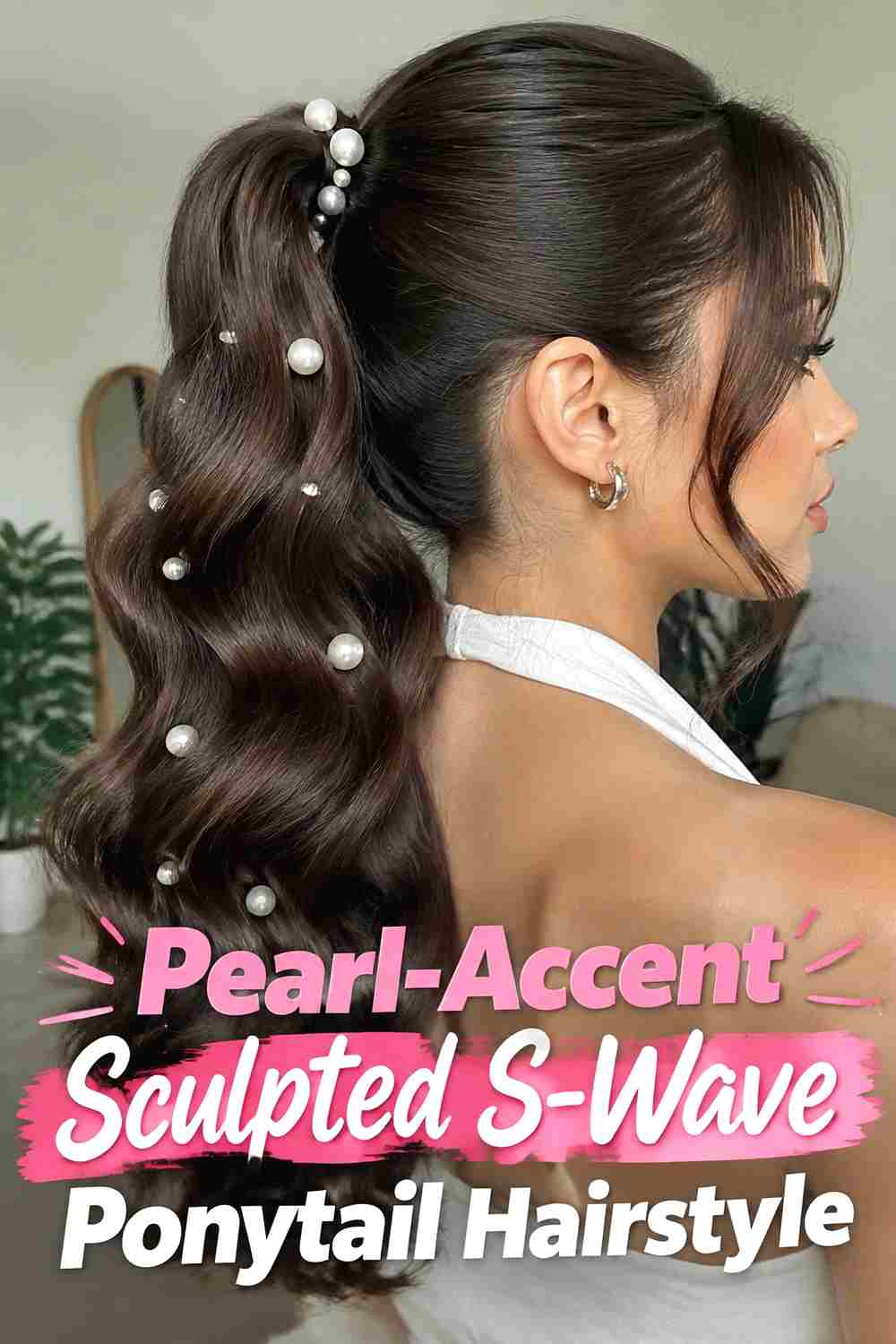
Pearl accents add a refined decorative element without changing the sculpted wave structure. Small pearl pins can be placed near the ponytail base, along one side of a deep part, or in a short curved line that follows the direction of the style. The ponytail itself should remain the main feature, with broad S-waves and a smooth, luminous finish. A low or medium placement keeps the look elegant and allows the accessories to feel integrated rather than overly playful. Limiting the number of pearls helps preserve the clean silhouette and makes each accent more noticeable.
Why It Works
The rounded pearl shapes complement the smooth wave curves while adding a polished focal point.
Pro Tip
Add the pearl pins after the ponytail and wave pattern are fully finished so they do not interfere with styling.
16. Ribbon Tied Sculpted S Wave Ponytail Hairstyle
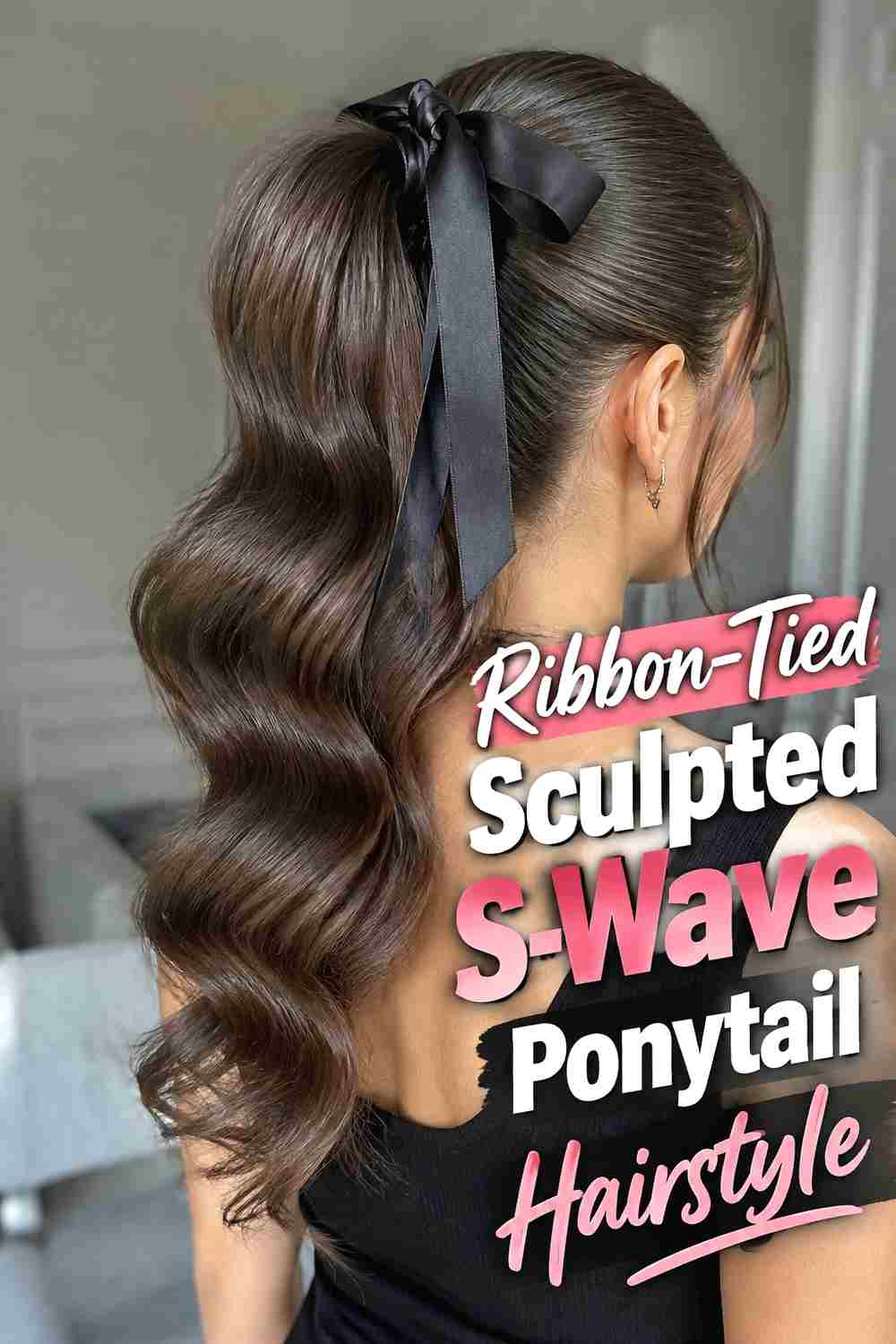
A ribbon brings a softer, more romantic detail to the sculpted S-wave ponytail. The hair can be secured low or at mid-level, then finished with a satin, velvet-look, or matte ribbon tied around the base. The tail should retain broad, polished waves so the accessory feels secondary to the hairstyle rather than becoming the main attraction. A side part can make the style feel more formal, while a center part creates a cleaner, modern balance. Choosing a ribbon color that contrasts gently with the hair helps it remain visible without overwhelming the wave pattern.
Styling Notes
Secure the ponytail with a regular elastic first, then add the ribbon as a decorative finishing element.
Best For
This look works well for celebrations, dinners, romantic outfits, and softly styled photos.
17. Caramel Highlight Sculpted S Wave Ponytail Hairstyle
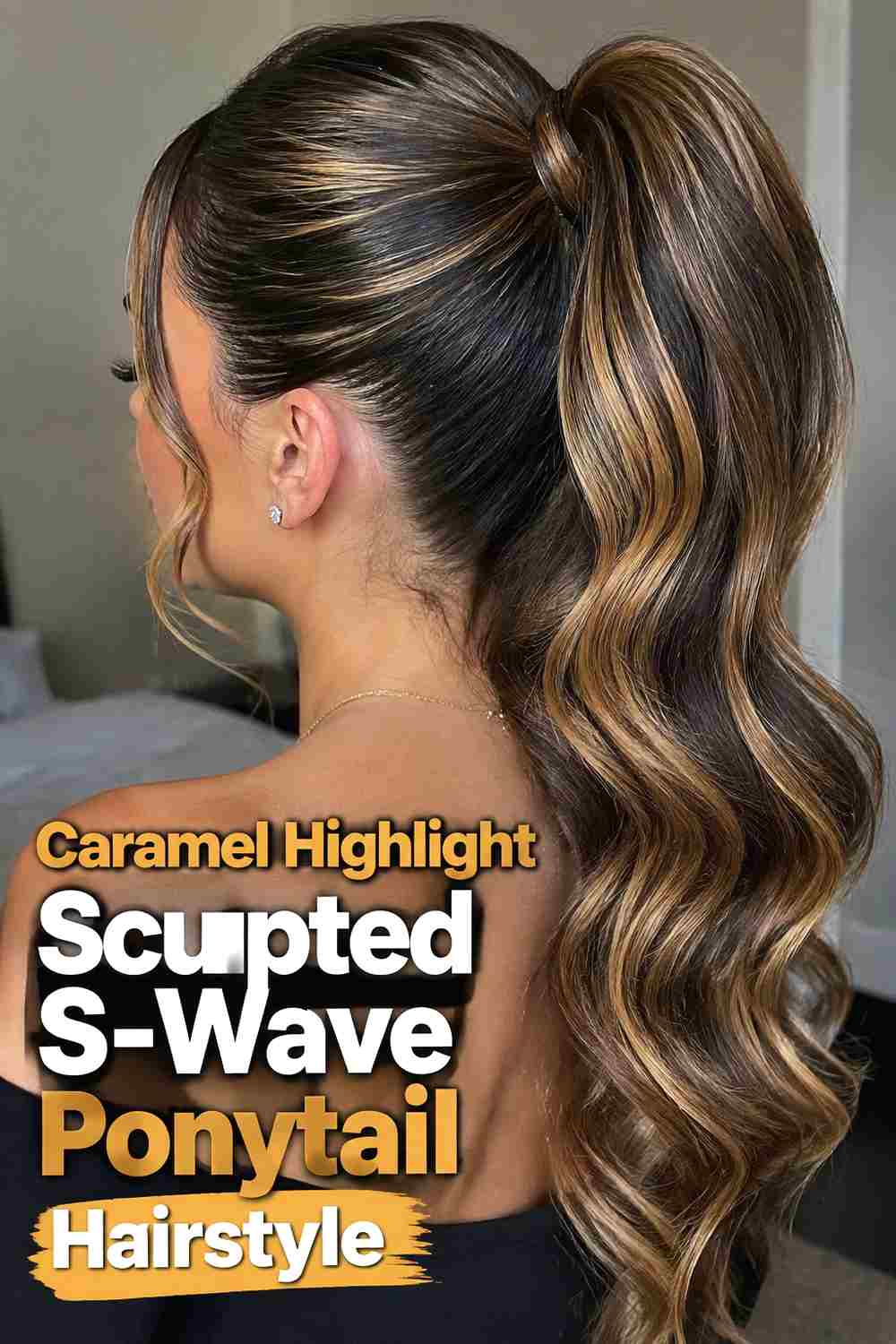
Caramel highlights emphasize the sculpted wave pattern by making the curves easier to see as they catch natural light. A deeper brunette base can transition into warm caramel ribbons through the ponytail, with brighter pieces appearing around the outer wave ridges. Long or medium-length hair gives the color enough space to move through several bends instead of forming one flat block. The ponytail can sit high for a livelier finish or low for something more elegant. Keeping the highlights varied in width helps the color look dimensional and natural rather than striped.
Why It Works
The lighter ribbons follow the curves of the S-waves, making the structure look more dimensional.
Wear & Maintenance
Handle highlighted lengths gently and avoid heavy products that can flatten the wave shape or reduce movement.
18. Copper Sculpted S Wave Ponytail Hairstyle
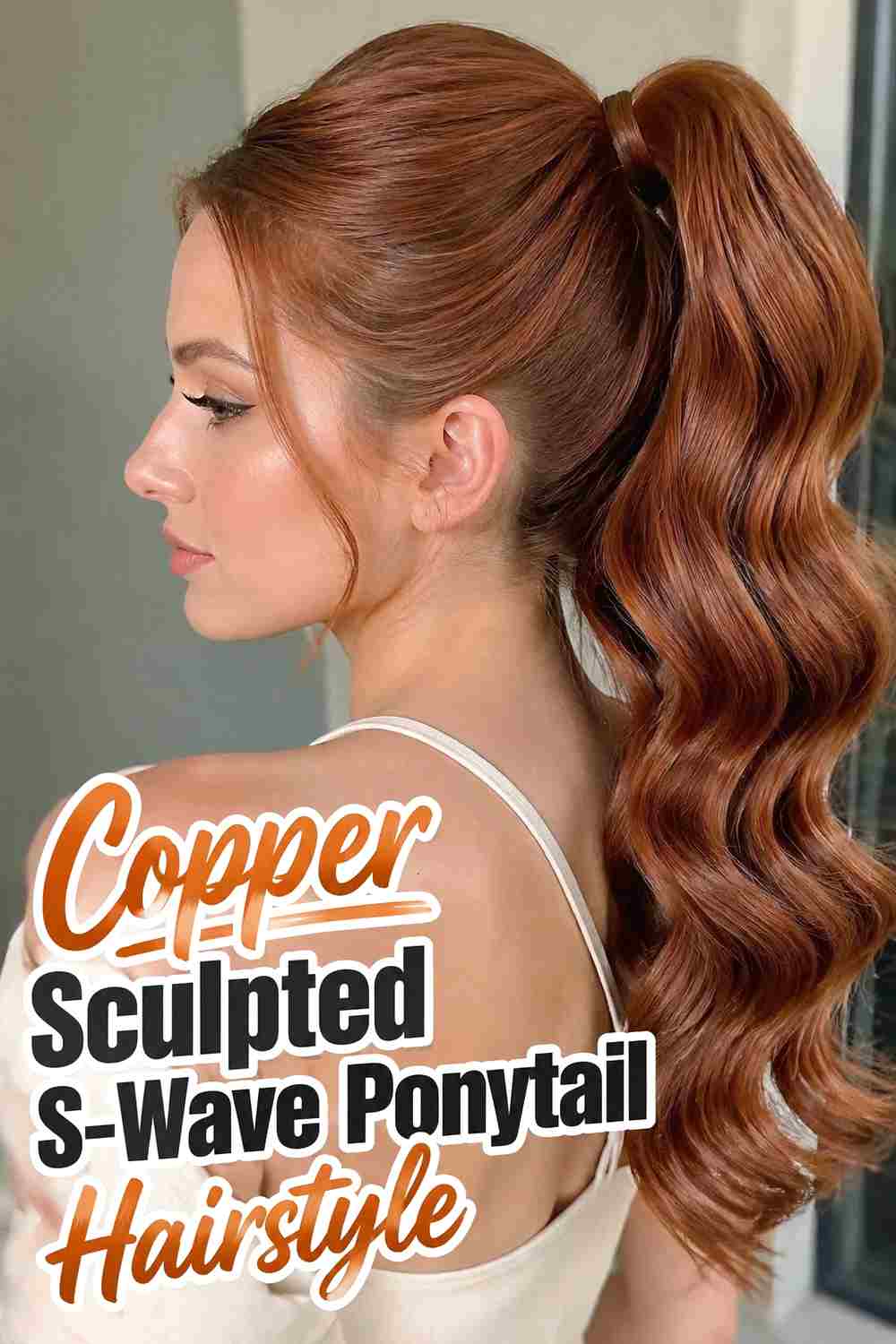
Copper color gives sculpted S-waves extra warmth and makes each curve stand out clearly in bright light. The shade can range from soft cinnamon to richer red-copper, with slightly deeper roots providing natural-looking depth. Broad S-waves work particularly well because the wider surfaces reveal different tones as the ponytail moves. A low or medium placement keeps the color elegant, while a higher base creates a more energetic silhouette. The finish should remain glossy enough to show dimension but not so reflective that the copper appears artificial or overly uniform.
Styling Notes
Keep subtle tonal variation through the length so the wave pattern shows depth instead of one flat block of color.
Best For
This option is a strong choice when you want hair color and wave structure to share equal attention.
19. Hollywood Inspired Sculpted S Wave Ponytail Hairstyle
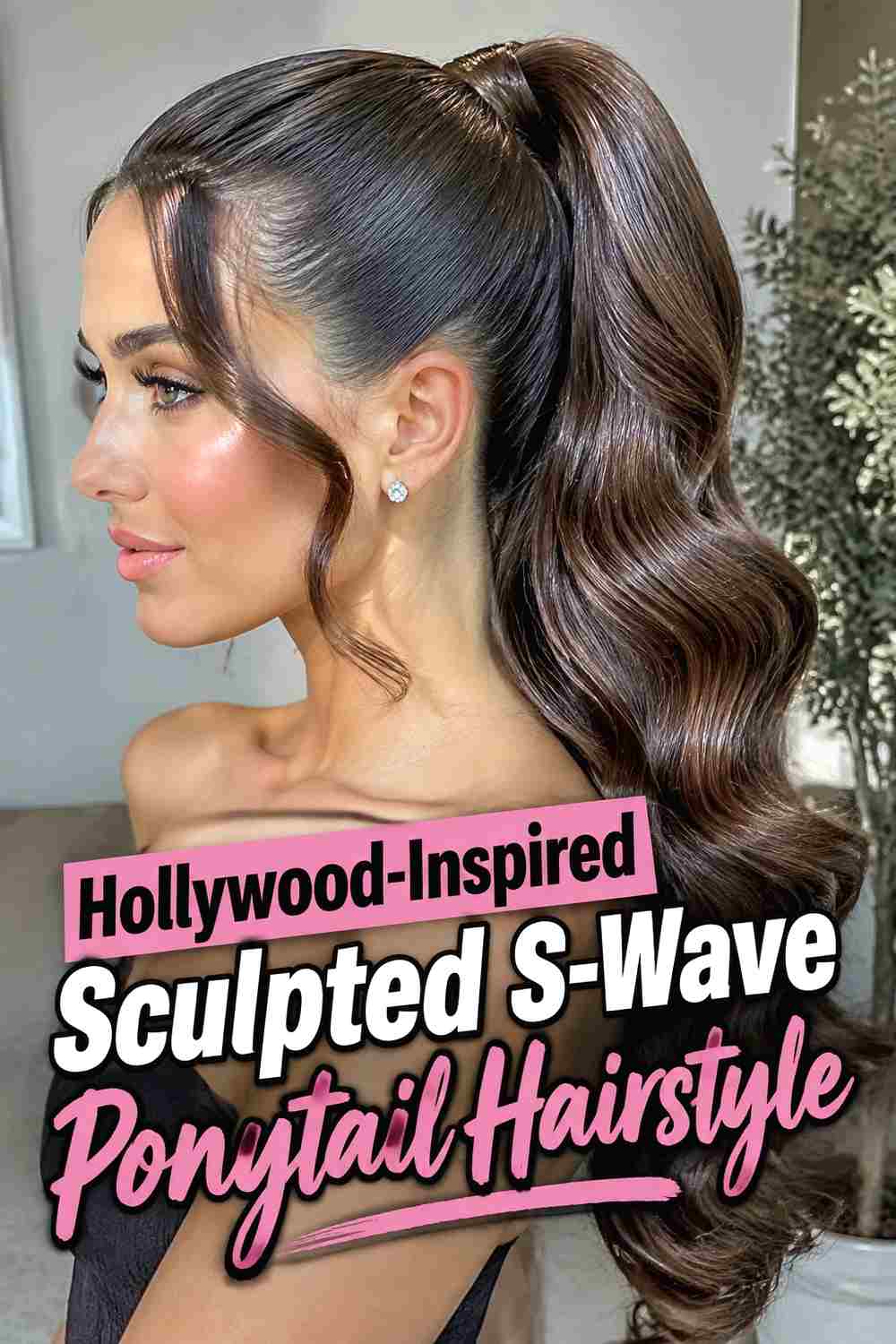
Hollywood-inspired S-waves combine glamorous polish with a ponytail structure, creating broad, smooth curves that feel formal without becoming an elaborate updo. The front can feature a dramatic side part, a soft sweep, or a sleek crown, while the ponytail carries the signature wave pattern through the length. A low or mid-level base often suits the style best because it allows the waves to fall in a graceful, continuous line. Rich shine, smooth ridges, and controlled volume all contribute to the finished look. Keep the ends soft enough to move so the hairstyle feels luxurious rather than rigid.
Why It Works
The large, polished wave pattern gives the ponytail a red-carpet feel while preserving the simplicity of a gathered style.
Pro Tip
Keep the front and tail equally polished so the hairstyle reads as one cohesive look rather than two separate textures.
How to Choose the Right Look
Start with ponytail height. High placement creates the most movement and makes long waves feel energetic, while low placement gives the S-shape a smoother, more elegant fall. Medium placement offers a balance between polish and volume and works especially well with wrapped or braided bases.
Next, decide how structured you want the waves to look. Glossy, retro glam, finger-wave, and Hollywood-inspired styles rely on sharper ridges and more deliberate shaping. Soft or face-framing versions keep the curves visible but allow more natural movement.
Parting also changes the mood. A center part creates symmetry, while a deep side part produces stronger drama and works naturally with vintage-inspired styling. If you want extra detail, pearls, ribbons, braids, or wrapped bases can add interest without changing the core ponytail shape.
Color can make the wave pattern more noticeable. Caramel highlights emphasize individual bends, while copper creates warm dimension throughout the tail. Whatever version you choose, make sure the ponytail remains comfortable and the wave pattern can move naturally rather than feeling overly stiff.
Final Thoughts
Sculpted S-wave ponytails combine the simplicity of a ponytail with the polish of deliberately shaped waves. By changing the height, parting, wave softness, color, or finishing details, you can make the style feel modern, romantic, retro, or glamorous. Choose the version that fits your hair length, density, and styling routine while keeping the S-shaped movement clear and believable.
FAQs
1. What is a sculpted S-wave ponytail?
It is a ponytail styled with smooth alternating bends that create a visible S-shaped wave pattern through the length rather than separate curls.
2. Is a high or low ponytail better for S-waves?
Both work. High ponytails create more movement and lift, while low ponytails produce a softer, more elegant silhouette.
3. Can S-wave ponytails work on medium-length hair?
Yes. Medium hair can show the pattern well, although longer hair provides more space for several full wave repetitions.
4. How can I keep S-waves from turning into curls?
Use broader sections and shape each bend in alternating directions instead of wrapping the hair tightly into a spiral.
5. What accessories work best with sculpted S-wave ponytails?
Wrapped bases, pearl pins, ribbons, subtle clips, and small braided details can all work well as long as they do not cover the wave pattern.
Save your favorite sculpted S-wave ponytail hairstyle ideas, share the collection, and explore more polished ponytail inspiration for your next look.