17 Bedhead Low Ponytail Hairstyle Ideas
Tousled roots, loose lengths, and a relaxed nape tie make these bedhead low ponytails look effortlessly undone while still feeling intentional and wearable.
A bedhead low ponytail is less about making hair messy and more about preserving natural-looking texture. The crown usually has gentle lift, the surface shows soft irregularity, and the ponytail sits low enough to feel relaxed rather than sporty. Loose waves, imperfect bends, flyaways, and face-framing strands all help create the lived-in effect.
The key is balancing looseness with structure. The ponytail should still begin from a believable tie point and stay securely gathered, while the texture around it can remain soft and slightly imperfect. Hair length, layering, natural wave pattern, and product weight will all influence how undone the final style feels.
Quick List
- Classic Bedhead Low Ponytail Hairstyle
- Center Part Bedhead Low Ponytail Hairstyle
- Side Part Bedhead Low Ponytail Hairstyle
- Tousled Crown Bedhead Low Ponytail Hairstyle
- Face Framing Bedhead Low Ponytail Hairstyle
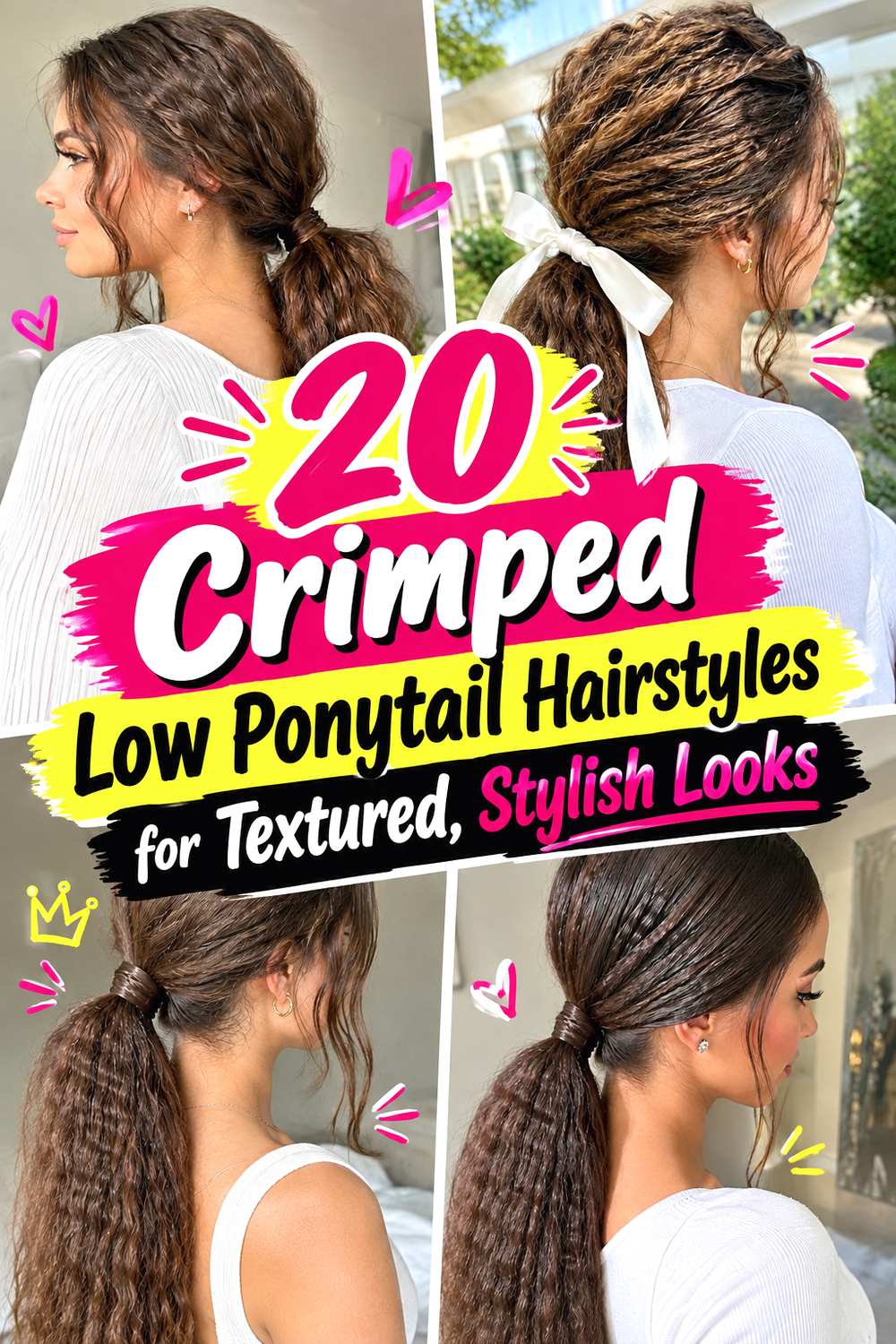
- Wavy Bedhead Low Ponytail Hairstyle
- Curly Texture Bedhead Low Ponytail Hairstyle
- Piecey Bedhead Low Ponytail Hairstyle
- Hair Wrapped Bedhead Low Ponytail Hairstyle
- Ribbon Tied Bedhead Low Ponytail Hairstyle
- Braided Detail Bedhead Low Ponytail Hairstyle
- Voluminous Bedhead Low Ponytail Hairstyle
- Soft Bang Bedhead Low Ponytail Hairstyle
- Beachy Bedhead Low Ponytail Hairstyle
- Minimalist Bedhead Low Ponytail Hairstyle
- Romantic Bedhead Low Ponytail Hairstyle
- Long Layered Bedhead Low Ponytail Hairstyle
1. Classic Bedhead Low Ponytail Hairstyle
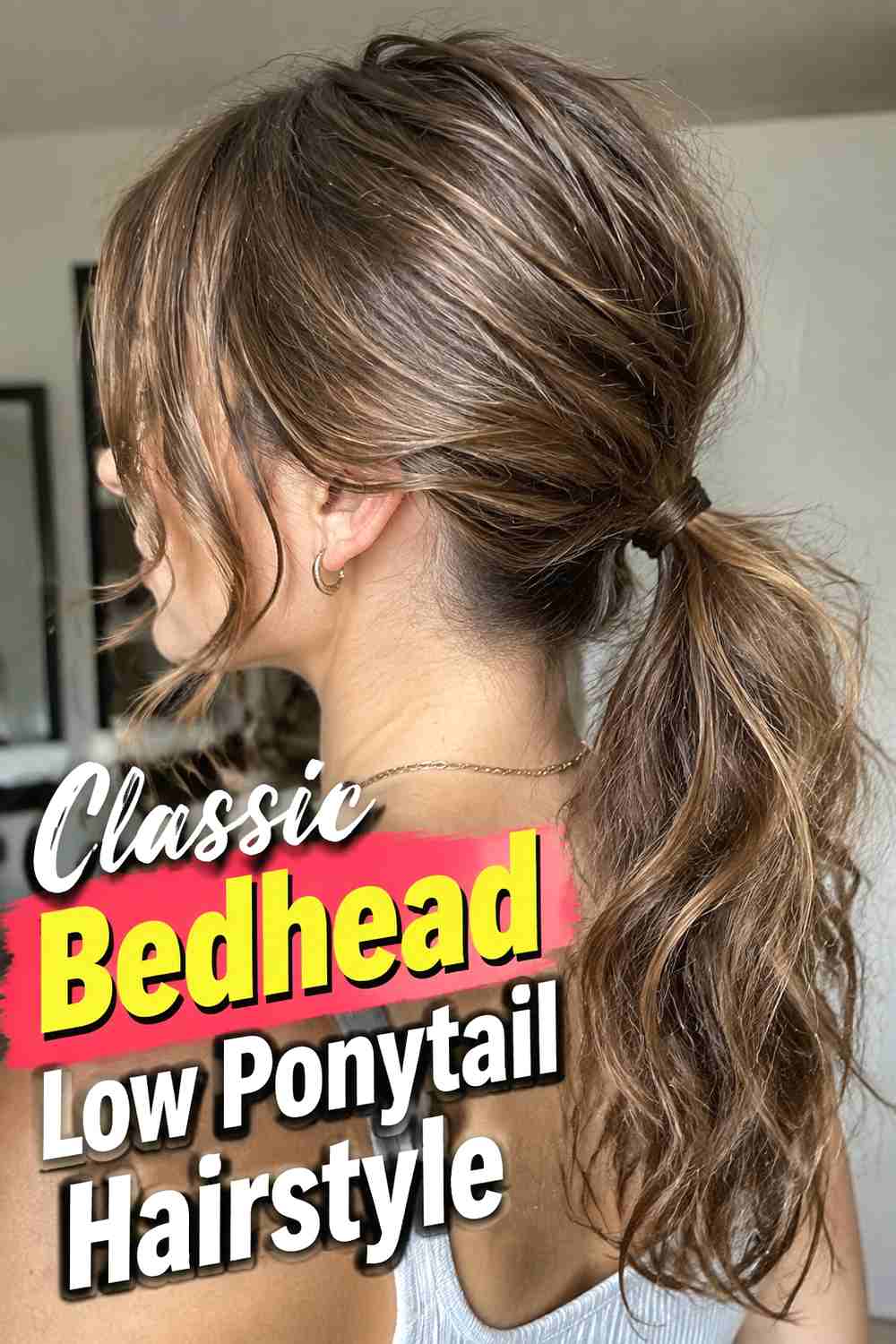
The classic bedhead low ponytail combines a loosely gathered crown with softly textured lengths and a tie positioned near the nape. The surface should never look perfectly brushed; a few natural ridges, flyaways, and irregular strands help create the intentionally undone effect. Medium to long hair works especially well because the hanging length can retain movement without the ponytail becoming too short. Start with dry or lightly textured hair, gather it using your hands rather than a fine brush, and secure it with gentle tension. Once tied, lift small sections around the crown with your fingertips and loosen a few strands near the temples for softness.
Styling Notes
Create the secure ponytail first, then loosen the crown. Pulling the hair apart before tying can make the base uneven or harder to control.
2. Center Part Bedhead Low Ponytail Hairstyle
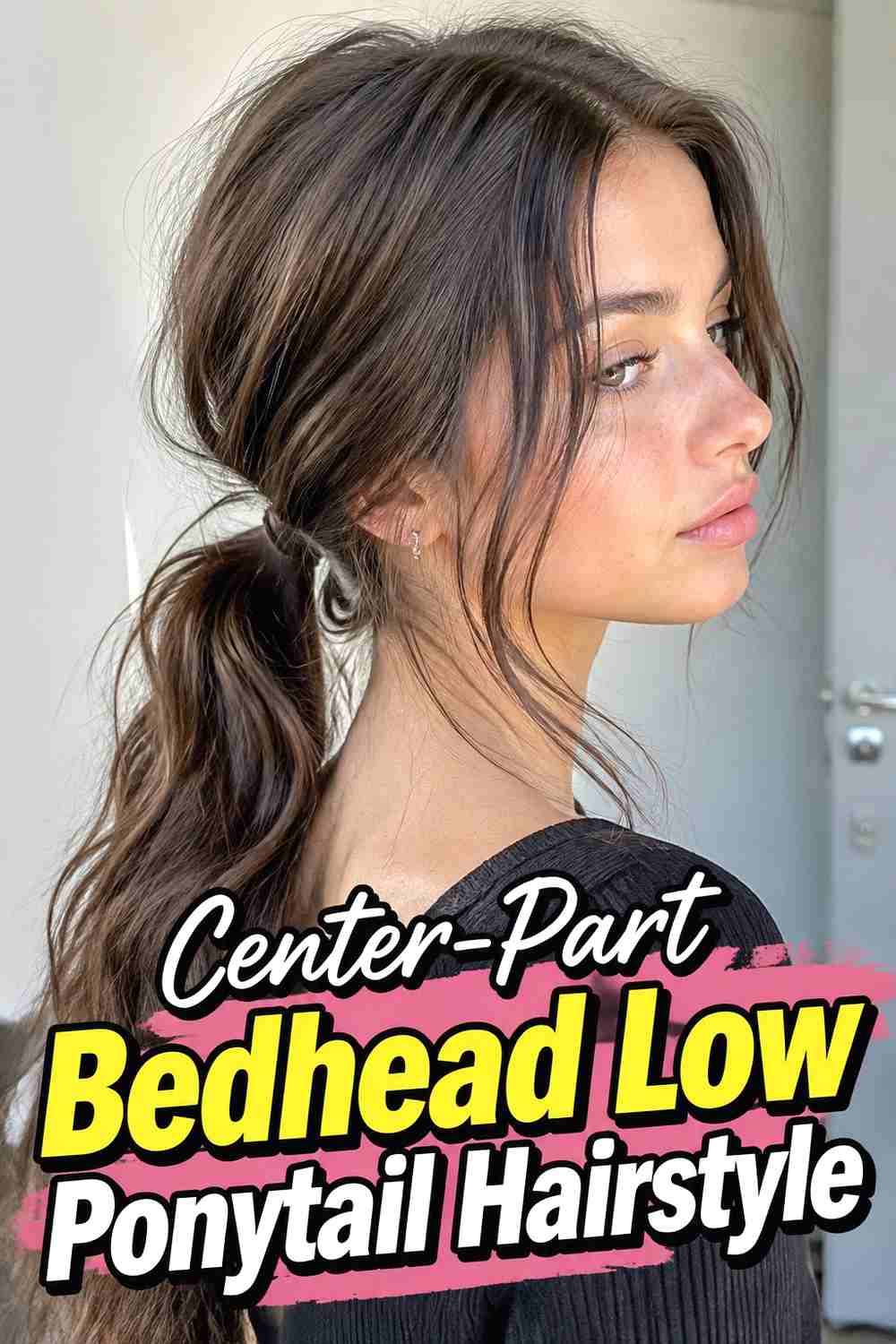
A center part adds quiet structure to an otherwise relaxed low ponytail. The part keeps the front balanced while soft texture around the temples, crown, and lengths prevents the hairstyle from feeling overly precise. This works particularly well with long face-framing layers, which can remain loose and fall naturally around the cheeks or jaw. Make the center part before gathering the hair, but avoid brushing the sides completely flat. Use your fingers to bring the lengths toward the nape and tie them loosely enough to preserve natural texture. After securing the ponytail, gently lift the crown and separate the front pieces so the finished look feels soft rather than symmetrical and severe.
Best For
Choose this version when you like the clean direction of a center part but still want the rest of the hairstyle to feel casual and touchable.
3. Side Part Bedhead Low Ponytail Hairstyle
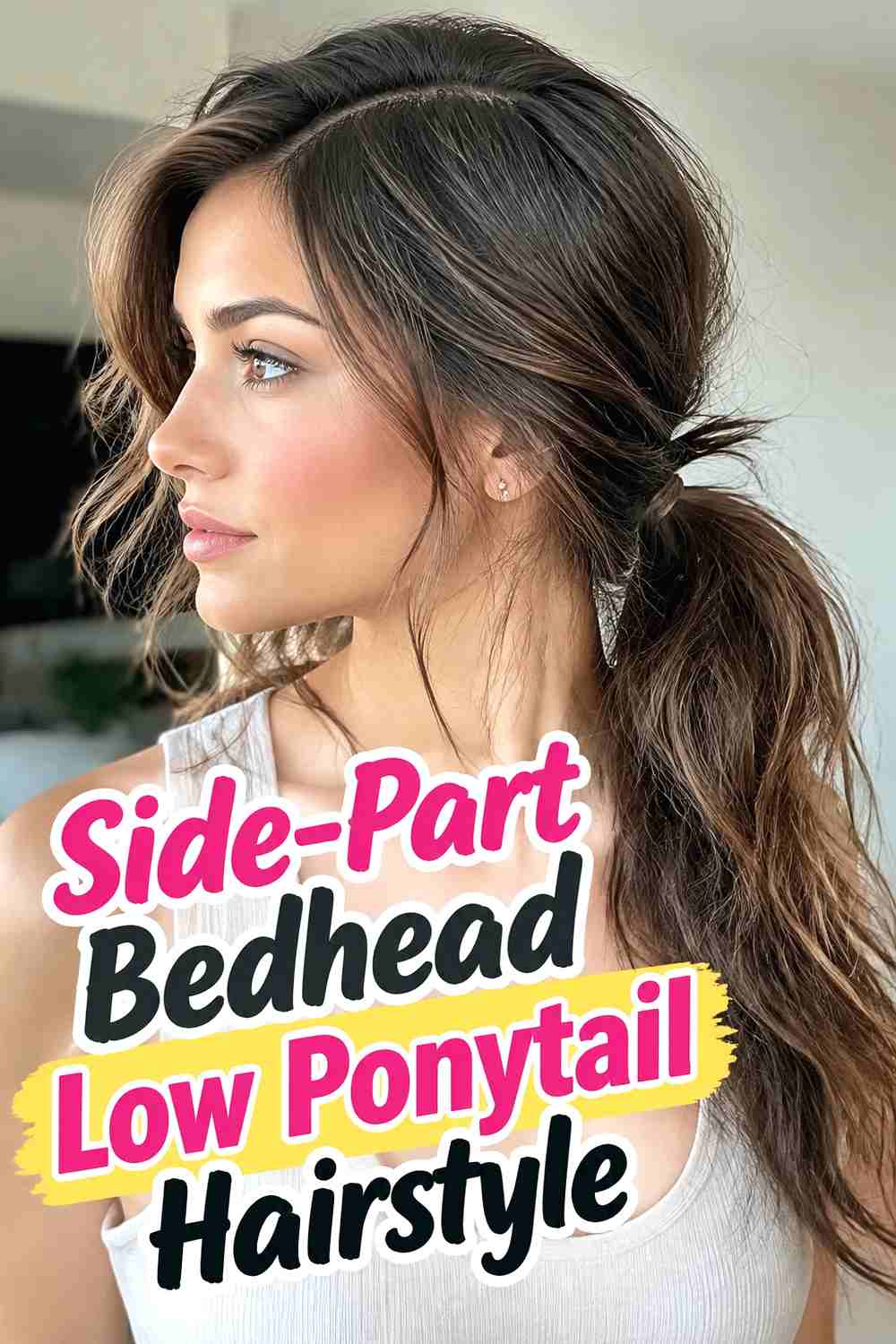
A side part brings easy asymmetry to the bedhead ponytail, with one front section naturally fuller than the other. The heavier side can sweep softly across the forehead or temple, while the low ponytail keeps the overall silhouette understated. Instead of forcing the root area completely smooth, leave a little lift and natural separation around the part. Gather the hair with your hands, secure it at the nape, and pull out a few fine strands on either side of the face. Soft bends through the ponytail can make the look feel even more relaxed. The side part should remain visible, but it does not need the crisp precision of a sleek formal ponytail.
Why It Works
The asymmetrical front creates shape without extra accessories, while the relaxed nape placement keeps the look easy enough for casual everyday styling.
4. Tousled Crown Bedhead Low Ponytail Hairstyle
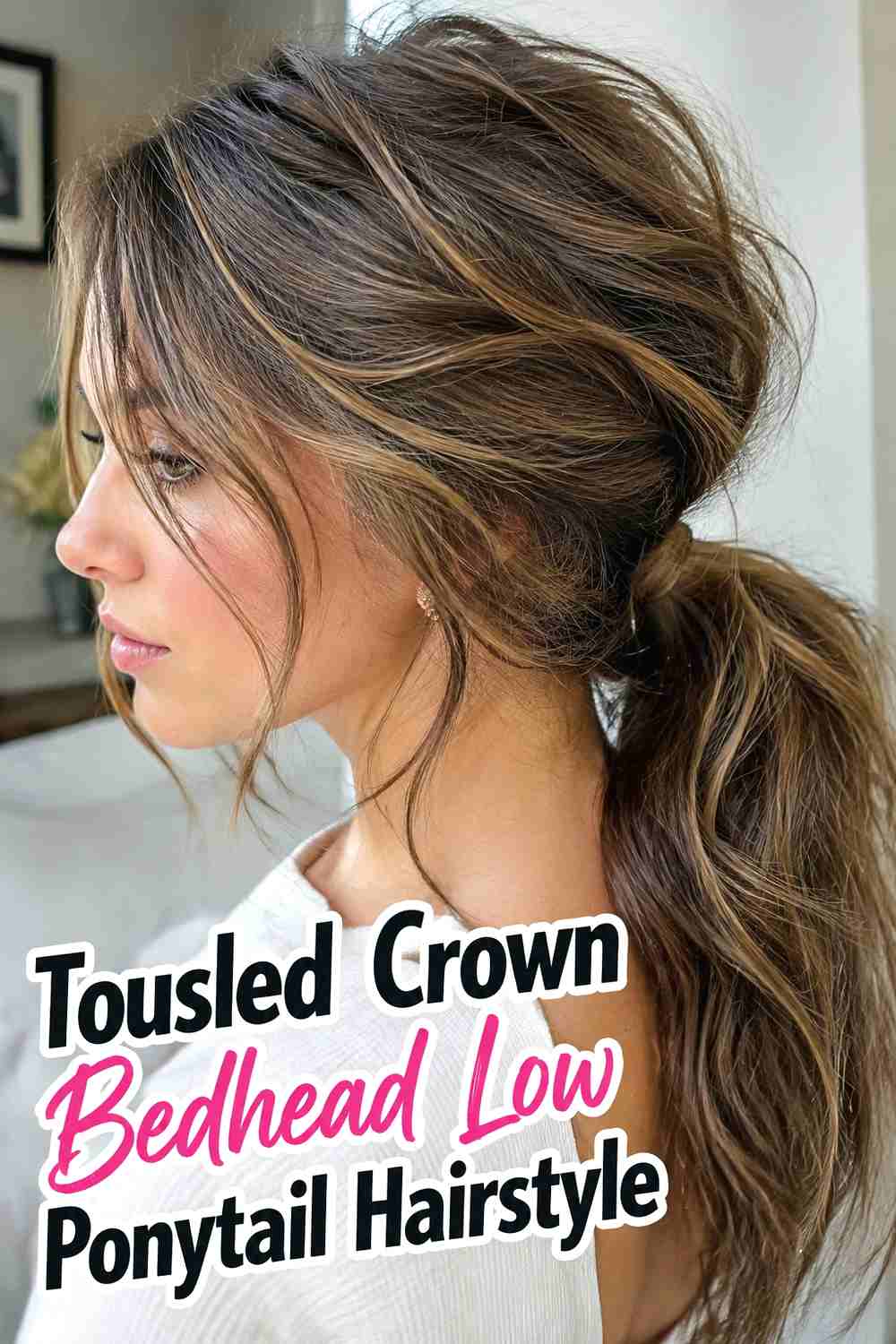
This variation makes crown texture the main feature. The roots have gentle lift and softly separated sections before the hair narrows into a low ponytail at the back. The effect works best when the volume looks irregular rather than perfectly rounded, since too much symmetry can make it resemble a formal teased style. Apply a light texture product at the roots if needed, gather the hair loosely, and secure the ponytail before adjusting the crown. Use your fingertips to lift small areas one at a time instead of pulling the entire top section upward. Keep the ponytail soft and uncomplicated so the relaxed crown remains the visual focus.
Pro Tip
Lift from several small points around the crown rather than one large section. This creates softer, more believable volume and helps prevent a single oversized bump.
5. Face Framing Bedhead Low Ponytail Hairstyle
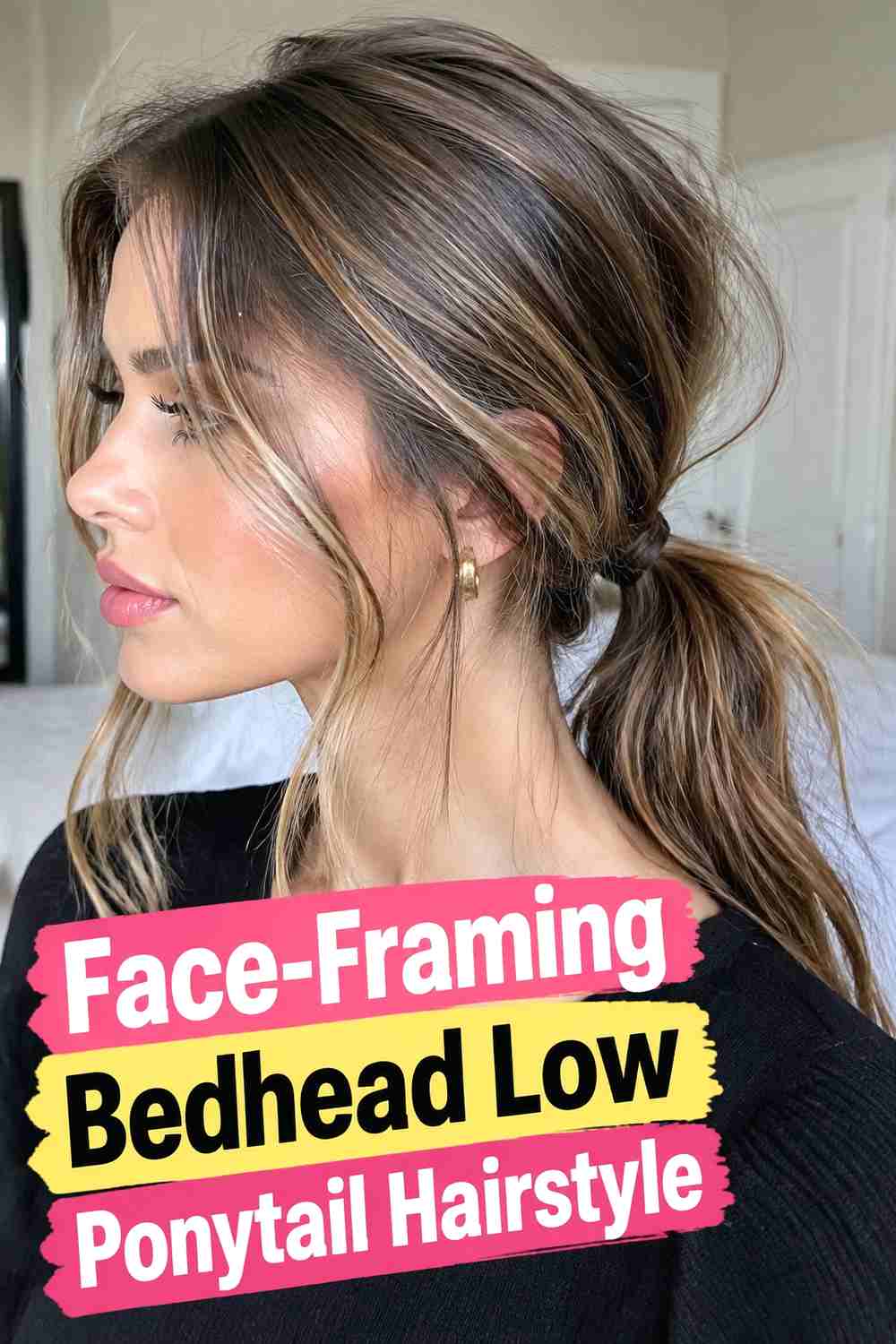
Loose face-framing pieces make a bedhead ponytail feel especially soft and wearable. Leave out a few narrow sections around the temples or cheekbones before gathering the rest of the hair into a low nape tie. These pieces can stay naturally straight, bend slightly, or carry loose waves depending on your texture. Avoid pulling out too much hair, since the style should still read clearly as a ponytail rather than a half-finished updo. The crown can stay lightly tousled, while the ponytail itself benefits from a little movement through the ends. This variation is particularly useful for layered cuts, where shorter front pieces naturally separate from the gathered length.
Best For
This look works well for casual dinners, daytime events, or everyday wear when you want an easy ponytail with a softer frame around the face.
6. Wavy Bedhead Low Ponytail Hairstyle
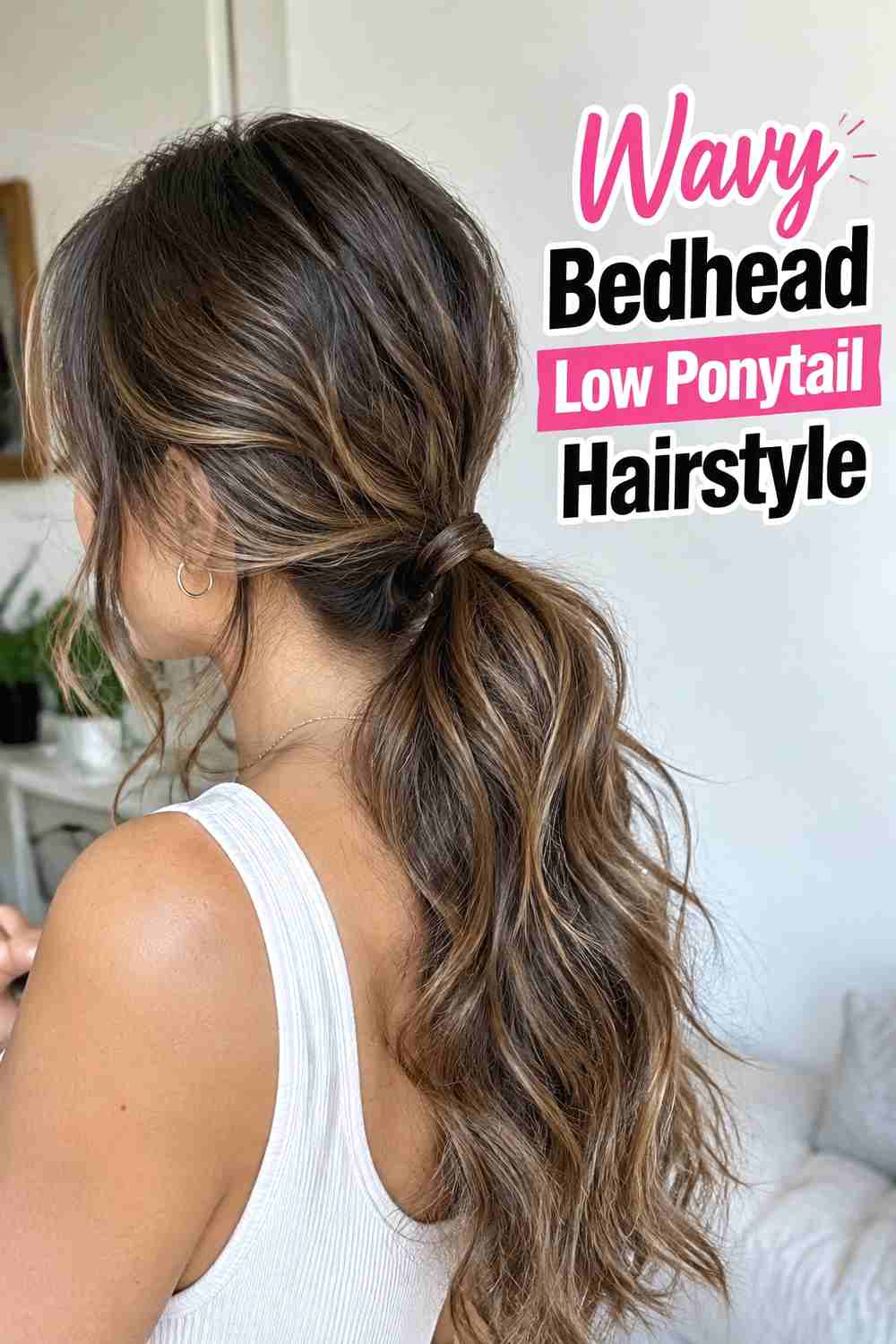
Loose waves give a bedhead ponytail instant body without making the style feel formal. The crown can stay naturally textured, while the ponytail carries uneven bends and soft movement through the hanging length. Work with existing waves if you have them, or create a few broad bends before gathering the hair. Avoid curling every section identically; slight variation helps preserve the undone effect. Use your fingers instead of a brush to collect the hair at the nape, then secure it with light tension. Once tied, separate the ponytail gently and soften any sections that look too perfect. A flexible texture mist can provide hold without making the waves stiff or crunchy.
Hair Type & Length
Medium and long hair show the wavy texture most clearly. Naturally wavy hair may need very little styling beyond light definition and a secure low tie.
7. Curly Texture Bedhead Low Ponytail Hairstyle
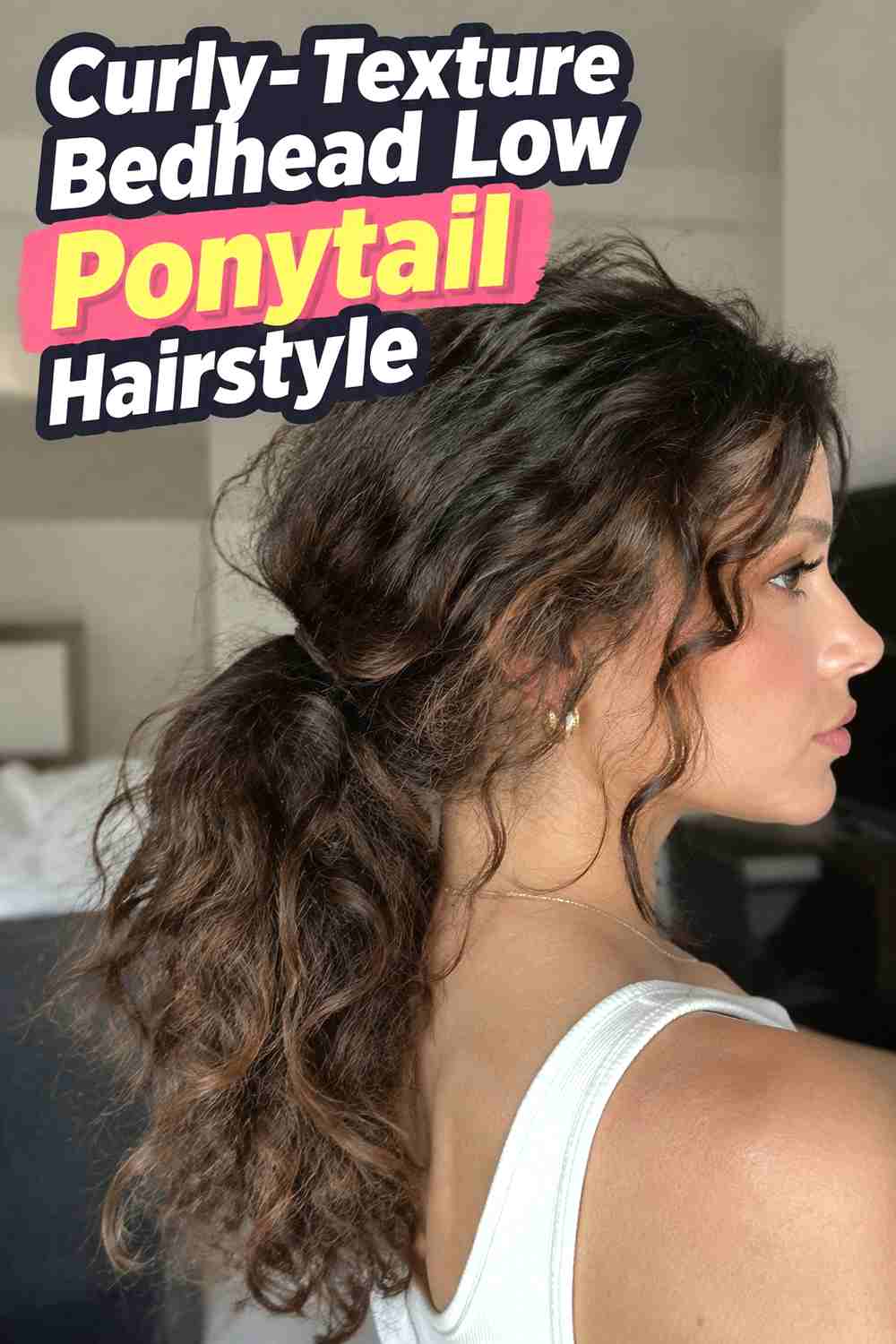
Curly texture creates a naturally full, expressive version of the low bedhead ponytail. Instead of smoothing away the curl pattern, keep visible coils and curls through the crown, sides, and ponytail while using the nape tie to give the hairstyle a clear shape. Gather the hair gently so the curls are not unnecessarily stretched, then secure the base comfortably. A few shorter curls around the hairline can remain free if they naturally fall there. Depending on density, the ponytail may appear compact or very full, and both can work. The aim is not uniformity but controlled gathering that allows the existing texture to remain visible and flexible.
Styling Notes
Use your hands to gather curls rather than repeatedly brushing through them. This helps preserve the natural pattern and prevents the surface from becoming overly stretched.
8. Piecey Bedhead Low Ponytail Hairstyle
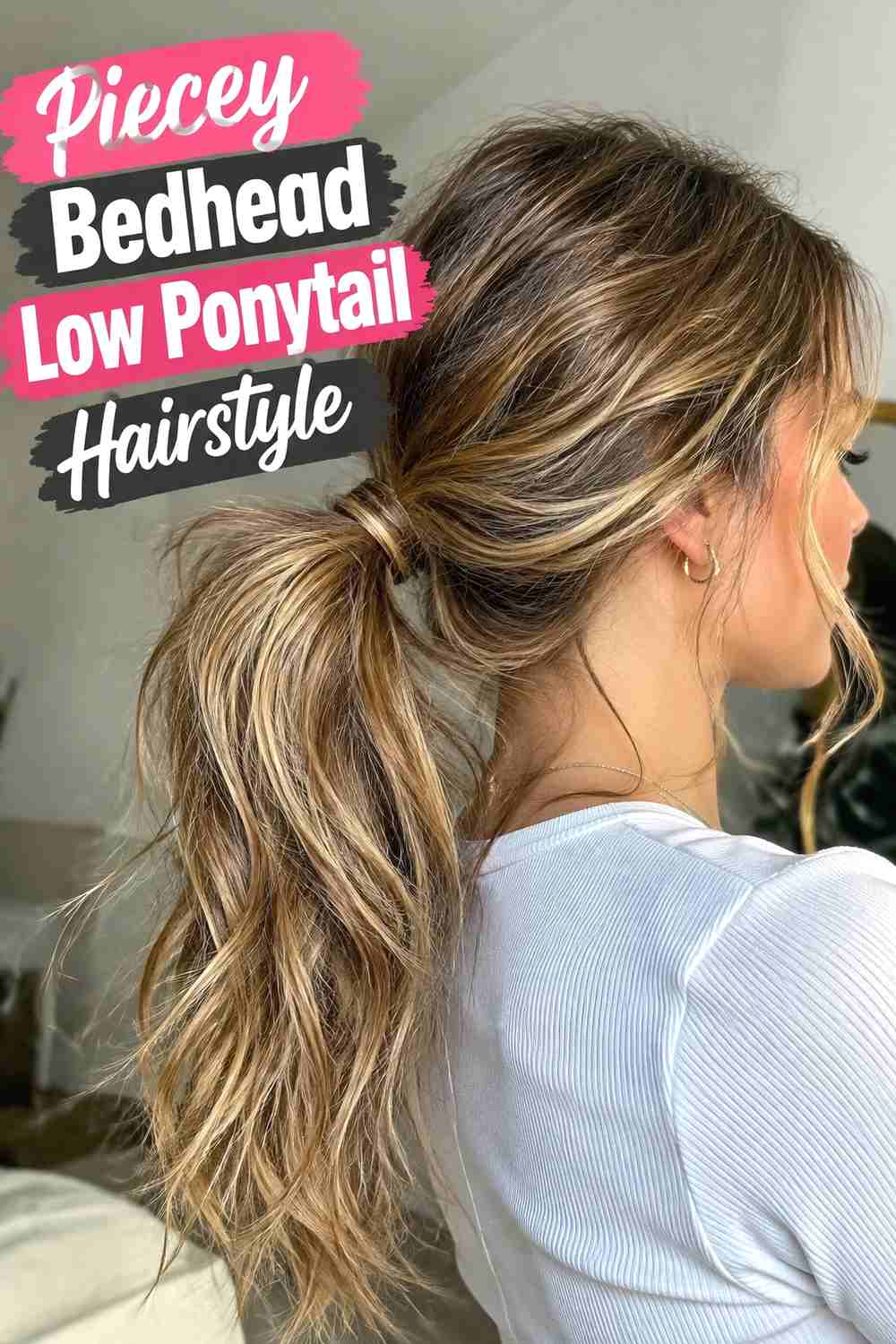
Piecey texture gives the low ponytail a slightly more editorial feel by allowing small sections to separate visibly through the crown and lengths. The effect should look airy and intentional rather than stringy. A lightweight texture cream or dry styling product can help create separation, especially through layered ends. Gather the hair loosely at the nape and secure it without smoothing the top too much. Then use your fingertips to define a few strands near the face and several narrow sections through the ponytail. Keep the base relatively simple so the separation remains the main detail. This variation is particularly effective on layered medium-to-long hair where individual pieces already fall at different lengths.
Pro Tip
Concentrate piecey definition through the mid-lengths and ends. Too much separation directly at the scalp can make the style look unkempt instead of deliberately tousled.
9. Hair Wrapped Bedhead Low Ponytail Hairstyle
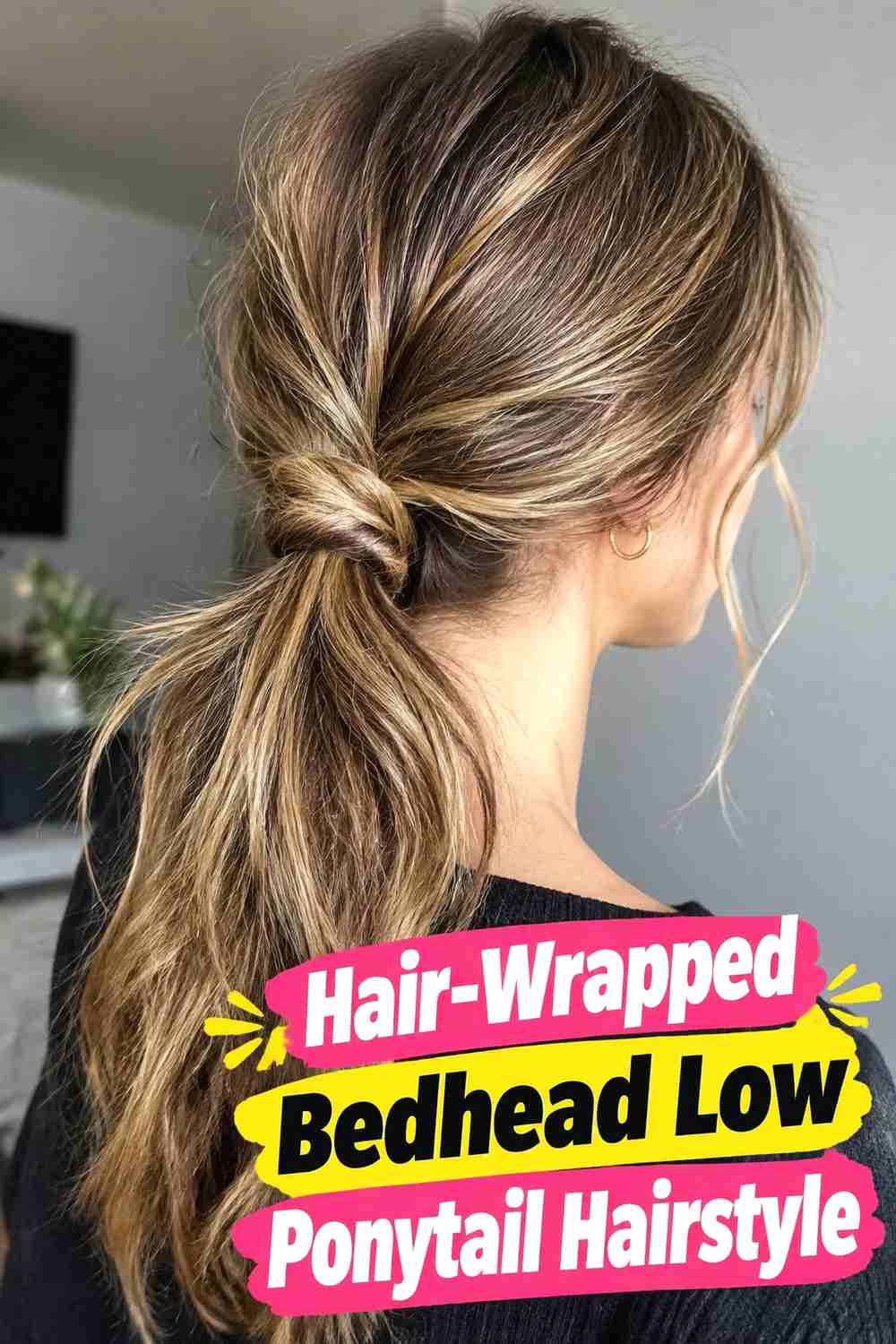
A hair-wrapped base adds polish to the undone texture without removing its relaxed character. Start with a softly tousled crown and gather the hair into a low ponytail using your hands. After securing the elastic, take a narrow section from underneath the ponytail and wind it around the base, pinning the end discreetly beneath. Leave the ponytail itself wavy, irregular, or slightly piecey so the style does not become too formal. A few flyaways and loose front strands can remain visible around the face. The wrapped section should stay neat enough to hide the elastic while still looking like part of the natural hair rather than a rigid decorative band.
Why It Works
The polished base creates contrast with the loose texture, giving the ponytail a finished detail without sacrificing its relaxed, bedhead character.
10. Ribbon Tied Bedhead Low Ponytail Hairstyle
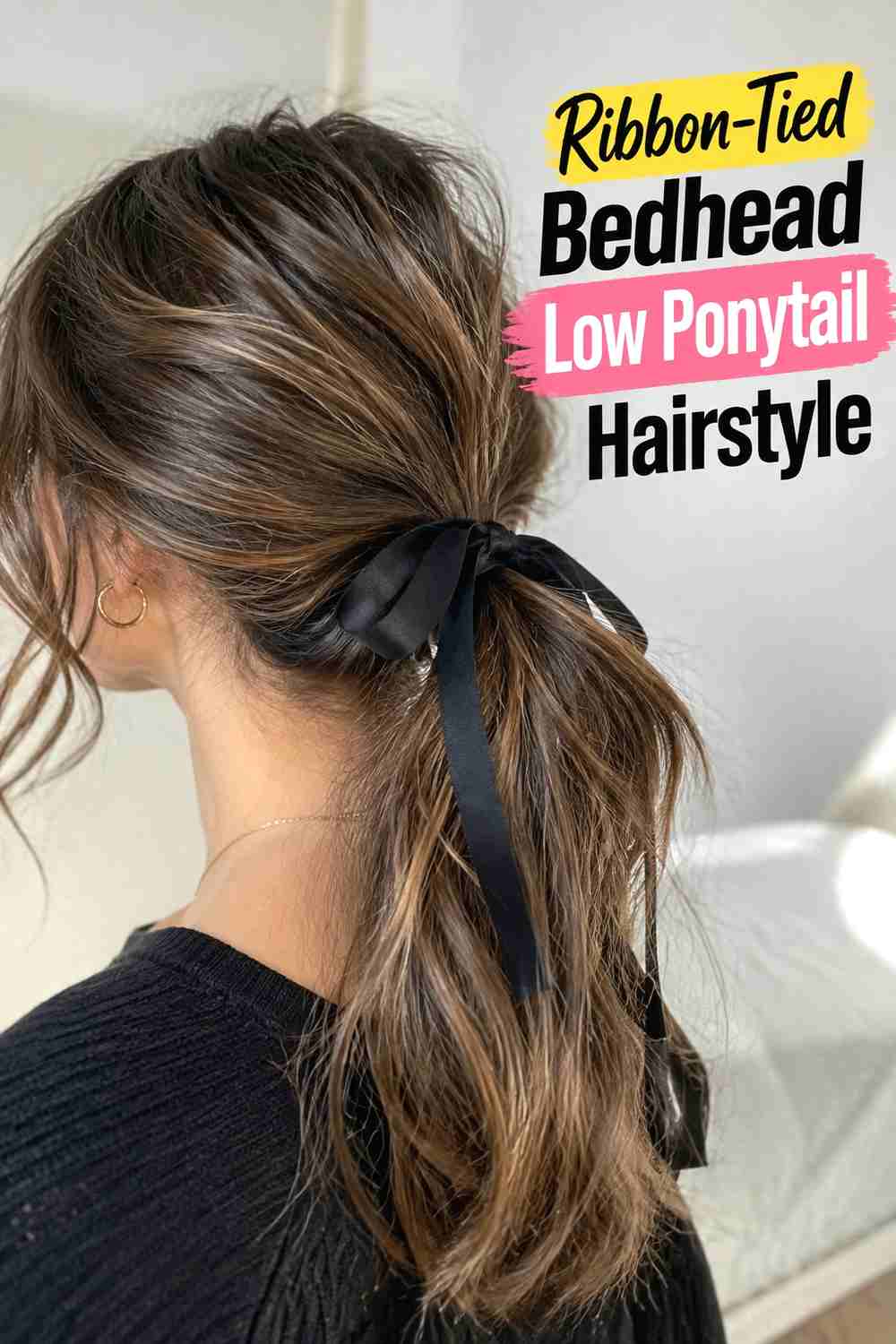
A ribbon can make a bedhead low ponytail feel softer and more romantic while keeping the styling simple. Build the ponytail first with a relaxed crown, loose strands, and naturally textured lengths. Then tie a narrow ribbon around the elastic or base, allowing the ends to fall alongside the ponytail. Choose a ribbon size that complements rather than overwhelms the hairstyle, especially if the ponytail is fine or medium in density. The accessory should not be responsible for holding the hairstyle together; use a secure elastic underneath. Soft waves or gentle bends through the length pair particularly well with the ribbon because they reinforce the casual, feminine finish without making the look overly decorative.
Wear & Maintenance
Secure the ponytail with an elastic before adding the ribbon. This lets you retie or adjust the accessory without changing the tension of the hairstyle itself.
11. Braided Detail Bedhead Low Ponytail Hairstyle
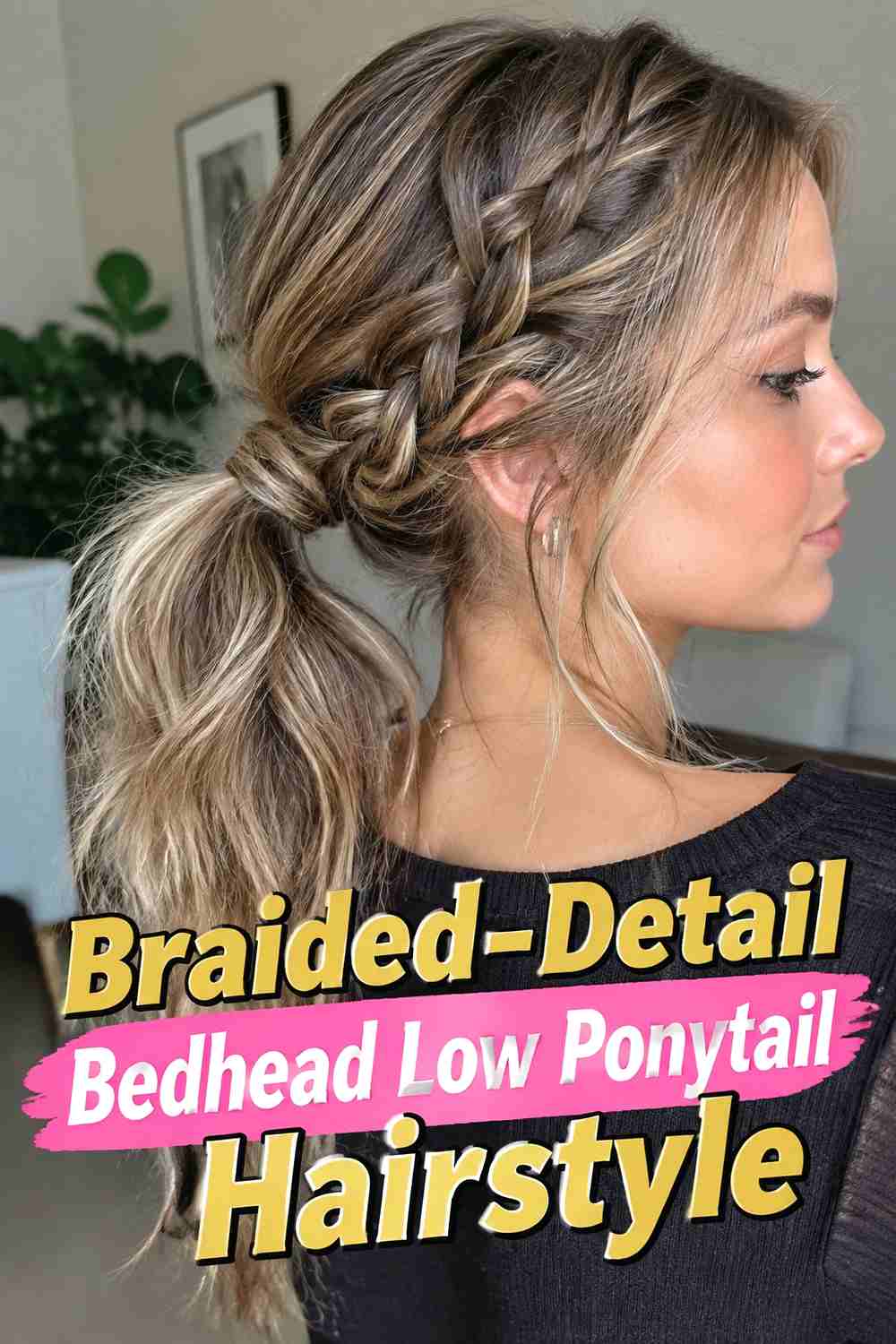
A small braid adds texture without turning the entire ponytail into a braided style. Create one loose braid along a side section, near the temple, or from a narrow piece before gathering everything at the nape. The braid should blend into the ponytail and remain slightly relaxed rather than tightly polished. Keep the remaining crown tousled and allow the hanging length to stay wavy or naturally textured. This works especially well on longer hair because there is enough length for the braid to remain visible before disappearing into the base. Once secured, loosen the braid slightly with your fingertips so it matches the softness of the surrounding hair instead of looking overly neat.
Styling Notes
Keep the braid narrow and secondary. The overall hairstyle should still read as a low bedhead ponytail, with the braid acting as a small textural accent.
12. Voluminous Bedhead Low Ponytail Hairstyle
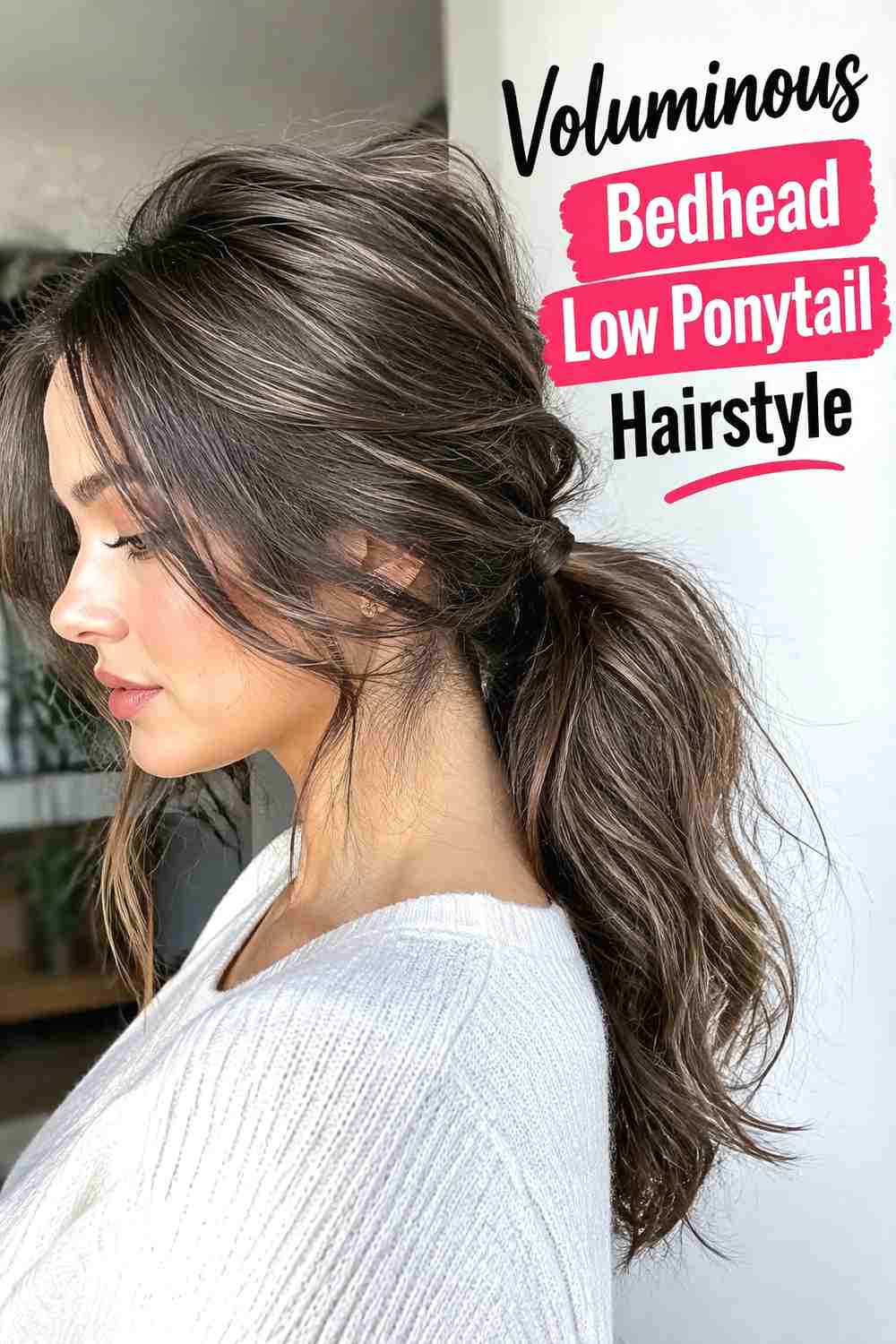
A voluminous bedhead ponytail uses extra root lift and fuller lengths to create a more noticeable silhouette. The crown can be gently elevated, while the ponytail stays thick and airy instead of tightly compressed. Medium to dense hair may achieve this naturally, whereas finer hair can benefit from lightweight root support and texture product. Gather the hair without smoothing away the volume, secure the base low at the nape, and then lift selected crown sections with your fingertips. Separate the ponytail from underneath to expand it slightly without roughing up the visible surface. The final style should feel plush and effortless rather than teased into exaggerated height or stiffness.
Hair Type & Length
Longer and layered hair can create natural fullness, while fine hair often benefits from lighter products that add grip without weighing the ponytail down.
13. Soft Bang Bedhead Low Ponytail Hairstyle
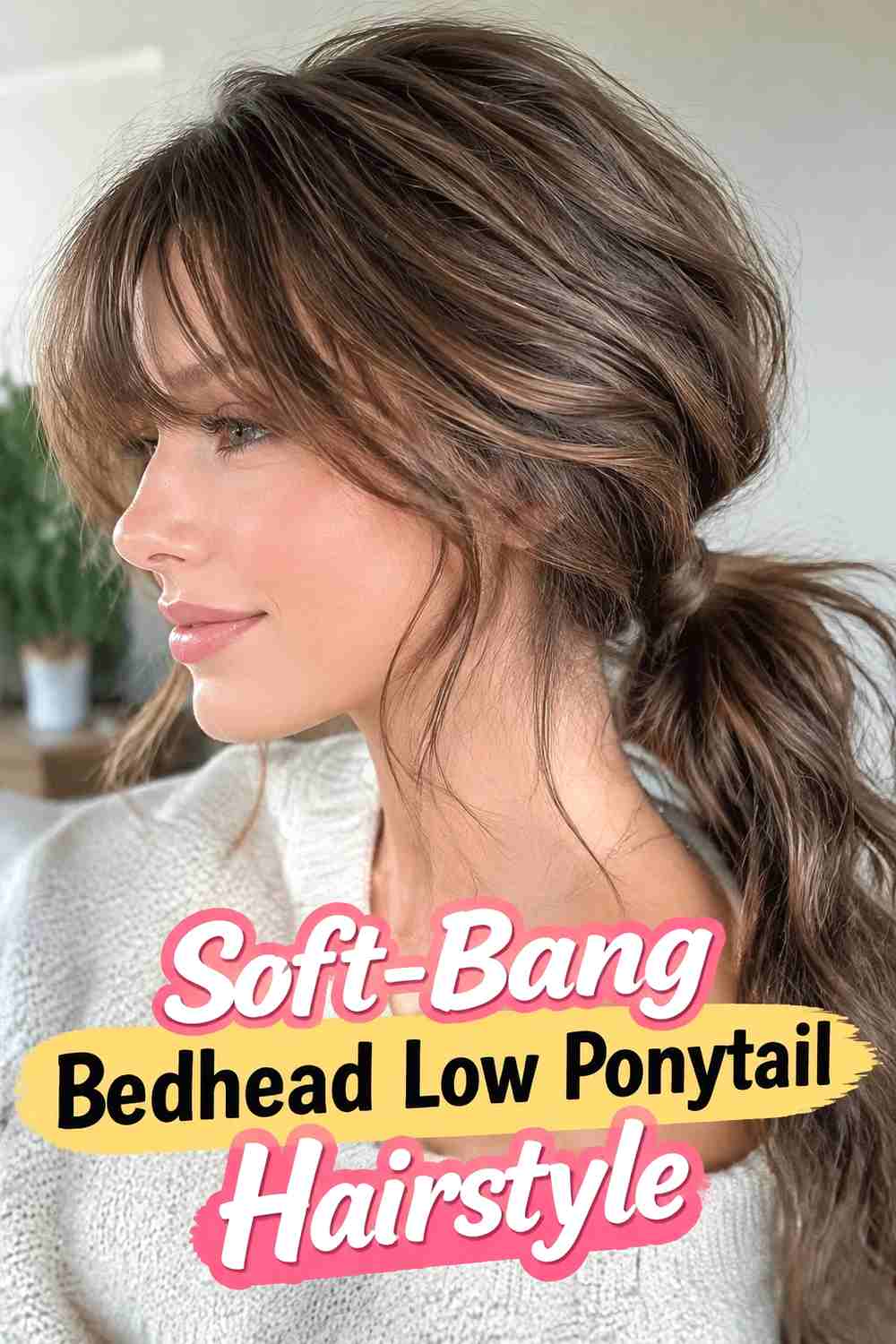
Soft bangs pair naturally with a bedhead ponytail because both elements rely on relaxed movement rather than strict control. Whether the fringe is wispy, curtain-like, or slightly grown out, leave it separate from the main ponytail and let it fall with its natural texture. Gather the remaining hair low at the nape, keeping the crown gently lifted and the sides a little loose. If the bangs need shaping, use minimal product so they stay airy instead of becoming stiff against the forehead. A softly waved ponytail can help connect the fringe to the rest of the look. The result should feel cohesive, casual, and intentionally imperfect from front to back.
Pro Tip
Style the bangs before finalizing the crown volume. This makes it easier to balance the softness at the front with the amount of texture through the top.
14. Beachy Bedhead Low Ponytail Hairstyle
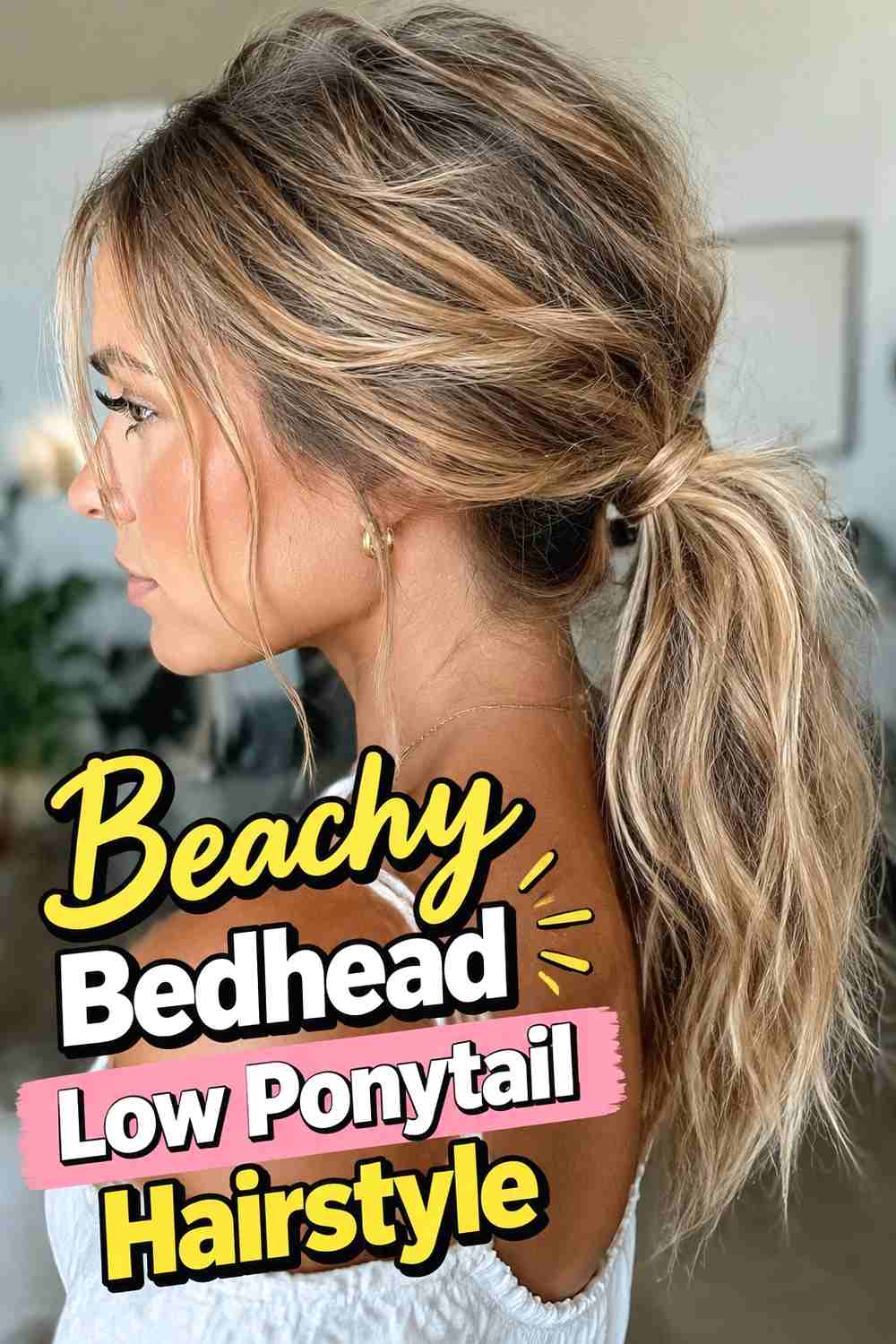
Beachy texture creates a breezy interpretation of the low bedhead ponytail with irregular bends, separated ends, and a little extra movement around the face. Start with natural waves or loosely textured hair, then gather it at the nape without brushing away the pattern. Pull out a few soft pieces near the temples and loosen the crown slightly after the ponytail is secure. The hanging length should show different wave sizes instead of matching curls, which keeps the finish casual. A lightweight texture product can help maintain separation through the ends, but avoid using so much that the hair becomes rough or stiff. The final result should look airy, flexible, and easy.
Why It Works
Irregular bends create natural-looking texture, while the low tie keeps all that movement contained in a simple, wearable silhouette.
15. Minimalist Bedhead Low Ponytail Hairstyle
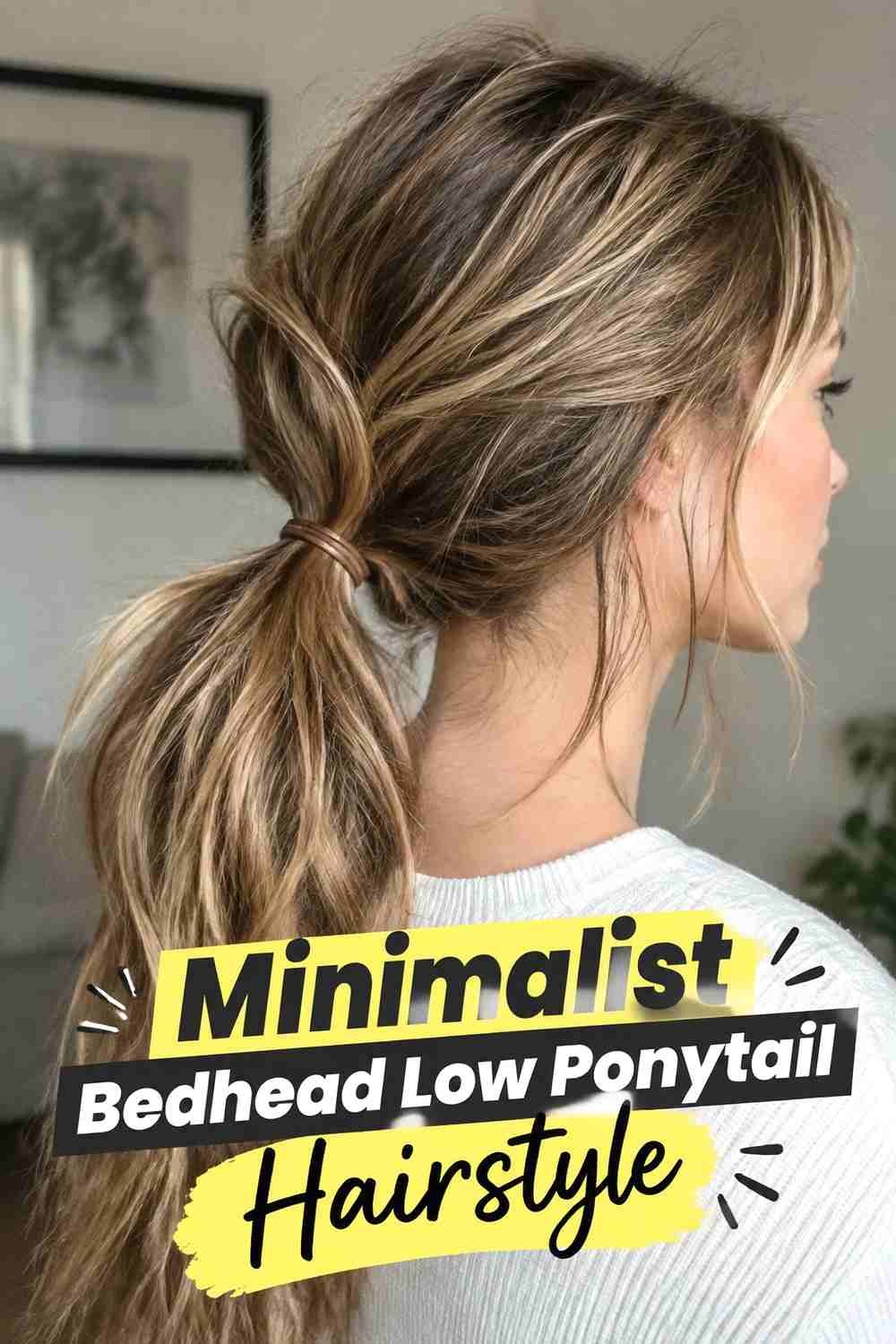
The minimalist version keeps the undone effect restrained. The ponytail sits low at the nape with a small amount of crown softness, a few fine flyaways, and uncomplicated lengths. There are no visible accessories, dramatic curls, or oversized volume, so the style feels especially easy to wear. Gather the hair with your hands, preserving just enough surface texture to avoid a slick finish, then secure it with a simple elastic. Allow the natural ends to remain straight, softly bent, or lightly wavy depending on your hair. Loosen only a few sections around the crown and hairline. The final look should feel effortless but clearly intentional rather than simply unfinished.
Best For
Choose this version for everyday outfits, work-from-home days, errands, or any setting where you want quick styling with a little more shape than a basic ponytail.
16. Romantic Bedhead Low Ponytail Hairstyle
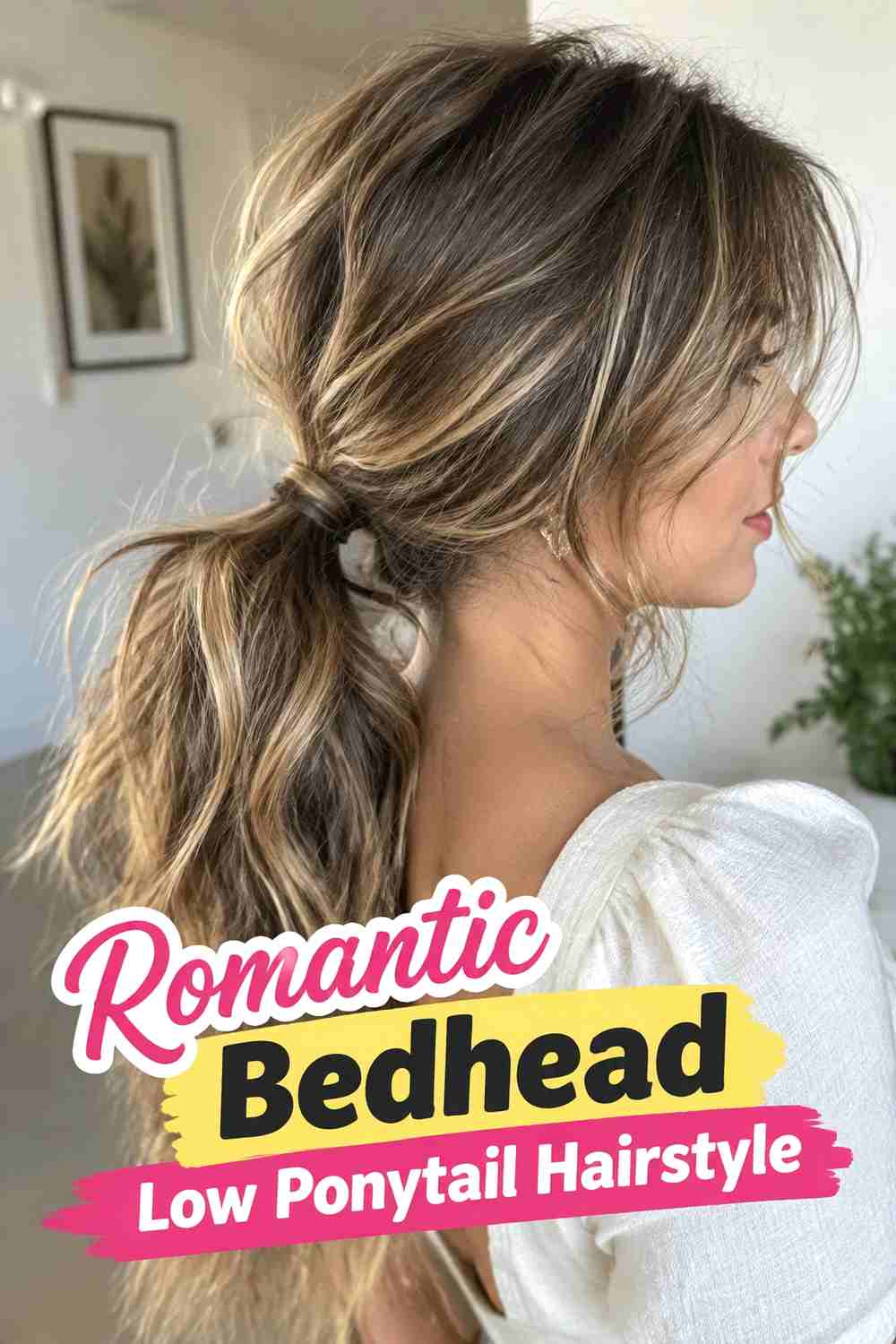
The romantic version combines soft waves, loose face framing, and gentle crown volume for a more dressed-up interpretation of bedhead texture. The ponytail stays low and relaxed, but the bends through the length are slightly more defined and the front sections are placed with care. Start with loose waves, leave a few pieces around the face, and gather the rest at the nape without flattening the crown. A hair wrap, narrow ribbon, or understated pin can be added if desired, but keep accessories secondary. Once the base is secure, soften the waves with your fingers and loosen the crown slightly. The finished style should look graceful and touchable rather than formal or heavily set.
Wear & Maintenance
Use flexible hold around the crown and waves so the ponytail can move naturally. If pieces loosen during wear, adjust the base rather than adding heavy layers of hairspray.
17. Long Layered Bedhead Low Ponytail Hairstyle
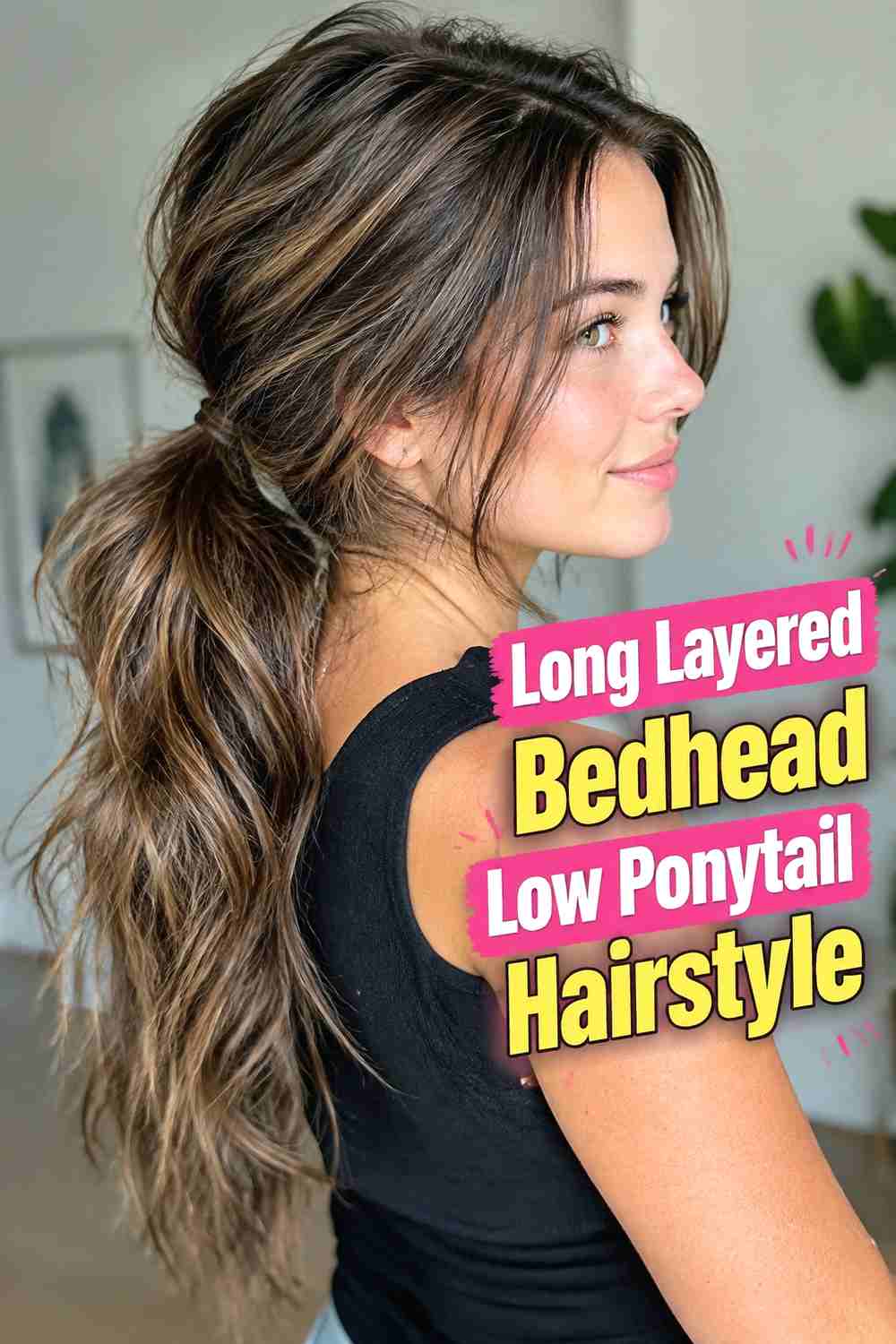
Long layers bring natural movement to a bedhead ponytail because shorter pieces can soften the face while longer sections create a flowing tail. The different lengths also help prevent the ponytail from looking like one heavy block of hair. Leave a few front layers free, gather the rest low at the nape, and avoid brushing the texture completely smooth. If the layers already have bends or waves, let them remain visible through the ponytail. Gently separate the ends after tying so the different lengths can move independently. This version works particularly well when you want an effortless style that still showcases a layered haircut instead of hiding all its shape inside a tight, uniform ponytail.
Why It Works
Layering distributes texture throughout the hairstyle, giving both the face-framing sections and ponytail natural variation without requiring elaborate styling.
How to Choose the Right Look
Start with your natural texture. Straight or softly bent hair works well for minimalist, piecey, and hair-wrapped versions, while wavy or curly hair naturally suits fuller, beachy, and romantic ponytails. If your hair is layered, face-framing or long-layered options can make use of shorter pieces instead of forcing them into the elastic.
Think about how much crown volume you want. A classic or center-part version stays relatively subtle, while tousled-crown and voluminous ponytails create more lift. For a polished detail without losing the relaxed mood, choose a hair wrap, ribbon, or small braid.
Finally, consider hold and comfort. A bedhead ponytail should look loose without actually being insecure. Use a dependable elastic at the nape, then create softness by loosening selected sections rather than tying the whole hairstyle too loosely.
Final Thoughts
Bedhead low ponytails work best when the texture looks intentional but never overworked. Keep the base secure, let the crown stay soft, and allow natural bends, flyaways, or face-framing strands to give the style personality. From minimal everyday versions to ribbon-tied, braided, and romantic looks, the most convincing finish balances ease with just enough structure to stay wearable.
FAQs
1. How do I make a low ponytail look intentionally messy?
Secure the ponytail first, then gently loosen small crown sections, pull out a few face-framing strands, and separate the lengths with your fingers.
2. Should I brush my hair before making a bedhead ponytail?
You can detangle it, but avoid brushing away all the texture. Using your hands to gather the final ponytail usually preserves a softer, more natural finish.
3. Can straight hair work for a bedhead low ponytail?
Yes. Add light texture at the roots, leave a few pieces loose, or create subtle bends through the lengths to keep the ponytail from looking overly sleek.
4. How do I stop an undone ponytail from falling out?
Use a secure elastic at the nape and create looseness after tying. The style can look relaxed without the actual base being loose.
5. Can a bedhead low ponytail work for an event?
Yes. Soft waves, a wrapped base, ribbon, braid, or carefully placed face-framing pieces can make the relaxed style feel polished enough for dinners and casual celebrations.
Save your favorite bedhead low ponytail hairstyle ideas, share them with a friend, and explore more relaxed hairstyle inspiration for your next effortless look.