18 Disconnected Bangs Long Hair Ideas for Bold Contrast and Movement
Disconnected bangs create intentional contrast against long hair, giving the fringe its own strong shape while the lengths stay flowing, soft, and noticeably separate.
Unlike heavily blended fringe, disconnected bangs do not need to melt seamlessly into surrounding layers. The separation between the shorter front section and much longer hair becomes part of the design, creating a sharper, more editorial effect that can range from polished and minimal to soft, shaggy, or textured.
Choosing the right version depends on bang length, density, natural texture, and how much contrast you want. A blunt or micro fringe creates an obvious break, while wispy, feathered, or piecey bangs offer a lighter interpretation. Long hair can remain sleek, layered, wavy, or voluminous, allowing the fringe to stand apart without dominating the entire hairstyle.
Quick List
- Blunt Disconnected Bangs Long Hair Hairstyle
- Wispy Disconnected Bangs Long Hair Hairstyle
- Micro Disconnected Bangs Long Hair Hairstyle
- Choppy Disconnected Bangs Long Hair Hairstyle
- Piecey Disconnected Bangs Long Hair Hairstyle
- Arched Disconnected Bangs Long Hair Hairstyle
- Curved Disconnected Bangs Long Hair Hairstyle
- Side Swept Disconnected Bangs Long Hair Hairstyle
- Feathered Disconnected Bangs Long Hair Hairstyle
- Bottleneck Disconnected Bangs Long Hair Hairstyle
- Straight Across Disconnected Bangs Long Hair Hairstyle
- Soft Layered Disconnected Bangs Long Hair Hairstyle
- Sleek Disconnected Bangs Long Hair Hairstyle
- Wavy Disconnected Bangs Long Hair Hairstyle
- Voluminous Disconnected Bangs Long Hair Hairstyle
- Shaggy Disconnected Bangs Long Hair Hairstyle
- Rounded Disconnected Bangs Long Hair Hairstyle
- Textured Disconnected Bangs Long Hair Hairstyle
1. Blunt Disconnected Bangs Long Hair Hairstyle

Blunt disconnected bangs create one of the clearest contrasts against long hair. The fringe forms a strong horizontal line across the forehead, while the side sections drop quickly into much longer lengths instead of gradually blending through cheekbone layers. Keeping the rest of the hair relatively simple allows the sharp bang shape to remain the focal point. Straight or softly blown-out lengths work particularly well because they emphasize the difference between the compact fringe and flowing hair below. Bang density matters with this look; a heavier section creates a more graphic finish, while slightly lighter blunt bangs feel less severe. Regular trims help preserve the clean perimeter that gives this style its distinctive structure.
Wear & Maintenance
Blunt bangs show growth quickly, so expect more frequent fringe trims than you would need for the long lengths.
2. Wispy Disconnected Bangs Long Hair Hairstyle
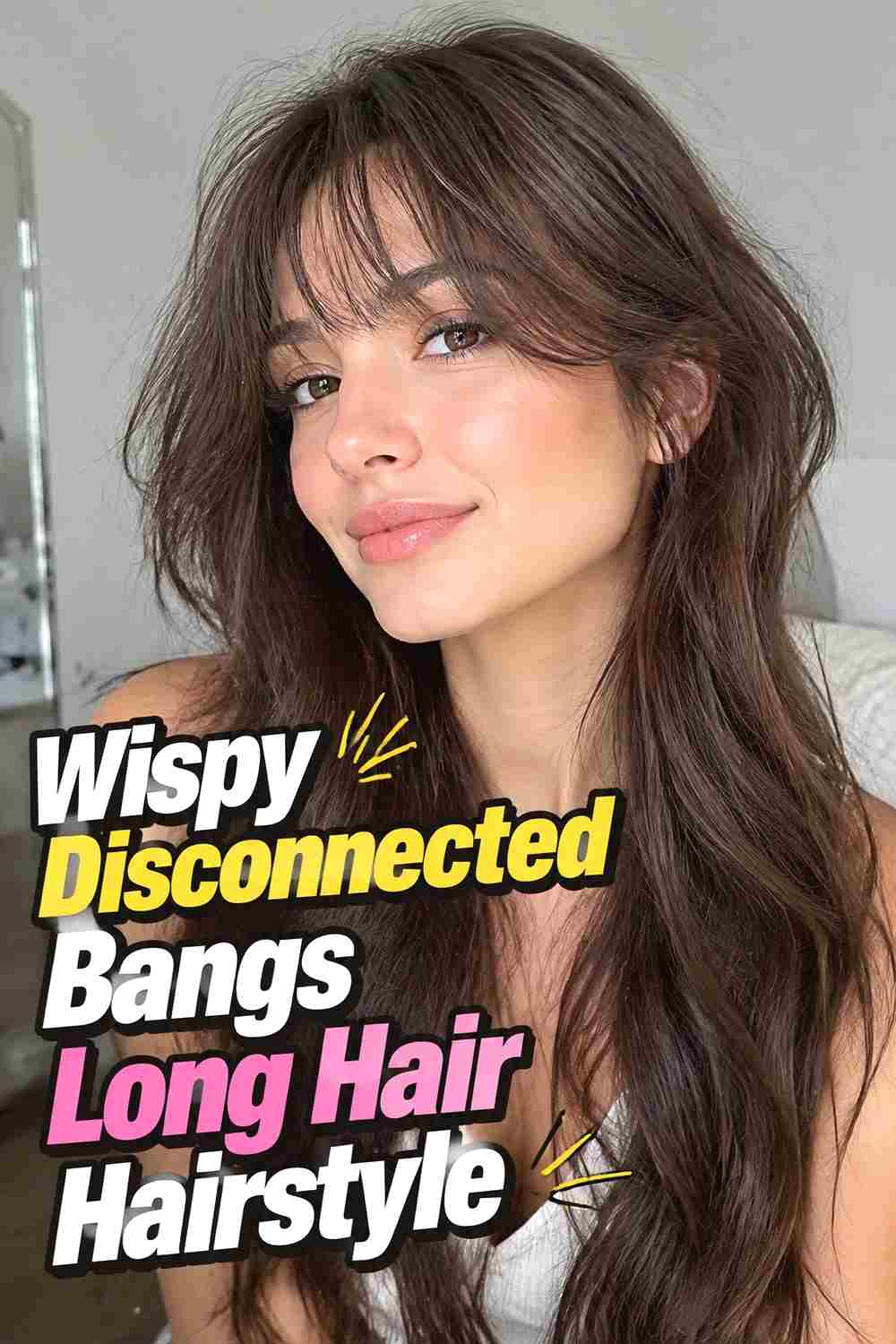
Wispy disconnected bangs offer separation without creating a heavy block across the forehead. Fine pieces fall softly toward the brows, leaving small spaces between strands that keep the fringe light and airy. The disconnected effect comes from stopping the bang section before it reaches the side layers, allowing long hair around the temples to remain visibly separate. This works especially well when the lengths are kept simple and fluid because the delicate fringe provides contrast without overwhelming the hairstyle. A little natural irregularity is helpful, so the pieces do not need to sit at exactly the same length. Light styling cream or flexible hairspray can preserve separation while avoiding the stiff, overly arranged appearance that wispy bangs can easily develop.
Best For
This variation suits anyone who wants visible bangs while keeping the forehead partly exposed and the overall hairstyle relatively soft.
3. Micro Disconnected Bangs Long Hair Hairstyle
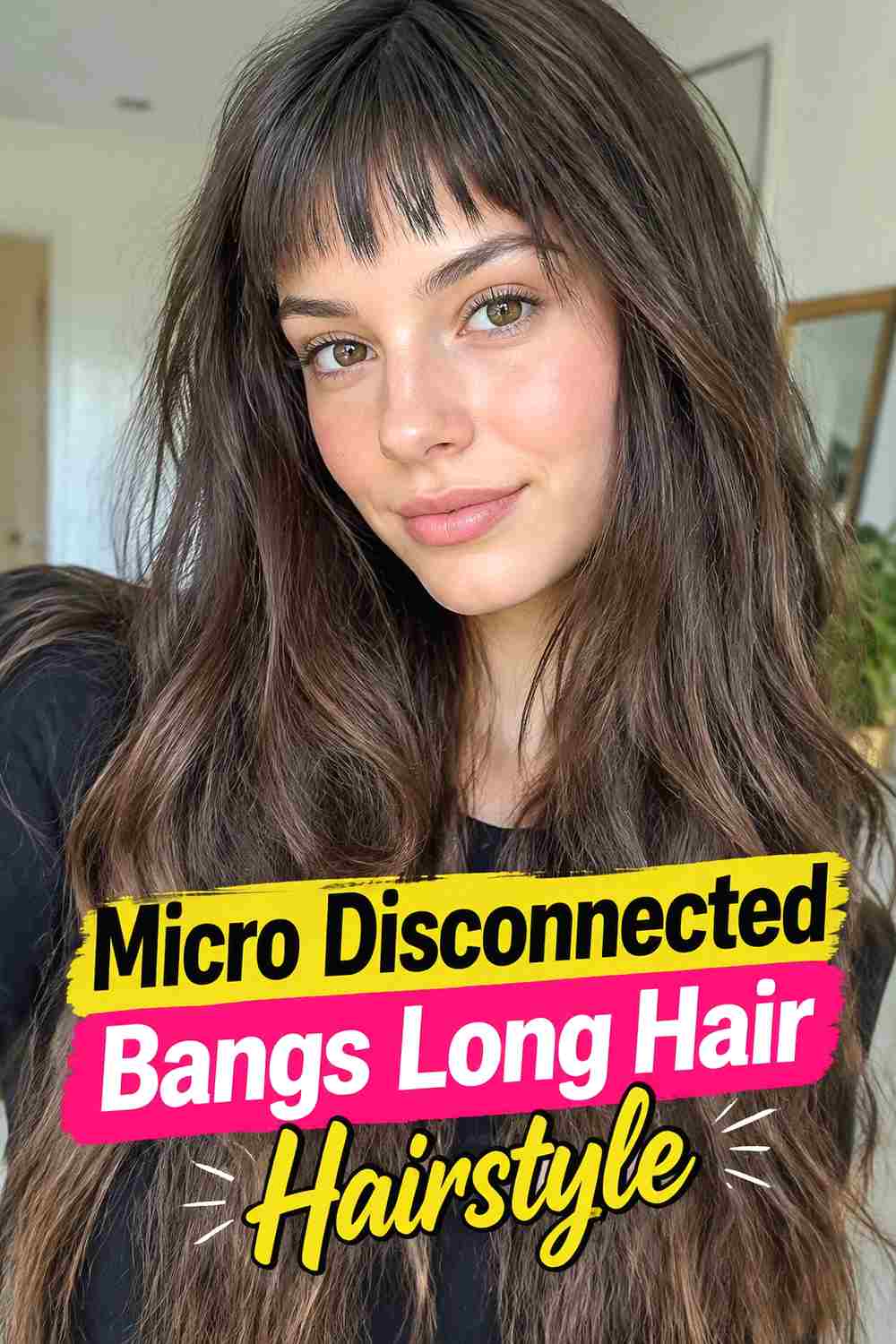
Micro bangs make the difference between fringe and long hair especially obvious. Cut noticeably above the brows, the short front section creates a compact focal point while the lengths may extend far past the shoulders. The dramatic change in proportion gives the hairstyle an editorial edge without requiring complicated styling through the rest of the hair. Keeping the fringe controlled is important because its short length makes the outline highly visible. The long sections can stay straight, softly layered, or gently textured depending on the desired mood. Because micro bangs cannot easily be tucked away when growing out, this version works best when you genuinely enjoy a shorter fringe and are comfortable maintaining its distinctive shape.
Styling Notes
Dry micro bangs in the direction you want them to sit before they begin to air-dry, since short fringe can quickly follow natural growth patterns.
4. Choppy Disconnected Bangs Long Hair Hairstyle
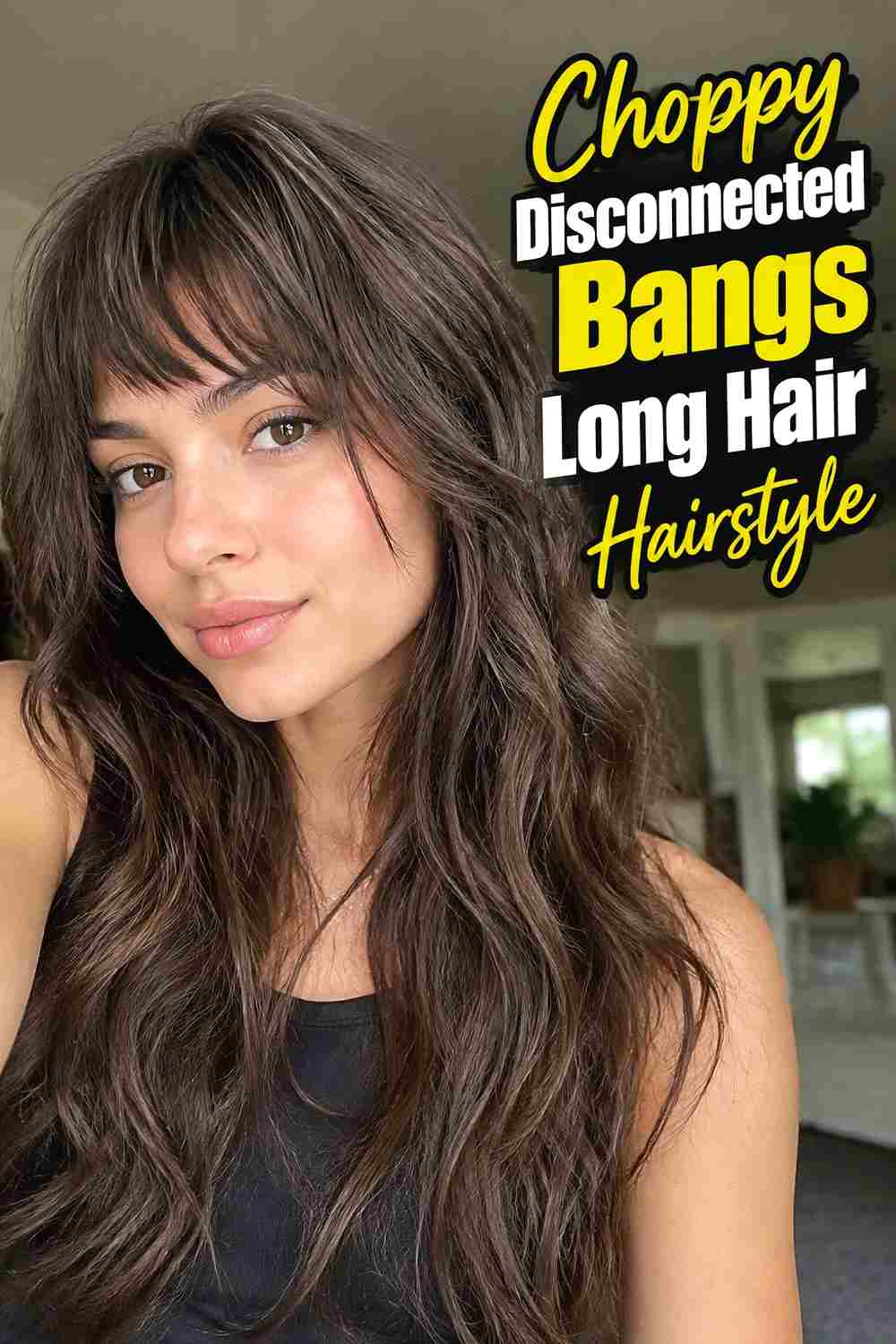
Choppy disconnected bangs use small variations in length to create a deliberately broken fringe line. Instead of one smooth edge, individual sections sit slightly higher or lower, giving the bangs visible movement and texture. Against long hair, that uneven finish makes the front feel casual and modern while the uninterrupted lengths provide a clean contrast. The choppiness should look controlled rather than accidental, with enough density remaining to make the fringe shape readable. Long hair can stay relatively smooth or pick up subtle texture to echo the bangs without fully blending into them. This style can also be forgiving as the fringe grows because a slightly uneven perimeter is already part of the intended design.
Why It Works
The irregular fringe adds energy at the front while the long, separate lengths stop the overall hairstyle from becoming visually busy.
5. Piecey Disconnected Bangs Long Hair Hairstyle
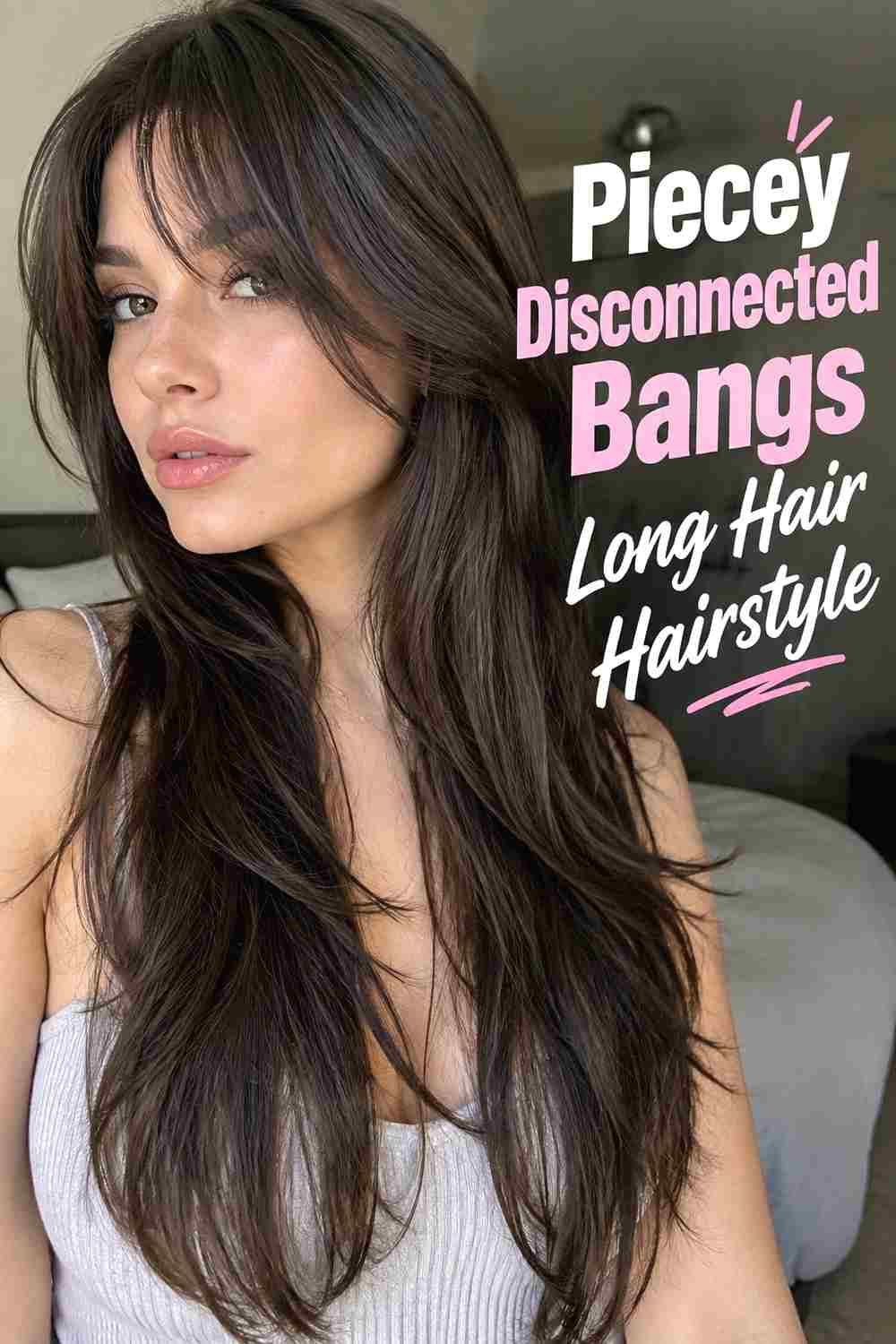
Piecey disconnected bangs are defined by visible separation between small sections of fringe. Instead of forming one continuous curtain of hair, the bangs break into narrow pieces that create texture and allow glimpses of the forehead. The disconnected sides remain abrupt, with the fringe ending before the much longer temple and side sections begin. This makes the style look intentional even when the bangs are lightly tousled. Long straight or gently wavy hair provides a useful contrast because the lengths can remain fluid while the fringe carries stronger detail. Apply styling product sparingly and mainly to the tips of the bangs; too much near the roots can make the separated pieces look oily instead of softly defined.
Pro Tip
Pinch only a few sections together at the ends rather than separating every strand, which keeps the fringe natural and avoids a stringy finish.
6. Arched Disconnected Bangs Long Hair Hairstyle

Arched bangs are slightly shorter through the center and gradually extend toward the outer edges, creating a curved line across the forehead. When kept disconnected from long side layers, that controlled curve becomes an independent feature rather than part of a fully blended haircut. The result feels polished yet distinctive, especially when the surrounding hair stays long and relatively uncomplicated. This shape can visually soften the firmness of a blunt fringe while still maintaining a defined perimeter. Styling should preserve the gentle arc without curling the bangs dramatically under. A small round brush or controlled blow-dry can add just enough bend to prevent the fringe from sitting completely flat while keeping the intended outline easy to see.
Wear & Maintenance
Trim carefully around the center and edges, since losing the gradual length change can turn the arch into an uneven straight fringe.
7. Curved Disconnected Bangs Long Hair Hairstyle

Curved disconnected bangs focus more on styling than on a strongly arched cut. The fringe has a soft rounded bend that follows the forehead, while the sides remain clearly separate from the long hair behind them. This creates a smooth, polished front without sacrificing the abrupt contrast that makes disconnected bangs distinctive. The hairstyle works particularly well with long, glossy lengths because the controlled bang shape mirrors their smooth finish while remaining much shorter. Avoid turning the fringe too far under, which can create excessive volume or make the bangs appear shorter than intended. A broad, subtle curve is enough to keep the section soft and movable while maintaining the clear visual break at either side.
Styling Notes
Use gentle tension while drying and release the brush before the fringe develops a tight bend. The goal is smooth curvature, not a rolled-under edge.
8. Side Swept Disconnected Bangs Long Hair Hairstyle
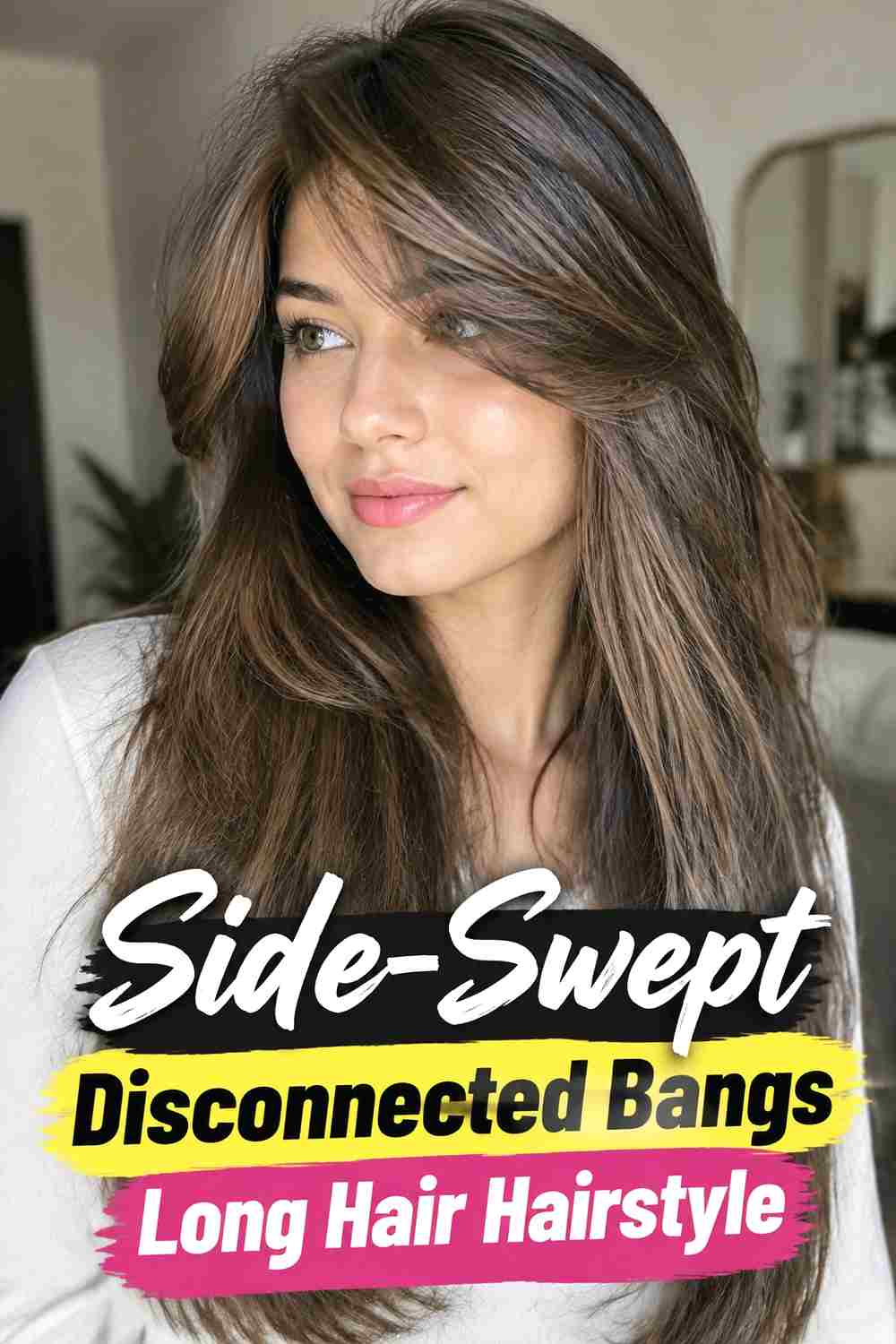
Side-swept disconnected bangs create asymmetry by directing a shorter fringe section diagonally across the forehead while leaving the longer hair noticeably separate. Unlike fully blended side bangs, these do not gradually merge into cheekbone and jaw-length layers. The change from fringe to long hair remains obvious, giving the sweep a stronger graphic quality. This style can be useful if you like movement around the face but do not want a full straight-across fringe. Long hair may be worn sleek or with soft waves, although keeping the section nearest the bangs relatively uncluttered makes the disconnect easier to see. Light root lift can prevent the side sweep from sticking flat against the forehead.
Best For
This option suits those who prefer directional bangs and an off-center silhouette rather than a symmetrical fringe.
9. Feathered Disconnected Bangs Long Hair Hairstyle
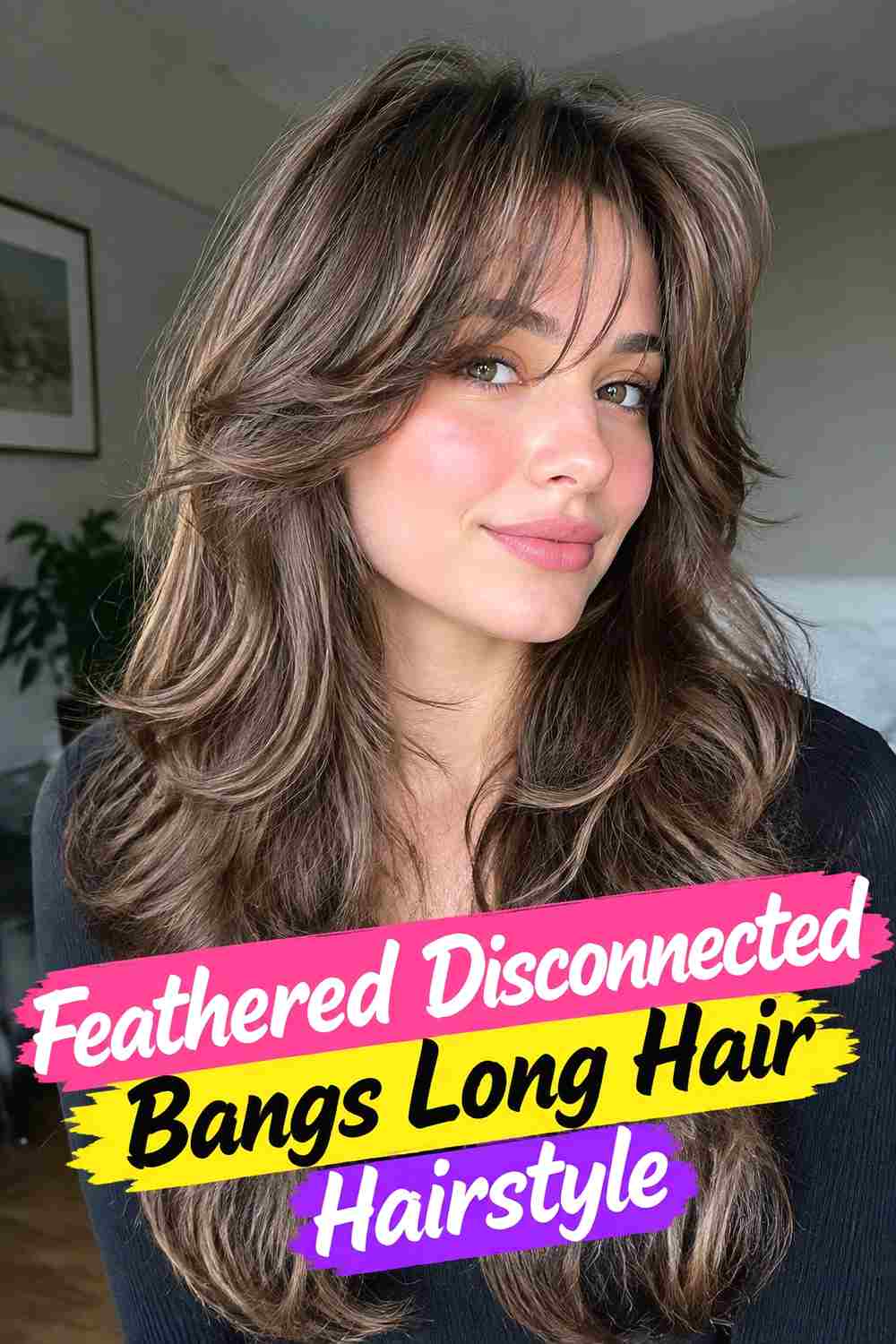
Feathered disconnected bangs have soft, lightly tapered ends that create movement without fully disappearing into the long hair. The center of the fringe can retain enough density to remain noticeable, while the tips become progressively lighter and more separated. At the sides, the bangs stop before blending into the lengths, preserving the deliberate break. This version pairs especially well with long hair that has subtle layers or a gentle blowout because both elements share a soft, airy character. The key is keeping the feathering concentrated within the bang section rather than extending it down the sides of the face. That separation prevents the hairstyle from turning into a traditional heavily layered fringe cut.
Why It Works
Softened ends reduce the weight of the fringe while the disconnected sides maintain a clear contrast with the long lengths.
10. Bottleneck Disconnected Bangs Long Hair Hairstyle
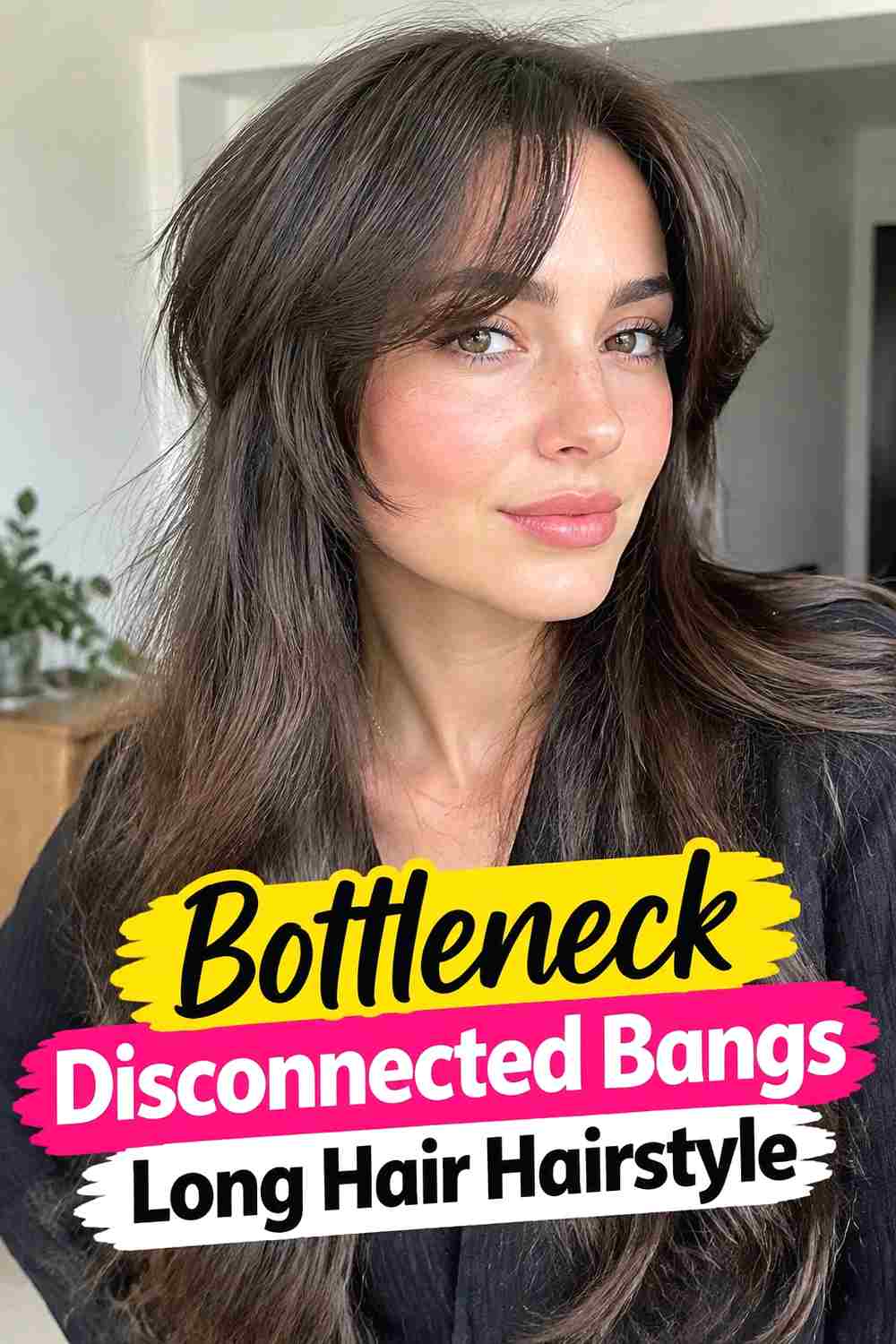
Bottleneck-inspired bangs usually narrow around the center and lengthen toward the sides, but this disconnected version stops the progression before it fully merges into the haircut. The result retains the curved, face-opening quality of bottleneck fringe while keeping a visible jump between the outer bang pieces and the long hair. That distinction makes the style feel sharper and less traditionally blended. Slightly opening the fringe through the center can add movement and prevent the front from feeling too dense. Long, softly textured hair complements the shape especially well because it provides movement without hiding the abrupt change in length. Keep the outer bang sections defined so the disconnected structure remains intentional.
Hair Type & Length
This style is easiest to see on medium-density to thick bangs with long hair extending well below the shoulders.
11. Straight Across Disconnected Bangs Long Hair Hairstyle
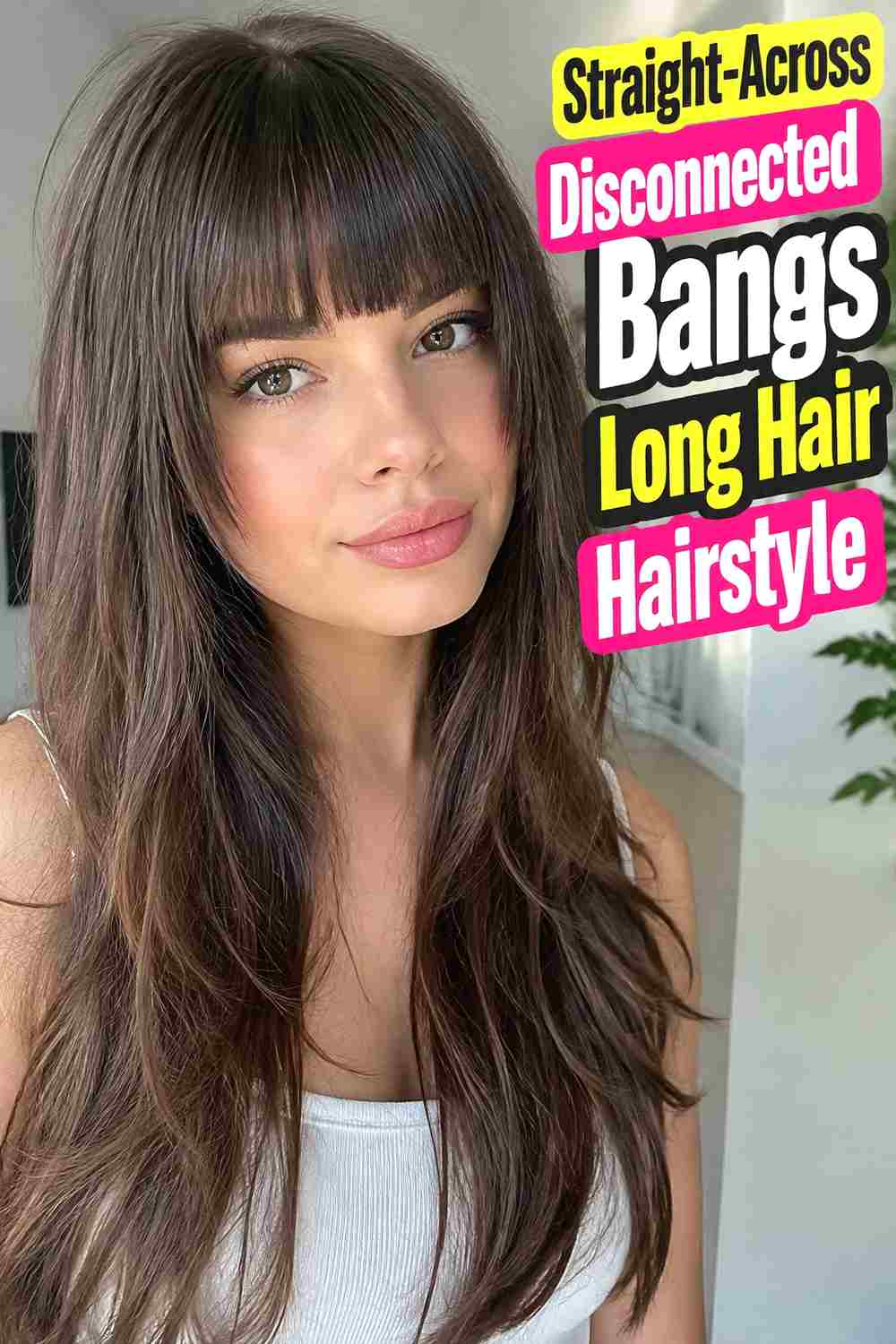
Straight-across disconnected bangs deliver a clean, symmetrical fringe with a noticeable stop at the temples. Unlike bangs that graduate into face-framing pieces, this version keeps the perimeter almost level and allows the surrounding hair to fall at its full long length. The strong change in proportion makes the hairstyle look intentional even when the lengths are minimally styled. A smooth blowout can emphasize the sharp fringe line, while subtle waves add contrast between the controlled bangs and softer body of the hair. The fringe can sit at brow level or slightly below depending on the desired effect. Keeping the ends crisp is more important than adding volume, since the straight edge is the defining feature.
Wear & Maintenance
Check the fringe regularly as it grows; even a small change in length can alter the clean straight-across effect.
12. Soft Layered Disconnected Bangs Long Hair Hairstyle

Soft layering through the long hair can coexist with disconnected bangs as long as the shortest surrounding layers begin noticeably below the fringe. This leaves a clear gap between the bangs and the rest of the haircut while still allowing the lengths to move naturally. The fringe itself can remain fairly simple, with slightly softened ends that prevent the contrast from becoming too severe. Long layers beginning around the collarbone or lower create volume and movement without visually joining the front section. This is a useful option when you want the versatility of layered long hair but still want the bangs to read as a distinct statement. Keep the closest face-framing layers long enough to preserve that separation.
Why It Works
The haircut gains movement through the lengths without sacrificing the intentional visual break between fringe and long hair.
13. Sleek Disconnected Bangs Long Hair Hairstyle
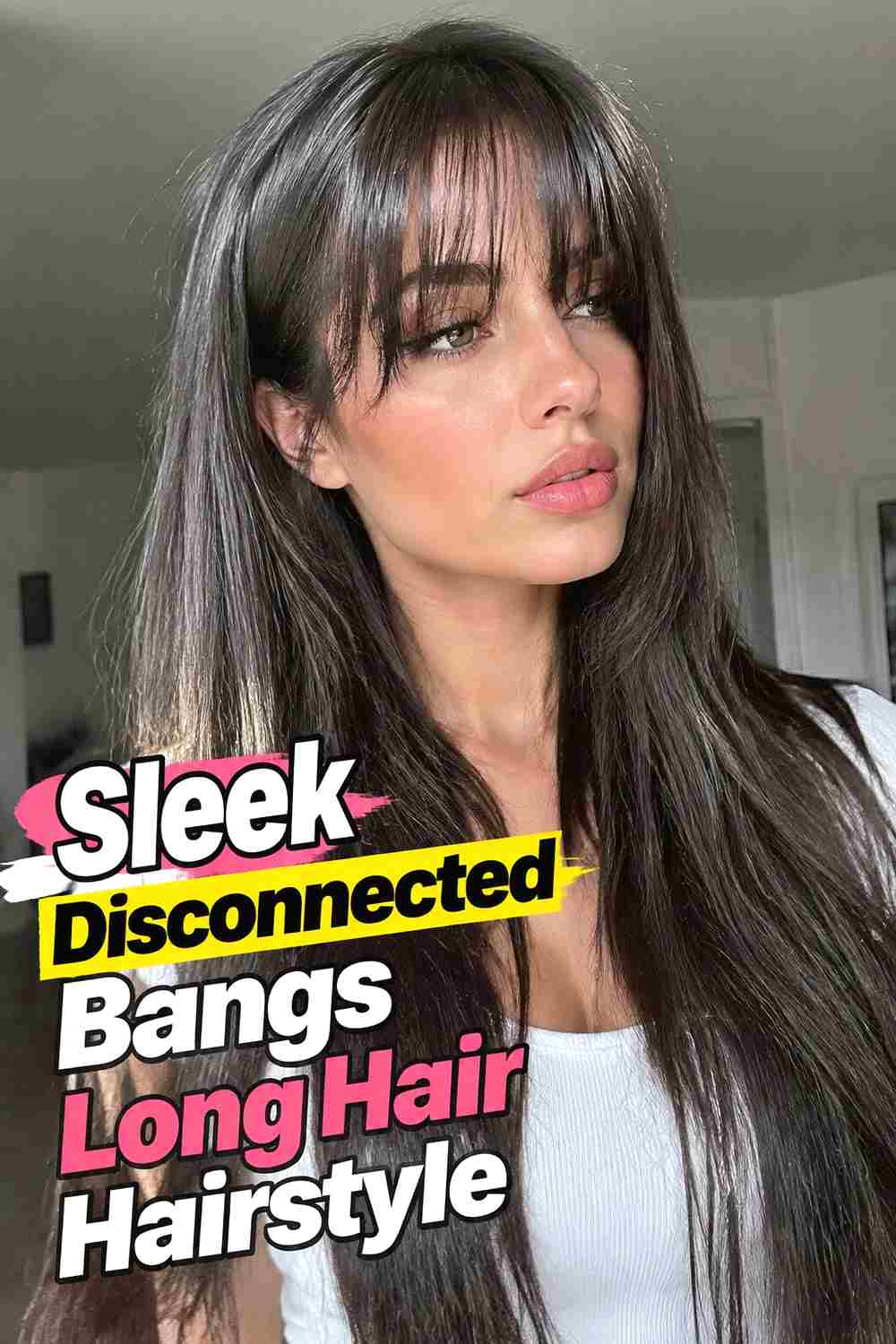
A sleek finish makes disconnected bangs look particularly precise. The fringe lies smooth across the forehead with a clean edge, while the long hair falls in glossy, controlled lengths on either side. Because there is little surface texture to distract the eye, the abrupt difference between the bangs and side sections becomes especially noticeable. This version can feel minimalist even though the haircut itself makes a strong statement. A center part is usually hidden by the fringe, so the long hair can be arranged naturally behind it without needing elaborate root styling. Use lightweight smoothing products through the lengths and minimal product on the bangs to preserve movement and avoid creating an overly flat or oily front section.
Best For
Choose this variation when you want the disconnected cut to look clean, deliberate, and polished rather than tousled or heavily textured.
14. Wavy Disconnected Bangs Long Hair Hairstyle
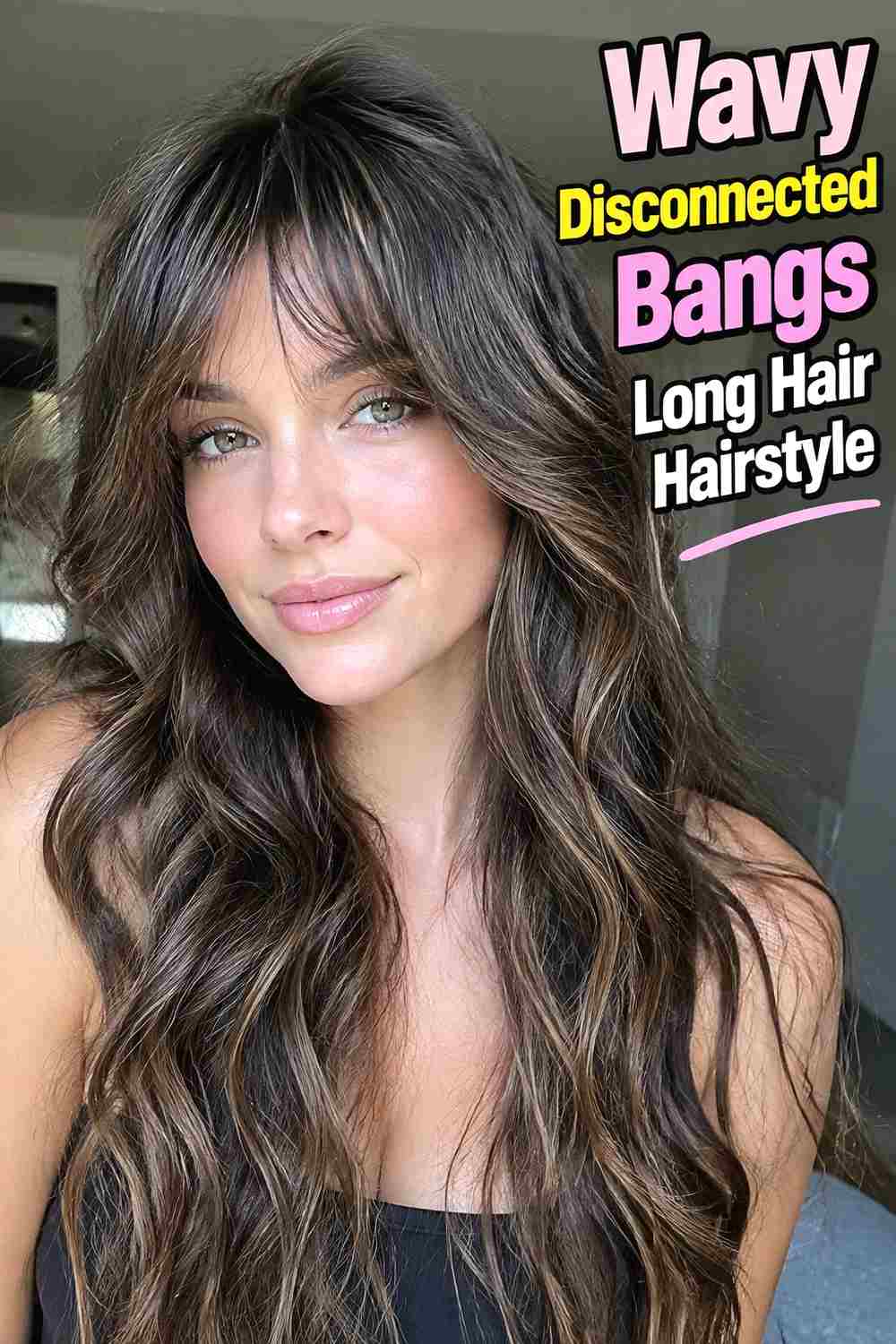
Wavy lengths create an appealing contrast with disconnected bangs because the fringe can remain relatively smooth while the rest of the hair carries soft movement. The break in texture makes the separation between short and long sections even clearer. Alternatively, the bangs can have a slight natural bend as long as they remain distinct from the larger waves below. This style works especially well on long hair with loose natural texture or broad heat-styled waves. Avoid beginning the waves too close to the side edges of the fringe, where they could visually blend the two sections together. Keeping a little smoother space around the temples helps maintain the disconnected structure while letting the lower lengths feel relaxed and full.
Styling Notes
Shape the bangs first, then create waves through the lengths separately so each part of the hairstyle keeps its own texture and direction.
15. Voluminous Disconnected Bangs Long Hair Hairstyle
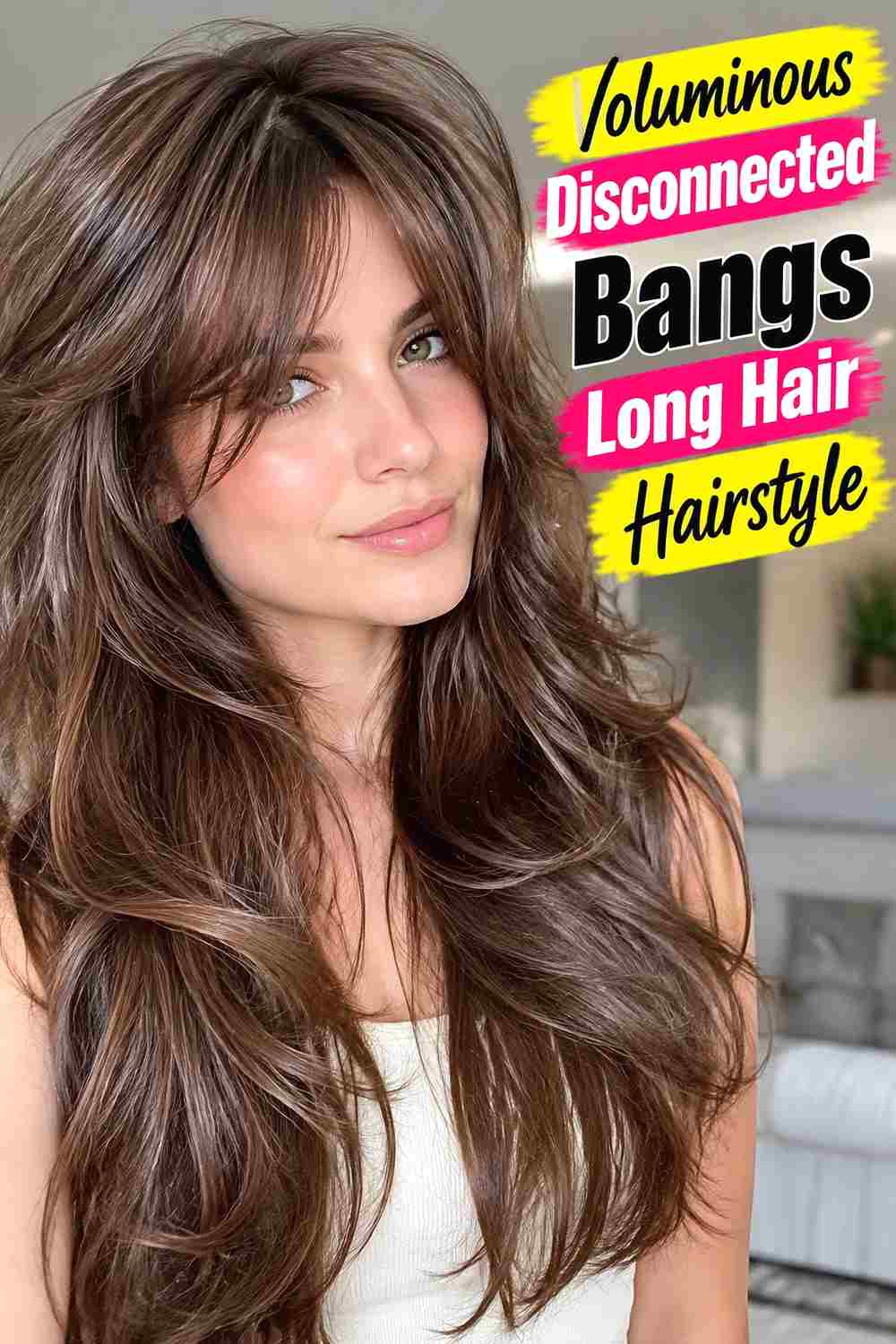
Volume through the crown and long lengths can make disconnected bangs feel even more dramatic. The fringe stays relatively compact and close to the forehead, while the hair behind it lifts at the roots and expands through layers or large bends. This difference in scale emphasizes the short front section without requiring an extremely blunt cut. Long hair benefits from strategic root lift rather than heavy teasing, which can make the transition behind the bangs look bulky. Broad blowout movement through the mid-lengths keeps the overall hairstyle soft and wearable. The fringe should retain enough separation from the crown volume that its outline remains clear rather than disappearing into the fuller shape behind it.
Pro Tip
Direct the crown backward while drying so the root lift builds behind the fringe instead of pushing the bangs forward.
16. Shaggy Disconnected Bangs Long Hair Hairstyle

Shaggy disconnected bangs introduce rougher texture while keeping the long hair noticeably separate. The fringe can be uneven, wispy, or lightly choppy, with individual pieces falling at different points around the brows. Unlike a traditional shag, however, the layers nearest the face do not necessarily connect the bangs into the rest of the haircut. Leaving that break visible gives the style a more unconventional shape. The long lengths may carry scattered layers and natural movement, but the overall perimeter remains substantially longer than the fringe. This look benefits from imperfect styling, so slight flyaways and varied separation can enhance the effect. Avoid over-smoothing the bangs, which can remove the relaxed character that makes this version work.
Best For
This option suits anyone who prefers an undone, textured finish and does not want the fringe to look perfectly polished.
17. Rounded Disconnected Bangs Long Hair Hairstyle
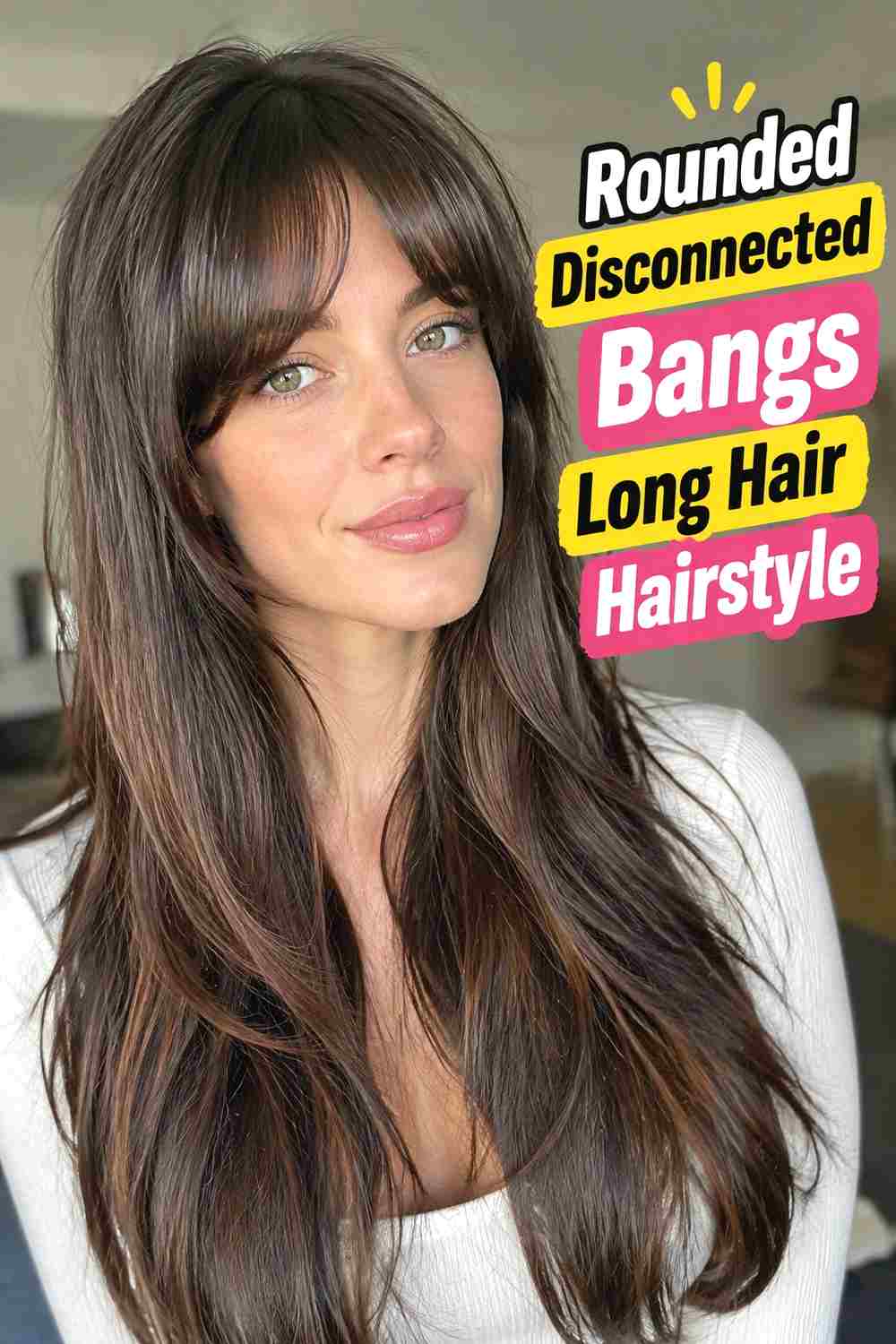
Rounded disconnected bangs have a smooth, softly curved silhouette that feels fuller than wispy or piecey fringe. The section follows the shape of the forehead while stopping cleanly at the sides, creating a visible break before the long hair begins. This gives the front a polished, almost sculpted appearance without requiring the rest of the hairstyle to be equally structured. Long straight hair emphasizes the contrast, while softly curled ends can introduce movement farther down without interfering with the fringe. The rounded effect should come from controlled shaping rather than excessive under-curling. Keeping the ends of the bangs light enough to move prevents the front section from looking stiff or helmet-like.
Wear & Maintenance
Brush the fringe minimally once it is set. Repeated handling can cause the rounded shape to separate unevenly or become oily more quickly.
18. Textured Disconnected Bangs Long Hair Hairstyle
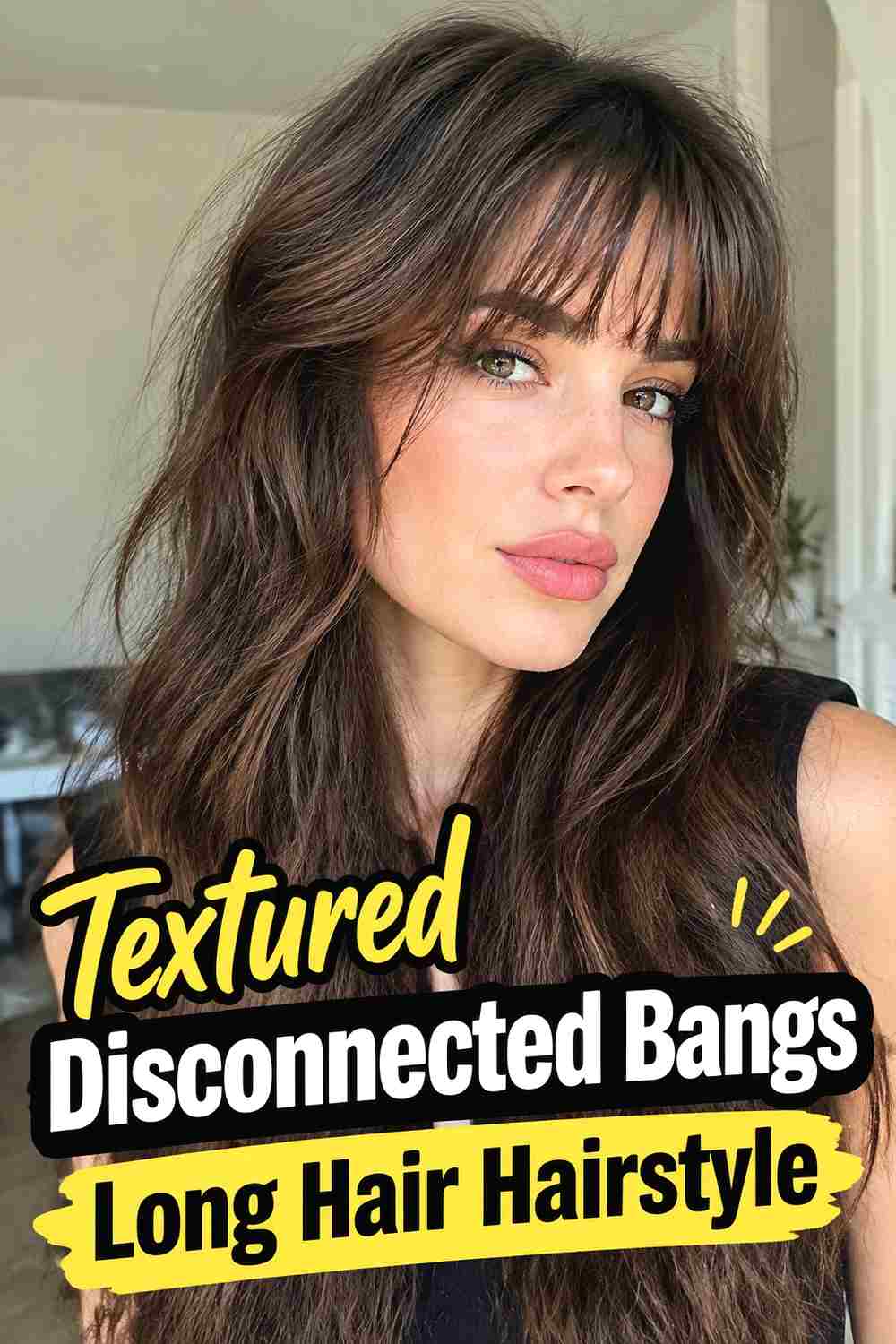
Textured disconnected bangs combine varied strand direction, soft separation, and slightly irregular ends for a modern finish that still maintains a clear difference from the long lengths. The fringe may contain both straighter pieces and subtle bends, preventing the front from looking too uniform. The sides end before they can blend into longer face-framing layers, preserving the essential disconnected shape. Long hair can carry loose texture as well, but keeping its movement larger and softer creates useful contrast. This variation is especially adaptable because perfection is not necessary; minor shifts in the fringe throughout the day can actually enhance the relaxed effect. A light texturizing product can add definition without making the bangs feel stiff.
Why It Works
Different texture scales keep the fringe distinct from the lengths while making the overall hairstyle feel cohesive rather than disconnected by accident.
How to Choose the Right Look
Start with how much contrast you want between the bangs and your long hair. Blunt, straight-across, and micro bangs create the strongest visual separation because their edges remain clearly defined. Wispy, feathered, and piecey versions feel lighter while still keeping the fringe independent from the surrounding lengths.
Density is another important consideration. A fuller fringe can support blunt, rounded, or arched shapes, while finer bang sections often suit wispy and textured finishes. Natural growth patterns also matter because cowlicks or strong directional growth may influence whether a straight fringe, side sweep, or irregular texture is easiest to maintain.
Think about your long hair as a separate design element. Sleek lengths make the disconnected shape look graphic and polished, while waves and shaggy texture create a softer contrast. Layered hair can work too, but keep the shortest face-framing layers noticeably longer than the bangs if you want the disconnect to remain visible.
Finally, consider maintenance. Shorter micro bangs and crisp blunt fringes generally need more frequent trimming. Wispy, feathered, and textured versions can tolerate some growth because their edges are naturally softer and less exact.
Final Thoughts
Disconnected bangs can give long hair a surprisingly strong change without sacrificing length. The key is preserving enough contrast between the fringe and surrounding sections that the separation looks intentional. Choose a crisp shape for a bolder effect, or try wispy, textured, or feathered bangs when you want the same idea with a softer finish.
FAQs
1. What are disconnected bangs?
Disconnected bangs are cut or styled so they remain visibly separate from the surrounding face-framing layers instead of gradually blending into the rest of the haircut.
2. Can disconnected bangs work with very long hair?
Yes. In fact, extra-long lengths can make the contrast more noticeable because the difference between the short fringe and the rest of the hair becomes greater.
3. Do disconnected bangs need to be blunt?
No. They can be wispy, micro, choppy, feathered, rounded, side-swept, or textured. The defining detail is the visible separation from the longer hair.
4. Can I wear disconnected bangs with layered long hair?
Yes. Keep the nearest face-framing layers long enough that they do not completely bridge the gap between the fringe and the rest of the haircut.
5. Are disconnected bangs high maintenance?
Maintenance depends on the shape. Precise blunt and micro bangs usually need more frequent trims, while wispy or textured fringes can be more forgiving as they grow.
Save your favorite disconnected bangs long hair ideas, share the looks that inspire you, and explore more fringe styles for a fresh change without losing your length.