19 Architectural Low Ponytail Hairstyle Ideas for Modern Structure
Architectural low ponytails transform a simple nape-level style with sculpted lines, controlled twists, geometric sections, and polished details that look modern from every angle.
The architectural approach is all about intentional construction. Instead of simply gathering the hair at the nape, these ponytails use wrapped bases, loops, folds, twists, bubbles, curves, or precise sectioning to create a distinct silhouette while keeping every element physically believable and wearable.
Some options are sleek and minimal, while others introduce texture or more dramatic shapes. When choosing a design, consider your hair length, density, natural texture, available styling time, comfort at the nape, and how much structure you want the tail or base to hold.
Quick List
- Sleek Center Part Architectural Low Ponytail Hairstyle
- Sculpted Side Part Architectural Low Ponytail Hairstyle
- Wrapped Cuff Architectural Low Ponytail Hairstyle
- Looped Architectural Low Ponytail Hairstyle
- Double Band Architectural Low Ponytail Hairstyle
- Twisted Base Architectural Low Ponytail Hairstyle
- Folded Tail Architectural Low Ponytail Hairstyle
- Geometric Bubble Architectural Low Ponytail Hairstyle
- Braided Base Architectural Low Ponytail Hairstyle
- Polished Knot Architectural Low Ponytail Hairstyle
- Rope Twist Architectural Low Ponytail Hairstyle
- Asymmetrical Architectural Low Ponytail Hairstyle
- Sculptural Wave Architectural Low Ponytail Hairstyle
- Sectioned Architectural Low Ponytail Hairstyle
- Minimalist Architectural Low Ponytail Hairstyle
- Curved S Sweep Architectural Low Ponytail Hairstyle
- Textured Architectural Low Ponytail Hairstyle
- Ribbon Wrapped Architectural Low Ponytail Hairstyle
- Event Ready Architectural Low Ponytail Hairstyle
1. Sleek Center Part Architectural Low Ponytail Hairstyle
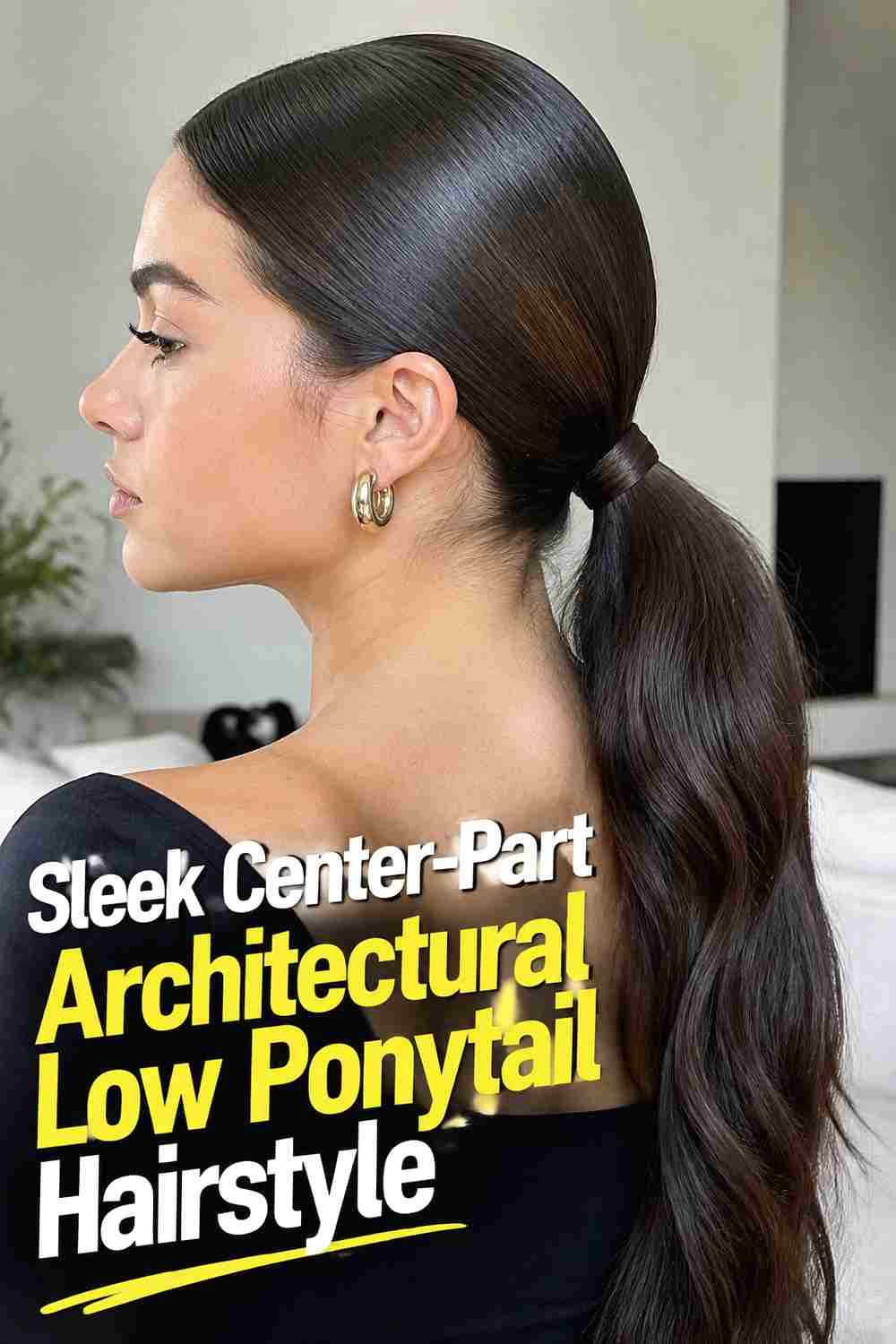
A precise center part gives this low ponytail an instantly structured foundation. Both sides are smoothed evenly toward a secure tie point at the nape, creating clean lines that make the style feel almost geometric from the front. The tail itself stays straight, glossy, and controlled, while a narrow section of hair can wrap around the elastic for a seamless finish. The architectural quality comes from restraint: every line has a clear direction, yet the hair still shows realistic strand detail and natural weight. This version works especially well on medium to long hair because the extended tail balances the compact crown. Avoid excessive product at the roots, since high shine should look polished rather than wet or rigid.
Styling Notes
Create the center part first and smooth each side independently before joining them at the nape to keep the symmetry crisp.
2. Sculpted Side Part Architectural Low Ponytail Hairstyle
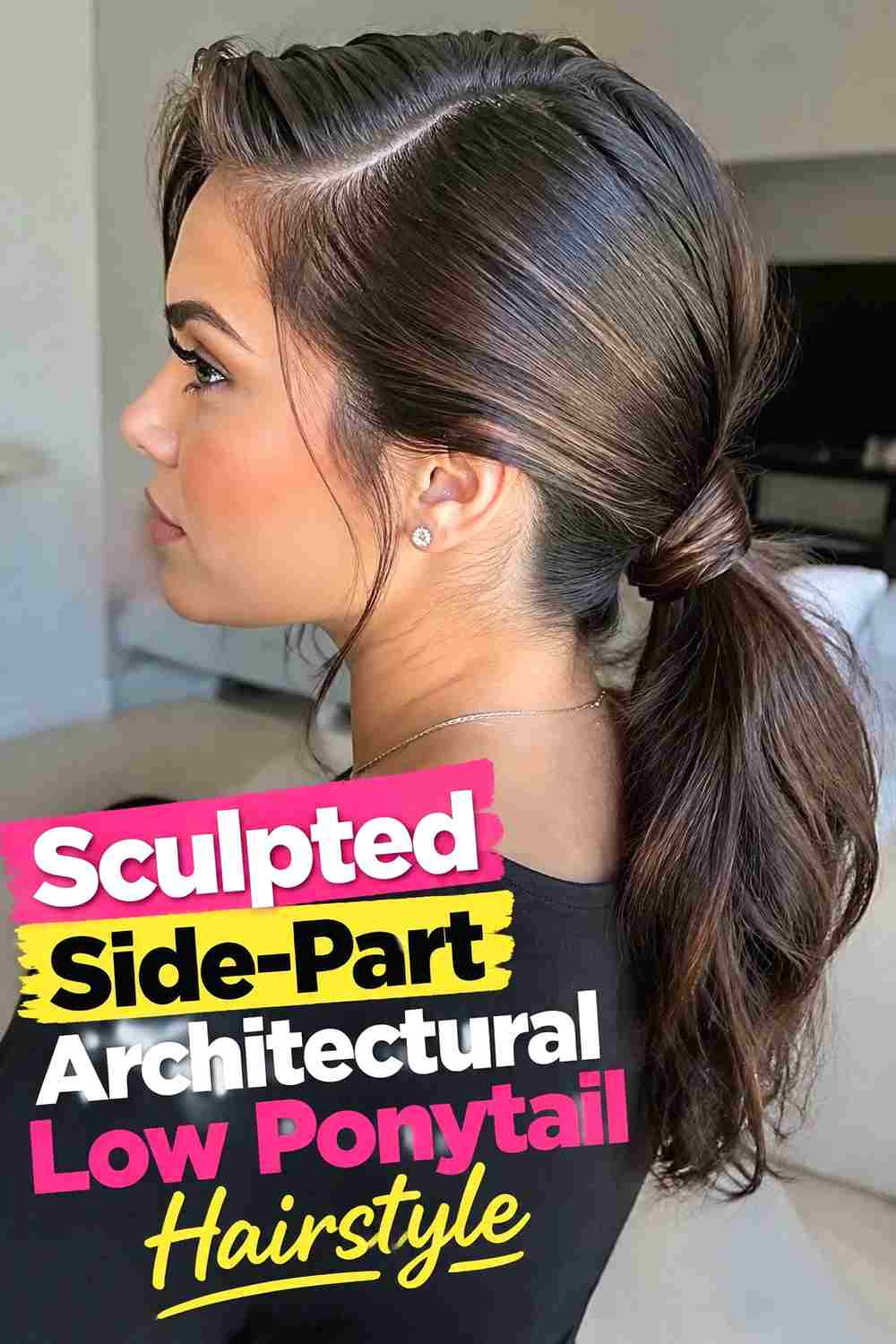
A side part creates an asymmetrical front while the low tie point keeps the overall silhouette grounded. The heavier section can be shaped into a controlled sweep across the forehead before curving toward the nape, giving the hairstyle a strong directional line. On the lighter side, the hair remains closer to the head for contrast. The ponytail should begin exactly where those two shapes meet, creating a clean visual endpoint. A smooth tail works beautifully, although a subtle bend can soften the lower half without losing structure. This style is particularly effective on medium-density hair that can hold a polished surface without becoming bulky around the nape. Keep the front curve broad rather than tightly curled.
Why It Works
The asymmetric sweep creates movement while the centered low tie point provides enough stability to keep the hairstyle balanced.
3. Wrapped Cuff Architectural Low Ponytail Hairstyle
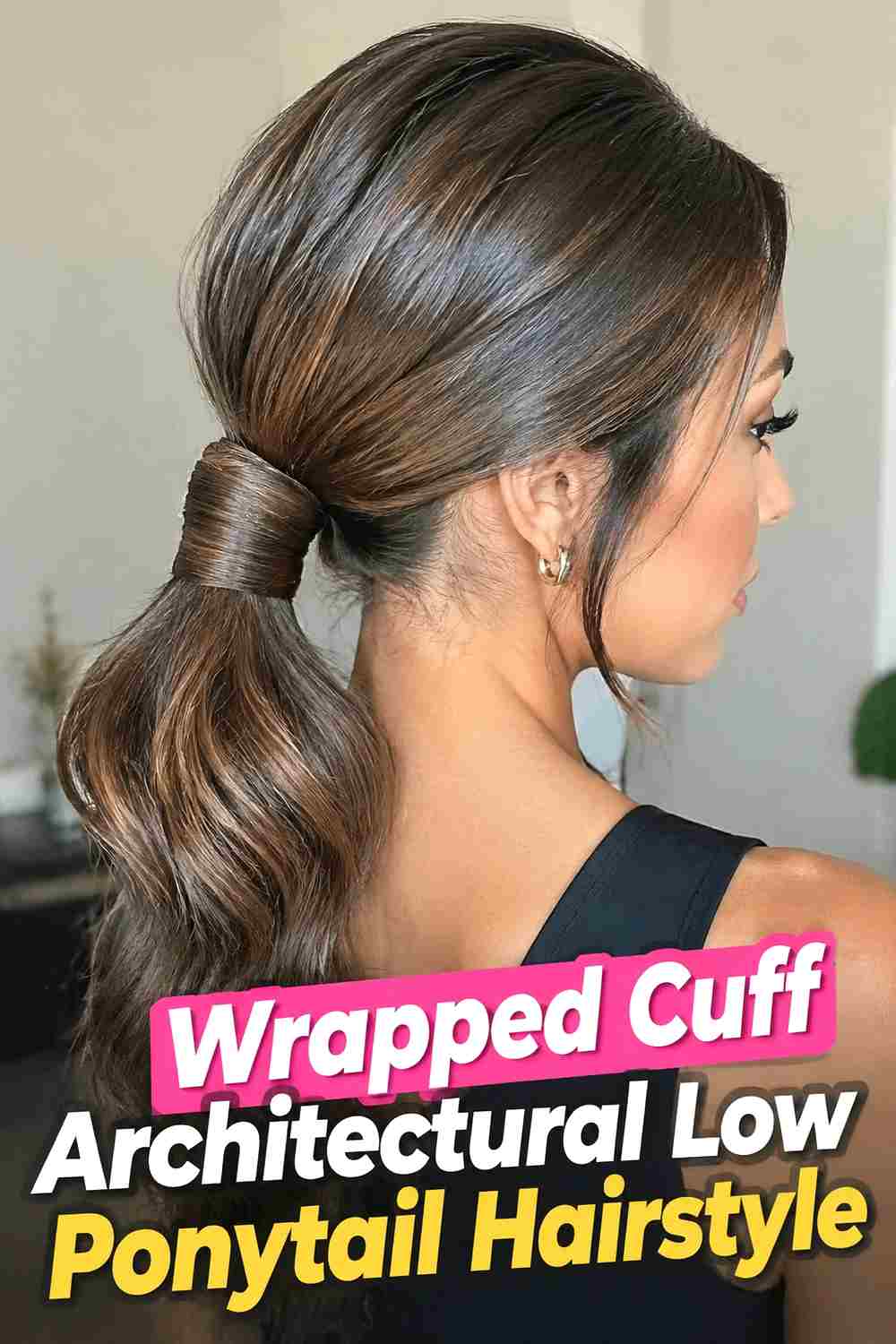
A broad wrapped cuff turns the base of a low ponytail into the main design feature. Instead of concealing the elastic with one narrow strand, a wider section is smoothed flat and wrapped several times around the base, creating a clean cylindrical band of hair. The tail falls directly beneath it, making the cuff look like a polished structural connection between scalp and length. Long hair is especially useful because the wrapped section needs enough material to circle the base without reducing the tail too dramatically. Keep each wrap aligned and avoid crossing strands unnecessarily. The finished cuff should sit securely at the nape while remaining smooth enough that its shape stays easy to recognize from the side.
Wear & Maintenance
Secure the final end underneath the ponytail with a hidden pin so the wrapped cuff stays neat without visible hardware.
4. Looped Architectural Low Ponytail Hairstyle
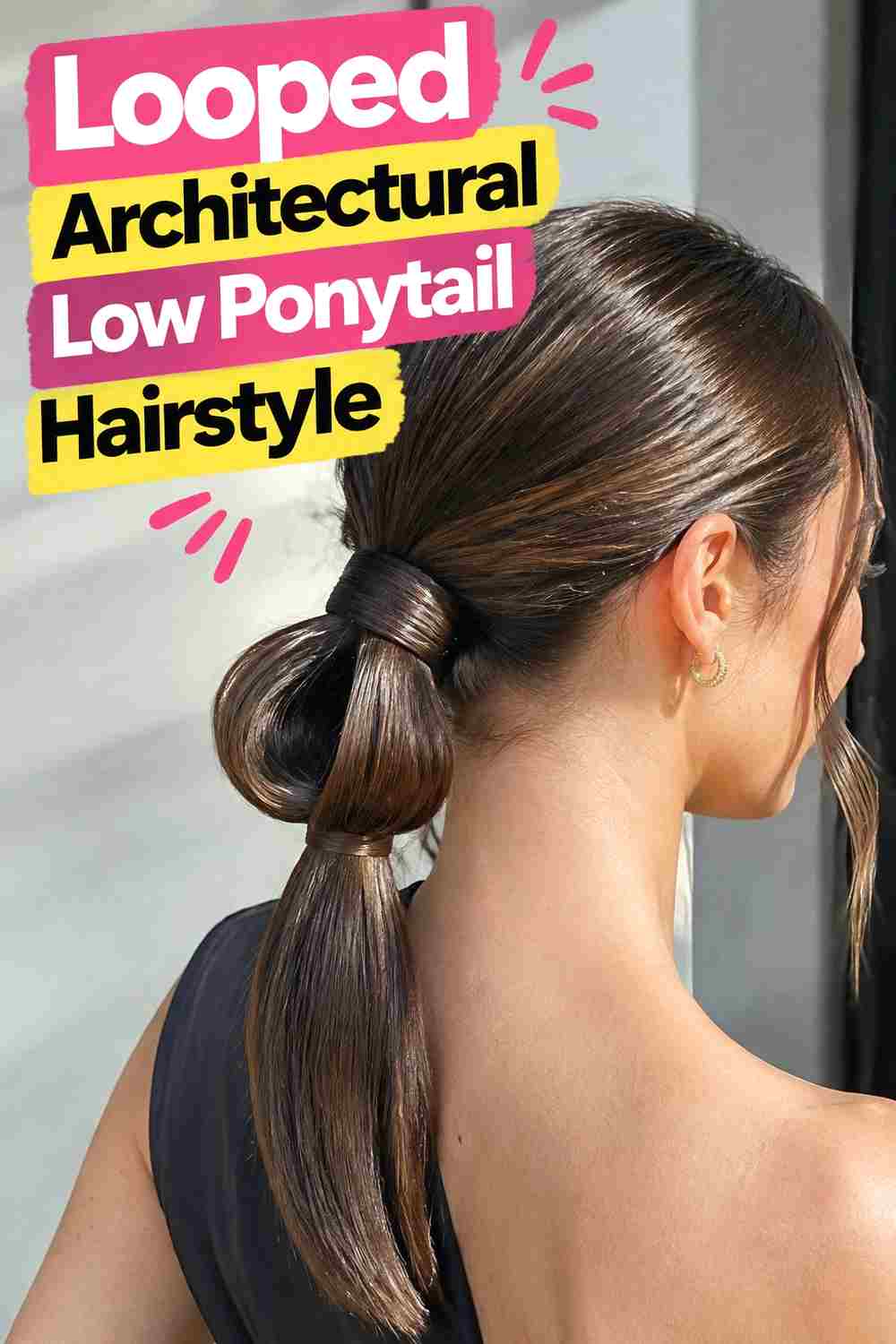
A looped low ponytail folds part of the tail back toward the base, creating an open curved shape rather than leaving all the length hanging straight. The loop can remain compact or extend slightly downward, depending on hair length and the desired level of drama. A section of free hair may continue beyond the fold, adding contrast between the smooth loop and straight ends. The key is keeping the loop connected naturally to a believable nape-level tie point. Medium and long hair are easiest to work with, particularly when the surface is smooth enough to reveal the shape clearly. Hidden elastics and pins should support the construction internally rather than interrupting the visible curve.
Styling Notes
Form the loop gradually and check its side profile before securing it, since the shape is often more noticeable from an angle than from the front.
5. Double Band Architectural Low Ponytail Hairstyle
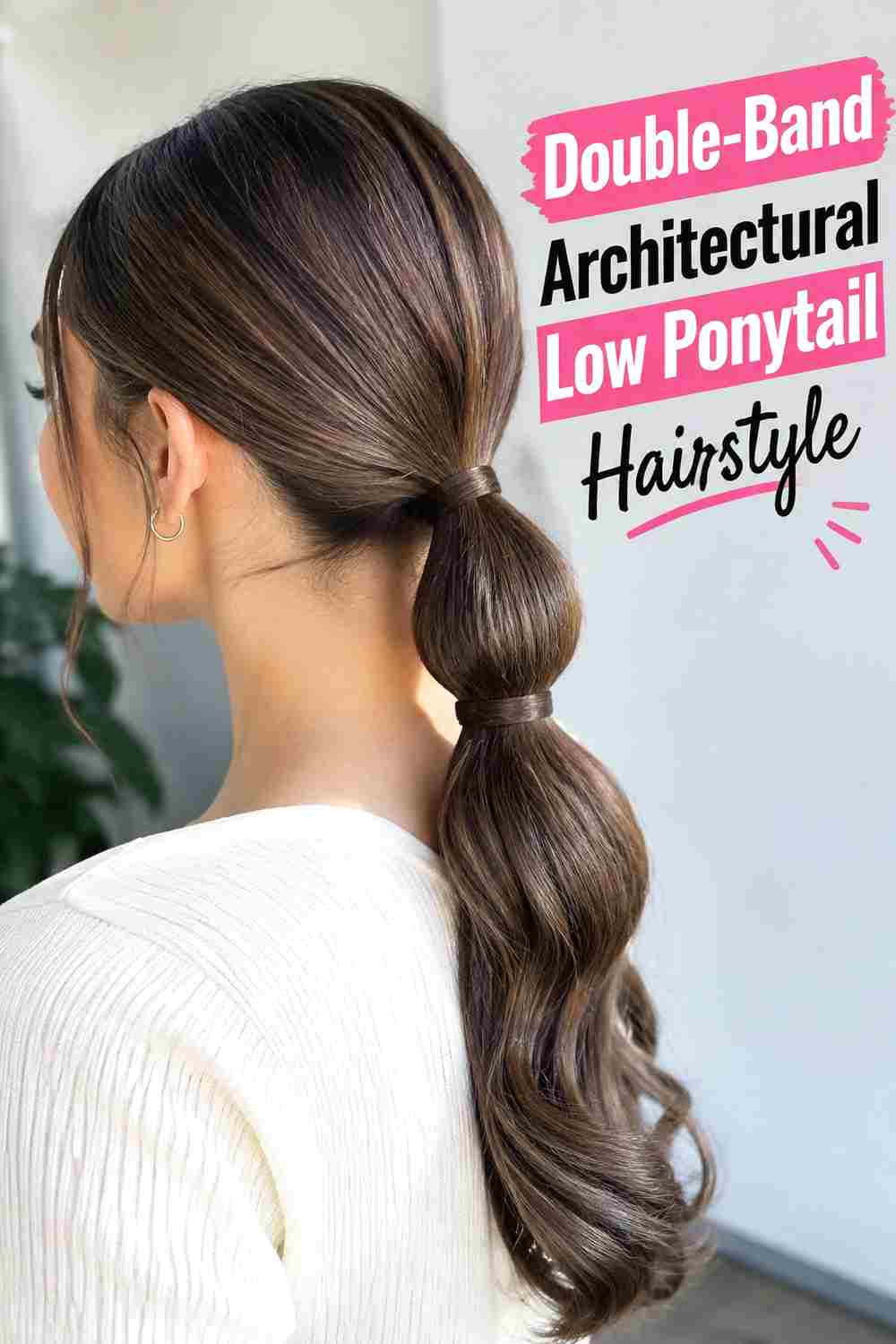
Two defined bands create a segmented base that gives an ordinary low ponytail a more graphic finish. The first band secures the ponytail at the nape, while a second wrapped section sits a short distance below, creating a compact structured interval before the remaining tail falls freely. Both bands can be made from the hair itself for a seamless result. The spacing matters: too much distance can turn the style into a bubble ponytail, while a smaller gap preserves the architectural effect. Long, straight or softly smoothed hair shows the detail most clearly. Keep the sections between the bands firm but not overly compressed so the tail maintains believable volume and natural weight.
Best For
This version suits medium to long hair when you want visible structure without creating a complicated braid or full sculptural updo.
6. Twisted Base Architectural Low Ponytail Hairstyle
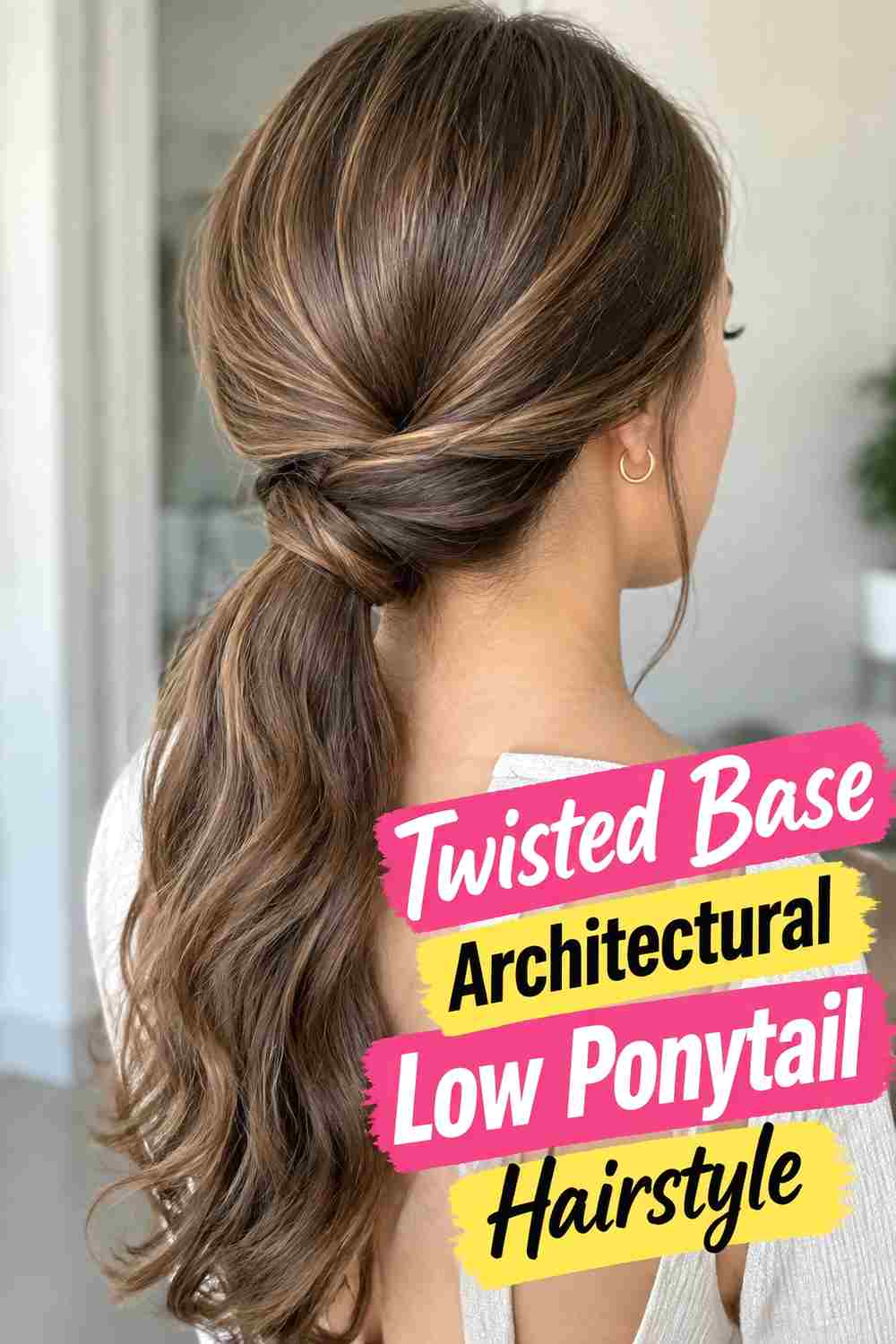
The Twisted Base Architectural Low Ponytail Hairstyle directs two side sections toward the nape, where they cross or wrap neatly over the ponytail fastening point. This creates a clean X-like or overlapping effect while leaving the tail relatively simple. The twists should remain broad and smooth instead of tightly rope-like, allowing their direction to be read clearly. Hair underneath is gathered into a secure low ponytail before the side sections are added, which helps the construction stay stable. This works especially well on long layered hair because the outer sections can create the twist while the remaining length forms a full tail. Keep the crown controlled so the base detail remains the strongest feature.
Why It Works
The opposing twists create visual tension and symmetry around the fastening point while preserving the simplicity of a traditional low ponytail.
7. Folded Tail Architectural Low Ponytail Hairstyle
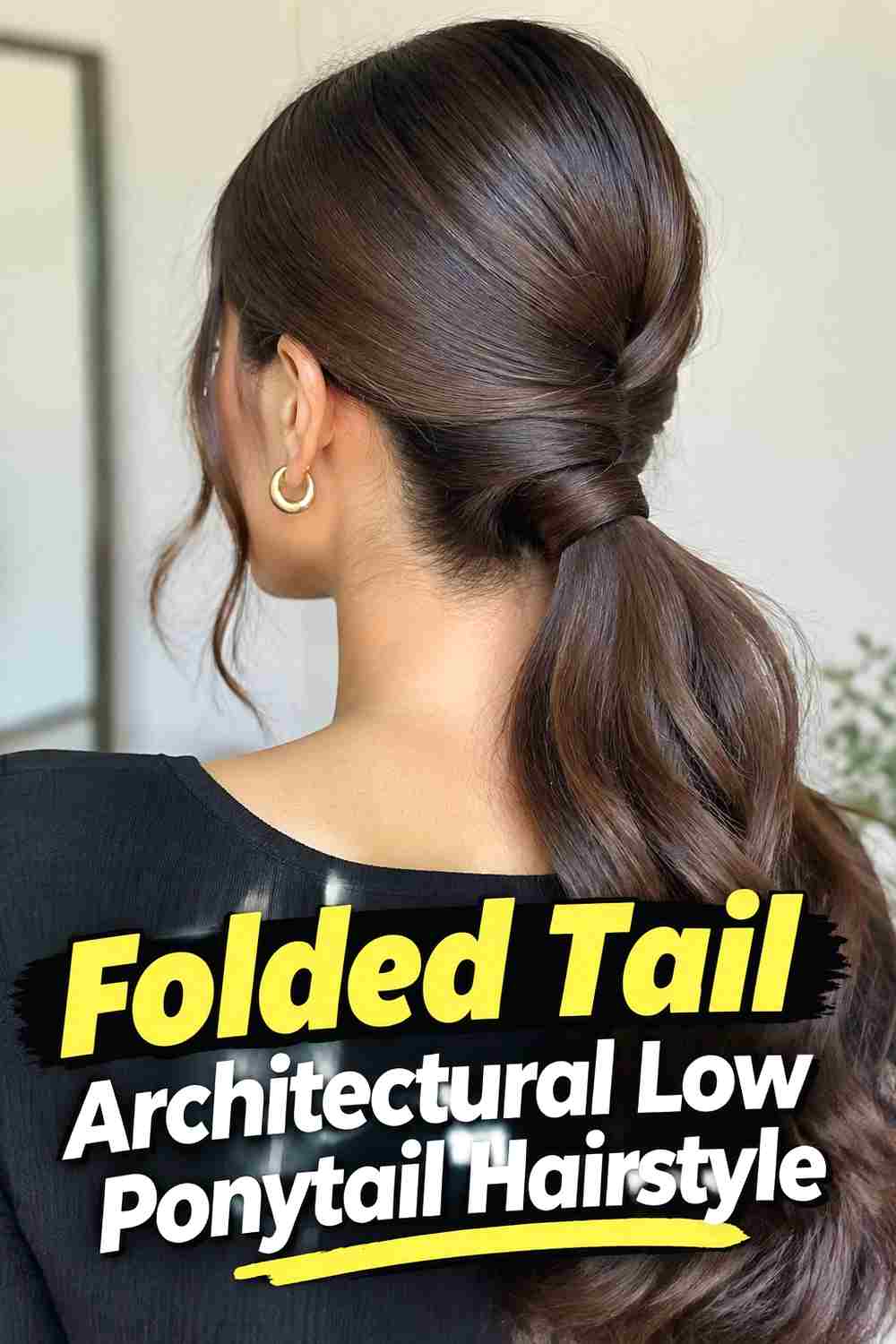
A folded tail creates a compact shape by turning the ponytail upward or inward and securing part of the length near the base. Unlike a traditional bun, some of the hair remains visibly elongated, so the style still reads as a ponytail. The fold may form a smooth vertical panel or a softly curved section depending on the natural weight of the hair. Long hair gives the most flexibility, although medium lengths can produce a smaller, cleaner fold. The base must stay secure at the nape so the shape does not shift with movement. Keep the folded section broad and believable rather than forcing it into an unnaturally rigid angle, and hide support pins underneath the construction.
Styling Notes
Leave enough free length below or beside the fold for the style to retain a clear ponytail identity rather than becoming a complete updo.
8. Geometric Bubble Architectural Low Ponytail Hairstyle
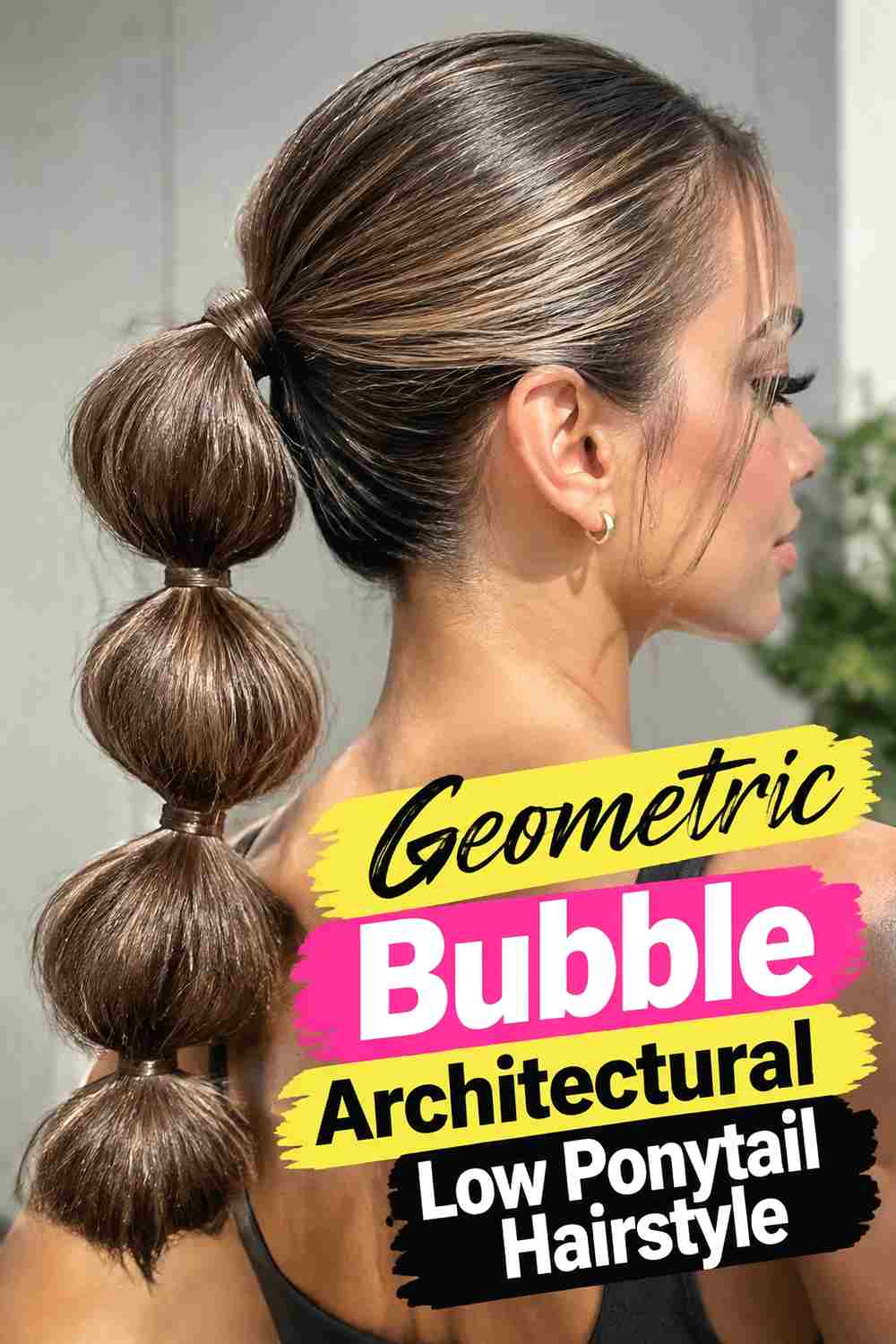
This version turns a bubble ponytail into something more precise by limiting the style to a small number of carefully shaped sections. Instead of many soft bubbles, two or three structured forms create a graphic progression down the tail. Each segment can be expanded gently into a rounded or slightly angular silhouette while keeping the overall line controlled. The first elastic sits at the nape, followed by evenly spaced fastening points farther down. Longer hair makes the proportions easier to balance. Use narrow bands or hidden elastics so the shapes remain the focal point, and avoid over-pulling the bubbles. The architectural effect comes from consistent spacing and deliberate volume rather than exaggerated fullness.
Pro Tip
Measure the spacing visually before expanding each section; even intervals make the finished ponytail look far more intentional.
9. Braided Base Architectural Low Ponytail Hairstyle
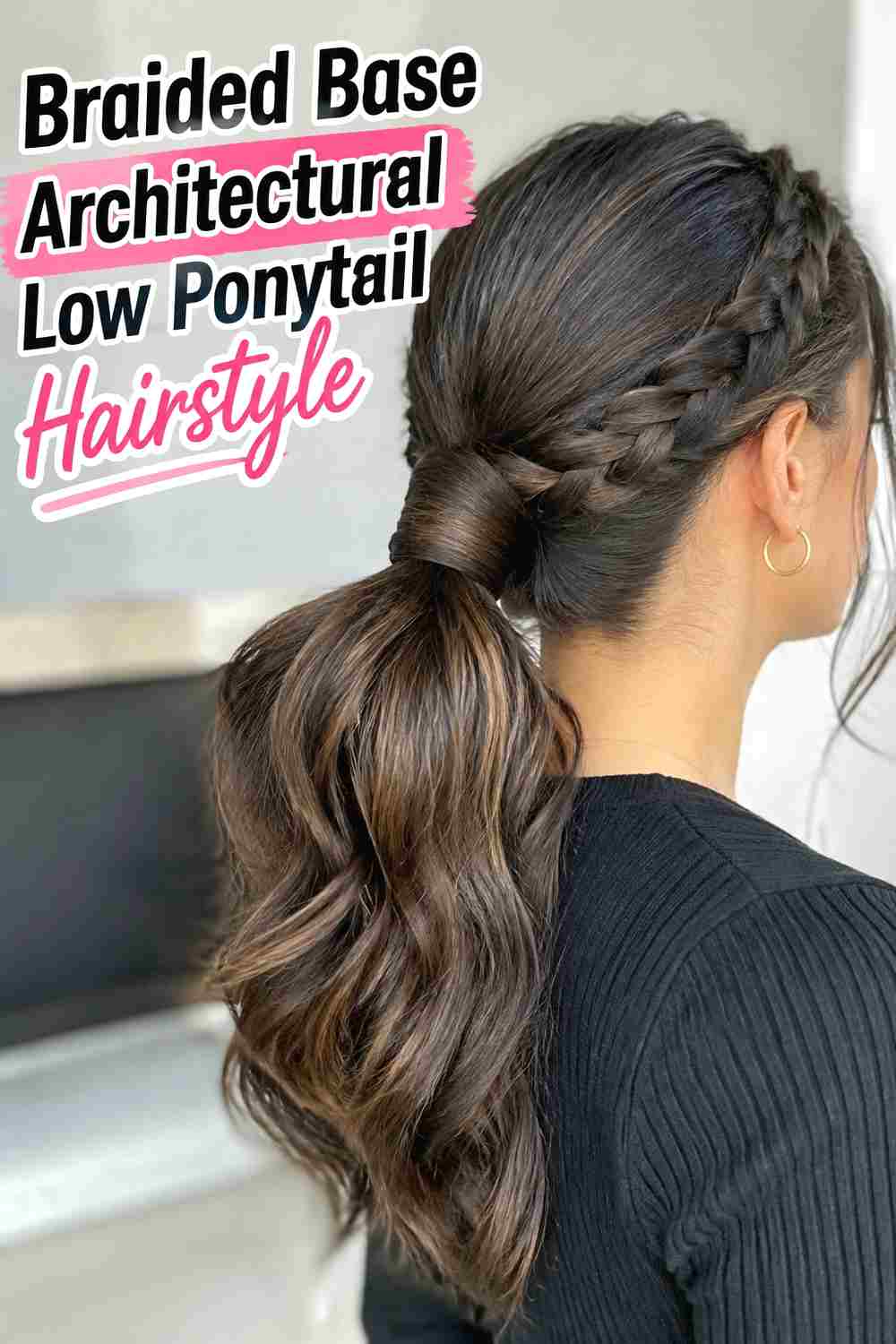
A compact braid at the base adds linear texture to a sleek low ponytail without turning the full length into a braided style. Small side sections can be braided and directed toward the nape, or one narrow braid can wrap around the fastening point like a structured band. The remaining tail stays smooth, allowing the difference in texture to stand out clearly. Medium to long hair is easiest for this look because the braid requires enough length to integrate securely without thinning the tail. Keep the braid tight enough to maintain its pattern but not so tight that it creates visible scalp tension. A polished crown and simple tail help the braided base feel purposeful rather than overly decorative.
Best For
Choose this style when you want an architectural detail that feels intricate but still leaves most of the ponytail clean and uncomplicated.
10. Polished Knot Architectural Low Ponytail Hairstyle
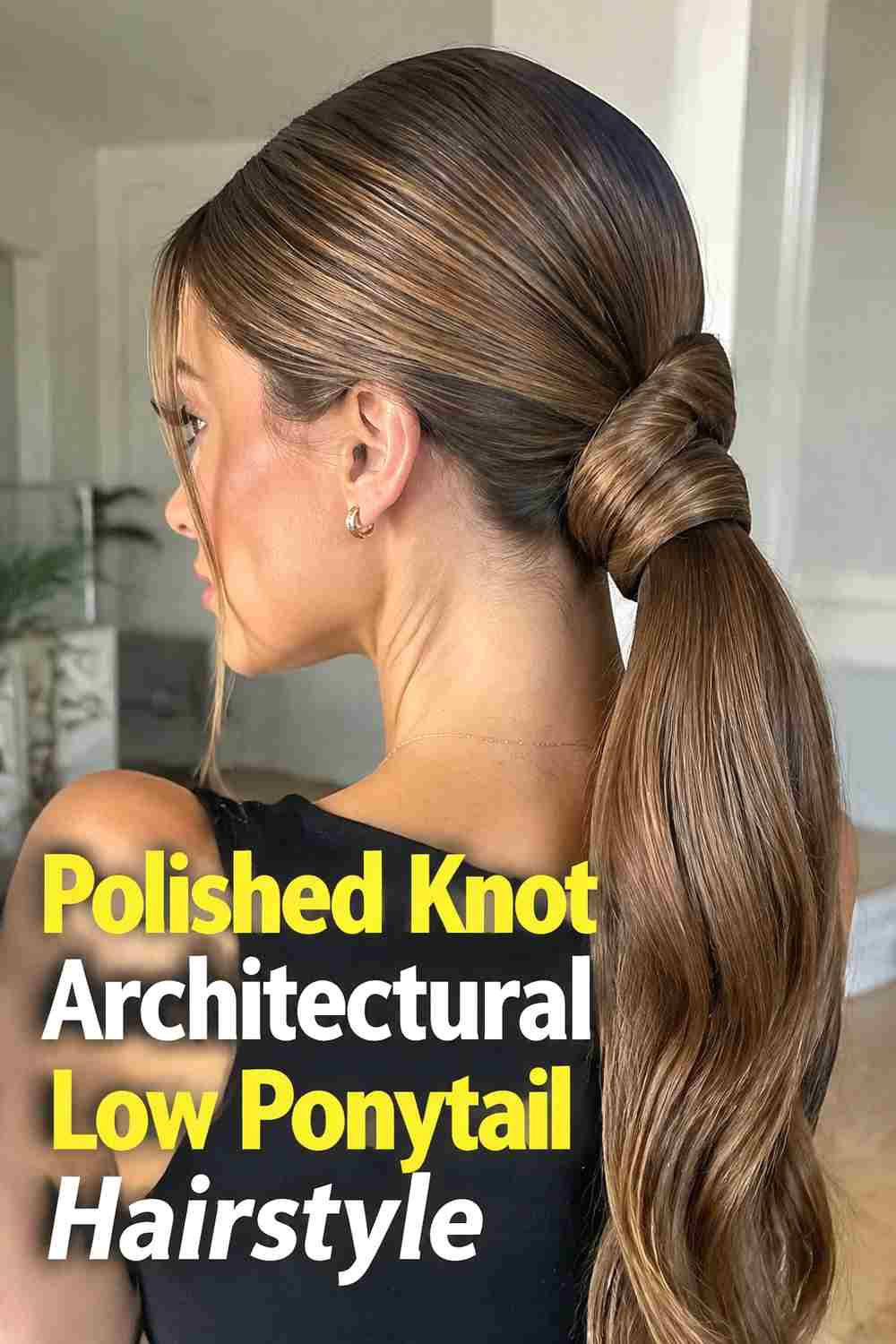
A polished knot transforms the fastening area into a sculptural detail while keeping the ponytail hanging below. A section of hair wraps, crosses, and tucks into a compact knot around the elastic, creating a dimensional base that looks more elaborate than a standard hair wrap. The knot should remain clearly connected to the ponytail rather than expanding into a bun. Long hair provides more flexibility for forming the detail, although medium lengths can create a smaller knot. Keep the strands smooth and aligned as they cross so the shape remains readable. The rest of the tail can stay straight or carry a subtle bend, but it should remain simple enough that the knotted base is easy to appreciate.
Wear & Maintenance
Use hidden pins underneath the knot and check the base after several hours if your hair is particularly smooth or prone to slipping.
11. Rope Twist Architectural Low Ponytail Hairstyle
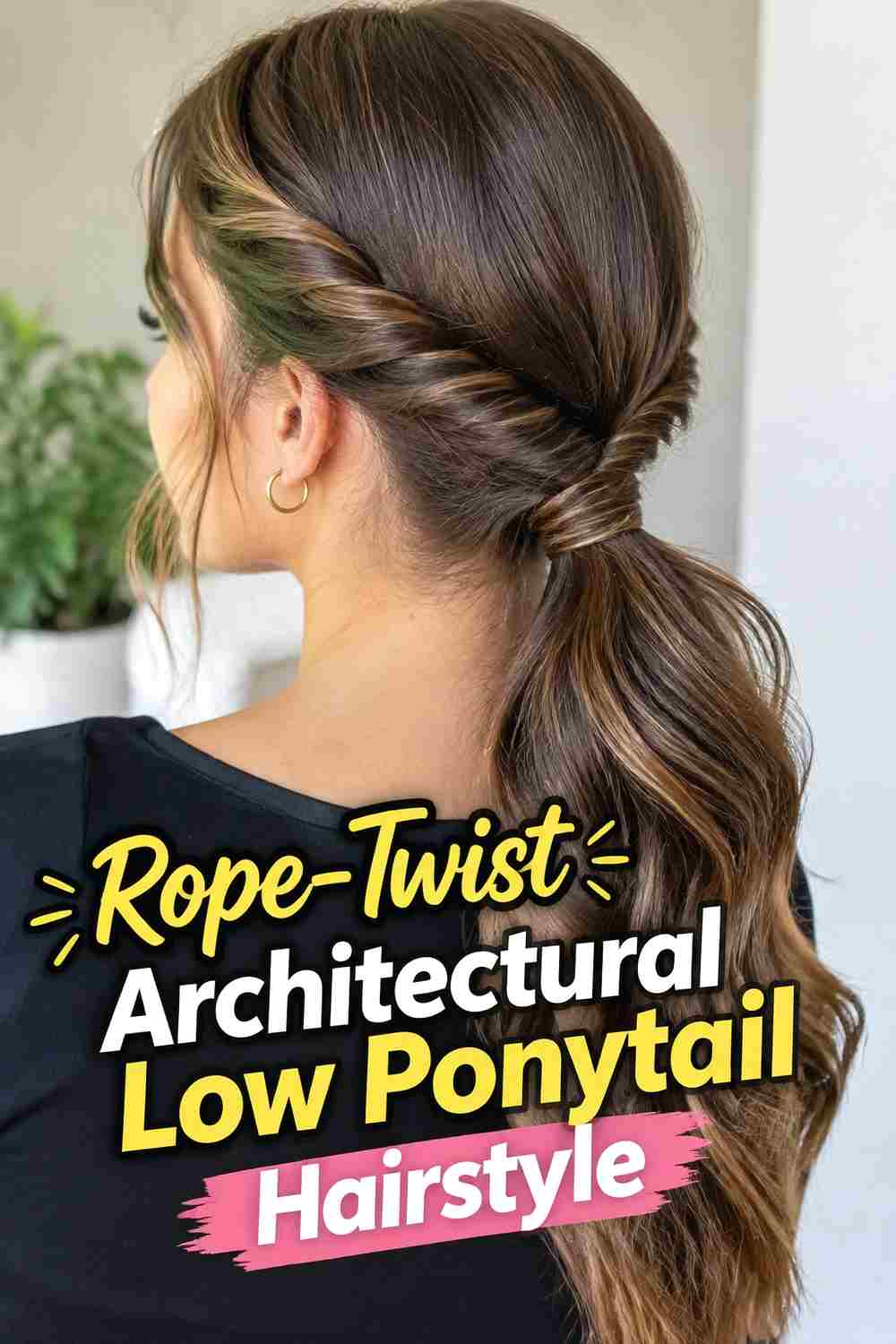
A rope twist brings strong linear movement to a nape-level ponytail. After the crown is smoothed into a secure low base, the tail is divided into two sections and twisted together to create a defined spiral. Because the ponytail begins low, the rope hangs close to the back and creates a long vertical line that feels sleek and sculptural. The twist can remain compact for a sharp finish or be softened slightly for more dimension. Medium to long hair displays the pattern best, especially when the two sections are similar in thickness. Maintain even tension from the base to the ends so the rope does not become loose in one area and overly tight in another.
Why It Works
The strong vertical twist contrasts with the smooth horizontal gathering at the nape, creating a clear architectural change in direction.
12. Asymmetrical Architectural Low Ponytail Hairstyle
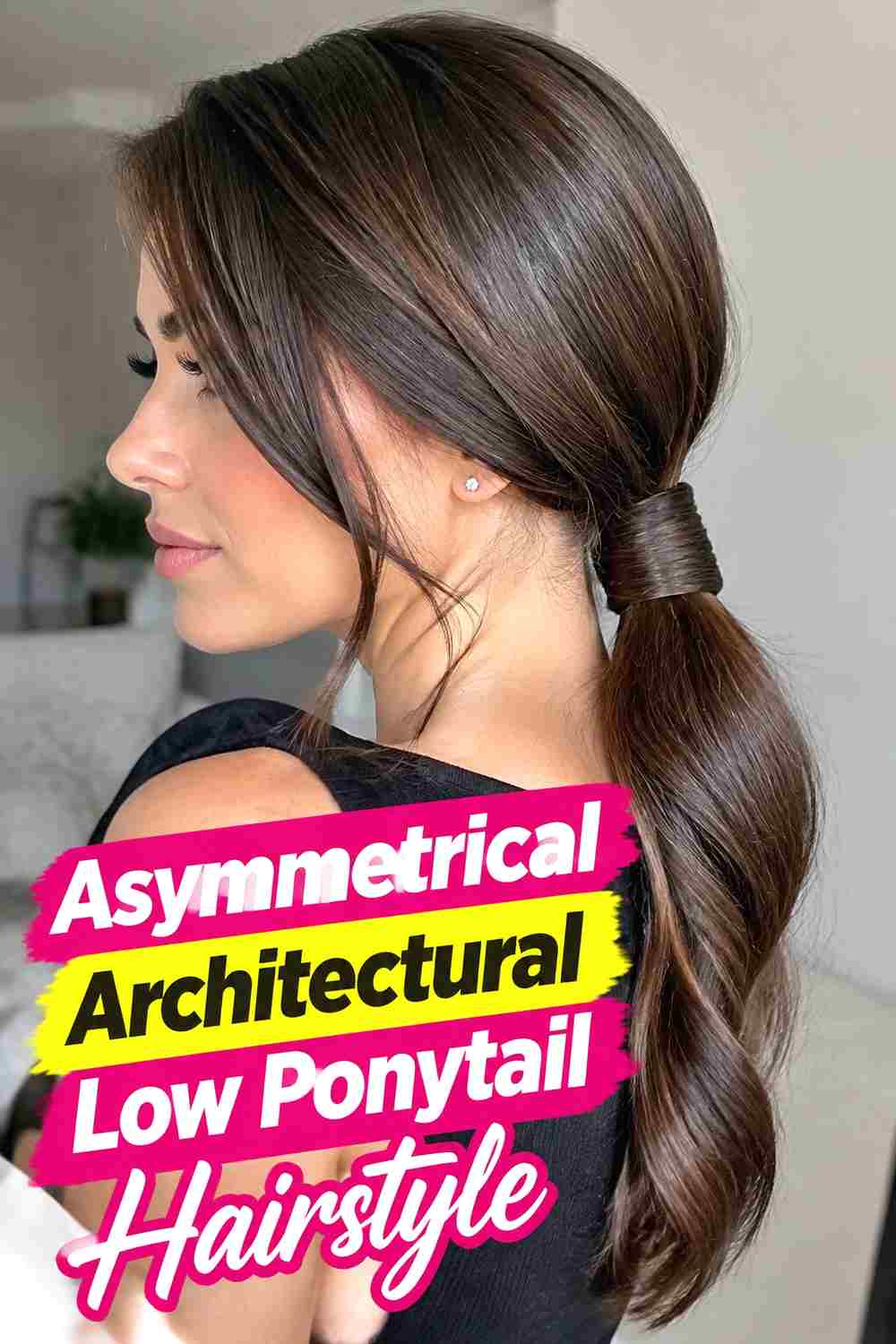
Asymmetry can make a low ponytail feel architectural without requiring complicated construction. One side of the crown may be smoothed tightly, while the opposite side forms a broader sweep or controlled fold before joining the tail. The tie point can sit slightly off-center at the nape, reinforcing the diagonal direction while remaining comfortable and believable. The tail itself should follow that placement naturally rather than being pulled across after styling. This look is particularly effective with medium or long hair that can create a visible side shape without excessive bulk. Keep the silhouette intentional by limiting the number of competing details; one strong directional sweep is usually enough to establish the design.
Styling Notes
Choose the off-center tie point before styling the crown so every section can be directed toward it naturally instead of being repositioned later.
13. Sculptural Wave Architectural Low Ponytail Hairstyle
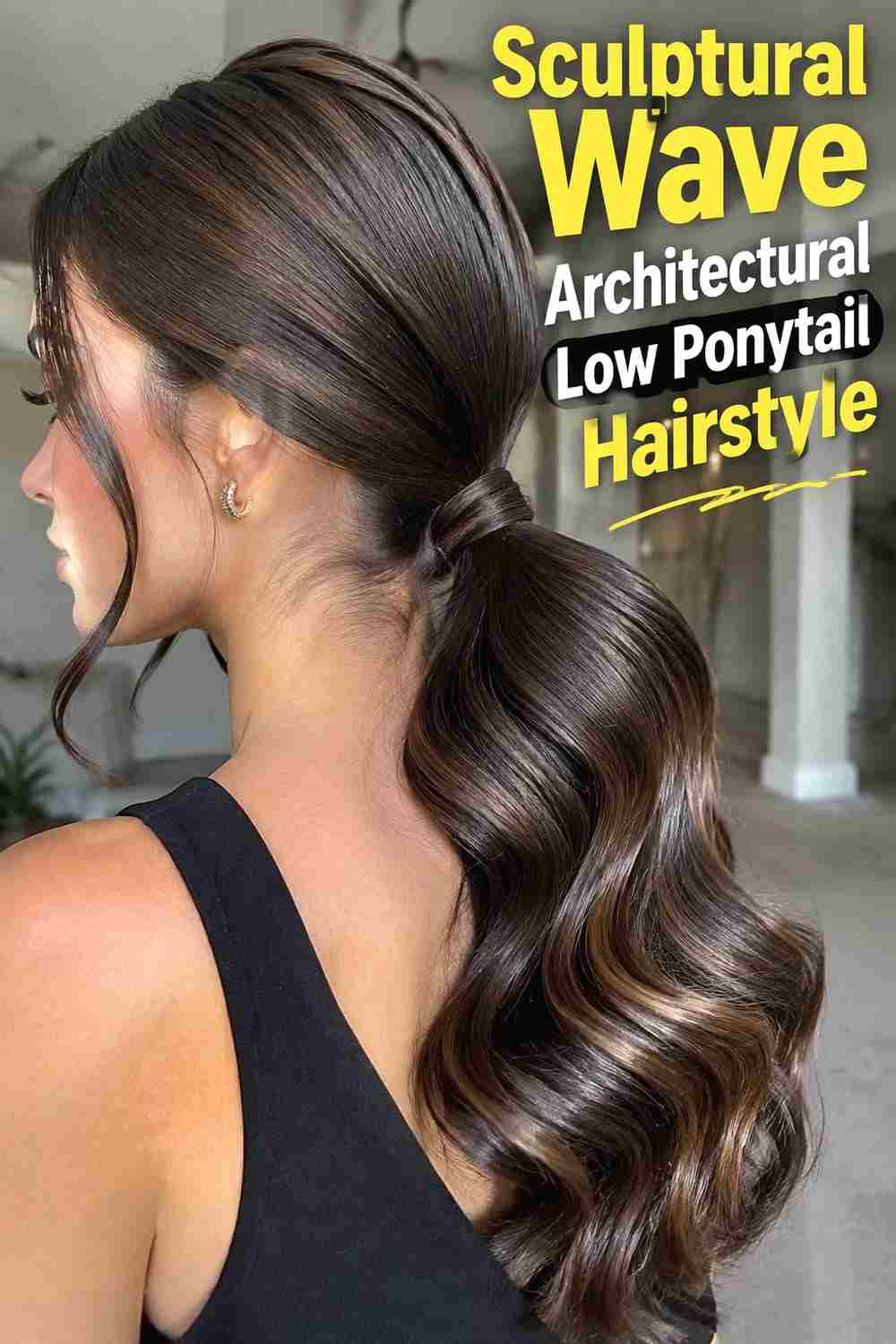
A sculptural wave adds one dramatic curve to an otherwise polished low ponytail. The wave can appear through the front sweep, the upper tail, or a selected section near the base, creating a controlled S-shaped movement without turning the entire style into curls. Smooth roots and a clean nape tie point give the curve enough contrast to stand out. Longer hair provides more room for the shape to develop, although medium hair can carry a smaller wave. The key is maintaining broad, continuous movement rather than several tight bends. Flexible hold and hidden support can keep the curve visible while preserving natural weight, shine, and strand detail throughout the rest of the ponytail.
Best For
This version is ideal when you want a statement silhouette but prefer one strong sculptural feature over multiple decorative elements.
14. Sectioned Architectural Low Ponytail Hairstyle
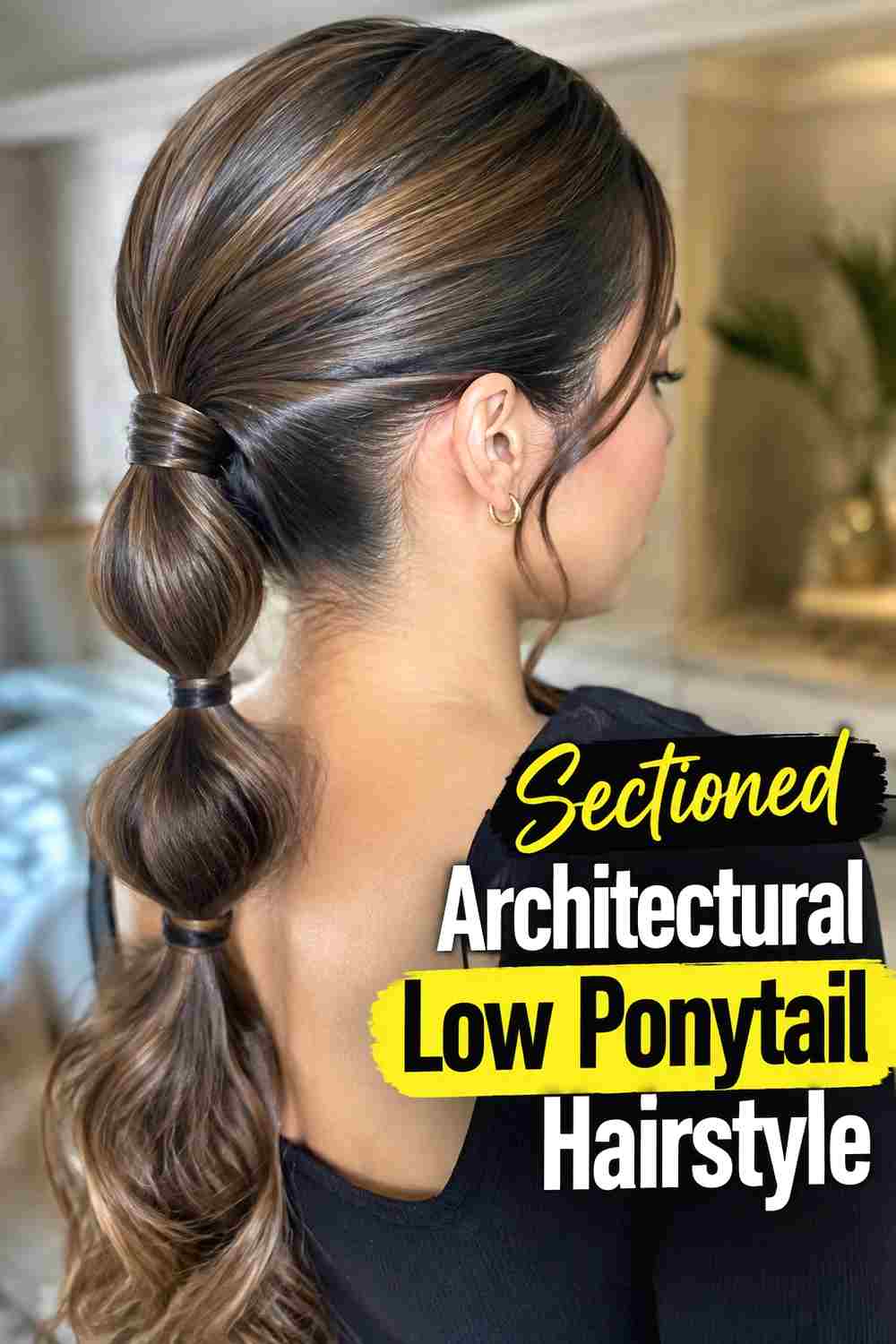
Precise sectioning gives this ponytail a graphic appearance even before the tail begins. The crown may be divided into clean panels that converge at the nape, with each section smoothed separately so the directional lines remain visible. The tail then falls from the meeting point in one unified length. This approach works particularly well with sleek styling because clear parting lines are essential to the design. Avoid creating too many sections, which can make the hairstyle look overly busy. Three or four intentional panels are often enough to create an architectural effect. Medium to long hair provides a stable tail beneath the structured crown, while careful edge smoothing keeps the design sharp without making it appear unnaturally rigid.
Pro Tip
Use the end of a tail comb for precise sectioning, but soften any overly harsh surface product so the hair still looks realistic and touchable.
15. Minimalist Architectural Low Ponytail Hairstyle
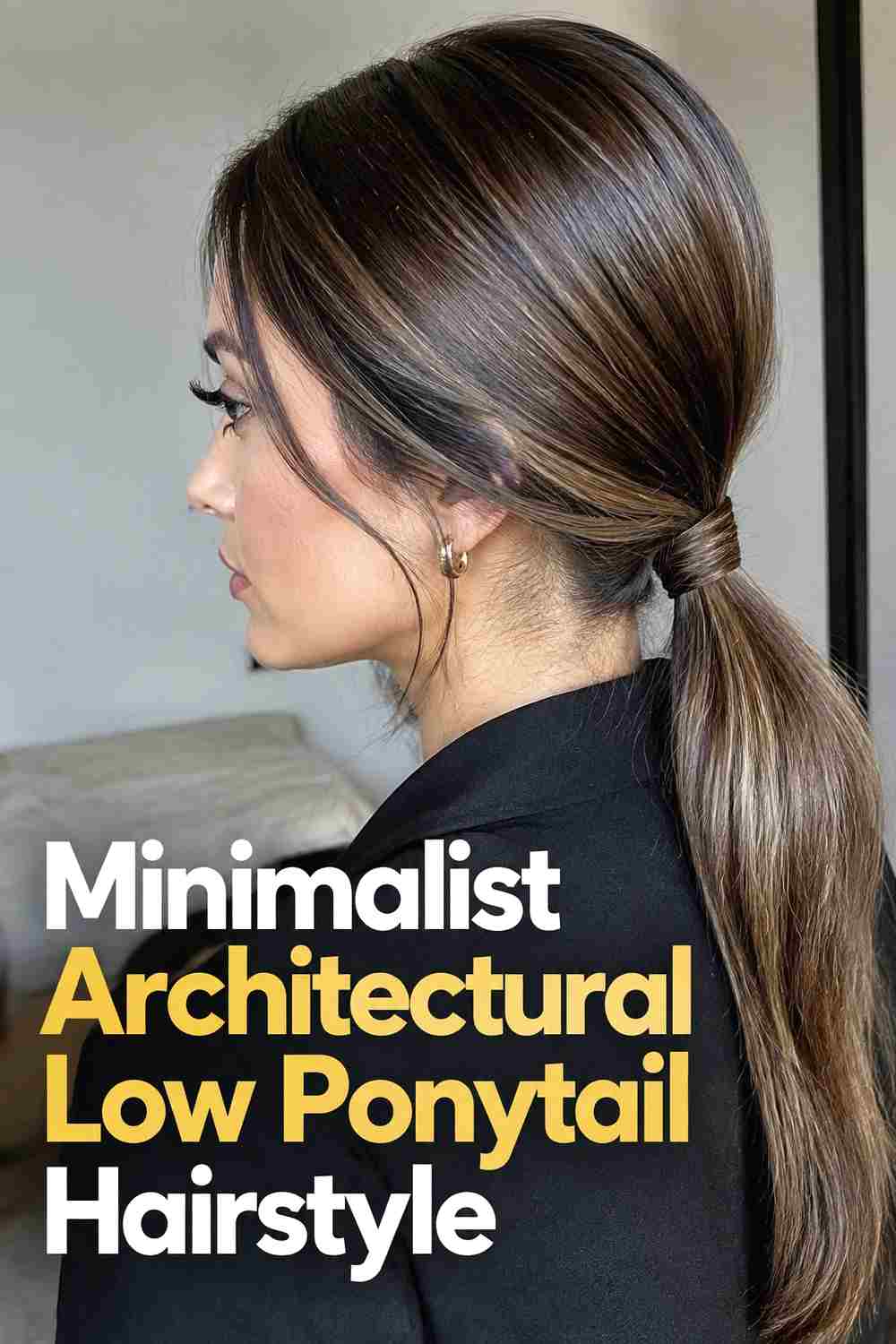
Minimalism places all the emphasis on proportion, placement, and finish. The ponytail sits exactly at the nape, the crown remains smooth, and one simple wrapped section conceals the elastic. There are no extra braids, bubbles, or loops, so small details such as parting, alignment, and tail density become more noticeable. A center or no-visible-part finish can both work depending on the desired mood. The tail should hang naturally with a smooth surface and slight movement rather than looking board-straight or stiff. This version suits many hair densities because the architectural effect comes from clean geometry instead of large volume. Use only enough product to control flyaways and enhance natural shine.
Why It Works
Removing decorative elements makes the exact placement and clean silhouette feel intentional, creating structure through simplicity rather than complexity.
16. Curved S Sweep Architectural Low Ponytail Hairstyle
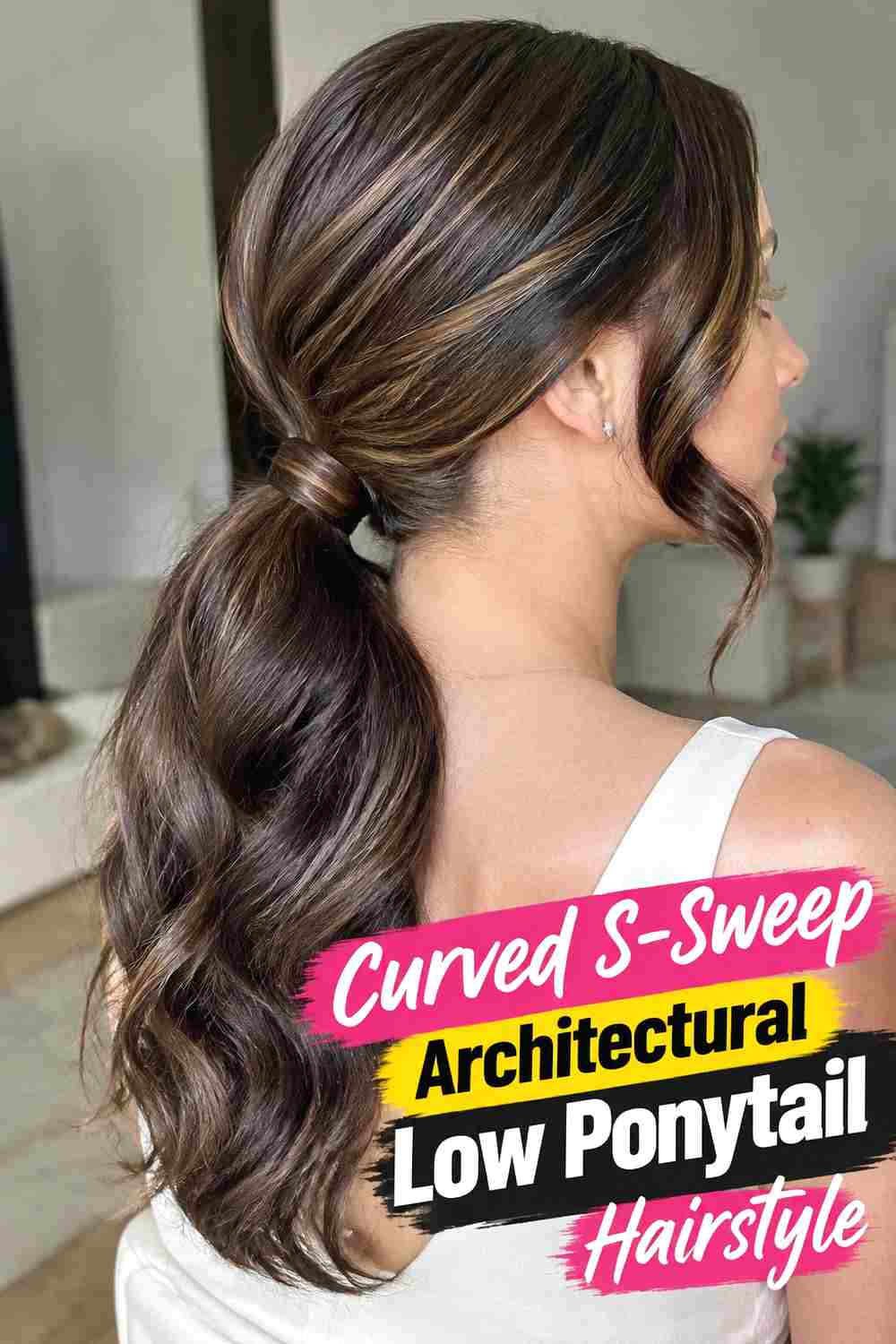
An S-shaped front sweep gives the crown a controlled wave before the hair converges at the nape. The first curve can move gently across the forehead or temple, while the second redirects the section backward into the ponytail. This continuous line gives the hairstyle a sculptural, almost drawn quality without adding bulk. The opposite side should remain quieter so the S-sweep becomes the clear focal point. A smooth low tail keeps the lower half simple and visually balanced. Medium and long hair can support the design, but the front section needs enough length to form a broad curve. Avoid tight finger-wave ridges; the movement should feel modern, fluid, and softly architectural.
Styling Notes
Shape the S-sweep in broad sections and secure it subtly near the nape before forming the final ponytail so the curve keeps its direction.
17. Textured Architectural Low Ponytail Hairstyle
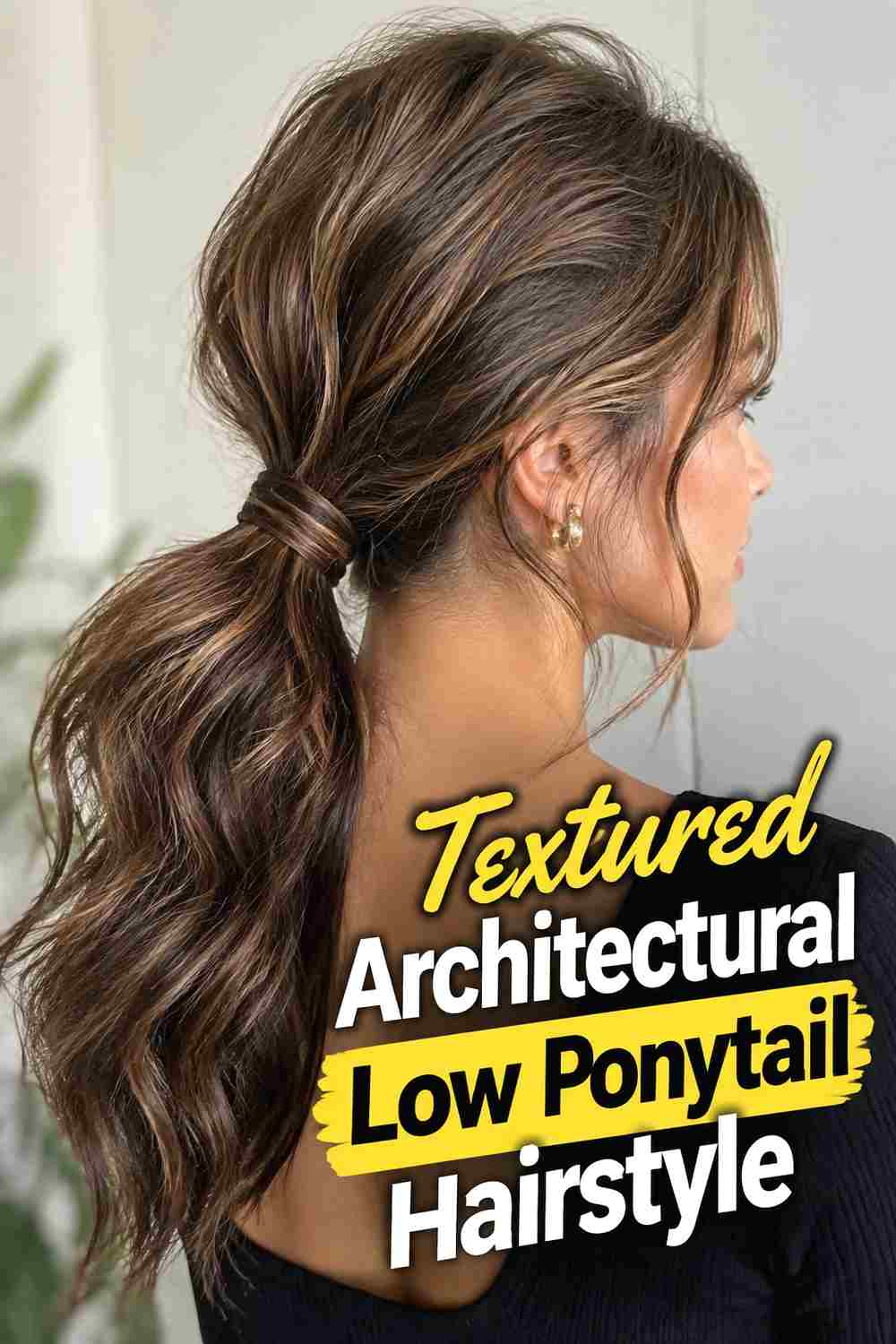
Architectural styling does not have to mean perfectly sleek hair. This version keeps the low placement and deliberate construction while allowing natural wave, coil definition, or controlled roughness through the crown and tail. A wrapped or twisted base can provide structure, while the texture creates contrast around it. The key is maintaining a clear silhouette so the ponytail still feels designed rather than casually gathered. Defined sections near the nape help organize the style without flattening every strand. This approach can be especially effective on naturally textured hair because it works with existing movement instead of requiring total smoothing. Keep the fastening point secure and let realistic variation remain visible through the lengths.
Hair Type & Length
Naturally wavy, curly, or coily medium-to-long hair can adapt beautifully to this look when its texture is shaped rather than completely erased.
18. Ribbon Wrapped Architectural Low Ponytail Hairstyle
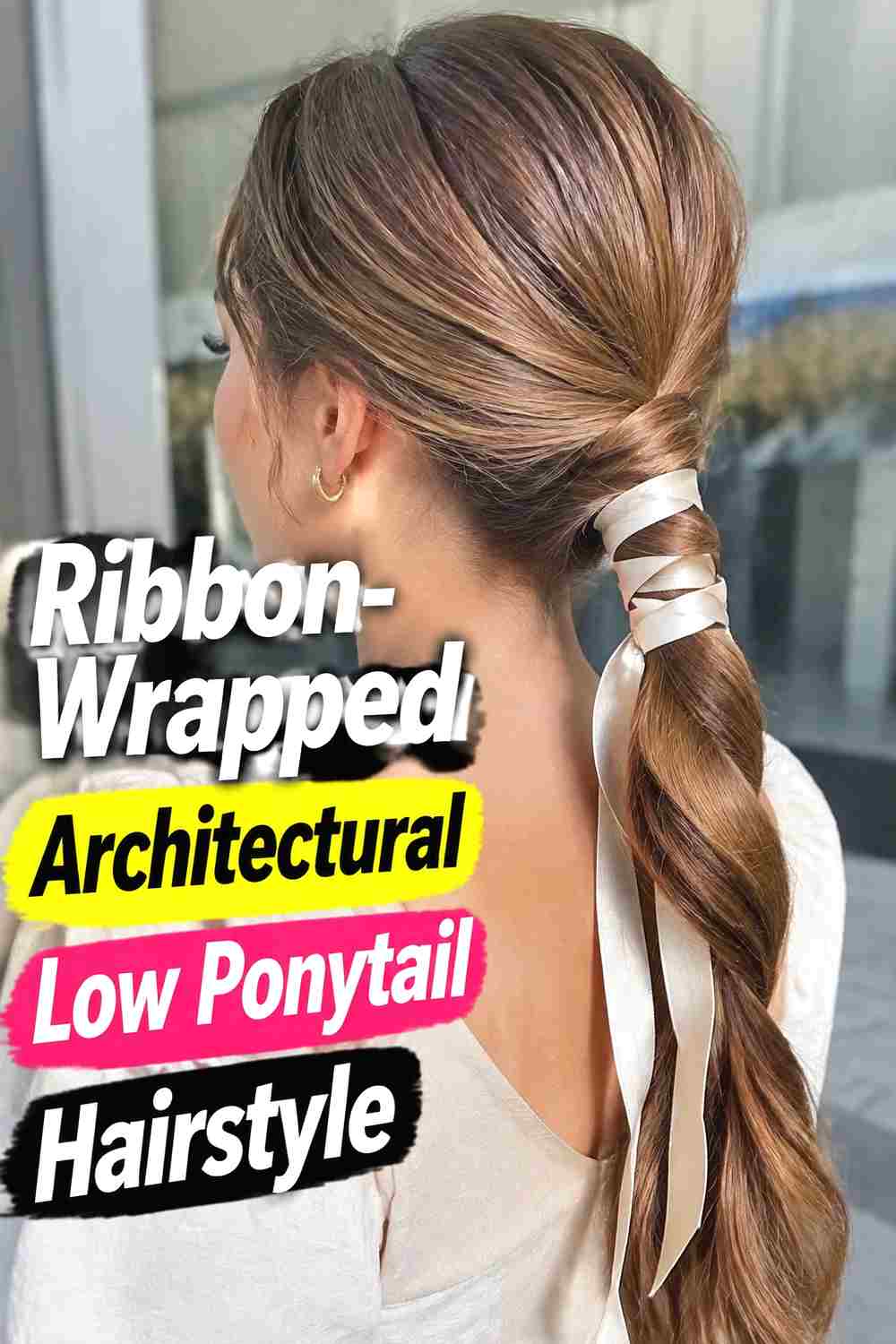
A narrow ribbon introduces a clean external line around the base or upper length of a low ponytail. Rather than adding a decorative bow, the ribbon wraps smoothly in measured turns, creating a graphic band that complements the architectural shape. The crown can remain sleek and minimal so the wrapped section stays prominent. Choose a ribbon width that suits the scale of the ponytail; an overly wide piece may overwhelm finer hair, while a very narrow ribbon can disappear against thick lengths. Keep the wrapping firm but comfortable, and never bind the hair so tightly that the base becomes distorted. The remaining tail should hang naturally below the wrap to preserve the ponytail silhouette.
Wear & Maintenance
Secure the ribbon discreetly underneath the tail and check that it does not loosen or tighten excessively as the hair moves.
19. Event Ready Architectural Low Ponytail Hairstyle
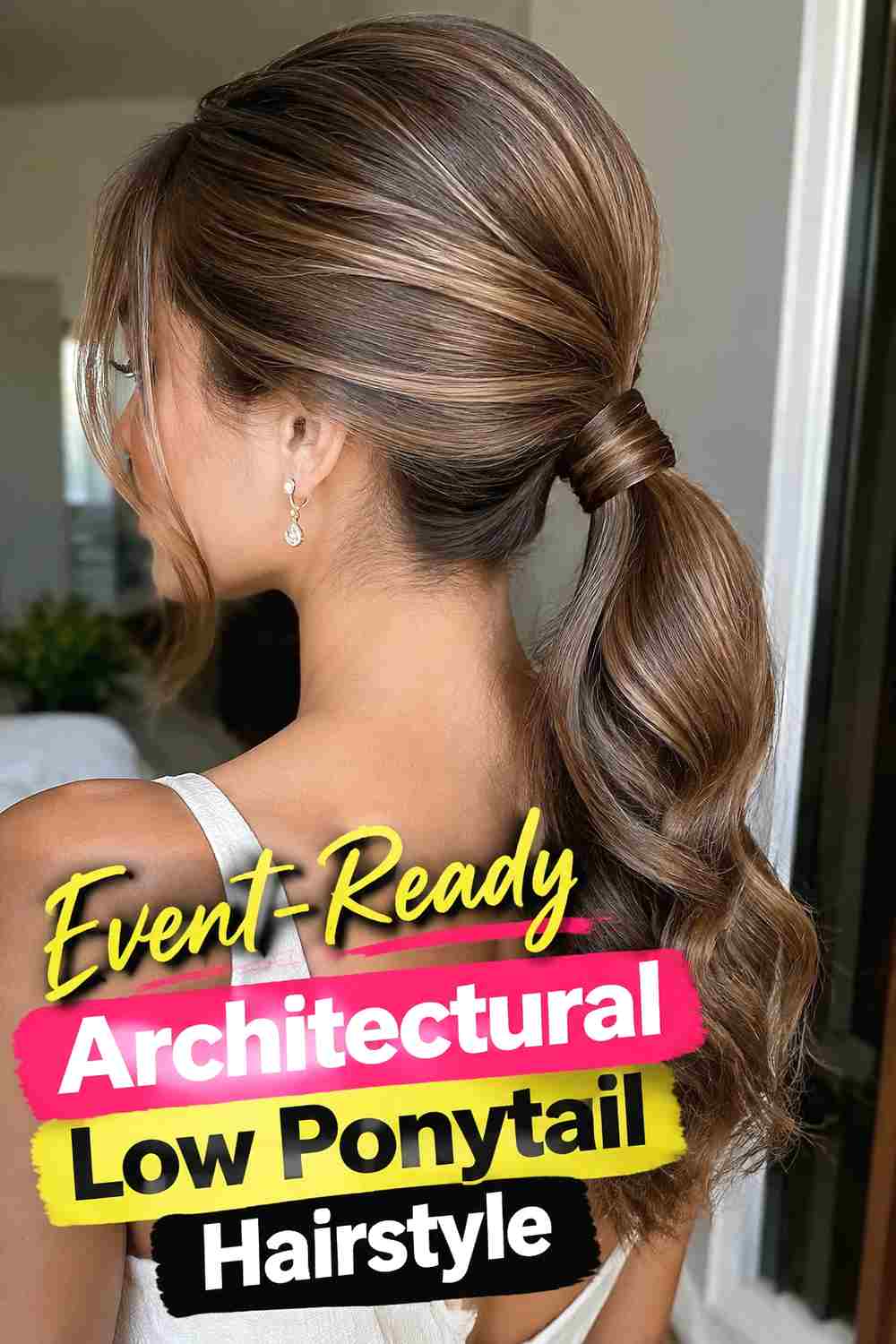
An event-ready architectural ponytail combines polished surface work with one or two refined structural details. A precise part, softly lifted crown, wrapped base, or controlled curve can all contribute without overcrowding the design. The ponytail sits at the nape and falls in a smooth, substantial line, making the hairstyle easy to appreciate from both front and back. For formal wear, the strongest result often comes from limiting the design to one focal feature, such as a knot or sculptural sweep, while keeping everything else understated. Secure internal support is important for longer wear, but visible hair should remain touchable and natural. Flexible hold keeps the shape intact without creating an overly lacquered finish.
Best For
This version suits weddings, formal dinners, celebrations, photo sessions, and other occasions where a simple ponytail benefits from a more deliberate structural finish.
How to Choose the Right Look
Start with your hair length. Medium hair can handle minimalist, wrapped-cuff, sectioned, and compact looped styles, while longer hair provides more flexibility for rope twists, folds, multiple bands, sculptural curves, and larger knots.
Density affects scale as well. Fine hair usually looks strongest with clean, narrow details rather than oversized loops, while thick hair can support broader cuffs, bubbles, and dimensional knots. Naturally textured hair does not need to be fully straightened; a Textured Architectural Low Ponytail can preserve wave, curl, or coil definition while using precise construction at the base.
Think about comfort at the nape. A low ponytail should feel secure without pulling tightly on the temples or hairline. Designs with multiple bands, wraps, or folds may add weight, so balance the structure with a fastening point that feels stable.
Finally, choose how much visual complexity you want. Minimalist and center-part styles rely on precision, while sculptural waves, folds, bubbles, and asymmetry create stronger statement shapes. For events, one well-executed architectural feature often looks cleaner than combining several competing details.
Final Thoughts
Architectural low ponytails prove that a simple nape-level style can have plenty of visual impact. Clean sectioning, sculpted curves, wraps, twists, loops, and knots can all change the silhouette while keeping the ponytail practical. Choose a design that works with your length, density, texture, and comfort rather than forcing more structure than your hair naturally supports.
FAQs
1. What makes a low ponytail look architectural?
An architectural low ponytail uses intentional lines, sections, curves, folds, twists, or wrapped details to create a clearly designed structure rather than a basic gathered ponytail.
2. Do architectural low ponytails have to be sleek?
No. Sleek hair makes structural details easy to see, but naturally wavy, curly, or coily texture can also work when the overall shape and fastening points remain deliberate.
3. How low should an architectural ponytail sit?
Most versions sit at or just above the nape. The exact placement depends on the design, head shape, hair length, and what feels comfortable.
4. Can medium-length hair create an architectural low ponytail?
Yes. Wrapped bases, sectioned crowns, compact loops, simple knots, and minimalist designs can all work well without very long hair.
5. How can I keep a sculptural low ponytail secure?
Build a stable base first, use hidden elastics or pins where needed, and add structural details only after the main ponytail feels secure and comfortable.
Save your favorite architectural low ponytail ideas, share the designs that inspire you, and explore more polished ponytail styles with creative structure.