16 Curtain Bangs With Rounded Layers Hairstyle Ideas
Soft curtain bangs and rounded layers create a flowing, face-framing silhouette with gentle volume, curved ends, and an easy polished finish.
Rounded layers are designed to create smooth transitions through the hair rather than sharp, disconnected steps. Combined with curtain bangs, they can frame the forehead and cheekbones before flowing into fuller sections around the shoulders and ends. The result is softer than a heavily feathered cut while still offering noticeable movement.
The best version depends on your length, density, texture, and preferred styling routine. A round-brush blowout makes the curved shape more obvious, while waves and curls create a softer interpretation. Straighter finishes emphasize the haircut itself, and longer curtain bangs can make daily styling easier because they blend naturally into the surrounding layers.
Quick List
- Soft Rounded Layers With Curtain Bangs Hairstyle
- Long Rounded Layers With Curtain Bangs Hairstyle
- Shoulder Length Rounded Layers With Curtain Bangs Hairstyle
- Voluminous Rounded Blowout With Curtain Bangs Hairstyle
- Wavy Rounded Layers With Curtain Bangs Hairstyle
- Straight Rounded Layers With Curtain Bangs Hairstyle
- Curly Rounded Layers With Curtain Bangs Hairstyle
- Tousled Rounded Layers With Curtain Bangs Hairstyle
- Face Framing Rounded Layers With Curtain Bangs Hairstyle
- Flipped Rounded Layers With Curtain Bangs Hairstyle
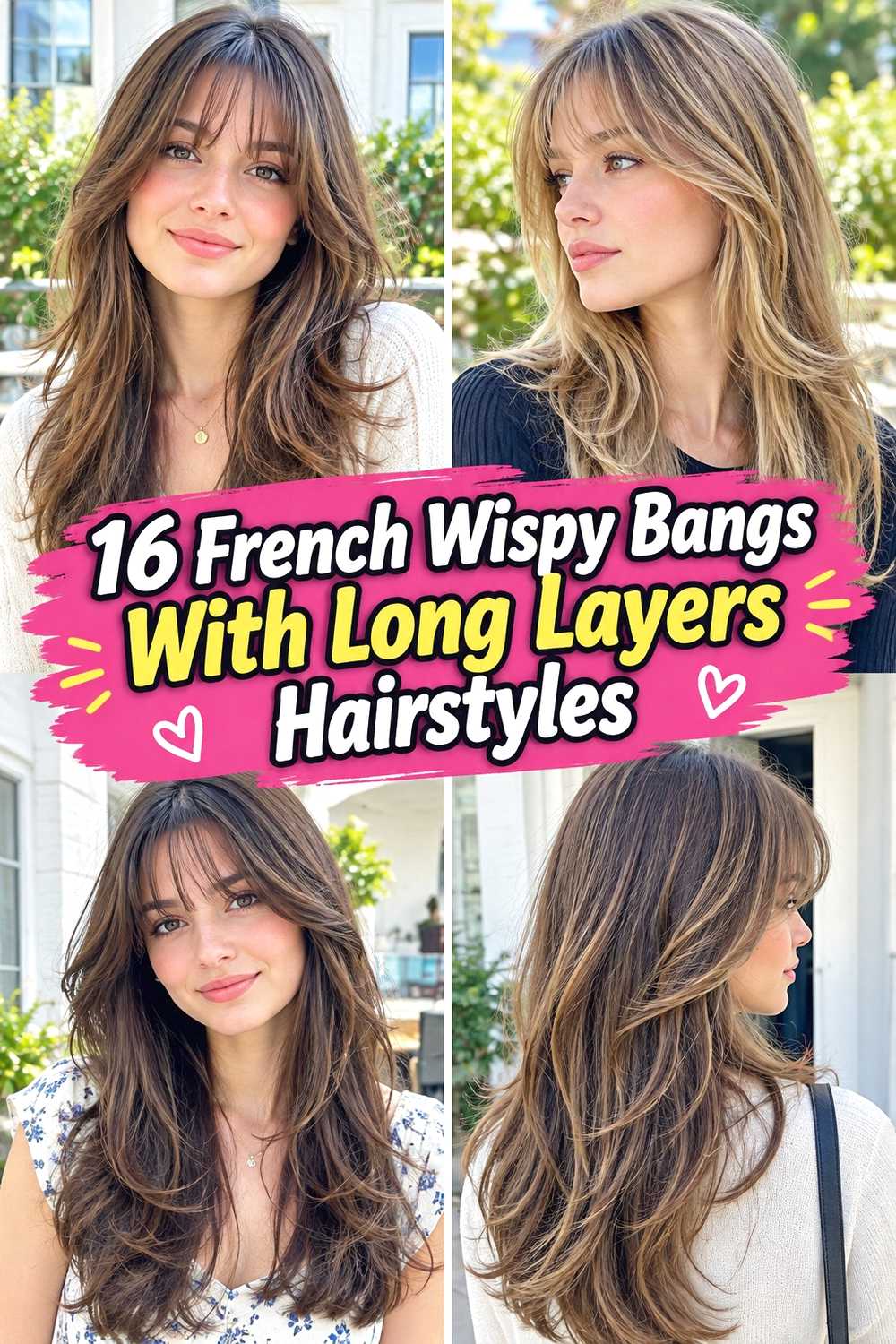
- Wispy Curtain Bangs With Rounded Layers Hairstyle
- Center Part Rounded Layers With Curtain Bangs Hairstyle
- Soft C Curve Rounded Layers With Curtain Bangs Hairstyle
- Half Up Rounded Layers With Curtain Bangs Hairstyle
- Rounded Lob With Curtain Bangs Hairstyle
- Natural Wave Rounded Layers With Curtain Bangs Hairstyle
1. Soft Rounded Layers With Curtain Bangs Hairstyle
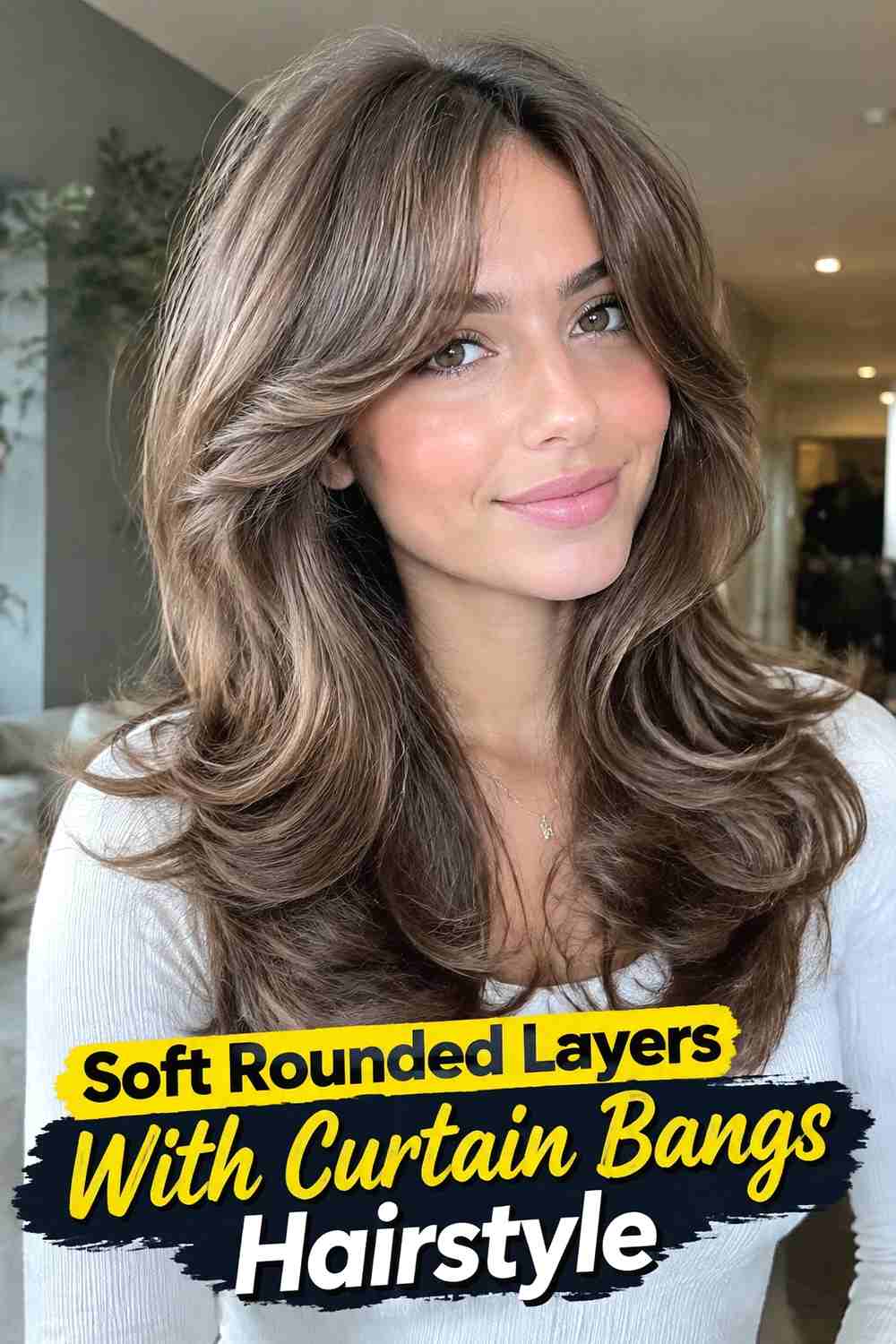
Soft rounded layers create gentle fullness through the sides and ends while keeping the haircut blended from front to back. Curtain bangs can open near the center and sweep toward the cheekbones, then merge into the first rounded face-framing layers. Instead of dramatic flips, keep the ends curved in broad, smooth directions so the hairstyle feels polished but still natural. This version is especially useful if you want visible movement without the highly separated look of a shag or heavily feathered cut. Medium and longer hair provides enough space for the rounded sections to overlap softly, while a little root lift prevents the overall silhouette from appearing flat.
Styling Notes
Use a medium or large round brush and curve the ends gently rather than rolling each section tightly under.
Best For
Straight, wavy, and lightly textured medium-to-long hair adapts easily to this blended shape.
2. Long Rounded Layers With Curtain Bangs Hairstyle
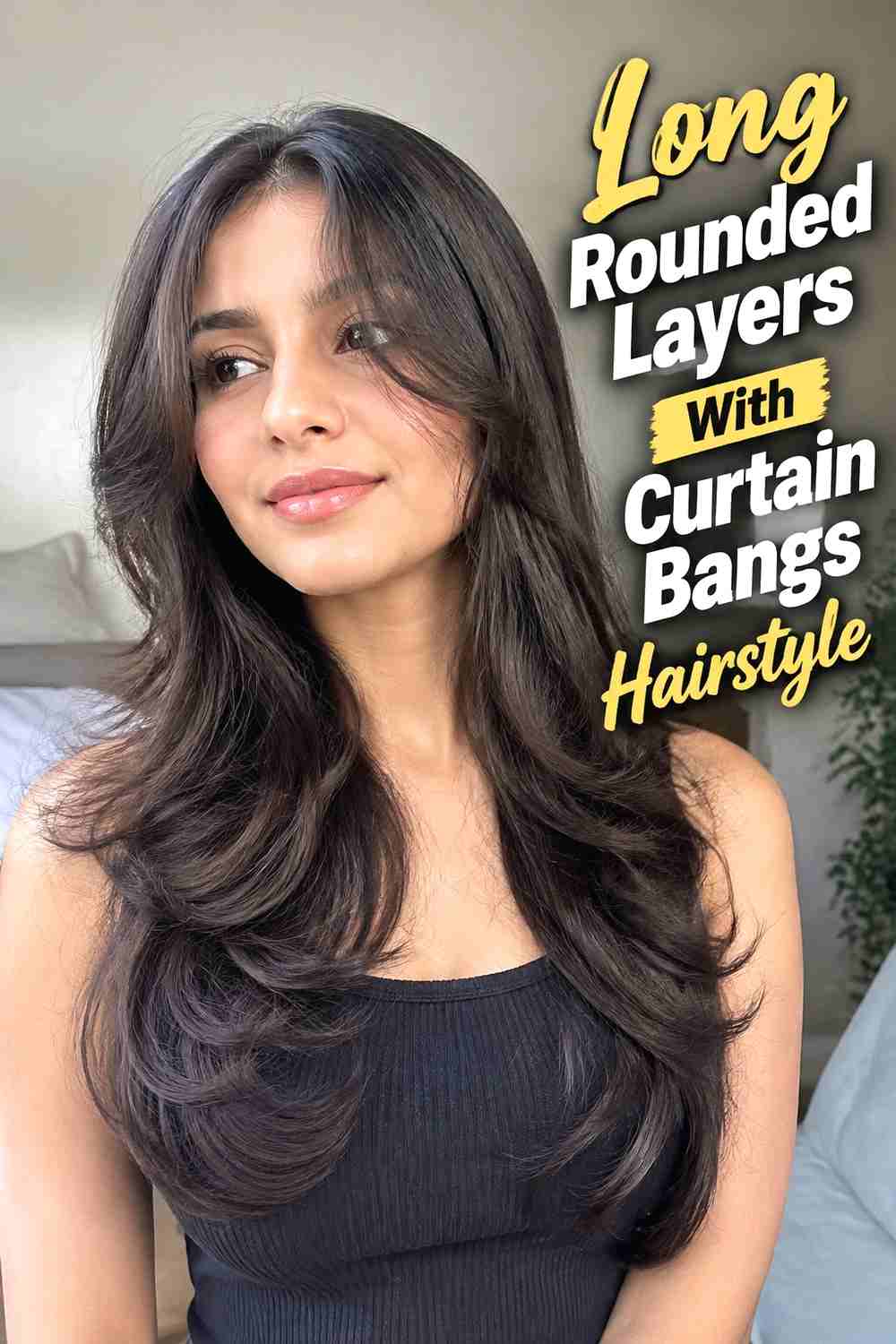
Long rounded layers keep the visual impact of lengthy hair while introducing softer movement through the lower half. The shortest face-framing sections can begin around the cheekbones or jaw, allowing the curtain bangs to transition gradually into the rest of the cut. Through the back, longer rounded layers preserve fullness while preventing the perimeter from feeling heavy or blocky. A broad blowout can emphasize the curved shape, but the haircut also works with softer bends and natural movement. This variation is particularly useful for dense long hair because it introduces dimension without removing too much weight from the ends or creating numerous short sections around the crown.
Hair Type & Length
Long, medium-density to thick hair usually displays the gradual rounded transitions most clearly.
Pro Tip
Keep the lower perimeter substantial so the finished haircut stays full even after adding several face-framing layers.
3. Shoulder Length Rounded Layers With Curtain Bangs Hairstyle
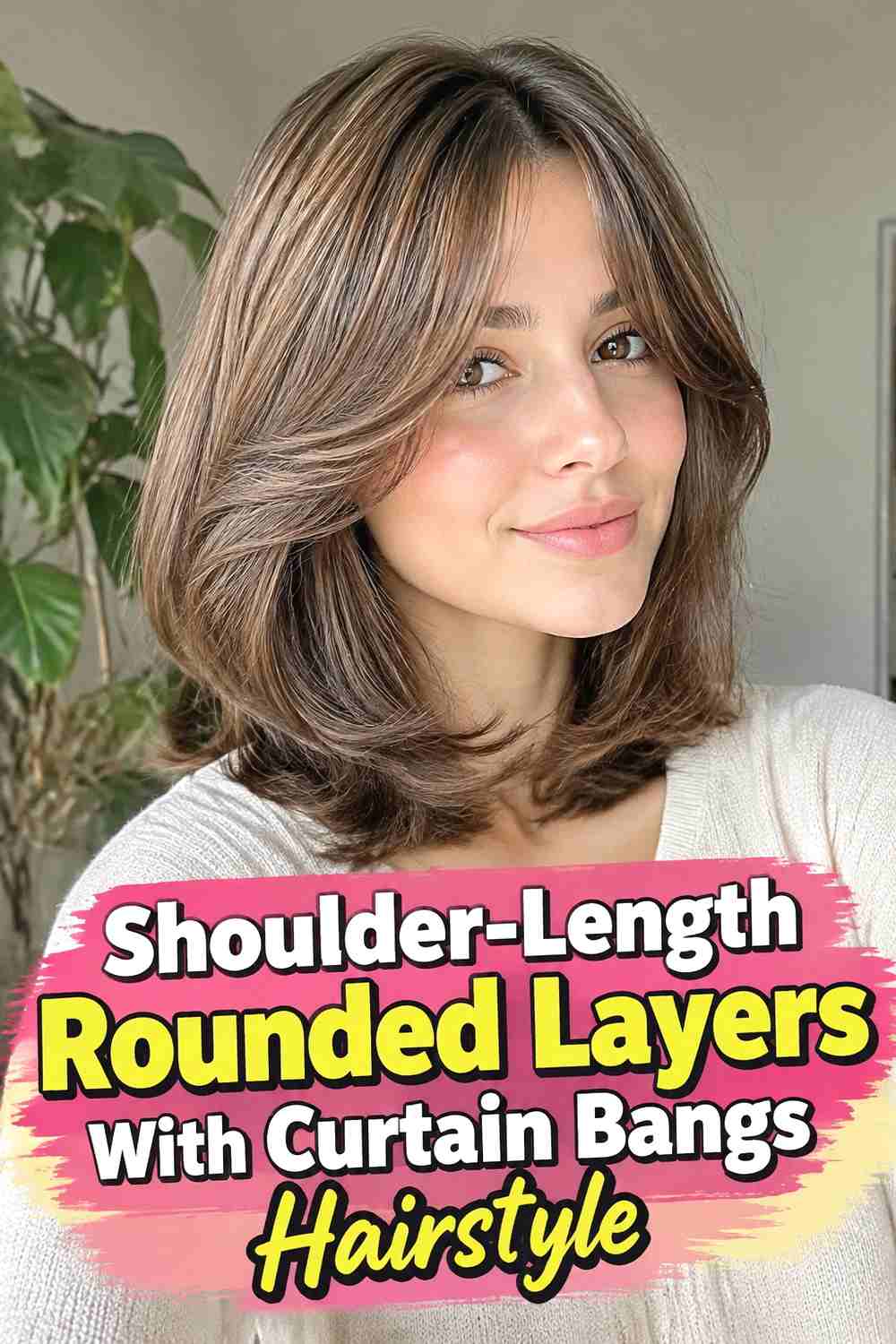
Shoulder-length rounded layers offer movement without the extra styling time associated with very long hair. Keep the curtain fringe soft and center-opening, then blend it into cheekbone and jaw-length pieces that gradually join the shoulder-skimming perimeter. Rounded sections can turn inward, outward, or alternate gently depending on your natural texture. The key is maintaining enough fullness through the ends so the haircut does not become overly wispy. Because the length meets the shoulders, subtle curves are often enough to make the layering visible. This shape can also work well for hair that tends to feel bulky at one length but does not need aggressive thinning or highly disconnected layers.
Styling Notes
Focus the round-brush work on the fringe and ends while leaving the mid-lengths relatively relaxed.
Why It Works
The shorter overall length makes the rounded transitions visible without requiring exaggerated volume.
4. Voluminous Rounded Blowout With Curtain Bangs Hairstyle
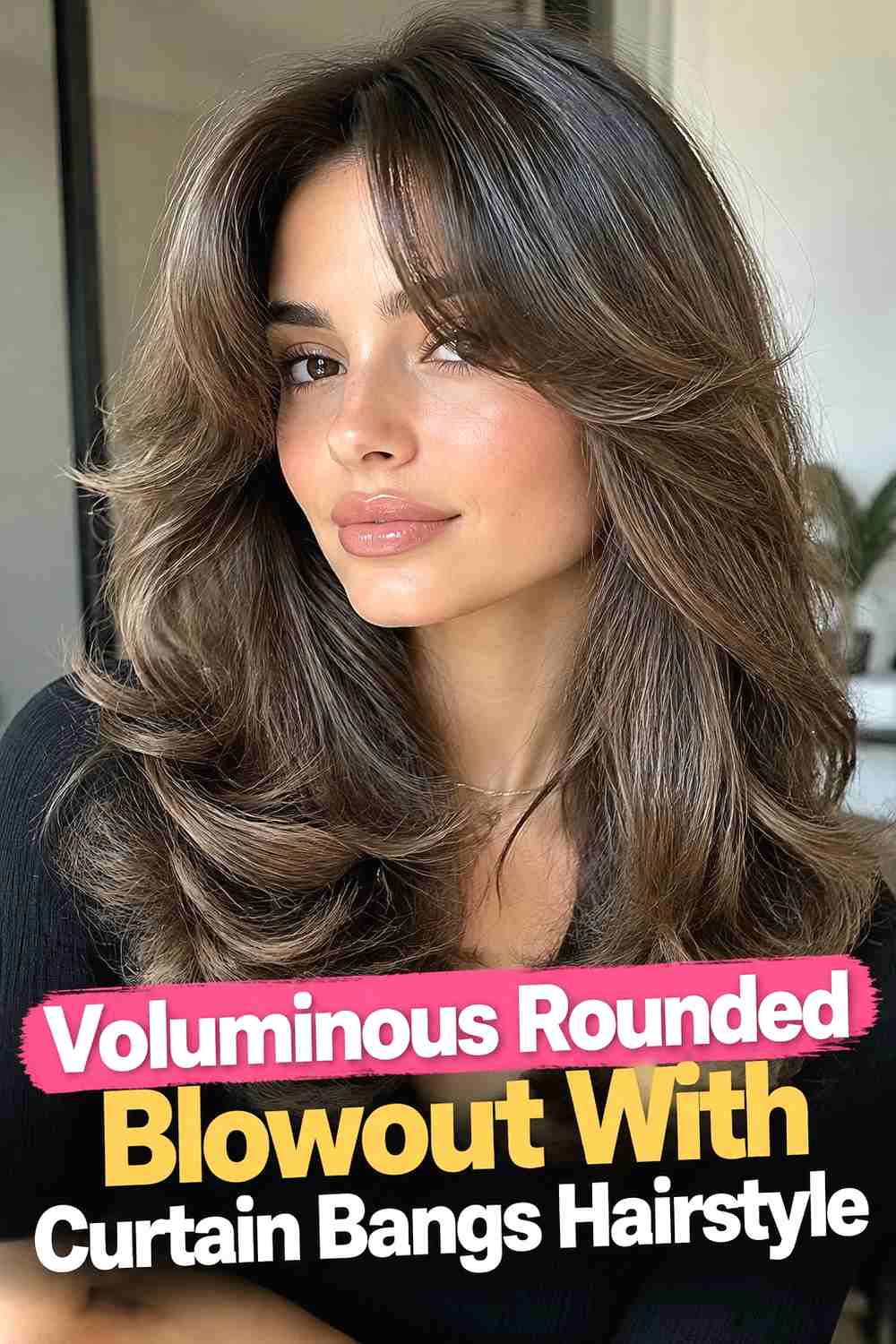
A voluminous rounded blowout highlights every part of the layered structure, from the curtain bangs through the lower ends. Start with gentle root lift, then direct the fringe away from the face and curve each layer in broad arcs. Longer sections can bend under or outward slightly, but the movement should remain smooth rather than sharply flipped. The result is full and polished without needing tight curls. This approach works especially well when you want rounded layers to look noticeably dimensional for an event, photos, or a more styled everyday finish. Let each section cool in its shape before loosening the hair so the volume remains airy instead of collapsing quickly.
Styling Notes
Increase the round-brush size as you move from shorter front layers to the longer sections for a graduated finish.
Wear & Maintenance
Use flexible hold rather than stiff spray so the layers can continue moving naturally.
5. Wavy Rounded Layers With Curtain Bangs Hairstyle
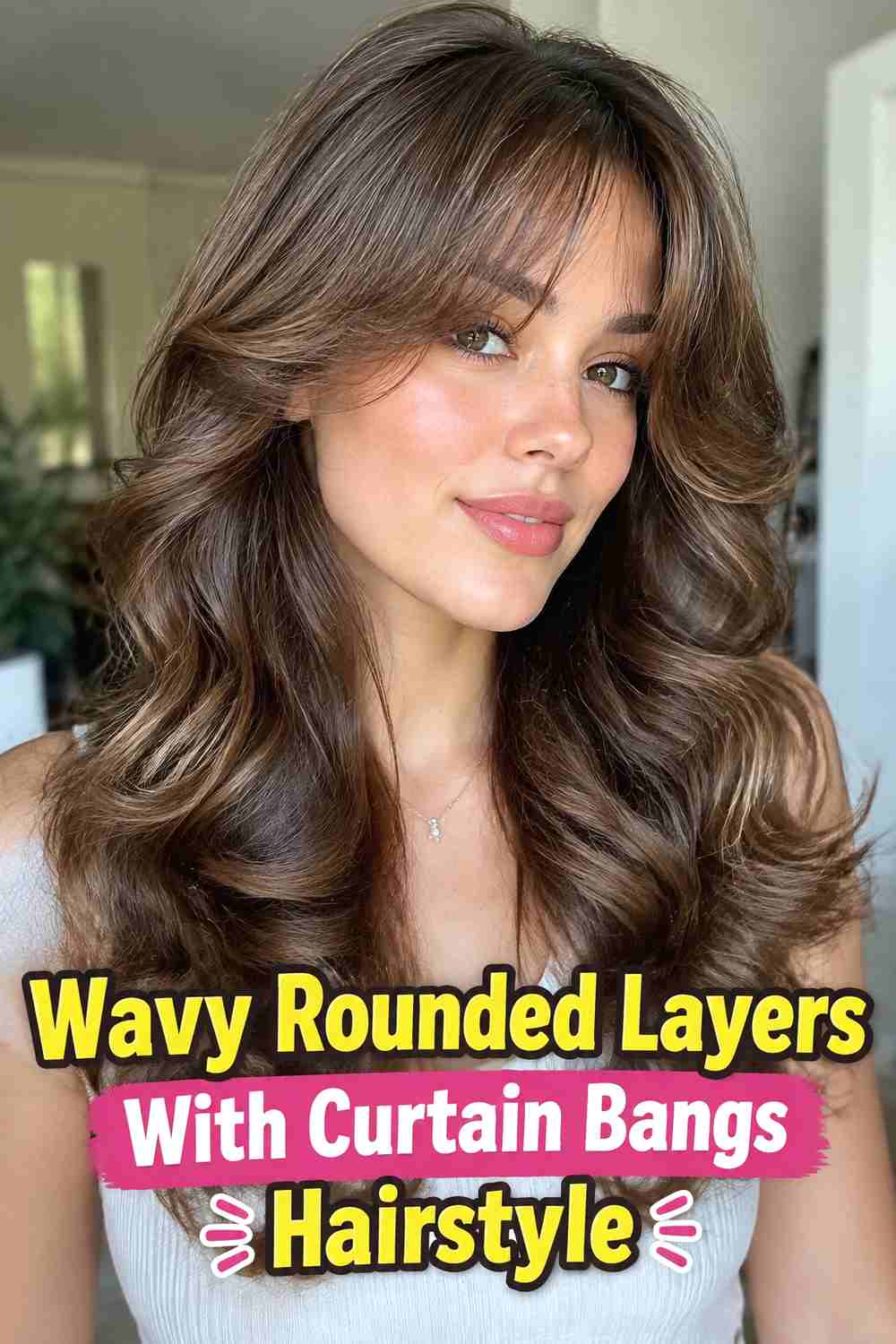
Waves soften rounded layers even further by creating different points of movement through the haircut. Let the curtain bangs separate near the center and blend into face-framing pieces, then encourage broad waves through the longer sections. Avoid making every bend identical; some layers can curve more strongly while others stay close to their natural pattern. This variation is especially flattering on naturally wavy hair because the rounded cut can guide existing movement instead of requiring a completely new texture. Keep the ends reasonably full and allow the layers to overlap visually, creating a flowing silhouette rather than a highly piecey finish. The result feels relaxed while still showing deliberate shape.
Styling Notes
Enhance your natural waves first, then refine only the front or lower pieces that need more visible curvature.
Best For
Naturally wavy and softly textured hair often requires the least styling for this look.
6. Straight Rounded Layers With Curtain Bangs Hairstyle
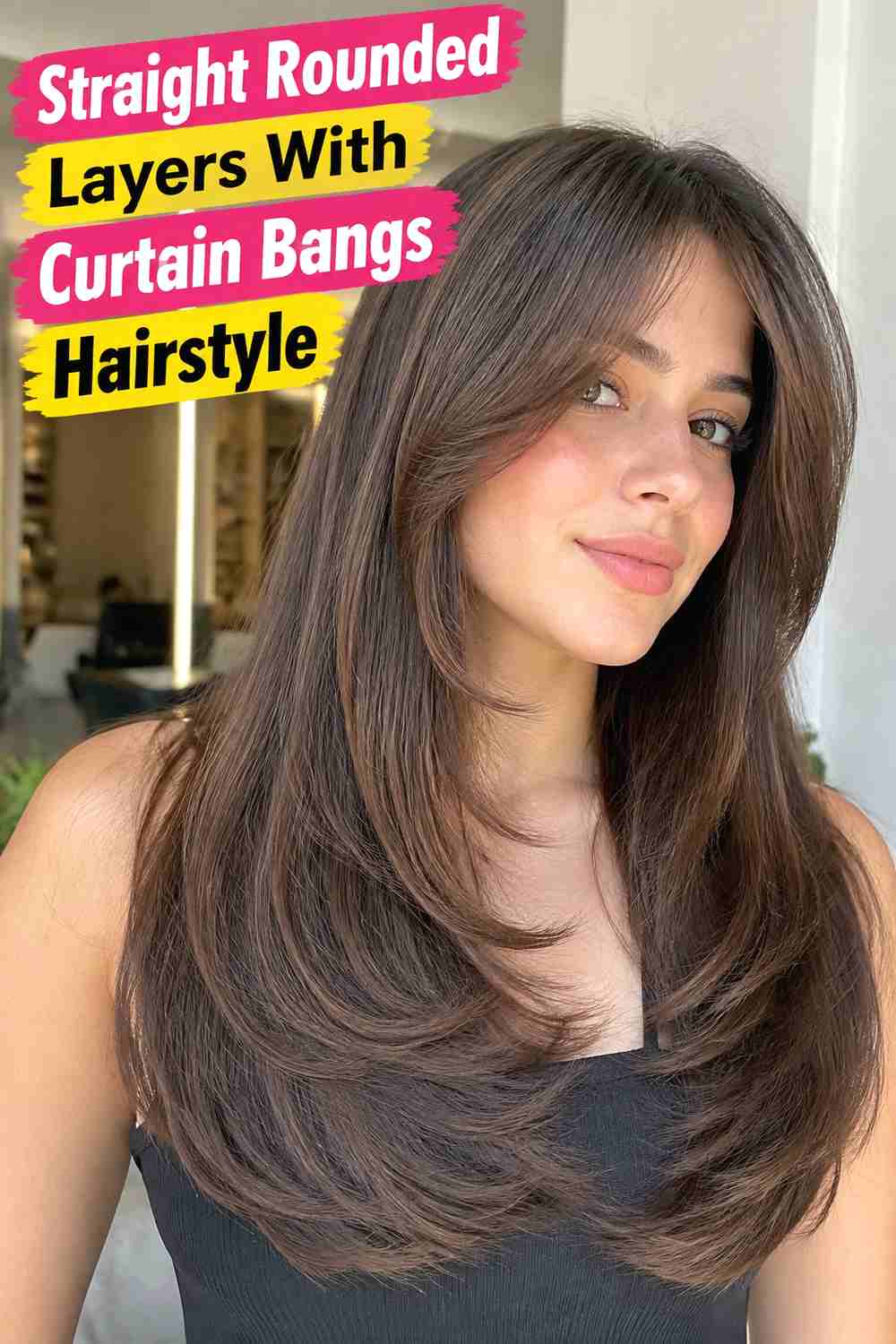
Straight hair makes rounded layering easy to see because the curved edges remain visible without competing curl patterns. Keep the lengths smooth while allowing the ends to bend slightly rather than pressing them completely flat. The curtain bangs can sweep away from the center and connect into the shortest front layers around the cheekbones or jaw. Through the lower sections, gradual layering helps the hair move while preserving a clean, polished appearance. This style is useful if you prefer a straightforward daily routine but still want more shape than a one-length cut provides. A subtle bend through the ends can make the layers look intentional while maintaining the overall straight finish.
Styling Notes
Smooth the mid-lengths first, then use a gentle turn of the brush or iron only near the ends.
Why It Works
The simple texture lets the rounded cut lines and blended face framing become the main focus.
7. Curly Rounded Layers With Curtain Bangs Hairstyle
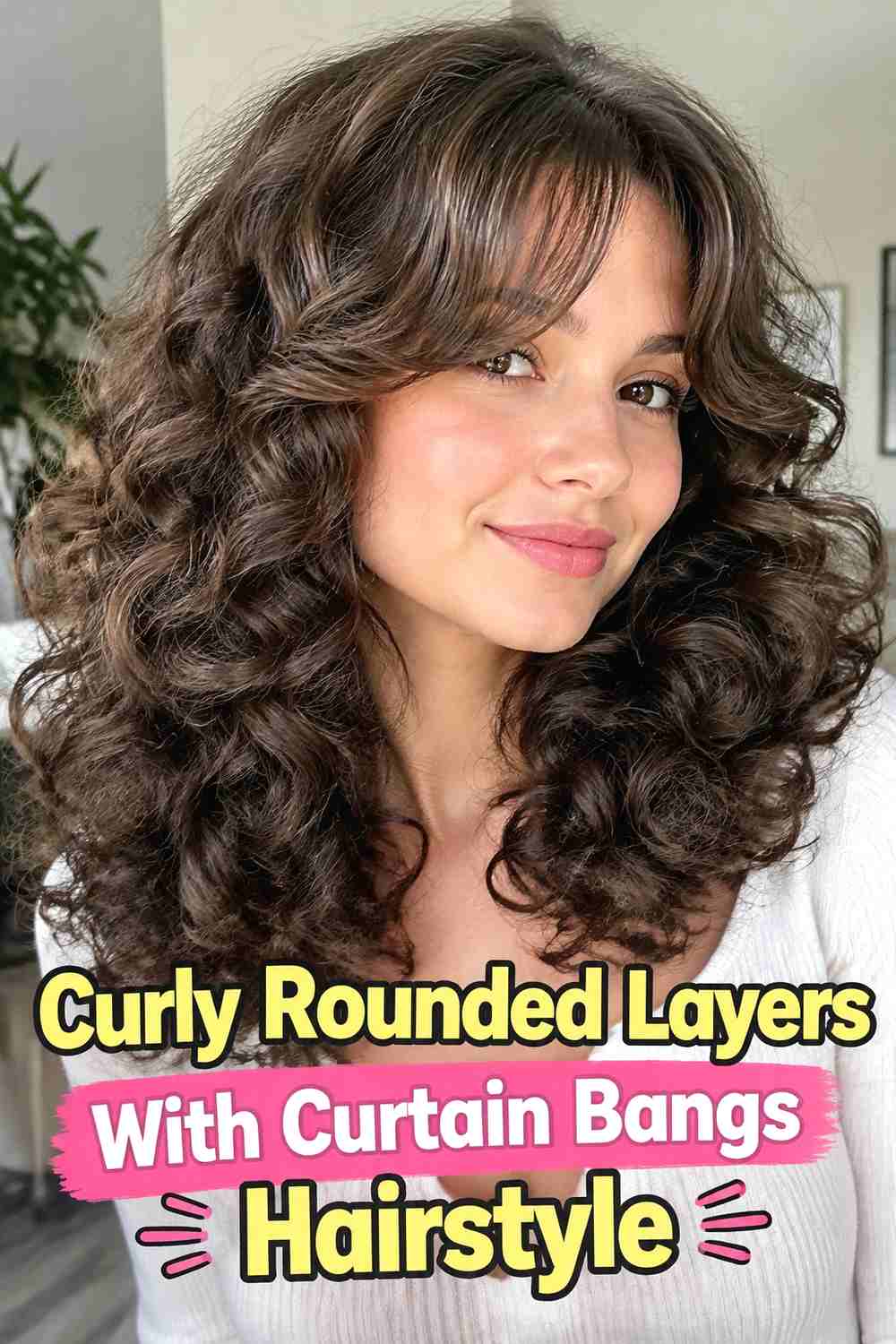
Curly rounded layers create a soft, balanced silhouette by distributing volume through different lengths rather than allowing all the fullness to collect near the bottom. Curtain bangs can be adapted as shorter curls around the forehead and temples, with enough length left to account for natural shrinkage. The surrounding layers should follow the curl pattern and gradually build a rounded outline around the head and shoulders. Preserve variation in curl size and direction instead of trying to create one identical shape throughout. The most wearable version is planned around how the hair looks dry, so the fringe and layers settle into intentional positions while maintaining natural bounce and movement.
Hair Type & Length
Curly hair benefits from layer placement based on its dry curl pattern, density, and shrinkage.
Pro Tip
Assess the curtain fringe after it has settled naturally before deciding whether additional length should be removed.
8. Tousled Rounded Layers With Curtain Bangs Hairstyle
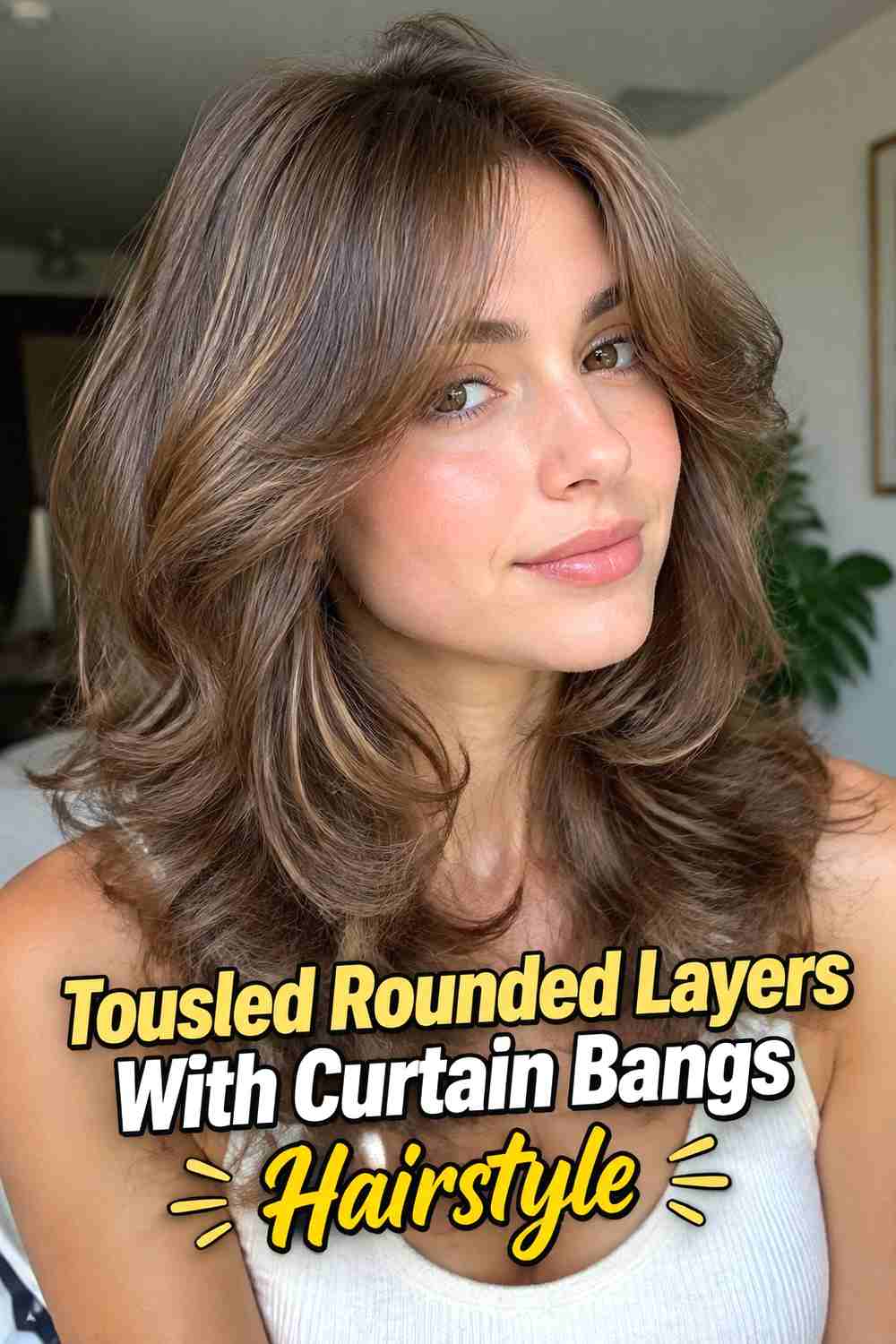
Tousled rounded layers combine the softness of a blended cut with a more relaxed finish. Keep the curtain bangs separated and slightly irregular, allowing small bends and natural strand movement to remain visible. Through the longer sections, create only a few loose curves rather than styling every layer identically. This makes the rounded shape feel lived-in while preserving enough structure to show the haircut. The look is especially practical for everyday wear because it does not depend on perfect symmetry or a freshly finished blowout. Hair can shift naturally throughout the day without ruining the effect. Lightweight texture can help smooth hair maintain separation without making the layers stiff or overly dry.
Styling Notes
Work light texture through the mid-lengths and use your fingers to encourage selected bends.
Wear & Maintenance
Refresh the curtain fringe when needed and allow the longer layers to stay slightly imperfect.
9. Face Framing Rounded Layers With Curtain Bangs Hairstyle
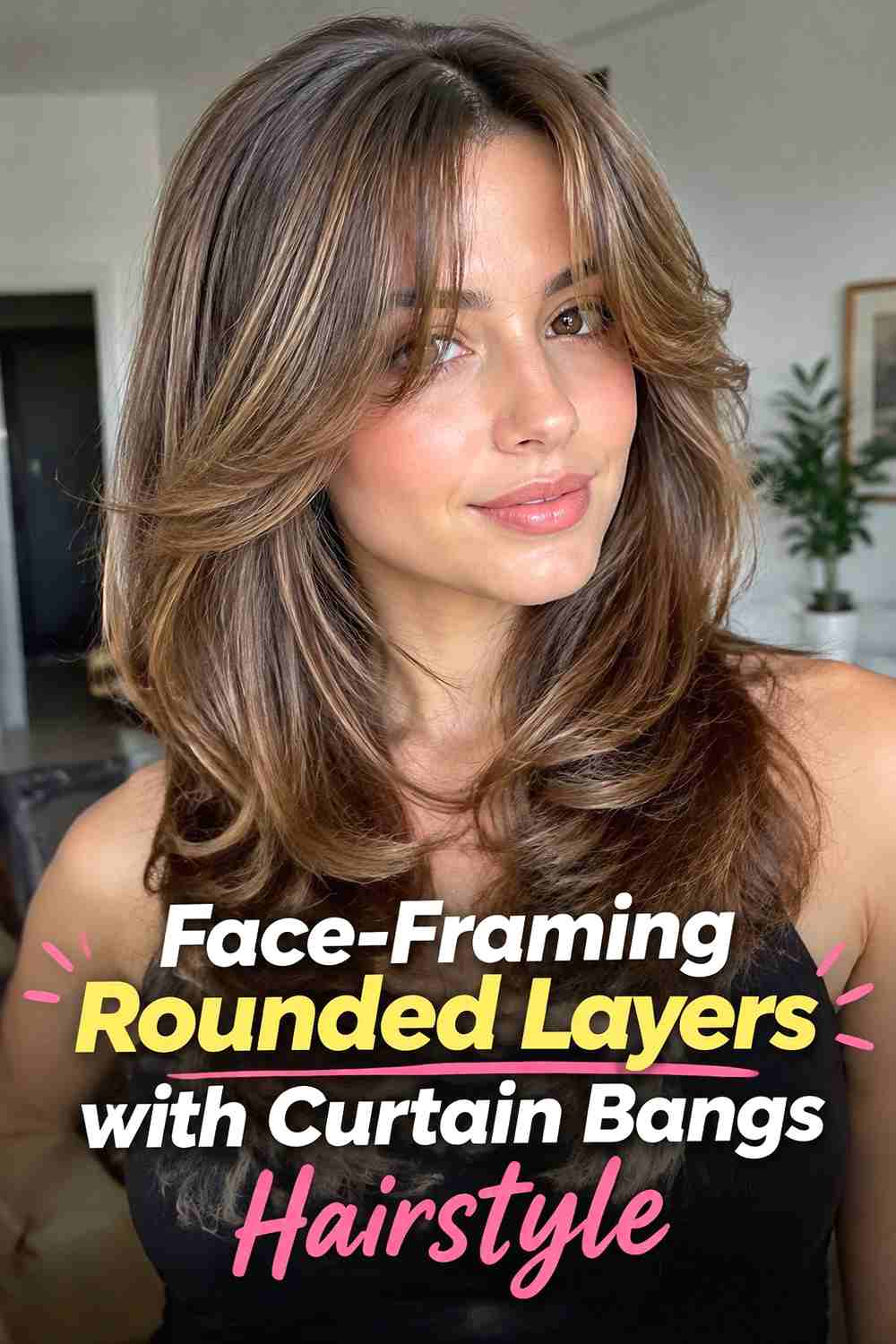
Face-framing rounded layers concentrate most of the visible movement around the front while leaving the back comparatively full. Curtain bangs form the shortest part of the frame, opening softly around the forehead before flowing into pieces near the cheekbones, jaw, and collarbone. Each transition should feel gradual, creating a smooth curved outline instead of obvious steps. This approach is particularly useful if you want a noticeable change around the face without adding extensive layering throughout the entire haircut. The longer back sections can stay relatively simple, which helps preserve density and makes ponytails easier. A gentle blowout can make the front shape more visible without requiring full-hair styling.
Styling Notes
Style the front layers first and use progressively larger curves as the sections become longer.
Best For
Medium and long hair works well when you want stronger face framing but substantial length through the back.
10. Flipped Rounded Layers With Curtain Bangs Hairstyle
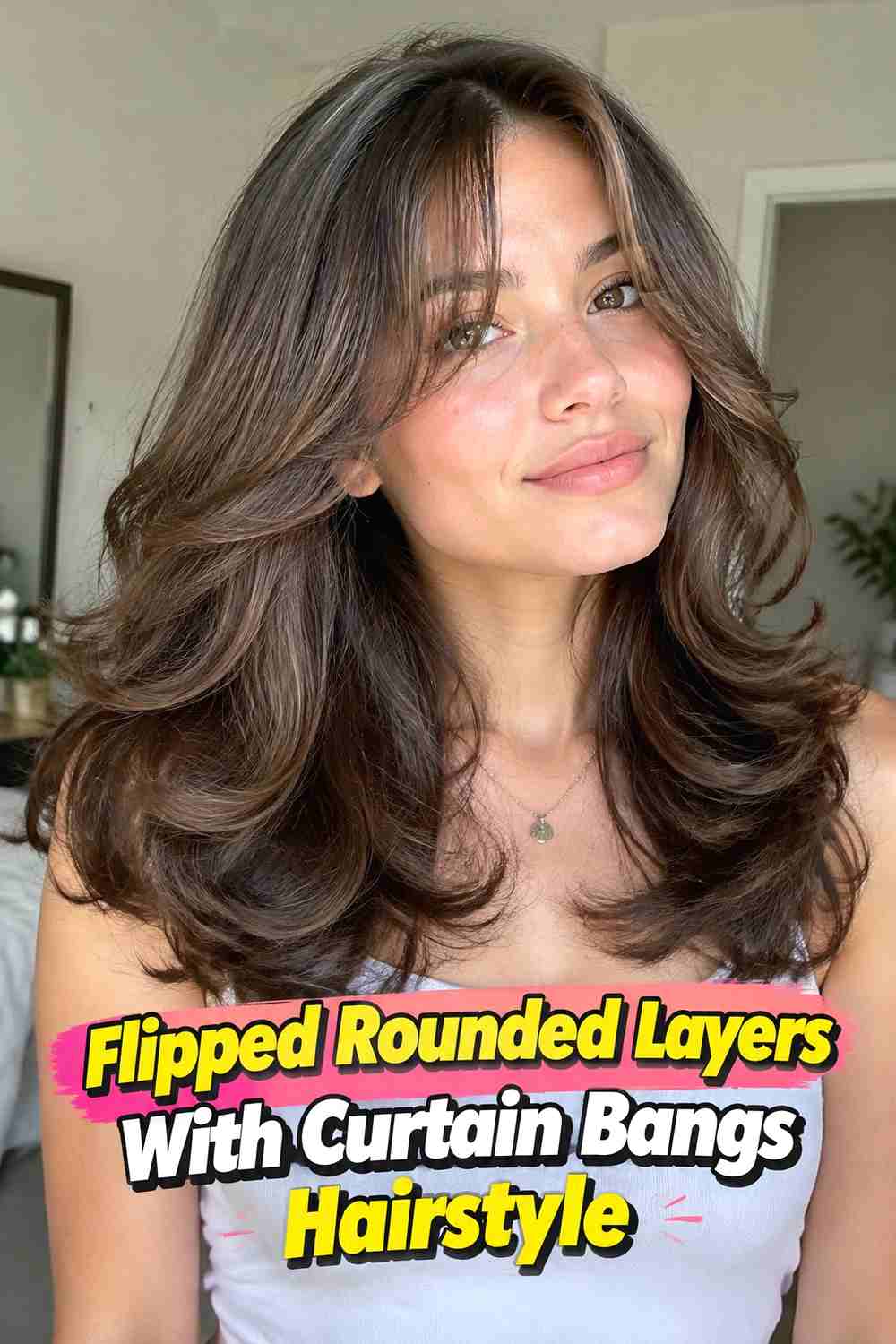
Flipped rounded layers add a livelier finish by turning selected ends away from the face and shoulders. Keep the curtain bangs soft and outward-sweeping, then echo that direction through cheekbone, jaw, and lower layers. The flips should remain broad rather than forming sharp hooks, which keeps the hairstyle modern and connected to the rounded cut. Alternating a few inward bends can prevent the shape from becoming overly uniform. This variation works particularly well on medium and long layered hair, where several curved sections can remain visible at once. Keep the roots relatively smooth so the movement is concentrated through the perimeter and does not become too voluminous overall.
Styling Notes
Use a round brush at the ends and vary the direction slightly from layer to layer.
Why It Works
Outward movement makes the rounded layers more visible while maintaining a soft, blended silhouette.
11. Wispy Curtain Bangs With Rounded Layers Hairstyle
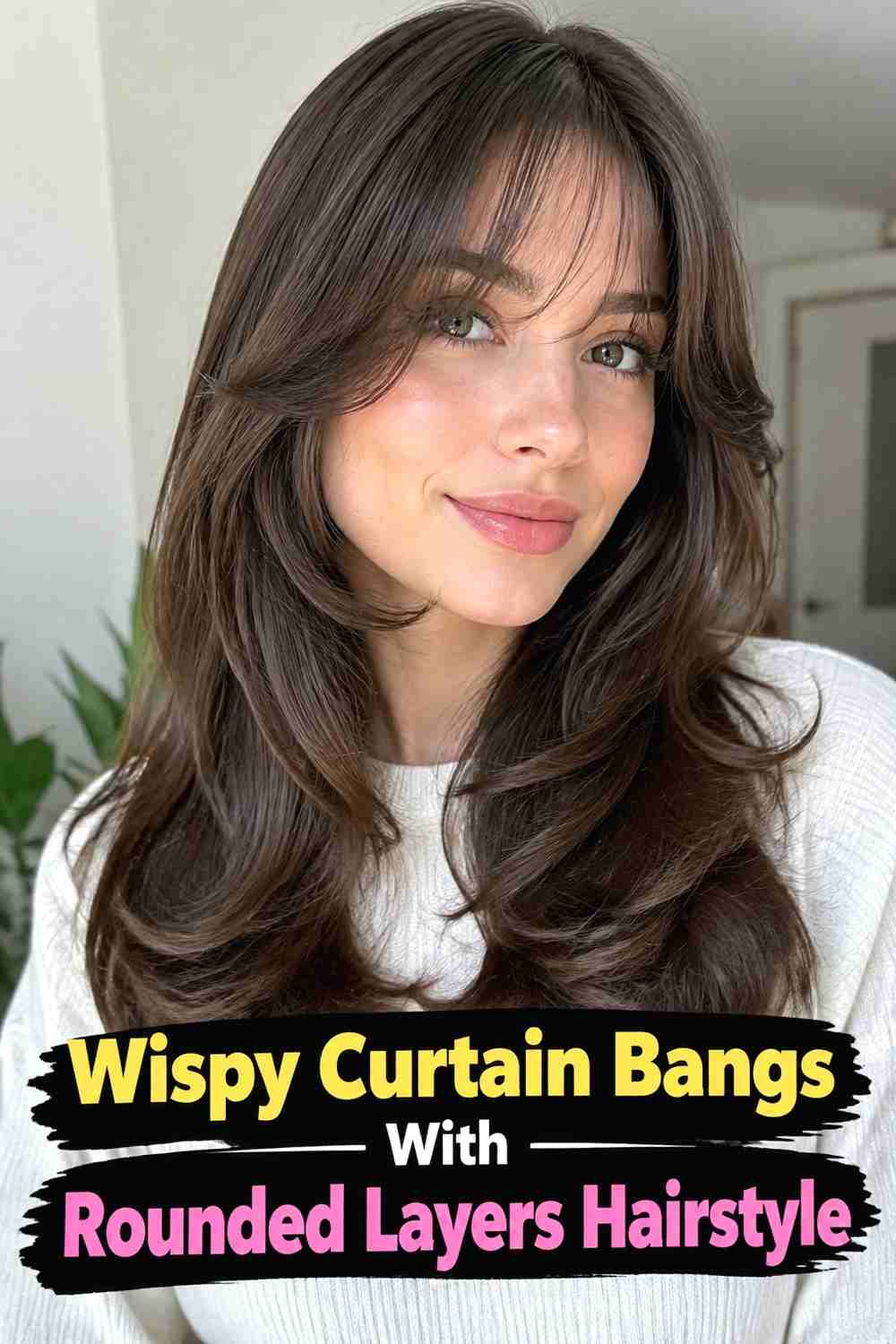
Wispy curtain bangs create a lighter front section that pairs naturally with softly rounded layers. Keep the center fringe airy enough to show small spaces between strands, then lengthen the outer pieces toward the temples so they can blend smoothly into the first face-framing layer. The rest of the haircut can retain fuller rounded sections, creating a useful contrast between a delicate fringe and a substantial perimeter. This is an appealing choice if you want bangs without a dense or heavy look across the forehead. Keep styling product minimal near the roots so the fringe remains mobile, and use only enough heat to establish the curtain shape without making it overly curved.
Styling Notes
Direct the outer fringe away from the face with a small round brush while keeping the center softer and lighter.
Best For
Fine to medium-density hair can suit this airy fringe especially well when the lower layers retain fullness.
12. Center Part Rounded Layers With Curtain Bangs Hairstyle
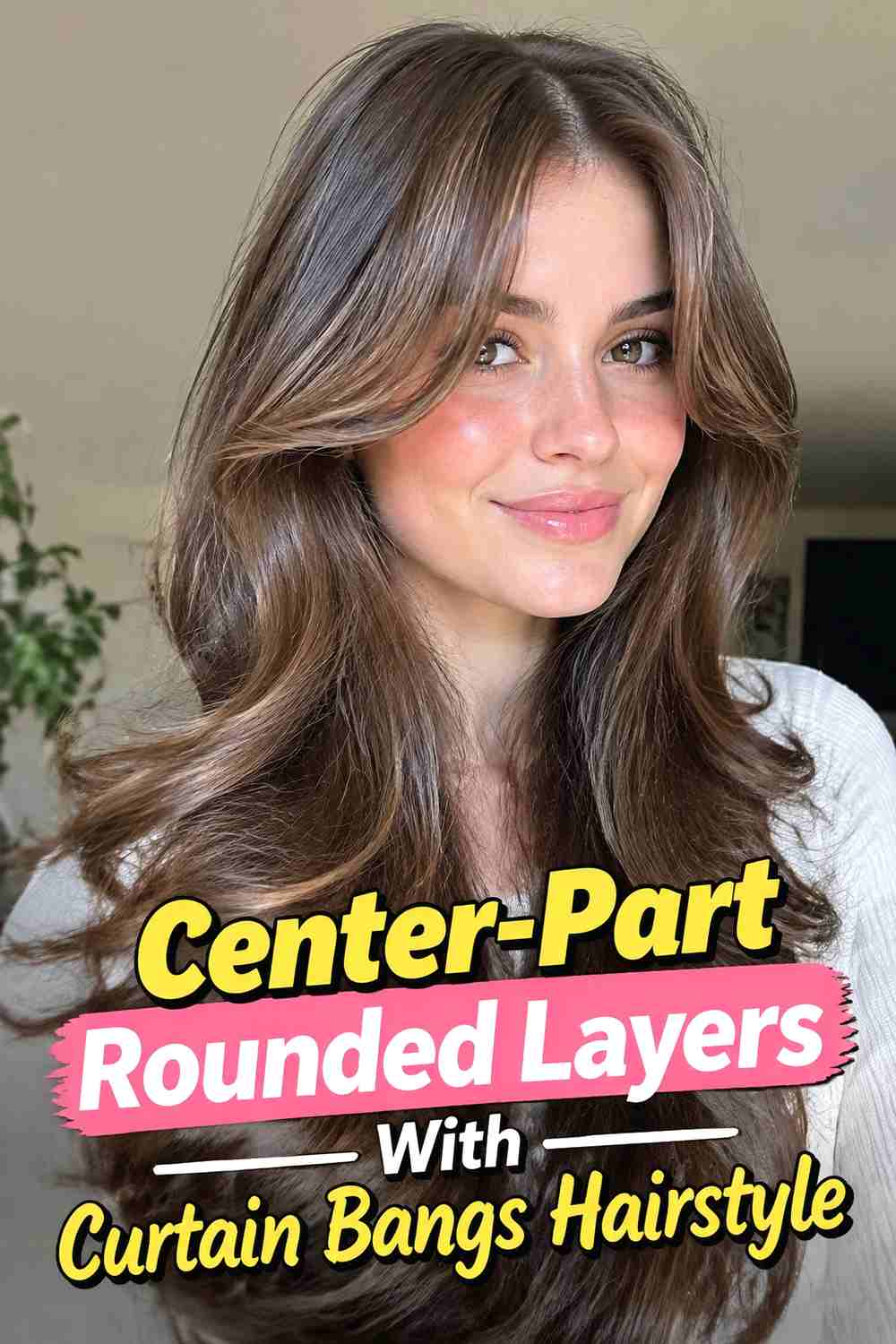
A defined center part emphasizes the symmetry of curtain bangs and gives rounded layers a clean, balanced structure. Let the fringe divide naturally in the middle, then sweep each side into progressively longer pieces around the cheeks and jaw. The lower layers can curve smoothly around the shoulders, creating a flowing outline on both sides. This version works with a sleek finish, a soft blowout, or gentle waves as long as the center remains visually clear. Because the layering is symmetrical, gradual blending becomes especially important; abrupt changes in length will be more noticeable. Keep the crown natural and let the curved perimeter provide most of the volume.
Styling Notes
Establish the center part while drying, then shape the face-framing sections away from the part once the roots are set.
Why It Works
The balanced part highlights the rounded layering equally on both sides of the face.
13. Soft C Curve Rounded Layers With Curtain Bangs Hairstyle
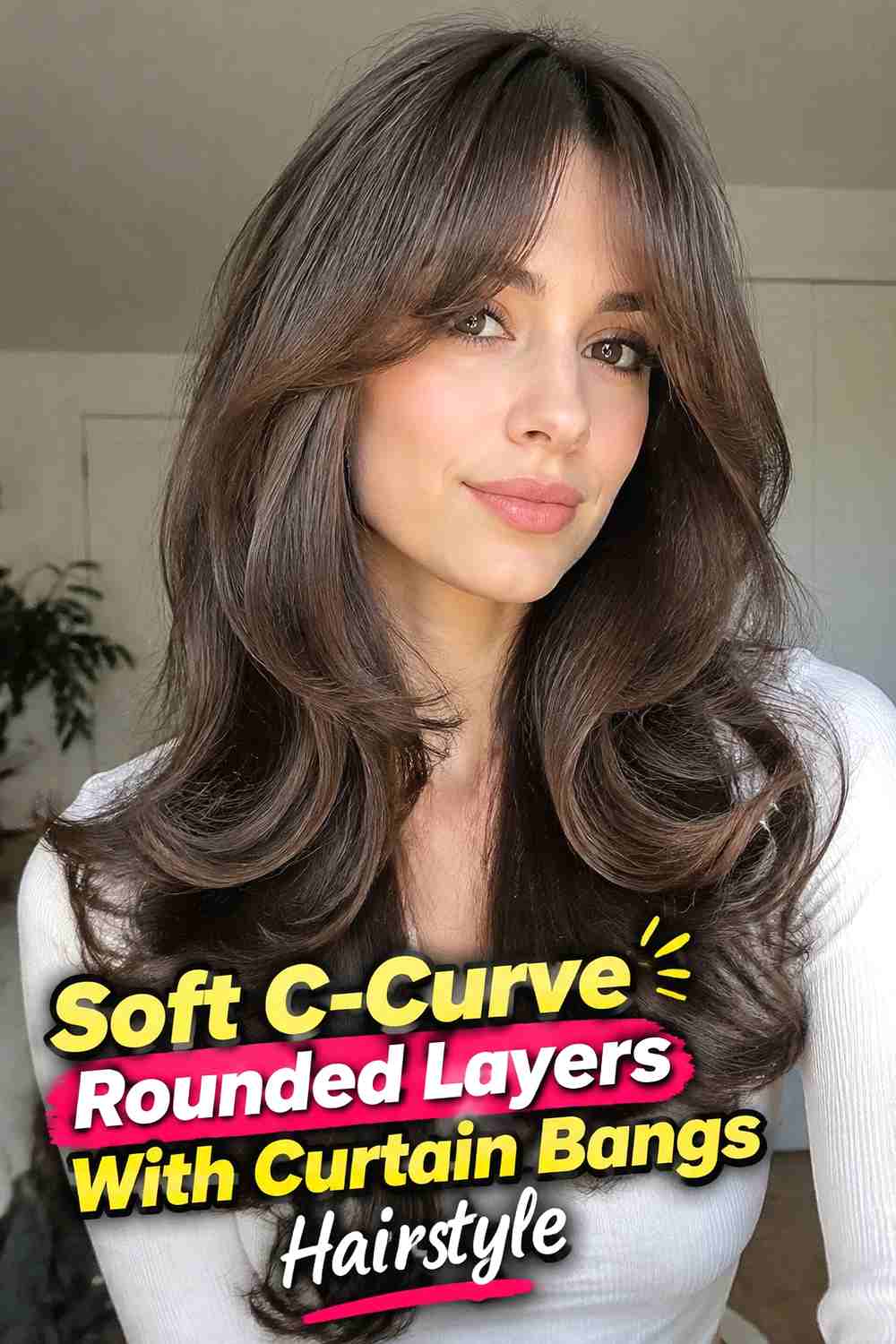
Soft C-curves give rounded layers a smooth, sculpted finish without turning them into full curls. The curtain bangs can bend away from the forehead, while longer layers form broad C-shaped curves through the cheekbones, shoulders, and ends. Keep the mid-lengths relatively smooth so the curved sections remain distinct. This style works especially well on straight and lightly wavy hair because the bends can hold their shape while still appearing soft. The final result should look fluid rather than overly set, with each layer transitioning naturally into the next. A little controlled shine can emphasize the curves, but heavy finishing products may make the hairstyle feel too rigid.
Styling Notes
Create the bend only where each layer changes direction instead of curling the entire section from roots to ends.
Best For
Straight to softly wavy medium or long hair typically shows the C-shaped movement most clearly.
14. Half Up Rounded Layers With Curtain Bangs Hairstyle
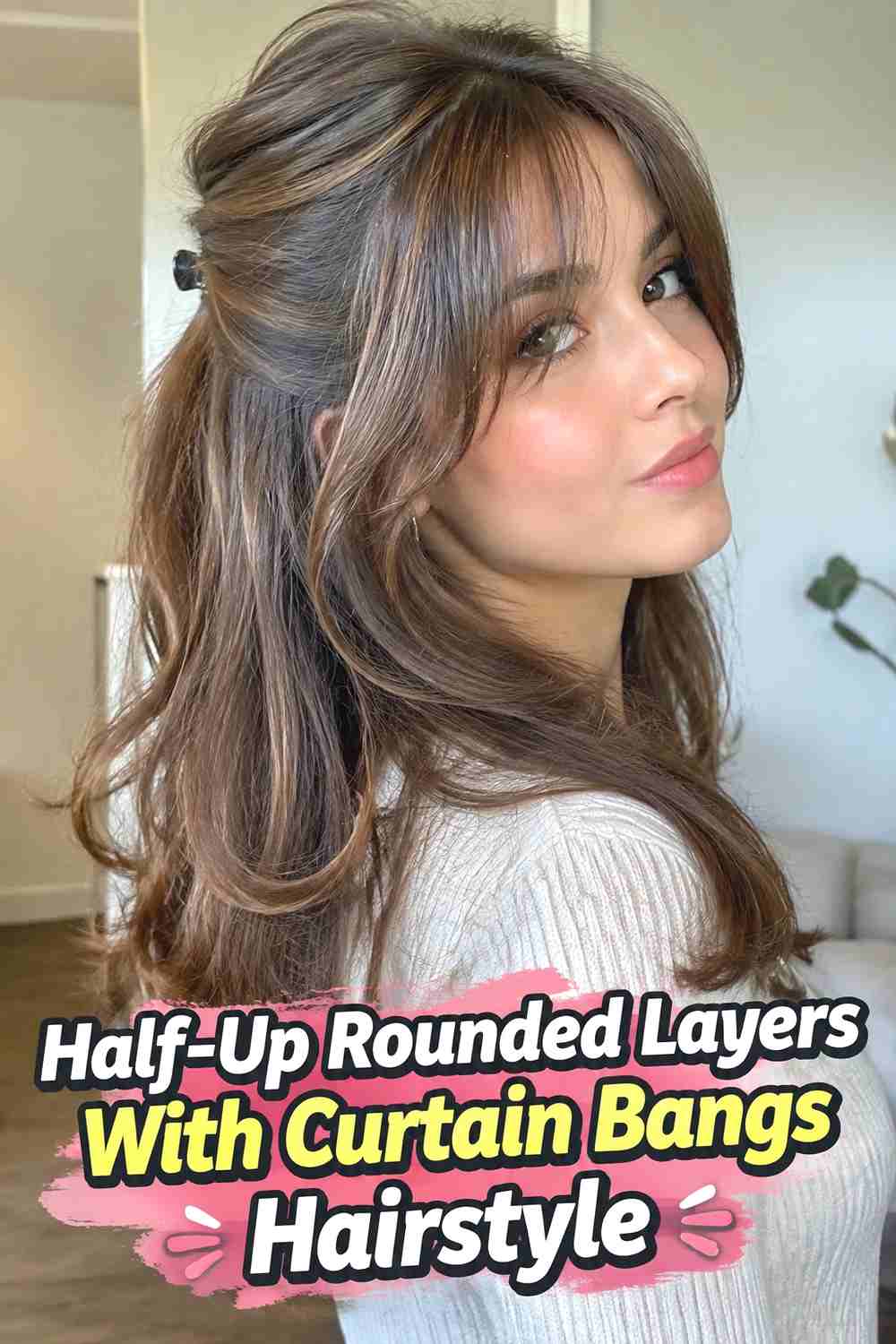
A half-up style gives rounded layers a different silhouette while keeping the curtain bangs and front pieces fully visible. Leave the fringe and shortest face-framing sections loose, then gather a modest amount of hair from the crown and sides at the back. The remaining lower layers should fall freely, showing their rounded shape through the shoulders and ends. Avoid pulling the upper section too tightly because a little softness around the crown connects better with the curved front. This approach is useful when you want hair away from the face without hiding the layered haircut in a full ponytail or bun. A small clip or understated barrette can keep the finish simple.
Styling Notes
Shape the curtain bangs before securing the half-up section so their volume does not get pulled backward.
Why It Works
The gathered crown exposes the face-framing layers while preserving visible movement through the lower haircut.
15. Rounded Lob With Curtain Bangs Hairstyle
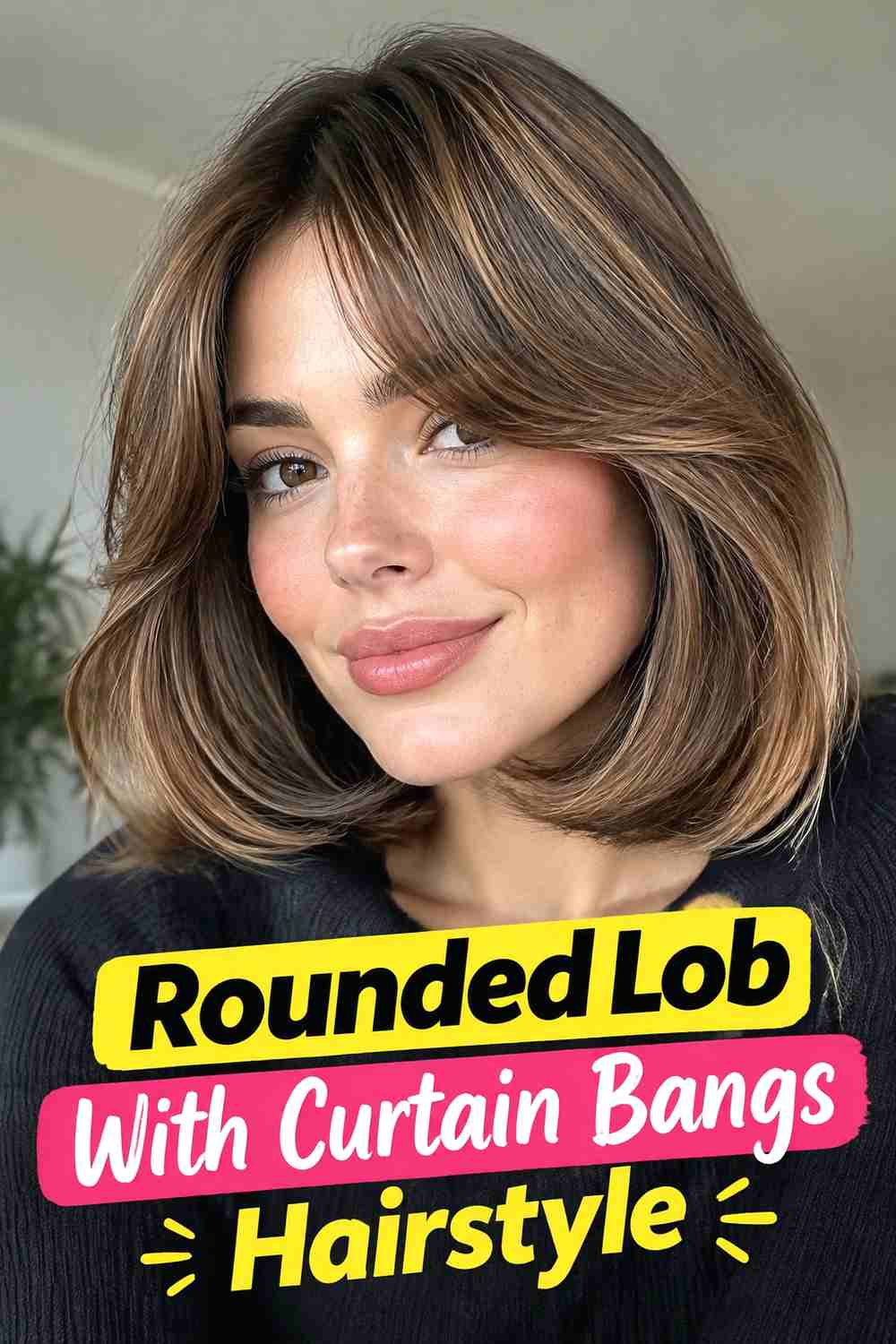
A rounded lob brings the same curved layering idea to a more compact, collarbone-skimming length. Keep the perimeter substantial, then add soft internal and face-framing layers so the hair curves naturally rather than forming a rigid blunt line. Curtain bangs can open around the center and transition into cheekbone or jaw-length pieces, making the front feel light while the lob remains full. This length is particularly practical because it shows rounded ends clearly without requiring multiple levels of long layering. The style can be worn smooth, lightly waved, or with a soft blowout, depending on how much definition you want through the curved perimeter.
Styling Notes
Use a medium round brush to shape the lower sections while keeping the curtain fringe lighter and more open.
Best For
Straight, wavy, and lightly textured hair can all suit this collarbone-length rounded silhouette.
16. Natural Wave Rounded Layers With Curtain Bangs Hairstyle
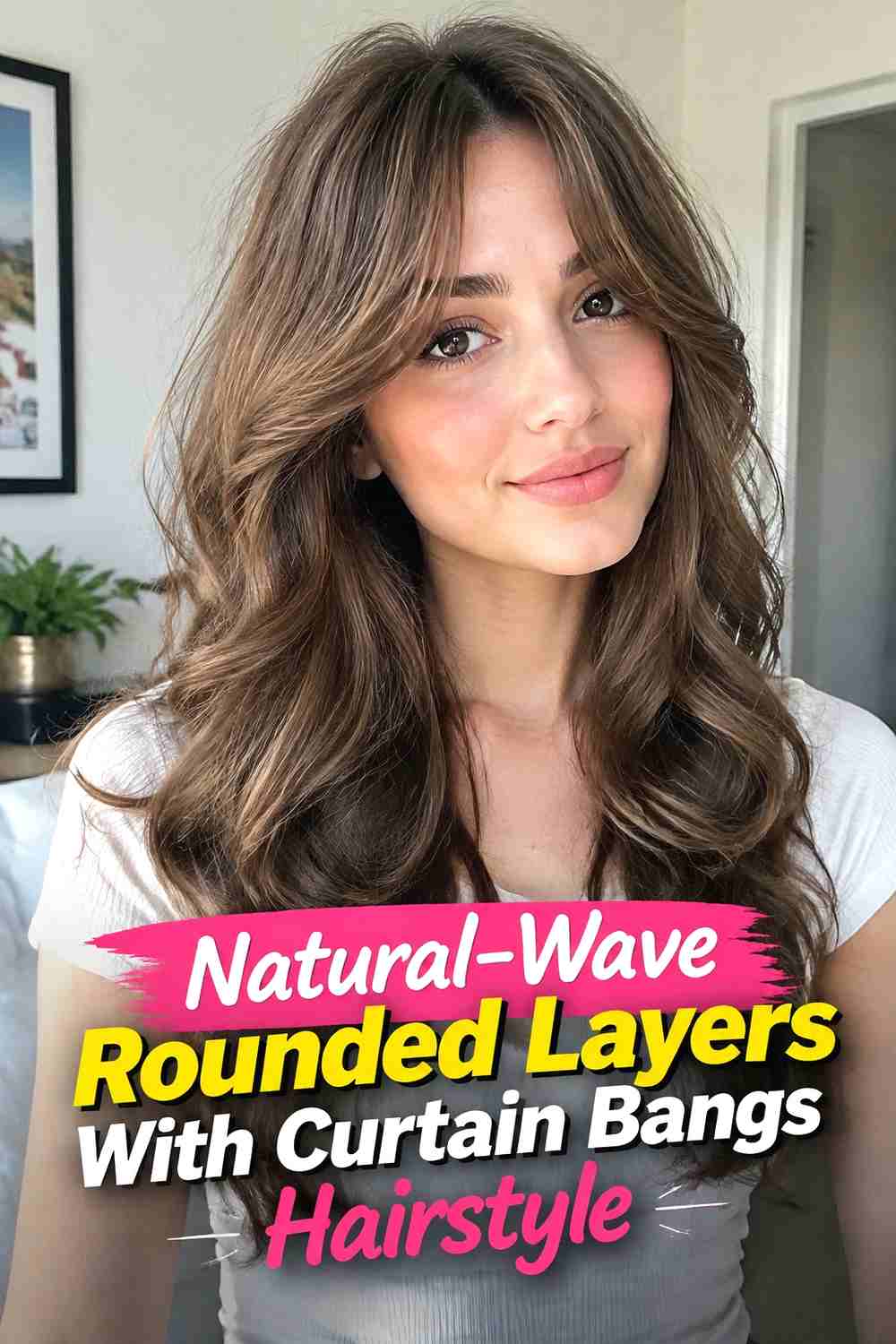
Natural waves give rounded layers a relaxed finish by allowing the haircut to follow the hair’s existing bends instead of imposing a uniform blowout. Keep the curtain bangs long enough to participate in the wave pattern, with the center opening softly and the sides moving toward the cheekbones. Through the rest of the cut, rounded layers can help distribute volume while letting different wave sizes remain visible. Avoid reshaping every section; refine only the pieces around the face or ends that need clearer direction. This approach feels particularly wearable for everyday styling because slight irregularity supports the overall look. Lightweight products help maintain definition without weighing down the curved movement.
Styling Notes
Encourage your natural wave pattern first, then make small adjustments to the bangs and face-framing pieces.
Why It Works
The existing bends reinforce the rounded silhouette while keeping the hairstyle soft, flexible, and easygoing.
How to Choose the Right Look
Start with your overall length and density. Long, thick hair can support several levels of rounded layering while maintaining a full perimeter. Shoulder-length hair and lobs usually benefit from fewer layers so the ends stay substantial rather than becoming thin.
Texture should guide the shape as well. Straight hair highlights smooth curved ends and C-shaped bends, while natural waves give rounded layers a softer, more relaxed effect. Curly hair needs layer placement that accounts for shrinkage and the way individual curls sit when dry.
Think about your styling routine before choosing the fringe length. Longer curtain bangs are easier to blend into layers, tuck behind the ears, or incorporate into half-up styles. Shorter curtain pieces create stronger face framing but may need more frequent styling. For lower maintenance, choose a rounded cut that works with your natural texture instead of depending on a daily blowout.
Final Thoughts
Curtain bangs and rounded layers create a soft alternative to sharper, heavily feathered layering. The combination can look smooth and polished, airy and tousled, naturally wavy, or full and blown out depending on your texture and styling preferences. Keep the transitions gradual, preserve enough fullness through the ends, and choose a curtain-bang length that fits your routine for the most wearable result.
FAQs
1. What are rounded layers with curtain bangs?
Rounded layers are blended sections designed to create soft curves and gradual movement, while curtain bangs part near the center and sweep into the surrounding face-framing layers.
2. Are rounded layers different from butterfly layers?
They can overlap in appearance, but rounded layers generally emphasize smooth curved transitions and fullness rather than the more pronounced short-to-long, winged separation associated with butterfly layering.
3. Do rounded layers work on shoulder-length hair?
Yes. Shoulder-length cuts can use fewer, carefully blended rounded layers to create movement while preserving enough weight through the ends.
4. Can curly hair have curtain bangs with rounded layers?
Yes. The fringe and layers should be planned around the natural curl pattern, shrinkage, density, and dry shape rather than based only on straightened hair.
5. How do I style curtain bangs with rounded layers?
Direct the curtain bangs away from the face with a round brush or gentle heat, then shape the surrounding layers into broader curves so everything blends smoothly.
Save your favorite rounded-layer hairstyle, share these curtain-bang ideas with someone planning a haircut, and explore more soft face-framing hair inspiration.