16 Soft Halo Afro Hairstyle Ideas
Soft halo Afro hairstyles frame natural texture with rounded, airy shapes that can look defined, fluffy, sculpted, or beautifully relaxed.
The halo Afro is all about balance: enough volume to create a clear rounded silhouette, but enough movement and separation to keep the texture looking natural. Small changes in shaping, parting, stretching, layering, and curl definition can dramatically alter the finished look without taking away from the signature halo effect.
These ideas range from compact, softly tapered shapes to full cloud-like Afros and more defined twist-out finishes. Before choosing one, consider your natural shrinkage, density, preferred volume, styling time, and how much definition you want to maintain between wash days.
Quick List
- Soft Rounded Halo Afro Hairstyle
- Feathered Halo Afro Hairstyle
- Defined Curl Halo Afro Hairstyle
- Fluffy Cloud Halo Afro Hairstyle
- Tapered Soft Halo Afro Hairstyle
- Side Parted Halo Afro Hairstyle
- Center Parted Halo Afro Hairstyle
- Mini Halo Afro Hairstyle
- Voluminous Halo Afro Hairstyle
- Layered Halo Afro Hairstyle
- Stretch Defined Halo Afro Hairstyle
- Twist Out Halo Afro Hairstyle
- Soft Coily Halo Afro Hairstyle
- Sculpted Halo Afro Hairstyle
- Natural Fringe Halo Afro Hairstyle
- Low Volume Halo Afro Hairstyle
1. Soft Rounded Halo Afro Hairstyle
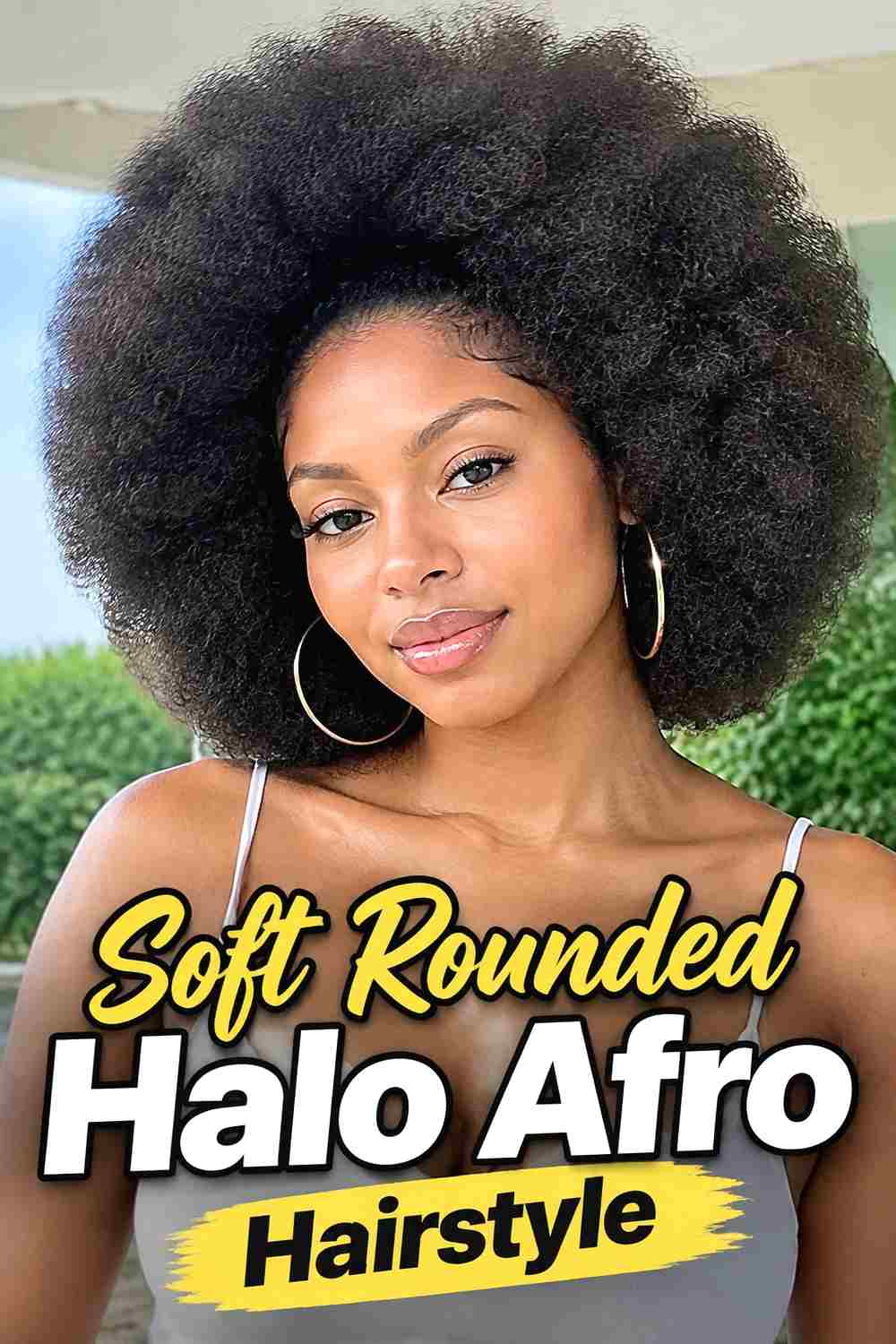
The Soft Rounded Halo Afro Hairstyle keeps the overall silhouette smooth and balanced while still allowing individual curls and coils to remain visible. The shape follows a gentle circle around the head rather than creating sharp corners or exaggerated height. This makes the look feel polished without appearing overly sculpted. Light picking at the roots can add fullness while preserving definition closer to the ends, and careful shaping around the sides helps maintain an even outline. The style works especially well when you want natural texture to be the main feature rather than a strong part or accessory. A little asymmetry from natural curl variation keeps the finish soft and believable.
Styling Notes
Work outward from the roots in small sections instead of combing completely through the curls. This helps create volume without turning the entire halo into one uniform texture.
2. Feathered Halo Afro Hairstyle
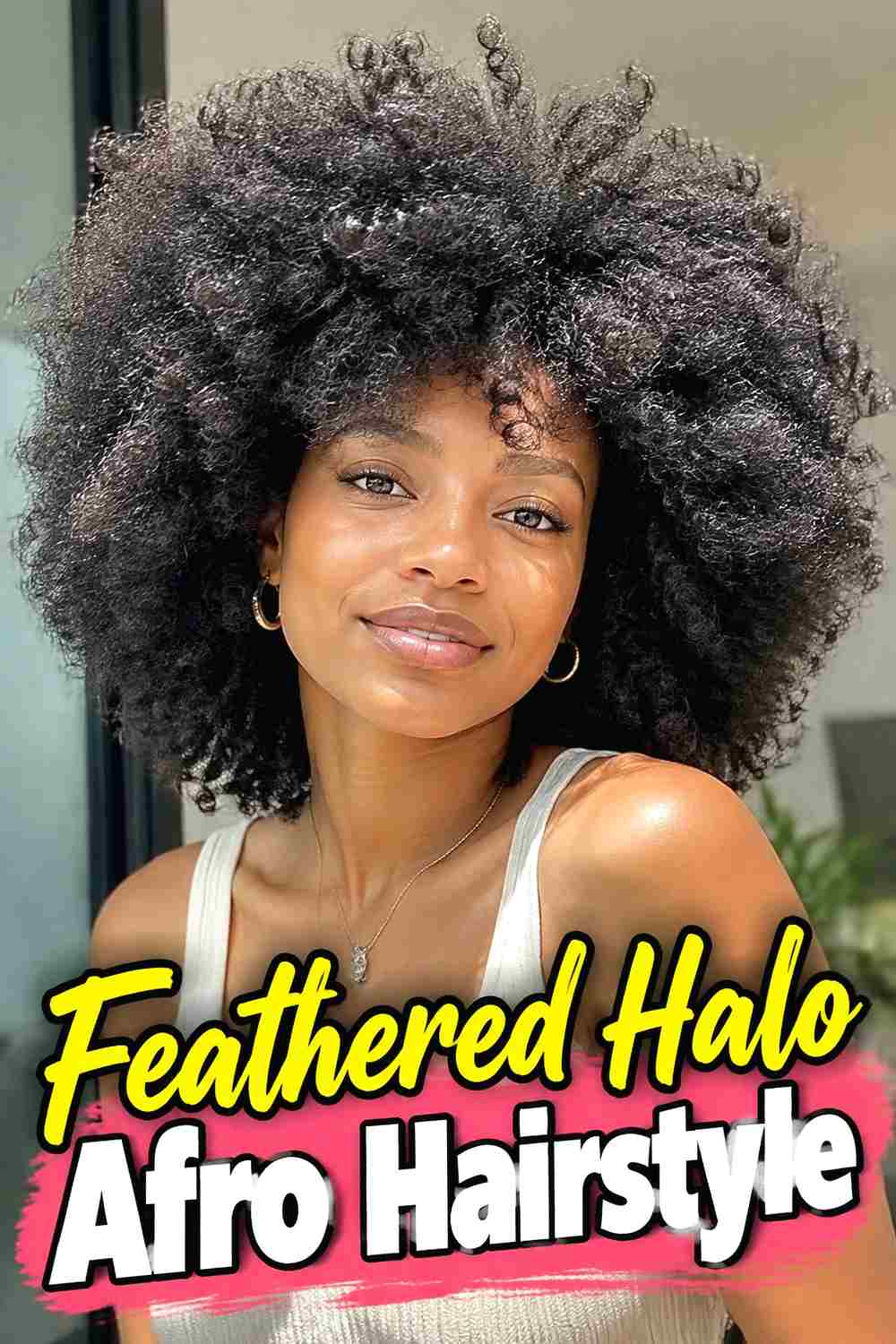
The Feathered Halo Afro Hairstyle has a lighter, airier perimeter created by softly separated ends and gradual volume. Rather than keeping every coil tightly grouped, the outer sections are gently fluffed so the silhouette feels wispy and dimensional. The center can retain more definition while the edges become softer, giving the Afro a natural feathered transition. This approach works well when you prefer movement over a perfectly solid outline. Finger separation is useful because it lets you control how much fullness appears in each area without disturbing the entire style. Keep the crown slightly lifted so the feathered sides feel balanced rather than overly wide.
Why It Works
The contrast between defined inner texture and softer outer strands makes the halo look full without appearing heavy or rigid.
Pro Tip
Separate only a few curls at a time and stop once the perimeter looks airy enough; over-separating can remove more definition than you intended.
3. Defined Curl Halo Afro Hairstyle
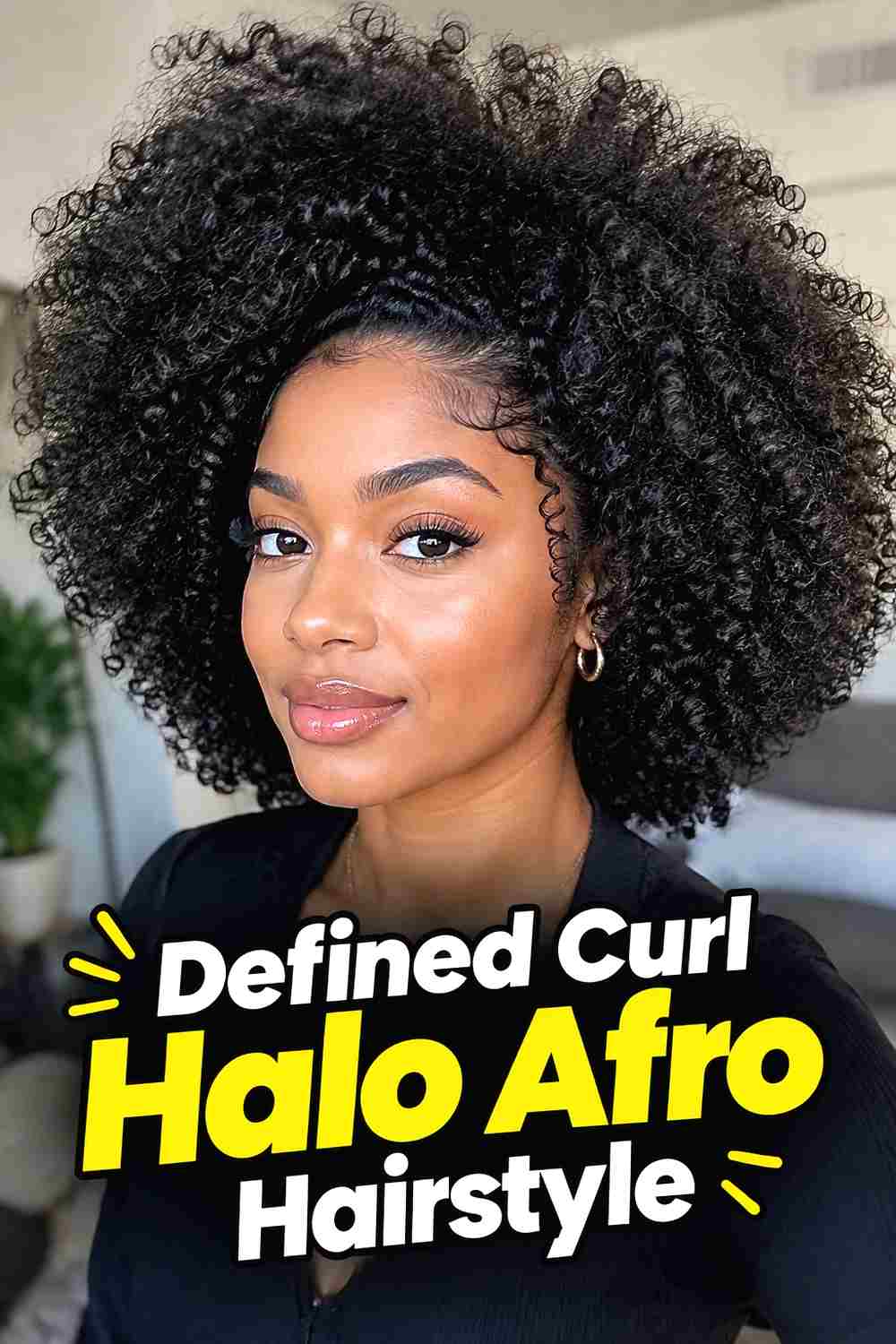
The Defined Curl Halo Afro Hairstyle emphasizes visible curl groupings while maintaining a rounded Afro shape. Instead of maximizing fluff, the goal is to preserve clear spirals or coils throughout the halo and use gentle root lifting for volume. This creates a more detailed surface where individual curl patterns remain easy to see from the front and sides. The finished silhouette can still feel soft, especially when the ends are allowed to fall naturally rather than being forced into an exact circle. This option may require more careful refreshing between wash days because preserving curl separation is part of the look. Handle the hair lightly when shaping so the definition stays intact.
Hair Type & Length
This style works especially well when the hair has enough length to form visible curl groups while still creating fullness around the head.
Wear & Maintenance
Refresh only the sections that lose definition rather than restyling the entire halo every day.
4. Fluffy Cloud Halo Afro Hairstyle
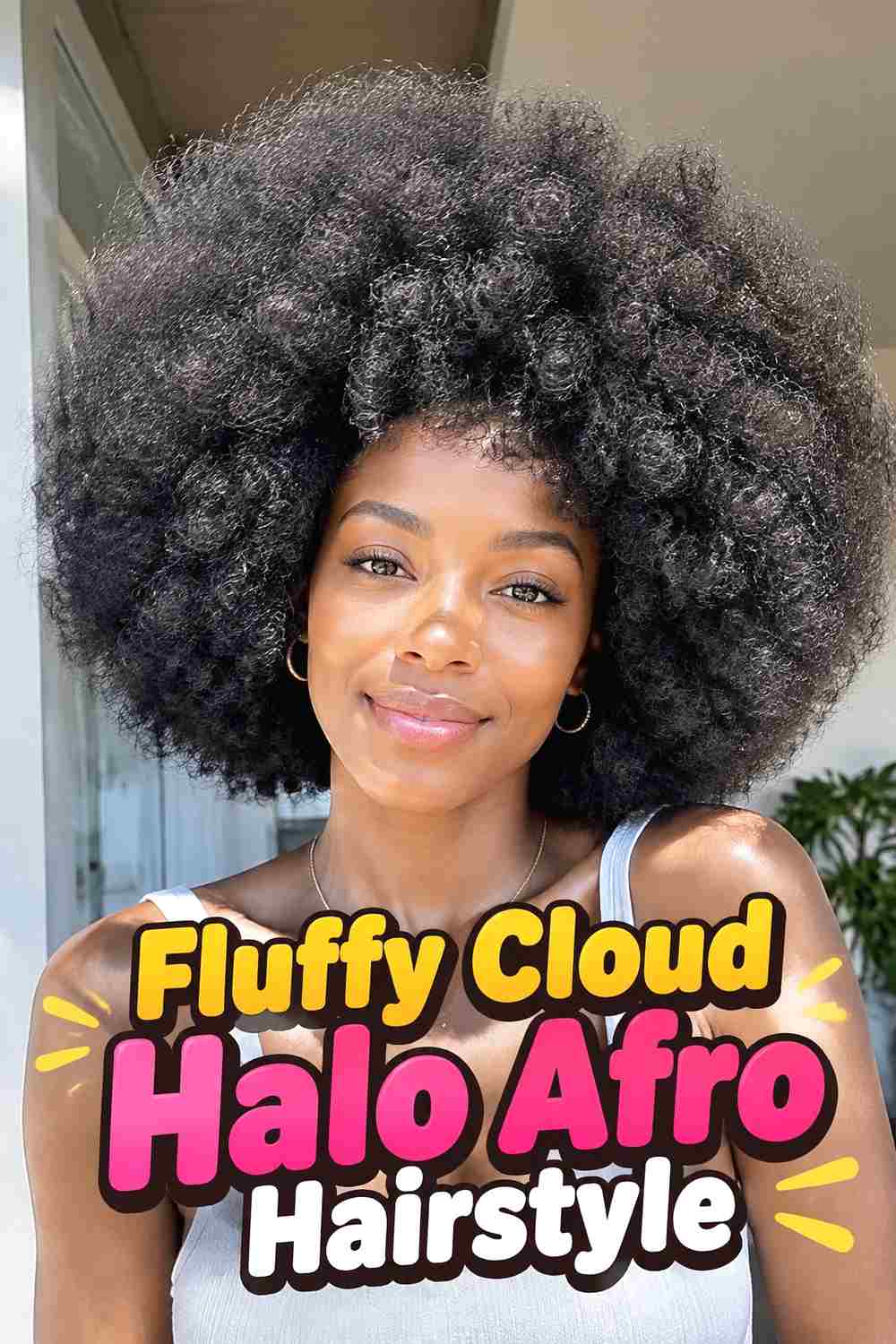
The Fluffy Cloud Halo Afro Hairstyle is all about soft expansion and an airy, almost weightless silhouette. Curls and coils are gently stretched and separated so the halo appears broad and plush rather than tightly defined. The outline should remain rounded, but slight irregularities help the volume look natural and touchable. This style can be especially striking on dense hair because the fullness creates dimension from every angle. Focus the most lift around the crown and upper sides, then keep the lower perimeter slightly controlled to maintain the cloud shape. A wide-tooth pick used only at the roots can help create height without completely breaking apart the texture.
Best For
Choose this style if you enjoy generous volume and do not need every curl to remain individually defined.
Styling Notes
Shape the Afro gradually in a mirror from several angles so the fullness stays balanced around the entire head.
5. Tapered Soft Halo Afro Hairstyle
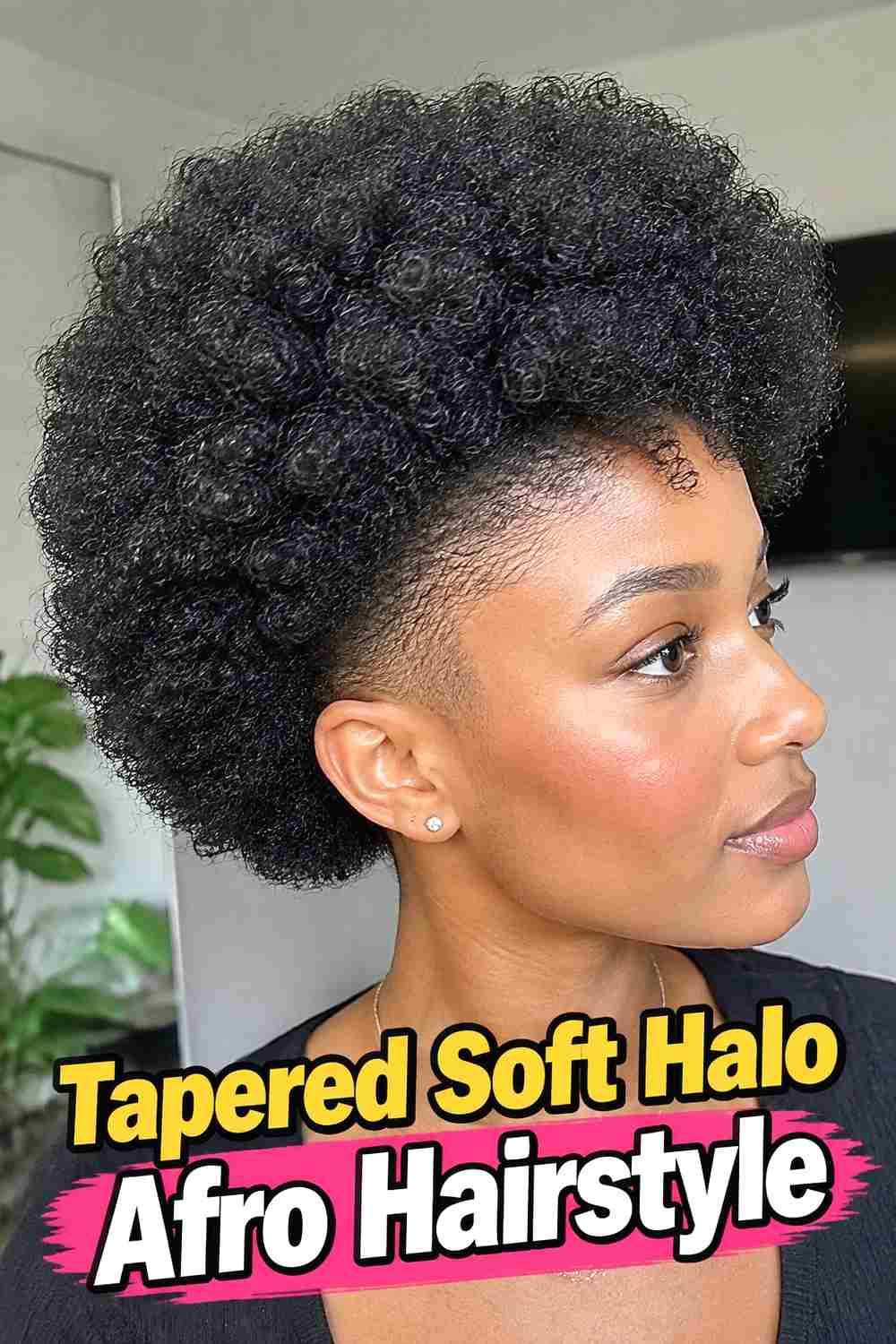
The Tapered Soft Halo Afro Hairstyle keeps more fullness through the upper portion while gently narrowing the sides and lower perimeter. This creates a rounded halo effect without making the silhouette equally wide everywhere. The tapered shape can make shorter or medium-length natural hair feel especially intentional because it emphasizes the crown while keeping the neckline neat. Texture can remain fluffy, coily, or lightly defined depending on your preference. The key is maintaining gradual transitions rather than creating an abrupt difference between the top and sides. Soft shaping with fingers or a pick helps preserve natural movement while still giving the Afro a recognizable structure.
Why It Works
The narrower lower edge gives the crown more visual lift, creating a softly elongated halo without needing extreme height.
6. Side Parted Halo Afro Hairstyle
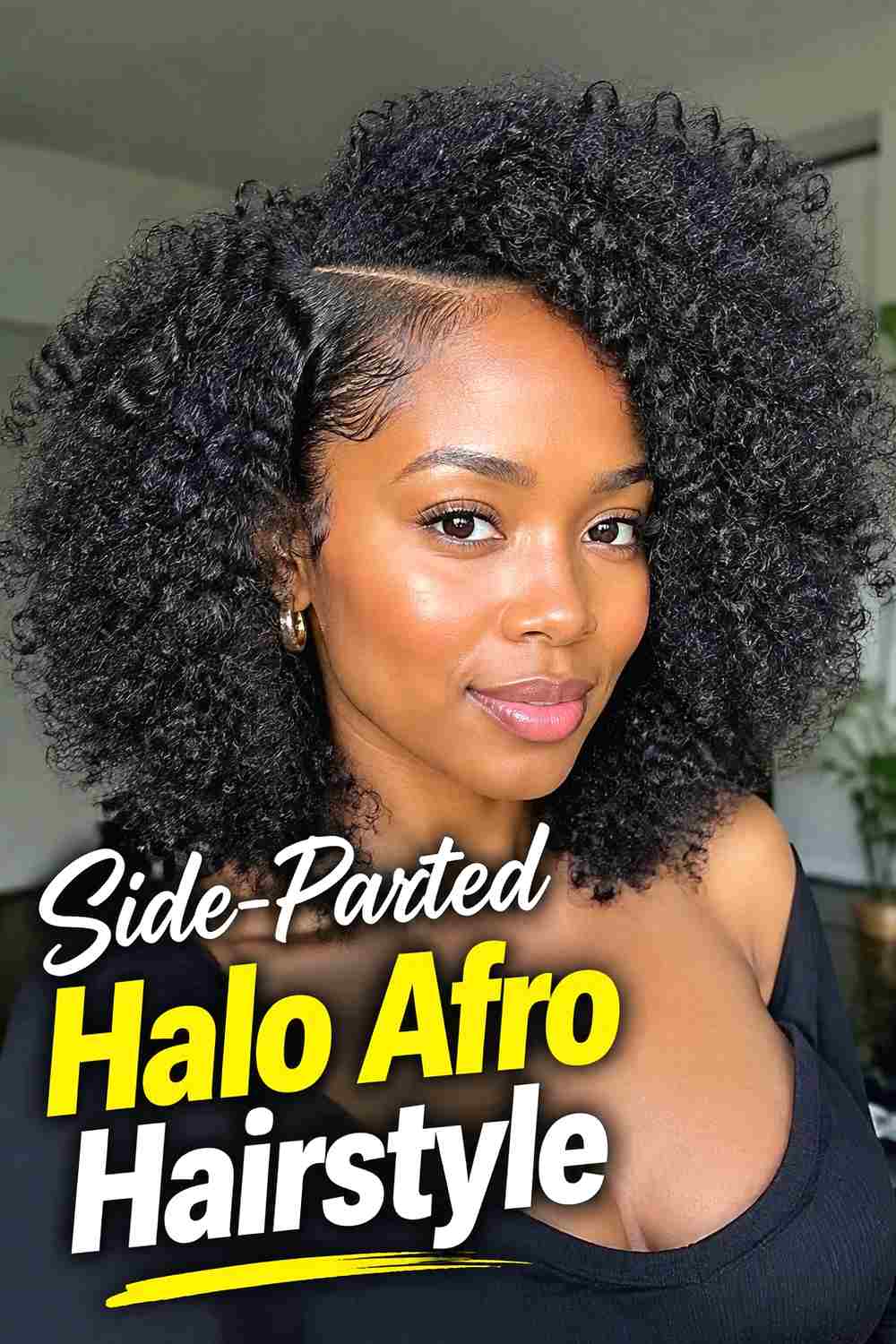
The Side-Parted Halo Afro Hairstyle introduces asymmetry by creating a visible part while allowing the rest of the hair to retain its rounded volume. One side can sit slightly closer to the head while the opposite side carries more lift, giving the style an easy directional flow. The part does not need to be razor-sharp; a softer line often blends more naturally with fluffy texture. This look is useful when you want the openness of an Afro but prefer some framing around the face. Keep the larger side full enough to maintain the halo effect, and gently lift the roots near the crown so the style does not flatten around the part.
Styling Notes
Create the part before fully fluffing the hair so you can shape each side around it instead of disturbing the finished volume afterward.
Best For
This is a good option when you want a recognizable Afro silhouette with a little more directional styling around the face.
7. Center Parted Halo Afro Hairstyle
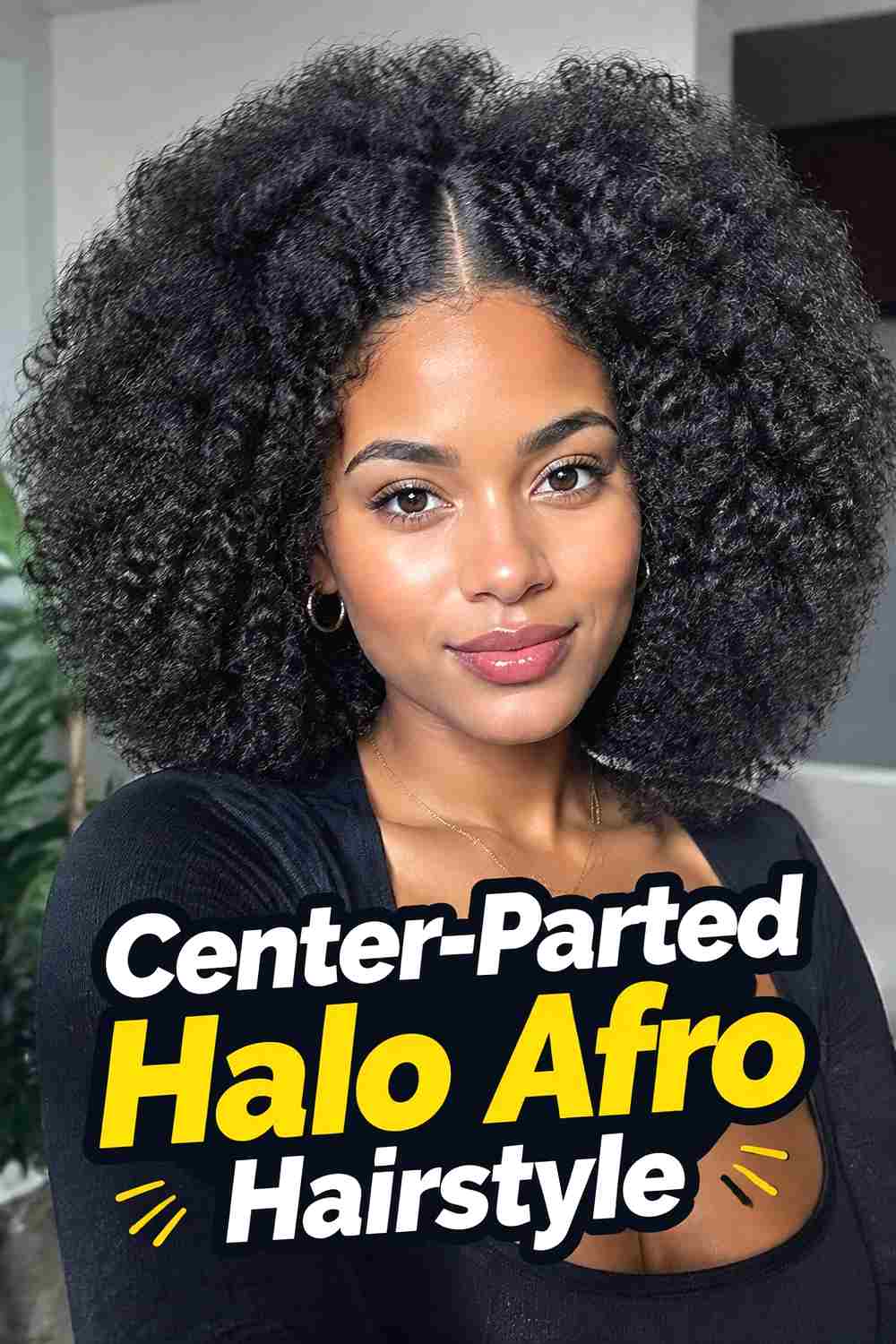
The Center-Parted Halo Afro Hairstyle balances the volume on both sides of the face while keeping the overall outline soft and rounded. A center part gives the style a more symmetrical feel, but the texture prevents it from looking overly formal or rigid. The hair can remain defined close to the part and become gradually fluffier toward the outer edges, creating a natural transition between structure and volume. Keep the crown lifted enough that the part does not divide the style into two flat sections. This approach works particularly well when you want the face-framing effect of a part while still preserving the visual fullness of a traditional halo Afro.
Pro Tip
Lift the roots behind the part rather than directly along it to maintain height without blurring the center line.
8. Mini Halo Afro Hairstyle
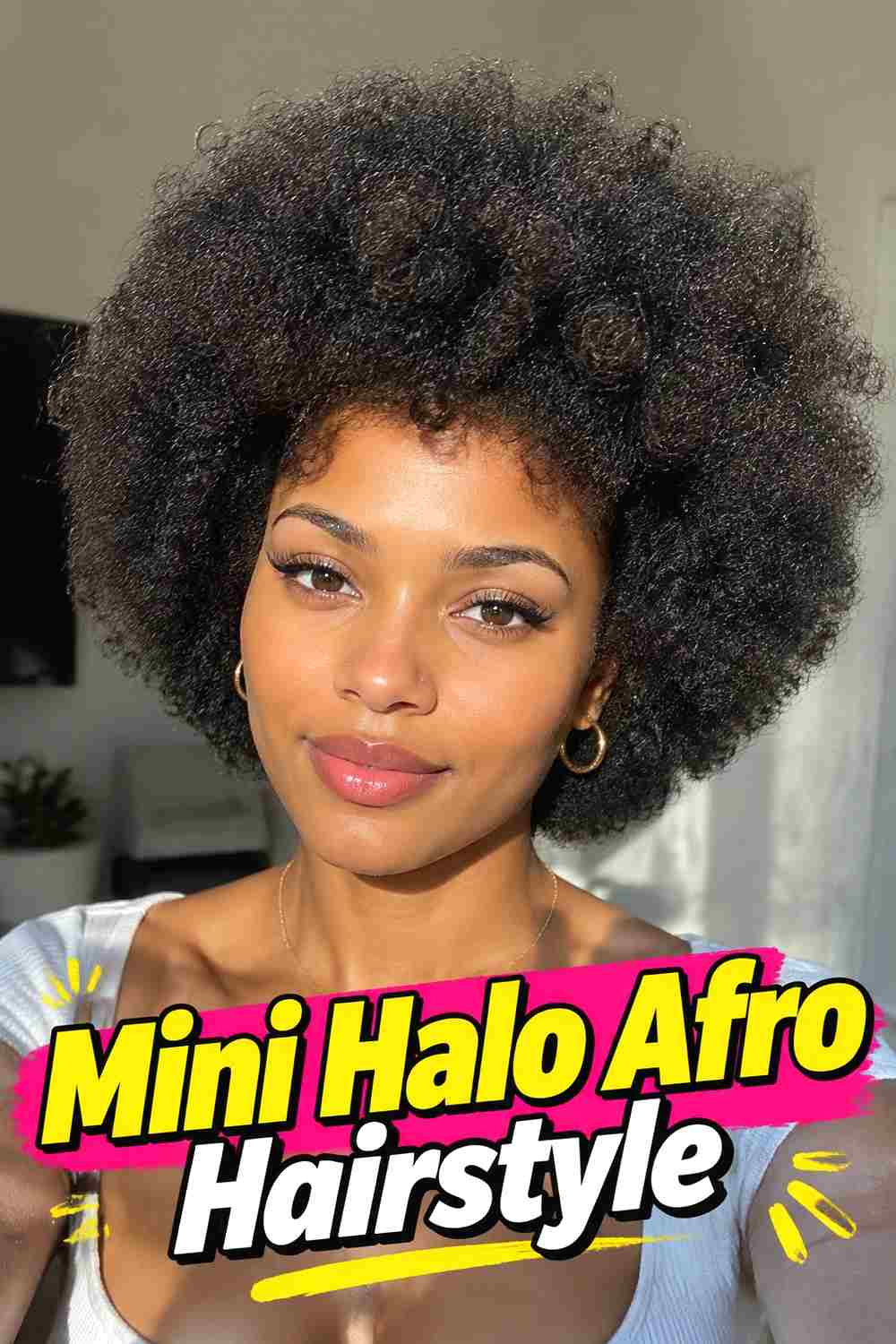
The Mini Halo Afro Hairstyle creates a compact rounded silhouette that stays relatively close to the head. Instead of emphasizing dramatic width or height, it focuses on clean proportion and visible natural texture. This makes it especially practical for shorter hair, tighter shrinkage, or anyone who prefers a lower-maintenance Afro shape. The perimeter can be softly fluffed to create the halo effect while the interior texture remains more defined. Because the style is smaller, subtle shaping differences become noticeable, so check the balance around the crown and sides rather than concentrating only on the front. A little root lift is often enough to refresh the silhouette.
Hair Type & Length
Short to medium natural hair can work particularly well because the smaller scale complements shrinkage rather than requiring extensive stretching.
Wear & Maintenance
Light morning fluffing at the roots may be all that is needed to restore the rounded shape after sleeping.
9. Voluminous Halo Afro Hairstyle
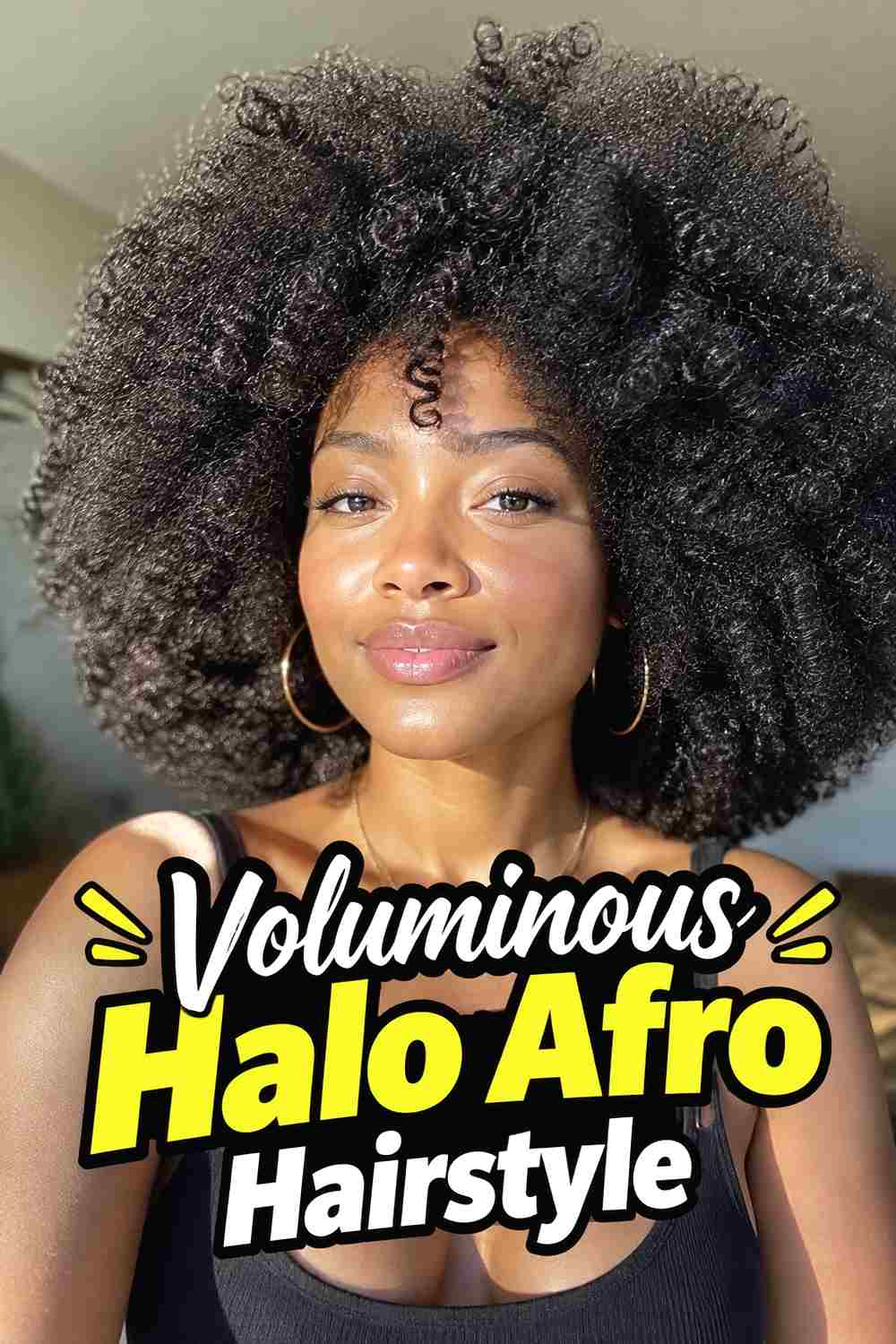
The Voluminous Halo Afro Hairstyle takes the signature rounded silhouette to a fuller scale, with generous height and width surrounding the head. This look benefits from hair that can be stretched, separated, and lifted without losing all of its natural texture. Instead of aiming for a perfectly smooth outer edge, allow soft coils and flyaways to create movement along the perimeter. Building volume gradually is important because concentrating too much fullness on the sides can make the shape appear wider than intended. Lift the crown, check the back, and then adjust the sides until the halo looks balanced. The finished result should feel expansive but still connected to the natural curl pattern.
Styling Notes
Work in sections and step back frequently while shaping. Volume is easier to add than to remove once the curls have been heavily separated.
10. Layered Halo Afro Hairstyle
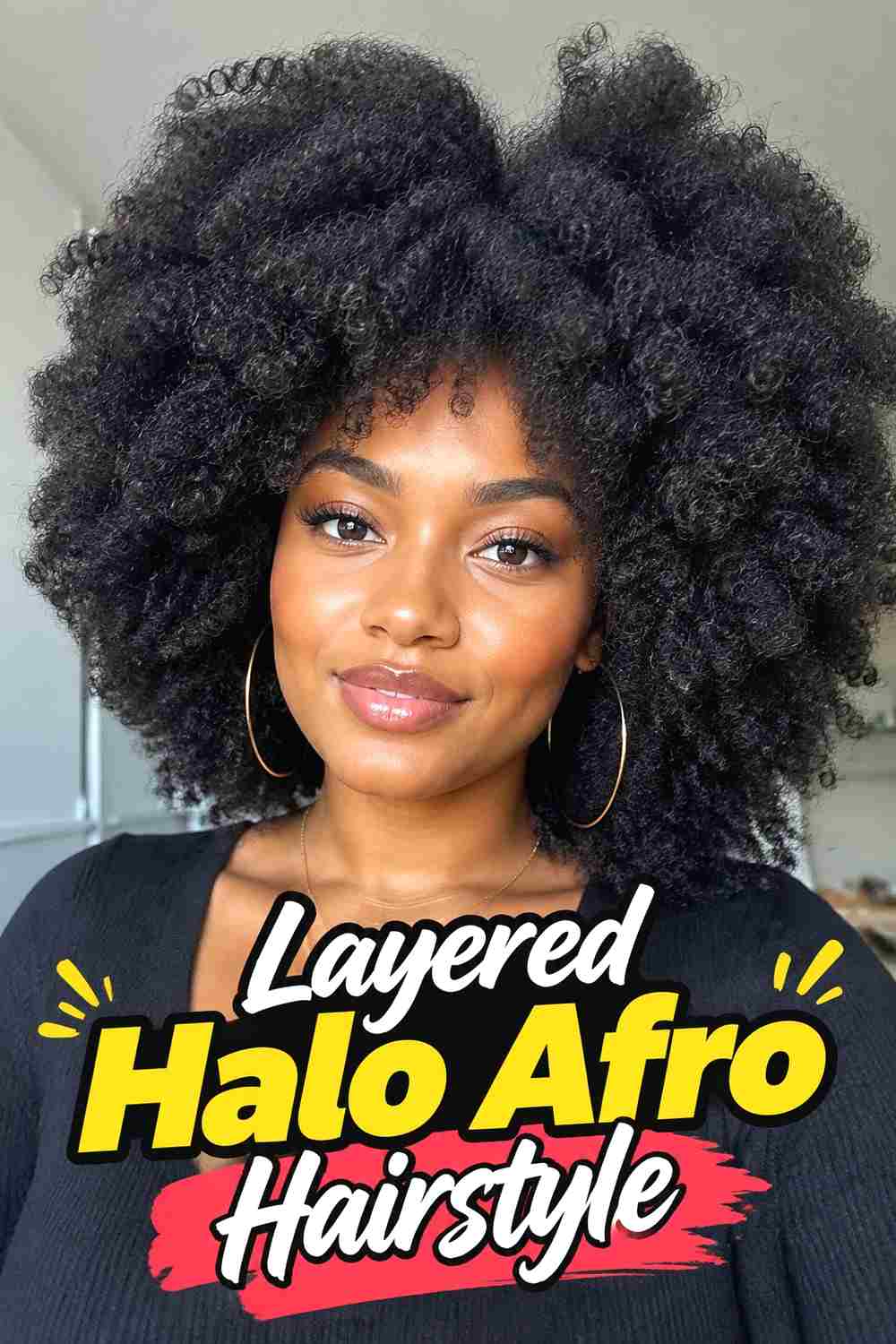
The Layered Halo Afro Hairstyle uses different lengths to create a more dimensional rounded shape. Shorter sections can add lift through the crown, while longer pieces provide softness along the sides and lower perimeter. Rather than forming one solid sphere, the layers allow the hair to move and settle at slightly different levels, which can make dense texture feel lighter. The exact silhouette depends on how the layers interact with shrinkage, so the style may look more rounded after fluffing or more sculpted when definition is preserved. Keep the transition between lengths gradual so the halo remains cohesive instead of appearing stepped or disconnected.
Why It Works
Layering distributes volume through different areas of the style, helping the halo maintain shape without relying entirely on root lifting.
Hair Type & Length
Medium and longer natural hair offers more room for noticeable layering, though shorter shapes can also use subtle length variation.
11. Stretch Defined Halo Afro Hairstyle
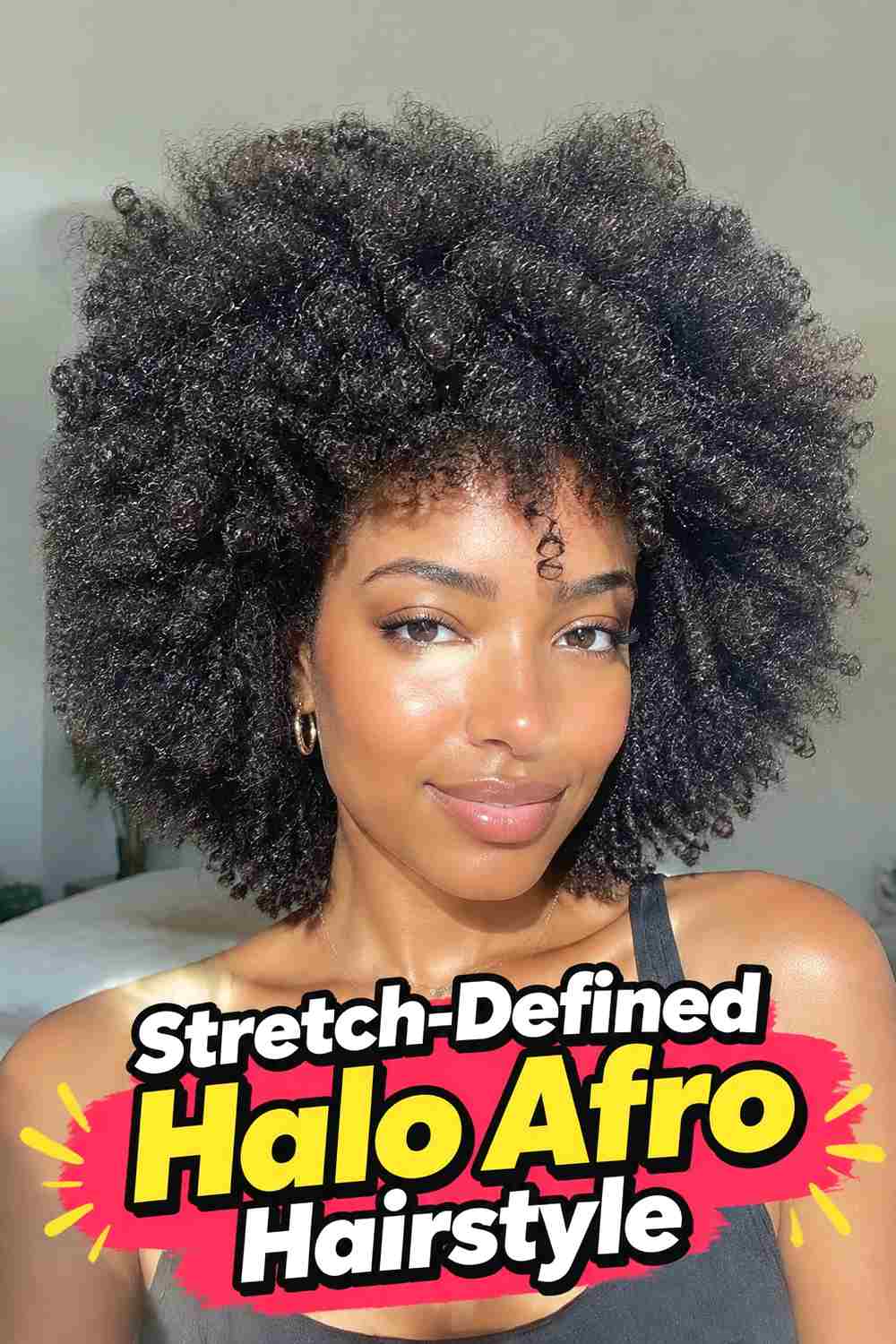
The Stretch-Defined Halo Afro Hairstyle combines extra visible length with enough curl structure to keep the texture recognizable. Hair is gently stretched so the halo expands outward, but the ends retain definition instead of becoming completely fluffy. The result sits between a tightly defined curly Afro and a fully picked-out shape. This balance can make the silhouette appear larger while still showing the natural coil pattern. Focus the most stretching at the roots and mid-lengths, then handle the ends more carefully. The halo can be shaped after stretching with light finger separation, especially around the crown and sides where additional fullness may help create a balanced outline.
Pro Tip
Stretch gradually and preserve some spring at the ends so the finished style still has movement rather than looking overly elongated.
12. Twist Out Halo Afro Hairstyle
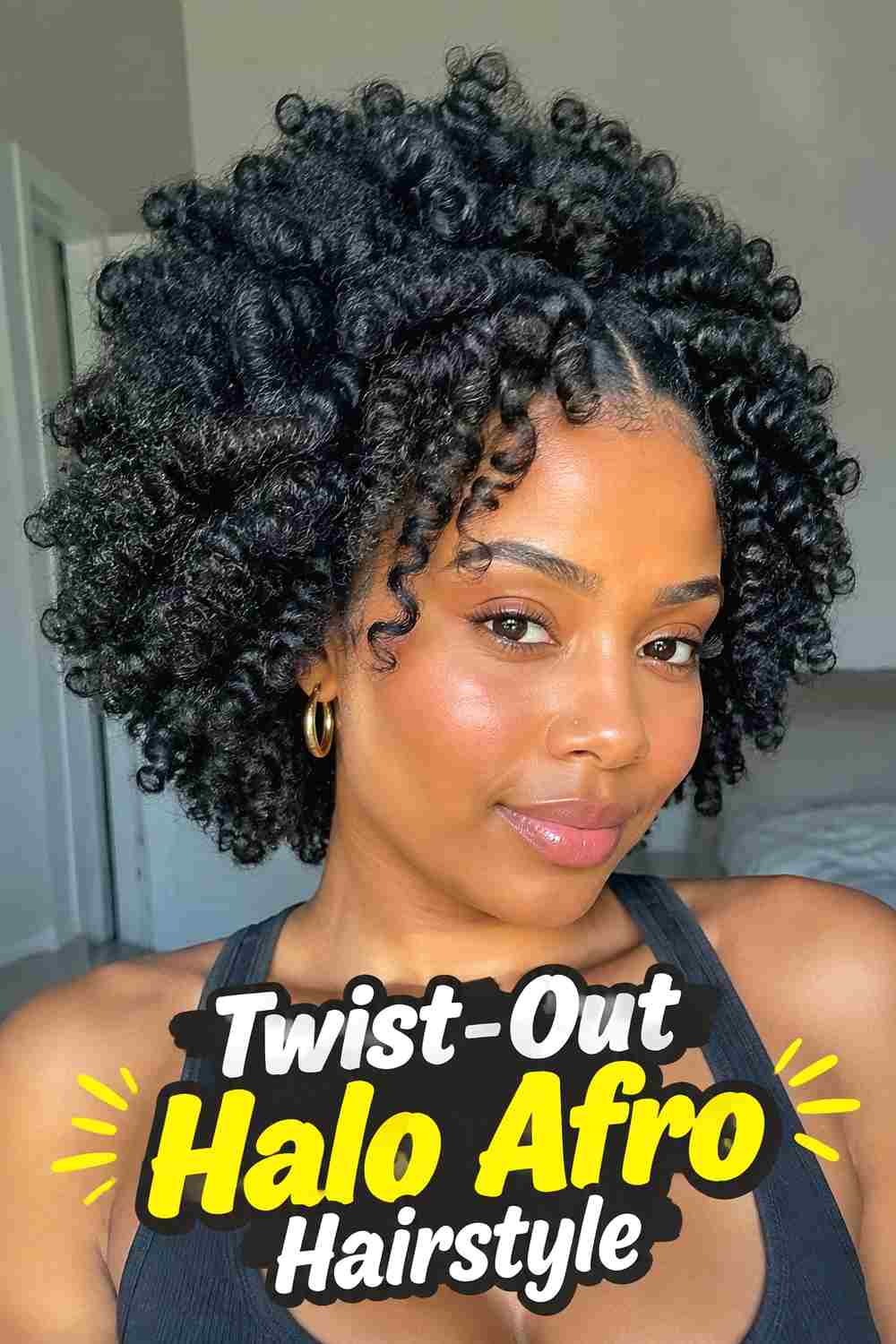
The Twist-Out Halo Afro Hairstyle starts with the elongated pattern of a twist-out and then uses selective fluffing to build a rounded halo shape. Defined sections remain visible throughout the hair, but the roots are lifted enough to create fullness around the crown and sides. Separating each twist into smaller pieces can make the style softer, while leaving larger sections intact produces stronger definition. The best balance usually comes from combining both. Instead of trying to make every section identical, allow the twist pattern to create natural variation throughout the silhouette. This gives the Afro texture, dimension, and a relaxed finish without losing the clear halo outline.
Styling Notes
Separate the twists according to their natural divisions rather than forcing them apart, which helps preserve the pattern while adding volume.
Wear & Maintenance
At night, protecting the shape and minimizing unnecessary friction can make the twist-out definition easier to refresh the next day.
13. Soft Coily Halo Afro Hairstyle
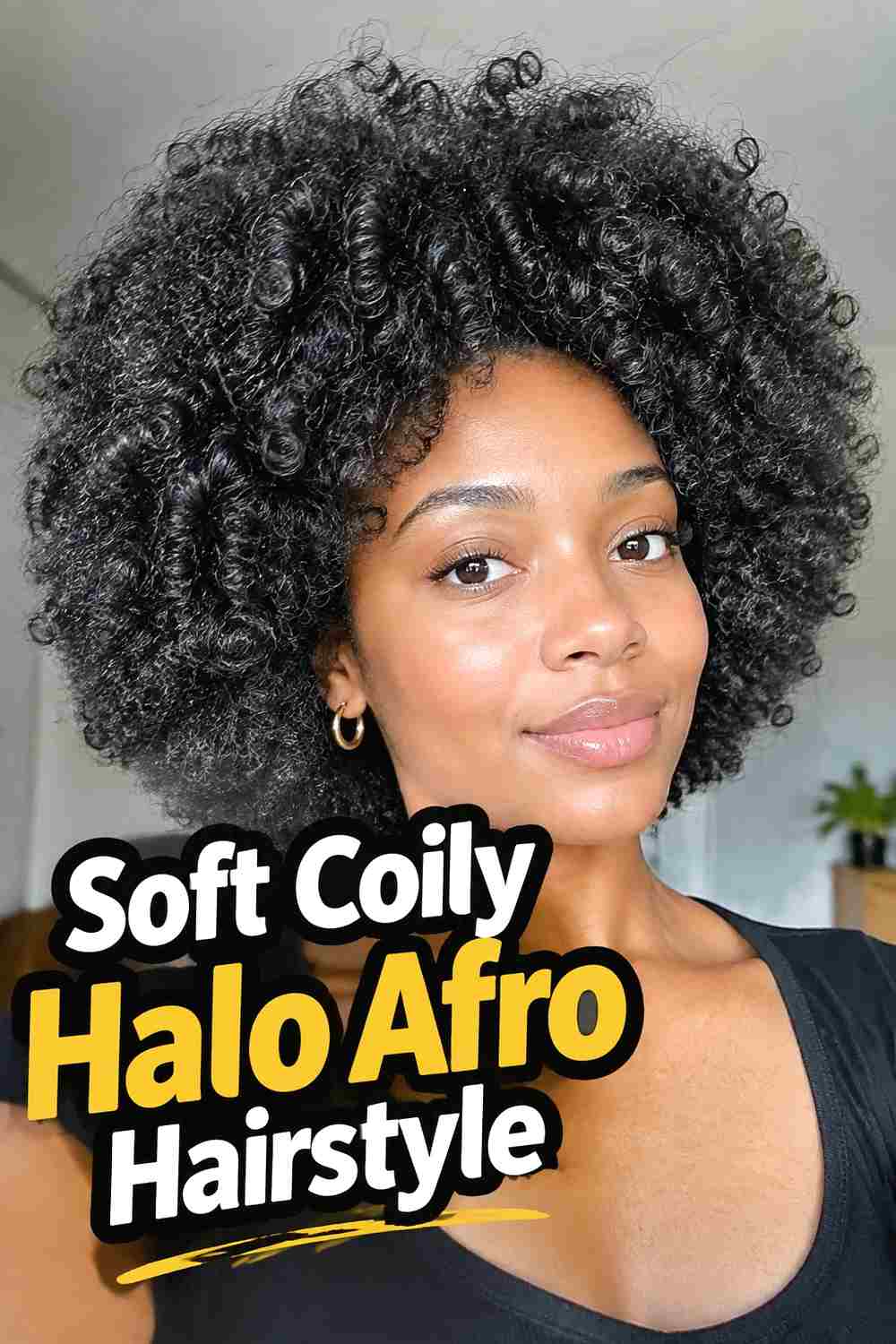
The Soft Coily Halo Afro Hairstyle keeps tight natural coils visible while gently expanding the overall silhouette. Rather than stretching the texture dramatically, the hair is lifted and separated just enough to create a rounded halo around the head. This preserves the spring and density of the coils while giving the shape more presence. The edges can remain soft instead of sharply defined, which helps the style feel natural and relaxed. Focus on distributing fullness evenly so one area does not become much denser than another. Finger shaping works especially well because it lets you adjust the outline while leaving most of the coil pattern undisturbed.
Best For
This style suits anyone who wants to highlight tight coil texture without stretching it into a much looser or larger shape.
Pro Tip
Lift at the roots first and evaluate the shape before separating the ends; you may need less manipulation than expected.
14. Sculpted Halo Afro Hairstyle
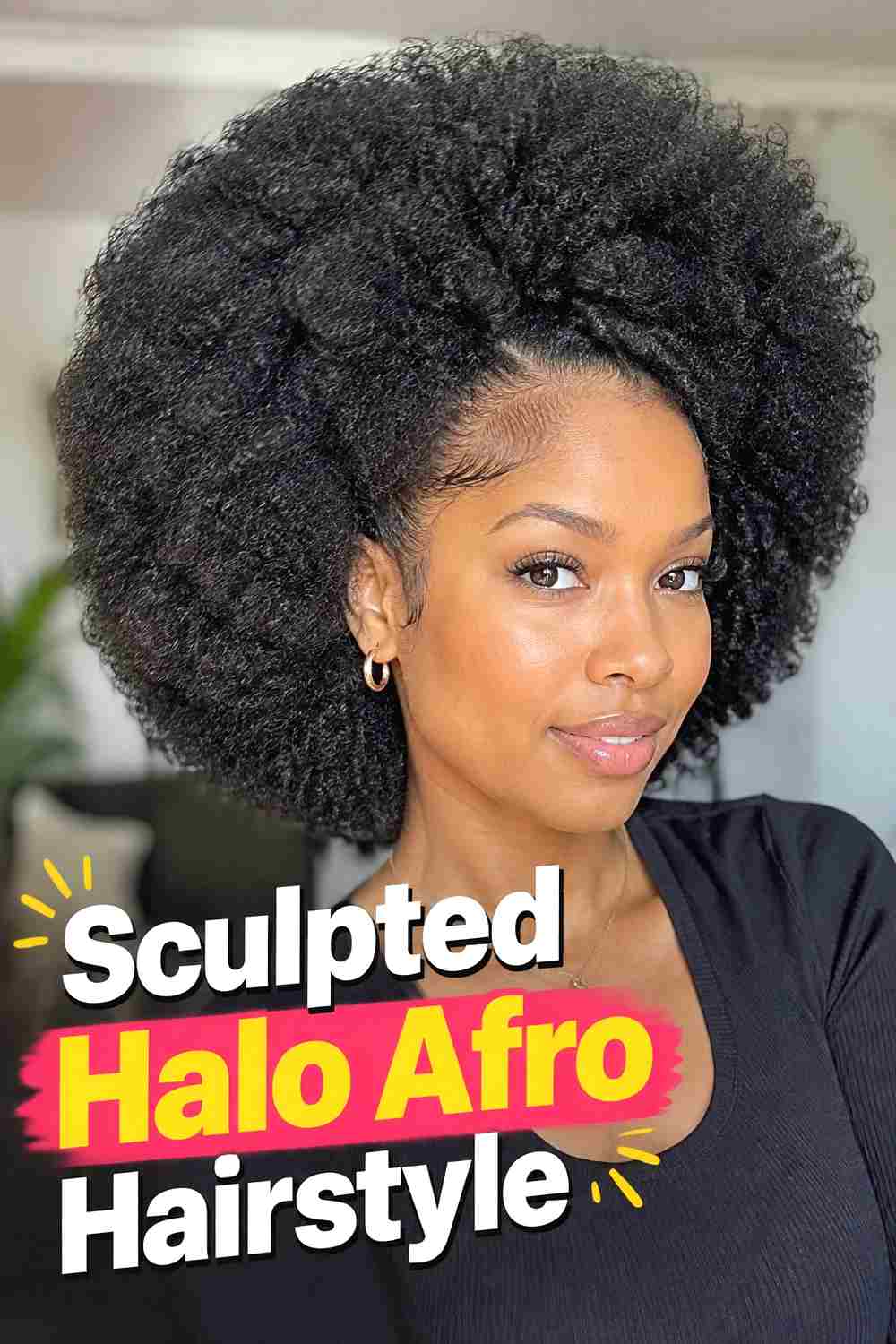
The Sculpted Halo Afro Hairstyle has a deliberately shaped perimeter while still keeping natural texture visible across the surface. The sides, crown, and lower edge are balanced into a clear rounded silhouette, with each area adjusted to support the overall form. Unlike a highly fluffy Afro, this version relies more on controlled shaping than maximum expansion. The result can look polished while still retaining coils, curls, and natural movement. Check the outline from the front, side, and back because small differences in height can affect the sculpted effect. Keeping the surface slightly textured prevents the shape from looking too rigid or artificial.
Styling Notes
Shape in small adjustments rather than aggressively picking one area. The goal is a consistent outline without removing the natural variation in the texture.
15. Natural Fringe Halo Afro Hairstyle
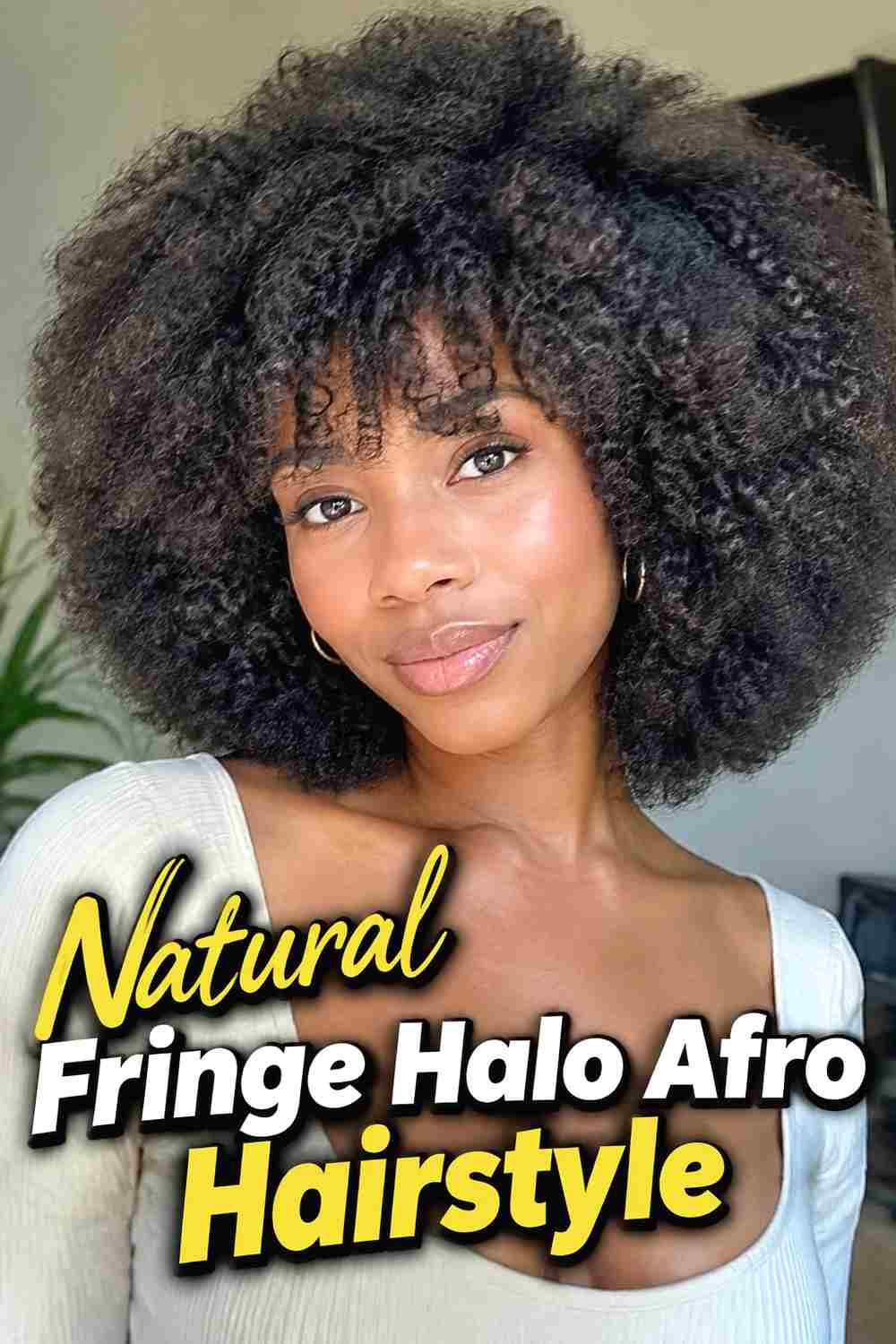
The Natural Fringe Halo Afro Hairstyle brings a soft section of curls or coils forward across the forehead while maintaining rounded volume around the rest of the head. The fringe can be full, wispy, or slightly separated depending on density and shrinkage. Because the front carries extra detail, the crown and sides should stay balanced rather than competing with excessive volume. A fringe also gives the halo a more layered, face-framing silhouette compared with a fully swept-back Afro. Allow the front pieces to settle naturally instead of forcing them into a perfectly straight line. The slight differences in curl length and shape help the fringe blend into the surrounding texture.
Best For
Choose this version when you want natural texture around the forehead while preserving a full halo shape through the crown and sides.
Pro Tip
Shape the fringe when the hair is close to its usual styled shrinkage so you can judge where the curls will naturally sit.
16. Low Volume Halo Afro Hairstyle
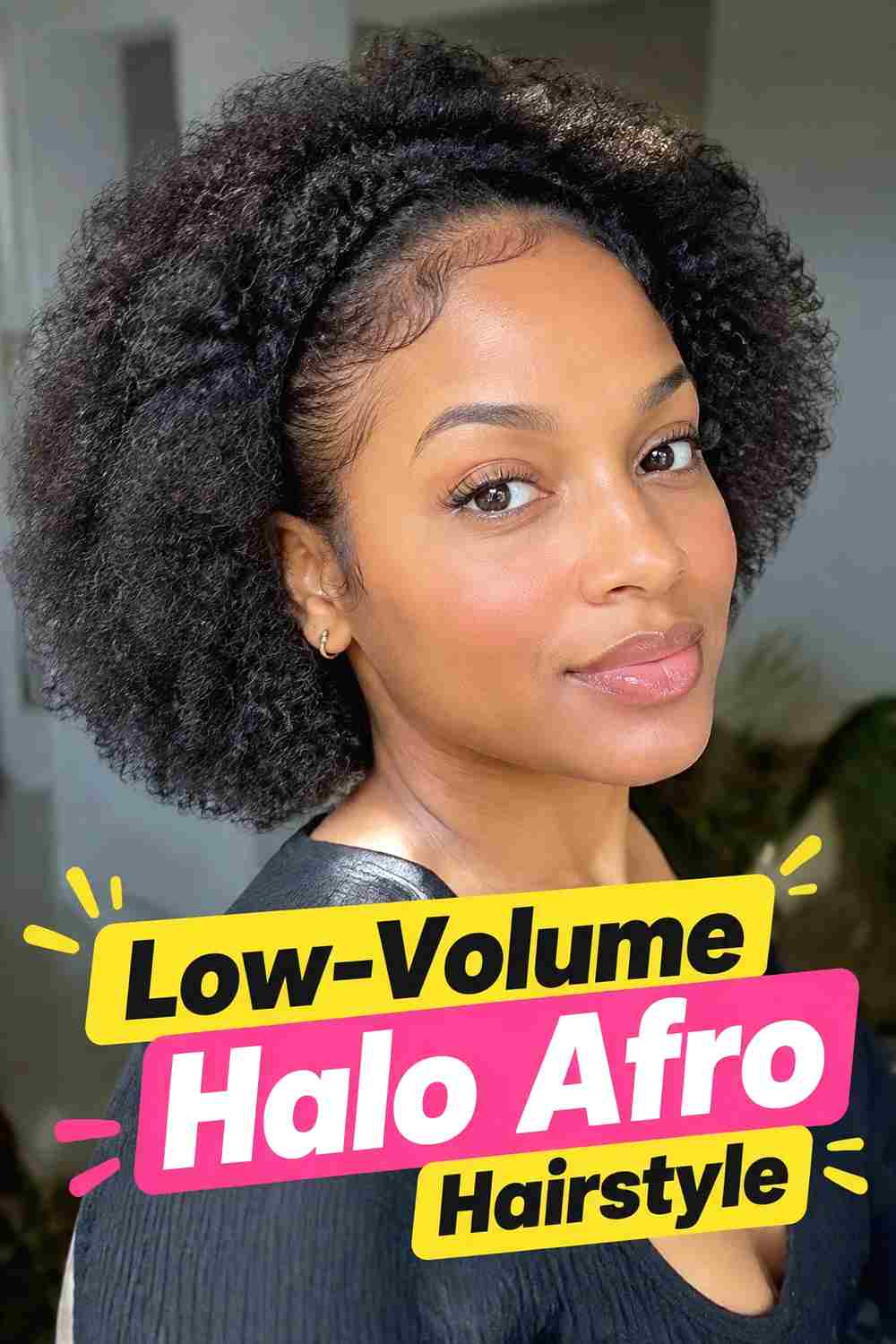
The Low-Volume Halo Afro Hairstyle offers a softer interpretation of the halo shape by keeping the hair closer to the head while preserving a rounded outline. Instead of extensive picking and separation, the texture remains more compact, with just enough root lift to prevent the silhouette from looking flat. This approach can be useful when you want an Afro-inspired shape that feels easy to wear in everyday settings or when you simply prefer less width and height. The ends can stay defined, fluffy, or somewhere between the two. Concentrate on even distribution rather than maximum fullness, especially around the crown where a small amount of lift can make a noticeable difference.
Wear & Maintenance
Because the style relies on moderate volume, refreshing usually involves gentle root lifting rather than extensive restyling or separation.
How to Choose the Right Look
Start with the amount of volume you actually enjoy wearing. The Fluffy Cloud and Voluminous Halo Afro styles create the largest silhouettes, while the Mini and Low-Volume versions stay closer to the head. If you like a balanced middle ground, the Soft Rounded or Soft Coily Halo Afro offers fullness without requiring maximum expansion.
Next, decide how much definition you want to preserve. Defined Curl, Twist-Out, and Stretch-Defined versions keep more visible curl grouping, while Feathered and Fluffy Cloud styles rely on extra separation for softness. Tight coils can remain compact in the Soft Coily version or be gently stretched if you want a broader silhouette.
Parting and framing also change the personality of the look. Side and center parts add structure, while a Natural Fringe brings texture forward around the forehead. Layered and Tapered styles are useful when you want volume distributed strategically instead of evenly around the head.
Finally, consider styling and maintenance. Highly defined looks may need more selective refreshing, while fluffier shapes can tolerate natural expansion as the days pass. Whatever style you choose, use enough manipulation to create the shape you want without forcing every curl or coil to behave identically.
Final Thoughts
A soft halo Afro can be compact, cloud-like, highly defined, gently stretched, or carefully sculpted while still celebrating the natural character of the hair. The most wearable version is usually the one that works with your texture, shrinkage, density, and preferred level of daily styling rather than fighting against them.
FAQs
1. What makes an Afro a halo Afro?
A halo Afro typically has a rounded silhouette that frames the head with balanced volume around the crown and sides, creating a soft halo-like outline.
2. Can short natural hair create a halo Afro?
Yes. A Mini Halo Afro or compact rounded style can work well on shorter natural hair. The halo effect comes from the shape and distribution of volume, not only from length.
3. How can I make my halo Afro look fuller?
Gentle root lifting, selective curl separation, stretching, and shaping can all increase fullness. Work gradually so you can maintain the amount of definition you prefer.
4. Do I need to pick out all my curls for a halo Afro?
No. Defined Curl, Twist-Out, and Soft Coily Halo Afro styles can preserve plenty of curl or coil definition while still creating a rounded silhouette.
5. How can I maintain the halo shape between styling days?
Protect the hair from unnecessary friction, then gently lift flattened roots and reshape only the areas that need attention rather than fully restyling the entire Afro.
Save your favorite soft halo Afro ideas, share the styles that inspire you, and explore more natural hairstyle inspiration for your next look.