18 Chunky Twist-Out Ponytail Hairstyle Ideas for Natural Volume
Big texture, soft definition, and easy ponytail shapes make these chunky twist-out looks a beautiful way to show off natural volume and movement.
A chunky twist-out ponytail combines the stretched definition of a twist-out with the practicality of pulled-back styling. Larger twists usually create broader bends and spirals than small twists, giving the finished ponytail a full, touchable texture that can look polished without appearing overly controlled.
The best version depends on your hair length, density, shrinkage, preferred definition, and how much volume you want around the crown and ponytail. Some styles keep the roots smooth and let the ends expand, while others preserve texture from the hairline through the ponytail. These 18 ideas explore both approaches.
Quick List
- High Volume Chunky Twist Out Ponytail Hairstyle
- Low Chunky Twist Out Ponytail Hairstyle
- Side Part Chunky Twist Out Ponytail Hairstyle
- Half Up Chunky Twist Out Ponytail Hairstyle
- Pineapple Inspired Chunky Twist Out Ponytail Hairstyle
- Wrapped Base Chunky Twist Out Ponytail Hairstyle
- Side Swept Chunky Twist Out Ponytail Hairstyle
- Defined Chunky Twist Out Ponytail Hairstyle
- Fluffy Chunky Twist Out Ponytail Hairstyle
- Stretched Chunky Twist Out Ponytail Hairstyle
- Braided Front Chunky Twist Out Ponytail Hairstyle
- Mini Twist Accent Chunky Twist Out Ponytail Hairstyle
- Scarf Wrapped Chunky Twist Out Ponytail Hairstyle
- Double Section Chunky Twist Out Ponytail Hairstyle
- Face Framing Chunky Twist Out Ponytail Hairstyle
- Sculpted Crown Chunky Twist Out Ponytail Hairstyle
- Extra Long Chunky Twist Out Ponytail Hairstyle
- Soft Bang Chunky Twist Out Ponytail Hairstyle
1. High Volume Chunky Twist Out Ponytail Hairstyle
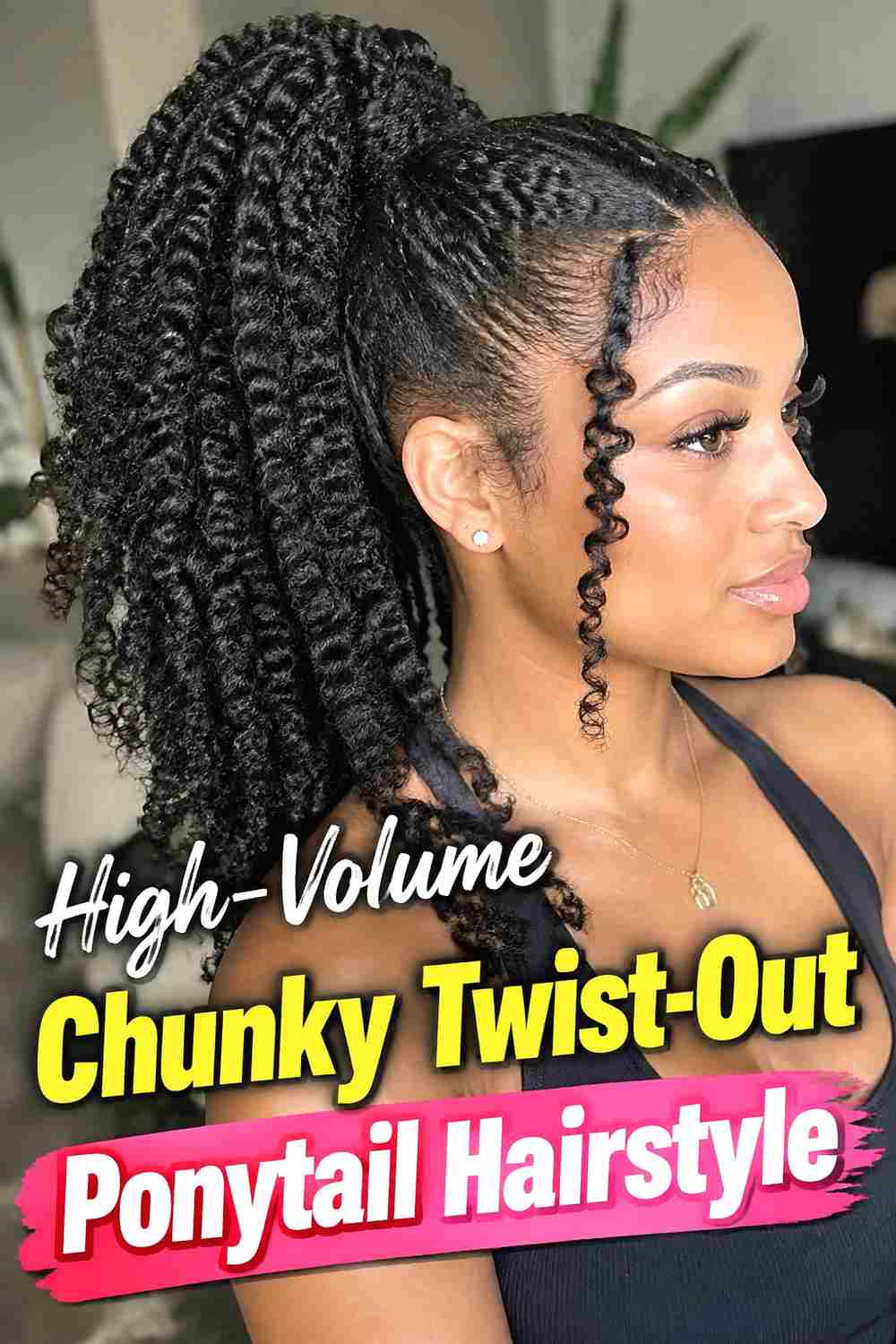
A high ponytail gives a chunky twist-out maximum visibility by lifting the textured lengths above the crown and allowing them to spread outward naturally. The twist-out should retain broad, separated curves rather than being brushed into a uniform puff, so individual sections still show the pattern created during the set. A smooth but comfortable base creates contrast with the fuller ponytail, while a little root lift keeps the transition from looking too flat. This style works especially well when the hair has enough density to create width and movement at the top without needing every section to be heavily separated.
Styling Notes
Unravel the chunky twists only after they are fully dry, then separate them gradually before gathering the hair. Excessive separation can turn the definition into general fluff.
Best For
Medium-long to long natural hair with enough density to create a substantial high ponytail.
2. Low Chunky Twist Out Ponytail Hairstyle
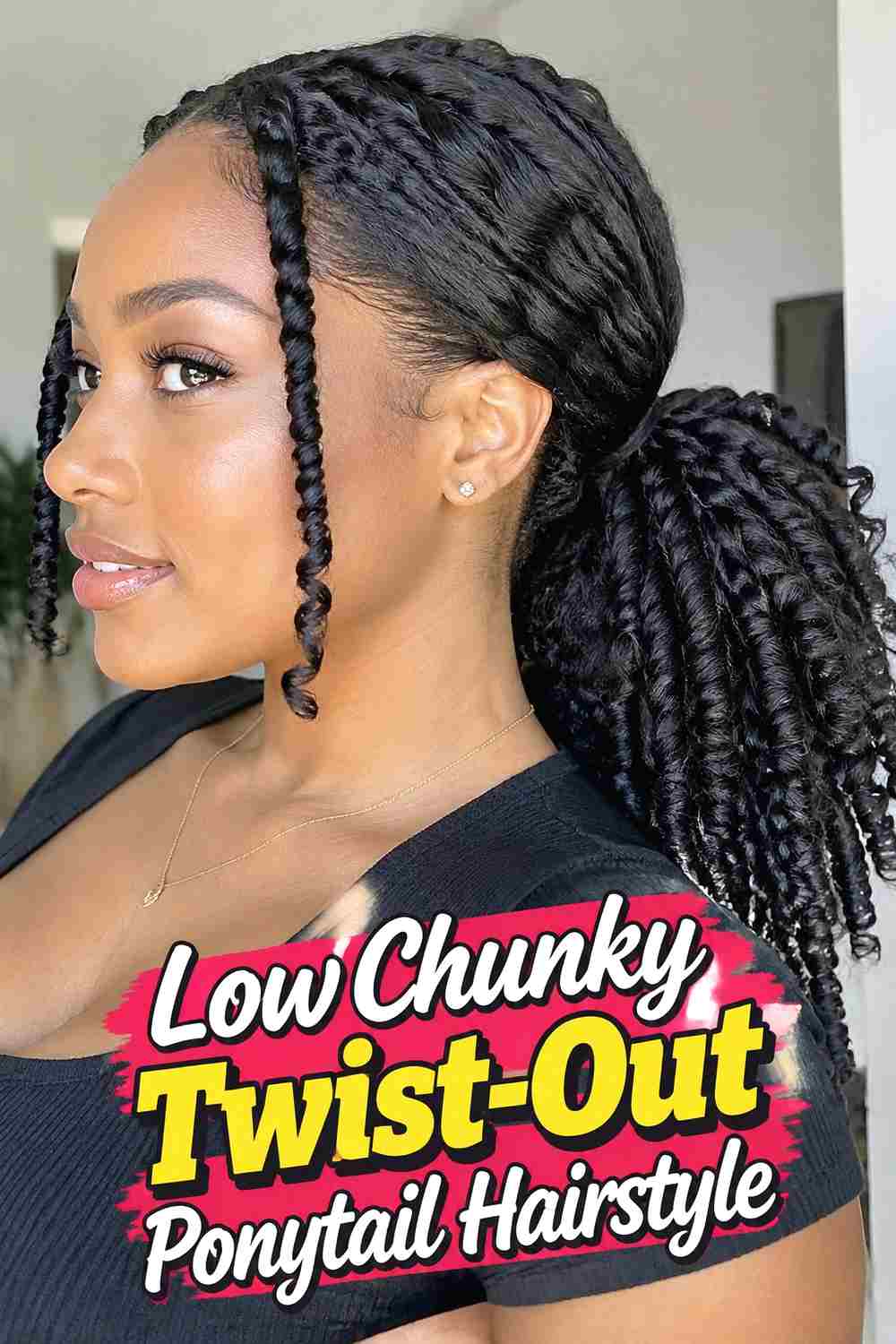
A low chunky twist-out ponytail keeps the style relaxed and understated while still showcasing the broad texture of the twist-out. The hair is gathered near the nape with moderate tension, allowing some natural fullness to remain through the crown and sides. The ponytail itself can be gently separated so the twist pattern looks soft and expansive rather than compact. A center or subtle side part can make the front feel more intentional without competing with the textured length. This variation is particularly practical when you want a natural style that fits easily with jackets, hats, or everyday outfits while keeping most of the hair controlled.
Why It Works
The low placement gives the chunky texture room to fall naturally and creates a softer silhouette than a tight high ponytail.
Wear & Maintenance
Use a secure but comfortable tie and avoid repeatedly tightening the base during the day, which can compress the textured roots.
3. Side Part Chunky Twist Out Ponytail Hairstyle
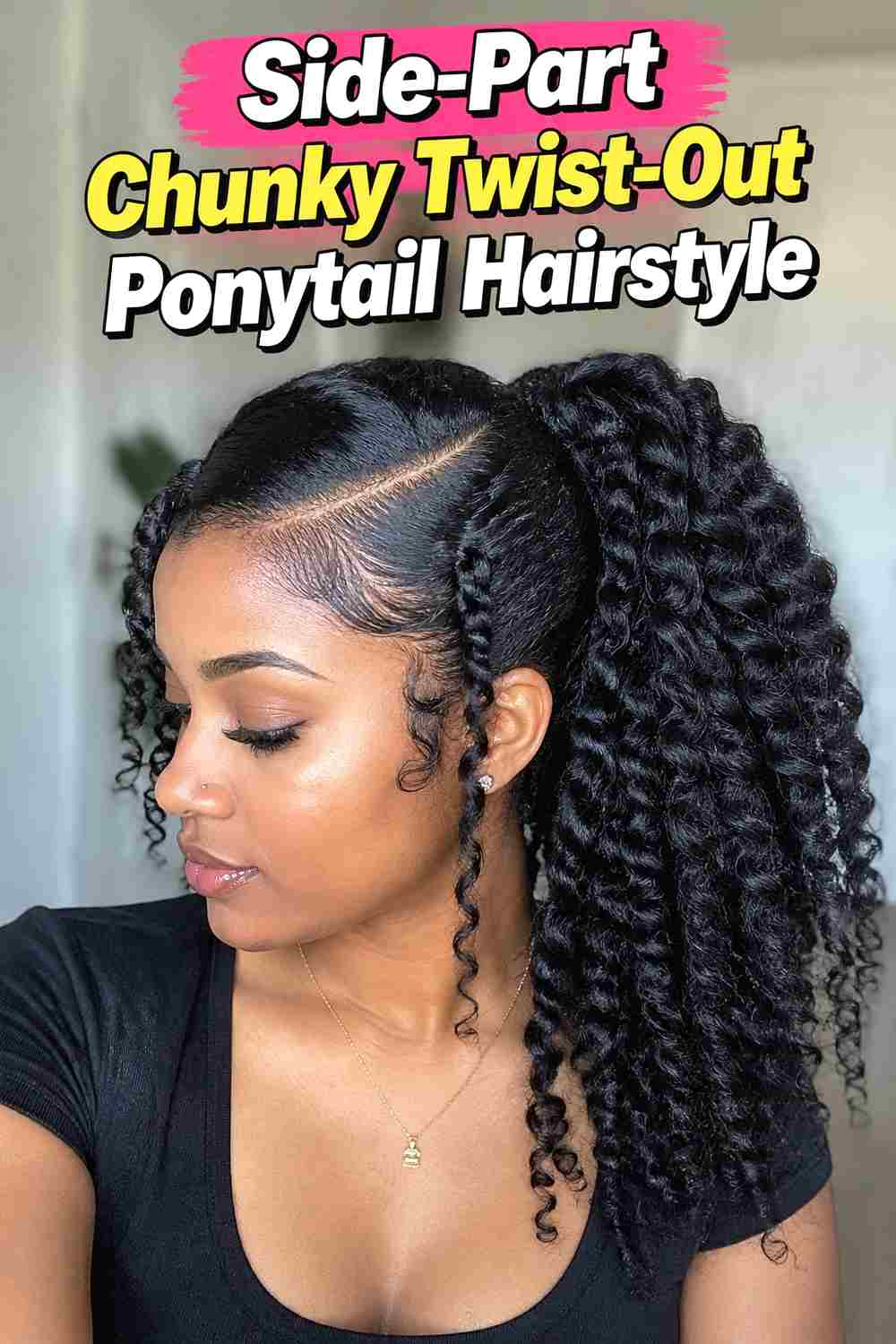
A side part adds clear direction to a chunky twist-out ponytail and makes the style look finished from the front. The fuller side can retain extra root volume while the opposite side is smoothed toward a mid-height or low ponytail. Once gathered, the twist-out texture remains broad and softly defined through the length, creating a noticeable contrast with the directional front. The part can be crisp for a polished effect or slightly softened for a more relaxed finish. This variation is useful when you want to preserve natural texture around the roots while still giving the hairstyle a recognizable shape and intentional balance.
Styling Notes
Create the part before gathering the hair so the sections fall naturally toward the ponytail instead of being forced into position afterward.
Pro Tip
Lift the roots gently on the fuller side to keep the part from making the crown appear unnecessarily flat.
4. Half Up Chunky Twist Out Ponytail Hairstyle
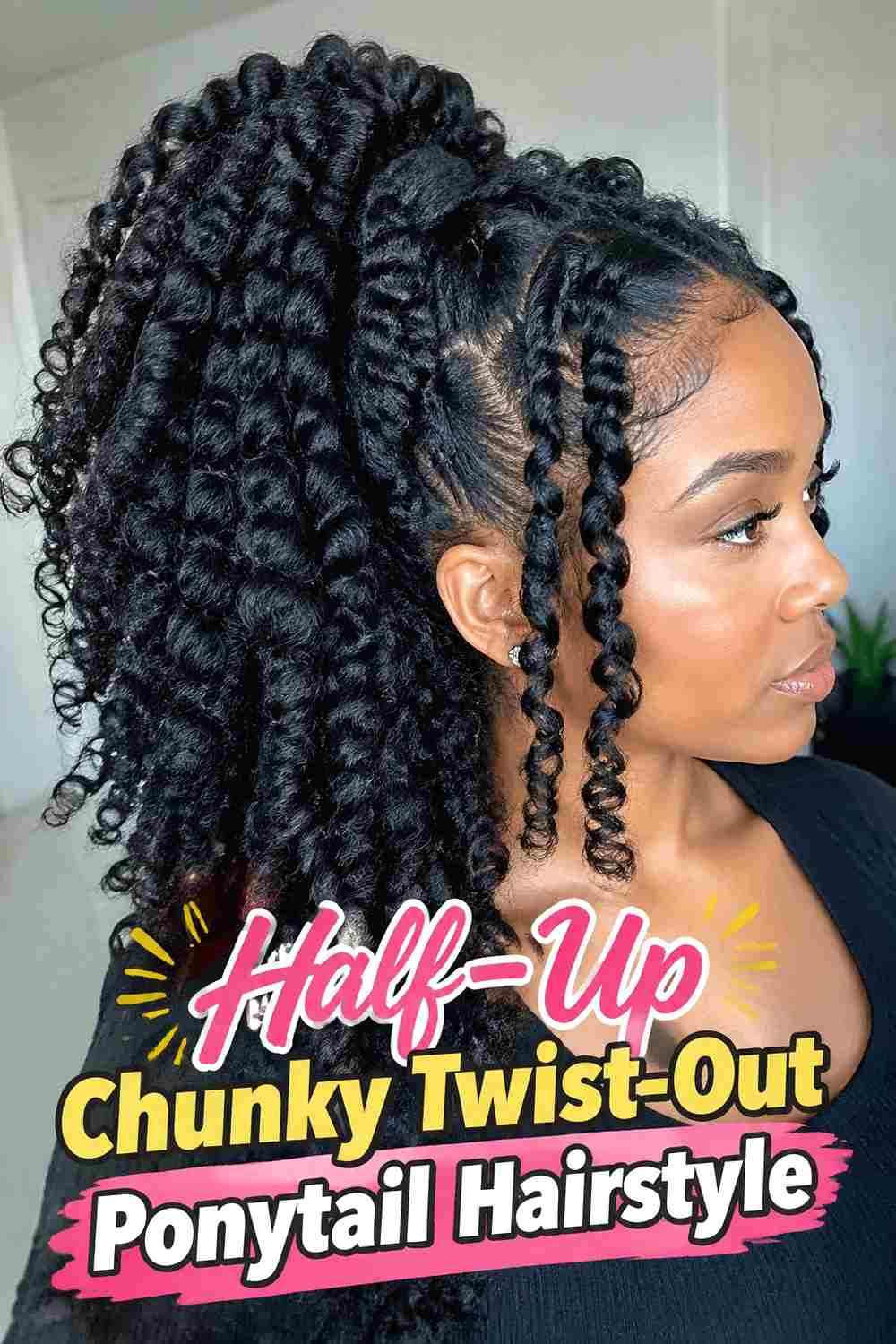
The half-up version keeps the twist-out loose through the lower layers while gathering only the crown and upper sides into a ponytail. This creates a useful mix of structure and movement, with the upper ponytail adding height while the remaining hair frames the shoulders. Larger twist-out sections work especially well because their broad definition remains visible across both the secured and loose portions. The style can be centered for balance or placed slightly higher for more lift. Because less hair is pulled into the ponytail, the base can feel lighter and more comfortable than a full upstyle while still creating a clear focal point.
Best For
Medium and long hair that has enough length and fullness to leave a substantial lower section loose.
Why It Works
The half-up structure showcases more of the twist-out pattern while still providing the lifted shape of a ponytail.
5. Pineapple Inspired Chunky Twist Out Ponytail Hairstyle
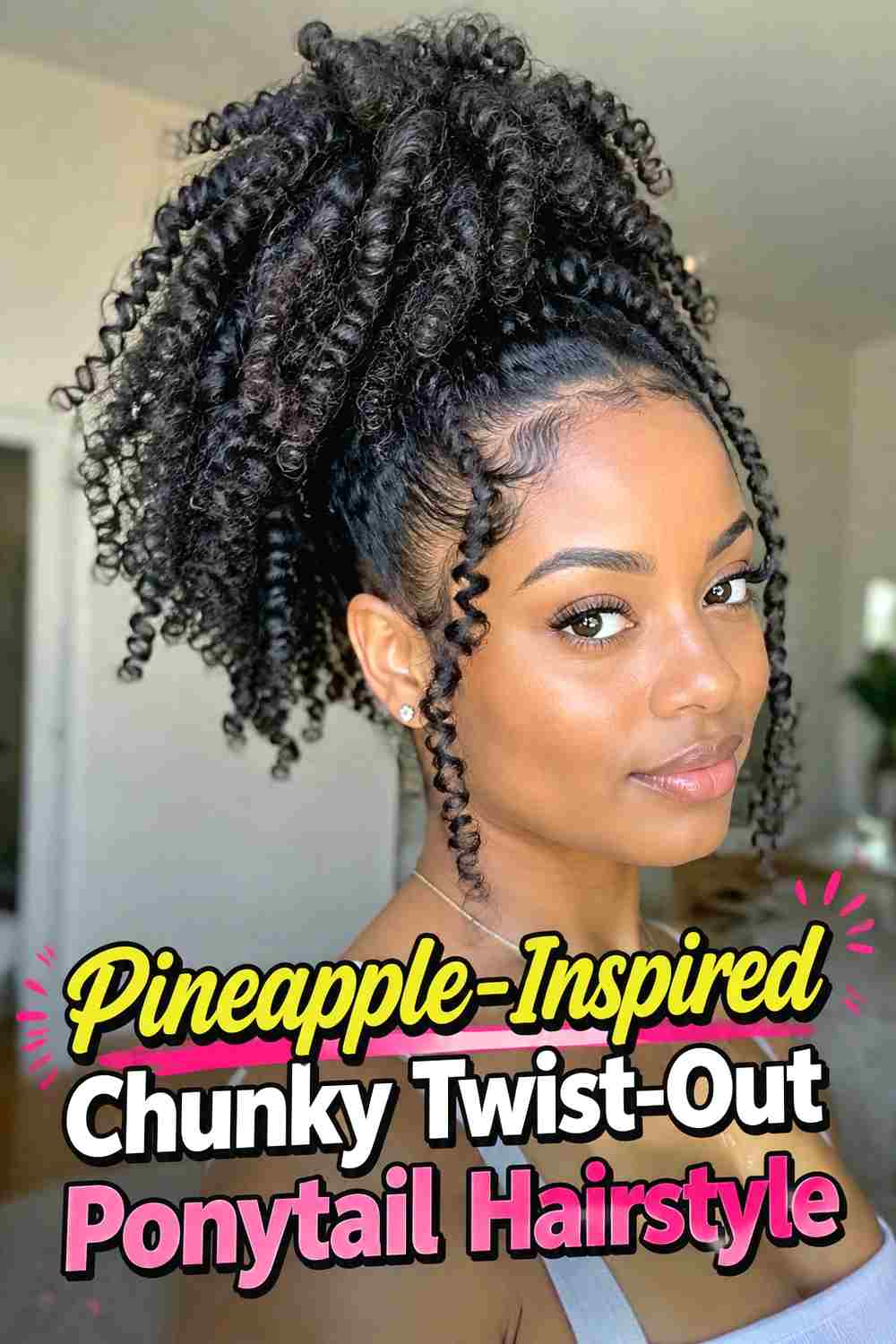
This high, loosely gathered style takes inspiration from the classic pineapple shape while keeping the twist-out pattern visible. The hair is collected near the top of the head without compressing the textured lengths, allowing chunky sections to fan forward, outward, and slightly to the sides. Instead of forming a perfectly round puff, the ponytail retains irregular bends and spirals from the twist set. A few pieces may naturally fall toward the forehead for a softer silhouette. The overall effect is full and playful, making it a useful option when you want maximum height while minimizing manipulation through the ends.
Wear & Maintenance
Choose a flexible tie or band that gathers the hair without crushing the base of the twist-out.
Pro Tip
Arrange the ponytail with your fingers rather than repeatedly combing through it, which helps preserve the broad chunky pattern.
6. Wrapped Base Chunky Twist Out Ponytail Hairstyle
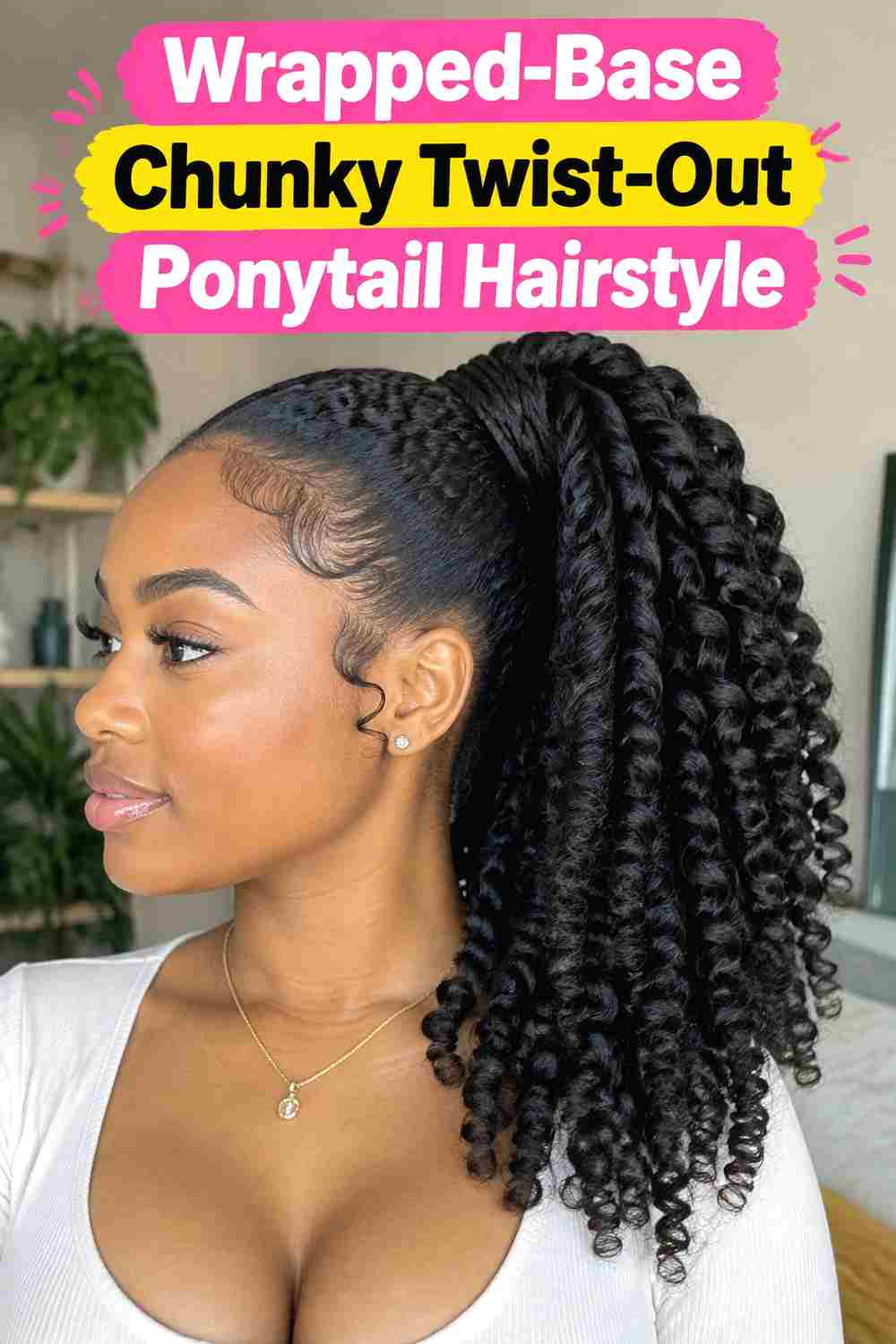
A wrapped base gives the textured ponytail a clean finishing detail without changing the softness of the twist-out. After gathering the hair at a medium or high position, leave out a small section near the underside of the ponytail. Wrap that piece around the elastic and secure it discreetly underneath. The remaining ponytail can stay full, separated, and visibly textured. This works particularly well when you want the hairstyle to look polished enough for a dressier outfit while preserving the natural scale of the chunky twist-out. The wrapped section should remain smooth enough to conceal the elastic without looking disconnected from the rest of the hair.
Styling Notes
Set aside the wrapping strand before finalizing the ponytail so you do not have to disturb already arranged twist-out sections.
Why It Works
Hiding the elastic creates a cleaner base while leaving the textured ponytail as the main visual feature.
7. Side Swept Chunky Twist Out Ponytail Hairstyle
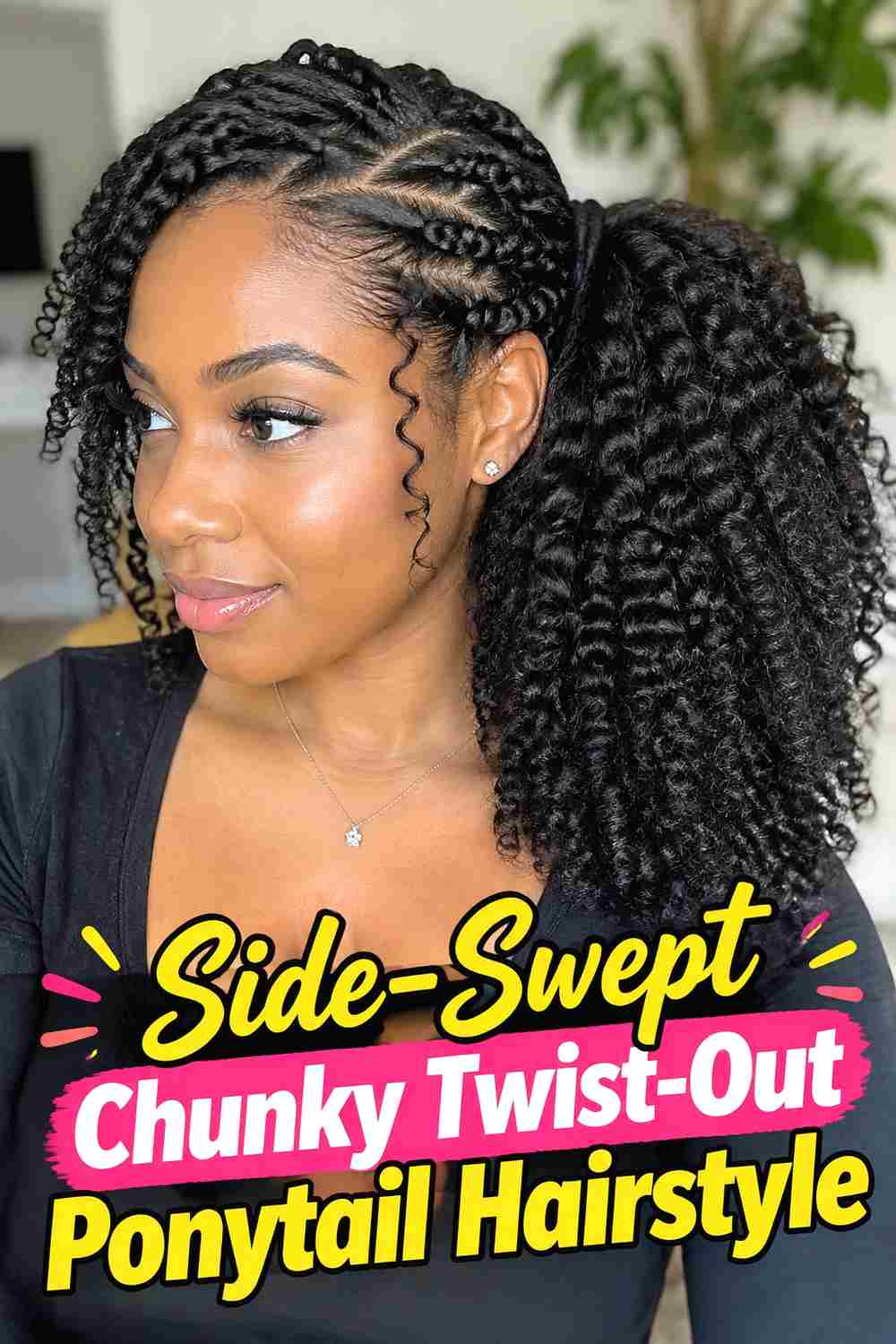
A side-swept ponytail positions the chunky twist-out over one shoulder, making its texture visible from the front. The base sits low behind one ear, while the broad bends and spirals fall forward along the shoulder and upper chest. A soft side part can reinforce the direction of the style, although a part-free crown also works when you want more root volume. This placement makes the ponytail feel decorative without requiring extra braids or accessories. It is especially effective on medium-long and long hair, where enough length remains after shrinkage for the ponytail to drape instead of stopping near the jaw.
Hair Type & Length
Longer natural hair or stretched medium-long hair usually gives the strongest side-swept effect.
Styling Notes
Place the tie slightly behind the ear rather than directly underneath it to keep the ponytail comfortable and naturally angled.
8. Defined Chunky Twist Out Ponytail Hairstyle
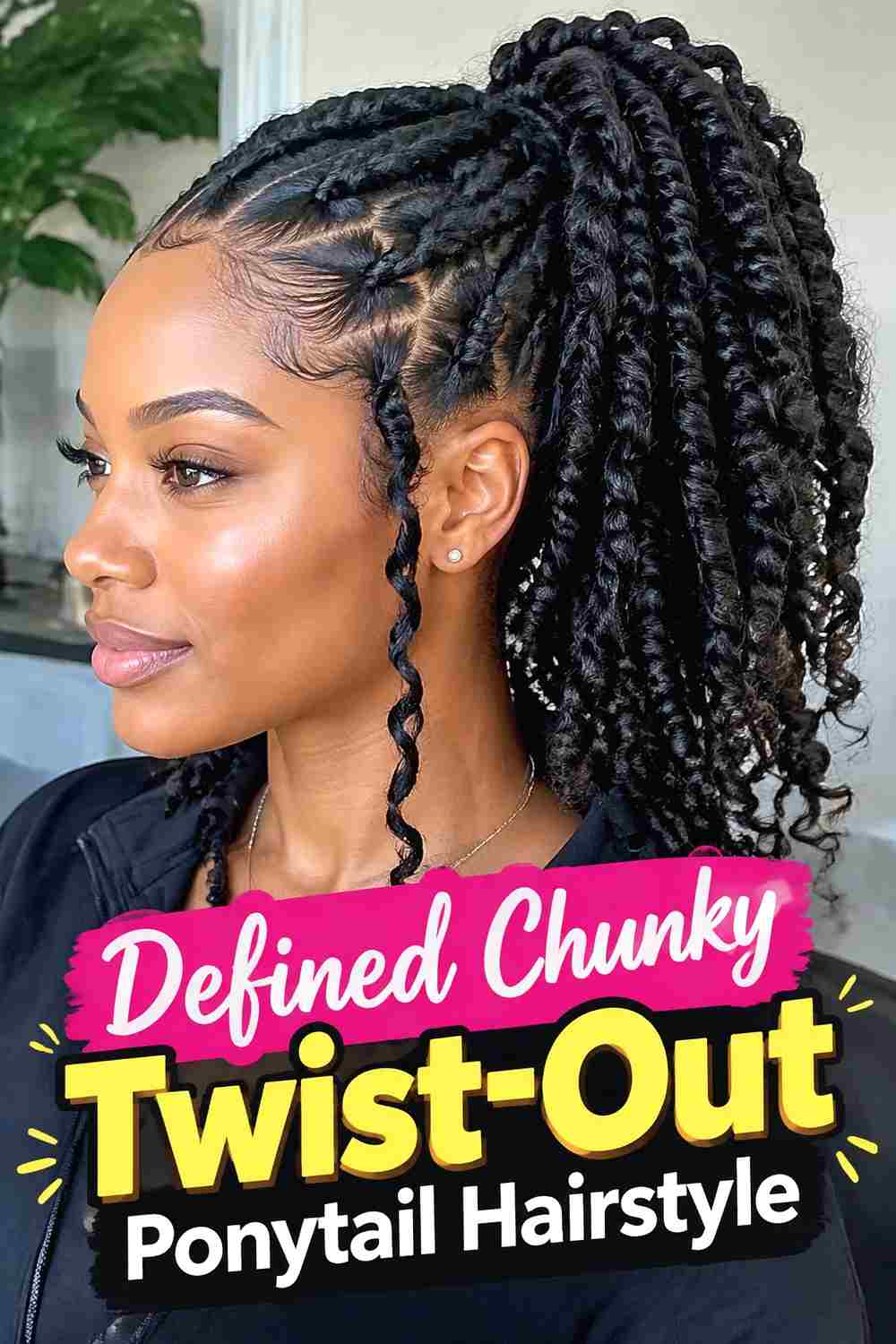
A defined chunky twist-out ponytail keeps the individual twist sections more intact instead of separating them repeatedly for extra volume. The result is a ponytail with broad, visible S-shaped bends and spirals that look soft but deliberate. The roots can remain lightly textured rather than completely slick, helping the ponytail blend naturally with the rest of the style. This version is a good choice when you prefer definition over maximum width or want the original twist pattern to stay recognizable. Careful unraveling matters most, since rough separation can quickly change the finish from structured texture to a fuller, less defined puff.
Wear & Maintenance
Protect the defined sections from excessive friction and refresh only pieces that have lost their pattern instead of resetting the entire ponytail.
Pro Tip
Coat fingertips lightly with your preferred styling product before separating to reduce unnecessary disruption to the twist pattern.
9. Fluffy Chunky Twist Out Ponytail Hairstyle
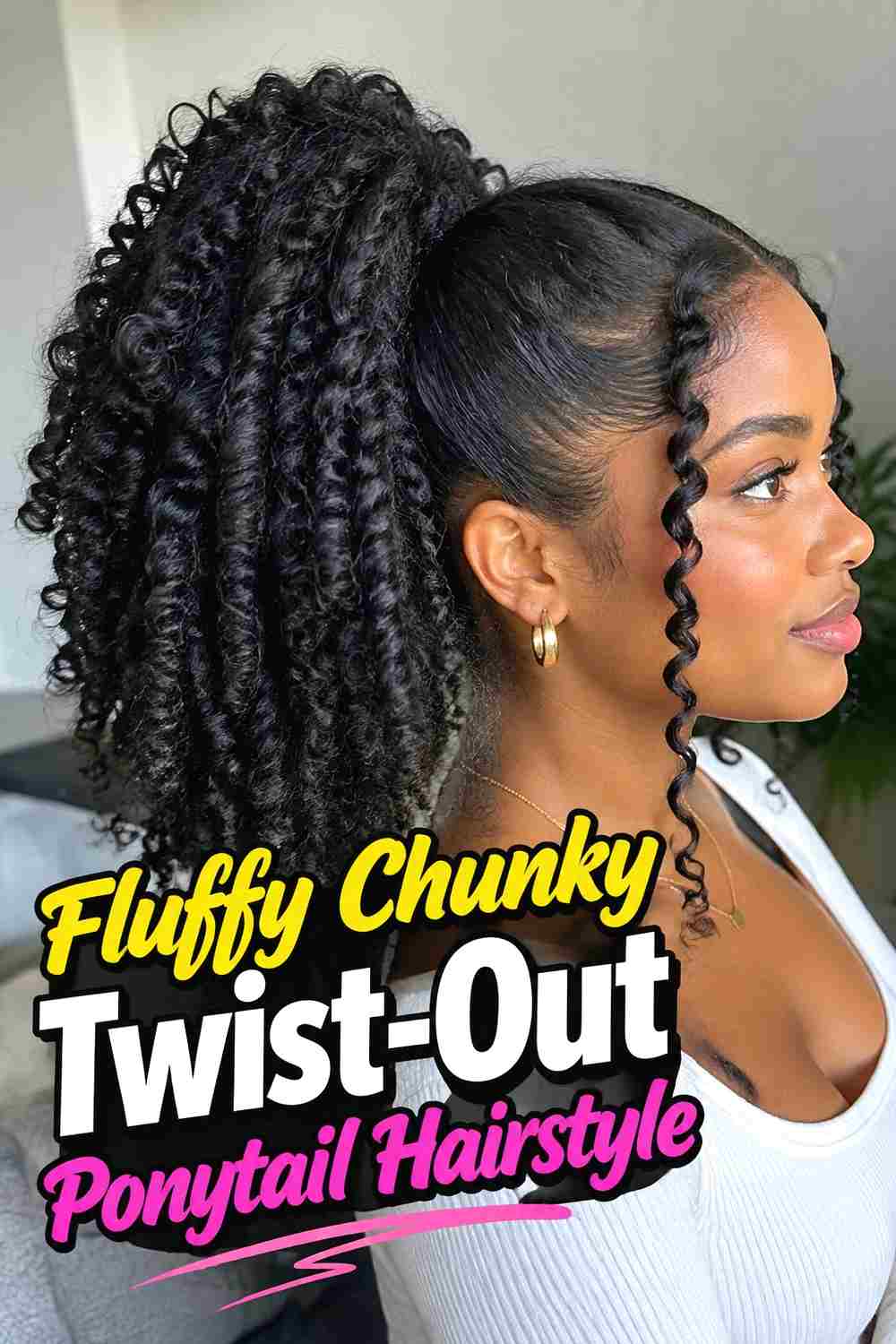
The fluffy version intentionally pushes the twist-out toward greater softness and volume. After unraveling the chunky twists, each section is separated more thoroughly and the roots are lifted until the ponytail develops an airy, expanded silhouette. Some visible twist pattern should remain through the ends so the result does not become a completely undefined puff. The base can stay softly textured as well, creating a cohesive transition from roots to ponytail. This style works particularly well for dense hair because there is enough natural body to create width without requiring an extremely tight ponytail. A few natural flyaways can complement the relaxed finish.
Why It Works
The combination of broad twist-out texture and intentional separation creates substantial volume while preserving natural movement.
Styling Notes
Build fullness gradually and check the shape from several angles to avoid over-expanding only one side of the ponytail.
10. Stretched Chunky Twist Out Ponytail Hairstyle
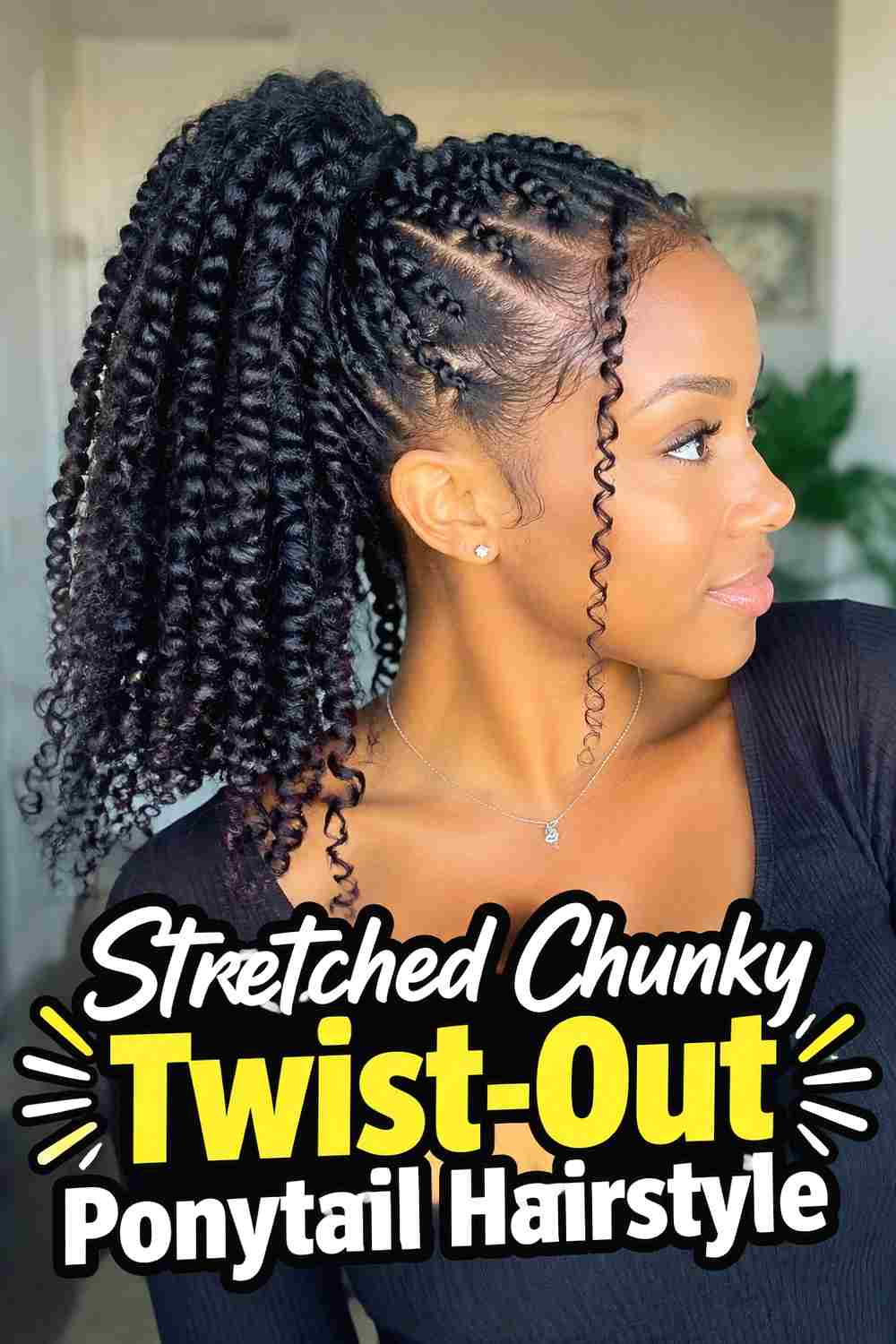
A stretched chunky twist-out emphasizes length while still keeping visible texture. The hair may be gently elongated before twisting or allowed to stretch during the set, producing broader bends and less shrinkage once the twists are unraveled. Gathered into a mid-height or low ponytail, the elongated sections create a fuller drop and make the overall length easier to see. The finish can remain softly defined rather than perfectly uniform. This variation is especially useful when you want the ponytail to hang rather than sit close to the head, while still maintaining the character of a natural twist-out instead of straightening the texture completely.
Hair Type & Length
This approach can work well when natural shrinkage makes your usual ponytail appear much shorter than the stretched length.
Pro Tip
Use gentle stretching methods and preserve enough texture that the finished ponytail still reads clearly as a twist-out.
11. Braided Front Chunky Twist Out Ponytail Hairstyle
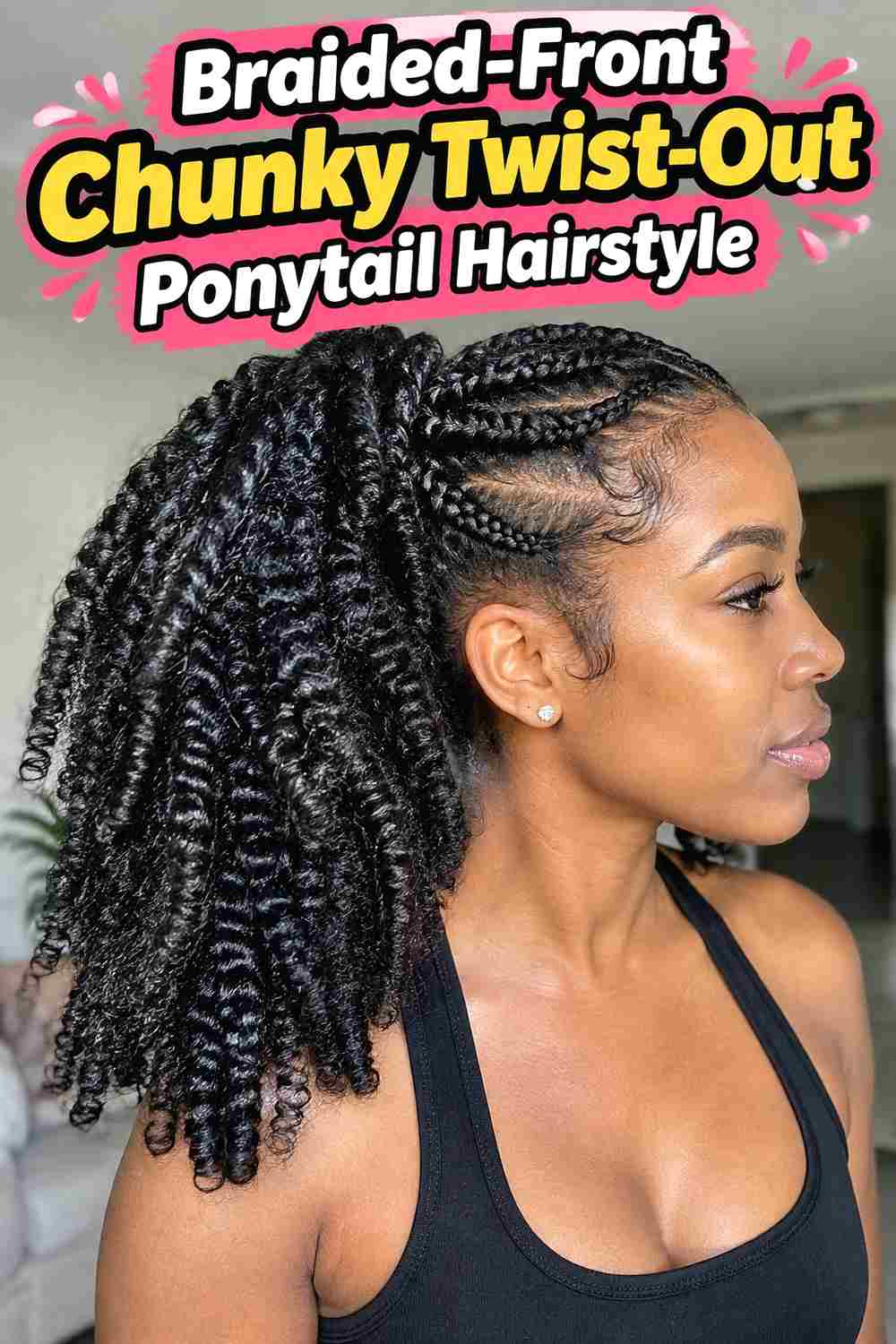
Adding a braid near the front creates structure while leaving most of the twist-out untouched. A narrow French, Dutch, or flat braided section can begin at the hairline and travel toward the ponytail base, where it joins the remaining textured hair. The ponytail itself stays chunky, broad, and softly separated, creating a strong contrast between precise braiding and loose twist-out movement. Keeping the braid relatively narrow prevents it from dominating the entire style. This variation is particularly useful when you want extra detail around the face or need a controlled way to direct shorter front sections into the ponytail.
Styling Notes
Plan the braid toward the exact ponytail position so the transition looks connected rather than decorative but unrelated.
Best For
This look suits medium-long and long hair when you want visible front detail along with a full textured ponytail.
12. Mini Twist Accent Chunky Twist Out Ponytail Hairstyle
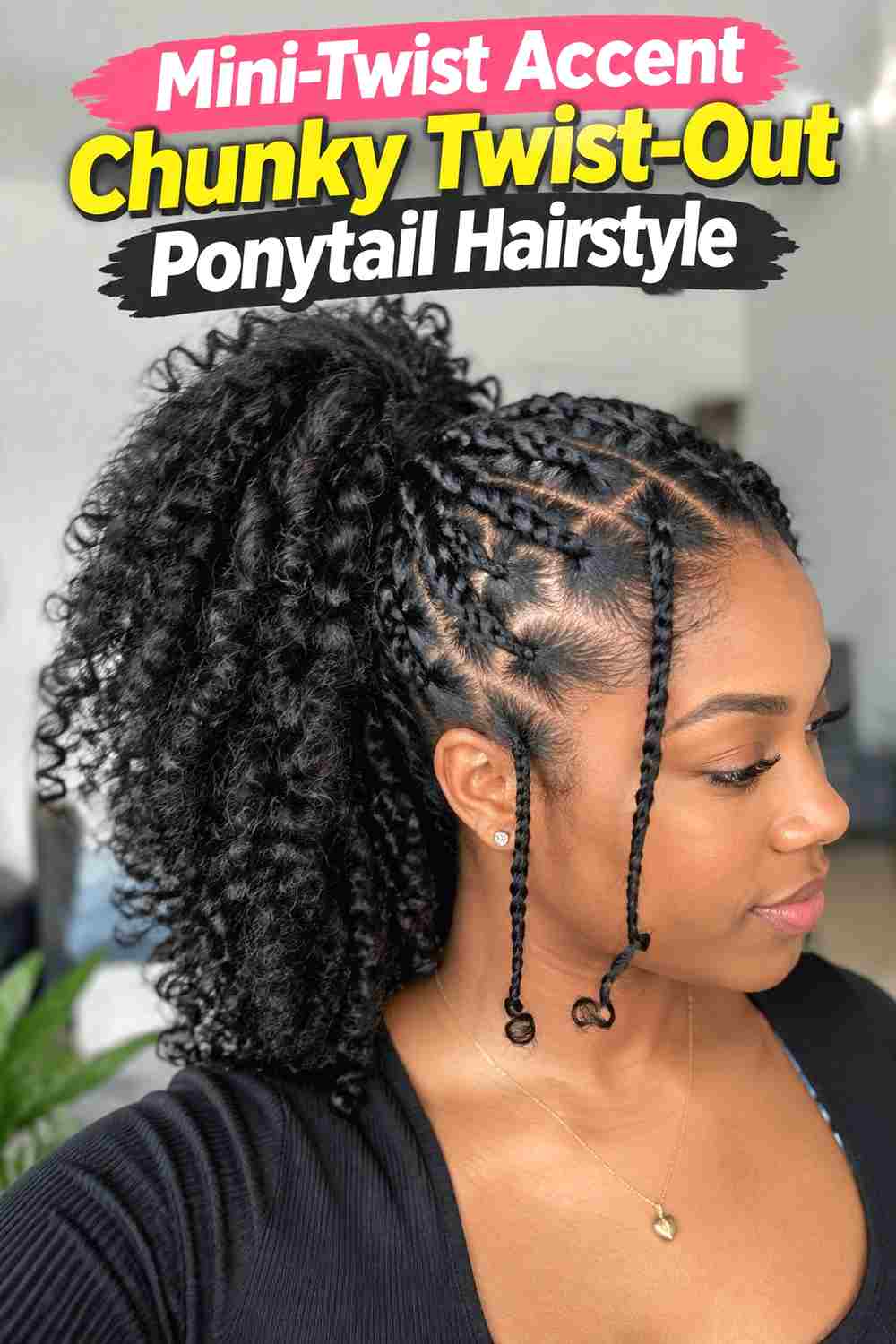
Small twists near the temples or hairline create subtle detail before blending into the larger twist-out ponytail. Unlike a fully mini-twisted style, only a few sections remain twisted while the majority of the hair is unraveled into chunky texture. Those narrow accents can frame the face, lead backward toward the ponytail, or sit near one side of the part. The contrast in scale makes the hairstyle more interesting without adding the time required for a full head of small twists. Keep the mini twists neat and limited so the fuller ponytail remains the dominant feature and the overall look does not become visually crowded.
Why It Works
Repeating the twist motif in two different sizes creates a cohesive style while still giving the ponytail plenty of volume.
Wear & Maintenance
Refresh the small accent twists separately if they become fuzzy rather than reworking the entire twist-out.
13. Scarf Wrapped Chunky Twist Out Ponytail Hairstyle
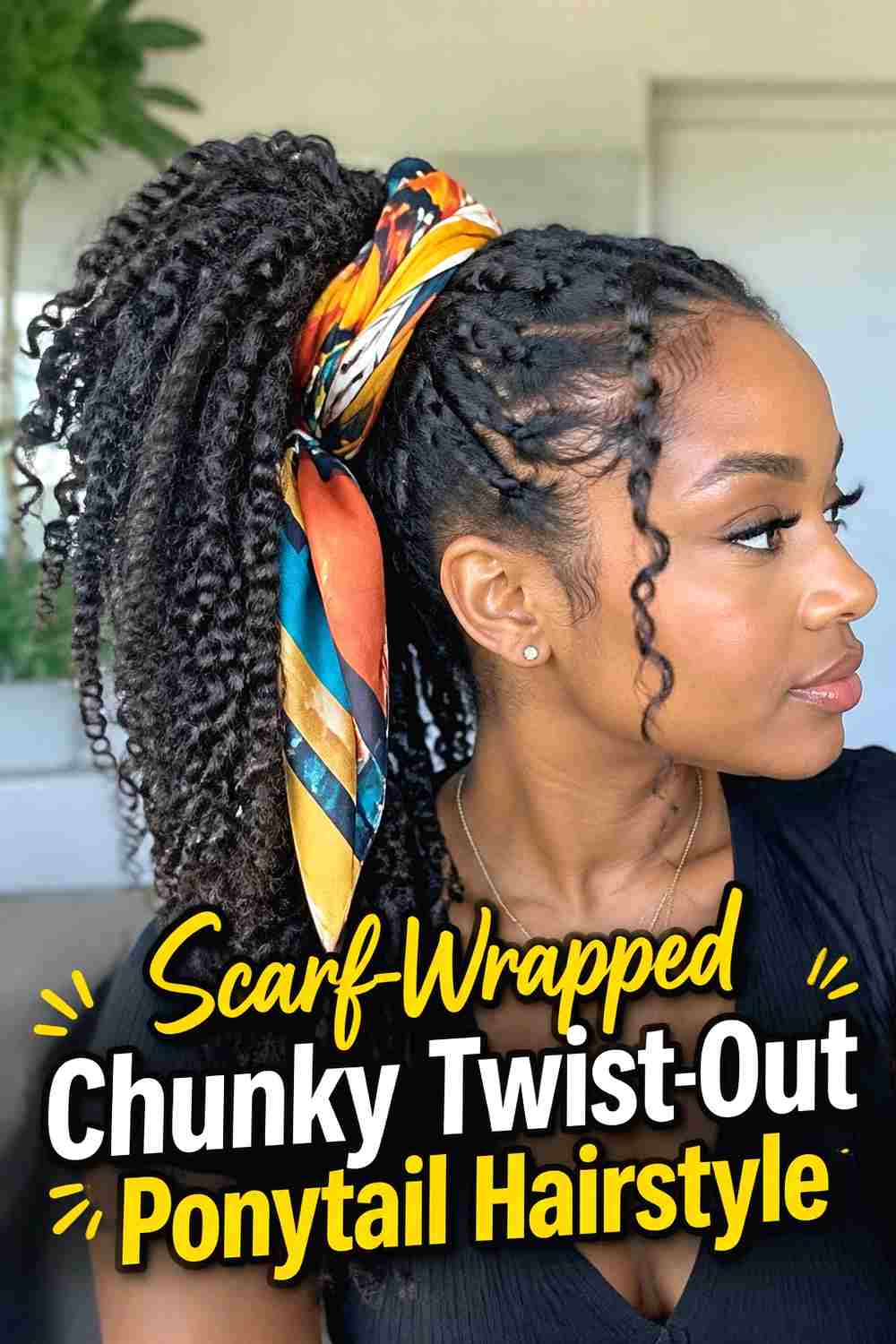
A scarf adds color and pattern while helping define the ponytail base. Gather the chunky twist-out into a high, medium, or low position, secure it first with a comfortable hair tie, and then wrap a lightweight scarf around the base. The scarf ends can hang beside the textured ponytail or be tied into a small bow depending on the desired finish. Because the twist-out already has plenty of volume, a narrow scarf usually feels more balanced than a bulky one. The contrast between soft natural texture and smooth patterned fabric can make even a simple ponytail feel intentionally styled for daytime outings or casual events.
Styling Notes
Secure the hair independently before adding the scarf so the accessory does not need to provide all of the ponytail’s hold.
Pro Tip
Choose a scarf color that contrasts with your hair so the base detail remains visible without covering the twist-out texture.
14. Double Section Chunky Twist Out Ponytail Hairstyle
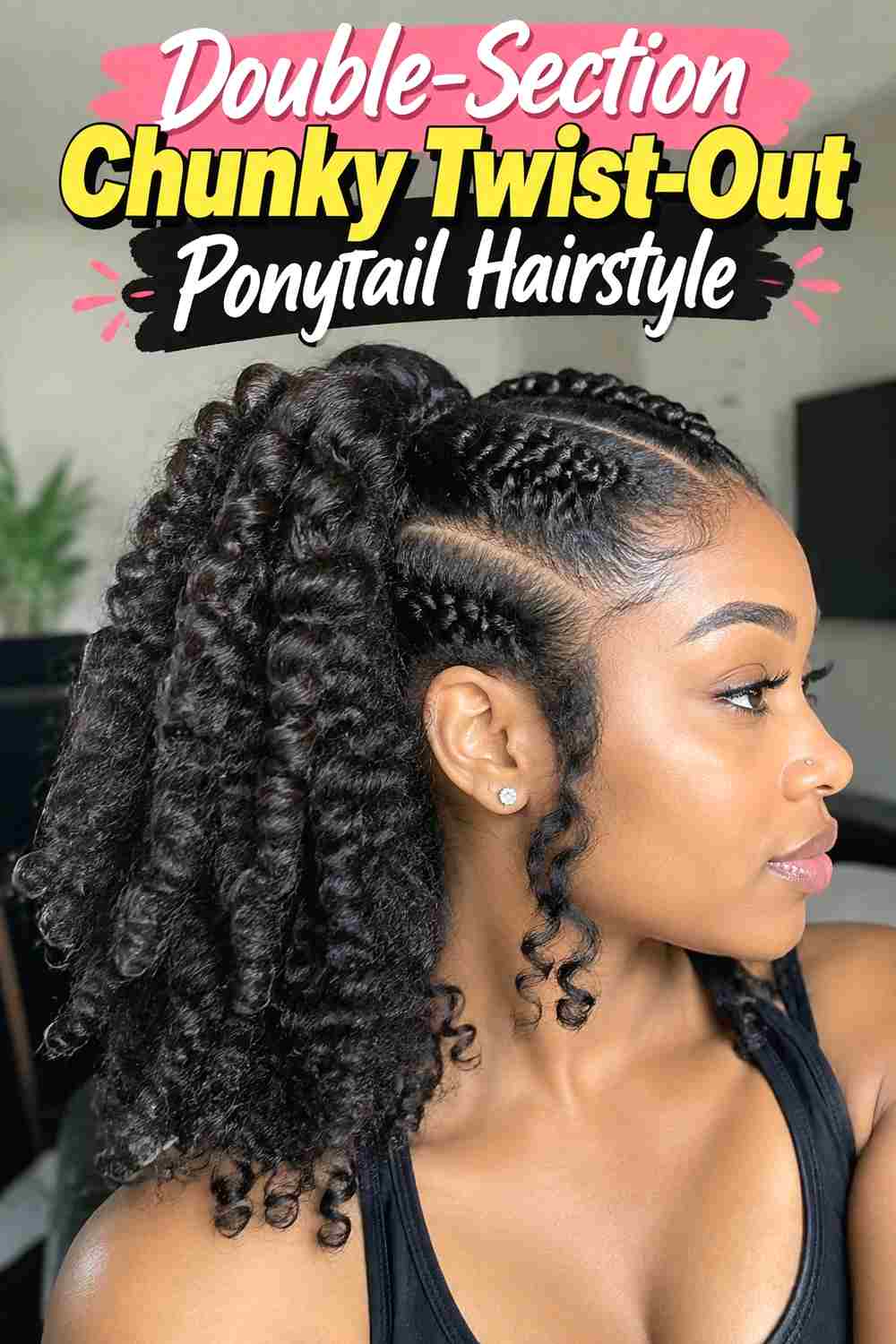
This variation divides the hair into two gathering zones before creating the appearance of one fuller ponytail. The upper section is secured first, then the lower section is positioned directly beneath it so the two textured lengths overlap. When arranged carefully, the chunky twist-out hides the separation and produces the impression of extra length and density. The technique can also reduce the amount of tension needed to pull all the hair toward a single point. Keep both sections aligned vertically so the final silhouette looks cohesive rather than like two separate ponytails stacked on the back of the head.
Best For
Dense hair or shorter lengths can benefit from the layered construction when a single ponytail does not create enough visible drop.
Why It Works
Overlapping two sections distributes volume and can create a longer-looking textured ponytail without flattening the entire crown.
15. Face Framing Chunky Twist Out Ponytail Hairstyle
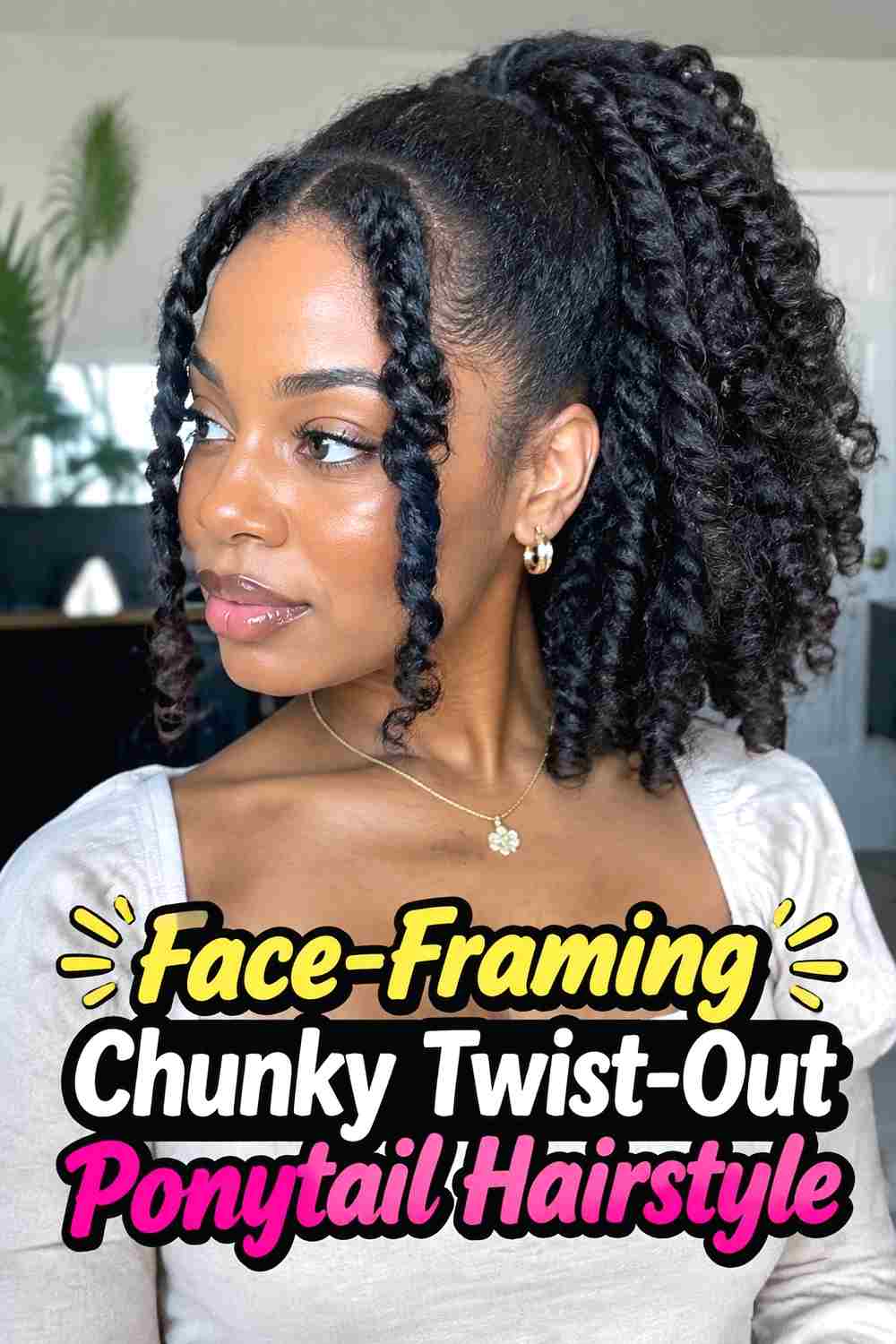
Leaving a few twist-out sections loose around the front gives a ponytail a softer, less pulled-back appearance. The main hair is gathered at the crown or mid-height while selected pieces remain near the temples or forehead. Those sections should keep the same broad definition as the ponytail so the hairstyle feels cohesive. The effect works best when the loose pieces are intentional rather than numerous, since too much hair left out can weaken the ponytail shape. This variation is especially appealing when you like texture around the face but still want most of your hair controlled and lifted away from the shoulders.
Styling Notes
Choose the face-framing pieces before gathering the ponytail so you are not pulling random strands loose after the base is secured.
Wear & Maintenance
Refresh the front sections separately when needed, since they usually experience more touching and movement than the main ponytail.
16. Sculpted Crown Chunky Twist Out Ponytail Hairstyle
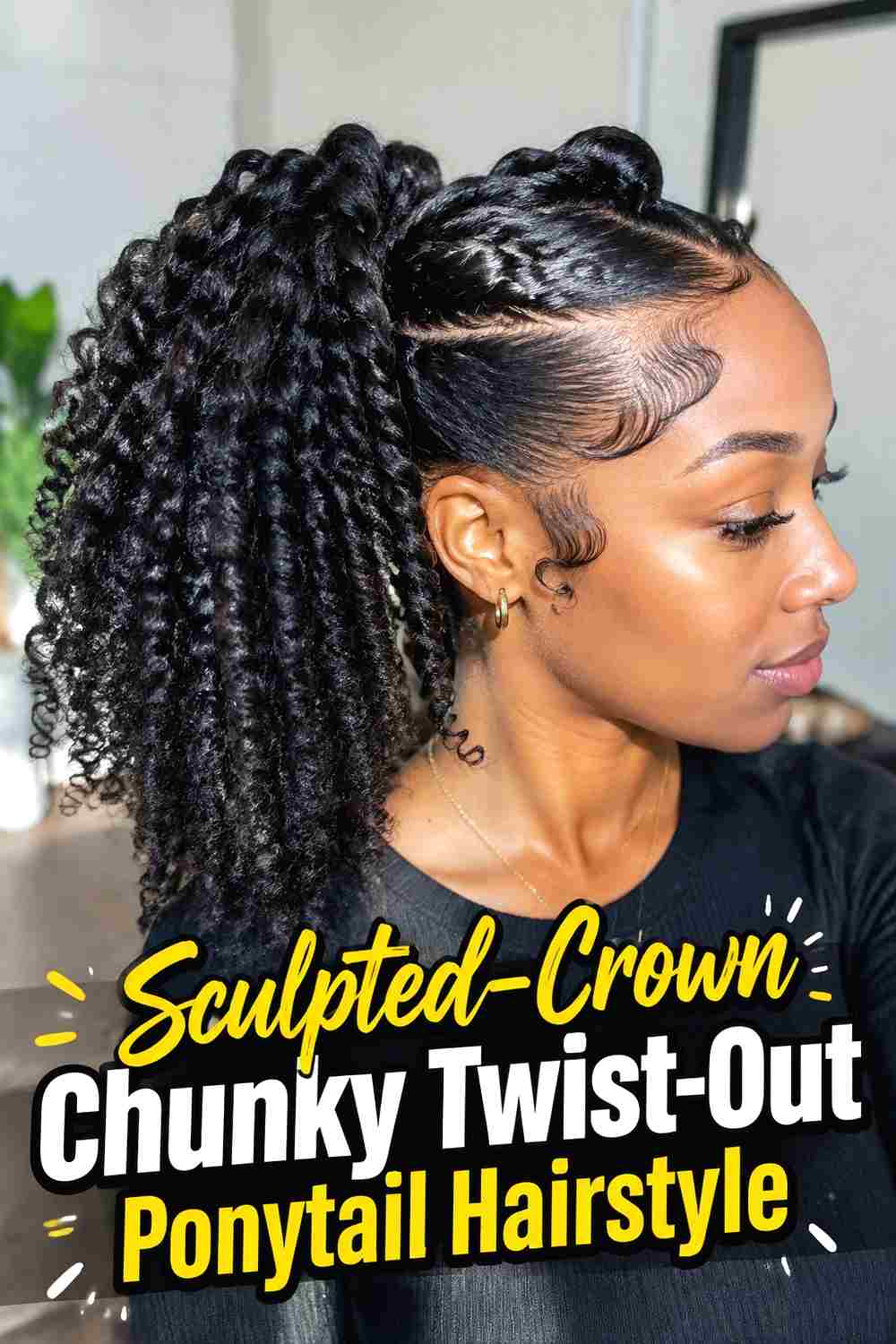
A sculpted crown adds deliberate shape through the top before the hair transitions into a full twist-out ponytail. Rather than slicking the roots flat, the crown is gently lifted and guided backward so it forms a controlled curve. The sides may sit closer to the head, creating extra contrast with the volume above. Once gathered, the ponytail remains chunky and softly defined, preventing the structured crown from feeling too formal. This version is useful when you want a more dimensional profile and prefer visible root texture instead of a completely smooth base. Balanced shaping is more important than achieving perfect symmetry.
Why It Works
The raised crown creates height before the ponytail begins, giving the whole style a more sculptural silhouette.
Pro Tip
Lift only the root area when shaping the crown so the twist-out pattern through the lengths stays intact.
17. Extra Long Chunky Twist Out Ponytail Hairstyle
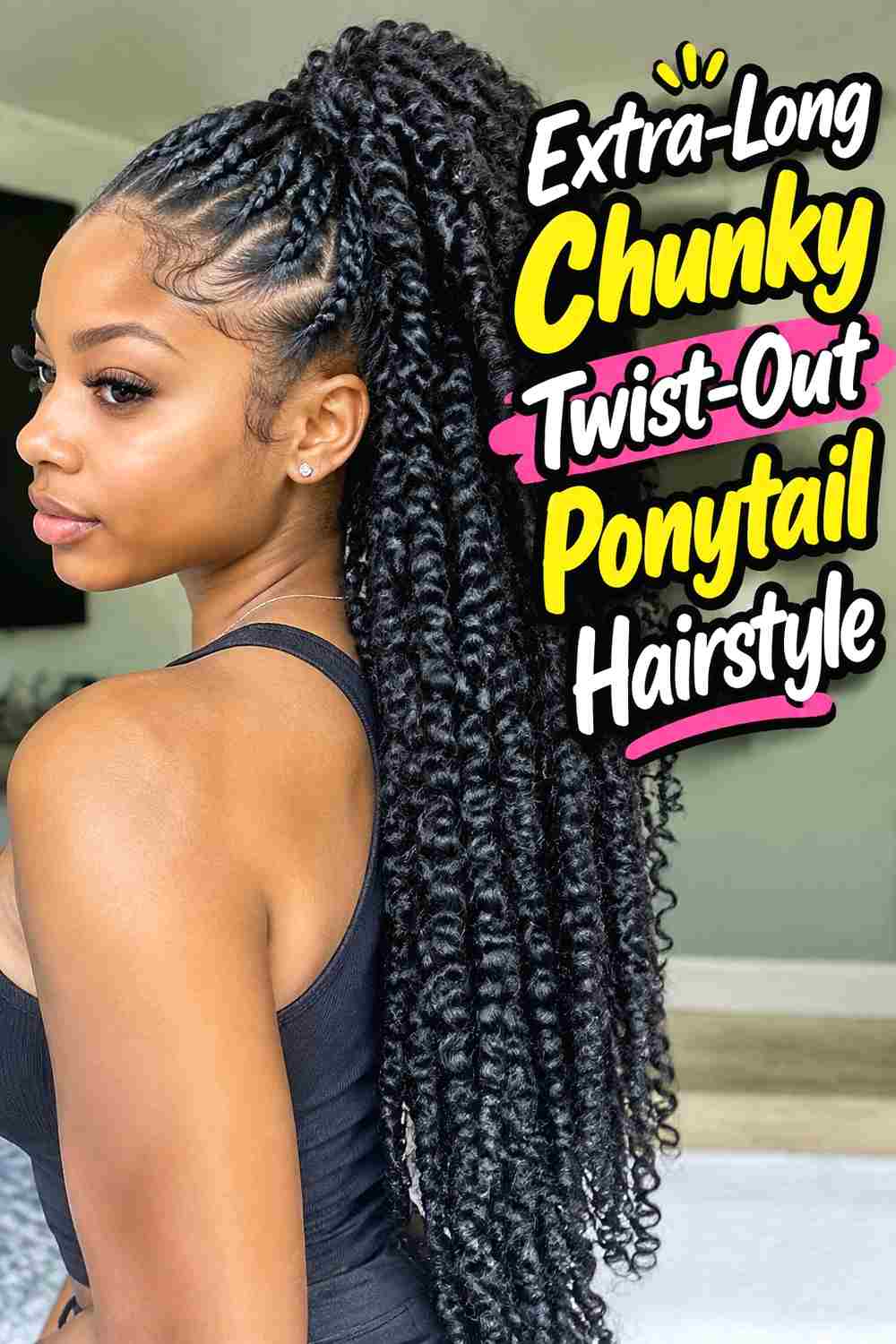
An extra-long version lets the chunky twist-out pattern repeat through a dramatic ponytail that extends well beyond the shoulders. Natural length or carefully matched added hair can create the effect, but the texture should remain consistent so the transition at the base looks believable. Larger twist sections produce broad waves and spirals that keep the long ponytail from appearing overly uniform. A mid-height or high base gives the length space to move, while a low base creates a more relaxed drape. Because longer ponytails can become heavier, comfort and secure anchoring matter just as much as the finished appearance.
Wear & Maintenance
Balance the ponytail securely without excessive root tension, especially when additional length increases the overall weight.
Styling Notes
Keep the twist size consistent through the ponytail so the texture remains natural and visually connected from top to ends.
18. Soft Bang Chunky Twist Out Ponytail Hairstyle
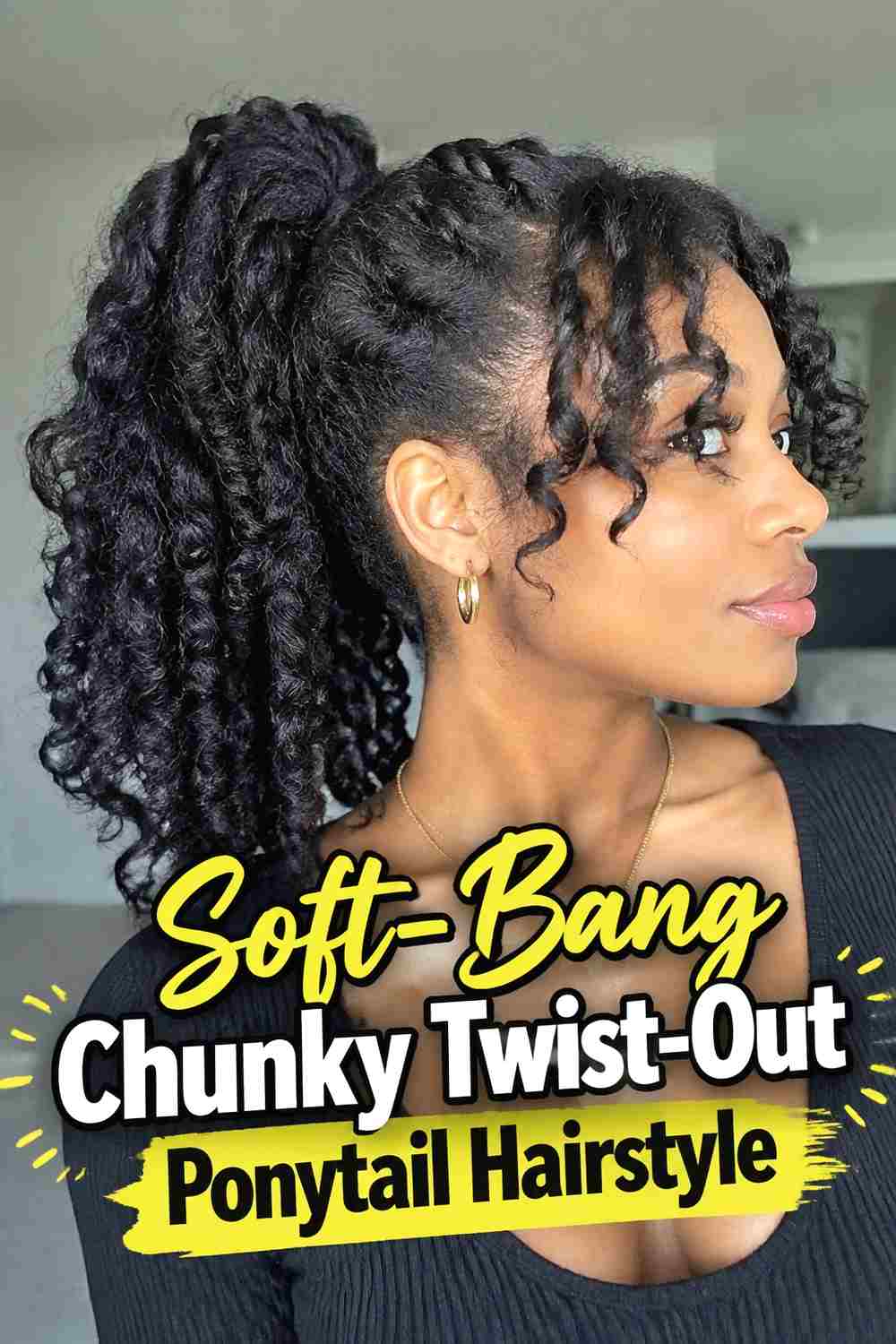
A soft twist-out bang brings textured movement to the front while the rest of the hair is gathered into a ponytail. Leave a controlled section around the forehead before securing the main hair, then separate the bang just enough to create broad, fluffy definition. It can sit above the brows, sweep slightly to one side, or break into a few curved sections depending on shrinkage and length. The ponytail behind it can be high or mid-height, creating a clear contrast between the face-framing fringe and lifted volume. The strongest result looks intentionally soft rather than perfectly shaped or heavily brushed into place.
Best For
This variation works well when front sections are long enough to form a textured fringe without needing to be stretched completely straight.
Pro Tip
Style the bang in its normal dry or near-dry state so you can judge how shrinkage affects the final position.
How to Choose the Right Look
Start with the amount of volume you want. High-volume, fluffy, pineapple-inspired, and sculpted-crown ponytails emphasize fullness, while defined and low versions keep the silhouette more controlled. If you want to show more visible length, a stretched, side-swept, double-section, or extra-long ponytail may be a better fit.
Your twist size also changes the finish. Larger twists generally create broader bends and softer definition, which suits the chunky look. Separating each section only once or twice preserves stronger pattern, while additional separation creates a fluffier ponytail with more width.
Consider how much root control you prefer. Braided-front, wrapped-base, and scarf-wrapped styles introduce cleaner structure, while half-up, face-framing, and pineapple-inspired versions keep more softness around the crown and hairline.
Comfort matters as well. Dense twist-outs can create substantial ponytails, so use secure ties without unnecessary tension. For longer or heavier styles, a double-section construction can distribute the hair differently while preserving fullness.
Finally, think about maintenance. Defined styles benefit from careful nighttime preservation, while fluffy styles are more forgiving of minor frizz. Choose the version that suits both your natural texture and the amount of refreshing you realistically want to do.
Final Thoughts
Chunky twist-out ponytails can shift from polished and defined to fluffy, dramatic, or relaxed with only a few changes in placement and separation. Focus on a well-set twist-out first, then choose the ponytail height, root finish, accessories, and face-framing details that support the look you want.
FAQs
1. What makes a twist-out look chunky?
Chunky twist-outs are usually created with larger twist sections, producing broader bends, spirals, and textured pieces rather than many small, tightly defined curls.
2. Should I separate a chunky twist-out before making the ponytail?
Usually, yes. Separate enough to create your preferred fullness, but avoid over-separating if you want the original twist pattern to remain visible.
3. Can I make a chunky twist-out ponytail on shorter hair?
Yes. High, half-up, pineapple-inspired, or double-section arrangements can make shorter lengths easier to gather while still showing texture.
4. How do I keep a chunky twist-out ponytail defined?
Start with fully dry twists, unravel gently, minimize unnecessary combing, and preserve the texture at night. Refresh individual sections instead of repeatedly resetting the whole style.
5. Can I wear a chunky twist-out ponytail without slicking my edges?
Absolutely. A softly textured hairline and natural root volume can complement the twist-out beautifully, especially in fluffy, half-up, or sculpted-crown styles.
Save your favorite chunky twist-out ponytail ideas and explore more natural hairstyle inspiration for your next textured look.