12 Velvet Headband Waves Hairstyle Ideas for Soft Glam Hair
Soft waves and plush velvet headbands create an easy mix of polish and texture, making these looks perfect for everyday styling or dressier moments.
Velvet headbands work especially well with waves because the rich fabric contrasts with soft movement through the hair. A narrow or medium-width band can control the front, create a stronger crown shape, or simply add color without hiding the wave pattern.
The best version depends on your hair length, parting, wave size, crown volume, and how much face-framing movement you prefer. Some looks feel clean and symmetrical, while others lean romantic, retro, or more dramatic. These 12 ideas show how small styling changes can make the same accessory feel completely different.
Quick List
- Classic Velvet Headband Waves Hairstyle
- Center Part Velvet Headband Waves Hairstyle
- Side Part Velvet Headband Waves Hairstyle
- Deep Side Swept Velvet Headband Waves Hairstyle
- Loose S Wave Velvet Headband Hairstyle
- Old Hollywood Velvet Headband Waves Hairstyle
- Shoulder Length Velvet Headband Waves Hairstyle
- Long Layered Velvet Headband Waves Hairstyle
- Half Up Velvet Headband Waves Hairstyle
- Face Framing Velvet Headband Waves Hairstyle
- Voluminous Crown Velvet Headband Waves Hairstyle
- Soft Curtain Bangs Velvet Headband Waves Hairstyle
1. Classic Velvet Headband Waves Hairstyle
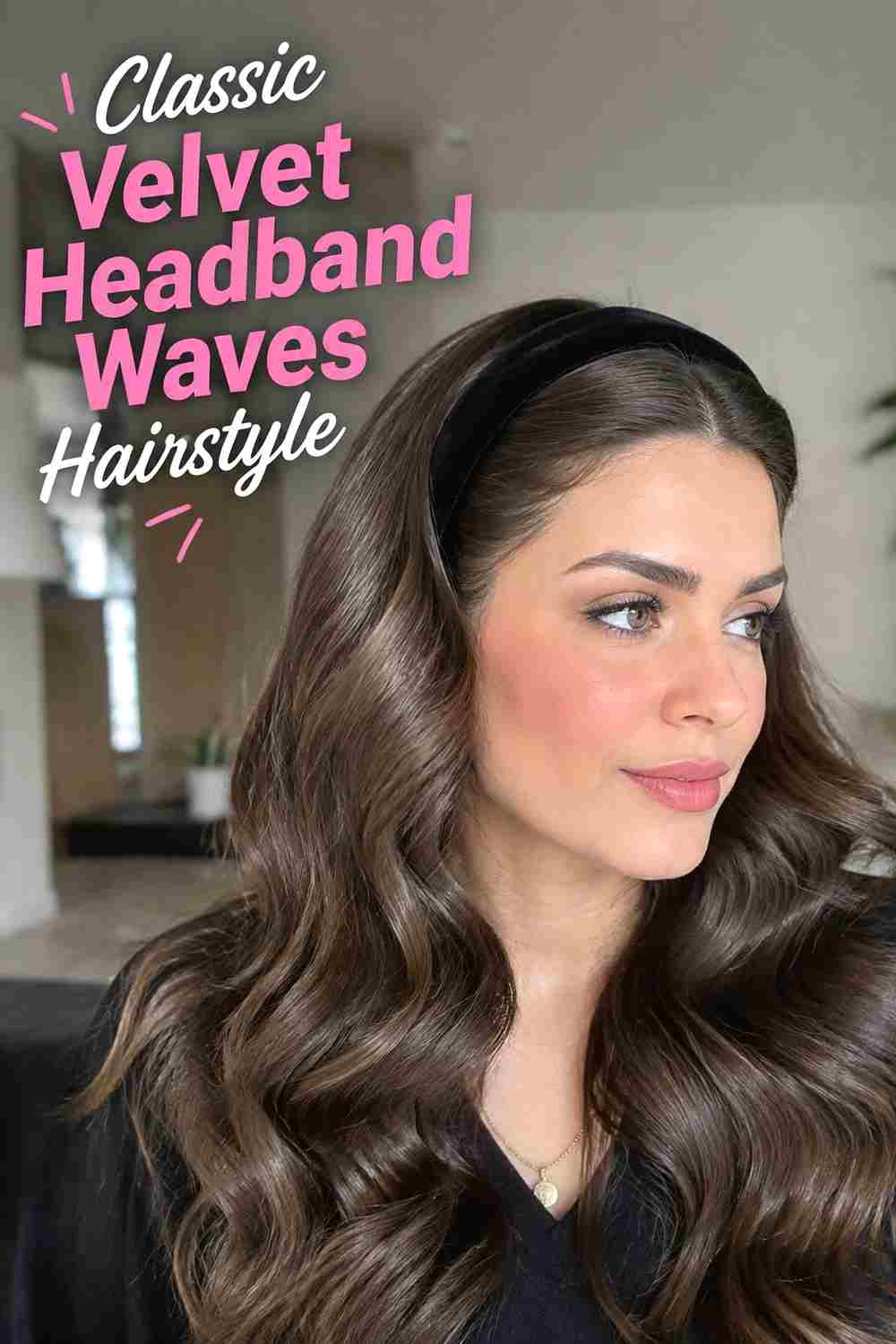
The classic version keeps the styling simple: soft waves through the lengths, natural lift at the roots, and a velvet headband positioned just behind the hairline. The band gives the front a polished shape while leaving the movement through the sides and back completely visible. Medium-size waves work especially well because they provide enough texture to balance the plush accessory without becoming overly formal. The ends can remain slightly relaxed rather than perfectly curled, which makes the look easy to wear during the day. A solid velvet band in a contrasting shade can also make the hairstyle feel intentional without requiring additional clips, pins, or decorative details.
Styling Notes
Shape the waves before placing the headband, then restore any crown volume that gets compressed during positioning.
Best For
Medium and long hair with enough length for the wave pattern to remain visible below the shoulders or around the upper back.
2. Center Part Velvet Headband Waves Hairstyle
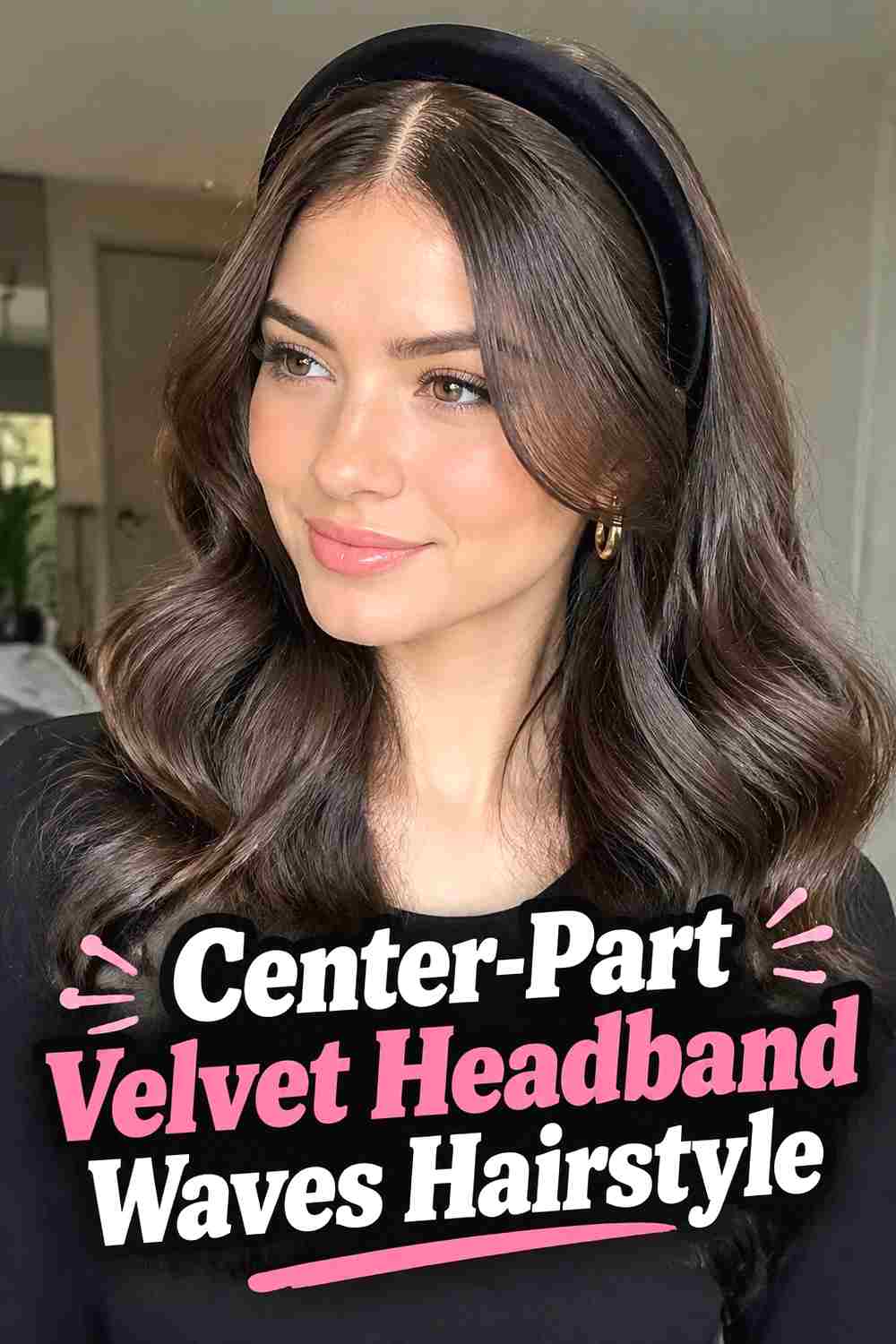
A center part gives velvet headband waves a balanced, symmetrical appearance. Create the part first, keeping a little lift on both sides, then position the band slightly behind the front sections so the center separation remains visible. Loose waves should fall evenly through both sides, framing the face without looking too perfectly mirrored. The plush velvet creates a clean visual line across the crown, while the waves soften the structured parting. This combination works particularly well when you want a polished everyday hairstyle that still feels relaxed. Keeping the roots airy rather than flat also prevents the accessory from making the top of the hair appear compressed.
Why It Works
The central part supplies clean structure while the waves and velvet texture keep the overall finish soft.
Pro Tip
Lift the roots gently behind the headband after placement if you want more fullness without changing the wave pattern.
3. Side Part Velvet Headband Waves Hairstyle
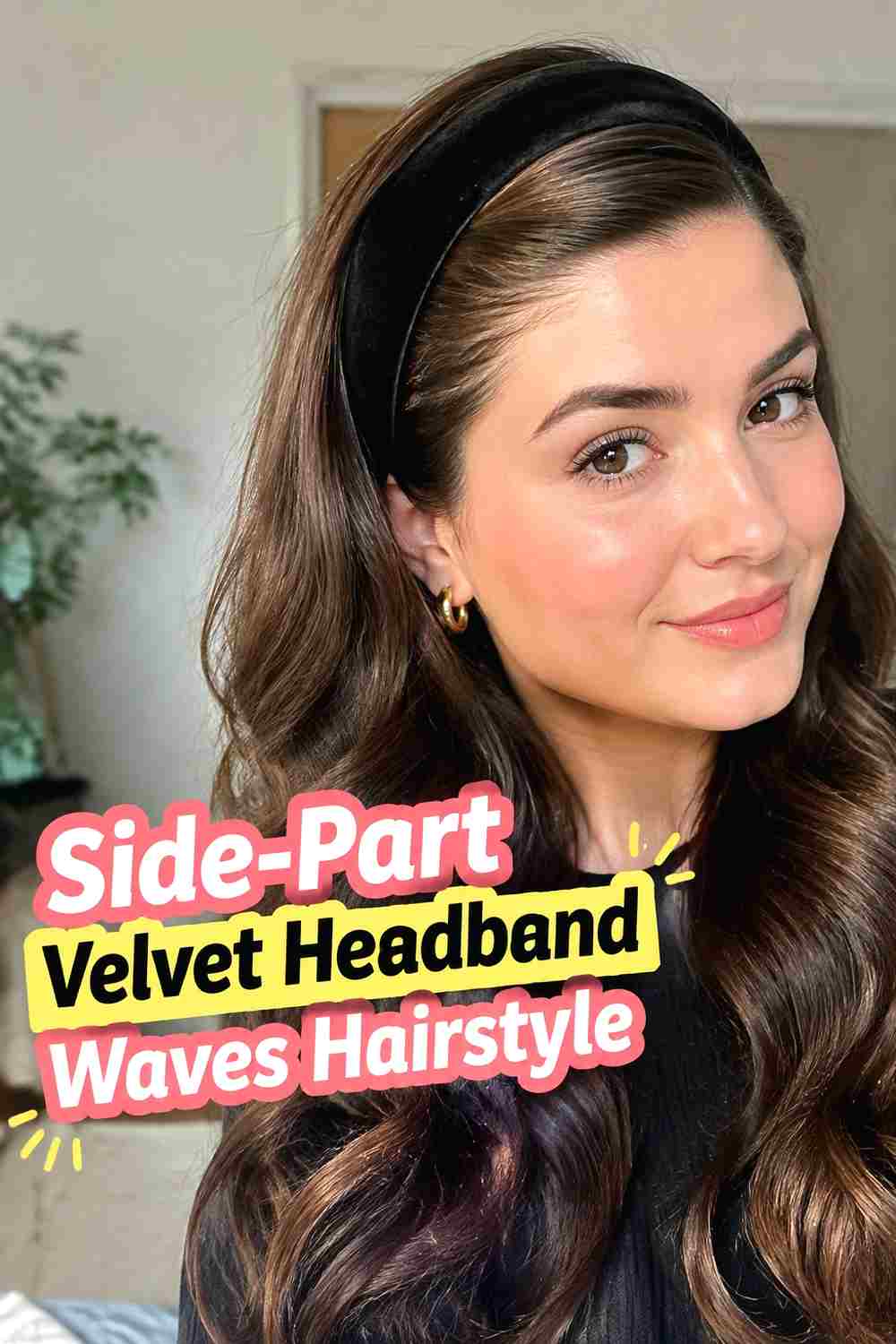
A side part brings more movement to velvet headband waves by allowing one side to carry greater volume. The fuller section can sweep naturally across the forehead before disappearing beneath or beside the band, while the opposite side stays smoother and more controlled. Waves through the lengths reinforce the asymmetry and give the hairstyle a softer profile. This look works especially well with a medium-width velvet headband because the accessory remains noticeable without covering the directional front styling. A deep jewel tone can make the velvet stand out, while a neutral band keeps the emphasis on the shape and movement of the hair.
Styling Notes
Create the part and front sweep before adding the band so the hair falls naturally instead of being pushed into position afterward.
Best For
Choose this style if you like an off-center silhouette and want the waves visible from both front and side angles.
4. Deep Side Swept Velvet Headband Waves Hairstyle
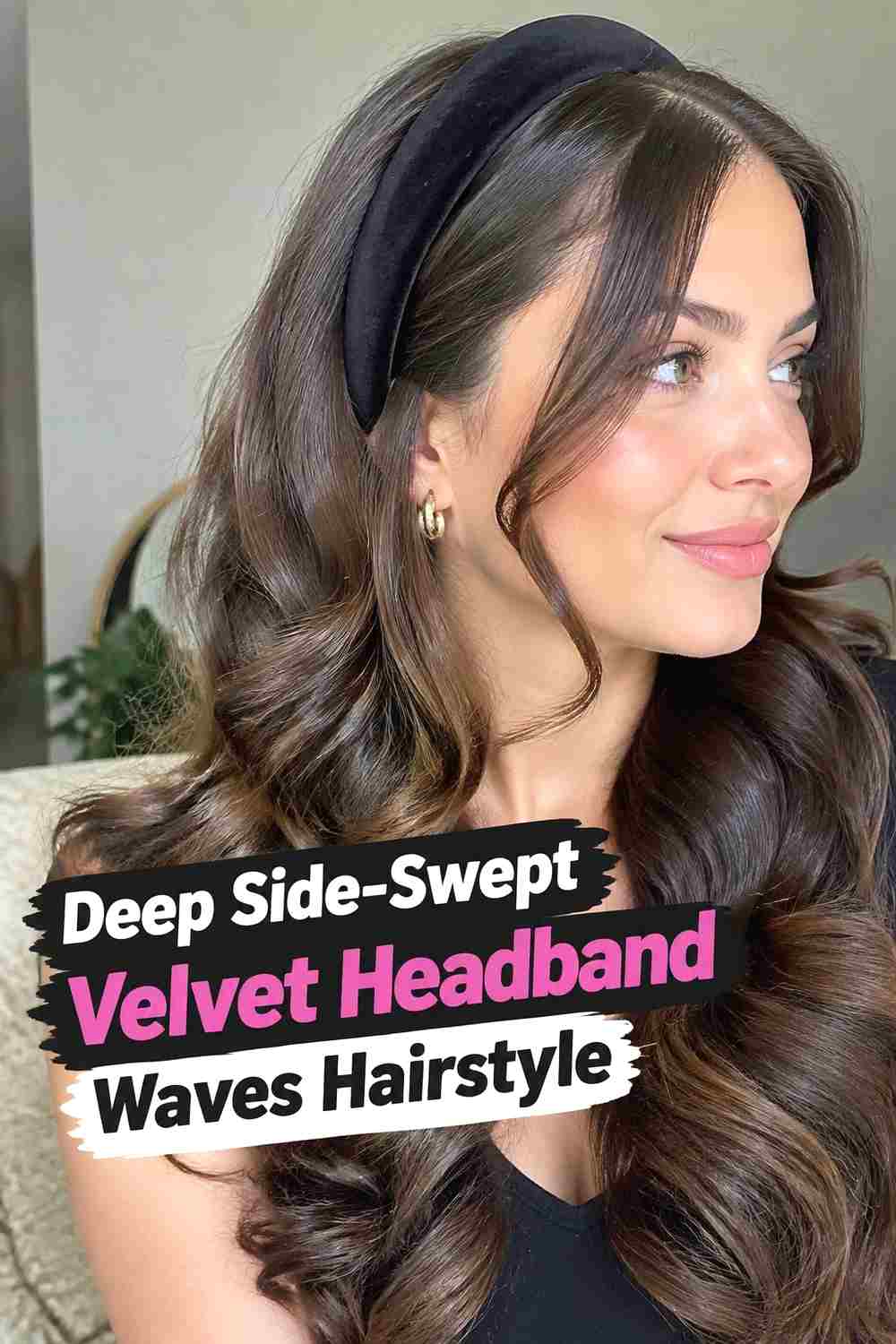
This version pushes the side-part concept further with a dramatic sweep across the front and more pronounced volume on one side. The headband sits slightly behind the sweep rather than flattening it, allowing the front section to curve naturally before blending into the rest of the hair. Larger waves through the lengths support the glamorous shape and prevent the accessory from becoming the only statement. The lighter side can tuck behind the ear for contrast, especially when the hair is long enough to show the full wave pattern over one shoulder. The result feels dressier than a standard side part without requiring an elaborate updo.
Why It Works
The strong front sweep creates drama while the velvet band provides a clean anchor across the crown.
Wear & Maintenance
Check that the band sits comfortably and does not press the fuller side flat during longer wear.
5. Loose S Wave Velvet Headband Hairstyle
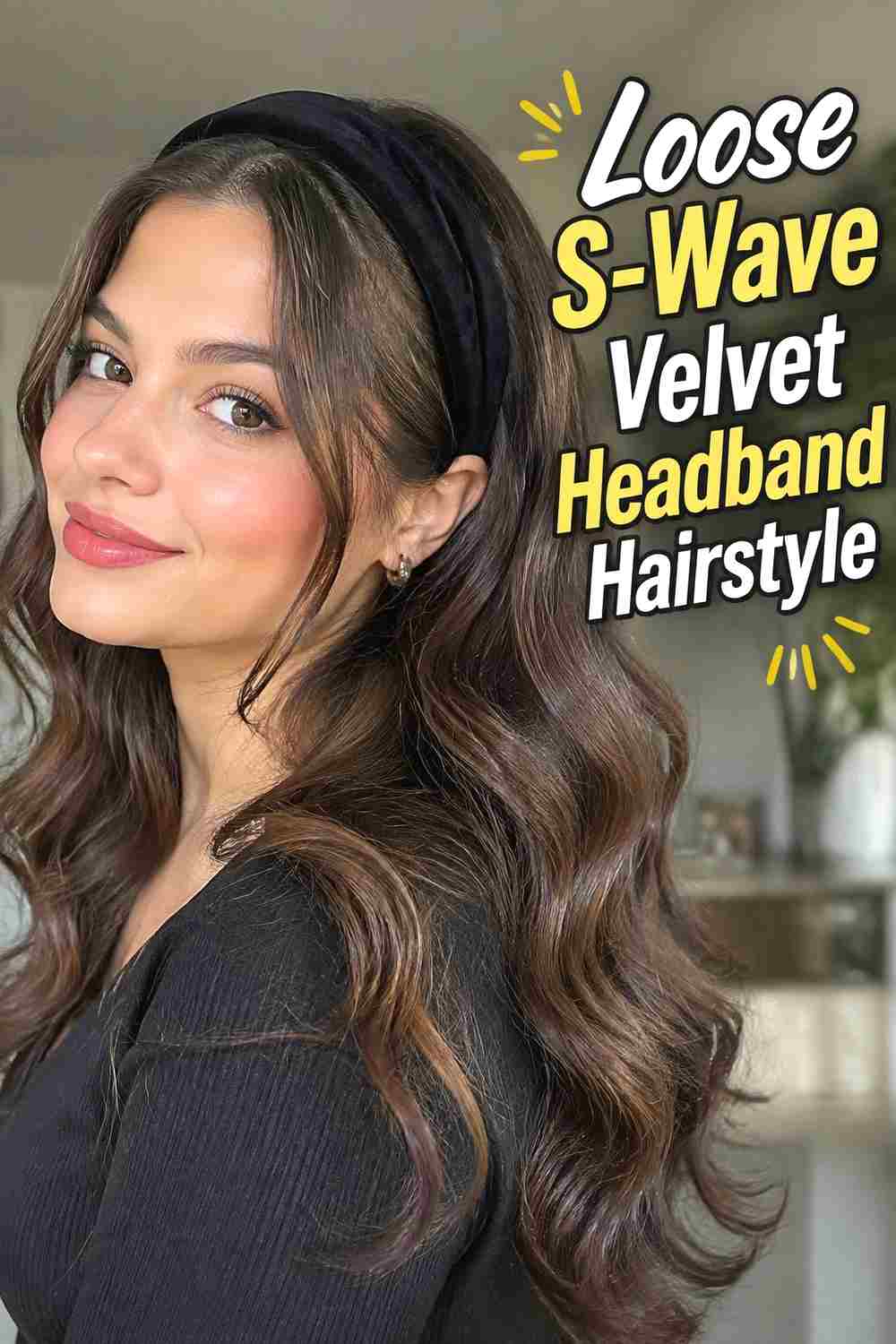
Loose S-waves create a relaxed pattern that bends gently through the hair instead of forming full curls. Paired with a velvet headband, the result feels soft and polished without looking overly styled. The band can sit close to the hairline for a clean finish or slightly farther back to preserve more root lift. The key is keeping the wave direction smooth and continuous through the mid-lengths while allowing the ends to soften naturally. This style works especially well on medium to long hair because there is enough space for the S-shape to repeat several times. A subtle center or side part can both complement the look.
Styling Notes
Keep the waves broad and gently brushed through so the pattern remains visible without becoming stiff or overly separated.
Why It Works
The smooth S-shape echoes the soft texture of velvet and creates a cohesive, easygoing finish.
6. Old Hollywood Velvet Headband Waves Hairstyle
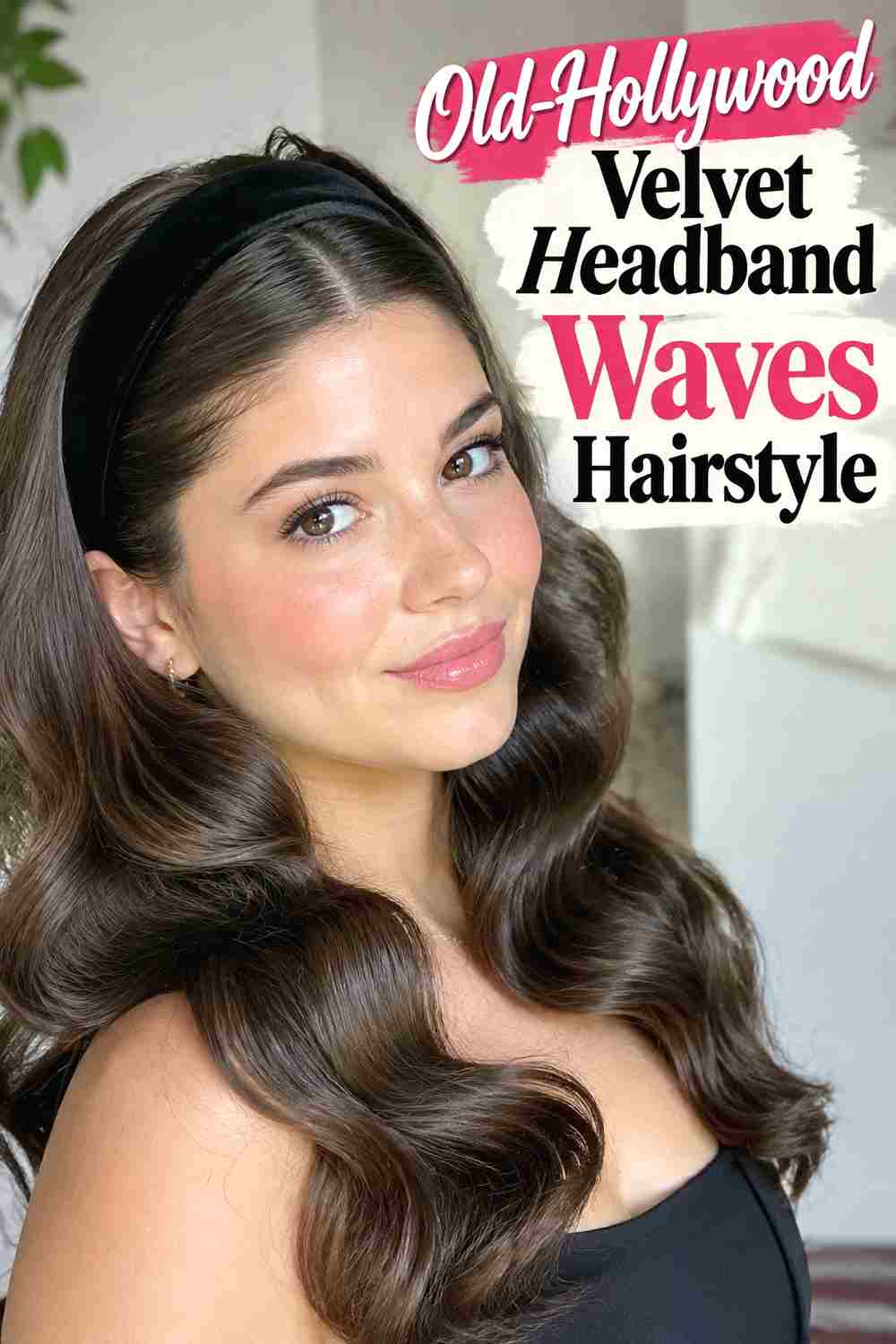
Old-Hollywood-inspired waves create a more sculpted interpretation of the velvet headband look. Start with a deep side part and form larger, polished waves that follow a smooth repeated curve through the lengths. Instead of pushing the hair flat, place the headband behind the front sweep so the dramatic wave remains visible. The velvet adds richness while the glossy wave pattern supplies the vintage mood. Keeping the hair natural-looking and touchable prevents the style from becoming costume-like. This version works particularly well for evening events, celebrations, or dressier outfits where a more refined finish feels appropriate.
Styling Notes
Use larger sections for the wave pattern and keep the surface smooth without eliminating natural movement.
Best For
Medium-long and long hair gives the sculpted wave pattern enough space to develop clearly.
7. Shoulder Length Velvet Headband Waves Hairstyle
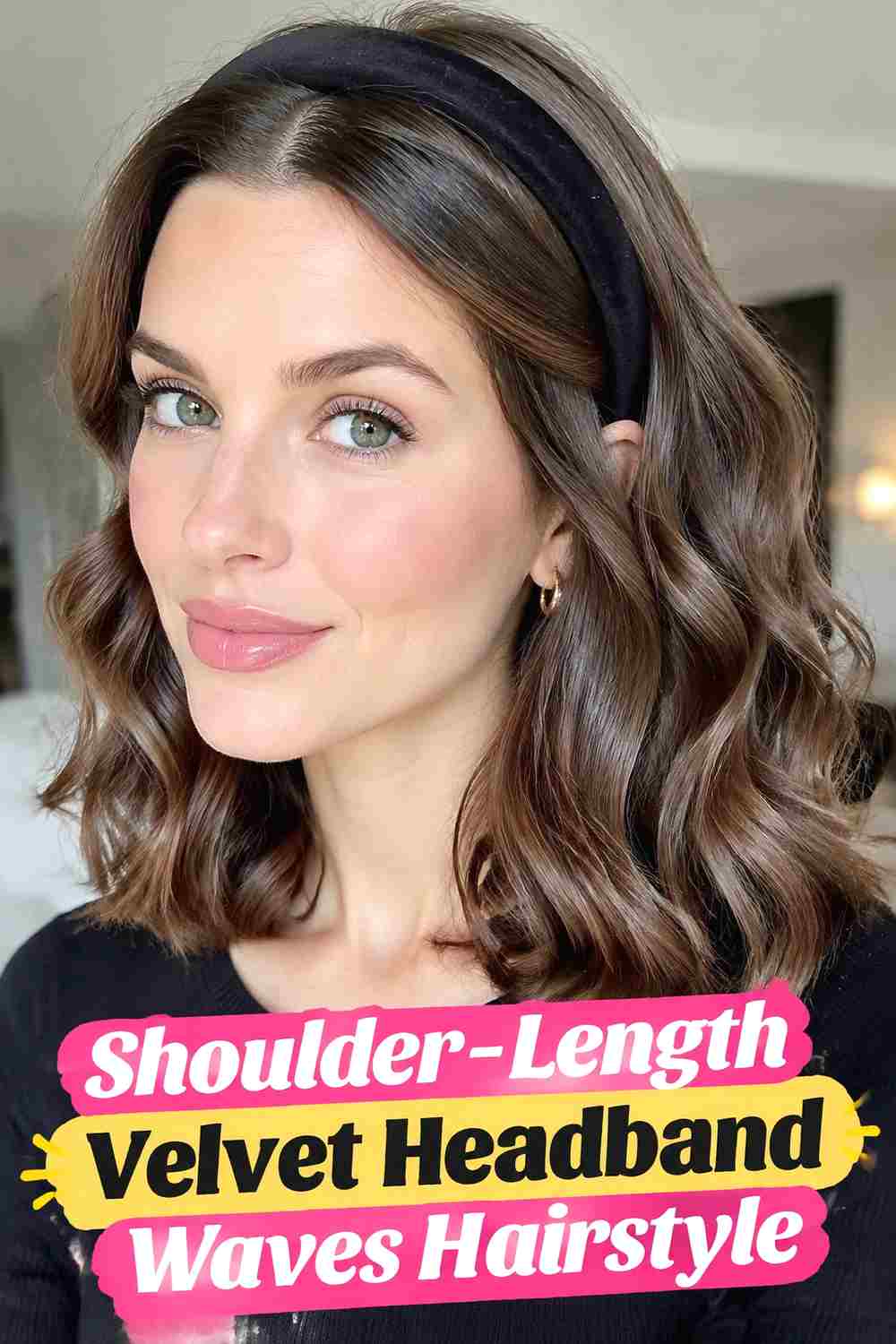
Shoulder-length waves offer a lighter, bouncier take on the velvet headband trend. The shorter length allows the waves to sit closer to the face and neckline, giving the hairstyle a more compact silhouette than long flowing waves. Position the headband just behind the hairline and keep the crown gently lifted so the accessory does not flatten the top. Soft bends through the mid-lengths can make the haircut feel fuller without creating excessive width. This version works particularly well on lob-length cuts or grown-out bobs where there is enough length for movement but not so much that the waves become heavy.
Hair Type & Length
Best suited to bob-to-shoulder lengths where the waves can form clearly without dropping too far below the neckline.
Pro Tip
Keep the ends softly textured instead of curling every piece identically to maintain a modern, relaxed finish.
8. Long Layered Velvet Headband Waves Hairstyle
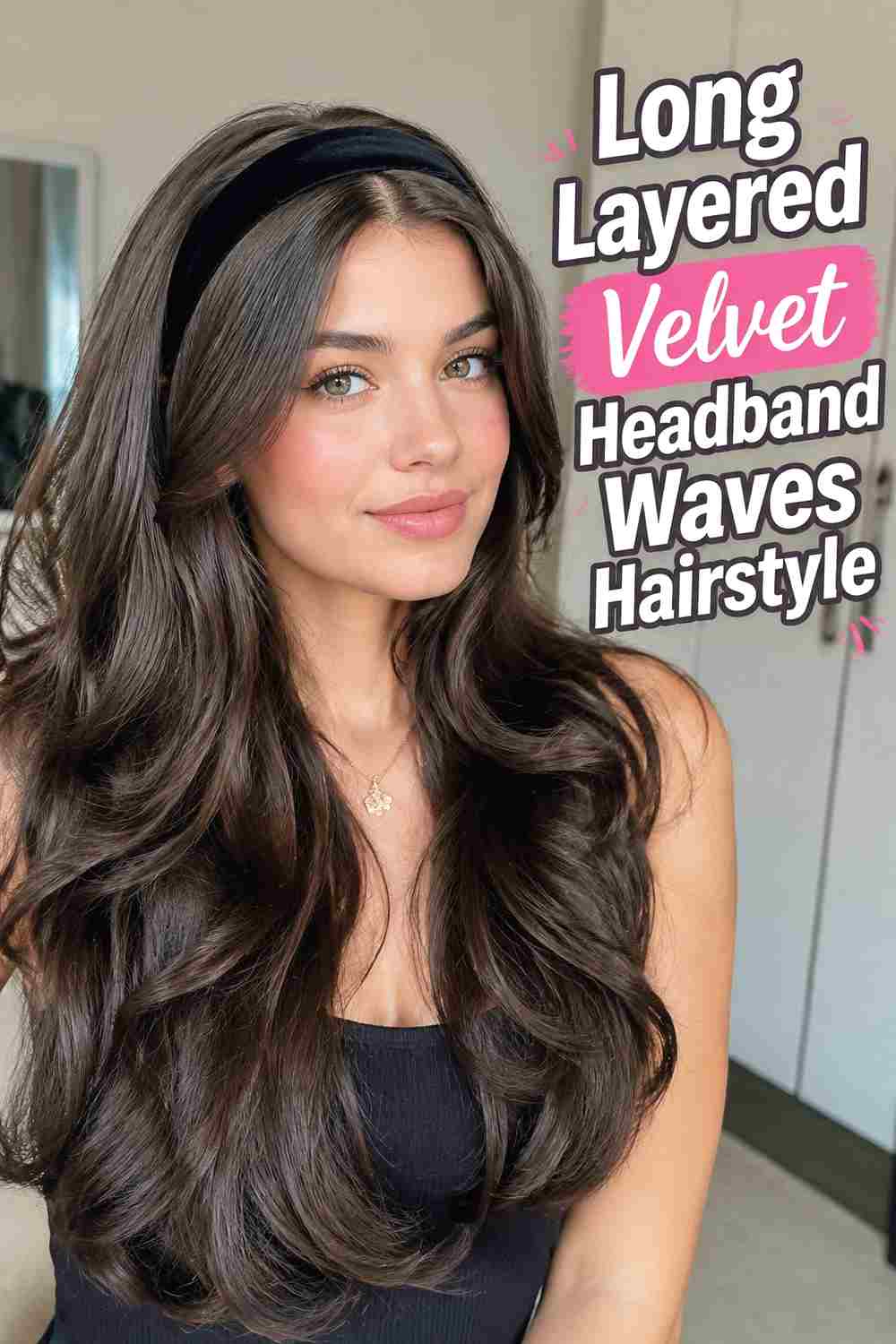
Long layers give velvet headband waves extra movement by allowing shorter pieces to curve around the face while longer sections fall through the back. The headband controls the front without hiding the layered shape, especially when it sits just behind the shortest face-framing sections. Medium-to-large waves keep the layers visible and prevent the hair from appearing like one heavy mass. This variation works especially well for thick or long hair where strategic layering already creates natural movement. A slightly lifted crown adds balance so the waves do not pull the silhouette downward, while the velvet accessory adds a polished focal point near the top.
Why It Works
Layers break up long lengths, helping the wave pattern appear more dimensional while the headband keeps the front controlled.
Styling Notes
Direct shorter layers away from the face before adding the band so they remain visible instead of disappearing underneath it.
9. Half Up Velvet Headband Waves Hairstyle
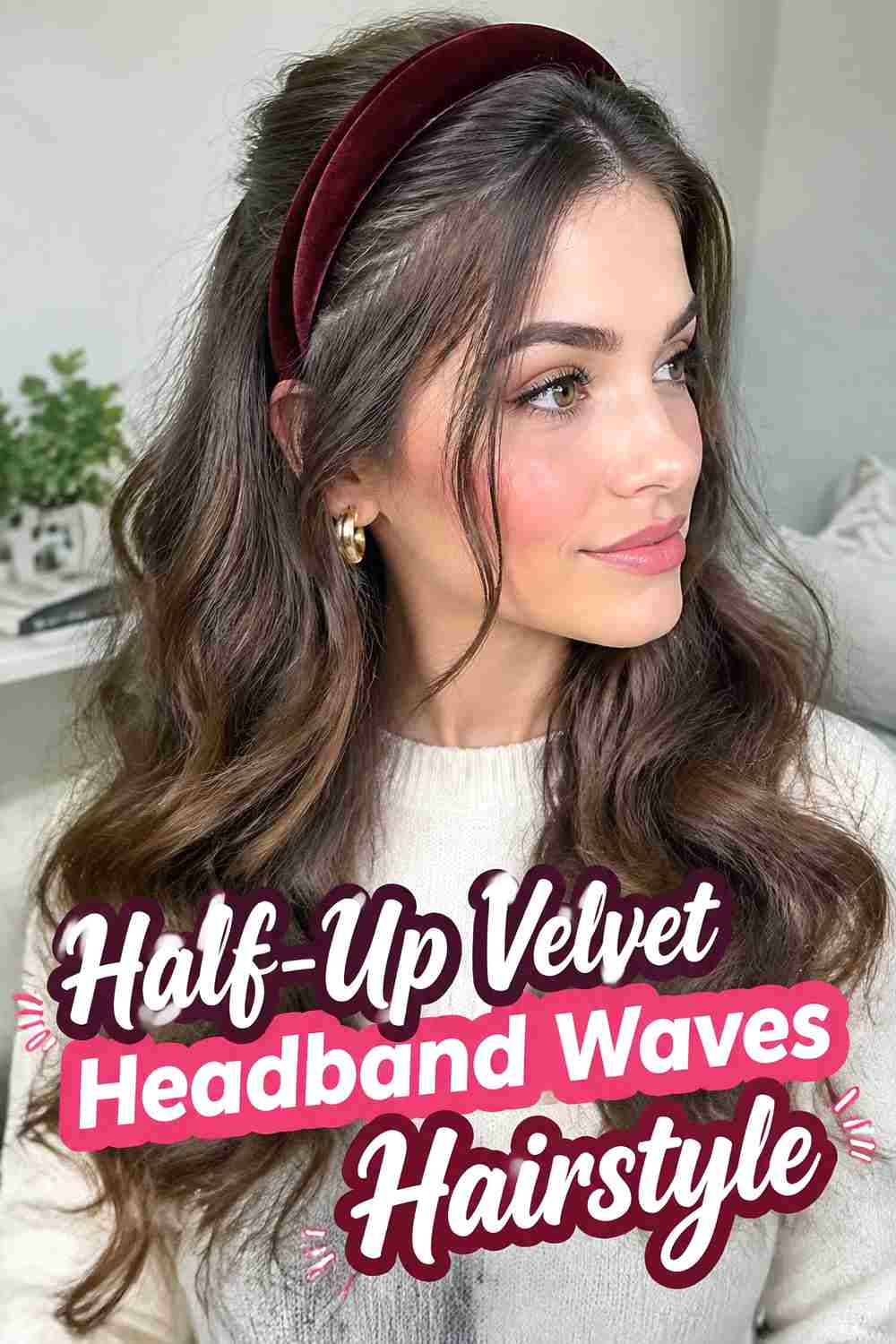
A half-up style adds another layer of structure behind the velvet headband while keeping most of the waves loose. Position the band near the front, then gather a modest section from the crown into a small ponytail, twist, or discreet clip at the back. The lower lengths remain fully waved, preserving movement around the shoulders. This arrangement creates lift without turning the hairstyle into a full updo and can help keep thick hair more controlled. The headband and half-up section should stay visually separate so neither detail overwhelms the other. Medium-size waves tend to create the most balanced finish.
Best For
Medium-long and long hair with enough lower length to remain full after the top section is gathered.
Pro Tip
Keep the half-up section fairly small so the waves and velvet band remain equally visible.
10. Face Framing Velvet Headband Waves Hairstyle
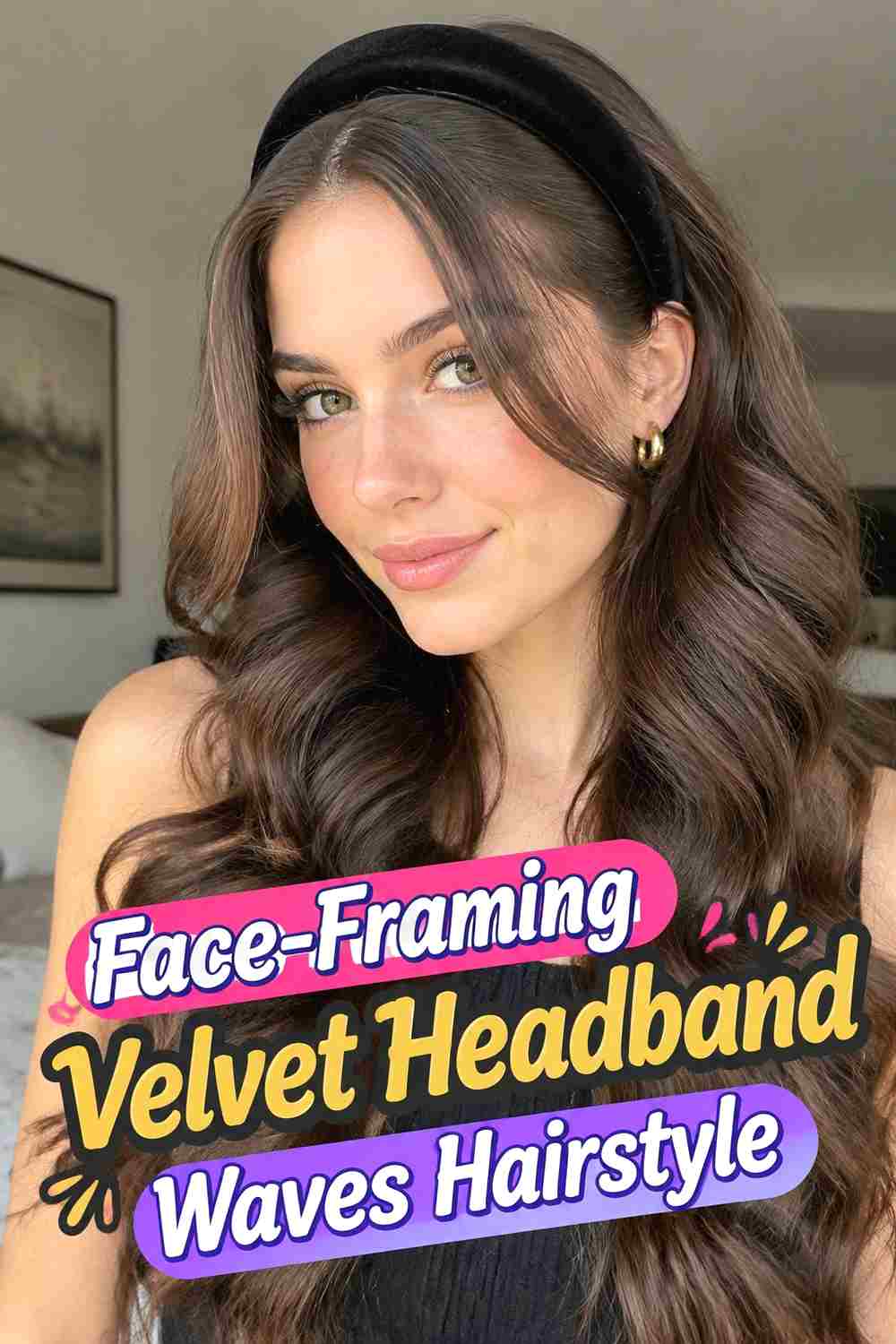
Face-framing waves soften the clean line of a velvet headband by leaving selected front pieces outside the accessory. Before placing the band, separate a few shorter layers near the temples or cheekbones and style them into loose curves. The remaining hair can be pushed gently behind the band and waved through the lengths. This creates an attractive contrast between the controlled crown and the soft movement around the face. The front sections should look intentional and connect naturally with the rest of the wave pattern rather than appearing like random strands pulled loose. A medium-width velvet band works particularly well because it remains visible behind the framing pieces.
Styling Notes
Select the face-framing sections before placing the headband so you do not disturb the finished crown afterward.
Why It Works
The loose front waves keep the accessory from feeling too structured and add movement where it is most visible.
11. Voluminous Crown Velvet Headband Waves Hairstyle
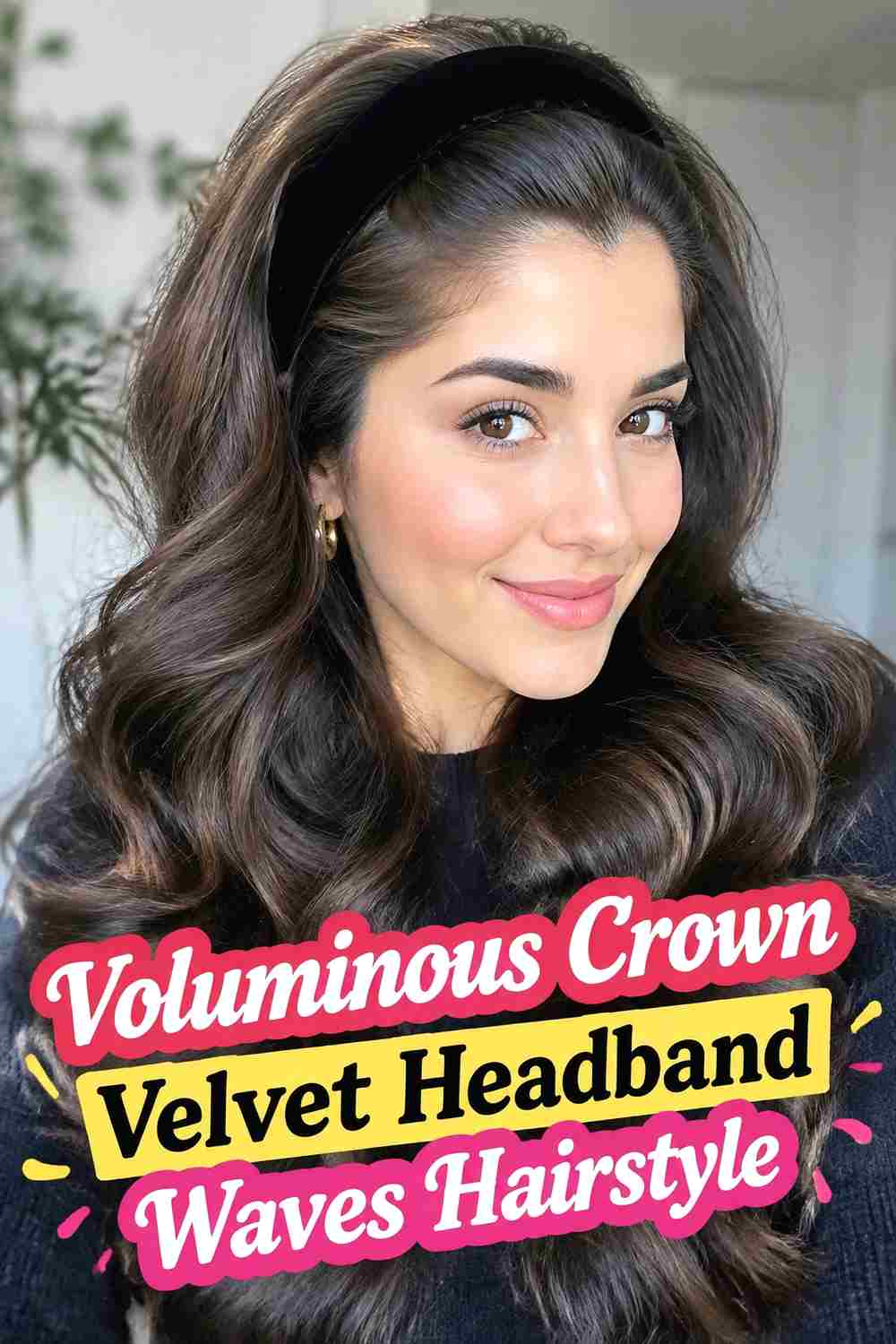
This variation focuses on root lift and crown height while keeping the wave pattern soft through the lengths. Place the velvet headband near the front, then gently raise the roots directly behind it to create a fuller upper silhouette. The sides should remain controlled enough that the height feels intentional rather than simply expanded everywhere. Loose waves through the mid-lengths and ends balance the elevated crown and keep the style feminine and wearable. This look can work especially well for fine or medium-density hair when the goal is to create more visible shape without relying on a dramatic curl pattern or oversized accessory.
Styling Notes
Concentrate lift at the crown rather than teasing the entire head, which helps the waves remain smooth and natural.
Best For
Anyone who enjoys a fuller profile or wants the headband to sit against a more dimensional crown shape.
12. Soft Curtain Bangs Velvet Headband Waves Hairstyle
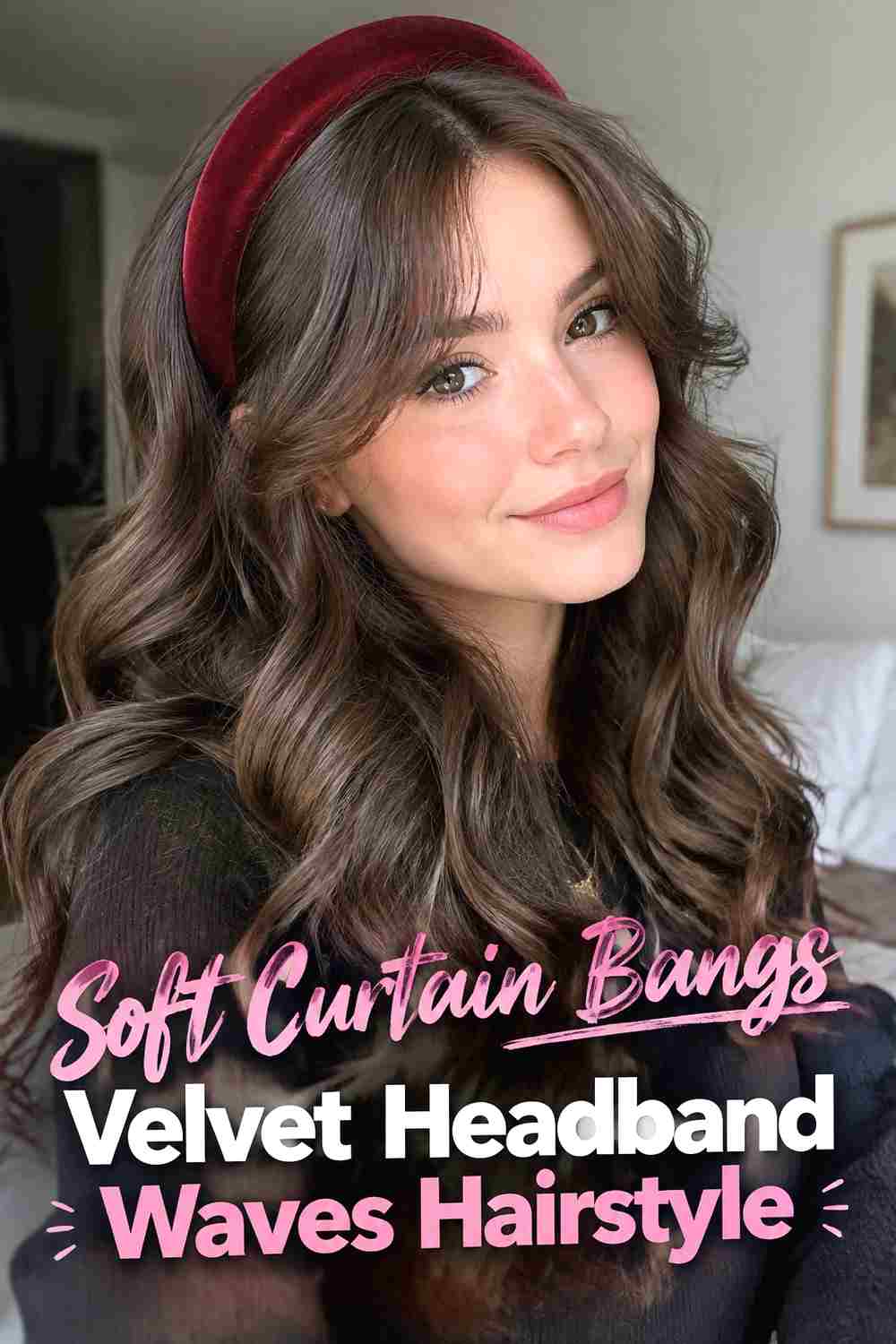
Curtain bangs pair naturally with velvet headband waves because the accessory can sit behind the fringe without hiding its face-framing shape. Style the bangs into soft outward curves first, then place the band far enough back that the center opening and side sweep remain intact. Continue the same gentle wave pattern through the longer layers so the bangs transition smoothly into the rest of the hair. The result feels polished but relaxed, with enough movement around the face to keep the plush headband from looking too formal. This version works especially well on layered medium-to-long hair where the fringe blends gradually into the sides.
Wear & Maintenance
Avoid pushing the headband too far forward, which can flatten the curtain shape and make the fringe separate awkwardly.
Pro Tip
Style the bangs completely before positioning the band so their natural curve stays intact.
How to Choose the Right Look
Start with your preferred parting. Center-part styles feel balanced and clean, while side-part and deep side-swept versions create stronger movement and a more romantic profile. Curtain bangs or face-framing layers are ideal when you want softness around the front instead of pushing every strand behind the headband.
Next, consider the type of wave. Loose S-waves feel modern and relaxed, while larger polished waves create a more glamorous finish. Shoulder-length hair produces a bouncier silhouette, while long layers allow the wave pattern to move through several lengths.
Crown volume also changes the effect. A flatter crown keeps the style simple, while extra lift behind the headband creates a more dramatic shape. Half-up styling provides additional control when the hair is dense or very long.
Finally, consider the headband itself. Velvet has more visual weight than satin or a thin metal band, so choose a width that complements your hair volume. The accessory should stay secure without pressing tightly or flattening the finished wave pattern.
Final Thoughts
Velvet headband waves can feel classic, romantic, glamorous, or modern depending on the part, wave size, crown volume, and face-framing details. Start with a wave pattern that suits your length, then use the velvet band to add structure and rich texture without hiding the movement in your hair.
FAQs
1. What type of waves look best with a velvet headband?
Loose S-waves, soft brushed waves, and larger polished waves all work well. The best choice depends on whether you want a relaxed or more glamorous finish.
2. Can I wear a velvet headband with short hair?
Yes. Shoulder-length cuts, lobs, and some bobs can pair beautifully with velvet headbands, especially when the hair has enough length to show a visible wave pattern.
3. How do I stop a velvet headband from flattening my waves?
Position the band gently after styling, then lift the roots around and behind it with your fingers. Avoid pushing the headband repeatedly through finished hair.
4. Can I wear curtain bangs with a velvet headband?
Yes. Keep the curtain bangs in front of the band and position the accessory slightly farther back so the fringe can maintain its natural center split and outward curve.
5. Are velvet headband waves suitable for formal events?
They can be. Polished side-swept or Old-Hollywood-inspired waves paired with a refined velvet band can create a dressier look, while loose waves feel more casual.
Save your favorite velvet headband waves hairstyle ideas and explore more inspiration for soft, polished, accessory-friendly hair.