19 Flip-End Low Ponytail Hairstyle Ideas
Sleek low placement meets playful flipped ends in these ponytails, giving a simple everyday staple a polished shape with extra movement and personality. A flip-end low ponytail keeps the hair gathered near the nape while turning the ends outward instead of letting them fall completely straight. That small styling detail can make a basic ponytail feel more deliberate, whether the roots are sleek, softly voluminous, side-parted, or framed with loose layers. The amount of flip depends on hair length, layering, density, and the tool you use. A large round brush creates a softer bend, while a flat iron can make the tips look cleaner and more defined. These 19 variations range from minimal everyday styles to glossy, retro-inspired, and event-ready ponytails.
Quick List
- Classic Flip End Low Ponytail Hairstyle
- Sleek Center Part Flip End Low Ponytail Hairstyle
- Soft Side Part Flip End Low Ponytail Hairstyle
- Wrapped Base Flip End Low Ponytail Hairstyle
- Face Framing Flip End Low Ponytail Hairstyle
- High Shine Flip End Low Ponytail Hairstyle
- Curtain Bang Flip End Low Ponytail Hairstyle
- Wavy Flip End Low Ponytail Hairstyle
- Layered Flip End Low Ponytail Hairstyle
- Voluminous Crown Flip End Low Ponytail Hairstyle
- Ribbon Tied Flip End Low Ponytail Hairstyle
- Minimalist Flip End Low Ponytail Hairstyle
- Soft Bend Flip End Low Ponytail Hairstyle
- Retro Flip End Low Ponytail Hairstyle
- Side Swept Flip End Low Ponytail Hairstyle
- Polished Event Flip End Low Ponytail Hairstyle
- Textured Flip End Low Ponytail Hairstyle
- Extra Long Flip End Low Ponytail Hairstyle
- Quick Everyday Flip End Low Ponytail Hairstyle
1. Classic Flip End Low Ponytail Hairstyle
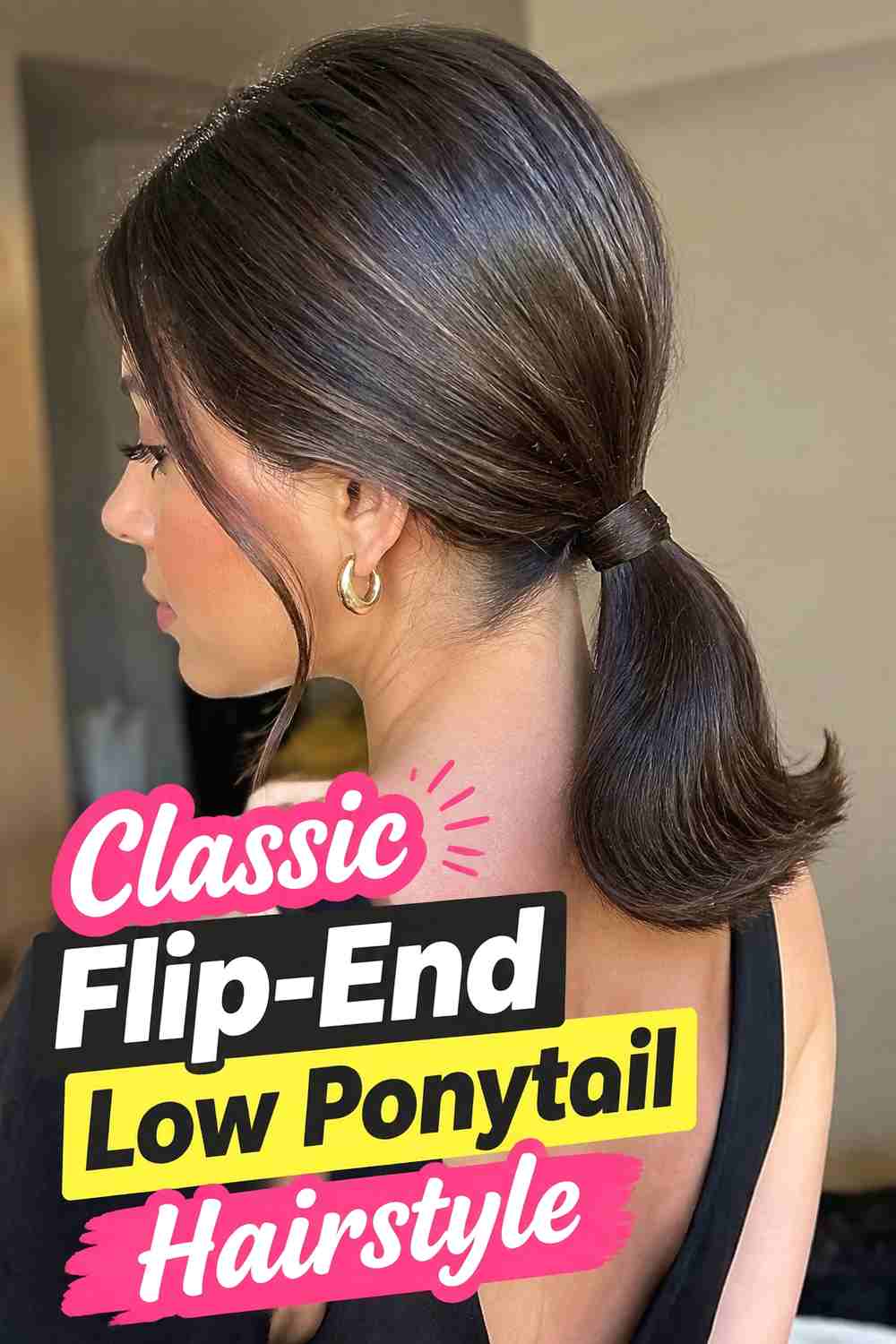
The Classic Flip-End Low Ponytail Hairstyle keeps the crown smooth, the ponytail low, and the final few inches turned outward for a clean but playful silhouette. Gather the hair close to the nape and secure it without pulling the roots excessively tight. Once the ponytail is in place, use a round brush, flat iron, or large curling tool to create an outward bend through the ends. The flip should feel broad rather than tightly curled, allowing the ponytail to swing naturally. Medium to long hair shows the shape most clearly. A light finishing spray can help the tips stay curved, while a small amount of serum keeps the lengths polished without weighing down the movement.
Styling Notes
Concentrate the curve on the final few inches rather than curling the whole ponytail.
Best For
This balanced version works well for workdays, lunches, dinners, and simple polished everyday styling.
2. Sleek Center Part Flip End Low Ponytail Hairstyle
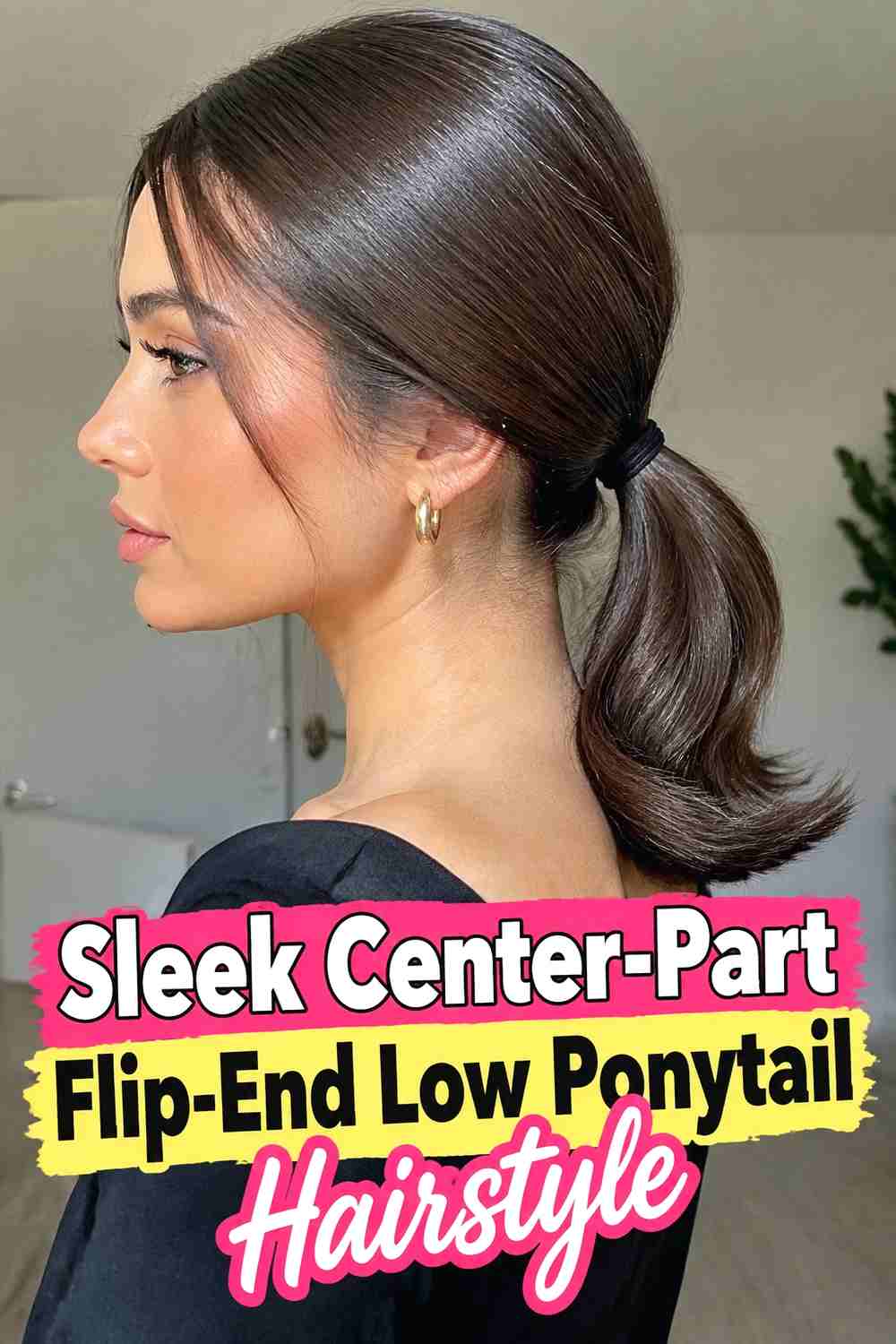
The Sleek Center-Part Flip-End Low Ponytail Hairstyle pairs a precise middle part with smooth roots and crisp outward ends. Brush both sides evenly toward the nape and secure the ponytail directly in the center so the symmetry remains visible from front to back. The lengths should stay straight and glossy until the final section, where the ends bend outward in one controlled sweep. This creates an appealing contrast between the streamlined base and playful tips. Use smoothing product sparingly around the hairline so the surface looks clean rather than heavily coated. Once secured, shape the ends with a flat iron or round brush and let them cool before touching them.
Why It Works
The structured center part makes the flipped tips feel more intentional by contrasting a sleek upper section with visible movement below.
Pro Tip
Shape both sides of the ponytail evenly so the outward curve looks balanced from the back.
3. Soft Side Part Flip End Low Ponytail Hairstyle
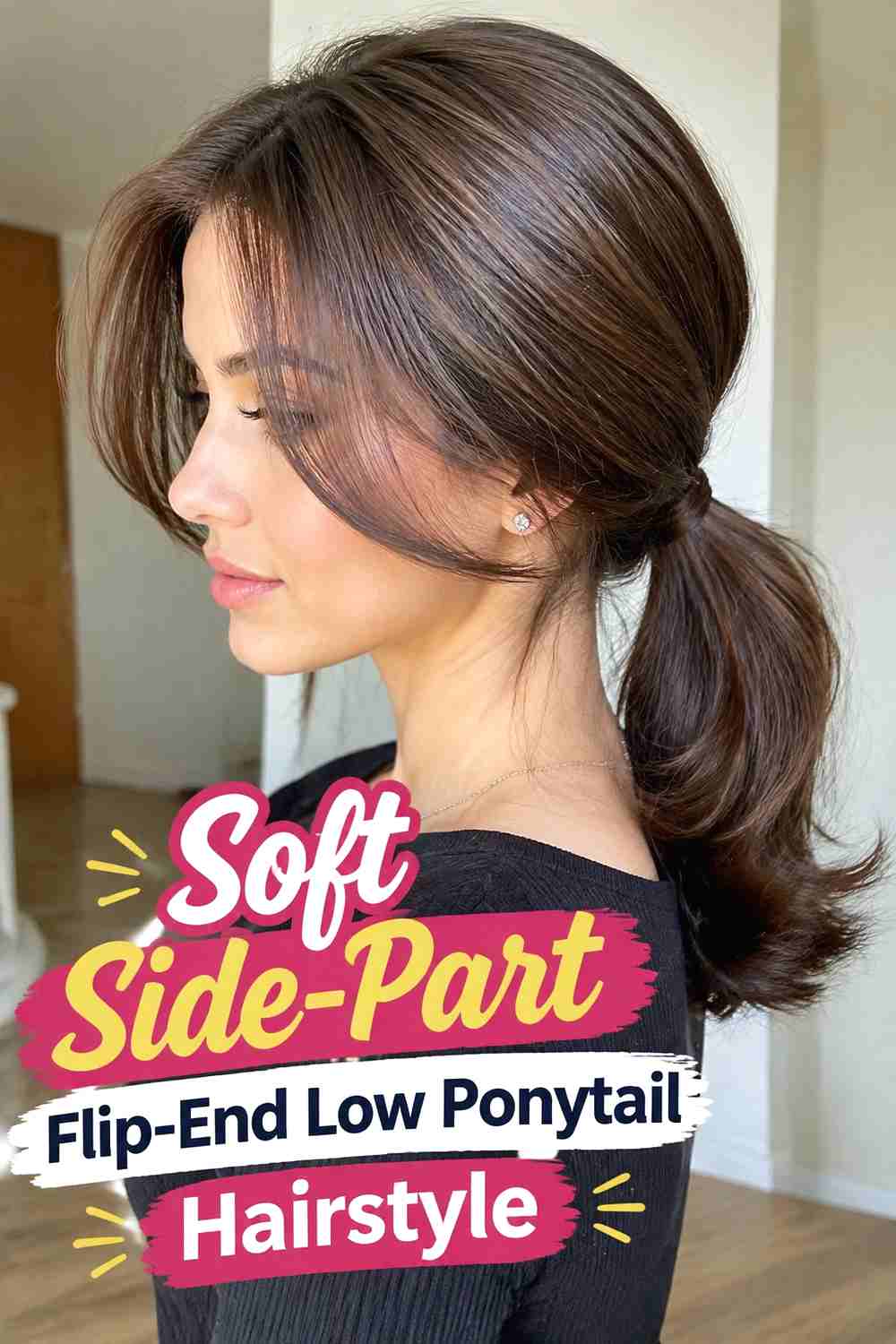
The Soft Side-Part Flip-End Low Ponytail Hairstyle adds gentle movement around the forehead while keeping the ponytail low and neat. Create the side part first, then sweep the heavier front section toward the back without flattening all of its natural lift. The ponytail can stay centered at the nape so the asymmetry is concentrated around the face. Keep the lengths smooth and finish with a soft outward flip at the ends. This version works particularly well when you want a polished ponytail that feels less strict than a center-part style. A little flexible spray around the front can support the sweep, while the ends should remain touchable and bouncy.
Styling Notes
Keep a small amount of lift on the heavier side of the part instead of brushing the hair tightly against the scalp.
Best For
Choose this option when you want a softer front profile with a clean, playful ponytail finish.
4. Wrapped Base Flip End Low Ponytail Hairstyle
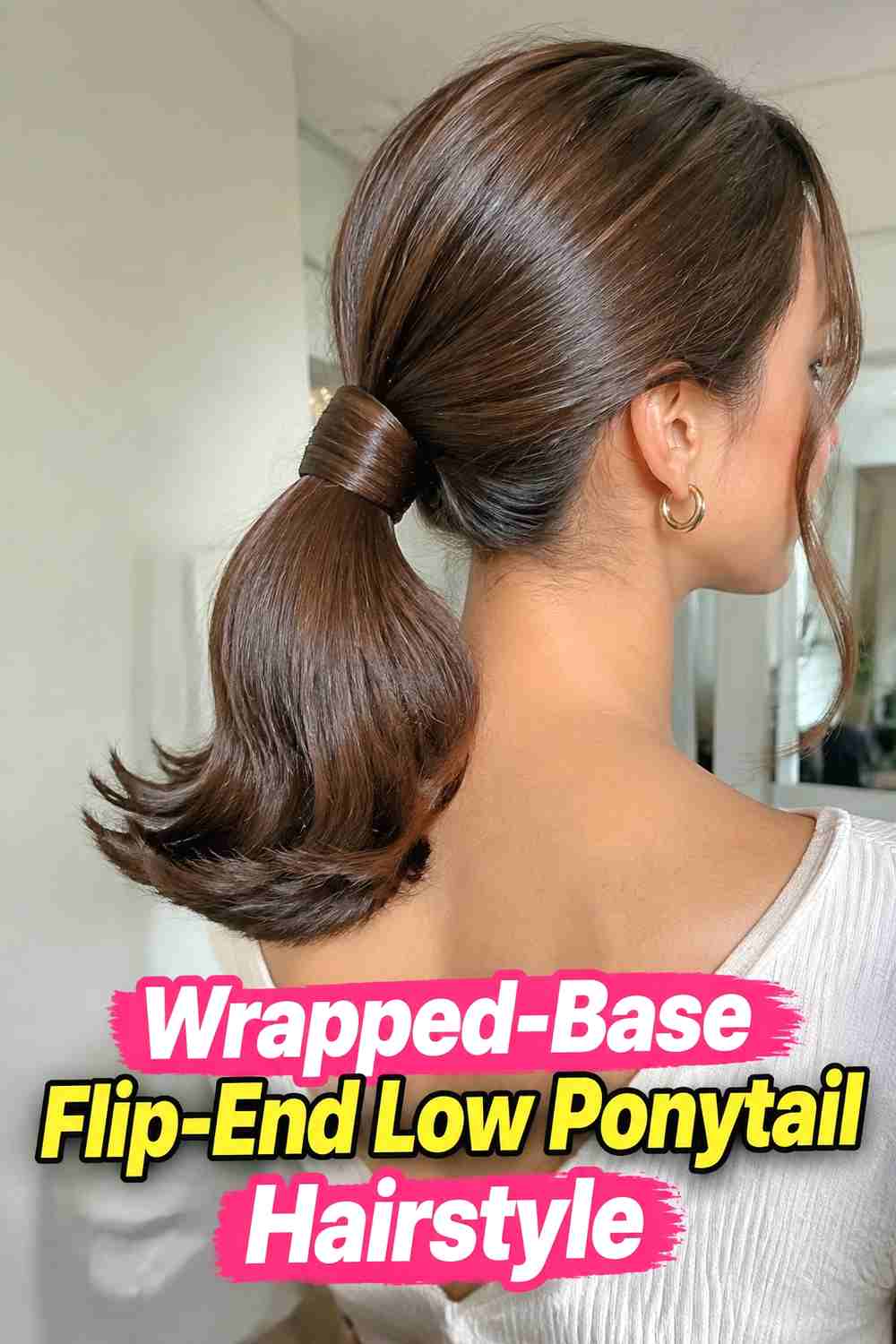
The Wrapped-Base Flip-End Low Ponytail Hairstyle hides the elastic beneath a smooth section of hair, making the low ponytail look instantly more finished. Secure the ponytail at the nape first, then take a narrow strand from underneath, wrap it around the elastic, and pin the end discreetly beneath the base. Keep the ponytail lengths straight and controlled before turning the ends outward. The wrapped detail works especially well with a glossy finish because it creates a continuous hair surface from the crown into the ponytail. Make sure the wrap is secure before styling the ends so you do not pull against the base repeatedly.
Why It Works
Covering the elastic removes a casual visual detail and lets the flipped ends become the main feature.
Pro Tip
Take the wrapping strand from underneath the ponytail so the missing section is not noticeable from the front or sides.
5. Face Framing Flip End Low Ponytail Hairstyle
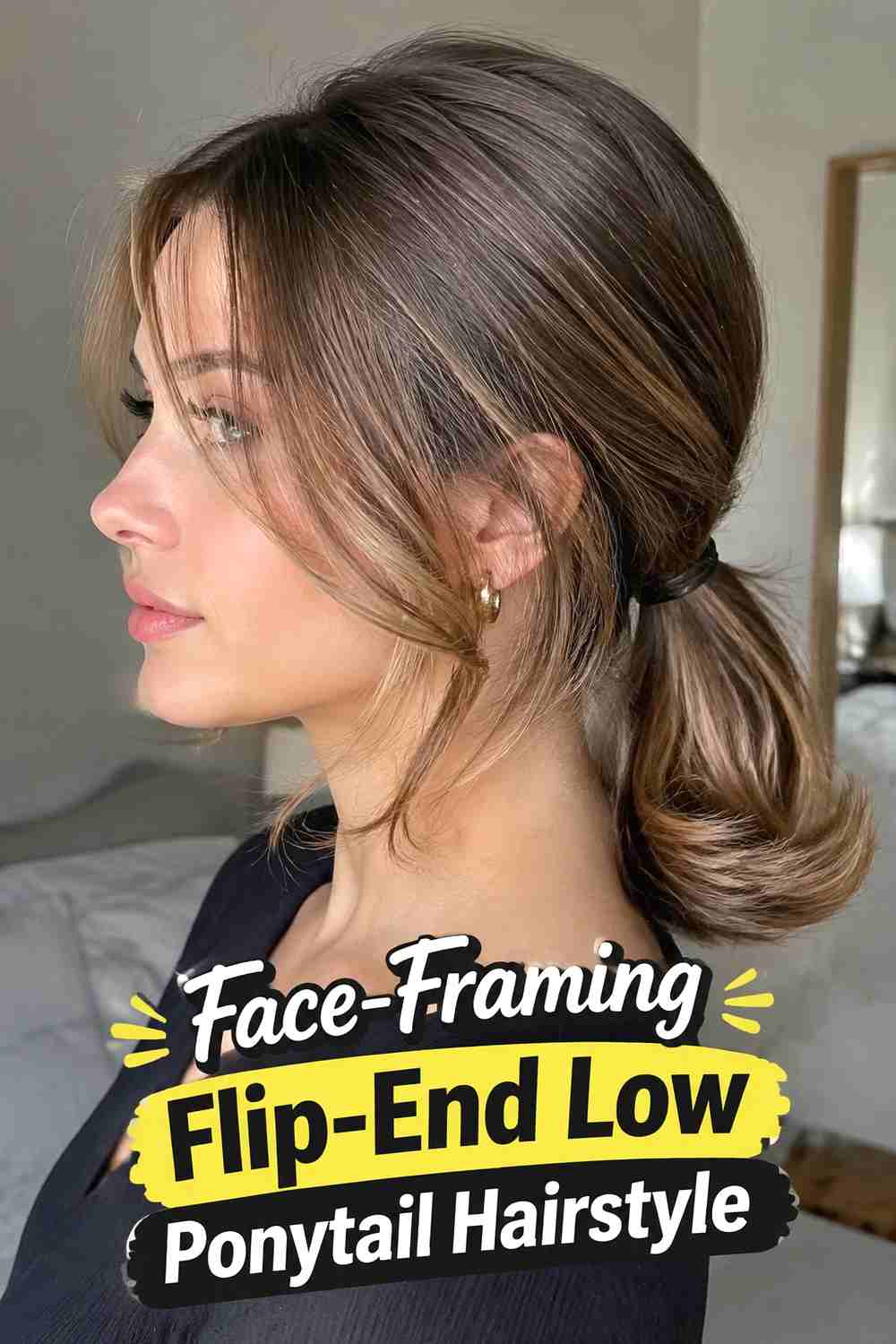
The Face-Framing Flip-End Low Ponytail Hairstyle leaves a few shorter sections loose around the cheeks or jawline while the rest of the hair is gathered at the nape. These front pieces soften the style and can be gently bent away from the face so their movement echoes the flipped ponytail ends. The main ponytail should stay smooth enough to provide contrast with the loose layers. If your haircut already includes face-framing pieces, let them fall naturally rather than pulling out longer sections after the ponytail is secured. Shape the ends outward with a broad curve and finish lightly so the overall look stays flexible and wearable.
Hair Type & Length
Medium to long hair with front layers gives this version the clearest combination of softness and defined ponytail shape.
Styling Notes
Style the loose front pieces separately so they complement the outward direction of the ponytail ends.
6. High Shine Flip End Low Ponytail Hairstyle
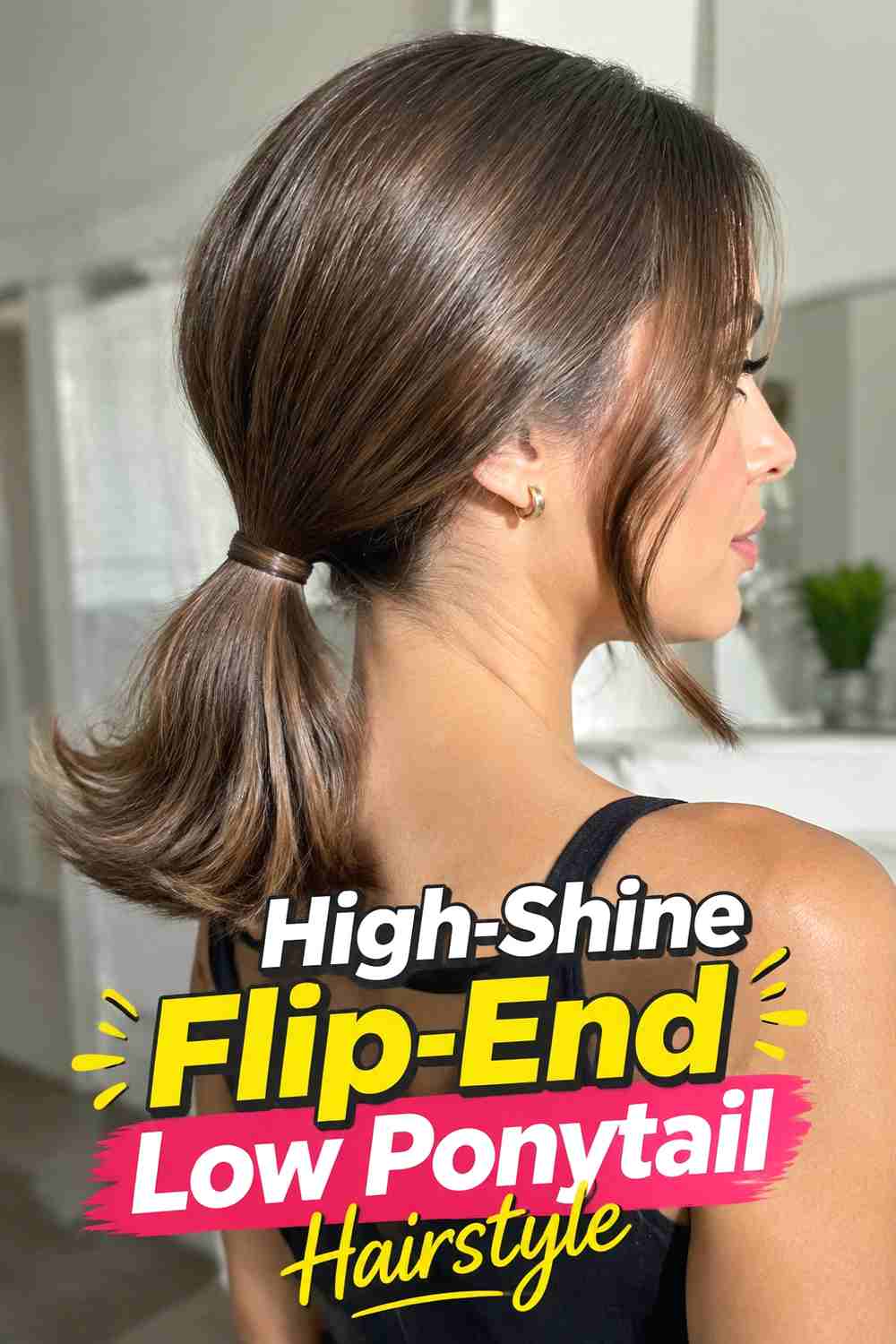
The High-Shine Flip-End Low Ponytail Hairstyle emphasizes a smooth reflective surface from roots to ends. Start by smoothing the lengths before gathering them at the nape, since flyaways become more noticeable in a glossy style. The ponytail should remain sleek through most of its length before turning outward in one broad, polished curve. Apply shine product sparingly to the mid-lengths and ends after styling, avoiding excess near the roots. The goal is luminosity rather than a wet or oily finish. This variation looks especially refined when the ends are shaped evenly and the elastic is hidden with a wrapped section of hair or a simple polished tie.
Styling Notes
Smooth each section before securing the ponytail so the reflective finish stays consistent through the lengths.
Wear & Maintenance
Avoid repeated touching because oils from the hands can change the clean glossy appearance.
7. Curtain Bang Flip End Low Ponytail Hairstyle
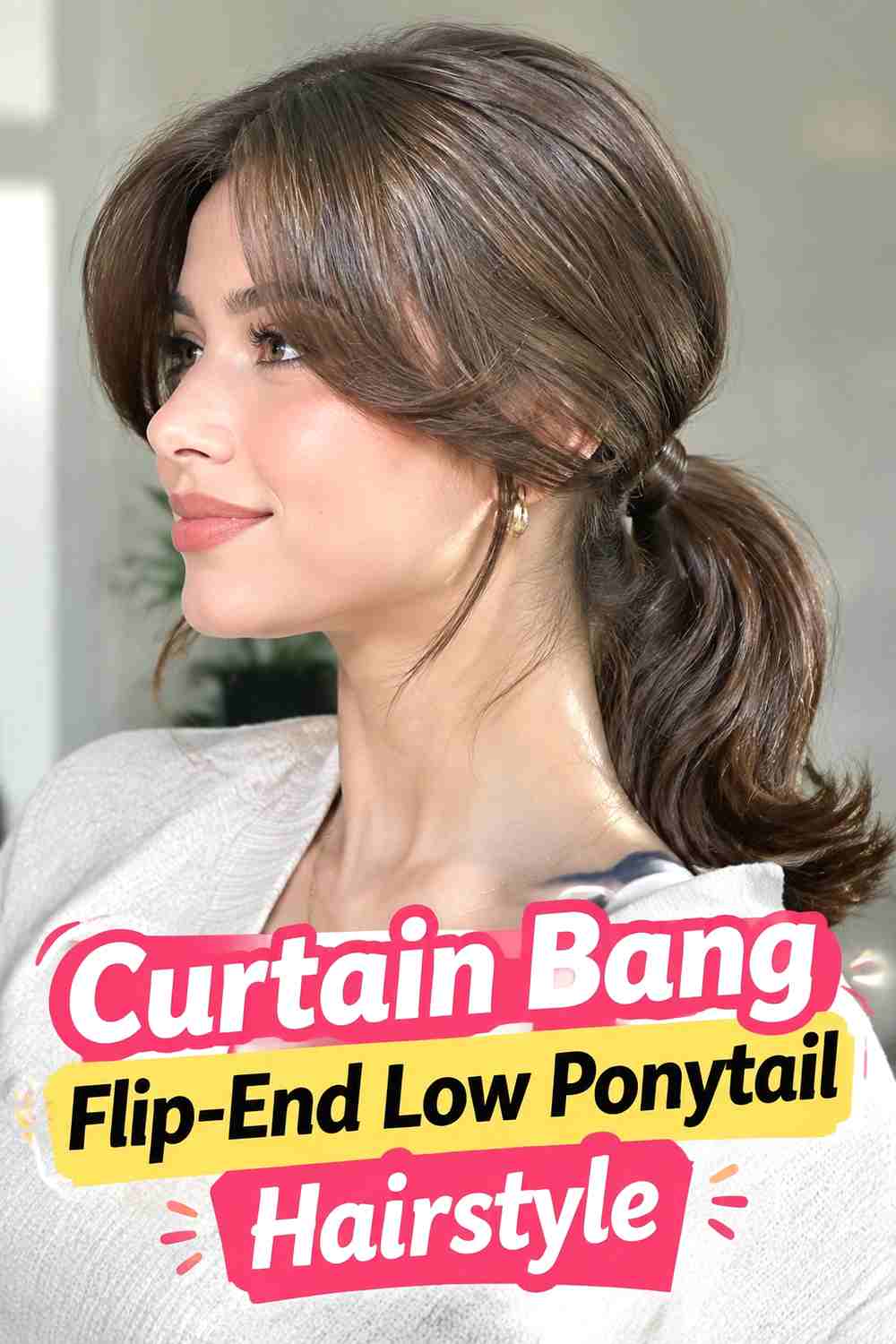
The Curtain Bang Flip-End Low Ponytail Hairstyle combines a low ponytail with soft parted bangs that sweep away from the center. The curtain fringe should keep enough movement to frame the face while the remaining hair is gathered neatly at the nape. Shape the bangs with a round brush or large styling tool so they curve outward, creating a visual connection with the flipped ponytail ends. The ponytail itself can remain straight and sleek through the body for contrast. This style works especially well when the bangs blend into cheekbone or jaw-length layers. Keep product light around the fringe so it does not separate into heavy pieces.
Why It Works
Both the bangs and ponytail ends move outward, giving the hairstyle a cohesive direction from front to back.
Pro Tip
Style the curtain bangs before tying the ponytail so they have enough room to fall naturally around the face.
8. Wavy Flip End Low Ponytail Hairstyle
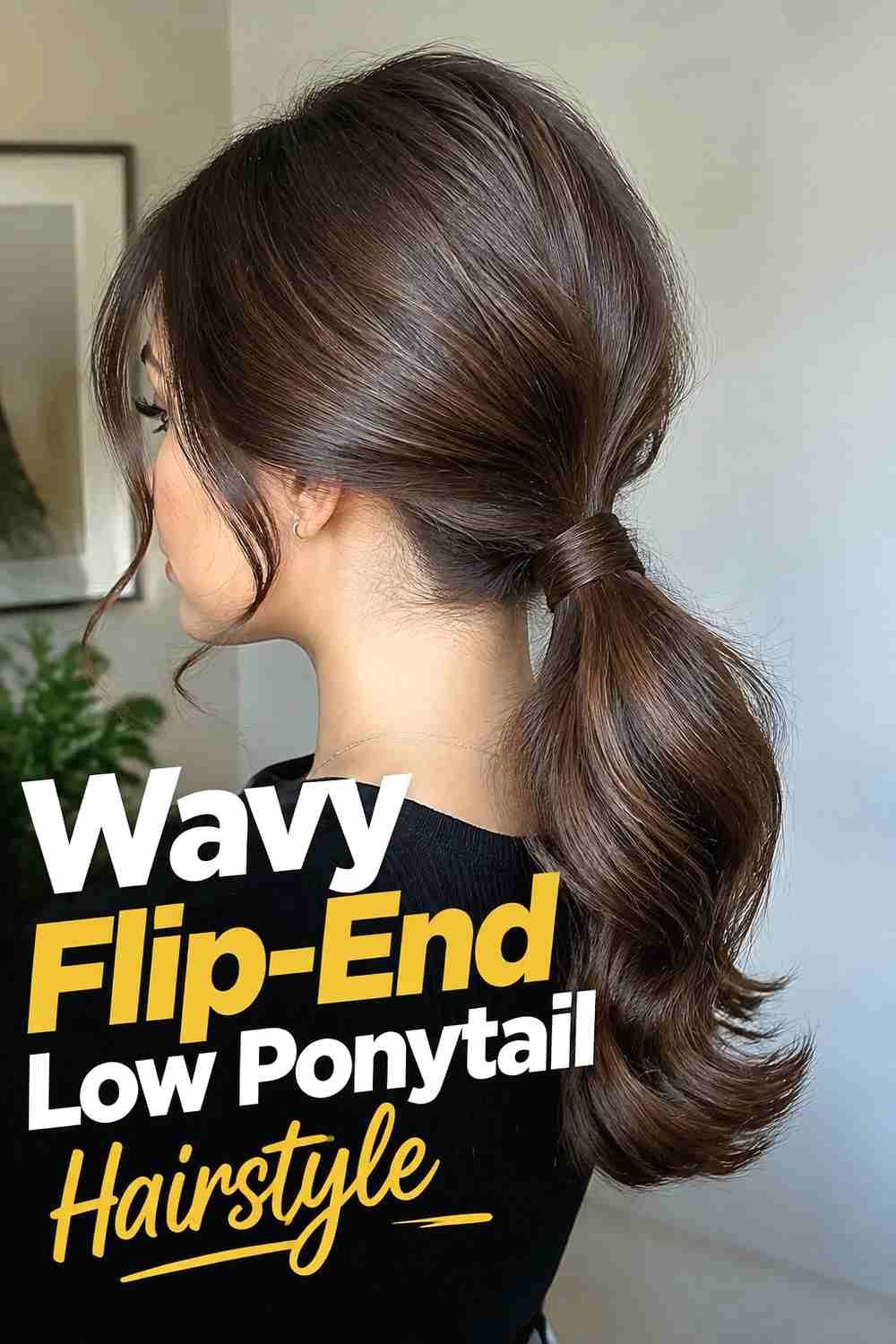
The Wavy Flip-End Low Ponytail Hairstyle keeps subtle movement through the ponytail before finishing with a more noticeable outward turn at the ends. Unlike a completely sleek version, this style allows broad bends through the lengths, creating a softer and more relaxed silhouette. Start with natural waves or add a few loose curves before gathering the hair at the nape. Once tied, refine the final few inches so they flip outward cleanly rather than disappearing into the existing wave pattern. Keep the crown softly controlled instead of perfectly slick. The finished look should feel textured and feminine while still making the flipped tips easy to see.
Hair Type & Length
Naturally wavy or pre-waved medium-to-long hair gives this style an easy foundation and soft body.
Wear & Maintenance
Refresh the tips separately if the flip relaxes rather than restyling the entire ponytail.
9. Layered Flip End Low Ponytail Hairstyle
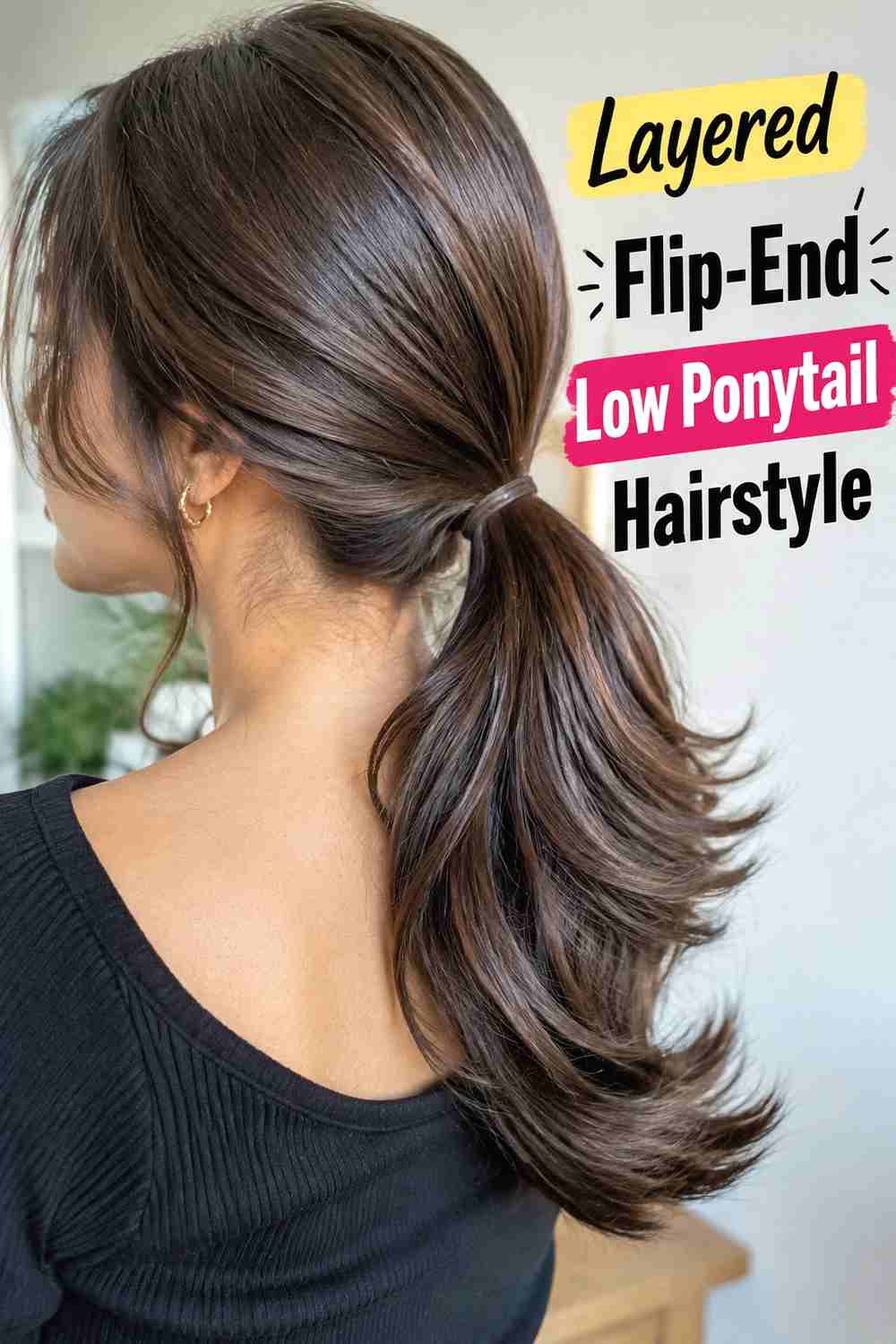
The Layered Flip-End Low Ponytail Hairstyle uses different hair lengths to create a more dimensional outward finish. When layered hair is tied low, shorter sections can sit at different points through the ponytail, making the flip appear lighter and more separated. Smooth the upper section enough to keep the ponytail controlled, then shape the lower layers outward individually if needed. Avoid forcing every tip into exactly the same curve; a little variation helps the movement look natural. This style works particularly well when long layers are visible through the ponytail rather than disappearing into one dense section. Use lightweight hold so the layered ends remain bouncy.
Why It Works
Different layer lengths break up the end line, allowing the outward movement to look airy instead of forming one heavy curve.
Pro Tip
Shape shorter layers separately if they do not naturally follow the direction of the longer flipped ends.
10. Voluminous Crown Flip End Low Ponytail Hairstyle
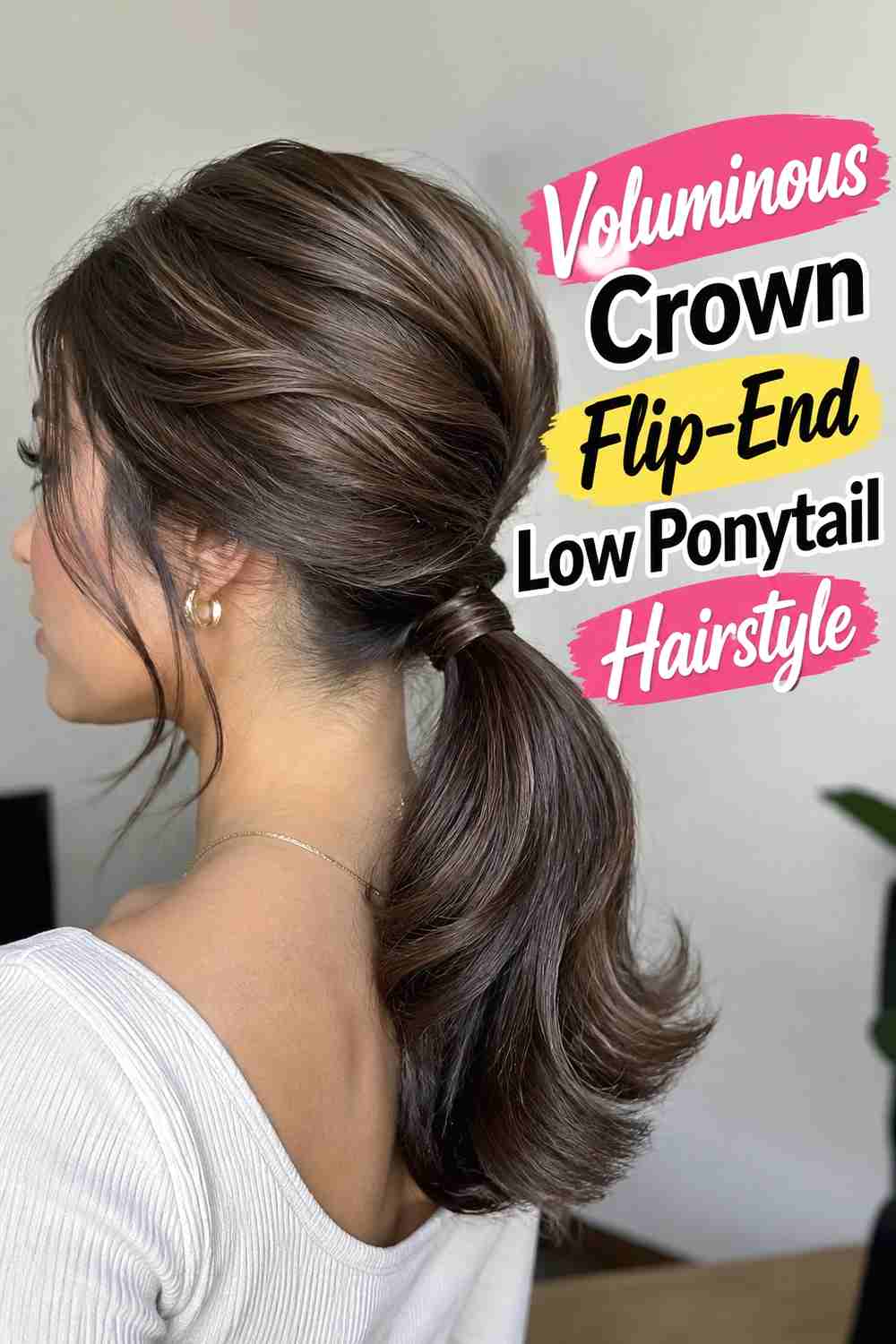
The Voluminous Crown Flip-End Low Ponytail Hairstyle adds gentle height through the top before dropping into a low ponytail with outward-curved ends. Instead of brushing everything tightly toward the nape, preserve controlled lift at the crown by directing the roots upward during drying or lightly setting the top sections. Gather the hair carefully so the volume does not collapse, then secure the ponytail low. Keep the lengths polished and create a defined flip through the final few inches. The combination of root lift and playful ends creates a fuller silhouette without requiring curls throughout the ponytail. Light volumizing product works best because heavy formulas can flatten the crown.
Styling Notes
Create the crown lift before tying the ponytail and make only small adjustments afterward.
Best For
This variation works well when you want a more glamorous profile while keeping the ponytail itself simple.
11. Ribbon Tied Flip End Low Ponytail Hairstyle
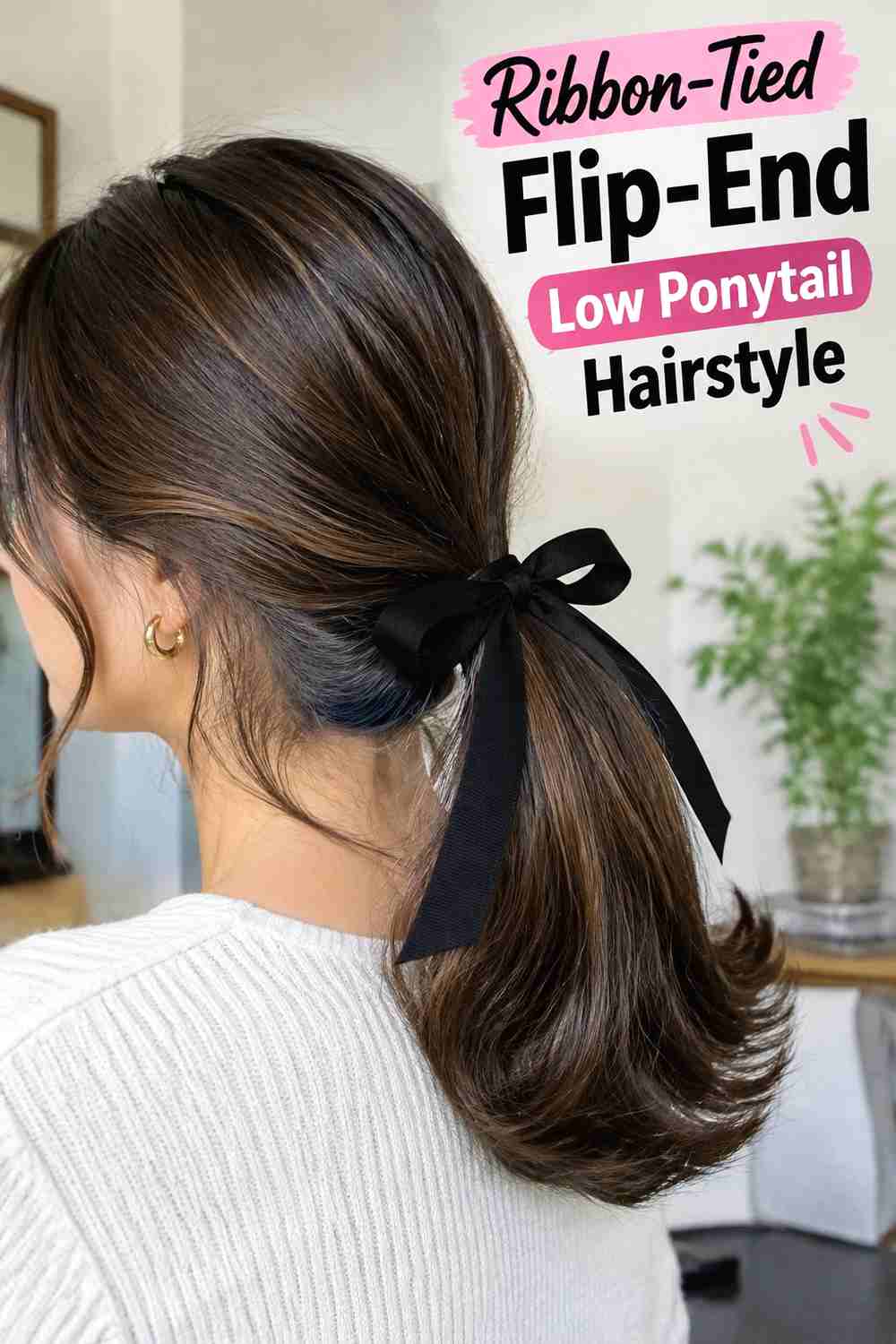
The Ribbon-Tied Flip-End Low Ponytail Hairstyle adds a decorative finishing detail at the base without complicating the styling technique. Secure the ponytail first with a reliable elastic, then tie a slim ribbon around it so the accessory does not need to carry the full weight of the hair. Keep the lengths smooth and shape the ends outward in a broad, bouncy curve. A simple bow can create a softer mood, while a straight ribbon tie feels more minimal. Choose a ribbon width that complements the ponytail rather than overwhelming it. The finished style works particularly well with clean roots and clearly defined ends.
Best For
This option suits brunches, celebrations, date nights, casual events, and outfits where a small feminine accessory fits naturally.
Wear & Maintenance
Use the ribbon as decoration over a secure elastic instead of relying on it alone to hold the ponytail.
12. Minimalist Flip End Low Ponytail Hairstyle
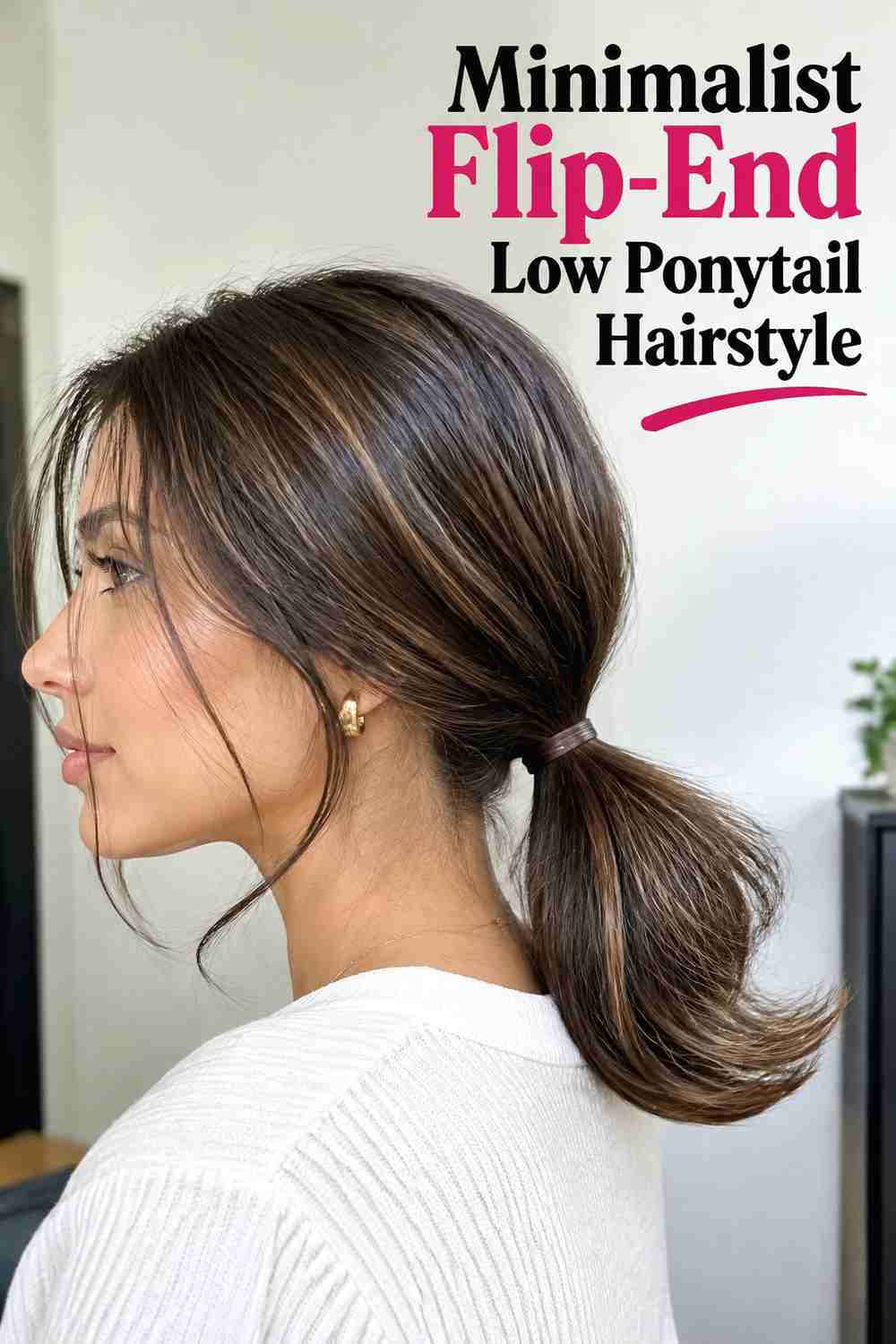
The Minimalist Flip-End Low Ponytail Hairstyle keeps every element clean and restrained: smooth roots, a low centered base, straight lengths, and one subtle outward bend at the tips. There is no extra crown volume, elaborate accessory, or strong face-framing detail, so the quality of the simple shape matters. Secure the ponytail close to the nape and smooth the lengths before shaping the final inches outward. A flat iron can create a controlled curve without adding extra body. Keep finishing products lightweight and avoid making the flip too dramatic. The result should feel modern and intentional, with just enough movement at the ends to keep the ponytail from looking completely basic.
Styling Notes
Use a broad, shallow curve at the ends instead of a tight flick to preserve the minimalist effect.
Best For
This style works well with clean outfits, office wear, travel looks, and simple everyday routines.
13. Soft Bend Flip End Low Ponytail Hairstyle
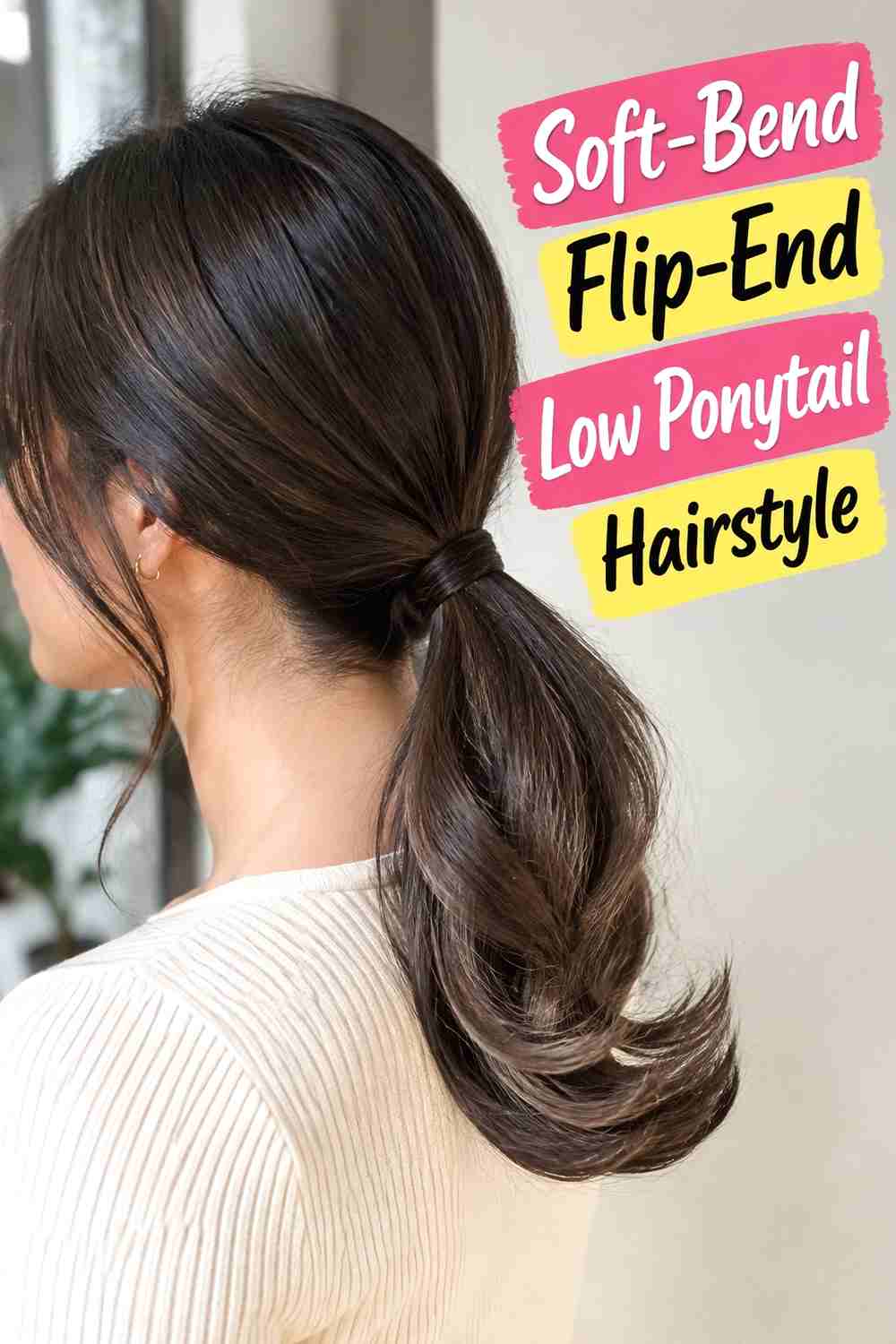
The Soft-Bend Flip-End Low Ponytail Hairstyle uses a relaxed outward curve rather than a sharp retro flick. The ponytail remains smooth through most of its length, then gradually bends away near the bottom, creating movement that looks subtle from the front and more visible from the side. A large round brush or wide styling tool is useful for forming the broader shape. This variation is especially wearable if you like the idea of flipped ends but do not want them to feel overly dramatic. Let the ends cool in their curved position before loosening them, and use only enough hold to maintain the bend while preserving natural swing.
Why It Works
The broad curve creates visible movement while keeping the ponytail soft enough for understated everyday styling.
Pro Tip
Work with the entire lower ponytail in larger sections so the ends form one smooth, cohesive bend.
14. Retro Flip End Low Ponytail Hairstyle
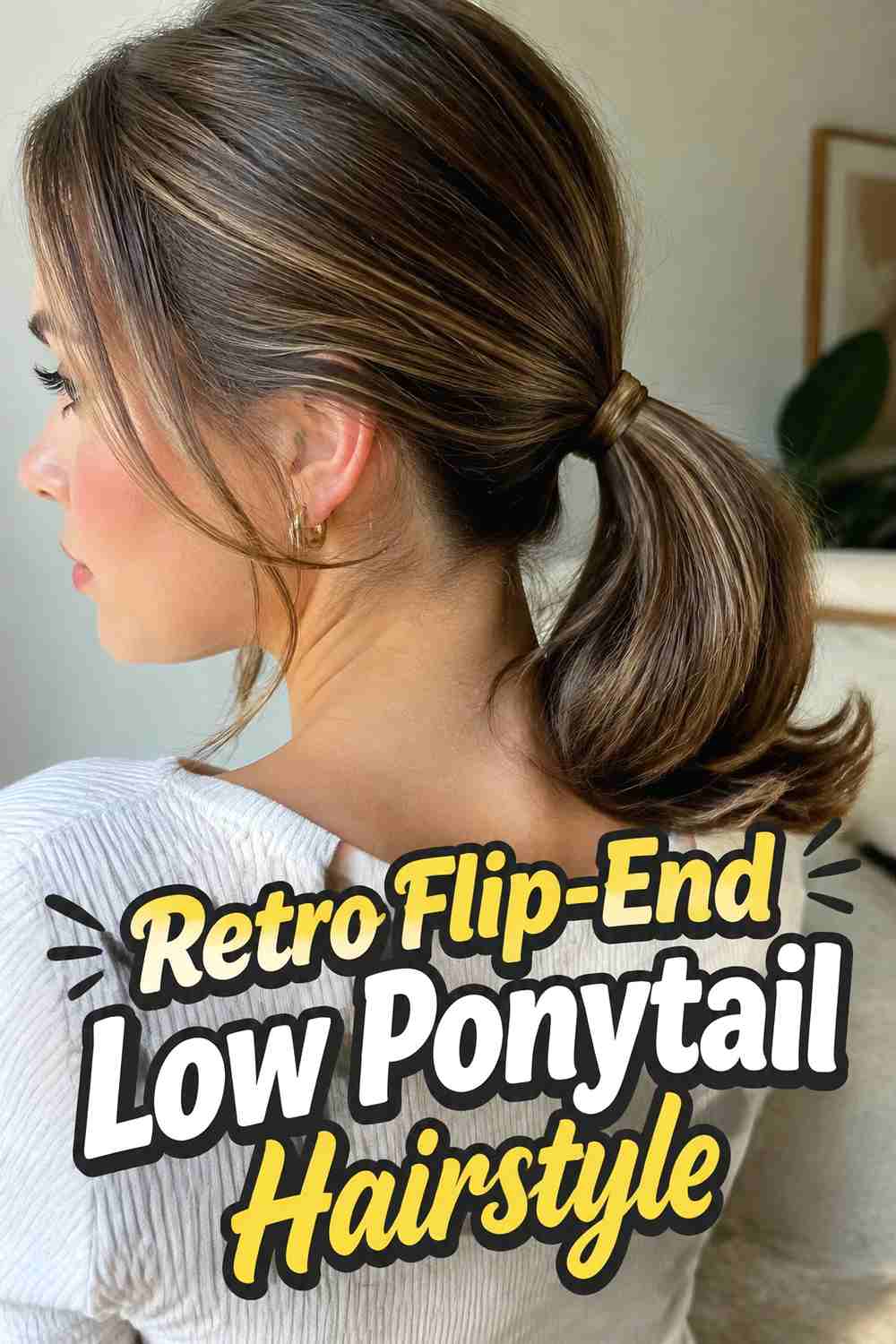
The Retro Flip-End Low Ponytail Hairstyle makes the outward tips more pronounced, creating a playful vintage-inspired silhouette. Keep the ponytail low and polished, then shape the last several inches into a clearer upward or outward curve. A little crown lift can reinforce the retro mood, but the style still works with smoother roots if you prefer a more modern interpretation. Use a round brush, roller, or styling iron to build the end shape and let it cool fully before separating it. The flip should be noticeable without becoming a full curl. A flexible hairspray can help preserve the sharper curve while allowing the ponytail to move.
Styling Notes
Set the ends slightly stronger than the final look you want because they may relax after brushing or wear.
Best For
Choose this option when you want the flipped detail to be the strongest visual feature of the ponytail.
15. Side Swept Flip End Low Ponytail Hairstyle
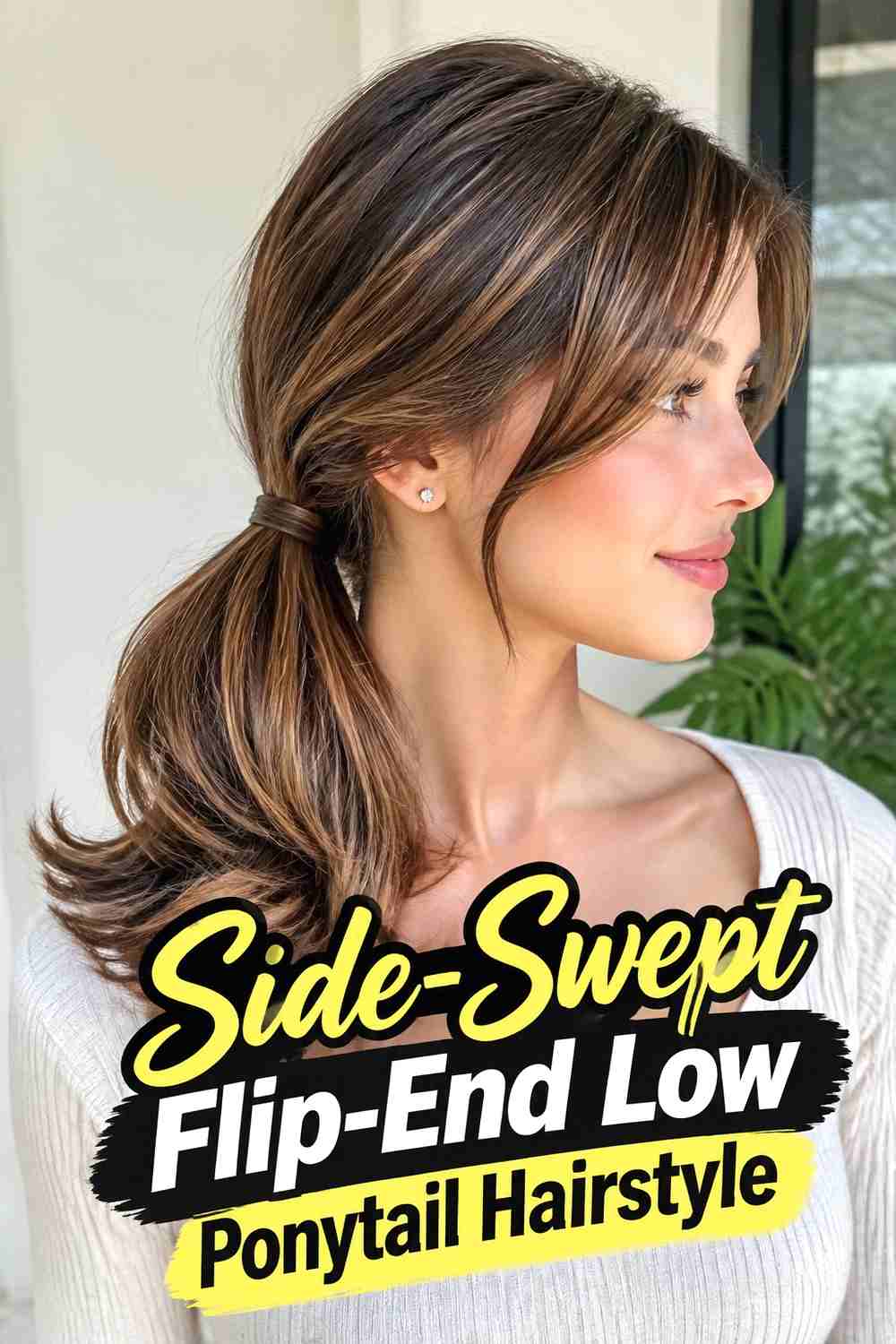
The Side-Swept Flip-End Low Ponytail Hairstyle shifts the ponytail slightly toward one shoulder for a softer asymmetrical finish. Begin with a side part or gentle front sweep, then gather the hair low and slightly off-center near the nape. The ponytail can fall over the shoulder, making the outward-curved ends more visible from the front. Keep the base secure without pulling the side sections too tightly. A wrapped elastic can make the style feel more polished, while a few face-framing pieces can soften it further. Shape the ends outward once the ponytail is positioned so the flip follows its final direction naturally.
Why It Works
Moving the ponytail to one side makes the flipped tips more visible and creates an easy sense of movement around the shoulder.
Wear & Maintenance
Secure the base well so the ponytail does not gradually drift farther to the side during wear.
16. Polished Event Flip End Low Ponytail Hairstyle
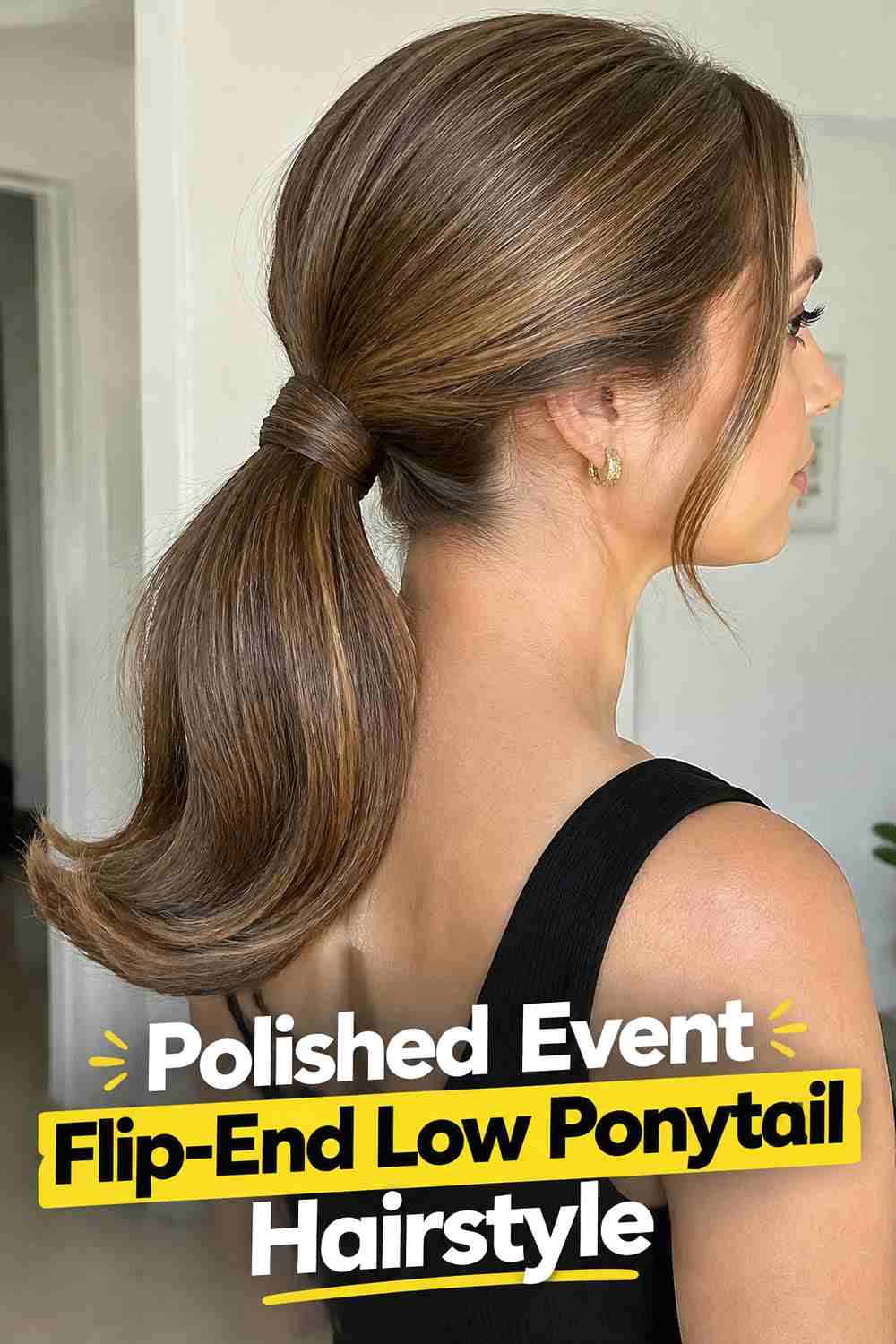
The Polished Event Flip-End Low Ponytail Hairstyle combines smooth roots, a secure low base, controlled shine, and neatly shaped ends for a more formal finish. The elastic can be wrapped with hair or covered by a refined accessory, while the ponytail itself should remain smooth enough to photograph cleanly from multiple angles. Create the outward bend after securing the ponytail so you can control the shape precisely. A little crown lift or face framing can be added depending on the outfit, but keep the construction balanced. Flexible hairspray helps the flipped ends maintain their form through longer wear without making the ponytail stiff or unnatural.
Best For
This version suits weddings, dinners, parties, photographs, and other events where a simple ponytail needs a more deliberate finish.
Wear & Maintenance
Carry an extra elastic or a few pins for the base rather than repeatedly tightening the styled lengths.
17. Textured Flip End Low Ponytail Hairstyle
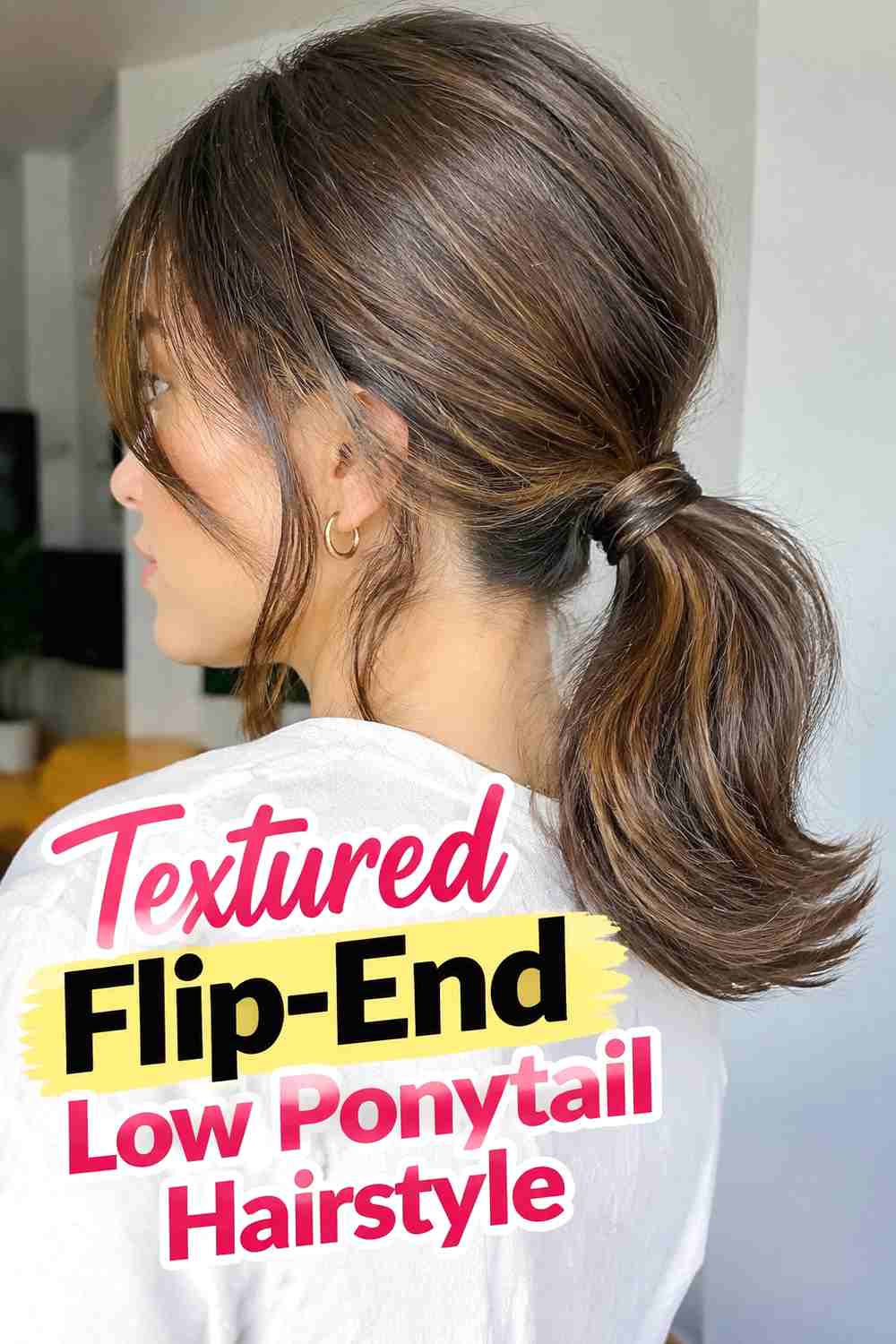
The Textured Flip-End Low Ponytail Hairstyle keeps visible separation through the crown and lengths while preserving the signature outward tips. Start with natural texture, loose bends, or a small amount of texture spray, then gather the hair at the nape without brushing everything completely smooth. The ponytail can show subtle variation through the body before ending in a clearer outward curve. This version is useful when perfectly sleek styling is not your preference or when second-day hair already has natural grip. Keep the base secure and avoid pulling out too many sections after tying it. The final effect should look relaxed but intentional, with the flipped ends providing a clean finishing detail.
Hair Type & Length
Wavy, lightly textured, or layered medium-to-long hair gives this version natural dimension and an easy foundation.
Styling Notes
Define the final outward curve more clearly than the texture above it so the flip does not disappear into the ponytail.
18. Extra Long Flip End Low Ponytail Hairstyle
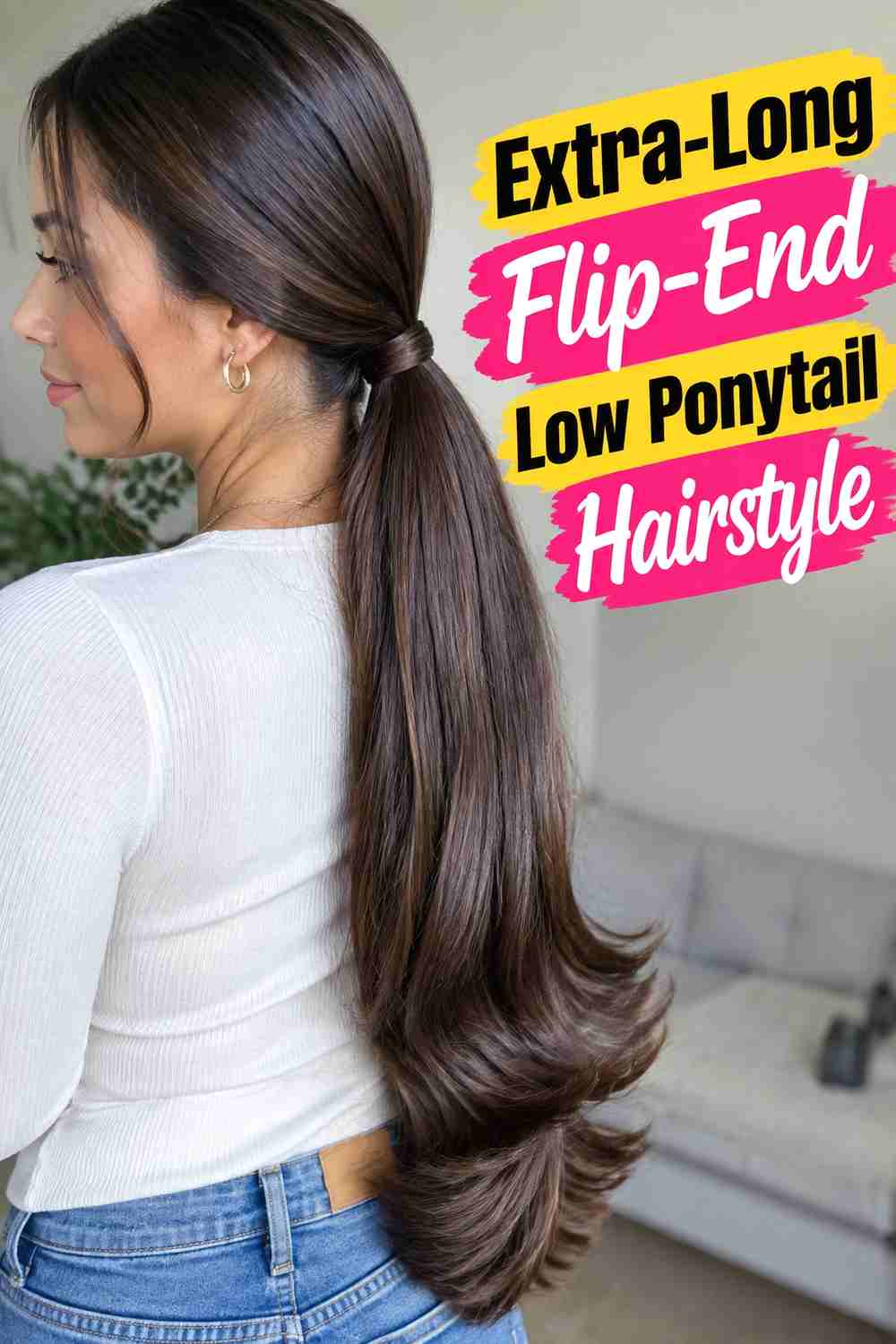
The Extra-Long Flip-End Low Ponytail Hairstyle uses dramatic length as part of the overall effect while adding movement at the very bottom. Because longer hair has more weight, the outward curve may need slightly more initial definition to remain visible after it settles. Gather the hair securely at the nape, smooth the long lengths, and work on the ends in manageable sections rather than trying to flip the entire ponytail at once. A larger styling tool can help create a broad curve that suits the scale of the length. Keep products lightweight so the lower ponytail remains mobile rather than becoming heavy or stiff.
Hair Type & Length
This version is designed for very long hair, especially when the ends are healthy enough to show a smooth, deliberate curve.
Pro Tip
Let each end section cool before combining them so the weight of the full ponytail does not flatten the flip immediately.
19. Quick Everyday Flip End Low Ponytail Hairstyle
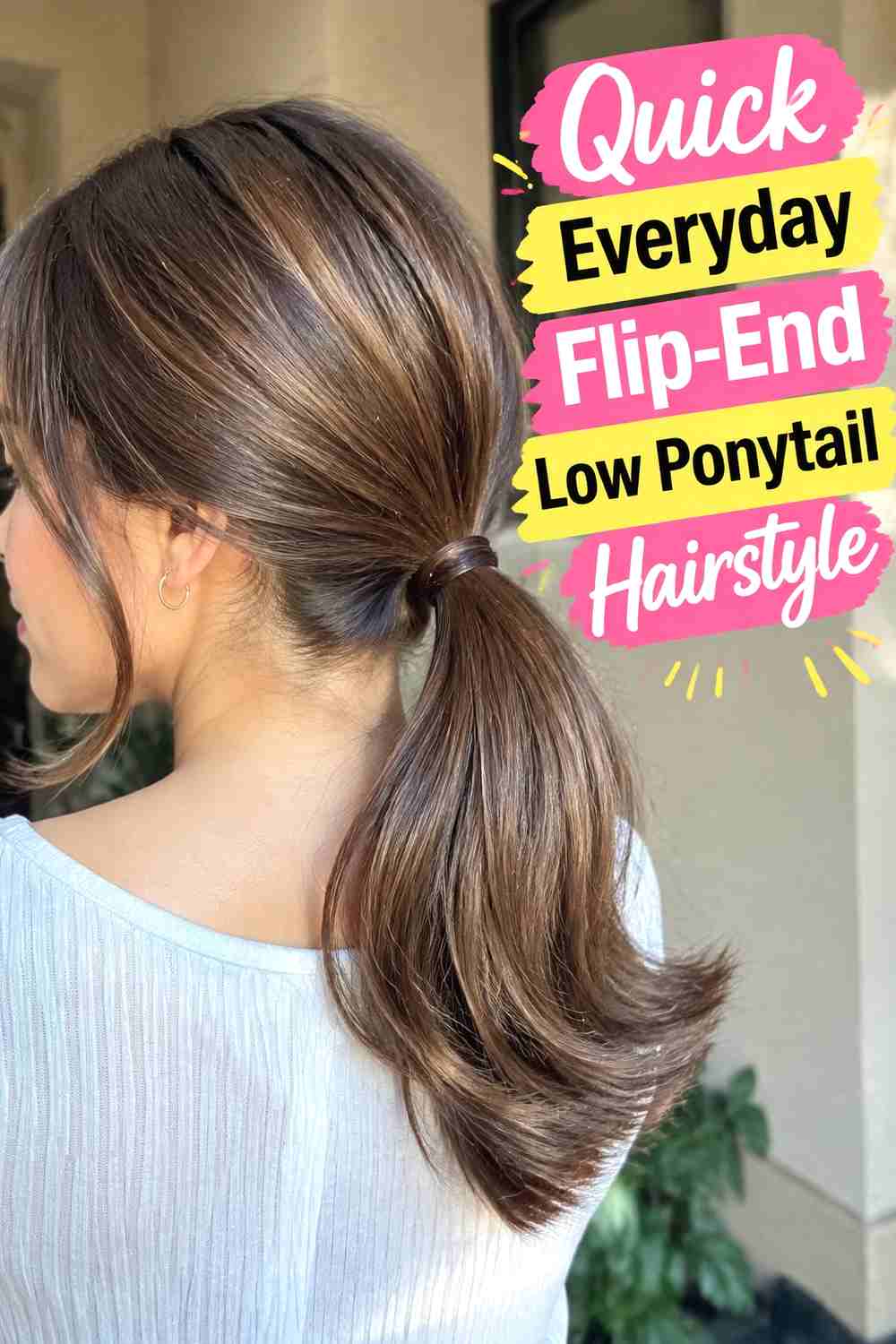
The Quick Everyday Flip-End Low Ponytail Hairstyle keeps the routine practical while adding just enough styling to make a basic ponytail look finished. Gather the hair at the nape with your usual part, smooth obvious bumps with your hands or brush, and secure the base comfortably. Instead of styling the full head, concentrate only on the final few inches of the ponytail and bend them outward with a round brush, flat iron, or quick pass of a curling tool. A few natural flyaways can remain, especially for casual wear. The small flipped detail gives the hairstyle extra shape without requiring a full blowout or complicated sectioning.
Styling Notes
Save time by styling the ends only after the ponytail is secured rather than preparing every section beforehand.
Best For
This is the practical choice for workdays, school runs, errands, travel, casual lunches, or rushed mornings.
How to Choose the Right Look
Start with how strong you want the flipped ends to appear. The Soft-Bend and Minimalist versions create a gentle outward curve, while the Retro style makes the flip much more noticeable. If you want extra polish, the High-Shine, Wrapped-Base, and Polished Event options emphasize clean finishing details. Your haircut matters too. Layered and face-framing hair naturally creates more movement around the ponytail, while one-length hair produces a cleaner end line. Curtain bangs or shorter front layers can also echo the outward direction of the flipped tips. Consider root volume separately from the ends. Sleek Center-Part styles keep the crown controlled, while Voluminous Crown versions add height before the low ponytail begins. Side parts and side-swept placement create a softer, less symmetrical look. Hair length affects the strength of the flip. Medium lengths can show the curve easily, while extra-long hair may need more initial shaping because its weight can relax the ends. Finally, think about wear time. For quick everyday styling, focus mainly on the tips. For events, secure the base carefully and use flexible hold so the flip stays visible without becoming rigid.
Final Thoughts
A flip-end low ponytail turns a simple low tie into a more intentional hairstyle with only one key change: outward movement at the ends. Whether you prefer sleek roots, soft texture, retro volume, layered pieces, or a polished wrapped base, the flip can be adjusted to suit your length, routine, and occasion.
FAQs
1. How do you create flipped ends on a low ponytail?
Secure the ponytail first, then use a round brush, flat iron, or curling tool to bend the final few inches outward. Let the shape cool before loosening it.
2. How can I stop flipped ponytail ends from falling flat?
Give the ends enough initial curve, allow them to cool completely, and use a light flexible-hold product if your hair tends to lose shape quickly.
3. Do flip-end ponytails work on layered hair?
Yes. Layers can create a lighter, more separated flip because the ends sit at different lengths instead of forming one solid line.
4. Can I make a flip-end ponytail without much volume?
Absolutely. A sleek or minimalist version keeps the roots and lengths smooth while concentrating all visible movement at the tips.
5. What ponytail height works best for flipped ends?
A low ponytail near the nape works especially well because the straight length remains visible before transitioning into the outward curve at the bottom. Save your favorite flip-end low ponytail ideas, share the styles that inspire you, and explore more polished ponytail inspiration for everyday wear and special occasions.