13 Undone Nape Bun Hairstyle Ideas
Soft texture, loose strands, and relaxed low placement make these undone nape buns perfect when you want an updo that feels elegant without looking overly styled. An undone nape bun sits low against the neckline but intentionally keeps some softness through the crown, sides, or bun itself. Unlike a sleek low bun, the goal is not to eliminate every flyaway. A little separation and irregularity help the style feel natural, touchable, and quietly romantic. The right version depends on your hair length, natural texture, density, and how secure you need the bun to be. Some styles use braids or twists for structure, while others rely on loose loops, wavy texture, or face-framing pieces. These 13 ideas offer options from quick everyday buns to softer event-ready updos.
Quick List
- Classic Undone Nape Bun Hairstyle
- Loose Face Framing Undone Nape Bun Hairstyle
- Soft Twisted Undone Nape Bun Hairstyle
- Textured Low Undone Nape Bun Hairstyle
- Side Part Undone Nape Bun Hairstyle
- Center Part Undone Nape Bun Hairstyle
- Braided Undone Nape Bun Hairstyle
- Looped Undone Nape Bun Hairstyle
- Wispy Strand Undone Nape Bun Hairstyle
- Wavy Texture Undone Nape Bun Hairstyle
- Soft Volume Undone Nape Bun Hairstyle
- Romantic Event Undone Nape Bun Hairstyle
- Minimal Effort Undone Nape Bun Hairstyle
1. Classic Undone Nape Bun Hairstyle
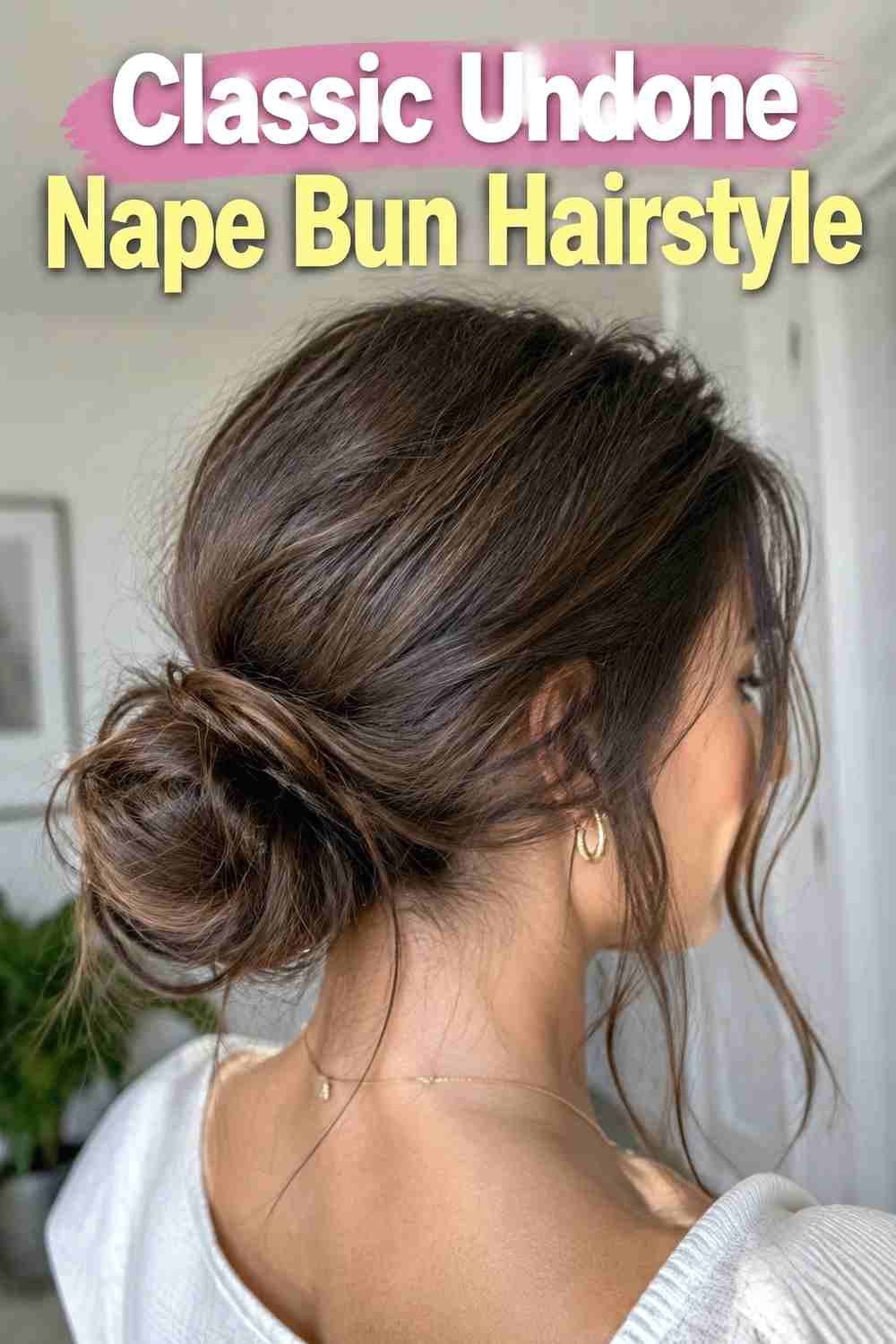
The Classic Undone Nape Bun Hairstyle keeps the bun low and secure while allowing a little softness through the crown and sides. Hair is gathered near the neckline, twisted loosely, and pinned into a compact shape that does not need to look perfectly symmetrical. A few subtle flyaways or separated strands help create the relaxed finish, but the main structure should still feel stable. Medium to long hair is easiest to work with because there is enough length to twist and anchor without excessive tension. Start with a low ponytail if extra security is needed, then loosen the crown slightly after pinning. Flexible hairspray works better than a firm lacquer when you want the style to stay touchable.
Styling Notes
Build a secure base first, then gently soften the surface so you can control the undone effect without weakening the bun.
Best For
This versatile version works for casual dinners, workdays, weekend plans, and simple events where a polished-but-relaxed updo feels appropriate.
2. Loose Face Framing Undone Nape Bun Hairstyle
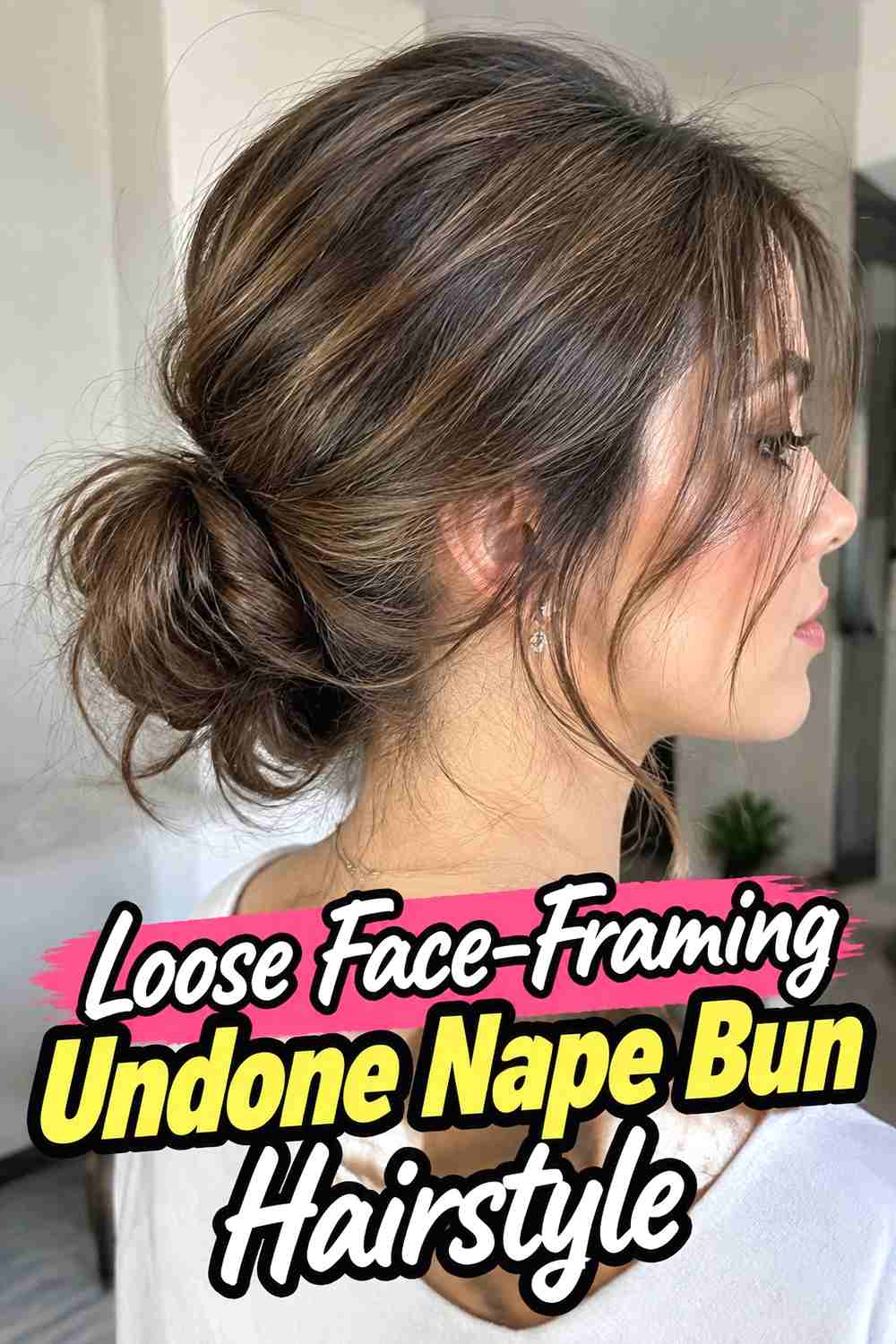
The Loose Face-Framing Undone Nape Bun Hairstyle brings softness to the front by leaving a few deliberate pieces free around the temples, cheekbones, or jawline. The bun itself stays low and loosely twisted so the relaxed front does not feel disconnected from the back. If your haircut already includes shorter face-framing layers, those pieces can be allowed to fall naturally rather than pulled out afterward. For straighter hair, a soft bend can help them sit more fluidly. Secure the nape bun before adjusting the front so you can see exactly how much hair needs to remain loose. The final balance should feel airy and natural, not as though large sections accidentally escaped from the updo.
Why It Works
Loose front strands reduce the formality of a low bun while still allowing the main hairstyle to remain secure.
Wear & Maintenance
If the face-framing pieces become too loose, adjust only those sections instead of tightening the entire bun.
3. Soft Twisted Undone Nape Bun Hairstyle
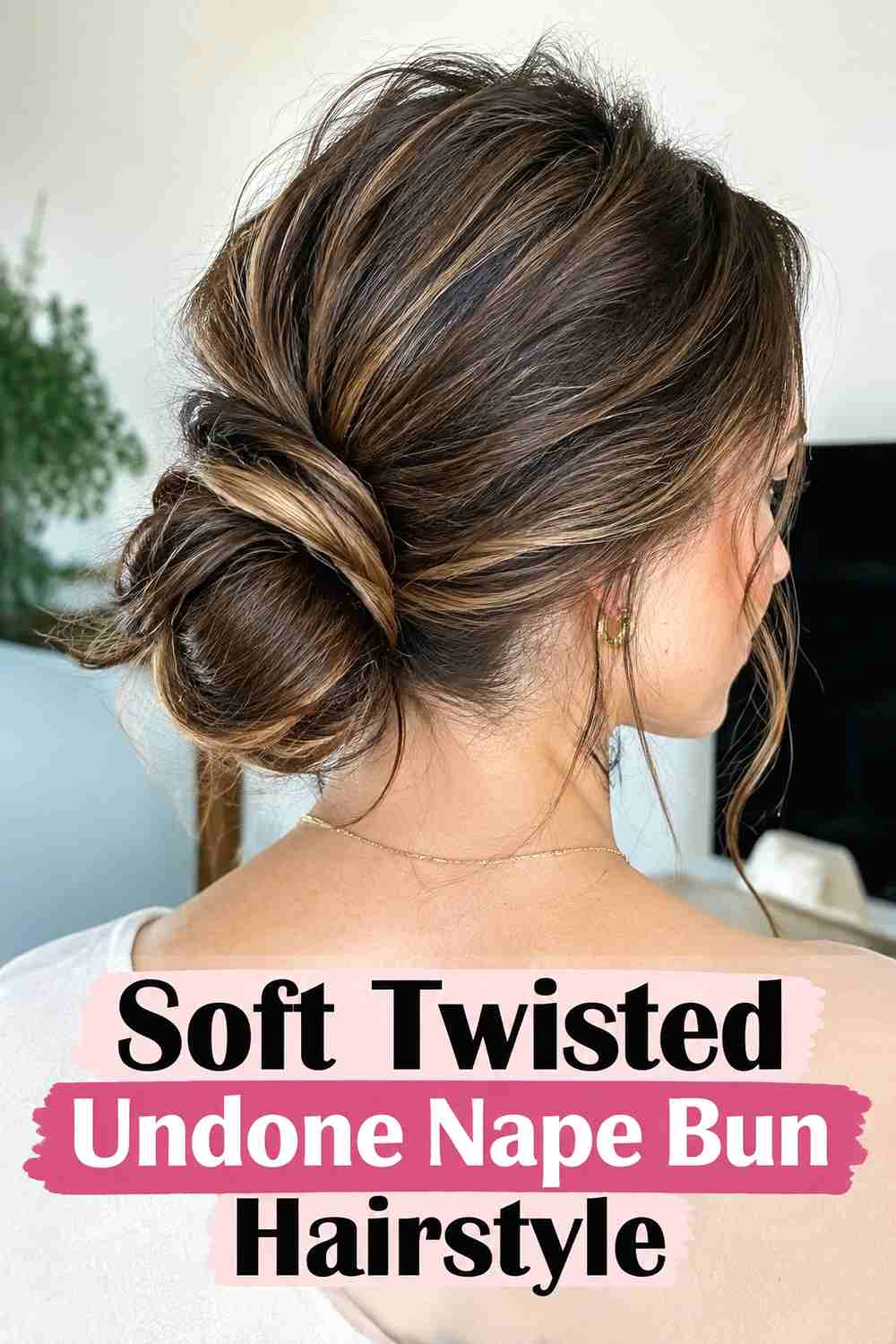
The Soft Twisted Undone Nape Bun Hairstyle uses gentle twists along the sides before the hair meets at the neckline. These twists create visible direction and dimension while keeping the finished updo softer than a tightly rolled style. Divide the hair into broad sections, twist them backward with moderate tension, and join them into a loose knot or bun at the nape. Pull lightly at selected areas of the twists after pinning if you want a fuller effect. This technique works particularly well on medium or long hair because the twists need enough length to overlap naturally. Keep the bun compact enough to stay secure, then leave small surface irregularities intact for a relaxed finish.
Styling Notes
Twist with moderate tension rather than pulling tightly from the hairline, which helps the sides retain their soft shape.
Pro Tip
Cross pins underneath the meeting point of the twists before forming the bun if you need extra internal support.
4. Textured Low Undone Nape Bun Hairstyle
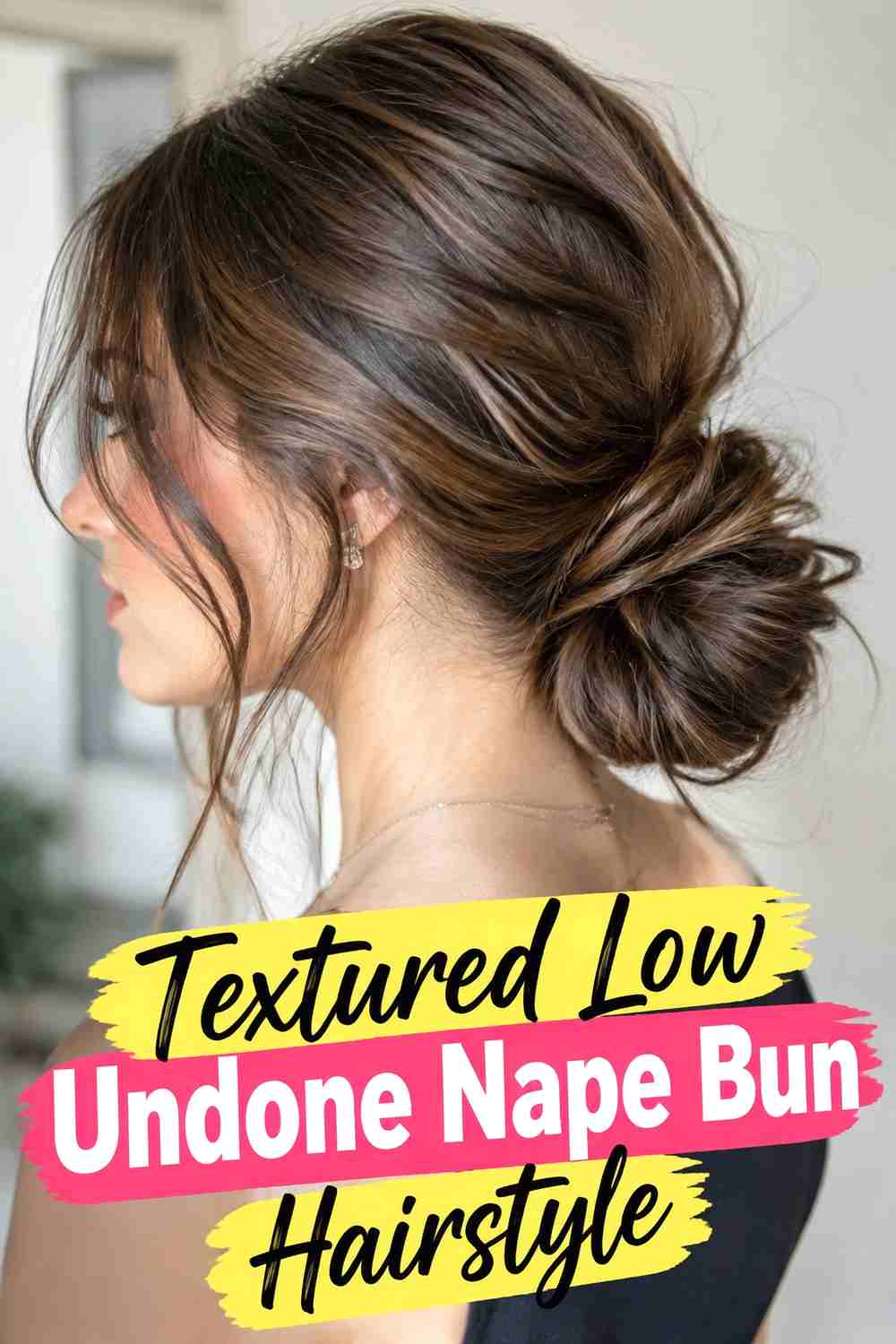
The Textured Low Undone Nape Bun Hairstyle relies on grip, separation, and irregular surface movement rather than a perfectly smooth finish. Natural waves, second-day texture, or a small amount of texturizing product can help the hair hold the shape without slipping. Gather the hair loosely near the nape and twist or loop it into a bun, allowing selected pieces to remain visibly separated. The crown can have gentle lift, but avoid pulling so much hair loose that the structure becomes unstable. This style works particularly well when your hair naturally resists sleek styling. Instead of fighting every flyaway, use the texture to make the bun appear fuller and more dimensional while keeping the underlying pins secure.
Hair Type & Length
Medium to long hair with natural wave, curl, or added texture is especially suited to this softly separated finish.
Why It Works
Visible texture turns small irregularities into part of the design, so the bun can look intentionally relaxed rather than unfinished.
5. Side Part Undone Nape Bun Hairstyle
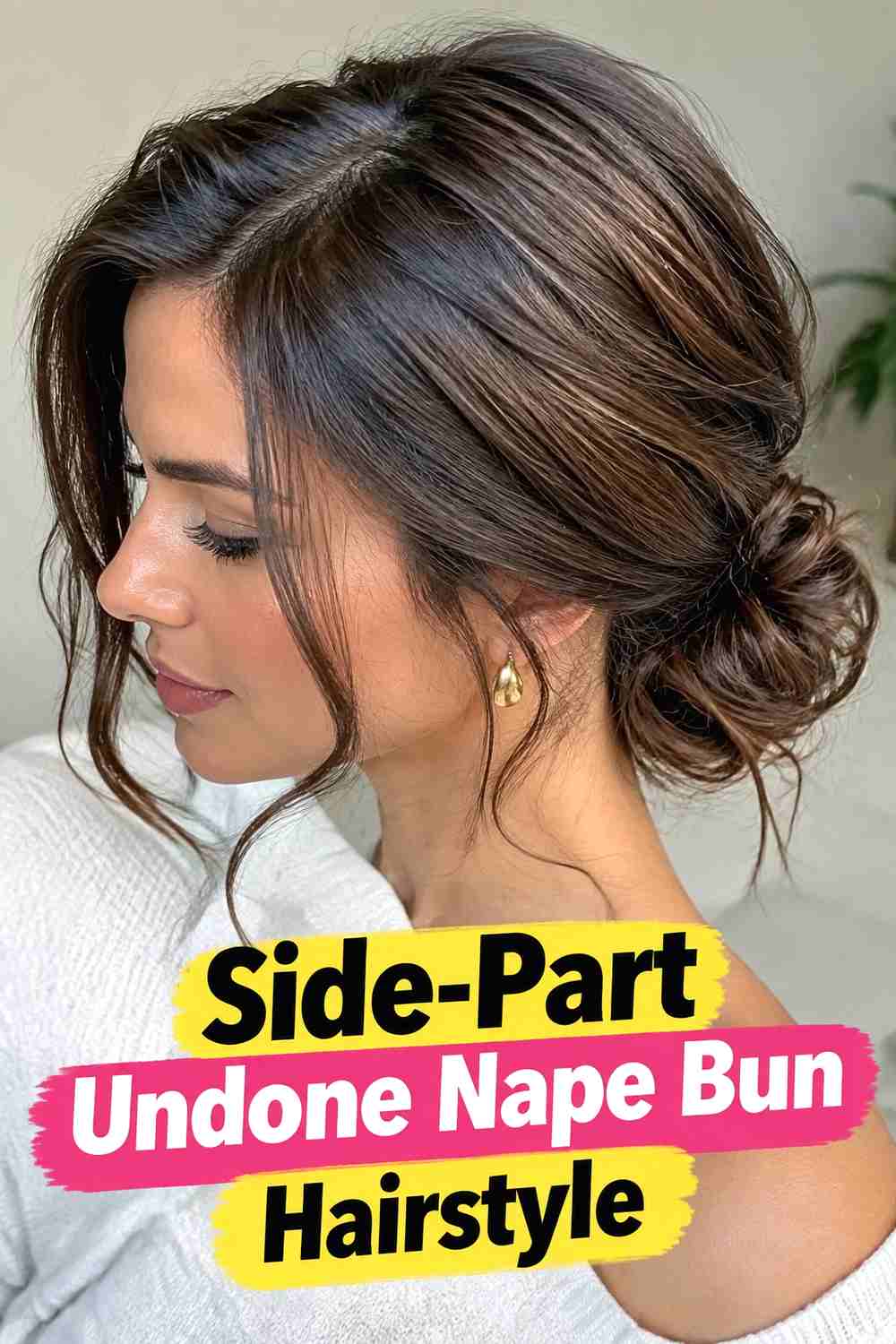
The Side-Part Undone Nape Bun Hairstyle adds an easy sweep across the front before the hair gathers into a low, relaxed bun. A side part naturally creates slightly more volume on one side and can make the style feel softer than a perfectly symmetrical updo. Establish the part before gathering the hair, then allow the heavier front section to curve gently toward the back. The bun can stay centered at the nape to keep the overall silhouette balanced. Loosen the crown and front only after everything is pinned securely. A small amount of smoothing product can control excessive frizz while preserving a few natural flyaways that support the undone finish.
Best For
This version works well when you want a relaxed low bun with a little more movement and asymmetry around the face.
Pro Tip
Avoid pulling the heavier side too tightly behind the ear if you want to preserve the soft front sweep.
6. Center Part Undone Nape Bun Hairstyle
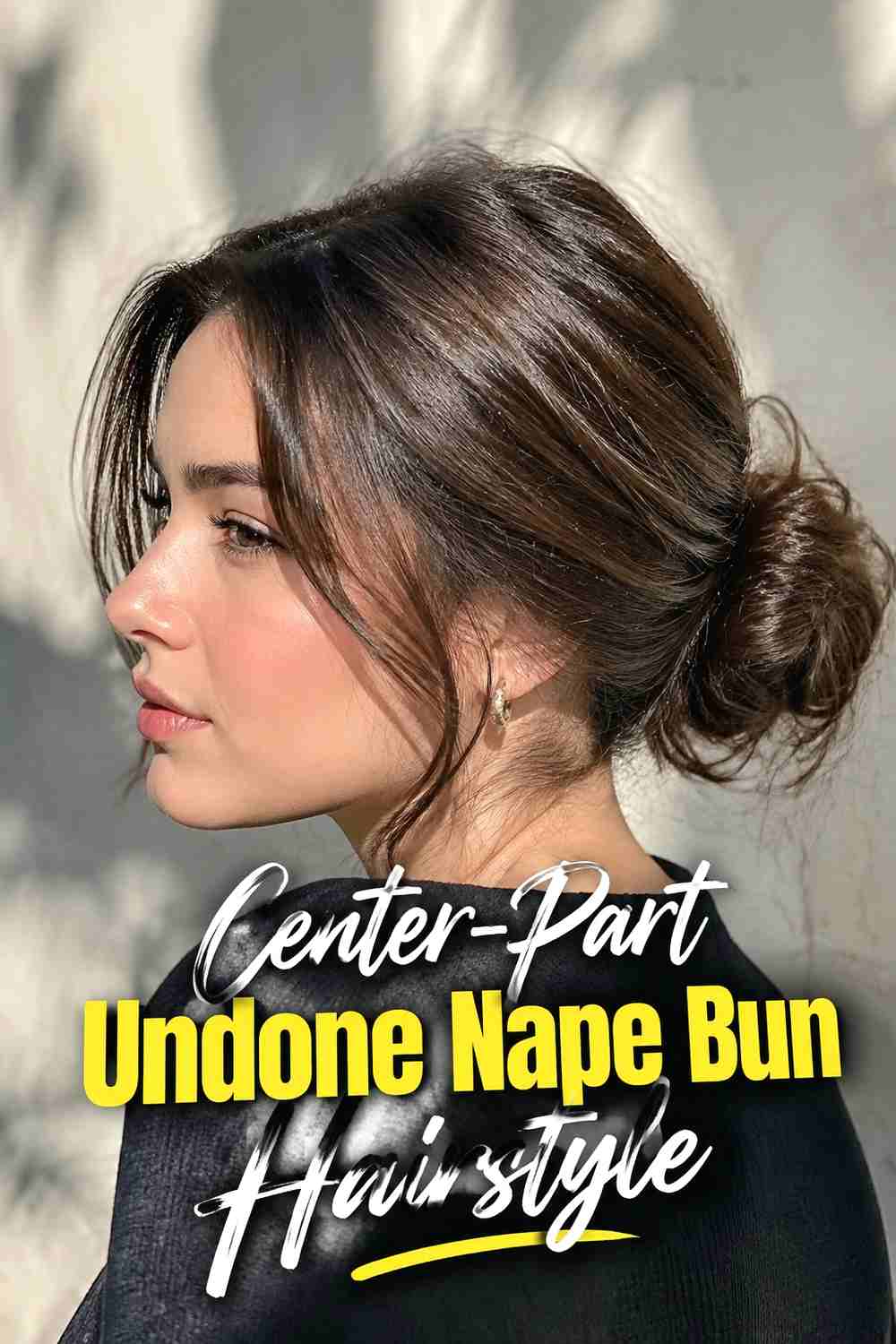
The Center-Part Undone Nape Bun Hairstyle combines a neat middle part with a deliberately relaxed bun, creating an appealing contrast between structure and softness. The front sections follow the part cleanly but do not need to be slicked flat against the head. Instead, allow subtle lift and natural movement as they travel toward the nape. Form the bun from a loose twist or loop and leave a few fine strands around the hairline if they fall naturally. This version looks especially good when the surface retains some texture rather than appearing overly polished. Keep the bun positioned centrally at the neckline so the symmetry of the part carries through to the back without making the style feel rigid.
Why It Works
The clean center part gives the hairstyle visual balance, while the loosened bun prevents the overall look from becoming too severe.
Styling Notes
Keep the middle part precise, then soften the rest of the style selectively rather than trying to make every section equally loose.
7. Braided Undone Nape Bun Hairstyle
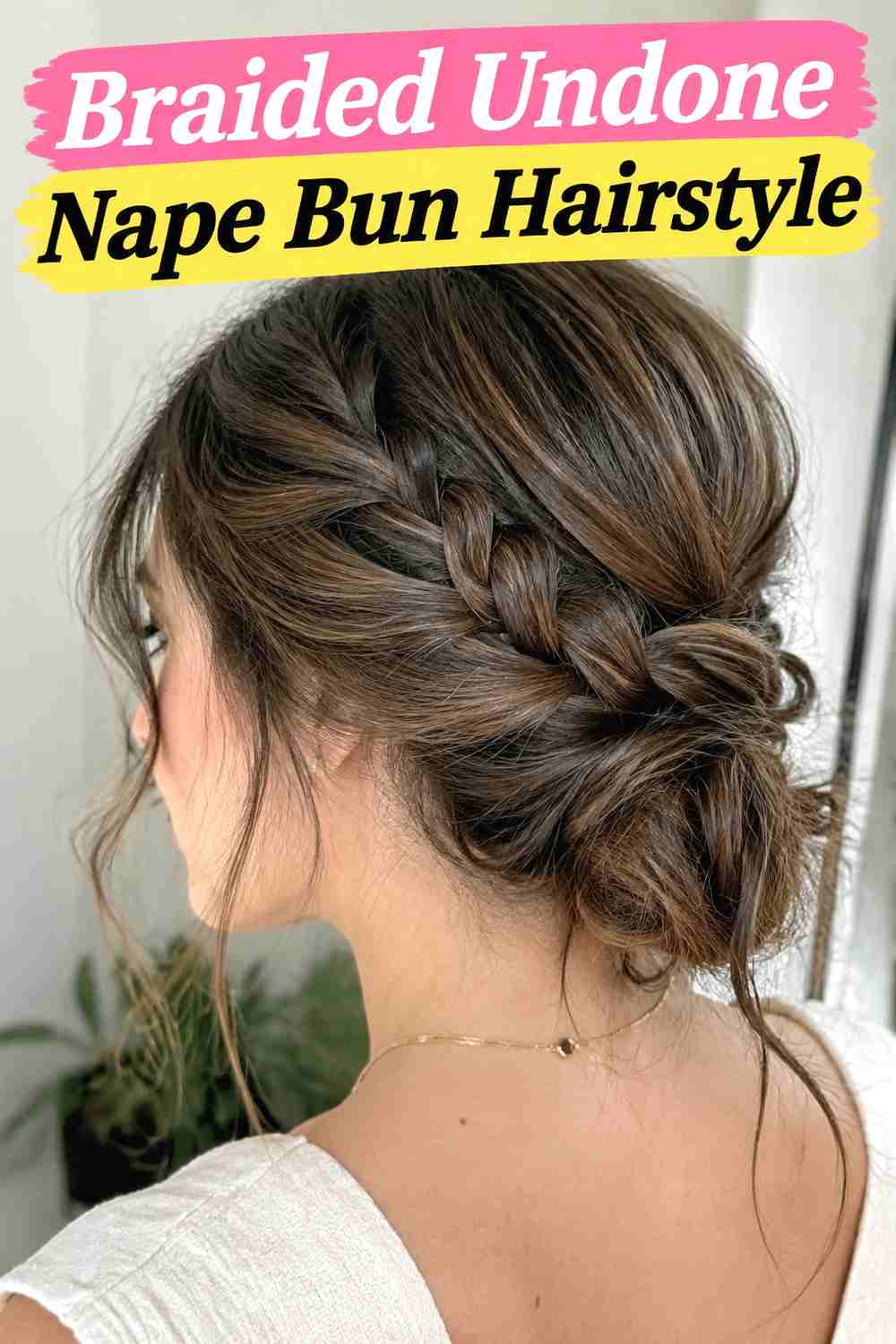
The Braided Undone Nape Bun Hairstyle adds visible woven texture while keeping the overall placement soft and low. Start with a loose braid near the nape, gently widen selected sections, and then fold or wrap the braid into a bun. The braid does not need to be perfectly uniform; slight variation actually helps the style feel less formal. Medium and long hair work best because the braid needs enough length to wrap without exposed ends. Use several pins through the inside of the braid to support the bun rather than relying on one outer pin. A few loose strands near the sides can complete the relaxed effect, while the braid itself provides enough structure to keep the updo from looking messy.
Hair Type & Length
Medium to long hair provides enough length for the braid to remain visible after it is shaped into the bun.
Pro Tip
Loosen the braid before wrapping it so you can control the fullness without pulling apart the finished bun.
8. Looped Undone Nape Bun Hairstyle
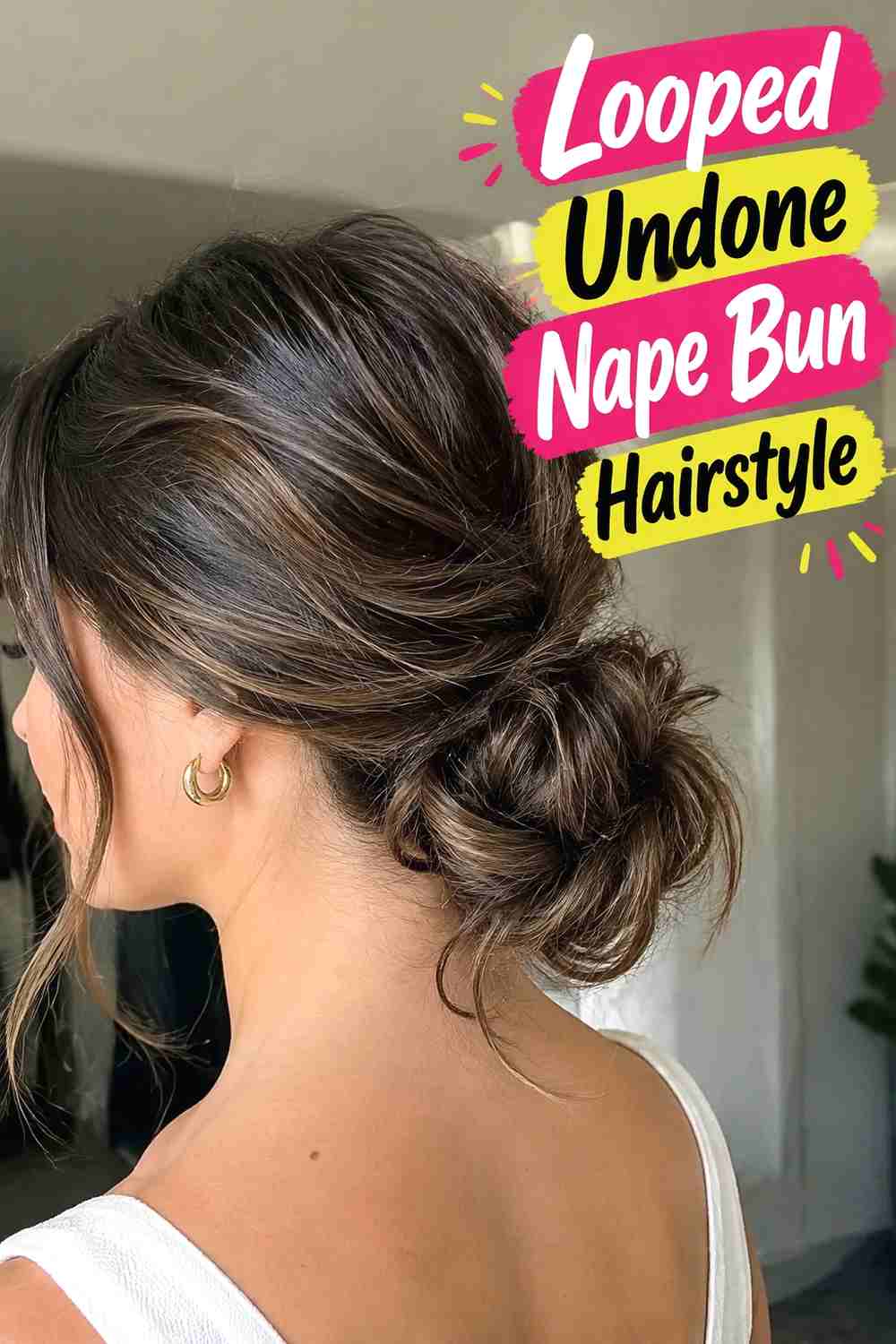
The Looped Undone Nape Bun Hairstyle uses soft folded sections instead of one tightly twisted coil. Hair is gathered low, then bent into one or more loops that overlap near the neckline and are pinned discreetly underneath. Leaving the loops slightly uneven gives the bun an airy, modern finish, but they should still connect naturally to the head. This technique can make medium-density hair look fuller because the loops occupy more visual space without requiring heavy teasing. Keep some separation between the sections so the construction remains visible. After securing the bun, loosen the crown gently and allow a few fine strands around the sides to remain soft rather than smoothing everything into a rigid shape.
Why It Works
Overlapping loops create volume and interesting shape while preserving the low, relaxed character of an undone nape bun.
Styling Notes
Anchor each loop separately before connecting the overall silhouette so one loose section does not destabilize the whole bun.
9. Wispy Strand Undone Nape Bun Hairstyle
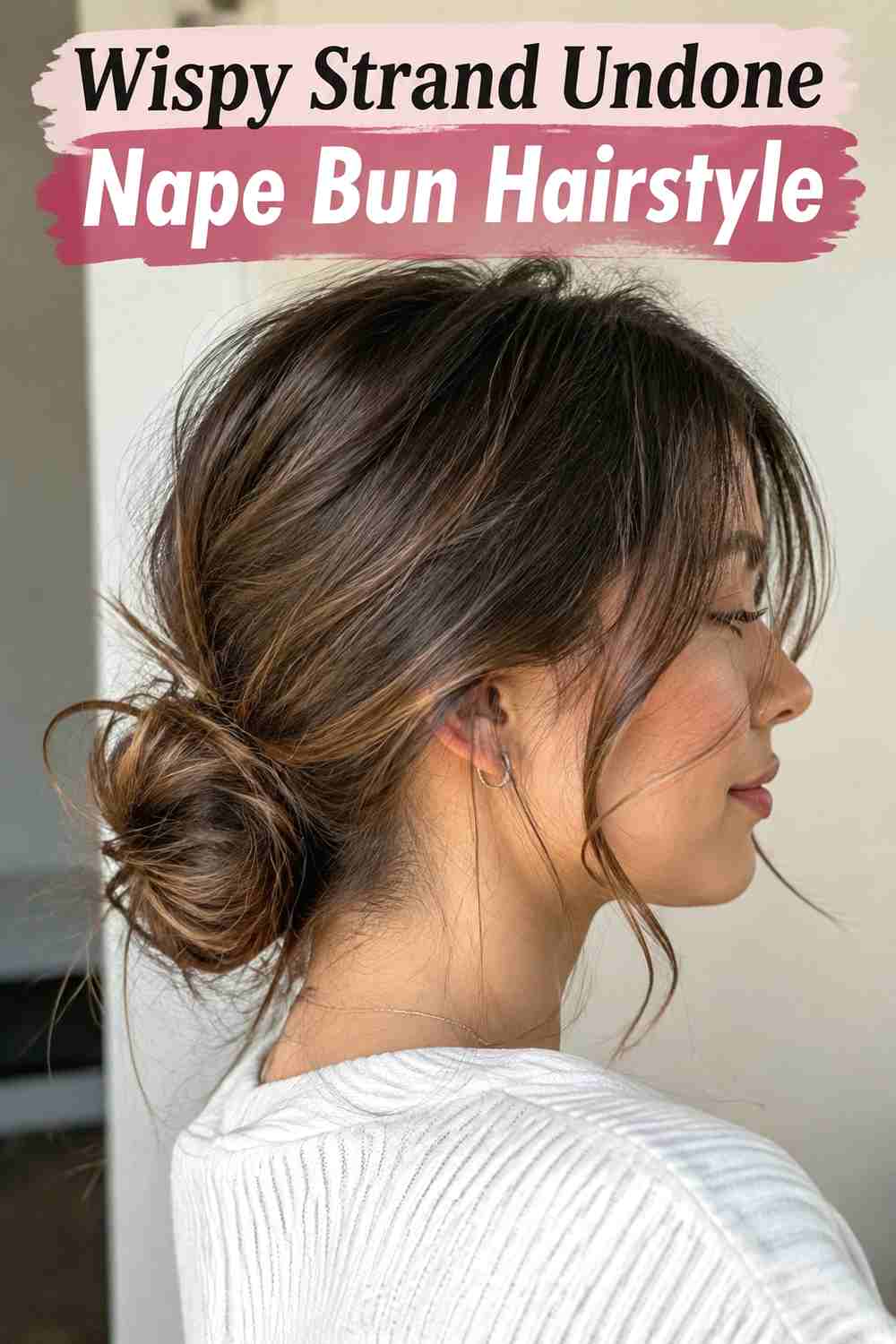
The Wispy Strand Undone Nape Bun Hairstyle focuses on fine, airy pieces around the hairline and bun edges. The main updo remains securely pinned at the nape, but small strands near the temples, ears, and neckline are intentionally left soft. The effect should be delicate rather than messy, so choose a few pieces instead of pulling out large sections. A lightly textured bun complements the wispy finish better than an extremely sleek one. If the loose strands are very straight, add only a slight bend rather than forming obvious curls. This style is particularly appealing from the side because the soft pieces create movement around the face while the compact low bun keeps the overall shape neat.
Styling Notes
Release fine strands gradually after the bun is finished so you can stop before the hairstyle becomes too loose.
Best For
This variation suits romantic everyday styling, photographs, dinners, and occasions where you want a low updo with a delicate finish.
10. Wavy Texture Undone Nape Bun Hairstyle
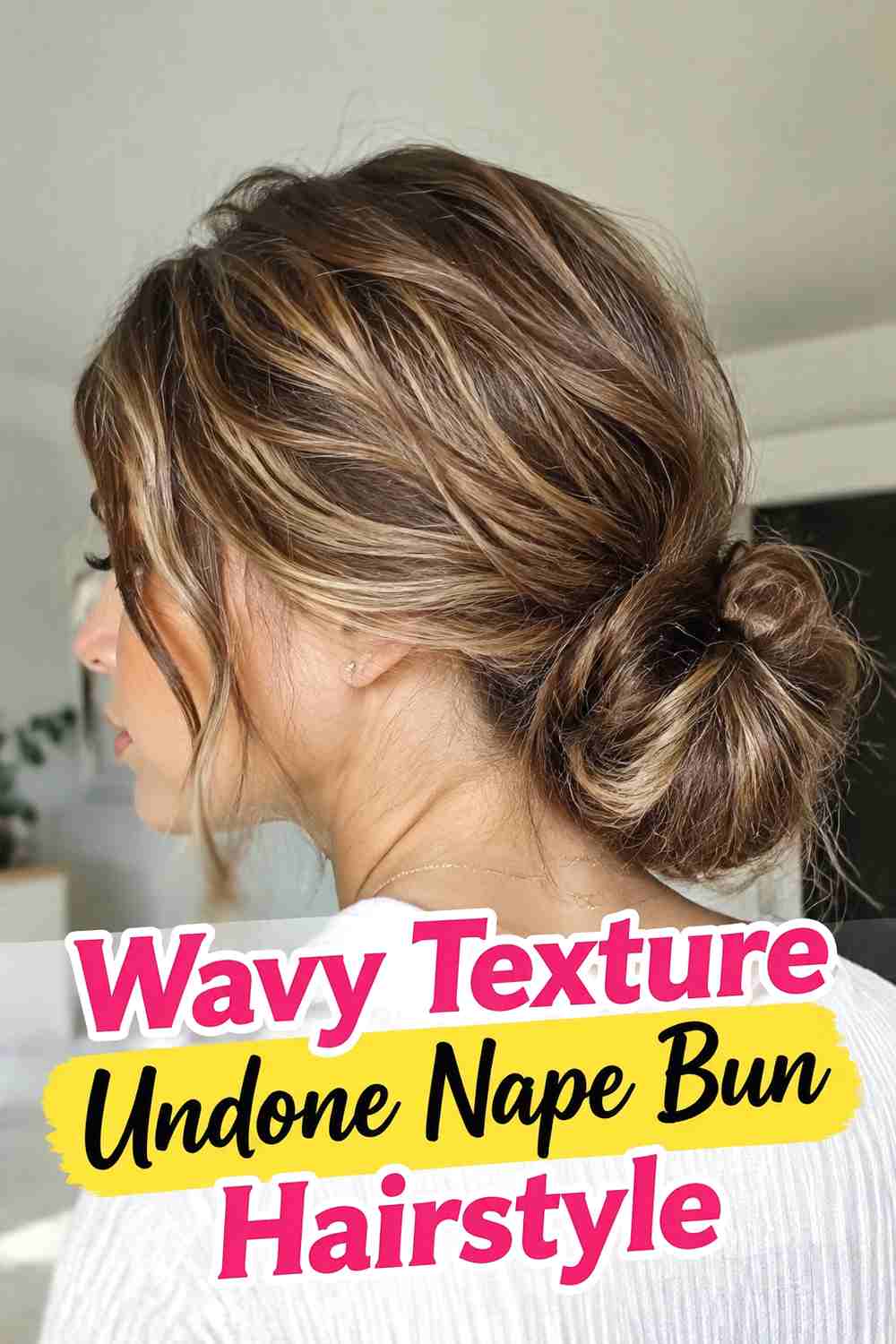
The Wavy Texture Undone Nape Bun Hairstyle works with preexisting waves to create soft ridges and dimension throughout the updo. Instead of brushing the texture completely smooth, gather the hair gently so some of the original bends remain visible across the crown, sides, and bun. Twist the lengths loosely at the nape, pin them into place, and let a few curved pieces remain visible along the outer shape. This method is especially effective with naturally wavy hair or hair that was previously styled in loose waves. Avoid over-brushing before creating the bun, since that can turn defined movement into unwanted fluff. The result should look textured and romantic while still feeling deliberately arranged.
Hair Type & Length
Naturally wavy or pre-waved medium-to-long hair gives this style the easiest foundation and most visible dimension.
Wear & Maintenance
Refresh individual loose pieces if needed rather than brushing through the entire style, which can disturb the original wave pattern.
11. Soft Volume Undone Nape Bun Hairstyle
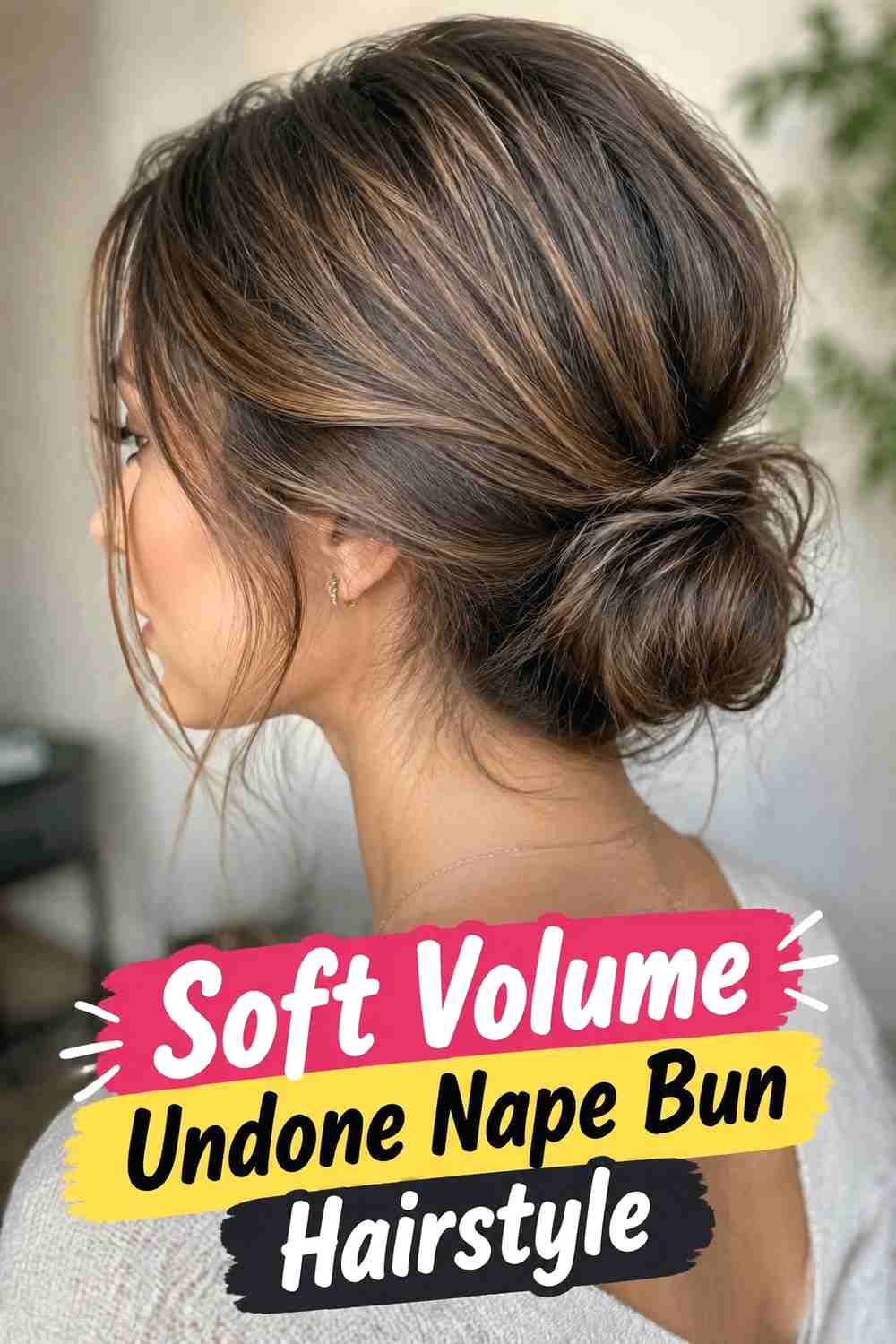
The Soft Volume Undone Nape Bun Hairstyle adds gentle lift through the crown and upper sides before dropping into a compact bun at the neckline. The volume should feel airy rather than teased high, giving the profile a rounded, balanced shape. Start by directing the roots upward during drying or lightly setting the crown, then gather the hair without pulling the surface completely flat. Once the low bun is secure, gently lift selected sections with your fingertips. Keep the side volume controlled so the style still reads as a low updo rather than a large formal bun. Lightweight texture spray can provide enough grip to support the shape without making the strands stiff or dull.
Why It Works
A little crown lift balances the low placement of the bun and prevents longer or heavier hair from appearing visually pulled downward.
Pro Tip
Create most of the volume before pinning, then make only small adjustments afterward so you do not loosen the structure excessively.
12. Romantic Event Undone Nape Bun Hairstyle
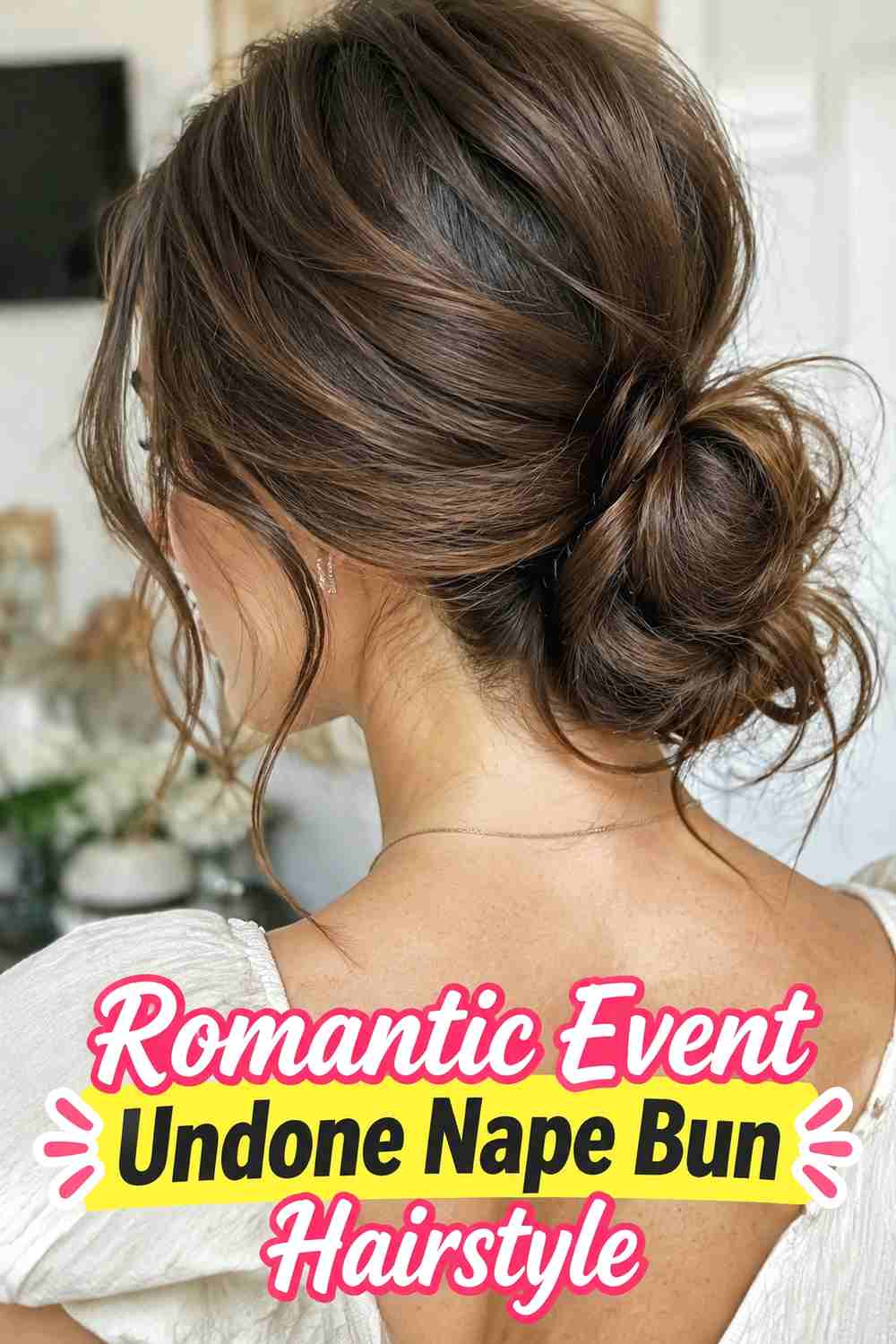
The Romantic Event Undone Nape Bun Hairstyle combines secure pinning with softly arranged texture for weddings, celebrations, formal dinners, or photo-focused occasions. The bun sits low and can include overlapping twists or loops, while the crown keeps gentle volume and the front features a few intentional face-framing pieces. Although the finish looks relaxed, the internal structure should be reliable enough for extended wear. Anchor the base firmly, then build softer sections around it rather than relying on loose pins alone. Keep hairspray flexible so the hair can retain movement without losing control. A simple decorative pin can be added if desired, but the soft texture should remain the main feature rather than being hidden by accessories.
Wear & Maintenance
Use secure internal pinning and carry a few spare pins for small adjustments rather than repeatedly rebuilding the bun.
Best For
This is the most event-ready option when you want an elegant low updo that still feels romantic and relaxed.
13. Minimal Effort Undone Nape Bun Hairstyle
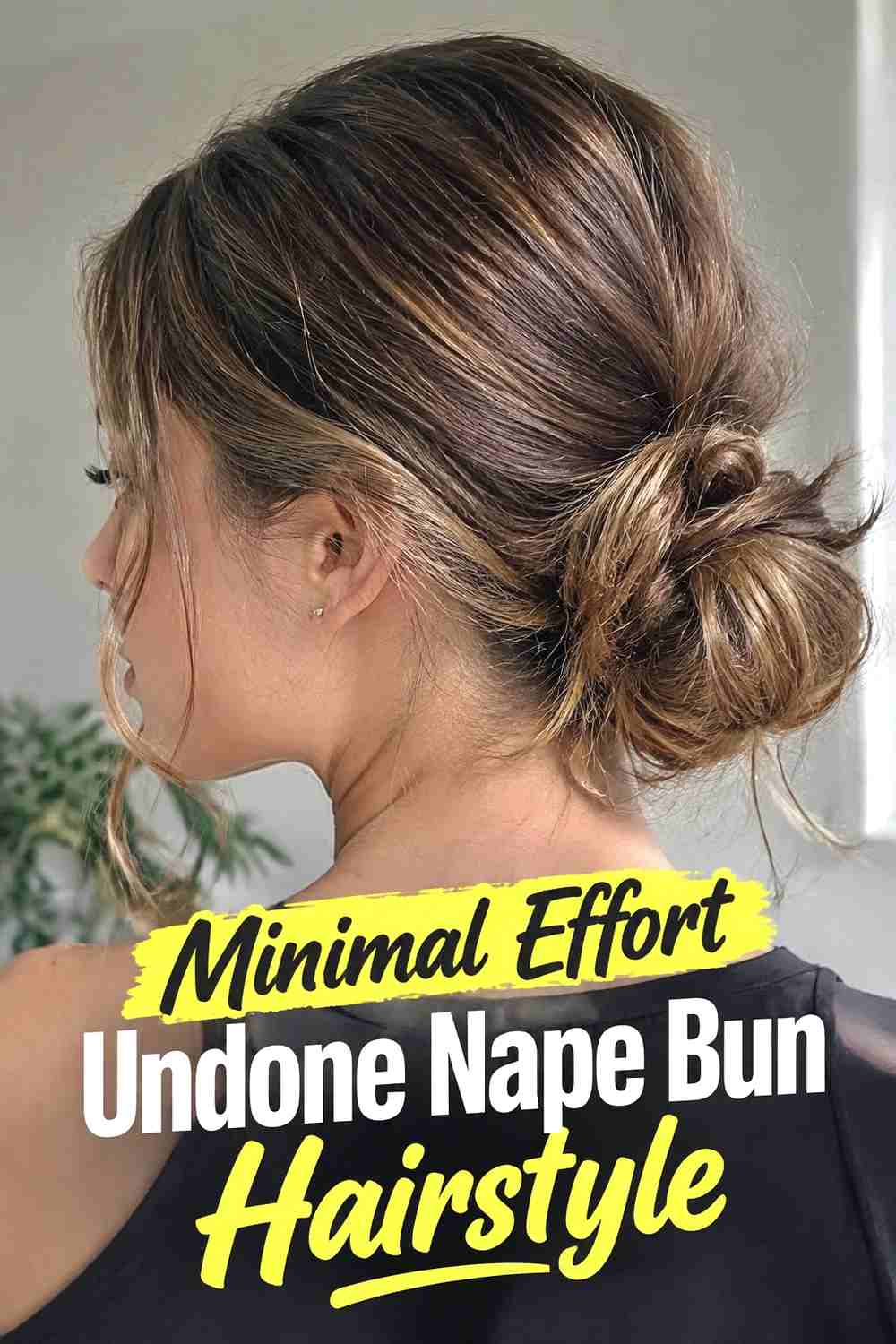
The Minimal Effort Undone Nape Bun Hairstyle is designed for days when you want a low updo without complicated sectioning or precision. Gather the hair loosely at the nape, twist it once or twice, and pin the shape into a compact bun while allowing the natural texture to remain visible. A low ponytail can act as the foundation if your hair slips easily, but the finished bun should not look overly structured. Let shorter pieces fall where they naturally want to sit instead of forcing every strand back into place. This works particularly well with second-day hair because a little existing grip can make the bun easier to secure. Keep product minimal so the result remains soft and believable.
Styling Notes
Focus on a secure center rather than perfect outer edges. The relaxed surface is what gives this quick style its character.
Best For
Choose this variation for casual days, errands, travel, or any routine where speed and comfortable wear matter most.
How to Choose the Right Look
Start with how polished you want the finished bun to feel. Center-Part and Side-Part Undone Nape Buns provide more structure at the front, while Wispy Strand, Wavy Texture, and Loose Face-Framing versions create a noticeably softer outline. Your natural texture can simplify the decision. Wavy or curly hair already provides movement that works beautifully in a textured bun, while straighter hair can gain dimension from twists, loops, or a braid. Fine hair may look fuller with the Looped or Soft Volume versions, while thick or long hair often benefits from a secure base and multiple internal pins. Consider wear time too. A casual Minimal Effort Bun can stay intentionally relaxed for a few hours, while an event style should have stronger internal support even if the surface looks loose. Comfort matters as well: avoid pulling the sides or hairline tighter than necessary simply to make the bun feel secure. Finally, choose details that work with your haircut. Short face-framing layers naturally suit wispy and romantic versions, while longer front sections can be twisted neatly into the bun when you want a cleaner finish.
Final Thoughts
Undone nape buns prove that a low updo does not need a perfectly sleek surface to feel polished. Soft twists, loops, braids, waves, and loose strands can all change the mood while the bun stays close to the neckline. Choose the version that fits your natural texture, hair length, and required hold, then keep the looseness intentional rather than sacrificing the secure foundation.
FAQs
1. What makes a nape bun look undone?
An undone nape bun usually includes gentle crown softness, visible texture, loose loops, or a few wispy strands instead of a completely smooth and tightly controlled surface.
2. How do I keep an undone bun secure?
Build a stable base at the nape and pin the internal structure firmly before loosening the crown or pulling out face-framing strands.
3. Can fine hair wear an undone nape bun?
Yes. Light texture spray, loose loops, or a gently widened braid can create more visual fullness without requiring a large amount of hair.
4. Is an undone nape bun suitable for formal events?
Yes. The outer finish can remain soft while the inside is securely pinned, making a romantic undone bun practical for weddings, dinners, and other events.
5. Should I style my hair before creating an undone bun?
Not always. Natural or second-day texture can work well. If your hair is very smooth, a little wave or lightweight texture product may make the bun easier to shape and secure. Save your favorite undone nape bun ideas, share the styles that inspire you, and explore more soft low-updo inspiration for everyday wear and special events.