13 Soft Wolf Bob Hairstyle Ideas
Soft layers, airy texture, and an easy short shape make these Wolf Bob ideas perfect inspiration for anyone who wants movement without an overly shaggy finish.
The Soft Wolf Bob combines the compact length of a bob with the graduated movement associated with a wolf cut. Instead of dramatic short layers and heavily disconnected ends, this softer version uses gentler transitions, airy face framing, and enough perimeter weight to keep the haircut wearable.
You can emphasize natural waves, add wispy or curtain bangs, build volume at the crown, or smooth the haircut for a more polished effect. The key is choosing layer placement that works with your density and texture. Fine hair often benefits from restrained layering, while thicker hair can usually support more internal movement and feathering without losing the bob shape.
Quick List
- Classic Soft Wolf Bob Hairstyle
- Shaggy Soft Wolf Bob Hairstyle
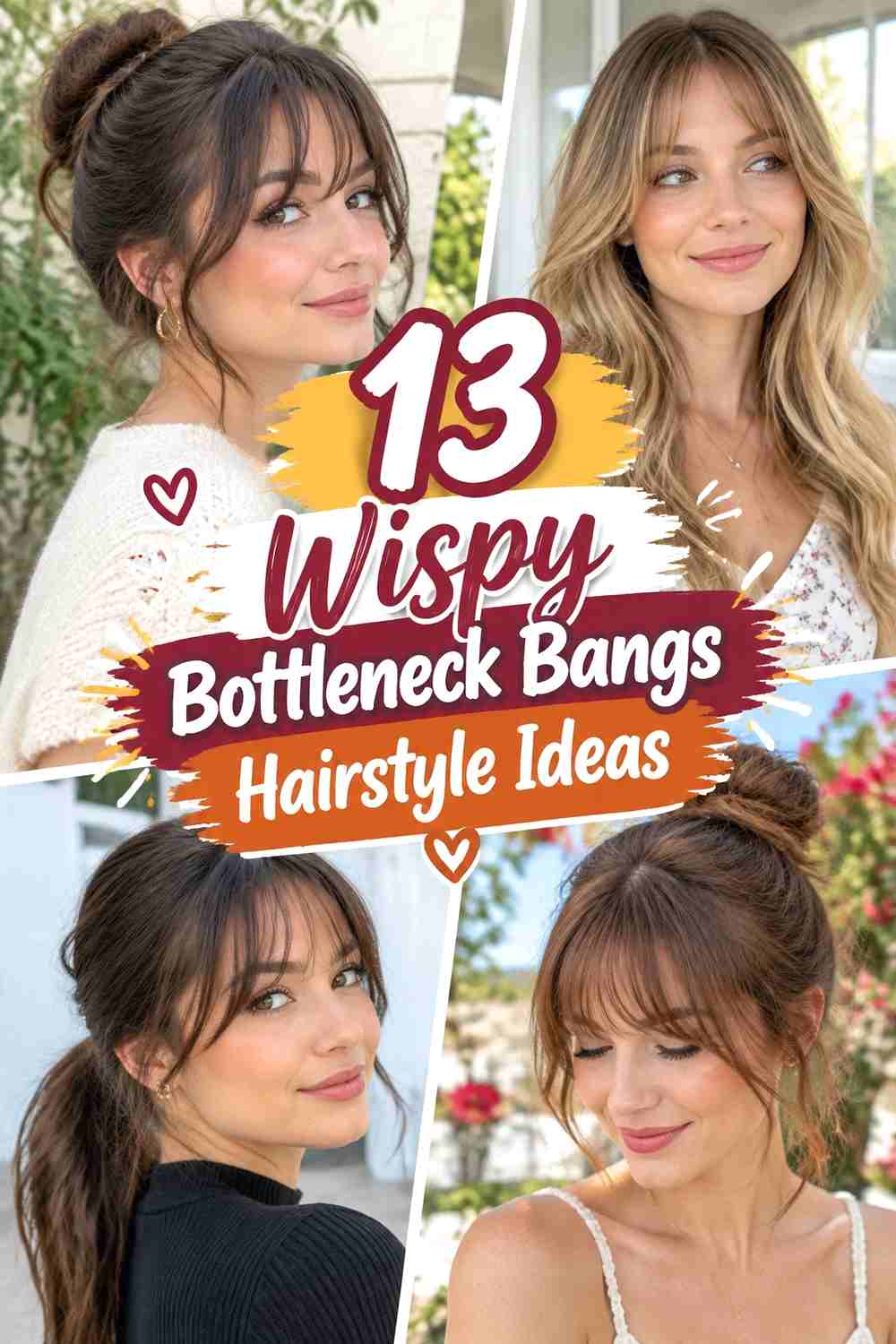
- Wispy Fringe Soft Wolf Bob Hairstyle
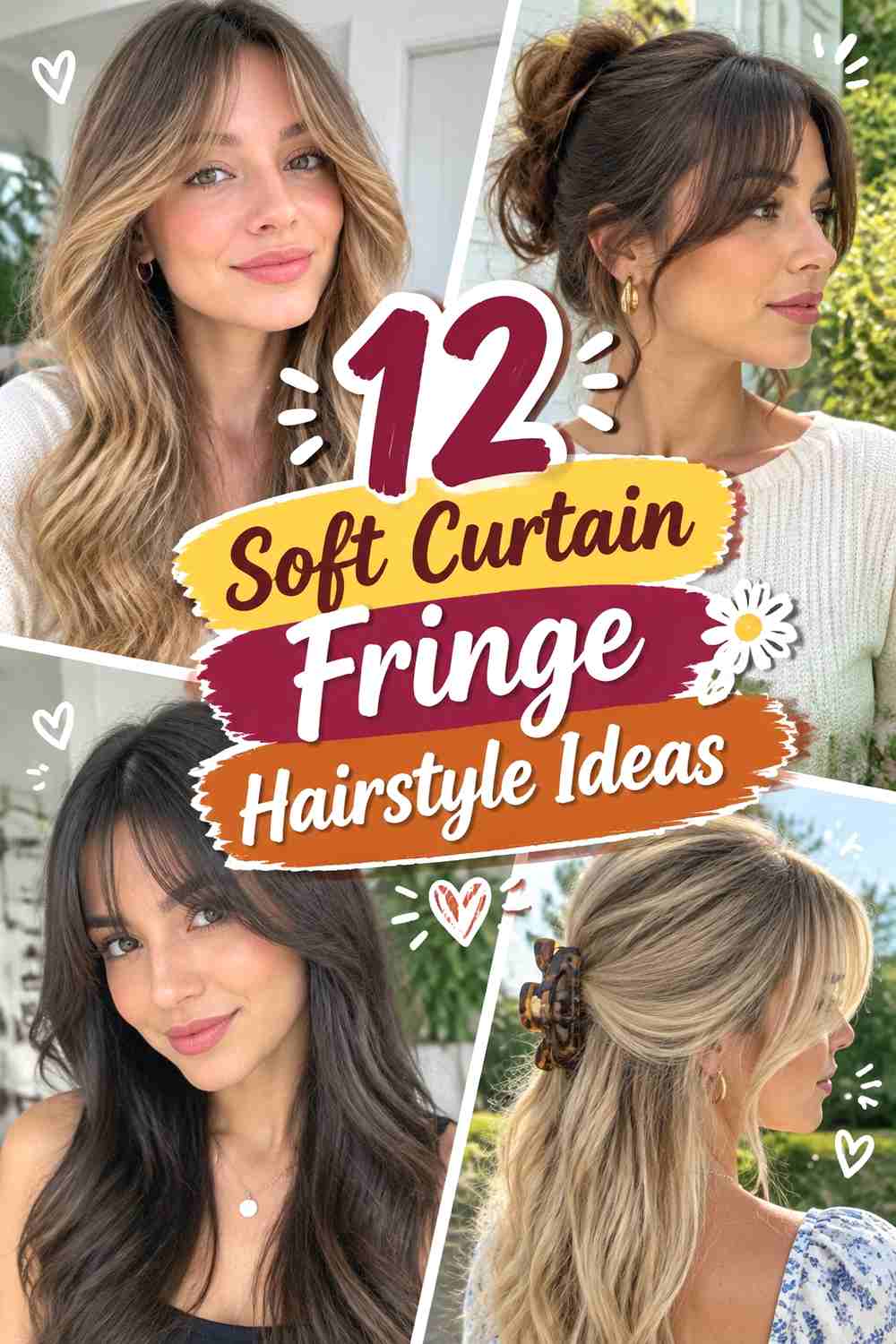
- Curtain Bang Soft Wolf Bob Hairstyle
- Wavy Soft Wolf Bob Hairstyle
- Textured Soft Wolf Bob Hairstyle
- Feathered Soft Wolf Bob Hairstyle
- Side Parted Soft Wolf Bob Hairstyle
- Chin Length Soft Wolf Bob Hairstyle
- Voluminous Soft Wolf Bob Hairstyle
- Sleek Soft Wolf Bob Hairstyle
- Air Dried Soft Wolf Bob Hairstyle
- Face Framing Soft Wolf Bob Hairstyle
1. Classic Soft Wolf Bob Hairstyle
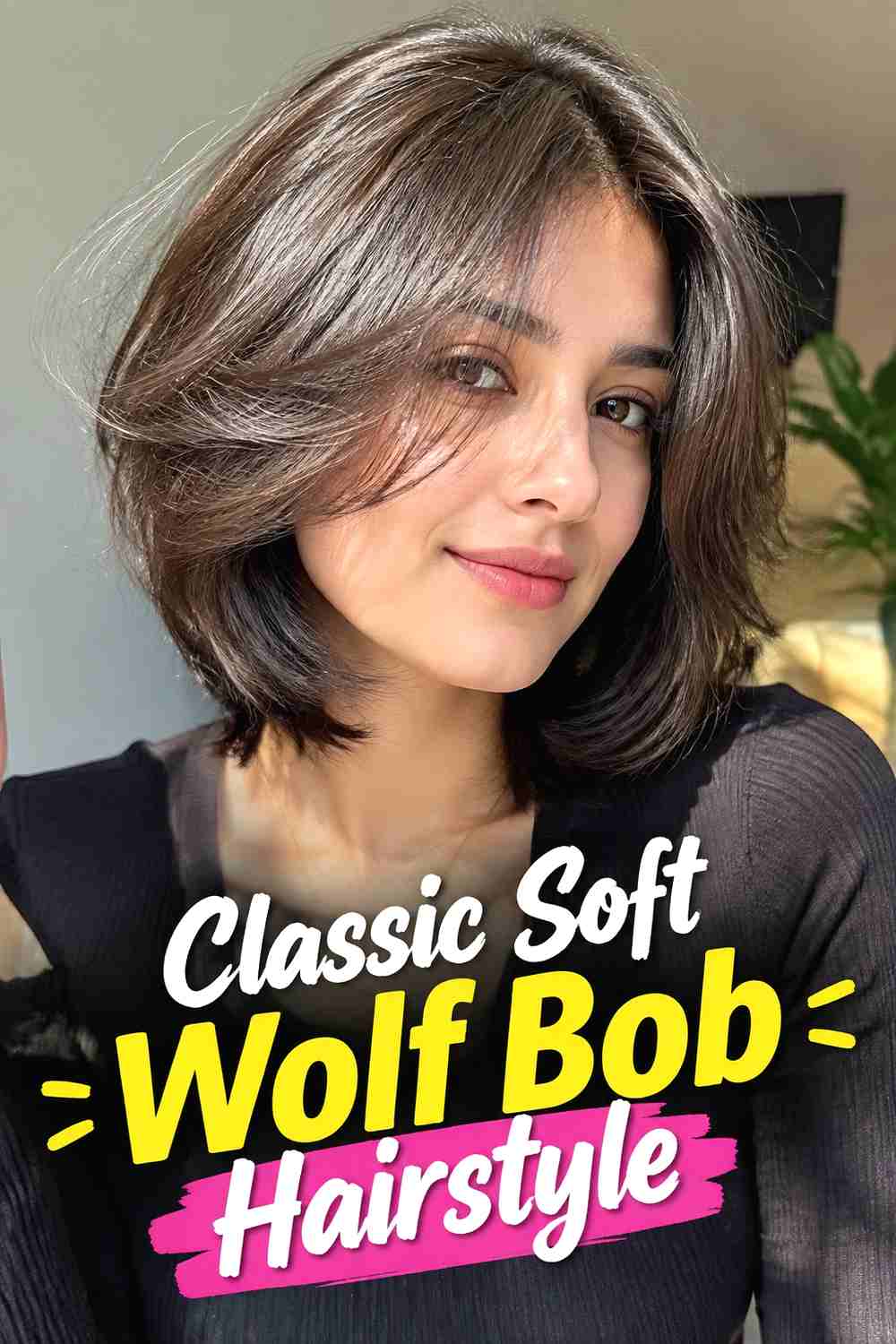
The classic Soft Wolf Bob balances a recognizable bob perimeter with gentle, graduated layering through the crown and sides. Instead of creating an aggressively shaggy outline, the shorter pieces blend softly into the lower lengths, giving the haircut movement without making the ends look sparse. A little lift through the crown helps reveal the wolf-inspired shape, while the perimeter around the jaw remains substantial enough to read clearly as a bob. This version works well if you want to experiment with a layered short cut without committing to dramatic disconnection. Keep the finish touchable and slightly imperfect so the movement feels natural rather than carefully sculpted.
Styling Notes
Use a lightweight mousse or styling cream and encourage the shorter layers to lift away from the head while keeping the ends relaxed.
Why It Works
The gradual layering creates movement and shape while the fuller perimeter prevents the haircut from becoming too shaggy.
2. Shaggy Soft Wolf Bob Hairstyle
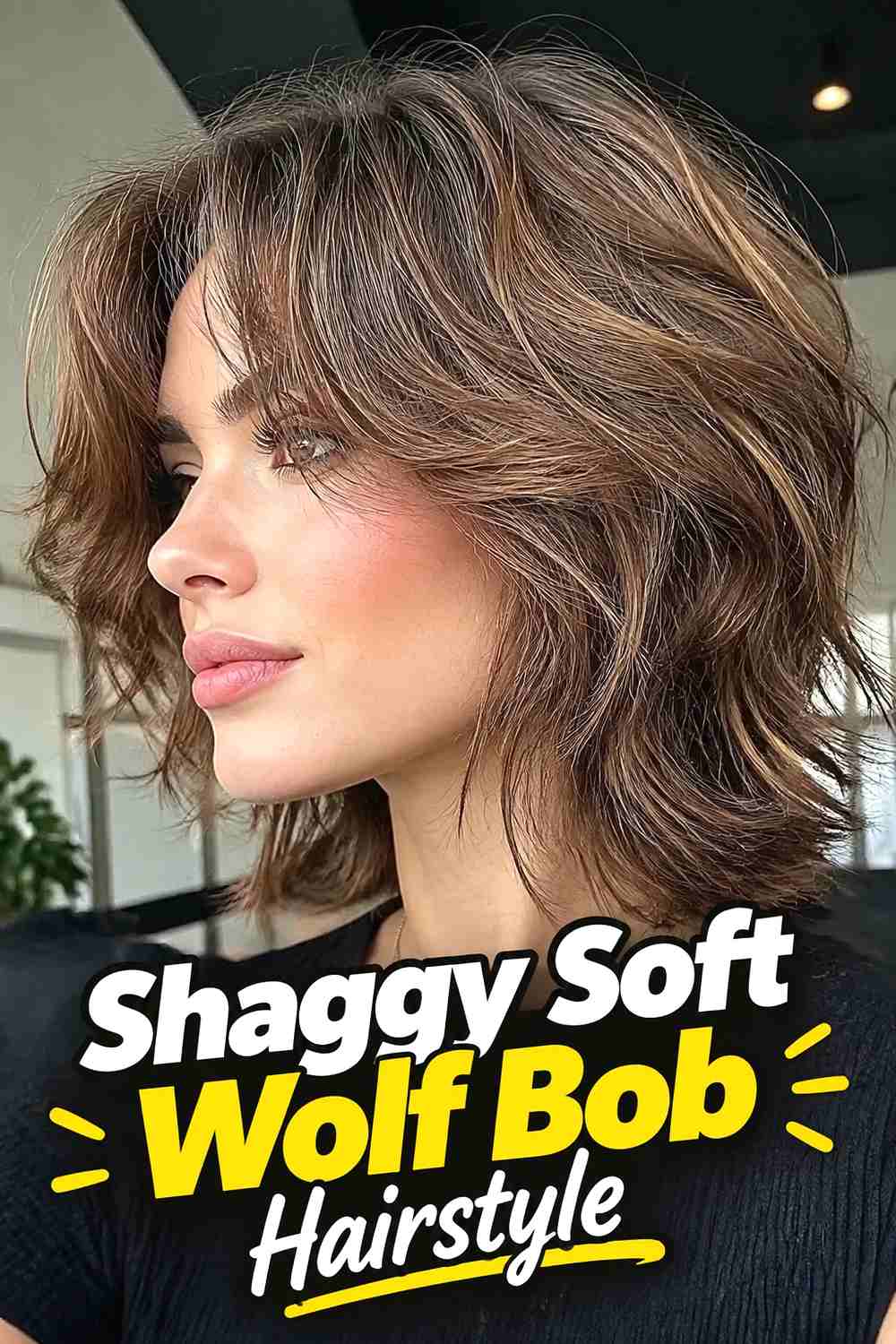
This version brings more visible wolf-cut character into the bob while keeping the finish soft enough for everyday wear. The crown has extra layering, the sides show noticeable separation, and the ends break into light pieces around the jaw and neck. Unlike a heavily razored shag, though, the transitions stay blended and the silhouette remains compact. The result has an intentionally tousled quality that works particularly well with natural bends or hair that holds loose texture. A small amount of texturizing cream can highlight individual sections, but avoid making every piece equally defined. The haircut should feel airy and slightly undone rather than stiff or aggressively spiky.
Best For
This option suits medium-density hair especially well when you want stronger texture without removing too much weight from the perimeter.
Pro Tip
Concentrate definition around the crown and outer layers, leaving some sections softer for a more natural shaggy finish.
3. Wispy Fringe Soft Wolf Bob Hairstyle
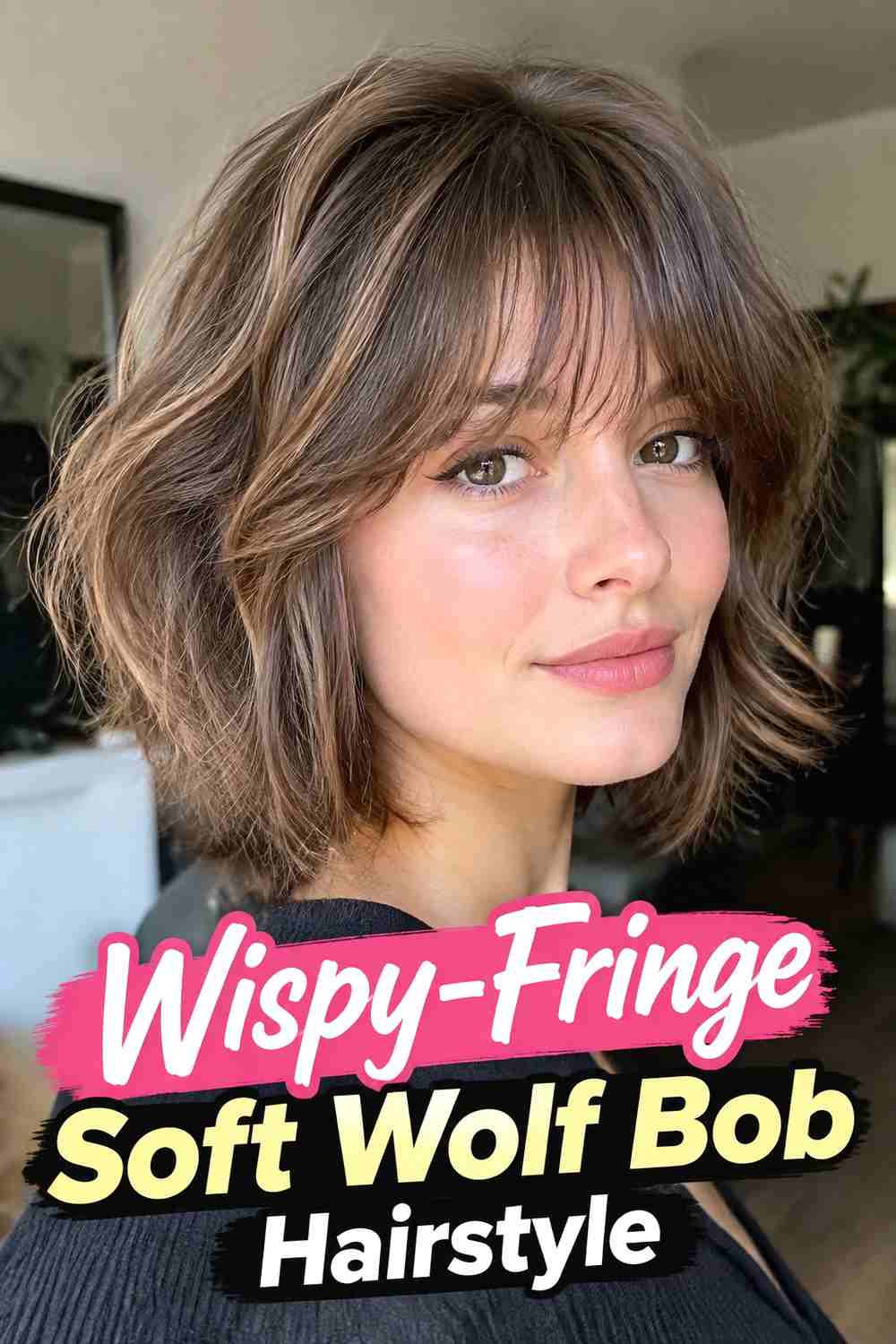
Wispy fringe adds a delicate finish to the Soft Wolf Bob and connects naturally with its shorter face-framing layers. The fringe falls lightly across the forehead with visible separation instead of forming a dense straight line. From there, slightly longer pieces blend around the temples and cheekbones before joining the main bob. This creates a gradual progression that complements the layered crown without making the front feel overloaded. The lower perimeter can remain fairly full, providing balance against the lighter fringe. This variation is ideal if you want bangs that support the wolf-cut influence while still looking airy, movable, and relatively easy to blend as they grow.
Styling Notes
Use gentle airflow to dry the fringe instead of forcing it into a strong curve, then separate the finished pieces with your fingertips.
Wear & Maintenance
Wispy fringe may need more frequent trimming than the main bob if you want it to remain light around the brows.
4. Curtain Bang Soft Wolf Bob Hairstyle
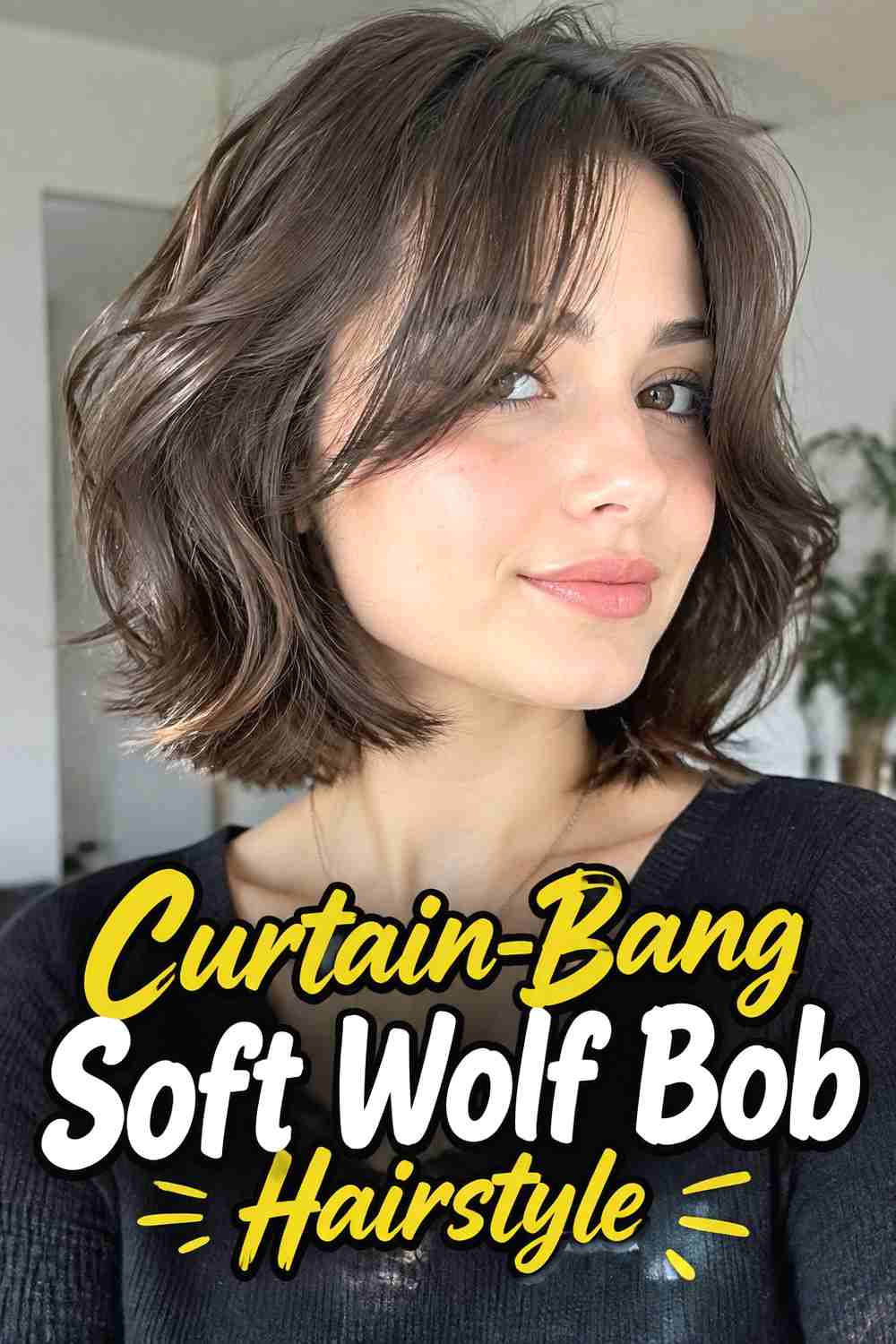
Curtain bangs create a natural bridge between the face and the Soft Wolf Bob’s layered sides. The fringe opens around the forehead and sweeps outward near the cheekbones, where it joins shorter layers through the sides and crown. This makes the haircut feel cohesive rather than like a bob with separate bangs added afterward. The lower lengths can stay soft and slightly piecey, preserving enough weight to maintain the bob silhouette. A round-brush blowout gives the curtain pieces more polish, while natural drying creates a looser finish. This is a versatile version if you enjoy noticeable face framing but prefer bangs that can be moved or tucked away.
Styling Notes
Dry the curtain sections away from the face, then use a lighter touch through the lower layers so the front remains the strongest movement.
Best For
This style works particularly well when you want visible layering around the cheekbones without a short, full fringe.
5. Wavy Soft Wolf Bob Hairstyle
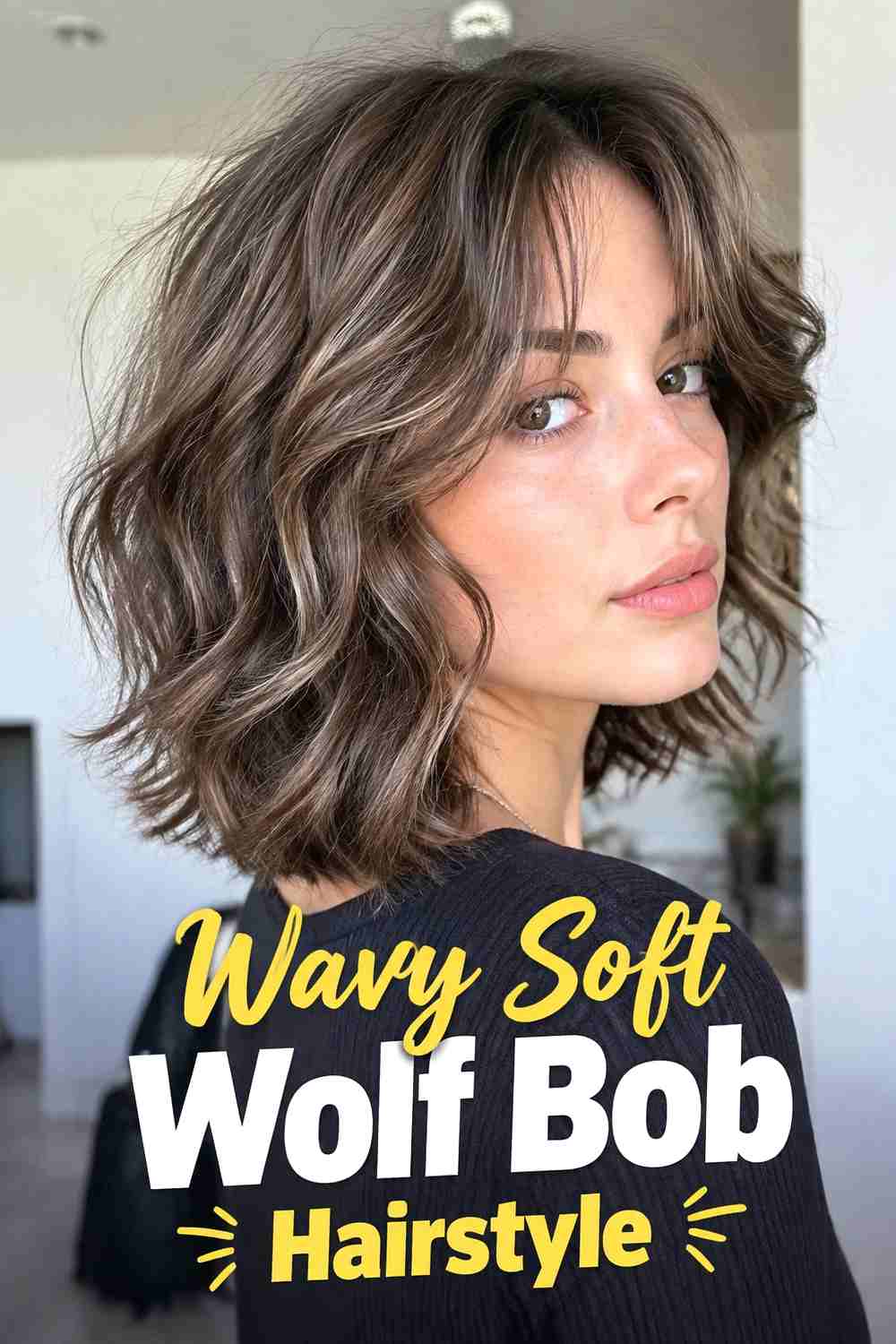
Natural-looking waves bring out the dimensional structure of a Soft Wolf Bob beautifully. Each layer catches the wave pattern at a slightly different point, creating separation through the crown, sides, and ends without requiring extreme texturizing. The shortest pieces can lift softly near the cheekbones, while longer sections bend around the jaw and neck. Keep the waves loose and varied rather than forming identical curls, since irregular movement better suits the relaxed wolf-cut character. The perimeter should still retain enough weight to look like a bob beneath the texture. A lightweight curl cream or flexible mousse can add definition while allowing the layers to move naturally.
Hair Type & Length
Naturally wavy hair is especially well suited to this variation, though straighter hair can create a similar effect with loose bends.
Pro Tip
Leave some ends straighter so the waves look effortless rather than uniformly curled.
6. Textured Soft Wolf Bob Hairstyle
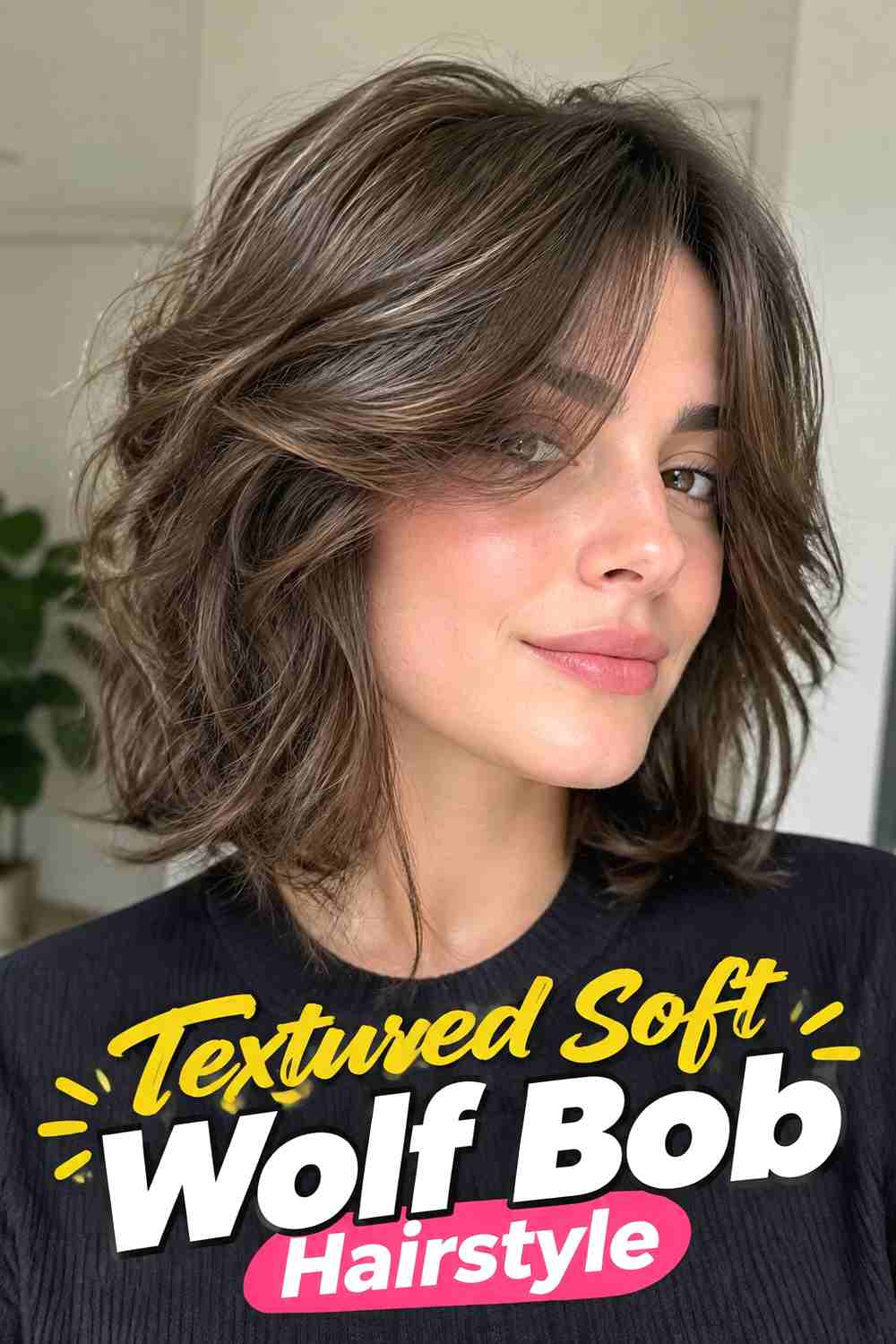
The Textured Soft Wolf Bob focuses on piecey separation rather than obvious waves. Small bends, broken-up ends, and airy crown layers create movement across the haircut while the basic bob shape remains visible underneath. This is a useful direction for straight or slightly wavy hair that needs a little help showing the layers. The strongest texture can sit around the crown and sides, while the lower perimeter stays somewhat heavier for balance. Avoid excessive teasing or dry-looking product buildup; the goal is soft definition with natural shine and flexible movement. A light texture cream or spray can make selected layers stand out without making the whole haircut feel rough.
Styling Notes
Work product into individual sections with your fingertips instead of distributing it evenly through every strand.
Why It Works
Selective texture highlights the wolf-inspired layering while a stronger perimeter keeps the silhouette compact and wearable.
7. Feathered Soft Wolf Bob Hairstyle
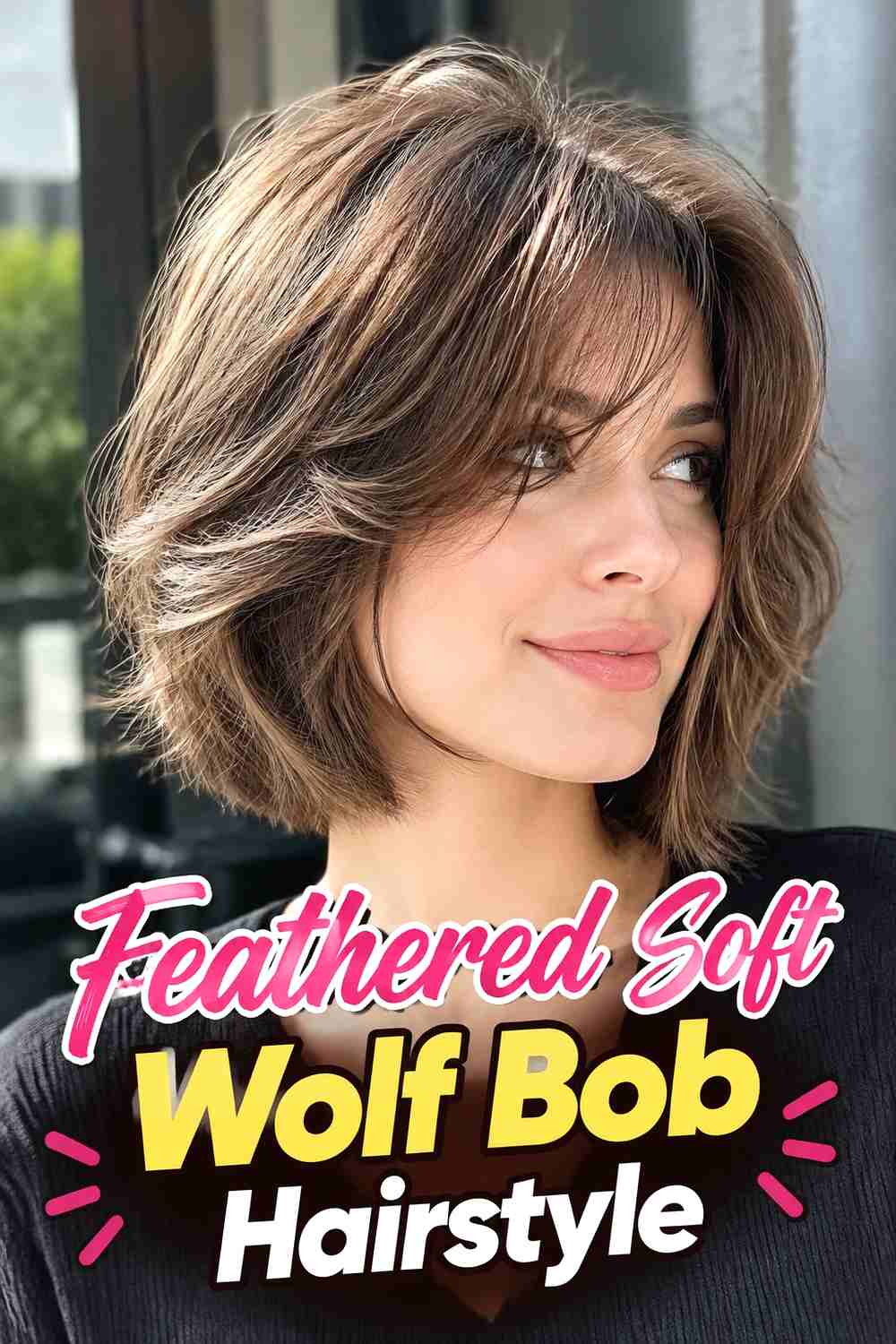
Feathering gives the Soft Wolf Bob an especially light, flowing finish. The ends of the layers are softened so they separate into fine sections around the face, sides, and neckline rather than forming blunt steps. The crown can retain gentle lift, but the transitions should remain smooth enough that the haircut never feels aggressively choppy. Around the face, feathered pieces can sweep outward to create an airy frame, while the lower ends stay soft and mobile. This variation works well if you want clear layering without a heavily tousled appearance. Keep enough density beneath the feathering so the bob perimeter does not become thin or uneven.
Hair Type & Length
Medium-density hair often supports feathering well because it can lose some weight while still maintaining a visible bob outline.
Pro Tip
Keep the strongest feathering near the surface and front rather than thinning every section equally.
8. Side Parted Soft Wolf Bob Hairstyle
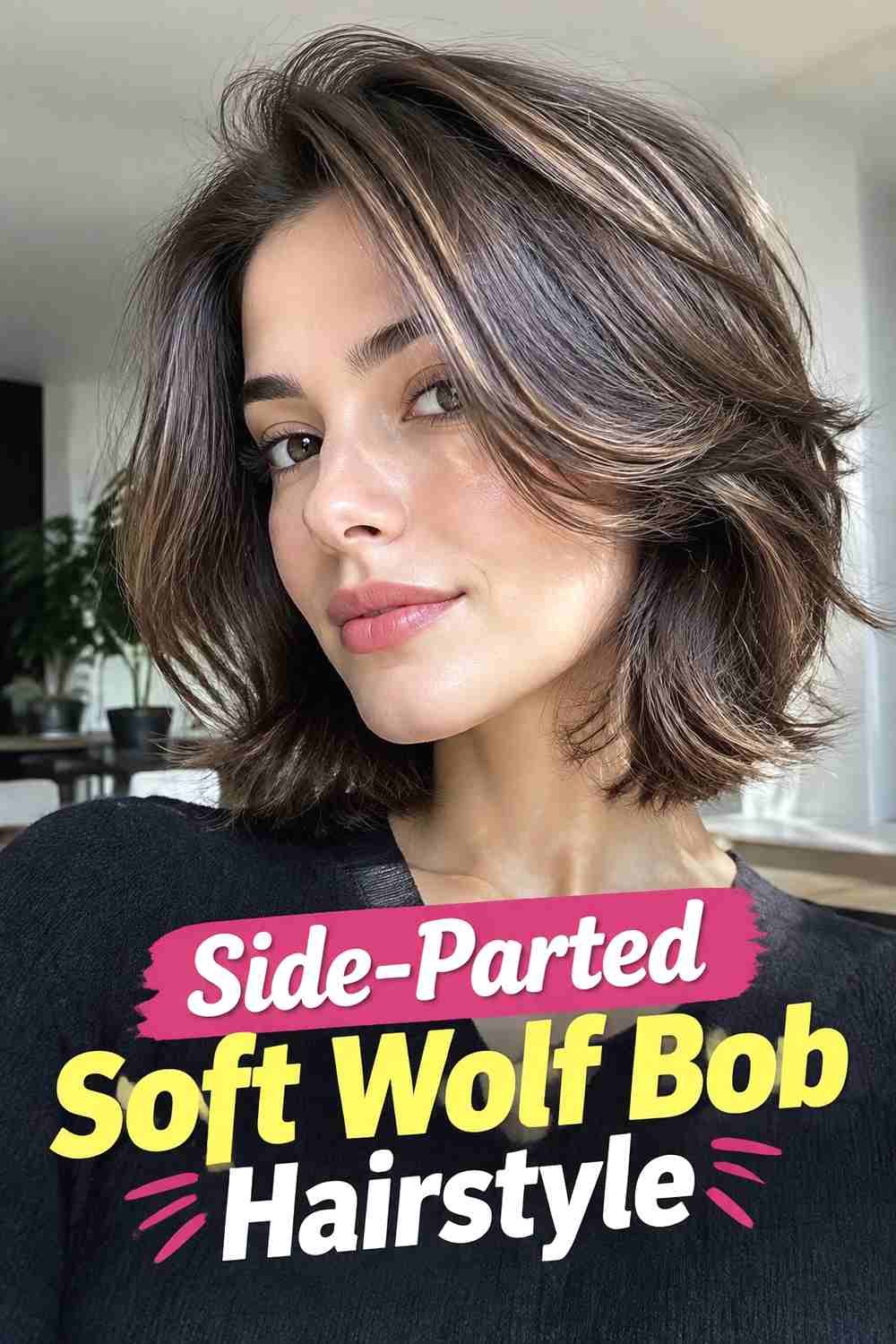
A side part shifts the balance of the Soft Wolf Bob and naturally creates more lift on one side. The fuller front section sweeps across the forehead before blending into layered pieces near the cheek and jaw, while the lighter side can sit closer to the head or tuck behind the ear. This asymmetry gives the haircut movement without requiring additional short layers. The crown can remain softly elevated, and the ends should stay loose enough to preserve the relaxed wolf-inspired finish. This is a simple way to make a layered bob feel more dramatic while keeping the actual haircut easy to wear and adaptable to different styling moods.
Styling Notes
Set the side part while the hair is damp and encourage the fuller side to lift away from the roots as it dries.
Why It Works
The shifted part amplifies natural volume and highlights the layered movement without making the bob more heavily cut.
9. Chin Length Soft Wolf Bob Hairstyle
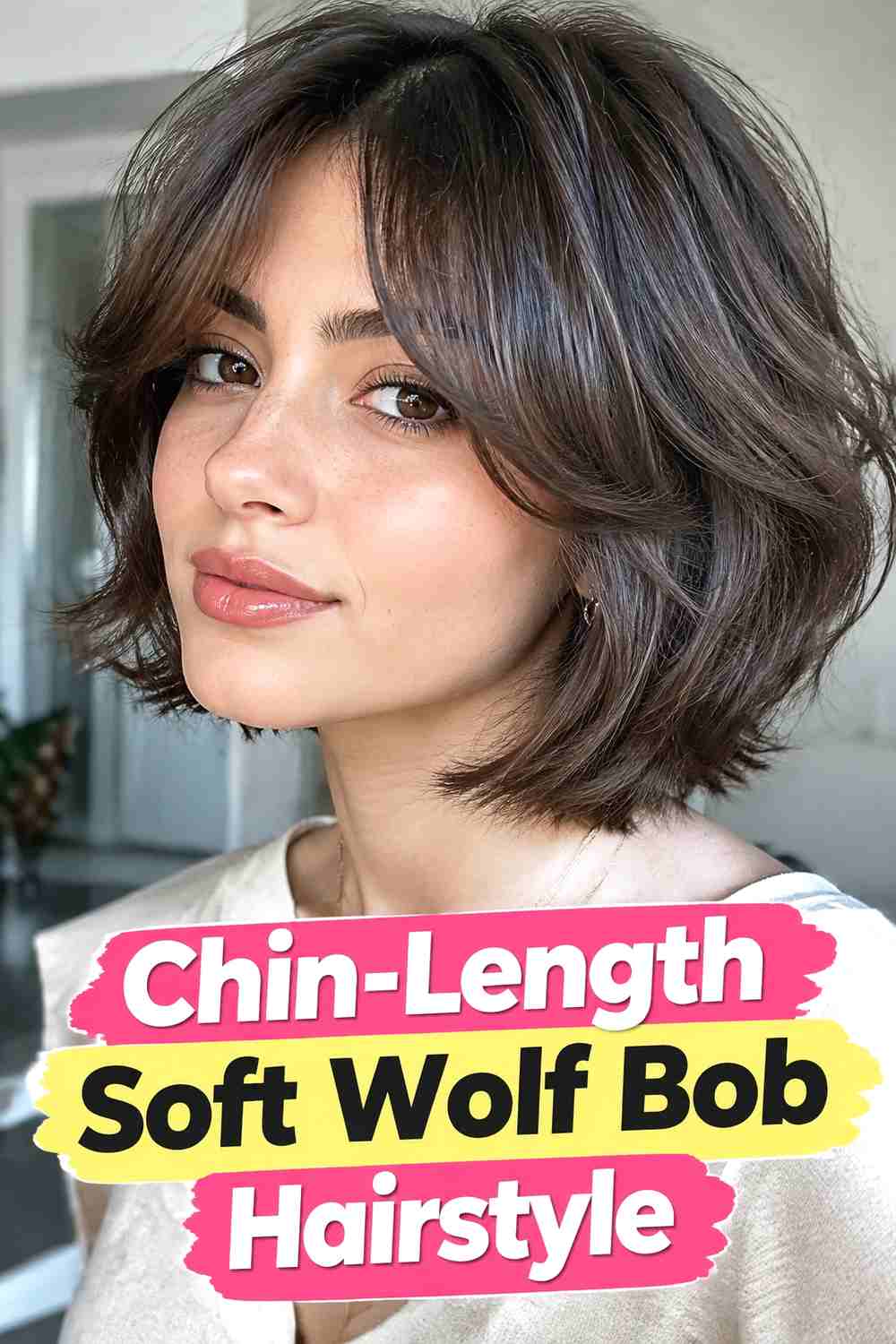
A chin-length Soft Wolf Bob keeps the overall silhouette compact while allowing enough space for visible layering. The longest sections fall close to the chin, while shorter pieces around the crown and sides create lift and movement above them. Because the length is relatively short, the layering should remain controlled; removing too much weight can quickly make the perimeter look thin. This version works particularly well when you want a clearly defined bob with a little more personality than a traditional one-length cut. Soft bends or subtle texture help the different lengths show, although the haircut can also be worn straighter for a cleaner interpretation.
Best For
This option suits anyone who wants a distinctly short bob while retaining enough length for natural movement around the jaw.
Wear & Maintenance
Regular reshaping helps preserve the balance between the short crown layers and the chin-length perimeter as the haircut grows.
10. Voluminous Soft Wolf Bob Hairstyle
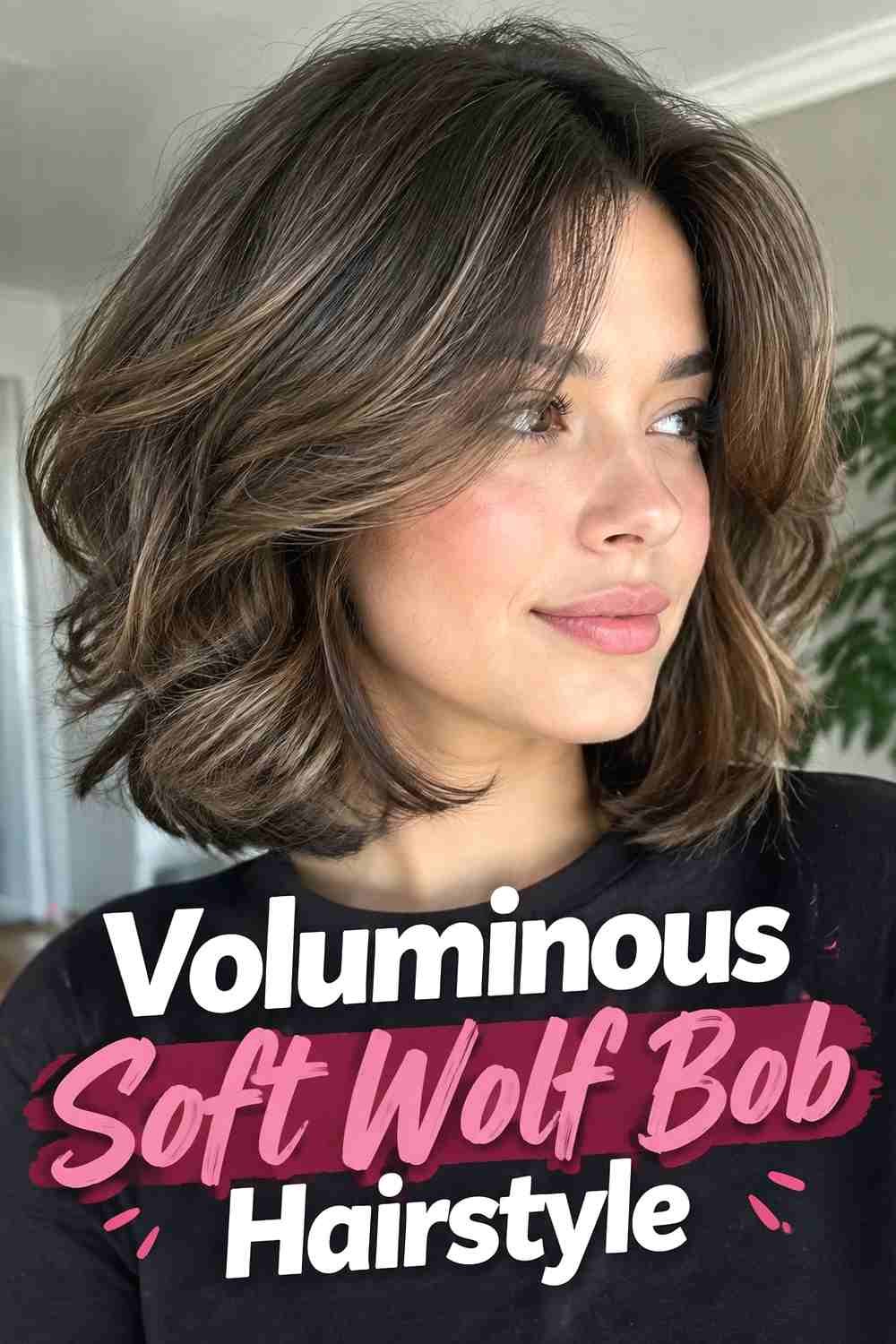
The Voluminous Soft Wolf Bob puts extra emphasis on crown lift and airy fullness through the upper layers. The shorter sections rise more easily than the lower lengths, creating a rounded but slightly tousled silhouette with visible movement. The key is keeping the volume flexible rather than heavily teased, so the haircut still feels soft and modern. Toward the jaw, the ends can remain lighter and less expanded, preventing the style from becoming overly wide. A blow-dry with root lift or a lightweight mousse can establish the shape, while fingers can loosen the finished layers. This variation is ideal when you want the wolf-cut structure to appear more noticeable.
Styling Notes
Focus lift at the crown and upper sides, then use minimal product through the lower perimeter so the shape stays balanced.
Best For
Medium-density hair that responds well to blow-drying can create this airy volume without requiring heavy styling products.
11. Sleek Soft Wolf Bob Hairstyle
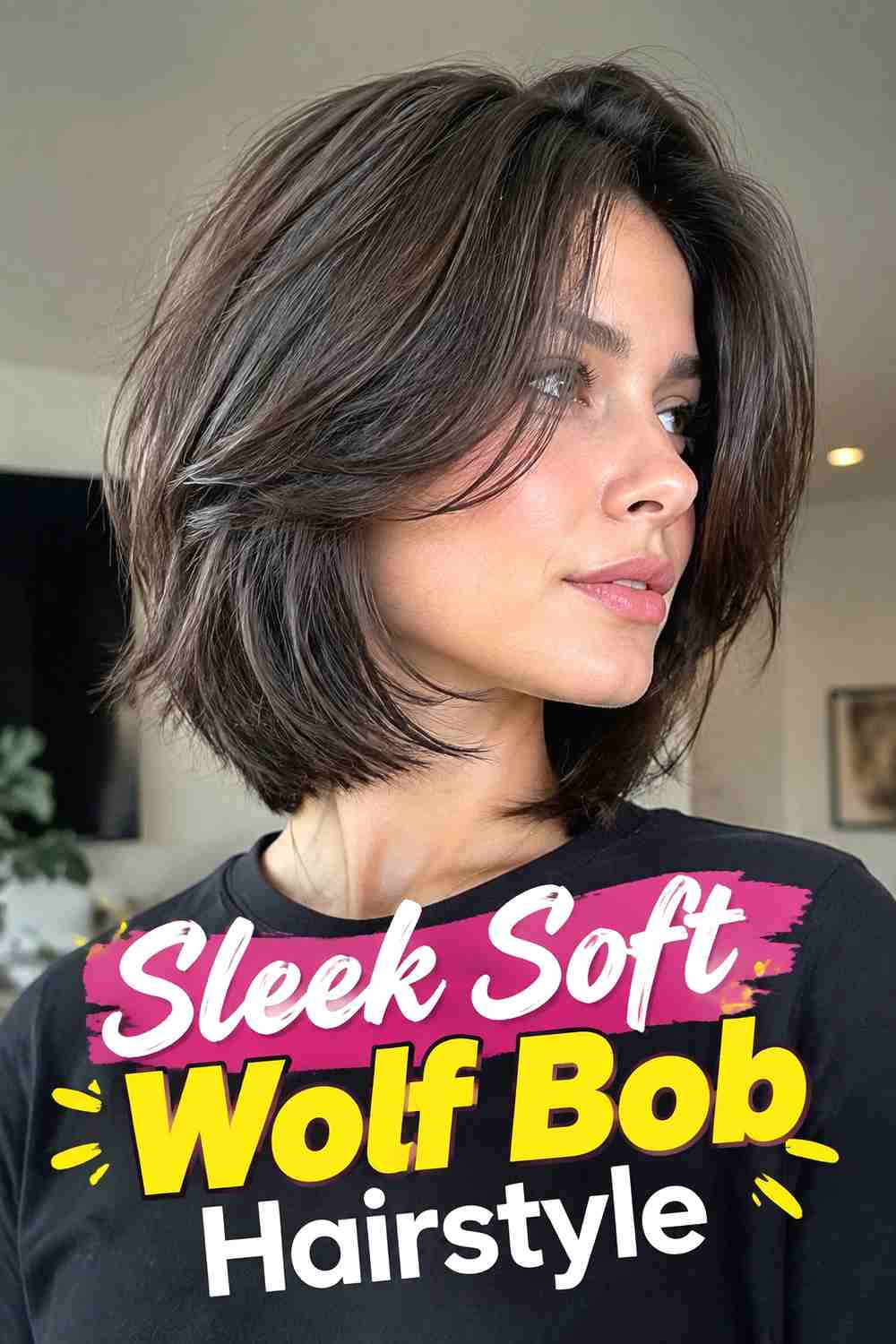
The Sleek Soft Wolf Bob proves that wolf-inspired layering does not always need a tousled finish. Smoothing the hair reveals the cut itself, showing shorter crown pieces, face-framing sections, and a gradual transition toward the lower perimeter. The layers should remain blended enough that the sleek surface looks fluid rather than stepped. A little crown lift prevents the style from appearing flat, while the ends can sit naturally around the jaw instead of being sharply curved. This version works well when you want a cleaner, more polished interpretation for work or events. Lightweight smoothing products help control flyaways while preserving visible strands and natural movement.
Styling Notes
Blow-dry the layers in their natural direction rather than pressing them completely flat, then apply a small amount of smoothing serum to the ends.
Why It Works
A sleek finish makes the underlying layer pattern visible while the softened transitions keep the cut elegant rather than choppy.
12. Air Dried Soft Wolf Bob Hairstyle
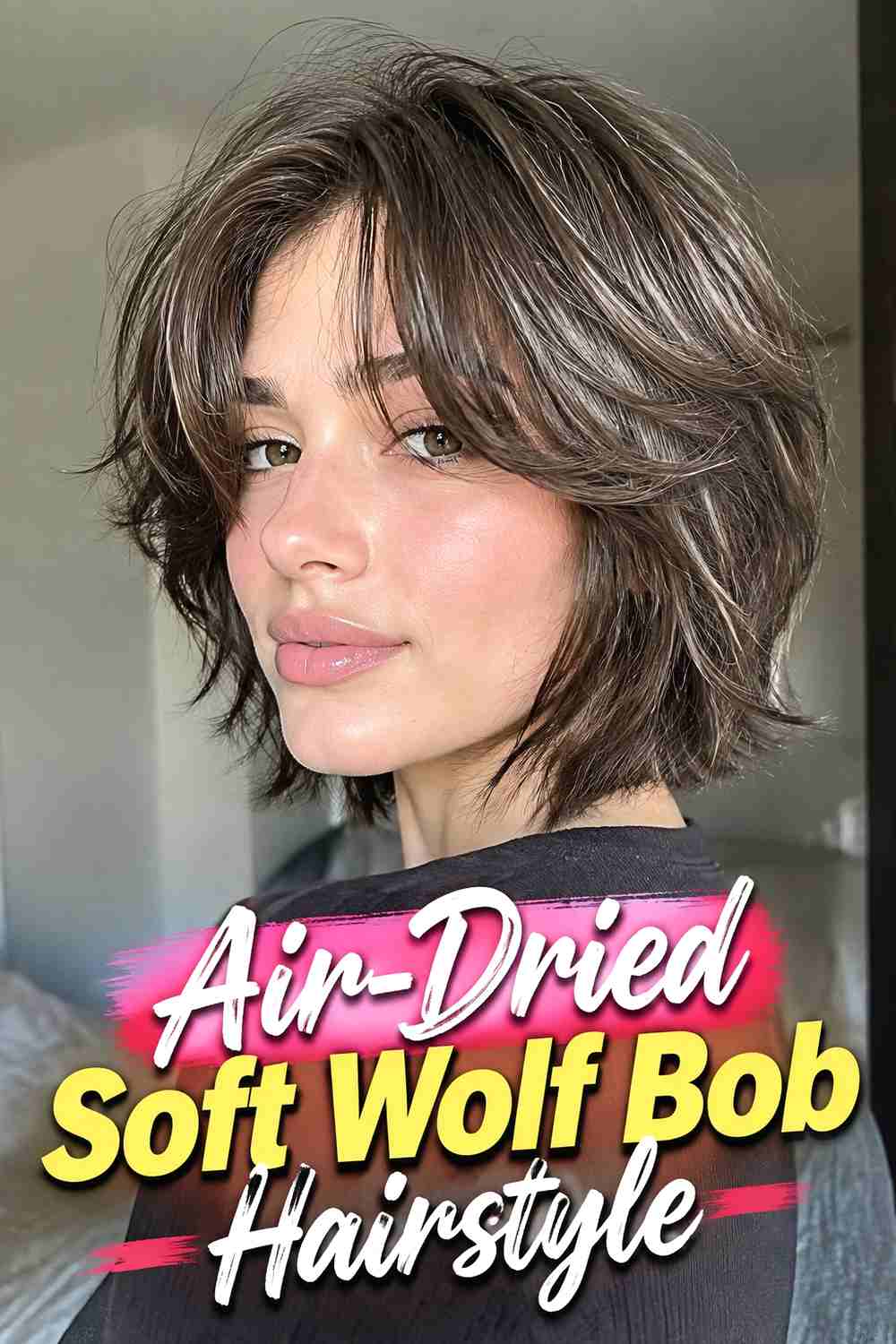
An air-dried finish embraces the Soft Wolf Bob’s natural movement and makes it one of the easier versions to wear casually. Slight bends, soft flyaways, and irregular separation between layers add character without requiring a full blowout. The cut itself should provide enough structure that the crown gains a little lift and the perimeter still looks intentional once dry. This works especially well on hair with natural waves or subtle texture. Apply a lightweight leave-in product, encourage the desired part, and let the layers settle naturally. Avoid repeatedly brushing during drying, since that can flatten the shorter sections and reduce the airy effect that makes this version appealing.
Best For
Straight-to-wavy hair that develops natural movement as it dries can adapt especially well to this low-effort finish.
Wear & Maintenance
Refresh flattened sections with damp fingertips and a small amount of styling cream rather than restyling the entire bob.
13. Face Framing Soft Wolf Bob Hairstyle
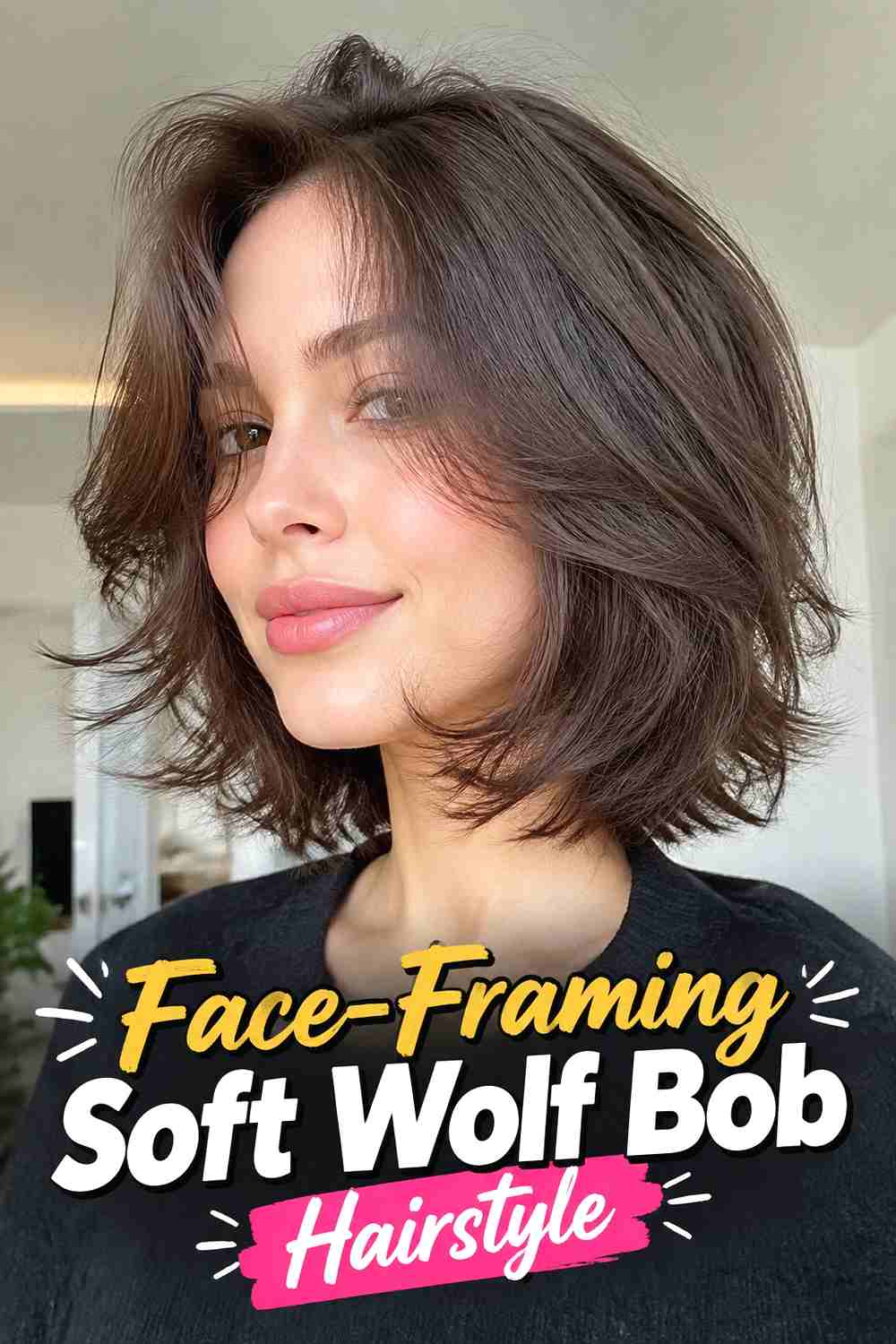
Face-framing layers give the Soft Wolf Bob a clear focal point around the cheekbones and jaw. The shortest sections begin near the front and gradually blend into longer pieces through the sides, creating movement without requiring a full fringe. Through the crown, subtle layers add just enough lift to connect the face frame with the rest of the haircut. The perimeter stays relatively substantial so the style remains recognizably bob-length rather than turning into a short shag. This option is especially versatile because the front pieces can be curved outward, worn naturally, or tucked back. Keep the transitions blended for a softer, more wearable wolf-cut effect.
Styling Notes
Direct the shortest front sections away from the face with a round brush, then use larger, softer movements through the lower lengths.
Pro Tip
Choose the starting point of the face frame based on how much visible movement you want around the front, rather than cutting every layer equally short.
How to Choose the Right Look
Start with how much wolf-cut texture you actually want. The Classic, Sleek, Chin-Length, and Face-Framing versions keep the bob shape strongest, while the Shaggy, Textured, Feathered, and Voluminous options make the layered structure more obvious.
Your natural texture matters too. Wavy or air-dried versions can work with existing bends and movement, while straighter hair may show the haircut most clearly with light texture or a smooth finish. Fine hair generally benefits from fewer short layers and a fuller perimeter, since excessive layering can reduce visible density. Medium or thick hair can usually support more feathering and internal weight removal.
Fringe changes the look significantly. Wispy fringe creates a lighter, softer front, while curtain bangs add broader face-framing movement. If you prefer no bangs, a side part or strategically placed front layers can still create dimension.
Finally, consider styling time. Air-Dried and Wavy versions can be relatively relaxed, while Voluminous or Sleek finishes usually need more deliberate shaping. The best Soft Wolf Bob should move easily without requiring you to fight your natural texture every day.
Final Thoughts
The Soft Wolf Bob offers a practical middle ground between a classic bob and a more dramatic wolf cut. Gentle layers can add volume, texture, and face framing while a stronger perimeter keeps the haircut easy to recognize and wear. Whether you prefer waves, feathering, fringe, or a sleek finish, aim for connected layers and enough density at the bottom to maintain the soft bob silhouette.
FAQs
1. What is a Soft Wolf Bob Hairstyle?
A Soft Wolf Bob combines bob-length hair with gentle crown and face-framing layers inspired by a wolf cut. The transitions are softer and less disconnected than a dramatic shag.
2. Does a Soft Wolf Bob need bangs?
No. Wispy or curtain bangs can complement the layered shape, but the haircut also works with a side part, center part, or longer face-framing pieces.
3. Can fine hair wear a Soft Wolf Bob?
Yes. Keeping the layers longer and more restrained while preserving a fuller perimeter can help fine hair maintain visible density.
4. Does a Soft Wolf Bob work with wavy hair?
Yes. Natural waves can highlight the different layer lengths and create an easy textured finish with relatively little styling.
5. How short can a Soft Wolf Bob be?
A chin-length version works well, provided there is enough length to maintain a clear bob perimeter beneath the shorter crown and face-framing layers.
Save your favorite Soft Wolf Bob hairstyle ideas for your next salon visit, and share the looks that best match your texture, length, and styling routine.