16 Low-Tension Crown Twist Hairstyle Ideas
Soft crown twists can frame natural texture beautifully while creating an elegant, secure-looking shape that still feels relaxed, dimensional, and easy to personalize.
A low-tension crown twist uses softly directed sections around the head to create a halo-like shape without relying on an extremely tight finish. The result can range from a full tucked crown to a half-up twist, low bun, ponytail, puff, or loose curly style. Placement, texture, accessories, and the way the ends are finished all change the character of the look.
As you compare these ideas, consider your hair length, density, natural texture, desired hold, and how much hair you want left loose. The goal is not to pull every section as firmly as possible. A crown twist should look intentional while still allowing enough softness around the roots and hairline for a comfortable finish.
Quick List
- Soft Halo Low Tension Crown Twist Hairstyle
- Side Part Low Tension Crown Twist Hairstyle
- Center Part Low Tension Crown Twist Hairstyle
- Loose Tendril Low Tension Crown Twist Hairstyle
- Half Up Low Tension Crown Twist Hairstyle
- Low Bun Low Tension Crown Twist Hairstyle
- Low Ponytail Low Tension Crown Twist Hairstyle
- Natural Puff Low Tension Crown Twist Hairstyle
- Curly Lengths Low Tension Crown Twist Hairstyle
- Rope Twist Accent Low Tension Crown Twist Hairstyle
- Asymmetrical Low Tension Crown Twist Hairstyle
- Tucked End Low Tension Crown Twist Hairstyle
- Scarf Accented Low Tension Crown Twist Hairstyle
- Floral Pin Low Tension Crown Twist Hairstyle
- Textured Low Tension Crown Twist Hairstyle
- Soft Romantic Low Tension Crown Twist Hairstyle
1. Soft Halo Low Tension Crown Twist Hairstyle
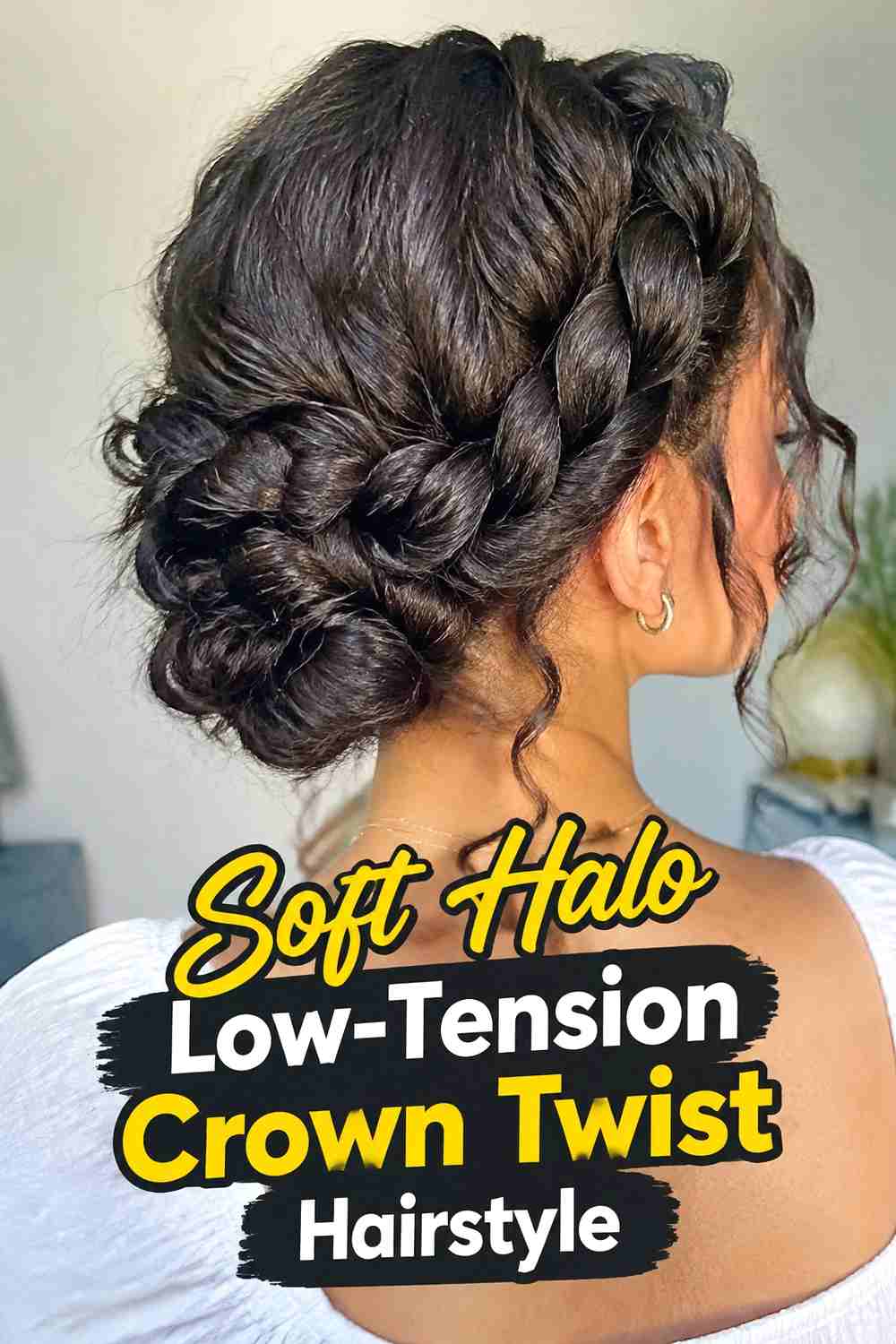
The soft halo low-tension crown twist circles the head with a broad, gently formed twist that creates a continuous frame from the front through the sides and back. Instead of flattening the roots, the style allows a little natural fullness around the crown, giving the finished halo a softer and more dimensional appearance. The ends can be tucked discreetly beneath the twist so the shape appears uninterrupted. This version works particularly well when you want the entire hairstyle contained without creating a rigid updo. The crown should follow the natural curve of the head, with enough looseness that the twist looks full rather than narrow, stretched, or overly compact.
Styling Notes
Build the crown gradually, adding manageable sections as you move around the head. Pins can secure areas that need support without forcing the entire twist tighter.
Best For
This style is a strong choice for medium to longer lengths that can travel around the head comfortably and tuck neatly into the finished crown.
2. Side Part Low Tension Crown Twist Hairstyle
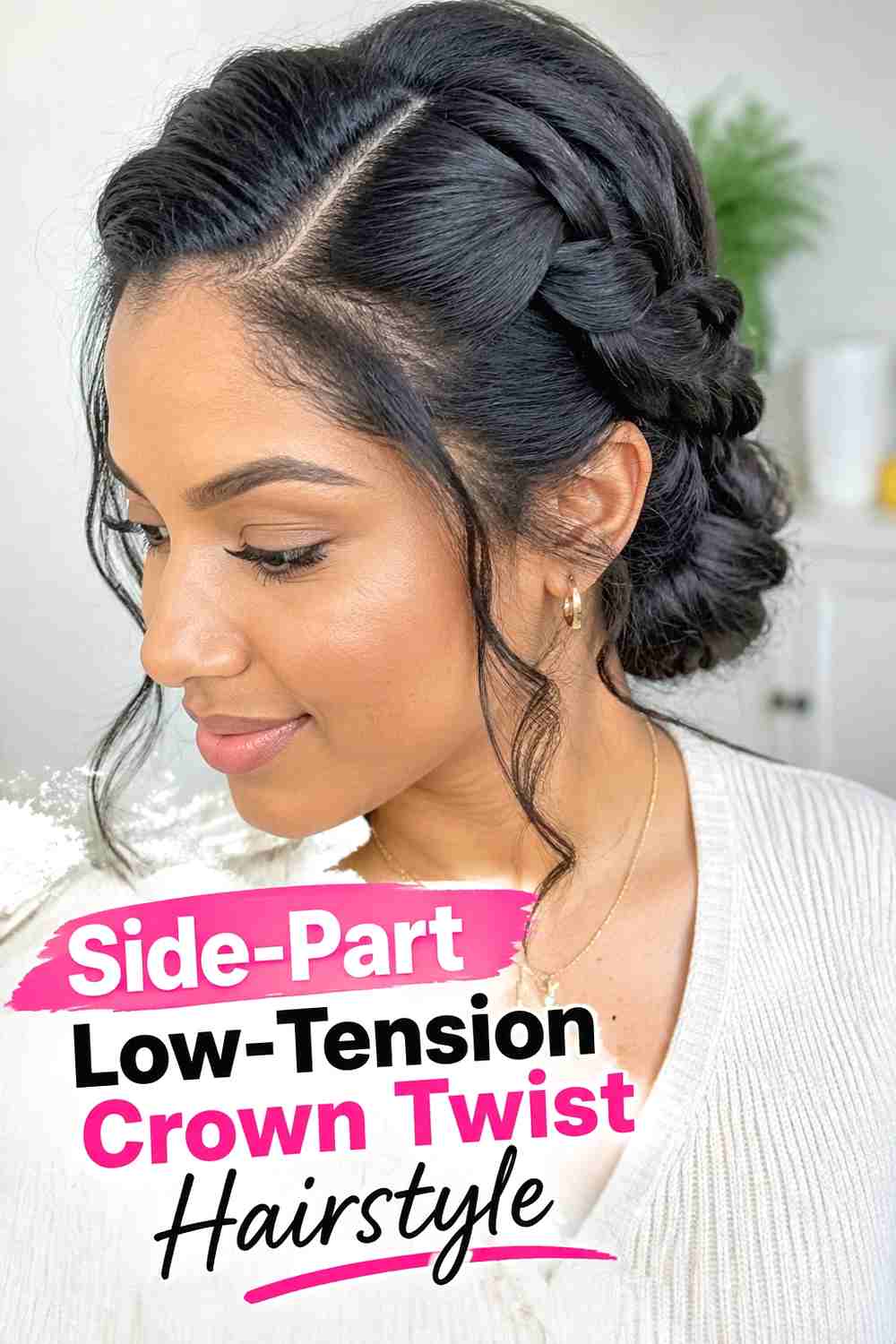
A side-part low-tension crown twist begins with an off-center part that gives one side more visual weight before the hair transitions into the crown. The fuller section can sweep softly across the front and then join the twist around the side of the head, creating a graceful asymmetrical effect. Rather than making the roots completely smooth, allowing a touch of lift near the part keeps the hairstyle from appearing too tight. The crown itself can continue around the entire head or finish at the back with tucked ends. This version is useful when you enjoy a defined part but want something softer than a sleek, tightly pulled updo.
Why It Works
The side part creates movement before the crown even begins, making the style appear more dimensional from the front and profile.
Pro Tip
Establish the part before forming the twist so you do not have to pull or rearrange the front sections after the crown is already secured.
3. Center Part Low Tension Crown Twist Hairstyle
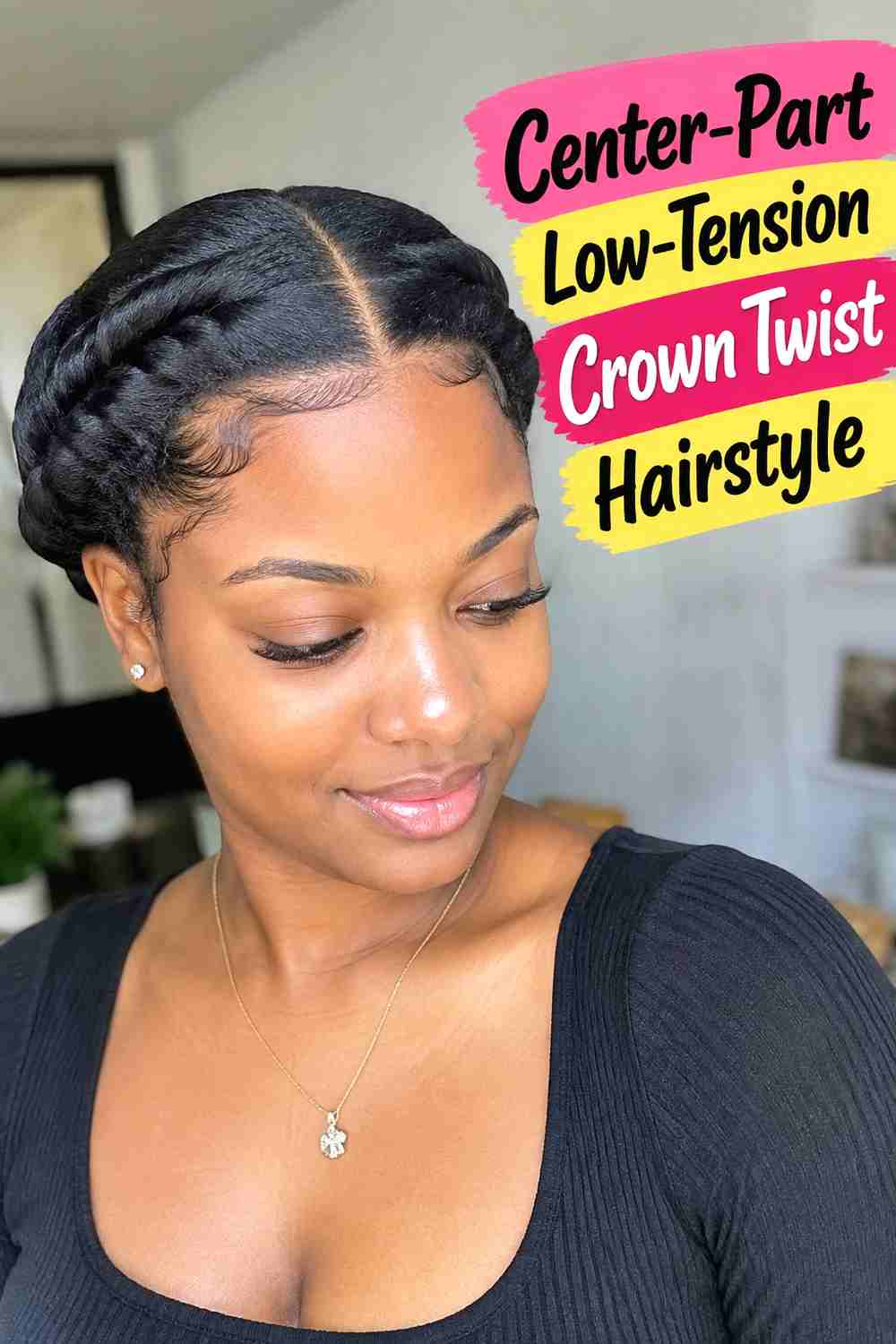
The center-part low-tension crown twist creates a balanced look by dividing the front into two even sections that travel toward each side of the head. Both sides can be twisted gently backward and joined at the nape or continued into a complete halo. The symmetrical layout makes the twist structure easy to see while still leaving room for natural texture at the roots. Keeping the sections slightly full prevents the crown from becoming too flat against the scalp. This variation can feel polished without requiring a perfectly sleek surface, making it suitable for hair that naturally holds a little volume. The strongest result keeps both sides similar in size while allowing the texture itself to remain visible.
Styling Notes
Work each side with similar section sizes and tension so the two halves meet naturally at the back without one side appearing noticeably tighter.
Best For
Choose this version when you enjoy symmetry, a visible part, and a clean front view with softness around the crown.
4. Loose Tendril Low Tension Crown Twist Hairstyle
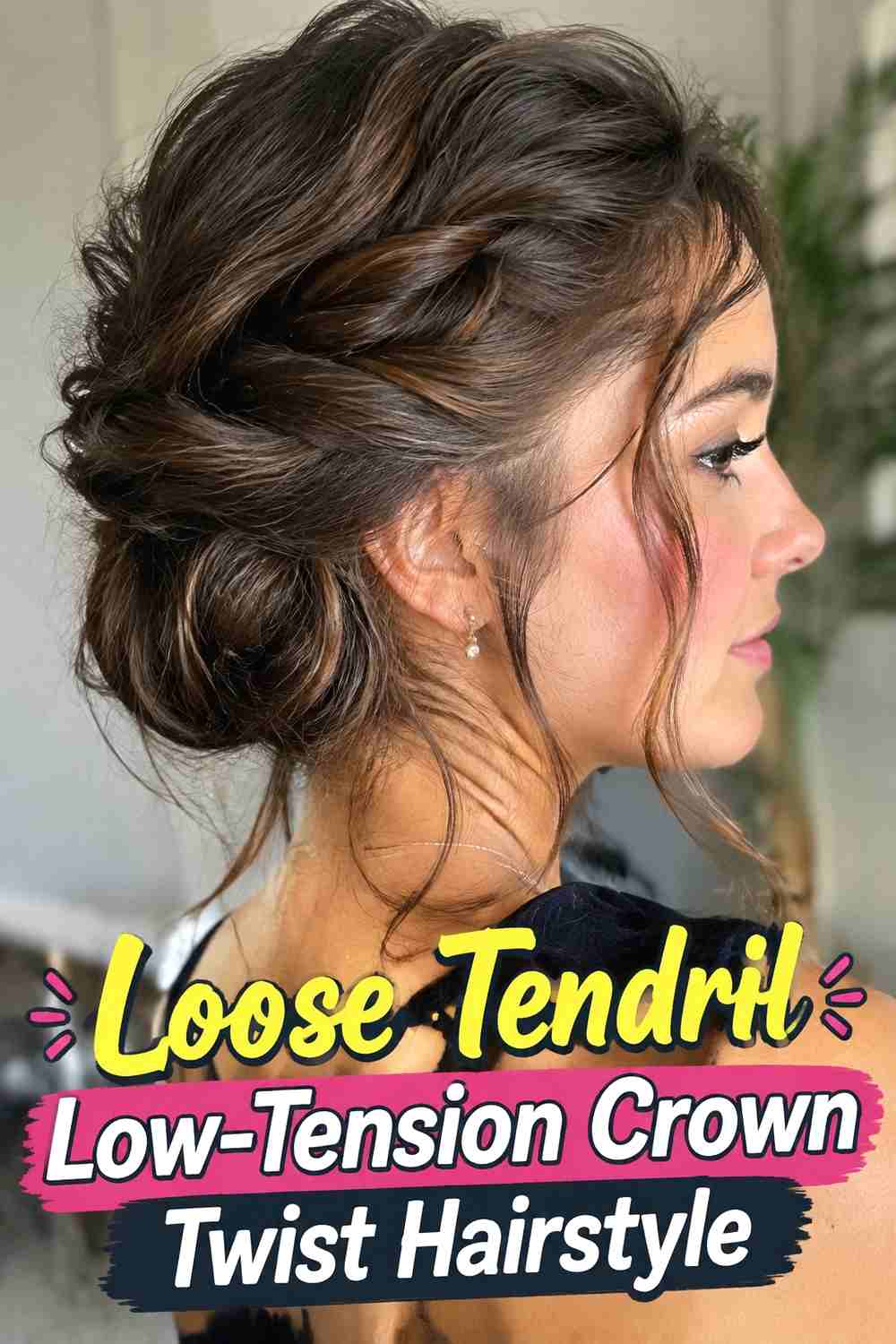
A loose tendril low-tension crown twist leaves a few fine pieces free around the front or sides while the majority of the hair forms a soft crown. These pieces can follow the natural curl, wave, or bend of the hair rather than being forced into identical shapes. The tendrils soften the transition between the hairline and the twist, giving the finished style a relaxed quality that works particularly well for casual events or dressier occasions with a romantic feel. The crown itself should remain full enough to balance the loose front pieces. Leaving too many sections out can make the look feel unfinished, so a small number of intentionally placed tendrils usually creates the clearest effect.
Styling Notes
Select the face-framing pieces before forming the crown. Pulling them out afterward can disturb the sections already twisted and pinned into place.
Why It Works
The loose pieces create movement around the face while the crown keeps the overall silhouette structured and contained.
5. Half Up Low Tension Crown Twist Hairstyle
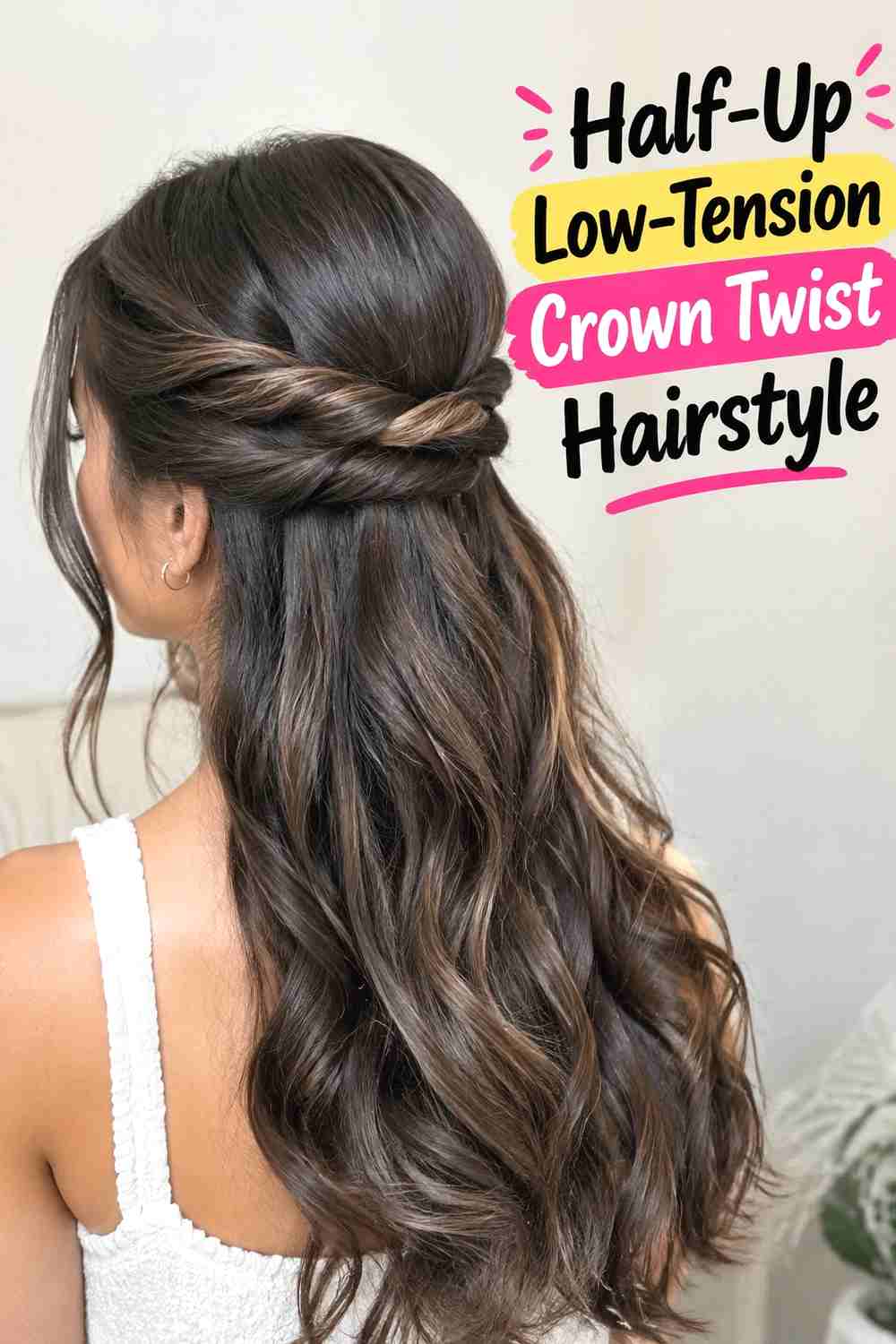
The half-up low-tension crown twist combines a soft twisted band around the upper head with loose hair through the lower lengths. Sections from each side are guided backward and twisted toward the center, creating the appearance of a partial crown while leaving the rest of the texture visible. This design is especially useful when you want hair away from the face without committing to a full updo. Curls, coils, waves, or straighter lengths can all remain visible beneath the twist, giving the style more movement than a completely tucked crown. Keep the upper section broad and softly secured so the hairstyle feels integrated rather than like a narrow rope sitting separately on top of the loose hair.
Best For
This variation works well for medium to long hair when you want to showcase natural length and texture while still adding an intentional crown detail.
Wear & Maintenance
Check that the joining point at the back feels stable without needing repeated tightening. A few discreet pins can provide support where the two sides meet.
6. Low Bun Low Tension Crown Twist Hairstyle
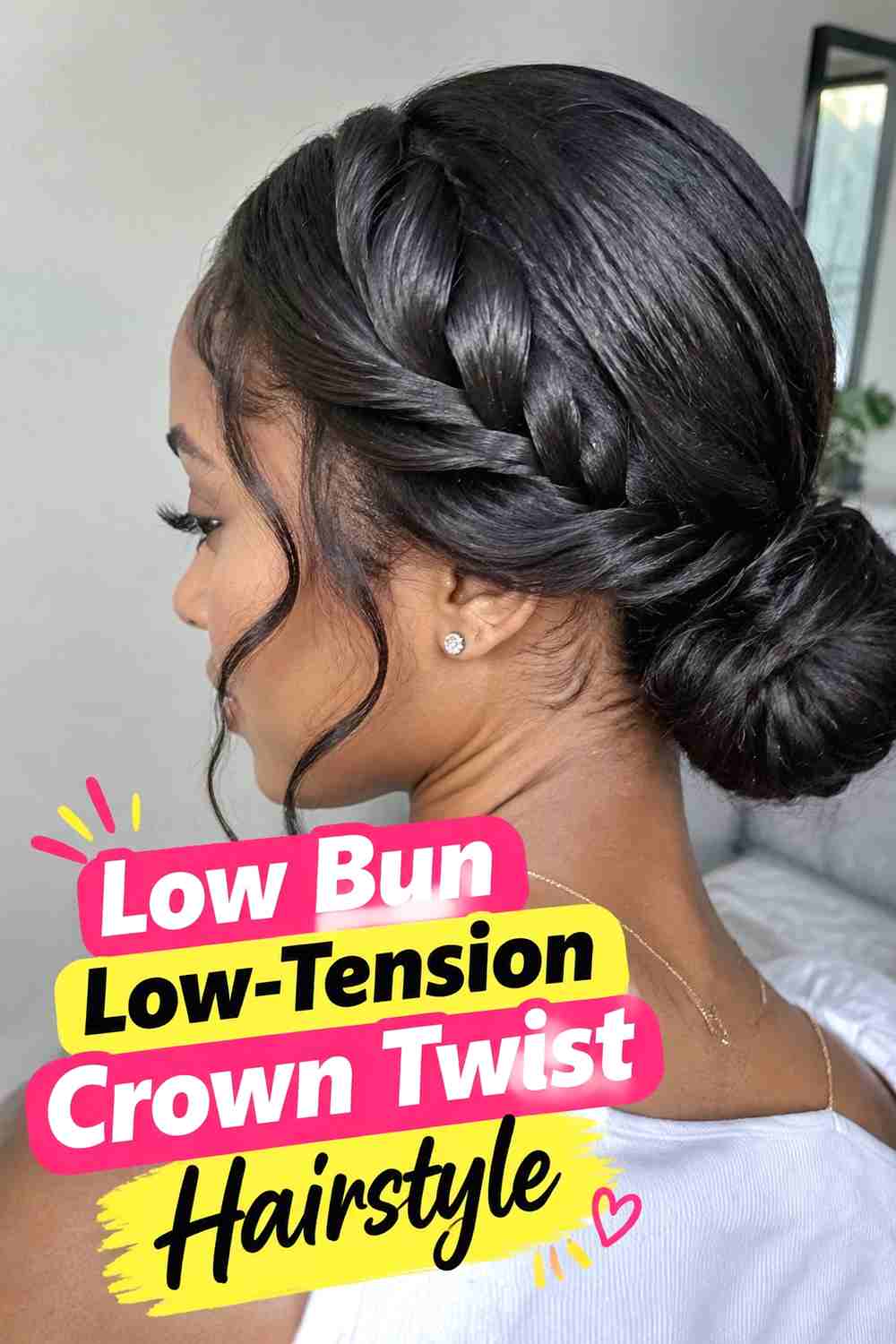
A low bun low-tension crown twist directs softly twisted sections around the sides of the head before gathering them into a bun near the nape. The crown detail adds texture and dimension, while the low bun provides a clear finishing point for the remaining length. The bun can stay rounded and polished or slightly loose depending on the overall mood. This design works particularly well when there is not enough length to complete a full halo comfortably but enough hair to gather at the back. Rather than relying on a tight base, use pins and a gentle holder to distribute the shape. The transition from the side twists into the bun should look continuous instead of sharply separated.
Styling Notes
Secure the crown sections first, then form the bun with the remaining hair. This keeps the decorative twist visible instead of allowing the bun to pull it backward.
Best For
Choose this version when you want an updo with a clear nape-level focal point and a softer alternative to a tightly slicked bun.
7. Low Ponytail Low Tension Crown Twist Hairstyle
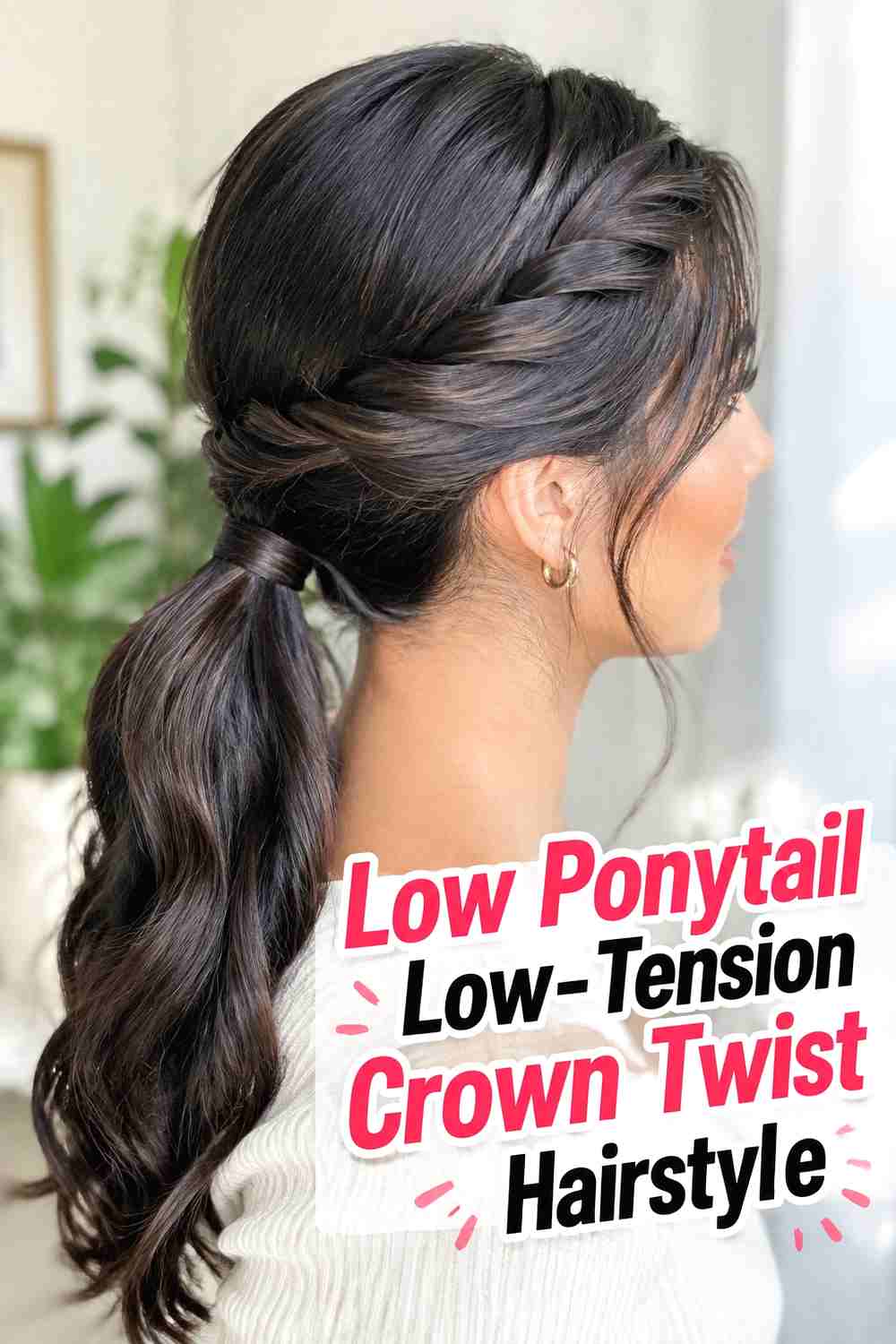
The low ponytail low-tension crown twist blends decorative side twists with loose length by gathering the hair at the nape instead of tucking everything into an updo. The crown sections can begin near the temples and travel backward, where they merge into a softly secured ponytail. This makes the twist pattern visible while preserving movement through the ends. Curly and wavy textures can add fullness to the ponytail, while straighter hair creates a smoother, more elongated finish. A covered elastic or similar holder can keep the base organized without becoming the main visual feature. The style works best when the crown maintains some natural fullness rather than being stretched tightly toward the ponytail.
Why It Works
The ponytail keeps the hairstyle practical and familiar, while the crown twists add enough detail to make the finished look feel more intentional.
Wear & Maintenance
If the base shifts, reposition the holder rather than repeatedly tightening the side twists, which can change the softness of the crown.
8. Natural Puff Low Tension Crown Twist Hairstyle
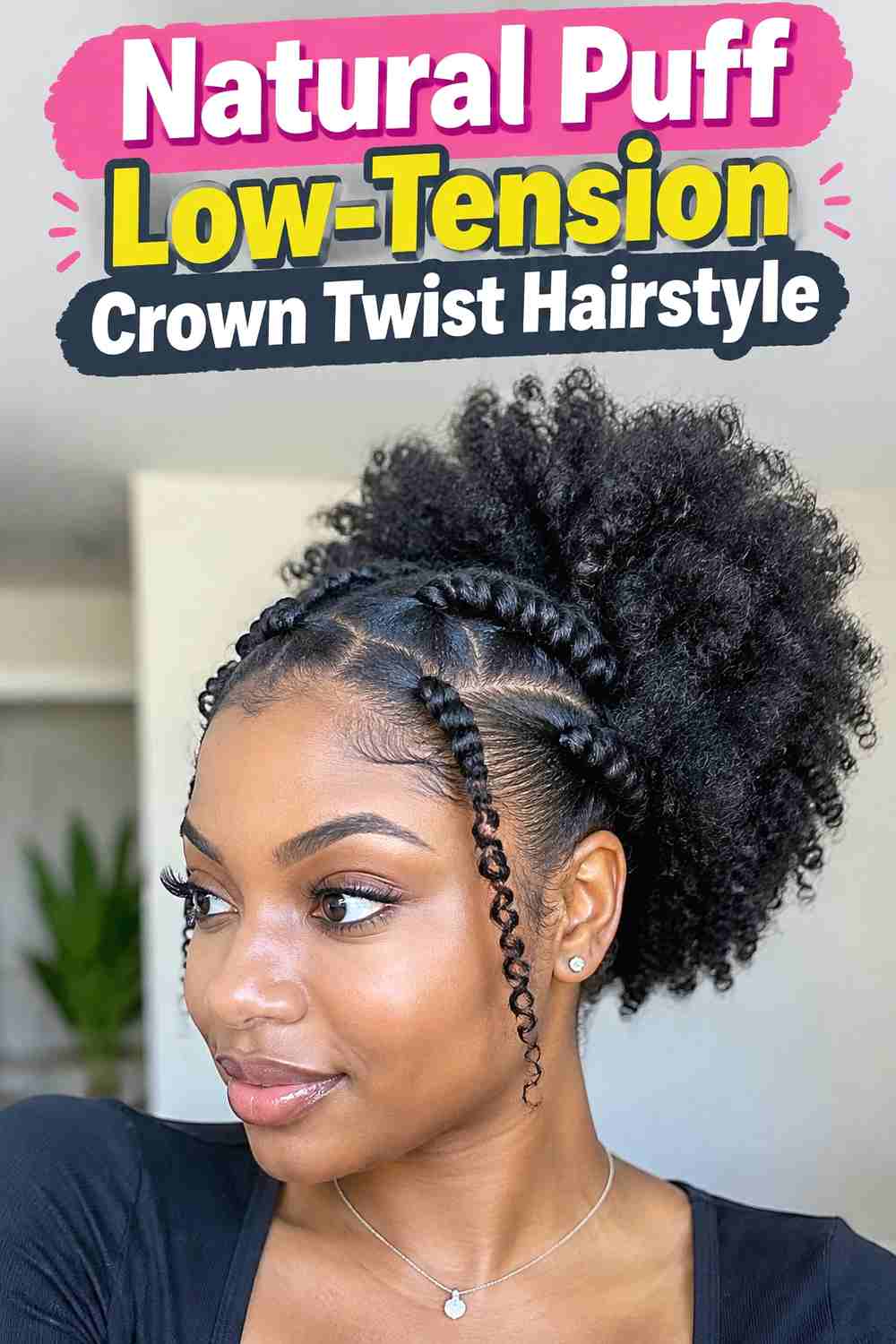
A natural puff low-tension crown twist combines a softly twisted front or side section with a full puff positioned toward the back of the head. The contrast between the defined crown detail and the airy texture of the puff gives the hairstyle a strong visual balance. Instead of pulling the entire perimeter tightly, the twist can guide selected sections toward the puff while allowing natural root volume to remain. This approach works especially well for coily and tightly curled textures that naturally create fullness when gathered. The puff should look rounded and dimensional, while the crown twist remains visible rather than disappearing into the base. A wider, adjustable holder can help shape the puff without making it unnecessarily compact.
Hair Type & Length
This variation is especially suited to naturally curly and coily hair with enough length to gather into a visible puff while forming a soft crown detail.
Pro Tip
Shape the puff after the twist is secured so you can balance its fullness without disturbing the crown.
9. Curly Lengths Low Tension Crown Twist Hairstyle
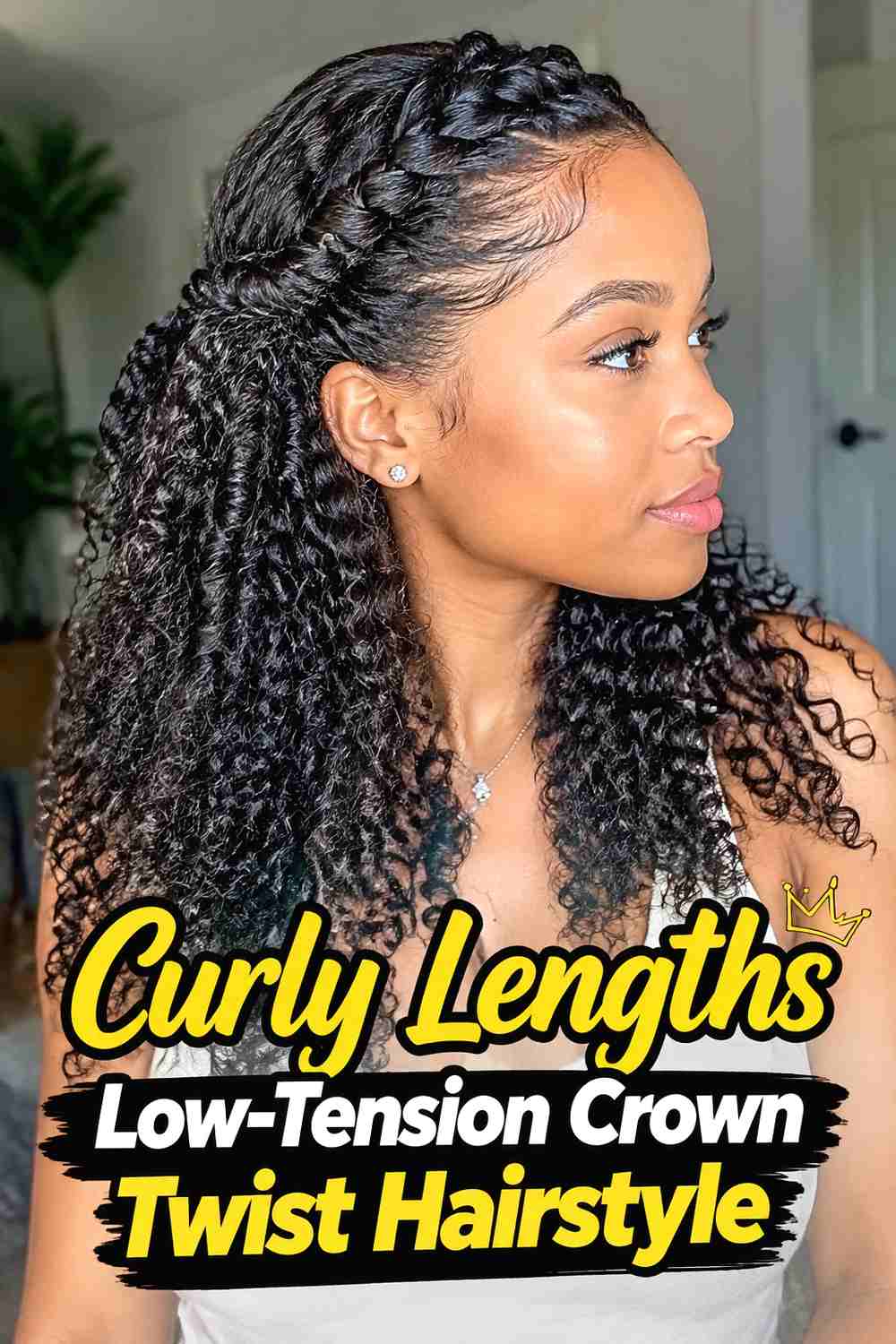
The curly lengths low-tension crown twist uses the upper sections to create a gentle twisted frame while leaving most of the curls free through the back and shoulders. The crown adds structure around the head, but the loose lengths remain the main source of volume and movement. This works particularly well when the curls already have visible definition and you want to keep that texture on display. The twist can meet at the back or taper gradually into the loose hair, depending on the available length. Avoid flattening the curl pattern near the roots simply to make the crown look neater. A little softness where the twist meets the curls helps the finished style feel cohesive and natural.
Best For
Choose this look when maintaining visible curls is more important than creating a completely contained updo.
Styling Notes
Arrange the loose curls after securing the crown, gently redistributing sections so they fall evenly without covering the twisted detail.
10. Rope Twist Accent Low Tension Crown Twist Hairstyle
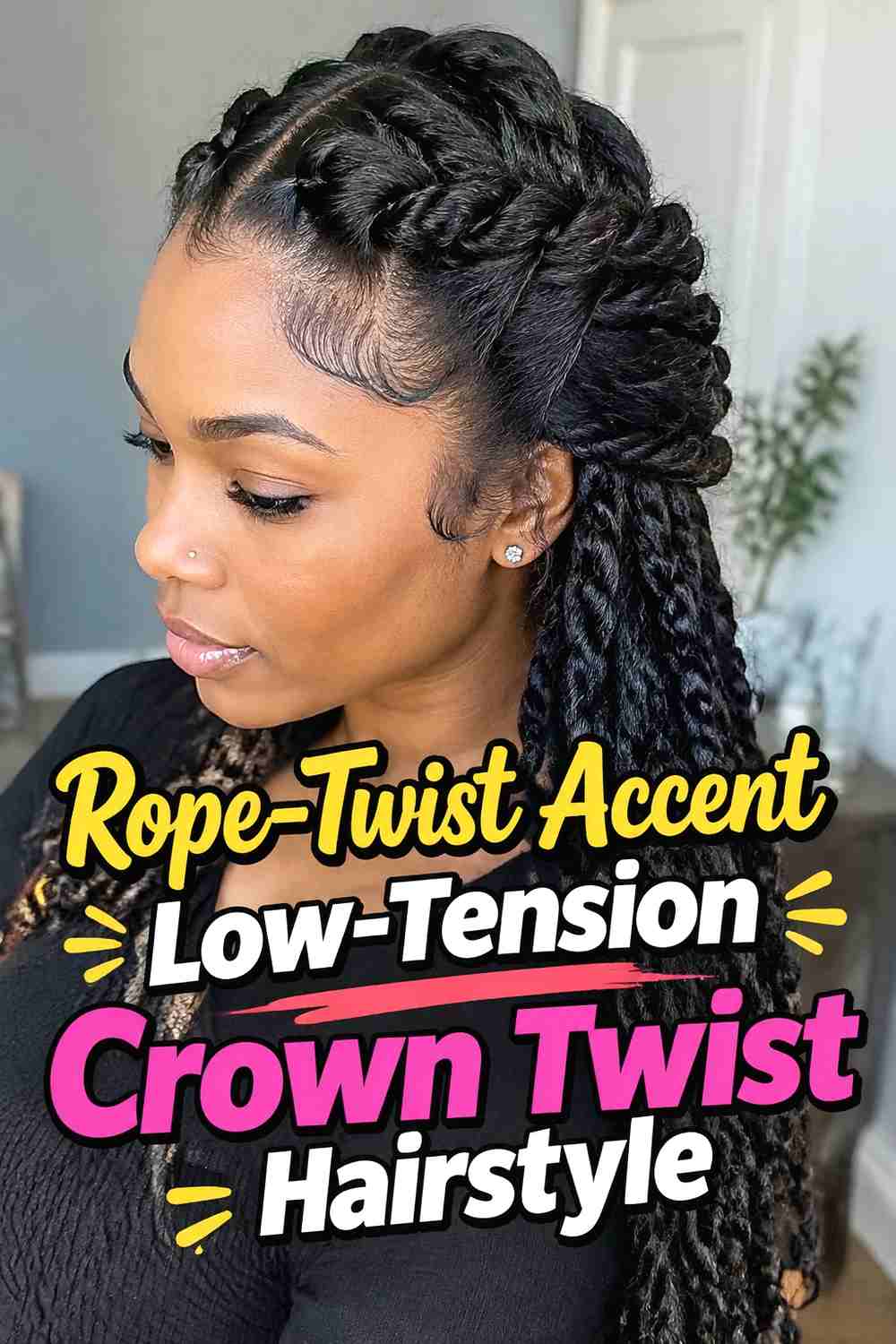
The rope-twist accent low-tension crown twist uses clearly defined two-strand twists to create a decorative band around part or all of the head. Because a rope twist already has visible texture, it does not need to be pulled tightly to stand out. Slightly larger sections can produce a fuller, more dimensional crown, while smaller twists create finer detail. The remaining hair may be tucked, gathered into a bun, or left loose depending on the desired finish. This style looks especially effective when the twist pattern remains consistent around the head without appearing overly stretched. Keeping the rope sections smooth enough to show their structure while allowing natural fullness at the roots creates a balanced result.
Styling Notes
Twist each section consistently in the same direction, then guide it around the crown without stretching the finished rope tighter than necessary.
Why It Works
The two-strand pattern adds clear visual definition, allowing the hairstyle to look detailed even with minimal accessories.
11. Asymmetrical Low Tension Crown Twist Hairstyle
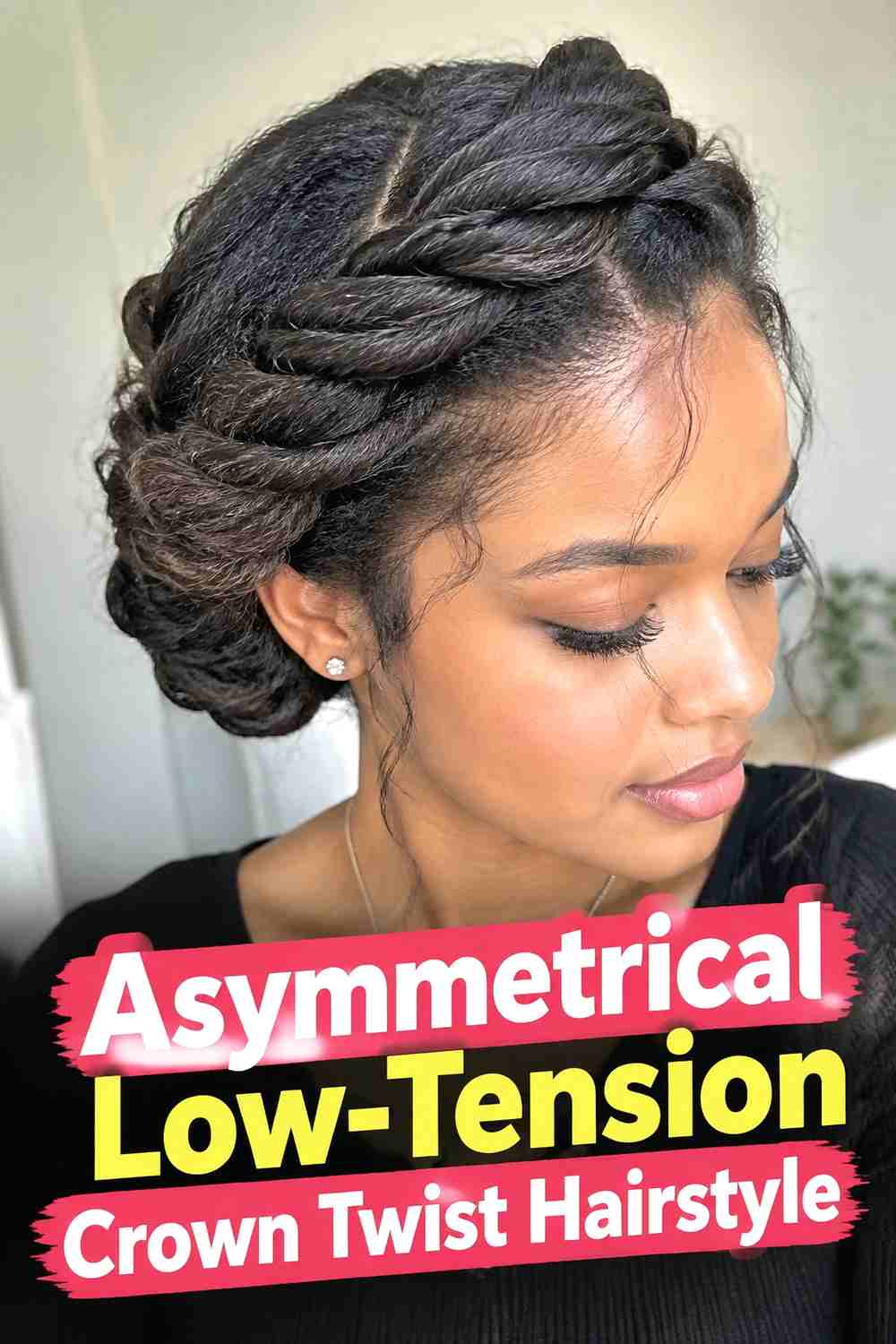
An asymmetrical low-tension crown twist places more volume or twist detail on one side of the head, creating a deliberately uneven silhouette. One side may begin higher near the temple while the opposite side sits lower toward the ear or nape. This shift in placement gives the style a modern, directional look without requiring complicated ornamentation. The hair can finish in a tucked section at the back, merge into loose lengths, or connect to a low bun. The most effective versions make the imbalance look intentional by keeping the larger twist clearly visible and the opposite side simpler. Soft root volume helps maintain the low-tension character rather than turning the asymmetry into a tightly pulled side style.
Why It Works
Changing the height and fullness on each side immediately creates visual interest while preserving the recognizable crown-twist shape.
Best For
This option suits anyone who prefers less symmetry and wants a crown style with a stronger profile from one side.
12. Tucked End Low Tension Crown Twist Hairstyle
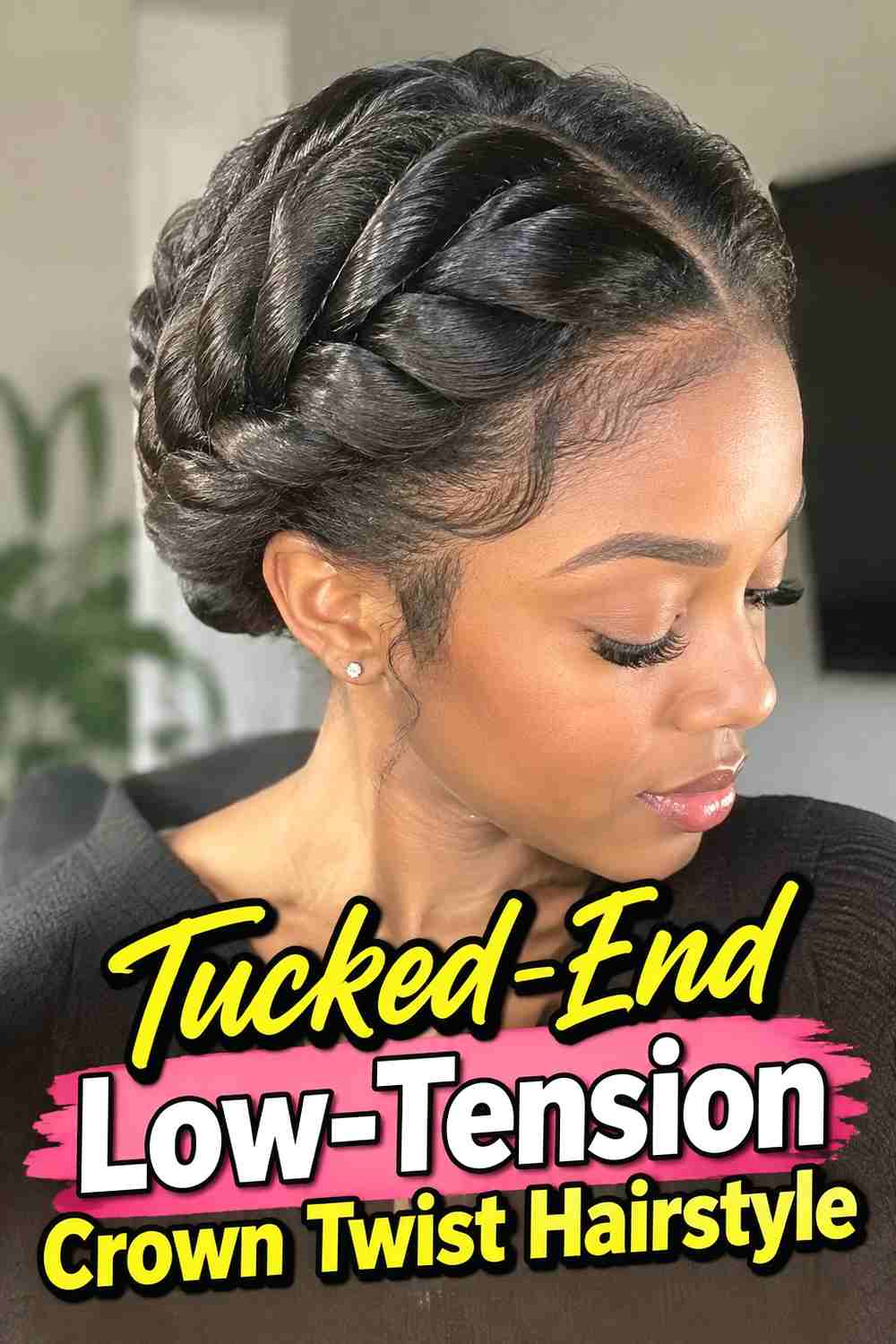
The tucked-end low-tension crown twist creates a clean, continuous finish by hiding the final ends beneath an earlier section of the twist. Once the crown circles the head, the remaining length is folded under and secured with discreet pins so there is no obvious stopping point. This detail gives the hairstyle a polished halo effect while keeping the overall structure soft. The technique works best when the hair has enough length to overlap comfortably without needing to be stretched. A slightly fuller twist also makes it easier to conceal the ends and pins. The completed crown should look connected from every angle, with natural texture and a few subtle variations in fullness preventing the style from appearing overly rigid.
Styling Notes
Leave enough space beneath the starting section to tuck the final ends securely. Add pins gradually instead of relying on one tight anchor point.
Wear & Maintenance
If an end begins to loosen, re-pin that specific section rather than tightening the entire crown around the head.
13. Scarf Accented Low Tension Crown Twist Hairstyle
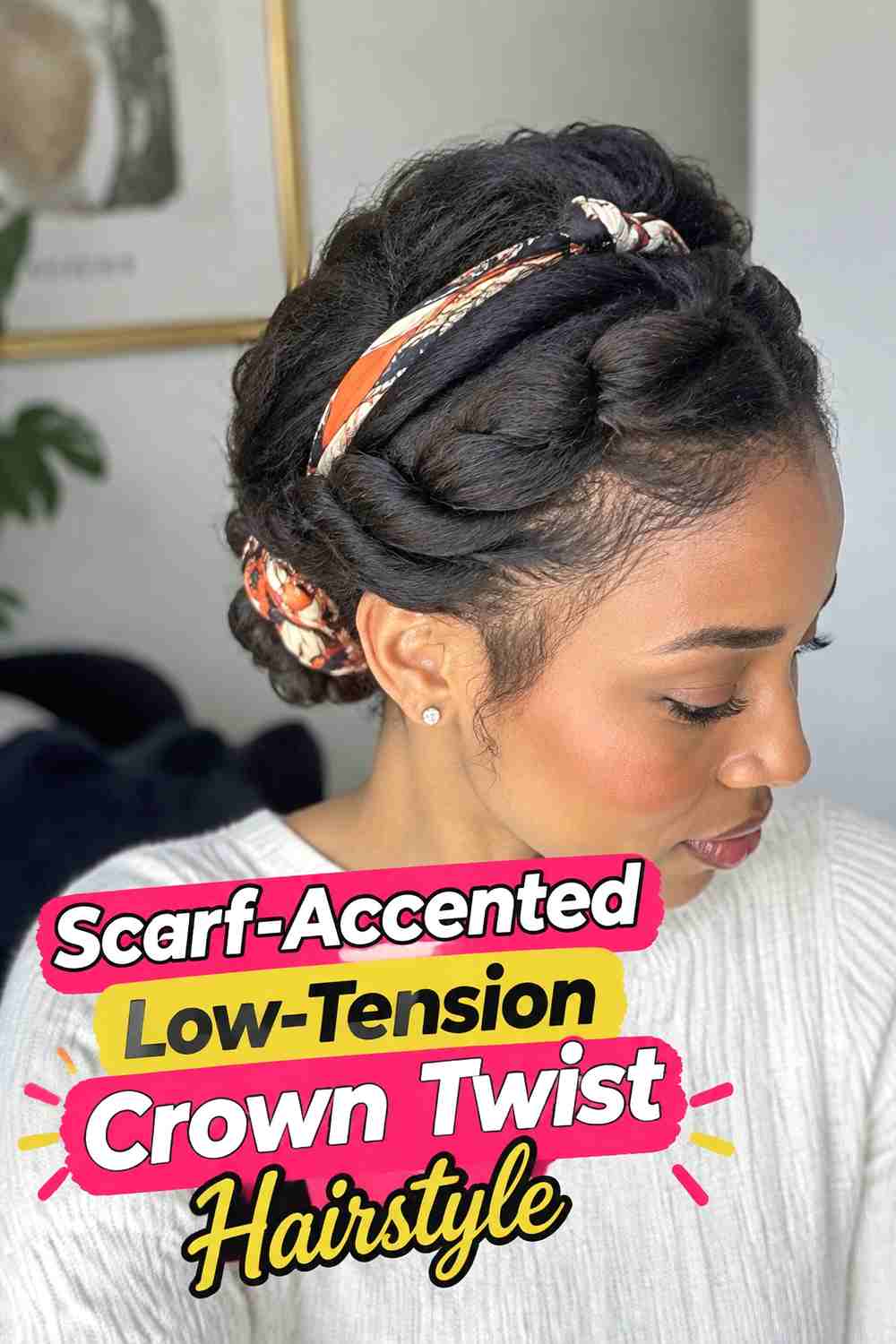
A scarf-accented low-tension crown twist adds color and pattern while allowing the twisted structure to remain the focus. A narrow scarf can sit beneath part of the crown, wrap softly around a low finishing point, or be tied at the nape after the twist is complete. The accessory should enhance the hairstyle rather than hold it together under heavy tension. Lightweight fabric works especially well because it can add visual interest without creating unnecessary bulk around the head. Choose a scarf that contrasts gently with the hair so both the texture and accessory remain visible. Keeping the knot or tails modest also prevents the scarf from overwhelming the rounded shape of the crown.
Styling Notes
Complete and secure the hairstyle first, then add the scarf as a finishing detail. This makes it easier to control both tension and placement.
Best For
This variation is useful for casual days, vacations, outdoor plans, or any look that benefits from a small coordinated color accent.
14. Floral Pin Low Tension Crown Twist Hairstyle
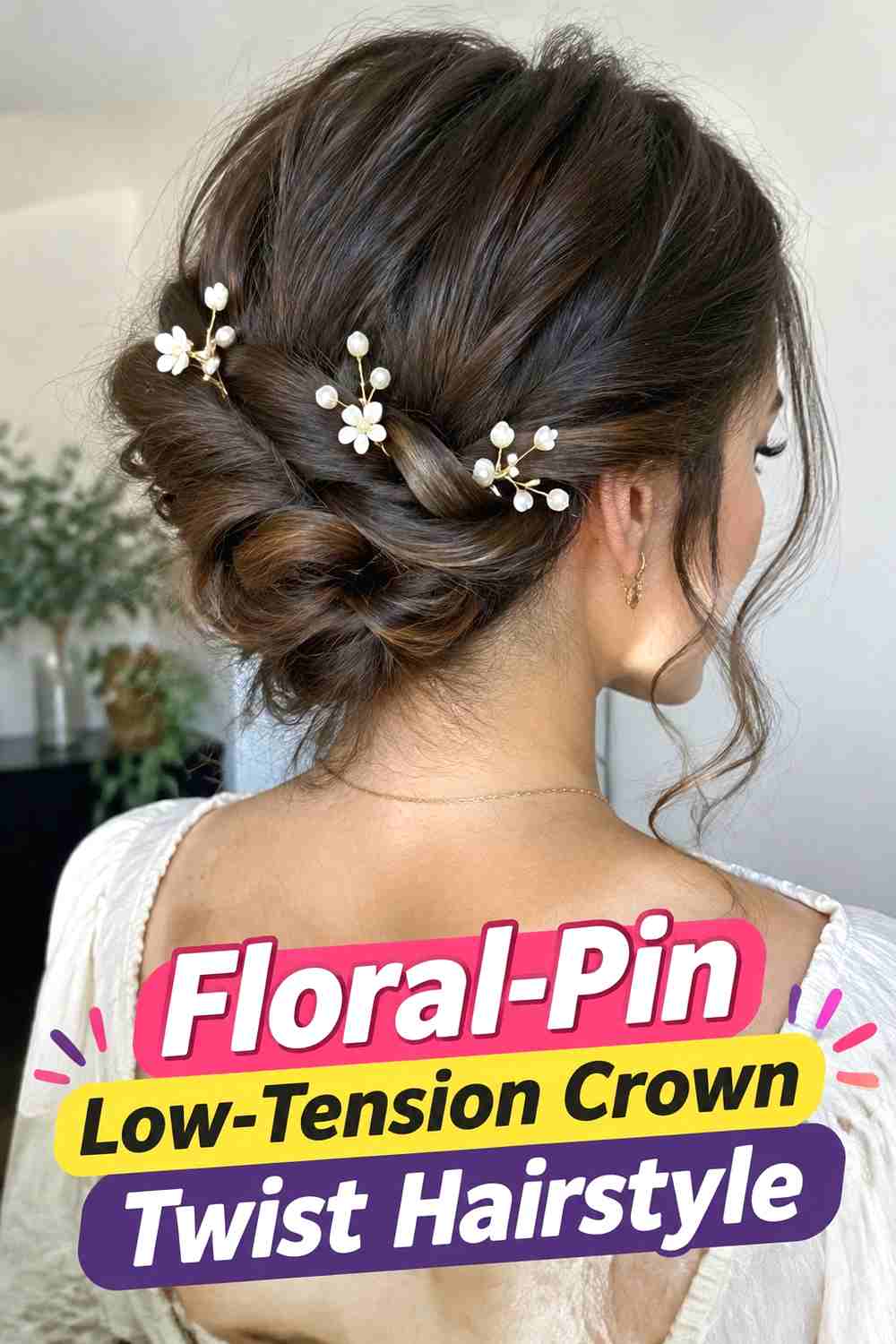
The floral-pin low-tension crown twist uses a few small decorative floral pins to highlight the shape without covering the hair texture. The pins can be placed near one side of the crown, clustered subtly above the nape, or spaced sparingly along the twist. Limiting the number of accessories keeps the hairstyle modern and allows the twisted structure to remain easy to see. This look pairs especially well with a soft, full crown because the flowers can sit between sections without requiring the hair to be tightened around them. Choose lightweight pieces that attach securely, and avoid placing decorative pins where they feel uncomfortable against the scalp. The effect should feel intentional and refined rather than heavily embellished.
Best For
This crown variation works particularly well for celebrations, dinners, photos, garden events, and other occasions where a subtle decorative finish feels appropriate.
Pro Tip
Place the largest accent first, then decide whether any smaller pieces are actually needed before adding more decoration.
15. Textured Low Tension Crown Twist Hairstyle
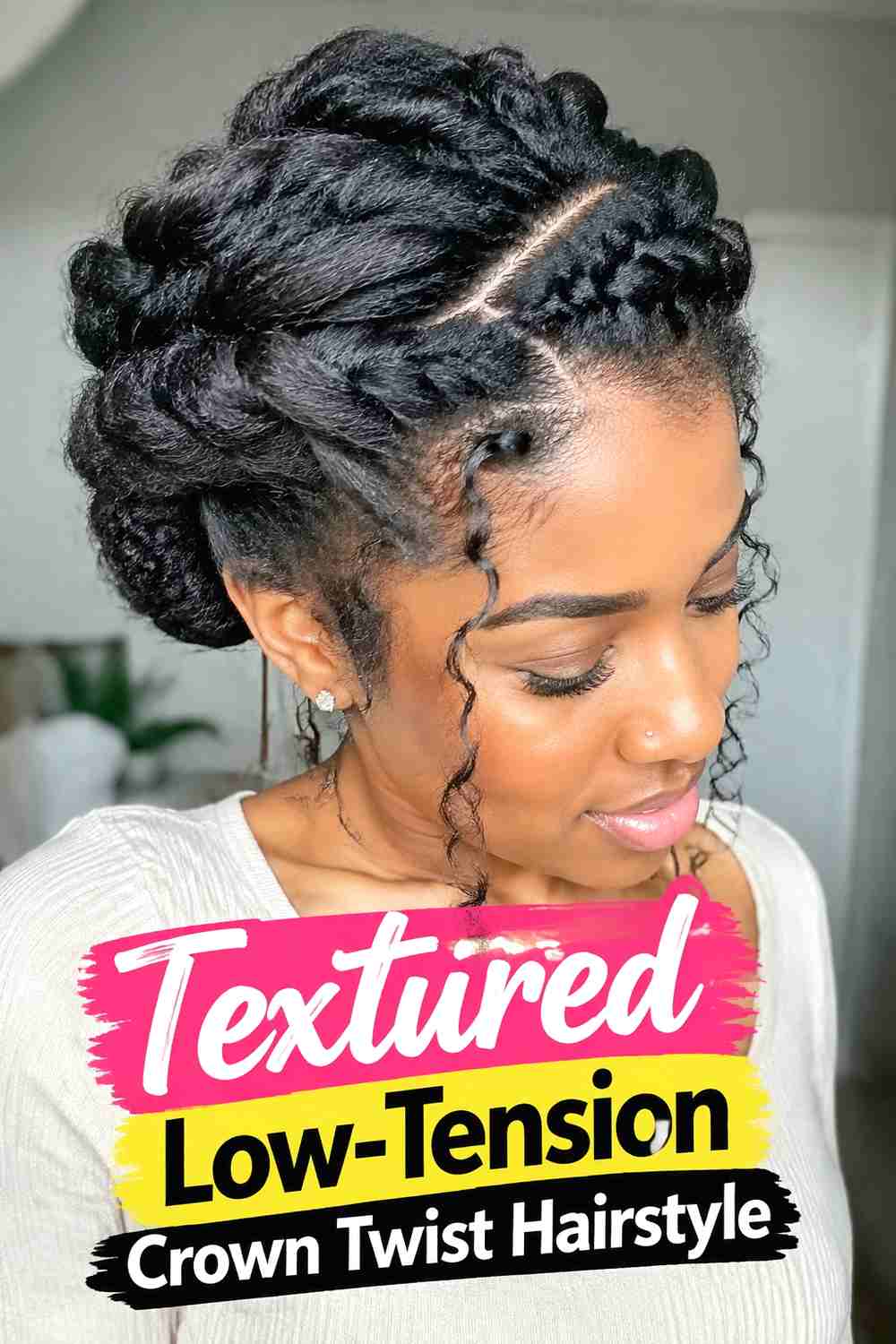
The textured low-tension crown twist celebrates natural variation instead of trying to make every section perfectly smooth. A little root lift, visible curl pattern, soft flyaways, and slight differences in twist thickness can all contribute to the finished shape. The key is keeping the crown deliberate enough that the texture feels styled rather than accidental. This approach works particularly well on naturally curly, coily, or wavy hair because the existing texture adds volume to the twist without requiring an extremely firm hold. Ends can be tucked beneath the crown or gathered at the back. The result should feel dimensional from every angle, with the natural surface of the hair remaining visible rather than being heavily flattened.
Why It Works
Natural texture creates built-in fullness, allowing the crown to look substantial without relying on excessive pulling or perfectly sleek sections.
Styling Notes
Use your fingers to guide the shape and smooth only the areas that genuinely need adjustment, preserving the hair’s natural surface wherever possible.
16. Soft Romantic Low Tension Crown Twist Hairstyle
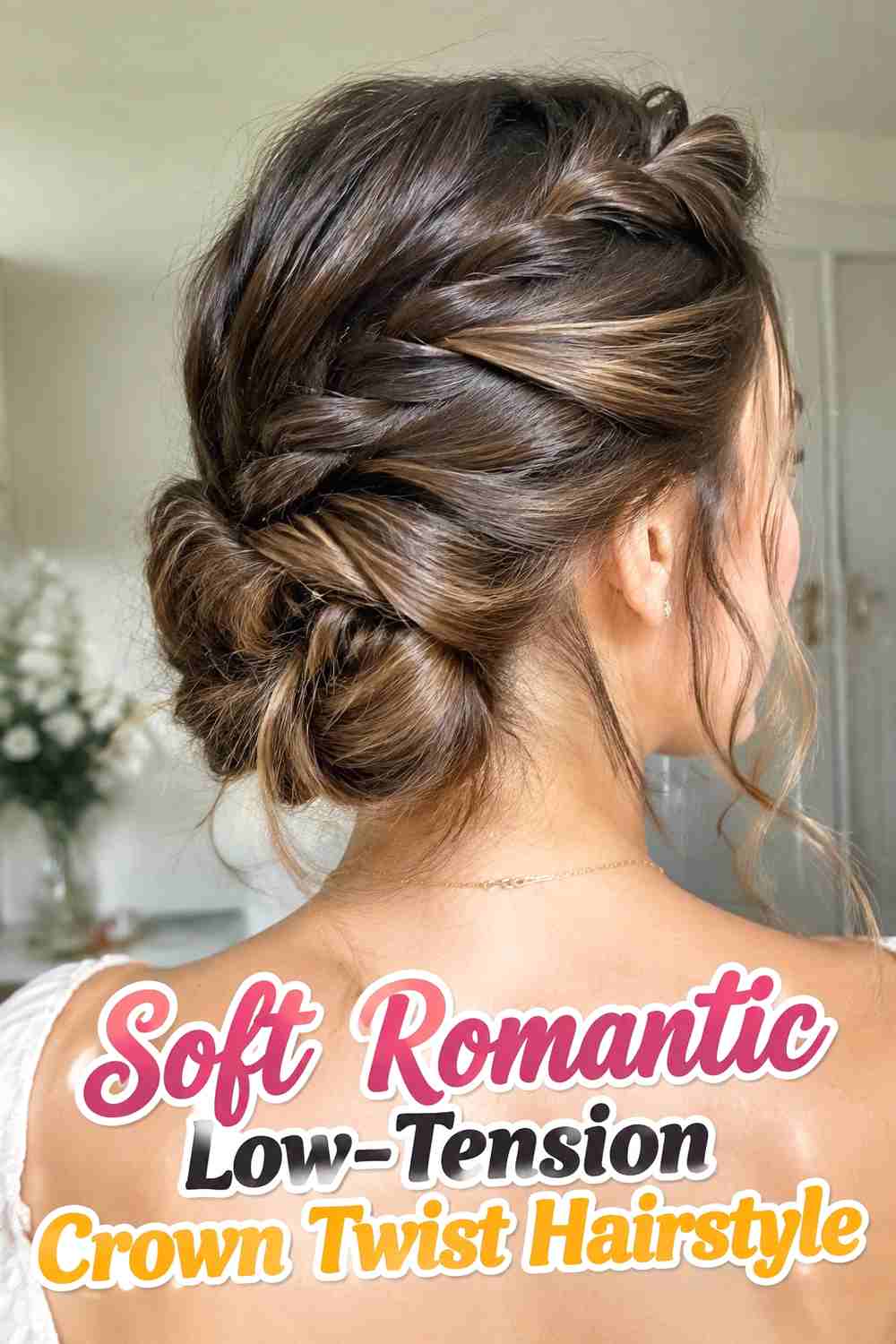
The soft romantic low-tension crown twist combines a broad, relaxed halo with gentle volume and a few deliberately softened details. The crown can sit slightly lower around the sides, with subtle lift at the top and optional wisps near the front. Rather than aiming for a perfectly uniform twist, the style benefits from small variations in fullness that create a more organic finish. The ends can be tucked completely for an updo or blended into a small low gathering at the back. This variation works especially well when the hair has natural wave or curl because that movement supports the softer silhouette. The finished look should appear graceful and secure without losing the relaxed quality that defines a low-tension crown.
Styling Notes
Build the shape first, then gently loosen only selected areas for softness. Pulling broadly across the entire crown can make the structure uneven.
Best For
This option is well suited to dinners, celebrations, photos, weddings, and other occasions where you want an elegant style with a less rigid finish.
How to Choose the Right Look
Start by deciding how much hair you want contained. A full halo or tucked-end crown keeps nearly everything off the shoulders, while half-up, curly-length, ponytail, and puff variations preserve more visible movement. Low buns provide a middle ground by containing the length without requiring the crown to wrap completely around the head.
Hair length also affects which version feels easiest. Longer hair gives you more flexibility for full crowns, tucked ends, and buns, while medium lengths may work especially well with half-up twists, low ponytails, puffs, or designs that meet at the back rather than circling the entire head.
Texture can guide the finish rather than limit it. Coils and curls naturally add fullness to puffs, textured crowns, and loose-length styles. Straighter or softly wavy hair can show the shape of rope twists, side parts, center parts, and tucked crowns particularly clearly.
Consider your styling time and accessories as well. A simple side-part or half-up crown may require fewer finishing steps, while tucked halos and decorative versions need more careful pin placement. Scarves and floral pins should function as finishing touches rather than substitutes for a secure base.
Most importantly, pay attention to comfort. A low-tension crown should remain stable without feeling excessively tight around the hairline, temples, crown, or nape. If a section feels overly pulled, adjust the placement or add support with pins instead of tightening the whole style.
Final Thoughts
Low-tension crown twists can be adapted into polished halos, relaxed half-up looks, buns, ponytails, puffs, and softly textured styles. Small decisions about parting, placement, accessories, and how much hair remains loose can make each version feel noticeably different.
Choose the style that works naturally with your length and texture, then focus on creating a secure shape without unnecessary tightness. Whether you prefer a clean tucked crown or a romantic twist with loose curls, softness and visible texture can remain part of the finished look.
FAQs
1. What is a low-tension crown twist hairstyle?
It is a crown-style twist arranged around part or all of the head with a softer hold rather than an extremely tight, pulled-back finish. The style can be fully tucked or combined with loose hair.
2. Can a crown twist work on curly or coily hair?
Yes. Curly and coily textures can create natural fullness in crown twists, puffs, buns, and half-up variations. The twist shape can be adapted to the hair’s existing texture instead of requiring a completely smooth finish.
3. Do I need long hair for a crown twist?
Not always. Longer hair makes a complete wrapped halo easier, but medium-length hair can work well in half-up, ponytail, puff, low-bun, or two-sided crown styles that meet at the back.
4. How can I keep a crown twist from feeling too tight?
Use slightly larger sections, avoid stretching the roots excessively, and secure individual areas with pins when needed instead of tightening the entire twist. Reposition any section that feels uncomfortable.
5. Can I add accessories to a low-tension crown twist?
Yes. Lightweight scarves, floral pins, small clips, or other subtle accents can personalize the style. Add them after the crown is secure so the accessories do not have to provide the main hold.
Save your favorite low-tension crown twist hairstyle ideas, share the looks you love, and explore more soft textured styles for your next hairstyle.