20 Fluffy Braid-Out Bob Hairstyle Ideas
Soft definition, airy volume, and a classic bob shape make these fluffy braid-out looks an easy source of inspiration for textured short and medium hair.
A fluffy braid-out bob blends the stretched definition of a braid-out with enough separation and root volume to create a soft, full silhouette. Instead of keeping every wave or curl perfectly intact, the finished style lets some texture expand so the hair has movement while still showing the pattern created by the braids.
The best version depends on bob length, layering, density, shrinkage, and how much definition you want to preserve. A compact chin-length shape can feel rounded and springy, while longer bobs allow more swing. Parts, bangs, tapered areas, and selective stretching can change the overall effect even further.
Quick List
- Rounded Fluffy Braid Out Bob Hairstyle
- Center Part Fluffy Braid Out Bob Hairstyle
- Deep Side Part Braid Out Bob Hairstyle
- Layered Fluffy Braid Out Bob Hairstyle
- Chin Length Fluffy Braid Out Bob Hairstyle
- Shoulder Grazing Braid Out Bob Hairstyle
- Curly Fringe Braid Out Bob Hairstyle
- Side Swept Fluffy Braid Out Bob Hairstyle
- Face Framing Braid Out Bob Hairstyle
- Tapered Nape Braid Out Bob Hairstyle
- Voluminous Crown Braid Out Bob Hairstyle
- Softly Stretched Braid Out Bob Hairstyle
- Defined End Fluffy Braid Out Bob Hairstyle
- Tousled Fluffy Braid Out Bob Hairstyle
- Asymmetrical Braid Out Bob Hairstyle
- Blunt Shape Fluffy Braid Out Bob Hairstyle
- Heart Shaped Braid Out Bob Hairstyle
- Half Tucked Fluffy Braid Out Bob Hairstyle
- Fluffy Bang Braid Out Bob Hairstyle
- Soft Halo Braid Out Bob Hairstyle
1. Rounded Fluffy Braid Out Bob Hairstyle
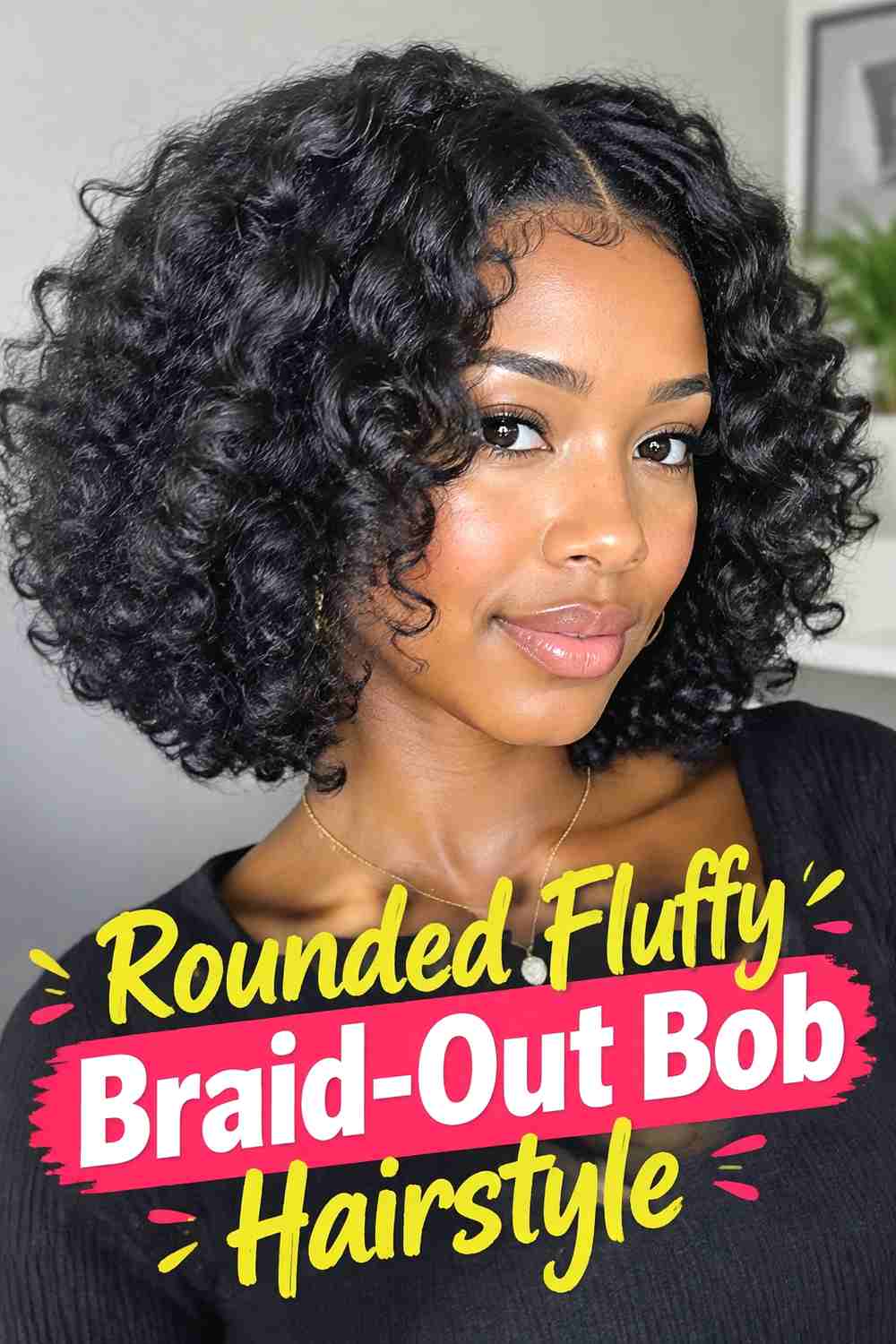
The Rounded Fluffy Braid-Out Bob Hairstyle creates an evenly full silhouette with soft texture distributed from the crown to the ends. The braid-out pattern remains visible, but gentle separation makes the hair look airy instead of tightly defined. A little root lifting helps complete the rounded outline without disturbing the textured ends. This version works especially well on chin-to-neck-length bobs with enough density to create fullness around the sides. Light internal layering can prevent the bottom from becoming too heavy. The finished effect should feel soft and balanced rather than perfectly spherical, with natural differences in wave size keeping the shape realistic and wearable.
Styling Notes
Separate the braid-out gradually and concentrate most root lifting through the crown and upper sides rather than pulling apart every textured section.
Why It Works
Evenly distributed volume makes the bob look full from multiple angles while preserving enough definition to show the braid-out pattern.
2. Center Part Fluffy Braid Out Bob Hairstyle
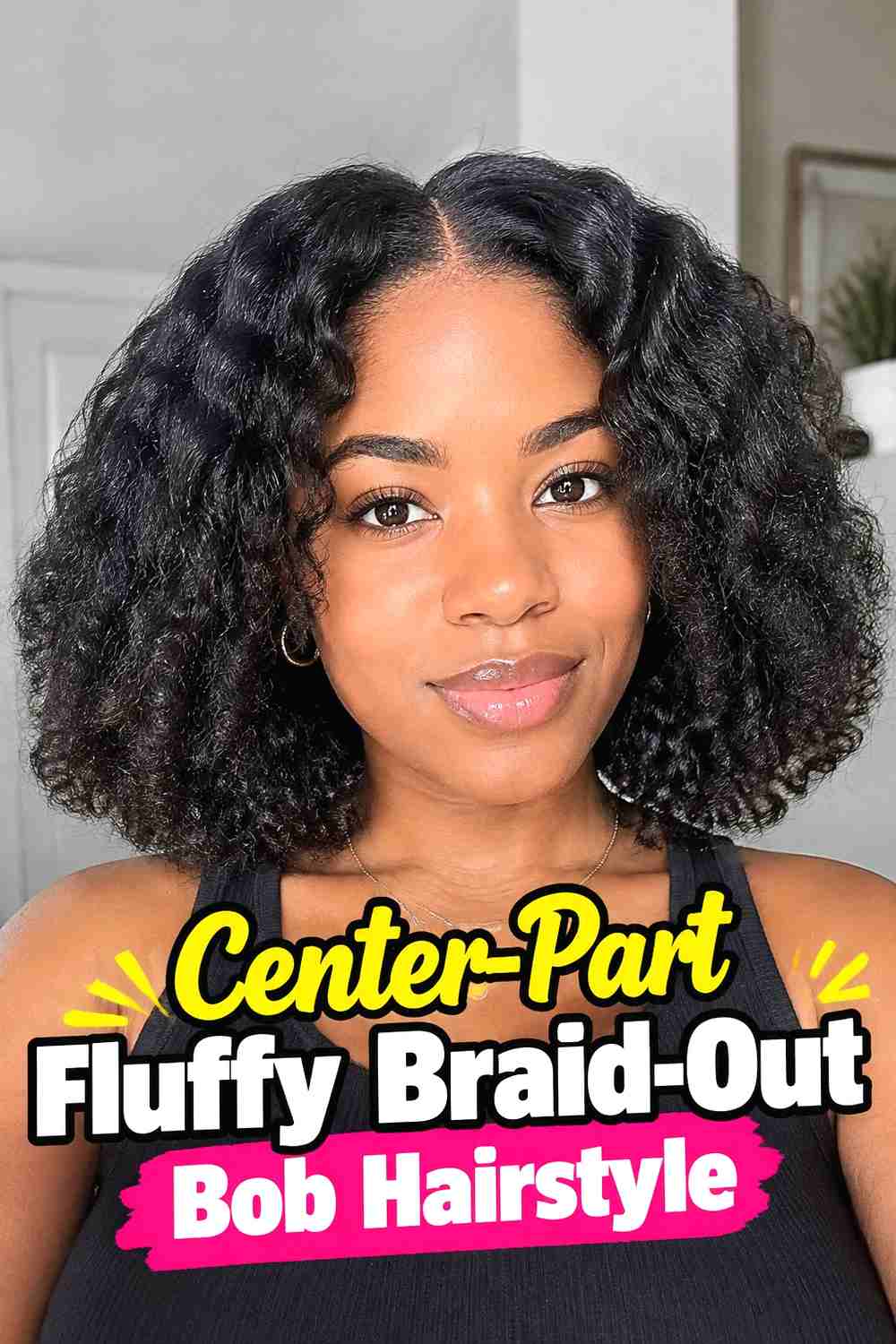
A center part brings symmetry to a fluffy braid-out bob and allows the textured volume to fall evenly on both sides. The braid pattern can stay more defined around the front while becoming softer through the mids and ends, creating a clean frame without sacrificing fullness. This style works beautifully on an even bob or one with light layers that prevent the lower half from feeling too dense. Because the part is visually strong, the surrounding texture looks best when it remains soft and slightly irregular rather than overly sculpted. Moderate root volume on both sides helps keep the center from appearing flat while preserving the balanced shape.
Best For
This look suits anyone who prefers a neat, balanced part with texture that feels relaxed rather than heavily separated.
Pro Tip
Fluff each side gradually and compare the overall volume before adding more lift so the silhouette stays visually balanced.
3. Deep Side Part Braid Out Bob Hairstyle
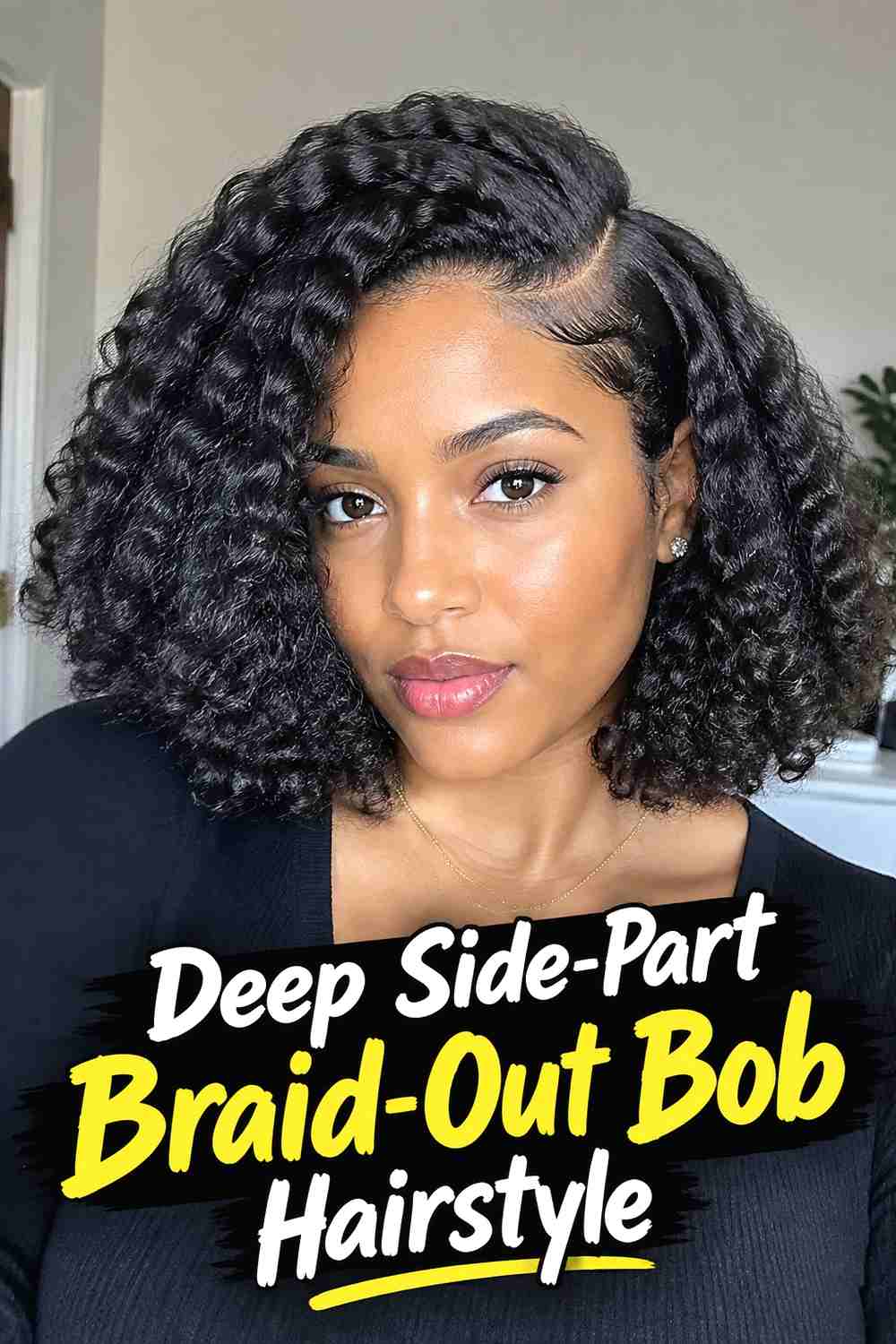
A deep side part gives a braid-out bob more movement by shifting most of the volume toward one side. The fuller section can sweep across the top before falling into soft textured waves, while the lighter side stays closer to the head. This creates an asymmetrical effect without changing the haircut itself. The look works especially well when the front has enough length to move easily away from the part. Keeping several braid-out sections intact near the ends adds visible definition, while gentle root lifting around the heavier side builds fullness. The result feels dramatic enough for a polished look but remains wearable because the texture stays soft.
Styling Notes
Choose the part before fluffing so the braid-out naturally settles in the direction you plan to wear it.
Why It Works
Moving the visual weight to one side creates shape and lift without requiring extra layers or complicated styling.
4. Layered Fluffy Braid Out Bob Hairstyle
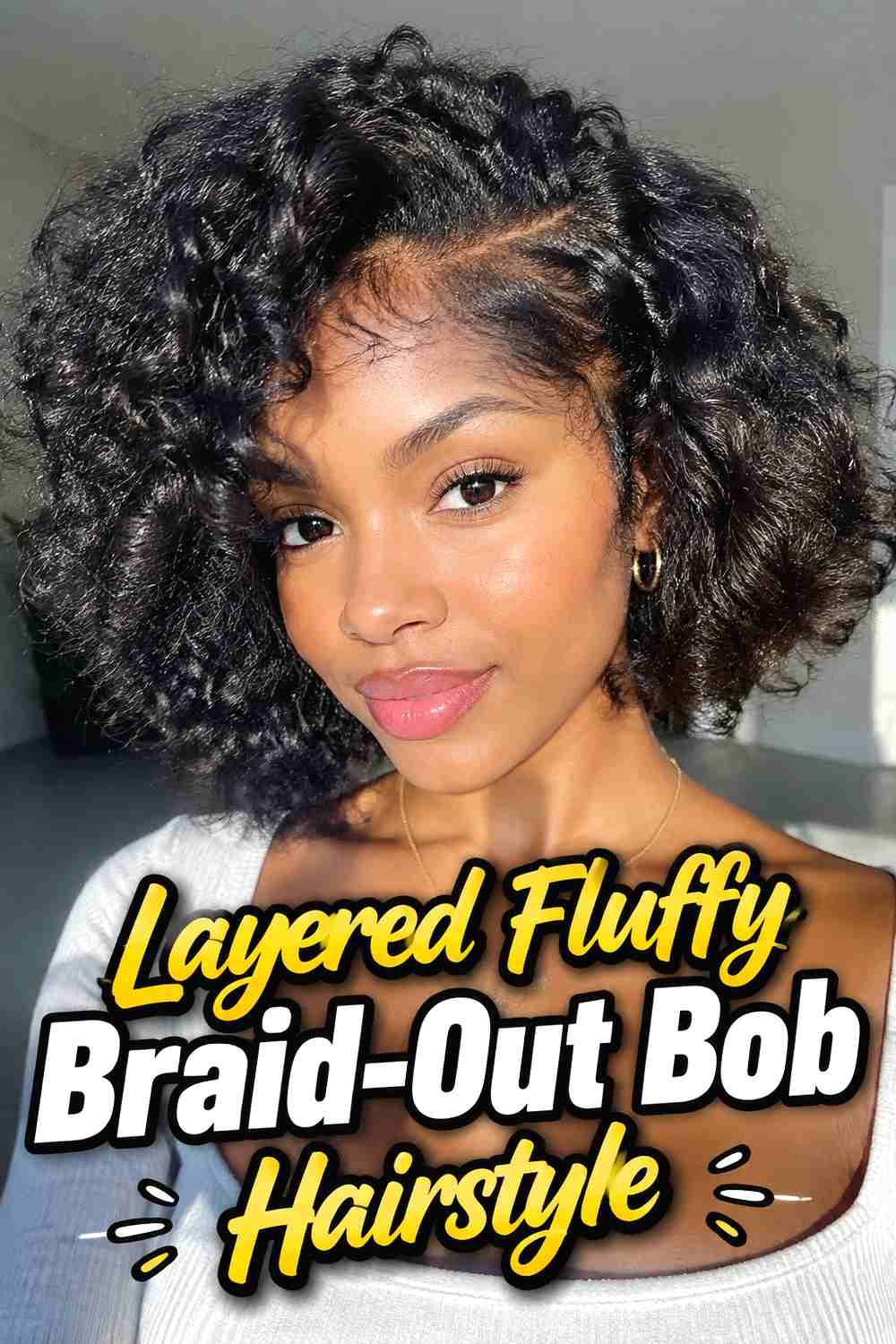
Layers give a fluffy braid-out bob more movement by allowing textured sections to sit at different heights instead of collecting along one heavy perimeter. Shorter pieces can lift naturally through the crown, while longer sections maintain the recognizable bob shape around the sides and bottom. This structure is especially useful for dense hair because it distributes fullness rather than concentrating it near the ends. Once the braid-out is fully set, selective separation can reveal the different layers without making the texture look fuzzy. Keeping some definition toward the perimeter helps anchor the hairstyle, while softer volume through the upper sections creates a lively, dimensional finish.
Hair Type & Length
Medium to dense hair and neck-to-shoulder-length bobs can benefit from layering when the goal is more movement and less heaviness at the bottom.
Pro Tip
Lift the shortest layers first so you can build crown volume without over-expanding the entire bob.
5. Chin Length Fluffy Braid Out Bob Hairstyle
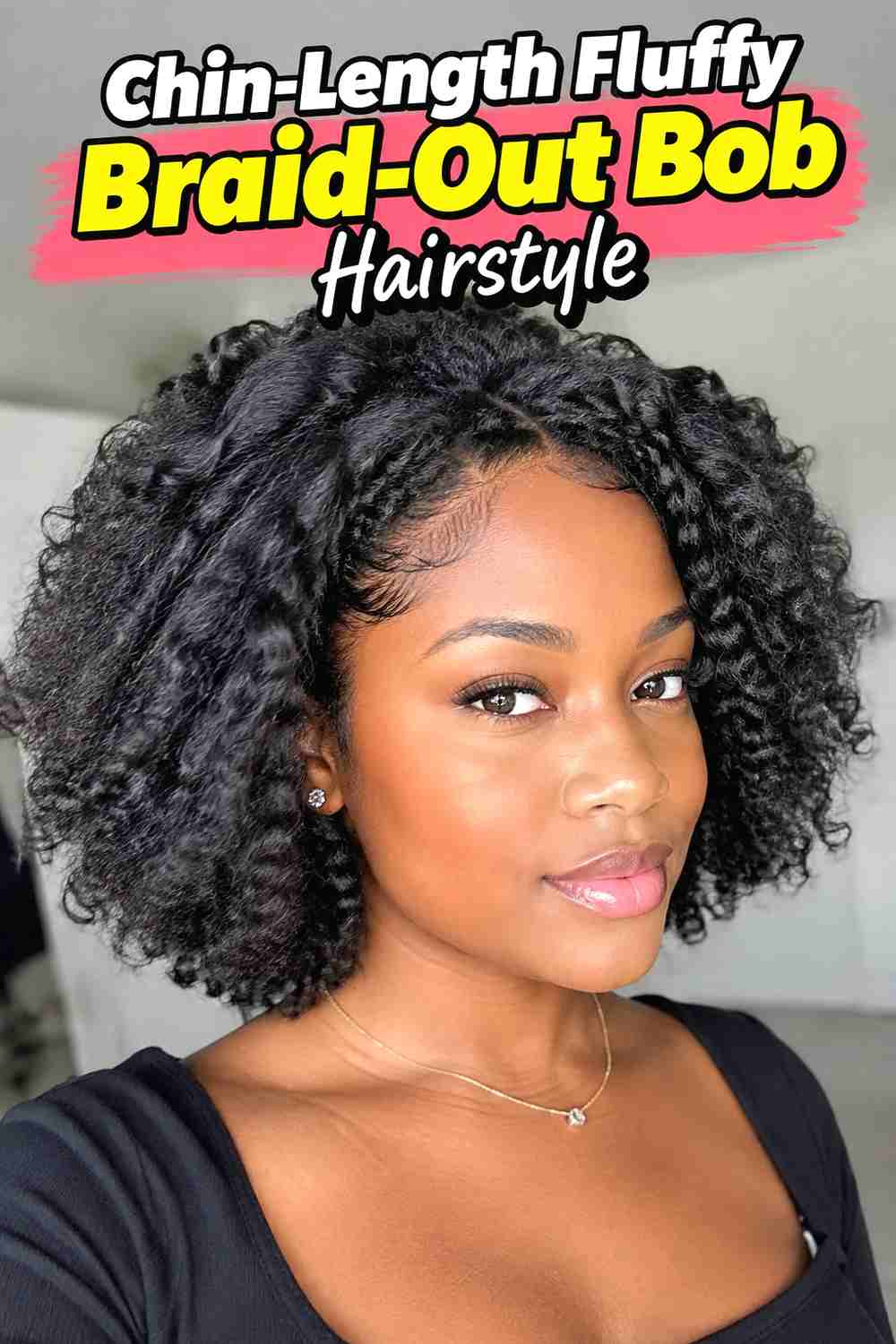
A chin-length braid-out bob creates a compact silhouette with plenty of visible texture around the jaw. Because the hair is shorter, the braid-out can spring upward and create fullness with relatively little root manipulation. Keeping the perimeter tidy helps preserve the classic bob shape, while separating a few sections prevents the texture from looking too precise. This length works well with medium-sized braids because they can create noticeable bends without making the pattern too tight. The front pieces may be directed slightly away from the face for openness or allowed to fall naturally toward the cheeks for a softer frame.
Wear & Maintenance
Shorter ends are highly visible, so gentle nighttime protection can help preserve both the texture and the clean perimeter.
Best For
Choose this version if you like a compact bob that still has obvious volume and movement.
6. Shoulder Grazing Braid Out Bob Hairstyle
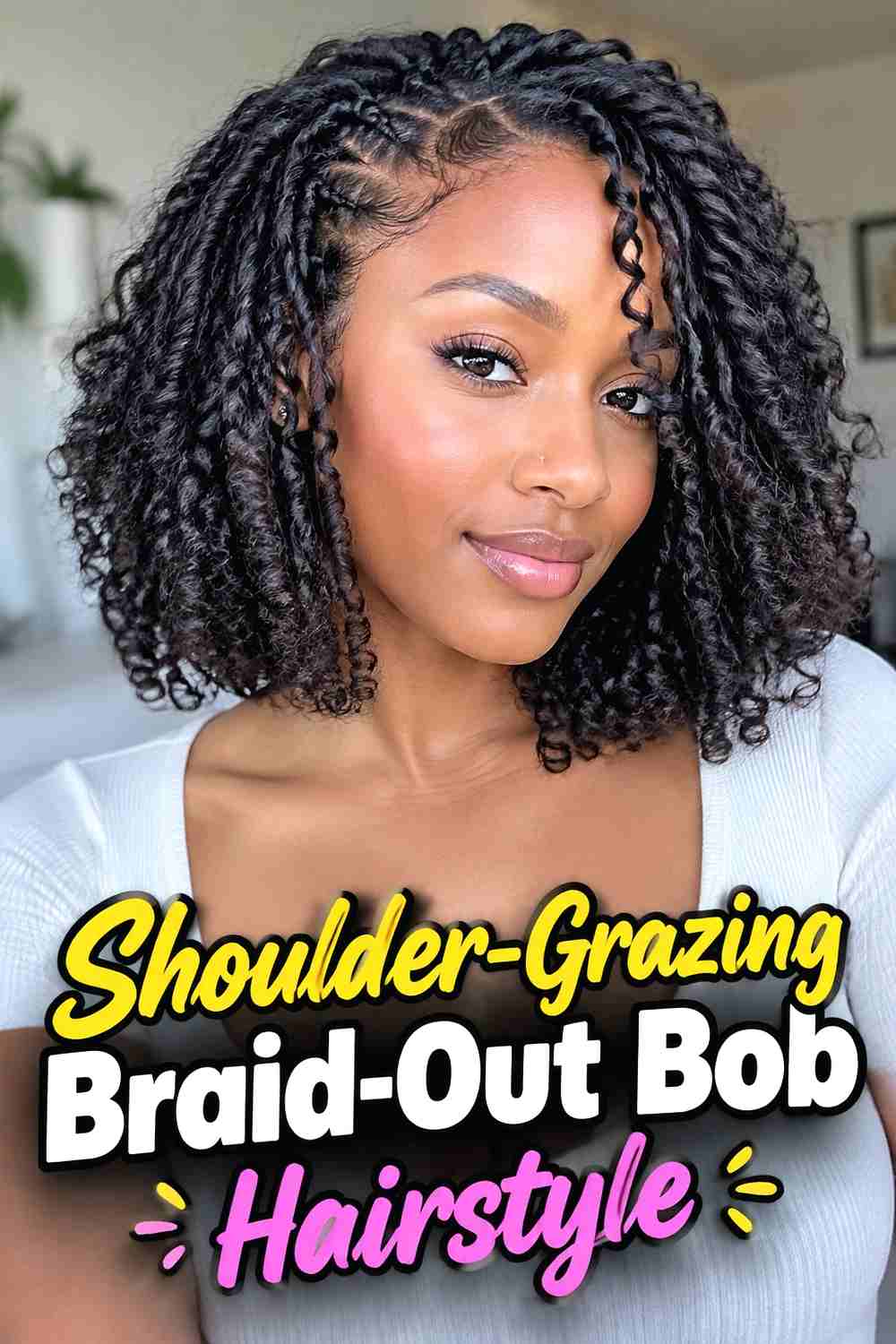
The Shoulder-Grazing Braid-Out Bob Hairstyle offers more swing than shorter versions while still keeping a recognizable bob silhouette. The extra length allows the braid-out pattern to stretch downward, creating elongated waves and curls rather than a very compact shape. Light layering can help the ends move freely and keep the bottom from becoming too dense. This length is especially versatile because it can support center parts, side parts, or loose face-framing sections without losing balance. Gentle separation through the mids adds softness, while keeping more definition at the ends gives the hair a finished appearance as it brushes the shoulders.
Why It Works
The added length lets the texture move more freely while preserving the volume and softness associated with a fluffy braid-out.
Wear & Maintenance
Be mindful of friction from collars and scarves, which can disturb definition around the lower perimeter.
7. Curly Fringe Braid Out Bob Hairstyle
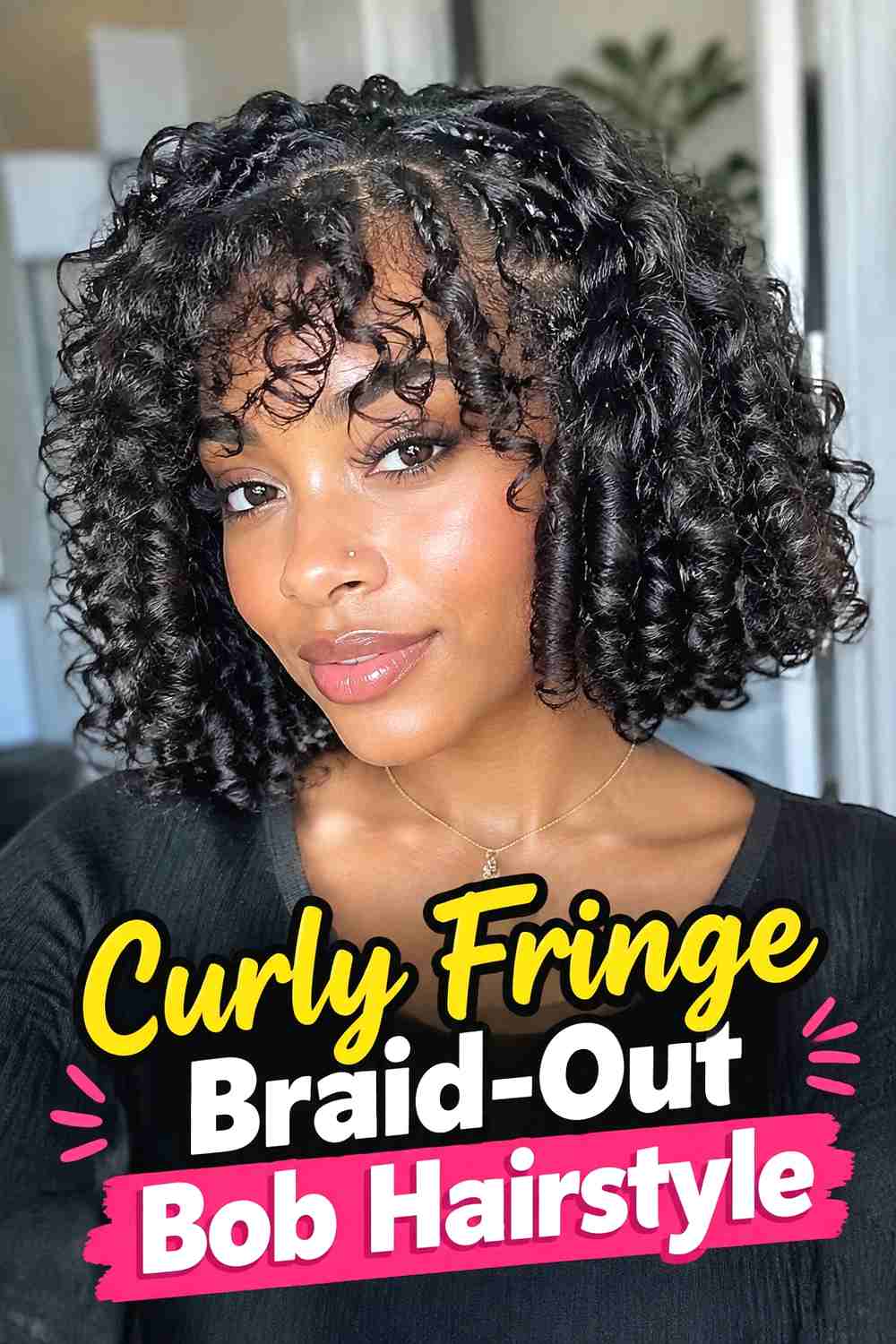
A textured fringe gives a fluffy braid-out bob extra personality by bringing soft waves and curls forward across the forehead. The fringe can be lightly separated for an airy finish while the rest of the bob maintains more substantial volume through the sides and crown. This look works best when the front is already cut or shaped shorter, allowing it to settle naturally without constant pulling. Because braid-outs can shrink as they fully dry, the fringe should be judged in its finished state rather than while still damp. Keeping the bangs slightly irregular usually looks more natural than arranging every textured piece at exactly the same length.
Styling Notes
Use smaller braid sections at the front if you want the fringe to show more detailed texture than the rest of the bob.
Pro Tip
Fluff the bangs with your fingertips rather than a comb so you can control how much definition remains.
8. Side Swept Fluffy Braid Out Bob Hairstyle
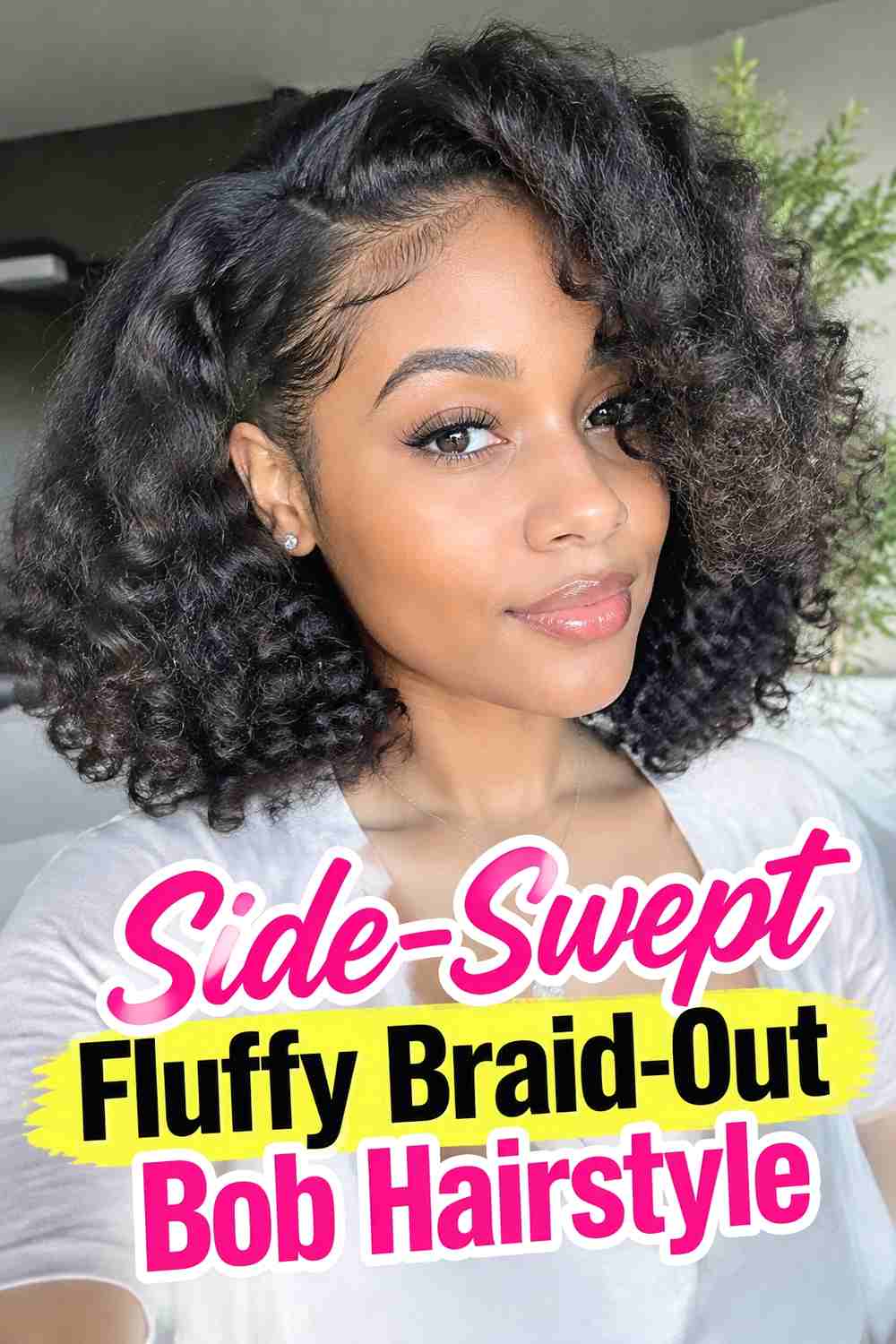
A side-swept braid-out bob uses directional styling to create a softer alternative to a sharply defined side part. The front texture moves diagonally across the forehead and blends into a fuller section along one side, while the opposite side stays slightly flatter. This works especially well on bobs with longer front layers because those pieces have enough length to sweep naturally. The braid-out should remain flexible rather than overly stiff so the hair can settle into the desired direction. A little crown volume prevents the top from looking flat, while carefully separated ends maintain enough pattern to distinguish the look from a simple blown-out bob.
Best For
This style works well when you want an off-center shape without committing to a precise, visible part line.
Styling Notes
Direct the front sections while separating them so they naturally fall toward the side you intend to wear them.
9. Face Framing Braid Out Bob Hairstyle
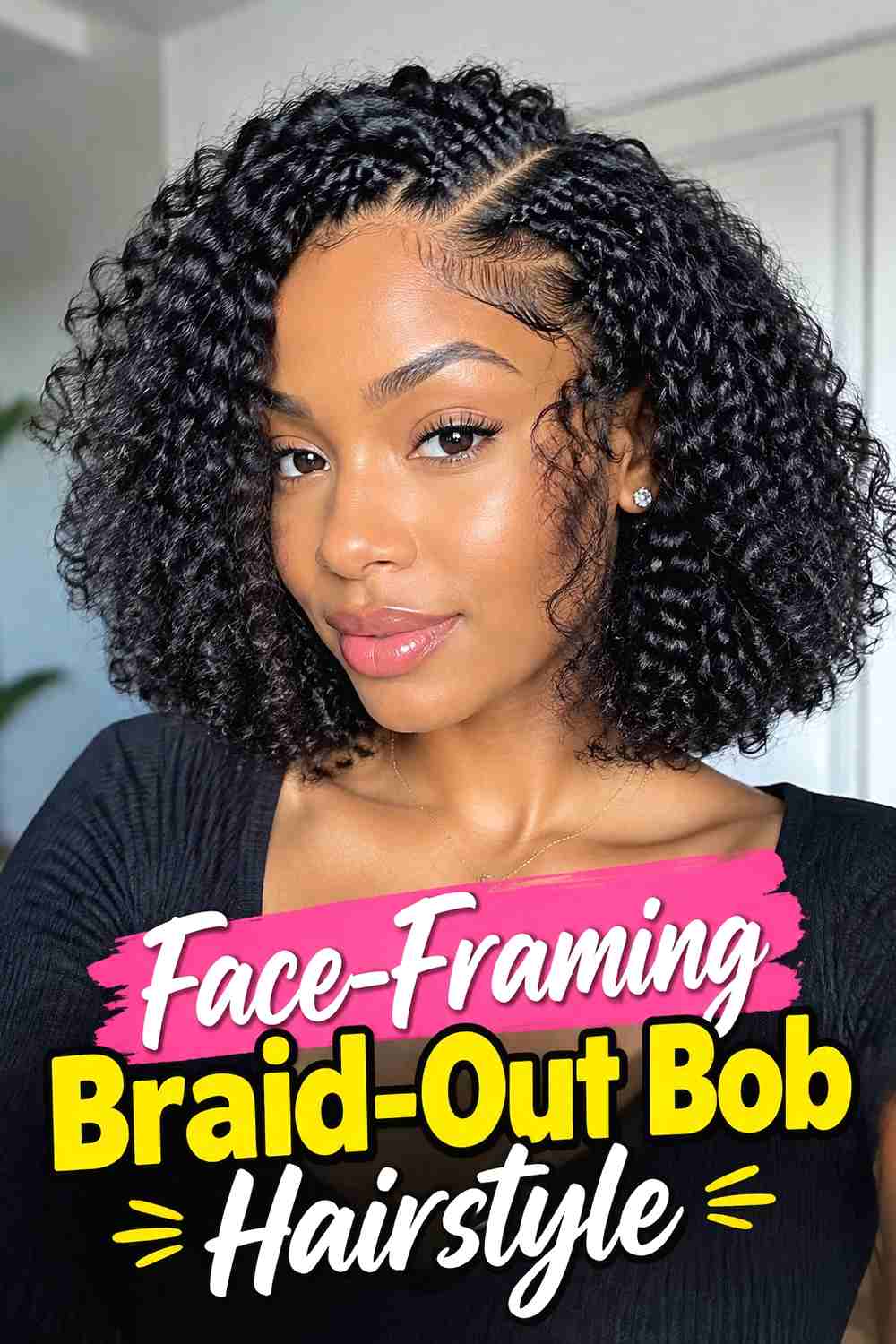
Face-framing layers make a fluffy braid-out bob feel more detailed around the front without adding a full fringe. Shorter textured pieces can sit near the cheekbones or jaw, while longer sections blend into the bob perimeter. The braid-out pattern gives these layers visible bends and movement, making the framing appear softer than a straight cut. A moderate amount of separation helps the shorter pieces stand out while keeping them connected to the rest of the hairstyle. This version is particularly effective when the back and sides remain relatively simple, allowing the front layers to become the main feature without overwhelming the compact bob silhouette.
Hair Type & Length
Chin-to-shoulder-length bobs with existing face-framing layers are especially suited to this look.
Why It Works
Shorter front pieces break up the perimeter and add movement while the braid-out texture keeps the transition soft.
10. Tapered Nape Braid Out Bob Hairstyle
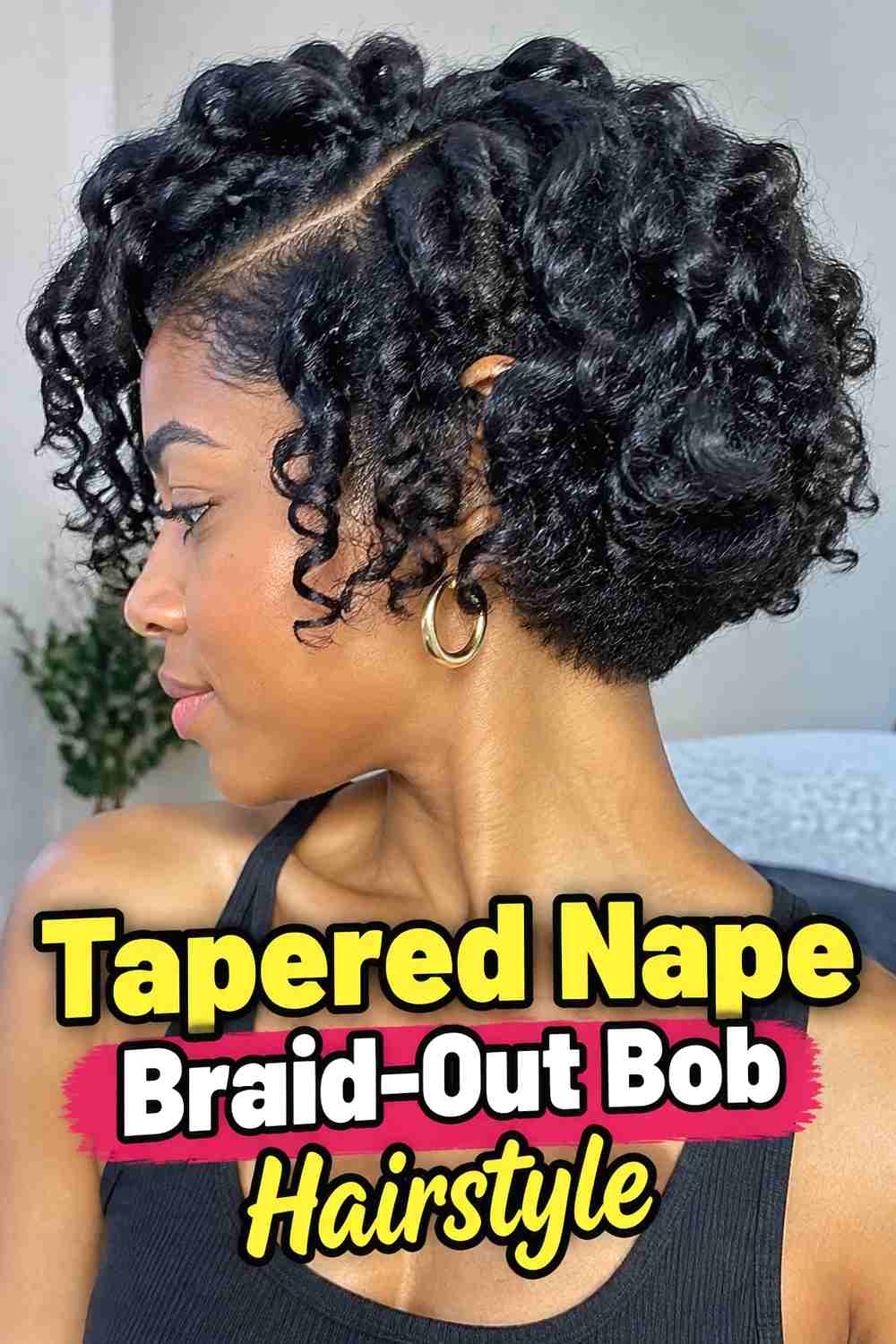
A tapered nape removes some weight from the back of a fluffy braid-out bob while leaving more length and texture through the crown and sides. From the front, the style still appears full, but the back has a cleaner, lighter shape that follows the neckline. This structure can be especially useful for dense hair that becomes bulky at the base of a traditional bob. The braid-out texture above the taper creates contrast between soft volume and a more controlled lower section. Keeping the transition gradual is important so the back feels connected rather than sharply disconnected from the rest of the hairstyle.
Why It Works
Reducing volume near the neckline allows the upper braid-out texture to sit more freely and gives the bob a cleaner back profile.
Wear & Maintenance
Regular shaping may be useful if you want the tapered area to remain clearly defined as the hair grows.
11. Voluminous Crown Braid Out Bob Hairstyle
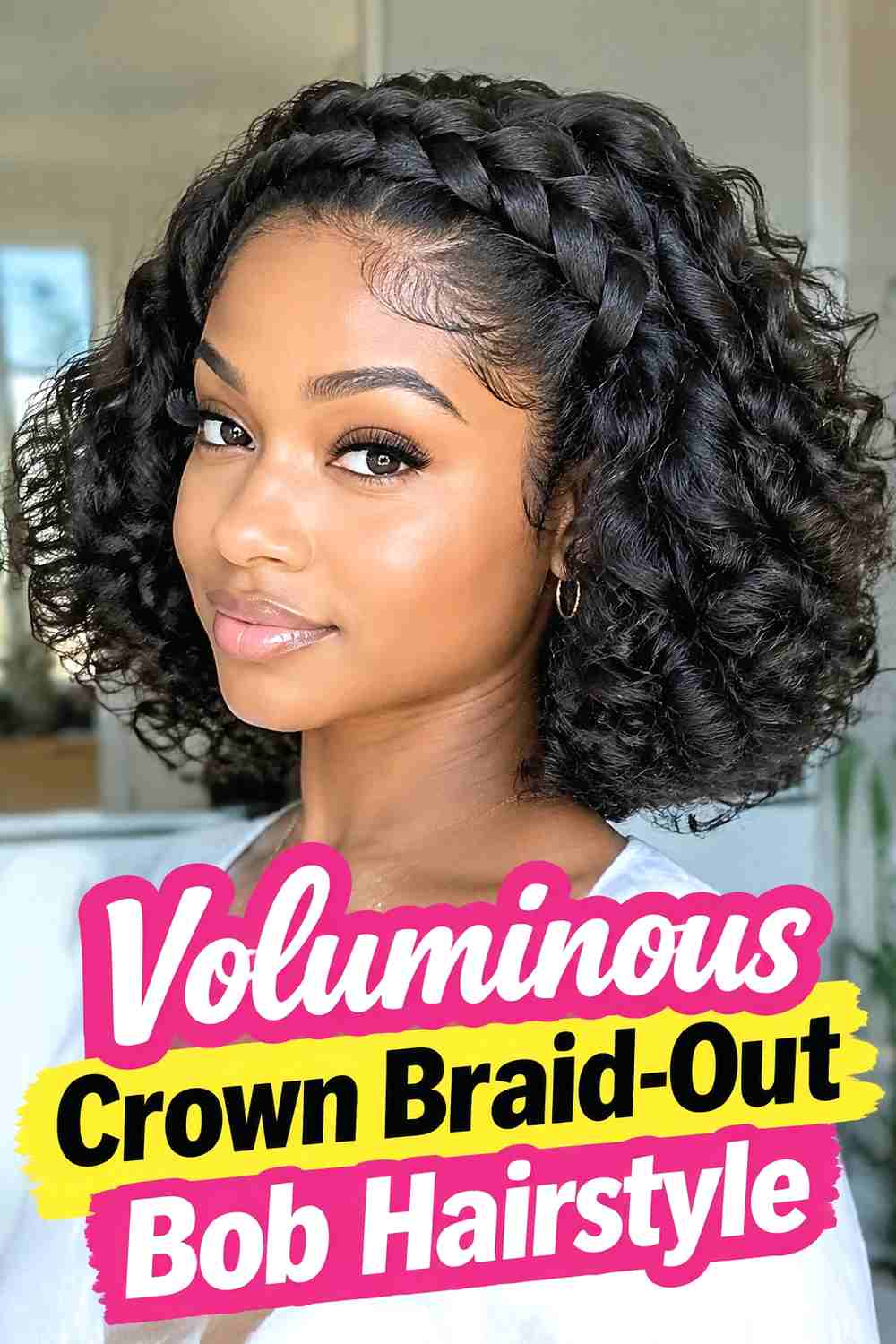
This version concentrates the fluffiest texture around the crown while keeping the lower sections more defined. Root lifting at the top creates height, and shorter layers can help support the elevated shape without requiring excessive manipulation. The sides remain full enough to connect with the crown, but the ends retain visible braid-out bends so the hairstyle still feels structured. This approach works particularly well on bobs that tend to become flat at the top after sleeping or as the style ages. By focusing the volume strategically rather than expanding every section equally, the finished silhouette gains dimension without becoming excessively wide through the lower half.
Styling Notes
Use your fingertips or a wide pick only at the roots around the crown, leaving the ends largely untouched.
Best For
Choose this look when you want height and fullness without losing the bob’s textured perimeter.
12. Softly Stretched Braid Out Bob Hairstyle
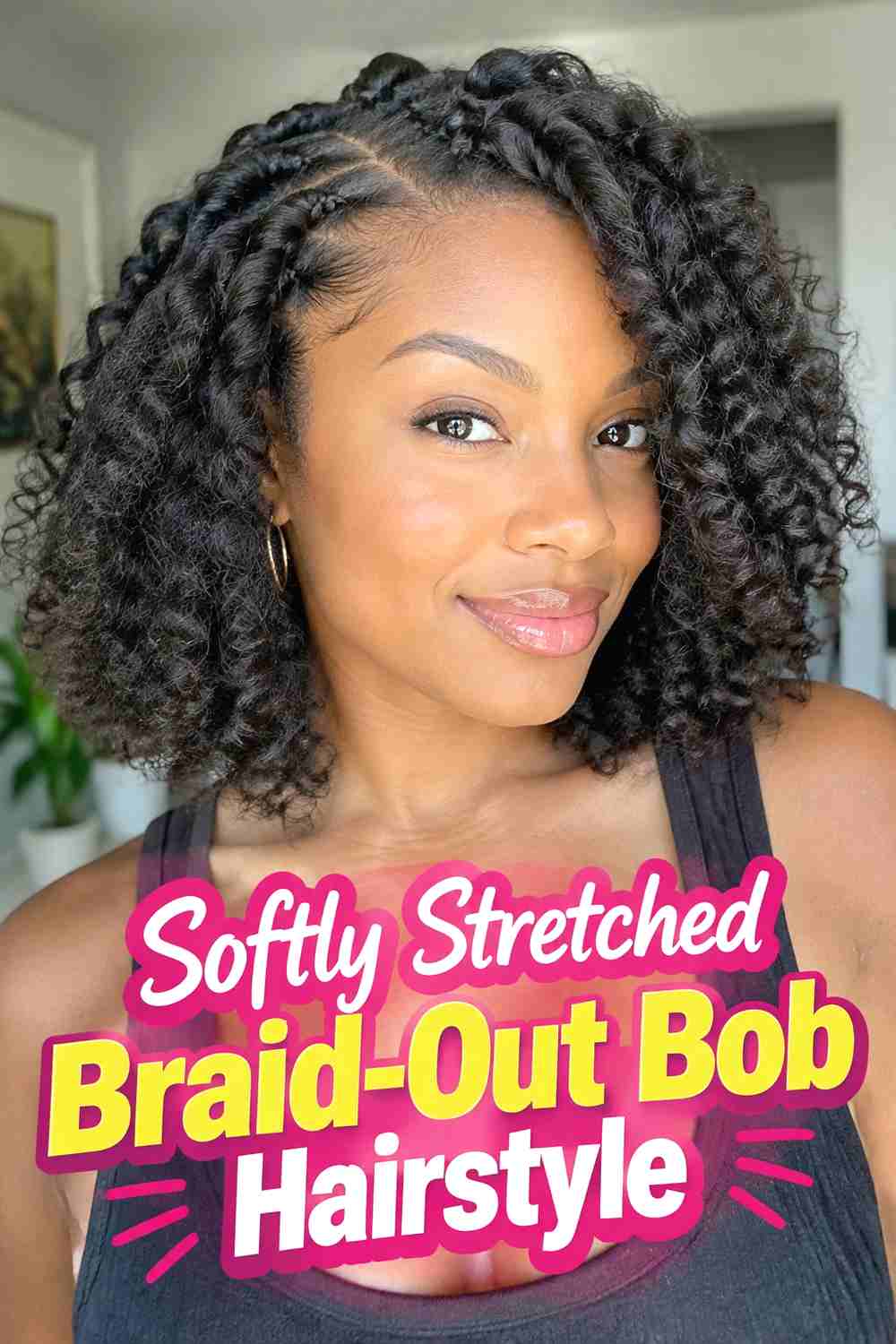
A softly stretched braid-out bob shows more length while keeping the wave pattern visible. Instead of allowing the hair to shrink into its most compact shape, the roots and mids are gently elongated so the bob falls closer to the neck or shoulders. The ends can remain more defined, creating an attractive contrast between stretched volume and textured finishing. This variation works well when you want a narrower silhouette or prefer to show more of your actual length. The stretching should remain subtle enough that the braid-out still looks textured rather than blown straight, with natural fullness and movement retained throughout the hairstyle.
Why It Works
Gentle elongation reduces some horizontal volume while allowing the braid-out pattern to remain visible through the lengths.
Wear & Maintenance
Moisture and humidity can encourage the hair to contract again, so expect the silhouette to change naturally over time.
13. Defined End Fluffy Braid Out Bob Hairstyle
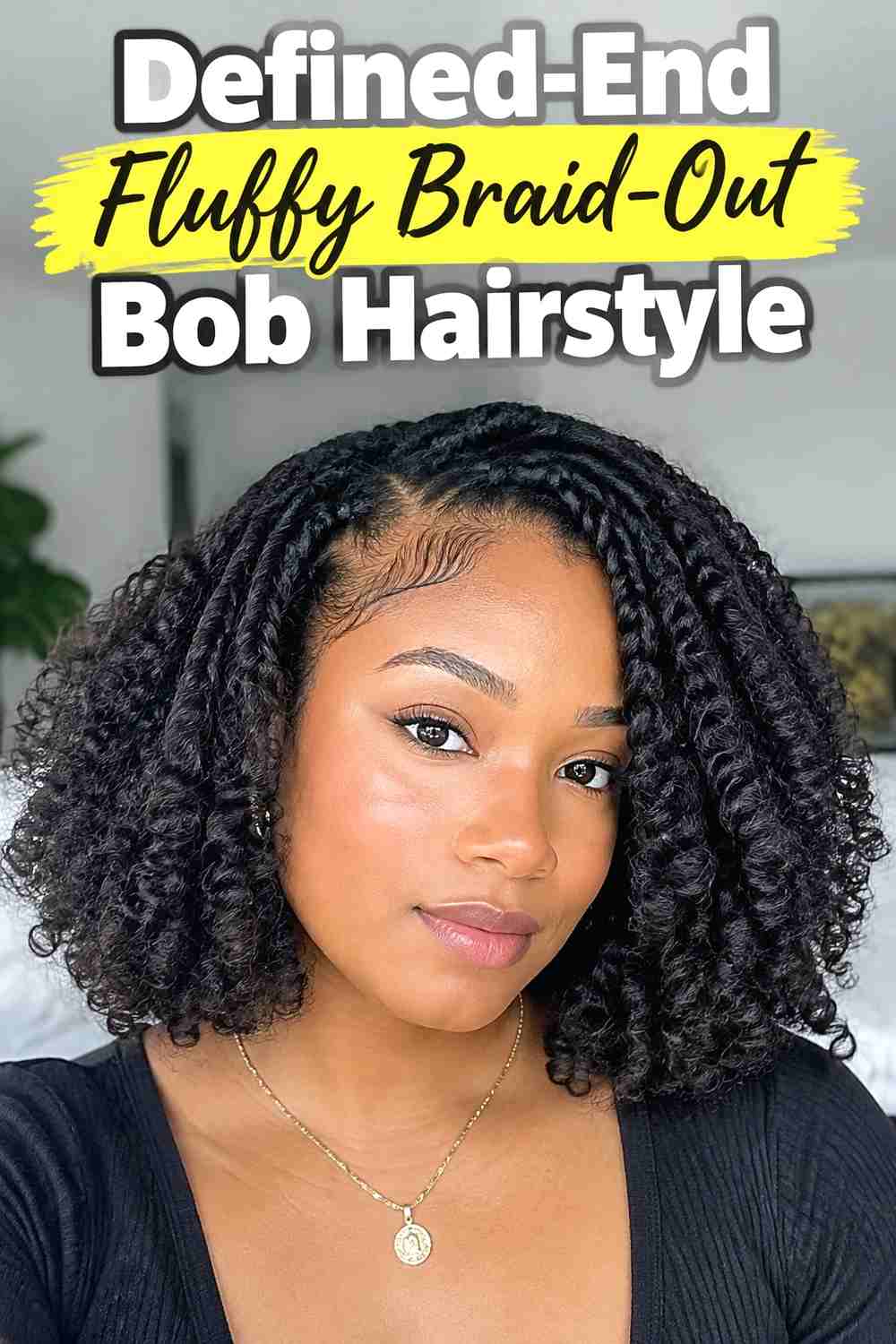
The Defined-End Fluffy Braid-Out Bob Hairstyle combines airy roots and mids with noticeably more structured texture at the ends. The upper sections are separated enough to create volume, while the final few inches retain clearer bends or curls from the braid set. This balance keeps the bob from appearing overly fuzzy and gives the perimeter a deliberate finish. It works especially well on blunt or lightly layered cuts where the ends are an important part of the silhouette. The contrast is subtle but effective: fullness makes the style feel relaxed, while the defined ends give it polish and prevent the overall shape from becoming visually shapeless.
Styling Notes
Stop separating sections before reaching the ends, or gently re-twist individual tips that lose too much definition.
Why It Works
A structured perimeter provides visual control while the upper hair remains soft and voluminous.
14. Tousled Fluffy Braid Out Bob Hairstyle
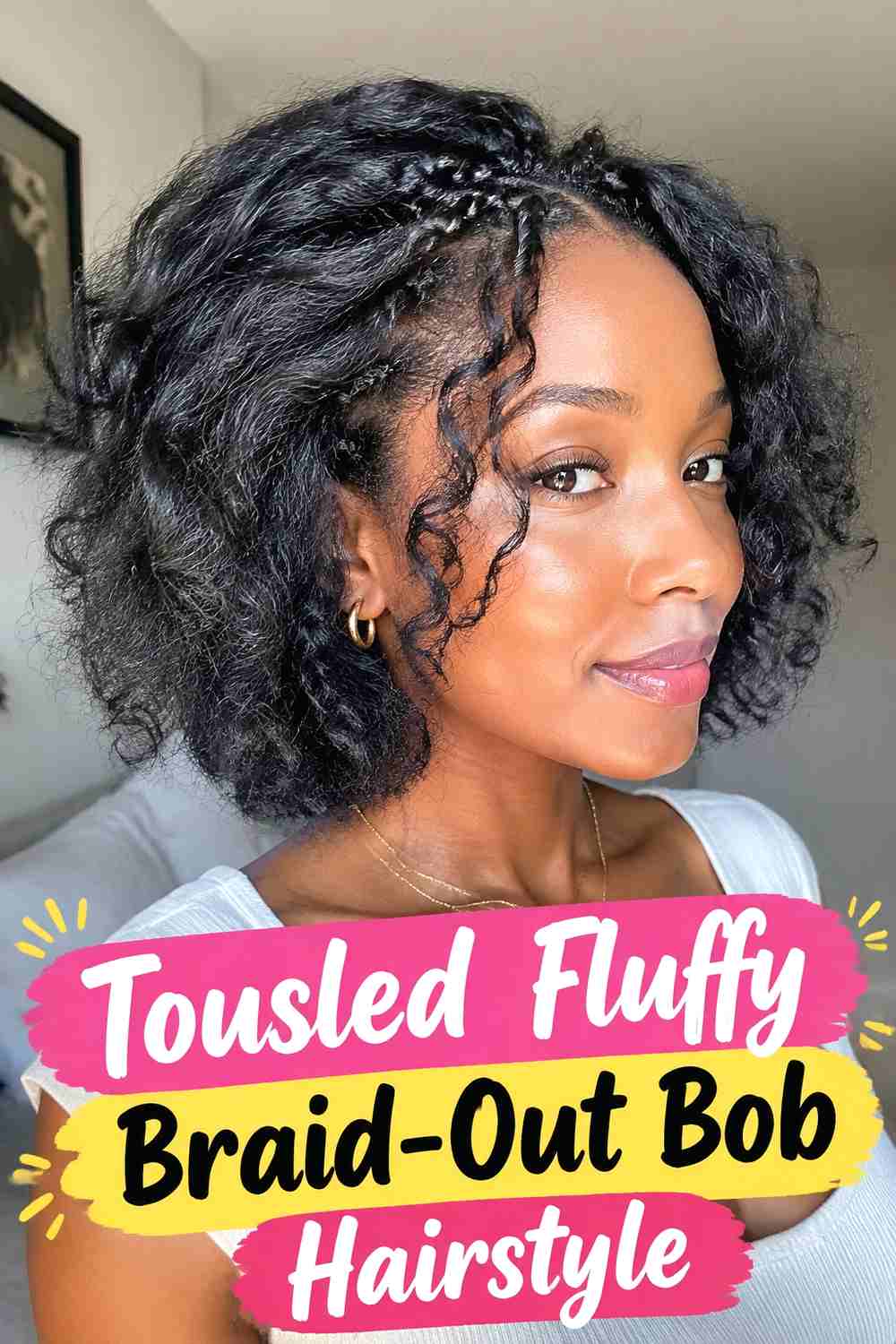
A tousled braid-out bob embraces slight irregularity for a relaxed, lived-in finish. Some sections remain visibly defined, while others are separated into softer waves and fluffy texture. The hair does not need a perfectly even part or symmetrical shape; instead, the movement comes from allowing the braid-out to fall naturally after gentle manipulation. Light layering can enhance the effect by helping different pieces sit at varied heights. The key is maintaining enough deliberate shape around the perimeter so the style still reads as a bob. Too much separation can erase the braid-out pattern, so a few intact textured sections should remain throughout the hairstyle.
Best For
This look suits anyone who prefers a casual textured finish rather than a highly controlled or uniform braid-out.
Pro Tip
Stop fluffing before the texture looks completely uniform; small differences in definition create the tousled effect.
15. Asymmetrical Braid Out Bob Hairstyle
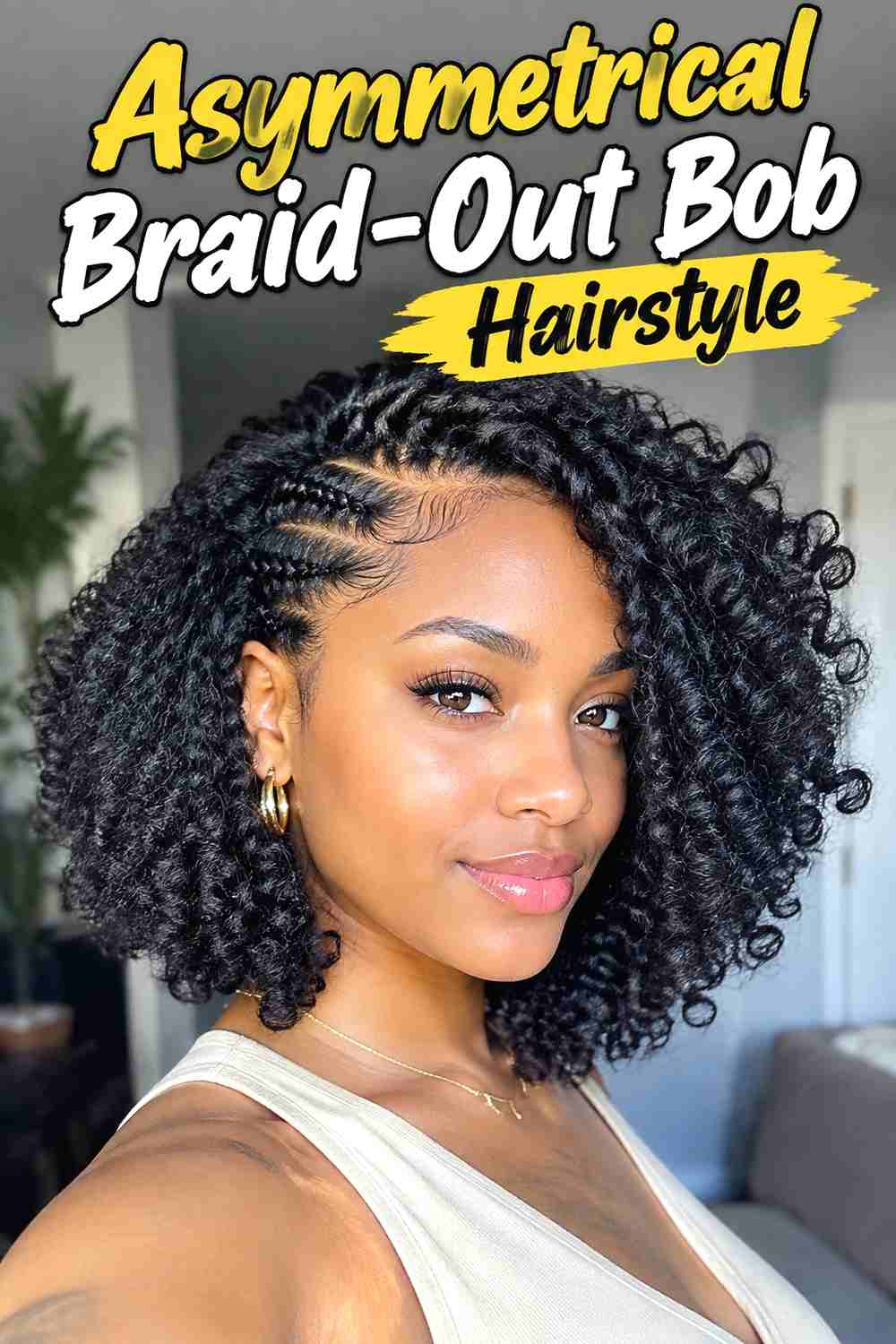
An asymmetrical braid-out bob creates visual interest by placing more length, fullness, or movement on one side. The difference can come from the haircut itself or from directional styling that pushes more texture toward one side. Soft braid-out definition helps the uneven silhouette feel fluid rather than severe. The longer side can fall closer to the jaw or shoulder, while the shorter side remains compact and slightly more controlled. This works especially well with a deep side part because the part reinforces the uneven distribution of volume. Keeping the ends defined enough to reveal the shape makes the asymmetry look intentional from both the front and side.
Styling Notes
Use the haircut’s natural length difference as your guide rather than trying to force both sides into the same amount of volume.
Best For
Choose this look when you want a more expressive bob silhouette with clear directional movement.
16. Blunt Shape Fluffy Braid Out Bob Hairstyle
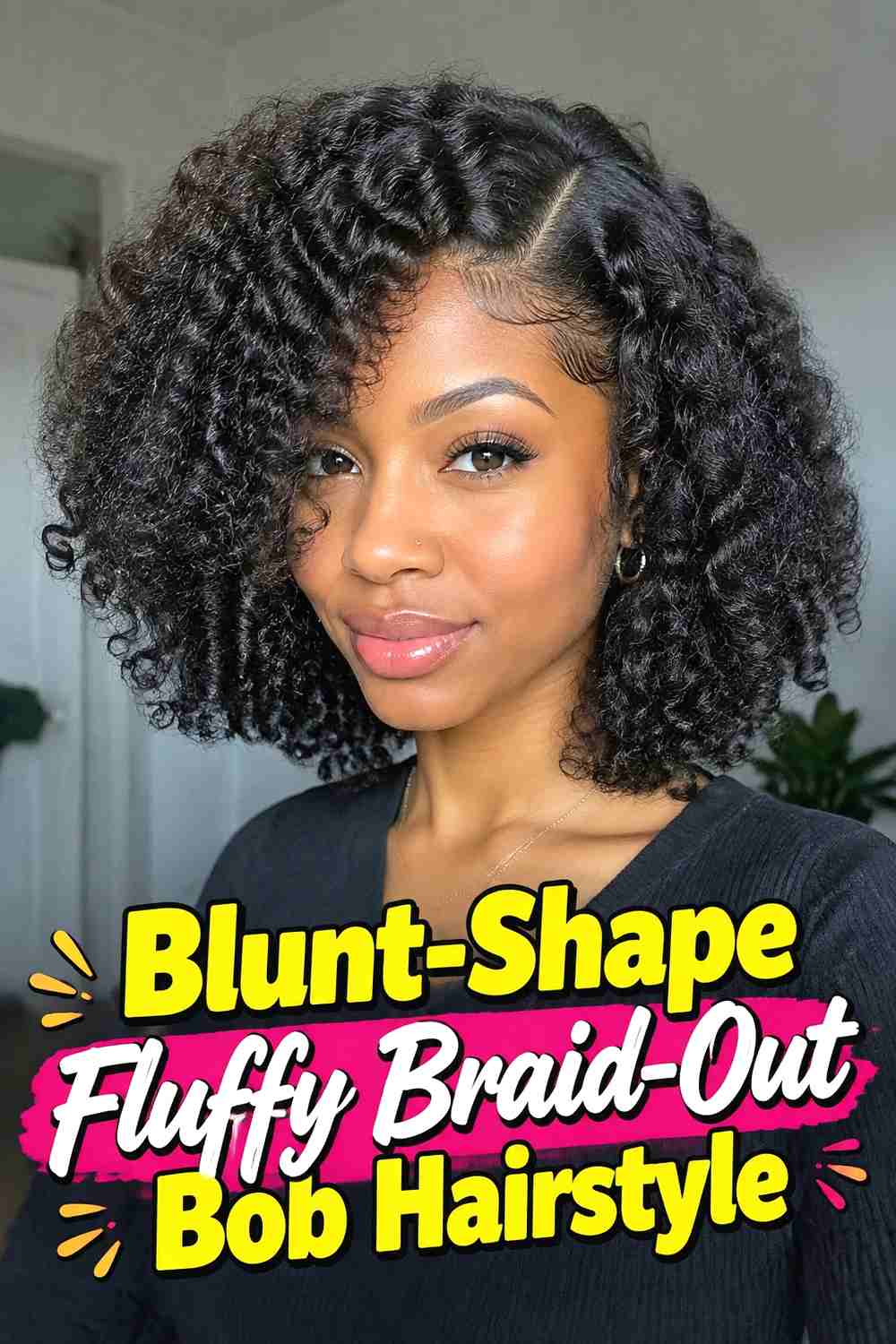
A blunt bob and fluffy braid-out create an appealing contrast between a strong perimeter and soft internal texture. The ends remain close to one overall length, giving the hairstyle a clear bottom line even though the braid-out adds volume and movement above it. Keeping the root area airy prevents the blunt shape from feeling too heavy, while moderate separation through the mids allows the textured pattern to expand. This style works particularly well at chin, neck, or collarbone length, where the perimeter can remain noticeable from the front. The finish should preserve enough definition near the ends so the clean bob outline does not disappear inside excessive fluff.
Why It Works
The crisp perimeter provides structure while the braid-out adds softness, movement, and dimensional texture through the body.
Pro Tip
Keep the ends relatively intact and focus most fluffing closer to the roots and mid-lengths.
17. Heart Shaped Braid Out Bob Hairstyle
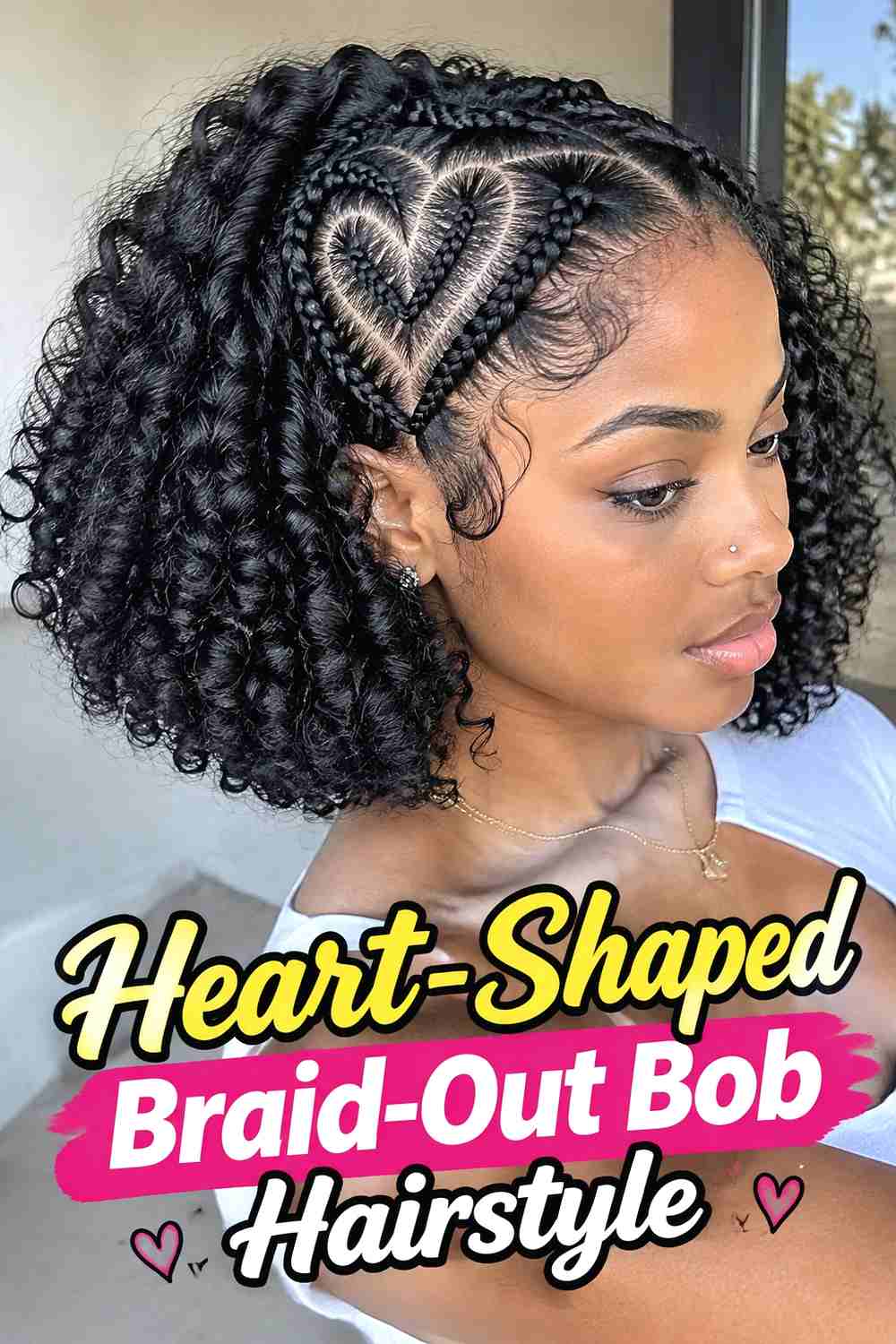
A heart-shaped braid-out bob builds fullness around the upper sides while tapering slightly toward the lower perimeter. This creates a gently sculpted silhouette with noticeable volume near the crown and temples. Layers are helpful because shorter sections can expand higher on the head while longer pieces keep the bottom controlled. The braid-out texture softens the shape so it does not look overly geometric, and selective separation helps reveal the layered structure. This variation works particularly well when you enjoy a fuller top but do not want excessive width around the jaw or neck. A center or subtle off-center part can both complement the silhouette.
Styling Notes
Concentrate root lifting through the upper sides and crown while leaving the lower sections less expanded.
Why It Works
Strategic volume creates a recognizable shape without sacrificing the natural movement of the braid-out texture.
18. Half Tucked Fluffy Braid Out Bob Hairstyle
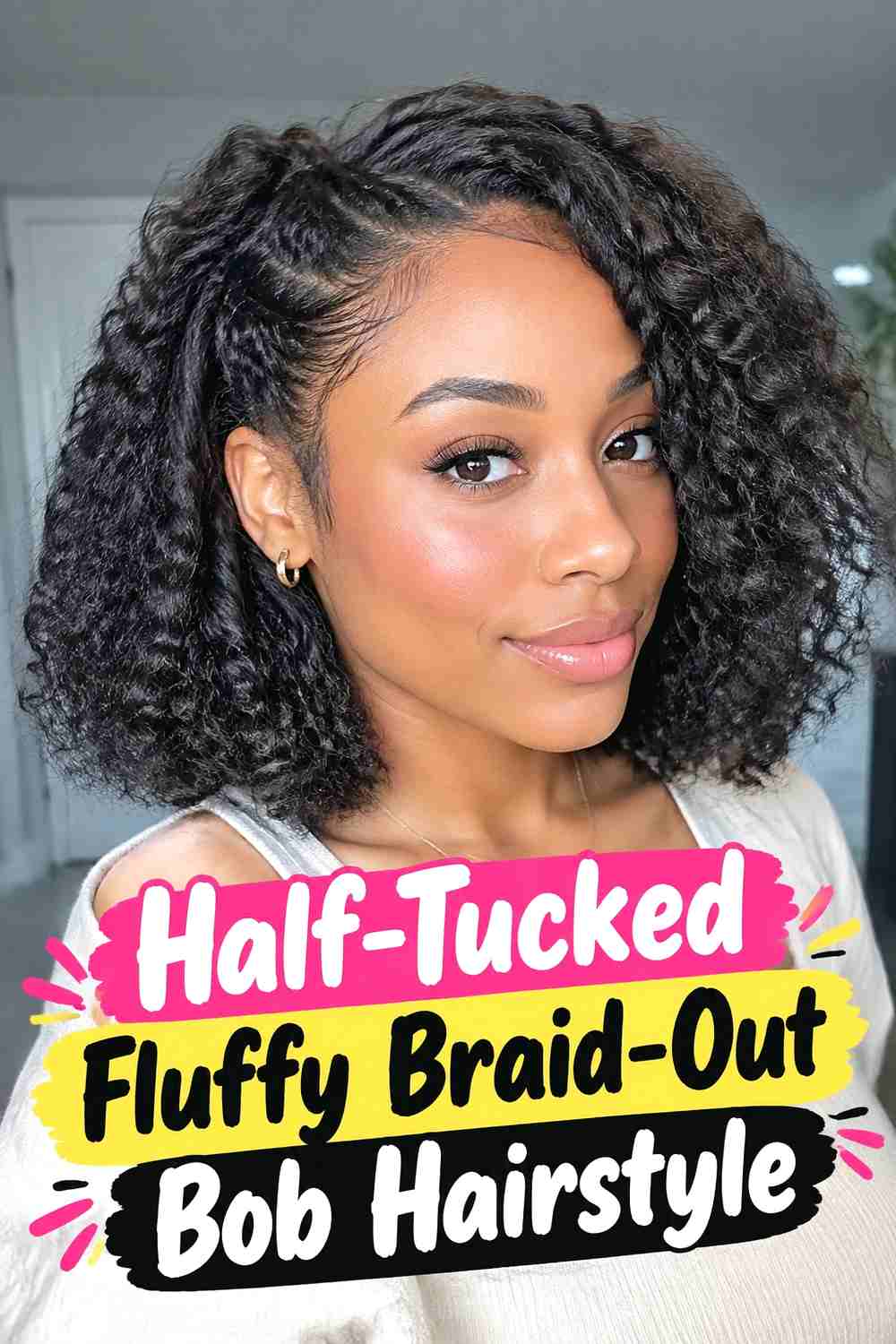
Tucking one side of a fluffy braid-out bob behind the ear creates an easy asymmetrical detail without changing the haircut. The untucked side remains full and textured, while the tucked section reveals more of the face and gives the silhouette a cleaner edge. This styling trick works particularly well with side parts or naturally uneven volume. Keeping the tuck loose helps avoid flattening the entire side, and a few textured pieces can remain near the temple for softness. Because the braid-out already provides fullness, the contrast between the tucked and untucked sides feels intentional rather than sparse.
Best For
This style is useful when you want a quick change in shape without restyling the entire braid-out.
Wear & Maintenance
Avoid repeatedly tucking and untucking the same section, which can disturb its definition and create unnecessary frizz.
19. Fluffy Bang Braid Out Bob Hairstyle
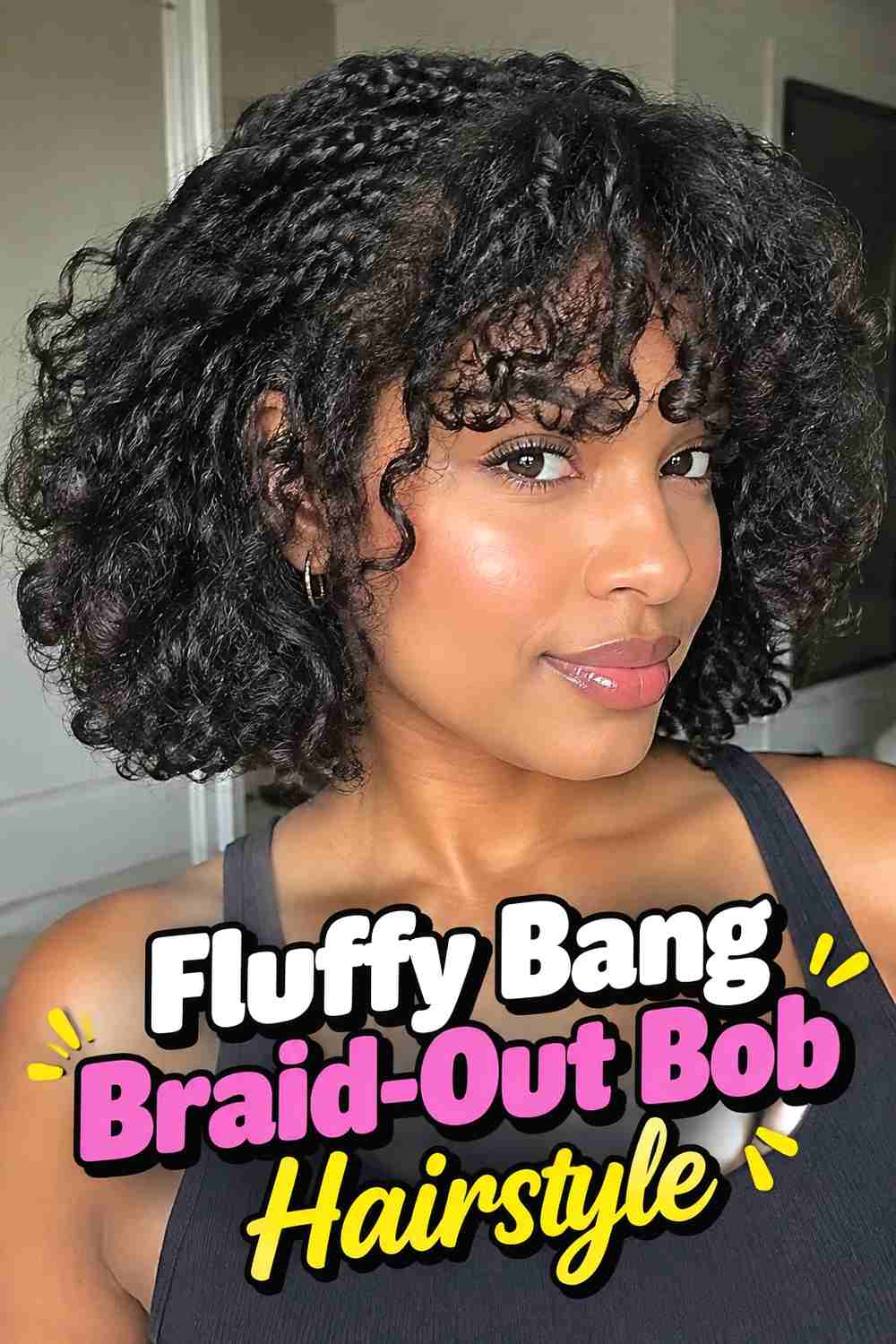
A fluffy bang gives the braid-out bob a softer, fuller front than a sharply defined curly fringe. Instead of keeping every front piece separated, the bangs are gently expanded so they form an airy textured curtain across the forehead. The rest of the bob can stay rounded or lightly layered to balance the additional fullness near the front. This works best when the bang area has enough length to shrink into the intended position once dry. Leaving a few visible bends within the fluffy texture keeps the fringe connected to the braid-out pattern rather than making it look completely brushed out.
Styling Notes
Separate the bang gradually and shape it with your fingertips so you can control both width and length.
Best For
Choose this version if you enjoy visible forehead coverage with a softer texture than individually defined curls.
20. Soft Halo Braid Out Bob Hairstyle
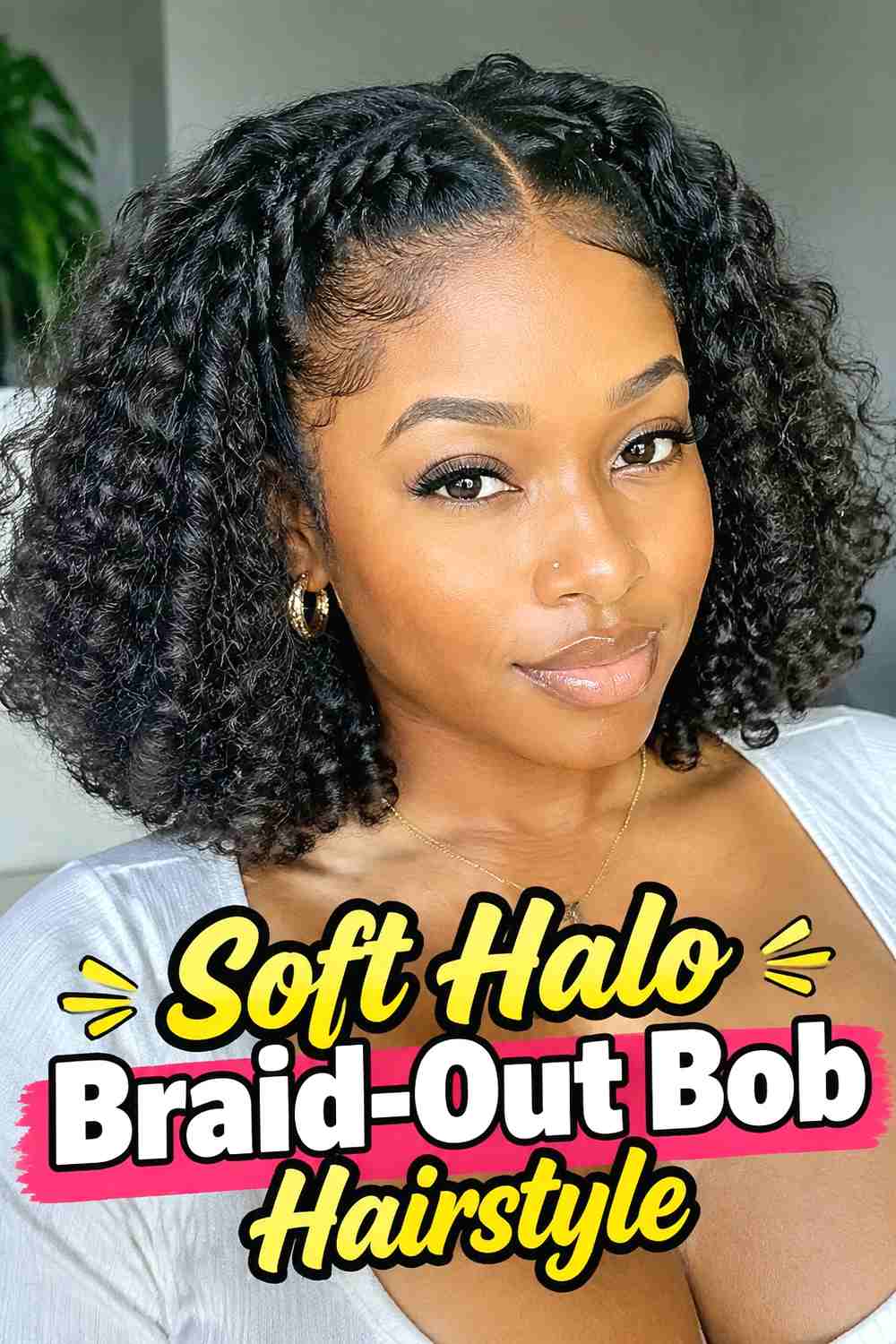
The Soft Halo Braid-Out Bob Hairstyle creates an airy cloud of texture around the head while retaining subtle braid-out definition throughout. Volume is distributed from the roots to the perimeter rather than concentrated in one area, producing a light, rounded outline with natural movement. The effect works best when the hair is separated carefully so individual bends remain visible within the overall fullness. Light layering can help the silhouette expand without becoming bottom-heavy, especially on dense hair. Rather than aiming for a perfectly smooth surface, allow a small amount of natural texture and flyaway movement to remain. The finished bob feels soft, dimensional, and intentionally full.
Why It Works
Uniformly distributed softness creates a full silhouette while scattered defined sections keep the hairstyle visually textured.
Pro Tip
Build volume slowly at the roots and stop before the bob loses the wave pattern that distinguishes a braid-out from fully fluffed hair.
How to Choose the Right Look
Start with length. Chin-length bobs create a compact, springy silhouette, while shoulder-grazing versions give the braid-out more room to stretch and move. If your hair shrinks significantly after drying, judge the finished bob by its dry length rather than the length you see while styling.
Next, think about density and layering. Dense hair may benefit from layered or tapered shapes that redistribute volume, while a blunt bob emphasizes the perimeter. For extra height, crown-focused volume works well; for a softer all-around silhouette, rounded or halo shapes spread fullness more evenly.
Your preferred amount of definition matters too. Defined-end styles preserve more braid pattern, while tousled, fluffy-bang, and halo versions use greater separation. A softly stretched braid-out is useful when you want more visible length and less width.
Finally, choose a part and front shape that fit your routine. Center parts feel balanced, deep side parts create stronger movement, and fringe or face-framing layers put more focus around the front. The most practical style is one you can maintain without excessive daily manipulation.
Final Thoughts
A fluffy braid-out bob can look polished, playful, soft, or dramatic depending on how you shape the volume and preserve the texture. Small changes in parting, layering, length, and separation can turn the same basic braid-out technique into a completely different bob silhouette.
Choose the version that complements your current cut and preferred level of definition, then fluff gradually so you can stop when the balance between softness and texture feels right.
FAQs
1. What is a fluffy braid-out bob?
A fluffy braid-out bob is a short-to-medium bob styled with a braid-out pattern that is gently separated and lifted to create softer volume while retaining visible waves or curls.
2. How do you make a braid-out bob look fuller?
Allow the braid-out to set completely, then gently separate selected sections and lift the roots with your fingertips or a wide pick without disturbing the ends too much.
3. How do you keep a fluffy braid-out from losing all its definition?
Separate gradually and leave some sections intact. Keeping more definition near the ends is an easy way to maintain a visible braid-out pattern.
4. Can a braid-out work on a chin-length bob?
Yes. Chin-length hair can create a compact, textured braid-out bob with plenty of volume, although the final length will depend on shrinkage and the tightness of the braid pattern.
5. Should you fluff a braid-out immediately after taking down the braids?
It is usually easier to control the result once the hair is completely set and dry. Start with minimal separation, then add more volume only where the silhouette needs it.
Save your favorite fluffy braid-out bob hairstyle ideas for your next textured look, and share the collection whenever you need fresh bob inspiration.