16 Stretch Headband Hairstyles for Winter
Stretch headbands add cozy polish to winter hair, giving waves, curls, buns, ponytails, and short cuts an easy finish that works with seasonal layers.
Winter hair often has to coexist with coats, scarves, sweaters, and hoods, which makes comfortable accessories especially useful. A stretch headband can gently control shorter pieces around the face while adding color, texture, or contrast without requiring complicated styling.
The best hairstyle depends on your hair length, natural texture, headband width, and usual outerwear. Low buns and ponytails keep bulk away from the crown, while curls and waves make the headband part of a softer silhouette. For winter practicality, look for a band that stays secure without excessive pressure and choose a hairstyle that still feels comfortable once your coat or hood is added.
Quick List
- Cozy Loose Waves Stretch Headband Hairstyle
- Sleek Low Ponytail Stretch Headband Hairstyle
- Curly Puff Stretch Headband Hairstyle
- Low Bun Stretch Headband Hairstyle
- Tucked Bob Stretch Headband Hairstyle
- Soft Blowout Stretch Headband Hairstyle
- Half Up Stretch Headband Hairstyle
- Natural Curls Stretch Headband Hairstyle
- Braided Low Bun Stretch Headband Hairstyle
- Messy Bun Stretch Headband Hairstyle
- Long Layers Stretch Headband Hairstyle
- Side Part Stretch Headband Hairstyle
- French Twist Stretch Headband Hairstyle
- Low Chignon Stretch Headband Hairstyle
- High Ponytail Stretch Headband Hairstyle
- Hood Friendly Stretch Headband Hairstyle
1. Cozy Loose Waves Stretch Headband Hairstyle
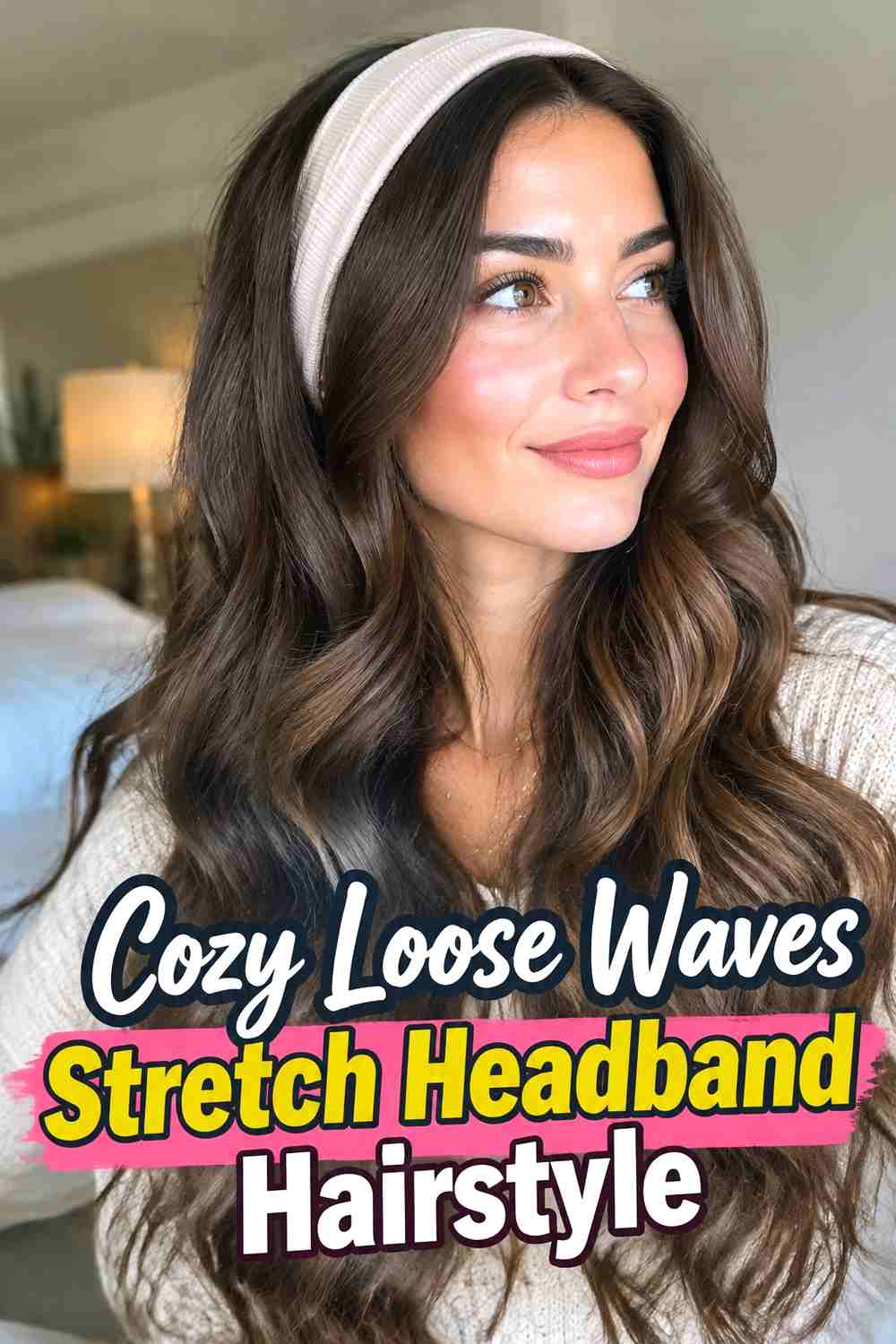
The Cozy Loose Waves Stretch Headband Hairstyle pairs soft movement with an accessory that keeps the front neat without flattening the rest of the hair. Create broad waves through the mid-lengths and ends, then position the stretch headband a little behind the hairline so the crown retains natural lift. Medium and long hair show the contrast especially well because the loose texture stays visible above sweaters and coat collars. Leave a few delicate pieces around the temples for softness, or sweep everything behind the band for a cleaner finish. A ribbed knit, velvet, or smooth fabric band can shift the mood from casual to polished while the basic hairstyle stays comfortably relaxed.
Styling Notes
Let the waves cool or set before putting on the headband so the accessory does not flatten fresh volume around the crown.
2. Sleek Low Ponytail Stretch Headband Hairstyle
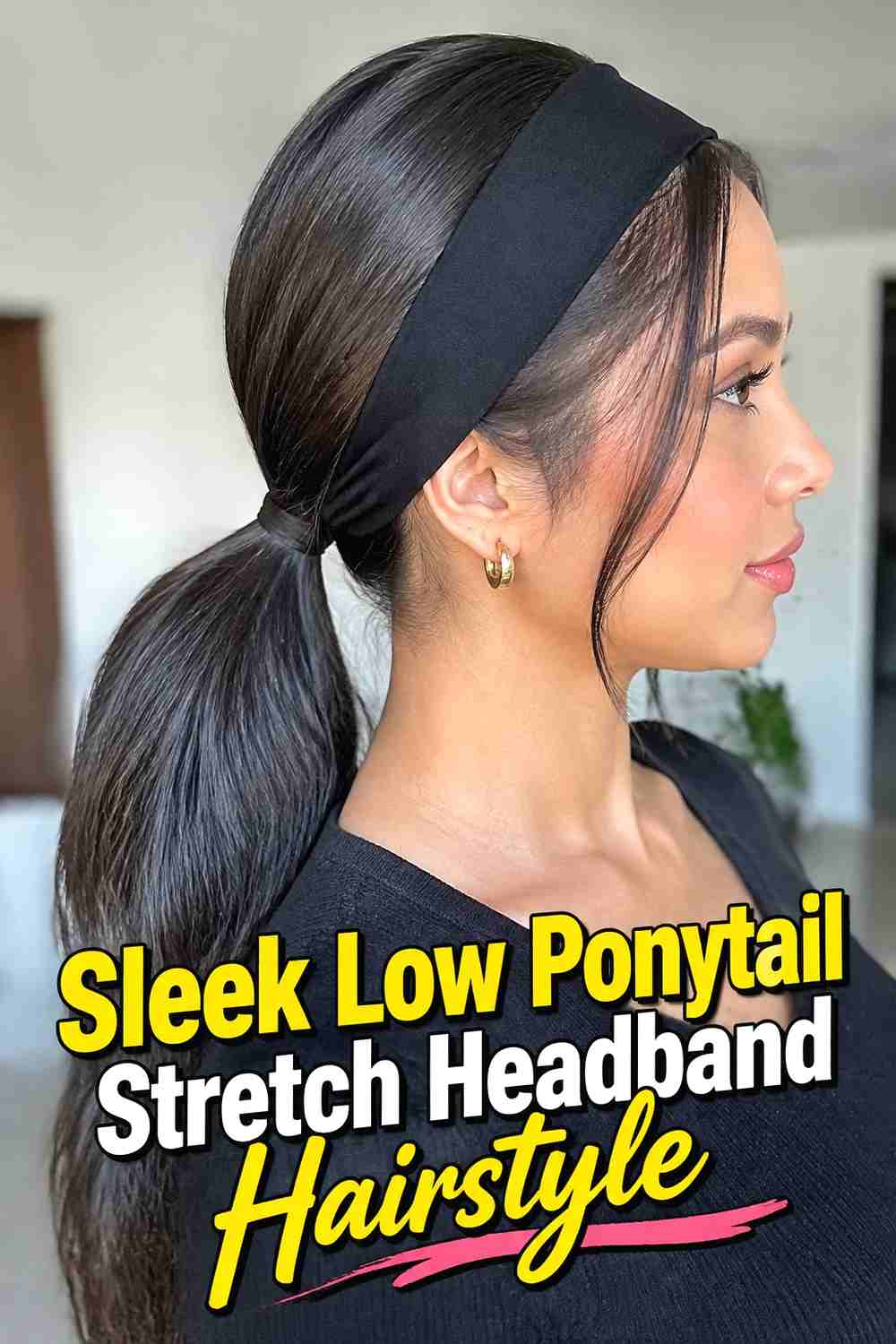
The Sleek Low Ponytail Stretch Headband Hairstyle is practical for winter because it keeps the lengths controlled and minimizes bulk beneath coats. Create a center or side part, smooth the crown, and gather the hair into a ponytail at the nape. Add the stretch headband across the front, positioning it so the part remains visible if desired. The ponytail can stay straight for a crisp finish or carry a gentle bend through the ends for more softness. Since the actual hold comes from the elastic at the nape, the headband can remain comfortably fitted instead of overly tight. This combination works especially well with turtlenecks and thick scarves because the hairstyle stays compact near the neckline.
Wear & Maintenance
Use the ponytail elastic for structure and treat the stretch band as a framing accessory rather than part of the ponytail’s support.
3. Curly Puff Stretch Headband Hairstyle
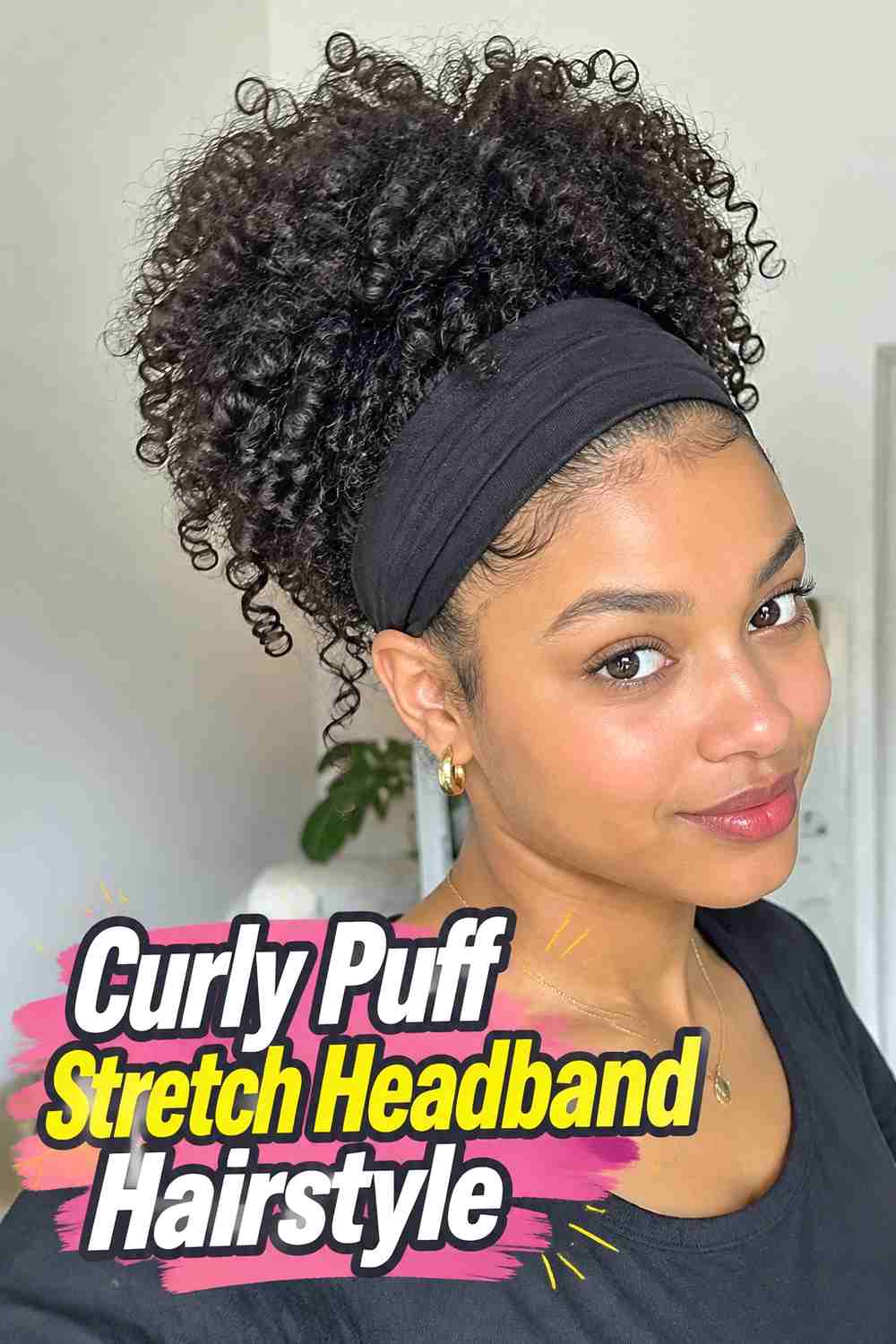
The Curly Puff Stretch Headband Hairstyle makes natural volume the focus while the band creates definition around the front. Gather curls or coils into a high or mid-height puff with comfortable tension, then shape the texture by hand so individual curls remain visible. Position the stretch headband near the hairline or slightly farther back, depending on how much texture you want around the face. A moderately wide band can create a bold winter look against a full puff, while a narrower stretch style feels more understated. Keep enough space between the band and puff for the crown to retain dimension rather than looking compressed into one shape.
Best For
This style works well with sweaters, casual winter outfits, dinners, and days when you want your natural texture fully visible but controlled around the hairline.
4. Low Bun Stretch Headband Hairstyle
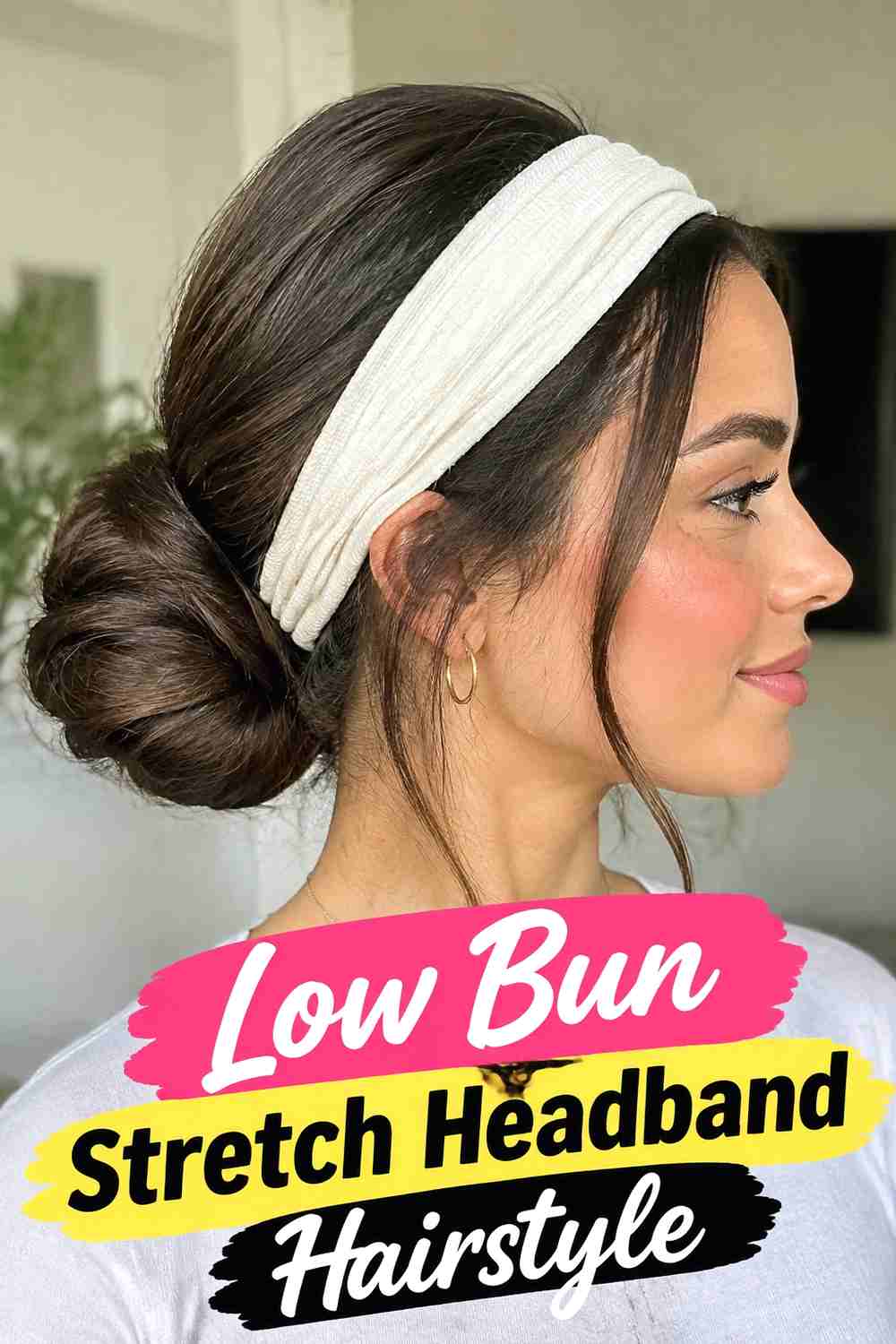
The Low Bun Stretch Headband Hairstyle keeps the entire silhouette compact and comfortable for layered winter clothing. Gather the hair at the nape, twist it into a smooth or softly textured bun, and secure it with an elastic and hidden pins. Slide the stretch headband into place afterward, leaving the crown sleek or gently relaxed. Because the bun sits below the widest part of the head, many hoods can fit without pressing directly against a bulky updo. Straight and wavy hair create a polished version, while curly hair can leave more texture visible through the bun. A few controlled pieces at the temples soften the look without adding unnecessary volume around a coat collar.
Styling Notes
Test the bun placement with your usual winter coat if you wear a high collar, since even a small adjustment can improve comfort at the nape.
5. Tucked Bob Stretch Headband Hairstyle
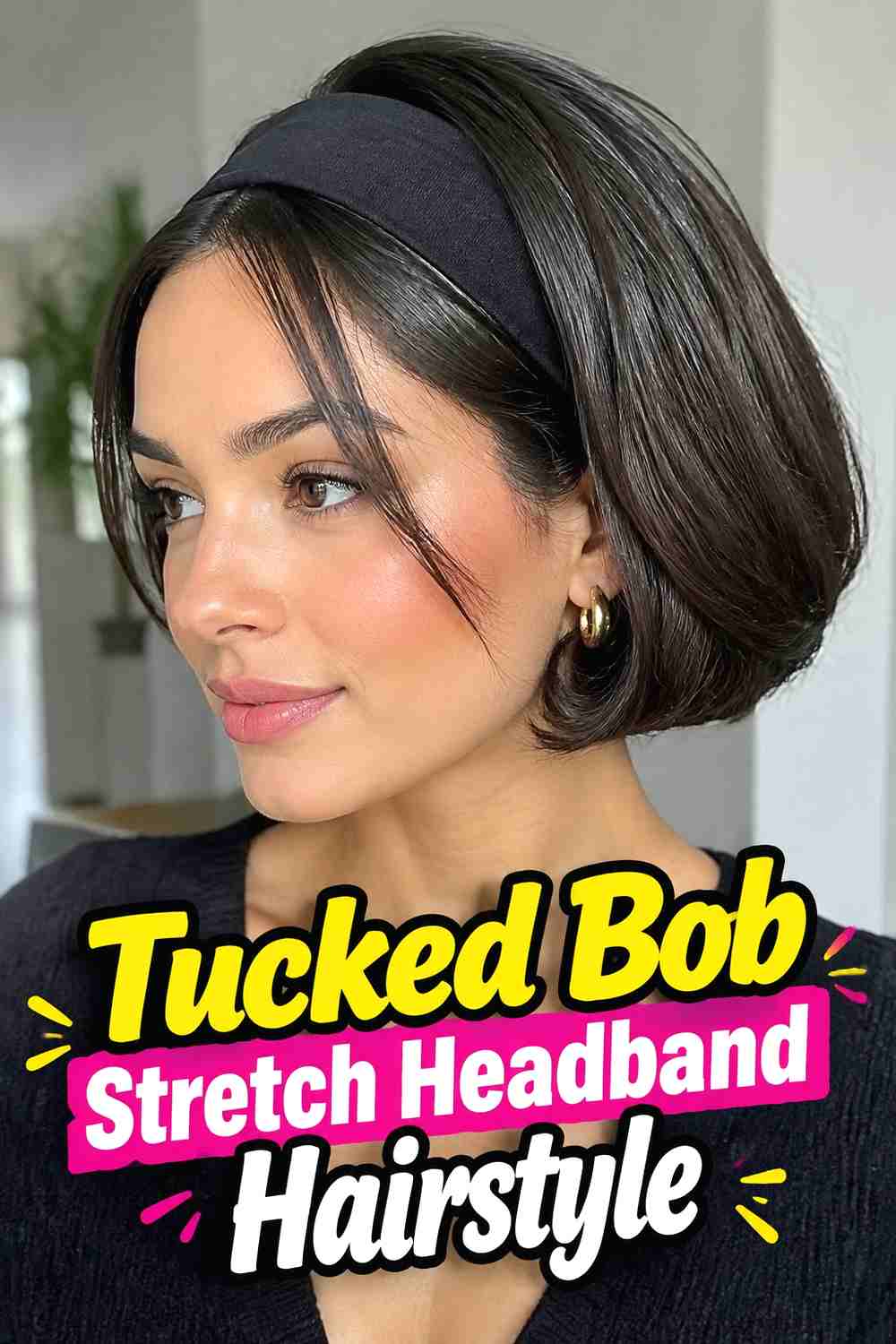
The Tucked Bob Stretch Headband Hairstyle makes shorter hair easy to manage around scarves and high-neck sweaters. Style a chin-length bob or lob straight, softly waved, or with a slight inward curve, then place the stretch band near the front of the crown. Tuck the sides behind the ears so the haircut’s outline remains visible and the ends do not continually catch against outerwear. A band in a winter texture such as velvet or soft ribbed fabric can add seasonal interest without covering too much of the cut. Keep the crown natural rather than overly flattened, especially if the bob already has a rounded shape that benefits from a little lift.
Hair Type & Length
This look suits bobs, lobs, and shorter medium cuts that can tuck neatly behind the ears while remaining comfortable under winter layers.
6. Soft Blowout Stretch Headband Hairstyle
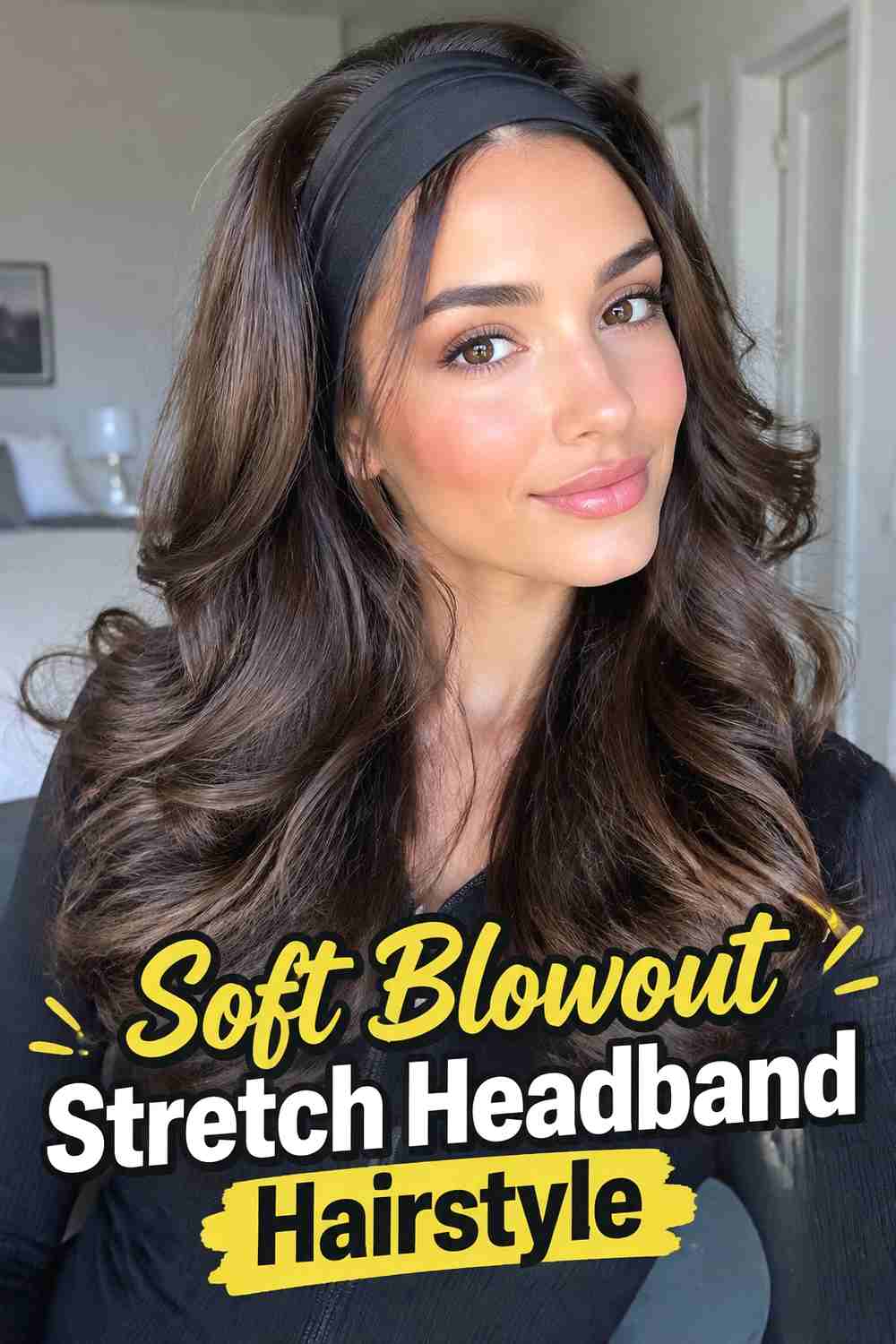
The Soft Blowout Stretch Headband Hairstyle balances a fuller polished finish with an easy fabric accessory. Style the hair with gentle root lift and rounded movement through the layers, then allow the blowout to cool before adding the band. Position it slightly behind the front hairline so some height remains visible rather than pushing the entire crown flat. Medium and long layered hair works especially well because the curved ends frame winter sweaters without needing extra clips or pins. A smooth stretch band keeps the style refined, while a knit-textured band creates a more relaxed cold-weather feel. Keep the ends touchable and natural so the volume looks soft rather than overly set.
Pro Tip
If the headband starts to reduce your crown volume, shift it slightly farther back instead of repeatedly lifting the hair underneath.
7. Half Up Stretch Headband Hairstyle
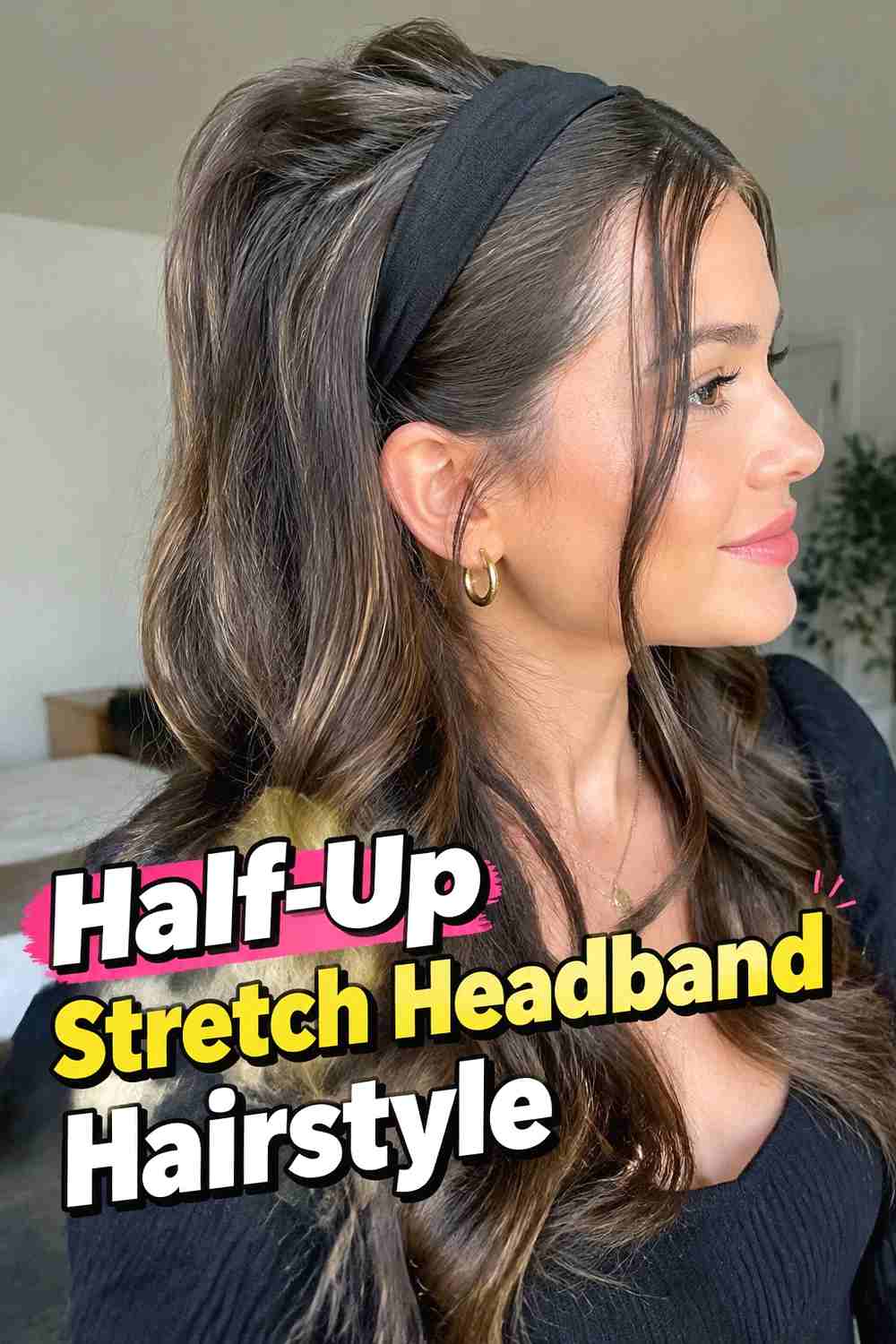
The Half-Up Stretch Headband Hairstyle combines facial control with plenty of loose length. Gather a small section from the crown and sides, then secure it at the back with a discreet elastic or pins. Add the stretch headband near the front so shorter pieces stay organized while the half-up section provides shape farther back. Straight hair gives the style a clean finish, waves create a romantic effect, and loose curls add more dimension. Keep the gathered portion relatively small if you plan to wear a coat or hood, since an oversized half-up section can create unnecessary bulk. The finished look should feel balanced, with the headband framing rather than dominating the hairstyle.
Why It Works
The style keeps hair away from the face while preserving visible length and movement, making it an adaptable choice for indoor and outdoor winter plans.
8. Natural Curls Stretch Headband Hairstyle
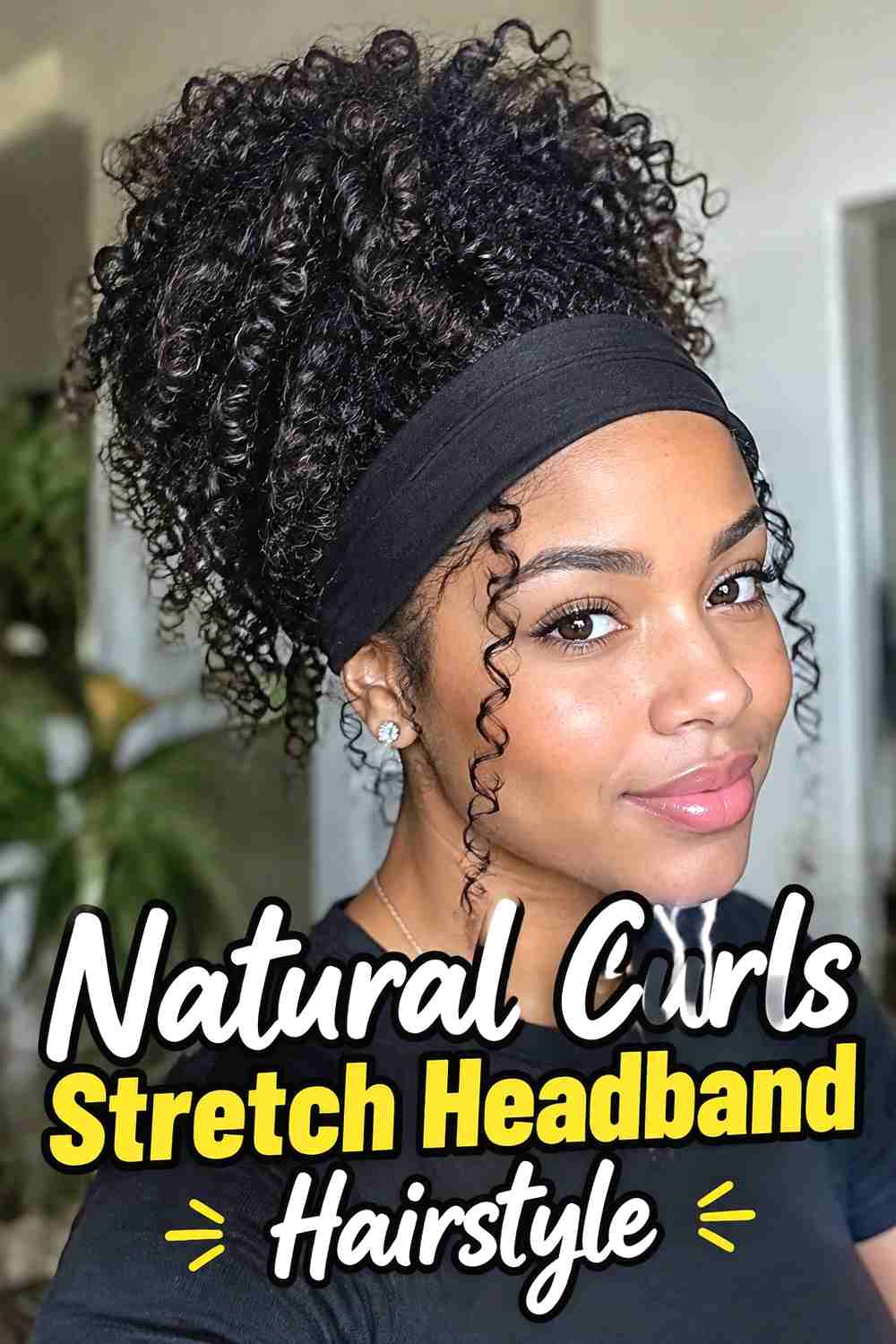
The Natural Curls Stretch Headband Hairstyle uses the flexibility of a fabric band to frame texture while preserving volume. Define or arrange your curls as usual, then place the stretch headband gently across the front or slightly behind the hairline. Allow the majority of the curls to remain free through the crown and sides instead of forcing them beneath the band. Depending on your curl pattern, a few pieces can stay loose around the temples for a softer frame. This look works with shorter rounded curls, shoulder-length shapes, and longer natural hair. Choose a band that stretches comfortably enough to stay secure without creating excessive pressure or visibly compressing the curl pattern underneath.
Styling Notes
Add the headband after your curls are dry or mostly set so you can adjust placement without disturbing fresh definition.
9. Braided Low Bun Stretch Headband Hairstyle
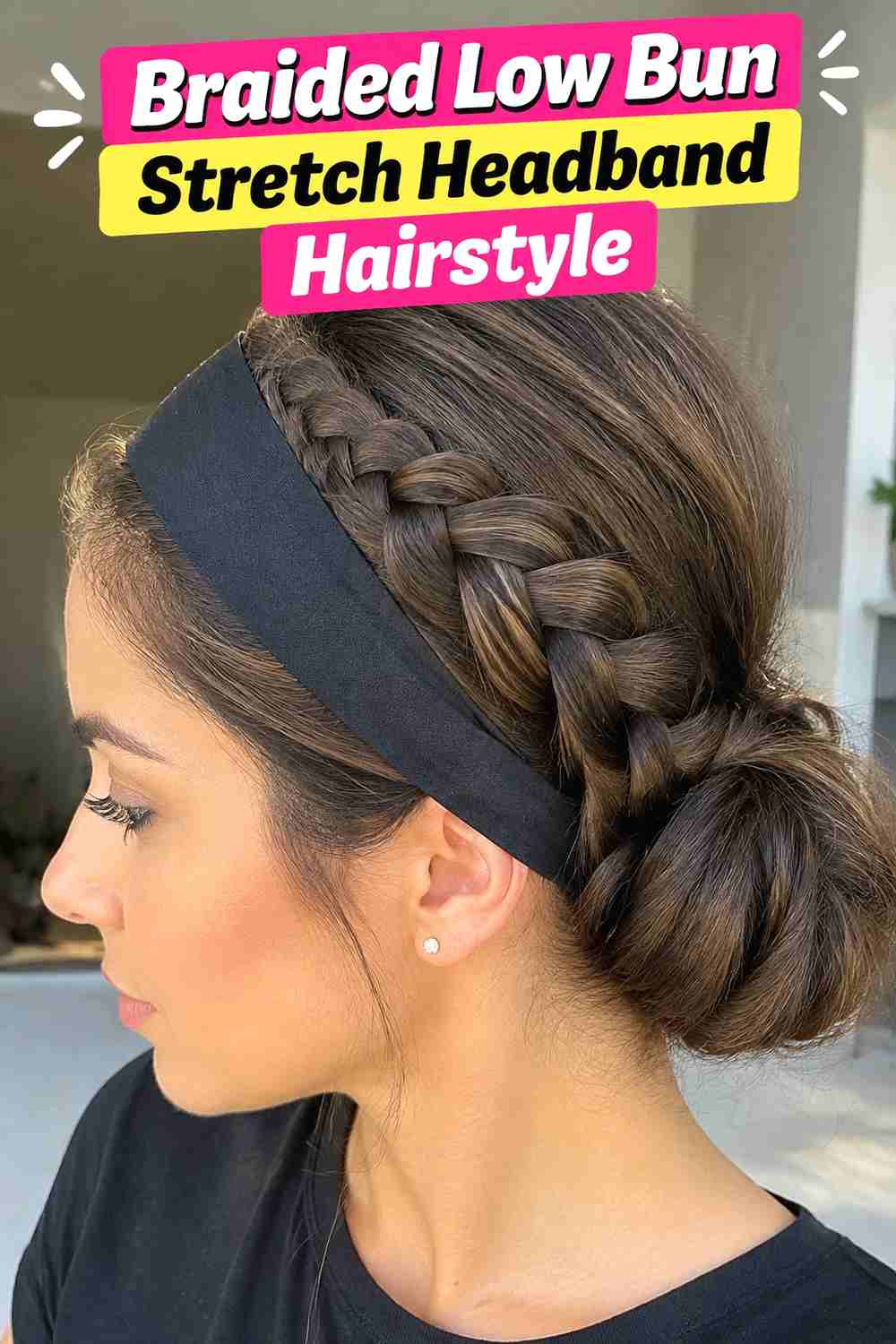
The Braided Low Bun Stretch Headband Hairstyle adds visible texture at the nape while keeping the rest of the hair controlled. Gather the lengths into a low ponytail, braid them, and wrap the braid around its base to create a compact bun. Secure the bun with pins, then add the stretch band across the front. The braided surface gives the updo more detail than a simple coil, yet the low placement remains practical with winter coats and scarves. A center part makes the style feel polished, while slight softness at the crown gives it a more relaxed finish. Long hair is particularly well suited because the braid organizes the extra length before it is wrapped.
Wear & Maintenance
Pin the braid in several places so the bun remains stable when you pull on a sweater, coat, or scarf.
10. Messy Bun Stretch Headband Hairstyle
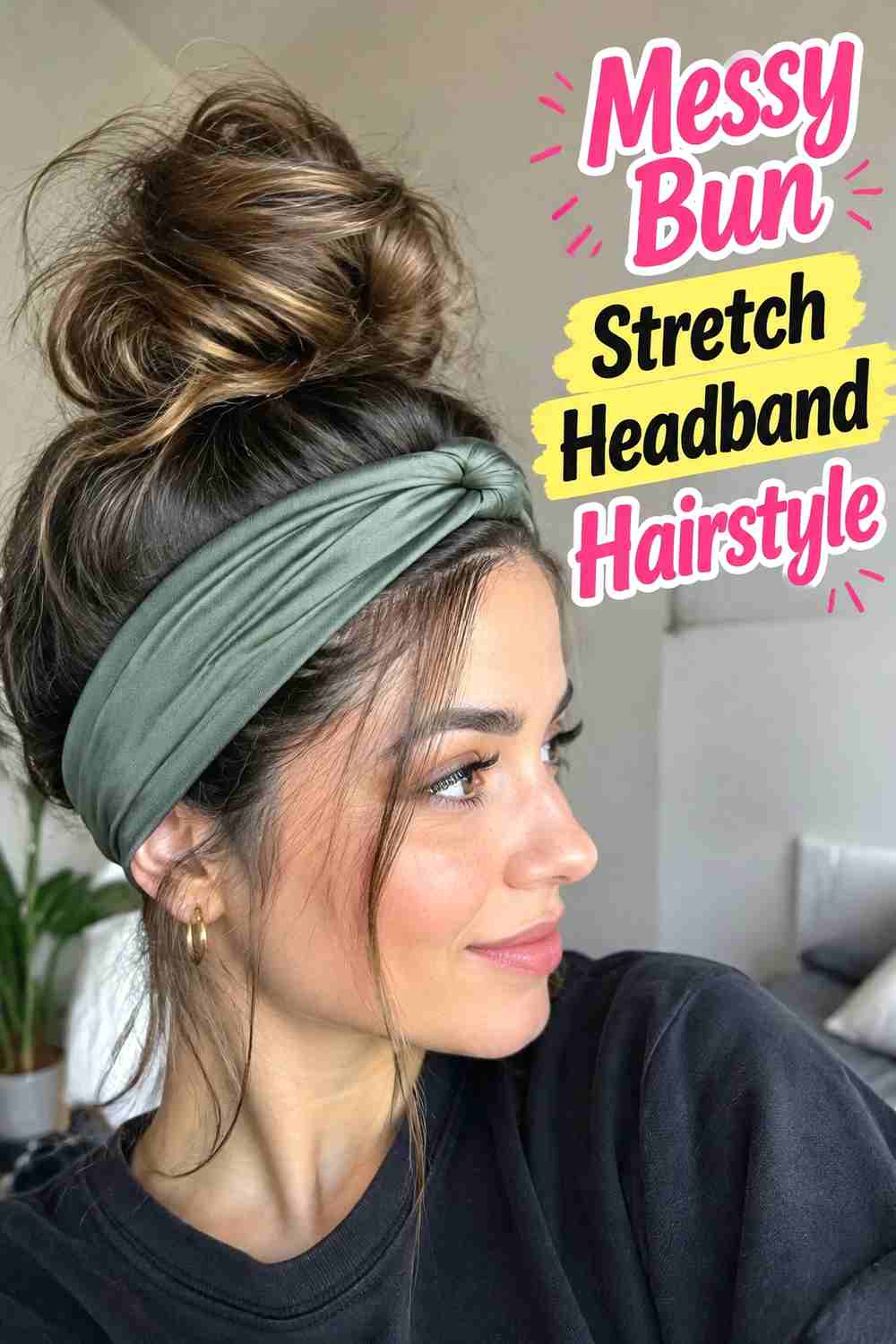
The Messy Bun Stretch Headband Hairstyle has an intentionally relaxed finish that fits naturally with casual winter outfits. Gather the hair into a mid-height or low bun, securing the base firmly while allowing the outer shape to remain soft and imperfect. Add the stretch headband near the hairline to give structure to the looser texture behind it. A few strands around the temples or ears can remain free, but keep the overall silhouette controlled enough that it does not look unfinished. Wavy and curly hair often creates the texture naturally, while straight hair can be lightly bent or texturized beforehand. The flexible band also helps keep shorter front layers away from the face on windy days.
Best For
Try this look for weekend errands, coffee dates, casual workdays, travel, or cozy sweater outfits where polished perfection is not the goal.
11. Long Layers Stretch Headband Hairstyle
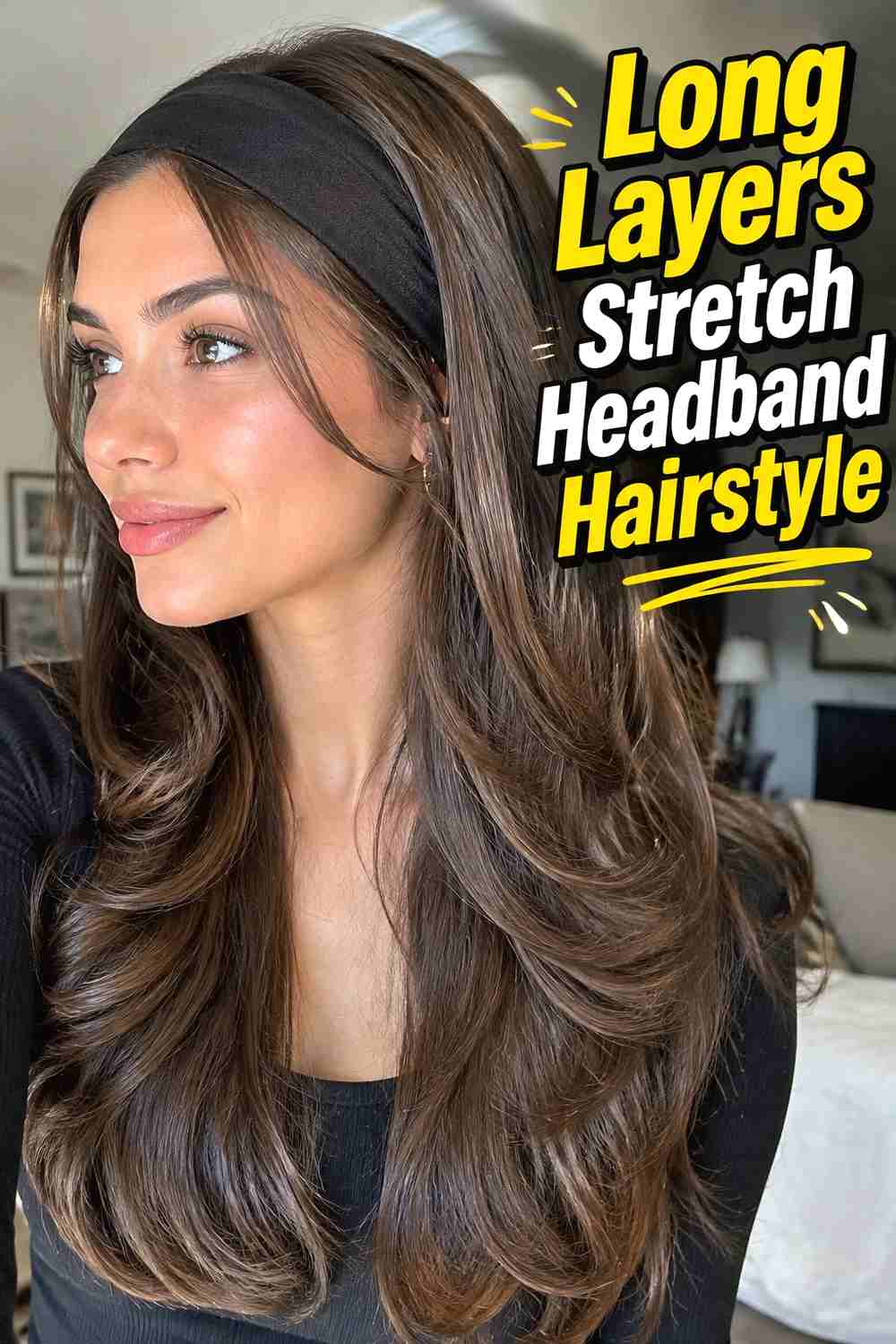
The Long Layers Stretch Headband Hairstyle keeps flowing movement visible while giving the crown a little more definition. Style the layers straight, softly waved, or with a smooth blowout, then position the stretch band behind the shortest front pieces or sweep everything beneath it for a cleaner shape. Long layers naturally create movement around the shoulders, which makes a simple headband enough of an accessory on its own. When wearing a thick sweater or scarf, bring some of the hair forward over one shoulder so too much volume does not collect behind the neck. A medium-width band often balances long hair well without covering more of the crown than necessary.
Why It Works
The accessory controls the upper section while the layered lengths provide movement below, creating a winter look that feels styled without requiring an updo.
12. Side Part Stretch Headband Hairstyle
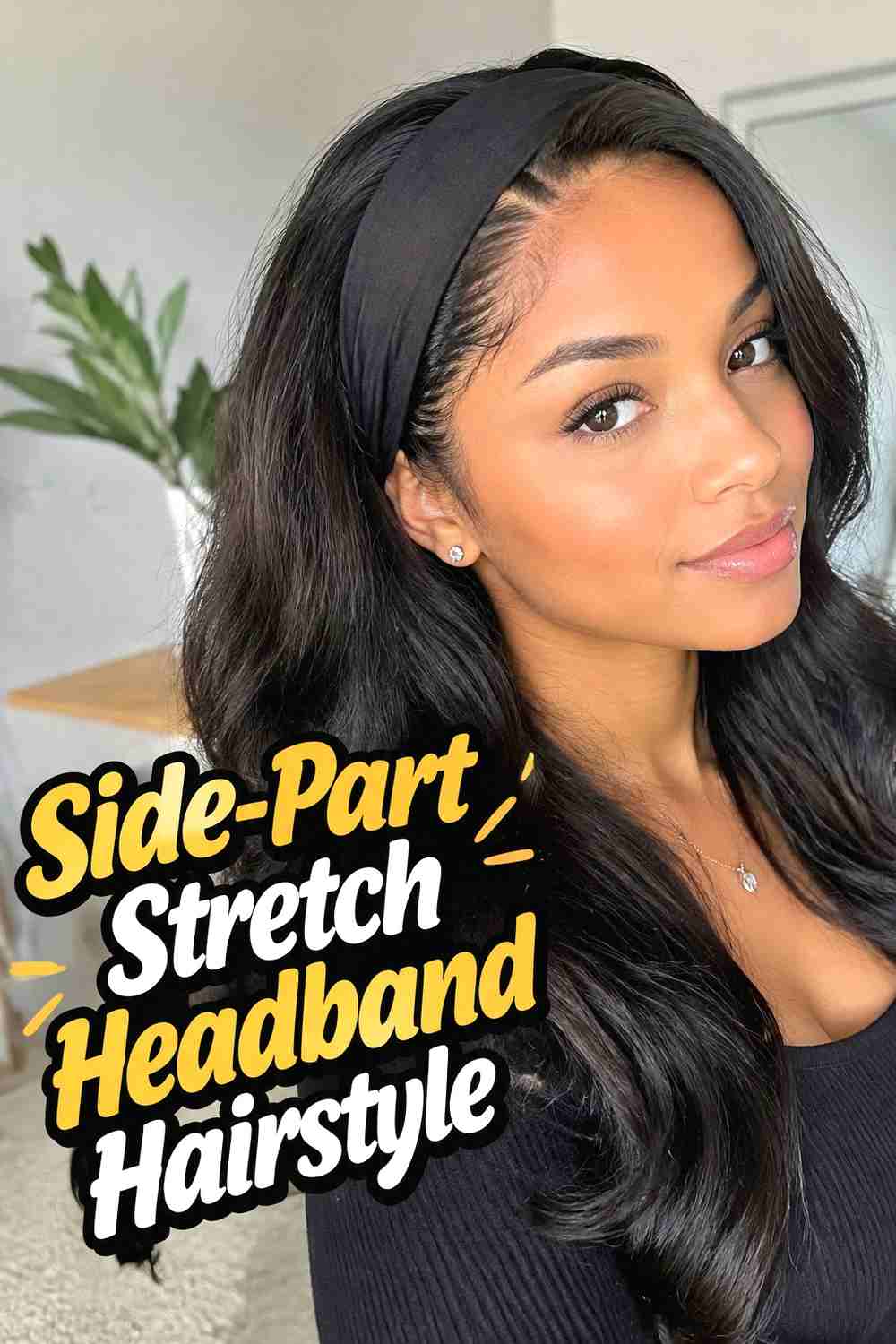
The Side-Part Stretch Headband Hairstyle uses asymmetry to soften the straightforward shape of a fabric band. Create a defined or natural side part, let the fuller front section sweep across the temple, and position the band just behind it. The remaining hair can stay straight, waved, curled, or tucked behind the ears depending on your texture and length. This placement works particularly well when you want the part visible instead of having the band sweep every front section backward. It also adapts easily to bobs, medium cuts, and long hair. Keep the band comfortable around the ears, especially if you will also be wearing glasses, earmuffs, or other winter accessories.
Styling Notes
Position the band before adding a coat or scarf so you can check that the fabric stays comfortable around the ears and temples.
13. French Twist Stretch Headband Hairstyle
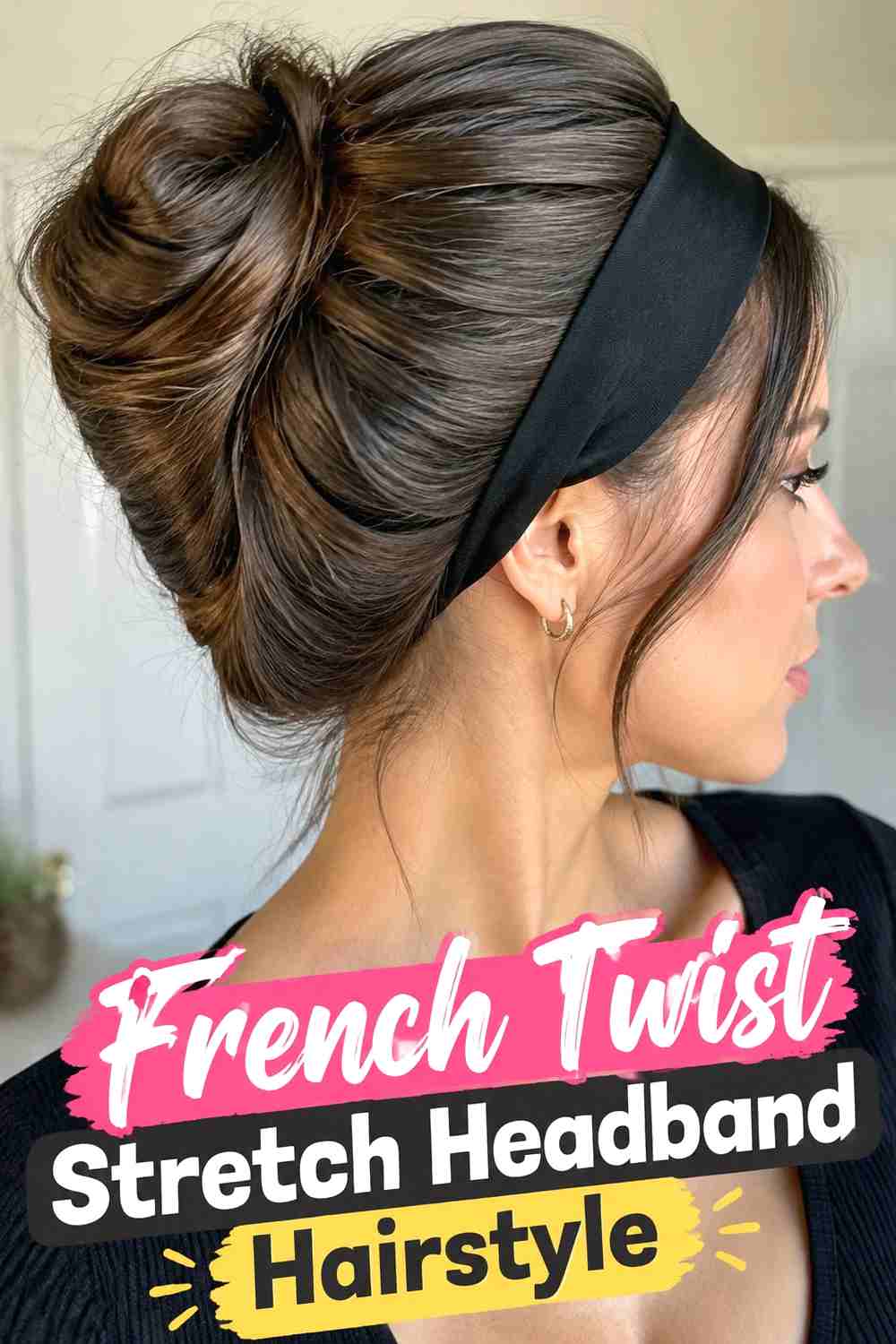
The French Twist Stretch Headband Hairstyle brings a classic updo into colder weather with a softer accessory at the front. Gather the hair toward the center back, roll it upward, tuck the ends inside, and secure the twist with pins. Add the stretch headband only after the updo is stable, placing it near the hairline while keeping some natural height through the crown. The compact vertical shape keeps the shoulders and neckline clear, making it a useful choice with structured coats or winter dresses. A smooth twist looks formal, while slight texture and fine face-framing pieces can make the same style feel more relaxed. Avoid using the band to hold the twist itself.
Best For
This polished option suits winter weddings, office parties, dinners, formal events, and dressier cold-weather outfits.
14. Low Chignon Stretch Headband Hairstyle
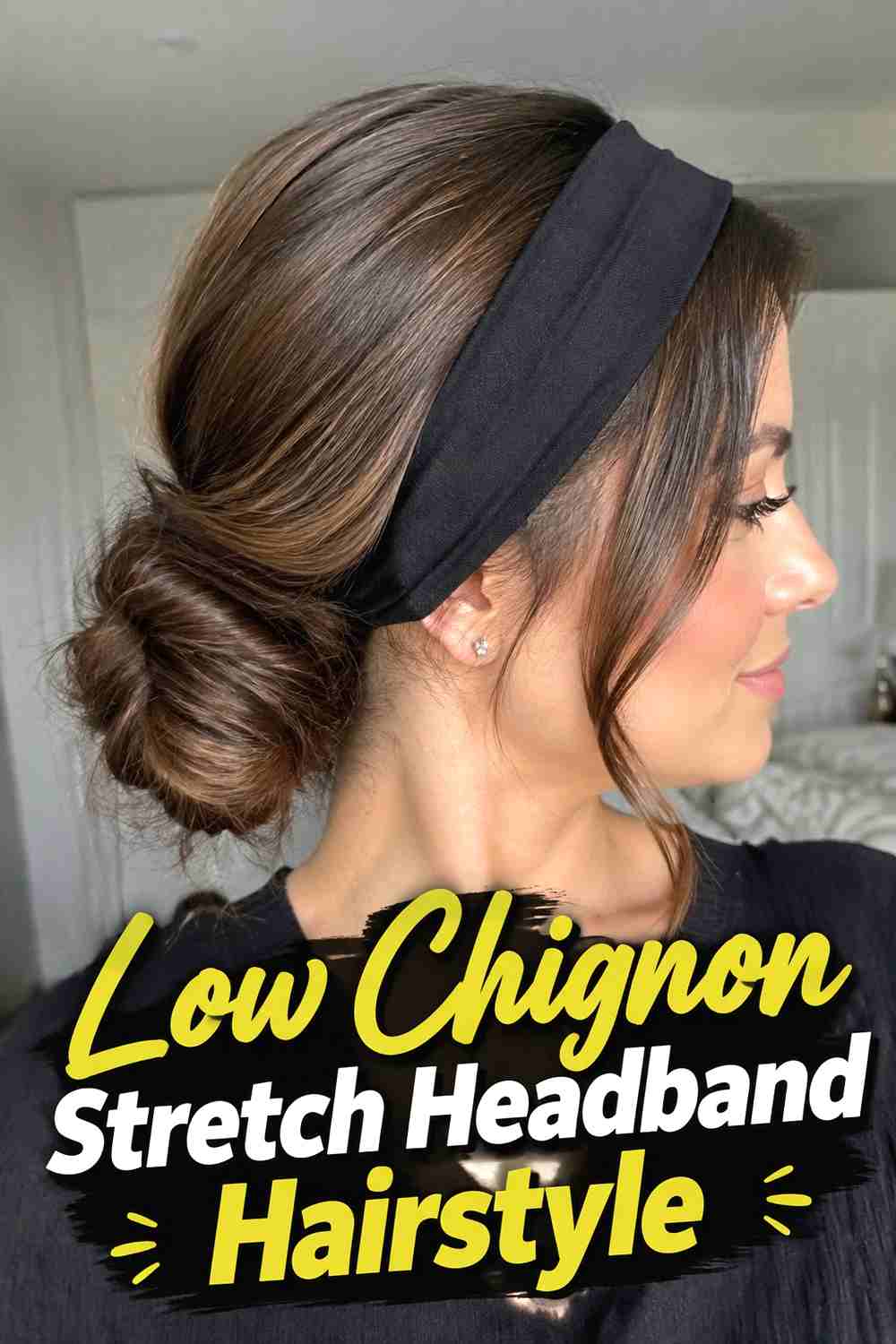
The Low Chignon Stretch Headband Hairstyle offers a refined shape that stays close to the nape. Gather the hair low, wrap or tuck the lengths into a rounded chignon, and secure the structure completely with hidden pins. Position the stretch band across the crown, leaving a clean center part or softly brushed-back front depending on your preference. Because the updo remains compact, it works well with high-neck sweaters and statement collars that might otherwise compete with loose hair. A smooth chignon gives the style an elegant finish, while subtle texture makes it feel more approachable. Keep the band simple when the updo is polished so the overall look remains balanced.
Wear & Maintenance
Make sure the chignon supports its own weight before adding the band, especially on long or dense hair.
15. High Ponytail Stretch Headband Hairstyle
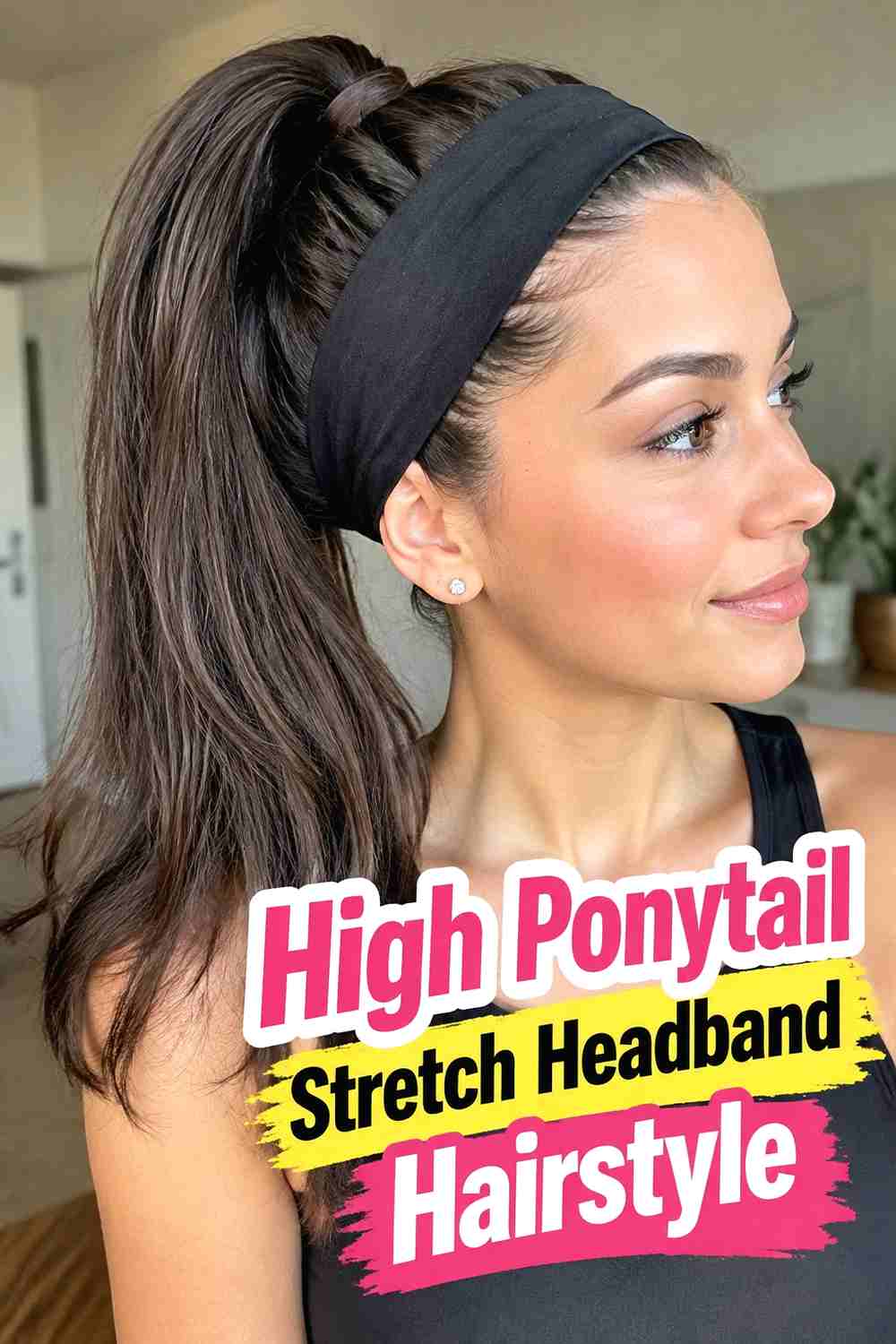
The High Ponytail Stretch Headband Hairstyle gives winter hair a more energetic silhouette while keeping shorter front sections controlled. Gather the lengths above the midpoint of the head and secure them firmly, then position the stretch band near the front. Straight hair creates a sharp ponytail, while waves or curls add fullness and movement behind the accessory. This style is best when you are not relying heavily on a fitted hood, since the higher ponytail creates more volume at the back of the crown. With open coats, casual jackets, or indoor winter outfits, however, the lifted shape can feel fresh and practical. Keep the ponytail base comfortable enough for extended wear.
Best For
Choose this look for casual gatherings, workouts, shopping days, indoor events, or winter outfits where you do not need a close-fitting hood.
16. Hood Friendly Stretch Headband Hairstyle
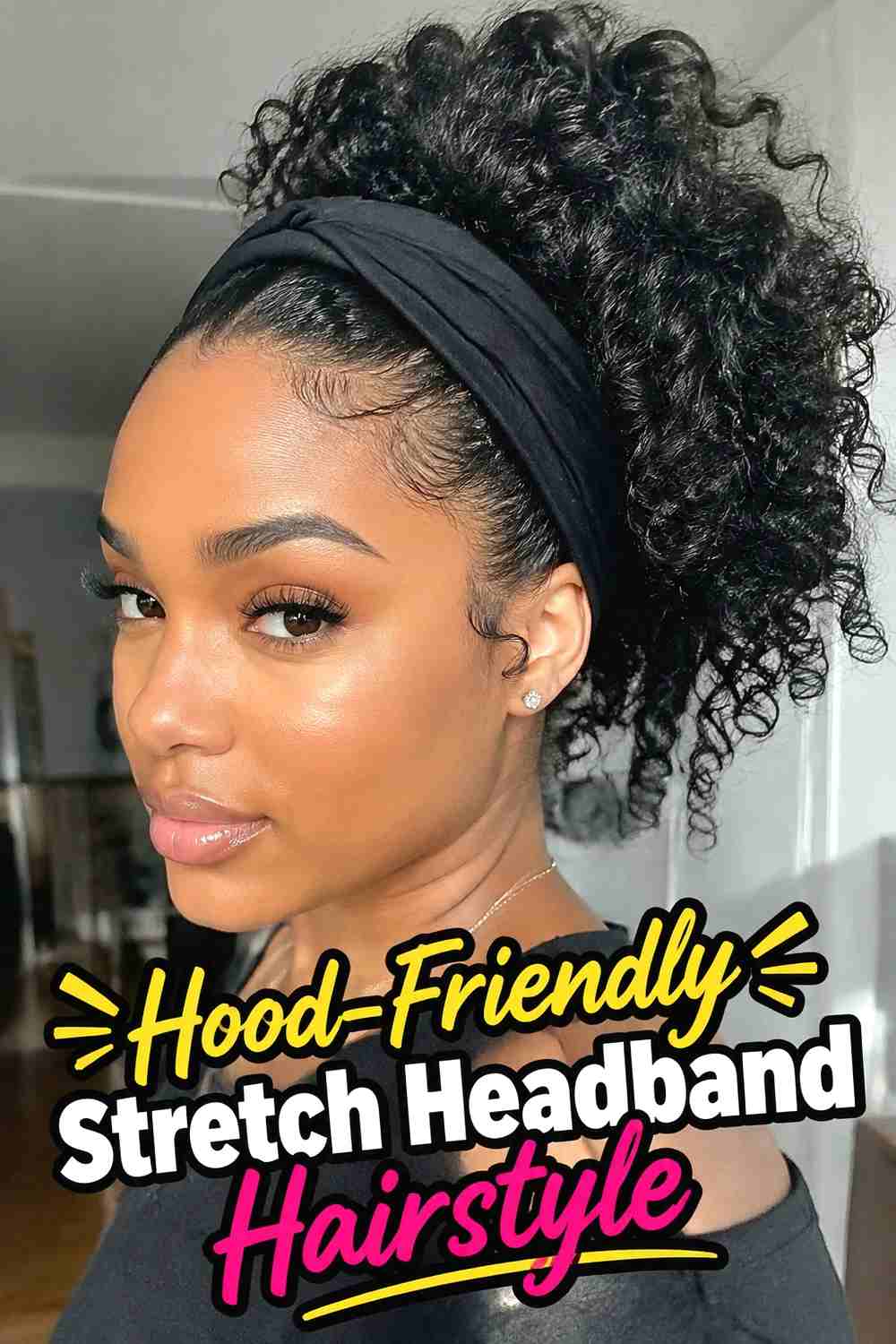
The Hood-Friendly Stretch Headband Hairstyle is built around a low, flat silhouette that can sit more comfortably beneath winter outerwear. Keep the hair loose and straight, gather it into a low ponytail, or create a small nape-level bun depending on your length. Add the stretch headband near the hairline, keeping the back of the crown free from bulky styling. This arrangement allows many hoods to slide over the head more naturally while the band continues to control shorter pieces around the face. Once the hood comes off, the hairstyle still looks intentional. A smooth, relatively thin stretch band usually creates less pressure and bulk than a heavily padded or knotted style.
Pro Tip
Try the completed hairstyle with your actual coat hood before leaving home, since hood depth and collar height can change which placement feels most comfortable.
How to Choose the Right Look
Start with your usual winter outerwear. If you rely on a hood, low ponytails, compact buns, natural curls, or the Hood-Friendly Stretch Headband Hairstyle will usually create less bulk around the back of the head. If you mainly wear open coats or jackets, higher ponytails and fuller puffs give you more freedom.
Hair texture is another useful guide. Straight and blown-out hair can emphasize the clean shape of a stretch band, while waves and curls create softer contrast. Natural curls and coils often look best when the band frames the texture rather than compressing it.
Consider width and tension as well. A wider stretch band makes a stronger visual statement and covers more of the crown, while a narrower version feels lighter. Either way, the band should feel secure without painful pressure around the temples or ears.
Finally, think about styling time. Loose waves, bobs, curls, and ponytails can be quick once the hair is prepared, while braided buns, chignons, and French twists require more structure and pinning.
Final Thoughts
Stretch headbands are easy to adapt to winter because their flexible shape works with loose hair, natural texture, and compact updos. Choose low styles when coats and hoods are part of your routine, or use curls, blowouts, and higher ponytails when you have more freedom around the crown. Comfortable tension and practical placement matter just as much as the finished appearance.
FAQs
1. Are stretch headbands good for winter hairstyles?
Yes. They can help control shorter front pieces and add a seasonal accessory without requiring a complicated hairstyle.
2. Which stretch headband hairstyle works best under a hood?
Low ponytails, compact low buns, and loose low-profile styles usually fit more comfortably because they avoid extra bulk around the upper back of the head.
3. Can stretch headbands work with natural curls?
Yes. Position the band gently around the front while leaving most of the curl or coil volume free rather than tightly compressing the texture.
4. How tight should a stretch headband be?
It should feel secure without causing uncomfortable pressure around the temples, ears, or hairline. If it feels painful or leaves strong pressure marks, choose a looser fit.
5. Can I wear a stretch headband with a formal winter hairstyle?
Yes. French twists, chignons, and polished low buns can all pair with simple stretch headbands when the accessory complements the updo rather than supporting it.
Save your favorite stretch headband hairstyles, share the winter looks you love, and explore more cold-weather hair inspiration for the season.