11 Low-Tension Rope Twist Hairstyle Ideas
Soft roots, dimensional twists, and versatile styling make these low-tension rope twist hairstyles an appealing option when you want definition without an overly tight-looking finish.
Rope twists have a distinctive spiraled appearance that can look polished while still retaining softness and movement. With a low-tension approach, the twists begin more gently at the roots instead of creating an excessively pulled effect, and the finished style can be arranged in several ways without losing its textured character.
Length, twist size, parting, ponytail placement, and the treatment of the ends all influence the final look. Some styles keep the twists loose and flowing, while others gather them into practical half-up or ponytail shapes. The best choice depends on the silhouette you enjoy and how you prefer the style to feel during everyday wear.
Quick List
- Soft Center Part Low Tension Rope Twist Hairstyle
- Side Part Low Tension Rope Twist Hairstyle
- Shoulder Length Low Tension Rope Twist Hairstyle
- Long Layered Low Tension Rope Twist Hairstyle
- Half Up Low Tension Rope Twist Hairstyle
- Low Ponytail Low Tension Rope Twist Hairstyle
- High Ponytail Low Tension Rope Twist Hairstyle
- Side Swept Low Tension Rope Twist Hairstyle
- Pinned Back Low Tension Rope Twist Hairstyle
- Loose End Low Tension Rope Twist Hairstyle
- Crown Volume Low Tension Rope Twist Hairstyle
1. Soft Center Part Low Tension Rope Twist Hairstyle
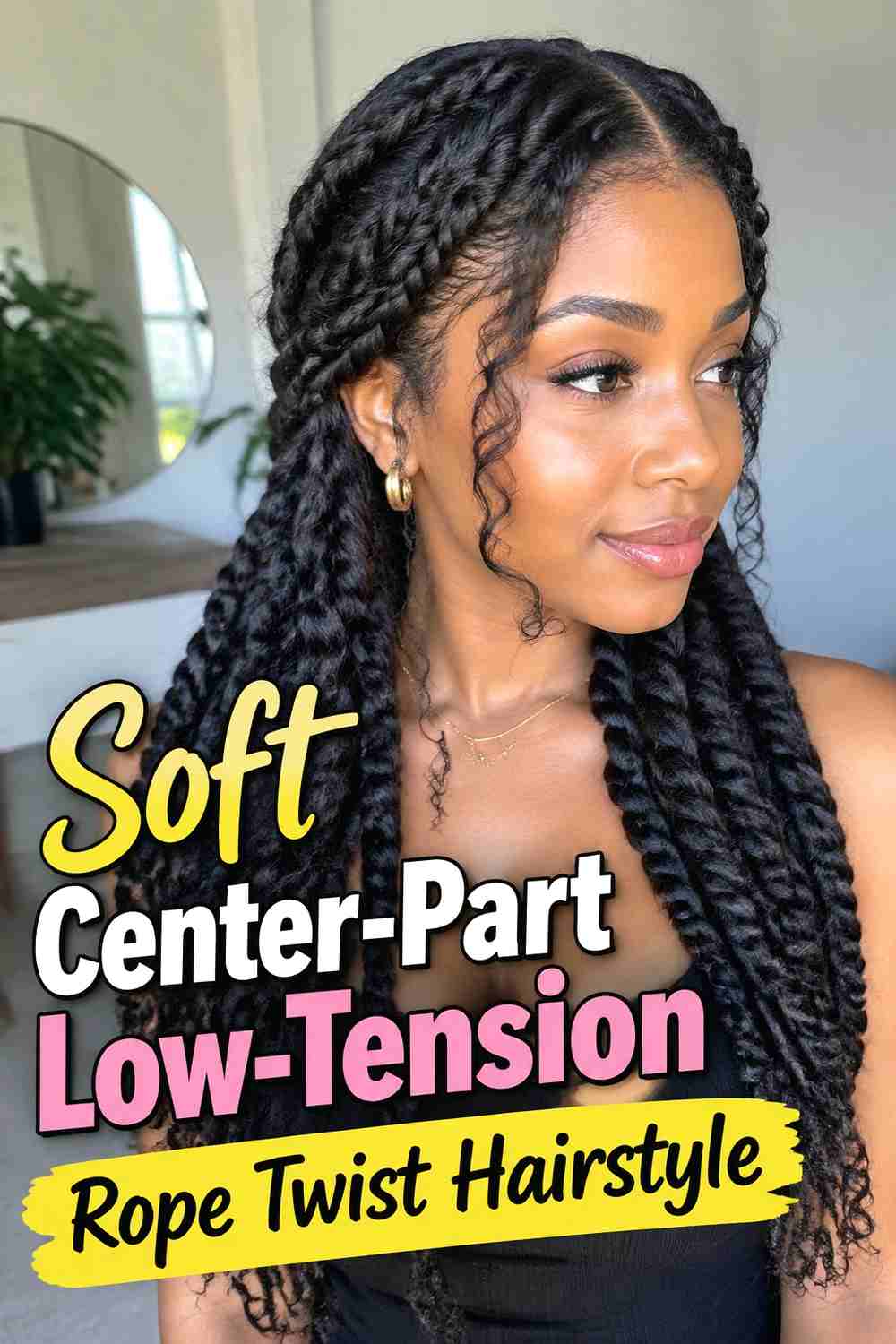
A clean center part gives low-tension rope twists a balanced, easy-to-wear shape while letting the spiraled texture remain the main feature. The twists begin softly at the roots and fall evenly along both sides, creating symmetry without making the scalp look excessively pulled. Medium-sized twists work especially well for this version because they show the rope pattern clearly while still moving naturally. Shoulder-length or longer twists provide enough weight for the style to hang smoothly, while a few subtle differences in twist size keep the result from appearing overly uniform. The simple arrangement also makes it easy to wear the twists down or reposition them later.
Styling Notes
Create the center part before sectioning so the twists naturally fall to the correct side instead of needing frequent repositioning.
Best For
This look works well when you prefer a straightforward, balanced style with visible rope-twist texture and minimal extra arrangement.
2. Side Part Low Tension Rope Twist Hairstyle
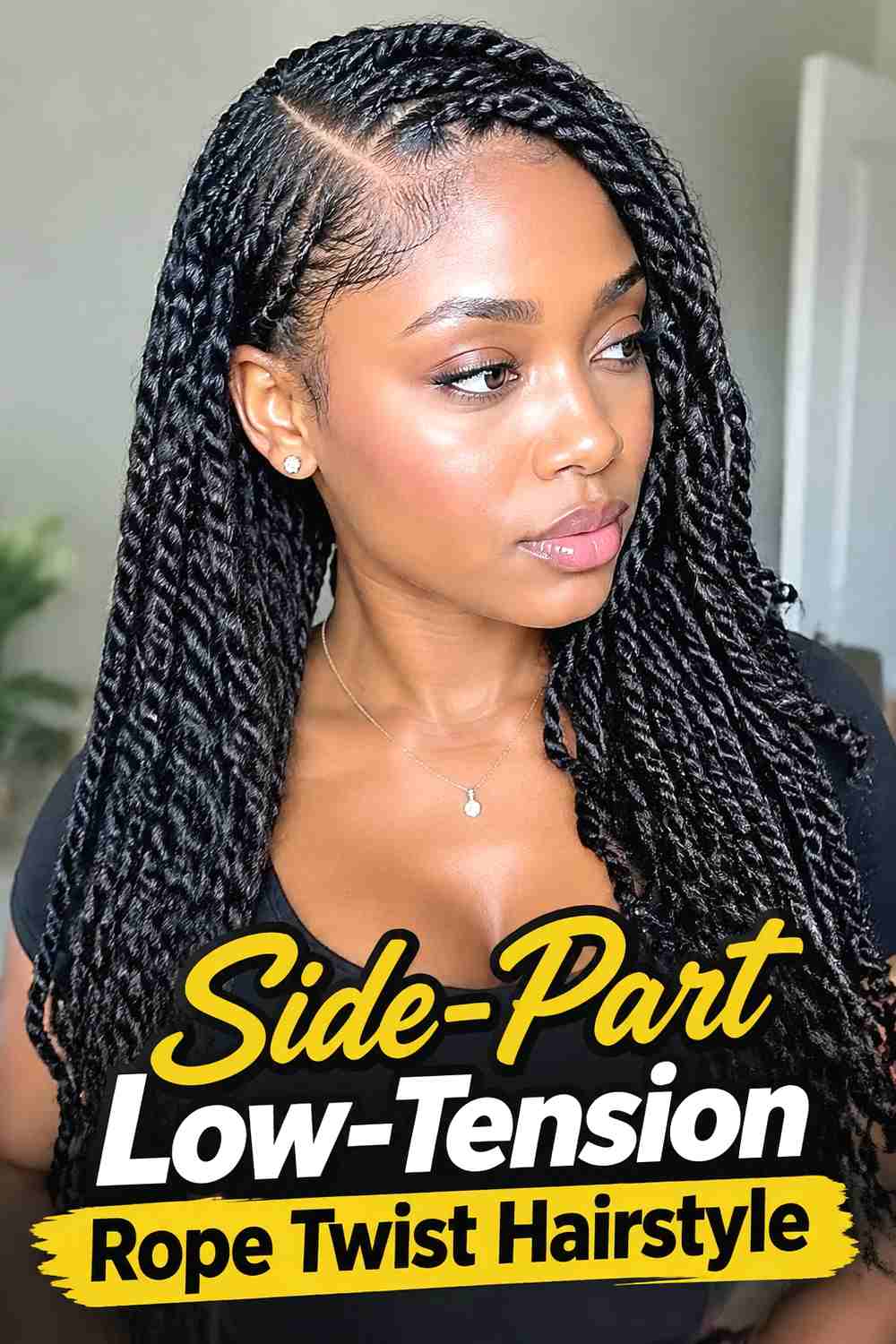
A side part gives rope twists more directional movement by allowing one section to appear noticeably fuller than the other. Rather than beginning with a tightly pulled hairline, the twists can sit softly at the roots and gradually fall toward the heavier side. Medium or slightly chunky twists emphasize the spiral pattern and help the style feel relaxed rather than overly intricate. The lighter side can remain loose, sit behind the ear, or be gently pinned depending on the occasion. This version works particularly well on medium and long twists because the additional length helps the side sweep settle naturally without needing stiff hold or constant adjustment.
Why It Works
Moving the part away from the center creates an asymmetrical silhouette while keeping the underlying twist pattern simple and wearable.
Pro Tip
Decide on the part before twisting so the root direction naturally supports the final placement.
3. Shoulder Length Low Tension Rope Twist Hairstyle
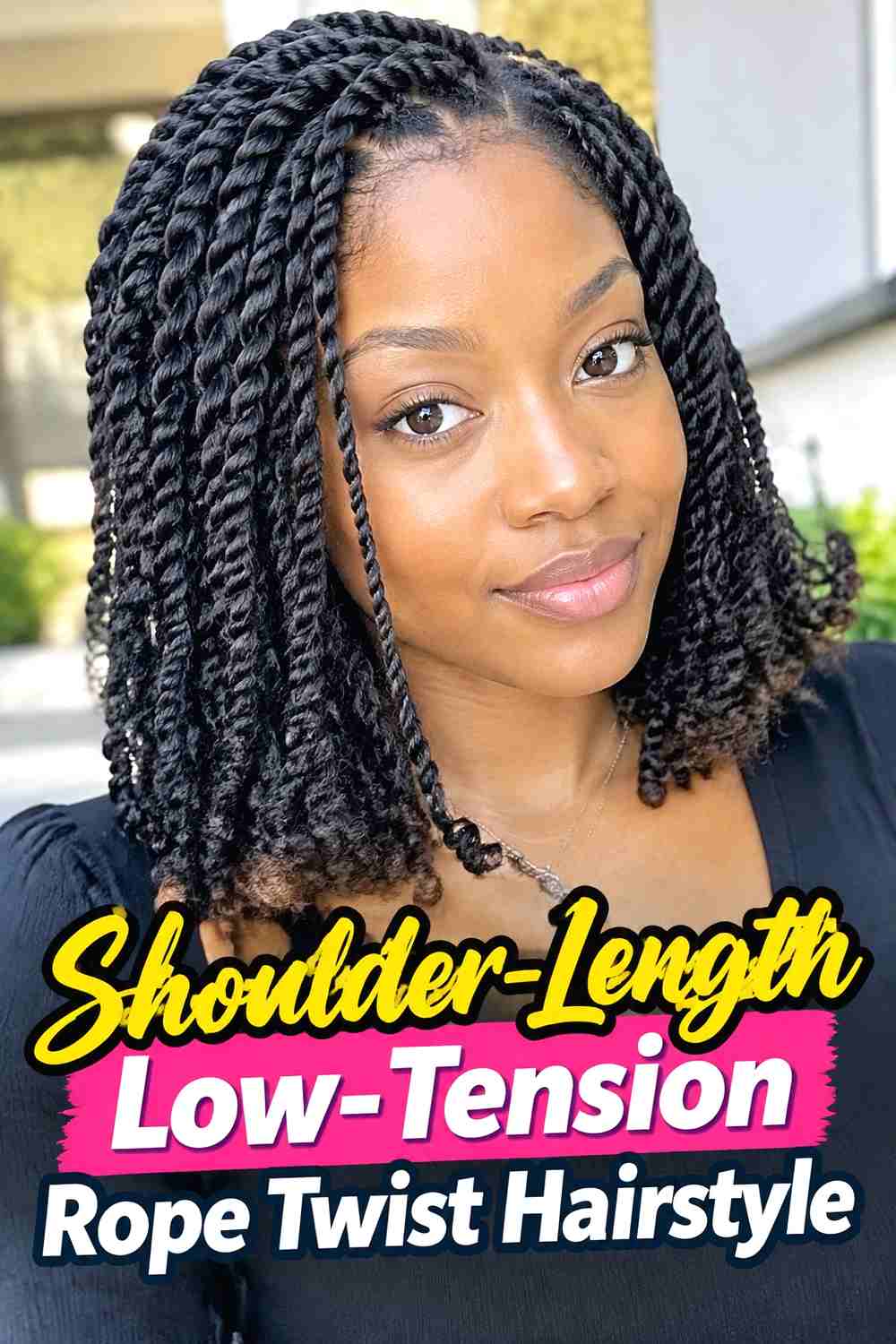
Shoulder-length rope twists provide enough length to show the spiral structure while keeping the overall style light and manageable. The ends can fall just above or around the shoulders, creating a compact silhouette with natural movement. A low-tension root area complements this length because the twists can hang freely rather than looking rigid at the scalp. Medium-sized sections give the style enough texture without making the perimeter excessively bulky. The shorter length also works well with center, side, or slightly irregular parting. If you prefer a simple everyday style that can still be tucked, pinned, or gathered loosely, this length offers plenty of flexibility.
Hair Type & Length
This version is designed around twists that finish near shoulder level, whether created with natural length or added hair.
Wear & Maintenance
Reduce unnecessary friction around collars and scarves when possible, since repeated rubbing can make the ends look fuzzier over time.
4. Long Layered Low Tension Rope Twist Hairstyle
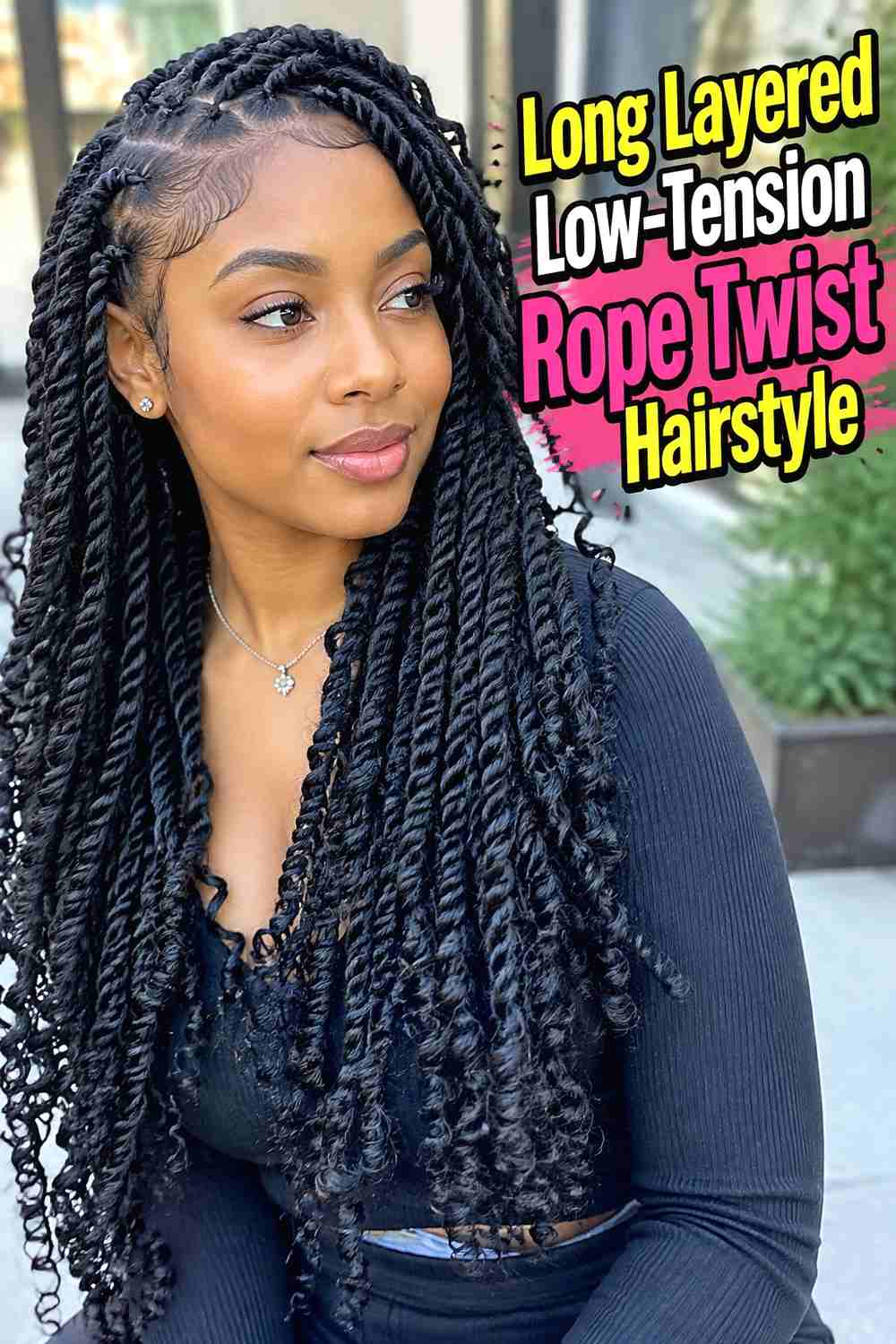
Long rope twists create a flowing silhouette, and subtle layering keeps the length from falling in one heavy horizontal line. Slightly shorter twists around the front or upper sections can add movement while the longest pieces continue down the back. The low-tension root effect helps the style retain a softer appearance despite the extra length. Keeping the layers gradual is important because dramatic differences can interrupt the smooth rope pattern. This approach is especially appealing when you want long twists but still prefer visible dimension around the face and shoulders. The final shape should taper naturally, with believable weight and movement rather than identical thickness from root to tip.
Styling Notes
Keep the length differences subtle so the layered effect adds movement without making the twist pattern appear disconnected.
Wear & Maintenance
Longer twists carry more weight, so the overall length and fullness should remain comfortable at the roots.
5. Half Up Low Tension Rope Twist Hairstyle
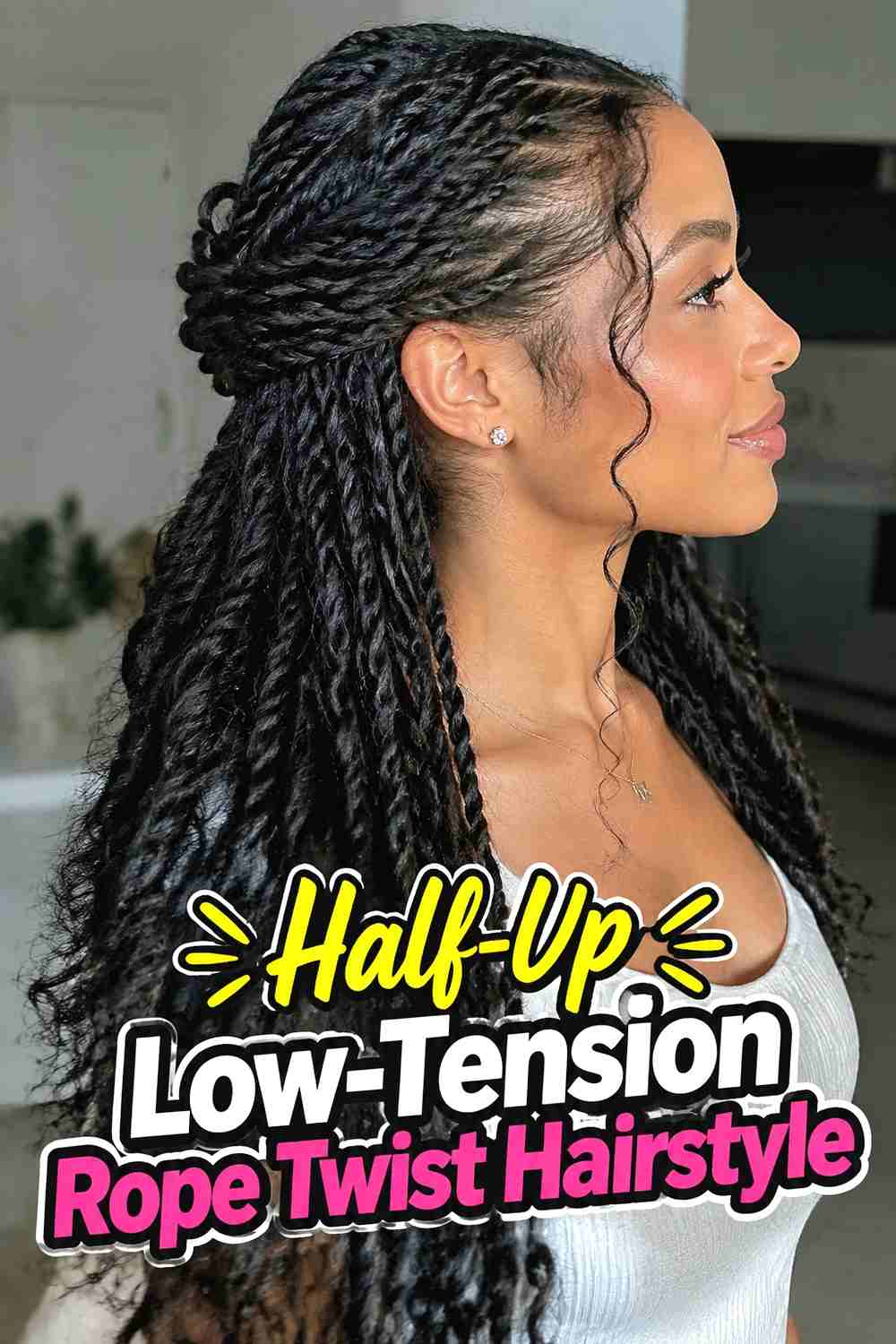
A half-up arrangement lifts some rope twists away from the face while leaving the lower portion free to move around the shoulders and back. The top section can be gathered at the crown with a soft tie or clip instead of being pulled into a rigid base. This maintains the low-tension quality while giving the style a more defined silhouette. The twists left down provide fullness through the lower half, creating a useful balance between an updo and a fully loose look. Medium to long twists are particularly suitable because there is enough length for both sections to remain visually distinct without the upper portion feeling too small.
Best For
Choose this style when you want your twists partially secured but still want visible length and movement through the back.
Pro Tip
Gather only as much hair as needed to create the half-up shape; pulling in too many twists can make the base unnecessarily heavy.
6. Low Ponytail Low Tension Rope Twist Hairstyle
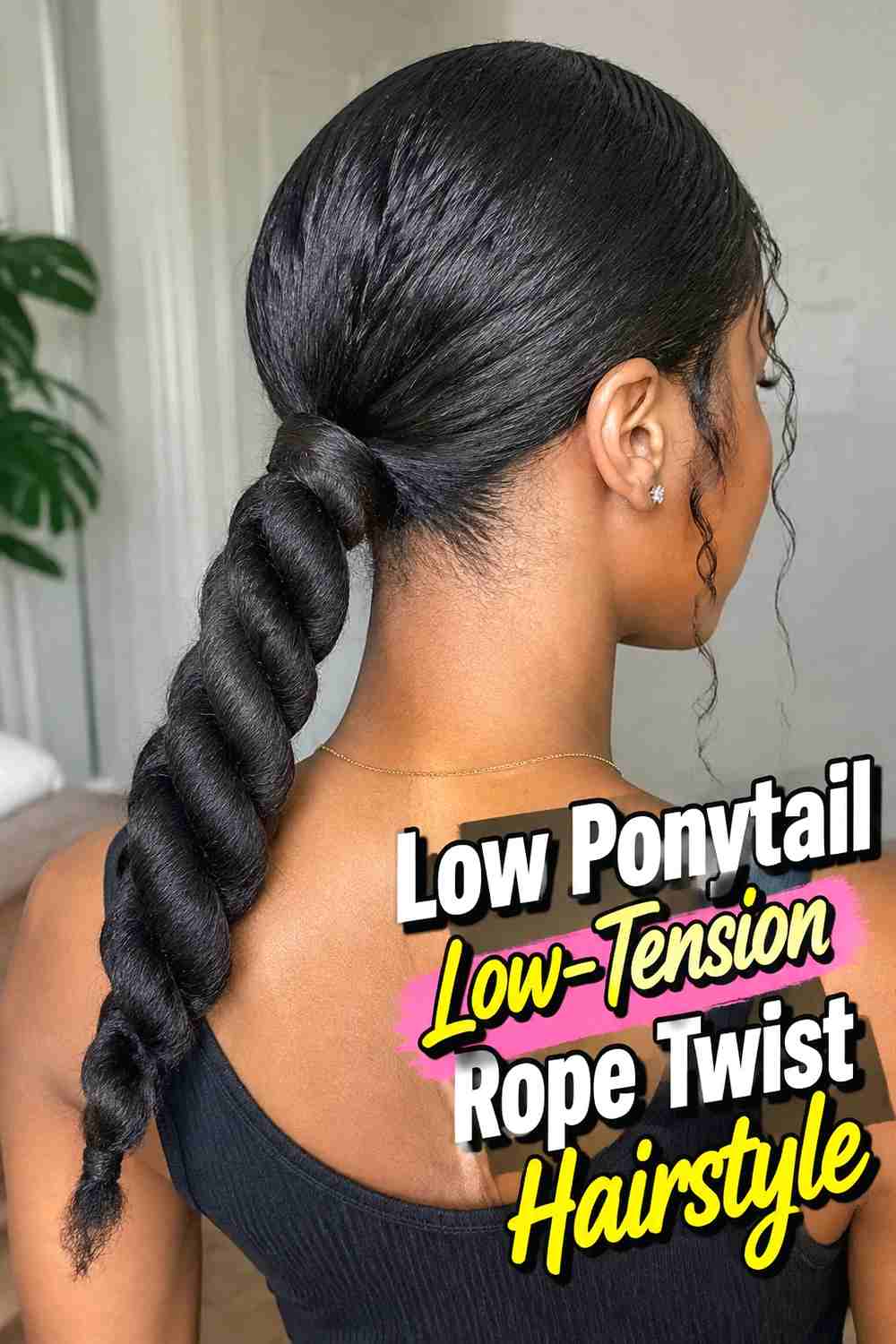
Gathering rope twists into a low ponytail creates a neat silhouette while preserving the softer appearance of the roots. The ponytail sits near the nape, allowing the twists to follow their natural downward direction instead of being redirected sharply upward. This makes the style especially suitable for medium or long twists with enough movement to fall cleanly down the back. A few front twists can remain loose if you prefer a more relaxed finish, or everything can be gathered for a simpler look. The tie should hold the twists securely without compressing the base more than necessary, particularly when the ponytail contains substantial length or added fullness.
Why It Works
The low placement follows the natural fall of the twists and creates structure without requiring dramatic lifting at the roots.
Wear & Maintenance
Adjust the ponytail if the base feels heavy or uncomfortable rather than relying on a tighter tie to keep it in place.
7. High Ponytail Low Tension Rope Twist Hairstyle
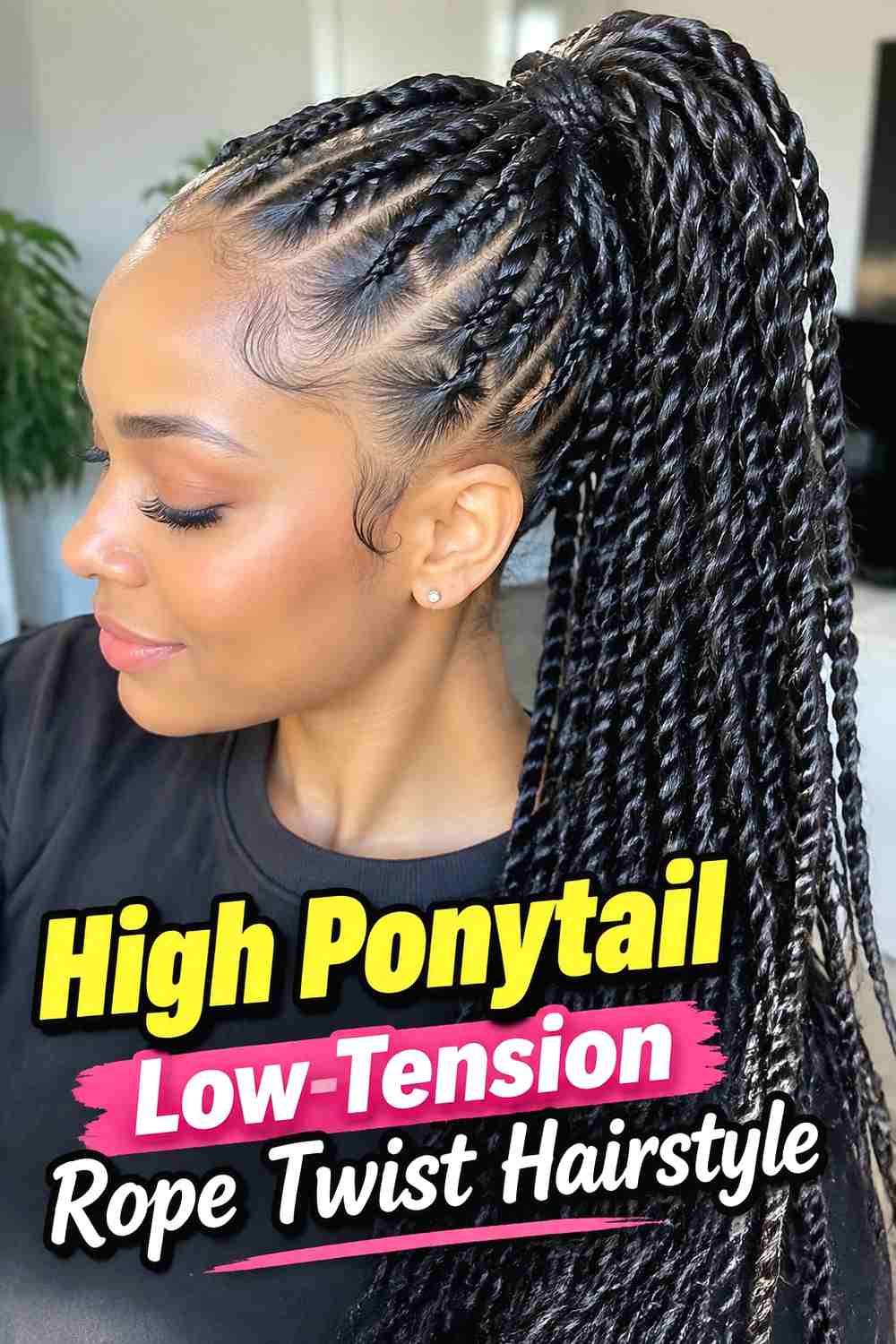
A high ponytail gives rope twists a more lifted silhouette while keeping the individual spirals clearly visible through the hanging length. Instead of pulling every twist tightly toward the crown, gather them with enough softness for the root area to retain a natural appearance. Medium-length twists create a lively ponytail with bounce, while longer twists produce a more dramatic cascade down the back. The elevated base can also reveal more of the side and nape sections, making clean parting and consistent twist construction especially noticeable. Since a high arrangement redirects the weight upward, the finished base should feel stable without creating persistent pulling.
Styling Notes
Use a secure but comfortable tie and arrange the twists around the base instead of repeatedly tightening the ponytail.
Best For
This variation suits anyone who wants more height and movement while keeping the rope-twist texture as the main visual feature.
8. Side Swept Low Tension Rope Twist Hairstyle
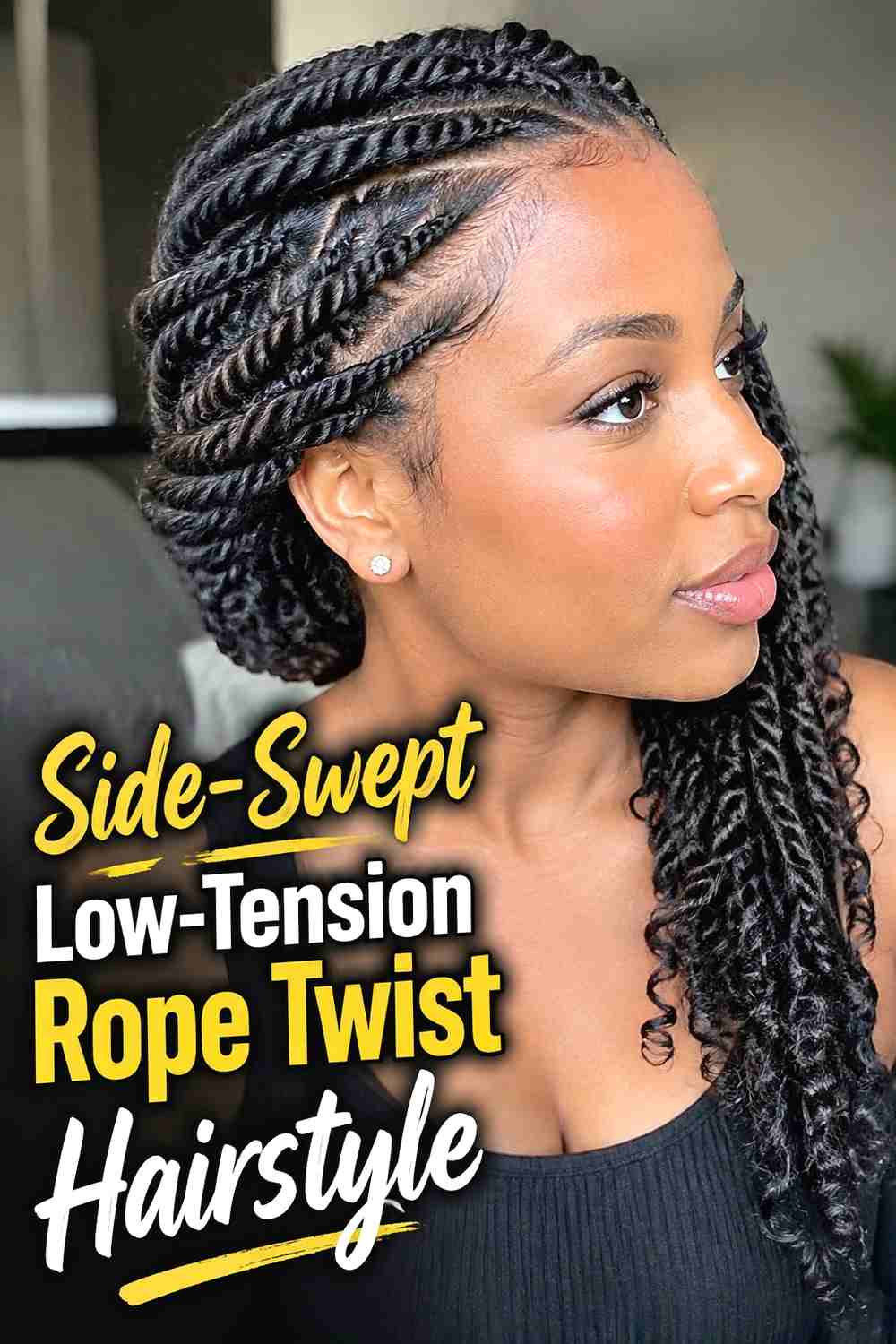
A side-swept arrangement moves most of the twists over one shoulder, creating an easy asymmetrical look without changing the underlying installation. The root area stays softly positioned while the lengths provide the drama, making this a simple way to restyle medium or long rope twists. A side part can reinforce the direction, although the look can also work with a less defined division. Keeping a few twists on the opposite side prevents the arrangement from feeling too severe. The style photographs especially well because the spiral texture is concentrated where it can be seen clearly, while the open side creates contrast and shows more of the overall silhouette.
Styling Notes
Shift the twists gradually and secure only the sections that need help staying in place rather than tightly pinning the entire side.
Why It Works
Concentrating the length over one shoulder creates a noticeable change in shape without requiring a new twist pattern.
9. Pinned Back Low Tension Rope Twist Hairstyle
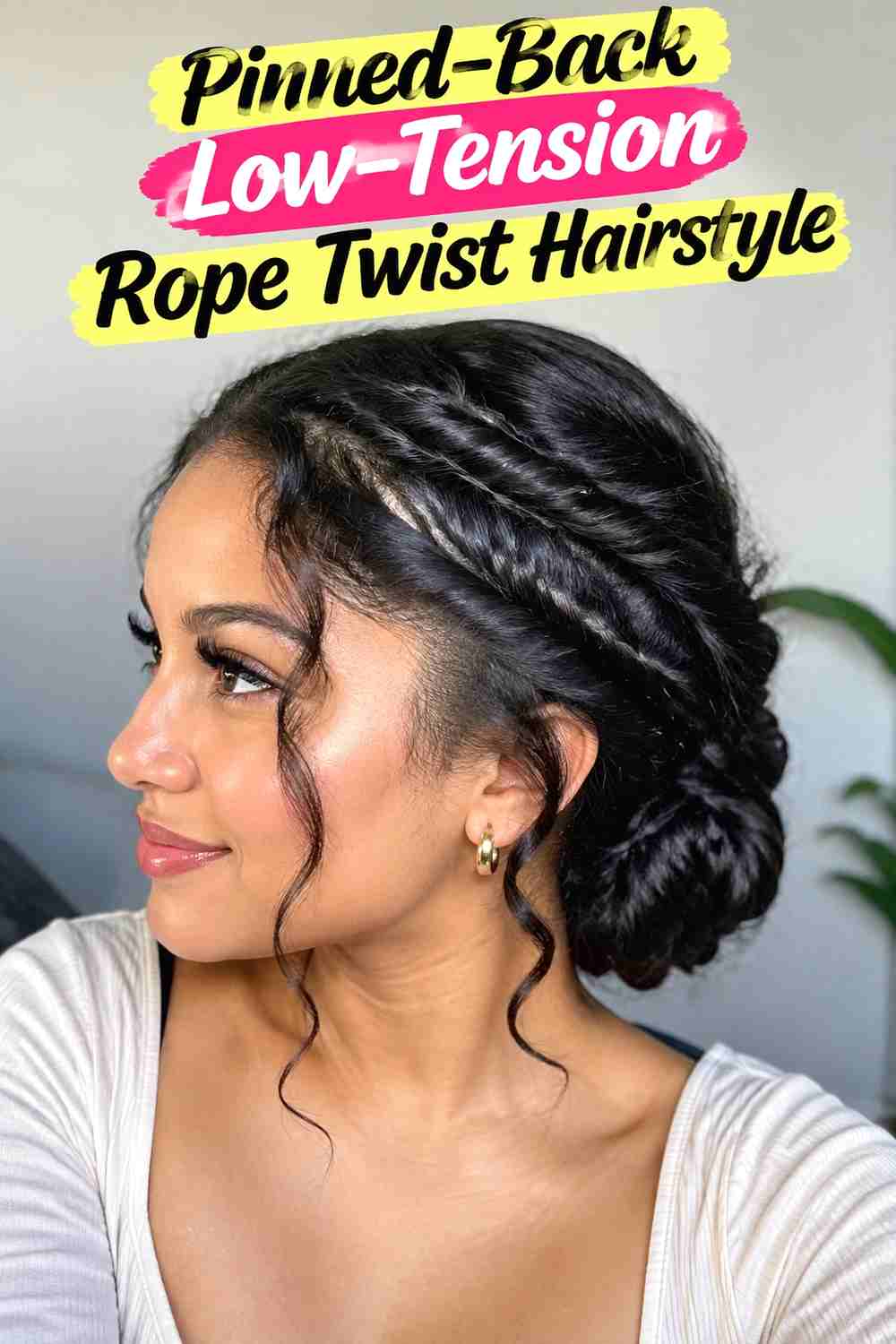
Pinned-back rope twists provide an open, polished front while allowing most of the length to remain loose. Small sections from each side can be brought gently toward the back of the head and secured with pins or a simple clip. Because only a limited number of twists are repositioned, the roots can maintain their softer low-tension appearance. This style works particularly well with shoulder-length and long twists, where the remaining hair creates enough fullness below the pinned area. The placement can sit low for a subtle finish or slightly higher for more crown lift, but the twists should rest naturally rather than being stretched tightly toward the fastening point.
Best For
This option is useful when you want hair away from the face without committing to a full ponytail or half-up arrangement.
Pro Tip
Cross the pinned sections lightly instead of pulling them flat so the rope texture remains visible near the back.
10. Loose End Low Tension Rope Twist Hairstyle
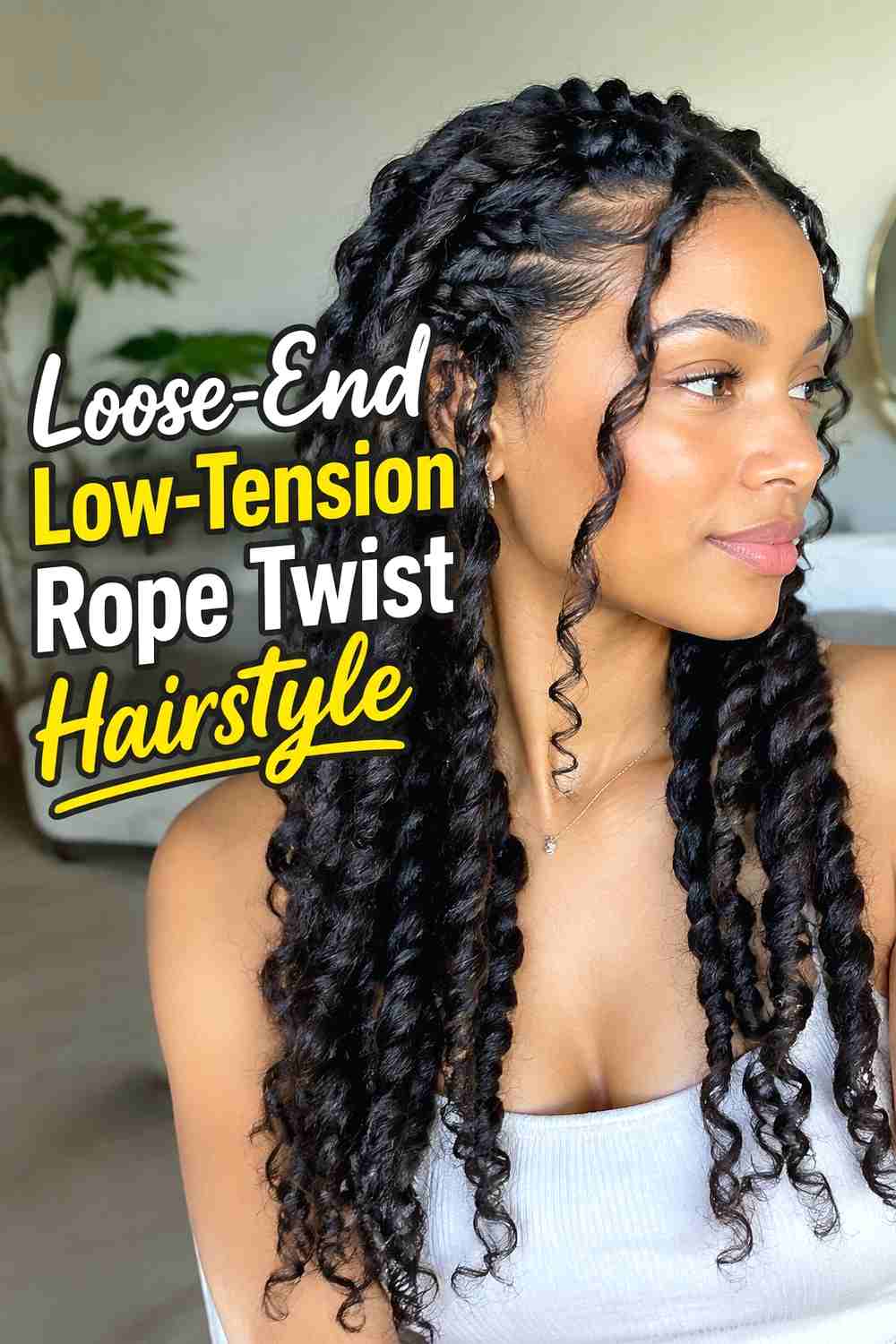
Leaving the ends softer creates an attractive contrast with the defined rope pattern through the rest of the hairstyle. The twists can remain structured from the roots through most of the length, then transition into looser textured ends that provide extra movement. Depending on the desired finish, the ends may appear gently curled, wavy, or naturally fluffy rather than tightly twisted to the very tip. This approach works especially well on medium and long styles because there is enough length for the transition to look deliberate. The softly rooted beginning and relaxed ending give the entire hairstyle a cohesive, easygoing character without removing the recognizable rope-twist structure.
Why It Works
The contrast between defined spirals and softer ends adds dimension while keeping the overall hairstyle relaxed and visually varied.
Wear & Maintenance
Handle the loose ends gently, since they may tangle or lose definition more quickly than sections that remain fully twisted.
11. Crown Volume Low Tension Rope Twist Hairstyle
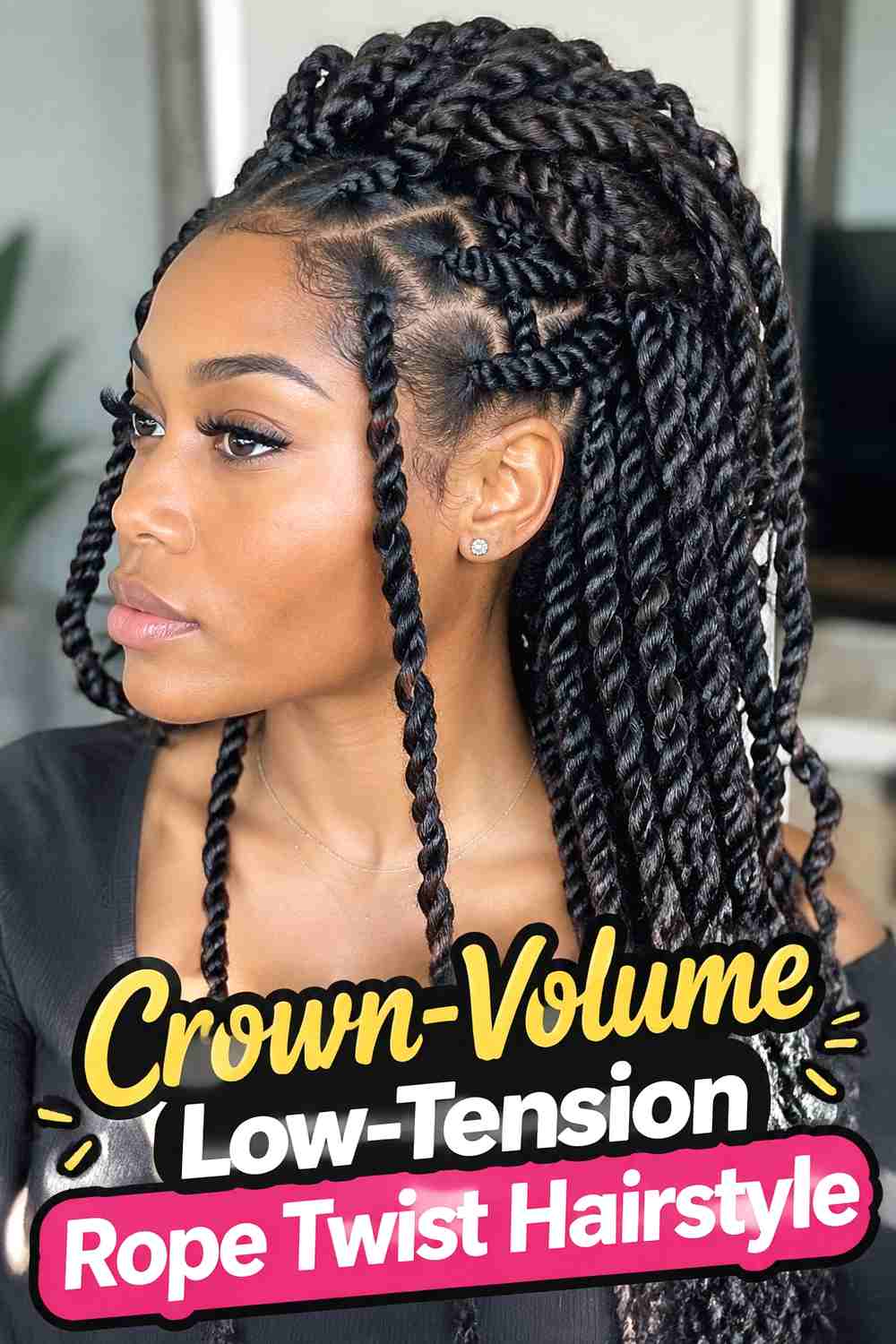
Crown volume adds height to rope twists without requiring every root to be pulled tightly upward. The upper twists can be arranged to sit slightly fuller around the crown, while the sides remain more controlled and the lengths fall naturally. This works particularly well with medium-sized twists because they provide enough structure to hold a softly elevated shape without appearing bulky. A subtle side or center part can still be maintained depending on the desired finish. The goal is gentle lift rather than an exaggerated mound, so only selected twists need repositioning. The result gives the hairstyle more dimension while preserving the soft-root effect that defines the low-tension approach.
Styling Notes
Build height by arranging the twists rather than repeatedly tightening them at the base, and keep the sides slightly flatter for contrast.
Best For
Choose this version when you want a fuller silhouette through the top while still wearing most of the twists loose.
How to Choose the Right Look
Start with length and weight. Shoulder-length rope twists are easier to keep compact and can work well for everyday wear, while longer twists offer more styling possibilities but may feel heavier. If you choose added length, balance the amount of hair with how comfortable the roots and scalp feel.
Next, decide how much of the hair you want secured. Wearing the twists down keeps their full texture visible, while half-up and pinned-back styles move hair away from the face without gathering everything. Low ponytails follow the natural downward direction of the twists, while high ponytails create more lift and movement.
Parting also changes the silhouette. A center part feels balanced, a side part creates stronger directional volume, and a side-swept arrangement places most of the visual weight over one shoulder.
Finally, consider the finish. Fully twisted ends look more uniform, while loose ends add softness. Whatever style you choose, low tension should still feel secure and wearable; persistent soreness or strong pulling is a reason to adjust the hairstyle.
Final Thoughts
Low-tension rope twists can be styled in many ways without losing their distinctive spiraled texture. Length, parting, crown volume, ponytail placement, and the treatment of the ends can each give the twists a noticeably different personality.
Choose a version that suits your routine and preferred amount of movement, and keep the root area comfortably secure rather than relying on excessive tightness to create the finished shape.
FAQs
1. What is a low-tension rope twist hairstyle?
It is a rope-twist style created and arranged with a softer approach at the roots rather than an excessively tight or strongly pulled appearance.
2. Can low-tension rope twists still look neat?
Yes. Clean sections, consistent twist direction, and tidy finishing can create a polished look without requiring the roots to appear extremely tight.
3. Can rope twists be worn in a ponytail?
Yes. Medium and long rope twists can be gathered into low or high ponytails, provided the base feels comfortable and the combined weight is manageable.
4. How can rope twists be made to look softer?
Using slightly larger sections, allowing natural root softness, leaving selected twists around the face, or finishing with loose textured ends can create a softer appearance.
5. What should I do if rope twists feel uncomfortable?
A secure style should not require persistent discomfort. If you notice ongoing pulling or soreness, loosening or adjusting the affected sections is more appropriate than trying to tolerate the tension.
Save your favorite low-tension rope twist hairstyle ideas for your next textured look, and share them when you need fresh twist inspiration.