14 Minimalist Low Bun Hairstyle Ideas
Clean lines, soft texture, and understated details make these minimalist low bun hairstyles ideal for polished everyday looks and effortlessly elegant occasions.
A low bun is one of those hairstyles that can look intentionally refined without requiring elaborate volume or decorative styling. Sitting close to the nape, it creates a clean silhouette while keeping the hair controlled and comfortable. Small changes in parting, texture, wrapping, and placement can completely shift its mood.
These minimalist versions range from glossy, sharply parted buns to relaxed knots and soft loops. When choosing your favorite, consider your natural texture, hair density, preferred level of polish, and how securely you need the style to hold. The most successful minimalist bun usually depends on clean proportions and thoughtful finishing rather than complexity.
Quick List
- Sleek Center Part Low Bun Hairstyle
- Soft Side Part Low Bun Hairstyle
- Polished Knotted Low Bun Hairstyle
- Clean Twisted Low Bun Hairstyle
- Smooth Wrapped Low Bun Hairstyle
- Relaxed Textured Low Bun Hairstyle
- Low Bun With Face Framing Pieces Hairstyle
- Glossy Wet Look Low Bun Hairstyle
- Minimalist Braided Low Bun Hairstyle
- Low Bun With Hidden Pins Hairstyle
- Tucked Nape Low Bun Hairstyle
- Soft Loop Low Bun Hairstyle
- Deep Side Part Sculpted Low Bun Hairstyle
- Satin Ribbon Low Bun Hairstyle
1. Sleek Center Part Low Bun Hairstyle
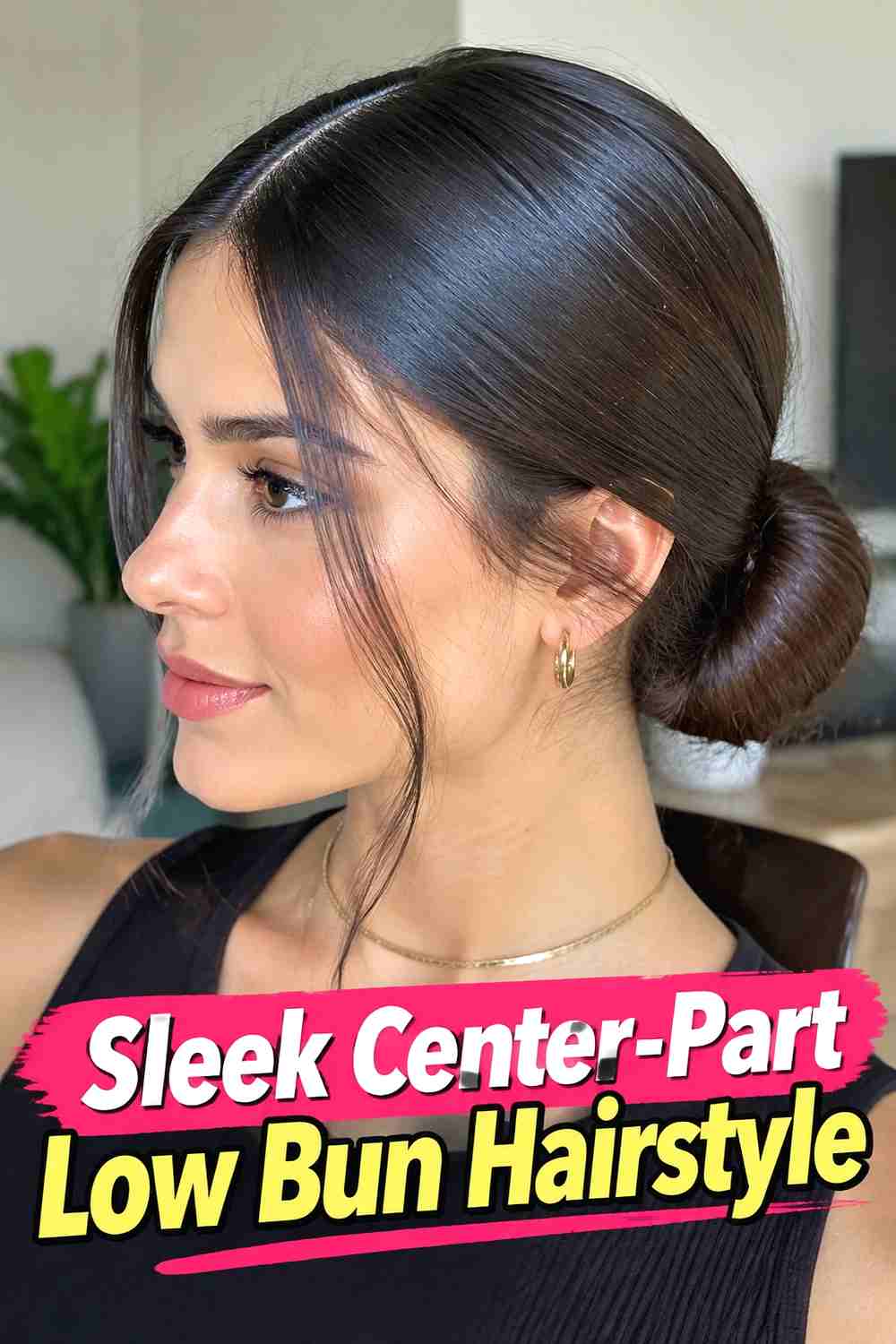
A sleek center-part low bun is one of the clearest expressions of minimalist styling. The precise middle part creates symmetry, while smoothly directed sides lead into a compact bun positioned at the nape. Keeping the bun relatively small allows the clean shape of the head and parting to remain the main visual details. This style works particularly well on straight, stretched, or smoothly blow-dried hair, although other textures can be adapted with careful preparation. Use only enough smoothing product to control flyaways and create a polished surface. Excess product can make the roots look heavy rather than intentionally glossy.
Styling Notes
Create the part before gathering the hair, then smooth each side toward the nape separately. Secure the ponytail first and build the bun afterward for better control and more even tension.
2. Soft Side Part Low Bun Hairstyle
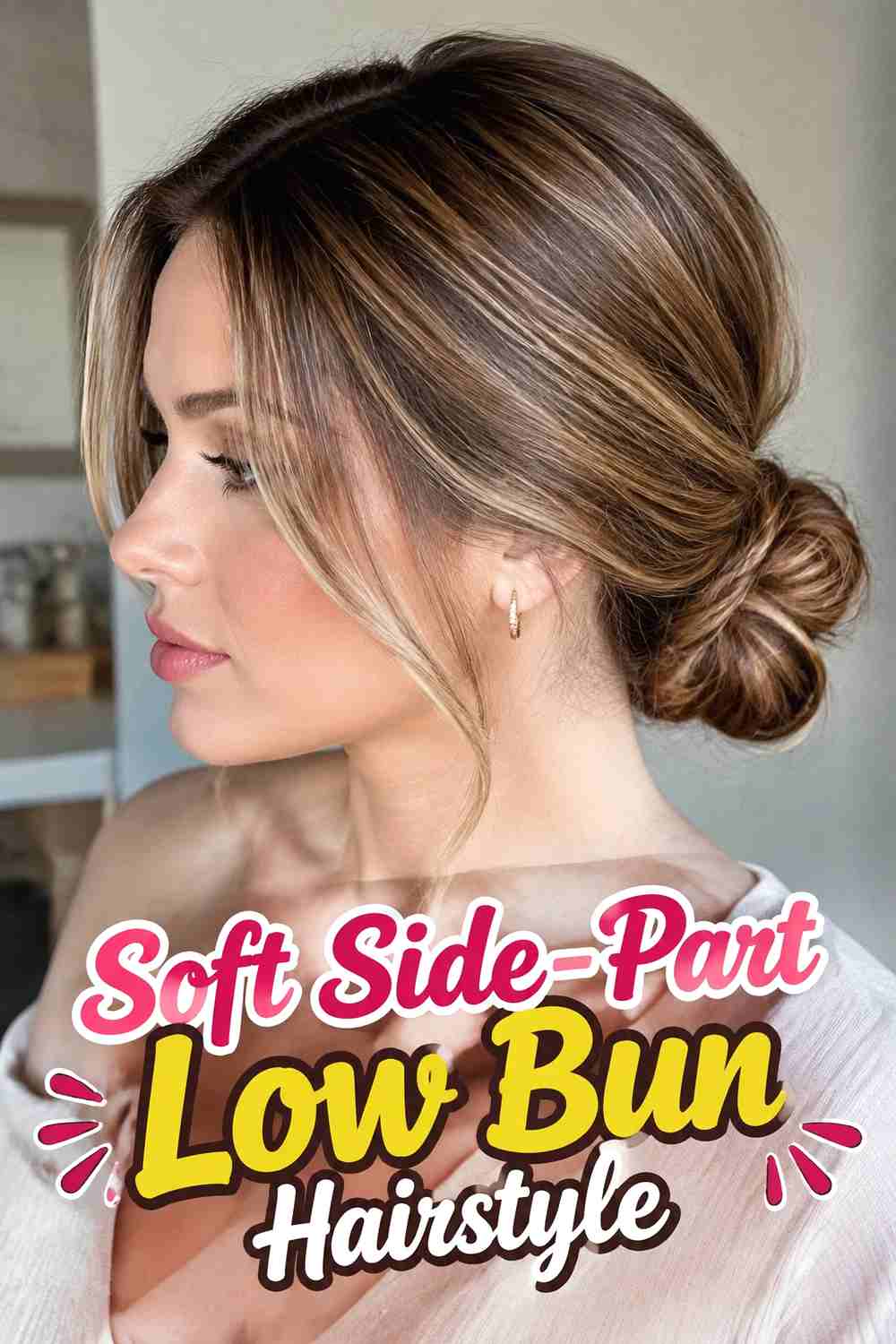
The soft side-part low bun offers the same understated finish as a classic sleek bun but with a slightly gentler silhouette. A natural side part introduces subtle movement across the front instead of strict symmetry, making the style feel polished without appearing severe. The bun can sit directly at the nape or slightly toward the side opposite the part for visual balance. This version works beautifully with straight, wavy, or lightly textured hair because the surface does not need to be perfectly flat. A small amount of natural movement near the crown can actually make the finished look feel more relaxed and wearable.
Best For
Choose this version when you want a neat low bun with a softer front profile. It transitions easily from office wear to dinners, events, and other occasions where understated polish works well.
3. Polished Knotted Low Bun Hairstyle
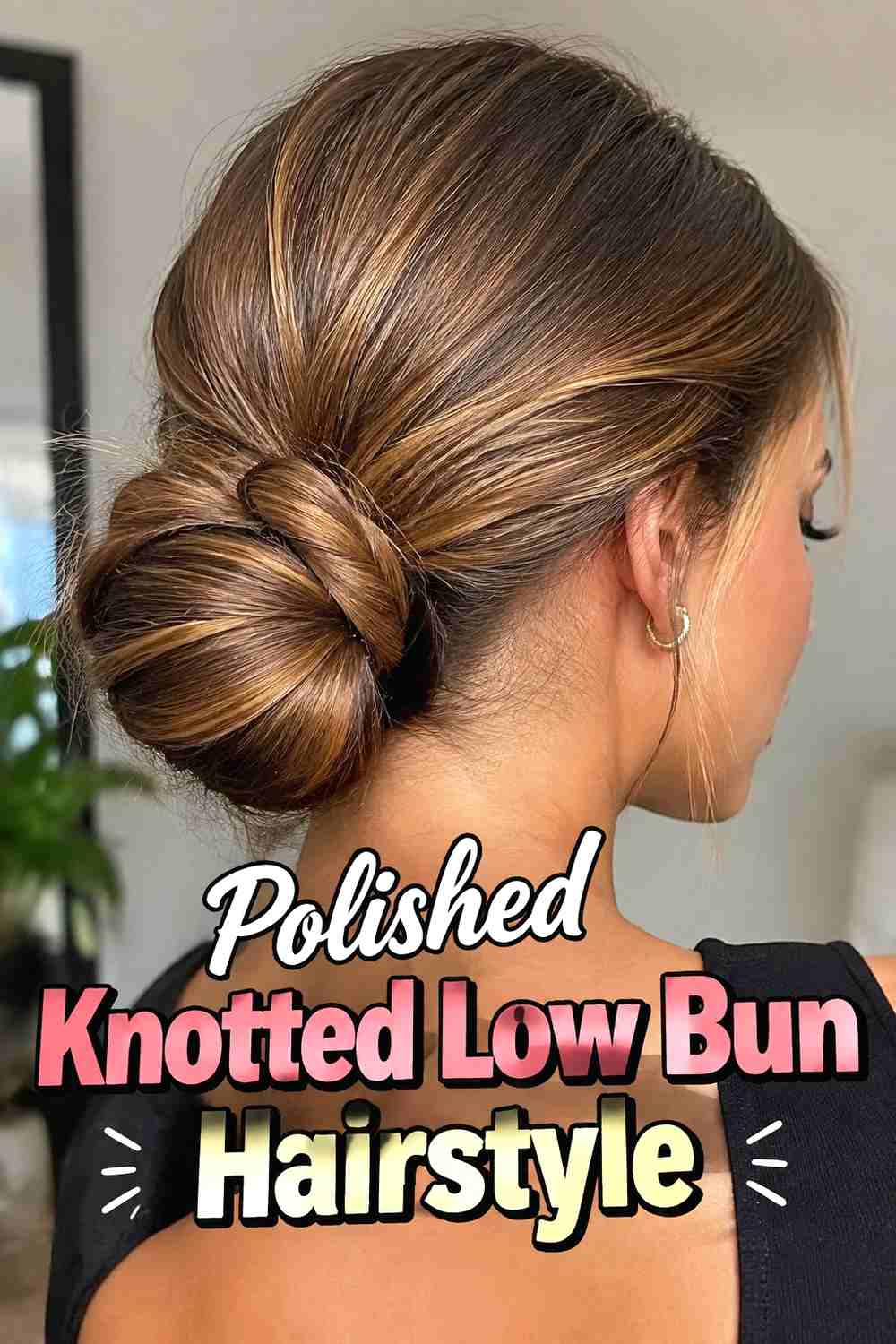
A polished knotted low bun adds just enough structure to make a simple updo feel distinctive. Instead of winding the ponytail into a standard circular bun, the hair is folded or tied into a compact knot and secured close to the nape. The visible overlap gives the style architectural interest while keeping the overall silhouette minimal. Medium to long hair usually provides enough length to create a clean knot without excessive loose ends. For a refined result, keep the base smooth and allow the knot itself to provide the texture. Conceal pins inside the folds so the finished shape looks uninterrupted.
Pro Tip
Build the knot loosely before pinning it permanently. Once the shape looks balanced, anchor the inside of the fold rather than placing visible pins across the outer surface.
4. Clean Twisted Low Bun Hairstyle
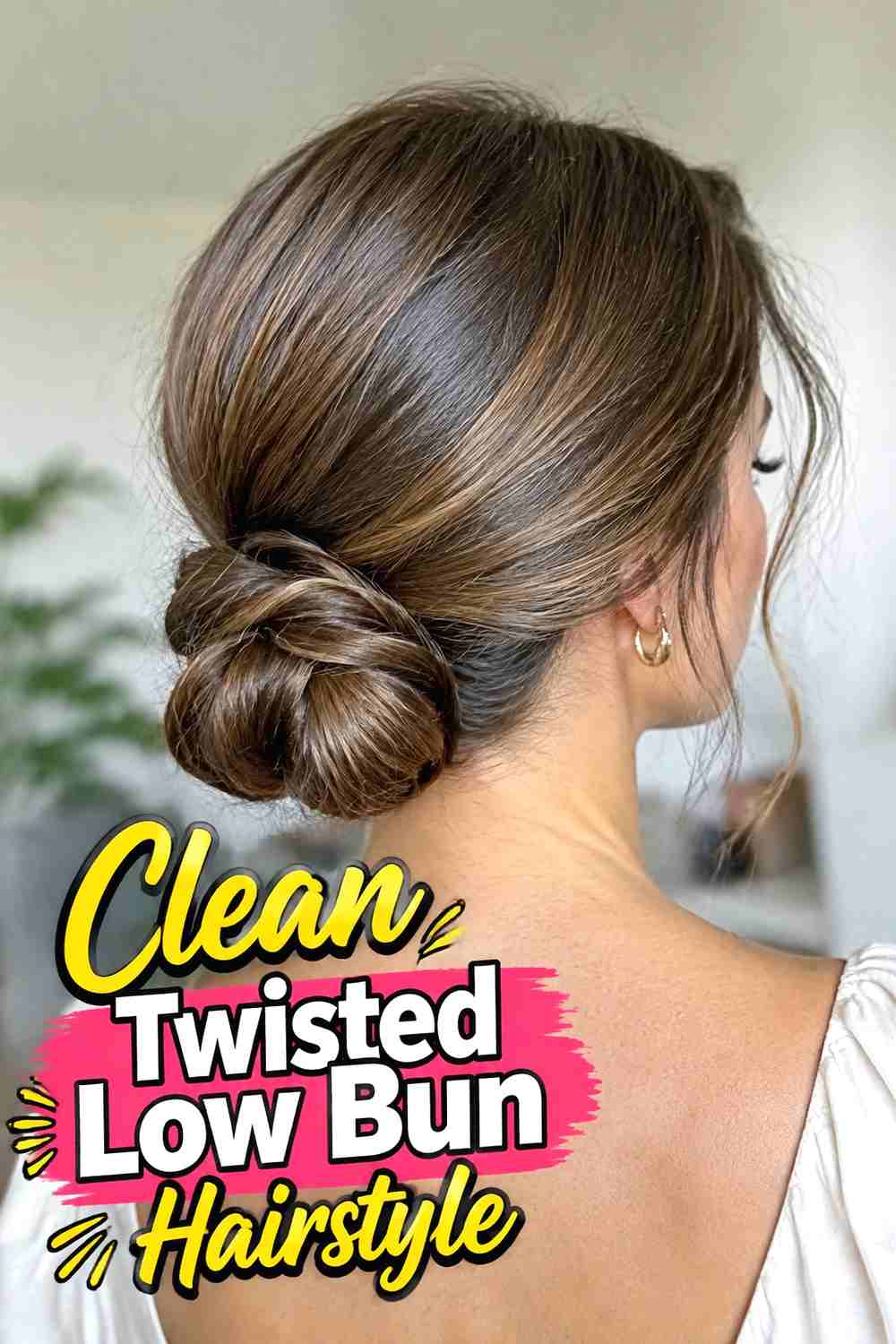
A clean twisted low bun uses directional texture instead of accessories to create interest. The hair is gathered low, divided or twisted as one section, then wrapped into a compact bun with the twist pattern still visible. This subtle spiral effect keeps the hairstyle minimalist while preventing it from looking completely flat. It is particularly useful for medium and long hair because the length naturally creates enough material for a defined twist. Keep the sides smooth and avoid pulling the twist apart too much. The goal is a controlled, elegant shape with visible movement rather than a loose or intentionally messy bun.
Styling Notes
Twist with consistent tension from the base to the ends before wrapping the hair around the ponytail. If the twist loosens unevenly, the bun may look bulky on one side.
5. Smooth Wrapped Low Bun Hairstyle
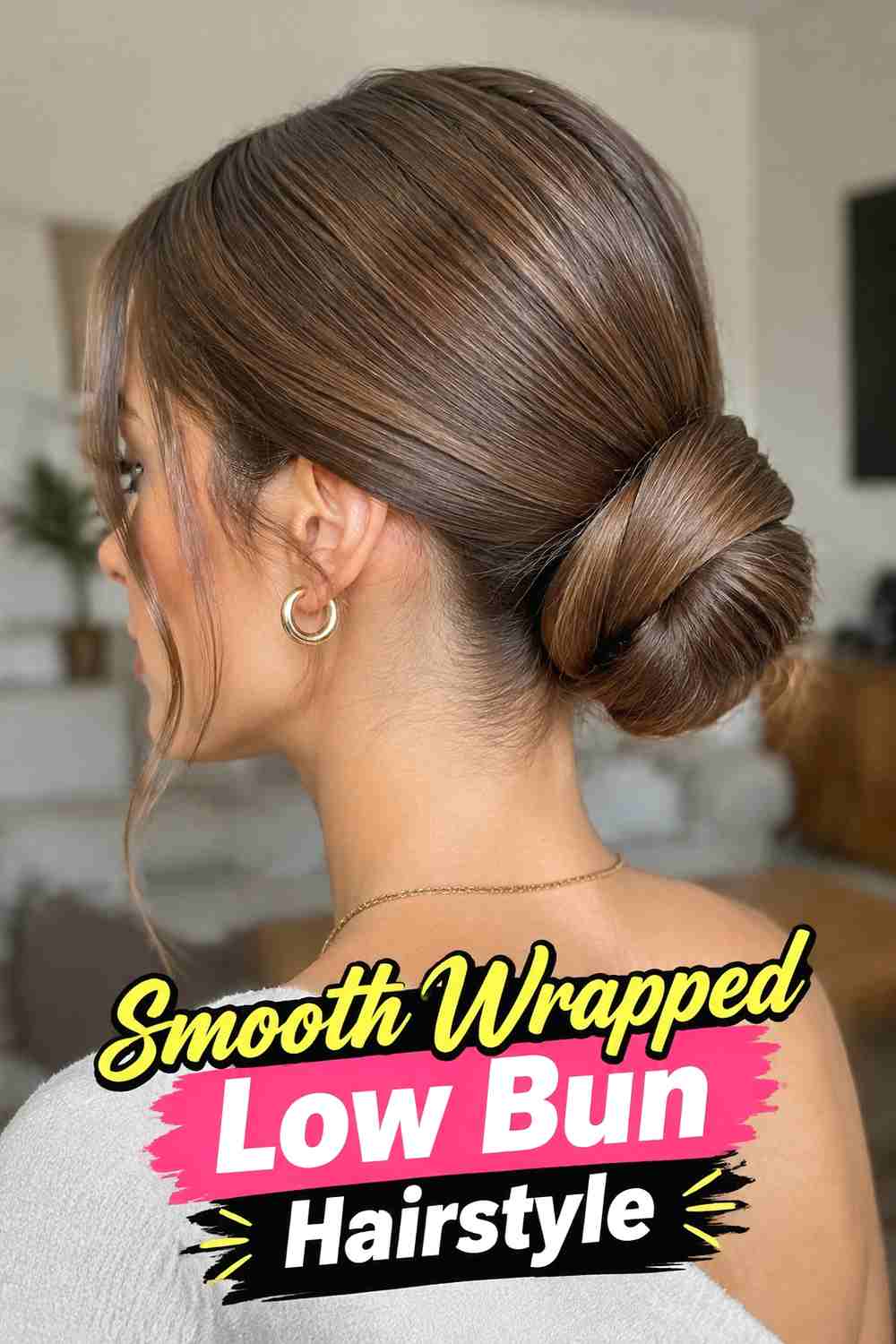
The smooth wrapped low bun creates a seamless, almost sculptural finish by hiding the attachment point beneath the hair itself. After forming a compact bun at the nape, a narrow section is wrapped around the base to conceal the elastic and create a continuous surface. The detail is subtle, but it makes the hairstyle look especially finished from the back. This version is ideal for hair that can hold a smooth shape without excessive flyaways. The wrapped section should sit flat rather than forming a thick rope around the bun. Finish with discreet pins underneath so the visible outline remains simple and clean.
Why It Works
Removing visible elastics and obvious hardware strengthens the minimalist effect. The eye follows one smooth line from the crown into the wrapped bun without being interrupted by extra accessories.
6. Relaxed Textured Low Bun Hairstyle
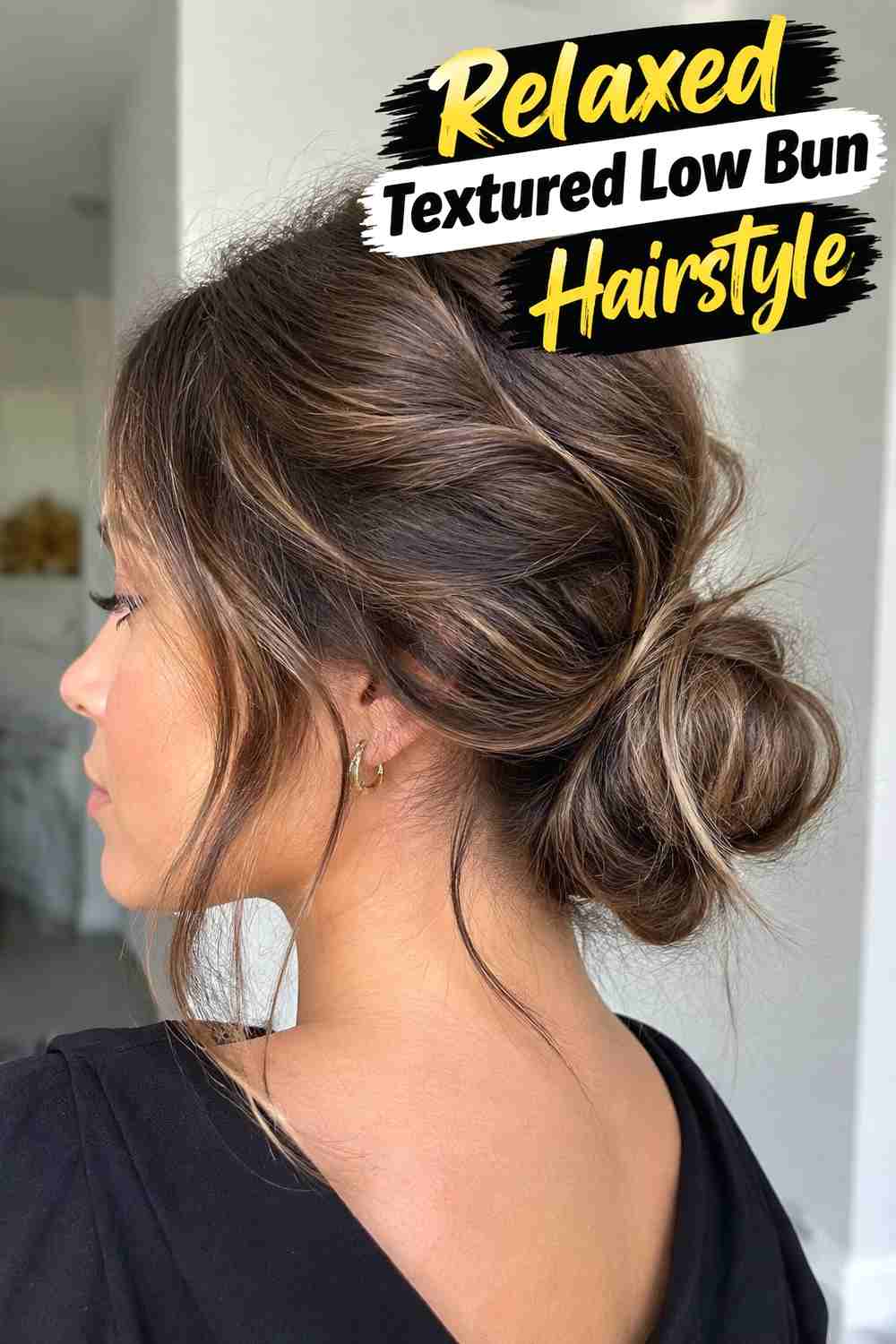
A relaxed textured low bun proves that minimalist styling does not always need a perfectly slick finish. Soft natural texture through the crown and bun creates a more effortless shape while the low placement keeps everything refined. Instead of aggressively smoothing every strand, allow slight movement around the surface and build the bun loosely enough to preserve dimension. This look works especially well on naturally wavy hair or hair with soft bends from a previous style. The key is controlled imperfection: the shape should remain intentional, with only a few wispy strands rather than widespread frizz or an overly loosened bun.
Hair Type & Length
Wavy, textured, and medium-to-thick hair naturally support this softer finish. Finer hair can create a similar effect with light texturizing spray and gentle loosening around the bun.
7. Low Bun With Face Framing Pieces Hairstyle
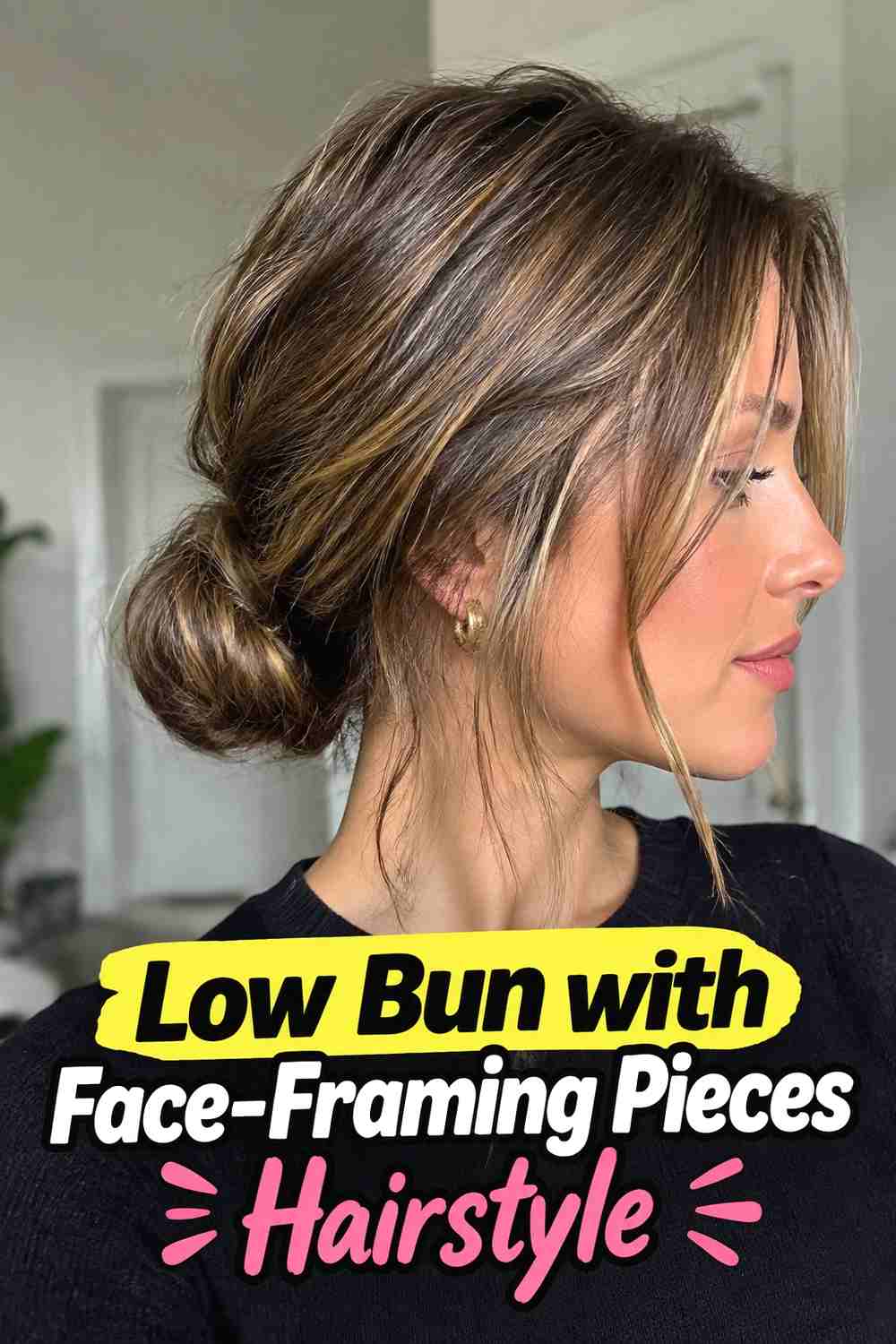
A low bun with face-framing pieces balances a tidy updo with a softer, more relaxed front. The majority of the hair stays neatly gathered at the nape, while one or two narrow sections are left loose around the face. These pieces can remain naturally straight, softly bent, or lightly curled depending on the finish you prefer. Keeping them fine and intentional is important for maintaining the minimalist mood. Thick loose sections can quickly shift the look toward a more romantic or undone updo. This style is particularly useful if a fully slicked-back front feels too severe or if you want movement around the cheekbones and jawline.
Pro Tip
Separate the face-framing pieces before gathering the bun. This prevents accidentally pulling out larger sections later and helps keep both sides balanced.
8. Glossy Wet Look Low Bun Hairstyle
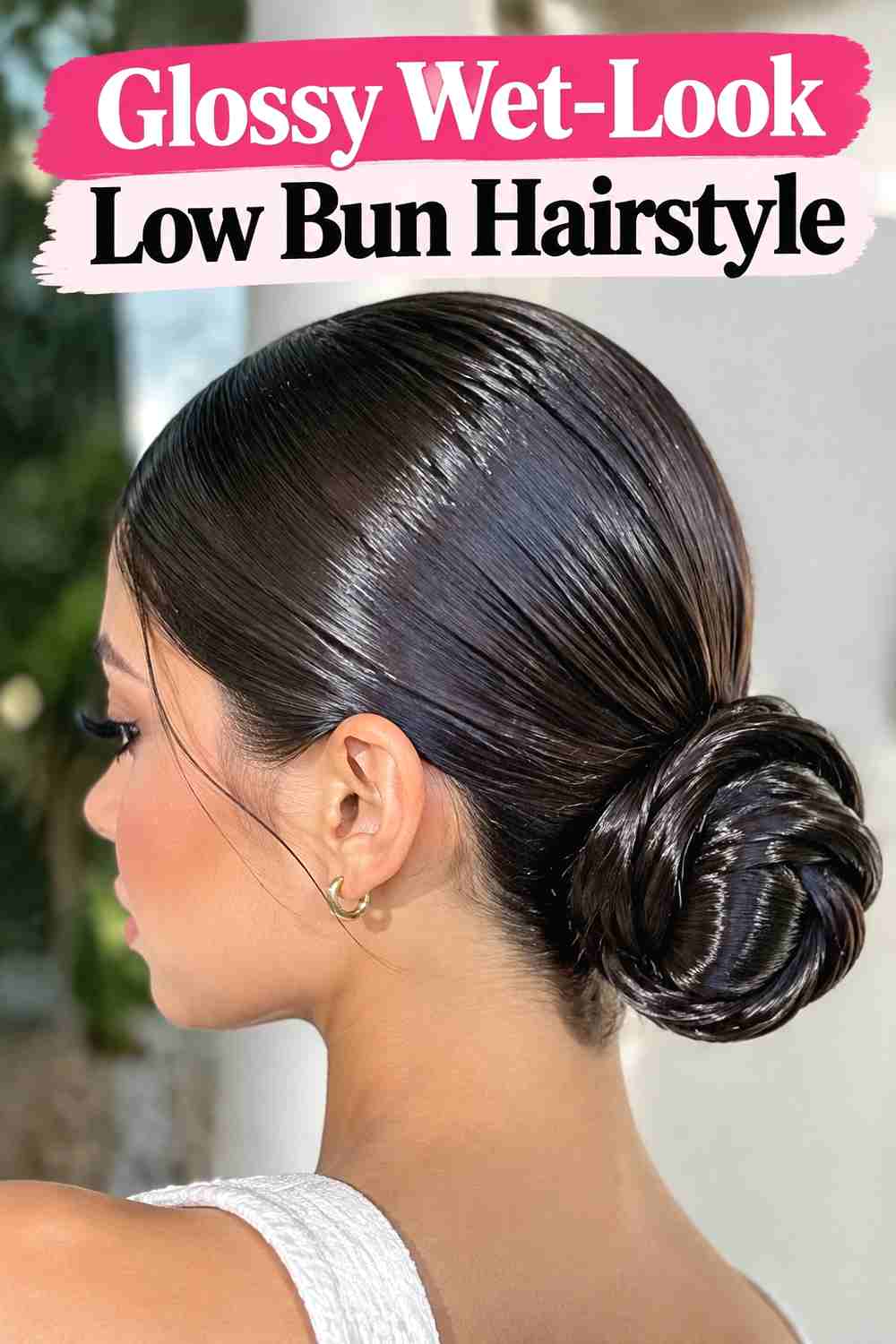
The glossy wet-look low bun brings a fashion-forward edge to an otherwise classic shape. Hair is directed smoothly away from the face with visible shine and controlled separation, then secured into a compact bun at the nape. The finish should look deliberately glossy rather than saturated or greasy, so product placement matters. Concentrate styling gel or cream through the top and sides while keeping the bun neatly defined. This style works especially well for evenings, formal events, or minimalist outfits where the clean hair shape can act as a strong visual detail. A simple part or completely brushed-back front can both suit the look.
Styling Notes
Apply glossy styling product gradually, beginning with a small amount. Comb it evenly through the surface so you do not end up with isolated heavy patches or stiff-looking sections.
9. Minimalist Braided Low Bun Hairstyle
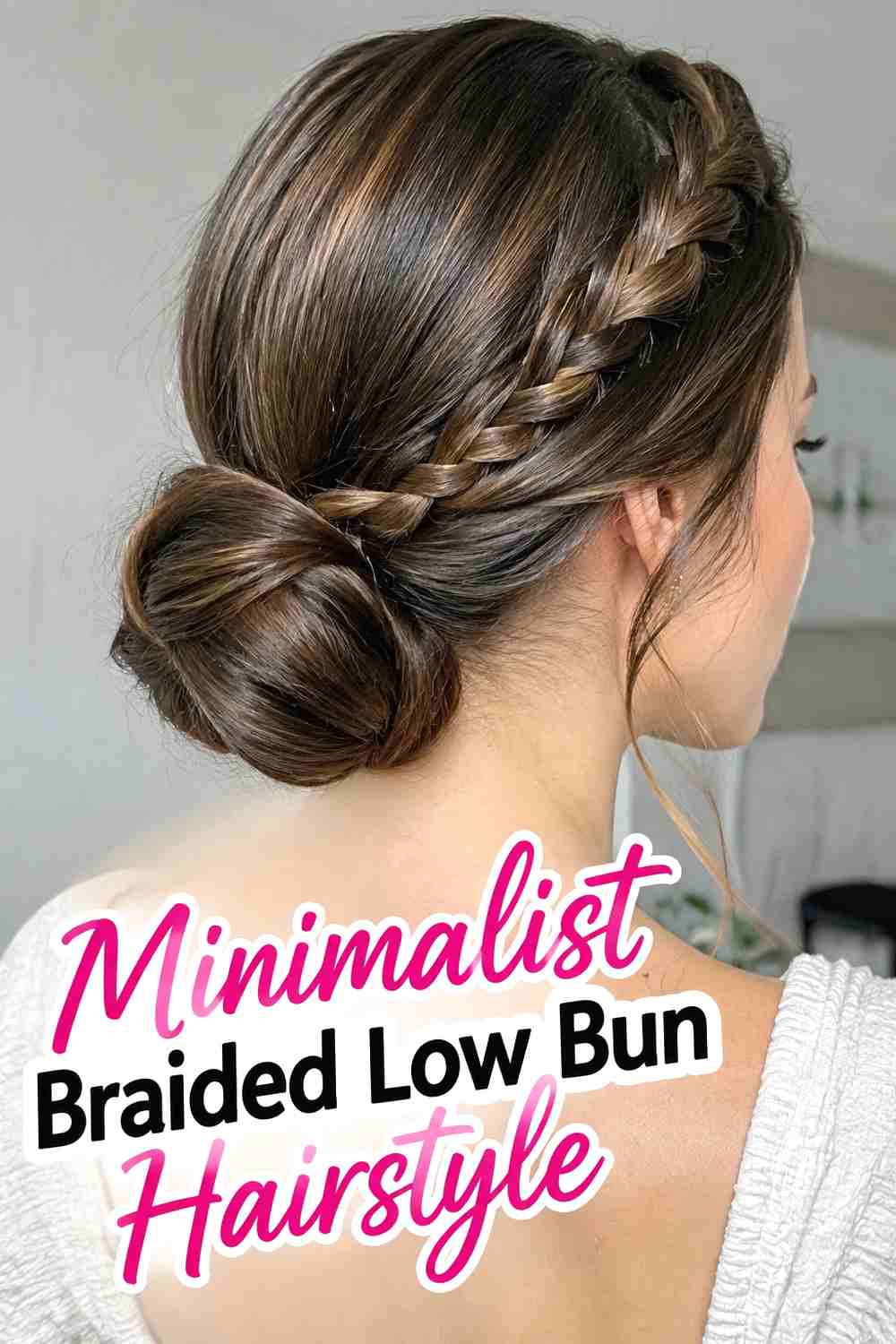
A minimalist braided low bun introduces detail without making the hairstyle feel ornate. The hair is first secured in a low ponytail, braided simply, then wrapped into a small bun at the nape. From a distance, the silhouette stays neat and compact; up close, the braid creates subtle woven texture. A basic three-strand braid is often the best choice because it preserves the clean aesthetic and is easy to secure. Medium and long hair work especially well, while very layered hair may require a few discreet pins to prevent shorter pieces from escaping. Keep the crown smooth so the braided bun remains the single focal point.
Wear & Maintenance
This style tends to stay contained because the braid organizes the length before it is wrapped. It can be a practical option when you need a secure bun that still looks refined.
10. Low Bun With Hidden Pins Hairstyle
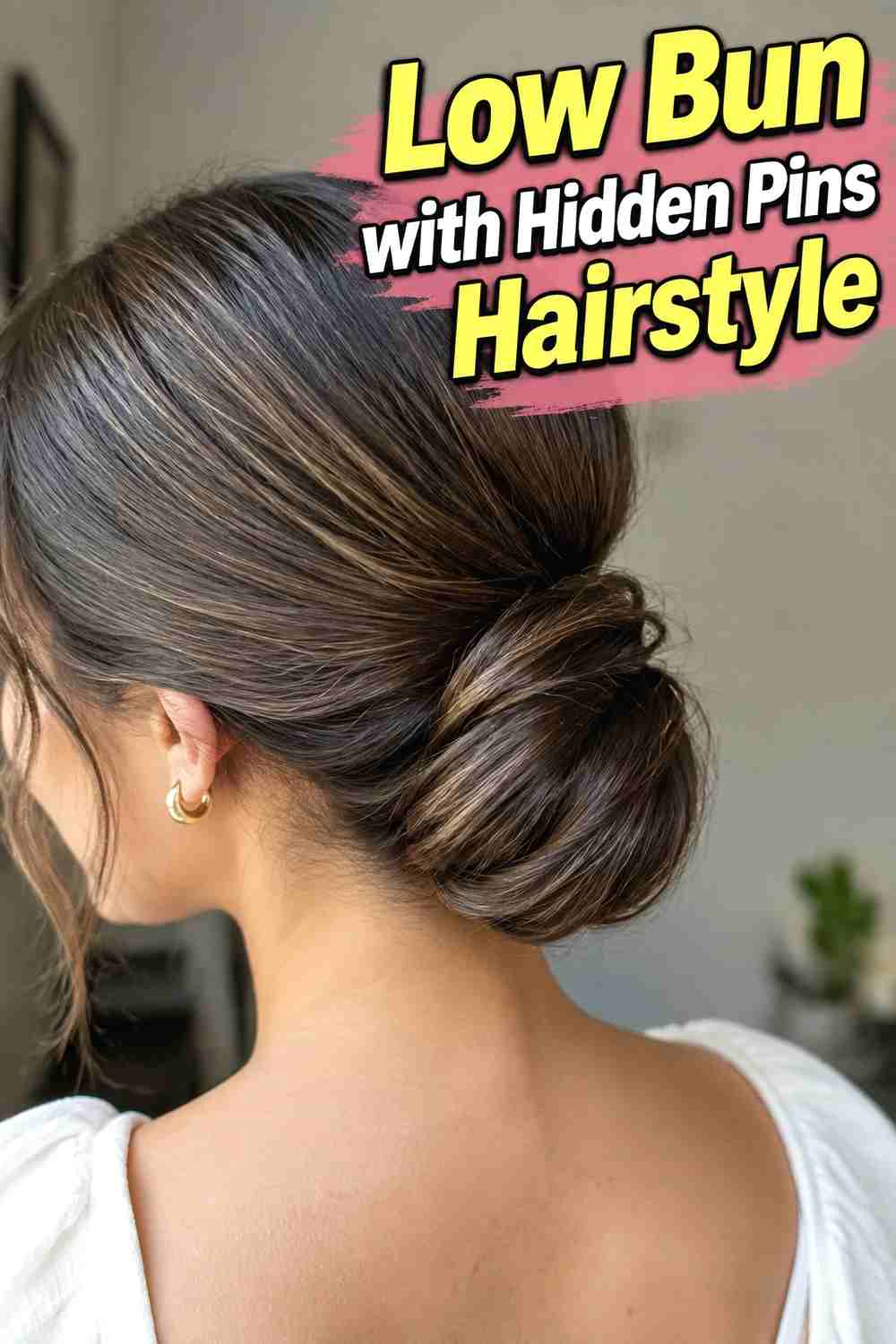
A low bun with hidden pins focuses entirely on a seamless silhouette. The bun is shaped close to the nape, but every pin is placed underneath or inside the folded hair so no hardware interrupts the surface. This creates a particularly clean result for minimalist outfits, professional settings, or formal looks where visible accessories are unnecessary. The exact bun can be softly rounded or slightly elongated depending on hair length and density. Strong placement matters more than using a large number of pins. Anchor small sections strategically and test the bun’s stability before adding extra hardware that may make the shape feel stiff or bulky.
Pro Tip
Insert pins toward the center of the bun rather than straight across its surface. Crossing two concealed pins underneath can create extra stability without changing the visible shape.
11. Tucked Nape Low Bun Hairstyle
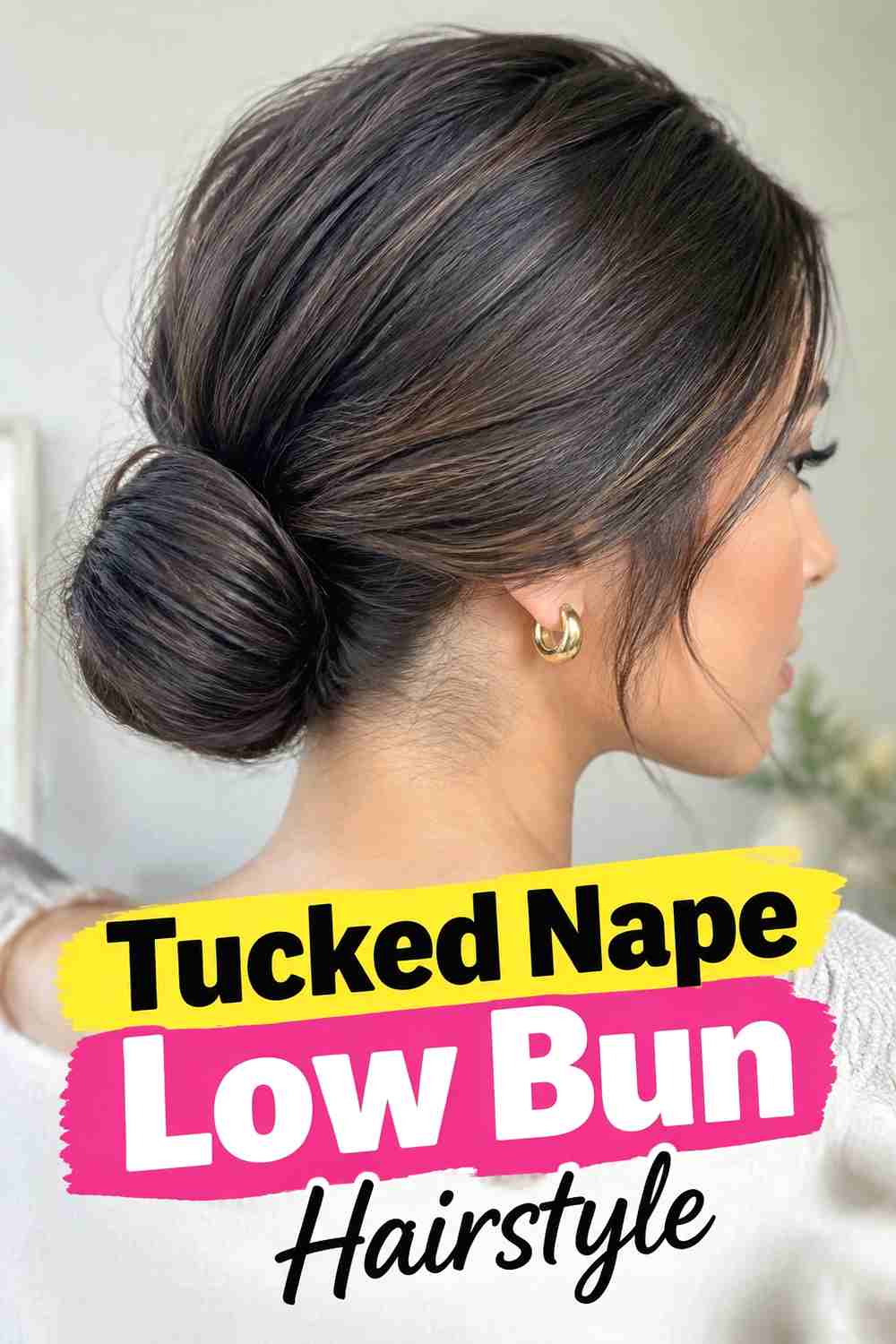
The tucked nape low bun has an understated folded appearance that sits very close to the neck. Instead of building a rounded bun outward, the length is rolled or tucked inward and pinned beneath itself, producing a slim horizontal shape. This makes the hairstyle especially appealing when you want an updo that looks subtle from both the front and side. Medium-length hair is often easiest to tuck, while longer hair may need to be folded more than once before securing. Keep the crown smooth but not overly tight, and position the roll evenly so it follows the natural line of the nape.
Best For
This compact shape pairs particularly well with structured collars, high necklines, and minimal jewelry because it keeps the back of the hairstyle neat and visually quiet.
12. Soft Loop Low Bun Hairstyle
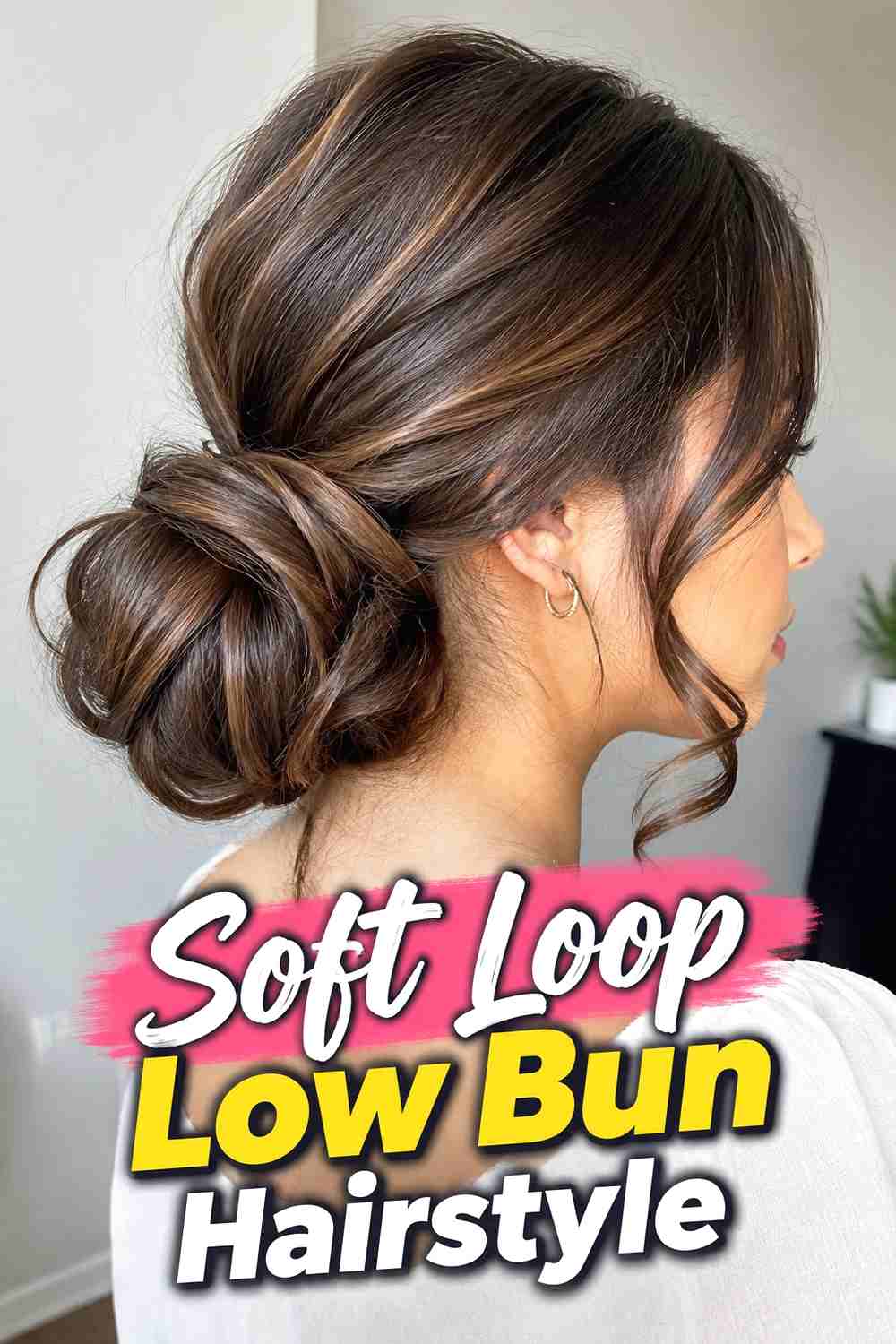
A soft loop low bun keeps the construction simple by partially pulling the ponytail through its elastic instead of wrapping every inch into a traditional bun. The result is a smooth folded loop with a small section of ends that can be tucked underneath for a cleaner finish. It feels modern and slightly casual while still maintaining the restrained look associated with minimalist hairstyles. The technique works particularly well on medium to long hair and can be adjusted depending on density. Keep the loop compact and close to the nape rather than oversized. A gently smoothed crown completes the uncomplicated silhouette.
Styling Notes
Pull the final loop through gradually so you can control its size. Once the proportion looks right, tuck remaining ends underneath and secure them discreetly rather than wrapping them visibly around the outside.
13. Deep Side Part Sculpted Low Bun Hairstyle
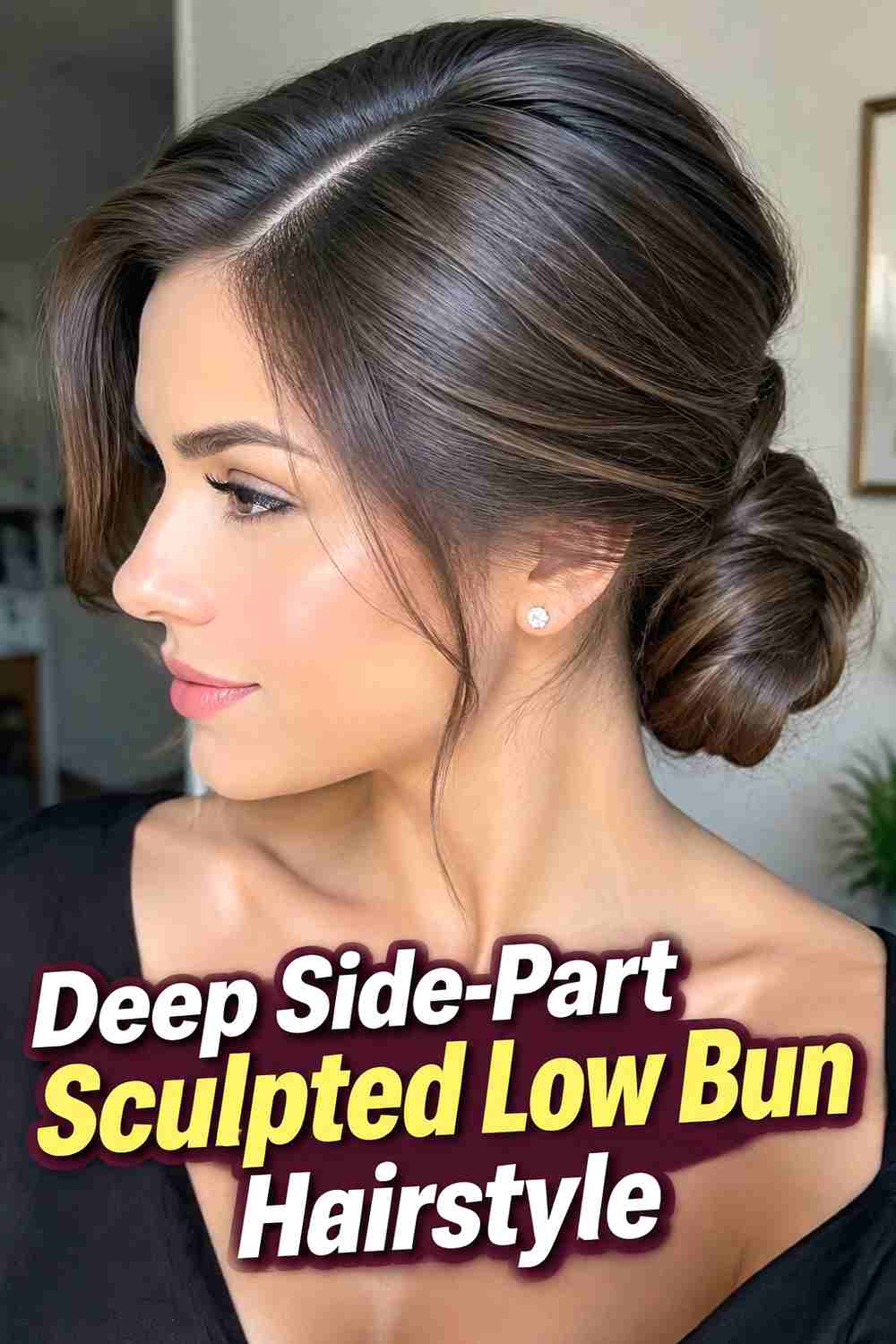
A deep side-part sculpted low bun uses asymmetry to make a minimalist shape feel more dramatic. The deep part creates a smooth sweep across the forehead, while the sides are directed into a compact bun at the nape. Keeping the surface polished allows the parting and curved front section to become the main design features. This look suits occasions where you want something clean but slightly more formal than an everyday center-part bun. Straight or smoothed textures make the sculpted shape easiest to define. Avoid excessive volume at the crown, since a flatter, controlled profile strengthens the modern editorial effect.
Why It Works
The strong side part adds visual direction without requiring braids, accessories, or elaborate volume. It creates a distinctive front view while preserving the simplicity of the low bun from behind.
14. Satin Ribbon Low Bun Hairstyle
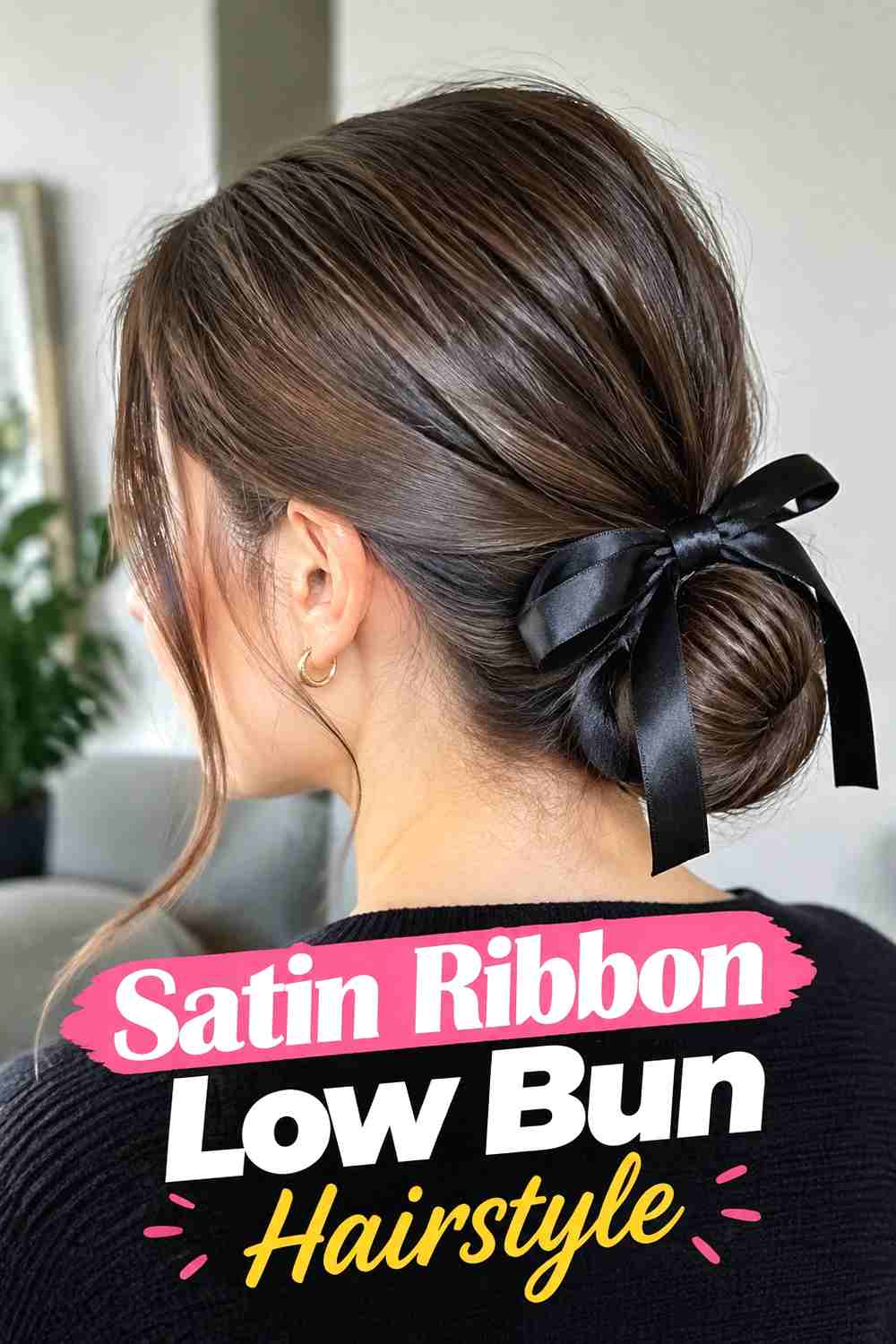
A satin ribbon low bun adds one restrained accessory to an otherwise simple hairstyle. The hair is gathered into a clean bun at the nape, then finished with a narrow ribbon tied around the base or into a small bow. Choosing a ribbon close to the hair color, outfit, or a neutral shade keeps the effect sophisticated rather than decorative. The bun itself can be sleek or softly textured, but avoid adding several other details at the same time. Secure the hairstyle with an elastic and pins first so the ribbon remains decorative instead of carrying the weight of the hair.
Styling Notes
Choose a slim ribbon with a smooth finish and keep the tails proportionate to the bun. Shorter tails create a cleaner minimalist impression than a large, oversized bow.
How to Choose the Right Look
Start with the finish you prefer. If you like crisp, highly controlled styling, the sleek center-part bun, wet-look bun, wrapped bun, or sculpted side-part version will give you the cleanest surface. If you prefer something softer, the relaxed textured bun, face-framing version, soft loop, and side-part bun keep the shape polished without eliminating all natural movement.
Hair length affects construction as well. Medium-length hair is often easy to tuck or loop, while longer hair gives you more flexibility for knots, twists, wraps, and braided buns. Very thick hair may need a slightly larger bun or stronger hidden anchors to prevent the shape from feeling overloaded at the nape.
Think about comfort and wear time before choosing the tightness. A low placement generally distributes weight more comfortably than a high bun, but an aggressively slick style can still create unnecessary tension. Secure the base firmly enough for your activity without pulling painfully at the hairline.
For formal occasions, polished knots, sculpted parts, glossy finishes, and hidden-pin buns create a refined effect. For everyday wear, a soft side part, relaxed texture, loop bun, or small face-framing pieces can feel easier and less structured. If you want a subtle accent, choose one detail—such as a braid or satin ribbon—rather than combining several decorative elements.
Final Thoughts
Minimalist low buns work because small details make a noticeable difference. A precise part, clean twist, tucked finish, soft texture, or simple ribbon can give the same basic low-bun shape a completely different personality.
Choose a version that suits your natural texture, hair length, styling time, and desired level of polish. The goal is not perfect uniformity but a controlled silhouette that feels intentional, comfortable, and easy to wear.
FAQs
1. How do I make a low bun look minimalist?
Keep the silhouette simple and limit the number of visible details. A clean part, compact bun, controlled texture, and discreet pins are usually enough.
2. Can a minimalist low bun work on textured hair?
Yes. Natural waves, curls, and coils can create beautiful low buns without being completely smoothed. Focus on a clear overall shape and secure construction rather than eliminating natural texture.
3. How can I stop a low bun from slipping?
Begin with a secure ponytail or anchor point, then pin the bun into the hair close to the scalp. Slight texture often gives pins and elastics more grip than freshly conditioned, very slippery hair.
4. Is a low bun suitable for fine hair?
Yes. Fine hair can work especially well with soft loops, small knots, and gently textured buns. Avoid making the bun excessively large if doing so requires heavy teasing or too much product.
5. How can I make a low bun look polished without using lots of product?
Work with small sections, create a clean part, smooth the surface with a brush, and place pins carefully. A small amount of lightweight styling cream or finishing spray is often enough.
Save your favorite minimalist low bun hairstyle ideas, share them for later inspiration, and explore more simple ways to create polished everyday hair.