20 Knit Bonnet Face-Framing Curl Hairstyle Ideas
Soft curls peeking from beneath a cozy knit bonnet create an easy face-framing detail that feels polished, warm, and naturally photogenic.
A knit bonnet can do more than keep hair covered in cool weather. When a few thoughtfully shaped curls are left visible around the face, the combination creates softness, movement, and contrast against the knitted texture. The exact effect changes depending on whether the curls are loose, tightly coiled, polished, wispy, or layered.
The best look depends on your curl pattern, bonnet fit, hair length, and how much hair you want exposed. A close-fitting cuff gives a cleaner silhouette, while a slouchier bonnet pairs well with airy or relaxed curls. The ideas below vary the knit texture, parting, curl size, and face-framing placement so you can find a version that feels comfortable and intentional.
Quick List
- Ribbed Knit Bonnet Soft Ringlet Hairstyle
- Cable Knit Bonnet Side Part Curl Hairstyle
- Slouchy Knit Bonnet Wispy Curl Hairstyle
- Folded Brim Knit Bonnet Defined Curl Hairstyle
- Cream Knit Bonnet Spiral Curl Hairstyle
- Pastel Knit Bonnet Center Part Curl Hairstyle
- Chunky Knit Bonnet Bouncy Curl Hairstyle
- Neutral Knit Bonnet Curtain Curl Hairstyle
- Pom Pom Knit Bonnet Loose Ringlet Hairstyle
- Deep Cuff Knit Bonnet Polished Curl Hairstyle
- Soft Wool Knit Bonnet Natural Coil Hairstyle
- Oversized Knit Bonnet Layered Curl Hairstyle
- Minimal Knit Bonnet Jawline Curl Hairstyle
- Textured Knit Bonnet Airy Curl Hairstyle
- Monochrome Knit Bonnet Sculpted Curl Hairstyle
- Fisherman Rib Knit Bonnet S Curl Hairstyle
- Cozy Knit Bonnet Romantic Tendril Hairstyle
- Cropped Knit Bonnet Defined Coil Hairstyle
- Double Rib Knit Bonnet Soft Wave Curl Hairstyle
- Luxe Knit Bonnet Face Framing Ringlet Hairstyle
1. Ribbed Knit Bonnet Soft Ringlet Hairstyle
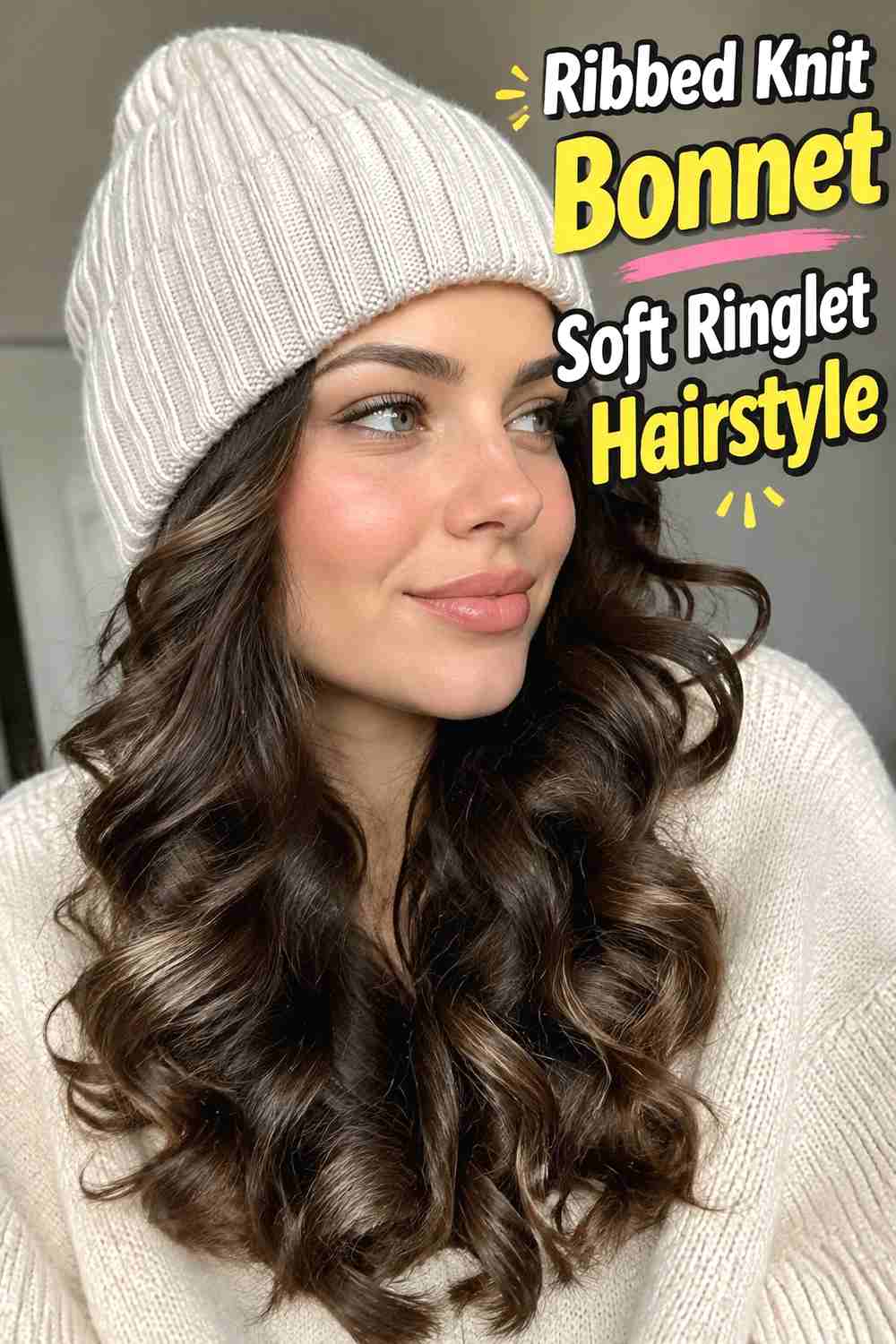
A ribbed knit bonnet paired with soft ringlets creates a balanced look because the clean vertical texture of the knit contrasts with rounded curls near the cheeks. Leave two or three narrow sections visible around the temples and allow them to form relaxed ringlets rather than tightly structured spirals. The rest of the hair can remain comfortably contained beneath the bonnet, making this style practical as well as polished. Medium and long hair are easy to adapt, while shorter front layers can create the face-framing effect naturally. Keep the bonnet slightly behind the hairline so the curls have room to fall without being flattened at their roots.
Styling Notes
Shape the visible curls before putting on the bonnet, then gently reposition them afterward. Avoid repeatedly pulling the curls from underneath, which can disturb their definition.
2. Cable Knit Bonnet Side Part Curl Hairstyle
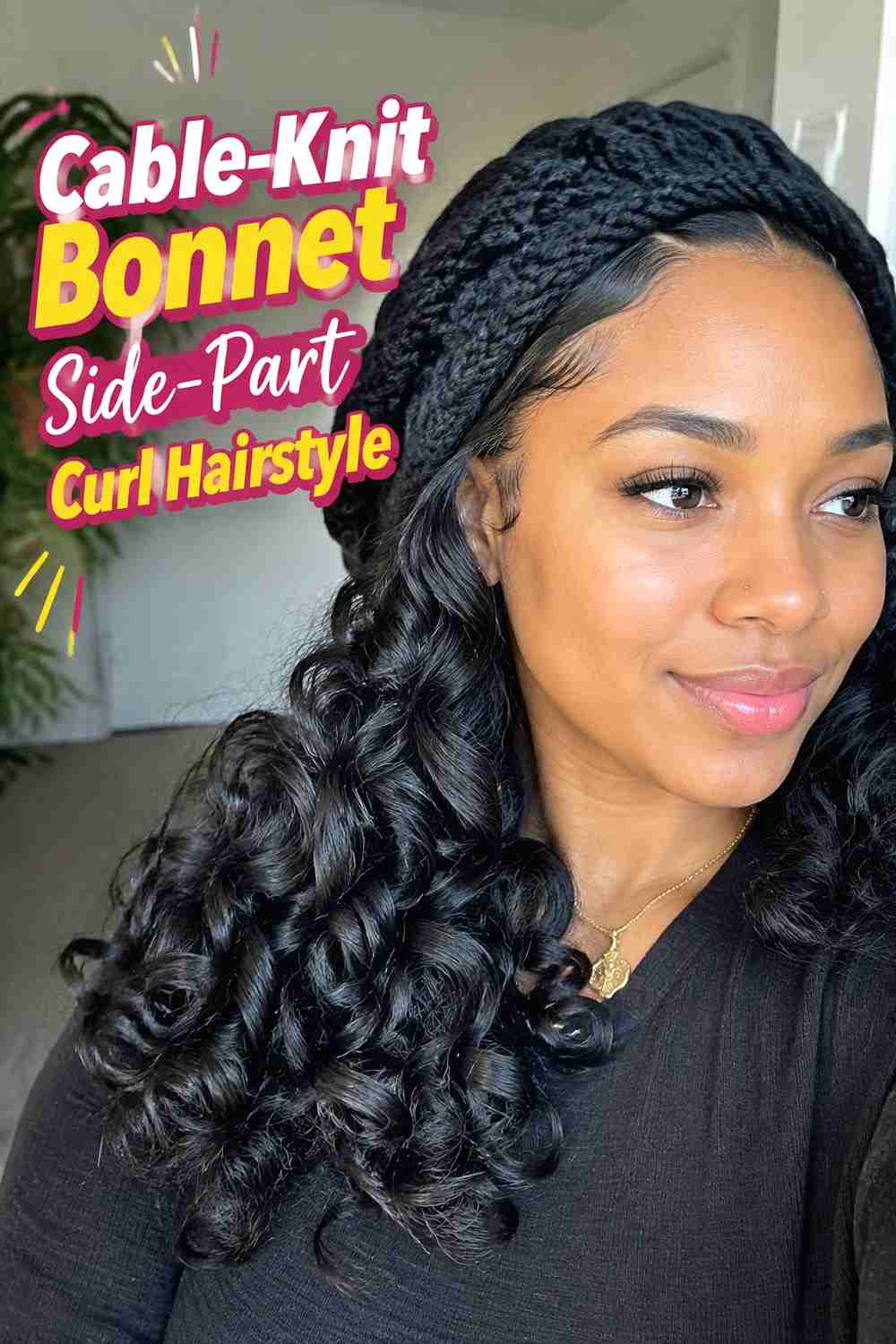
A cable-knit bonnet adds strong visual texture, so a simple side-part curl arrangement keeps the overall look balanced. Create a natural side part and leave a slightly fuller curled section visible on the heavier side, with one smaller curl near the opposite temple. This asymmetry works especially well with loose spirals or softly defined natural curls. Position the bonnet behind the part instead of covering it completely so the directional shape remains noticeable. The combination feels cozy without looking overly casual because the curls create a deliberate frame around the face. Medium-density hair usually provides enough fullness without crowding the textured knit.
Best For
This look is useful when you want a face-framing style that feels softer than a center part and works easily with everyday cold-weather outfits.
3. Slouchy Knit Bonnet Wispy Curl Hairstyle
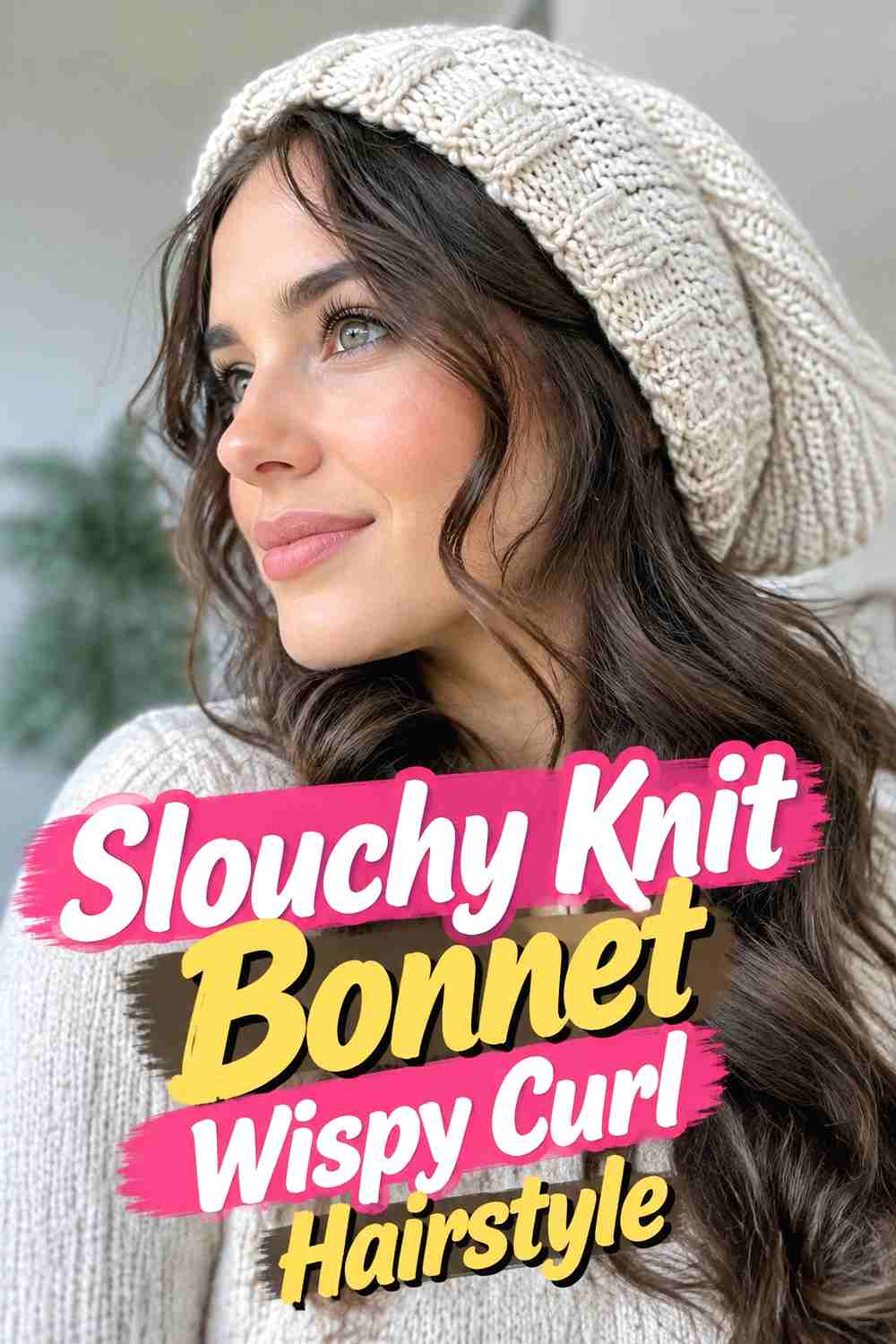
A slouchy knit bonnet works naturally with wispy face-framing curls because both elements have a relaxed silhouette. Instead of leaving thick sections around the face, pull out only a few lightweight strands near the temples and ears, then add a gentle bend or loose curl. The curls should look soft and slightly irregular rather than perfectly matched. A little crown space underneath the bonnet helps prevent the front from appearing compressed, while the slouch at the back gives the hairstyle an effortless profile. This version is particularly practical for layered hair, since shorter pieces can frame the face without requiring you to expose much of the overall length.
Pro Tip
Choose the face-framing pieces before placing the bonnet. Pulling strands out randomly afterward can create uneven sections or disturb the hair underneath.
4. Folded Brim Knit Bonnet Defined Curl Hairstyle
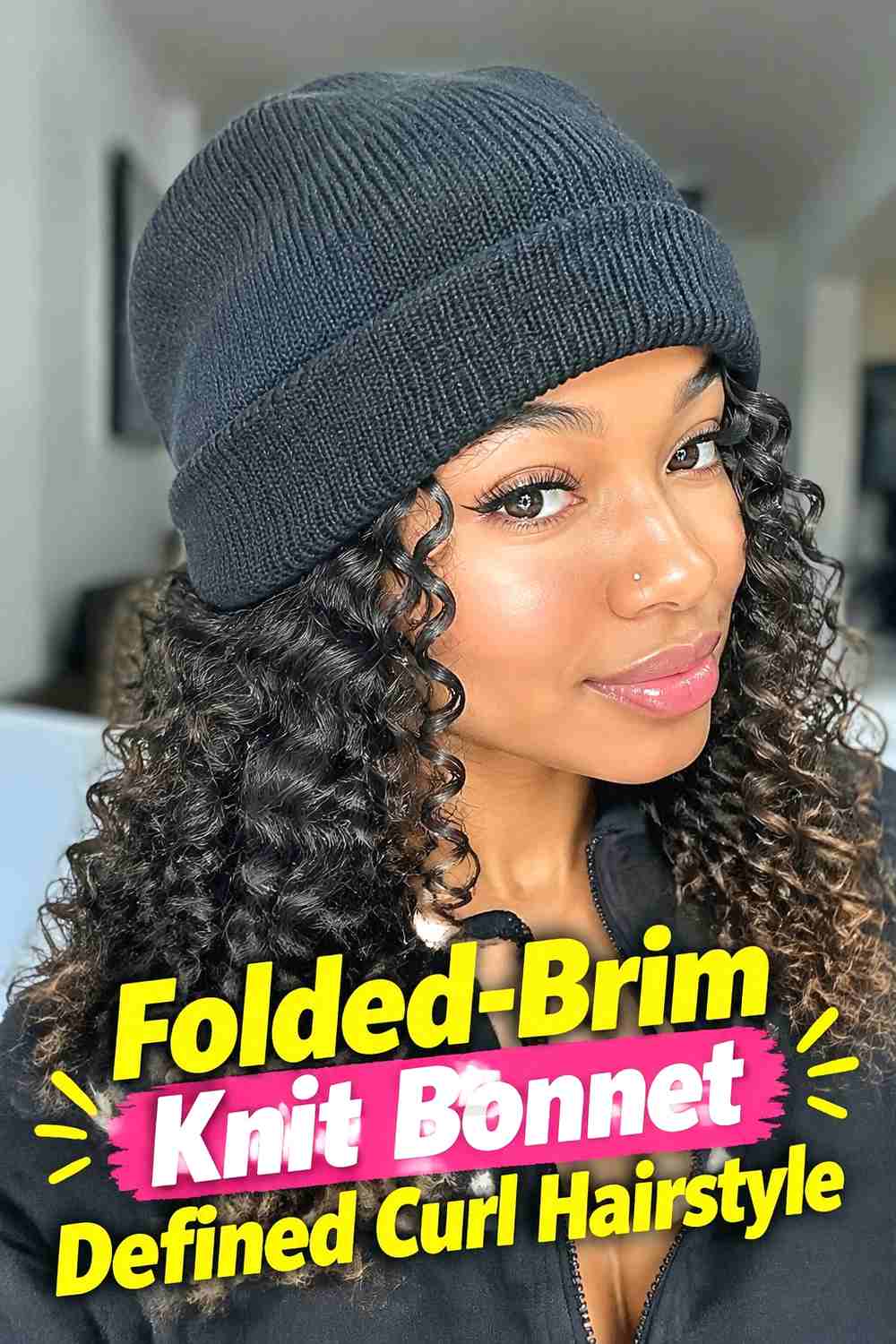
A folded-brim knit bonnet creates a clean line across the forehead, which makes defined curls around the face especially noticeable. Leave one or two polished curls on each side and keep their shape clear from root to tip. The structured brim works well with medium-size spirals because they provide enough contrast without overwhelming the face. Position the folded edge just behind the curl roots so the bonnet does not flatten them against the skin. This style can suit naturally curly hair or pre-curled straight and wavy textures. Keep the rest of the visible hair minimal so the combination remains neat and the defined front curls stay the main feature.
Styling Notes
Use small amounts of curl cream or lightweight hold product on the exposed sections only. Too much product can make the curls look stiff beside the soft knit texture.
5. Cream Knit Bonnet Spiral Curl Hairstyle
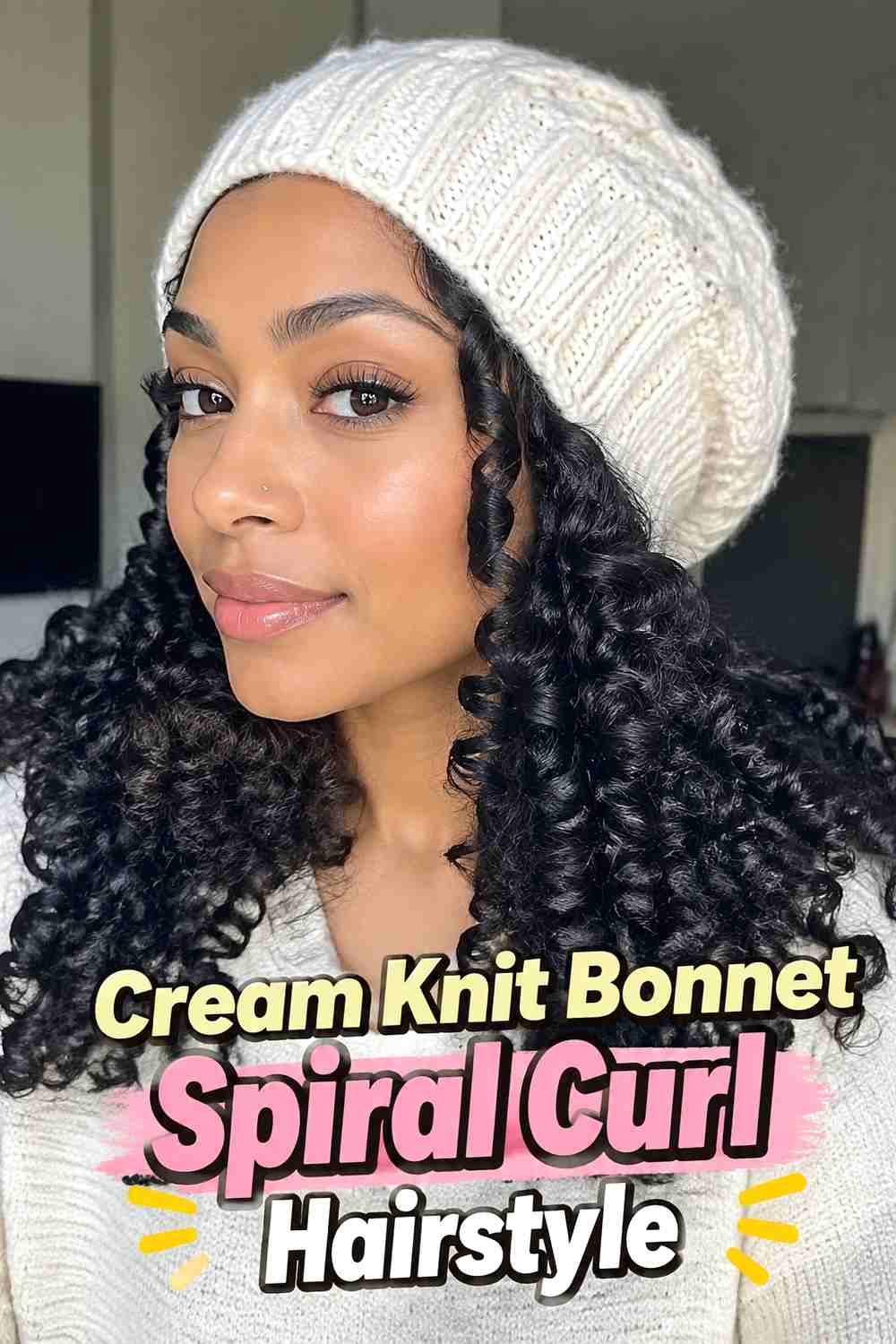
A cream knit bonnet creates a soft neutral background that lets spiral curls become the visual focus. Choose two to four defined spirals around the face, allowing them to fall at slightly different lengths near the cheekbones and jaw. The variation keeps the framing natural while still looking styled. A light-colored bonnet also emphasizes strand detail, making shine and curl definition more visible in photographs. This combination works especially well with medium-to-dark hair, although any hair color can create attractive contrast. Keep the bonnet fit secure but not overly tight, since pressure near the temples can stretch the curl pattern and make the front pieces sit unevenly.
Why It Works
The simple neutral knit keeps attention on curl shape, making this an easy option when you want the hairstyle rather than the accessory color to stand out.
6. Pastel Knit Bonnet Center Part Curl Hairstyle
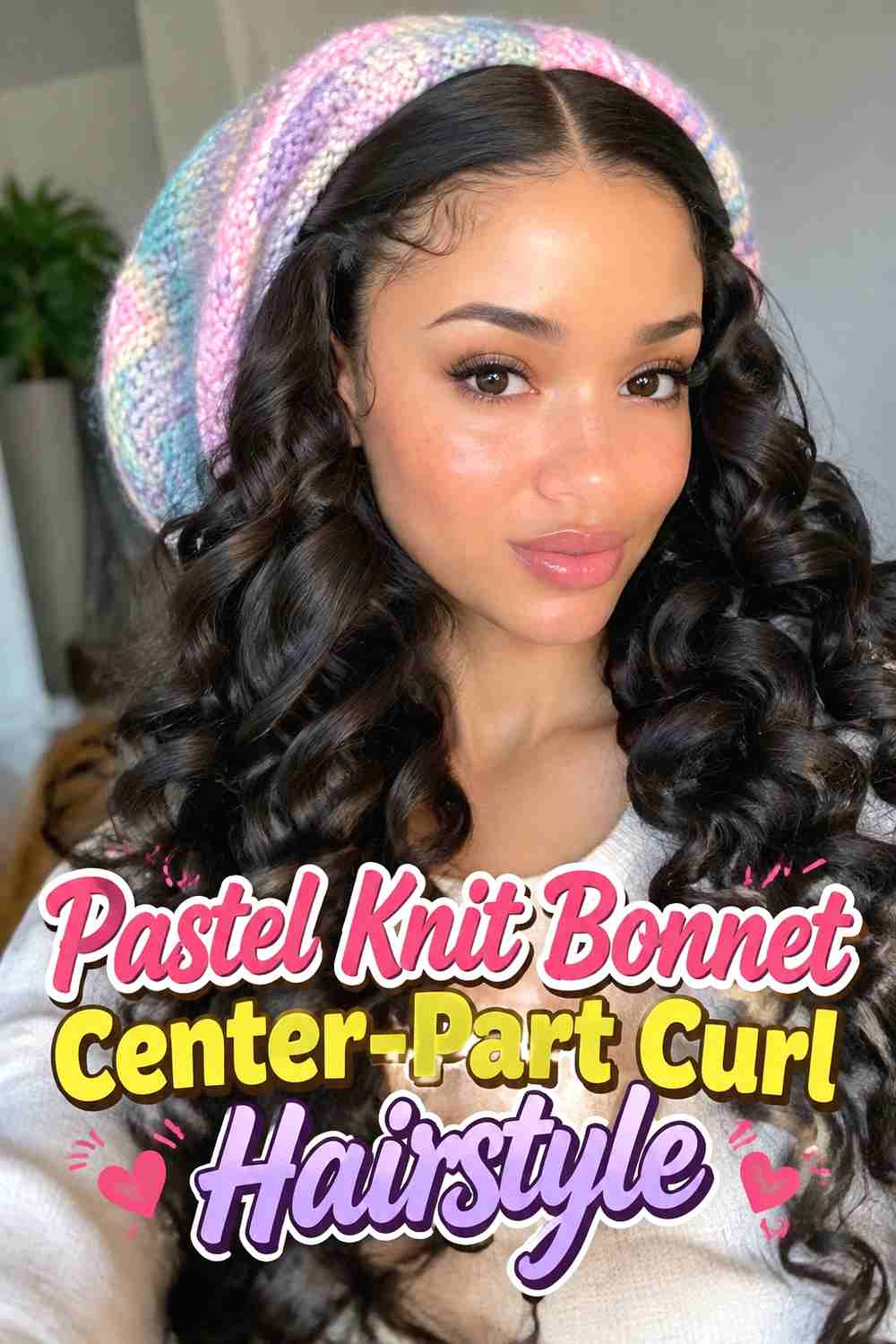
A pastel knit bonnet paired with a center part creates a soft, symmetrical look with a playful color accent. Divide the visible front hair evenly and allow one curl or curled section to fall on each side of the face. The curls can start near the cheekbones for a subtle frame or slightly higher for more noticeable movement around the temples. A bonnet in a muted pastel shade keeps the look bright without competing with the hair. This style suits straight, wavy, and curly textures because the face-framing pieces can be shaped independently while most of the hair remains tucked comfortably away.
Best For
Choose this version when you like balanced styling and want the bonnet color to add personality without introducing extra accessories or complicated hair details.
7. Chunky Knit Bonnet Bouncy Curl Hairstyle
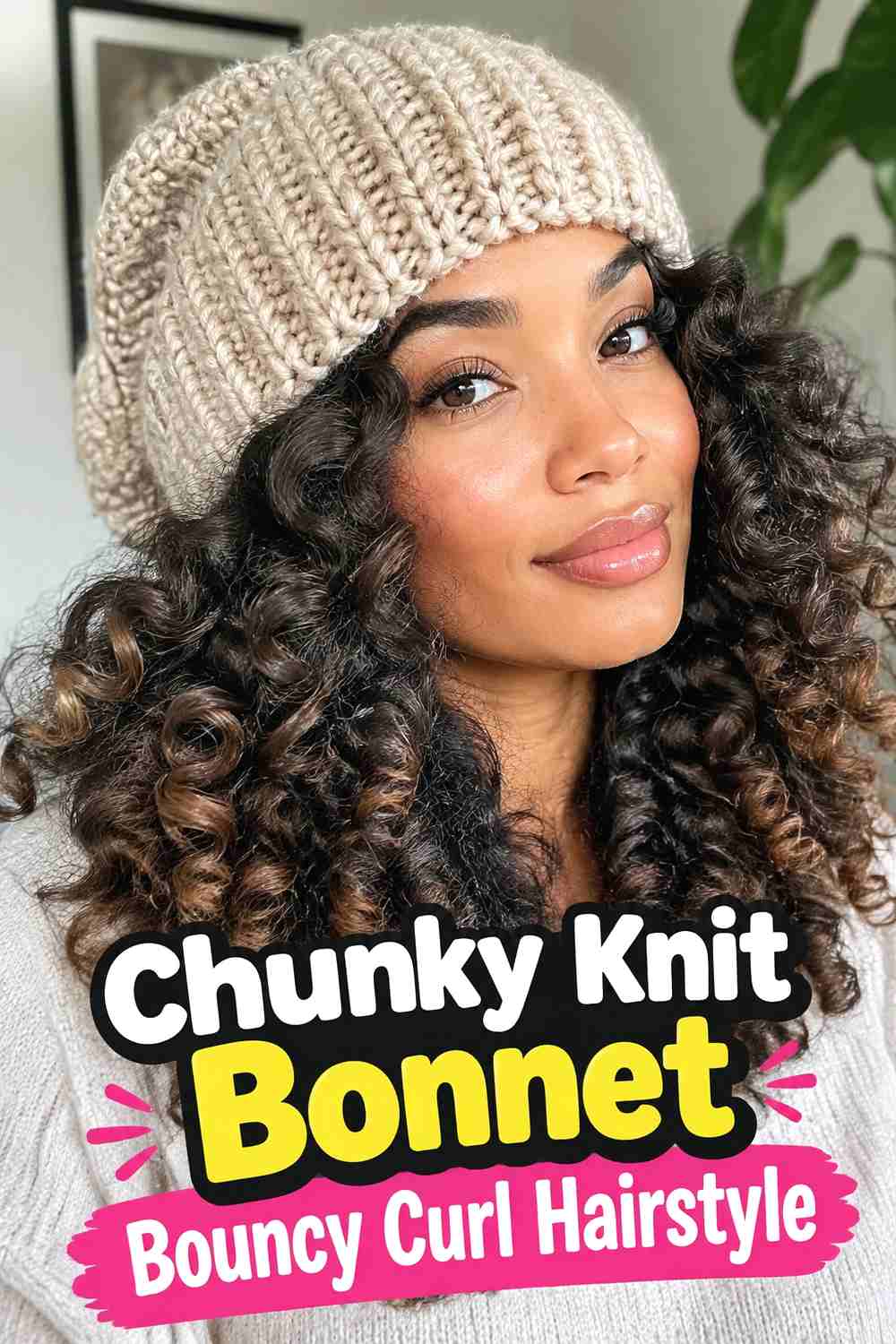
A chunky knit bonnet has a substantial texture, so bouncy curls help the exposed hair feel equally dimensional. Leave slightly larger face-framing sections out on both sides and shape them into rounded curls with visible lift near the roots. The curls should move freely instead of lying flat against the cheeks. Because the bonnet itself is visually heavy, keeping the front curls full prevents the hairstyle from looking hidden beneath the knit. Medium to thick hair supports this look naturally, while finer hair can achieve a similar effect with lightweight volume and careful sectioning. Avoid exposing too many curls, which can make the front feel crowded.
Pro Tip
Let the curls cool or set completely before placing the bonnet. Repeated adjustment while they are warm can stretch the shape and reduce bounce.
8. Neutral Knit Bonnet Curtain Curl Hairstyle
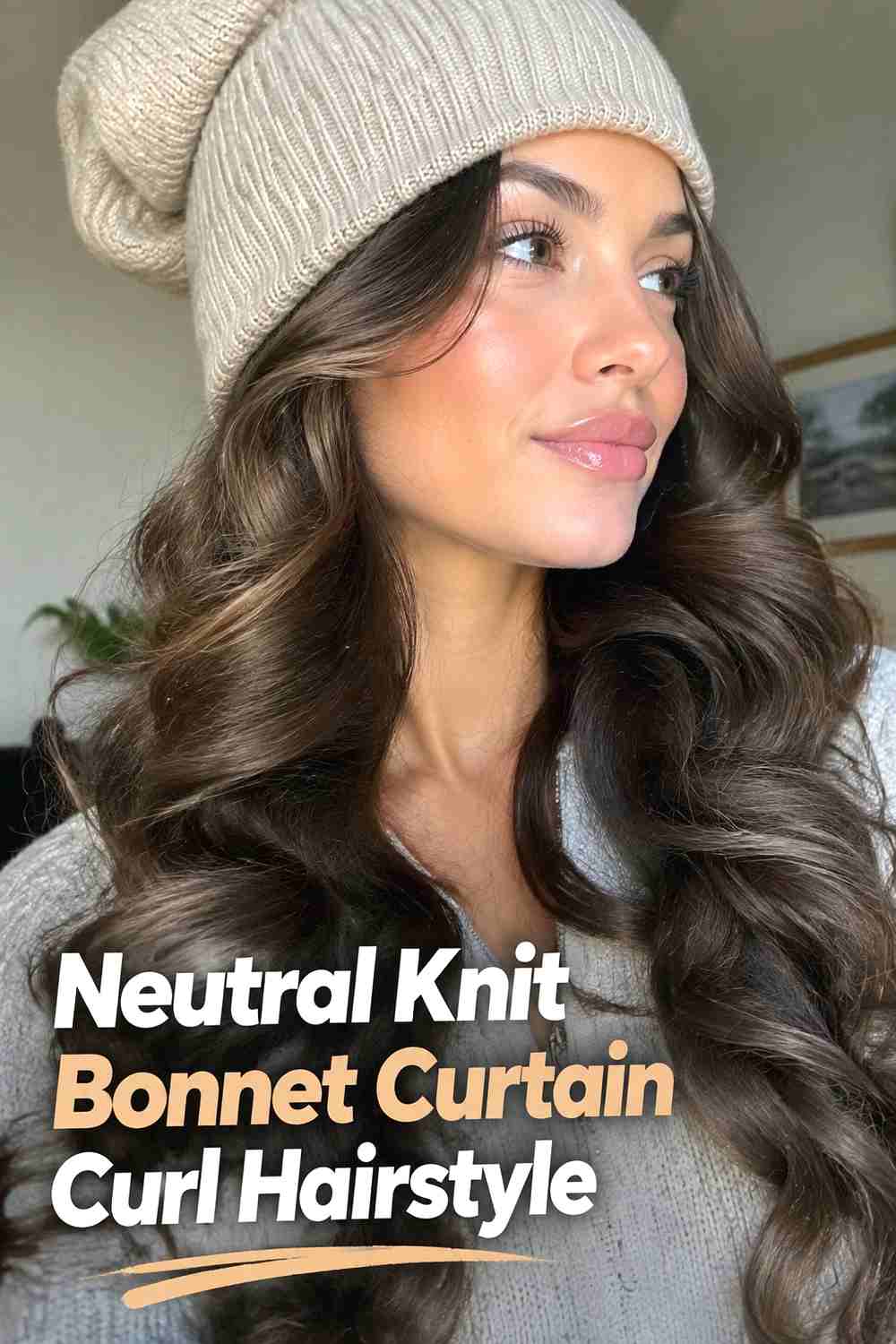
Curtain curls create a graceful frame beneath a neutral knit bonnet by sweeping away from the center of the face. Start with a middle or soft off-center part, then shape the front sections so they bend outward around the cheekbones before curling toward the ends. The result feels more open than tight ringlets and works particularly well when you want your face unobstructed. Beige, taupe, oatmeal, or gray knit tones complement the understated styling without making the look feel overly coordinated. This technique suits layered medium or long hair especially well because shorter front pieces naturally create the curved curtain effect.
Styling Notes
Direct the curls away from the face rather than inward. That outward movement is what gives the style its recognizable curtain shape and keeps the front feeling open.
9. Pom Pom Knit Bonnet Loose Ringlet Hairstyle
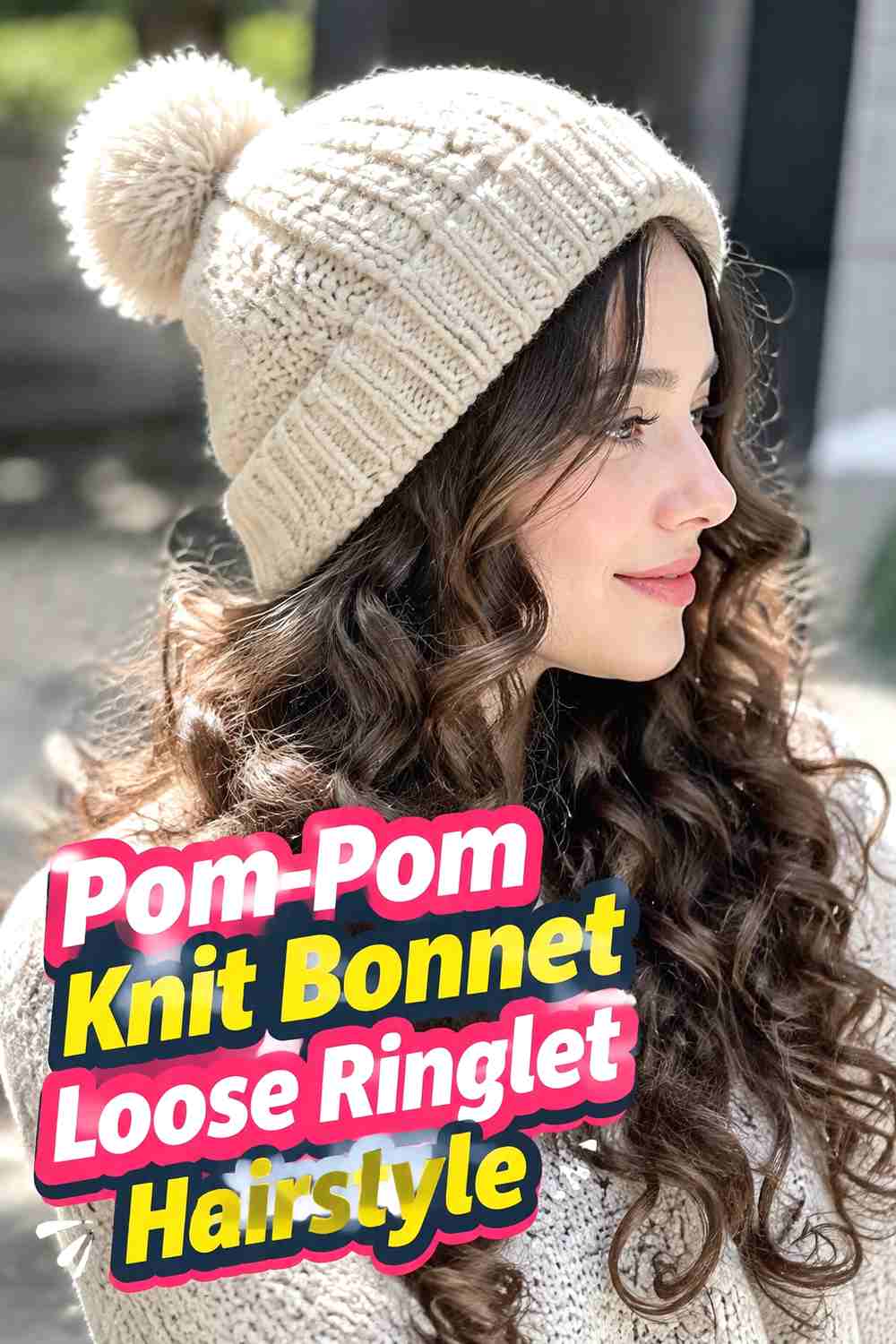
A pom-pom knit bonnet already has a playful detail at the crown, so loose face-framing ringlets keep the hairstyle soft without making it too busy. Leave a small number of curls visible around the temples and allow them to hang naturally rather than forming a perfectly symmetrical frame. Longer ringlets can skim the jaw, while shorter curls can sit near the cheekbones for layered dimension. A moderate bonnet fit keeps the pom-pom upright without pressing the curl roots flat. This style works nicely for casual winter outings because it combines a cozy accessory with enough polished hair detail to keep the finished look intentional.
Wear & Maintenance
Keep the pom-pom and front curls as separate focal points. Avoid adding clips or large earrings that compete with both details at once.
10. Deep Cuff Knit Bonnet Polished Curl Hairstyle
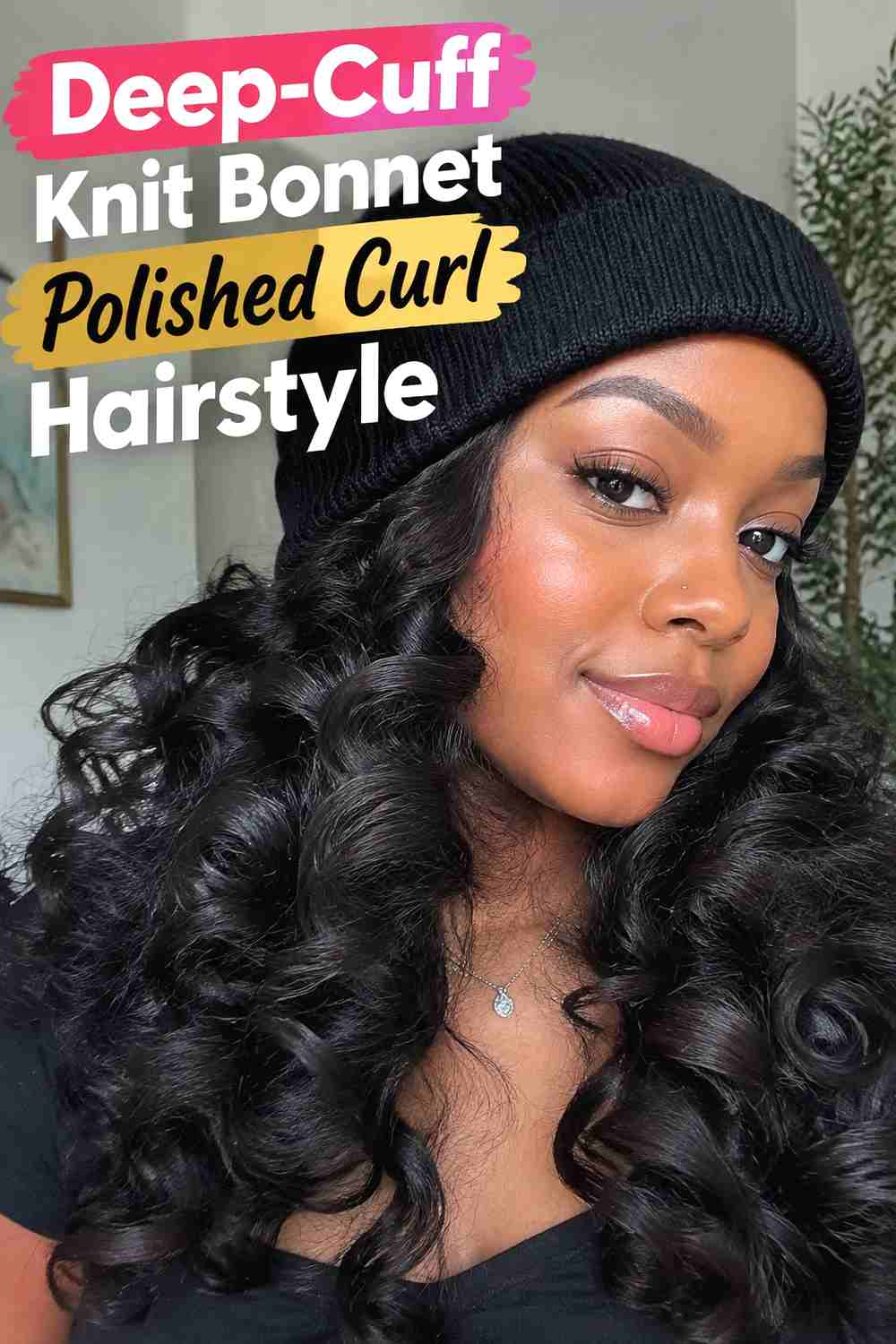
A deep-cuff knit bonnet creates a strong horizontal line that pairs well with polished, controlled curls. Set the cuff slightly behind the hairline and expose only a few smooth curls around the face. The curls should have a consistent shape and glossy finish rather than a deliberately tousled texture. This combination creates a neat, modern silhouette that works well with streamlined coats, scarves, and simple winter outfits. Medium and long hair can be tucked easily beneath the bonnet, while front layers provide natural framing. Because the cuff is thicker, make sure it does not sit directly on the curl roots or push the pieces flat.
Why It Works
The structured cuff gives the look a clean foundation, while polished curls soften the face and prevent the accessory from appearing too severe.
11. Soft Wool Knit Bonnet Natural Coil Hairstyle
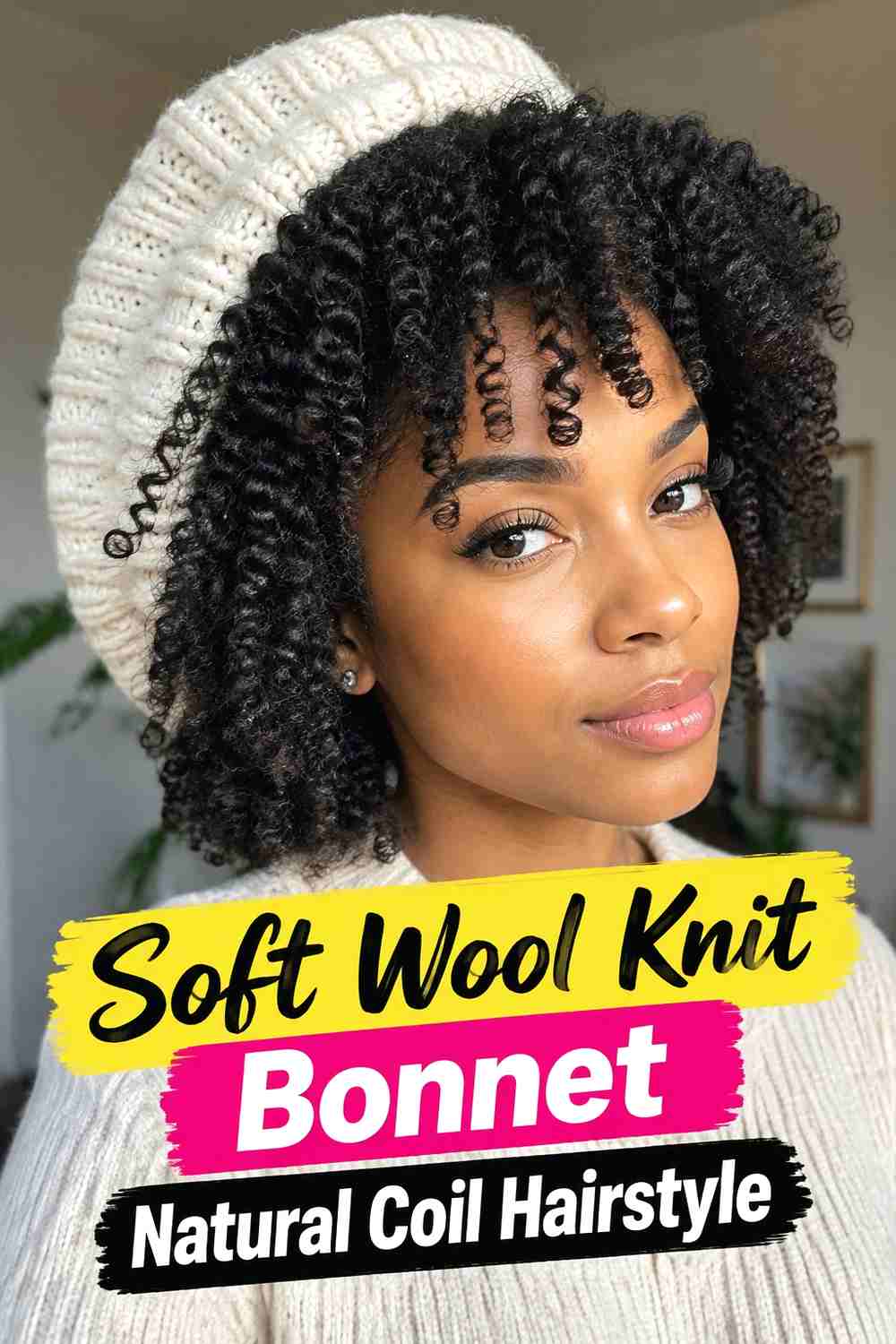
A soft wool knit bonnet can pair beautifully with natural coils when the front hair is left visible instead of being overly stretched or reshaped. Allow a few defined coils to frame the temples, forehead, or cheek area according to your natural pattern. Slight differences in coil size make the style feel authentic and dimensional. The bonnet should sit comfortably without compressing the exposed sections, especially around the hairline. This approach works particularly well when you want the hairstyle to celebrate natural texture while keeping most of the hair covered. Choose a soft inner surface or protective lining if friction against the hair is a concern.
Hair Type & Length
Naturally coily and tightly curled textures are ideal for this version because their existing definition creates strong face-framing detail with minimal manipulation.
12. Oversized Knit Bonnet Layered Curl Hairstyle
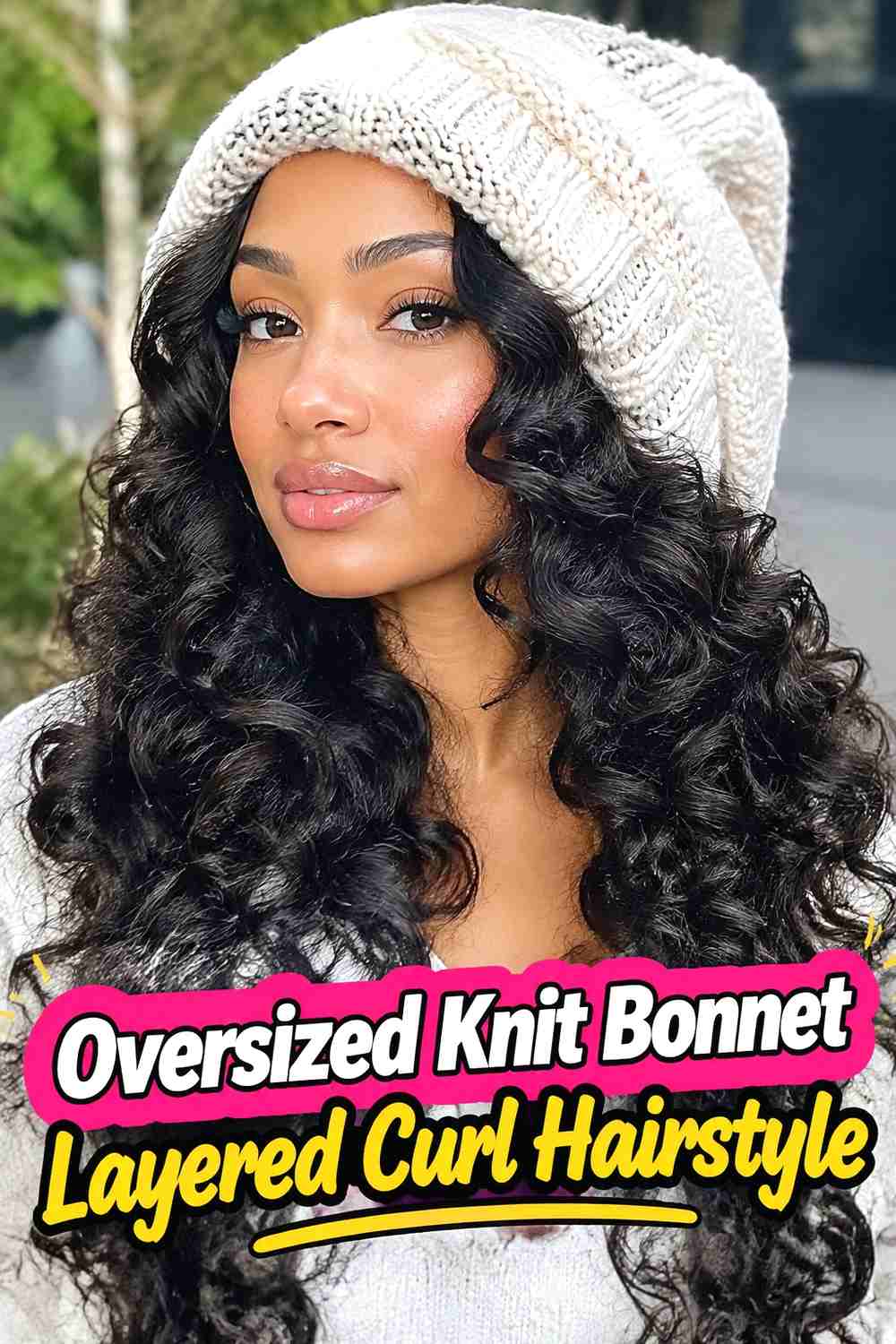
An oversized knit bonnet creates a relaxed silhouette that pairs well with layered curls of different lengths around the face. Instead of exposing two identical pieces, leave a shorter curl near the cheekbone, a medium section around the jaw, and possibly one longer curl near the shoulder. The varying lengths add movement and prevent the front from looking flat against the larger accessory. This style is especially effective on layered medium or long hair and can work with natural curls or heat-styled sections. Keep the bonnet slightly loose at the crown but secure enough around the forehead that it does not slide forward and crush the framing pieces.
Styling Notes
Arrange the shortest curls first, then position longer sections around them. Layering the visible pieces deliberately keeps the effect dimensional without exposing too much hair.
13. Minimal Knit Bonnet Jawline Curl Hairstyle
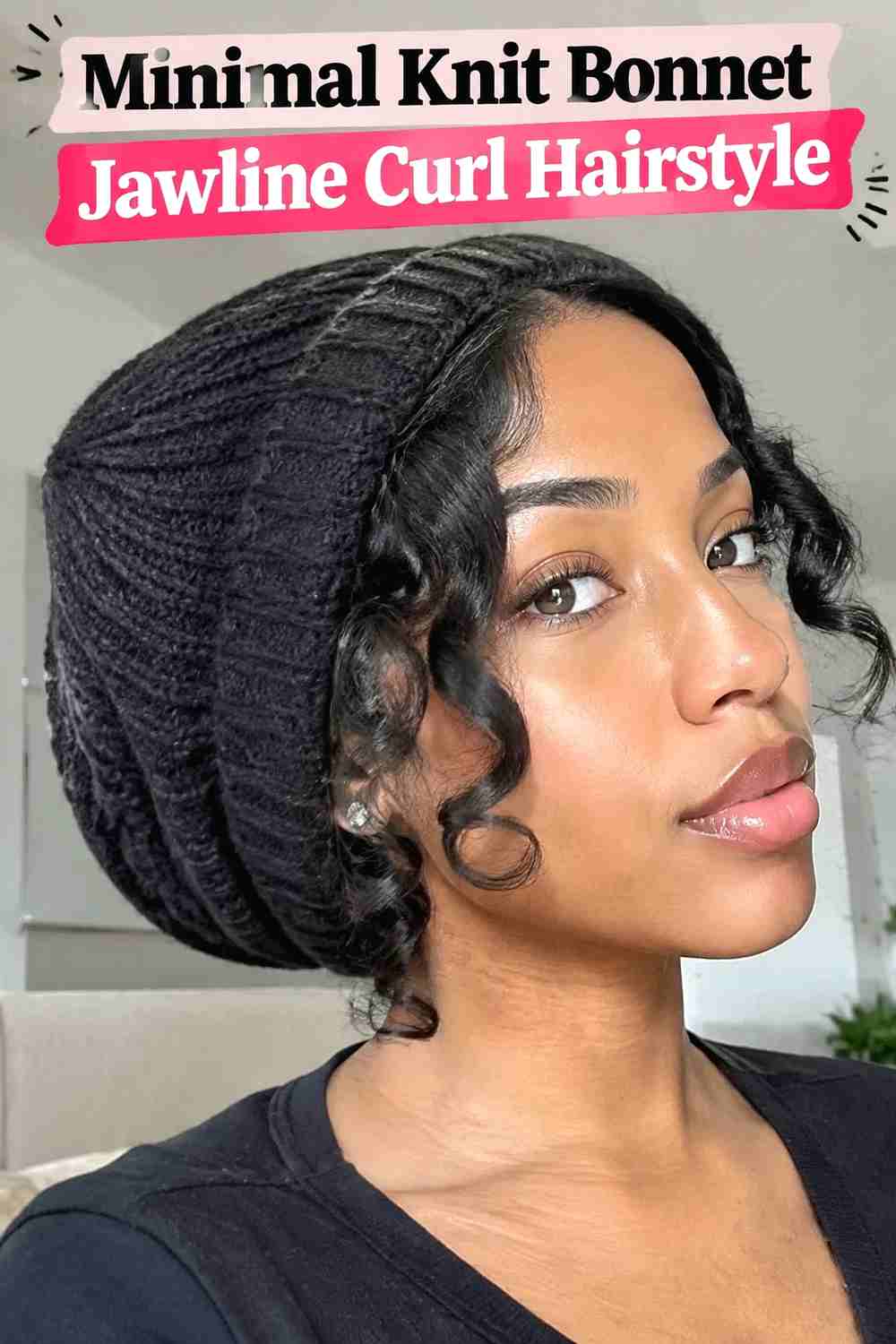
A minimalist knit bonnet looks especially refined with a single curl or curled section ending near each side of the jawline. The limited amount of visible hair creates a clean frame while the rest stays neatly tucked away. This works best with a simple bonnet that has little extra decoration, allowing the curve of the hair to become the main styling feature. The jawline length gives enough movement to soften the look without producing long loose strands that may catch on scarves or coat collars. Straight or wavy hair can be curled selectively, while naturally curly hair can use shorter front layers to create the same proportion.
Best For
This style suits anyone who wants a polished cold-weather look with minimal exposed hair and very little daily restyling.
14. Textured Knit Bonnet Airy Curl Hairstyle
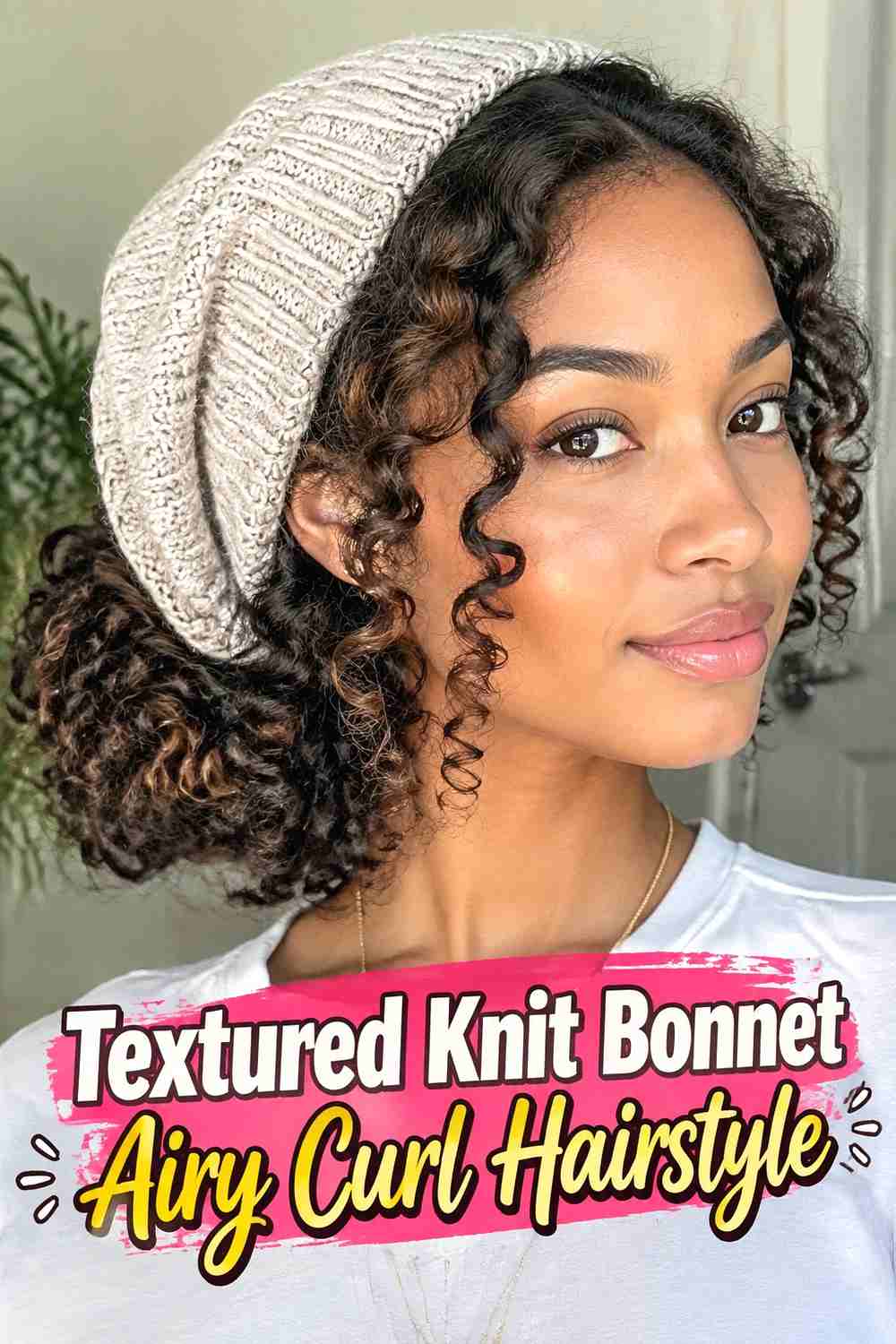
A textured knit bonnet combined with airy curls creates a light, dimensional look despite the cozy weight of the accessory. The face-framing curls are softly separated rather than tightly clumped, allowing individual strands and small flyaways to create movement. Keep the curl pattern loose and irregular, with some pieces bending gently while others form fuller curves. This works particularly well on wavy or curly hair that already has natural softness. Position the bonnet behind the most voluminous front sections so they retain lift. The result should look relaxed and breathable rather than overly set, making it a good choice for casual daytime styling.
Pro Tip
Separate curls only after they are dry. Pulling apart damp sections can create frizz instead of the soft, airy definition this style needs.
15. Monochrome Knit Bonnet Sculpted Curl Hairstyle
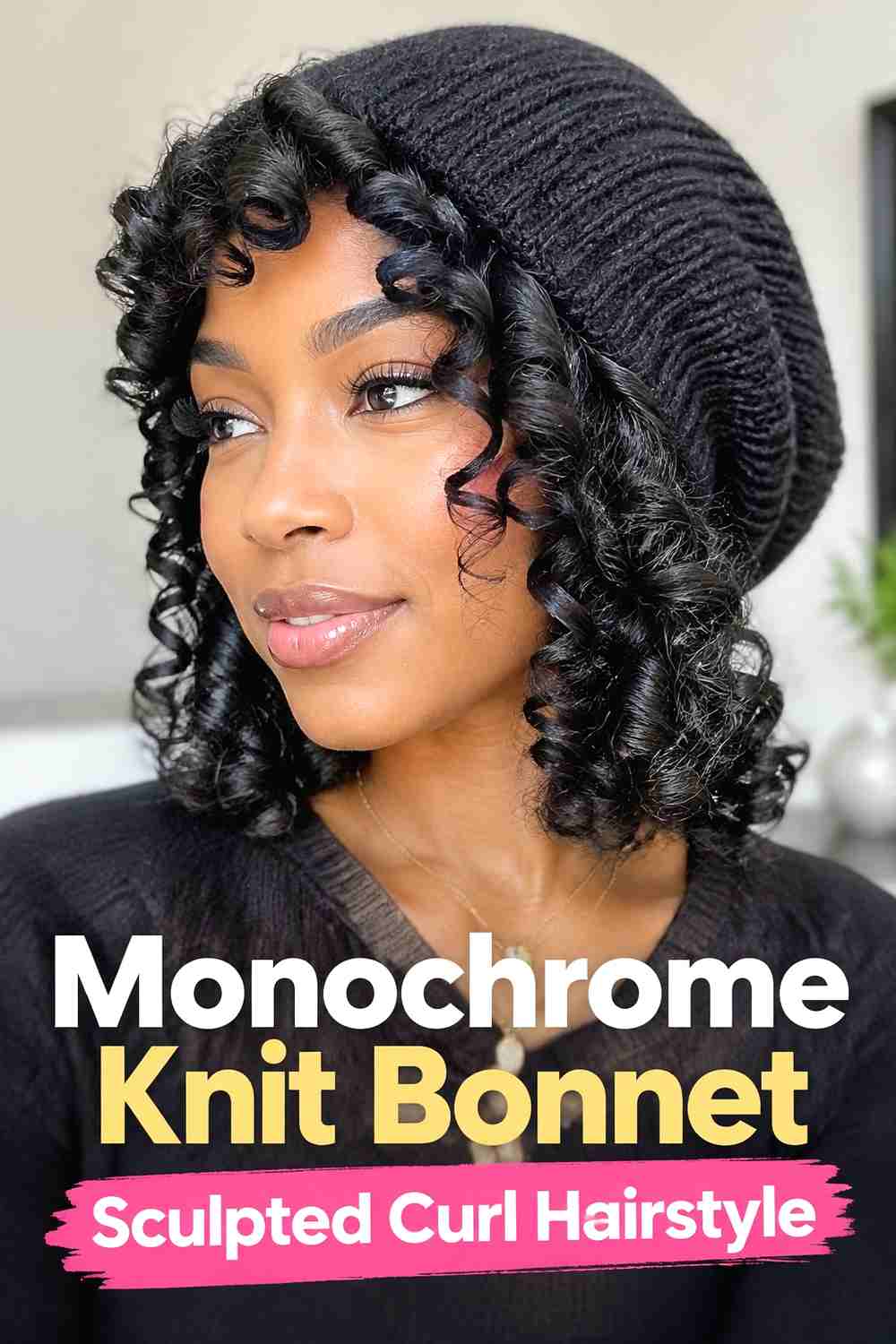
A monochrome bonnet-and-outfit combination allows sculpted face-framing curls to become the main visual detail. Choose a bonnet in a shade that coordinates closely with your clothing, then shape one or two polished curls into clear curves near the temples or cheeks. The curls can be more deliberate than natural ringlets, with smooth bends and carefully finished ends. Because the clothing and accessory stay within one color family, the hairstyle adds dimension without requiring additional decoration. This look works well for straight or softly textured hair that holds a controlled curl. Keep the sculpted pieces flexible enough that they still move naturally around the face.
Styling Notes
Use a small amount of finishing product through the exposed sections and shape them with your fingers rather than repeatedly brushing the finished curl.
16. Fisherman Rib Knit Bonnet S Curl Hairstyle
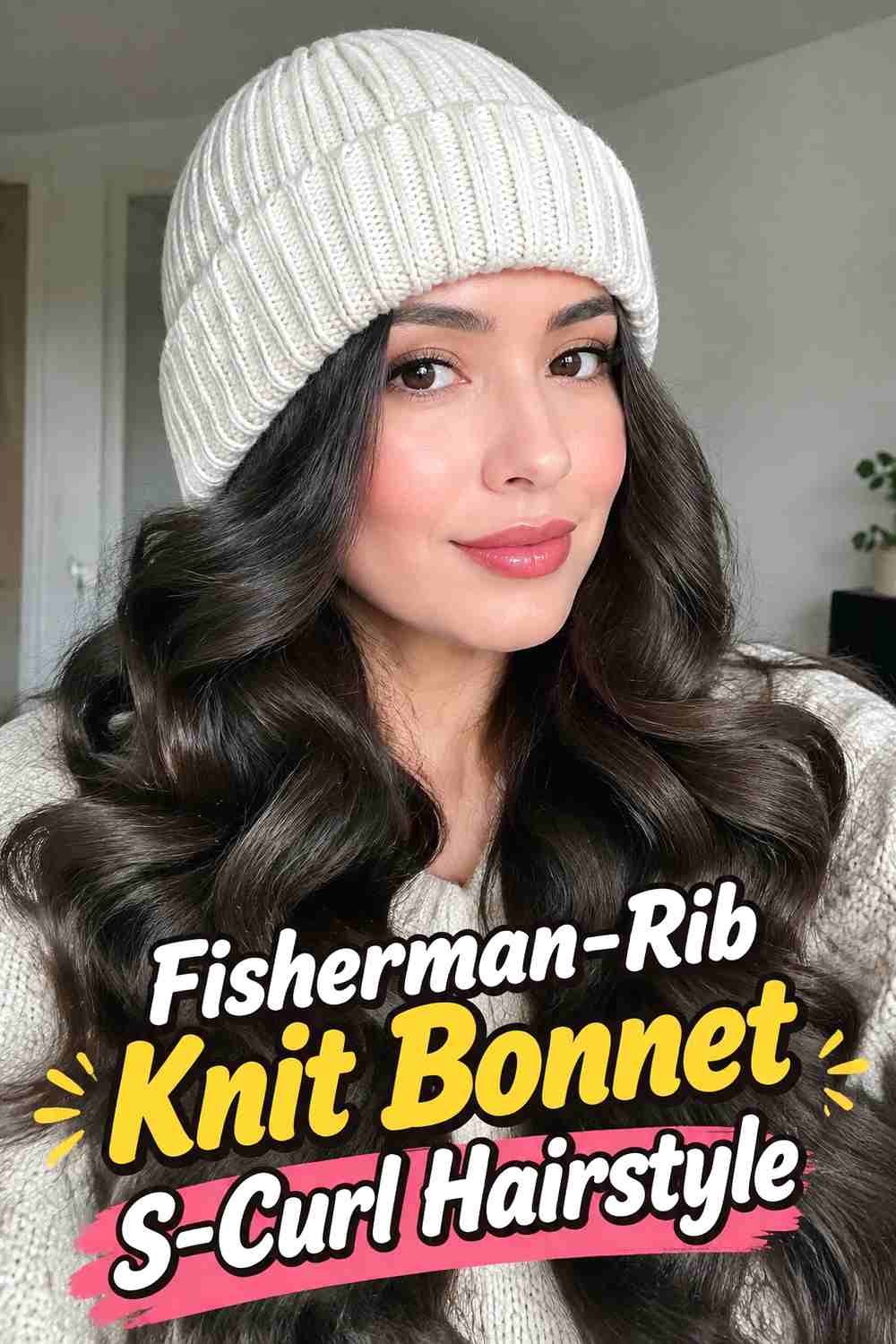
A fisherman-rib knit bonnet has a sturdy, linear texture that contrasts nicely with elongated S-shaped curls around the face. Instead of creating full ringlets, shape the front sections into smooth bends that curve in one direction near the cheekbones and reverse slightly toward the ends. The result feels softer and more modern than a tightly curled frame. This style works especially well with medium-length layers or naturally wavy hair. Keep the bonnet close to the head so its ribbed texture remains crisp, but position it far enough back to avoid flattening the first bend of each curl.
Why It Works
The straight ribbed knit and flowing S-curves create visual contrast without requiring bright colors or extra accessories, making the finished look interesting but restrained.
17. Cozy Knit Bonnet Romantic Tendril Hairstyle
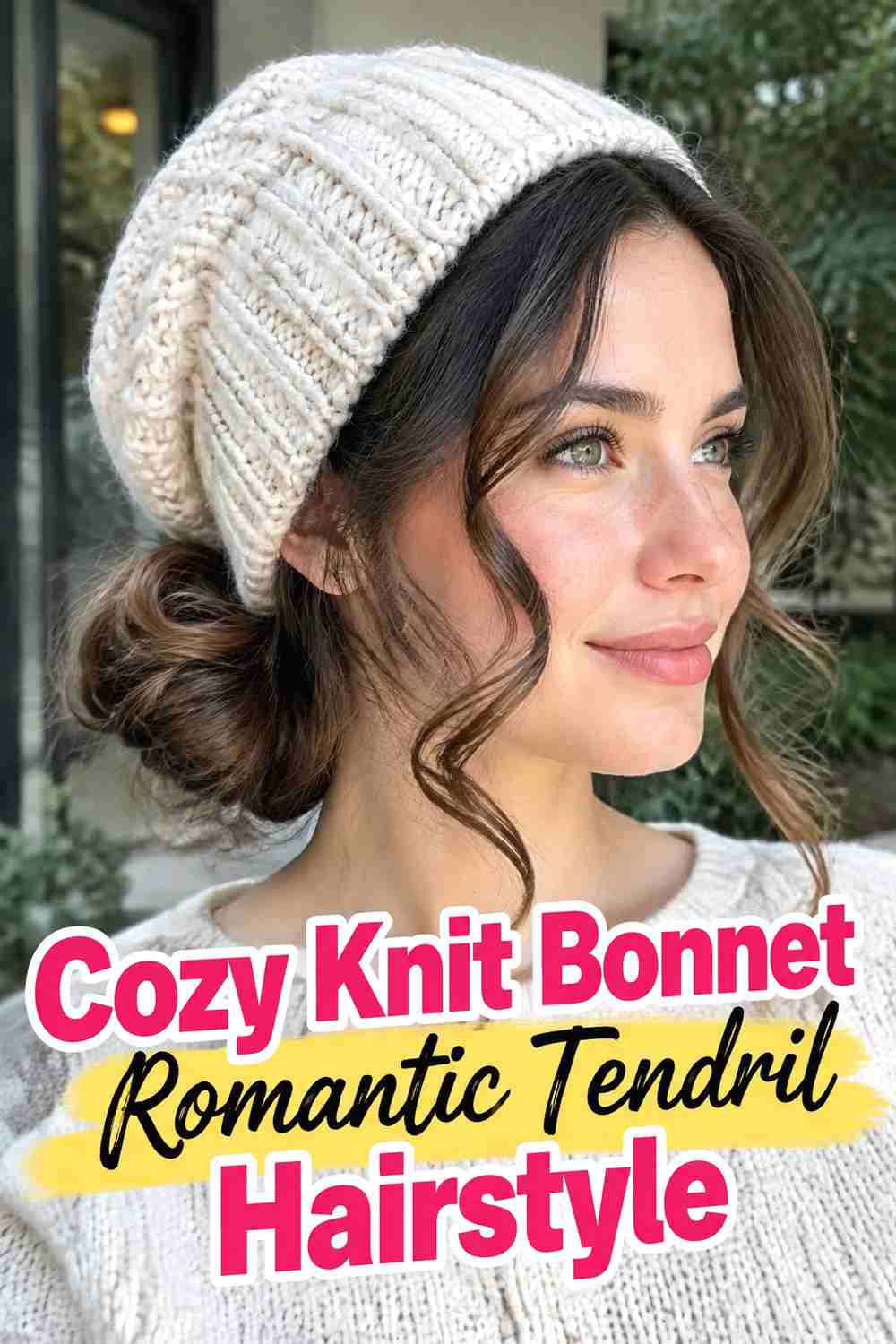
A cozy knit bonnet with romantic tendrils creates a soft, slightly undone finish suited to relaxed winter styling. Leave two narrow sections around the temples and shape them into gentle curls that taper toward the ends. A few shorter wisps near the ears can add movement, but keep the number of loose pieces limited so the look remains intentional. The bonnet itself can sit a little farther back to reveal more of the hairline and allow the tendrils to fall naturally. This style works especially well with soft waves, loose curls, and layered cuts where smaller pieces already separate easily from the rest of the hair.
Best For
Choose this style for casual dates, coffee outings, holiday markets, or everyday wear when you want a romantic detail without a formal hairstyle.
18. Cropped Knit Bonnet Defined Coil Hairstyle
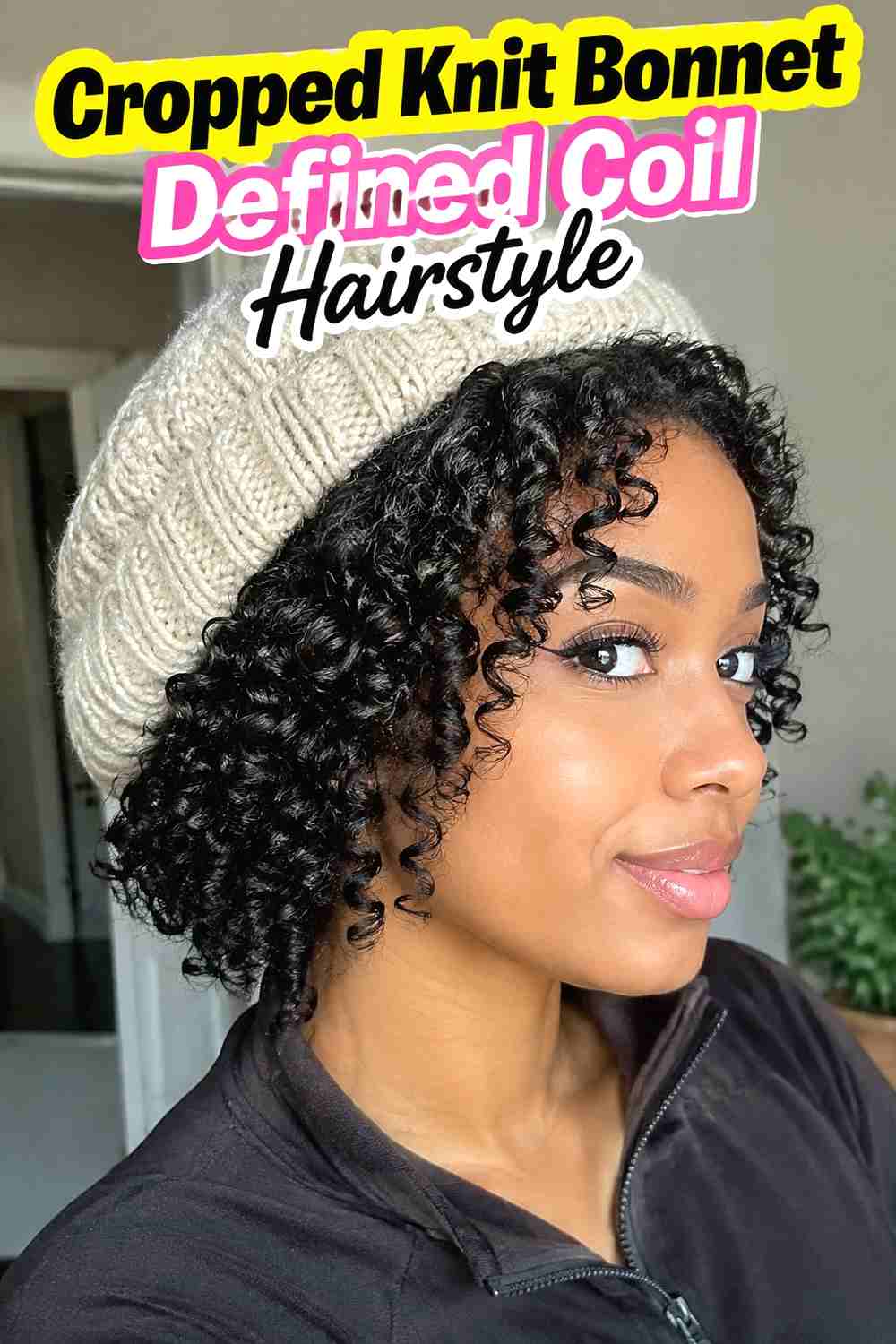
A cropped knit bonnet sits closer to the crown and ears, leaving more room for defined coils to frame the face. This shorter accessory shape works particularly well when you want the hair texture to remain visible instead of being mostly hidden. Allow several small coils to fall naturally near the forehead, temples, and cheek area while keeping the rest controlled beneath or behind the bonnet. The curls should retain their individual shape rather than being brushed into a uniform mass. This look is especially effective on naturally curly and coily textures, where the contrast between compact knit structure and springy hair creates noticeable dimension.
Wear & Maintenance
Check that the bonnet edge does not rub repeatedly against the exposed coil roots. Comfortable placement helps preserve definition and reduces unnecessary disturbance around the hairline.
19. Double Rib Knit Bonnet Soft Wave Curl Hairstyle
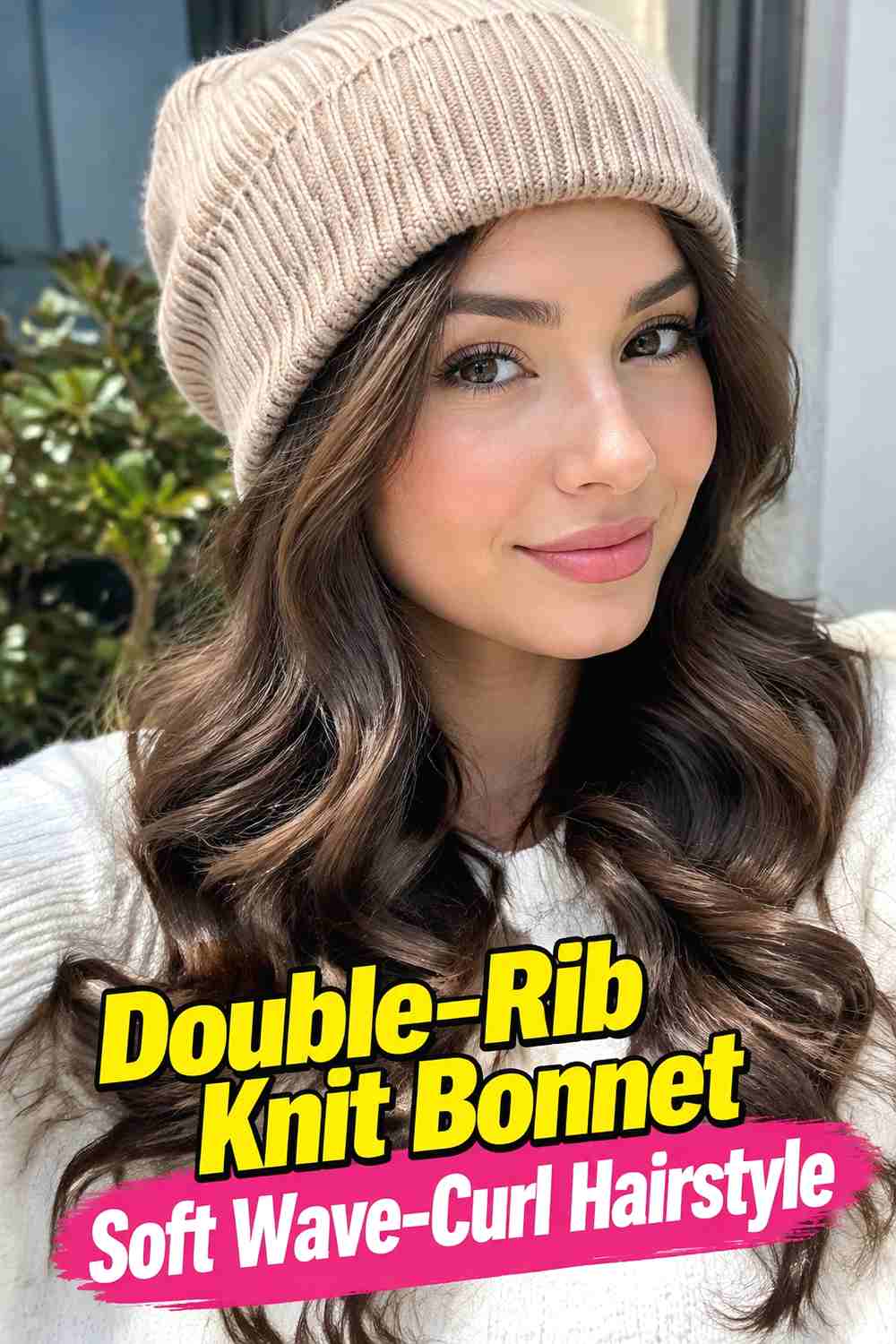
A double-rib knit bonnet brings extra texture to the accessory, while a soft wave-curl pattern keeps the hair relaxed and fluid. The visible front sections begin with a shallow wave near the temples and transition into a fuller curl toward the ends. This hybrid shape is especially flattering on naturally wavy hair because it follows the existing movement instead of forcing every section into a ringlet. Keep the face-framing pieces slightly unequal in length for a more natural finish. The bonnet can sit low enough for warmth while still leaving the first bend of each section visible around the sides.
Styling Notes
Focus definition on the lower half of each visible section. Leaving the roots softer prevents the face-framing pieces from appearing overly styled beside the textured knit.
20. Luxe Knit Bonnet Face Framing Ringlet Hairstyle
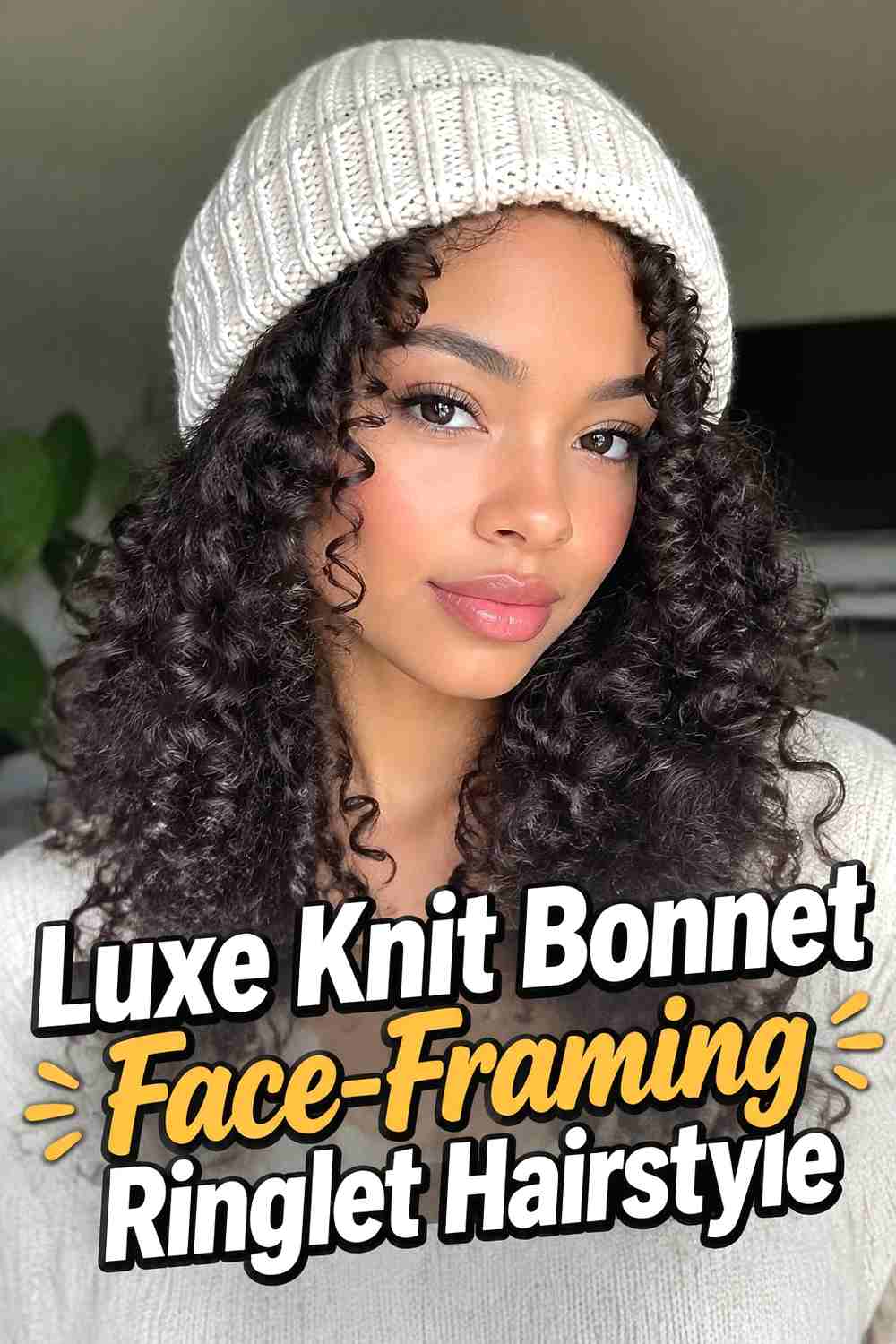
A luxe knit bonnet paired with polished face-framing ringlets creates a refined version of the cozy winter look. Choose a bonnet with a smooth, substantial knit and keep its silhouette simple, then leave several glossy ringlets visible near the cheeks and jaw. The curls should be defined but not identical, with enough variation to preserve natural movement. A center or soft side part can both work depending on how you want the ringlets distributed. This combination feels especially polished when the exposed strands have healthy-looking shine and clean ends. Keep the rest of the hair neatly contained so the visible curls remain the clear focal point.
Pro Tip
Position the bonnet first, then make only small adjustments to the finished ringlets. Frequent handling can separate the curl pattern and reduce the polished effect.
How to Choose the Right Look
Start with your natural curl pattern and the amount of hair you are comfortable leaving exposed. Defined coils and natural ringlets usually need very little reshaping, while straighter or wavier textures can create face-framing curls selectively without styling the entire head.
Bonnet fit changes the silhouette considerably. Deep cuffs and cropped shapes create cleaner, more structured outlines, while oversized and slouchy bonnets pair naturally with relaxed, airy curls. Make sure the edge does not sit directly on the roots of the face-framing sections, or the curls may lose lift.
Consider curl size next. Small coils and spirals create detailed texture close to the face, while larger ringlets, S-curls, and curtain curls produce a softer, more open frame. Shorter jawline pieces are practical with scarves and high collars, whereas longer ringlets make the hairstyle more noticeable.
Color and knit texture can help determine how much styling detail you need. Chunky cable knits already make a visual statement, so simpler curls often work best. Minimal neutral bonnets provide a quieter background for sculpted or highly defined curls.
Finally, prioritize comfort. The bonnet should feel secure without excessive pressure, and exposed curls should fall naturally rather than being repeatedly pulled or stretched into position.
Final Thoughts
Knit bonnets and face-framing curls work well together because the accessory keeps most of the hairstyle simple while a few visible pieces add softness and personality. Small changes in curl pattern, parting, and bonnet fit can create noticeably different results.
Choose a combination that supports your natural texture and daily routine. Whether you prefer loose ringlets, natural coils, airy waves, or polished curls, keeping the visible sections intentional is usually enough to make the whole look feel styled.
FAQs
1. How much hair should I leave out with a knit bonnet?
Usually a few narrow face-framing sections are enough. Leaving too much hair exposed can make the style feel less balanced and may reduce the practical warmth of the bonnet.
2. How do I keep face-framing curls from getting flattened?
Position the bonnet slightly behind the roots of the exposed curls and avoid placing a tight edge directly over them. Adjust the curls gently after the bonnet is in place.
3. Can naturally curly or coily hair work with this style?
Yes. Natural curls and coils are especially well suited because you can leave selected sections visible without reshaping the entire hairstyle.
4. Which curl shape looks best with a chunky knit bonnet?
Larger soft curls, bouncy ringlets, and airy waves generally balance a chunky knit well. Very tiny exposed sections may visually disappear beside a thick bonnet texture.
5. Can I wear face-framing curls with a bonnet and a scarf?
Yes. Shorter cheekbone or jawline curls are often easiest because they are less likely to become trapped between the scarf, collar, and bonnet.
Save your favorite knit bonnet face-framing curl hairstyle ideas, share the collection for cozy-season inspiration, and explore more ways to style curls with winter accessories.