13 Art Deco Side Comb Waves Hairstyle Ideas
Sculpted waves and jeweled side combs bring instant 1920s-inspired polish to these Art Deco hairstyles, from sleek finger waves to soft Hollywood curves.
Art Deco wave hairstyles are built around strong lines, polished curves, and deliberate asymmetry. A decorative side comb enhances that structure by drawing attention to the tucked side while allowing the heavier wave pattern to remain visible around the face and through the lengths.
The look can range from close-set finger waves on a bob to long cascading Hollywood curves. Before choosing one, consider your length, natural texture, preferred level of hold, and the size of the side comb. Smaller geometric pieces complement highly sculpted waves, while larger jeweled designs work well when the hair itself is simpler and more fluid.
Quick List
- Art Deco Side Comb Hollywood Wave Hairstyle
- Sculpted Finger Wave Side Comb Hairstyle
- Deep Side Part Side Comb Glam Wave Hairstyle
- Pearl Art Deco Side Comb Soft Wave Hairstyle
- Geometric Side Comb Polished S Wave Hairstyle
- Vintage Bob Side Comb Finger Wave Hairstyle
- Long Brushed Wave Art Deco Side Comb Hairstyle
- Low Swept Side Comb Ripple Wave Hairstyle
- Crystal Art Deco Side Comb Defined Wave Hairstyle
- Asymmetric Side Comb Marcel Wave Hairstyle
- Art Deco Side Comb Lob Wave Hairstyle
- Soft Volume Side Comb Retro Wave Hairstyle
- Statement Art Deco Side Comb Cascade Wave Hairstyle
1. Art Deco Side Comb Hollywood Wave Hairstyle
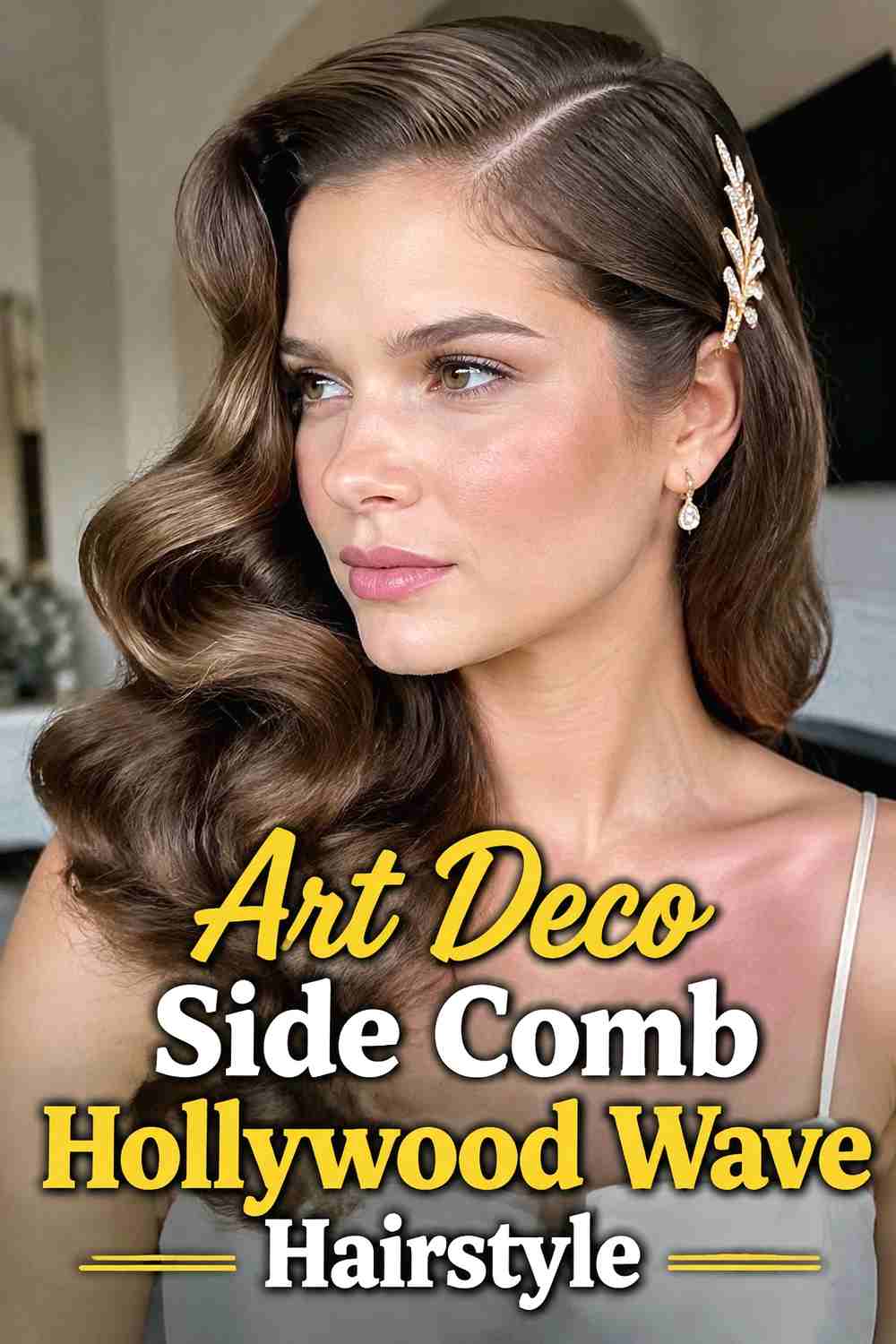
An Art Deco side comb paired with Hollywood waves creates a polished, glamorous silhouette that feels vintage without looking costume-like. Start with a deep side part, keep the crown smooth, and shape the lengths into broad, glossy waves that flow in the same direction. Place the decorative comb above one ear on the lighter side of the part so it emphasizes the asymmetry instead of interrupting the wave pattern. This look works especially well on medium to long hair, where the curves have enough space to develop. Keep the ends softly tucked or brushed into one continuous bend for a refined finish that photographs beautifully from the side.
Styling Notes
Curl the hair in a consistent direction, allow it to cool completely, then brush the sections together until they form broad connected waves. Add the side comb only after the tucked section is secure.
2. Sculpted Finger Wave Side Comb Hairstyle
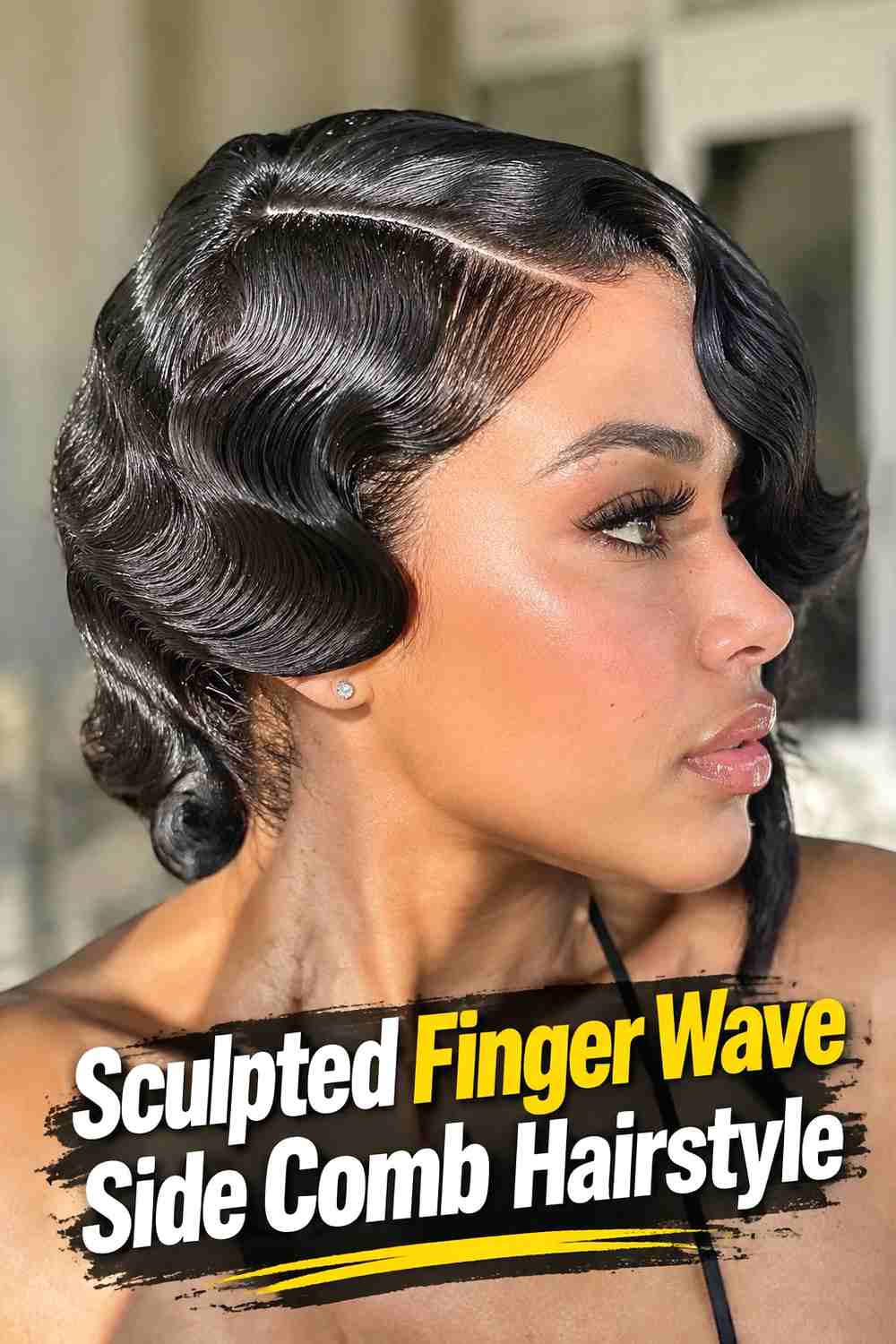
Sculpted finger waves bring the strongest graphic quality to an Art Deco-inspired side-comb style. The front section is shaped into close, defined S-curves that follow the head, while the remaining hair can stay softly waved, tucked, or gathered behind the ear. A compact side comb sits just beyond the final ridge, adding shine without covering the wave itself. This style is especially effective on short to medium lengths, though longer hair can use finger-wave detailing only around the front. The surface should look smooth and controlled, with clear ridges and natural sheen. Avoid overloading the hair with product, because stiff, wet-looking waves can lose the soft elegance that makes this style wearable.
Pro Tip
Work on smaller front sections when forming the ridges. A fine-tooth comb and controlled shaping create cleaner curves than trying to sculpt a large section at once.
3. Deep Side Part Side Comb Glam Wave Hairstyle
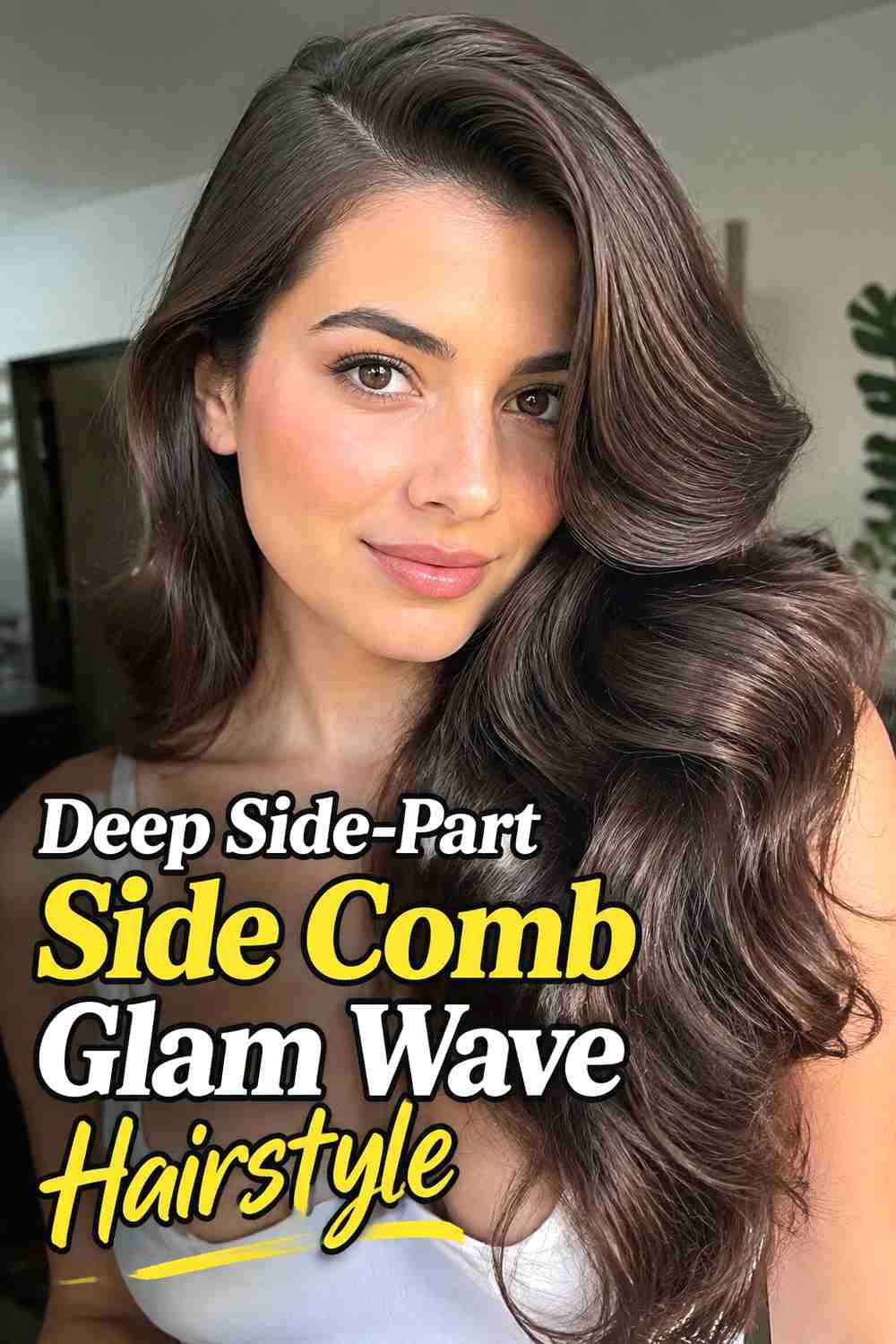
A deep side part gives glamorous waves a distinctly Art Deco mood, especially when one side is secured with a decorative comb. The heavier section sweeps across the forehead before blending into smooth, elongated waves, while the opposite side stays close to the head and exposes the accessory. This asymmetry creates a strong profile without requiring a complicated updo. Medium and long hair work particularly well because the wave pattern can continue through the lower lengths. Choose a comb with geometric or fan-like detailing and position it just above the ear. The goal is to keep the accessory aligned with the direction of the hair rather than placing it randomly against the wave.
Best For
This style works well for formal evenings, vintage-inspired events, weddings, and occasions where you want the front profile to feel dramatic while the overall construction remains relatively simple.
4. Pearl Art Deco Side Comb Soft Wave Hairstyle
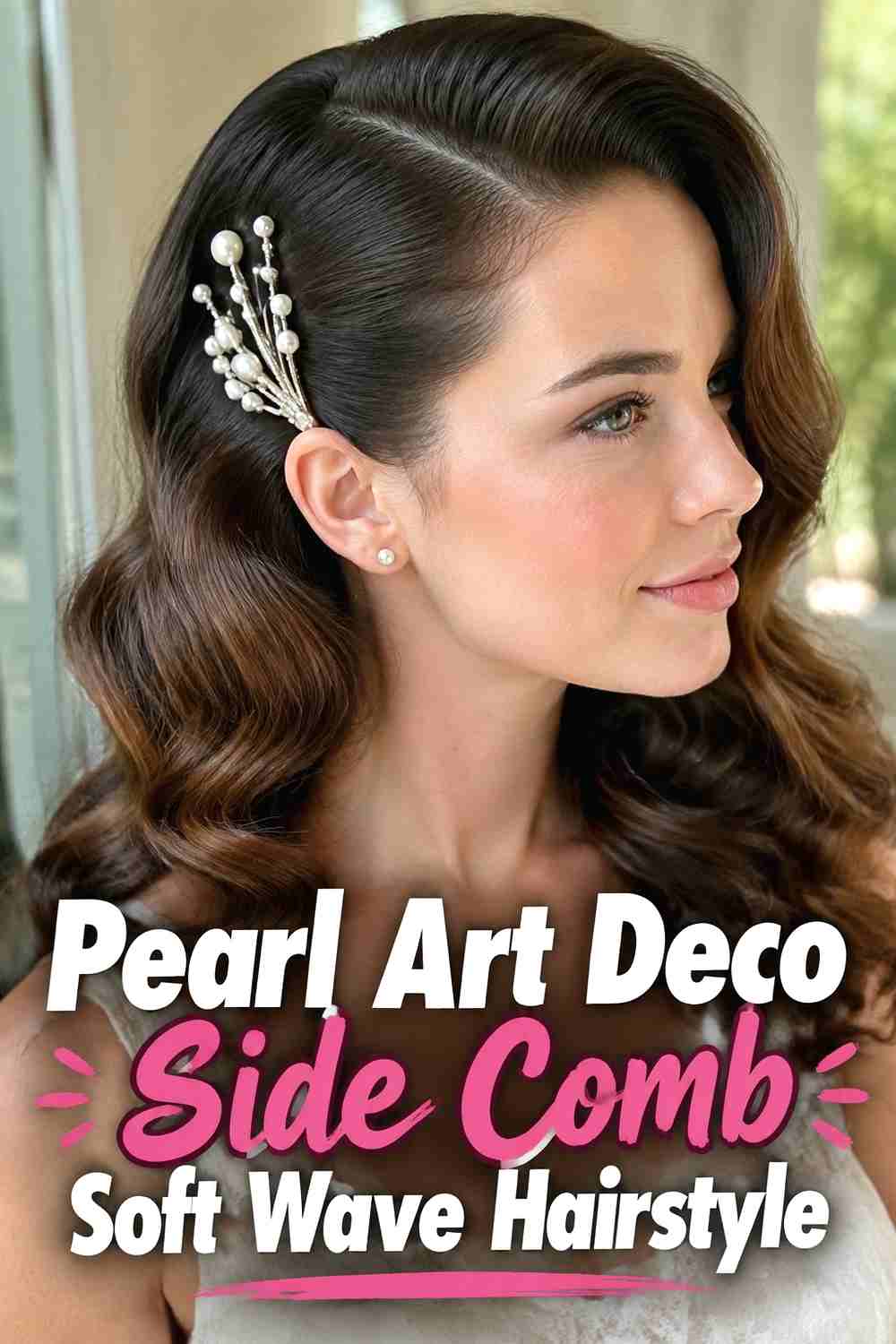
A pearl-accented Art Deco side comb softens the look of structured waves and adds a more romantic finish. Instead of sharply sculpted finger waves, use broad, brushed curves with gentle definition around the cheekbone and jaw. Tuck the lighter side behind the ear and place the comb where the hair changes direction, letting the pearls sit clearly against the smooth surface. This style works especially well for weddings, dinners, and formal events where you want vintage influence without a highly theatrical result. Keep the lower lengths touchable and slightly fluid. A polished crown and softly separated ends prevent the hairstyle from feeling too rigid while still preserving its elegant side-swept shape.
Styling Notes
Choose a pearl comb that sits flat against the head rather than protruding outward. Secure the tucked hair first so the accessory is not responsible for holding the entire side section.
5. Geometric Side Comb Polished S Wave Hairstyle
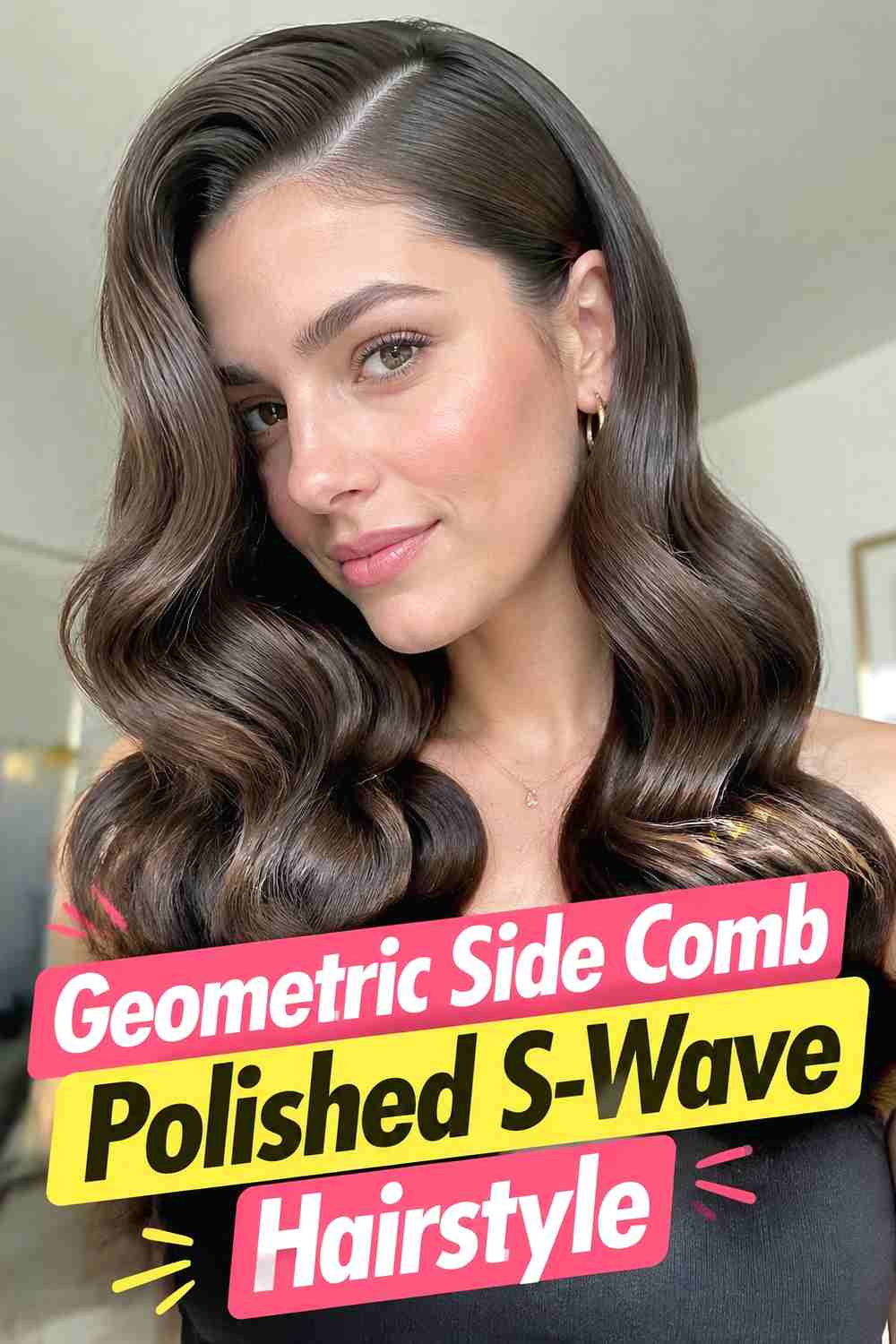
A geometric side comb pairs naturally with polished S-waves because both rely on clean, repeated lines. Create a deep part and shape the front into a smooth S-curve, then continue the wave pattern through the side and lower lengths with a slightly softer finish. Place the comb above the ear where its angular design can contrast with the rounded hair movement. This combination is especially striking on sleek, medium-length hair, though longer hair can carry the pattern farther down. Keep the wave ridges clear but not overly hard. The accessory should look integrated into the direction of the hairstyle, almost like a visual punctuation point at the end of the sculpted front section.
Why It Works
Angular accessory details contrast with the rounded wave pattern without competing with it. Keeping the comb compact makes the geometric motif visible while preserving the elegance of the hair.
6. Vintage Bob Side Comb Finger Wave Hairstyle
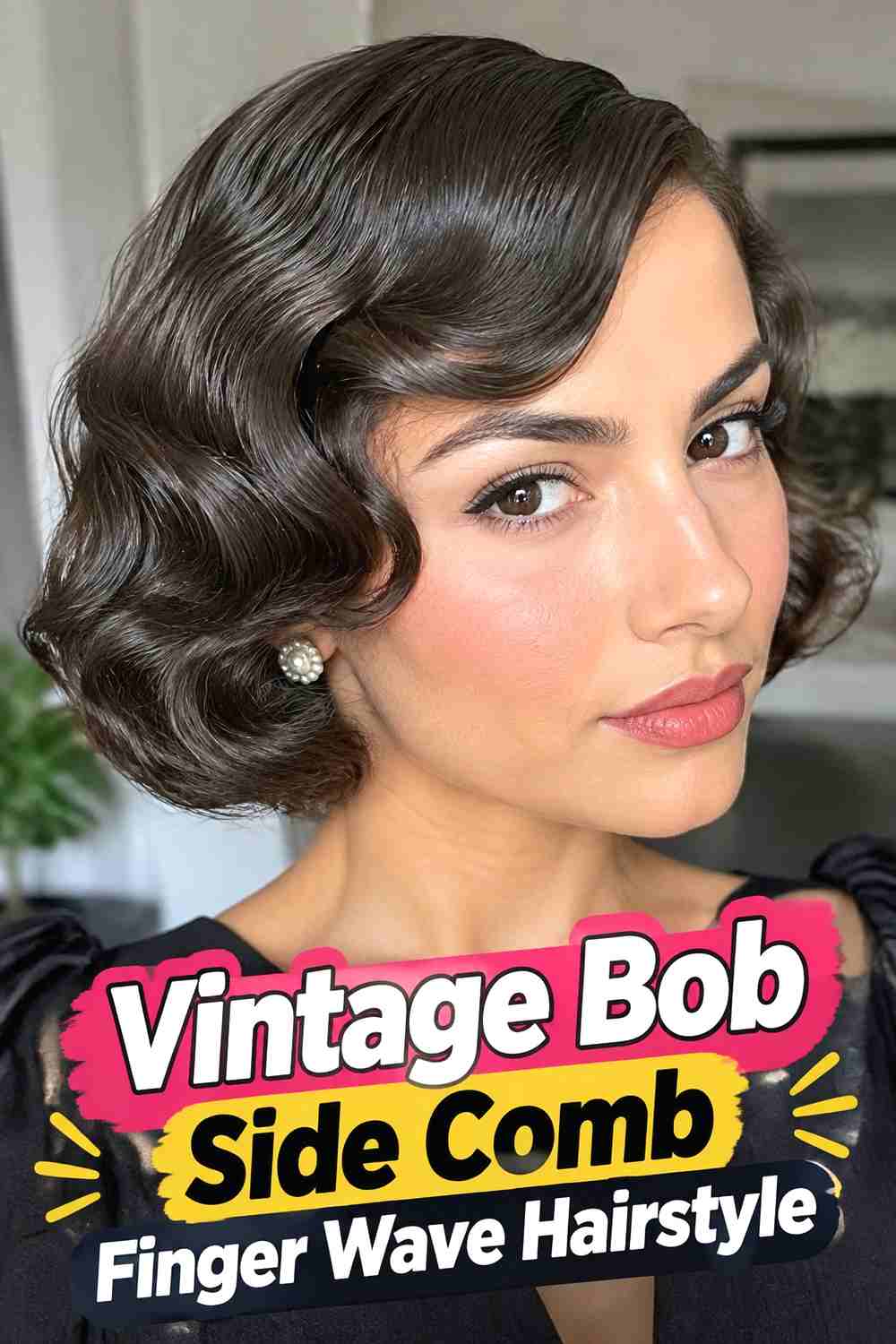
A vintage bob with finger waves is one of the clearest ways to channel an Art Deco-inspired mood. The shorter length keeps the wave pattern close to the face, allowing every ridge and curve to remain visible. Create a side part, sculpt the front section into defined finger waves, and place a small decorative comb just above one ear. The ends can curve inward toward the jaw or remain softly tucked for a compact silhouette. This style works best when the bob has enough length around the front to form a clear S-pattern. Keep the accessory proportionate to the haircut; a large comb can overwhelm the shorter shape and distract from the wave detail.
Hair Type & Length
Chin-length and slightly longer bobs are especially suited to this look. Naturally wavy hair can provide useful movement, while straight hair may need more deliberate shaping to establish the ridges.
7. Long Brushed Wave Art Deco Side Comb Hairstyle
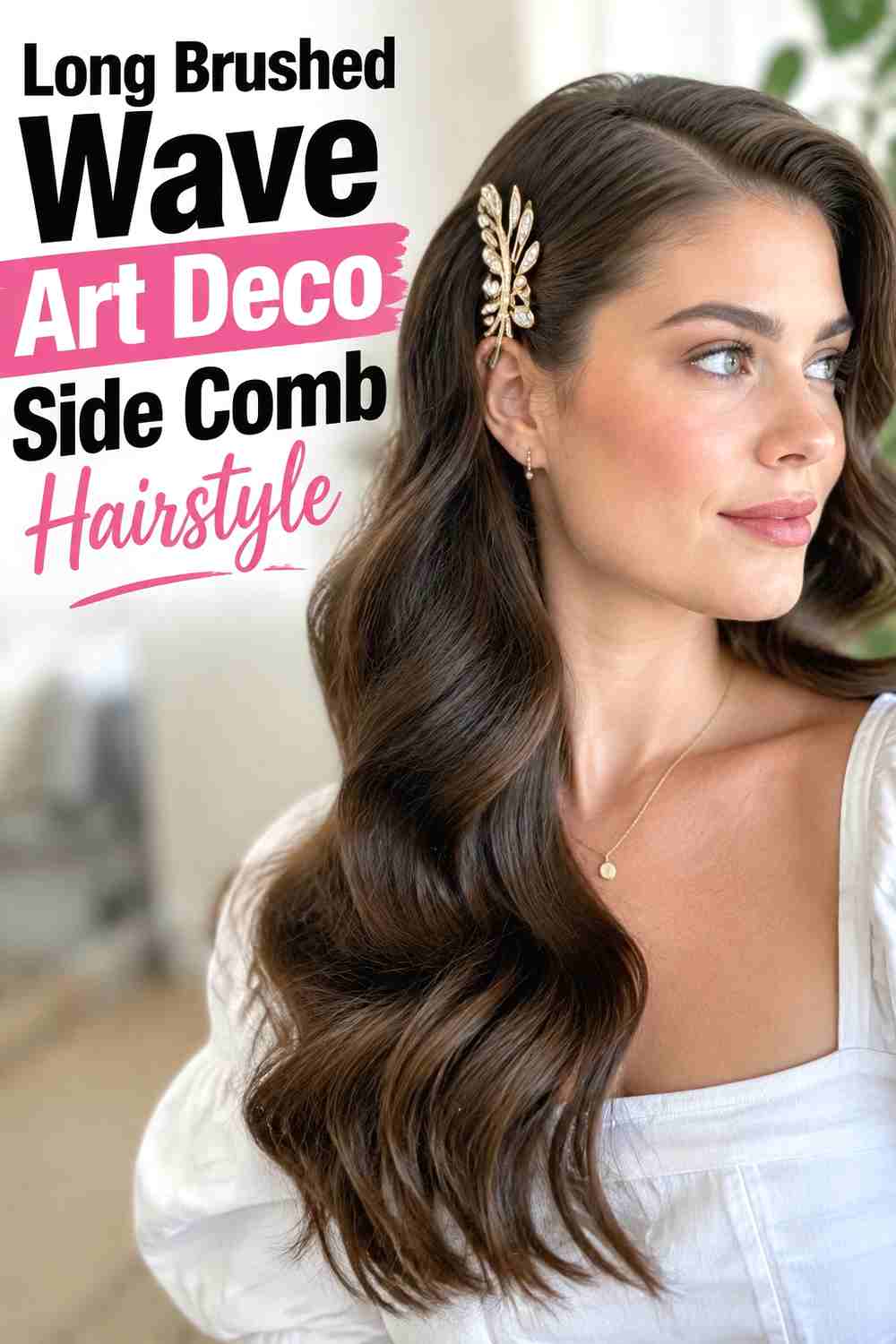
Long brushed waves create a softer interpretation of Art Deco glamour while still pairing beautifully with a side comb. Begin with a deep part and form consistent curls, then brush them together so they merge into broad, flowing waves instead of separate ringlets. Pin or tuck the lighter side behind the ear and add the comb just above it, leaving the heavier side to cascade over one shoulder. This approach is ideal for long hair because the repeated curves become more dramatic through the length. Keep the crown relatively smooth and avoid excessive root volume. The contrast between a sleek top, decorative comb, and flowing lower waves gives the hairstyle its elegant vintage-inspired balance.
Wear & Maintenance
Flexible hold works better than a rigid finish for long waves. If the curls begin to separate, gently brush the surface back into one continuous pattern rather than recurling random individual pieces.
8. Low Swept Side Comb Ripple Wave Hairstyle
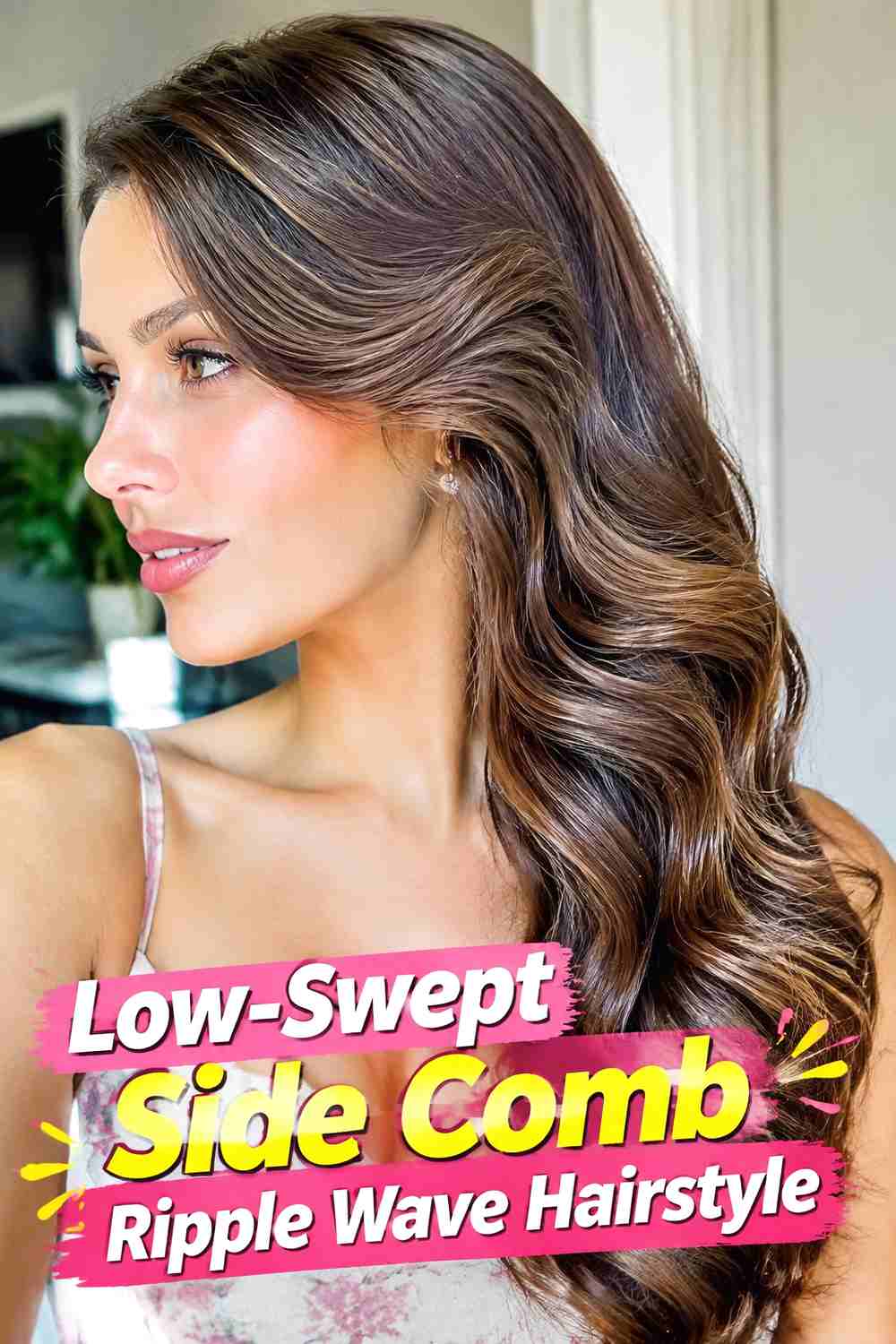
A low-swept ripple wave style keeps the hair close to the head near the crown before allowing soft curves to gather toward one side. The waves should feel elongated and fluid, with subtle ridges rather than tight curls. A side comb placed above the ear helps secure the lighter section and reinforces the asymmetrical shape. This look can work on medium or long hair and is especially useful when you want Art Deco influence with less formal structure than classic finger waves. Direct the lower lengths toward one shoulder or the back, depending on the occasion. Keep the accessory streamlined so the wave pattern remains the dominant feature while the comb adds just enough decorative detail.
Styling Notes
Use broader sections through the lower lengths to keep the ripples elongated. Smaller sections can make the pattern look curlier and less fluid than this style requires.
9. Crystal Art Deco Side Comb Defined Wave Hairstyle
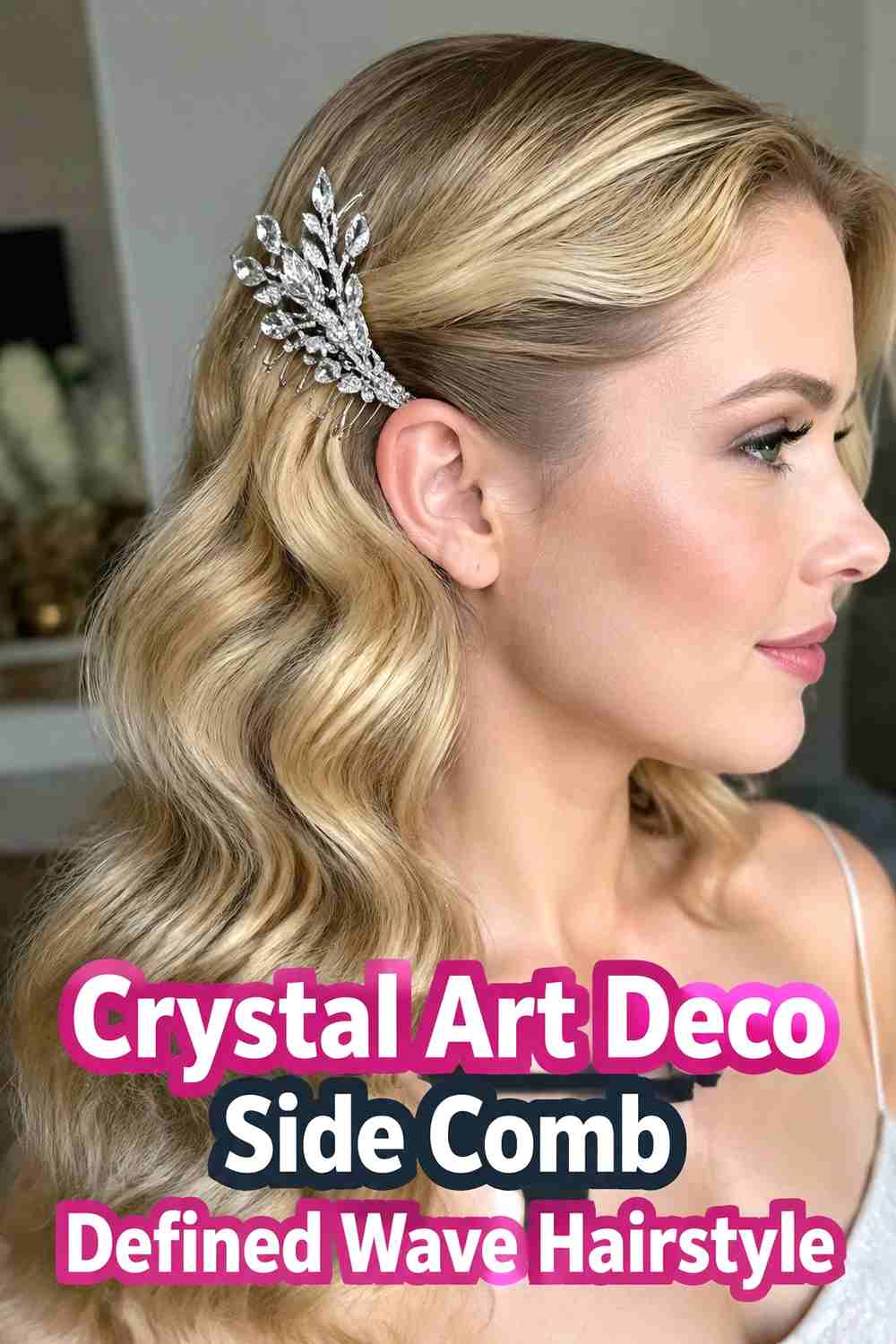
A crystal Art Deco side comb gives defined waves a bright focal point without requiring additional jewelry in the hair. Shape the front into one or two clear S-curves, then transition into larger, smoother waves through the mids and ends. Position the comb on the tucked side, slightly above the ear, where the crystals can catch light without covering the sculpted ridges. This style works particularly well for evening events, weddings, or formal photos because the accessory remains visible from both the front and side. Keep the wave surface polished and the rest of the styling restrained. Too many sparkling details can compete with the clean geometry that gives the hairstyle its Art Deco character.
Best For
Choose this version when you want the accessory to provide most of the sparkle. It pairs naturally with simple earrings and necklines that do not compete with the side detail.
10. Asymmetric Side Comb Marcel Wave Hairstyle
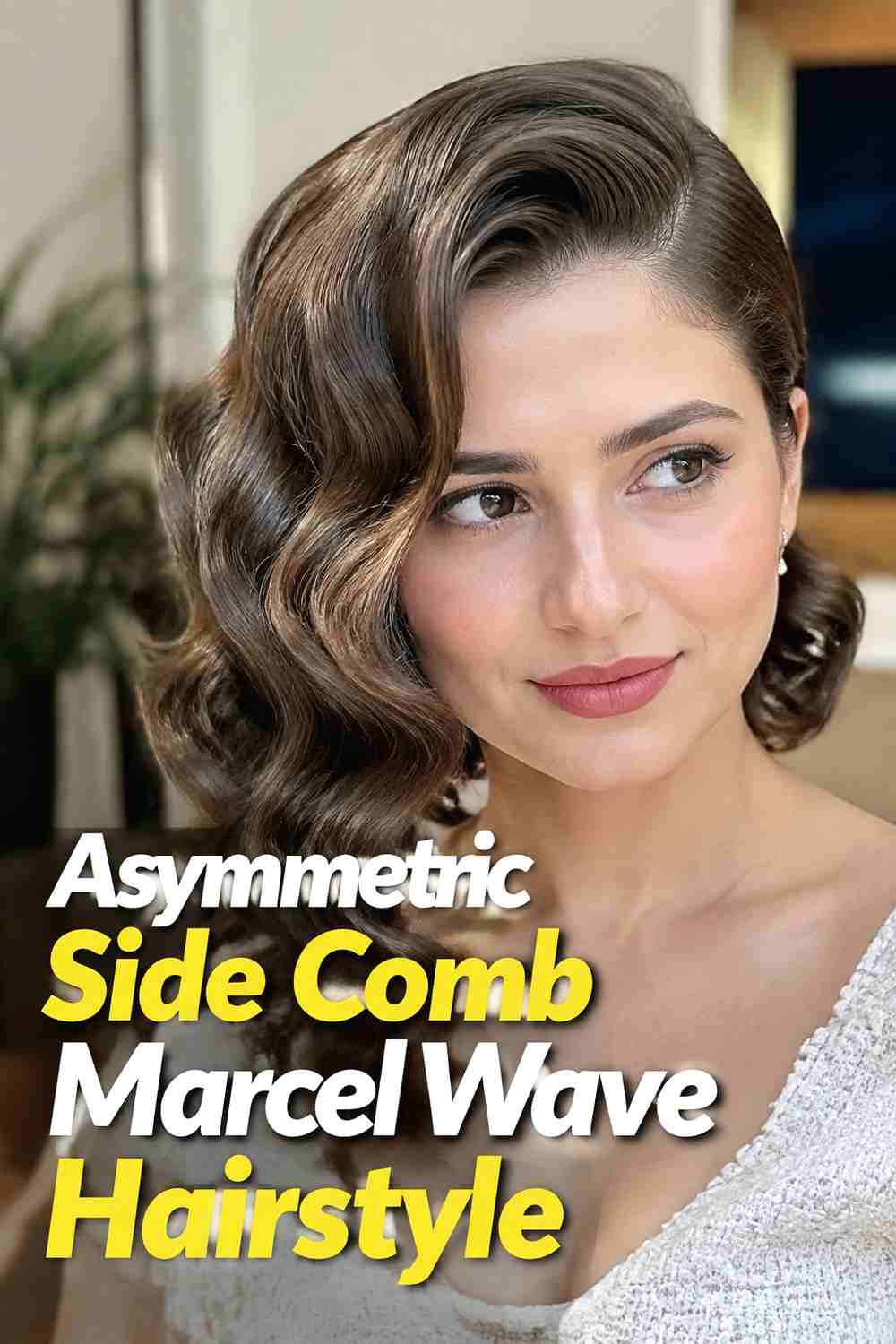
A Marcel-inspired wave pattern creates smooth, repeating curves with a more sculpted finish than loose Hollywood waves. Pair it with an asymmetric part and place the side comb on the flatter side so the accessory follows the direction of the styling. The front should have clear ridges, while the lower sections can soften slightly to keep the look wearable. This approach suits short, medium, and longer lengths because the wave intensity can be adjusted to the haircut. Choose a slim geometric comb rather than an oversized piece if the waves are highly defined. The strongest result comes from balancing structure near the face with enough movement through the ends to avoid a rigid silhouette.
Styling Notes
Keep the ridge spacing consistent around the face, then gradually relax the pattern farther down. That transition makes the finish feel polished without requiring every inch to be equally sculpted.
11. Art Deco Side Comb Lob Wave Hairstyle
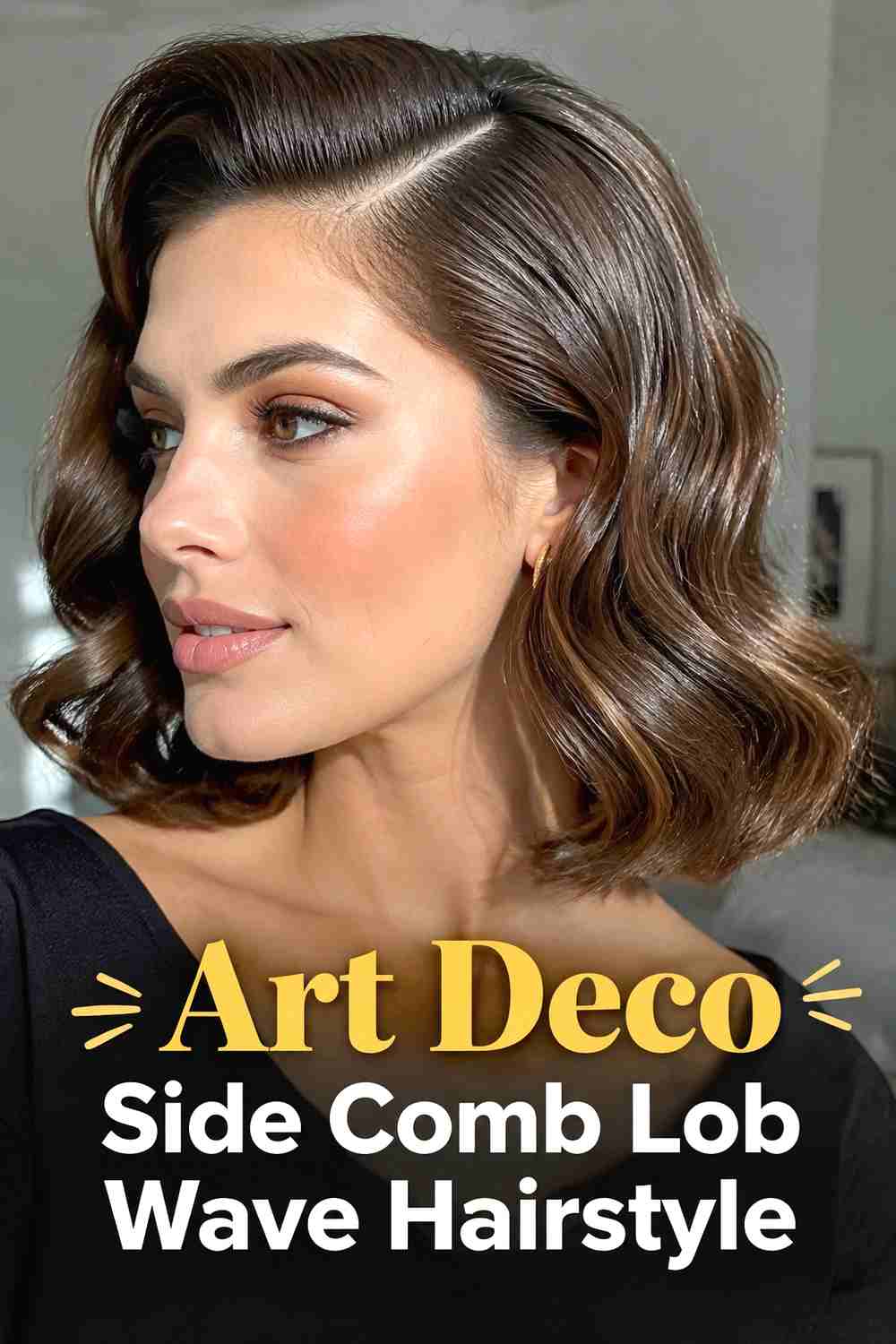
A lob offers enough length for polished waves while keeping the overall Art Deco side-comb look compact and modern. Create a deep side part and shape the hair into smooth, medium-size bends that sit close to the head near the temples and open slightly through the ends. Tuck the lighter side behind the ear, then slide in a decorative comb with fan, sunburst, or stepped geometric detailing. The accessory should sit flat and follow the contour of the head. This style works especially well on blunt or softly layered lobs because the ends retain a strong outline. Keep the finish glossy and controlled, but allow a little natural movement so the look does not feel overly set.
Hair Type & Length
Shoulder-grazing and collarbone-length cuts provide enough space for visible waves without the weight of very long hair pulling the pattern downward.
12. Soft Volume Side Comb Retro Wave Hairstyle
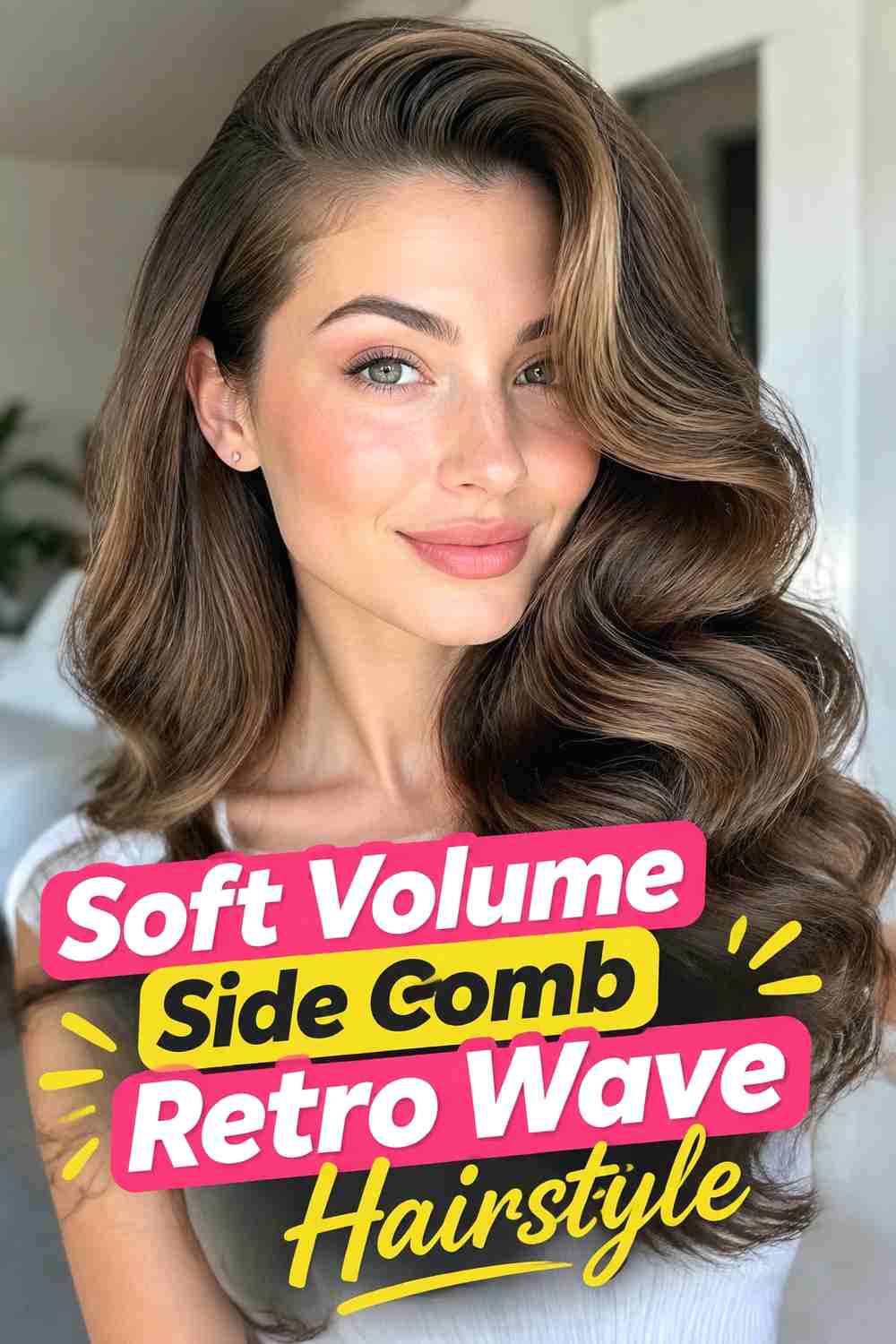
Soft volume gives retro waves a more relaxed, wearable finish while preserving the elegance of an Art Deco side comb. Instead of pressing the hair flat from root to tip, create gentle lift at the crown and let the waves become fuller through the mids. A deep side part still provides the classic asymmetry, while the comb anchors the lighter side above the ear. This version is particularly flattering on medium to thick hair because the natural density helps the waves feel plush rather than stiff. Keep the volume controlled around the temples so the accessory remains visible. The result should feel polished and dimensional, with enough softness to transition easily from a formal event to an elevated evening look.
Pro Tip
Concentrate volume behind the part and through the mids rather than directly beside the comb. This keeps the accessory visible and prevents the silhouette from becoming too wide.
13. Statement Art Deco Side Comb Cascade Wave Hairstyle
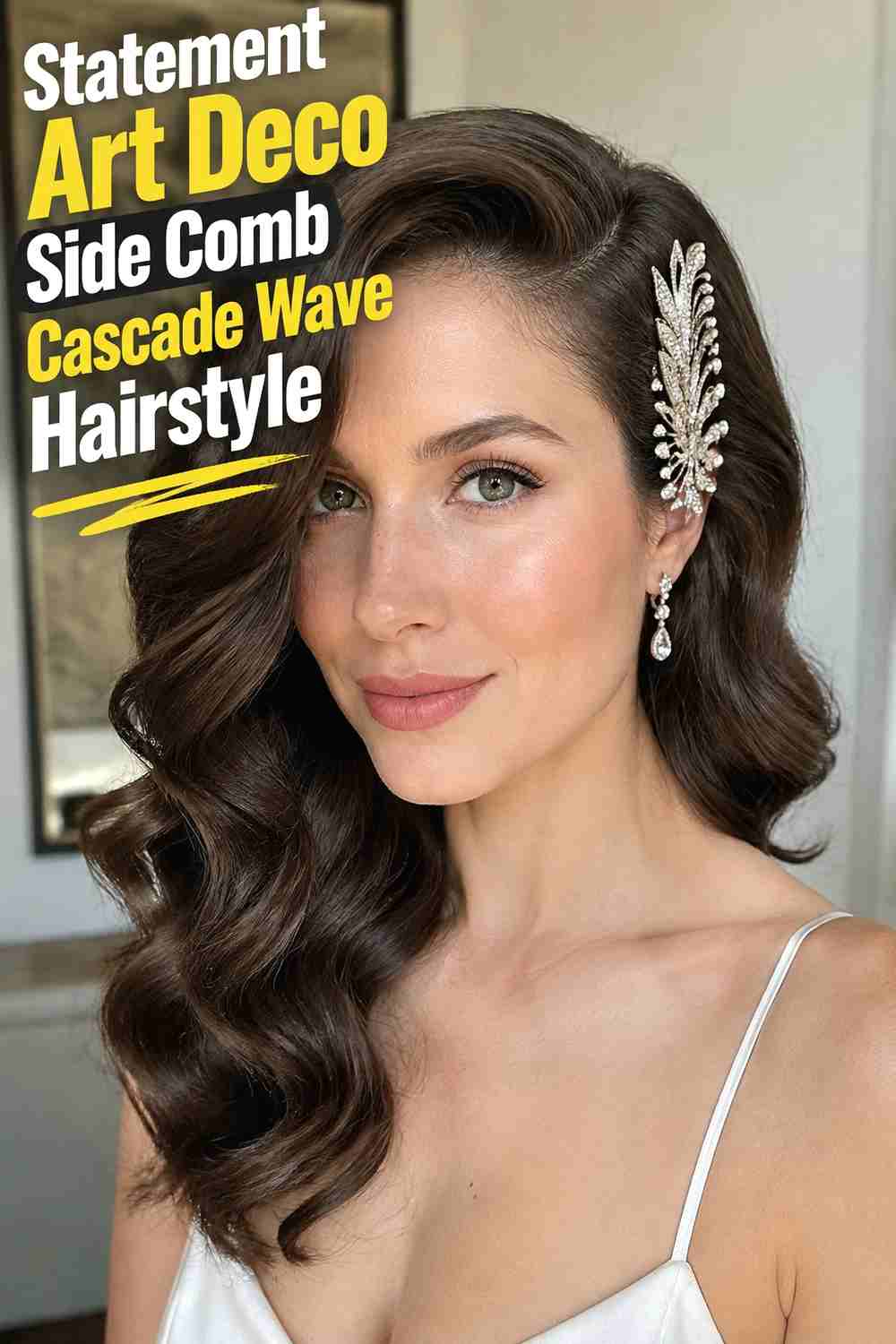
A statement Art Deco side comb can transform cascading waves into a dramatic event hairstyle without requiring an updo. Sweep the hair into a deep side part, keep one side tucked closely behind the ear, and let the opposite side fall in long, glossy waves over the shoulder or down the back. Choose a larger comb with geometric, fan-shaped, or jewel-inspired detailing and position it where it remains clearly visible against the smooth side section. This look works best on medium to long hair with enough length for a continuous cascade. Because the accessory is bold, keep other hair details simple. Clean wave definition and a controlled crown allow the comb to feel intentional rather than excessive.
Best For
This is a strong choice for formal events, evening celebrations, and photographs where both the long wave pattern and decorative accessory can be seen clearly.
How to Choose the Right Look
Start with the amount of structure you want around the face. Sculpted finger waves, Marcel-inspired waves, and polished S-waves have the strongest Art Deco geometry and usually require more deliberate setting. Hollywood waves, brushed waves, and soft-volume versions are more fluid and can feel easier to adapt for modern events.
Hair length also changes the effect. Bobs keep every ridge close to the face, making finger-wave detail especially visible. Lobs give you enough room for smooth bends while preserving a compact silhouette. Long hair supports dramatic brushed waves and cascading side-swept styles, but its weight can soften the pattern over time.
Match the side comb to the hairstyle rather than choosing it separately. Small geometric combs suit tightly sculpted waves, while pearl or crystal pieces complement softer formal styles. Larger statement combs work best when the surrounding hair is relatively simple.
Placement matters as much as design. The comb should usually sit on the lighter side of a deep part, near or just above the ear, where it can emphasize the asymmetry without covering an important wave ridge. Secure the hair underneath first if the accessory is decorative rather than strongly functional.
Finally, consider hold and comfort. Highly defined waves need more structure, while brushed curves can tolerate movement. Choose a finish that suits both the occasion and the amount of styling time you realistically want to spend.
Final Thoughts
Art Deco side comb waves are distinctive because they combine clean wave geometry with one focused accessory. You can make the result sharply sculpted, softly romantic, or modern and fluid without losing the vintage-inspired character.
Choose the wave pattern first, then add a side comb that supports its scale and direction. Keeping the accessory placement intentional and the rest of the styling restrained usually produces the most polished result.
FAQs
1. What type of side comb works best with Art Deco waves?
Geometric, fan-shaped, sunburst, pearl, and crystal side combs all complement the aesthetic. Choose a size that matches the scale of your waves and hair length.
2. Do I need short hair for Art Deco finger waves?
No. Short hair makes full finger waves especially visible, but medium and long hair can use sculpted waves around the front while keeping the lower lengths softer.
3. Where should I place the side comb?
It usually works best on the lighter side of a deep side part, just above or behind the ear. Position it where it supports the asymmetry without covering the wave pattern.
4. How can I make vintage waves look more modern?
Keep the lower lengths softer, avoid excessive stiffness, and choose one statement accessory rather than adding multiple decorative pieces.
5. Can Art Deco side comb waves work on naturally curly hair?
Yes. Curly hair can be reshaped into more uniform waves or partially smoothed around the front while preserving texture through the lengths. The amount of preparation depends on the natural curl pattern.
Save your favorite Art Deco side comb waves hairstyle ideas, share them for future event inspiration, and explore more polished ways to wear vintage-inspired waves.