18 Tassel Hairpin Low Bun Hairstyle Ideas
Elegant low buns meet delicate movement in these tassel hairpin hairstyles, combining polished shapes with subtle dangling details that instantly draw attention to the back of the hair.
A tassel hairpin can transform a basic low bun without requiring an elaborate updo. The bun provides a secure, understated foundation, while a decorative pin inserted through or beside the shape adds shine, movement, and a distinctive finishing detail. Depending on the design, the tassel can feel minimal, romantic, formal, or softly traditional.
The most flattering combination depends on bun size, hair texture, accessory weight, and placement. Sleek buns highlight the hairpin clearly, while twisted, braided, and textured versions create more visual detail around it. For comfortable wear, the decorative pin should enhance an already-secure bun rather than carrying the full weight of the hairstyle.
Quick List
- Sleek Center Part Tassel Hairpin Low Bun Hairstyle
- Soft Side Part Tassel Hairpin Low Bun Hairstyle
- Twisted Tassel Hairpin Low Bun Hairstyle
- Braided Tassel Hairpin Low Bun Hairstyle
- Polished Knotted Tassel Hairpin Low Bun Hairstyle
- Relaxed Textured Tassel Hairpin Low Bun Hairstyle
- Glossy Wrapped Tassel Hairpin Low Bun Hairstyle
- Low Chignon With Tassel Hairpin Hairstyle
- Double Twist Tassel Hairpin Low Bun Hairstyle
- Loop Bun With Tassel Hairpin Hairstyle
- Coiled Tassel Hairpin Low Bun Hairstyle
- Deep Side Part Tassel Hairpin Low Bun Hairstyle
- Face Framing Tassel Hairpin Low Bun Hairstyle
- Wavy Tassel Hairpin Low Bun Hairstyle
- Sculpted Tassel Hairpin Low Bun Hairstyle
- Braided Wrap Tassel Hairpin Low Bun Hairstyle
- Tucked Nape Bun With Tassel Hairpin Hairstyle
- Minimalist Low Bun With Long Tassel Hairpin Hairstyle
1. Sleek Center Part Tassel Hairpin Low Bun Hairstyle
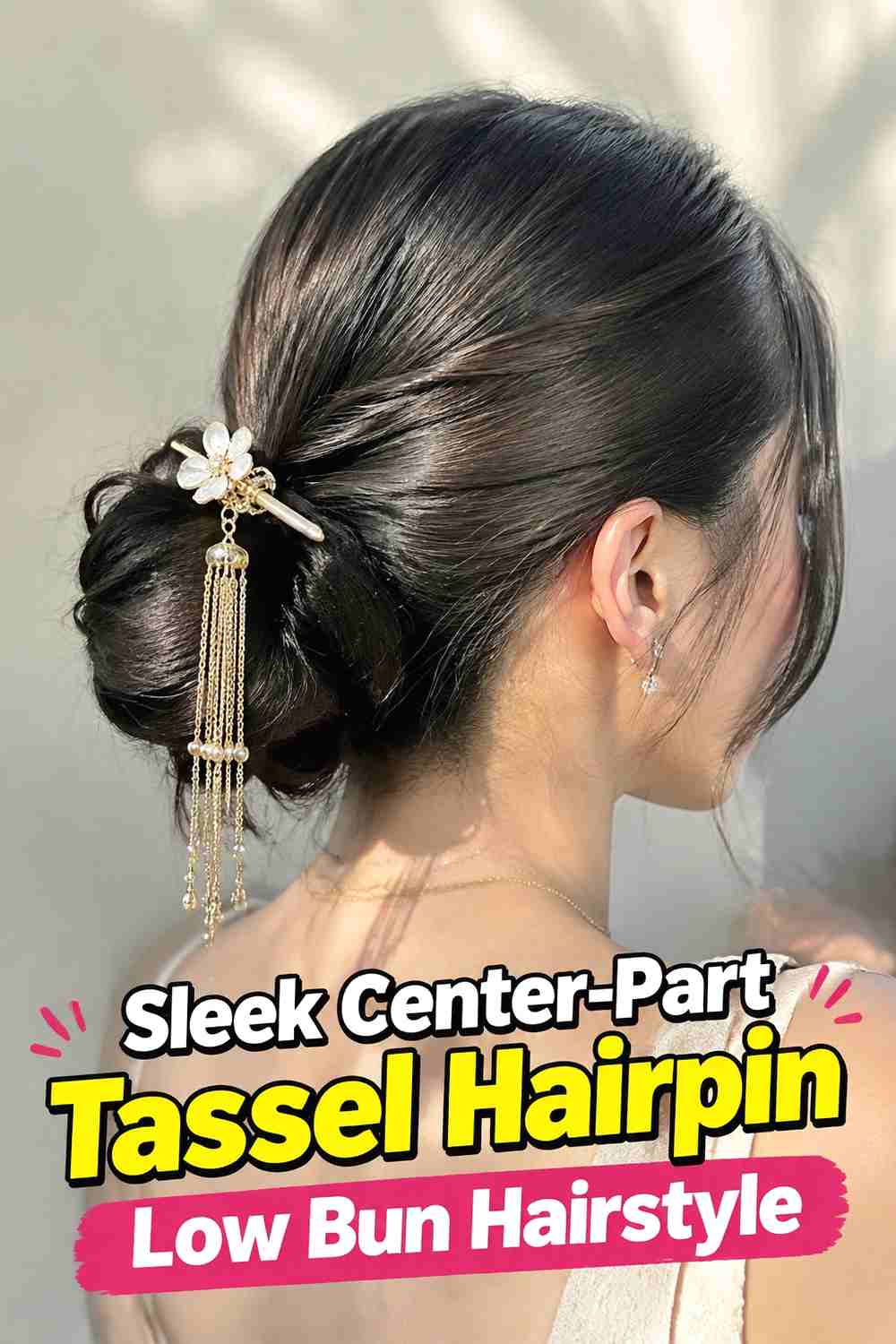
A sleek center-part low bun gives a tassel hairpin a clean, polished background that lets the accessory become the focal point. The hair is divided precisely down the middle, smoothed toward the nape, and wrapped into a compact rounded bun. A decorative tassel pin can pass diagonally through the upper edge of the bun so the dangling element falls beside it instead of disappearing underneath. This look suits straight, stretched, or carefully smoothed textures and works especially well when you want a refined finish. Keep product light enough that the hair remains glossy and natural rather than stiff or heavily coated.
Styling Notes
Secure the bun independently with an elastic and hidden pins before adding the decorative hairpin. This keeps the tassel accessory from carrying unnecessary tension or shifting as the bun settles.
2. Soft Side Part Tassel Hairpin Low Bun Hairstyle
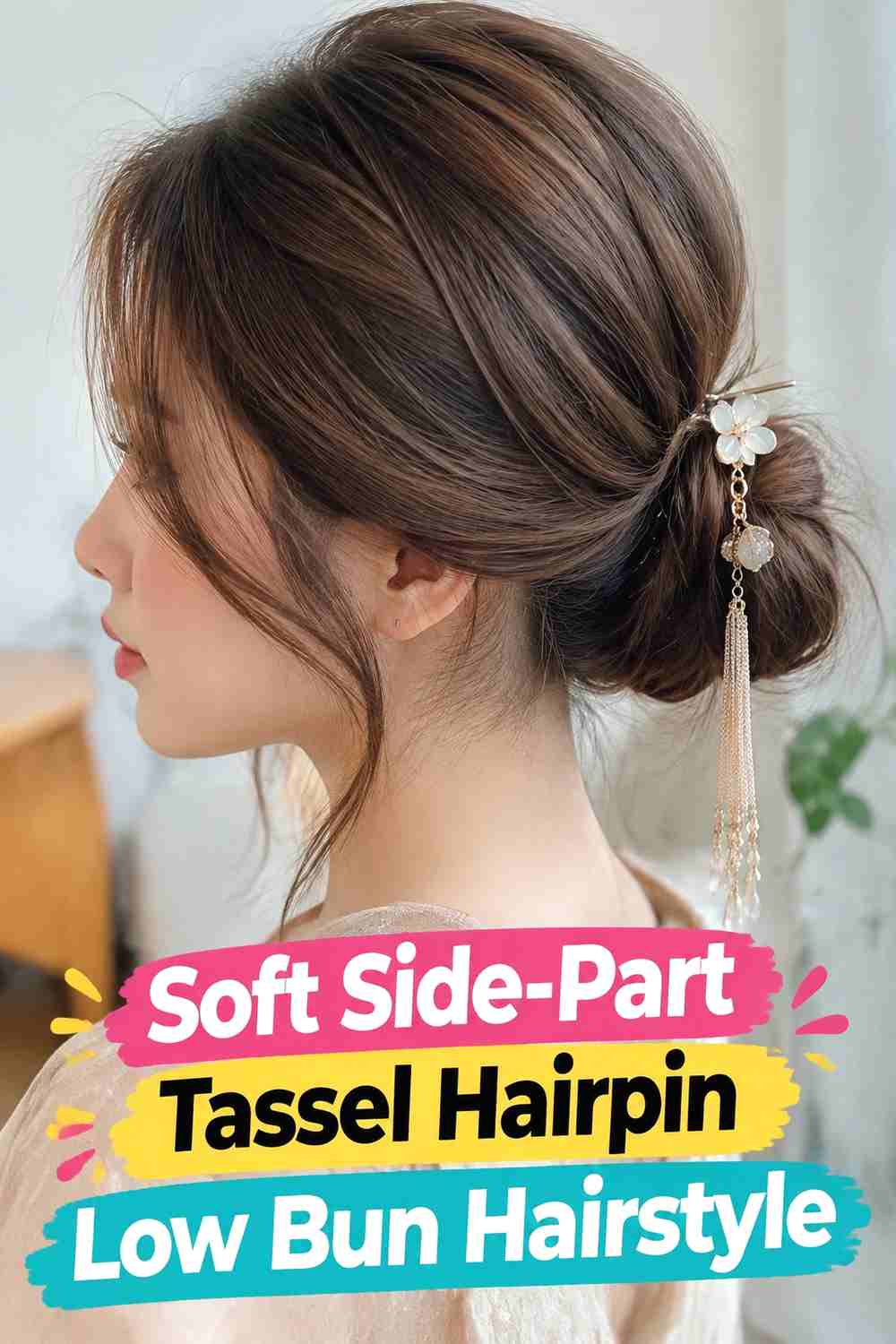
A soft side part changes the mood of a tassel hairpin bun by introducing gentle asymmetry around the face. Hair sweeps naturally across the forehead before being gathered at the nape into a neat but not overly tight bun. Positioning the tassel hairpin on the fuller side can reinforce that diagonal movement, while placing it opposite the part creates visual balance. The style works with straight, softly wavy, or smoothed hair and feels less severe than a strict center-part version. Keep the crown controlled but allow a little natural lift so the hairstyle remains elegant without appearing completely flattened to the scalp.
Best For
This variation suits dinners, celebrations, formal gatherings, and polished everyday styling when you want the accessory to feel noticeable but not overly ornate.
3. Twisted Tassel Hairpin Low Bun Hairstyle
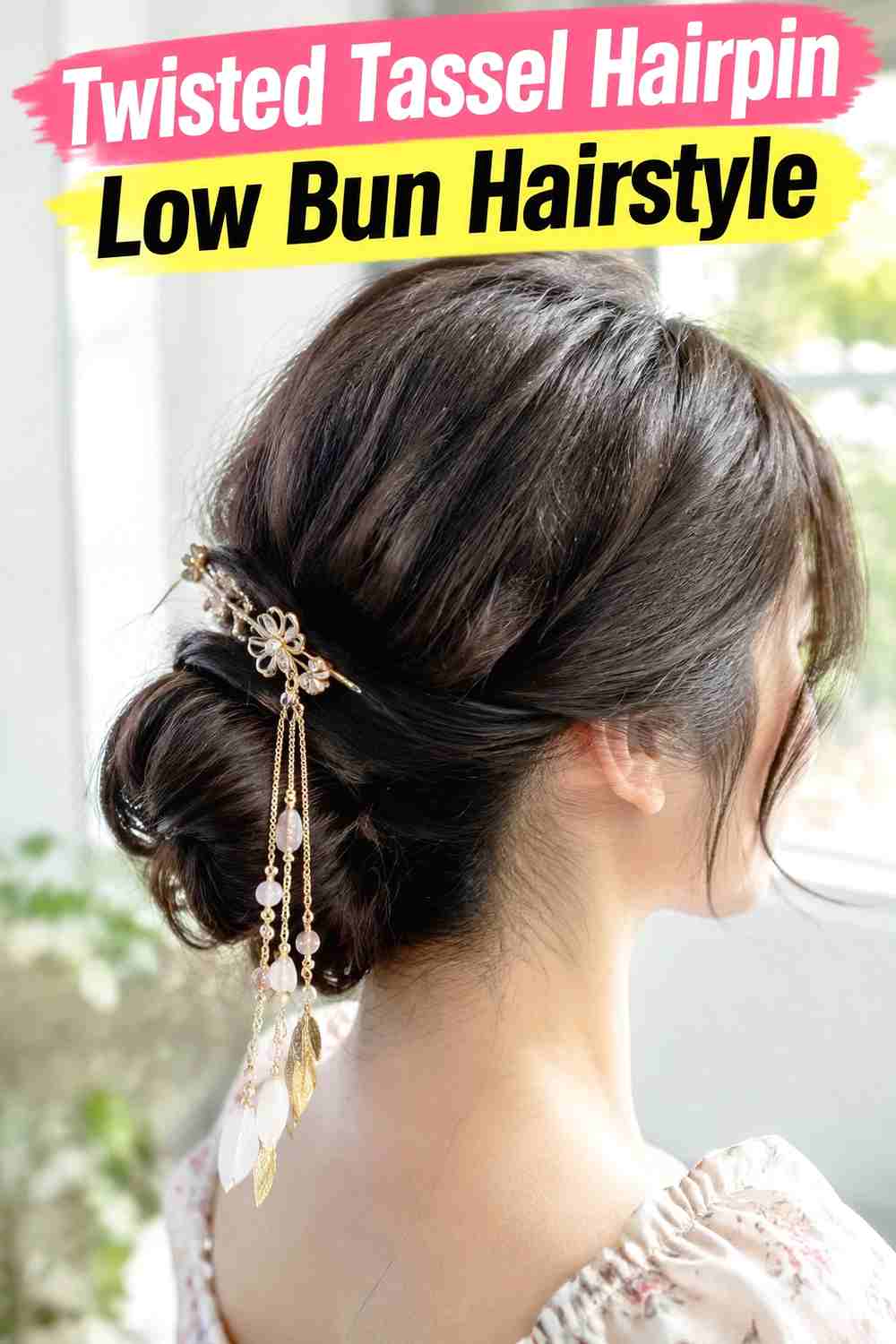
A twisted low bun creates natural ridges that frame a tassel hairpin beautifully. The hair is gathered at the nape, twisted along its length, then coiled into a bun while keeping the spiral pattern visible. A slender decorative hairpin inserted across the twist adds contrast between the structured bun and the soft movement of the hanging tassel. Medium to long hair works particularly well because there is enough length to form a clear spiral without forcing the ends. Avoid twisting so tightly that the bun becomes narrow and hard. A slightly relaxed twist gives the accessory a more balanced, dimensional backdrop.
Pro Tip
Insert the hairpin through a stable section of the finished twist rather than through loose outer strands. The tassel should move freely while the bun itself remains firmly anchored.
4. Braided Tassel Hairpin Low Bun Hairstyle
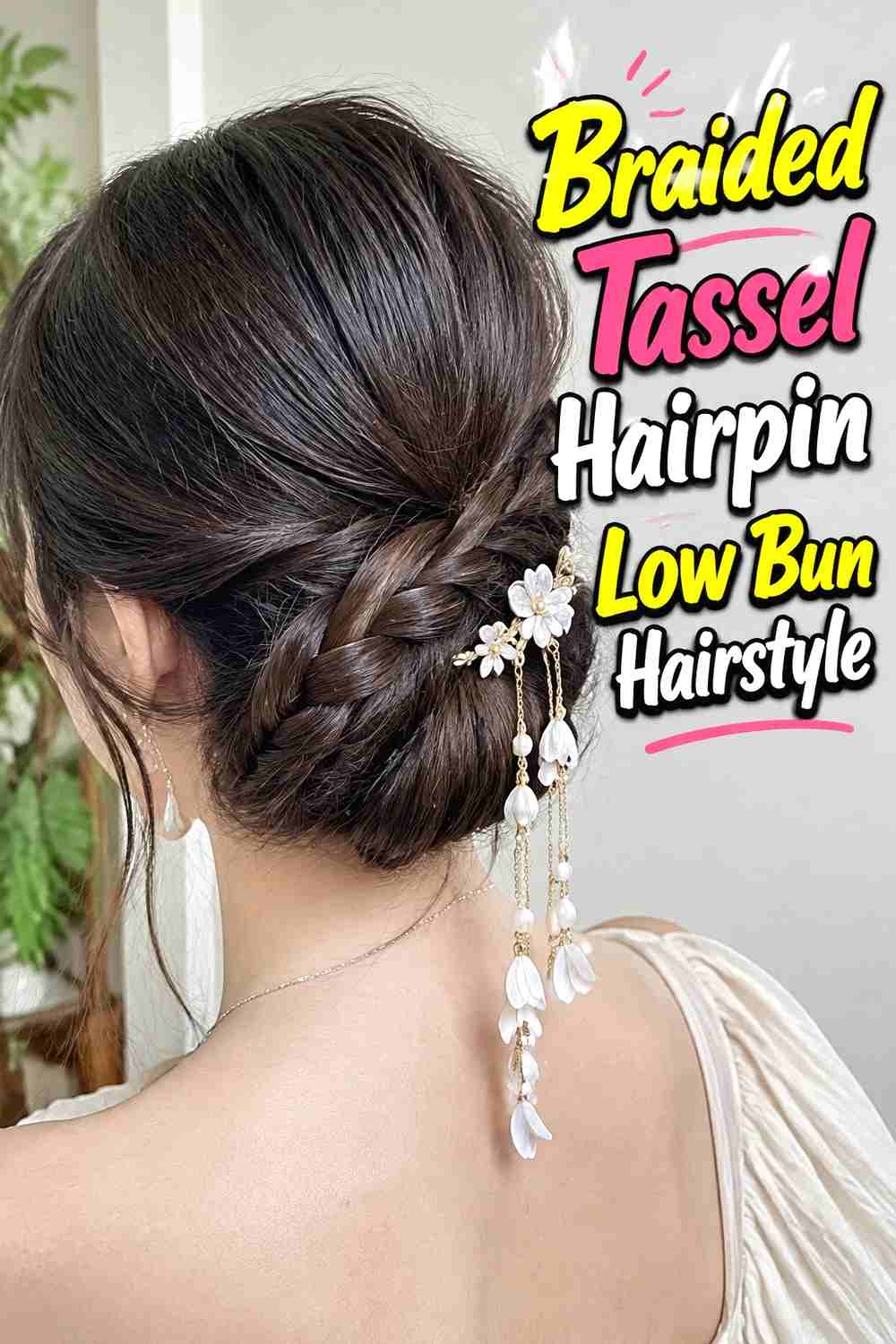
A braided tassel hairpin low bun combines woven texture with a delicate decorative accent. Begin with a low ponytail, create a simple three-strand braid, and wrap the braid around its base to form a compact bun. The visible braid pattern adds detail without making the updo too elaborate, while a tassel hairpin placed diagonally across the bun provides subtle shine and movement. This version is especially useful for long hair because braiding controls the length before it is wrapped. Slightly loosening the braid can increase fullness, but keep the structure defined enough that the woven pattern remains easy to recognize.
Wear & Maintenance
Because the braid provides its own structure, the bun can remain secure for extended wear. Use the tassel hairpin as decoration rather than depending on it as the only fastener.
5. Polished Knotted Tassel Hairpin Low Bun Hairstyle
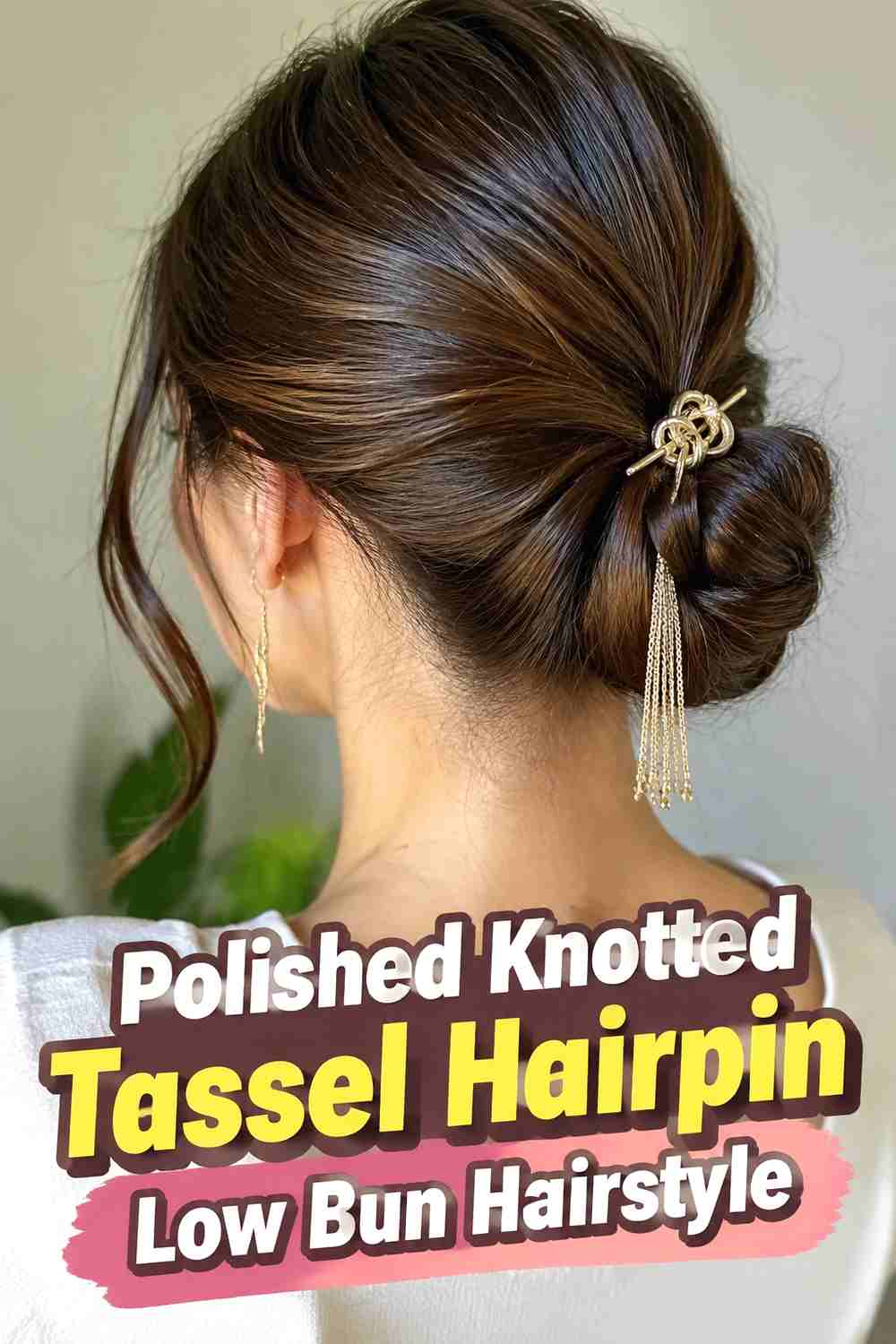
The polished knotted bun gives the accessory a more architectural setting. Instead of forming a standard round coil, the hair is folded into a neat knot near the nape, creating overlapping curves and a compact silhouette. A tassel hairpin can be inserted through the upper fold so the decorative strands hang just beside the knot. The look is particularly striking on smooth, medium-to-long hair because the folds remain clearly visible. Keep flyaways controlled and avoid making the knot too large; a smaller, defined shape allows the hairpin to remain proportionate and prevents the hairstyle from feeling overloaded with competing details.
Why It Works
The structured knot creates visual interest without requiring extra accessories. One carefully positioned tassel hairpin is enough to turn the clean silhouette into a more distinctive statement.
6. Relaxed Textured Tassel Hairpin Low Bun Hairstyle
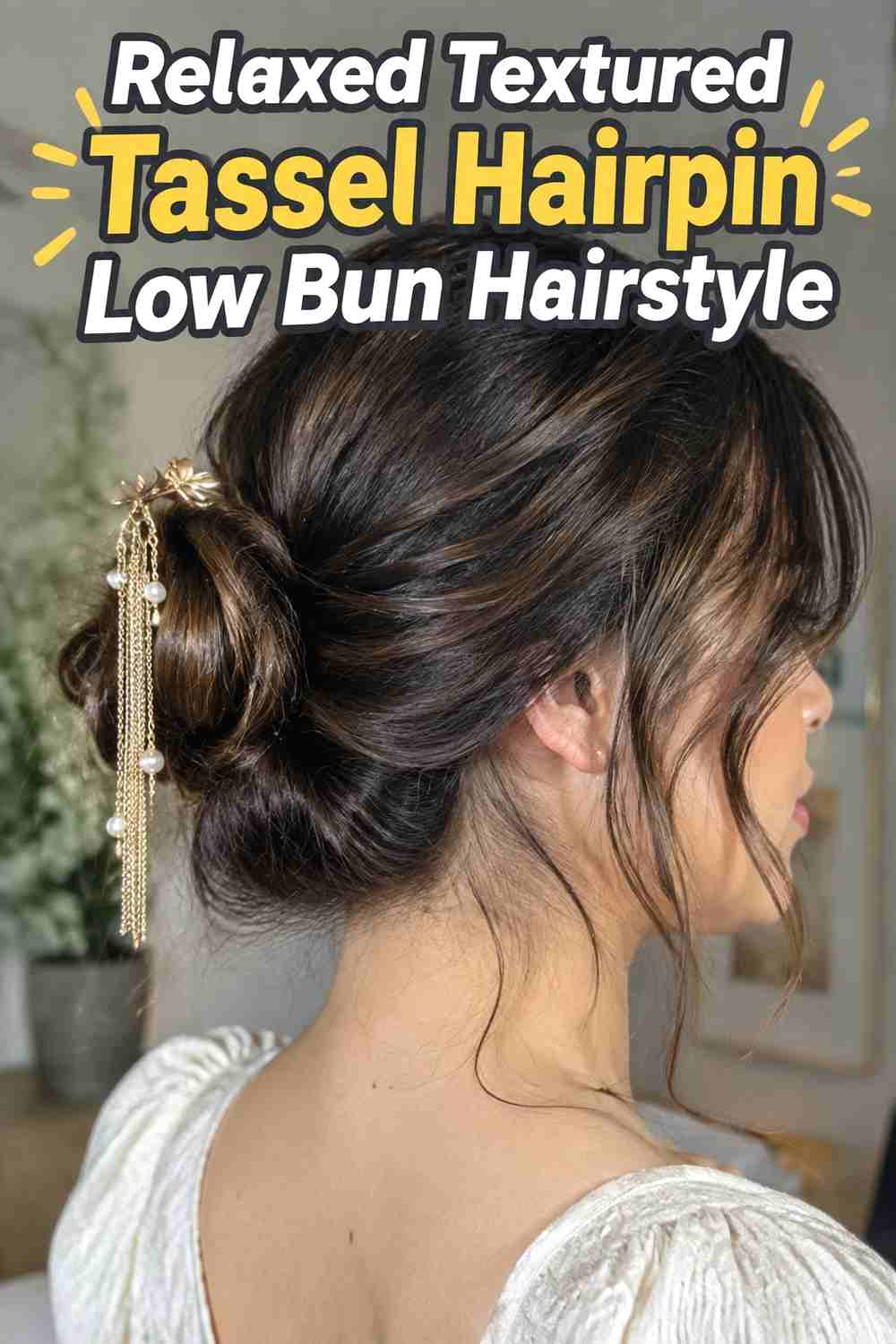
A relaxed textured bun offers a softer way to wear a decorative tassel hairpin. Rather than smoothing every strand, the crown keeps slight natural movement and the bun is built from loosely twisted or folded sections. The accessory adds a polished point of contrast against that softer surface, making the hairstyle feel intentional instead of simply undone. Wavy and naturally textured hair work especially well, although straight hair can gain grip with a light texturizing product. Keep the looseness controlled around the bun and crown, and avoid pulling out too many strands. The tassel should remain visible against the texture instead of getting lost inside it.
Hair Type & Length
Medium and long wavy hair naturally support this relaxed shape. Finer textures can create similar fullness by gently expanding the bun after it has been securely pinned.
7. Glossy Wrapped Tassel Hairpin Low Bun Hairstyle
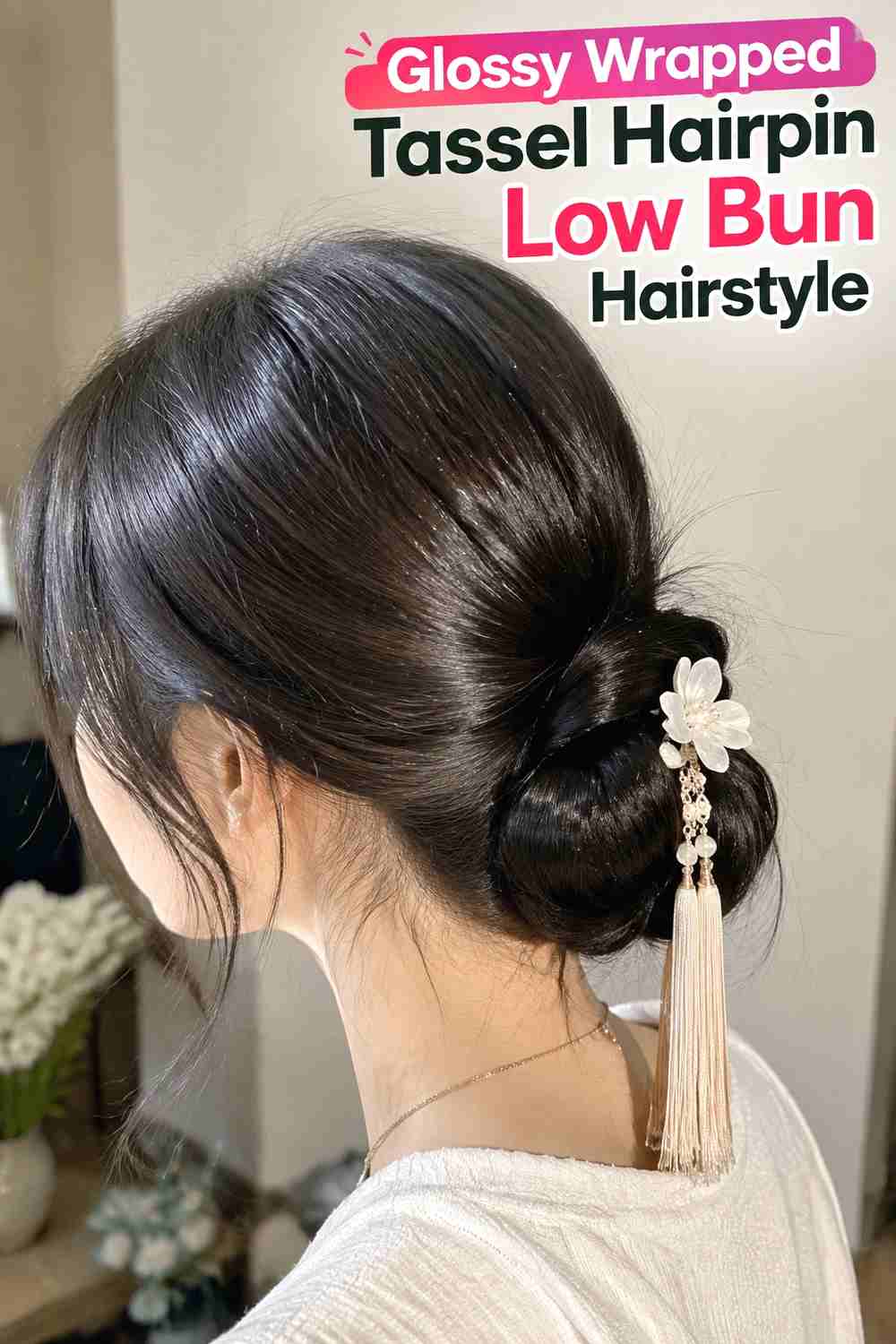
A glossy wrapped bun creates a smooth, continuous surface that makes a tassel hairpin stand out immediately. Hair is gathered low and formed into a bun, then a narrow section is wrapped around the base to conceal the elastic and create a seamless finish. A metallic or jeweled tassel hairpin can be positioned through one side of the bun so its movement contrasts with the polished structure. This style works best when the surface is sleek but still shows natural strand detail. Use a small amount of smoothing serum or cream and keep the accessory proportional to the bun for a sophisticated finish.
Styling Notes
Smooth the wrapping section before placing it around the bun, then pin its end underneath. Add the tassel hairpin only after the wrapped structure is completely secure.
8. Low Chignon With Tassel Hairpin Hairstyle
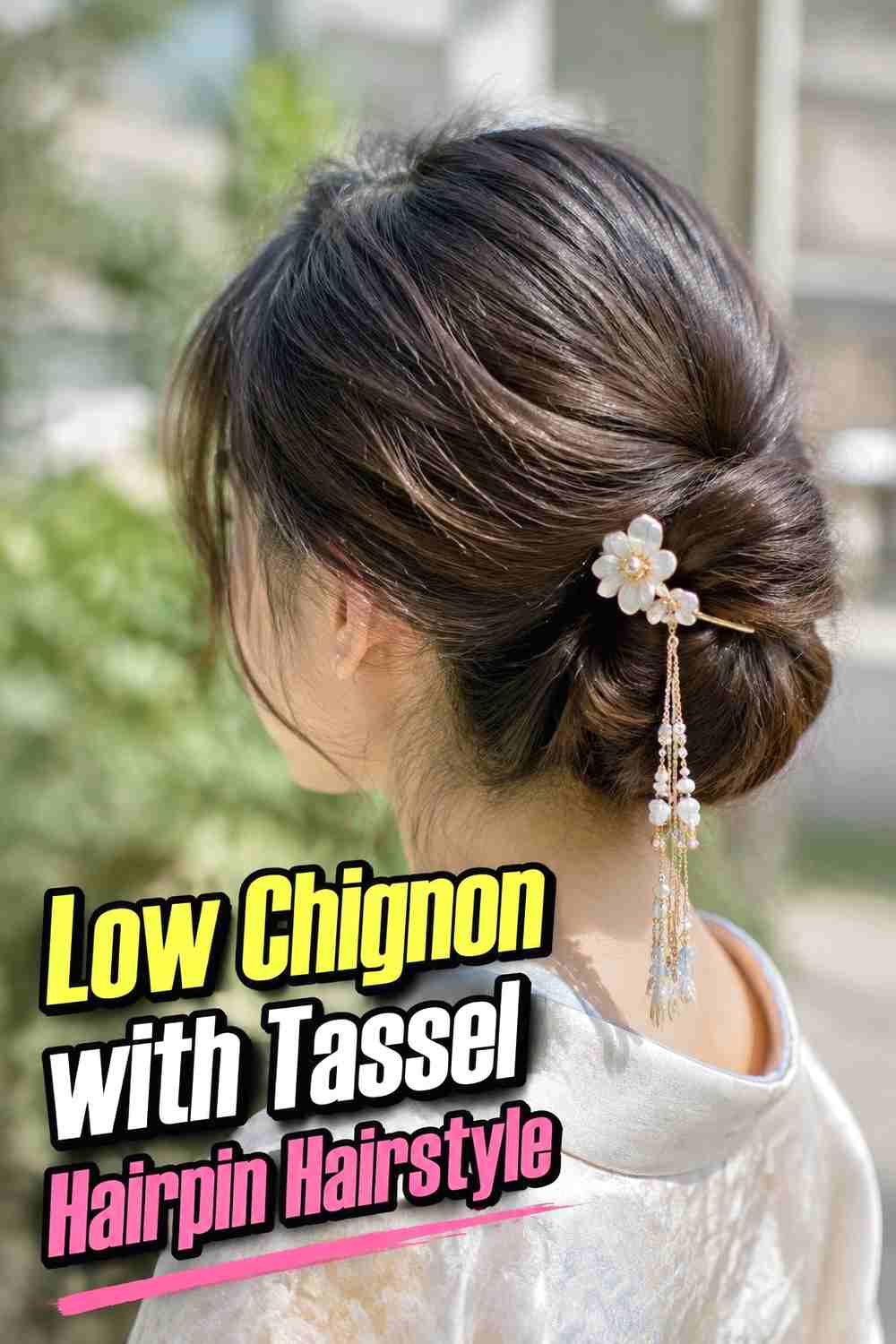
A low chignon provides a broader, softer base than a compact bun, making it ideal for a slightly more elaborate tassel hairpin. The hair is rolled or folded horizontally near the nape and pinned into a smooth oval shape. Instead of placing the accessory directly through the center, angle it across one upper side so the tassel falls along the edge of the chignon. This keeps the ornament visible without disrupting the elegant silhouette. Medium to long hair offers enough length for a substantial fold, while soft texture can make the style feel less formal. Keep the roll balanced from side to side.
Best For
This combination works particularly well for weddings, dinners, festive occasions, and other settings where you want a polished updo with one decorative focal point.
9. Double Twist Tassel Hairpin Low Bun Hairstyle
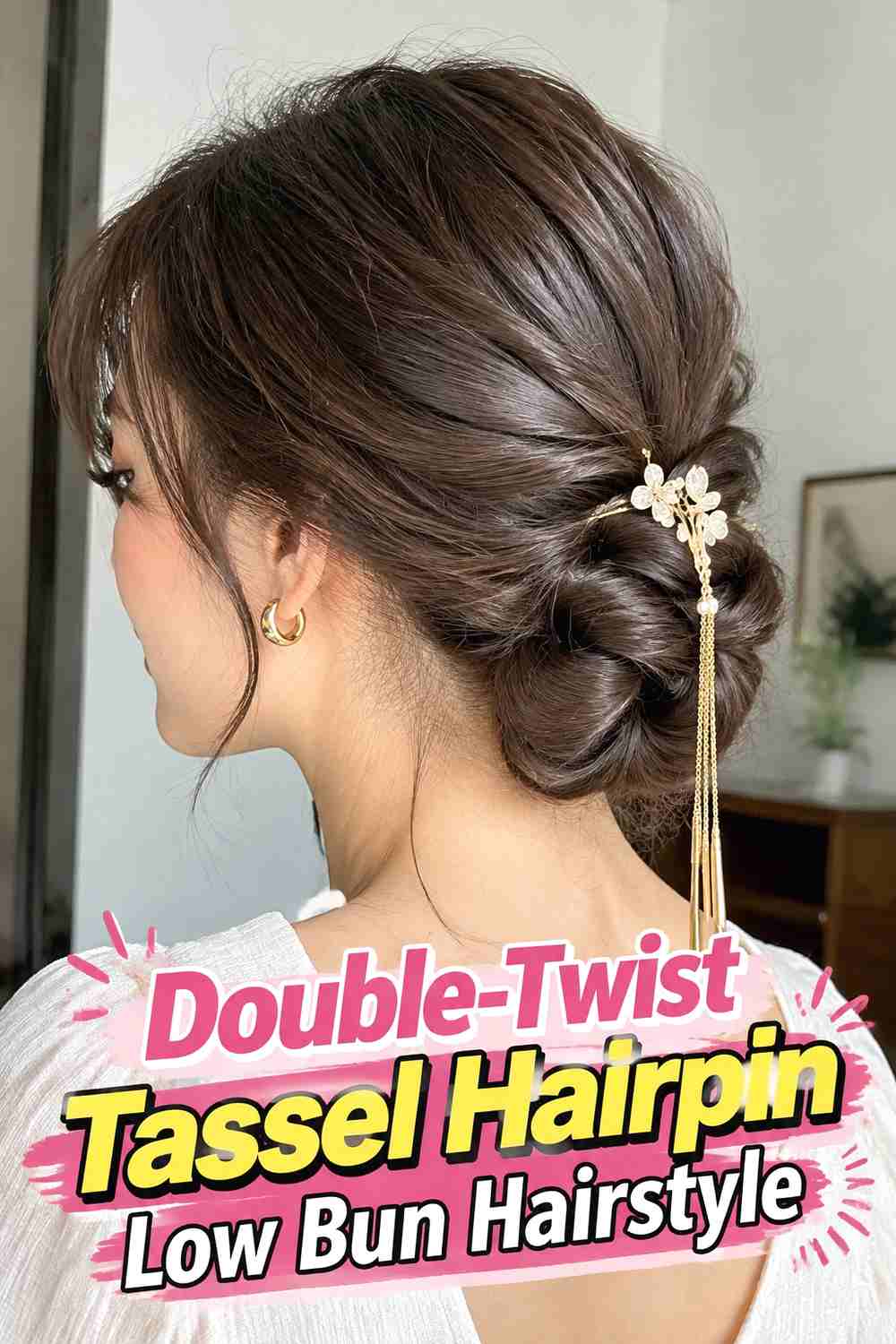
A double-twist low bun creates symmetrical texture by bringing two sections from opposite sides toward the nape. Each section is twisted inward, crossed at the back, and incorporated into a compact bun. The two visible ridges naturally guide the eye toward the center, where a tassel hairpin can be inserted slightly above or through the bun. This style is useful when you want more detail across the back of the head without adding braids or multiple accessories. Keep both twists similar in size and tension so the arrangement looks balanced. A softly moving tassel adds contrast to the structured, mirrored foundation.
Styling Notes
Secure the two twists together before forming the bun. Once the foundation is stable, shape the remaining length and place the accessory where it will not interfere with the hidden pins.
10. Loop Bun With Tassel Hairpin Hairstyle
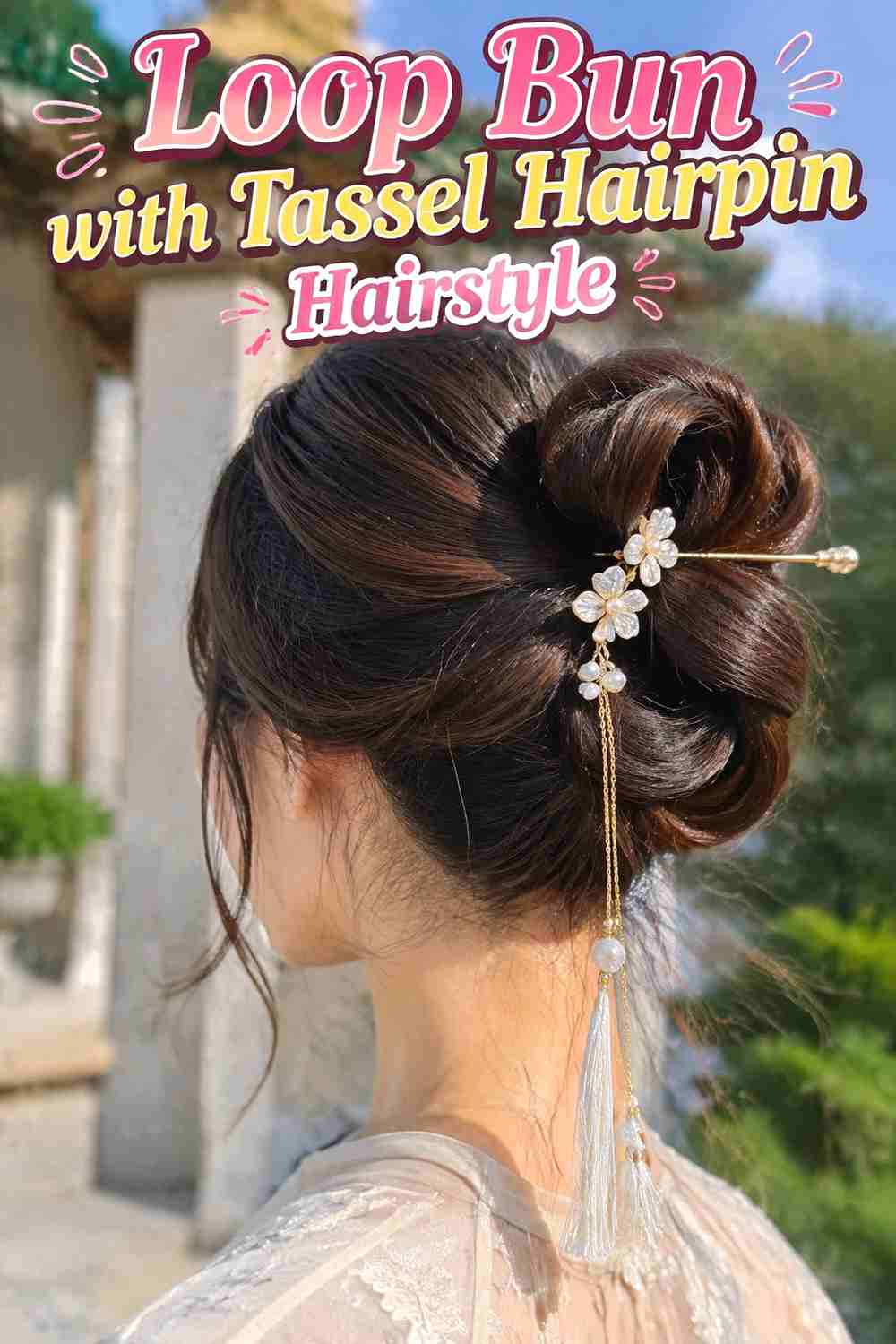
A loop bun offers a clean contemporary shape with enough open structure to highlight a tassel hairpin. Instead of wrapping the entire ponytail around itself, the hair is folded into a smooth loop and the remaining ends are tucked underneath. This produces a rounded but slightly elongated bun that sits close to the nape. A slender hairpin can cross the loop diagonally while the tassel hangs below the outer edge. The style works well on medium to long hair and can look either sleek or softly textured. Keep the loop compact enough that the decorative pin remains clearly visible against the hairstyle.
Pro Tip
Create the loop first and secure its shape with hidden pins. The tassel hairpin should be the final decorative step rather than the tool responsible for holding the fold together.
11. Coiled Tassel Hairpin Low Bun Hairstyle
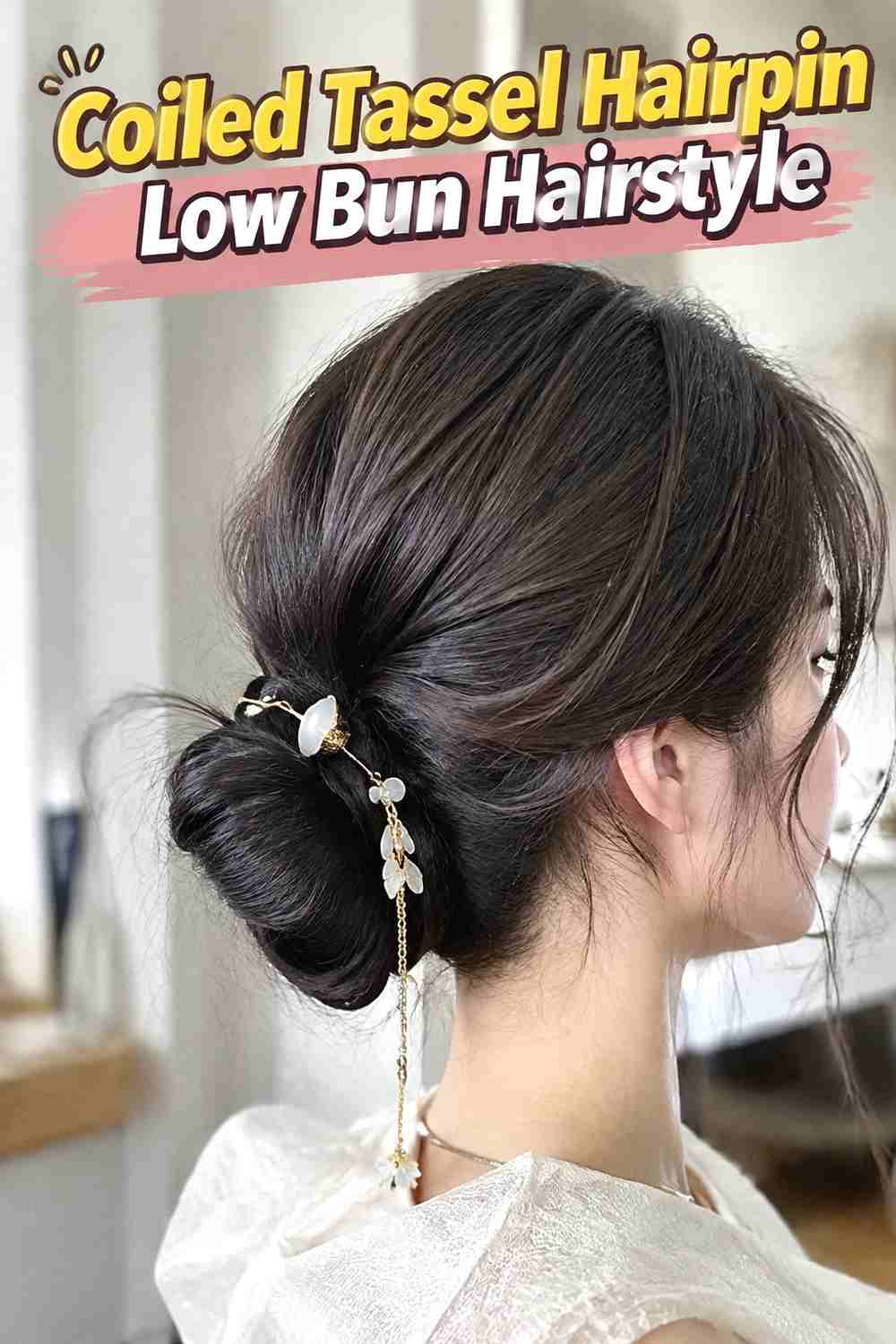
A coiled low bun emphasizes a circular spiral pattern that pairs naturally with a straight decorative hairpin. The ponytail is twisted smoothly and wrapped around its base in an even coil, keeping each turn visible instead of stacking the hair randomly. A tassel pin inserted horizontally or on a gentle diagonal can cross the spiral and create an elegant contrast between the geometric bun and free-moving ornament. Long hair makes the coil especially noticeable, although medium lengths can create a smaller version. Smooth the ends into the final turn and secure them underneath so the bun looks intentional from every angle.
Why It Works
The strong circular outline gives the accessory a clear visual anchor. A simple tassel hairpin adds movement without competing with the neat spiral construction.
12. Deep Side Part Tassel Hairpin Low Bun Hairstyle
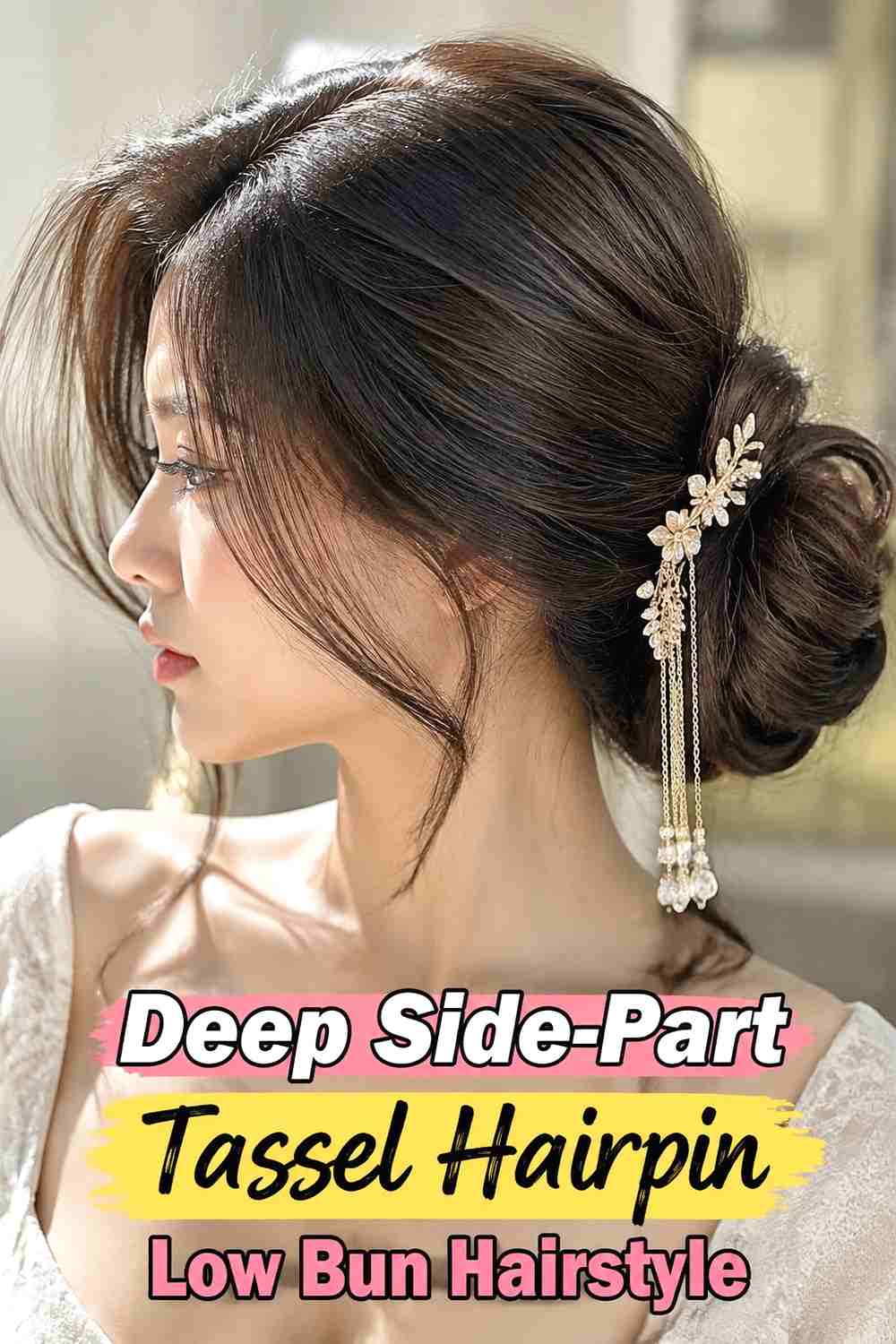
A deep side part gives the low bun a more dramatic front profile while still keeping the overall updo refined. Hair sweeps across the forehead in a controlled curve before joining a smooth bun at the nape. A tassel hairpin positioned on the opposite side of the part can create pleasing balance, while placing it on the same side reinforces the asymmetry. This look suits straight or carefully smoothed hair because the part and sweep are important design features. Avoid excessive crown volume; a flatter profile allows the curved front section and elegant accessory to provide enough visual interest on their own.
Best For
Choose this version for formal outfits or occasions where you want the hairstyle to look sophisticated from the front while still featuring a distinctive detail at the back.
13. Face Framing Tassel Hairpin Low Bun Hairstyle
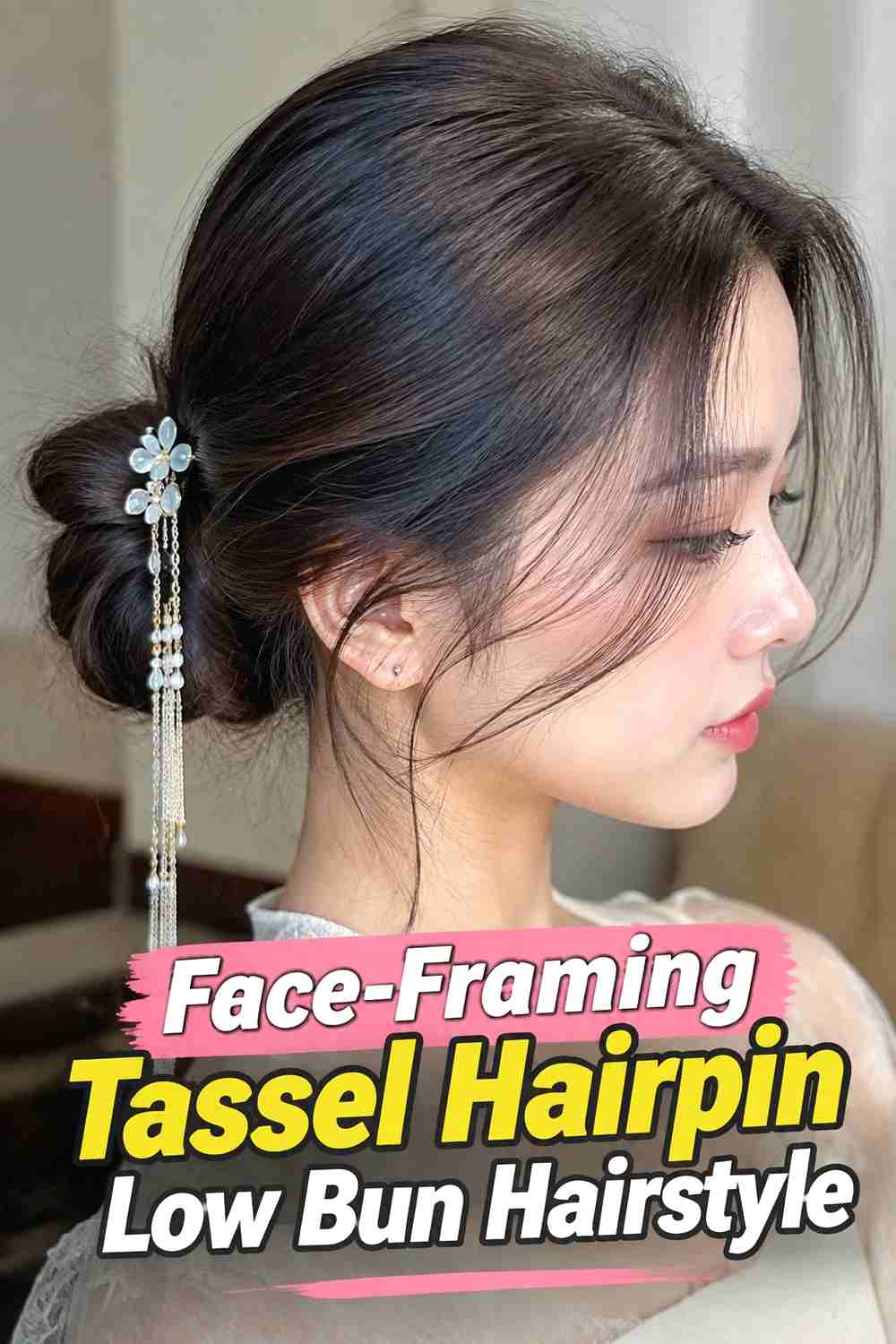
A low bun with face-framing pieces softens the appearance of a tassel hairpin updo without losing its polished foundation. The majority of the hair is gathered securely at the nape, while two narrow pieces are left loose near the temples or jawline. They can remain straight or receive a gentle bend depending on the desired finish. The tassel hairpin adds movement at the back, creating balance between the loose front pieces and decorative detail. Keep the face-framing sections fine rather than heavy so the style remains elegant. This version works particularly well when a fully slicked-back bun feels too severe.
Pro Tip
Separate the front pieces before tying the ponytail. Doing so gives you better control over their thickness and prevents larger sections from being pulled loose after the bun is finished.
14. Wavy Tassel Hairpin Low Bun Hairstyle
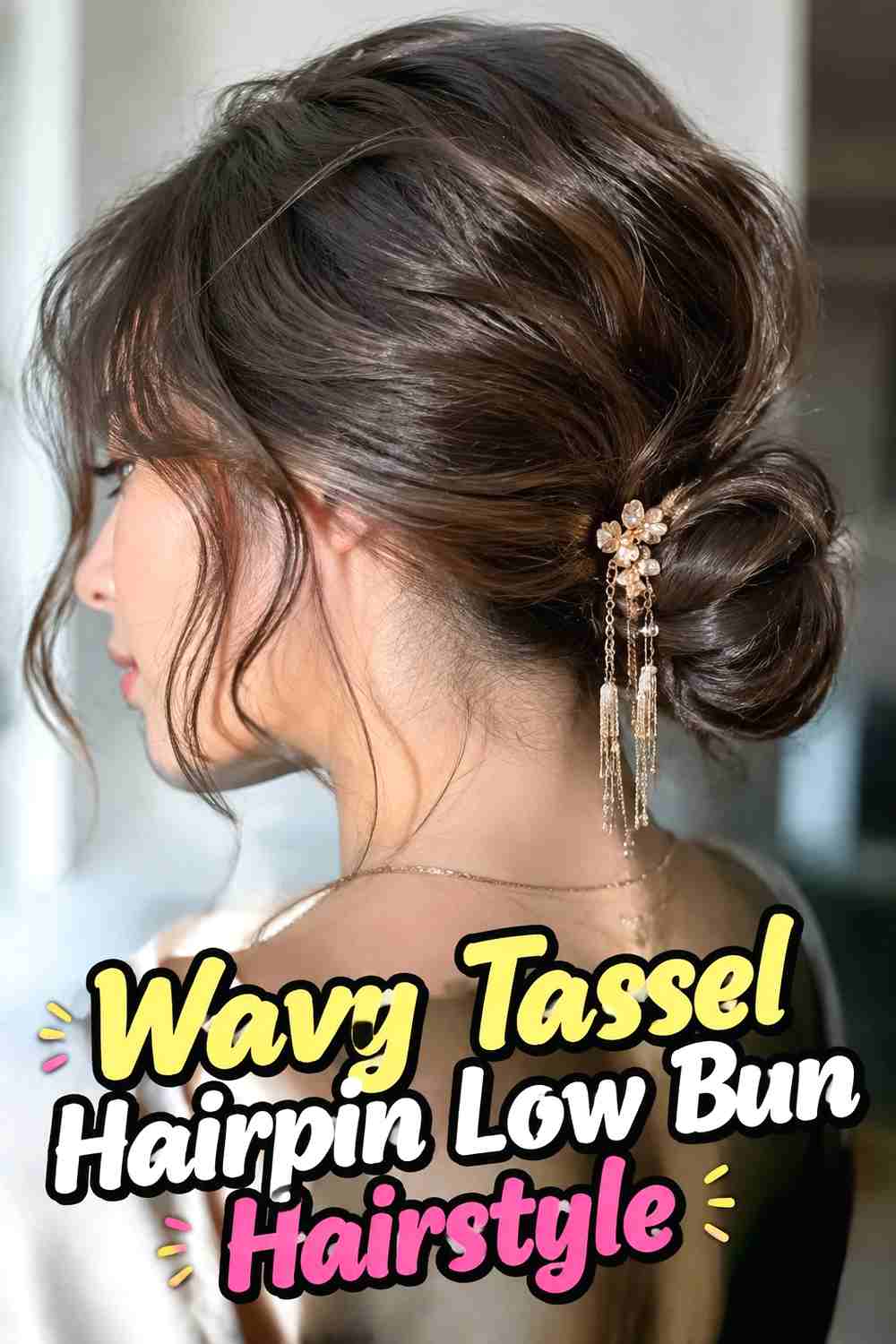
A wavy tassel hairpin bun preserves some of the hair’s natural movement instead of smoothing everything into a perfectly flat surface. Soft waves remain visible through the crown and sides before the lengths are loosely gathered into a rounded bun at the nape. The tassel hairpin introduces a refined decorative element without erasing the relaxed character of the style. Naturally wavy hair works especially well, although gentle pre-styling can create the same effect on straighter textures. Keep the bun full but controlled, allowing a few wave ridges to remain visible. Avoid aggressive brushing, which can remove the definition that makes this variation distinctive.
Hair Type & Length
Wavy medium-to-long hair is especially suited to this look because the existing bends create dimension with minimal preparation. Curly hair can also be softly stretched while retaining texture.
15. Sculpted Tassel Hairpin Low Bun Hairstyle
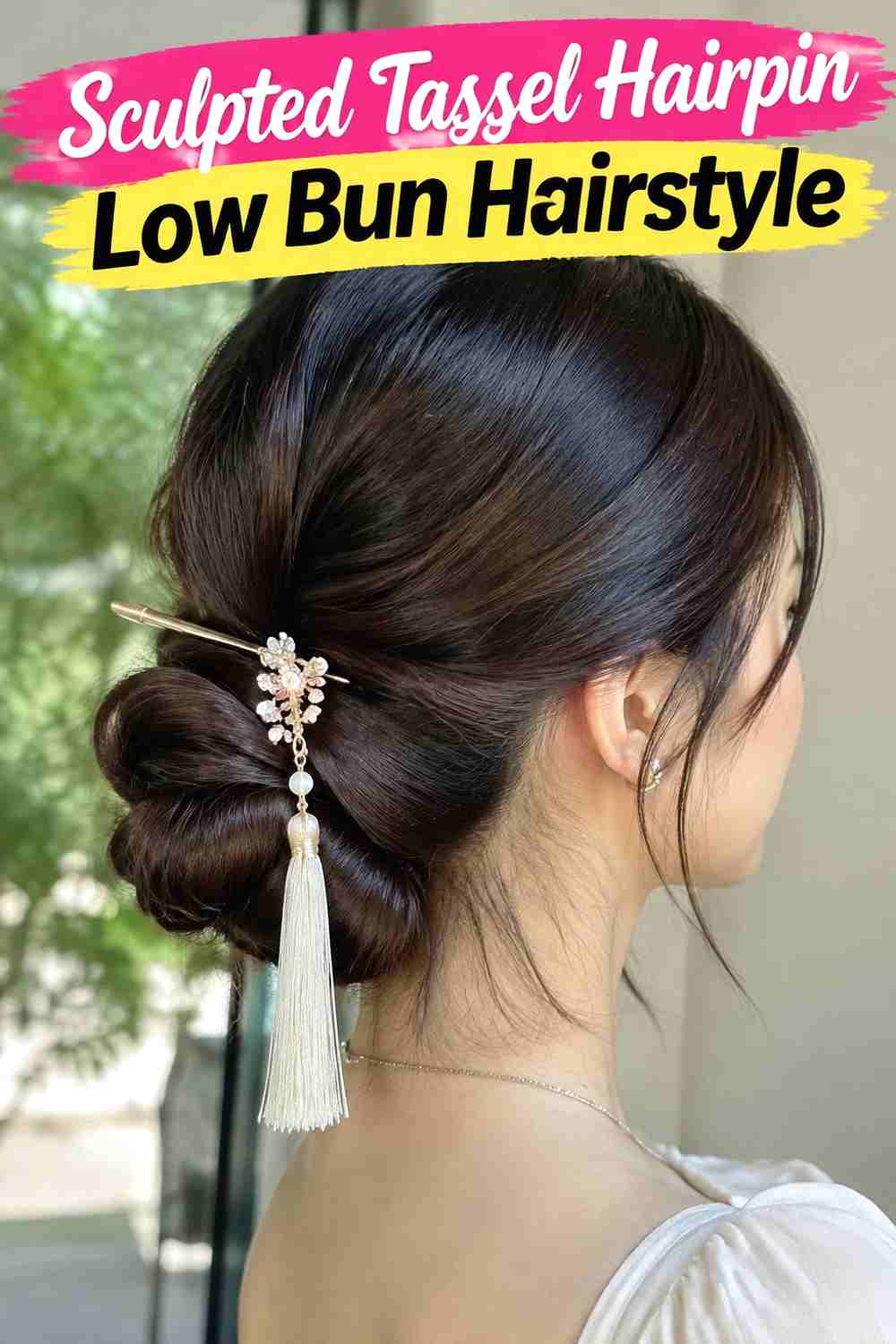
A sculpted low bun uses carefully folded sections to create a cleaner, more editorial silhouette. Rather than twisting the hair into a familiar circular shape, the lengths are curved inward and pinned into a smooth asymmetric form close to the nape. The tassel hairpin can follow the direction of one fold, making the ornament feel integrated into the structure instead of simply added afterward. This look benefits from medium to long hair with enough length for controlled shaping. Keep the surface smooth and the edges defined, but avoid excessive stiffness. The bun should still show believable strand detail and natural shine.
Styling Notes
Build the sculpted shape with hidden pins first, checking the side profile as you work. Add the hairpin along an existing curve so it complements rather than cuts across the design.
16. Braided Wrap Tassel Hairpin Low Bun Hairstyle
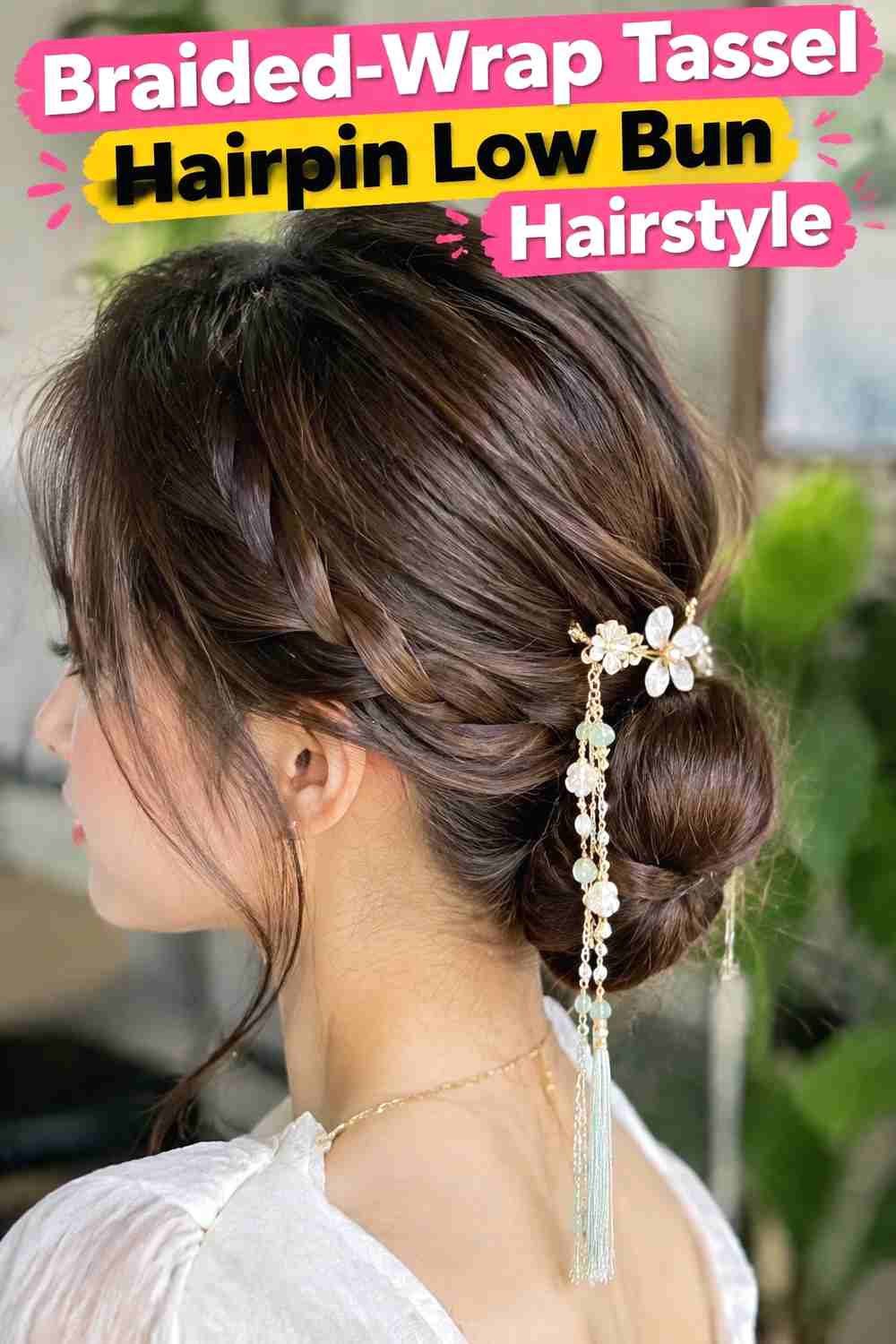
A braided-wrap bun combines a smooth center with one clearly defined braid wrapped around the perimeter. The main section forms a compact low bun, while a smaller section is braided separately and placed around the outside like a textured border. A tassel hairpin positioned through the upper portion adds another layer of detail without overwhelming the shape. This style works particularly well on longer hair because there is enough length to create the bun and decorative braid naturally. Keep the braid proportionate and avoid loosening it excessively. The goal is a clear contrast between the smooth central bun and the woven outer edge.
Why It Works
The braid frames the bun and gives the tassel accessory a structured setting. Each detail has a distinct role, so the hairstyle looks decorative without becoming visually cluttered.
17. Tucked Nape Bun With Tassel Hairpin Hairstyle
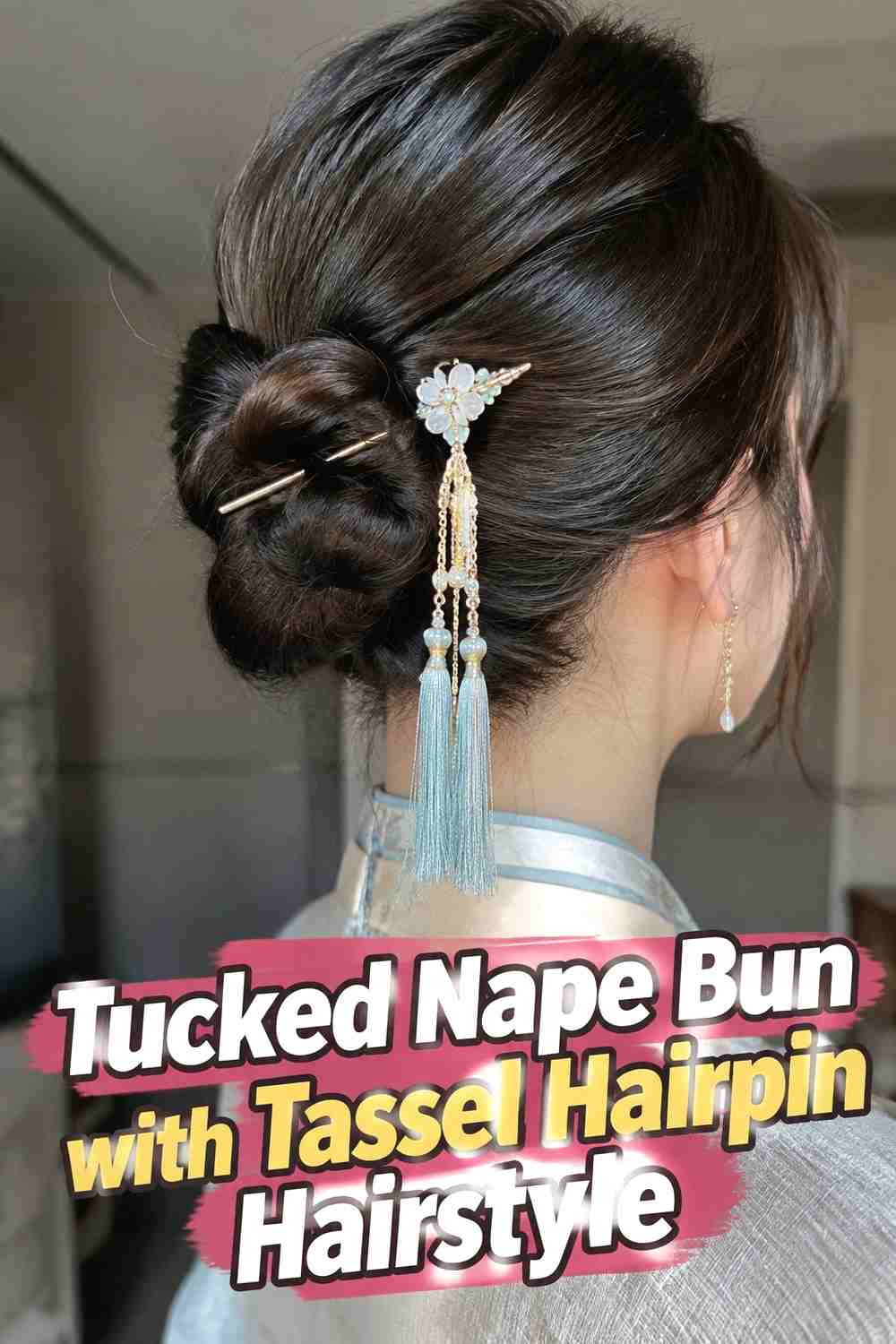
A tucked nape bun sits especially close to the neck, creating a slim, understated profile. Hair is folded inward horizontally rather than wrapped into a protruding round bun, and the ends are concealed inside the roll. A tassel hairpin can pass through the upper section of the tuck while its decorative strands hang freely beneath or beside it. This makes the accessory more noticeable because the hairstyle itself remains compact. Medium lengths are particularly easy to fold this way, while longer hair may need an additional hidden turn. Keep the tuck smooth and evenly balanced so the pin looks intentional rather than necessary for support.
Wear & Maintenance
A close-to-the-head shape can feel comfortable for long wear. Use concealed pins to support the tucked section and reserve the visible tassel hairpin for decoration.
18. Minimalist Low Bun With Long Tassel Hairpin Hairstyle
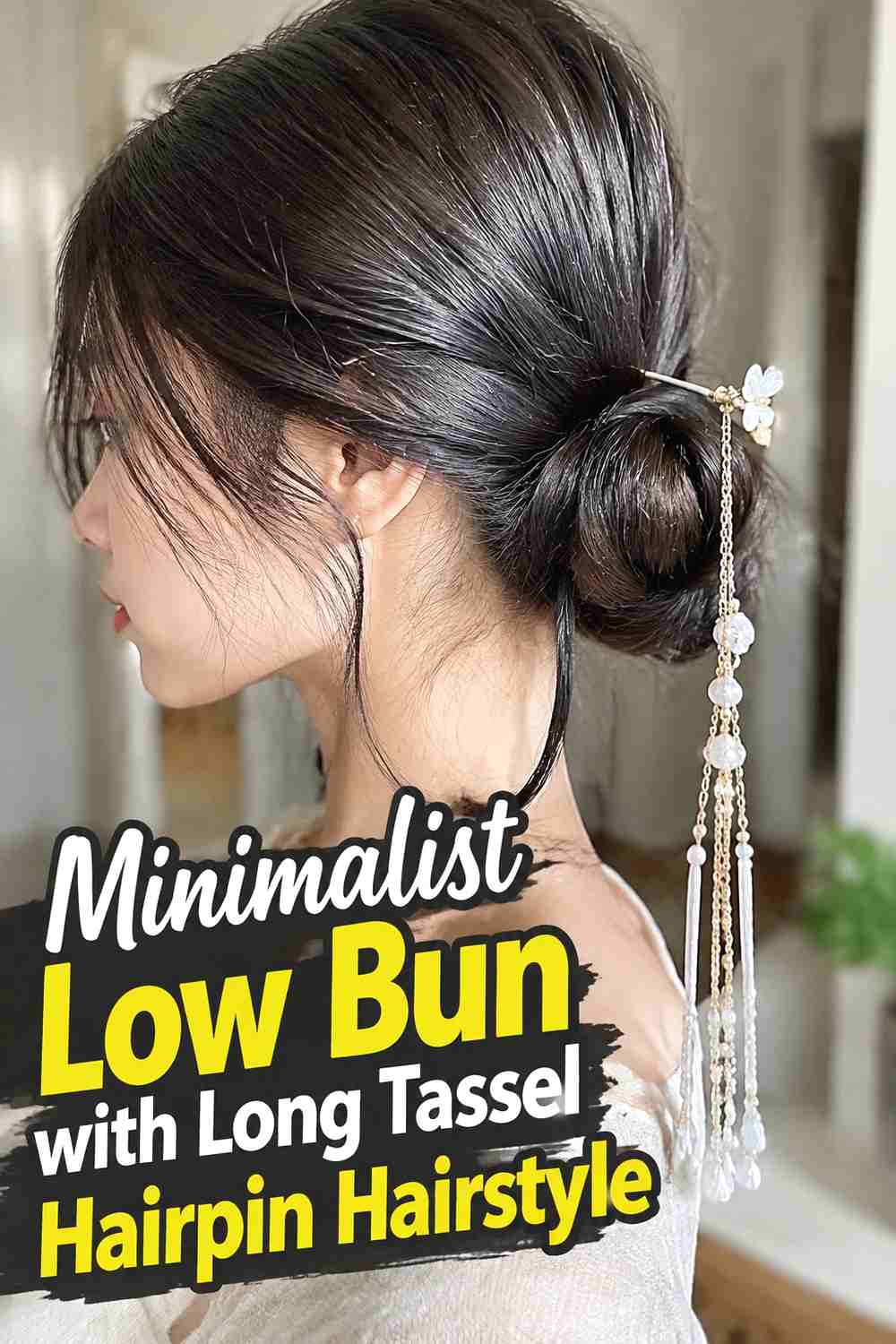
A minimalist low bun with a long tassel hairpin keeps every element simple so the accessory becomes the unmistakable focal point. The hair is smoothly gathered into a small, neat bun at the nape with no braiding, elaborate twisting, or extra decoration. A longer decorative hairpin is inserted through the bun at a gentle diagonal, allowing the tassel to hang visibly beside the clean silhouette. This style works best when the accessory has enough detail to stand alone. Keep flyaways controlled and choose a bun size that feels proportionate to the length of the pin. The final effect is elegant, uncluttered, and easy to appreciate from the back.
Best For
This version is ideal when you want the tassel hairpin itself to make the statement. It pairs especially well with simple clothing, clean necklines, and restrained jewelry.
How to Choose the Right Look
Start with the bun structure. If you prefer a very clean finish, choose a sleek center-part bun, wrapped bun, coiled bun, sculpted bun, or minimalist version. These shapes give the tassel hairpin a clear background and make its decorative movement especially easy to see.
For more texture, consider braided, double-twist, wavy, or braided-wrap variations. These styles create visual detail before the accessory is added, so a simpler tassel hairpin may be enough. Relaxed textured buns and face-framing versions provide the softest finish and work well when you do not want every strand tightly controlled.
Hair length also affects the most practical option. Medium hair adapts well to tucked, looped, and compact knotted buns, while long hair provides more flexibility for coils, braids, wraps, and chignons. Thick hair may need several concealed anchors beneath the bun so the decorative pin is not carrying excess weight.
Pay attention to accessory placement. A tassel should hang freely rather than becoming trapped under the bun or tangled in loose pieces. Angled placement often creates a natural drape, while horizontal positioning can emphasize the width of a coiled or braided style.
Finally, consider comfort and occasion. Smaller, lighter tassel hairpins are easier for extended wear, while larger jeweled or metallic versions can make sense for weddings, parties, cultural celebrations, and formal events. Whatever accessory you choose, secure the hairstyle first and add the decorative pin last.
Final Thoughts
Tassel hairpins give low buns an elegant finishing detail without requiring an overly complicated hairstyle. The accessory can look sleek against polished hair, romantic beside waves, or intricate when paired with twists and braids.
Choose a bun structure that works naturally with your length and texture, then let the tassel hairpin complement that shape rather than hold the entire style together. A secure foundation and thoughtful placement usually create the cleanest, most comfortable result.
FAQs
1. How do you wear a tassel hairpin with a low bun?
Secure the low bun first with an elastic and concealed pins, then slide the tassel hairpin through a stable section of the bun at an angle that allows the tassel to hang freely.
2. Can a tassel hairpin hold a bun by itself?
Some sturdy hairpins can help support a bun, but decorative tassel pieces may vary in strength. For reliable wear, it is usually practical to secure the bun separately and use the tassel pin as the finishing detail.
3. Which low bun looks best with a long tassel hairpin?
Compact sleek, coiled, tucked, and sculpted buns create a clear background for a longer accessory. A simple bun also prevents the overall look from becoming too busy.
4. Can tassel hairpins work with textured or curly hair?
Yes. Textured, wavy, and curly hair can create beautiful relaxed or twisted low buns. Make sure the pin slides through a secure section without catching or pulling individual curls unnecessarily.
5. Where should the tassel sit around the bun?
The tassel usually looks most intentional when it hangs beside or slightly below the bun rather than directly underneath the center. Diagonal hairpin placement can help create that natural drape.
Save your favorite tassel hairpin low bun hairstyle ideas, share the collection for future inspiration, and explore more elegant ways to personalize a classic low bun.