18 Low-Manipulation Mini-Twist Styles With Winter Office Knits
Mini twists meet winter office knits in polished, low-manipulation styles that keep natural texture visible while offering practical shape for workday layering.
Mini twists are useful when you want a style that can be worn repeatedly without completely restyling the hair each morning. For office outfits built around turtlenecks, sweater dresses, knit blazers, cardigans, and fine-gauge sweaters, the main decision is where the twists should sit so they do not constantly rub against collars and shoulders.
This collection uses mini twists as the foundation rather than repeatedly undoing and rebuilding the hair. The variations come from parting, gathering, rolling, pinning, and repositioning the existing twists. That approach supports the low-manipulation theme while keeping each look distinct, wearable, and visually realistic. Secure buns and rolls should connect naturally to their bases, while twists should retain believable density, texture, and individual strand detail.
Quick List
- Center Part Mini Twist Hairstyle
- Deep Side Part Mini Twist Hairstyle
- Half Up Mini Twist Hairstyle
- Low Mini Twist Ponytail Hairstyle
- High Mini Twist Puff Hairstyle
- Low Mini Twist Bun Hairstyle
- Wrapped Top Knot Mini Twist Hairstyle
- Side Pinned Mini Twist Hairstyle
- Headband Mini Twist Hairstyle
- Shoulder Swept Mini Twist Hairstyle
- Crown Clipped Mini Twist Hairstyle
- Mini Twist French Roll Hairstyle
- Double Low Mini Twist Bun Hairstyle
- Flat Front Mini Twist Updo Hairstyle
- Loose Ends Mini Twist Hairstyle
- Tucked Nape Mini Twist Hairstyle
- Mini Twist Faux Hawk Hairstyle
- Low Side Swept Mini Twist Hairstyle
1. Center Part Mini Twist Hairstyle
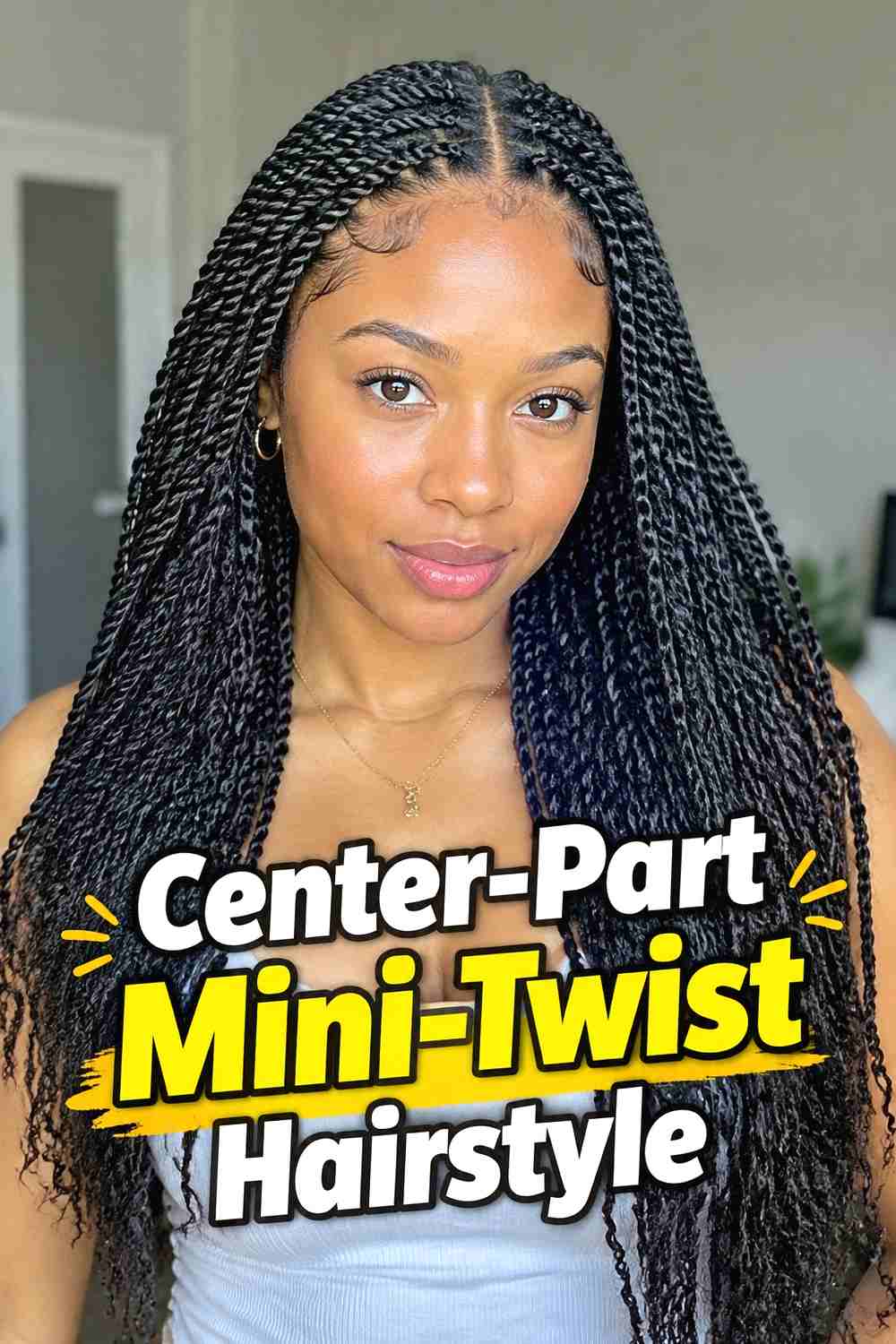
A center-part mini-twist style keeps the look simple enough for everyday office wear while giving the twists a balanced, intentional shape. The clean part allows both sides to fall evenly, making it easy to pair the hair with crewneck sweaters, fitted cardigans, and structured knit layers. Keep the roots softly settled rather than repeatedly tightening or retwisting them simply to maintain a perfect part. The twists can hang freely, come forward over the shoulders, or be tucked behind the ears during the workday. If the ends reach a high knit collar, bring them forward to limit constant friction. Natural variation in twist thickness keeps the finish believable and prevents the style from looking overly uniform.
Styling Notes
Refresh the part with your fingers rather than combing through the entire style when the roots begin to soften.
Best For
This is an easy choice when you want maximum access to the twists with minimal daily manipulation.
2. Deep Side Part Mini Twist Hairstyle
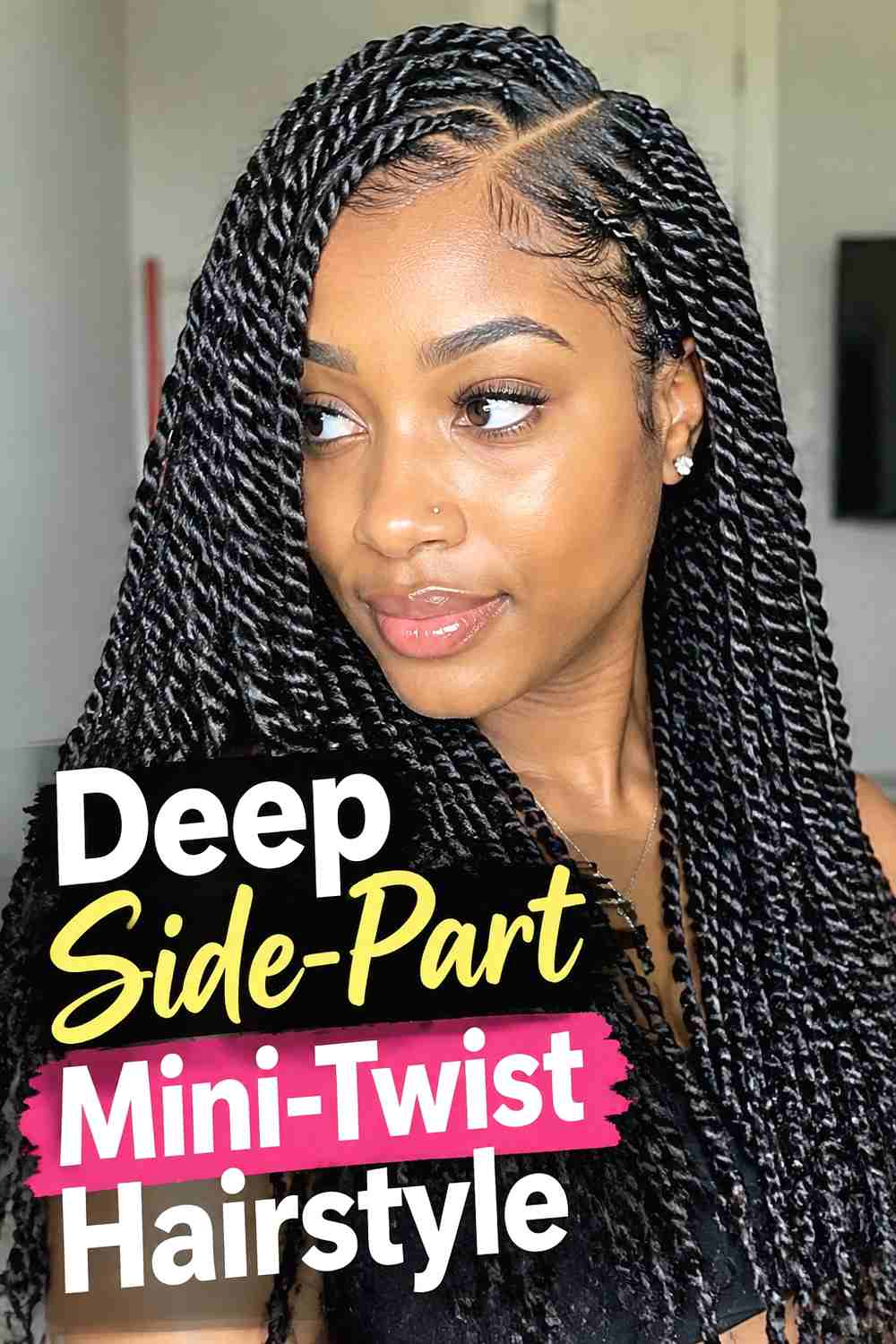
A deep side part shifts most of the mini twists toward one side, creating a polished shape without requiring a new protective style. The heavier side can sweep across the forehead or fall toward one shoulder, while the smaller side stays close to the head and leaves more of the neckline visible. This asymmetry pairs especially well with fitted turtlenecks and simple knit blazers because it adds movement around otherwise structured winter pieces. Keep the root direction soft so the part does not require repeated pulling to stay in position. If the fuller side becomes distracting while working, tuck several twists behind the ear instead of pinning the entire section tightly.
Why It Works
A simple change in parting creates a noticeably different silhouette while preserving the existing twists.
Pro Tip
Let the side part follow the way your roots naturally want to fall so the style remains comfortable through a full workday.
3. Half Up Mini Twist Hairstyle
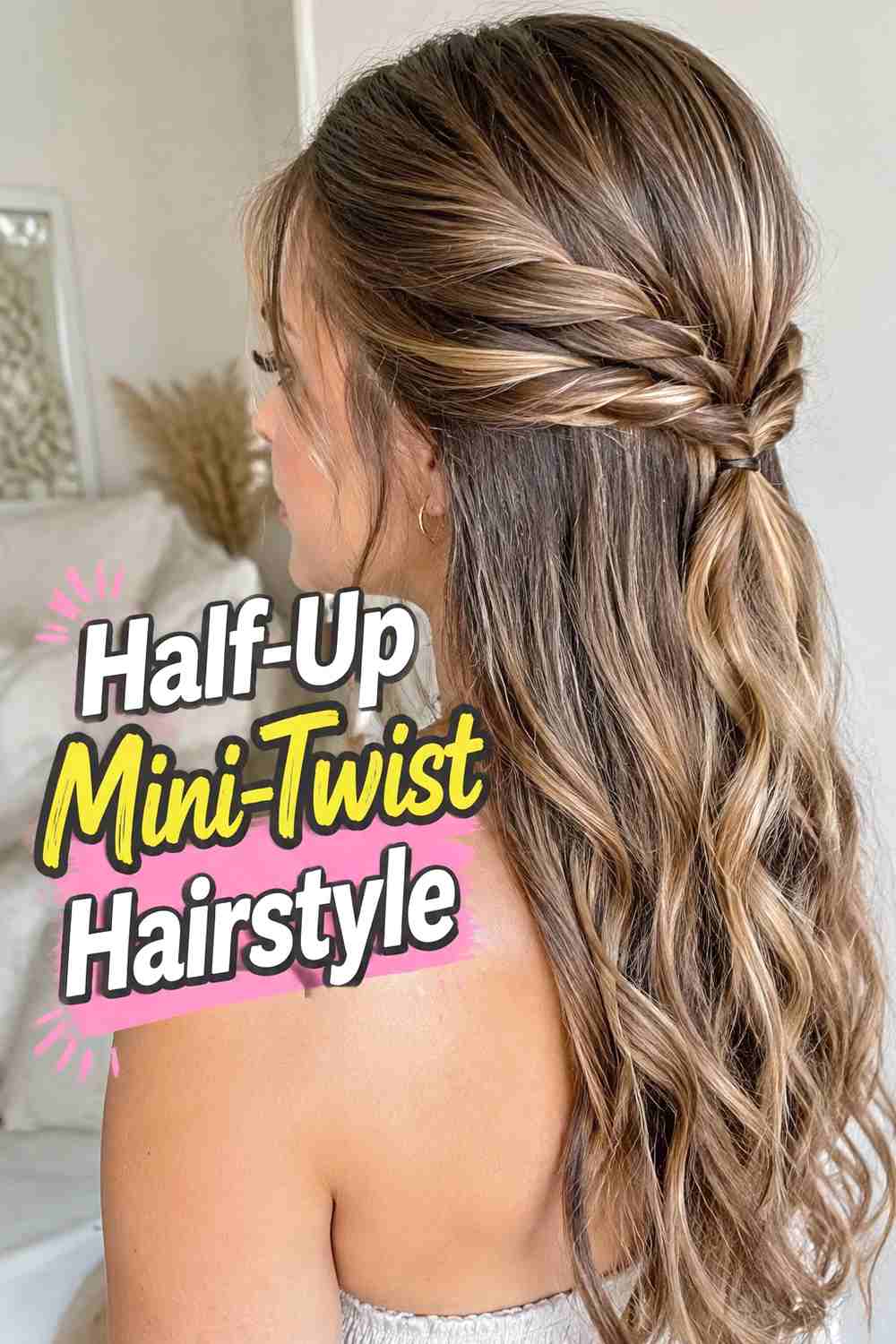
A half-up mini-twist style keeps the upper twists away from the face while leaving the lower lengths loose. Gather a moderate crown section and secure it gently with a small elastic, scrunchie, or flat accessory, avoiding unnecessary tension around the temples. The lower twists can fall over a sweater or be divided forward over both shoulders so they remain visible. This is especially useful with knit cardigans and sweater dresses because it opens the upper neckline without hiding all the twist texture. The gathered section can sit at mid-crown height for a polished office finish rather than being pulled into an exaggerated top knot. It also transitions easily from desk hours to after-work plans.
Styling Notes
Gather the section with your hands instead of repeatedly brushing the roots, which helps keep manipulation low.
Wear & Maintenance
Release the top section gently at the end of the day rather than dragging the elastic down through the twists.
4. Low Mini Twist Ponytail Hairstyle
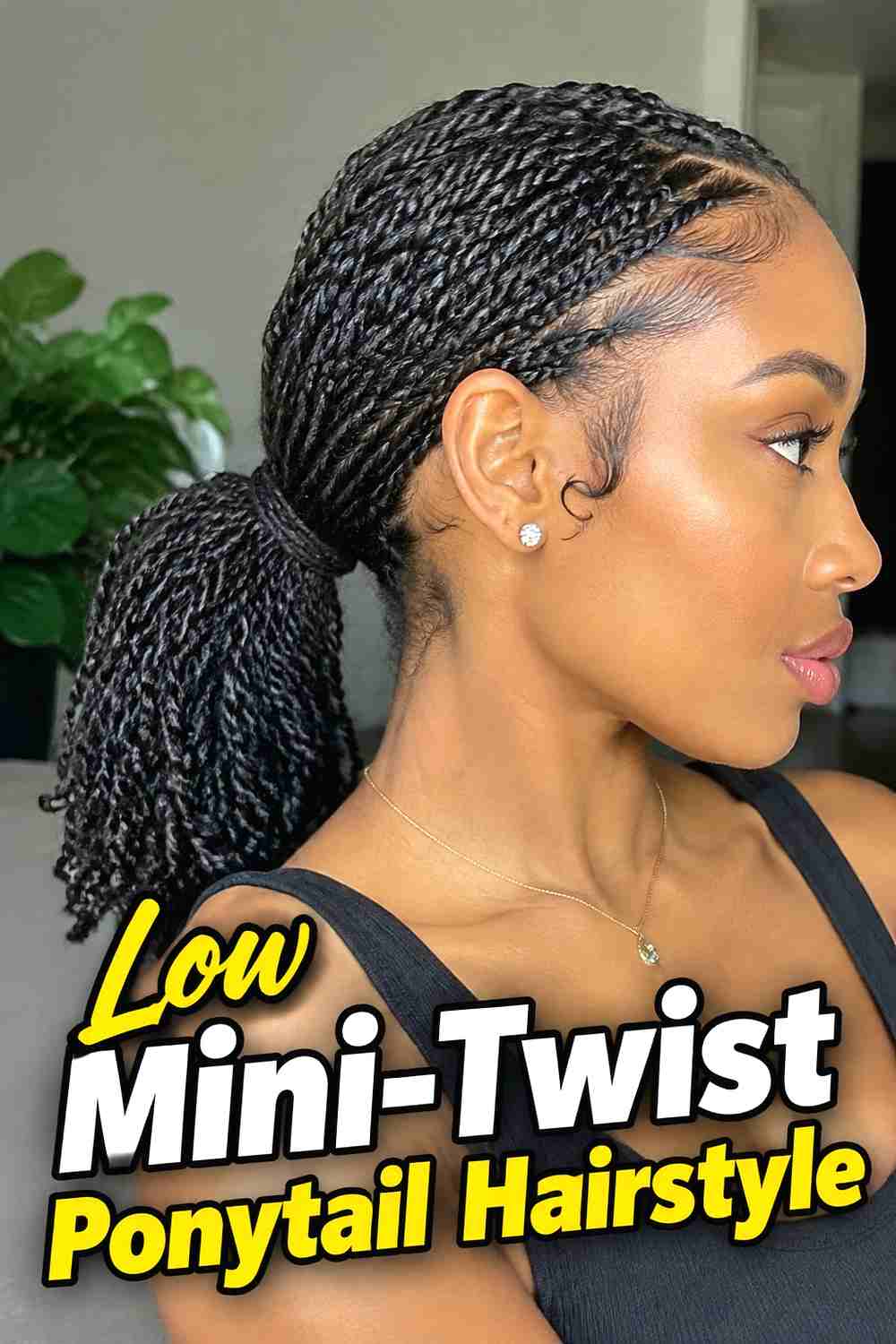
A low mini-twist ponytail creates a streamlined workday shape while requiring very little change to the twists themselves. Gather the lengths loosely at the nape and secure them with a smooth elastic or soft scrunchie. The ponytail can fall down the back or be brought over one shoulder depending on the height and texture of your winter knit. With a turtleneck, position the base slightly above the collar edge so it is not continuously pushed upward. Keep the roots softly directed backward rather than trying to slick every short section completely flat. This style is particularly practical for longer mini twists when you want the hair controlled during meetings, commuting, or computer work without creating a more elaborate updo.
Best For
Medium to long mini twists work especially well because there is enough length to gather comfortably without pulling at the hairline.
Pro Tip
Choose the ponytail position after putting on your sweater so the fastening does not sit directly on the collar.
5. High Mini Twist Puff Hairstyle
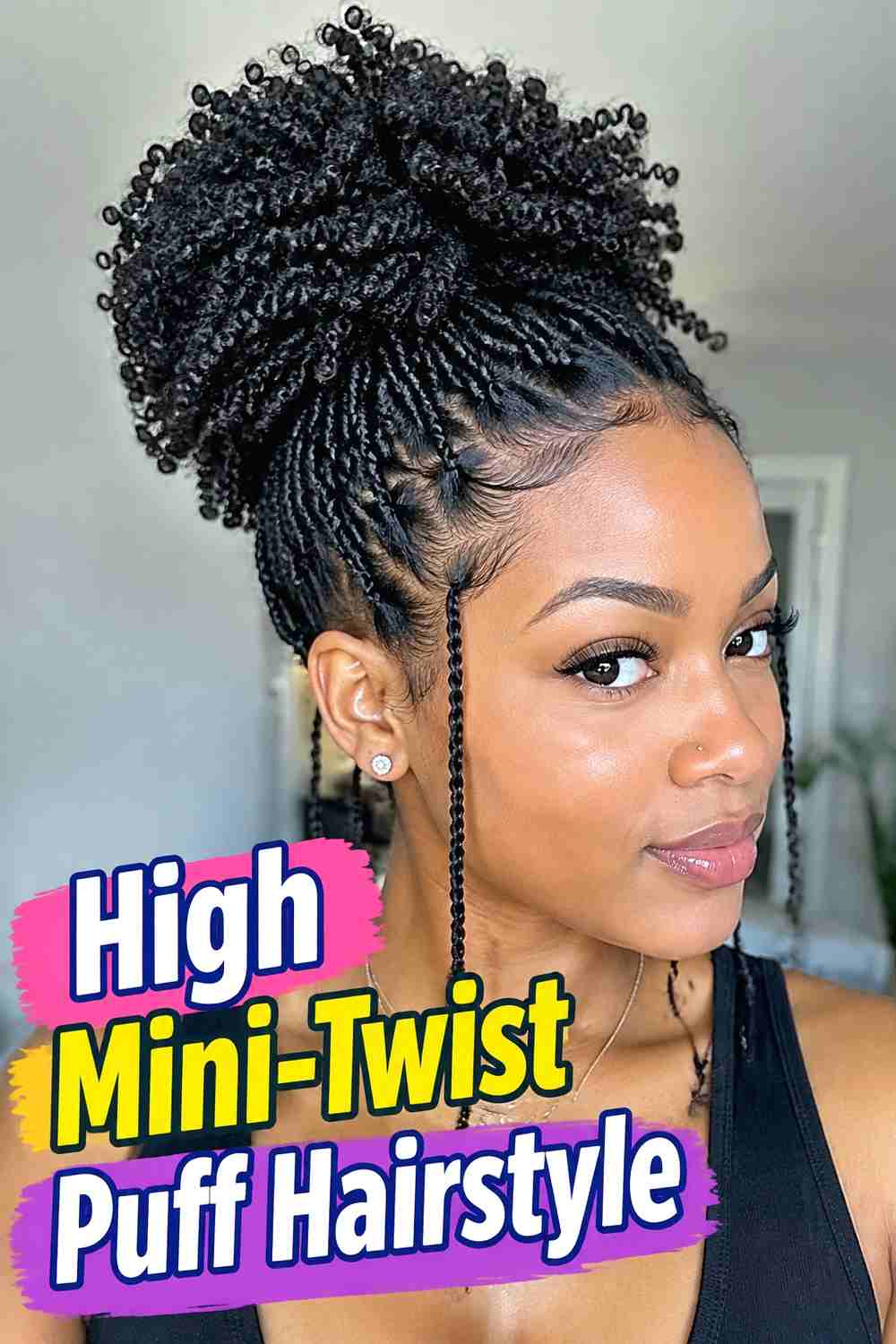
A high mini-twist puff gathers the twists toward the crown while leaving their individual texture clearly visible. Instead of wrapping them into a bun, allow the ends to fan outward or fall softly around the fastening point. The raised placement keeps the twists away from turtleneck collars, thick cardigan shoulders, and scarf-like sweater necklines, making the style useful for layered office outfits. Keep the base secure enough to hold but avoid repeatedly tightening it during the day. The perimeter can stay softly textured rather than fully slicked. If the twists are especially long, fold part of the length into the puff so the shape remains controlled and does not become top-heavy.
Why It Works
Lifting the twists removes most of the length from high winter collars while keeping the mini-twist texture visible.
Wear & Maintenance
Use a fastening that can support the weight comfortably without requiring excessive tension around the edges.
6. Low Mini Twist Bun Hairstyle
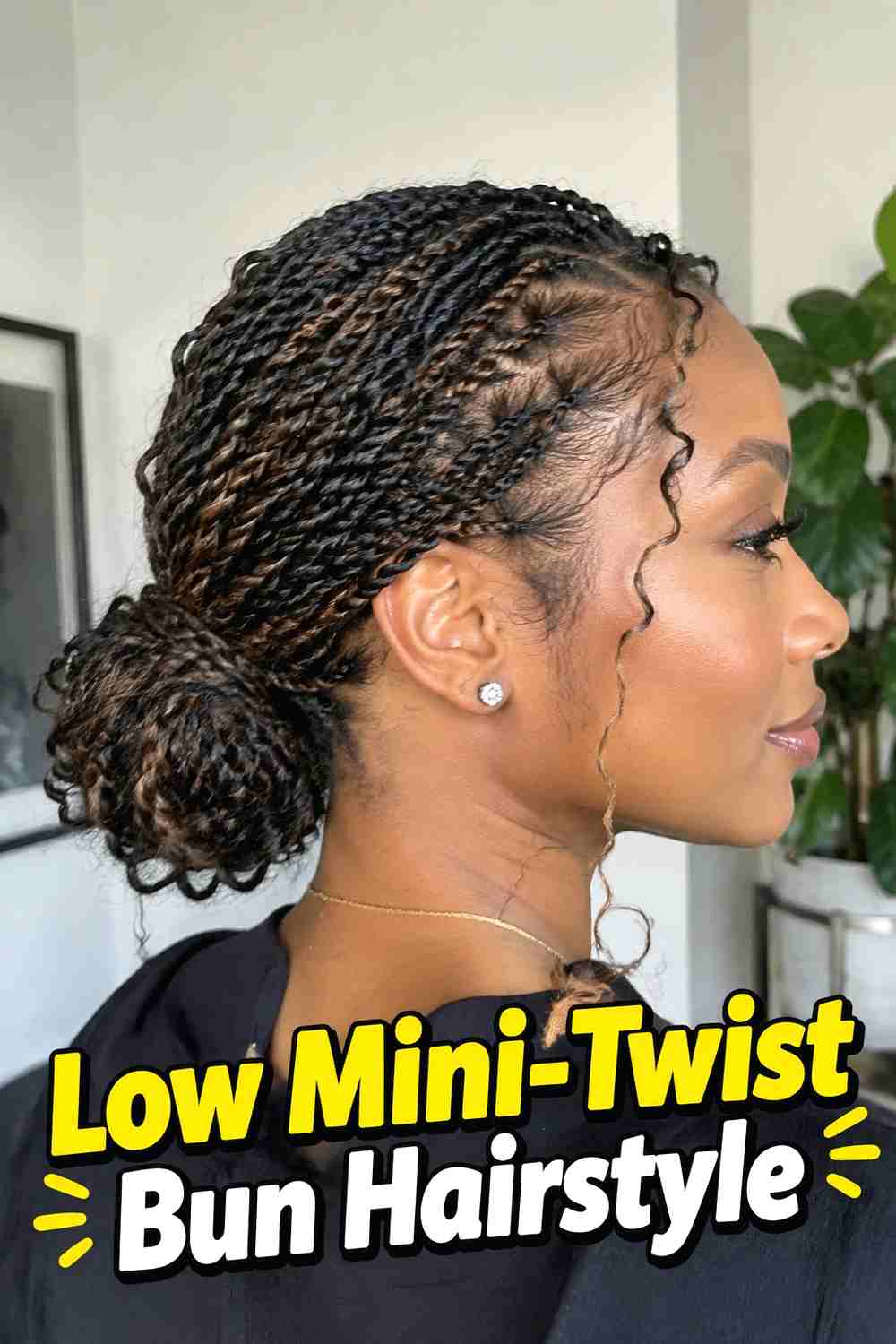
A low bun gives mini twists a classic office-ready finish while keeping the styling process simple. Gather the twists near the nape, wrap them into a broad bun, and secure the shape with flat pins or a soft elastic. The bun should connect naturally to the base rather than appearing suspended away from the head. With winter knits, placement is crucial: keep the bun above the edge of a high sweater collar so it is not repeatedly compressed. A soft side or center part can remain visible at the front, adding polish without needing extra manipulation. This style is especially useful on presentation days or whenever you want the twists fully contained but still recognizably textured.
Styling Notes
Wrap the twists in their natural direction rather than forcing them into an extremely tight coil.
Best For
Longer mini twists provide enough length to form a secure bun without needing bulky extensions or accessories.
7. Wrapped Top Knot Mini Twist Hairstyle
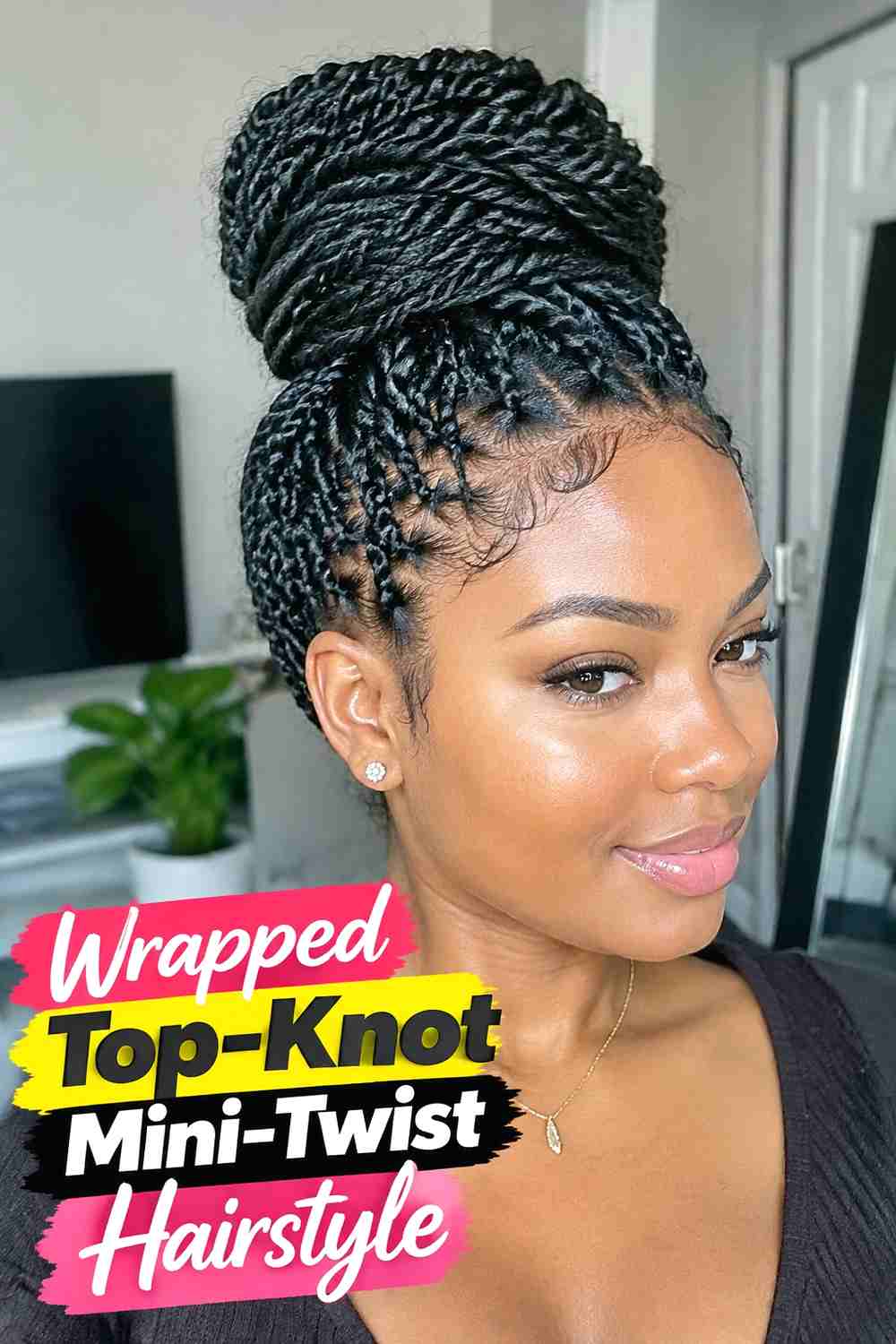
A wrapped top knot takes the twists completely off the shoulders and neckline, making it a practical match for substantial winter sweaters. Gather the mini twists at the upper crown, then wrap the lengths around the base in a controlled spiral. Keep the knot compact enough for professional wear and secure any ends beneath the main shape with flat pins. The twist texture should remain visible across the surface rather than being compressed into an indistinct bun. This look works particularly well with high-neck knits because nothing rests against the collar. Comfortable base tension matters, especially during a long workday, so avoid cinching the ponytail tighter than necessary just to make the knot appear perfectly smooth.
Why It Works
The entire length stays clear of winter knit collars while the wrapped twists create a polished, dimensional top knot.
Pro Tip
Use several small pins to support the shape instead of relying on one extremely tight elastic.
8. Side Pinned Mini Twist Hairstyle
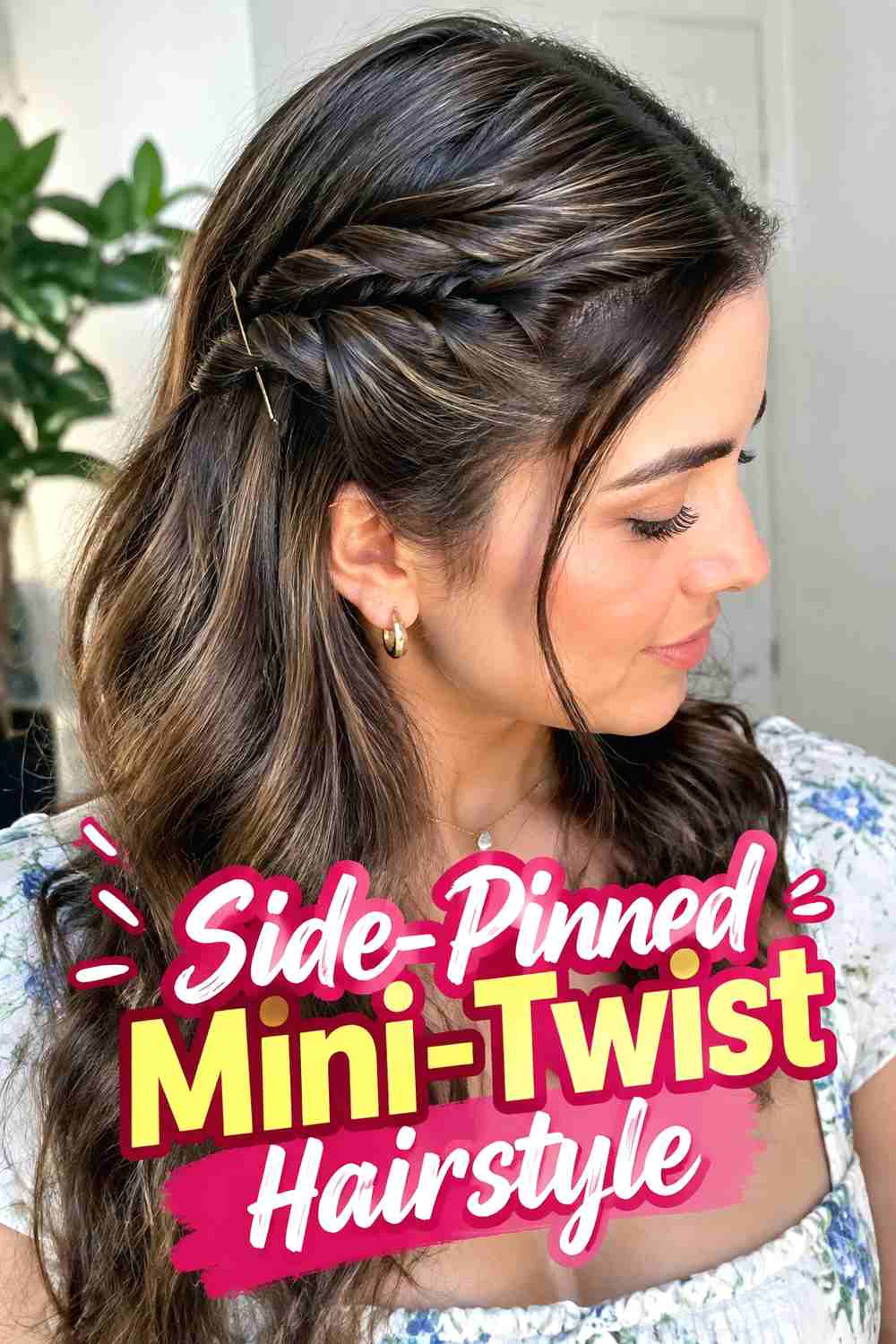
Side pinning changes the shape of loose mini twists with almost no manipulation. Take a small group above one ear, guide it backward, and secure it with a flat pin or slim barrette. Leave the opposite side loose to create a soft asymmetrical silhouette that works well with fine-knit sweaters and cardigans. The pinned side exposes the ear and neckline, while the free side preserves plenty of visible twist texture. Keep the pinned section modest so you do not have to pull heavily across the scalp. If you wear a coat over your office knit, choose a low-profile accessory that will not press uncomfortably against outerwear during the commute.
Best For
This is a quick option when you want your everyday loose twists to look more intentional without gathering the whole style.
Wear & Maintenance
Remove the pin gently and return the twists to their natural position instead of repeatedly repositioning them throughout the day.
9. Headband Mini Twist Hairstyle
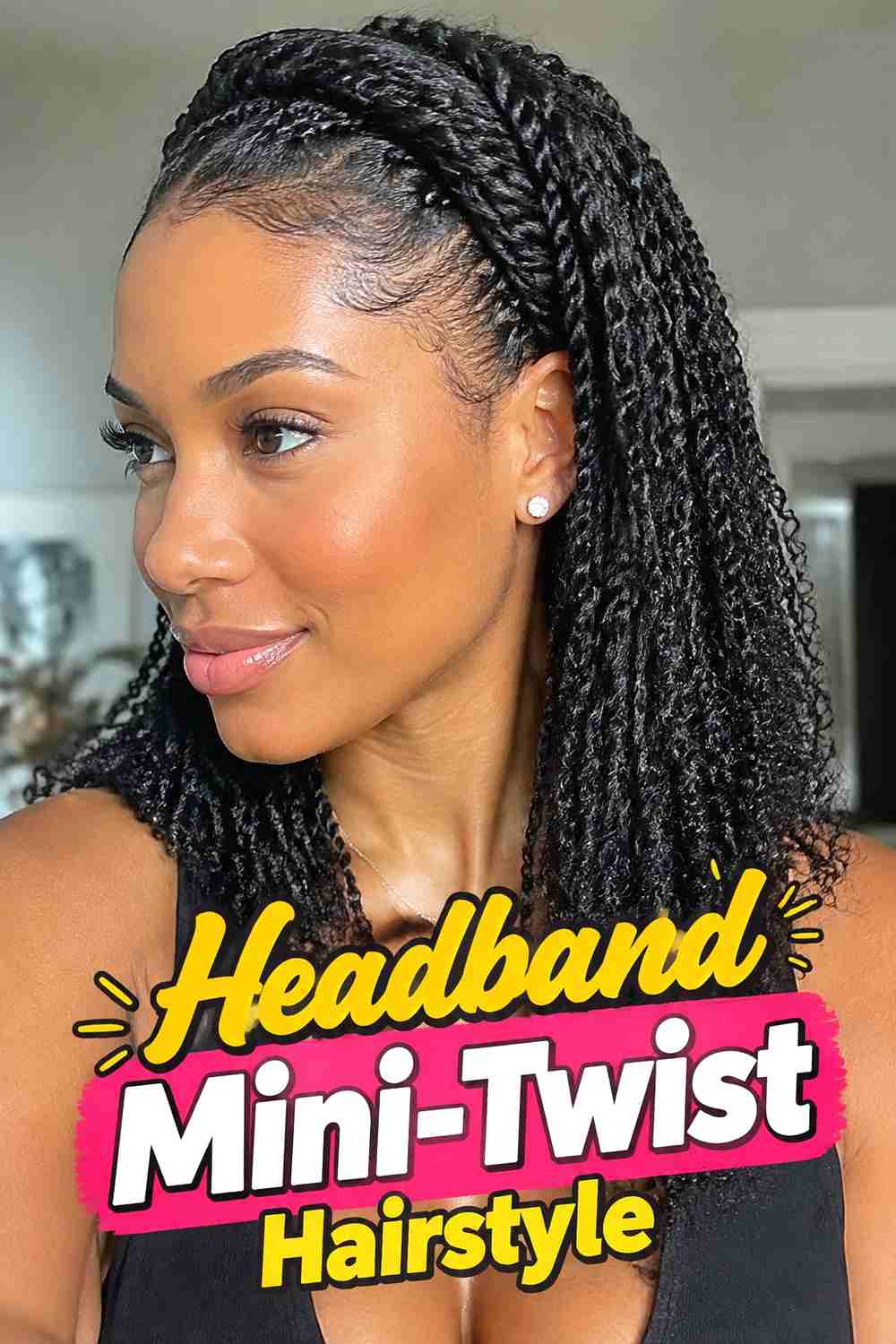
A slim headband keeps front mini twists directed away from the face while leaving the rest of the style loose. Position the band slightly behind the hairline so it guides rather than aggressively compresses the roots. The twists can then fall naturally over the shoulders or down the back, creating a clean frame for turtlenecks, collared knit tops, and office cardigans. Choose a smooth, lightweight band that does not snag the twists or create a bulky pressure point. This is particularly useful for shorter mini twists that are not long enough to gather easily. The finished look remains relaxed but polished, and it can be refreshed quickly by adjusting the front twists with your fingers.
Styling Notes
Add the headband after arranging the twists so you know exactly how much volume you want to keep near the front.
Pro Tip
Avoid sliding the band back and forth repeatedly, which can create unnecessary friction at the roots.
10. Shoulder Swept Mini Twist Hairstyle
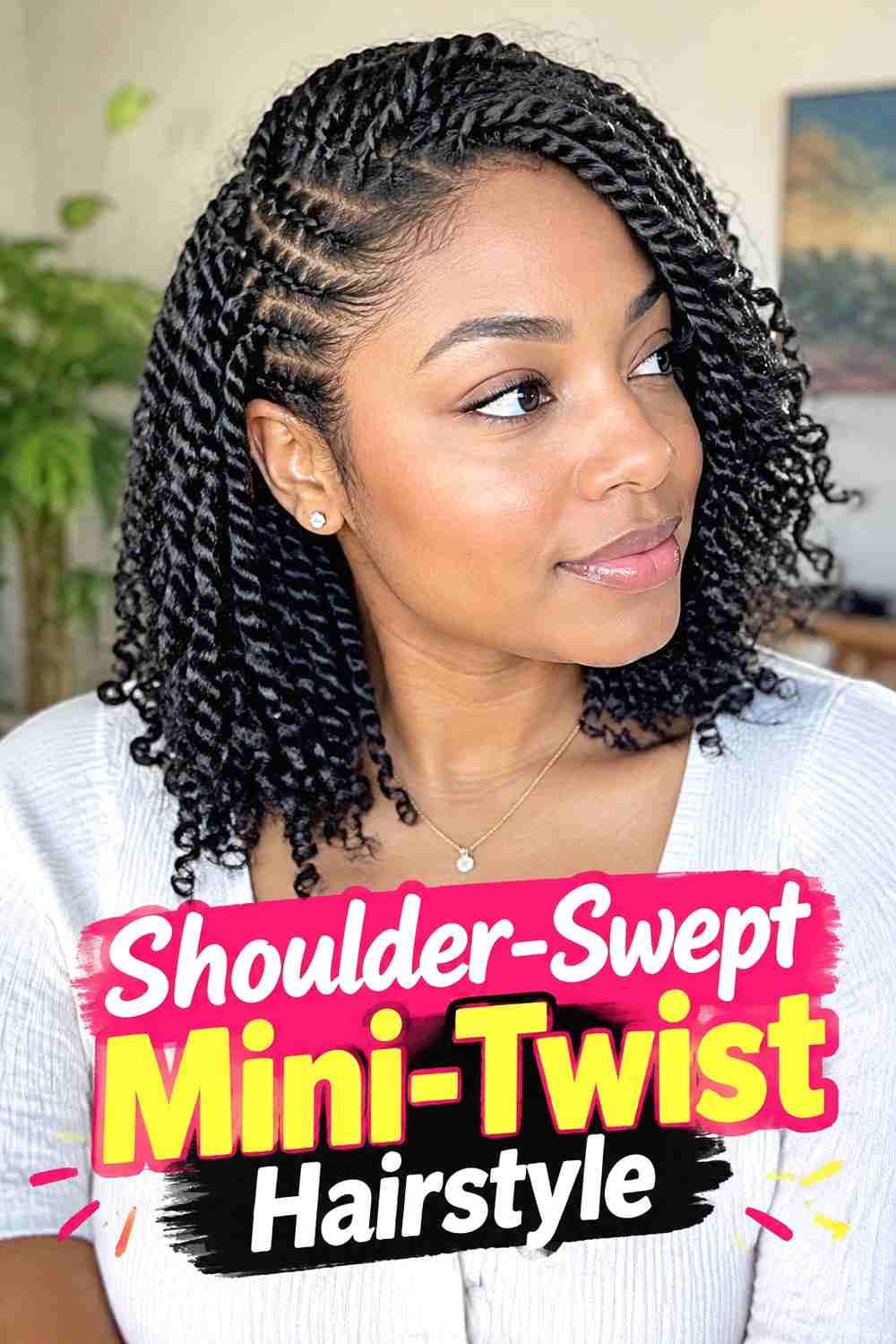
A shoulder-swept style gathers most of the mini twists toward one side while leaving them loose. Use a natural side part or gently redirect the lengths with your hands, then bring the twists forward over one shoulder. This placement is particularly useful when a textured knit cardigan creates friction across the back because the ends stay visible and easier to monitor. The opposite side can be tucked behind the ear or secured with a flat pin if extra control is needed. Keep the roots comfortable and allow slight irregularity in how the twists fall. The asymmetrical shape works well for office settings because it feels styled without requiring a ponytail, bun, or significant daily restyling.
Why It Works
Simply changing where the twists rest creates a polished silhouette while keeping the original mini-twist set intact.
Wear & Maintenance
Choose the shoulder opposite your usual bag or laptop strap to limit extra rubbing during the commute.
11. Crown Clipped Mini Twist Hairstyle
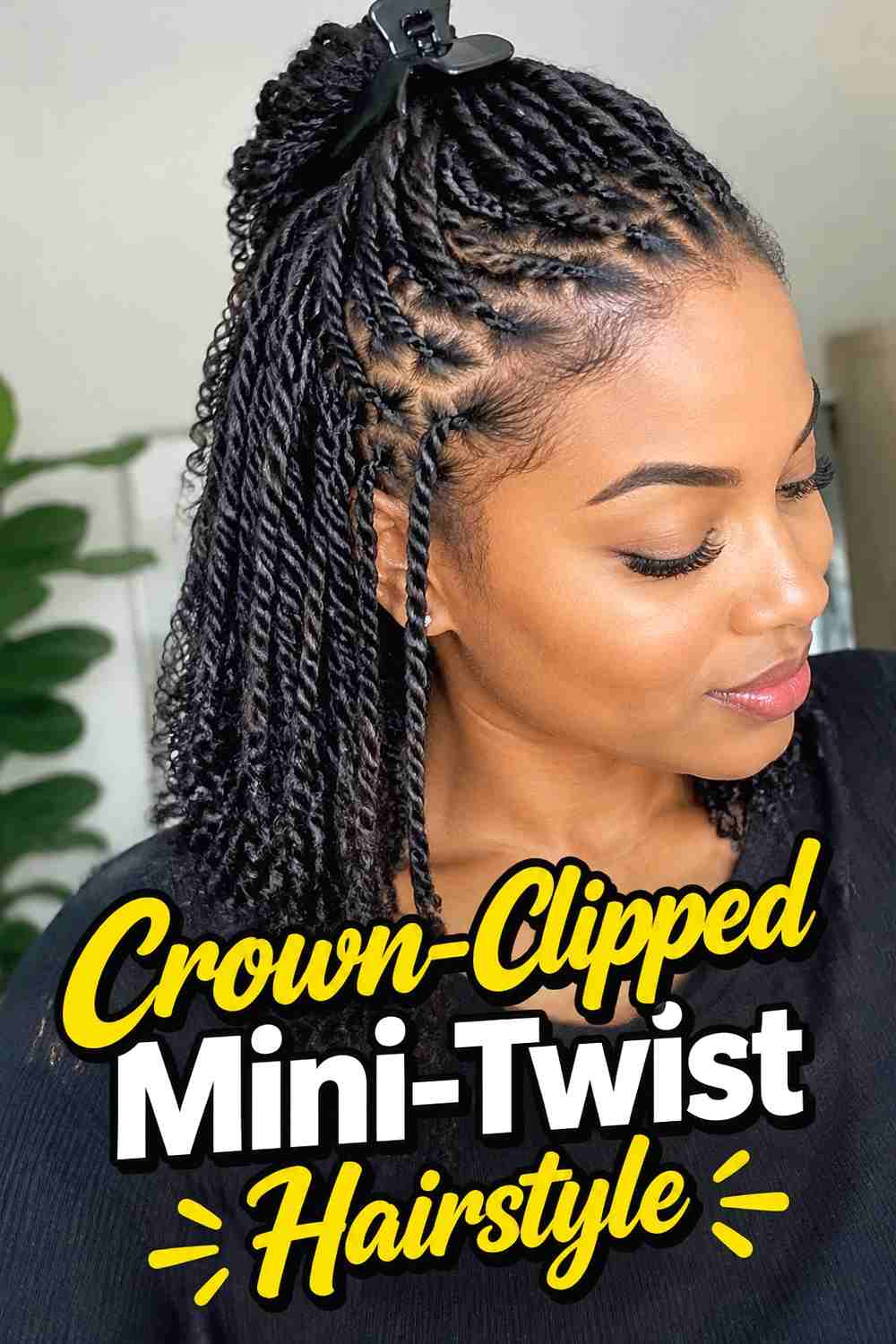
A crown-clipped style gathers a small portion of the mini twists at the back of the crown and secures them with a flat barrette or compact clip. The remaining twists stay loose, giving the hairstyle a subtle half-up appearance without pulling a large section into an elastic. Keep the accessory low-profile enough that it remains comfortable against office chairs, winter coats, and scarves. This variation looks polished with fine-gauge sweaters and knit blazers because it opens the face while retaining length around the shoulders. Avoid an oversized claw clip if the goal is low manipulation and easy layering; a flatter fastening generally requires less repositioning as clothing layers change throughout the day.
Styling Notes
Take only enough twists to create the crown shape so the accessory does not have to support unnecessary weight.
Best For
This style works particularly well when front and side twists are long enough to reach the back of the crown comfortably.
12. Mini Twist French Roll Hairstyle
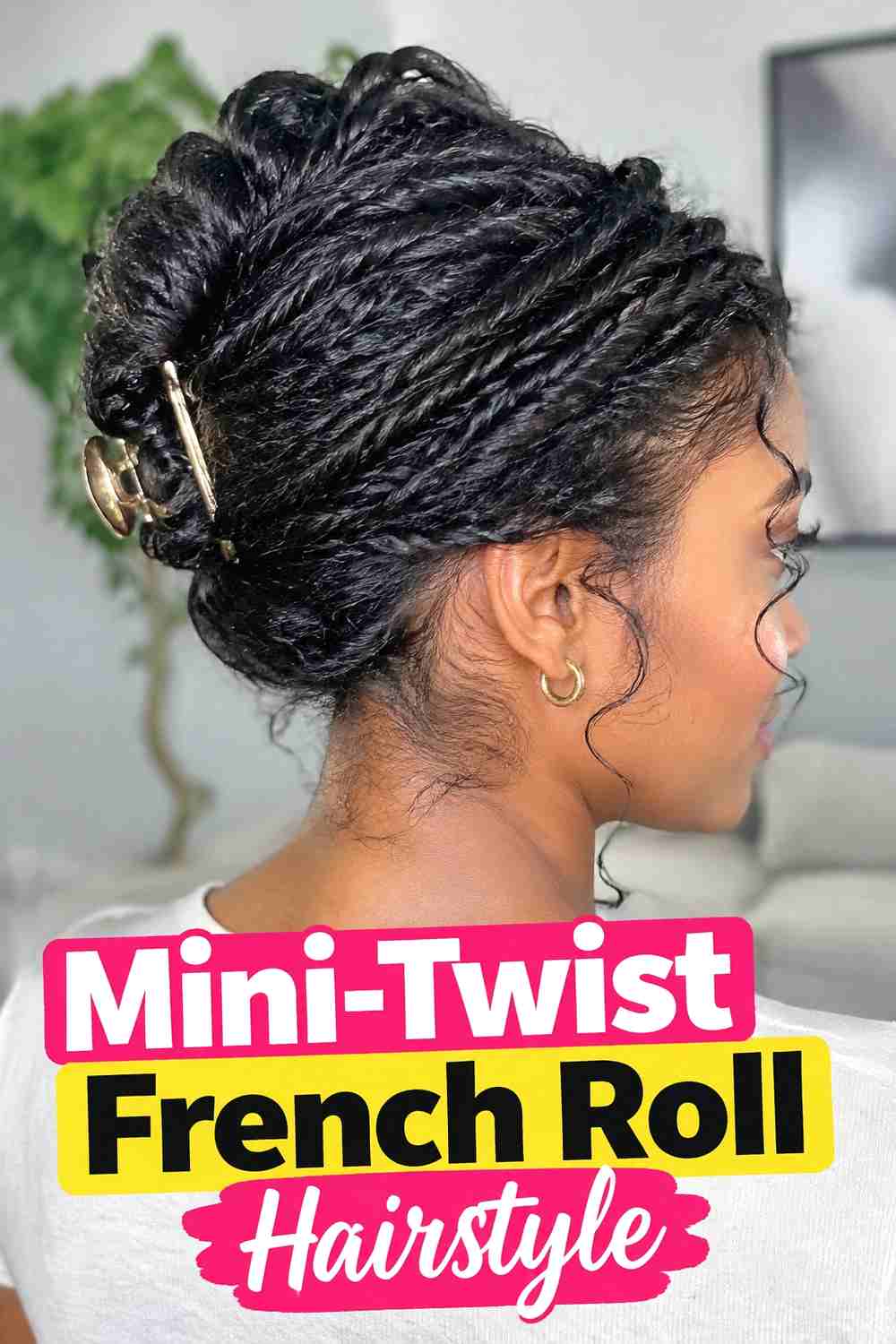
A French roll gives mini twists a refined office silhouette without requiring them to be undone. Sweep the twists toward the center back, roll them inward vertically, and secure the structure with flat pins hidden inside the fold. Keep the roll broad enough to hold the twists naturally instead of compressing them into a rigid shape. The ends can be tucked fully inside for a clean finish or left subtly textured near the crown if their length allows. Because the hairstyle keeps the neck clear, it pairs well with mock-necks and fitted winter knits. Make sure the lower edge of the roll sits above the sweater collar so clothing movement does not push against the pins.
Why It Works
The roll transforms loose twists into a professional updo while preserving the protective base style underneath.
Pro Tip
Use multiple pins along the roll rather than depending on one tight anchor at the nape.
13. Double Low Mini Twist Bun Hairstyle
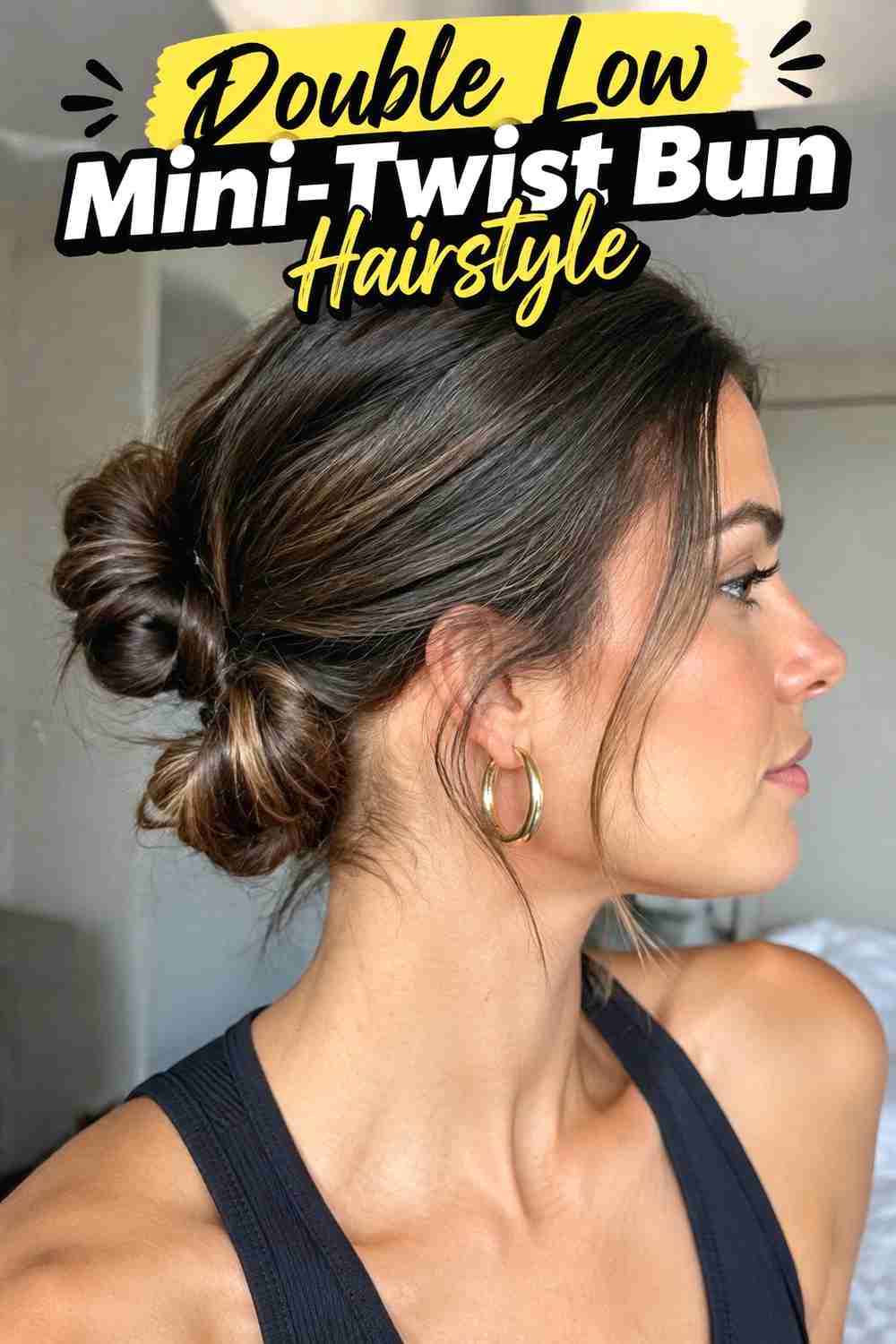
Double low buns split the mini twists into two smaller sections, creating a symmetrical style with less bulk than one large nape bun. Make a center part, gather each side behind the ears, and wrap the twists into compact buns. Position them slightly above the neckline so they remain clear of thick sweater collars and coat edges. This style can feel playful, but keeping the buns small and neatly connected to their bases gives it a polished office finish. It is also useful for dense mini twists because the hair’s weight is divided between two anchors. Leave the roots softly textured rather than repeatedly smoothing the part or hairline to maintain the low-manipulation approach.
Best For
Dense or long mini twists benefit from the divided weight and compact shape of two smaller buns.
Wear & Maintenance
Check that neither bun sits where a coat collar presses against the back of the head during your commute.
14. Flat Front Mini Twist Updo Hairstyle
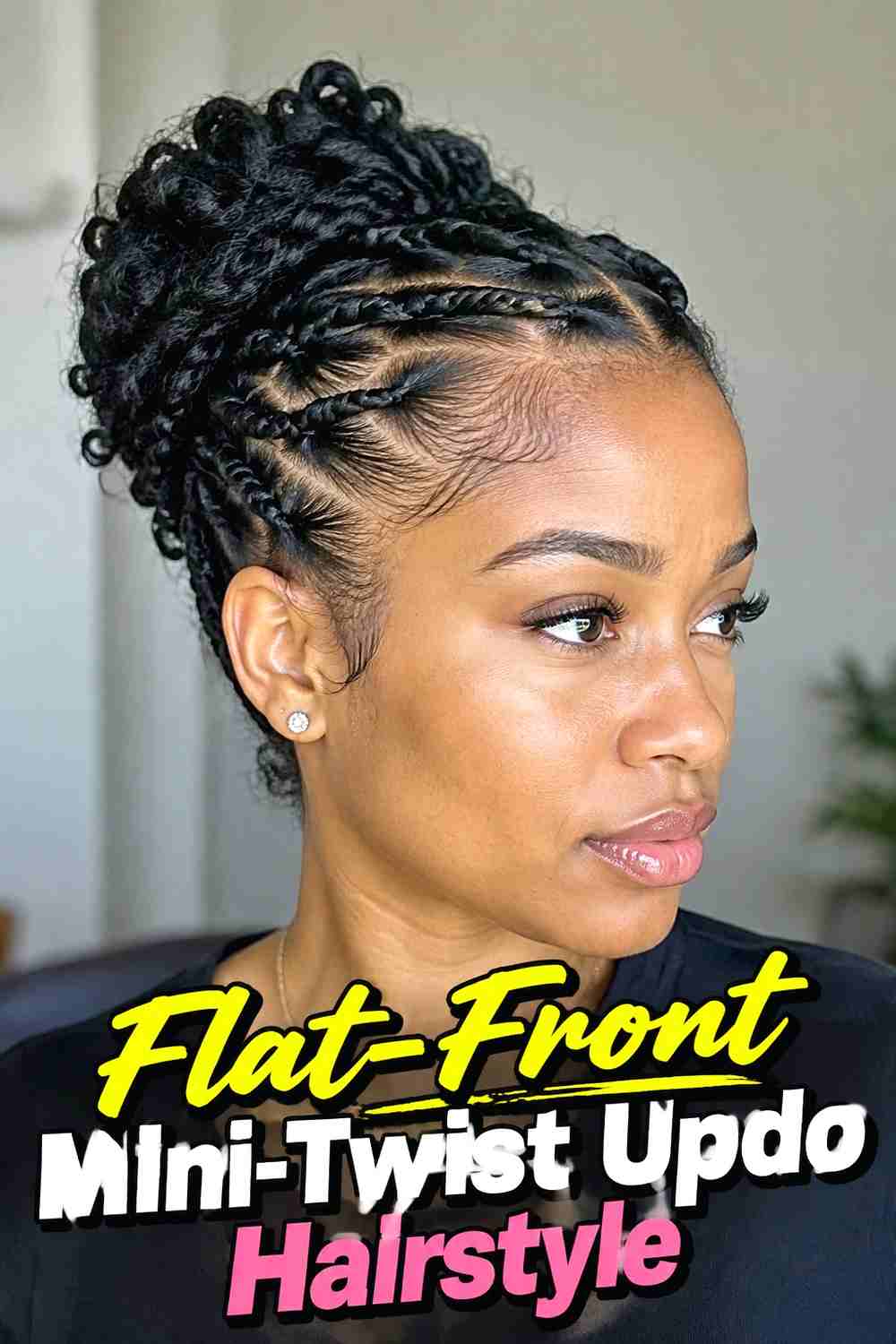
A flat-front updo keeps the mini twists close to the head around the hairline while gathering the remaining length toward the back or crown. Guide the front twists backward in broad sections and pin them flat without unraveling or retwisting them. The rear twists can then form a tucked puff, soft bun, or compact roll depending on length. This creates a clean office look with minimal daily manipulation because the original twists remain intact throughout. It works particularly well with structured knit blazers and mock-neck tops, where a clear neckline helps the outfit look less crowded. Keep the front placement comfortable rather than pulling every twist tightly toward the anchor point.
Styling Notes
Use broad groups of twists rather than moving them one by one, which reduces handling and creates a smoother overall shape.
Why It Works
The front stays neat while the back provides controlled texture, giving the style both polish and dimensionality.
15. Loose Ends Mini Twist Hairstyle
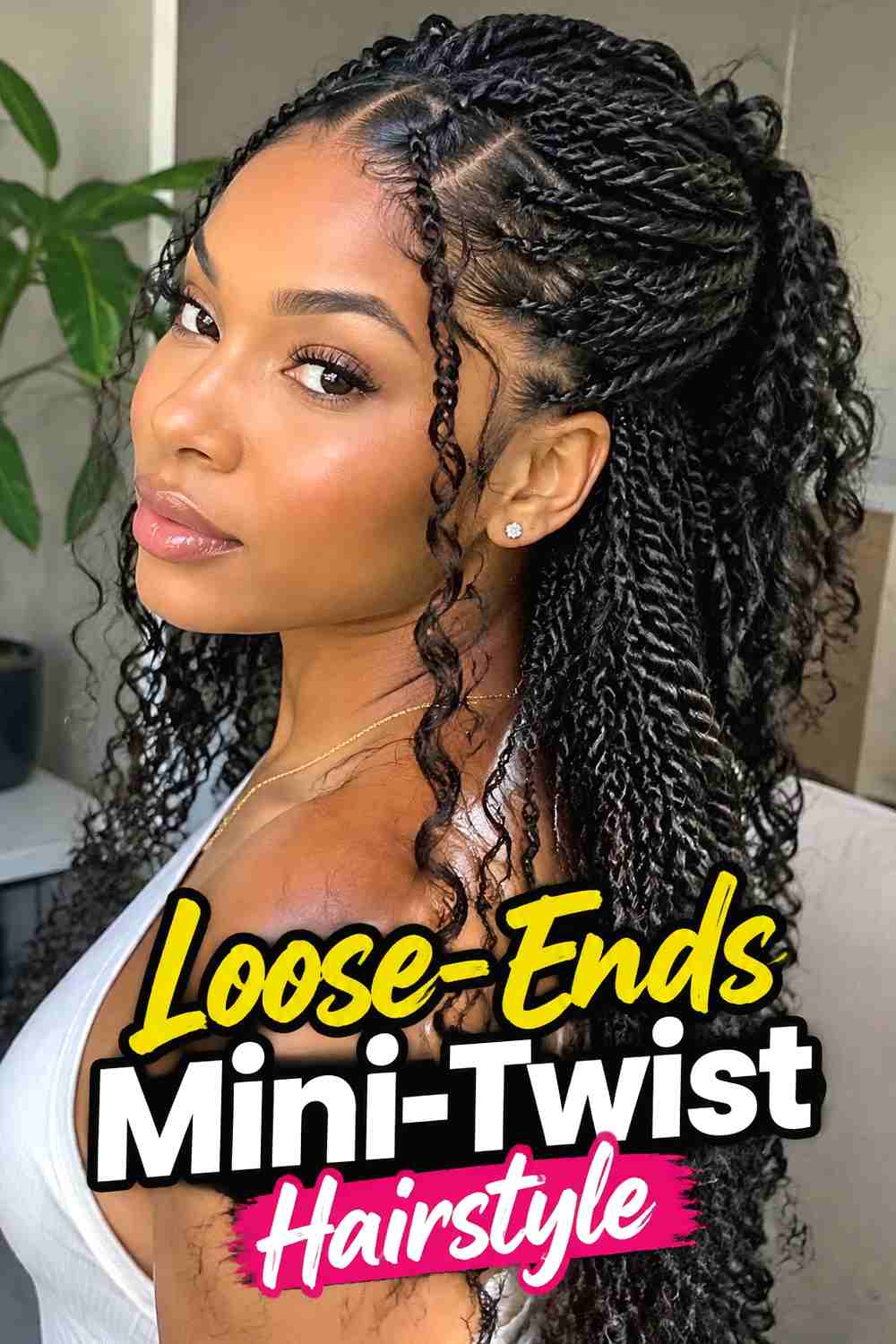
A loose-ends mini-twist style keeps most of each twist intact while allowing the very ends to remain softly coiled or curled. The result gives the style more movement than twists finished all the way to the tips, yet the majority of the length remains organized. Wear the twists with a center or side part and bring the ends forward over a winter knit if the sweater fabric is textured. This option is especially attractive when natural coils at the ends create visible contrast with the twisted lengths. Handle the loose sections sparingly during the day so they do not become overly separated. The style stays office-friendly when the overall silhouette remains neat and intentional.
Hair Type & Length
Medium and long natural hair can show the contrast most clearly because the twisted section remains substantial above the loose ends.
Wear & Maintenance
Keep the loose tips away from rough knit collars whenever possible to reduce unnecessary friction and fuzziness.
16. Tucked Nape Mini Twist Hairstyle
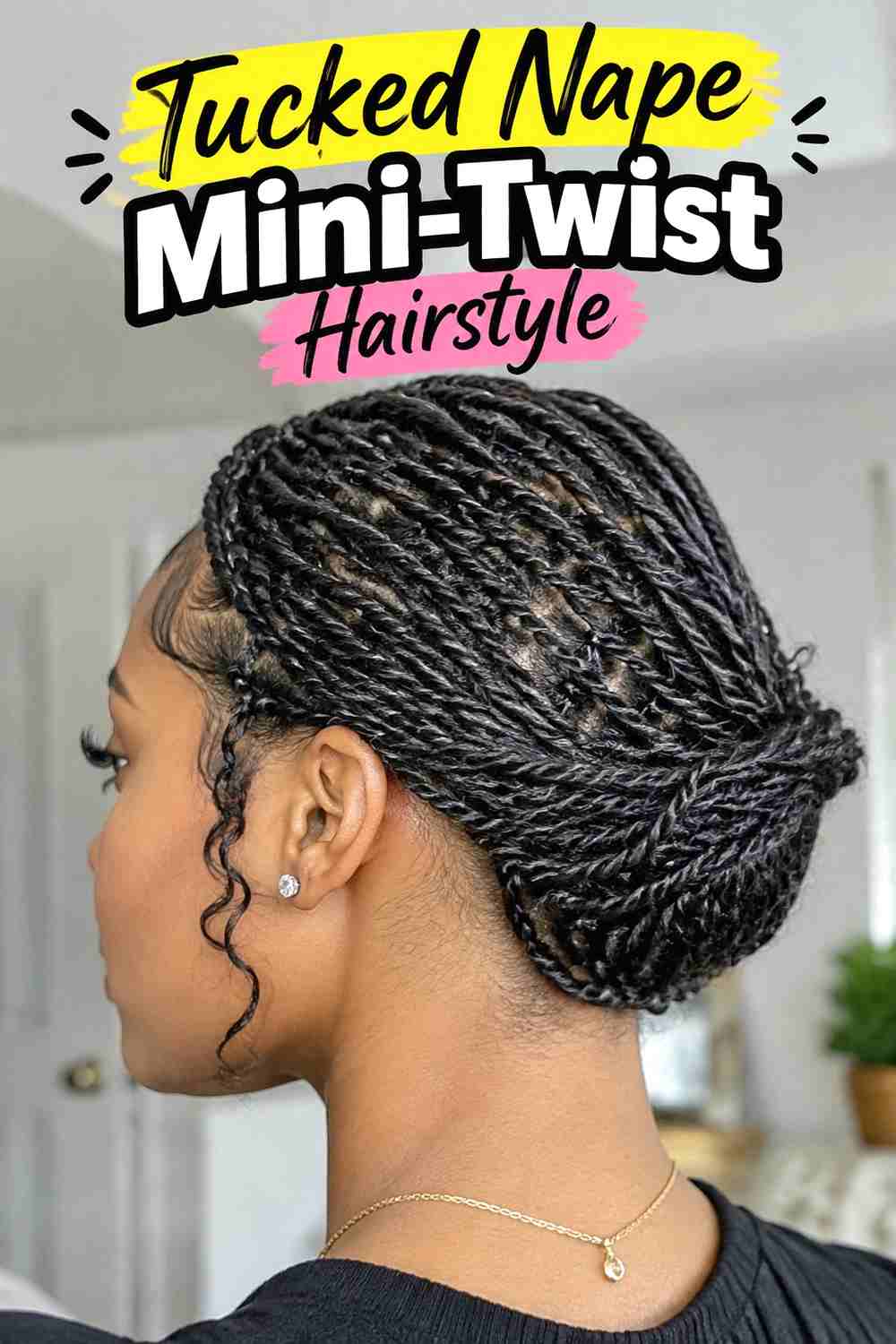
A tucked nape style folds the lower mini twists inward, creating a compact shape that sits close to the back of the head. Gather the twists loosely at the nape, roll or fold the ends underneath, and secure them with flat pins above the sweater collar. The crown can stay softly parted or gently directed backward depending on the level of polish you prefer. This is useful when you want the twists fully contained for office hours but do not want the height of a top knot. Keep the tuck broad enough that the twists lie naturally instead of being sharply bent. The result should feel soft, practical, and easy to release after work.
Best For
Longer twists are easiest to fold into a secure tuck without needing excessive pinning or tight anchors.
Pro Tip
Put on your winter knit first so you can place the tuck just above the collar rather than directly against it.
17. Mini Twist Faux Hawk Hairstyle
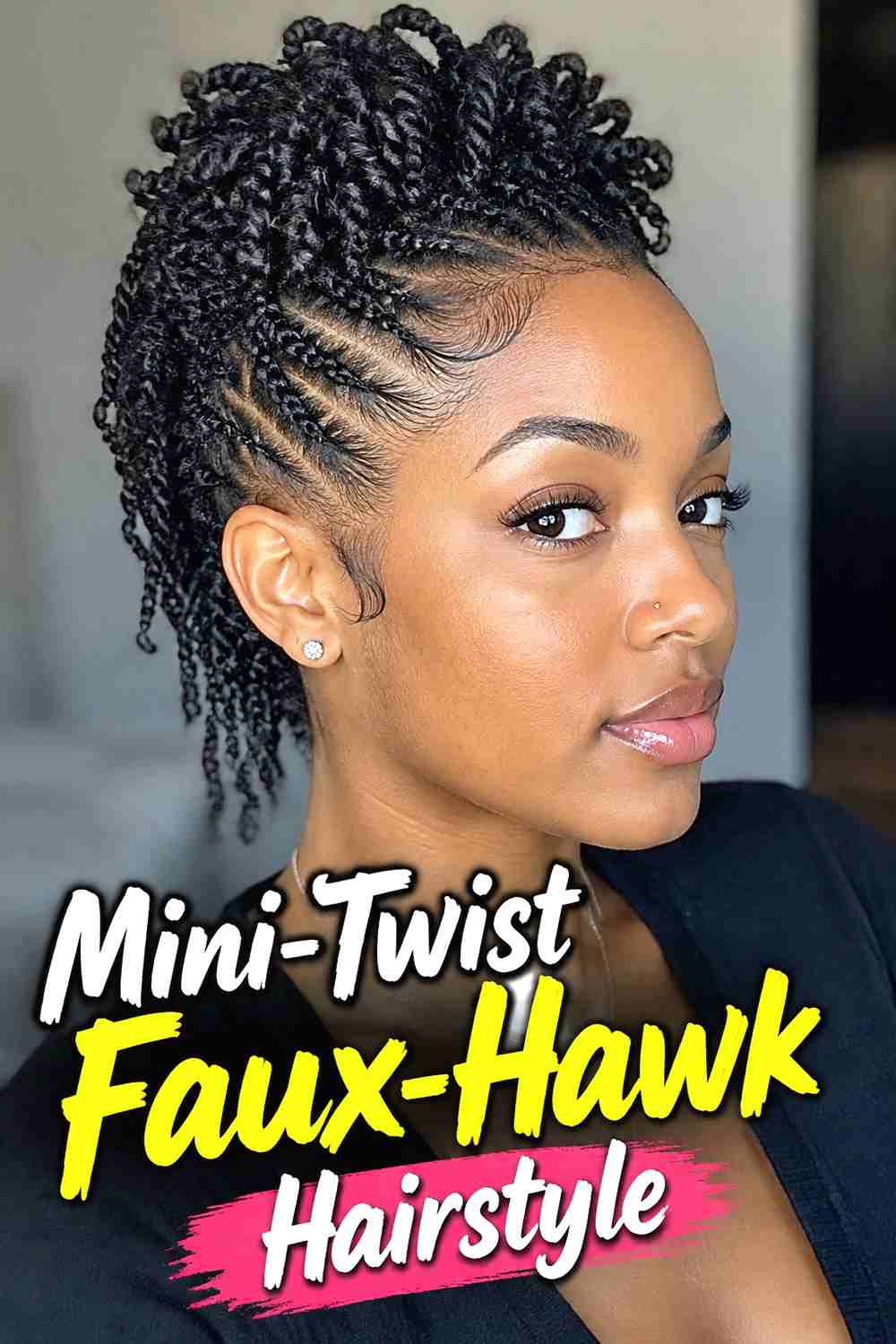
A mini-twist faux-hawk gathers the twists into a narrow series of sections along the center of the head. Pin the sides inward and create two or three connected puffs, rolls, or small bundles from front to back. The style keeps the neck relatively clear while using the existing twists to create a more directional office look. Keep the center profile moderate rather than extremely tall, especially if you commute in a winter hat or coat hood. Flat pins along the sides help maintain the silhouette without requiring the twists to be redone. With simple office knits, the vertical texture of the faux-hawk adds interest while the compact sides keep the overall finish tidy.
Why It Works
The style changes the silhouette dramatically without unraveling the mini twists or requiring a completely new set.
Styling Notes
Keep each center section softly shaped so the updo remains flexible and comfortable rather than rigid.
18. Low Side Swept Mini Twist Hairstyle
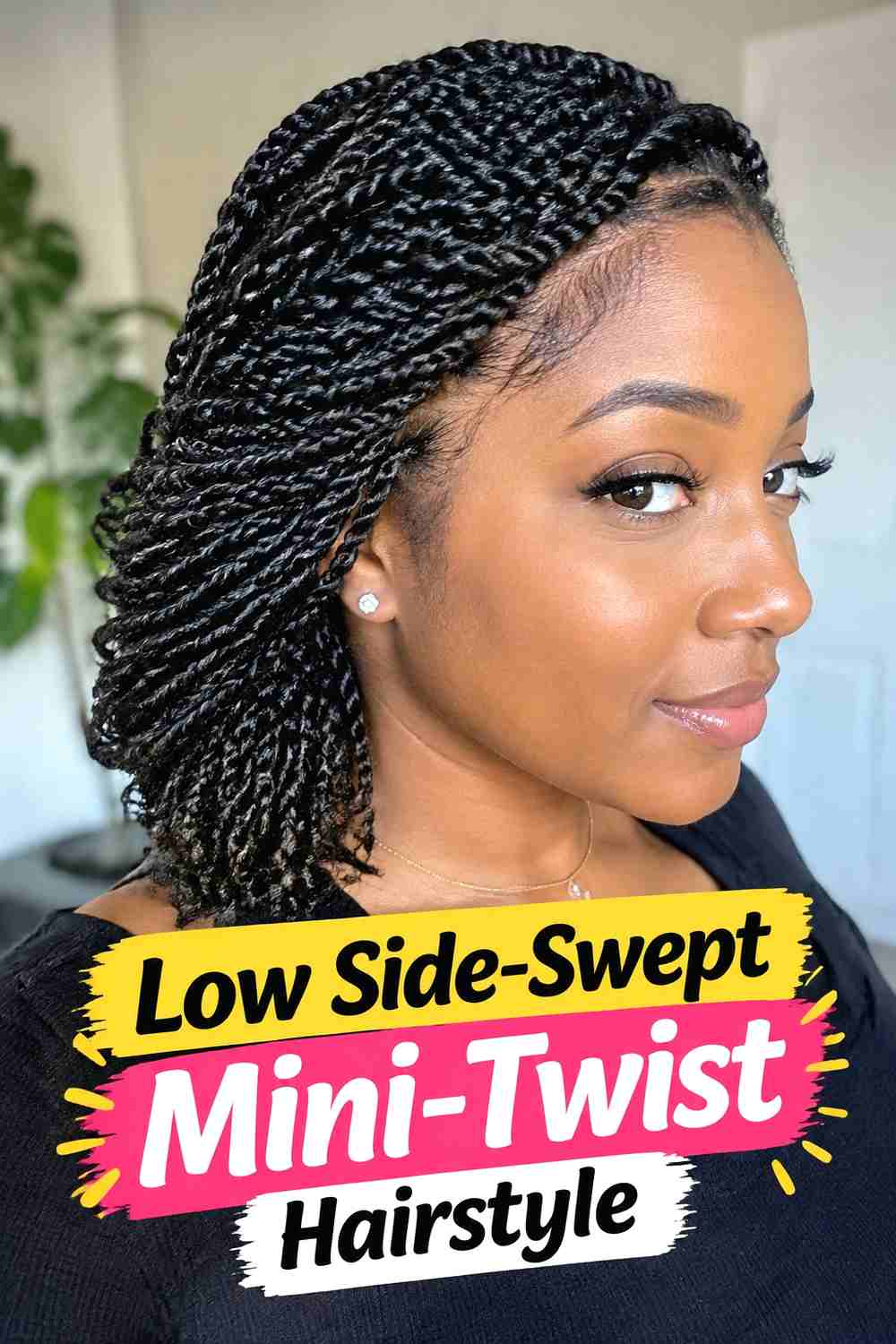
A low side-swept style gathers mini twists near one side of the nape, giving the hair a polished asymmetrical finish that works well with winter office layers. Guide the twists gently toward one shoulder and secure them loosely near the lower side with a smooth elastic, pin, or soft tie. The lengths can remain loose below the fastening or be lightly wrapped if you want a more contained look. This placement exposes more of the opposite neckline, which pairs nicely with fitted sweaters and long cardigans. Keep the sweep relaxed so the twists near the opposite temple are not pulled tightly. The finished style should look deliberate while still preserving the comfort and low handling that make mini twists practical.
Best For
Medium to long twists work best because they can reach the side anchor without excessive stretching across the scalp.
Wear & Maintenance
Place the gathered side away from your usual shoulder bag or coat strap to reduce friction during the commute.
How to Choose the Right Look
Start with your winter knit neckline. High turtlenecks and mock-necks pair well with high puffs, top knots, French rolls, faux-hawks, and other styles that clear the nape. Lower crewnecks and cardigans give you more freedom to wear center-parted, side-parted, shoulder-swept, or half-up mini twists.
Next, consider how much daily handling you want. Loose parting changes require the least manipulation, while buns, rolls, and tucked shapes need some gathering and pinning but still preserve the underlying twists. If your scalp is sensitive, avoid repeatedly tightening the same ponytail or bun position every day.
Hair length and density matter too. Longer twists create fuller buns and rolls, while shorter twists work well with headbands, pins, and crown clips. For office wear, prioritize smooth accessories, comfortable tension, limited friction against knit fabrics, and styles that can be released without unraveling the mini twists themselves.
Final Thoughts
Mini twists already provide a versatile foundation, so low-manipulation office styling is mostly about repositioning rather than rebuilding the hair. Wear them loose when you want simplicity, gather them when winter collars create friction, or use pins and rolls for a more polished workday finish. The best option should preserve the twist structure, feel comfortable for several hours, and work naturally with your most-worn winter knits.
FAQs
1. What makes a mini-twist style low-manipulation?
A low-manipulation style keeps the existing twists intact and changes their placement rather than repeatedly unraveling, retwisting, brushing, or restyling the hair from scratch.
2. Which mini-twist style works best with a turtleneck?
High puffs, wrapped top knots, French rolls, and faux-hawk updos keep more of the twists away from a high neckline.
3. Can mini twists be worn loose with winter sweaters?
Yes. Bring longer twists forward over the shoulders or choose smoother knit fabrics if constant rubbing at the back creates unwanted fuzziness.
4. How can I make mini twists look more polished for the office?
A clean part, controlled half-up section, low bun, French roll, or discreet side pin can make the style feel more structured without requiring a new twist set.
5. Should I restyle mini twists every morning?
Not necessarily. One advantage of mini twists is that the base style can remain in place while you make small changes to parting, gathering, or accessories as needed.
Save your favorite mini-twist office hairstyle and rotate a few low-manipulation shapes through your winter knit wardrobe.