19 Sculpted End-Tuck Hairstyles With Long Camel Coats
Sculpted inward ends bring refined shape to winter hair, creating a polished silhouette that looks especially elegant beside the warm structure of a camel coat.
Long camel coats have a clean, timeless presence, so hairstyles with controlled shape can complement them without adding unnecessary bulk around the shoulders. An end-tuck finish curves the lower hair inward toward the neck, jaw, or collarbone, creating a deliberate rounded line rather than leaving the ends completely straight.
The effect can be subtle or highly polished. Bobs and lobs create the most obvious tucked silhouette, while longer layered cuts can use C-curves, face-framing bends, and carefully directed ends to achieve a similar finish. Before choosing a look, consider your coat collar, hair density, natural texture, and how much styling time you want to spend maintaining the curve.
Quick List
- Sculpted Inward Lob Hairstyle
- Rounded End Tuck Long Bob Hairstyle
- Sleek Under Curve Midi Hairstyle
- Side Part Sculpted End Tuck Hairstyle
- Center Part Polished End Tuck Hairstyle
- Soft C Curve Layered Hairstyle
- Tucked Under Blunt Bob Hairstyle
- Sculpted Face Framing Ends Hairstyle
- Glossy Shoulder Skimming End Tuck Hairstyle
- Voluminous Blowout End Tuck Hairstyle
- Soft Wave End Tuck Hairstyle
- Curtain Bangs End Tuck Hairstyle
- Deep Side Part Curved End Hairstyle
- Minimalist Straight End Tuck Hairstyle
- Retro Rounded End Tuck Hairstyle
- Textured Bob End Tuck Hairstyle
- Soft Curly End Tuck Hairstyle
- Layered Midi End Tuck Hairstyle
- Polished Collarbone End Tuck Hairstyle
1. Sculpted Inward Lob Hairstyle
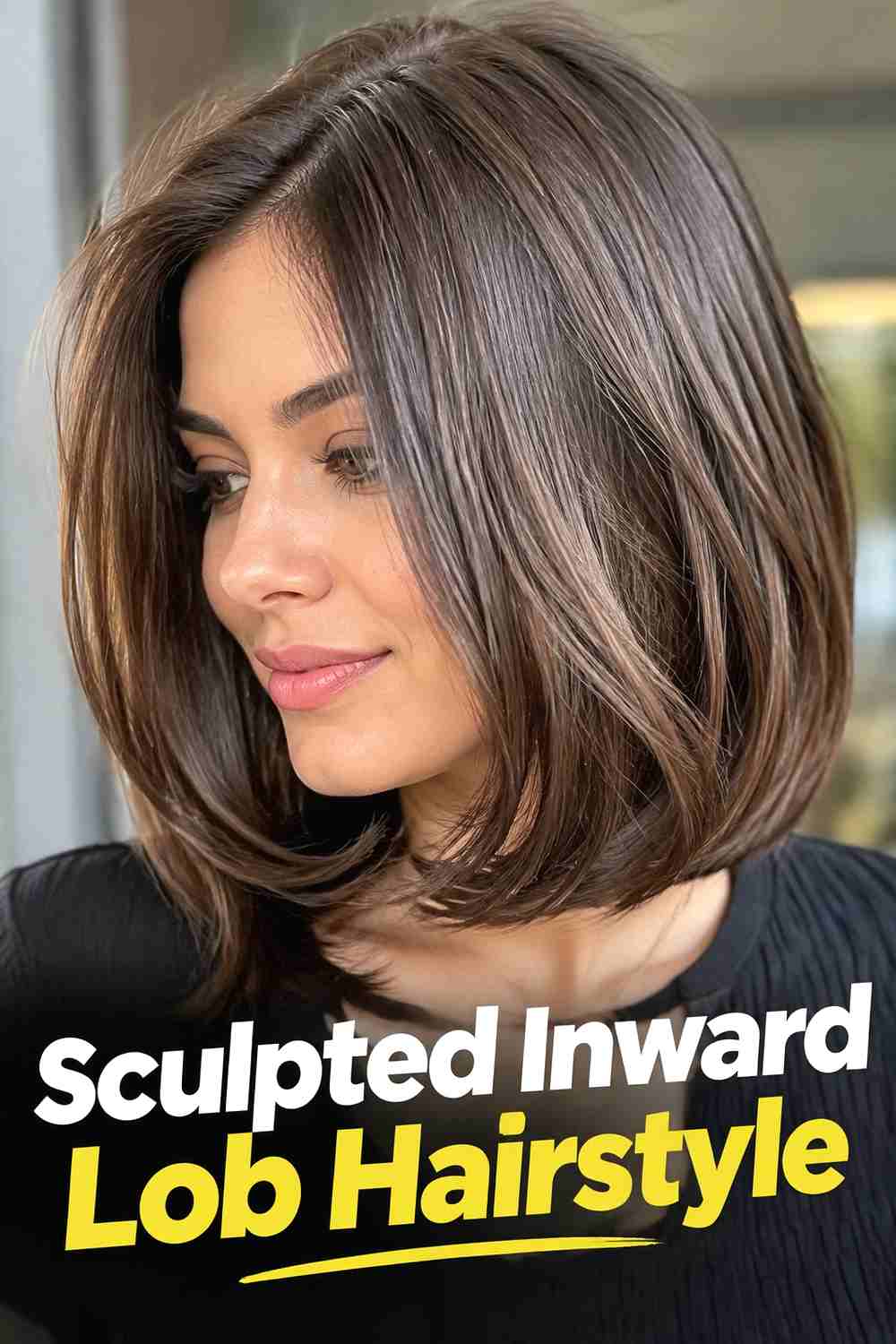
A sculpted lob with inward-curved ends creates a clean, rounded silhouette that sits beautifully above the lapels of a long camel coat. The body of the hair remains smooth and relatively straight, while the final inches turn gently toward the neck rather than hanging flat. That controlled bend gives a collarbone-length cut more intention without making it look heavily curled. A slight amount of lift at the roots keeps the style balanced, especially when the coat has broad shoulders or a strong tailored line. This look works best when the ends are healthy enough to hold a smooth curve and the overall shape remains flexible rather than stiff or overly sprayed.
Styling Notes
Use a medium or large round brush to direct the bottom section inward while drying. Allow each section to cool in its curved position before brushing lightly into place.
Best For
This style suits collarbone-length lobs and medium-density hair particularly well, especially when you want polished winter hair without a complicated set.
2. Rounded End Tuck Long Bob Hairstyle
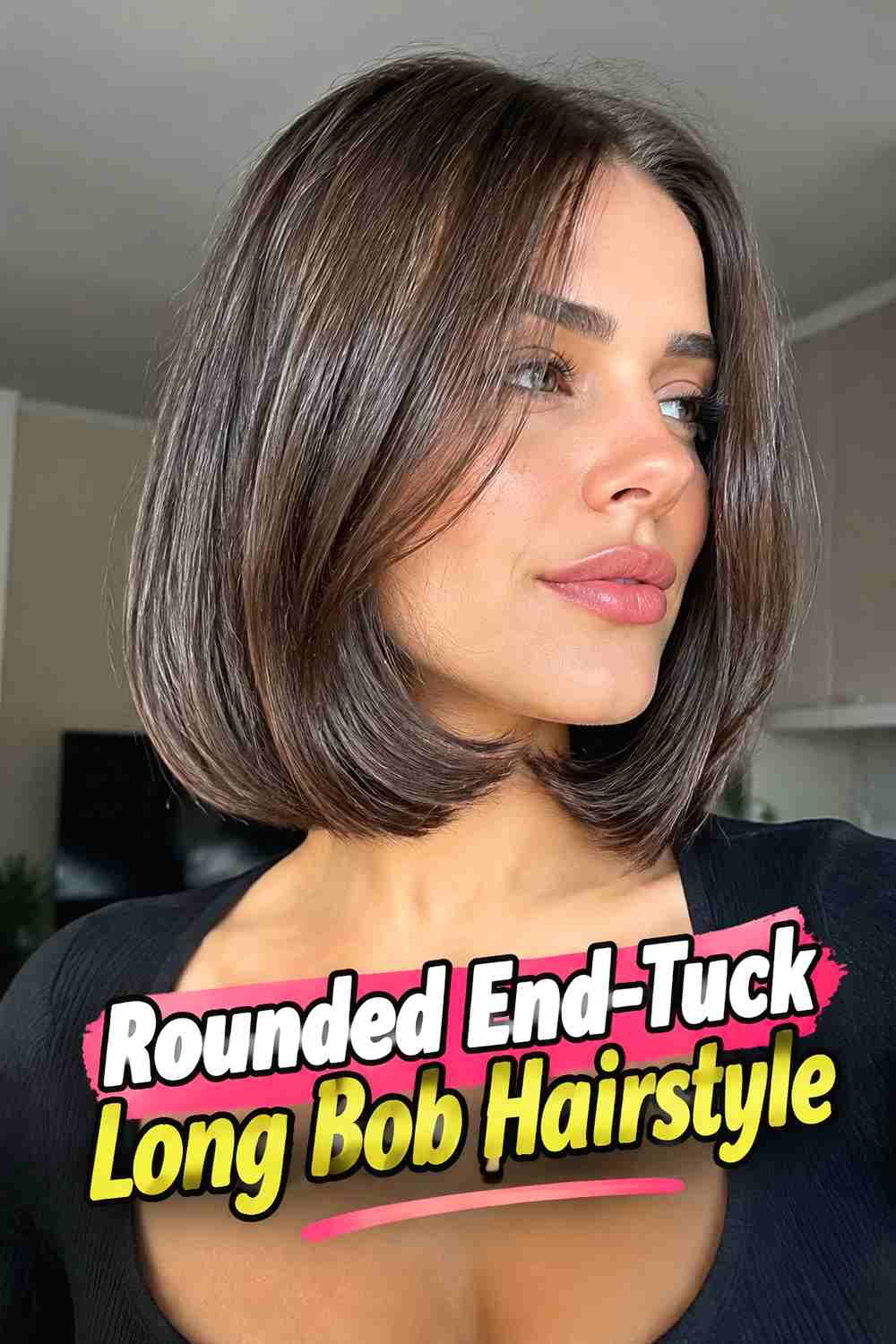
The rounded end-tuck long bob has a softer, fuller silhouette than a completely straight lob. The hair stays smooth through the crown and mid-lengths, then bends underneath in a broad curve that visually shortens the cut and gives it a neat, sculpted edge. Against a camel coat, the rounded shape creates a refined contrast with the coat’s long vertical lines. Keep the bend wide rather than curling the ends tightly, since the goal is controlled fullness rather than a ringlet effect. This style is especially useful when the coat has open lapels because the tucked ends can remain visible instead of disappearing beneath a high collar. A little natural movement keeps the finish modern.
Why It Works
The soft horizontal curve at the ends breaks up the long line of the coat while still maintaining a clean and tailored overall appearance.
Hair Type & Length
Straight, lightly wavy, and medium-density hair around shoulder to collarbone length will usually hold the rounded outline most easily.
3. Sleek Under Curve Midi Hairstyle
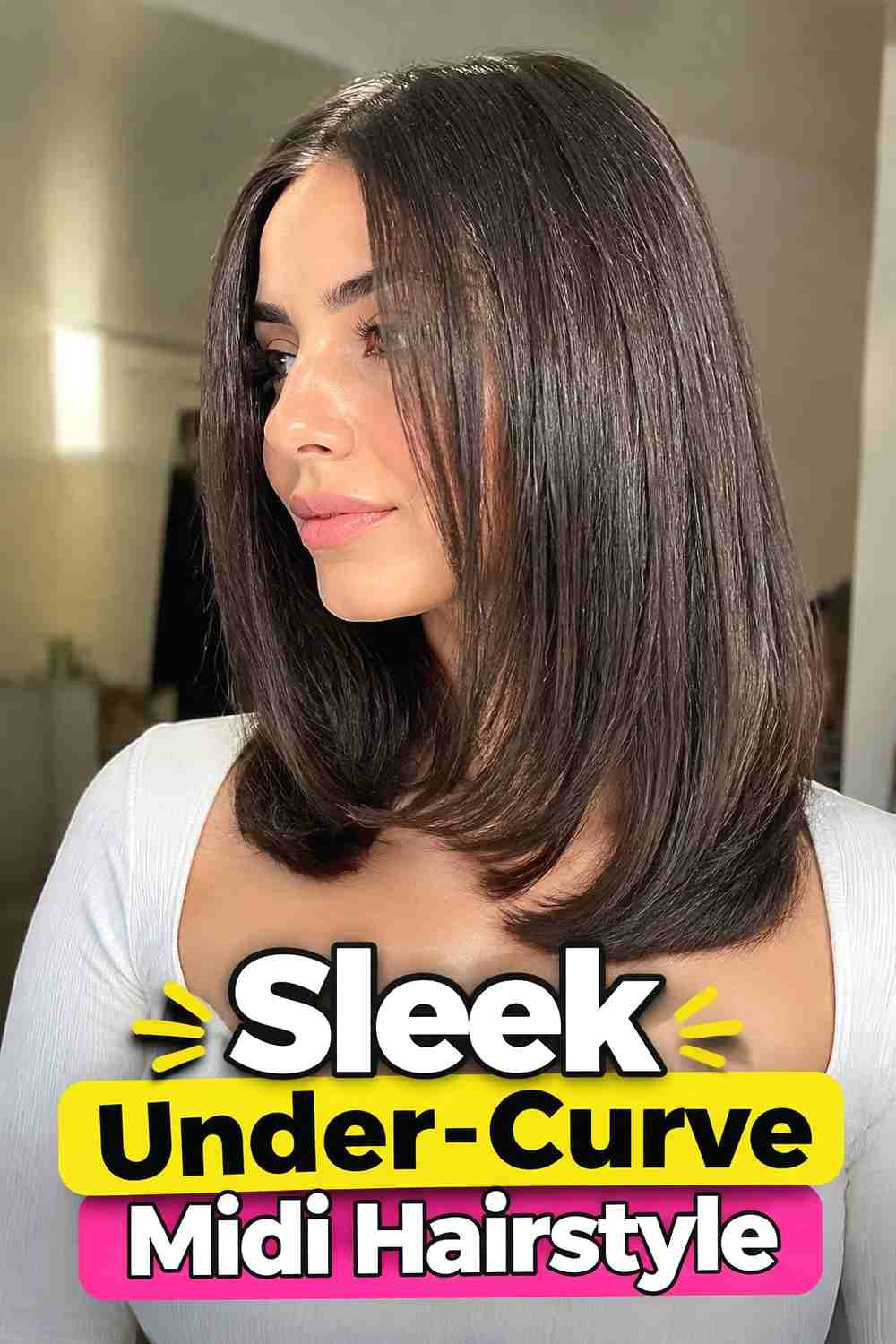
A sleek midi cut with an under-curve offers a longer interpretation of the end-tuck trend. Keep the upper hair polished and fluid, allowing the shape to stay narrow through the shoulders before directing the final section inward. The curve can sit around the upper chest or collarbone, depending on the cut and how much length is allowed to fall outside the coat. This hairstyle feels especially elegant with a long camel coat because both pieces share smooth, uninterrupted lines. Avoid flattening the roots completely; a small amount of natural lift prevents the sleek finish from appearing heavy. Finish the surface with lightweight shine so individual strands remain visible and the hair retains realistic movement.
Styling Notes
Smooth the mid-lengths first, then create the inward bend only through the final few inches. Overworking the entire length can remove natural body.
Wear & Maintenance
Keep the ends outside the coat collar whenever possible so the sculpted curve is not pressed flat by heavy fabric.
4. Side Part Sculpted End Tuck Hairstyle
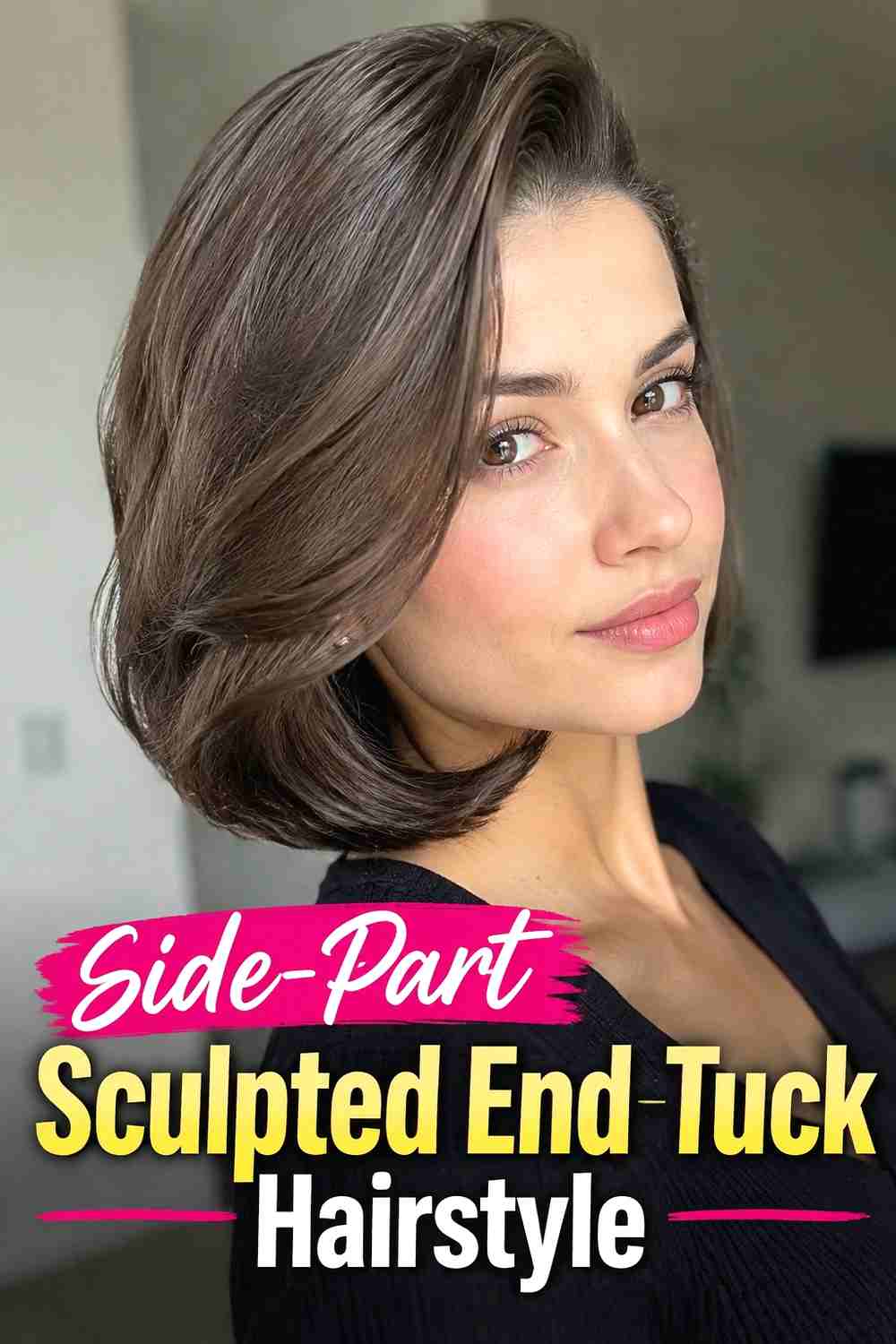
A side part adds asymmetry to a sculpted end-tuck and creates a softer frame around one side of the face. Direct the heavier section across the forehead with gentle root lift, then keep the lengths smooth before curving the ends inward near the shoulders. The lighter side can sit behind the ear or remain close to the cheek, depending on how open you want the neckline to feel. This shape pairs naturally with camel tailoring because the clean end curve feels polished while the side part prevents the look from becoming too symmetrical. Choose a broad inward bend rather than an exaggerated curl so the ends maintain a refined, coat-friendly silhouette throughout the day.
Best For
This works well for lobs and medium-length hair when you want more facial framing than a centered end-tuck provides.
Pro Tip
Set the side part while drying the roots. Establishing direction early helps the heavier side maintain lift without relying on excessive finishing spray.
5. Center Part Polished End Tuck Hairstyle
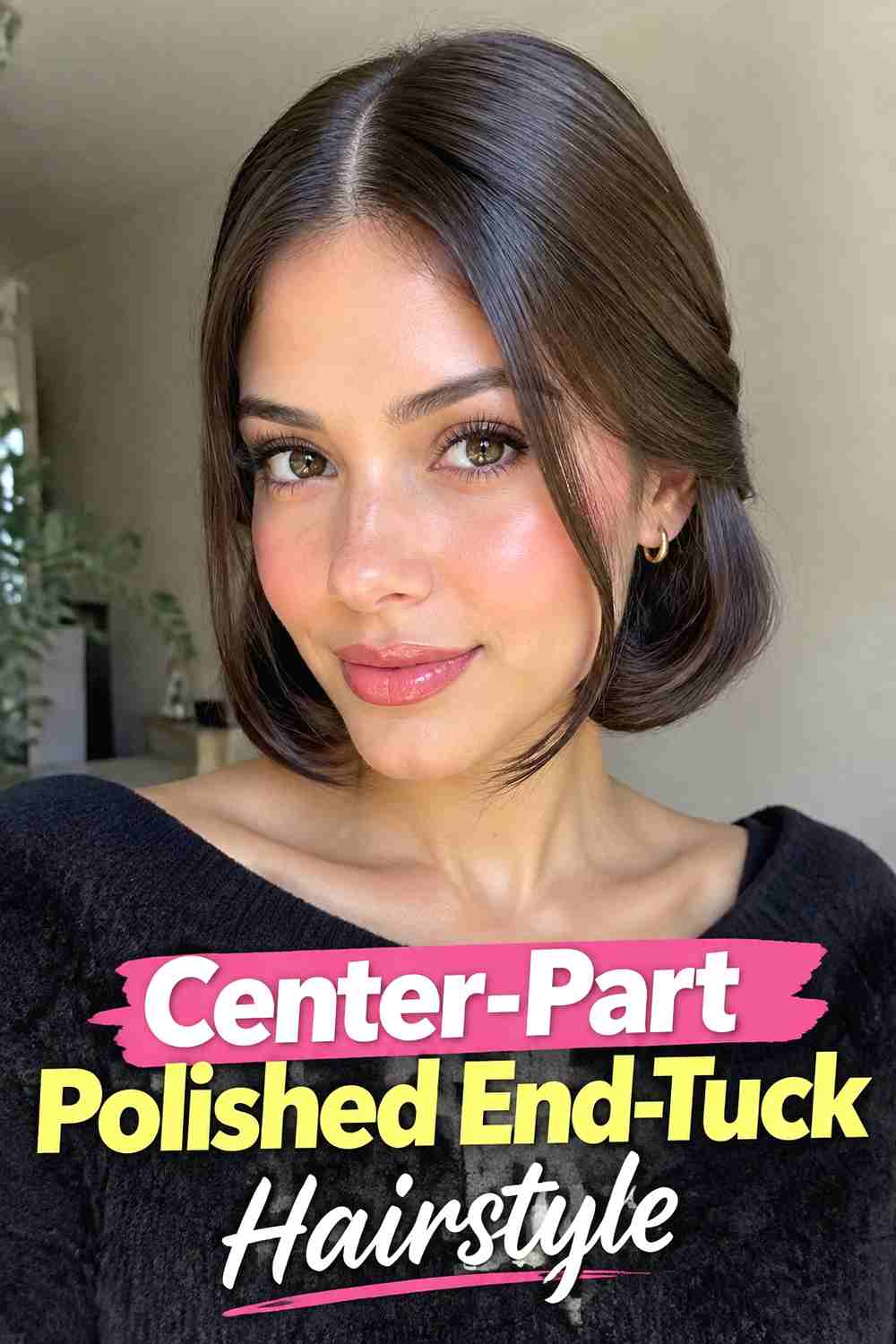
A center-part end-tuck creates a balanced, minimalist shape that looks particularly sharp with a long camel coat. The symmetry keeps the hair calm around structured lapels, while both sides curve inward at roughly the same point to create a clean frame around the jaw, neck, or collarbone. Keep the roots smooth but slightly lifted, and avoid making the under-curve too dramatic. A subtle bend gives the style polish without creating a rounded helmet-like effect. Medium-length hair is ideal because both front sections can fall evenly and remain visible over the coat. If the coat has a high collar, position the ends just above it or allow them to sit outside the neckline.
Styling Notes
Work both sides with equal tension while using a round brush so the curves match without becoming overly identical or stiff.
Why It Works
The centered shape mirrors the clean vertical line of a long coat, while the curved ends add softness around the face and neckline.
6. Soft C Curve Layered Hairstyle
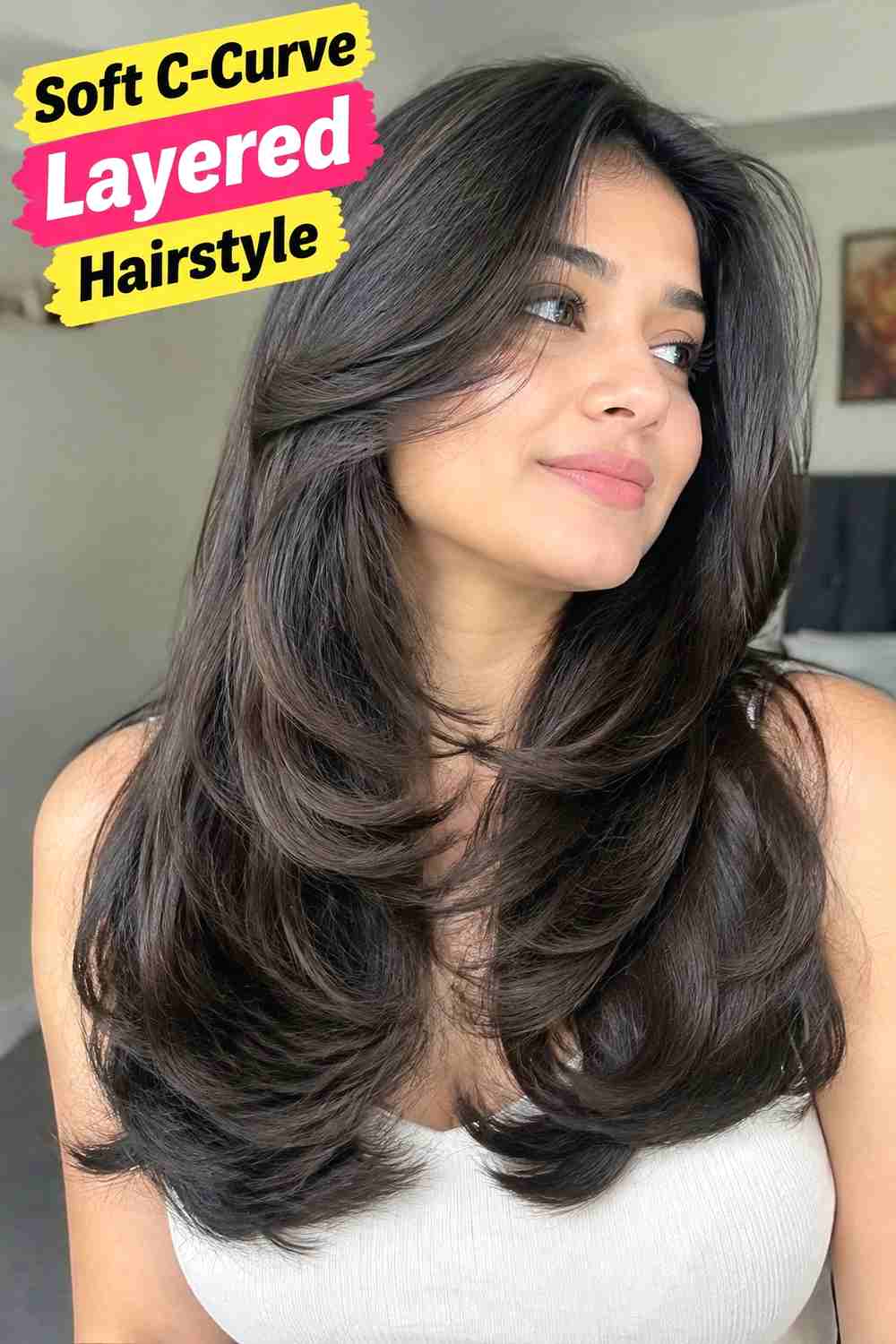
Soft C-curves give layered hair a more dimensional version of the end-tuck finish. Instead of bending every layer at exactly the same point, direct the shorter face-framing sections inward near the cheek or jaw and curve the longer layers closer to the shoulders. This staggered placement creates movement while preserving a polished overall silhouette. The shape works especially well with a long camel coat because the visible layers add detail near the upper body without overwhelming the coat’s streamlined length. Keep the curves broad and connected so the hairstyle does not look overly set. A light blowout foundation is usually enough to give the layers control while still allowing individual strands to move naturally.
Hair Type & Length
Medium to long layered hair works best, particularly when the shortest pieces begin around the cheekbones or jaw.
Pro Tip
Change round-brush size according to layer length. Slightly smaller curves at the front can help shorter pieces blend naturally into the longer shape.
7. Tucked Under Blunt Bob Hairstyle
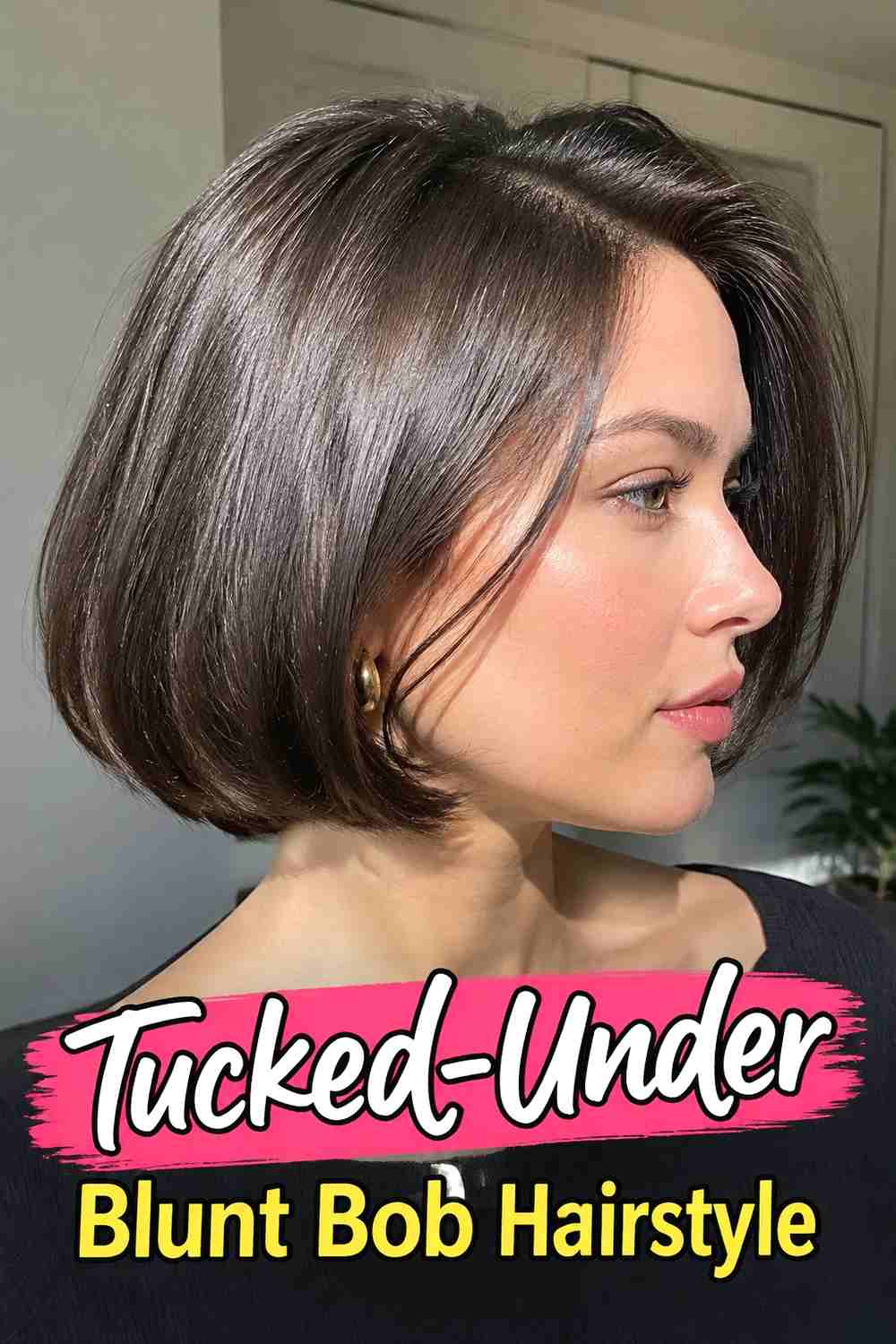
A blunt bob with the ends tucked neatly underneath creates one of the strongest sculpted silhouettes in the collection. The clean perimeter remains clearly defined, but instead of ending in a sharp straight line, the bottom edge bends gently toward the neck. That rounded finish gives a classic bob extra softness beside the long, tailored structure of a camel coat. Keep the surface polished and the curve consistent enough to show the haircut’s precision without making it rigid. Jaw- to neck-length cuts work especially well because the end shape stays fully visible above most coat collars. If the hair is very dense, subtle internal weight removal can help the ends turn inward without creating excessive puffiness.
Styling Notes
Dry the bob downward first, then use a round brush underneath the final section to create the curve. This preserves the blunt outline while softening its edge.
Best For
This is especially effective on straight or lightly wavy bobs with enough density to create a smooth, rounded perimeter.
8. Sculpted Face Framing Ends Hairstyle
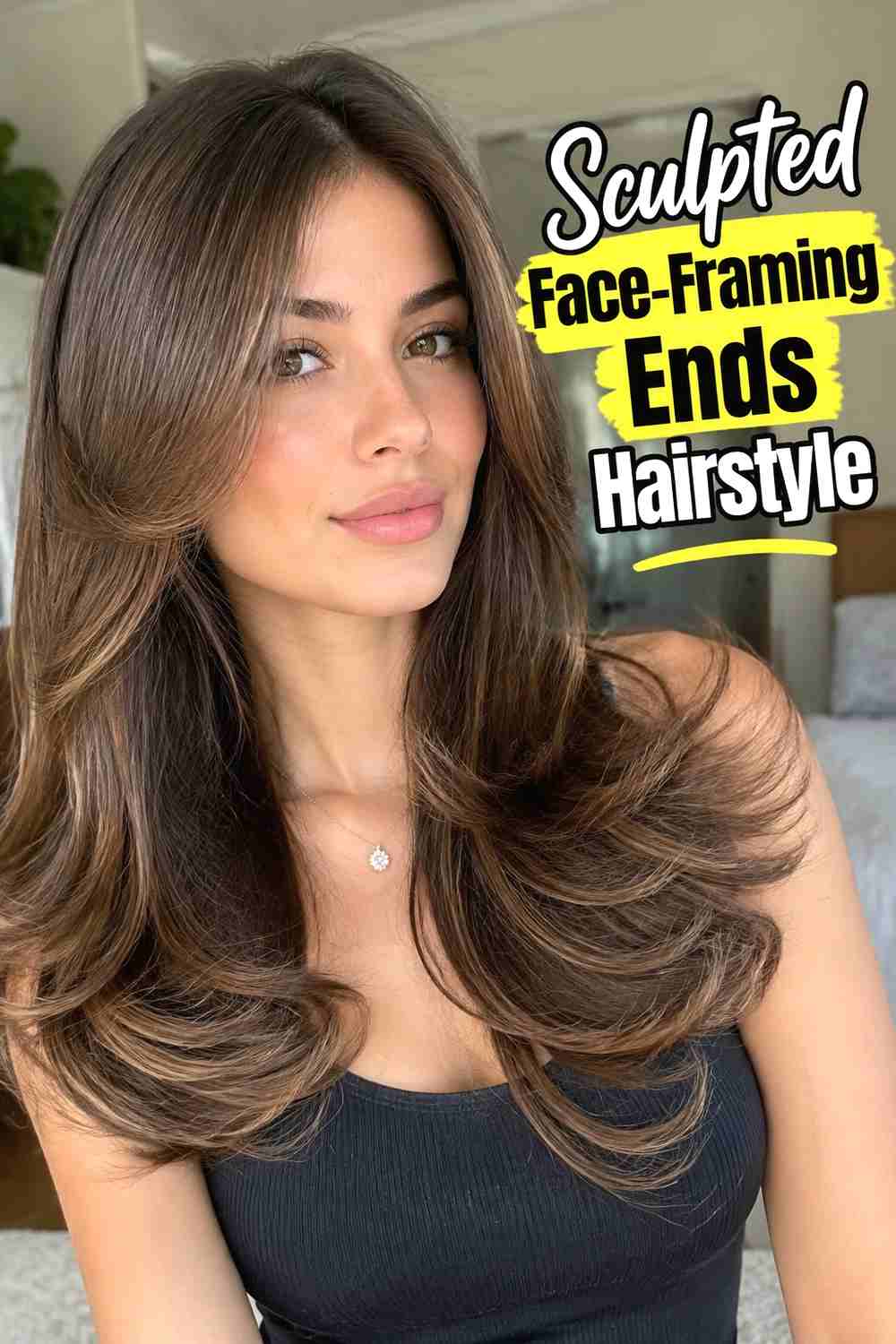
Face-framing layers can carry the sculpted end-tuck without requiring the entire hairstyle to curve inward. Shape the front pieces toward the jaw and neck while leaving the longer back sections straighter or only slightly bent. The result directs attention toward the face and keeps most of the hair relaxed, which is useful when wearing a long camel coat with strong lapels. This approach suits medium and long cuts with visible front layering because the shorter sections naturally hold more shape. Keep the inward bend soft so it follows the line of the cheek and collarbone instead of forming a tight curl. A polished surface will make the layered structure easier to see.
Why It Works
The sculpted front creates definition above the coat while the simpler back keeps the overall silhouette from becoming too rounded or bulky.
Styling Notes
Style the face-framing sections separately from the rest of the hair. They usually need more precise direction and less heat than the longer lengths.
9. Glossy Shoulder Skimming End Tuck Hairstyle
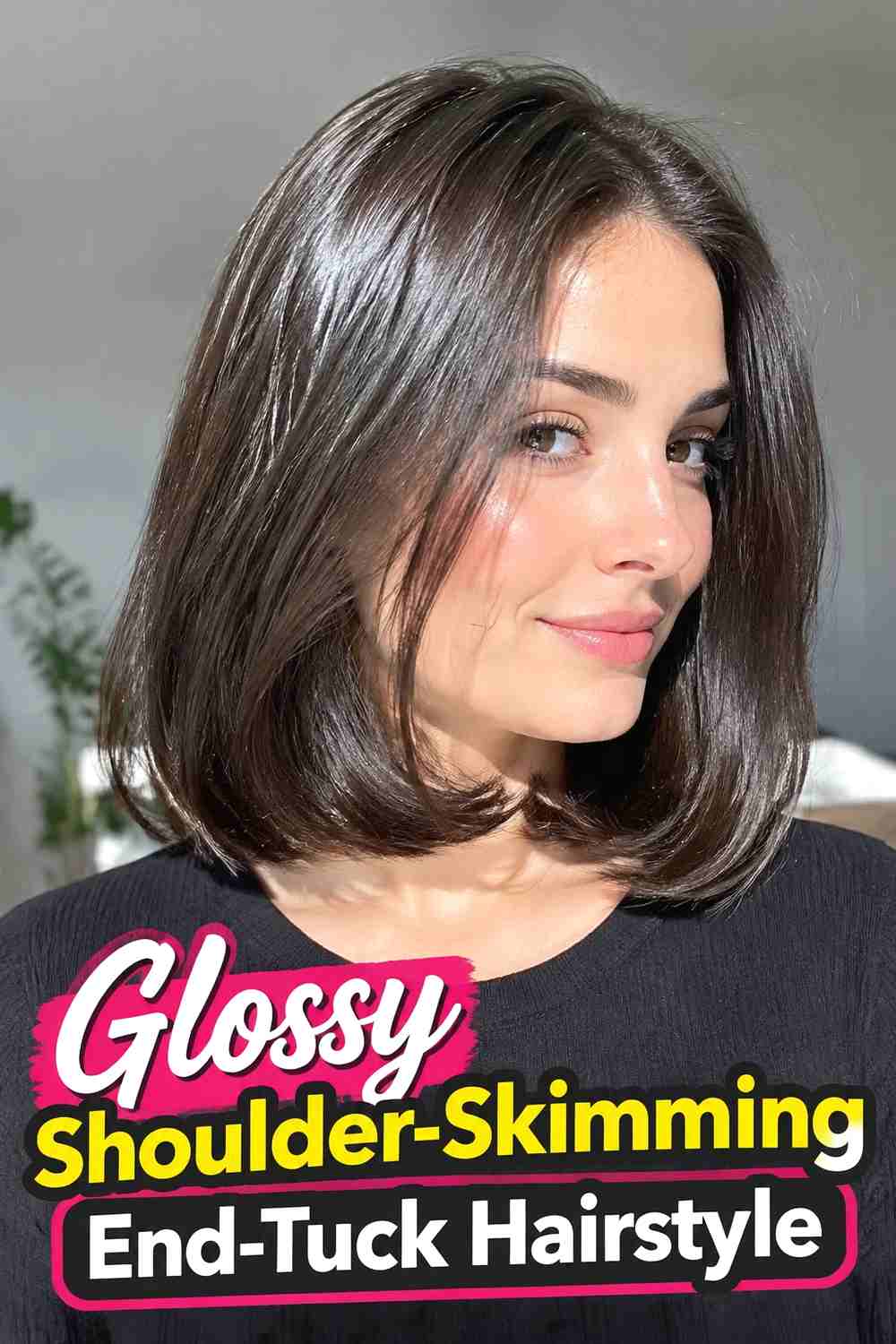
A glossy shoulder-skimming cut looks especially refined when its ends turn inward just before meeting the coat. The hair should fall smoothly through the upper section with natural root lift, then curve underneath in a controlled line around shoulder level. This placement keeps the hairstyle visible against a camel coat without creating a large amount of hair over the lapels. The finish can be sleek, but realistic strand detail and slight movement are important so it does not look overly lacquered. A lightweight serum through the lower lengths can emphasize shine, while the roots should remain comparatively product-free. The final silhouette feels polished, compact, and easy to pair with classic winter tailoring.
Best For
This works particularly well for straight or blow-dried hair that sits between the base of the neck and the top of the shoulders.
Wear & Maintenance
After taking off the coat, lightly reshape the ends with your fingers if the collar has pushed the curve outward.
10. Voluminous Blowout End Tuck Hairstyle
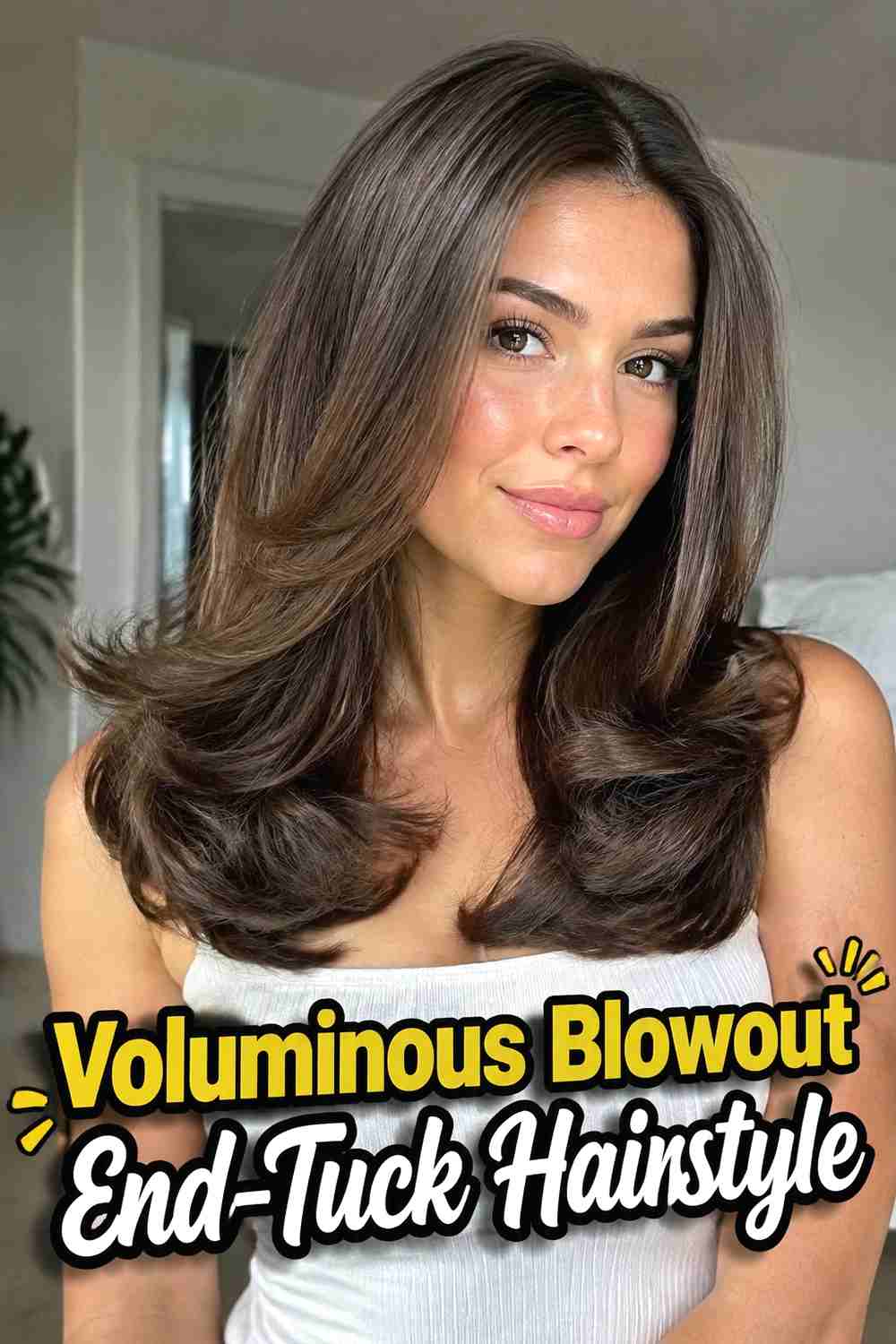
A voluminous blowout becomes more tailored when the ends are directed inward rather than flipped outward. Build lift through the crown and upper lengths, then use a large round brush to form broad curves that tuck toward the shoulders. The volume should feel airy at the top and controlled at the bottom, creating a balanced shape beside a long camel coat. This is a strong option when you want visible glamour without loose waves competing with the coat’s lapels. Medium to long hair with layers can hold the shape especially well. Let the sections cool before brushing them together so the blowout keeps its rounded movement without turning into separate, overly defined curls.
Styling Notes
Use larger sections for the lower lengths to create one sweeping curve rather than many small bends. Concentrate extra lift around the crown and front.
Best For
Choose this finish for dinners, events, polished workwear, or any camel-coat outfit where you want the hair to feel deliberately styled.
11. Soft Wave End Tuck Hairstyle
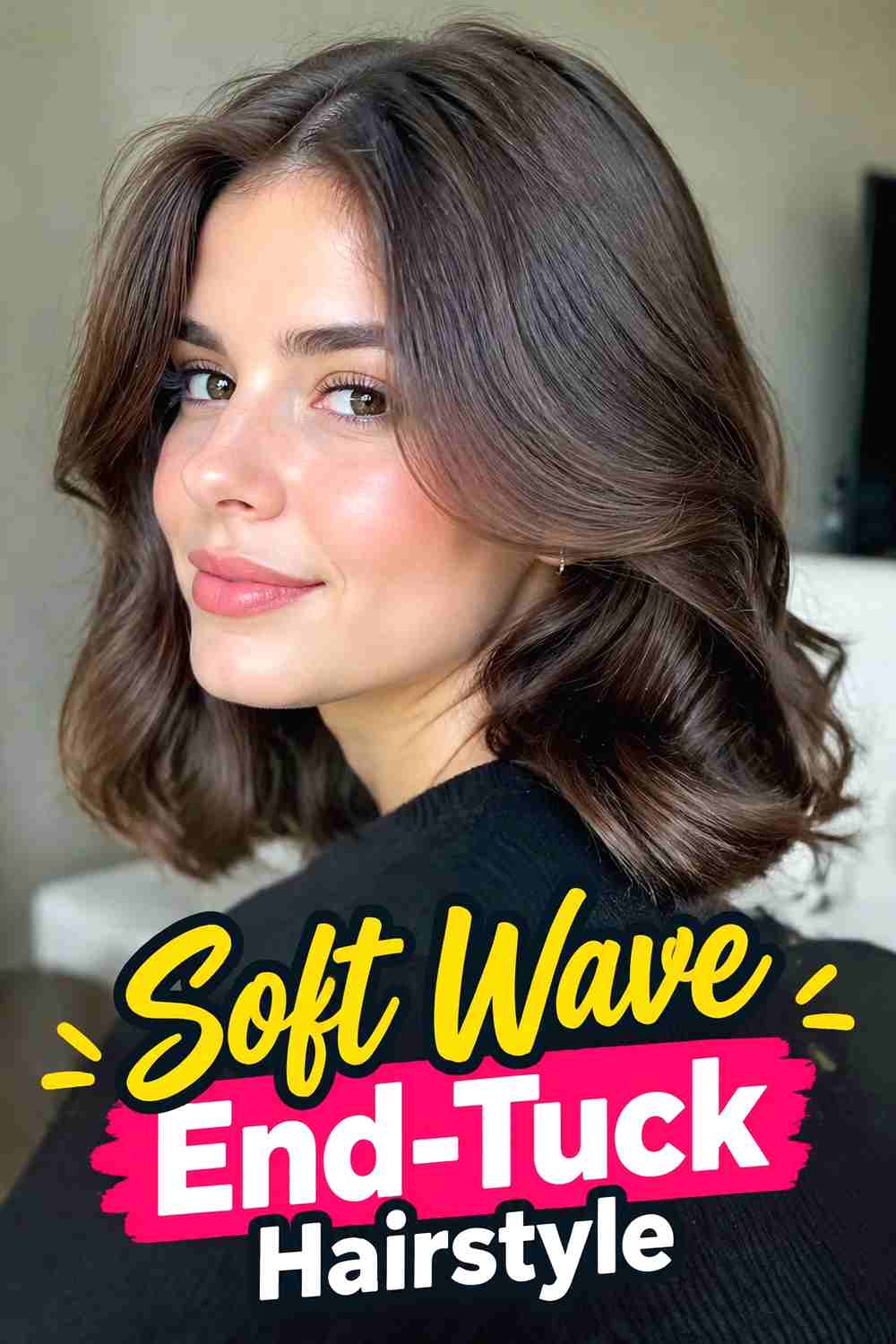
Soft waves can still maintain a sculpted end-tuck when the wave pattern becomes smoother near the bottom. Create gentle bends through the mid-lengths, then guide the last section inward so the ends form a controlled curve instead of continuing into another wave. This gives the hairstyle a relaxed upper texture with a cleaner lower perimeter. The combination works well with a camel coat because it balances movement and tailoring without becoming too formal. Keep the waves large and irregular enough to look natural, particularly around the face. Medium and long hair offer enough space for both the wave pattern and end curve to remain visible without making the lower section feel crowded.
Why It Works
The waves add softness while the tucked ends create a defined stopping point, keeping the hairstyle from spreading across the coat’s shoulders.
Pro Tip
Style the final two or three inches separately after creating the waves so you can control the inward direction more precisely.
12. Curtain Bangs End Tuck Hairstyle
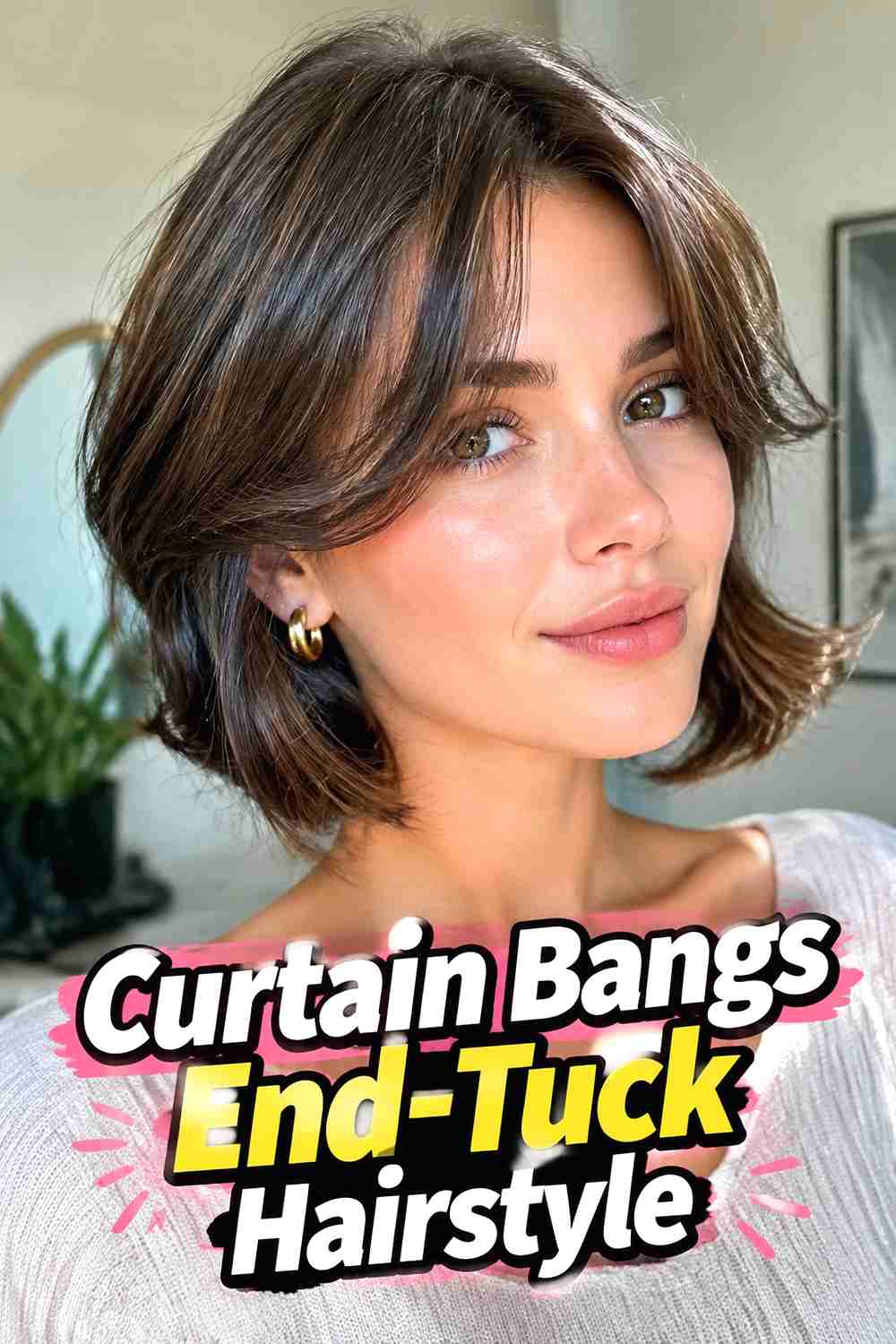
Curtain bangs bring extra softness to an end-tuck hairstyle by framing the upper face while the lower lengths remain polished. Shape the bangs outward from the center, then allow the longer front layers to transition into inward-curved ends around the jaw or collarbone. This creates an S-like flow through the front without requiring a heavily curled finish. The look pairs especially well with long camel coats because the bangs keep visual interest high near the face while the controlled ends stay neat around the collar. Leave the crown natural rather than overly lifted so the curtain pieces remain the main focal point. A medium-length layered cut will usually make the transitions easiest to blend.
Styling Notes
Style the curtain fringe first and the lower end-tuck second. This helps the two curves connect without forcing the bangs into the same direction as the ends.
Best For
This option suits layered lobs and midi cuts when you want softness around the eyes without sacrificing a polished lower silhouette.
13. Deep Side Part Curved End Hairstyle
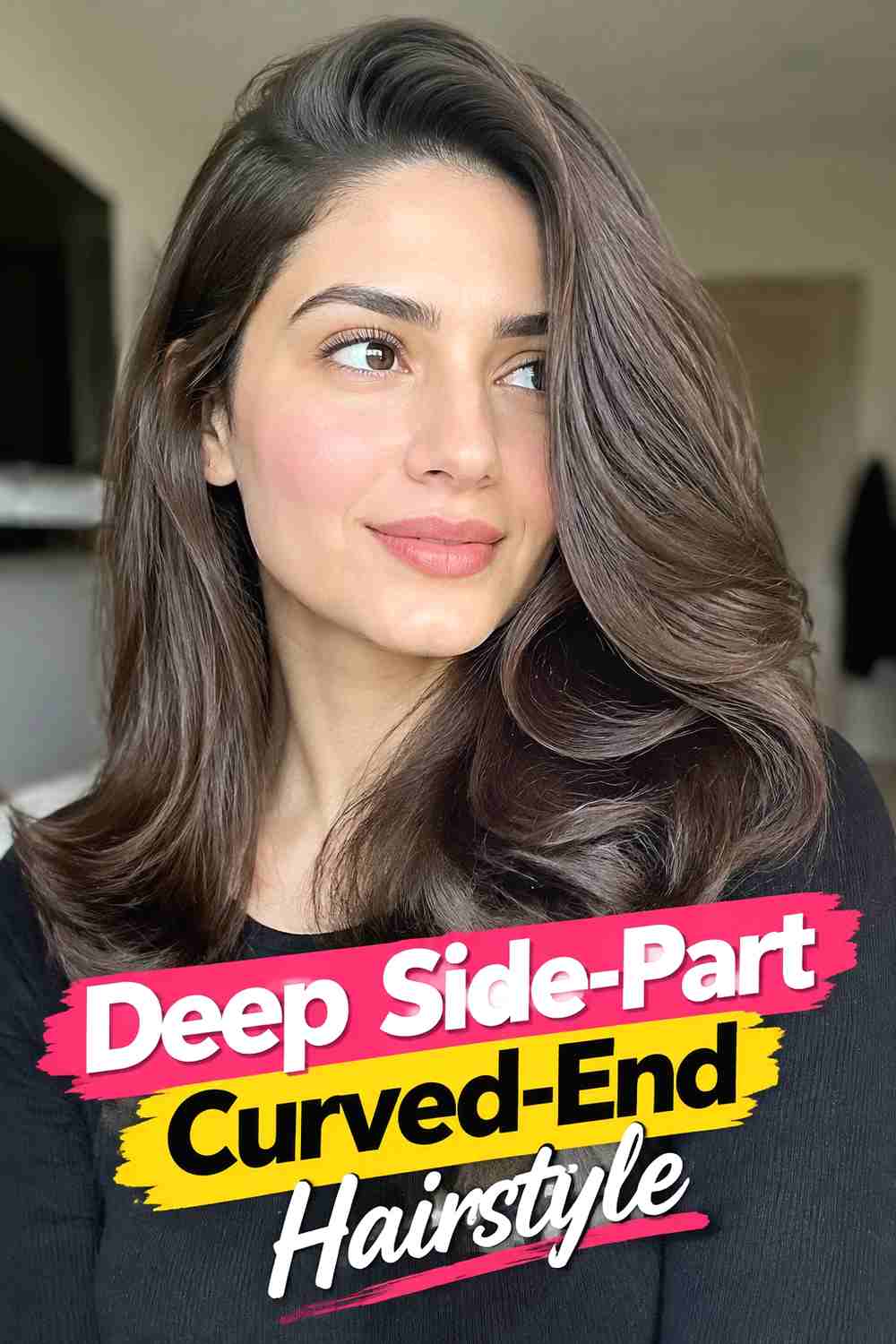
A deep side part creates a stronger, more directional version of the sculpted end-tuck. Sweep the heavier side across the forehead with controlled volume, then smooth the lengths downward and turn the ends toward the neck. The combination gives the hairstyle a slightly dramatic front while keeping the lower shape compact. This works beautifully with a long camel coat because the asymmetrical hair breaks up the coat’s vertical symmetry without introducing messy texture. Straight and lightly wavy hair are both suitable, provided the surface can hold a clean curve. Tuck the lighter side behind the ear if you want the coat lapel and jewelry to remain more visible.
Why It Works
The deep part adds visual movement at the top, while the sculpted ends keep the lower half restrained and coat-friendly.
Pro Tip
Dry the heavier side across the part before shaping the ends. Root direction is harder to correct once the lower curve has already been set.
14. Minimalist Straight End Tuck Hairstyle
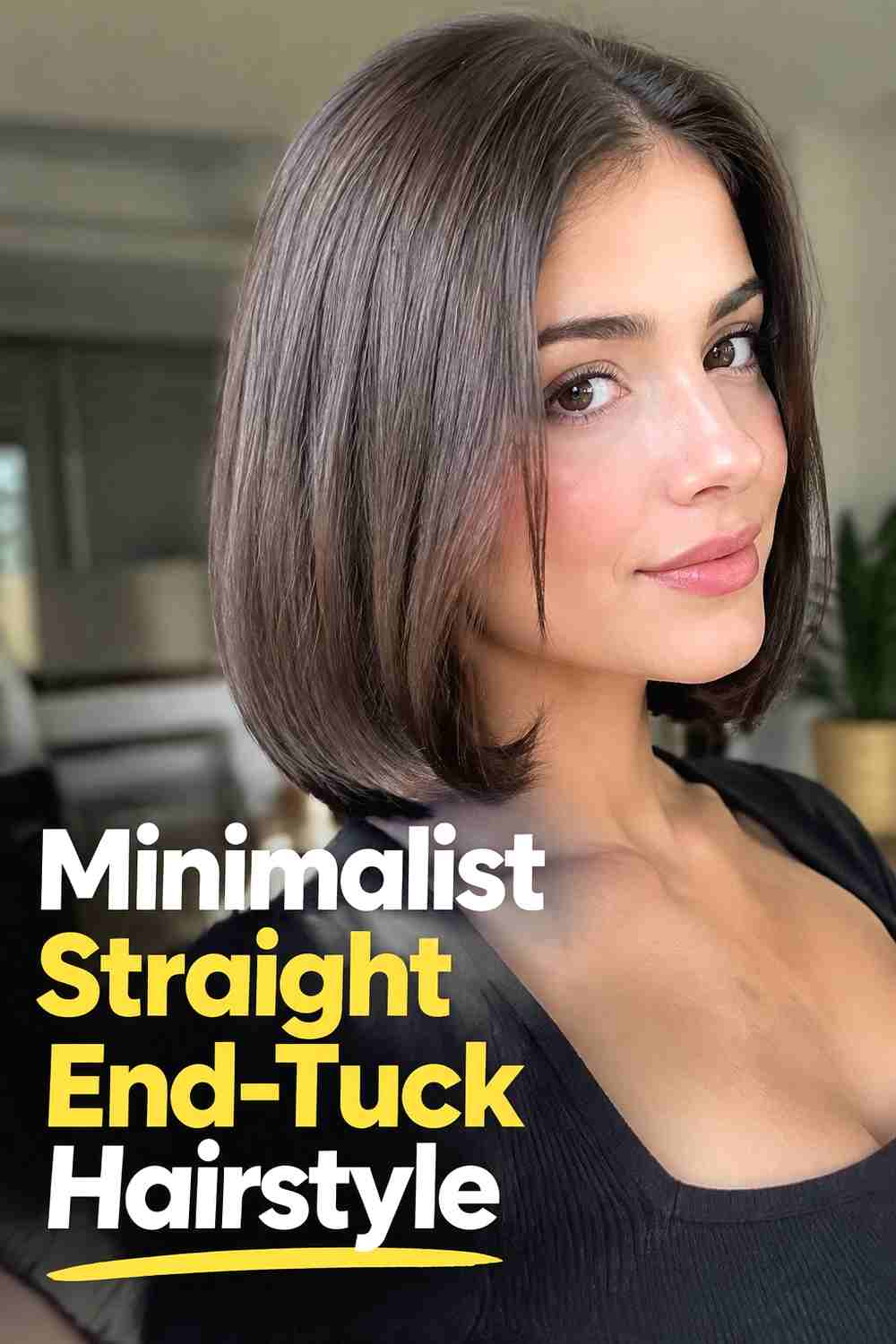
The minimalist straight end-tuck relies on precision rather than volume. Keep the hair smooth and relatively straight from roots through mid-lengths, then introduce only a slight inward turn at the bottom. The bend should be subtle enough that the silhouette still reads as straight hair, with just enough curvature to keep the ends from looking rigid. This style pairs naturally with a long camel coat, especially one with simple tailoring and minimal hardware. Shoulder- to collarbone-length cuts make the finish easiest to see. Avoid excessive smoothing product; a clean surface with realistic movement looks more modern than a glassy, immovable finish. The understated result is ideal for everyday polished dressing.
Styling Notes
Use low to moderate tension when shaping the ends. Too much round-brush rotation can transform the subtle tuck into a pronounced curl.
Wear & Maintenance
A quick pass with a brush can usually restore the shape after commuting or removing a scarf.
15. Retro Rounded End Tuck Hairstyle
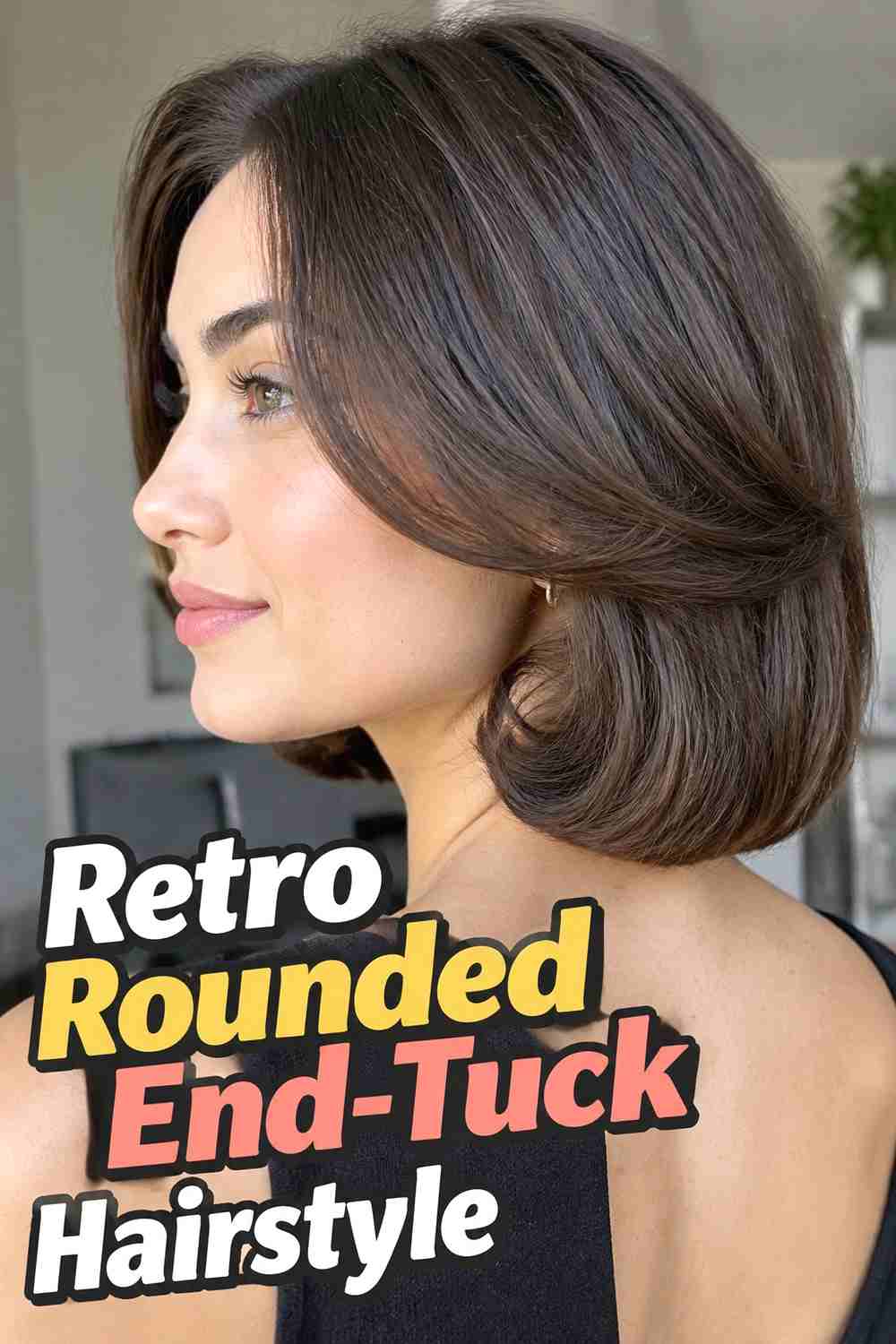
A retro rounded end-tuck brings a subtle vintage influence to winter styling without becoming costume-like. Build smooth body through the hair, then shape the lower section into a fuller inward roll that sits around the jaw, neck, or shoulders. The curve should be more pronounced than a modern minimalist tuck but still soft enough to move. A side or center part can both work, depending on the haircut. Against a long camel coat, the rounded hair adds a classic feminine contrast to straight tailoring. This look is especially convincing on bobs and medium cuts where the curved perimeter can be seen clearly. Keep the crown moderate so the style stays wearable rather than overly period-specific.
Best For
This suits smooth bobs, lobs, and shoulder-length cuts when you want a more noticeable sculpted silhouette for dressier winter outfits.
Pro Tip
Brush the finished sections together after cooling. A unified curve looks more polished and contemporary than multiple separate rolls.
16. Textured Bob End Tuck Hairstyle
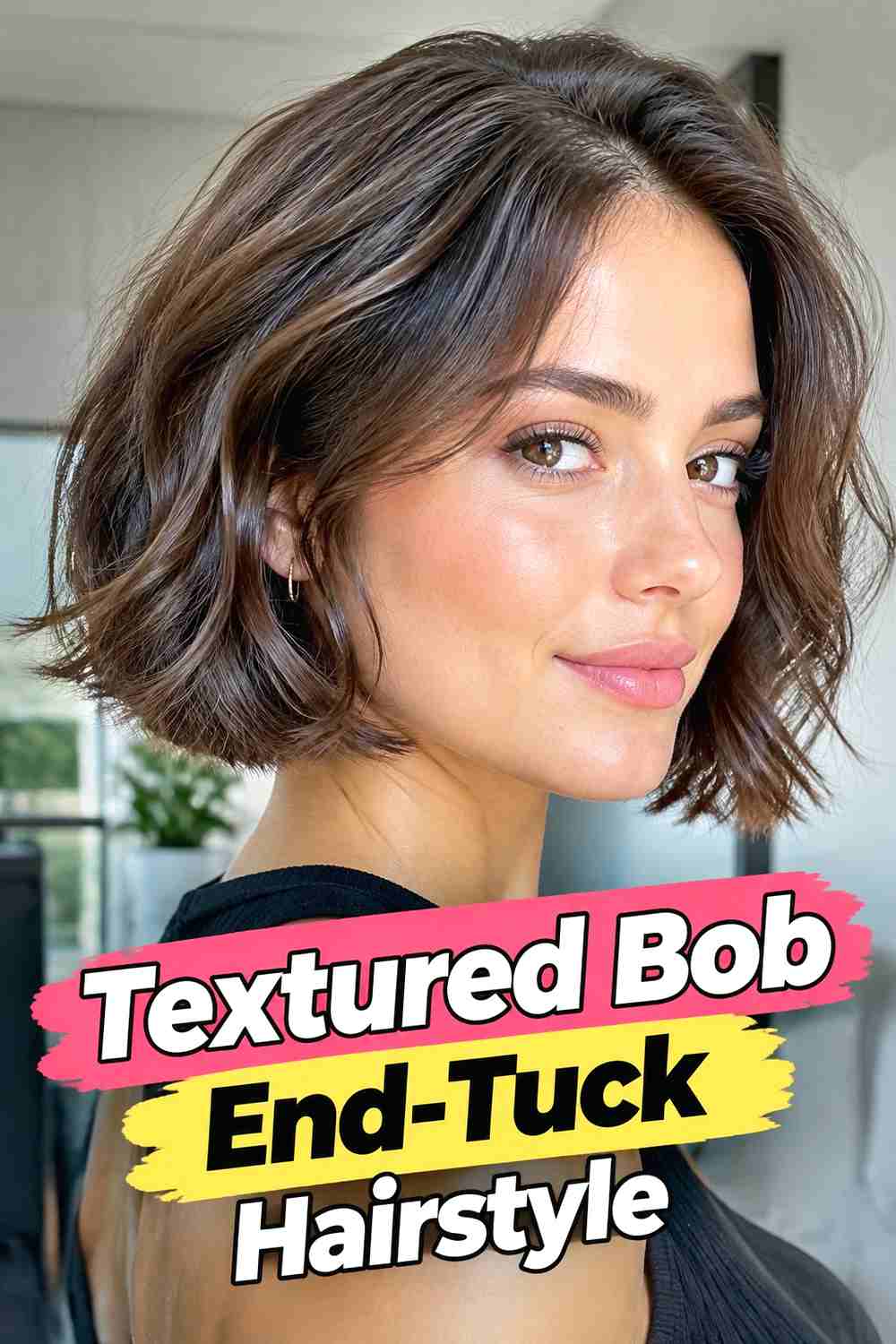
A textured bob combines piecey movement with a controlled inward edge, creating a less formal version of the sculpted end-tuck. Add a few irregular bends through the mid-lengths, then direct the bottom sections inward so the haircut still finishes with a clear shape. This contrast works especially well with a camel coat because the texture keeps the outfit relaxed while the curved perimeter maintains enough polish to suit tailored outerwear. Chin- to neck-length bobs are ideal, particularly if they have subtle layers or internal texture. Avoid making every section perfectly smooth; the appeal comes from visible variation above a more disciplined lower line. Lightweight texture product can help separate strands without making them stiff.
Hair Type & Length
Straight, wavy, and softly textured bobs can all carry this finish, especially when the cut already has movement through the interior.
Styling Notes
Create texture first and shape the ends last. This keeps the lower curve clean instead of disturbing it while adding bends higher up.
17. Soft Curly End Tuck Hairstyle
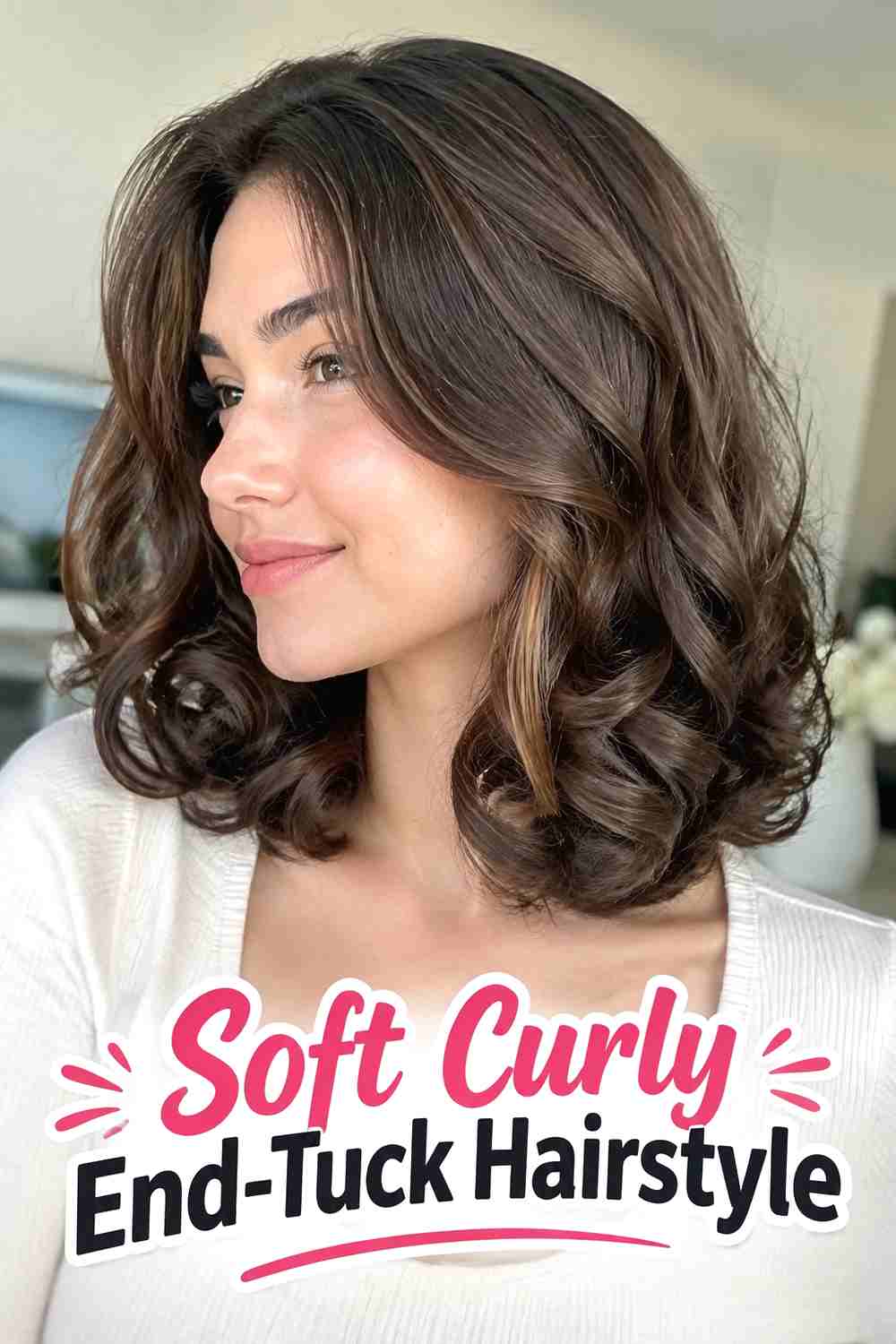
Soft curls can create an end-tuck effect by directing the lowest curl sections inward toward the neck instead of letting them expand outward. Keep the upper curl pattern natural and dimensional, then gently shape the perimeter so the ends sit closer to the head or shoulders. The finish should preserve individual curl variation rather than forcing every strand into the same curve. This makes the look compatible with a long camel coat while keeping plenty of texture visible around the face. A roomy collar is helpful because it allows the shaped ends to sit naturally without being crushed. Use flexible hold so the curls remain touchable and avoid over-brushing once the lower direction has been established.
Why It Works
The controlled perimeter prevents curl volume from spreading across the coat’s lapels while allowing natural texture to remain the main feature.
Wear & Maintenance
Keep the ends outside the coat when possible and reshape only the lower curls that lose direction rather than refreshing the entire hairstyle.
18. Layered Midi End Tuck Hairstyle
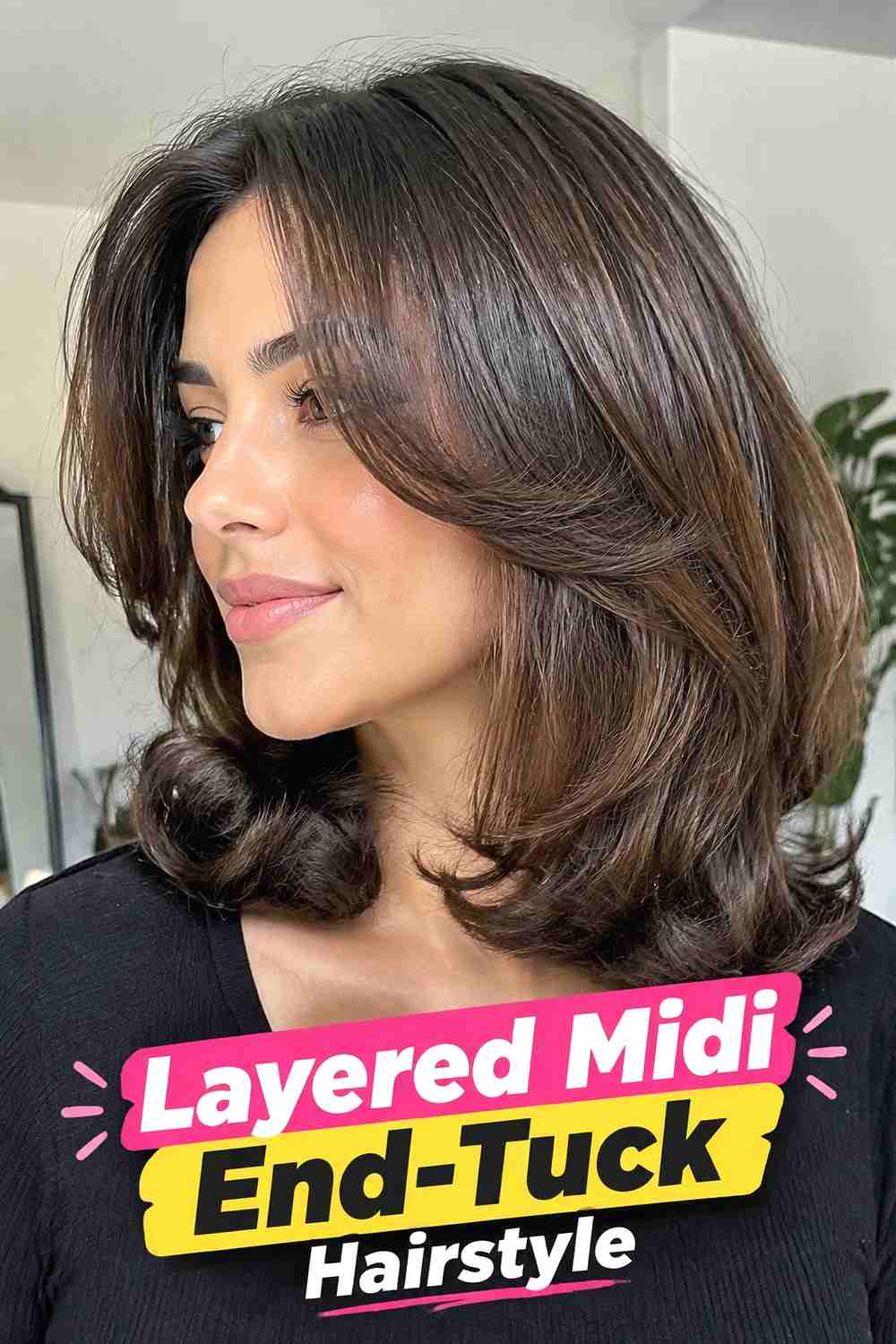
A layered midi cut creates a sophisticated end-tuck because different lengths can curve inward at slightly different points. The shortest sections may turn toward the cheek or jaw, while the longer layers bend closer to the shoulders or upper chest. This creates depth without relying on obvious waves or curls. The result pairs beautifully with a long camel coat, where the staggered curves bring softness to an otherwise streamlined outfit. Keep the layers smooth enough that their individual shapes remain visible, but avoid forcing them into perfect symmetry. Medium-density hair often carries this look especially well because it has enough movement to separate without becoming too bulky at the ends.
Styling Notes
Work from the shortest face-framing layers toward the longest sections, adjusting brush size and tension so each curve suits its length.
Best For
This is a versatile choice for medium to long layered cuts when you want an end-tuck effect with more movement than a blunt lob.
19. Polished Collarbone End Tuck Hairstyle
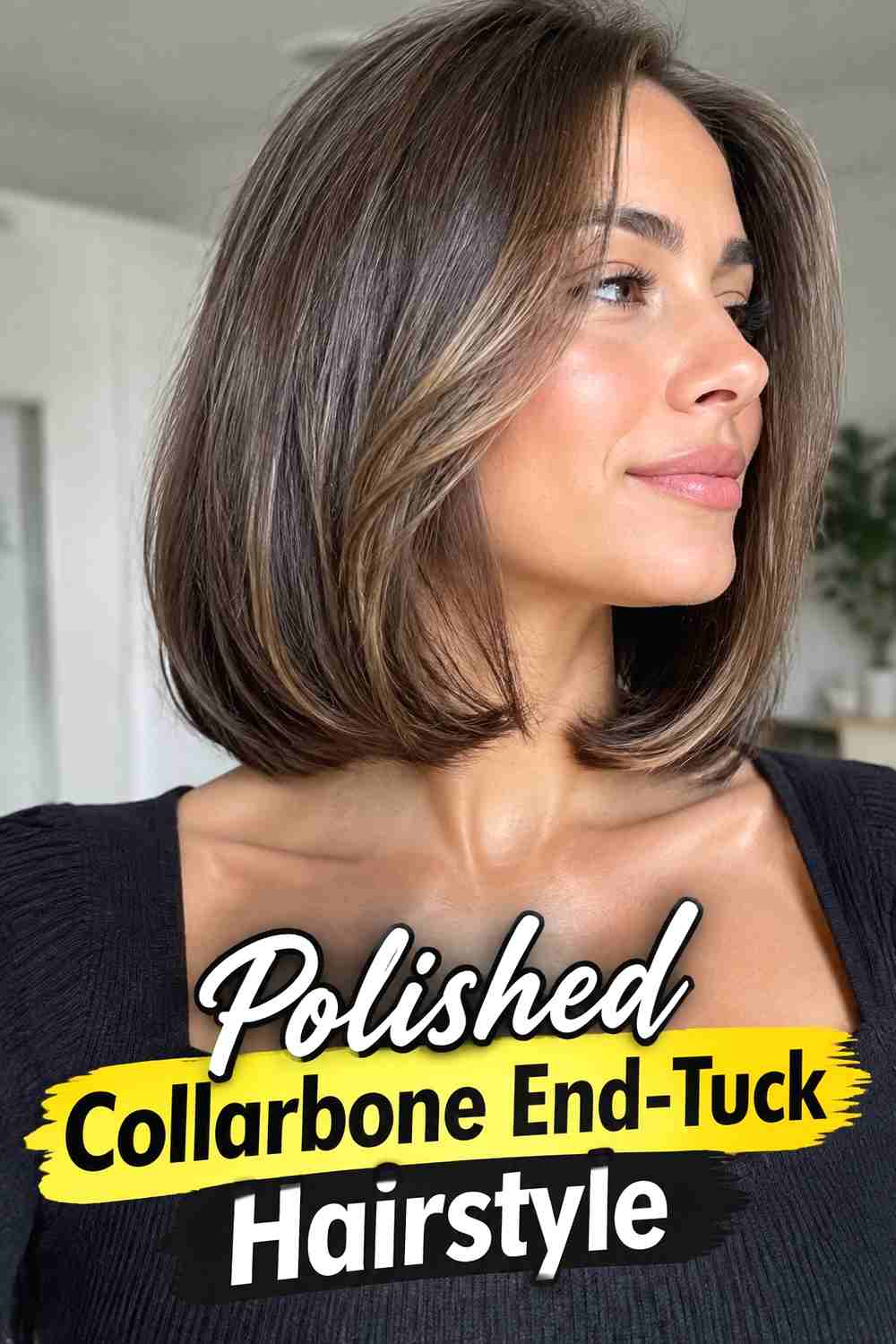
A collarbone end-tuck is one of the easiest shapes to pair with a long camel coat because the hair finishes exactly where the outerwear begins to frame the upper body. Keep the roots smooth with natural lift, allow the lengths to fall cleanly past the jaw, then curve the ends inward just above or around the collarbone. The finish should look intentional from the front and sides without appearing overly rounded. This length offers enough movement to feel soft while remaining short enough to stay clear of most coat lapels. A clean center or gentle side part can both work. Finish with lightweight shine and flexible hold so the curved ends remain polished but still respond naturally to movement.
Why It Works
The collarbone placement creates a clear transition between hair and coat, preventing the ends from becoming lost across the lapels.
Pro Tip
Put on the coat before the final touch-up so you can adjust the curve to sit just above the actual collar and lapel line.
How to Choose the Right Look
Start with your haircut length. Chin- and neck-length bobs create the strongest sculpted tuck because the entire perimeter can turn inward as one shape. Lobs and collarbone cuts offer a softer version, while longer layered hair works best when only the face-framing sections and lowest visible ends are curved.
Your natural texture matters as well. Straight hair can hold sleek, minimalist curves with relatively little manipulation. Wavy hair works well with softer, more relaxed end-tucks, while curly hair usually looks most natural when only the perimeter is guided inward rather than fully smoothed.
Consider your camel coat’s neckline before styling. Open lapels allow shoulder- and collarbone-length curves to remain visible, while higher collars can push sculpted ends out of place. In that case, choose a shorter bob, a curve positioned above the collar, or a layered style whose shape remains visible higher around the face.
Styling time is another factor. A blunt bob or minimalist tuck may need only a controlled blow-dry, while layered C-curves and voluminous blowouts require more sectioning. If you want longevity, focus on smooth preparation, let shaped sections cool completely, and use flexible hold rather than stiff spray.
Final Thoughts
Sculpted end-tuck hairstyles complement long camel coats by bringing softness and controlled shape to classic tailored outerwear. Choose a blunt bob for a strong rounded edge, a layered midi for movement, or a sleek collarbone tuck for understated polish. The most wearable version is usually the one that follows your existing haircut and sits naturally above the coat collar rather than fighting against it.
FAQs
1. What is a sculpted end-tuck hairstyle?
It is a style where the lower ends of the hair are deliberately curved inward toward the neck, jaw, or collarbone instead of being left completely straight or flipped outward.
2. Which hair length works best for an end-tuck?
Bobs, lobs, and collarbone-length cuts make the inward curve especially visible. Longer hair can also work when layered sections or the lowest visible lengths are shaped inward.
3. How do I keep tucked ends from flipping outward against a coat?
Shape the curve after the hair is fully dry, let it cool in position, and keep the ends outside or just above the coat collar whenever possible.
4. Can naturally wavy or curly hair wear a sculpted end-tuck?
Yes. Rather than straightening everything, you can preserve the natural texture and guide only the lower perimeter inward for a softer version of the look.
5. What styling tool is easiest for creating an inward end-tuck?
A round brush and blow-dryer are useful for a broad, natural curve. A heated styling tool can also refine specific sections, but the bend should remain soft rather than tightly curled.
Save your favorite sculpted end-tuck hairstyle for your next camel-coat outfit, and share these ideas whenever you need polished cold-weather hair inspiration.