14 Bedhead Waves Hairstyle Ideas
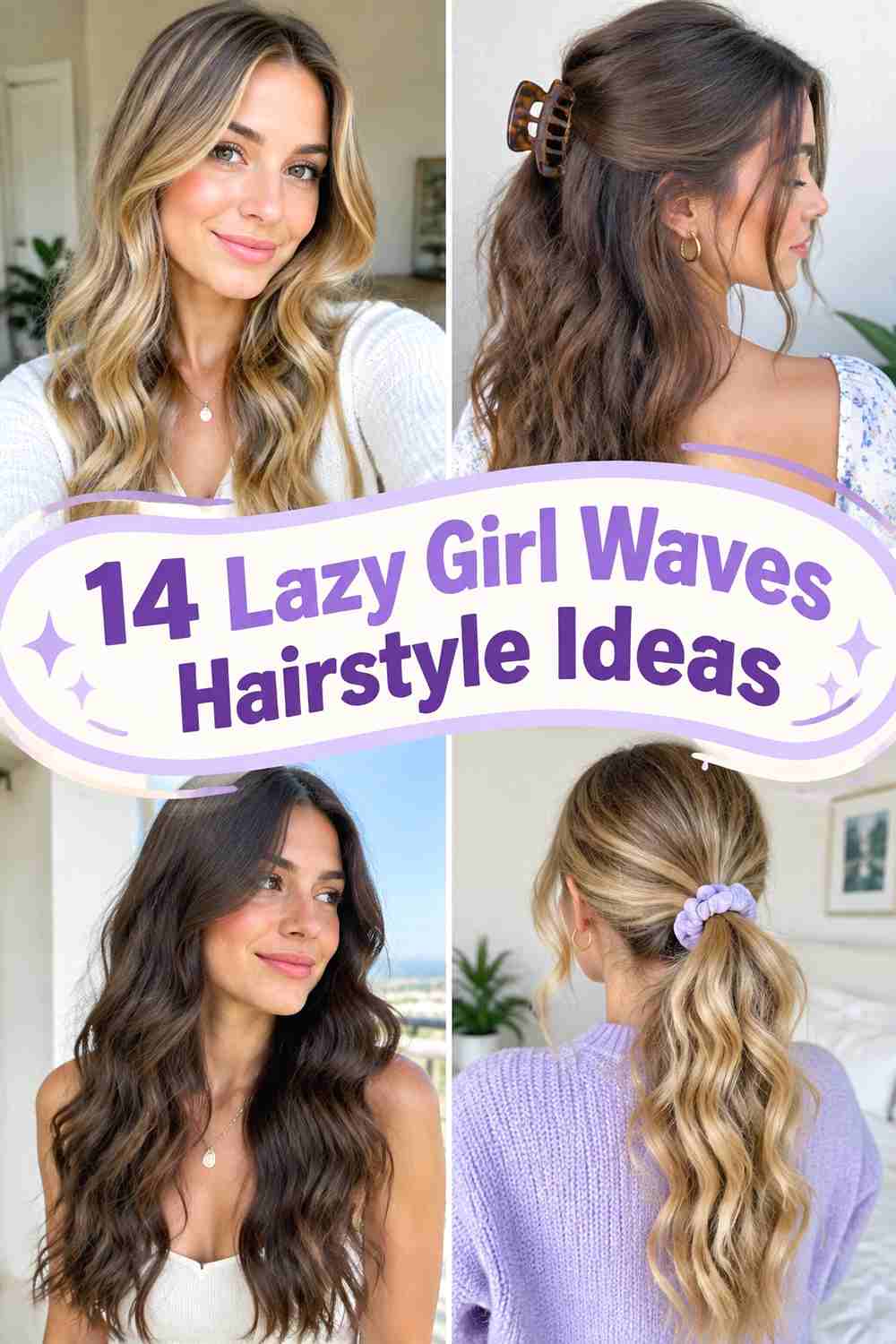
Tousled texture, imperfect bends, and airy volume give these bedhead waves the relaxed, lived-in finish that makes intentionally undone hair feel stylish.
Bedhead waves sit somewhere between freshly styled curls and completely natural texture. The most convincing versions are deliberately imperfect: some pieces bend more than others, the ends stay loose, and the roots have enough movement to avoid looking overly polished. That variation gives the style its easy, worn-in character.
There is still plenty of room to personalize the look. Length, layers, part placement, shine level, root volume, and fringe can completely change the finished silhouette. Compare these 14 ideas based on how much texture you want, how long you prefer to style your hair, and whether you like your waves soft, piecey, glossy, or deliberately matte.
Quick List
- Soft Tousled Bedhead Waves Hairstyle
- Messy Center Part Bedhead Waves Hairstyle
- Deep Side Part Bedhead Waves Hairstyle
- Air Dried Bedhead Waves Hairstyle
- Piecey Textured Bedhead Waves Hairstyle
- Voluminous Root Lift Bedhead Waves Hairstyle
- Long Layered Bedhead Waves Hairstyle
- Shoulder Length Bedhead Waves Hairstyle
- Bedhead Waves With Curtain Bangs Hairstyle
- Bedhead Waves With Face Framing Layers Hairstyle
- Matte Textured Bedhead Waves Hairstyle
- Glossy Lived In Bedhead Waves Hairstyle
- Loose Beachy Bedhead Waves Hairstyle
- Tucked Side Bedhead Waves Hairstyle
1. Soft Tousled Bedhead Waves Hairstyle
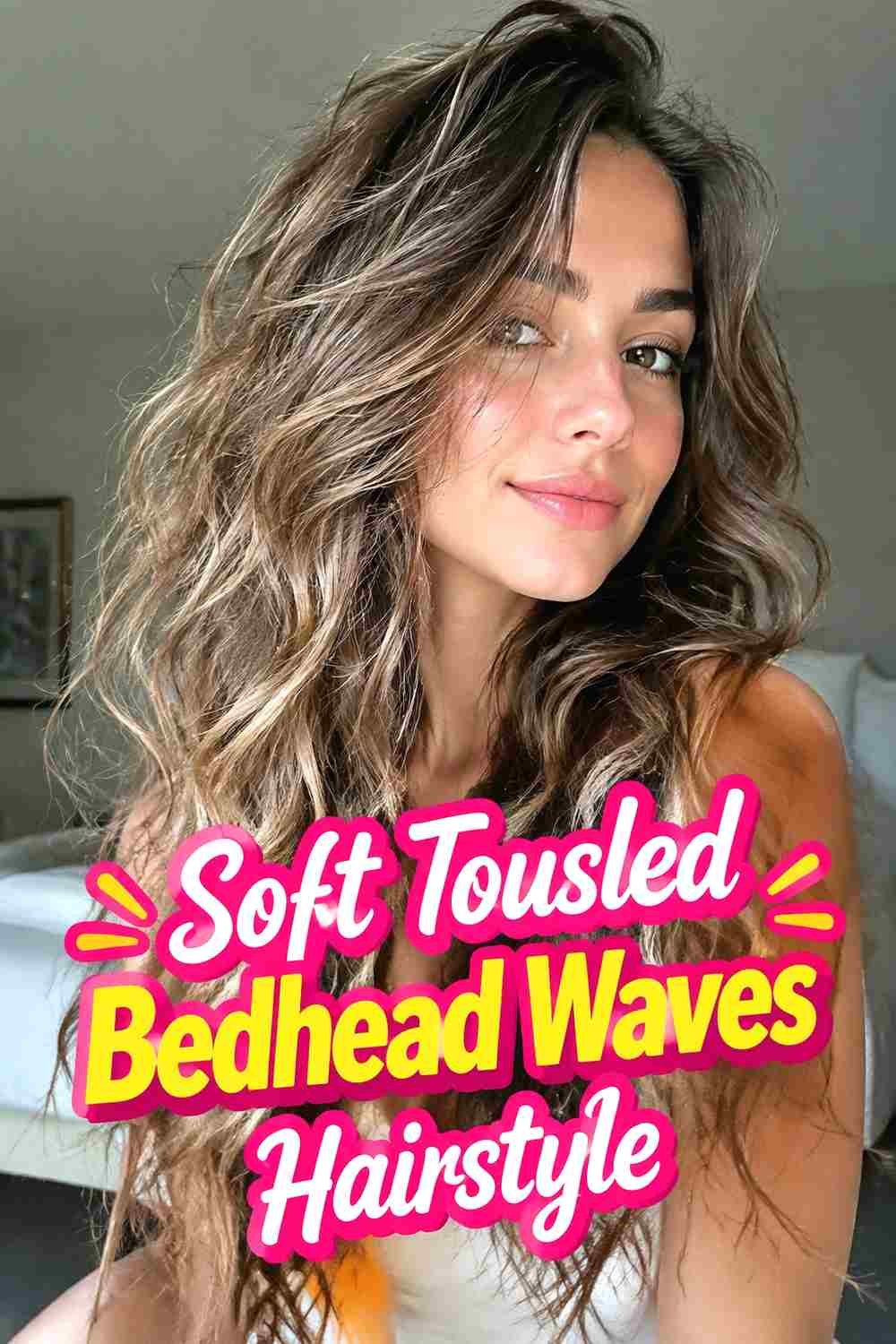
Soft Tousled Bedhead Waves are an easy entry point if you like undone texture but do not want the hair to look overly messy. The waves stay broad and loose, with slightly irregular bends through the mid-lengths and softly separated ends. Rather than creating identical curls, varying the direction and size of each section gives the style its relaxed character. The crown can remain fairly smooth while the volume gradually increases below the cheekbones, making the finished shape wearable for everyday outfits as well as casual evenings. A small amount of lightweight finishing product can control excess fuzz while still allowing individual strands and natural movement to remain visible.
Styling Notes
Use a medium or large curling tool and alternate the direction of several sections. Leave the ends slightly straighter so the result feels less set.
Why It Works
The mix of polished surface texture and irregular wave placement creates an intentionally undone finish without making the hair appear neglected.
2. Messy Center Part Bedhead Waves Hairstyle
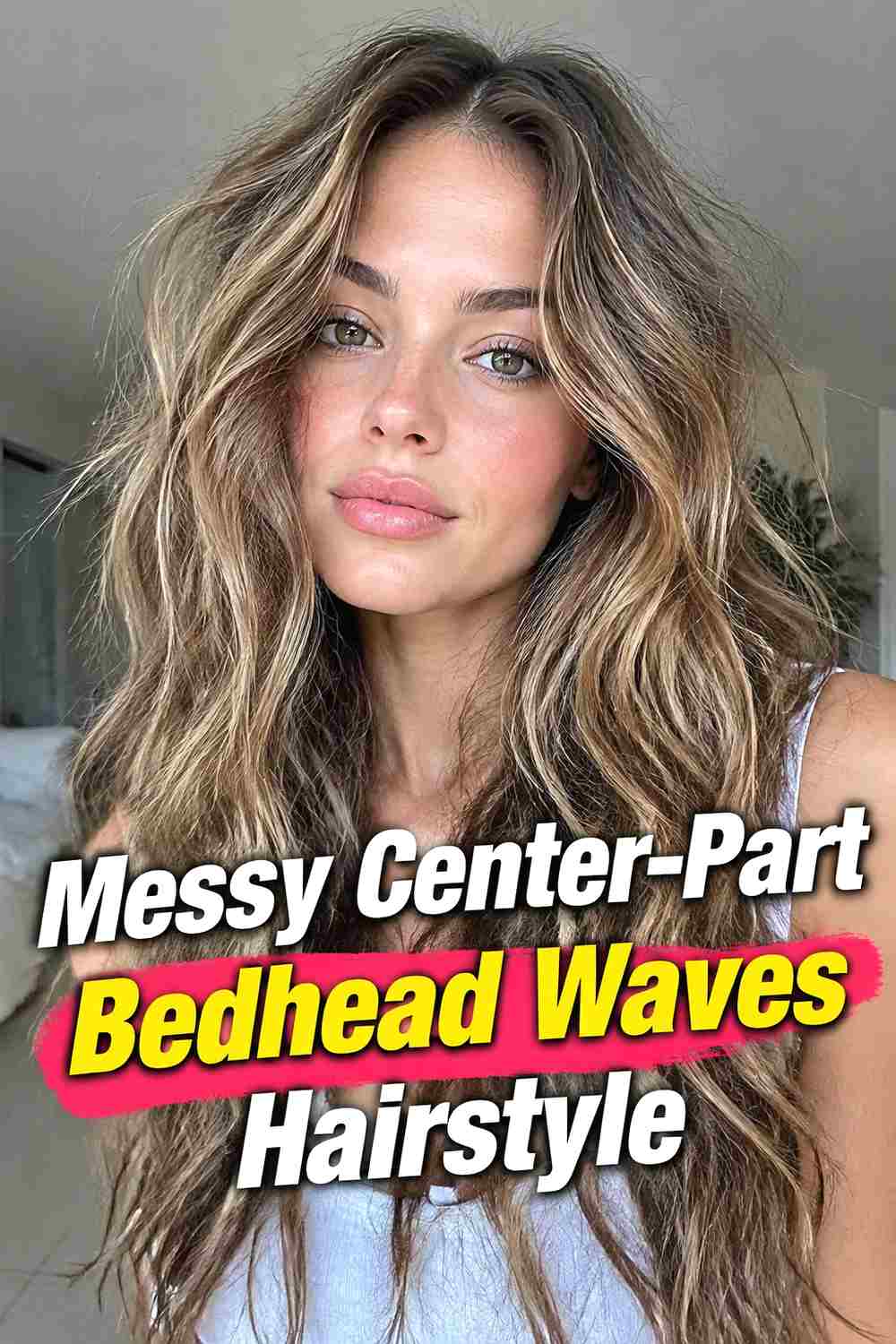
Messy Center-Part Bedhead Waves balance the relaxed texture of bedhead styling with the symmetry of a clean middle part. The roots stay fairly natural, while loose bends begin around eye or cheek level and become more noticeable through the ends. Because the part divides the hair evenly, slightly mismatched waves on each side actually make the finished style more interesting. Long or medium layers can add extra airiness around the face and stop the lower lengths from looking heavy. This is a useful everyday variation if you want texture without a dramatic silhouette. Instead of brushing everything smooth, gently separate the waves with your fingers to preserve the irregular, lived-in shape.
Best For
This look works well for medium to long hair and suits casual daily styling, relaxed dinners, travel days, or low-key social plans.
Pro Tip
Avoid making the center part too rigid. A few naturally displaced strands near the part line help reinforce the effortless finish.
3. Deep Side Part Bedhead Waves Hairstyle
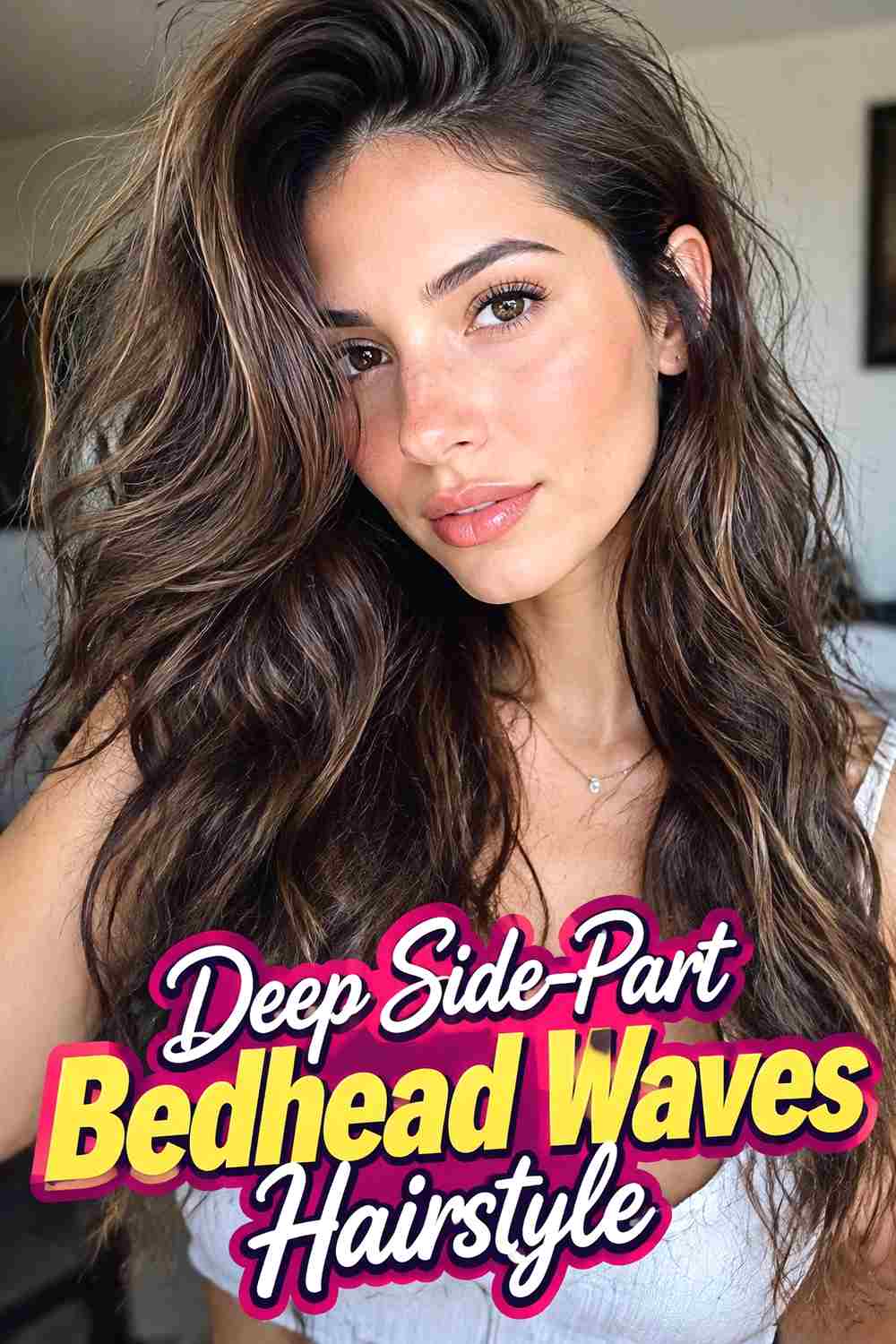
A deep side part gives bedhead waves a little more attitude by shifting most of the volume toward one side. The heavier section can fall loosely across the forehead or sweep away from the face, while the lighter side stays closer to the head. The contrast creates a fuller silhouette without requiring uniform curls or formal styling. Loose bends through the mid-lengths keep the look casual, and slightly piecey ends prevent the volume from becoming too glamorous. This variation works especially well on layered medium or long hair because the shorter pieces can fall naturally around the cheekbones. Keep the texture soft rather than highly sculpted so the side part remains relaxed.
Styling Notes
Start the wave pattern at different heights instead of curling every section from the same point. This creates more believable, irregular movement.
Wear & Maintenance
If the heavy side keeps falling forward, a tiny amount of flexible-hold spray near the roots can help maintain the part without making it stiff.
4. Air Dried Bedhead Waves Hairstyle
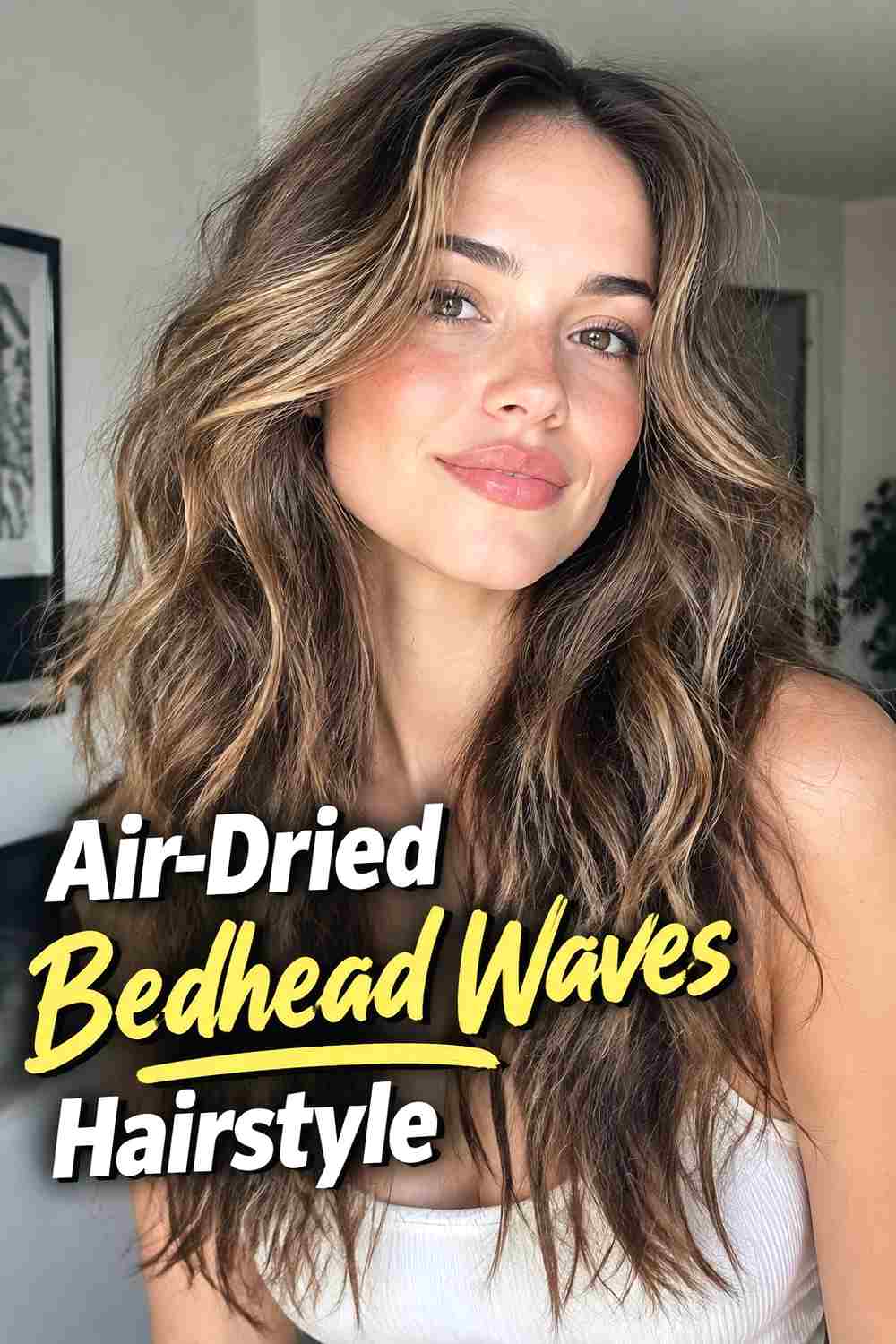
Air-Dried Bedhead Waves lean into natural texture rather than trying to perfect every section. The ideal finish has uneven bends, soft frizz, visible strand variation, and enough definition to show movement without forming identical curls. If your hair already dries with a slight wave, this style can emphasize that pattern instead of replacing it. Scrunching damp hair and allowing it to dry with minimal handling can create a softer, more organic shape than heat styling alone. The ends may remain slightly straighter or bend in different directions, which is part of the appeal. This version feels especially believable when the crown has natural lift rather than a highly polished blowout finish.
Hair Type & Length
Naturally wavy or loosely textured hair is the easiest match, though straighter hair may need some added bends once fully dry.
Pro Tip
Avoid repeatedly touching the hair while it dries. Too much handling can disturb the forming wave pattern and increase unwanted frizz.
5. Piecey Textured Bedhead Waves Hairstyle

Piecey Textured Bedhead Waves focus on separation rather than one continuous wave pattern. Small groups of strands form visible bends, creating definition through the lengths while leaving enough space between pieces for the hairstyle to feel airy. The effect can work particularly well on layered cuts because different lengths naturally break up the silhouette. Unlike glossy glamour waves, this style does not need every section to blend into the next. Instead, the texture should look slightly fragmented and deliberately casual. A light styling paste or dry texture product can help emphasize selected pieces, but using too much may make the ends look heavy. Keep the crown relatively soft so the texture remains balanced.
Styling Notes
Once the waves cool, separate them gently with your fingertips instead of brushing everything together. Twist a few individual pieces to restore definition where needed.
Best For
Choose this version if you like visible texture, layered haircuts, and a more editorial interpretation of everyday undone waves.
6. Voluminous Root Lift Bedhead Waves Hairstyle
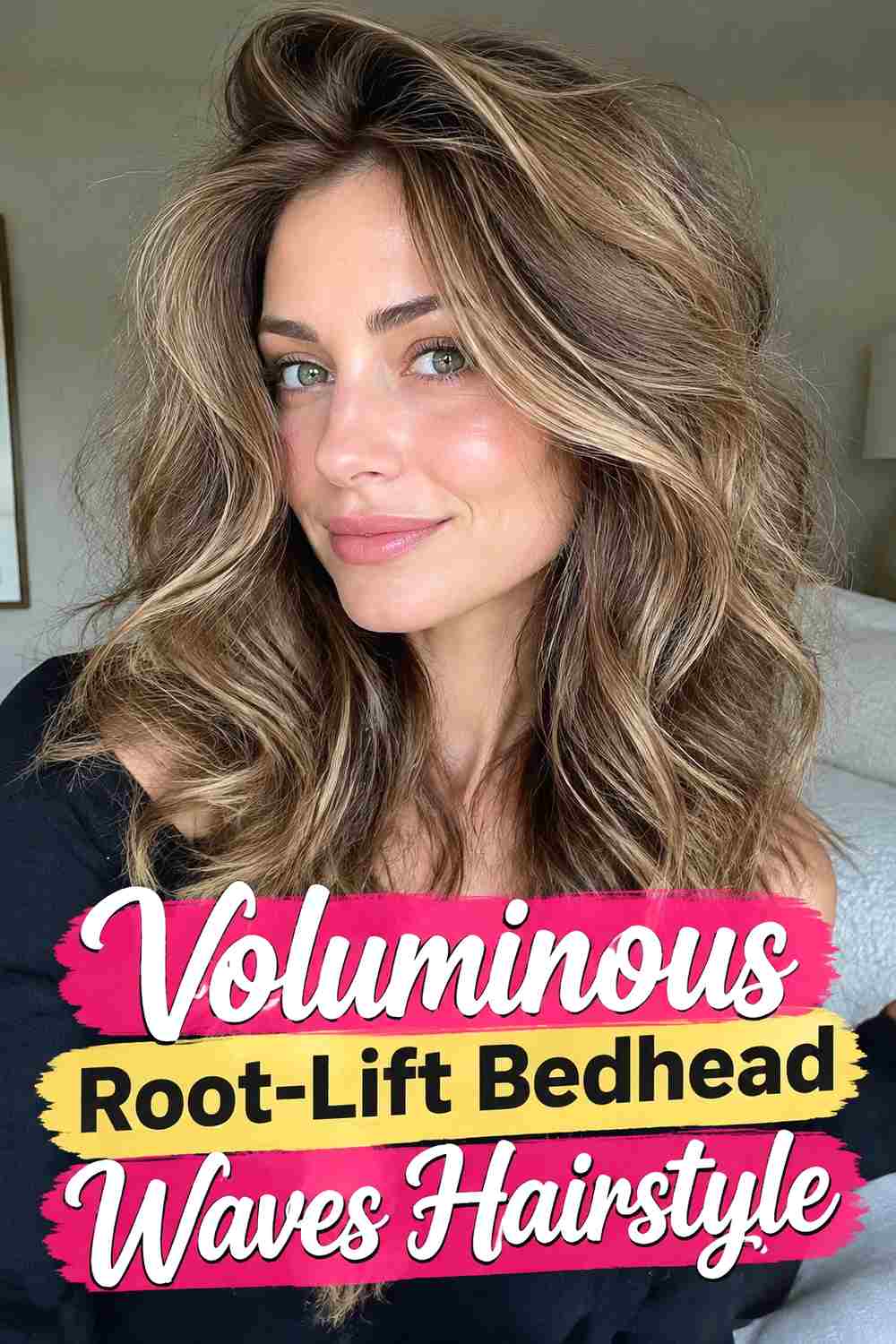
Voluminous Root-Lift Bedhead Waves create fullness from the crown downward rather than concentrating all the movement at the ends. The roots have noticeable lift, but the texture remains soft and irregular so the hairstyle does not turn into a formal blowout. Large loose bends through the lengths help connect the elevated crown with the rest of the hair. This can be especially useful for long hair that tends to lie flat at the scalp while becoming fuller toward the bottom. The best finish has movement rather than heavy backcombing. A slightly imperfect part and a few flyaways also keep the extra volume believable and consistent with the bedhead aesthetic.
Styling Notes
Build root lift during drying with a round brush, clips, or large rollers before adding waves through the lengths.
Why It Works
Adding volume at the crown creates a fuller overall silhouette while the irregular wave pattern prevents the hairstyle from looking too polished.
7. Long Layered Bedhead Waves Hairstyle
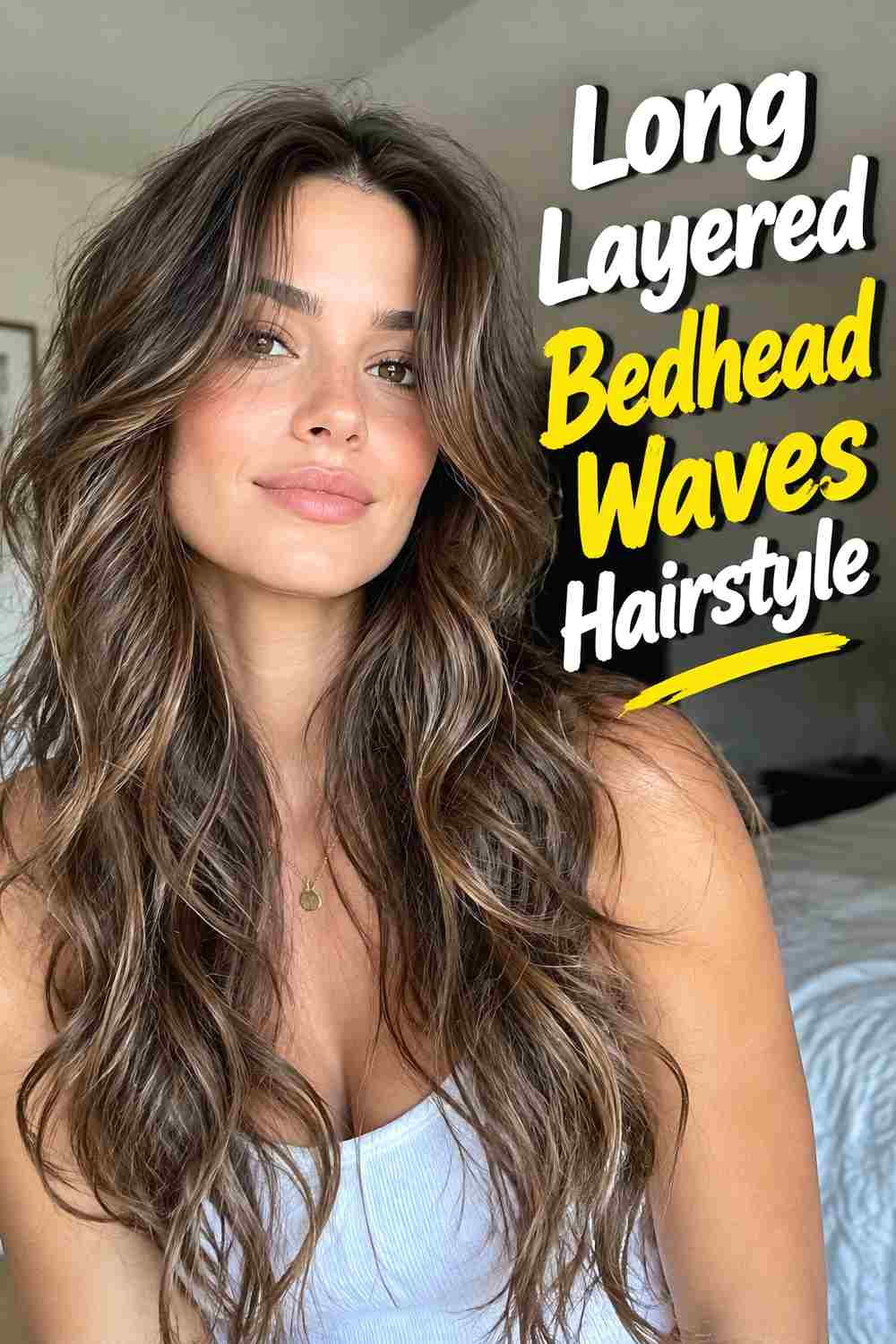
Long Layered Bedhead Waves use different hair lengths to create natural movement from the face all the way to the ends. The shorter layers pick up soft bends around the cheekbones and shoulders, while longer sections form looser waves farther down. This difference in movement keeps very long hair from looking like one heavy curtain. The style is particularly effective when the curls are only partially broken apart, leaving some pieces more defined than others. A little natural frizz or separation through the ends can actually make the finish more convincing. Instead of aiming for maximum volume everywhere, let the layers create pockets of fullness and softness throughout the silhouette.
Hair Type & Length
This style is particularly well suited to long hair with visible layering, especially when the hair has enough density to show movement at several levels.
Pro Tip
Use slightly different curl sizes throughout the hair rather than repeating one barrel size or section width from top to bottom.
8. Shoulder Length Bedhead Waves Hairstyle
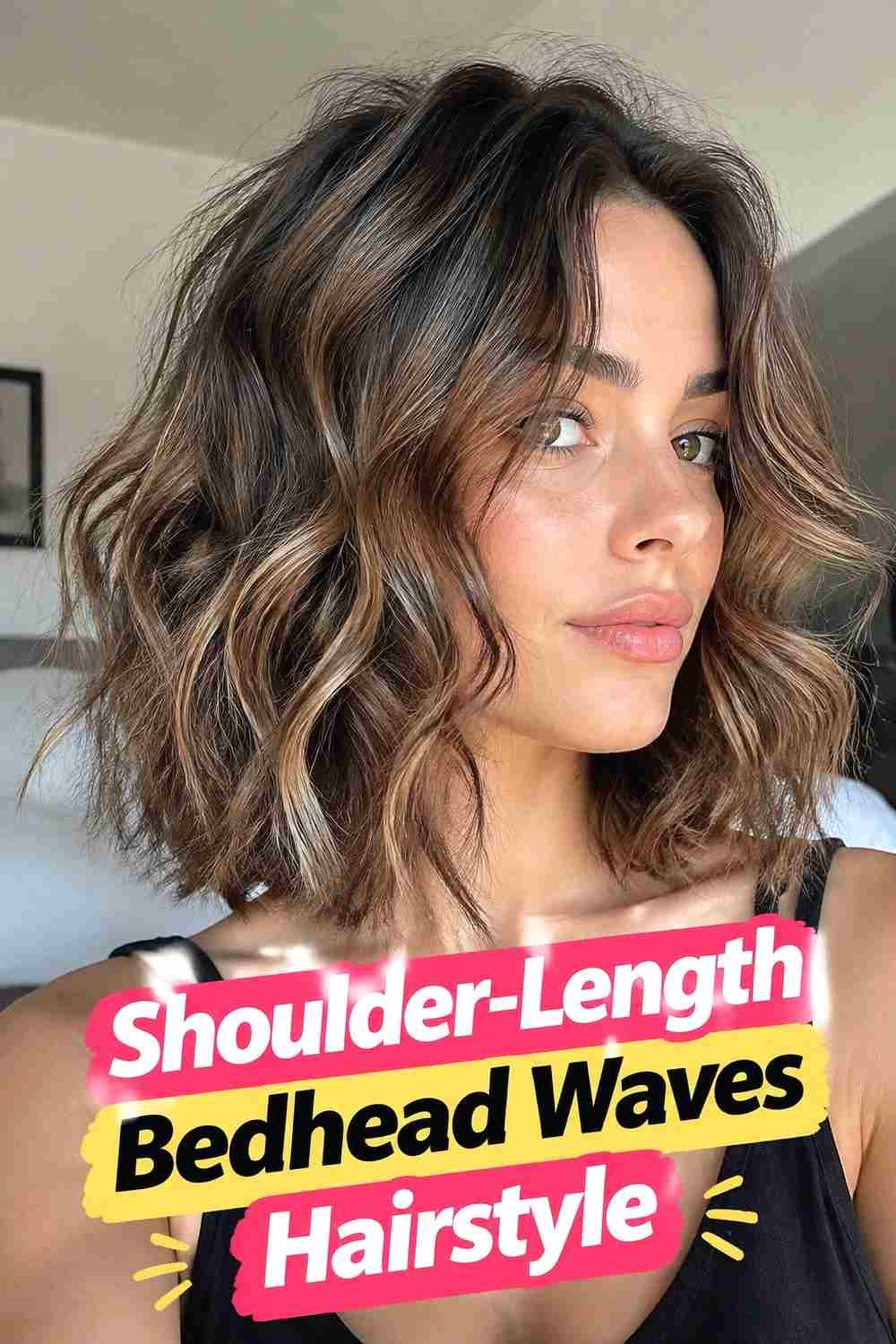
Shoulder-Length Bedhead Waves have a naturally bouncy shape because the ends sit close to the shoulders and are not weighed down by extra length. Loose bends can begin near the temples or cheekbones and become more pronounced toward the perimeter, creating a casual, slightly expanded silhouette. A lob, grown-out bob, or collarbone cut can all work well with this texture. Keeping the ends somewhat irregular is important; curling them into identical shapes can make the style look too deliberate. The shorter length also means you may need less product than you would on long hair. A light touch helps the waves retain movement and keeps the overall effect soft.
Styling Notes
Use moderate-size sections and avoid curling every piece in exactly the same direction. Gently shake out the waves once they have cooled.
Wear & Maintenance
If the ends start expanding too much during the day, smooth only the outer surface instead of flattening the entire hairstyle.
9. Bedhead Waves With Curtain Bangs Hairstyle
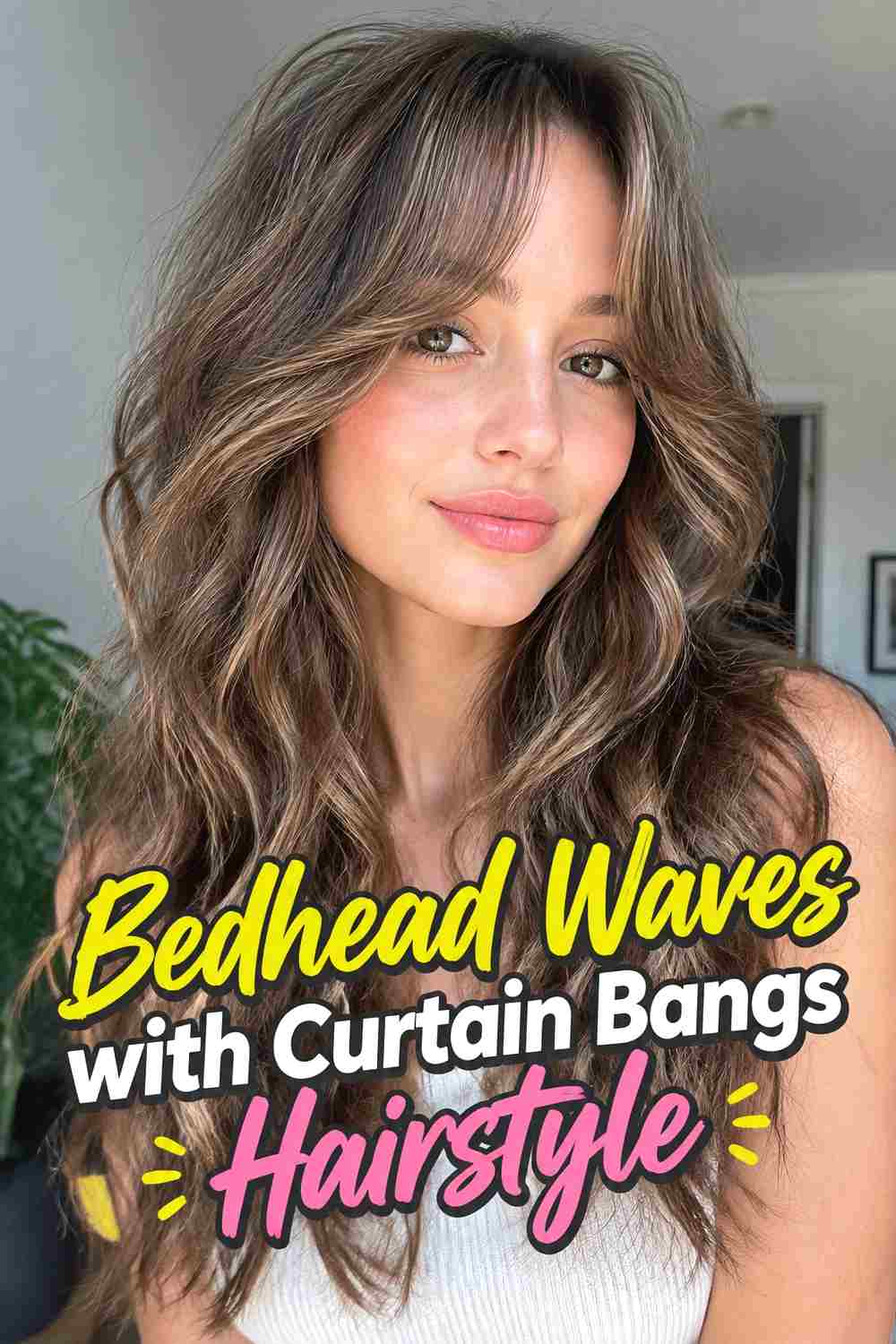
Bedhead Waves with Curtain Bangs combine loose, lived-in texture with a soft fringe that opens around the face. The bangs should curve gently away from the center rather than forming a perfectly rounded blowout shape. From there, they can blend into irregular waves around the cheekbones and longer bends through the rest of the hair. This pairing works especially well because curtain bangs already have a relaxed, separated quality that suits undone styling. Keeping a little lift at the roots prevents the fringe from looking flat against the forehead. The overall effect is flattering and casual, with enough face-framing structure to keep the deliberately messy lengths from feeling shapeless.
Styling Notes
Shape the bangs with a round brush or large roller, then loosen them with your fingers so the curve looks soft rather than overly controlled.
Best For
This option is a natural fit for layered medium or long cuts with existing curtain bangs or a longer center-split fringe.
10. Bedhead Waves With Face Framing Layers Hairstyle
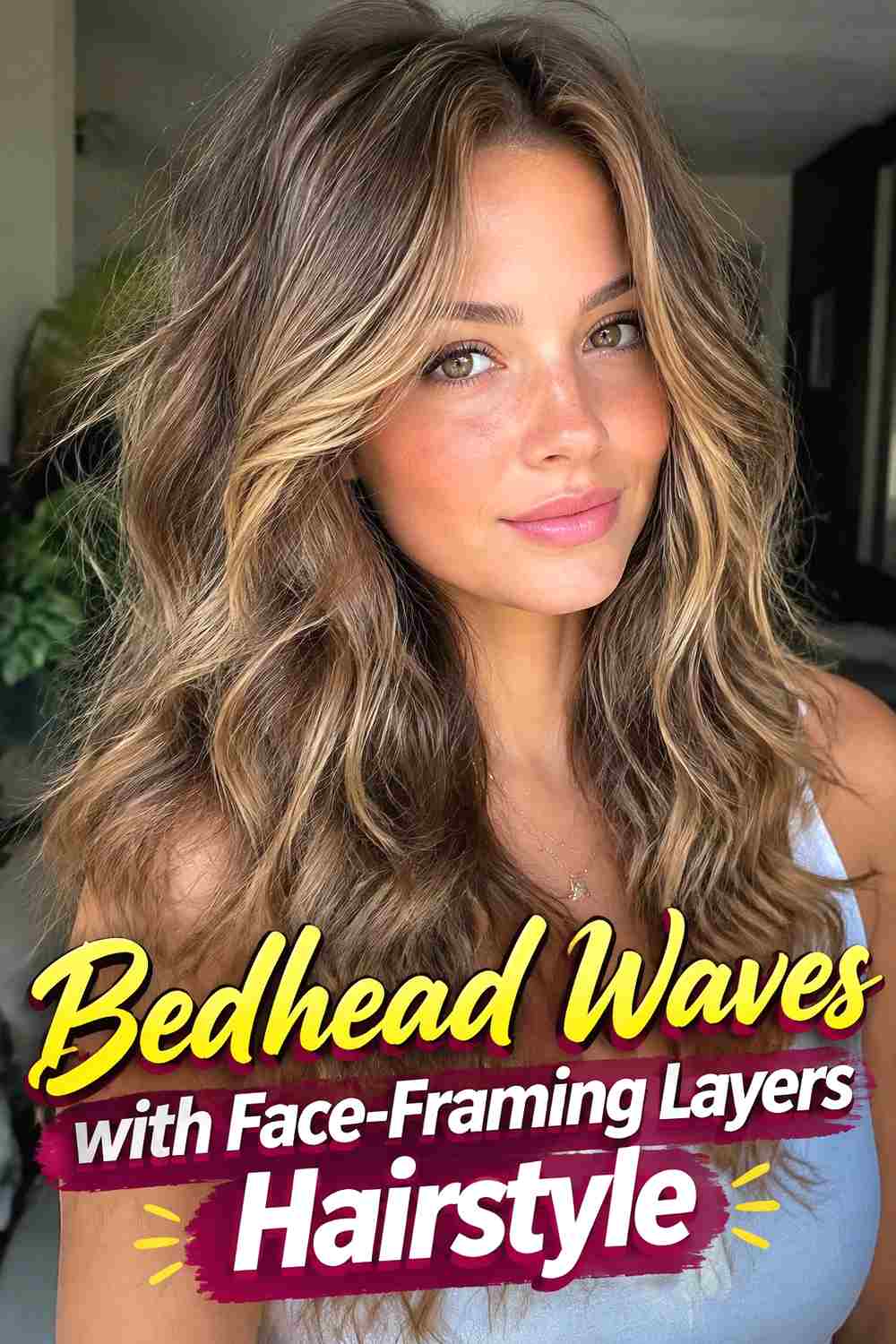
Bedhead Waves with Face-Framing Layers place extra movement around the front while keeping the remaining lengths loose and irregular. Shorter pieces can bend away from the cheekbones, jaw, and collarbone, creating an open shape around the face without requiring a highly polished finish. The longer hair can then alternate between softer bends and slightly straighter sections, which keeps the texture believable. This variation is especially helpful if you like undone hair but still want some visible structure near the front. The face-framing pieces provide that definition while allowing the back and ends to stay relaxed. Avoid making every layer curl identically, since variation is what gives the style its bedhead character.
Hair Type & Length
Medium to long layered cuts provide enough length variation for the front pieces to stand out clearly against the rest of the waves.
Pro Tip
Style the front layers first, then keep the waves behind them slightly looser so the face-framing movement remains the focal point.
11. Matte Textured Bedhead Waves Hairstyle
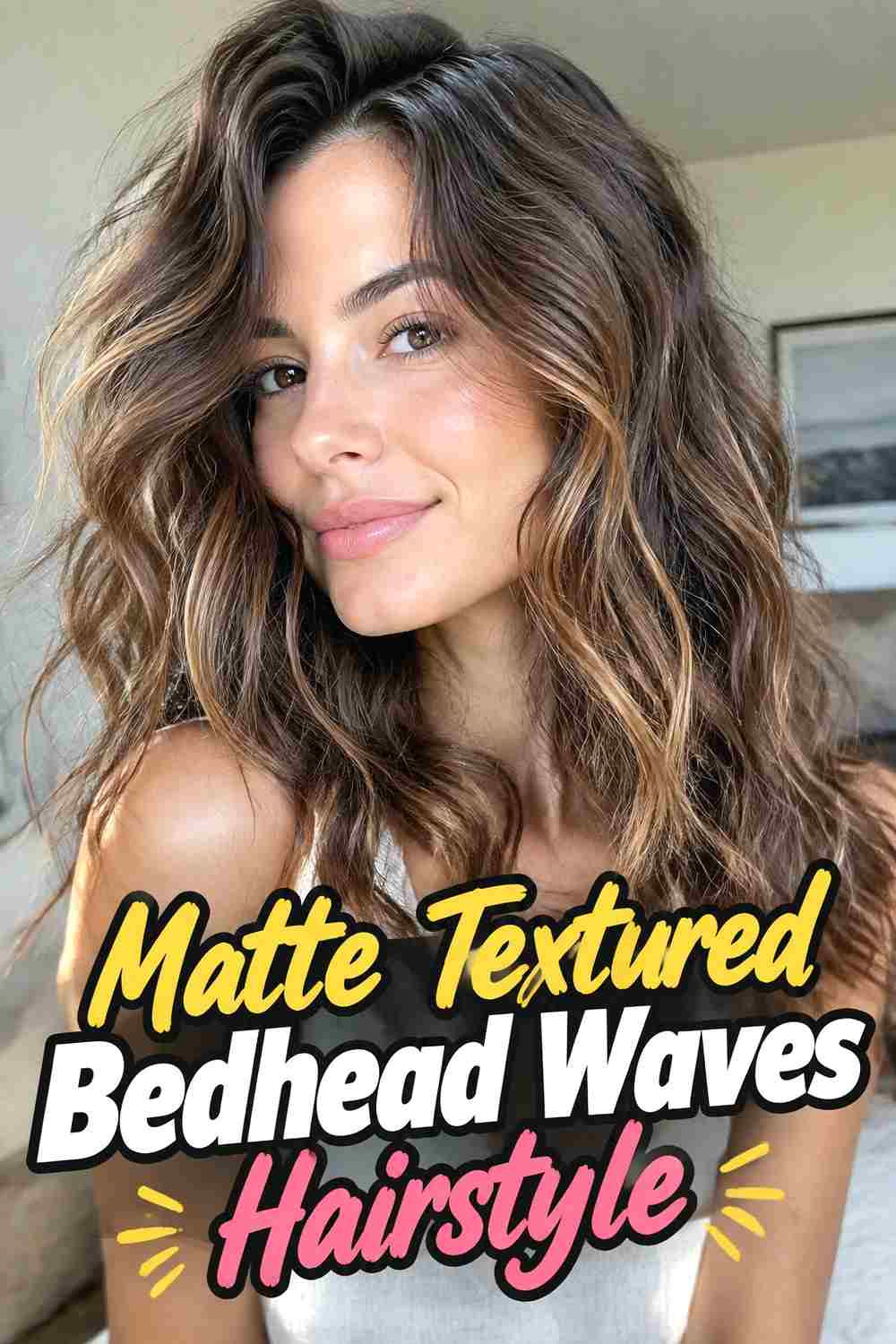
Matte Textured Bedhead Waves emphasize grip, separation, and airy volume instead of a glossy finish. The surface should still look healthy and realistic, but the individual bends appear more defined because the hair is not coated in heavy shine. This gives the style a slightly editorial, cool-girl quality that works especially well with layered cuts and naturally textured hair. The waves can be uneven, with some sections barely bent and others showing a stronger curve. A dry texture product can add lift and separation, particularly around the roots and mid-lengths. The key is moderation: too much powder or spray can make the strands look dusty or stiff rather than naturally tousled.
Styling Notes
Apply dry texture product gradually and concentrate it where you want lift or separation rather than coating the entire head at once.
Why It Works
The lower-shine finish makes individual pieces more visible, giving the waves a rougher, more casual character than sleek or glossy variations.
12. Glossy Lived In Bedhead Waves Hairstyle
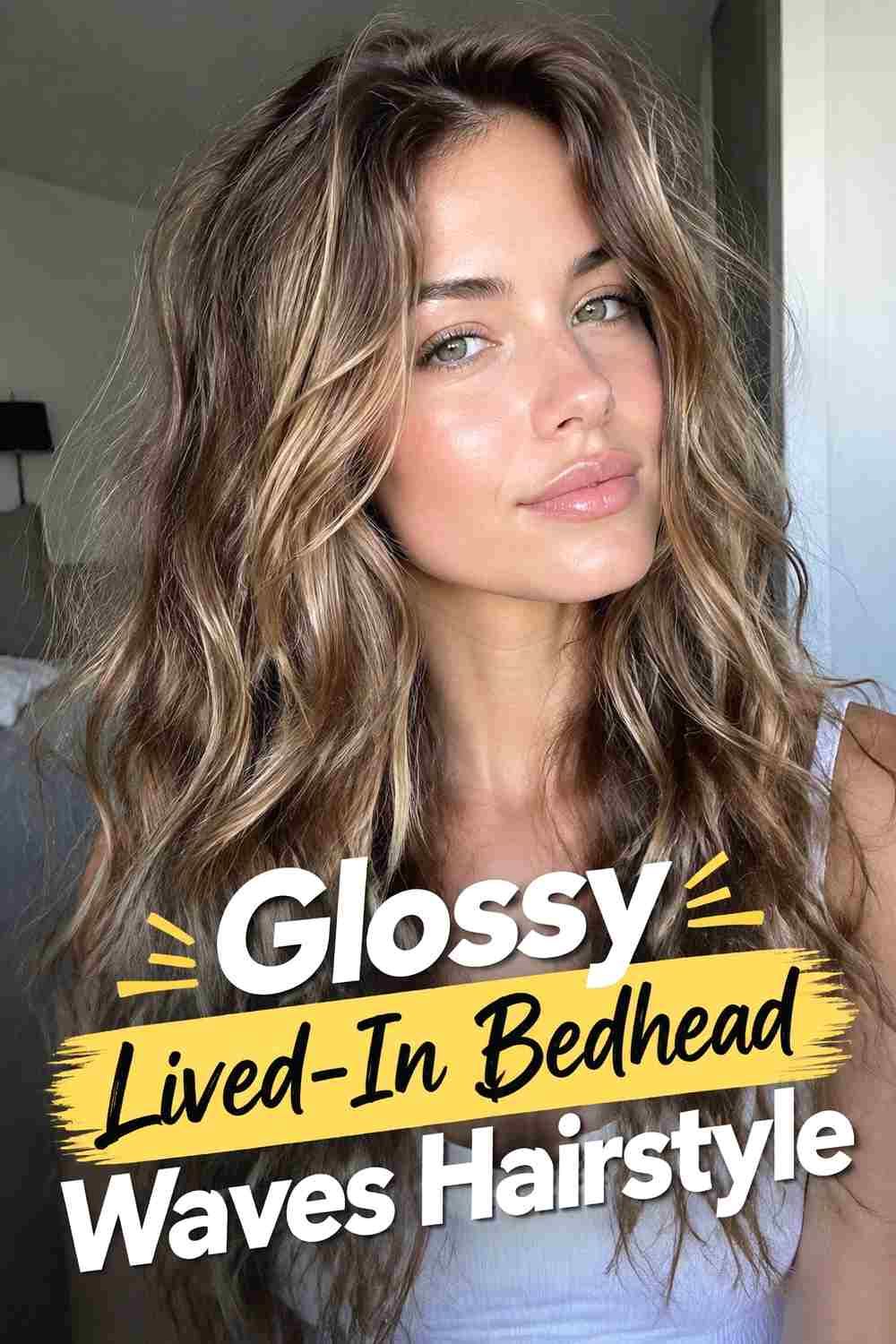
Glossy Lived-In Bedhead Waves prove that undone texture does not have to look dry or matte. The hair keeps loose, irregular bends and slightly separated ends, but the surface has a smooth, reflective finish that makes the style feel more polished. This balance works well when you want relaxed movement for an evening look without switching to structured glamour waves. The trick is keeping the wave pattern inconsistent even while the strands look smooth. Some sections can curve strongly, while others stay almost straight near the ends. A tiny amount of lightweight serum can enhance shine, but concentrate it away from the roots so the crown remains airy instead of becoming flat or oily.
Styling Notes
Create the waves first, loosen them completely, and add shine only after the desired texture is established.
Best For
This version works particularly well for dinners, casual events, date nights, or any occasion where you want bedhead texture with a cleaner finish.
13. Loose Beachy Bedhead Waves Hairstyle
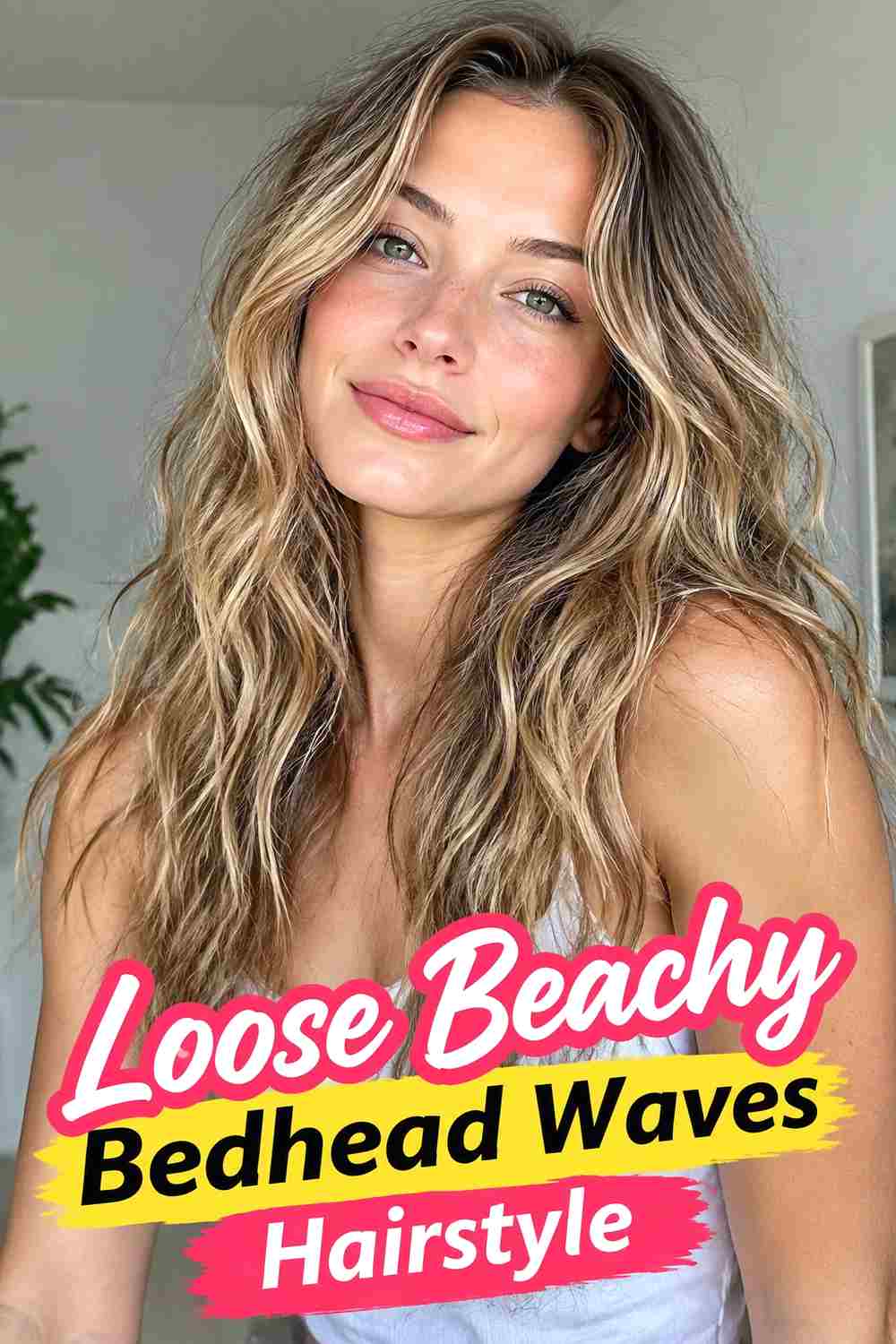
Loose Beachy Bedhead Waves combine the relaxed character of salt-air texture with the irregular shape of slept-in waves. The movement is concentrated mostly through the mid-lengths, while the roots remain natural and the ends can stay partially straight. Alternating curl directions helps keep the bends from joining into a polished wave pattern. The finished texture should look light and mobile rather than stiff or crunchy. This style works beautifully with long layers because the shorter pieces can create extra movement around the face and shoulders. For a believable finish, leave a few strands noticeably softer than the rest instead of trying to give every section the same amount of wave.
Styling Notes
Leave the last inch or two of each section outside the curling tool for straighter, more casual ends.
Wear & Maintenance
Refresh flattened areas selectively rather than restyling the whole head. A few newly bent pieces are often enough to restore the overall shape.
14. Tucked Side Bedhead Waves Hairstyle
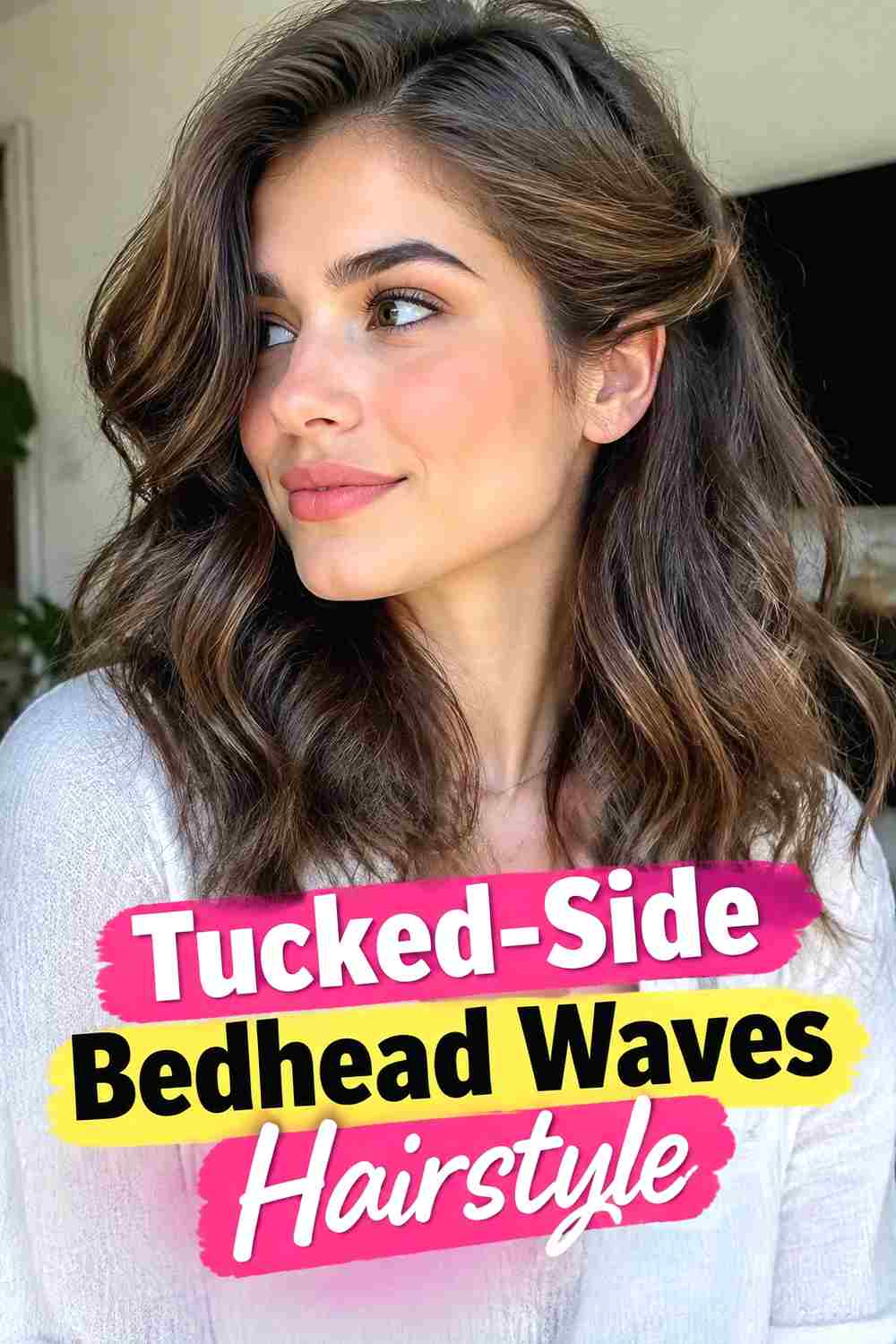
Tucked-Side Bedhead Waves add one clean detail to an otherwise relaxed hairstyle. The hair remains loose, textured, and slightly imperfect throughout, but one front section is placed behind the ear to open the face and create subtle asymmetry. This works especially well with a side or off-center part, where the opposite side can stay fuller and fall naturally around the cheekbone. The tuck does not need to be tight; a few escaping strands actually suit the bedhead finish. This variation can make casual waves feel a little more intentional without turning them into formal styling. It is also practical when you want to keep hair away from one side of your face.
Styling Notes
Finish the waves before creating the tuck so you do not accidentally flatten the rest of the texture while working around the front.
Wear & Maintenance
Use a discreet pin behind the ear if needed, but keep the tension low so the hairstyle retains its relaxed shape.
How to Choose the Right Look
Start with the natural behavior of your hair. If you already have some wave or irregular texture, Air-Dried Bedhead Waves Hairstyle or Loose Beachy Bedhead Waves Hairstyle can work with that movement rather than covering it. Straighter hair may be easier to shape with a curling tool before loosening the finished bends.
Consider your length and layers next. Shoulder-length cuts usually create a bouncier silhouette, while long layered hair can support softer, cascading texture. Face-framing layers and curtain bangs are useful when you want the front of the hairstyle to look more intentional.
Your preferred finish makes another big difference. Matte texture creates stronger separation and a more casual feel, while glossy lived-in waves keep the same irregular shape with a smoother surface. Piecey waves sit somewhere between the two.
For volume, choose root-lift waves if your hair tends to fall flat. If you already have plenty of density, a center part or long layered version can distribute that fullness more evenly.
Finally, think about styling time and hold. Bedhead waves do not need every section to be perfect, making them relatively forgiving, but they still look best when texture is intentional. Use just enough product to preserve movement, and avoid turning a relaxed hairstyle into a stiff set of curls.
Final Thoughts
Bedhead waves work because they leave room for imperfection. Uneven bends, soft separation, slightly straighter ends, and natural root movement can all make the finished style look more convincing than perfectly matched curls.
Choose a version that complements your existing haircut and texture. Go airy and matte for a casual finish, glossy for a slightly dressier look, or add bangs, layers, root volume, or a side tuck when you want more structure without losing the relaxed mood.
FAQs
1. What makes bedhead waves different from regular waves?
Bedhead waves are intentionally less uniform. They usually combine loose bends, irregular curl directions, separated pieces, and a relaxed finish rather than one consistent wave pattern.
2. Can naturally straight hair create bedhead waves?
Yes. Add loose bends with a curling iron or wand, vary the section sizes, and leave some ends straighter. Loosening the finished texture is important for avoiding a formal curled look.
3. Should bedhead waves look frizzy?
A small amount of natural flyaway texture can suit the style, but excessive frizz can hide the wave pattern. The goal is soft imperfection rather than uncontrolled texture.
4. Are bedhead waves better with layers?
Layers can make the style more dimensional because different lengths create movement at several levels, but one-length hair can also wear bedhead waves with looser bends and separated ends.
5. How do I keep bedhead waves from looking too styled?
Vary the curl direction, leave some sections softer than others, avoid curling every piece from the same height, and loosen the waves with your fingers instead of shaping them into a uniform pattern.
Save your favorite bedhead wave ideas for your next styling day, and share this collection with anyone who loves relaxed, lived-in hair inspiration.