18 Low-Profile Back Braids With Chunky Aran Pullovers
Low-profile braids keep hair controlled behind the shoulders, letting chunky Aran cables and textured knit necklines stay visible without sacrificing polished detail.
Chunky Aran pullovers already bring plenty of dimension through cables, raised stitches, and substantial yarn, so a flatter back braid can create welcome balance. Instead of building extra width around the shoulders, these styles direct the hair down the center or lower back in a compact, controlled line.
The best braid depends on your hair length, density, texture, and sweater neckline. Close French and Dutch braids keep upper sections secure, while low fishtails and three-strand braids are easier when you want a softer finish. Pay particular attention to where the braid begins: a low-profile style should sit comfortably against the back without forming a bulky ridge behind a thick collar.
Quick List
- Flat French Back Braid Hairstyle
- Low Dutch Back Braid Hairstyle
- Slim Fishtail Back Braid Hairstyle
- Tucked End Back Braid Hairstyle
- Soft Center Line Braid Hairstyle
- Low Rope Twist Braid Hairstyle
- Double Slim Back Braids Hairstyle
- Side Feed Low Back Braid Hairstyle
- Hidden Elastic Back Braid Hairstyle
- Low Braided Ponytail Hairstyle
- Compact Four Strand Back Braid Hairstyle
- Nape Start Fishtail Braid Hairstyle
- Smooth Three Strand Back Braid Hairstyle
- Twisted Crown Back Braid Hairstyle
- Soft Textured Nape Braid Hairstyle
- Wrapped Base Back Braid Hairstyle
- Curly Low Back Braid Hairstyle
- Sleek Tapered Back Braid Hairstyle
1. Flat French Back Braid Hairstyle
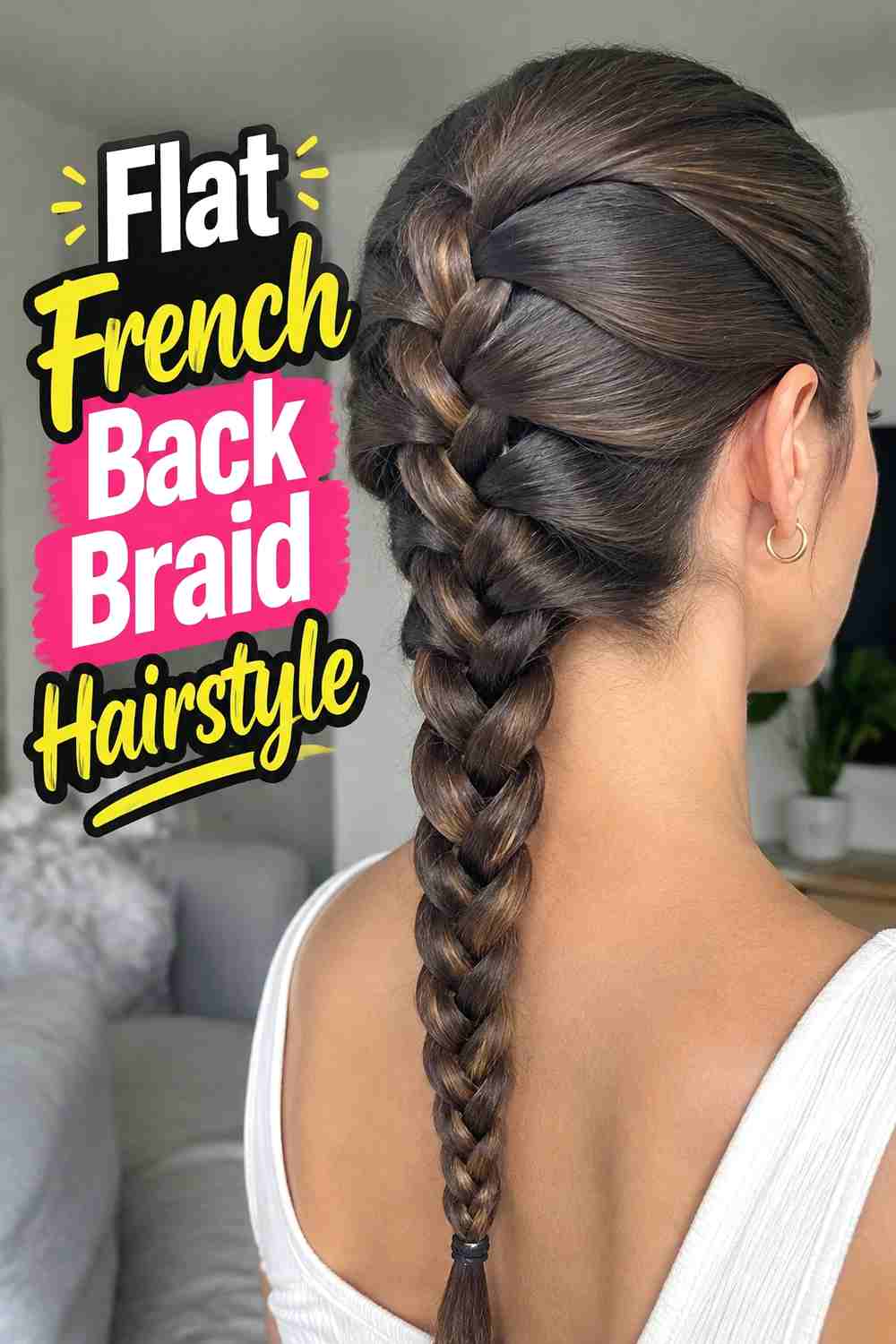
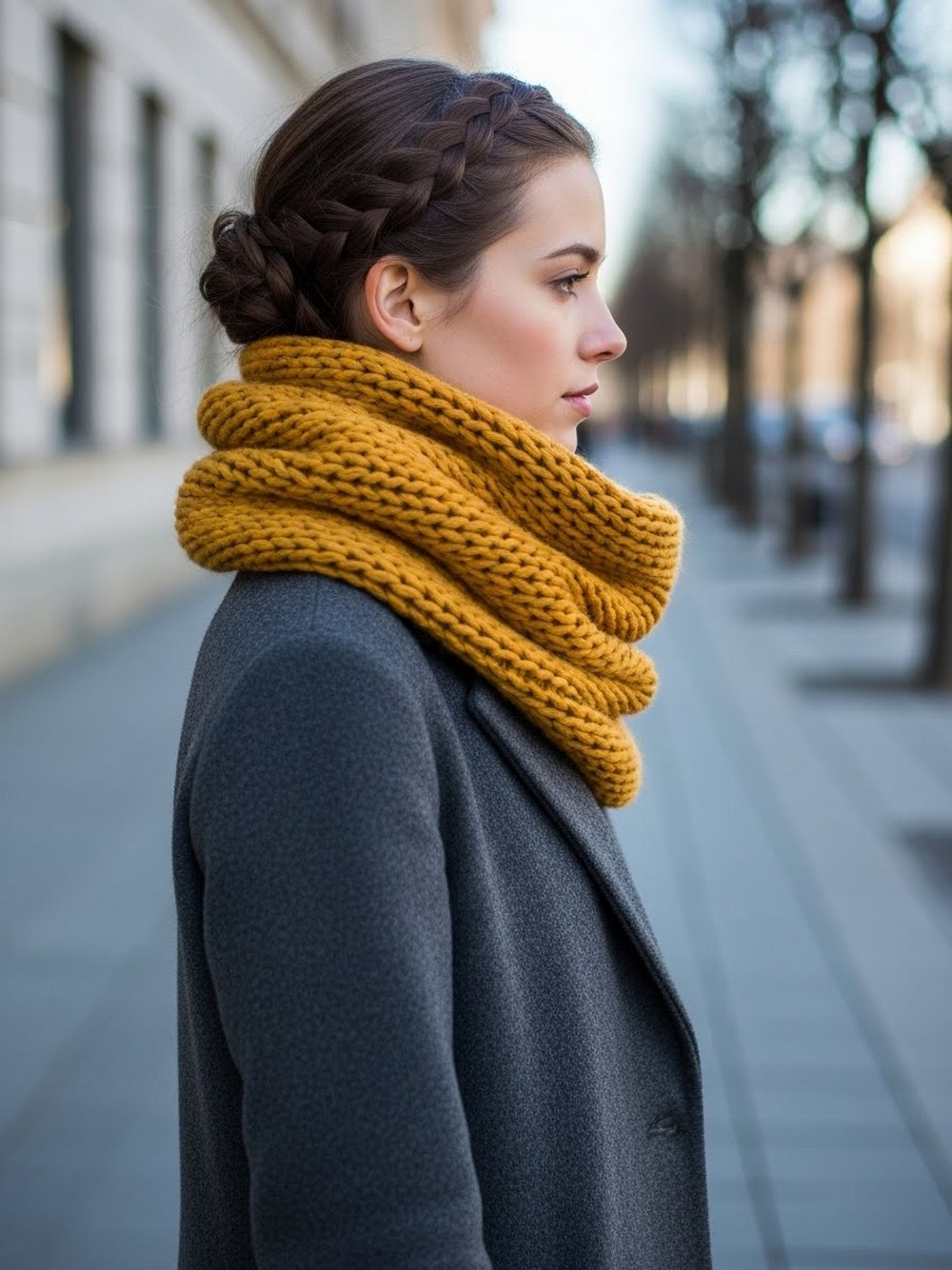
A flat French back braid keeps the hair close to the head from crown to nape, making it one of the easiest styles to wear with a thick Aran pullover. Add each section evenly and avoid aggressively pulling the braid apart afterward, since the flatter profile is what keeps the hairstyle from fighting with a substantial knit neckline. Once the braid reaches the nape, continue in a neat three-strand pattern down the back. The result feels polished but practical, with enough woven detail to stand out against simple winter outer layers. Medium to long hair works best, and a little natural crown softness can prevent the finished braid from appearing overly tight.
Styling Notes
Take moderately sized sections rather than very small ones. This keeps the French pattern visible without building a raised, overly intricate ridge down the head.
Best For
This is especially useful with high crewnecks and dense cable knits where loose hair would otherwise spread across the textured shoulders.
2. Low Dutch Back Braid Hairstyle
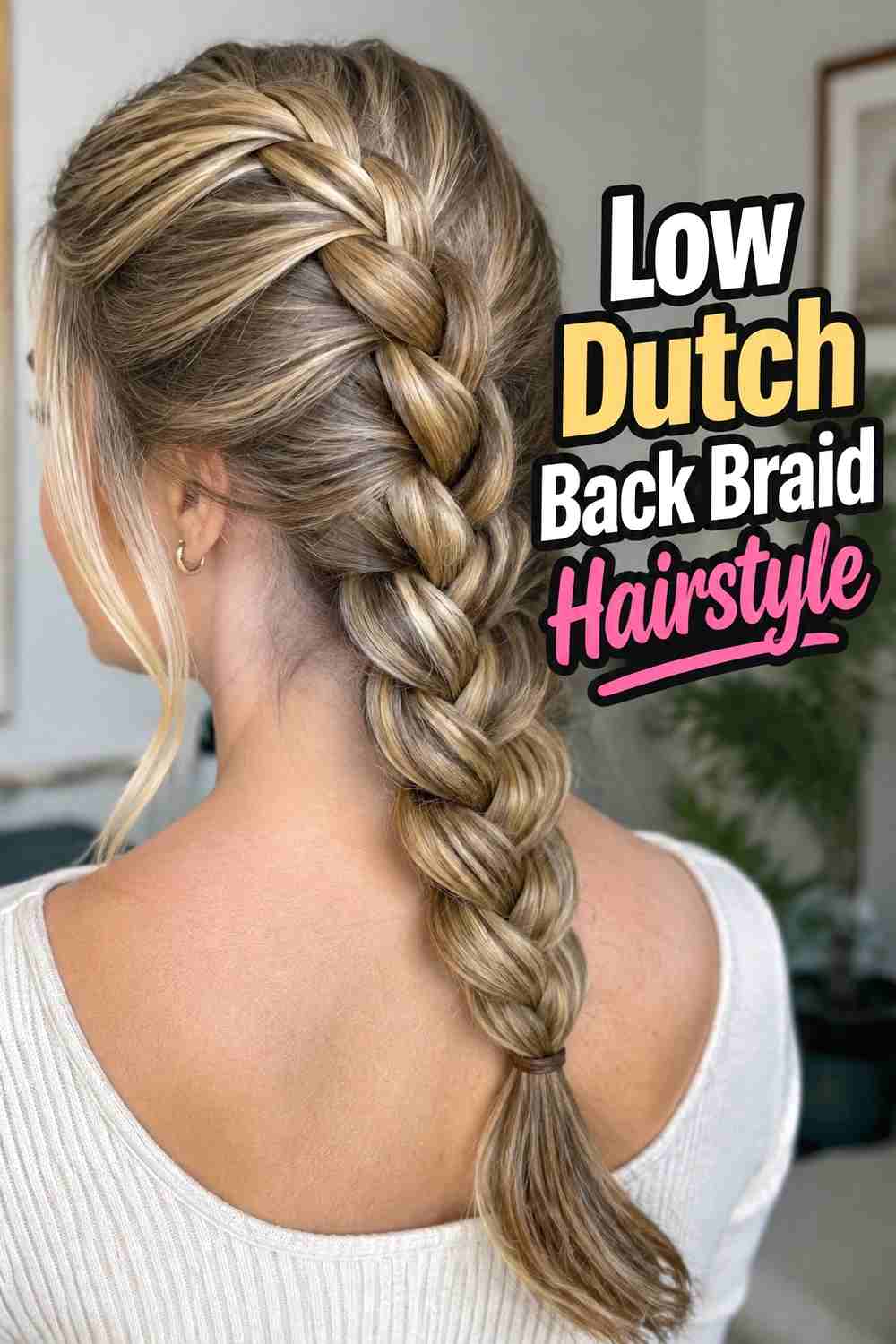
A low Dutch braid begins closer to the back of the head rather than high on the crown, keeping most of the upper hair smooth before the braid becomes visible. The underhand technique gives the braid definition, but the sections should remain compact instead of heavily pancaked. This creates enough texture to complement an Aran sweater without producing another oversized element near the neckline. Start incorporating hair around the middle back of the head and continue toward the nape before finishing the tail normally. The style works particularly well on long hair because the braid can continue below the pullover collar and remain visible without resting heavily across the upper shoulders.
Why It Works
The smooth crown keeps the sweater neckline uncluttered, while the defined lower braid adds a vertical detail that balances broad cable patterns.
Pro Tip
Loosen only the outermost edges near the tail if you want softness. Keeping the upper Dutch sections compact preserves the low-profile effect.
3. Slim Fishtail Back Braid Hairstyle
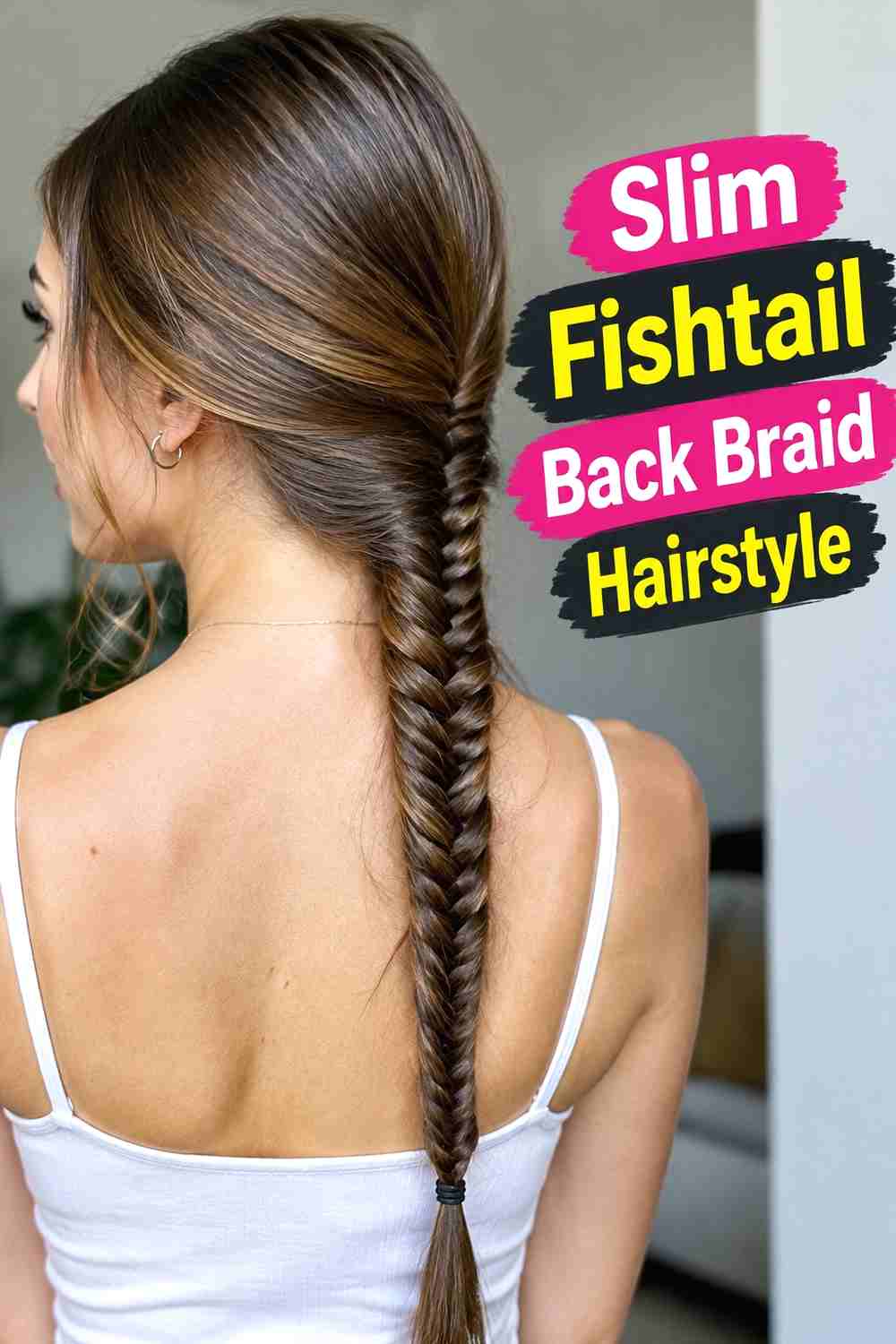
A slim fishtail braid gives long hair intricate texture without the width of a heavily expanded braid. Gather the hair low at the back, divide it into two sections, and work with narrow pieces to create a clean, detailed fishtail pattern. Keep the tension consistent so the braid remains narrow and elongated rather than becoming broad. This style looks especially good with chunky Aran pullovers because the fine hair texture contrasts with the sweater’s larger cable motifs. A low starting point also leaves the crown smooth and prevents the braid from pushing against the neckline. The finished tail can remain neat or be loosened very slightly for a softer winter look.
Hair Type & Length
Medium-to-long and long hair works best because extra length gives the fishtail pattern room to develop without needing to be widened.
Wear & Maintenance
Secure the end with a small elastic and avoid repeatedly pulling the braid forward over one shoulder, which can loosen the narrow structure unevenly.
4. Tucked End Back Braid Hairstyle
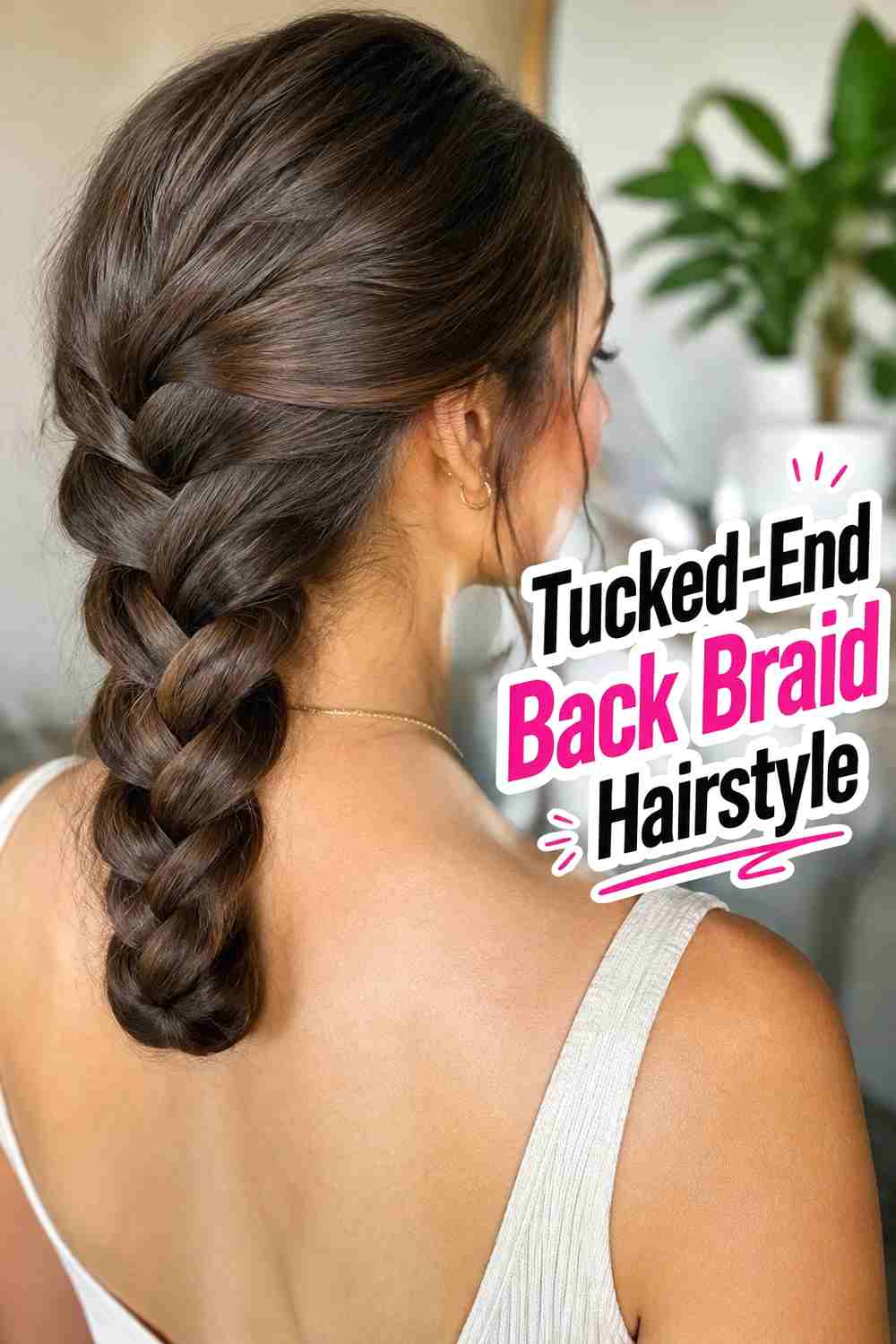
A tucked-end back braid keeps even the tail compact, making it particularly practical with substantial winter knitwear. Create a smooth three-strand or French braid down the back, then fold the final few inches underneath and pin them discreetly against the lower braid. The result looks shorter and cleaner than a traditional hanging braid while keeping all the lengths controlled. This works well with medium-long hair, especially when a very long braid tends to catch against the back of a sweater dress or pullover. Keep the tucked section flat instead of rolling it into a bulky bun. A clean crown and narrow braid give the style an understated finish that lets the sweater’s texture remain the main visual feature.
Styling Notes
Secure the braid with a small elastic before folding the tail inward. This prevents the woven pattern from loosening while you pin the ends.
Best For
Choose this style when you want maximum control and minimal movement against thick cable-knit fabric.
5. Soft Center Line Braid Hairstyle
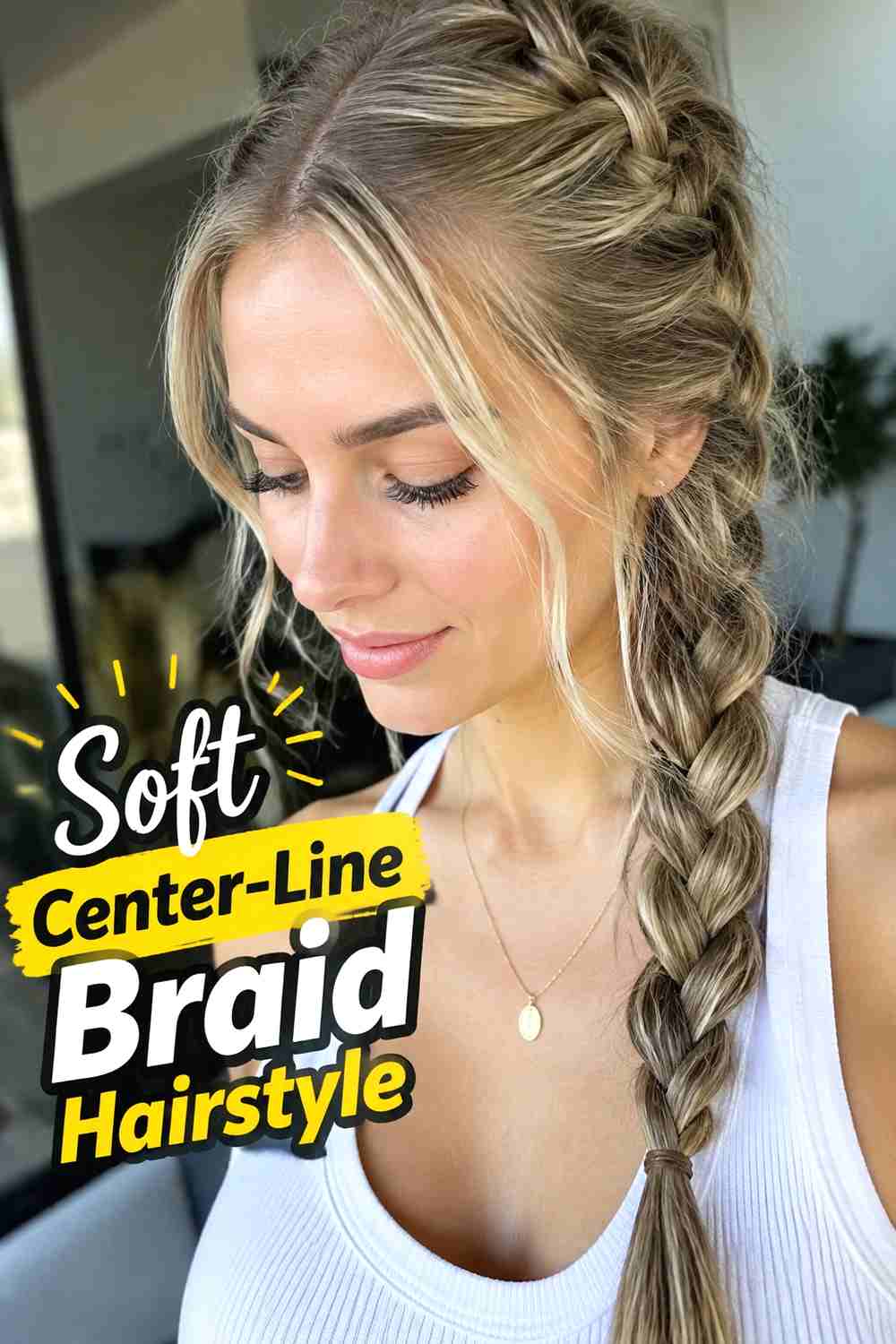
A soft center-line braid follows the middle of the back in a clean vertical path but avoids the severe finish of a tightly pulled style. Keep gentle lift through the crown, bring the sides smoothly inward, and begin the braid around the lower back of the head. A classic three-strand construction works well because it remains compact while still showing obvious texture. The straight central placement pairs naturally with symmetrical Aran cable patterns, creating a balanced winter silhouette without adding width around the shoulders. This hairstyle can work with straight, wavy, or lightly textured hair as long as the sections remain controlled. A few fine flyaways can keep the result soft and wearable.
Why It Works
Both the braid and sweater pattern use vertical lines, helping the overall outfit feel cohesive while keeping the hair visually narrow.
Pro Tip
Preserve a little crown volume before braiding instead of pulling the sides tightly enough to flatten the top completely.
6. Low Rope Twist Braid Hairstyle
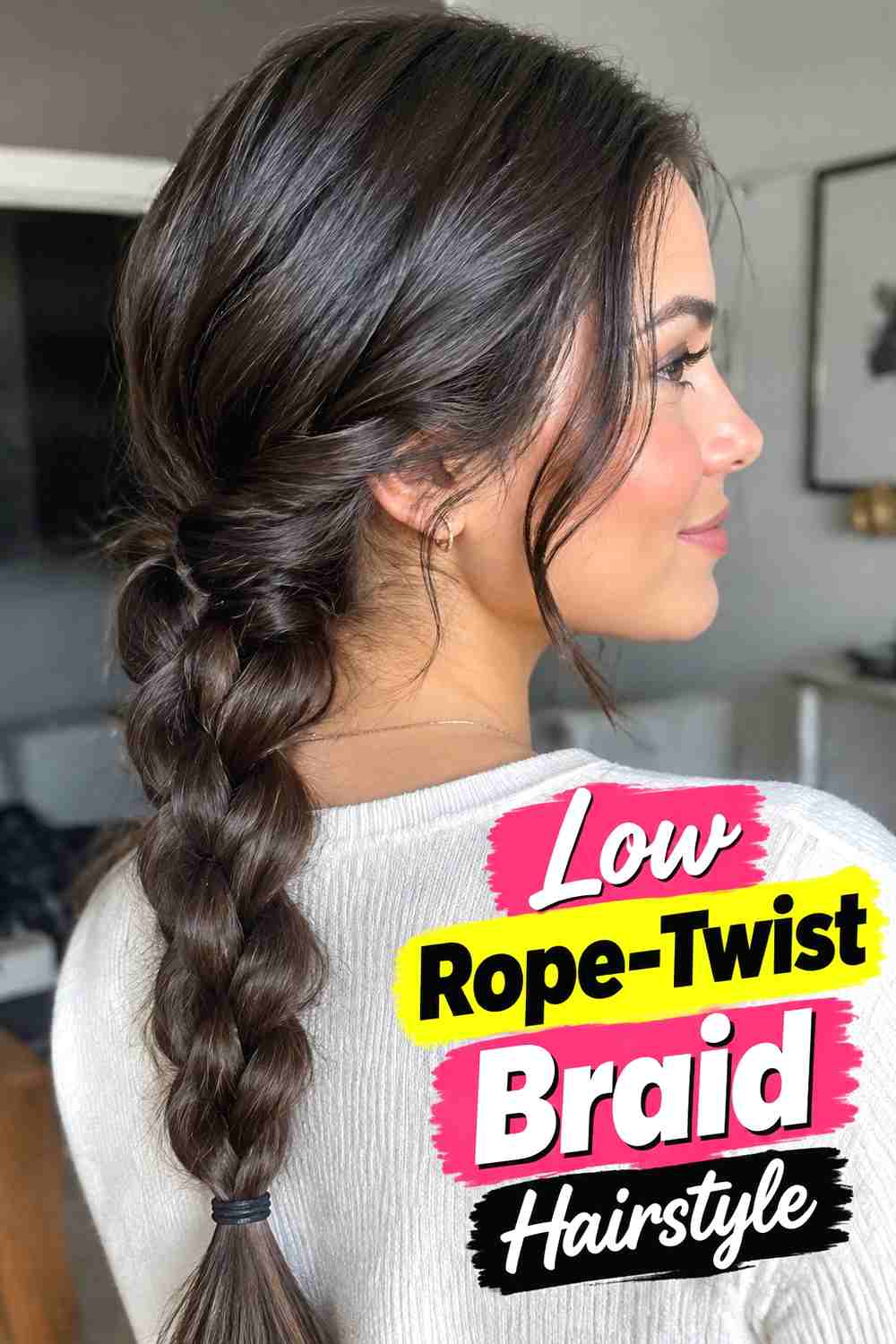
A rope-twist braid creates a clean spiral down the back and stays naturally narrower than many expanded braid styles. Secure the hair low, split it into two sections, twist each section in one direction, then wrap them together in the opposite direction. This opposing tension helps the rope hold while keeping the shape compact. Against a chunky Aran pullover, the spiral gives a simpler contrast to more complex cable stitching. The low base also means the thickest part of the hairstyle begins below most sweater necklines. Straight or lightly textured long hair makes the rope pattern especially clear, though a little natural variation in the surface keeps it from looking overly rigid.
Styling Notes
Keep steady tension through both sections and secure the bottom firmly. Uneven twisting can cause the rope to unwind or develop bulky spots.
Best For
This is a strong minimalist option when you want braid-like texture without a traditional three-strand or fishtail pattern.
7. Double Slim Back Braids Hairstyle
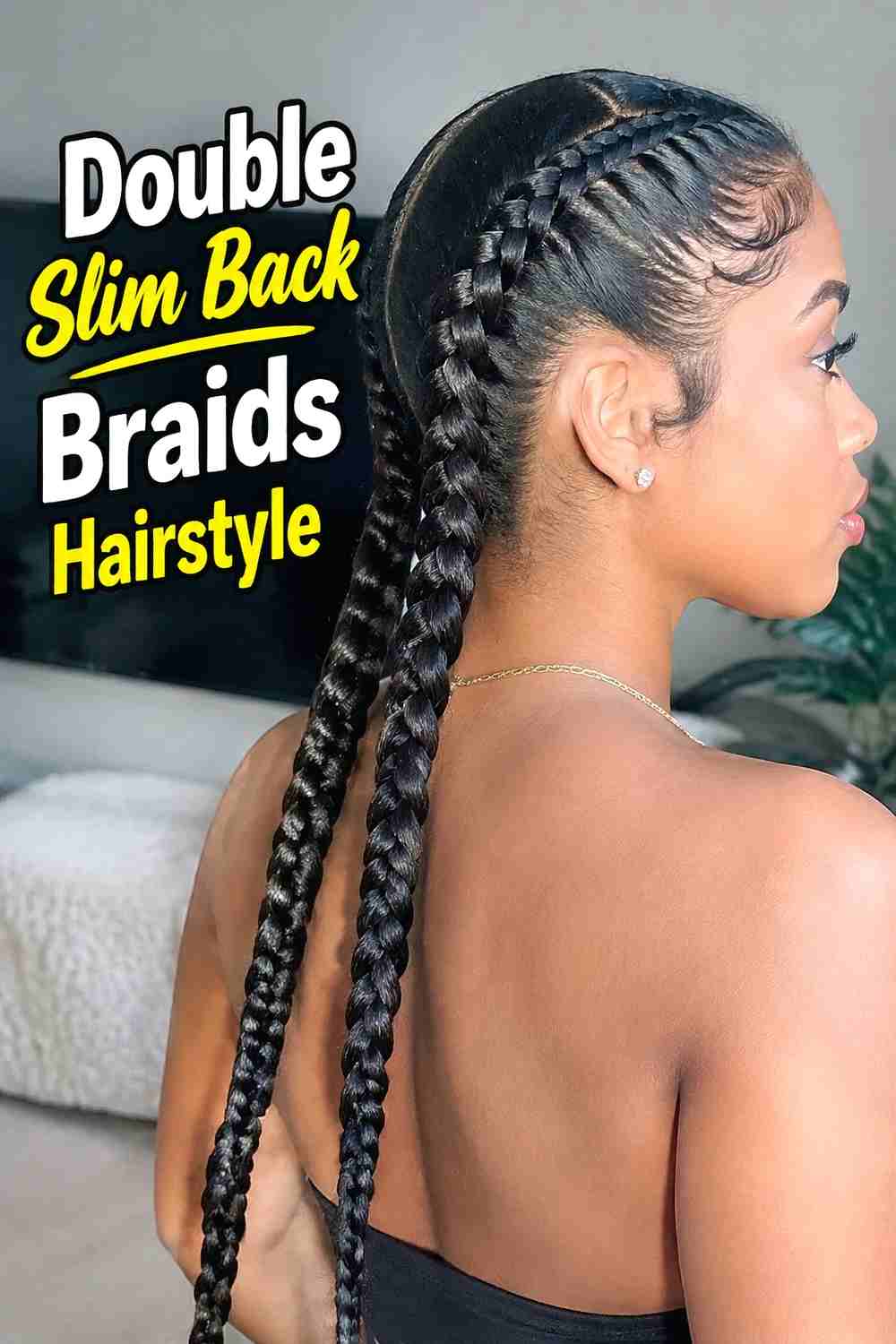
Two slim back braids divide the hair into narrow vertical lines while still keeping the overall profile close to the head. Part the hair evenly down the back and create two compact French, Dutch, or three-strand braids depending on how much scalp detail you want. Avoid pulling the sections wide; the appeal comes from keeping both braids tidy and relatively narrow. This style can work especially well with dense hair because splitting the length reduces the size of each individual braid. Against a chunky Aran pullover, the paired lines add interest without forming one heavy braid directly over the sweater’s central cables. Keep both sides evenly tensioned for a balanced finish.
Hair Type & Length
Medium to long hair with medium or high density works particularly well because there is enough volume to create two visible braids without making either one oversized.
Wear & Maintenance
Use small elastics at the ends and keep the braids behind the shoulders so they do not repeatedly rub against the front knit pattern.
8. Side Feed Low Back Braid Hairstyle
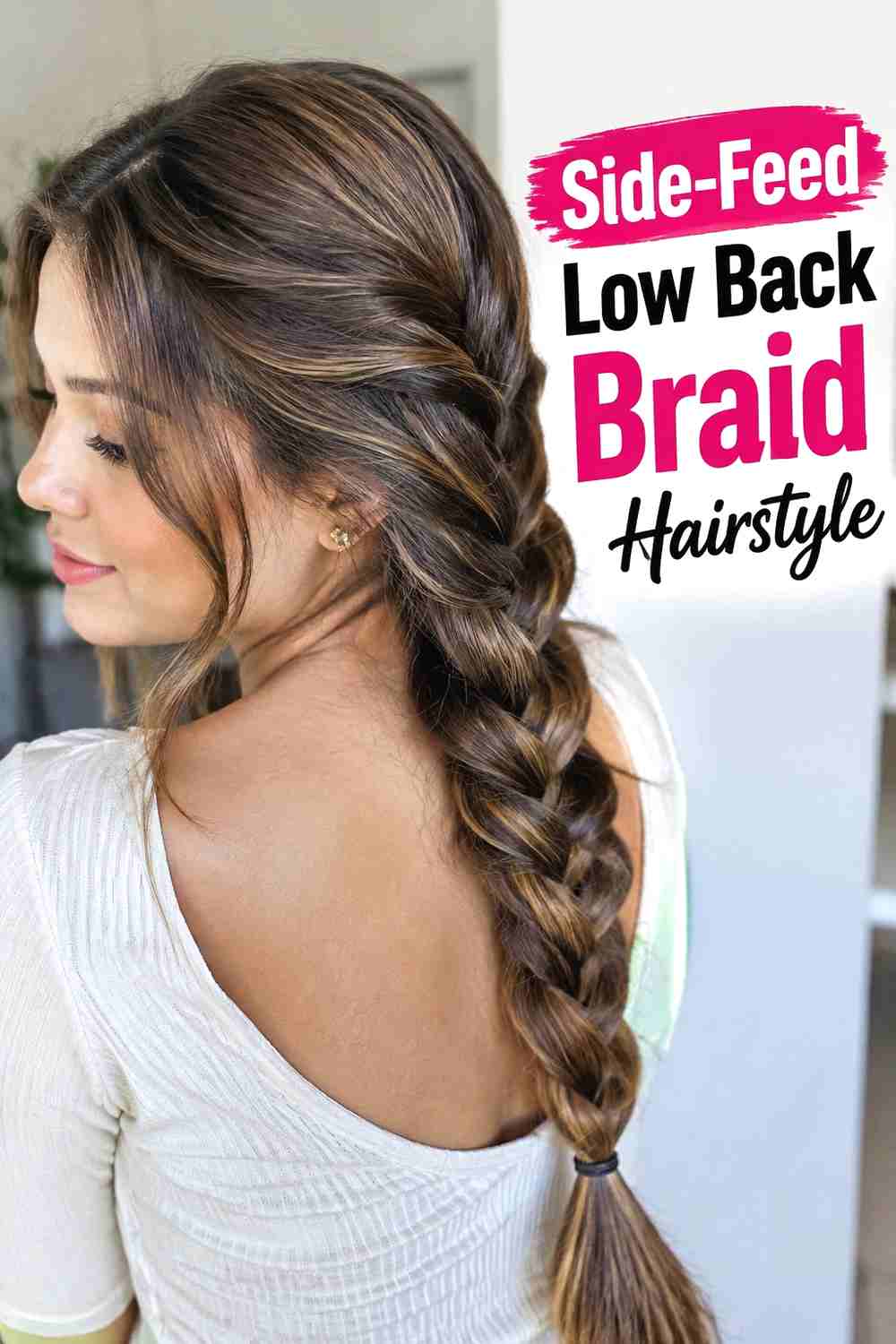
A side-feed braid begins with a small directional detail near one temple or above an ear, then guides that section into a low braid at the back. The upper hair remains mostly smooth, while the side braid adds just enough movement before disappearing into the main woven tail. This makes the style interesting from the front without leaving loose sections over a chunky sweater neckline. Keep the feed-in braid narrow and the main braid low so the overall shape remains compact. The result works especially well with asymmetric styling or sweaters that have broad shoulder cables, since the braid adds a diagonal line before settling into a cleaner vertical finish down the back.
Styling Notes
Keep the side braid close to the head and combine it with the main section before the nape. A loose side piece can create unnecessary bulk near the shoulder.
Why It Works
The directional upper detail adds movement while the lower back braid keeps the majority of the hair controlled and centered.
9. Hidden Elastic Back Braid Hairstyle
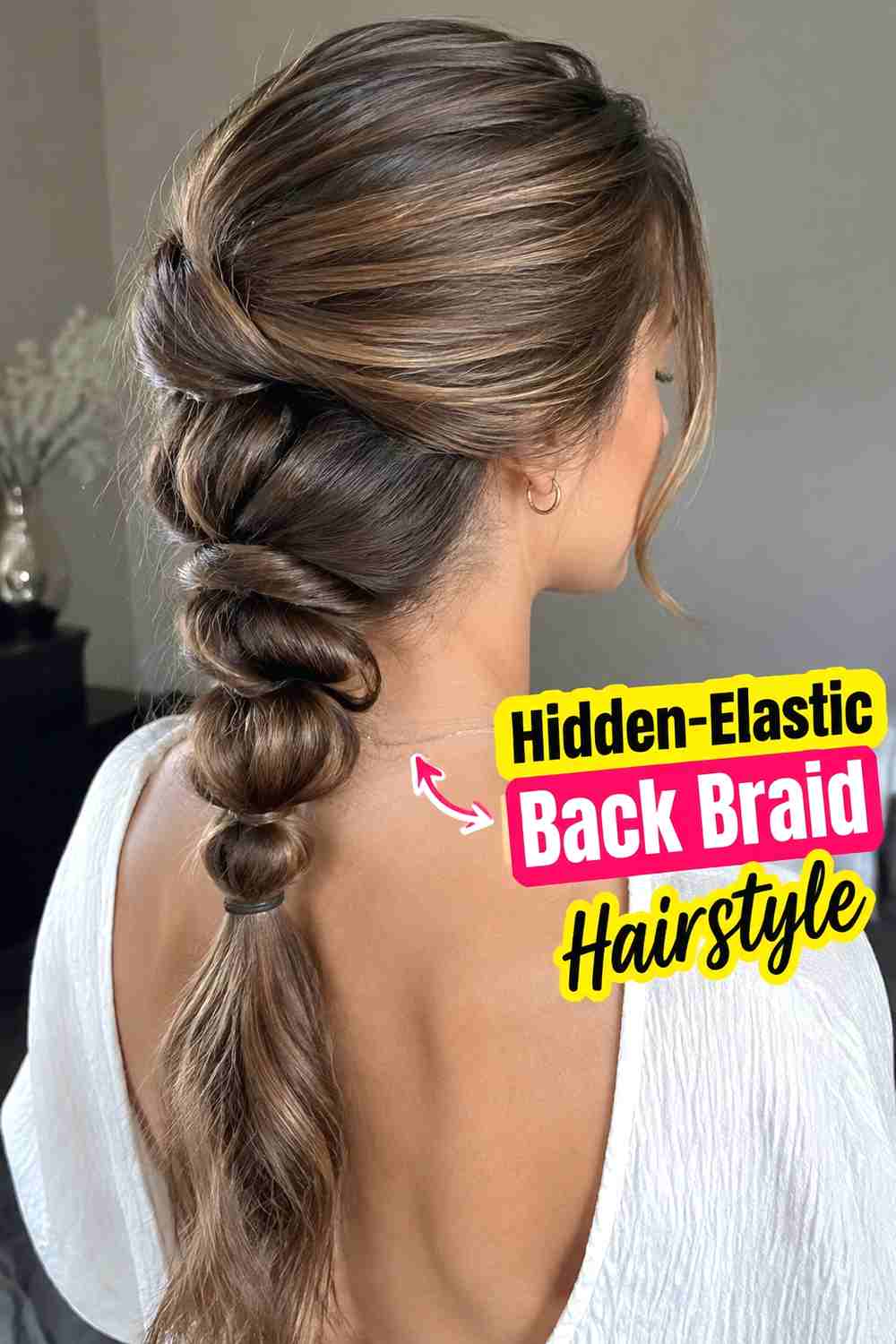
A hidden-elastic back braid keeps the transition from smooth hair to woven length clean and polished. Gather the hair low, secure it with a narrow elastic, and wrap a small strand around the band before beginning the braid. The concealed fastening point helps the style look more refined while the low base remains comfortable behind a substantial pullover. Continue with a compact three-strand or fishtail pattern depending on your preference. This approach is particularly useful for dense hair that benefits from a secure ponytail base before braiding. Keep the wrapped section slim enough that it does not create a raised knot at the nape, especially when wearing a thick crew or mock neckline.
Best For
This works well for long, heavy hair that needs a stable anchor before braiding but still benefits from a polished finish.
Pro Tip
Take the wrapping strand from underneath the ponytail so the visible upper surface remains smooth and uninterrupted.
10. Low Braided Ponytail Hairstyle
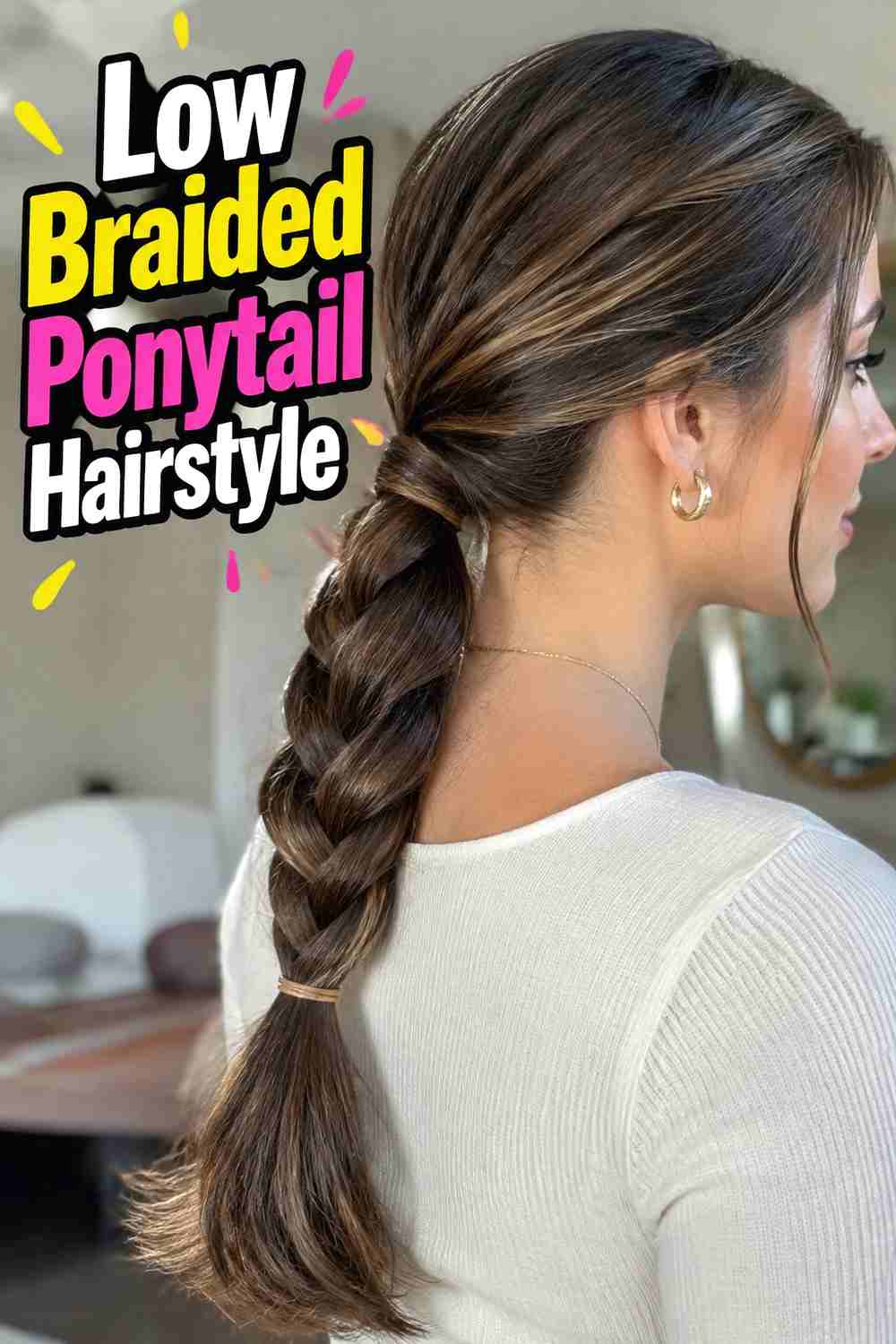
A low braided ponytail combines the ease of a ponytail with the control of a braid. Secure the hair just above the nape, then braid only the lower length, leaving the crown and sides sleek or softly textured. Because the base is clearly defined, the braid hangs in one narrow line rather than spreading across the shoulders. This makes it especially practical with chunky Aran pullovers, where a loose ponytail can rub against cables and become tangled. A small wrapped section around the elastic can give the base a more finished appearance. Straight, wavy, or lightly curly hair can all work, provided the braid tension is comfortable and the tail remains flexible rather than stiff.
Styling Notes
Place the ponytail just above the sweater neckline so the elastic does not sit directly between the hair and thick knit fabric.
Best For
This is a useful everyday option for commuting, casual winter outings, and days when you want a fast style with better control than loose hair.
11. Compact Four Strand Back Braid Hairstyle
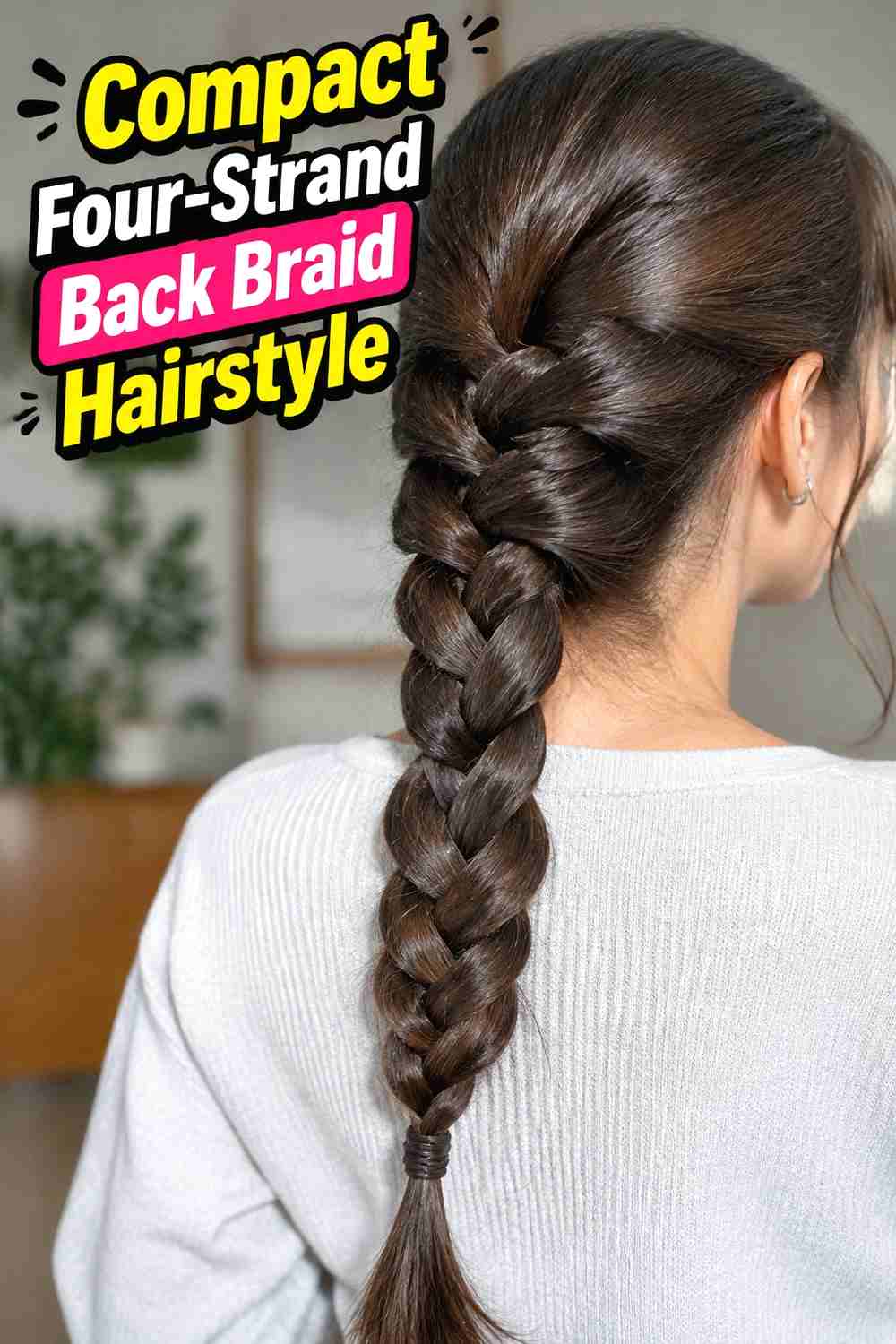
A four-strand braid creates a more intricate woven appearance while still working as a low-profile style when kept narrow. Divide the hair into four even sections and maintain consistent tension as you weave them down the back. The finished pattern has more dimensional detail than a classic braid, so there is no need to pull it dramatically wider. That makes it a good partner for Aran knitwear: the sweater can keep its chunky texture while the hair contributes a smaller, more precise woven motif. This style works best on longer hair with enough length for the pattern to become visible. Keep the base low and smooth to reduce bulk near the sweater collar.
Why It Works
The more complex braid pattern echoes the craftsmanship of cable knitting without creating a similarly oversized silhouette.
Pro Tip
Practice with slightly larger sections first. Consistent section size matters more than creating an extremely tight braid.
12. Nape Start Fishtail Braid Hairstyle
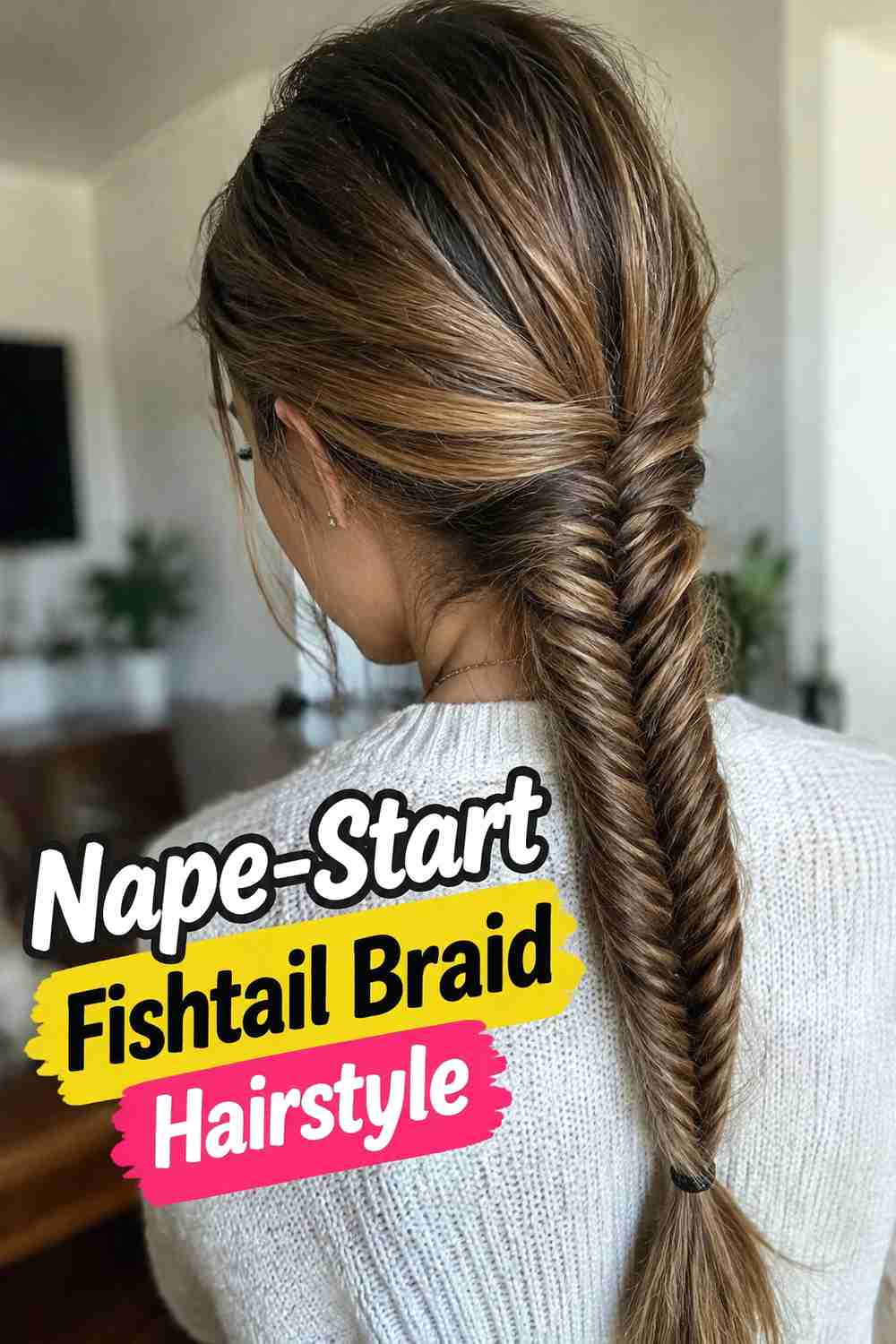
A nape-start fishtail keeps the entire crown smooth and places the detailed braid below the thickest part of a chunky pullover neckline. Brush or softly gather the hair toward the nape, secure it if needed, and begin a narrow fishtail using small sections from each side. This lower placement is particularly comfortable when the sweater has a dense crewneck or raised ribbed collar because there is minimal braided texture pressing against the upper back of the head. Keep the fishtail compact so it falls neatly down the center. A touch of softness at the crown can prevent the hairstyle from appearing overly formal while still preserving the clean back profile.
Wear & Maintenance
If the braid rubs against the sweater, lightly smooth the outer strands rather than pulling the fishtail wider, which can make the texture more vulnerable to friction.
Best For
This is ideal for medium-long or long hair when you want detailed braiding without any added volume near the scalp.
13. Smooth Three Strand Back Braid Hairstyle
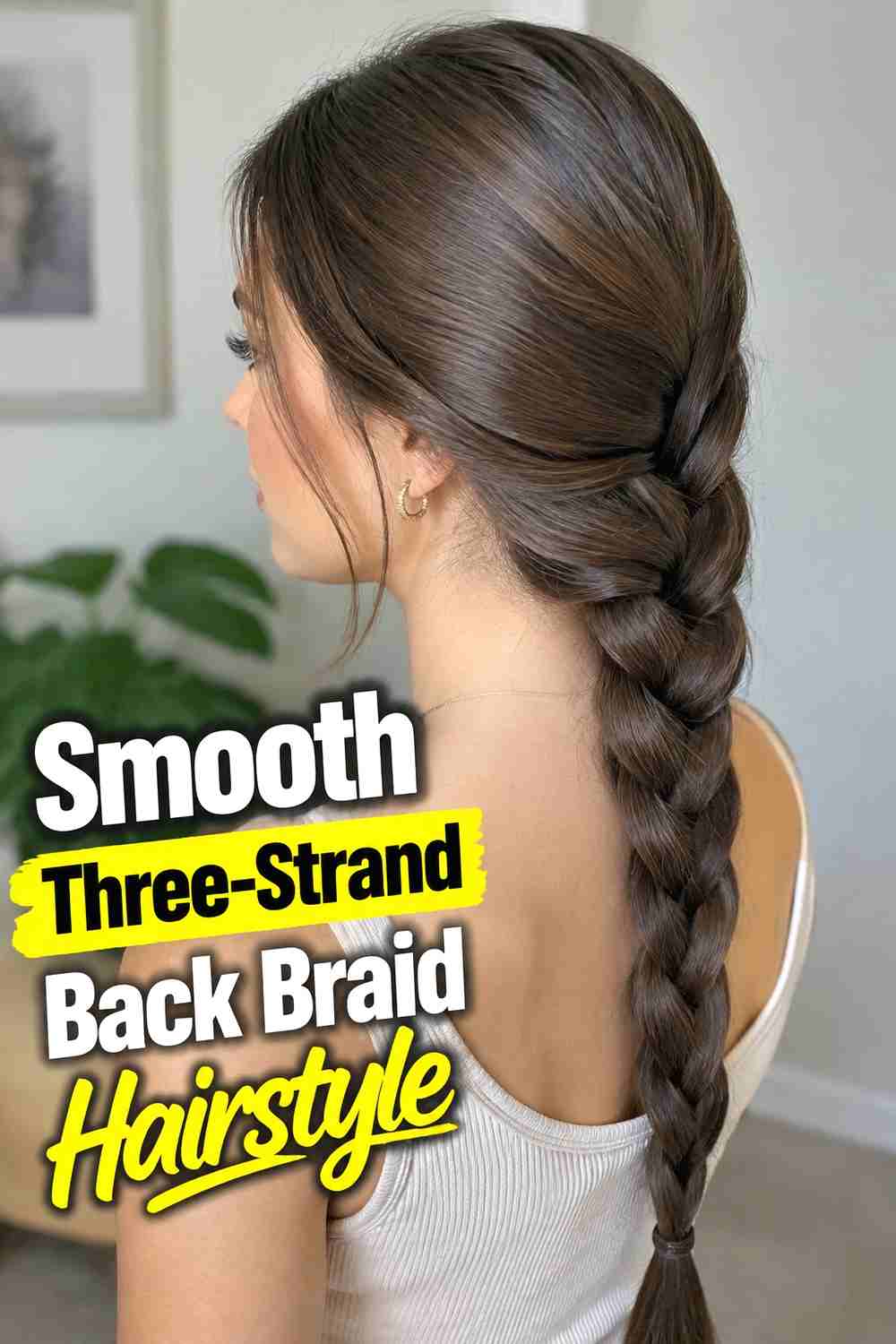
A classic three-strand braid becomes especially polished when the crown is kept smooth and the braid stays narrow. Gather the hair toward the center back, begin braiding near the nape, and maintain even tension all the way to the ends. The simple construction allows the texture of an Aran pullover to remain prominent while still keeping the hair controlled. This is one of the easiest looks to adjust for different densities: finer hair can stay softly braided, while dense hair can use slightly firmer tension to keep the profile slim. The style works well for everyday wear because it is secure, easy to refresh, and less likely than loose lengths to snag against chunky knit cables.
Styling Notes
Smooth only the surface rather than saturating the hair with product. A little natural movement keeps the braid from looking too severe.
Best For
Choose this when you want a reliable winter braid that takes minimal styling time and works with most medium-to-long hair textures.
14. Twisted Crown Back Braid Hairstyle
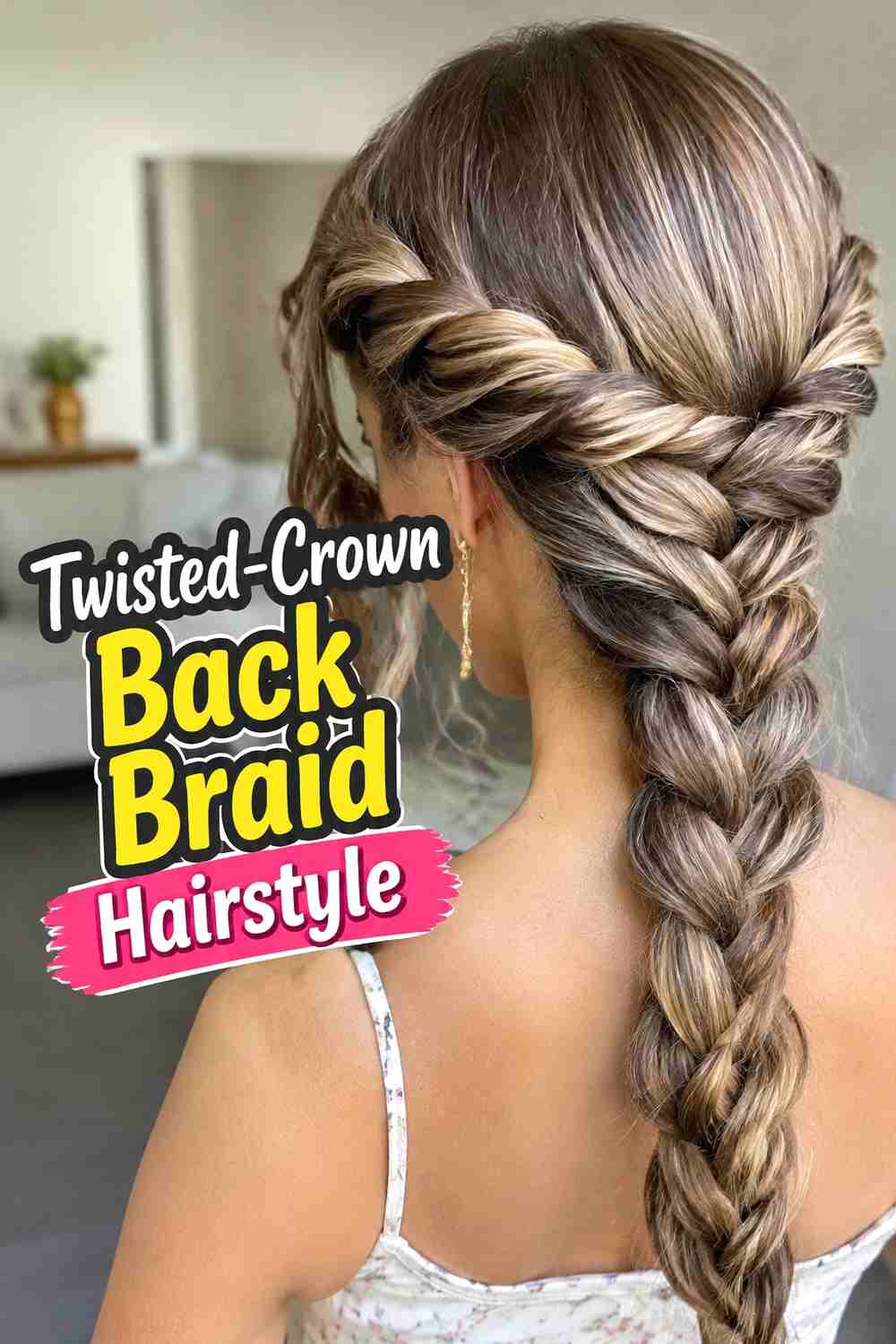
A twisted crown adds soft detail above a low braid without creating a raised, bulky shape. Take sections from each side of the head, twist them gently toward the back, and combine them with the remaining hair before starting a compact braid below the meeting point. The twists should lie close to the head, forming a subtle frame rather than a large rope effect. This style pairs well with chunky Aran pullovers because the upper texture is visible above the neckline while the main length remains contained down the back. Wavy and layered hair can make the crown detail especially natural, while straighter hair may benefit from a small amount of lightweight grip.
Why It Works
The crown twists soften the transition into the braid without adding loose pieces across the shoulders or neckline.
Pro Tip
Secure the twists and braid in one low anchor whenever possible so you do not create multiple bulky fastening points behind the sweater collar.
15. Soft Textured Nape Braid Hairstyle
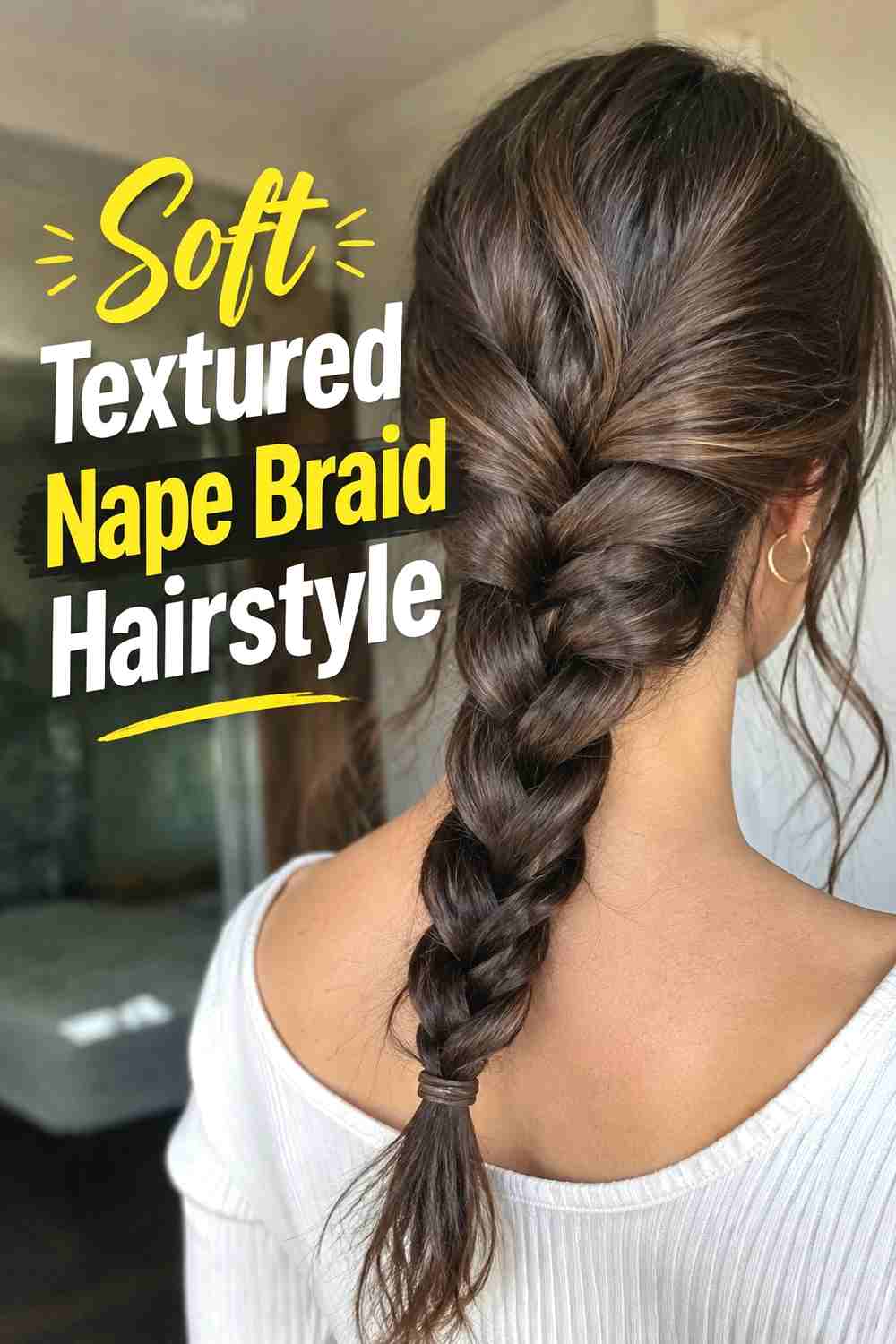
A textured nape braid keeps the fastening area low while allowing a little natural movement through the crown and sides. Enhance existing wave or create a few soft bends, then gather the hair just above the nape and begin a relaxed three-strand braid. Unlike a fully sleek style, this version allows slight strand separation and a few controlled flyaways, making it feel at home with cozy Aran knitwear. Keep the actual braid narrow enough that it does not spread across the sweater’s back panel. The contrast between soft upper texture and a more organized lower braid creates a casual winter look that still feels intentional and easy to wear.
Hair Type & Length
Naturally wavy, lightly curly, or textured medium-to-long hair works especially well because the crown can keep movement without requiring extensive preparation.
Wear & Maintenance
Use flexible hold and avoid aggressively pulling the braid apart. Too much expansion can make the style catch more easily on raised knit stitches.
16. Wrapped Base Back Braid Hairstyle
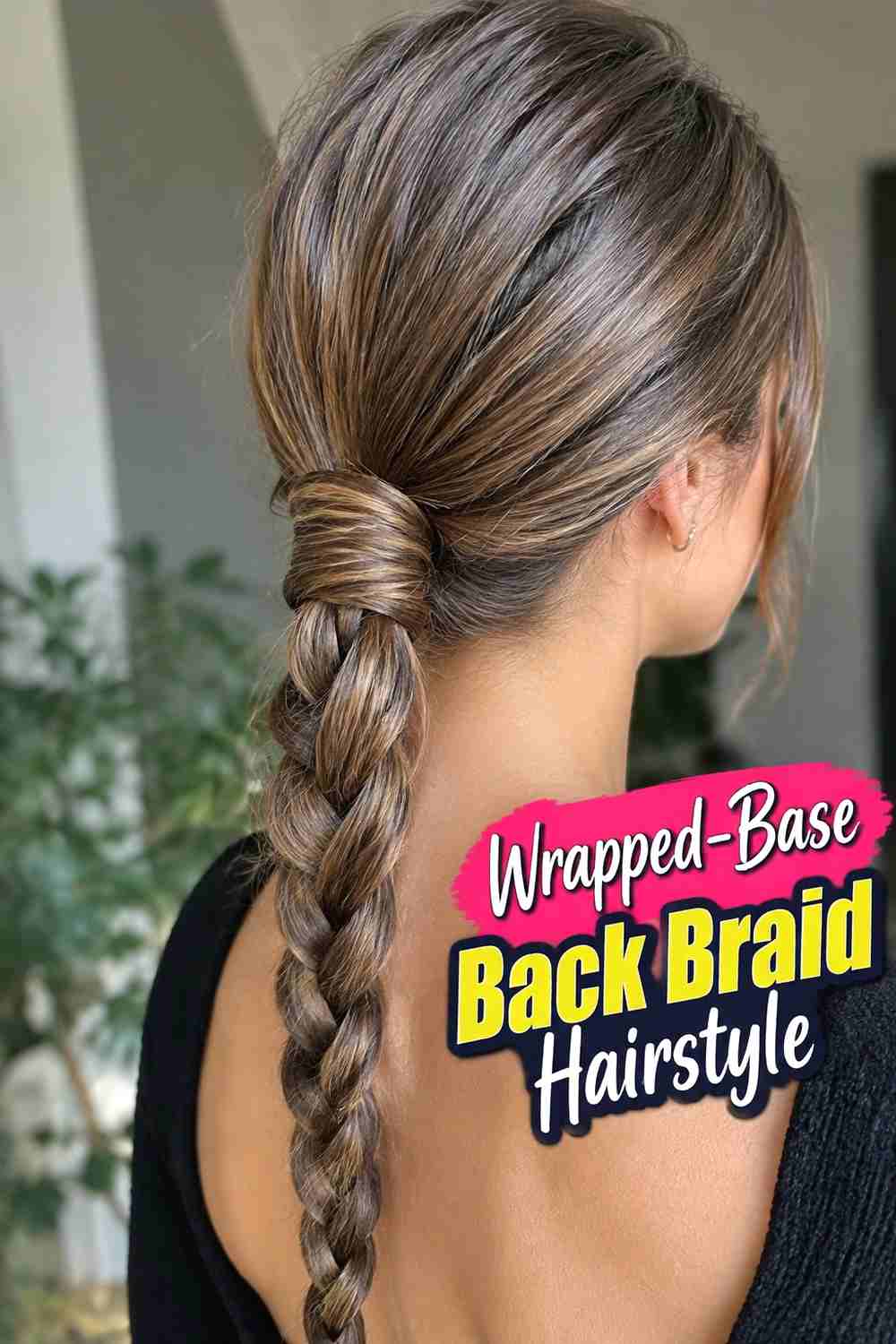
A wrapped-base braid adds a clean finishing detail right where the braid begins. Gather the hair low, secure it, and wind a slim section around the elastic before braiding the remaining length. This creates a smooth transition that looks polished without adding a visible accessory near the chunky sweater neckline. Keep the wrap close to the base and the braid relatively slim so both elements remain comfortable against thick knit fabric. This style suits straight, wavy, or softly textured medium-to-long hair and can be adapted with a three-strand, fishtail, or rope braid below the wrapped section. The result is understated but deliberate, making it easy to pair with detailed Aran patterns.
Styling Notes
Pin the wrapping section underneath the braid base so the fastening stays hidden and does not create a raised spot against the neck.
Why It Works
The concealed elastic keeps the finish clean while the narrow braid provides texture without competing with the sweater’s cables.
17. Curly Low Back Braid Hairstyle
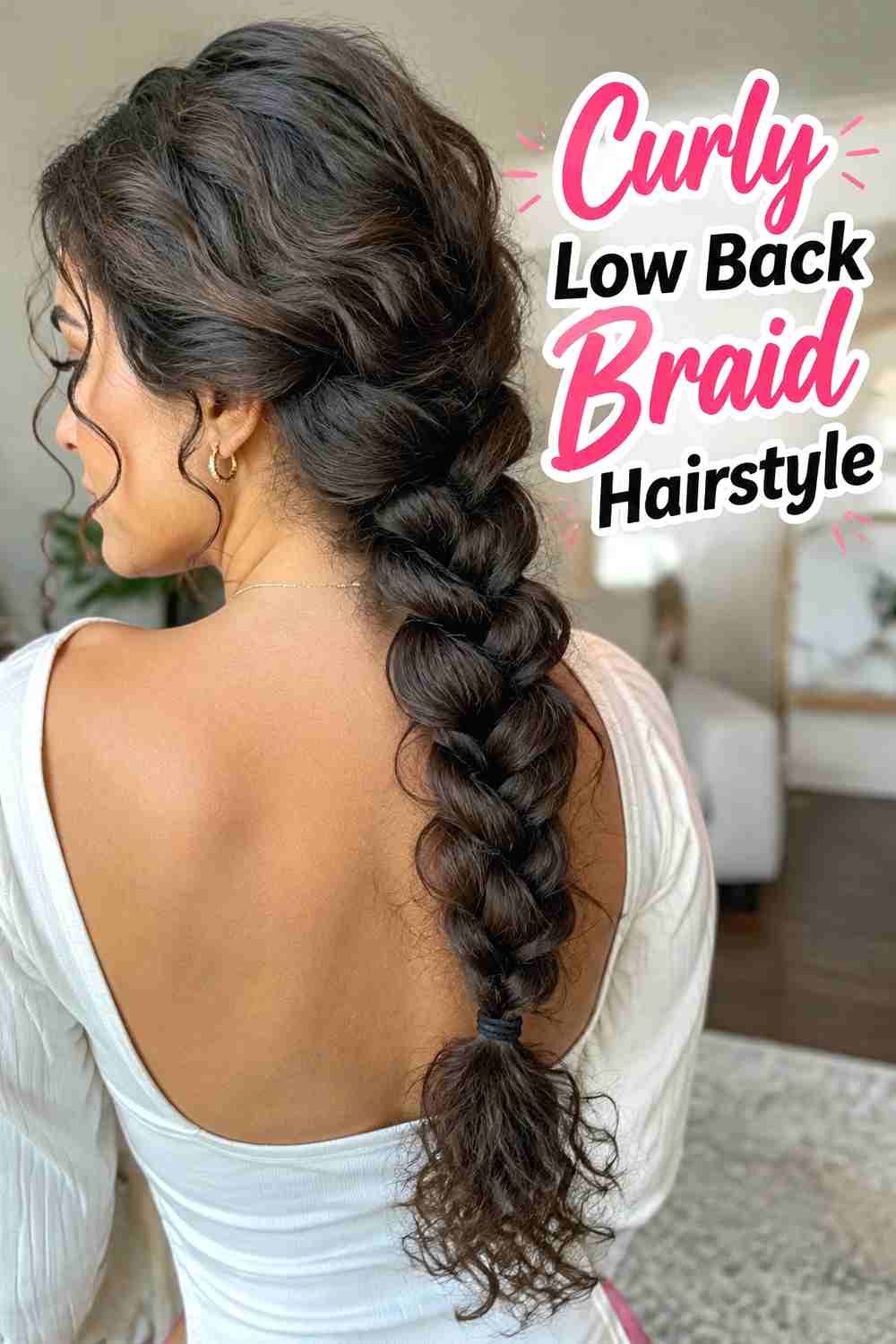
A curly low back braid keeps natural texture visible while directing the bulk of the hair into one controlled line. Gather curls gently near the nape without stretching them flat, then braid with moderate tension so some curl character remains along the woven sections. The braid should look dimensional and natural rather than perfectly smooth. This style is especially helpful with chunky pullovers because it moves fuller lengths off the shoulders while preserving the hair’s texture. Depending on density, the braid can begin slightly higher to avoid crowding a raised sweater collar. Leave only a small amount of softness around the hairline so the neckline stays clear and the braid remains the main feature.
Hair Type & Length
Medium to long curly or coily hair can work well, with braid size adjusted to density and natural shrinkage.
Pro Tip
Use enough tension to hold the braid but avoid repeatedly tightening the base, which can flatten or stretch the curl pattern unnecessarily.
18. Sleek Tapered Back Braid Hairstyle
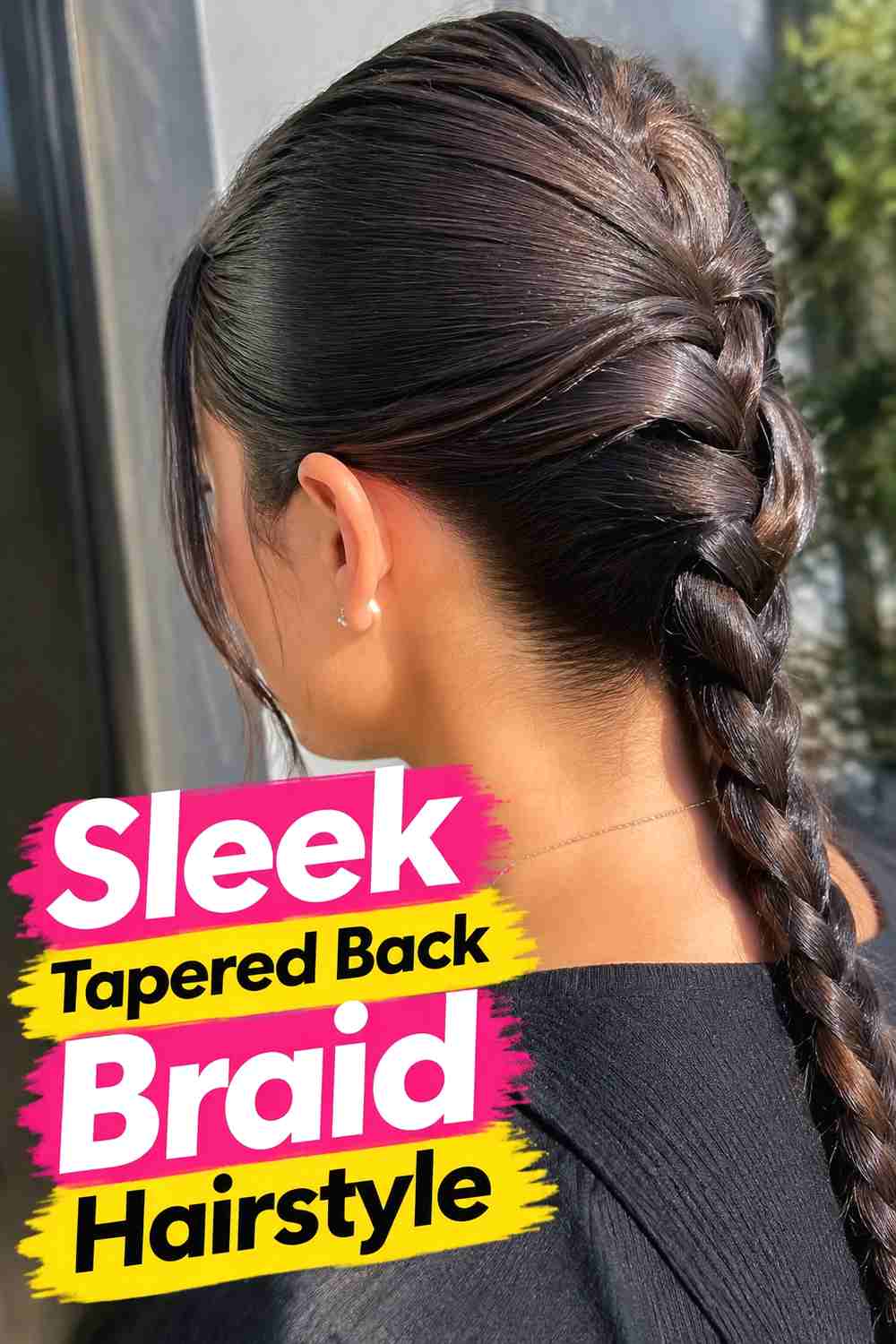
A sleek tapered braid starts with a smooth, controlled base and gradually narrows toward the ends, creating a clean line down the center of the back. Keep the crown polished with natural shine, secure the hair low, and braid with consistent tension so the pattern becomes smaller as the hair naturally reduces in density. This silhouette works particularly well with chunky Aran pullovers because it adds one refined vertical element against the sweater’s broader, more dimensional cables. The braid can remain completely classic or finish with a slim hidden elastic for an understated end. Medium-to-long straight or smoothed hair will make the tapered shape especially clear and polished.
Styling Notes
Use even tension from the base downward and avoid pulling outer sections wider. The gradual natural taper is what gives the style its streamlined effect.
Best For
This is a strong choice for minimalist winter outfits, workwear, and polished casual looks where you want the knit texture to remain prominent.
How to Choose the Right Look
Start with the pullover neckline. Dense crewnecks and high ribbed collars pair best with braids that begin at or below the nape, while lower necklines give you more room for French, Dutch, and twisted-crown details.
Hair density is equally important. Thick hair may feel lighter when divided into two slim braids or shaped into a controlled fishtail, while fine hair can look fuller in a compact Dutch braid or softly textured three-strand style. Avoid widening the braid excessively if your goal is to keep the profile narrow against a chunky sweater.
Consider texture and hold as well. Straight hair shows detailed four-strand, rope, and fishtail patterns clearly. Wavy hair works naturally with textured nape braids and twisted crowns, while curly or coily hair can retain beautiful dimension in a lower, moderately tensioned braid.
Finally, think about friction. Raised cable knits can catch loose strands, so keep fragile ends secured, use smooth elastics, and position the braid down the center rather than constantly moving it over the shoulders. A slightly higher nape start may also help if the pullover has a very thick collar.
Final Thoughts
Low-profile back braids are a natural match for chunky Aran pullovers because they control the hair without competing with the sweater’s rich texture. Choose a French or Dutch braid for scalp-level structure, a fishtail for finer detail, or a simple low braid for easy everyday wear. The most comfortable option will stay relatively flat, sit clear of the neckline, and work with your natural density rather than fighting it.
FAQs
1. Which braid works best with a thick Aran sweater collar?
A low three-strand braid, nape-start fishtail, or low braided ponytail usually works well because most of the braid sits below the thickest part of the neckline.
2. How do I keep a braid from catching on chunky knit cables?
Keep the braid compact, secure loose ends, and avoid aggressively pulling sections apart. Smooth outer strands are less likely to snag on raised stitches.
3. Can thick hair still create a low-profile braid?
Yes. Dividing the hair into two slim braids, using a compact fishtail, or maintaining firmer tension through a three-strand braid can reduce overall width.
4. Are low-profile back braids suitable for curly hair?
Yes. Use moderate tension so the braid holds without completely stretching the natural curl pattern, and keep the base comfortable rather than overly tight.
5. What braid is easiest for everyday winter wear?
A smooth three-strand back braid or low braided ponytail is usually quick, secure, and easy to refresh while keeping hair away from bulky knit shoulders.
Save your favorite low-profile braid for your next Aran pullover outfit, and share these ideas for more cozy, practical hairstyle inspiration.