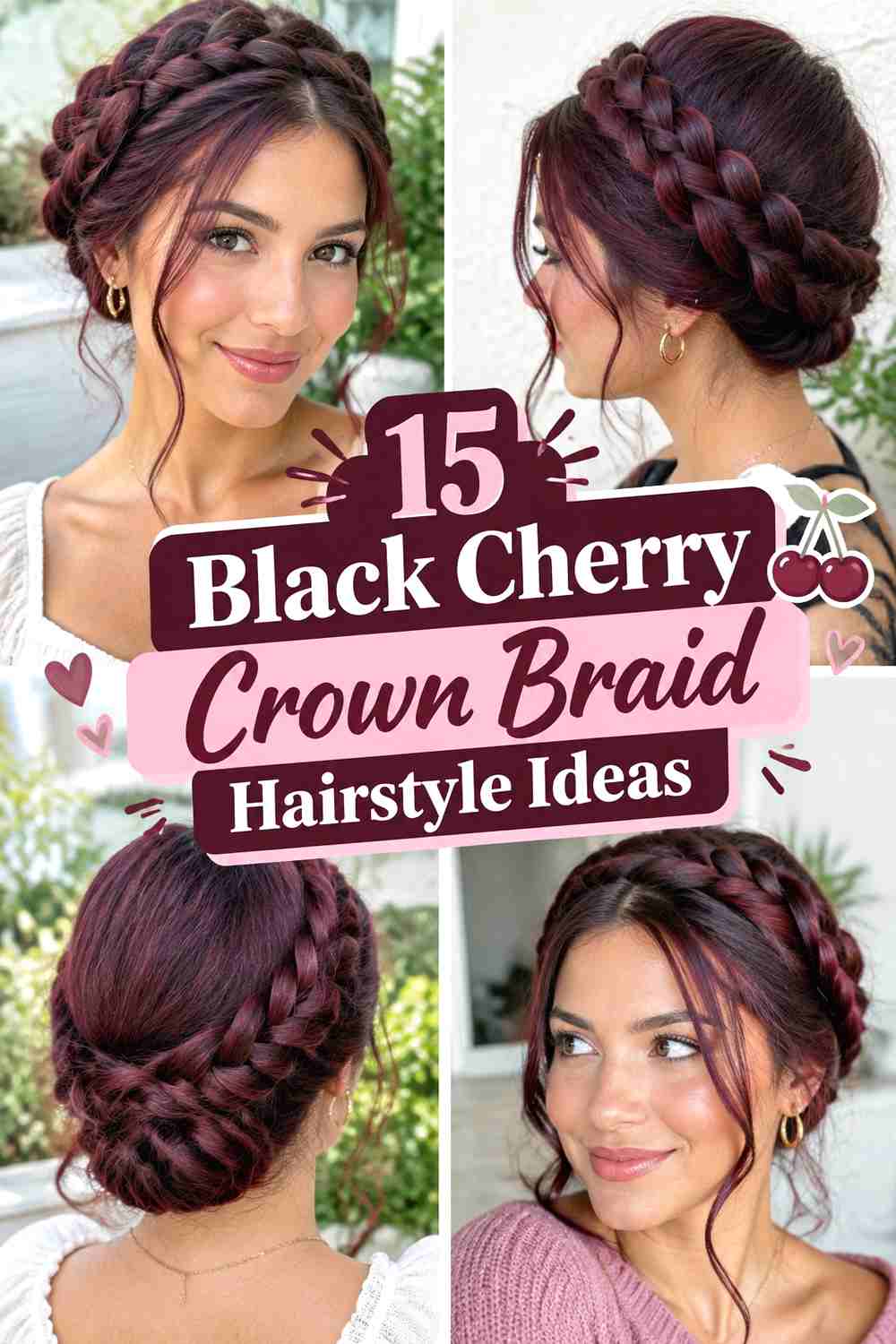
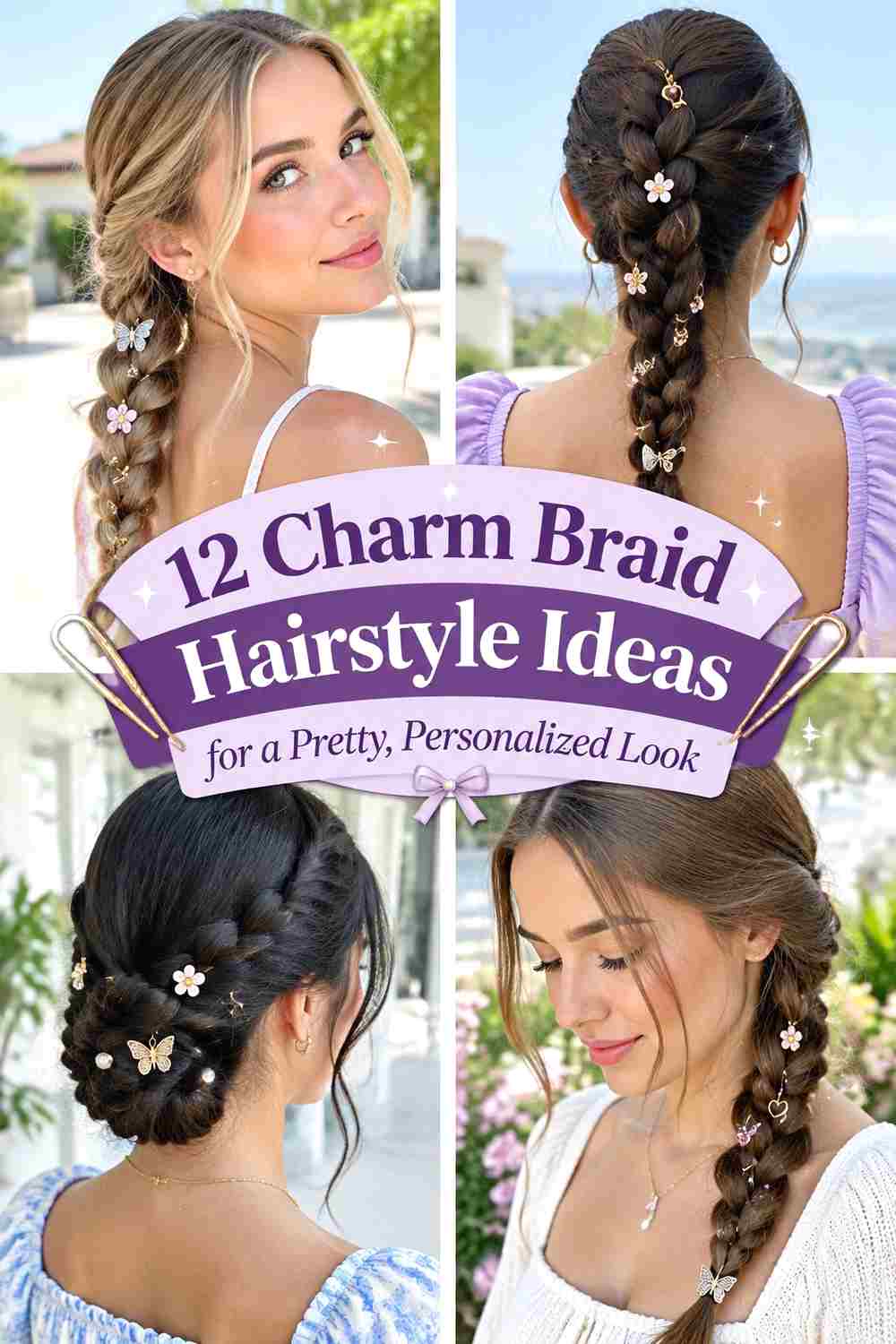
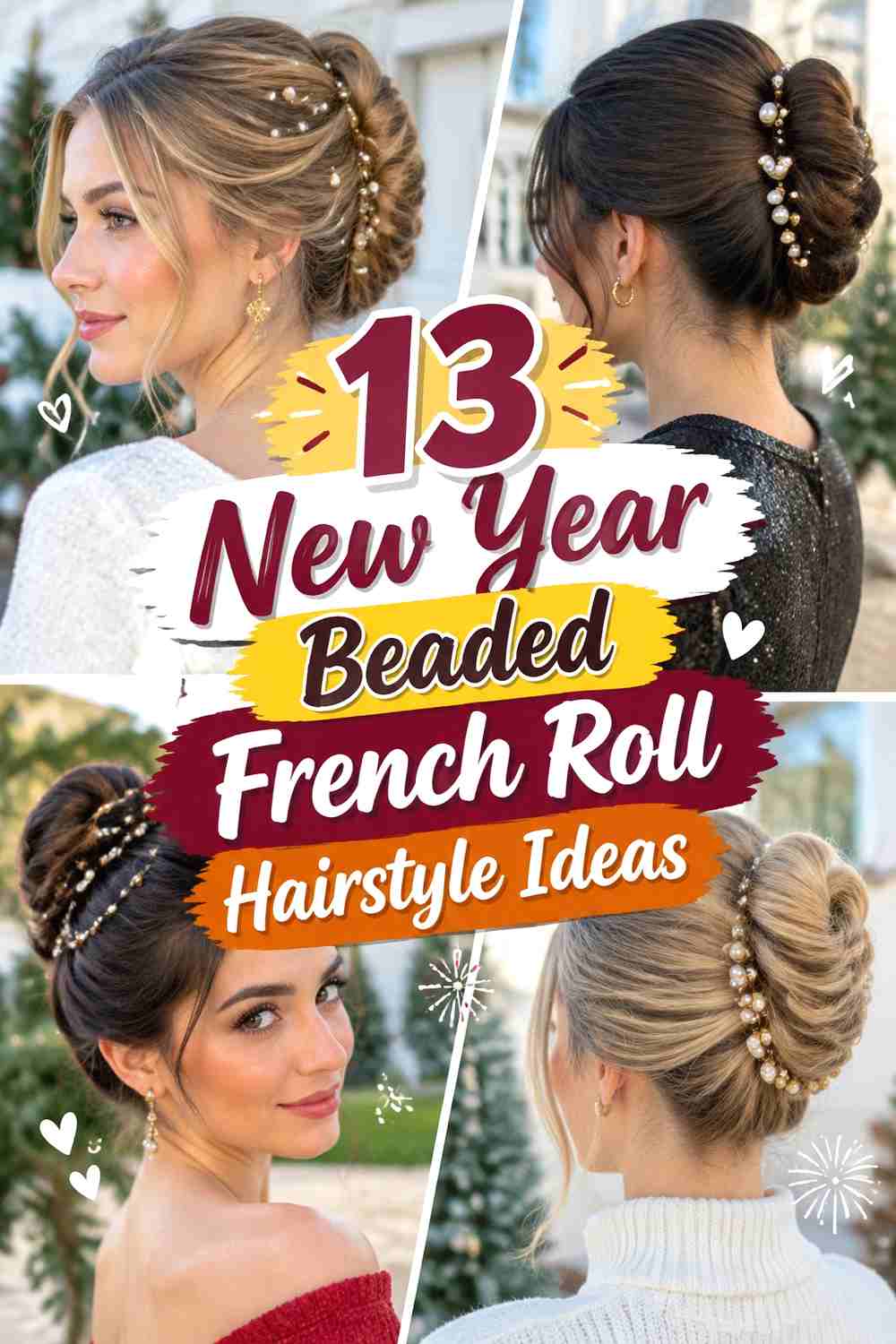
14 Winter Low-Tension Braided Bun Hairstyle Ideas
Soft braids, relaxed buns, and winter-ready texture create polished updos without relying on the tightly pulled finish of traditional braided styles.
Low-tension braided buns are especially appealing when you want an updo that looks intentional while keeping the overall construction softer and more relaxed. Rather than pulling every section firmly against the scalp, these looks use gentle braiding, naturally placed volume, and low buns that can be secured without an excessively tight finish. The result ranges from softly textured and romantic to clean and understated.
For winter, placement matters almost as much as appearance. Thick scarves, coat collars, and layered clothing can interfere with very low or bulky buns, so it helps to consider bun height, braid width, hair density, and accessory placement before styling. The ideas below include classic braids, fishtails, double braids, decorative details, and wavy finishes so you can compare both appearance and practicality.
Quick List
- Soft Low Three Strand Braided Bun Hairstyle
- Loose Dutch Braided Bun Hairstyle
- Side Swept Low Braided Bun Hairstyle
- Double Loose Braid Bun Hairstyle
- Soft Crown To Bun Braided Hairstyle
- Low Fishtail Braided Bun Hairstyle
- Loose Rope Braid Bun Hairstyle
- Scarf Wrapped Low Braided Bun Hairstyle
- Soft Side Braid Bun Hairstyle
- Textured Low Braided Chignon Hairstyle
- Loose Halo Braided Bun Hairstyle
- Pearl Pinned Low Braided Bun Hairstyle
- Wavy Low Braided Bun Hairstyle
- Relaxed Center Part Braided Bun Hairstyle
1. Soft Low Three Strand Braided Bun Hairstyle
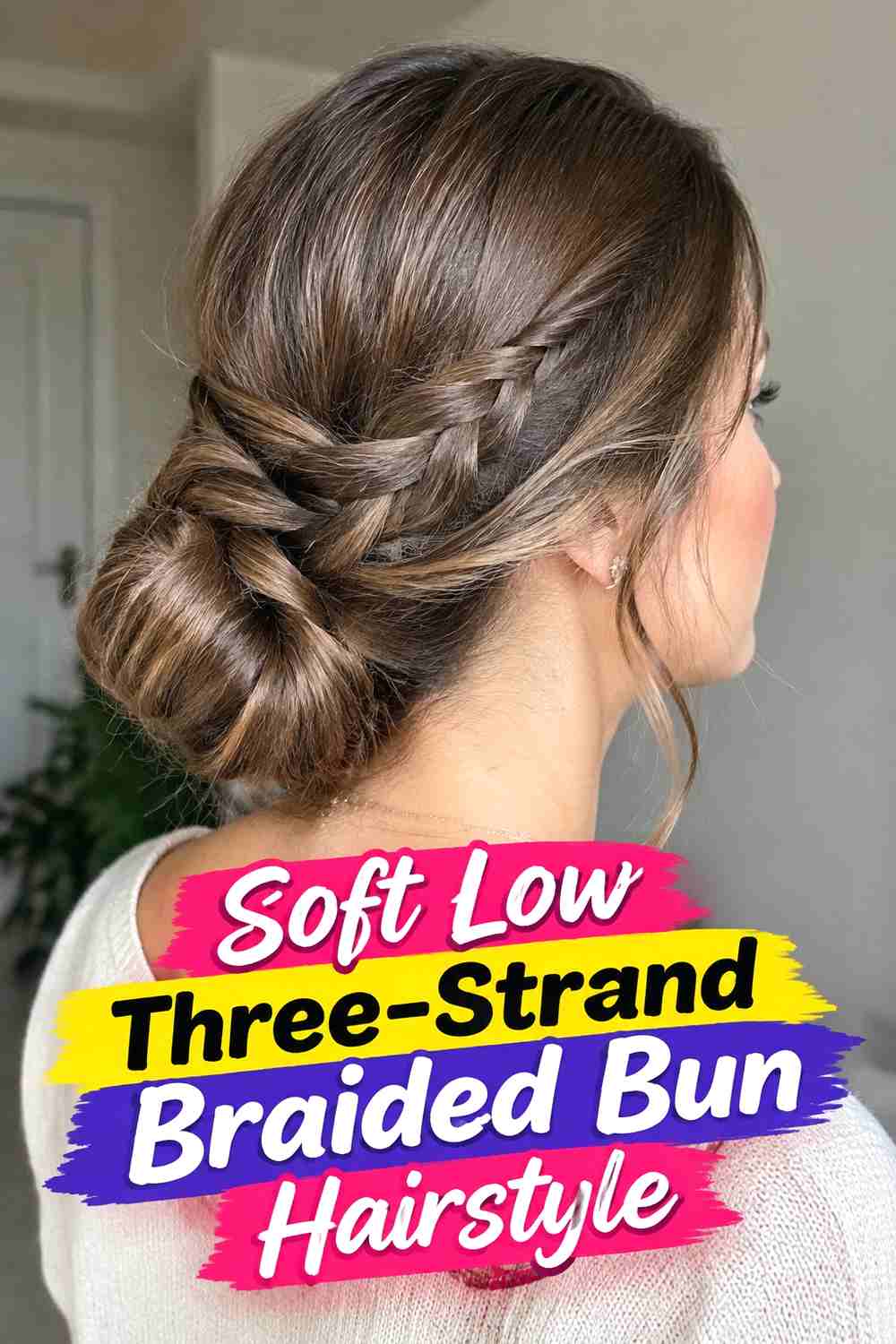
The Soft Low Three-Strand Braided Bun Hairstyle is a simple way to create a polished winter updo while keeping the braid and base relatively relaxed. Hair is gathered near the nape without pulling the crown completely flat, then formed into a classic three-strand braid. The braid is gently widened before being wrapped into a low bun, giving the finished shape visible texture instead of a tightly wound appearance. A little natural lift around the crown and temples helps preserve softness. This version is practical for everyday outfits, workdays, and casual winter occasions because it looks finished without requiring complex braiding. Keep the bun compact enough that it does not constantly press against a heavy coat collar.
Styling Notes
Start the braid with comfortable tension and loosen individual loops only after securing the end. Anchor the wrapped braid with several pins instead of tightening the elastic to create stability.
2. Loose Dutch Braided Bun Hairstyle
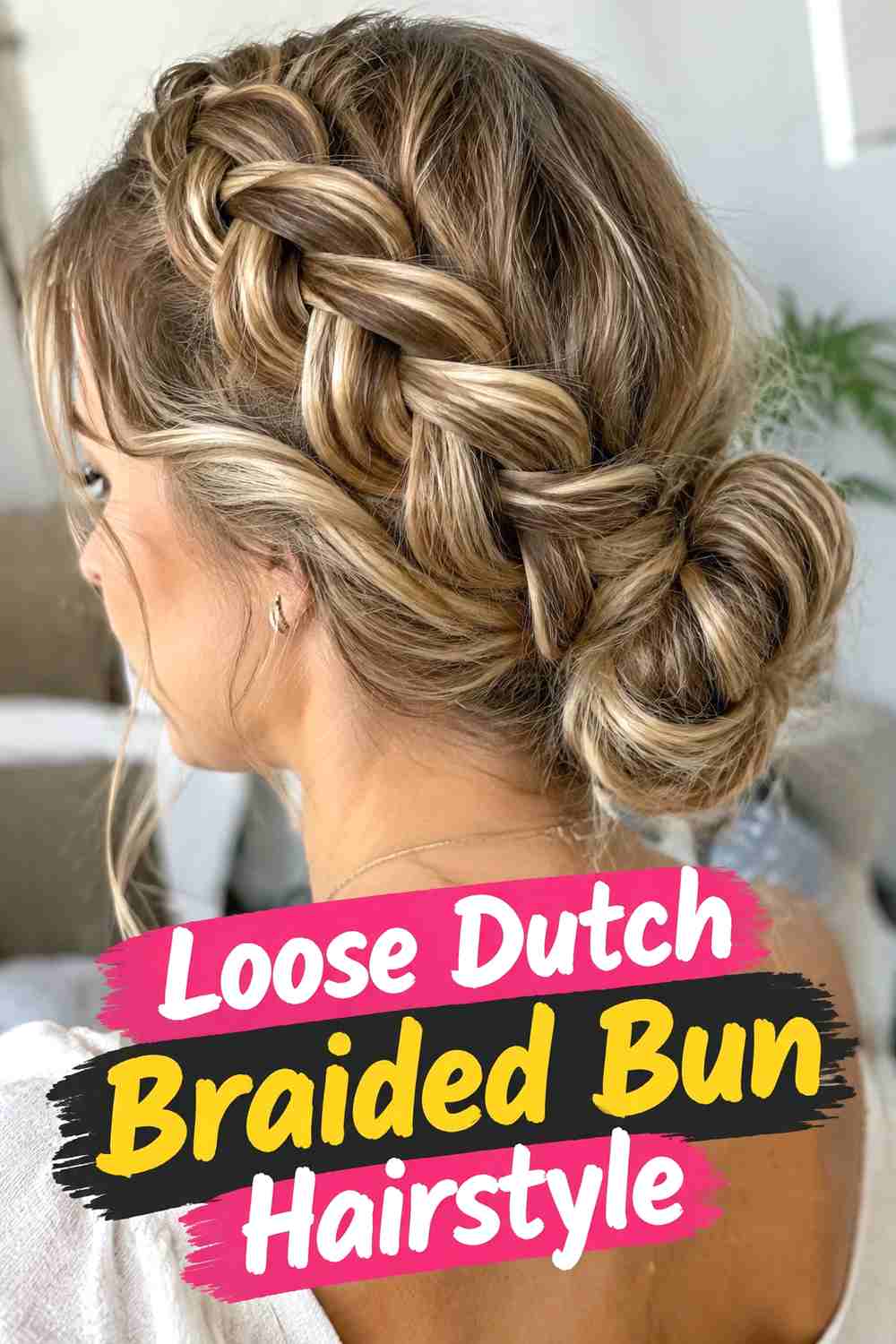
The Loose Dutch Braided Bun Hairstyle adds stronger braid definition while maintaining a softer overall feel. A Dutch braid travels toward the back by crossing sections underneath, causing the braid to sit visibly above the surrounding hair. Instead of pulling each section tightly, use steady but moderate tension and gently expand the finished braid afterward. The remaining length can then be coiled into a loose bun just above the nape. This creates a detailed silhouette that looks attractive from the back and side without requiring a slick surface. Dimensional hair colors can make the raised braid particularly noticeable. For winter wear, the slightly elevated bun placement can also reduce friction from scarves and high collars.
Hair Type & Length
Medium to long hair provides enough length for both a visible Dutch braid and a complete bun. Fine hair can be lightly expanded for width, while dense hair may benefit from larger pins at the bun.
3. Side Swept Low Braided Bun Hairstyle
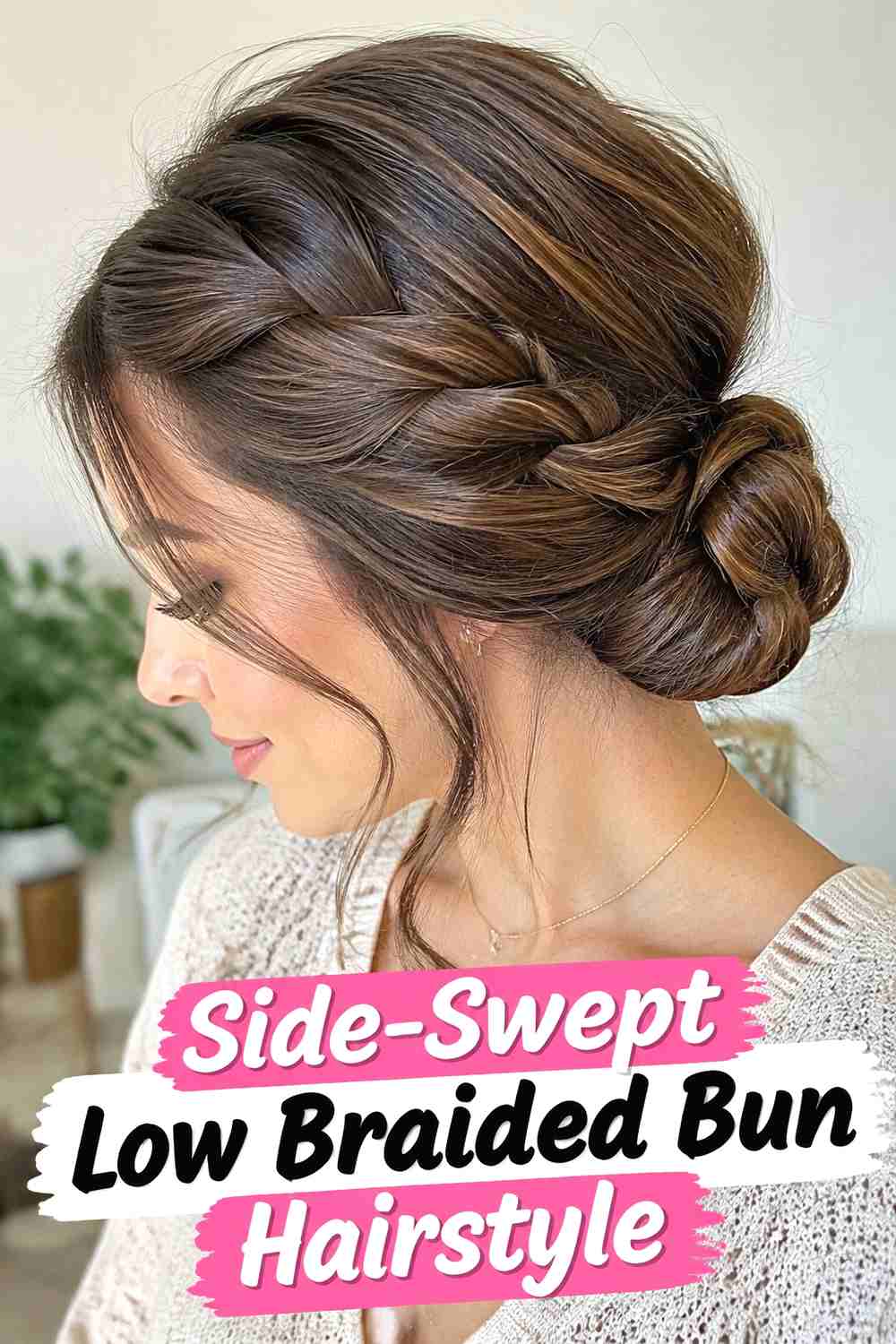
The Side-Swept Low Braided Bun Hairstyle moves the visual focus away from the center, creating a soft asymmetrical shape that feels relaxed and elegant. Begin with a natural side part and guide the braid diagonally across the back of the head using comfortable tension rather than pulling sharply at the roots. The remaining hair is wrapped into a low bun near the opposite side, where the braid can flow naturally into the finished shape. Softness around the temple makes the style especially flattering with winter knitwear and dressier seasonal outfits. Because the bun sits to one side, check how it feels with scarves or coat collars before adding final pins so the placement remains comfortable.
Pro Tip
Build the diagonal direction into the braid from the beginning. Moving a finished braid sideways afterward can create uneven tension and make the bun more difficult to secure naturally.
4. Double Loose Braid Bun Hairstyle
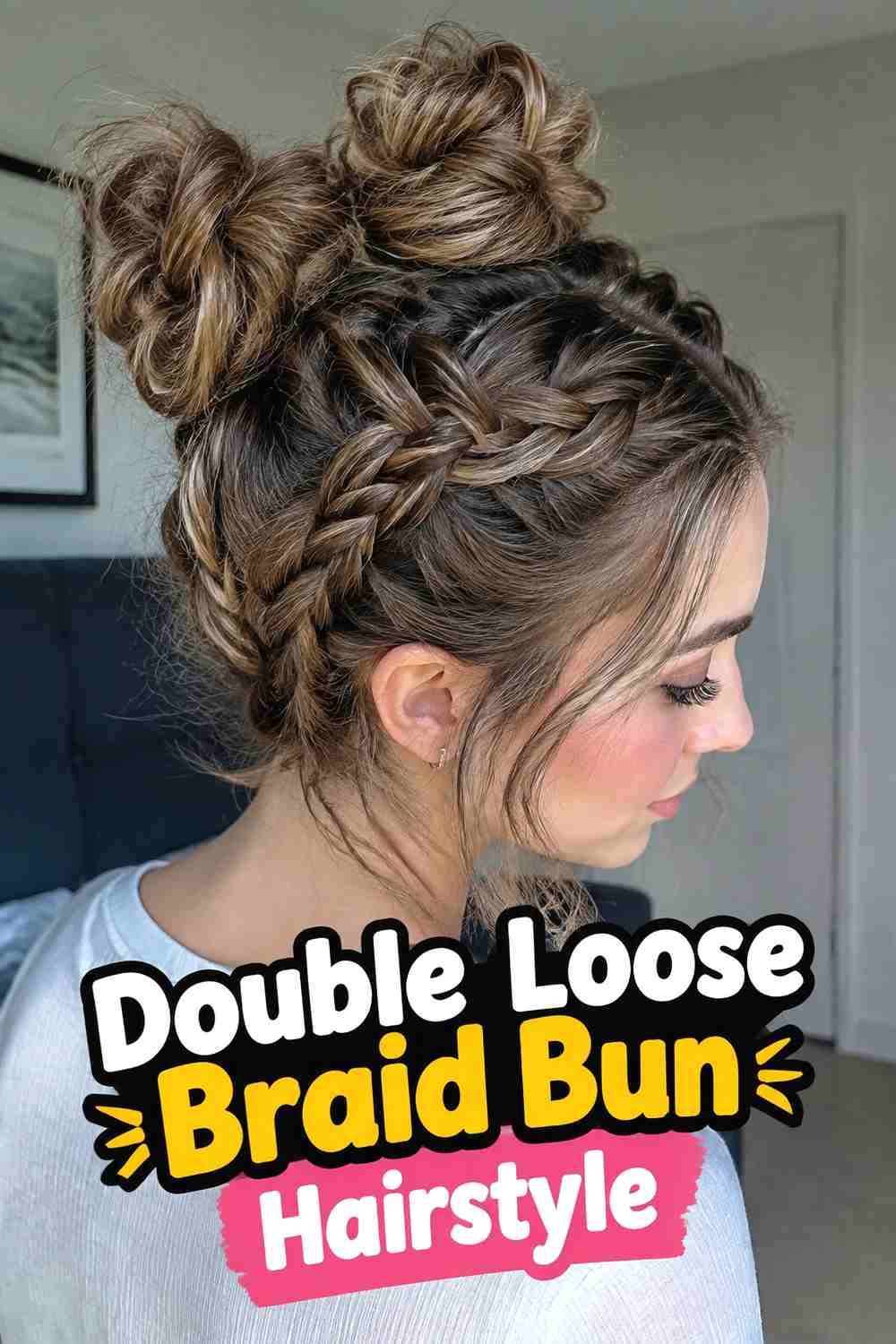
The Double Loose Braid Bun Hairstyle divides the hair into two sections, helping distribute the weight of thicker or longer hair across the back of the head. Each section is braided separately with moderate tension, then lightly widened to create a softer texture. The two braids can be crossed over one another and wrapped into a shared low bun, allowing their patterns to remain visible instead of disappearing inside one dense coil. This approach creates a detailed finish without requiring a tight ponytail as the foundation. It can be especially useful for dense hair because the divided sections are easier to control. Keep the crossing points loose enough to sit comfortably while using hidden pins for structural support.
Why It Works
Separating the hair reduces the bulk of each individual braid and creates several natural anchoring points. The result can feel more balanced than wrapping one very heavy braid into a single compact bun.
5. Soft Crown To Bun Braided Hairstyle
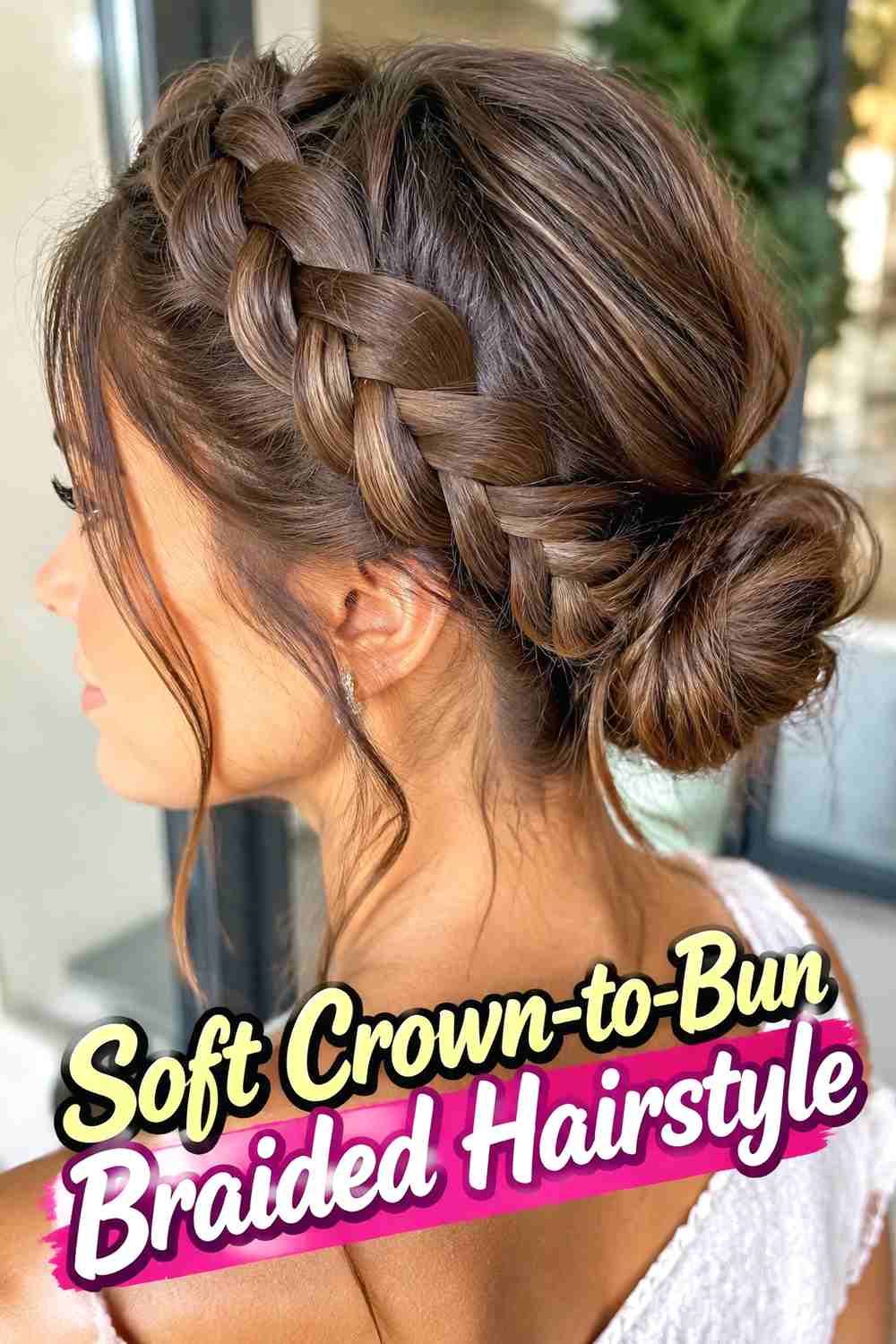
The Soft Crown-to-Bun Braided Hairstyle starts higher on the head but gradually transitions into a relaxed low bun, creating visual continuity from crown to nape. Hair is incorporated gently into the braid so the roots retain some natural movement instead of lying completely flat. As the braid approaches the lower back of the head, the remaining length is wrapped into a softly rounded bun and pinned without excessive compression. This creates a graceful winter updo with enough structure to look polished while still showing natural texture. A few subtle flyaways or lightly loosened sections can complement the relaxed finish. The style works particularly well when you want visible braid detail without adding separate accessories.
Wear & Maintenance
Place structural pins beneath the bun and along the braid transition rather than relying on a very tight elastic. A flexible-hold finishing spray can control flyaways while preserving the softer appearance.
6. Low Fishtail Braided Bun Hairstyle
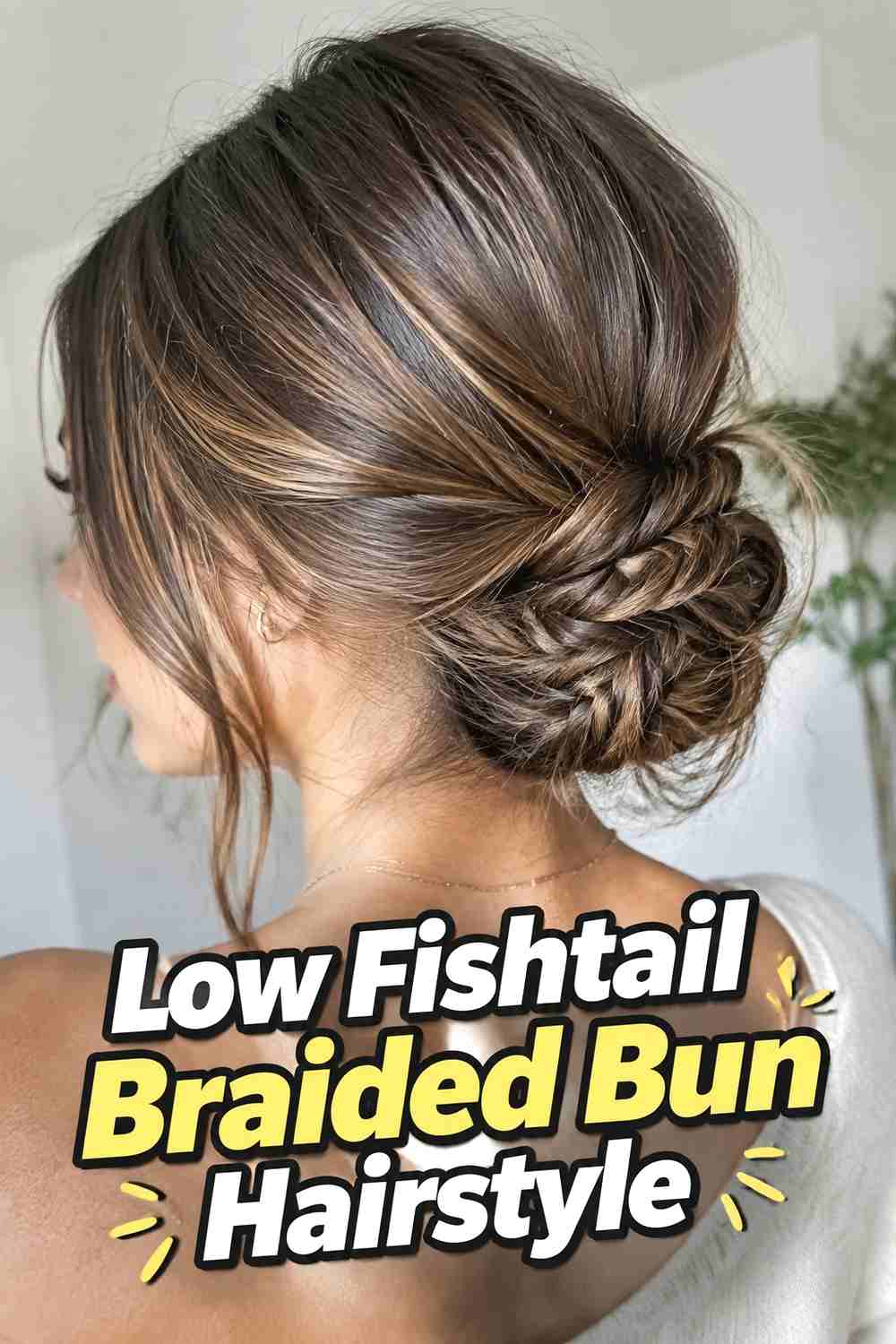
The Low Fishtail Braided Bun Hairstyle gives a relaxed bun a finer, more intricate texture. Hair is gathered loosely at the back and divided into two sections for a fishtail braid, using small crossed pieces to create the signature woven pattern. Once secured, the outer edges can be carefully widened so the braid looks fuller and less rigid. Wrap the finished fishtail into a low bun, leaving enough of the pattern visible around the outer edge to show its detail. This variation is ideal when a standard braid feels too simple but you still want a wearable winter updo. The intricate texture can look decorative on its own, making extra hair accessories optional rather than necessary.
Styling Notes
Do not begin with an overly loose fishtail, which can unravel during wrapping. Use moderate tension while braiding, secure the end, and then soften the pattern gradually before forming the bun.
7. Loose Rope Braid Bun Hairstyle
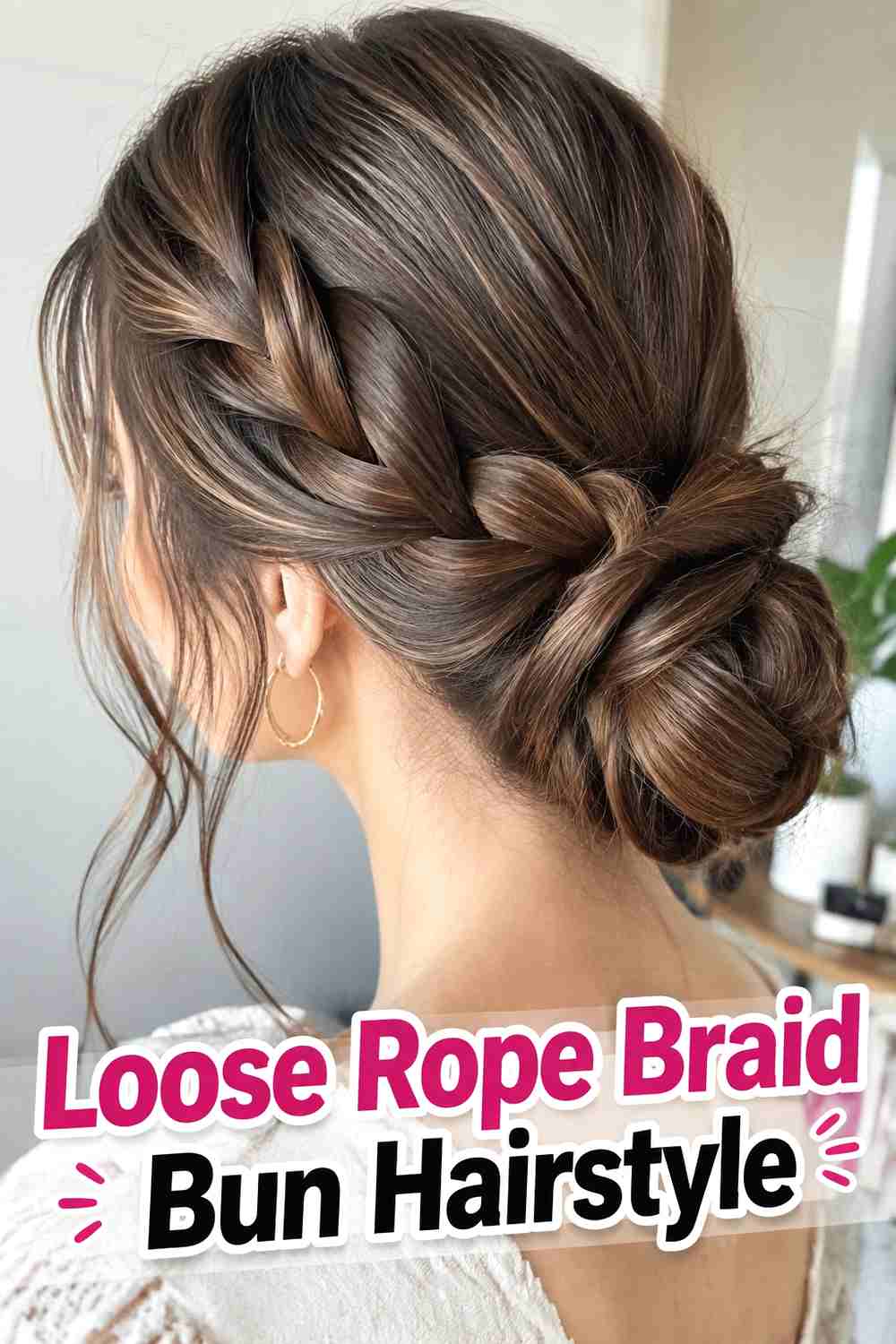
The Loose Rope Braid Bun Hairstyle creates a clean spiral texture using two twisted sections rather than a traditional three-strand pattern. Hair is divided into two pieces, each section is twisted, and the pair is wrapped around one another to create a rope-like braid. Keeping the initial twists controlled but not overly tight allows the finished braid to remain defined without producing a severely pulled look at the scalp. The rope braid can then be coiled into a soft low bun, where its curved pattern becomes especially visible. This style is useful when you want something quicker than a detailed Dutch or fishtail braid while still creating texture. It also works nicely with naturally smooth or softly wavy hair.
Best For
Choose this look when you want a streamlined braided effect with fewer sections to manage. Medium-long and long hair generally provide enough length for the rope pattern to remain visible after wrapping.
8. Scarf Wrapped Low Braided Bun Hairstyle
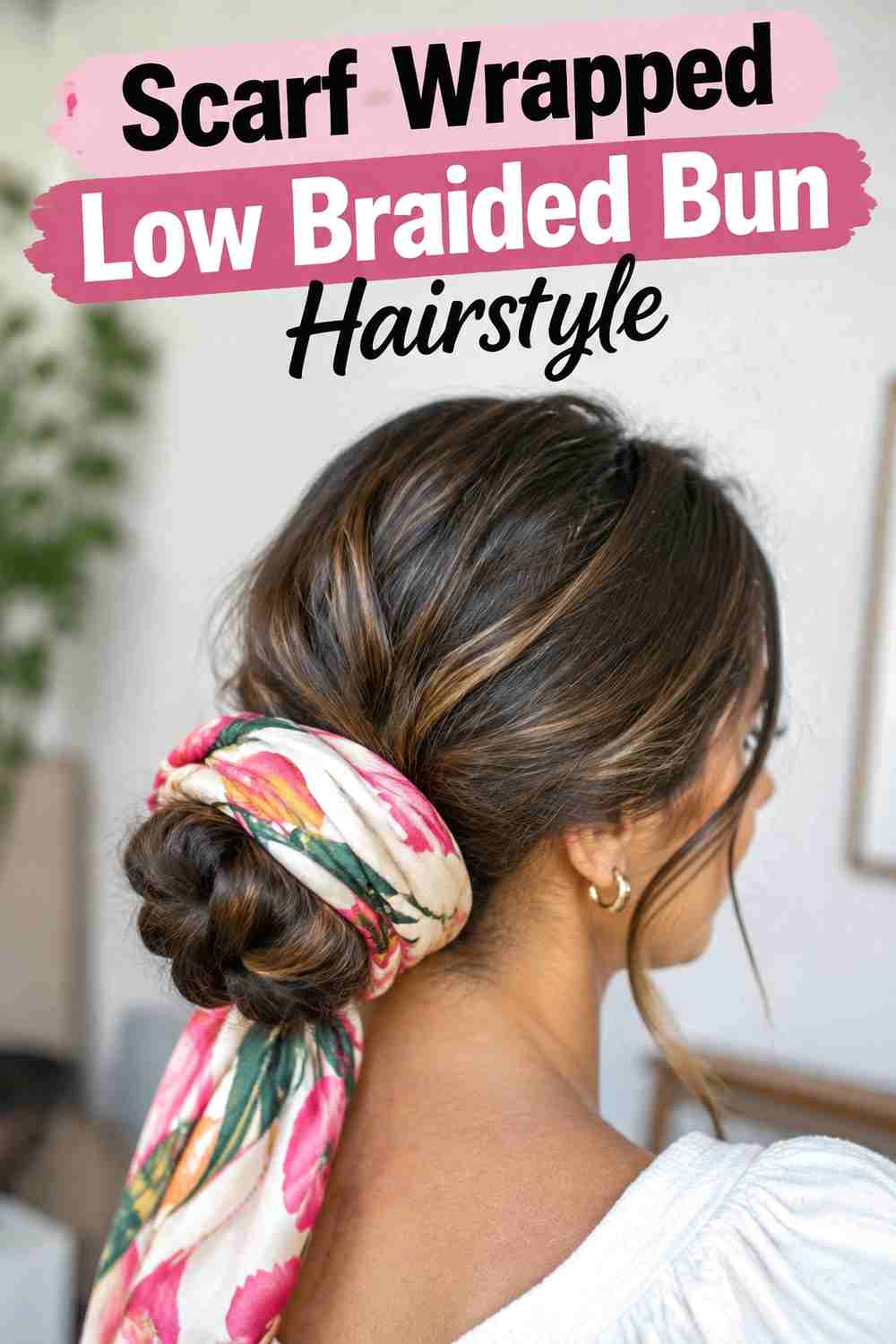
The Scarf-Wrapped Low Braided Bun Hairstyle introduces a winter-friendly accessory without making the underlying style complicated. Create a loose braid first, coil it into a low bun, and secure the hair independently before adding a narrow scarf or soft ribbon. The fabric can circle the bun once, weave partly through the braid, or finish with a small knot positioned away from the most detailed section. Seasonal plaid, muted prints, or solid colors can add interest to simple sweaters and coats. Keeping the scarf lightweight is important because a bulky fabric can hide the braid and pull unnecessarily on the style. The finished look should feel softly decorated rather than tightly bound by the accessory.
Pro Tip
Treat the scarf as decoration rather than structural support. Secure the braided bun completely with pins first, then add the fabric loosely enough that it does not compress the bun.
9. Soft Side Braid Bun Hairstyle
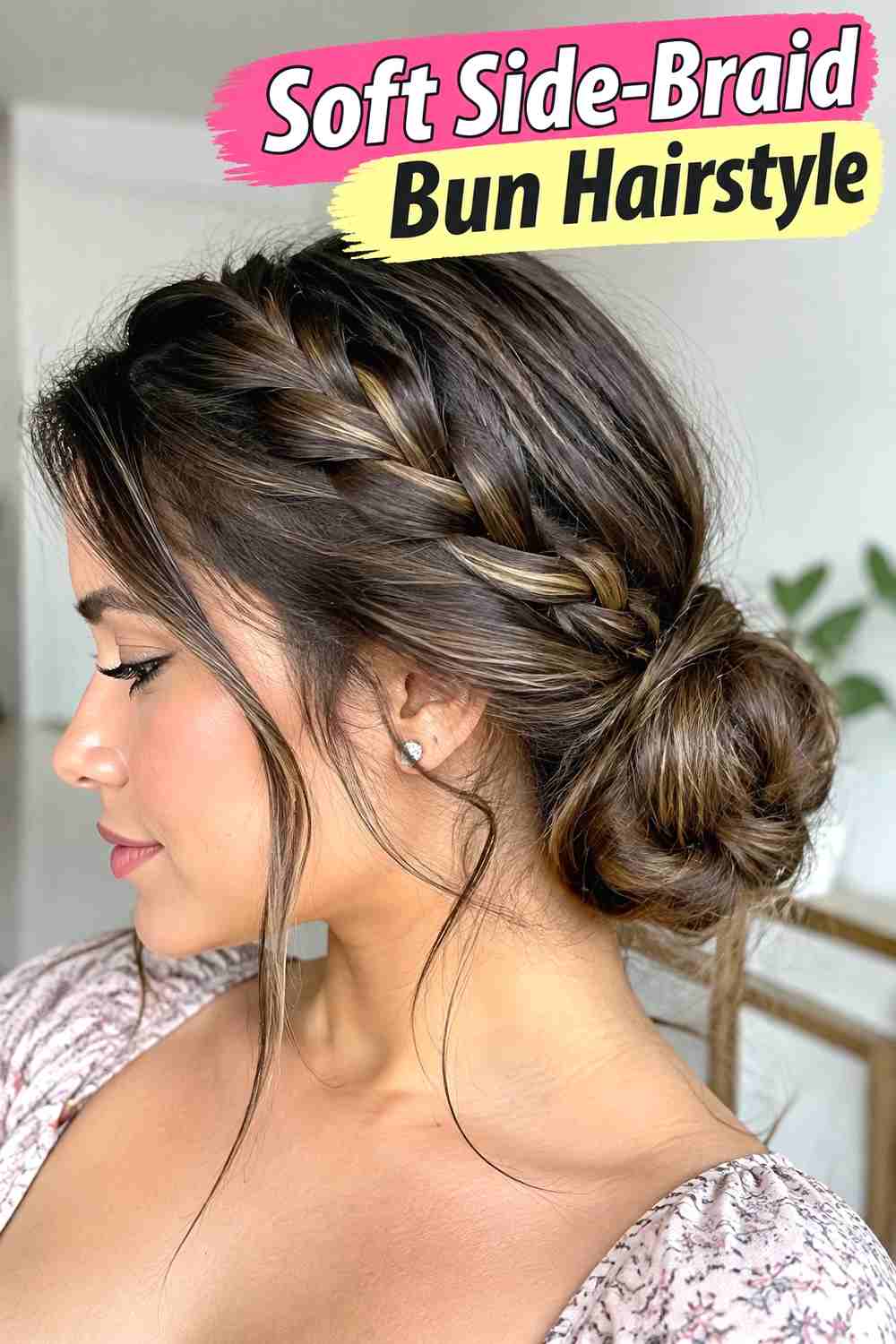
The Soft Side-Braid Bun Hairstyle keeps the front and crown relaxed while using one visible braid to lead into the bun. A section from one side is braided backward with gentle tension, while the remaining hair stays softly directed toward the nape. The braid and loose lengths meet at the back, where they are wrapped into a low, slightly undone bun. This design gives you visible braided detail without requiring the entire head to be braided. It can be particularly useful for naturally wavy hair because the unbraided sections retain their movement and help the bun look full. Leave the braid slightly widened for a winter style that feels polished but not overly formal.
Best For
This option suits anyone who wants braid detail with a relatively simple construction. It can also work well when front layers are too short to incorporate neatly into a full back braid.
10. Textured Low Braided Chignon Hairstyle
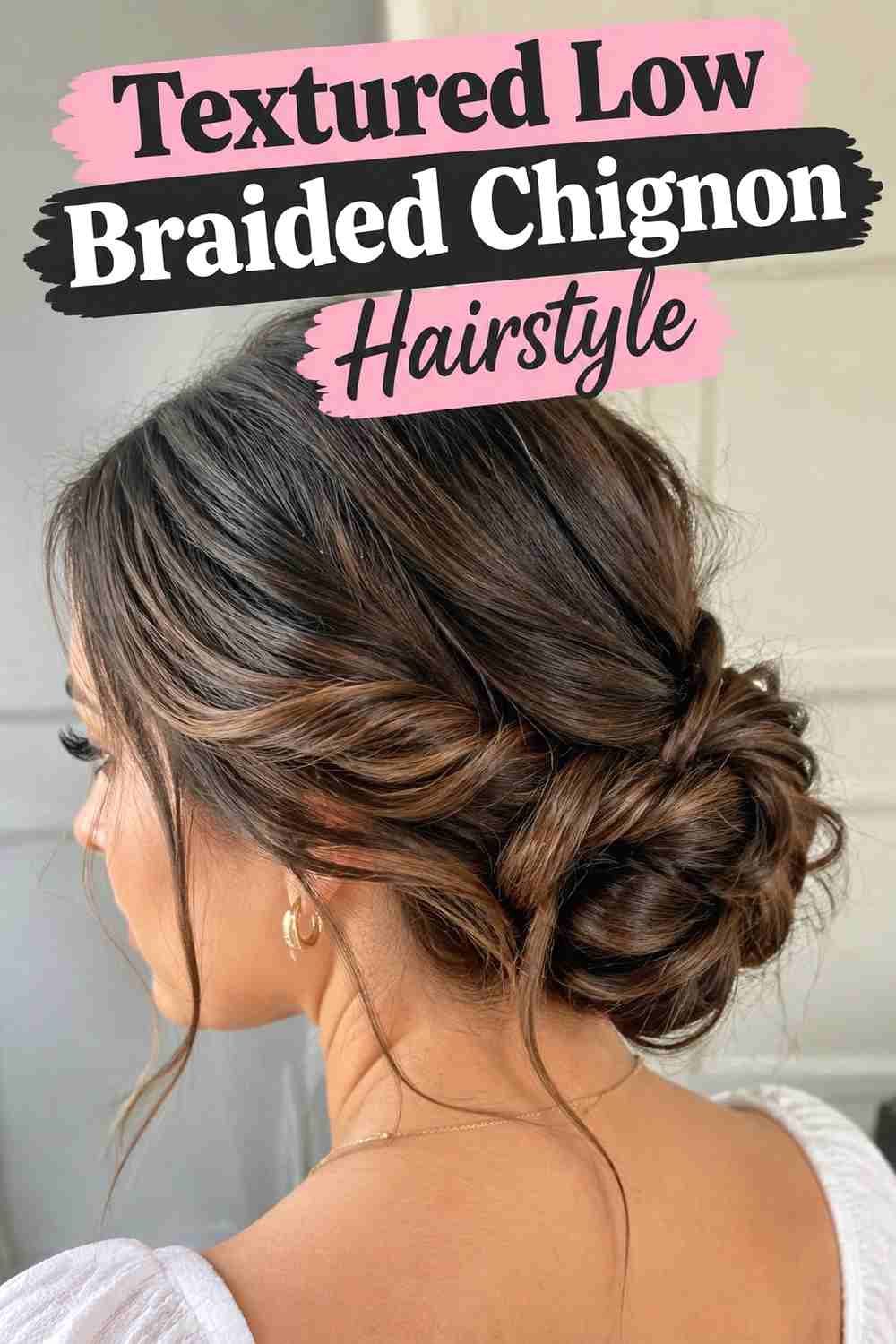
The Textured Low Braided Chignon Hairstyle combines the woven detail of a braid with the broad, tucked shape of a classic chignon. Instead of wrapping the braid into a small circular bun, spread the braided length horizontally across the nape and fold the ends inward. Gently loosened braid loops help create width and keep the chignon from looking too rigid. The finished style sits close to the head, which can be convenient under winter hats once the hat is removed, though very low placement may still meet thick coat collars. This variation feels slightly more refined than a casual braided bun and can transition easily from daytime wear to winter dinners, celebrations, or formal seasonal events.
Styling Notes
Pin the braid at several points across its width so one section does not carry all the weight. Keep the outer surface soft while making the hidden foundation secure.
11. Loose Halo Braided Bun Hairstyle
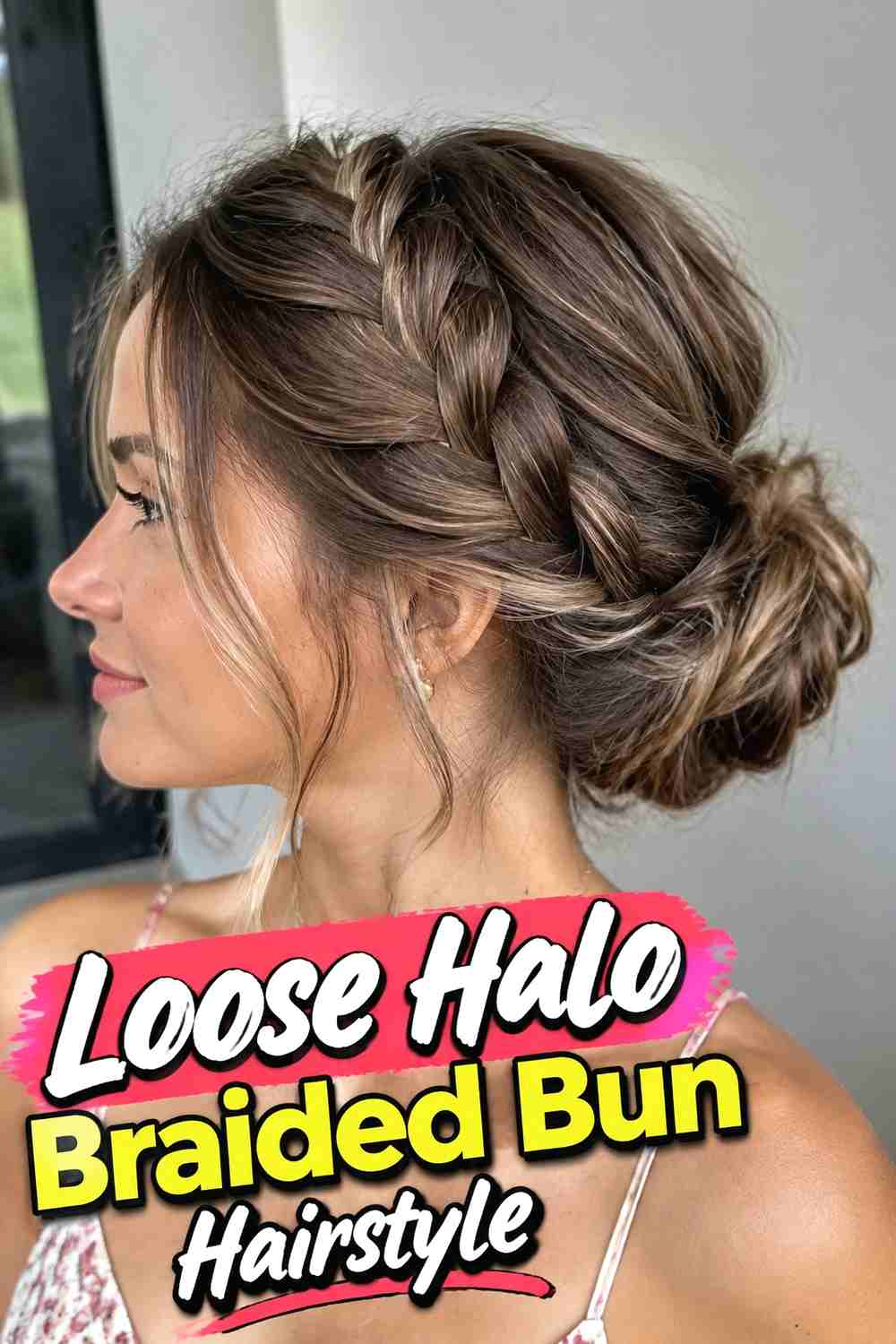
The Loose Halo Braided Bun Hairstyle frames the head with soft braided detail before finishing in a compact bun at the back. A braid begins near one side and curves around part of the crown like a partial halo, using gentle tension so the hairline does not appear tightly pulled. The remaining length joins the rest of the hair in a low bun, creating a continuous shape from the front, around the side, and into the back. Slightly widening the halo section makes the braid more visible and gives the style a romantic winter quality. This look works beautifully for gatherings and photographs because the braid can be seen from several angles instead of being concentrated entirely at the nape.
Wear & Maintenance
Use small pins along the curved braid only where needed, hiding them underneath the outer loops. Secure the bun separately so the halo braid does not need to support its full weight.
12. Pearl Pinned Low Braided Bun Hairstyle
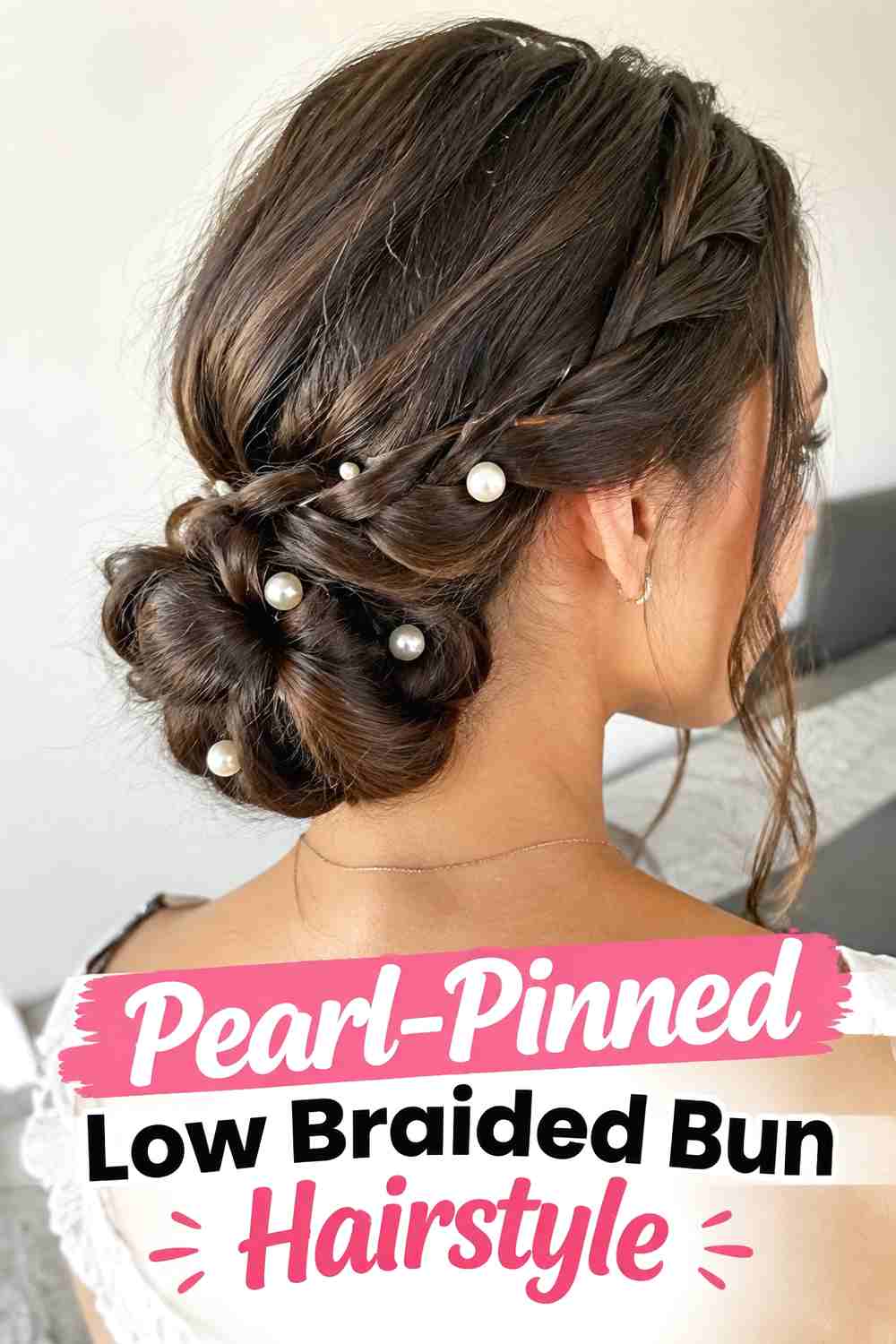
The Pearl-Pinned Low Braided Bun Hairstyle adds understated embellishment to a soft, low-tension base. Begin with a relaxed braid and wrap it into a bun that preserves some of the woven texture along the surface. Once ordinary bobby pins have secured the complete style, place a few pearl pins between selected braid loops or around one edge of the bun. Spacing them irregularly can look softer than creating a perfectly symmetrical pattern. This combination works especially well for winter weddings, dinners, holiday parties, and other dressier occasions where a plain bun may feel too simple. Keeping the crown lightly textured prevents the decorative details from making the overall hairstyle appear overly formal or rigid.
Pro Tip
Decorative pins should finish the hairstyle, not hold it together. Build a stable bun with hidden structural pins before adding pearls so you do not need to push the accessories tightly against the scalp.
13. Wavy Low Braided Bun Hairstyle
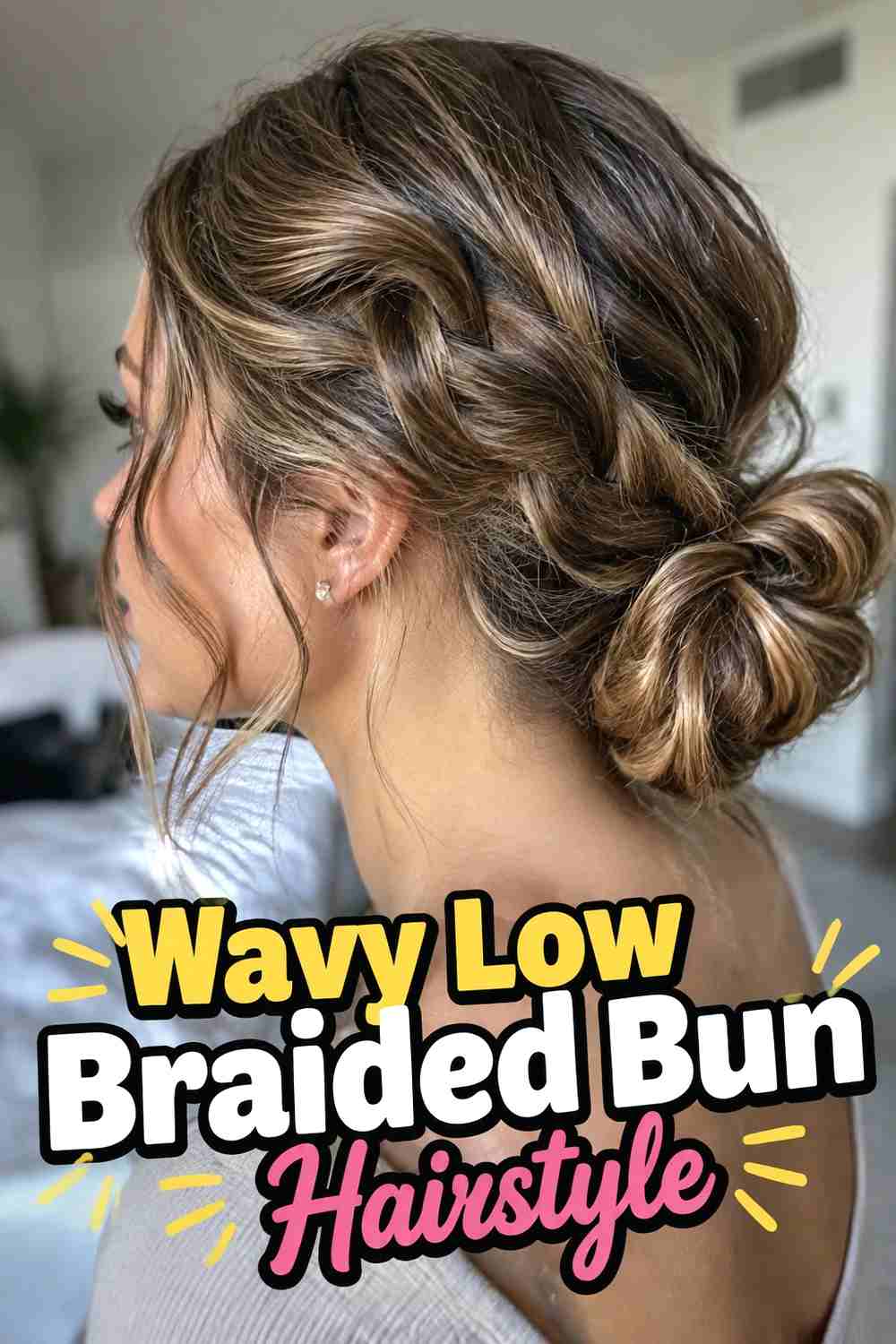
The Wavy Low Braided Bun Hairstyle allows natural movement to remain visible instead of smoothing every section before styling. Soft waves give the crown and sides an airy texture, while a relaxed braid adds definition through the lower lengths. Once braided, the hair is coiled into a loose low bun, with selected waves or face-framing sections left undisturbed for a softer outline. This is a useful option when your hair already has natural bend or when you want an intentionally less polished winter finish. Because the surface texture creates fullness on its own, there is usually no need to pull heavily on the braid. Secure the bun where it naturally rests rather than forcing it into an extremely compact shape.
Hair Type & Length
Naturally wavy and loosely curly textures can adapt easily to this style. Straight hair can achieve a similar appearance with soft bends added before braiding, especially through the crown and face-framing pieces.
14. Relaxed Center Part Braided Bun Hairstyle
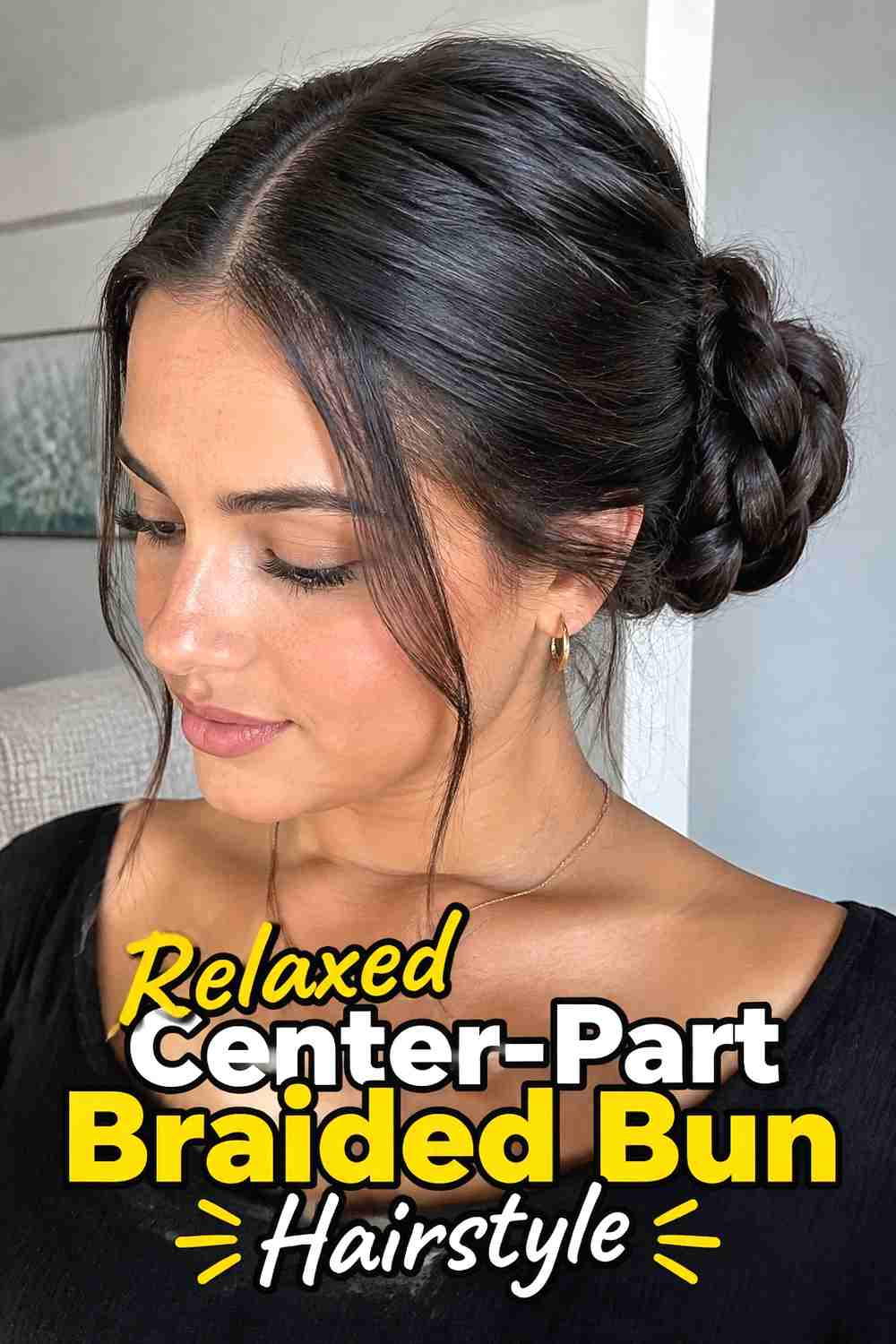
The Relaxed Center-Part Braided Bun Hairstyle balances a clean front shape with a softer braided finish at the back. A center part gives the hairstyle symmetry, but the sides are guided backward without being tightly slicked against the scalp. The lengths are braided with moderate tension, lightly loosened, and wrapped into a low bun that maintains visible texture. This combination is useful when you like the modern appearance of a center part but do not want the strongly pulled finish associated with some sleek buns. Fine flyaways and natural root movement can remain part of the style. Pair it with simple winter clothing or minimal accessories when you want the braid itself to provide most of the visual interest.
Why It Works
The precise part adds structure while the softer sides and braided bun prevent the style from feeling severe. Adjust the bun height to avoid direct contact with bulky scarves or high coat collars.
How to Choose the Right Look
Start by deciding how much braided detail you want. A Soft Low Three-Strand Braided Bun Hairstyle or Loose Rope Braid Bun Hairstyle keeps the technique relatively simple, while Dutch, fishtail, halo, and double-braid versions create more visible texture. If you have dense or very long hair, two smaller braids or a broad chignon can distribute the length more evenly than one compact coil.
Consider your natural texture as well. Waves and curls can provide volume without much manipulation, making softly textured buns an easy fit. Fine or very smooth hair may benefit from light texture spray before braiding so the sections hold their shape without needing excessive tension.
Winter clothing should influence placement. A bun positioned directly at the base of the neck may rub against a thick scarf or raised coat collar, so moving it slightly higher can improve comfort. Decorative options such as scarves or pearl pins are best added after the hairstyle is securely pinned.
Finally, choose the finish according to your styling time and occasion. Loose three-strand and rope braids are relatively straightforward, while fishtails and halo braids require more detailed sectioning. For everyday wear, prioritize a stable but comfortable shape. For special occasions, extra texture, accessories, or a softly structured chignon can add visual detail without making the hairstyle unnecessarily tight.
Final Thoughts
Winter low-tension braided buns can look polished without depending on a severely pulled foundation. The key is balancing softness with enough hidden support to keep the braid and bun stable. Choose a simple braid for everyday styling, add waves for texture, or introduce pearls and a scarf when you want a more decorative finish. Small changes in braid type, bun height, and looseness can make the same basic concept work for many winter occasions.
FAQs
1. What makes a braided bun low tension?
A low-tension version uses comfortable braid tension, avoids pulling the roots excessively tight, and relies on well-placed pins for support rather than making the ponytail or braid unusually tight.
2. Can a low-tension braided bun stay secure?
Yes. A softer style can still be secure when the braid is properly anchored and the bun is supported with several pins placed from different directions. Low tension does not have to mean loosely attached.
3. Which braided bun works well for thick hair?
The Double Loose Braid Bun Hairstyle can be practical for thicker hair because dividing the length into two braids reduces the bulk of each section and creates multiple anchoring points.
4. How should I wear a braided bun with a winter scarf?
Position the bun slightly above the area where your scarf or coat collar sits. Reducing constant rubbing can help preserve the shape and make the hairstyle more comfortable.
5. Can I create these braided buns on naturally curly or wavy hair?
Yes. Waves and curls can add useful texture and volume to relaxed braided buns. You can preserve the natural pattern through the crown and sides or smooth selected sections when you want clearer braid definition.
Save your favorite low-tension braided bun ideas for winter styling, share the looks you love, and explore more braided hairstyle inspiration for your next updo.