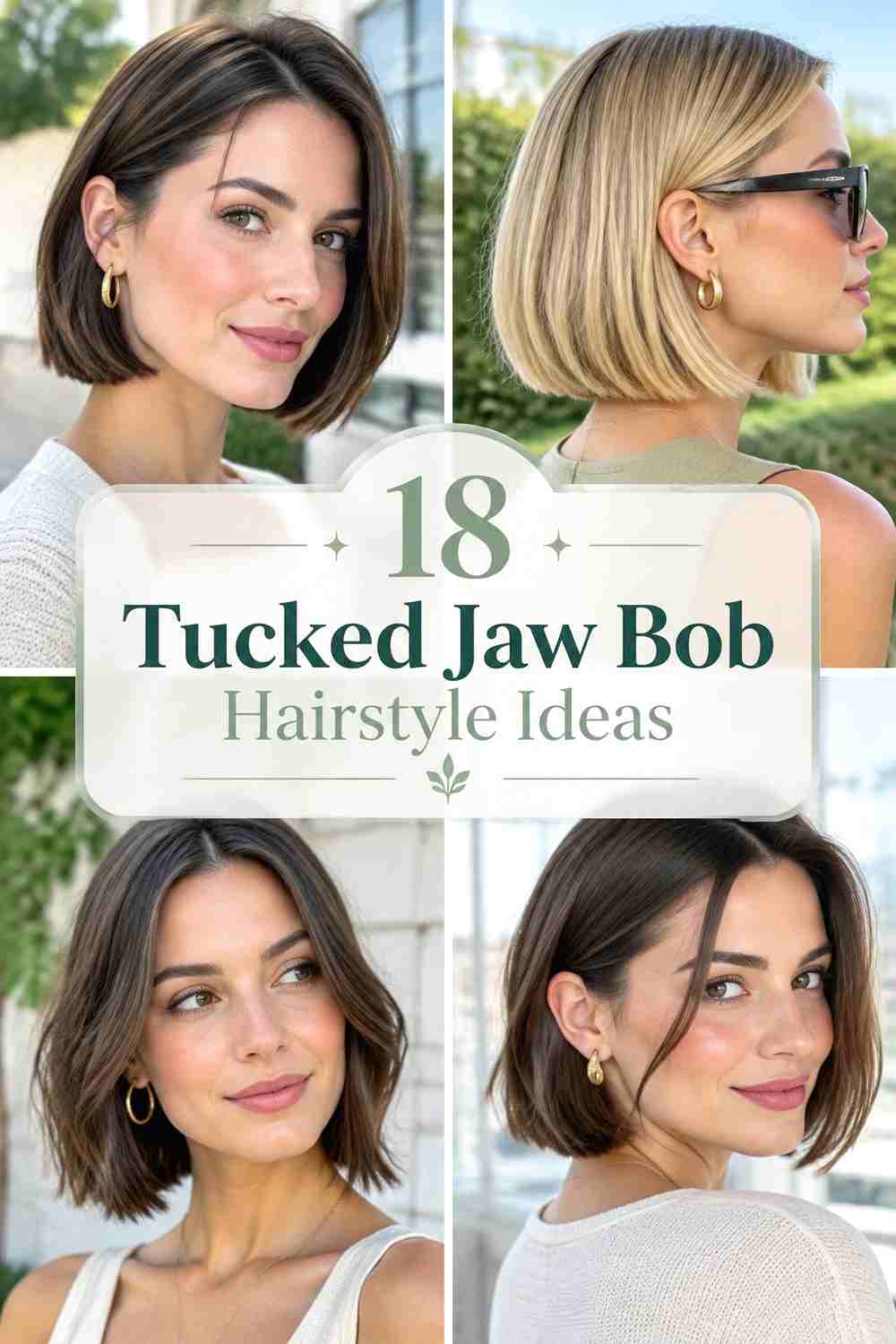
14 Clean Jaw-Length Styling With Winter Trouser Suits
Clean jaw-length hair brings sharp definition to winter trouser suits, balancing structured tailoring with compact silhouettes, polished texture, and effortless face-framing movement.
Winter trouser suits often rely on strong shoulders, long lapels, pressed lines, and layered fabrics. A jaw-length haircut keeps the neckline open and visually light, so the tailoring remains visible instead of disappearing beneath longer hair. The shorter perimeter also makes subtle differences in parting, end direction, and texture especially noticeable.
Before choosing a finish, consider your natural density and how your suit is styled. Straight blunt bobs echo sharper tailoring, softly beveled ends work well with fluid wool trousers, and ear tucks create more room around collared shirts or turtlenecks. The most polished result should still show natural movement rather than looking stiff or overly sculpted.
Quick List
- Sleek Jaw Length Bob Hairstyle
- Center Part Precision Bob Hairstyle
- Side Part Jawline Bob Hairstyle
- Ear Tucked Jaw Length Hairstyle
- Blunt Jaw Length Bob Hairstyle
- Soft Beveled Jaw Length Hairstyle
- Glossy Straight Jaw Length Hairstyle
- Deep Side Part Sculpted Bob Hairstyle
- Jaw Length Bob With Curved Ends Hairstyle
- Minimalist Tucked Behind Ears Bob Hairstyle
- Textured Clean Line Jaw Length Hairstyle
- Jaw Length Bob With Fine Face Layers Hairstyle
- Polished C Curve Jaw Length Hairstyle
- Asymmetrical Jaw Length Bob Hairstyle
1. Sleek Jaw Length Bob Hairstyle
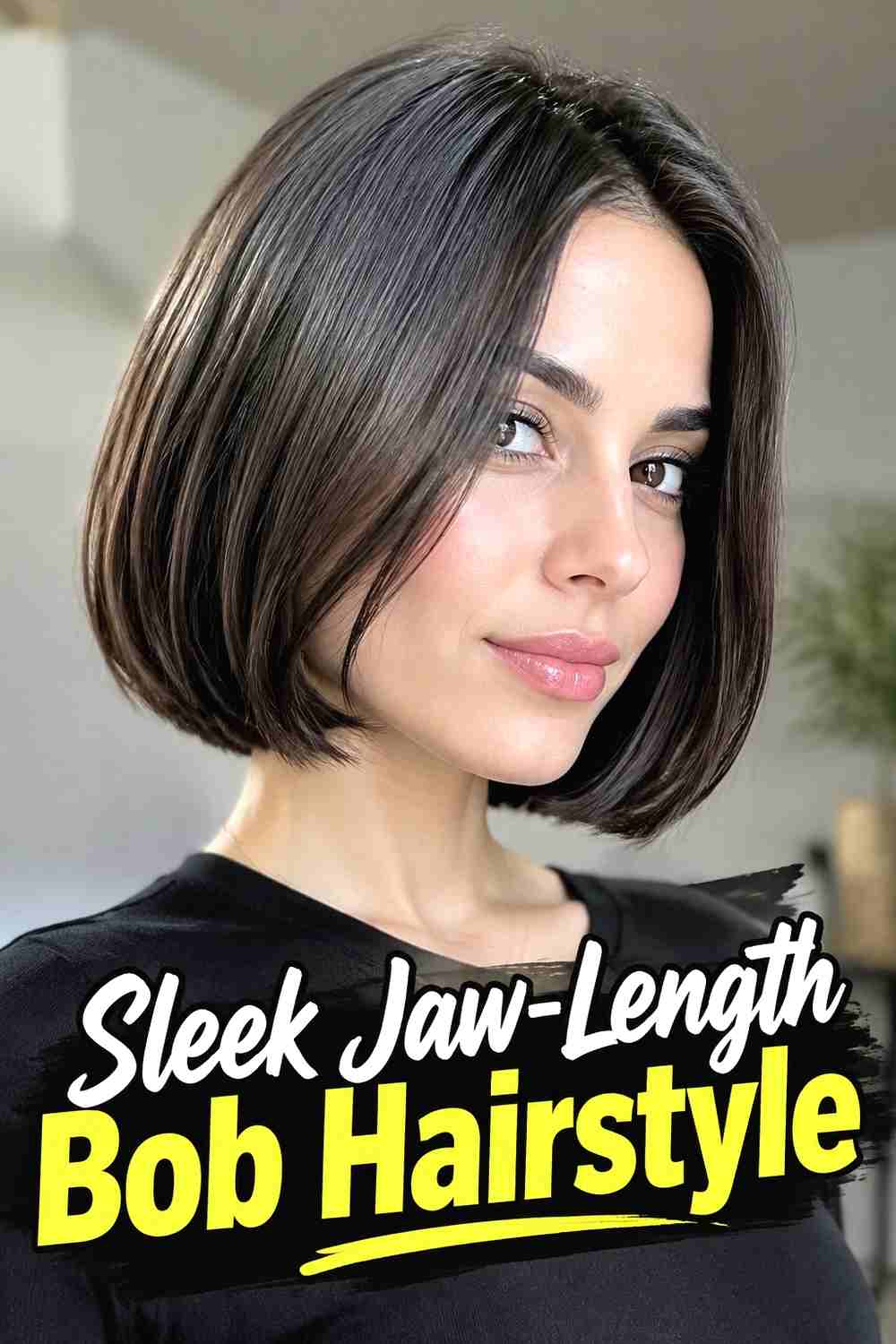
A sleek jaw-length bob creates a compact, polished outline that feels naturally aligned with winter tailoring. Keep the hair smooth from the roots through the perimeter, but preserve enough movement that the cut does not look rigid. The ends should land cleanly around the jaw, where they create a strong horizontal line above suit lapels and layered collars. This finish works particularly well with structured blazers and wide or straight trouser legs because the short hair prevents the upper half of the outfit from becoming visually heavy. A center or slight side part can both work. Keep shine concentrated through the surface and ends while leaving the roots light and naturally lifted.
Styling Notes
Blow-dry downward with a paddle or round brush, then refine only the sections that need extra smoothness. Avoid repeatedly flattening the roots.
Best For
This style is especially effective on straight or lightly wavy jaw-length hair with a clean perimeter and moderate density.
2. Center Part Precision Bob Hairstyle
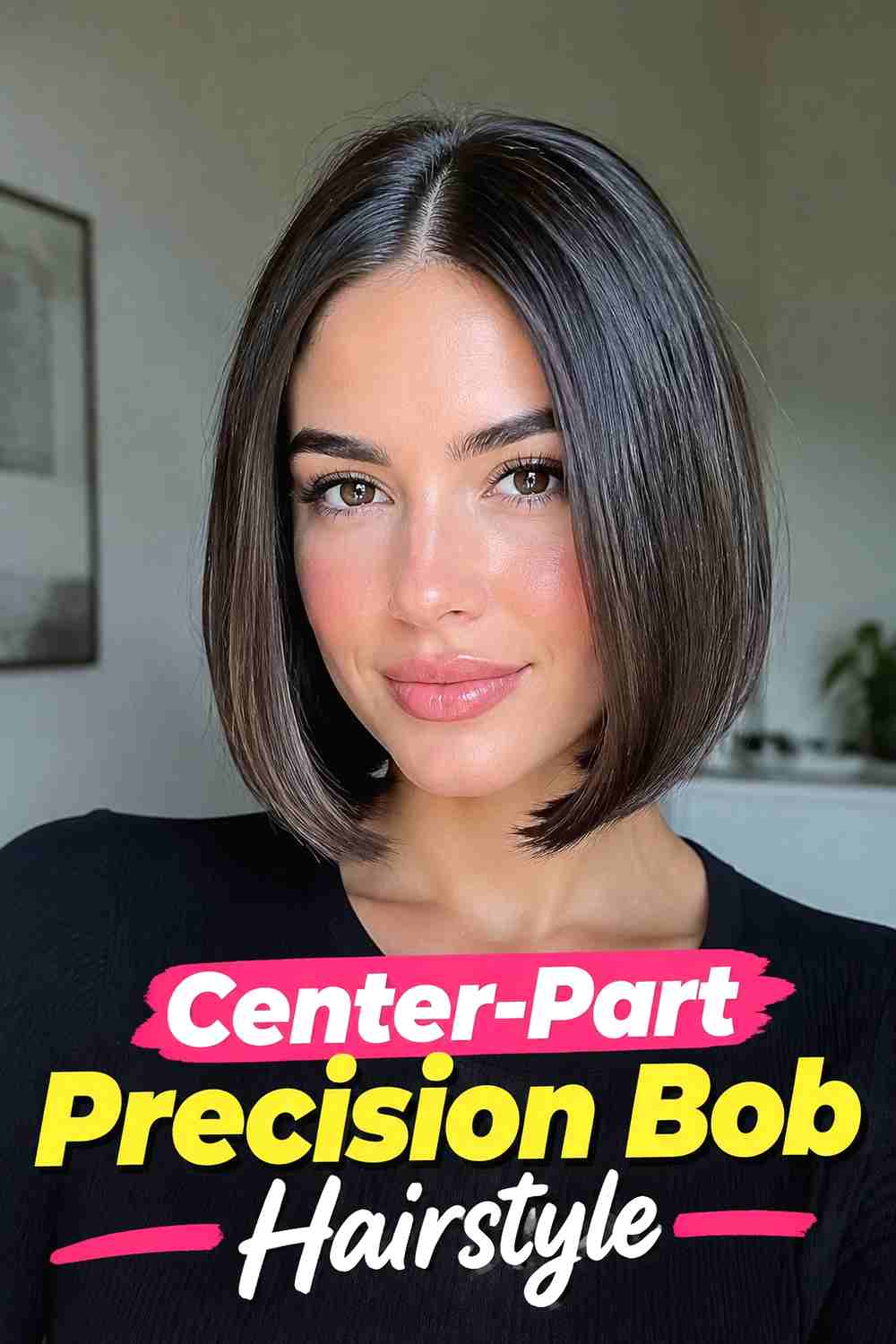
A precision bob with a center part gives tailored winter dressing an especially graphic finish. The clean part divides the hair evenly while both sides fall toward the jaw in controlled, symmetrical sections. Keep the perimeter sharp enough to show the haircut’s shape, but allow slight natural separation through the ends so it still feels wearable. This look works beautifully with double-breasted jackets, pressed trouser creases, and fitted turtlenecks because the hair repeats the outfit’s strong geometry without adding extra bulk. A little volume near the crown keeps the symmetry from appearing flat. The most important detail is balance: both sides should sit at a similar length and weight around the face.
Why It Works
The center part reinforces the symmetry of tailored suiting while the jaw-level perimeter keeps the neckline crisp and fully visible.
Pro Tip
Establish the part before drying so the roots fall naturally to each side rather than needing constant correction.
3. Side Part Jawline Bob Hairstyle
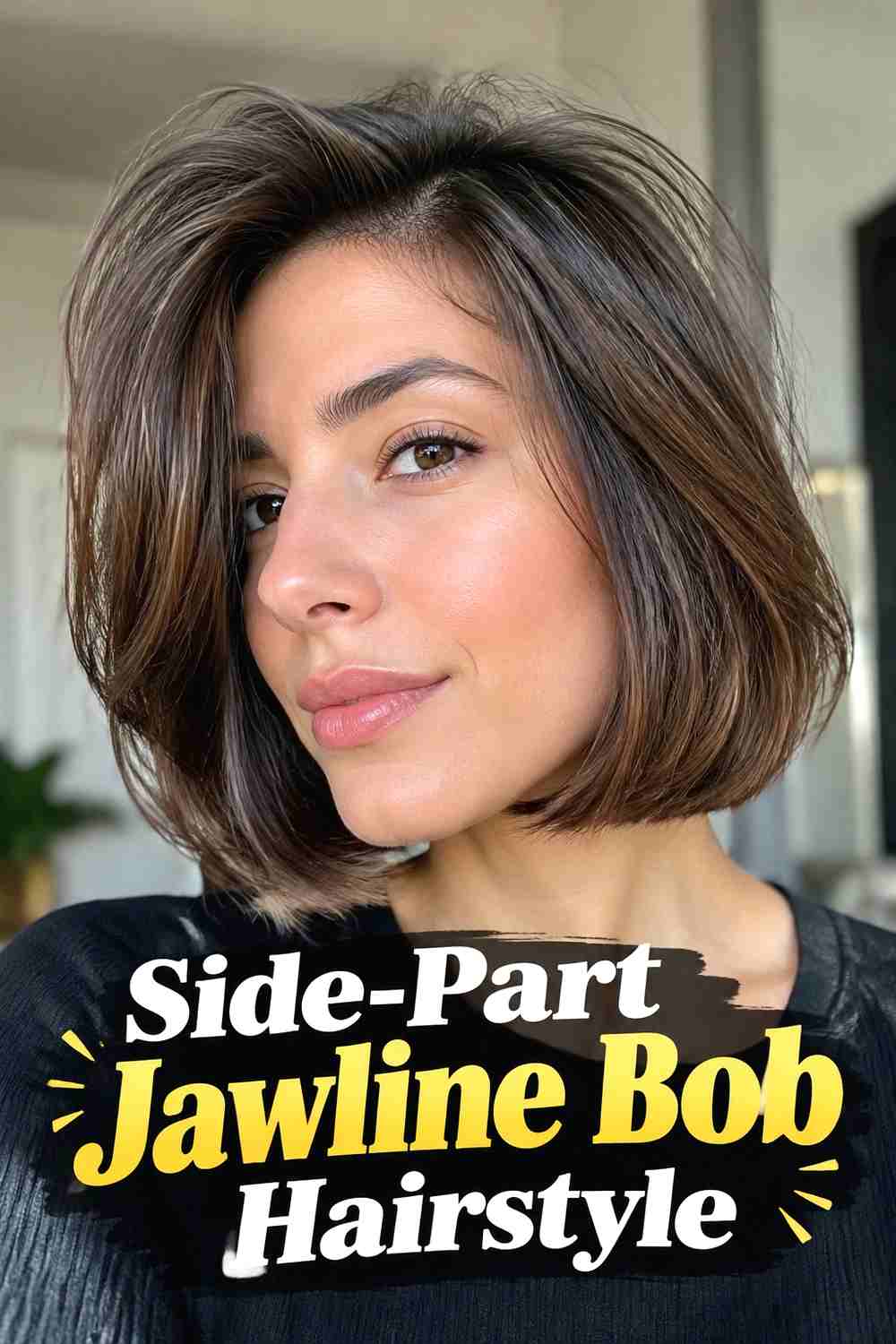
A side part introduces movement to a jawline bob without sacrificing its clean, professional outline. Sweep the heavier side across the forehead with restrained lift, then keep the lengths smooth as they fall toward the jaw. The lighter side can remain close to the cheek or tuck neatly behind the ear, depending on how open you want the suit neckline to feel. This asymmetry works especially well with trouser suits because it softens sharp lapels and straight trouser lines while maintaining a refined overall shape. Keep the ends compact and avoid excessive curling. A slight inward direction at the front is enough to connect the hair naturally to the jaw.
Styling Notes
Dry the heavier side in the direction of the part before refining the ends. This creates movement without depending on stiff hairspray.
Best For
Choose this finish when you want a tailored bob to feel slightly softer or more directional than a strict center-part style.
4. Ear Tucked Jaw Length Hairstyle
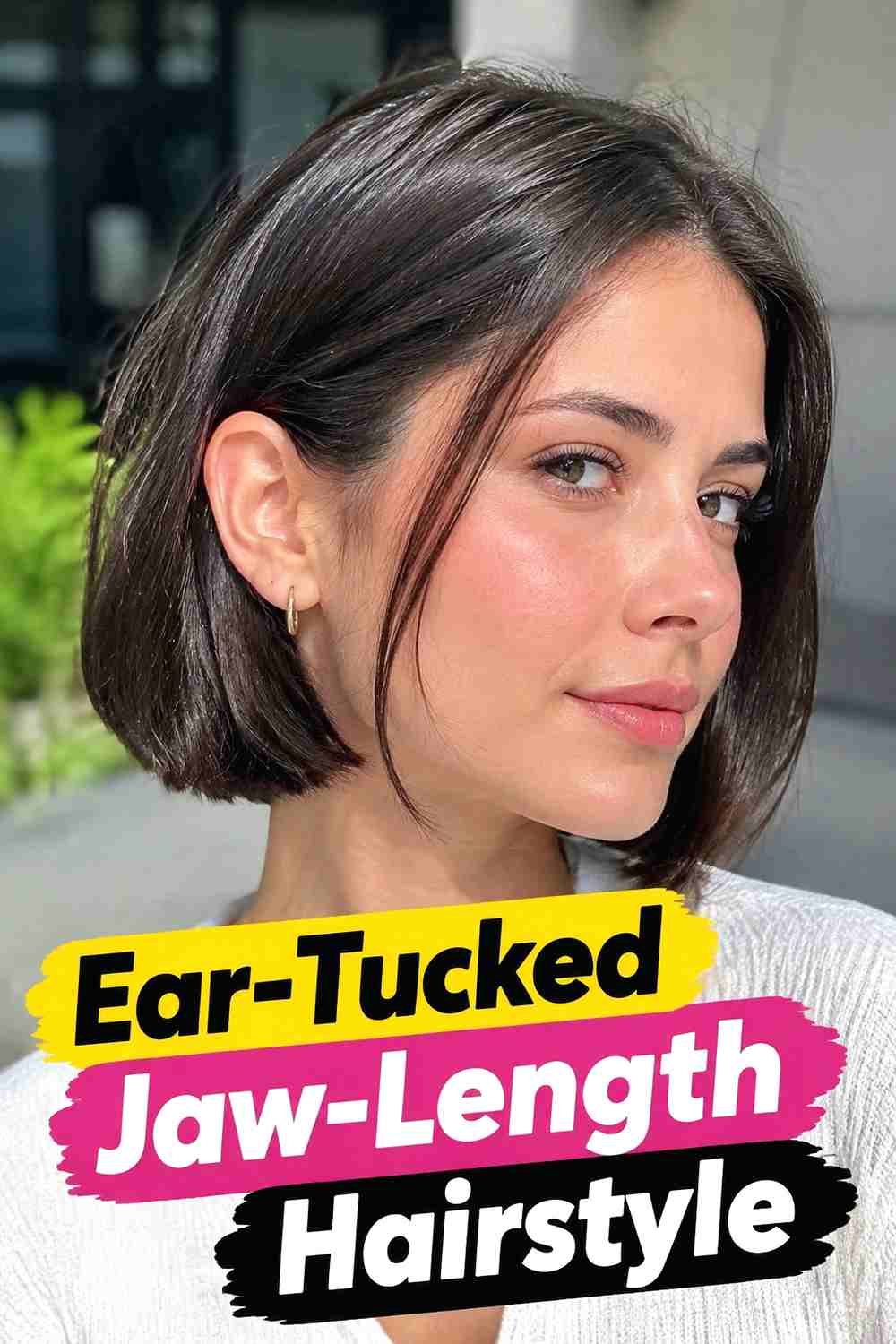
An ear tuck instantly makes a jaw-length cut feel cleaner and more intentional beside winter suiting. Keep one side smooth and tucked behind the ear while the opposite side remains loose enough to frame the cheek and jaw. The exposed side reveals more of the blazer collar, shirt neckline, or earrings without requiring a full updo. This works particularly well on short bobs because there is little excess length to manage once the front section is tucked. Straight, wavy, and softly textured hair can all suit the shape. Avoid forcing a thick section behind the ear; using only the temple and front pieces keeps the tuck comfortable and preserves natural volume.
Why It Works
The asymmetrical opening creates visual space around a structured suit collar while the untucked side keeps the hairstyle soft.
Wear & Maintenance
Use a small amount of flexible hold near the tucked side if needed, especially when shorter pieces tend to slip forward.
5. Blunt Jaw Length Bob Hairstyle
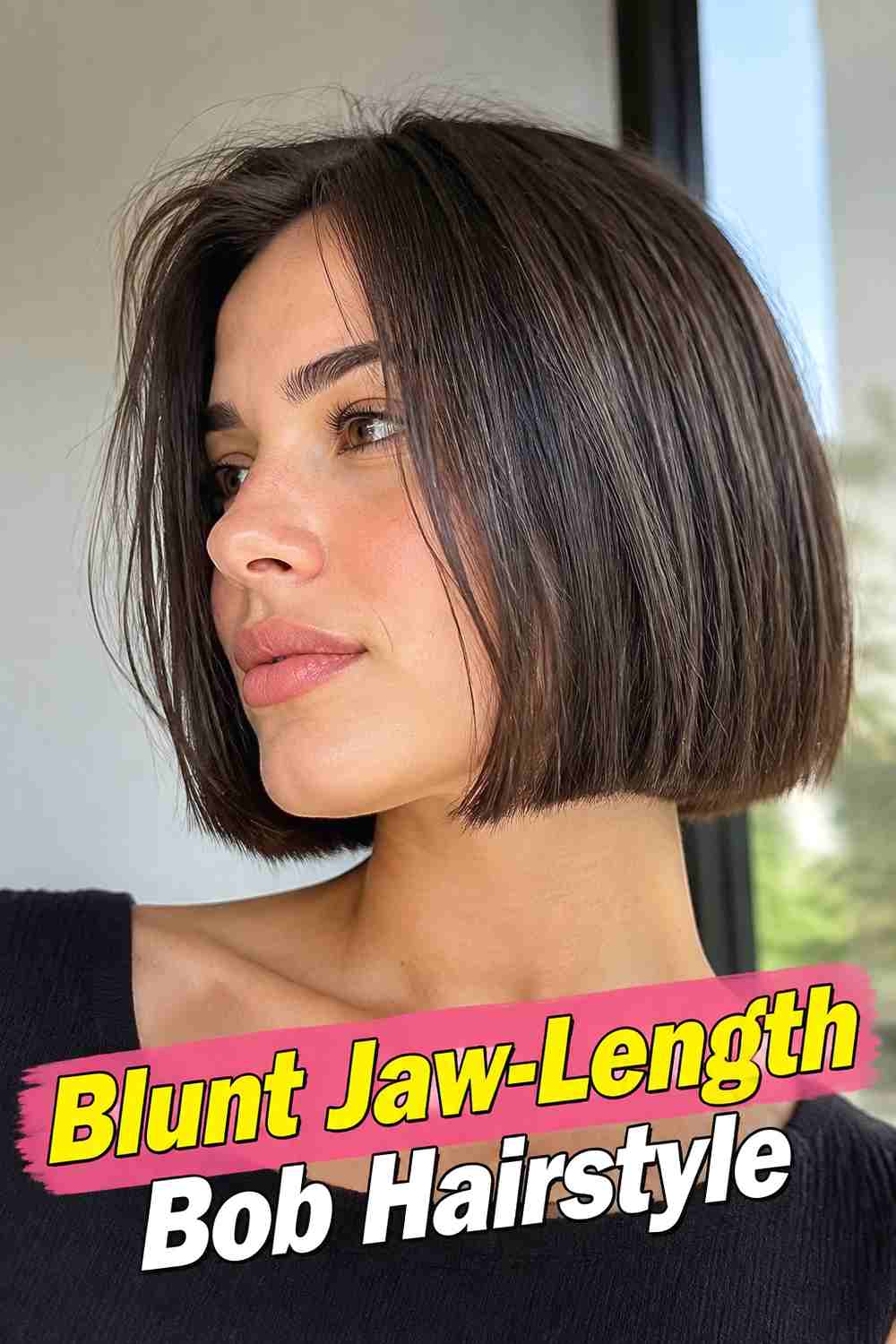
A blunt jaw-length bob has enough structure to stand up visually beside a strong winter trouser suit. The ends form one clear perimeter with minimal layering, giving the hairstyle weight and definition without extending onto the shoulders. Keep the surface smooth but not overly glossy, allowing individual strands to remain visible. This cut pairs especially well with sharp wool blazers, high-waisted trousers, and minimalist knit tops because both the haircut and outfit rely on precise lines. Dense hair may need subtle internal weight removal to prevent the shape from becoming triangular. The strongest version feels deliberate from every angle, with ends that sit neatly at the jaw rather than flipping unpredictably.
Hair Type & Length
Straight, slightly wavy, and medium-to-dense hair can carry the blunt outline particularly well when the perimeter is maintained regularly.
Styling Notes
Dry the ends downward first. Add only a slight inward bend if needed to prevent the blunt edge from kicking outward.
6. Soft Beveled Jaw Length Hairstyle
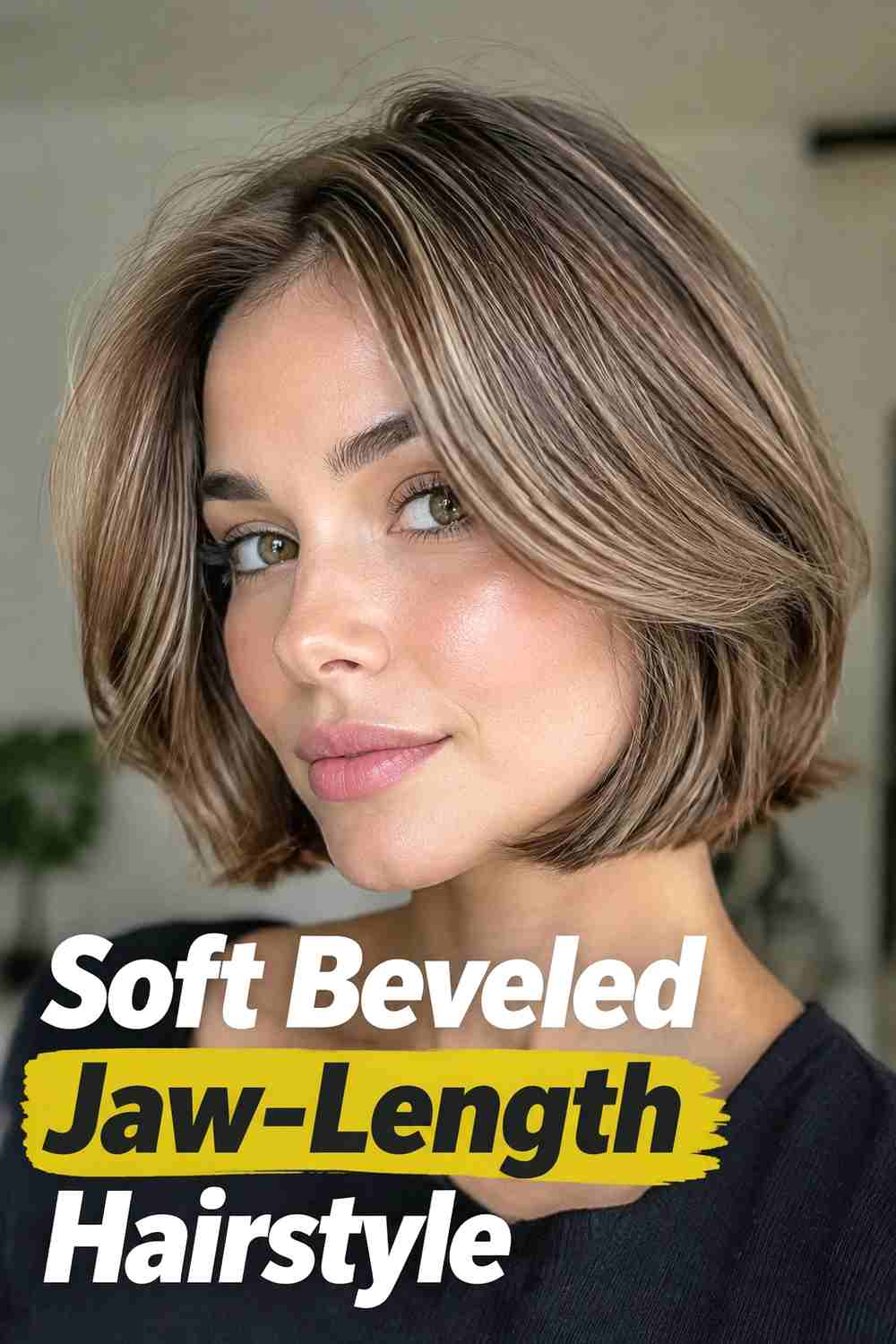
A beveled finish softens a jaw-length cut by turning the bottom edge slightly inward rather than leaving it completely blunt. The upper section remains smooth and close to the head, while the ends follow a gentle curve toward the neck and jaw. This makes the style especially flattering with softer winter tailoring, such as brushed wool suits, pleated trousers, or relaxed blazers. The curve should remain broad and subtle so the haircut still reads as clean rather than curled. Fine to medium-density hair often responds well to the shape because the bevel creates a fuller-looking perimeter without adding actual bulk around the shoulders.
Styling Notes
Use a medium round brush under the final inch or two of hair, allowing the section to cool before brushing it lightly into place.
Why It Works
The curved edge balances strong suit lines with a softer finish while maintaining the compact proportion of a jaw-length cut.
7. Glossy Straight Jaw Length Hairstyle
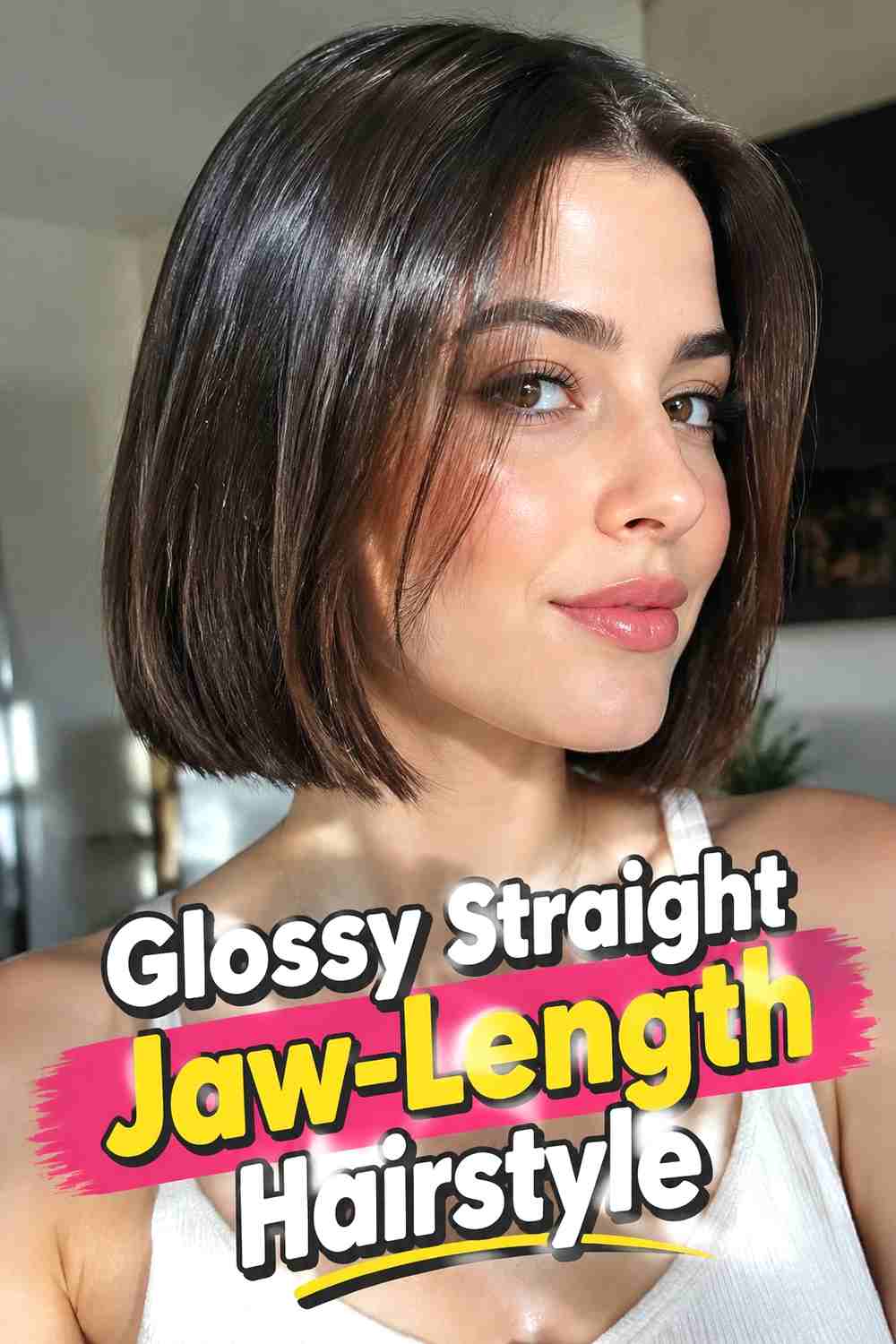
A glossy straight bob brings a polished surface to tailored winter dressing without relying on elaborate shaping. Keep the hair smooth from roots to ends, with enough natural body that the crown still looks dimensional. The jaw-length perimeter should remain clean and slightly mobile rather than frozen into place. This style pairs especially well with monochromatic suits, dark wool trousers, and fine-gauge knit layers because the shine adds contrast to matte winter fabrics. Use finishing product sparingly; too much oil can make short hair look flat quickly. A small amount through the mid-lengths and ends is usually enough to highlight the surface while leaving the root area fresh.
Best For
This finish works especially well on straight or smoothed hair when you want the suit and haircut to feel equally crisp.
Pro Tip
Apply shine product to your palms first, then skim it over the lower half of the hair rather than placing it directly at the roots.
8. Deep Side Part Sculpted Bob Hairstyle
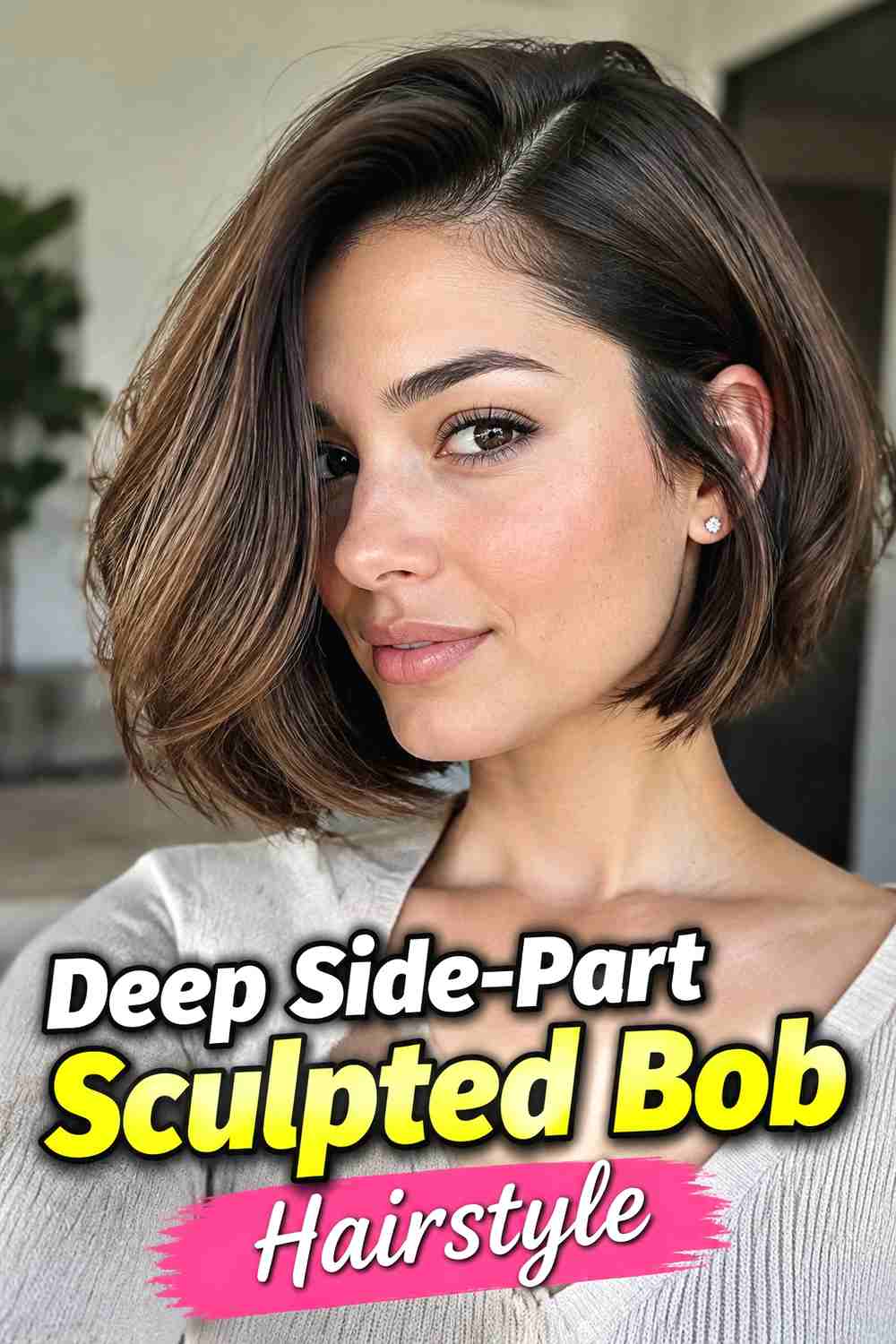
A deep side part creates a stronger silhouette around the forehead and gives a short bob a more fashion-forward attitude. Sweep the heavier section across the top with controlled lift, then shape the lengths so they follow the jaw without becoming excessively rounded. The lighter side can be tucked behind the ear to emphasize the part and reveal the suit neckline. This look works particularly well with oversized blazers or broad trouser silhouettes because the diagonal movement at the top introduces visual contrast. Keep the back compact and smooth so the hairstyle remains balanced from the side. The sculpting should feel deliberate but still flexible enough to move naturally.
Why It Works
The dramatic part adds directional movement above a highly structured outfit while the short perimeter prevents the look from becoming overly voluminous.
Styling Notes
Set the deep part while drying, then refine only the front curve and ends rather than reshaping the entire bob.
9. Jaw Length Bob With Curved Ends Hairstyle
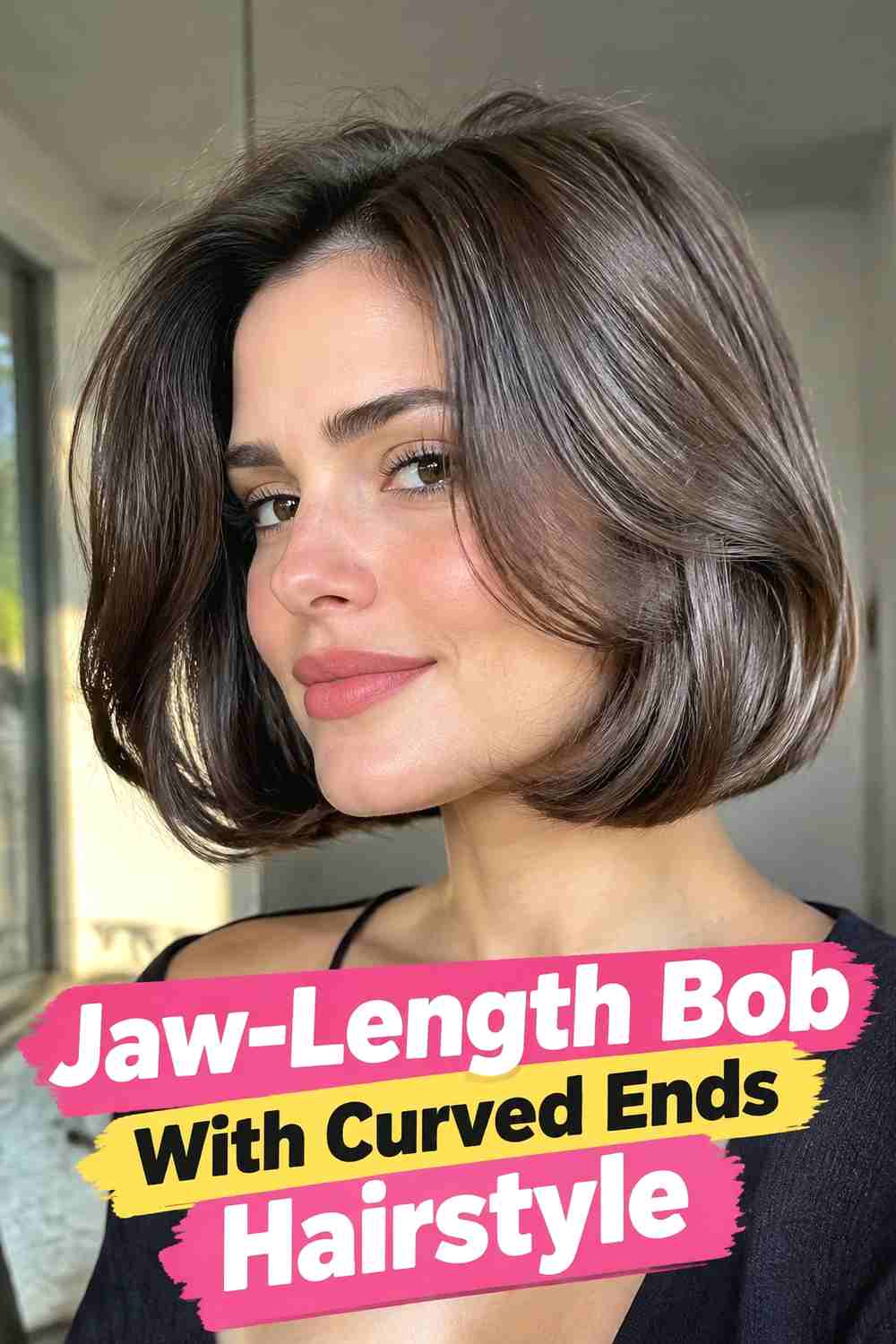
A jaw-length bob with curved ends introduces softness without losing the precision that works so well with trouser suits. Keep the crown and mid-lengths relatively straight, then turn the last section gently inward so the ends follow the contour of the jaw. This creates a rounded stopping point above the blazer collar and can make the cut feel more finished than completely straight styling. The curve is especially effective with fluid wide-leg trousers because it adds a small amount of softness to otherwise elongated tailoring. Avoid curling every section separately; one connected inward movement around the perimeter creates a cleaner, more modern result.
Styling Notes
Use larger sections with a round brush to build one broad curve rather than several smaller curls around the head.
Best For
This style suits jaw-length bobs that need a little controlled shape at the ends without changing the overall clean silhouette.
10. Minimalist Tucked Behind Ears Bob Hairstyle
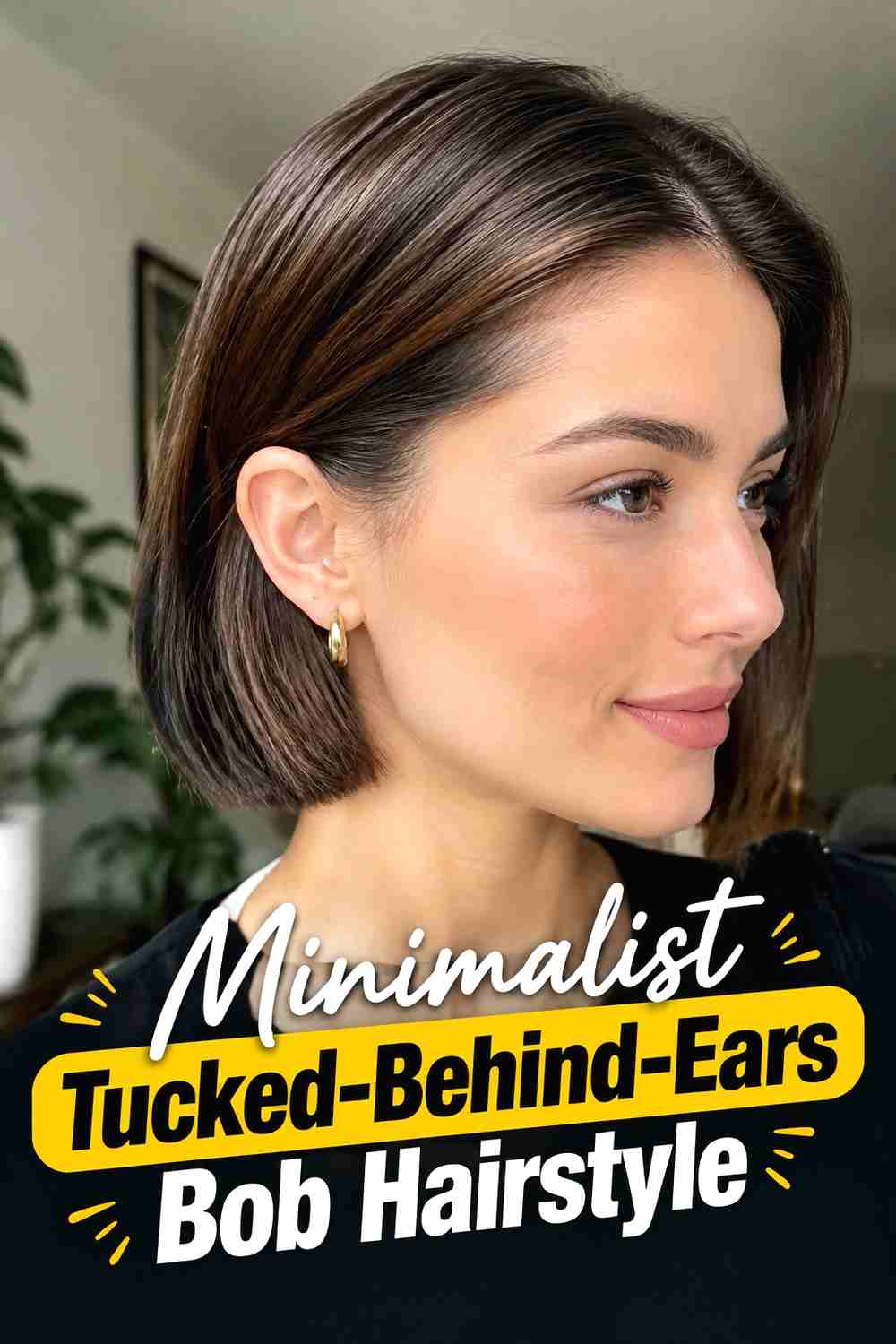
Tucking both sides of a bob behind the ears creates one of the cleanest jaw-length looks for winter tailoring. Use a center or soft middle part, smooth the front sections back, and let the remaining hair sit close to the head behind the ears. The result opens the face, exposes the blazer lapels, and keeps the entire neckline free of competing hair. A little root volume prevents the style from appearing overly severe, while the short back remains naturally compact. This approach is especially effective with high-neck knits, button-down shirts, and strong-shouldered jackets. If the hair is dense, tuck only the front portions rather than forcing all side volume behind the ears.
Why It Works
Clearing both sides creates maximum visibility around structured collars and reinforces the streamlined quality of a trouser suit.
Wear & Maintenance
Flexible-hold product at the temples can help maintain the tuck without creating a hard or wet-looking surface.
11. Textured Clean Line Jaw Length Hairstyle
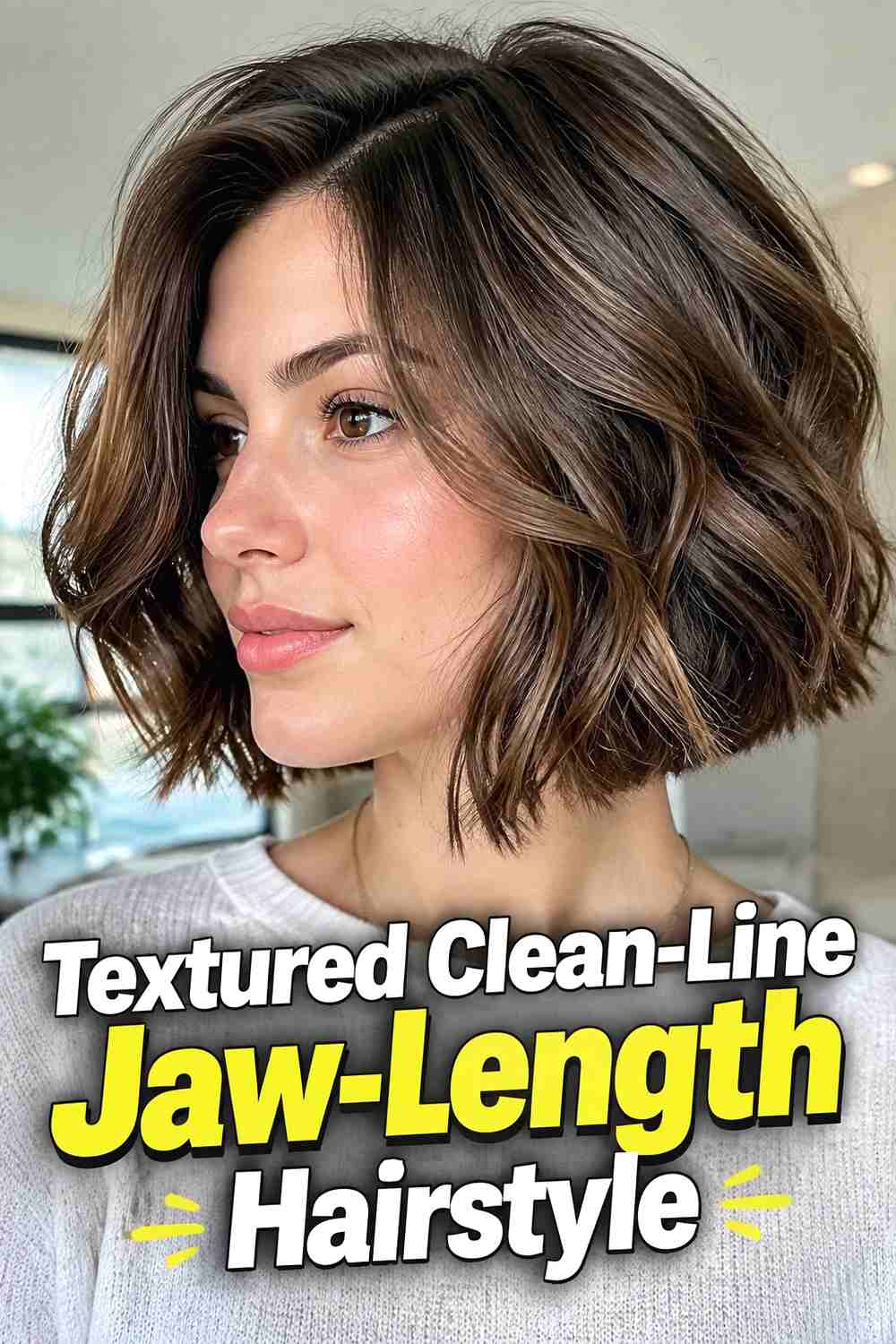
A little texture can make a jaw-length cut feel more relaxed while a defined perimeter keeps it appropriate for tailored dressing. Add irregular bends through selected mid-length sections, but leave the lower outline clean enough that the bob still finishes clearly around the jaw. This contrast works especially well with winter trouser suits styled in softer fabrics or less formal cuts. The texture should look controlled rather than tousled, with individual strands and natural movement visible throughout. Straight and wavy hair can both create this effect with minimal manipulation. Keep the sides narrow so the short style does not expand outward and compete with structured blazer shoulders.
Hair Type & Length
Straight, wavy, and lightly textured jaw-length hair can all work, especially when the cut has subtle internal movement.
Pro Tip
Create only a few bends and vary their direction. Too many uniform waves can blur the clean perimeter that defines the style.
12. Jaw Length Bob With Fine Face Layers Hairstyle
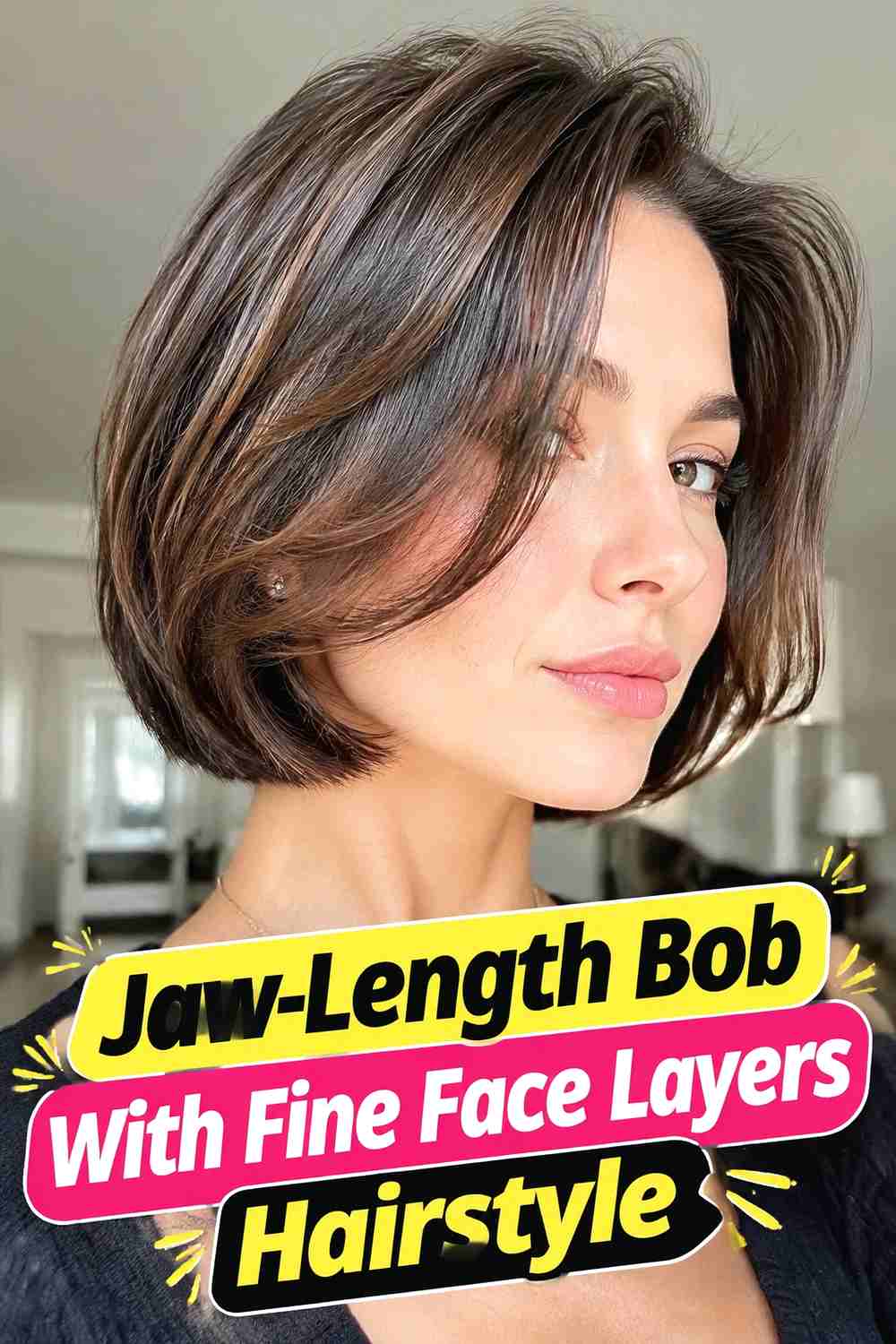
Fine face layers add subtle movement to a jaw-length bob without taking away its polished, compact character. Keep the shortest pieces narrow around the temples or cheekbones, then let them blend seamlessly into the main jaw-level perimeter. These delicate sections soften structured trouser suits while still leaving the collar and lapels clearly visible. This approach is particularly useful when a completely blunt bob feels too graphic or heavy around the face. Keep the layers smooth or give them the slightest inward bend so they remain connected to the rest of the cut. Lightweight styling product is important because fine front sections can lose their airy movement if overloaded.
Styling Notes
Style the small face layers separately using low tension, then blend them into the main bob rather than curling them independently.
Best For
This suits fine-to-medium hair and anyone who wants softness around the face without committing to obvious bangs or heavy layering.
13. Polished C Curve Jaw Length Hairstyle
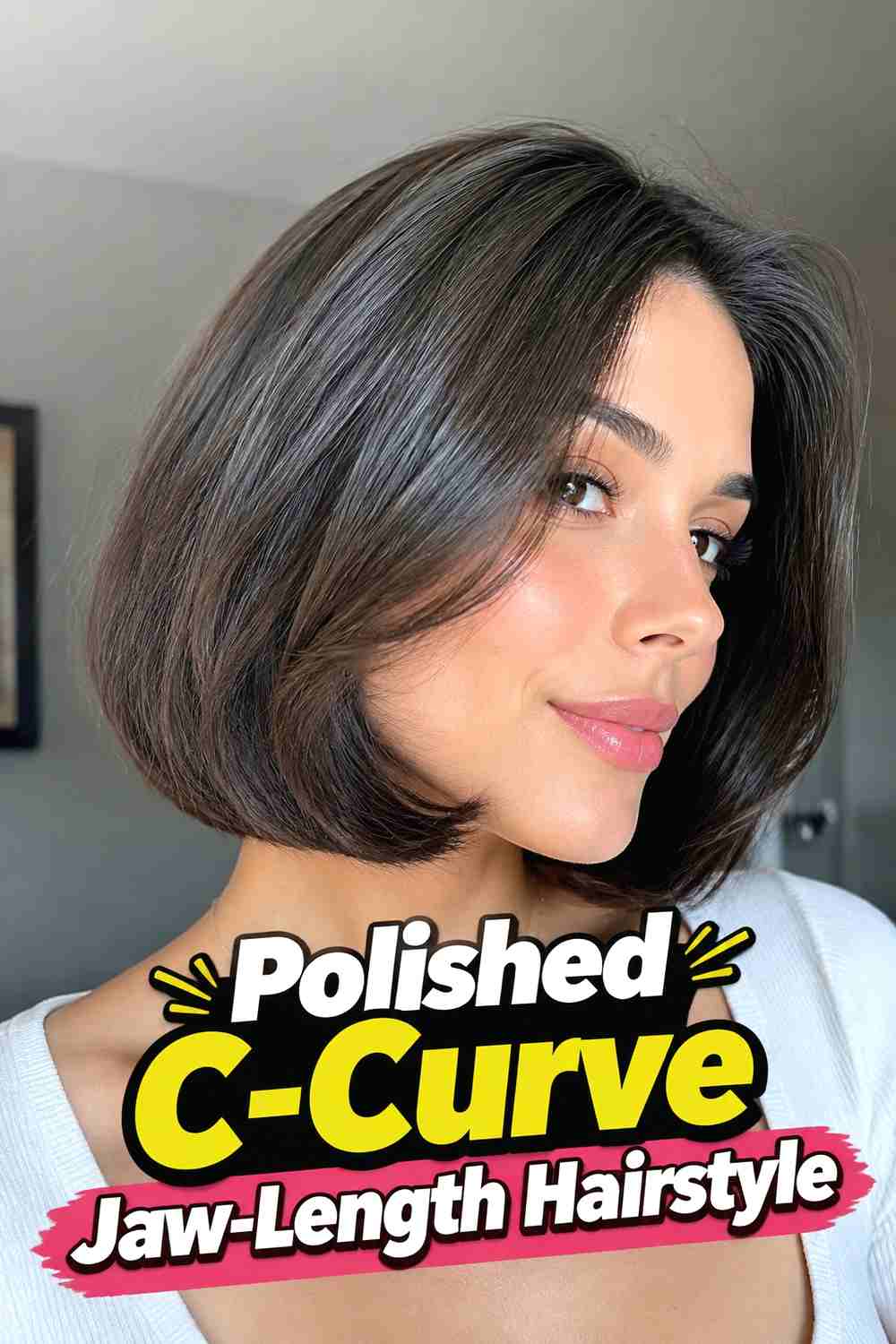
A C-curve finish gives a jaw-length cut elegant directional movement from the cheek toward the ends. Shape the front sections so they arc gently inward, following the face before turning toward the jaw. Keep the back cleaner and less curved so the hairstyle does not become overly rounded. The result looks especially polished with winter trouser suits because the soft curve contrasts with straight lapels, trouser creases, and structured shoulders. A center or slight side part can both work depending on how symmetrical you want the finish. The key is restraint: the curve should be broad enough to register but subtle enough to preserve the modern short-bob silhouette.
Why It Works
The C-shaped front adds fluid movement to otherwise angular tailoring while keeping the hair entirely above the shoulders.
Pro Tip
Shape only the front and side sections that are visible; leaving the back simpler makes the result look more contemporary.
14. Asymmetrical Jaw Length Bob Hairstyle
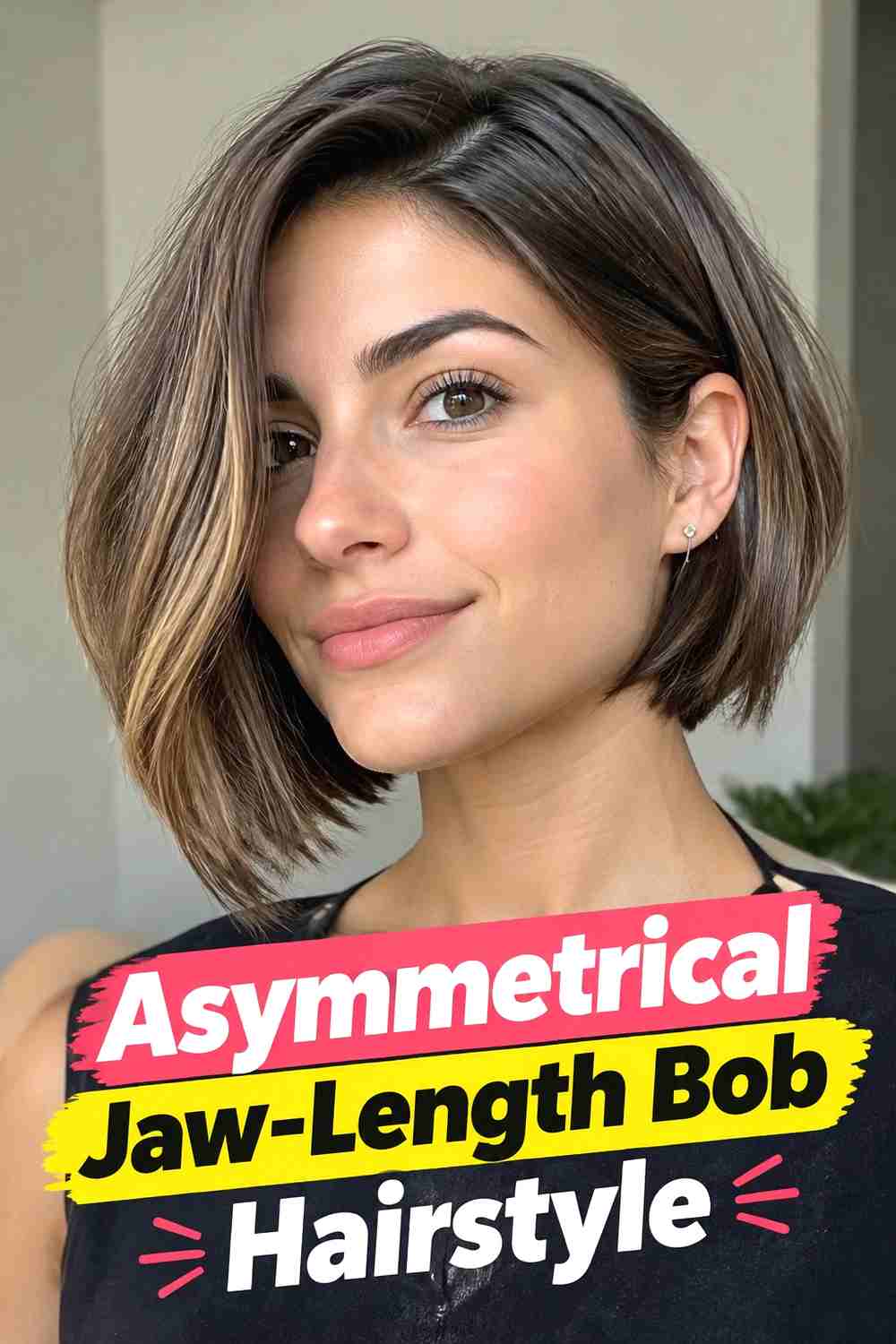
An asymmetrical jaw-length bob introduces a subtle difference in length or styling from one side to the other, creating a modern finish for winter suiting. One side can sit slightly longer or remain forward while the shorter side tucks behind the ear, producing a deliberate diagonal line around the face. Keep the overall shape sleek so the asymmetry feels intentional rather than uneven. This works particularly well with minimalist trouser suits because the haircut supplies visual interest without accessories or elaborate texture. The difference between sides does not need to be dramatic; even a small shift in length, volume, or placement can create a noticeable effect while preserving the clean jaw-level silhouette.
Styling Notes
Choose the stronger side before styling and direct the opposite section behind the ear or closer to the head for clear contrast.
Best For
This is a strong option for modern tailoring, monochrome suits, and outfits where you want the haircut to provide a subtle fashion-forward detail.
How to Choose the Right Look
Start with your suit silhouette. Sharply tailored jackets with crisp shoulders pair naturally with blunt, straight, or center-part bobs, while softer wide-leg suits and relaxed wool tailoring work beautifully with beveled ends, C-curves, and light texture.
Next, consider hair density. Fine hair may benefit from a blunt perimeter or soft bevel that preserves visible fullness. Dense hair often sits more cleanly with subtle internal weight removal, ear tucks, or a side part that redistributes volume.
Your neckline matters too. Turtlenecks and buttoned shirts usually look cleanest with tucked sides or compact straight shapes, while open lapels leave more room for curved or lightly textured ends. Jaw-length hair should generally stay above the garment neckline rather than becoming compressed against it.
Finally, choose a finish you can maintain. Sleek, glossy bobs may need more frequent touch-ups, while textured or softly beveled styles are more forgiving. The best look should support your haircut’s natural behavior rather than require constant correction.
Final Thoughts
Clean jaw-length hairstyles pair naturally with winter trouser suits because they keep the neckline open and echo the precision of tailored clothing. Choose a blunt bob for stronger structure, an ear tuck for minimalist polish, or softly curved ends when you want a gentler finish. Small changes in the part, perimeter, and texture can make the same short length feel distinctly different.
FAQs
1. What jaw-length hairstyle looks most polished with a trouser suit?
A sleek bob, center-part precision cut, or tucked-behind-ears style creates an especially clean finish with structured tailoring.
2. Does a jaw-length bob work with turtlenecks?
Yes. Because the hair finishes above the shoulders, it generally keeps the turtleneck visible. Ear-tucked and straight finishes create an especially uncluttered neckline.
3. How can I stop a short bob from flipping outward in winter?
Dry the ends in the desired direction and let them cool before putting on scarves or outerwear. A soft inward bevel can also make minor movement less noticeable.
4. Can wavy hair wear a clean jaw-length style?
Yes. Keep the perimeter defined and use only enough styling to control the overall silhouette. A textured clean-line bob can preserve natural movement without looking messy.
5. Which jaw-length style is easiest to maintain day to day?
An ear-tucked bob, softly beveled cut, or lightly textured jaw-length style is generally forgiving because it does not depend on perfectly flat, glass-smooth hair.
CTA
Save your favorite jaw-length look for your next winter trouser-suit outfit, and share these ideas for more polished short-hair inspiration.