11 Collar-Clearing French Roll Hairstyles for Long Overcoats
These collar-clearing French rolls keep long hair polished above winter coat collars, blending elegant structure with soft texture, volume, and practical wear.
A French roll is especially useful during coat season because it gathers long hair away from the nape instead of leaving lengths trapped beneath collars, scarves, and heavy outerwear. Raising the twist slightly can make the classic silhouette more comfortable with a long overcoat while still preserving its polished, vertical shape.
The best version depends on how much texture, volume, structure, and maintenance you prefer. Sleek rolls complement tailored coats, softer versions work well with relaxed winter layers, and decorative details can dress the style up for seasonal events. Pay attention to the lowest point of the roll, since keeping it above the collar is what makes these variations especially practical.
Quick List
- Sleek High French Roll Hairstyle
- Soft Textured French Roll Hairstyle
- Low Profile French Roll Hairstyle
- Side Swept French Roll Hairstyle
- Loose Romantic French Roll Hairstyle
- Polished Twist French Roll Hairstyle
- Voluminous Crown French Roll Hairstyle
- Face Framing French Roll Hairstyle
- Minimalist French Roll Hairstyle
- Pearl Pinned French Roll Hairstyle
- Winter Ready French Roll Hairstyle
1. Sleek High French Roll Hairstyle
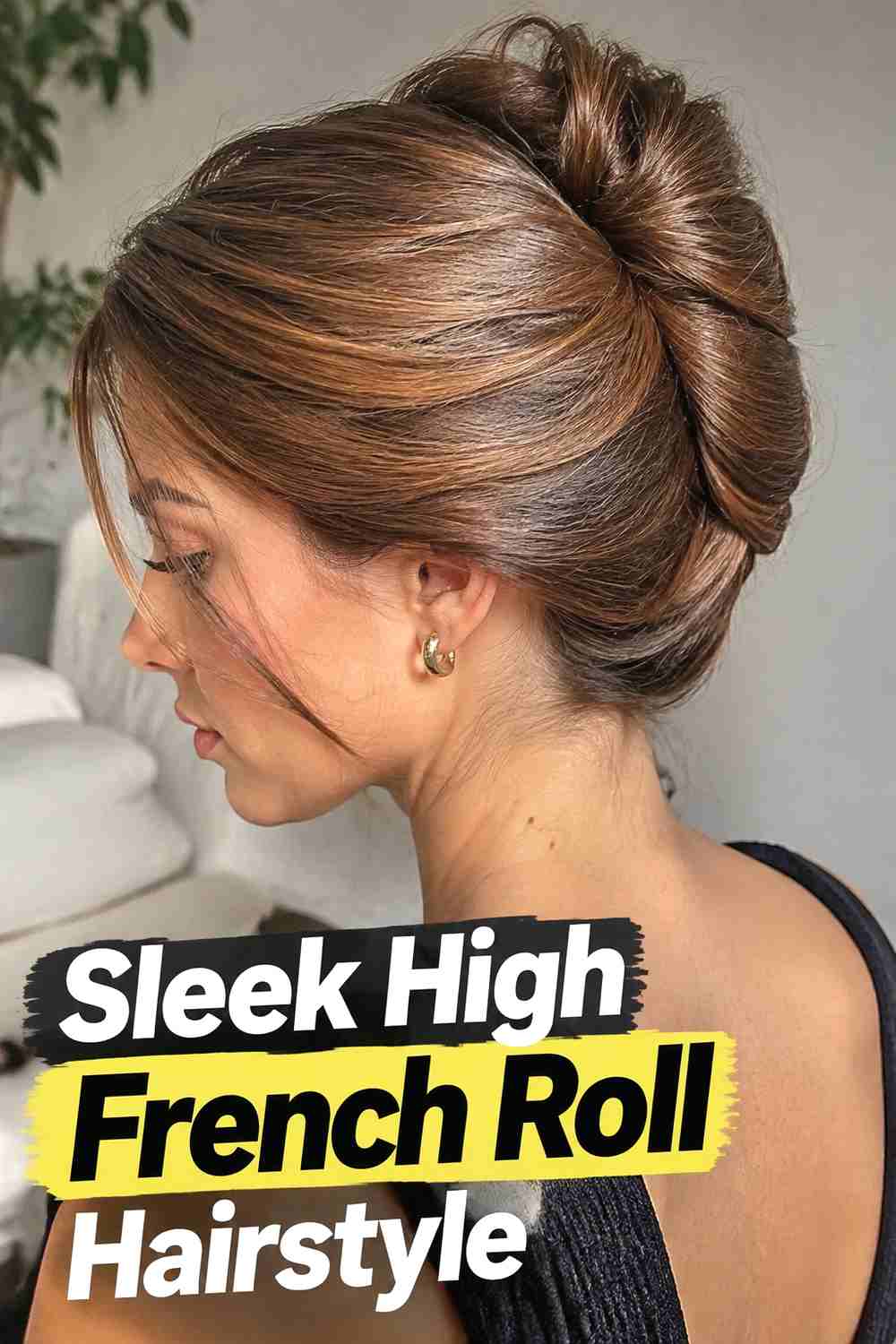
A sleek high French roll lifts the entire twist above the nape, leaving a clean gap between the hairstyle and a tall overcoat collar. The finish is smooth and controlled, with the sides brushed back and the roll secured vertically for a long, elegant silhouette. It is especially useful when you want polished winter styling without loose lengths rubbing against wool, cashmere, or structured collars. Medium to long hair with enough density to build the twist works best, though finer hair can gain shape from light backcombing. Keep the surface glossy rather than stiff, and place pins deep inside the roll so the finished style looks seamless from the side and back.
Styling Notes
Smooth the outer layer with a brush while preserving enough texture underneath for grip. Position the lowest pins above the nape so the roll does not rest directly against the coat.
Best For
This refined version pairs particularly well with tailored overcoats, workwear, formal winter outfits, and occasions where you want a clean, controlled finish.
2. Soft Textured French Roll Hairstyle
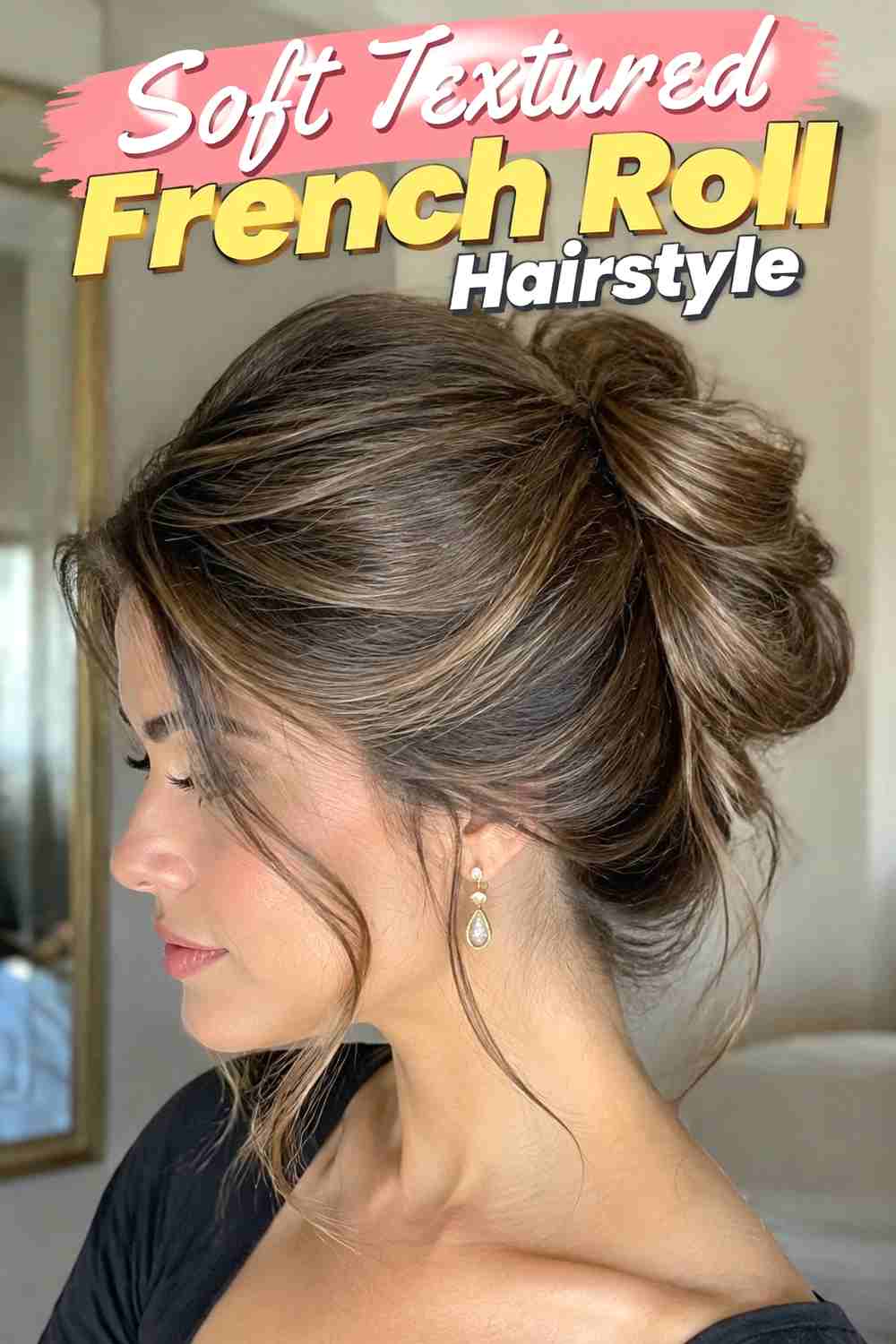
A soft textured French roll keeps the classic vertical shape but relaxes the surface with airy movement, subtle bends, and a few naturally irregular strands. The roll still sits high enough to clear an overcoat collar, making it practical for layered winter outfits while avoiding an overly formal finish. This version suits hair that already has wave, curl, or body, but straight hair can be prepped with loose bends before twisting. The key is controlled looseness: create texture through the crown and sides, then anchor the center firmly so the hairstyle does not collapse when you put on or remove your coat. A light mist of flexible hold helps preserve softness without flattening the texture.
Hair Type & Length
Medium-long and long hair with natural wave or moderate density is especially easy to shape. Straight hair can work just as well after adding a little bend and grip.
Pro Tip
Loosen selected areas only after the roll is fully secured. This gives the surface softness while keeping the internal structure stable.
3. Low Profile French Roll Hairstyle
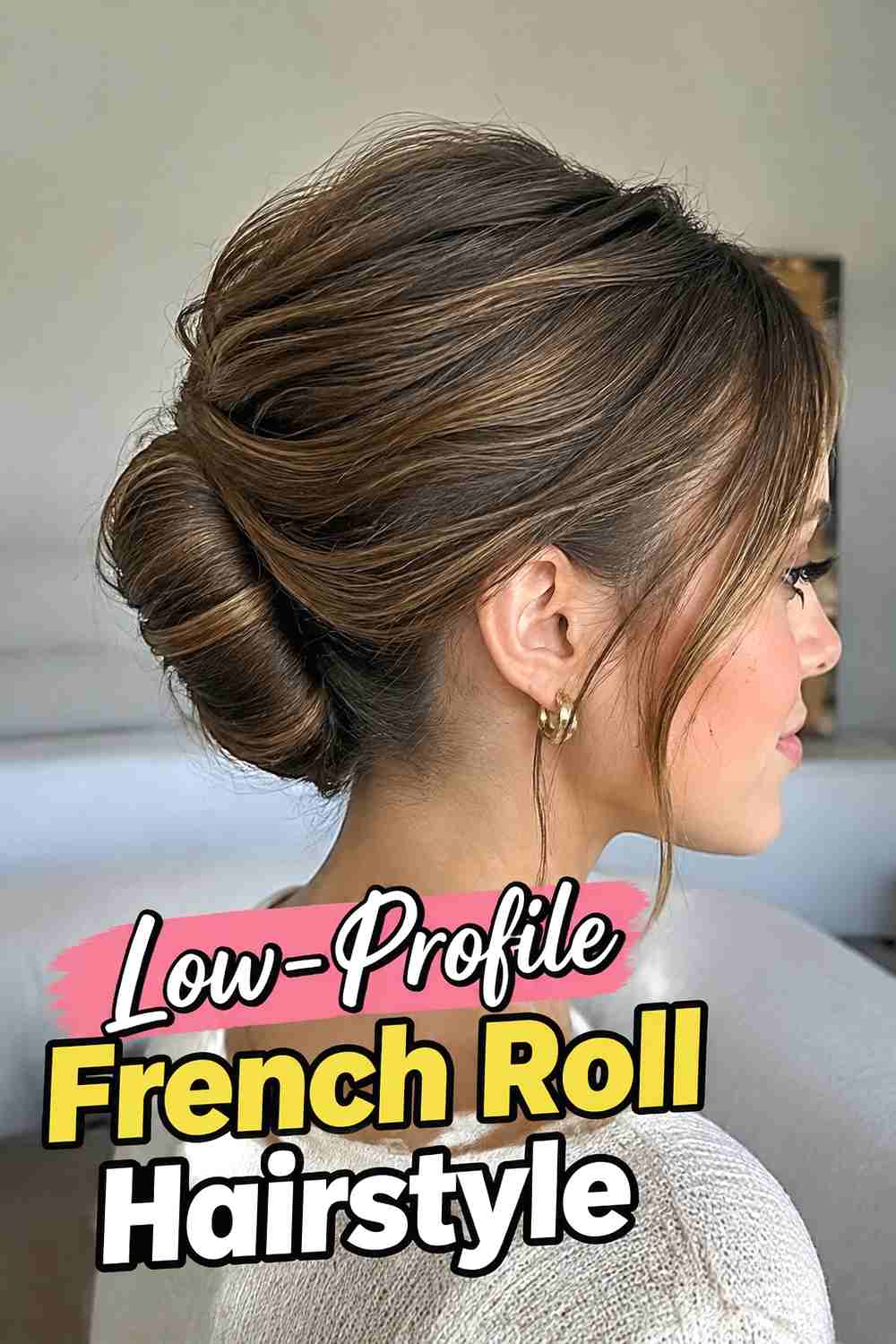
A low-profile French roll is compact rather than bulky, with the twist tucked close to the back of the head and its lowest edge kept above the collar line. It is a smart choice for long overcoats with structured lapels or higher necklines because the hairstyle minimizes friction and avoids a large roll pressing against the coat. The silhouette feels refined and understated, making it easy to wear for work, dinners, or everyday winter dressing. Smooth the sides without pulling them excessively tight, then fold the length inward and pin it flat against the head. Hair that is medium-long to long is easiest to contain, especially when the ends are neatly tucked inside the roll.
Why It Works
Keeping the twist narrow reduces bulk at the back of the head while preserving the recognizable French-roll shape. It also leaves more space between the hairstyle and structured outerwear.
Wear & Maintenance
Use several well-placed pins rather than one oversized clip. A flatter fastening system is less likely to press uncomfortably against high collars.
4. Side Swept French Roll Hairstyle
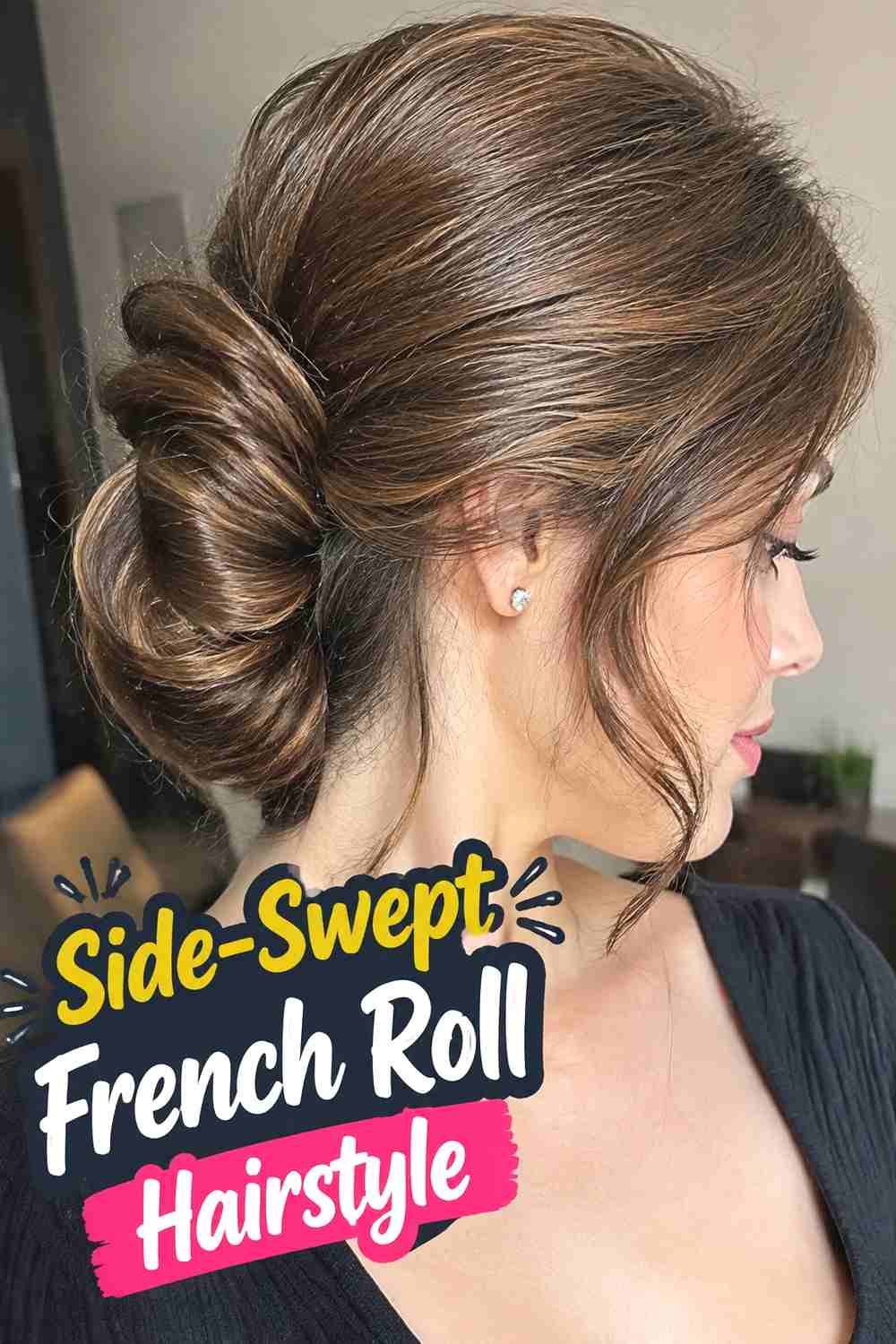
A side-swept French roll shifts the visual emphasis slightly off-center, giving the classic twist a softer, more directional shape while still keeping the nape exposed. One side can be brushed smoothly toward the roll while the opposite side keeps a little lift or curve, creating an elegant profile that looks especially good with long coat collars framing the neck. The asymmetry adds interest without requiring decorative accessories, so the hairstyle can feel polished yet modern. For reliable hold, build the roll around a strong line of crossed bobby pins rather than relying on surface pins alone. Keep the twist positioned high enough that its base stays clear when the coat collar moves as you walk.
Styling Notes
Direct the hair diagonally before rolling it inward rather than centering everything immediately. This creates the side-swept movement without making the finished roll look uneven.
Best For
Try this variation when a perfectly centered updo feels too formal or when you want a stronger profile from one side.
5. Loose Romantic French Roll Hairstyle
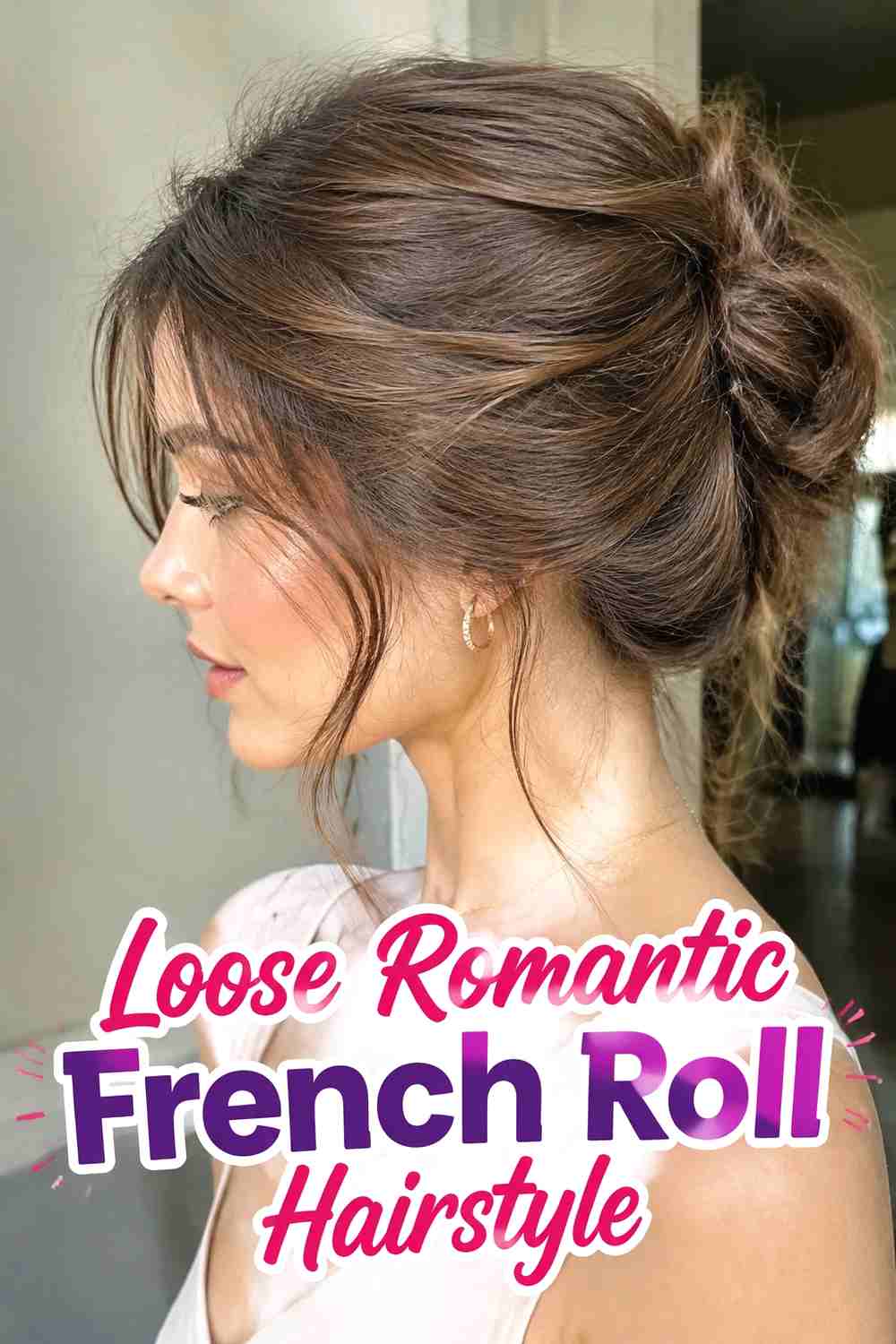
A loose romantic French roll uses gentle volume, soft texture, and a slightly undone finish to make an updo feel less formal. The twist should remain securely anchored above the nape, but the crown and sides can be eased outward after pinning to create softness around the head. A few controlled wisps near the temples add movement without leaving long pieces trapped beneath an overcoat collar. This look works beautifully on wavy or lightly curled hair because the texture helps disguise pins and gives the roll natural dimension. Avoid loosening the base too much; the hairstyle still needs a firm internal structure so it stays comfortable and intact when you layer on a heavy winter coat.
Why It Works
The softened outline balances the strong lines of structured winter outerwear, while the elevated base keeps the romantic texture away from the collar.
Pro Tip
Pull out only small sections around the hairline. Keeping the nape clean prevents loose strands from tangling beneath scarves or lapels.
6. Polished Twist French Roll Hairstyle
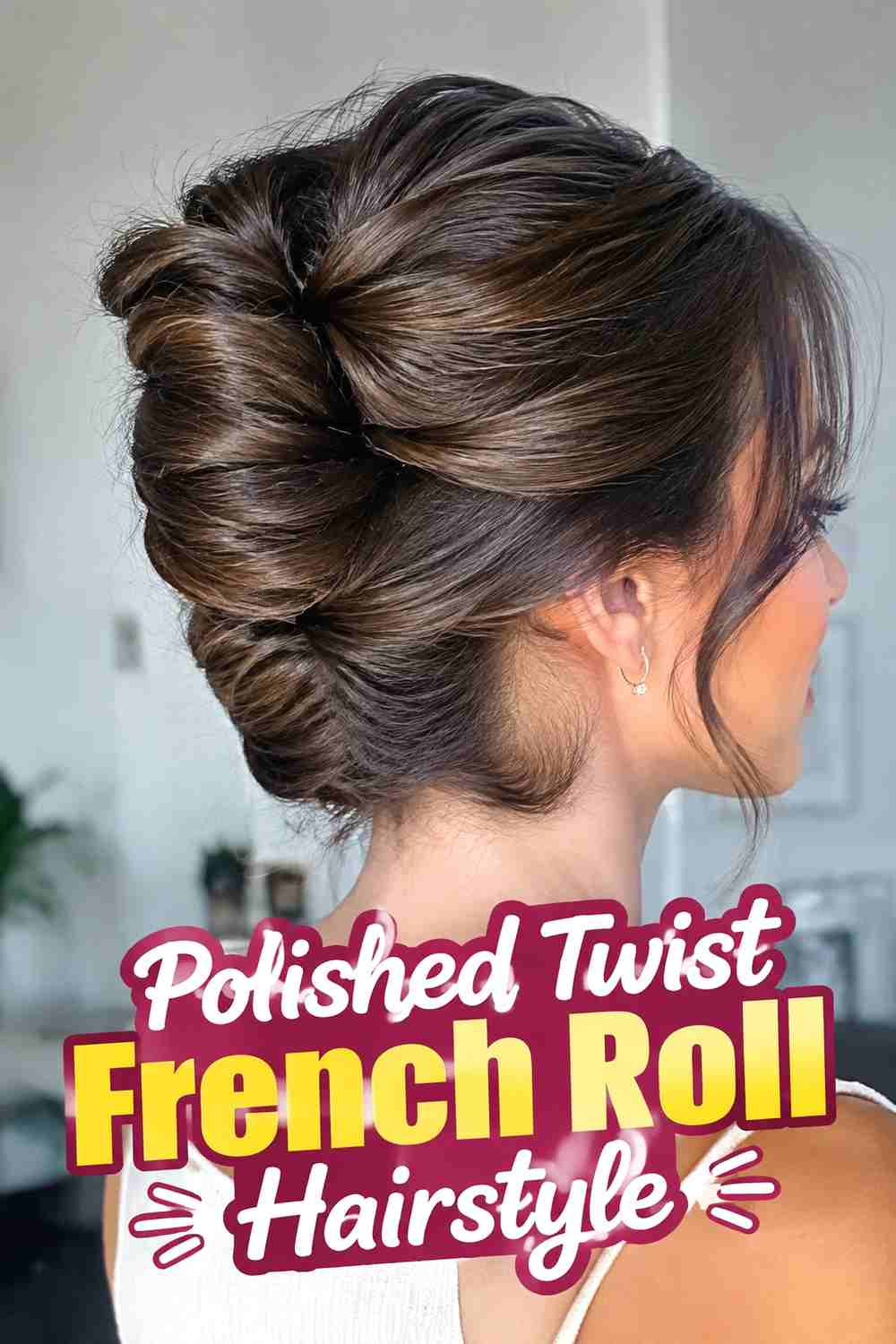
A polished twist French roll emphasizes clean lines, a defined vertical seam, and a smooth surface that reads sharp against tailored outerwear. The hair is directed back with minimal flyaways, rolled inward, and secured so the twist sits entirely above the overcoat collar. This style is particularly effective with straight or blow-dried hair, where the sleek finish makes the construction of the roll visible and intentional. Apply product sparingly near the roots so the hair keeps natural movement rather than looking lacquered. For a neat result, tuck the ends deep inside the twist and finish by smoothing only the outermost layer, leaving enough grip underneath for the pins to hold securely.
Styling Notes
A small amount of smoothing cream can refine the surface, but keep heavier products away from the hidden sections where the pins need traction.
Wear & Maintenance
Carry a few matching bobby pins for quick adjustments. If the roll shifts after removing your coat, reinforcing the center is usually more effective than repinning the entire style.
7. Voluminous Crown French Roll Hairstyle
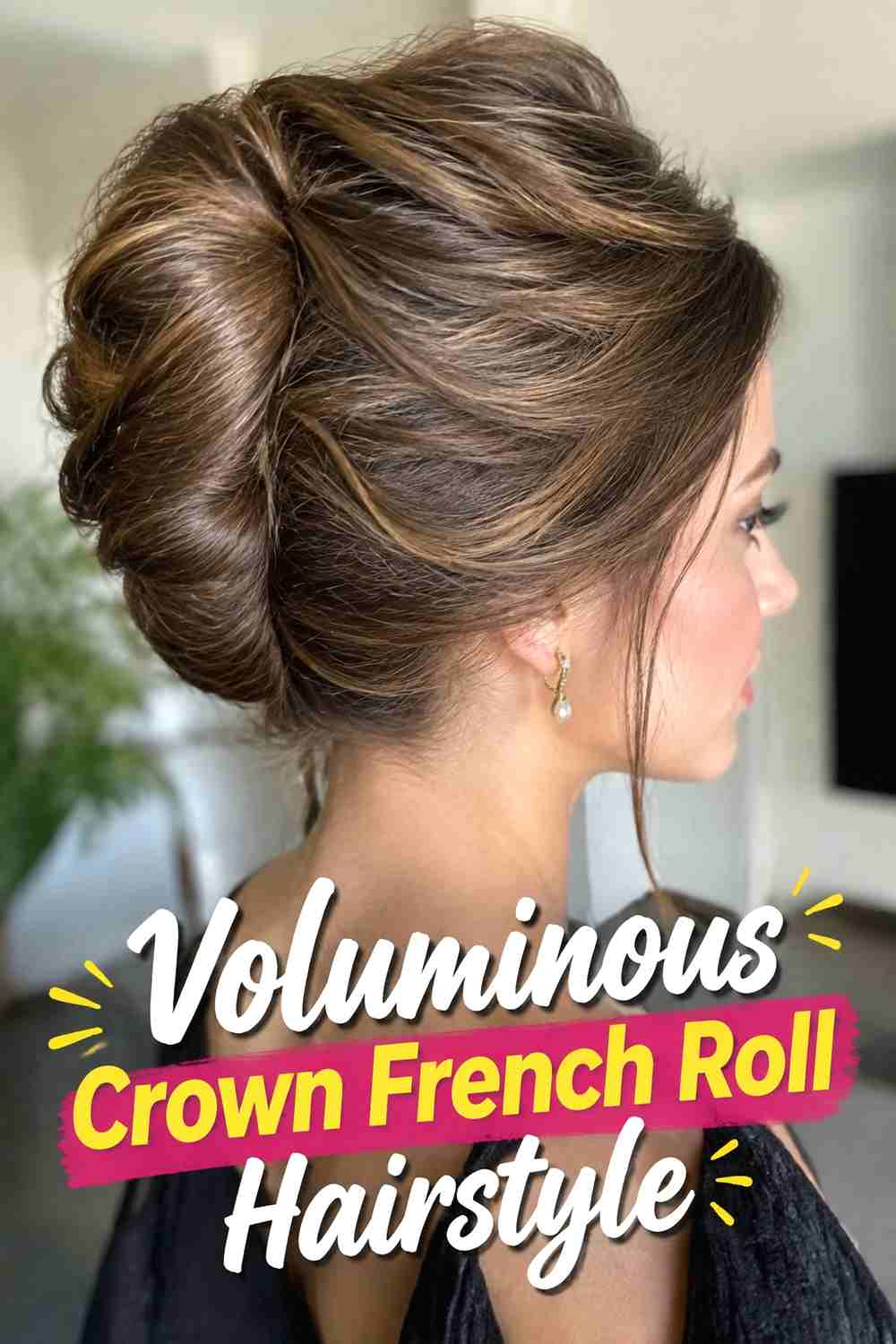
A voluminous crown French roll concentrates fullness at the top of the head while keeping the lower section compact and collar-clearing. That balance creates a graceful, elongated silhouette without adding bulk where a long overcoat sits against the neck. The look is useful for fine or medium-density hair that benefits from lift, but very dense hair can also wear it if the roll itself is kept narrow. Build crown volume before forming the twist, then smooth just the surface so the height remains airy rather than teased-looking. Once pinned, check the profile from both sides; the crown should flow naturally into the roll instead of forming a separate bump above it.
Hair Type & Length
Longer layers provide enough hair to form the roll while still allowing controlled crown lift. Fine hair may need light texture preparation for lasting volume.
Pro Tip
Create most of the height before you start twisting. Trying to pull up the crown afterward can loosen the roll’s anchor points.
8. Face Framing French Roll Hairstyle
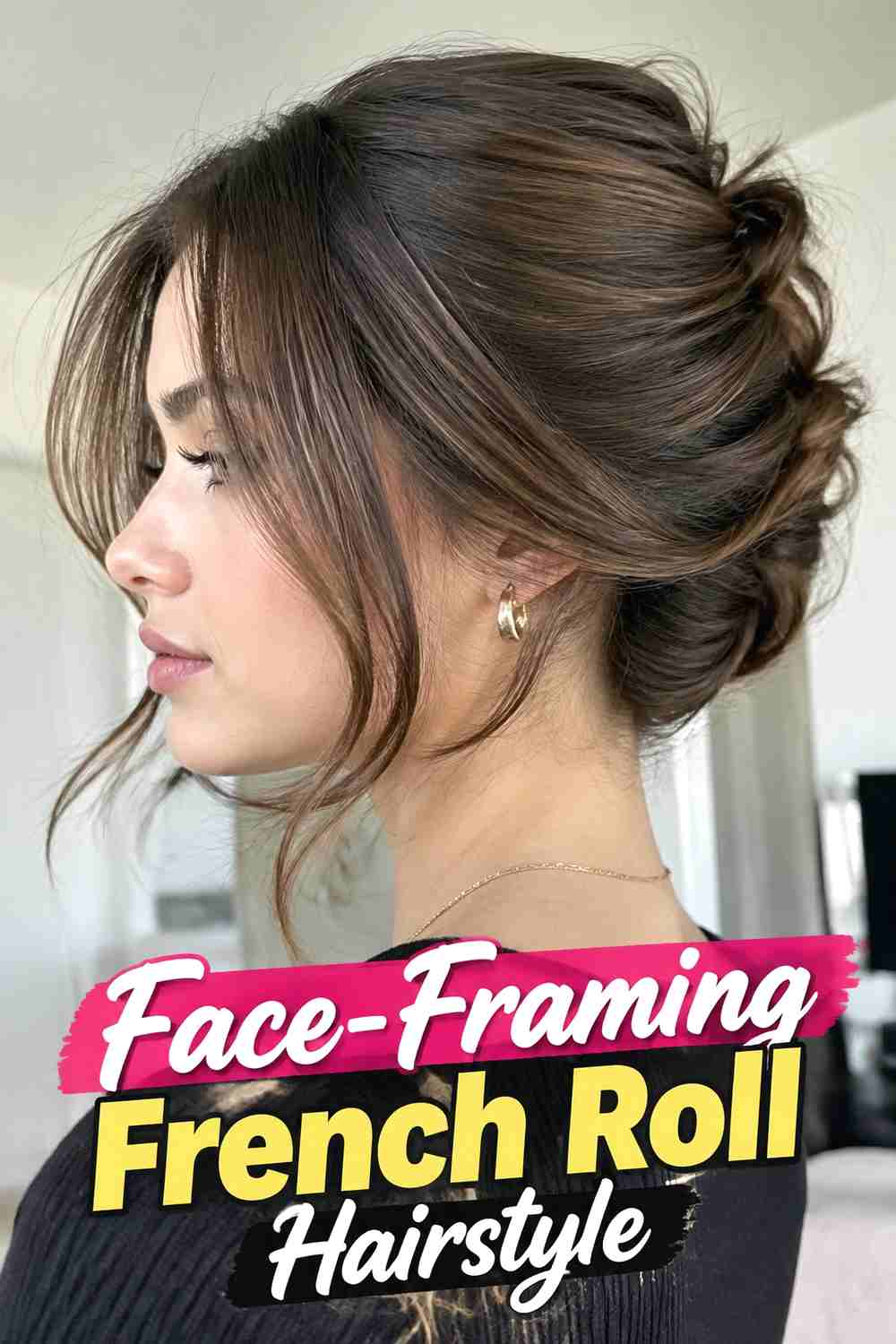
A face-framing French roll keeps the main updo neat and elevated while leaving a small number of deliberate pieces around the hairline. Shorter front layers or soft curtain-fringe sections can curve around the cheeks and temples, adding movement without interfering with an overcoat collar. The contrast between a secure twist and softer front pieces makes this version approachable for daytime events, dinners, or dressier winter outings. Curl or bend the face-framing strands lightly before building the roll so you do not need to disturb the finished updo afterward. Keep the loose sections short and intentional; long tendrils can catch inside scarves, lapels, and high collars and may quickly lose their shape.
Best For
This variation works especially well if you enjoy an updo but prefer some softness around the front rather than having every strand brushed away from the face.
Wear & Maintenance
Keep any free pieces above scarf level whenever possible. A small comb or fingertip adjustment is usually enough to refresh them after removing outerwear.
9. Minimalist French Roll Hairstyle
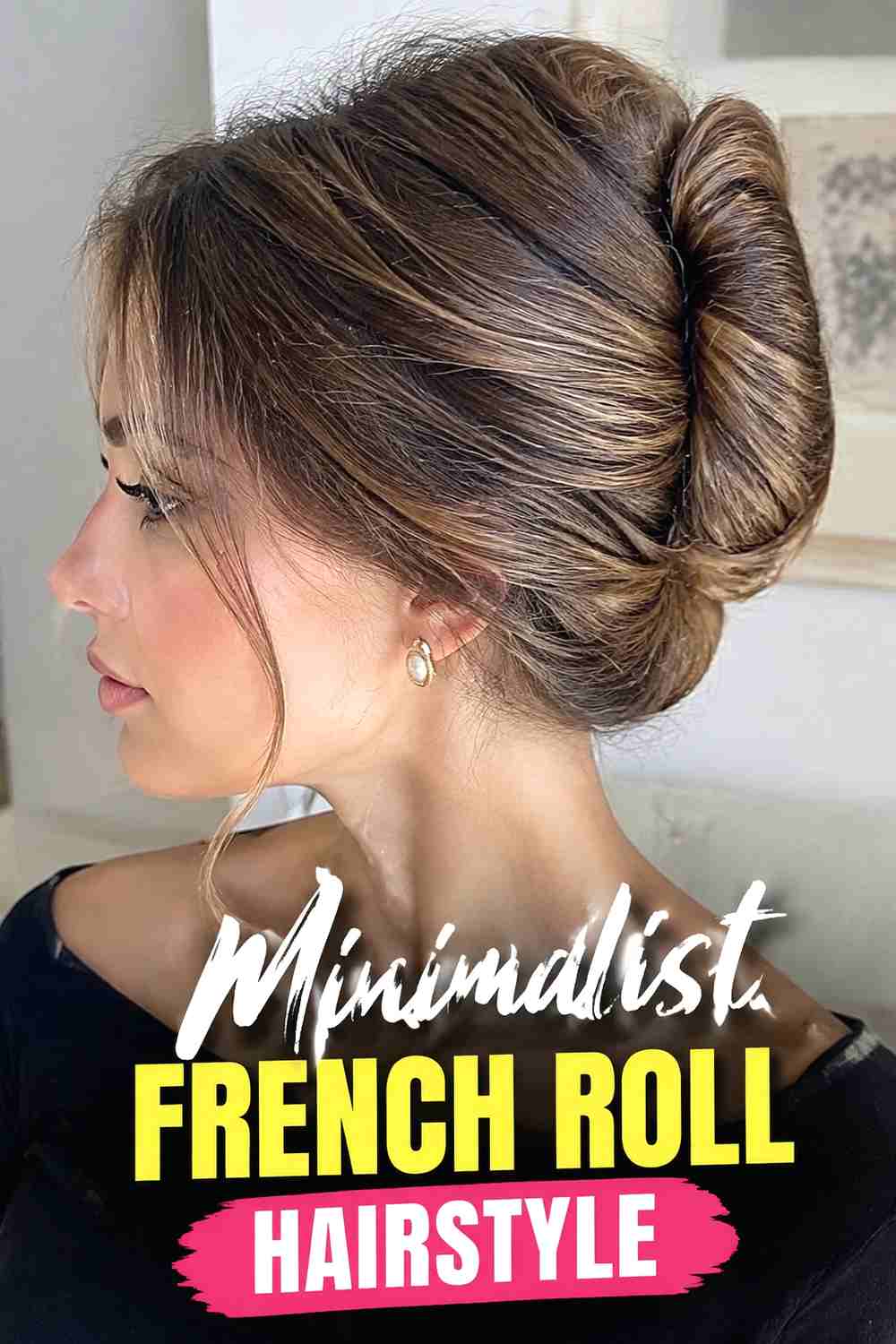
A minimalist French roll strips the style back to a clean twist, smooth sides, and little to no visible ornament. Its strength is the silhouette: the roll follows the back of the head, ends above the nape, and leaves the neckline clear for a structured long overcoat. This makes it a strong option for monochrome outfits, office dressing, or anyone who prefers understated hair with a precise finish. The style works best when the hair has enough grip to stay folded without constant adjustment, so freshly washed, very silky hair may benefit from a small amount of texture spray. Use pins that disappear into the twist and avoid overloading the surface with hairspray.
Why It Works
With no decorative distractions, the shape of the twist becomes the main feature. The simplicity also pairs easily with statement collars, scarves, and more detailed winter clothing.
Styling Notes
Aim for smoothness rather than absolute perfection. A few natural strands keep the finish modern and believable while maintaining the clean silhouette.
10. Pearl Pinned French Roll Hairstyle
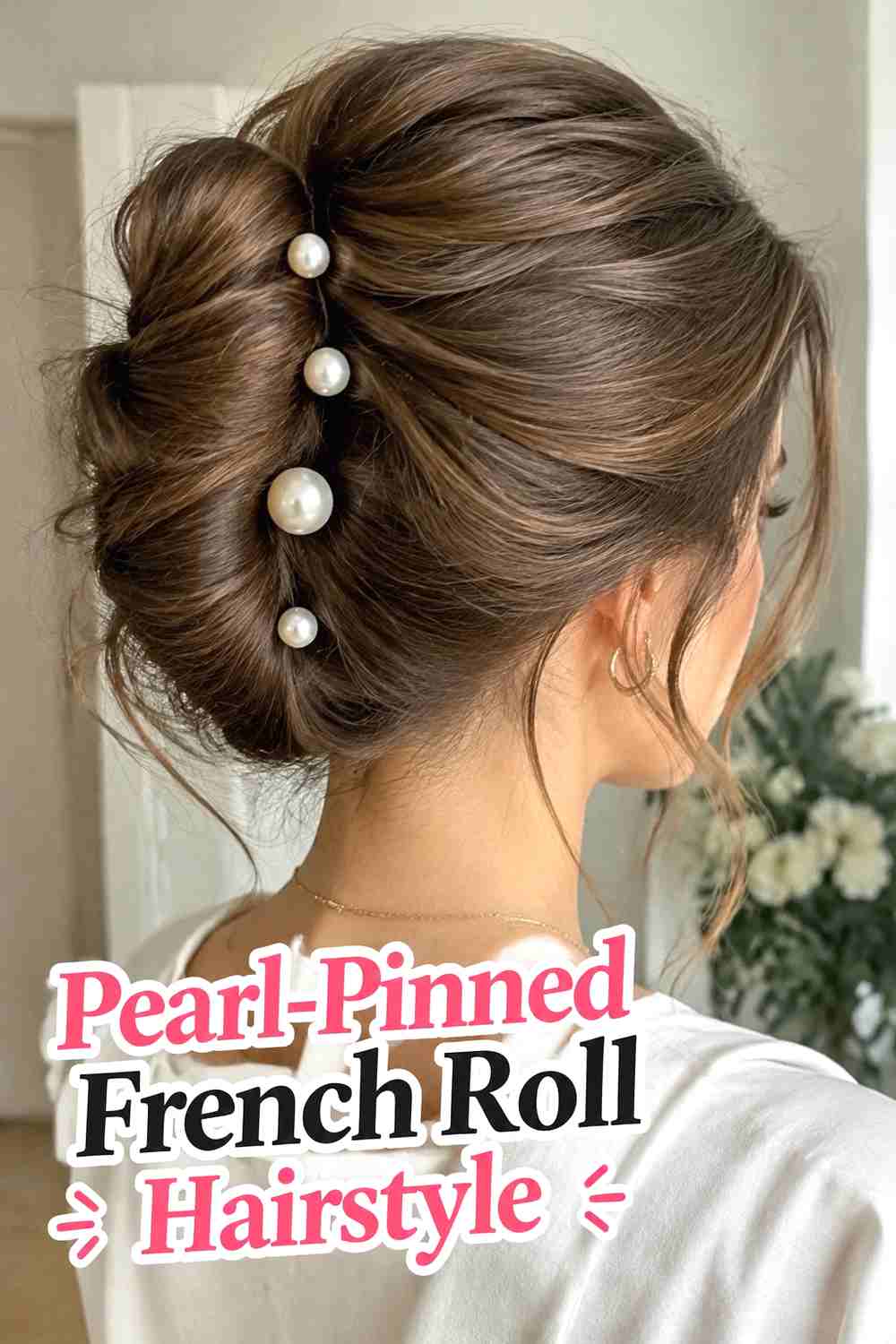
A pearl-pinned French roll adds a refined decorative detail without sacrificing the practical, collar-clearing shape. Form the twist first and secure it completely above the nape, then place a few pearl pins along the seam or near the upper edge rather than using accessories to hold the entire style together. This keeps the hairstyle stable beneath winter layers and prevents ornaments from catching against the coat collar. Pearls look especially elegant with soft texture or a smooth satin finish, making the style suitable for winter weddings, dinners, or holiday events. Keep the placement edited and asymmetrical; a small cluster usually looks more modern than covering the full roll with evenly spaced pins.
Styling Notes
Treat pearl pins as decoration rather than structural support. Place your regular pins first, then slide the decorative pieces only into secure areas of the finished twist.
Best For
This version suits dressier winter occasions when a plain French roll feels too minimal but a heavily embellished updo would compete with your outfit.
11. Winter Ready French Roll Hairstyle
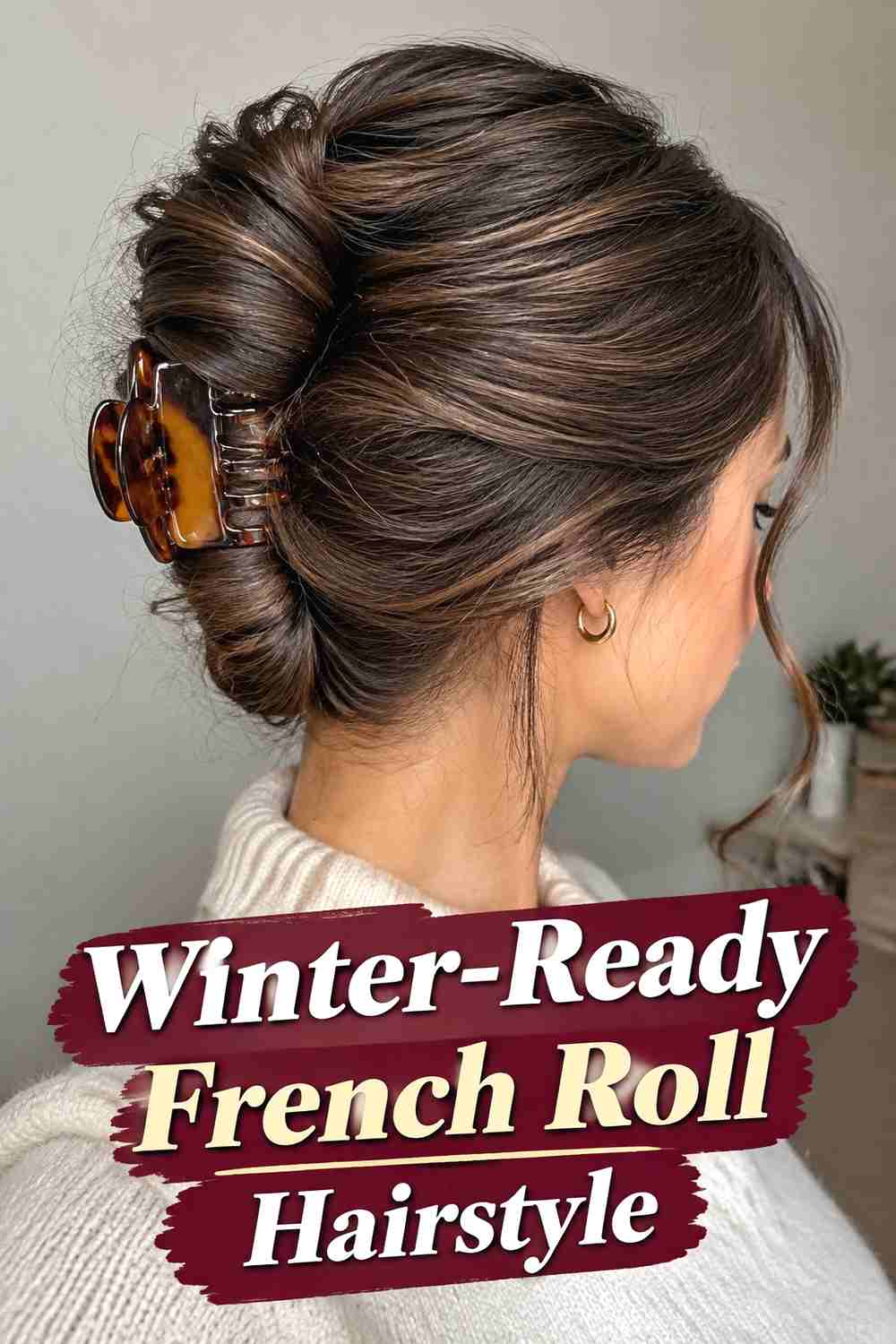
A winter-ready French roll is designed around dependable hold, comfort, and easy wear with scarves and long overcoats. The twist sits high enough to expose the nape, while the crown stays controlled so hats, hoods, or repeated coat changes are less likely to disturb the shape. Instead of relying on a perfectly glassy finish, aim for polished texture that can tolerate a little movement and still look intentional. Medium to long hair can be folded into a compact vertical roll, with extra pins concentrated at the base and center for support. Finish with flexible hairspray and keep any loose pieces short; the goal is an elegant updo that remains practical through a full day of winter layering.
Wear & Maintenance
Check that no pins protrude where a collar or scarf can catch them. Flexible hold is often more forgiving than a very rigid finish when outerwear is repeatedly added and removed.
Pro Tip
Put on your coat once before leaving and gently turn your head from side to side. If the collar touches the roll, raise or tighten the lowest section.
How to Choose the Right Look
Start with your coat collar. A tall, structured collar works best with a high or compact roll, while an open lapel gives you more freedom to add crown volume or softer texture. Whatever style you choose, the base of the twist should remain above the point where your coat repeatedly touches the nape.
Next, consider your natural texture and styling time. Straight hair makes sleek, polished, and minimalist rolls easier to refine, while wavy or curled hair naturally supports textured and romantic versions. Fine hair may benefit from crown lift or light texture preparation, whereas dense hair often feels more comfortable in a narrow, tightly contained twist.
Hold matters just as much as appearance during winter. If you will be putting your coat, scarf, or hood on and off throughout the day, choose a style with a firmly anchored center and fewer loose pieces. Decorative versions work best when accessories sit above the collar rather than near the base.
Finally, match the finish to the occasion. Smooth rolls feel sharp for work and formal dressing, textured versions suit relaxed occasions, and pearl accents can elevate the look for celebrations. The most wearable option is the one that balances your preferred finish with enough comfort and stability for your actual outerwear.
Final Thoughts
Collar-clearing French rolls make long hair easier to manage with winter outerwear without giving up a polished silhouette. Choose a higher, sleeker twist for maximum clearance, a textured version for softness, or a compact roll when you want something understated. Small adjustments to placement, volume, and pinning can make the style feel much more comfortable with your favorite long overcoat.
FAQs
1. How high should a French roll sit with a long overcoat?
The lowest part of the roll should sit above the area where your coat collar touches the nape. Try the finished hairstyle with your coat before leaving to check the clearance.
2. Can very long hair fit into a collar-clearing French roll?
Yes. Fold the extra length inward before completing the twist and distribute the hair vertically so the roll does not become excessively bulky at the bottom.
3. What helps a French roll stay secure under winter layers?
A strong internal pin structure is more important than heavy hairspray. Crossed bobby pins through the center and base can help the roll stay stable as outerwear moves around it.
4. Can naturally curly or wavy hair wear a French roll?
Yes. Natural texture can add grip and dimension, especially for softer or romantic variations. Avoid over-smoothing if you want to preserve the hair’s natural movement.
5. Should I wear loose tendrils with a high coat collar?
Keep them short and concentrated around the temples or front hairline. Longer loose sections may become trapped in scarves and collars or lose their shape from friction.
Save Your Favorite French Roll
Save your favorite collar-clearing French roll, share the ideas with someone planning winter looks, and explore more hairstyle inspiration for polished cold-weather dressing.