12 Nape Bob With Long Fringe Hairstyle Ideas for a Chic Short Cut
A nape-length bob paired with a sweeping long fringe creates a polished short silhouette with softness, movement, and plenty of styling flexibility.
The nape bob sits close to the neckline, giving the haircut a crisp, intentional shape without requiring the extreme exposure of a very short crop. Adding a longer fringe changes the balance beautifully: the front stays fluid and face-framing while the back remains neat and compact.
The most important differences to compare are the perimeter, amount of layering, fringe direction, and finish. A blunt bob feels graphic and structured, while choppy or softly layered versions create lighter movement. Fringe can sweep sideways, part like curtains, fall in wispy pieces, or blend almost seamlessly into the sides.
Quick List
- Classic Nape Bob With Long Fringe Hairstyle
- Sleek Nape Bob With Side Swept Long Fringe Hairstyle
- Textured Nape Bob With Wispy Long Fringe Hairstyle
- Rounded Nape Bob With Curtain Long Fringe Hairstyle
- Choppy Nape Bob With Piecey Long Fringe Hairstyle
- Soft Layered Nape Bob With Feathered Long Fringe Hairstyle
- French Inspired Nape Bob With Long Fringe Hairstyle
- Wavy Nape Bob With Long Fringe Hairstyle
- Blunt Nape Bob With Arched Long Fringe Hairstyle
- Tucked Nape Bob With Deep Side Long Fringe Hairstyle
- Voluminous Nape Bob With Swoopy Long Fringe Hairstyle
- Air Dried Nape Bob With Long Fringe Hairstyle
1. Classic Nape Bob With Long Fringe Hairstyle
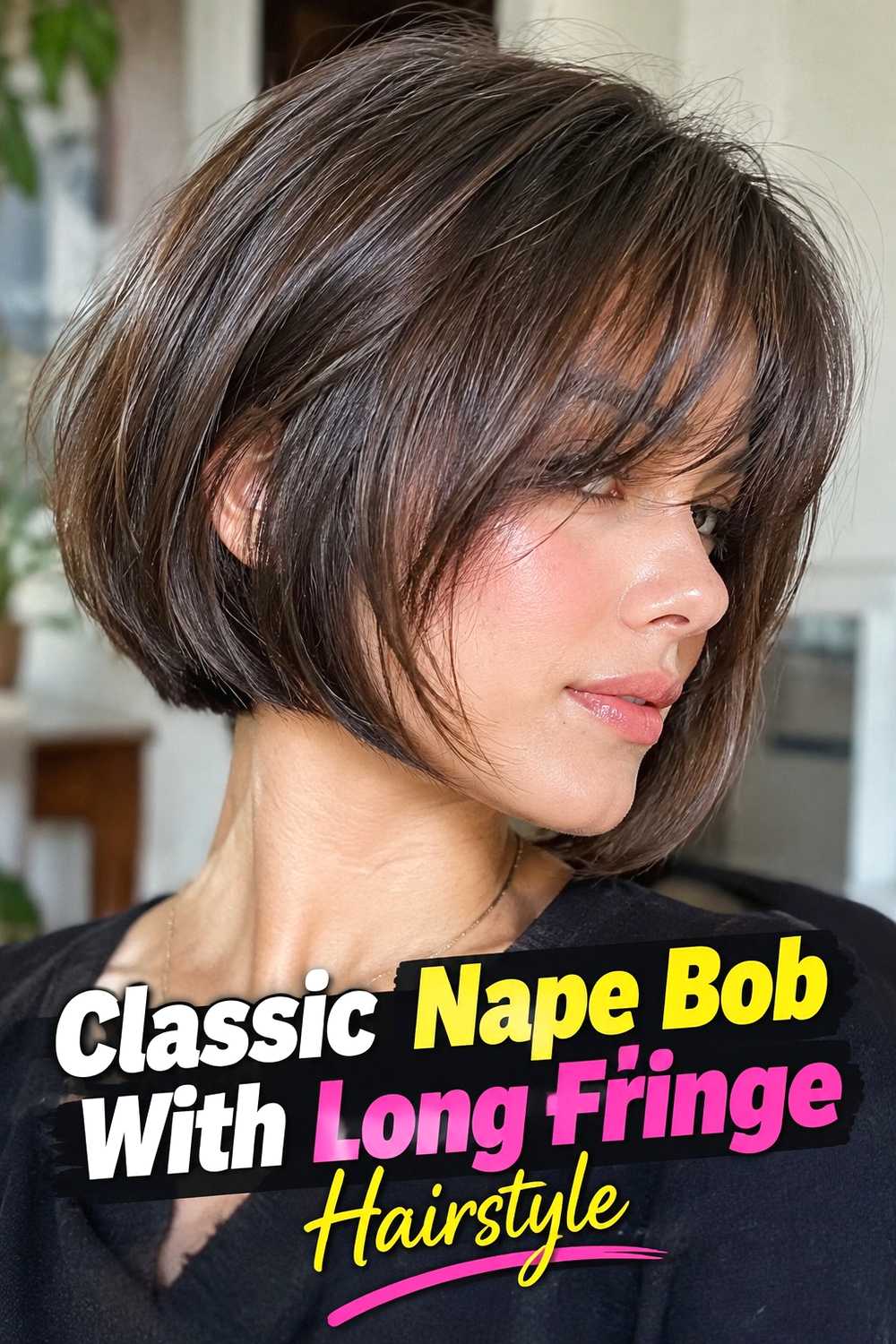
The classic version keeps the bob clean around the nape while allowing the front fringe to stay noticeably longer and softer. The contrast between the compact back and sweeping front gives the haircut its distinctive shape without making it look overly severe. A lightly beveled perimeter can encourage the ends to sit close to the neck, while subtle movement through the fringe prevents the front from feeling heavy. This style can work especially well for straight to gently wavy hair that naturally holds a smooth outline. Regular trims help preserve the neat nape line, but the longer fringe offers more flexibility between appointments because it can be worn forward, parted, or swept sideways.
Styling Notes
Blow-dry the nape section downward for a close, tidy finish, then direct the fringe loosely across the forehead with a round brush or fingers.
Best For
Choose this version if you like a recognizable bob shape but still want enough length around the front to soften and restyle the haircut.
2. Sleek Nape Bob With Side Swept Long Fringe Hairstyle
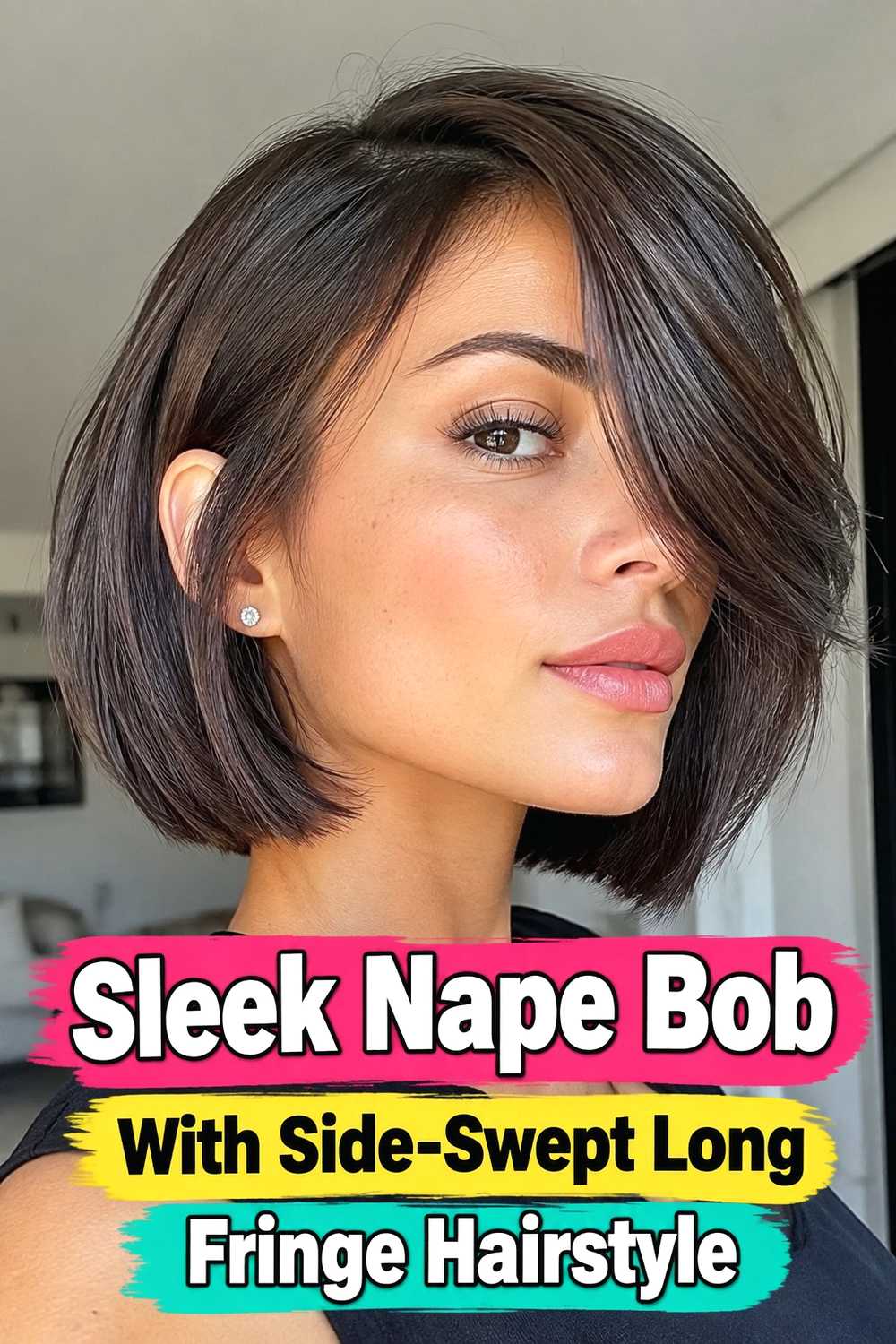
This sleek interpretation emphasizes smoothness, shine, and a sharply defined nape-length silhouette. The long fringe begins from a deeper part and travels diagonally across the forehead, creating a graceful line that contrasts with the clean back. Keeping the body of the bob relatively controlled makes the fringe the main movement point, so the finished haircut feels polished rather than busy. Straight hair is naturally suited to this finish, although other textures can achieve it with heat styling when appropriate. The key is maintaining movement instead of flattening every strand. A small amount of lightweight smoothing product through the mid-lengths and ends can help control flyaways without making the bob appear stiff.
Hair Type & Length
This shape is easiest to maintain on straight or slightly wavy hair with enough front length for the fringe to sweep comfortably toward one side.
Pro Tip
Keep some lift at the fringe root. A completely flat root can make a long side fringe fall heavily into the eyes.
3. Textured Nape Bob With Wispy Long Fringe Hairstyle
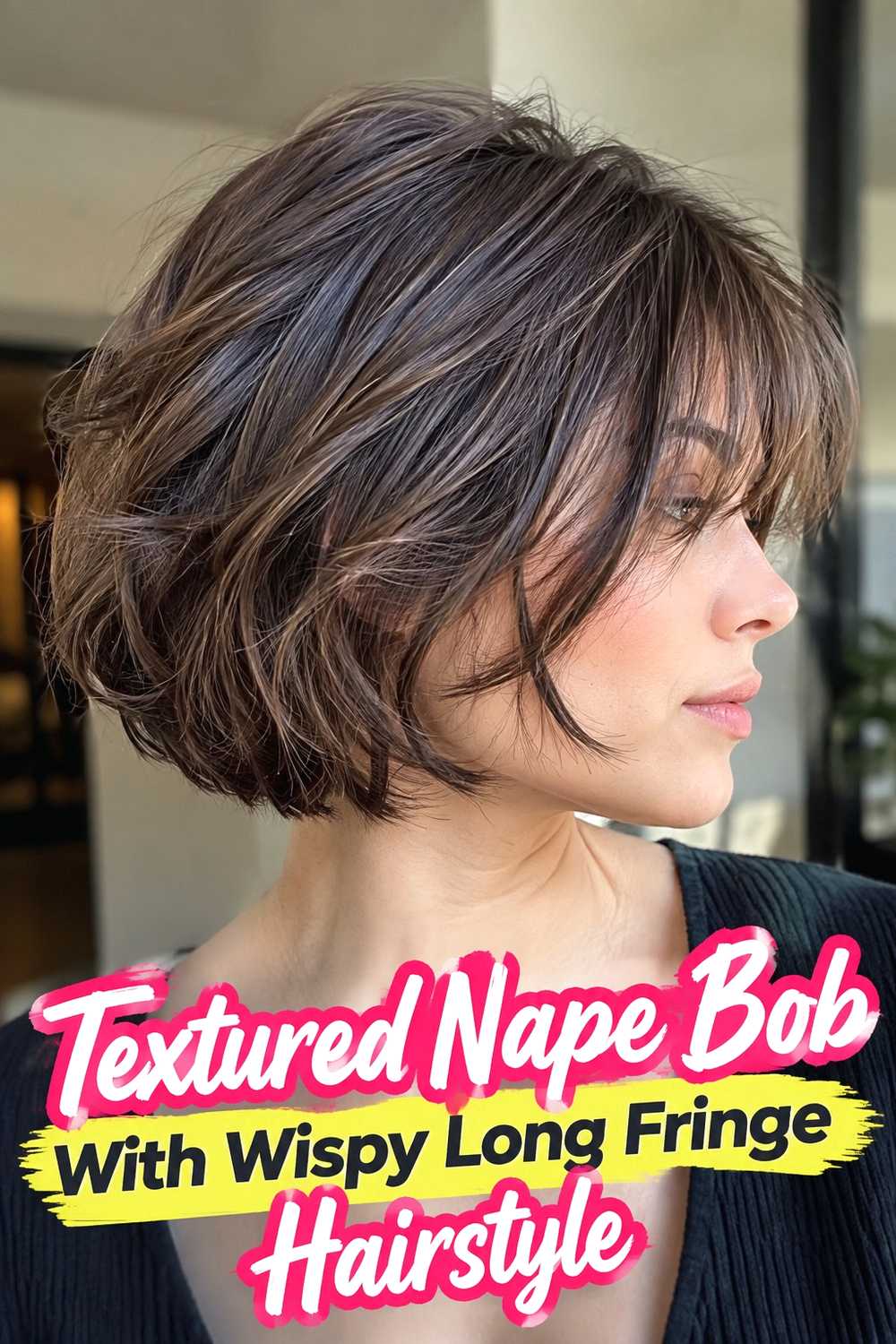
A textured nape bob feels lighter and more casual, especially when the long fringe is broken into soft, wispy pieces instead of forming one solid section. Gentle internal layering gives the main shape separation while preserving enough weight around the perimeter for the haircut to still read as a bob. The fringe can graze the brows or extend toward the cheekbones in irregular sections, producing a relaxed finish that moves easily. This version is useful for anyone who prefers visible strand definition over an ultra-smooth surface. It can also make naturally slight bends or waves part of the style rather than something that must be straightened. Avoid overloading it with product, since airy texture is part of its appeal.
Styling Notes
Work a small amount of texture cream through mostly dry hair, focusing on the ends and fringe rather than coating the roots.
Why It Works
The wispy front keeps the longer fringe visually light, while the short nape gives the haircut enough structure to avoid looking unshaped.
4. Rounded Nape Bob With Curtain Long Fringe Hairstyle
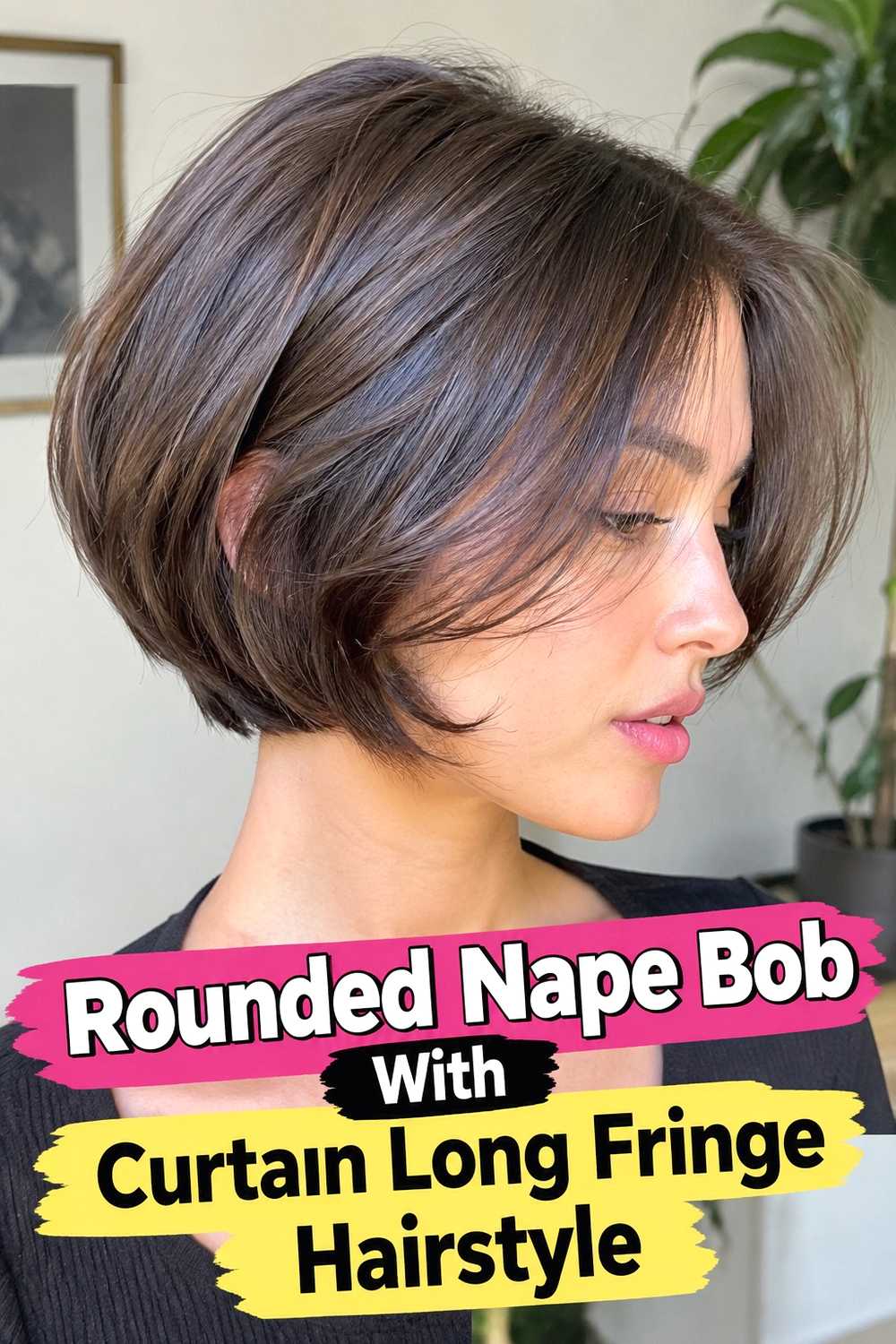
This variation creates a softer, curved silhouette with a long fringe that separates near the center and opens toward both sides. The back can be gently graduated or beveled so it hugs the nape, while the upper sections retain enough fullness to form a rounded profile. At the front, the curtain fringe blends into the temples and sides rather than ending abruptly, giving the haircut an easy sense of flow. It is particularly attractive when the hair has natural body or responds well to a round-brush finish. Because the fringe is divided, it can feel less intrusive than a full forward fringe. The main maintenance point is keeping the curtain pieces shaped so they continue framing rather than simply growing into the bob.
Styling Notes
Direct the two fringe sections away from the face while drying, then allow them to fall back naturally instead of creating a rigid center split.
Wear & Maintenance
A light reshaping of the fringe between full haircut appointments can help preserve the curved, face-framing effect.
5. Choppy Nape Bob With Piecey Long Fringe Hairstyle
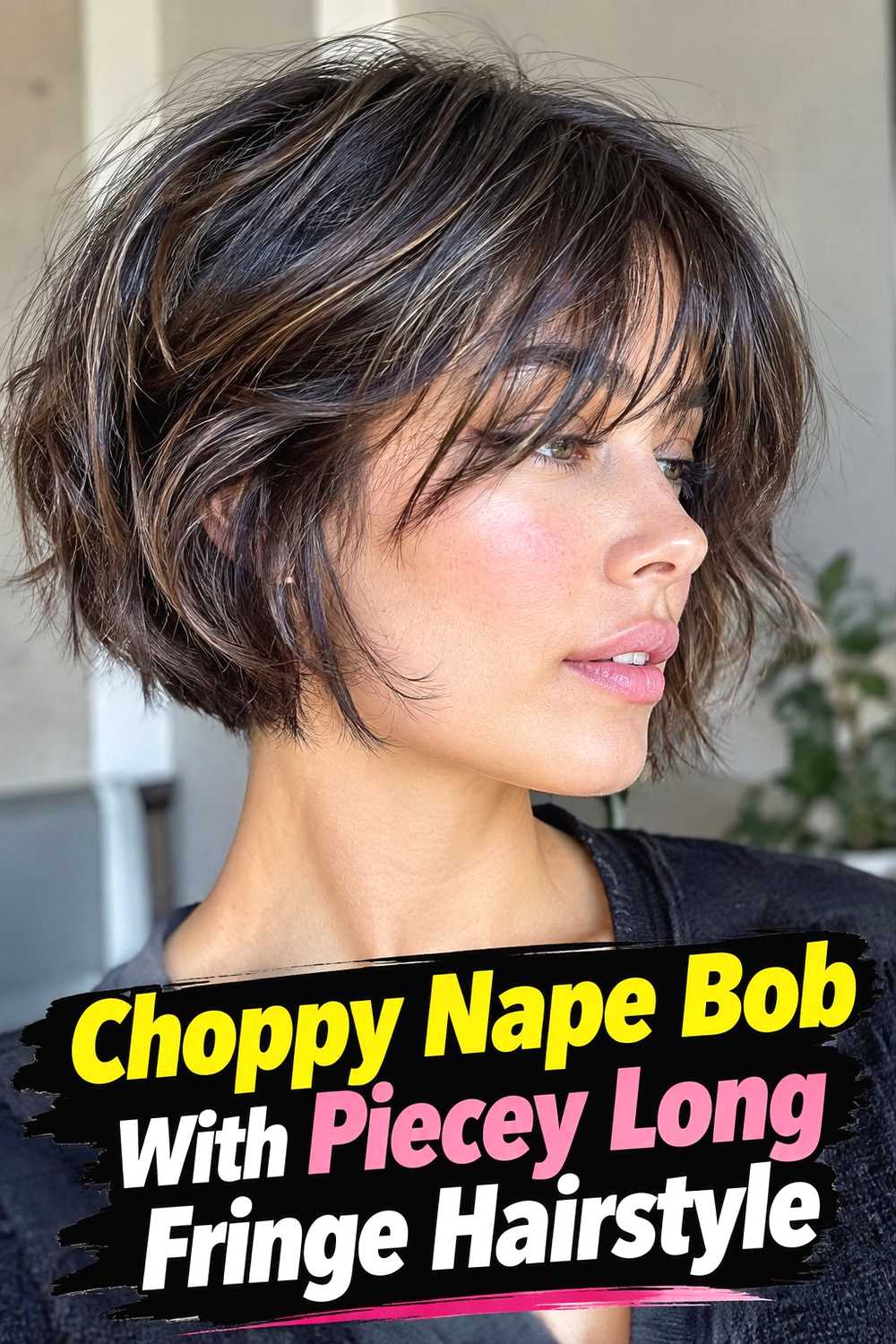
A choppy nape bob introduces visible separation through the ends for a more energetic, undone finish. Rather than keeping the perimeter perfectly uniform, selective texturizing creates small shifts in length that give the bob movement around the neck and jawline. The long fringe follows the same direction with piecey sections that can fall across the forehead or be pushed casually to one side. This approach works especially well when you want a short haircut that does not require every strand to sit perfectly. Fine to medium hair can gain visual movement from the broken-up ends, while thicker hair may need thoughtful weight removal to keep the silhouette from expanding. The cut should still retain enough structure to remain recognizably bob-shaped.
Best For
This option suits people who prefer a deliberately imperfect finish and enjoy restyling the fringe with their fingers during the day.
Pro Tip
Use texture mainly at the tips. Too much product near the scalp can collapse the airy separation that makes this haircut interesting.
6. Soft Layered Nape Bob With Feathered Long Fringe Hairstyle
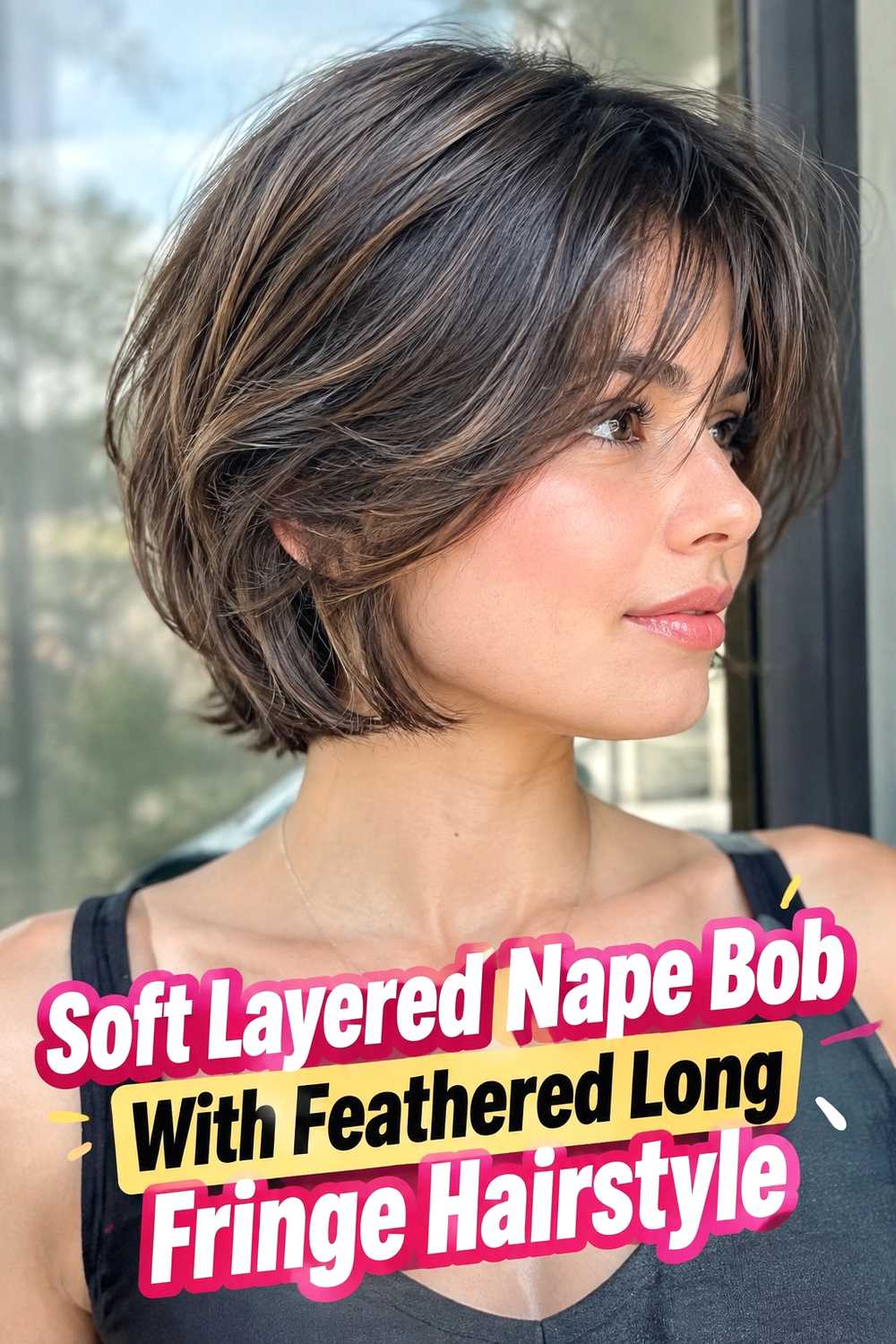
Soft layering makes the nape bob flow rather than sit as one solid block. Fine layers through the crown and sides create movement while the perimeter remains short enough to reveal the neckline. The long fringe is feathered so it blends gradually into the side sections, producing a gentle transition instead of a strong line across the forehead. This gives the haircut a particularly fluid appearance when styled with a light bend or soft blowout. Medium-density hair often holds this shape well because there is enough fullness to show the layers without creating excessive bulk. The feathering also gives the fringe several styling options: it can sweep back, fall forward softly, or divide around the face depending on the finish you want.
Hair Type & Length
Allow enough front length for the fringe to reach toward the cheekbone area if you want the most seamless feathered blend.
Styling Notes
Use directional airflow through the sides and fringe instead of curling every section separately; this keeps the layers soft and connected.
7. French Inspired Nape Bob With Long Fringe Hairstyle
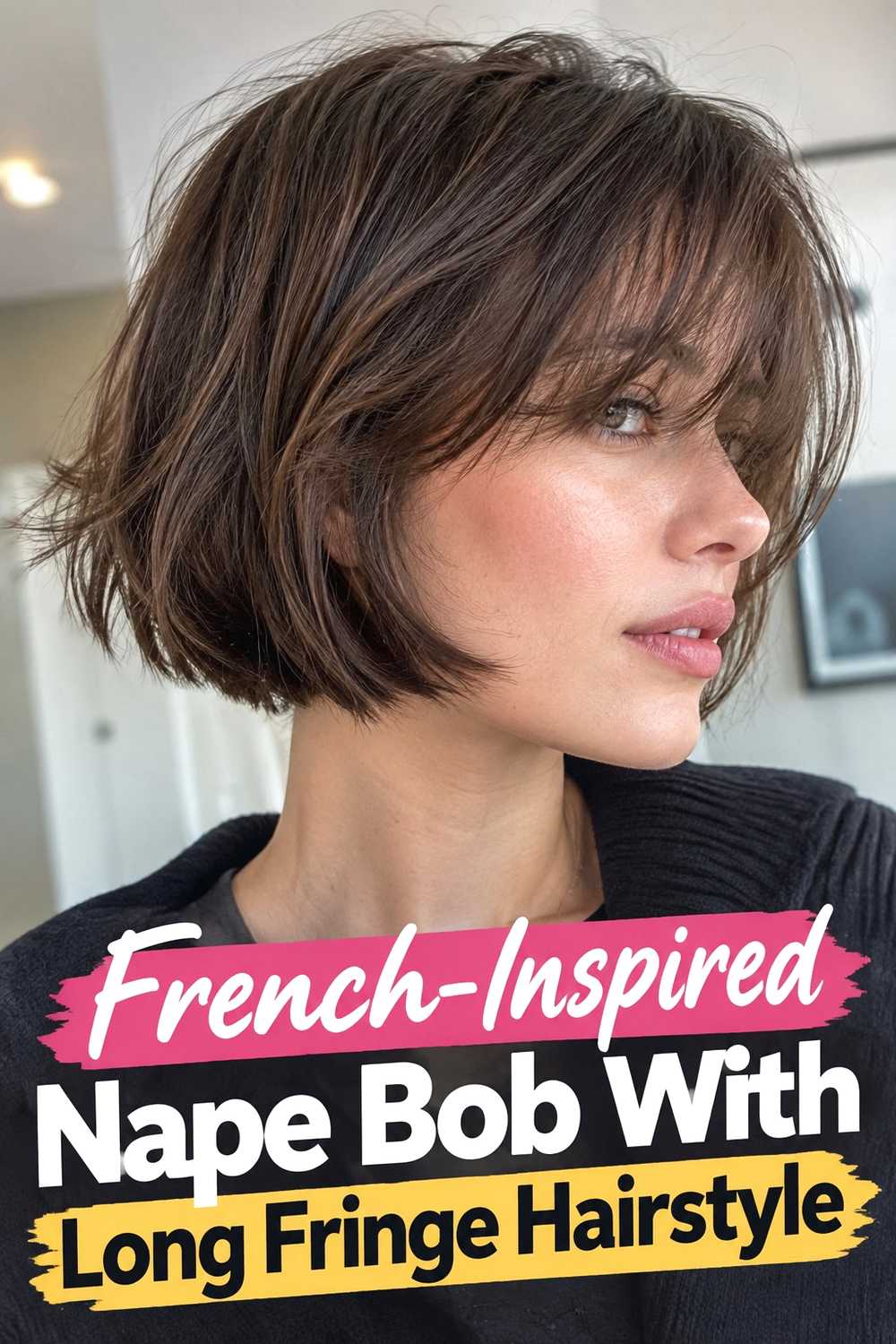
This French-inspired approach keeps the silhouette simple, compact, and slightly relaxed rather than overly sculpted. The bob ends neatly around the nape, while the long fringe falls with a natural, almost accidental-looking bend across the forehead. A touch of irregularity in the ends can keep the haircut from appearing too perfect, especially when paired with natural texture and understated volume. The result feels polished enough for everyday wear but still has an effortless quality. Straight and softly wavy textures can both suit the look, particularly when the haircut is shaped to follow the hair’s natural fall. Instead of chasing glassy smoothness, focus on healthy-looking movement, subtle shine, and a fringe that can shift naturally throughout the day.
Why It Works
The restrained nape shape provides structure, while the longer, less rigid fringe gives the haircut the softness associated with relaxed French bob styling.
Pro Tip
Let a few natural bends remain. Over-straightening can remove the lived-in character that makes this version distinctive.
8. Wavy Nape Bob With Long Fringe Hairstyle
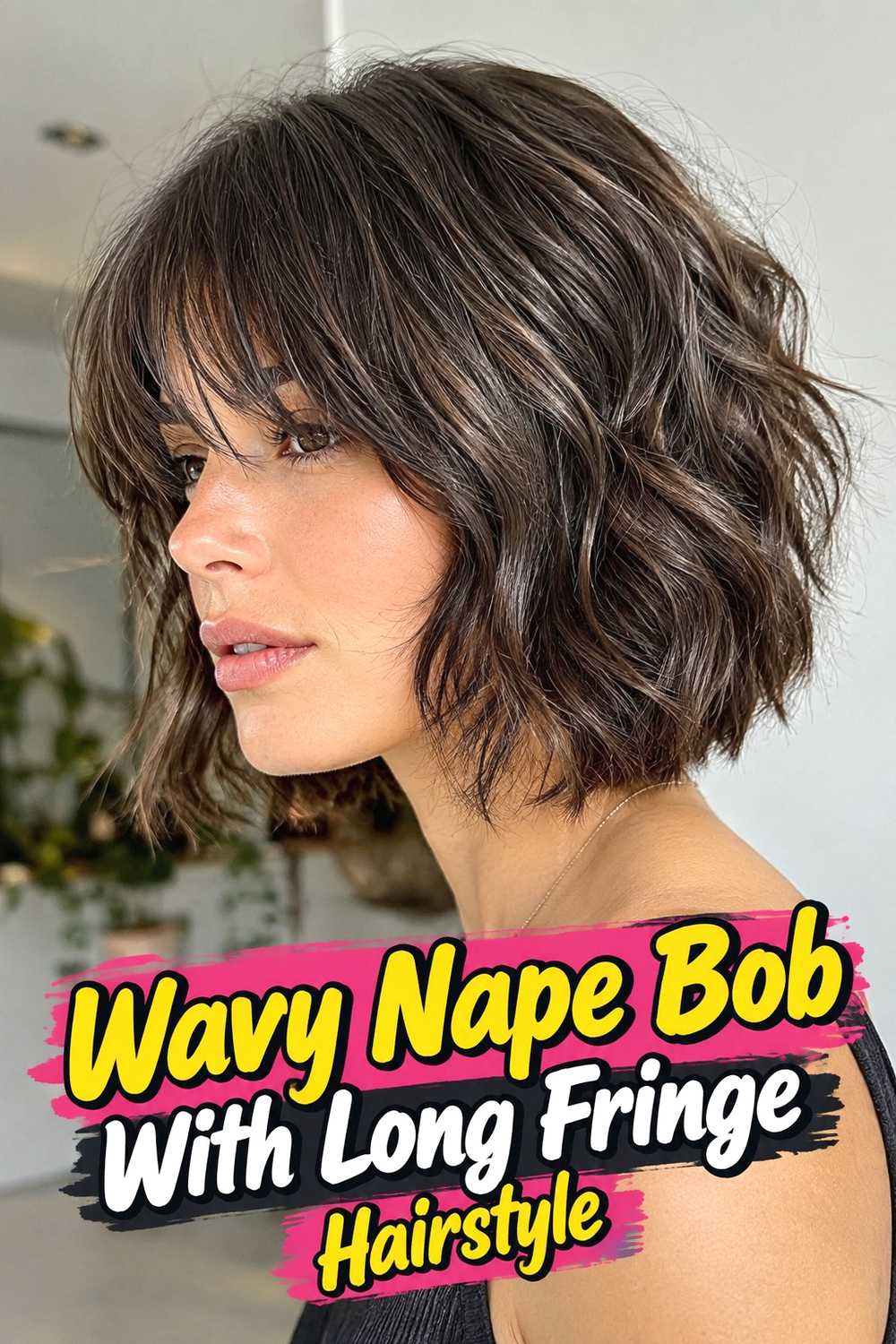
Natural or styled waves give a nape bob more volume and visible dimension without changing its short overall length. The waves can begin softly through the mid-lengths, allowing the root area to remain controlled while the ends develop movement. A long fringe works best when it follows the same texture instead of being pressed completely straight, creating continuity between the front and the rest of the haircut. Depending on the wave pattern, the fringe may sweep across the forehead or break into looser face-framing pieces. Because waves shorten hair visually as they spring upward, leaving slightly more cutting length can help achieve the intended nape position once the hair is dry. A flexible finish keeps the shape touchable rather than crunchy.
Hair Type & Length
Naturally wavy hair can make this a relatively low-effort option when the bob is cut with the dry shrinkage and wave pattern in mind.
Wear & Maintenance
Refresh isolated sections instead of restyling the entire head; preserving a little variation makes the waves look more natural.
9. Blunt Nape Bob With Arched Long Fringe Hairstyle
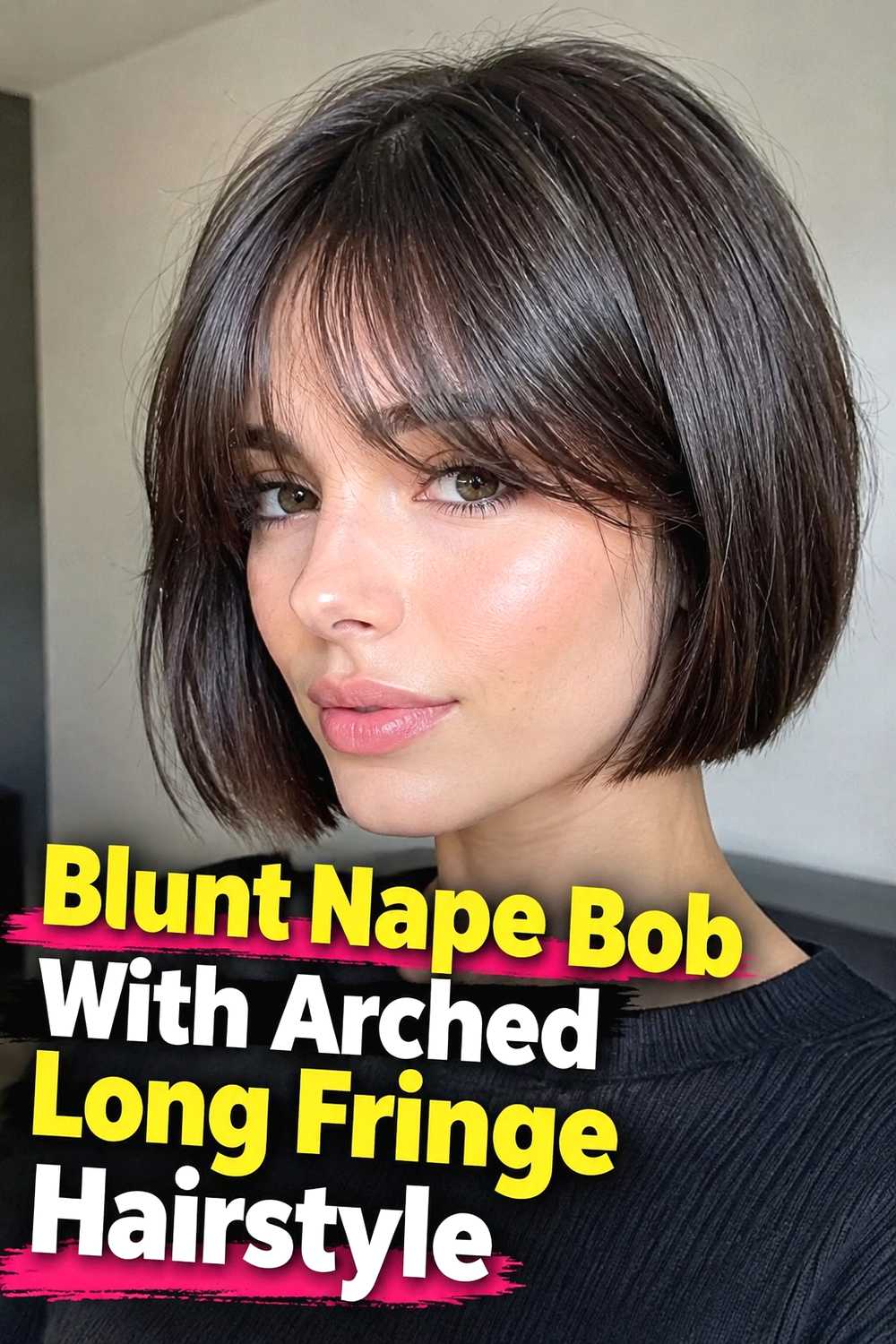
A blunt nape bob creates one of the strongest silhouettes in this collection. The lower edge is kept dense and deliberate, giving the haircut a crisp line around the neck, while an arched long fringe adds a softer curve across the front. The fringe can sit slightly shorter near the center and lengthen gradually toward the temples, making it easier to connect with the side sections. This shape is especially striking on straight or smooth hair because the precision of the perimeter remains clearly visible. Since both the nape line and fringe depend on intentional geometry, this version usually benefits from consistent trims. Minimal layering preserves the graphic finish, although subtle internal weight removal may be useful when the hair is particularly dense.
Best For
Consider this style if you prefer clean edges, visible structure, and a bob that looks intentionally shaped even with simple styling.
Wear & Maintenance
The sharper the perimeter, the sooner growth becomes noticeable, so this variation may require more frequent reshaping than softer textured bobs.
10. Tucked Nape Bob With Deep Side Long Fringe Hairstyle
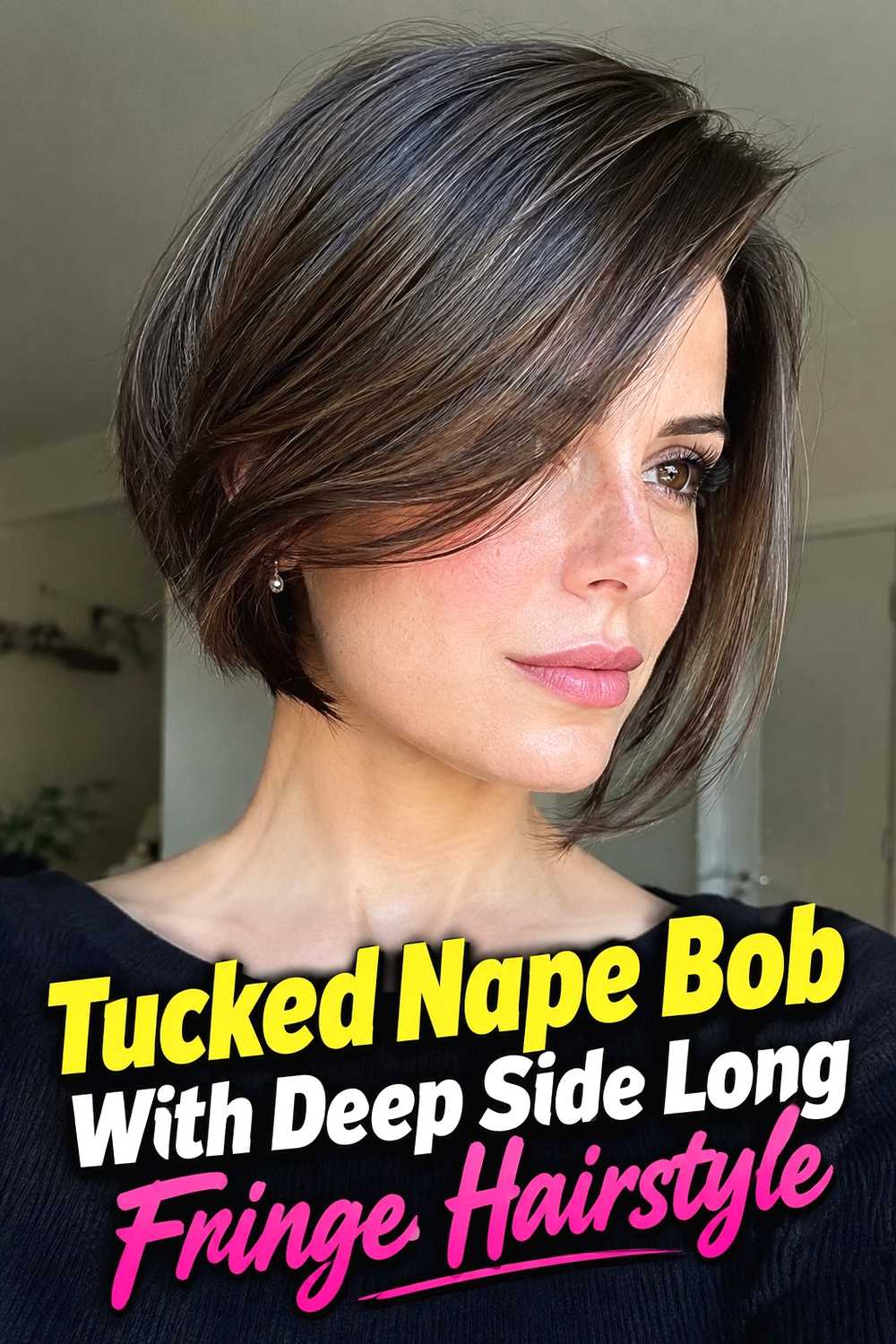
A deep side part transforms a nape bob by shifting most of the fringe toward one side and creating a dramatic diagonal sweep. Tucking the lighter side behind the ear exposes the clean nape and emphasizes the difference between the compact back and longer front. This styling approach can make a simple bob feel noticeably more directional without requiring additional layering. It works particularly well when the fringe is long enough to merge with the side of the haircut instead of stopping abruptly near the eyebrow. Hair with moderate density usually holds the asymmetrical balance comfortably, although very heavy fringe sections may benefit from subtle weight removal. The tuck can be sleek and polished or slightly loose for a more casual effect.
Styling Notes
Establish the deep part while the hair is damp, then dry the fringe in its intended direction so it is less likely to fall back across the center.
Pro Tip
Keep the tucked side smooth but not tightly plastered against the head; a little natural volume maintains balance with the fuller fringe side.
11. Voluminous Nape Bob With Swoopy Long Fringe Hairstyle
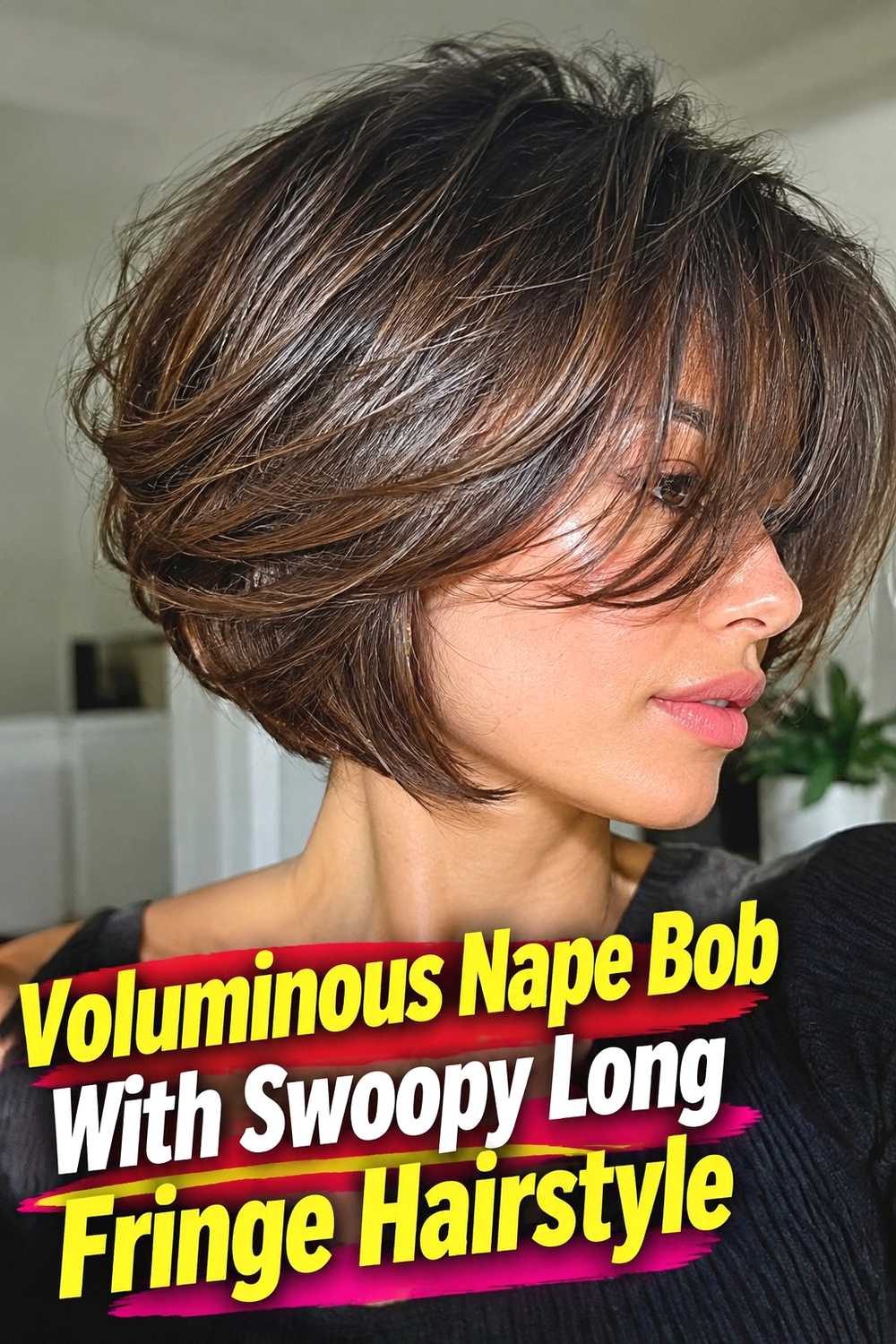
This version builds lift through the crown and upper sides, giving the nape bob a fuller, more glamorous profile. The long fringe is styled into a broad swoop that rises slightly at the root before curving toward one side, connecting naturally with the body of the haircut. The nape remains relatively close and controlled, which prevents the extra volume above from making the bob appear overly round. Medium to thick hair can create this shape naturally, while finer hair may need a lightweight volumizing product and careful root direction. The goal is buoyancy rather than stiffness. Keeping the ends smooth allows the silhouette to look intentional even when the top has plenty of movement and airy fullness.
Styling Notes
Lift the crown and fringe roots during drying, but direct the nape downward. This contrast creates the full upper silhouette without losing the short, tidy neckline.
Best For
Choose this interpretation when you enjoy blowout-inspired styling and want your short bob to have noticeable lift and movement.
12. Air Dried Nape Bob With Long Fringe Hairstyle
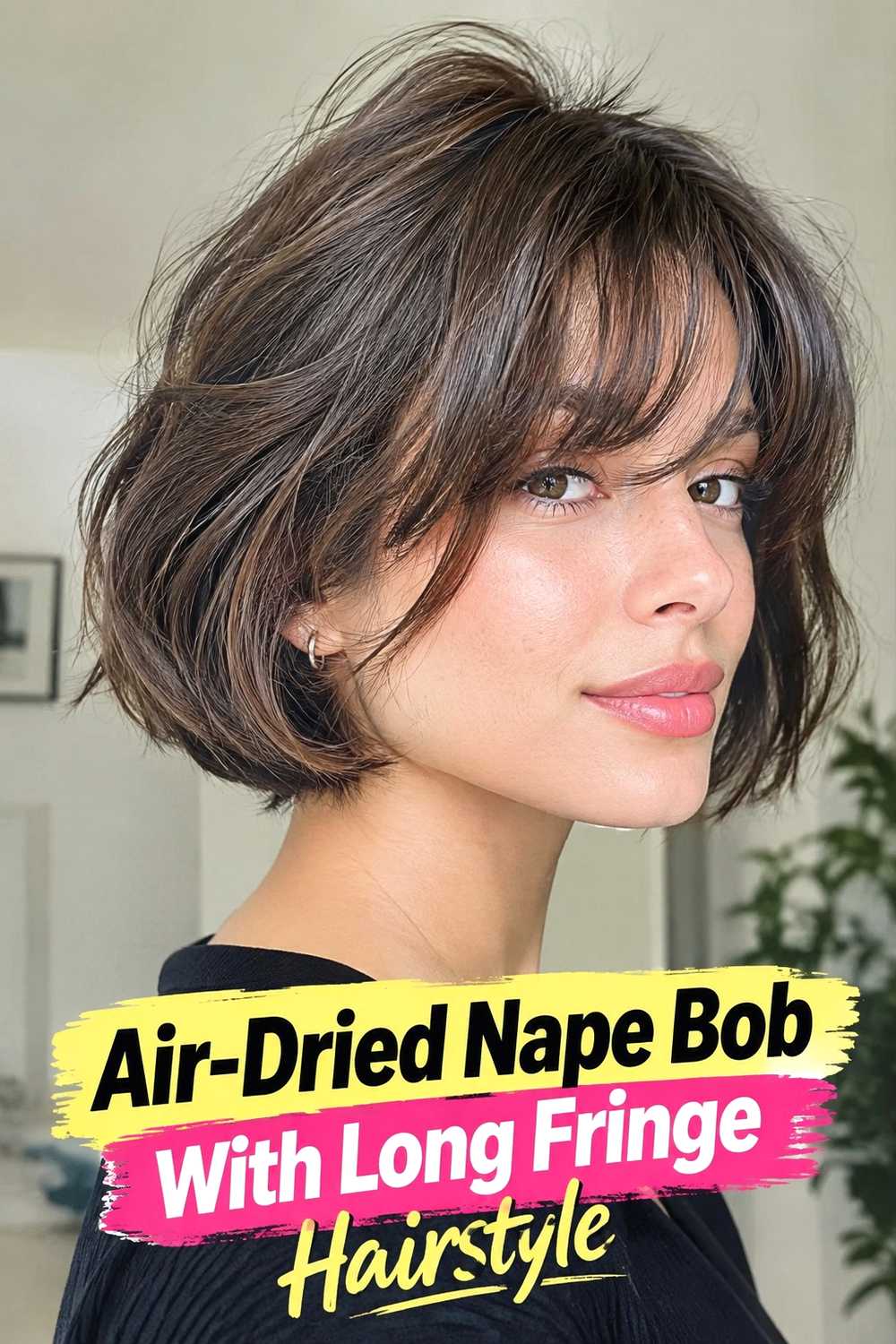
An air-dried nape bob celebrates natural movement and a less controlled finish while retaining a purposeful short shape. The haircut itself does most of the work: the nape is kept neat, internal weight is balanced for the natural texture, and the long fringe is cut so it can settle into its usual part or bend. Rather than forcing every section into uniform waves or straightness, this version allows slight flips, bends, and strand separation to remain visible. It can be particularly practical for hair that already forms a soft natural pattern when left alone. The exact cutting approach should reflect density and texture, since removing too much weight can create unwanted expansion. A small amount of leave-in styling product may be enough to encourage definition.
Why It Works
The structured nape keeps the cut looking deliberate even when the surface texture is relaxed, varied, and minimally styled.
Pro Tip
Shape the fringe with your fingers while it is still damp, then leave it alone as much as possible while drying to reduce unnecessary disturbance.
How to Choose the Right Look
Start with how much structure you want. The classic, sleek, blunt, and tucked versions create cleaner outlines, while textured, choppy, wavy, and air-dried options allow more visible separation and natural movement. If daily styling time matters, consider how closely the haircut works with your existing texture rather than choosing a finish that requires frequent straightening or curling.
Fringe behavior is equally important. A side-swept or swoopy long fringe usually needs deliberate root direction, while curtain and feathered versions offer more flexibility around the face. Wispy or piecey fringes create a lighter appearance but may require small amounts of texture product to maintain separation.
Also think about maintenance. A sharply cut nape and blunt perimeter show growth sooner than a softly textured outline. Hair density matters as well: thick hair may need internal weight control, while finer hair often benefits from preserving enough perimeter density to keep the bob looking full. Bring reference images showing the nape, side profile, and fringe—not just a front view—when discussing your preferred shape.
Final Thoughts
A nape bob with a long fringe balances two useful qualities: a short, defined neckline and enough length at the front to create softness and styling variety. For a polished result, lean toward sleek or blunt versions; for an easier, more relaxed finish, textured, wavy, feathered, and air-dried interpretations provide more movement.
The most successful version is the one adapted to your natural density, texture, preferred fringe direction, and realistic styling routine rather than copied exactly from one reference image.
FAQs
1. What is a nape bob with a long fringe?
It is a short bob cut to sit around or close to the nape of the neck, paired with a longer front fringe that may sweep sideways, part in the center, or blend into the sides.
2. Does a long fringe work with a very short bob?
Yes. The difference in length can actually create much of the haircut’s character. Keeping the front longer gives you styling flexibility while the back remains compact.
3. Can naturally wavy hair wear a nape bob with long fringe?
Yes, provided the haircut accounts for the wave pattern and how much the hair rises when dry. The fringe can also be worn with its natural bend rather than straightened.
4. How often does a nape bob need trimming?
It depends on the precision of the shape and how quickly your hair grows. Crisp blunt or closely shaped nape lines generally show growth sooner than softer, textured versions.
5. Can I style the long fringe in different ways?
Usually, yes. Depending on its length and layering, it can be swept to one side, divided like a curtain fringe, tucked away, worn piecey, or blended into the surrounding bob.
Save your favorite nape bob with long fringe hairstyle ideas and share them with your stylist when you are ready to plan your next short-hair look.