17 Coat-Collar-Proof Hairstyles for Thick Shoulder-Length Hair
Thick shoulder-length hair meets winter outerwear more easily with these raised, tucked, and secured hairstyles designed to keep bulk away from coat collars.
Shoulder-length hair can be especially awkward with structured winter coats because the ends often land exactly where the collar begins. With thick hair, that overlap can create extra volume at the nape, flip the ends outward, or make an otherwise polished style feel crowded beneath scarves and outerwear.
The most practical solution is not always a very high updo. Mid-height ponytails, compact twists, tucked shapes, and side-positioned buns can also create useful clearance. When choosing a style, compare your hair density, natural texture, coat collar height, styling time, and whether you prefer a sleek or softly textured finish.
Quick List
- High Textured French Twist Hairstyle
- Crown Set Mini Bun Hairstyle
- Side Swept Mid Ponytail Hairstyle
- Pinned Up Faux Bob Hairstyle
- High Claw Clip Twist Hairstyle
- Double Twist Crown Hairstyle
- Braided Crown Tuck Hairstyle
- Full Up High Knot Hairstyle
- Soft Side Chignon Hairstyle
- Rolled Nape Free Updo Hairstyle
- Curly Crown Puff Hairstyle
- Sleek Mid Height Ponytail Hairstyle
- Twisted Halo Updo Hairstyle
- Compact Braided Bun Hairstyle
- Face Framing High Twist Hairstyle
- Scarf Friendly Folded Updo Hairstyle
- Winter Secure Collar Free Updo Hairstyle
1. High Textured French Twist Hairstyle
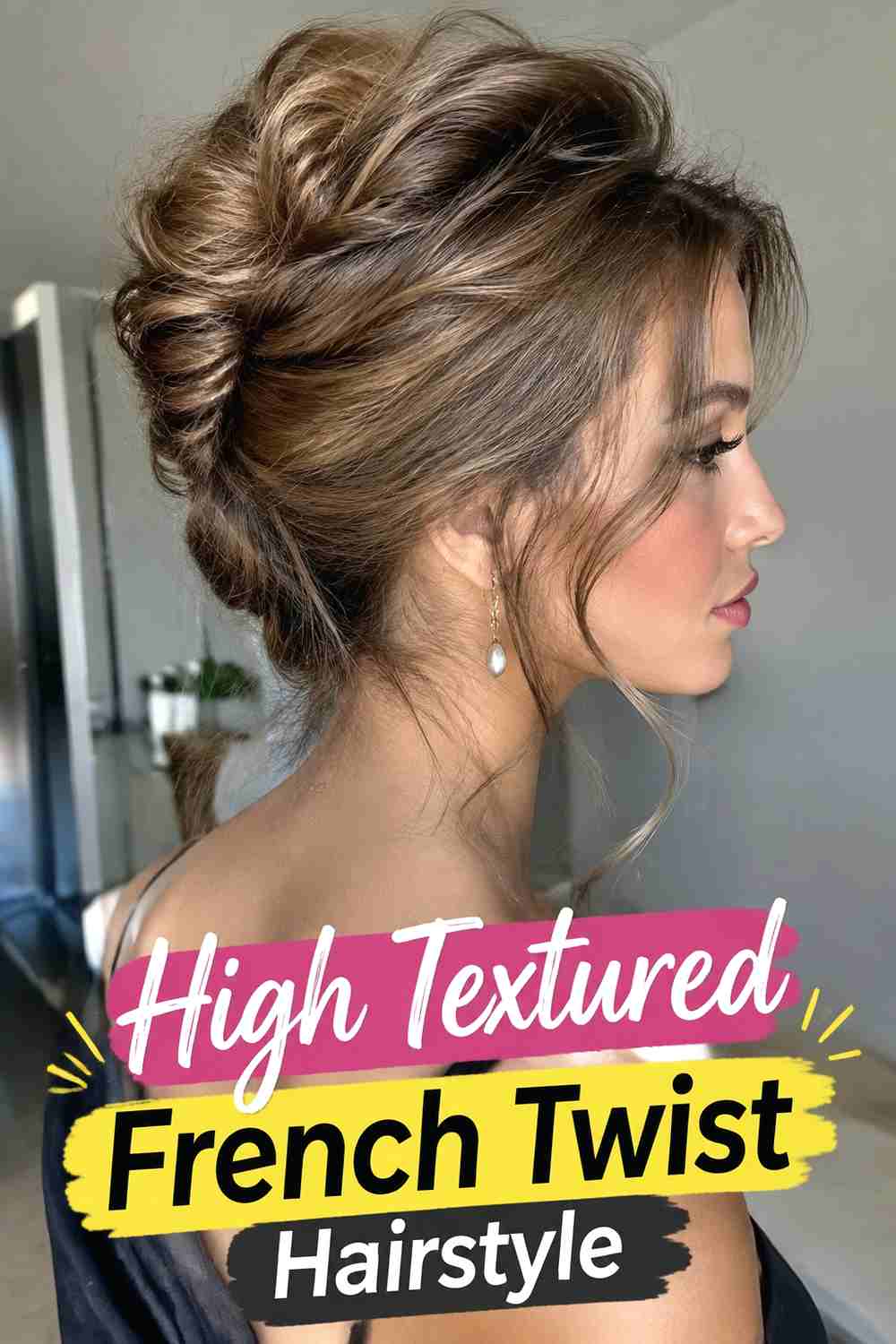
A high textured French twist makes excellent use of thick shoulder-length hair because there is enough length to create a substantial roll without leaving excessive ends to hide. Instead of starting the twist directly at the nape, direct the hair upward first and build the roll higher on the back of the head. That placement leaves clear space between the updo and a structured coat collar. Preserve a little natural texture through the surface so the style looks dimensional rather than tightly lacquered. Thick hair usually needs several strong pins through the center of the twist, but the density also helps create a naturally full silhouette without padding or aggressive teasing.
Styling Notes
Build a firm vertical pin anchor before rolling the hair inward. Tuck shorter shoulder-length ends into the upper part of the twist instead of forcing them downward.
Best For
This style works well with tailored coats, workwear, formal outfits, and high collars that need plenty of space around the nape.
2. Crown Set Mini Bun Hairstyle
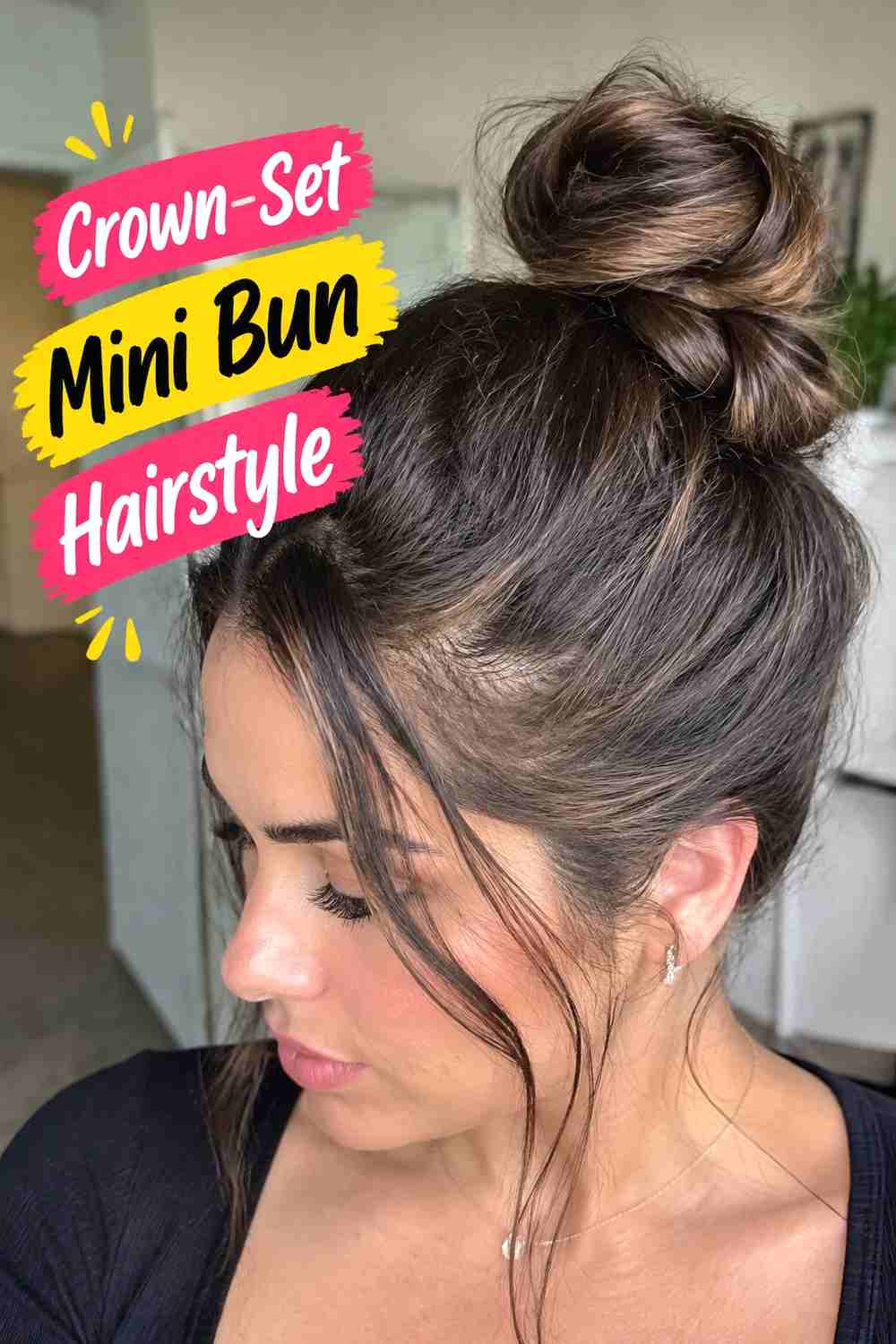
A crown-set mini bun lifts thick shoulder-length hair completely away from the collar while keeping the finished shape compact. Because the hair is shorter than traditional long lengths, the bun does not need to become oversized or heavy. Gather everything toward the crown, twist the ponytail loosely, and pin the ends underneath so the texture stays visible. Layers that do not reach the bun can be secured with discreet pins rather than pulled excessively tight. The elevated placement works particularly well with wool coats, high necklines, and thick scarves because there is no bulky knot sitting at the nape. Leave the surface smooth or softly textured depending on the outfit.
Hair Type & Length
Dense shoulder-length hair is ideal because the thickness gives a small bun enough substance even when the available length is limited.
Pro Tip
Use several pins around the circumference instead of relying on one elastic to hold the entire weight of thick hair.
3. Side Swept Mid Ponytail Hairstyle
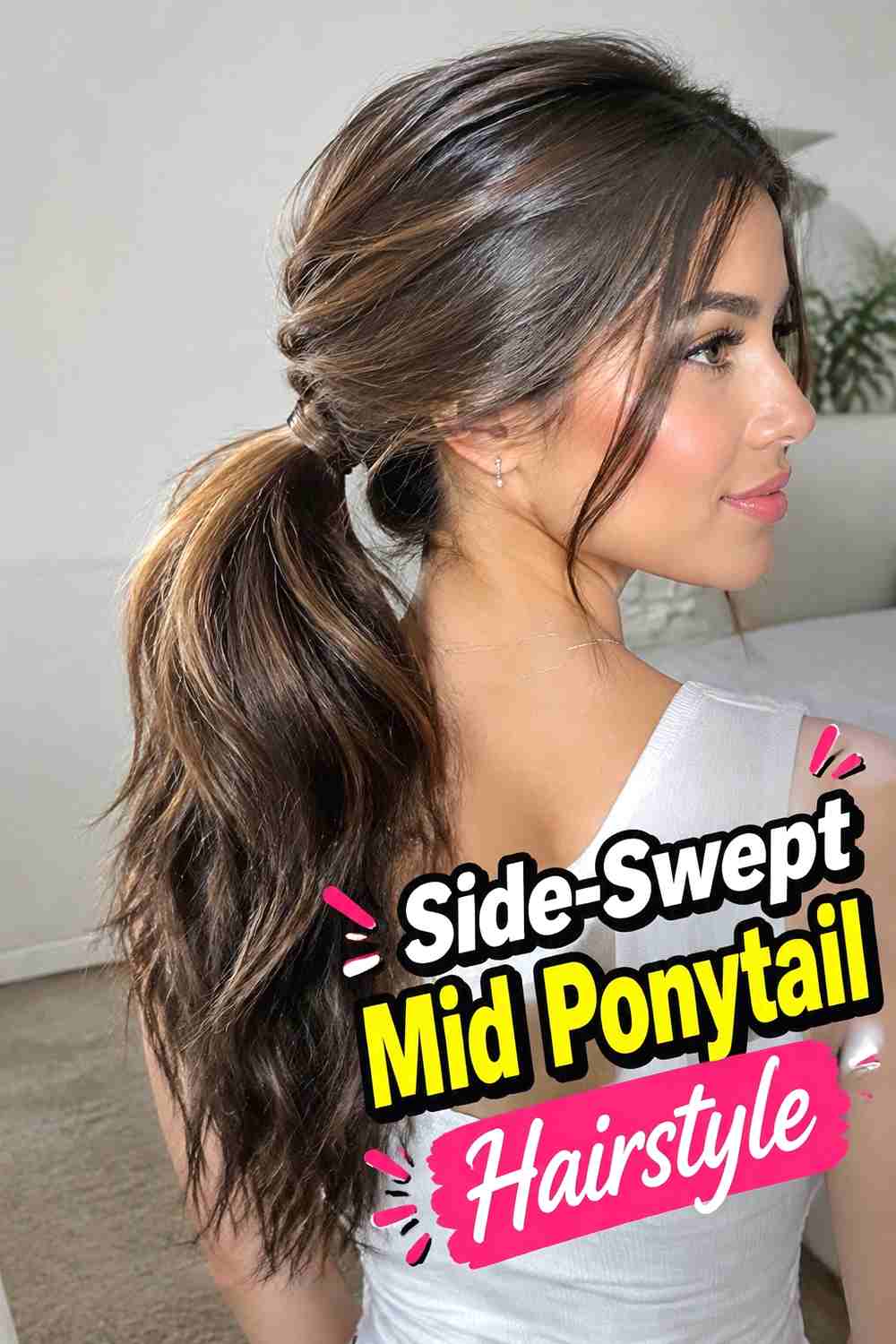
A side-swept mid ponytail moves the hair away from the center of the nape while keeping the style easy and wearable. Gather thick shoulder-length hair slightly above collar level and shift the ponytail toward one side so the ends fall beside the coat rather than directly into the back neckline. This placement is especially practical when a full updo feels unnecessary. Straight hair creates a clean, graphic finish, while waves add softer movement through the ends. Because thick hair can pull a side ponytail downward, anchor the base firmly and avoid positioning it too close to the ear. A small wrapped section around the elastic can give the look a polished finish.
Why It Works
The off-center placement redirects the densest part of the hair away from the back of the coat while preserving a visible, touchable finish.
Wear & Maintenance
Check that the ponytail remains above the collar after putting on your coat. Raise the base slightly if the ends become trapped.
4. Pinned Up Faux Bob Hairstyle
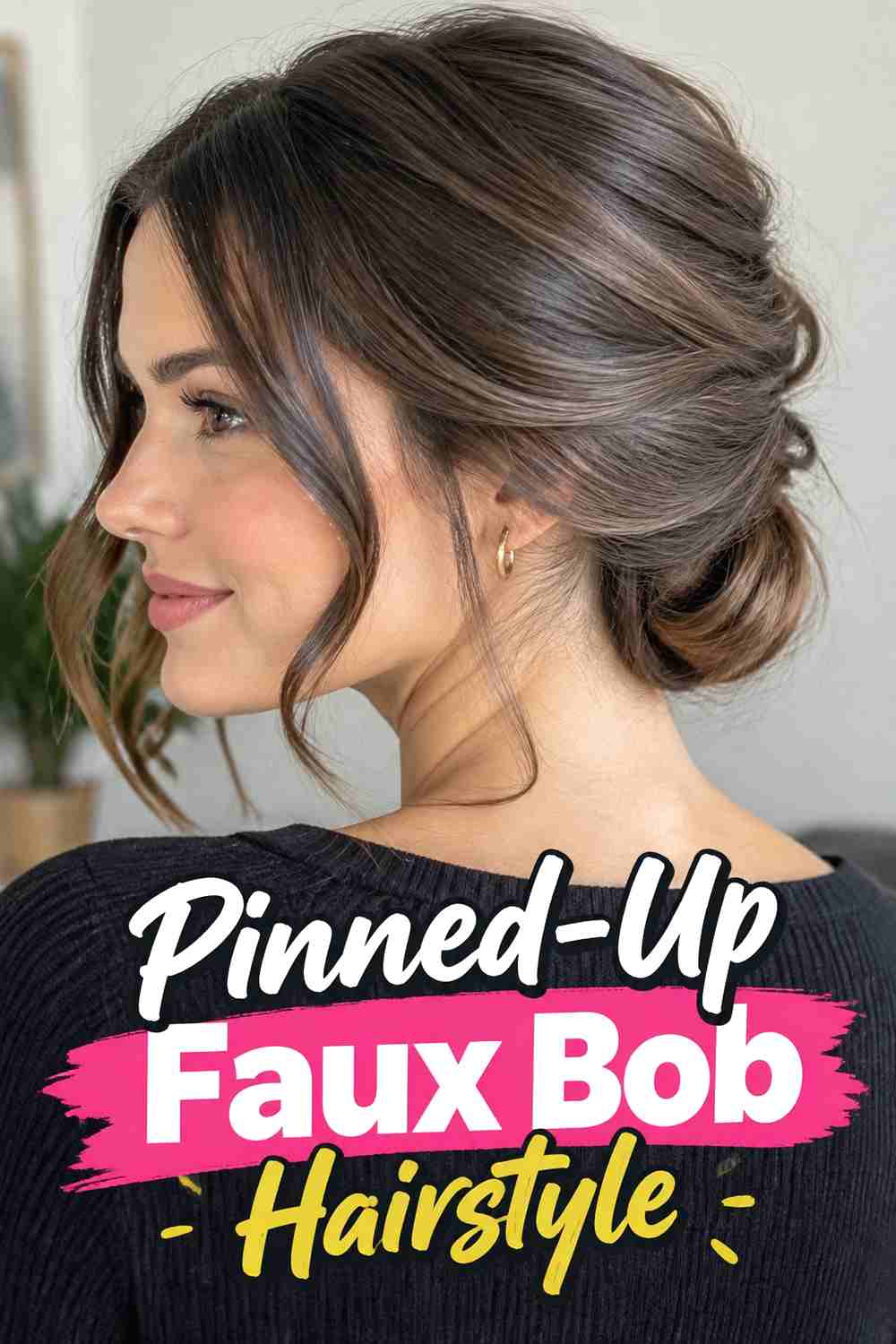
A pinned-up faux bob is a smart option when you want the appearance of shorter hair without letting shoulder-length ends sit directly against your coat collar. The lower lengths are rolled or folded underneath and pinned several inches above the nape, creating a rounded bob-like silhouette with no loose ends brushing the outerwear. Thick hair gives the shape convincing volume, though working in smaller sections helps keep the tucked edge even. A slight wave before pinning can make the finish softer and disguise the hidden pins. Keep the faux hemline high enough to clear the collar completely, especially when wearing a coat with a raised or funnel-shaped neckline.
Styling Notes
Divide dense hair into several sections before rolling the ends inward. This prevents one heavy fold from pulling the entire shape downward.
Best For
Try this when you want a vintage-inspired or polished look that still displays the fullness of thick hair.
5. High Claw Clip Twist Hairstyle
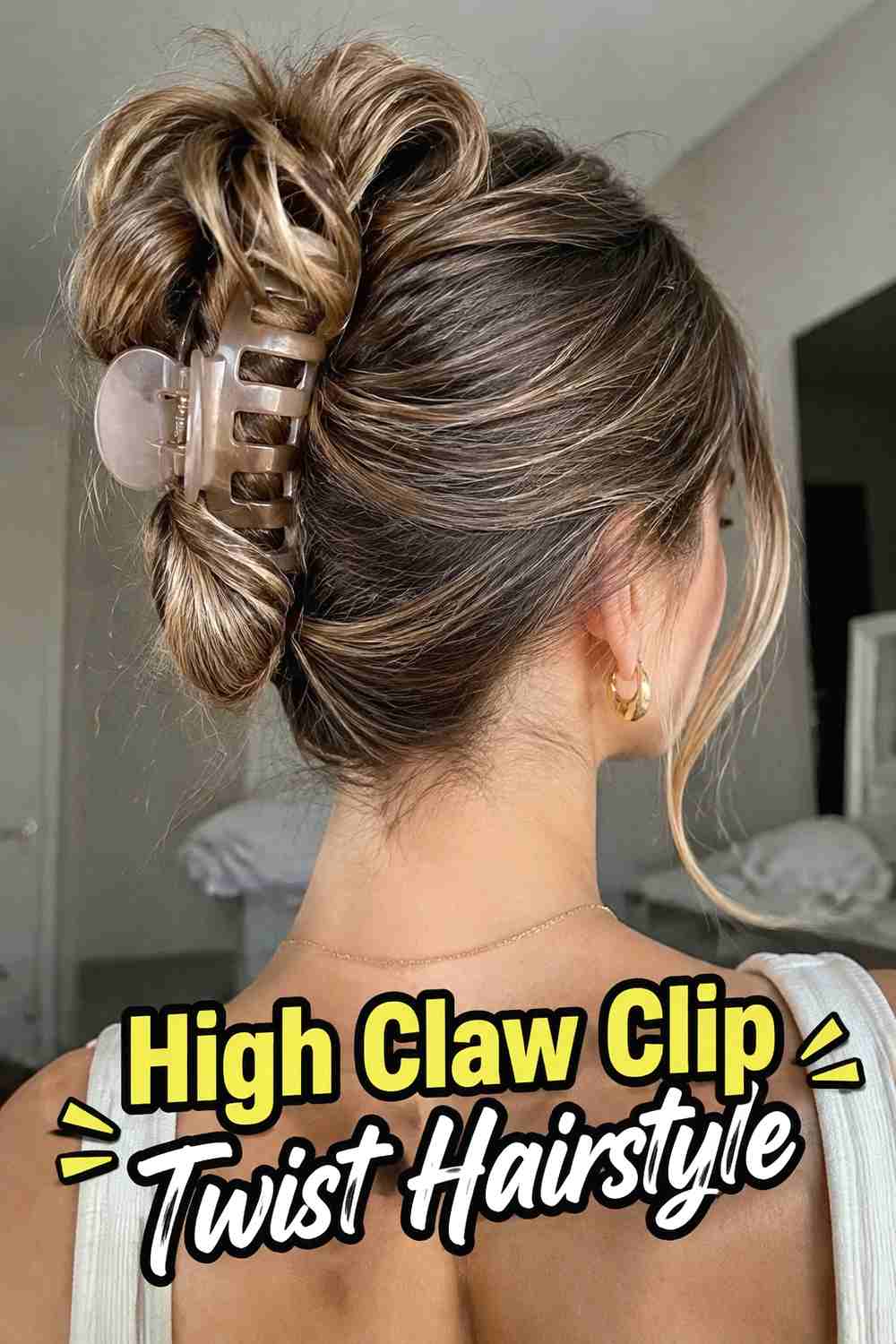
A high claw clip twist is one of the quickest ways to move thick shoulder-length hair away from a coat collar. Gather the hair upward, twist it against the back of the head, and secure the center with a strong clip positioned above the area where your collar rests. Shoulder-length ends can fan softly over the top or be tucked beneath the clip for a cleaner shape. The important detail is clip placement: a low clip can press against structured outerwear, while a higher one leaves the neckline much more comfortable. Choose a clip with enough width and tension for thick hair so the twist stays secure without repeated readjustment.
Best For
This practical style works well for casual days, commuting, errands, and quick transitions between indoor and outdoor settings.
Pro Tip
Try on your coat after clipping the hair. If the collar touches the clip itself, move the entire twist slightly higher.
6. Double Twist Crown Hairstyle
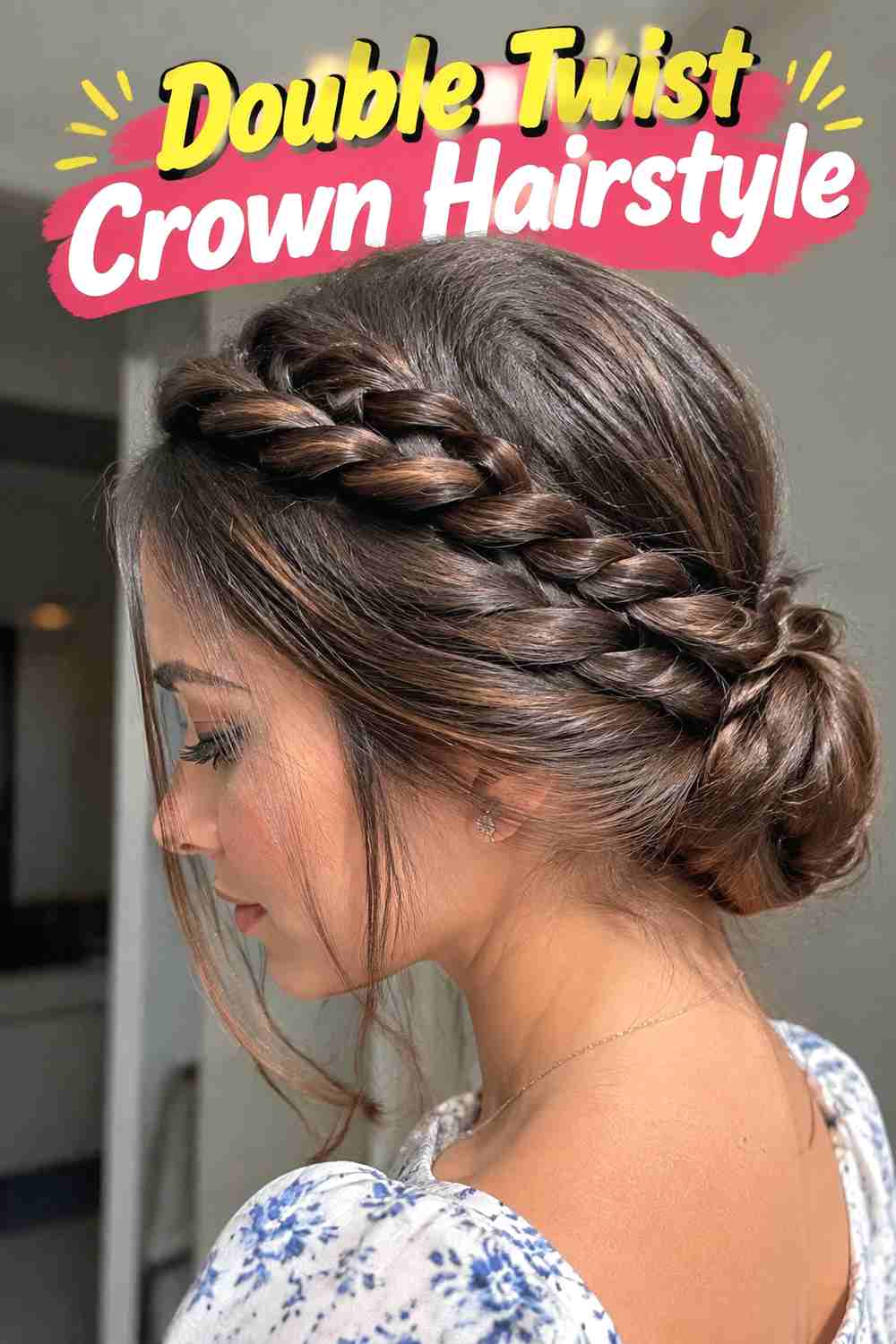
A double twist crown divides thick shoulder-length hair into two manageable sections, making the overall updo easier to secure. Twist each side upward from the nape toward the crown, then overlap or pin the ends across the upper back of the head. The result keeps the neckline exposed while distributing the weight instead of concentrating it in one dense bun. This is particularly useful for very thick hair that feels heavy when gathered into a single point. Allow the twists to remain slightly rounded so their texture stays visible. Shorter layers can be incorporated gradually as you work upward, reducing the number of loose pieces around the coat collar.
Why It Works
Separating thick hair into two sections reduces bulk at each anchor point and gives shoulder-length pieces more places to tuck securely.
Wear & Maintenance
Cross the pins through the center of each twist rather than placing them only along the outer edges.
7. Braided Crown Tuck Hairstyle
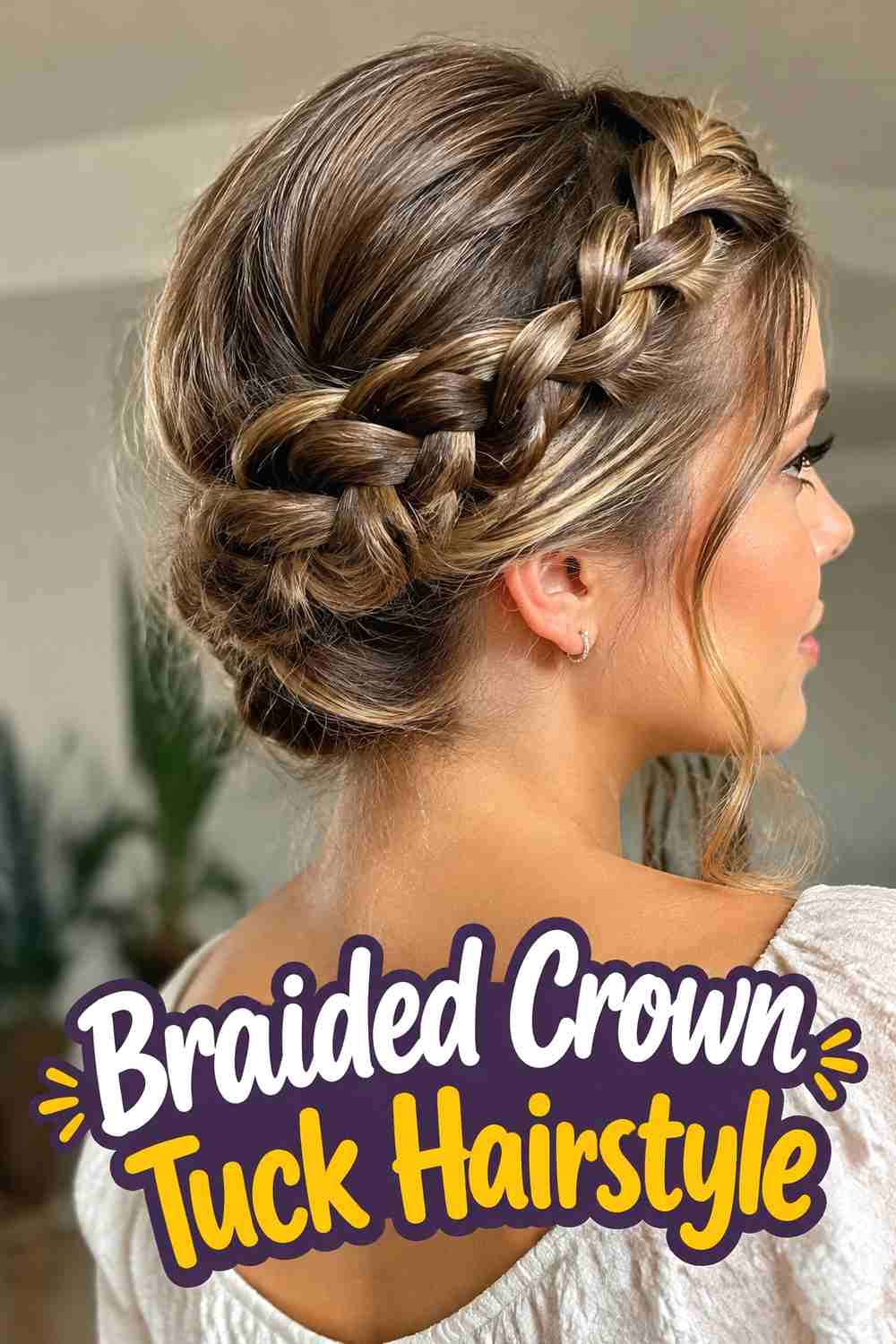
A braided crown tuck combines secure braiding with a collar-free finish. Create one or two braids from thick shoulder-length hair, direct them upward around the back of the head, and tuck the ends beneath the opposite section. The resulting shape sits around the crown instead of at the nape, keeping both the hair and fastening points away from winter coat collars. The braid pattern gives dense hair definition and helps contain shorter layers that might otherwise escape from a smooth updo. Keep the braid comfortably firm at the base, then loosen selected outer loops once everything is pinned. This preserves softness without sacrificing the structure needed for winter layering.
Hair Type & Length
Shoulder-length hair with medium to high density works well, especially when the sections are long enough to cross or overlap at the back.
Pro Tip
Pin the braid at several points instead of only securing the ends. Distributed support prevents the crown from slipping lower during wear.
8. Full Up High Knot Hairstyle
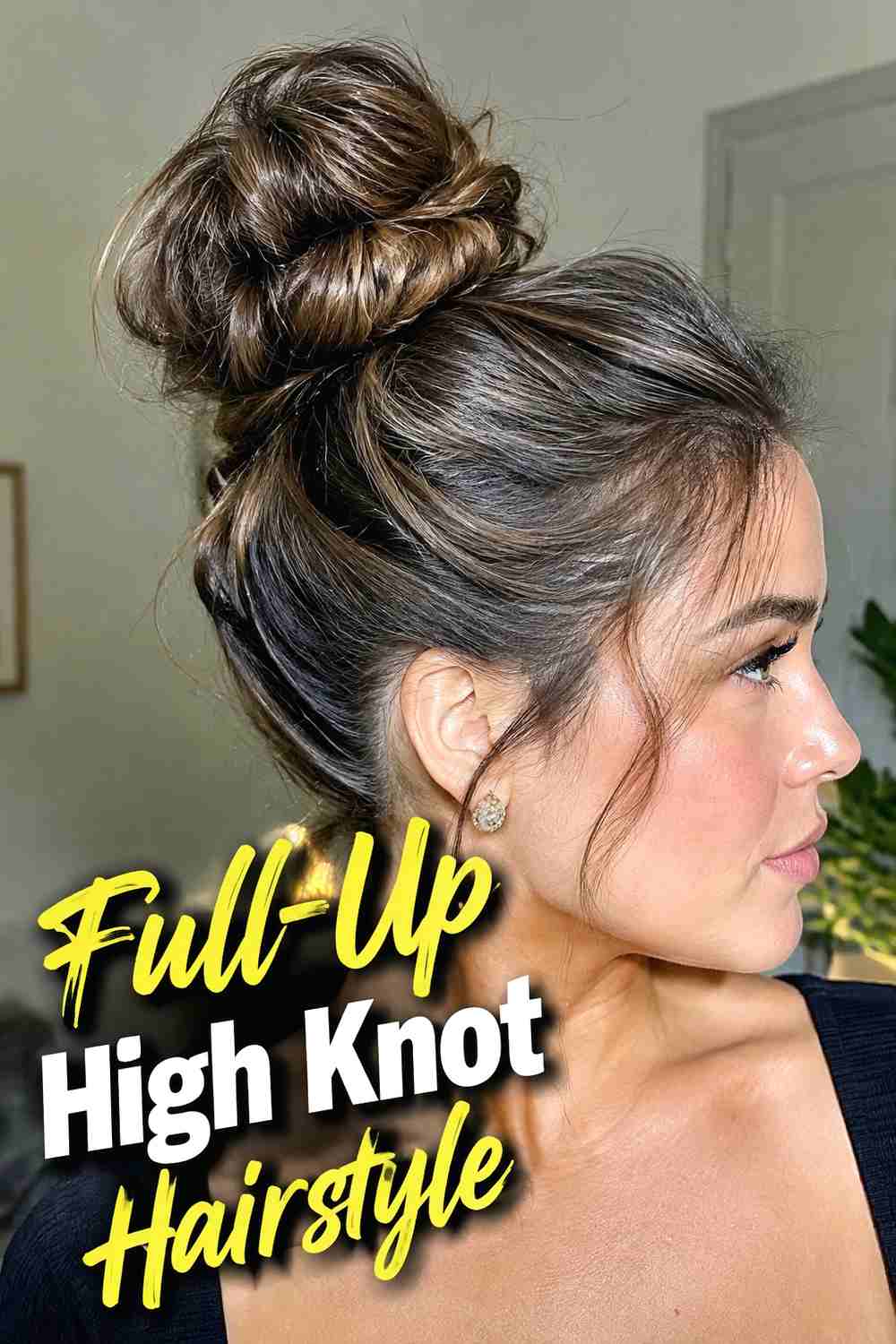
A full-up high knot removes every substantial length from the neckline, making it one of the most collar-proof options for thick shoulder-length hair. Gather the hair near the crown and twist the ponytail into a compact knot, tucking the shorter ends beneath the base as you pin. Because shoulder-length hair does not produce an extremely large bun, the style can feel lighter than a high knot created from very long hair. Thick density still gives it enough volume to look intentional. Smooth the sides for a sleek finish or loosen them slightly for a more relaxed effect. Secure shorter nape pieces upward so they do not fall back onto the coat collar.
Best For
Choose this style for tall collars, thick scarves, commuting, or any outfit where maximum separation between hair and outerwear is useful.
Wear & Maintenance
Keep spare pins available for shorter nape layers, which may loosen sooner than the main knot during a long day.
9. Soft Side Chignon Hairstyle
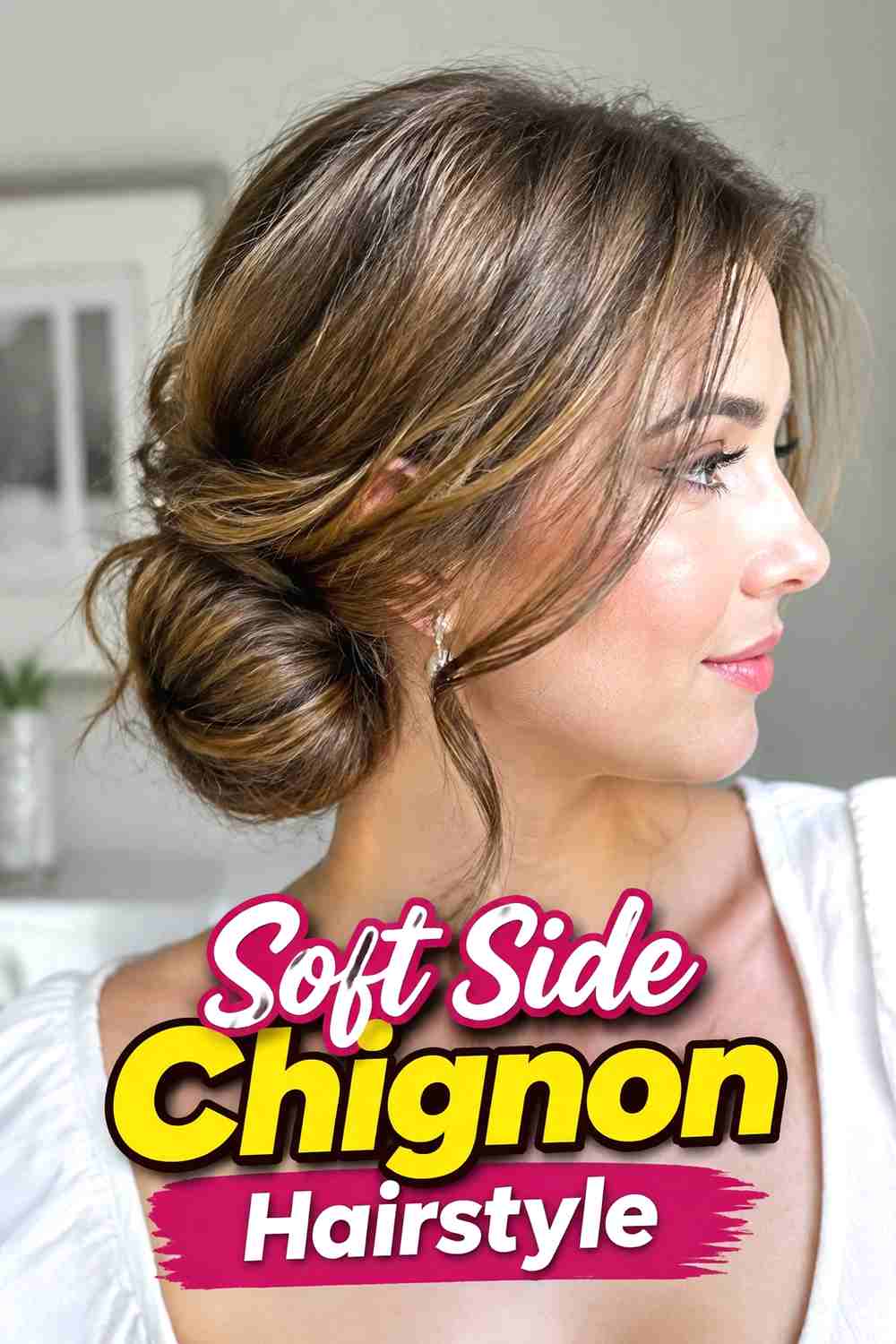
A soft side chignon keeps thick hair contained while shifting the main shape away from the center of a coat collar. Place the chignon behind one ear and slightly above the natural nape line, then pin the shoulder-length sections into loose loops instead of wrapping them into one dense coil. This gives thick hair room to spread without creating an oversized knot. The asymmetrical position also makes the style visible from the front, which can be flattering with structured outerwear. Keep the side closest to the collar compact and allow more texture along the outer edge. Short face-framing layers can remain free as long as they do not extend into scarf territory.
Styling Notes
Create the bun in several smaller sections. Thick shoulder-length hair is easier to control when each loop has its own pin.
Best For
This variation suits dinners, work events, and polished winter outfits where a centered bun feels too formal or bulky.
10. Rolled Nape Free Updo Hairstyle
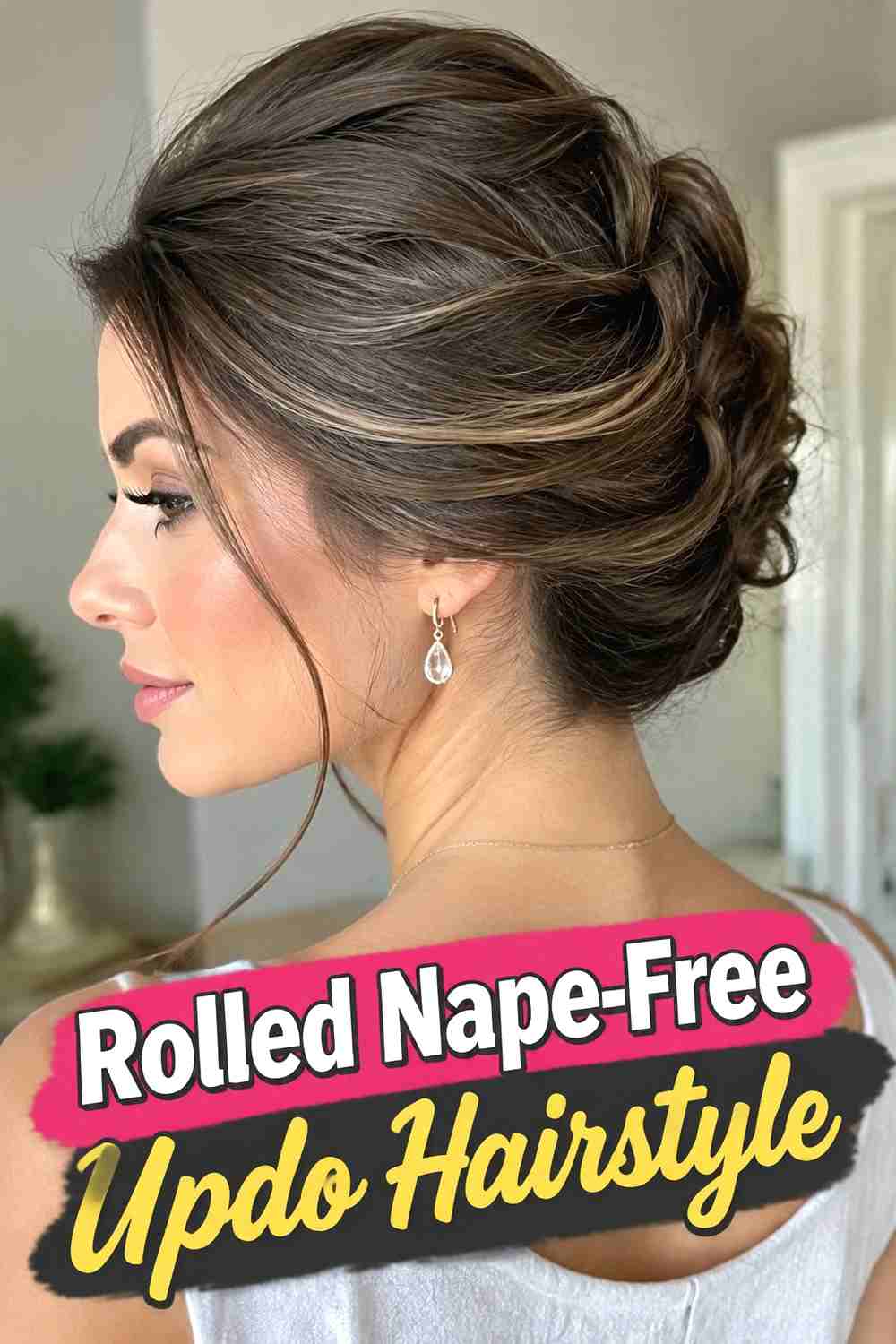
A rolled nape-free updo lifts the lower sections upward before folding them into a compact shape across the back of the head. It is particularly useful for thick shoulder-length hair because the limited length can be rolled securely without producing a large, heavy bun. Begin at the lower hairline and direct each section upward, pinning as you go until the ends disappear beneath the upper roll. The finished style exposes the nape while keeping a soft horizontal curve through the back. Thick hair naturally provides body, so avoid excessive padding. A few intentional flyaways can keep the updo modern, but the lowest edge should remain clearly above the coat collar.
Why It Works
Rolling the hair upward redirects shoulder-length ends that would otherwise bend outward when they meet a stiff winter collar.
Pro Tip
Start with the lowest sections first so every subsequent layer helps cover the pins beneath it.
11. Curly Crown Puff Hairstyle
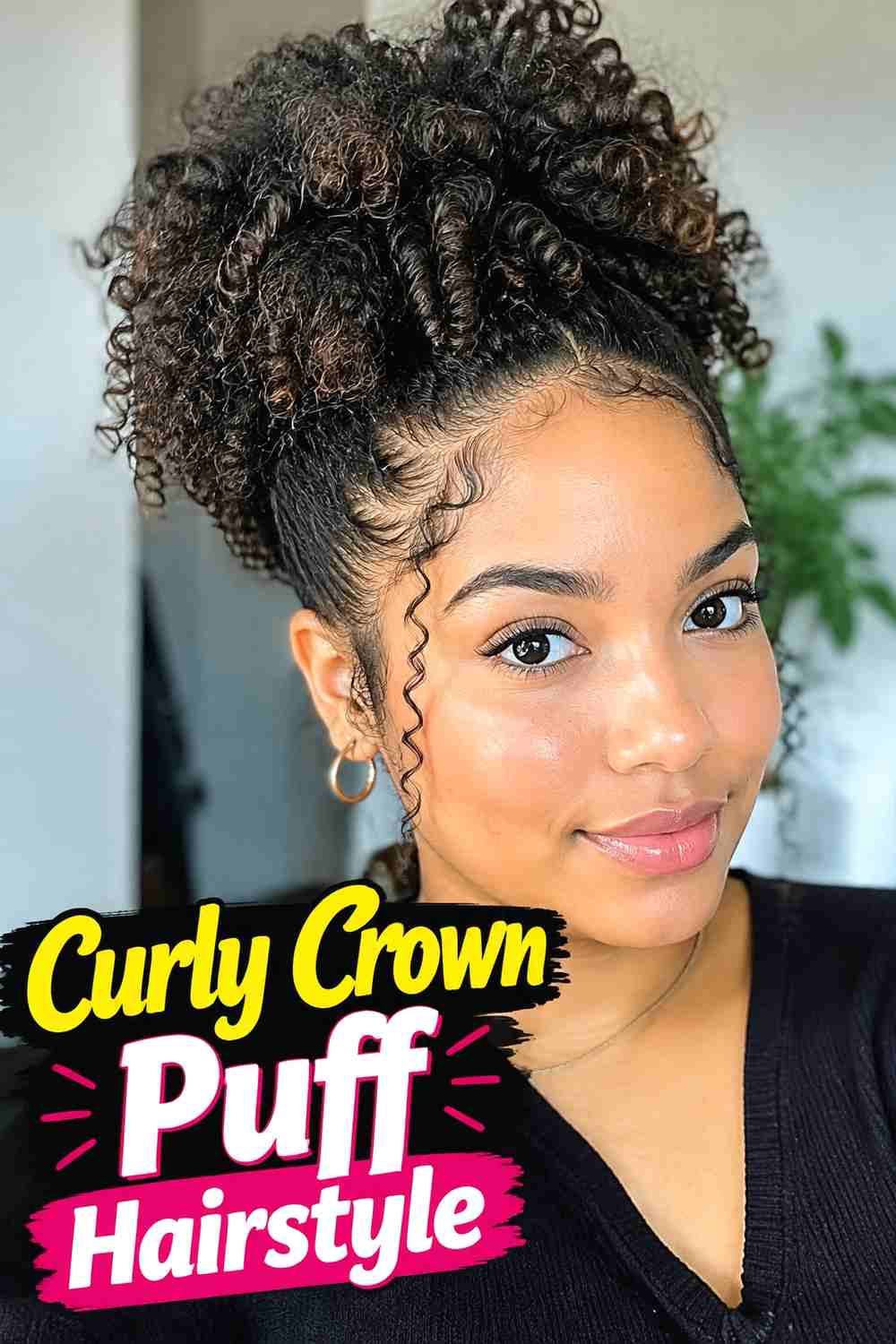
A curly crown puff gathers thick textured hair high enough to keep the neckline completely open while preserving natural volume. Instead of compressing curls into a tight bun, secure them near the crown and allow the lengths to form a rounded, airy puff. Shoulder-length curly hair is especially suited to this shape because the curls create fullness without requiring extremely long sections. Use a comfortable tie or band with enough strength for dense hair, then arrange the surface curls individually rather than brushing them into uniformity. Keep the base high enough that the lowest curls do not rest against a raised coat collar or scarf.
Hair Type & Length
Naturally curly, coily, or densely textured shoulder-length hair can create the most defined puff with minimal manipulation.
Pro Tip
Secure the structure first, then adjust individual curls around the perimeter to balance the shape without pulling at the base.
12. Sleek Mid Height Ponytail Hairstyle
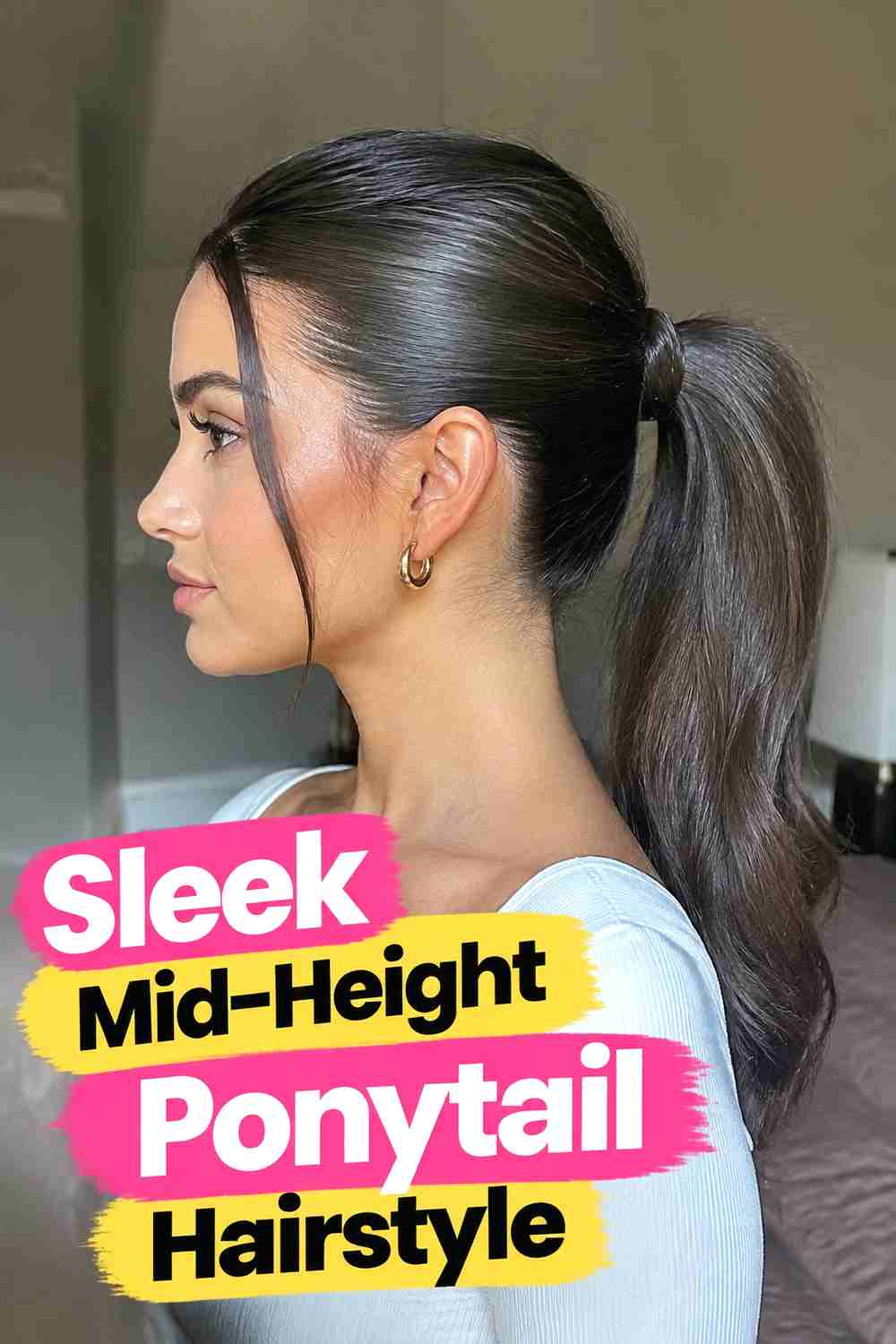
A sleek mid-height ponytail offers a simple solution for thick shoulder-length hair that tends to flip outward against coat collars. Position the elastic several inches above the nape so the ponytail emerges above the neckline rather than directly into it. The shorter length means the ends usually fall clear of the back collar while still showing plenty of movement. Smooth the sides with a brush and a small amount of styling product, but avoid making the lengths overly stiff. Thick hair can make the base feel heavy, so use a durable elastic and keep the ponytail centered. A slight inward bend through the ends creates an especially polished winter finish.
Styling Notes
Direct the underside upward before tightening the elastic. This helps short nape layers join the ponytail instead of falling onto the collar.
Wear & Maintenance
If the base begins to slide, reinforce it with two discreet pins underneath rather than repeatedly tightening the elastic.
13. Twisted Halo Updo Hairstyle
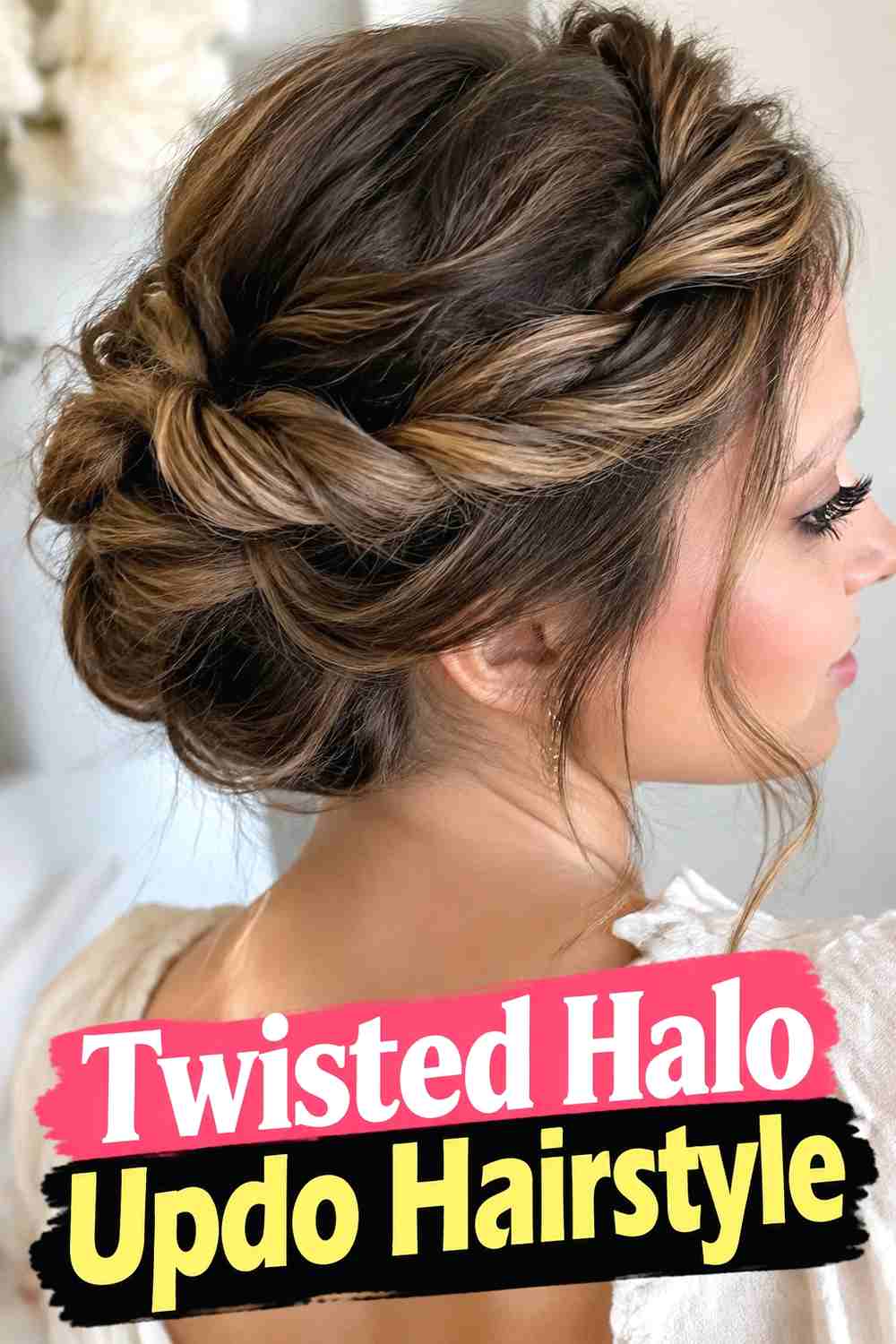
A twisted halo updo distributes thick shoulder-length hair around the upper perimeter of the head instead of concentrating it at the back. Sections are gently twisted from each side and pinned around the crown, allowing shorter lengths to overlap naturally. The nape stays clear, which makes the style practical beneath a high-neck coat or wrapped scarf. Thick hair gives the halo noticeable dimension, but splitting it into several twists prevents the updo from becoming overly bulky. Keep the surface soft rather than tightly stretched, especially around the temples. Once the structure is secure, loosen selected areas slightly to create a natural, rounded outline while leaving the lowest sections firmly pinned upward.
Why It Works
The weight is spread across multiple anchor points, which can feel more comfortable than one compact bun on particularly dense hair.
Styling Notes
Overlap the ends beneath neighboring twists so short pieces stay hidden without needing excessive pins in one area.
14. Compact Braided Bun Hairstyle
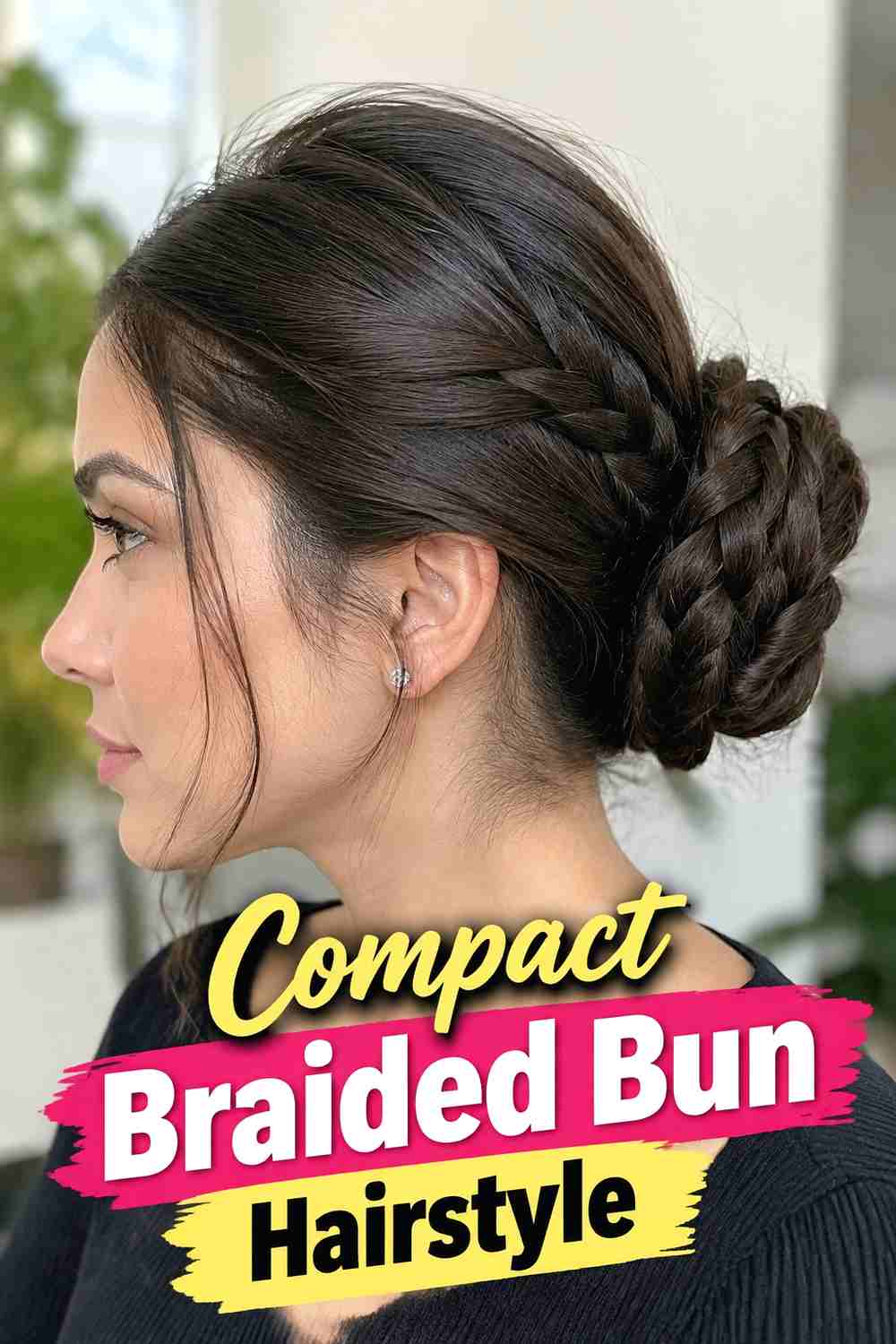
A compact braided bun keeps thick shoulder-length hair under control with less loose movement around the neckline. Gather the hair at mid-to-high back-of-head level, braid the ponytail, then coil that braid into a small bun. Braiding compresses the density before wrapping, helping the finished knot stay narrower than a traditional twisted bun. This is useful when a coat has a substantial collar that leaves limited space behind the head. Shoulder-length hair usually produces just enough braid to form a secure coil without excessive layers. Pin the bun close to the head and keep its lowest edge above collar level so the shape remains comfortable during movement.
Best For
This structured style is useful for commuting, windy weather, travel, or full days when you need thick hair to stay contained.
Wear & Maintenance
Secure both the outer edge and the center of the braided coil so the weight does not pull the bun downward.
15. Face Framing High Twist Hairstyle
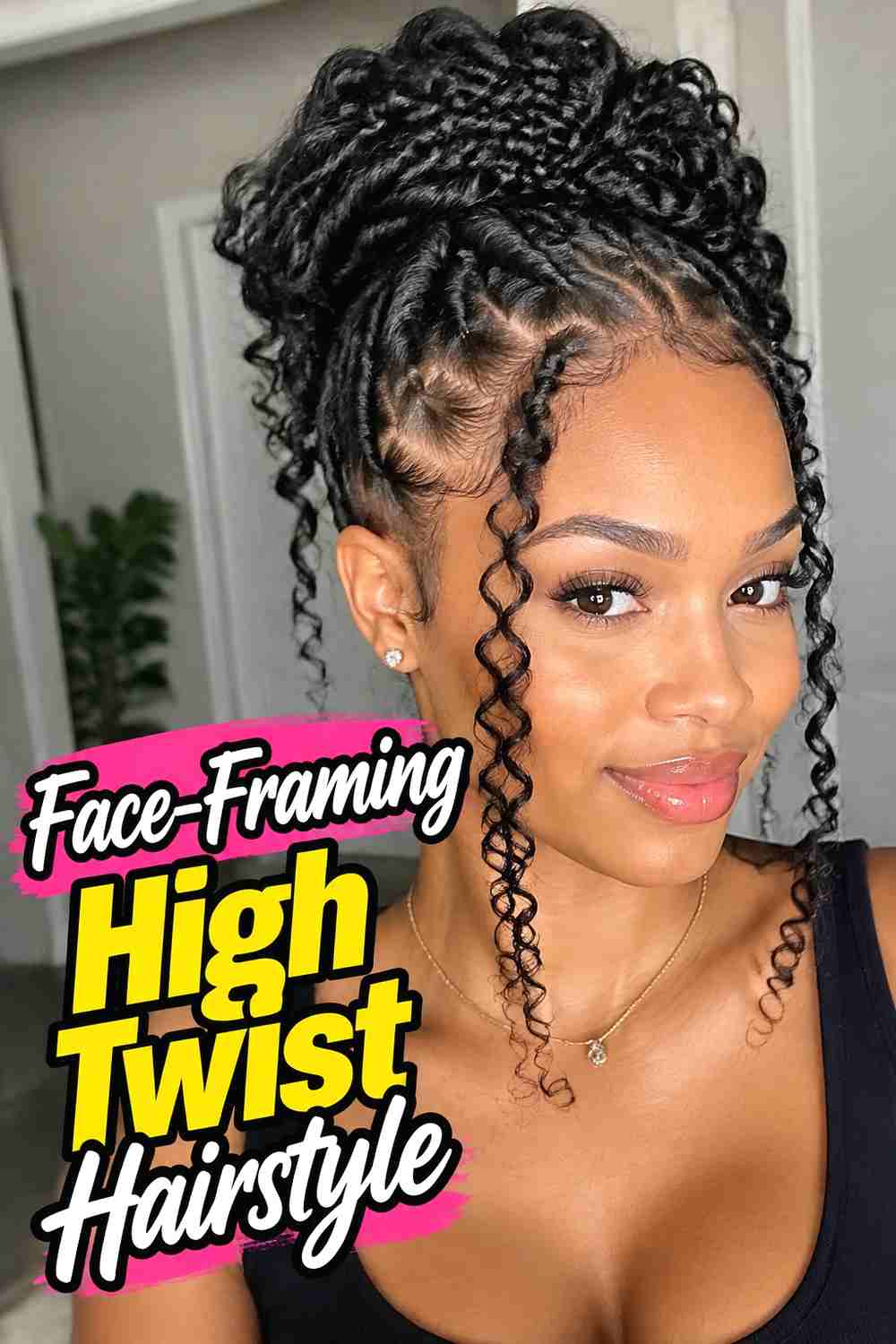
A face-framing high twist combines a clean, elevated back with a few intentional pieces around the temples. Thick shoulder-length hair is directed upward into a compact twist that finishes above the collar, while shorter front layers remain free to soften the overall look. This creates a useful balance when a completely slicked-back updo feels too severe with structured winter outerwear. Keep the loose strands concentrated around the face rather than at the nape, where they could become trapped inside a scarf or coat. The twist itself can remain softly textured, which helps thick hair hold pins and disguises shorter ends tucked into the upper section.
Styling Notes
Separate the face-framing pieces before constructing the twist. Pulling them out afterward can loosen the main anchor.
Best For
This look works well for office days, dinners, and polished casual outfits where you want both collar clearance and softness.
16. Scarf Friendly Folded Updo Hairstyle
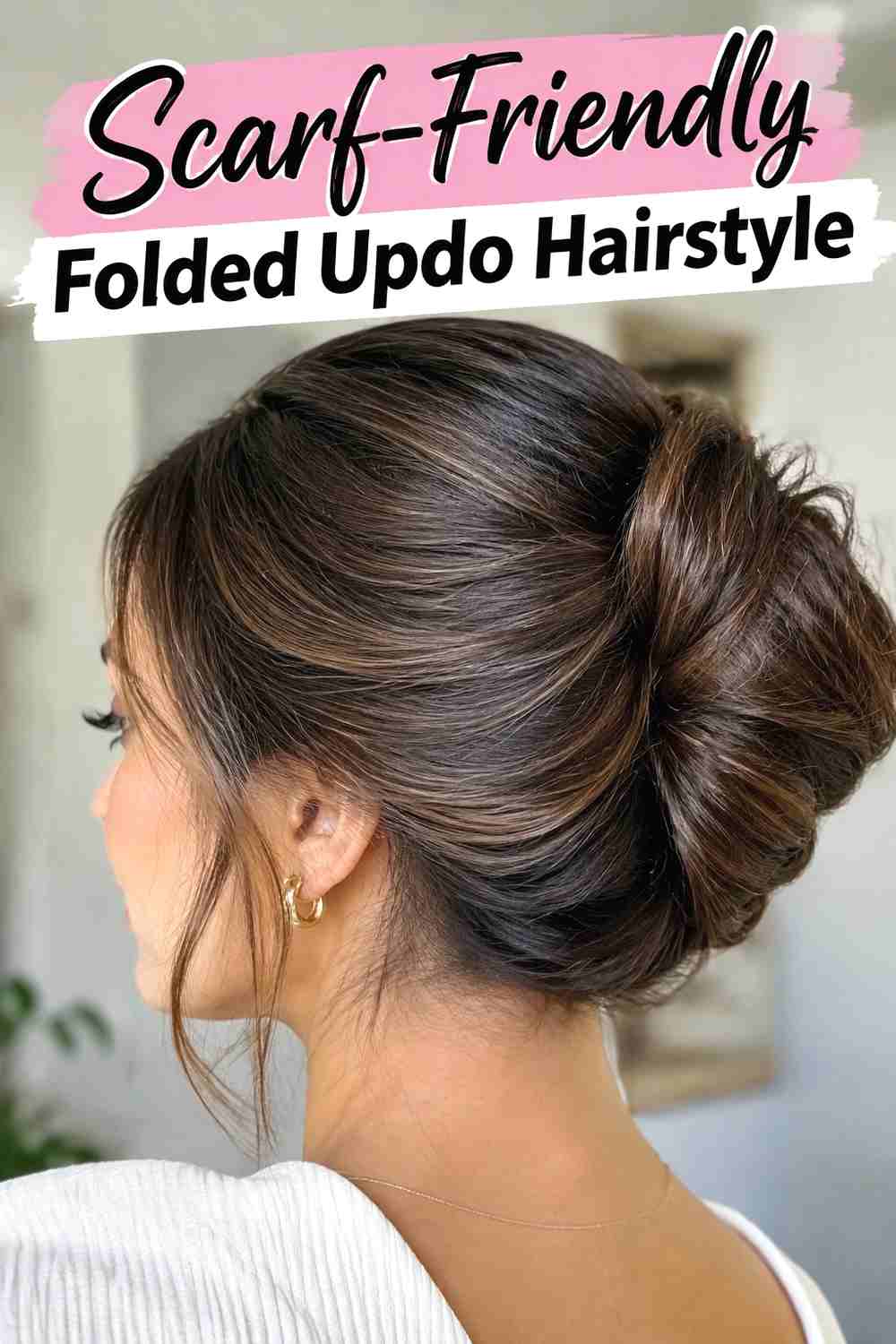
A scarf-friendly folded updo turns thick shoulder-length hair inward and upward, creating a compact shape with no dangling ends at the nape. Gather the hair at the back, fold the lengths upward rather than rolling them into a full bun, and secure the fold against the head with several crossed pins. The method works well for shoulder-length cuts because the ends are short enough to tuck neatly beneath the upper edge. Keep the finished fold relatively flat so there is room for a bulky scarf without pressure at the back of the head. Soft texture through the crown prevents the style from looking too severe while maintaining a clean neckline.
Why It Works
The folded construction keeps both the ends and the thickest part of the hairstyle above the point where a scarf usually sits.
Pro Tip
Test the hairstyle with your scarf before leaving. If fabric touches the bottom of the fold, raise the anchor by an inch.
17. Winter Secure Collar Free Updo Hairstyle
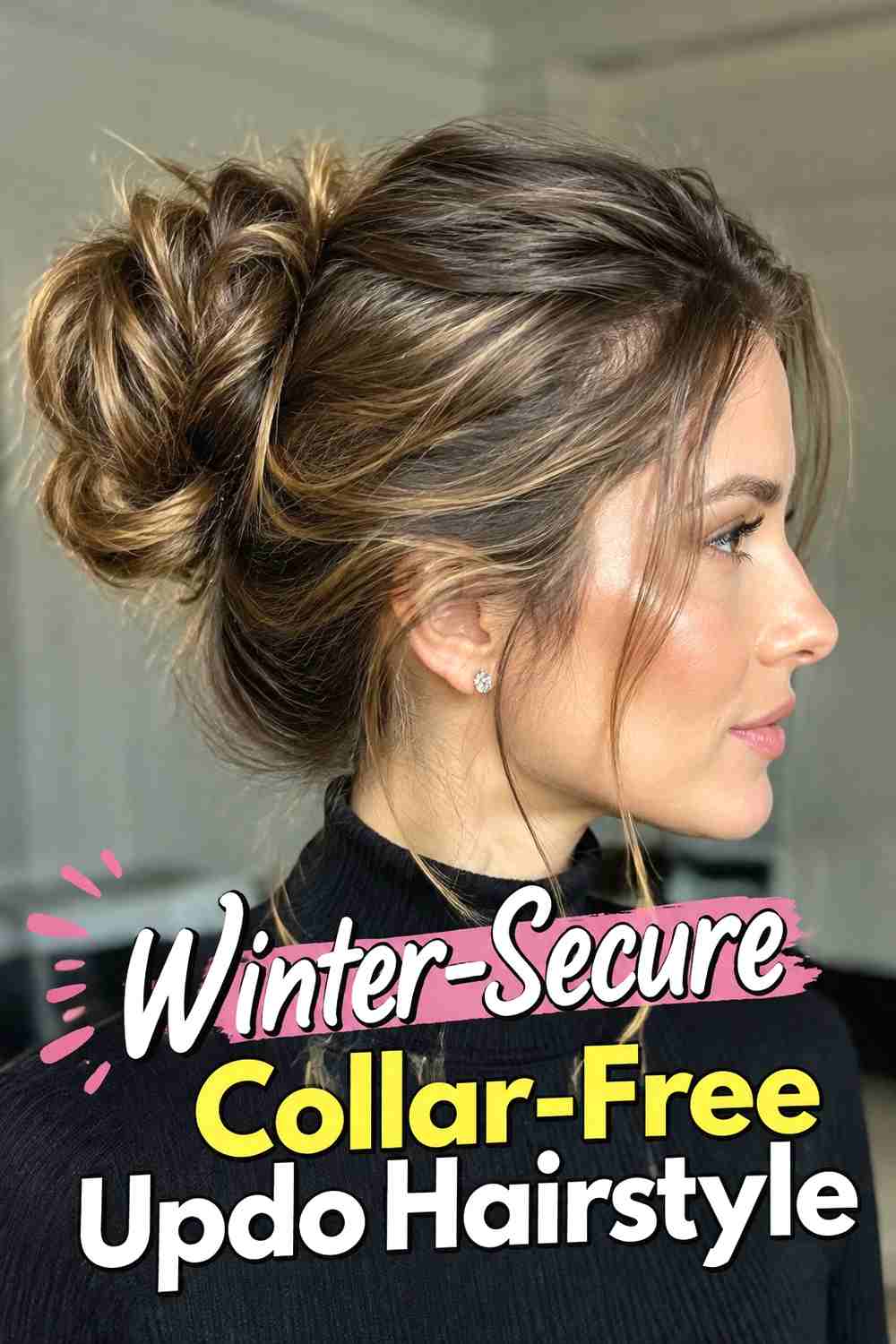
A winter-secure collar-free updo is built for thick shoulder-length hair that needs dependable hold through coats, scarves, and repeated layering. Gather the hair upward into a compact cluster positioned on the upper back of the head, then pin smaller sections individually instead of forcing everything into one twist. This spreads the density and makes shorter layers easier to contain. The finished shape can be smooth or textured, but the nape should remain completely clear. Use flexible hold rather than coating the style heavily, since a little natural movement makes small shifts less noticeable. Before heading out, turn your head in your coat to make sure neither the pins nor the updo touch the collar.
Wear & Maintenance
Flat pins are usually easier to wear with structured collars than large clips or decorative fasteners positioned at the back.
Pro Tip
Keep two or three spare bobby pins available for shorter layers instead of tightening the entire style if one section comes loose.
How to Choose the Right Look
Start by checking exactly where your coat collar reaches. Tall funnel collars, high wool collars, and thick scarves need the most clearance, so crown buns, high knots, elevated twists, and halo updos are strong options. Lower collars allow more flexibility with mid-height ponytails and side-positioned styles.
Hair density is equally important. Thick shoulder-length hair can become heavy when everything is concentrated in one small bun, so divided twists, braided styles, folded updos, and multi-section pinning may feel more comfortable. If your hair is naturally curly or coily, crown puffs and textured twists let you preserve more of your natural pattern.
Consider styling time as well. A high claw clip twist or mid-height ponytail can be created quickly, while braided crowns and rolled updos require more detailed pinning. For long days, prioritize secure internal anchors rather than excessive hairspray.
Finally, check the style with your actual coat and scarf. The best coat-collar-proof hairstyle should remain comfortable when you turn your head, raise the collar, and remove outerwear without repeatedly catching or flattening the hair.
Final Thoughts
Thick shoulder-length hair does not have to fight with winter coat collars. Raising the base, tucking the ends, dividing the density, or shifting the shape away from the nape can make a major practical difference. Choose a quick ponytail or claw-clip twist for everyday wear, or try a braided, rolled, or textured updo when you want a more polished finish.
FAQs
1. Why does shoulder-length hair flip out around a coat collar?
The ends often land directly on the collar, so pressure from the fabric can push them outward. Raising, pinning, or tucking the hair removes that point of contact.
2. What hairstyle works best for very thick hair and a high coat collar?
A high twist, crown bun, divided updo, or curly crown puff can provide good clearance while keeping dense hair away from the nape.
3. Can I use a claw clip with a winter coat?
Yes, but position the clip high enough that the coat collar does not press against it. A low clip may feel uncomfortable with structured outerwear.
4. How can I keep short nape layers from falling out?
Direct them upward while styling and secure them with small crossed bobby pins. A light flexible-hold product can help without making the area rigid.
5. Are ponytails practical for shoulder-length hair with coats?
Yes. A mid-height ponytail usually works better than a very low one because it lifts the base and ends away from the coat collar.
Save your favorite coat-collar-proof hairstyles, share these ideas with someone styling thick shoulder-length hair, and explore more practical cold-weather hair inspiration.