13 Soft Bottleneck Bangs Hairstyle Ideas
Soft bottleneck bangs bring gentle forehead coverage and longer cheekbone-framing pieces together for a fringe that feels relaxed, modern, and easy to personalize.
Bottleneck bangs typically start narrower and shorter through the center, then widen and lengthen as they move toward the temples and cheekbones. That gradual shape creates a softer transition into the rest of the haircut than a dense straight-across fringe.
The look can be subtle or more defined depending on fringe density, length, texture, and surrounding layers. Longer versions are easier to tuck aside, while shorter center pieces make the bottleneck silhouette more noticeable. These 13 ideas show how the fringe can work with waves, curls, lobs, shags, ponytails, and smoother finishes.
Quick List
- Classic Soft Bottleneck Bangs Hairstyle
- Long Bottleneck Bangs With Layers Hairstyle
- Wispy Bottleneck Bangs Hairstyle
- Wavy Bottleneck Bangs Hairstyle
- Bottleneck Bangs With Lob Hairstyle
- Air Dried Bottleneck Bangs Hairstyle
- Curly Bottleneck Bangs Hairstyle
- Bottleneck Bangs With Soft Shag Hairstyle
- Sleek Bottleneck Bangs Hairstyle
- Bottleneck Bangs With Low Ponytail Hairstyle
- Half Up Bottleneck Bangs Hairstyle
- Shoulder Length Bottleneck Bangs Hairstyle
- Feathered Bottleneck Bangs Hairstyle
1. Classic Soft Bottleneck Bangs Hairstyle
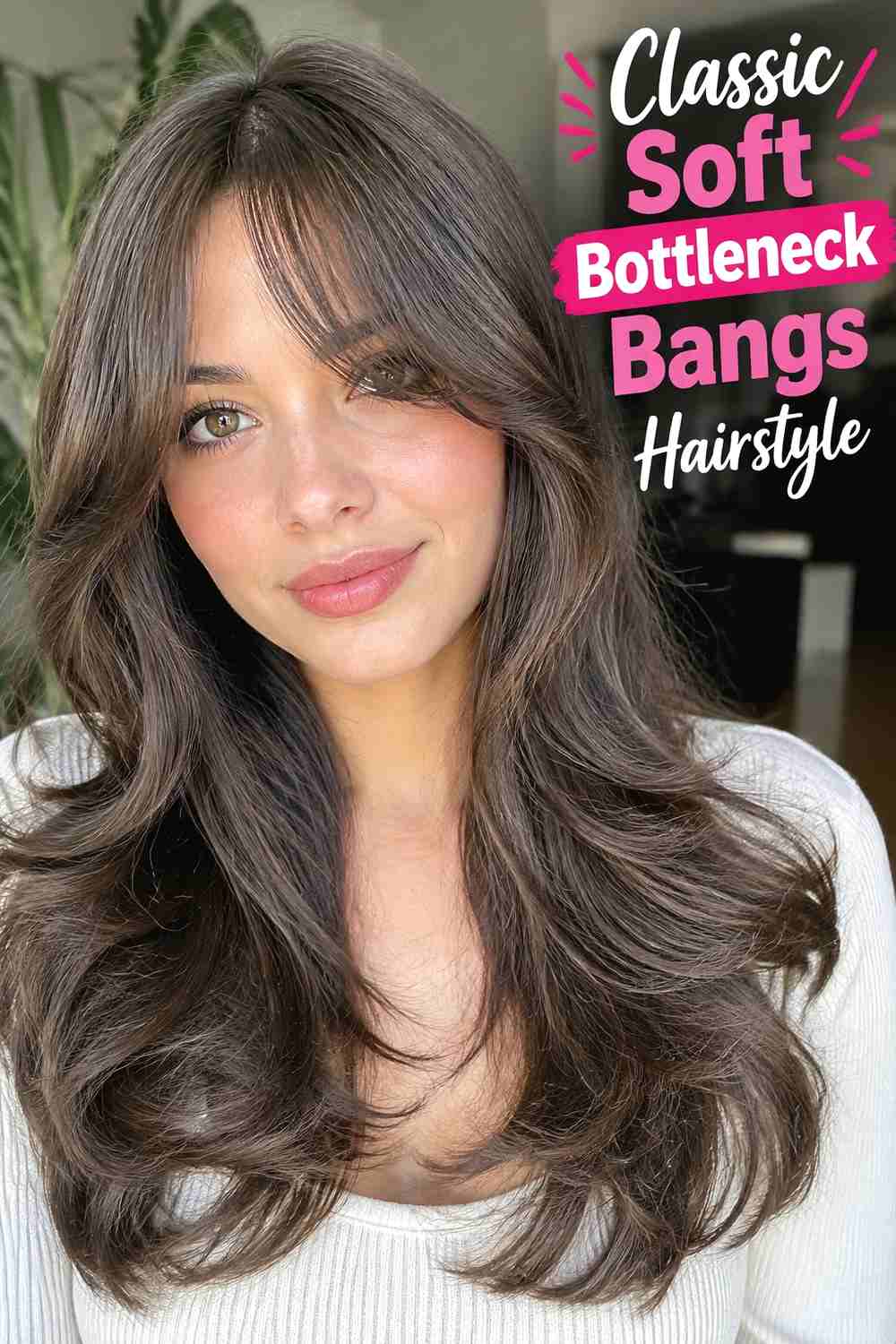
Classic Soft Bottleneck Bangs Hairstyle keeps the center of the fringe relatively light and short, then gradually lengthens the outer sections toward the cheekbones. That curved progression gives the bangs their recognizable bottleneck outline without making the front look heavy. Medium to long hair provides an easy backdrop, especially when a few subtle face-framing pieces connect the fringe to the rest of the cut. The finish should remain flexible rather than sharply sculpted, with a little separation between strands and enough movement to open naturally around the center. This is a useful starting point if you want visible fringe but prefer something softer and easier to blend than a blunt full bang.
Styling Notes
Use gentle airflow or a small round brush to guide the center forward and the longer sides outward. Avoid creating an exaggerated flip at the temples.
2. Long Bottleneck Bangs With Layers Hairstyle
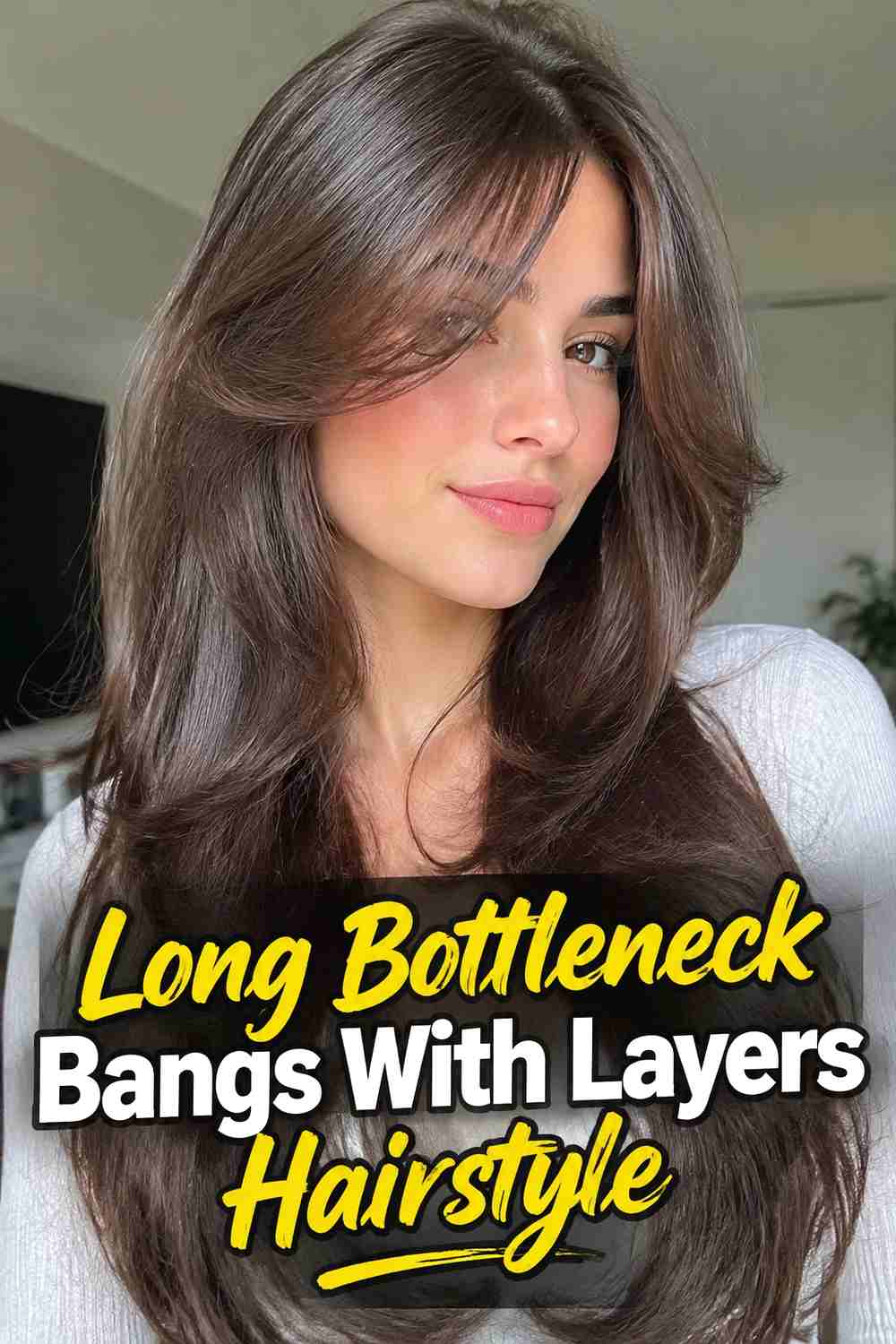
Long Bottleneck Bangs With Layers Hairstyle stretches the fringe toward the brows and cheekbones, making the transition into longer face-framing layers especially smooth. The center remains slightly shorter, but the difference between the middle and sides is subtle enough that the fringe can be swept aside as it grows. Medium-long and long hair work particularly well because the outer bang sections can flow into layers around the jaw and shoulders. Gentle waves or a soft blowout help reveal those transitions without requiring dramatic volume. This version is practical for anyone who likes the bottleneck shape but wants enough length to tuck the fringe behind the ears or blend it into a ponytail.
Best For
Choose this variation if flexibility between trims matters. Longer outer pieces are easier to restyle when you do not want the fringe sitting fully forward.
3. Wispy Bottleneck Bangs Hairstyle
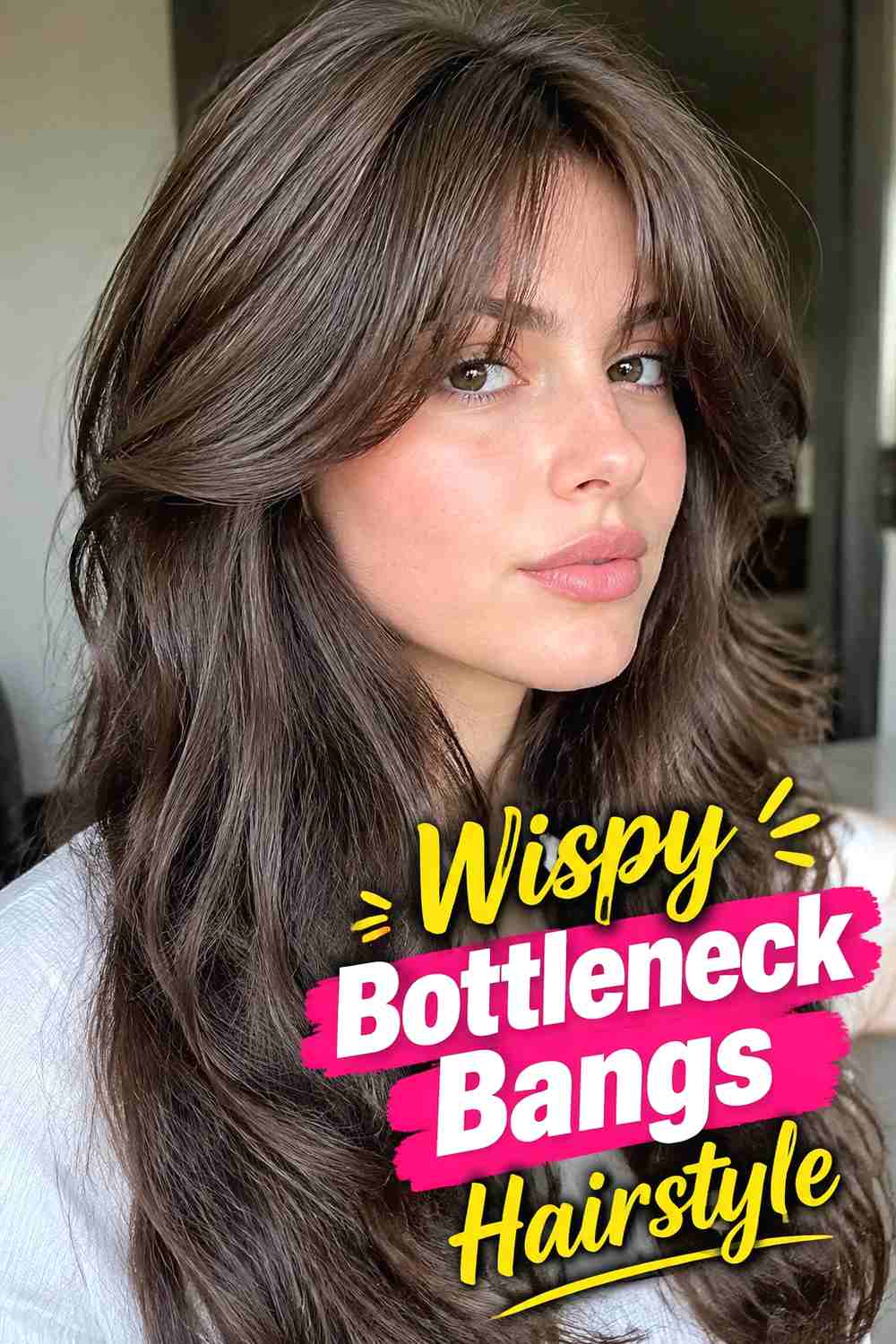
Wispy Bottleneck Bangs Hairstyle uses a smaller section of hair to create an airy fringe with visible space between individual pieces. The center can lightly skim the forehead, while the outer strands gradually lengthen toward the temples and cheekbones. Because the fringe is less dense, more forehead remains visible and the bottleneck shape feels subtle rather than dramatic. This approach can work especially well on fine to medium-density hair, where taking too much hair into the fringe could reduce fullness through the sides. Keep the styling soft and avoid coating the bangs in heavy products. The goal is delicate movement and light separation, with the surrounding haircut providing enough shape to support the fringe.
Hair Type & Length
Fine and medium-density hair often suits a lighter fringe particularly well. Keep enough length through the outer sections so the bangs blend naturally into the sides.
4. Wavy Bottleneck Bangs Hairstyle
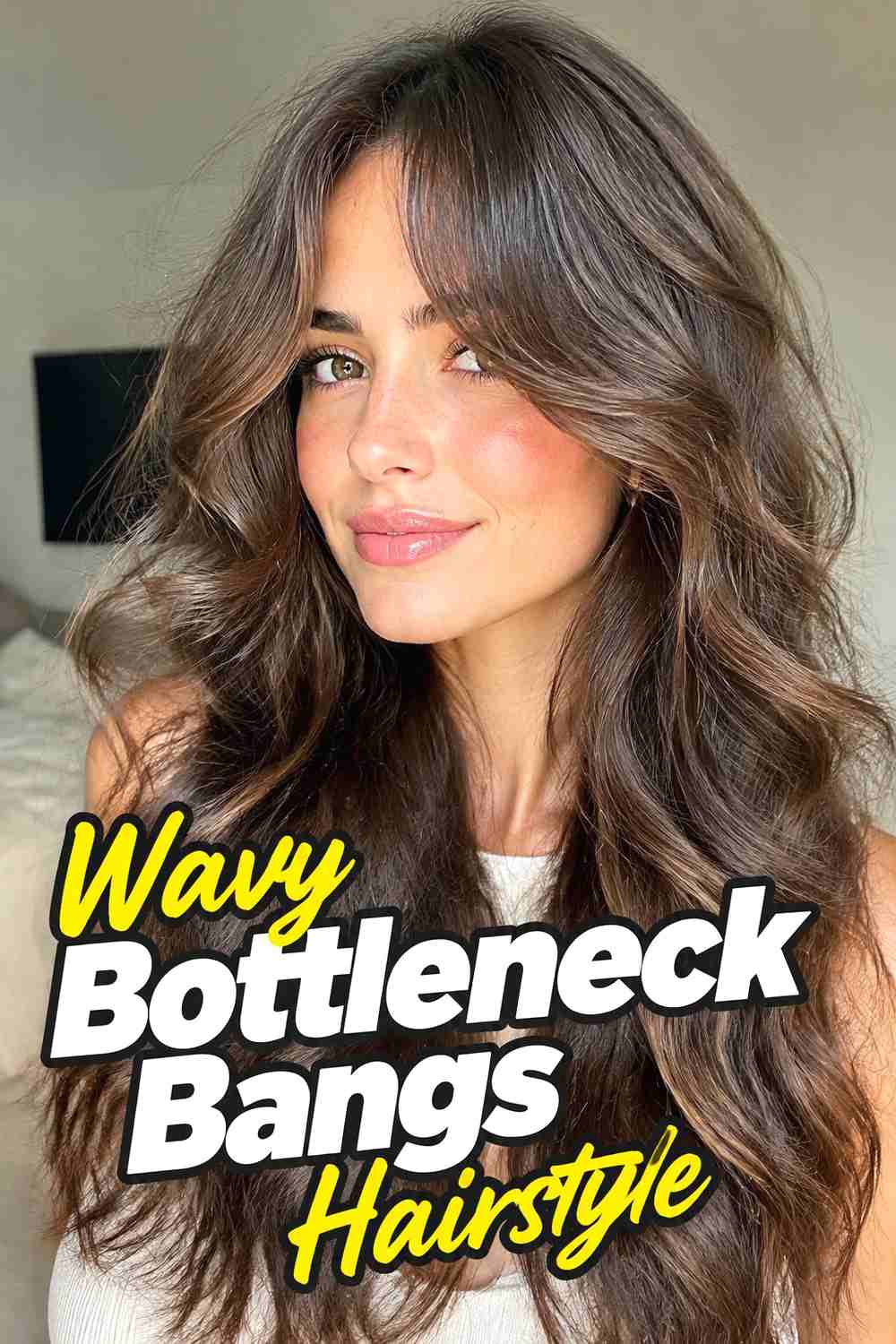
Wavy Bottleneck Bangs Hairstyle lets the fringe follow a natural or softly styled wave pattern instead of forcing every section straight. The shorter center pieces can carry a slight bend, while the longer outer sections move toward the cheeks and merge with the waves through the rest of the hair. Medium and long wavy cuts create an especially natural transition because the fringe does not look like a separate texture sitting above the lengths. Allow some variation from one side to the other rather than aiming for perfect symmetry. The finished style should look touchable and relaxed, with enough definition to show the bottleneck shape but enough softness to preserve the character of wavy hair.
Styling Notes
Shape only the fringe sections that need help finding their direction. Overstyling the bangs can make them look disconnected from naturally irregular waves.
5. Bottleneck Bangs With Lob Hairstyle
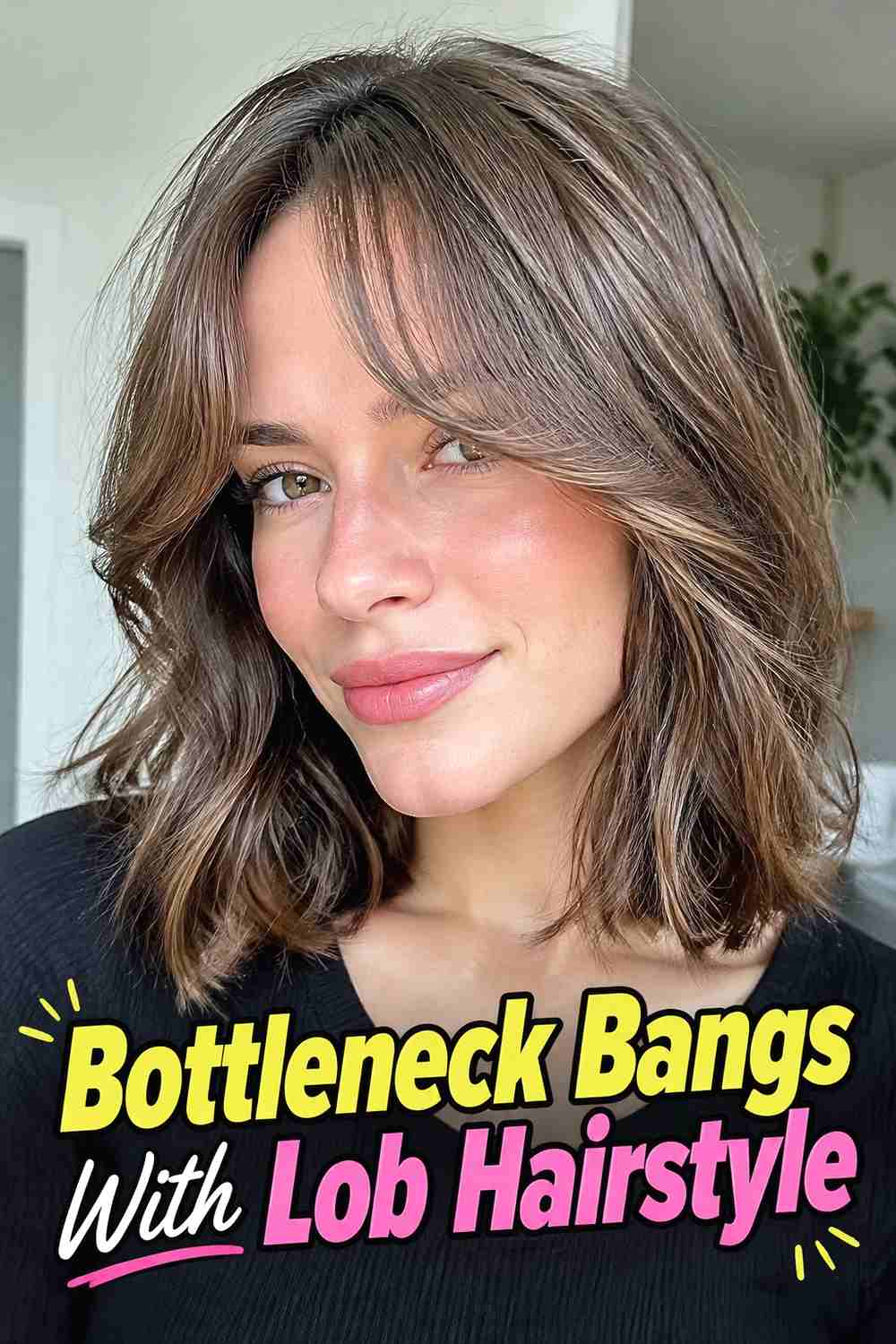
Bottleneck Bangs With Lob Hairstyle pairs the softly tapered fringe with a collarbone-length cut for a balanced, modern silhouette. The shorter overall length makes the transition from forehead to cheekbone especially visible, while the lob perimeter gives the haircut a clean foundation. Straight, softly wavy, and lightly textured hair can all suit the combination. Keep the outer sections of the bangs long enough to merge with the first face-framing pieces rather than ending abruptly near the temples. A few bends through the lob can add movement, but the cut also works with a smoother finish. This is a strong option if you want noticeable fringe without maintaining very long layered hair.
Pro Tip
Keep the lower perimeter of the lob substantial. Too much layering through both the fringe and ends can make the whole haircut look thinner than intended.
6. Air Dried Bottleneck Bangs Hairstyle
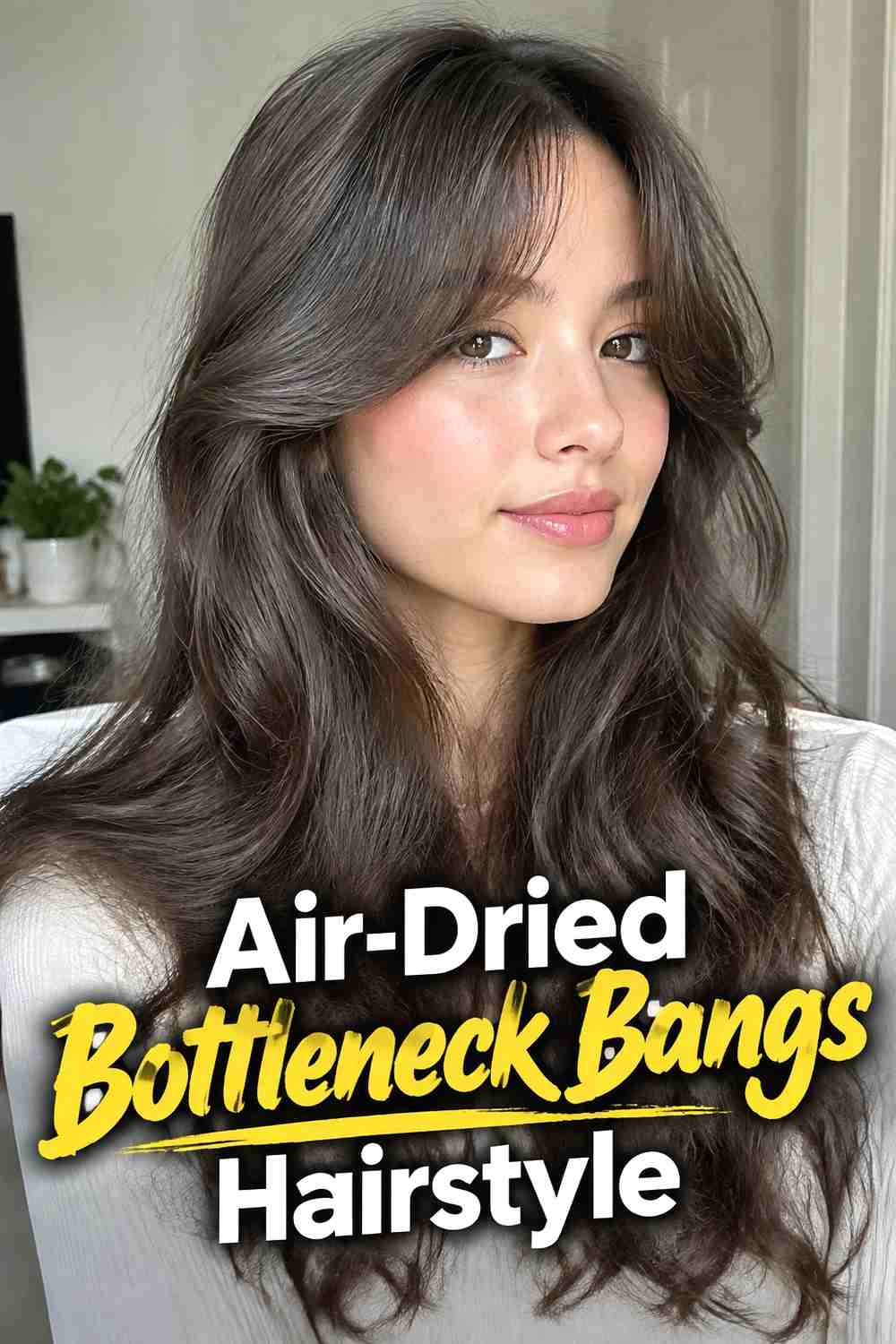
Air-Dried Bottleneck Bangs Hairstyle works best when the fringe is cut to cooperate with the hair’s natural movement rather than depending on a daily blowout. Guide the center and outer sections into place while damp, then allow them to settle with their existing bends and texture. A slightly irregular finish is natural, especially when one side forms a stronger wave than the other. Medium-length and longer softly textured hair can carry this approach beautifully. Keep the center fringe long enough to account for any lift or shrinkage that appears as the hair dries. The result should feel relaxed and believable, with the bottleneck silhouette remaining visible even when every strand is not perfectly positioned.
Wear & Maintenance
Set the part and general fringe direction while damp, then avoid repeatedly touching the hair during drying. Make small corrections only after it is completely dry.
7. Curly Bottleneck Bangs Hairstyle
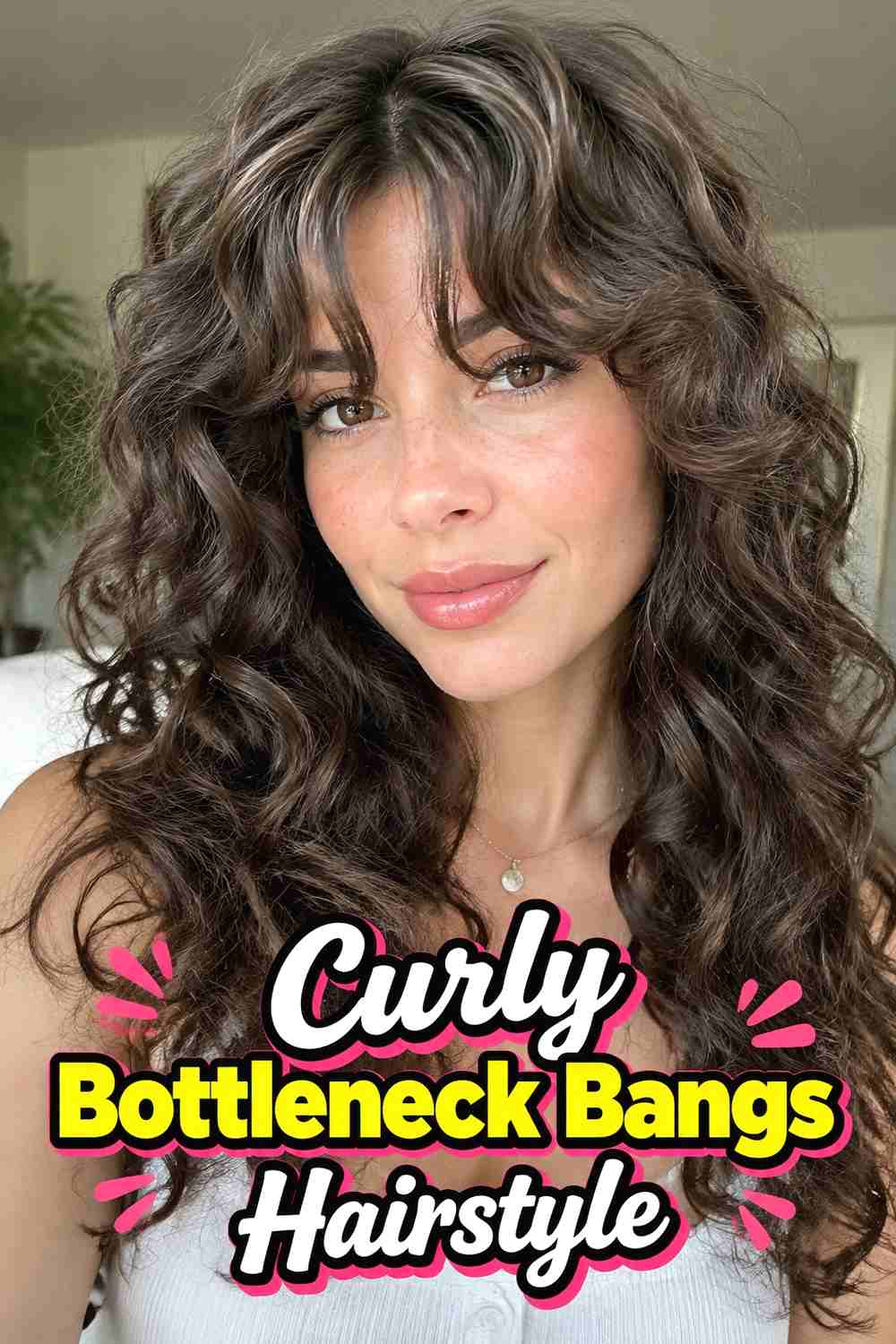
Curly Bottleneck Bangs Hairstyle adapts the narrow-center, longer-side shape to natural curls instead of straightening the fringe. Shorter curls sit through the central forehead area, while progressively longer curls frame the temples and cheeks. The exact visual outline depends on shrinkage, density, and individual curl behavior, so the fringe may look more organic than perfectly symmetrical. Short, medium, and long curly cuts can all support the idea when the bang length is chosen in its naturally dry state. Keep the surrounding layers connected so the fringe becomes part of the overall curl shape rather than a disconnected front section. Natural variation between ringlets helps the result remain believable.
Hair Type & Length
This version should be customized around real curl shrinkage and pattern. Avoid using straight-hair fringe measurements as the only guide for the finished length.
8. Bottleneck Bangs With Soft Shag Hairstyle
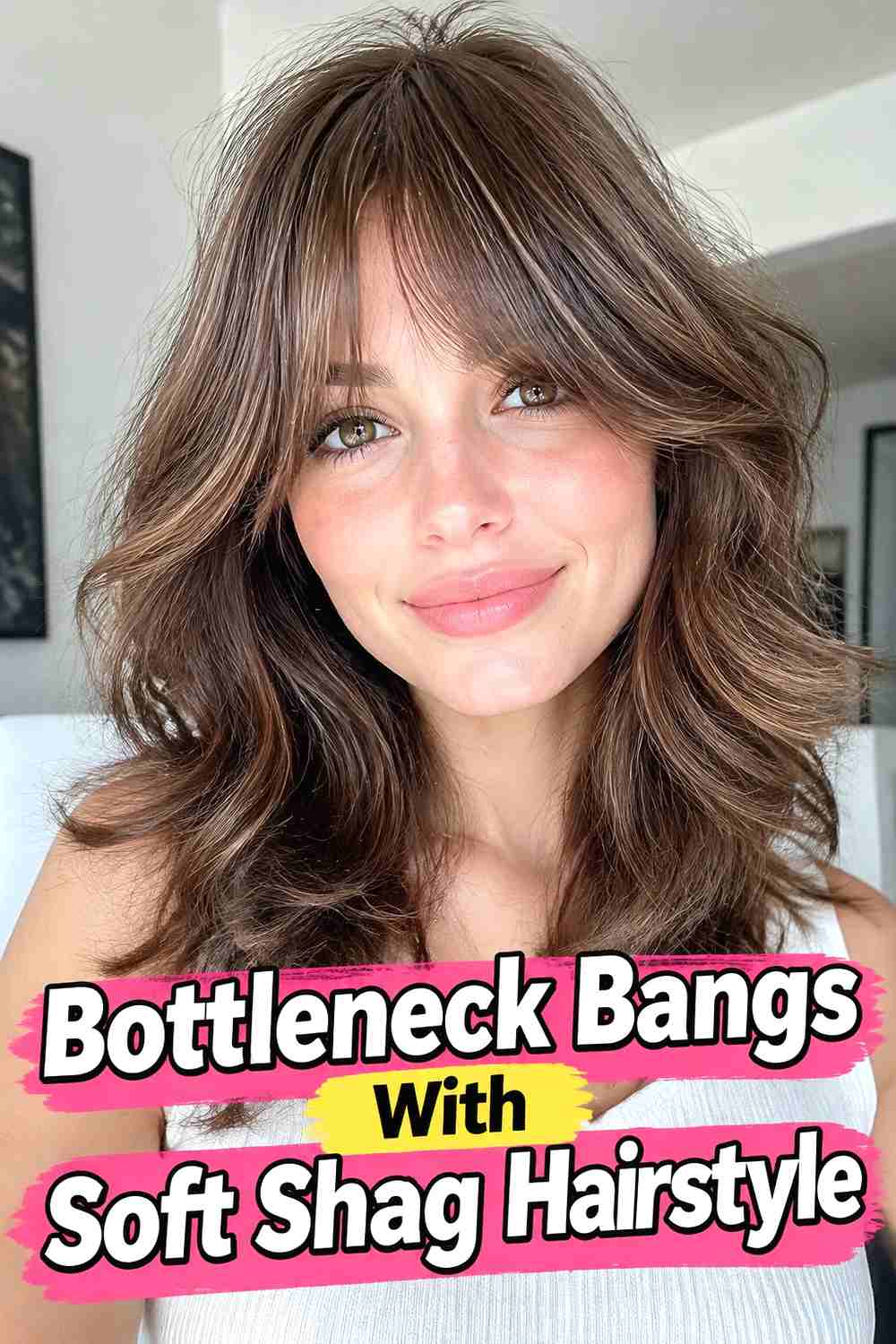
Bottleneck Bangs With Soft Shag Hairstyle combines tapered fringe with textured layers through the crown, sides, and ends. The shorter center bang pieces lead into longer sections near the cheeks, which then connect naturally with the shag’s face-framing layers. Medium and shoulder-length hair make the layered movement particularly visible, although longer hair can create a softer version. Keep the shag blended rather than extremely choppy if you want the fringe to remain the strongest feature. Waves and natural texture can help the individual sections separate without requiring a polished blowout. The final look should feel slightly undone, with enough density through the perimeter to keep the haircut balanced.
Why It Works
The shag already uses graduated lengths around the face, so the expanding bottleneck fringe can transition smoothly into the surrounding texture.
9. Sleek Bottleneck Bangs Hairstyle
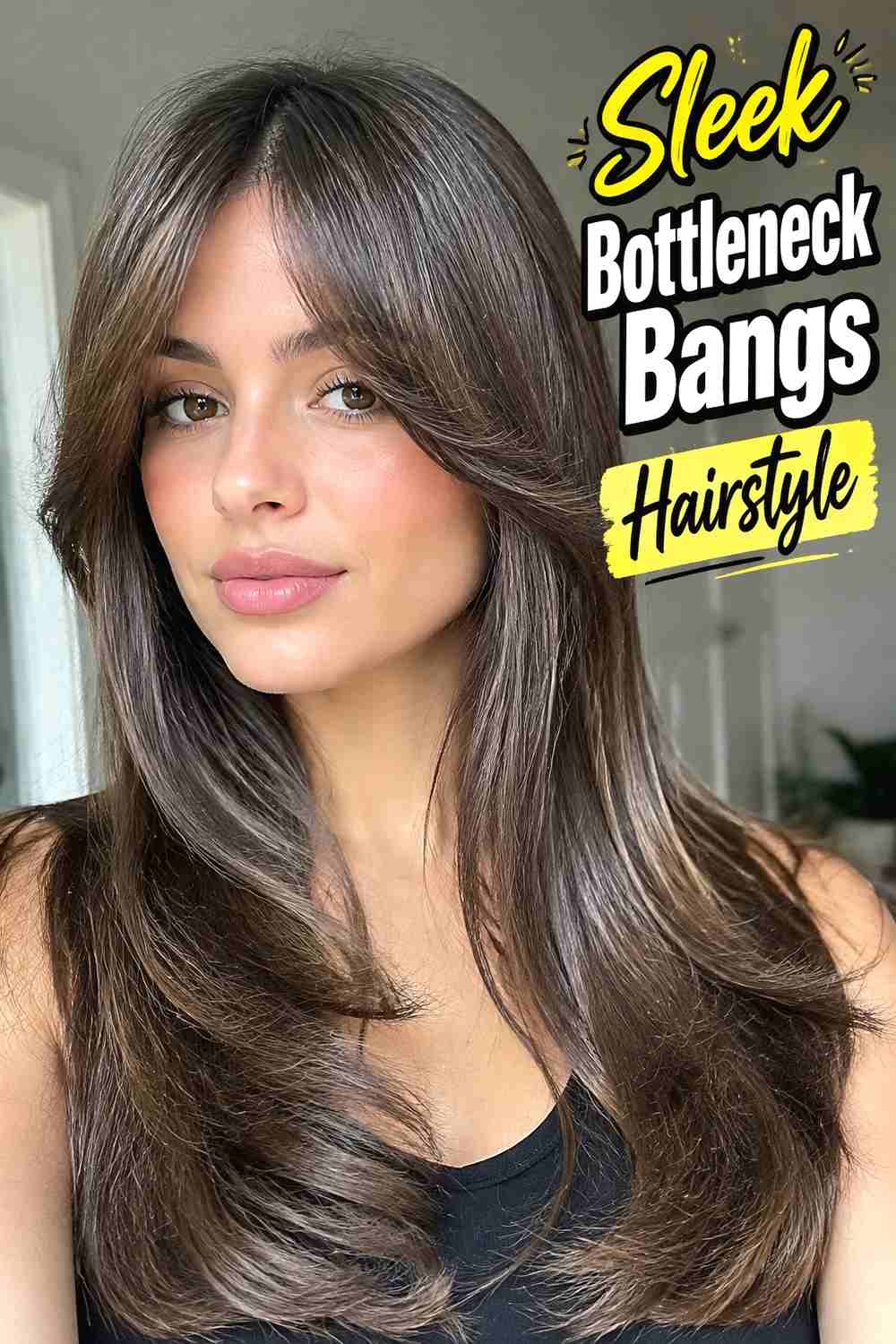
Sleek Bottleneck Bangs Hairstyle highlights the fringe shape with a smoother, more controlled finish. The center pieces sit softly over the forehead, while the outer sections taper toward the cheekbones before blending into straight or lightly curved lengths. Shoulder-length through long hair works well because the clean surface makes the changing bang lengths easy to see. Avoid making the hair completely rigid; subtle movement through the ends and visible strand texture keep the result natural. A small amount of smoothing product can reduce flyaways, but the fringe should remain light enough to separate slightly. This option suits anyone who prefers a polished style but still wants softer face framing than a blunt fringe provides.
Pro Tip
Apply smoothing product sparingly around the bangs. Too much can make the shorter center pieces stick together and look heavier than intended.
10. Bottleneck Bangs With Low Ponytail Hairstyle
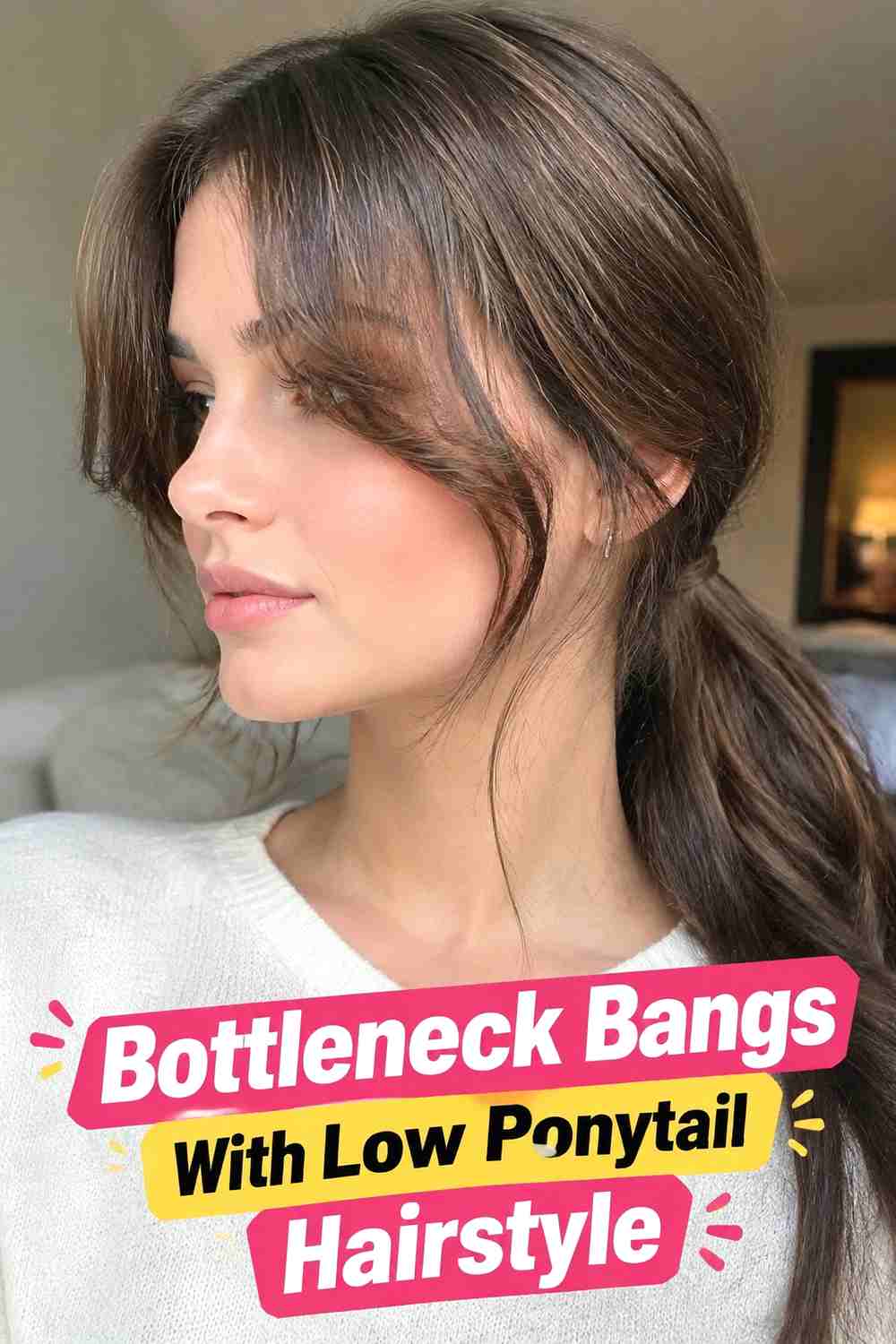
Bottleneck Bangs With Low Ponytail Hairstyle turns the fringe into the main visual feature by gathering the rest of the hair near the nape. Leave the shorter center pieces and longer cheekbone-framing sections free, allowing them to soften the face while the ponytail creates a clean silhouette behind them. Medium and long hair work best, and the ponytail can remain straight, waved, or naturally textured. Avoid pulling the sides excessively tight because a little softness near the temples helps connect the bangs with the gathered hair. This style is useful when you want to show the shape of the fringe clearly without wearing all of the hair down.
Styling Notes
Arrange the bottleneck bangs first, then form the ponytail around them. This makes it easier to preserve the correct amount of face-framing hair.
11. Half Up Bottleneck Bangs Hairstyle
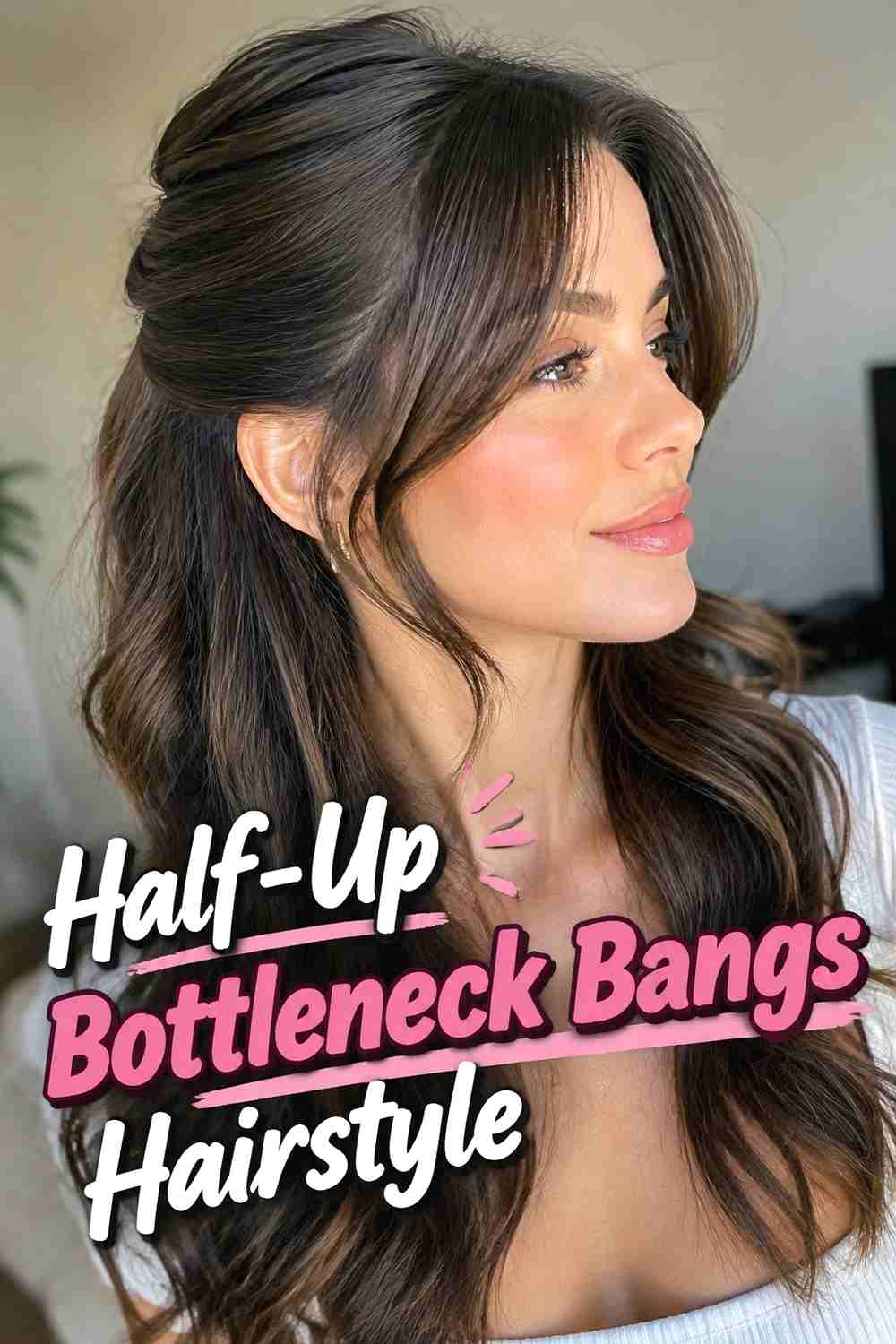
Half-Up Bottleneck Bangs Hairstyle keeps the fringe visible while lifting some of the hair away from the face. Gather a small section from the upper sides and crown, then secure it at the back with a slim barrette, elastic, or flat clip. Leave the bottleneck fringe and selected face-framing pieces loose so the gradual change from short center sections to longer sides remains obvious. Medium to long hair works particularly well, especially with loose waves or natural texture through the lower lengths. Keep the half-up section relaxed rather than tightly pulled, which could create an awkward gap between the fringe and sides. The finished look feels polished but still soft enough for everyday wear.
Best For
This style works when you want more control around the sides without hiding the fringe or committing to a fully gathered hairstyle.
12. Shoulder Length Bottleneck Bangs Hairstyle
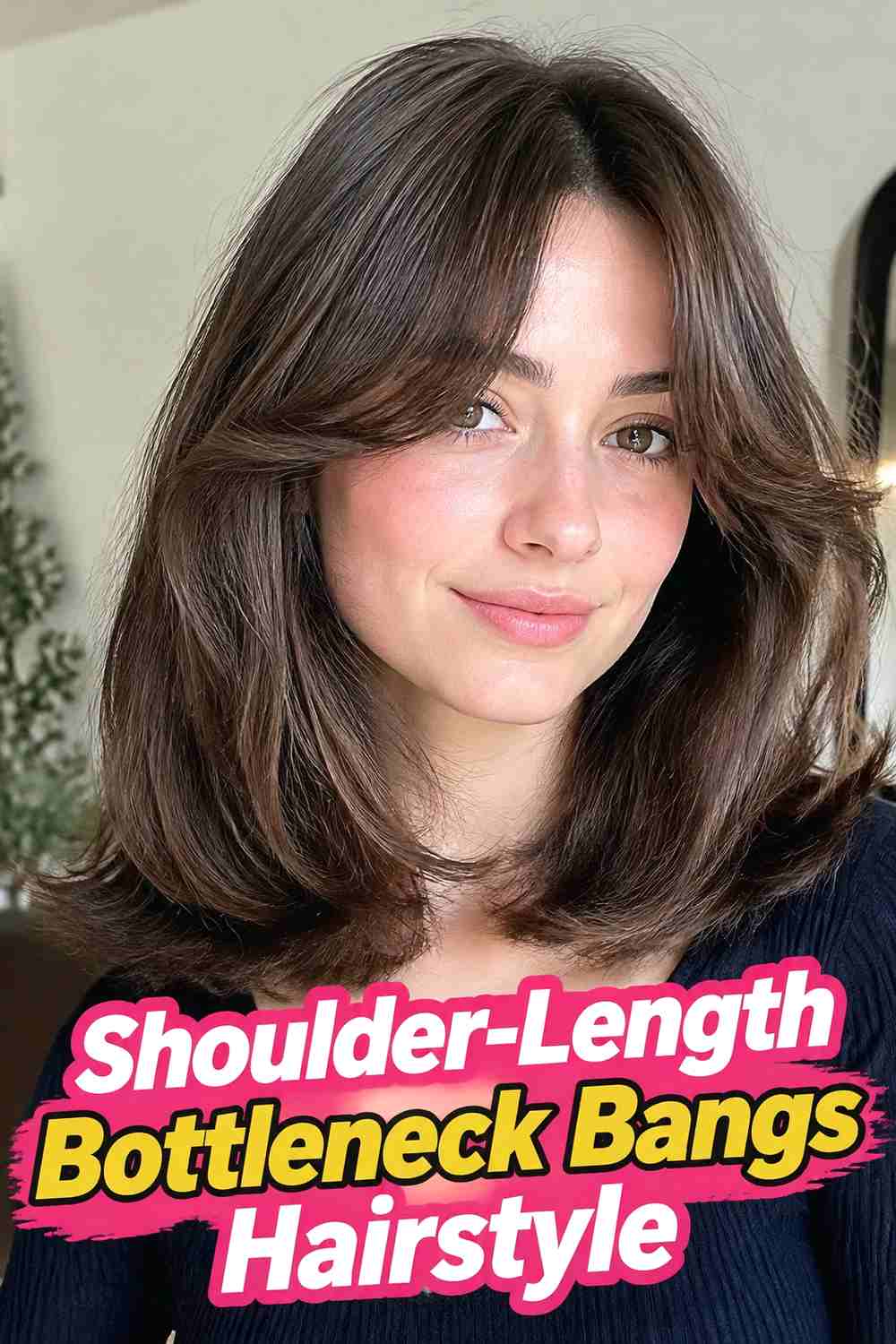
Shoulder-Length Bottleneck Bangs Hairstyle keeps the entire silhouette compact, making the fringe and face framing especially noticeable. The center sections can fall around brow level, then gradually lengthen toward the cheekbones while connecting into subtle layers near the jaw. Because the main haircut stops around the shoulders, even modest layering creates visible movement. Straight, wavy, and softly textured hair can all work, though maintaining some weight through the bottom helps prevent the cut from becoming overly wispy. This length is practical enough to wear down most days while still offering some ability to tie the hair back. A soft bend through the ends keeps the finish relaxed and current.
Why It Works
The medium length gives the fringe room to blend while keeping the overall haircut light enough for the face-framing sections to remain clearly visible.
13. Feathered Bottleneck Bangs Hairstyle
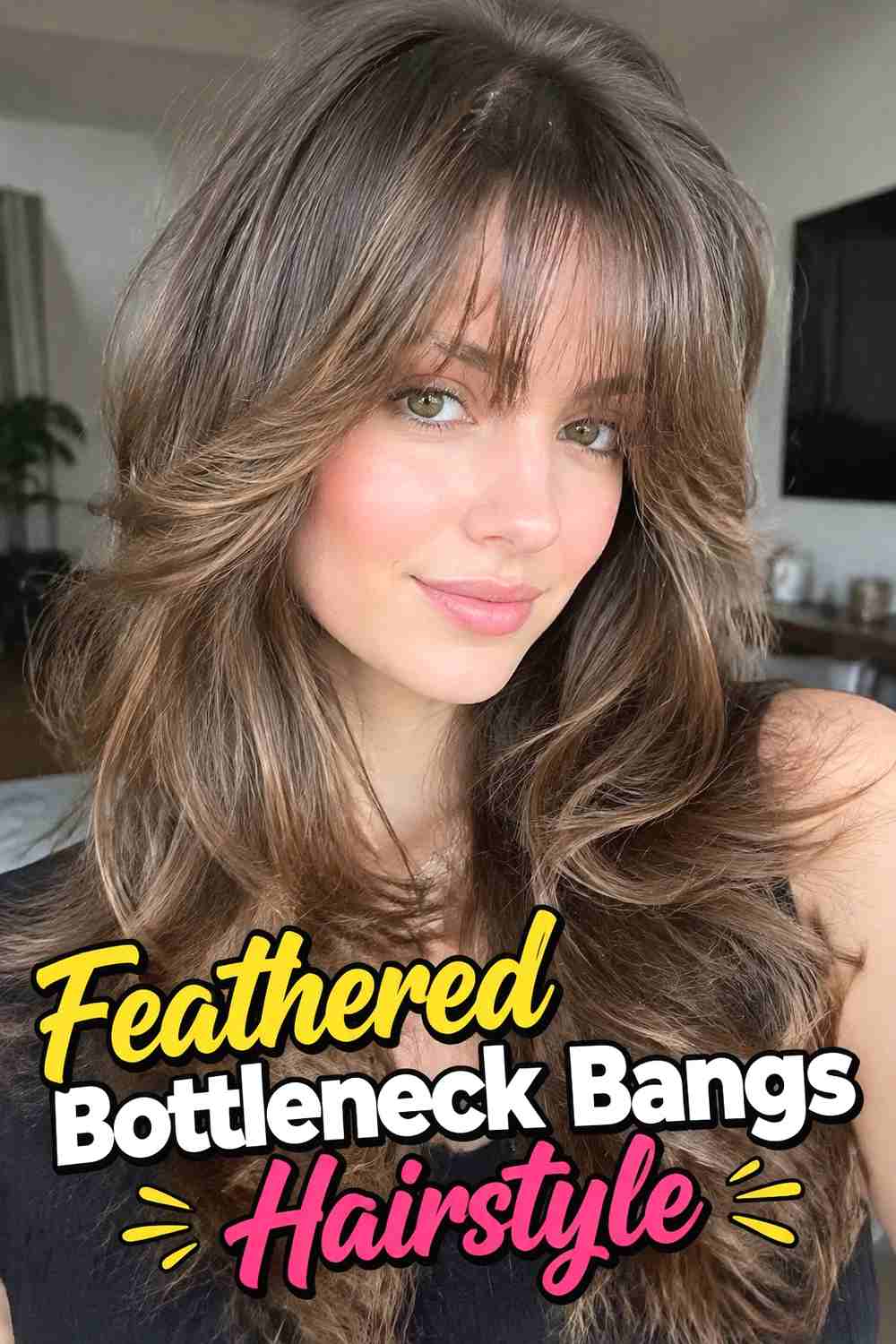
Feathered Bottleneck Bangs Hairstyle uses soft outward movement to make the longer sides of the fringe blend into airy face-framing layers. The central bang section remains lighter and shorter, while the outer pieces sweep gradually toward the temples, cheekbones, and sides of the hair. Medium to long layered cuts suit this finish especially well because several lengths can move together without creating a harsh transition. Keep the feathering broad rather than sharply flipped so the hairstyle feels modern instead of overly retro. The ends should remain flexible and lightly separated, with enough density to keep the front looking soft rather than thin. This version works beautifully with a gentle blowout or naturally smooth texture.
Styling Notes
Use a light outward bend through the longer fringe sections and surrounding layers. Avoid overcurling the center, which can shorten the visual fringe too much.
How to Choose the Right Look
Start with fringe commitment. Wispy or longer bottleneck bangs offer the easiest transition if you are new to bangs, while shorter center pieces create a more obvious bottleneck shape. If you frequently tie your hair back, longer cheekbone sections also make the fringe easier to blend into ponytails and half-up styles.
Consider density and texture next. Fine hair generally benefits from a lighter bang section so the sides remain full. Thick hair can support a denser fringe and more surrounding layers. Wavy and curly textures need enough extra length to account for natural lift and shrinkage.
Maintenance matters too. Sleek and feathered versions usually need more deliberate styling, while soft shags and air-dried looks tolerate greater variation. Choose a fringe that still feels balanced when it is not freshly styled.
Final Thoughts
Soft bottleneck bangs are versatile because their graduated shape can blend into many different cuts instead of ending abruptly at the temples. Keep them wispy for subtle framing, pair them with layers for more movement, or adapt the idea to waves and curls. The most wearable version should suit your natural texture, density, and willingness to restyle the fringe between trims.
FAQs
1. What are soft bottleneck bangs?
Soft bottleneck bangs are shorter and narrower near the center of the forehead, then gradually widen and lengthen toward the temples and cheekbones for blended face framing.
2. Are bottleneck bangs different from curtain bangs?
They are related, but bottleneck bangs often include more central forehead coverage before widening toward the sides. Curtain bangs usually emphasize a more obvious center opening.
3. Do bottleneck bangs work with curly hair?
Yes. The shape can be adapted to natural curls, but the cut should account for shrinkage and the way individual curls sit when dry.
4. Are bottleneck bangs easy to grow out?
Longer outer sections generally blend well into face-framing layers as they grow. The shorter center pieces may need occasional reshaping during the transition.
5. What haircut works best with bottleneck bangs?
Lobs, shoulder-length cuts, long layers, soft shags, and naturally textured styles can all work. The best pairing depends on density, texture, and how much layering you prefer.
Save your favorite soft bottleneck bangs look, share these ideas with a friend, and explore more flattering fringe and face-framing hairstyle inspiration.