14 Curtain Bangs With Waterfall Layers Hairstyle Ideas
Curtain bangs and waterfall layers create soft movement from the face through the lengths, giving layered hair an airy, flowing shape without sacrificing versatility.
Waterfall layers are designed to create visible tiers that seem to cascade through the haircut, while curtain bangs provide a natural starting point around the forehead and cheekbones. Together, they can give long or medium hair more shape without relying on one blunt layer line. The effect can be polished, feathered, wavy, curly, or softly undone.
Before choosing a version, think about your natural texture, density, styling time, and where you want the shortest layer to begin. Longer curtain bangs are easier to tuck away, while shorter framing pieces create a stronger transformation. The best waterfall pattern should move naturally through your hair rather than looking disconnected.
Quick List
- Soft Waterfall Layers Curtain Bangs Hairstyle
- Long Feathered Curtain Bangs Hairstyle
- Face Framing Waterfall Curtain Bangs Hairstyle
- Wavy Waterfall Layers Curtain Bangs Hairstyle
- Voluminous Blowout Curtain Bangs Hairstyle
- Sleek Waterfall Layers Curtain Bangs Hairstyle
- Curly Waterfall Layers Curtain Bangs Hairstyle
- Shoulder Length Waterfall Curtain Bangs Hairstyle
- Center Part Waterfall Curtain Bangs Hairstyle
- Soft Shag Waterfall Curtain Bangs Hairstyle
- Flipped Waterfall Layers Curtain Bangs Hairstyle
- Airy Long Curtain Bangs Hairstyle
- Textured Waterfall Lob Curtain Bangs Hairstyle
- Romantic Cascade Curtain Bangs Hairstyle
1. Soft Waterfall Layers Curtain Bangs Hairstyle
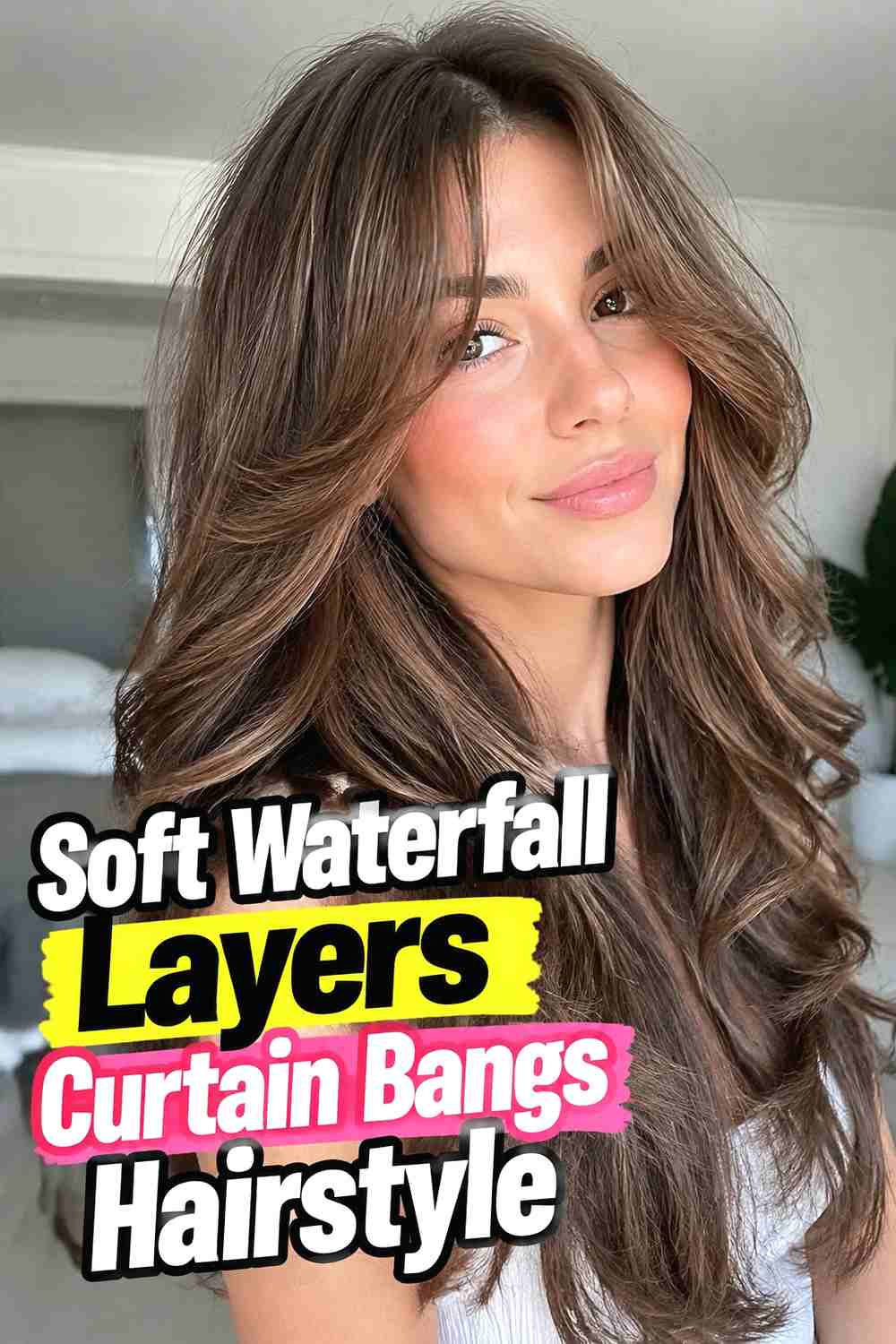
Soft waterfall layers create a gradual transition from parted curtain bangs into longer pieces around the cheeks, shoulders, and lower lengths. Instead of using sharply disconnected layers, this version keeps each tier blended enough that the hair seems to fall in smooth steps. The curtain fringe can open near the brows or cheekbones depending on how much face framing you want. Medium-long and long hair show the cascading effect most clearly, especially with a gentle blowout or natural bend. Fine hair may benefit from fewer, longer layers to preserve density, while thicker hair can support more visible separation. The finished look should move easily without appearing overly feathered or thin through the ends.
Styling Notes
Direct the front sections away from the face, then shape the longer layers with broad bends rather than tight curls. This keeps the waterfall effect visible without making each tier look artificially separated.
2. Long Feathered Curtain Bangs Hairstyle
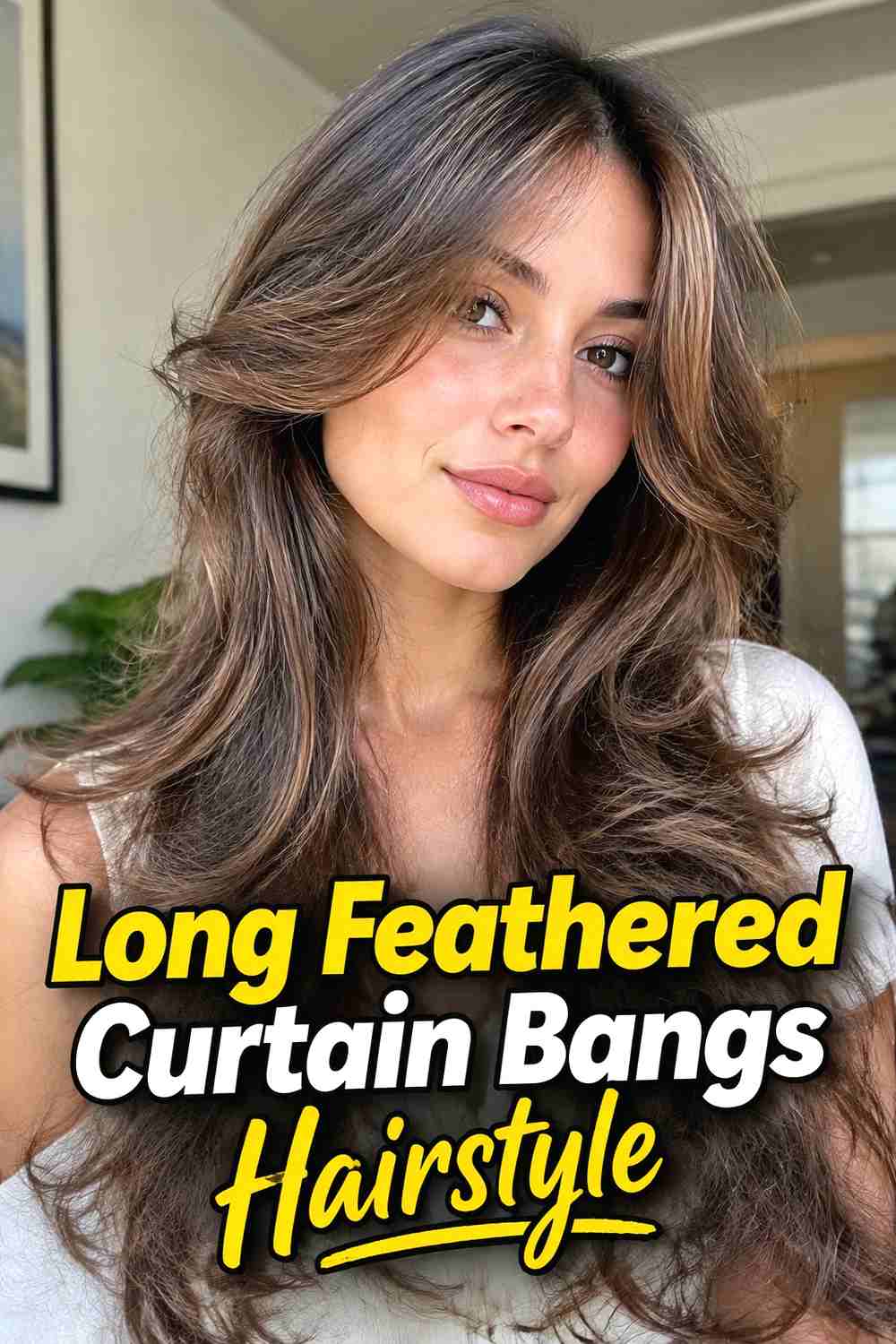
Long feathered curtain bangs give waterfall layers a more pronounced, airy finish. The fringe opens from the center and sweeps outward, then blends into increasingly longer pieces that create movement down the sides. Feathering works best when the ends remain light enough to flip and separate but still retain enough density to look healthy. Long straight or wavy hair is especially suited to the style because there is space for several layers to appear before reaching the perimeter. This version can feel slightly retro without looking dated, particularly when the crown stays natural and the feathering is concentrated around the face. Avoid over-thinning the lower lengths just to create extra movement.
Best For
This option works well for medium-to-thick hair that can support visible layering while maintaining fullness through the ends.
3. Face Framing Waterfall Curtain Bangs Hairstyle
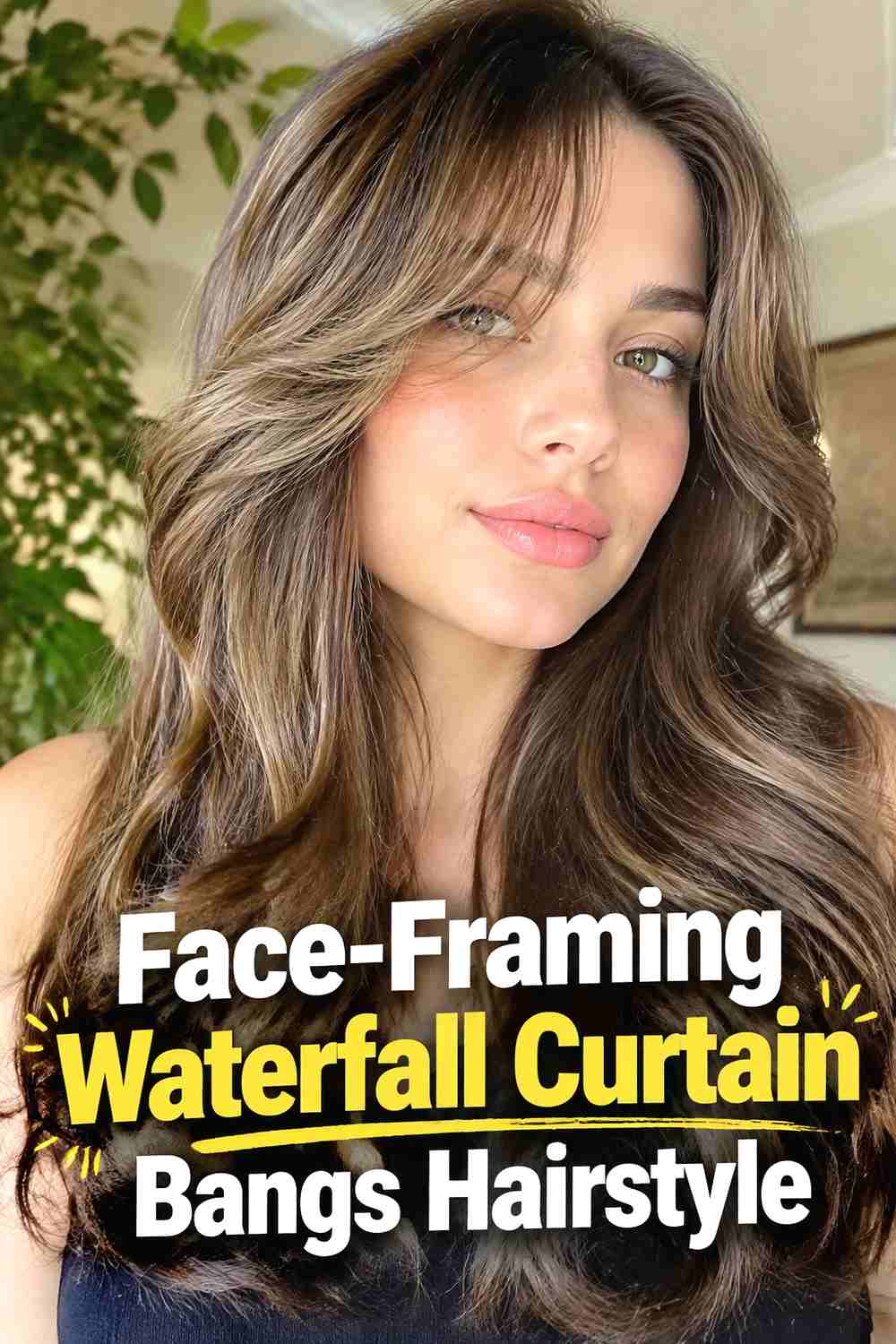
Face-framing waterfall layers concentrate the strongest movement around the front while leaving the back comparatively long and full. Curtain bangs start the shape near the forehead, then blend through cheekbone, jaw, and collarbone sections before disappearing into the main length. This gradual progression can make a long haircut feel noticeably fresher without removing a dramatic amount from the back. Straight and softly wavy textures display the different levels clearly, while a blowout can emphasize the cascading shape. The key is creating smooth transitions rather than obvious steps. Keeping the shortest pieces practical enough to tuck behind the ears also makes the haircut easier to manage on low-styling days.
Wear & Maintenance
The front sections usually need shaping more often than the longest layers. Regularly refreshing the curtain pieces can keep the overall cascade recognizable even as the rest grows.
4. Wavy Waterfall Layers Curtain Bangs Hairstyle
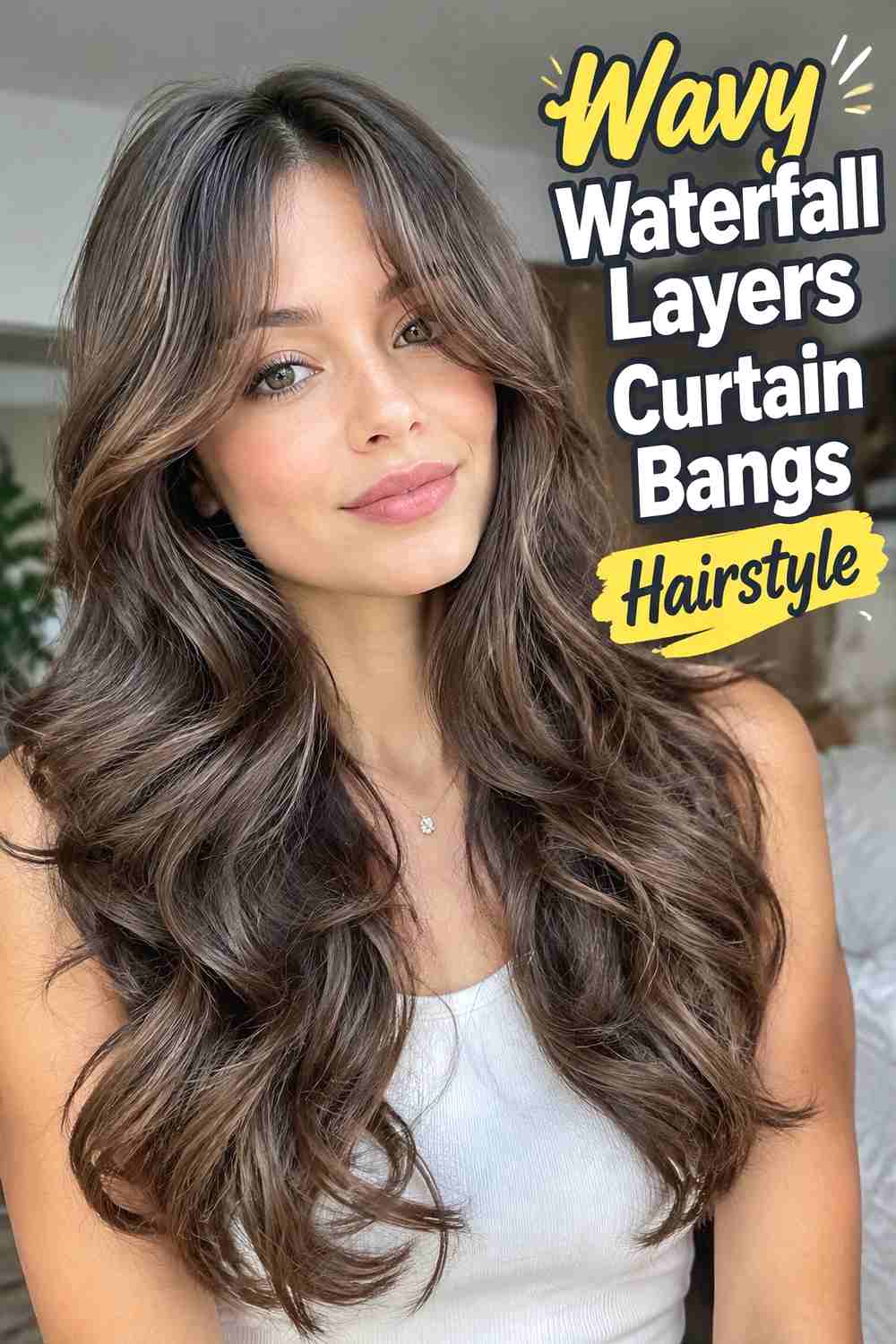
Natural-looking waves can make waterfall layers appear even more dimensional because each layer bends and moves at a slightly different point. Curtain bangs open softly through the center and connect into shorter waves near the cheeks before the pattern continues into longer sections. The result feels relaxed rather than precisely sculpted, which is especially useful if you prefer air-dried or lightly styled hair. Medium-long and long wavy hair can show the cascade beautifully, although layer placement should account for how much the waves spring upward when dry. Avoid making every layer the same thickness or curl direction; natural variation helps the haircut look fluid instead of overly arranged.
Styling Notes
Work with broad wave sections and let some pieces bend more strongly than others. The haircut should provide the structure while the texture keeps the finish soft and lived-in.
5. Voluminous Blowout Curtain Bangs Hairstyle
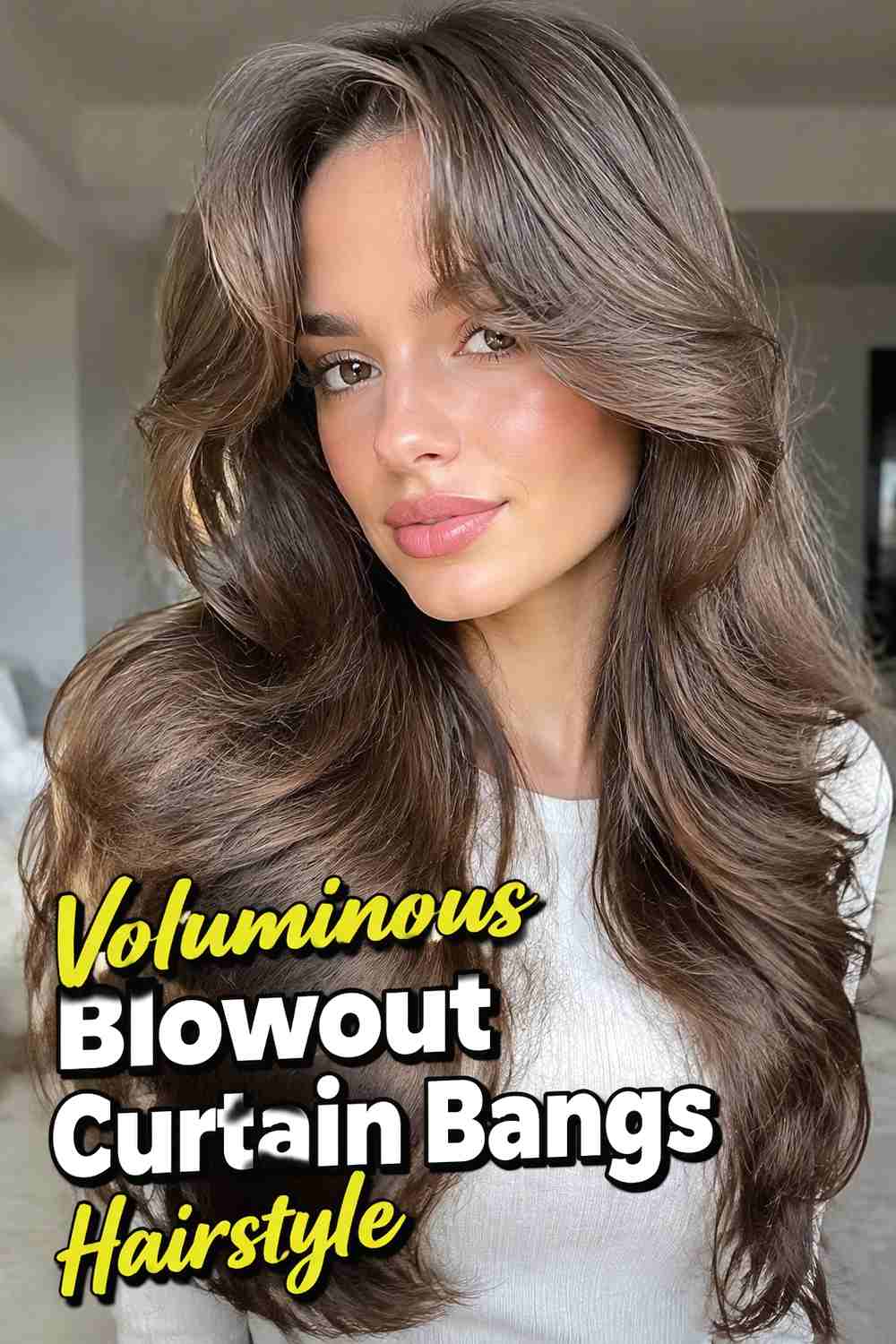
A voluminous blowout highlights waterfall layers by lifting the roots and curving each tier away from the face. The curtain bangs sit at the front of the shape, opening through the center before flowing into cheekbone and shoulder-level layers. Longer sections continue the rounded movement through the back, producing a full but organized silhouette. Medium and thick hair can create especially noticeable volume, while finer hair may look best with fewer layers so the ends retain substance. The style has plenty of movement without needing tight curls; broad, polished bends are enough to reveal the haircut. Keeping the crown lifted but touchable prevents the blowout from looking stiff or overly set.
Pro Tip
Let each layer cool in its curved shape before loosening it. This helps maintain separation between the tiers without relying on excessive product.
6. Sleek Waterfall Layers Curtain Bangs Hairstyle
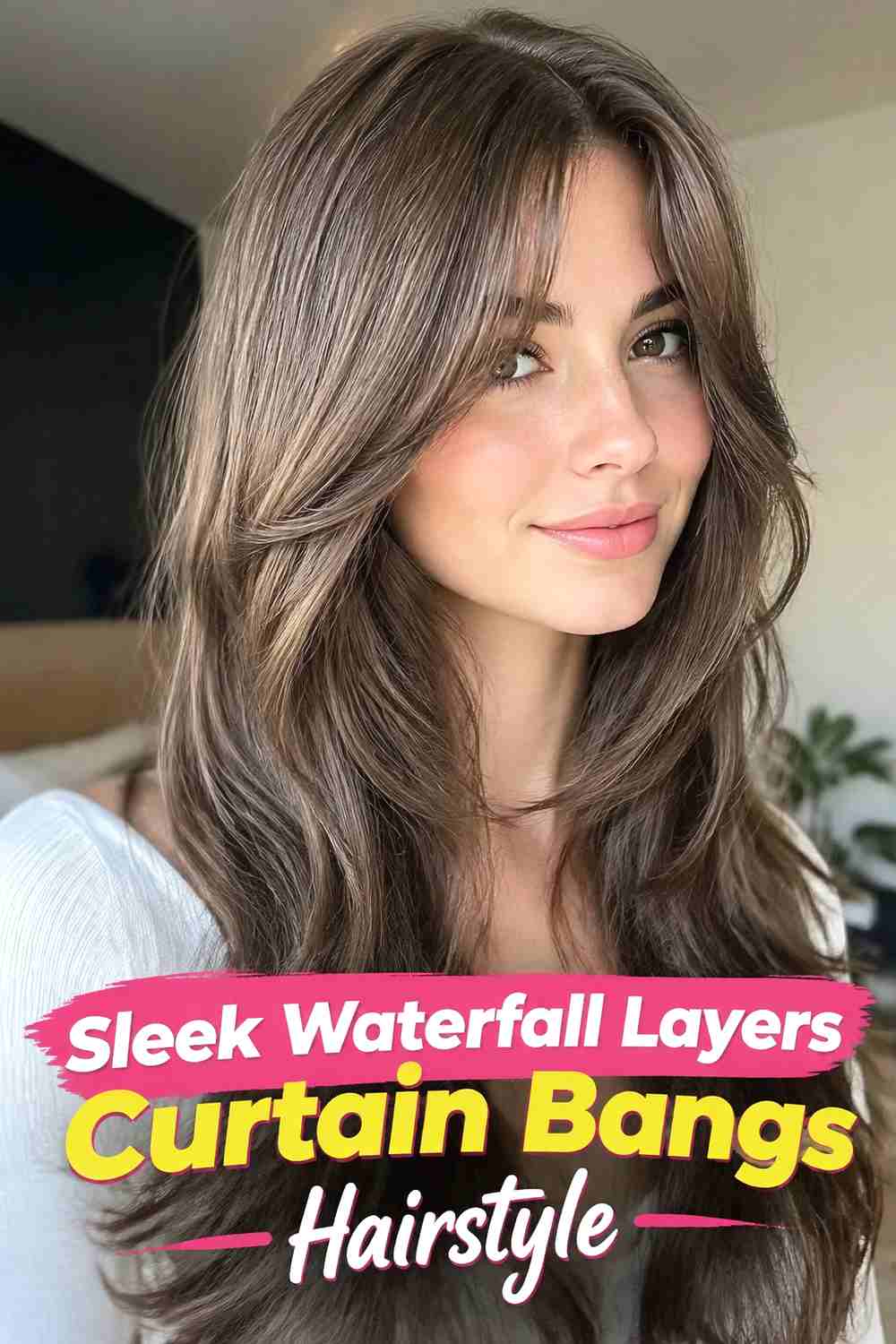
Waterfall layers do not need a large blowout to be visible. A sleek finish can show the haircut through subtle changes in length, with curtain bangs creating the shortest face-framing point and longer layers falling smoothly beneath them. This version works especially well when you prefer straight or softly smoothed hair but still want more movement than a one-length cut provides. The layers should be long enough to preserve weight and natural swing rather than creating thin, wispy ends. A center part keeps the curtain fringe clear, while a light inward or outward bend at selected layers can emphasize the cascade. Healthy-looking shine and visible strand detail keep the finish natural.
Why It Works
The smooth surface makes the haircut’s structure easy to see, proving that waterfall layering can create dimension even without dramatic curls or volume.
7. Curly Waterfall Layers Curtain Bangs Hairstyle
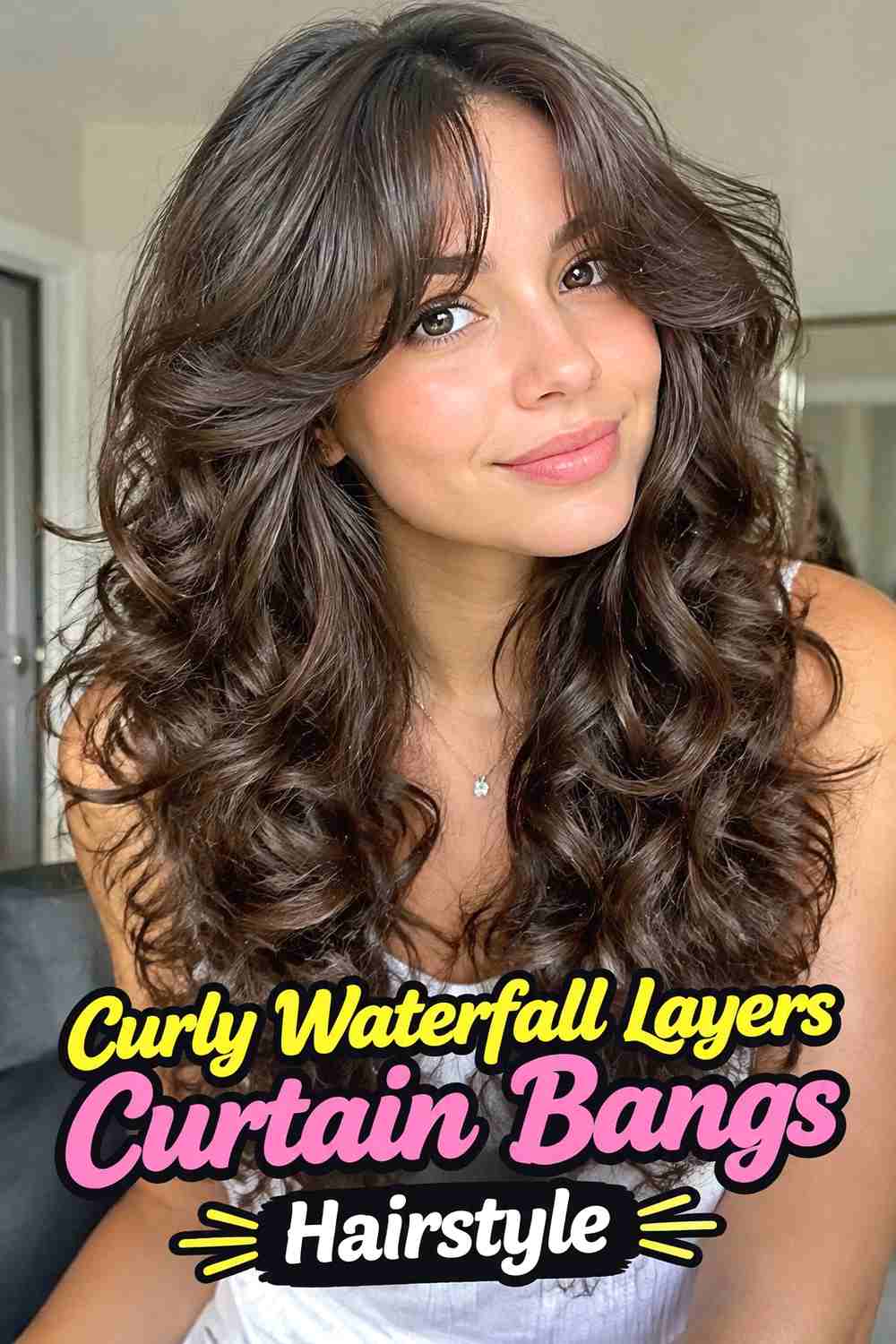
Curly waterfall layers rely on graduated length and natural spring to create a cascading silhouette. The curtain bangs should be cut with shrinkage in mind, allowing the front curls to separate around the forehead without sitting unexpectedly short once dry. Longer layers then step gradually through the sides and back, helping distribute volume rather than concentrating all the fullness at one level. The finished effect will vary with curl pattern, density, and shrinkage, so perfect symmetry is neither necessary nor realistic. This style works best when the layers are evaluated in the hair’s usual dry state. Defined curls can reveal the tiered shape while still retaining natural variation in size and direction.
Hair Type & Length
Medium to long curly hair provides enough length for several visible levels. Layer placement should be customized carefully so the shortest sections do not spring much higher than intended.
8. Shoulder Length Waterfall Curtain Bangs Hairstyle
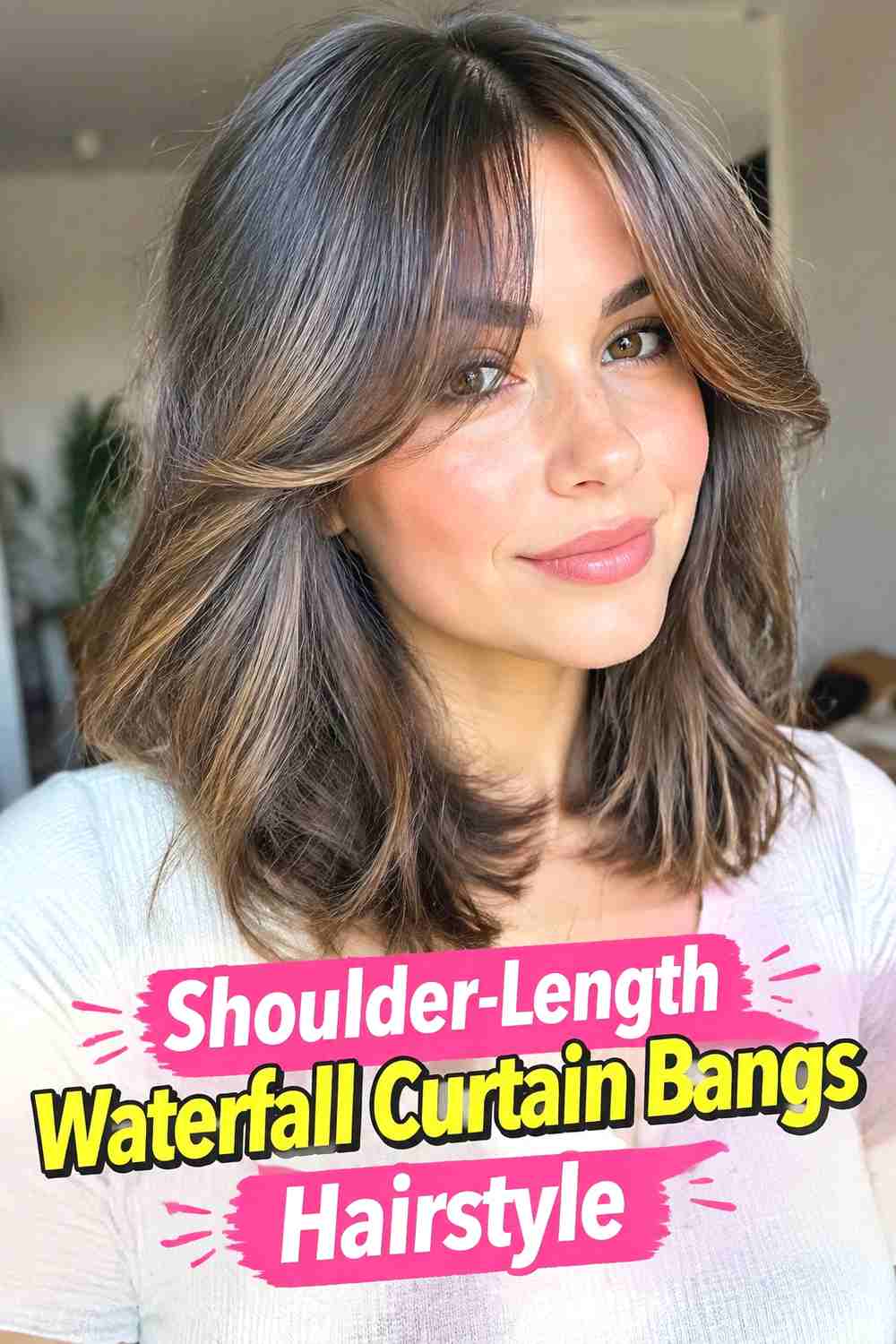
A shoulder-length cut can still carry waterfall layering when the tiers are compact and carefully blended. Curtain bangs open through the center, move into cheekbone-length framing pieces, and then transition through jaw and shoulder sections. Because there is less overall length than in a long haircut, the differences between layers should remain moderate so the style does not become overly shaggy. Straight, wavy, and softly curled textures can all work, with a slight bend helping the shorter pieces separate from the perimeter. This version is especially useful if you want visible movement but prefer a length that is easier to wash, dry, and style than very long layered hair.
Best For
Choose this look if you want the cascading effect of waterfall layers without maintaining long hair. It also offers enough length for simple low ponytails and half-up styles.
9. Center Part Waterfall Curtain Bangs Hairstyle
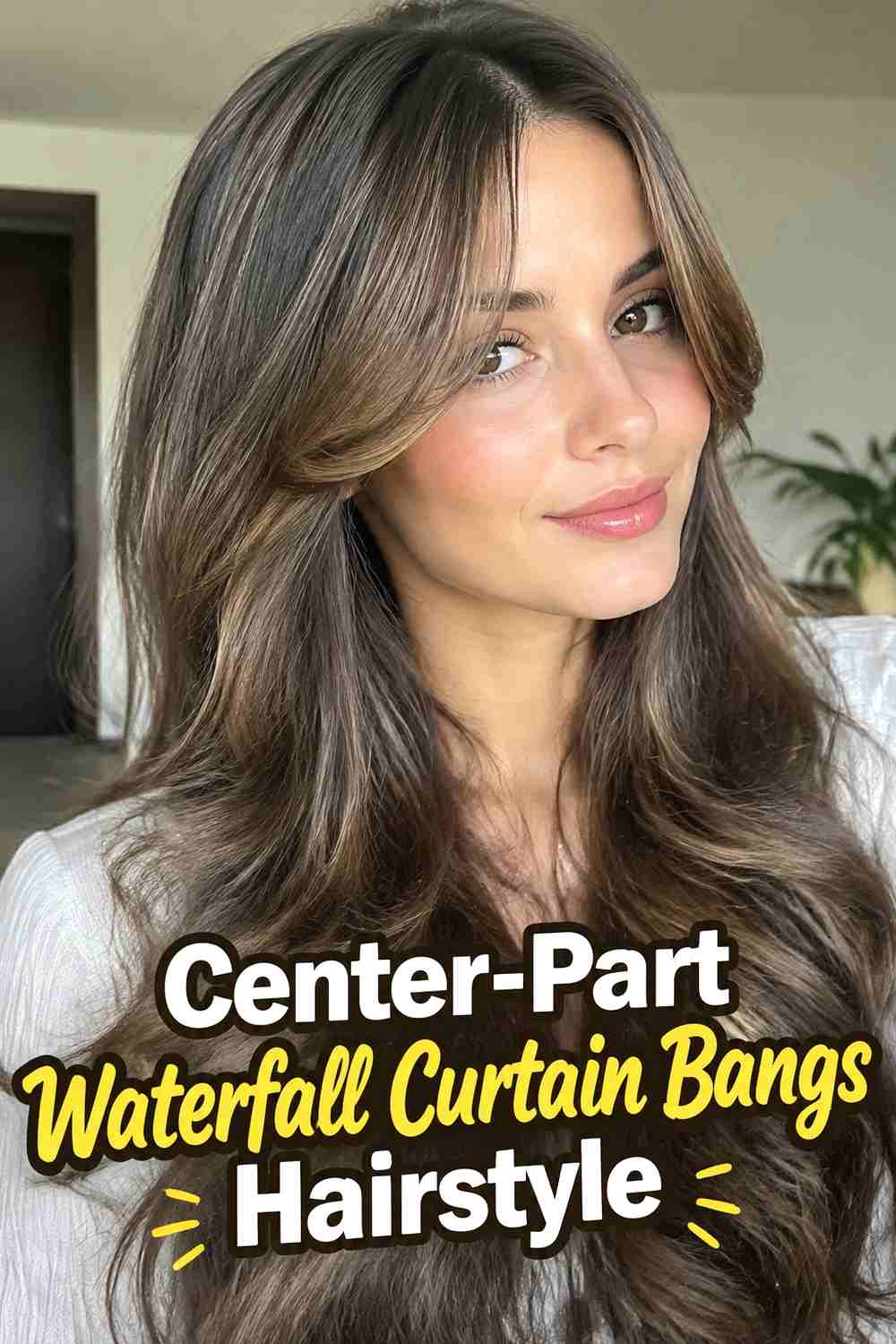
A clear center part gives waterfall layers a balanced starting point, with the curtain bangs opening evenly before blending into longer sections on both sides. The symmetry makes the cascading structure especially easy to see from the front, while the lower layers can remain soft and natural rather than perfectly matched. Long and medium-long hair show the progression well, particularly when there is a gentle bend through the face-framing pieces. Fine hair may benefit from keeping the waterfall layers longer and more subtle, while thick hair can handle stronger separation between tiers. The overall goal is a centered, polished frame that still moves freely instead of sitting flat against the face.
Styling Notes
Dry the curtain bangs away from the center part, then shape the surrounding layers in the same outward direction. This creates continuity from the fringe into the longer lengths.
10. Soft Shag Waterfall Curtain Bangs Hairstyle
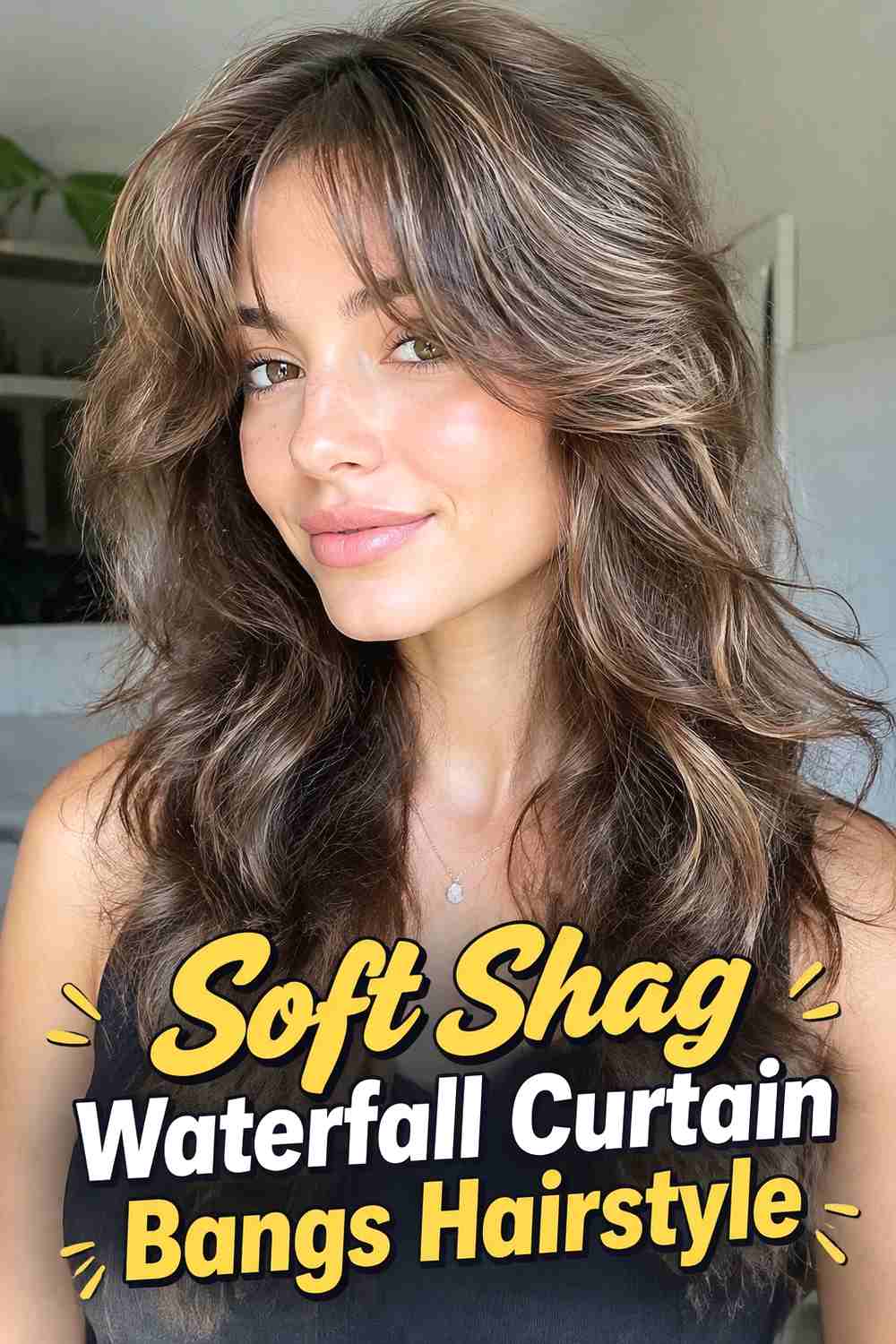
A soft shag introduces more crown movement and texture while keeping the waterfall layers blended enough to avoid an overly choppy finish. Curtain bangs flow into shorter framing pieces, then gradually longer layers continue through the sides and back. Compared with a classic shag, this version preserves more weight through the perimeter and uses the waterfall effect to make the transitions feel fluid. Wavy and textured hair can show the shape naturally, while straight hair may need light styling to reveal the shorter sections. The crown should have enough lift to create movement without becoming excessively short or disconnected. This is a good middle ground between polished cascading layers and a more undone layered cut.
Why It Works
The waterfall progression softens the shag structure, giving you visible texture and lift while maintaining a more wearable, blended silhouette.
11. Flipped Waterfall Layers Curtain Bangs Hairstyle
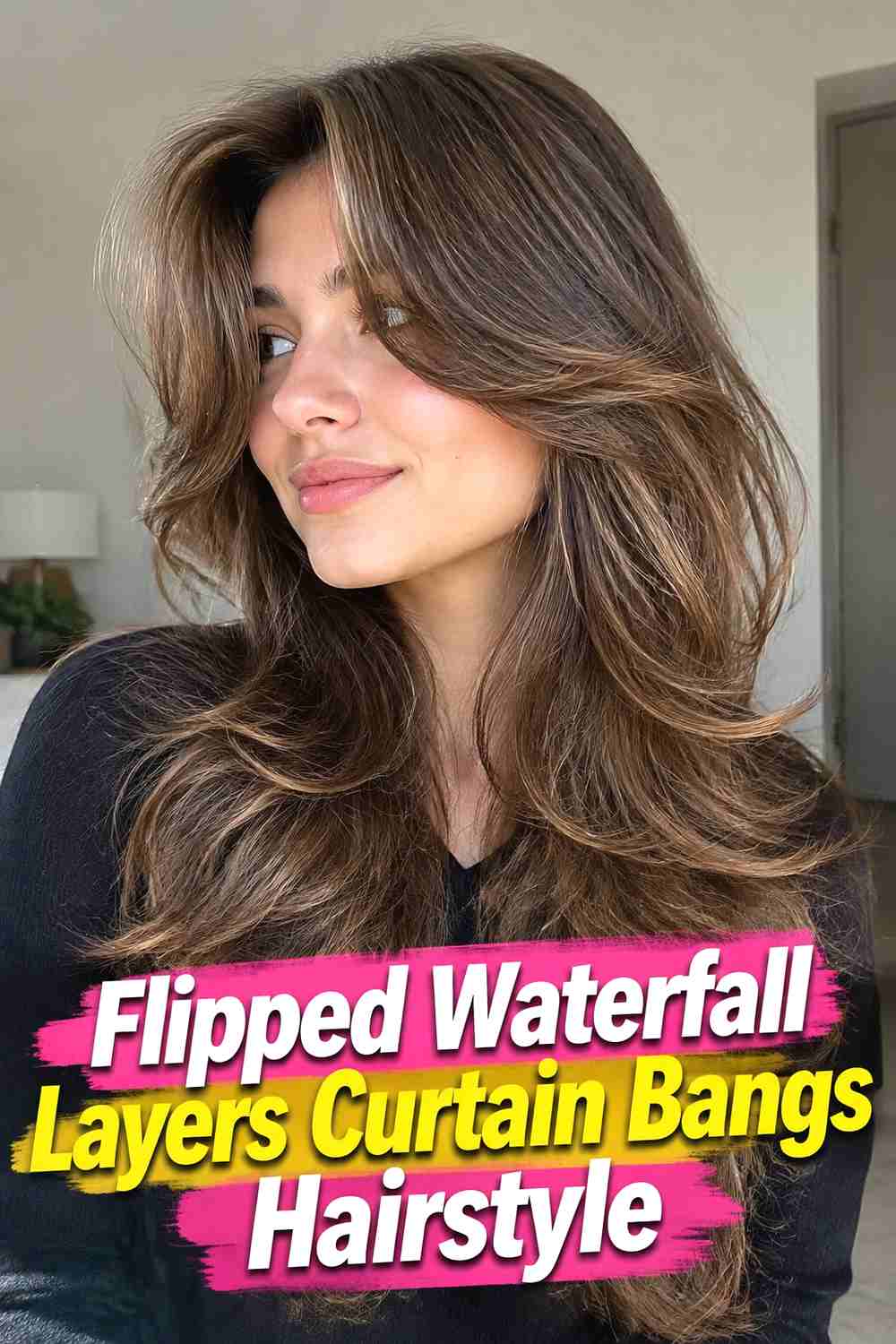
Flipped ends make each waterfall layer more visible by directing selected sections outward as they descend through the haircut. Curtain bangs begin the movement around the forehead and cheekbones, while longer layers repeat the curve near the jaw, shoulders, and lower lengths. The result has a playful retro influence but can still feel modern when the flips remain broad and soft rather than sharply curled. Medium-long and long straight or wavy hair show this style especially well. Keep the root area relatively smooth so the focus remains on the cascading ends. Too many tiny flips can make the haircut look busy, so larger sections usually create a cleaner finish.
Pro Tip
Shape only the key face-framing and outer layers. Leaving some sections straighter creates contrast and prevents the entire hairstyle from becoming overly styled.
12. Airy Long Curtain Bangs Hairstyle
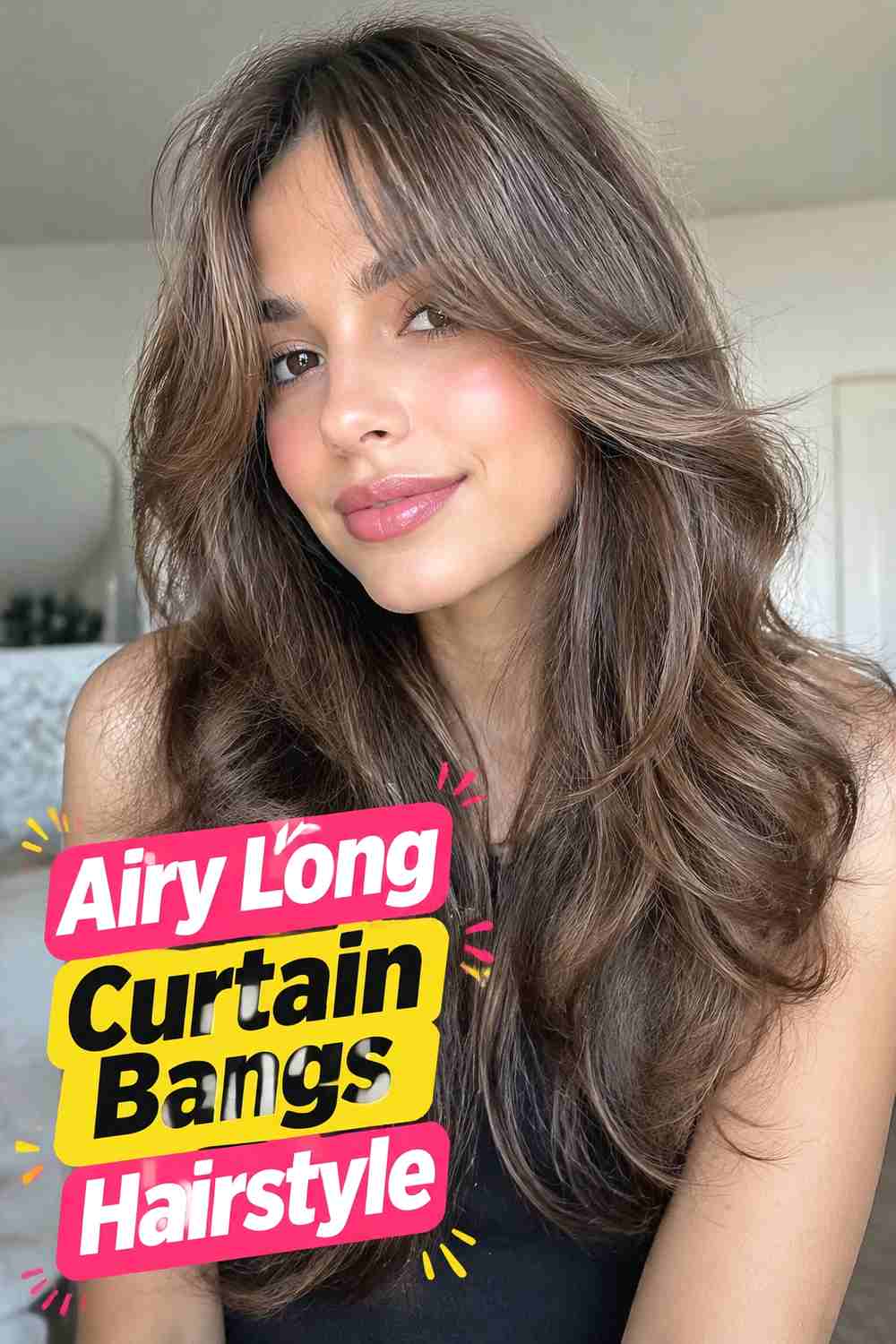
Airy long curtain bangs create a subtle entry point into waterfall layers, making this one of the softer options in the collection. The fringe begins around the cheekbones or lower, opening through the center and blending almost seamlessly into the surrounding layers. Longer waterfall pieces continue down the sides with gentle spacing between each level rather than dramatic separation. This style is ideal if you want face framing but are hesitant about shorter bangs because the front pieces can usually be tucked behind the ears or pulled into a ponytail. Long hair shows the flowing effect best, while a soft blowout or natural wave can provide enough movement to reveal the layering.
Wear & Maintenance
Because the bangs start longer, the grow-out is relatively forgiving. Refresh the face-framing shape when the front begins to merge completely into the surrounding layers.
13. Textured Waterfall Lob Curtain Bangs Hairstyle
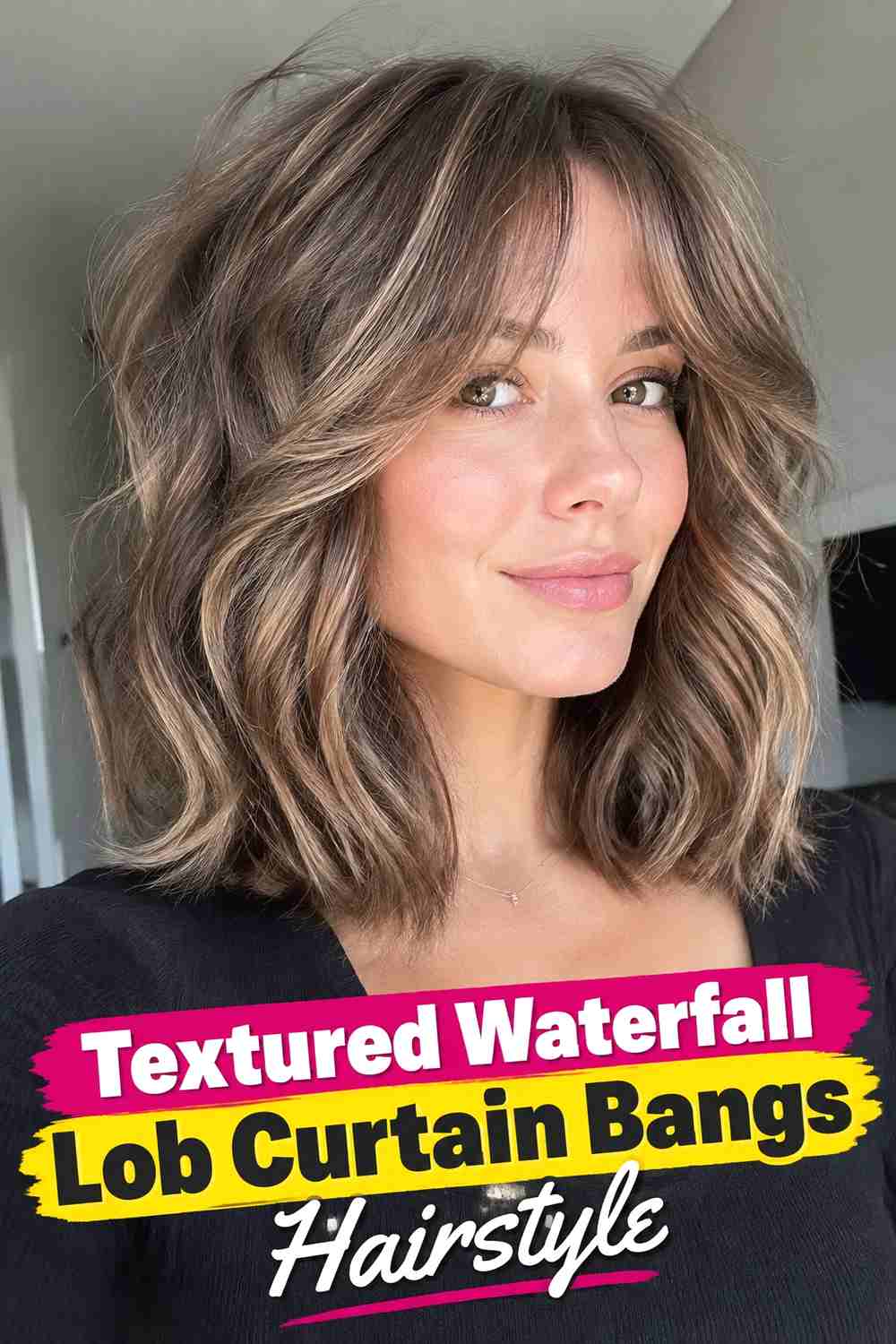
A textured lob combines collarbone-length hair with compact waterfall layers and a parted curtain fringe. The bangs frame the forehead and cheekbones, while shorter layers move through the sides before blending into the stronger lob perimeter. Keeping some weight at the ends is important so the haircut still reads as a lob rather than becoming a short shag. Wavy texture, loose bends, or light tousling can help each layer appear without requiring a polished blowout. This style works especially well if you want noticeable movement in a medium-length haircut but still prefer a defined outer shape. The curtain bangs can stay longer for easier tucking and lower daily maintenance.
Hair Type & Length
Shoulder to collarbone length is ideal. Wavy and medium-density hair often shows the textured cascade naturally, though the layer pattern can be customized for other textures.
14. Romantic Cascade Curtain Bangs Hairstyle
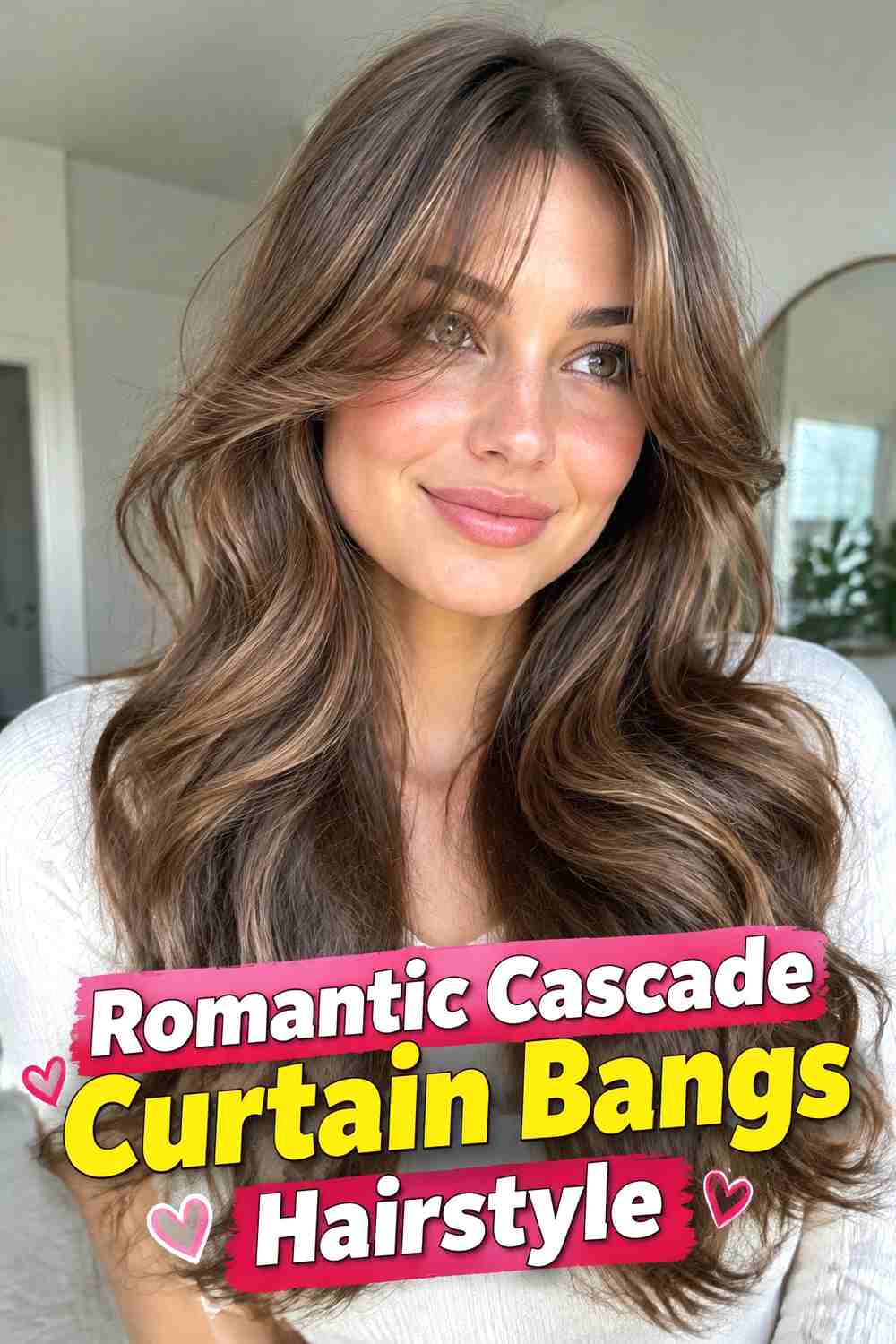
Romantic cascade layers create the softest, most flowing interpretation of curtain bangs with waterfall shaping. The fringe opens gently around the forehead, then blends into face-framing pieces that curve through the cheeks and shoulders before joining long, loose layers. Instead of making each tier sharply visible, this version emphasizes continuity and movement so the hair appears to fall in overlapping waves. Long hair provides the most dramatic cascade, especially with soft curls or a broad blowout through the mid-lengths and ends. The style works best when the perimeter remains healthy-looking and substantial enough to balance the layering above. A few natural flyaways keep the finish touchable rather than overly formal.
Best For
Choose this version if you want a romantic, polished layered look with plenty of movement but prefer softer transitions over strongly separated tiers.
How to Choose the Right Look
Start with your current length and how dramatic you want the waterfall effect to be. Long hair offers room for several cascading levels, while shoulder-length cuts need fewer, more carefully blended layers to preserve fullness.
Texture should guide the placement. Straight hair can show precise waterfall sections clearly, waves naturally soften the transitions, and curls need layers planned around dry shrinkage and spring. If your hair is fine, longer and fewer layers can protect the density of the ends. Thick hair can usually support more pronounced tiers and internal movement.
Curtain-bang length matters too. Shorter pieces around the brows or upper cheeks create a stronger face frame, while longer versions are easier to tuck away. Finally, match the haircut to your styling routine: a blowout emphasizes every tier, but a well-cut waterfall shape should still look balanced with your normal texture.
Final Thoughts
Curtain bangs and waterfall layers work best when the fringe, face frame, and longer tiers feel like one continuous haircut. Choose the amount of layering that suits your texture and density, then use soft bends, waves, curls, or a sleek finish to show the cascade naturally.
FAQs
1. What are waterfall layers with curtain bangs?
They combine center-opening curtain fringe with progressively longer face-framing and body layers, creating a cascading effect through the haircut.
2. Do waterfall layers work on long hair?
Yes. Long hair gives the layers plenty of room to transition gradually, making the cascading shape especially visible through the sides and lower lengths.
3. Can curly hair have waterfall layers and curtain bangs?
Yes. The layers and fringe should be planned around the hair’s dry shrinkage and natural curl pattern so the finished lengths sit where intended.
4. Are waterfall layers good for fine hair?
They can be, but fewer and longer layers are often more practical for fine hair because they preserve more density through the perimeter.
5. Do curtain bangs require daily styling with waterfall layers?
Not always. Longer curtain bangs and naturally wavy textures can be relatively relaxed, while shorter fringe or a polished blowout may need more frequent reshaping.
CTA
Save your favorite waterfall-layer look, share these curtain-bang ideas with someone planning a layered refresh, and explore more soft, dimensional hairstyle inspiration.