12 Barely-There Fringe Hairstyle Ideas
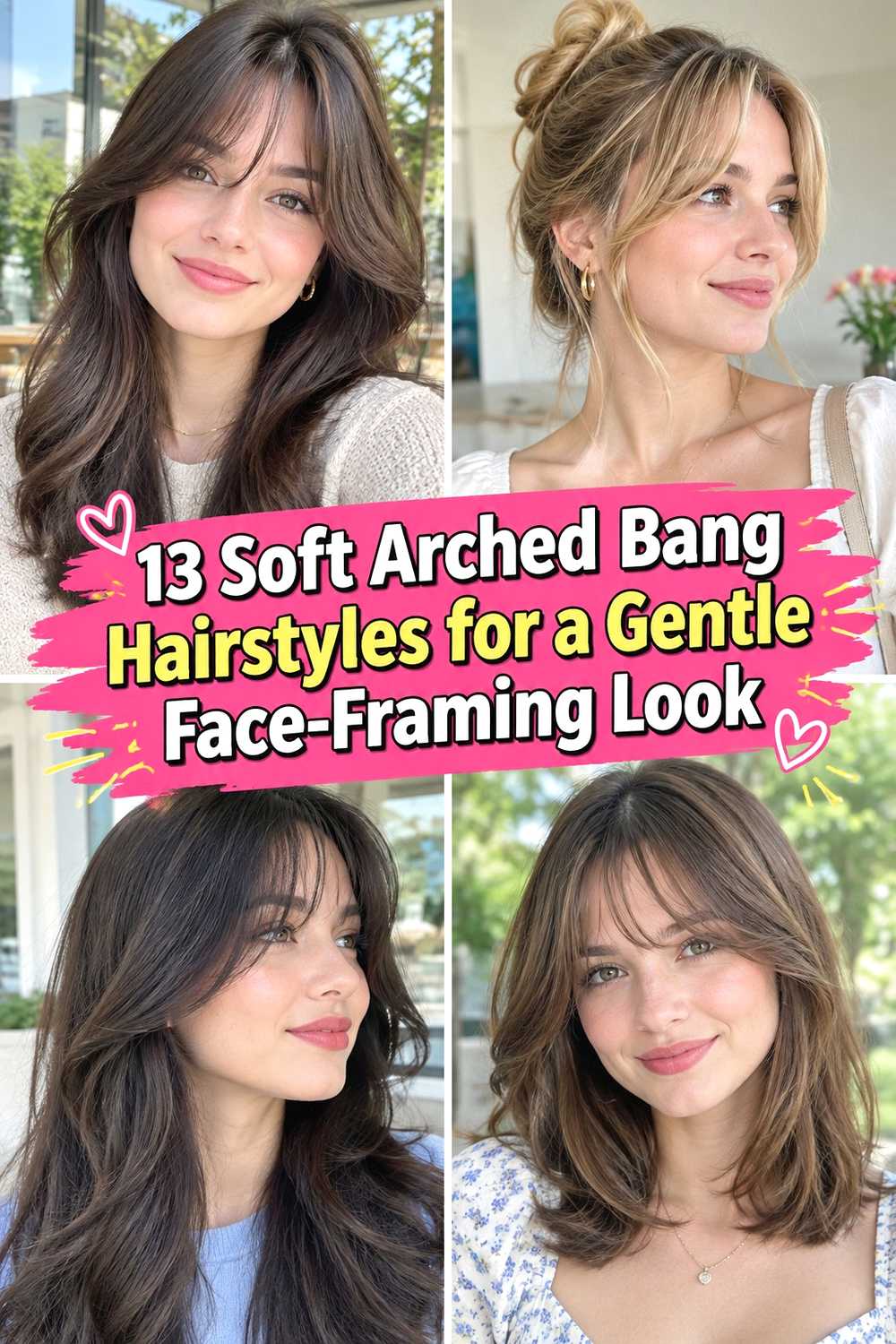
Light, airy, and almost weightless, these barely-there fringe ideas add subtle movement around the face without creating a heavy traditional bang.
Barely-there fringe is designed to look delicate rather than dense. Fine sections of hair skim the forehead, brows, or temples with visible space between strands, creating a soft frame while leaving much of the face open. That lighter construction can make the fringe feel especially flexible and easy to blend with the rest of a haircut.
The style can be adapted to straight, wavy, curly, fine, or layered hair by adjusting density, length, separation, and direction. Some versions sit softly forward, while others split through the center or sweep to one side. Before choosing, consider how your hair naturally falls, how much daily styling you want, and whether you prefer barely visible texture or a slightly more polished fringe shape.
Quick List
- Soft Barely There Fringe Hairstyle
- Wispy Barely There Fringe Hairstyle
- Long Barely There Fringe Hairstyle
- Feathered Barely There Fringe Hairstyle
- Straight Barely There Fringe Hairstyle
- Wavy Barely There Fringe Hairstyle
- Curly Barely There Fringe Hairstyle
- Center Split Barely There Fringe Hairstyle
- Side Swept Barely There Fringe Hairstyle
- Barely There Fringe With Face Framing Layers Hairstyle
- Fine Hair Barely There Fringe Hairstyle
- Barely There Fringe With Soft Blowout Hairstyle
1. Soft Barely There Fringe Hairstyle
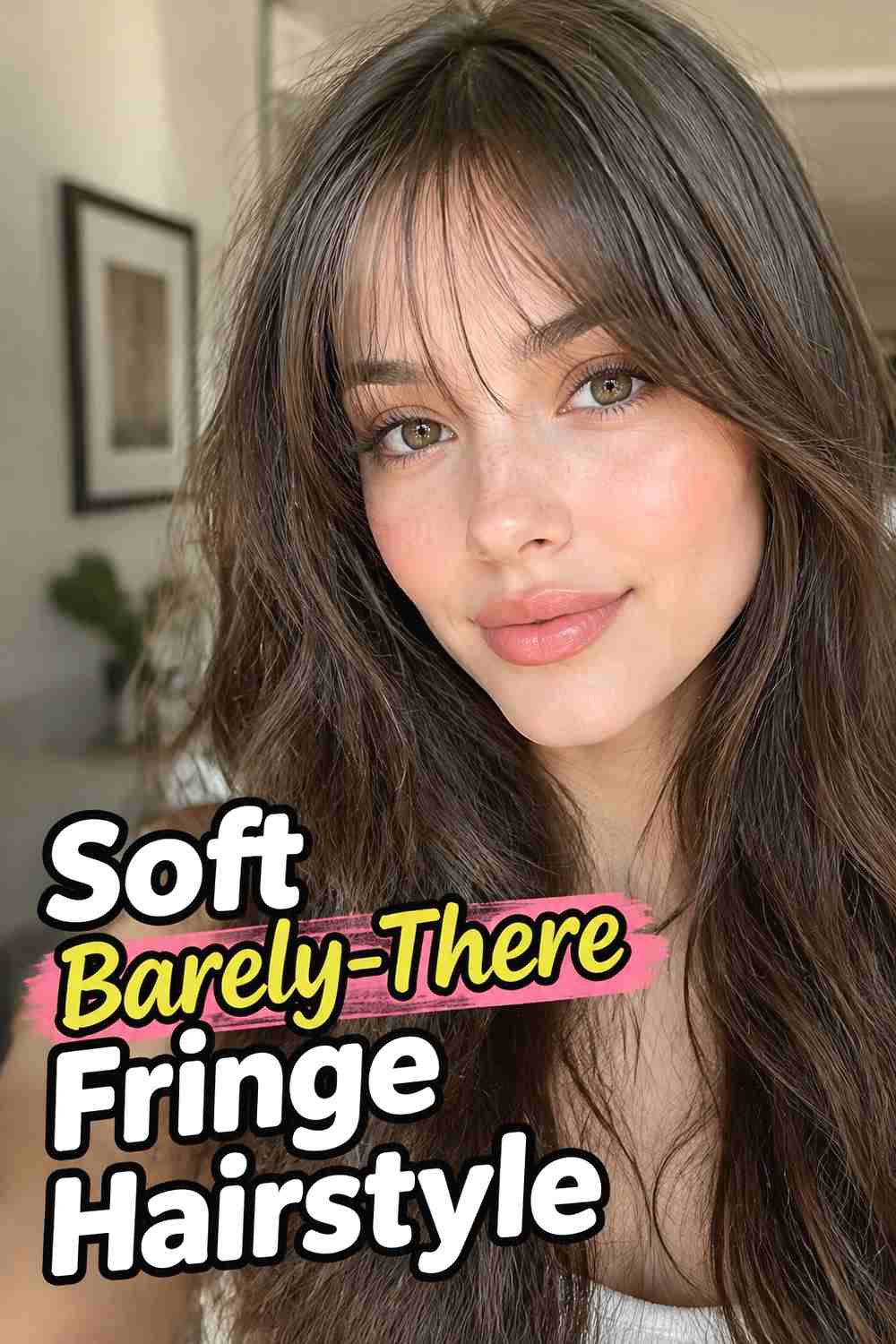
Soft barely-there fringe keeps the front light and understated, using a small section of hair to create delicate movement across the forehead. Rather than forming a continuous bang line, individual strands sit with natural spaces between them and gradually become longer near the temples. This version works particularly well when you want a subtle change that does not dominate the rest of the haircut. It can be paired with straight lengths, gentle waves, or soft layers because the fringe itself remains simple and flexible. A light blow-dry is usually enough to control the direction, while finger separation afterward restores the airy texture that makes the style feel effortless instead of overly arranged.
Styling Notes
Dry the fringe forward with minimal tension, then separate the strands gently. Avoid heavy creams or oils around the roots, which can quickly reduce the airy effect.
2. Wispy Barely There Fringe Hairstyle
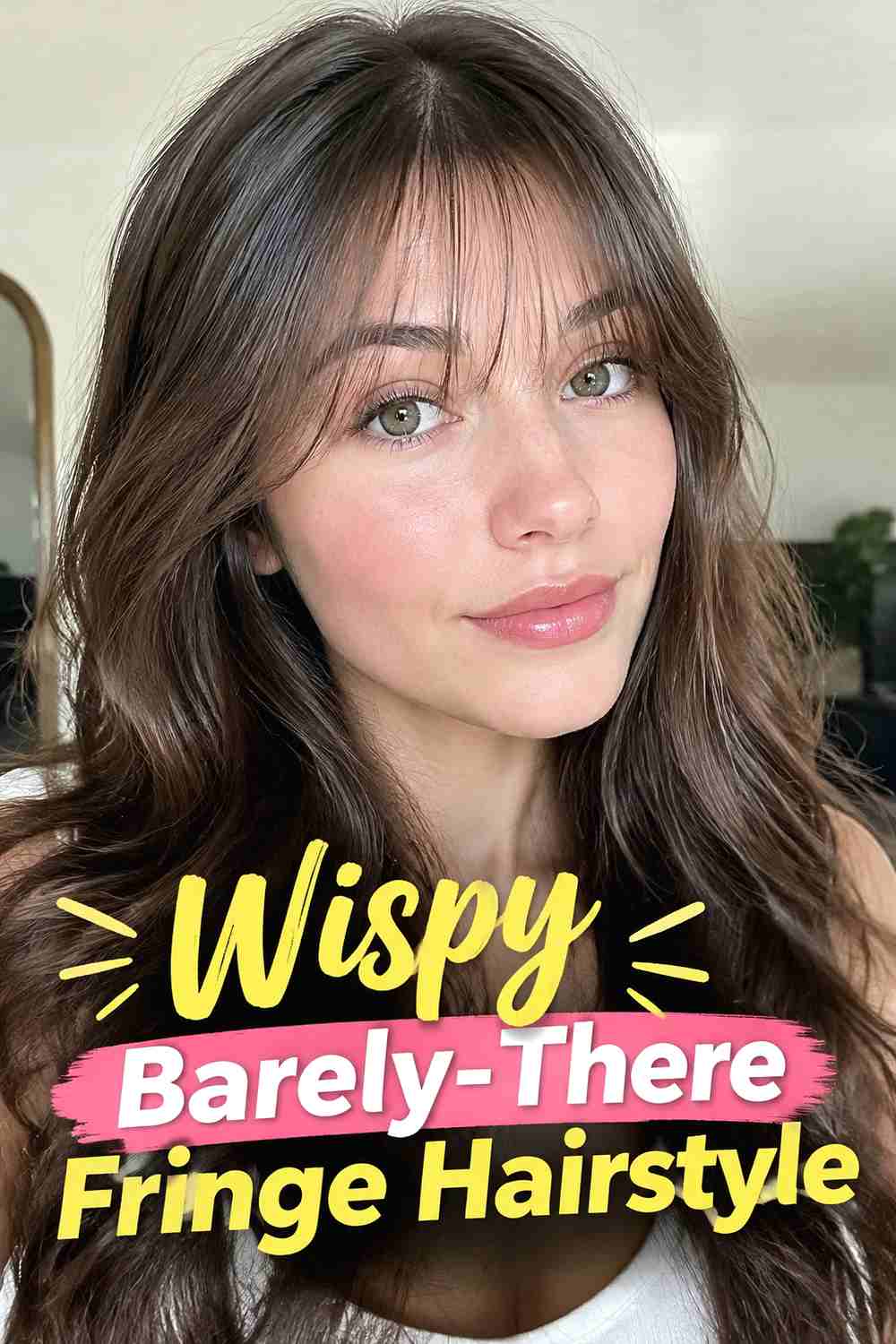
Wispy barely-there fringe takes the lightweight idea even further, with fine strands scattered softly across the forehead instead of creating full coverage. Small spaces remain visible throughout the bang area, helping the style feel open and delicate. The pieces can sit close to the brows or extend slightly longer toward the outer edges, where they blend into surrounding hair. This look works beautifully with smooth hair because each fine strand remains visible, but it can also soften gently textured lengths. Since density is intentionally low, root freshness plays a large role in the finished appearance. Too much styling product can make the fringe stick into sections, so keeping the front clean and flexible usually produces the most natural result.
Wear & Maintenance
Refreshing only the fringe can restore its airy shape between full washes. A small amount of dry shampoo may help if the roots begin to flatten.
3. Long Barely There Fringe Hairstyle
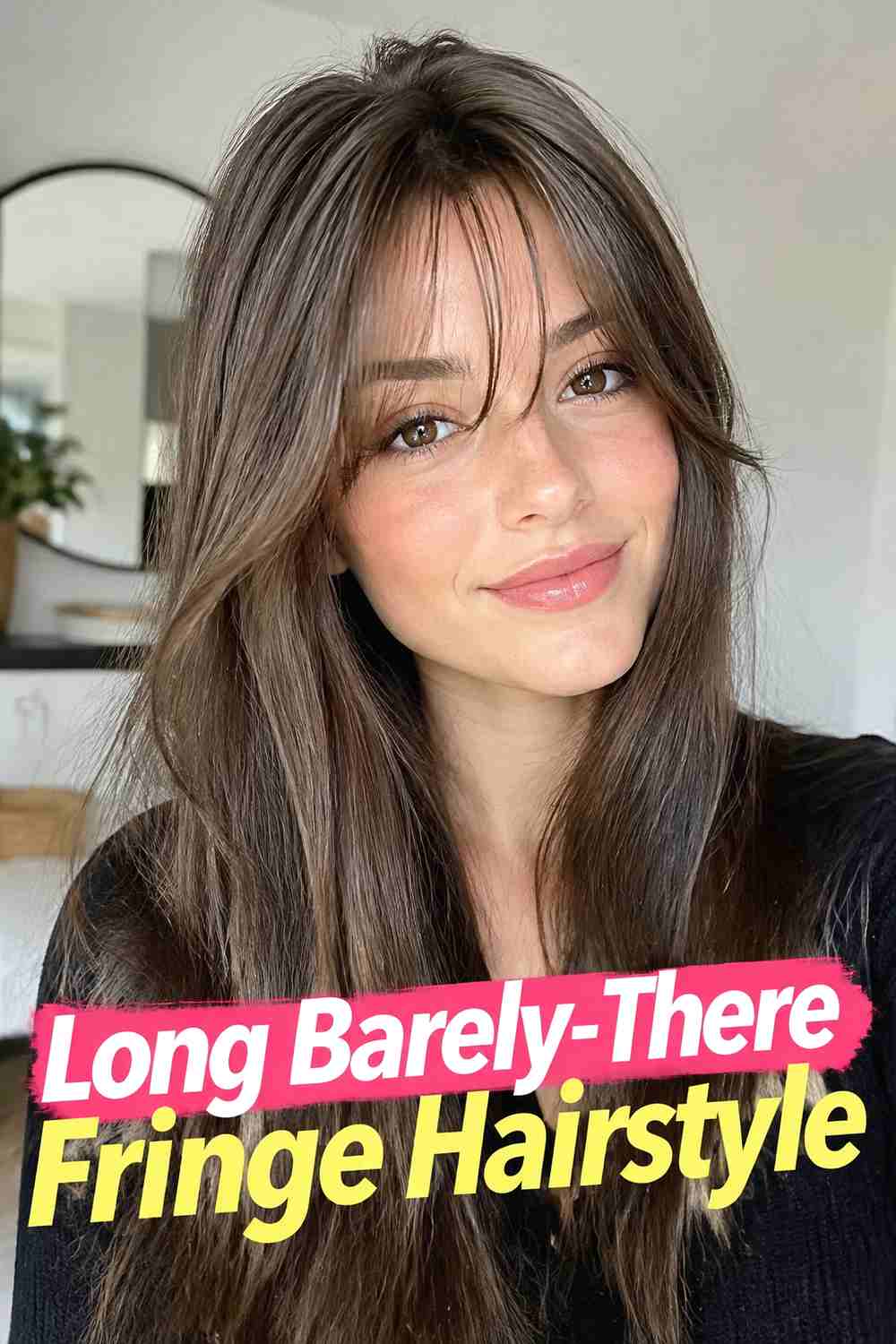
A longer barely-there fringe provides subtle framing while keeping enough length to blend easily into the rest of the haircut. The shortest pieces may sit near the brows, while elongated strands move toward the eyes, cheekbones, or temples. Because the section remains light, the fringe still looks delicate even at a longer length. This variation is especially practical if you want styling flexibility, since the pieces can be worn forward, separated through the center, swept aside, or tucked back when needed. Long hair and medium-length cuts both pair naturally with this shape. Keeping the fringe softly bent rather than strongly curled helps preserve its relaxed appearance and prevents the extra length from looking overly styled.
Best For
This option is useful when you want a low-commitment fringe that can gradually transition into face-framing pieces as it grows.
4. Feathered Barely There Fringe Hairstyle
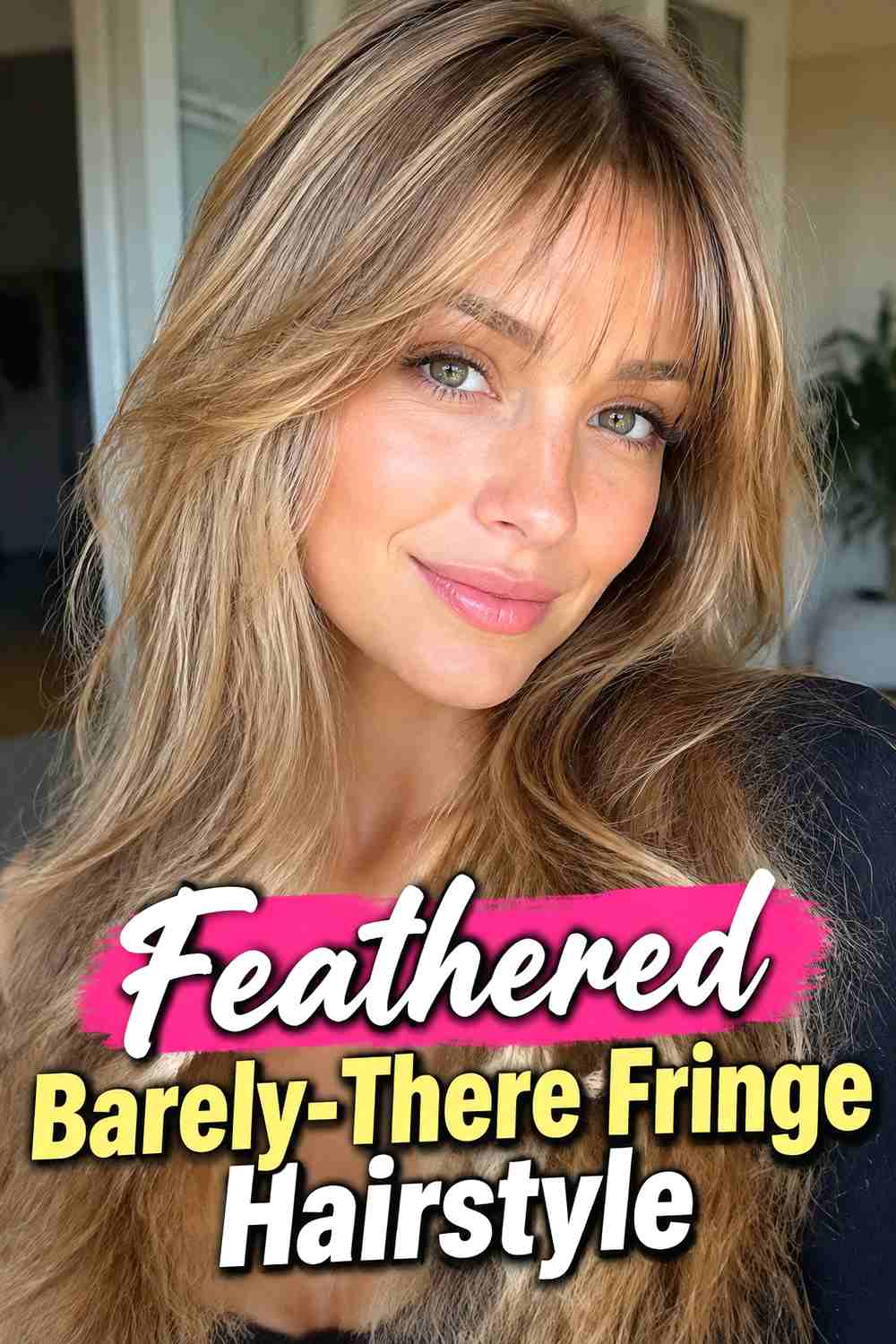
Feathered barely-there fringe combines low density with a gentle outward sweep, giving the front more movement without making it look heavy. Fine center pieces sit lightly around the forehead while longer strands curve toward the temples and sides. The feathering can continue into surrounding layers, creating a flowing transition that feels especially polished with a soft blowout. Even with the extra direction, the fringe should remain flexible and slightly separated rather than forming two solid wings. Broad bends usually suit the style better than tight curls because they preserve the delicate length and movement. Once the hair is dry, loosening the front with your fingers helps keep the feathered effect soft and modern.
Styling Notes
Guide the outer fringe away from the face with a small round brush, then gently break up the shape so the strands remain light and separated.
5. Straight Barely There Fringe Hairstyle
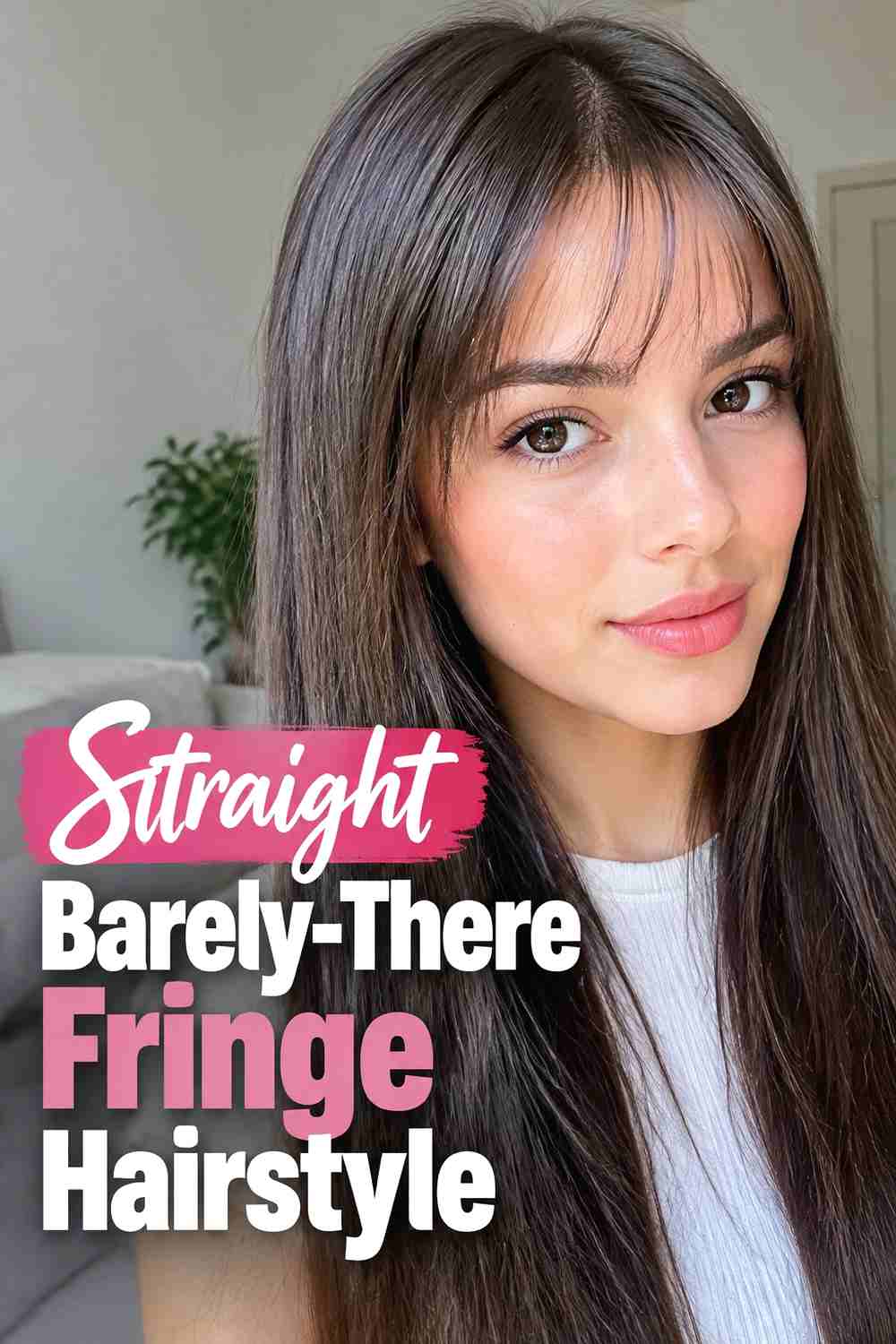
Straight hair shows the fine construction of barely-there fringe particularly clearly. Delicate strands can fall around the brows with visible gaps between them, while longer side pieces soften the transition into the rest of the hair. The overall finish feels clean and understated because the fringe adds detail without disrupting a sleek silhouette. A small amount of natural bend prevents the strands from hanging too rigidly, so heavy flat-ironing is rarely necessary. The rest of the hair can remain smooth and polished, allowing the lightweight front to become the subtle focal point. Keeping products away from the fringe roots is especially useful on straight hair, where oiliness or buildup can make fine sections appear heavier very quickly.
Why It Works
The clean texture makes every soft gap and fine strand visible, allowing a minimal fringe to create shape without requiring extra volume or dramatic layering.
6. Wavy Barely There Fringe Hairstyle

Loose waves give barely-there fringe a relaxed, natural appearance because the front strands can follow the same gentle movement as the rest of the hair. The fringe may bend slightly around the forehead rather than sitting perfectly straight, while longer pieces near the temples connect naturally with wavy lengths. This variation is particularly useful if your hair already has soft texture and you do not want to smooth the bangs into a completely different finish each day. Keep the wave pattern irregular so the hairstyle feels natural rather than carefully curled. Lightweight styling can encourage definition, but the fringe should remain flexible. Allowing a few fine pieces to fall differently from one another reinforces the effortless, barely-there effect.
Best For
Naturally wavy or loosely styled hair can wear this look with minimal contrast between the fringe and the rest of the texture.
7. Curly Barely There Fringe Hairstyle
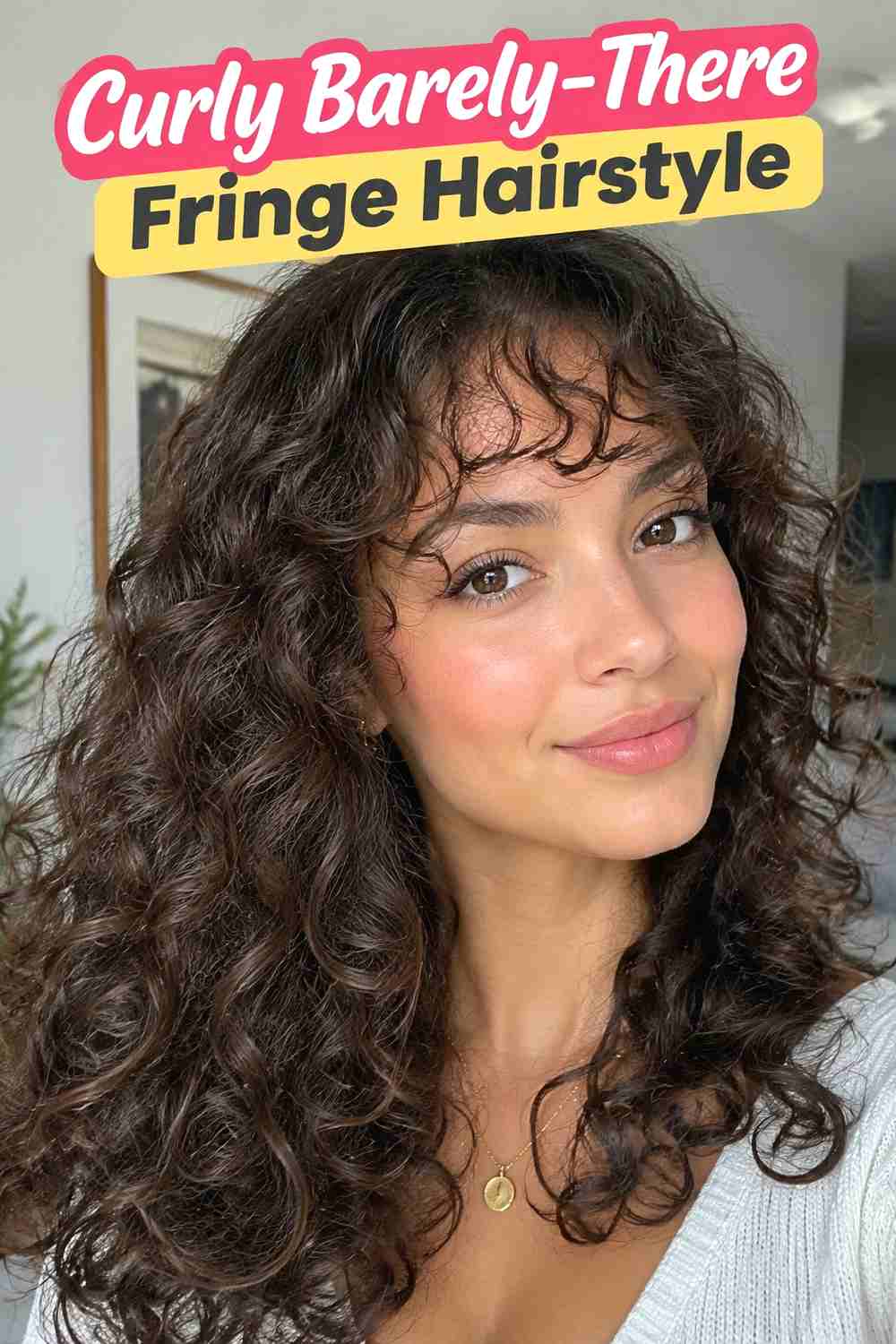
Curly barely-there fringe uses a small number of individual curls to frame the forehead instead of creating a dense curly bang. Some curls can sit closer to the brow area while others fall toward the temples, producing natural spaces that keep the front open. The effect works best when the curl pattern is allowed to determine subtle differences in length and placement. Soft layering through the rest of the hair can help distribute volume and make the fringe feel connected to the overall shape. Because curls often shrink as they dry, the intended finished length should guide the cut. Flexible definition preserves movement, while heavy products may make a small fringe section feel stiff or unusually dense.
Pro Tip
Evaluate the fringe after the curls are fully dry before trimming additional length. Natural shrinkage can change both the position and apparent density of the front pieces.
8. Center Split Barely There Fringe Hairstyle
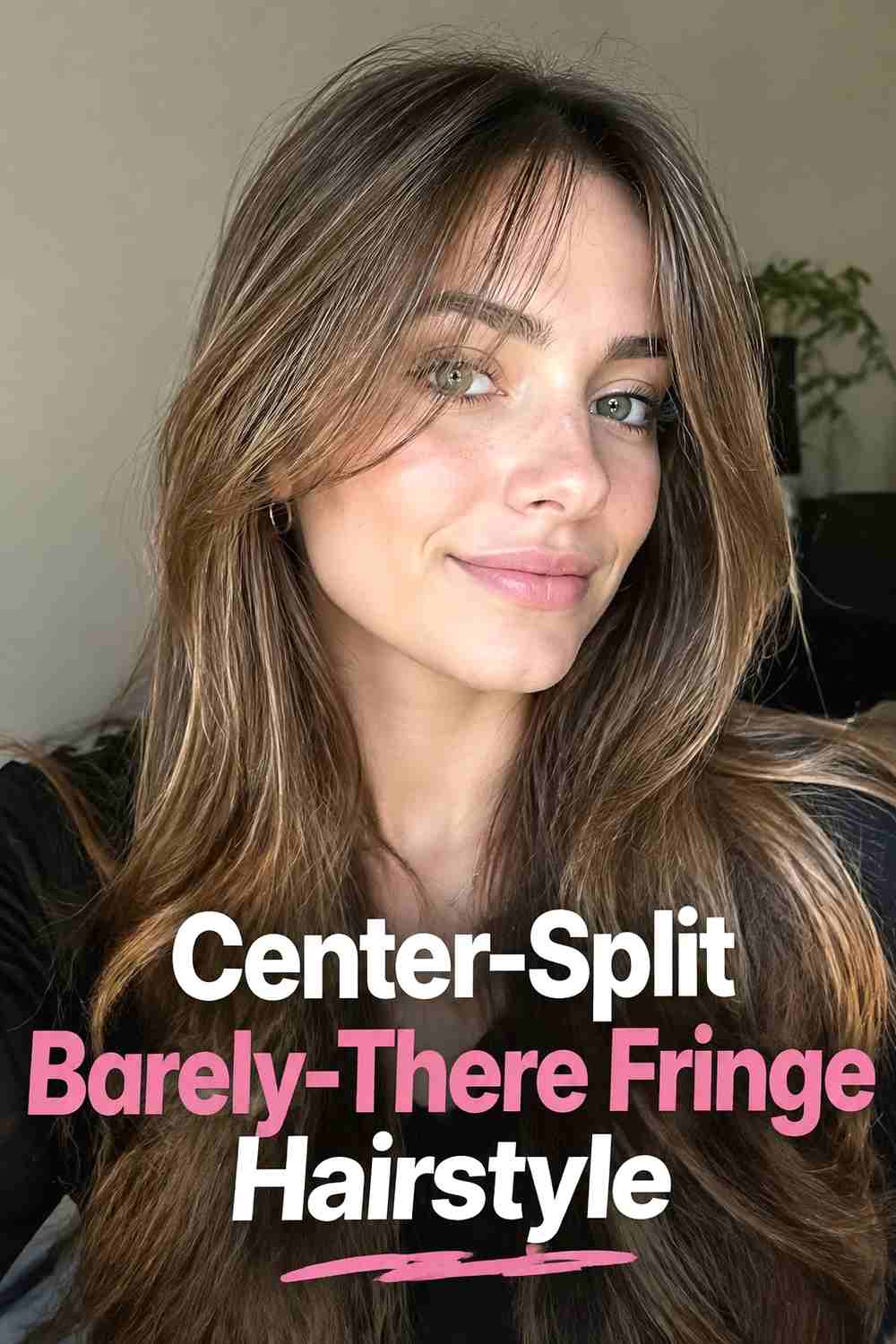
A center-split barely-there fringe creates a delicate opening across the forehead while maintaining just enough short pieces to define the front of the haircut. Fine strands separate near the middle and gradually become longer as they move toward the temples. Compared with fuller curtain bangs, this version uses less hair and leaves more of the forehead visible, making the result especially subtle. It works with straight hair, soft waves, and layered lengths because the light fringe can merge easily into surrounding sections. The center does not need to form a perfectly sharp line; a softer split often looks more natural. Gentle root lift also prevents the pieces from collapsing flat against the face.
Styling Notes
Dry the fringe forward first, then separate it near the center. This keeps the roots flexible and prevents the two sides from becoming too rigid or symmetrical.
9. Side Swept Barely There Fringe Hairstyle
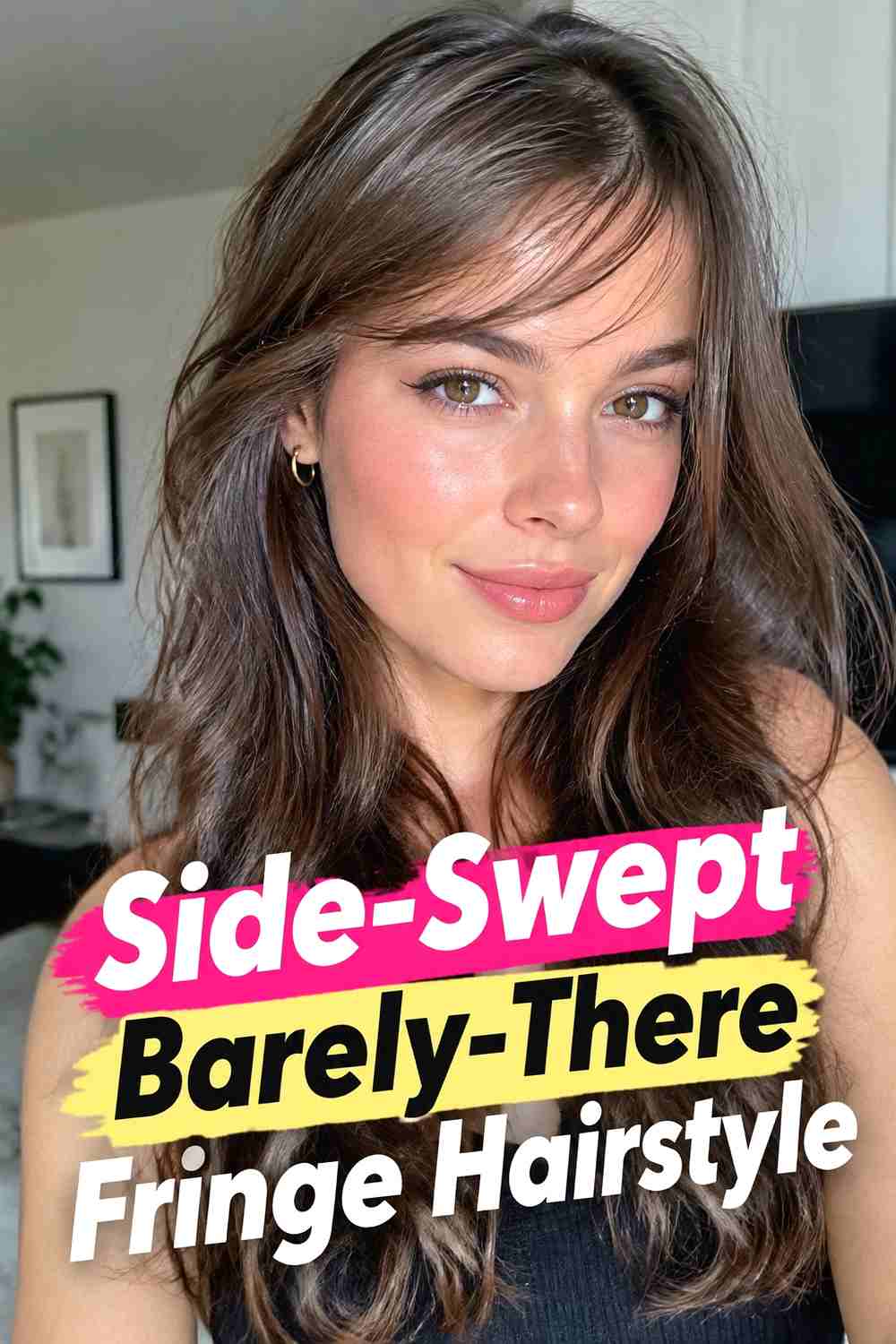
Side-swept barely-there fringe shifts the lightweight strands diagonally across the forehead, creating an asymmetrical frame without the density of a traditional side bang. A few shorter pieces can sit near the brow while longer strands taper toward one temple and disappear naturally into the surrounding hair. This approach works particularly well when the hair already favors a side part or grows in a strong directional pattern. Because only a small amount of hair is involved, the sweep remains soft rather than dramatic. Straight and wavy textures can both support the look. Using flexible hold instead of firm hairspray lets the strands move throughout the day and keeps the fringe from turning into one solid section.
Wear & Maintenance
Work with your natural part whenever possible. Following the hair’s existing direction generally makes the soft side sweep easier to maintain with less heat and product.
10. Barely There Fringe With Face Framing Layers Hairstyle
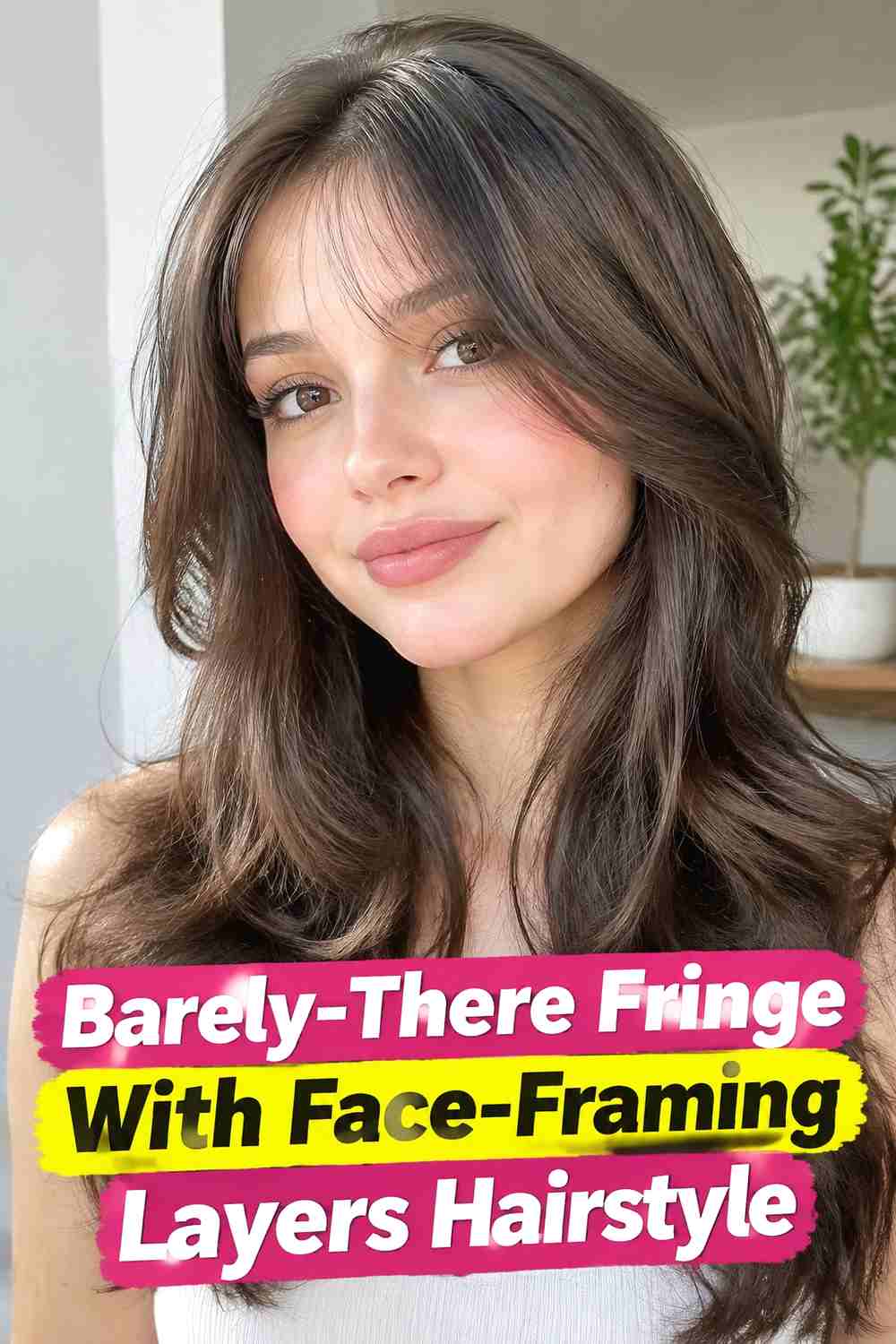
Face-framing layers give barely-there fringe a gradual path into the rest of the haircut. Fine forehead pieces transition into longer sections around the temples, cheekbones, and jaw, creating continuous movement rather than an obvious divide between bangs and lengths. This option works especially well for medium or long hair because the layers have enough space to progress naturally. The fringe remains light, while the longer front sections add more visible shape when the hair moves or is styled in a blowout. Keeping the layer edges soft preserves the airy character of the fringe. A mix of subtle inward and outward bends can highlight the framing without making each section look identically curled.
Why It Works
The gradual change in length lets a very light fringe feel intentional and connected, even though only a small amount of hair sits directly across the forehead.
11. Fine Hair Barely There Fringe Hairstyle
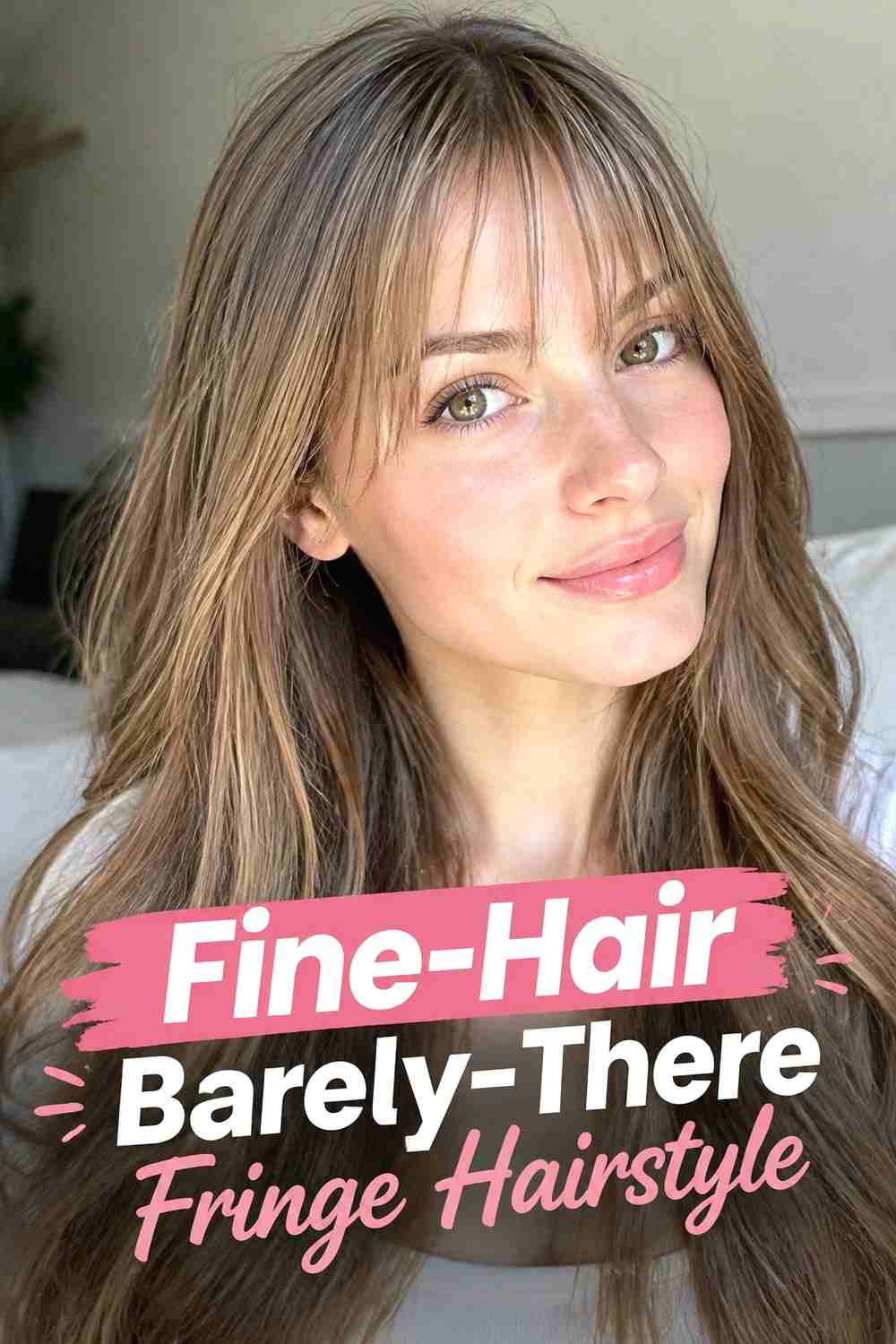
Barely-there fringe can suit fine hair because the style requires only a small, lightweight section at the front. Keeping the fringe sparse preserves more density for the rest of the haircut while still creating delicate movement around the forehead. Slightly longer pieces near the temples can provide framing without relying on extensive layering through the lengths. The ends of the main haircut are often best kept relatively full so the overall silhouette does not become unnecessarily thin. Gentle root lift can add dimension to the fringe, but rich creams, oils, or strong waxes may quickly weigh fine strands down. A light, flexible finish helps the pieces remain separated and makes the natural delicacy of the hair part of the style.
Pro Tip
Avoid taking an overly deep fringe section. Preserving density through the rest of fine hair usually creates a more balanced result than trying to make the bangs appear fuller.
12. Barely There Fringe With Soft Blowout Hairstyle
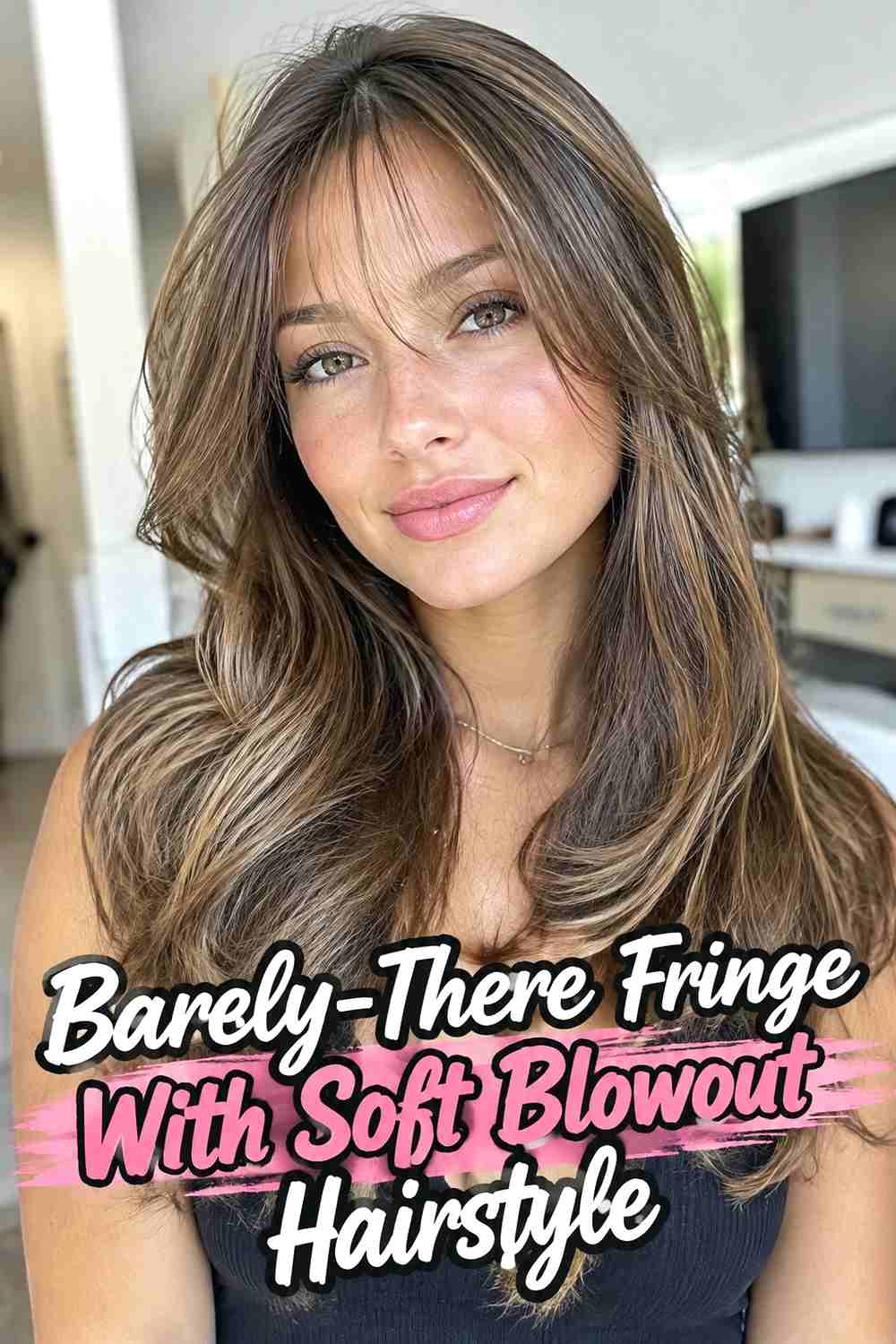
A soft blowout gives barely-there fringe a polished finish while keeping its density intentionally light. The front strands receive gentle root lift and a subtle bend, then separate naturally across the forehead instead of forming a thick rounded bang. Longer pieces near the sides can sweep toward the cheekbones and blend into broad movement through the rest of the hairstyle. The look feels more finished than an air-dried version but should still remain touchable and flexible. Large, flowing bends through the lengths create enough volume to complement the delicate fringe without overwhelming it. After styling, lightly separating the front with your fingers helps restore the small gaps that keep the fringe visibly airy.
Styling Notes
Use moderate lift rather than tight curling around the fringe. Let the blowout cool, then loosen the front and lengths gently for softer, more believable movement.
How to Choose the Right Look
Start by deciding how much forehead coverage you want. Wispy and classic barely-there fringe leave plenty of visible space, while longer, feathered, or blowout versions create more noticeable movement without becoming dense. A center split opens the front further, while a side sweep adds gentle asymmetry.
Texture should guide the shape as well. Straight hair highlights individual strands, waves support relaxed movement, and curls need enough length to account for shrinkage. Fine hair usually benefits from a small fringe section that preserves density through the rest of the haircut, while face-framing layers can add shape without making the bangs heavier.
Think about daily styling time and comfort around the eyes. Feathered and polished versions may require more deliberate blow-drying, while wavy, curly, and longer variations can tolerate a softer finish. Choose a length and density that still feel natural when the fringe is not perfectly styled.
Final Thoughts
Barely-there fringe is a subtle way to change the front of a haircut without committing to heavy bangs. It can be wispy, long, feathered, wavy, curly, split, swept, or blended into layers while maintaining its light character. The best version works with your natural texture and density and remains flexible enough for realistic everyday styling.
FAQs
1. What is a barely-there fringe?
A barely-there fringe is a very light bang made from fine, separated strands that leave visible space across the forehead rather than creating full coverage.
2. Is barely-there fringe good for fine hair?
It can work well because only a small section of hair is needed. Keeping the fringe light helps preserve more density through the rest of the haircut.
3. Can barely-there fringe work with curly hair?
Yes. Individual curls can create natural separation, but the length should account for shrinkage so the fringe does not become shorter than intended when dry.
4. Is barely-there fringe easy to grow out?
Longer and lightly blended versions can transition naturally into face-framing pieces, center-split fringe, or side-swept sections as they grow.
5. How do I stop barely-there fringe from looking greasy?
Keep heavy oils and creams away from the roots, refresh the front when needed, and use lightweight products so the fine strands remain airy and separated.
Save your favorite barely-there fringe hairstyle ideas, share them for haircut inspiration, and explore more light, face-framing fringe styles for your next look.