11 Bottleneck Fringe With Layers Hairstyle Ideas
Soft bottleneck fringe meets flowing layers in these wearable ideas, blending face-framing shape, airy movement, and polished texture for an effortlessly modern finish.
Bottleneck fringe is designed to sit shorter around the center of the forehead before gradually lengthening toward the sides, creating a soft transition into the rest of the haircut. Pairing that fringe shape with layers can make the overall style feel more connected, giving the front pieces movement instead of leaving the bangs visually separate from the lengths.
The best version depends on your natural texture, density, preferred length, and how much styling you want to do each morning. Some variations emphasize soft polish, while others work with curls, waves, choppy texture, or extra volume. The ideas below follow practical hairstyle variation and realism principles for distinct, wearable results.
Quick List
- Soft Bottleneck Fringe With Face Framing Layers Hairstyle
- Long Bottleneck Fringe With Flowing Layers Hairstyle
- Wispy Bottleneck Fringe With Airy Layers Hairstyle
- Curly Bottleneck Fringe With Rounded Layers Hairstyle
- Wavy Bottleneck Fringe With Tousled Layers Hairstyle
- Shaggy Bottleneck Fringe With Choppy Layers Hairstyle
- Shoulder Length Bottleneck Fringe With Soft Layers Hairstyle
- Sleek Bottleneck Fringe With Polished Layers Hairstyle
- Feathered Bottleneck Fringe With Voluminous Layers Hairstyle
- Fine Hair Bottleneck Fringe With Light Layers Hairstyle
- Thick Hair Bottleneck Fringe With Blended Layers Hairstyle
1. Soft Bottleneck Fringe With Face Framing Layers Hairstyle
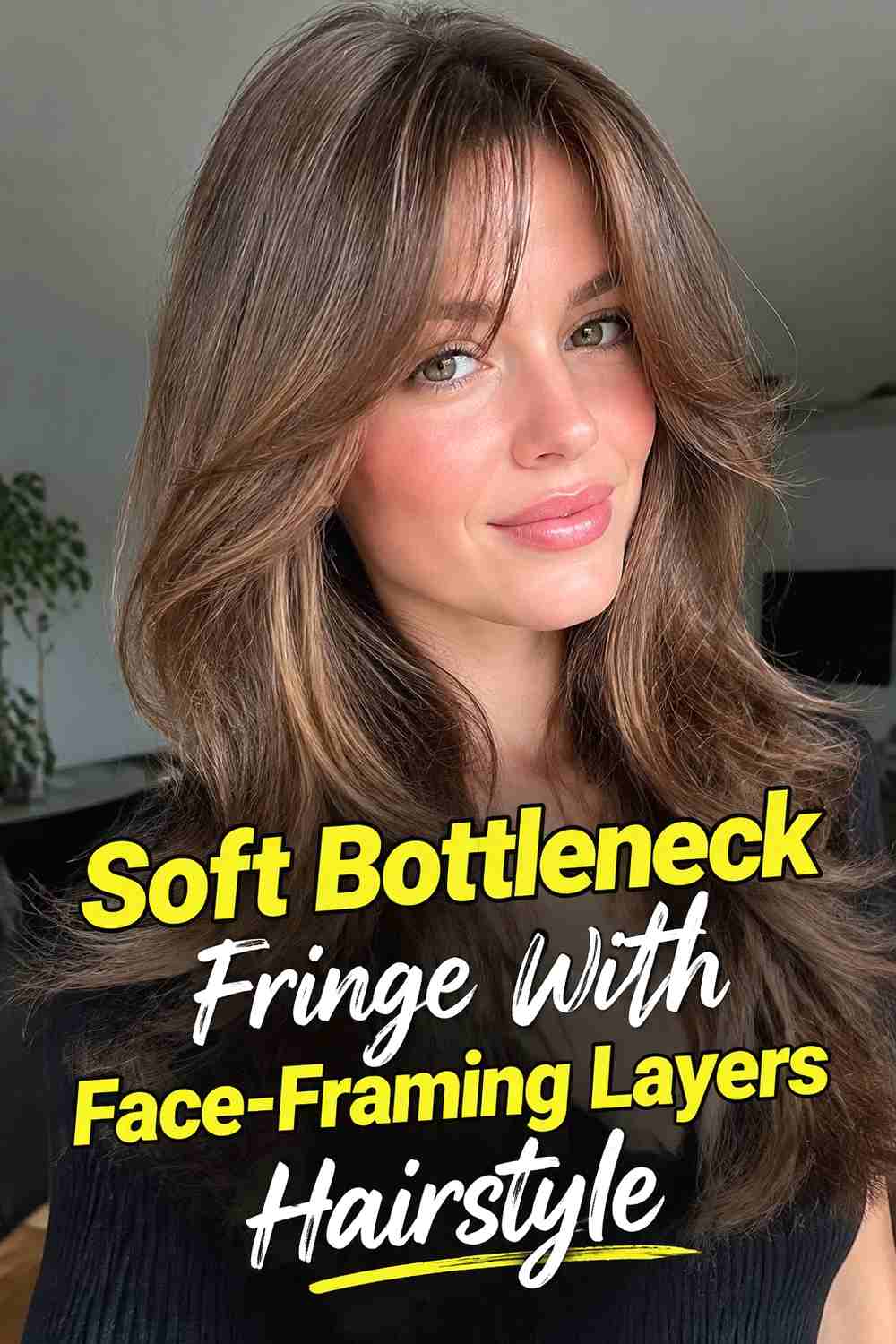
This soft interpretation keeps the bottleneck fringe gently curved through the center before allowing the sides to melt into graduated face-framing layers. Instead of creating a strong line across the forehead, the fringe feels light and flexible, while the longer pieces around the cheekbones and jaw add movement. It works especially well when you want noticeable framing without making the haircut feel heavily layered throughout. A smooth blowout highlights the transitions, but a slightly undone finish can make the look feel just as natural. Keeping the ends softly beveled rather than sharply curled helps the fringe and layers move together instead of looking overly styled.
Styling Notes
Use a small round brush or a blow-dryer attachment to direct the center fringe slightly forward, then sweep the longer edges outward. Keep the face-framing layers loose so they follow the same soft curve.
2. Long Bottleneck Fringe With Flowing Layers Hairstyle
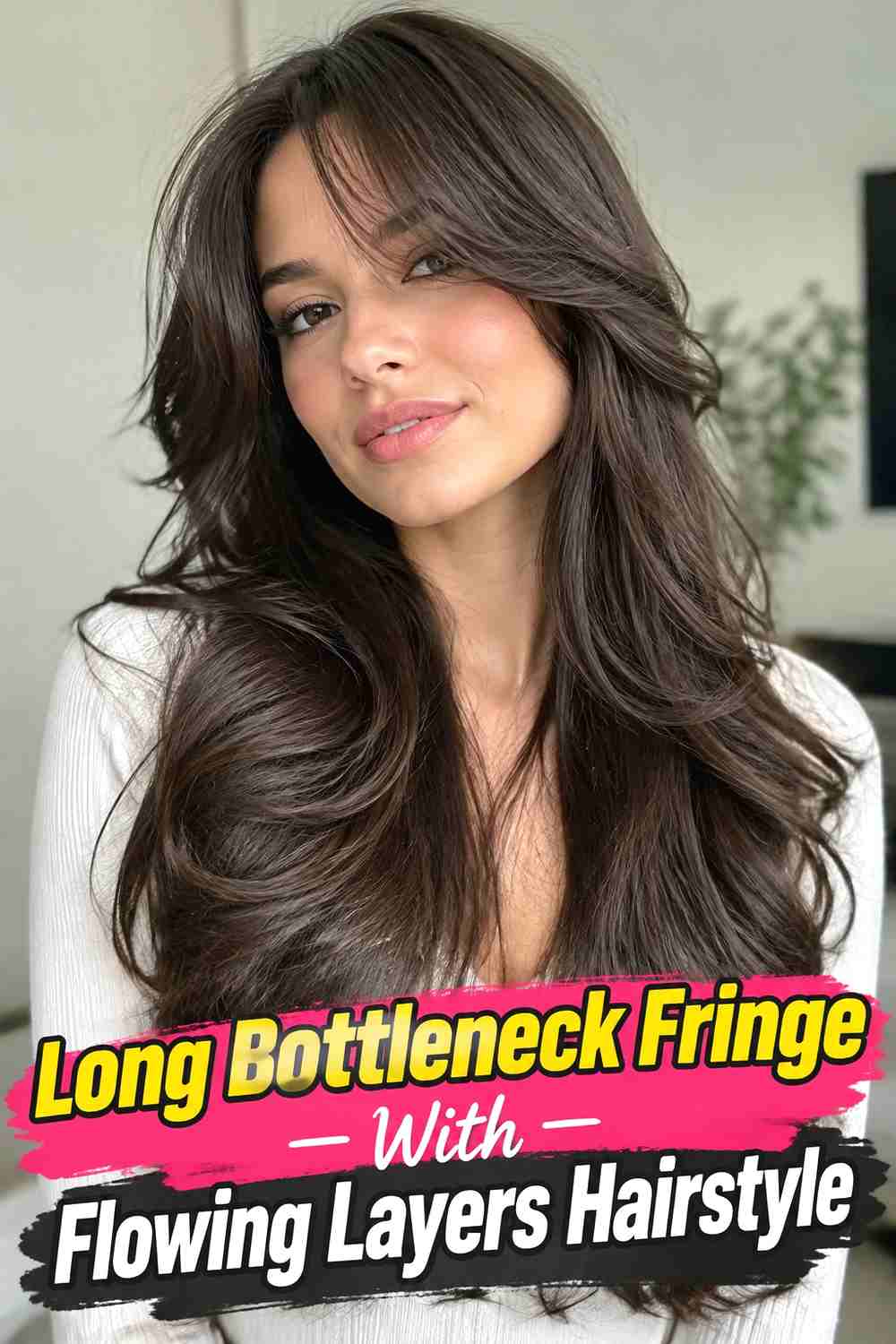
Long bottleneck fringe offers a softer commitment because the shortest section can sit close to the brows while the outer pieces stretch toward the cheekbones. Combined with flowing layers through longer hair, it creates a continuous cascade from fringe to ends. This version is especially attractive when the goal is movement without sacrificing much overall length. Long layers can prevent the silhouette from feeling heavy, while the extended fringe gives the front a defined shape even when the hair is worn in a ponytail. A smooth, touchable finish suits the cut beautifully, although gentle waves can make the layered transitions even more visible without making them look overly structured.
Best For
This variation suits medium-to-long hair and people who want fringe that can gradually blend into the rest of the haircut as it grows. It is also convenient when you like switching between hair worn down and simple updos.
3. Wispy Bottleneck Fringe With Airy Layers Hairstyle
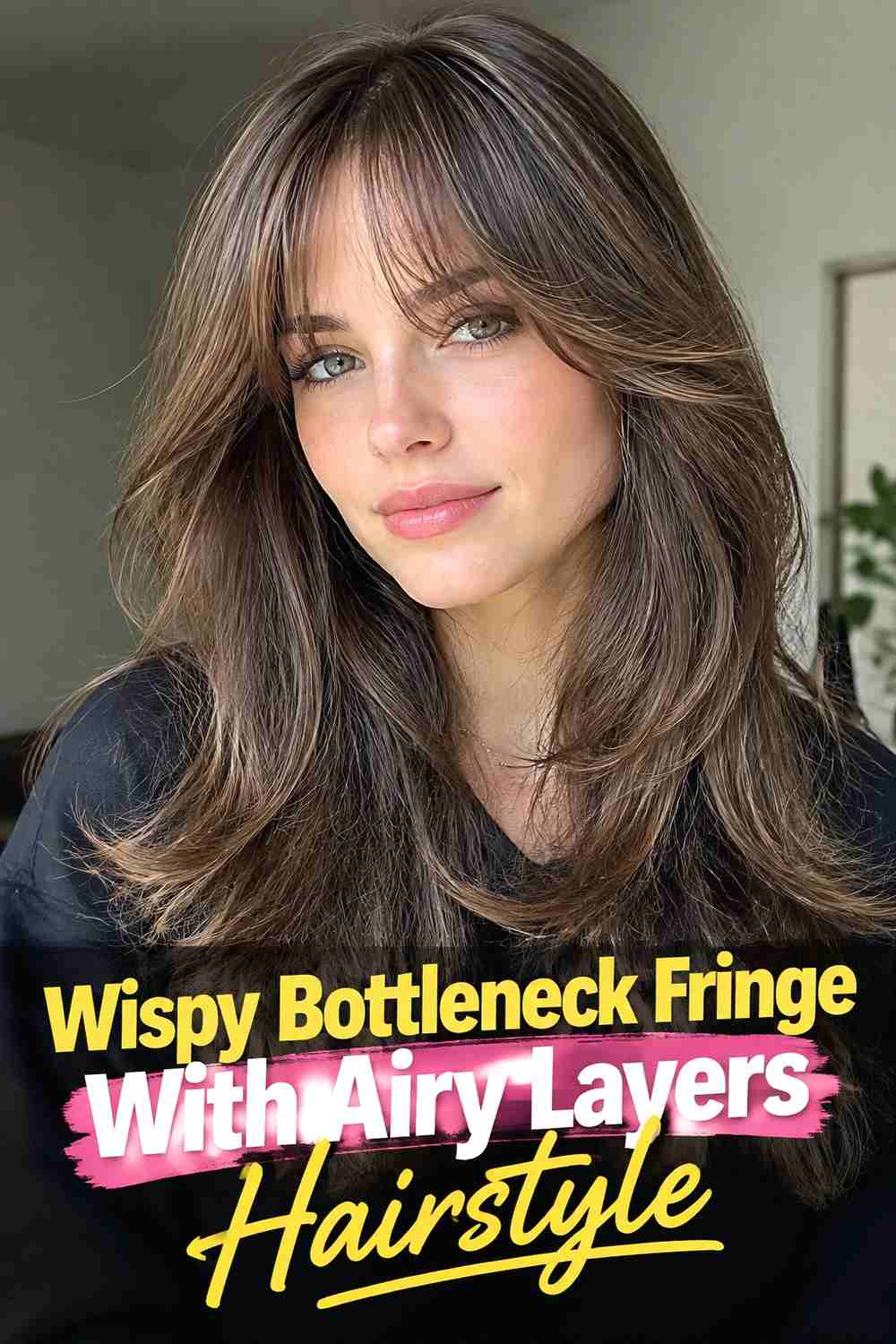
Wispy bottleneck fringe gives the style a lighter appearance by leaving small spaces between the strands instead of creating a dense curtain of hair across the forehead. Airy layers continue that softness through the lengths, making the overall haircut look fluid and easy to move. The combination can be particularly useful when you want framing without removing too much visual fullness from the perimeter. A subtle bend through the layers adds enough dimension to showcase the cut while keeping the finish relaxed. Because the fringe is deliberately light, avoid coating it with heavy styling products that can separate strands into stiff sections or flatten the natural movement that makes this variation appealing.
Wear & Maintenance
Wispy fringe can lose its shape faster when roots become oily, so refreshing only the front section can help between full washes. Light dry shampoo or a quick fringe wash is often more useful than adding extra styling product.
4. Curly Bottleneck Fringe With Rounded Layers Hairstyle
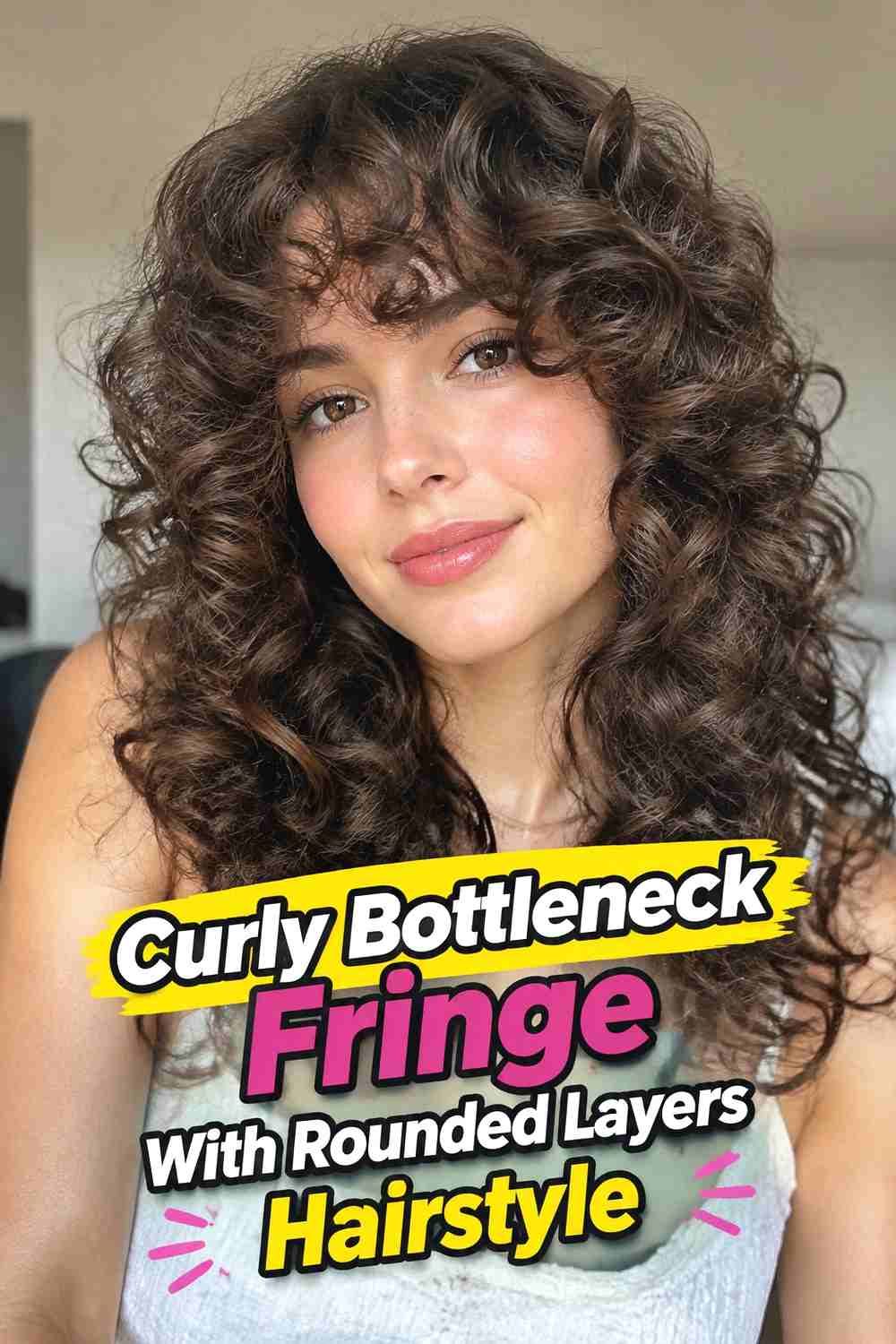
Curly hair gives bottleneck fringe a naturally dimensional shape because each curl adds its own bend and movement around the forehead. Rounded layers help support that effect by distributing volume through the sides and lengths rather than concentrating it at the bottom. The fringe should follow the curl pattern instead of being forced into an overly straight or symmetrical shape, with shorter curls near the center and gradually longer pieces toward the temples. This creates the characteristic bottleneck outline while keeping the texture believable. Since curls can spring considerably as they dry, the finished fringe length matters more than the wet length. A soft, touchable finish usually complements this layered silhouette better than rigid definition.
Pro Tip
Evaluate the fringe in its naturally dried state before deciding whether it needs additional shortening. Curl shrinkage varies, and cutting too aggressively while the hair is stretched can leave the center much shorter than intended.
5. Wavy Bottleneck Fringe With Tousled Layers Hairstyle

A wavy bottleneck fringe pairs naturally with tousled layers because both elements rely on loose movement instead of crisp, controlled lines. The fringe can curve around the brows and temples while the layered lengths develop relaxed bends that make the haircut look fuller without requiring a perfectly polished finish. This version is especially effective when natural waves already appear through the mids and ends, since the layers can encourage separation and prevent the shape from looking overly solid. For styling, aim for irregular movement rather than identical waves. Allowing a few pieces to turn in different directions gives the cut a more believable texture and keeps the bottleneck shape from feeling too carefully arranged.
Why It Works
The gradual fringe and loose layers share the same relaxed visual rhythm. That consistency lets natural wave patterns become part of the haircut instead of something that needs to be repeatedly straightened or reshaped.
6. Shaggy Bottleneck Fringe With Choppy Layers Hairstyle

This version takes bottleneck fringe in a more textured direction by combining the tapered front shape with visibly choppy layers. The silhouette has more separation and attitude than a smooth layered cut, especially around the crown, cheekbones, and ends. The fringe can remain slightly imperfect, with individual pieces falling naturally instead of forming a precise curtain. Choppy layering works best when there is enough movement in the hair to show the different lengths, whether that comes from natural texture or light styling. Because the cut already has plenty of visual detail, excessive curling can make it feel busy. A loosely dried or lightly tousled finish usually lets the structure stand out more clearly.
Hair Type & Length
Medium and longer lengths give the choppy layers enough room to develop without crowding the fringe. Straight, wavy, and softly textured hair can all work, although the exact layer spacing should reflect natural density.
7. Shoulder Length Bottleneck Fringe With Soft Layers Hairstyle
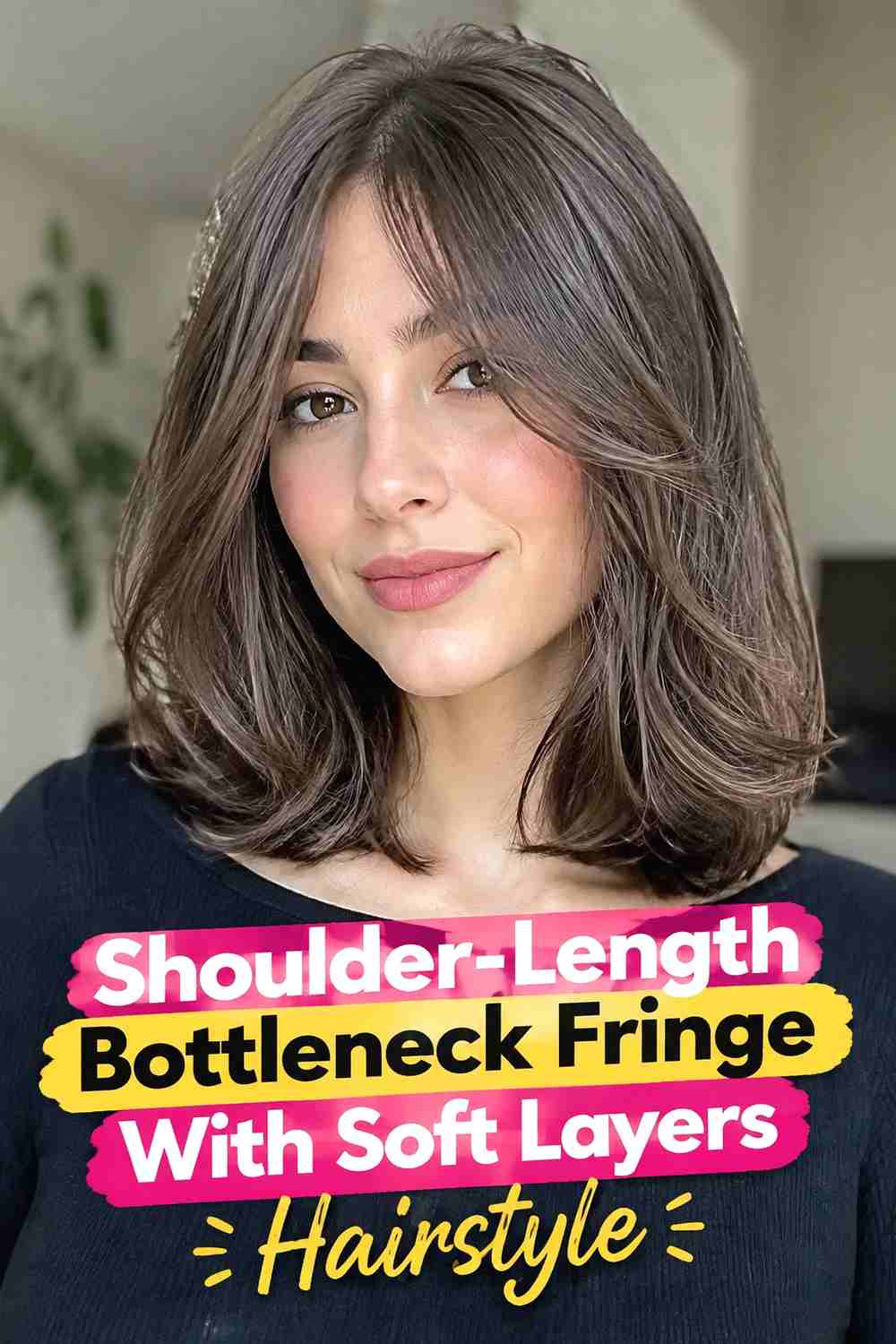
Shoulder-length hair creates a balanced canvas for bottleneck fringe because there is enough length for movement without the weight of very long hair. Soft layers can begin around the face and continue subtly through the ends, giving the cut a lighter outline while preserving its overall fullness. The fringe becomes the focal point, tapering from the center toward longer temple pieces that connect naturally with the first layers. This length works well with a smooth blowout, gentle waves, or an air-dried finish depending on texture. Since the ends regularly touch the shoulders, they may flip naturally in different directions, which can actually complement the layered movement rather than making the hairstyle look unfinished.
Styling Notes
When blow-drying, avoid forcing every end under. A mix of inward and outward bends keeps shoulder-length layers mobile and prevents the haircut from taking on an overly rounded, uniform shape.
8. Sleek Bottleneck Fringe With Polished Layers Hairstyle
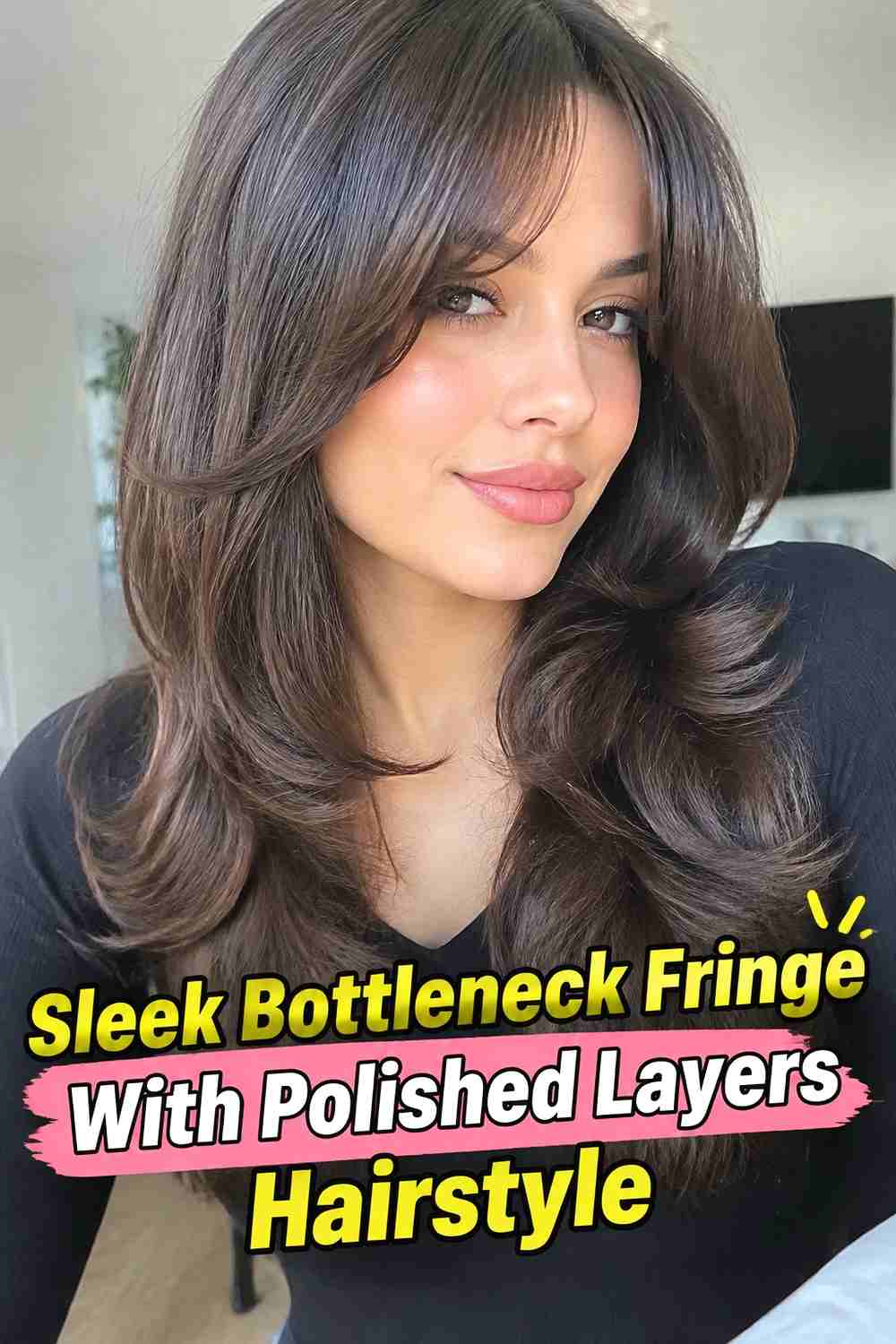
Sleek styling shows the architecture of bottleneck fringe particularly clearly. The center sits neatly around the forehead, the sides lengthen smoothly, and polished layers create controlled movement through the rest of the hair. Rather than making every strand completely flat, the most wearable version keeps a little root lift and soft curvature through the ends so the style still feels dimensional. This approach works beautifully when you prefer a refined finish and want the layered transitions to look deliberate. A clean center or slightly off-center fringe split can both work depending on how the hair naturally falls. The key is maintaining visible strand movement instead of pressing the entire hairstyle into a stiff, glassy sheet.
Wear & Maintenance
Humidity and natural texture can affect how long a sleek finish lasts. Use only the amount of smoothing product your hair needs, concentrating it through the mids and ends rather than weighing down the fringe at the roots.
9. Feathered Bottleneck Fringe With Voluminous Layers Hairstyle
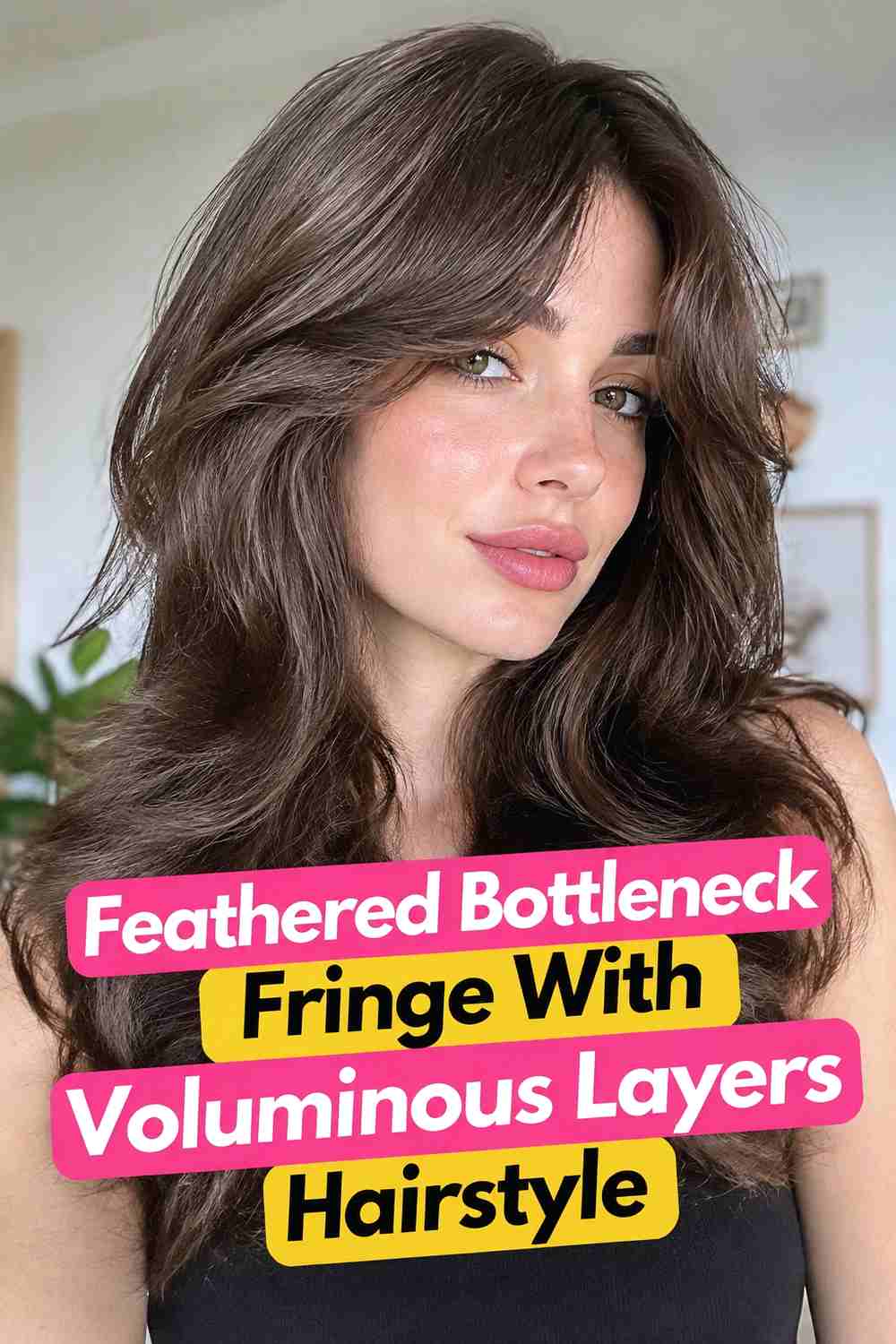
Feathered layers give bottleneck fringe a lifted, sweeping quality that works especially well when you enjoy visible volume around the face. The outer fringe pieces can curve away from the cheeks, connecting with layered sections that continue the same feathered direction through the sides. Rather than creating one large rounded shape, the layers should separate into soft sections so the movement remains light. Root lift through the crown can enhance the silhouette, while the ends benefit from broad bends instead of tight curls. This style has a more styled appearance than a wispy or tousled version, yet it can still look modern when the volume stays touchable and the feathering follows the natural fall of the haircut.
Styling Notes
A medium or large round brush can create broad movement through the layers. Work away from the face around the front sections, then loosen the finished shape with your fingers so the feathering does not look overly set.
10. Fine Hair Bottleneck Fringe With Light Layers Hairstyle
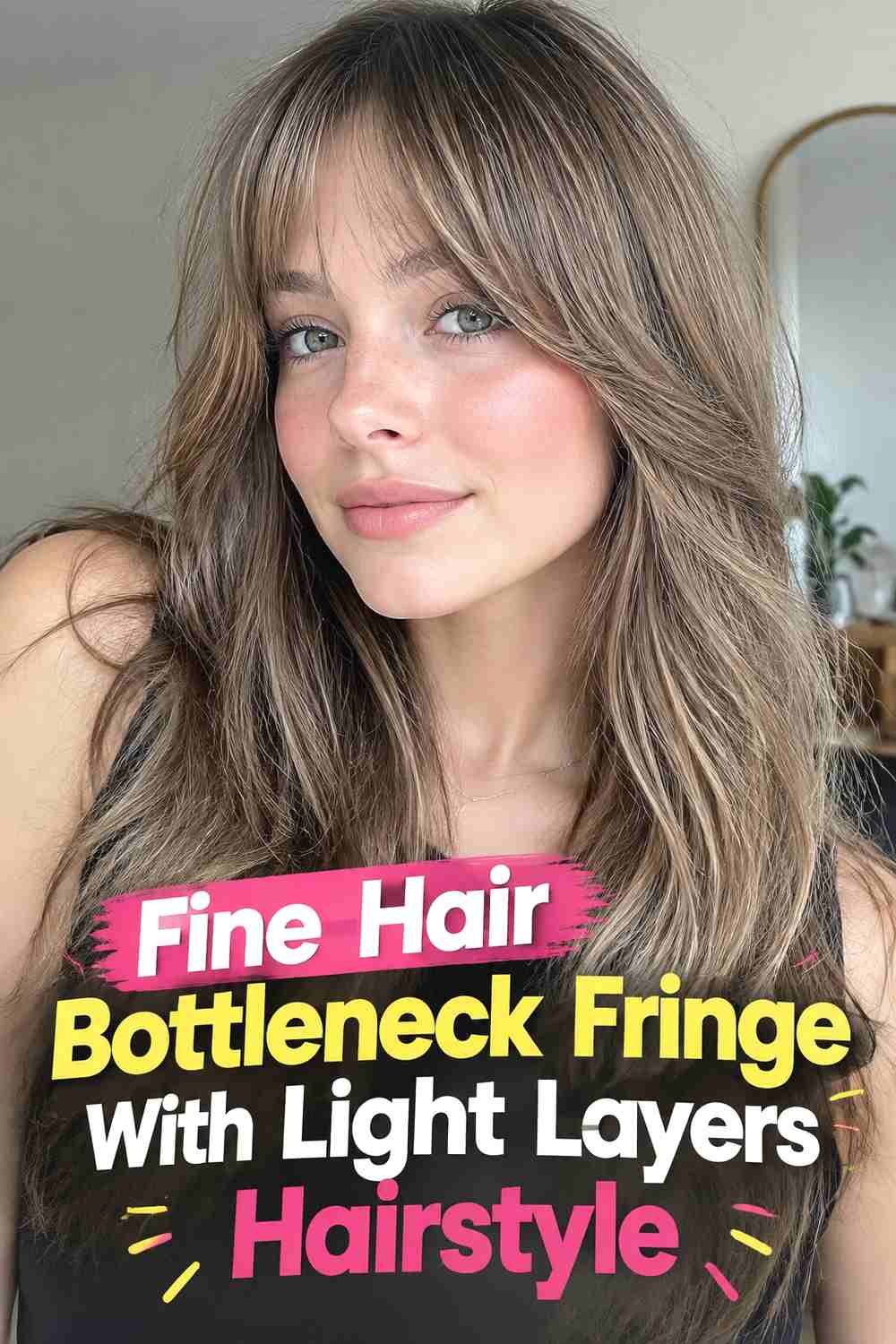
Fine hair can wear bottleneck fringe successfully when the layering is kept strategic rather than excessive. A lighter fringe allows some forehead to remain visible, while longer side pieces blend into subtle layers without removing too much density from the overall shape. Keeping the perimeter relatively full can make the lengths look more substantial, especially when the layers are concentrated around the face instead of scattered heavily throughout. Gentle root lift and soft bends can create movement without requiring large amounts of product. The finished hairstyle should still move naturally, since stiff sprays or heavy creams can quickly make fine strands look separated. A restrained approach usually highlights both the fringe and the layered shape more effectively.
Pro Tip
Ask for enough layering to create movement while preserving fullness at the ends. If your hair is very fine, shorter face-framing sections may provide more visible shape than numerous layers throughout the entire haircut.
11. Thick Hair Bottleneck Fringe With Blended Layers Hairstyle
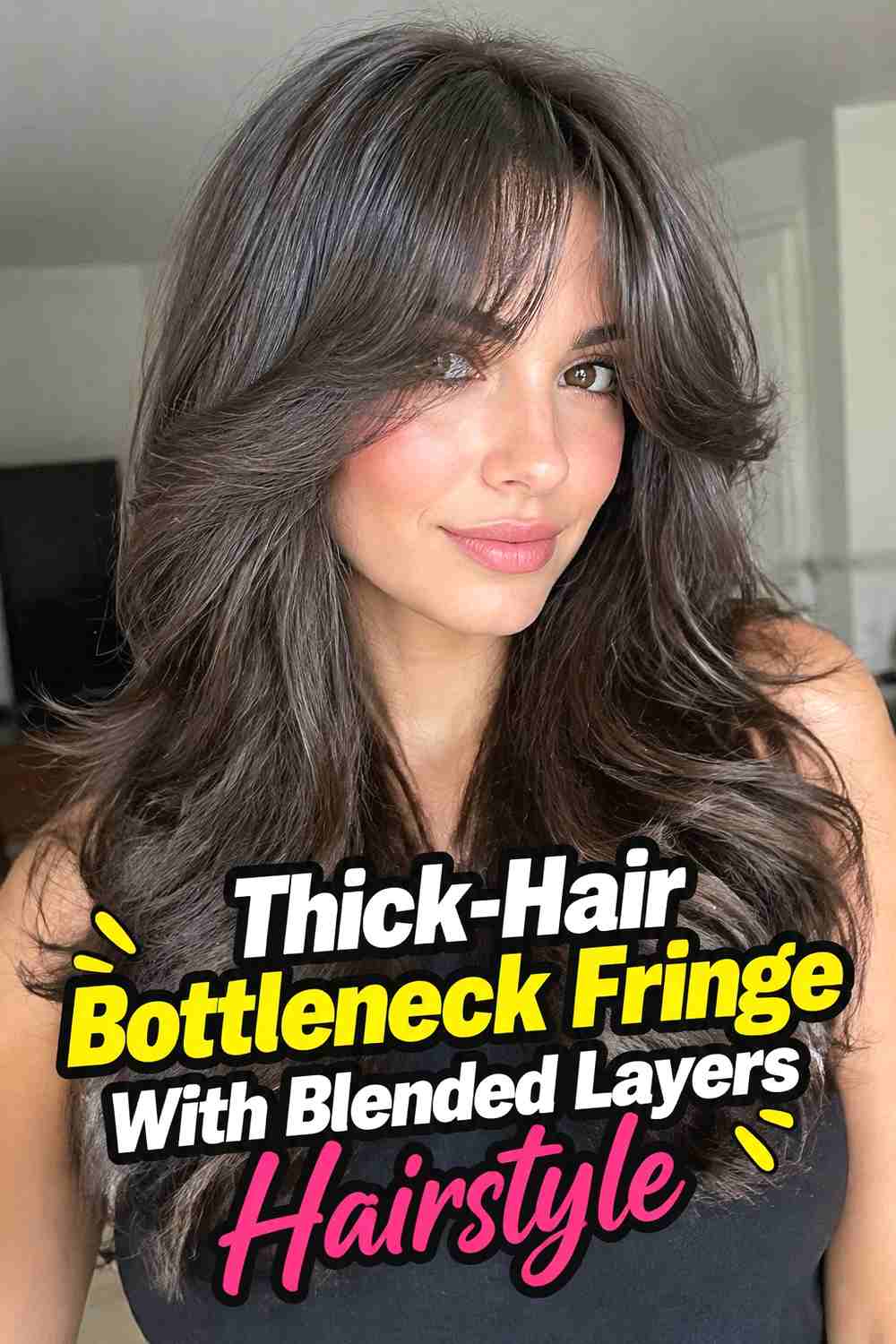
Thick hair can make bottleneck fringe look beautifully substantial, but thoughtful layering helps keep the front and lengths from feeling too bulky. Blended layers remove visual heaviness gradually rather than producing obvious steps, allowing the fringe to transition smoothly into the sides. The center can remain full enough to hold its shape, while longer temple pieces soften the change between bangs and the rest of the haircut. Through the lengths, well-placed layers encourage movement and prevent all the density from collecting at the perimeter. Styling does not need to eliminate natural fullness; allowing controlled volume often makes the haircut look more balanced. The goal is a layered silhouette that still respects the natural richness of the hair.
Hair Type & Length
Medium-to-long thick hair provides plenty of material for blended layering. The amount of internal weight removal should depend on density and texture, since overly aggressive thinning can create unwanted puffiness or make the ends feel sparse.
How to Choose the Right Look
Start with your natural hair texture and the amount of daily styling you realistically want to do. Straight or easily smoothed hair can showcase sleek, feathered, and softly blended versions clearly, while natural waves and curls often work beautifully with tousled, rounded, or more relaxed fringe shapes.
Hair density matters too. Fine hair usually benefits from lighter layering that preserves fullness through the ends, whereas thick hair may need more strategic weight distribution to keep the fringe and lengths moving freely. If you want a lower-commitment fringe, choose longer bottleneck pieces that can blend into face-framing layers as they grow.
Also consider finish and maintenance. Wispy and shaggy styles can tolerate a little imperfection, while sleek or voluminous versions may need more regular blow-drying. Whatever variation you choose, the transition from the short center of the fringe into the longer side pieces should feel connected to the rest of the layers.
Final Thoughts
Bottleneck fringe with layers can shift from soft and polished to curly, tousled, shaggy, or voluminous without losing its recognizable tapered shape. Choose the version that works with your natural density, texture, length, and preferred styling routine rather than focusing only on the finished photo. A well-connected fringe and layering pattern will usually be easier to wear as the cut moves and grows.
FAQs
1. What is a bottleneck fringe?
A bottleneck fringe is shorter toward the center and gradually becomes longer near the temples, creating a tapered shape that can blend smoothly into face-framing layers.
2. Does bottleneck fringe work with layered hair?
Yes. Layers can help the longer edges of the fringe transition naturally into the rest of the haircut, making the front shape feel more connected.
3. Can curly hair wear bottleneck fringe?
Yes, but the fringe should be shaped with the natural curl pattern and shrinkage in mind. A softer, less rigid outline generally allows curls to sit more naturally.
4. Is bottleneck fringe high maintenance?
Maintenance varies with length and texture. Shorter fringe usually requires more frequent reshaping, while longer bottleneck pieces can be easier to grow out and blend into surrounding layers.
5. How do I style bottleneck fringe without making it too round?
Direct the center gently forward and let the longer sides sweep outward. Use light tension and avoid over-curling the fringe, which can create an exaggerated rounded shape.
Save your favorite bottleneck fringe with layers hairstyle ideas, share them for inspiration, and explore more layered looks that suit your texture and everyday styling routine.