14 Butterfly Haircut Ideas for Medium-Density Hair
Butterfly layers give medium-density hair airy movement and face-framing volume while preserving enough length and fullness through the lower sections.
A butterfly haircut combines shorter layers around the face and upper sections with longer layers underneath, creating a cascading shape that can look full without feeling heavy. Medium-density hair is particularly versatile for this approach because there is usually enough fullness to support visible layering without requiring an extreme amount of weight removal.
The most flattering version depends on how much separation you want between the upper and lower layers. Soft face framing creates a subtle result, while rounded blowout layers make the butterfly shape more noticeable. Length, natural texture, styling time, and the amount of fullness you want through the ends are all worth considering before choosing.
Quick List
- Classic Butterfly Layers Hairstyle
- Face Framing Butterfly Hairstyle
- Collarbone Butterfly Cut Hairstyle
- Soft Blowout Butterfly Hairstyle
- Long Layer Butterfly Hairstyle
- Rounded Butterfly Layers Hairstyle
- Center Part Butterfly Hairstyle
- Side Part Butterfly Hairstyle
- Airy Butterfly Layers Hairstyle
- Soft Bend Butterfly Hairstyle
- Curtain Fringe Butterfly Hairstyle
- Tapered End Butterfly Hairstyle
- Sleek Butterfly Layers Hairstyle
- Tousled Butterfly Hairstyle
1. Classic Butterfly Layers Hairstyle
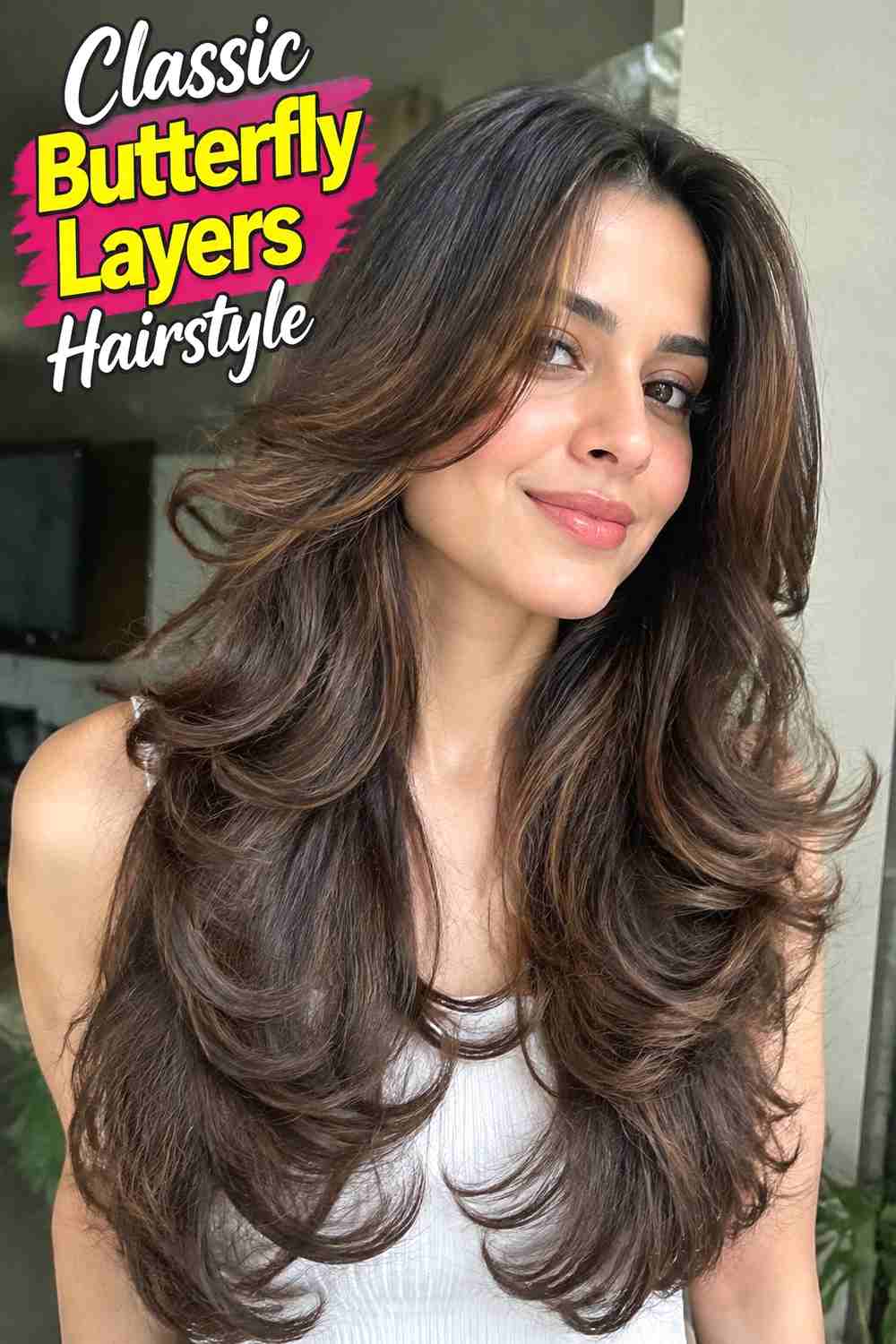
Classic butterfly layers create a flowing contrast between shorter face-framing pieces and longer sections through the back. On medium-density hair, the cut can show plenty of movement without needing aggressive thinning. The upper layers typically begin around the cheekbones or jaw, then blend gradually into longer lengths so the perimeter still looks substantial. A smooth blowout makes the cascading shape especially visible, but the cut can also be worn with natural bends for a softer finish. This version is a useful starting point if you want recognizable butterfly movement without turning the haircut into an extreme shag or heavily feathered style.
Styling Notes
Use a medium or large round brush to direct the shorter front layers away from the face while keeping the longest sections smooth and full.
Best For
This option suits medium-density hair that needs movement around the face without sacrificing overall length.
2. Face Framing Butterfly Hairstyle
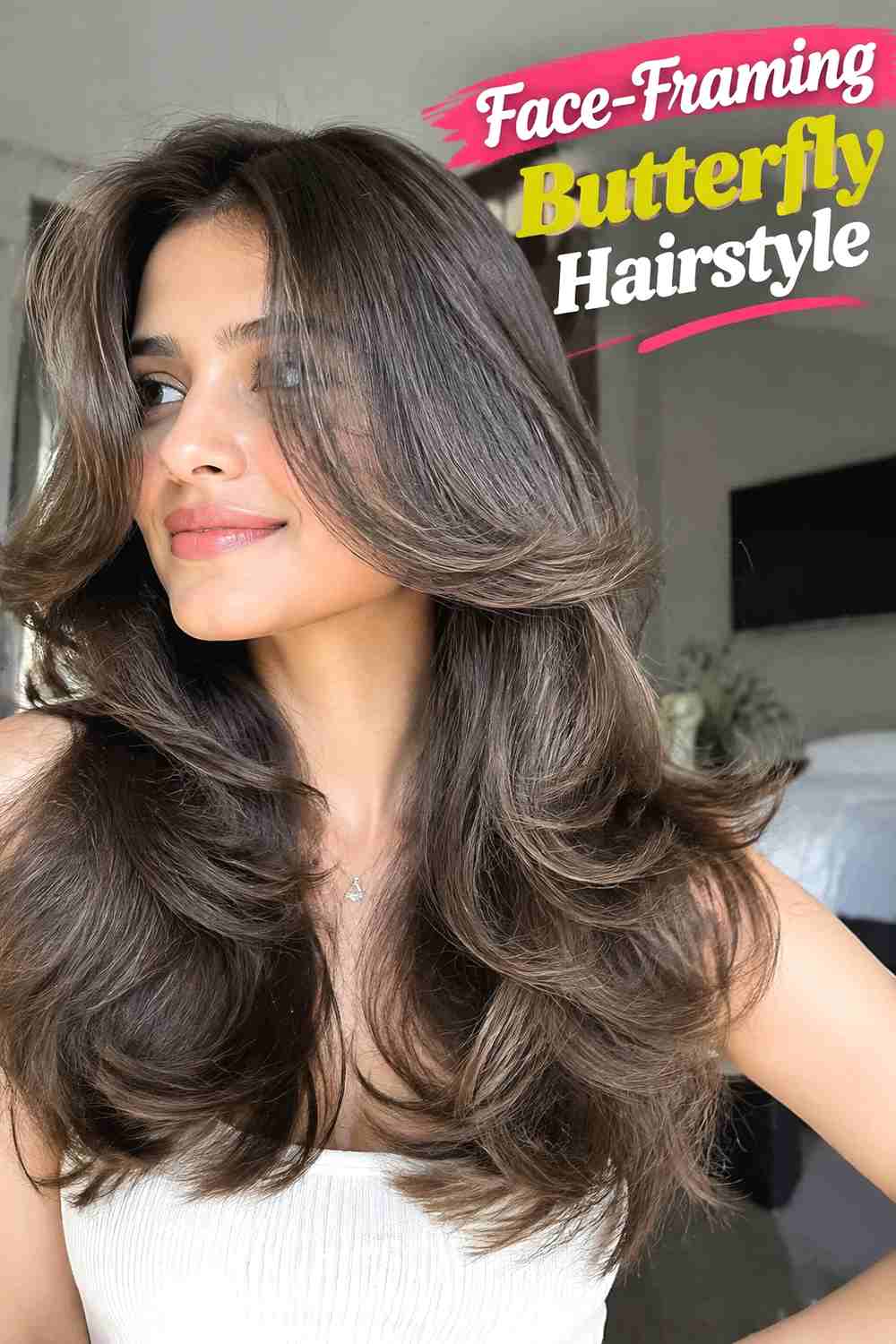
A face-framing butterfly cut concentrates the most noticeable layering around the front while leaving more weight through the back. Shorter pieces can begin near the cheekbones and cascade toward the jaw, shoulders, and longer lengths, creating the signature winged effect without removing too much density elsewhere. This is particularly useful for medium-density hair because it adds shape where it is easiest to see while preserving fullness at the perimeter. The style can look polished after a blowout or more relaxed when worn with natural texture. Keeping the back layers longer also makes the cut easier to grow out than versions with extensive crown layering.
Why It Works
The front layers provide visible movement while the fuller back maintains density and keeps the haircut from feeling over-layered.
Pro Tip
Ask for gradual transitions between the shortest face-framing pieces and the longer lengths so the layers flow rather than look disconnected.
3. Collarbone Butterfly Cut Hairstyle
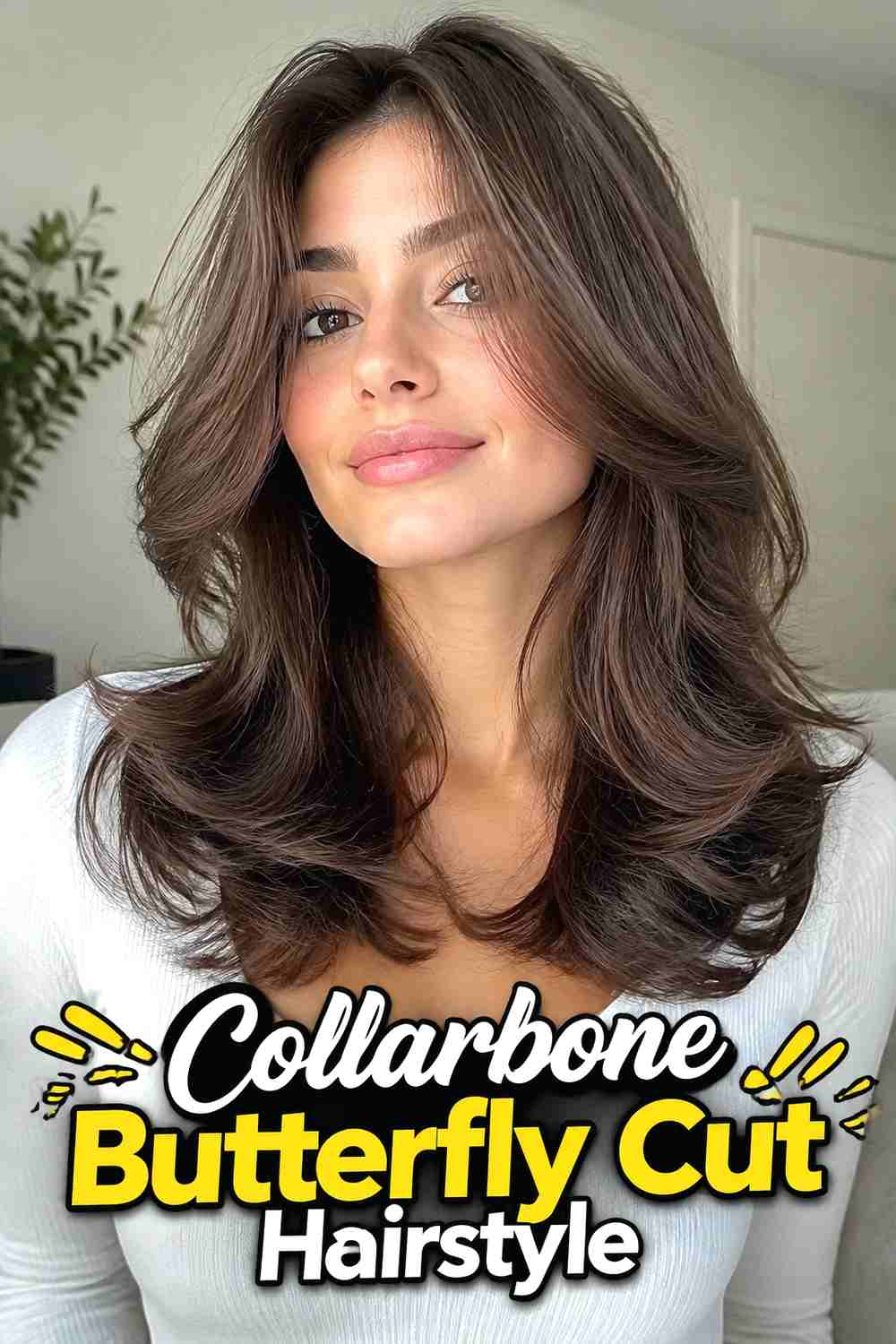
A collarbone butterfly cut offers the movement of layered hair in a more compact length. Because there is less distance between the shortest and longest pieces, the layering needs to be carefully balanced so the ends do not become overly light. Short face-framing sections can start near the cheekbones, while longer layers fall around the shoulders and collarbones. Medium-density hair often handles this shape well because it has enough body to show the layers while still maintaining a substantial perimeter. A rounded blowout emphasizes the butterfly effect, but a simple bend through the front pieces can also make the cut look finished without requiring extensive styling.
Hair Type & Length
Shoulder-to-collarbone hair with medium density can carry soft upper layers while still keeping the lower edge visually full.
Wear & Maintenance
Regular trims help prevent the shorter front sections and collarbone perimeter from losing their intended balance.
4. Soft Blowout Butterfly Hairstyle
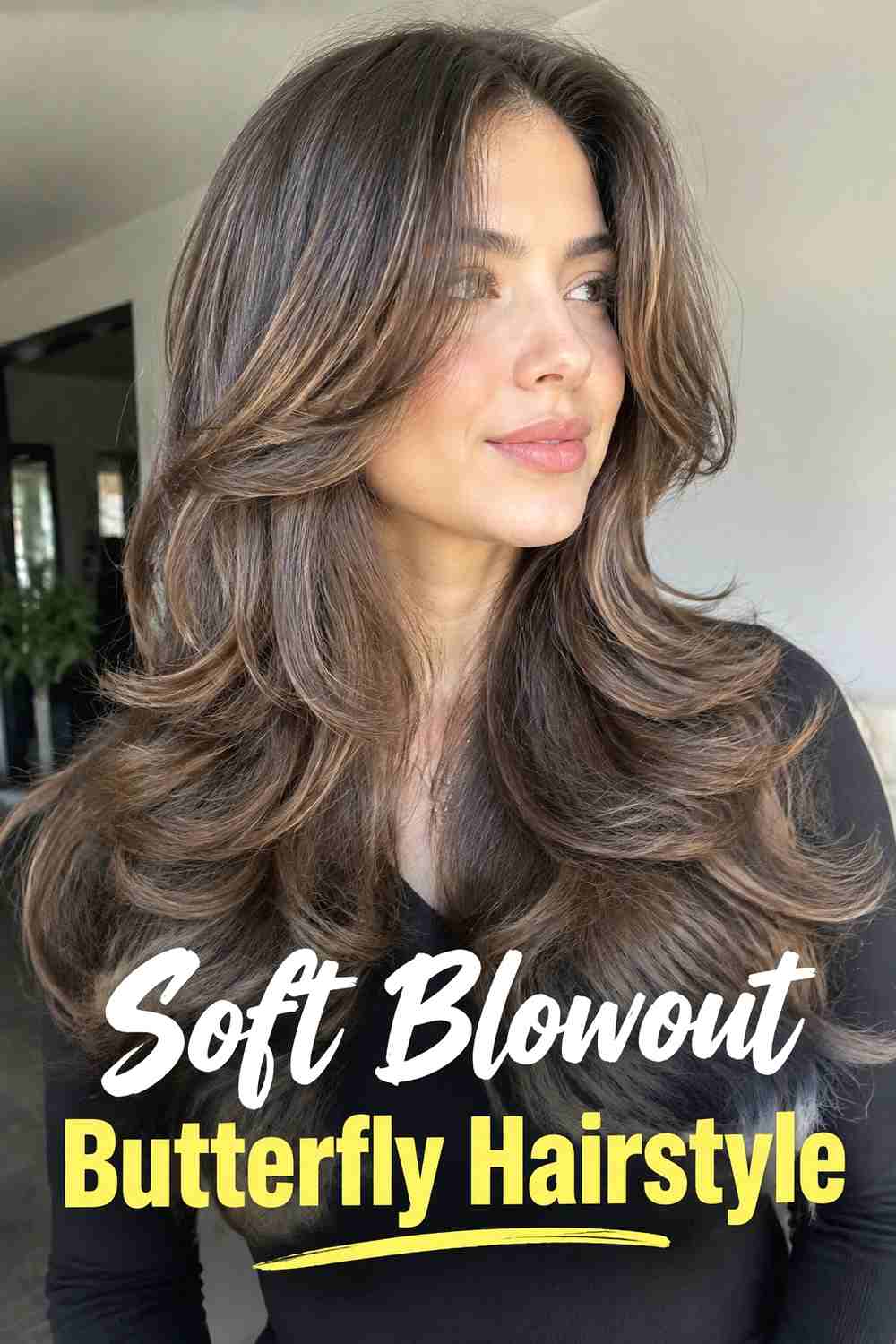
The soft blowout butterfly haircut is designed to show broad, airy movement rather than tight curls or sharply separated layers. Shorter sections around the face lift away from the cheeks, while the longer lengths curve gently through the ends. Medium-density hair is well suited to this styling because it can hold visible shape without becoming excessively bulky. The haircut itself should retain enough weight through the bottom so the blowout looks full rather than overly feathered. Large rollers or a round brush can amplify the cascading layers, but the final finish should still look touchable and natural, with individual strands and slight variations in movement.
Styling Notes
Focus on broad curves and root lift instead of small curls. Let each layer cool in its rounded shape before brushing or separating it.
Why It Works
A blowout emphasizes the difference between upper and lower layers, making the butterfly silhouette easy to see without removing additional length.
5. Long Layer Butterfly Hairstyle
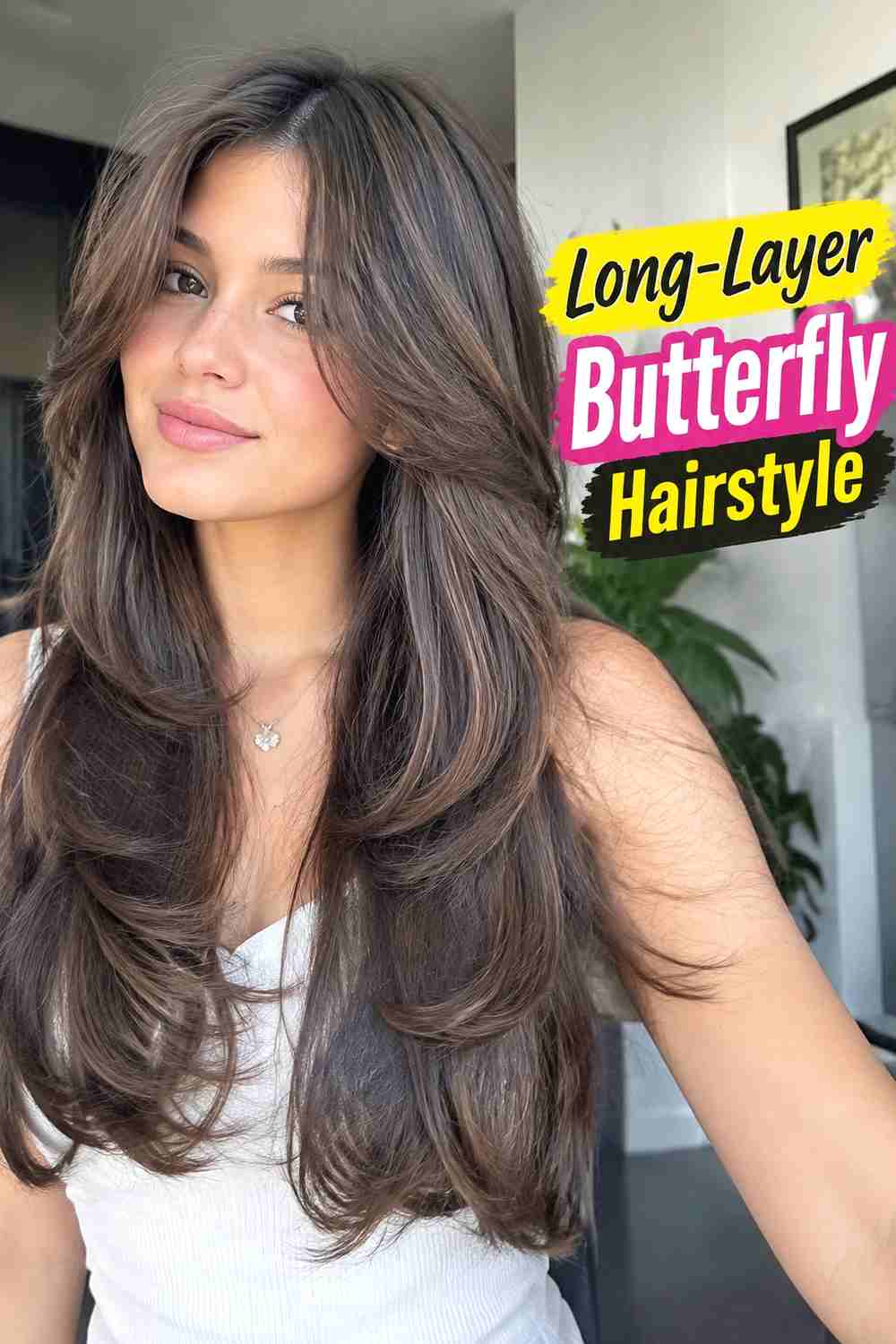
Long butterfly layers create movement while preserving the greatest amount of length and density. The shortest sections can begin around the jaw or below it, making the transitions softer than versions with higher face framing. This is a strong choice for medium-density hair if you want visible layering without risking thin-looking ends. The longer sections continue through the back in gradual steps, giving the hair swing and shape when it moves. Worn straight, the layering appears subtle; with a blowout or loose bends, the cascading structure becomes more pronounced. The result feels polished and versatile rather than heavily textured, making it easy to adapt between casual and more styled finishes.
Best For
Choose this version if preserving length and a substantial perimeter is more important than dramatic crown volume.
Pro Tip
Keep the longest layer transitions gradual so the haircut gains movement without losing visual density at the bottom.
6. Rounded Butterfly Layers Hairstyle
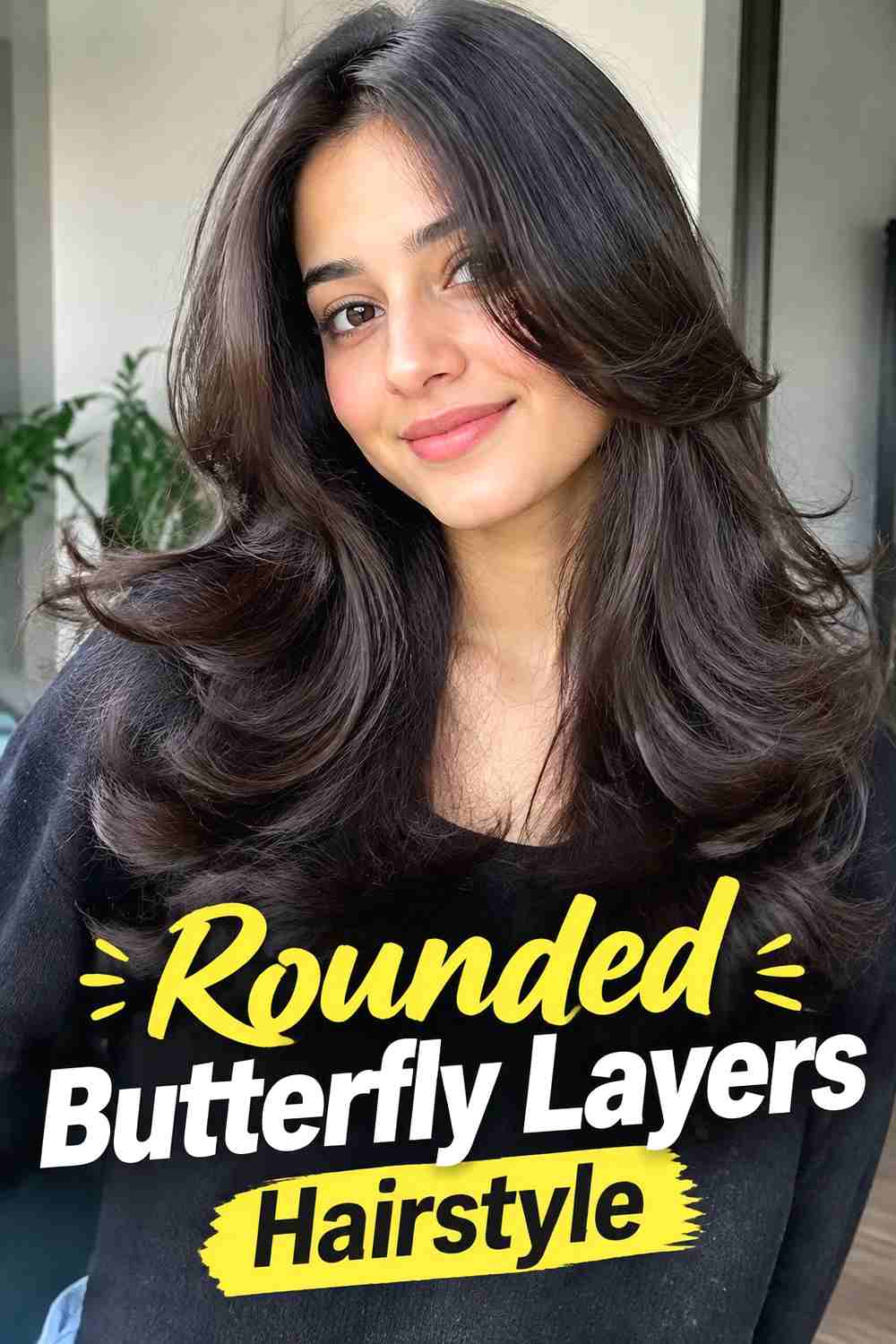
Rounded butterfly layers create a smooth, curved silhouette through the sides and front. Rather than producing sharply flipped or highly feathered pieces, the layers overlap in broad arcs that make the haircut look full and polished. Medium-density hair can support this shape well because there is enough hair to form visible curves without creating excessive width. The shortest face-framing sections can sweep away from the cheeks, while lower layers bend gently through the shoulders and ends. A round-brush blowout brings out the shape most clearly, but the haircut should still retain a cohesive outline when worn straighter.
Styling Notes
Use larger sections during blow-drying and curve them smoothly away from the face for broad, connected movement.
Best For
This approach works well if you prefer a polished butterfly shape rather than an intentionally shaggy or piecey finish.
7. Center Part Butterfly Hairstyle
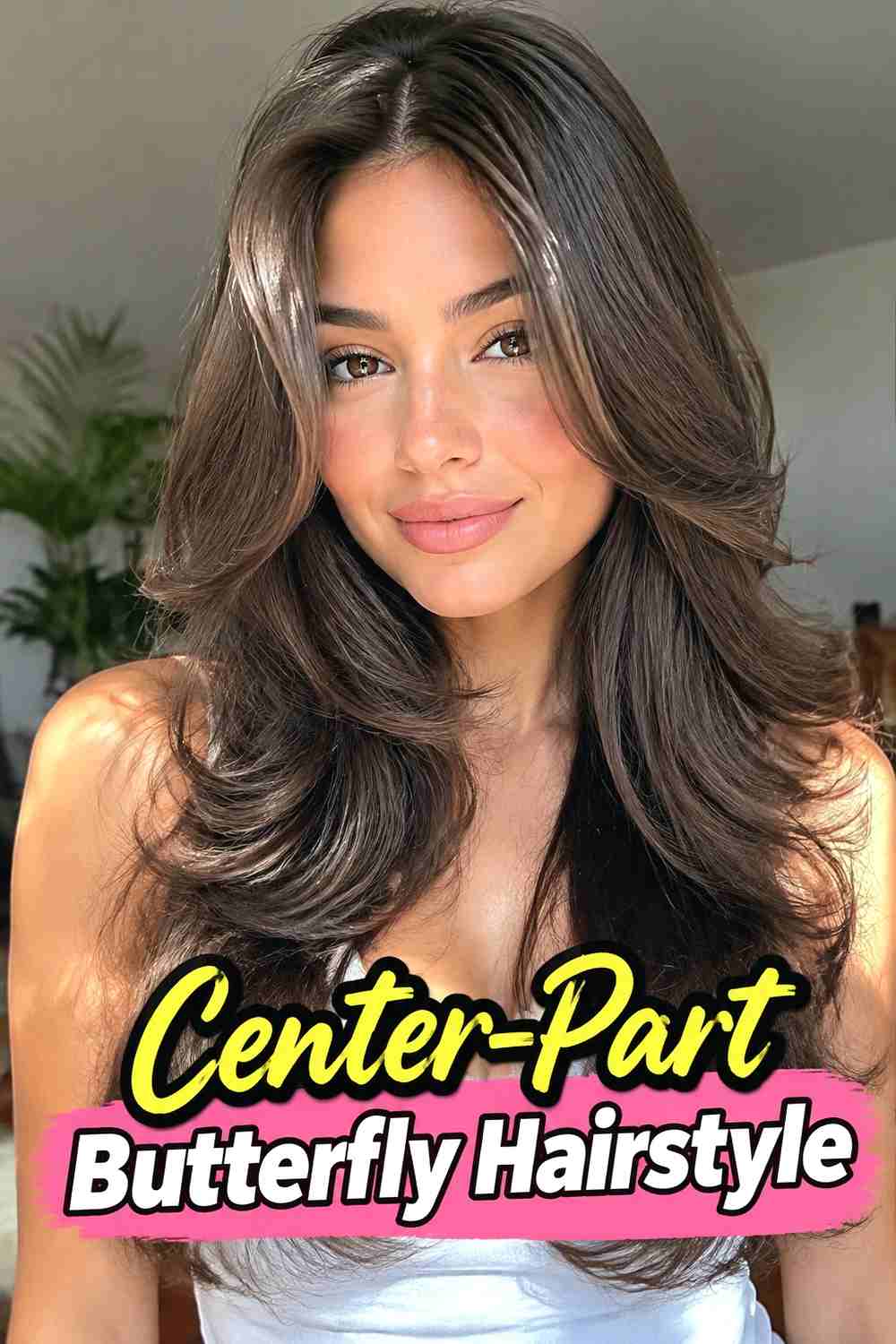
A center part gives butterfly layers a balanced, symmetrical appearance, especially when the shortest face-framing pieces begin at similar points on both sides. The front sections can sweep outward from the part and gradually connect to longer layers through the shoulders and back. Medium-density hair benefits from keeping the crown layering restrained so the cut maintains enough fullness around the sides. A blowout creates matching curves that emphasize the butterfly shape, while straighter styling makes the layering look softer and more understated. This version is especially effective if you like a clean front profile and want the movement distributed evenly rather than concentrated on one side.
Why It Works
The center part creates a balanced frame, allowing the cascading layers to mirror one another while preserving fullness through the lower lengths.
Styling Notes
Lift both front sections away from the center part and direct them outward rather than curling them tightly toward the face.
8. Side Part Butterfly Hairstyle
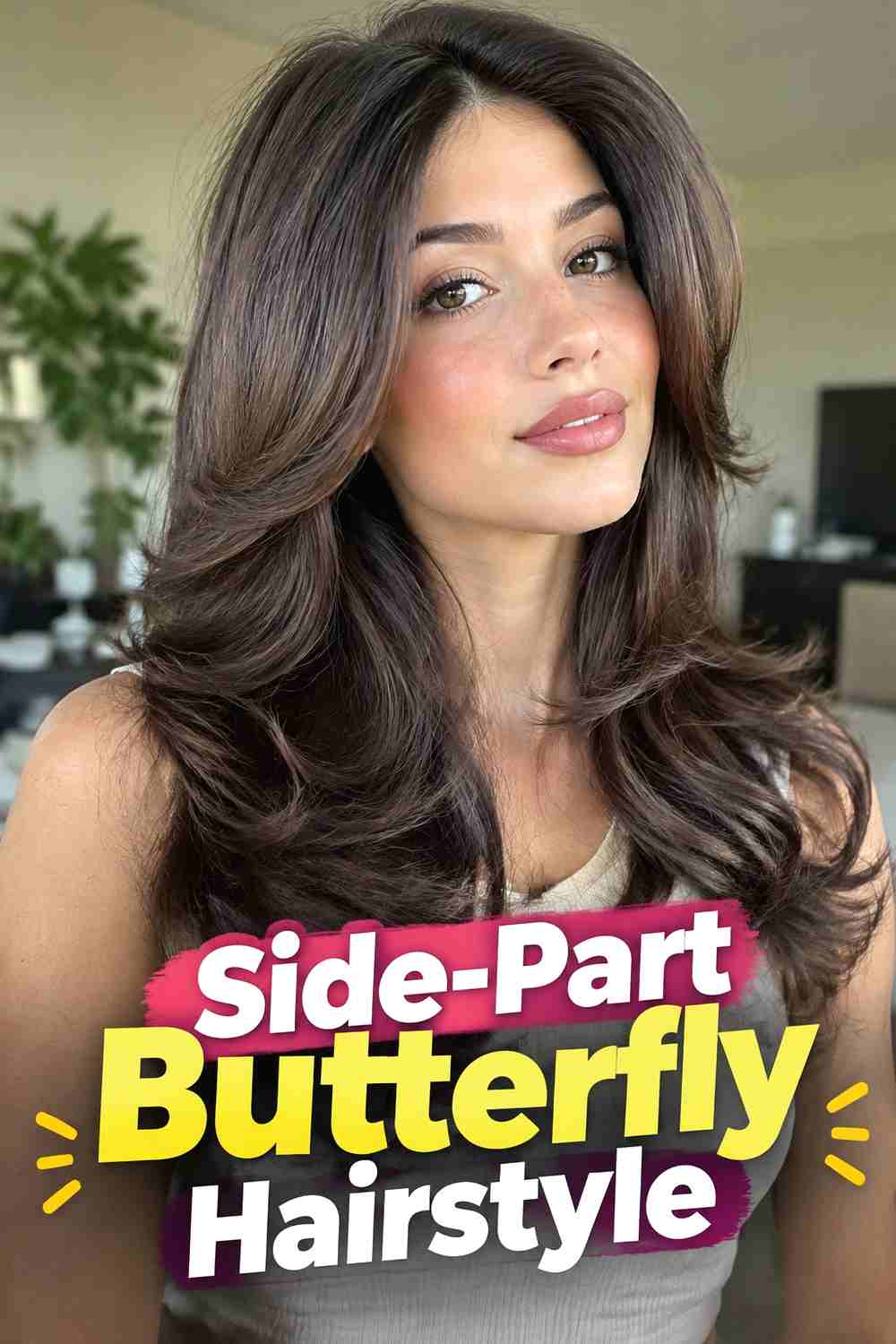
A side part introduces asymmetry and extra lift to a butterfly haircut without changing the basic layered structure. The fuller side gains more volume around the front, while the lighter side can fall closer to the cheek or tuck naturally behind the ear. Short face-framing pieces still connect gradually with longer layers, preventing the haircut from looking uneven. On medium-density hair, a side part can make the style appear fuller at the crown without requiring additional short layers. A soft blowout enhances the sweep, while loose bends produce a more casual result. This is a flexible choice if you like movement and volume but do not want a perfectly symmetrical silhouette.
Styling Notes
Dry the fuller side with lift at the root, then sweep the face-framing pieces outward so the part looks intentional rather than flat.
Best For
This variation suits anyone who prefers asymmetrical volume or naturally wears the hair to one side.
9. Airy Butterfly Layers Hairstyle
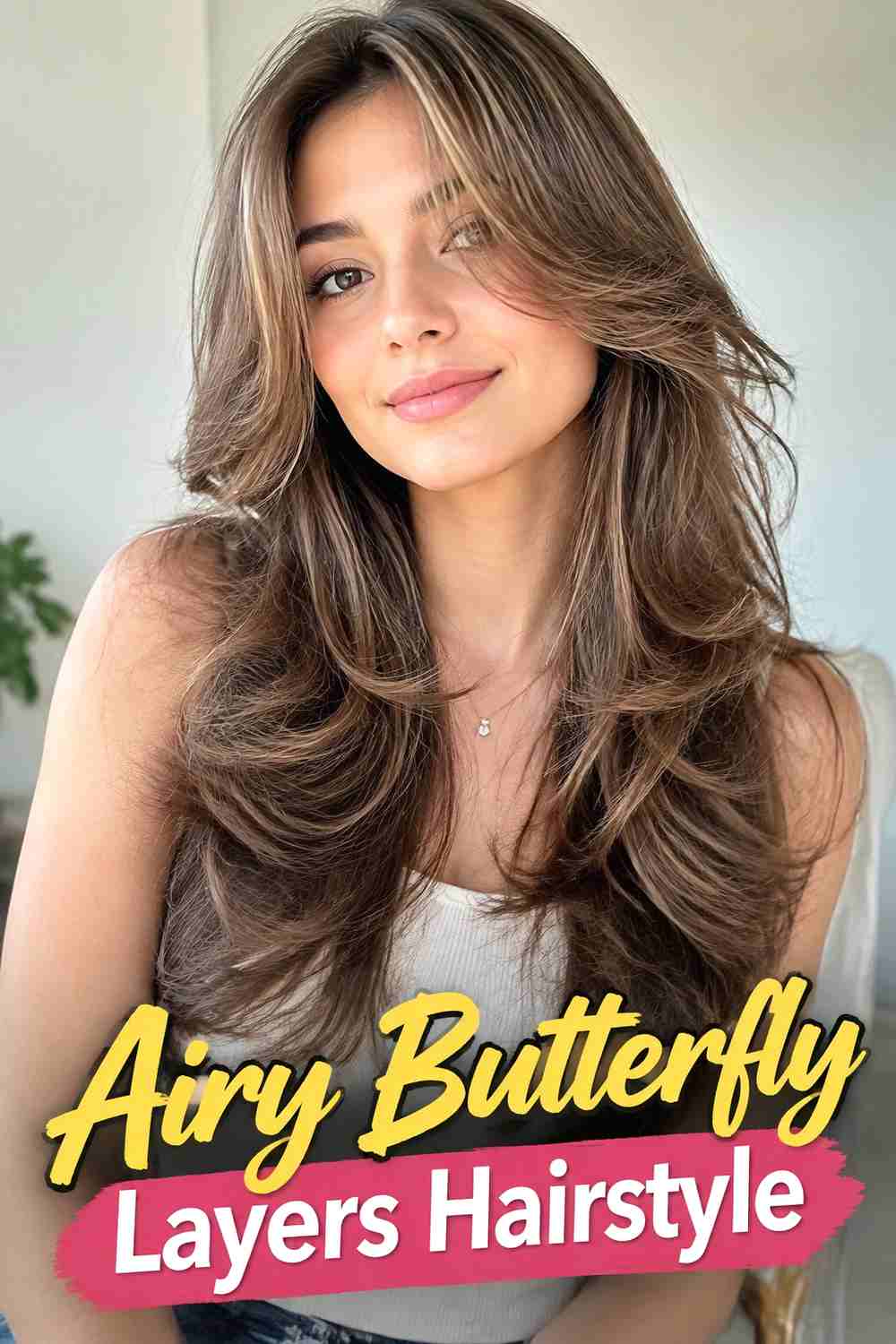
Airy butterfly layers use softer weight removal and light separation to create movement without making the ends look thin. The shortest sections can float around the cheekbones and jaw, while longer layers remain substantial enough to support the overall shape. Medium-density hair is ideal for this balance because the cut can feel lighter while still maintaining visible fullness. The airy effect works especially well with a gentle blowout, where the layers lift away from one another without becoming overly dramatic. A few natural flyaways and imperfect bends can make the finish feel more relaxed and believable. The key is softness rather than aggressive texturizing.
Why It Works
Controlled layering creates space between sections while preserving enough lower density for the haircut to remain full.
Pro Tip
Avoid excessive thinning through the ends if you want an airy finish that still looks substantial.
10. Soft Bend Butterfly Hairstyle
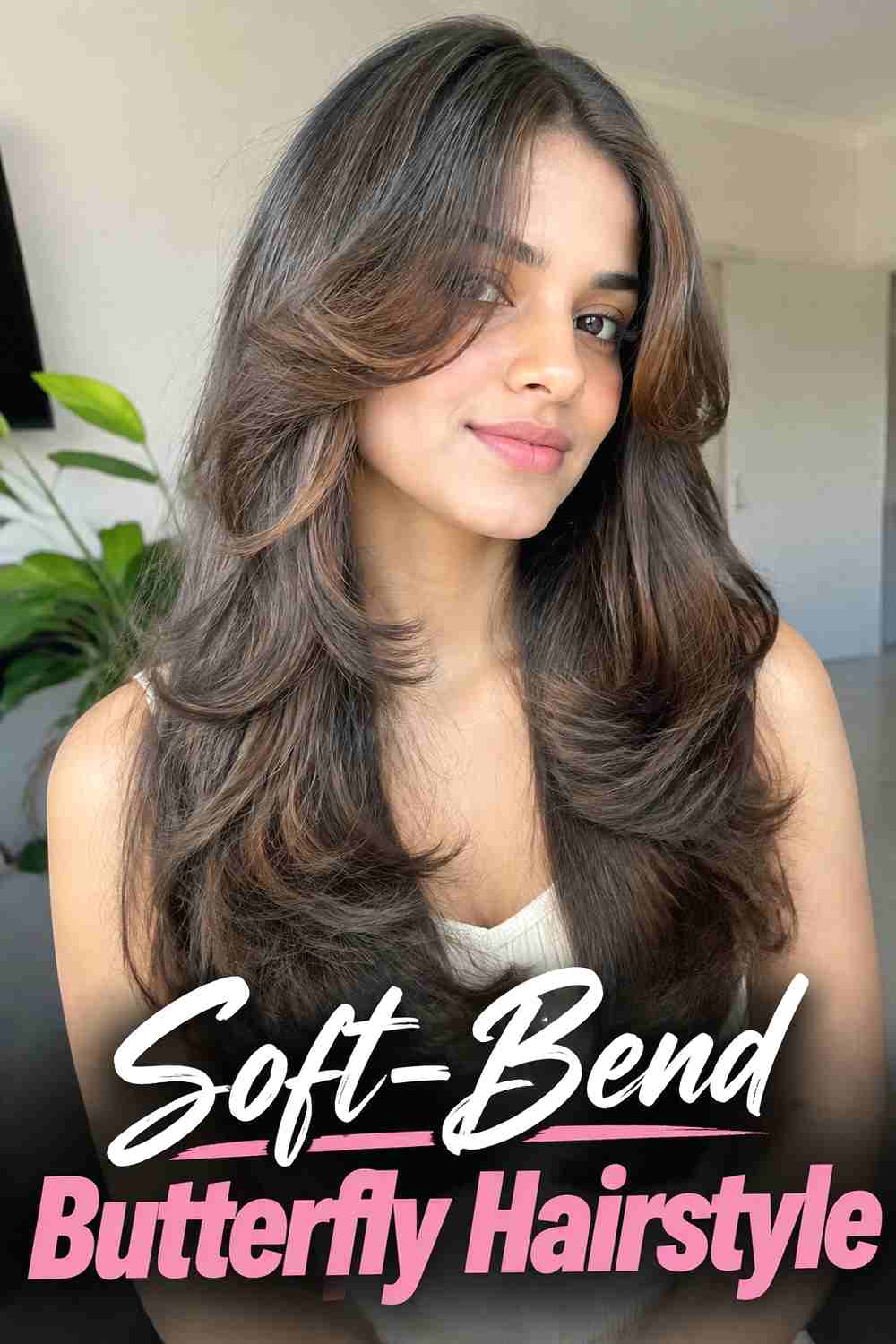
A soft-bend butterfly cut is ideal when you want the layered shape visible without committing to a full salon-style blowout. The haircut uses shorter front sections and longer cascading layers, but styling focuses on broad bends rather than dramatic flips. Medium-density hair can hold these gentle curves while keeping enough weight to make the lengths feel polished. The bends can alternate slightly through the lower sections for a natural finish, while the face-framing pieces turn softly away from the cheeks. This gives the haircut movement without excessive volume. It is an especially practical option for anyone who prefers a relaxed everyday interpretation of the butterfly trend.
Styling Notes
Create one or two large bends through each section instead of curling the entire length. Keep the roots smooth and the ends loose.
Best For
Straight-to-wavy medium-density hair that holds light styling can adapt particularly well to this look.
11. Curtain Fringe Butterfly Hairstyle
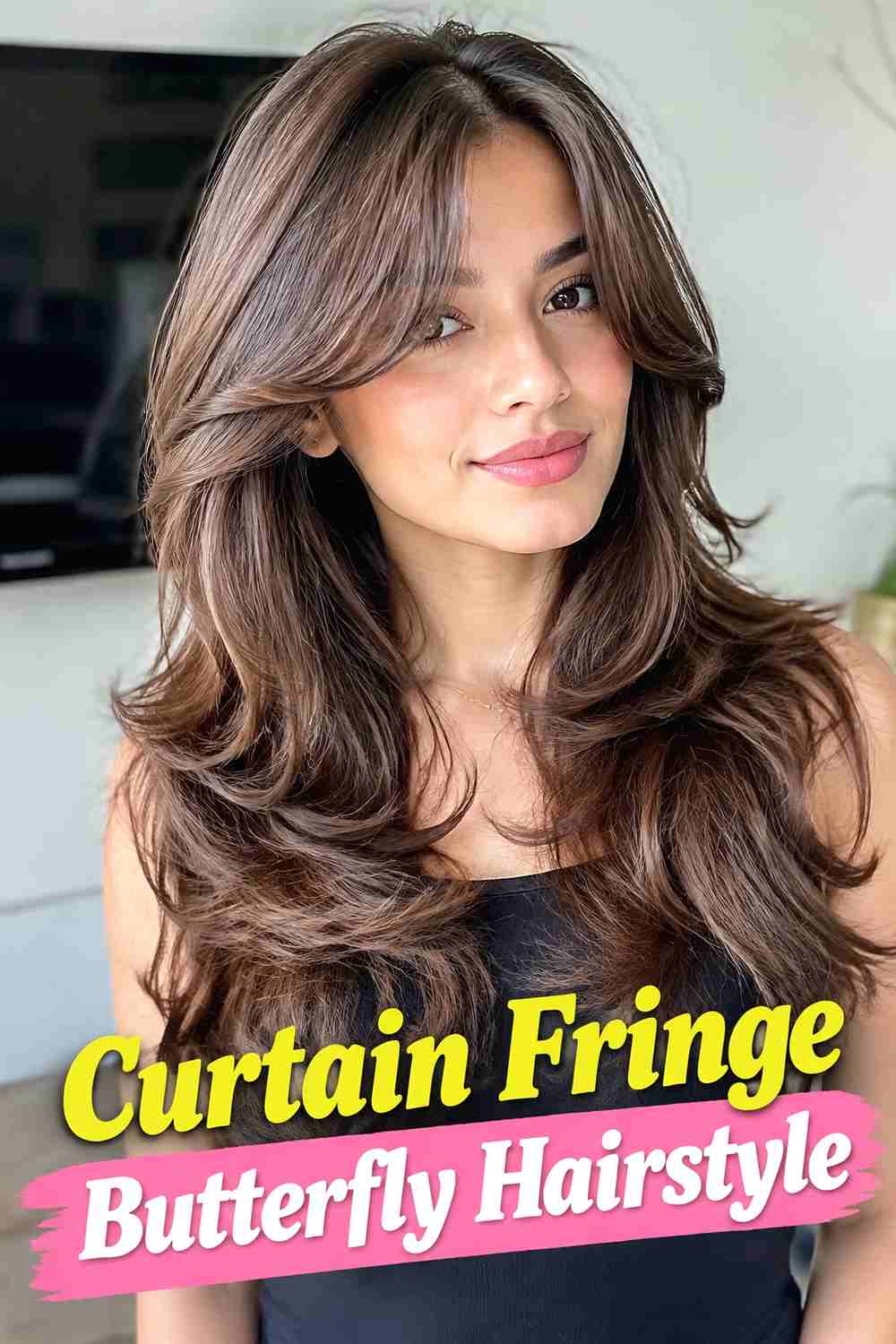
Curtain fringe blends naturally into a butterfly haircut because both rely on face-framing layers that move away from the center. The fringe can part softly and sweep toward the cheekbones, then connect with longer sections around the jaw and shoulders. On medium-density hair, keeping the bangs relatively light helps avoid concentrating too much weight around the front. The back layers can stay longer and fuller to balance the extra detail near the face. A round-brush blowout makes the connection between fringe and butterfly layers especially visible, while a softer air-dried finish can give the cut a more casual feel.
Wear & Maintenance
The curtain fringe may need more frequent shaping than the longer layers to preserve its intended length and center opening.
Why It Works
The fringe becomes the shortest part of a continuous face-framing cascade, making the butterfly structure feel cohesive from the forehead to the ends.
12. Tapered End Butterfly Hairstyle
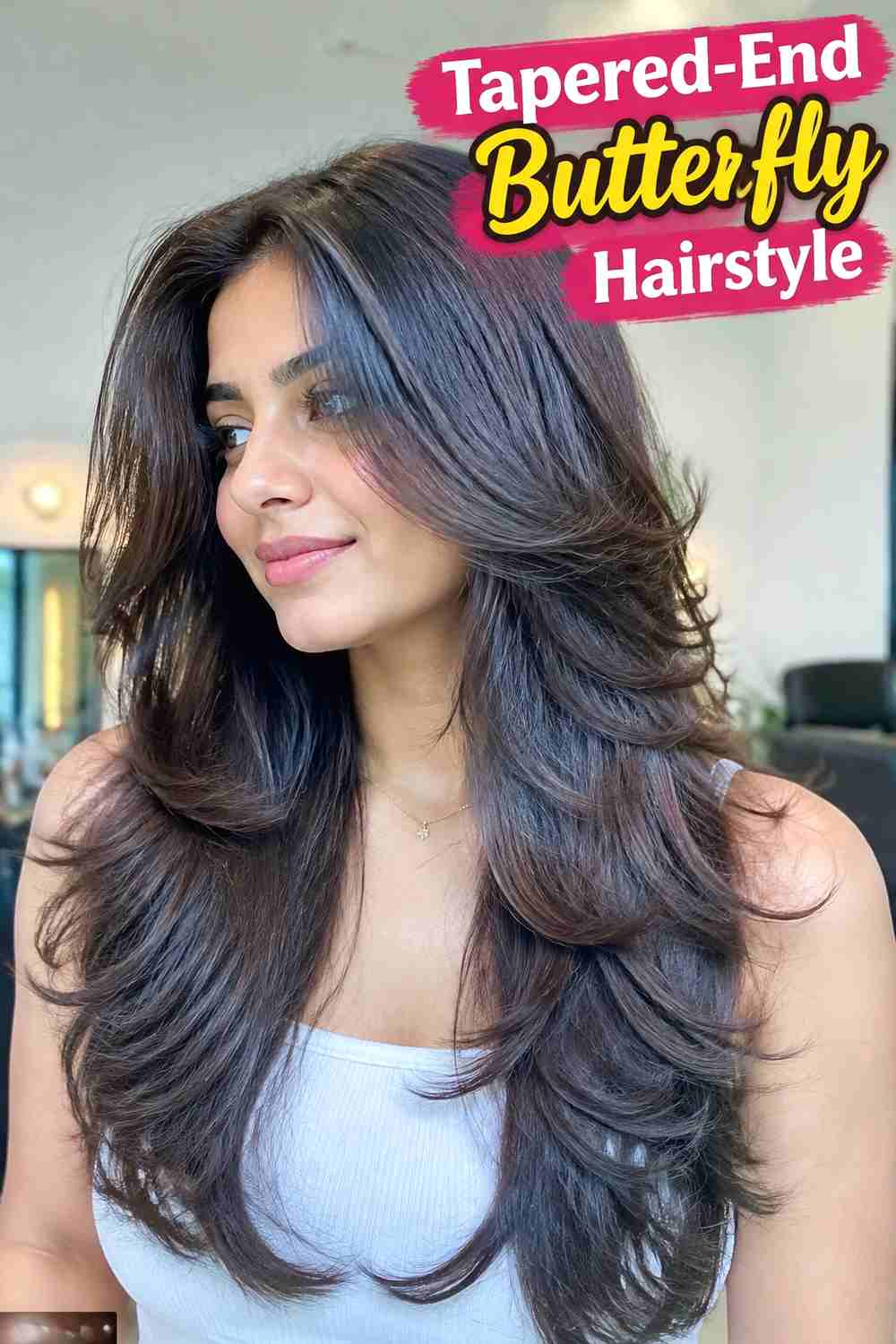
Tapered ends give a butterfly haircut extra movement while reducing some weight through the lower lengths. The upper layers can remain soft and flowing, with shorter face-framing sections adding lift near the cheeks and jaw. Toward the bottom, the ends gradually become lighter rather than finishing in a heavy line. Medium-density hair can work well with this approach as long as the taper remains controlled; removing too much weight may weaken the lower silhouette. A smooth blowout or soft bend allows the tapered pieces to separate naturally, emphasizing movement without creating an overly wispy effect.
Hair Type & Length
Medium-long hair usually offers enough length for gradual tapering while preserving a recognizable butterfly shape.
Pro Tip
Keep the taper subtle if fullness through the ends is important to you.
13. Sleek Butterfly Layers Hairstyle
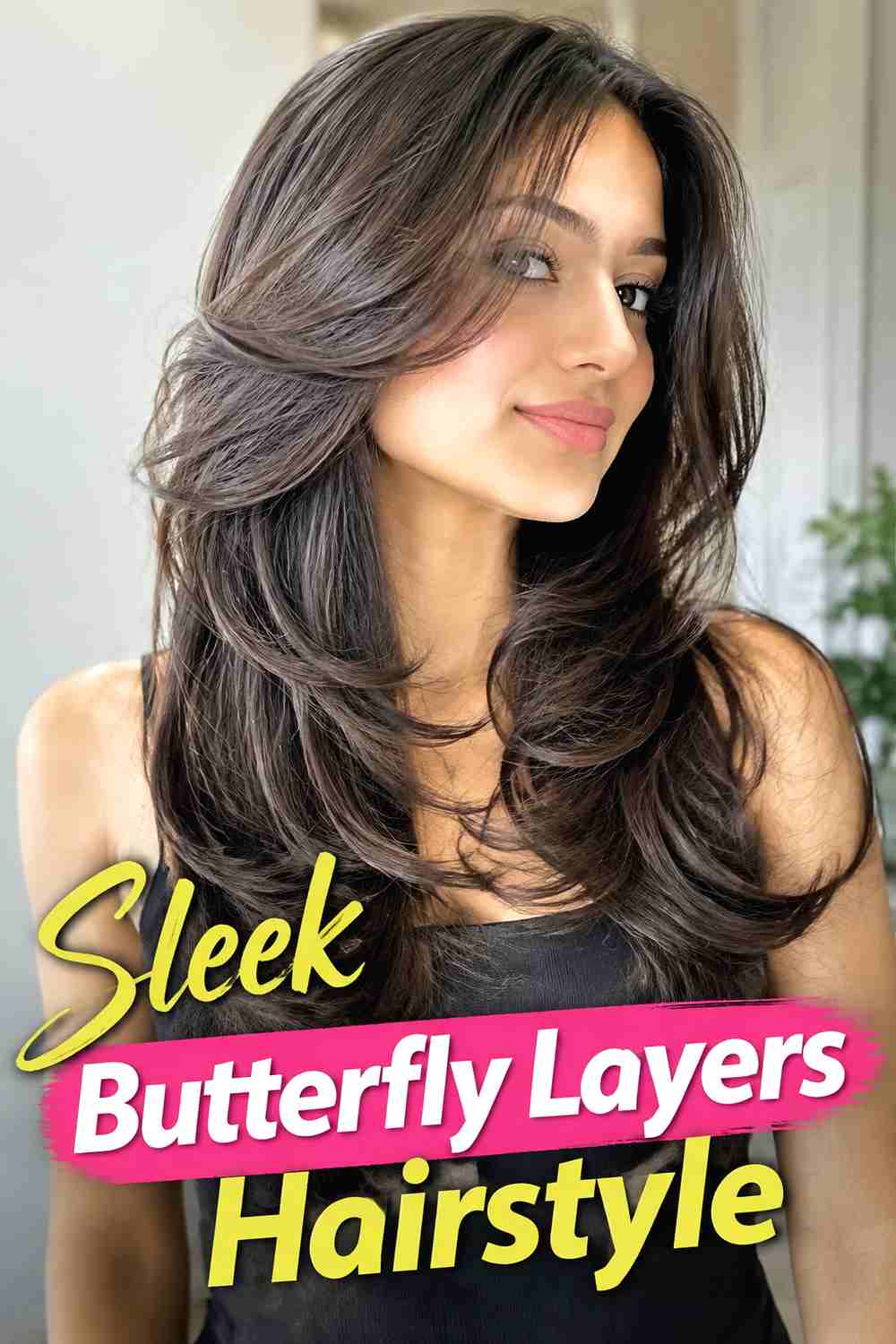
A sleek butterfly haircut shows that the shape does not depend entirely on big volume. The haircut still uses shorter front layers and longer cascading sections, but the finish remains smooth and controlled. Medium-density hair suits this approach because it can retain enough movement to reveal the layers without needing extensive styling. The face-framing pieces may bend slightly away from the cheeks, while the back falls straighter and more polished. This version is ideal if you like layered hair but prefer a cleaner surface rather than a bouncy blowout. Subtle internal movement prevents the style from looking flat while preserving the sleek silhouette.
Styling Notes
Smooth the mids and ends while giving only the front layers a slight outward curve so the butterfly shape remains visible.
Why It Works
The structure of the haircut provides movement even when the styling is restrained, making the layers versatile beyond a traditional blowout.
14. Tousled Butterfly Hairstyle
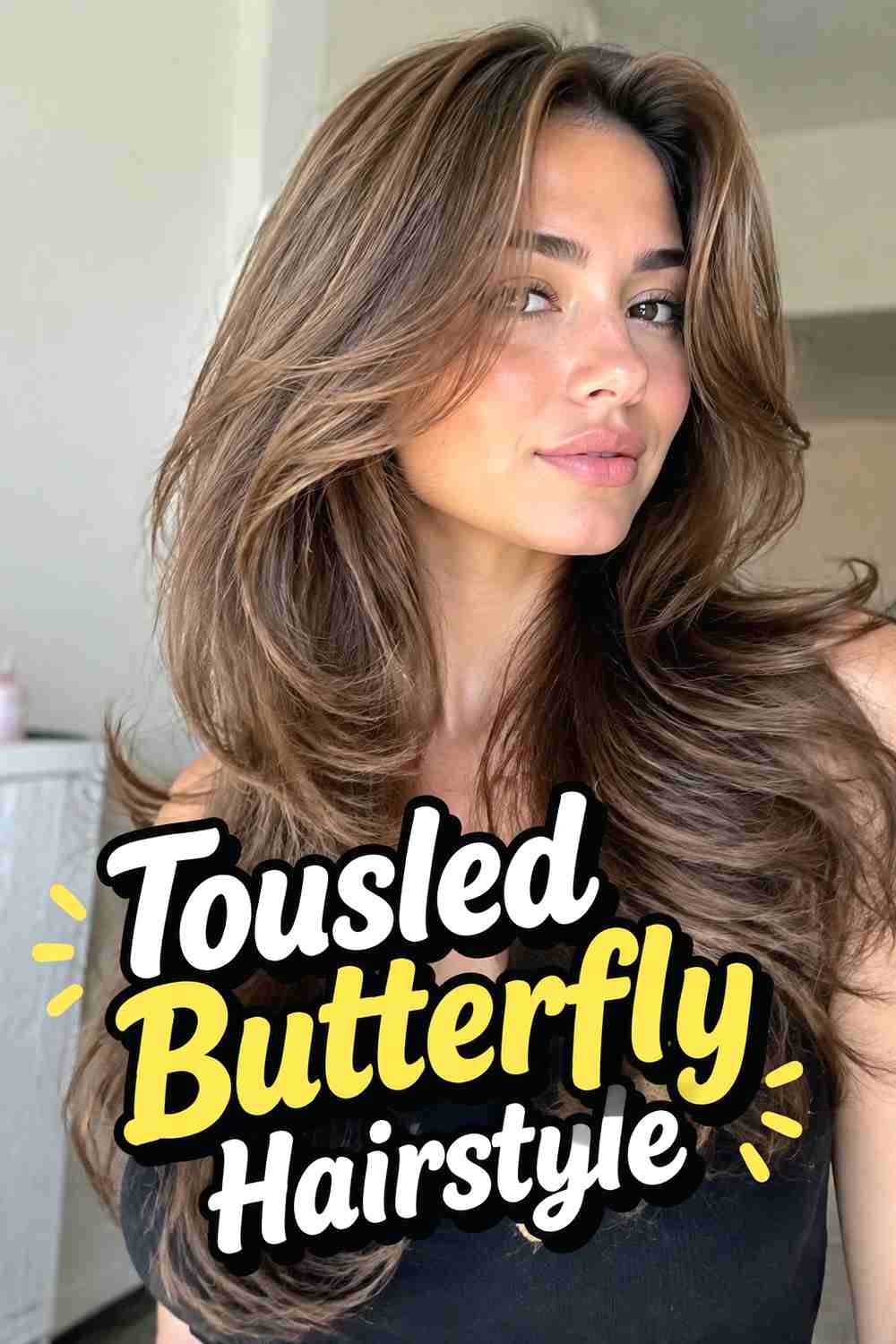
A tousled butterfly haircut keeps the recognizable cascading layers but relaxes the finish with irregular bends and soft separation. The shorter front sections frame the face while longer layers through the back create enough length and weight to stop the cut from feeling shaggy. Medium-density hair handles this balance well because the layers can move independently without making the overall silhouette sparse. Rather than styling every section identically, a few outward bends, inward curves, and natural straight pieces can be mixed together. The result feels casual and lived-in while still showing the butterfly structure. It is a useful option if polished blowouts are not part of your everyday routine.
Styling Notes
Use fingers or a wide styling tool to create imperfect movement, then separate the layers lightly instead of brushing them into a uniform shape.
Best For
This variation suits straight-to-wavy hair and anyone who prefers relaxed texture over highly sculpted volume.
How to Choose the Right Look
Start with how much layering you want to see. Long-layer and sleek butterfly cuts keep the transitions subtle, while rounded, airy, and blowout versions make the layered structure more obvious. For medium-density hair, preserving enough weight through the perimeter is important so the lower lengths do not become unnecessarily thin.
Next, consider your preferred length. Collarbone versions create a compact, bouncy shape, while medium-long cuts offer more space for the layers to cascade. Face-framing and curtain-fringe versions add detail around the front without requiring extensive layering through the back.
Your styling routine matters too. Blowout and rounded versions look most defined with a round brush or rollers, while soft-bend and tousled styles are easier to wear with relaxed texture. Choose a version that looks good with the amount of styling you realistically want to do.
Final Thoughts
A butterfly haircut can give medium-density hair movement, softness, and face-framing volume without sacrificing all the fullness through the ends. The key is balancing shorter upper layers with longer sections underneath so the cut feels airy but still substantial. Choose the length and finish that suit your natural texture and everyday styling habits.
FAQs
1. Is a butterfly haircut good for medium-density hair?
Yes. Medium-density hair can usually support visible layering while retaining enough fullness through the lower lengths for a balanced butterfly shape.
2. Will a butterfly haircut make medium-density hair look thin?
Not necessarily. Keeping the longest layers and perimeter substantial helps preserve fullness, while excessive thinning or too many short layers may reduce visible density.
3. What length works best for a butterfly haircut?
Collarbone to longer lengths generally provide enough room for the shorter and longer layers to cascade naturally, although the exact shape can be adapted.
4. Do butterfly layers require a blowout?
No. A blowout makes the layering more obvious, but sleek styling, soft bends, natural waves, and tousled finishes can also work.
5. Can I add curtain bangs to a butterfly haircut?
Yes. Curtain fringe blends naturally into face-framing butterfly layers and can become the shortest point in the cascading front shape.
Save your favorite butterfly haircut, share these medium-density hair ideas, and explore more layered inspiration before your next cut.