13 70s Feathered Layers With Soft Fringe
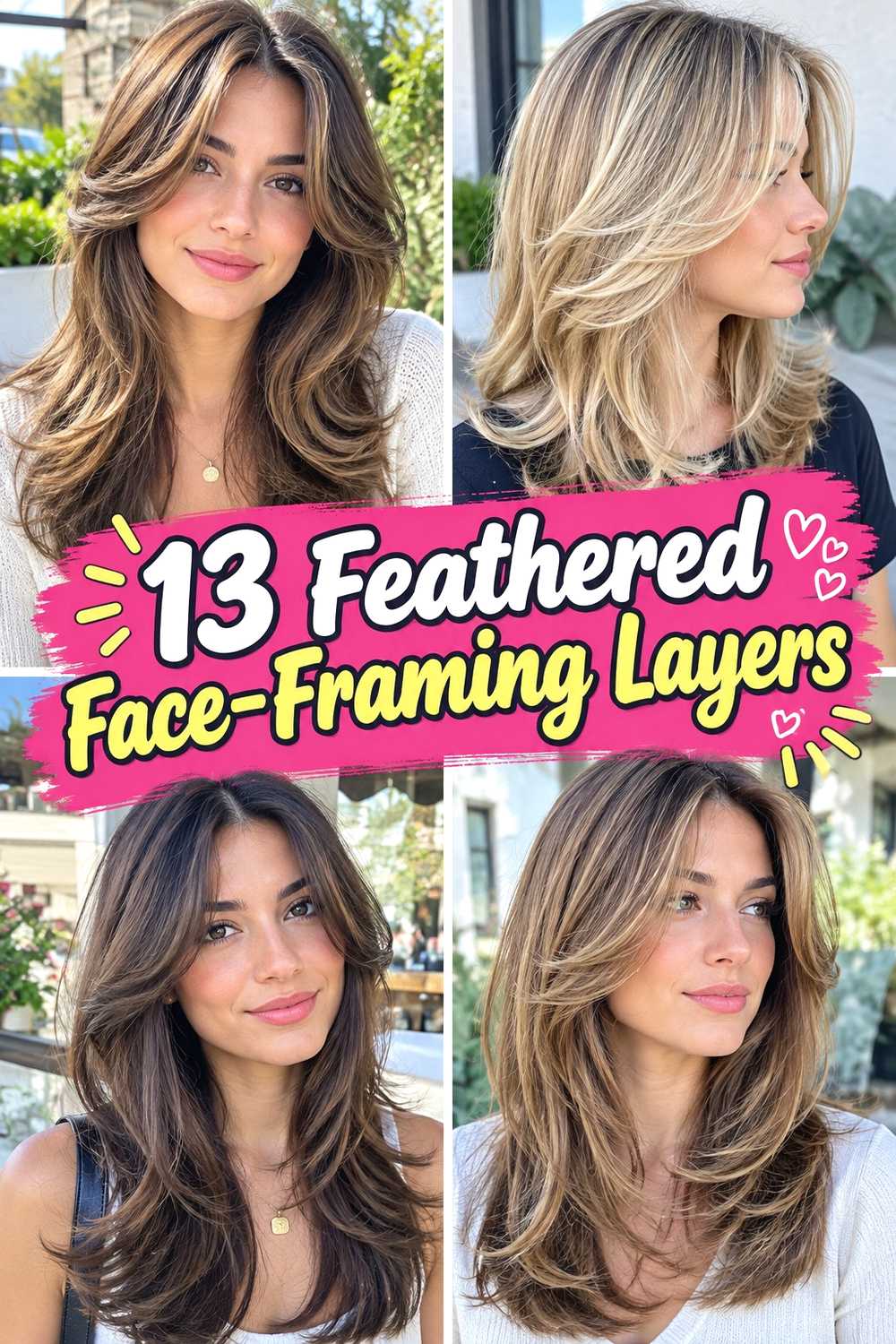
Soft fringe and sweeping feathered layers bring classic ’70s movement to modern hair with airy volume, face framing, and beautifully flipped ends.
The signature feathered look is built around layers that move away from the face rather than falling straight down. Soft fringe helps connect the shorter front sections to the longer layers, creating a flowing shape that can feel retro without looking costume-like. The amount of feathering can range from subtle cheekbone movement to a full, voluminous blowout.
Length and density make a difference. Longer hair offers more room for cascading feathers, while shoulder-length cuts create a bouncier silhouette. Before choosing, consider how much crown volume you want, whether you prefer a center or side part, and how often you are comfortable using a round brush or rollers.
Quick List
- Classic 70s Feathered Layers Hairstyle
- Soft Fringe Feathered Blowout Hairstyle
- Long 70s Feathered Layers Hairstyle
- Curtain Fringe Feathered Layers Hairstyle
- Shoulder Length Feathered Layers Hairstyle
- Center Part 70s Feathered Hairstyle
- Side Part Feathered Fringe Hairstyle
- Rounded 70s Feathered Layers Hairstyle
- Wispy Fringe Feathered Layers Hairstyle
- Voluminous Crown Feathered Hairstyle
- Soft Wavy Feathered Layers Hairstyle
- Face Framing Feathered Fringe Hairstyle
- Modern 70s Soft Feathered Hairstyle
1. Classic 70s Feathered Layers Hairstyle
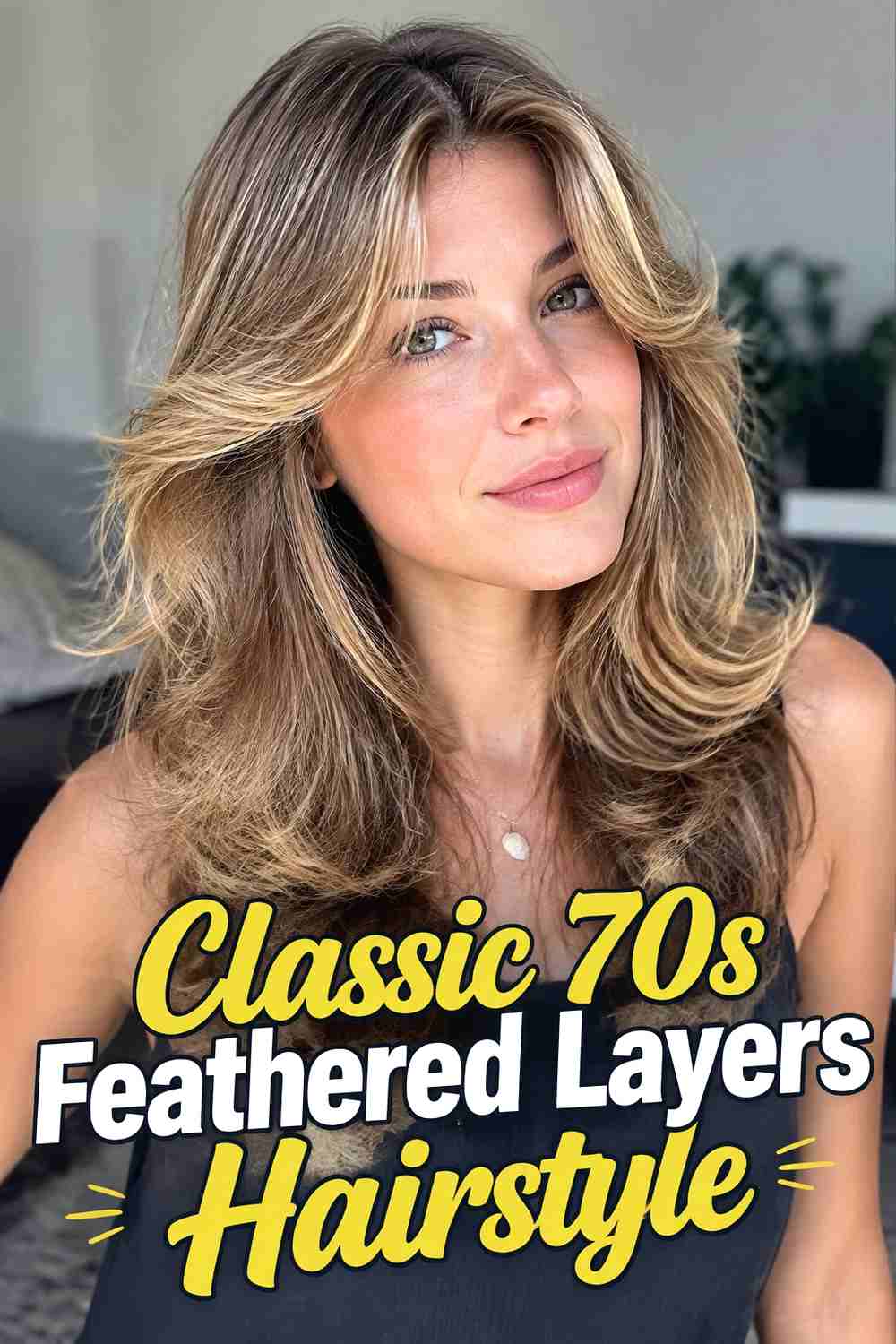
Classic ’70s feathered layers create broad, sweeping movement around the face, with shorter front pieces turning outward and longer sections flowing through the shoulders and back. A soft fringe keeps the top from feeling too exposed while blending naturally into the side layers. The most wearable version preserves enough weight through the ends so the haircut looks full even when it is not styled into maximum volume. Straight-to-wavy hair can show the feathering particularly well after a round-brush blowout. The key is creating connected movement rather than many tiny flipped sections, allowing the layers to feel soft, flowing, and recognizably retro without becoming overly theatrical.
Styling Notes
Use a medium or large round brush to direct front layers away from the face, then let each section cool before gently separating it.
Best For
This version suits anyone wanting a recognizable ’70s silhouette with balanced volume and a substantial perimeter.
2. Soft Fringe Feathered Blowout Hairstyle
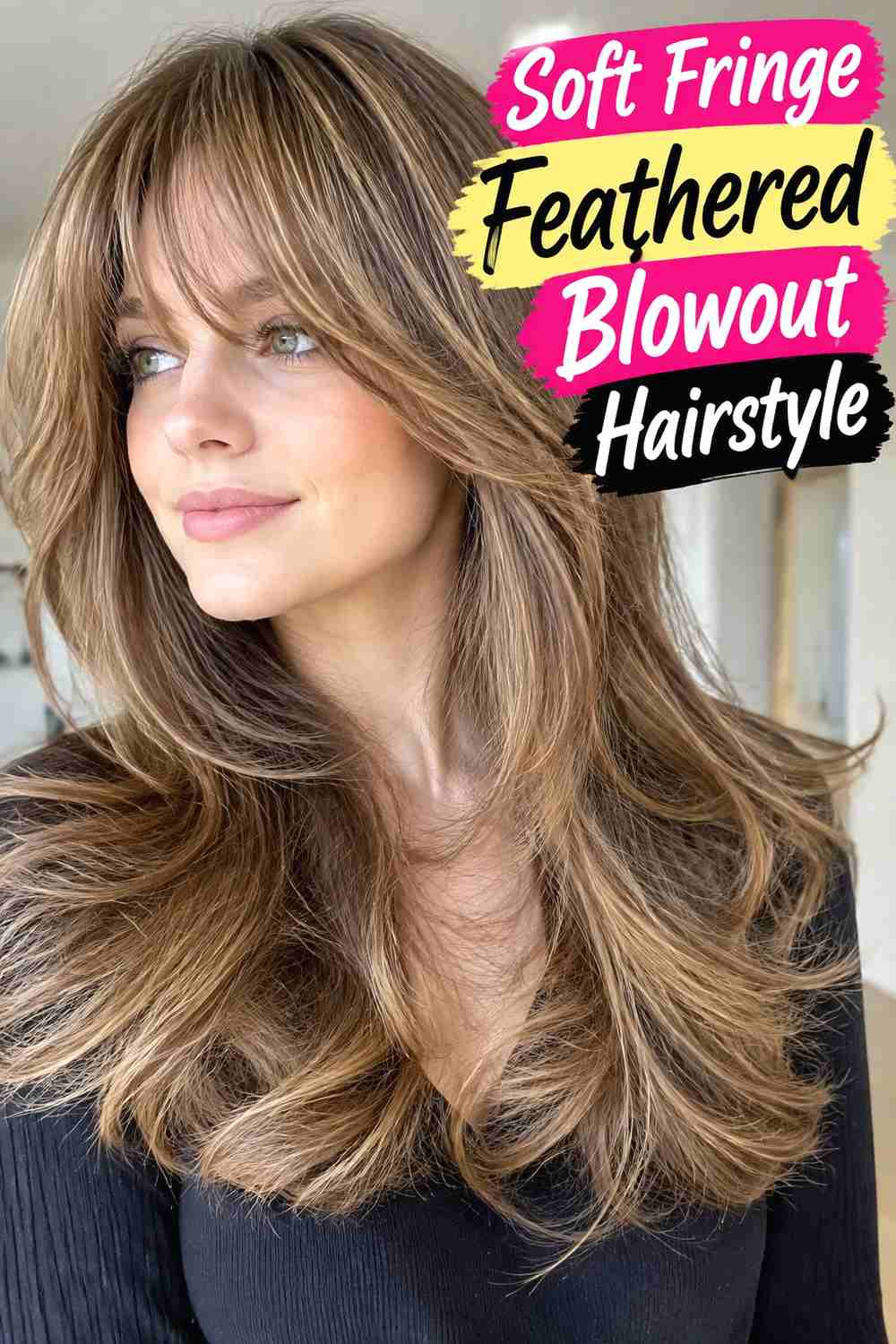
A soft fringe feathered blowout places extra movement around the forehead and temples while building broad volume through the longer layers. The fringe can skim the brows or sit slightly longer, separating naturally instead of forming one dense line. From there, cheekbone and jaw-length pieces sweep outward and gradually connect to shoulder and longer layers. A blowout makes the feathering more visible, but the haircut should still retain a soft shape once the volume relaxes. Preserving some fullness through the lower lengths prevents the style from looking excessively thinned. This approach works especially well when you enjoy a polished finish but want the fringe to stay lighter and more flexible.
Styling Notes
Dry the fringe with gentle movement rather than a tight curve, then direct the surrounding layers outward for a continuous feathered effect.
Why It Works
The lighter fringe balances the larger blowout shape and keeps the front from becoming visually heavy.
3. Long 70s Feathered Layers Hairstyle
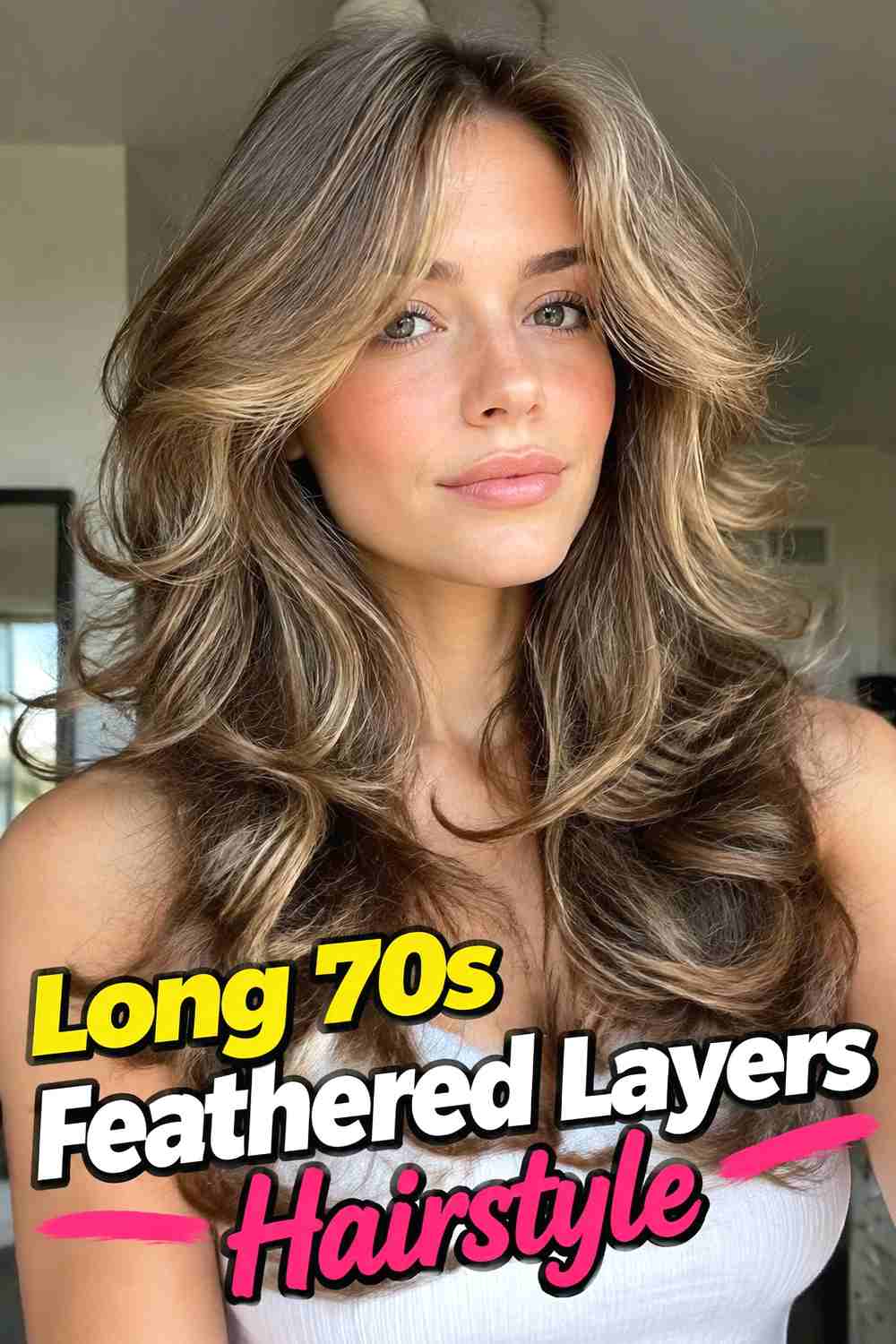
Long hair provides plenty of space for feathered layers to cascade from the face through the lower lengths. Shorter pieces can begin around the cheekbones or jaw, while successive layers become gradually longer toward the chest and back. This creates movement without sacrificing the overall length that makes the style feel dramatic. A soft fringe gives the front extra texture and can blend directly into the first face-framing layer. Because long hair can become weighed down, moderate crown shaping may help maintain lift, but overly short upper layers are not necessary. Broad outward curves bring out the retro influence while keeping the ends full enough for a modern finish.
Hair Type & Length
Medium-long and long hair with enough density through the ends can support multiple feathered levels without looking overly thin.
Pro Tip
Keep the lowest layers long and substantial if preserving overall fullness is important to you.
4. Curtain Fringe Feathered Layers Hairstyle
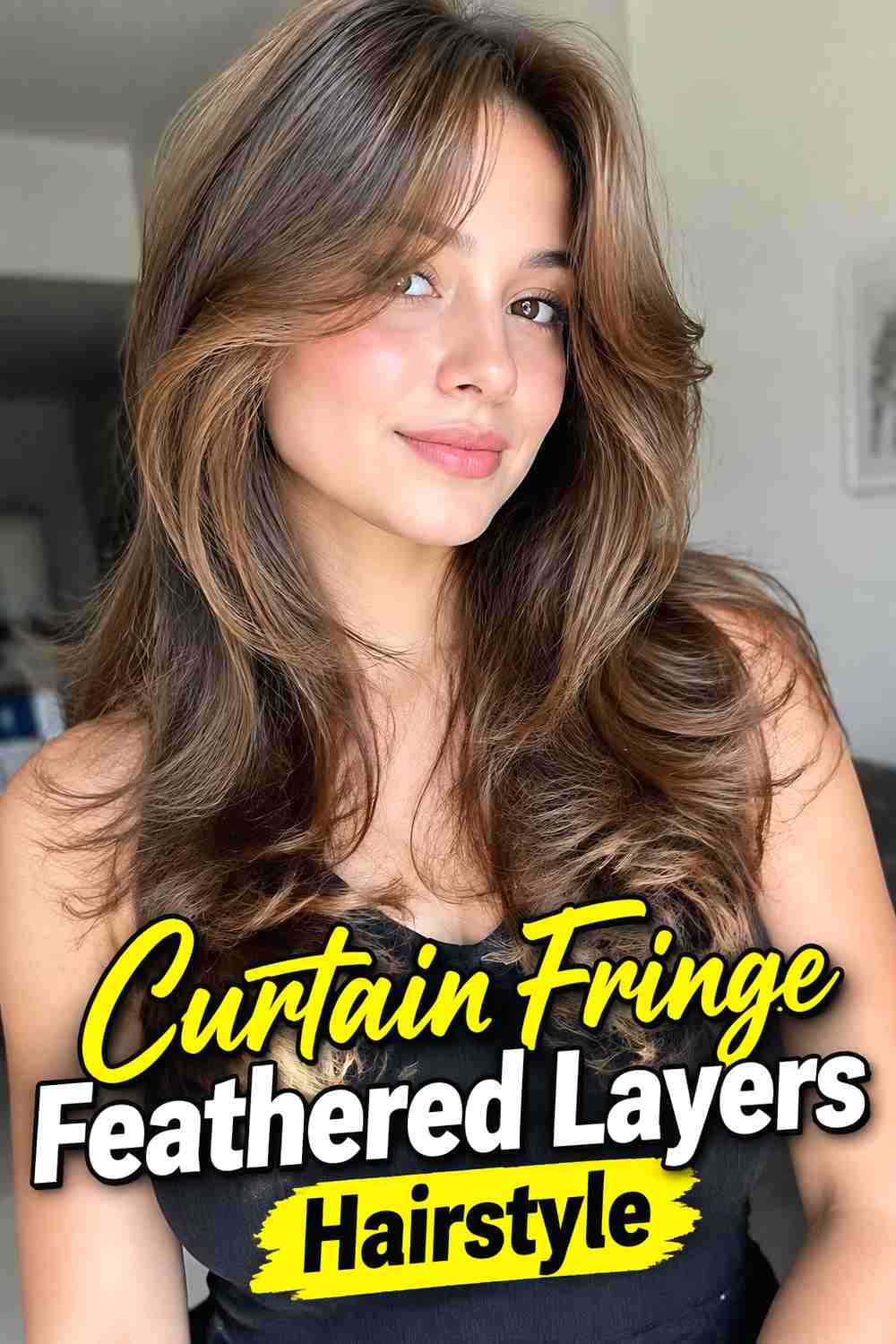
Curtain fringe fits naturally with feathered layers because both styles open away from the center and create movement around the face. The fringe can separate near the middle, sweep toward the cheekbones, and blend directly into longer layers at the jaw and shoulders. The result feels cohesive rather than like bangs added onto a separate haircut. A round-brush blowout amplifies the shape, while a softer finish creates a more relaxed interpretation. Keeping the back layers longer prevents the cut from becoming too feathered throughout. This version is especially useful if you want plenty of front movement but prefer a fringe that can grow into face-framing pieces relatively smoothly.
Wear & Maintenance
Curtain fringe usually needs more frequent shaping than the longer layers, but its extended sides can make the grow-out feel gradual.
Styling Notes
Direct each side of the fringe away from the center and blend it into the first face-framing layer.
5. Shoulder Length Feathered Layers Hairstyle
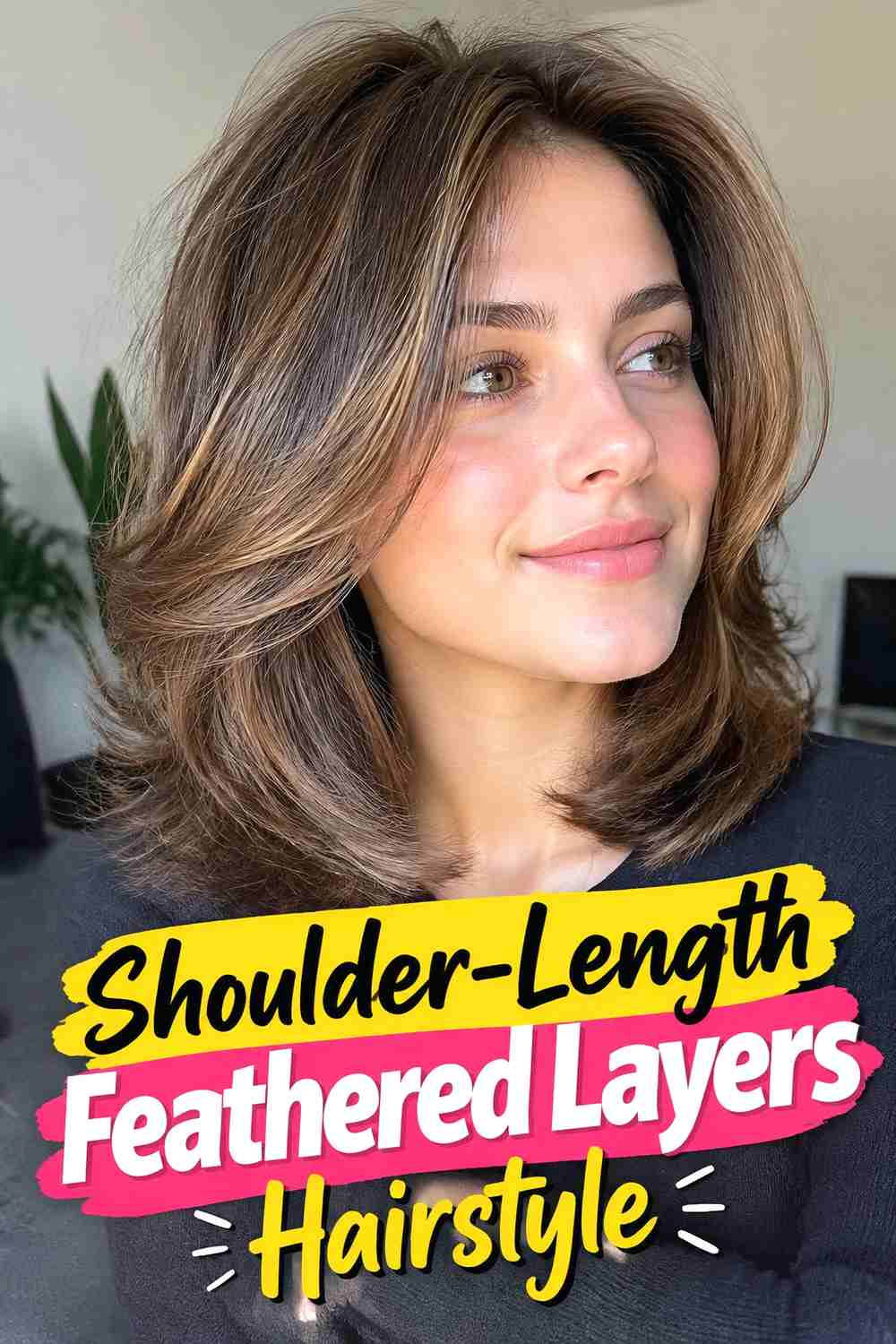
At shoulder length, feathered layers create a bouncy silhouette with more concentrated movement than longer versions. The front sections can begin around the cheekbones, then flow through the jaw and toward the shoulders, where the ends can flip softly outward. A light fringe balances the shape without overwhelming the shorter overall length. Because there is less hair to support many layers, preserving enough density along the perimeter is important. A medium round brush can create broad, curved movement without making the style overly puffy. This version is practical if you want clear ’70s influence in a manageable length that can still be worn straight or lightly textured between blowouts.
Best For
This cut works well when you want visible feathering without the styling time associated with very long layered hair.
Pro Tip
Avoid over-layering the lower perimeter so the shoulder-length shape remains full and balanced.
6. Center Part 70s Feathered Hairstyle
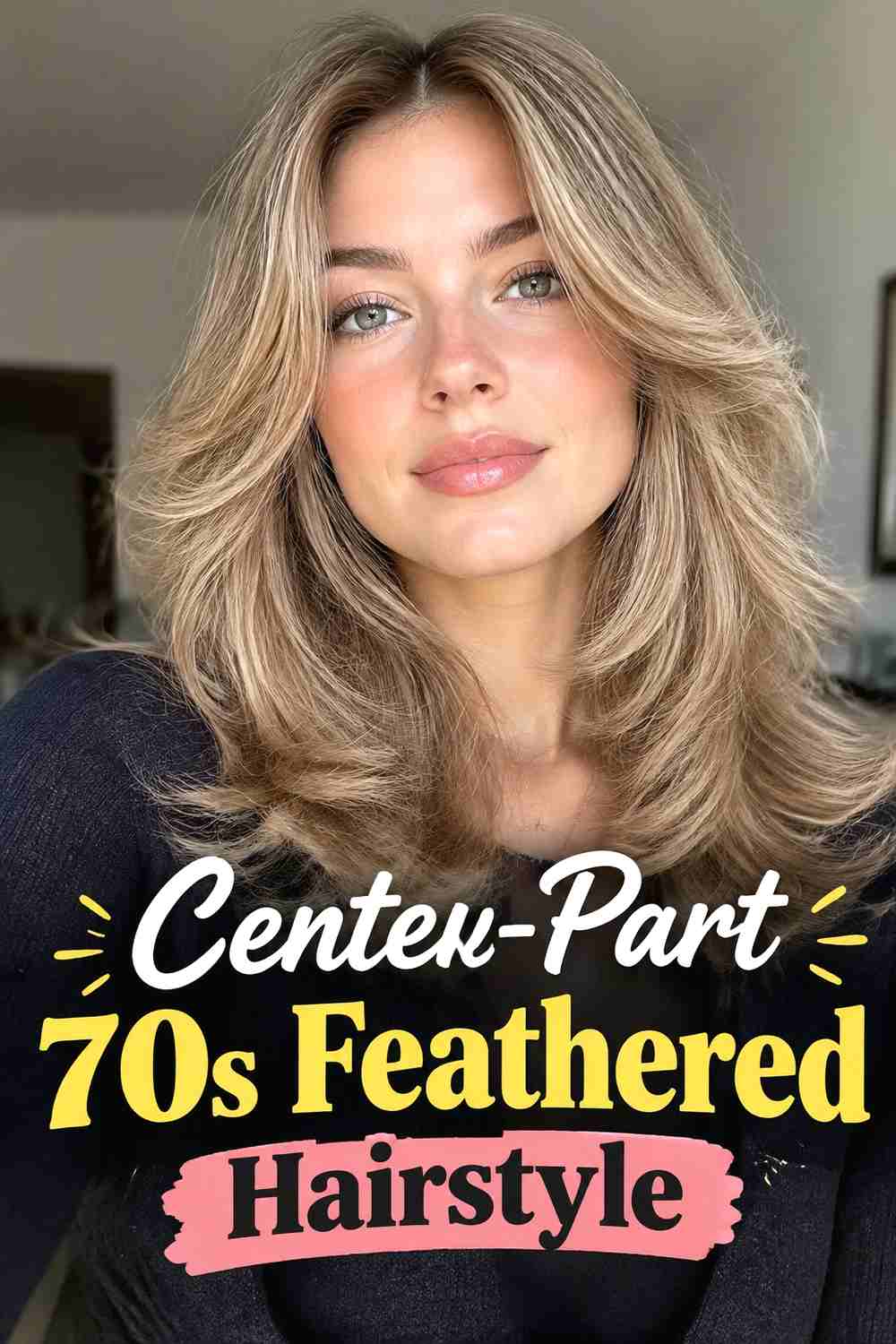
A center part gives feathered layers their most symmetrical, classic presentation. Soft fringe or shorter front pieces can open from the middle and sweep away from the face, creating matching movement on both sides. The next layers gradually lengthen through the jaw, shoulders, and lower sections, producing a balanced cascade. Crown volume can stay moderate so the style feels modern rather than overly exaggerated. This works particularly well with straight or softly wavy textures that can hold broad bends. Slight differences between the two sides are perfectly natural; the goal is overall balance rather than mirror-image curls. The long lower sections should stay substantial enough to anchor the feathered front.
Why It Works
The center part emphasizes the outward movement of the layers and creates a clear, balanced frame around the face.
Styling Notes
Lift the roots lightly on both sides, then sweep the front layers outward using large, smooth curves.
7. Side Part Feathered Fringe Hairstyle
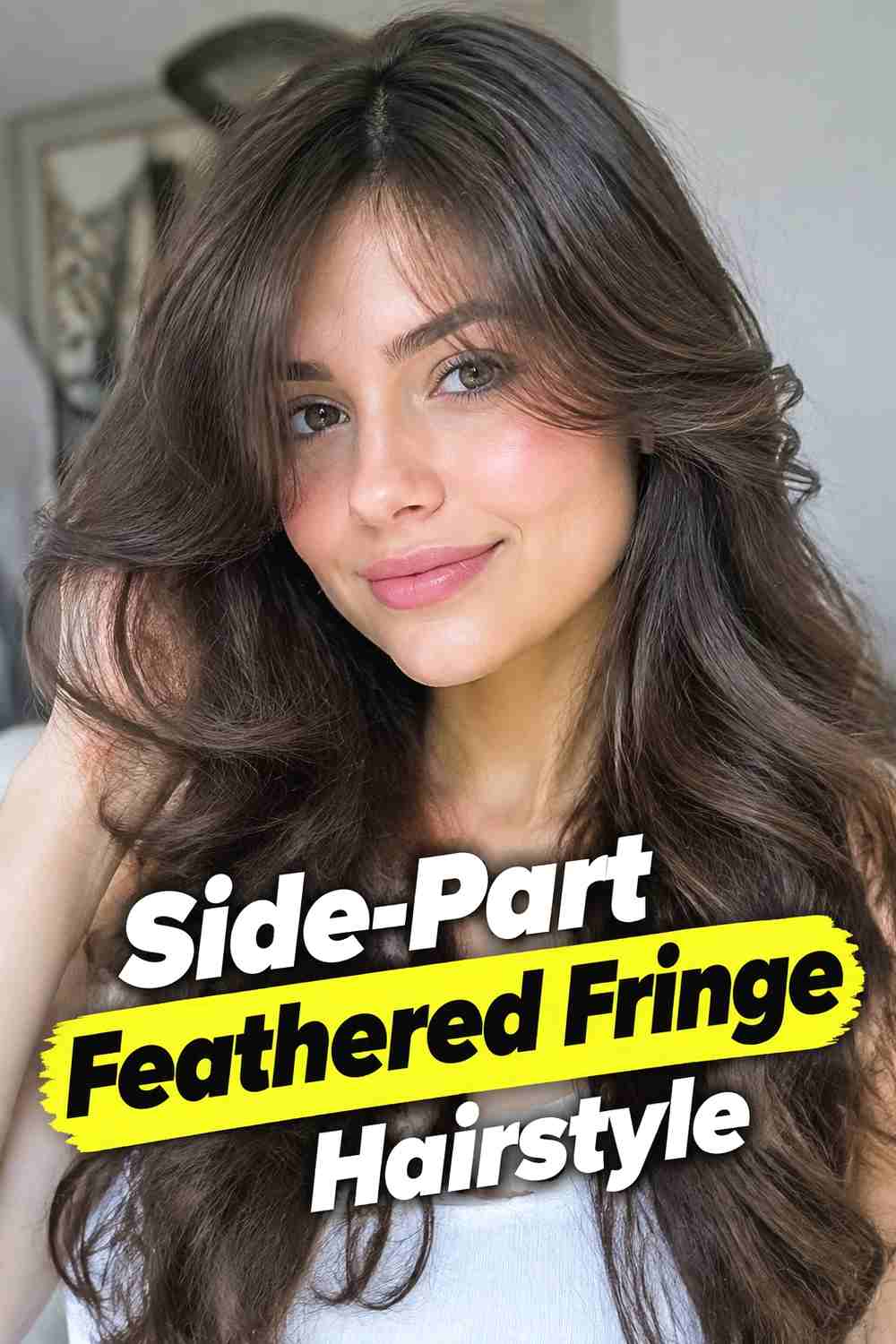
A side part introduces asymmetry to the feathered look and creates extra lift through the fuller side. The fringe can sweep diagonally across the forehead before blending into cheekbone and jaw-length layers, giving the haircut more directional movement than a center-part version. The opposite side may sit closer to the face or tuck easily behind the ear. Through the back, longer feathered layers maintain the ’70s influence without making the shape too top-heavy. This variation works especially well when hair naturally prefers one side or when you want volume at the front without adding very short crown layers. A soft blowout enhances the sweep while preserving natural movement.
Styling Notes
Build root lift on the fuller side and guide the fringe diagonally rather than forcing it into a straight-across shape.
Best For
Choose this version if you enjoy asymmetrical volume and a softer, sweeping fringe.
8. Rounded 70s Feathered Layers Hairstyle
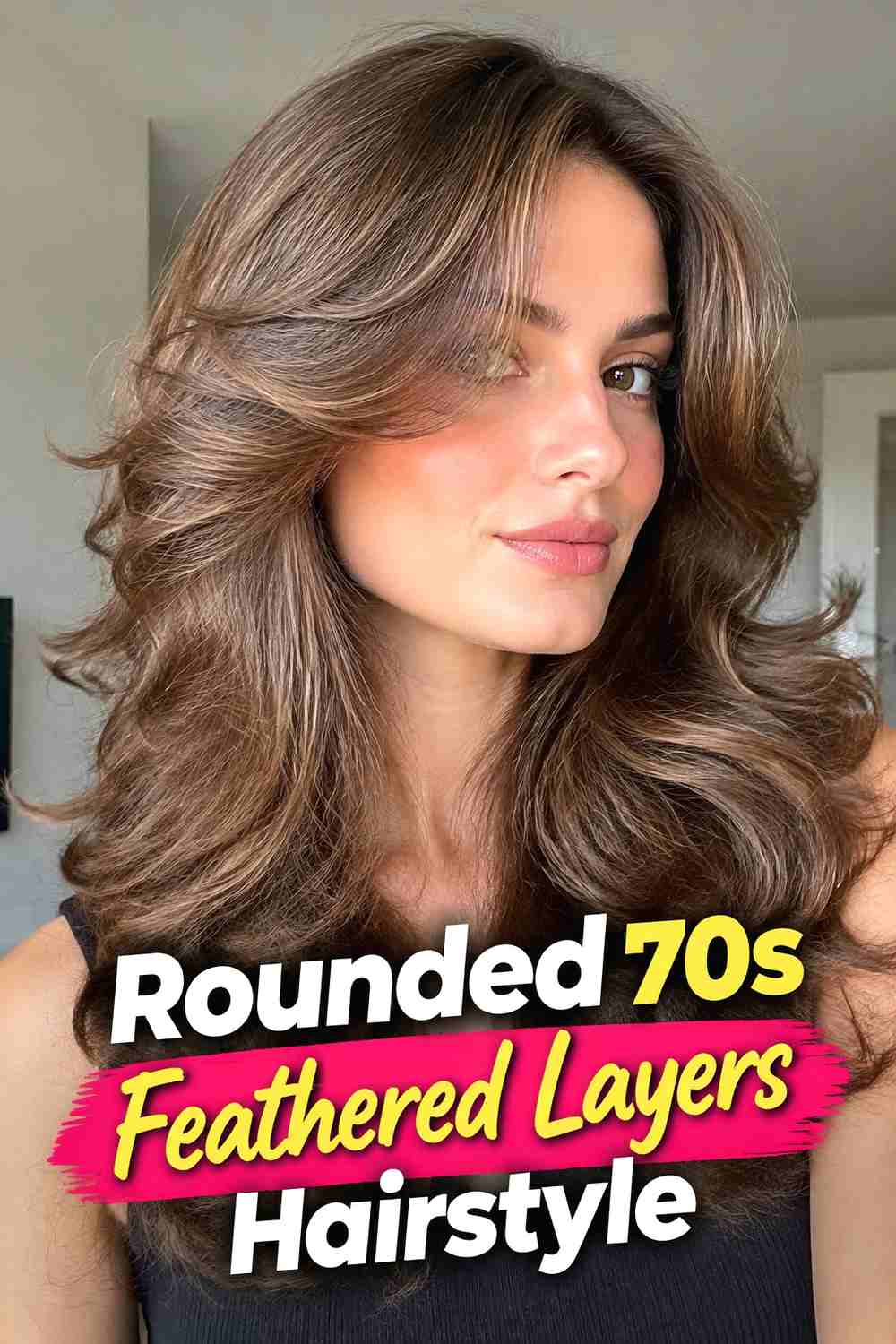
Rounded feathered layers replace sharper flips with broader, softer curves, creating a smoother interpretation of classic ’70s hair. The front sections still move away from the face, but the transitions between layers feel more connected and polished. A light fringe can curve gently across the forehead before blending into the side pieces. Medium and long lengths work particularly well because there is enough space for the layers to overlap without losing density. A round-brush blowout enhances the rounded shape, but the haircut can also settle into a softer form as the volume drops. The result feels retro-inspired yet refined enough for everyday wear.
Why It Works
Broad curved layers provide the movement associated with feathering while keeping the overall silhouette cohesive and soft.
Best For
This approach suits anyone who wants ’70s influence without sharply flipped or highly separated ends.
9. Wispy Fringe Feathered Layers Hairstyle
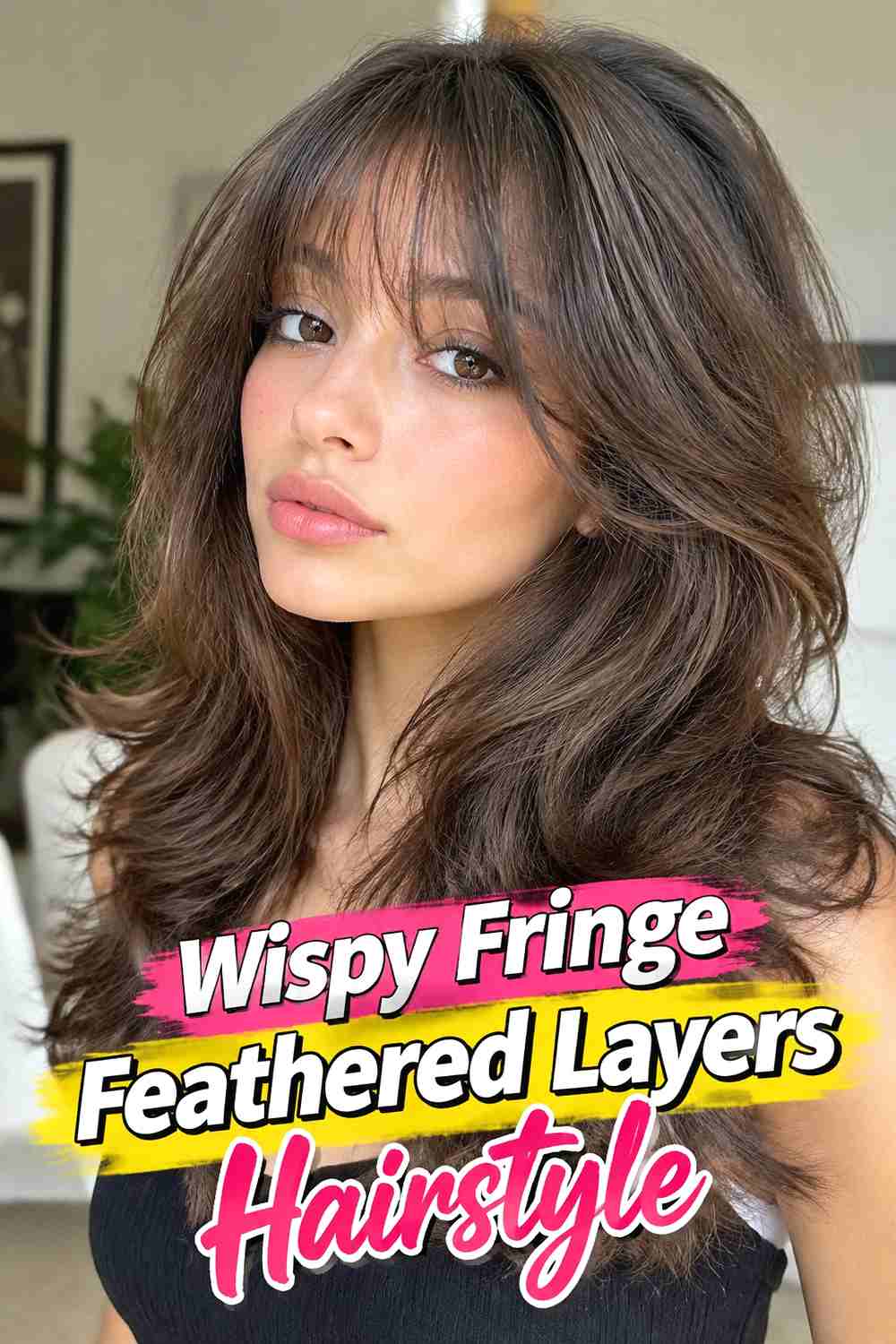
Wispy fringe gives feathered layers a lighter, more delicate finish around the forehead. The bangs use a smaller section with visible spacing between strands, then gradually blend into longer pieces near the temples and cheekbones. Behind them, feathered layers sweep outward without needing excessive crown height. Keeping the perimeter relatively full balances the airy fringe and prevents the haircut from becoming too fine-looking overall. This version works particularly well on straight-to-wavy hair that can hold soft bends but still falls naturally when unstyled. The fringe may shift slightly during the day, which suits the relaxed nature of the look rather than requiring perfect placement.
Wear & Maintenance
Wispy fringe may need periodic trimming, but the lighter density can make small changes in growth feel less dramatic than with a heavy bang.
Pro Tip
Keep the fringe light from the beginning rather than relying on excessive thinning after cutting.
10. Voluminous Crown Feathered Hairstyle
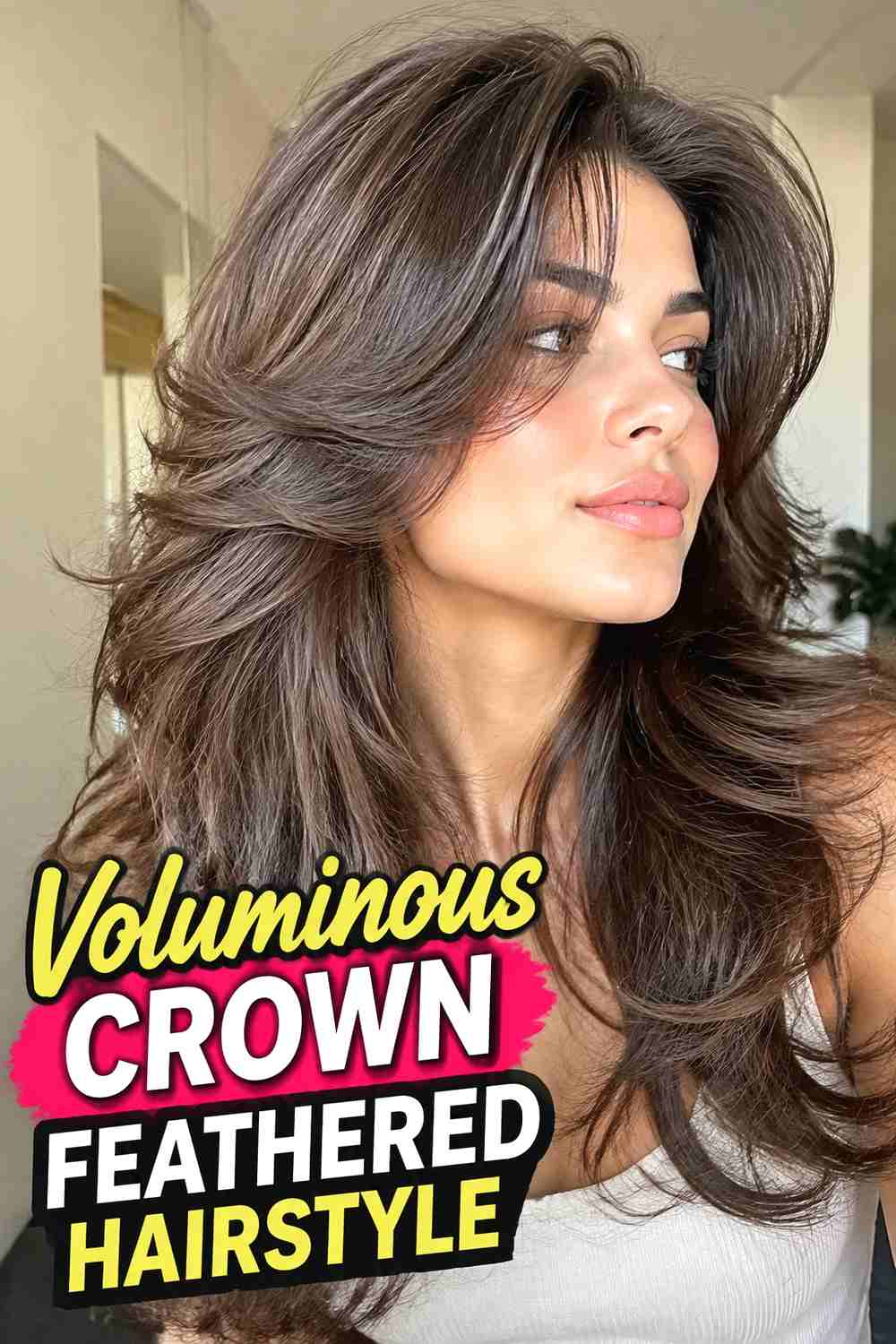
A voluminous crown adds a stronger retro presence to feathered layers by creating lift through the upper sections before the hair sweeps outward around the face. The crown layers should be long enough to blend smoothly with the sides, preventing an abrupt or overly teased effect. Soft fringe keeps the front balanced and can be worn straight, parted, or slightly swept depending on the desired finish. Through the shoulders and lengths, broad feathered curves continue the movement without becoming overly thin. This variation works well for hair with enough density to support upper volume, especially when styled with rollers or a round brush rather than aggressive teasing.
Styling Notes
Set the upper sections with large rollers and let them cool before brushing lightly into place for soft, movable height.
Pro Tip
Keep the crown volume rounded rather than sharply teased to preserve a polished finish.
11. Soft Wavy Feathered Layers Hairstyle
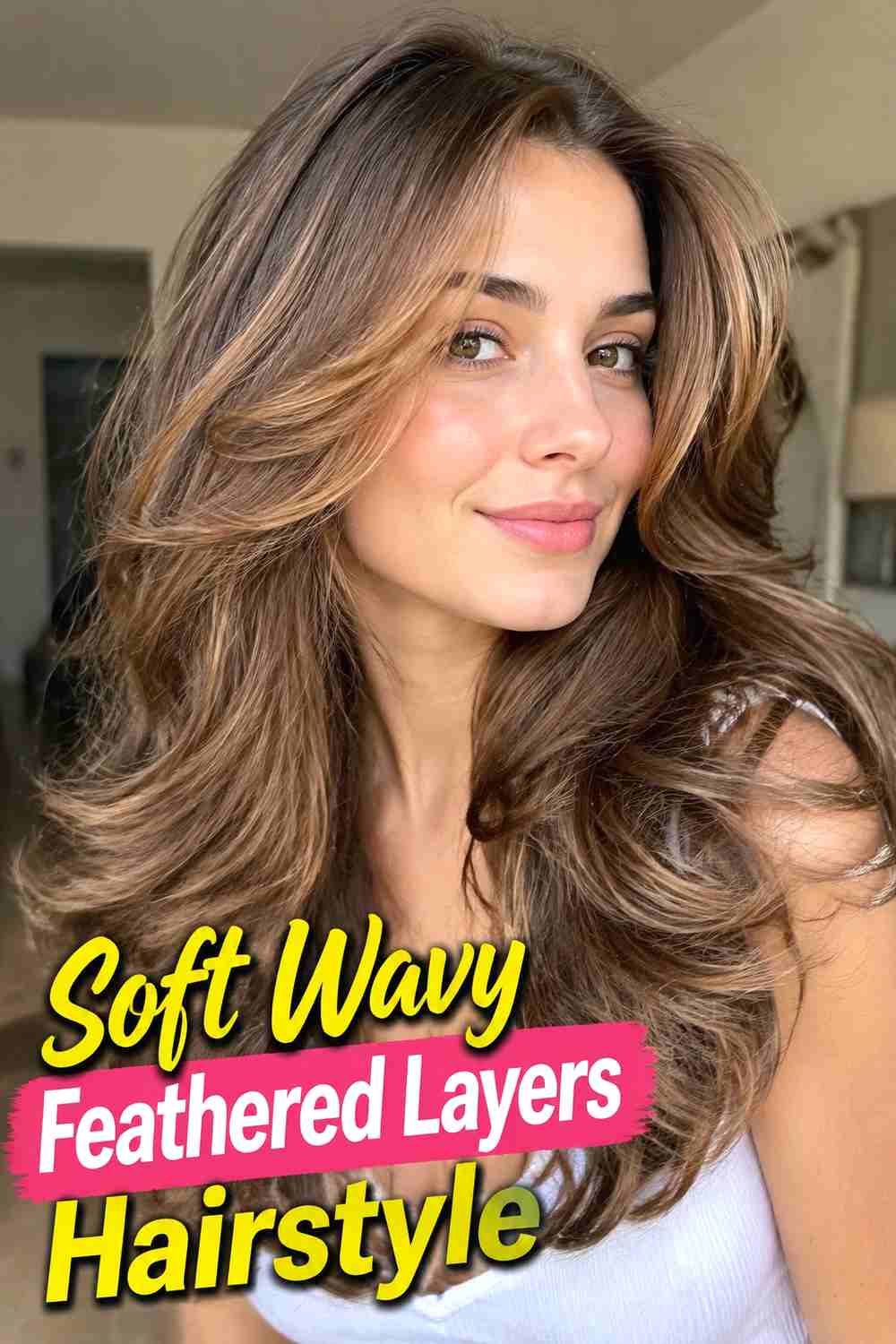
Soft waves give feathered layers a less structured finish by blending outward movement with natural bends through the lengths. The front pieces can still sweep away from the face, but the lower sections do not need to follow one uniform direction. A light fringe adds softness at the forehead and can merge naturally with wavy temple pieces. This version works especially well if your hair already has gentle movement, since the cut can enhance that pattern instead of depending entirely on a blowout. The result feels relaxed and touchable while still showing the layered, face-opening silhouette associated with ’70s feathered hair.
Hair Type & Length
Naturally wavy or easily bent hair can carry this look with less heat styling than straighter textures may require.
Styling Notes
Encourage broad movement rather than perfect curls, letting some pieces remain softer or straighter for a believable finish.
12. Face Framing Feathered Fringe Hairstyle
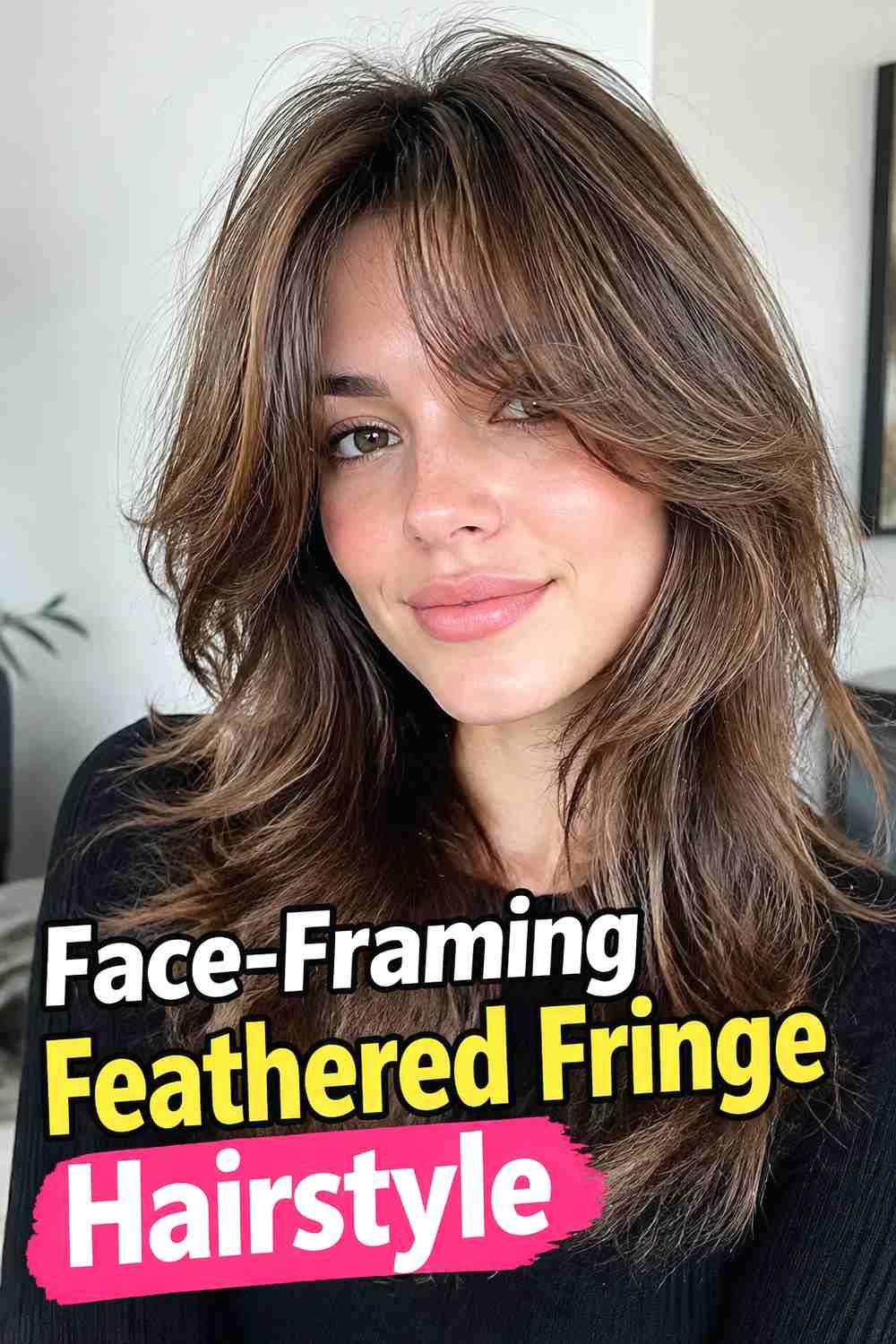
Face-framing feathered fringe concentrates the most dramatic movement at the front while leaving the back comparatively long and full. A soft fringe blends into cheekbone, jaw, and collarbone layers that sweep away from the face in gradual steps. This makes the feathered effect easy to see from the front without requiring extensive layering throughout the entire haircut. The back can remain more restrained, which helps preserve density and simplifies everyday styling. A round-brush finish makes the front layers especially noticeable, but the cut can still look cohesive when worn straighter. This is a practical option if you want ’70s character while keeping much of your original length intact.
Best For
Choose this style if you want the strongest feathering around the face rather than throughout every section of the hair.
Why It Works
Concentrating the shorter layers in front creates recognizable movement while maintaining fullness through the back.
13. Modern 70s Soft Feathered Hairstyle
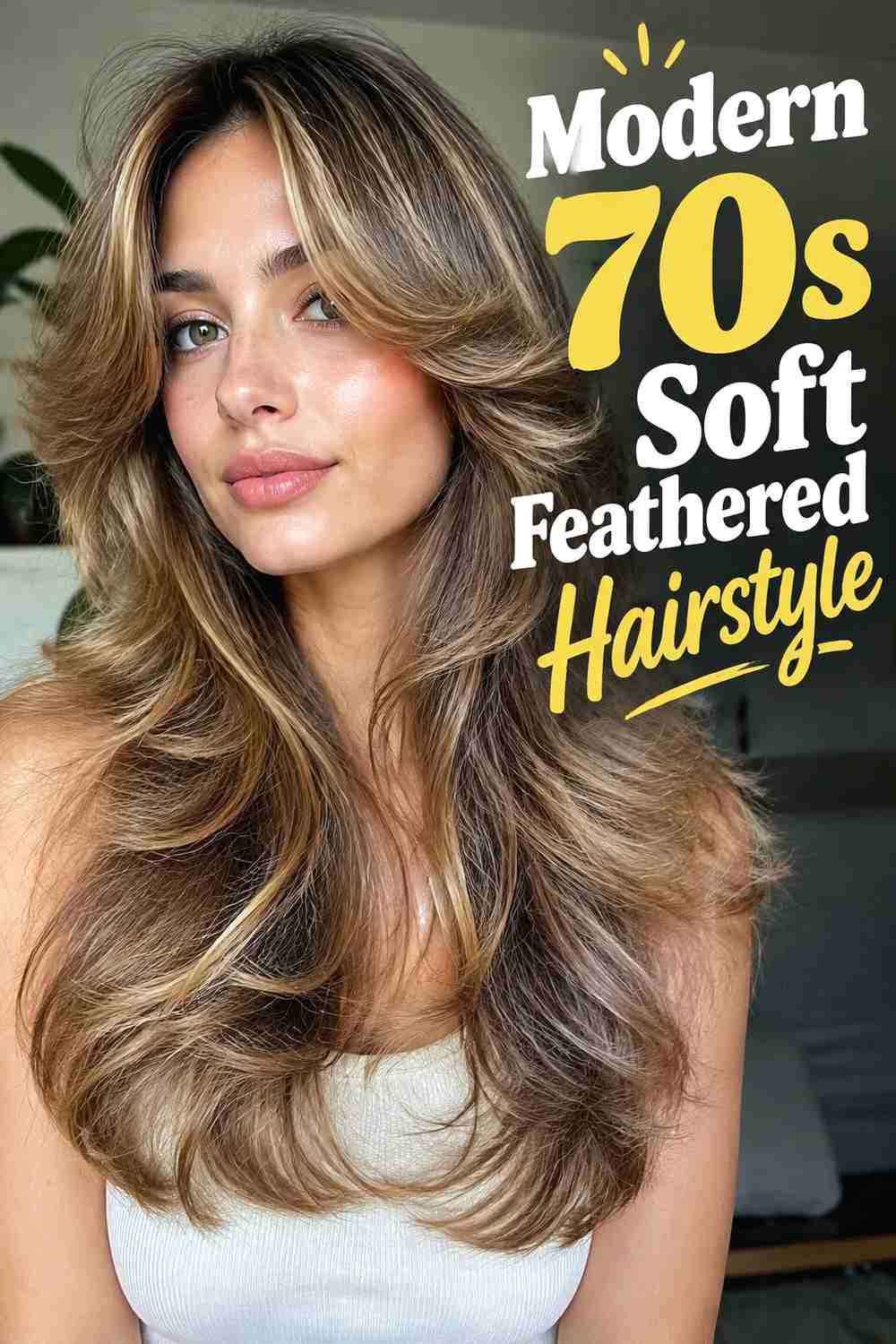
A modern ’70s feathered cut keeps the signature face-opening movement but reduces extreme volume and heavy separation. The fringe stays soft and flexible, while longer face-framing layers sweep outward in broad curves before blending into a fuller perimeter. Crown layering is restrained so the haircut can still look natural when worn straight, softly waved, or air-dried. This makes the style easier to incorporate into an everyday routine than a highly sculpted retro blowout. The goal is to borrow the era’s movement rather than reproduce every detail exactly. With enough weight left through the ends, the haircut feels current while still delivering unmistakable feathered softness around the face.
Styling Notes
Use a quick round-brush pass on the front layers and let the longer sections remain more relaxed for a modern balance.
Wear & Maintenance
The softer transitions grow out more naturally than very short feathered layers, making this one of the easier versions to maintain.
How to Choose the Right Look
Start with the amount of volume you actually want. Classic blowout and voluminous-crown versions create the strongest retro effect, while rounded, wavy, and modern feathered cuts feel softer and easier to wear every day.
Length also changes the result. Shoulder-length hair produces bouncy, concentrated feathers, while long hair allows several cascading layer levels. If maintaining fullness matters, keep the longest sections substantial and avoid excessive thinning through the perimeter.
Your fringe can set the mood of the entire haircut. Curtain fringe creates a sweeping center opening, wispy bangs feel lighter, and a side-swept fringe adds asymmetry. Finally, think about styling time. Pronounced feathering usually benefits from a round brush or rollers, while softer layers can still look intentional with natural texture.
Final Thoughts
Soft fringe and feathered layers can bring ’70s movement into a modern haircut without requiring exaggerated volume. The most wearable version balances outward face-framing layers with enough density through the ends, then matches the fringe and styling routine to the amount of retro drama you actually want.
FAQs
1. What makes layers look 70s and feathered?
The layers typically sweep away from the face in broad, overlapping sections, often with soft crown volume and curved or flipped ends.
2. What fringe works best with feathered layers?
Curtain, wispy, side-swept, and soft full fringe can all work. The best option depends on how much forehead coverage and styling effort you prefer.
3. Do feathered layers require a blowout?
Not always. A blowout makes the feathering more dramatic, but naturally wavy hair and softer modern versions can show movement with less styling.
4. Can fine hair wear 70s feathered layers?
Yes, but keeping the crown layering moderate and preserving fullness through the perimeter can help prevent the ends from looking too thin.
5. Are 70s feathered layers good for long hair?
Yes. Long hair provides enough space for several levels of face-framing layers to cascade while still maintaining substantial length through the back.
Save your favorite ’70s feathered hairstyle, share these soft-fringe ideas, and explore more retro-inspired layered looks before your next haircut.