18 Stacked Angled Bob Haircut Ideas for a Sharp, Modern Look
Sharp angles, lifted layers, and polished movement make these stacked angled bob ideas perfect inspiration for a fresh, dimensional short haircut.
A stacked angled bob combines graduated layers at the back with longer pieces toward the front, creating a silhouette that can look polished, soft, edgy, or relaxed depending on the finish. The stacked shape can provide visible lift through the crown while the forward angle frames the face and gives the haircut its distinctive profile.
When comparing these ideas, pay attention to how dramatic the front-to-back angle is, how much graduation appears at the nape, and whether the finish is sleek, tousled, wavy, or curly. Hair density and natural texture matter too: fine hair may benefit from a cleaner perimeter, while thicker textures often need strategic layering to keep the shape light and movable.
Quick List
- Classic Stacked Angled Bob Hairstyle
- Softly Layered Stacked Angled Bob Hairstyle
- Dramatic A-Line Stacked Bob Hairstyle
- Chin-Length Stacked Angled Bob Hairstyle
- Neck-Grazing Stacked Angled Bob Hairstyle
- Rounded Stacked Angled Bob Hairstyle
- Textured Stacked Angled Bob Hairstyle
- Wispy Stacked Angled Bob Hairstyle
- Sleek Stacked Angled Bob Hairstyle
- Side-Parted Stacked Angled Bob Hairstyle
- Curtain-Bang Stacked Angled Bob Hairstyle
- Side-Swept Bang Stacked Angled Bob Hairstyle
- Wavy Stacked Angled Bob Hairstyle
- Curly Stacked Angled Bob Hairstyle
- Fine-Hair Stacked Angled Bob Hairstyle
- Thick-Hair Stacked Angled Bob Hairstyle
- Highlighted Stacked Angled Bob Hairstyle
- Inverted Stacked Angled Bob Hairstyle
1. Classic Stacked Angled Bob Hairstyle
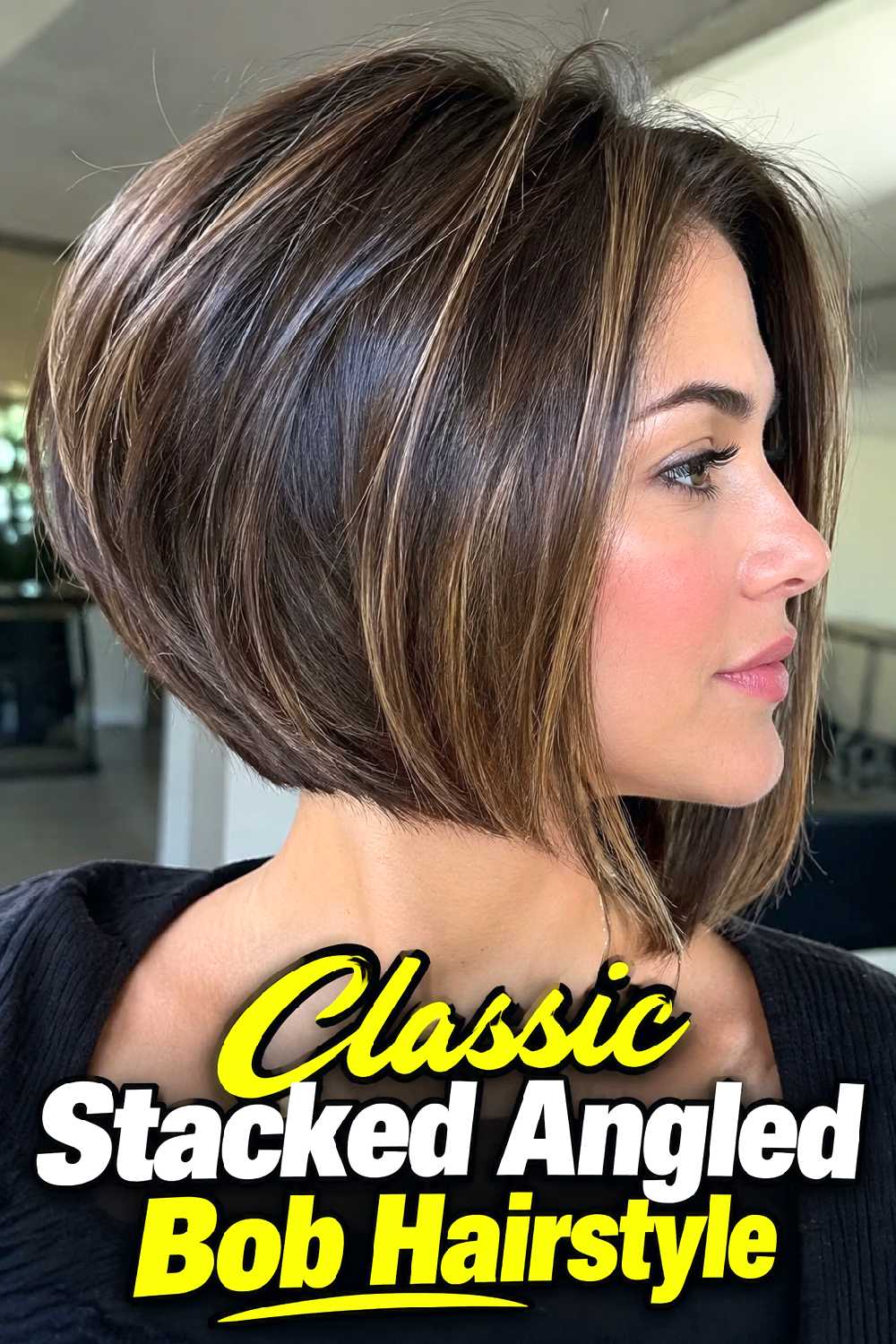
The classic version balances a neatly graduated back with longer front sections that fall around the jaw or slightly below it. Its shape is structured without looking overly severe, making the contrast between the lifted crown and elongated front easy to see from every angle. Smooth styling shows off the precision of the cut, while a little natural movement keeps it wearable for everyday life. This version can work especially well for straight or gently wavy hair because the stacked layers create body without requiring extreme volume. It is a strong choice for anyone who wants a short haircut that still offers some face-framing length around the front.
Styling Notes
Blow-dry the back with a small or medium round brush to encourage lift, then direct the longer front pieces downward for a cleaner angled line.
Wear & Maintenance
Because the nape and graduation define the silhouette, regular shaping helps prevent the stacked back from growing into a heavier, less distinct bob.
2. Softly Layered Stacked Angled Bob Hairstyle
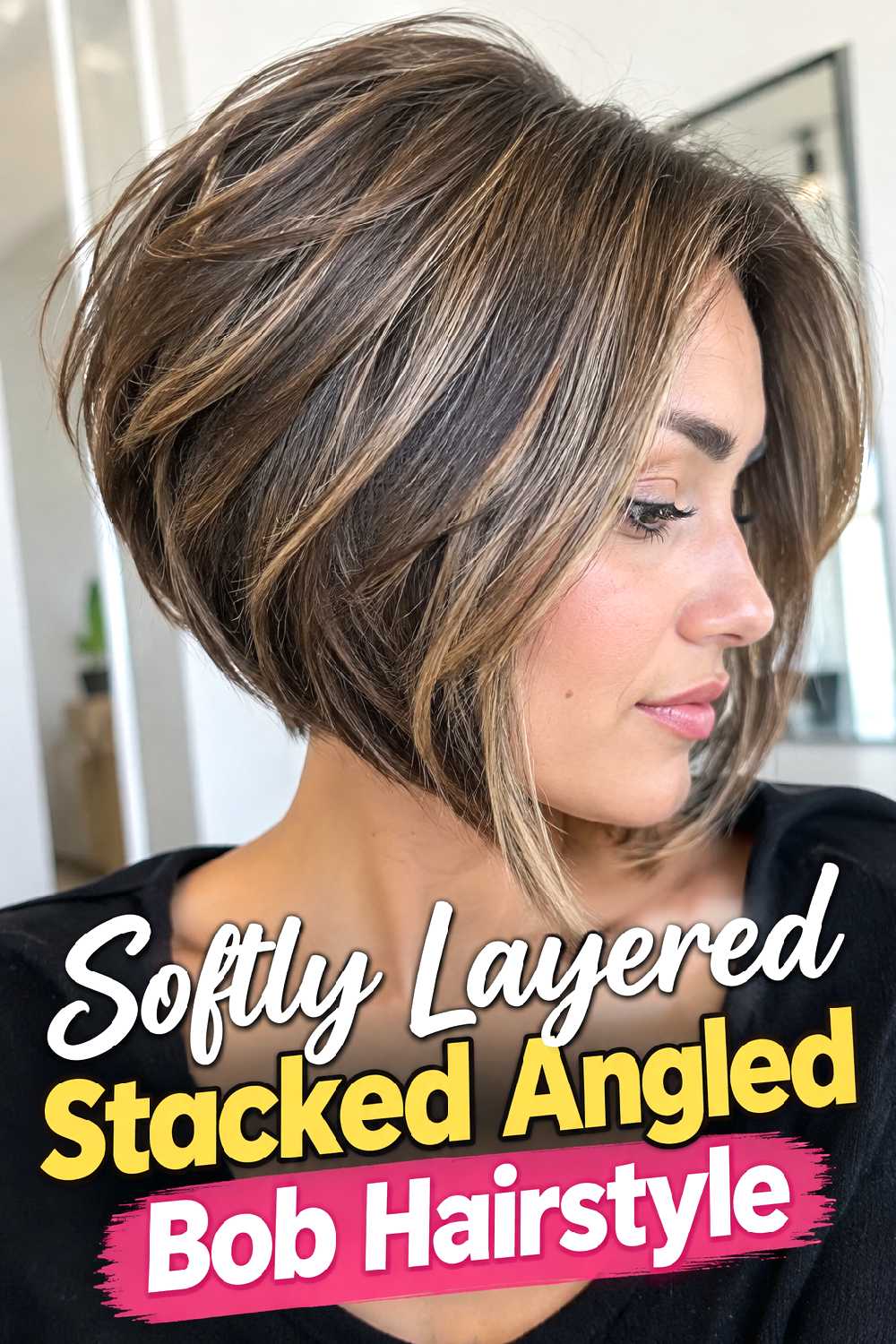
Soft layering gives the stacked angled bob a lighter, more fluid personality. Instead of emphasizing a sharply sculpted back, this variation blends the graduation into airy layers that move naturally around the head. The longer front pieces still establish the angled outline, but the overall effect is less rigid and easier to tousle. It suits anyone drawn to the structure of an angled bob but who prefers hair that looks touchable rather than highly polished. Gentle layers can also keep medium-density hair from appearing too solid at the ends. A subtle bend through the mid-lengths enhances the separation without hiding the haircut’s recognizable stacked shape.
Why It Works
The softer transitions reduce visual heaviness while maintaining enough graduation at the back to create lift and a defined profile.
Pro Tip
Use lightweight styling cream only through the ends so the layers stay separated without flattening the crown.
3. Dramatic A Line Stacked Bob Hairstyle
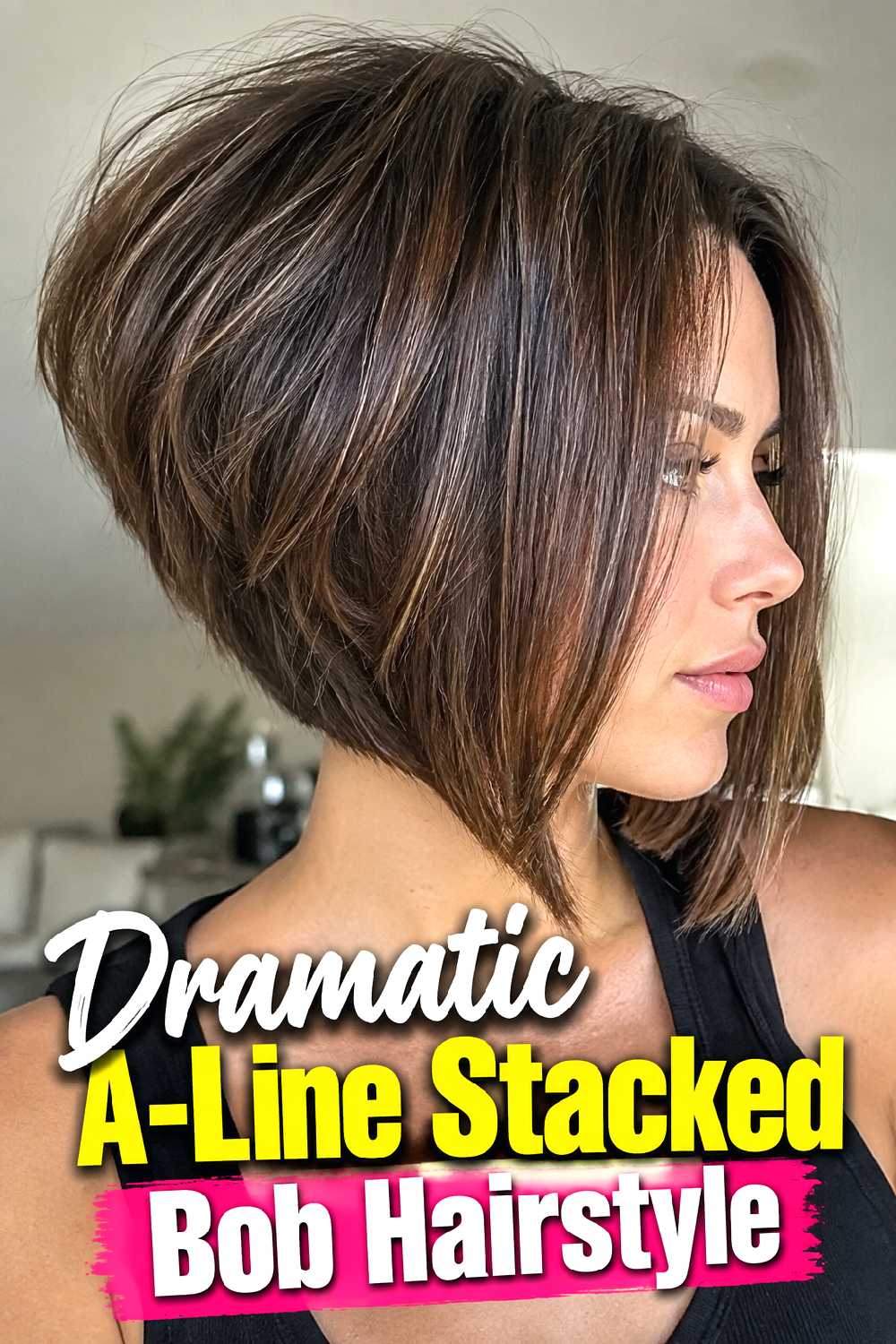
A pronounced front-to-back difference gives this bob its bold, graphic shape. The nape sits noticeably shorter, while the front panels stretch toward the chin or below, creating a strong diagonal line when viewed from the side. Stacking through the back prevents the short area from looking flat and builds a smooth transition into the longer sides. This cut makes the biggest impact when the perimeter is kept crisp and the surface is styled relatively smooth. It is ideal for someone who wants an unmistakably angled silhouette rather than a subtle bob. The longer front also preserves enough length to tuck behind the ears or frame the jaw.
Best For
Straight and lightly wavy textures make it especially easy to showcase the strong A-line perimeter and dramatic difference in length.
Wear & Maintenance
The sharper the angle, the more noticeable growth becomes, so maintaining the intended proportions is important for preserving the design.
4. Chin Length Stacked Angled Bob Hairstyle
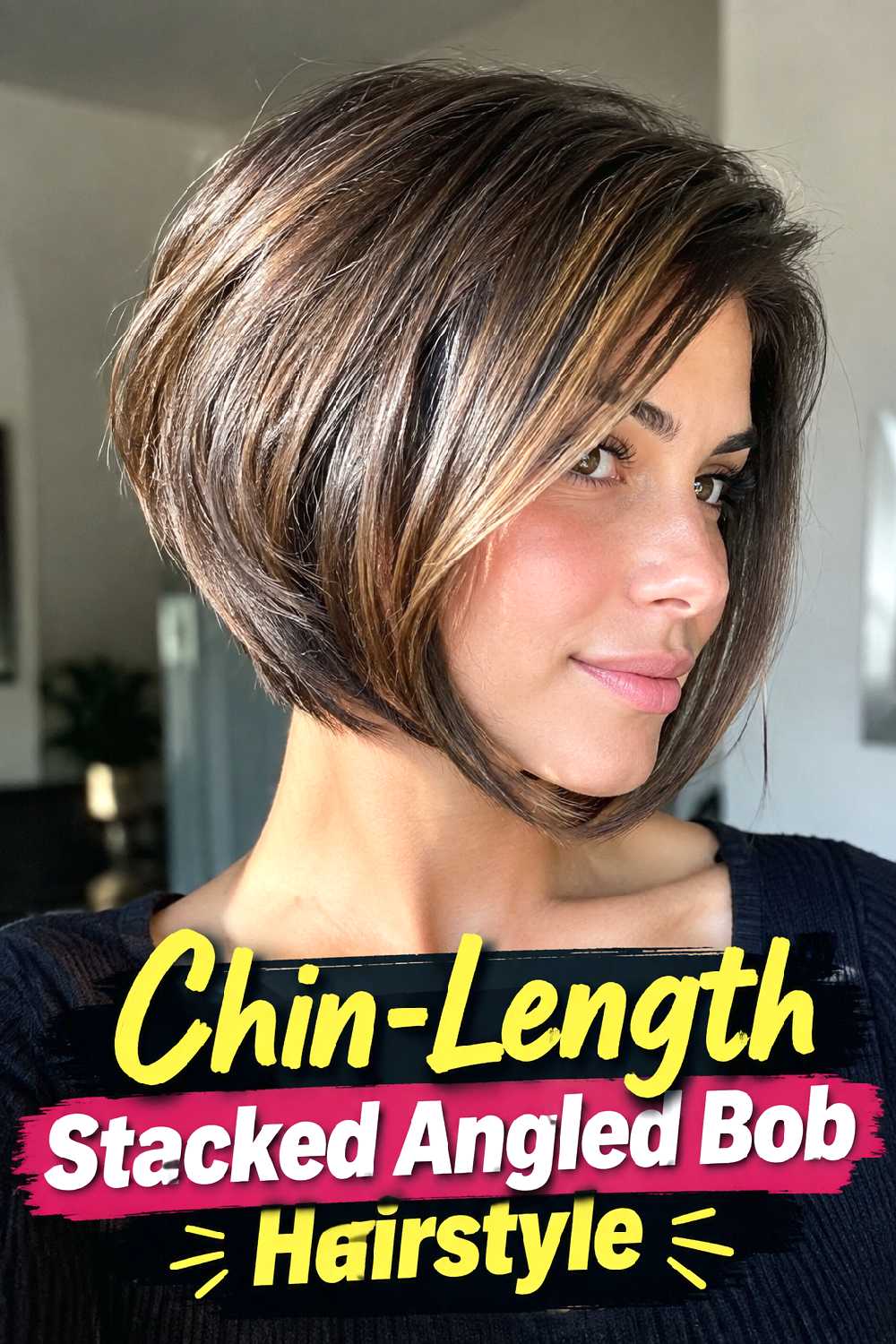
Keeping the longest pieces around chin level gives the stacked angled bob a compact, balanced appearance. The back is graduated close to the nape, creating volume through the lower crown before the shape extends forward toward the face. Because the overall length stays short, the haircut feels light and easy to style while still offering enough framing to soften the jawline. It can be worn sleek for a precise finish or given slight bends for a less structured effect. This length is particularly useful for someone transitioning from a pixie or very short bob who wants additional movement without moving into shoulder-length territory.
Hair Type & Length
Fine to medium-density hair can respond well to this length because the shorter perimeter helps the ends maintain a fuller appearance.
Styling Notes
Keep the front pieces smooth and lightly curved inward to emphasize the chin-length outline rather than flipping them away from the face.
5. Neck Grazing Stacked Angled Bob Hairstyle
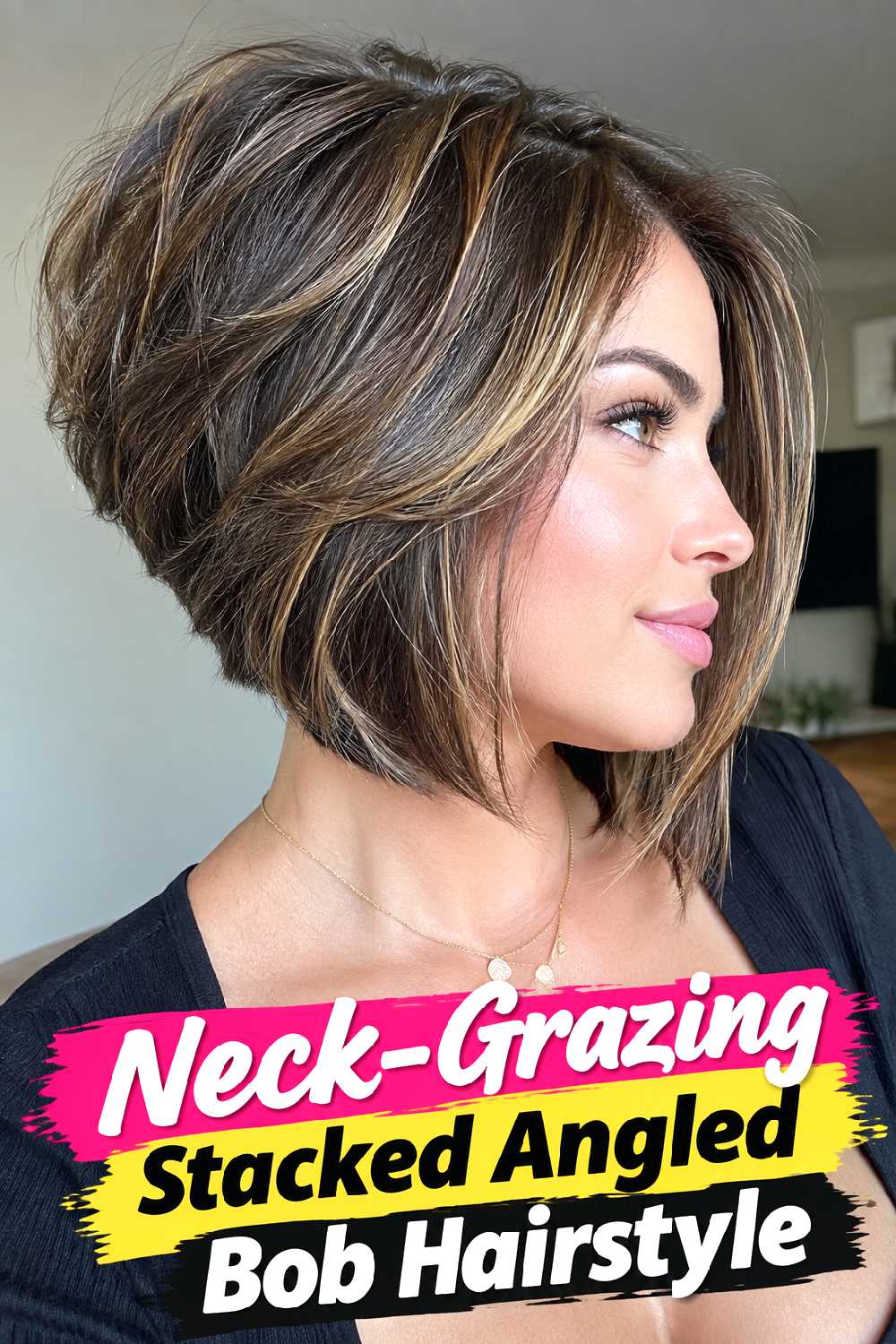
A neck-grazing version offers a little more length while keeping the distinctive stacked shape visible. The nape remains shorter and softly graduated, but the sides extend farther down, creating an elegant diagonal that feels less cropped than a traditional short bob. This extra length adds versatility for styling, especially if you like loose bends, tucked sides, or a softer everyday finish. The back still carries enough structure to prevent the cut from becoming a simple one-length bob. It is an appealing middle ground for anyone who wants visible movement and face framing but is hesitant to commit to a very short nape or chin-level perimeter.
Best For
This version works well for people who want the visual lift of stacking while keeping enough length to soften the transition into a shorter haircut.
Pro Tip
Ask for blended graduation rather than an overly tight stack if you prefer a relaxed neckline and easier grow-out.
6. Rounded Stacked Angled Bob Hairstyle
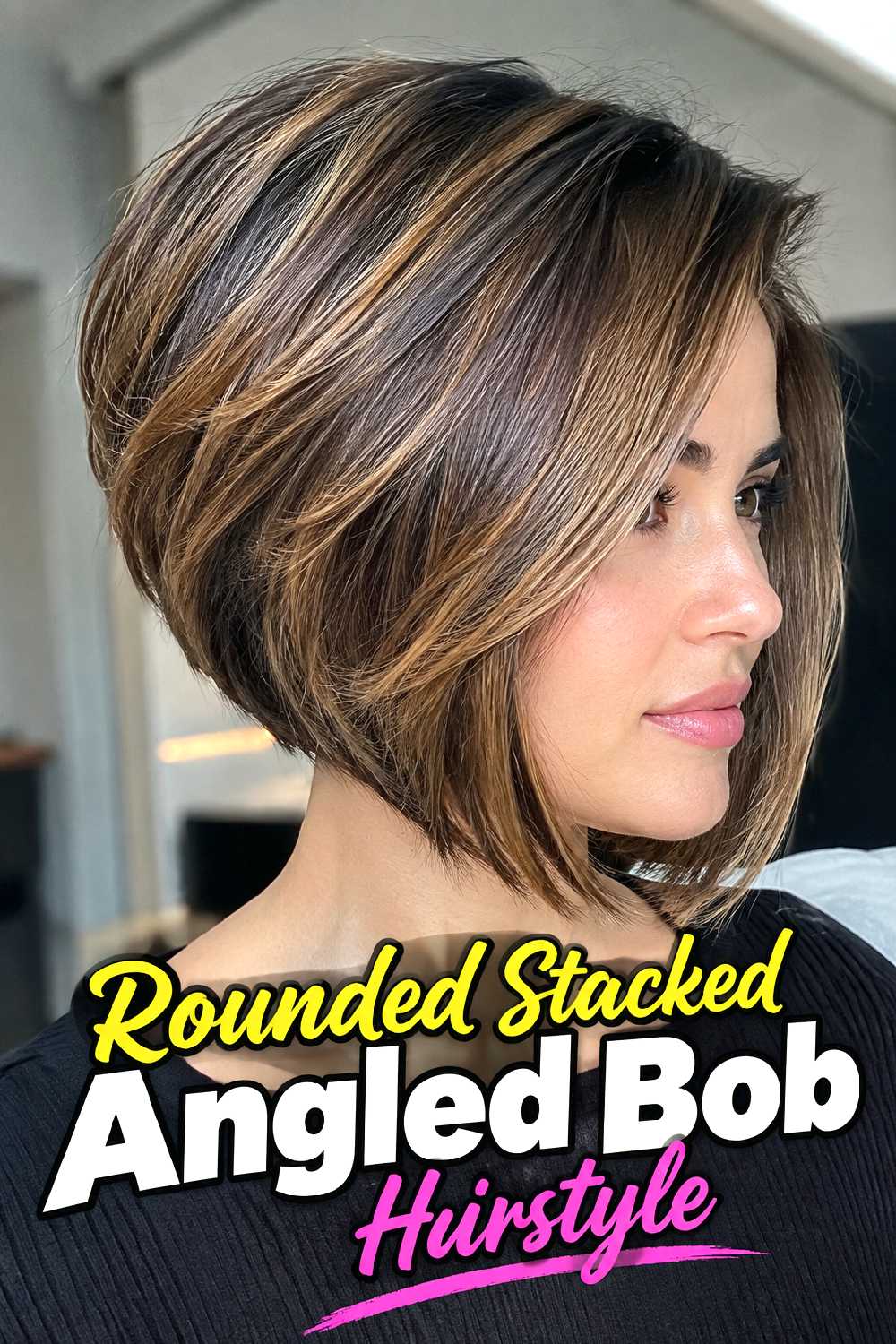
A rounded stacked bob emphasizes a smooth, curved silhouette through the back of the head. Graduated layers build gentle fullness at the crown and occipital area, then taper neatly toward the nape before extending into longer angled front sections. The result looks polished and dimensional without requiring exaggerated height. This shape can be particularly flattering when the hair naturally holds a slight bend, since the curve of the cut works with that movement instead of fighting it. A round-brush blowout brings out the contour beautifully, but the finish should remain soft enough for individual strands and natural texture to show rather than appearing helmet-like.
Styling Notes
Direct the back layers around the curve of the head with a round brush instead of lifting everything straight upward.
Why It Works
The rounded stack creates controlled fullness where it is most visible while the longer front maintains a streamlined, face-framing effect.
7. Textured Stacked Angled Bob Hairstyle
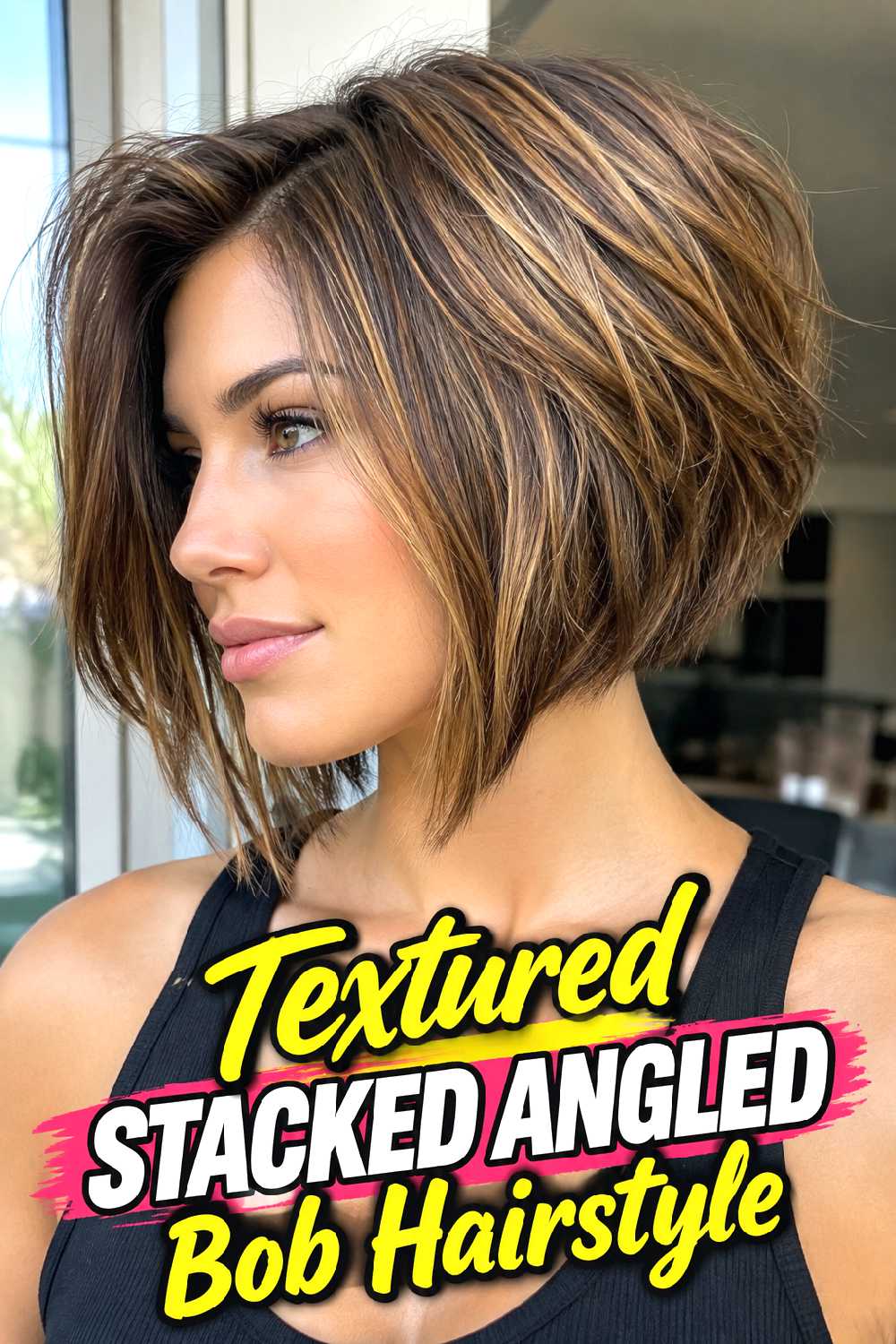
Piecey texture gives the stacked angled bob a casual, modern finish that feels less formal than a smooth blowout. The graduated back provides the foundation, while lightly broken-up layers create separation through the crown, sides, and ends. Rather than forming one solid surface, the hair shows small variations in direction and movement that make the shape look lived-in. This approach is especially useful for naturally wavy hair or straight hair that holds texture well. The key is keeping the angled perimeter recognizable so the tousled finish does not erase the structure. A small amount of texture spray or lightweight paste can define individual pieces without making the hair stiff.
Best For
Medium-density hair usually provides enough body for visible separation while still allowing the layered ends to move freely.
Pro Tip
Apply styling product with your fingertips rather than coating the entire surface to preserve movement and natural shine.
8. Wispy Stacked Angled Bob Hairstyle
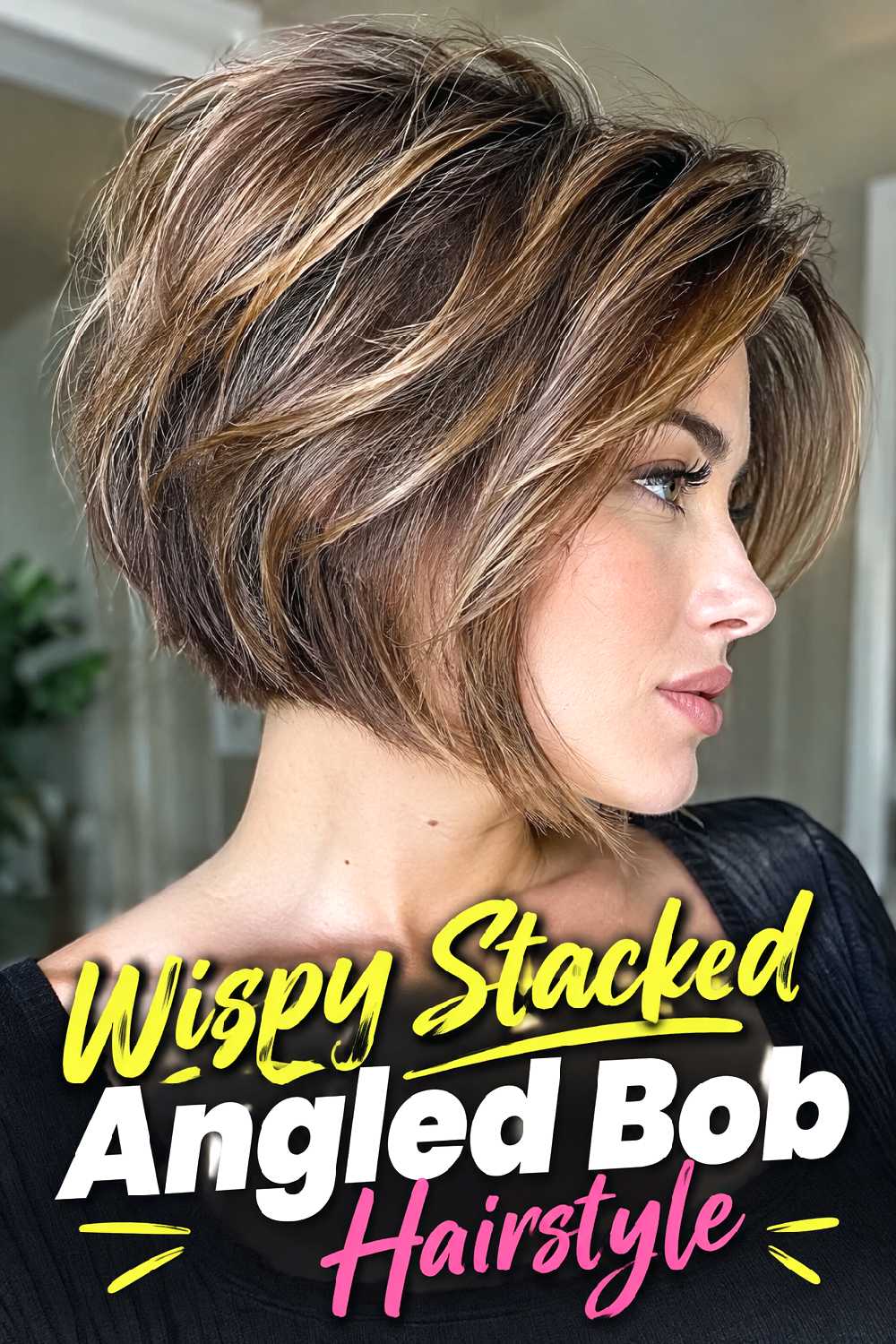
Fine, feathered ends soften the geometry of this stacked bob and give it a more delicate appearance. The shorter back still provides lift, but the transition into the sides feels airy rather than heavily sculpted. Around the face, lightly tapered pieces can create movement without forming chunky layers, making the overall cut appear softer and less severe. This approach is useful if you like angled bobs but want to avoid a dense, sharply defined perimeter. Wispy detailing is most effective when the ends remain healthy and controlled, since excessive thinning can make the haircut look sparse. Gentle blow-drying or a subtle bend is enough to reveal the layered texture.
Hair Type & Length
Fine to medium hair is well suited to this effect, provided the perimeter retains enough density to keep the bob looking balanced.
Wear & Maintenance
Avoid overusing heavy oils or creams, which can collapse the light texture and make the wispy sections clump together.
9. Sleek Stacked Angled Bob Hairstyle
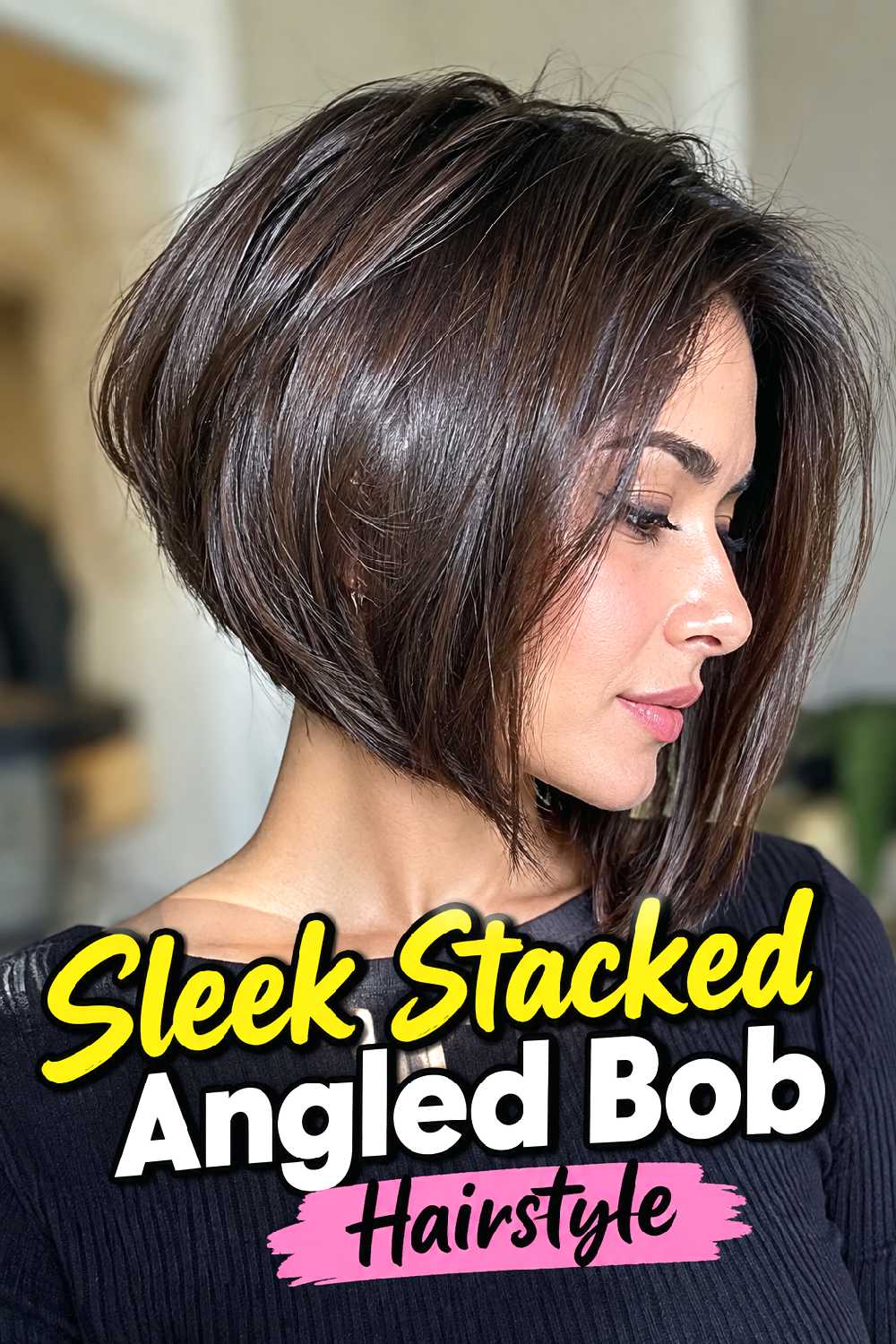
A sleek finish puts the precision of an angled stacked bob on full display. The back follows a controlled graduated curve, while the longer front pieces create a clean diagonal with minimal fluff or separation. Smooth texture makes every part of the silhouette visible, so the haircut itself needs to be well balanced from the nape through the sides. This look works beautifully on naturally straight hair and can also be created on wavy textures with careful blow-drying. The goal is polished movement rather than pin-straight stiffness; maintaining a touch of body at the crown keeps the stacked effect recognizable and prevents the style from appearing flat against the head.
Styling Notes
Use a heat protectant and direct airflow downward along the hair shaft for smoothness, finishing only where needed with a flat iron.
Why It Works
The refined surface highlights the graduation, shine, and angled perimeter without relying on extra texture to create visual interest.
10. Side Parted Stacked Angled Bob Hairstyle
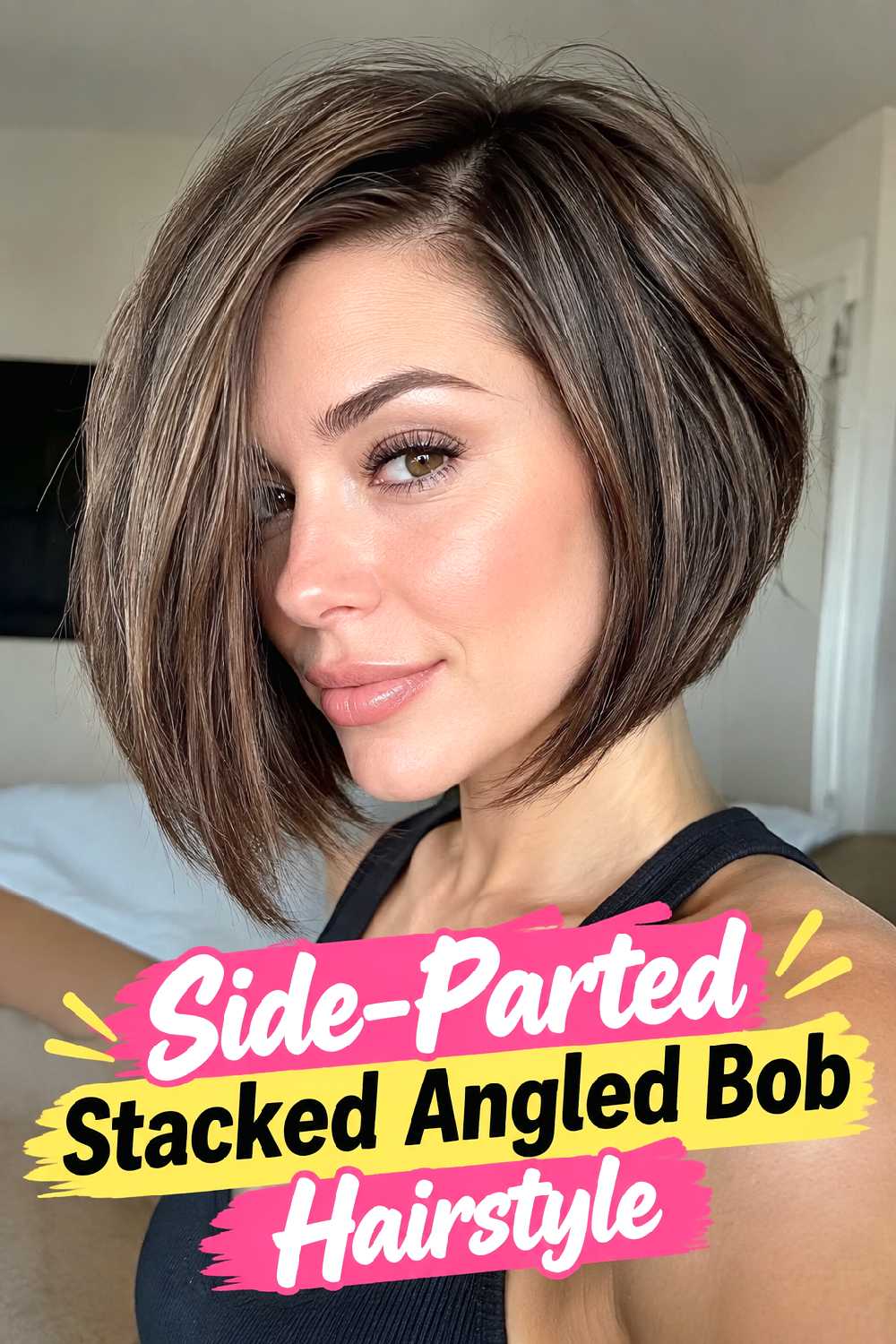
Moving the part noticeably to one side gives the stacked bob instant asymmetry without changing the underlying haircut. More hair falls across one side of the forehead, creating extra sweep and volume while the opposite side can be tucked neatly behind the ear. The angled front pieces reinforce that movement, especially when they sit around the jaw or slightly below it. At the back, stacked graduation keeps the silhouette lifted so the heavier side part does not pull the entire shape downward. This variation can feel sophisticated when styled smooth or casual with a gentle bend. It is also an easy way to refresh an existing angled bob without significantly shortening it.
Best For
A side part can be particularly helpful when you want more visible crown lift or prefer an off-center frame around the face.
Pro Tip
Dry the roots briefly in the opposite direction before flipping them into the final part to encourage natural-looking volume.
11. Curtain Bang Stacked Angled Bob Hairstyle
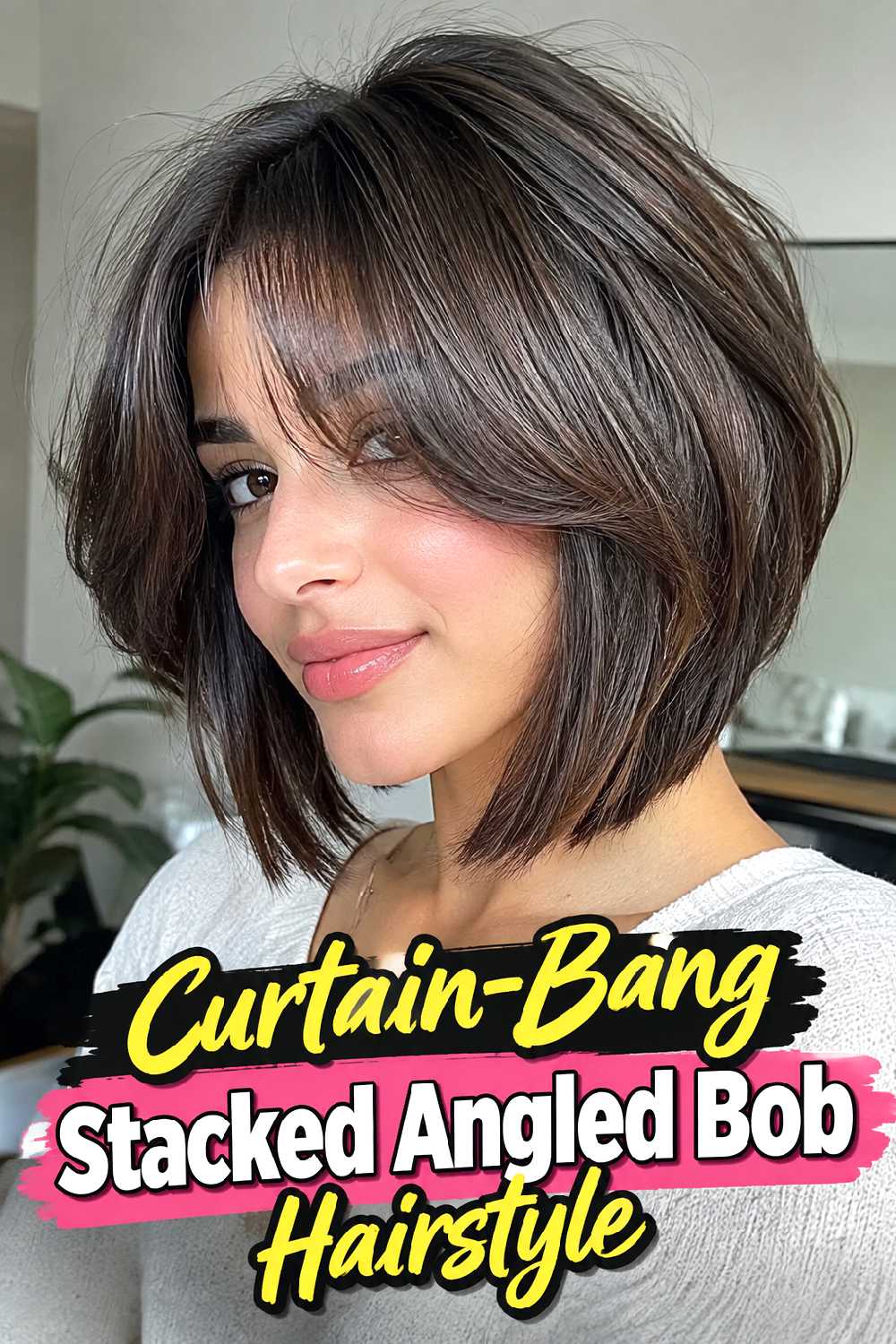
Curtain bangs introduce soft movement across the front while allowing the stacked bob to keep its strong side profile. The fringe is usually shorter near the center and gradually lengthens toward the cheekbones, where it can blend into the angled sides. This creates a layered frame rather than a solid horizontal line across the forehead. The stacked back adds body and shape, balancing the lighter movement around the face. Because curtain bangs can be worn parted or swept aside, they offer more styling flexibility than a blunt fringe. They pair especially well with a slightly relaxed bob finish, where bends and natural texture keep the haircut cohesive from front to back.
Styling Notes
Use a small round brush to guide the bangs away from the center, keeping the bend loose so they fall naturally into the side layers.
Wear & Maintenance
The fringe may need more frequent reshaping than the rest of the bob to maintain its center opening and cheekbone-skimming length.
12. Side Swept Bang Stacked Angled Bob Hairstyle
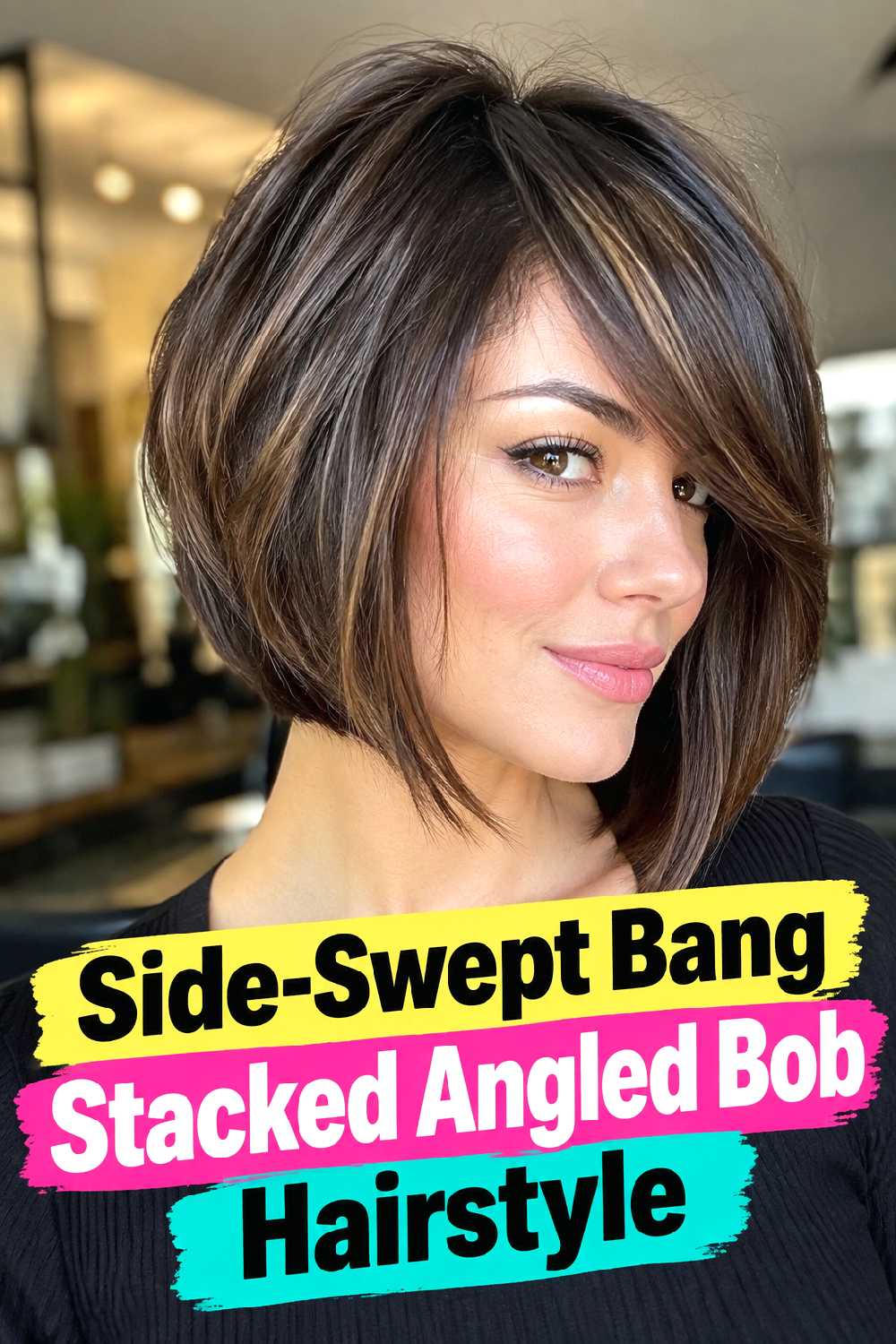
A side-swept fringe creates a smooth diagonal across the forehead that complements the angled shape of the bob below it. The bangs can begin around eyebrow length and gradually merge into the longer side pieces, producing a continuous flow from the front of the haircut toward the jaw. Behind that face-framing section, stacked layers provide lift and prevent the bob from looking too heavy. This combination offers softness without losing the crisp identity of the cut. It can work particularly well when you prefer some forehead coverage but do not want the commitment of a full blunt fringe. Smooth styling emphasizes the sweep, while gentle texture makes it more relaxed.
Best For
This option suits anyone who likes a defined side part and wants the fringe to blend naturally into the longer front section of the bob.
Styling Notes
Direct the bangs sideways while blow-drying instead of curling them tightly under, which can make the fringe look overly rounded.
13. Wavy Stacked Angled Bob Hairstyle
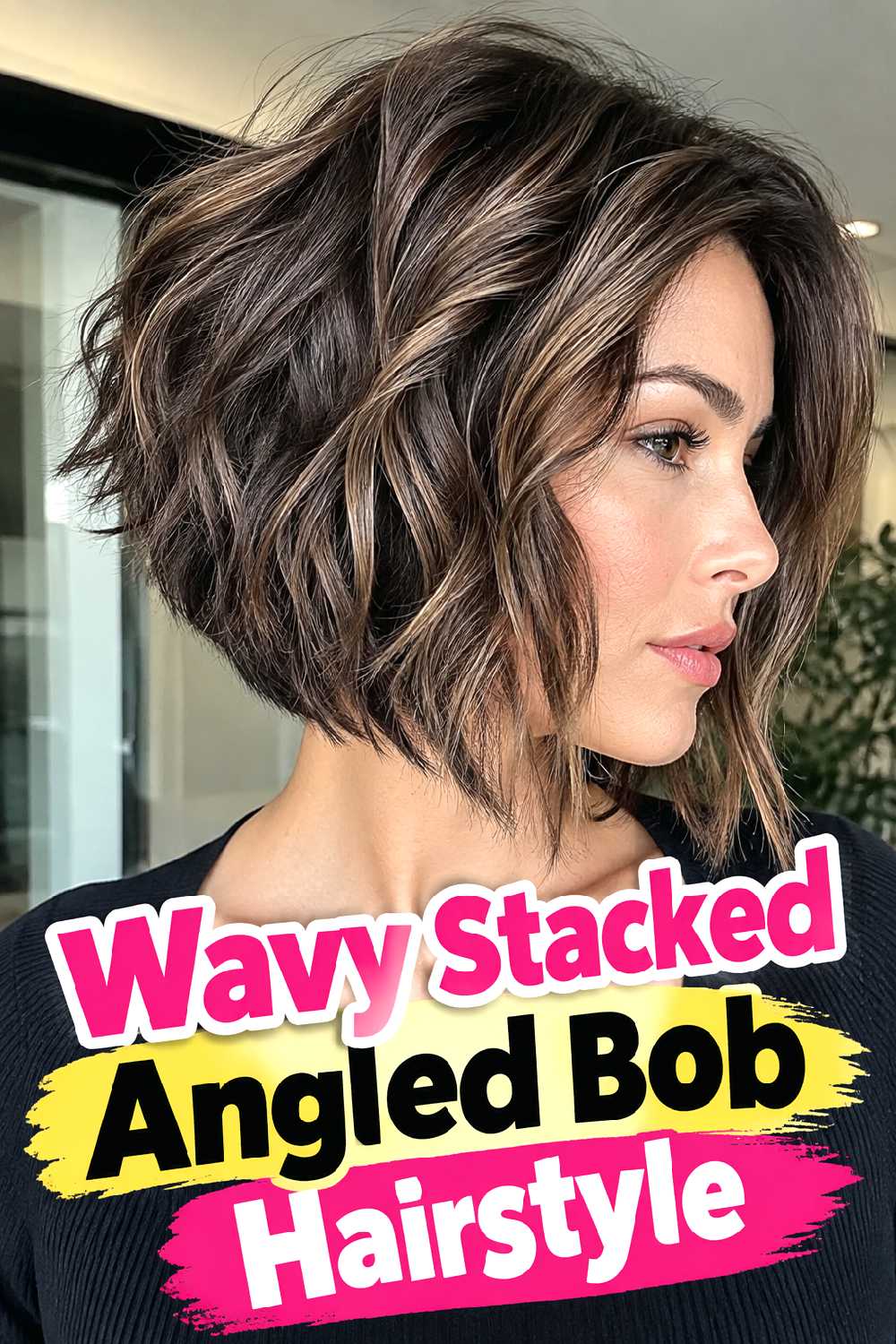
Loose waves bring a softer, fuller dimension to the stacked angled bob. The graduated back supports natural lift, while bends through the sides break up the precise perimeter and create a more relaxed silhouette. Because waves visually shorten the hair, leaving slightly more length through the front helps preserve the angled effect once the texture is styled. This version works well for naturally wavy hair or for straight textures that hold a loose iron wave. The most flattering finish usually includes irregular movement rather than identical curls, allowing the hair to look touchable and natural. Keeping the ends somewhat relaxed also prevents the style from becoming overly rounded or bulky.
Hair Type & Length
Naturally wavy hair can make this cut especially low-effort when the layering is planned around the hair’s existing bend pattern.
Pro Tip
Alternate the direction of a few waves and leave some ends straighter to create a less uniform, more natural finish.
14. Curly Stacked Angled Bob Hairstyle
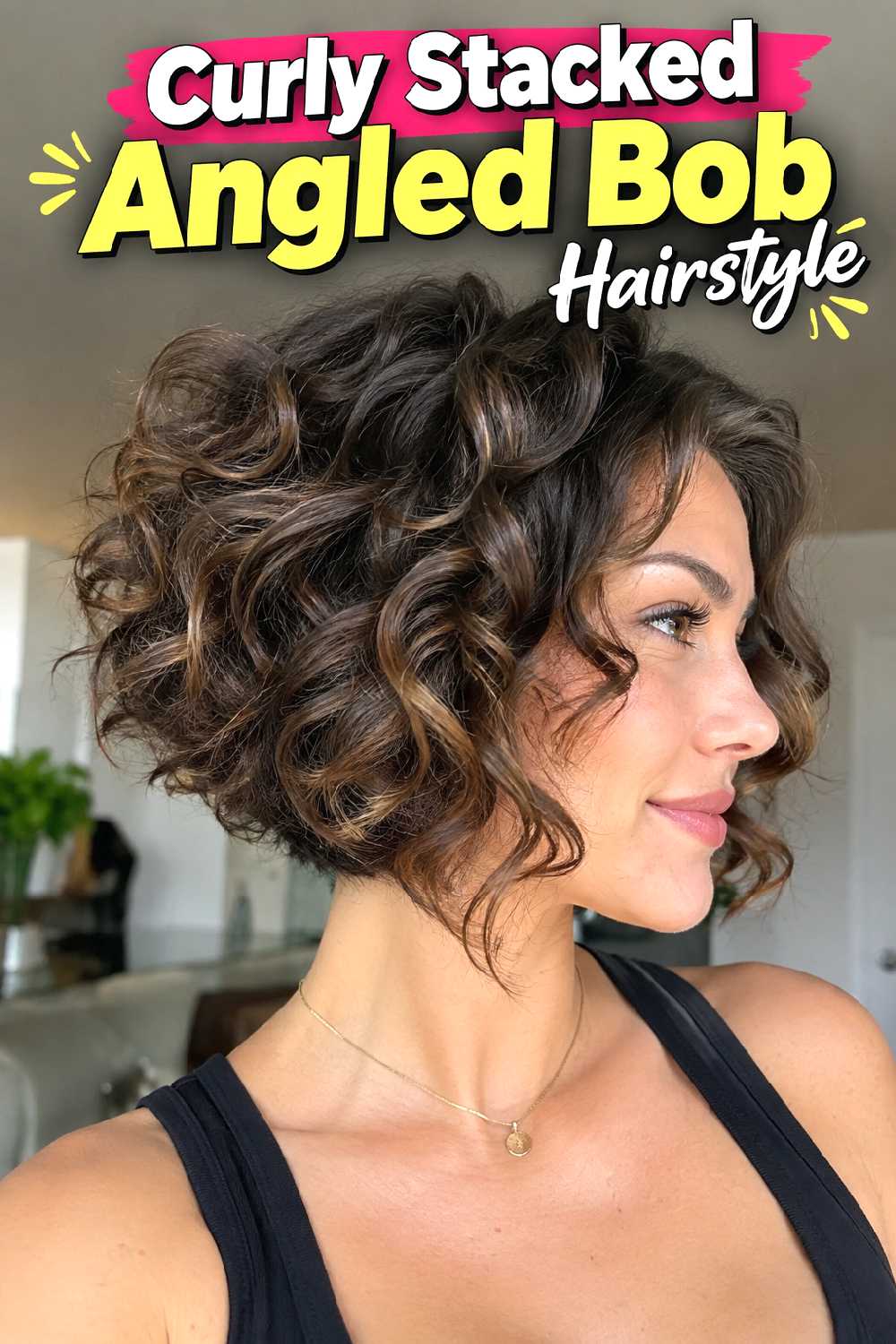
Natural curls can give a stacked angled bob impressive dimension when the graduation respects the curl pattern. The back is shortened and layered to build shape, while the front remains longer so the curls still create a recognizable angled silhouette. Because curls spring upward as they dry, the cutting length needs to account for shrinkage rather than copying the proportions of a straight bob exactly. A well-balanced version should feel rounded and lively without creating excessive bulk at the sides. Individual curls add texture automatically, so styling can focus on definition and moisture rather than forcing the hair into a smooth finish. The result is structured yet naturally expressive.
Hair Type & Length
This approach works best when the stylist considers curl density, shrinkage, and the way individual sections naturally settle when dry.
Wear & Maintenance
Lightweight curl products help preserve definition without adding so much weight that the stacked crown loses its lift.
15. Fine Hair Stacked Angled Bob Hairstyle
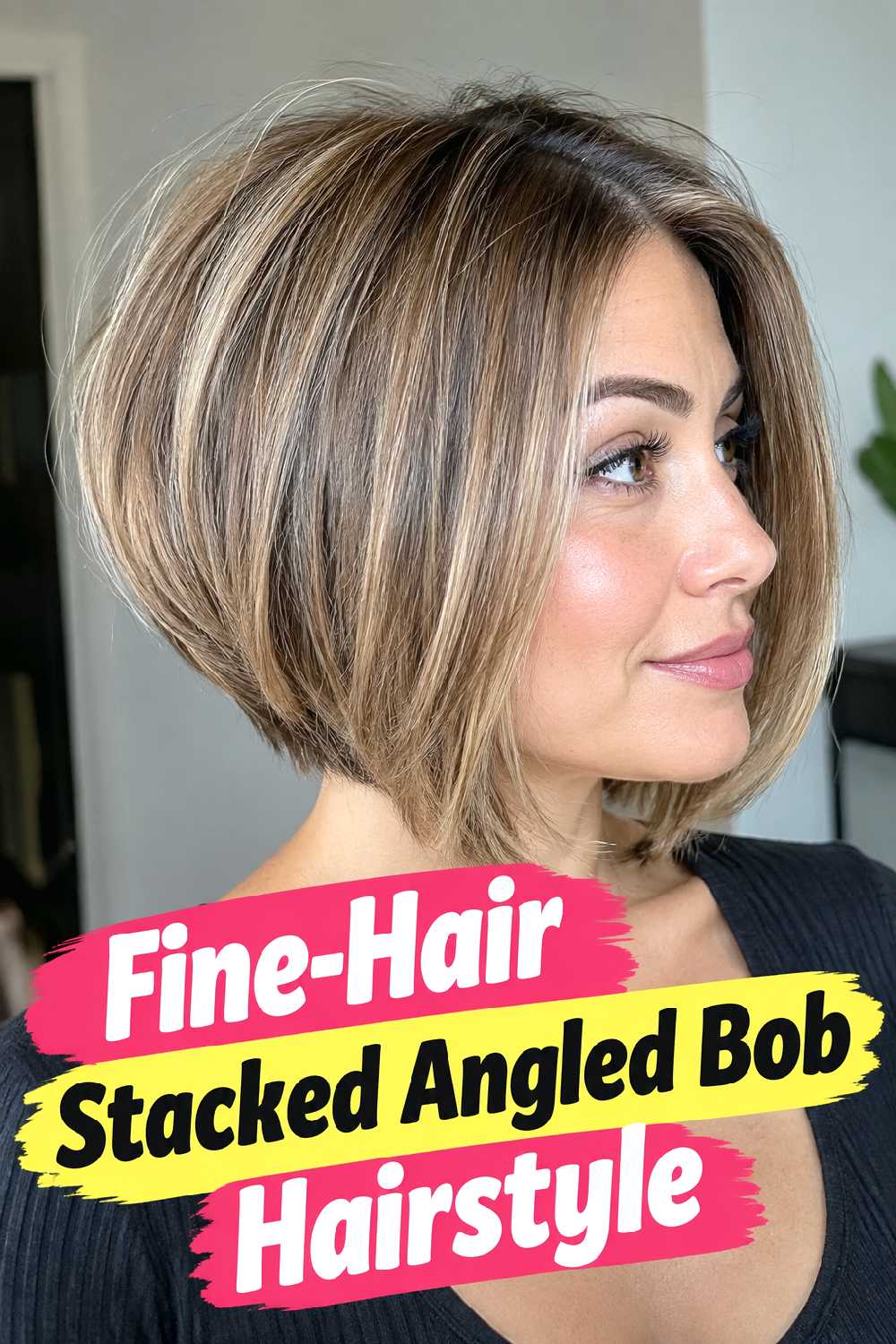
A thoughtfully shaped stacked bob can make fine hair appear more substantial by concentrating fullness through a shorter, controlled silhouette. The back uses measured graduation rather than aggressive thinning, while the front stays slightly longer to establish the angled outline. A cleaner perimeter gives the ends more visual density, so the haircut can look fuller even without dramatic styling. Subtle root lift and a smooth bend are usually enough to bring the structure forward. Too many short layers may reduce the sense of thickness, making restraint especially important with this version. The finished style should look light and movable while still maintaining a strong line through the lower edge.
Why It Works
Shorter lengths reduce the weight pulling fine strands downward, while the stacked back creates shape without requiring excessive teasing or product.
Pro Tip
Choose lightweight volumizing products near the roots and keep conditioning oils concentrated on the ends to avoid flattening the crown.
16. Thick Hair Stacked Angled Bob Hairstyle
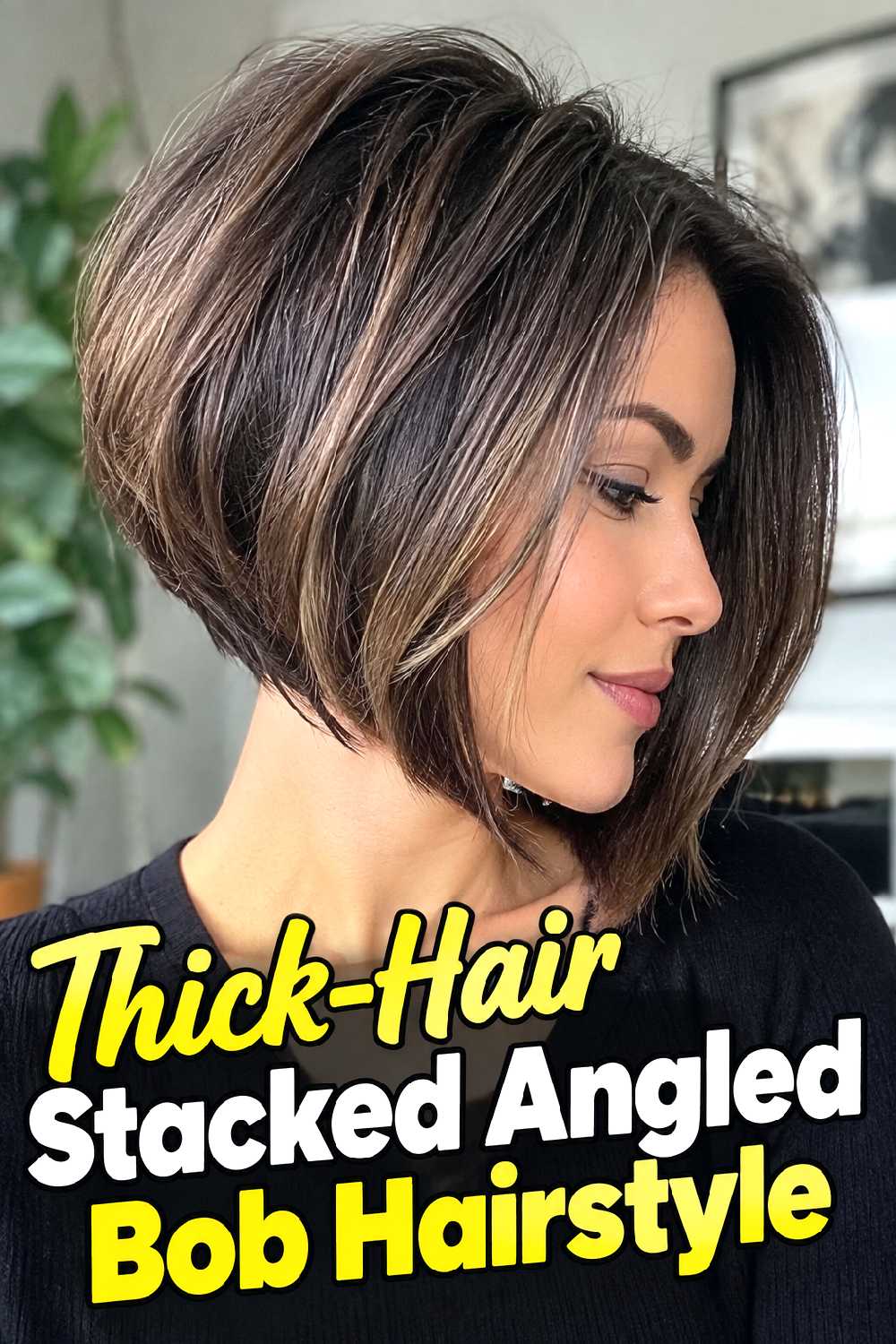
Thick hair gives a stacked angled bob plenty of natural presence, but strategic weight removal keeps the shape from becoming bulky. The graduation at the back can create a beautifully defined curve when internal layers are balanced carefully, while longer front pieces preserve the sleek directional line of the cut. Rather than thinning every section heavily, targeted layering allows the surface to stay polished while reducing excess density underneath. This version can be worn smooth, softly bent, or naturally textured depending on the hair type. The goal is controlled movement: enough structure to show the stack clearly, but enough lightness that the sides do not expand into an overly triangular silhouette.
Hair Type & Length
Dense straight, wavy, or gently curly hair can all suit this shape when the layering is customized to how much volume the hair naturally creates.
Styling Notes
Focus smoothing products through the mid-lengths and ends rather than the roots so the stacked crown keeps its natural lift.
17. Highlighted Stacked Angled Bob Hairstyle
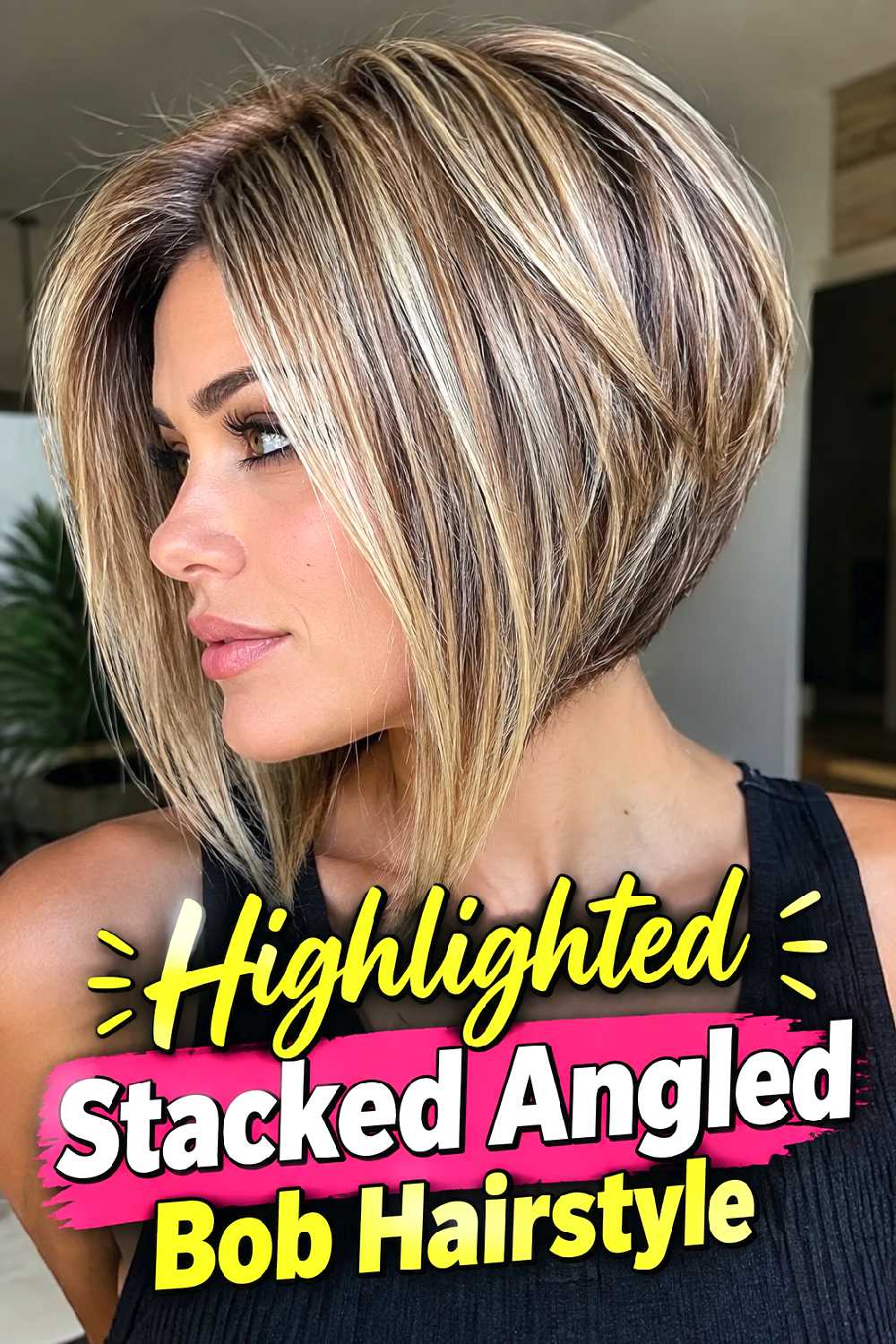
Strategic highlights can make the graduation and movement of a stacked bob more visible by creating contrast between individual layers. Fine ribbons around the crown show the direction of the stack, while brighter face-framing sections draw attention toward the longer angled pieces at the front. The color does not need to be highly contrasting; subtle dimension can be enough to make the haircut appear more textured and layered. This idea works with sleek, wavy, or softly tousled finishes, depending on how prominently you want the color placement to show. Keeping the root area slightly deeper can also emphasize the brightness through the ends without overwhelming the short silhouette.
Why It Works
Dimensional color helps separate overlapping layers visually, making the stacked structure easier to see even when the styling remains soft.
Wear & Maintenance
Consider how often you want to refresh the color as well as the haircut, particularly if the lightest pieces sit close to the face or root area.
18. Inverted Stacked Angled Bob Hairstyle
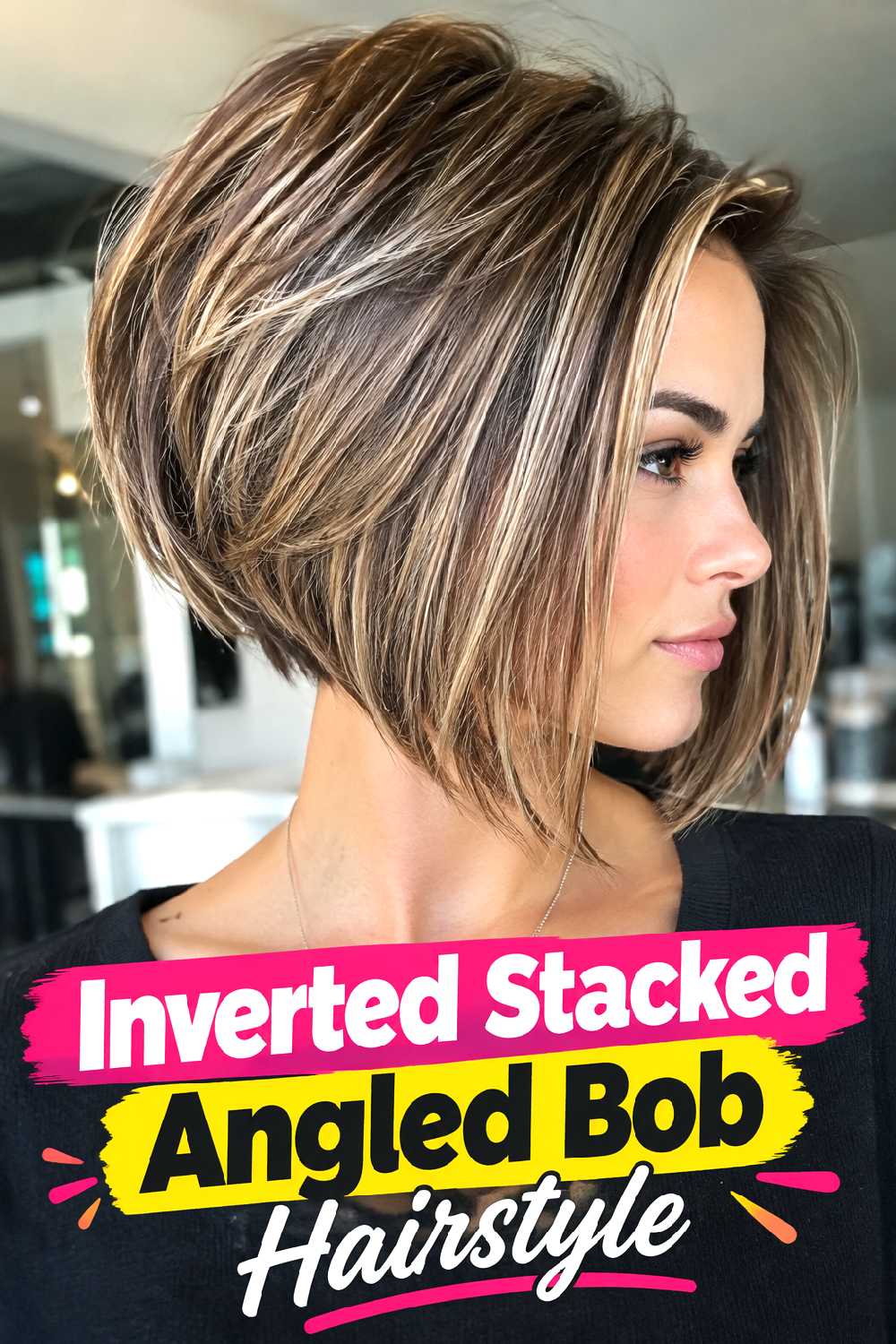
An inverted stacked bob makes the short-back, long-front concept especially clear. Closely graduated layers create lift around the back of the head, then the perimeter lengthens progressively toward the front for a clean, descending line. Compared with a softer stacked bob, this variation usually emphasizes the contrast between the nape and front sections more strongly. It can look sharp and architectural when straightened or slightly more casual with loose texture through the ends. The longer front pieces provide visual balance against the compact back and can frame the jaw beautifully. This is a strong option if you want the angle itself to be one of the haircut’s most noticeable features.
Best For
Straight to moderately wavy hair tends to reveal the inverted outline clearly, especially when the front pieces remain smooth and defined.
Wear & Maintenance
Maintaining both the short nape and elongated front proportions is important, since uneven growth can quickly soften the intended inverted shape.
How to Choose the Right Look
Start with length and angle. A chin-length or sharply inverted bob creates a stronger short-hair statement, while a neck-grazing version leaves more room for waves, bends, and softer face framing. If you want the stacked effect to be obvious from the side, choose a shorter nape with more graduation. For a subtle result, keep the difference between the back and front less dramatic.
Hair texture should influence how much layering you choose. Fine hair often benefits from a stronger perimeter and restrained layering so the ends retain density. Thick hair may need internal weight removal to keep the back and sides from becoming bulky. Wavy and curly textures require enough length to account for natural movement and shrinkage.
Think about daily styling time as well. Sleek, dramatic versions usually need more deliberate blow-drying to keep the angle polished. Textured, softly layered, wavy, and curly options can accommodate more natural movement. Bangs add another maintenance consideration because they often need styling and reshaping sooner than the rest of the haircut.
Finally, consider comfort and finish. A very short stacked nape can feel light and expose more of the neck, while longer versions provide additional coverage. Bring reference photos that show the front, side, and back so your stylist can understand the amount of stacking, volume, and angle you actually want.
Final Thoughts
Stacked angled bobs can range from softly layered and understated to sleek, sharply inverted, and highly structured. Narrow your favorites by deciding how short you want the back, how much length you want around your face, and whether you prefer polished or natural texture. Adapting the graduation to your density and natural movement will make the finished haircut easier to wear rather than simply copying one exact shape.
FAQs
What is the difference between a stacked bob and an angled bob?
A stacked bob focuses on graduated layers through the back to create shape and lift. An angled bob emphasizes a perimeter that becomes longer toward the front. A stacked angled bob combines both features.
Is a stacked angled bob good for fine hair?
It can be. A shorter shape and controlled graduation can add visible lift, while keeping the perimeter relatively full helps fine ends look denser. Excessive thinning is usually less helpful.
Can thick hair wear a stacked angled bob?
Yes. Thick hair can create a strong, dimensional shape, but carefully placed layers or internal weight removal may be needed to prevent excessive bulk around the back and sides.
Do stacked angled bobs work with wavy or curly hair?
They can work beautifully with both. The length and graduation should be adjusted for natural movement, curl pattern, density, and shrinkage rather than using the exact proportions designed for straight hair.
How often does a stacked angled bob need reshaping?
The ideal schedule varies with hair growth and how precise you want the silhouette to remain. Shorter napes and dramatic angles usually show growth sooner than softer, longer versions.
CTA
Save your favorite stacked angled bob ideas and share them with your stylist when you are ready to explore your next short-hair look.