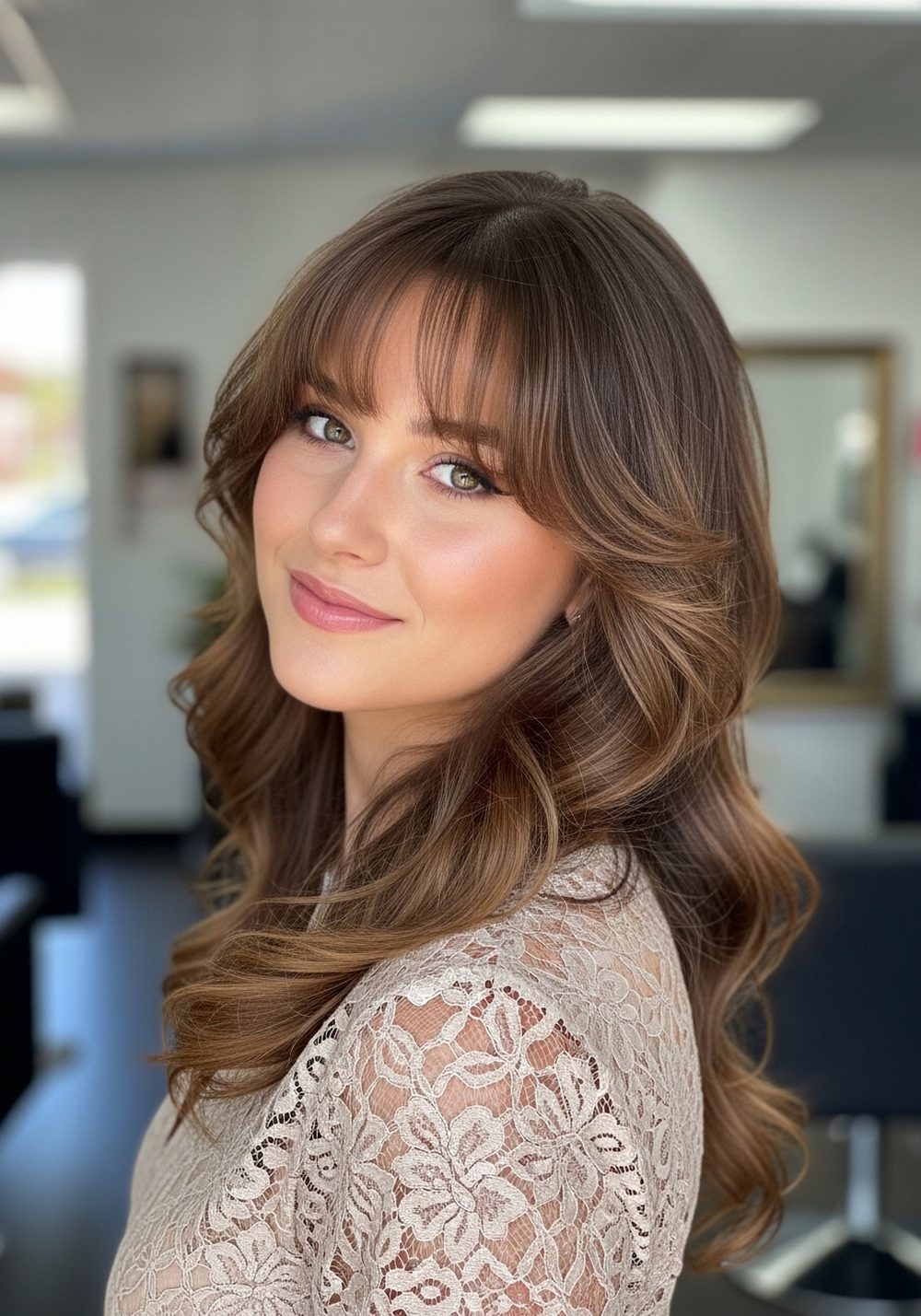
13 Two Fluffy Ponytail Hairstyles for Cute, Voluminous Hair
Two fluffy ponytails can feel playful, polished, romantic, or bold depending on the placement, texture, parting, and finishing details you choose.
This collection explores twin ponytails with noticeably different silhouettes, from high and bouncy styles to low, relaxed versions and naturally textured looks. Each idea keeps the ponytails full enough to create the signature fluffy effect while maintaining believable hair movement, realistic volume, and practical placement.
When choosing your favorite, compare where the ponytails sit, how much root control you want, whether you prefer defined curls or airy texture, and how much styling time feels realistic. Small changes such as a center part, ribbon, braid, face-framing pieces, or smooth crown can completely change the mood.
Quick List
- Soft Curly Twin Ponytails Hairstyle
- High Fluffy Twin Ponytails Hairstyle
- Low Fluffy Twin Ponytails Hairstyle
- Voluminous Wavy Twin Ponytails Hairstyle
- Half-Up Fluffy Twin Ponytails Hairstyle
- Fluffy Bubble Twin Ponytails Hairstyle
- Braided Base Fluffy Twin Ponytails Hairstyle
- Face-Framing Fluffy Twin Ponytails Hairstyle
- Side-Part Fluffy Twin Ponytails Hairstyle
- Sleek-Root Fluffy Twin Ponytails Hairstyle
- Textured Coily Twin Ponytails Hairstyle
- Ribbon-Tied Fluffy Twin Ponytails Hairstyle
- Soft Messy Fluffy Twin Ponytails Hairstyle
1. Soft Curly Twin Ponytails Hairstyle
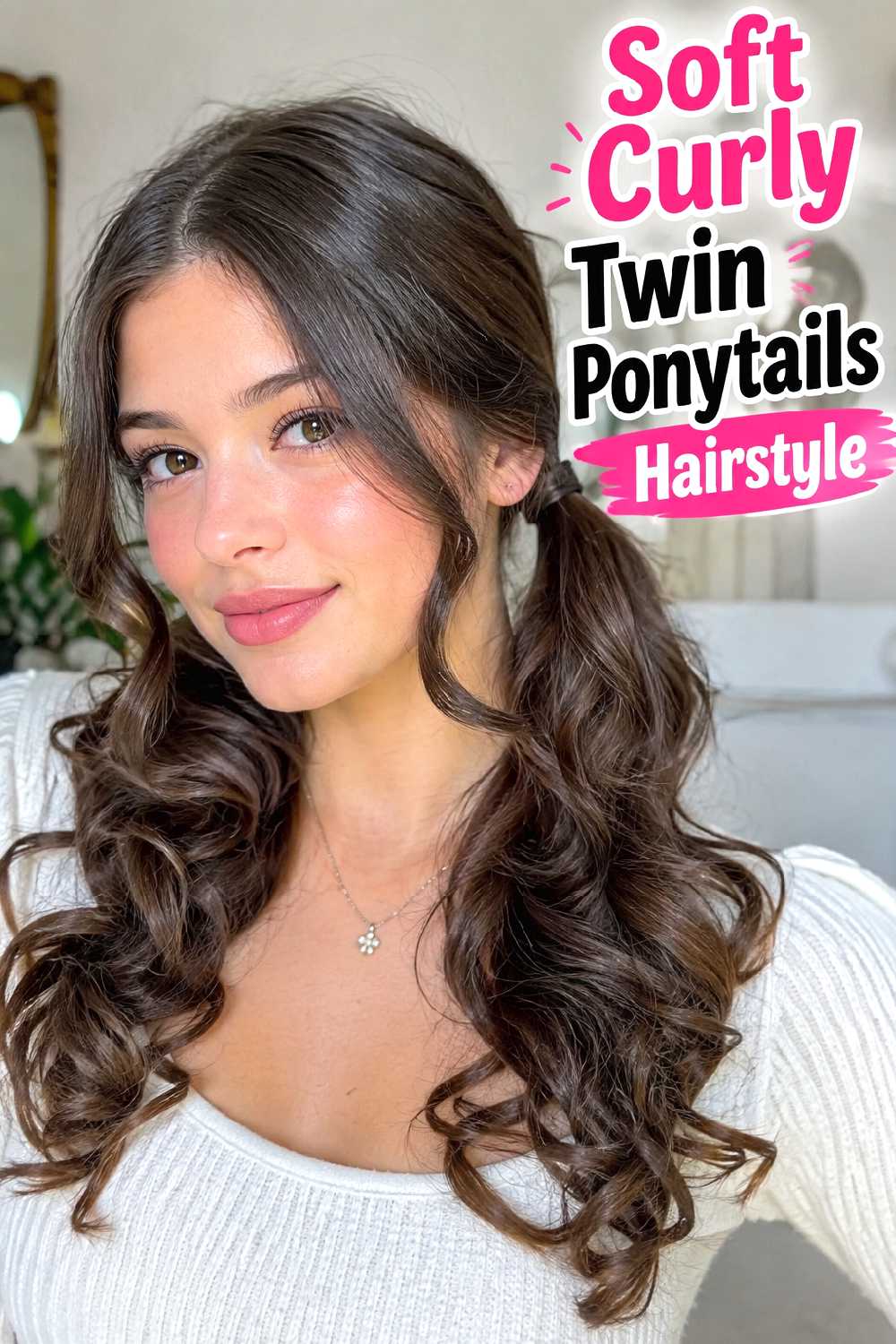
Soft curls give twin ponytails a rounded, airy silhouette without making the style feel overly structured. The hair is divided evenly through the center and secured around mid-height, allowing the curls to fall naturally around the shoulders while still showing plenty of bounce. Leaving the ends softly separated rather than forming identical ringlets keeps the result relaxed and believable. This version can be especially flattering when you want noticeable volume without placing the ponytails extremely high. A few shorter pieces around the temples can soften the front, while the main ponytails stay full and defined. Use a light curl cream or flexible mousse rather than heavy products that could flatten the fluffy finish.
Styling Notes
Curl sections in alternating directions or enhance your natural curl pattern, then gently separate the finished curls with your fingers. Avoid over-brushing once the ponytails are secured.
Best For
This look works particularly well on medium to long hair with natural curls, loose coils, or hair that holds a soft curling-iron set.
2. High Fluffy Twin Ponytails Hairstyle
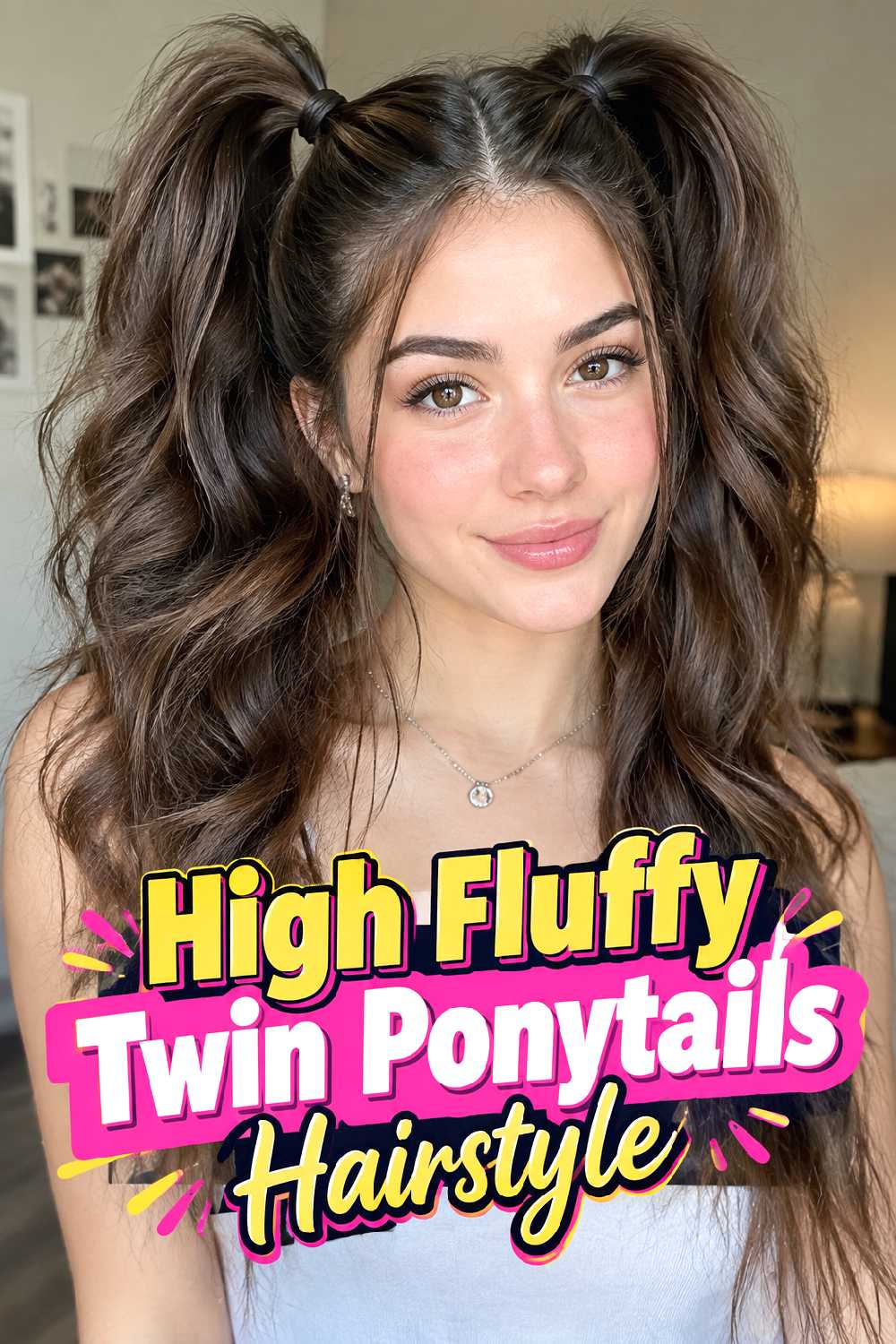
High twin ponytails create one of the most energetic versions of the fluffy ponytail trend. Each ponytail is positioned above the ears and slightly toward the back of the head, giving the lengths room to fan outward before falling. The height naturally emphasizes volume, so the style works best when the ponytails are full but not teased into an exaggerated shape. A clean center part helps balance the two sides, while softly textured lengths keep the result youthful without looking overly rigid. This placement can also make medium-length hair appear more buoyant because the ends sit higher. Secure each side firmly enough to hold its shape, but avoid pulling the hairline uncomfortably tight.
Why It Works
Higher placement lifts the silhouette and makes waves, curls, and natural texture more visible from both the front and sides.
Wear & Maintenance
Use snag-free elastics with secure hold. If the ponytails start losing volume, fluff the lengths with your fingers instead of repeatedly tightening the roots.
3. Low Fluffy Twin Ponytails Hairstyle
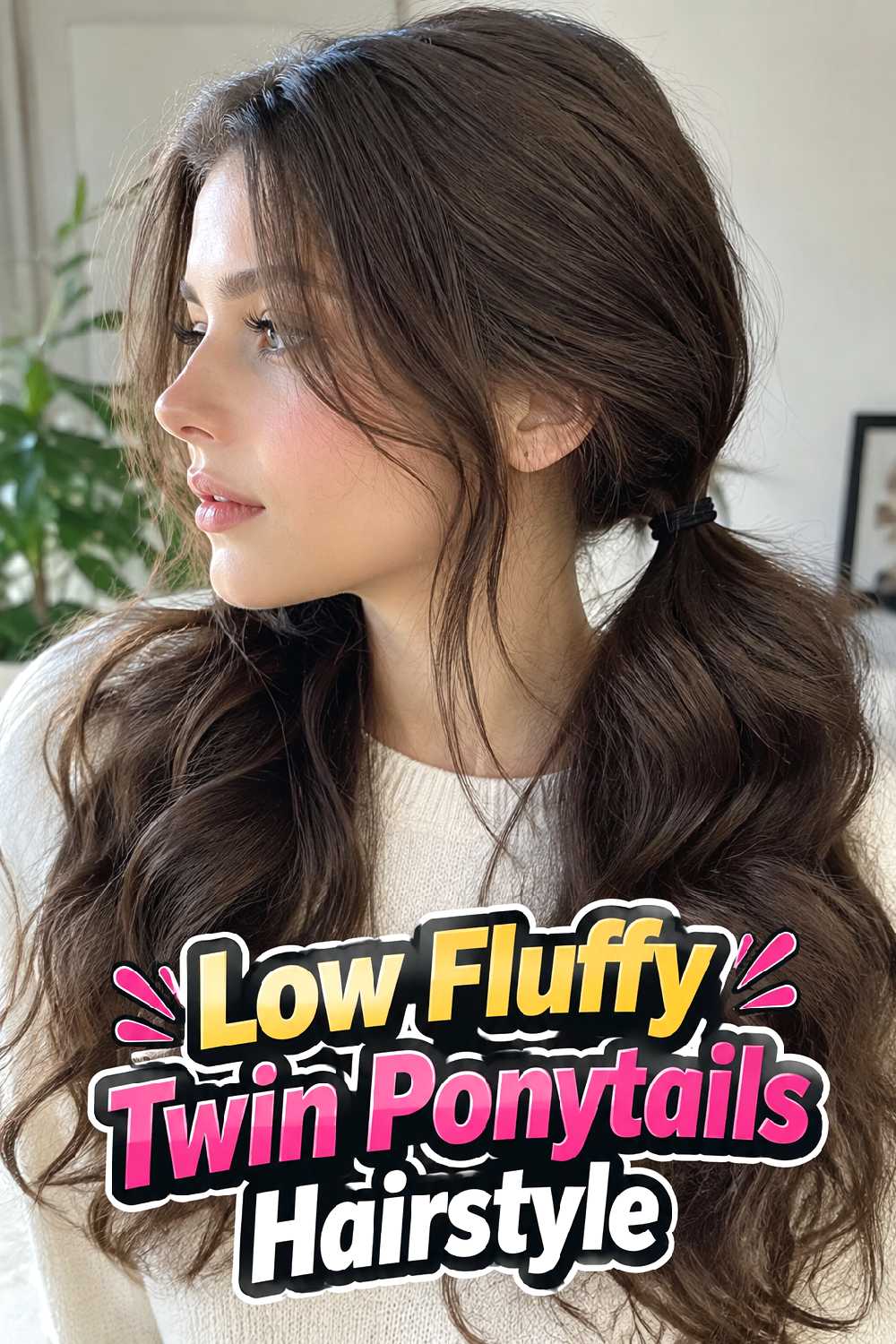
Low fluffy ponytails offer a softer interpretation that feels relaxed and easy to wear. Instead of sitting high near the crown, both ponytails are secured behind or just below the ears so the textured lengths fall close to the neck and shoulders. The lower position makes the style feel less dramatic while still showing plenty of movement through curls, waves, or brushed-out texture. A center part keeps it classic, although a slightly imperfect part can create a more casual finish. This version is also comfortable for longer wear because there is less upward tension at the roots. For extra fullness, gently loosen the hair directly above each elastic rather than pulling large sections out of place.
Hair Type & Length
Medium and long hair are easiest to divide into balanced low ponytails, especially when there is enough length to show texture below the ties.
Pro Tip
Wrap a small strand around each elastic and pin it underneath when you want the ponytails to look more polished without losing their softness.
4. Voluminous Wavy Twin Ponytails Hairstyle
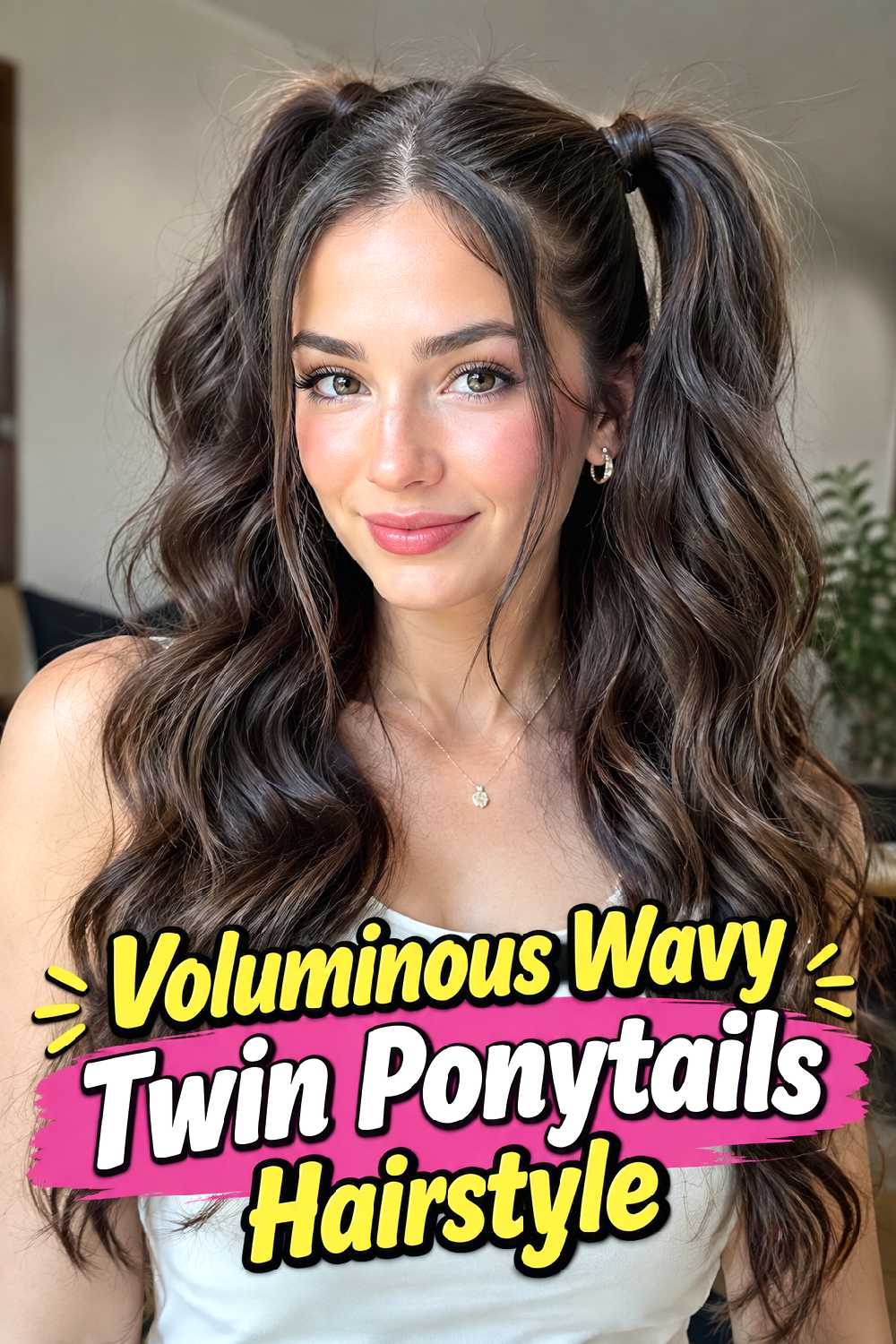
Loose waves make two ponytails look fuller without requiring tightly defined curls. In this version, the hair is styled into broad bends from mid-length through the ends before being gathered into balanced twin ponytails. The waves overlap and separate naturally, producing a wide, soft silhouette with visible movement rather than one solid mass of hair. Keeping the crown relatively smooth creates a useful contrast with the fluffy lengths. This can be an appealing option for anyone who likes the volume of curls but prefers a more relaxed finish. The key is keeping the wave pattern flexible, so avoid soaking the hair with strong hairspray. A light texturizing mist can provide grip while still allowing the ends to move freely.
Styling Notes
Create waves before tying the ponytails so the pattern stays continuous through the lengths. Once secured, gently pull apart a few waves to increase softness and width.
Best For
This style suits medium to long hair that holds heat-styled waves or naturally has a loose wavy pattern.
5. Half Up Fluffy Twin Ponytails Hairstyle
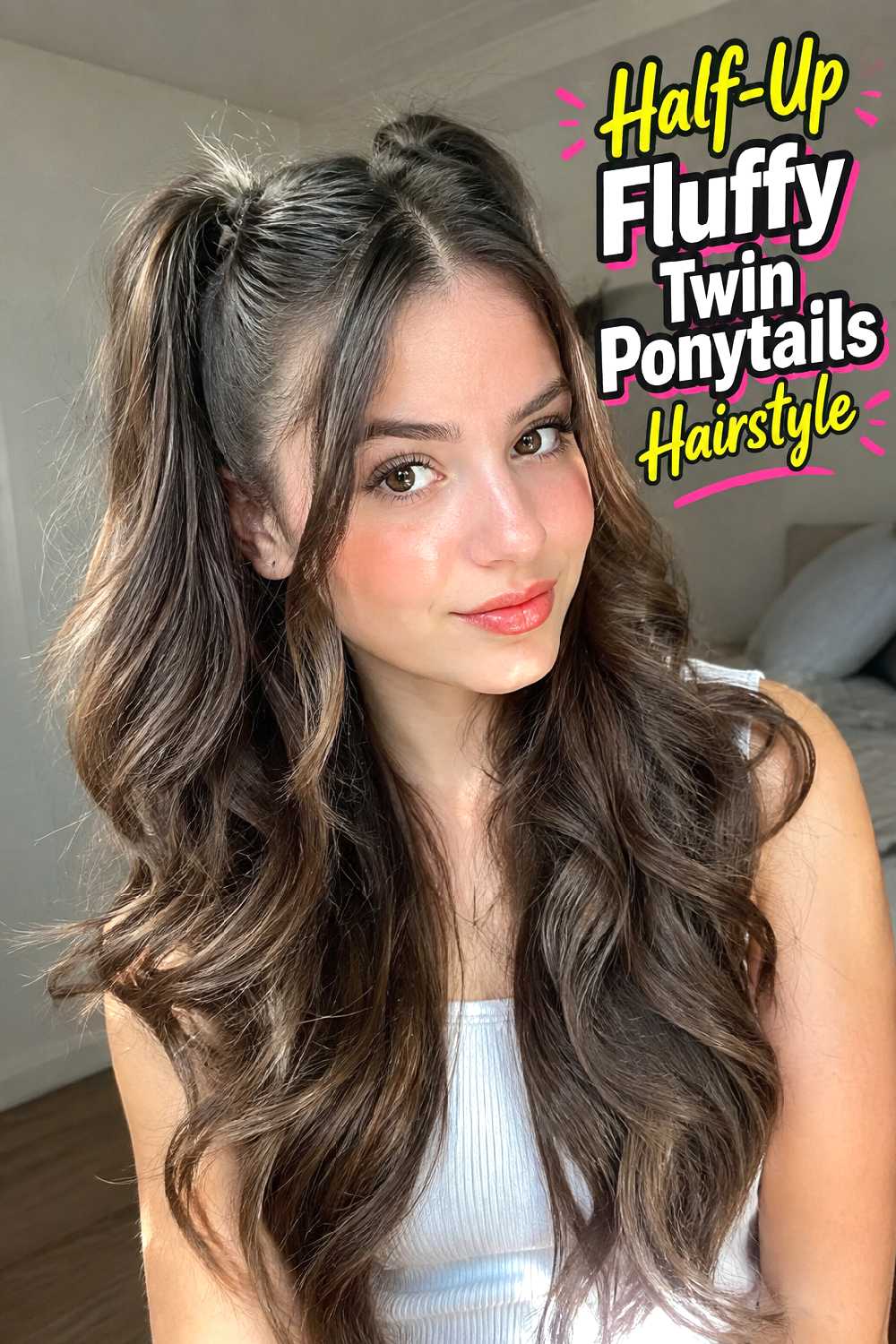
A half-up approach gives you the playful shape of two fluffy ponytails while keeping plenty of hair loose underneath. Only the upper sections are gathered into two small ponytails, usually placed above or just behind the ears, while the remaining lengths flow naturally down the back. Because less hair goes into each ponytail, adding curls or soft waves helps the upper sections appear fuller and blend into the loose hair. This style is especially useful when you want visible twin ponytails without committing to a fully tied-up look. Keep the part lines neat but not harsh, and make sure both ponytails use similar amounts of hair. Softly blended texture throughout the loose lengths creates the most cohesive result.
Why It Works
The loose lower section adds length and movement, while the two upper ponytails create height and a recognizable twin-tail silhouette.
Hair Type & Length
Medium to long hair gives the best separation between the half-up ponytails and the flowing section underneath.
6. Fluffy Bubble Twin Ponytails Hairstyle
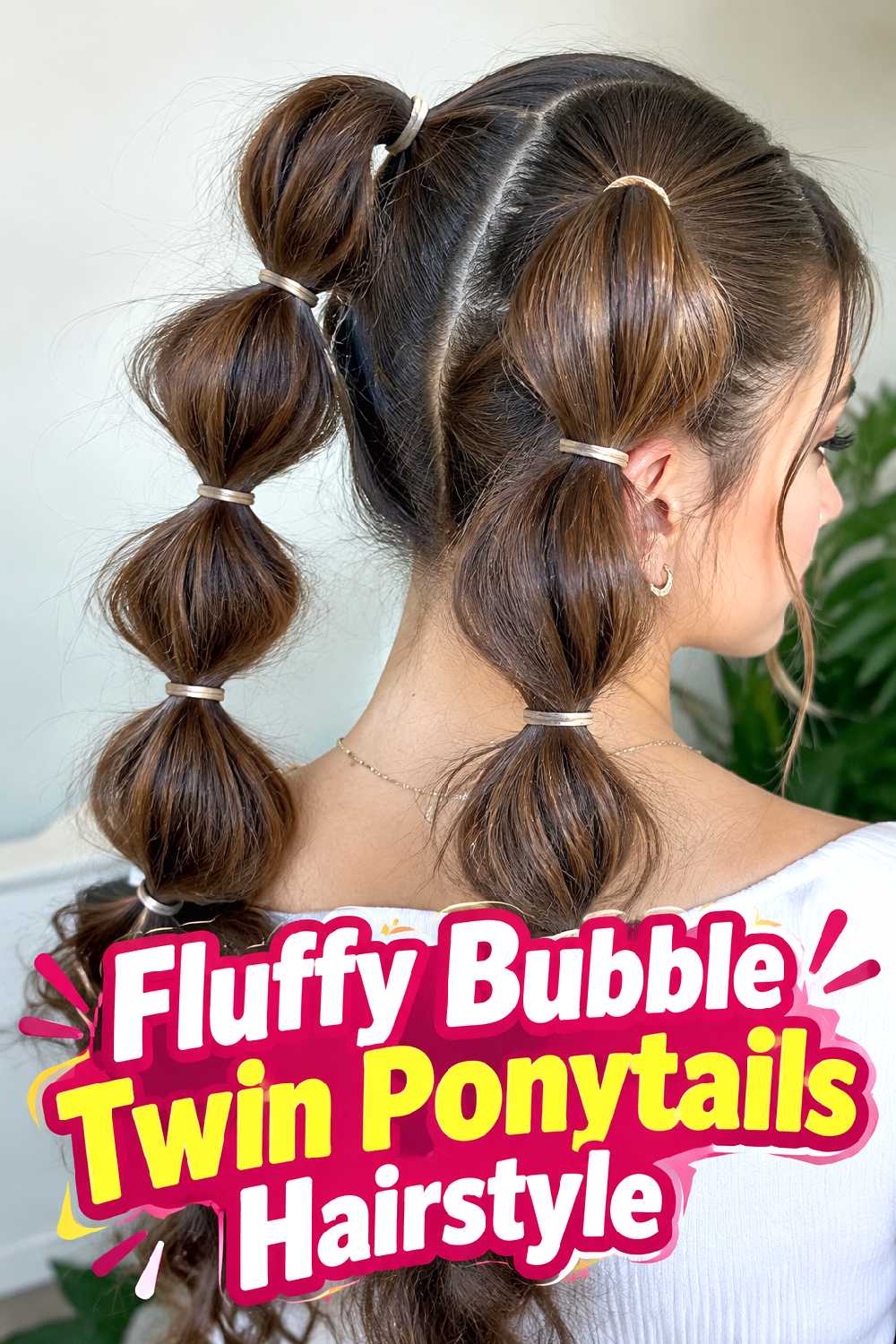
Bubble sections add structure to fluffy twin ponytails while still keeping the look soft and dimensional. After dividing the hair into two ponytails, small elastics are spaced down each side. Every section is gently pulled outward to form rounded bubbles rather than tight, narrow segments. The result has more graphic shape than ordinary ponytails, but the loosened sections keep it light and wearable. Longer hair offers more room for repeated bubbles, while medium lengths can look great with just two or three sections per ponytail. Try to keep the spacing similar on both sides so the style feels balanced. Pull each bubble gradually rather than stretching it all at once, which gives better control over the final size.
Wear & Maintenance
Use small, smooth elastics that will stay secure without snagging. Check the bubbles individually if one side starts looking flatter than the other.
Pro Tip
Leave the final few inches loose and softly curled so the ends feel lighter and less structured than the bubble sections above them.
7. Braided Base Fluffy Twin Ponytails Hairstyle
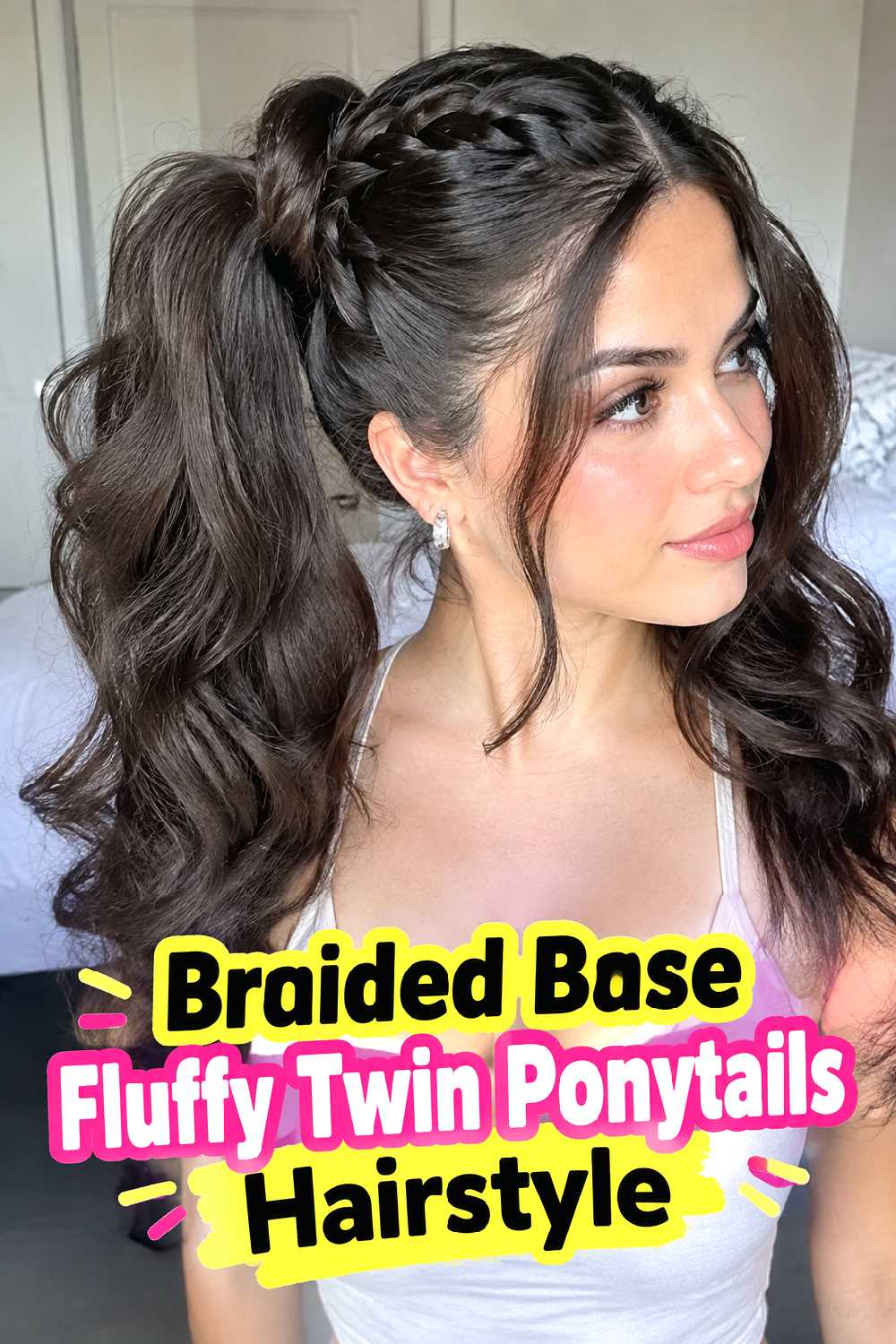
Adding short braids at the base of each ponytail creates extra detail while keeping most of the hair loose and fluffy. The front or upper side sections can be braided back toward the ponytail ties, where they connect naturally with the remaining hair. From that point, the ponytails open into soft curls, waves, or textured lengths. This combination works because the braid provides definition close to the scalp while the ends remain airy and full. The contrast is especially noticeable from the side, making this a fun choice when you want more detail than a simple center-parted style. Keep the braids comfortably snug rather than excessively tight, and make sure they flow toward the actual ponytail placement instead of ending abruptly.
Styling Notes
Secure the braided sections together with the rest of each ponytail so the transition looks intentional. A small amount of styling cream can keep the braid pattern neat.
Why It Works
Structured braids guide the eye toward the fluffy lengths, giving the hairstyle more visual detail without sacrificing volume.
8. Face Framing Fluffy Twin Ponytails Hairstyle
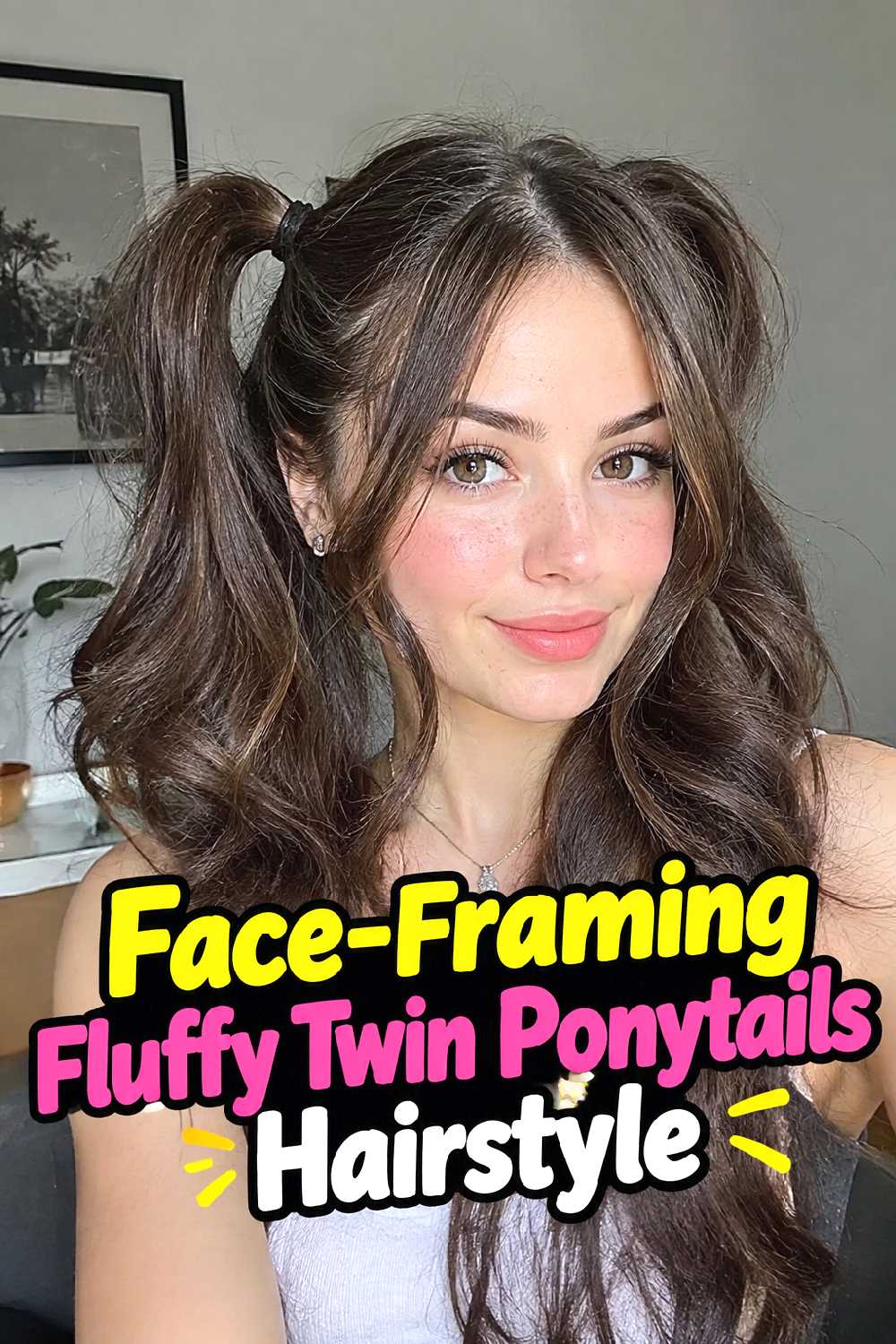
Leaving a few intentional pieces around the face can make two fluffy ponytails feel softer and more relaxed. The main hair is divided into balanced ponytails, while shorter layers or selected front sections remain loose around the temples and cheekbones. These pieces can be lightly curled, waved, or left in their natural texture so they connect visually with the ponytails. The effect is particularly useful if a completely slicked-back front feels too severe. Keep the face-framing sections relatively light; pulling out too much hair can reduce the fullness of the ponytails and make the front look disconnected. This style can shift easily from casual to dressy depending on how polished the crown and loose pieces are.
Best For
Layered medium or long hair works especially well because naturally shorter front pieces can be released without removing too much density from the ponytails.
Pro Tip
Choose the face-framing sections before securing the ponytails. Pulling pieces out afterward can disturb the roots and loosen the overall shape.
9. Side Part Fluffy Twin Ponytails Hairstyle
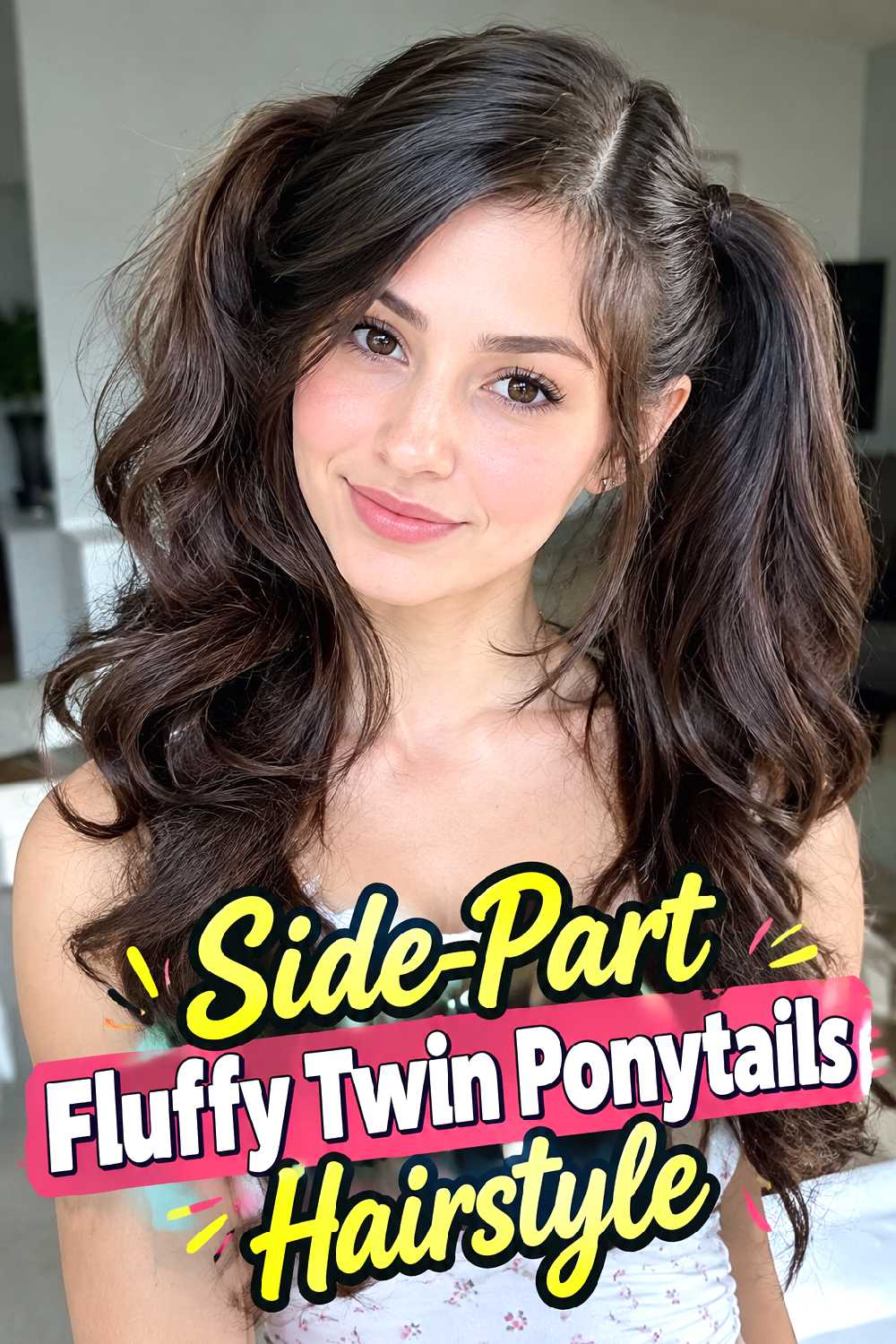
A side part immediately changes the balance of twin ponytails and gives the front a more asymmetrical, styled appearance. The ponytails themselves can still sit at matching heights, but the deeper part creates extra sweep and volume on one side of the crown. This is a useful alternative to the classic straight center part, especially if you naturally wear your hair to one side. Soft waves through the lengths complement the uneven front because they keep the overall finish fluid instead of overly geometric. The front section can be tucked neatly into its ponytail or left slightly lifted at the root. Keep the ponytail placement symmetrical from the back so the deliberate side part does not make the whole hairstyle look unintentionally uneven.
Styling Notes
Create the side part first, then divide the remaining hair into equal back sections. This keeps the ponytails balanced even though the front sections are not identical.
Why It Works
The asymmetric front adds visual interest while the matched ponytails preserve the recognizable two-ponytail shape.
10. Sleek Root Fluffy Twin Ponytails Hairstyle
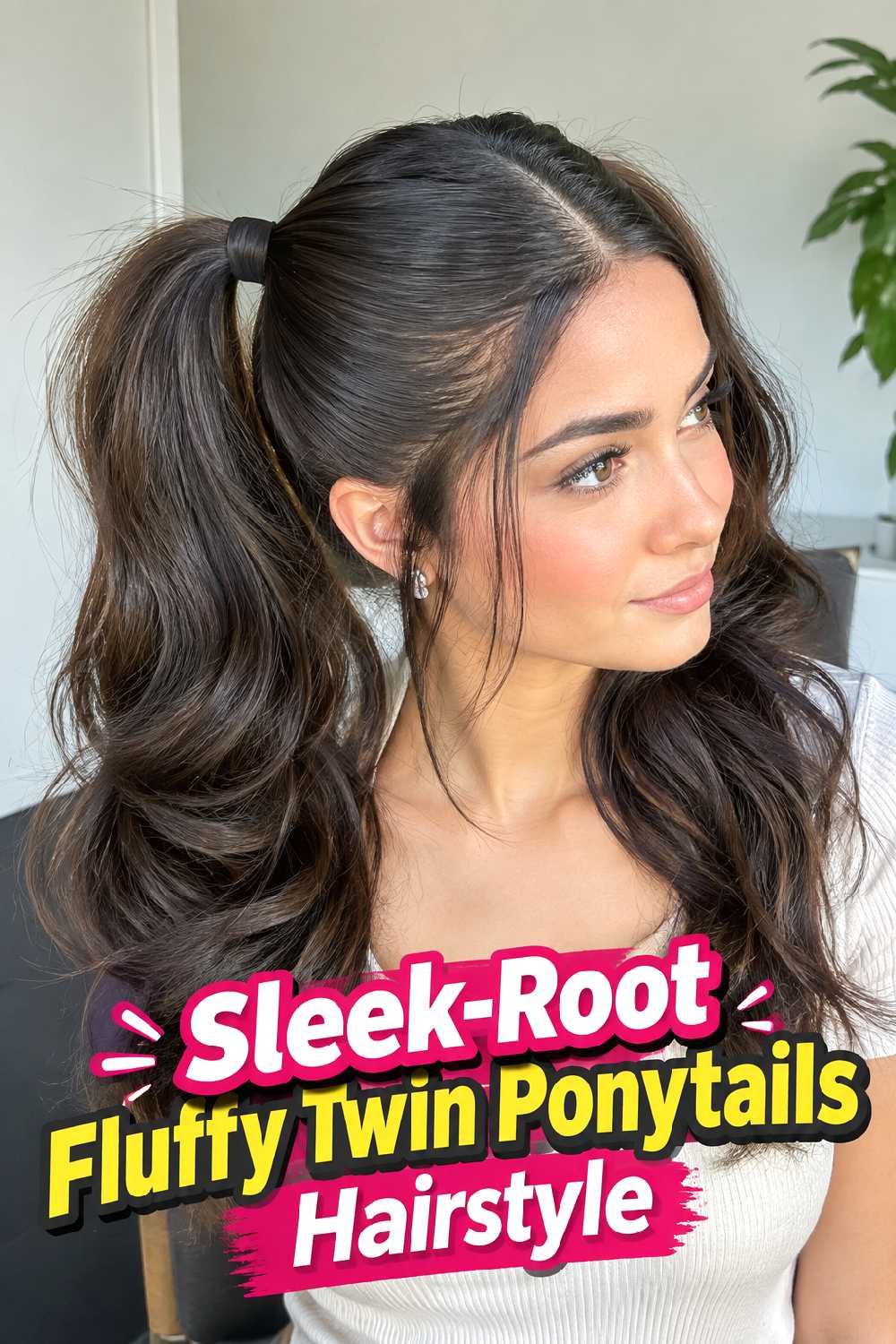
Combining smooth roots with fluffy ponytail lengths creates a strong texture contrast that feels polished without removing all the softness. The crown and sides are gently smoothed toward two secure ponytails, while the lengths remain full with curls, waves, or naturally expanded texture. Because the roots are controlled, the volume appears concentrated in the ponytails and becomes more visually noticeable. A clean center part works especially well for this look, although the hair should remain comfortable rather than pulled excessively tight. Apply smoothing product sparingly near the surface so the roots look refined instead of wet or stiff. Once the ponytails are secure, avoid brushing through the lengths if you want to preserve their airy shape.
Best For
This version is useful when you want a neater front for an event, photos, or a polished outfit while still keeping playful volume through the ponytails.
Wear & Maintenance
A soft brush and light styling gel can control flyaways, but leave the textured ends flexible so the hairstyle maintains movement.
11. Textured Coily Twin Ponytails Hairstyle
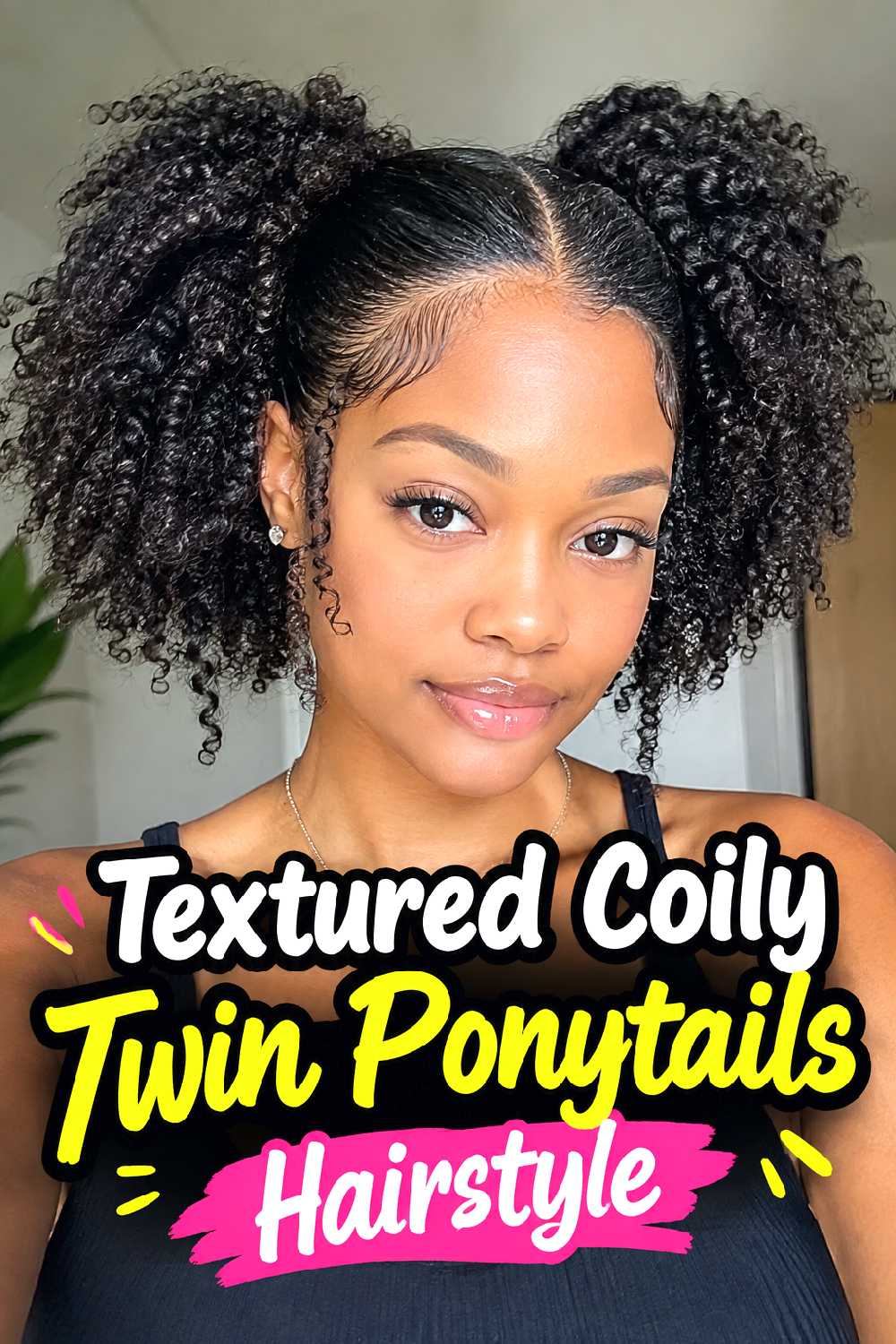
Natural coils can create beautifully full twin ponytails with plenty of shape, definition, and dimension. The hair is divided into two sections and secured at a comfortable height, allowing the coil pattern to expand naturally around each tie. Rather than forcing both ponytails into identical outlines, letting individual coils fall and spring differently creates a more authentic finish. Moisture and definition are important if you want the texture to stay visible, so use products that support your own curl pattern without coating the hair heavily. The roots can be softly smoothed or left more natural depending on the finish you prefer. Larger, gentle hair ties are often helpful because they secure the ponytails without compressing the textured lengths too much.
Hair Type & Length
This look is especially suited to naturally curly and coily textures with enough length to gather comfortably into two secure sections.
Pro Tip
Fluff the ponytails primarily at the roots and outer edges rather than separating every coil, which can preserve definition while adding width.
12. Ribbon Tied Fluffy Twin Ponytails Hairstyle
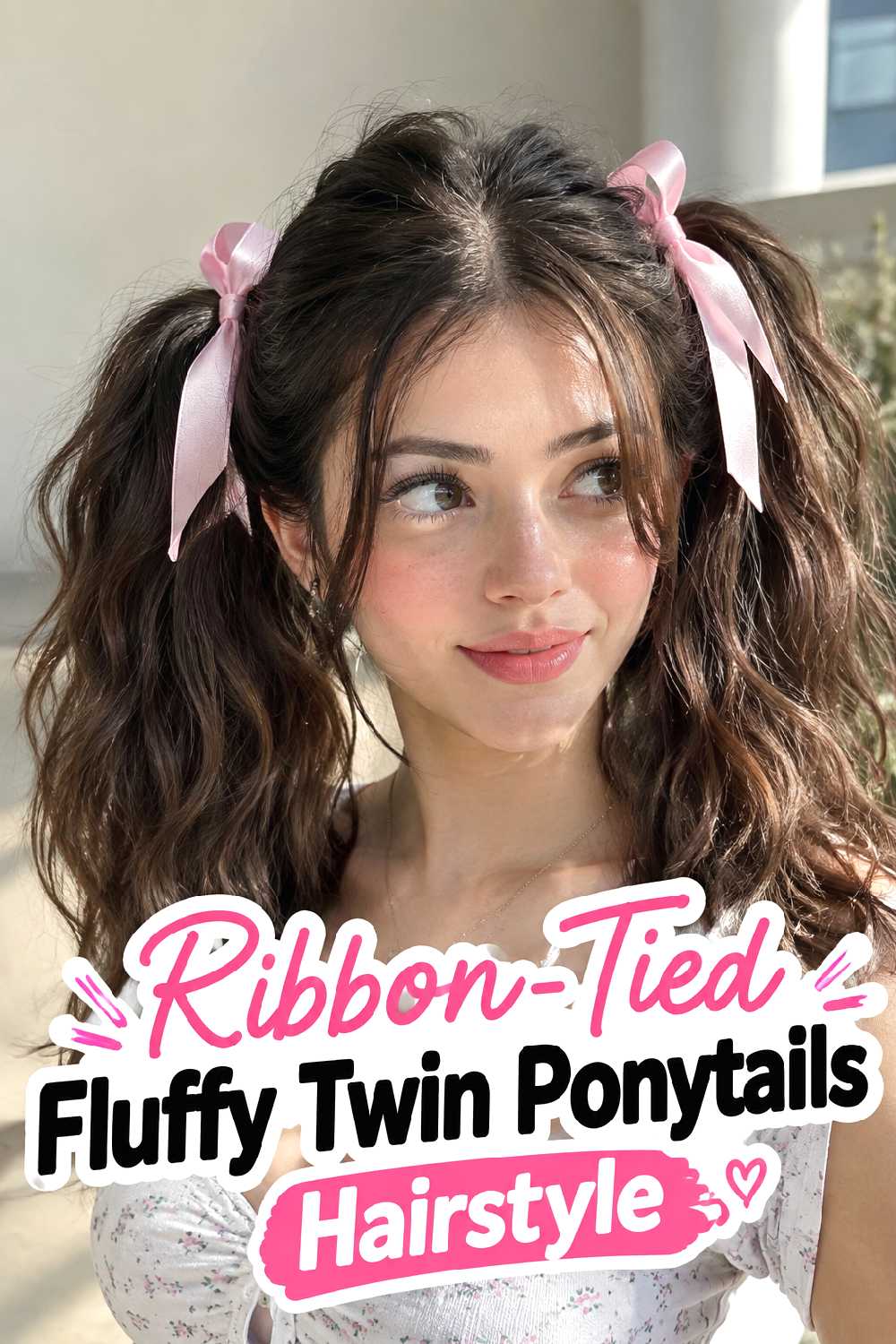
Ribbons add a decorative finish to two fluffy ponytails without requiring complicated styling. Start with secure twin ponytails in your preferred height, then tie a ribbon around each elastic so the accessory sits neatly at the base while the textured hair remains visible. Soft curls or waves pair particularly well with this detail because they keep the look light and romantic. Choose ribbons that are proportionate to the ponytails; very wide bows can overwhelm shorter or finer hair, while narrow ribbons may disappear against extremely voluminous lengths. The ponytails should be secured with regular elastics first so the ribbons are decorative rather than responsible for holding the entire hairstyle in place.
Styling Notes
Tie the ribbons after the ponytails are completely finished. This prevents repeated adjusting from crushing the bow or disturbing the surrounding hair.
Best For
This variation works well for parties, casual photos, themed outfits, or any occasion where you want a simple accessory to make twin ponytails feel more intentional.
13. Soft Messy Fluffy Twin Ponytails Hairstyle
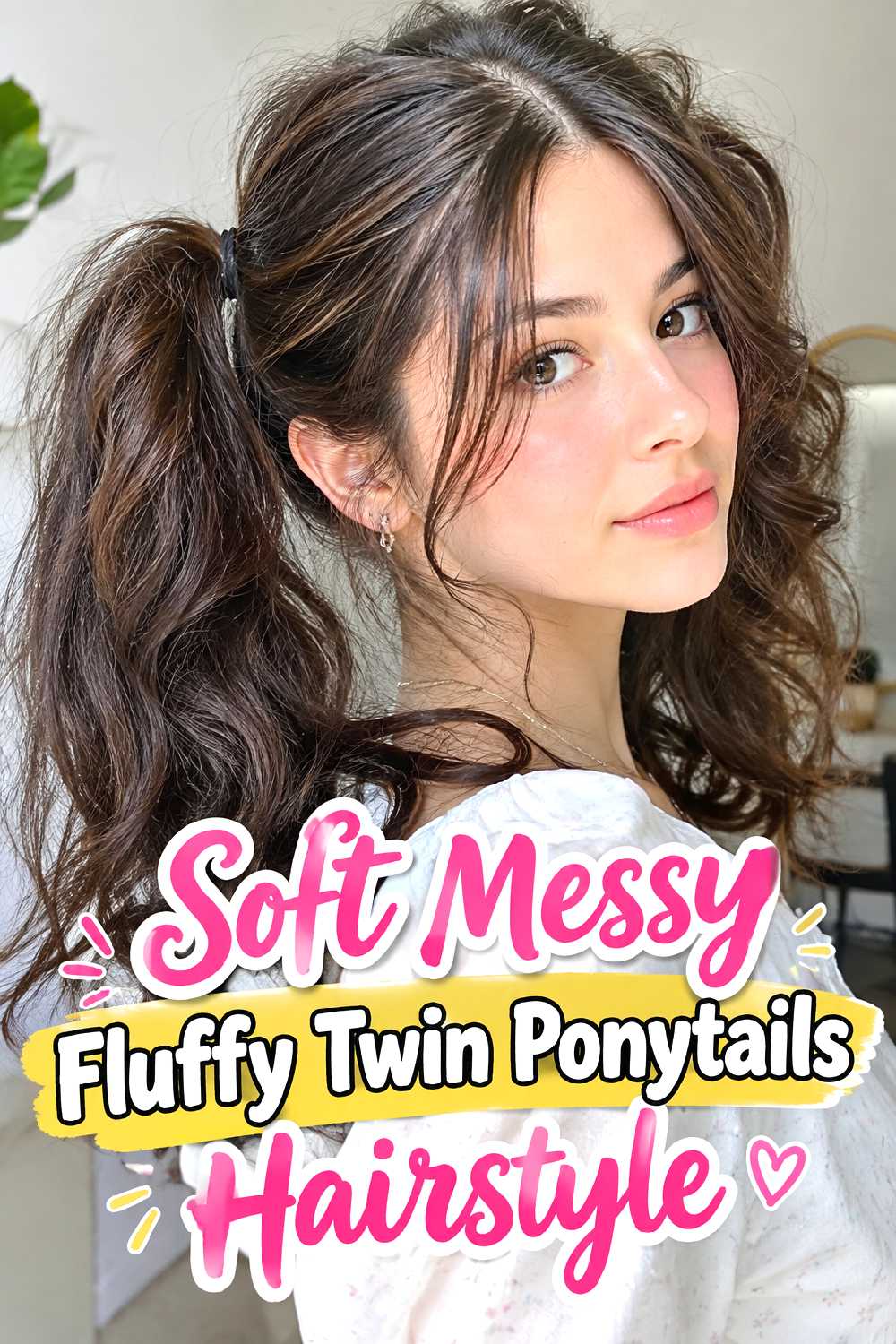
Soft messy twin ponytails are all about controlled imperfection rather than an unfinished appearance. The ponytails sit at a comfortable mid or low height, with gently loosened roots, varied texture through the lengths, and a few natural flyaways around the hairline. Loose waves, brushed curls, or naturally tousled hair can all create the necessary fullness. Instead of forcing each side to match strand for strand, aim for similar overall volume and placement while allowing the texture to behave naturally. This makes the style feel relaxed and modern. The trick is building the ponytails securely first and loosening them afterward; starting too loosely can cause the entire hairstyle to collapse instead of producing the soft, airy effect you want.
Wear & Maintenance
Keep the elastics secure even though the surface looks relaxed. Loosen only small sections near the crown and sides so the ponytails remain stable.
Why It Works
The slightly undone finish makes the volume feel effortless and can complement casual outfits, soft makeup, and naturally textured hair particularly well.
How to Choose the Right Look
Start with your hair length and natural texture. Medium and long hair can support most of these two fluffy ponytail hairstyles, while shorter lengths may be easier to style into high or half-up versions. Naturally curly and coily hair can rely on existing texture for fullness, whereas straight hair may need waves, curls, or texturizing products to create a visibly fluffy finish.
Think about styling time as well. Low fluffy ponytails and soft messy versions can be relatively simple, while bubble ponytails, braided bases, or carefully defined curls require more sectioning and adjustment. If you need strong hold for several hours, prioritize secure elastics and controlled roots. For maximum comfort, low or mid-height ponytails usually create less tension than extremely high placements.
Your preferred finish matters too. Sleek roots create a polished contrast with voluminous lengths, while face-framing pieces and loose roots produce a softer appearance. Ribbons and braids add visible detail for special occasions, while simple wavy or curly ponytails are easier to adapt for everyday wear.
Most importantly, adjust the volume to your real hair density rather than trying to force an oversized shape. A smaller ponytail with healthy movement and visible texture can look much better than excessive teasing that makes the hair feel stiff.
Final Thoughts
Two fluffy ponytails can take on surprisingly different personalities depending on height, texture, parting, and accessories. Choose high ponytails for a bouncier silhouette, low versions for softness, curls or coils for natural dimension, or braids and ribbons when you want added detail.
The most wearable version is the one that works with your actual length, density, and texture while staying comfortable at the roots. Small adjustments can make almost any of these ideas feel more personal.
FAQs
1. How do I make two ponytails look fluffier?
Add texture before tying the hair, then gently separate curls, waves, or coils after the ponytails are secure. You can also lightly loosen the hair near each elastic to create more width without excessive teasing.
2. Should fluffy twin ponytails be high or low?
Either placement can work. High ponytails create more lift and bounce, while low ponytails feel softer and usually place less tension on the roots.
3. Can straight hair work for fluffy ponytails?
Yes. Straight hair can be curled or waved before styling, or given extra grip with a light texturizing product. Keep the finish flexible so the ponytails retain natural movement.
4. How can I keep two ponytails even?
Create your part first, divide the hair carefully from front to back, and compare both sections before tying them. Check the height from the front and back before fully tightening the elastics.
5. What accessories look good with two fluffy ponytails?
Ribbons, small bows, covered elastics, decorative scrunchies, and subtle clips can all work. Choose accessories that complement the amount of hair rather than covering most of the ponytail texture.
CTA
Save your favorite two fluffy ponytails hairstyle and explore more hairstyle inspiration to find the texture, placement, and finish that fits your look.