11 Air-Dry Italian Bob Hairstyle Ideas
Soft volume, full ends, and natural texture make these air-dry Italian bob ideas an easygoing way to wear the polished, chin-skimming cut.
The Italian bob is known for its substantial perimeter, soft movement, and slightly grown-out feel, which makes it especially compatible with air-dried styling. Instead of relying on a perfectly round-brushed finish, these versions allow natural bends, waves, curls, and subtle irregularity to give the haircut personality.
The best air-dry result depends heavily on your natural texture and the way the cut is balanced. Fuller ends preserve the signature bob shape, while gentle face-framing pieces can encourage movement around the front. Parting, fringe, density, and how much definition you want from your natural texture are all worth considering before choosing a variation.
Quick List
- Classic Air Dry Italian Bob Hairstyle
- Soft Wave Air Dry Italian Bob Hairstyle
- Center Part Air Dry Italian Bob Hairstyle
- Side Part Air Dry Italian Bob Hairstyle
- Air Dry Italian Bob Hairstyle With Face Framing Layers
- Air Dry Italian Bob Hairstyle With Curtain Bangs
- Tousled Air Dry Italian Bob Hairstyle
- Curly Air Dry Italian Bob Hairstyle
- Full End Air Dry Italian Bob Hairstyle
- Air Dry Italian Bob Hairstyle With Tucked Side
- Piecey Air Dry Italian Bob Hairstyle
1. Classic Air Dry Italian Bob Hairstyle
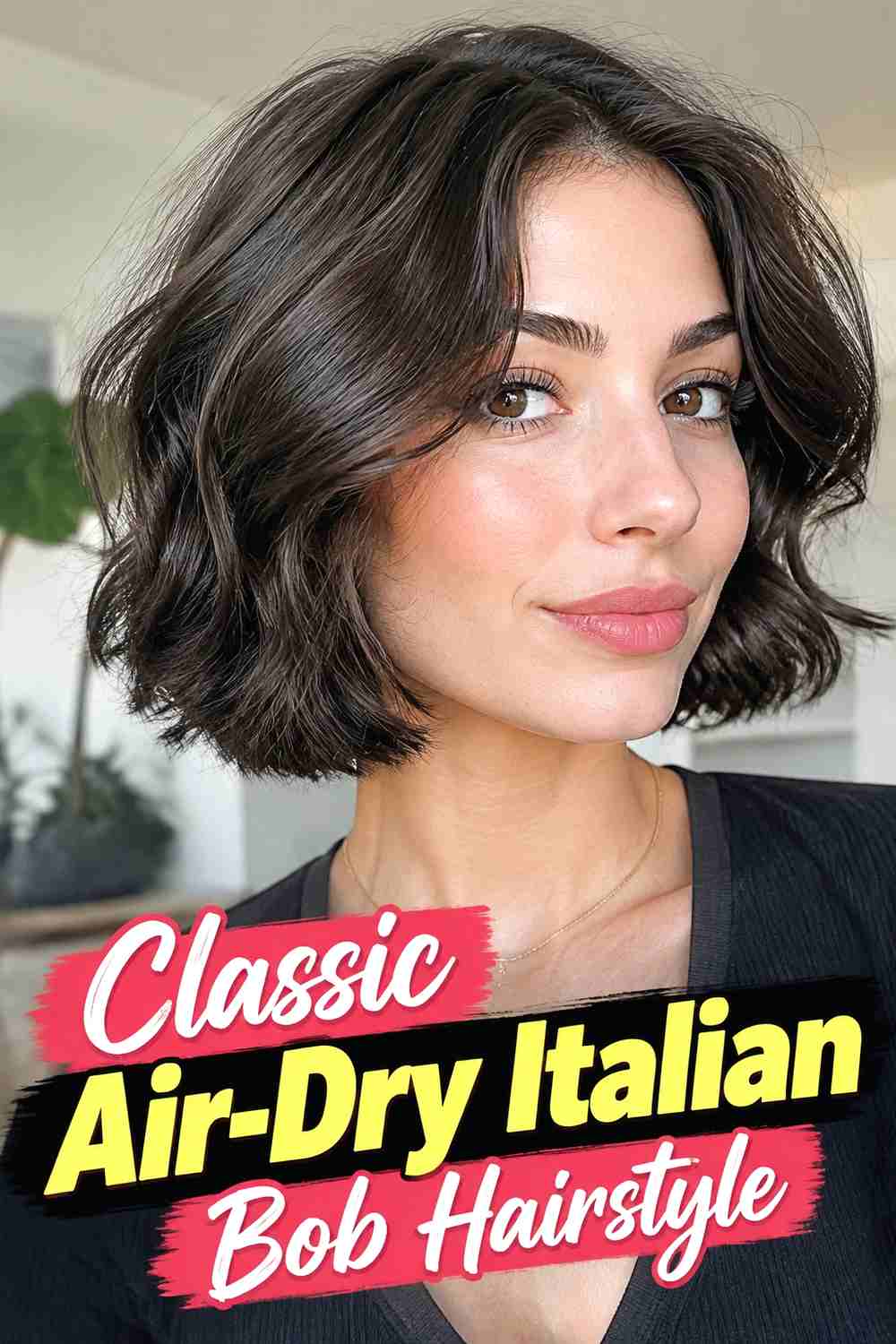
The classic air-dry Italian bob keeps the silhouette full and softly rounded without requiring every strand to sit perfectly smooth. The length usually lands around the jaw or just below it, with enough weight through the perimeter to create that substantial Italian-bob shape. As the hair dries naturally, subtle bends and slight irregularities give the cut a relaxed finish rather than a salon-blowout look. This version works best when the cut supports your natural texture instead of fighting it. A small amount of lightweight leave-in or styling cream can help reduce unwanted puffiness while still allowing the hair to move. Avoid overworking the ends, since their fullness is an important part of the style.
Hair Type & Length
Straight, gently wavy, and softly textured hair can all suit this shape, provided the perimeter retains enough density to look intentional.
Styling Notes
Set your preferred part while the hair is damp and let the lengths dry with minimal touching to reduce unnecessary frizz.
2. Soft Wave Air Dry Italian Bob Hairstyle
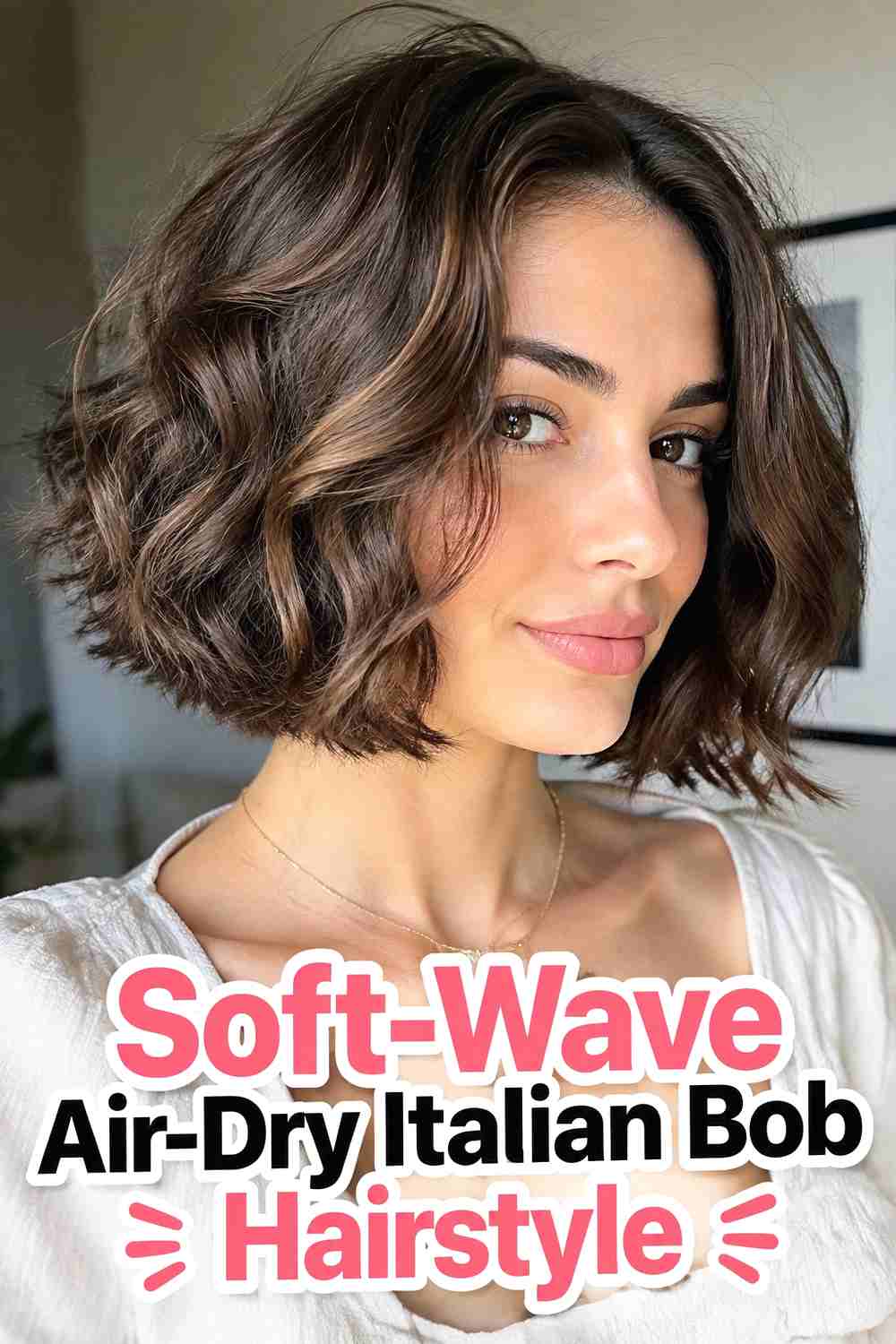
Natural soft waves give the Italian bob an effortless, slightly romantic texture that suits its fuller outline beautifully. Instead of trying to create identical bends, let each section follow its natural pattern so the silhouette has movement without looking overly styled. The weight of the bob helps keep the waves from expanding too widely, while the shorter length makes them easier to define as they dry. A few gentle scrunches while damp can encourage the pattern, but repeatedly handling the hair while it dries may create more frizz than definition. The finished effect should feel touchable, with broad bends around the cheeks and jaw rather than a collection of tight, uniform curls.
Why It Works
The soft wave pattern adds movement while the dense perimeter keeps the haircut recognizable as an Italian bob rather than a heavily layered wavy cut.
Pro Tip
Encourage the wave pattern once while the hair is damp, then leave it mostly alone until dry before making small adjustments.
3. Center Part Air Dry Italian Bob Hairstyle
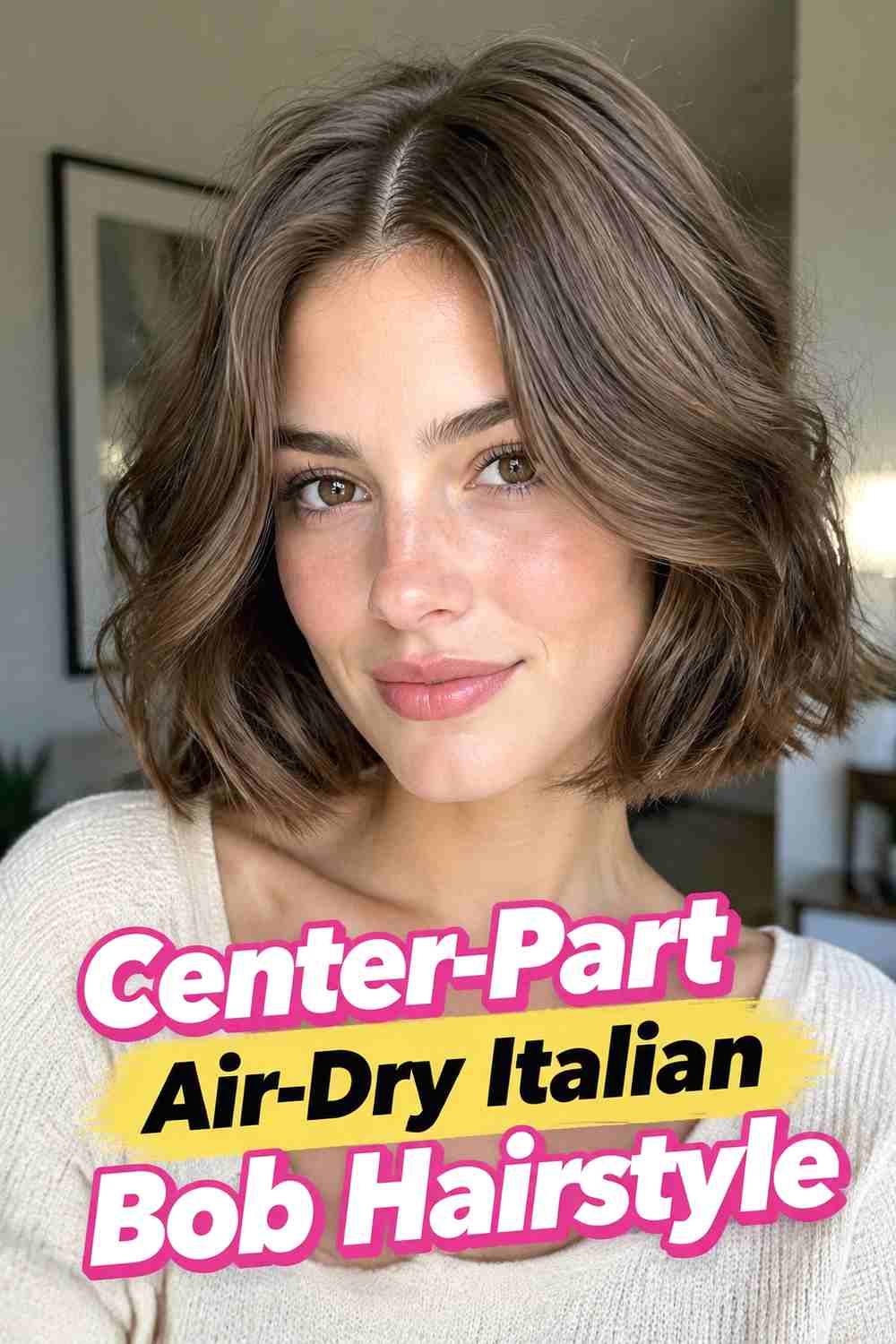
A center part gives the air-dry Italian bob a balanced, contemporary shape and makes the natural texture on both sides equally visible. Because the cut is relatively full, the symmetry can look strong without feeling severe, especially when the ends have soft movement. This version works nicely with subtle bends around the cheekbones and jaw, which keep the front from falling completely flat. Setting the center part while the roots are still damp is useful if your hair naturally wants to shift in another direction. You do not need perfect symmetry in the wave pattern; slight differences between the two sides make the air-dried finish look more believable and relaxed.
Styling Notes
Comb or finger-set the center part early, then avoid repeatedly adjusting the roots while they dry so the placement stays consistent.
Best For
Choose this version if you prefer balanced volume and want the haircut’s full perimeter to frame both sides of the face evenly.
4. Side Part Air Dry Italian Bob Hairstyle
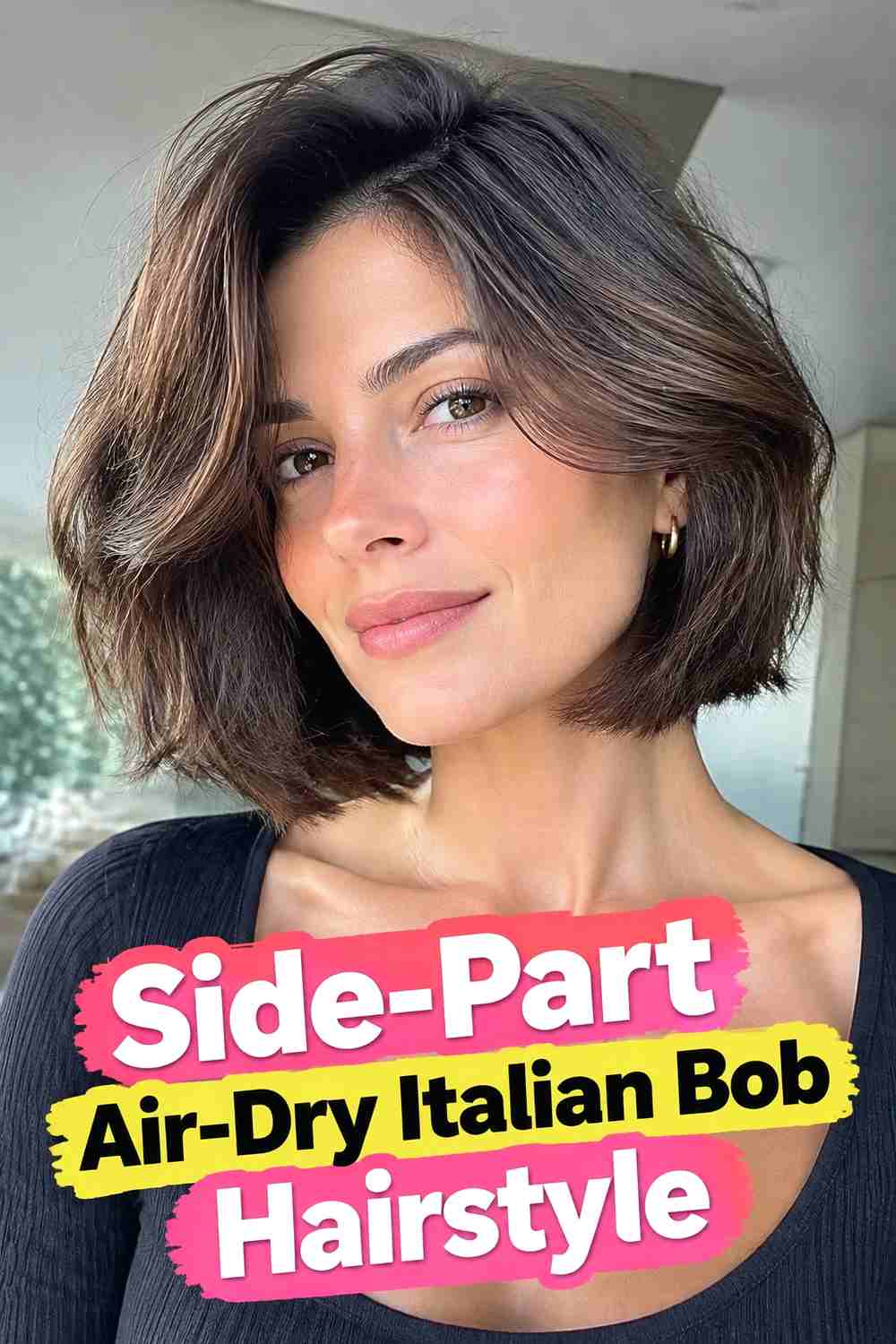
A side part creates instant lift and asymmetry without requiring heat styling. As the bob dries, the heavier side naturally gains more volume, while the lighter side can sit closer to the head or tuck behind the ear. This difference in weight gives the full Italian-bob silhouette a little more movement and makes natural waves or bends especially noticeable. The style can feel polished even when the texture itself remains relaxed. To encourage root lift, place the part while the hair is damp and allow the heavier section to dry in its intended direction. Avoid forcing the ends into a uniform curl; the air-dried effect is strongest when the perimeter stays full but slightly lived-in.
Why It Works
The side part adds shape at the roots while letting the natural texture provide most of the movement through the lengths.
Wear & Maintenance
If the part flattens overnight, lightly dampening the roots and repositioning them may be enough to refresh the silhouette.
5. Air Dry Italian Bob Hairstyle With Face Framing Layers
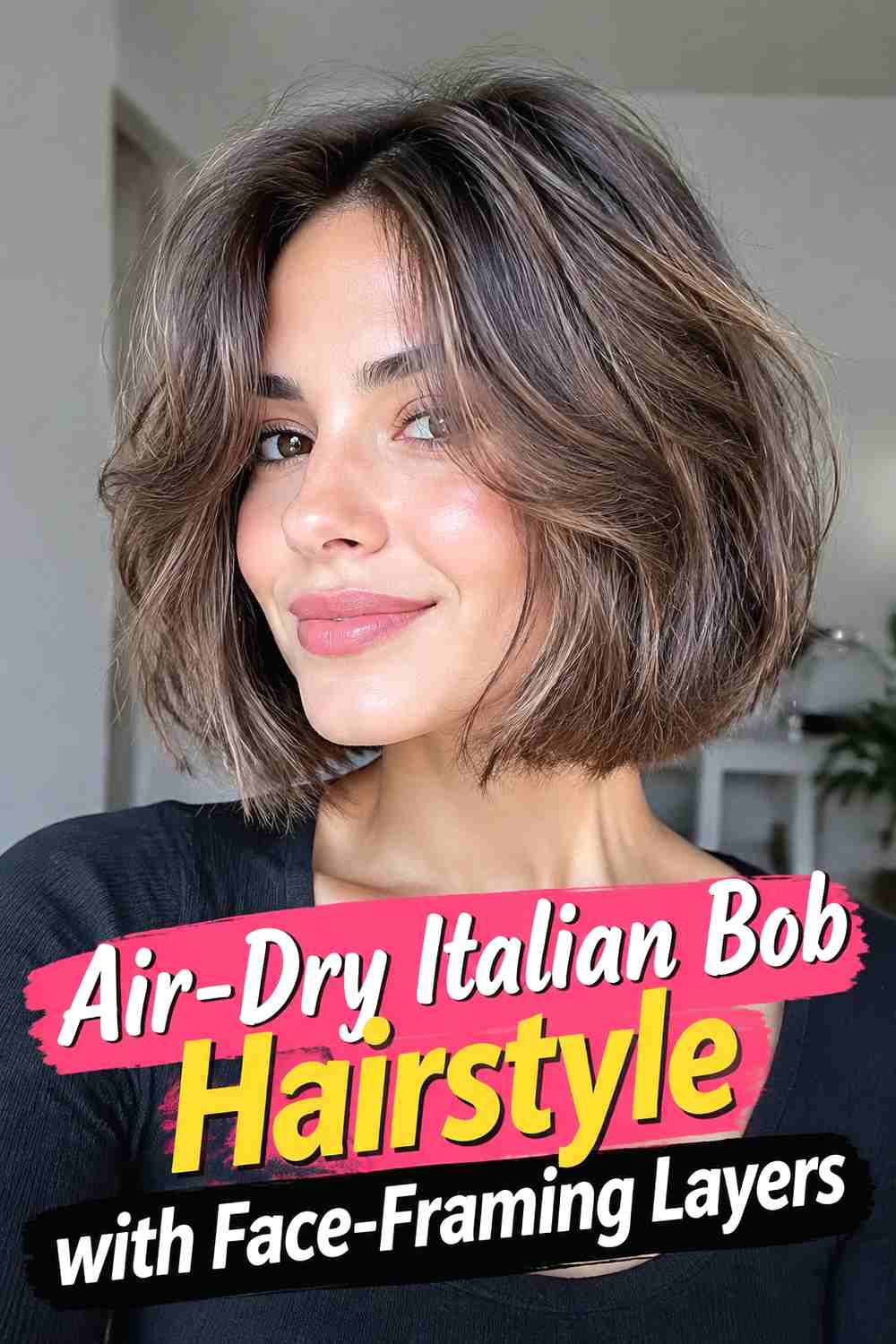
Soft face-framing layers can make an air-dried Italian bob feel lighter around the front without removing the fullness that defines the haircut. Shorter pieces may begin around the cheekbones or jaw and blend gradually into the main perimeter, encouraging natural bends to form around the face. The key is restraint: too many short layers can reduce the dense, luxurious outline associated with the Italian bob. This variation works especially well when your natural texture has a slight wave that can give the front sections movement on its own. A small amount of lightweight cream or leave-in can help the shorter pieces dry with separation rather than frizzing away from the main shape.
Hair Type & Length
This works well on jaw-to-neck-length bobs with enough density to support a few shorter front pieces without thinning the overall perimeter.
Pro Tip
Keep the face-framing layers connected to the bob rather than dramatically shorter if you want an easy air-dry routine.
6. Air Dry Italian Bob Hairstyle With Curtain Bangs

Curtain bangs introduce softness through the front while maintaining the heavier body of the Italian bob. The fringe can part naturally in the center or slightly off-center, then blend into the sides around the cheekbones. When air-dried, the bangs do not need to form a perfect blowout curve; a little natural separation can make them feel more relaxed and modern. Their success depends on how your fringe naturally dries, so a small amount of finger shaping while damp may be useful. The rest of the bob should remain comparatively full, allowing the lighter front pieces to create contrast without turning the haircut into a heavily layered style.
Styling Notes
Separate the fringe into its intended direction while damp and gently encourage each side away from the center before leaving it to dry.
Wear & Maintenance
Curtain bangs generally require more frequent front trims than the rest of the bob if you want them to keep their intended opening and length.
7. Tousled Air Dry Italian Bob Hairstyle
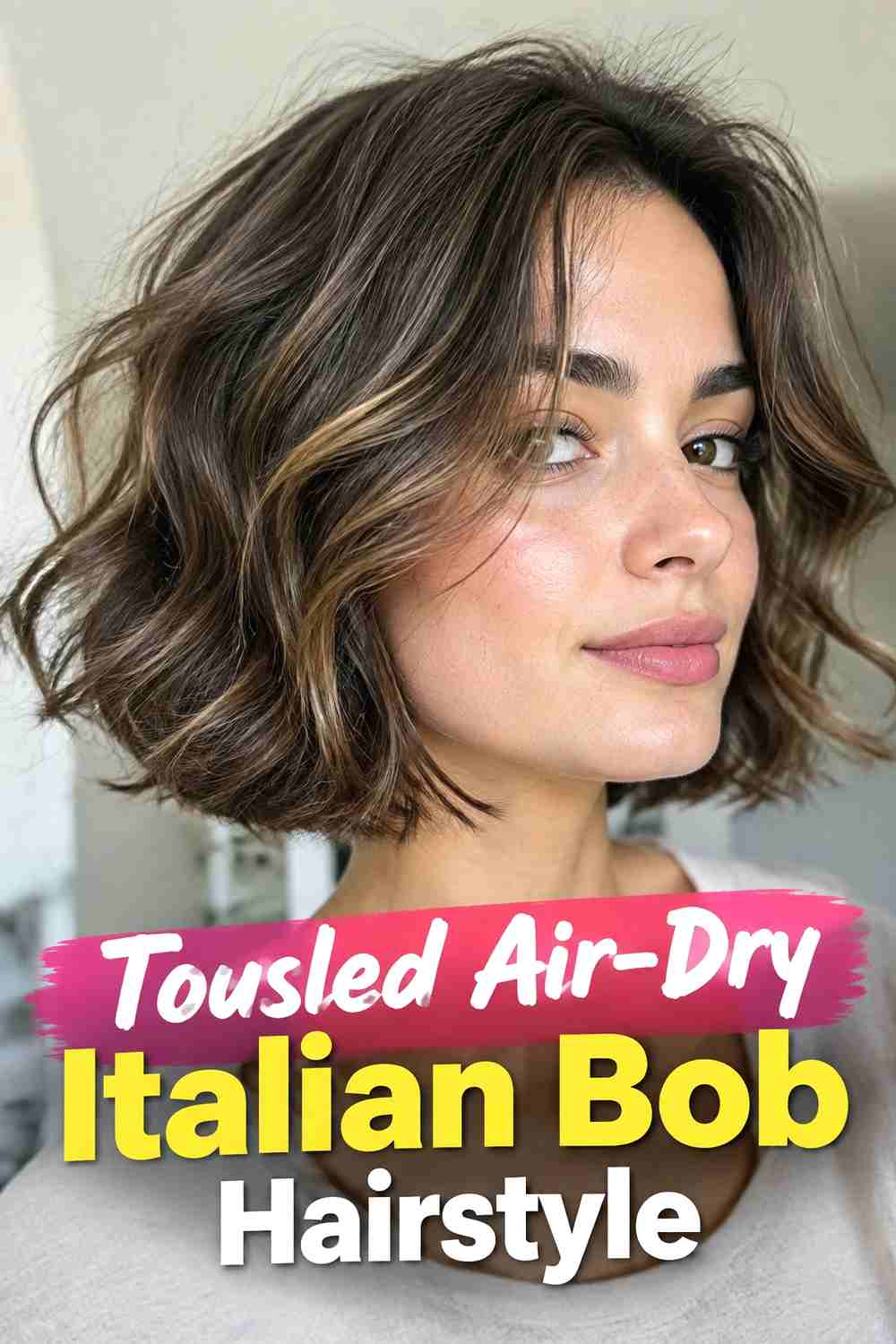
The tousled version embraces irregular movement and a slightly undone surface while still keeping the bob’s overall shape controlled. Natural bends can turn in different directions, giving the haircut a casual fullness that looks especially effective around the jaw and neck. Rather than smoothing every flyaway, allow a small amount of texture to remain so the style feels genuinely air-dried. The perimeter should still look substantial enough to anchor the movement above it. This variation is particularly useful if your hair does not dry into a perfectly consistent pattern, since those differences become part of the finished look. Light scrunching or twisting selected sections while damp can help enhance texture without forcing uniform waves.
Why It Works
The dense bob outline provides structure, allowing the upper texture to look intentionally relaxed instead of shapeless.
Styling Notes
Focus on enhancing a few natural bends rather than manipulating every section, which keeps the tousled effect believable and low-effort.
8. Curly Air Dry Italian Bob Hairstyle
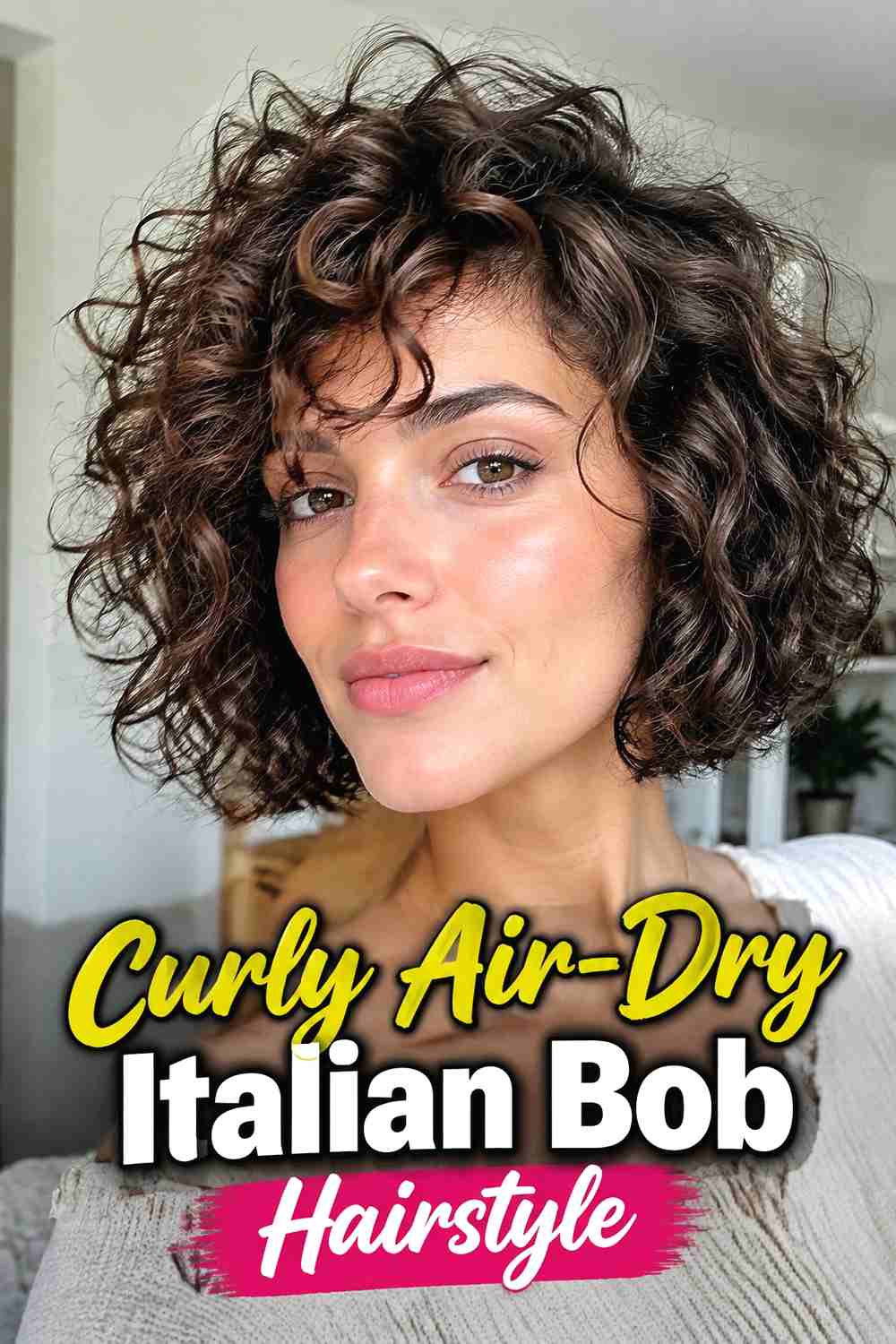
Natural curls give the Italian bob a fuller, more dimensional silhouette while preserving the haircut’s strong perimeter. The cut should allow enough room for shrinkage so the finished length does not rise significantly higher than intended once dry. Rather than thinning the ends excessively, maintaining some density helps the bob retain its rounded, substantial appearance beneath the curl pattern. Air-drying can showcase natural variation from tighter curls to softer bends, which gives the style movement and depth. Apply curl-supporting product evenly while the hair is wet or damp, then minimize handling as it dries. Once fully dry, gentle separation can add volume without breaking apart the curl definition too much.
Hair Type & Length
Naturally curly textures can work beautifully with the Italian-bob shape when the cut accounts for shrinkage, density, and the way curls sit at the perimeter.
Pro Tip
Judge the target length based on how your curls normally dry rather than how far the wet hair stretches.
9. Full End Air Dry Italian Bob Hairstyle
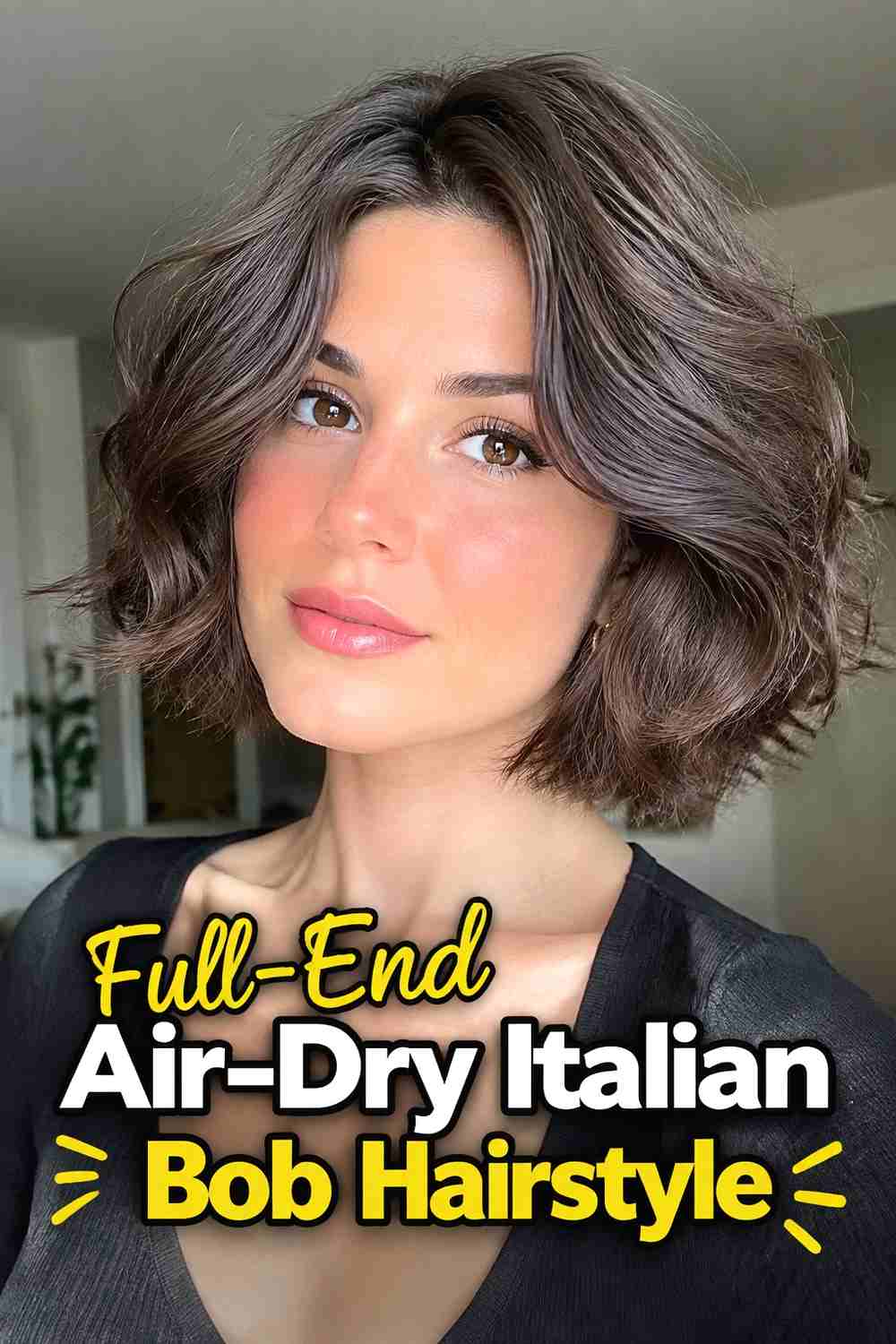
Full ends are one of the clearest ways to preserve the signature Italian-bob feel when skipping heat styling. The perimeter remains dense and deliberate, creating visual weight around the jaw or lower cheek area even if the surface develops natural bends or slight texture. This is a strong option if you prefer fewer layers and want the haircut itself to provide most of the shape. Air-drying may produce small variations along the bottom edge, but those imperfections can soften what might otherwise feel like a very precise blunt cut. Keeping the ends well conditioned helps the dense outline look polished, while avoiding excessive internal thinning preserves the fullness that makes this variation distinctive.
Why It Works
The heavy perimeter creates a strong silhouette even when the upper surface dries with natural texture instead of a smooth blowout.
Wear & Maintenance
Regular perimeter trims help maintain the full shape, since uneven growth is more noticeable on a dense, minimally layered bob.
10. Air Dry Italian Bob Hairstyle With Tucked Side
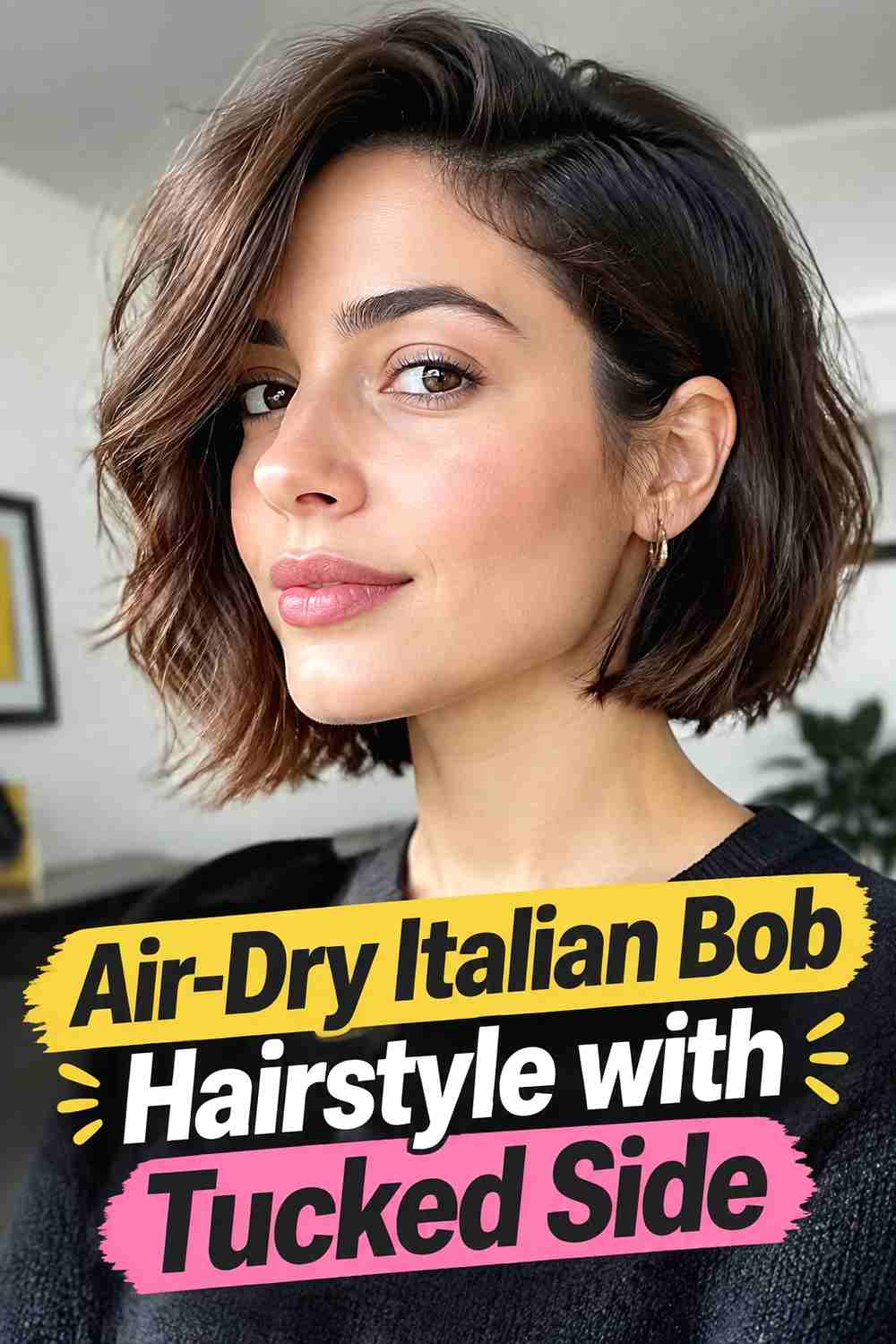
Tucking one side behind the ear gives the air-dry Italian bob an easy asymmetrical finish without changing the cut itself. The exposed side sits closer to the head while the opposite side keeps more natural fullness, which can make soft waves or bends appear more pronounced. This styling trick is especially useful when one side of your hair naturally dries flatter or when you want a cleaner profile around the face. The perimeter remains full beneath the tuck, preserving the Italian-bob structure. If the shorter side slips forward, a discreet pin can help hold it without making the style feel formal. The result is simple, practical, and well suited to day-to-day wear.
Styling Notes
Let the bob dry mostly in its natural shape before tucking the side so you do not flatten the roots prematurely.
Best For
This variation is ideal when you want an easy styling change that adds asymmetry without requiring heat, extra layers, or a new fringe.
11. Piecey Air Dry Italian Bob Hairstyle
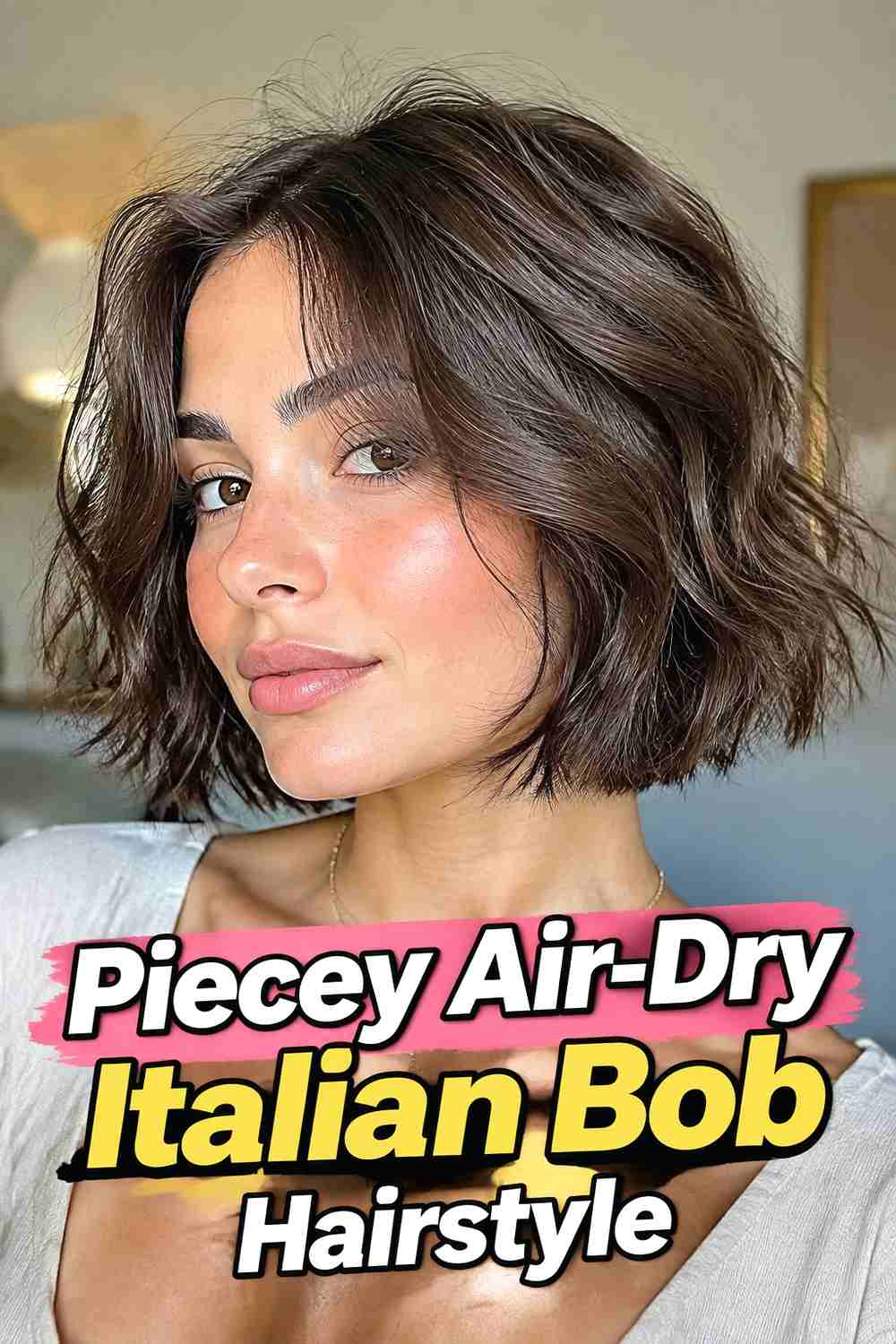
A piecey finish gives the Italian bob visible separation through the surface while maintaining a dense lower outline. Small sections naturally group together as they dry, producing texture that feels casual without becoming messy. This works especially well on hair with gentle wave or bend, where the individual pieces can curve slightly in different directions. A light styling cream or texture product can help define separation, but too much may make the fuller ends appear stringy. The goal is to keep the bob substantial while allowing enough space between sections for the natural movement to show. This variation can be particularly forgiving on second-day hair because a little lived-in texture fits the overall aesthetic.
Styling Notes
Apply product in small amounts and define only selected sections so the piecey effect remains soft rather than overly separated.
Why It Works
Surface separation adds detail and movement, while the heavier perimeter keeps the hairstyle looking deliberate and distinctly bob-shaped.
How to Choose the Right Look
Start with your natural texture, because an air-dry haircut works best when it supports what your hair already wants to do. Straighter textures may suit the classic, center-part, side-part, or full-end versions, while naturally wavy hair can make soft-wave, tousled, and piecey styles particularly easy to achieve. Curly hair can also work beautifully when the cut accounts for shrinkage and natural volume.
Next, consider how much fullness you want around the perimeter. Minimal layering preserves the substantial Italian-bob outline, while face-framing pieces or curtain bangs introduce more movement around the front without necessarily reducing density throughout the entire cut.
Your routine matters too. If you want the simplest possible air-dry approach, choose a cut that needs little manipulation beyond setting the part and applying a lightweight product. Fringe and shorter face-framing pieces can require slightly more attention because they are more visible when they dry unpredictably.
Finally, think about finish rather than perfection. Air-drying naturally creates variation. A softly uneven bend, slightly different wave patterns on each side, or a few flyaways can complement the relaxed Italian-bob aesthetic when the underlying haircut remains strong and intentional.
Final Thoughts
An air-dry Italian bob works best when the haircut provides structure and your natural texture supplies the movement. Fuller ends, thoughtful parting, and restrained layering help preserve the signature shape without relying on daily heat styling. Whether your hair dries straight, wavy, curly, tousled, or slightly piecey, choose the version that works with your natural pattern rather than demanding a finish you have to constantly recreate.
FAQs
1. What is an air-dry Italian bob hairstyle?
It is an Italian-bob-inspired cut designed to look polished with natural drying, using a full perimeter, manageable length, and texture that works with the hair’s own movement rather than requiring a blowout.
2. What hair texture works best for an air-dry Italian bob?
Straight, wavy, and curly textures can all work. The important factor is tailoring the cut, weight, and layering to the way your individual hair naturally dries.
3. Should an Italian bob have lots of layers?
Not necessarily. Many Italian bobs rely on a fuller perimeter and relatively limited layering. Soft face-framing pieces can add movement without removing too much density.
4. Can curtain bangs be air-dried with an Italian bob?
Yes, although they may need a little more direction while damp than the rest of the haircut. Their natural growth pattern will affect how easily they separate and curve.
5. How can I make an air-dried bob look more intentional?
Set the part while damp, use an appropriate lightweight styling product, avoid excessive touching during drying, and maintain a haircut whose perimeter and layering suit your natural texture.
Save your favorite air-dry Italian bob hairstyle ideas and explore more low-effort bob inspiration for your next haircut.