20 Braided Side-Part Hairstyle Ideas
A defined side part and a carefully placed braid can transform loose waves, curls, ponytails, buns, and short cuts with surprisingly little extra styling.
Braided side-part hairstyles use asymmetry as part of the design. The deeper side usually carries more volume or loose texture, while the lighter side creates an ideal place for a braid that can sit near the temple, travel toward the back, or connect directly into an updo.
The best version depends on your length, texture, and how visible you want the braid to be. A micro braid can remain subtle, while a Dutch or crown braid creates stronger definition. Short cuts benefit from compact accents, whereas long hair gives you more room for fishtails, ponytails, low buns, and romantic waves.
Quick List
- Sleek Braided Side Part Hairstyle
- Soft Braided Side Part Waves Hairstyle
- Deep Side Part Dutch Braid Hairstyle
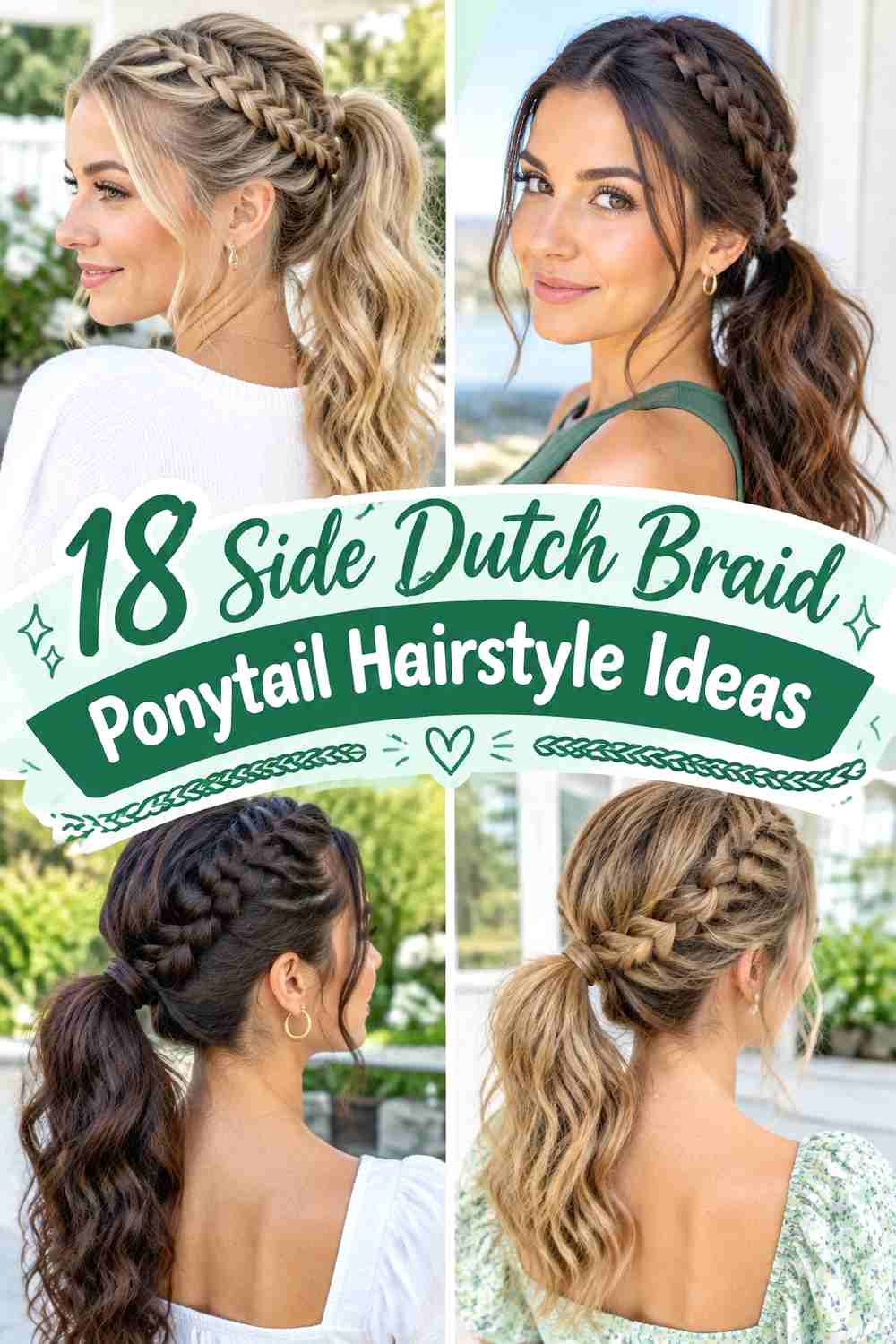
- Deep Side Part French Braid Hairstyle
- Side Part Micro Braid Accent Hairstyle
- Side Part Double Micro Braid Hairstyle
- Side Part Crown Braid Hairstyle
- Side Part Braided Ponytail Hairstyle
- Side Part Braided Low Bun Hairstyle
- Side Part Braided Half Up Hairstyle
- Side Part Fishtail Braid Hairstyle
- Side Part Rope Braid Hairstyle
- Side Part Braided Bob Hairstyle
- Side Part Braided Lob Hairstyle
- Side Part Braided Curls Hairstyle
- Side Part Braided Waves With Tendrils Hairstyle
- Side Part Braided Hairstyle With Curtain Bangs
- Side Part Braided Hairstyle With Pearl Pins
- Side Part Braided Hairstyle With Ribbon Detail
- Polished Evening Braided Side Part Hairstyle
1. Sleek Braided Side Part Hairstyle
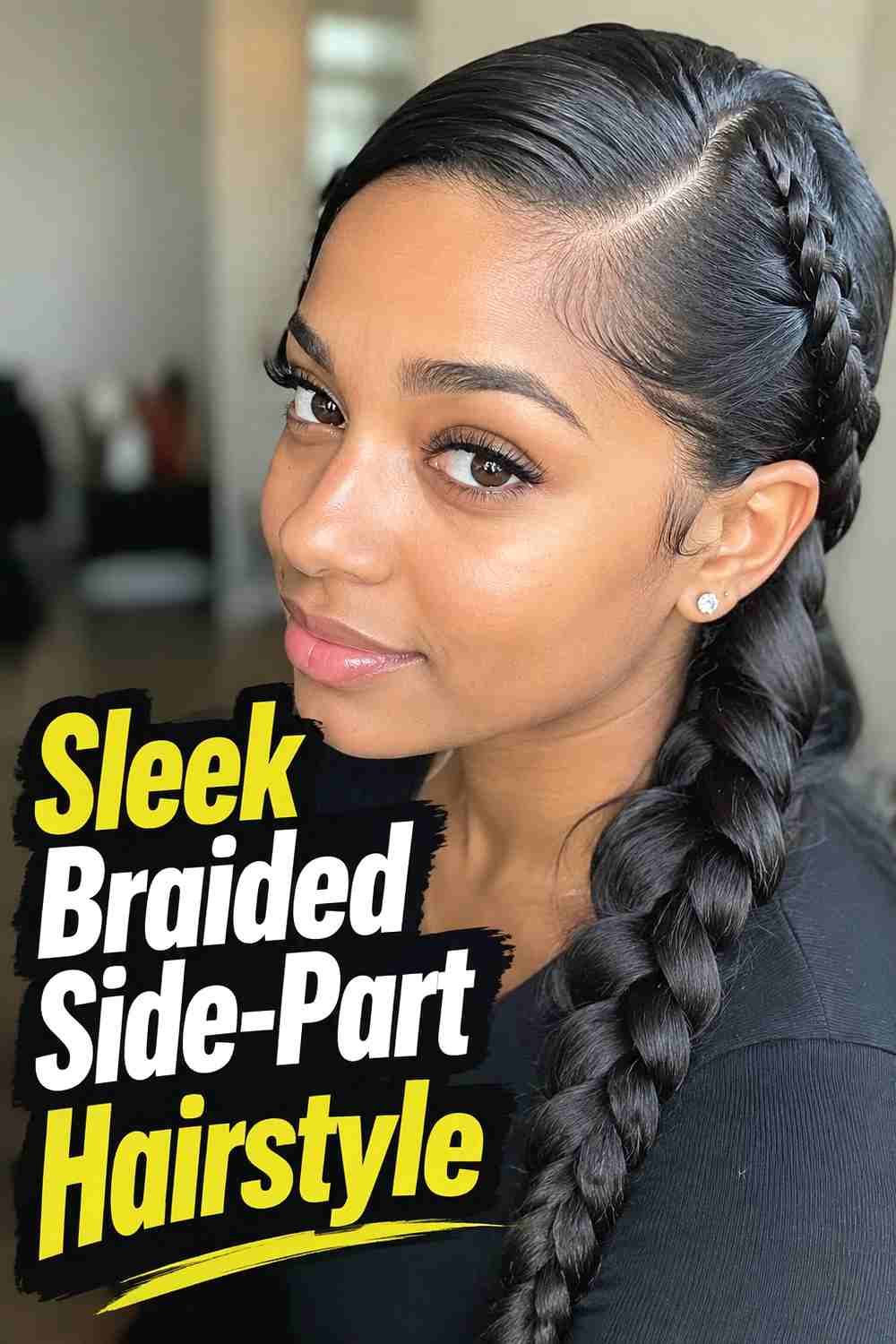
The sleek braided side-part hairstyle uses a crisp deep part and a narrow, controlled braid along the lighter side of the head. The heavier section stays smooth and glossy, creating strong contrast between the polished surface and the woven detail. Medium and long hair offer the easiest styling, although the braid itself can remain relatively short and disappear behind the ear. Keep the crown low and refined rather than overly voluminous, and use smoothing product only where needed so natural strand detail remains visible. A tight three-strand or small Dutch braid works especially well because it follows the head cleanly without becoming bulky. The finished look feels modern, minimal, and easy to dress up.
Styling Notes
Define the part before braiding, then smooth the lighter side in the direction the braid will travel.
Best For
This version works well for dinners, professional events, and polished evening looks where you want detail without a full updo.
2. Soft Braided Side Part Waves Hairstyle
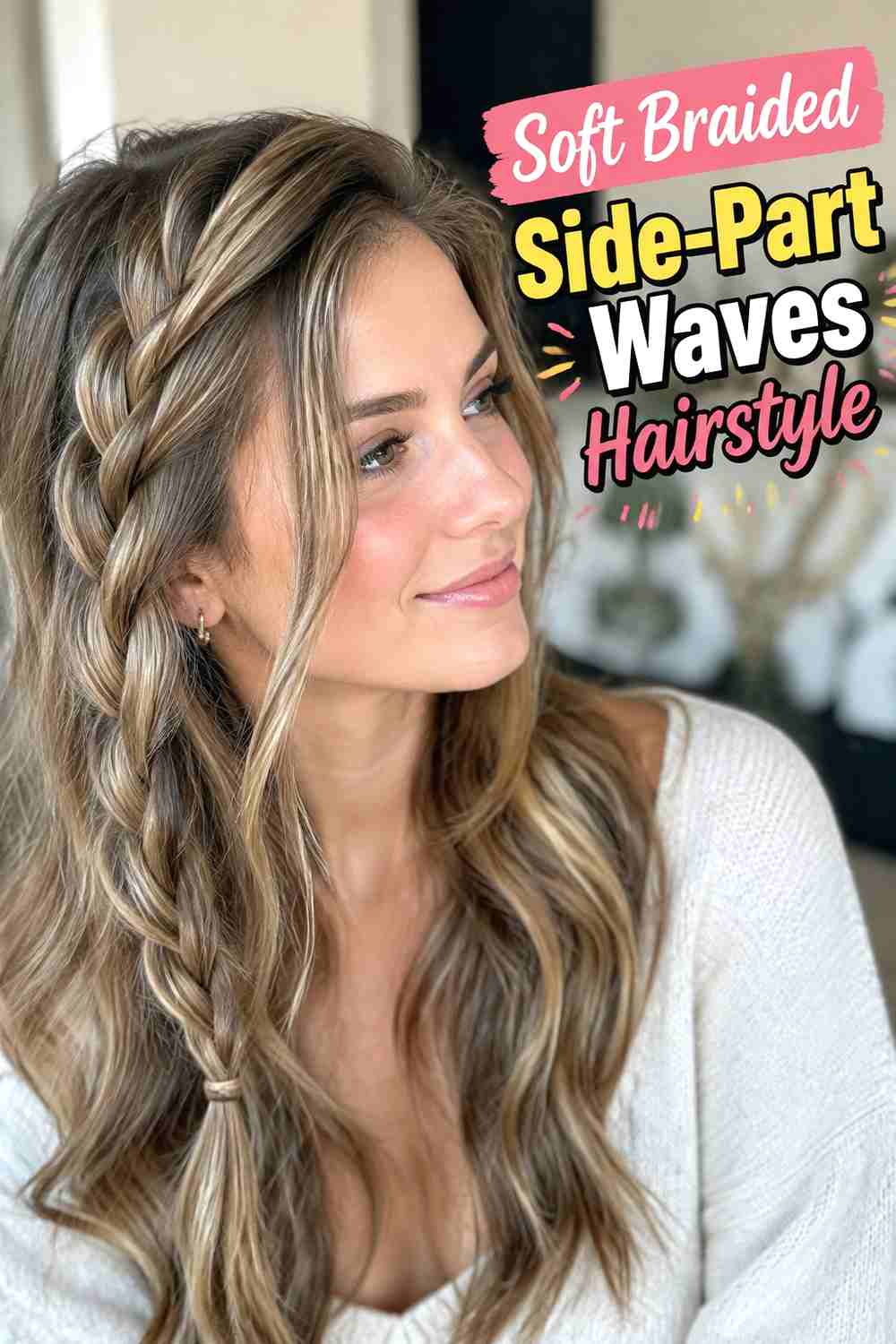
Soft waves balance the structure of a side braid by adding broad, flowing movement through the heavier side and back. Create the side part first, braid a narrow section near the exposed temple, and leave the remaining hair loose in relaxed bends. The wave pattern should stay touchable rather than highly sculpted so the braid feels integrated instead of overly formal. Medium and long hair are especially suitable because the loose lengths have room to show movement. A little root lift on the fuller side can emphasize the asymmetry, while keeping the braided side closer to the head creates a flattering contrast from the front and profile.
Why It Works
The braid controls one side while the waves create volume on the other, making the side part look deliberate and dimensional.
Pro Tip
Finish the waves before braiding so the accent can be placed where it remains visible against the final texture.
3. Deep Side Part Dutch Braid Hairstyle
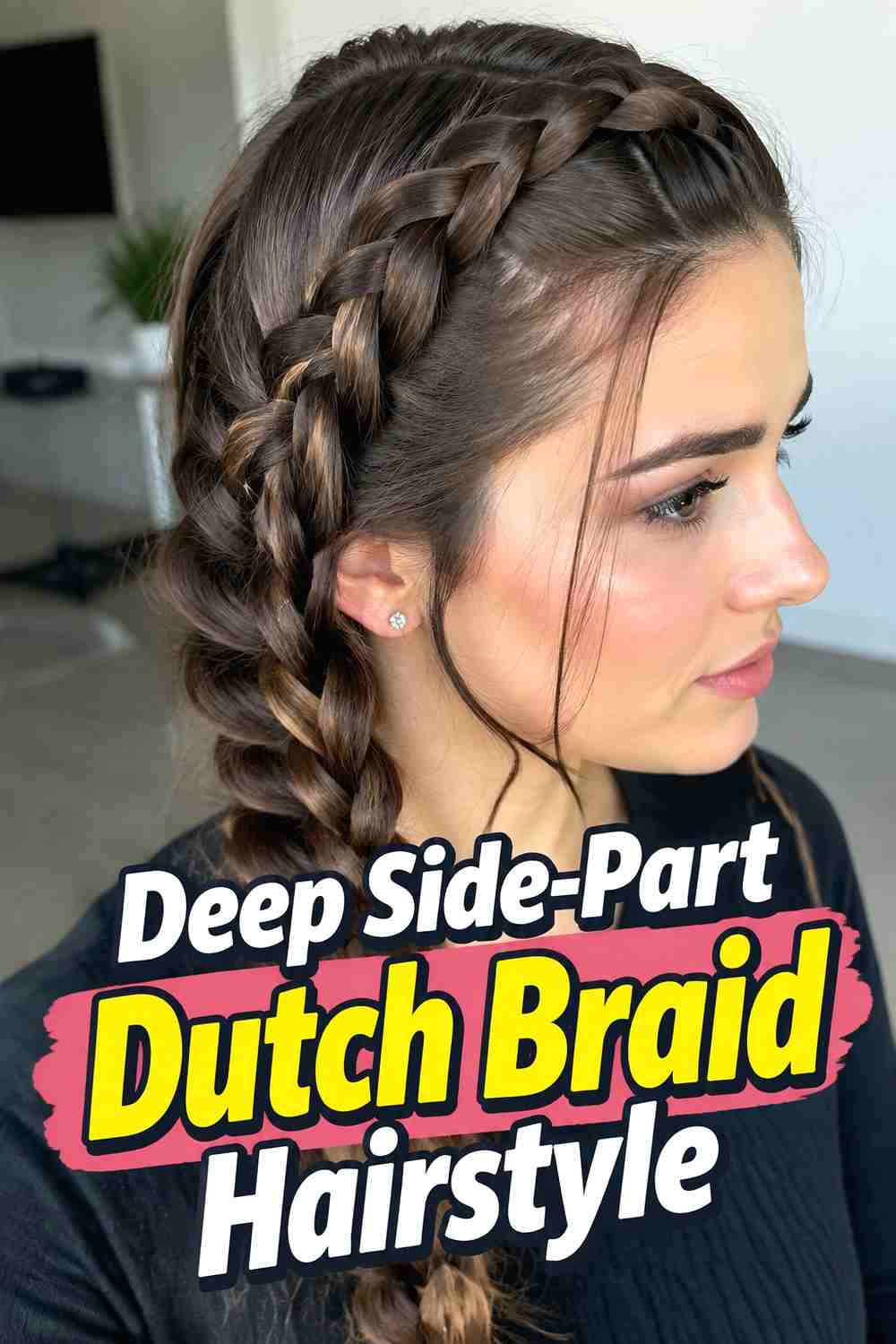
A deep side-part Dutch braid creates bold definition because the woven section sits raised above the surface of the hair. Begin on the lighter side of a deep part and braid backward by crossing each section underneath the center, gradually adding hair as you move toward the ear or back of the head. The remaining hair can stay loose, wavy, or gathered depending on the occasion. Medium to long hair gives the braid enough room to develop clearly. Loosen the outer edges slightly if you want extra width, but maintain enough tension at the scalp for the braid to stay secure. The raised pattern is especially visible from side angles.
Styling Notes
Add small, even sections as you braid so the Dutch pattern stays neat and follows the curve of the head.
Best For
Choose this option when you want the braid to be a strong design feature rather than a subtle accent.
4. Deep Side Part French Braid Hairstyle
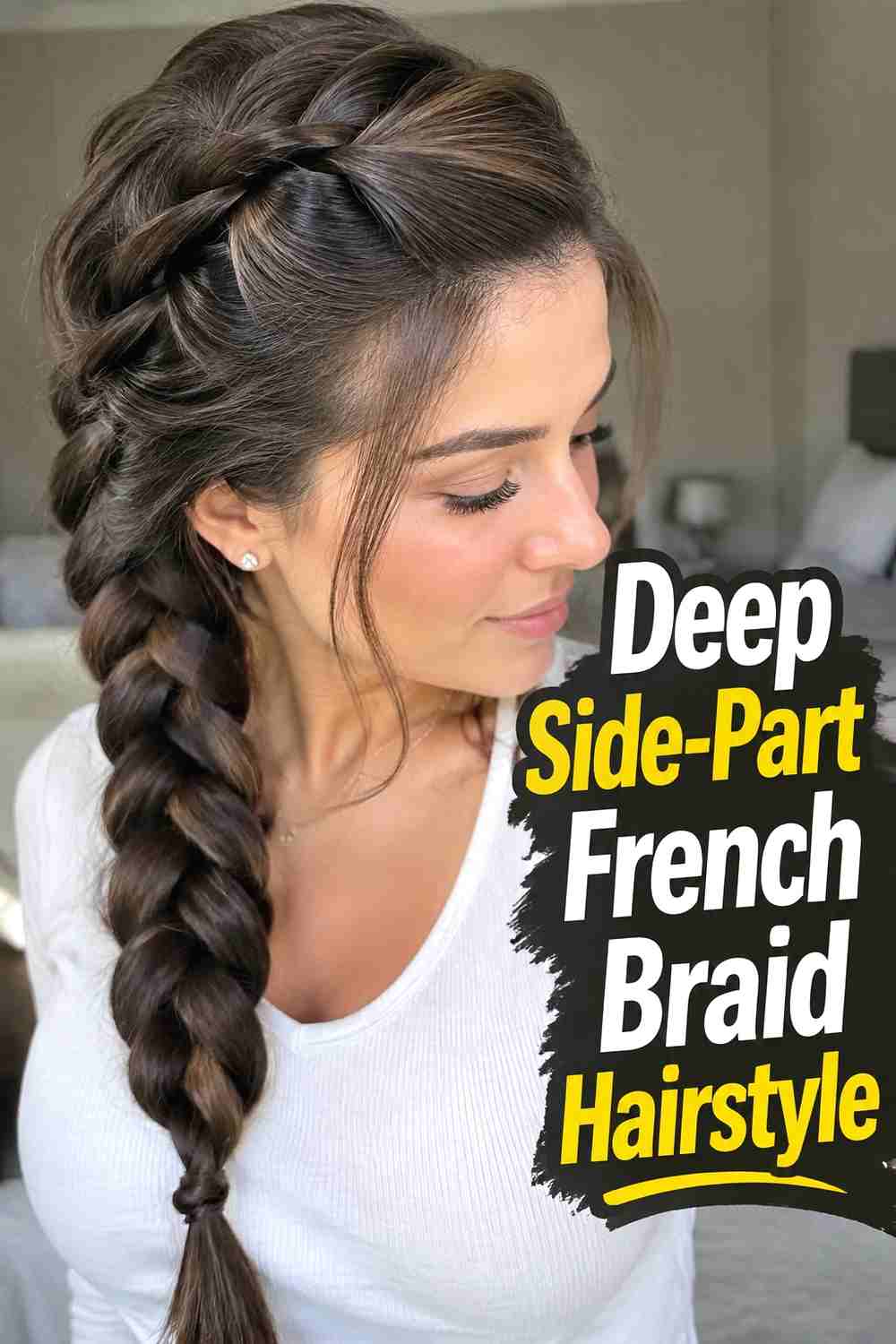
The deep side-part French braid gives a smoother, flatter alternative to a raised Dutch braid. Starting near the lighter side of the part, cross the outer pieces over the center while incorporating new hair as the braid travels toward the back. The woven detail blends naturally into the head, making it useful for polished styles where you want structure without too much visual bulk. Long, medium, and some shoulder-length cuts can work depending on layering. Leave the fuller side loose in soft waves or smooth lengths for contrast. A light styling cream can control shorter pieces, but avoid making the braid slippery with excess serum before weaving.
Why It Works
The flatter braid creates texture while allowing the deep side part and fuller opposite section to remain the dominant elements.
Wear & Maintenance
Secure the braid discreetly behind the ear or blend it into a ponytail or low bun for longer wear.
5. Side Part Micro Braid Accent Hairstyle
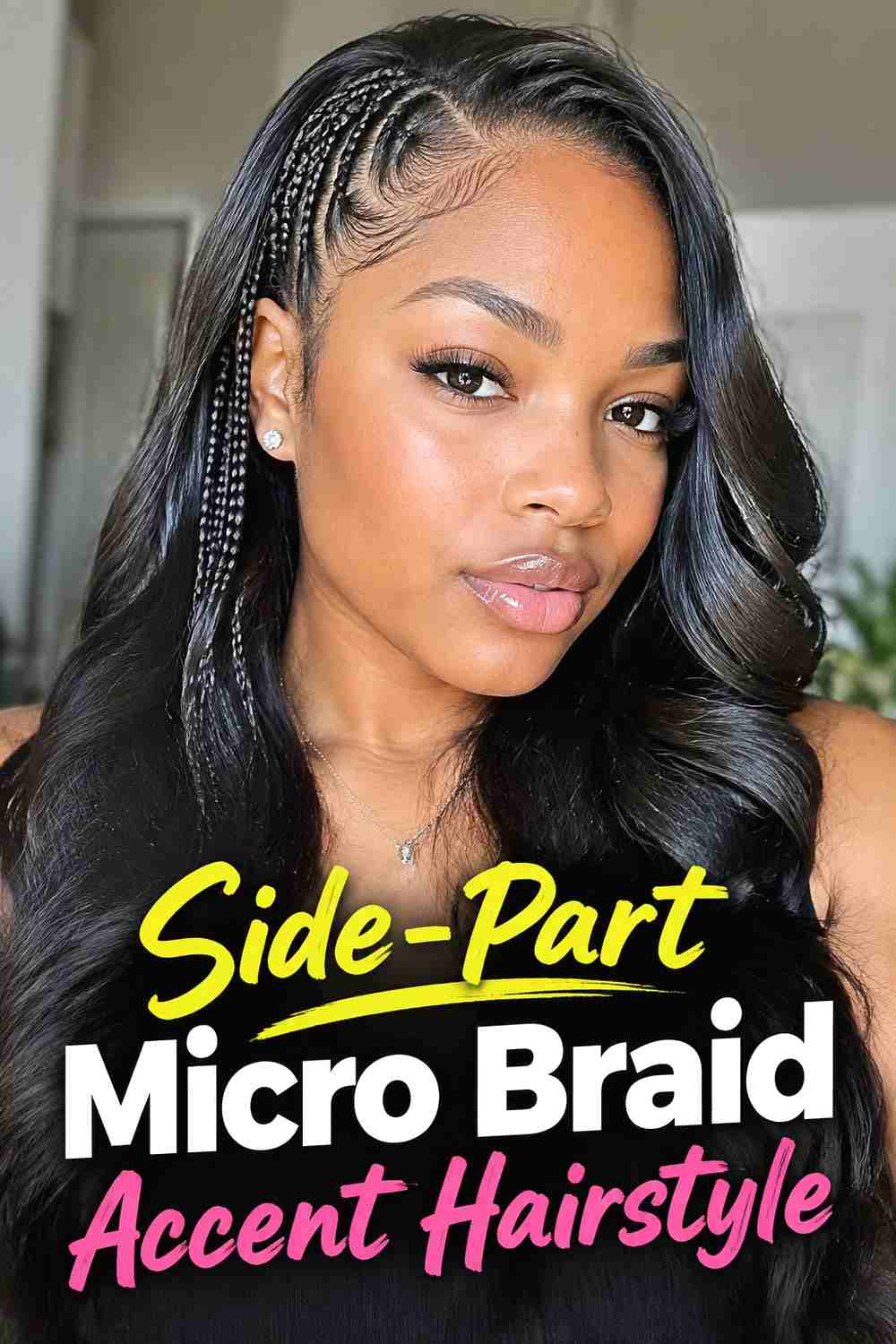
A micro braid creates one of the most understated interpretations of a braided side part. The hair is divided deeply to one side, then a very narrow section near the exposed temple is braided toward the ear. The rest of the hair can remain straight, softly waved, or naturally textured, allowing the micro braid to act as a fine detail rather than the main feature. Medium and long hair make it easy to hide the braid end underneath the surrounding lengths. Keep the section genuinely small and avoid pulling too tightly around the hairline. The finished effect feels modern and slightly playful while still being simple enough for everyday styling.
Best For
This look works well when you want a braided accent that does not significantly change the overall silhouette.
Pro Tip
Use a tiny clear elastic or discreet pin and conceal the braid end beneath the loose hair.
6. Side Part Double Micro Braid Hairstyle
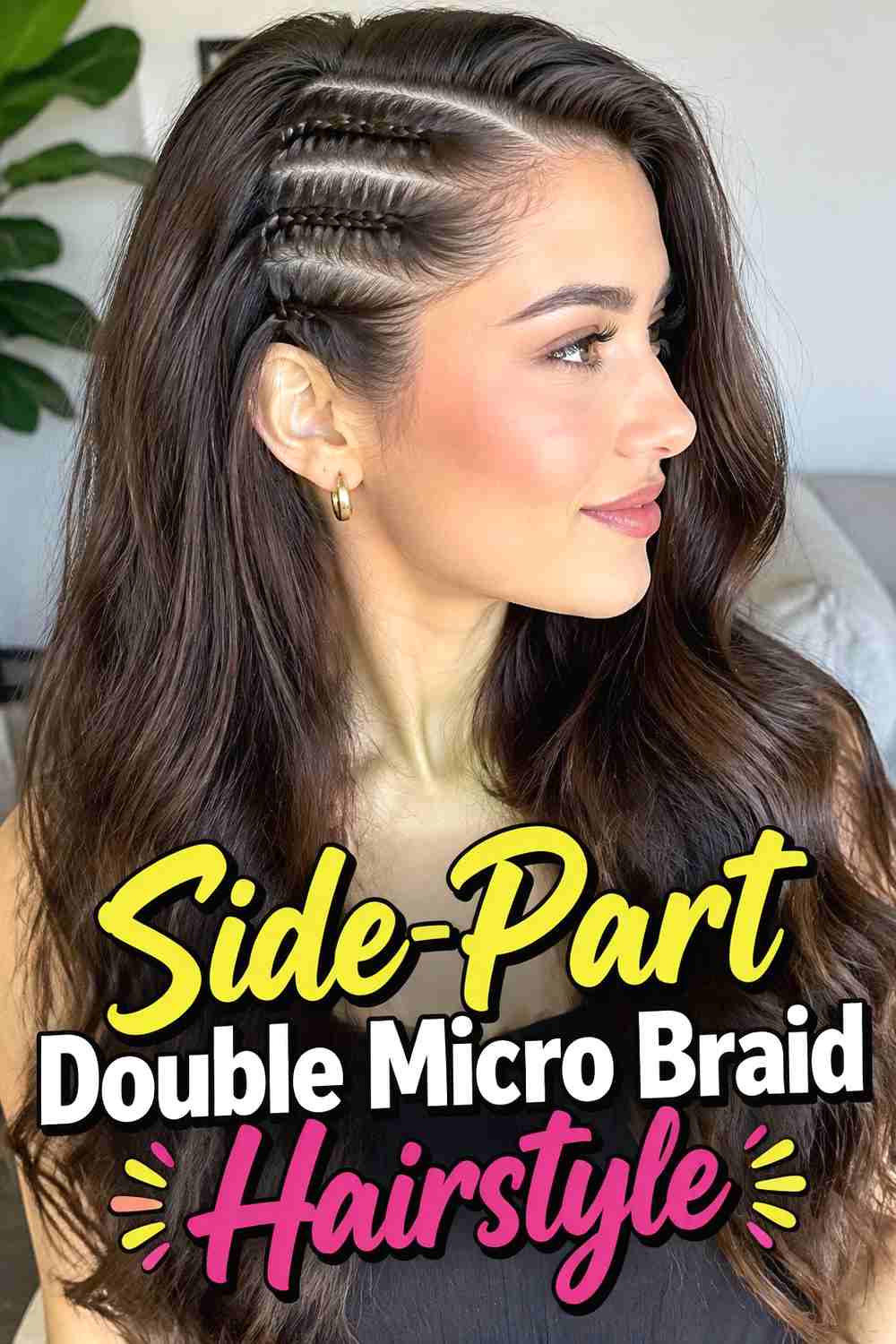
Two narrow braids along the lighter side of a deep part create more definition than a single micro braid while still keeping the hairstyle delicate. Position the braids parallel to each other near the temple, using similarly sized sections so the spacing looks intentional. The opposite side can remain loose and voluminous, which keeps the double braid detail from making the whole hairstyle feel too structured. Medium and long lengths work especially well, although the accent can also suit shorter cuts. Keep the braid tension secure but comfortable, and let the ends disappear behind the ear or underneath the top layer of hair.
Styling Notes
Create both braid sections before starting so the spacing remains even and the second braid does not crowd the first.
Why It Works
The repeated micro detail adds graphic interest while preserving most of the hair’s natural texture and movement.
7. Side Part Crown Braid Hairstyle
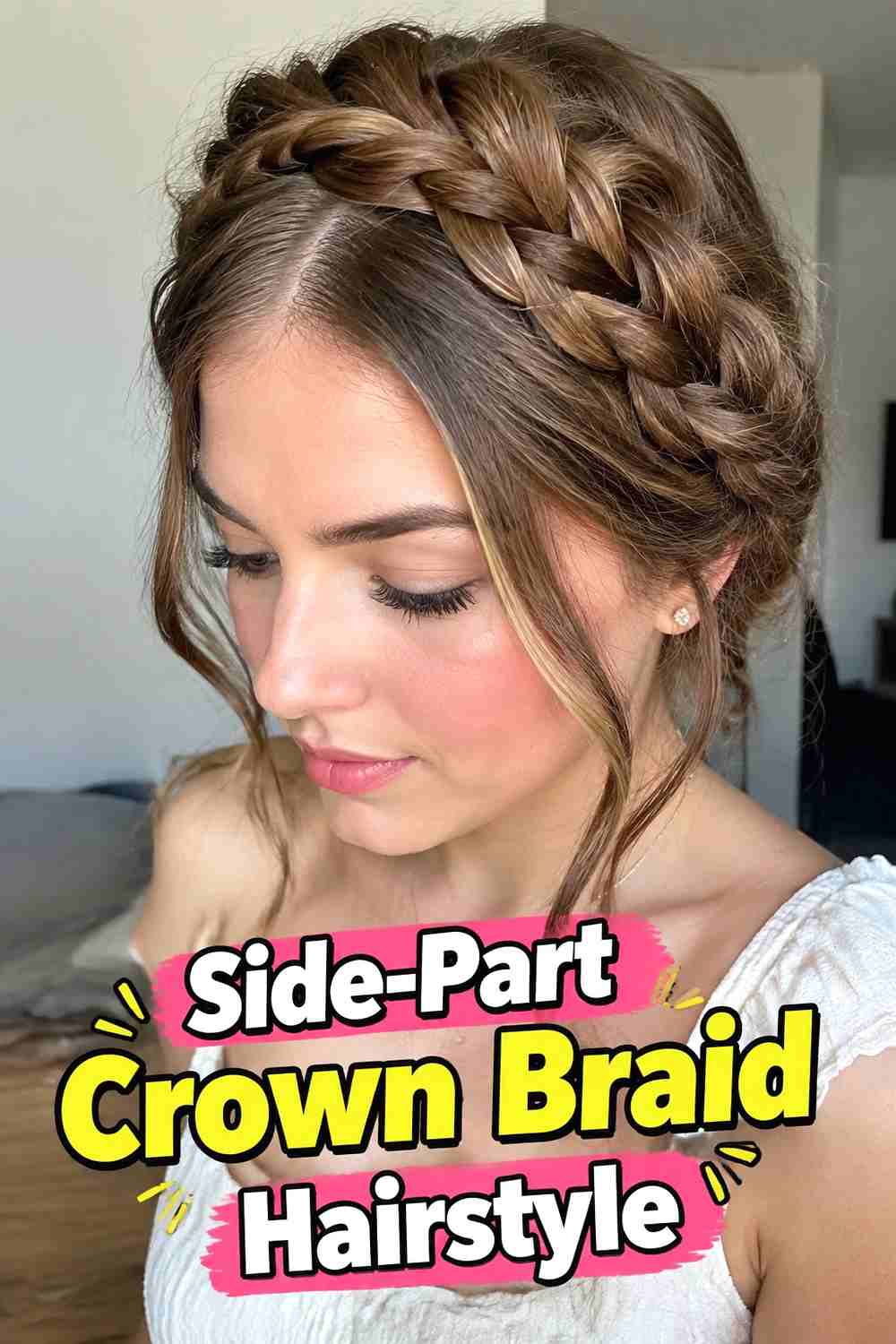
A side-part crown braid begins asymmetrically and travels around part of the head, creating a softer alternative to a perfectly centered braided halo. Start near the fuller side of the part or along the exposed temple, then guide the braid around the crown while keeping its path slightly diagonal. Medium to long hair is easiest to work with, especially if you want the braid to continue far around the back. Loosen the outer edges gently after securing it so the crown feels soft rather than tightly pressed against the scalp. A few wispy sections around the hairline can add movement without compromising the braided structure.
Best For
This variation suits weddings, garden events, festivals, and romantic occasions where a full loose hairstyle may feel too simple.
Wear & Maintenance
Anchor the braid with hidden pins at several points so its asymmetric placement stays stable.
8. Side Part Braided Ponytail Hairstyle
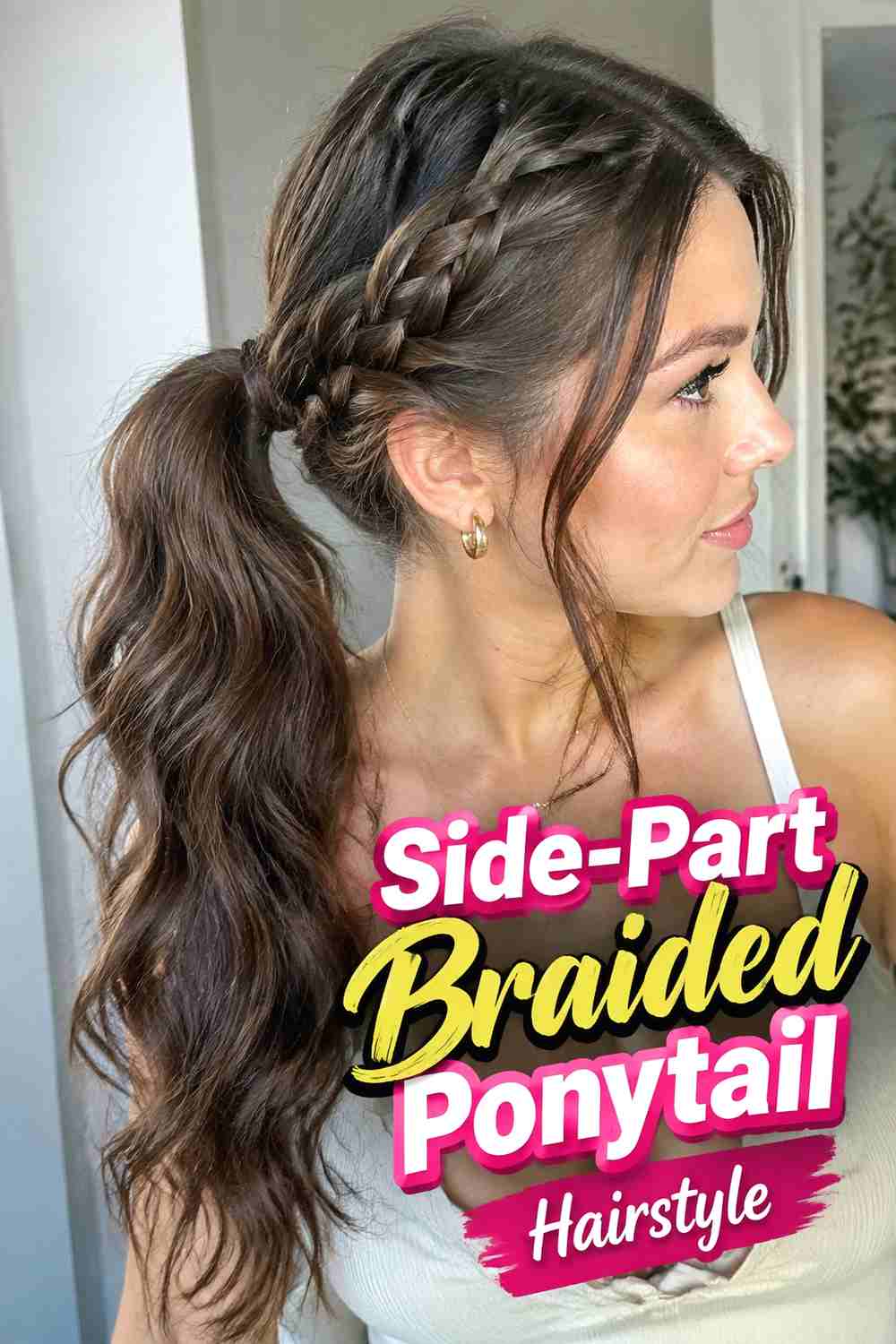
The side-part braided ponytail carries the braid directly into a gathered style, giving the front detail a clear destination. Begin a braid along the lighter side of a deep part and guide it toward the back, then combine it with the remaining hair in a mid-height or low ponytail. The heavier side can stay smooth or softly lifted depending on the desired finish. Waves through the ponytail add volume, while straight lengths create a cleaner silhouette. Medium and long hair both work well. Secure the braid before or within the ponytail base so it does not loosen when the elastic is tightened.
Why It Works
The braid visually connects the side part to the ponytail, making the style feel cohesive rather than like two separate ideas.
Pro Tip
Leave the braid slightly softer near the ponytail base so it blends naturally into the gathered hair.
9. Side Part Braided Low Bun Hairstyle
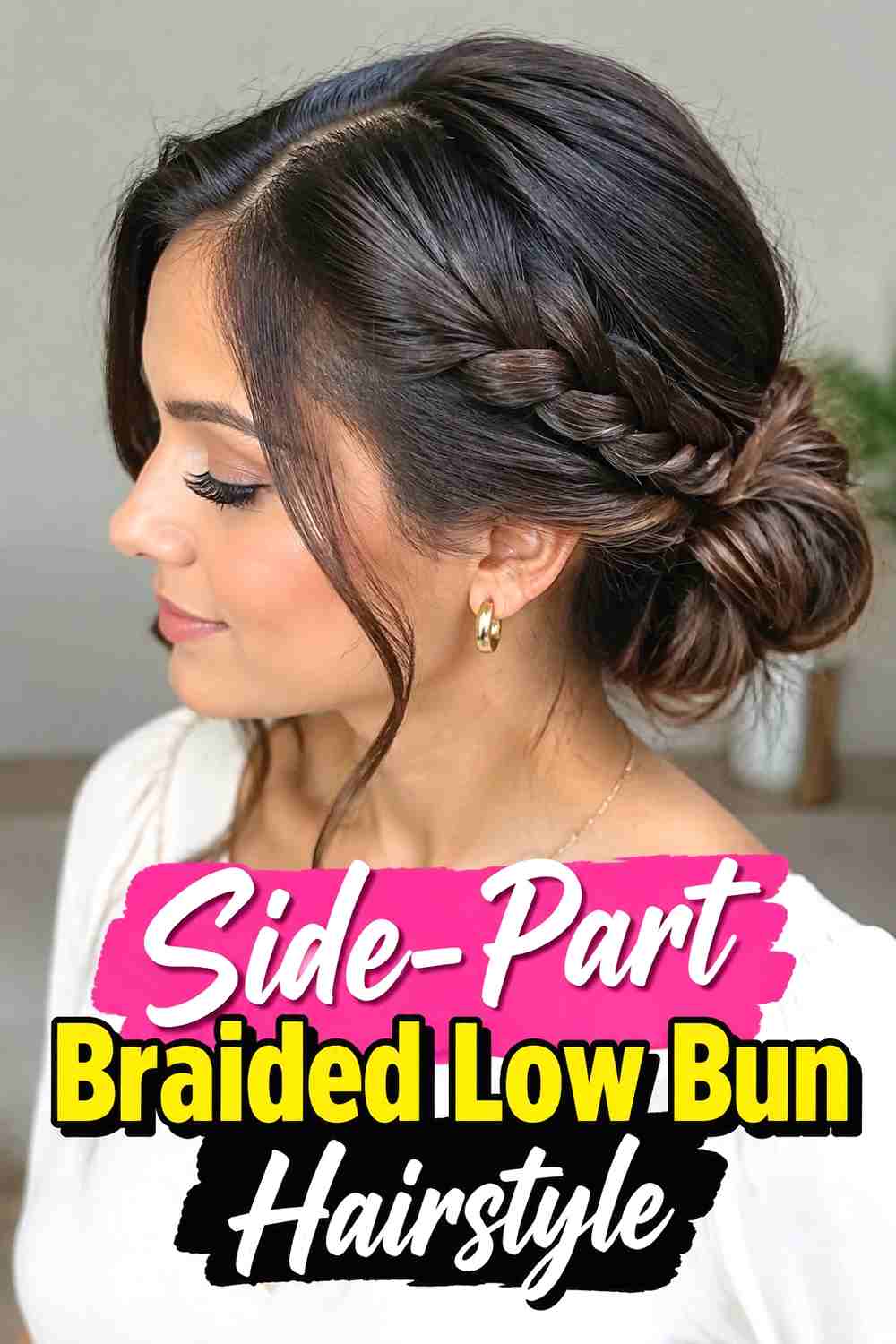
A side-part braided low bun combines asymmetrical front styling with a compact updo at the nape. The braid can begin near the lighter temple and travel toward the back before being incorporated into the low bun, or it can wrap around the bun as a finishing detail. Medium and long hair provide enough length for the construction, with longer hair creating a fuller shape. Keep the heavier side smooth or softly swept across the crown, and position the bun low enough that the braided path remains visible from the side. Hidden pins should provide the main support while the woven detail stays clean.
Styling Notes
Secure the braid first, then build the bun around or beside it so the decorative section does not disappear underneath the gathered hair.
Best For
This style works well for weddings, dinners, work events, and polished formal occasions.
10. Side Part Braided Half Up Hairstyle
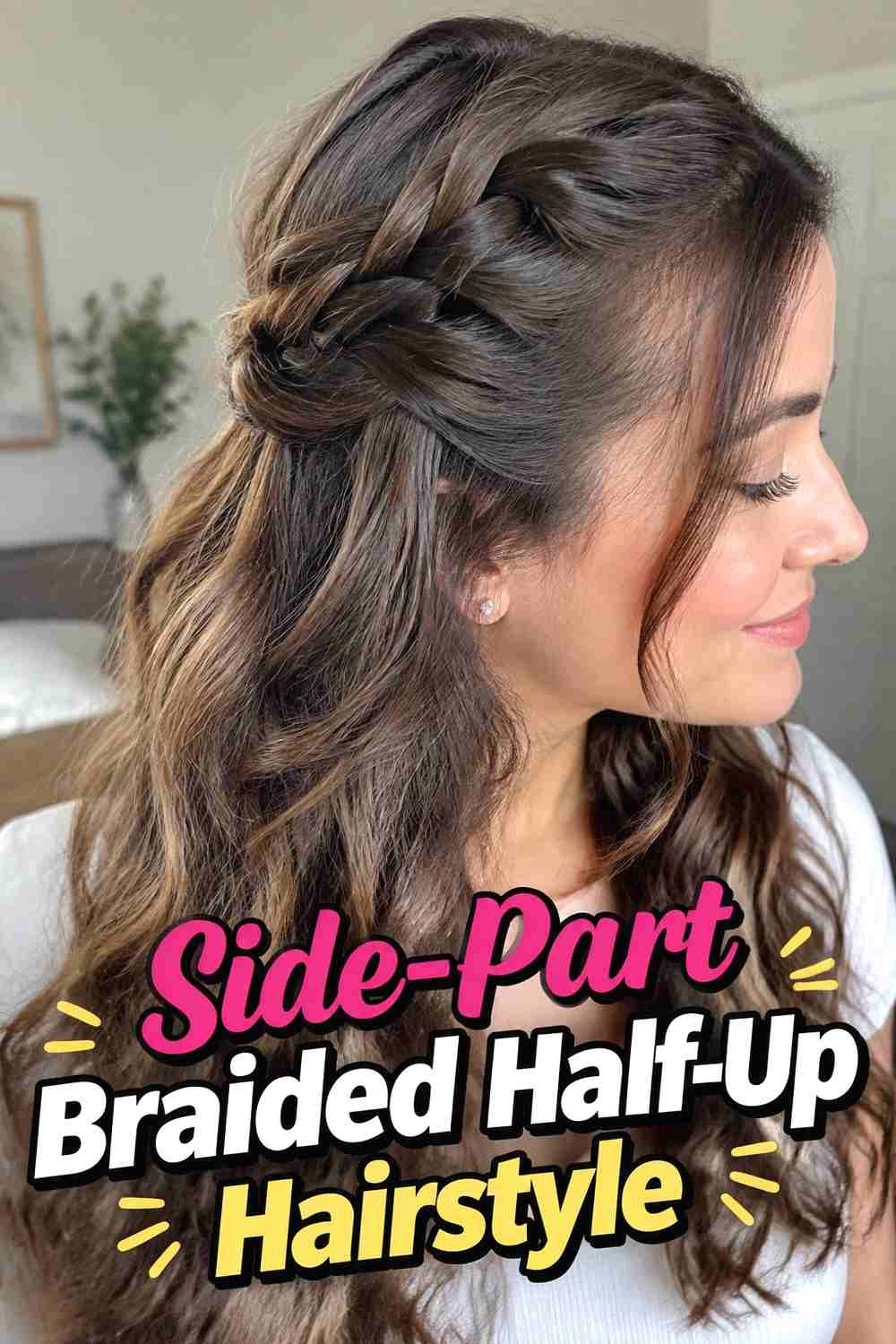
A side-part braided half-up hairstyle gives structure to the upper section while leaving most of the length down. Begin with a braid on the lighter side and guide it toward the center back, where it can be pinned beneath a small half-up section. The heavier side remains loose, creating volume around the face, while the lengths can stay wavy or softly straight. Medium and long hair work especially well because enough hair remains down to balance the braided detail above. Keep the crown gently lifted rather than tightly pulled so the half-up shape feels soft and natural.
Why It Works
The braid controls the exposed side while the half-up placement keeps plenty of movement visible through the back.
Wear & Maintenance
Use discreet pins where the braid meets the half-up section so the connection stays secure without obvious hardware.
11. Side Part Fishtail Braid Hairstyle
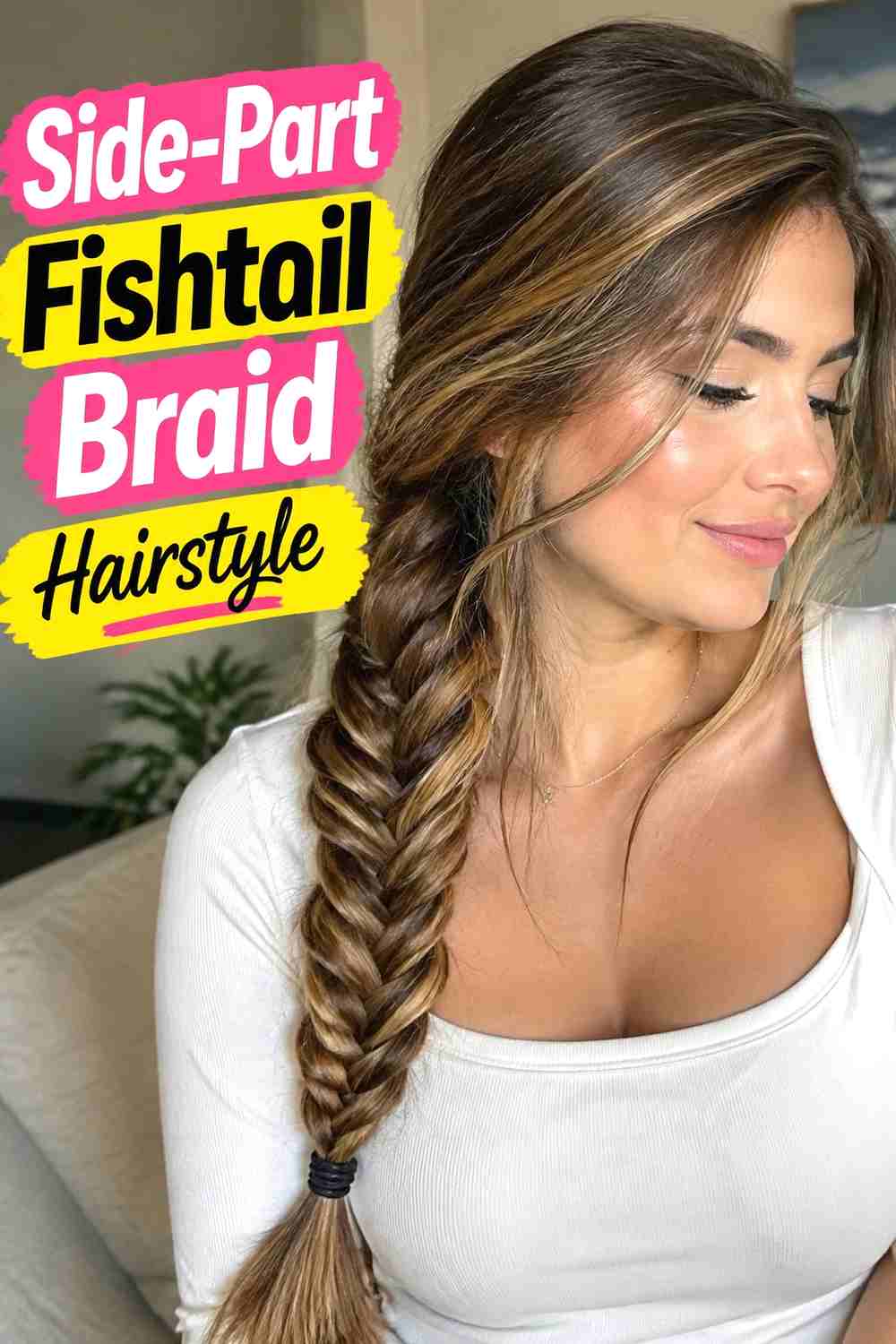
A side-part fishtail braid adds intricate woven texture to the lighter side or carries the full length over one shoulder. For a smaller accent, begin with a narrow section near the temple and fishtail it backward. For a more dramatic version, gather most of the hair to one side and create a long fishtail braid that follows the asymmetry of the part. Medium-to-long and long hair show the pattern most clearly. Once secured, gently widen selected outer sections so the braid feels softer and fuller. Keep the crown relaxed and avoid loosening the fishtail so much that its two-section pattern becomes difficult to recognize.
Styling Notes
Use smaller crossed pieces if you want a detailed fishtail pattern that remains visible after loosening.
Best For
This version works beautifully for long hair when you want the braid itself to become a major part of the hairstyle.
12. Side Part Rope Braid Hairstyle
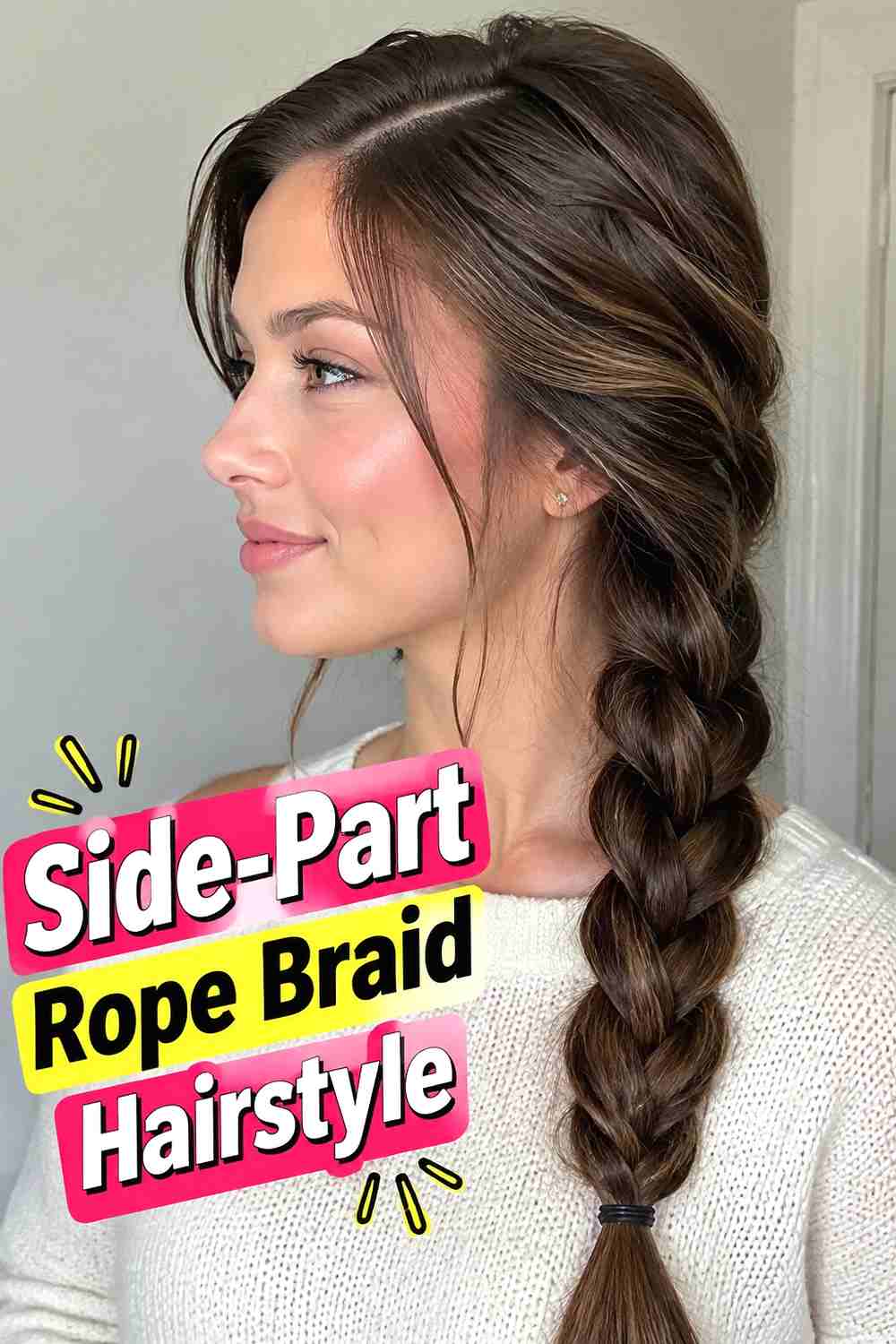
A rope braid gives the side-part look clean spiral texture using only two main sections. Take hair from the lighter side, divide it into two pieces, twist each in the same direction, then wrap them around each other in the opposite direction. The finished rope can be pinned behind the ear, incorporated into a ponytail, or carried farther toward the back. Medium and long hair are especially easy to work with because the spiral needs enough length to remain visible. Keep the heavier side smooth or softly waved for contrast. A little styling cream can control flyaways without making the rope too slippery to hold.
Why It Works
The spiral pattern is visually distinct from a traditional braid while still emphasizing the asymmetry created by the side part.
Pro Tip
Maintain even tension in both twisted sections so the rope stays defined instead of unraveling.
13. Side Part Braided Bob Hairstyle
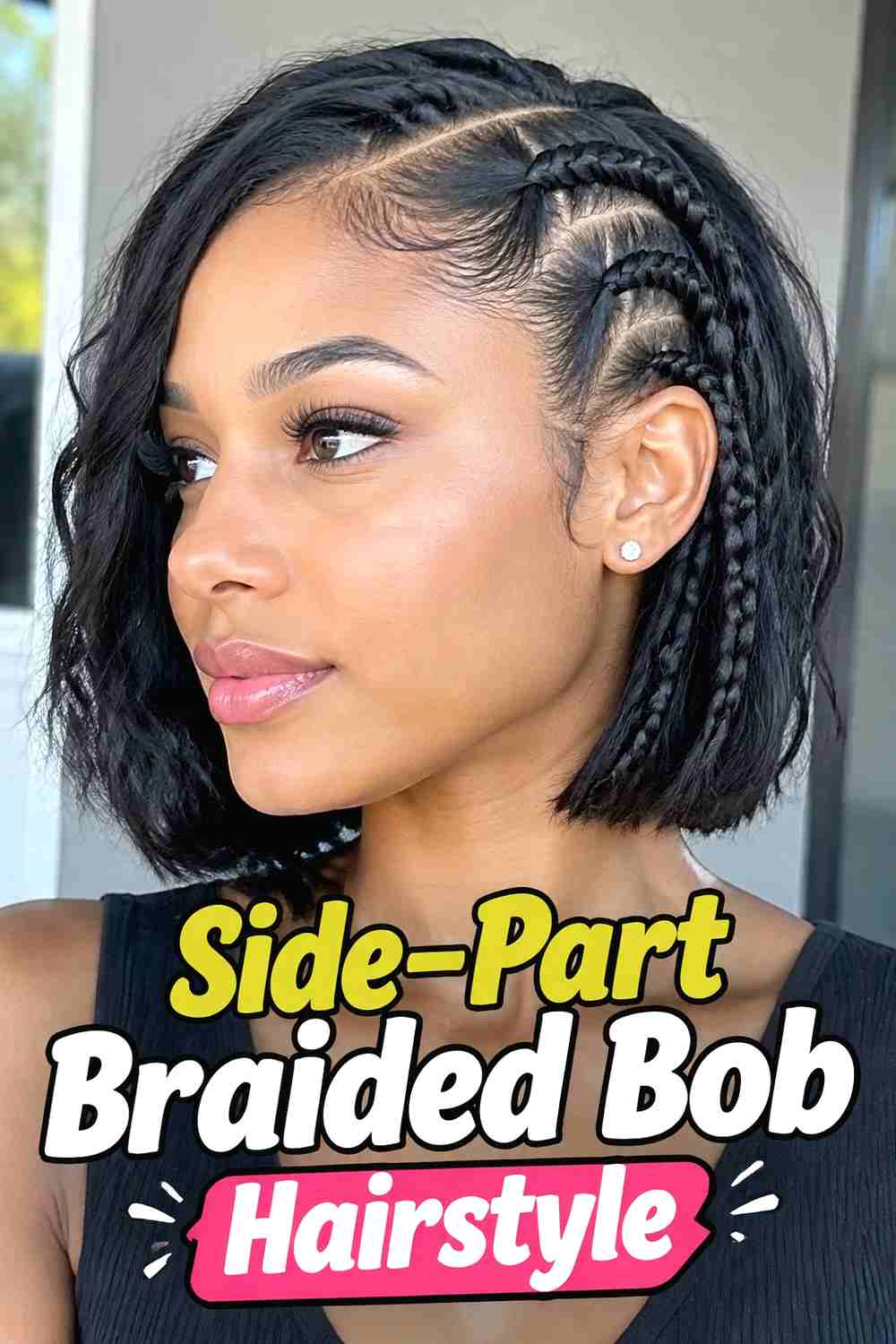
A bob can wear a braided side part beautifully when the braid is kept compact and close to the head. Create a deep part, then braid a narrow section on the lighter side toward the ear and secure it discreetly underneath the longer top layer. The fuller side can remain sleek, softly bent, or lightly tousled depending on the cut. Because a bob offers less length, avoid making the braid oversized or trying to carry it too far around the head. A small Dutch, French, or three-strand braid usually provides enough detail. The result highlights the asymmetry of the haircut without requiring extensions or a larger updo.
Hair Type & Length
Chin-length and slightly longer bobs can work particularly well when the side section is long enough to braid securely.
Styling Notes
Use a little grip product on very smooth short hair so smaller layers are less likely to slip from the braid.
14. Side Part Braided Lob Hairstyle
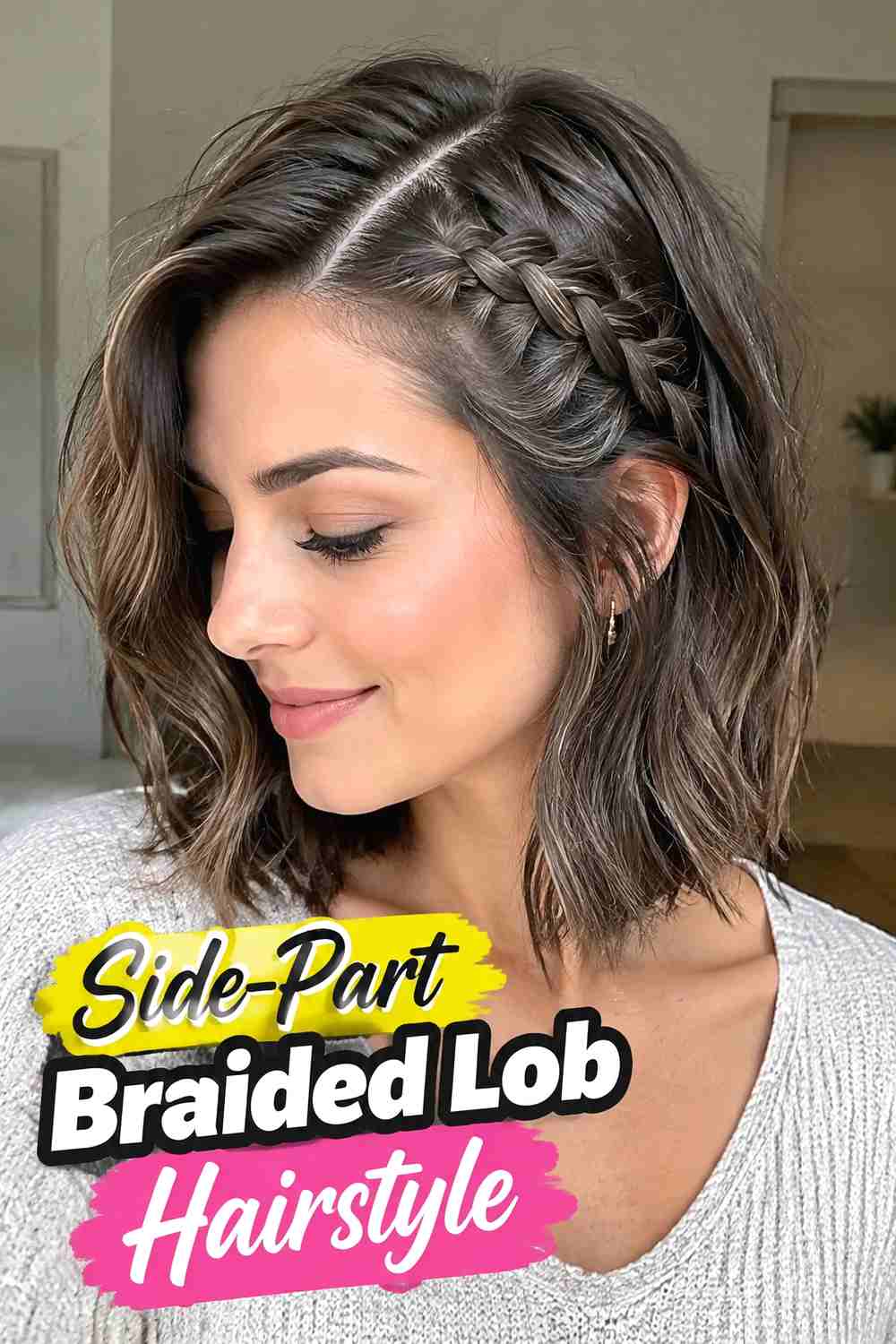
A lob provides more length than a bob while still keeping the braided side-part silhouette compact and modern. Use a narrow braid along the exposed temple and let the fuller side fall in soft bends around the shoulder. The braid can be pinned behind the ear or continued toward the back for a subtle half-up effect. Because the ends sit near the shoulders, shallow waves usually complement the braid better than tight curls that dramatically shorten the cut. Keep the braid proportional to the length—visible but not so thick that it dominates the lob’s outline.
Why It Works
The braid adds definition near the temple while the longer bob retains its recognizable shoulder-skimming shape.
Best For
This style suits medium-length cuts when you want a noticeable accent without committing to a full braided updo.
15. Side Part Braided Curls Hairstyle
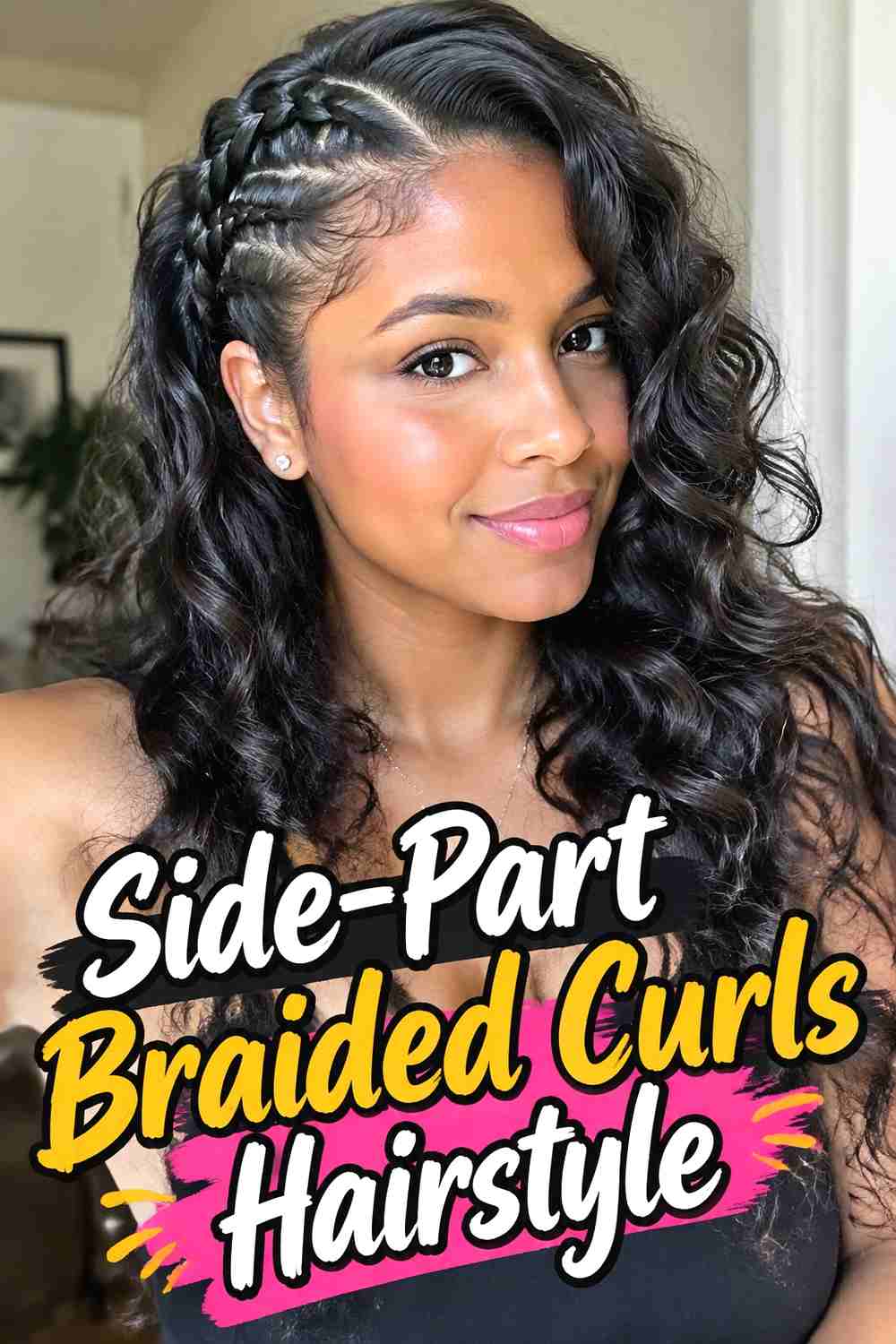
Defined curls create fullness on the heavier side of a deep part, while a braid controls the lighter side and keeps the face open. The braid can sit tightly near the temple or travel farther toward the back, depending on how much hair you want contained. Natural curls should be handled gently so their pattern remains intact, while heat-styled curls can be created before braiding. Medium and long hair give the fullest result. Choose a braid section that is large enough to stay visible against the curls but not so broad that it removes excessive volume from the loose side.
Hair Type & Length
Naturally curly and pre-curled medium-to-long hair can both work well when the braid is sized appropriately for the overall density.
Wear & Maintenance
Avoid brushing through the loose curls after the braid is finished; arrange them with your fingers instead.
16. Side Part Braided Waves With Tendrils Hairstyle
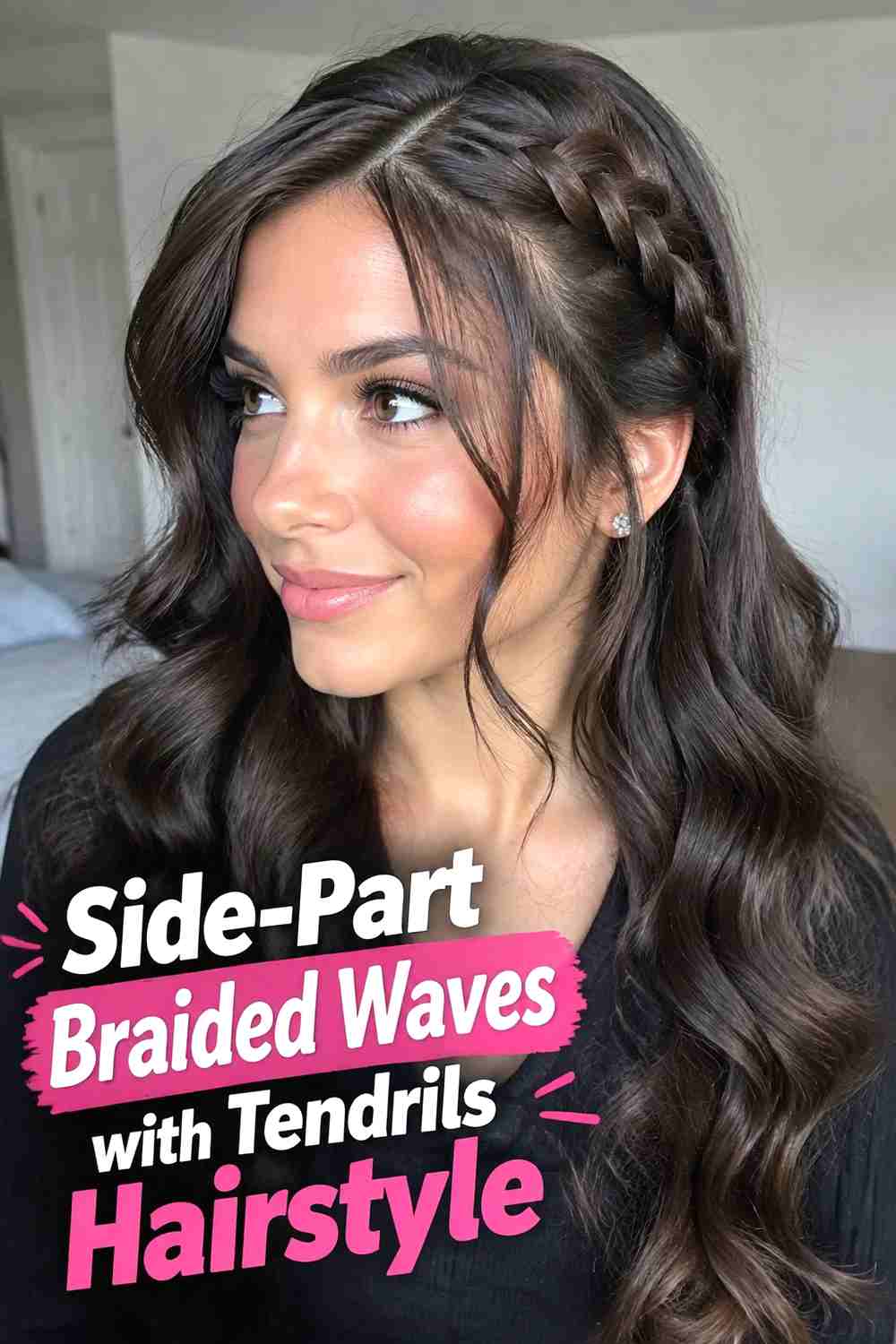
Side-part braided waves with tendrils combine structured detail near the temple with softer movement around the face. Create a deep side part and braid the lighter side toward the back, leaving a few narrow pieces free near the temples or cheekbones. The rest of the hair falls into relaxed waves, creating a romantic contrast with the neater braid. Medium and long layered hair works particularly well because shorter front pieces naturally become tendrils. Keep the loose sections slightly varied rather than curling both sides identically. The result should feel intentionally soft, with the braid secure enough that the surrounding looseness does not compromise the style.
Styling Notes
Separate the tendrils before braiding so pulling them free later does not weaken the braid around the hairline.
Best For
This variation suits weddings, date nights, garden parties, and softly styled evening events.
17. Side Part Braided Hairstyle With Curtain Bangs
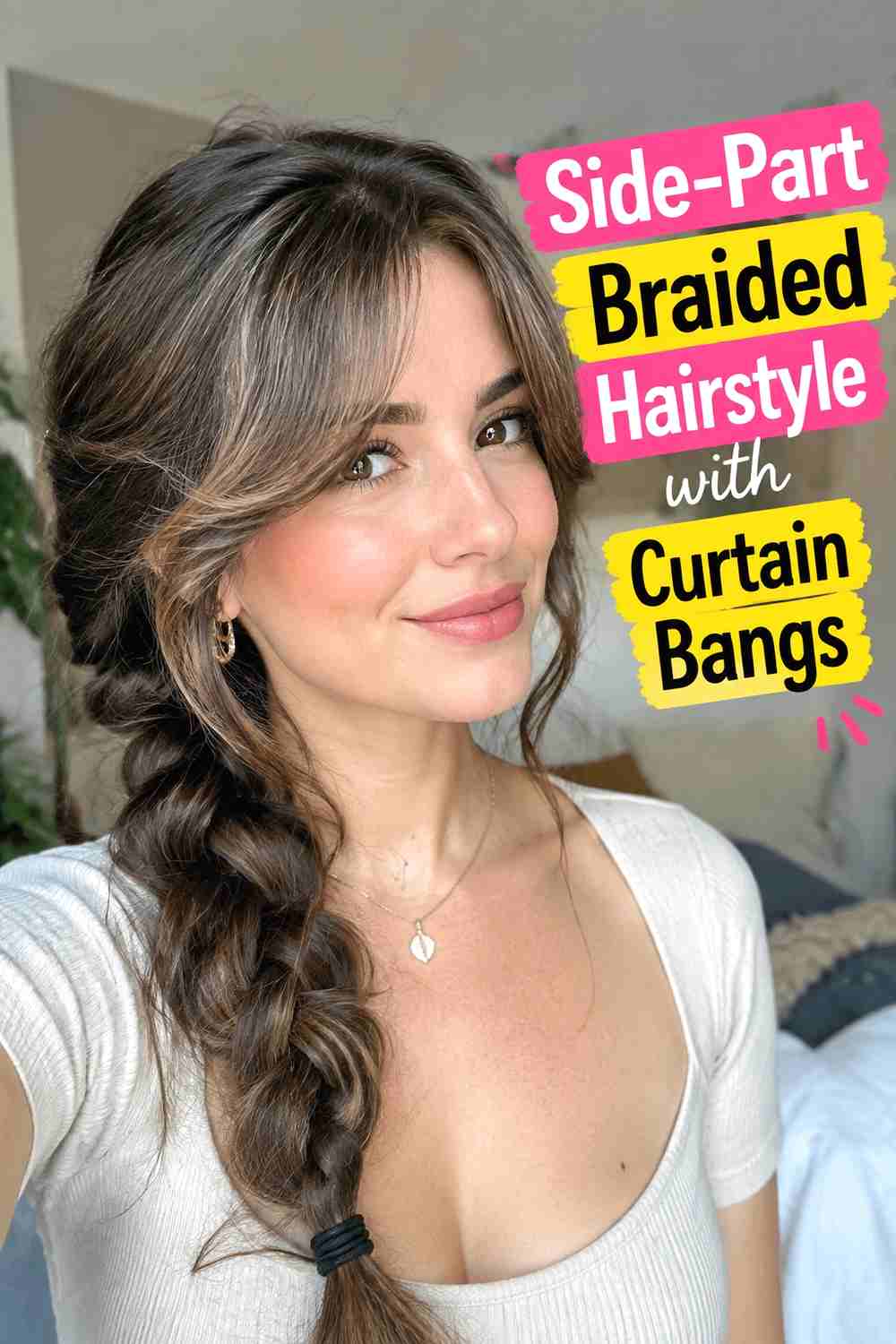
Curtain bangs bring softness to a braided side-part hairstyle by keeping movement across the front even though the braid creates asymmetry. Style the fringe first, allowing the center to open while each side sweeps toward the cheekbones. Place the braid just behind the lighter curtain section so it remains visible without pulling the fringe into the weave. Medium and long layered hair offers the easiest transition between bangs and braid. The remaining hair can stay wavy, straight, or half-up depending on the occasion. Keep styling product light around the bangs so their movement does not become stiff.
Why It Works
The curtain fringe softens the strong directional line of the side part while the braid adds structure just behind it.
Pro Tip
Keep the braid slightly narrower near the bangs so it does not crowd the front of the hairstyle.
18. Side Part Braided Hairstyle With Pearl Pins
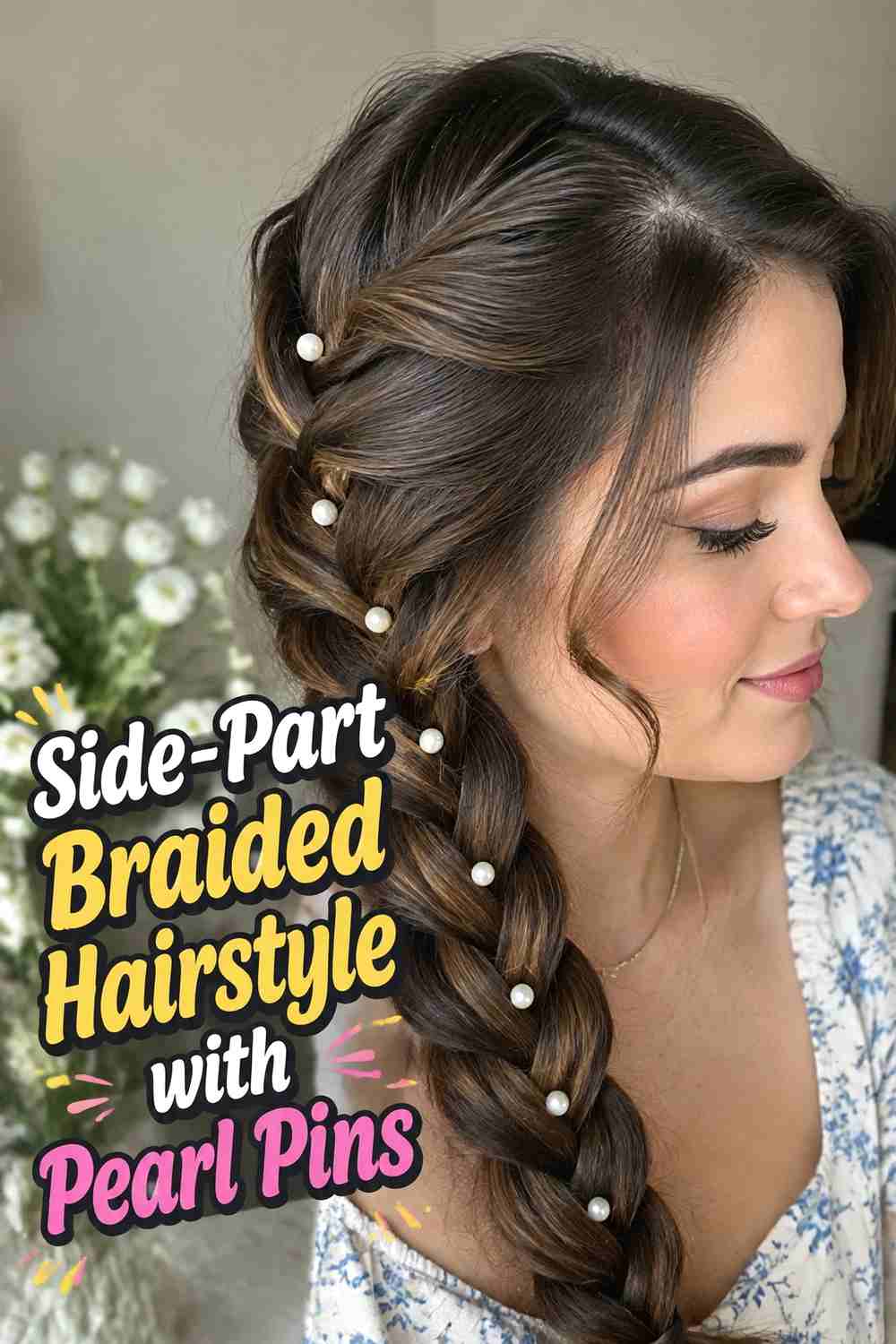
Pearl pins can turn a side braid into an elegant occasion detail without hiding the woven texture. Create the side part and braid first, securing the structure completely before placing a few small pearls along the braid or near its finishing point. Keep the decorative accents spaced rather than densely packed so the braid remains easy to see. Medium and long hair can both work, and loose waves on the heavier side help balance the refined embellishment. Use ordinary hidden pins or elastics for the actual hold; decorative pearls should remain secondary and lightweight.
Wear & Maintenance
Insert decorative pins only after the braid is fully secure so repositioning them does not disturb the underlying structure.
Best For
This style is especially suitable for weddings, engagement events, formal dinners, and understated bridal looks.
19. Side Part Braided Hairstyle With Ribbon Detail
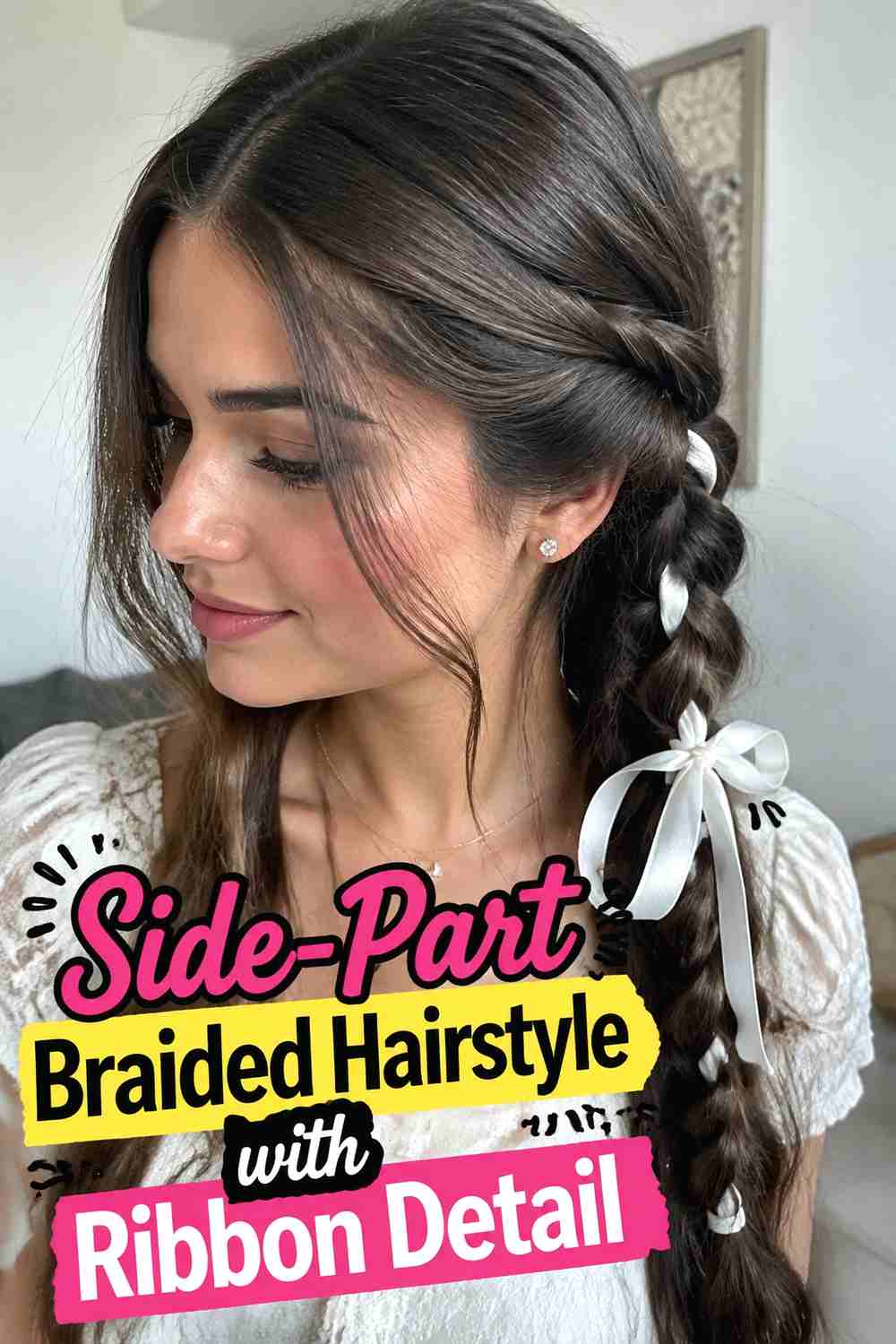
A narrow ribbon can introduce color or softness to a side-part braid while keeping the overall hairstyle wearable. The ribbon can be woven alongside one braid section, tied at the end, or used to finish the point where the braid disappears behind the ear. Keep the fabric slim enough that the woven hair remains visible. Loose waves or a low ponytail work especially well with the detail because they provide movement without adding more accessories. Medium and long hair offer the easiest styling. Build the braid securely first so the ribbon remains decorative rather than carrying the tension of the hairstyle.
Styling Notes
If the ribbon is woven into the braid, keep it flat and untwisted so the pattern looks neat and intentional.
Why It Works
One lightweight accessory adds personality without changing the strong asymmetrical structure created by the side part.
20. Polished Evening Braided Side Part Hairstyle
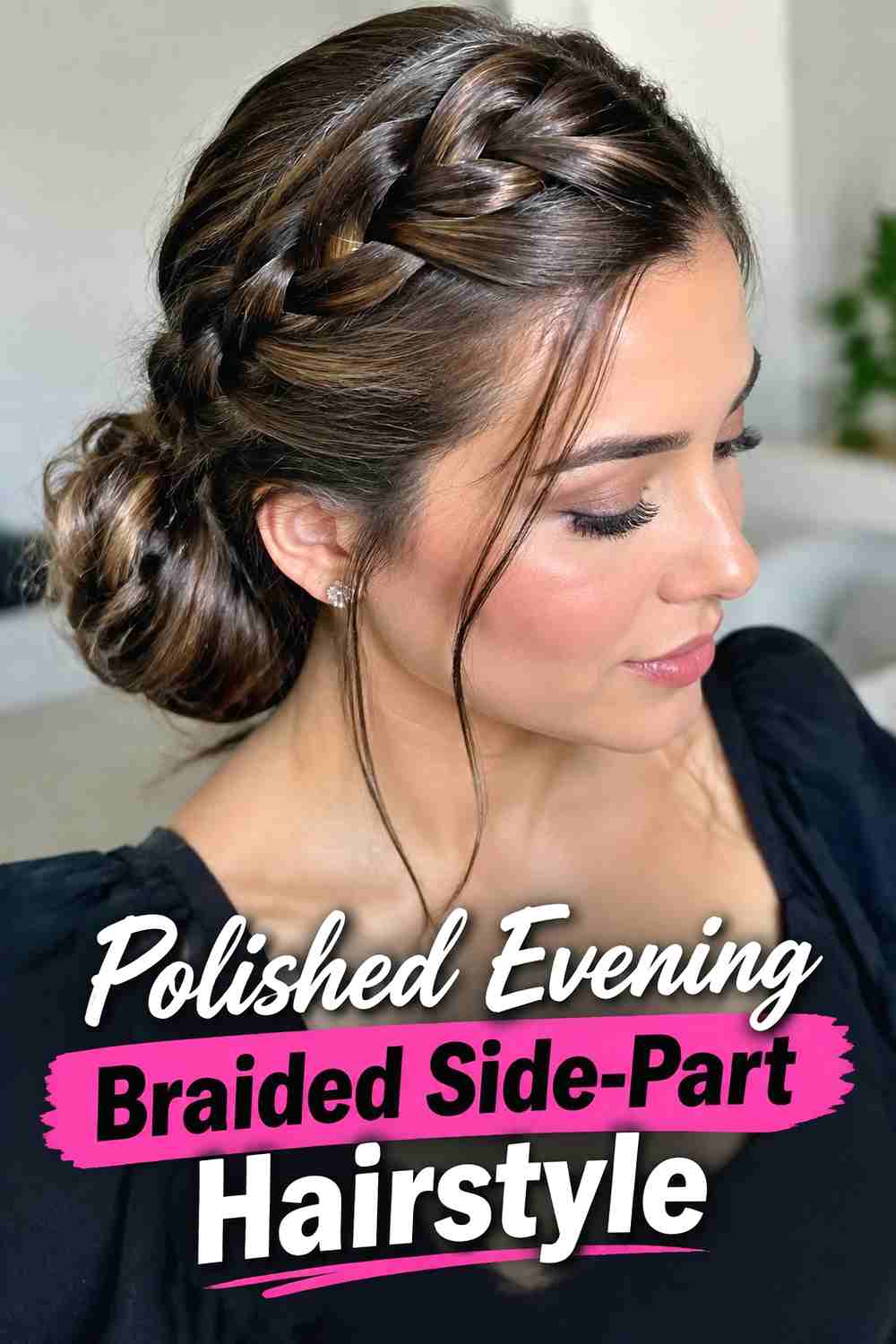
The polished evening braided side-part hairstyle combines a deep, clean part with a refined braid and smooth, controlled lengths. The braid can run along the exposed temple and disappear behind the ear while the fuller side falls in glossy waves or a sleek sweep over one shoulder. Keep the crown polished without flattening all natural volume, and hide elastics or pins beneath the surrounding hair. Medium and long lengths usually create the most dramatic evening silhouette. Lightweight shine product can refine the surface, while flexible hold keeps the braid and loose lengths secure without making the hairstyle stiff.
Best For
This version works well for receptions, formal dinners, parties, weddings, and evening events where you want braided detail without a full updo.
Pro Tip
Finish the loose side completely before securing the braid so the balance of volume is easy to judge from the front.
How to Choose the Right Look
Start with braid visibility. Micro braids and slim French braids create subtle definition, while Dutch, crown, and fishtail braids make the woven detail more prominent. If you prefer a strong asymmetrical silhouette, keep the braided side close to the head and leave more volume on the opposite side.
Your haircut also matters. Bobs and lobs work best with compact braids that stop near the ear, while medium and long hair can support half-up styles, ponytails, low buns, fishtails, and crown braids. Curls and waves naturally add fullness to the heavier side.
For a softer front, choose curtain bangs or a few face-framing tendrils. For formal styling, pearl pins, a narrow ribbon, glossy waves, or a polished bun can elevate the braid without covering it.
Whatever style you choose, establish the side part first. The braid should follow that natural division rather than pulling hair awkwardly across the scalp.
Final Thoughts
Braided side-part hairstyles are easy to personalize because the braid can be barely noticeable or become the main feature. Match the braid size to your hair length, keep the part deliberate, and balance the exposed side with enough movement or volume on the opposite side. From short bobs to polished evening waves, the same basic asymmetry can create very different looks.
FAQs
1. What braid works best with a side part?
French, Dutch, micro, fishtail, rope, and simple three-strand braids can all work. The best choice depends on how visible and textured you want the braided side to be.
2. Can short hair wear a braided side part?
Yes. Bobs and lobs can use small temple braids or short French and Dutch braids secured discreetly near the ear.
3. Should I create the side part before braiding?
Yes. Establishing the part first helps the braid follow the intended direction and keeps the fuller side of the hairstyle balanced.
4. Can braided side-part hairstyles work with curly hair?
Yes. A braid can control one side while natural or styled curls remain full on the other, creating strong texture contrast.
5. Are braided side-part hairstyles suitable for formal events?
Yes. Polished waves, low buns, pearl pins, ribbons, and clean braided details can all make a side-part hairstyle suitable for weddings, dinners, receptions, and other formal occasions.
Save your favorite braided side-part hairstyle ideas for your next look, and share the collection with anyone who loves asymmetrical braided hair inspiration.